



Twisting harder will not melt belly fat. That part gets said too softly, and it leaves people spinning their wheels for weeks.
Russian twist variations can still earn their place in a fat-loss plan, though. They train the obliques, teach your trunk to stay braced while the ribs rotate, and give you a core move that doesn’t feel like another endless plank hold. If you pair them with a calorie-controlled eating plan, walking, and some honest full-body strength work, they can be useful. If you treat them like a magic trick for stomach fat, they’re a waste of time.
The real value is in how they make your midsection work under tension. A clean Russian twist should feel like controlled rotation through the torso, not a flailing sweep of the arms. Your hips stay quieter than most people think. Your shoulders move. Your rib cage turns. And if your lower back is doing all the talking, the form has gone sideways.
That’s why the variations matter. Some make the move easier to learn. Some make it harder without turning it into a circus act. A few are kinder to the spine, a few are better for adding load, and a few are better if you want a short, sweaty finisher that slots into a real workout. The useful part starts with the classic version.
1. Classic Seated Russian Twist
The classic seated Russian twist is the version most people butcher, which is exactly why it’s worth learning first.
Sit on the floor with your knees bent, heels down, and torso leaned back just enough that your abs have to work. Your hands can stay clasped at your chest or reach forward a little. Then rotate your shoulders and rib cage side to side while your hips stay as steady as you can manage. If you rush this move, it turns into a lazy arm swing. Don’t do that.
Why this version matters
The standard version teaches the pattern. That sounds boring, but boring is good when your goal is to feel the right muscles and not jam your lower back. You want the twist to come from your torso, not from yanking your elbows across your body.
A clean rep feels controlled and slightly awkward at first. Good. That usually means you’re not cheating.
Form cues that actually help
- Keep your chest lifted, not collapsed.
- Exhale as you twist to each side.
- Let your heels stay planted if your back feels sketchy.
- Aim for a smooth reach of the hands, not a wild clap from side to side.
- Stop the rep if your lower back starts arching.
Best use: 2 to 3 sets of 12 to 20 total twists, slow enough that you can count each side.
If you only have time for one Russian twist variation, start here and make it clean before you make it hard.
2. Feet-Elevated Russian Twist
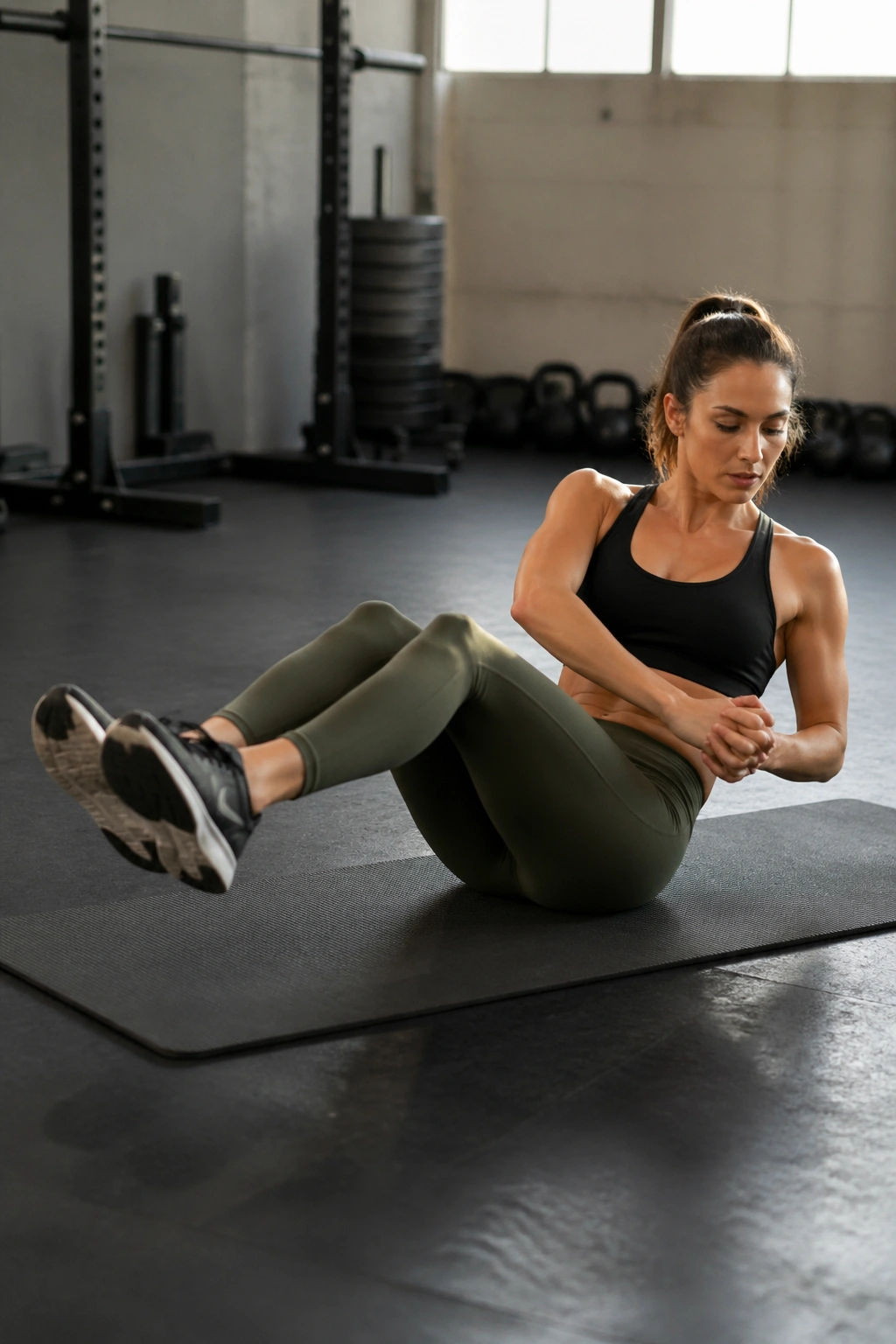
What happens when your feet leave the floor? The move gets honest fast.
Lift both feet a few inches off the ground and hold your shins parallel to the floor, or keep your knees bent if that feels better. The second your feet float, your hip flexors and abs have to stabilize more, and the temptation to lean on momentum goes up. A lot. This is a good test, not a badge of honor.
The trick is to keep the same torso angle you used in the basic version. People often lean back too far when their feet rise, and that’s where the lower back starts taking over. If you feel the front of your hips gripping like crazy, lower the feet or tap one heel down between twists. No shame in that.
Who should use it
This version fits someone who can do the classic twist without wobbling. If your torso stays steady and your breathing doesn’t turn into panic, you’re ready.
What to watch for
- Don’t lock your neck forward.
- Don’t let the feet dangle high and loose.
- Don’t chase a huge range if your back rounds.
- Keep the twist small if your balance feels shaky.
This one is a sneaky burner. Not because it’s magical, but because it strips away the easy cheat of planting the feet and shifting your weight around.
3. Weighted Plate Russian Twist
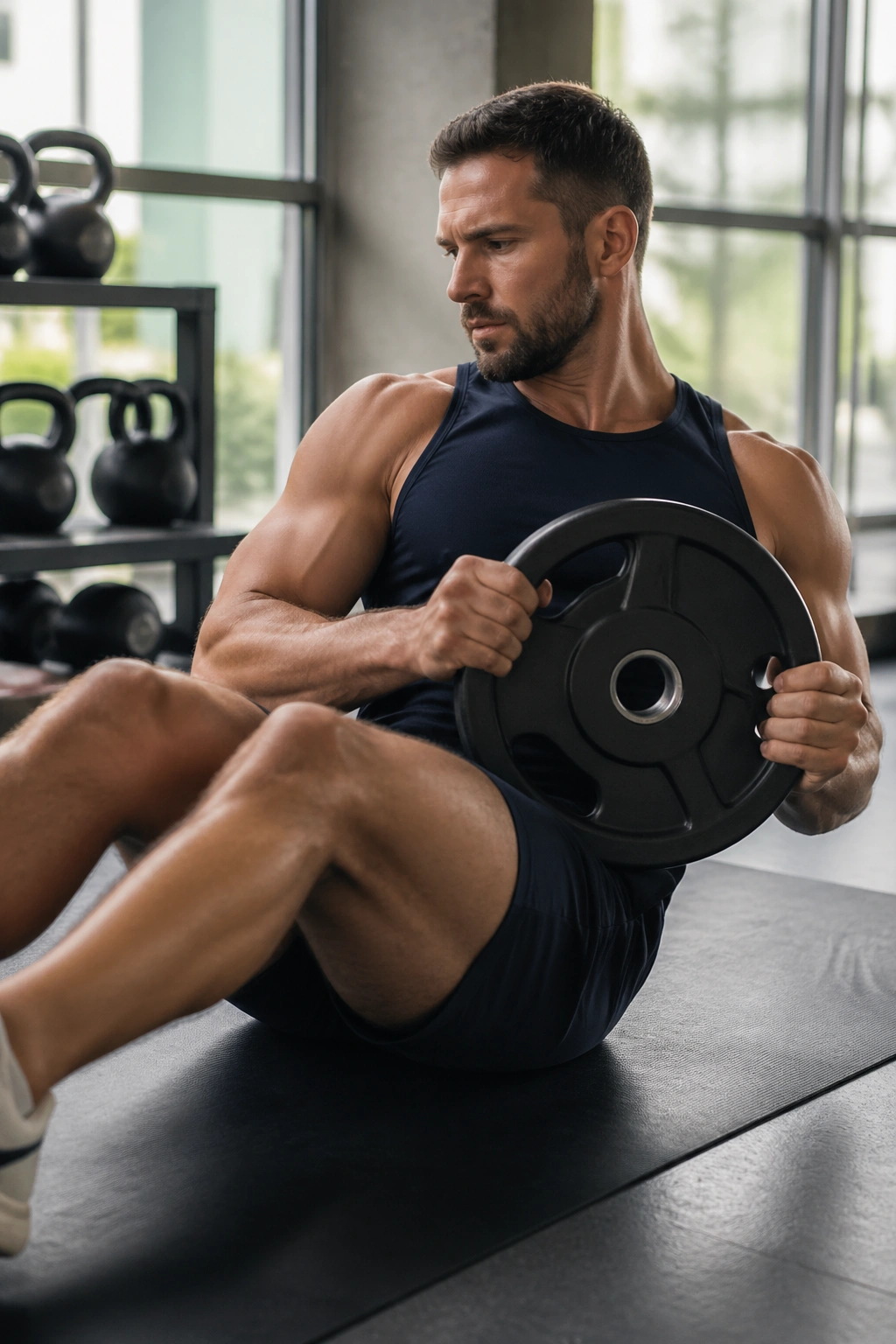
A 10-pound plate changes the feel of the move fast.
Hold a single weight plate, dumbbell, or medicine plate close to your chest, then twist from side to side with control. The extra load makes your obliques work harder, but more load is not automatically better. Heavy twisting with sloppy form is a bad trade. Your spine doesn’t care about ego.
What makes the load different
A plate shifts the challenge from balance to tension. That’s useful if bodyweight twists have gotten too easy, but it also means you need to respect the speed of the movement. A slower twist with a moderate load usually beats a fast twist with a heavy one, especially if you’re using this for core work tied to fat loss.
If you’ve never used a load before, start light. A 5-pound plate can be enough. Seriously. The point is to make the torso brace harder, not to see how much weight you can fling around your waist.
Smart loading rules
- Begin with 5 to 10 pounds.
- Keep the plate close to your chest if your shoulders get tired.
- Move up only when you can keep your ribs down and your back neutral.
- Stop the set when the torso starts rocking side to side.
Best for: intermediate trainees who already own the bodyweight version and want more resistance without turning to a cable machine.
There’s a fine line here. Cross it, and the exercise turns into sloppy swinging. Stay on the safe side, and the weighted version becomes one of the better ways to load your obliques at home.
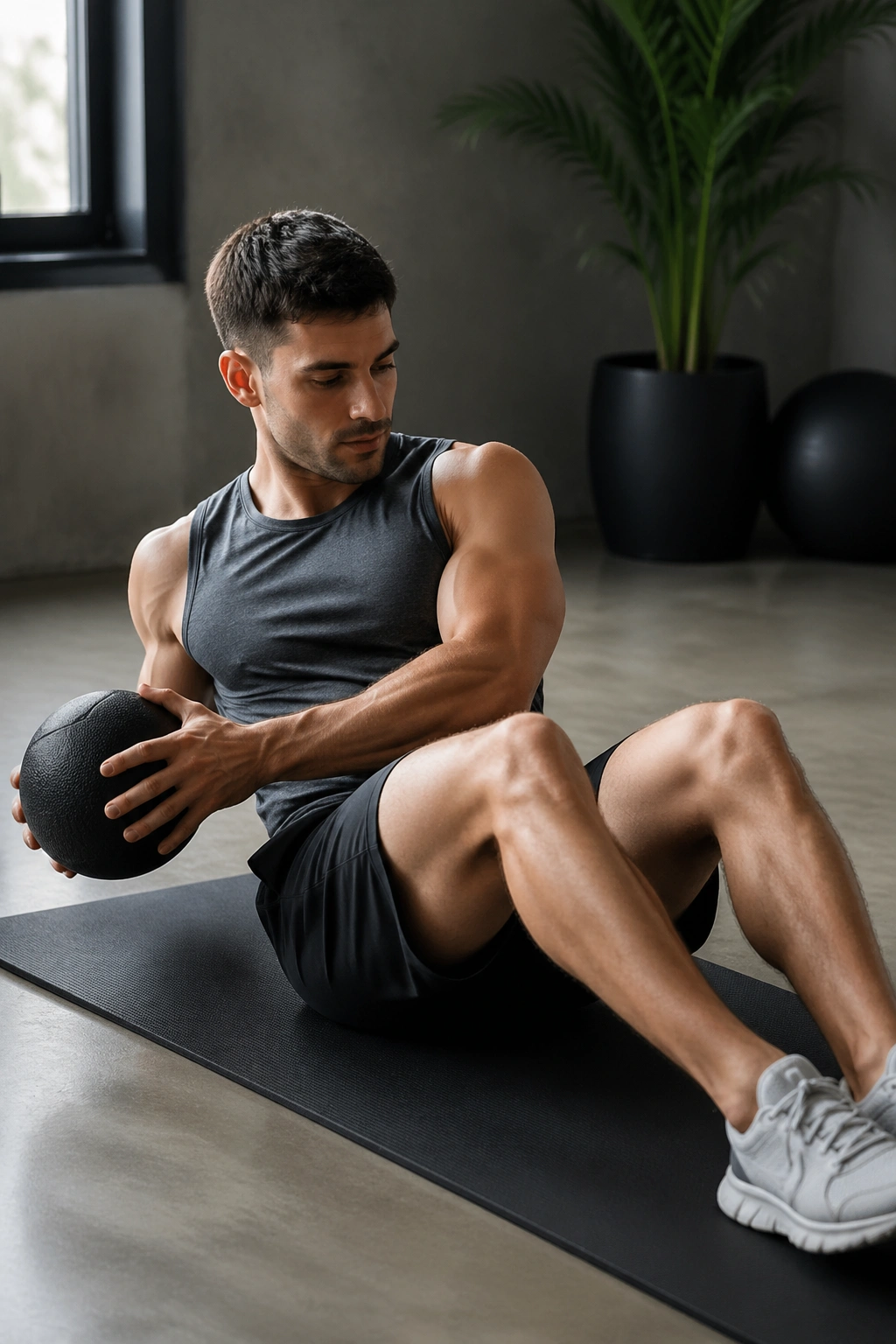
4. Medicine Ball Russian Twist

A medicine ball looks harmless until your grip starts slipping.
That round shape changes everything. Unlike a flat plate, a medicine ball makes you work a little harder to keep the ball centered, and that gives the shoulders and forearms a small role in the exercise. Hold it close to your chest for a tighter twist, or reach it farther away if you want a longer lever and a tougher brace.
What makes it feel different
The ball adds a soft, awkward surface. That sounds minor, but it changes how hard you have to hold on. If you use a slick ball and your hands get sweaty, the exercise gets messy fast. Choose a ball with enough texture that it stays put.
A medicine ball also makes it easier to add a small tap to each side. You can touch the ball gently to the floor beside your hip, then return to center and switch sides. That little pause slows you down and kills the urge to rush.
A simple way to use it
- Use a 4 to 12 pound medicine ball.
- Sit with your knees bent and feet either down or lightly raised.
- Rotate to tap the ball beside your hip.
- Pause for half a second before switching sides.
Good for: people who want a more athletic feel without needing a lot of space or equipment.
This version works well as a bridge between bodyweight twists and heavier resistance. It keeps the movement readable, which matters more than most people admit.
5. Slow-Tempo Russian Twist
Slow Russian twists feel almost boring for the first 15 seconds.
Then the abs start burning.
Tempo changes everything because it strips out momentum. Count three seconds to rotate one way, one second to pause, and one second to come back through center. Or keep the whole rep moving at a steady crawl for 20 to 30 seconds at a time. Either way, you’re forcing the trunk to stay engaged the whole time instead of bouncing through the range.
Why tempo matters more than people think
A fast twist can hide weak control. A slow twist tells the truth. If your ribs flare, your shoulders hike, or your back arches when the pace slows down, the movement is exposing a gap in your core strength.
That is useful. Annoying, but useful.
Tempo work is also a smart pick if you’re trying to pair core training with fat-loss work. You don’t need crazy load for it to feel hard, and you don’t need long sets. Twenty controlled reps can smoke you more than fifty sloppy ones.
How to count it
- 3 seconds to the left
- 1 second pause
- 3 seconds to the right
- Repeat for 6 to 10 full cycles
If you’ve been using Russian twists like a speed drill, this version will feel humbling in a good way.
6. Resistance-Band Russian Twist
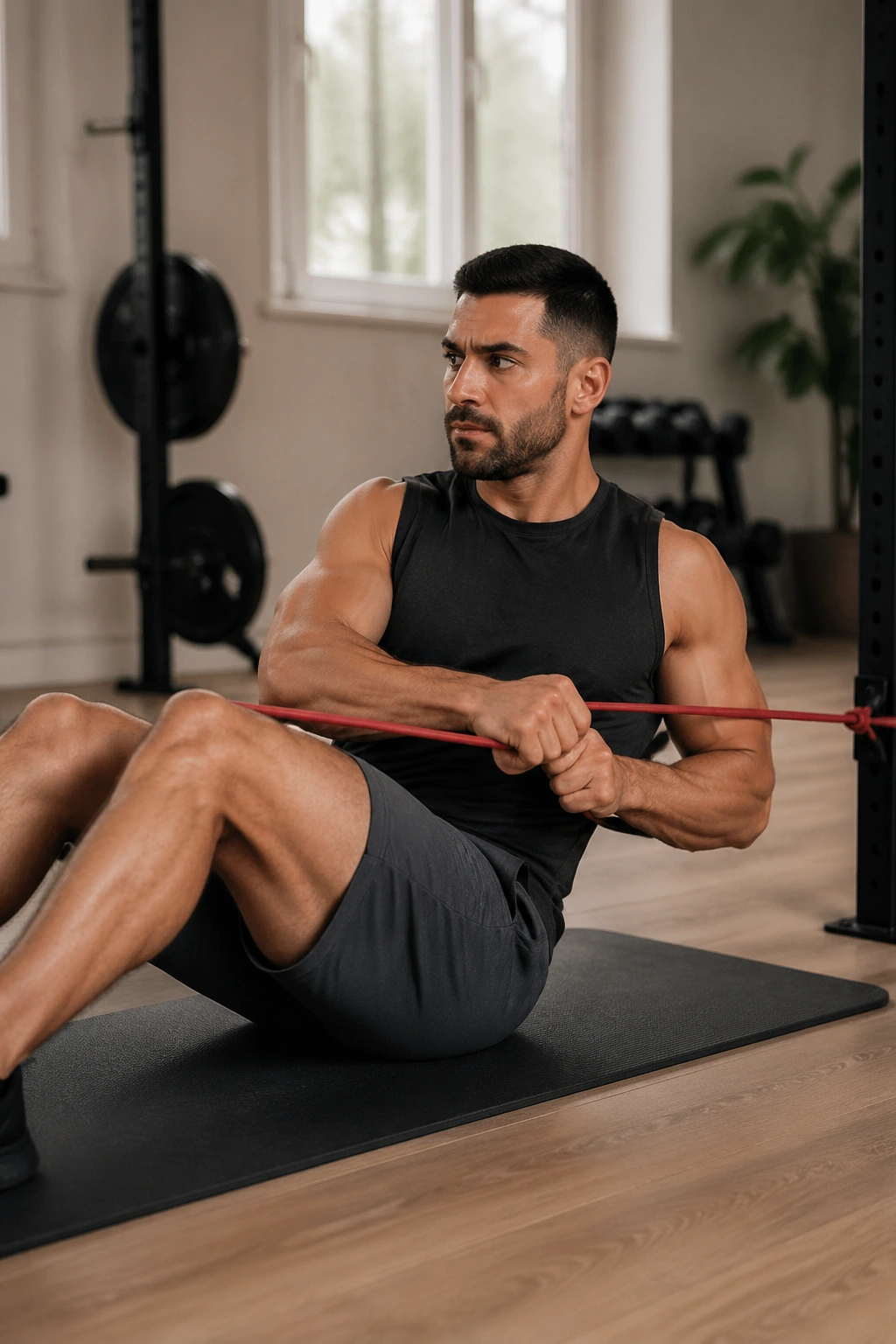
Band tension changes the game because the resistance keeps pulling you off line.
Anchor a band to one side at about chest height, hold the handle or the band itself with both hands, and sit in the Russian twist position facing forward. As you rotate away from the anchor, the band tries to pull you back. That constant tug is what makes this variation useful. You’re not just moving through space; you’re fighting to stay controlled the whole time.
Why bands are worth the hassle
Bands are cheap, portable, and sneaky-hard when set up right. They also make it easier to train the twist as a control exercise rather than a momentum exercise. If your home setup is limited, this is one of the smartest options on the list.
The catch is setup. If the anchor point is too low, the pull feels odd. Too high, and your shoulders take over. Chest height usually works best. Step far enough away that the band has tension before you start twisting. Slack bands are useless.
Form check
- Keep your hips square.
- Twist slowly away from the anchor.
- Return under control, not with a snap.
- Keep your elbows soft, not locked.
This is a solid choice if you want a core move that feels different from floor work and still fits into a small space. It’s also one of the better variations if your training gets stale fast.
7. Stability-Ball Russian Twist
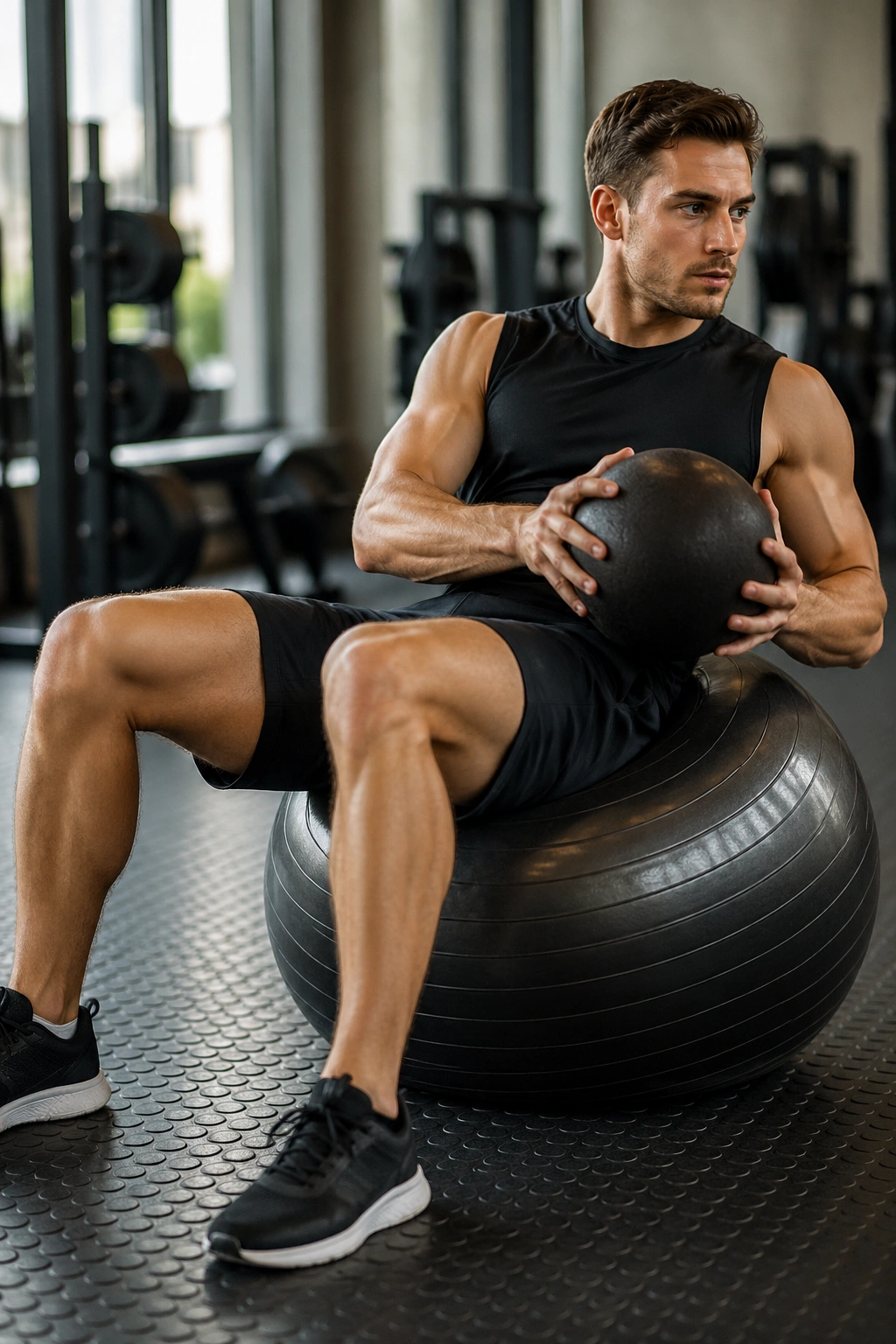
On a stability ball, even the setup is work.
Sit near the middle of the ball and walk your feet out until your torso leans back slightly. Your abs have to stabilize the ball before you even start rotating, which means the exercise becomes part balance drill, part core move. You’ll know pretty quickly whether you’re controlling the movement or chasing it.
That extra wobble can be useful, but it can also be a mess if you go too hard too soon. Start with a small range of motion. Keep your feet wider than you think you need. And if the ball slides around like it’s trying to escape, reset your stance before the next set.
Where it fits best
This version works well for people who want a less rigid feel than the floor gives them. It’s a nice change-up, especially if traditional Russian twists make your back feel stiff or your hips feel cramped.
A few practical notes
- Use a ball that doesn’t sink too much under your weight.
- Keep your knees bent at about 90 degrees.
- Move slowly enough that the ball stays steady.
- Stop if you’re bouncing instead of twisting.
A stability ball adds a balance challenge, but that challenge only helps if the movement stays clean. Messy balance work is just messy work.
8. Standing Cable Russian Twist
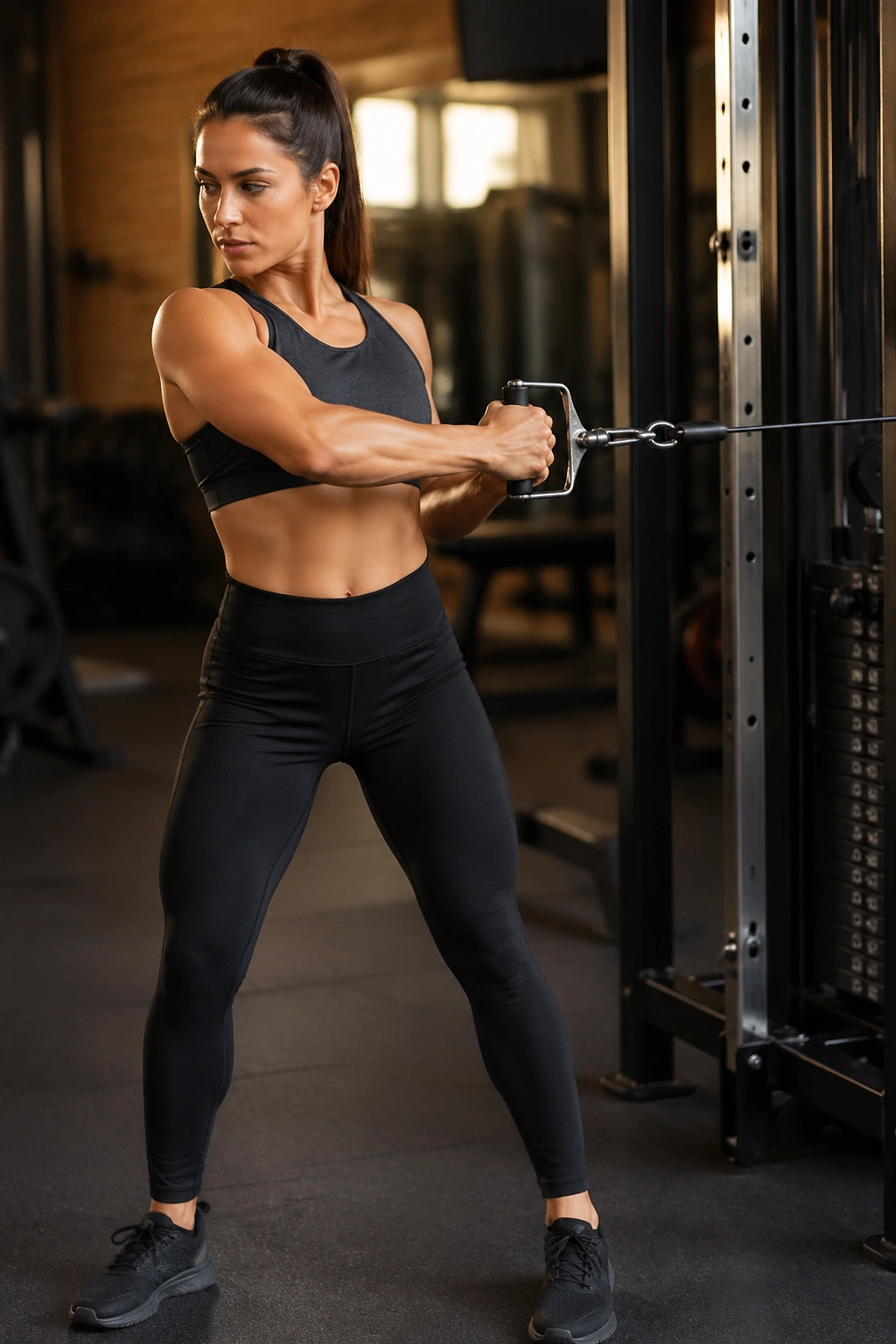
A cable stack gives you something floor work cannot: resistance that stays on through the whole twist.
Stand sideways to a cable machine, grab a single handle with both hands, and set the pulley around chest height. From there, rotate your torso away from the stack and then return with control. Your feet stay planted, your knees stay soft, and your core has to resist the pull of the cable. That’s the part people feel the next day.
What makes it different
Standing cable work is smoother than floor twisting. You can load it a bit more precisely, and you can keep the spine in a more upright position. That’s useful if lying on the floor bugs your neck or your lower back.
The setup also makes cheating harder in a different way. You can’t fling your legs around. You can’t rock backward and pretend it’s core work. The machine keeps you honest.
How to get the most from it
- Set the pulley at chest level.
- Plant your feet about shoulder-width apart.
- Keep the hips quiet while the rib cage turns.
- Use a load that lets you finish each rep without jerking.
This is one of the strongest options for someone training at a gym and looking for core work that feels more like real resistance training than a floor exercise.
9. Half-Kneeling Russian Twist
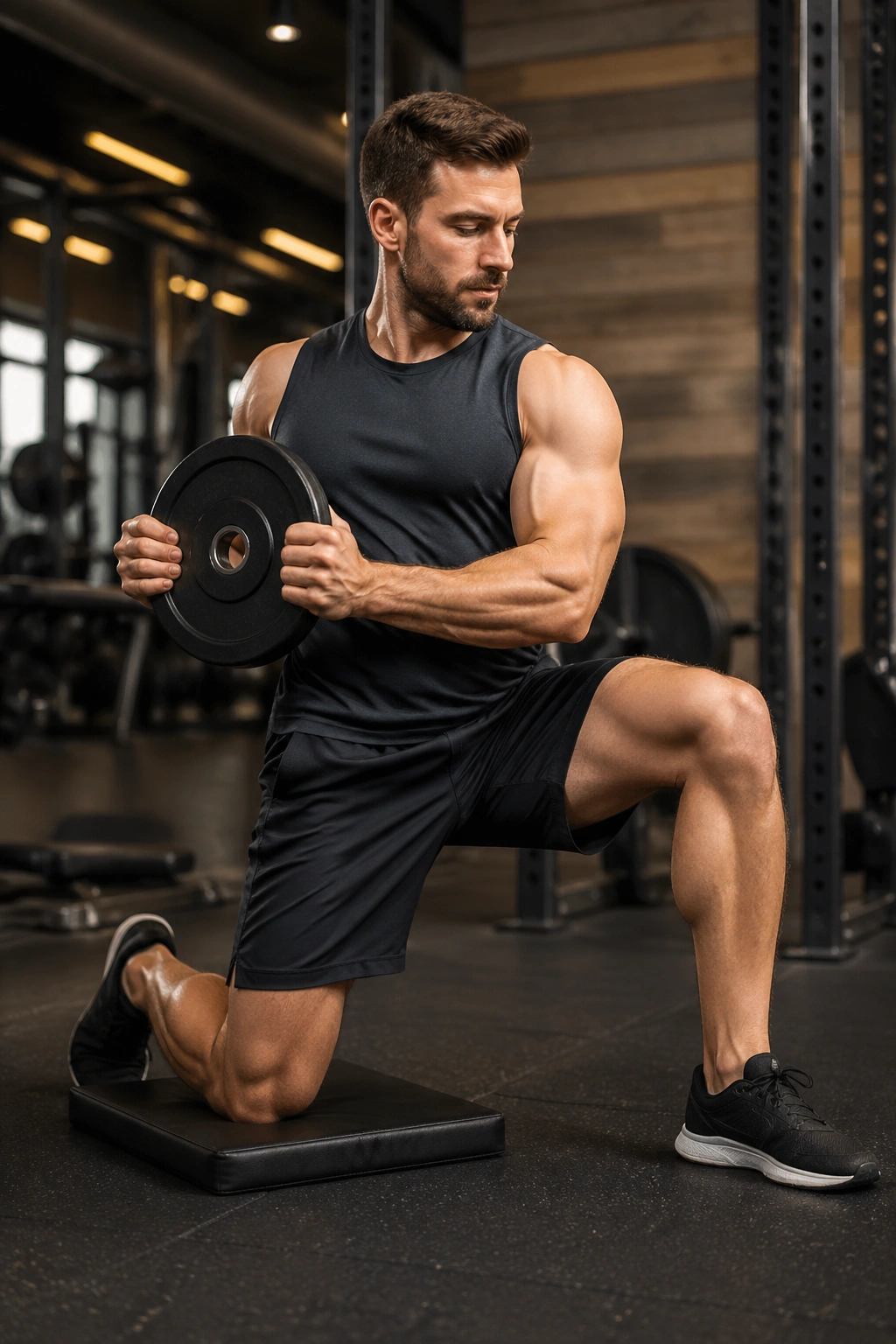
Half-kneeling takes away the wiggle room.
Place one knee on the floor or a pad and plant the opposite foot in front of you. Hold a light plate, dumbbell, or cable handle at chest level and rotate from the torso. The kneeling position shuts down a lot of lower-body cheating, which means the core has to do its job instead of borrowing help from the hips.
It looks simple. It is not simple.
Why this variation earns a spot
Half-kneeling is excellent when standing twists feel too easy and floor twists feel too loose. The split stance gives you stability, but not so much that you can coast. It also tends to be kinder to people who dislike deep hip flexion or long sits on the floor.
A pad under the back knee helps. So does a small range of motion at first. If you twist too far too soon, the pelvis will try to rotate with you, and then the core stops doing the work you wanted in the first place.
Best uses
- Core accessory work after lower-body training
- Warm-up sets before loaded carries or presses
- Home workouts with limited space
Keep the movement measured. One smooth twist to each side is worth more than five fast, sloppier ones.
10. Pause-and-Reach Russian Twist
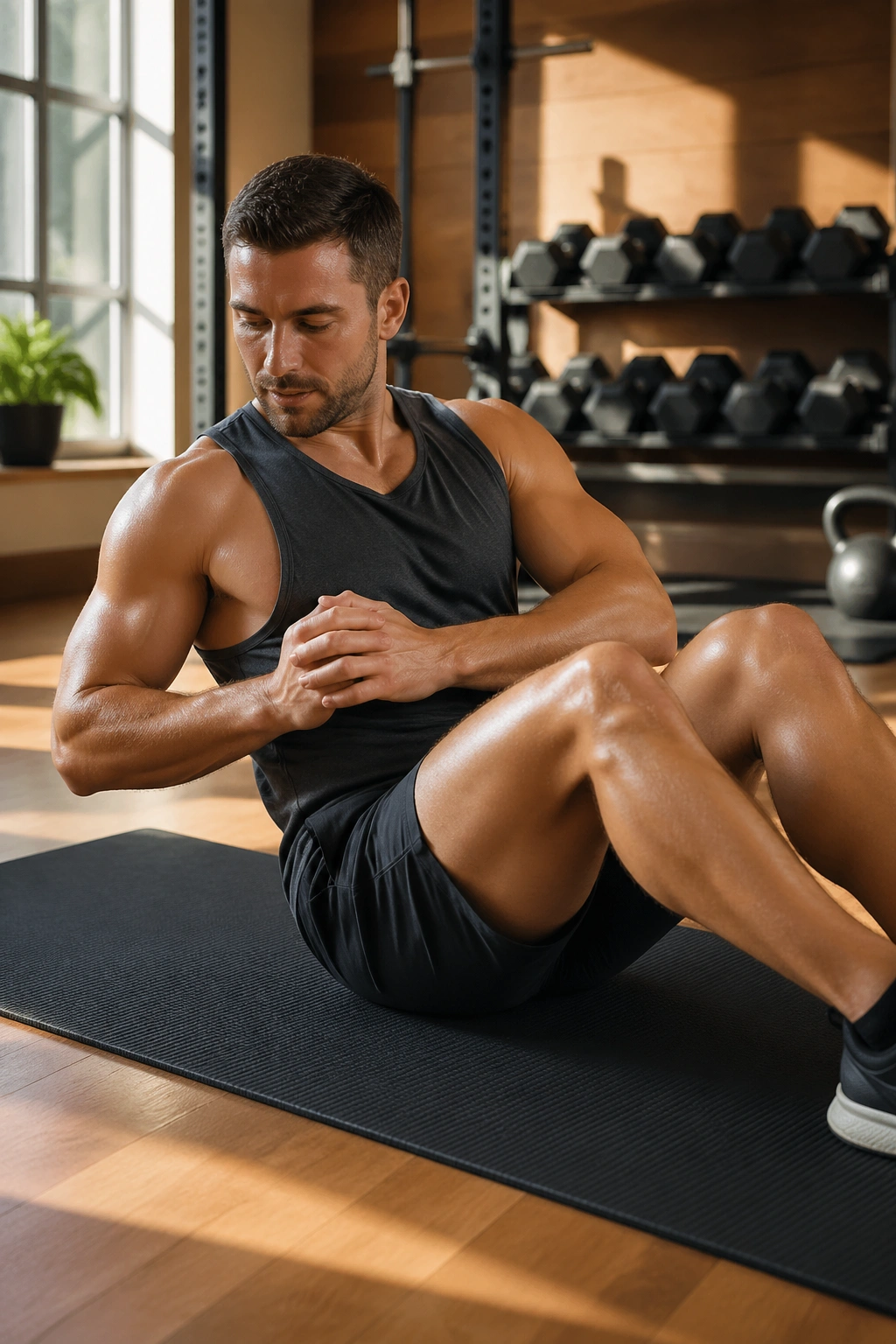
If you want one version that behaves well in a circuit, this is the one.
Reach your hands farther to each side than you do in the classic twist, then pause for a full second before switching directions. That little pause changes the whole exercise. It cuts momentum, forces you to own the end range, and makes your obliques hold tension instead of letting the movement bounce through center.
This is the variation I’d use when the goal is a short finisher after squats, rows, or carries. It doesn’t need much load to feel tough. It doesn’t need fancy gear. It just needs patience, which is the part most people skip.
How to program it
- 20 seconds of work, 10 seconds of rest, for 6 rounds
- Or 12 total pauses per side for 2 to 3 sets
- Pair it with walking, step-ups, or dead bugs if you want a fuller core block
A small pause also helps if you’re trying to clean up form. You can feel whether the torso is rotating or whether your arms are just swinging around like pendulums. That feedback is worth a lot.
Use this one when you want a controlled burn, not a race. For belly fat specifically, that’s the smarter lane anyway: build a stronger midsection, keep your overall training honest, and let the fat loss come from the bigger picture.
