



If your upper arms feel softer than you’d like, the answer is not another random set of curls. The smarter move is a mix of arm fat workouts that build muscle, push the triceps hard, and keep your heart rate honest enough to matter.
You also need the annoying truth that gets skipped in shallow fitness talk: you cannot spot-reduce arm fat. No exercise melts fat off one body part on command. What these workouts do is better, though. They build the muscle under the skin, shape the arm from more angles, and help you burn more calories overall when you pair them with regular training and sane eating.
That’s why the best arm work is rarely just “biceps day.” Triceps matter a lot more than people think. Shoulders change the outline of the arm, and forearms help the whole thing look stronger instead of just busy. A skinny-curl-only routine leaves a lot on the table.
So the trick is to train smart, not just hard. Pick a few moves that challenge the back of the arm, a few that build the front, and at least one or two that get your breathing up. Start with the exercises that let you control the rep cleanly, then earn your way toward the harder stuff.
1. Incline Push-Ups for the Back of the Arms
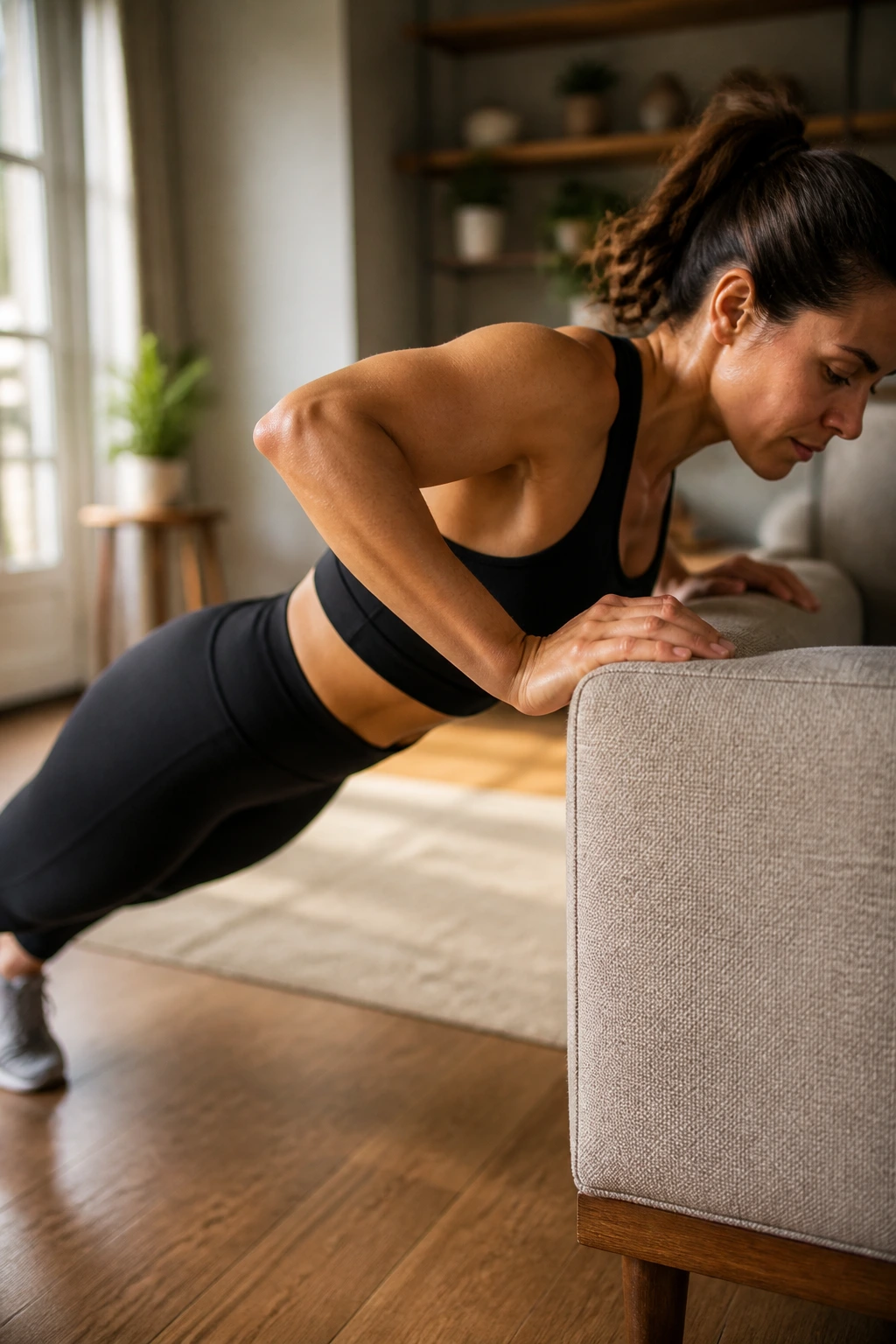
Incline push-ups are one of the easiest honest tests of upper-body strength. A bench, countertop, or sturdy sofa arm lowers the load just enough that you can keep your torso straight and your elbows from wandering all over the place. That matters more than people think, because sloppy reps turn into chest-and-shoulder flailing fast.
How to Set It Up
- Place your hands on a stable surface about 24 to 36 inches high.
- Walk your feet back until your body makes one long line from head to heels.
- Lower your chest until it comes within 1 to 2 inches of the edge, then press back up.
- Keep your elbows at about 30 to 45 degrees from your ribs.
Three sets of 8 to 15 reps is a good working range. If you can hit the top end with a pause at the bottom, lower the surface and make the angle steeper. That’s your progression right there.
Do not let your lower back sag. A bent spine turns a clean arm exercise into a messy plank with a shrug at the top.
2. Chair Dips for a Hard Triceps Burn
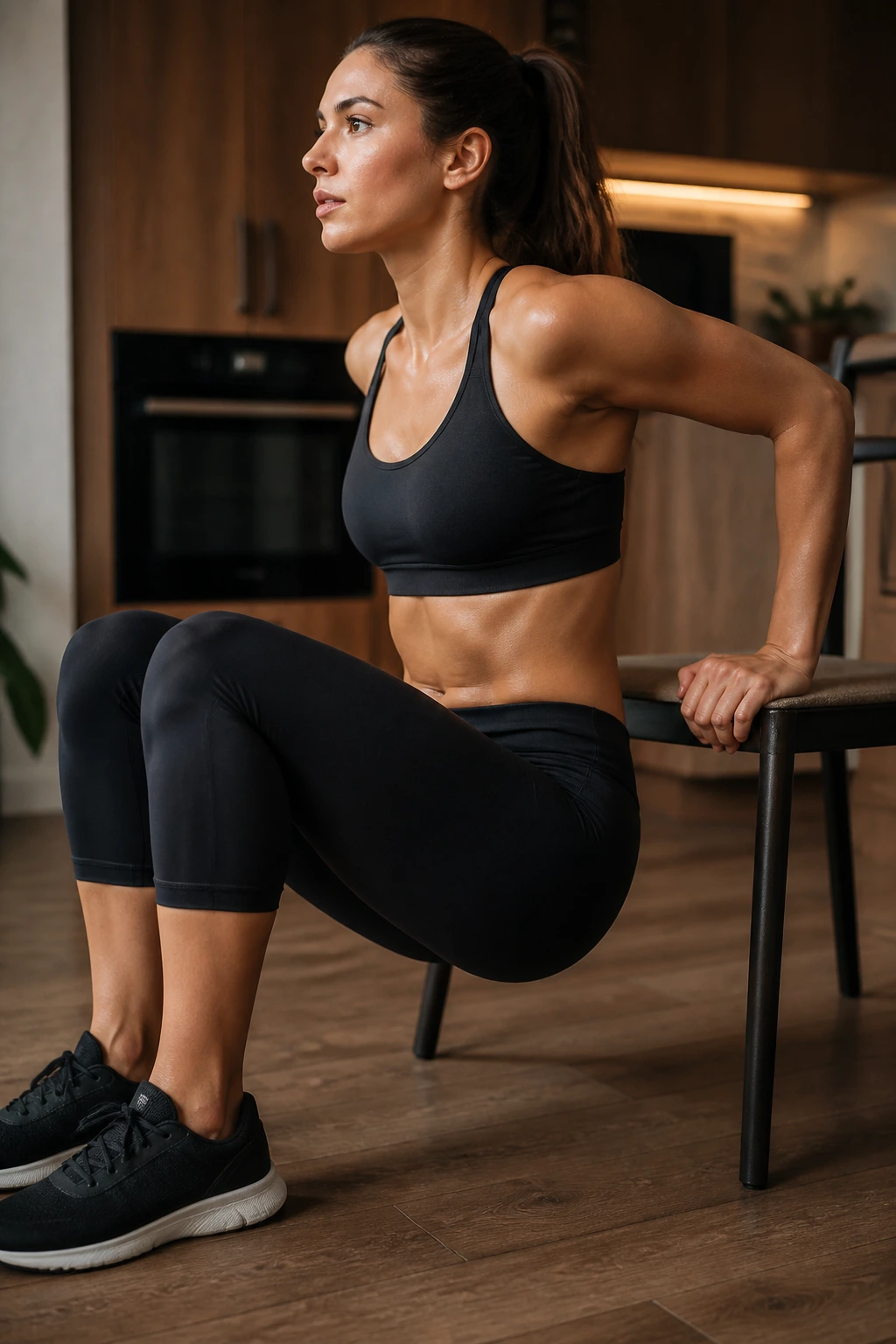
Chair dips are blunt. That’s the charm and the problem.
They can light up the triceps fast, especially if you keep your torso close to the bench and avoid diving too deep. But they can also make the front of the shoulder complain if you drop too low or set your hands too far behind you. A lot of people blame the movement when the real issue is range and setup.
Keep your knees bent if you’re newer to dips. That cuts the load and makes the rep feel less like a fight with gravity. Lower only until your upper arms are close to parallel with the floor, then press back up hard through the heels of your hands.
If your shoulders feel pinched at the bottom, stop the set. No hero points there. Two to four sets of 6 to 10 reps is plenty for most people, and it works best when you stay strict instead of bouncing around like you’re trying to escape the bench.
3. Overhead Dumbbell Extensions That Stretch the Triceps
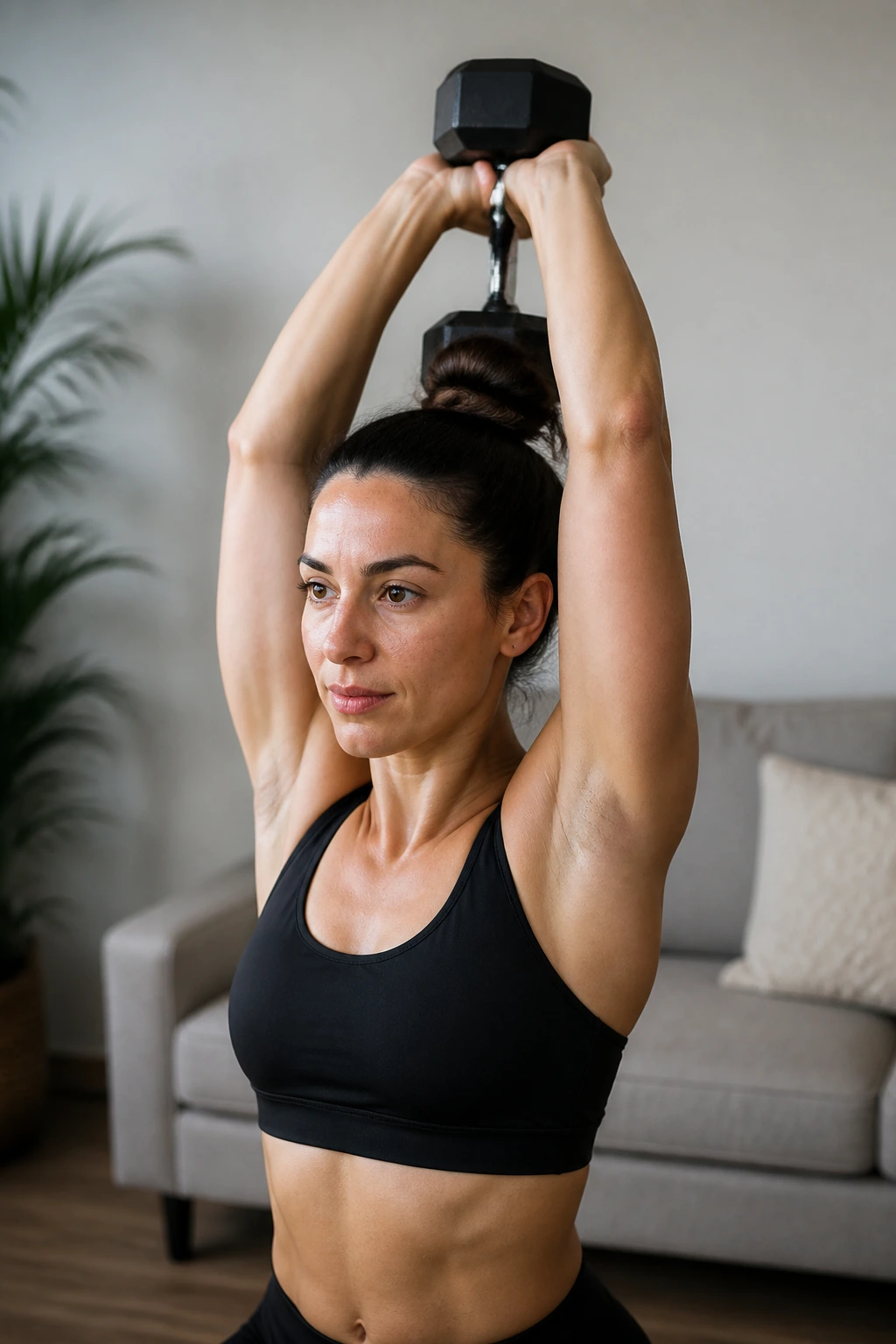
Why do overhead triceps extensions show up in so many arm routines? Because they hit the long head of the triceps in a position that stretches it under load. That’s the part of the arm that gives the back-of-arm look a lot of people want when sleeves are tight.
Hold one dumbbell with both hands, or use a single arm if your elbows feel better that way. Press the weight overhead, keep your ribs down, and let the elbows bend without flaring out like wings. The lowering phase should feel slow and controlled, not rushed.
How to Keep It Off Your Lower Back
Your lower back wants to cheat here. It always does.
- Squeeze your glutes before you start.
- Keep your ribs stacked over your hips.
- Lower the dumbbell until you feel a real stretch, not a shoulder pinch.
- Press up until the elbows are straight, but do not snap them hard.
A rep range of 10 to 15 works well. Use a weight that makes the last three reps feel honest. If you’re arching back to move it, the dumbbell is too heavy.
4. Dumbbell Curls for Cleaner Biceps Shape
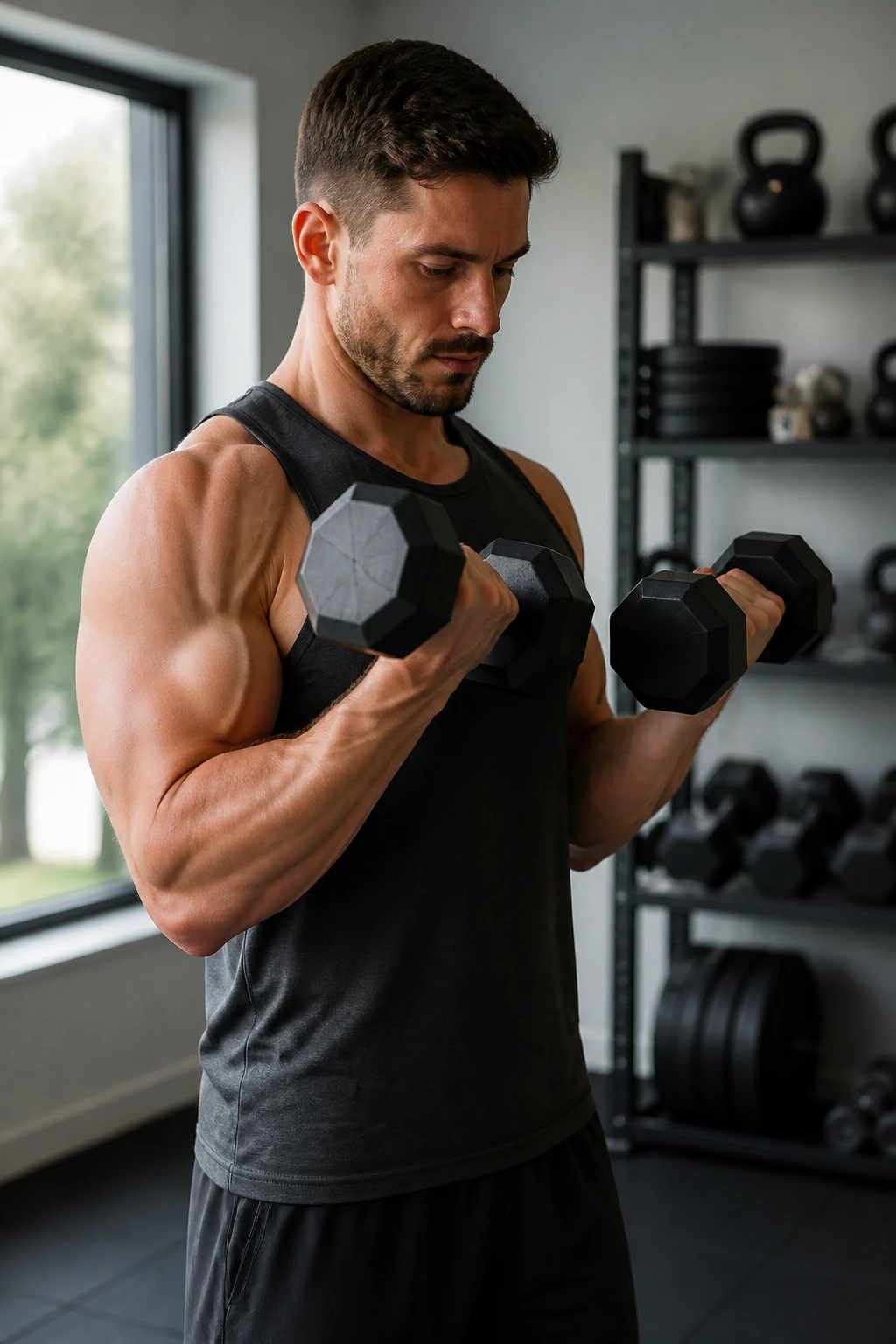
A lot of people can curl a dumbbell forever and still dislike how their arms look in a sleeveless shirt. That usually means the reps are too loose, the range is too short, or the elbows are drifting forward the whole time.
Clean dumbbell curls are basic for a reason. They build the front of the upper arm without needing fancy gear. Stand tall, keep your elbows close to your sides, and curl only until your forearm almost touches your bicep. Then lower slowly for 2 to 3 seconds. That slow lowering phase matters more than the top squeeze, even though the squeeze feels nicer.
Keep the shoulder quiet. If you have to swing your torso to get the dumbbell up, the weight is too ambitious. Use a load you can control for 8 to 12 reps with no drama. That is usually where the useful work lives.
My bias? Pause for one second at the top of each rep. It feels old-school. It also keeps the movement from turning into a quick shoulder shrug.
5. Hammer Curls for Thicker Upper Arms
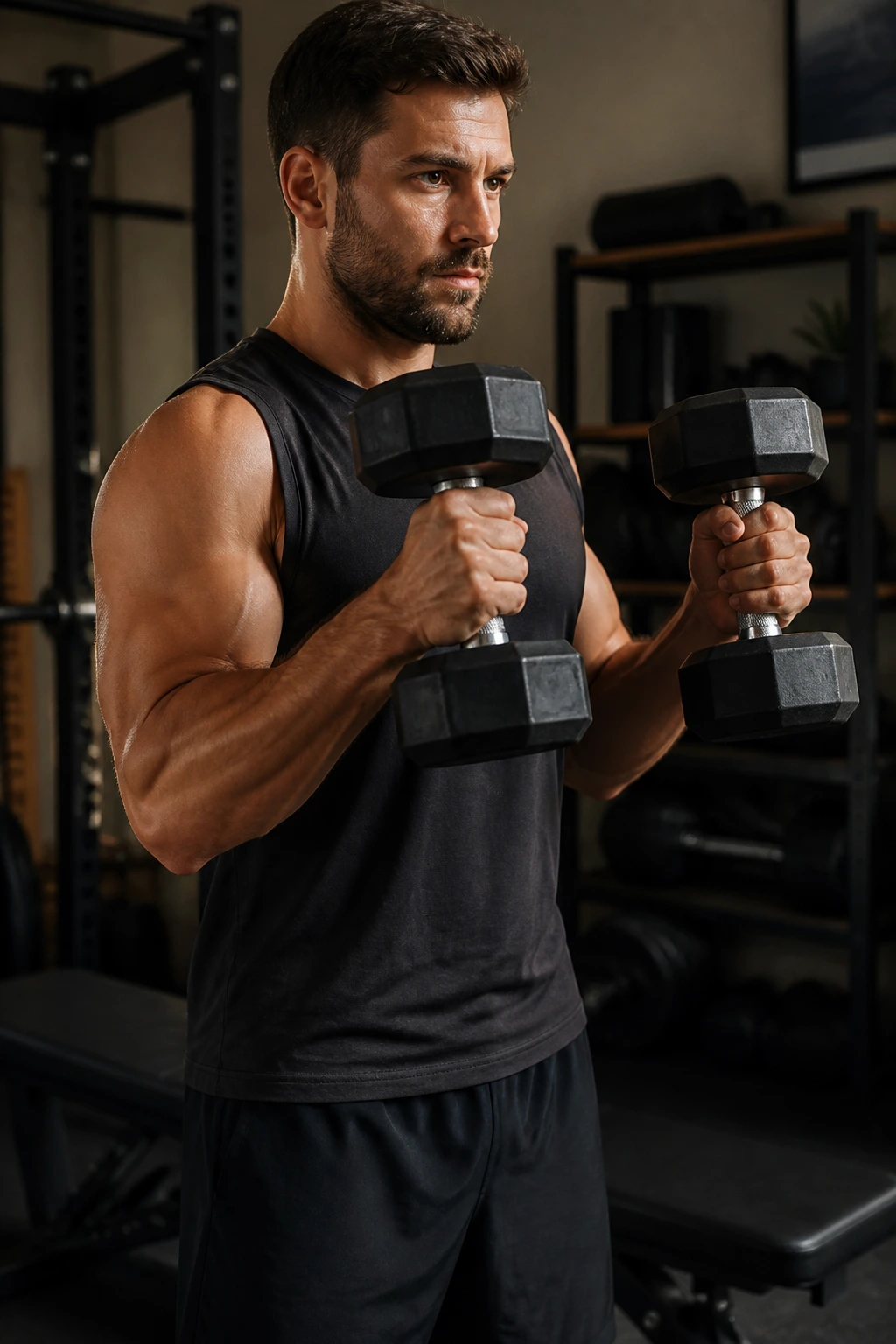
Hammer curls are the move I reach for when regular curls start to feel a little too neat and a little too one-dimensional. The neutral grip changes the feel fast. Instead of chasing only the biceps peak, you bring in the brachialis and a chunk of the forearm, which helps the upper arm look thicker from the side.
They’re also easier on some wrists. That alone makes them worth keeping around. If straight-up curls bother your joints, hammer curls often feel steadier because your hands stay in a natural grip the whole time.
The rep should be smooth on the way up and slower on the way down. A lot of people rush the return and lose half the benefit. Keep the dumbbells close to your body, avoid leaning back, and stop when the forearms are vertical. Three sets of 10 to 12 reps is a very solid place to start.
Hammer curls don’t look flashy. Good. Flashy is usually a bad sign in arm training.
6. Close-Grip Push-Ups for Bodyweight Triceps Work
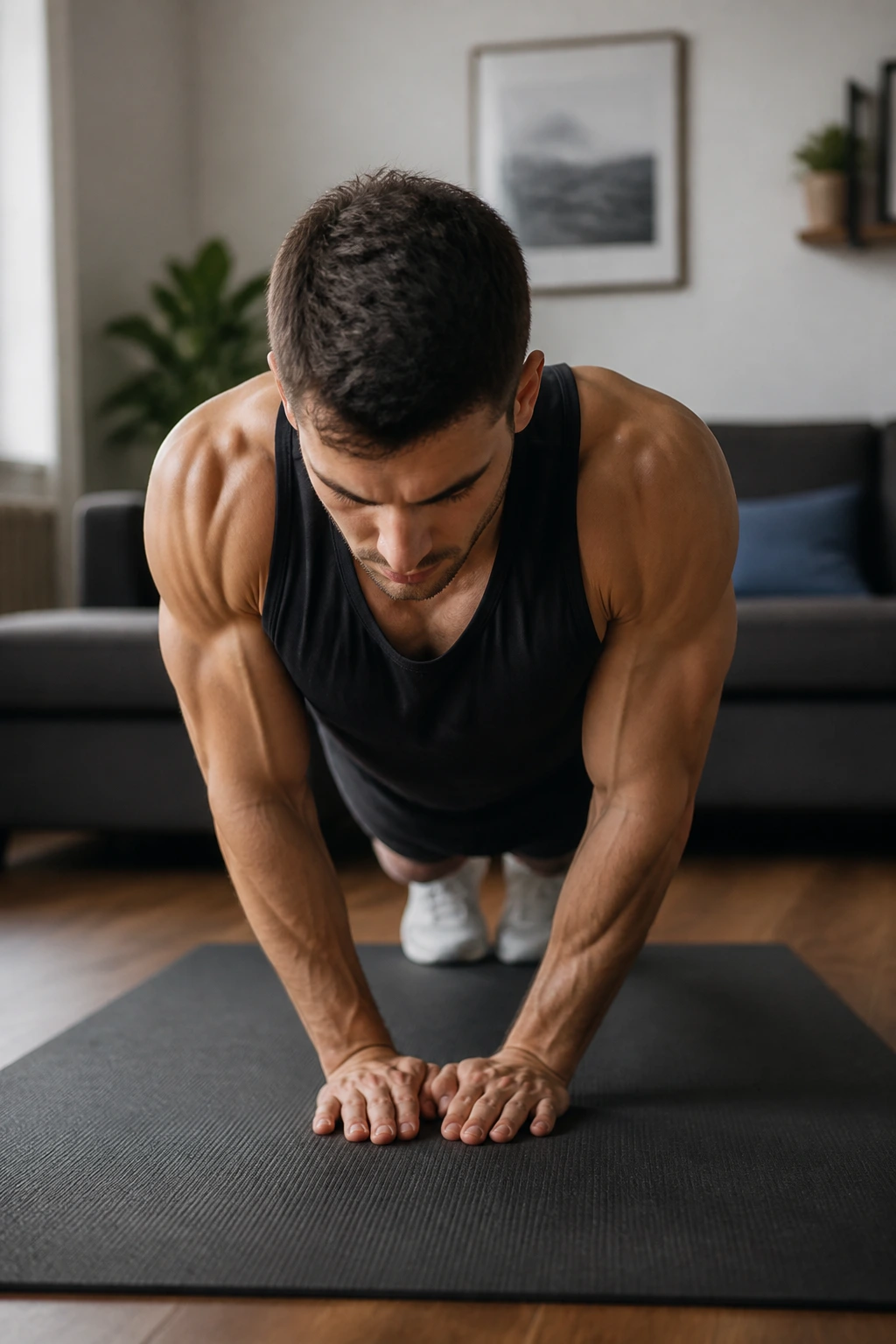
Close-grip push-ups are the cleaner cousin of the diamond push-up. The hands stay narrower than a standard push-up, but not so tight that your wrists scream for mercy. That small adjustment shifts more of the workload toward the triceps and away from the chest.
If you want bodyweight-only arm work, this is one of the best places to live. Start on an incline if the floor version is too much. You can also drop to your knees while you build the strength to keep your body in one straight line. The goal is not to survive the set. The goal is to make the triceps do the work.
Best Form Cues
- Hands under the shoulders or a little inside them.
- Elbows tucked close, not flared.
- Chest and hips rise together.
- Lower under control, then press the floor away.
Do 3 sets of 6 to 15 reps depending on your level. If your hips sag, stop and reset. The set is over when form goes.
7. Triceps Kickbacks for Strict Lockout Control
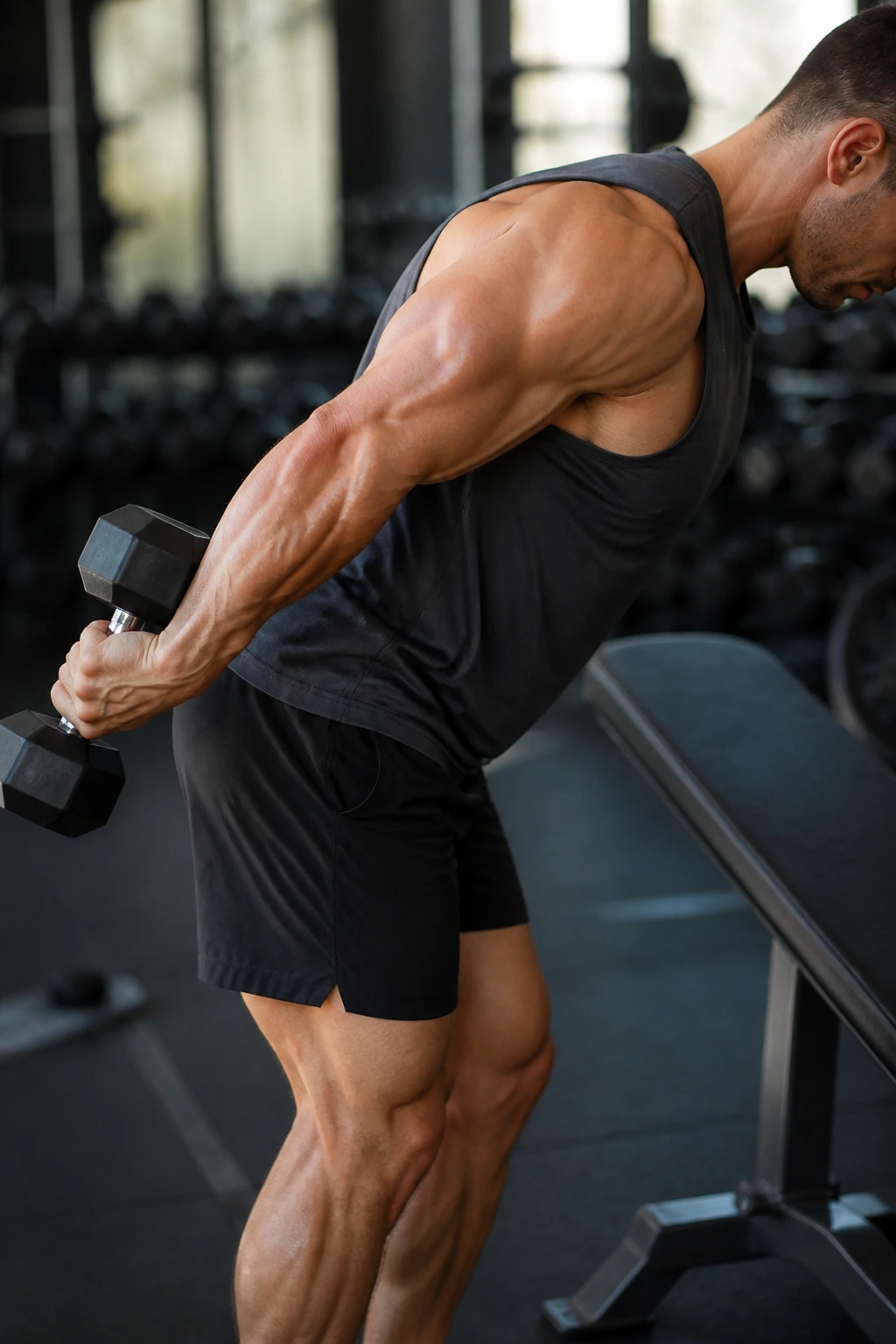
Triceps kickbacks look simple, and that’s the trap. They punish sloppy form fast. You hinge at the hips, keep the upper arm fixed beside your torso, and extend the forearm back until the elbow straightens. That tiny range is where the work happens.
This is not a lift for ego weights. It’s a lift for precision. If the upper arm drifts around or the torso starts swinging to help, the triceps stop doing much of anything. Use a light dumbbell, maybe 5 to 12 pounds for many people, and make every rep clean enough to hear the dumbbell stop at the end.
What to Watch For
- Upper arm should stay parallel to the floor.
- Wrist stays straight.
- The movement comes from the elbow, not the shoulder.
- Pause for one second at full extension.
Kickbacks work best for 12 to 20 reps. That higher rep range suits the small leverage of the move and keeps the set honest. If you want a better burn without better form, the answer is still no.
8. Resistance Band Pressdowns for Constant Tension
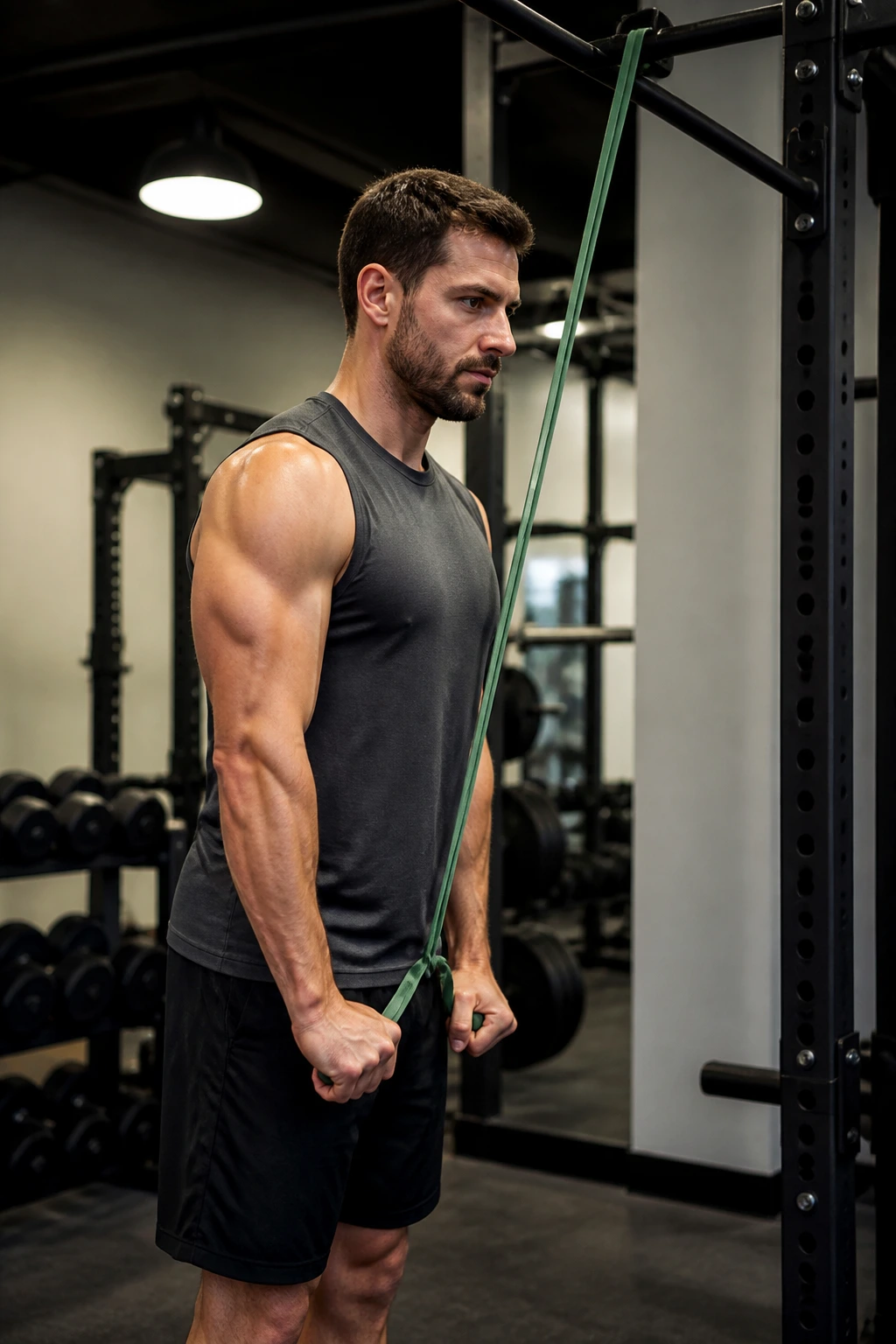
Why do bands feel so different from dumbbells? Because the tension keeps climbing as you press down. There’s no easy part where the weight gets lazy. That makes band pressdowns a sneaky-good triceps builder, especially when you want a home option that doesn’t need much space.
Anchor the band high, step back until there’s tension at the start, and pin your elbows against your sides. From there, press the handles or band ends down until your arms straighten. The elbows should stay quiet. If they swing forward, the triceps lose the job.
How to Use It
- Pick a band that forces the last 3 reps to slow down.
- Stand far enough back that the band is already loaded at the top.
- Keep your shoulders down, not shrugged.
- Use 15 to 20 reps per set.
This is one of those exercises that works better when you stop trying to make it heroic. Smooth reps, tight elbows, full lockout. That’s the formula.
9. Lateral Raises for Shoulder Caps and Arm Definition
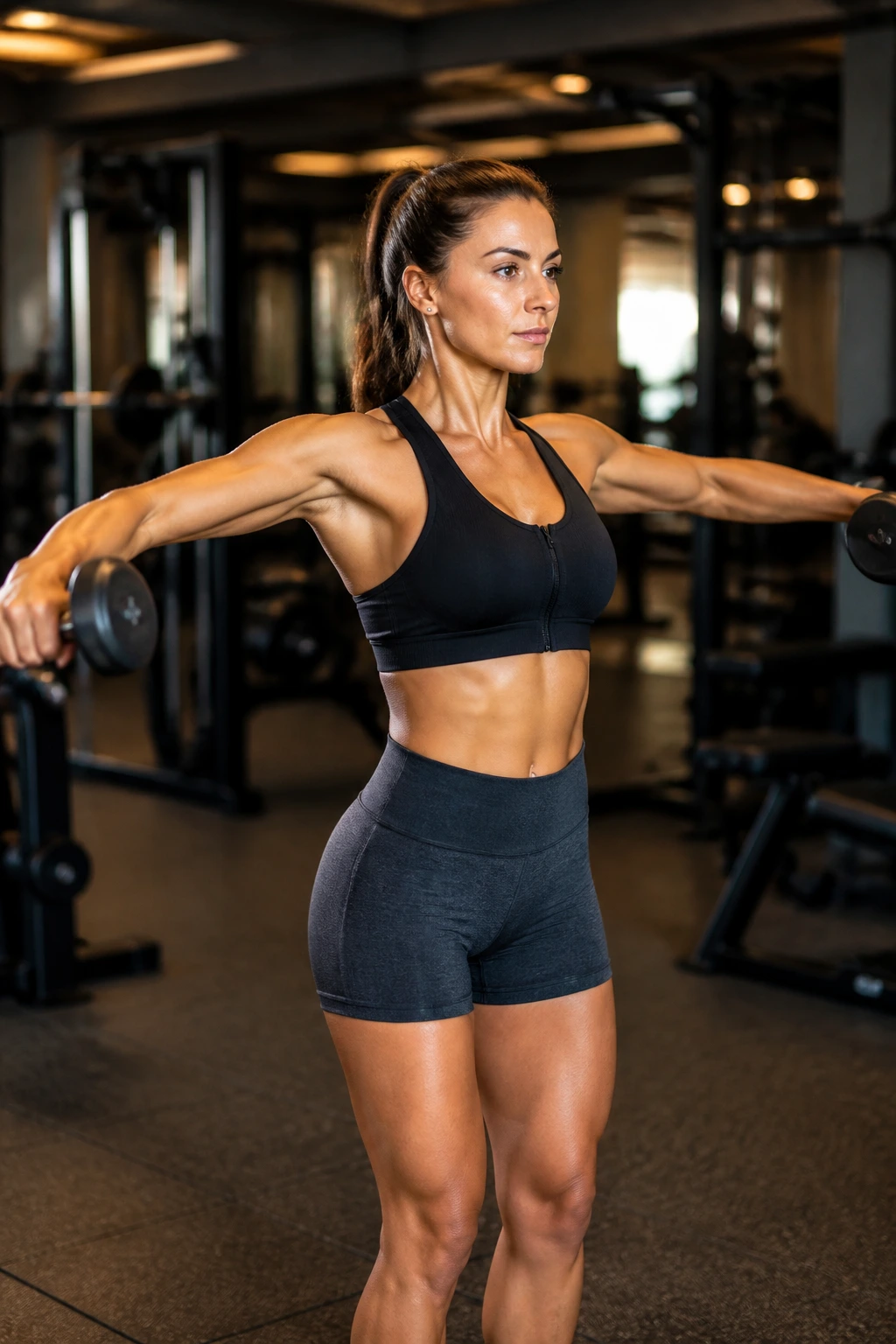
A pair of light dumbbells can do more for the look of your arms than a heavy, ugly shrug-fest ever will. Lateral raises widen the shoulders, and wider shoulders make the upper arm look more defined even before you lose much fat. That’s why they belong in arm-focused work, even though they’re not a pure arm move.
Stand tall with a tiny bend in the elbows. Lift the dumbbells out to the sides until they reach shoulder height, then lower them with control. The temptation is to use momentum and fling the weights up. Don’t. If you have to lean back to move them, you’ve gone too heavy.
A slight forward lean often helps people feel the side delts better. Keep the neck long. Keep the shoulders out of your ears. Twelve to 20 reps is a sweet spot, and it is normal for the weight to look embarrassingly light. That’s usually a sign you picked well.
The burn shows up fast. That’s part of the appeal.
10. Front Raises for the Front of the Shoulder
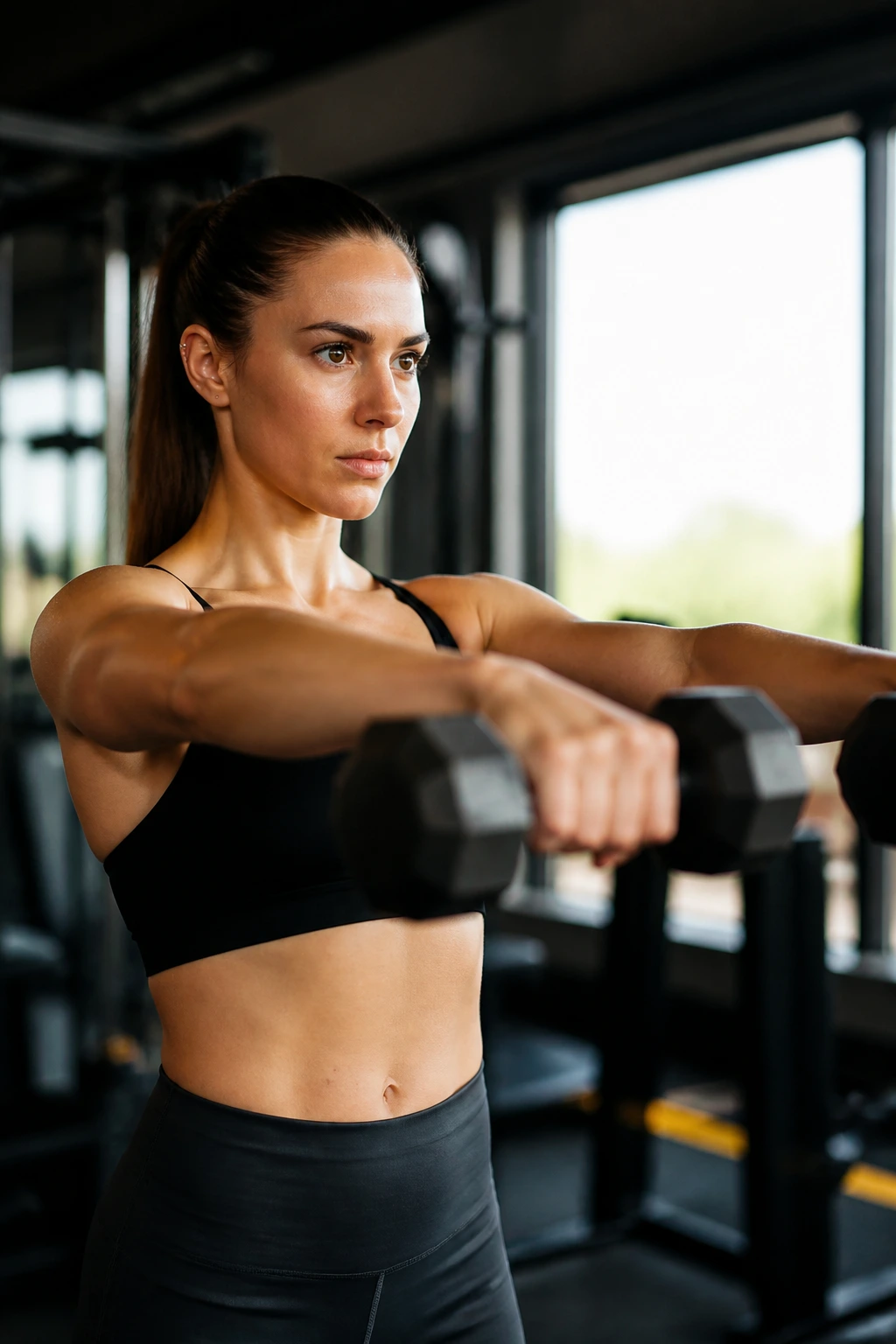
Front raises are not the star of the show, and I like that about them. They do one job. They help the front of the shoulder stand out, which can sharpen the upper-arm outline when the rest of your training already covers chest and triceps work.
The catch is that many people already hit the front delts plenty through push-ups, presses, and dips. So this is a smaller tool, not a main course. Use it if your pressing strength is good but the front of your shoulder still lags behind the rest of your upper body.
Raise dumbbells or a plate to shoulder height, pause for a beat, then lower under control. That’s it. No swing. No lean. No weird neck strain.
One to three sets of 10 to 15 reps is enough for most people. If your shoulders feel cooked after presses, skip this on that day. The goal is useful work, not surplus fatigue.
11. Pike Push-Ups for Stronger Shoulders and Arms
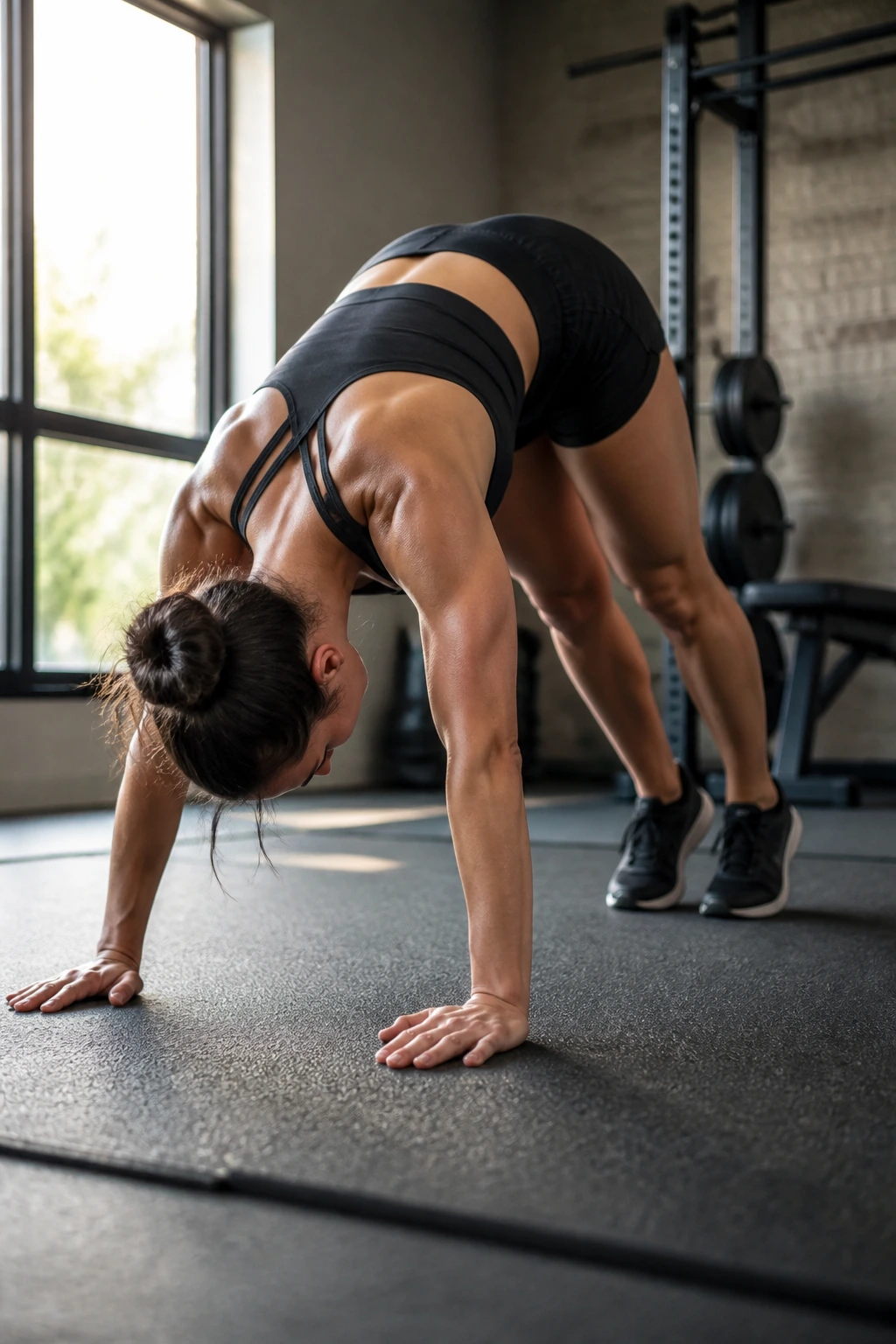
A pike push-up feels a lot like a shoulder press with your body as the machine. Hips go high, head points down, and the arms press your body back up from a steep angle. It looks awkward for the first few reps. That’s normal. It should feel a little strange if you’re doing it right.
This one matters because stronger shoulders change the arm’s outline. Better shoulder strength also helps the triceps and upper back support all the other pressing work you’re doing. If you only ever curl and never press, you end up with a lopsided routine.
How to Make It Work
- Start in a downward-dog shape.
- Hands stay shoulder-width apart.
- Lower the head toward the floor between the hands.
- Press back until the elbows are straight.
Use a box or bench to raise your feet if you want more challenge. Use the floor if you’re still building up. Three sets of 5 to 10 reps is plenty. The rep gets hard fast, so quality matters more than quantity here.
12. Zottman Curls for Biceps and Forearms Together
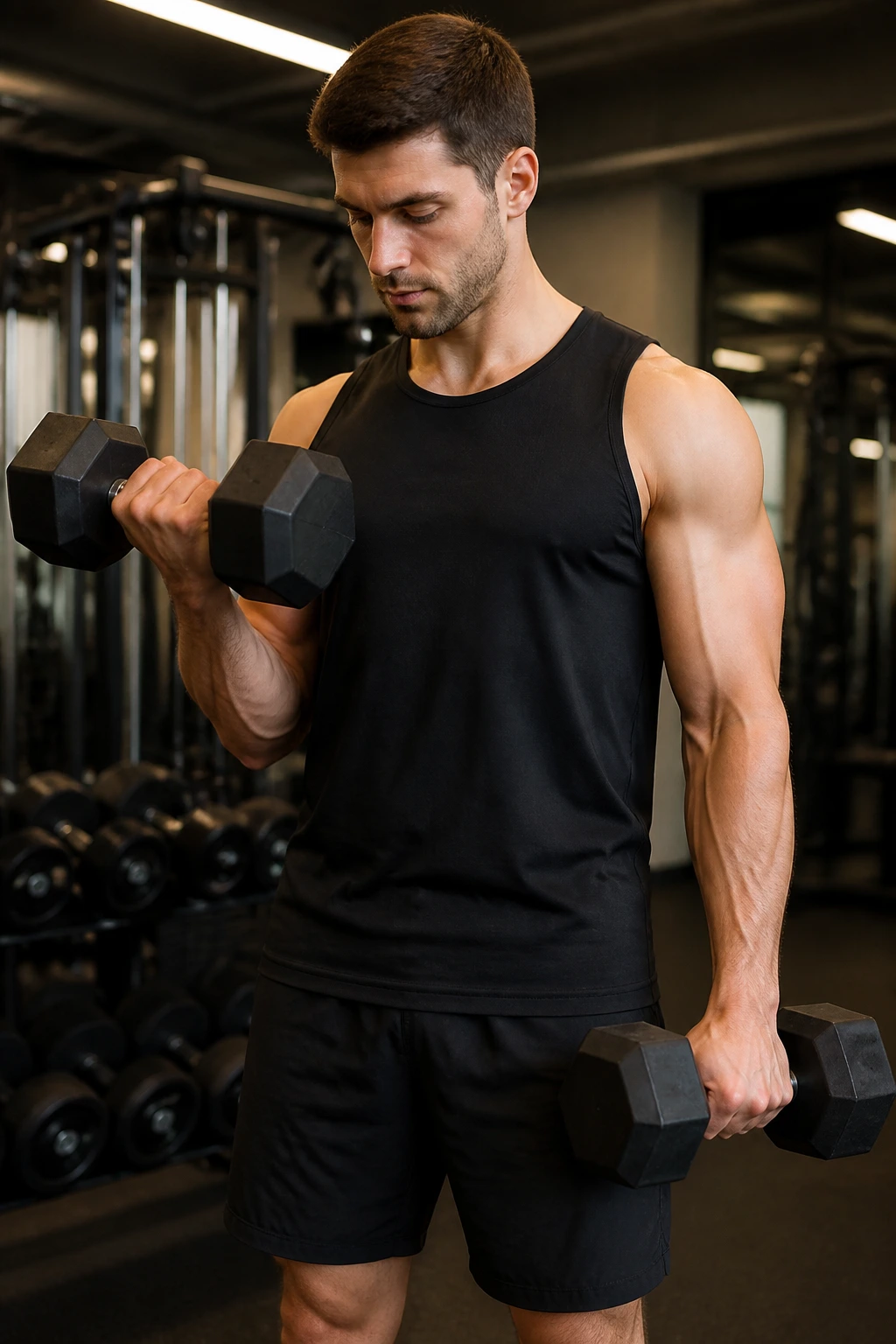
Zottman curls feel old-fashioned in the best way. You curl up with a supinated grip, then rotate the wrists at the top and lower with a pronated grip. That flip changes everything. The biceps work on the way up, then the forearms get the grinding job on the way down.
Use light weights. Really light, if you’re new to the move. The lowering phase is harder than it looks, and if you rush the wrist rotation, the whole thing turns sloppy. Smooth movement is the point. The forearms should feel lit up by the third or fourth rep.
I like this exercise because it solves a common problem: people train the biceps and forget the forearm work that gives the arm a fuller look near the elbow and wrist. That gap shows up more than people expect.
Do 8 to 10 reps for 2 to 4 sets. If your wrists feel cranky, shorten the range and keep the rotation gentle.
13. Plank Shoulder Taps for Stable, Lean-Looking Arms
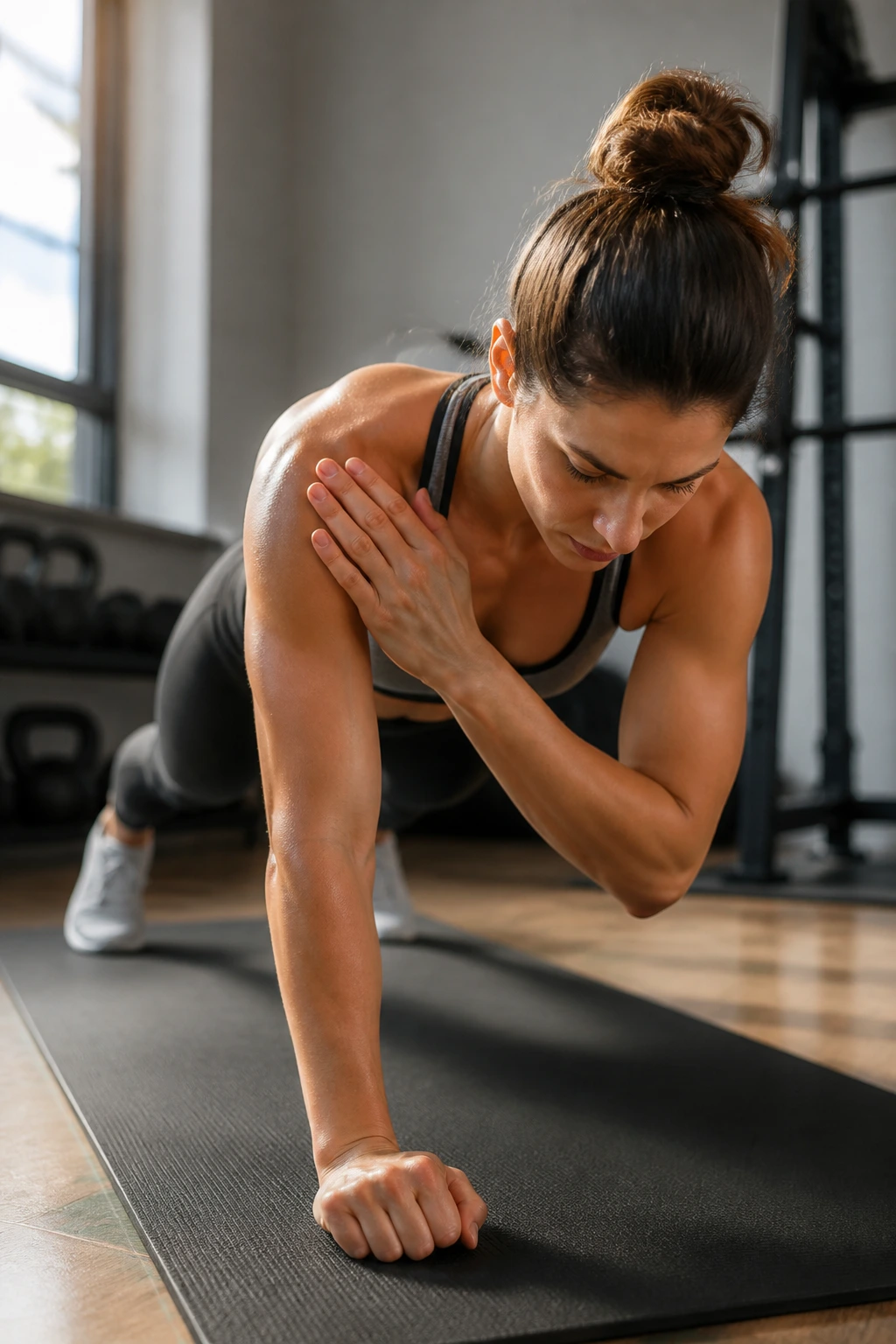
Plank shoulder taps are sneaky. They don’t look like much until your hips start wobbling and your shoulders realize they’re doing a job they can’t fake. The exercise asks your arms to hold your body steady while one hand lifts and taps the opposite shoulder. That anti-rotation work is gold.
Set your feet a little wider than you would for a regular plank. That gives you a wider base and keeps the rep from turning into a balancing failure. Tap one shoulder, return the hand to the floor, then tap the other side. Slow is the whole point. Fast taps just make the hips swing.
Keep These Three Things Tight
- Hands under shoulders.
- Ribs down, glutes on.
- No side-to-side rocking.
You can count taps or time the set for 20 to 40 seconds. If the lower back starts sagging, stop and reset. This is one of those exercises that looks cleaner when you are stronger than when you are trying to look strong.
14. Farmer’s Carries for Grip, Forearms, and Posture
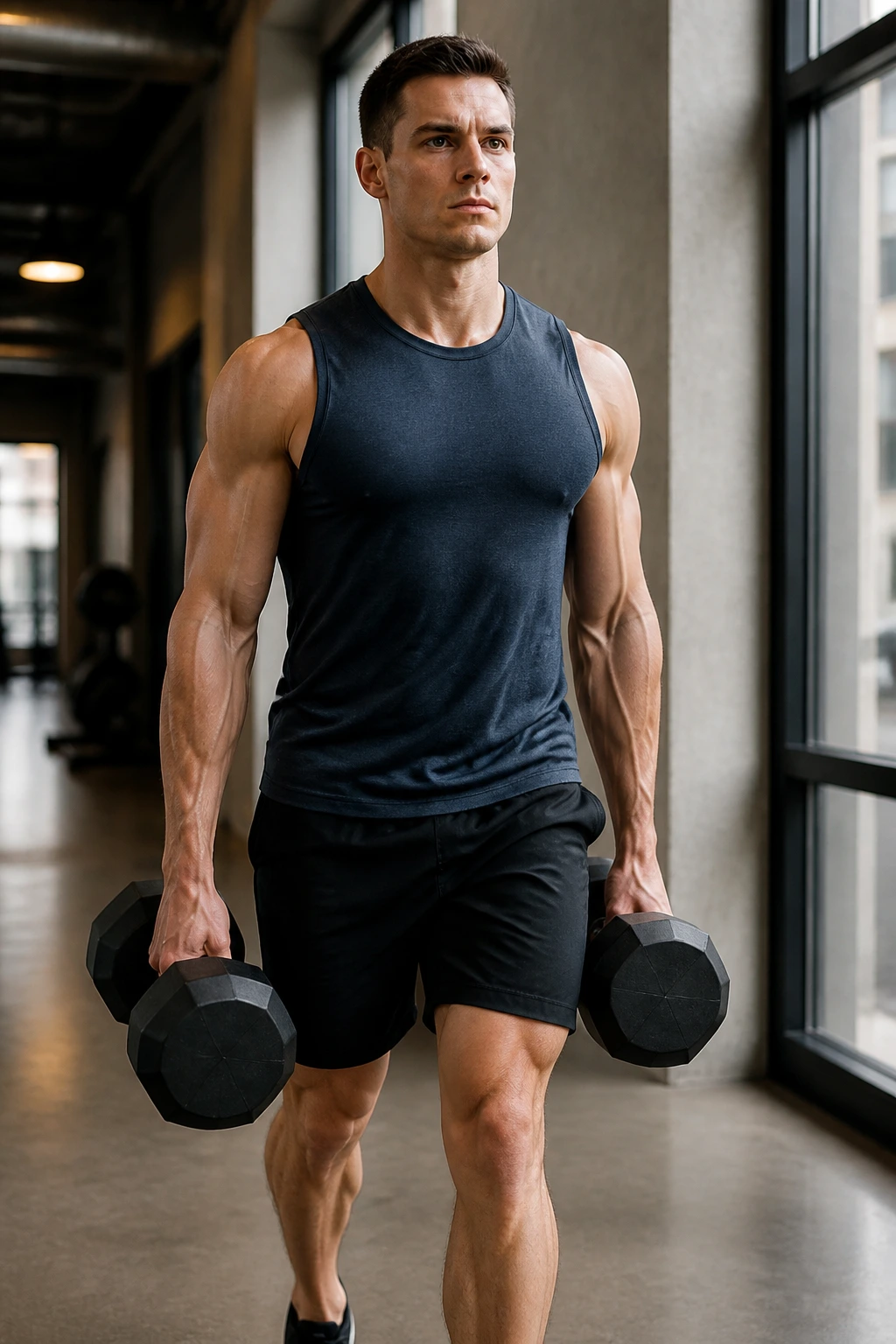
Pick up two heavy dumbbells, stand up tall, and walk. That sounds almost too plain to matter, which is exactly why farmer’s carries are so useful. Your grip fights to stay closed, your forearms stay on, your shoulders work to stay quiet, and your posture gets a wake-up call.
This isn’t a curl. It isn’t a press. It’s a carry. And that makes it excellent for the kind of arm definition people can actually see in daily life. Thick forearms, stable shoulders, tighter posture — those details change how the whole upper body looks.
Walk for 20 to 60 seconds or 20 to 40 meters per set. Keep your ribs stacked, don’t lean to one side, and do not let the weights drag your shoulders down. If you only have one dumbbell, do a suitcase carry on one side and switch hands halfway through.
A good carry feels simple but hard. The hands stay busy. The body stays honest.
15. Diamond Push-Ups for a Deep Triceps Finish
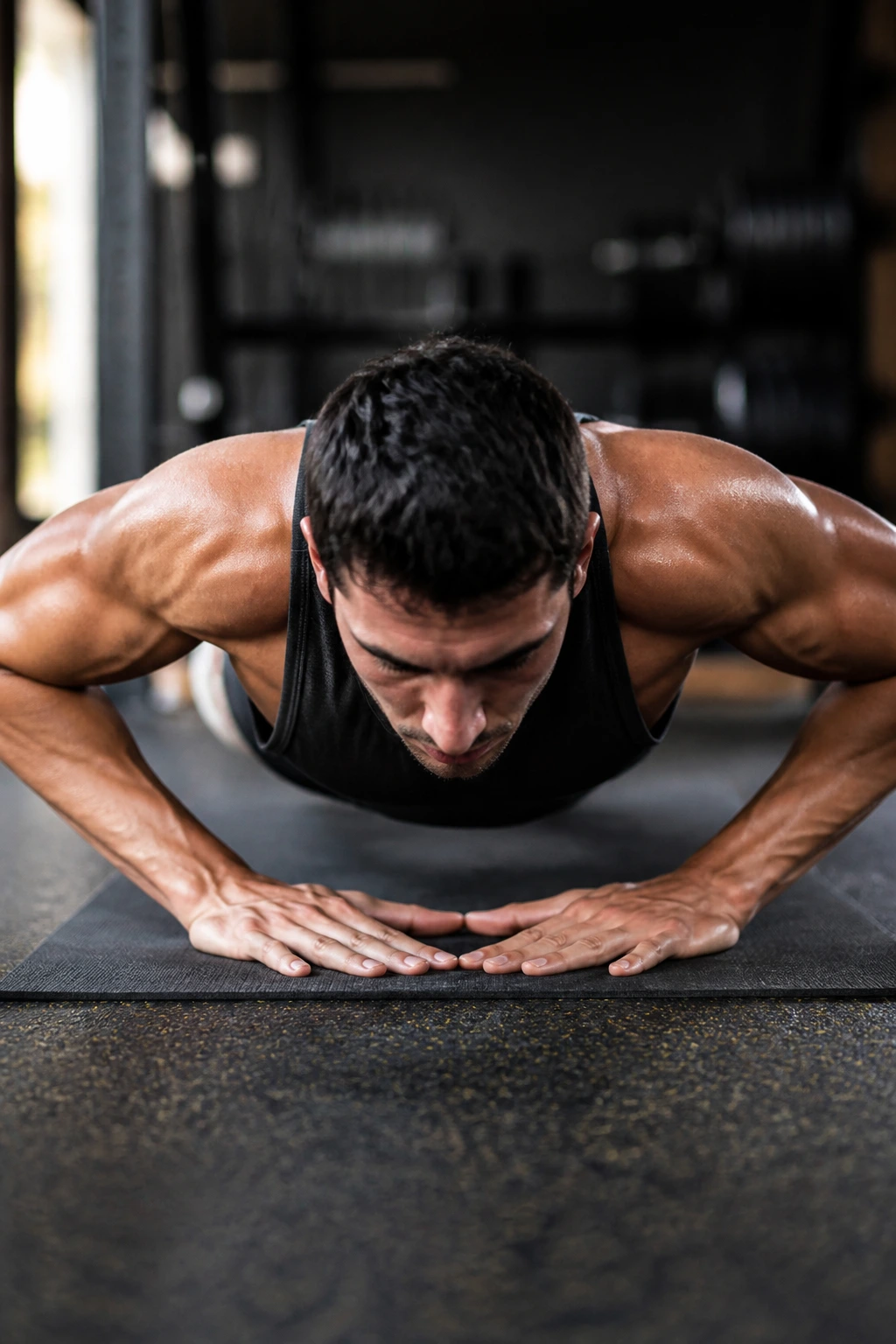
Diamond push-ups are the meaner cousin of the close-grip push-up. The hands come close enough that the thumbs and index fingers form a diamond shape, and the triceps get hit hard because the elbows have to do more of the pressing. The move also demands more wrist comfort and more upper-body control.
If you’re new to them, elevate your hands on a bench first. That keeps the load reasonable and lets you learn the line of the rep without collapsing at the bottom. You want the chest to travel down between the hands, not the hips to dive first.
Compared with standard push-ups, diamond push-ups ask more from the triceps and less from the chest. That makes them a good finisher, not always a starter. Three sets of 5 to 12 reps is enough for most people. Stop before the elbows flare out and before the lower back starts sagging.
If your wrists hate this position, use push-up handles or skip them. There’s no award for grinding through joint pain.
16. Reverse Curls for the Forearms Most People Ignore
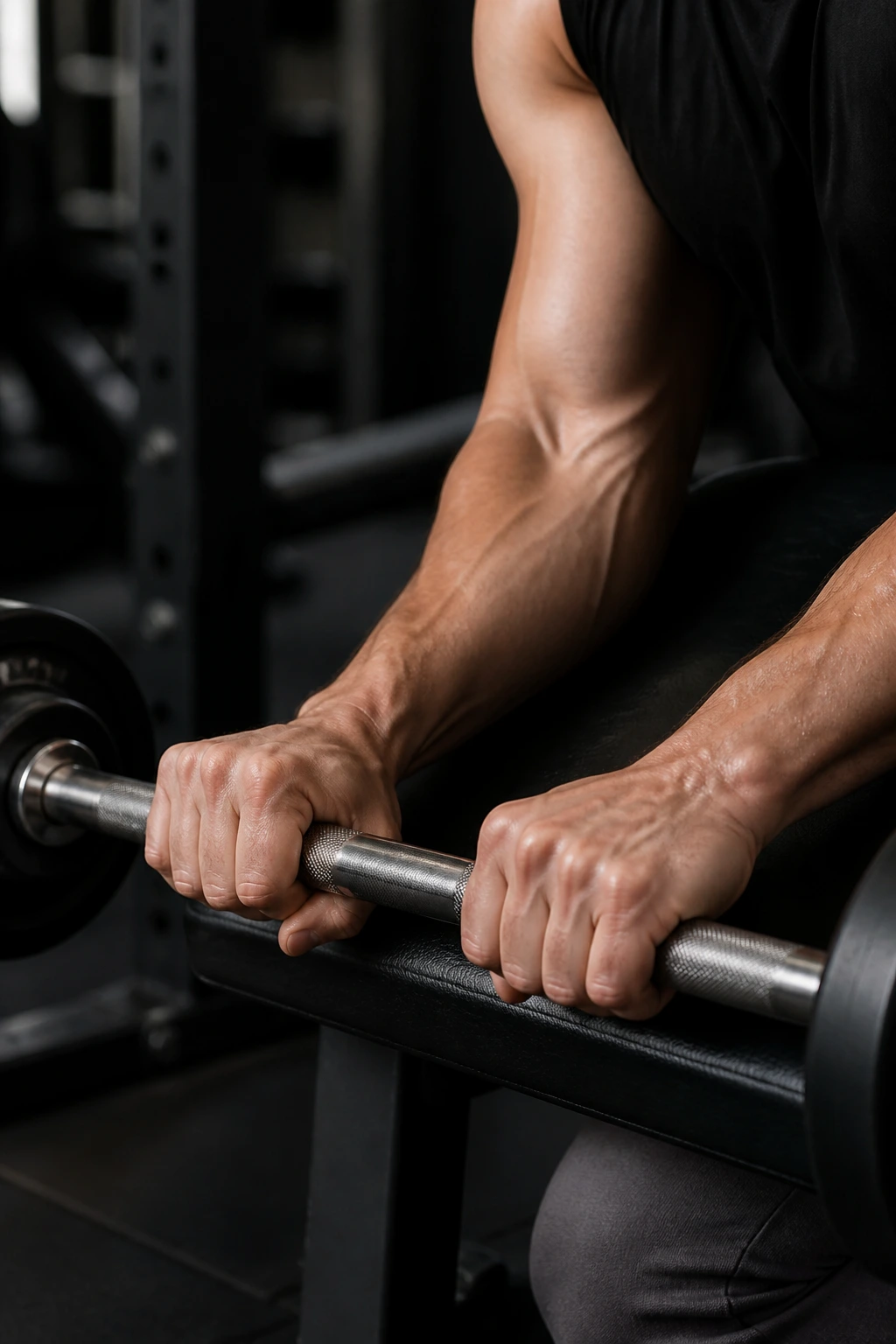
Reverse curls are one of the best “why didn’t I do this sooner?” arm moves. The grip is pronated, so your palms face down as you curl. That means the forearms and the brachioradialis do more of the work, and the biceps don’t get to hog the entire rep.
This helps the arm look fuller from the elbow down. Sleeve fill matters more than people admit. Strong forearms make the whole arm look tougher and more finished, not just pumped for a few minutes after training.
Keep the wrists straight and the elbows close to your sides. Don’t chase heavy weight here. The forearms usually fail before the ego does, and that is fine. Use 10 to 15 reps with a weight you can control through the full lowering phase.
If regular curls bother your elbows, reverse curls often feel kinder because the angle changes the stress. Not always. But often enough to matter.
17. Battle Rope Slams for Arm-Driven Conditioning
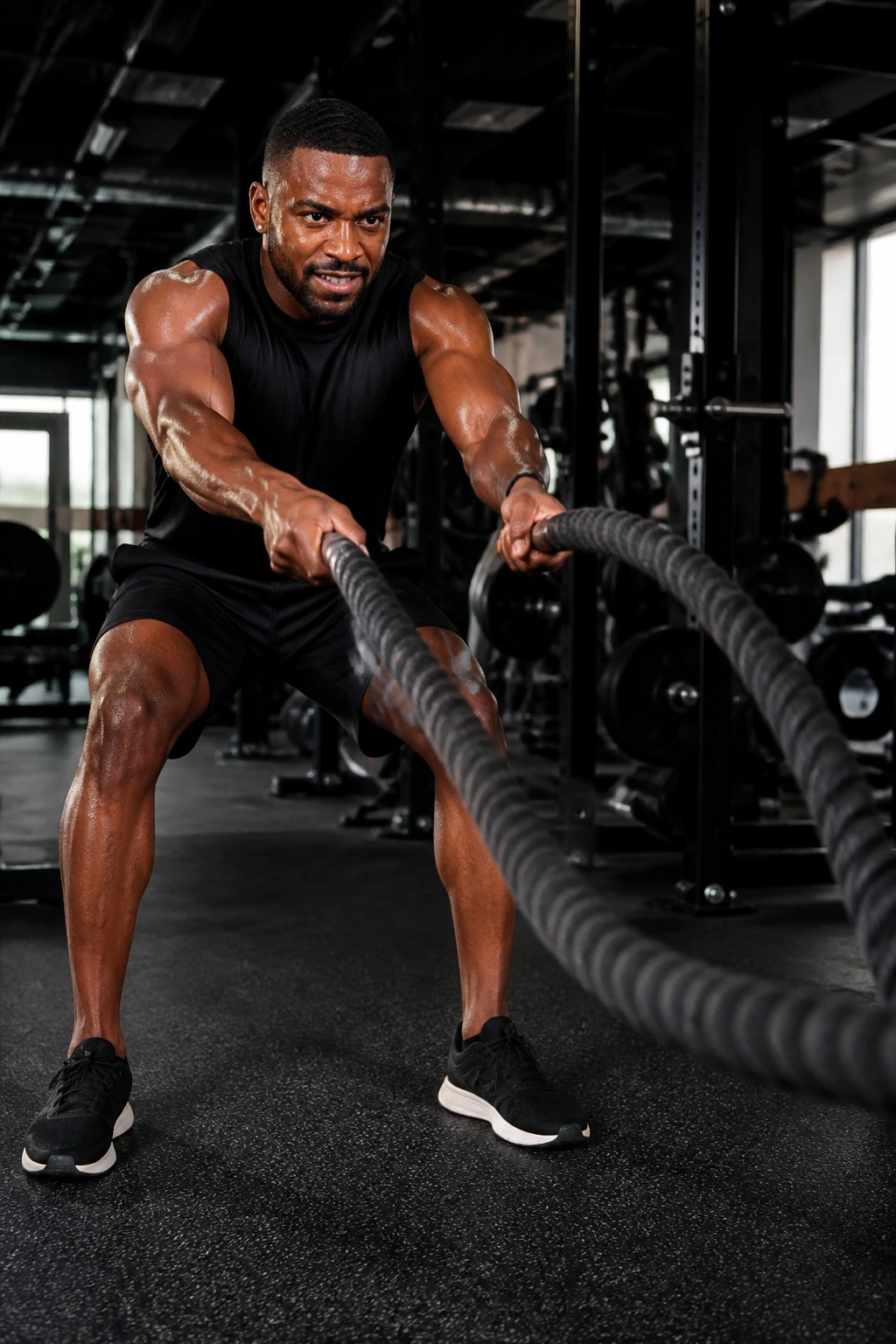
Battle ropes are not subtle. They slap the floor, your shoulders light up, and your breathing gets loud fast. That’s exactly why they belong in an arm-fat routine. They raise the heart rate hard while making the arms and shoulders keep working the whole time.
The best version is usually simple: slam, wave, or alternate the ropes for short bursts. Keep your knees soft, brace your core, and drive the motion from the shoulders and arms instead of whipping with the wrists. If you try to do it with tiny hand flicks, the ropes will punish you for it.
A Clean Interval Setup
- Work for 20 to 30 seconds.
- Rest for 40 to 60 seconds.
- Repeat for 8 to 12 rounds.
That’s enough to get a serious conditioning effect without turning the session into a full-body collapse. If you have shoulder issues, keep the waves lower and the effort a little less violent. The goal is hard work, not a fight with your joints.
18. Shadow Boxing Intervals for Faster, Leaner Arm Endurance

Shadow boxing is a strange little gem. It looks easy until your shoulders start burning and your hands can’t stay high anymore. Jabs, crosses, hooks, and uppercuts all ask the arms to move quickly while the core and legs help stabilize the body. That makes it useful for calorie burn and upper-body endurance.
Keep your fists near cheek height, elbows under control, and punches snappy. You do not need to throw huge, wide punches. Short, sharp strikes are better and easier on the shoulders. Add footwork if you want more intensity, but keep the hands moving even when the feet stay quiet.
A simple format works well: 30 seconds on, 30 seconds off for 6 to 10 rounds. Or box continuously for 2 to 3 minutes and rest for one minute between rounds. Either way, the shoulders should feel busy by the end.
One warning: don’t hold light dumbbells for long boxing rounds. That usually turns into shoulder junk and weird wrist angles. Bare hands or wraps are cleaner. Fast hands. Tight guard. No wasted motion.
Final Thoughts
If you want toned, defined arms, don’t marry yourself to one tiny part of the arm and hope for magic. Triceps, shoulders, forearms, and a bit of conditioning all need room at the table. That is the boring answer. It’s also the one that works.
Pick a few strength moves and one finisher, then repeat them with clean form for a few weeks. Three to four exercises per session is plenty. More is not automatically better if the extra work turns into sloppy reps and tired joints.
The best arm fat workouts are the ones you can keep doing without dreading them. That usually means enough load to challenge you, enough control to protect your joints, and enough variety that your arms never quite get lazy.
