



Most weekly workout plans for women at home fail for one boring reason: they ask for too much structure and too much motivation at the same time. Real life does not care that Monday was supposed to be upper-body day.
A good home plan needs to survive a late night, a tight apartment, a noisy floor, and the fact that some weeks your energy feels sharp and some weeks it feels flat. That’s normal. A timer, a mat, a pair of dumbbells, and a sturdy chair can do far more than people expect, but only if the week is built with some common sense.
Nope, you do not need a perfect setup. You need a plan that fits the life you actually have, not the one you sketched out in your head on a fresh Sunday morning.
The best weekly workout plans for women at home usually share the same bones: a few strength sessions, a little cardio, a little mobility, and enough recovery to keep your joints and nerves from getting cranky. Start there, and the rest gets easier fast.
1. A Gentle Beginner Reset Week for Women at Home
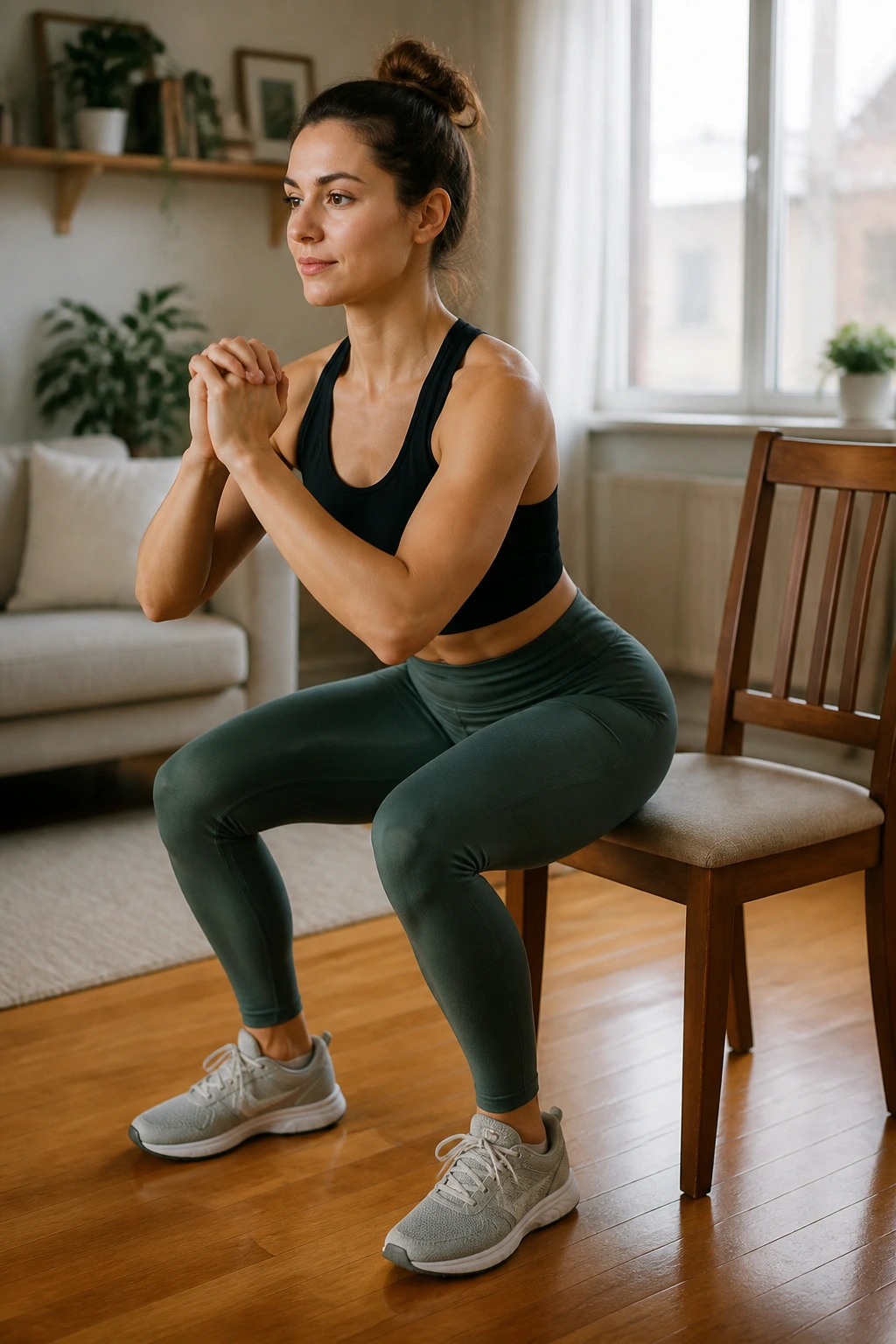
If you have not trained in a while, the smartest week is the one that feels almost too easy. That sounds strange, I know. It works.
Weekly rhythm
- Monday: 20 minutes of full-body strength
- Tuesday: 20 to 30 minute walk plus 5 minutes of stretching
- Wednesday: 20 minutes of full-body strength
- Thursday: Rest or a slow march in place for 10 minutes
- Friday: 20 minutes of full-body strength
- Saturday: Easy yoga flow or a mobility video
- Sunday: Off
The first three strength days should feel clean, not brutal. Think chair squats, wall push-ups, glute bridges, dead bugs, and supported rows with a backpack or light dumbbells. Two rounds is enough at first. Three if you finish feeling like you could still do a bit more.
This kind of plan is friendly to beginners because it builds the habit before it demands intensity. You are teaching your body the shapes first. The breathing, the balance, the rhythm. All of that matters more than sweating buckets.
One simple rule: stop each set with 2 reps still in reserve. If the last rep turns sloppy, the exercise is too hard for week one.
2. A Three-Day Dumbbell Strength Week

Three hard workouts a week beat six half-finished ones. That’s the part people hate to hear, and it’s also why it’s useful.
A three-day dumbbell strength week works well when you want visible progress without living in the workout corner of your house. Monday, Wednesday, and Friday can each center on a full-body session: goblet squats, Romanian deadlifts, one-arm rows, floor presses, overhead presses, and a short core finisher. Keep the rest of the week lighter with walks or mobility work.
What makes this plan feel good is the rhythm. You lift, you recover, you lift again with a little more confidence. That rhythm matters more than trying to cram everything into one sweaty marathon. When the weights are light, slow the tempo. A 3-second lowering phase on squats or presses makes a 10-pound pair feel much heavier than you’d expect.
The sets do not need to be fancy. 3 sets of 8 to 12 reps is plenty for most moves. Rest about 60 to 90 seconds between sets, a little longer if your breathing is still ragged. Keep the weights near your mat so you are not wandering around the house between movements. That tiny detail saves time and keeps you from drifting off task.
3. A Low-Impact Cardio Week That Doesn’t Beat You Up

Who says cardio has to mean jumping?
Low-impact cardio is the plan I’d pick for anyone who wants to raise the heart rate without turning the living room into a drumline. Marching intervals, step-ups on a sturdy stair, shadow boxing, low-impact skaters, and controlled knee lifts can all push you hard enough to matter. You should feel warm, a little breathy, and still able to keep your form tidy.
How to run it
- Monday: 20 minutes of march-and-box intervals
- Tuesday: 15 minutes of bodyweight strength
- Wednesday: 25 minutes of step-ups and fast walking in place
- Thursday: Mobility only
- Friday: 20 minutes of low-impact circuit work
- Saturday: Longer walk, if you can
- Sunday: Rest
The nice part about this week is that your joints usually complain less. Your knees, ankles, and floor neighbors all get a break. You can still sweat, still burn through energy, still feel like you actually trained. That is the sweet spot.
Best move: keep each work interval at 30 to 40 seconds, then recover for 20 to 30 seconds. Short recovery keeps the pace honest without making the whole session feel like a punishment.
4. A Pilates-Style Core and Posture Week
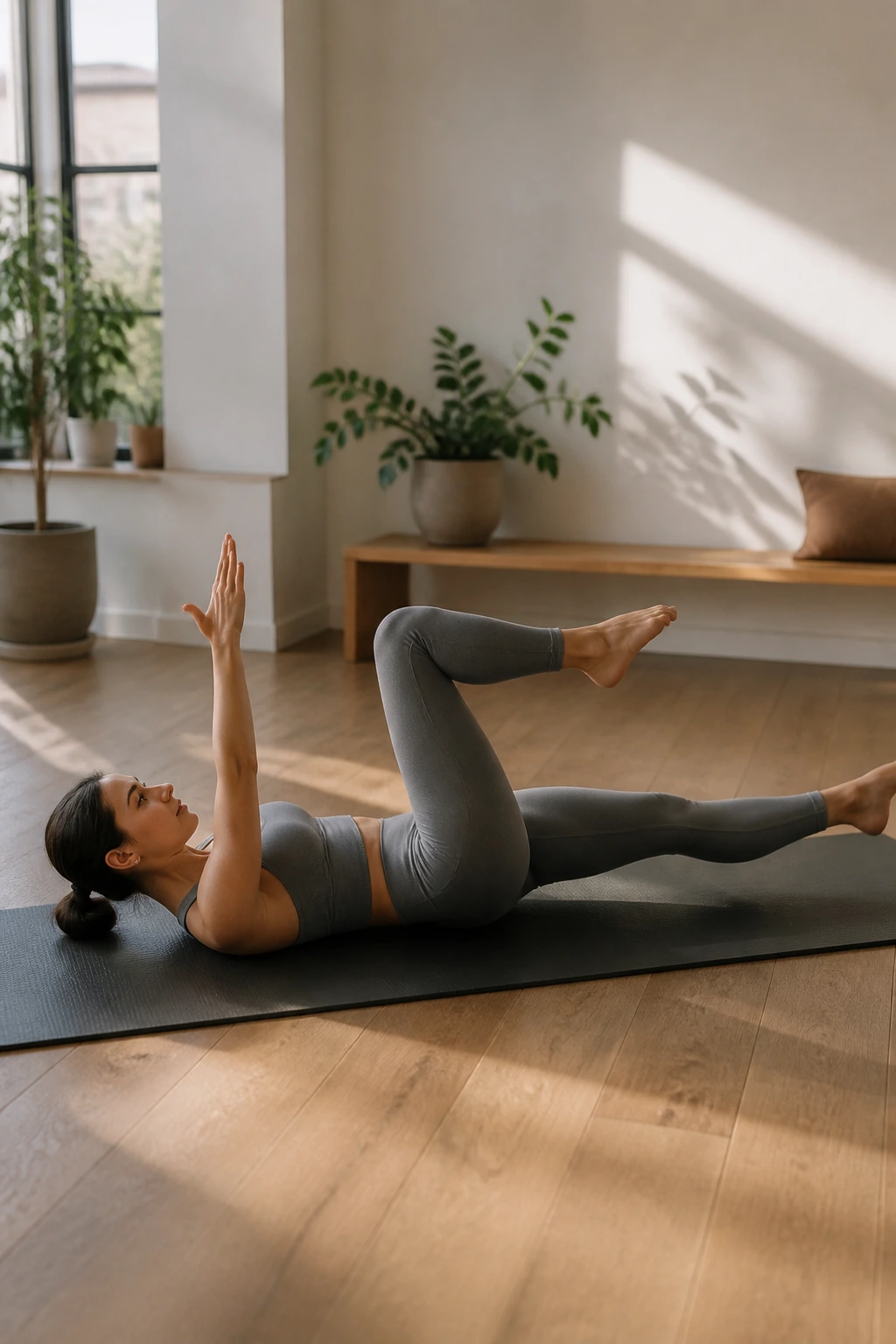
If your lower back feels cranky after a long stretch of sitting, a Pilates-style week can feel like a reset button.
This plan is built around control, not speed. Dead bugs, bird dogs, glute bridges, side-lying leg lifts, wall angels, and slow toe taps do a lot of quiet work. They teach your trunk to hold steady while your arms and legs move, which is exactly the sort of thing that makes daily life easier when you stand up from a couch or carry groceries up a flight of stairs.
A good version of this week usually has 3 Pilates-style sessions, 2 easy walks, and 2 recovery days. Keep the sessions around 20 to 30 minutes. If you go too long, form gets loose and the work turns into random flailing. Tiny movements count here. In fact, tiny movements are the whole point.
Use a slow breath pattern: inhale to set the ribs, exhale to brace gently through the middle. That cue keeps the work in your core instead of dumping everything into your neck and lower back. The moves should feel precise. Not dramatic.
5. A Glutes-and-Legs Week Built for Home Space

Leg training at home works best when you stop trying to make every day leg day.
A cleaner setup is two lower-body sessions separated by upper-body work and lighter days. Monday can be glutes and hamstrings: hip thrusts off a sofa, Romanian deadlifts, glute bridges with a pause at the top, and hamstring slides using towels on a smooth floor. Thursday can hit quads and glutes with split squats, sumo squats, step-ups, and calf raises.
A sample week
- Monday: Glutes and hamstrings
- Tuesday: Upper body and core
- Wednesday: Walk and stretch
- Thursday: Quads and glutes
- Friday: Core and light cardio
- Saturday: Easy walk or dance session
- Sunday: Rest
Home leg work gets good fast when you use one or two smart tools. A chair for split squats. A couch for hip thrusts. A backpack loaded with books if your dumbbells are too light. You do not need huge weights to feel your legs working. Slow reps and clean depth do a lot of heavy lifting.
One thing I like here: add a 2-second pause at the bottom of each squat or split squat. It stops you from bouncing through the movement and makes the set more honest.
6. An Upper-Body and Back Week for Women at Home

A lot of home plans lean too hard on squats and glute bridges. Fine exercises. Not enough by themselves.
An upper-body week gives your shoulders, back, chest, and arms a proper turn. Rows, push-ups, floor presses, reverse flyes, shoulder presses, and triceps work all belong here. If your upper back spends hours rounded over a keyboard, stroller, or steering wheel, this week does useful repair work. You will feel the difference when you stand up straighter without thinking about it.
I like to pair 2 pulling moves for every pushing move. So if you do push-ups and floor presses, make sure rows and reverse flyes are in the same week, maybe even in the same session. That balance keeps the shoulders from getting cranky. It also stops the front of the body from doing all the work while the back sits around waiting.
You can run this plan on Monday, Wednesday, and Friday with lighter walks or mobility work in between. Keep reps in the 8 to 12 range for most dumbbell work, and use slower lowering on rows and presses. A reverse fly with light weights sounds small until your upper back starts shaking.
7. A 20-Minute Week for Busy Days

Some weeks, 20 minutes is the whole game.
That is not failure. That is reality. A tight schedule needs a compact plan that gets straight to work: one short strength circuit, one short cardio burst, one mobility day, and a couple of repeat sessions that fit wherever they can. No wasted setup. No elaborate warm-up that burns half the window.
Try this rhythm: Monday and Thursday for strength, Tuesday and Friday for cardio, Wednesday for mobility, then one long walk and one true rest day. Each strength session can be a 4-move circuit done for 3 rounds. Squat, push, hinge, plank. That’s enough. On cardio days, use a timer: 40 seconds on, 20 seconds off for 12 to 16 minutes.
The trick is to stop waiting for a free hour that may never arrive. A 20-minute session done four times in a week beats a polished plan that keeps getting postponed.
Make it work
- Keep one mat and one resistance band visible.
- Write your first exercise before the week starts.
- Use a phone timer so you do not waste brain power.
That little bit of structure keeps the week from slipping through your fingers.
8. A Cardio Interval Week for Small Spaces

Apartment floors and cardio do not always get along. That does not mean you are stuck.
A small-space interval week can still spike the heart rate if you choose the right moves: fast marching, boxer shuffles without jumping, step jacks, knee drives, mountain climbers with hands on a couch, and squat-to-reach patterns that keep the impact low. You want your breathing to climb. You do not need to sound like a herd animal on the floor.
How to use it
- Monday: 12-minute interval march
- Tuesday: Upper-body strength
- Wednesday: 15-minute shadow boxing session
- Thursday: Rest or stretching
- Friday: 12 to 18 minutes of mixed intervals
- Saturday: Walk outside or pace the house with purpose
- Sunday: Rest
A good interval week is all about the work-to-rest ratio. Start with 30 seconds on, 30 seconds off if you are newer to this. Move to 40 on, 20 off when it feels manageable. If your form starts to look loose, slow down before the session turns messy.
The best part? No jumping means you can stay consistent even when knees, ankles, or downstairs neighbors are not in the mood.
9. A Full-Body Circuit Week for Faster Sessions

Circuits work when you want a harder breath without spending forever.
This style is simple: move from one exercise to the next with short rests, then repeat the whole round. A full-body circuit week is useful if you like variety and hate the feeling of standing around between sets. One session might include squat presses, rows, dead bugs, glute bridges, and a plank. Another can switch in reverse lunges, push-ups, hip hinges, and side planks.
Why it works
Circuits keep your heart rate up while still giving the muscles a clear job. You are not just doing random sweat. You are building strength and work capacity at the same time. That makes the week feel efficient without turning every day into a sprint.
A practical setup is 3 circuits per workout, with 5 exercises per circuit and 8 to 12 reps for each move. Rest 60 to 90 seconds after each round. If the last round falls apart, the load is too heavy or the rest is too short. Keep it clean.
One sentence advice: chasing form is better than chasing exhaustion.
10. A Recovery Week That Helps You Come Back Stronger

A recovery week is not laziness. It is maintenance.
If your sleep has been off, your workouts feel flat, or your legs have that dull heavy feeling that never quite leaves, back off for a bit. A recovery week usually means more walking, gentler mobility, easier bodyweight sessions, and zero interest in proving anything to the ceiling. Think of it as a quieter week that clears the noise out of your system.
You might do 20 to 40 minutes of walking most days, plus 10 to 15 minutes of mobility in the morning or evening. Add two light sessions with air squats, incline push-ups, glute bridges, bird dogs, and side planks. Keep the effort around 5 or 6 out of 10. That is enough. If you finish feeling refreshed, you got it right.
The irony is that this week often makes the next hard week feel better than grinding through fatigue would have. Joints settle down. Breathing smooths out. The whole body stops asking for a fight.
Boring weeks build the next good week.
11. A No-Equipment Bodyweight Week

No equipment does not mean no progress.
Bodyweight training gets better when you stop treating it like a placeholder. Slow squats, pause lunges, push-ups from a counter or floor, single-leg glute bridges, bird dogs, hollow holds, and tempo calf raises can hit harder than people expect. The trick is to use tempo and range of motion instead of chasing speed.
A useful pattern is 3 days of bodyweight strength, 2 days of light cardio, and 2 days of rest or mobility. On strength days, make the lowering phase last 3 seconds. At the bottom of a squat, pause for 1 second. At the top of a glute bridge, squeeze for 2 seconds. Those tiny pauses create work without needing any gear.
Movements worth repeating
- Squats to a chair for depth control
- Reverse lunges for balance and glutes
- Incline push-ups for chest and arms
- Dead bugs for core control
- Side planks for trunk strength
That plan is especially useful when you travel light, hate clutter, or want a week you can do in a tiny room without dragging out equipment.
12. A Dumbbells-and-Bands Hybrid Week

Dumbbells give you load. Bands give you tension at the top of the movement. Put them together and the week gets more interesting.
This plan works because bands are brilliant for glutes, shoulders, and back work, while dumbbells handle the bigger lifts. A banded glute bridge wakes up the hips in a way a dumbbell alone does not. A band row gives your back a smoother squeeze. Dumbbells, on the other hand, are still the easier tool for squats, presses, and deadlifts when you want straightforward resistance.
Good pairings
- Banded glute bridge for 15 reps
- Goblet squat for 8 to 10 reps
- Band row for 12 to 15 reps
- Dumbbell floor press for 8 to 12 reps
- Lateral band walk for 20 steps each way
A week built this way usually has 3 strength days and 2 lighter conditioning or walking days. Keep the bands close to your mat so you use them rather than forgetting they exist in a drawer somewhere. That sounds obvious. People forget anyway.
The nice thing here is variety without chaos. The plan still feels structured, but the sessions do not all feel like copies of each other.
13. A Core and Back Care Week
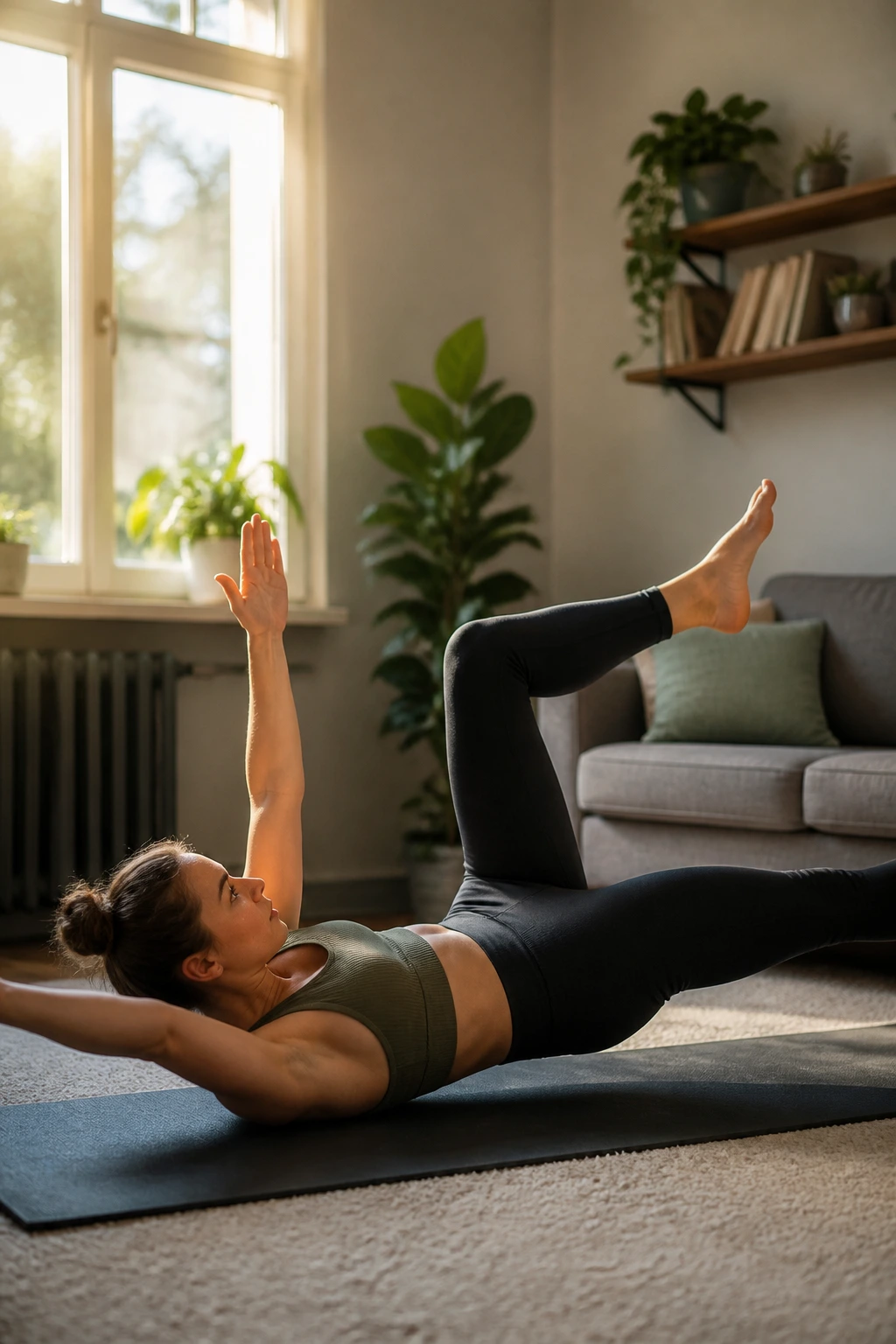
Why does your back feel fine until you do “core work” that is mostly crunches?
Because the core is not just about bending your torso. It is about resisting movement, holding position, and keeping your spine steady while your arms and legs do the moving. That is where dead bugs, side planks, bird dogs, and anti-rotation presses earn their keep. They train control. Quietly. No fireworks needed.
A solid core and back care week can include 2 or 3 focused sessions, plus walks and light hip work. Add hip hinges, glute bridges, and half-kneeling presses if you have a band or light dumbbells. Those moves take some of the pressure off the low back by waking up the glutes and teaching the ribs to stay stacked over the pelvis.
If you sit a lot, this plan has a funny effect: the workouts may look small, but they change how you move around the house. Standing up feels less stiff. Reaching down feels less awkward. That counts.
A good sign you picked the right load: your lower back should feel worked, not pinched.
14. A Fat-Loss Support Week That Still Keeps Muscle

More sweat is not the same as more progress.
If fat loss is the goal, the week has to support two jobs at once: burning energy and keeping muscle. That usually means 3 strength sessions, 2 conditioning days, and 2 lighter recovery days with walking or mobility. Strength matters because it gives your body a reason to hold onto muscle while the rest of your routine gets more active.
I would not turn every workout into a punishing HIIT session. That gets old fast, and it often makes people hungrier, foggier, and less eager to show up the next day. Better to mix a few hard intervals with real strength work. Use dumbbells, bodyweight, or bands for squats, hinges, rows, presses, and lunges. Then add short cardio finishers: marching intervals, step-ups, boxing, or low-impact mountain climbers.
You still need meals that match your goal. Workouts help a lot, but they do not erase a week of random eating. That said, the right plan can make your body feel tighter, stronger, and more capable even before the scale moves much.
A simple structure is enough here. Hard days hard. Easy days easy. That’s the part most people skip, and it’s the part that matters most.
15. A Balanced Weekly Workout Plan for Women at Home

If you only save one plan, make it this one.
A balanced weekly workout plan for women at home should be boring in the best way. Two strength days, one cardio day, one mixed day, one mobility day, and two lighter recovery days gives you enough variety without turning the week into a puzzle. It is the kind of plan you can repeat while life keeps being life.
A clean weekly layout
- Monday: Full-body strength
- Tuesday: Walk plus mobility
- Wednesday: Lower body and core
- Thursday: Cardio intervals
- Friday: Upper body and posture
- Saturday: Easy walk, yoga, or a dance session
- Sunday: Rest
This is the plan I’d hand to someone who wants structure but does not want to live inside a spreadsheet. The sessions can be 20, 30, or 40 minutes depending on your day. The important part is the mix: push, pull, squat, hinge, brace, recover. Nothing fancy. Just enough of everything to keep the body balanced.
A small but useful habit: write the next day’s workout down before bed. Not the whole month. Just tomorrow. That tiny note cuts down on decision fatigue when you are standing in socks at 6 p.m. wondering what to do next.
Final Thoughts
The best home workout plan is the one that matches your real energy, your real space, and your real schedule. Not the loudest one. Not the hardest one. The one you can repeat without resenting it.
If you want progress, stop asking every week to do everything. Pick one plan, keep the weights or intervals honest, and give it enough time to show you what it can do. Small rooms can still produce strong bodies.
Keep the timer out. Keep the mat visible. That alone makes more difference than most people admit.
