



You do not need a garage full of gear to get stronger. A chair, a wall, and ten honest minutes can do more for a beginner than a messy workout that leaves you sore for three days and afraid to go back.
Most beginner workout plans at home fail for one boring reason: they ask too much, too soon. Too many exercises. Too many reps. Too much jumping. A good starter plan feels almost modest at first, then sneaks up on you because the movements are simple enough to repeat without dread.
I like home training when it’s stripped down. Wall push-ups, sit-to-stands, glute bridges, marching in place, dead bugs — that kind of thing. Nothing fancy. The goal is not to prove anything in the living room; the goal is to build a habit that your knees, back, and calendar can live with.
Start with the plan that matches your energy, not the one that sounds hardest. The right one leaves you worked, not wrecked.
1. Beginner Workout Plan at Home: Wall, Chair, and Floor Starter
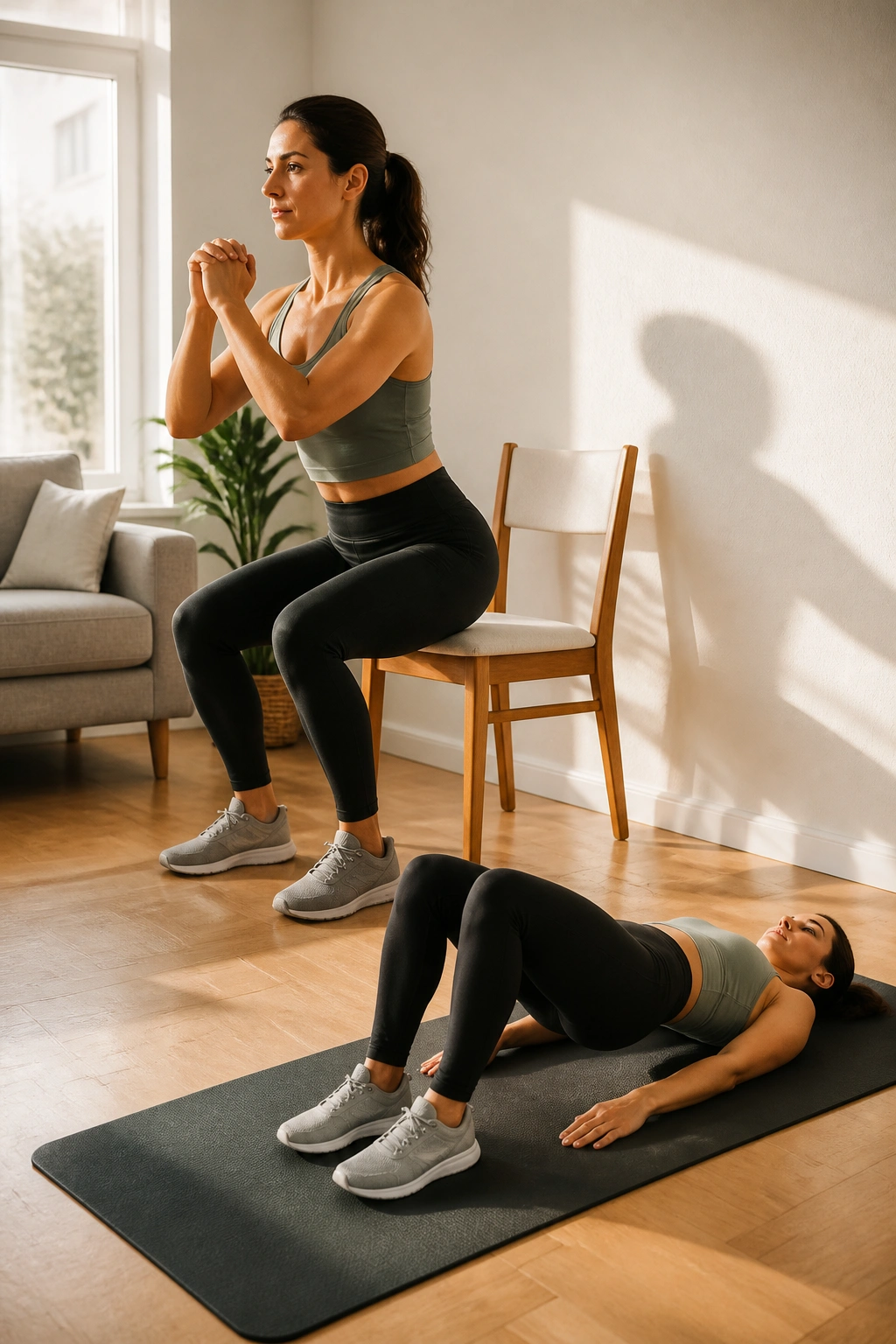
A chair is enough for a real workout.
That sounds too small, which is exactly why it works. This beginner workout plan at home uses a chair, a wall, and the floor in a way that keeps the body moving without making the first session feel like punishment.
Why It Works
Do 2 rounds of 5 moves: 8 chair squats, 8 wall push-ups, 10 glute bridges, 6 dead bugs per side, and 20 seconds of marching in place. Rest 30 to 45 seconds between moves if you need it.
The chair gives you a clear target for squats. The wall takes the pressure off push-ups. The floor work wakes up your core and hips without asking for fancy coordination. Keep the pace steady, and stop each set with a little left in the tank.
Pro tip: If standing up from the chair feels clunky, use a higher seat. That one change can turn a frustrating session into a clean one.
2. Beginner Workout Plan at Home: No-Jump Full-Body Circuit
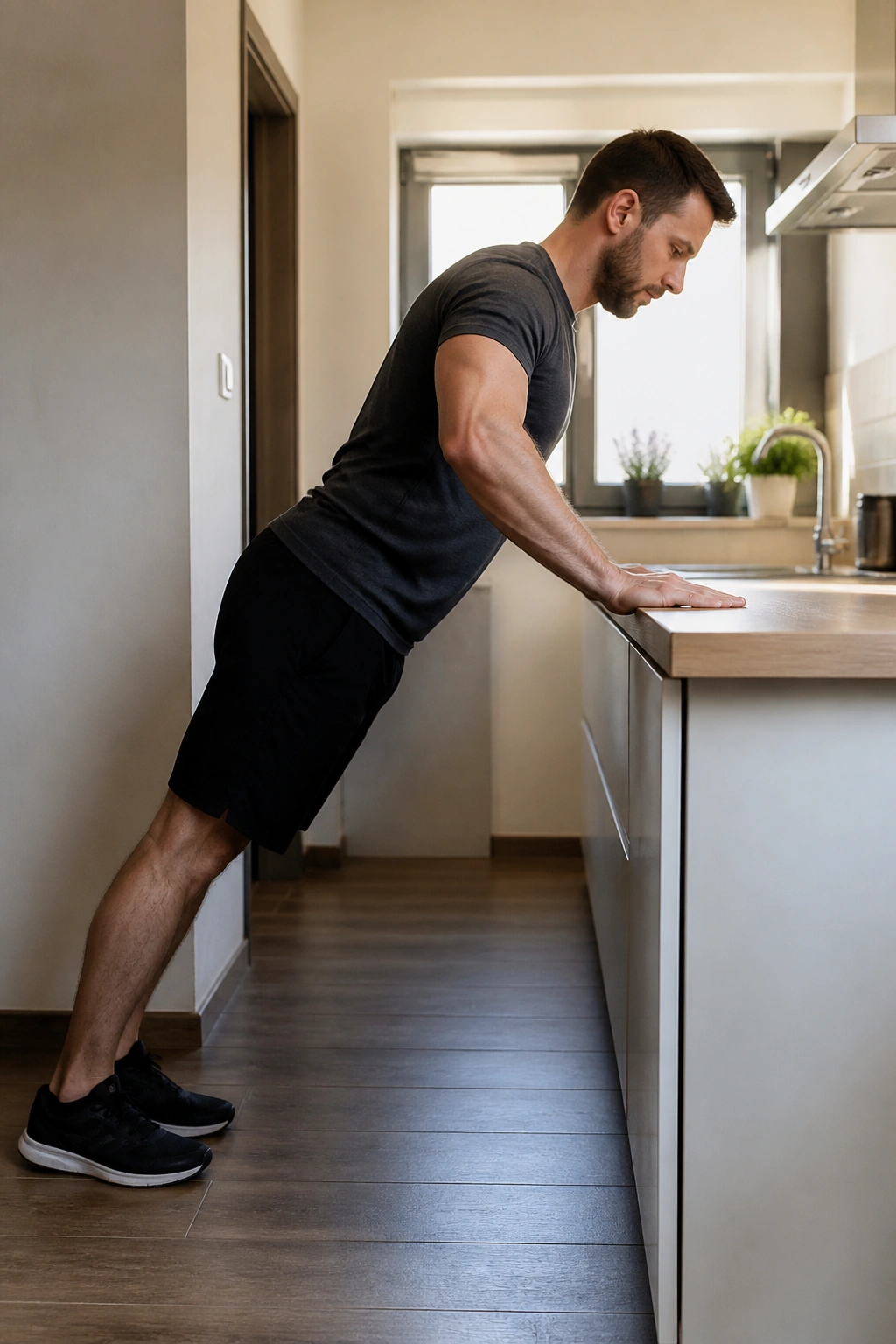
Low impact does not mean easy.
That’s the good news for beginners who want a sweat without stomping around the house. This plan is built for small spaces, quiet floors, and anyone who does not want to shake the walls.
Do 40 seconds of work and 20 seconds of rest for each move. Run 3 rounds of step-back lunges, incline push-ups, bodyweight good mornings, standing knee drives, and plank shoulder taps from a high surface such as a counter or sturdy couch.
You’ll feel this in the legs first, then the shoulders, then the lungs. That is the point. The rhythm matters more than speed, and if your form starts to wobble, slow down before you add more reps.
3. The Three-Move Strength Sampler
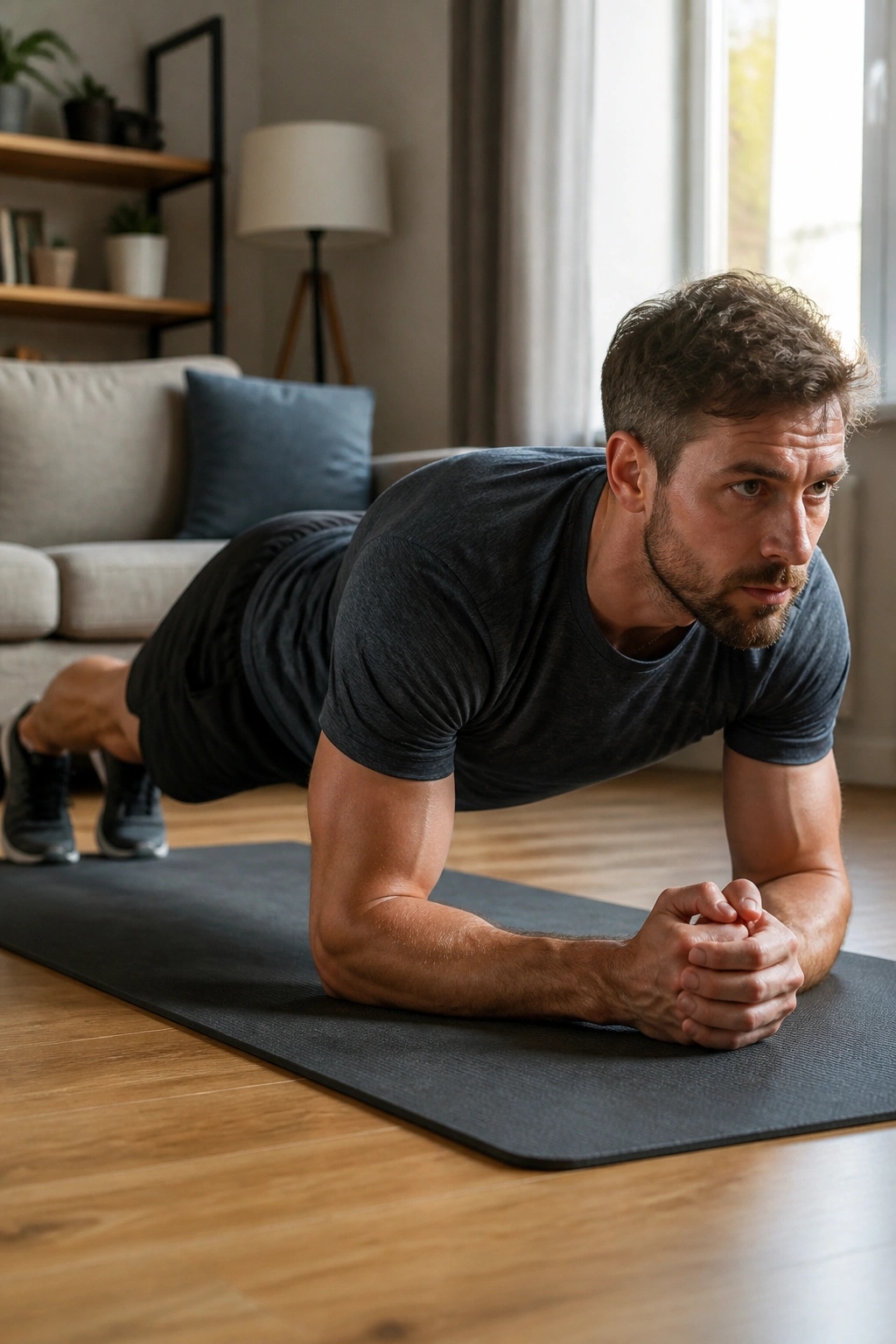
Why does a three-move plan work better than a crowded one?
Because beginners do better when they repeat the same pattern enough times to feel what “good form” actually is. This plan uses one squat pattern, one push pattern, and one pull or core pattern. That’s it. Plain and useful.
How to Use It
Pick 3 days a week and rotate these pairings:
- Day A: chair squats, wall push-ups, glute bridges
- Day B: reverse lunges, incline push-ups, bird dogs
- Day C: step-ups, plank holds, backpack rows
Do 2 sets of 8 to 12 reps for each move. If a plank feels too long, hold for 10 to 15 seconds and build from there. The plan is boring in the best way. Boring keeps you consistent.
4. Quiet Cardio for Small Spaces
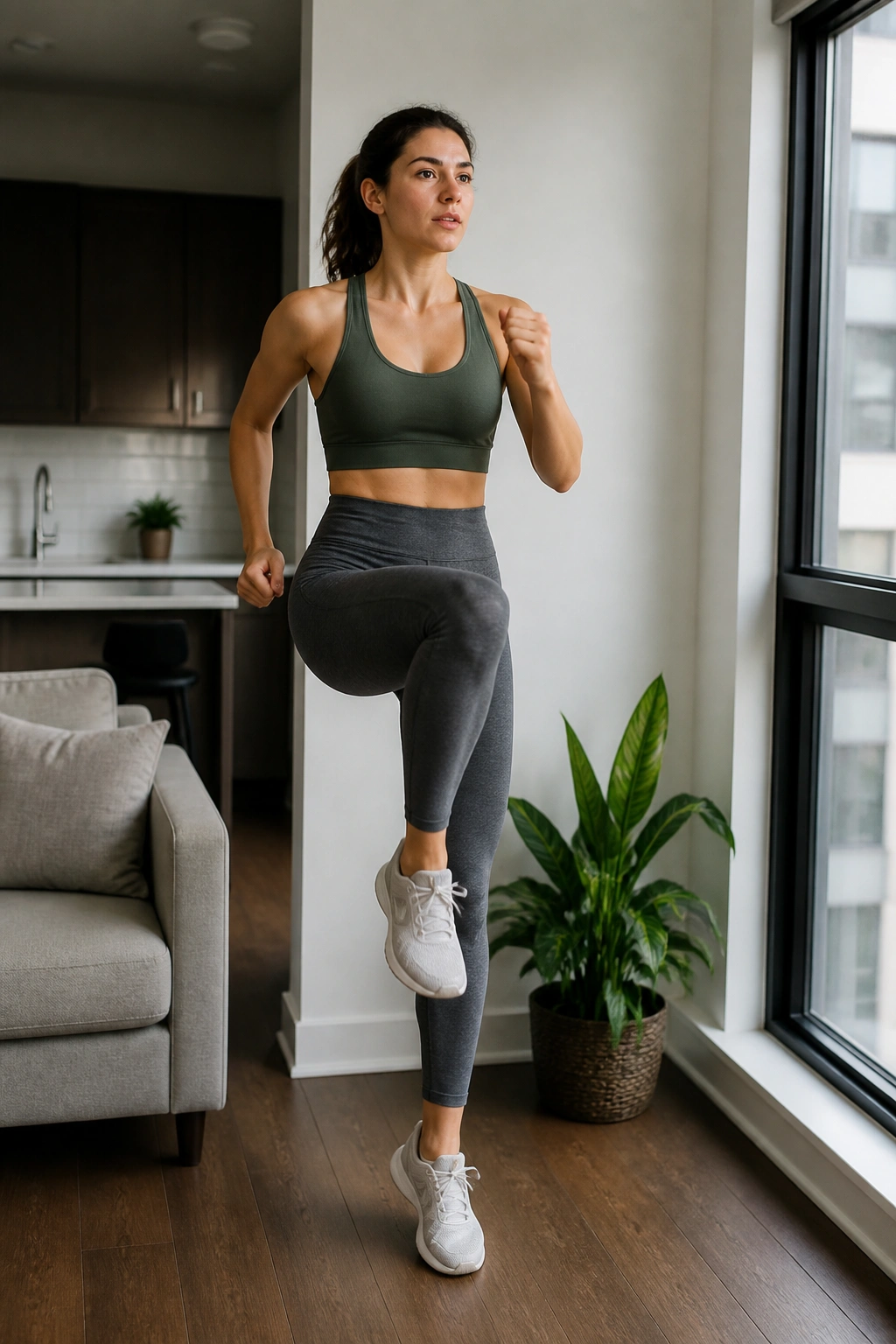
If your knees hate jumping, the right cardio feels almost sneaky.
Marching in place looks harmless until you keep the pace up for several minutes. Same with fast step-touches, shadow boxing, and low squat pulses. Your breathing changes. Your legs warm up. Nothing needs to hit the floor hard.
Try 4 rounds of 30 seconds marching, 30 seconds step-jacks, 30 seconds shadow boxing, and 30 seconds rest. If you want a little more bite, turn the rest into light walking around the room. Keep the arm swings active and the chest up.
A lot of beginners think cardio has to be loud to count. It doesn’t. Quiet cardio is often easier to repeat, and repeatable is what matters.
5. Lower-Body Basics That Build Real Confidence
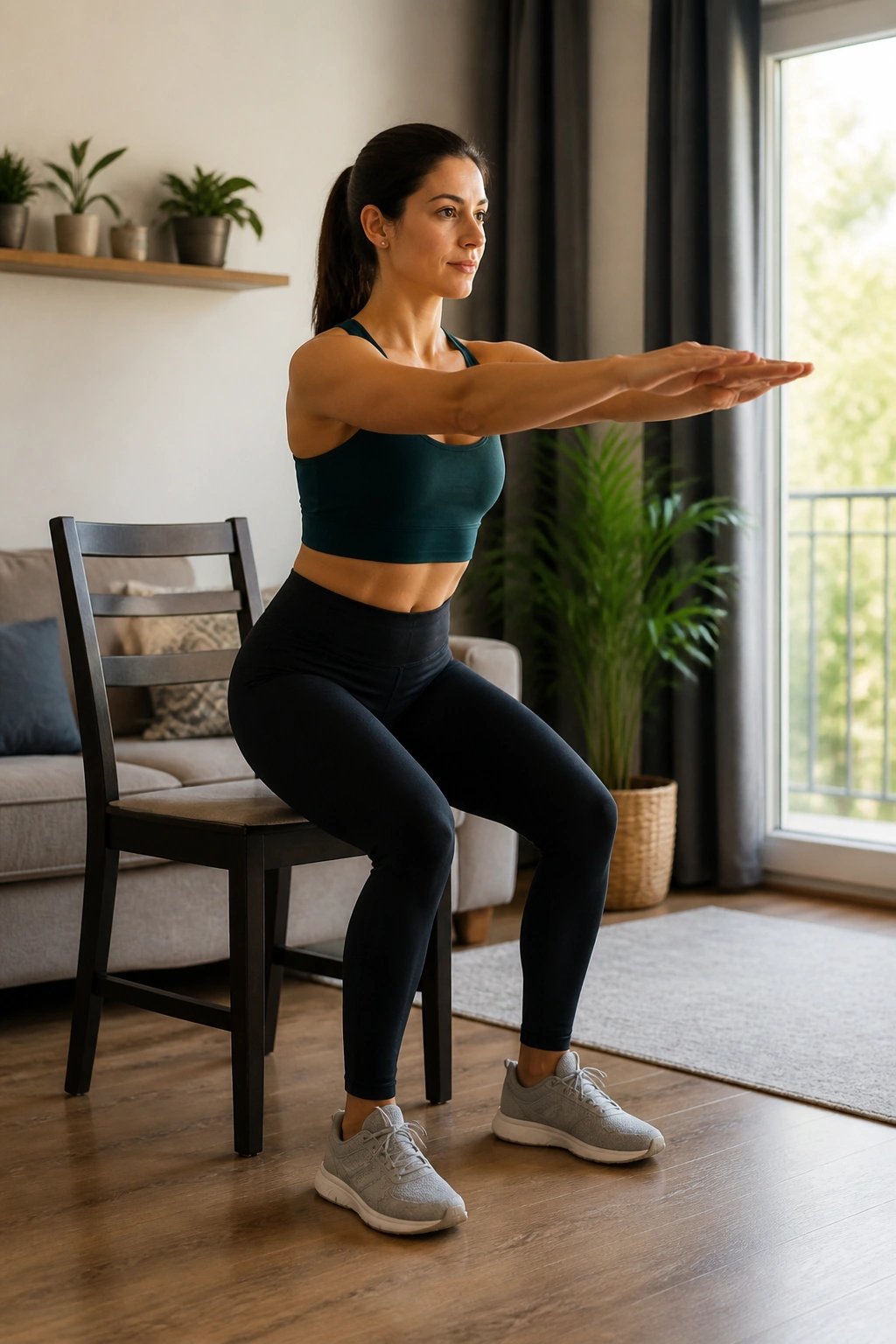
Most beginners skip legs until they feel every stair.
That’s a mistake. Your legs do a lot of daily work, and a beginner home workout plan gets better when it teaches you to sit, stand, step, and hinge without drama. The good moves are not flashy. They are useful.
Use sit-to-stands, glute bridges, step-ups on a stair, and calf raises. Do 2 to 3 sets of 10 to 12 reps for each move. If reverse lunges feel wobbly, hold onto a wall or the back of a chair. If step-ups hurt your knees, lower the step and slow the tempo.
The key detail is control. Lower yourself for 2 seconds, pause, then stand. That slow descent usually teaches more than rushing through twenty shaky reps.
6. Upper-Body Push and Pull at Home
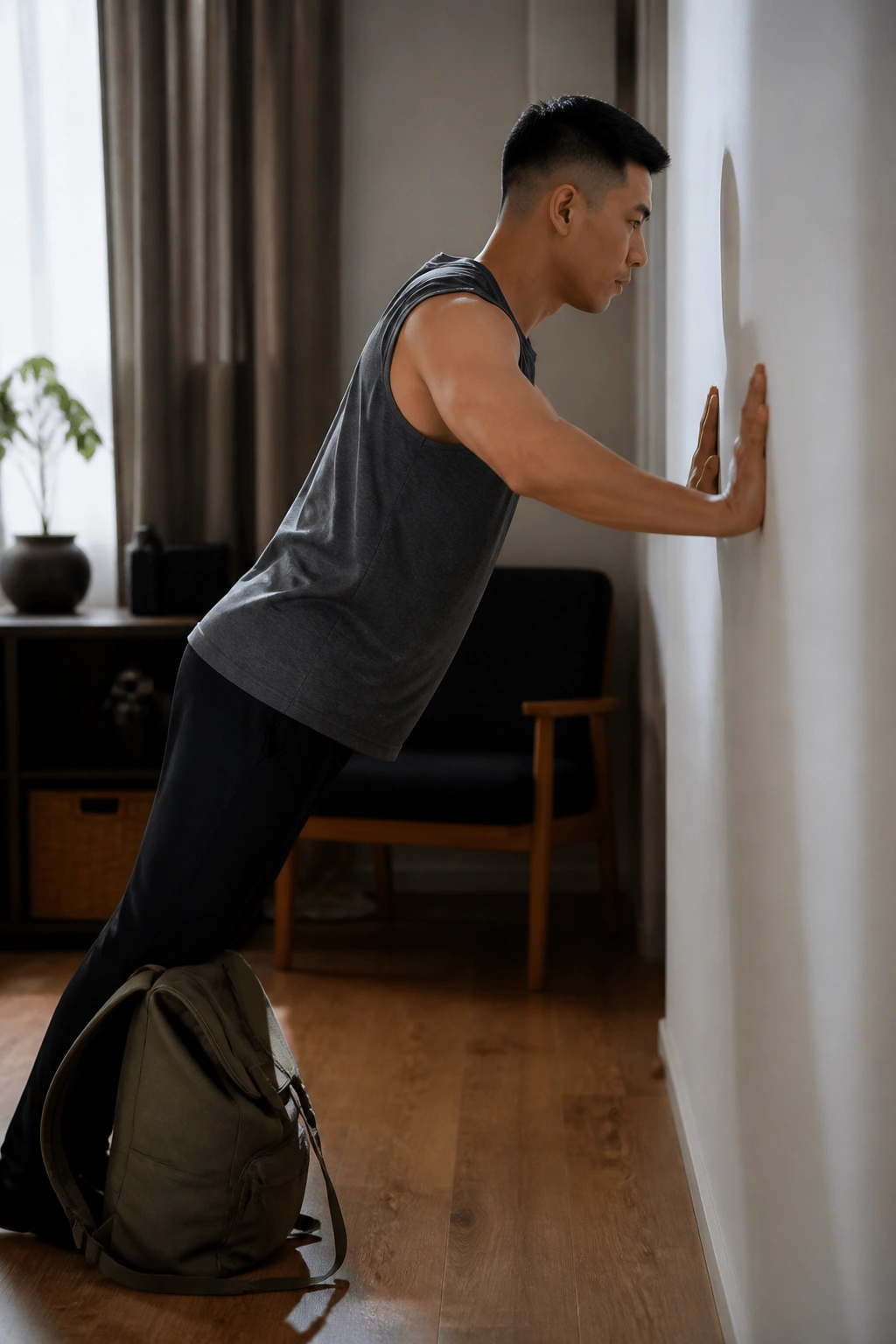
Upper-body beginner plans get messy fast if everything turns into push-ups.
That is why I like pairing a push with a pull. Push-ups are useful, sure, but rows matter just as much if you want shoulders that feel balanced and a back that isn’t always stiff.
The Simple Pairing
Do wall or counter push-ups for 8 to 10 reps, then do backpack rows for 10 to 12 reps per side. Add prone “W” raises on the floor for 6 to 8 reps if you want a little more upper-back work. Keep the backpack heavy enough to feel resistance, not so heavy that you jerk it upward.
A lot of people stop at push-ups and wonder why their posture still feels rounded. Pulling work helps. It’s the unglamorous half of the equation, and I think it deserves more attention than it gets.
7. Core Stability Without the Burnout
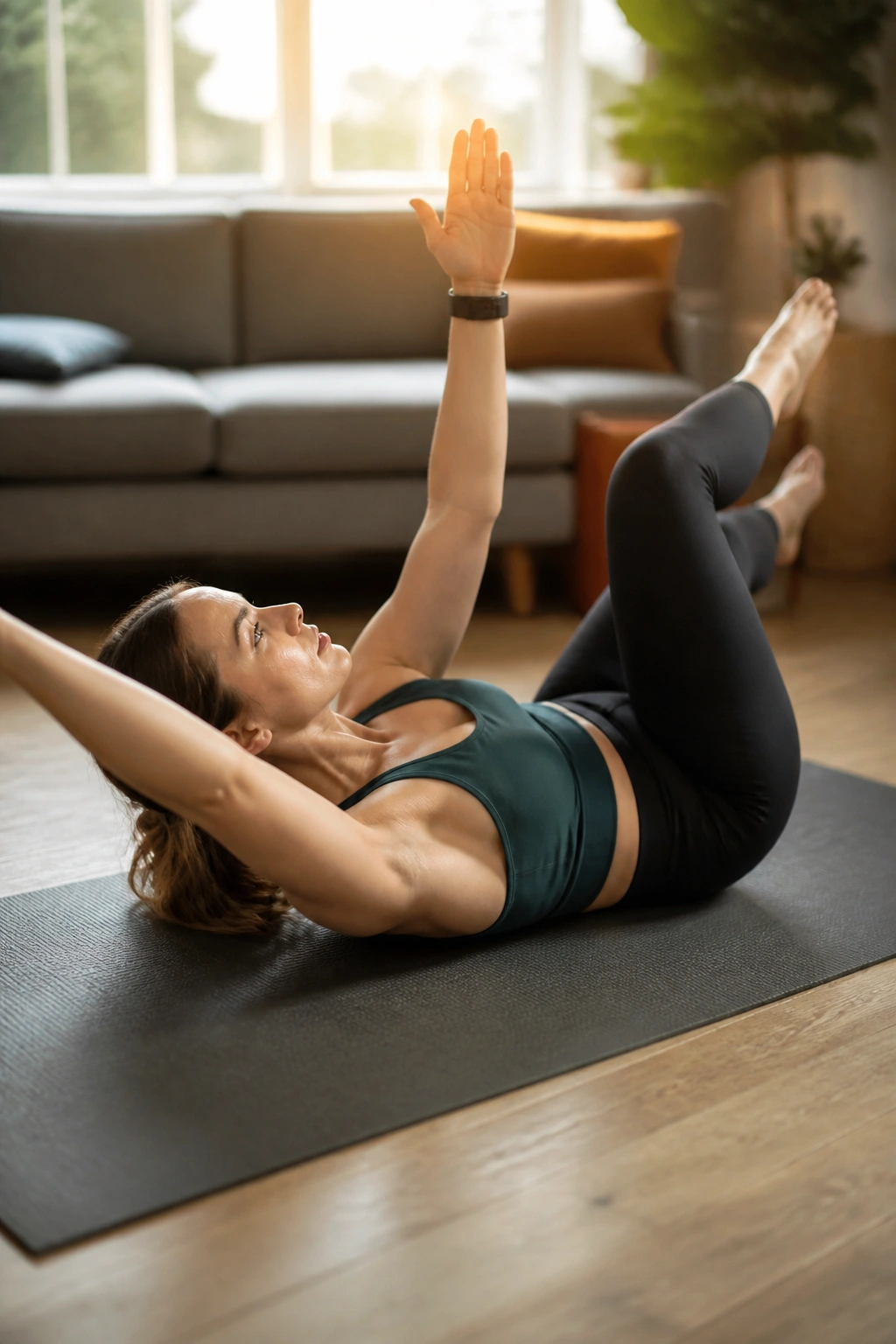
Your midsection should feel tight, not clenched.
That’s the difference between useful core work and the kind that leaves your neck sore because you were fighting the exercise instead of doing it. Core training at home works best when it teaches your ribs, pelvis, and breathing to stay organized.
Try dead bugs, bird dogs, side planks from the knees, and bear hovers. Start with 2 sets of 6 reps per side for the movement drills and 10 to 15-second holds for the planks. Exhale on the hard part. That one habit changes a lot.
What to Watch For
- Your lower back should stay calm.
- Your neck should not strain forward.
- Your breath should not turn into a panic sprint.
- Your ribs should not flare up hard.
If they do, shorten the hold and make the movement smaller. Core strength grows faster when you can keep your shape.
8. Mobility and Recovery Reset
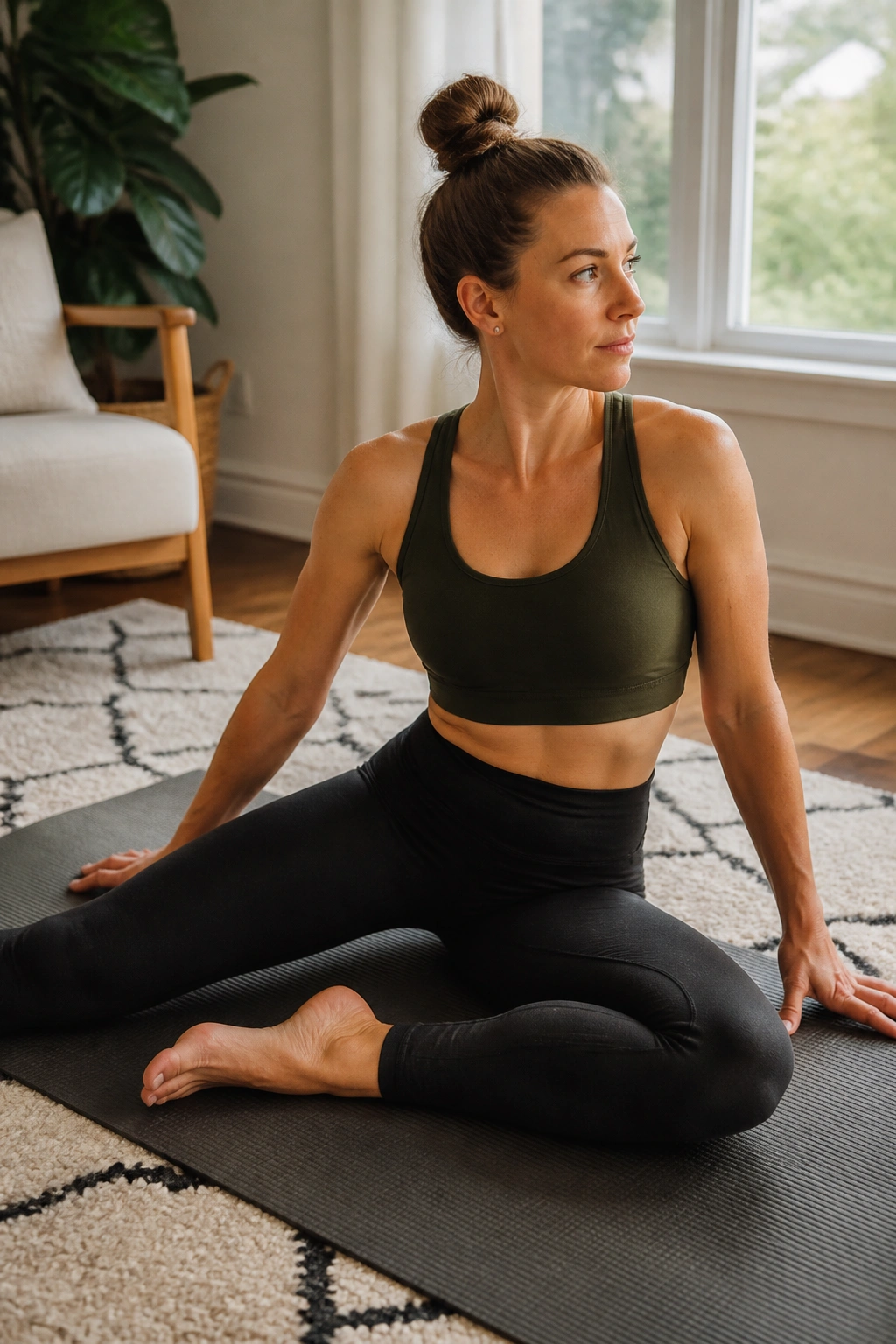
Some days the smartest workout is the one that feels too easy.
This plan is for stiff hips, tight backs, and mornings when your body feels like it slept in a bad position. It is not lazy. It is maintenance, and beginners who treat mobility as real work usually recover faster between strength sessions.
Move through cat-cow, ankle rocks, 90/90 hip switches, thoracic rotations, and child’s pose breathing. Spend 30 to 45 seconds on each shape, or do 5 slow breaths per position. Nothing should feel sharp. A stretch can be strong without being painful.
I like this as a standalone 15-minute session or as a warm-up before a harder plan. Either way, it clears some of the stiffness that makes squats and lunges feel worse than they need to.
9. Beginner Workout Plan at Home With Resistance Bands
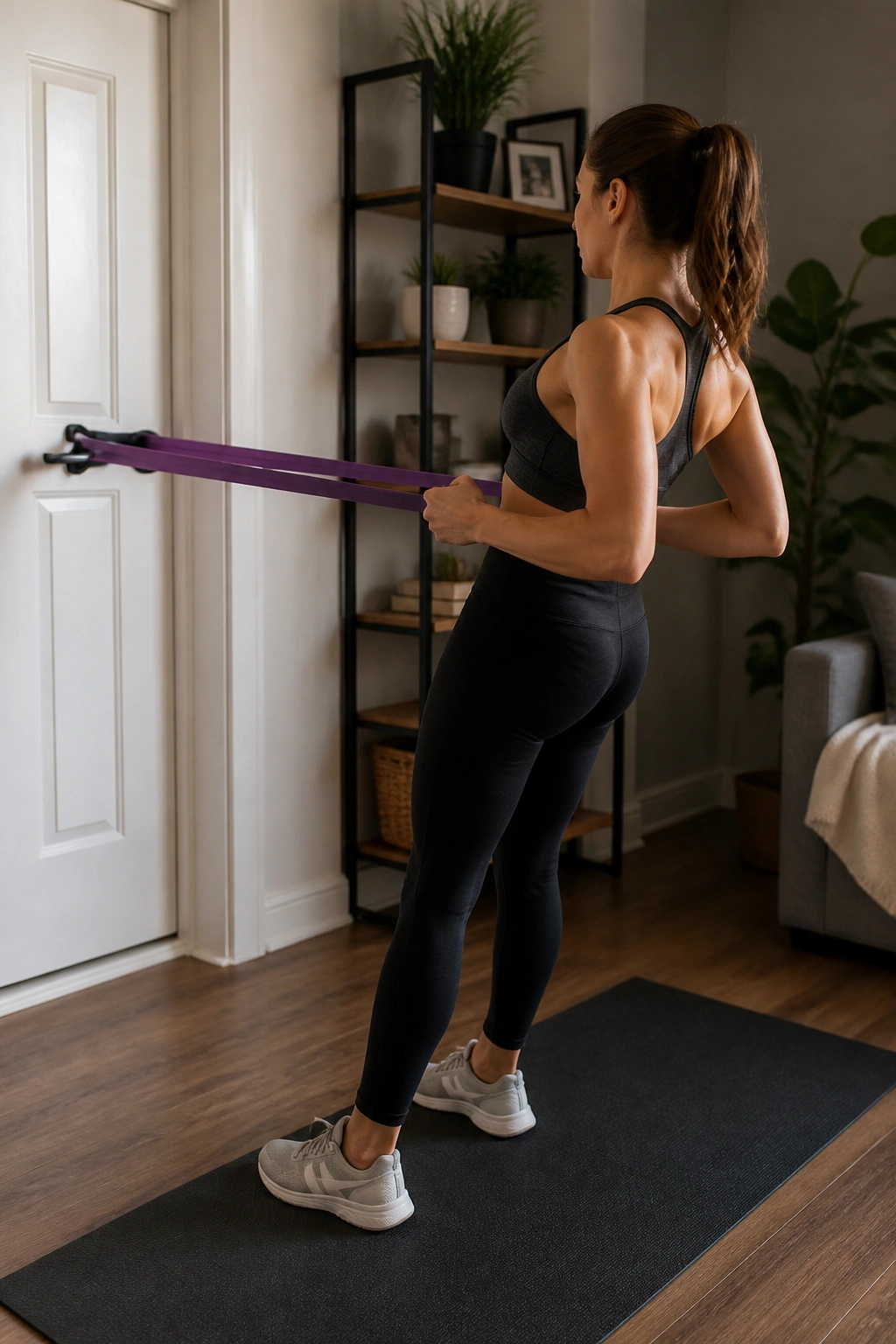
Bands make home training less boring.
They also solve a real problem: bodyweight work can feel too light after a few weeks, while heavy weights can be awkward to store and move around. A band sits in the middle. It gives you tension without needing much space.
What to Do
Use a loop band or a long band with handles for band rows, band squats, lateral walks, pull-aparts, and banded glute bridges. Do 2 to 3 sets of 10 to 15 reps. The last few reps should slow down, but your posture should still look clean.
Anchor the band only if it’s made for that use. Door safety matters. A cheap setup is not worth a snapped band in the face. If you are new to bands, start with lighter resistance than you think you need. Most people overestimate what they can handle on day one.
10. Beginner Workout Plan at Home With Dumbbells
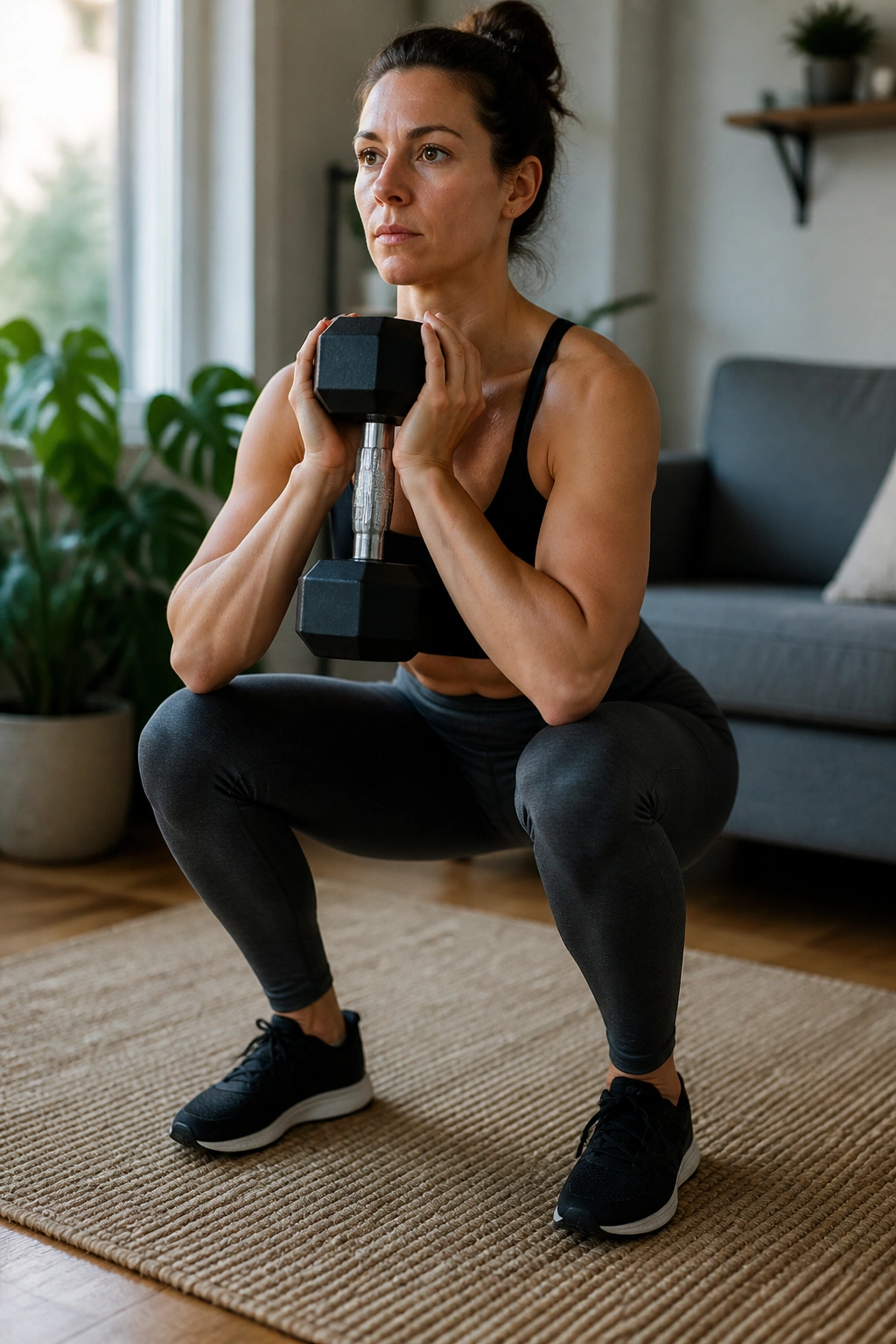
Dumbbells are useful, but not magic.
That’s worth saying because a lot of beginners think weights solve everything. They help, sure. They also expose sloppy movement faster than bodyweight work does, which can be annoying and useful at the same time.
Use goblet squats, one-arm rows, floor presses, and Romanian deadlifts with light dumbbells, water jugs, or even a loaded backpack. Do 2 sets of 8 to 10 reps to start. If the last two reps feel slow and controlled, you picked a decent weight. If you have to shrug, twist, or bounce, the load is too heavy.
I like this plan for people who want a clear next step after bodyweight basics. You do not need huge weights. You need enough resistance to make the movement honest.
11. The Ladder Rep Workout
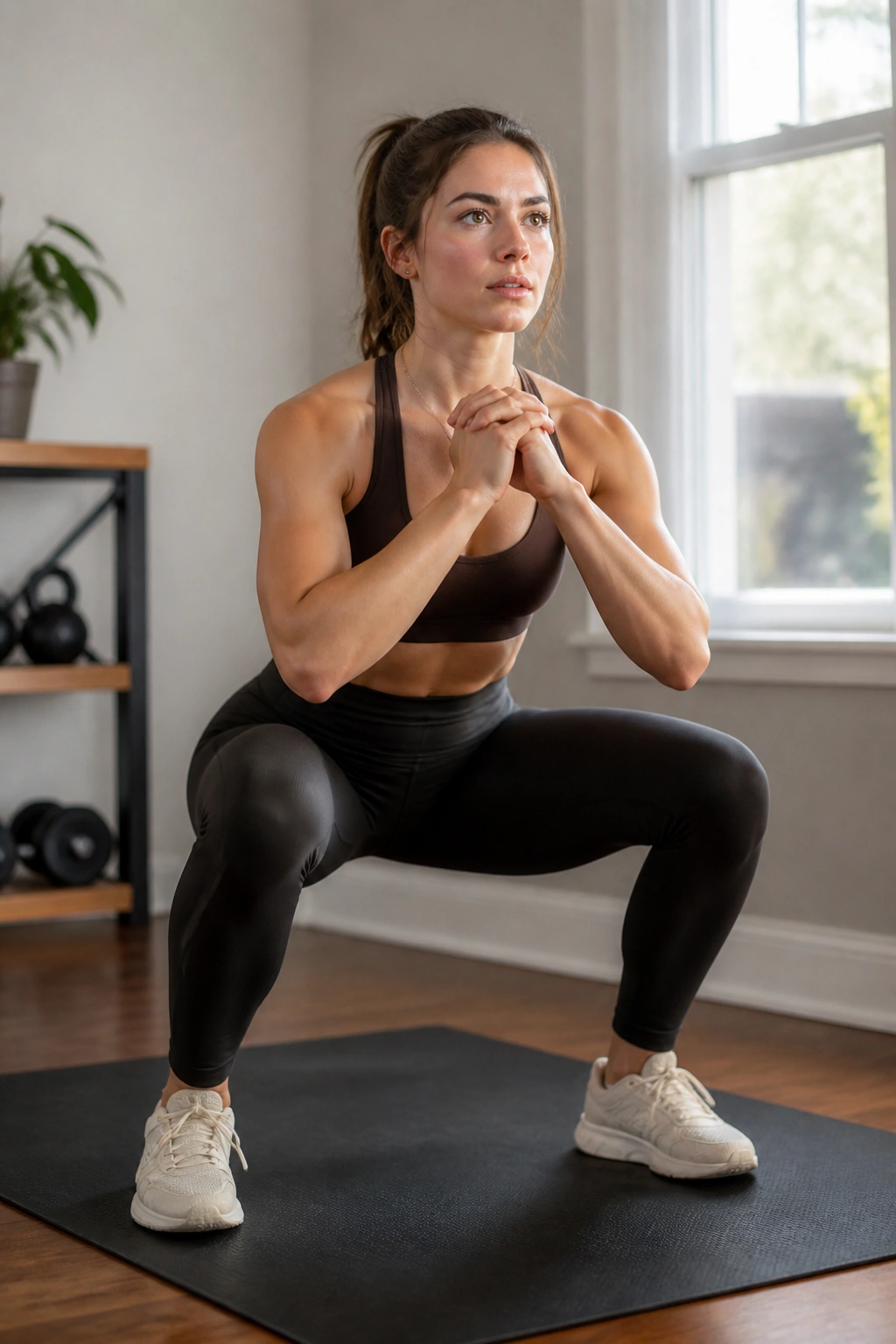
Do one rep, then two, then three. That’s the whole trick.
Ladder workouts are a good fit for beginners because the early sets feel almost too easy. Then the count climbs, your breathing changes, and you learn pacing without getting thrown into the deep end all at once.
Choose 3 moves — say squats, incline push-ups, and glute bridges — and do a ladder from 1 to 5 reps, then back down if you want more volume. Rest 20 to 30 seconds between each rung. Keep the exercises clean, not fast.
A ladder works well when motivation is shaky because the numbers give you a clear finish line. Five reps doesn’t sound scary. Thirty total reps sounds like work. That mental trick matters more than people admit.
12. EMOM Beginner Workout
What if you want sweat without long clock-watch?
Use an EMOM, which means every minute on the minute. You start the work at the top of the minute, finish before the minute ends, then rest until the next one begins. It sounds technical. It’s really just a tidy way to keep moving.
A Simple 10-Minute Version
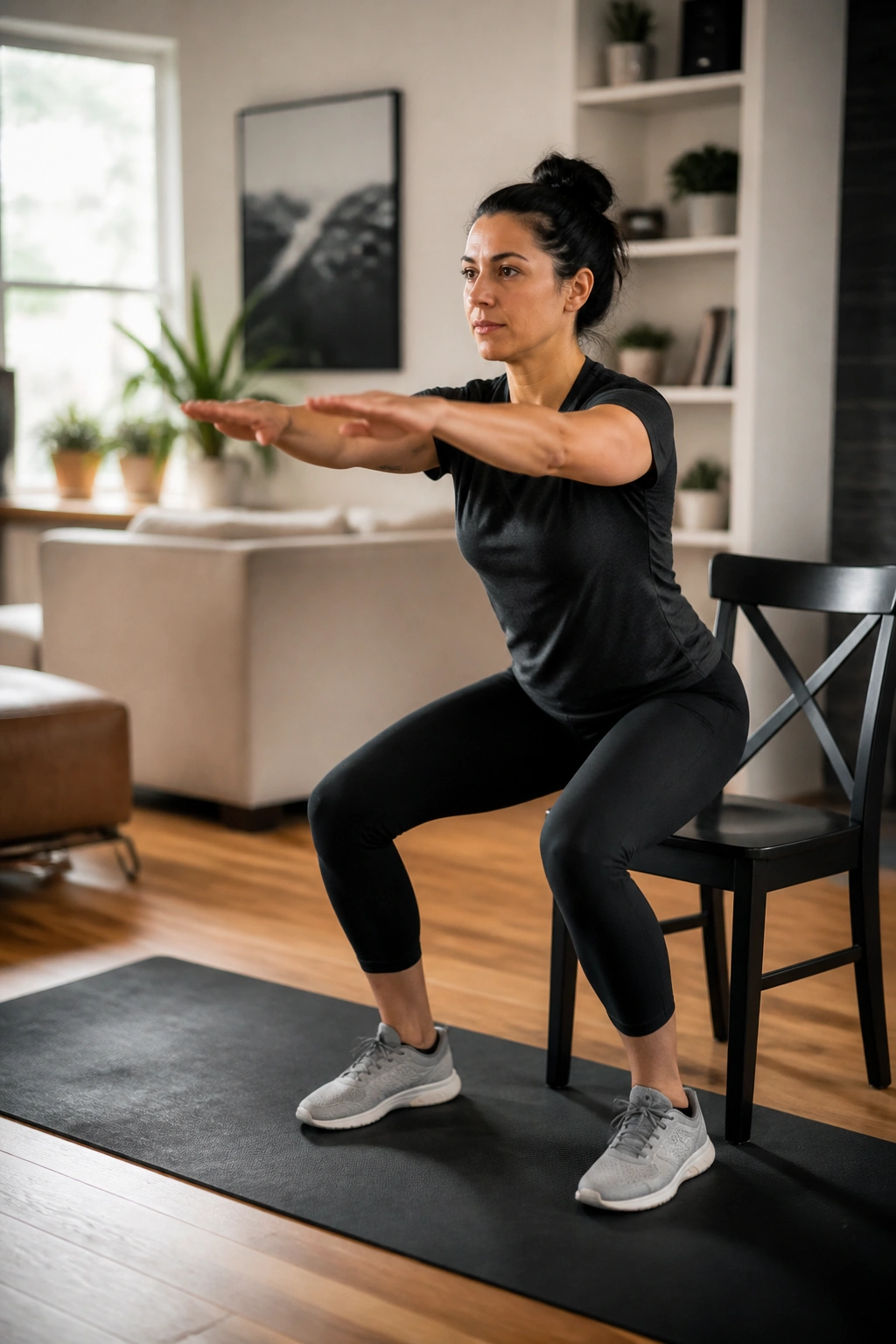
- Minute 1: 10 chair squats
- Minute 2: 6 incline push-ups
- Minute 3: 10 marching knee drives per side
- Minute 4: 8 backpack rows per side
- Minute 5: 20-second plank hold
Repeat once.
You should finish each minute with about 20 to 25 seconds to breathe. If not, cut the reps. The point is not to race the clock. The point is to finish each minute with form still intact.
13. Walk-and-Workout Hybrid
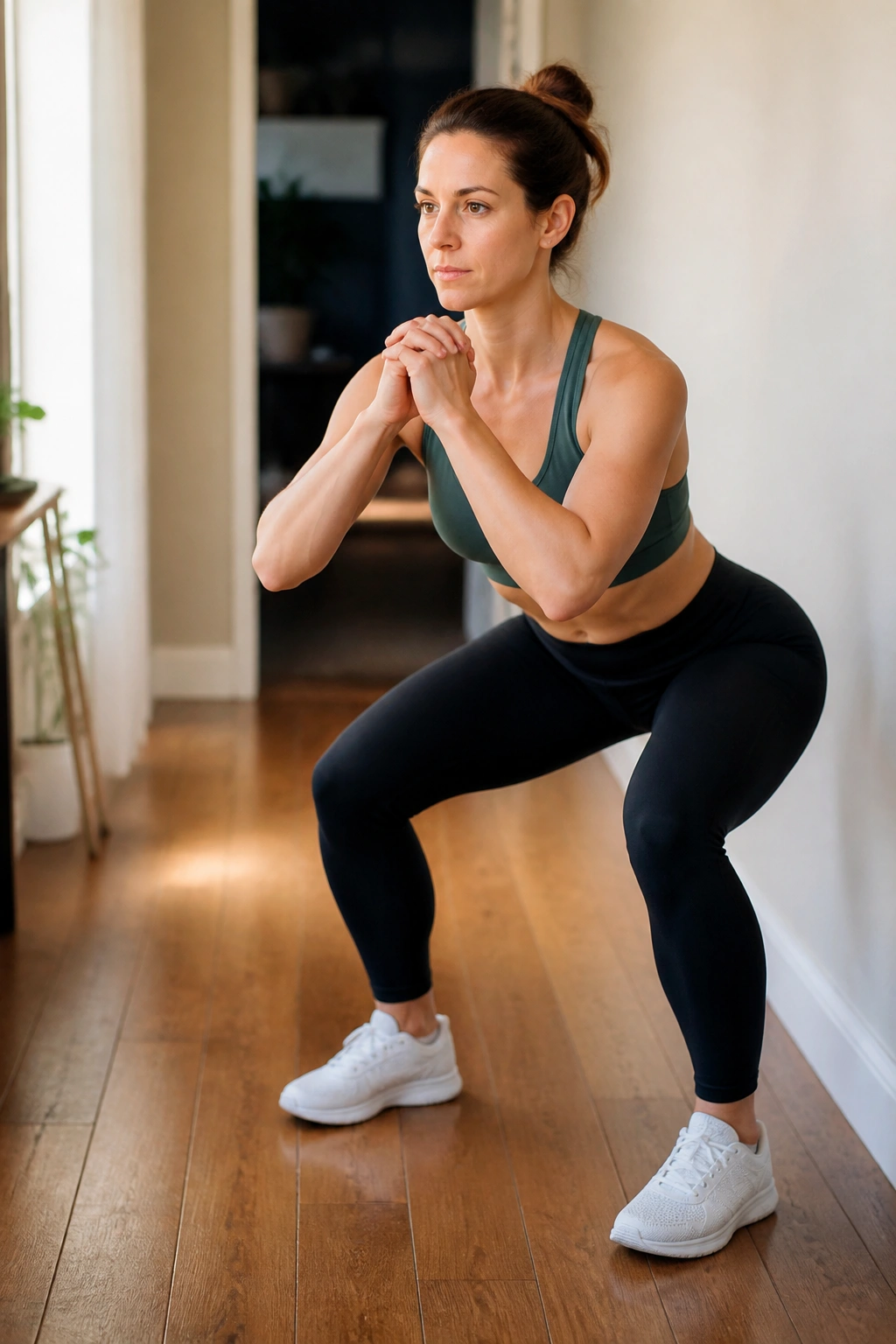
A 20-minute walk can do more for consistency than a punishing session you dread.
That’s especially true for beginners who need a plan that feels normal enough to repeat. Walking lowers the barrier. A few short exercise stops turn it into a workout without turning it into a production.
Try this: walk for 5 minutes, stop for 8 squats, 8 wall push-ups, and 20 seconds of plank or marching, then walk another 5 minutes. Repeat the mini circuit once more if you have the time. Indoors, you can loop around the house or march from room to room.
The beauty here is that the workout does not feel like a separate event. It feels like a brisk errand with a little extra work tucked inside.
14. Apartment Quiet Workout
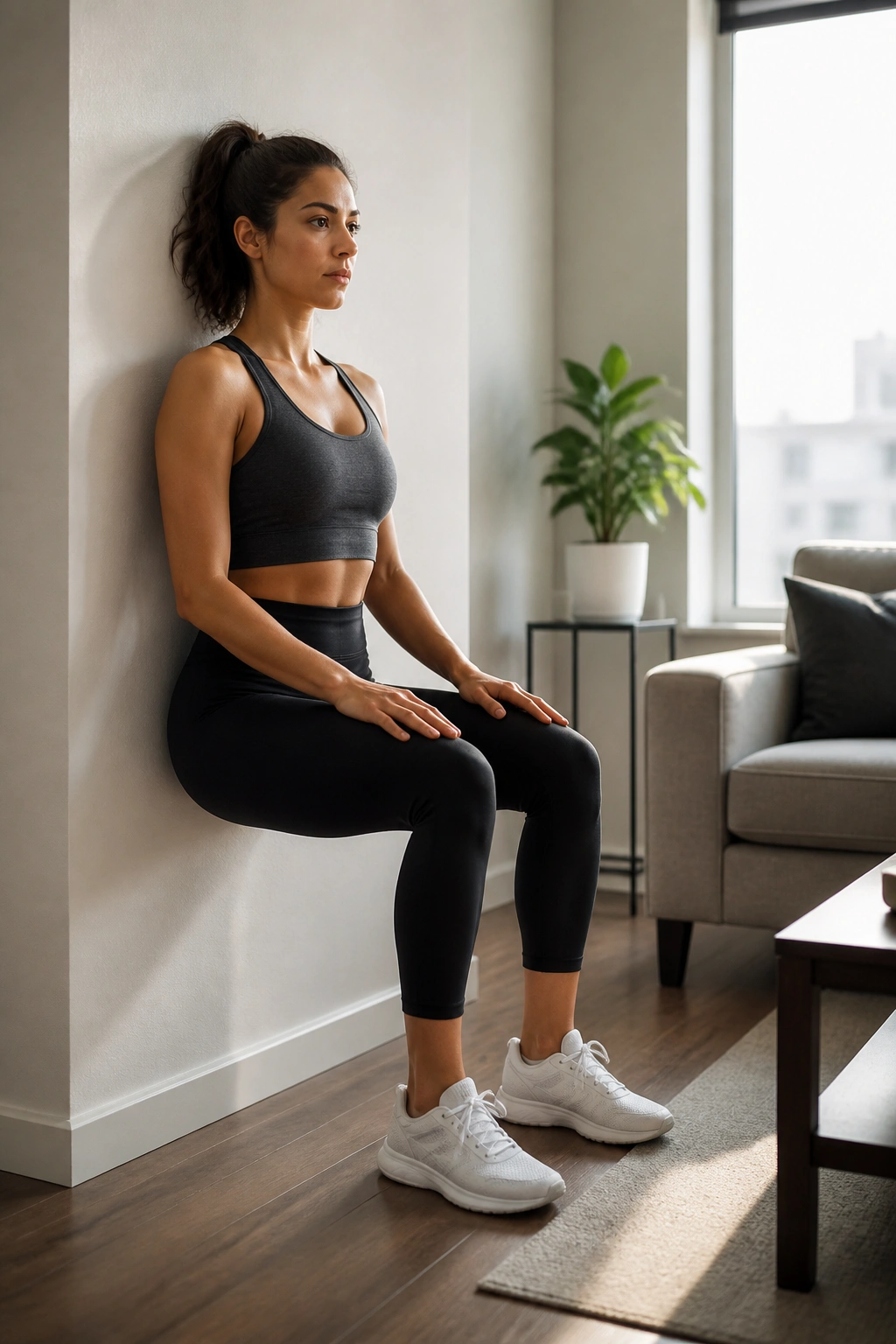
Apartment workouts live or die on noise.
No one needs a floor-shaking set of jump squats when the downstairs neighbor is already tired. Quiet training is not weaker training. It just pays attention to impact, control, and room size.
Use split squats, wall sits, standing punches, slow mountain climbers on a couch or bench, and calf raises. Keep each move smooth and land softly if a step is involved. A 15-minute block can be enough if you keep the rest short.
- 2 rounds
- 30 seconds work
- 15 seconds rest
- No jumps
- No hard landings
That last line matters. Soft feet, quiet room, better repeatability. Simple, but not easy if you rush.
15. Glute Bridge and Posture Plan
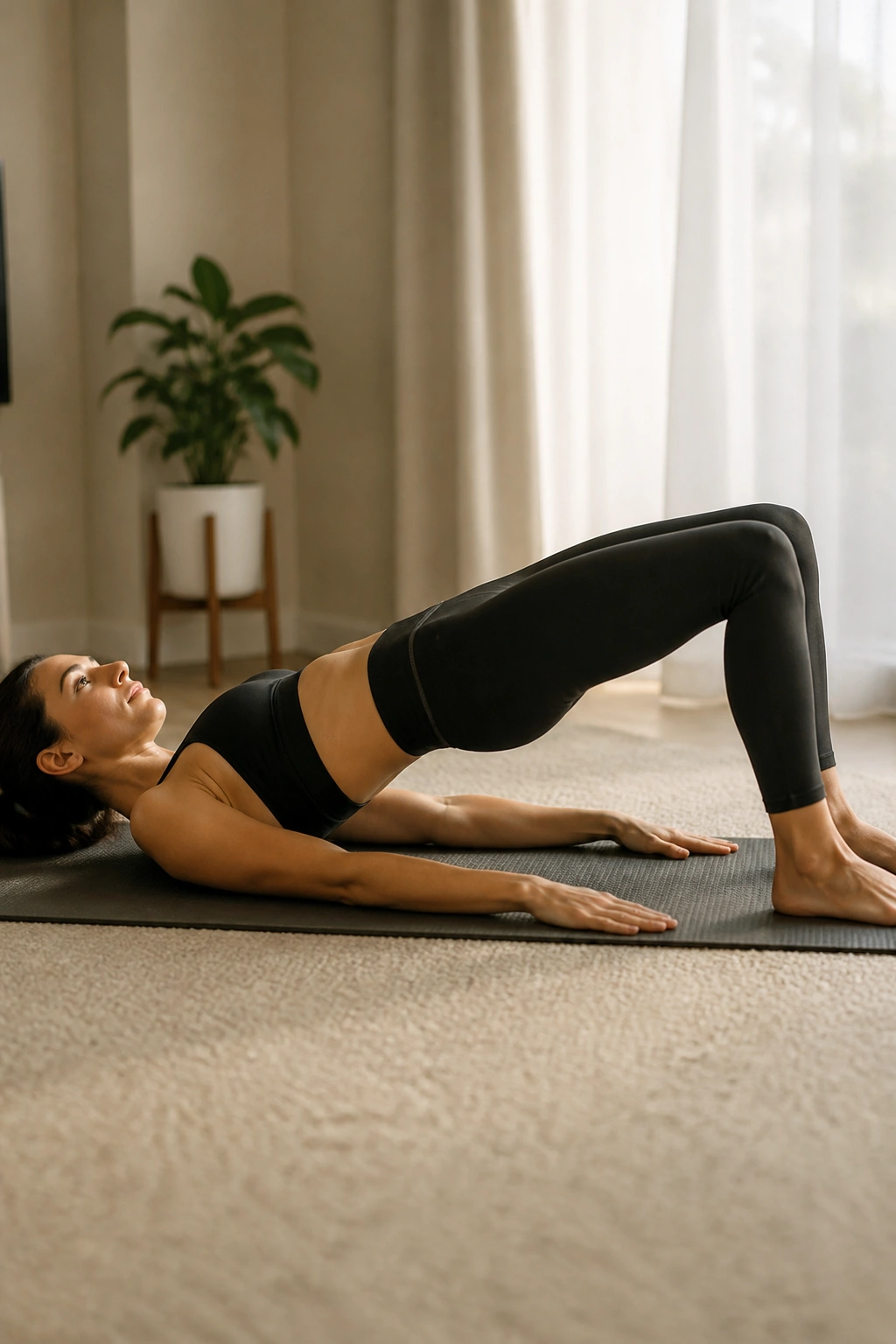
Glute bridges should feel like work in the hips, not your lower back.
If your back is doing the lifting, something is off. The glutes are the point of the exercise, and when they switch on properly, a lot of other stuff gets easier — standing, climbing stairs, even holding a more upright posture.
Do 3 sets of 10 to 12 glute bridges, 2 sets of 10 hip hinges, 2 sets of 8 wall angels, and 2 holds of 15 to 20 seconds for a prone cobra. You can put a light backpack across your hips later if bodyweight starts to feel too small.
The cue I like most is this: push through the heels, keep the ribs down, and stop at the top when the hips are fully open. Don’t over-arch. The top position should feel firm, not jammed.
16. Chair-Assisted Strength Plan
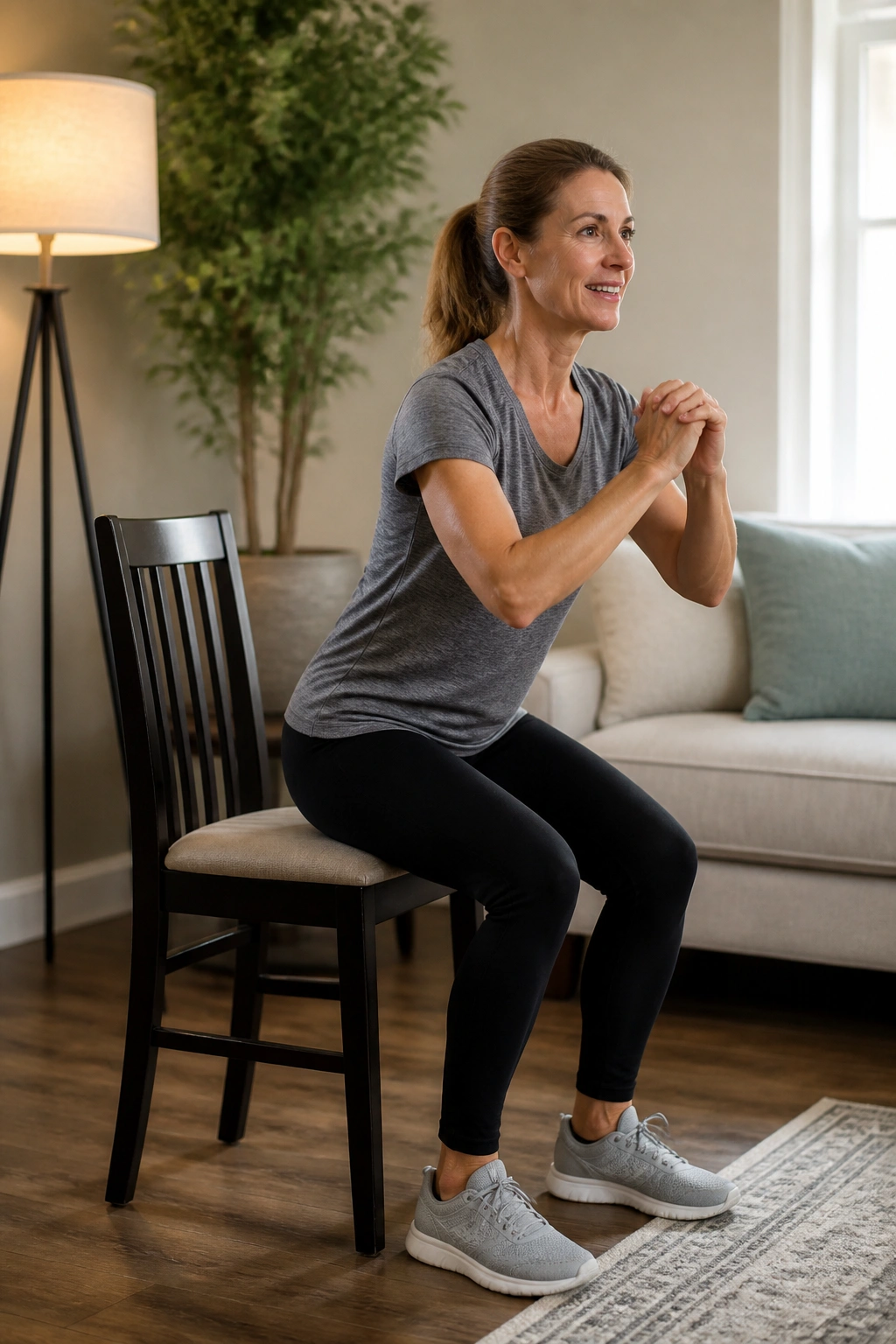
A chair can make strength training safer than the floor for some beginners.
That matters if getting down and up from the ground feels awkward, or if balance is still a work in progress. A chair gives you height, support, and a clear end point. Used well, it makes the workout less scary and more repeatable.
Try sit-to-stands, chair-supported split squats, incline push-ups on the seat or backrest, seated knee lifts, and standing calf raises while holding the chair. Start with 2 sets of 8 reps. Build to 3 sets once the movement feels smooth.
This is the plan I would hand to someone who says, “I want to start, but I don’t trust my knees yet.” Fair enough. A little support is not cheating.
17. Yoga-Strength Blend
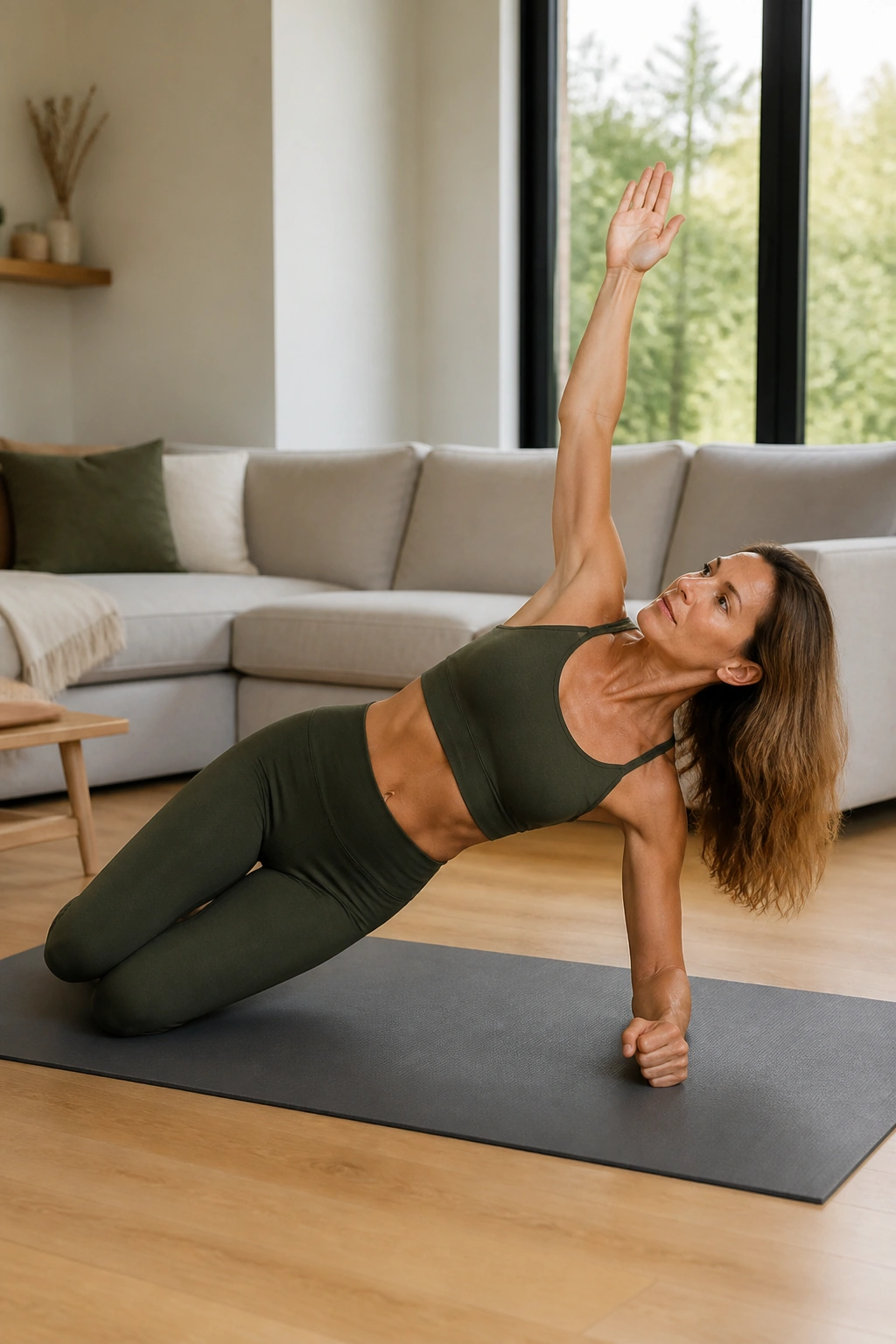
Yoga on its own can leave strength gaps.
That is not a knock on yoga. It’s just the truth. Stretching, balance, and breath work are useful, but beginners often need a bit more load to feel stronger in daily life. A hybrid plan closes that gap without making the session feel harsh.
Move through cat-cow, downward dog to plank, warrior II, chair pose, bridge pose, and a side plank from the knees. Spend 3 to 5 breaths in the holds and 5 slow reps on the transitions. If you move with control, the session starts to feel surprisingly solid.
I like this on days when the body feels a little stuck but not injured. You get the calm of yoga and the practical work of strength in one session, which is a nice trade.
18. A Gentle Seven-Day Weekly Schedule
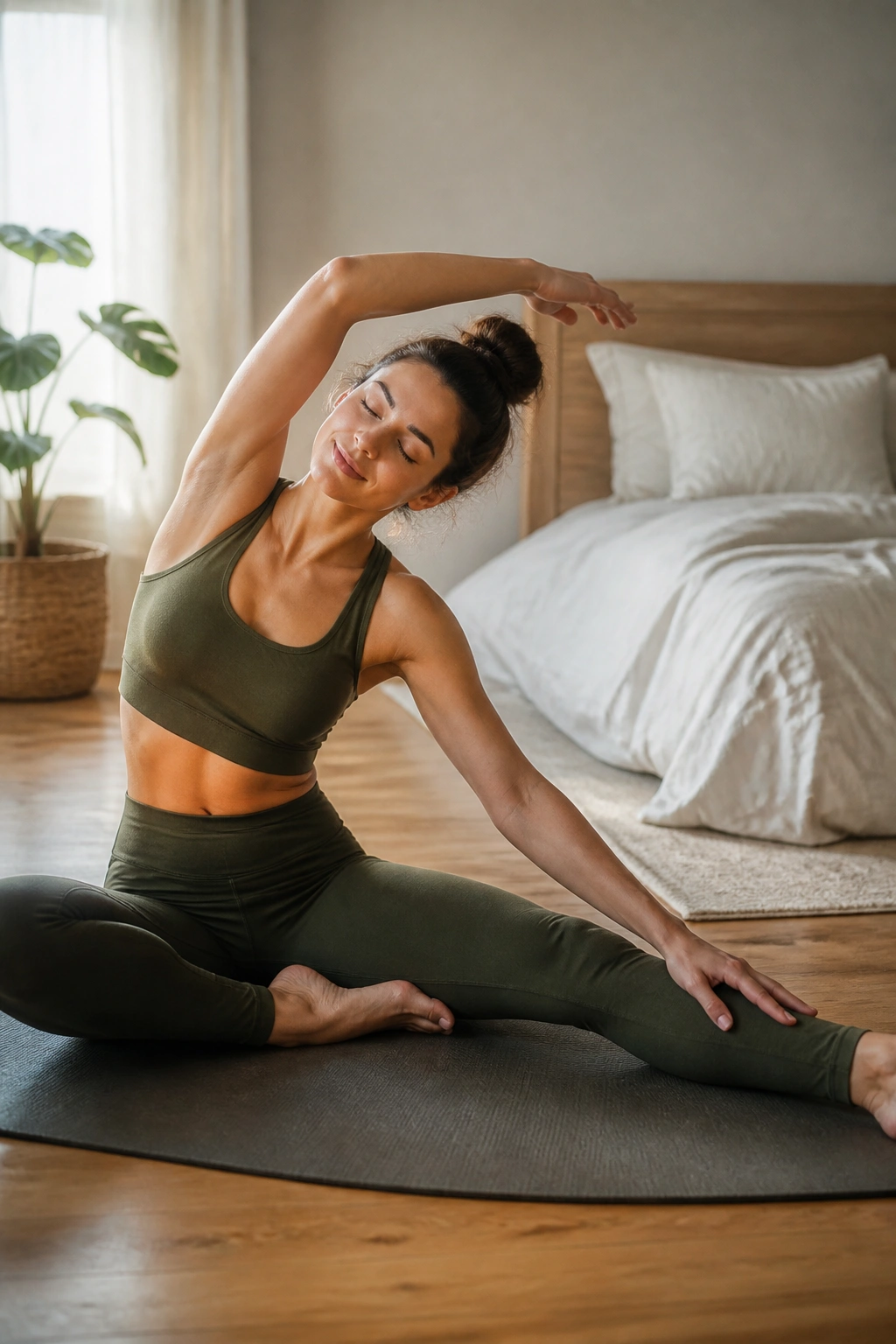
Three workout days and four lighter days sound soft until you try to live with them.
Then they start looking smart. Beginners often do better with a weekly rhythm that leaves room for tired legs, busy afternoons, and the occasional “not today” moment. A home plan that respects that is more likely to stick.
Here’s a simple week:
- Day 1: Full-body strength, 20 minutes
- Day 2: 15-minute walk or mobility reset
- Day 3: Low-impact cardio circuit, 15 to 20 minutes
- Day 4: Rest or light stretching
- Day 5: Lower-body strength, 20 minutes
- Day 6: Walk-and-workout hybrid, 20 minutes
- Day 7: Recovery reset, 10 to 15 minutes
That is enough. Really. You do not need to train hard every day to make progress, and trying to do so usually makes the schedule collapse by week two.
19. Quick Sweat Circuit With No Mat
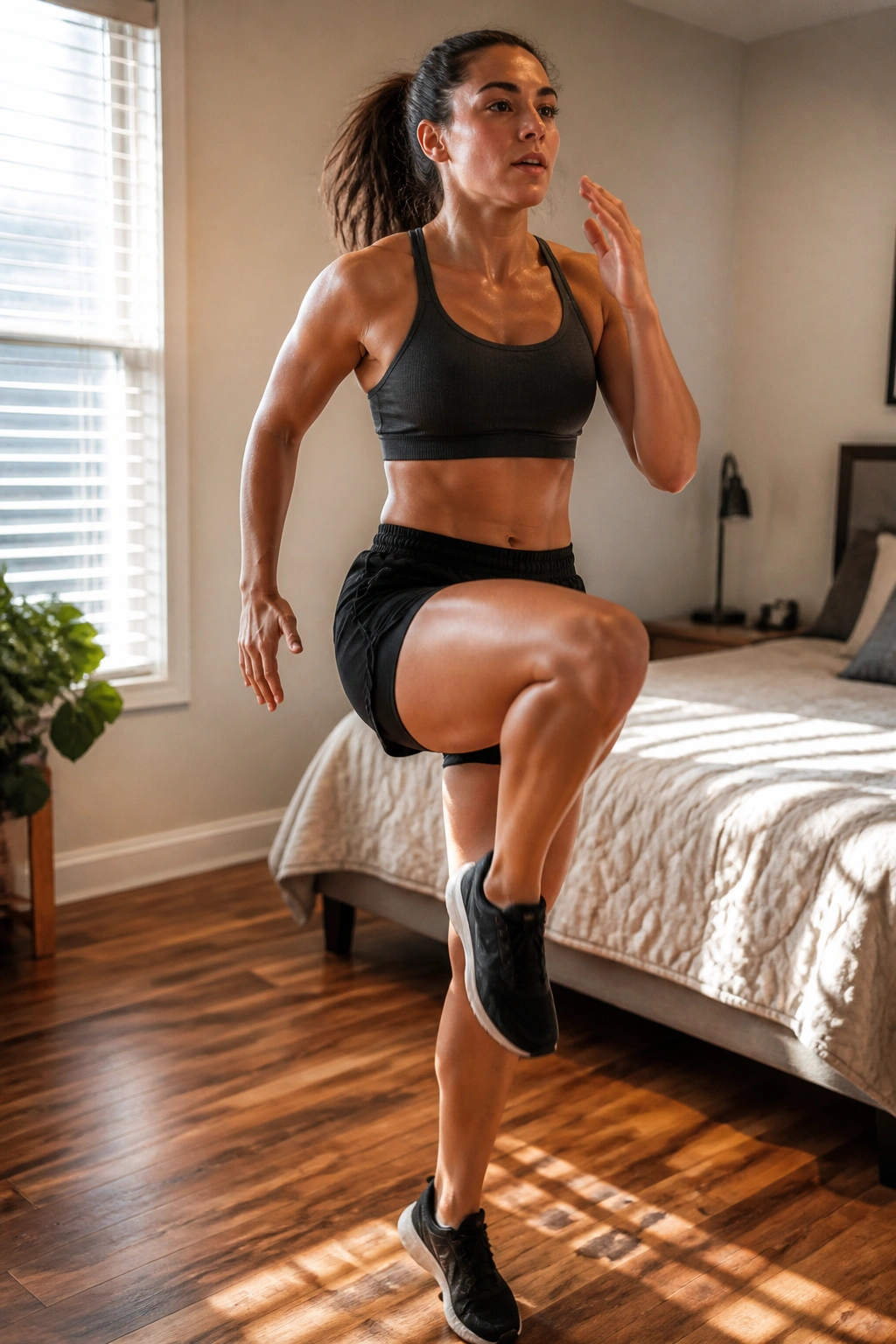
Need a workout that does not ask for a mat?
This one stays on your feet and keeps the setup simple. It works in a tiny room, by a bed, or between chores. No floor moves. No jumping. No equipment. That makes it easy to start when your energy is low and your time is chopped up.
Do 3 rounds of 45 seconds marching or fast stepping, 10 squats, 30 seconds shadow boxing, 12 calf raises, and 20 seconds of rest between exercises. If you want more work, shorten the rest to 10 seconds.
The pace should feel brisk, not frantic. If you can still talk in short sentences, you are probably in the right zone. If form gets sloppy, back off a little and keep the circuit going.
20. Beginner Workout Plan at Home: The Repeatable Weekly Base
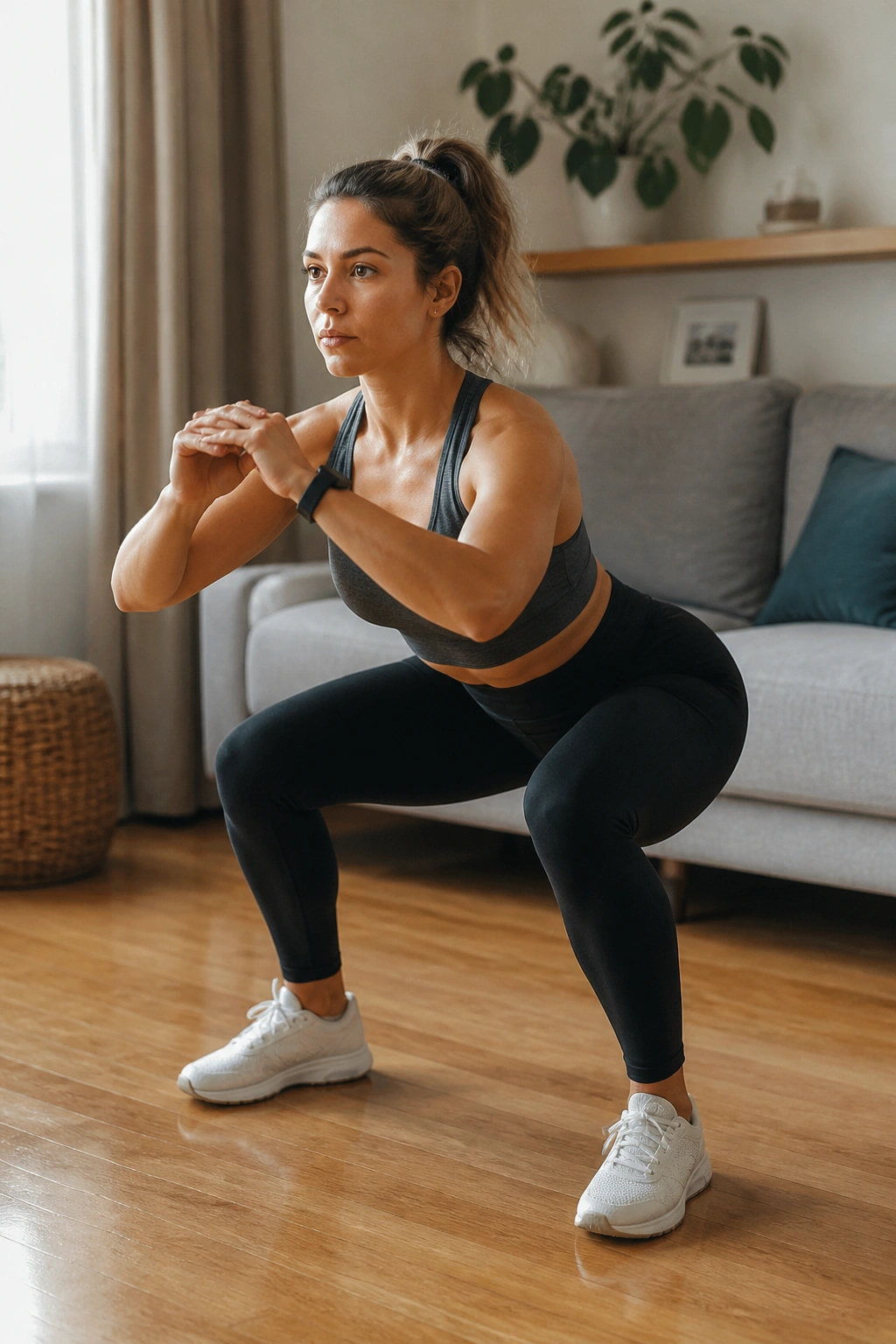
The best beginner home plan is the one you can repeat without thinking.
That sounds plain because it is. Real progress usually comes from a few basic movements done often enough to get familiar. You do not need a new routine every week. You need a base you can return to when life gets messy.
A solid weekly base looks like this:
- 2 full-body strength sessions
- 1 low-impact cardio session
- 1 mobility or recovery session
- 1 optional walk or quiet circuit
- 2 easier days built in
Start with 2 sets per exercise for the first couple of weeks. When that feels manageable, move to 3 sets or add 2 reps to each movement. That is a clean progression, and it beats chasing harder workouts before your joints and habits are ready.
If you want one rule to keep, make it this: leave room to come back tomorrow. That’s what keeps beginner workout plans at home useful after the novelty wears off.
