



Full body workout plans work best when you want steady progress without turning your week into a tangle of body-part splits, random machines, and half-finished good intentions. There’s a reason so many solid lifters keep coming back to them: you get frequent practice on the big movement patterns, you see what’s improving, and you don’t have to wait seven days to touch a lift again.
The trap is chasing too much at once. One week it’s heavy barbells. The next week it’s all dumbbells. Then a circuit. Then a “restart.” That’s not training; that’s calendar chaos. A good full body workout plan gives you a clean structure, a few repeatable lifts, and a simple way to move the numbers without grinding yourself into dust.
The sweet spot is boring in the best way. Leave a rep or two in the tank on most sets. Add a little weight when the reps look clean. Keep rest times honest. That’s how full body training supports strength, muscle, and conditioning without making every session feel like a test you forgot to study for.
Some of the plans below lean hard toward muscle gain. Some are built for busy weeks, tiny home setups, or travel gyms with one sad adjustable bench and a treadmill that squeaks. Pick one that fits your life, then stay with it long enough to let it work.
1. The Three-Day Dumbbell Full Body Workout Plan

This is the plan I hand to people who want a simple start without feeling babied. Three days a week is enough to make progress, and dumbbells give you plenty of room to grow before things get complicated.
A clean setup is Monday, Wednesday, Friday. Each session hits a squat pattern, a push, a pull, a hinge, and one carry or core move. That covers a lot of ground without bloating the workout into a marathon.
Sample structure
- Goblet squat: 3 sets of 6 to 10 reps
- Dumbbell floor press: 3 sets of 8 to 12 reps
- One-arm dumbbell row: 3 sets of 8 to 12 reps per side
- Romanian deadlift: 3 sets of 8 to 10 reps
- Suitcase carry: 3 rounds of 30 to 40 meters per side
Progress by one rep first. Once you hit the top of the range for every set with clean form, move up to the next dumbbell size. That tiny jump is enough. You do not need heroic weight jumps to keep moving forward.
2. The Four-Day Barbell Full Body Workout Plan

Want the fastest way to get better at the squat, bench press, deadlift, and overhead press? Give each one regular exposure and stop treating them like once-a-week guests.
How the heavy days work
The barbell plan can run on four days, with two heavier sessions and two slightly lighter sessions. Heavy does not mean reckless. It means you load the bar enough to feel the work, then leave a little room so you can repeat the lift well next week.
A sturdy template looks like this:
- Day 1: Back squat, bench press, barbell row
- Day 2: Deadlift, overhead press, pull-up or lat pulldown
- Day 3: Front squat, incline bench, chest-supported row
- Day 4: Pause deadlift, close-grip bench, split squat
The main lifts live in the 3 to 6 rep range. Rest 2 to 4 minutes between hard sets. That pause matters. If you rush the clock, the bar tells on you fast.
Why this style works
Barbells reward consistency more than novelty. The same lifts come back often enough that your technique improves without you having to relearn the movement every week. That makes the plan especially good for intermediate lifters who care about measurable strength.
3. The Two-Day Full Body Workout Plan for Busy Weeks
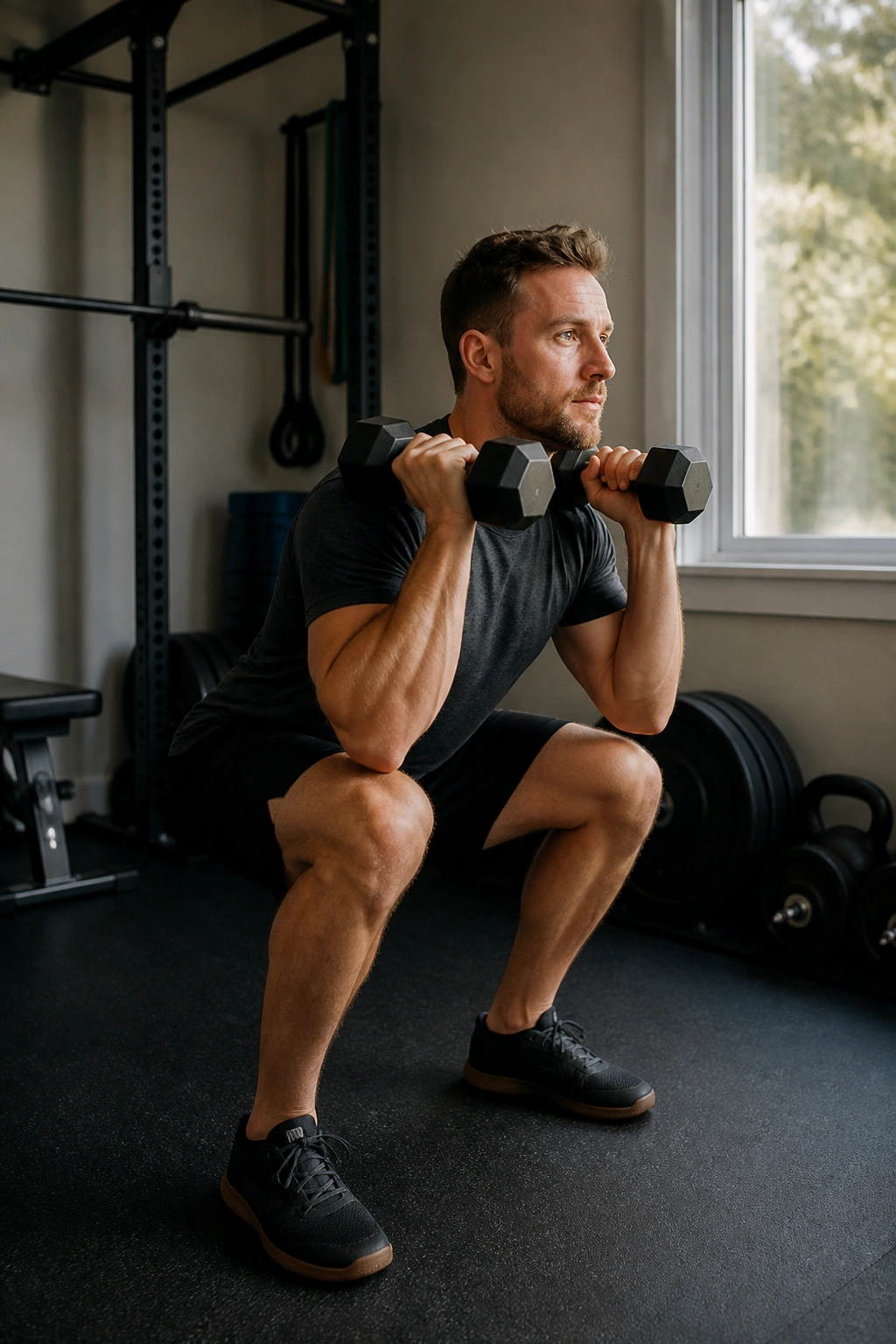
Two training days can still move the needle. Not perfectly. Not glamourously. Still enough to keep strength, muscle, and the habit alive when the rest of the week gets messy.
This plan is the one I like for people who travel, work long shifts, or get crushed by family schedules. You train twice, and you train with purpose. No fluff. No extra exercises because a spreadsheet told you to.
A simple A/B setup
-
Day A
- Squat or leg press: 3 sets of 5 to 8
- Push-up or bench press: 3 sets of 6 to 10
- Row: 3 sets of 8 to 12
- Hip hinge: 2 sets of 8 to 10
- Plank: 2 rounds of 30 to 45 seconds
-
Day B
- Deadlift or Romanian deadlift: 3 sets of 5 to 8
- Overhead press: 3 sets of 6 to 8
- Pull-up or pulldown: 3 sets of 6 to 10
- Split squat: 2 sets of 8 per side
- Carry: 2 rounds of 30 meters
Pick a fixed pair of days, then protect them like appointments. The workout is short enough to fit, but full enough to keep you from feeling like you’re starting over every Monday.
4. The Home Workout Full Body Plan With No Bench

A bench is nice. It is not required.
That’s the part people miss. You can build a strong, lean, useful body with a floor, a pair of dumbbells or kettlebells, and a little room to move. The key is choosing exercises that respect the setup instead of fighting it.
Good home swaps
- Floor press instead of bench press
- Push-up instead of machine press
- Backpack row or one-arm dumbbell row instead of cable work
- Bulgarian split squat instead of heavy barbell squats
- Dumbbell Romanian deadlift instead of rack pulls
- Side plank or dead bug instead of fancy ab machines
The floor press is the quiet hero here. Your elbows touch down before the shoulder gets cranky, and you still get solid pressing work. Push-ups are the same story: simple, repeatable, easy to scale by elevating the hands or adding load in a backpack.
Don’t crowd the session with ten tiny movements. Five good ones done hard enough will beat a pile of random extras, especially when the gear is limited.
5. The Machine-Only Full Body Workout Plan
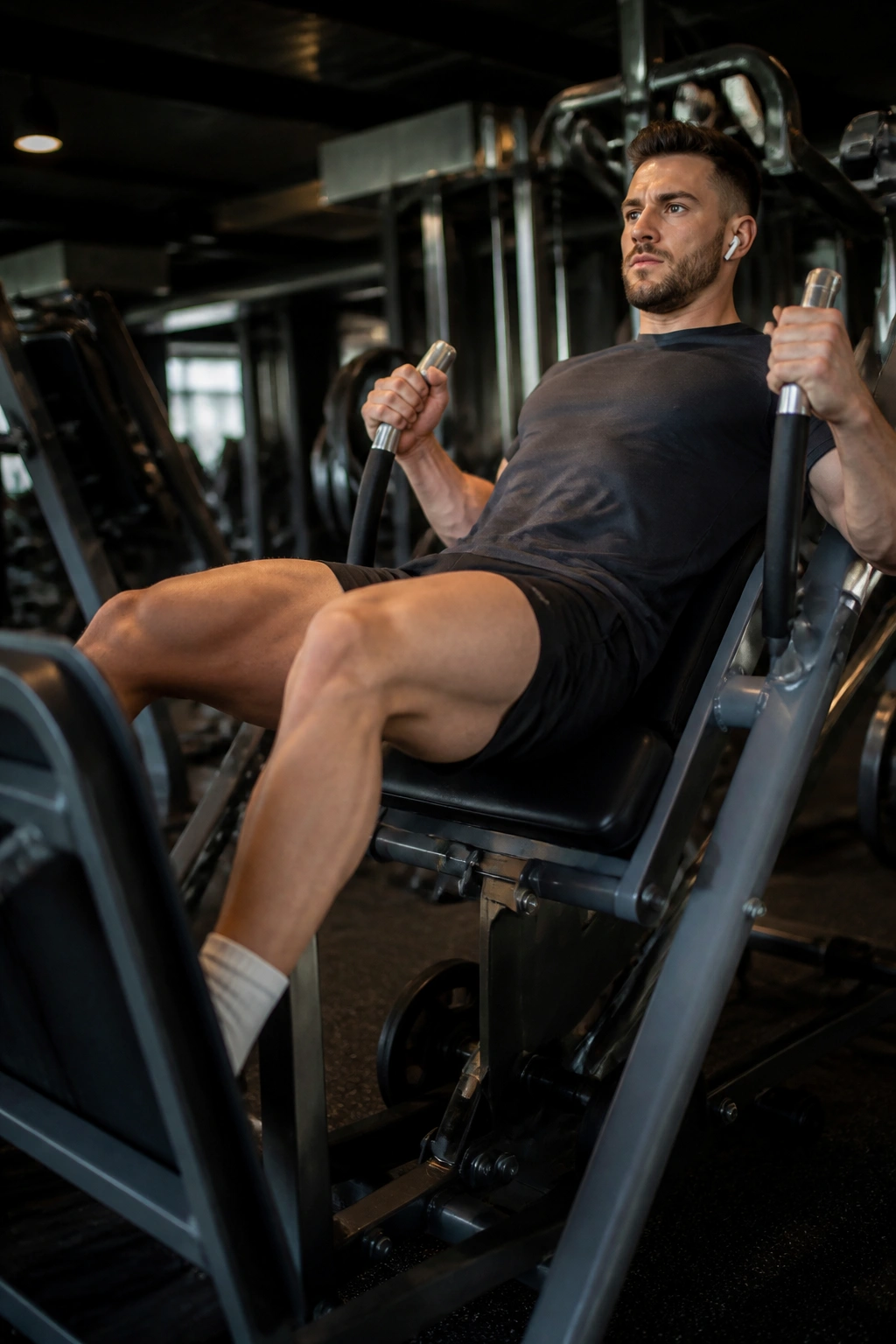
Machines get unfairly dismissed by people who confuse discomfort with effectiveness. A good machine-based full body workout can be excellent, especially if you want clean setup, stable positions, and less time spent wrestling with technique.
This style works well for beginners, lifters who want to push close to failure safely, or anyone coming back after a layoff. The machine gives you one less thing to solve. That matters when energy is low.
A practical sequence
Start with a leg press or hack squat. Move to a chest press. Then a lat pulldown or seated row. Add a leg curl, a shoulder press, and a back extension if time allows. That covers the body without the chaos of bar path or balance issues.
Use 8 to 15 reps on most machine movements. On the last set, the effort should feel real, but the form should stay tidy. If the stack is flying and your range is tiny, the weight is too light. If you’re heaving and twisting, it’s too heavy.
6. The Heavy-Light-Medium Full Body Workout Plan

Some weeks you feel strong. Some weeks you feel normal. Some weeks your sleep is a little off and the warm-up tells you the truth. The heavy-light-medium setup handles that without forcing every day to feel the same.
The three-day rhythm
- Heavy day: lower reps, bigger loads, longer rest
- Light day: moderate loads, clean movement, shorter rest
- Medium day: somewhere between the two, usually the most balanced session
On heavy day, the main lift might be 4 sets of 4 reps. On light day, the same movement pattern might show up as 2 sets of 10 with a slower tempo. Medium day lands in the 6-rep zone and keeps the groove sharp.
That variety keeps fatigue from piling up in one place. It also makes the week feel less like a repeat of the same workout with different stickers slapped on it.
Why it keeps progress steady
Your joints get a break from all-out loading, but your nervous system still sees the lift often enough to improve. That’s the sweet spot. Plenty of people try to live on heavy days alone. They burn out, then blame the program. The program was fine. The recovery wasn’t.
7. The Beginner Full Body Workout Plan That Builds Clean Form

New lifters do not need a giant menu. They need a short list of lifts they can repeat until the moves stop feeling awkward.
The first rule is almost insultingly simple: learn the squat, hinge, push, pull, and carry patterns before chasing any circus tricks. That gives the body a map. Without it, everything feels random.
Keep the first phase small
- Squat pattern: goblet squat or box squat
- Hinge pattern: Romanian deadlift or hip hinge with a kettlebell
- Push pattern: incline push-up or dumbbell press
- Pull pattern: row or pulldown
- Carry or core: farmer’s carry, dead bug, or plank
Use 2 sets per movement at first. That’s enough. The goal is to finish the workout feeling like you could have done a little more, not wrecked and confused.
Write the weights down. Seriously. If the logbook is empty, progress gets fuzzy fast. One more rep on each lift, or five more pounds on a couple of movements, is a real win. It may look small on paper. It adds up.
8. The Hypertrophy Full Body Workout Plan for More Muscle

Muscle growth likes honest work. Not endless work. Honest work.
A hypertrophy-focused full body workout plan usually lives in the middle rep ranges, with enough total sets to challenge the muscles several times a week. You get the benefit of frequent practice and enough volume to make the muscle fibers pay attention.
Keep the reps in the middle
A strong hypertrophy session often looks like this:
- One squat pattern for 3 or 4 sets of 8 to 12
- One pressing move for 3 or 4 sets of 8 to 12
- One row or pulldown for 3 or 4 sets of 10 to 12
- One hinge for 2 or 3 sets of 8 to 10
- One isolation move, like curls or triceps work, for 2 or 3 sets of 12 to 15
Rest about 60 to 90 seconds on accessories and a bit longer on compounds. The point is not to rush. The point is to keep the muscle under useful tension while still hitting the next set with decent quality.
I like this style for people who enjoy the pump and want visible muscle gain without going full bodybuilder. It’s productive, and it doesn’t need to be theatrical.
9. The Strength Full Body Workout Plan for Bigger Lifts

If your priority is getting stronger rather than chasing a pump, the structure changes fast. Fewer exercises. Lower reps. More rest. Less fluff.
A strength-biased plan lives closer to the 3 to 6 rep range on the main lifts. You still train the whole body, but the focus stays on heavy, repeatable work. The bar should move with intent, not panic.
What makes it different
Compared with a muscle-first plan, this one leans on longer rest periods and more practice with the same main lifts. You may only do 3 or 4 exercises in a session, and that’s enough. The load itself is doing the talking.
A simple setup could be:
- Squat: 4 sets of 3 to 5
- Bench press: 4 sets of 3 to 5
- Deadlift or trap-bar deadlift: 3 sets of 3 to 5
- Row or pull-up: 3 sets of 5 to 8
The key is to stop before the rep turns ugly. Grinders look tough. They also eat recovery. A clean triple that you could repeat beats a shaky triple that leaves your whole day wrecked.
10. The Fat-Loss Full Body Workout Plan With Conditioning

Can full body training help with fat loss? Yes. Can it do that alone? No. That’s the part people keep trying to dodge.
The lifting keeps muscle around while you’re in a calorie deficit. The conditioning work helps you spend a bit more energy and improves how fit you feel between sets. The food still matters most. No clever circuit can outrun a messy intake.
A useful session structure
- Squat or split squat: 3 sets of 8
- Push-up or dumbbell press: 3 sets of 10
- Row: 3 sets of 10
- Kettlebell swing or hip hinge: 3 sets of 12
- Finisher: 8 minutes of bike intervals, sled pushes, or brisk incline walking
Keep the lifting crisp. The finisher should raise your heart rate, not turn the whole workout into a blur. If every set is a scramble, the weights stop being useful.
That balance is the real trick. Strong lifting keeps your body from flattening out. Conditioning keeps the session honest.
11. The 30-Minute Full Body Workout Plan for Short Days

Thirty minutes is enough if you don’t waste a minute pretending you have more time than you do.
This plan is built for the lunch break lifter, the parent squeezing in a session between errands, or the person who needs a workout that begins quickly and ends before the mood fades. Tight, focused, done.
A simple timer-based setup
- 5 minutes: warm-up and ramp sets
- 10 minutes: squat plus press, paired as a superset
- 10 minutes: row plus hinge, paired as a superset
- 5 minutes: carry, plank, or bike sprint
A superset just means you move from one exercise to the next with little downtime. It saves time and keeps the heart rate up without turning the session into sloppy cardio.
Choose loads you can control. If the timer has you rushing so hard that the last reps wobble, the weight is too ambitious for this format. You want efficiency, not a mess.
12. The 45-Minute Full Body Workout Plan With a Real Warm-Up

Forty-five minutes is the sweet spot for a lot of people. Enough time to train properly. Not so much time that the workout starts to sprawl.
I like this setup because it respects the parts that get skipped in rushed plans: warm-up, first ramp set, and a small amount of accessory work that keeps the body balanced. The whole thing feels finished.
A clean time block
5 minutes: raise the temperature
Use easy rowing, brisk walking, or bike work until you feel your breathing change and your joints loosen up.
15 minutes: main lift
Pick one compound move, like squat, deadlift, bench press, or overhead press. Do 4 working sets with a full warm-up ramp.
15 minutes: second lift
Pair a push or pull with the opposite pattern so the session keeps moving. A bench press plus row combo works well here.
10 minutes: accessories and core
Finish with split squats, curls, triceps work, or carries. Don’t get lost here. The main job is already done.
The beauty of this plan is that it feels grown-up. No frantic pacing. No filler. Just enough work to make the hour count.
13. The Kettlebell Full Body Workout Plan
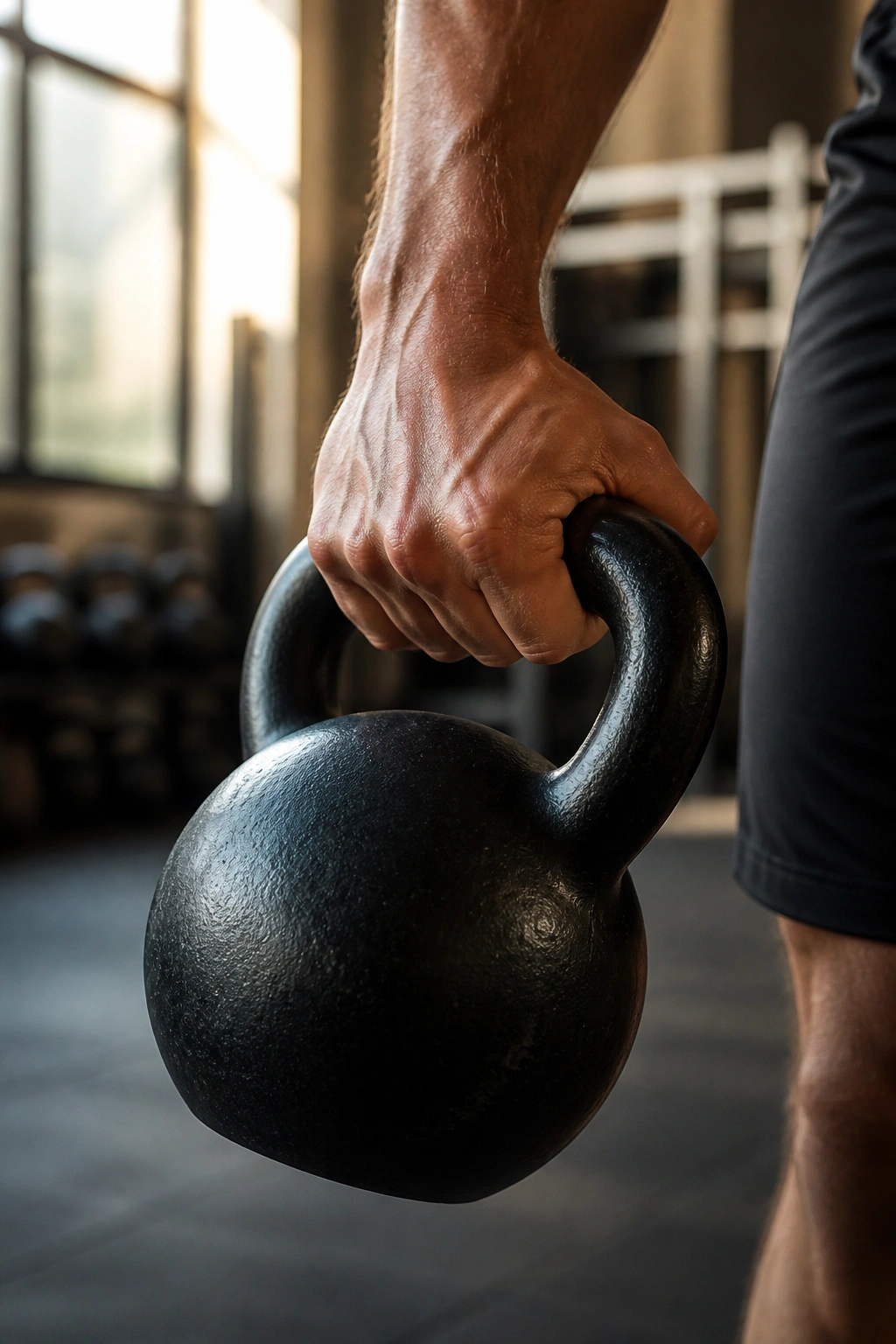
A good kettlebell session has a different feel from dumbbells. The bell sits off-center in your hand. The forearm gets nudged. The swing has a snap to it. There’s a little grit in the whole thing.
That makes kettlebells excellent for full body training when you want strength, conditioning, and some coordination in the same workout. They’re compact, too, which is handy when space is tight.
A practical kettlebell template
- Swing: 5 sets of 10 reps
- Clean and press: 3 sets of 5 per side
- Goblet squat: 3 sets of 8
- One-arm row: 3 sets of 10 per side
- Suitcase carry: 3 trips per side
What to watch for
The swing is a hip snap, not a squat. If the bell is rising because your arms are yanking it, the movement has gone sideways. Let the hips drive it. Clean reps should feel crisp, not rattly.
Kettlebells shine for people who want one tool to do a lot. That is the charm. One bell, a little floor space, and a session that leaves you breathing harder than you expected.
14. The Athletic Power Full Body Workout Plan

Bodybuilders and field athletes do not train the same way. That should be obvious, but a lot of workout plans blur the line until the whole session feels like a confused compromise.
Athletic training cares about speed, force, and clean landings. You still train the full body, but the reps are lower and the intent is sharper. A jump that looks slow is a bad jump. A rep that feels like a slow grind is not the goal here.
Good power moves
- Box jumps or broad jumps: 3 to 5 reps
- Medicine ball slams or throws: 4 to 6 reps
- Trap-bar jumps or speed deadlifts: 3 sets of 3
- Split squats: 3 sets of 6 per side
- Pull-ups or rows: 3 sets of 5 to 8
Rest longer than you think you need. Power work dies when fatigue muddies the output. You want each rep to look like a fresh rep, not a tired one.
This plan is a strong fit if you want to move better in sport, feel springier, or keep the body from turning into a slow, stiff machine.
15. The Joint-Friendly Full Body Workout Plan for Older Lifters

This is the plan too many people avoid because they assume “joint-friendly” means weak. It does not. It means smart.
You can keep making progress with a quieter setup: more machines, neutral grips, moderate rep ranges, and a little less ego in the loading. That combination tends to age well.
A good session might use a leg press instead of a deep barbell squat, a chest press with neutral handles instead of a low-bar bench setup, and a cable row instead of a bent-over row that bothers the lower back. None of that is cheating. It’s training that fits the body in front of you.
The biggest mistake is grinding every set. Don’t. Stop while the rep still looks clean. Use controlled lowering, maybe 2 to 3 seconds on the way down, and keep the warm-up longer than you used to. Five easy minutes on a bike can save the rest of the workout.
Progress can still be steady. It just needs to be quieter.
16. The Busy-Week Full Body Workout Plan That Keeps You on Track
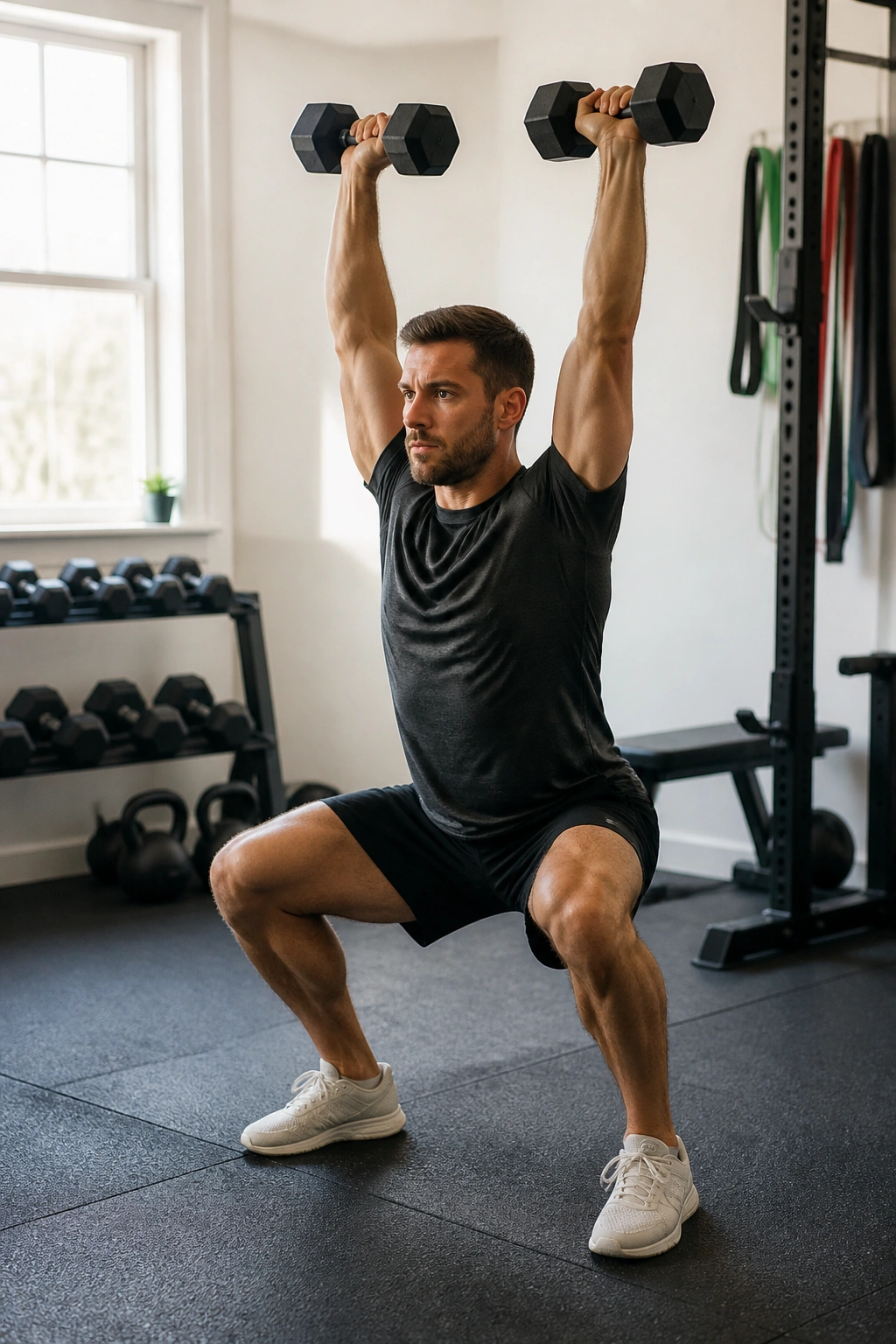
Missing a workout used to mean people threw out the whole week and promised to “start over” on Monday. That habit is expensive.
A better move is to run a catch-up plan. You keep a short list of priorities and train the most important patterns first. If the week gets messy, you still leave with something done.
Priority order
- Squat or split squat
- Press
- Row or pull
- Hinge
- Carry or core
If you only have 25 minutes, hit the first three. If you have 35, add the hinge. If you somehow have more time, finish with carries or abs. That order keeps the session useful even when the clock is annoying.
Do not try to make up every missed workout in one day. That way lies soreness and bad form. One solid session beats a dramatic catch-up session that leaves you wrecked for two more days.
17. The Plateau-Breaker Full Body Workout Plan

Stuck at the same weights? Good. That usually means the body wants a nudge, not a whole new personality.
A plateau-breaker plan changes one variable at a time. You might change rep ranges, swap the exercise order, or trim the volume slightly while keeping the same movement patterns. The point is to wake up adaptation without confusing the whole system.
What to change first
Rep range
If you’ve lived in the 8 to 10 zone forever, try 5 to 6 on the main lifts for a while. If heavy work has you bogged down, shift to 10 to 12 and build some clean volume.
Exercise order
Start with the lift that matters most. If your squat is dragging, squat first. If your pressing has stalled, put it early while you’re fresh.
Volume
A small cut in total sets can help if fatigue is the real problem. People hate hearing that because it sounds too easy, but sometimes less work brings the bar back to life.
Use the new setup for a block, log every session, and watch the trend rather than the mood of a single workout. Mood is a liar.
18. The Calisthenics-Only Full Body Workout Plan

A bodyweight plan can be brutally effective if you keep progressing it instead of repeating easy reps forever.
The trick is progression by leverage, range of motion, tempo, and load. Once a push-up is smooth, move to feet-elevated push-ups. Once those are smooth, add a backpack. Same story for rows, squats, and split squats. The body only cares that the task gets harder somehow.
Core movements
- Push-ups or dips
- Pull-ups or inverted rows
- Split squats or step-ups
- Pike push-ups for shoulders
- Hip thrusts or single-leg bridges
- Planks, hollow holds, or carries with a backpack
One nice thing about calisthenics is that it tends to make people honest about body control. If your split squat collapses at the bottom, no machine can hide it. That is annoying. Also useful.
You can train the whole body with no gym membership, but the plan only works if you keep making the exercises harder in a clear way.
19. The Travel Full Body Workout Plan for Hotel Gyms
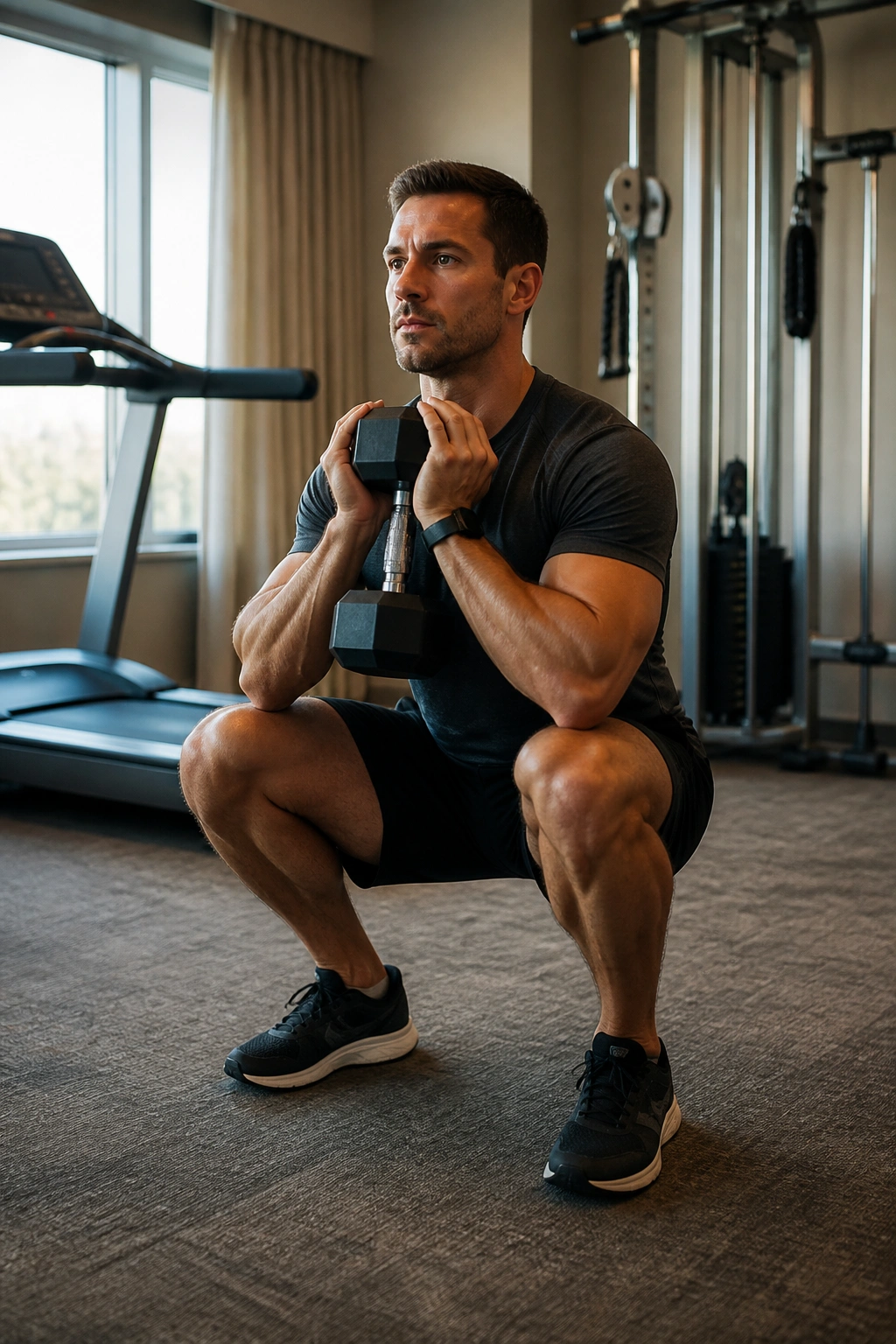
Hotel gyms tend to come in two versions: surprisingly decent or comically bare. Either way, you can still get work done.
The best travel plan keeps the exercise menu small and the expectations grounded. A pair of adjustable dumbbells, a cable station, a treadmill, or even just a few machines is enough. You are not trying to set records under fluorescent lighting.
A simple travel session
- Goblet squat or leg press: 3 sets of 8
- Dumbbell bench or chest press machine: 3 sets of 8 to 10
- Cable row or lat pulldown: 3 sets of 10
- Romanian deadlift with dumbbells: 3 sets of 8
- Incline walk or bike: 8 minutes
If the dumbbells top out too low, slow the lowering phase to 3 seconds or use single-leg versions. That keeps the load honest when the equipment is not.
The best part of a travel plan is psychological. You walk out feeling maintained, not derailed. That matters more than people like to admit.
20. The Long-Term Full Body Workout Rotation Plan

The smartest full body workout plan is often the one that changes slowly. Not every week. Not every time you get bored. Slowly.
A good long-term rotation might run one strength-leaning phase, one muscle-leaning phase, and one lighter conditioning phase, with each phase built around the same core movement patterns. You keep the squat, hinge, push, pull, and carry family alive, but you shift the emphasis before fatigue turns the whole thing stale.
How to cycle it
- Strength phase: lower reps, longer rest, heavier loads
- Muscle phase: middle reps, more sets, controlled tempo
- Conditioning phase: shorter rests, cleaner circuits, slightly lighter loads
That rotation gives you fresh motivation without forcing you to start over. Better yet, it respects how progress works in real life. You do not need a new split every time the first one gets familiar. Familiar is good. Familiar is where the numbers start to climb.
Keep a logbook. Keep the main lifts simple. Change one thing at a time. That’s how steady progress actually looks when the music is off and the gym is full of people doing things the hard way.
