



Lunges are one of those movements that seem simple on the surface, yet they demand more from your body than almost any other leg exercise. When you stand in a squat, both feet are planted firmly, providing a stable base that lets you focus primarily on moving the weight. As soon as you step into a lunge, however, the rules change. You are suddenly balancing on a narrow path, asking your hips to stabilize, your core to prevent rotation, and your legs to produce force while you’re effectively on one leg. It is an honest assessment of your functional strength, and if you have any weaknesses in your kinetic chain, a lunge will highlight them instantly.
Adding weight to this movement—whether with dumbbells, kettlebells, or a barbell—forces your body to move with even greater precision. It is not just about moving a heavy load from point A to point B; it is about controlling that load while navigating the instability inherent in the split stance. The variation is endless, and the benefits for your lower body endurance, muscle hypertrophy, and athletic performance are unmatched. If you are ready to move past basic bodyweight movements and challenge your muscles in new planes of motion, the following variations provide a comprehensive library for your training arsenal.
1. Weighted Forward Lunge
The classic forward lunge is often the first variation people learn, but it is frequently the most misunderstood. The key here is the deceleration. As you take a big step forward, your lead leg has to absorb your body weight and the weight of your chosen resistance, then push you backward to the starting position. This creates a significant eccentric stimulus on your quadriceps, which is prime territory for muscle growth.
Why the Technique Matters
Many people make the mistake of letting their front knee cave inward. Keep your front knee aligned over your second toe throughout the entire movement. If you feel your front foot lifting off the floor, your step is likely too long. Shorten your stride slightly to keep your weight centered through your mid-foot.
- Hold dumbbells at your sides for a standard load.
- Keep your torso upright to bias the quadriceps.
- Push through the mid-foot of the lead leg to return to standing.
Pro tip: Focus on a soft landing. If you hear a heavy “thud” when your foot hits the floor, you are losing control of the descent.
2. Weighted Reverse Lunge
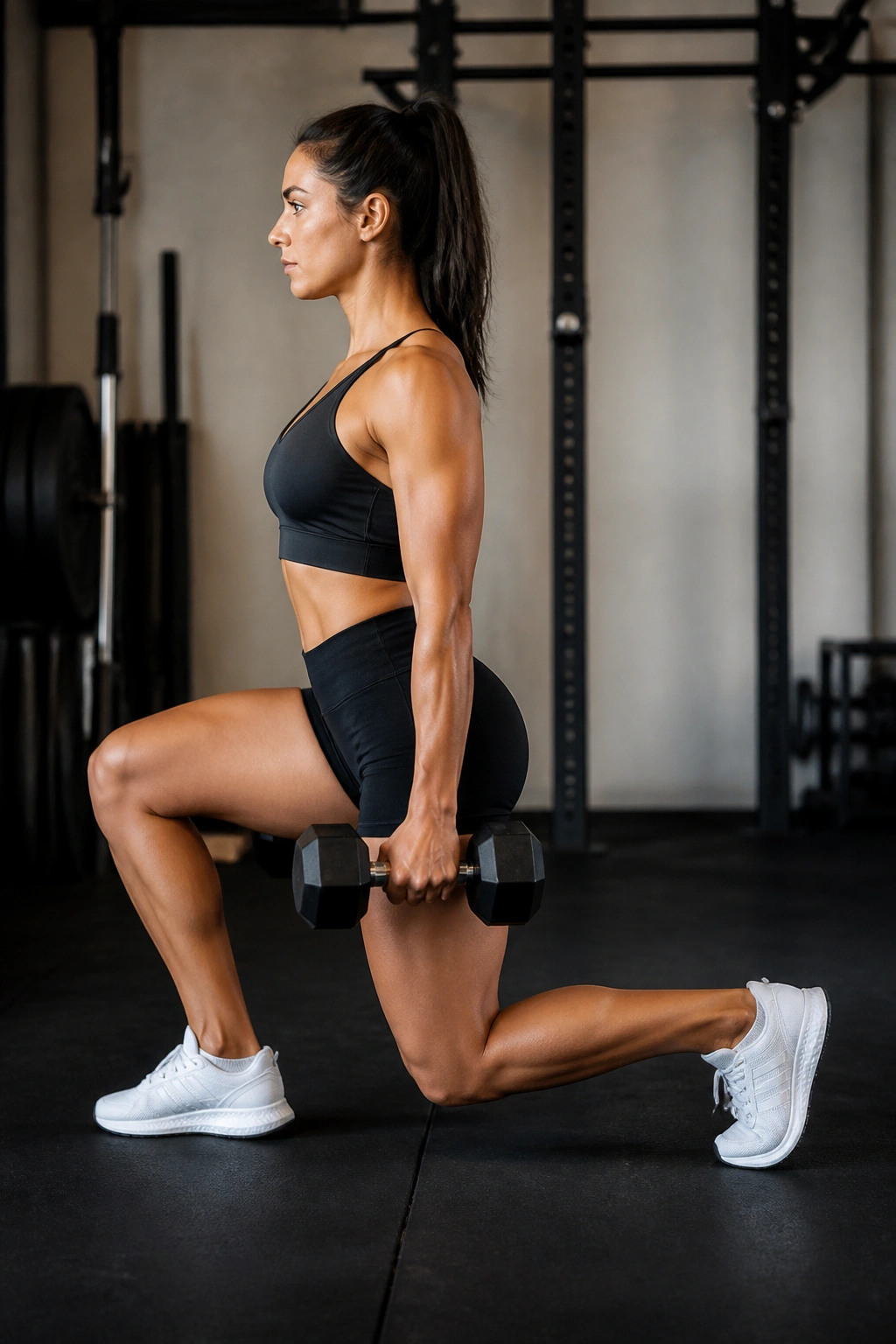
While the forward lunge is great for deceleration, the reverse lunge is often kinder to the knees. By stepping backward, you shift your center of gravity slightly behind you, which naturally encourages a more hip-dominant movement pattern. This variation is easier to balance for most people and allows for a cleaner vertical descent, making it a fantastic choice for building glute and hamstring strength alongside the quads.
The mechanics are straightforward. From a standing position, take a controlled step backward and drop your back knee toward the floor. Because you are not lunging into your forward momentum, there is less shear force on the lead knee, allowing you to load this movement fairly heavy. It is a staple for athletes who need to protect their knees while still pushing for high-intensity leg training.
Try to find a rhythm where the back knee gently kisses the floor before you drive back to the start. If you struggle with balance, use a rack or a wall for support until you build the necessary stability. Do not rush the transition at the bottom; treat the bottom position as a momentary pause to ensure you are driving through the glute of the lead leg rather than just pushing off the toes of the back leg.
3. Weighted Walking Lunge
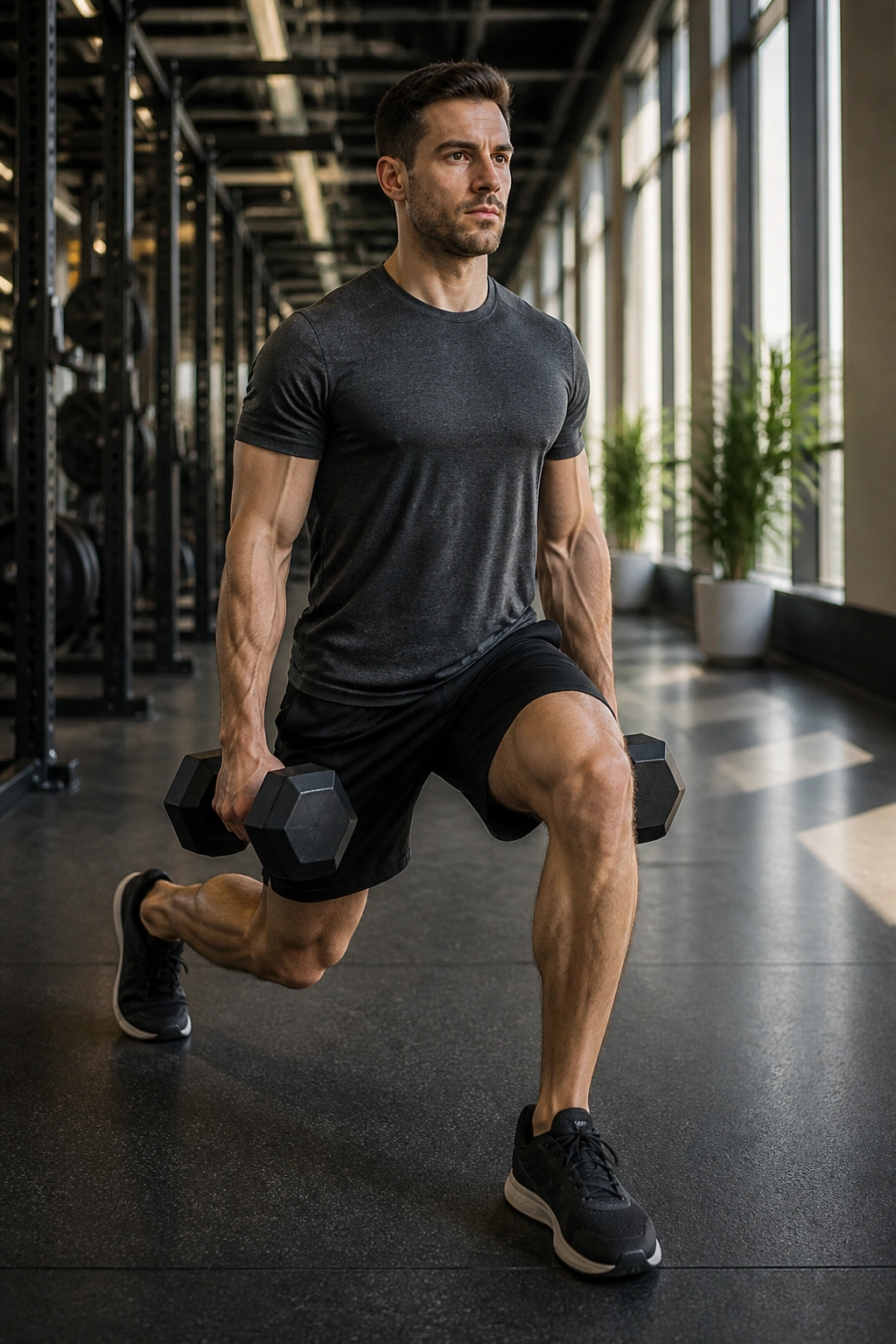
Walking lunges turn the exercise into a dynamic, continuous effort. Unlike static lunges where you return to a neutral stance, walking lunges require you to balance, stabilize, and transition into the next repetition while your muscles are already fatigued. This setup increases the time under tension significantly and turns a simple leg movement into a full-body conditioning tool.
When you walk through your lunges, you are forcing your core to fight rotational forces with every single step. Your hip stabilizers have to fire rapidly to keep you from wobbling. You can perform these with dumbbells hanging at your sides, a barbell on your back, or even holding a weight plate overhead for a greater challenge to your shoulder stability.
Always keep your steps consistent in length. It is tempting to take giant, loping strides, but keeping your feet within a hip-width distance ensures that you are hitting the target muscles effectively. If you drift into a “tightrope” walk, you will likely find your balance compromised. Keep your path straight, your core braced, and your focus locked on a point ahead of you.
4. Weighted Lateral Lunge
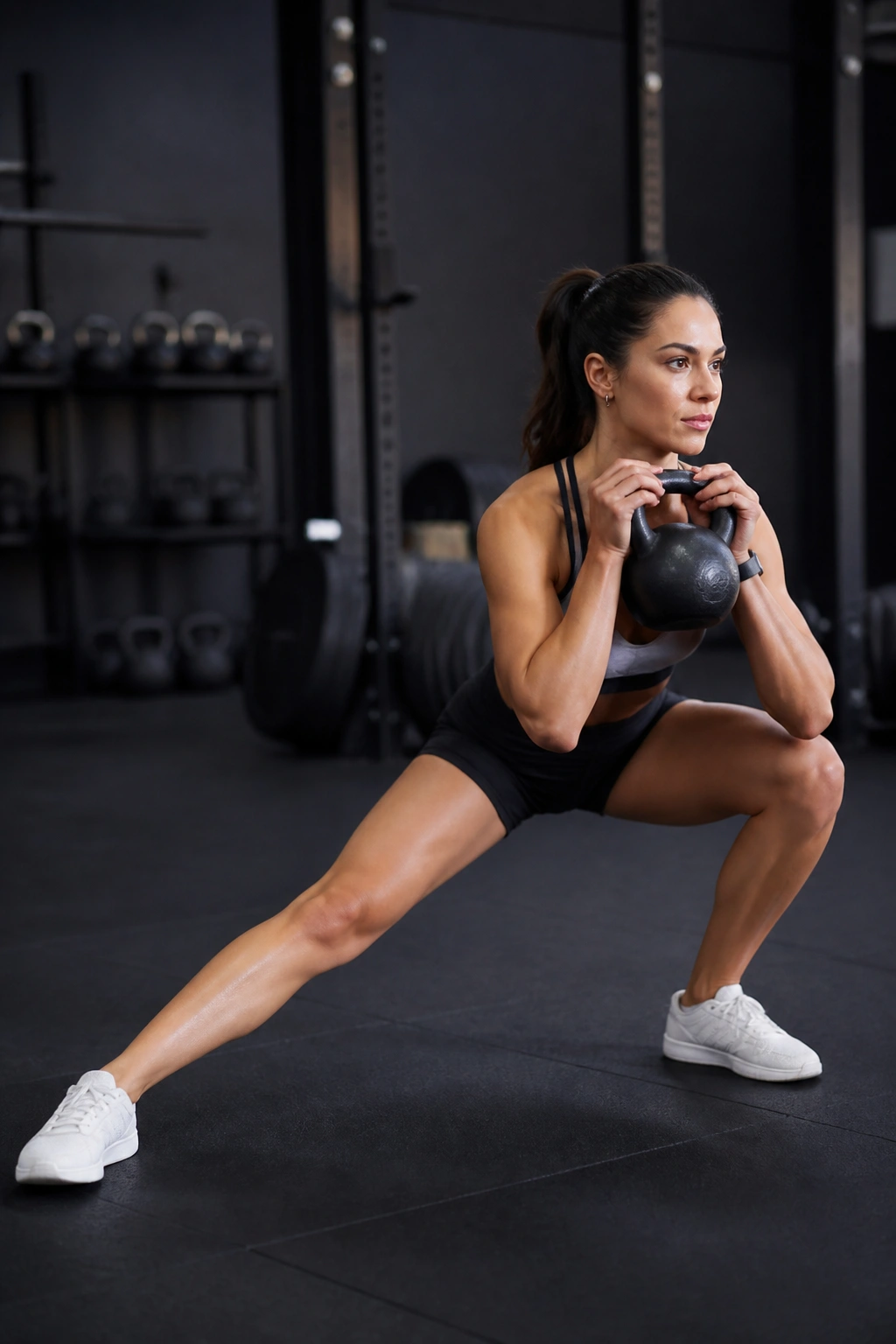
The frontal plane—side-to-side movement—is often the most neglected direction in strength training. Most of our movement happens forward and back, leaving our hips vulnerable and undeveloped in terms of lateral strength. The lateral lunge fixes this by training the adductors, glutes, and quadriceps to produce force moving away from the midline of your body.
To perform a weighted lateral lunge, hold a single heavy dumbbell or kettlebell against your chest (a goblet hold). Step out wide to one side, keeping your trailing leg completely straight while pushing your hips back and down into the lunging leg. You should feel a deep stretch in the inner thigh of the straight leg.
Focus on pushing your hips back as if you are trying to sit on a chair placed behind your heel. Your chest should lean slightly forward to maintain balance, but do not let it collapse. As you push back to the center, feel the adductor and glute of the bent leg snap you back into the standing position. It takes practice to find the right width of your stance, but once you do, this movement is a game-changer for hip mobility and knee health.
5. Weighted Curtsy Lunge
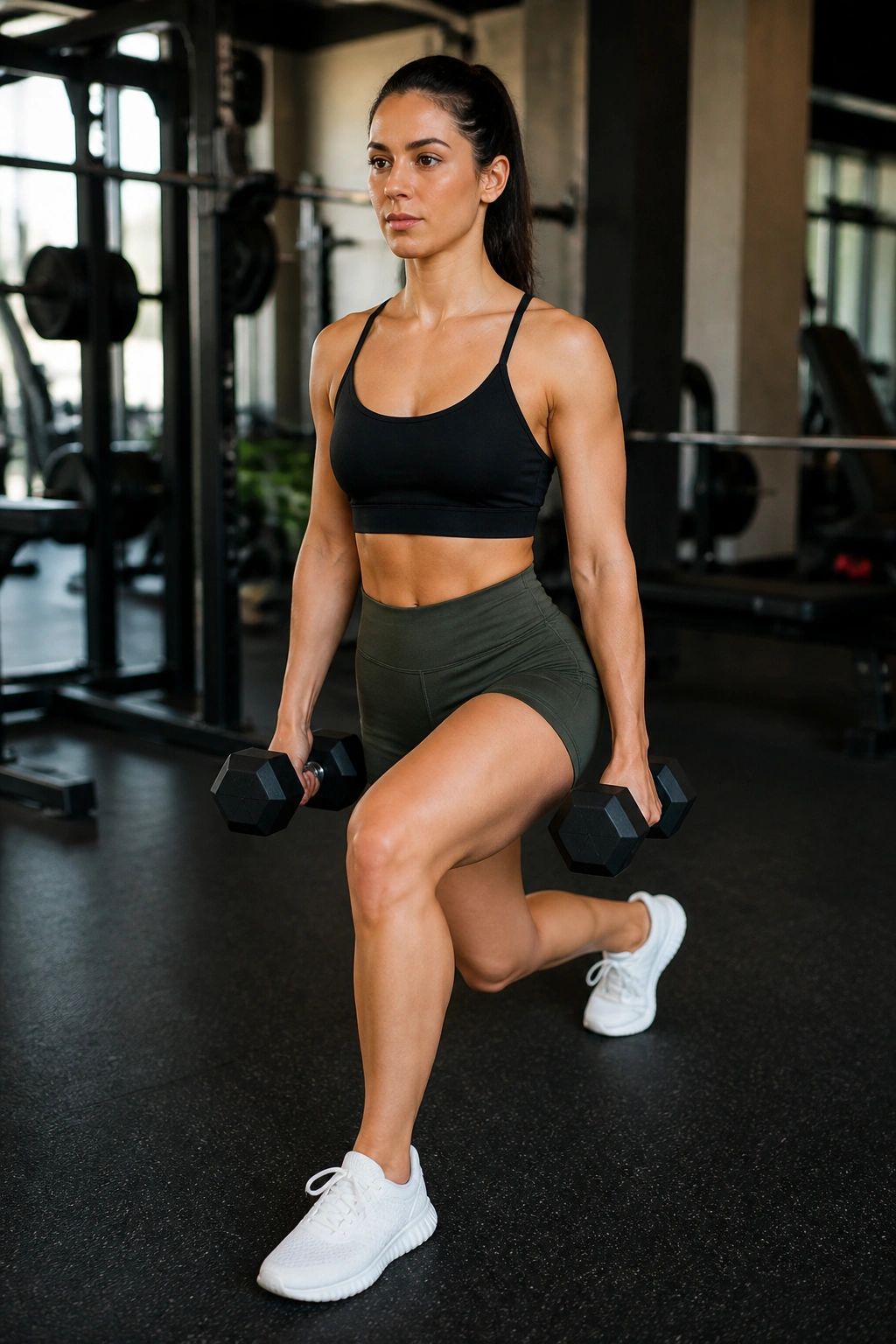
The curtsy lunge is essentially a reverse lunge with a cross-over twist. By stepping your foot back and across your midline, you change the angle at which your gluteus medius has to engage. This muscle is responsible for hip stability, and the curtsy lunge puts it to work like few other variations.
Hold a pair of dumbbells at your sides or a single kettlebell in a goblet position. Step your right foot back and behind your left, dropping your right knee toward the floor just outside your left foot. Keep your torso as square to the front as possible; don’t let your shoulders rotate with the step.
This variation can feel awkward at first. Start with lighter weights until you master the coordination. The beauty of this movement is how it hits the upper glutes. If you have been doing nothing but straight-on lunges, the soreness you feel in your lateral glutes after a session of curtsy lunges will tell you exactly what you have been missing.
6. Dumbbell Bulgarian Split Squat
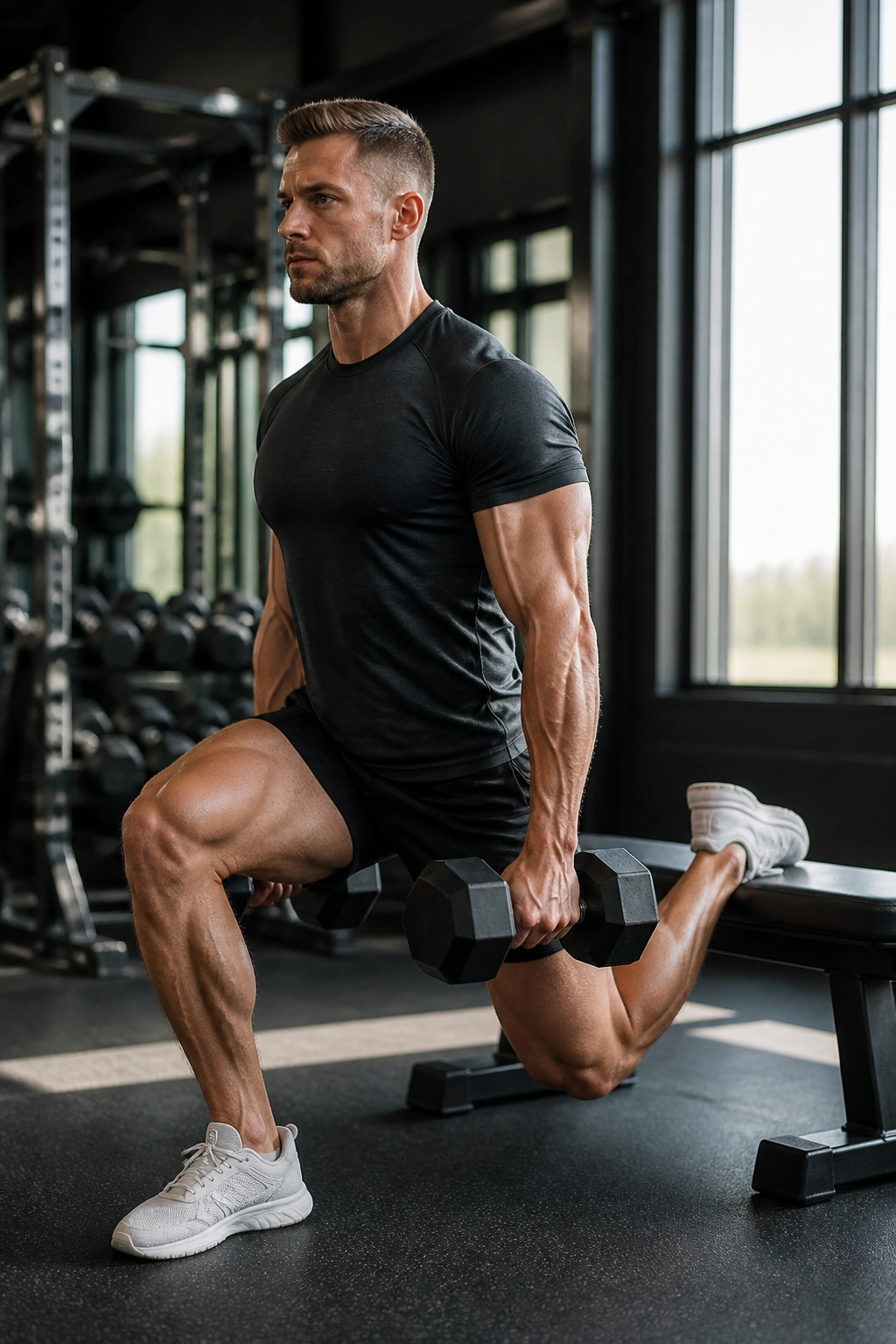
Is it a lunge? Is it a squat? Technically, the Bulgarian split squat is a stationary lunge with the back foot elevated. It is arguably the king of unilateral leg exercises because it removes almost all stability from the back leg, forcing the front leg to do the vast majority of the work. If you have a muscular imbalance between your left and right leg, this is your best tool for correcting it.
Place your back foot on a bench or sturdy box about knee-height. Hold a dumbbell in each hand, hanging at your sides. Step your front foot out far enough that when you descend, your front knee does not travel excessively forward over your toes. Lower your hips straight down, keeping your torso upright.
Drive back up through your front heel. The biggest challenge here is balance, so do not hesitate to hold on to a pole or rack if you are just starting. Once you have the balance, the sky is the limit for how much weight you can add. It is a grueling, humbling exercise that demands total focus.
7. Weighted Static Lunge
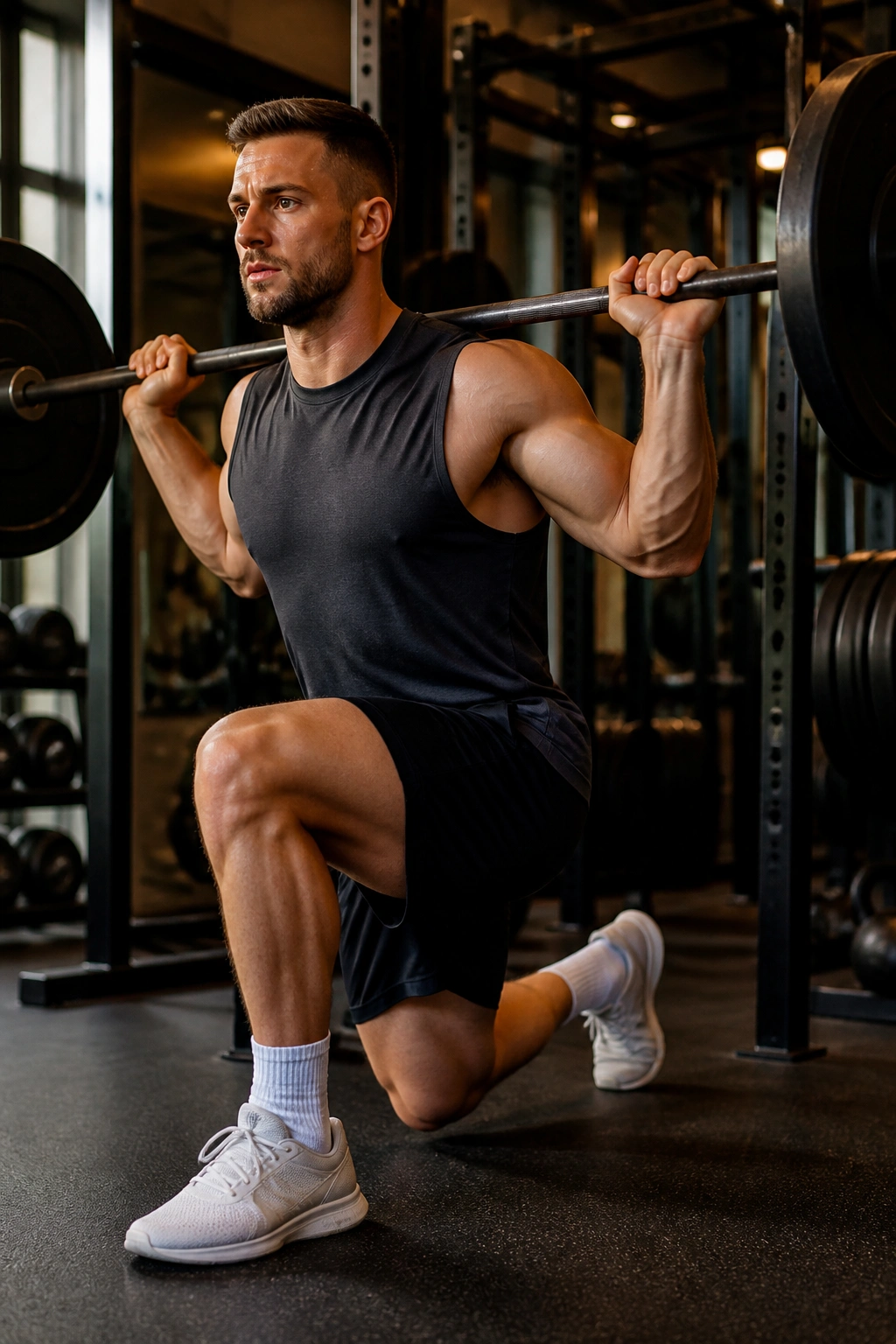
Sometimes, the best approach is to keep things simple. The static lunge—also known as a split squat—eliminates the transition phase of the lunge, allowing you to focus entirely on the strength component. You set your feet in a lunge stance and stay there for all your repetitions, minimizing the coordination required to step back or forward.
Load this with a barbell across your back or dumbbells in your hands. Because you aren’t moving through space, you can often handle more weight on the static lunge than in a walking or forward lunge. This makes it an ideal variation for building pure leg strength.
Key Performance Cues
- Maintain a vertical torso to emphasize the quads.
- Lean slightly forward to hit the glutes harder.
- Keep your front heel glued to the floor.
Pro tip: Perform these at the beginning of your workout when your central nervous system is fresh, as the static hold requires significant stabilization and effort.
8. Weighted Deficit Reverse Lunge
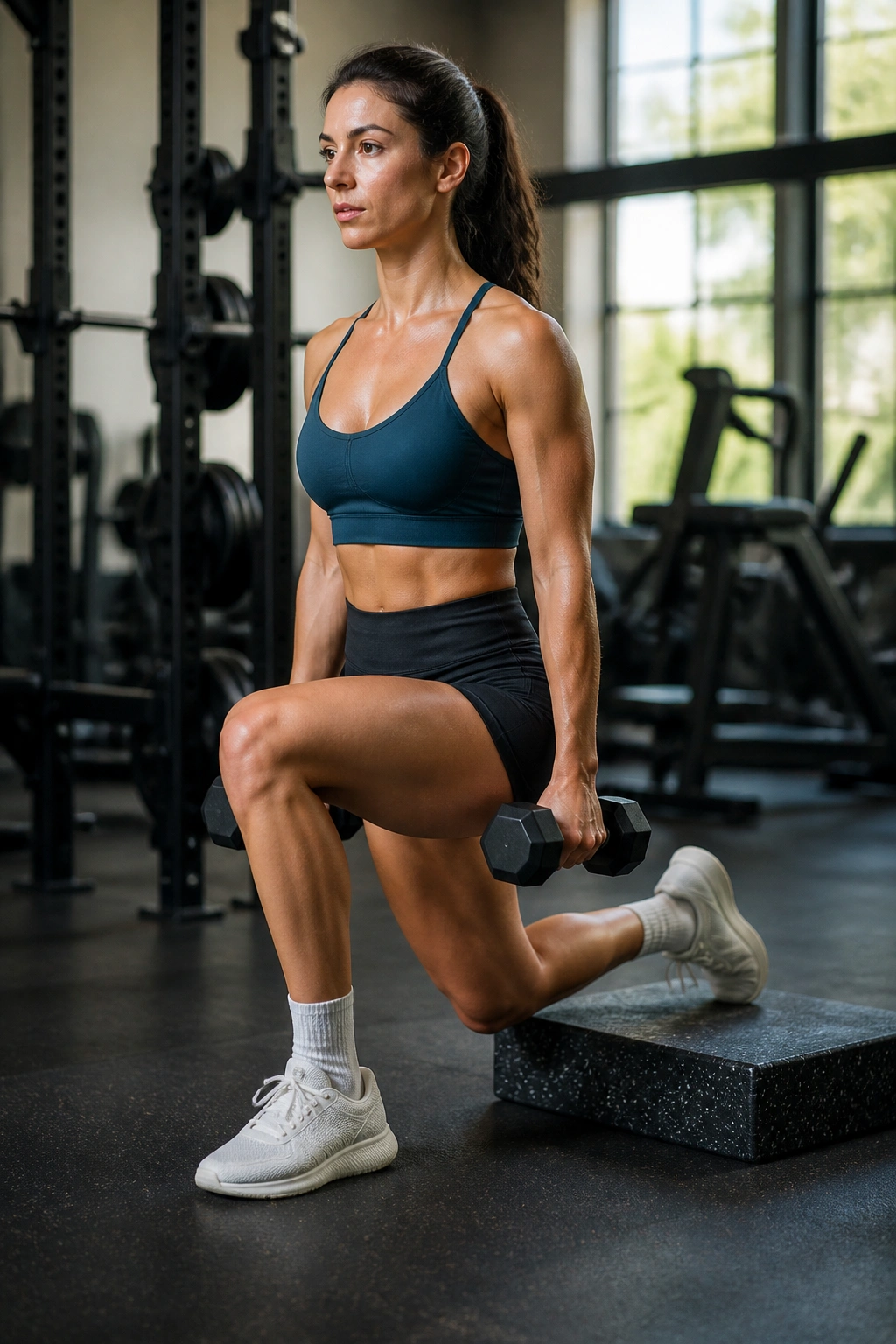
If you want to increase the range of motion of your lunge, the deficit reverse lunge is the way to go. By standing on a weight plate or a low step, you increase the distance your back knee has to travel before it touches the floor. This deeper range of motion results in a deeper stretch for the glutes and more work for the quads.
Hold dumbbells at your sides. Stand on a 2- to 4-inch elevated surface. Step back off the platform into a deep reverse lunge, ensuring your back knee touches the floor or the space below the platform. Because you are starting from a higher point, the descent is longer, which forces a deeper contraction at the bottom of the movement.
Be mindful of your mobility here. If you cannot reach the depth without your lower back rounding or your knee hitting the floor too hard, reduce the height of your platform. This is an advanced variation, and you should prioritize a full, controlled range of motion over stacking heavy weight on the bar.
9. Weighted Overhead Lunge
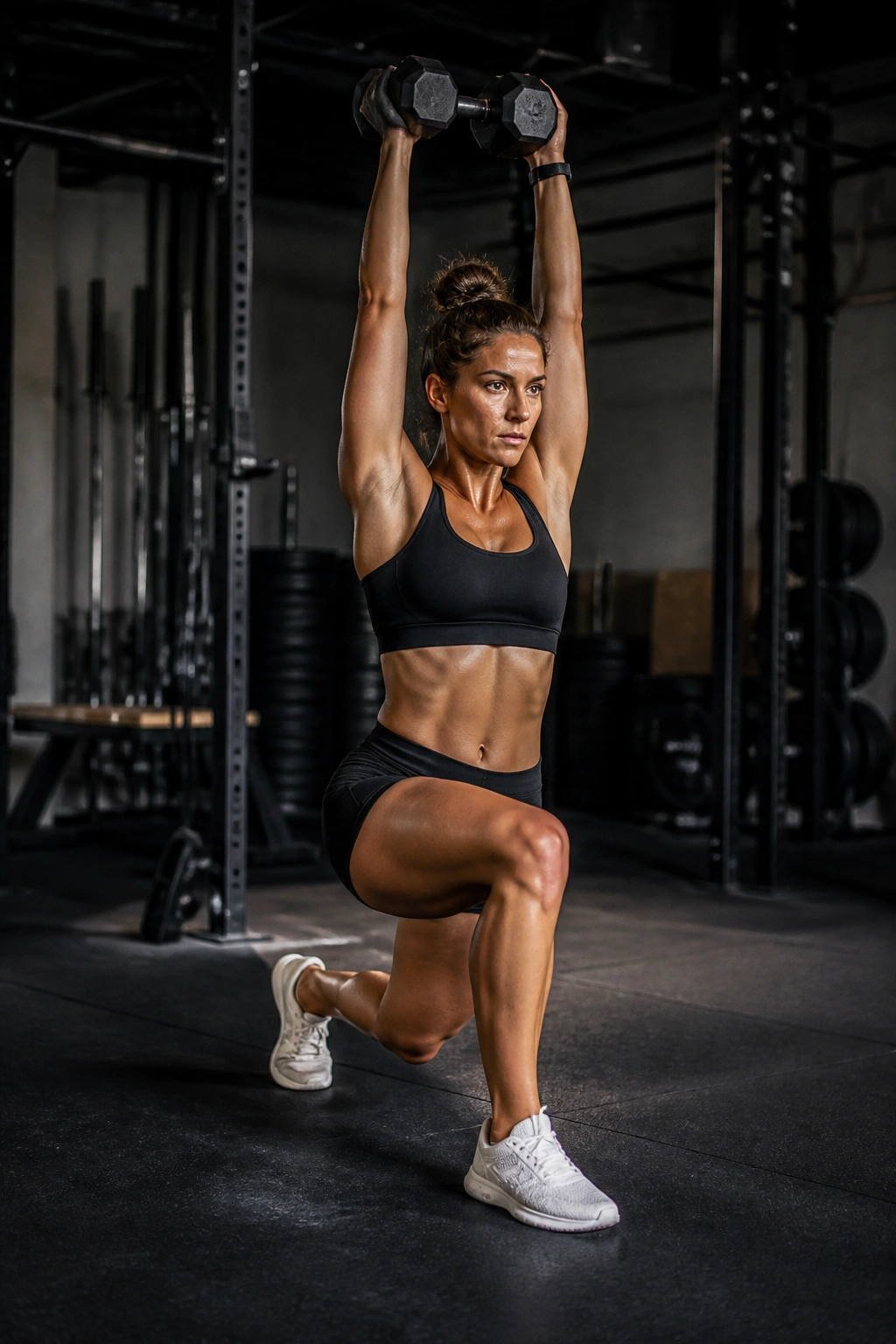
This variation takes a simple lower-body exercise and turns it into a total-body challenge. Holding a weight—like a plate, dumbbell, or kettlebell—directly overhead while you lunge forces your core to work overtime. You have to stabilize your spine against the weight while your legs navigate the lunge.
The weight overhead acts as a long lever. If you lunge unevenly, that weight will pull you off-balance instantly, forcing you to correct your posture. It is a fantastic exercise for shoulder stability and thoracic mobility. You do not need heavy weight here; even a light plate will feel incredibly difficult after a few repetitions.
Keep your arms locked out and your biceps near your ears. If you feel your lower back arching, your core is not braced tightly enough. Tighten your stomach as if you are about to be punched, keep your gaze fixed straight ahead, and move slowly. The stability required for this movement makes it more of a skill-based strength exercise than a pure mass builder.
10. Goblet Lunge
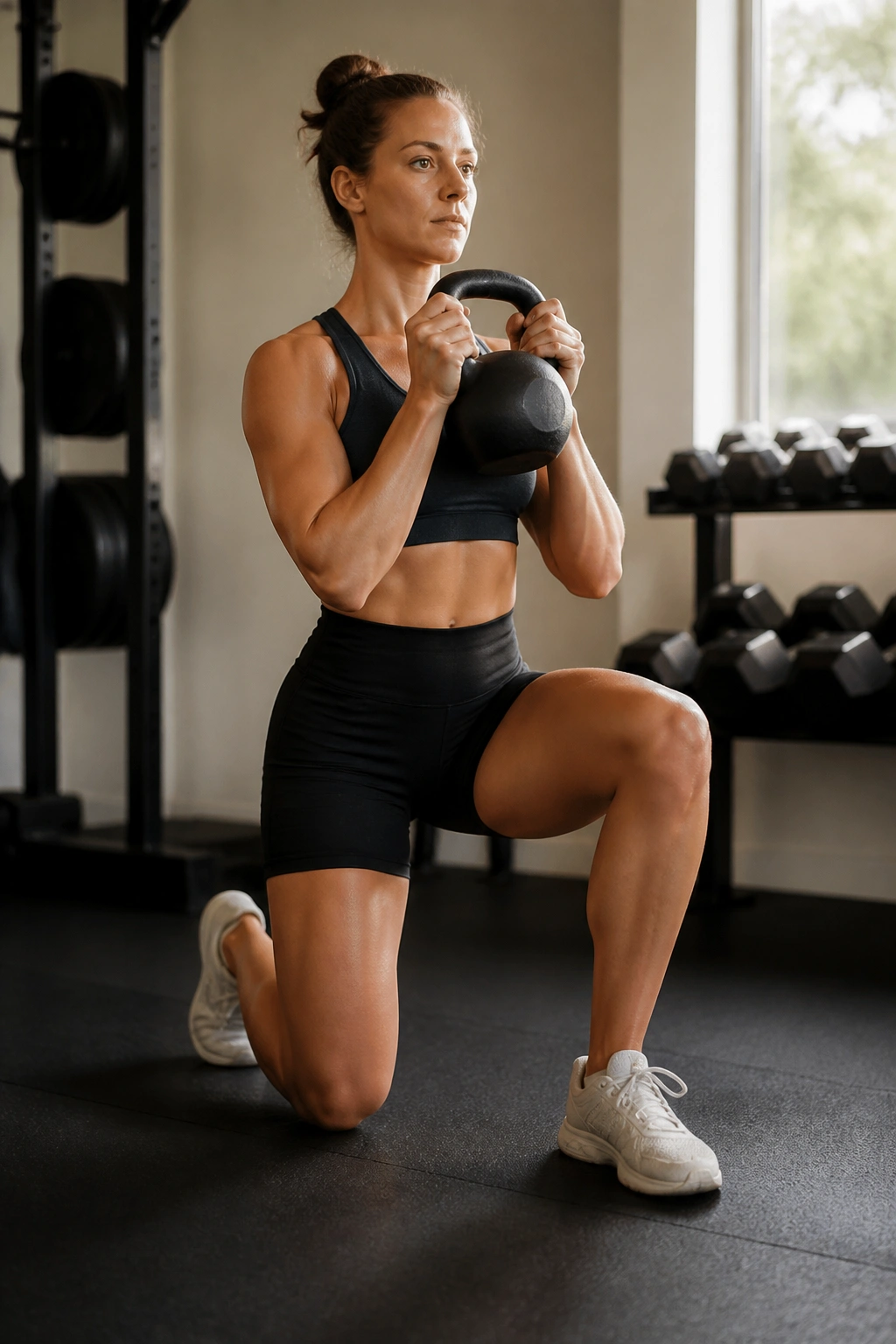
The goblet lunge is excellent for teaching proper posture. By holding the weight against your chest, you create a counterbalance that prevents you from leaning too far forward. It also makes the lunge feel more “natural” to the body, as the weight is hugged tight against your center of gravity.
Use a single kettlebell or dumbbell held vertically against your sternum. As you lunge, use the weight to “anchor” your torso. This position is particularly good for those who have trouble keeping their chest up during forward or reverse lunges. It forces you to stay upright, which shifts the emphasis primarily onto your quads.
Since the weight is in front of you, you will find it easier to sit back into your hips if you choose to lean forward, or keep the movement vertical if you stay tall. It is versatile, easy to learn, and requires nothing more than one piece of equipment, making it a perfect choice for home workouts or crowded gyms.
11. Double Kettlebell Rack Lunge
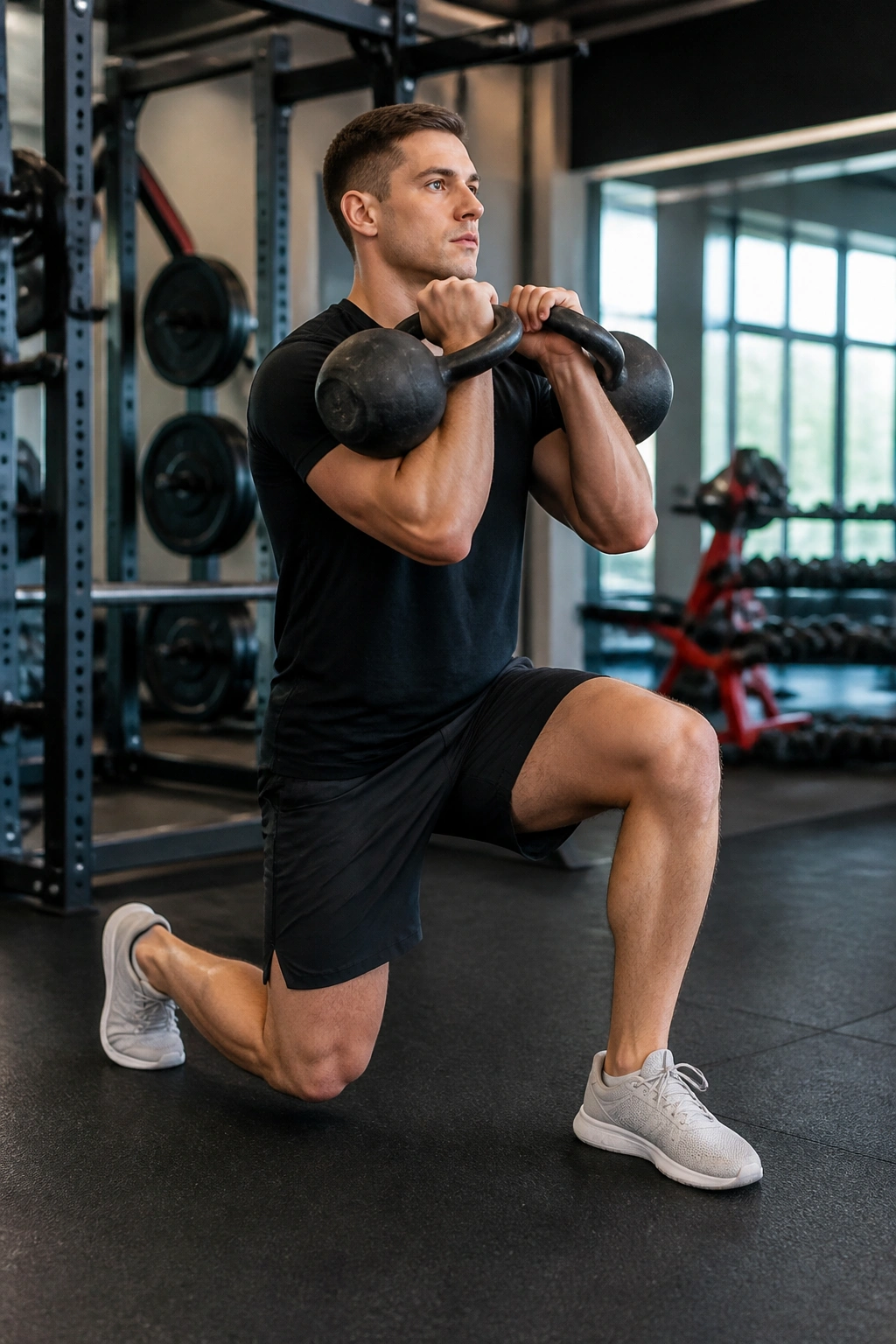
If you want to experience what true core tension feels like, try a double kettlebell rack lunge. Resting two kettlebells on your forearms, pressed against your shoulders, creates a significant forward load that makes you want to collapse forward. Your upper back and abs must fight to keep you upright.
This position also creates a different stimulus for your legs. Because the weight is higher on your body than hanging dumbbells, it requires more stabilization from the legs to stay upright. It is a brutally effective way to build leg strength while improving your postural endurance.
Focus on keeping your elbows tucked in. If your elbows start to flare out, you lose the rack stability. Keep your wrists straight and the kettlebells resting comfortably on the back of your forearms. It takes a few sessions to get used to the rack position, but once you do, it becomes one of the most rewarding ways to load any lunge variation.
12. Barbell Back Lunge
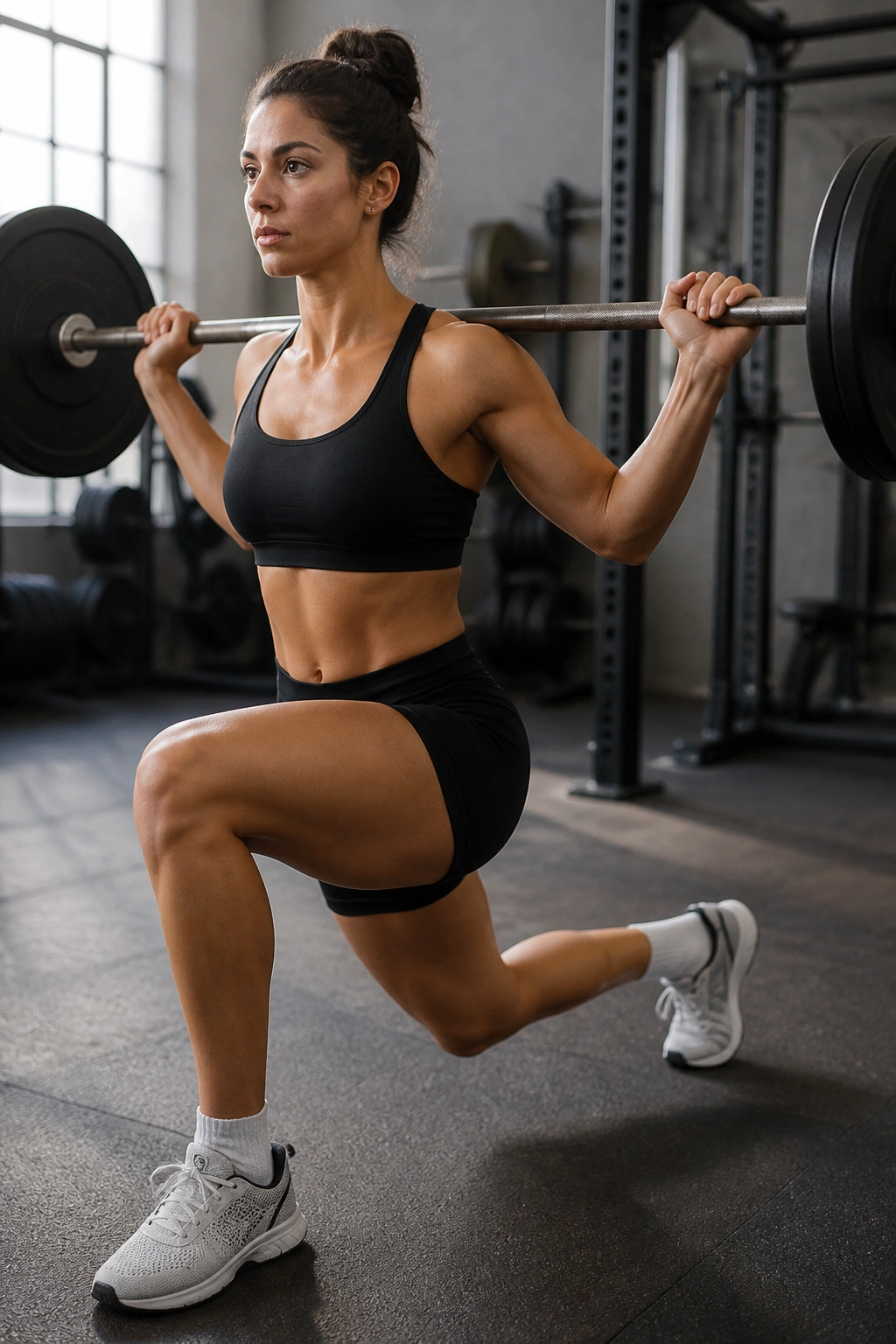
The barbell back lunge is a classic, but it is not for beginners. Placing a loaded barbell across your traps changes the dynamic of the movement significantly. You lose the ability to use your arms for balance, and the bar’s position high on your back means that any deviation in your torso angle will be magnified.
Because of the high load, you should treat this as a heavy strength movement. Most people perform these in a reverse lunge pattern to stay safe, but forward lunges are possible if you have excellent balance. The key is to keep your torso rock-solid. A loose core with a heavy barbell on your back is a recipe for back pain.
When you unrack the bar, ensure your setup is tight. Take a breath, brace your core, and keep your gaze fixed. When you step, do so with purpose. This is a movement that requires confidence. If you feel shaky during your set, drop the weight or switch to dumbbells until you can perform the movement with absolute control.
13. Barbell Front Lunge
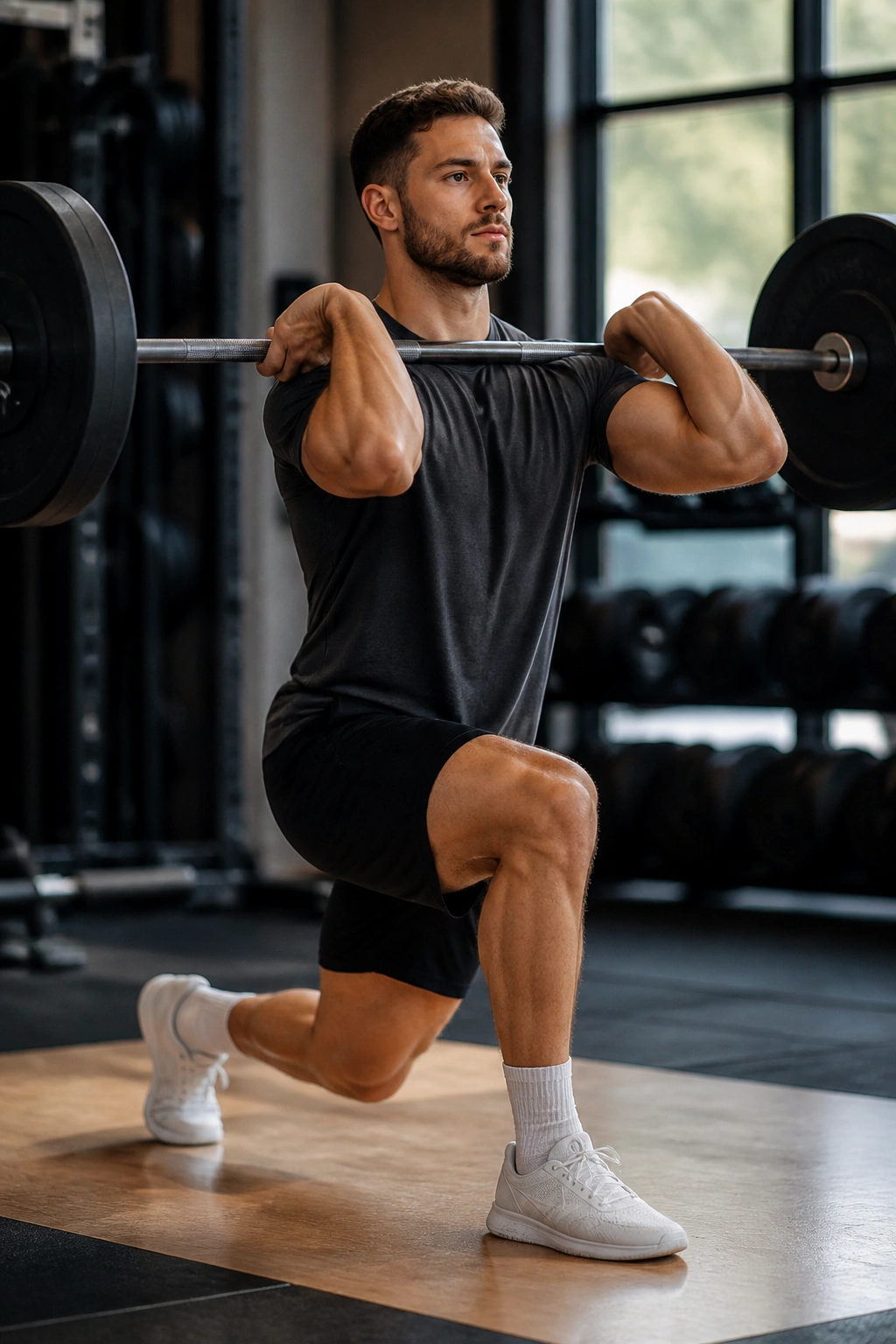
Front-loading a barbell—holding the bar across your front deltoids—demands a completely different posture than back-loading it. You are forced to stay vertical. If you lean forward even an inch, the bar will roll forward, and you will lose the lift. This makes the barbell front lunge an incredible tool for quad development.
The difficulty here is the front rack position. You need decent thoracic mobility and wrist flexibility to hold the bar comfortably. If you cannot hold the bar in a proper front rack, perform this with a “cross-arm” grip, though it is less stable.
Because you have to remain perfectly vertical, the load is concentrated entirely on the quads and the core. You will find that you cannot handle as much weight as you could with a back-loaded lunge, but the stimulus on the front of your legs will be significantly higher. It is a high-cost, high-reward movement.
14. Slider Lunge with Weights
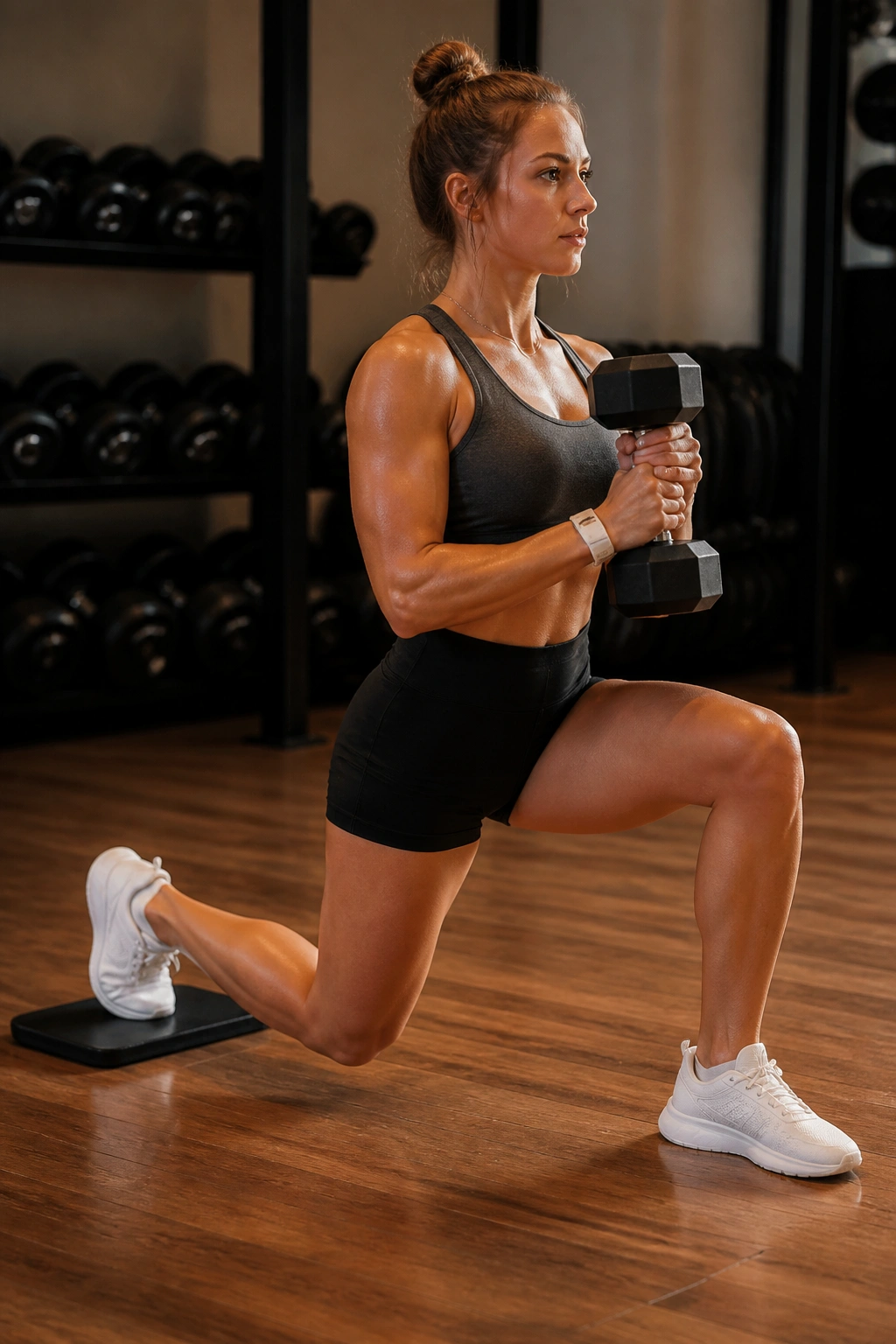
Using a slider (or a towel on a smooth floor) under your back foot adds a sliding component that eliminates the impact of a stepping lunge. You keep your back foot planted on the slider and simply push it backward while you lower your hips. This keeps your muscles under constant tension because you never “unload” the movement.
Hold a weight in your hands to increase the intensity. As you descend, slide the back foot out smoothly. The secret to this movement is the friction. You have to actively resist the slider moving too quickly. When you drive back up, your front leg has to pull the weight of the slider and your body back into place.
This is a phenomenal way to isolate the front leg. Because the back leg is doing almost no weight-bearing, you can focus 100% of your energy on the lead quad and glute. It feels smooth, almost like a machine movement, but it challenges your stabilization just as much as a free-weight lunge.
15. Weighted Clock Lunge
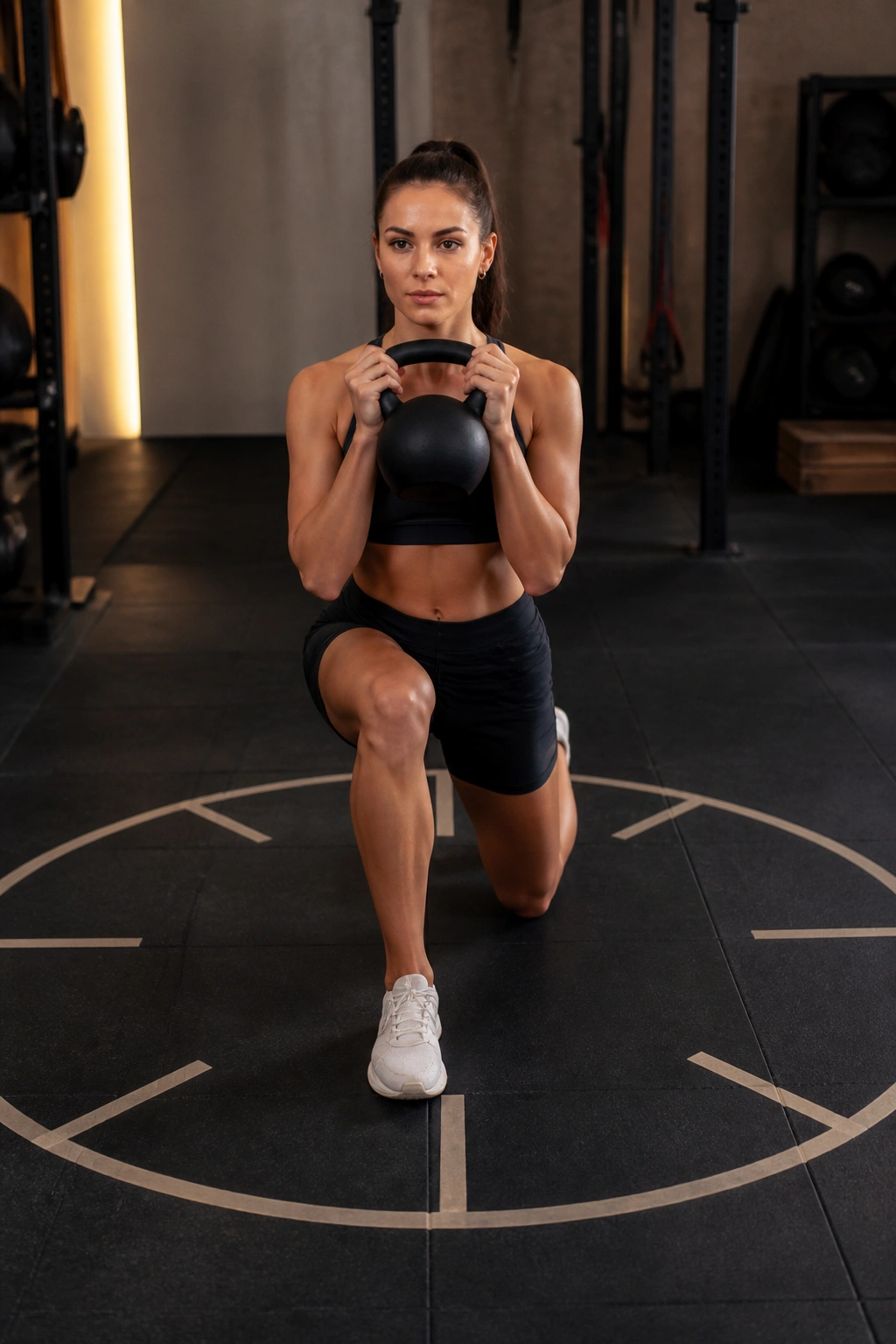
The clock lunge is a movement matrix designed to hit the legs from multiple angles in a single set. Imagine standing in the middle of a clock face. You lunge at 12 o’clock (forward), 3 o’clock (lateral), and 6 o’clock (reverse). You can use a weight held in a goblet position or two dumbbells at your sides.
This variation tests your endurance and your coordination. It is not just about strength; it is about how well your body can adapt to changing lunging angles while under load. It prevents the monotony of performing dozens of identical reps and forces your hips to work in all three planes of motion.
Perform the entire sequence for one leg before switching to the other. You will find that your stability starts to degrade as you move around the clock. That is normal. Embrace the challenge. It is an excellent way to finish a leg workout when your muscles are already tired and you want to push for a final, high-intensity burn.
16. Weighted Cossack Lunge
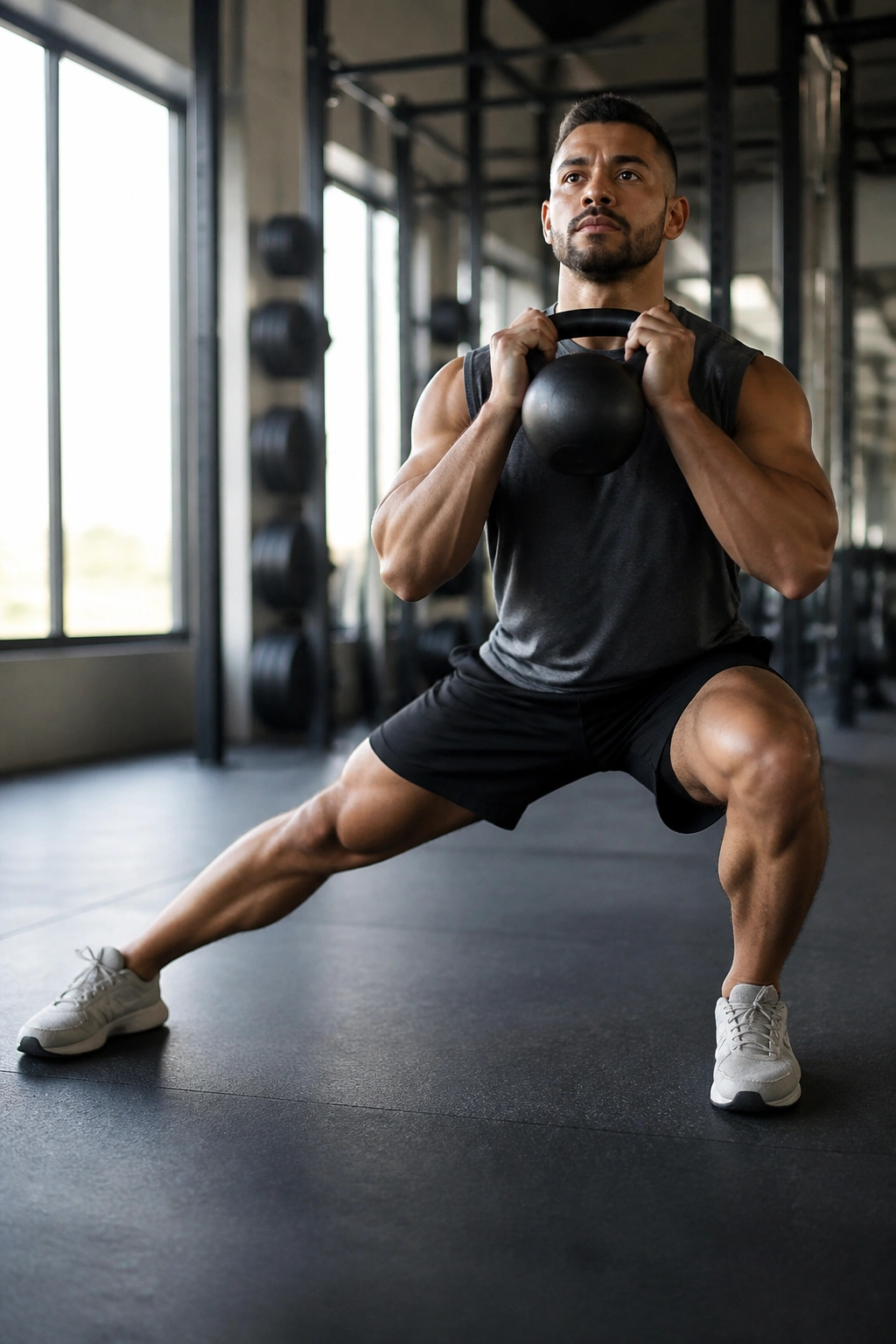
The Cossack lunge is essentially a deep, weighted side-to-side squat. You take a very wide stance, and instead of just lunging to the side, you sit as deep as possible, turning the toe of the straight leg toward the ceiling. It requires a high level of hip and ankle mobility, but it is one of the best movements for developing inner-thigh and glute power.
Hold a kettlebell or dumbbell in a goblet position. As you descend to one side, keep your chest high. The goal is to get your glute as close to your heel as possible. Then, push yourself across to the other side without standing up completely, staying in that low, lunging plane.
If you struggle with the depth, start without weight and use a rack to assist your balance. The weight is secondary to the depth and the stretch in the groin. Over time, you will find that your hips feel more open and your squat strength improves significantly as a direct result of this deep-range movement.
17. Weighted Jumping Lunge
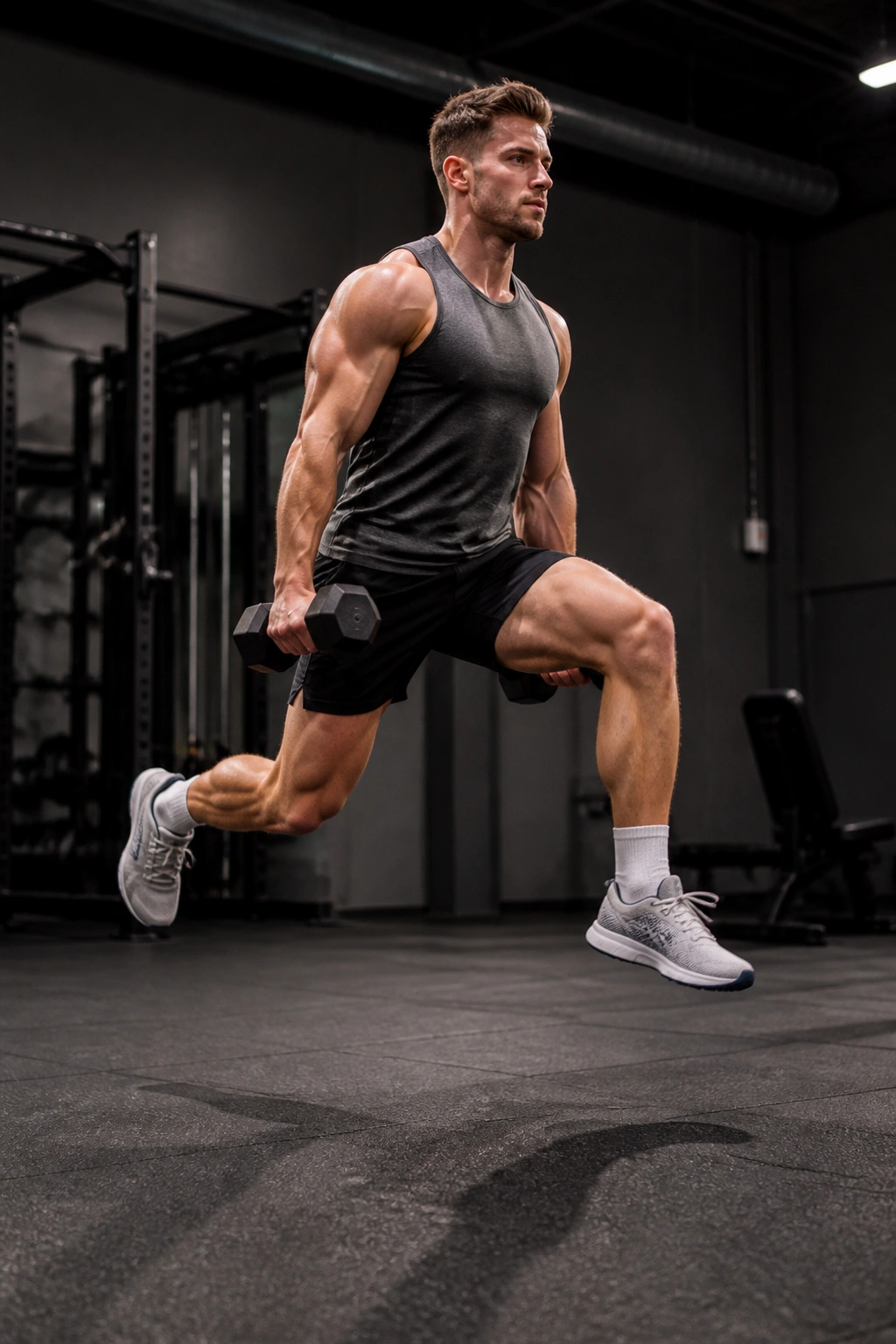
This is an explosive movement. By adding a small amount of weight—like a very light pair of dumbbells or a small weight plate—you increase the power output required for the jump. The key here is not to use heavy weight; you want to maintain speed and explosiveness, not grind through a heavy rep.
Perform a lunge, and as you explode upward, switch your legs in the air, landing in a lunge position with the opposite leg forward. The weight makes the transition much harder to control. You must land softly, absorbing the force, and immediately stabilize yourself.
This is an advanced variation. If your knees hurt or your balance is shaky, skip the weight and focus on the bodyweight version until you can do it with grace. The goal is to land quietly. If your feet are slapping the floor, you are not absorbing the force correctly, and you risk joint strain.
18. Pause Lunge
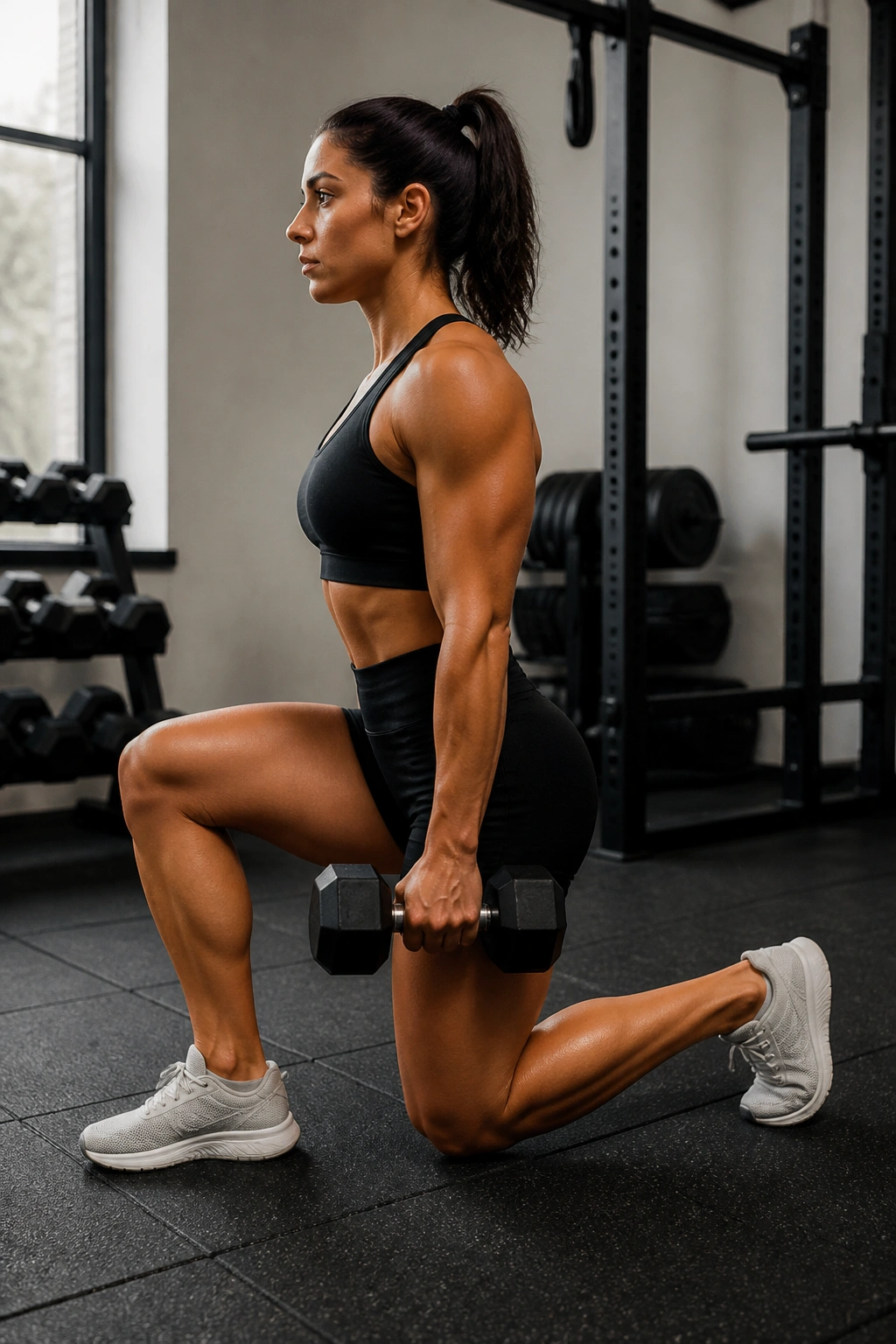
The pause lunge is a technique, not necessarily a different foot position. You perform any lunge variation, but you hold the bottom position—where the back knee is just an inch off the floor—for a full two-count before driving back up. This removes all the elastic energy (the bounce) from the bottom of the movement.
By pausing, you force the muscles to initiate the movement from a dead stop. This builds incredible starting strength and helps identify and fix any “sticking points” you might have in your lunge. It also increases time under tension, which is a primary driver of muscle hypertrophy.
Choose a weight about 10-15% lighter than what you would normally use for straight sets. The pause makes the exercise significantly harder. You will be surprised at how much more challenging a standard reverse lunge becomes when you are forced to hold it steady for two seconds.
19. Suitcase Lunge
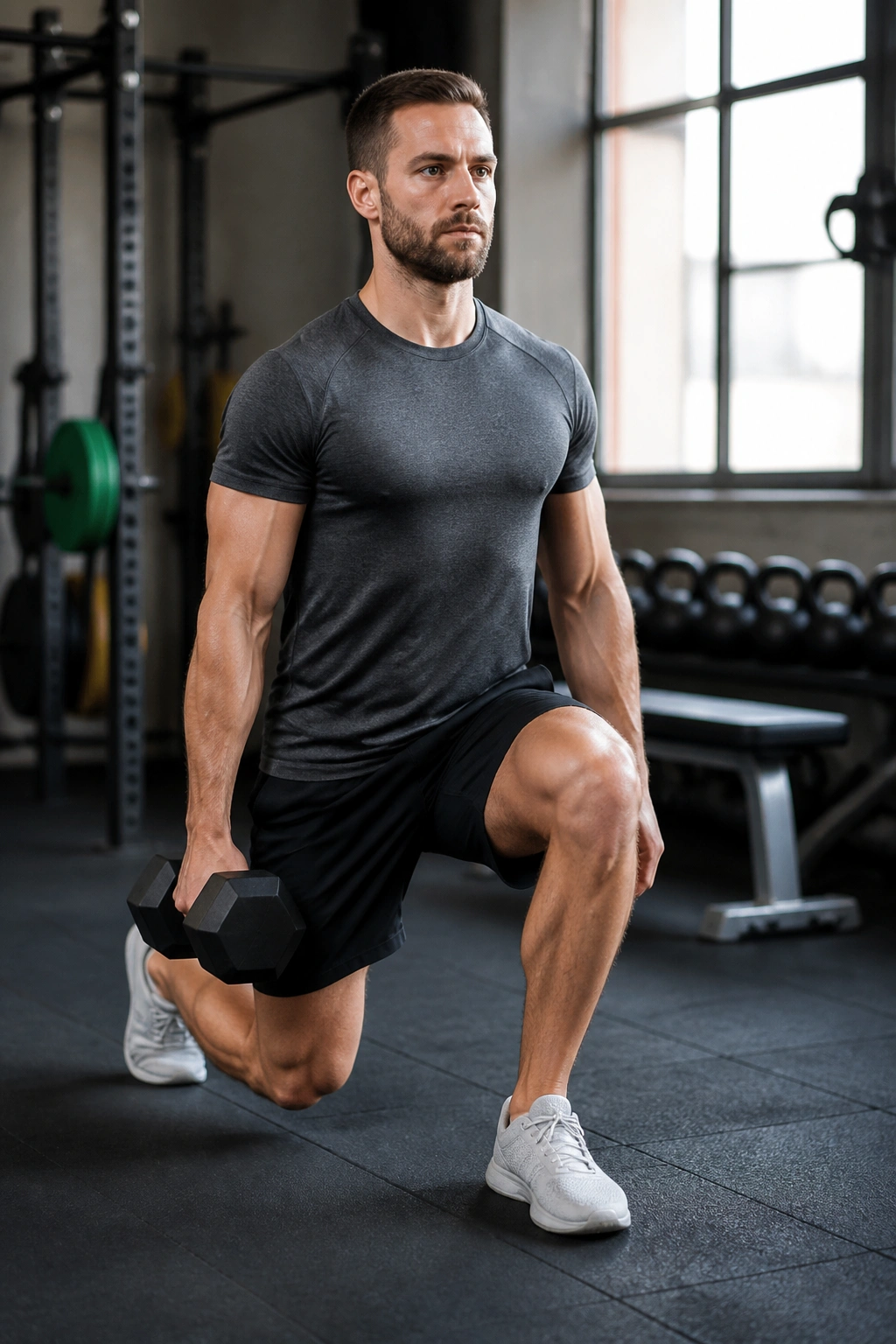
The suitcase lunge uses a unilateral load—meaning you hold a weight in only one hand, like a suitcase. Because the weight is only on one side, your body will want to tilt toward that side. Your core—specifically the obliques and quadratus lumborum—must work hard to keep your spine straight.
Hold a heavy dumbbell or kettlebell in your right hand and lunge with your left leg. Then, switch the weight to your left hand and lunge with your right leg. This creates a powerful anti-lateral flexion stimulus for the core, essentially training your obliques to act as stabilizers.
The key to this movement is to stay upright. If you let the weight pull you over, you lose the core benefit and put unnecessary stress on your spine. Keep your shoulders level, as if you are a platform. This is a very functional exercise that translates well to real-world tasks, like carrying groceries or moving heavy objects.
20. Landmine Lunge
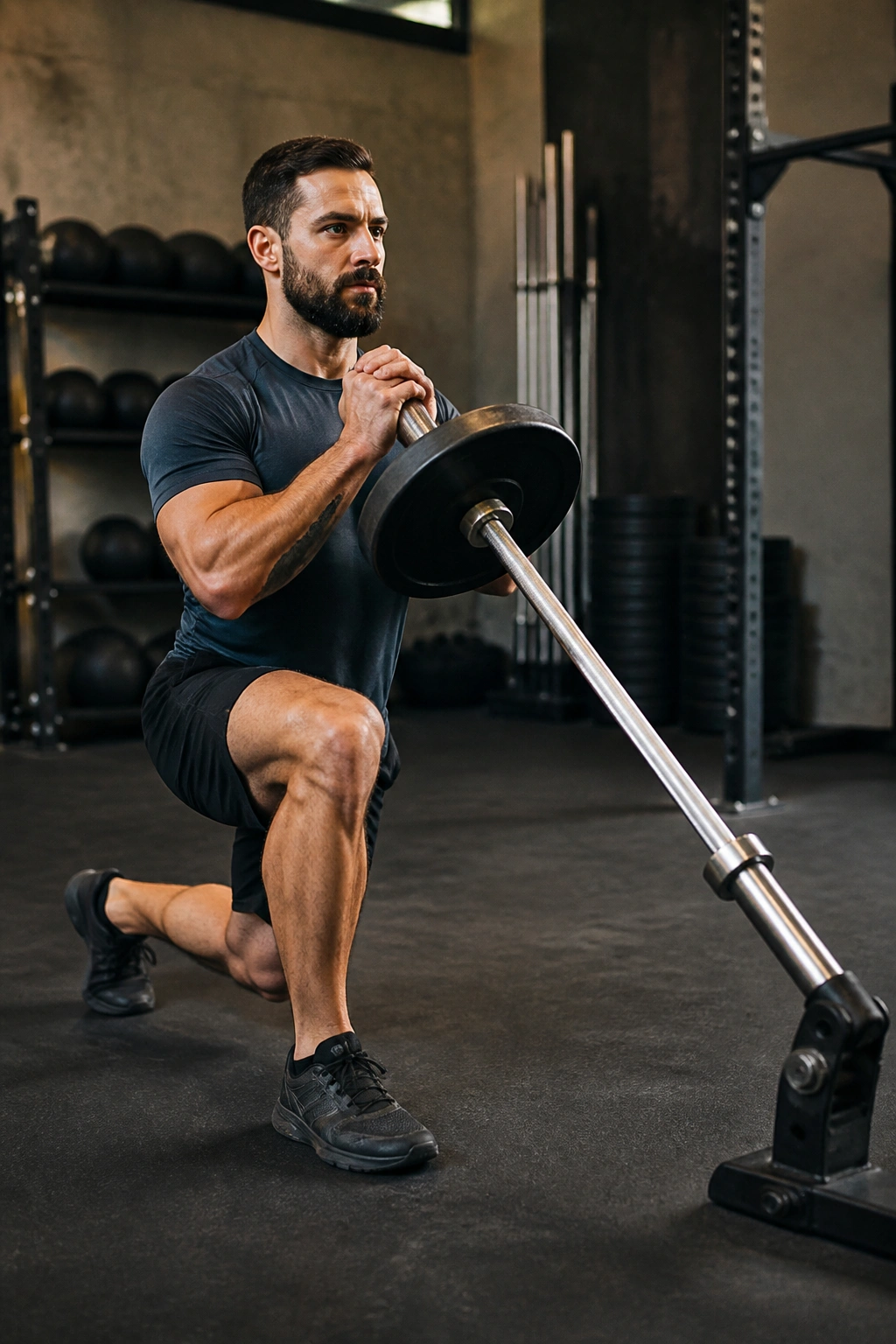
The landmine setup offers a unique, angled resistance that is more natural for the body than purely vertical weights. By anchoring one end of a barbell into a landmine attachment (or a corner), you create a curved path of resistance. You can hold the other end of the barbell in a goblet position or on one shoulder.
The landmine lunge feels very stable, making it a great way to load up heavy if you feel insecure with free-standing weights. Because the bar is fixed at one end, it provides a stable “arc” of movement that can help you dial in your form.
This variation is excellent for people with shoulder issues who struggle with a traditional rack position. It also allows you to push into the bar slightly, which can provide a sense of security and help you drive through the movement with more power. It is a fantastic tool that often gets overlooked in favor of dumbbells.
21. Weighted Reverse Lunge to Knee Drive
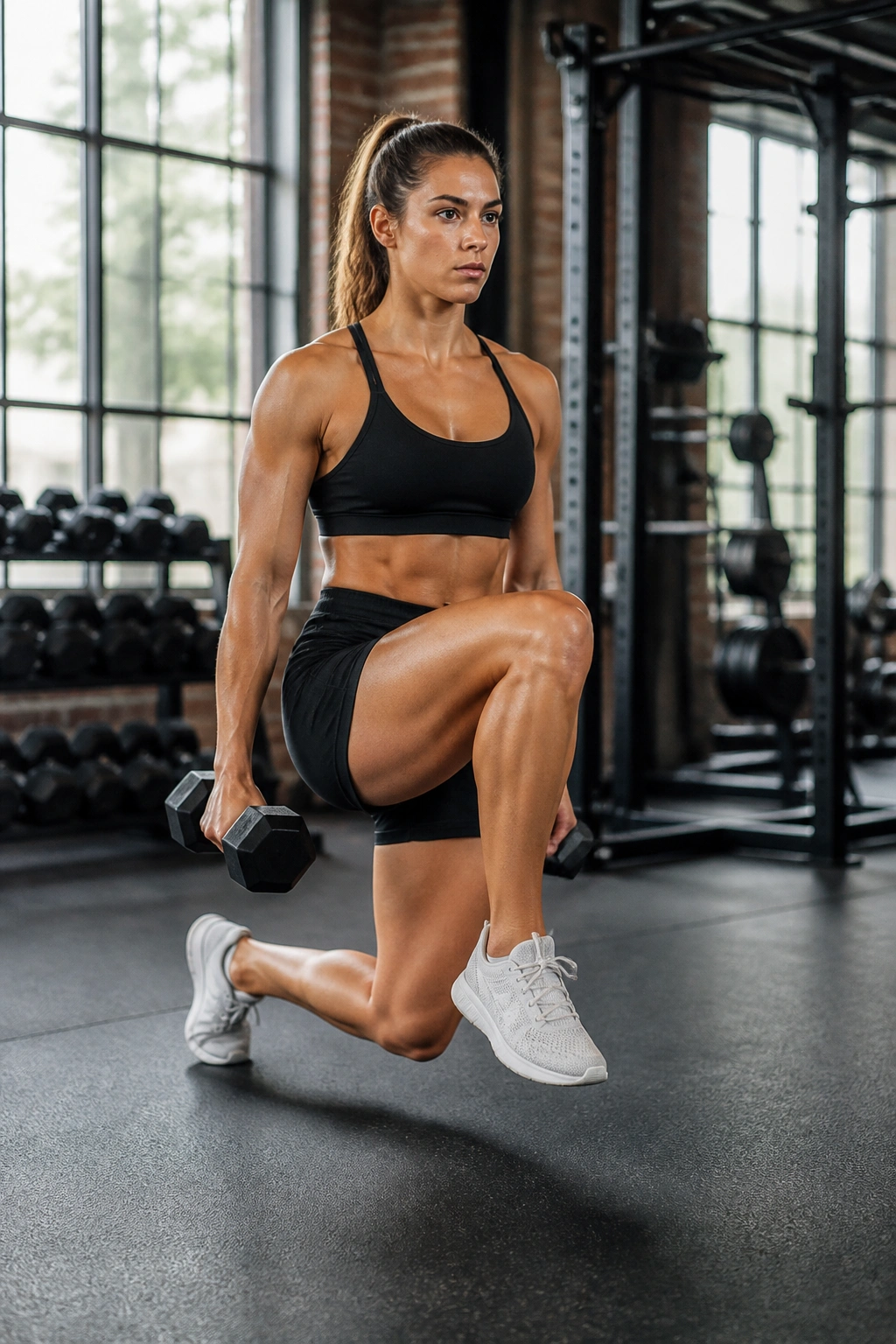
This variation adds a dynamic athletic component to the reverse lunge. You step back into a reverse lunge, and as you bring your back leg forward to return to the starting position, you explode that same knee upward toward your chest in a high-knee drive.
Hold a dumbbell in the hand opposite the working leg, or a goblet weight. The knee drive requires explosive hip flexion and balance. You have to stabilize on one leg, quickly drive the other knee up, and then immediately decelerate it to step back into the next lunge.
It is a high-energy movement. This is not about loading heavy; it is about rhythm, speed, and stabilization. It is a perfect exercise for athletes who need to train the transition from a back-step to a forward drive, mimicking the mechanics of running or sprinting.
22. Uneven Loaded Lunge
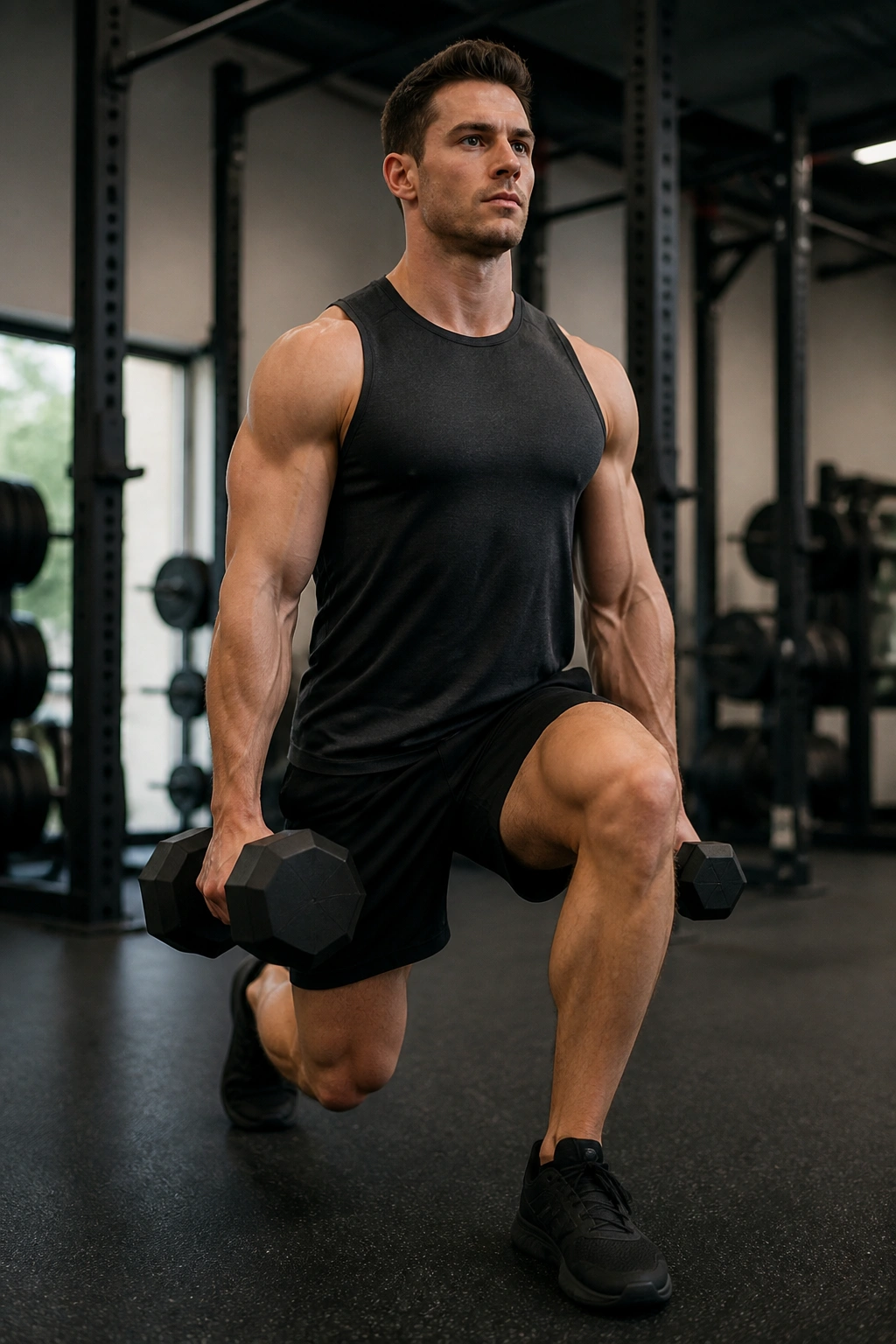
The uneven loaded lunge is exactly what it sounds like: you hold different weights in each hand. For example, hold a heavy 40lb dumbbell in your right hand and a lighter 20lb dumbbell in your left. This creates an asymmetric load that forces your core to constantly adjust to an uneven center of gravity.
This is a fantastic way to overload your stabilizer muscles. You can rotate which hand holds the heavier weight from set to set. It prevents your body from compensating by leaning toward the heavier side, as your nervous system learns to correct for the imbalance in real-time.
Treat this as a coordination exercise. You might feel a bit uncoordinated at first, and that is precisely the point. By challenging your balance in an asymmetric way, you develop a more resilient core and more functional hip stability, which will carry over to every other movement in your training program.
Final Thoughts
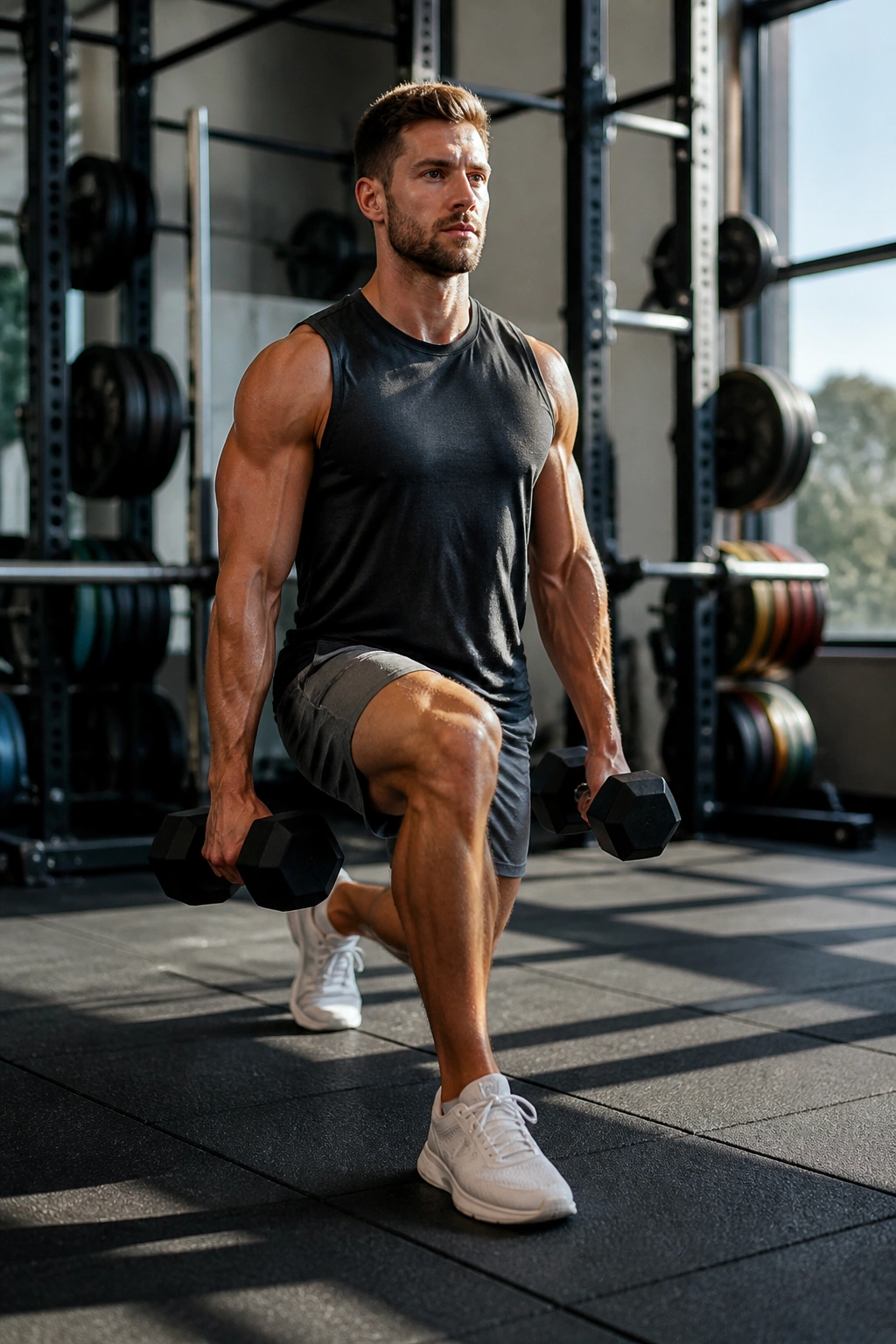
Lunges, when done correctly and with the right level of resistance, are among the most effective tools for building a powerful, functional lower body. You do not need to do all twenty-two of these in a single week. Pick two or three variations that challenge you, integrate them into your leg days, and master the form before you worry about adding more plates.
Consistency with your chosen variations is where the real results live. Take the time to feel where your muscles are working, adjust your stance to find the most effective path for your anatomy, and keep your movements deliberate. The goal is to build strength that helps you move better in your daily life, not just in the gym. Keep your focus tight, your form strict, and your effort honest.
