



Calves are the stubborn red-headed stepchild of the lower body. Most gym-goers will happily grind out squats and deadlifts for hours, only to skip the calves entirely, citing genetics or the frustrating reality that they just don’t seem to grow. If you have ever felt like your lower legs are impervious to muscle growth, you are not alone. But here is the reality check: calves respond to stimulus just like any other muscle group, provided you are hitting them with the right intensity, the correct volume, and, most importantly, the right range of motion.
The calf is not one single muscle. It is primarily composed of the gastrocnemius—the visible, diamond-shaped muscle—and the soleus, which sits deeper underneath and adds width to the lower leg. Most people fail to build impressive calves because they rely on the same repetitive, bouncy movements they saw someone else doing in the weight room years ago. They treat calves as an afterthought, tagging them onto the end of a leg day when they are already exhausted and just want to get to the locker room.
You need to change your approach. To build size and definition, you must treat your calf training with the same seriousness as your heavy compound lifts. You need to focus on a deep stretch, a deliberate contraction, and enough volume to force adaptation. It is not about how much weight you can stack on the machine; it is about how much tension you can place on the muscle fibers.
1. Standing Calf Raise
The standing calf raise is the bread and butter of lower leg development. It primarily targets the gastrocnemius because your knee is locked in a straight position, which puts the muscle on tension. If you ignore this exercise, you are missing out on the primary way to build that diamond shape.
The Proper Mechanics
Most people turn this into a bouncing contest. They use the Achilles tendon like a pogo stick, rebounding out of the bottom position without ever engaging the muscle. You need to eliminate the momentum.
- Stand on the edge of a step or a dedicated calf raise machine platform with your heels hanging off.
- Lower your heels slowly until you feel a deep, uncomfortable stretch in your calves.
- Pause for a full second at the bottom. This pause is where the growth happens.
- Drive up onto the balls of your feet, squeezing hard at the top.
Common Mistakes
Do not lock your knees back hyperextending them. Keep a very slight “soft” bend in your knees, just enough to protect the joint without shifting the load to the soleus. If you feel like you are using your hips to swing the weight, your core is not tight enough. Lock your torso in place.
2. Seated Calf Raise
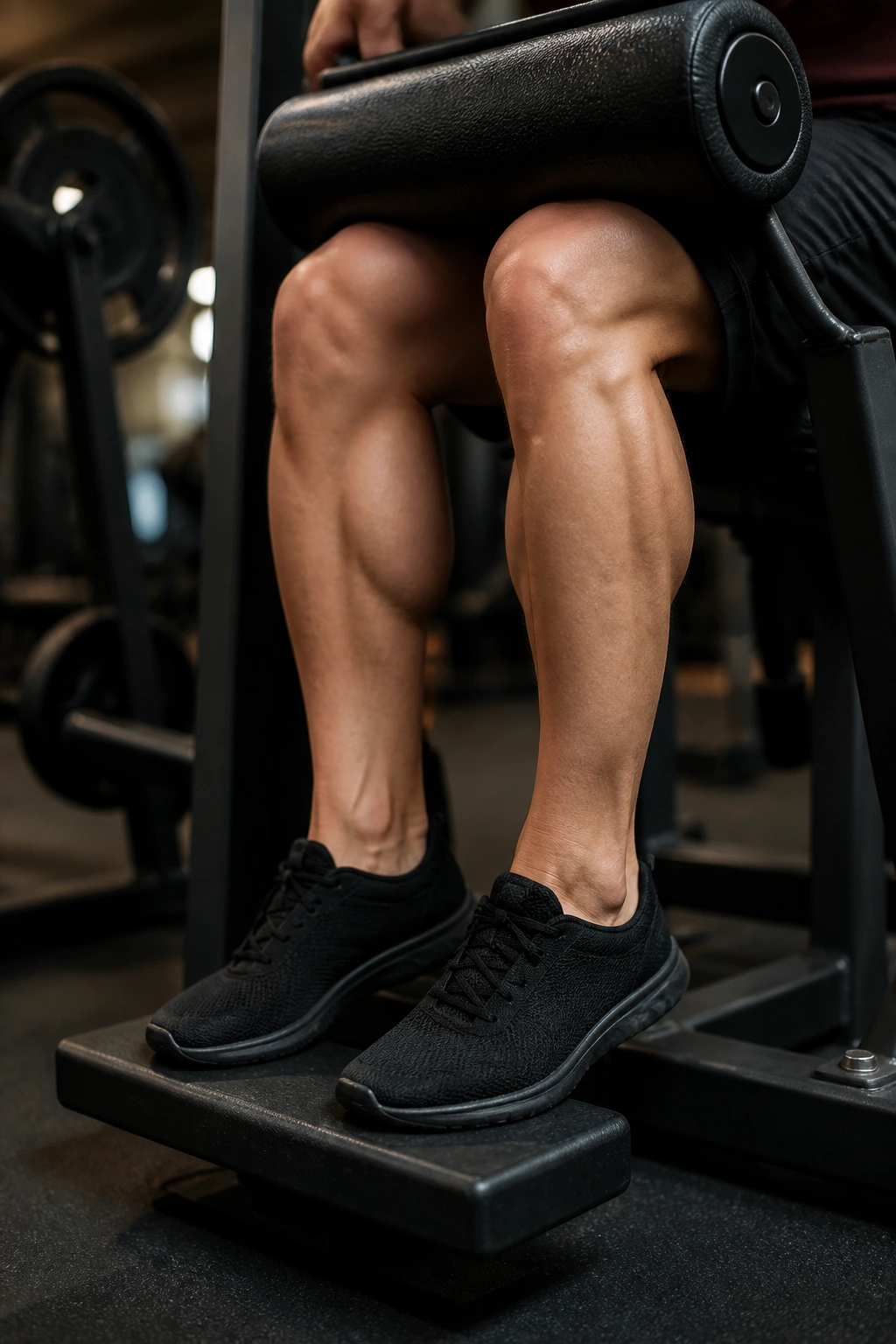
If you want to fill out the lower portion of your leg, you cannot skip the seated calf raise. When you bend your knee, you effectively take the gastrocnemius out of the movement, forcing the soleus to do the heavy lifting. The soleus is a distinct muscle that sits lower on the leg, and building it up is the secret to adding overall mass to your calves.
Why It’s Different
Because you are seated, your range of motion feels different. You cannot rely on your body weight as easily as you can standing up. This forces you to use the machine’s resistance exclusively.
- Set the knee pad so it sits snugly against your thighs.
- Your feet should be positioned on the platform with your toes pointing straight ahead.
- Lower the weight as far as your ankle mobility allows.
- Push up through your toes, focusing on the ball of the foot.
Pro Tip: This exercise is notorious for causing cramping if you do not ease into it. Start with a moderate weight and focus on the burn rather than the total plates. The soleus is composed of slow-twitch fibers, which means it thrives on higher repetition ranges, often in the 15 to 20 range, rather than heavy sets of 5.
3. Single-Leg Calf Raise
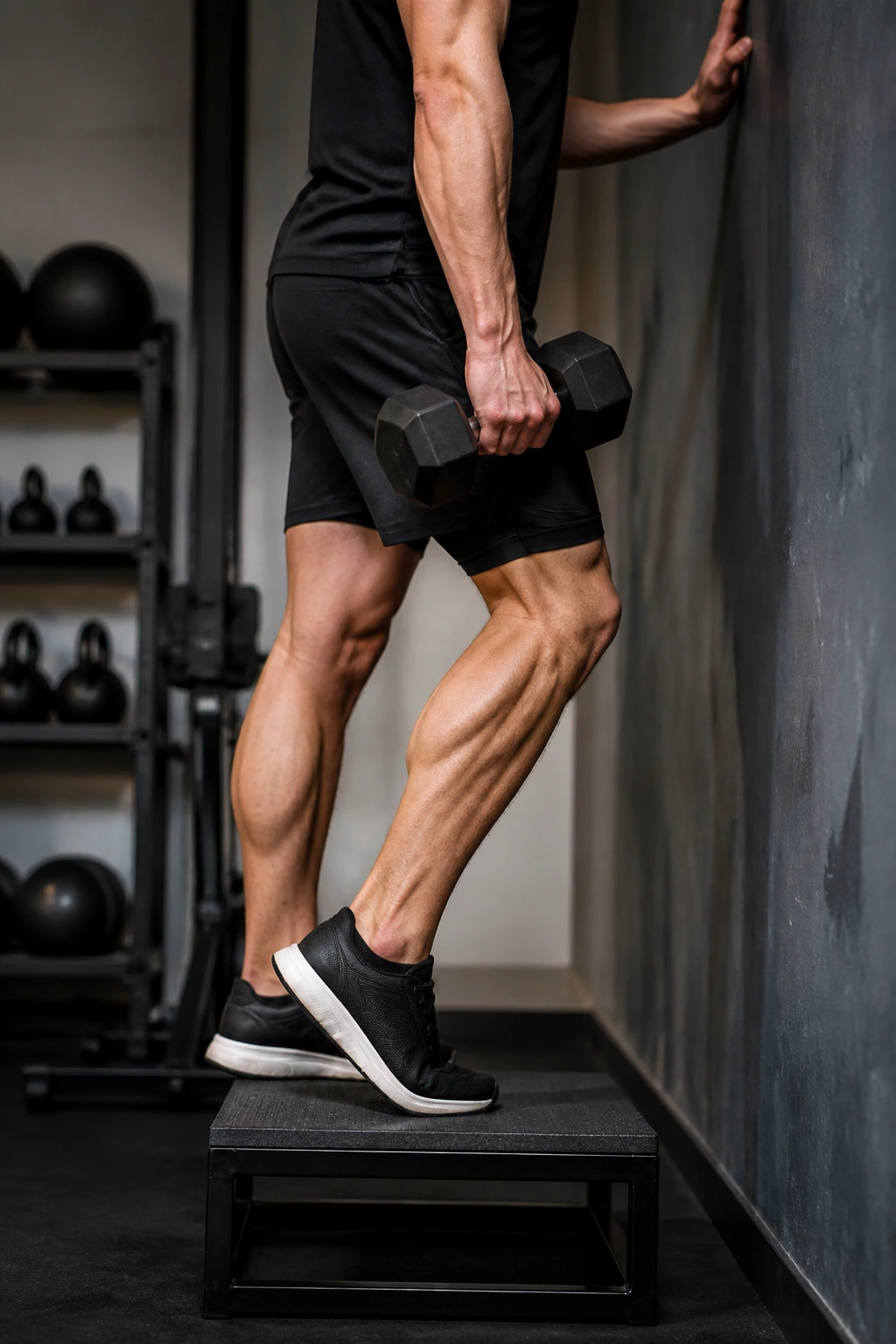
Working your legs unilaterally is one of the most effective ways to correct imbalances. You might have one calf that is slightly more developed than the other, and the single-leg calf raise forces both legs to pull their own weight. This exercise is also a masterclass in stability and control.
How to Execute
You can do these on a machine, or simply holding a dumbbell in one hand while standing on a step. The dumbbell version is often better because it requires you to balance.
- Stand on the edge of a step with one foot.
- Hold a dumbbell in the hand corresponding to the working leg.
- Keep your free hand on a wall or rack for balance, but do not use it to pull yourself up.
- Perform the raise with a slow, controlled tempo.
The Focus
Since you are only using your body weight plus one dumbbell, you should be able to get a deeper stretch than on a heavy machine. Focus on the eccentric phase—the way down. Make it last three seconds. That slow descent creates microscopic tears in the muscle fibers that, when repaired, lead to growth.
4. Leg Press Machine Calf Raise
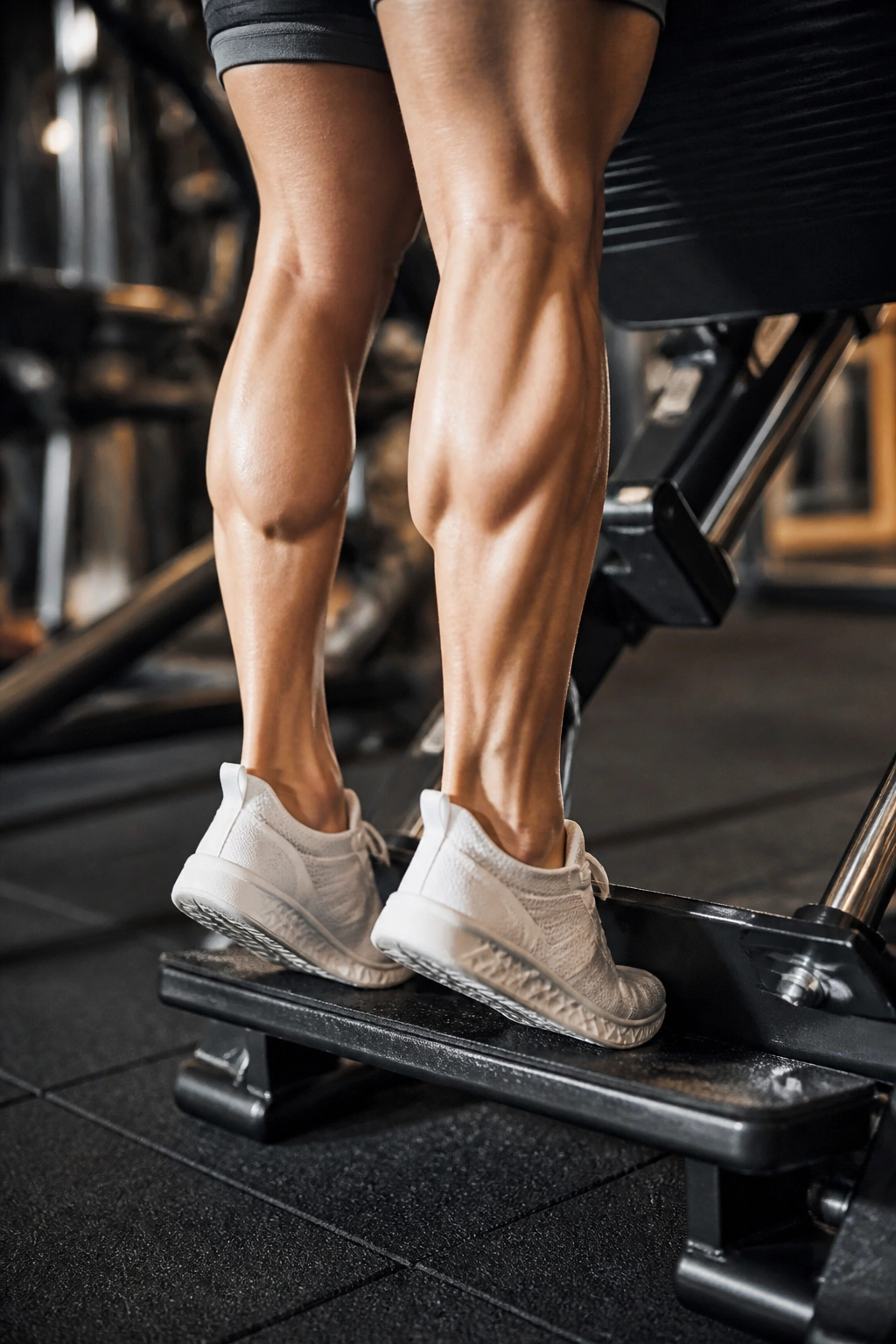
The leg press machine is an underrated tool for calf training. Because you are essentially lying back, you don’t have to worry about balancing, which allows you to move significantly heavier loads than you could standing up.
Positioning
Do not try to load the entire stack unless you have spent months building up to it. The leg press calf raise requires precise foot placement.
- Slide down the leg press so your feet are at the very bottom edge of the plate.
- Extend your legs, but keep a tiny, microscopic bend in your knees.
- Let your heels dip back as far as possible.
- Drive the platform forward using only your toes.
This is a great exercise for “mechanical drop sets.” You can start with a heavy weight, perform as many reps as you can, then quickly reduce the weight slightly to squeeze out another 5 to 10 reps. The blood flow you will get in your calves after a set of these is intense. It is the kind of pump that makes your socks feel tight.
5. Donkey Calf Raise
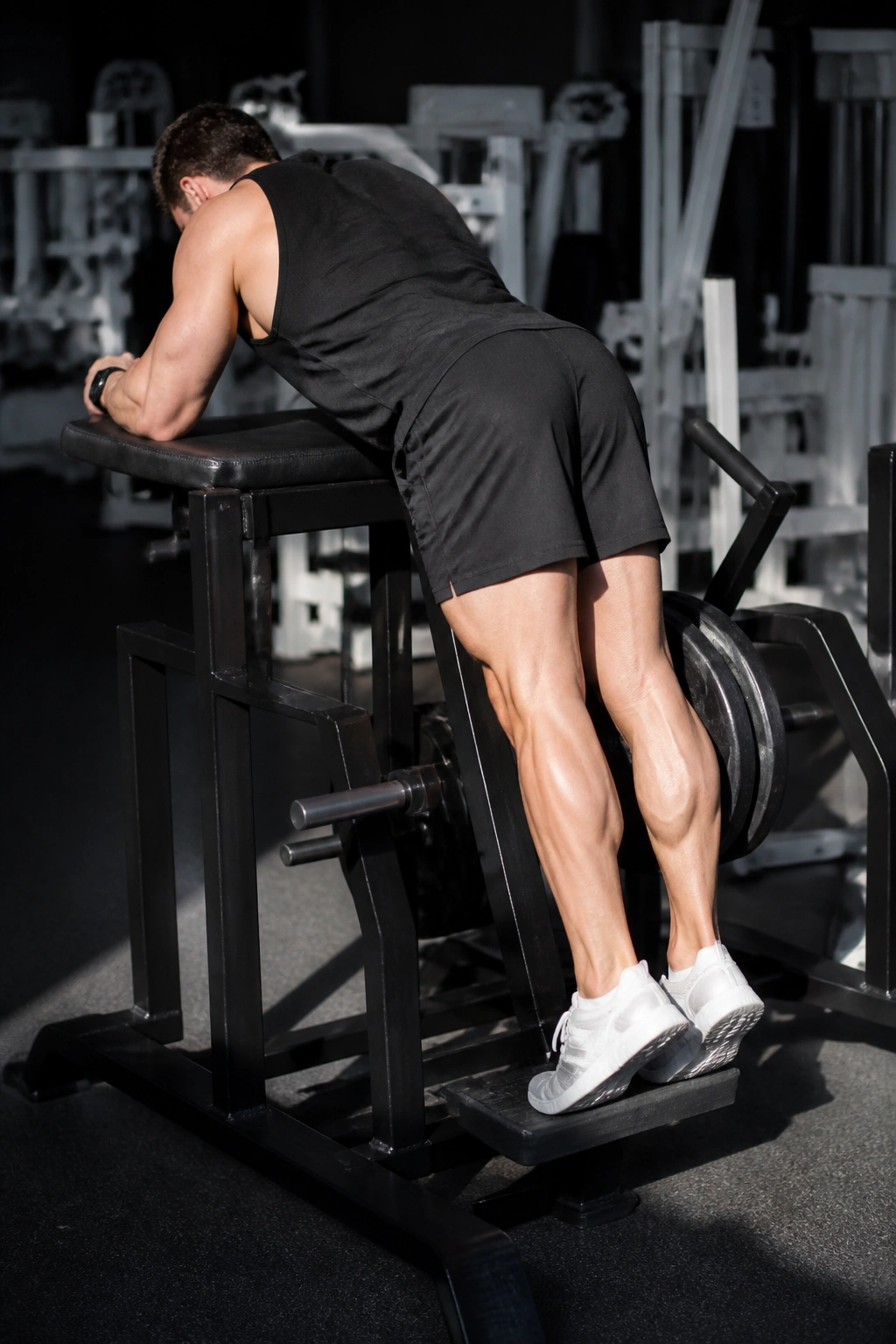
The donkey calf raise is a classic, old-school bodybuilding staple that you rarely see performed correctly in modern commercial gyms. It is physically awkward, but it provides a unique angle of attack that hits the gastrocnemius in a fully stretched position.
The Setup
You need a partner or a specialized machine for this. If you are doing it the traditional way, you lean forward against a high table or padded rack while your partner sits on your hips. It looks ridiculous, but it works.
- Hinge at the waist so your torso is parallel to the floor.
- Your partner adds weight to your lower back or hip area.
- Perform the raises as usual.
The forward-leaning position changes the line of pull on your calves. It places a massive amount of tension on the muscle belly. If you do not have a partner, many gyms have a donkey calf raise machine. If yours does not, you can simulate the hinge position by using a Smith machine set to a lower height, allowing you to lean forward securely.
6. Farmer’s Walk on Toes
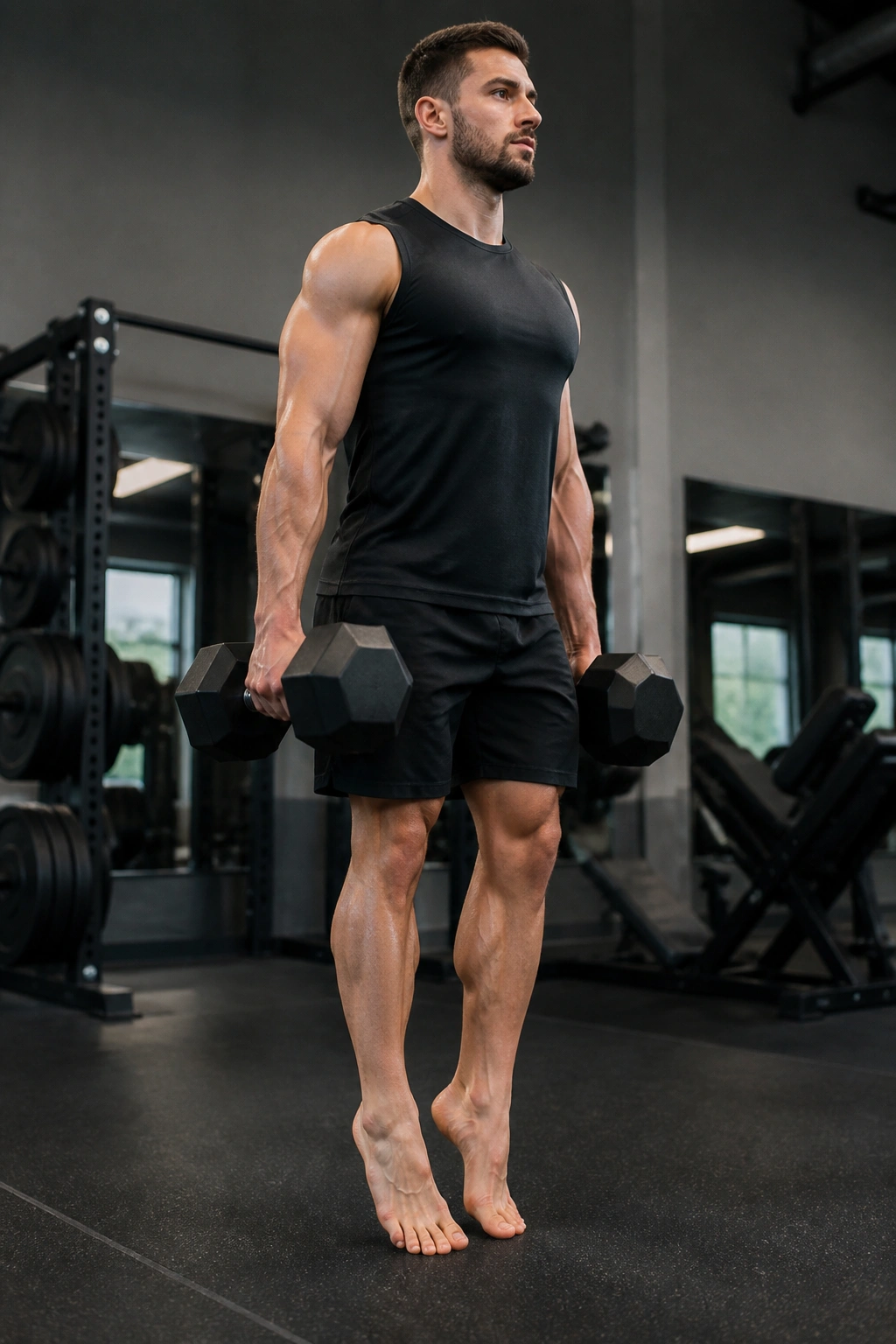
This is an exercise that blends calf strength with total body endurance and grip strength. It is brutal, simple, and effective. You are essentially turning a standard farmer’s walk into a calf-focused movement.
The Mechanics
Grab two heavy dumbbells or kettlebells—one in each hand. Instead of walking normally, you are going to lift your heels off the ground.
- Walk with long, controlled strides while staying up on your toes.
- Do not let your heels touch the ground at any point during the walk.
- Keep your core braced and your spine neutral.
Why This Works
The constant tension is the key. You are not just doing repetitions; you are sustaining a contraction for 30 to 60 seconds at a time. This forces your calves to stabilize your entire body weight plus the external weight of the implements. Your calves will be screaming by the end of 40 yards.
7. Jump Rope
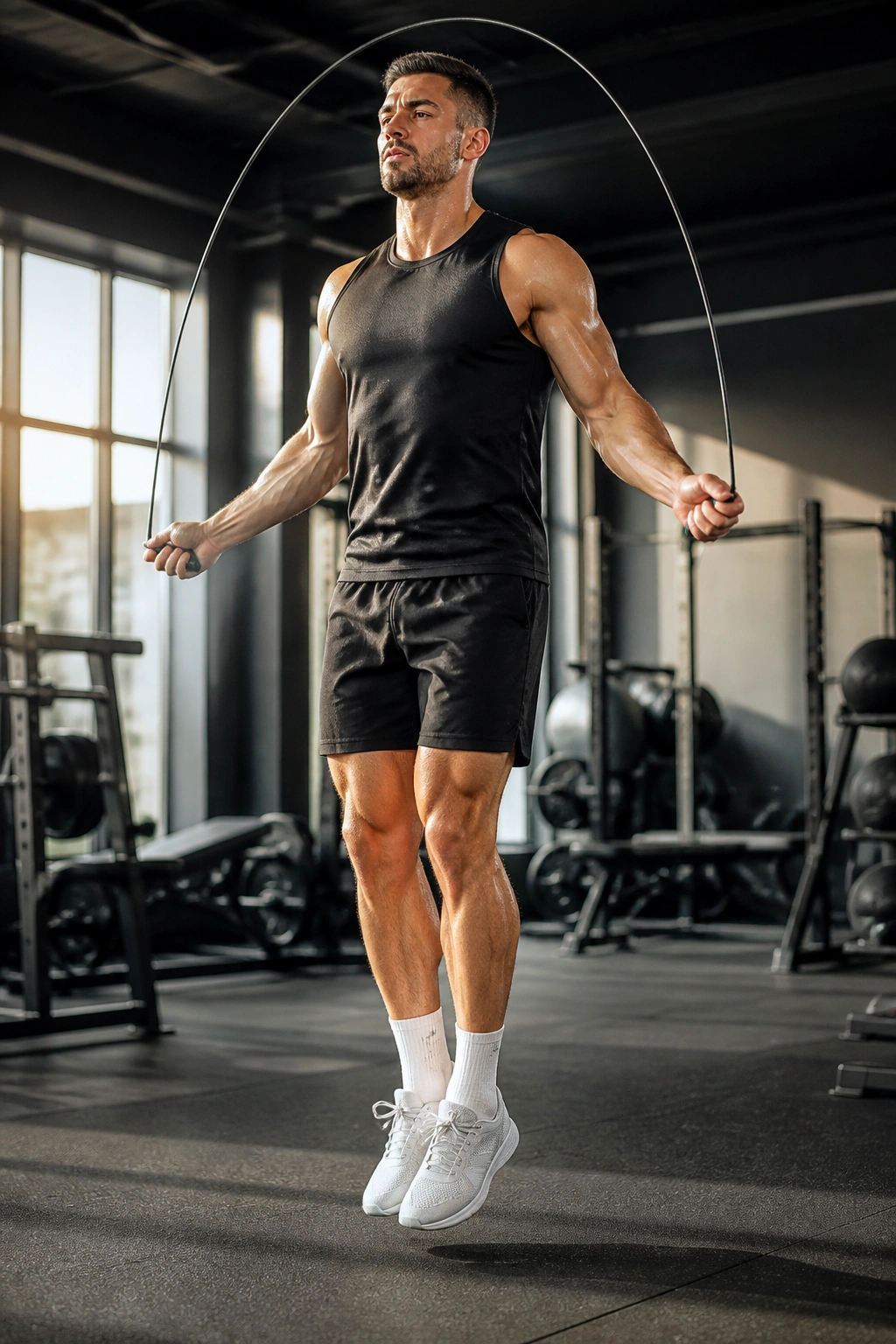
Sometimes the best exercise is the one that seems like a child’s game. Jumping rope is a fantastic tool for athletic calves. It develops the fast-twitch fibers that give your calves a “popping” look when they are flexed.
Developing Rhythm
The goal here is not to see how fast you can whip the rope, but to maintain a consistent, light-footed rhythm. You should be jumping just high enough to clear the rope.
- Stay on the balls of your feet.
- Keep your knees soft.
- Use your wrists to spin the rope, not your shoulders.
If you are a beginner, do not aim for 20 minutes straight. Start with 30-second intervals followed by 30 seconds of rest. As your calves get stronger, increase the duration. This builds high-endurance calves that look conditioned and lean.
8. Box Jumps
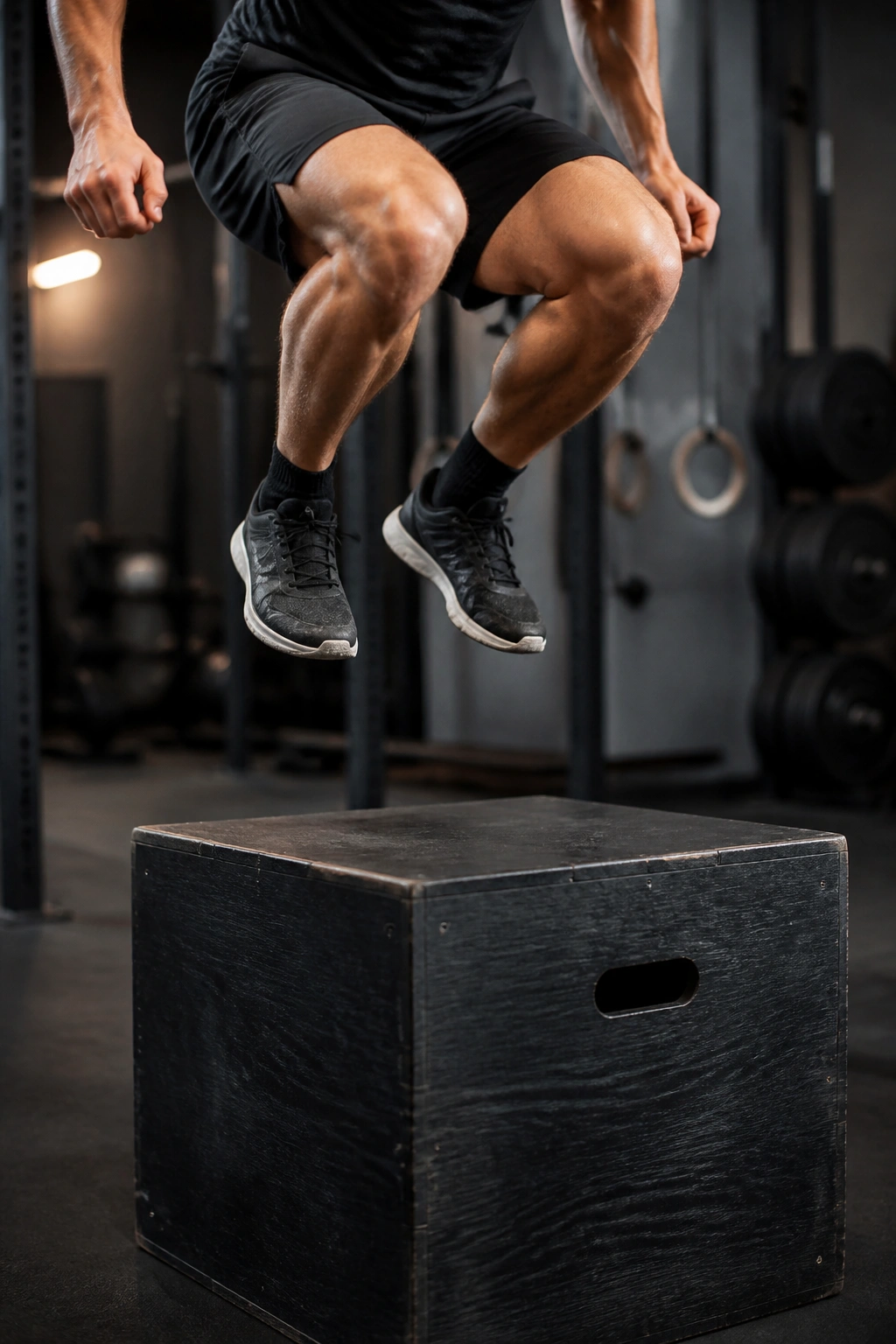
Box jumps are about explosive power, but they are also a high-intensity way to load the calves. When you land on the box, your calves have to act as shock absorbers, and when you jump, they are the primary engines propelling you upward.
Safety and Technique
Never jump onto a box that is too high for your current ability. The risk of missing the jump and scraping your shins is not worth the ego boost.
- Stand facing the box with feet shoulder-width apart.
- Drop into a quarter squat, then explosively jump up.
- Land softly on the box with both feet.
- Step down—do not jump down. Jumping down adds unnecessary stress to your joints without any extra benefit.
This exercise recruits a high percentage of motor units in the calf complex. It is best placed at the beginning of your workout when your central nervous system is fresh, not at the end when you are already fatigued.
9. Tibialis Raise
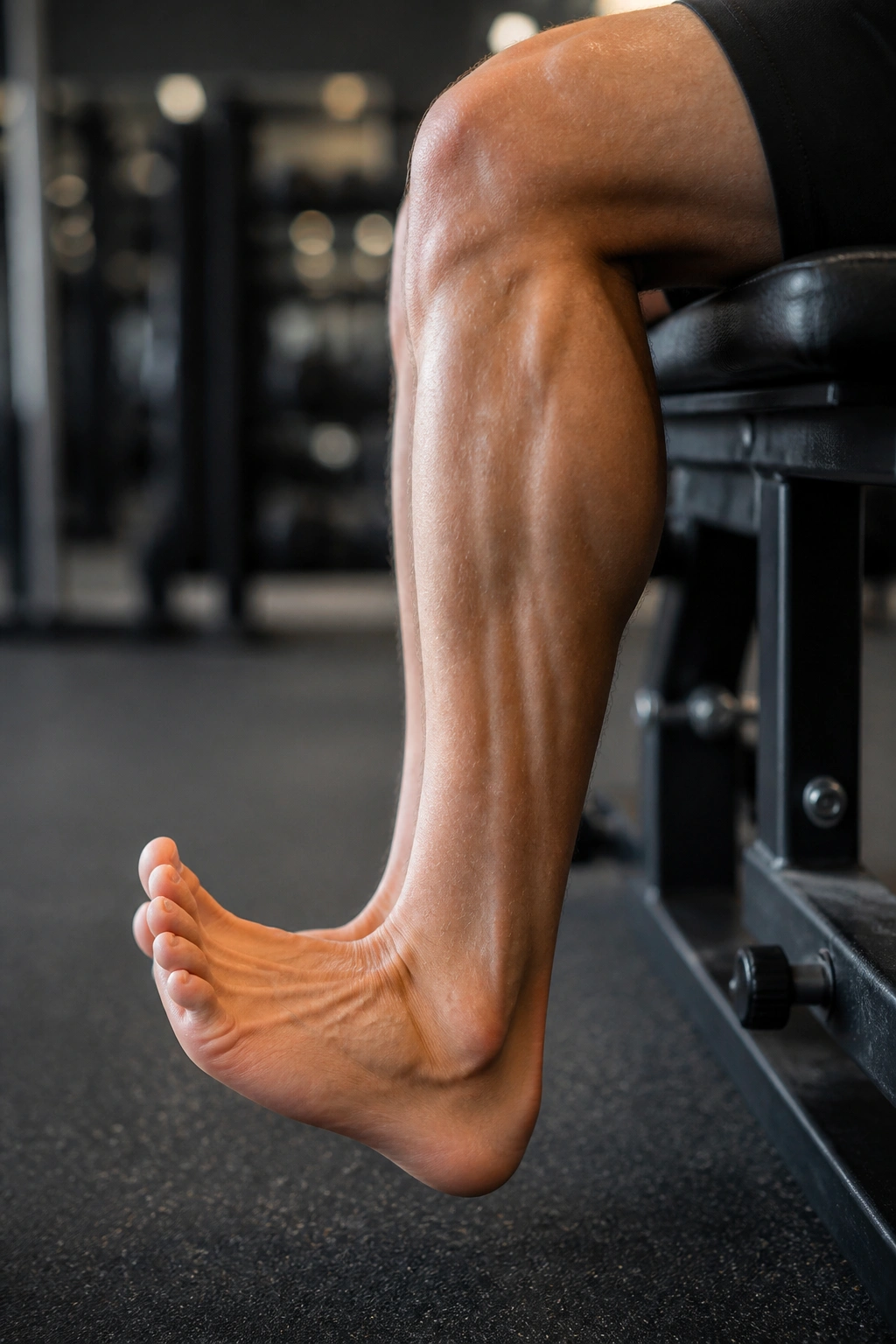
The tibialis anterior is the muscle on the front of your shin. While it is not part of the “calf” per se, it is vital for the visual definition of the lower leg. A massive calf with a skinny, flat shin looks unbalanced.
The Movement
This is the opposite of a calf raise. Instead of pushing down, you are pulling your toes up toward your shins.
- Sit on the edge of a bench with your legs hanging off, or lean your back against a wall while standing.
- If you have a tibialis bar, use it. If not, hold a light dumbbell between your feet.
- Dorsiflex your ankles—pull your toes up as high as you can.
- Lower them back down slowly.
You will feel a deep burn in the front of your shin. It is uncomfortable, but it is necessary for shin health and for the overall aesthetic of a well-developed lower leg.
10. Stair Climber
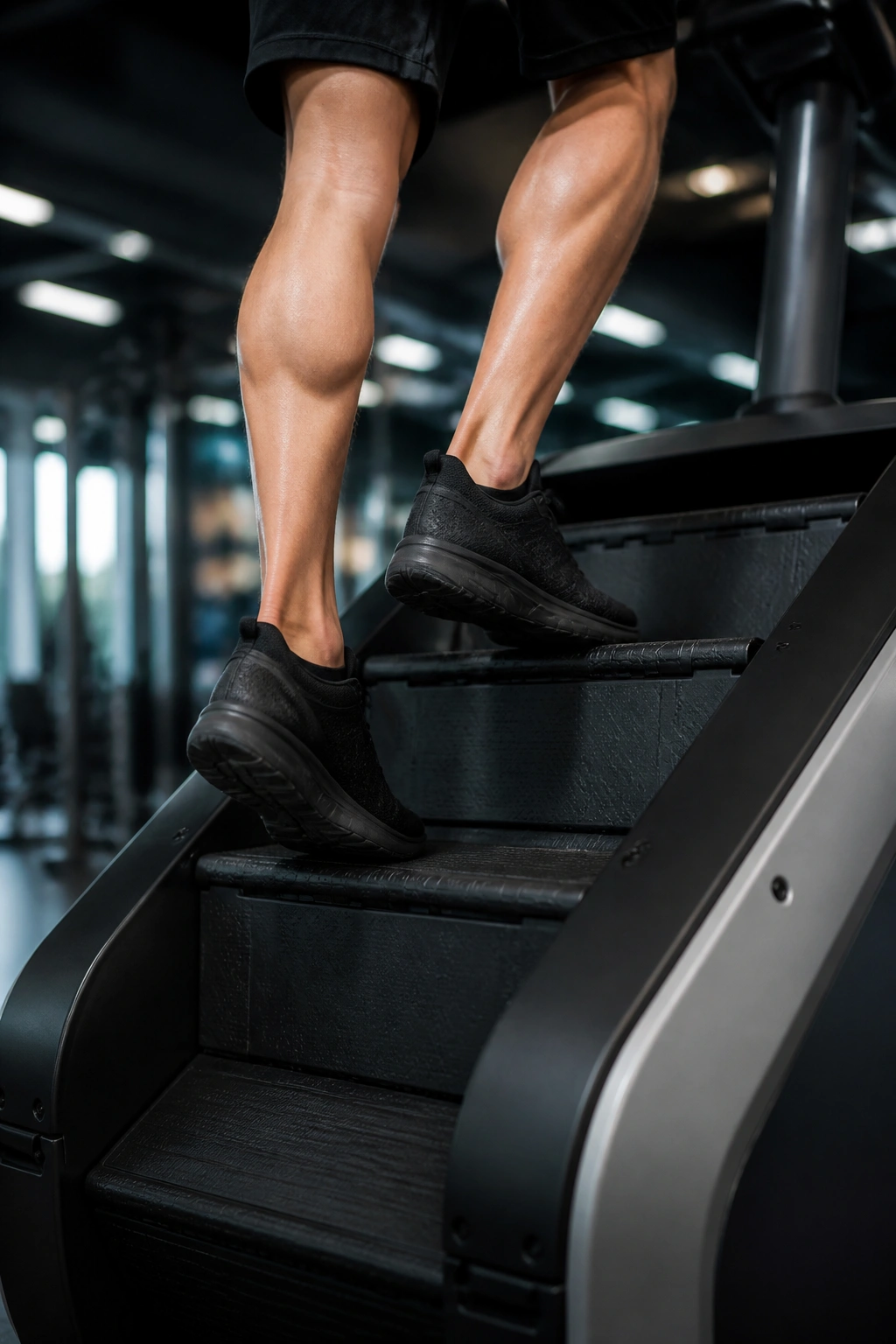
If you want to talk about volume, the stair climber is the undisputed king. You can do thousands of reps in a single session. However, the secret is in how you place your feet.
Changing Your Stance
Most people walk on the stair climber flat-footed, which is fine for cardio, but not great for calf growth.
- Place only the balls of your feet on the step.
- Let your heels hang slightly off the back of the step.
- As you climb, push through your toes on every single step.
It will tire you out much faster than normal climbing. Your calves will be burning within five minutes. Treat this as a finisher at the end of your leg workout. Do not try to sprint; keep a steady, controlled pace that allows you to feel the full contraction on every step.
11. Walking Lunges
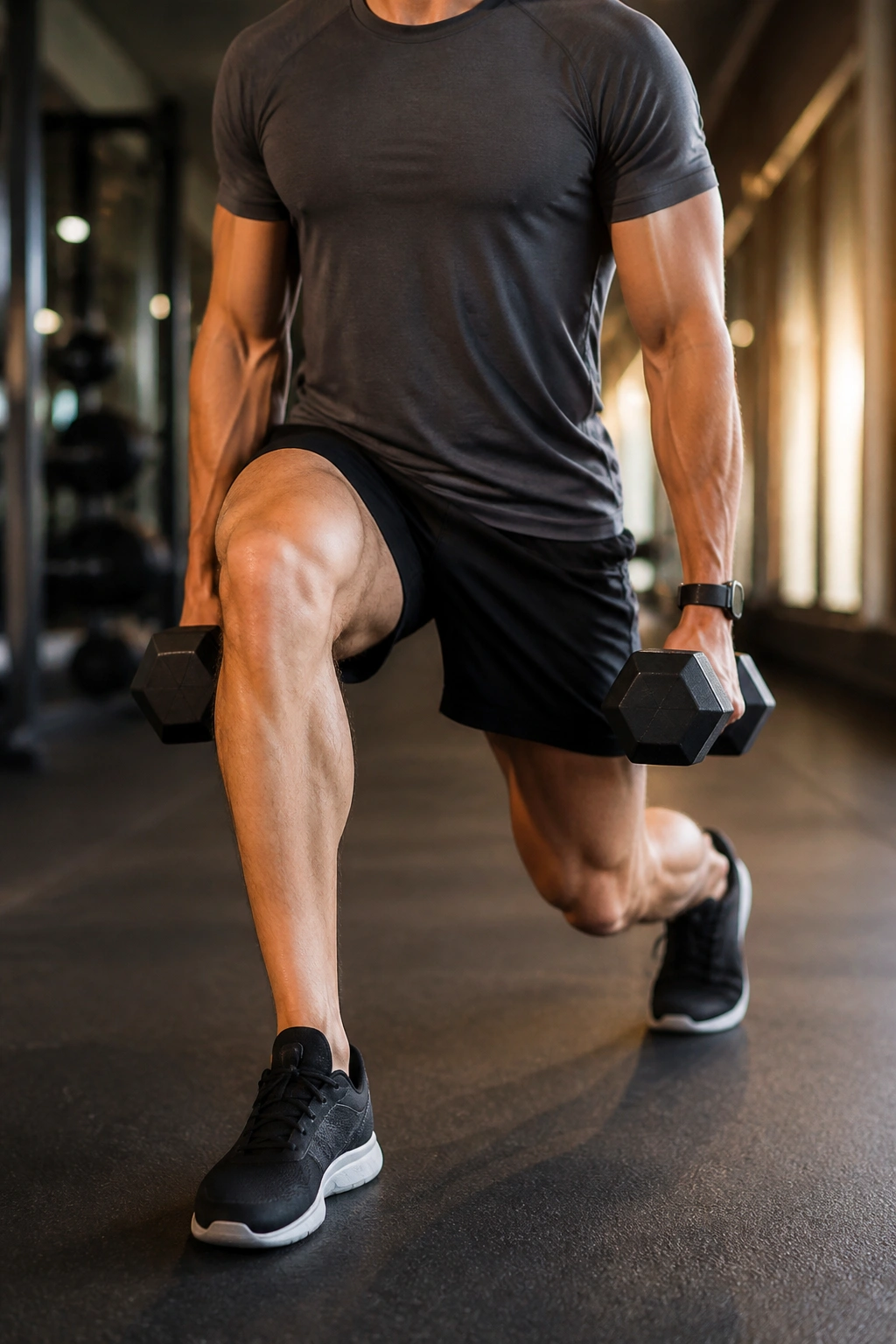
Walking lunges are usually viewed as a glute and quad exercise, but they are secretly an incredible calf developer. Every time you push off the front foot to take the next step, your calf is responsible for initiating the movement.
The Calf Focus
To get the most out of this for your calves, you need to exaggerate the push-off.
- Take a long step forward into your lunge.
- When you push back to return to the starting position, drive hard through the ball of the front foot.
- Focus on feeling the calf muscle do the work before the quad takes over.
If you perform these with heavy dumbbells, you add resistance that your calves have to move against. It turns a standard leg exercise into a full-chain lower leg builder.
12. Smith Machine Calf Raise
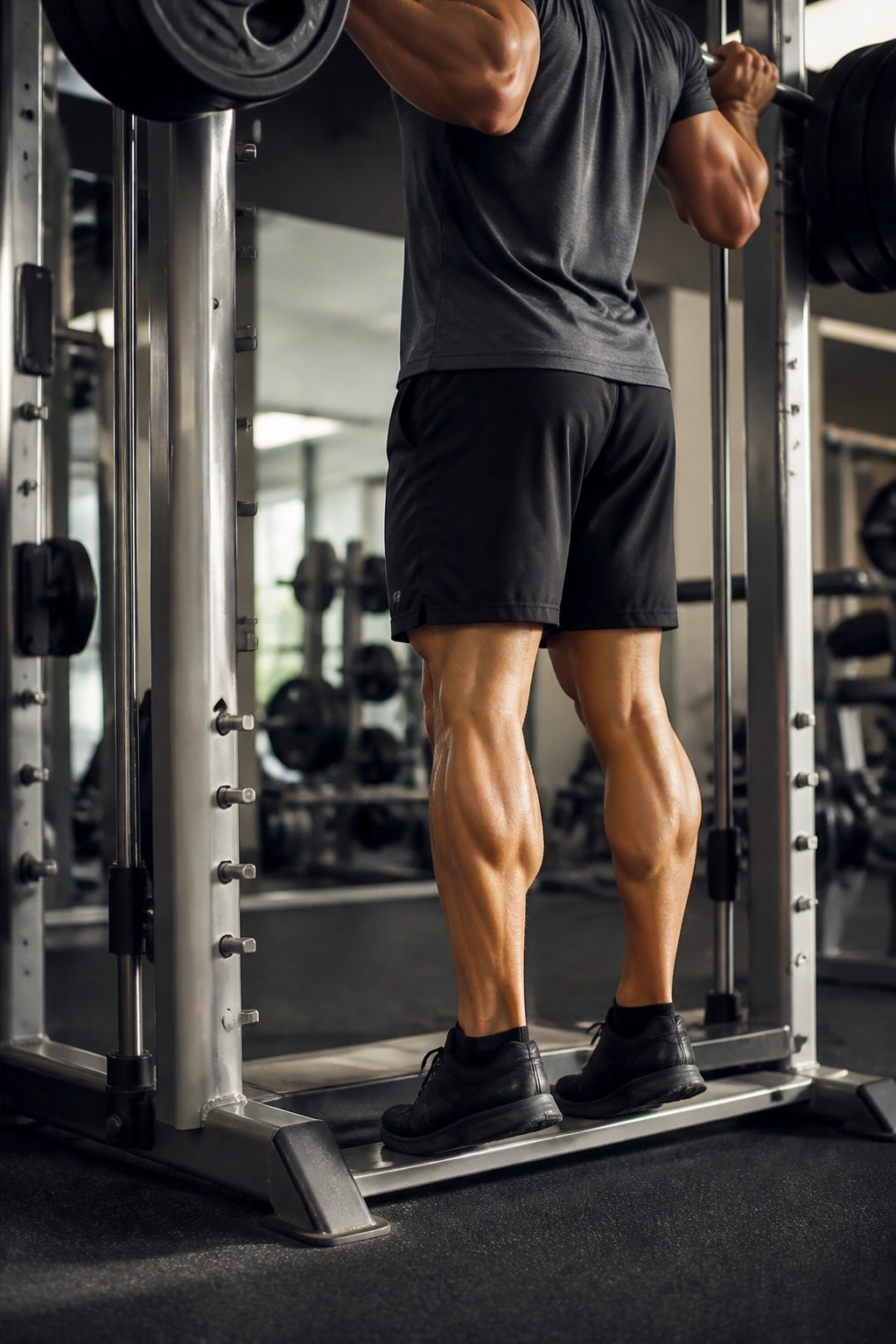
The Smith machine is often maligned, but it is actually one of the best tools for calf raises because of the built-in stability. You do not have to worry about the weight wobbling or shifting.
The Benefit of Stability
Because you do not have to stabilize the weight, you can focus entirely on the muscular contraction. This allows you to really overload the gastrocnemius.
- Set the bar on your shoulders as you would for a squat.
- Place a block or a few weight plates on the floor under the bar.
- Perform your calf raises with the added stability of the guided bar.
- Because the bar is fixed, you can go slightly heavier than you would with free weights.
Just be careful not to rush. The fixed path of the Smith machine can trick you into moving too fast. Keep your tempo slow and controlled, especially on the way down.
13. Deficit Calf Raise
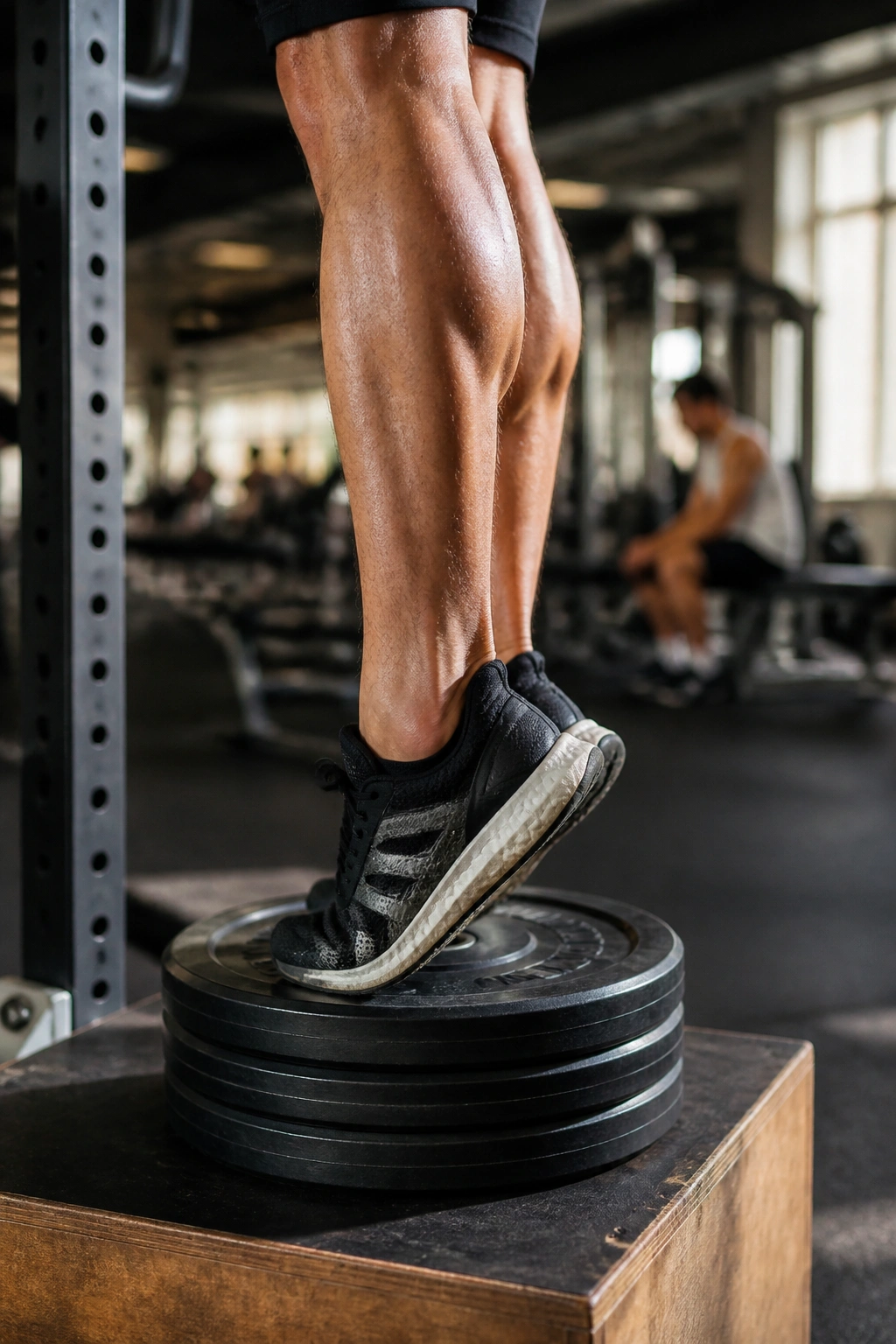
Sometimes, you need to force a greater range of motion to spark new growth. A deficit calf raise is exactly what it sounds like—performing the raise from a position that allows the heels to drop further than they would on flat ground.
Creating the Deficit
You can do this on a calf machine, but you need a stack of plates or a thick mat to elevate your toes.
- Step onto the platform so that your heels are already hanging lower than the rest of your foot.
- This extra inch or two of range makes a massive difference in how much the muscle is stretched.
- Perform the raise with a full range of motion.
The deep stretch you get here is unparalleled. If you find your calves are not growing, it is often because you are working in a tiny, limited range of motion. Opening up the range is often the first step to breaking a plateau.
14. Hill Running
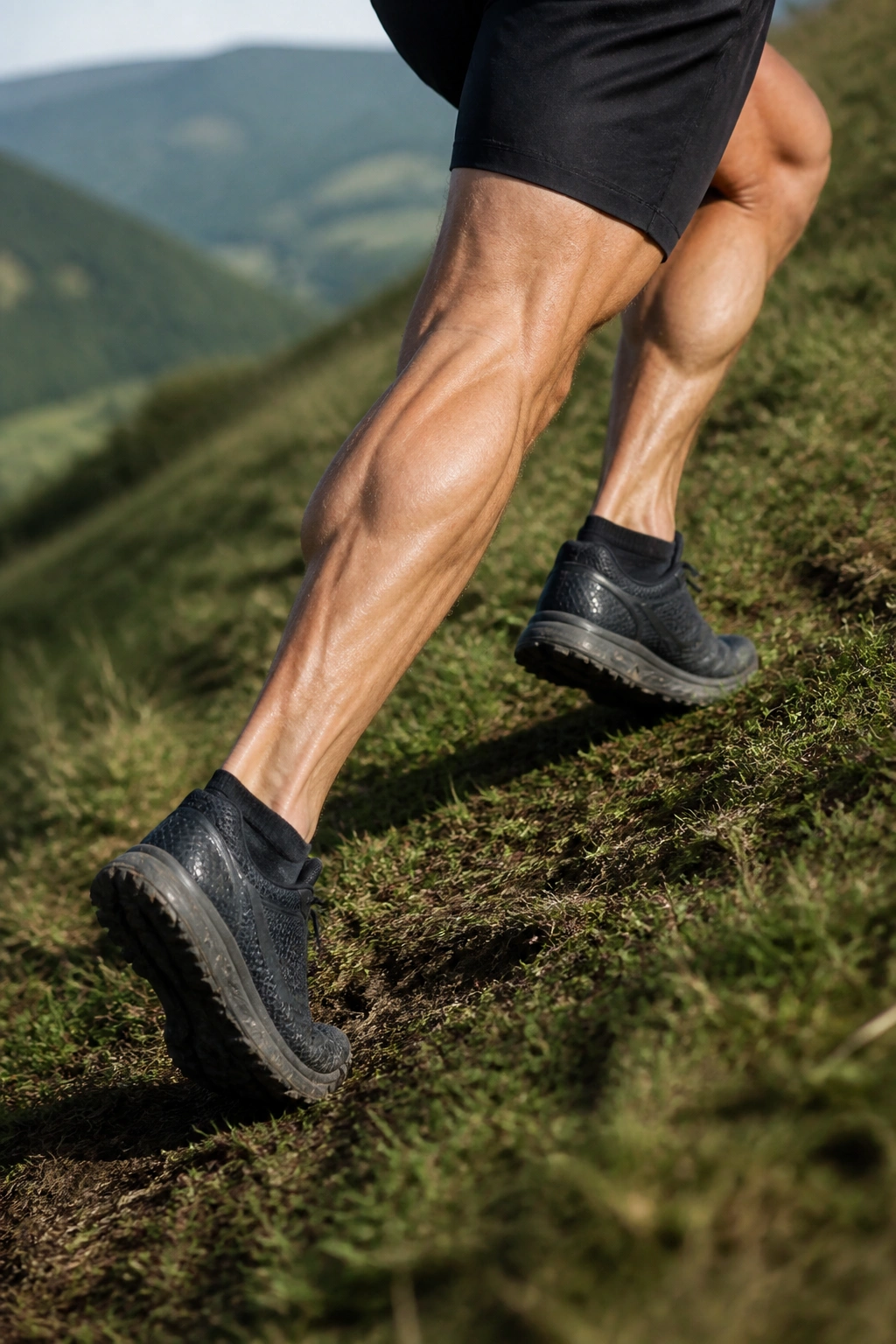
There is a reason why sprinters have incredible calves. They spend a huge amount of time on the balls of their feet, pushing off with massive force. You do not have to be an elite athlete to mimic this.
The Hill Sprint
Find a steep hill. It does not need to be long—30 to 50 yards is plenty.
- Sprint up the hill on your toes.
- Maintain an aggressive forward lean.
- Walk back down slowly to recover.
- Repeat for 5 to 10 sets.
This is a high-intensity exercise. Your calves are effectively working against your body weight and gravity in a very explosive way. It is a fantastic way to build functional, dense calf muscle.
15. Nordic Curl
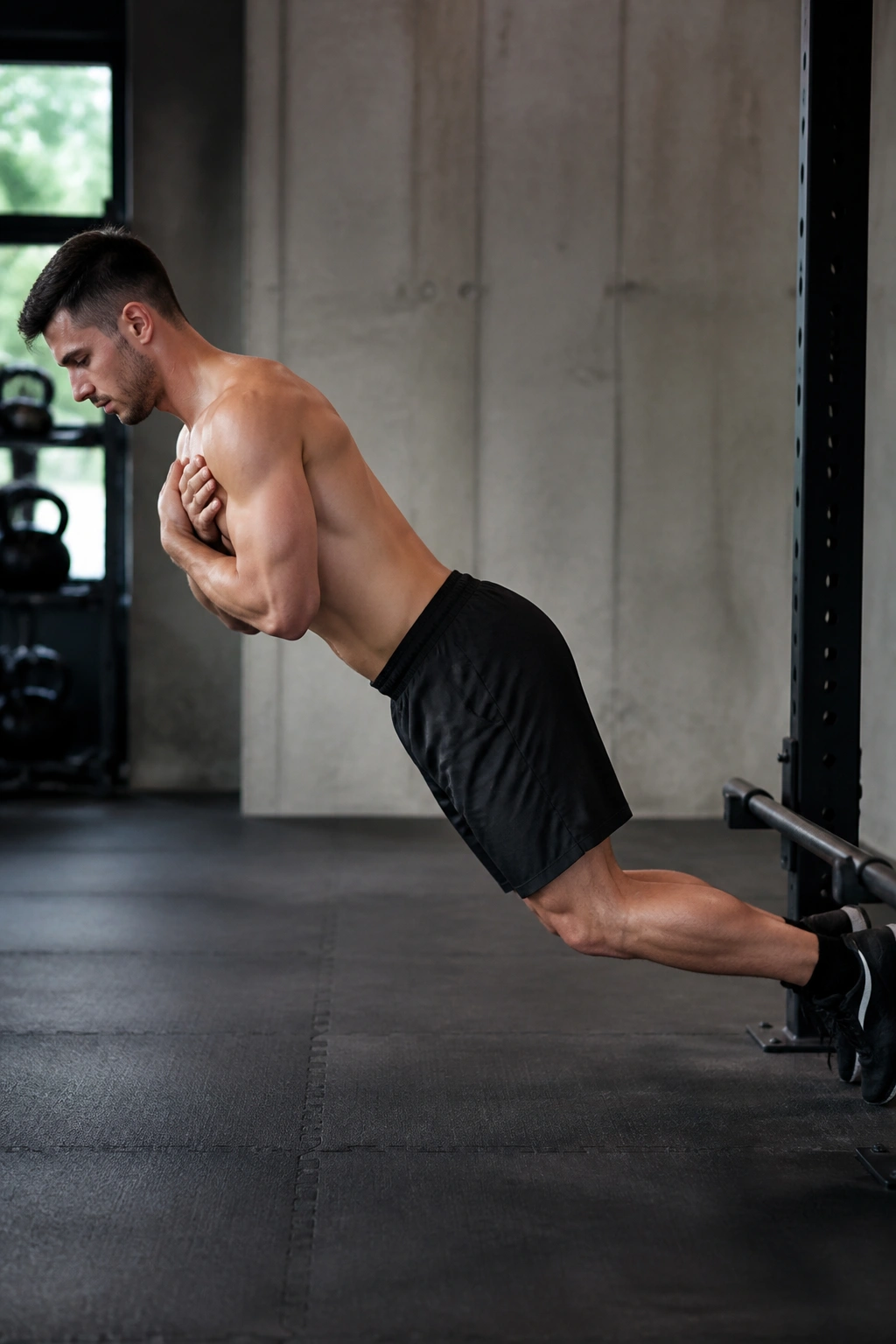
The Nordic curl is primarily for the hamstrings, but it provides a unique secondary activation for the calves. Because your feet are locked into a secure position, your lower legs are actively involved in keeping you stable throughout the entire movement.
Engaging the Lower Leg
As you lower your torso toward the ground, your calves are working isometrically to maintain your position.
- Anchor your heels under a sturdy bar or a partner.
- Keep your body in a straight line from knees to head.
- Lower yourself as slowly as possible.
- Push back up with your hands if necessary.
You will feel your calves “gripping” the ground or the anchor point. While this will not give you huge calves on its own, it adds a layer of tension that contributes to overall lower-leg stability and development.
16. Kettlebell Ankle Swings
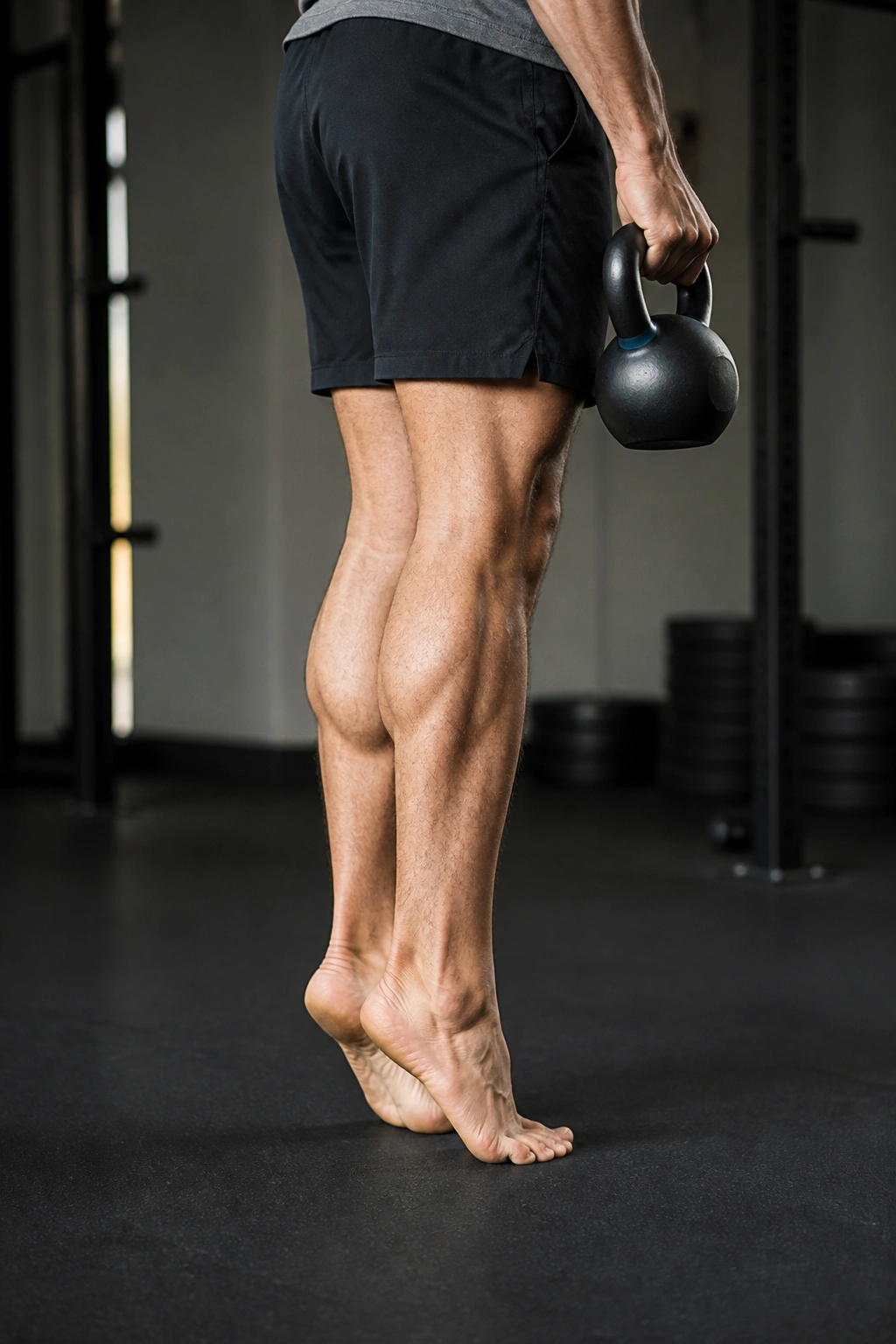
This is more of a mobility and small-muscle activation drill, but it is brilliant for the intricate stabilizer muscles around the ankle and lower calf.
The Movement
- Stand with your feet together.
- Hold a light kettlebell in one hand.
- Swing the kettlebell slightly forward and back, but keep your body perfectly still.
- As you swing, rise onto your toes at the peak of the swing.
It requires a high degree of balance and control. It won’t build massive muscle mass, but it will help develop the definition and connectivity around the ankle joint, which makes your lower legs look tighter and more athletic.
17. Hack Squat Calf Raise
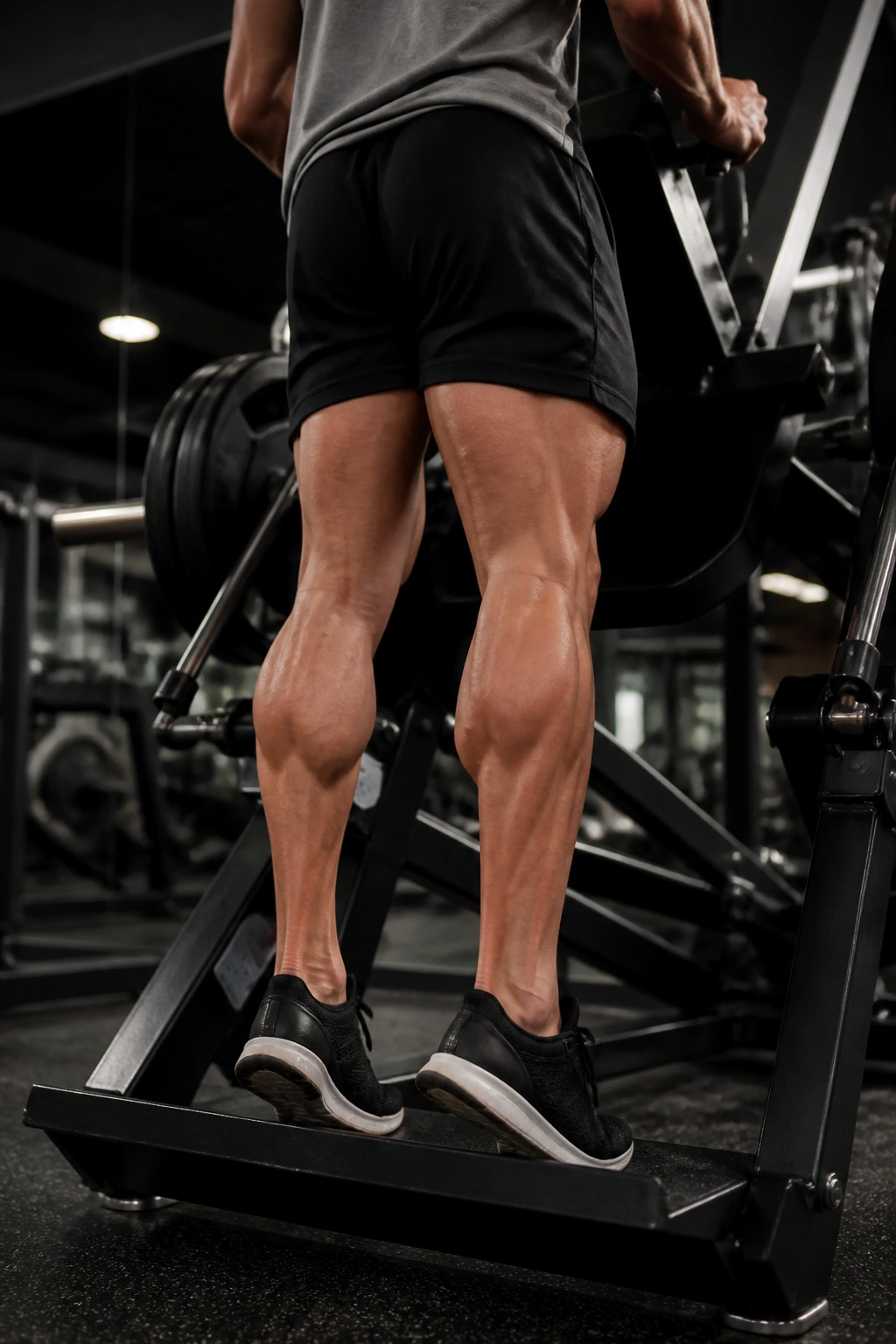
The hack squat machine is designed to lock your legs into a position that isolates the quads, but it is also excellent for calves. Because your back is supported and your knees are fixed in a stable plane, you can push yourself to failure without worrying about falling over.
The Execution
- Load the hack squat machine with a moderate weight.
- Position your feet so the balls of your feet are on the edge of the footplate.
- Perform the calf raise by pushing through the toes.
- Keep your knees locked straight.
Because the machine is weighted, this is a great way to perform high-rep sets to failure. The support of the machine allows you to keep pushing well past the point where your balance would have failed on a standing raise.
18. Eccentric-Focused Calf Raise
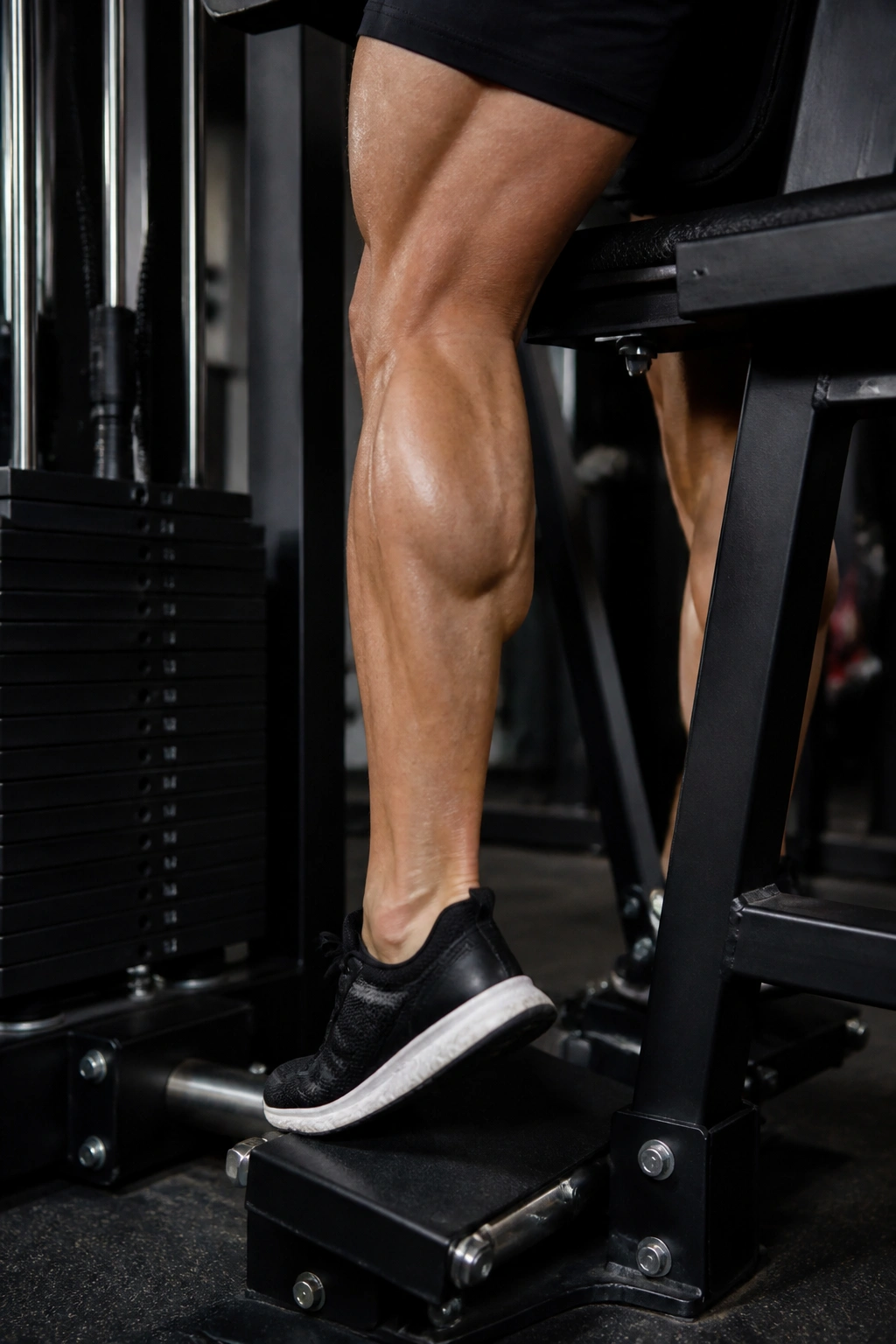
If you really want to force growth, you need to emphasize the eccentric—or lowering—phase of the movement. Your muscles are stronger on the way down than they are on the way up, yet most people just let the weight drop.
The Strategy
- Use a heavy weight on a machine that allows for assistance.
- Use both legs to push the weight up to the top.
- Once you are at the top, take one leg off the machine.
- Lower the weight using only one leg, taking a full 5 seconds to descend.
- Repeat for 8 to 10 reps per leg.
This creates immense tension in the muscle fibers. It is an advanced technique, so do not try this as your first exercise. Save it for the end of your calf session when you are looking to squeeze out every last bit of potential from your muscle tissue.
Final Thoughts on Calf Development
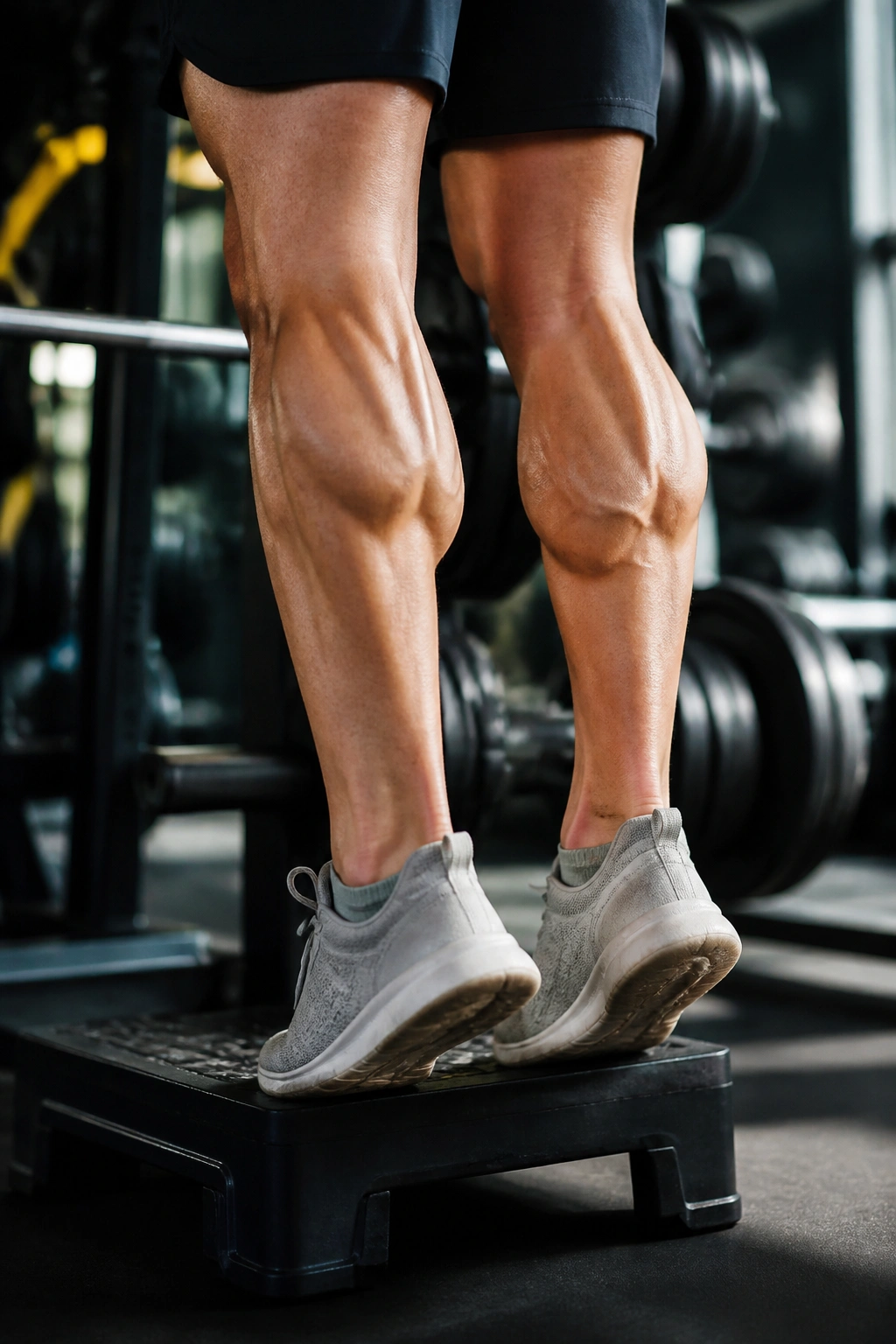
Building calves is not a mystery, but it is a test of patience. The biggest mistake you can make is assuming that because they haven’t grown in a few weeks, they never will. Calf development is a long game. You have to commit to consistent, high-intensity training, often with more frequency than you might think. Many people see the best results by hitting calves three times a week rather than just once.
Stop looking for the “secret” exercise and start looking at your intensity. Are you actually pushing yourself to the point where you can barely walk, or are you just going through the motions because you want to get to the cardio section? The exercises listed here will give you everything you need, but they will only work if you put in the uncomfortable, repetitive, and dedicated work to master them. Choose three or four from this list, rotate them throughout the month, and keep the intensity high. Your calves will eventually have no choice but to grow.
