



The lunge is often the most dreaded exercise in the weight room, and frankly, there is a good reason for that. Unlike a squat, which provides a broad base of support, a lunge demands stability, balance, and unilateral strength. You cannot cheat the movement. If your quads are weak, you will wobble. If your core is disengaged, you will tip over. But that difficulty is exactly why the lunge remains the gold standard for leg development, athletic performance, and functional longevity.
You do not need a rack of dumbbells or a fancy gym membership to build serious leg power. The human body is remarkably heavy, and when you isolate your limbs, gravity does the rest. Whether you are dealing with a cramped living room, a hotel suite, or a park, your own body weight is sufficient to create metabolic stress and stimulate muscle growth.
The secret to keeping lunges interesting—and effective—is changing the angle of attack. By shifting your center of gravity, foot placement, or movement pattern, you force the muscles to adapt to new demands. This prevents the dreaded plateau where your body stops responding because the workout has become too predictable. Forget about needing equipment. Here are eighteen ways to re-engineer the lunge using nothing but space and your own resolve.
1. The Classic Forward Lunge
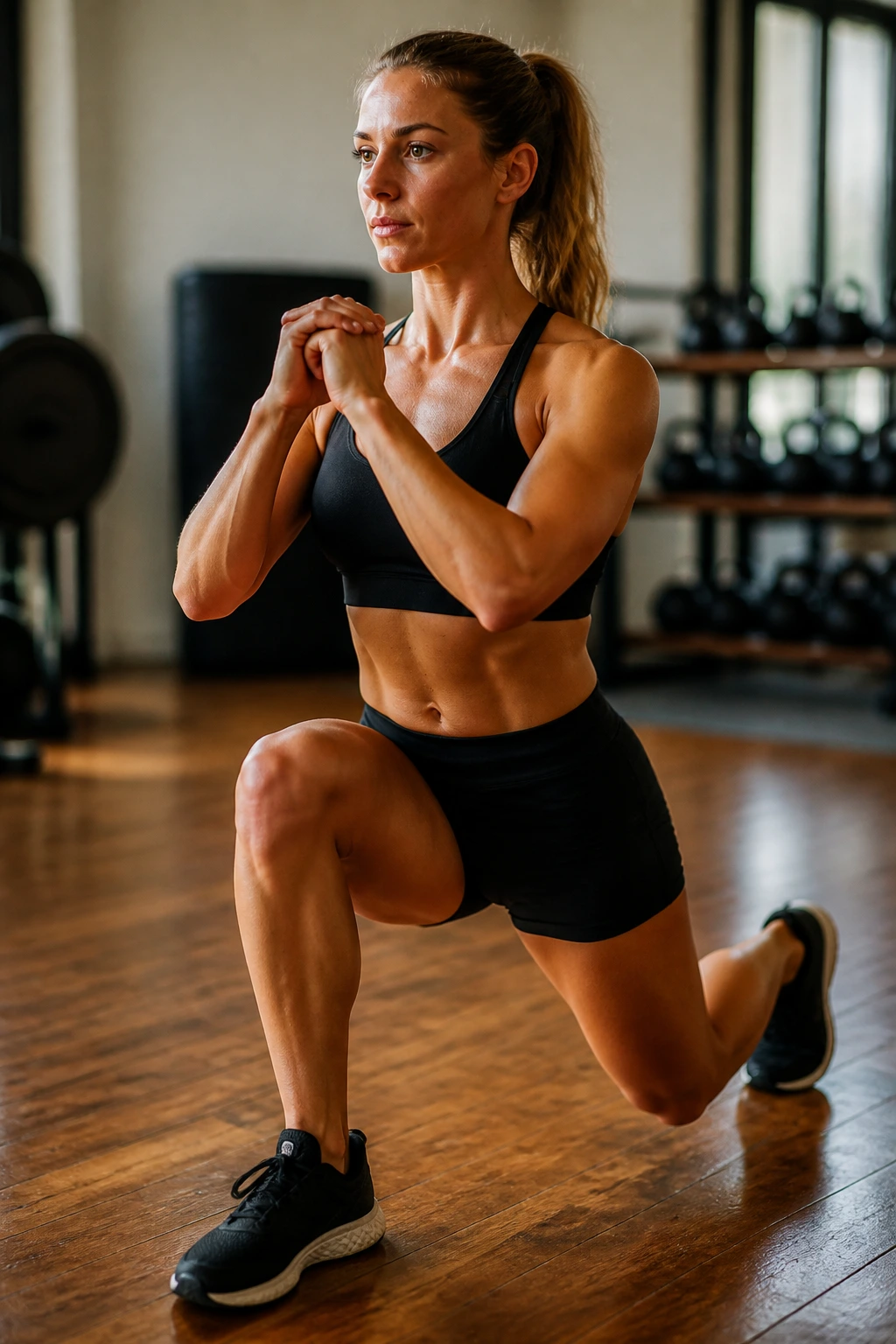
This is where everyone starts, yet it is rarely mastered. The forward lunge relies on momentum control, as your body weight is traveling forward before it needs to halt and reverse. That deceleration phase is where the magic happens for your glutes and quads.
Mastering the Mechanics
Start standing with your feet hip-width apart. Step forward with one leg, landing firmly on the heel and then the ball of your foot. Your front knee should track directly over your second toe, not collapsing inward or wobbling outward. Lower your back knee until it is an inch or two off the floor—do not slam it down. Push off the front heel to return to the starting position.
The Golden Rule: Keep your torso upright. If you lean forward, you turn this into a glute-dominant hinge; if you stay tall, you put the burden on the quads. Both are fine, but decide which muscle you want to target before you move. If you feel this in your lower back, stop. Your core is likely disengaging, causing your spine to arch. Tuck your pelvis slightly—imagine bringing your hip bones toward your lower ribs—to lock the core in.
2. The Reverse Lunge
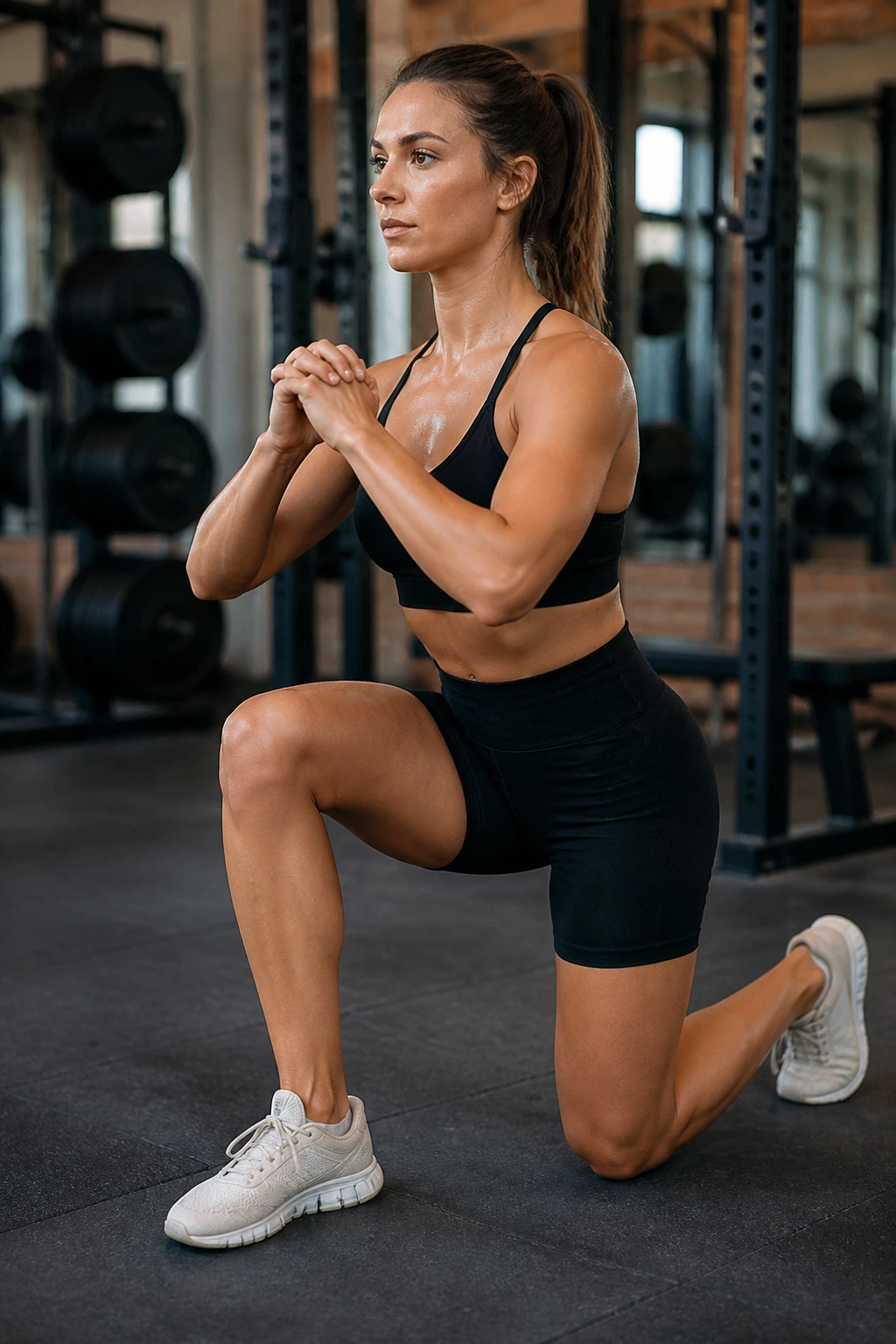
If the forward lunge is about deceleration, the reverse lunge is about stability and hip hinge mechanics. Many people find this version friendlier on the knees because the front shin remains vertical rather than shooting forward over the toes.
Why It Changes Everything
Stepping backward requires you to keep the weight firmly planted on the stationary front leg. This removes the “brake” element of the forward lunge and allows you to drive primarily through the glute of the front leg. It is often the preferred choice for people who feel a sharp twinge in their knees during forward movements.
- Stand tall, feet together.
- Take a large step backward with your left foot.
- Drop the back knee straight down, creating two 90-degree angles with your legs.
- Drive through the right heel to return to standing.
- Alternate legs to keep the movement fluid.
The beauty of the reverse lunge lies in its predictability. You are always moving away from the load, which simplifies the balance equation. If you are struggling with coordination, start here.
3. The Lateral Side Lunge
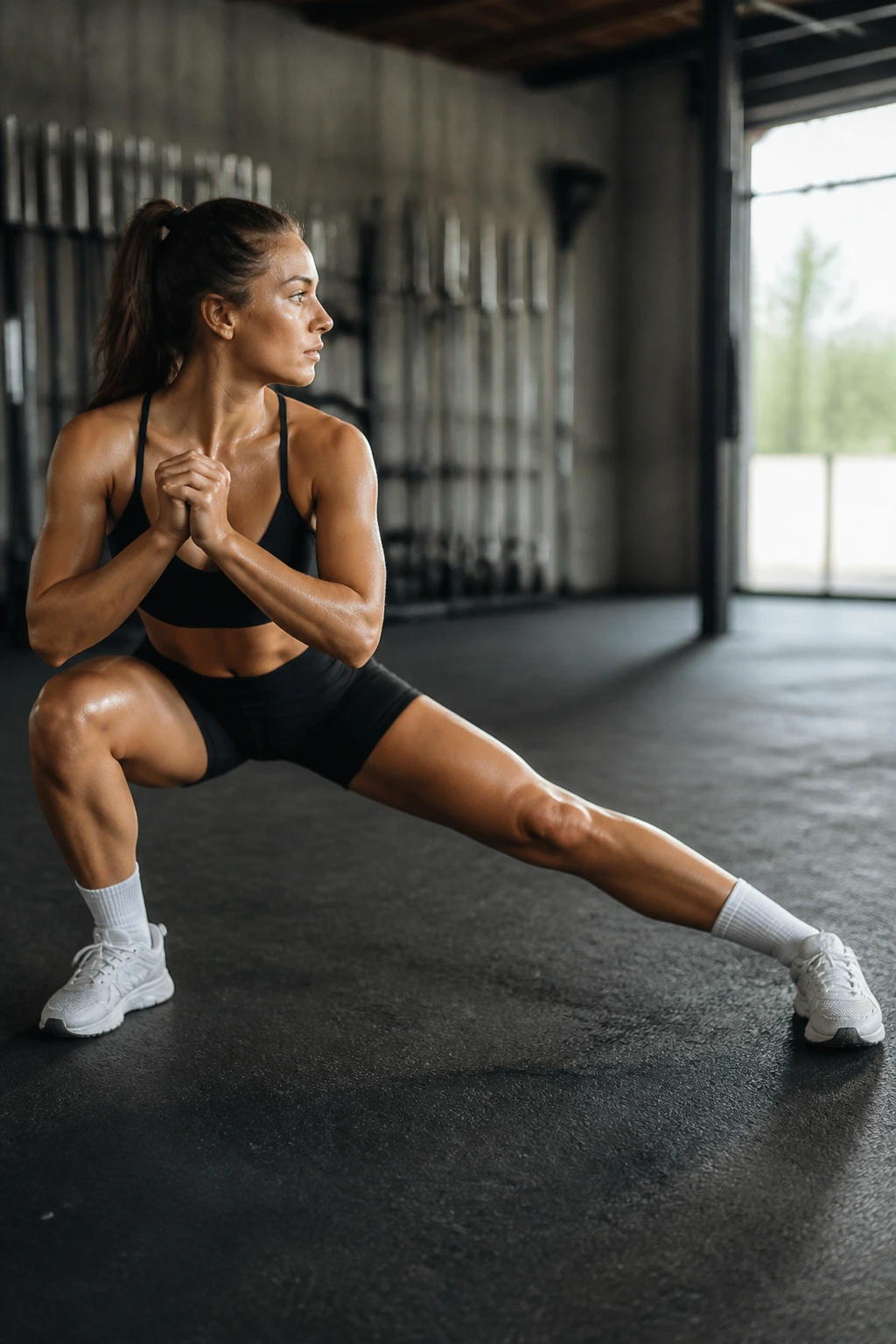
We spend most of our lives moving in the sagittal plane—forward and backward. This leaves our frontal plane, or side-to-side movement, woefully underdeveloped. The lateral lunge fixes this by forcing the adductors (inner thighs) and the glute medius to do the heavy lifting.
Hitting the Adductors
Stand with feet wider than shoulder-width apart. Shift your weight entirely to your right leg, bending the right knee and pushing your hips back as if sitting into a chair on your right side. Keep the left leg perfectly straight. You should feel a distinct stretch in the inner thigh of the extended left leg.
This is not just a leg exercise; it is a flexibility drill disguised as strength training. If you cannot keep your heels glued to the floor, you are likely too wide. Bring your feet in slightly. The goal is to get low enough that your thigh is parallel to the floor, but only if you can maintain a flat back. Do not round your shoulders. Chest up, gaze forward, and drive off the heel of the bent leg to return to the center.
4. The Curtsy Lunge
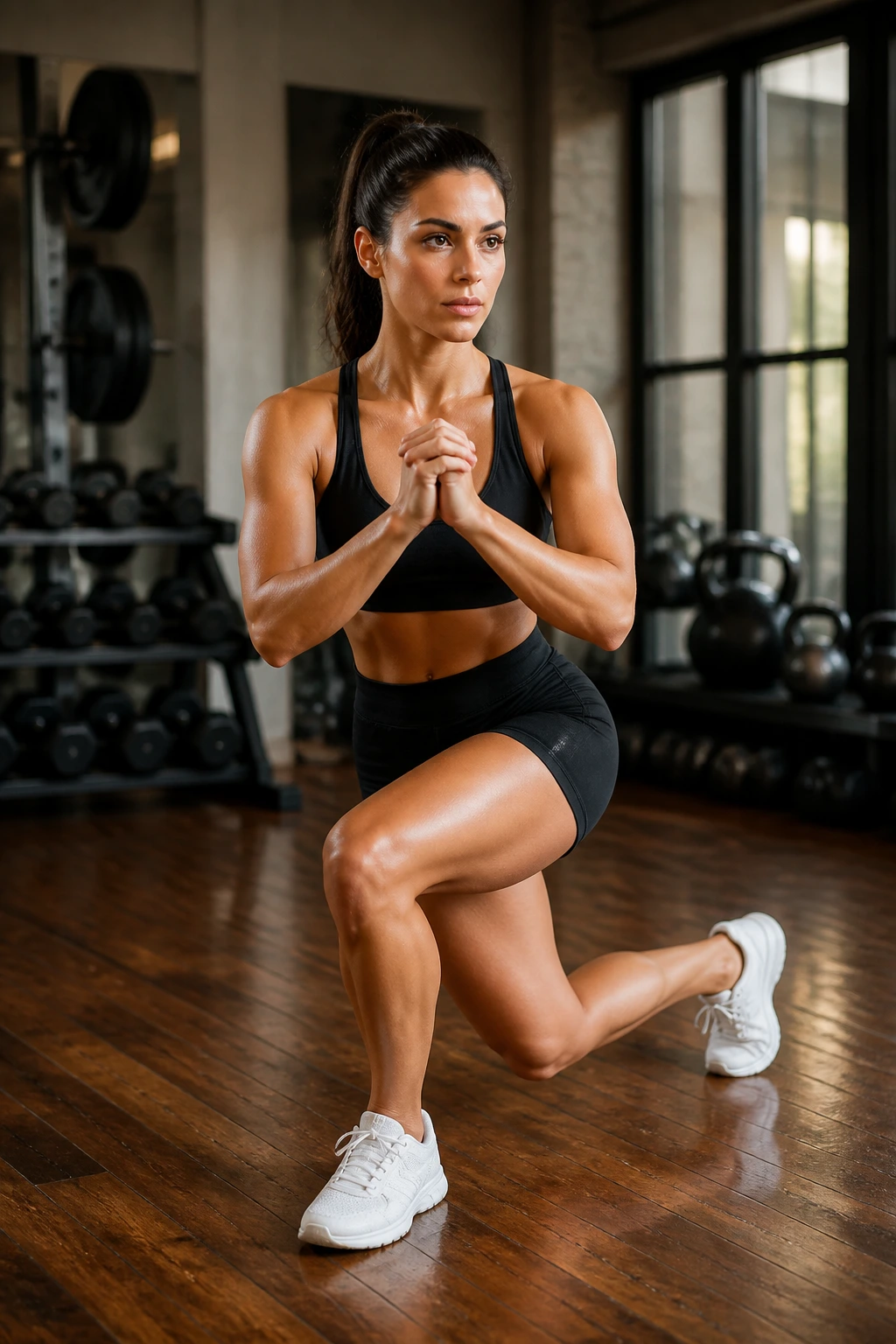
The curtsy lunge is an unconventional movement, but it is one of the most effective ways to isolate the glute medius, the muscle responsible for hip stability and that coveted “shelf” look on the side of the hip.
Mechanics for Maximum Glute Engagement
Start standing feet hip-width apart. Take a step backward and across your body with your right leg, placing the ball of your foot behind and to the left of your left heel. Bend both knees as if you were bowing, dropping your back knee down behind the front calf.
Think of this as a cross-body movement. Your torso should stay relatively square to the front, while your hips do the twisting work. If you feel pressure on the outside of your knee, your step is likely too narrow. Take a wider, deeper step back. This variation highlights imbalances quickly. You will almost certainly find that one side feels solid and controlled while the other feels like a toddler learning to walk. That is exactly why you need to do this.
5. The Walking Lunge
When you want to turn a simple leg movement into a conditioning workout, walking lunges are the answer. This is not about static balance; it is about rhythmic, continuous tension. You never give the muscles a moment to recover between reps.
The Rhythm of the Lunge
Instead of returning to a standing position, you step your back leg forward into the next lunge. This creates a lunging gait. It requires significant core engagement because you are constantly shifting your center of mass from one leg to the other.
- Step forward, lower, and pause for a heartbeat.
- Drive off the front foot.
- Immediately swing the back leg forward into the next step.
- Keep your torso upright throughout the entire transition.
The temptation here is to rush. Fight it. If you move too fast, you lose control and simply fall into the next rep. Treat every single step as an individual, high-quality lunge. If you are wobbling, slow down.
6. The Jumping Lunge
Plyometrics are the bridge between raw strength and athletic power. Jumping lunges, or split-squat jumps, will spike your heart rate and force your muscle fibers to fire rapidly. This is not for a warm-up; this is a finisher.
Landing Safely
Start in a deep lunge position. Explode upward, driving through the front heel. While you are in the air, switch your leg positions—bring the front leg back and the back leg forward. Land softly, dropping immediately into the next lunge.
The sound of your feet hitting the floor should be quiet. If you are stomping, you are not absorbing the shock correctly with your muscles and are likely putting unnecessary stress on your joints. Imagine landing on a sheet of thin ice. The movement needs to be fluid, silent, and controlled. If you find your form breaking down, stop. High-intensity movements require high-quality form to be safe.
7. The Clock Lunge
This variation turns a simple exercise into a spatial awareness drill. You imagine you are standing in the center of a clock face. Your stationary leg is the center, and your working leg travels to different numbers.
Navigating the Angles
- 12:00: Forward lunge.
- 3:00: Side lunge.
- 6:00: Reverse lunge.
- 9:00: Side lunge (opposite side).
You do not need to do every number on the clock, but varying the angles forces the hips to stabilize in planes they are rarely exposed to. It challenges the hip stabilizers to engage from different positions, making the surrounding musculature much more resilient. Move slowly. The transitions between the angles are where the true benefit lies. If you lose your balance, just reset and keep the stationary foot glued to the ground.
8. The Deficit Reverse Lunge
If you want to increase the range of motion without adding weight, use a deficit. By placing your front foot on a slightly elevated surface—a thick book, a sturdy step, or a weight plate—you increase the distance your back knee travels before it reaches the floor.
Increasing the Stretch
The deficit forces the glute of the front leg to work through a much larger range of motion. It also requires a deeper hip flexor stretch on the back leg. Because the front foot is higher, your back knee has to travel further down to get close to the ground, which means your front glute has to engage much harder to stabilize and power you back up.
Do not overdo the height. Two to four inches is plenty. Any higher, and you run the risk of losing balance or overextending the hip joint. Ensure the surface you are standing on is absolutely stable; you do not want to be doing this on a stack of magazines that slides out from under you mid-rep.
9. The Static Split Squat
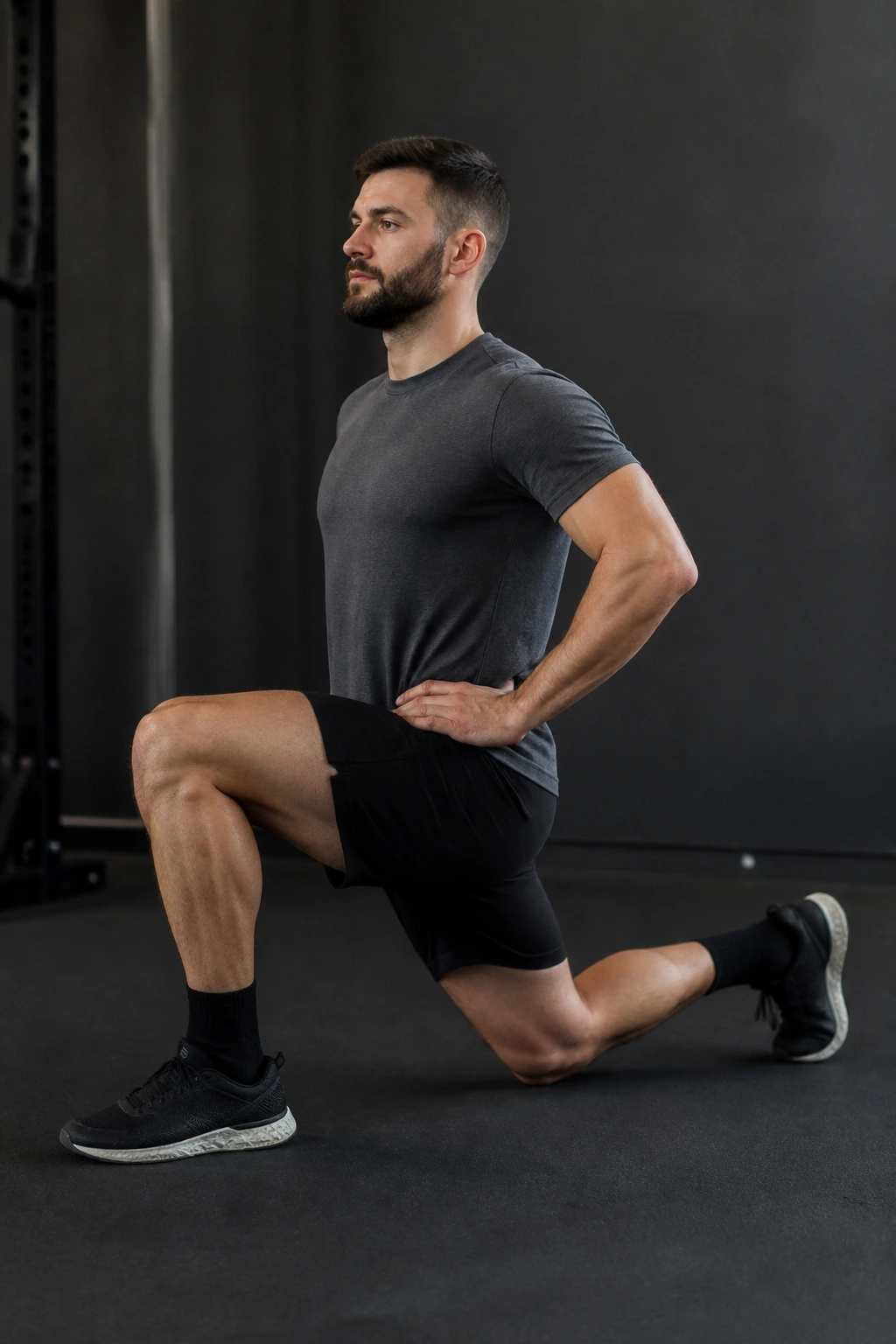
Often called the “stationary lunge,” the split squat is the fundamental building block of unilateral training. You are not stepping; you are staying. This removes the balance component of the transition, allowing you to overload the legs with sheer volume.
Why It Hurts (In a Good Way)
Because you stay in the split position, your muscles remain under constant tension for the entire set. There is no reset point. This creates a massive accumulation of lactic acid, which is exactly what you want for muscle endurance and hypertrophy.
Set your feet in a comfortable split stance—one foot forward, one foot back. Drop your back knee straight down. Rise back up. Repeat for all reps on one side before switching. This allows you to really “feel” the burn in the working leg without needing to worry about the coordination of stepping back and forth. It is one of the most honest exercises in existence; you cannot hide your weaknesses.
10. The Bulgarian Split Squat
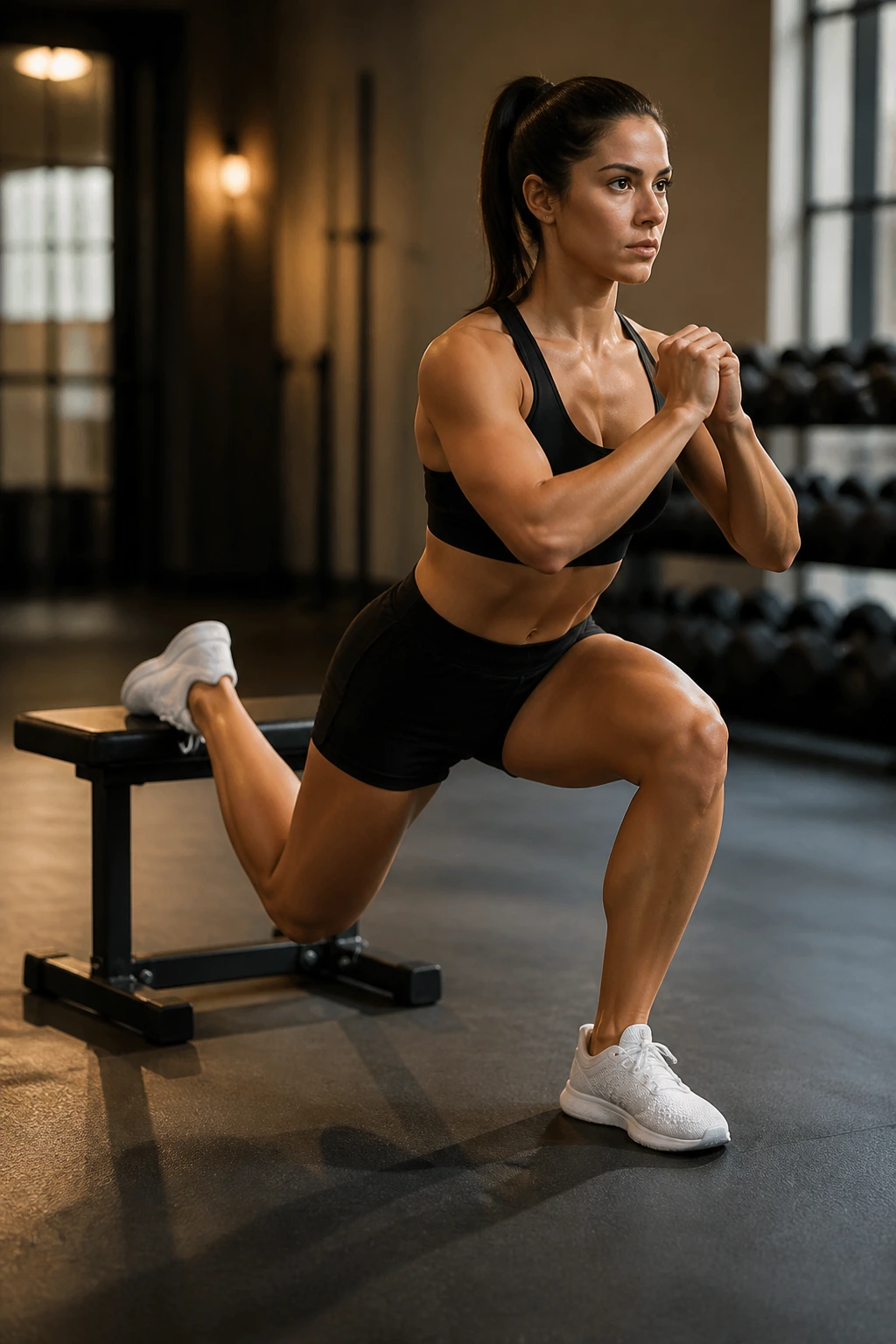
Technically a variation of the split squat, the Bulgarian version elevates the back foot. This shifts the majority of the load onto the front leg, essentially turning it into a single-leg squat.
Setting Up the Elevation
Place the instep of your back foot on a chair, couch, or sturdy coffee table. Step your front foot out far enough so that when you descend, your front knee does not collapse over your toes. Drop the back knee straight down toward the floor.
This is arguably the most effective bodyweight movement for glute and quad development. It is intense, and the balance required is significant. If you find yourself tipping over, hold onto a wall or a sturdy piece of furniture for the first few sessions. Once you get the mechanics down, you can move to free-standing reps. You will feel this in your glutes within three repetitions.
11. The Cossack Squat
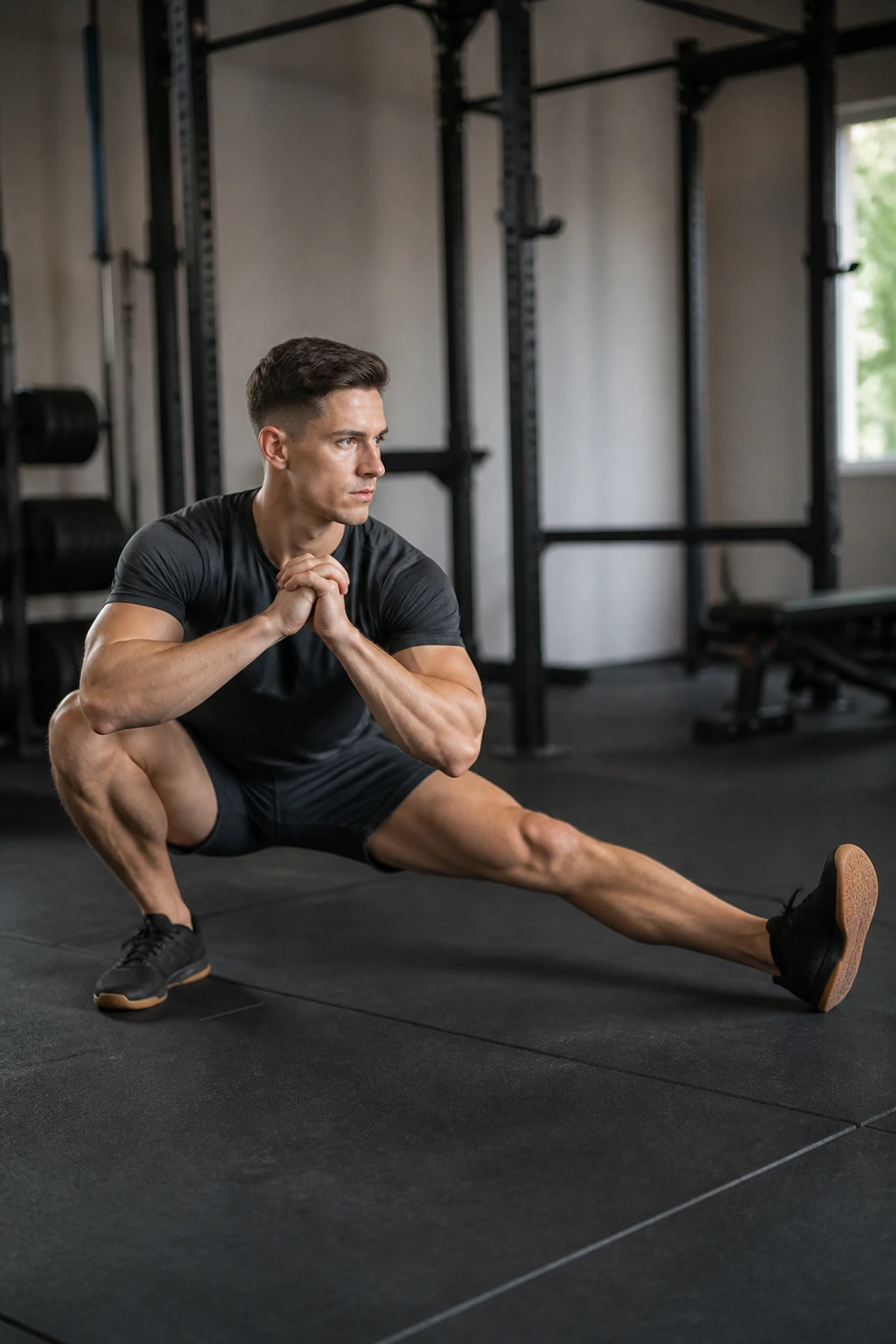
The Cossack squat is a deep, lateral movement that takes the side lunge to its absolute limit. It is a favorite among martial artists and dancers because it builds incredible hip mobility and deep strength in the end ranges of motion.
Going Deep
Stand with a wide stance, wider than a side lunge. Squat down onto one leg while keeping the other leg completely straight with the heel planted on the ground and the toes pointing to the sky. Sink as low as you can.
If you cannot reach the floor, that is fine. Go as low as your hips allow while maintaining a neutral spine. The goal is not just to squat, but to sit into the hip. This is effectively a deep, single-leg squat variation that opens up the hips and strengthens the hamstrings and adductors simultaneously. It requires a level of ankle mobility that you might find you lack initially; don’t force it. The depth will come with time.
12. The Prisoner Lunge
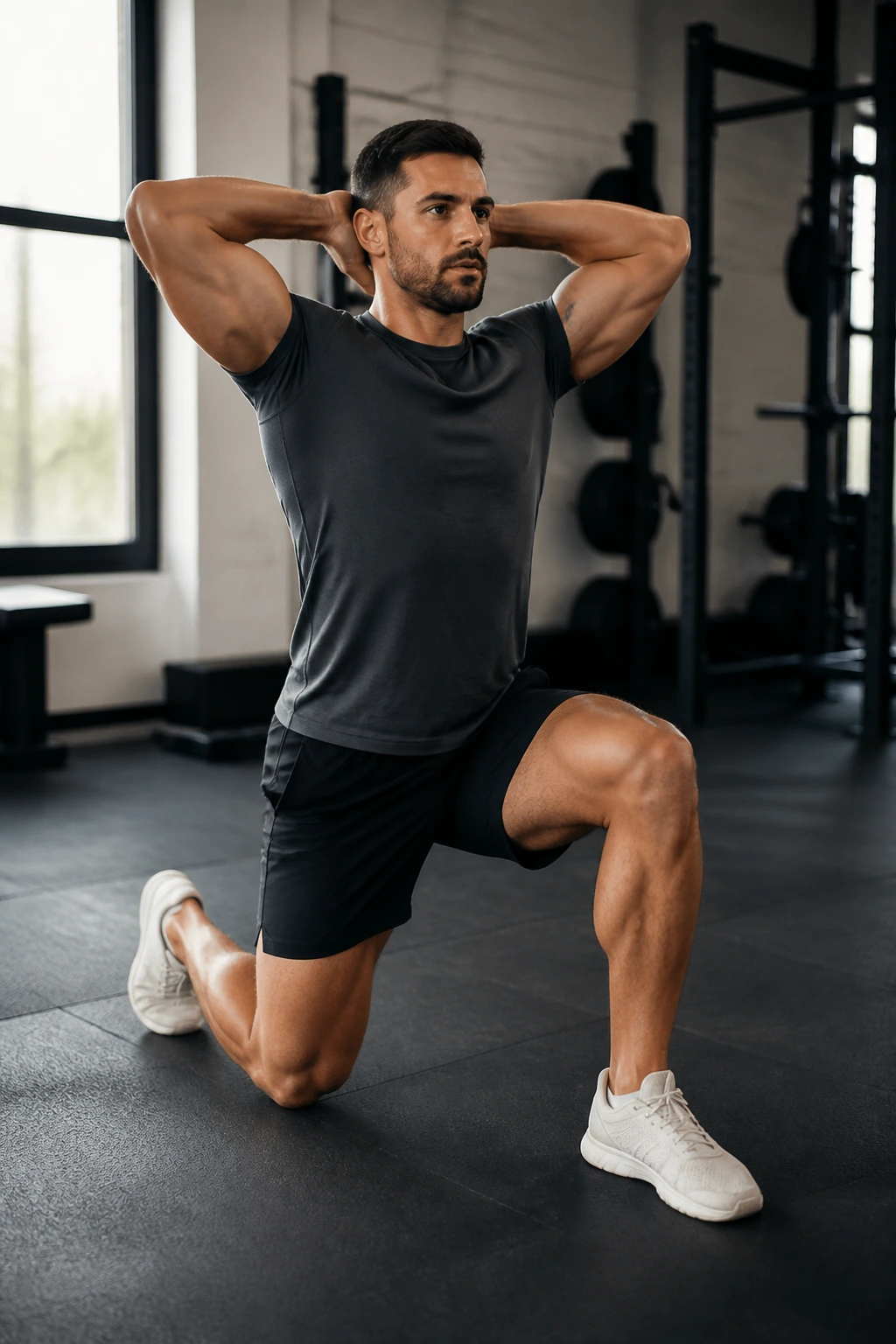
Place your hands behind your head, elbows flared out, just like a prisoner of war. This subtle change does two things: it removes the ability to use your arms for balance, and it forces your thoracic spine (upper back) to stay extended.
The Posture Hack
It is surprisingly easy to slouch during lunges. The prisoner variation prevents this. Because your hands are locked behind your head, your chest naturally stays open and your shoulders are retracted. If you drop your chest, your head follows, and you lose the upright posture.
This is a fantastic way to train better posture. If you find your elbows trying to curl forward, pull them back hard. This engages your upper back muscles, turning a lower-body exercise into a full-body stability challenge. It also makes the lunge much harder because you cannot use momentum from your arms to help you drive upward.
13. The Overhead Reach Lunge
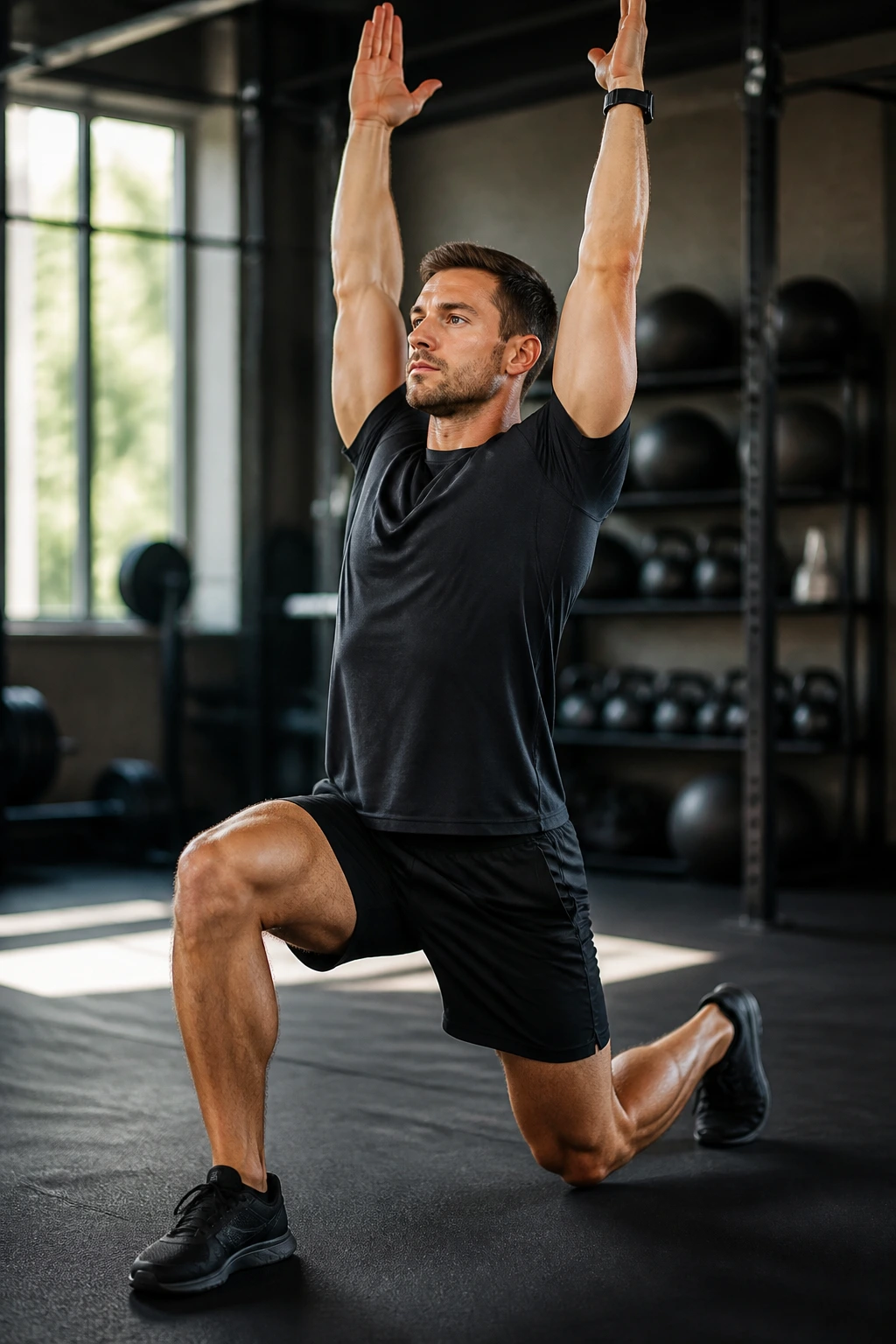
This variation is about thoracic mobility and core stability. As you lunge, you reach your arms directly overhead, keeping your biceps by your ears. This lengthens your center of gravity, making the exercise significantly more demanding on your core and back.
Balancing the Load
The reach forces you to keep your torso perfectly upright. If you lean forward even a little, you will lose the vertical line of your arms. It also provides a great stretch for the hip flexors, as the overhead reach pulls the entire anterior (front) chain of your body.
Keep your core braced tightly. The overhead reach can encourage the lower back to arch—the “rib flare” phenomenon. Fight this by keeping your ribs tucked down. Reach tall, but do not sacrifice your spine to get your hands higher. If you feel tightness in the shoulders, you might find this limits your lunge depth, which is perfectly acceptable.
14. The Lunge with a Twist
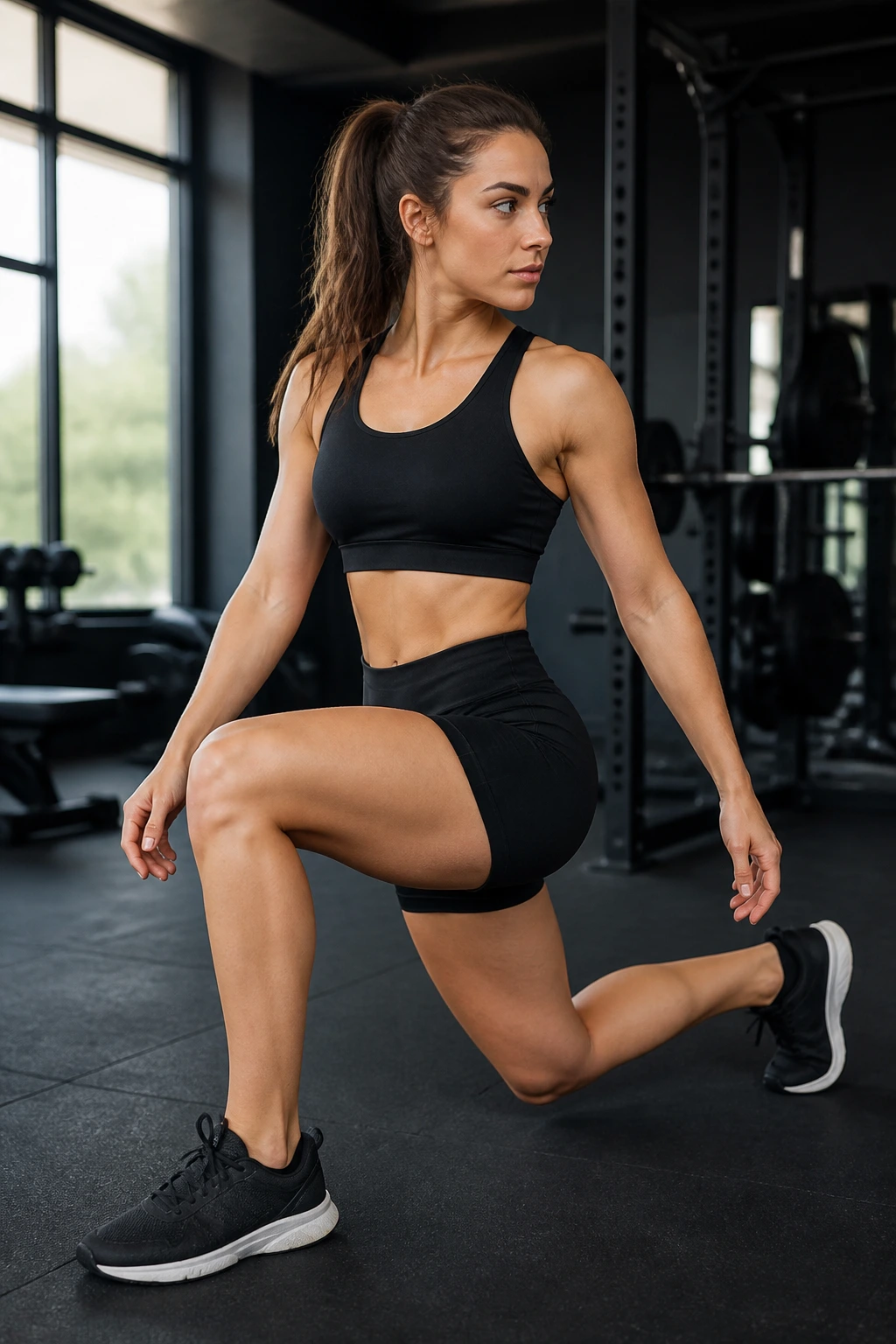
Adding a rotation to the lunge challenges your core to stabilize against rotational force, effectively training your obliques. As you lunge forward, twist your torso toward the side of the front leg.
Engaging the Core
This is a functional movement pattern. Think about everyday life—we rarely move in perfectly straight lines. We rotate, reach, and pivot. The twisting lunge builds that rotational strength.
Be careful not to twist too hard. You are not trying to wring out your spine like a towel. You are simply rotating your shoulders so that they align over the front thigh. Keep your hips facing forward as much as possible; the rotation should come from the mid-back (the thoracic spine), not the lumbar spine (lower back). If your knees are caving in during the twist, stop twisting and focus on the leg stability first.
15. The Slider Lunge
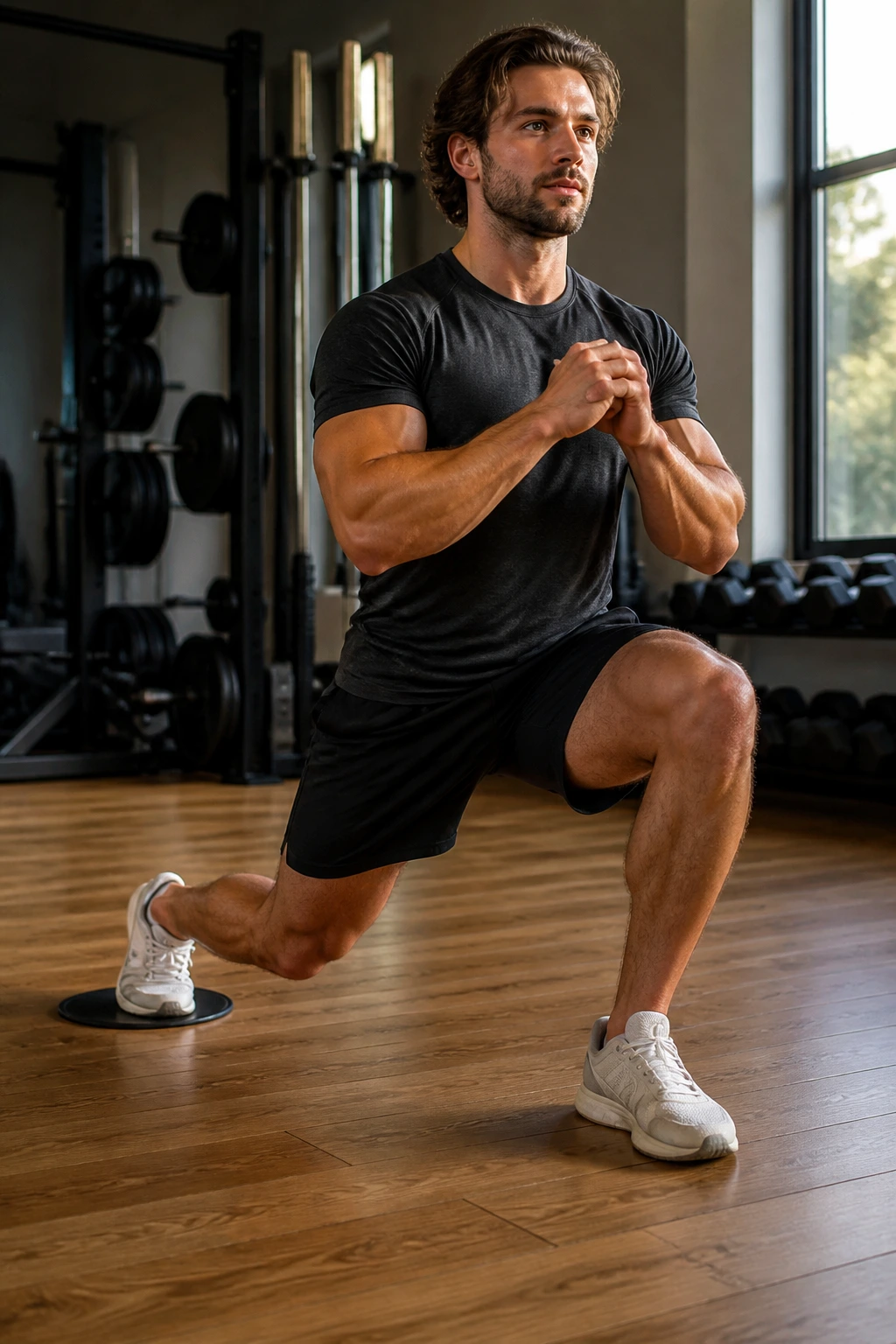
If you have hardwood floors or tile, grab a pair of socks or a couple of paper plates. This variation removes the lifting of the foot and replaces it with a sliding motion, which places the muscles under constant tension throughout the entire range of motion.
Smooth Tension
Place one foot on the slider. Keep the other foot planted firmly. As you lunge, slide the foot back (for a reverse lunge) or to the side (for a side lunge). The lack of friction forces you to control the speed of the movement on the way down and prevents you from “cheating” the upward phase.
You will find that the eccentric (lowering) portion of this movement feels much harder. That is because there is no step-and-lift; you are sliding and controlling. It builds incredible strength in the glutes because you have to actively pull yourself back to the starting position using only your leg muscles.
16. The Knee-Drive Lunge
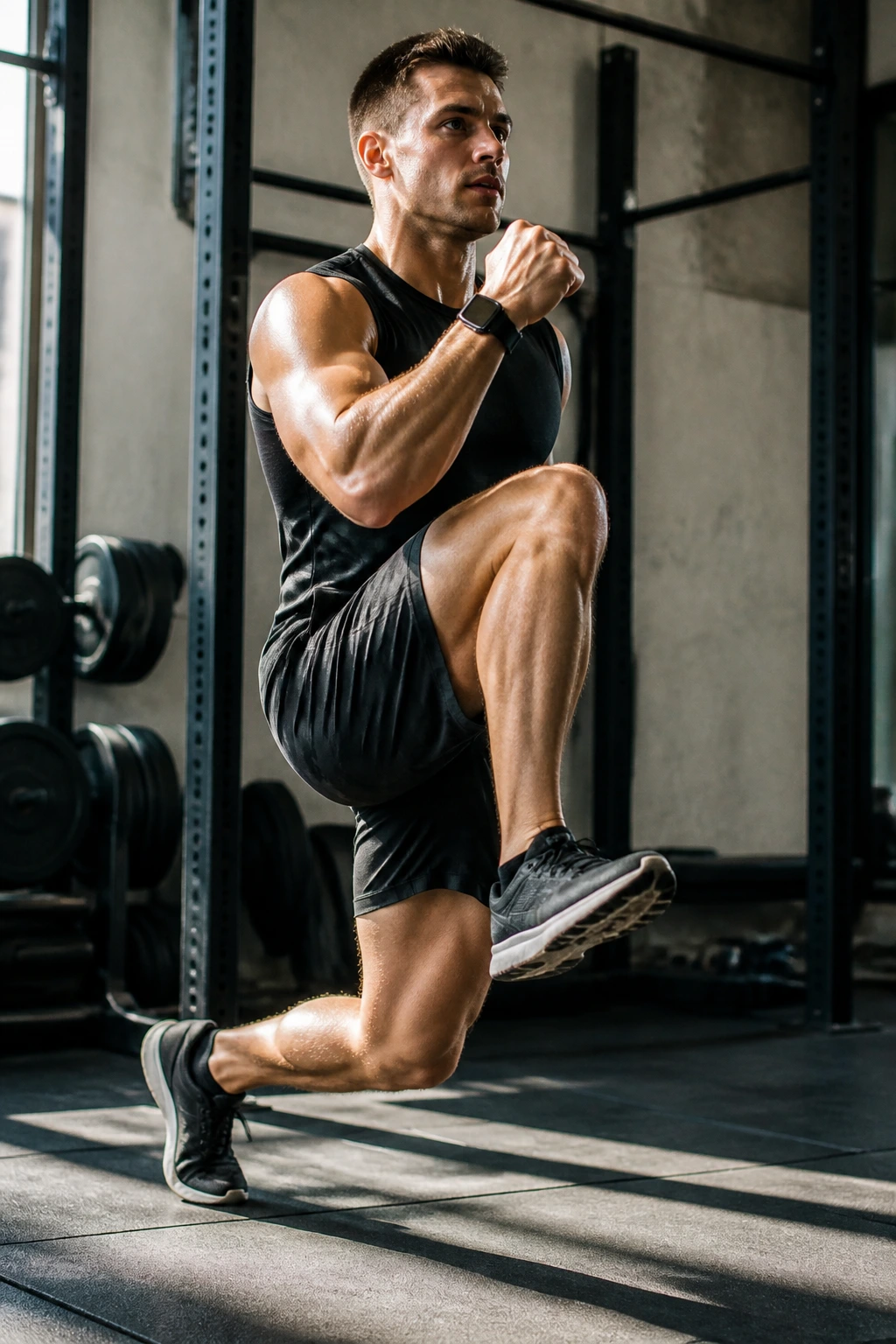
This is a power variation designed to train explosive upward movement. Instead of just returning to a standing position, you drive the back knee up toward your chest at the top of the movement, rising onto the ball of the stationary foot.
Adding Explosivity
The knee drive teaches your nervous system to fire quickly. It is a rapid transition from a deep, closed position to an extended, explosive one. You must balance on one leg for a split second at the top, which really challenges your ankle stability.
Focus on the transition. The movement should be one fluid motion: step back, drop, and drive. Do not pause at the bottom. The knee drive should be crisp and sharp. If you find yourself hopping around to regain balance, you are likely rushing the drive. Slow down the lowering phase so you can be explosive on the way up.
17. The Around-the-World Lunge
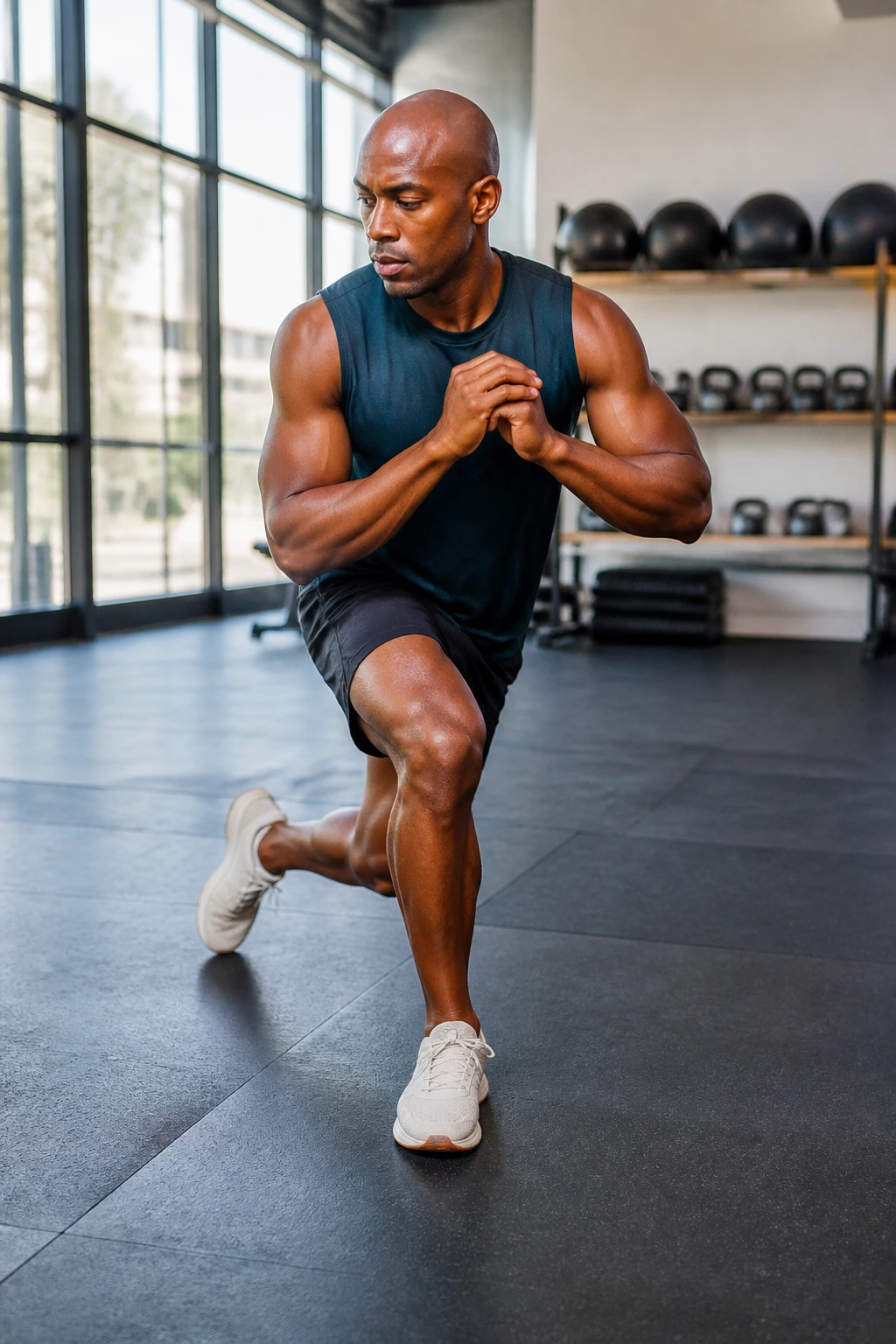
This is essentially the clock lunge taken to a more advanced level. You are lunging in a continuous arc—forward, diagonal, side, and reverse—without pausing in the middle. It is a test of endurance and coordination.
Maintaining Fluidity
You will need a decent amount of space for this. You are essentially painting a half-circle on the floor with your foot. The stationary leg is the pivot point. Your moving leg performs the entire arc, touching the floor at every point along the way.
This burns. Because the stationary leg never gets a break and you are constantly changing angles, the stabilizer muscles of the hip and ankle will be screaming within a minute. Do not worry about speed. Focus on the geometry of the movement. Your goal is to keep your center of mass perfectly balanced over the pivot leg, even as your other leg moves in a wide circle around you.
18. The Isometric Lunge Hold
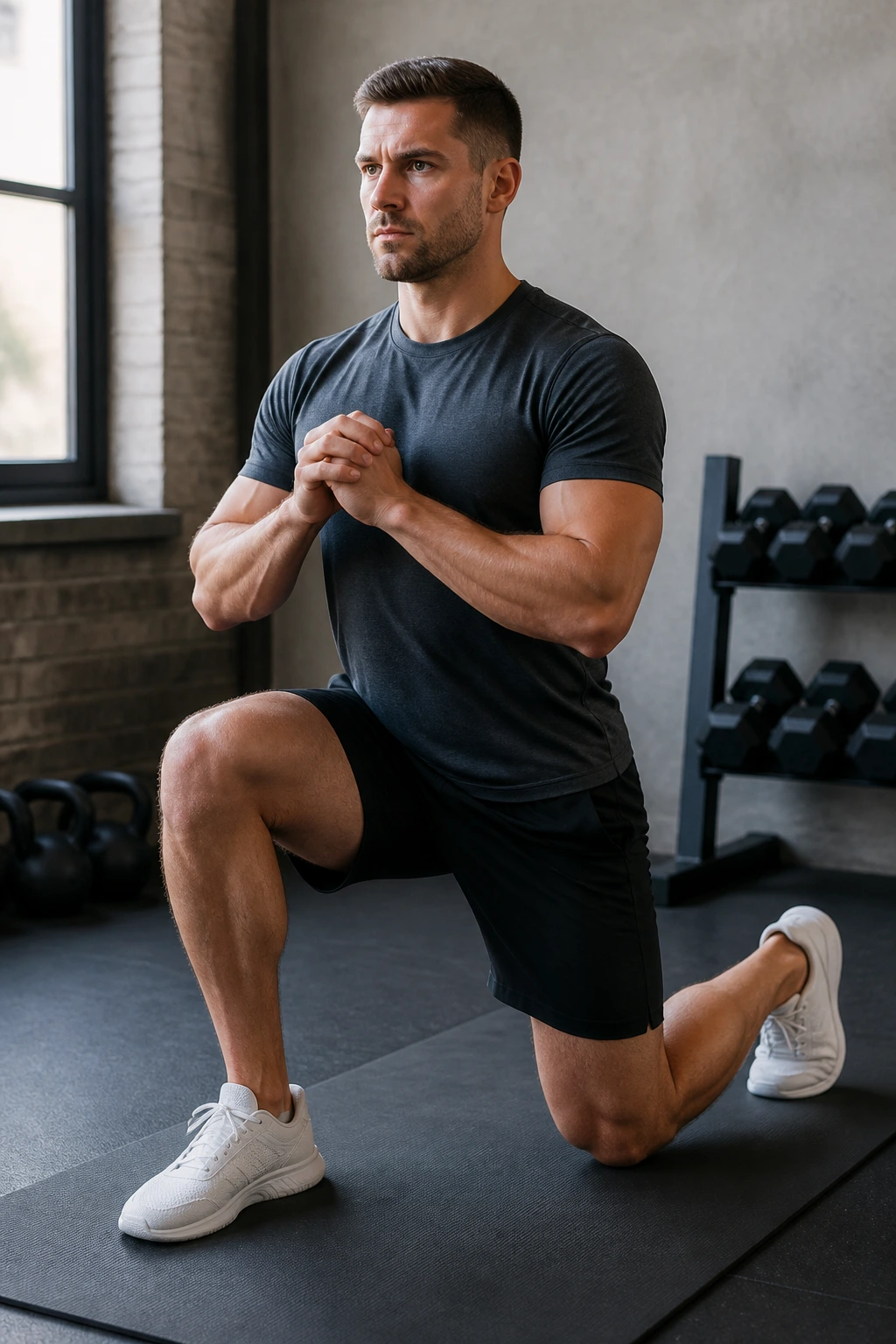
Sometimes the best way to get stronger is to stop moving entirely. The isometric hold—holding the bottom position of a lunge—is a brutal way to finish a leg workout. It forces the muscles to maintain peak tension without the benefit of a rest period at the top or bottom of the rep.
Holding the Burn
Step into a deep lunge. Lower yourself until your back knee is just above the floor. Stay there. Do not pulse. Do not shift. Just hold. Your muscles will start to shake; that is simply your nervous system trying to recruit more muscle fibers to handle the load.
Time is the variable here. Try to hold for 30 seconds. Then 45. Then a full minute. If you can hold a perfect lunge position for a minute, your muscular endurance is higher than most. Keep your chest up, your core braced, and your breath controlled. When your legs start to tremble, remind yourself that this is where the change happens. The shaking is not a sign to quit; it is a sign that you are pushing into new territory.
Final Thoughts
The lunge is not just one exercise; it is an entire category of movement. By manipulating your foot position, your torso angle, and the plane of motion, you can create a lifetime of variety without ever touching a piece of gym equipment.
The most important thing is to focus on quality over quantity. Ten perfect lunges are worth infinitely more than thirty sloppy ones that leave your knees aching. Start with the basics, master the mechanics, and only then begin layering in the more complex variations. Your legs will adapt, your balance will sharpen, and you will eventually wonder why you ever thought you needed a gym to get a serious workout.
