



The best weight training workouts for women do not need to be complicated. They need to be clear, repeatable, and hard enough to make the last few reps matter.
A lot of women have been sold a strange idea about lifting: that it has to be tiny weights, endless reps, and a machine full of pink padding. That’s nonsense. Muscles get stronger when you ask them to do real work, and bones respond to load too. That matters whether your goal is a firmer-looking lower body, better posture, fewer aches after long days at a desk, or simply feeling steadier when you carry groceries up the stairs.
Heavy enough to matter. Clean enough to repeat.
That is the sweet spot. Pick a load that leaves one or two good reps in reserve on most sets, keep your form tidy, and let the reps add up over time. Major strength guidelines have treated muscle-strengthening work as a weekly staple for years, not a bonus round, and that tracks with what you see in real gyms: the people who stay consistent are the ones with workouts they can actually finish.
So here’s the useful part. Start with the session that matches your real goal, not the one that looks coolest on social media. Strength, shape, confidence, fat loss, better balance, stronger hips, a more solid upper back — the right workout is usually the one you can do again next week without dreading it.
1. Dumbbell Full-Body Starter for Women
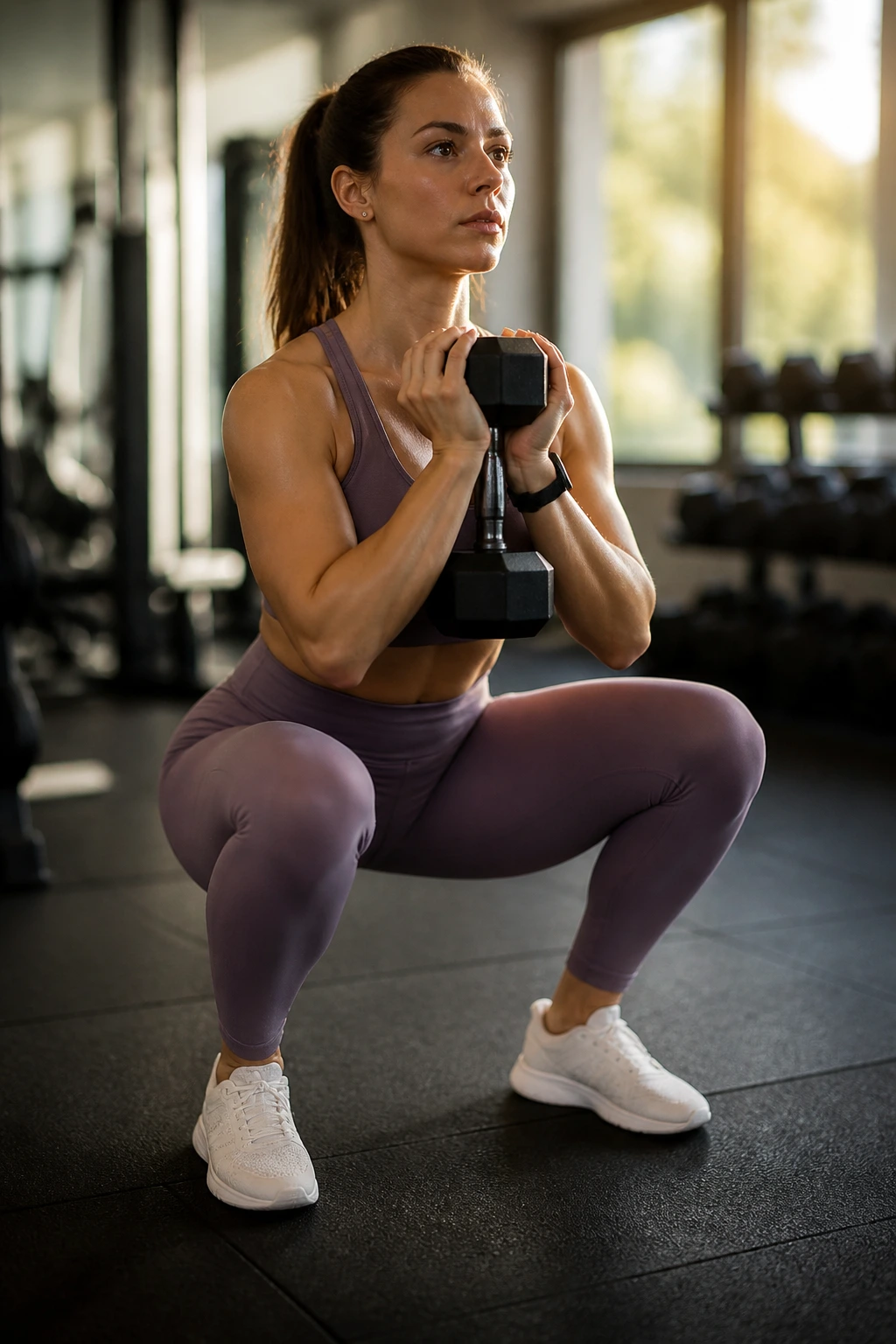
Start here if the gym still feels crowded and a little too loud. A clean dumbbell workout takes the pressure off, because you do not need a complicated setup to get a real training effect.
Why It Works
This session hits the big patterns: squat, push, pull, hinge, brace. That covers more ground than a random pile of exercises, and it teaches your body to move as one unit. Good beginners’ work should feel simple on paper and honest in your muscles.
- Goblet squat — 3 sets of 8 reps
- Dumbbell floor press — 3 sets of 8 to 10 reps
- One-arm dumbbell row — 3 sets of 10 reps per side
- Dumbbell Romanian deadlift — 3 sets of 8 reps
- Dead bug — 2 sets of 8 reps per side
Rest 60 to 90 seconds between sets. If the last two reps look messy, the weight is too heavy. If you finish every set and feel like you could chat through it, go up next time.
One useful rule: choose a weight that makes the final rep slow without turning your form into a shrug. That little difference matters more than people think.
2. Glute Bridge and Split Squat Day
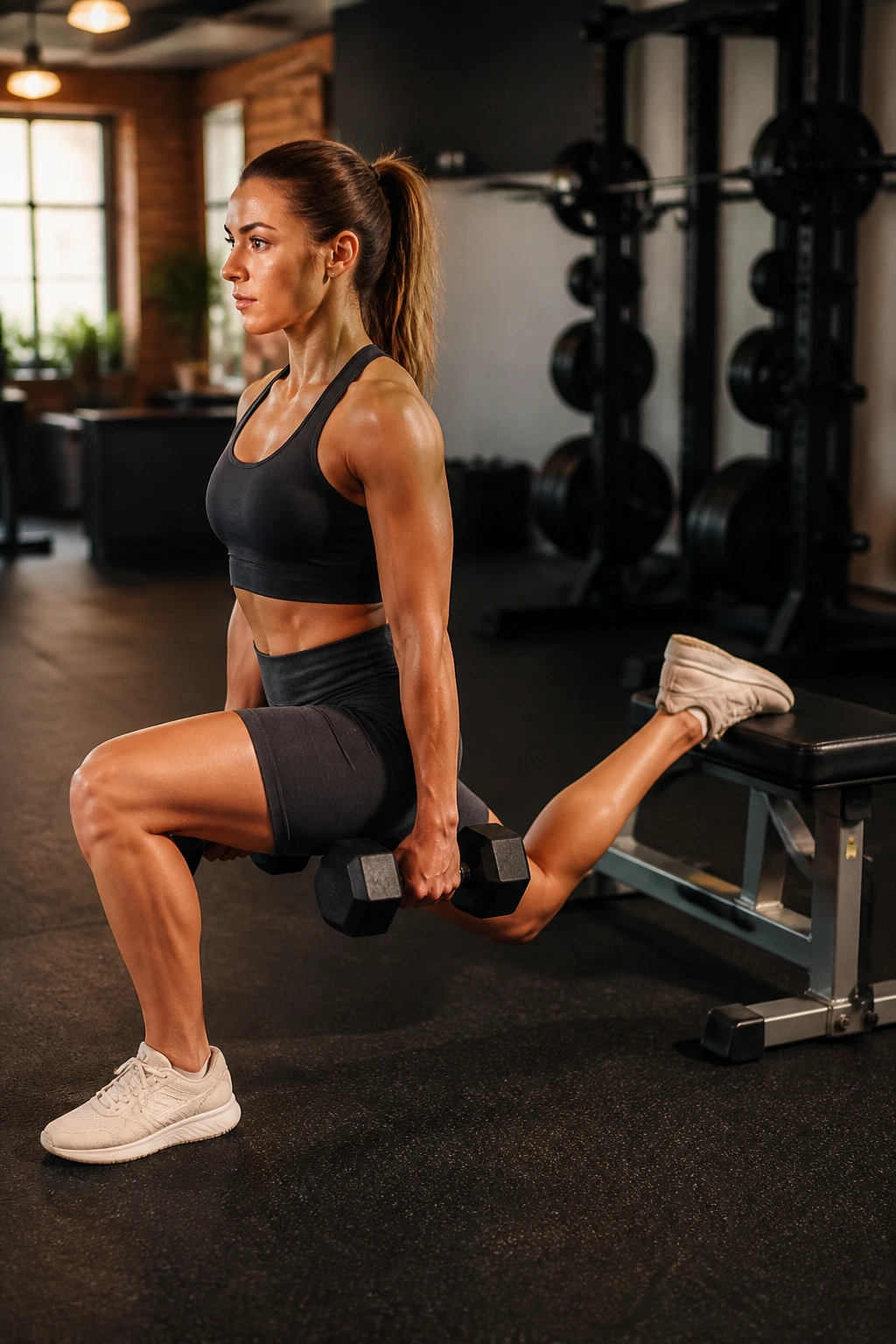
Your glutes do not need twenty exercises. They need a few good ones, done with enough load and enough control that your legs can’t coast through the work.
This is the kind of lower-body day I like for women who want stronger hips, a rounder back-of-the-leg look, and better single-leg balance. The split squat earns its keep because it shows you where one side is weaker. The glute bridge keeps the focus on hip extension instead of letting the low back steal the show.
Start with 4 sets of 10 hip bridges, squeezing hard at the top for one full second. Move into Bulgarian split squats for 3 sets of 8 per leg. Add Romanian deadlifts for 3 sets of 8, then finish with banded lateral walks for 2 sets of 15 steps each way. The burn shows up fast, but the real payoff is in how much cleaner your hips feel when you walk out of the gym.
This workout is a good reminder that glute training is not just about size. It’s about force. And force shows up everywhere.
3. Upper-Back Posture Reset
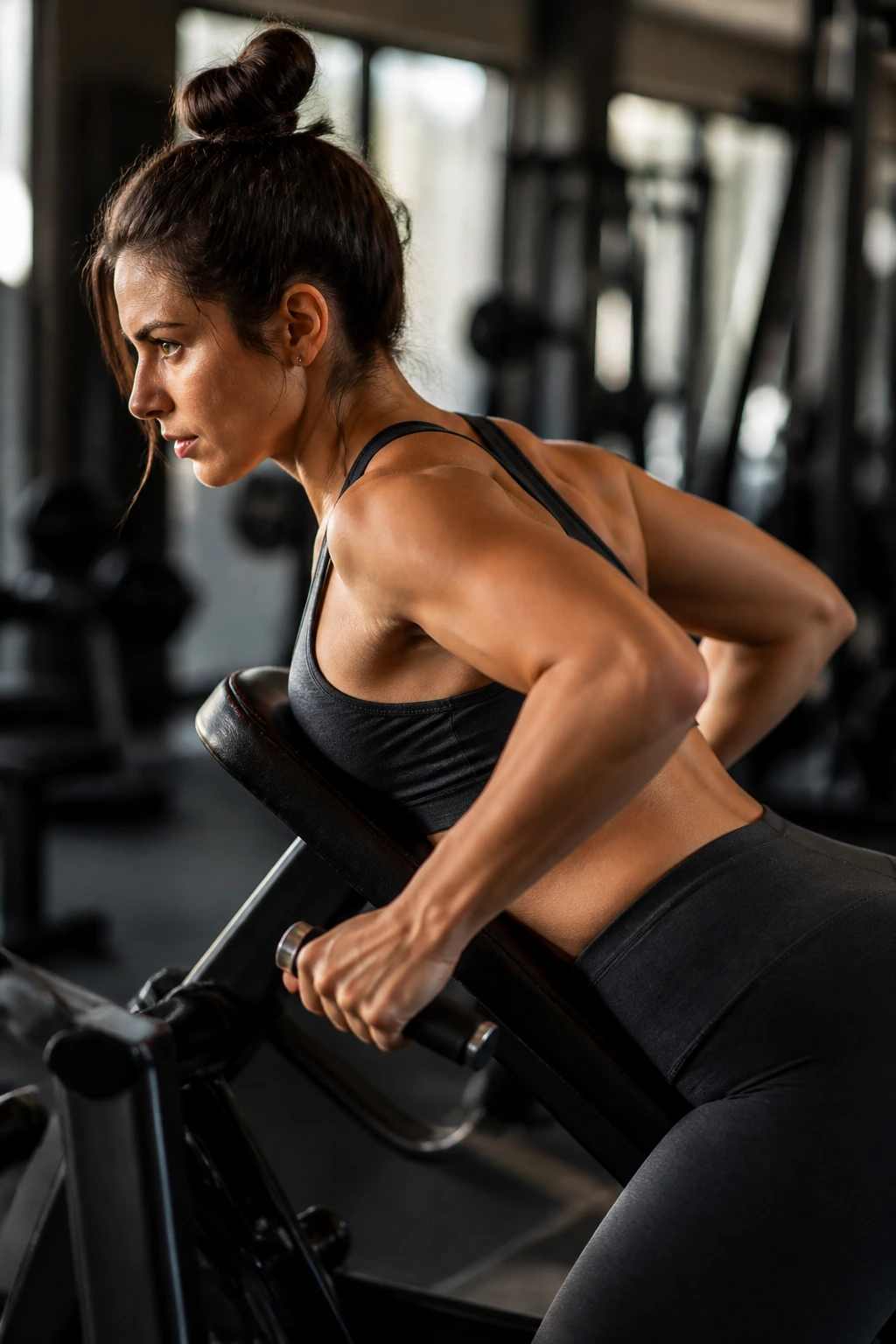
Can lifting help your shoulders sit better? Yes — if you train your upper back more than your mirror muscles.
This is the session I reach for when someone says their neck feels tight, their shoulders round forward, or every T-shirt seems to sit weird across the back. That usually means the rows, rear delts, and lats need some attention. Not endless shrugging. Real pulling work.
How to Run It
- Chest-supported row — 4 sets of 10 reps
- Lat pulldown — 3 sets of 10 to 12 reps
- Face pull — 3 sets of 15 reps
- Reverse fly — 2 sets of 12 reps
- Suitcase carry — 3 rounds of 30 to 40 steps per side
Keep the pull on the face pull high and outside, not low and sloppy. On rows, pause for one second when the handle touches your ribs. That tiny pause makes the movement a lot less lazy.
If your day is mostly sitting, this one earns a permanent slot.
4. Kettlebell Circuit for Busy Days
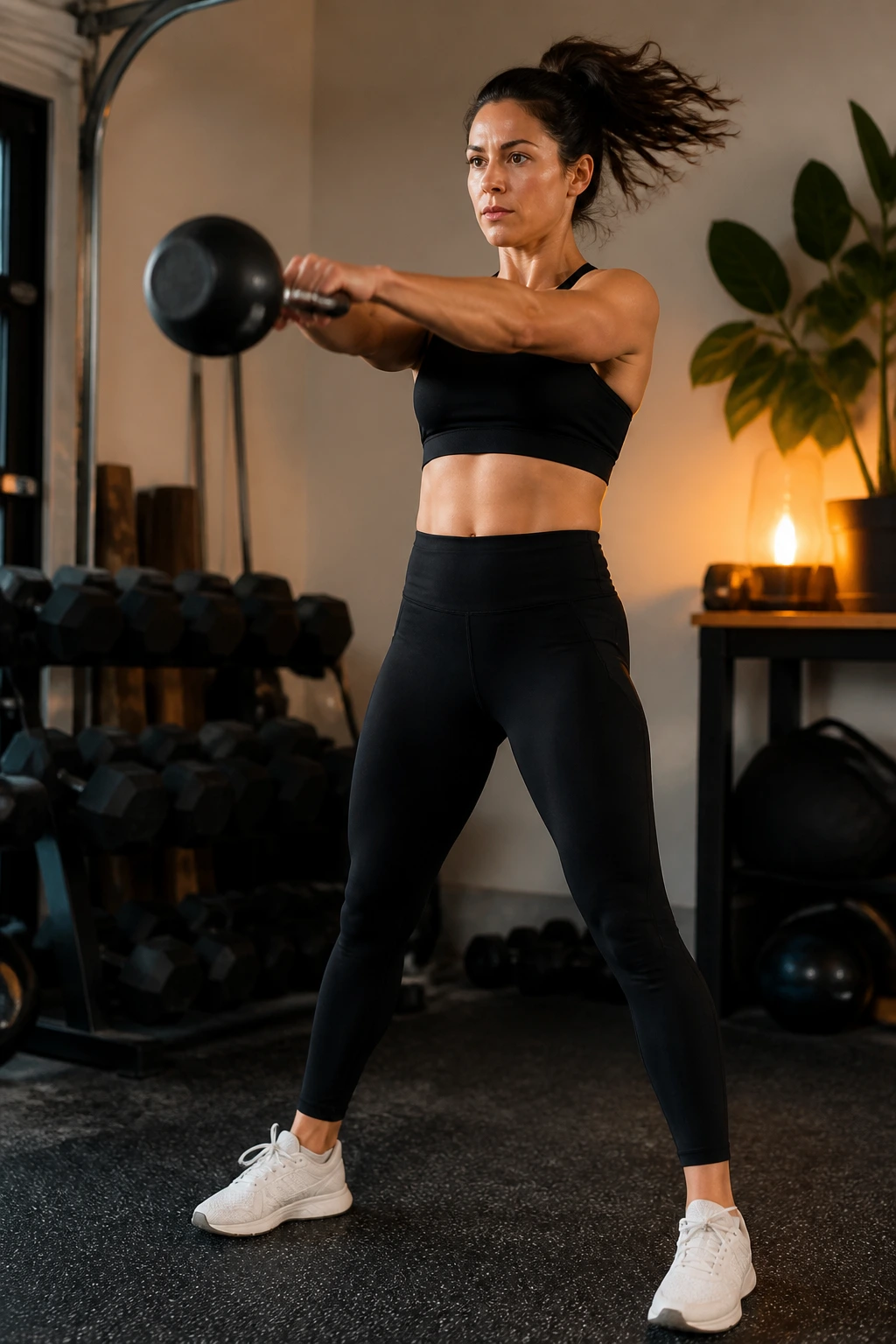
A 25-minute window can still hold a real workout. You just need a plan that moves.
Picture a crowded evening gym, or your home space when the day has already chewed up your energy. A kettlebell circuit solves that problem because you get strength, grip work, and a little conditioning without setting up half the room. It’s compact. That’s the appeal.
Try 4 rounds of this: kettlebell deadlift for 10 reps, kettlebell swing for 15 reps, goblet squat for 10 reps, push press for 6 reps per arm, and a front plank for 30 seconds. Rest 60 seconds between rounds. If your swing isn’t crisp, skip it and repeat deadlifts instead — a bad swing is not a badge of honor.
The best part is the rhythm. You finish breathing harder, but you also finish feeling like you did actual work instead of chasing sweat for its own sake.
5. Barbell Strength Session
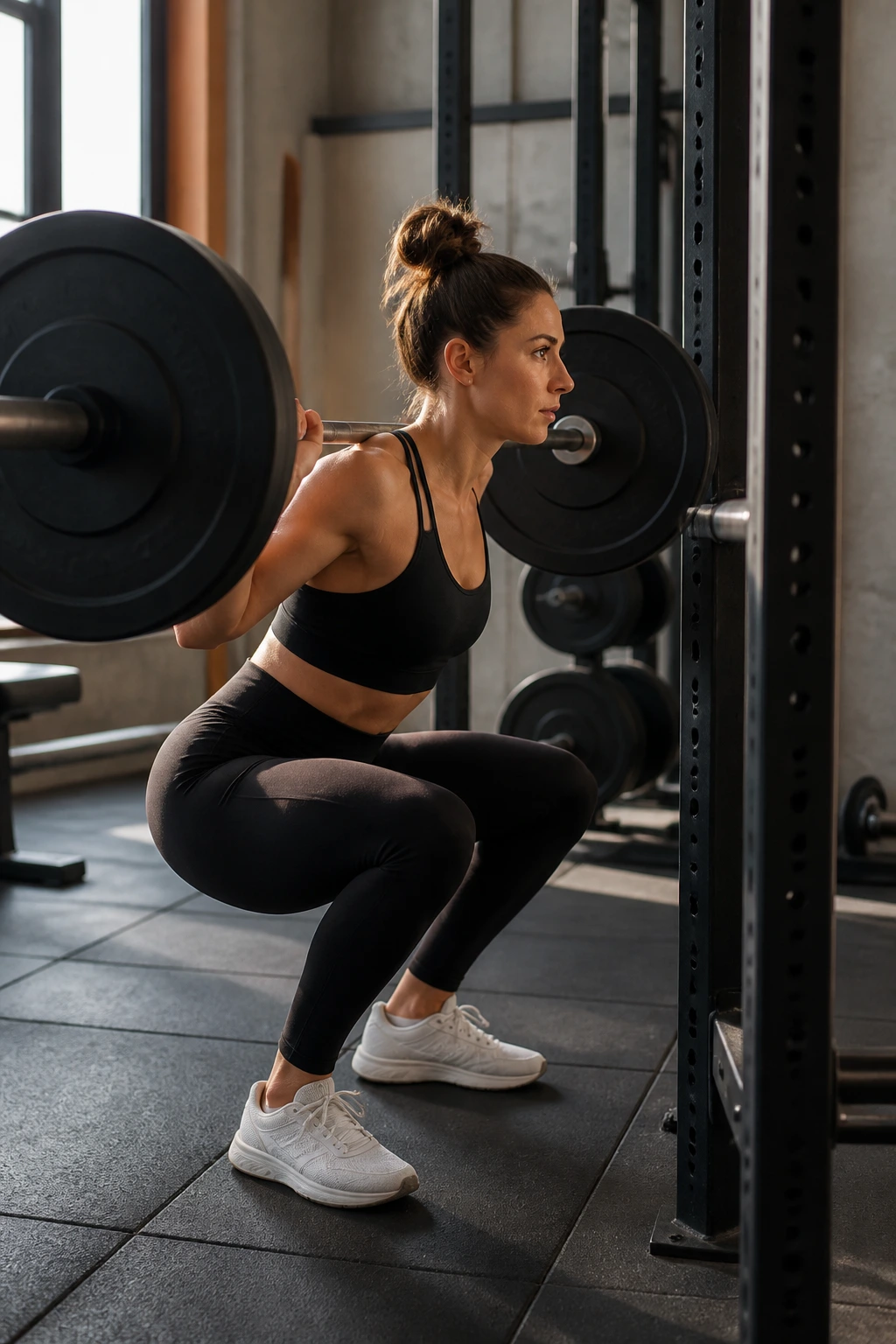
If you want raw strength, a barbell day is hard to beat.
That sounds blunt because it is. Barbells make progress easy to track, and they reward patience. You know exactly when the bar gets heavier. You know when the reps get cleaner. You know when you’re stronger, because the numbers stop lying to you.
A good strength session centers on one main lift and a few supporting movements. Think back squat for 5 sets of 3 reps, barbell bench press for 4 sets of 5, conventional deadlift or trap-bar deadlift for 3 sets of 3, and a barbell row for 3 sets of 8. Rest 2 to 3 minutes on the big lifts. That rest is not laziness; it’s what lets you lift with intent.
Keep the mood serious but not dramatic. You are not trying to survive the workout. You are trying to own it.
6. Machine-Based Confidence Workout for Women
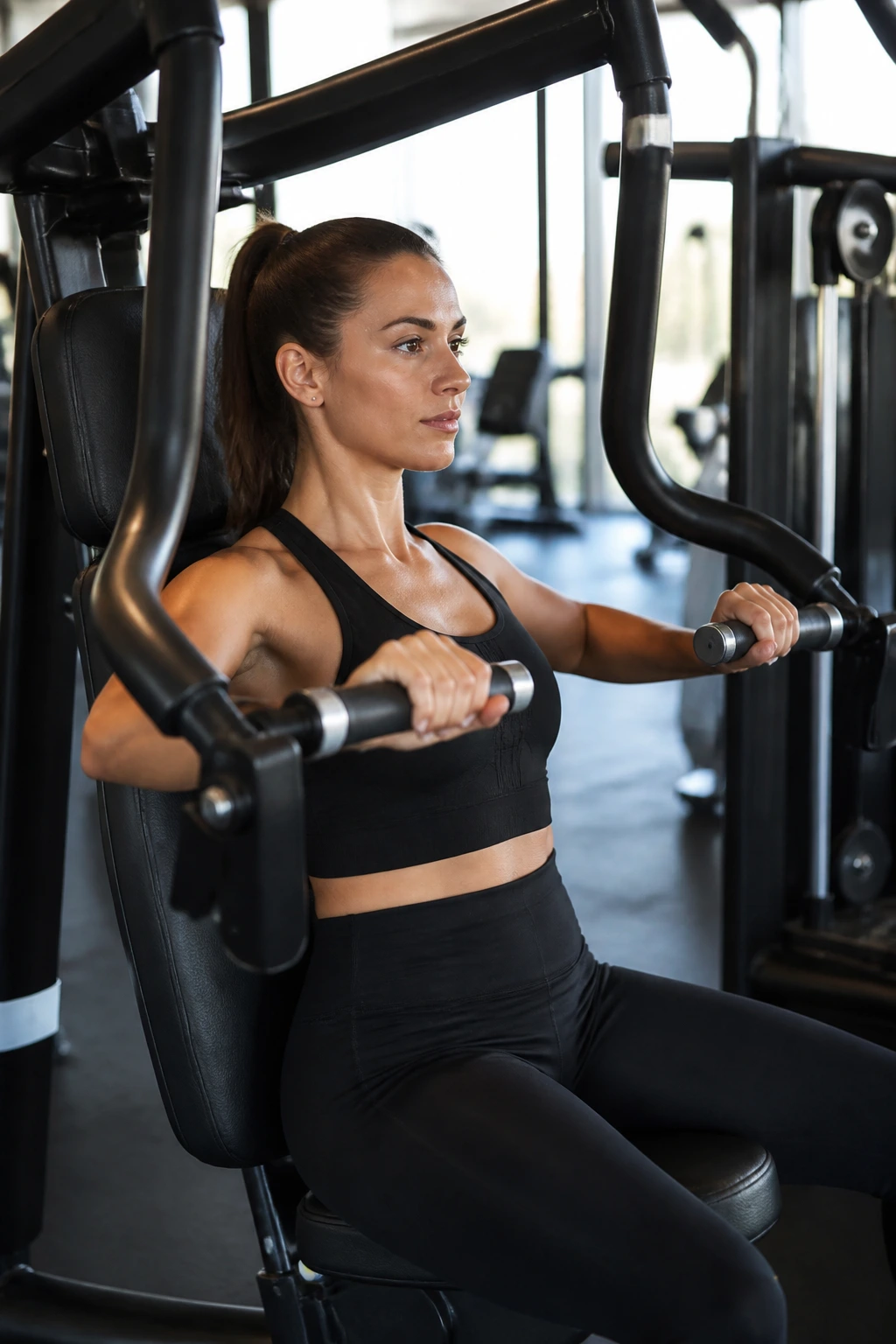
Unlike a free-weight day, a machine session removes the balance problem. That is the whole point.
Machines are useful when you’re still learning form, when the gym feels busy, or when you want to train hard without spending half your energy on setup. They also make it easier to stay in the right range of motion, which is a gift on days when your focus is low.
Smart Machine Picks
- Leg press — 3 sets of 10 reps
- Seated row — 3 sets of 10 reps
- Chest press — 3 sets of 10 reps
- Hamstring curl — 3 sets of 12 reps
- Cable lateral raise — 2 sets of 12 to 15 reps
Set the seat so the handles line up with the middle of your chest on presses, and let the sled on the leg press come down far enough that your knees bend deeply without your lower back peeling off the pad. That last part matters.
This workout is best for the days you want a clean session and less mental noise. No shame in that. Sometimes the smartest lift is the one that keeps you coming back.
7. One-Dumbbell Home Workout
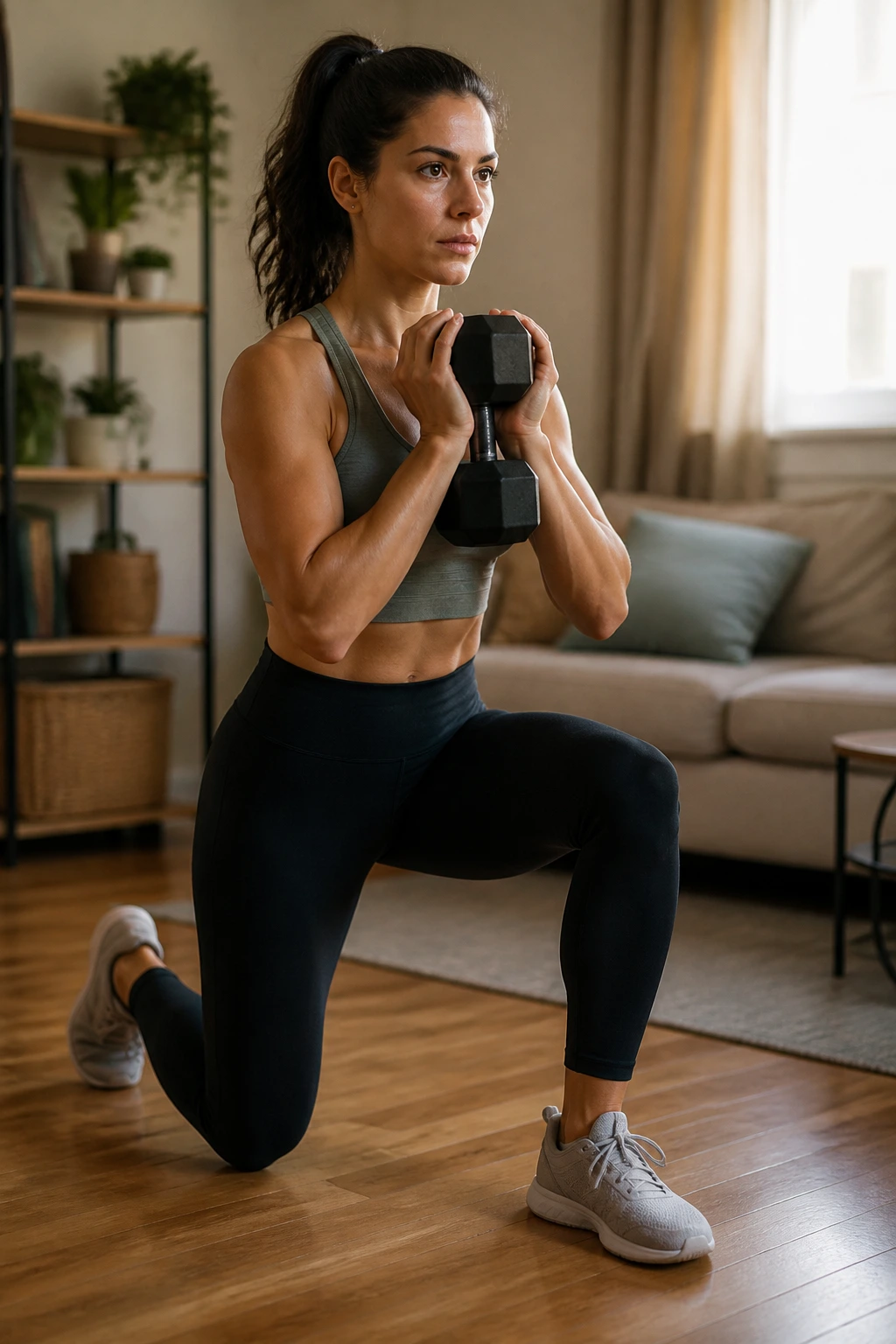
Small space, no problem.
A single dumbbell can do more than people give it credit for. One-sided work is sneaky like that. It forces your core to stay awake, and it keeps you from relying on momentum to get through the set.
What to Do
- Split squat — 3 sets of 8 reps per leg
- One-arm floor press — 3 sets of 10 reps per side
- Suitcase deadlift — 3 sets of 10 reps
- One-arm row — 3 sets of 10 reps per side
- Standing march or suitcase carry — 3 rounds of 30 seconds
If you only have one weight, switch sides halfway through each set. Move slowly enough that you can feel where the weight is pulling you. That sideways pull is the point. It teaches your trunk to stay organized.
A home workout should not feel like a consolation prize. Done right, this one is brutally practical.
8. Low-Impact Tempo Circuit
Speed is overrated on some days.
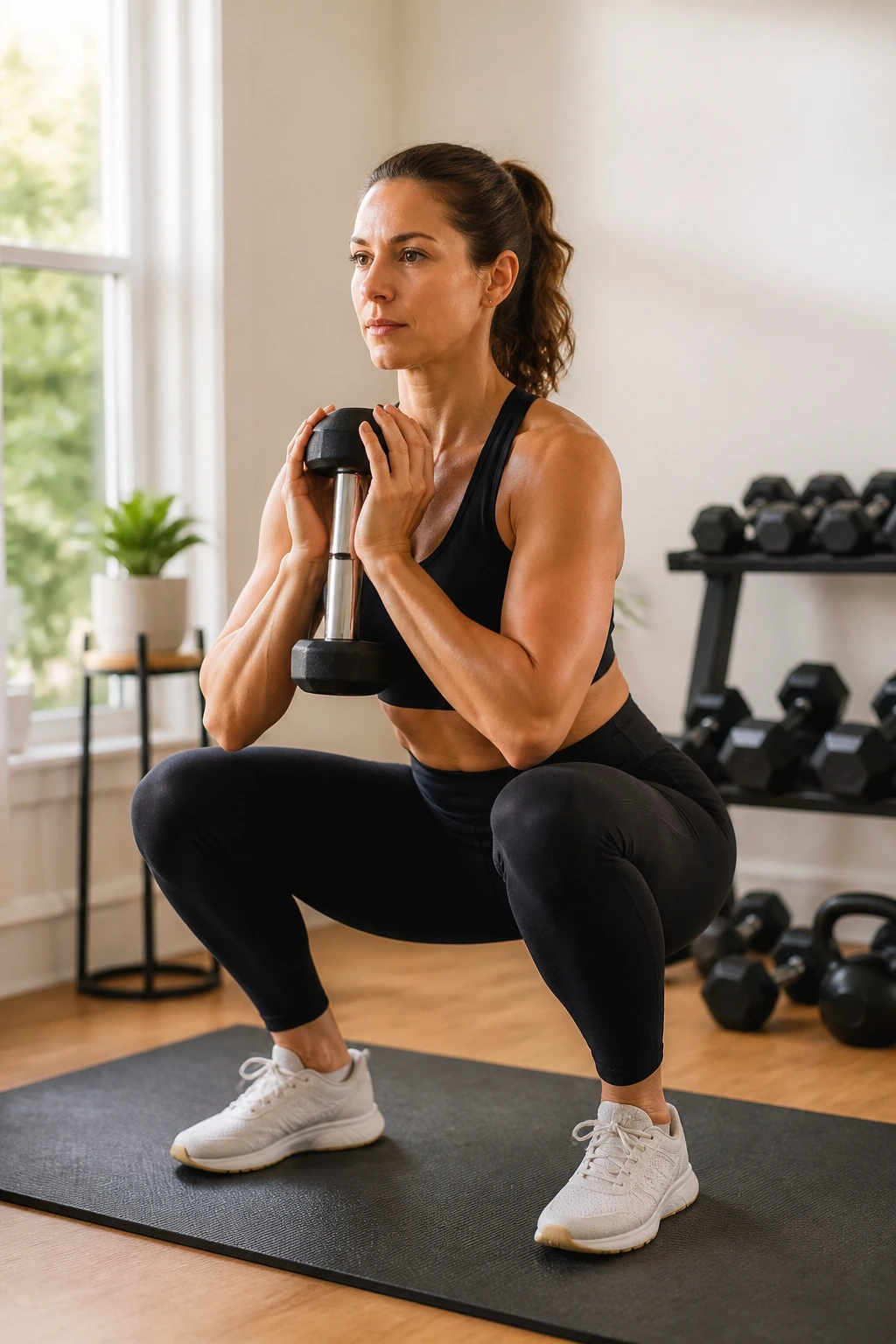
This workout uses slow lowering phases to make a moderate weight feel much heavier. Three seconds down, one second pause, one second up. That tempo changes everything. Your muscles spend more time under tension, and your joints get a cleaner, more controlled rep.
Use goblet squats, Romanian deadlifts, incline push-ups or dumbbell presses, supported rows, and glute bridges. Keep each move at 3 sets of 10 to 12 reps. The weight should be light enough that you can keep the tempo honest, but not so light that you’re just moving around for exercise’s sake.
This is a good session when you feel a bit beat up, or when you want a workout that presses the muscles without jarring the body. The burn shows up slowly, then all at once.
And yes, slow work can be hard. Sometimes harder than the fast stuff.
9. Core and Carry Workout
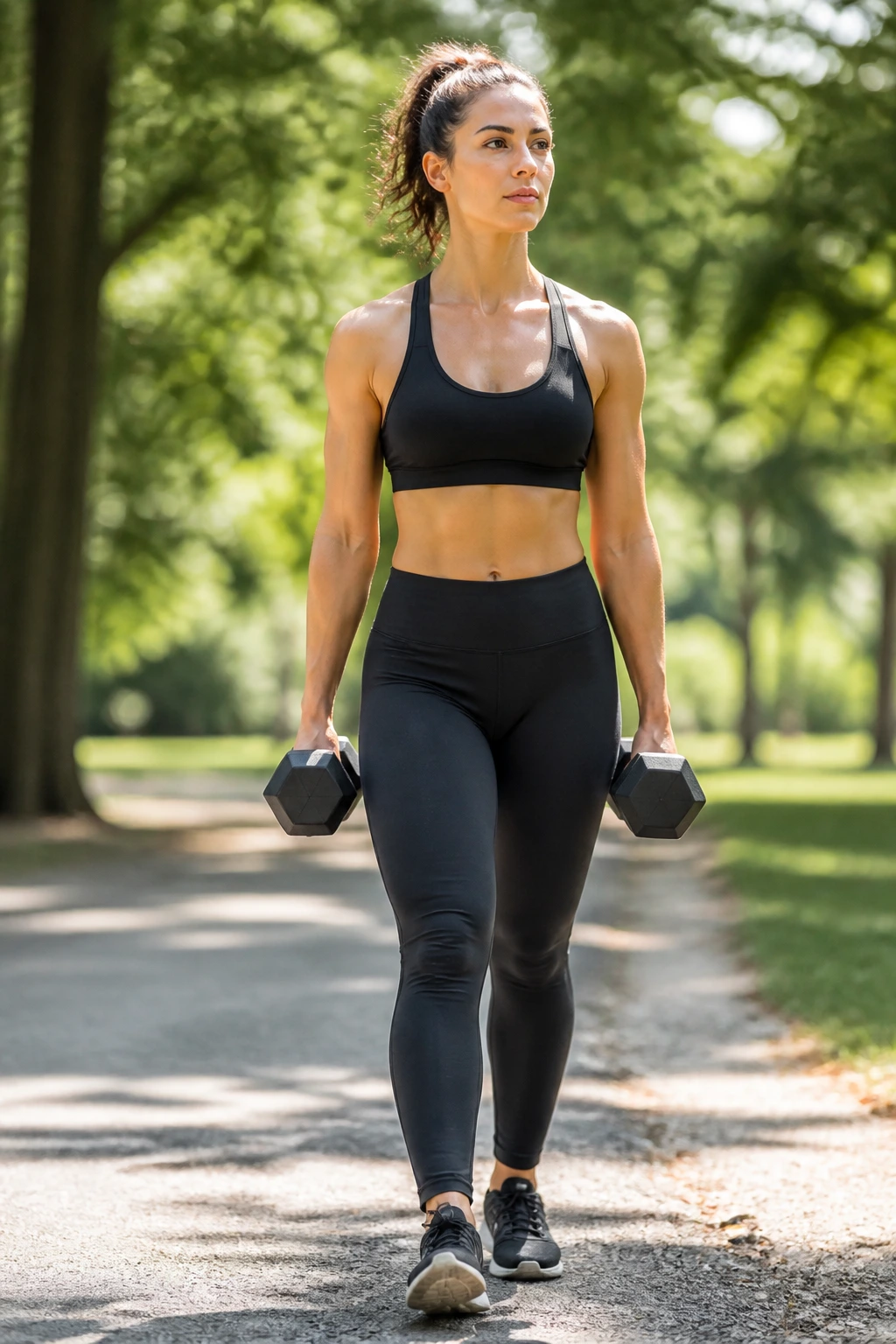
Why do carries beat endless crunches? Because life happens standing up.
A strong core is not only about flexing your abs. It’s about keeping your ribs, pelvis, and spine stacked while you move, breathe, and resist being pulled sideways. Carries teach that in a way floor work never quite can.
What to Use
- Farmer carry — 4 rounds of 30 to 40 steps
- Front rack carry — 3 rounds of 20 to 30 steps
- Pallof press — 3 sets of 10 reps per side
- Dead bug — 3 sets of 8 reps per side
- Side plank — 2 holds of 20 to 30 seconds per side
Keep your ribs down on the carries. No leaning. No little side shuffle just to survive the load. If your grip fails first, that’s fine — it tells you the weight is doing something useful.
How to Get the Most From It
Use a weight that makes you brace hard but still walk smoothly. The goal is quiet control, not a lumbering march. When you finish, your torso should feel as if it had to pay attention the whole time. That’s a good sign.
10. Back, Biceps, and Rear Delts Day
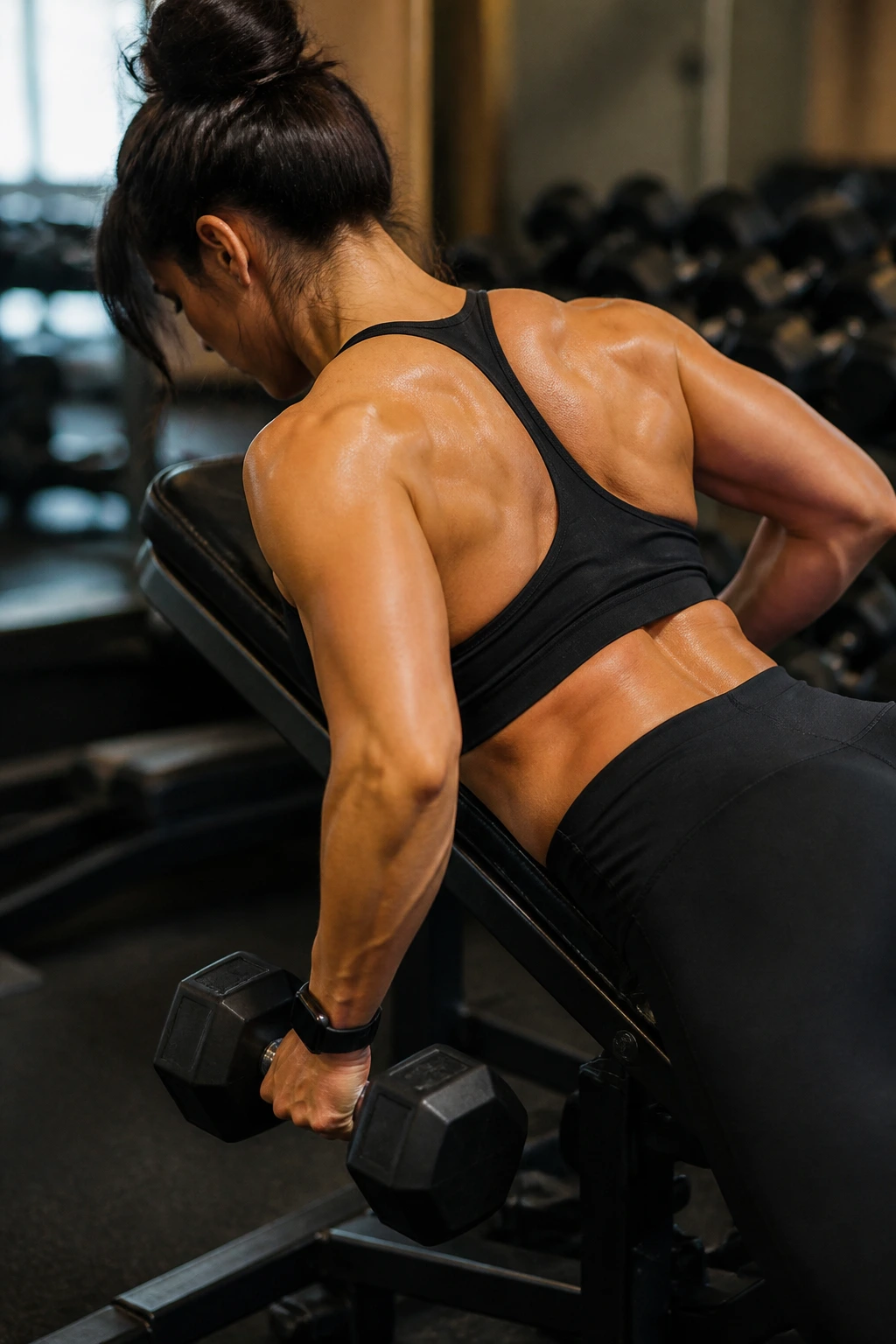
If your bags, bras, and desk chair all live on your shoulders, this day pays off fast.
A lot of women love the look and feel of better upper-back development, but the real win is posture and shoulder comfort. Strong rows and rear-delt work make everything above the waist feel more organized. Biceps are the dessert. The back is the meal.
Start with a heavy chest-supported row for 4 sets of 8. Follow it with a neutral-grip lat pulldown for 3 sets of 10, then reverse flyes for 3 sets of 12. Add incline dumbbell curls for 3 sets of 10 and finish with a rope hammer curl if you still have gas left.
Do not turn this into a curl party. That’s a waste of a good training day. Pull first, curl later. Always.
The back work should feel like it spreads across your shoulder blades. If you only feel the arms, lighten the load and slow the rep down.
11. Chest, Triceps, and Shoulder Push Day
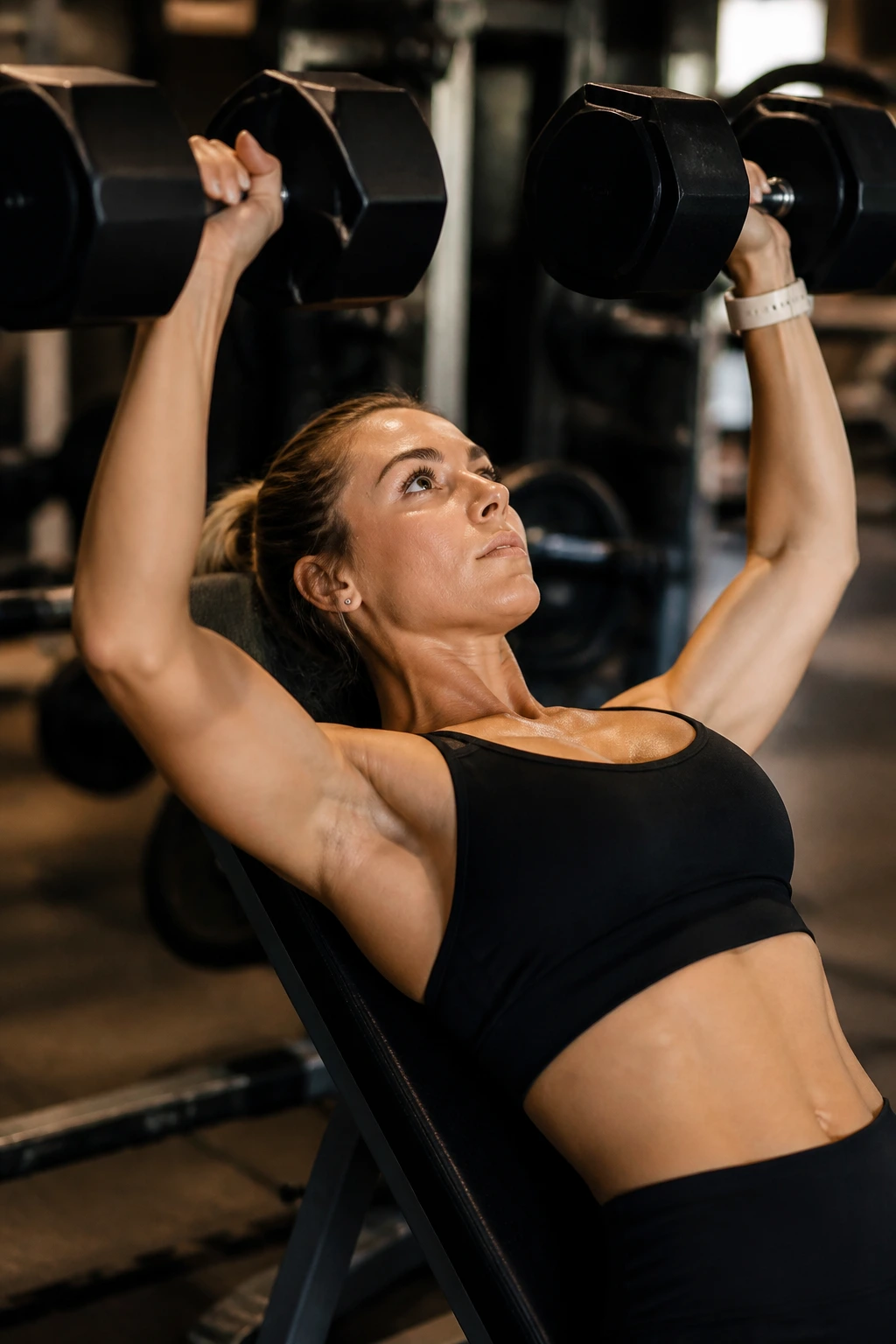
Push day is not about spamming push-ups until your elbows complain.
A solid upper-body pushing session builds the chest, front delts, and triceps without beating you up. The trick is to mix angles. Flat pressing, incline pressing, and overhead pressing each ask something slightly different from the shoulder joint, which is useful when you want both strength and comfort.
Use dumbbell bench press for 4 sets of 8, incline press for 3 sets of 10, half-kneeling overhead press for 3 sets of 8 per side, rope triceps pressdown for 3 sets of 12, and lateral raises for 2 sets of 15. Rest around 75 seconds on the presses, a touch less on the smaller moves.
If overhead pressing bothers your shoulders, swap in landmine presses. That angle is friendlier for a lot of lifters and still gives you a serious shoulder workout.
Push day works best when the reps look smooth from the outside and heavy from the inside.
12. Hamstrings and Glutes Focus
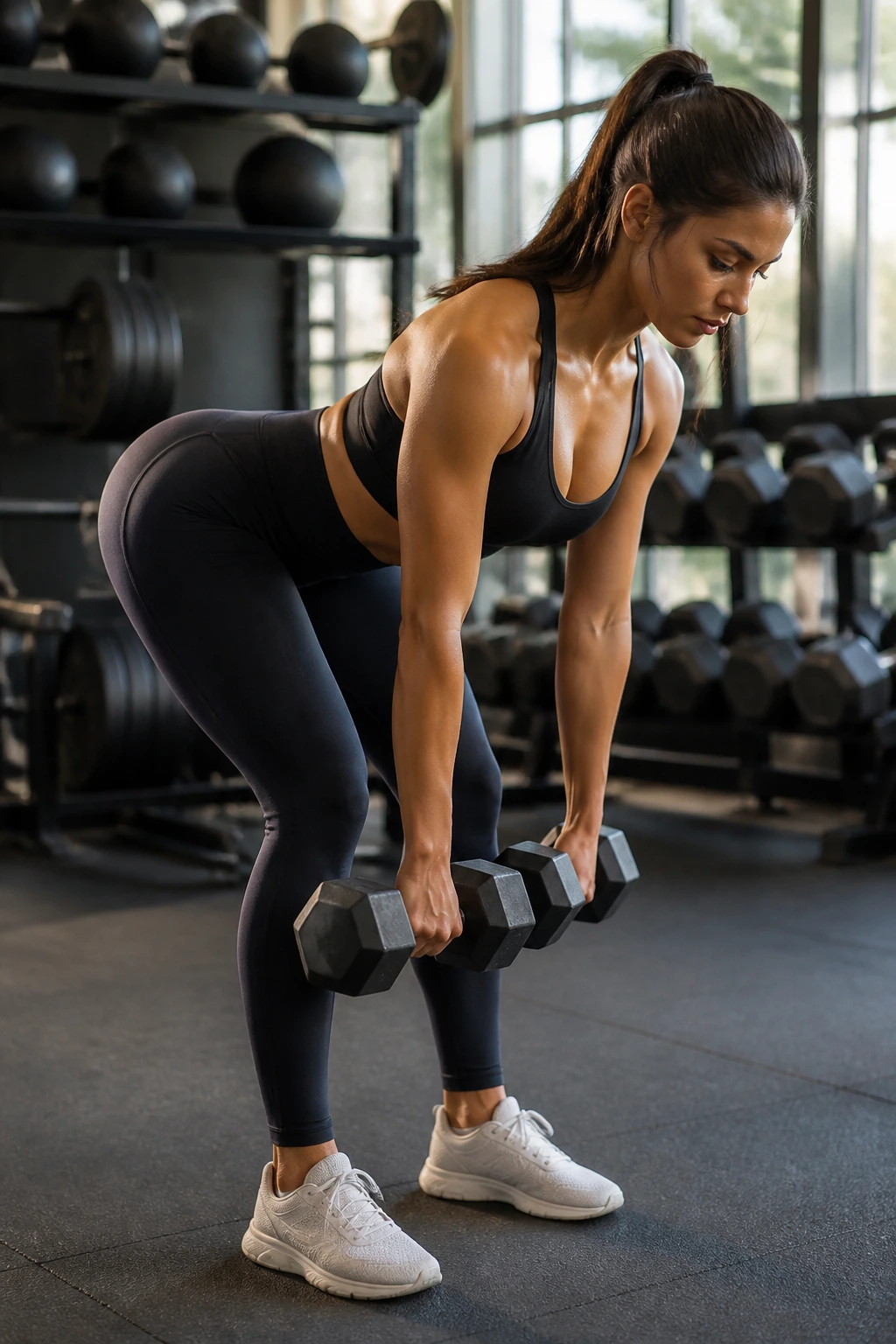
A good posterior-chain day changes how you stand and walk.
That sounds dramatic, but it’s true. Hamstrings and glutes do a lot of quiet work in daily movement, and most people undertrain them compared with the quads. This session balances that out by leaning hard into hip hinge patterns.
Start with Romanian deadlifts for 4 sets of 8. Then do hip thrusts for 4 sets of 10, lying or seated hamstring curls for 3 sets of 12, cable pull-throughs for 3 sets of 12, and back extensions for 2 sets of 15. Keep one rep in reserve on the first two lifts so your lower back doesn’t try to take over.
This is one of those workouts that teaches patience. The first set feels manageable. The third set starts to sting. The fourth set tells the truth.
If squats dominate your week, this day is the antidote.
13. Quad-Focused Leg Day
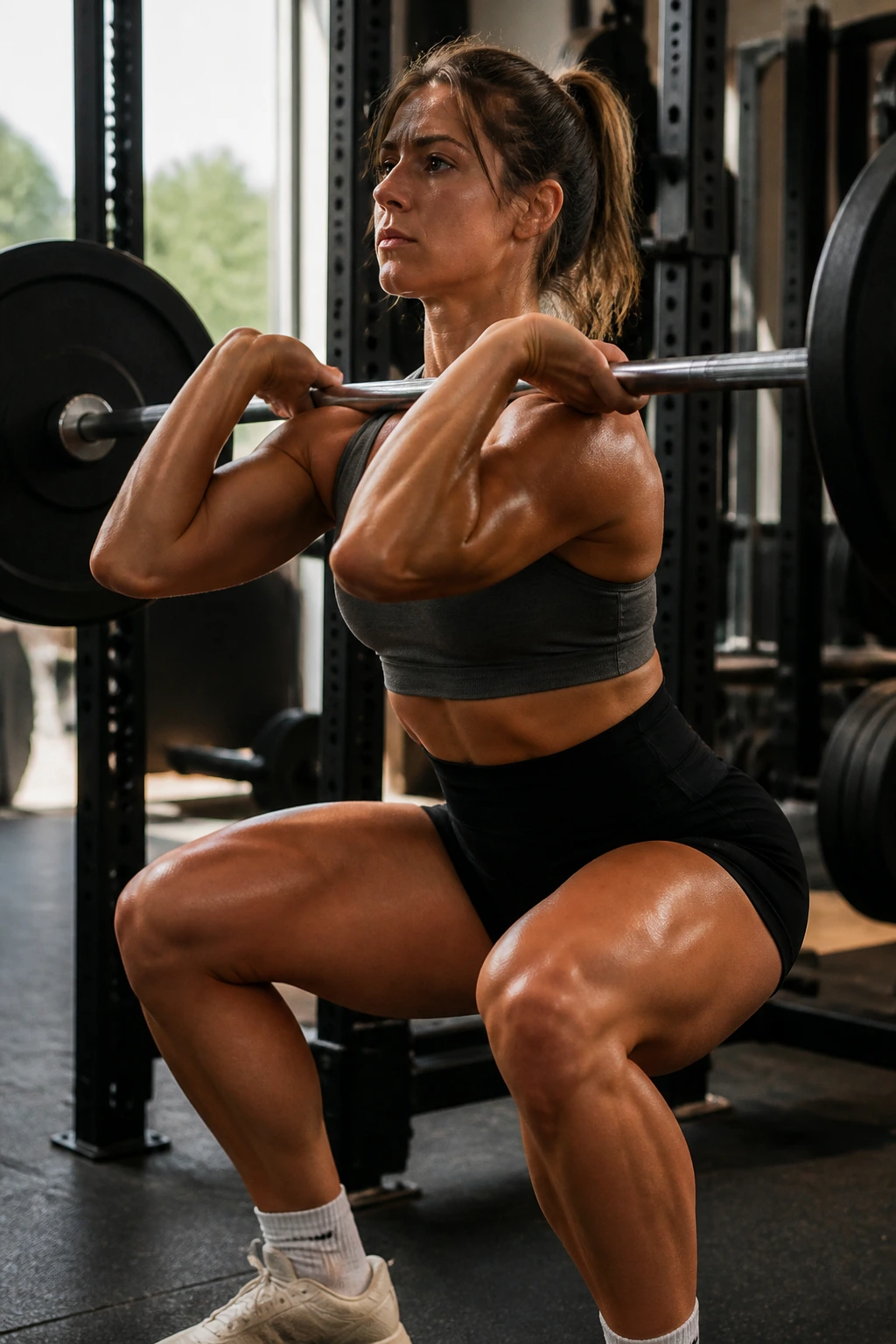
Why train quads separately if you already squat? Because not every squat puts the same load where you want it.
Quad-focused work is useful when you want stronger knees, better knee extension, and a more balanced leg session. It also tends to feel a little more upright than hip-dominant work, which some lifters prefer when their lower back gets cranky.
Setup Notes
- Front squat or heel-elevated goblet squat — 4 sets of 6 to 8 reps
- Walking lunge — 3 sets of 10 steps per leg
- Step-up — 3 sets of 8 reps per leg
- Leg extension — 3 sets of 12 reps
- Standing calf raise — 3 sets of 15 reps
Keep your torso tall on the front squat and let your knees travel forward naturally. That is not a mistake. It is how the quads get their share. Step-ups should be controlled, not bounced. If you are pushing off the back foot, the box is too high.
This one burns in a way that feels old-school and honest. No tricks. Just leg work.
14. Athletic Power Workout
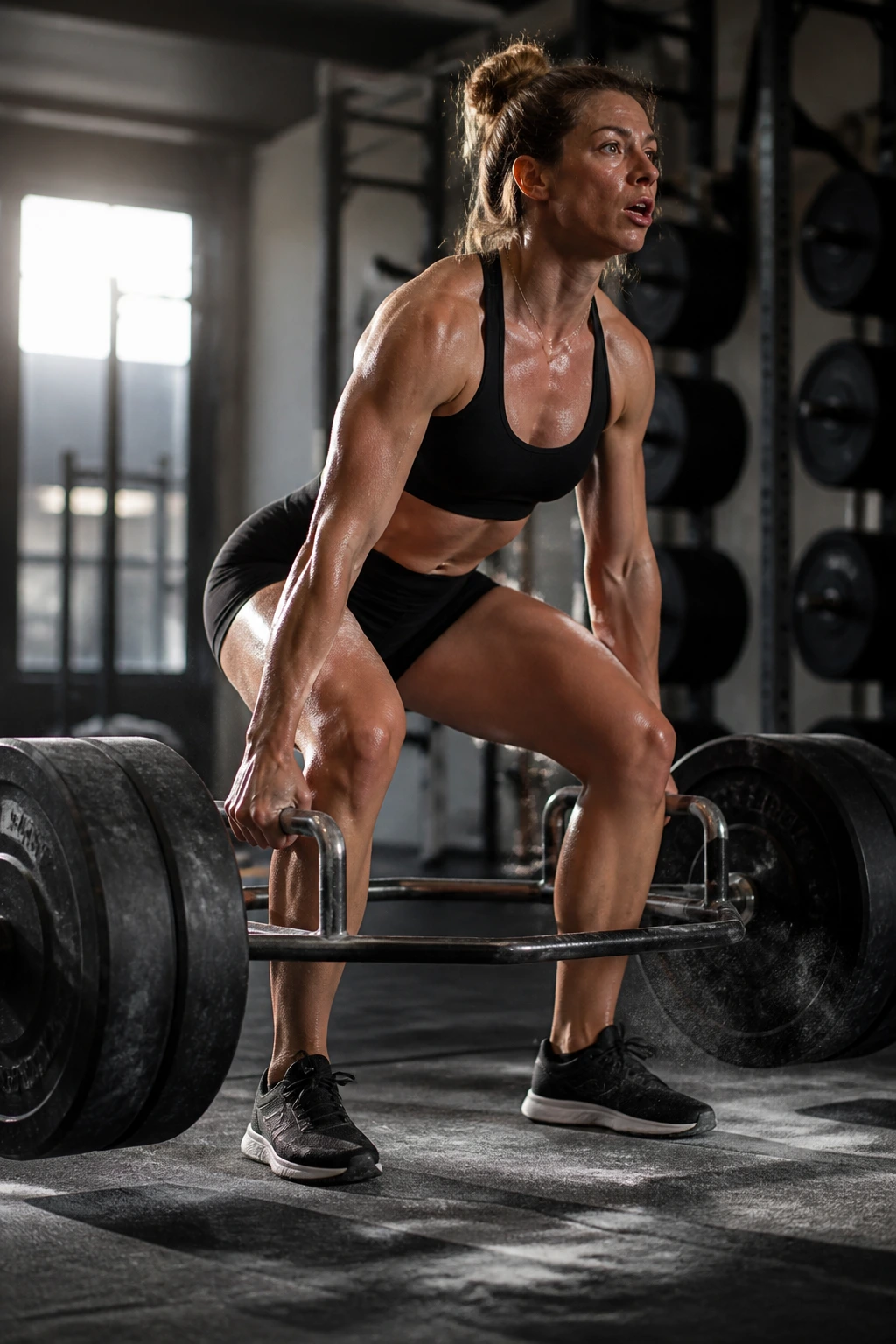
If you want strength that shows up on stairs, hikes, quick turns, and pickup games, lift a bit faster.
Power work is not about flinging weights around. It’s about moving a load with speed while staying in control. That’s a different skill from grinding out slow reps, and it’s worth training.
Try trap-bar deadlifts for 4 sets of 4, push press for 4 sets of 5, box squat for 3 sets of 5, kettlebell swings for 4 sets of 12, and sled pushes if your gym has them. Rest 2 minutes or more on the power lifts. Fast reps need full attention.
A good cue here is simple: explode up, own the lowering phase. If the bar drifts or you lose shape, the load is too heavy.
This session works especially well for women who want to feel athletic instead of only tired. There’s a difference, and you notice it fast.
15. Short Density Workout
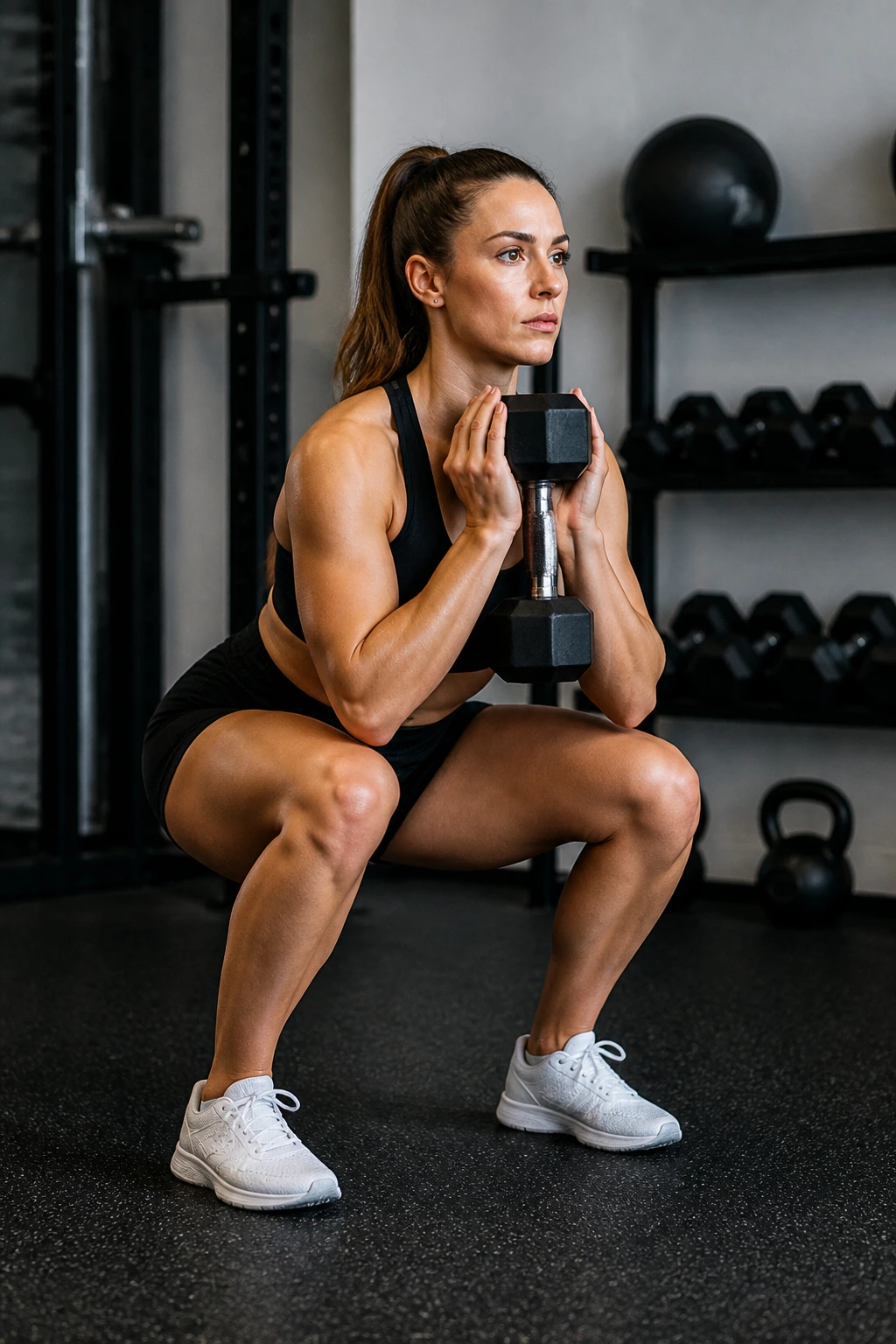
Some days call for less ceremony and more work.
A density workout means you do a set amount of work in a set amount of time. The pace stays honest, the rest stays short, and your conditioning gets dragged into the room whether it wants to or not.
Use a 12-minute block. Rotate through 8 goblet squats, 8 dumbbell presses, 10 rows, and 10 Romanian deadlifts as many quality rounds as you can manage. Stop each set with enough control to keep the next one clean. If your form starts to wobble, the weight is too ambitious for the time limit.
This is not the day for a training max. It’s the day for efficient effort. A workout like this can sit between meetings, or it can be your fallback when the gym feels crowded and your brain feels fried.
Short sessions only work when the work is real. This one is.
16. Travel or Hotel Room Dumbbell Workout
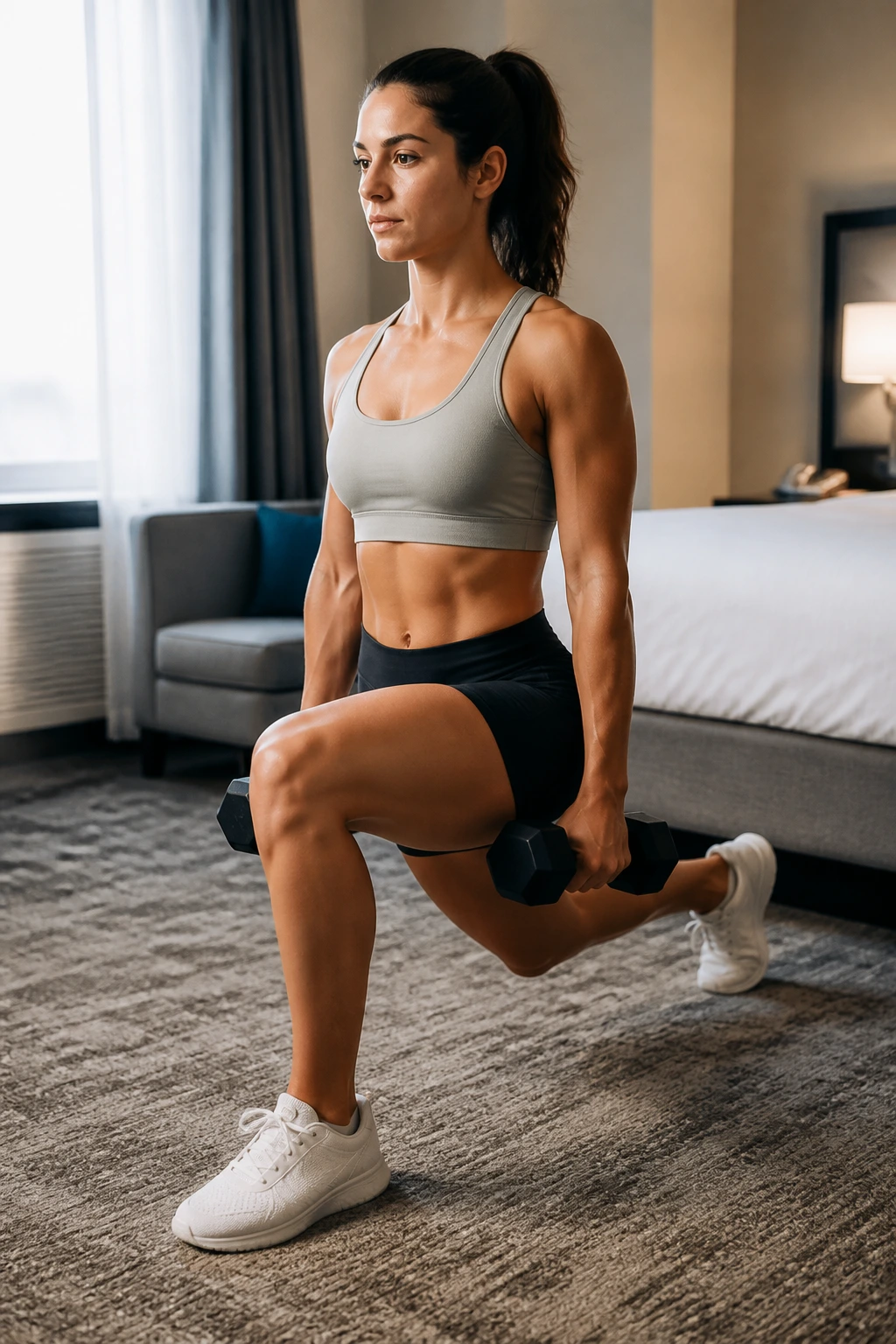
A pair of dumbbells in a hotel room can save a training week.
Travel usually tries to wreck rhythm. Different beds, weird food, missed timing, bad lighting — the whole thing gets messy. A simple dumbbell session gives you one stable point in the middle of that chaos.
Use split squats, dumbbell floor press, one-arm rows, Romanian deadlifts, and lateral raises. Keep it to 3 sets of 10 on the big moves and 2 sets of 15 on the small ones. If the dumbbells are lighter than you want, slow the lowering phase to 3 seconds and shorten the rest.
One detail people miss: carpet can make your stance feel sloppy on hinges. If the floor is soft, plant your feet a little wider and lower the weight with extra control. That tiny adjustment helps a lot.
A travel workout should be simple enough that you can do it even when your brain is half on another time zone.
17. Beginner Gym Floor Circuit
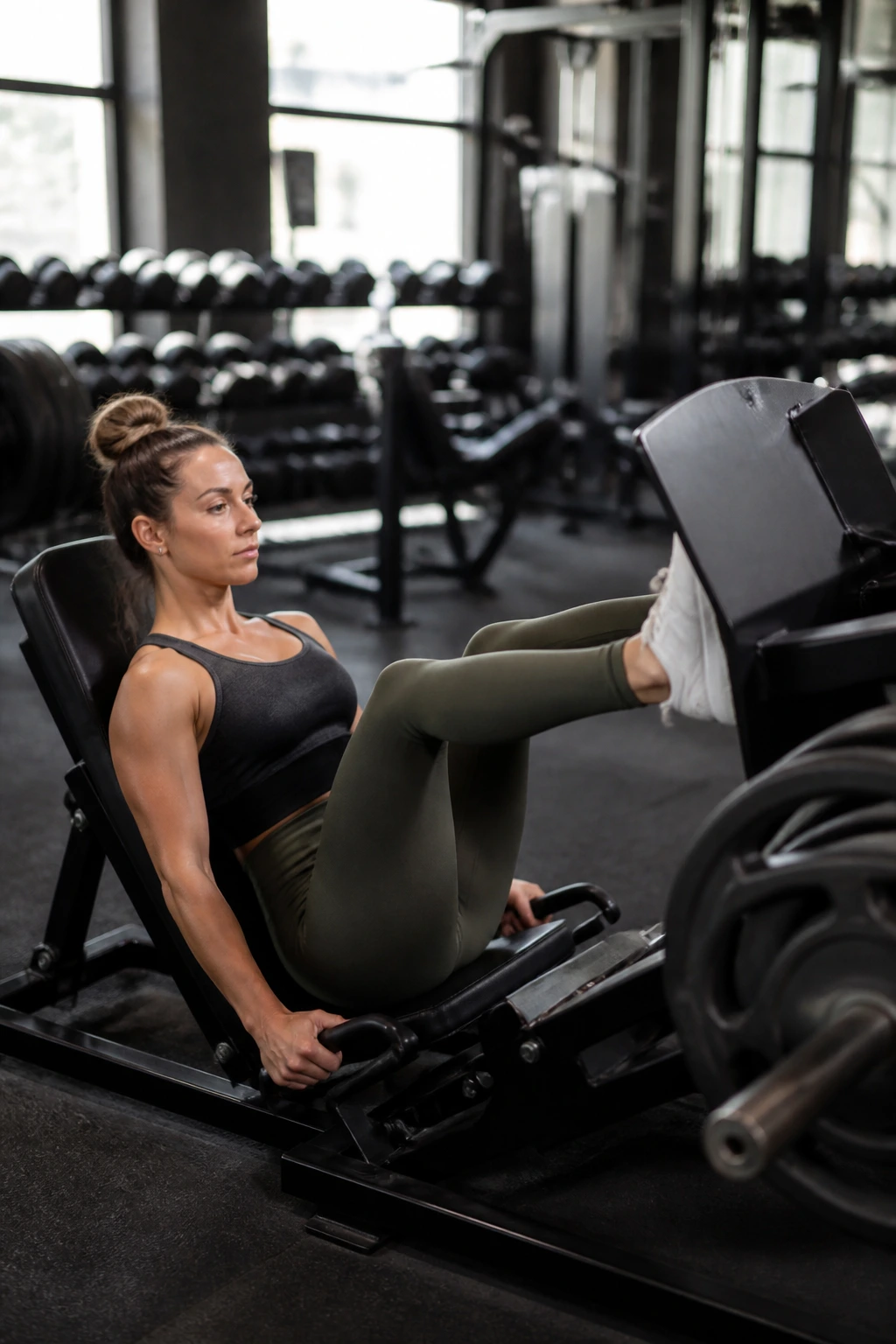
Walking into a new gym can feel like learning a foreign language.
This circuit is built to strip away the weirdness. You use common machines, basic dumbbells, and a repeatable order. Nothing fancy. Nothing that needs a spotter hovering over you.
A Simple First Week
- Leg press — 3 sets of 10
- Seated chest press — 3 sets of 10
- Seated cable row — 3 sets of 10
- Dumbbell Romanian deadlift — 3 sets of 8
- Cable Pallof press — 2 sets of 10 per side
Start with the machines first if that helps your confidence. They give you a clear path and let you focus on the movement instead of the room. Once those feel familiar, the dumbbell hinge becomes easier to own.
A beginner workout should reduce decisions, not create more of them. That is why this one works.
18. Intermediate Upper-Lower Split Session
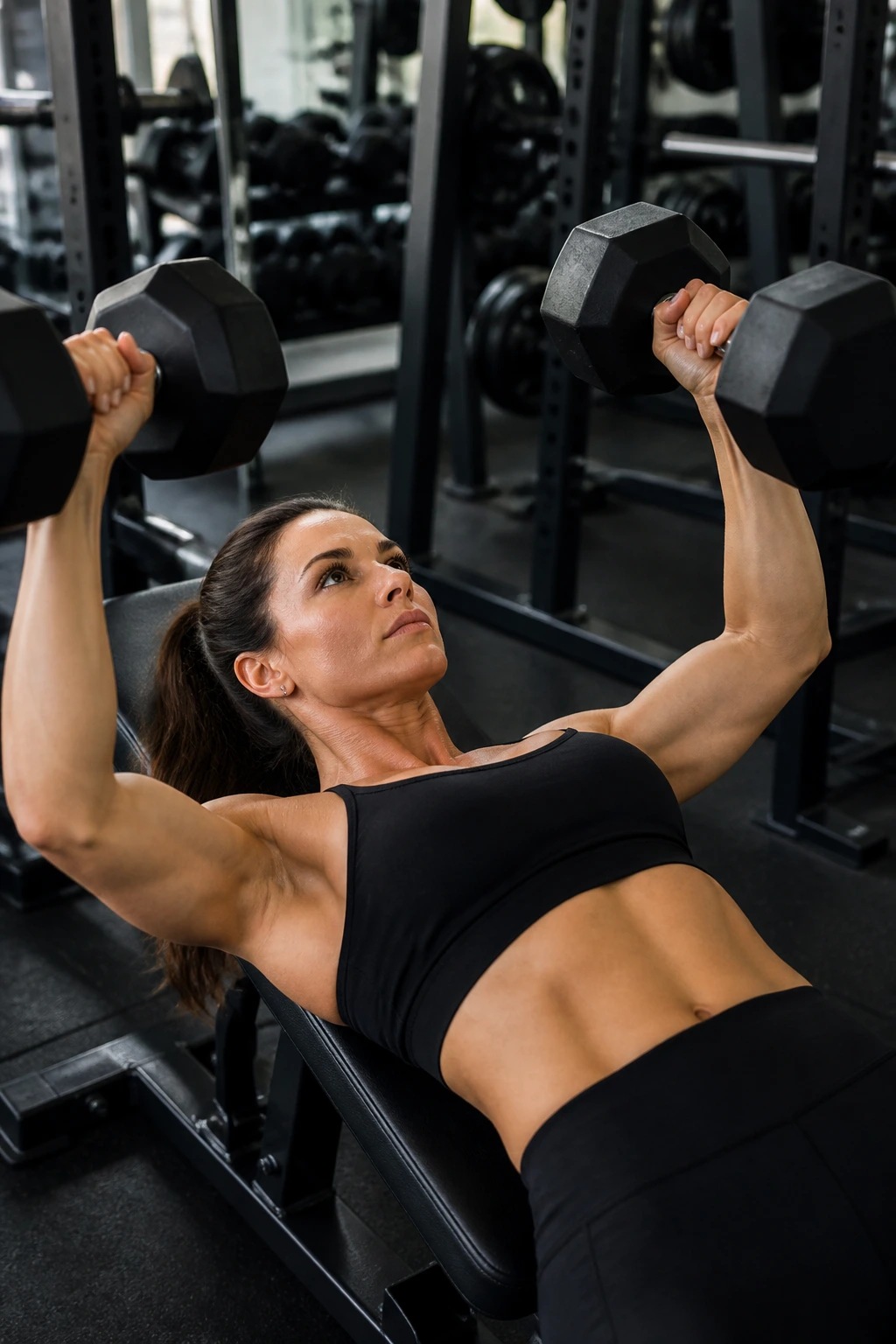
If four gym days feels like too much, this is the structure that stays sane.
An upper-lower split gives you enough volume to grow without making every session a marathon. One day is mostly pushing and pulling from the waist up. The next day is legs. Simple. Effective. Easy to repeat.
Upper Day
- Dumbbell bench press — 4 sets of 8
- One-arm row — 4 sets of 10 per side
- Overhead press — 3 sets of 8
- Face pull — 3 sets of 15
- Curl or triceps pressdown — 2 sets of 12
Lower Day
- Back squat or goblet squat — 4 sets of 6 to 8
- Romanian deadlift — 3 sets of 8
- Reverse lunge — 3 sets of 10 per leg
- Hamstring curl — 3 sets of 12
- Calf raise — 2 sets of 15
This split suits women who already know the basic movements and want a steadier path forward. It’s not flashy. That’s the point. Flashes fade. A repeatable structure lasts.
19. Heavy Lower-Body Day
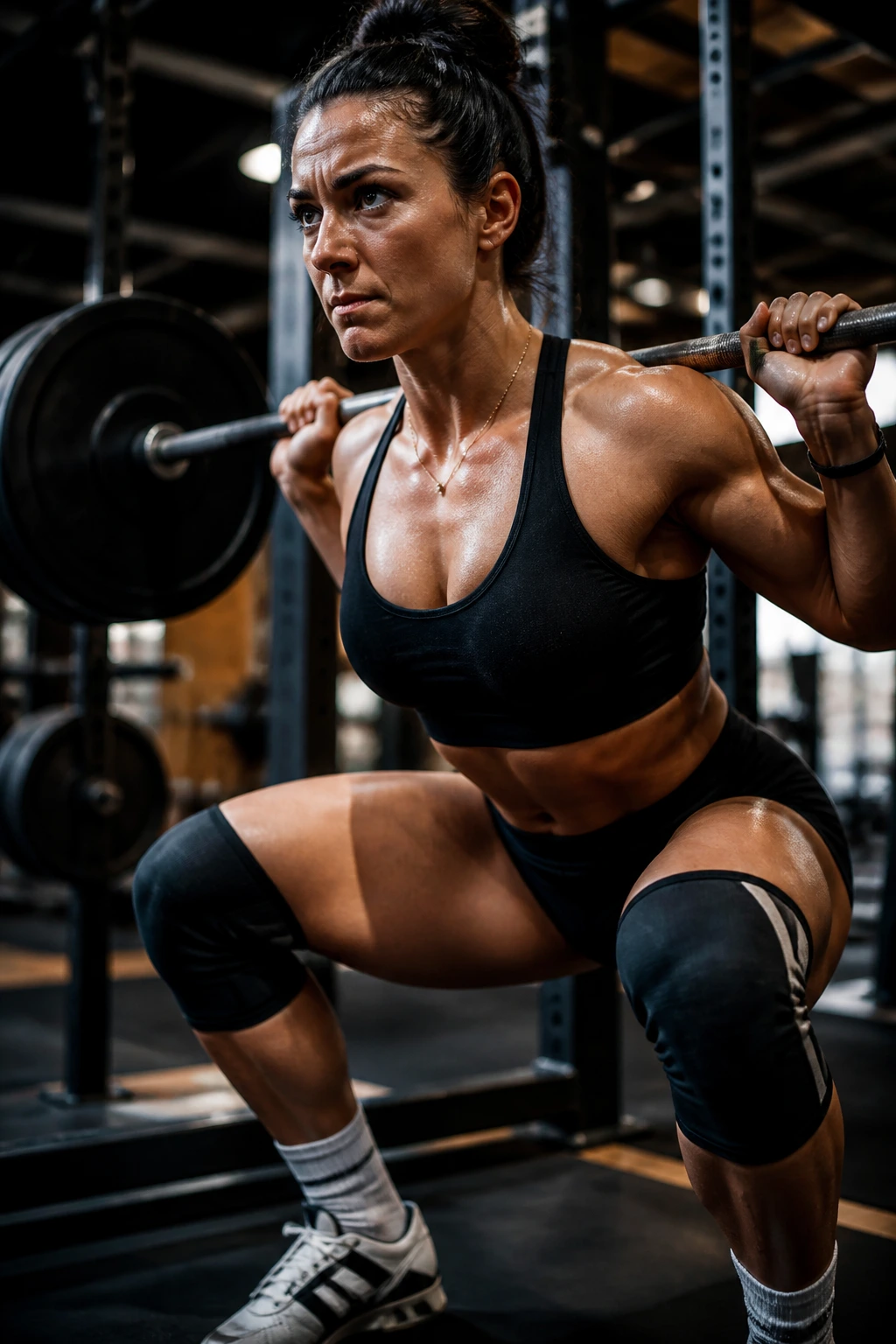
Some weeks, the body wants less fluff and more iron.
This is the session for that mood. Lower reps, longer rest, bigger loads. It feels serious because it is. The point is not to leave the gym with a huge sweat patch. The point is to move heavy weight with clean form and enough confidence that the bar doesn’t feel like a dare.
Try back squat for 5 sets of 3, trap-bar deadlift for 4 sets of 4, walking lunge for 3 sets of 6 per leg, and standing calf raise for 3 sets of 12. Rest 2 to 3 minutes between the big sets. If you rush the rest, the bar will tell on you.
A heavy day should feel focused, not frantic. If your breathing is a mess before the next set starts, wait longer. That’s not wasted time. It’s part of the lift.
And yes, heavy work can be empowering without the motivational wallpaper.
20. Recovery Lift With Light Weights
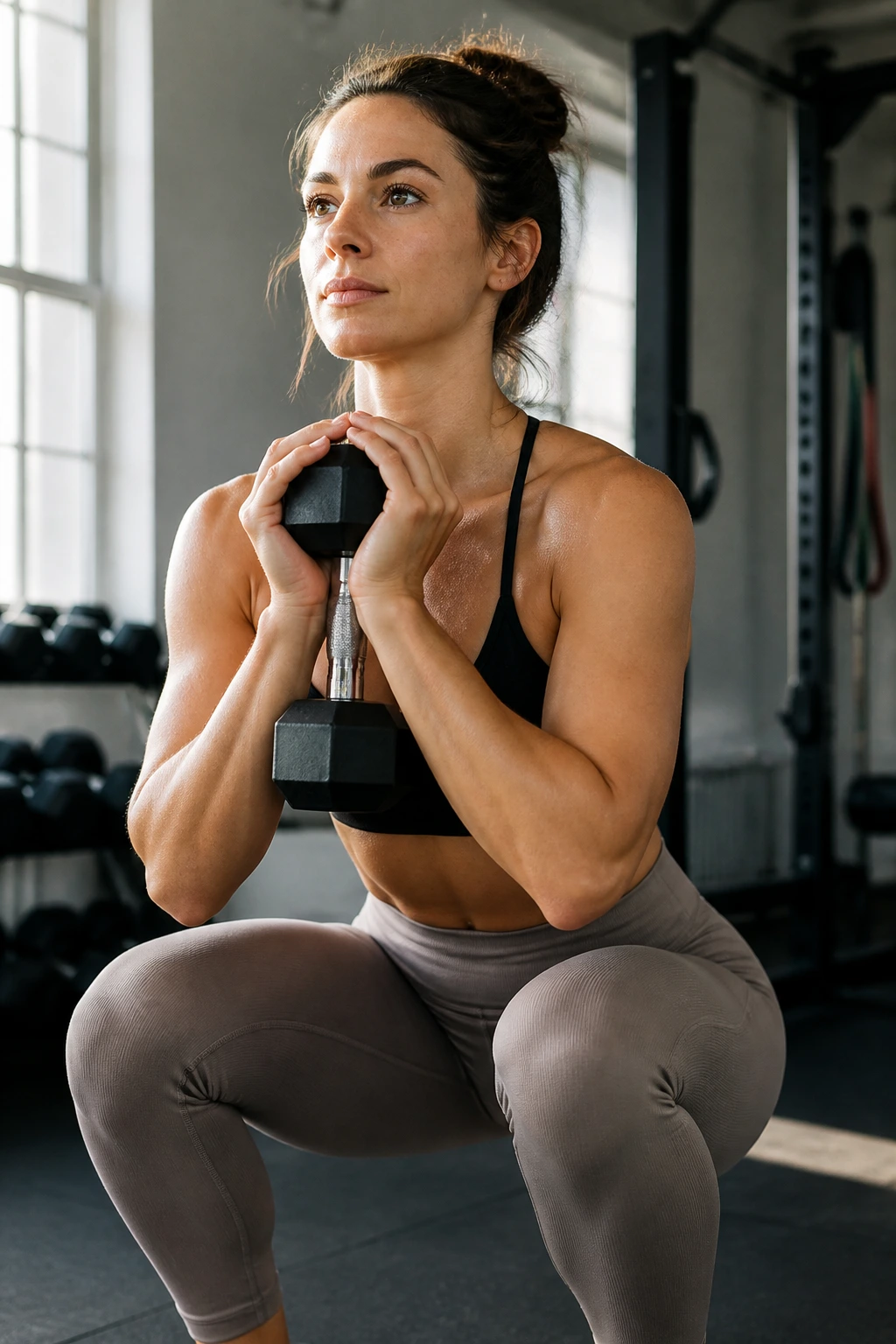
A recovery session is not a cop-out.
It’s the lift you do when you want to keep the habit alive without asking your body for another big push. The weights stay light, the tempo stays smooth, and the goal is to leave feeling better than when you walked in.
Use goblet squats for 2 sets of 12, chest-supported rows for 2 sets of 12, incline dumbbell presses for 2 sets of 12, glute bridges for 2 sets of 15, and a farmer carry for 3 short rounds. Keep the effort around a 5 or 6 out of 10. You should finish fresher, not crushed.
This is a smart choice after a hard lower-body day or during a week when sleep has been sloppy. The body still gets blood flow, joint motion, and a little muscle stimulus. It just does not get bullied.
Quiet work counts. Sometimes it counts a lot.
21. Full-Body Superset Workout
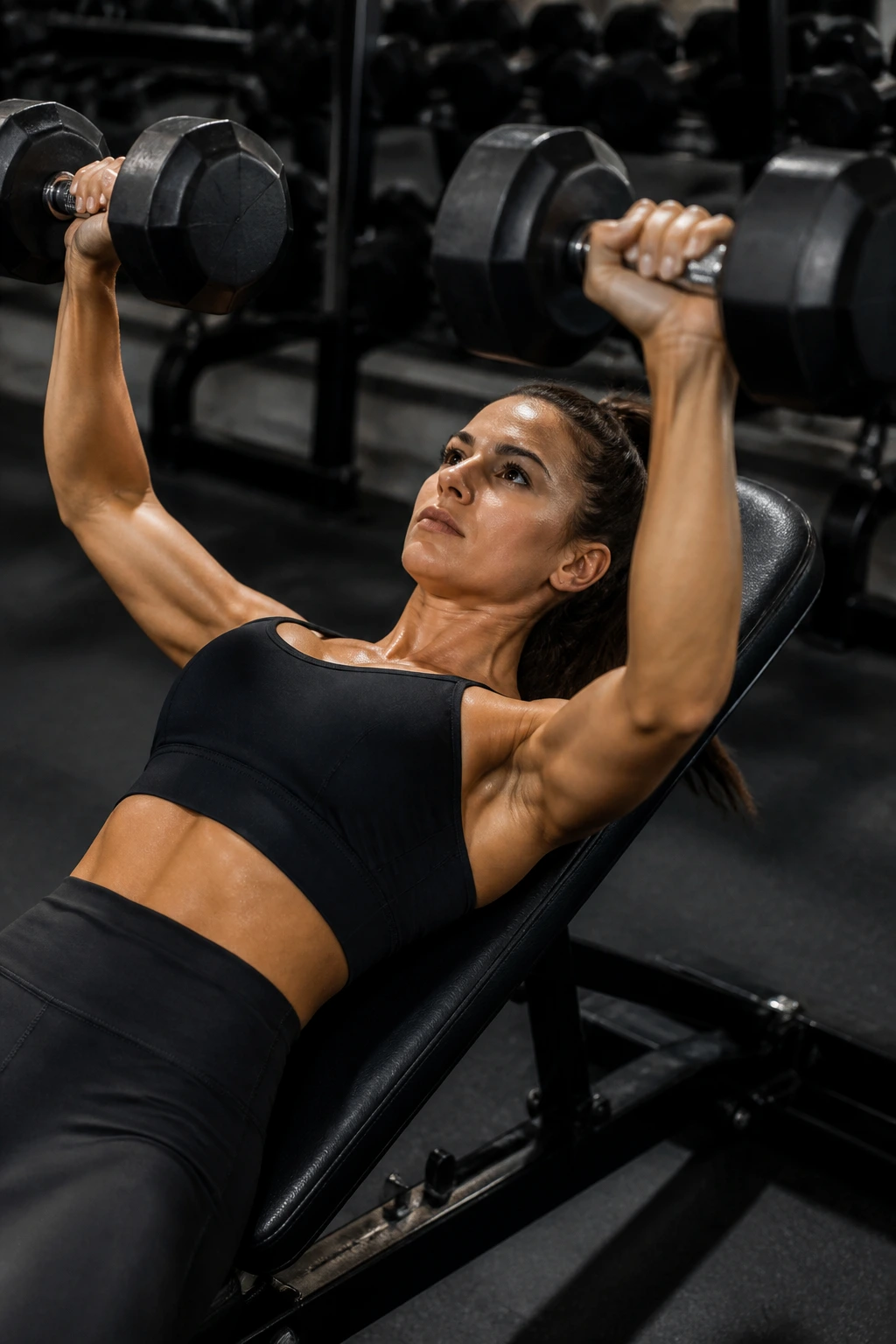
Supersets are where a lot of busy lifters stay consistent.
Pairing two exercises back to back saves time and keeps the pace moving, but the trick is choosing movements that don’t fight each other too much. A squat paired with a row works. A deadlift paired with another heavy hinge usually does not.
Pair Them Like This
-
A1. Goblet squat — 3 sets of 10
A2. Seated row — 3 sets of 10 -
B1. Dumbbell bench press — 3 sets of 8
B2. Romanian deadlift — 3 sets of 8 -
C1. Reverse lunge — 2 sets of 10 per leg
C2. Lat pulldown — 2 sets of 10 -
D1. Suitcase carry — 2 rounds of 30 steps per side
D2. Plank — 2 holds of 30 seconds
Rest 45 to 60 seconds after each pair. That pace keeps the workout tight without turning it into chaos.
This is a strong choice if you like leaving the gym with work done and time left in the day. No drama. Just a solid session.
22. Three-Day Weekly Rotation
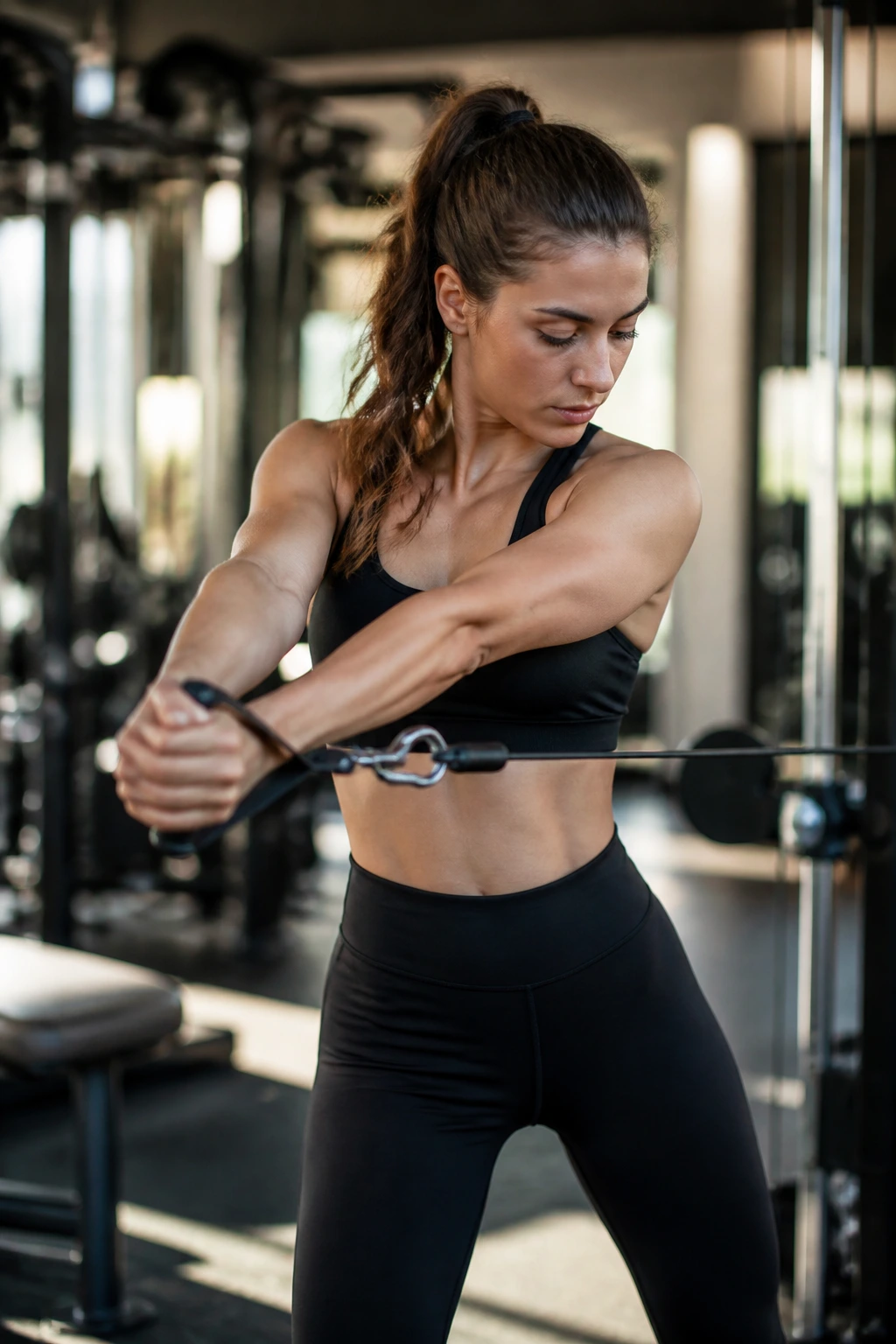
If you want one simple structure that keeps progress moving, this is the cleanest place to land.
Pick three days and rotate them. One day can lean lower body, one can lean upper body, and one can be full-body or conditioning-based. That gives you enough stimulus to build strength without turning the week into a string of random workouts.
A Practical Setup
- Day 1: Dumbbell Full-Body Starter or Machine-Based Confidence Workout
- Day 2: Glute Bridge and Split Squat Day or Hamstrings and Glutes Focus
- Day 3: Upper-Back Posture Reset or Full-Body Superset Workout
If you like structure, repeat the same trio for a few weeks and track your loads. If you like variety, swap one slot each week but keep the movement patterns the same. That way you still get progression, which is the part that matters.
A lot of women get stuck because they keep changing exercises before the body has a chance to adapt. Don’t do that. Stay with a plan long enough to see it work, then make small changes, not dramatic ones.
That is the real trick with weight training: consistency beats novelty, and the workouts above give you plenty of ways to keep showing up.
