



Upper-body HIIT gets messy fast when every plan turns into endless push-ups. Shoulders burn, wrists start talking back, and the whole session feels like punishment instead of training. The better version mixes pushing, pulling, punching, carries, and short recovery windows so your heart rate climbs for a reason and your form stays intact.
That matters more than people admit. The CDC and the U.S. physical activity guidelines still ask for muscle-strengthening work at least two days a week, and interval training gives you a clean way to fold that into a busy schedule. HIIT is not magic. It works because hard efforts plus brief recovery make every rep count, especially when you choose moves that ask your chest, back, shoulders, triceps, and core to work together instead of pulling in different directions.
Women do not need dainty dumbbells by default. They need smart loading, clean mechanics, and enough rest to keep the next round sharp. A pair of dumbbells, a resistance band, a mat, or even a wall can carry a session further than most people expect.
Some of these workouts are no-equipment and some lean on dumbbells or bands. Pick the ones that match your joints, your space, and your mood. The best upper-body HIIT workout is the one you can repeat without dreading it.
1. Shadowbox and Dumbbell Punch-Outs

Light dumbbells can make a simple shadowboxing round feel sneaky-hard. Two or three pounds is plenty for most people here; heavier than that, and your shoulders start cheating by shrugging.
Why It Feels Harder Than It Looks
The punch path looks small, but the work spreads fast through the delts, upper back, triceps, and core. Keep your ribs stacked over your hips and your fists moving in straight lines, not looping around like you’re trying to swat flies.
Use 30 seconds of fast shadowboxing, then 20 seconds of punch-outs with light dumbbells, then 30 seconds of rest. Repeat for 4 to 6 rounds. If your shoulders tighten up, drop the weights and keep the speed.
Pro tip: keep your hands at cheek level between punches. Dropping them to your ribs sounds easier until your neck starts doing the work.
2. Push-Up Sprint Ladder
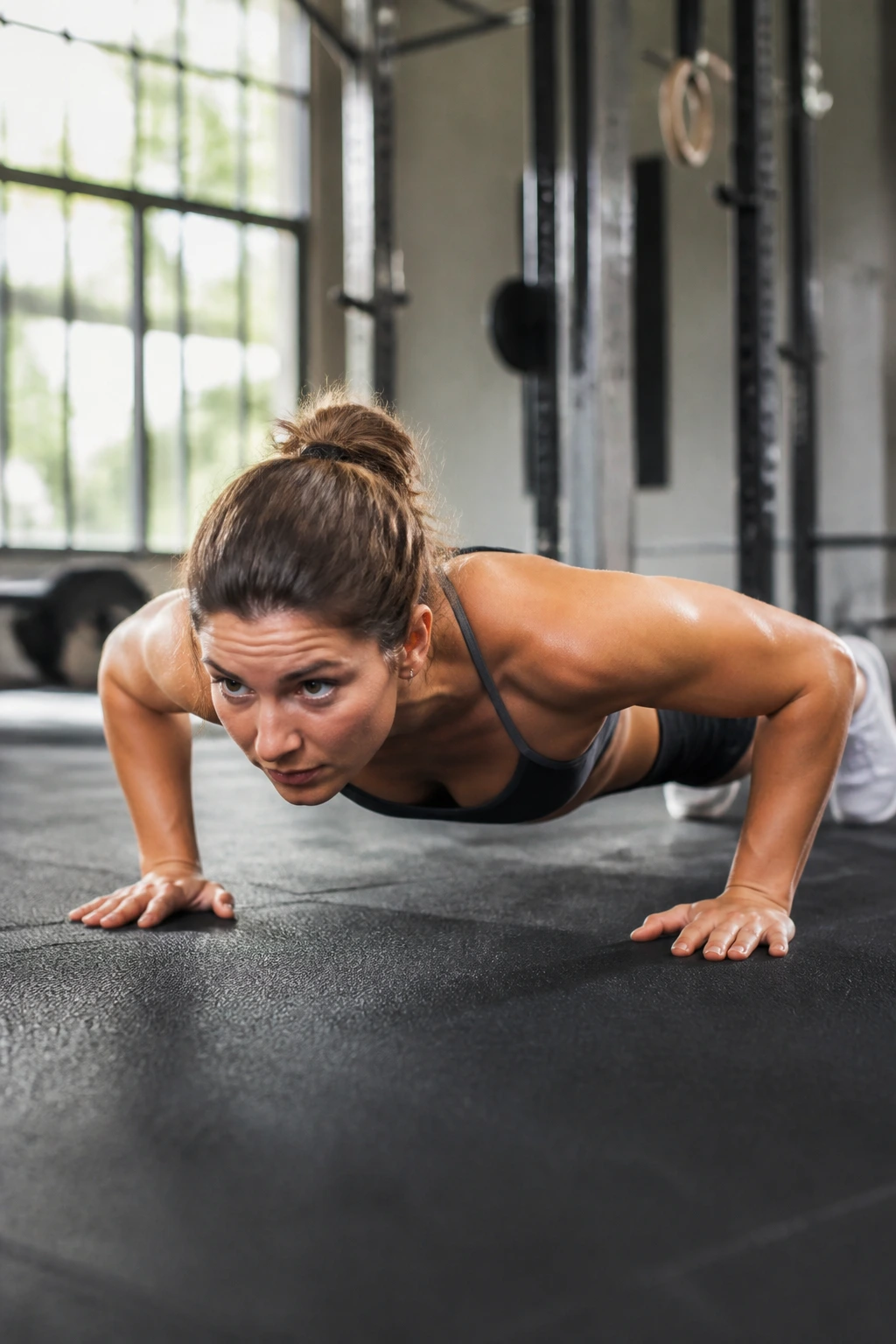
If you only pick one bodyweight upper-body HIIT drill, make it this one. Push-up ladders are brutally honest, and that’s the point.
Start with 10 reps, rest 20 seconds, then 8, 6, 4, 2. Or flip it and go 2-4-6-8-10 if you want a longer build. The ladder format keeps the pace high without asking for perfect endurance in one endless set.
Hands can go on the floor, on dumbbells, or on a sturdy bench for an incline version. Incline push-ups are not the “easy” choice; they’re the smart choice if your wrists or shoulders need a cleaner angle. I’d rather see five crisp incline reps than twelve sloppy floor reps with elbows flaring everywhere.
3. Renegade Row and Mountain Climber Combo
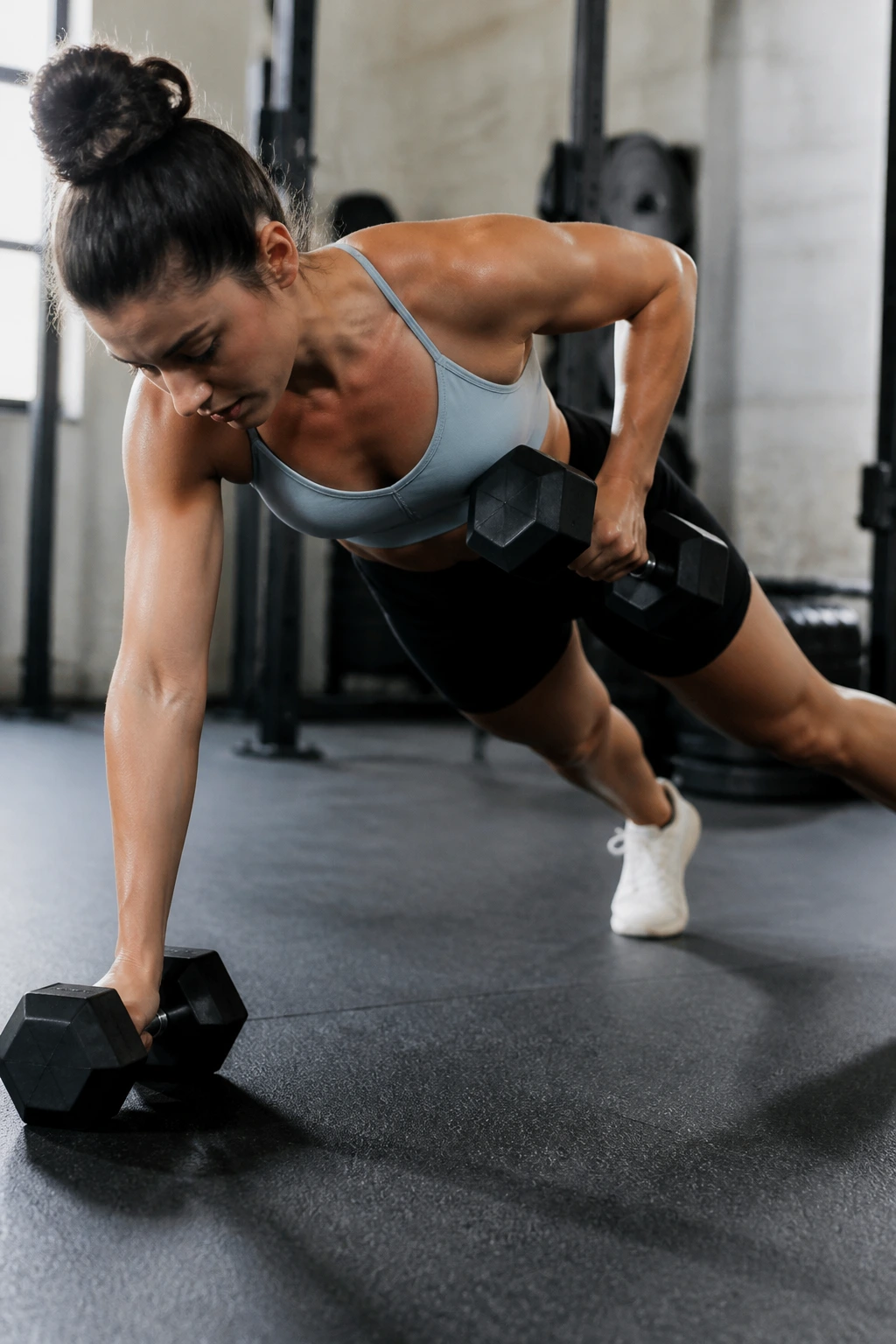
Want your back and core to wake up fast? This is the kind of workout that answers with a grin and a little regret.
Renegade rows force you to fight rotation, which is a fancy way of saying your torso has to stop wobbling while one arm works. Then mountain climbers spike the heart rate and give your shoulders almost no time to relax. It’s a solid mix, and it never feels boring.
How to Use It
- 40 seconds total: 2 rows per side, then mountain climbers for the rest of the interval
- 20 seconds rest
- Repeat for 5 rounds
Go slower than you think on the rows. If your hips swing open, the weight is too heavy or your feet are too narrow. A pair of 10- to 20-pound dumbbells is enough for many lifters, but form beats ego every time.
4. Dumbbell Clean and Press Intervals
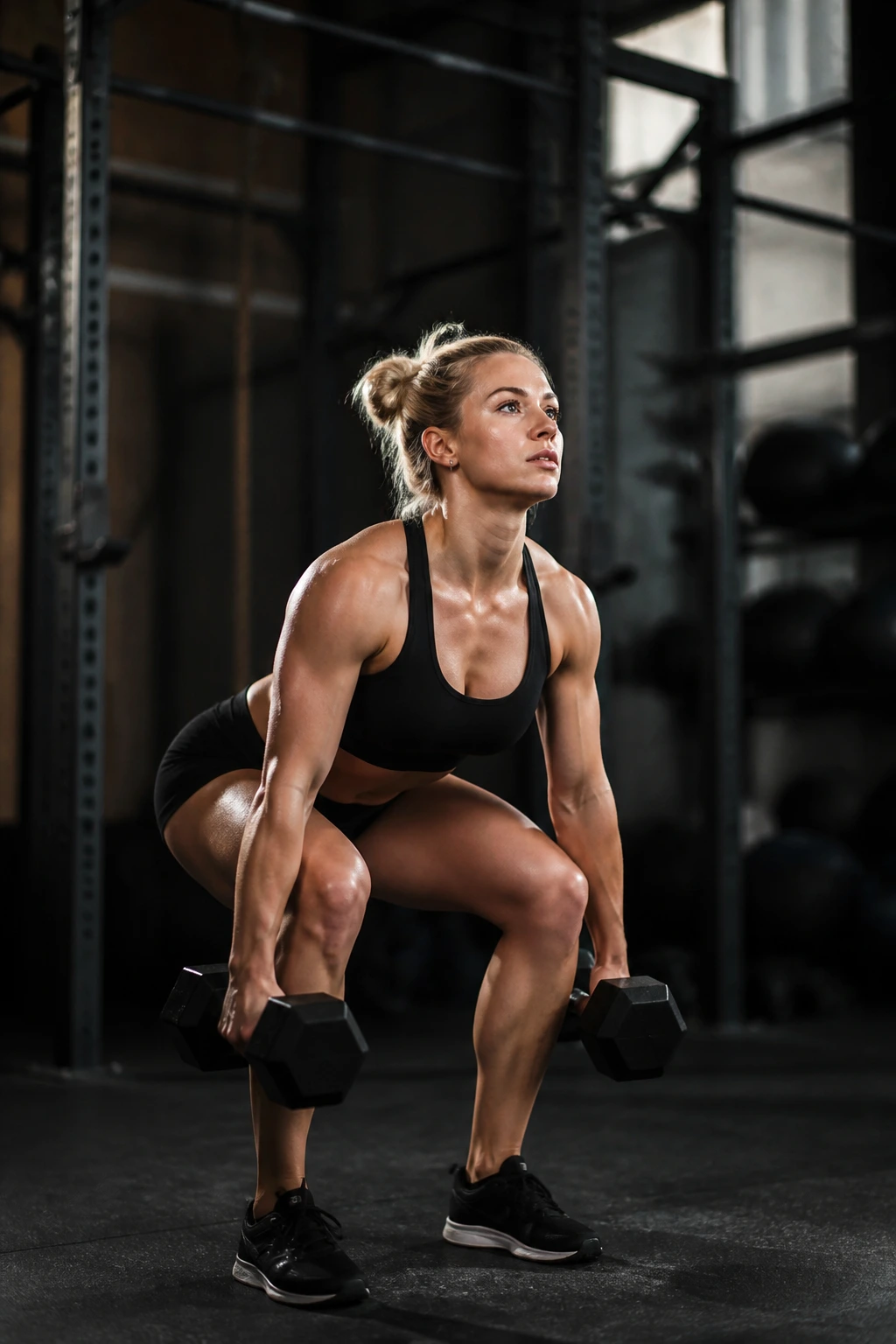
This one feels athletic in the best way. You hinge, pop the weights up, and drive them overhead before the burn settles in.
Use a pair of moderate dumbbells and work for 20 seconds on, 40 seconds off for 8 rounds. The shorter work window keeps the reps clean, which matters because cleans get ugly fast when people chase speed before control.
- Start with the weights near your shins.
- Pull them close to your body.
- Catch them at the shoulders.
- Press overhead with your ribs down.
The clean part should look smooth, not flung. If you’re muscling the dumbbells up with your lower back, the load is too heavy or your hinge needs more practice. This is a good workout for days when you want your upper body to feel powerful, not just tired.
5. Pike Push-Up and Shoulder Tap EMOM
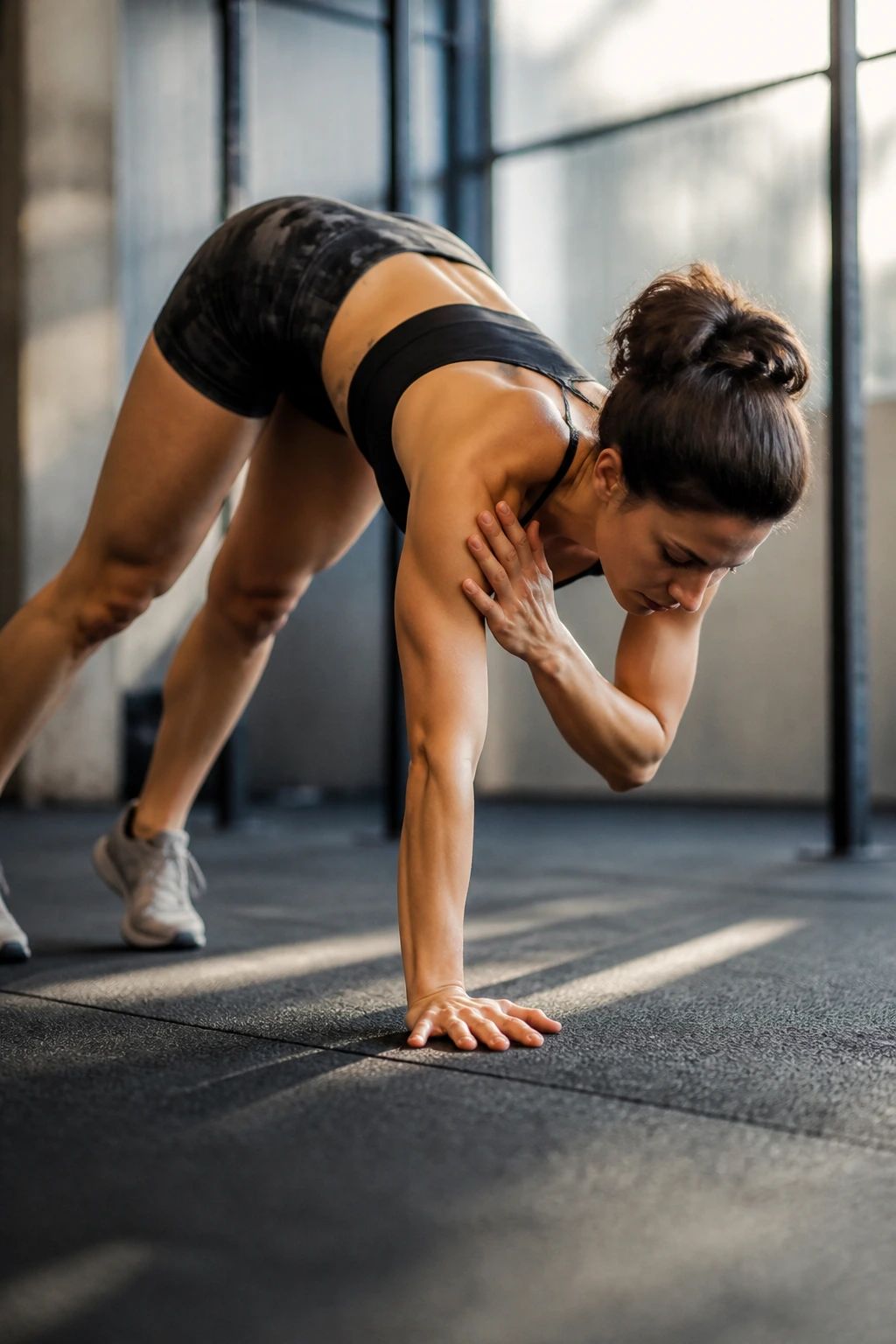
Every-minute-on-the-minute training sounds simple until minute four shows up. That’s where this workout starts paying rent.
Pike push-ups hit the front delts and triceps in a way regular push-ups don’t. Shoulder taps force the trunk to stay quiet while one hand leaves the floor, which is harder than it sounds if your core is lazy or your stance is too narrow.
Minute 1: 6 to 10 pike push-ups
Minute 2: 20 to 30 shoulder taps
Minute 3: rest or walk
Repeat that 4 times. If full pike push-ups are too much, keep your hands on a bench and your hips high. Do not rush the tap pattern—if your hips are swaying side to side, slow down and shorten the set.
6. Resistance Band Row and Pull-Apart Tabata
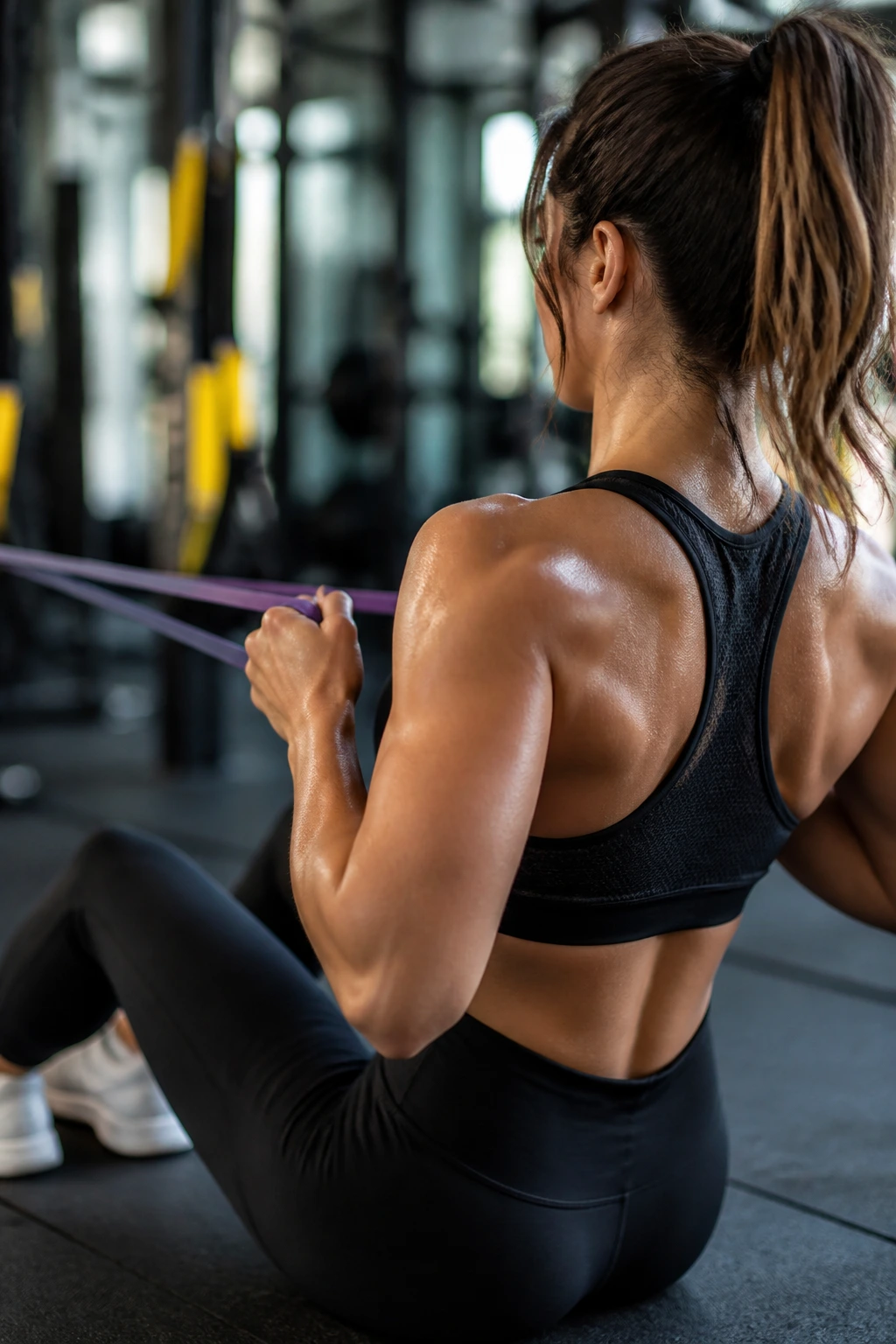
Bands do not get enough respect. They’re cheap, they travel well, and they make the upper back work in a way most people feel almost immediately.
This version is especially good if you sit a lot. Rows teach your shoulder blades to move back and down, while pull-aparts hit the rear delts and those smaller postural muscles that get sleepy during desk work. It’s not flashy. It works.
Compared with heavy dumbbells, bands give you more tension at the end of the pull, which is where sloppy form usually shows up. Use 20 seconds of work and 10 seconds of rest for 8 rounds. Alternate one round of rows, one round of pull-aparts.
Best fit: beginners, home workouts, warm-ups, and anyone whose shoulders prefer a smoother load curve. I like this as a recovery-friendly HIIT day when I still want to sweat without banging up my joints.
7. Triceps Dip and Kickback Burnout
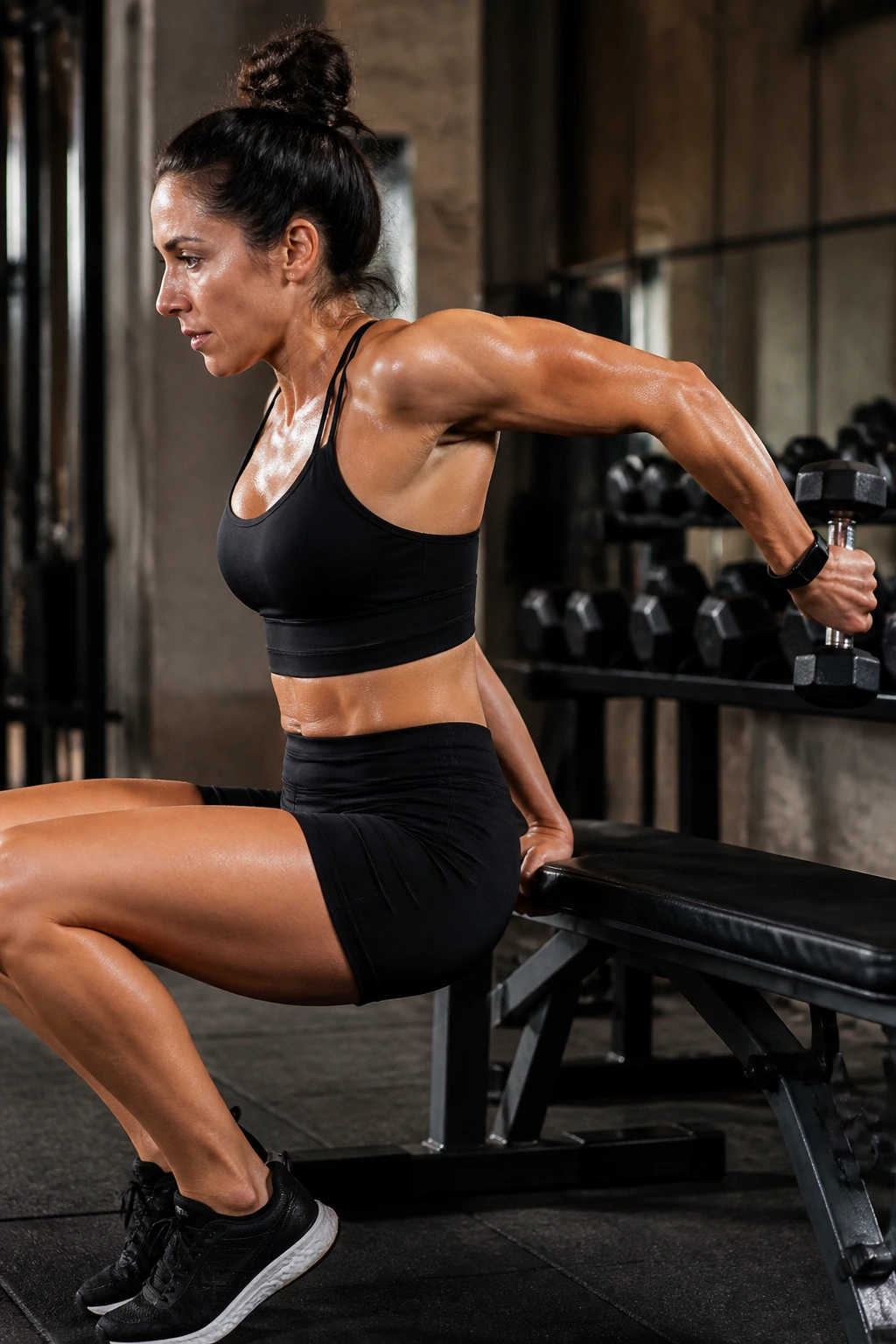
Chair dips can be controversial, and fair enough. If your shoulders hate them, skip them. If they feel good, they deliver a nasty little triceps hit.
The trick is to keep your shoulders back and your elbows pointed behind you, not flared out like chicken wings. Then pair dips with a fast kickback tempo using light dumbbells. The combination hits the back of the arms from two angles, and the heart rate climbs because there’s almost no break between positions.
What to Watch For
- Use a stable chair or bench
- Stop the dip when upper arms are about parallel to the floor
- Keep the kickbacks small and sharp
- Rest 30 seconds after each round
A clean plan is 10 dips, 12 kickbacks per arm, 3 to 5 rounds. Simple. Brutal. If your shoulders pinch, replace the dips with close-grip incline push-ups and keep the rest of the structure.
8. Battle Rope or Towel-Slam Blast
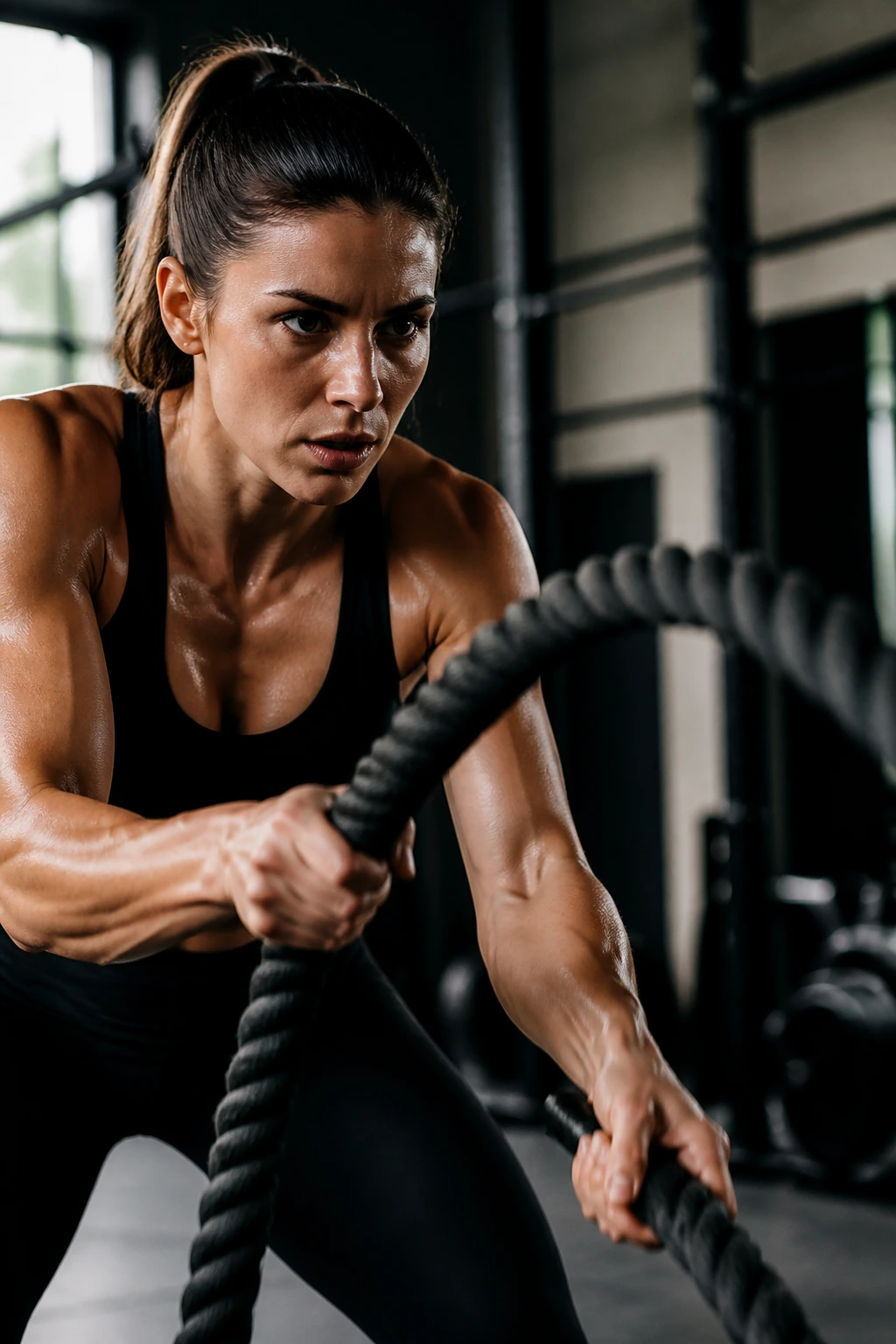
Battle ropes are one of those tools that make people look fitter just by showing up. The truth is less glamorous: they’re just a very efficient way to torch the upper body and lungs together.
If you have ropes, use them. If you don’t, a long towel or resistance band can still give you a fast-arm, high-tension substitute with overhead pulls, slams, and alternating waves. The point is to keep the arms moving while the trunk stays honest.
I like 15 seconds hard, 15 seconds easy for 10 total rounds. That keeps the pace sharp and prevents the sloppy, dead-armed flop that happens when people try to go all-out for too long. Keep your knees soft and your shoulders down. The ropes should move from the arms and back, not from a full-body lurch.
9. Medicine Ball Slam and Walkout Circuit
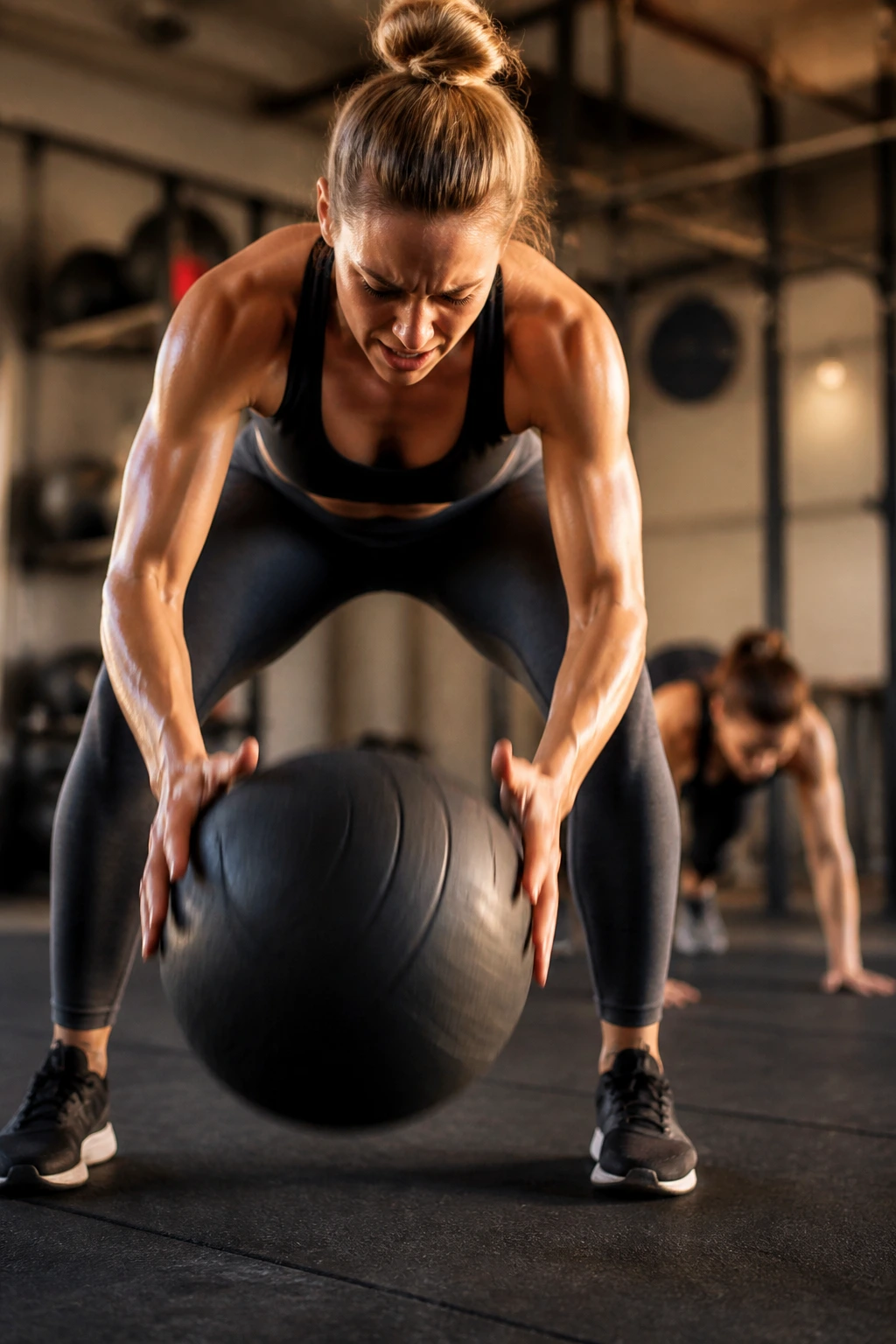
Can you get a full upper-body hit without needing a bench, bar, or machine? Yes. A medicine ball helps, but the real work comes from combining explosive slams with a controlled walkout.
The slam should sound heavy and crisp. Catch the ball on the bounce if your ball allows it, or dead-stop it and reset quickly. Then walk your hands out to a plank, hold for one beat, and return. That little pause keeps the core from going on autopilot.
How to Use It
- Slam the ball 8 to 10 times with hard, fast effort.
- Walk out to plank and back 5 times.
- Rest 30 to 45 seconds.
- Repeat for 4 rounds.
The ball weight does not need to be huge. Six to 10 pounds is enough for many people. Bigger balls can feel impressive and still turn into slow, ugly reps.
10. Half-Kneeling Press and Dead Bug Hold
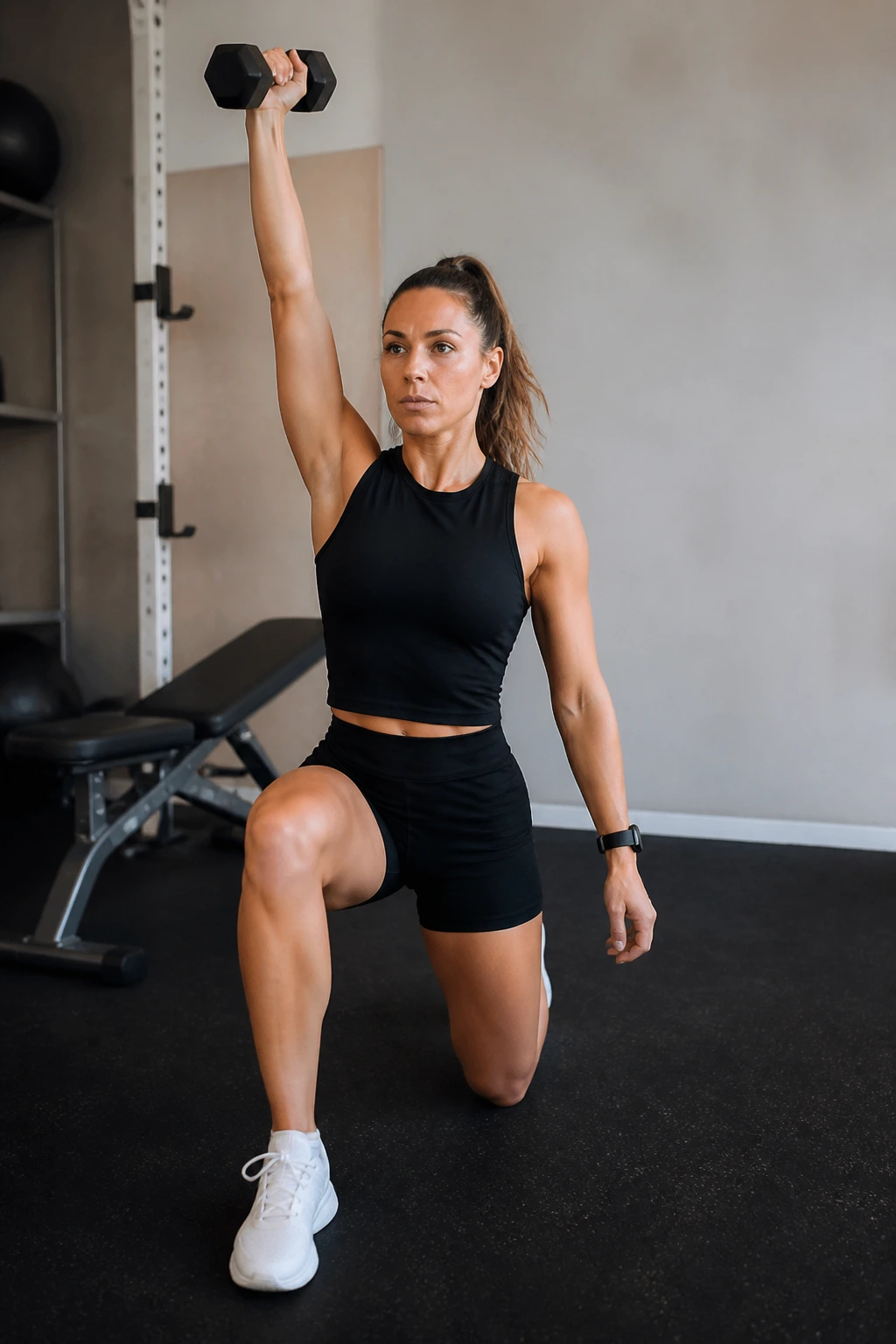
Half-kneeling work does two useful things at once: it quiets the lower body and makes the upper body carry the load without cheating. That makes it a favorite of mine for days when I want cleaner pressing.
Set one knee on the floor, the other foot planted. Press a dumbbell or kettlebell overhead on one side, then hold a dead bug position on the floor or bench between sets. The kneeling stance makes balance more interesting, and the core has to fight to keep your torso from drifting.
- 8 presses per side
- 20-second dead bug hold
- 30 seconds rest
- Repeat 3 to 4 rounds
One small thing matters here: keep your glute on the kneeling side squeezed. It helps lock your pelvis in place and keeps the press from turning into a backbend.
11. Plank Up-Downs and Cross Punches
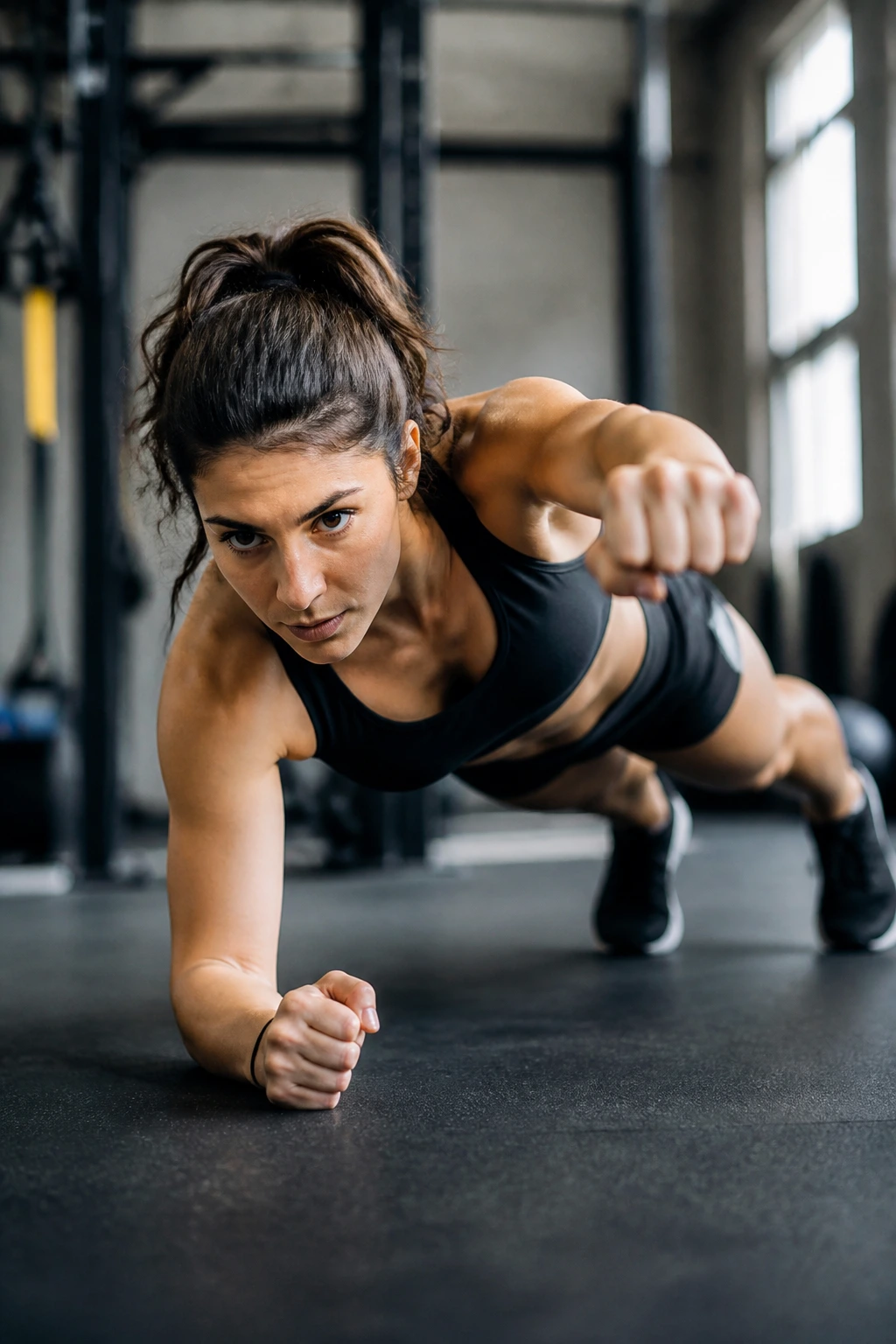
Plank up-downs look like cardio until your triceps get the memo. Then they start feeling like upper-body conditioning with a grudge.
Move from forearm plank to high plank and back with control. Then throw cross-body punches from a standing or split stance to keep the shoulders active while the heart rate stays high. The combination works because it asks for stability, speed, and shoulder endurance in the same minute.
You do not need long sets. 30 seconds of up-downs, 30 seconds of punches, 30 seconds rest is enough to make this one worth doing. If your lower back sags during the plank changes, widen your feet and shorten the range. Clean reps beat rushed ones here.
A good rule: if your shoulders are burning but your midsection is asleep, you’re probably moving too fast.
12. Incline Push-Up and Arnold Press Ladder
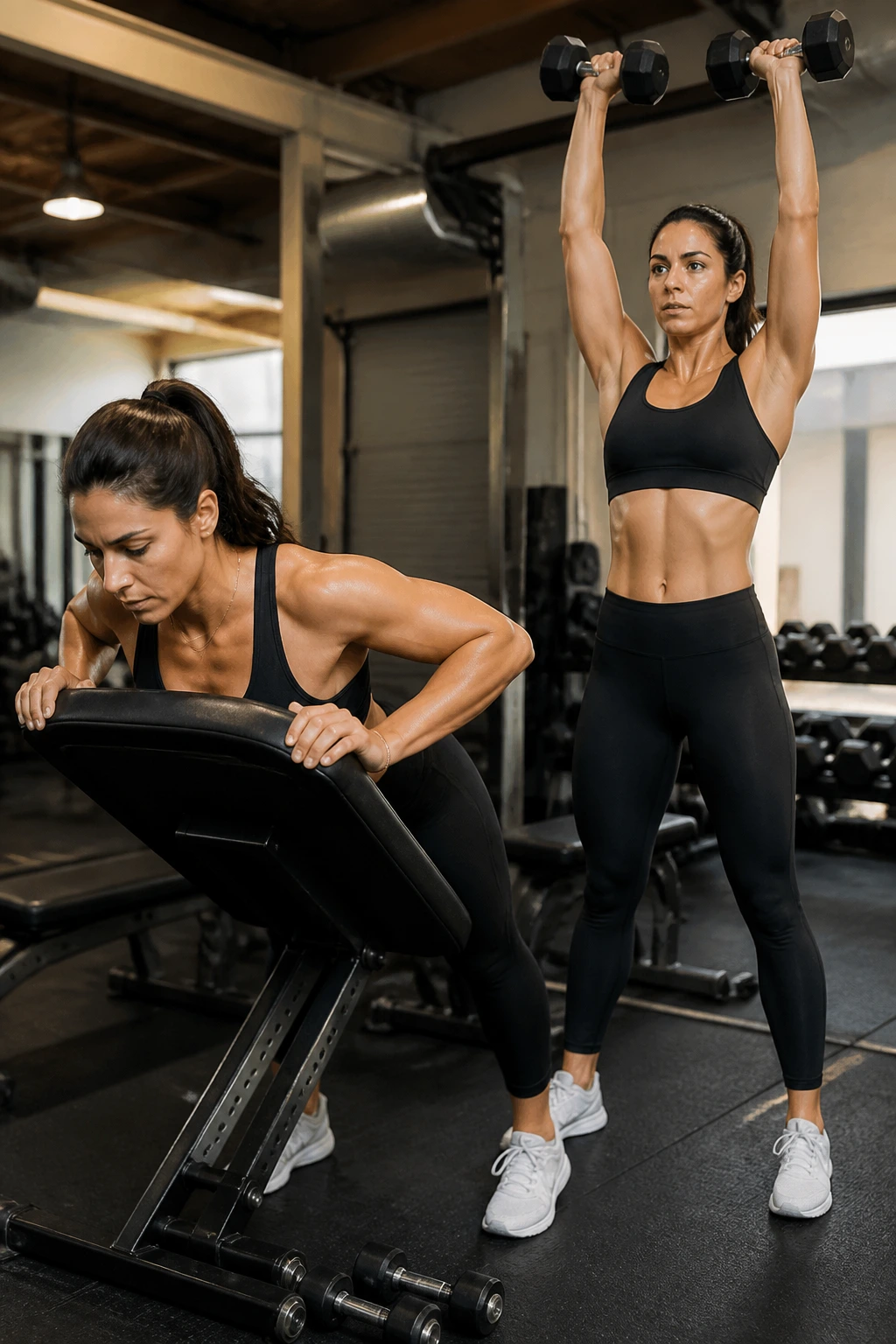
Compared with full floor push-up circuits, this version is friendlier on the joints and easier to control. That makes it a strong choice for beginners, postpartum return, or anyone rebuilding after a break.
The incline push-up lets you own the bottom position without collapsing through the chest. The Arnold press then asks the shoulders to rotate and press in one smooth move, which gives the delts a broad challenge without needing heavy loads. It’s a good pairing, and the rhythm feels a little cleaner than some of the more chaotic HIIT sets.
Use a ladder of 5 incline push-ups, 8 Arnold presses, 4 push-ups, 6 presses, 3 push-ups, 4 presses. Rest 30 seconds, then repeat once or twice. If your wrists don’t love the floor, keep the incline high enough that your palms feel solid and your elbows track naturally.
13. Bear Crawl and Shoulder-Tap Sprints
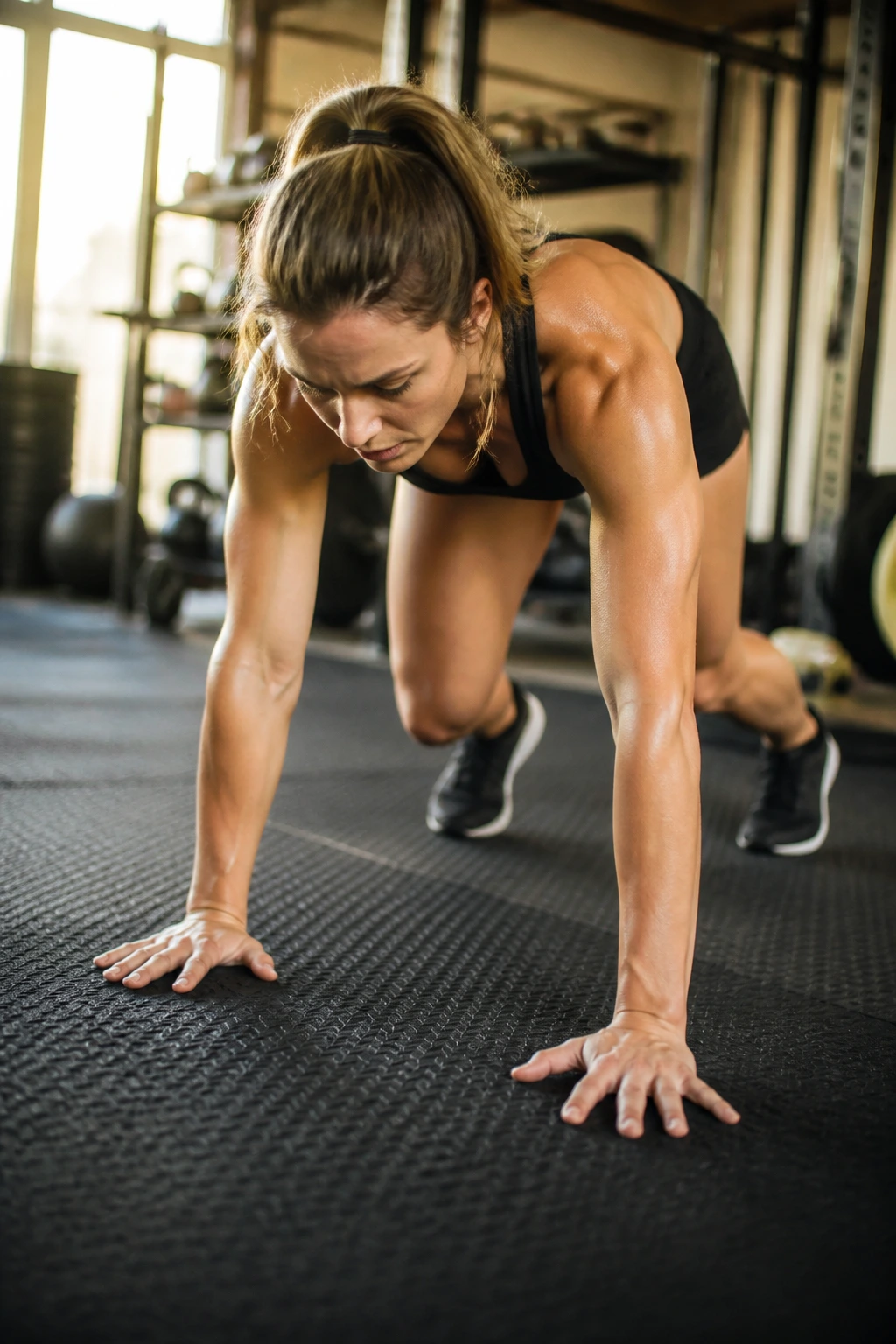
Bear crawls are ugly in the most useful way. They wake up the shoulders, serratus, wrists, and core without asking you to stand around and think about it.
Move forward for 10 to 15 feet, then backward for the same distance. After that, drop into a short burst of shoulder taps. The crawl keeps the upper body under load, while the taps test whether you can keep your pelvis from twisting like a steering wheel.
Why It Works
A bear crawl looks simple until your shoulders start doing all the stability work. That’s the part I like. It tells the truth fast.
- Crawl 20 seconds forward
- Crawl 20 seconds backward
- Do 20 shoulder taps
- Rest 40 seconds
- Repeat for 4 to 6 rounds
If your knees hover too high, your hips will bounce. If they’re too low, the whole thing turns into a bad plank. Aim for that middle zone where the floor feels close but not easy.
14. Floor Press and Glute Bridge Hold
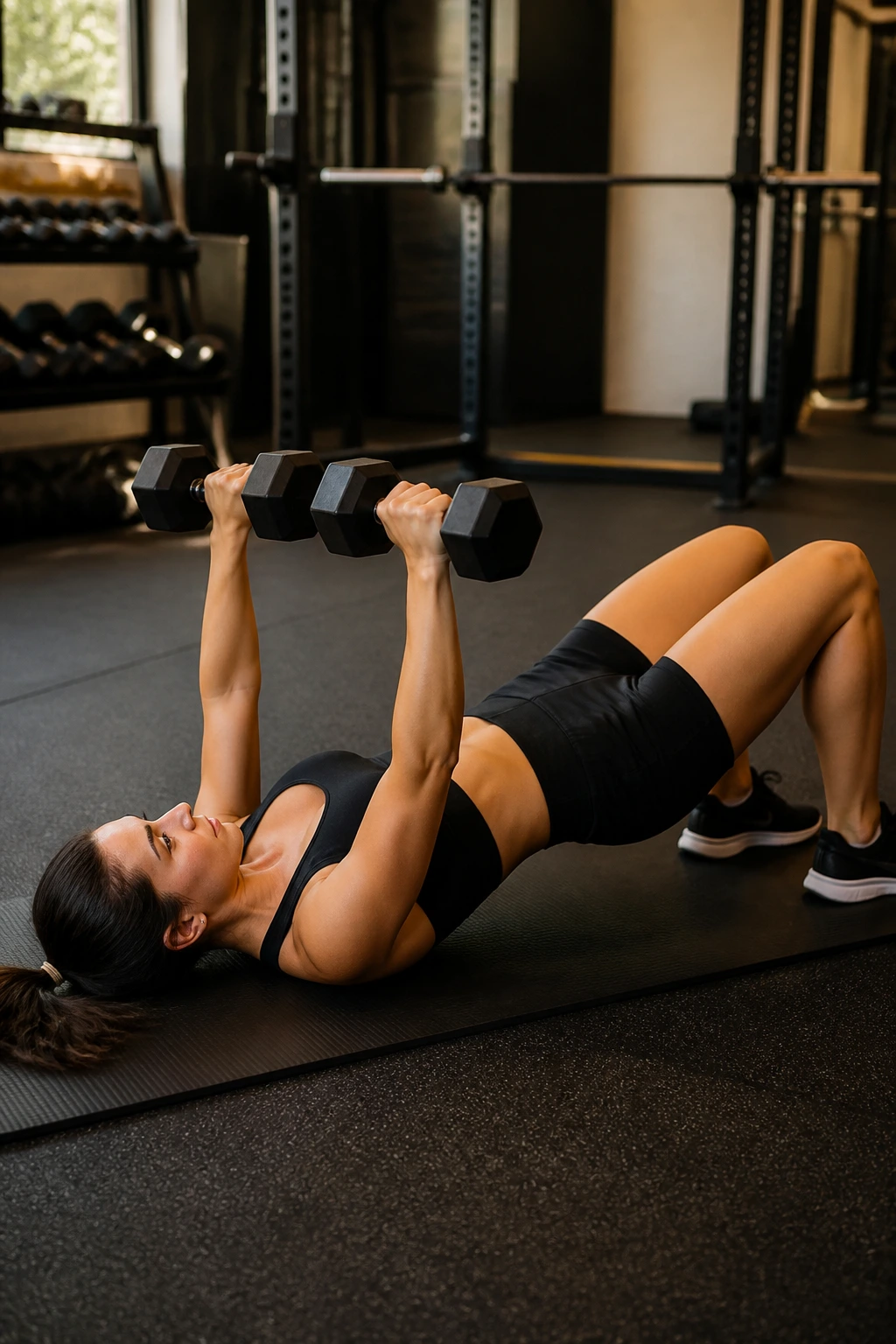
This is the kind of pairing that looks calmer than it feels. The floor press gives your chest, triceps, and front delts a stable pressing pattern, and the glute bridge hold keeps your body locked into a strong line while the upper body works.
I like this one for people who want to train hard without a lot of joint chatter. The floor limits range in the press, which is useful if your shoulders get cranky at the bottom of a bench press. The bridge hold quietly taxes the core and glutes so your ribs don’t flare during every rep.
Press for 12 reps, hold the bridge for 20 seconds, then rest 30 seconds. Do 4 rounds. Use dumbbells that let the last 2 reps feel demanding but still controlled. If the bridge starts cramping your hamstrings, move your heels a little closer to your seat.
15. Dumbbell Snatch and Overhead March
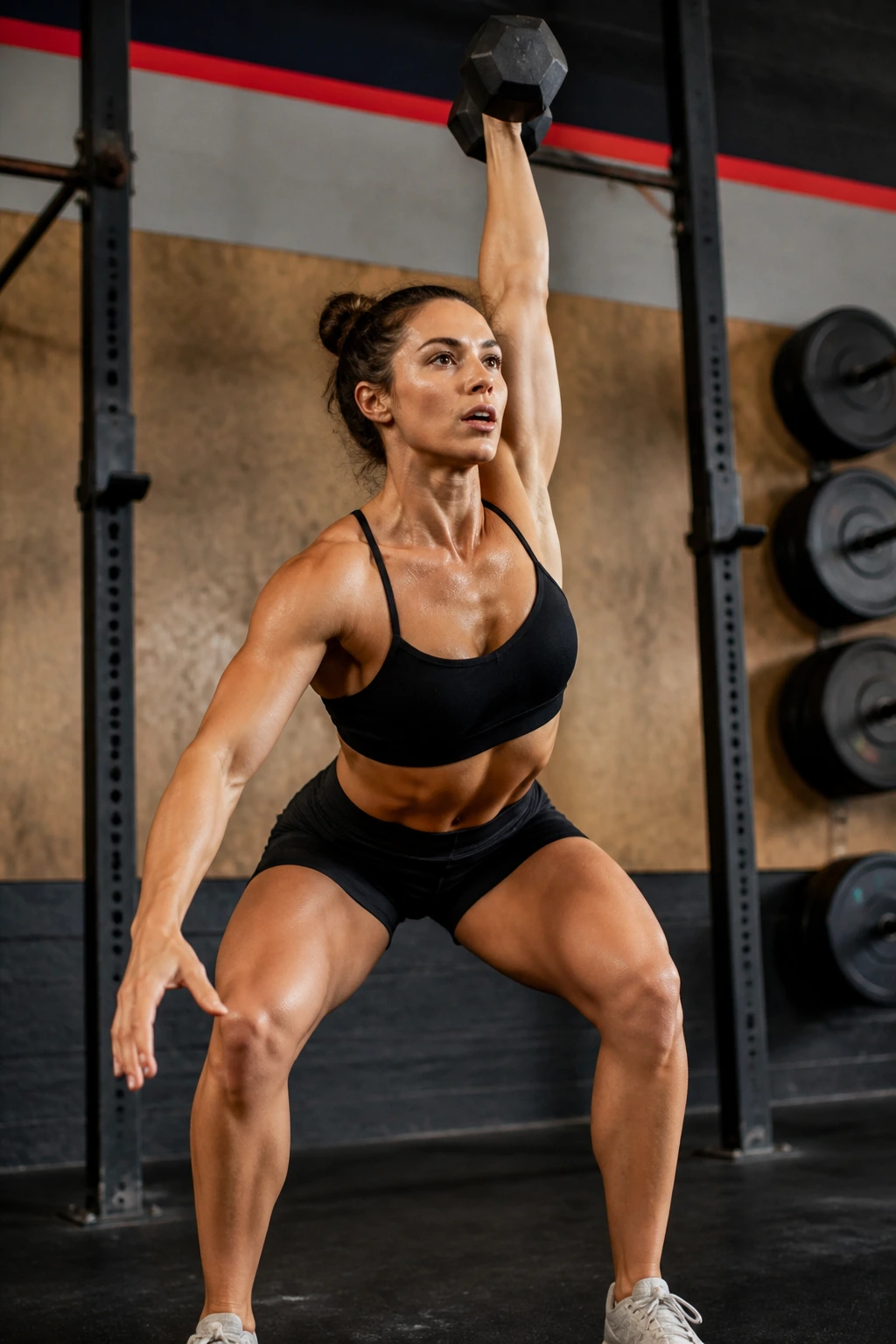
Can a single-arm snatch belong in a beginner-friendly upper-body HIIT plan? Sometimes, yes. It depends on the load and how honest you are about technique.
The dumbbell snatch is explosive, but it also teaches a clean path from floor to overhead. Once the weight is locked out, an overhead march finishes the job by making your shoulders hold steady while your legs move. That little bit of asymmetry is where the work happens.
How to Use It
Start with a light to moderate dumbbell—often 10 to 25 pounds is enough, and lighter is fine if you’re new. Do 6 snatches per arm, then 20 marching steps overhead, then rest 45 seconds. Repeat 3 to 5 times.
Do not yank the bell with your arm. Drive through the hips, keep the weight close, and catch it softly overhead. If the overhead position feels shaky, use a simple high pull instead and keep the march.
16. Chest Fly and Single-Arm Row EMOM
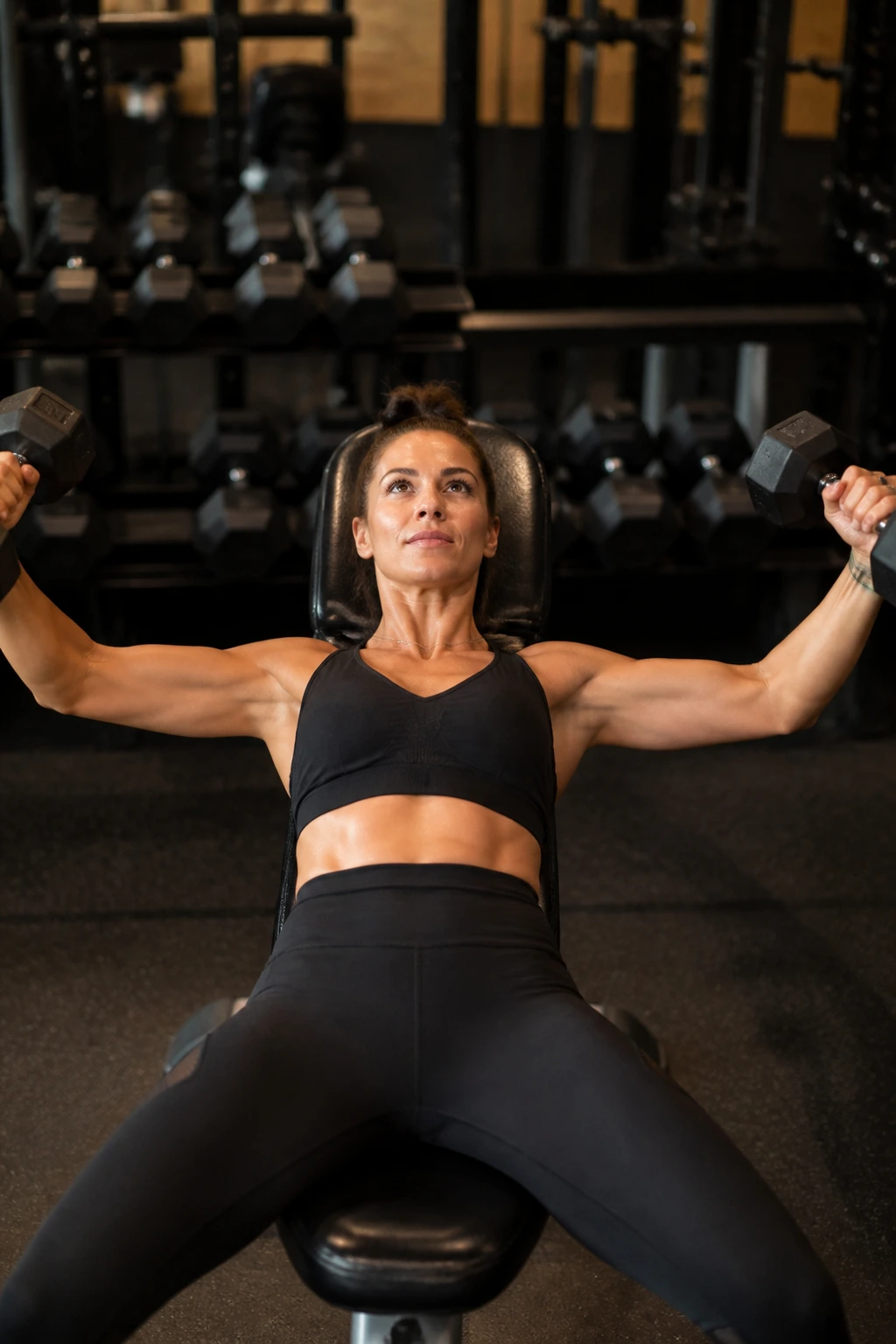
Here’s a useful pairing for people who want a chest and back session that doesn’t drag on forever. The fly opens the front of the body under control, and the row pulls the shoulder blade back where it belongs.
A bench helps, but a floor fly can work too if you keep the range small. The row is the anchor here. That’s the move that usually matters more, because a lot of lifters are already a little chest-dominant and under-rows the rest of the week.
Minute 1: 10 chest fly reps
Minute 2: 10 single-arm rows per side
Minute 3: rest
Repeat for 4 cycles. Use a weight that feels almost too light on the fly and honest on the row. If your elbows bend a ton during the fly, you’ve turned it into a press. That’s not the assignment.
17. Spider Push-Up and Wide Row Combo
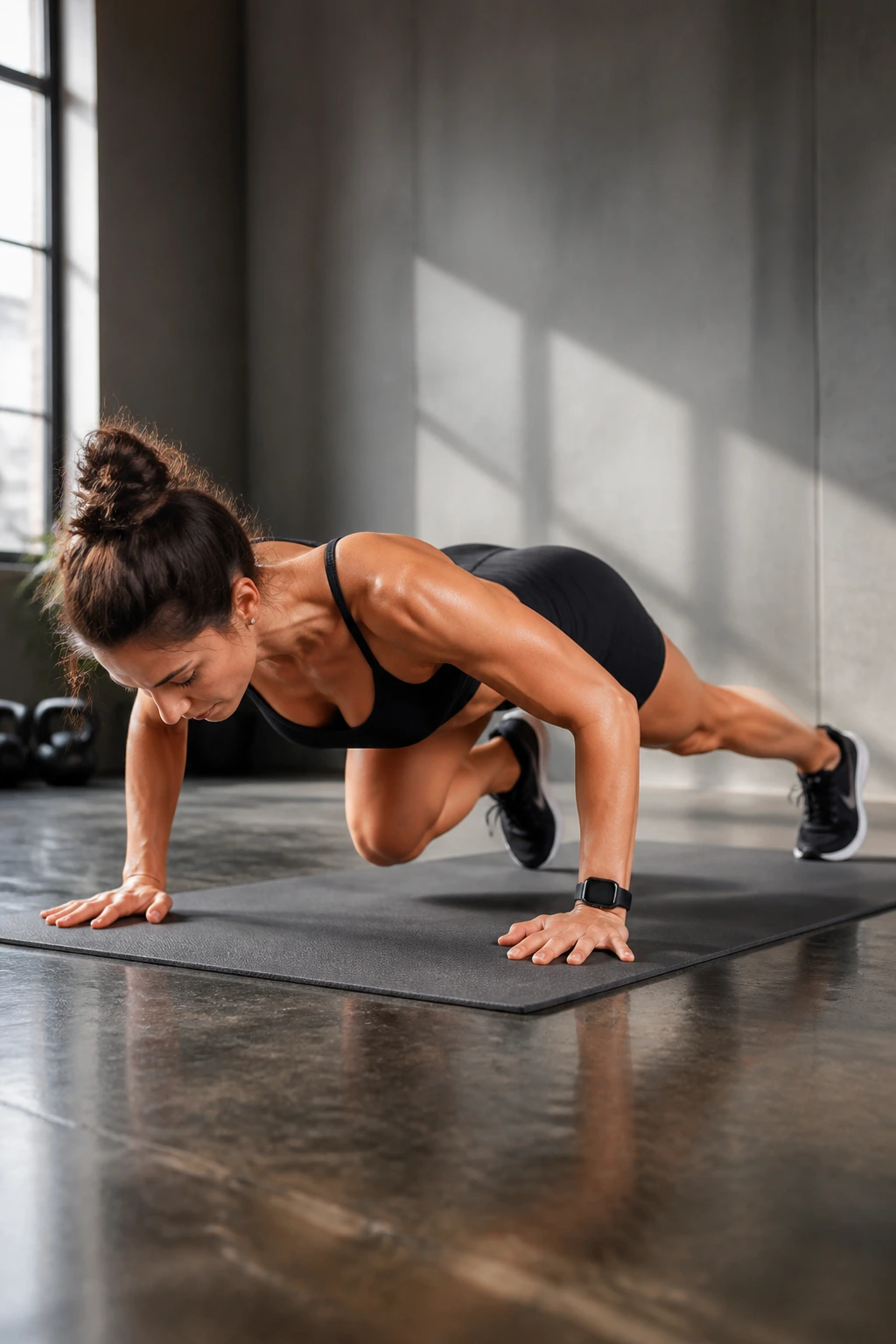
Spider push-ups do a neat thing: they challenge the chest, shoulders, and core while one knee drives out toward the elbow. Then a wide row cleans up the back side of the movement and keeps the pull pattern from getting ignored.
This workout is a good reminder that upper-body HIIT does not need to be frantic to be hard. A slower, cleaner rep can beat a fast one when the body has to own awkward positions. That’s especially true here, because both moves expose form flaws fast.
Try 8 spider push-ups, then 12 wide rows, then rest 30 to 40 seconds. Do that 3 or 4 times. If spider push-ups make your wrists grumpy, keep the hands elevated on a bench and cut the range a little. Quality matters more than depth.
18. Speed Punches and Isometric W-Hold
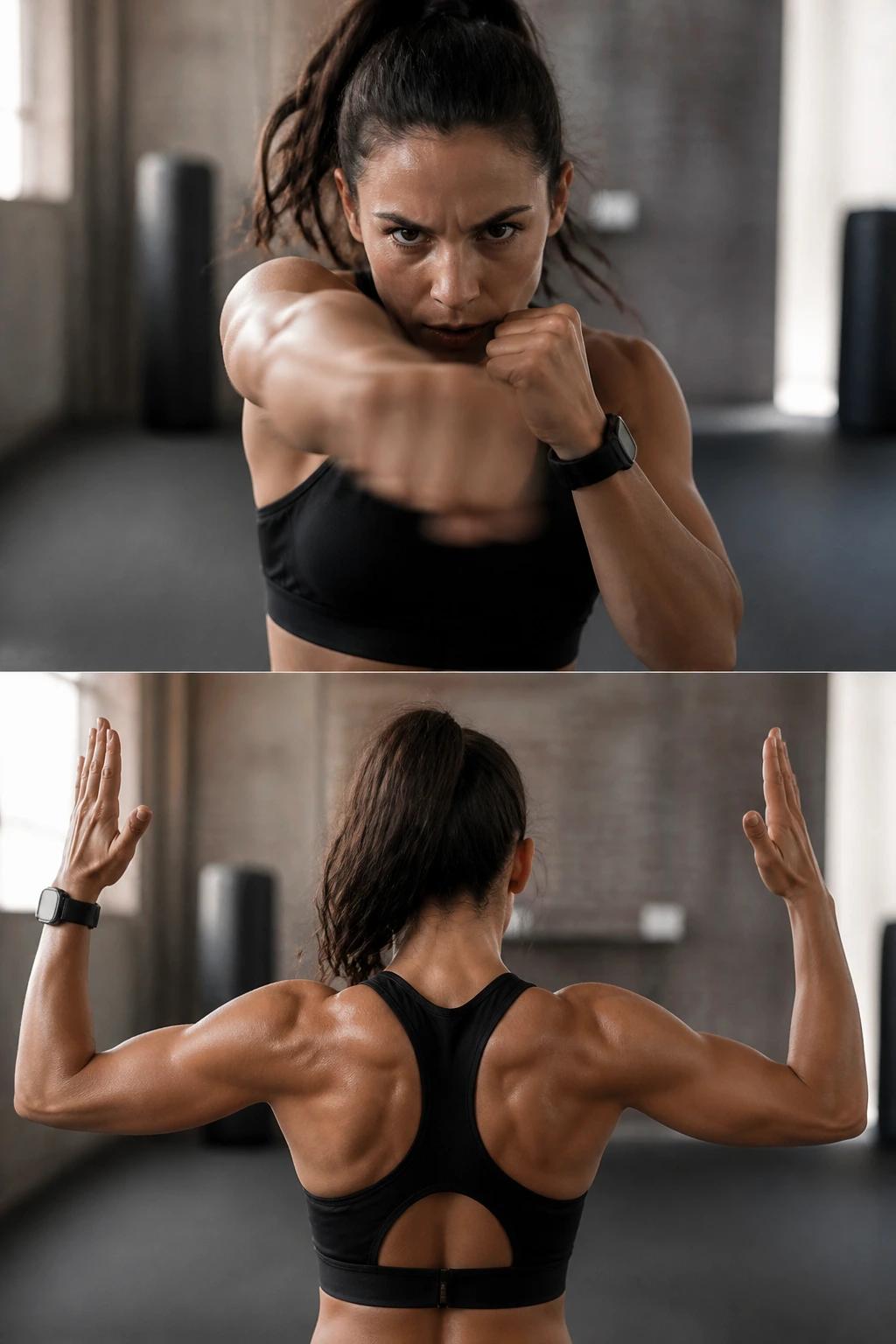
Not every upper-body HIIT session needs heavy motion. Some days, your shoulders will benefit more from a sharp speed burst followed by a hard hold.
Speed punches train fast arm turnover and get the heart rate up. The isometric W-hold—arms bent, elbows down, shoulder blades pulled back—hits the upper back and rear delts in a way that feels almost too simple until minute two arrives. Then it starts talking.
Compared with pure punching drills, this version gives you a posture reset too. It’s the one I’d hand to someone who spends too much time rounded over a laptop.
Use 20 seconds of punches, 20 seconds of W-hold, 20 seconds rest. Repeat 6 rounds. Keep the punches fast but not wild, and keep the shoulders low during the hold. If your neck starts burning before your upper back does, you’re shrugging.
19. Offset Farmer Carry and Push-Press Intervals
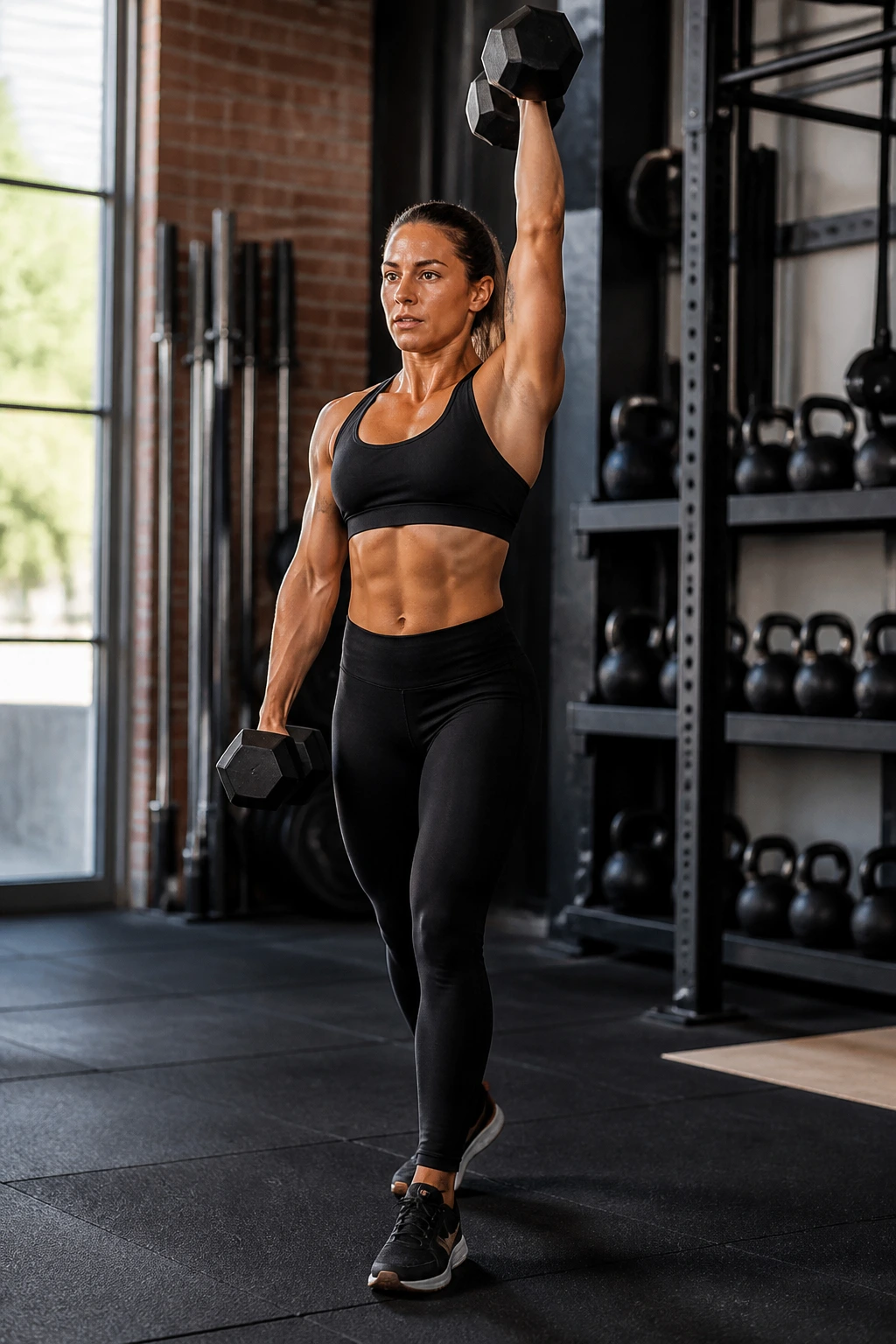
One dumbbell in one hand changes everything. Offset carries force your torso to resist leaning, and that anti-tilt challenge is a bigger upper-body test than people expect.
Add a push-press on the same side, and the shoulders have to handle force transfer from the floor to overhead. The lower body helps a little on the drive, but the shoulders still have to finish the rep cleanly. That’s why this one feels athletic without needing a ton of space.
Quick Setup
- Carry one heavy dumbbell for 30 to 40 steps
- Do 6 push-presses per side
- Rest 30 seconds
- Repeat for 4 rounds
If one side feels much harder than the other, that’s not a surprise. Most people have a stronger carrying side. Start with the weaker side first and keep the torso tall, not twisted. A slouching carry turns into a waist workout, and that’s not the goal.
20. Mixed Upper Body HIIT Finisher

If you want one session that pulls the whole upper-body idea together, this is the one I’d keep on hand. It mixes pushing, pulling, punching, and bracing without leaning too hard on any single move.
Use 40 seconds work, 20 seconds rest for 5 rounds:
- Round 1: shadowboxing
- Round 2: incline push-ups
- Round 3: dumbbell rows
- Round 4: plank shoulder taps
- Round 5: overhead press
Then rest 2 minutes and repeat once if you have gas left. The sequence matters less than the pace. You want the last round to feel slightly ragged but still clean enough that you’d be willing to do it again tomorrow.
This is also the easiest one to scale. Swap in bands, bench push-ups, or lighter dumbbells if needed. Go heavier on rows than you think, lighter on punches than your ego wants, and keep the rest honest. That balance is what makes upper-body HIIT useful instead of random.
If you’re building a weekly rhythm, rotate 3 or 4 of these workouts across the week and keep at least one day between the harder pressing sessions. Shoulders like variety. They also like recovery more than most people do.
