



Some muscles refuse to grow until you stop asking the big lifts to do all the work. Side delts, rear delts, calves, arms, and parts of the chest often need a cleaner signal than a squat, press, or row can give them.
That is where isolation exercises earn their keep. They strip away a lot of the noise, let you drive tension straight into one muscle, and make it easier to see whether the target is actually doing the work or whether your traps, lower back, or hips are quietly stealing the set.
That matters more than people like to admit. A muscle that stays small is often a muscle that never gets enough direct volume, enough tension at long muscle lengths, or enough honest reps close to failure. You can train hard for a long time and still miss that last piece.
Start with the side delts. They answer fast.
1. Dumbbell Lateral Raise
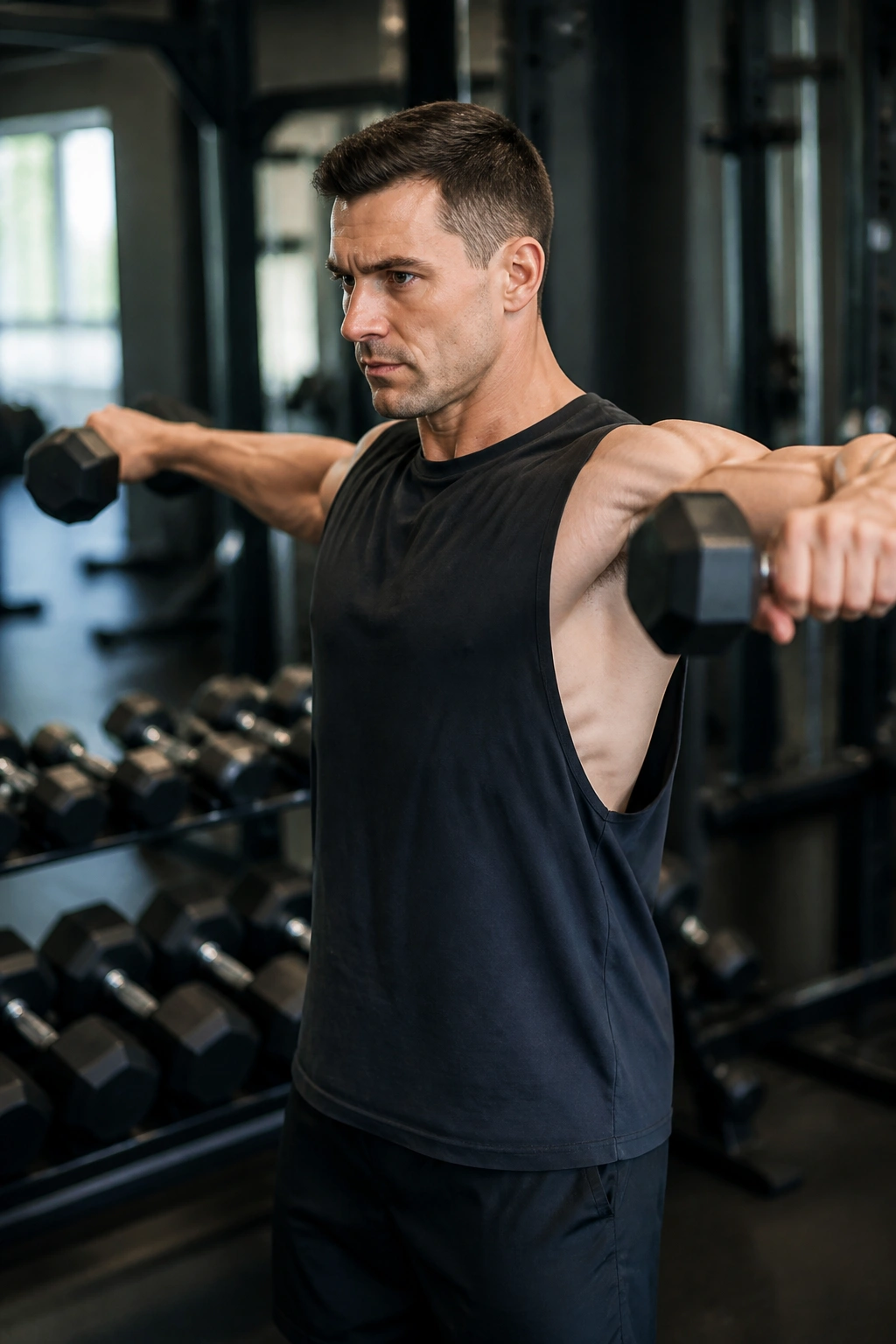
The dumbbell lateral raise is still the easiest way to make a stubborn shoulder look wider. It looks simple, and that is part of the point. You are taking the side delt out of the chaos of pressing and giving it a job it cannot dodge.
Why It Works for Stubborn Side Delts
Keep a slight bend in the elbows, lean forward a touch, and raise the weights until your upper arms reach about shoulder height. Do not shrug the dumbbells up. If the top of the movement turns into a trap exercise, the side delts are getting robbed.
A one-sentence cue helps here: lead with the elbows, not the hands. That small shift keeps the shoulder doing the work instead of the forearms and upper traps.
- Use 2 to 4 sets of 12 to 20 reps.
- Stop the lift around shoulder height or a hair below.
- Lower under control for about 2 seconds.
- Keep the wrist neutral or slightly turned in, not cranked hard downward.
The burn shows up fast. Good. That is the point. If you can swing a pair of dumbbells forever, the weight is probably too light or the form is too loose.
2. Cable Lateral Raise
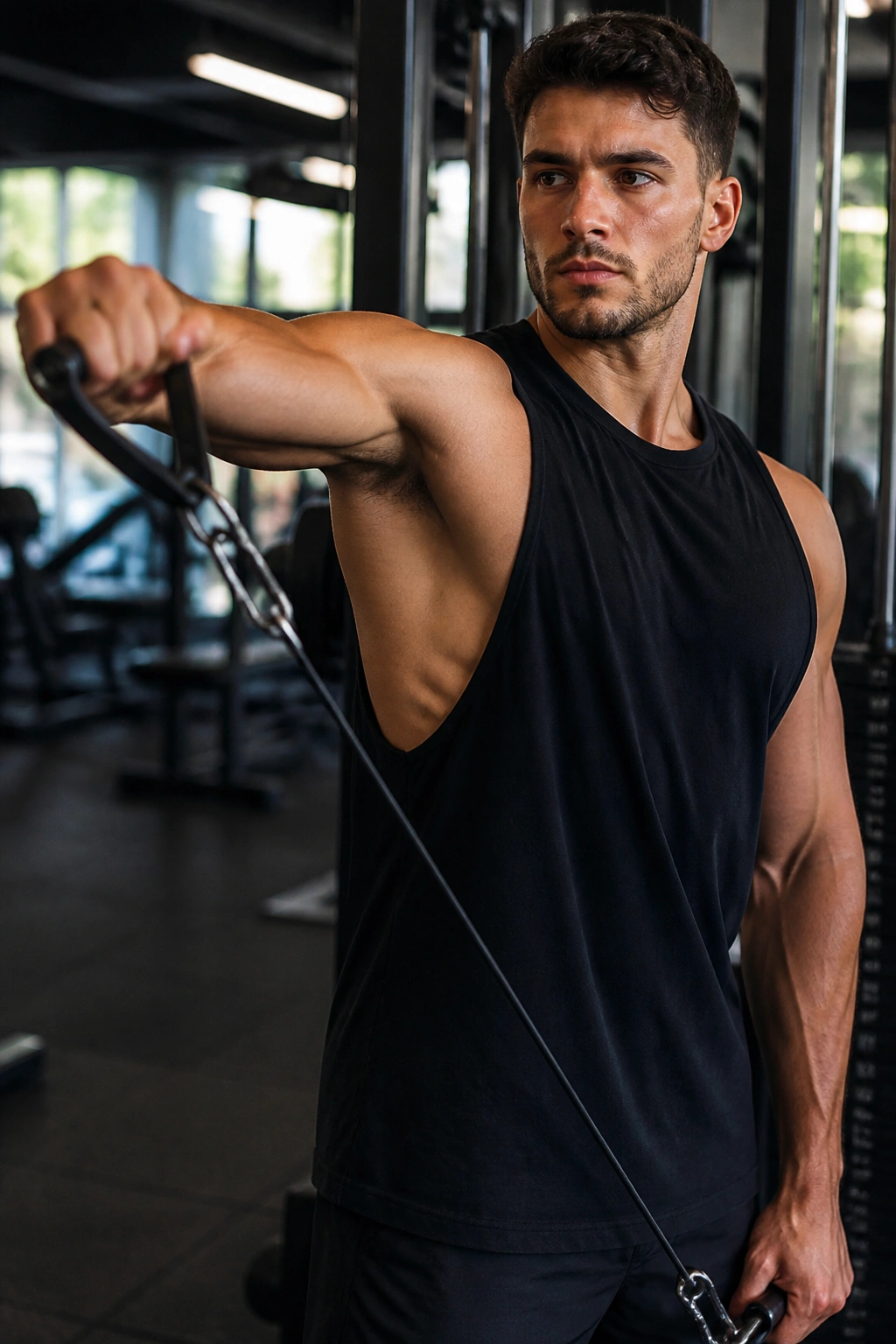
Dumbbells are fine, but cables keep tension where dumbbells often lose it: at the bottom of the rep. That makes the cable lateral raise a sneaky strong choice when side delts have been ignoring everything else.
Set the pulley low, stand a little away from it, and let the working arm cross slightly in front of your body before you raise it out to the side. The line of pull feels smoother than dumbbells, and the target muscle stays loaded for more of the arc.
What Makes It Different
The best part is the bottom half. With a cable, the delt still has to work when the arm is near your thigh, which is where dumbbell raises often feel almost too easy. That early tension matters if your shoulders only seem to respond when you get out of the hard part of the rep.
Try this for a while:
- 10 to 15 reps per side
- A controlled 1-second pause near the top
- Slight torso lean away from the stack if you need more room
- One arm at a time, so you do not cheat with momentum from the other side
It feels a little stricter. That is a good thing.
3. Rear Delt Fly
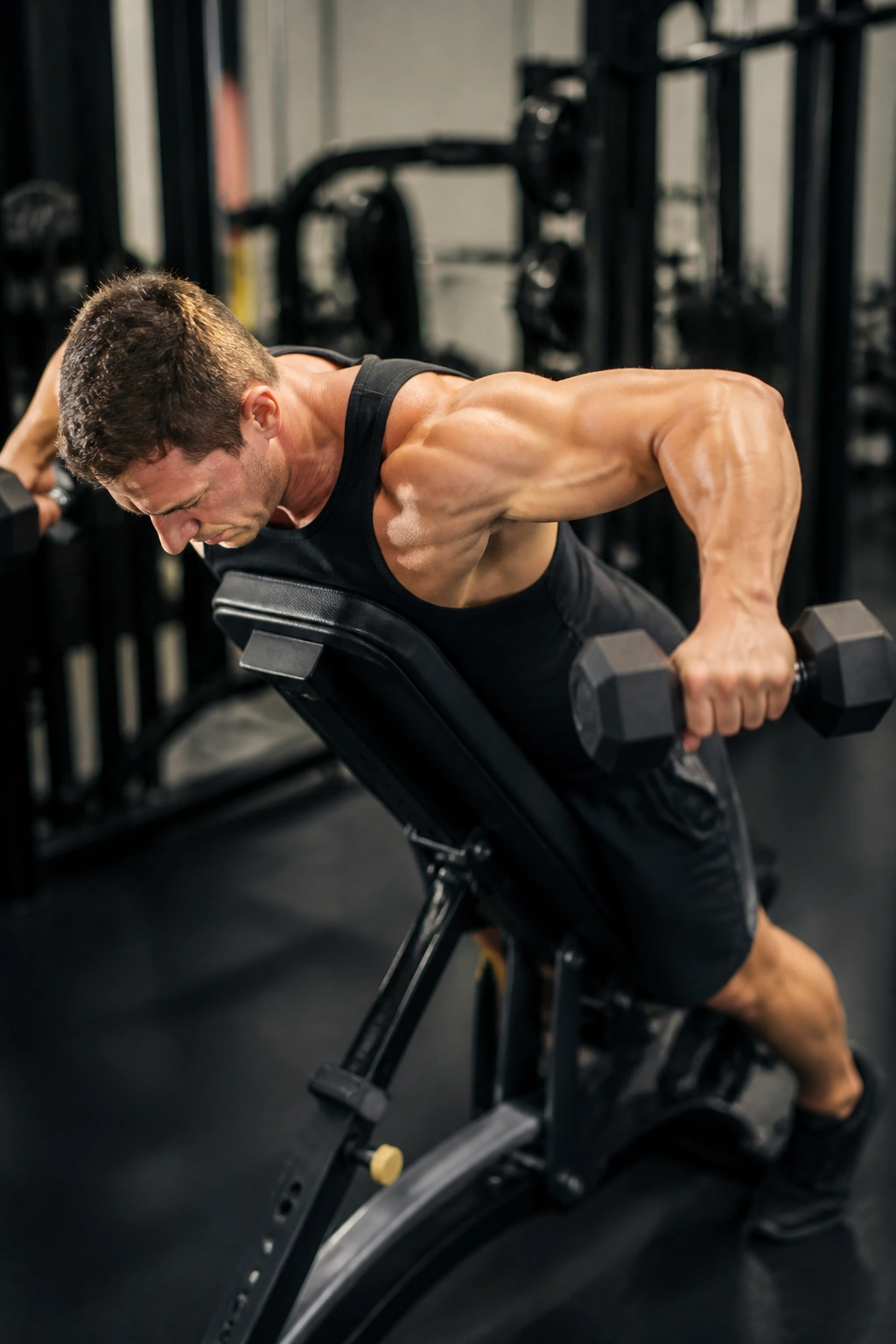
Rear delts are the quiet troublemaker in a lot of physiques. They sit there behind all the pressing, all the front-delt work, all the chest focus, and then act like they never got invited.
A rear delt fly fixes that by making horizontal abduction the whole game. You can do it on an incline bench with dumbbells, on a machine, or with cables. I like chest support when the goal is pure rear-delt work, because it removes the lower back from the conversation.
Keep the Shoulders Honest
The biggest mistake is turning the movement into a tiny row. That pulls the mid-back in too hard. Instead, think about moving the elbows out and slightly back while keeping the chest anchored.
- Use 12 to 20 reps.
- Keep the elbows softly bent.
- Stop if the top of your neck starts doing the work.
- Lower slowly until you feel the rear delts lengthen.
One clean set here can light up shoulders that have been snoozing for months.
4. Face Pull
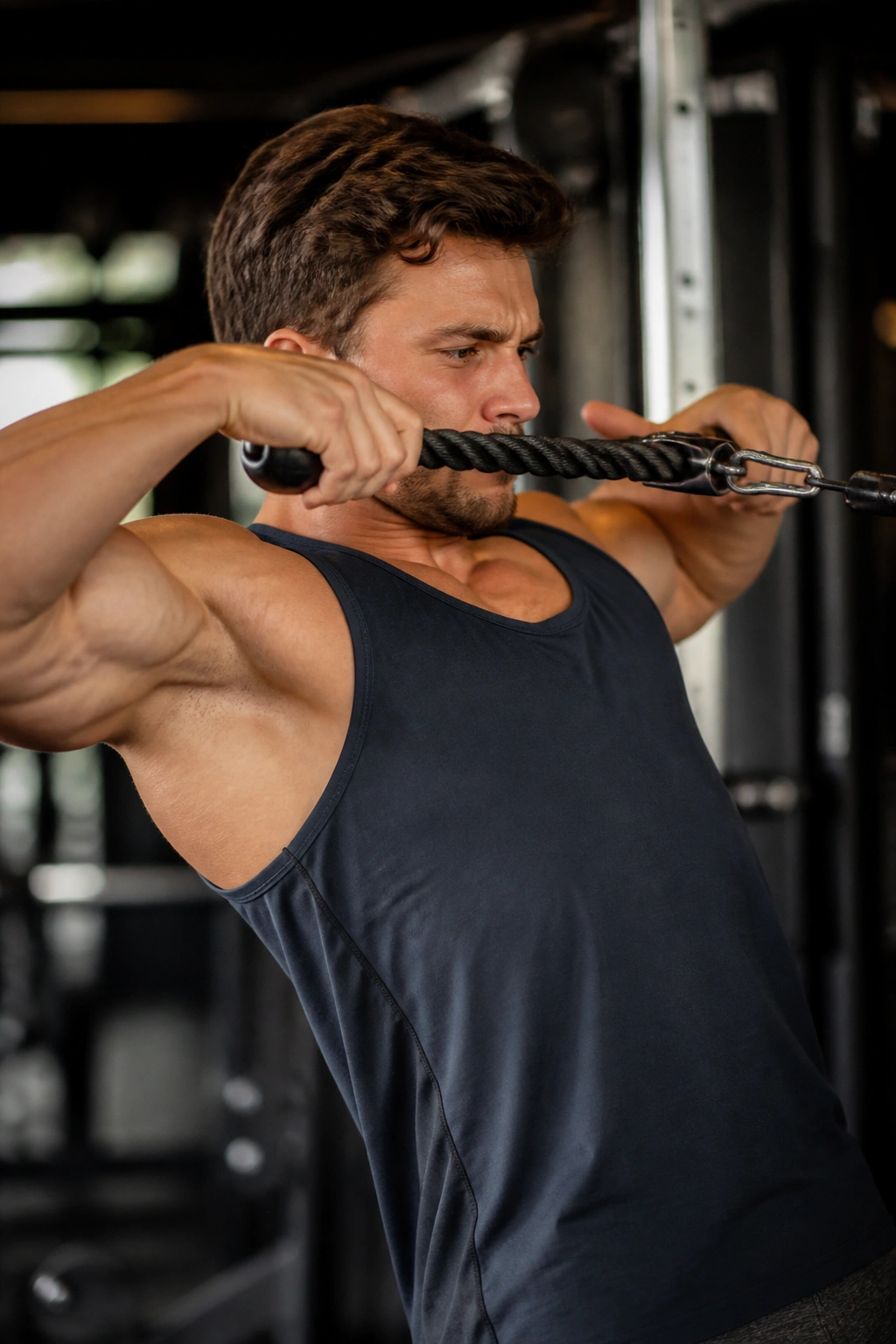
Why do people keep putting face pulls in shoulder work? Because they hit the rear delts, upper back, and the small muscles around the shoulder in one clean pull. It is not glamorous. It works.
Use a rope on a cable stack, set it around upper-chest or face height, and pull toward your nose, forehead, or upper cheek line while letting the hands separate at the end. The elbows should travel high, and the finish should feel like a strong squeeze between the rear delts and upper back. If you yank the rope with your lower back, you are doing it wrong.
How to Use It
- Keep the ribs down.
- Let the rope separate at the finish.
- Use 12 to 20 reps with a lighter load than you think.
- Pause for a beat when the hands are near the face.
- Stop chasing max weight; chase clean shoulder rotation.
Face pulls are especially useful after pressing days. They can give a tired shoulder a cleaner balance point, and they make your upper back feel less like a pile of knots.
5. Incline Dumbbell Curl
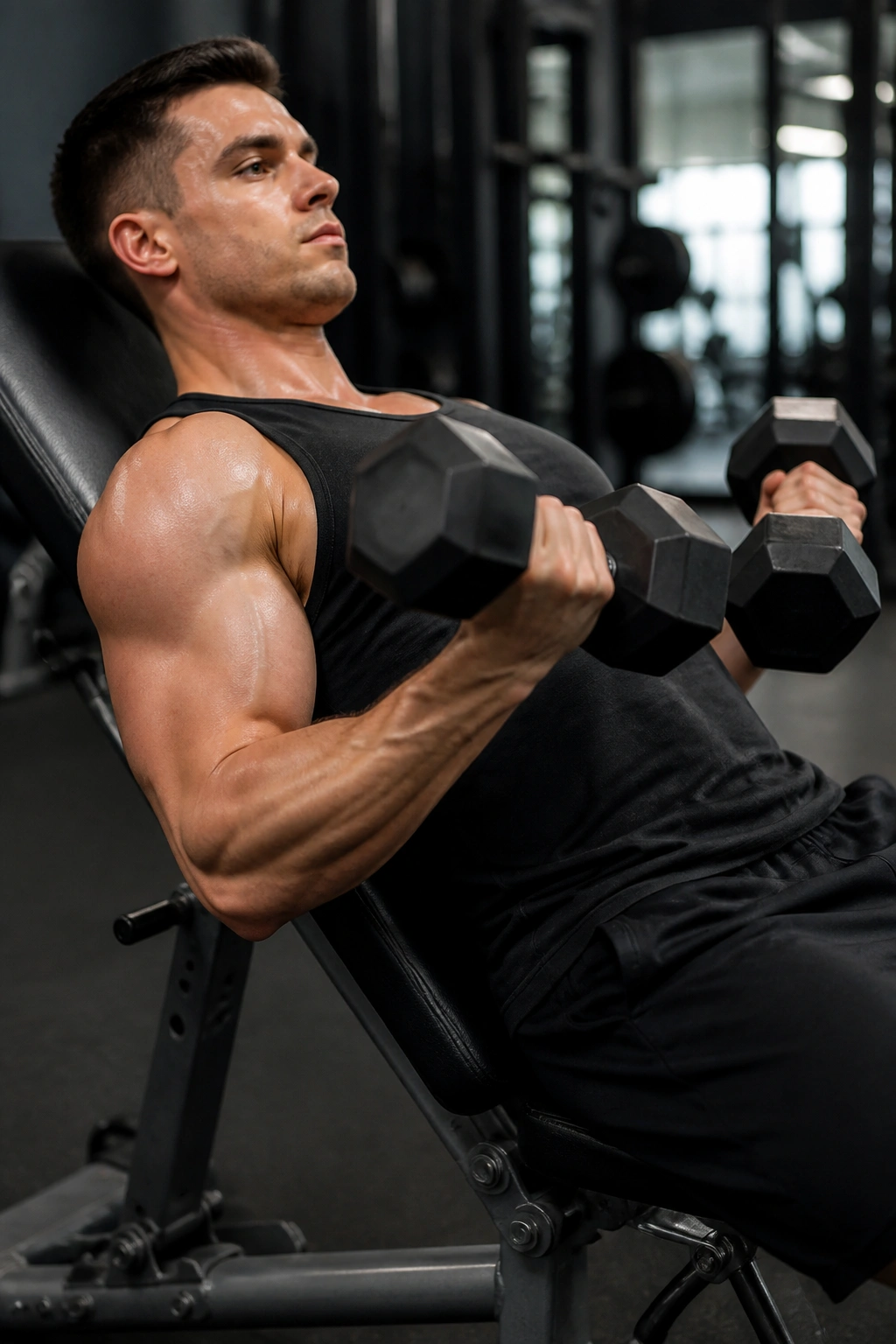
The incline dumbbell curl is one of those exercises that quietly punishes sloppy form and rewards patience. Sitting on a bench set around 45 to 60 degrees, you let the arms hang slightly behind the torso, which puts the biceps under a deeper stretch.
That stretch is the whole trick. The biceps long head gets loaded in a way flat curls do not always give you, and stubborn arms often respond when the muscle has to work from a longer position. Do not let the elbows drift forward on every rep. That steals the tension and turns the movement into a front-shoulder contest.
A slow lower matters here. Really matters.
Use 8 to 15 reps, keep the upper arm mostly still, and let the dumbbells travel through a full range without bouncing off the bottom. The first rep can feel almost too easy. The last three should not.
6. Preacher Curl
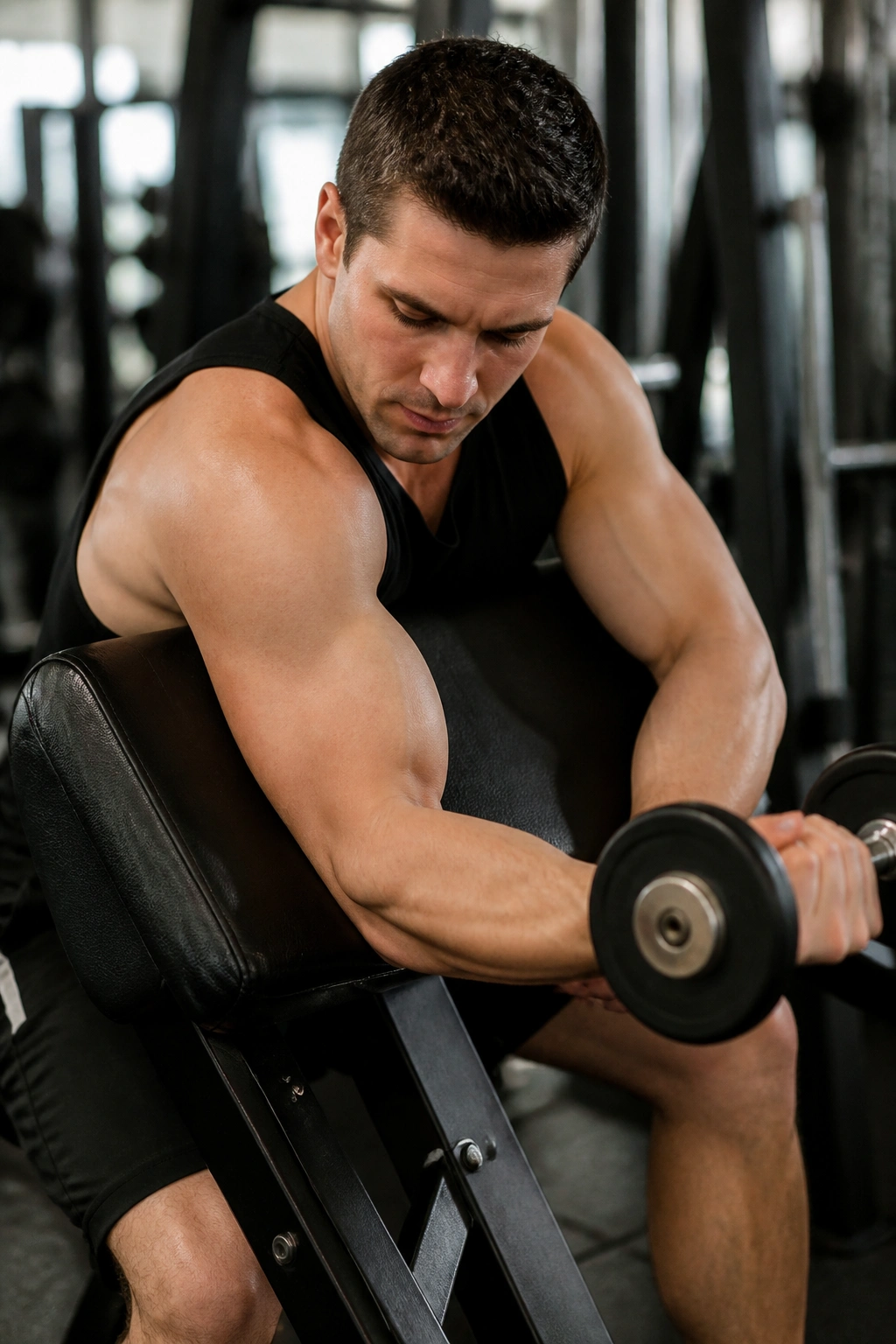
Preacher curls are brutally honest. The pad removes most of your ability to cheat, which is exactly why they build stubborn biceps so well. If your curling style tends to turn into a torso swing, this is the corrective.
Use an EZ-bar, dumbbells, or a preacher machine. Sit with the upper arm pinned to the pad and curl without letting the shoulder roll forward. The bottom stretch feels ugly in the best way. Just do not slam the elbow into full lockout at the bottom. A tiny bit of softness keeps the joint happier and preserves tension.
Load It Like This
- 8 to 12 reps for heavier strict work
- Keep the wrists neutral, not bent back
- Lower for a slow count of 2 to 3 seconds
- Stop the rep before the shoulder starts helping
Preacher curls are not flashy. They are just strict, and strict is what stubborn biceps usually need.
7. Concentration Curl
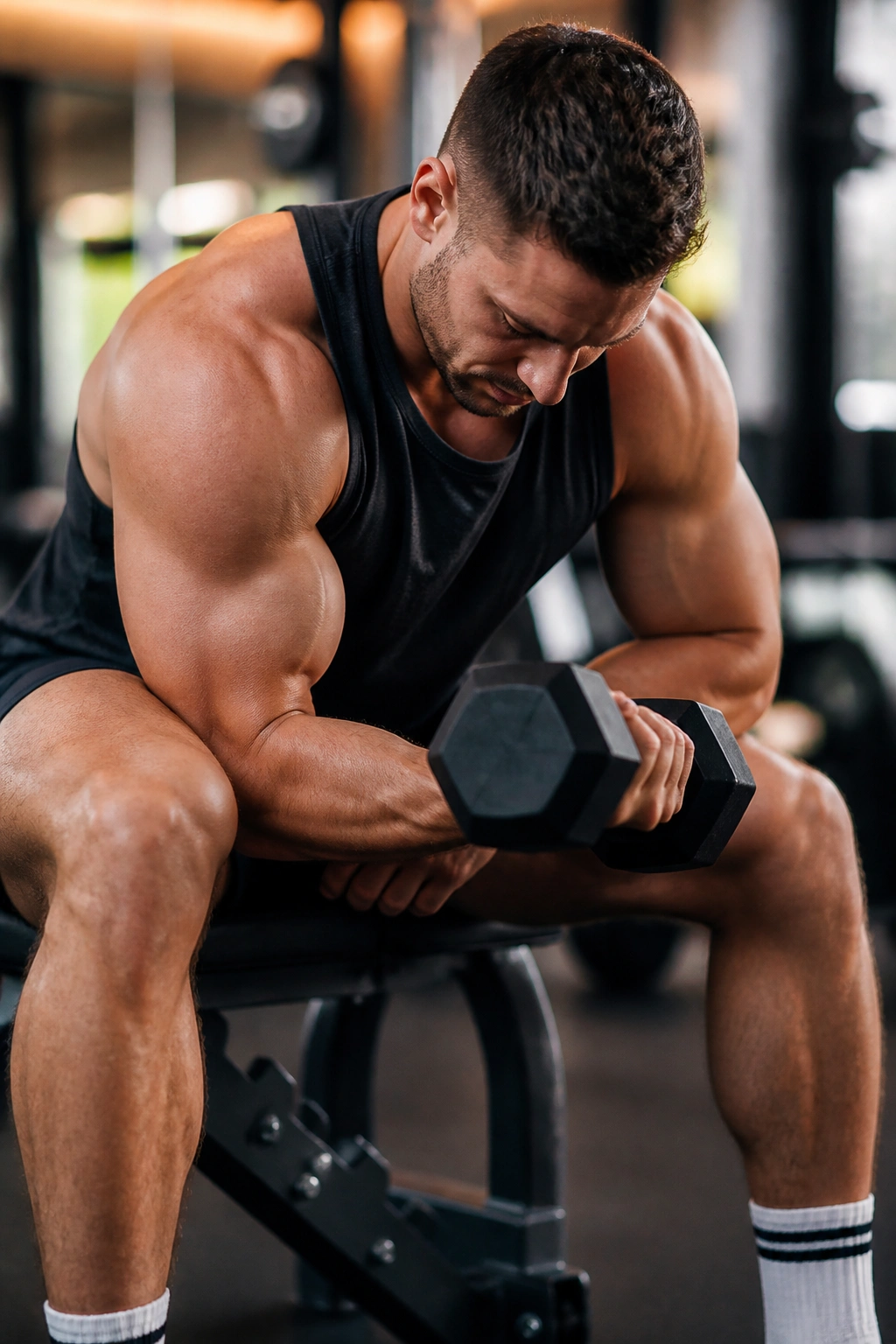
Concentration curls look old-school because they are old-school, and that is part of their charm. Sit down, brace the elbow against the inner thigh, and curl with no place to hide. The setup cuts out body English almost completely.
This is the exercise I like when a client’s biceps keep disappearing under the back and shoulder work. The arm is isolated, the load is small enough to control, and the top squeeze can be nasty if you slow down long enough to feel it.
What to Watch For
- Keep the shoulder quiet.
- Don’t yank the weight off the floor.
- Squeeze hard at the top for 1 second.
- Lower until the arm is almost straight, but not sloppy.
- Use 10 to 15 reps with a weight that forces attention.
Concentration curls are a finishing move, not a max-load move. That is fine. A clean set here can say more about biceps growth than a messy heavy curl ever will.
8. Hammer Curl
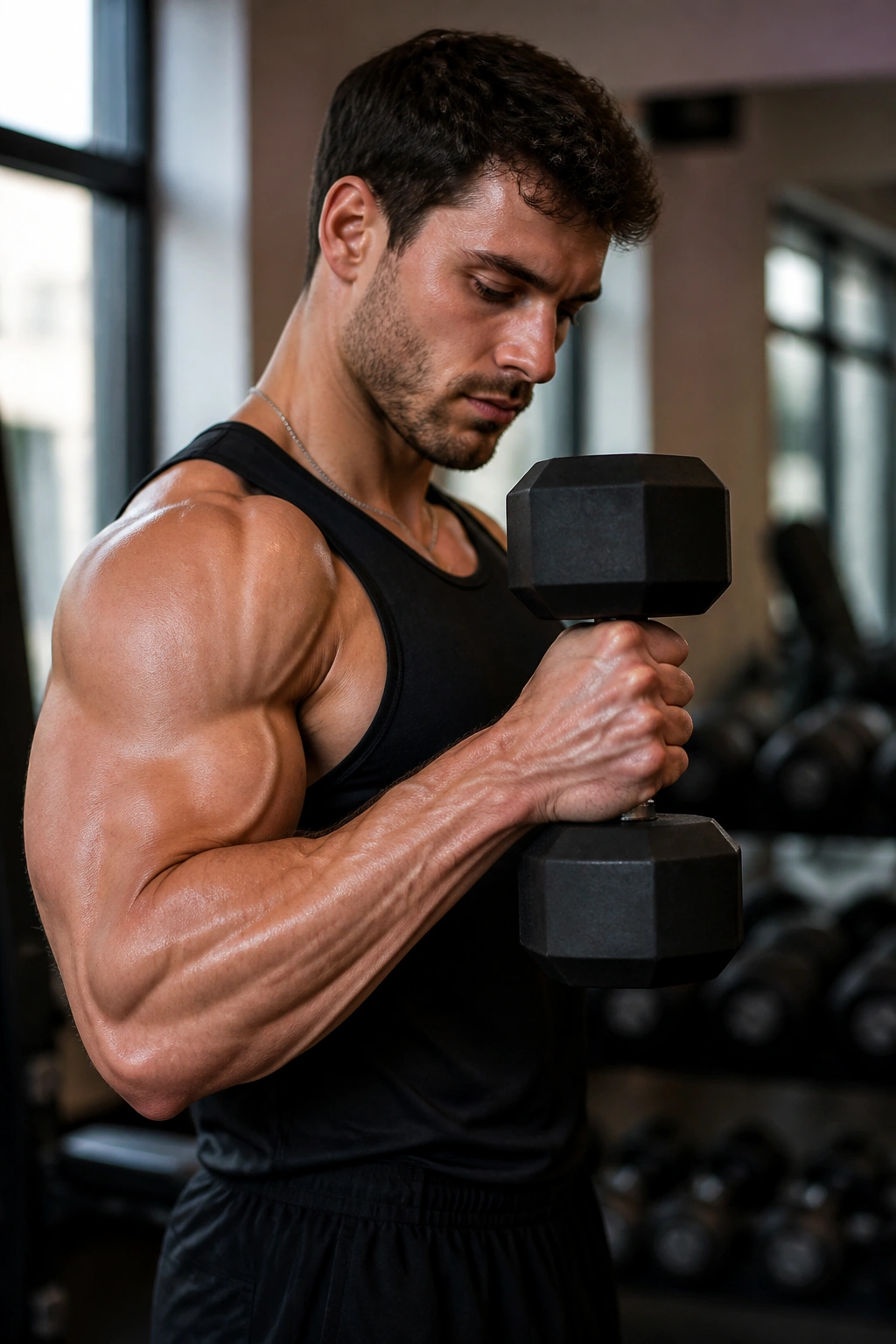
Hammer curls build the part of the arm that makes sleeves feel tighter even when your biceps are already decent. The neutral grip shifts some of the work to the brachialis and brachioradialis, which adds thickness from the side and helps the forearm tie in better.
You can do them with dumbbells, a rope cable, or cross-body. Cross-body versions feel a little more natural for some lifters, while rope hammer curls keep tension steadier. What matters most is the grip stays neutral. If the wrist starts turning into a supinated curl, you are changing the exercise.
This one is a good bridge between elbow-flexor work and forearm work. It is also easier on some elbows than heavy straight-bar curls.
Use 8 to 12 reps and think about smooth, steady speed. No snapping. No shoulder swing. Just clean, thick arm work.
9. Cable Triceps Pushdown
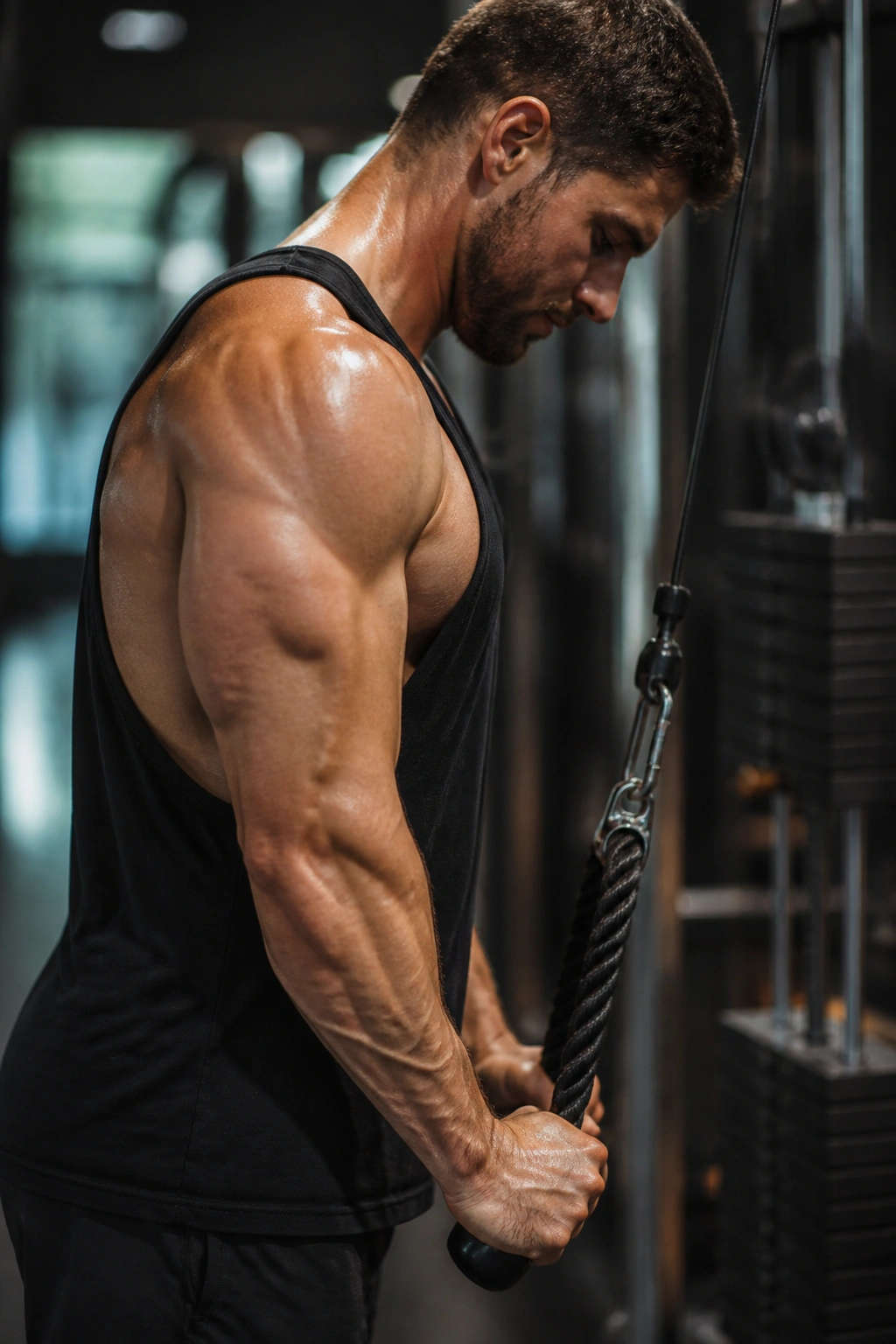
The cable triceps pushdown is the bread-and-butter triceps isolation move for a reason. It keeps the upper arm pinned close to the body, which leaves the elbow to do the work while the triceps extend the arm against steady resistance.
A rope usually gives the best feel because you can separate the ends at the bottom and get a stronger contraction. A straight bar or angled bar works too, especially if you want to keep the movement more fixed. The key is that the elbow stays put. If the shoulders drift forward and the torso starts leaning to fake the rep, the triceps lose tension.
A Clean Pushdown Looks Like This
- Upper arms locked near your sides
- Wrists straight
- Full extension without slamming the elbow
- 10 to 20 reps
- A brief squeeze at the bottom
Pushdowns are especially useful after pressing work. Your triceps are already warm, and the direct isolation can finish them off without beating up the rest of your body.
10. Overhead Cable Triceps Extension
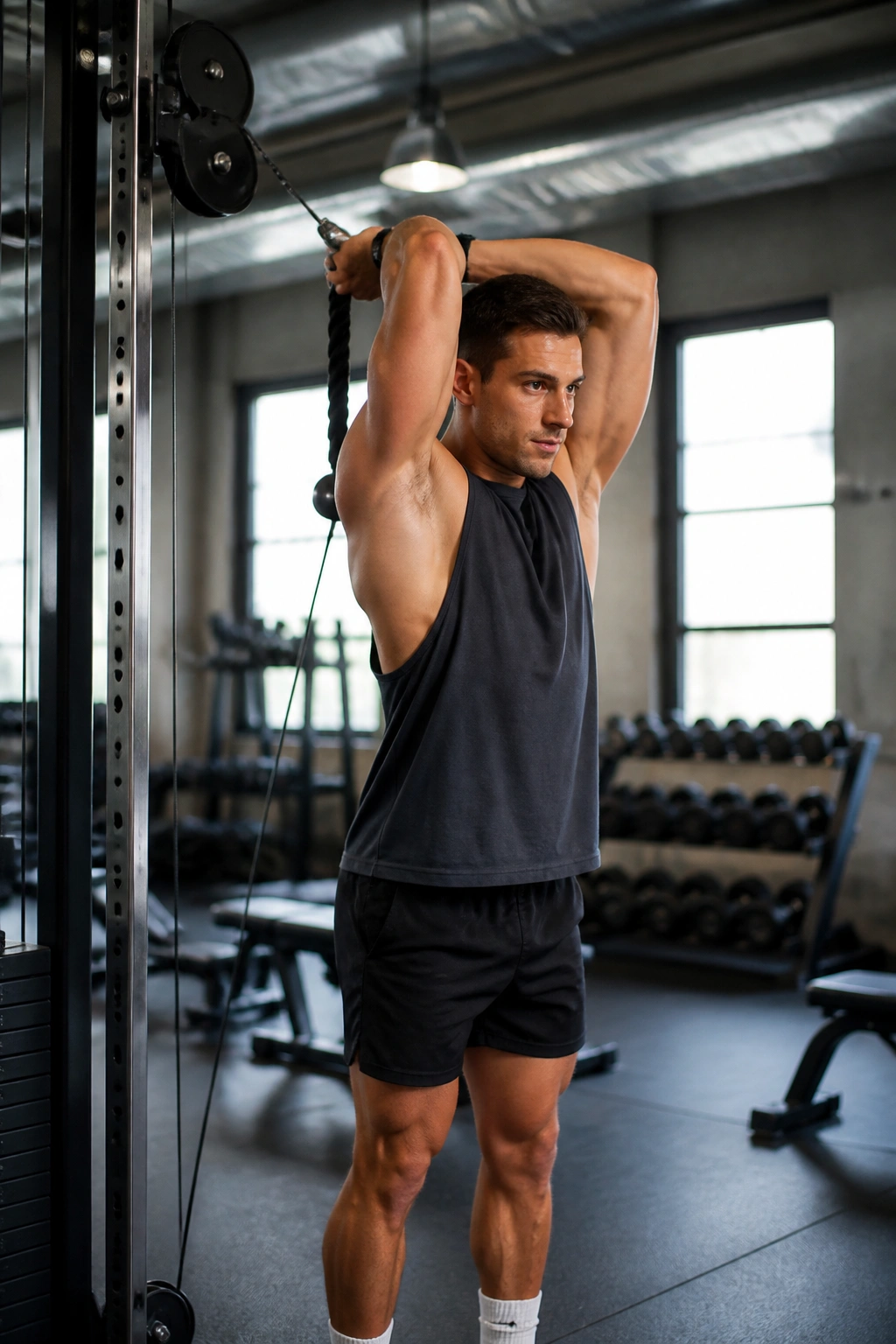
Why do so many triceps routines miss the long head? Because the long head crosses the shoulder joint, and it often gets better work when the arm is overhead. That makes the overhead cable triceps extension a very smart choice for arms that never seem to fill out from the back.
Set the cable low or use a rope above and behind you, then let the elbows point up as the hands travel behind the head. The stretch at the bottom should be obvious. If your lower back arches hard to get the rep, you’ve already lost the movement.
A tall torso, ribs down, elbows fairly narrow — that is the shape you want. The motion should feel like the triceps are lengthening and contracting through a big arc, not like the shoulders are juggling the load.
Use 10 to 15 reps. Moderate weight. Clean tempo. The long head likes that.
11. Pec Deck Fly
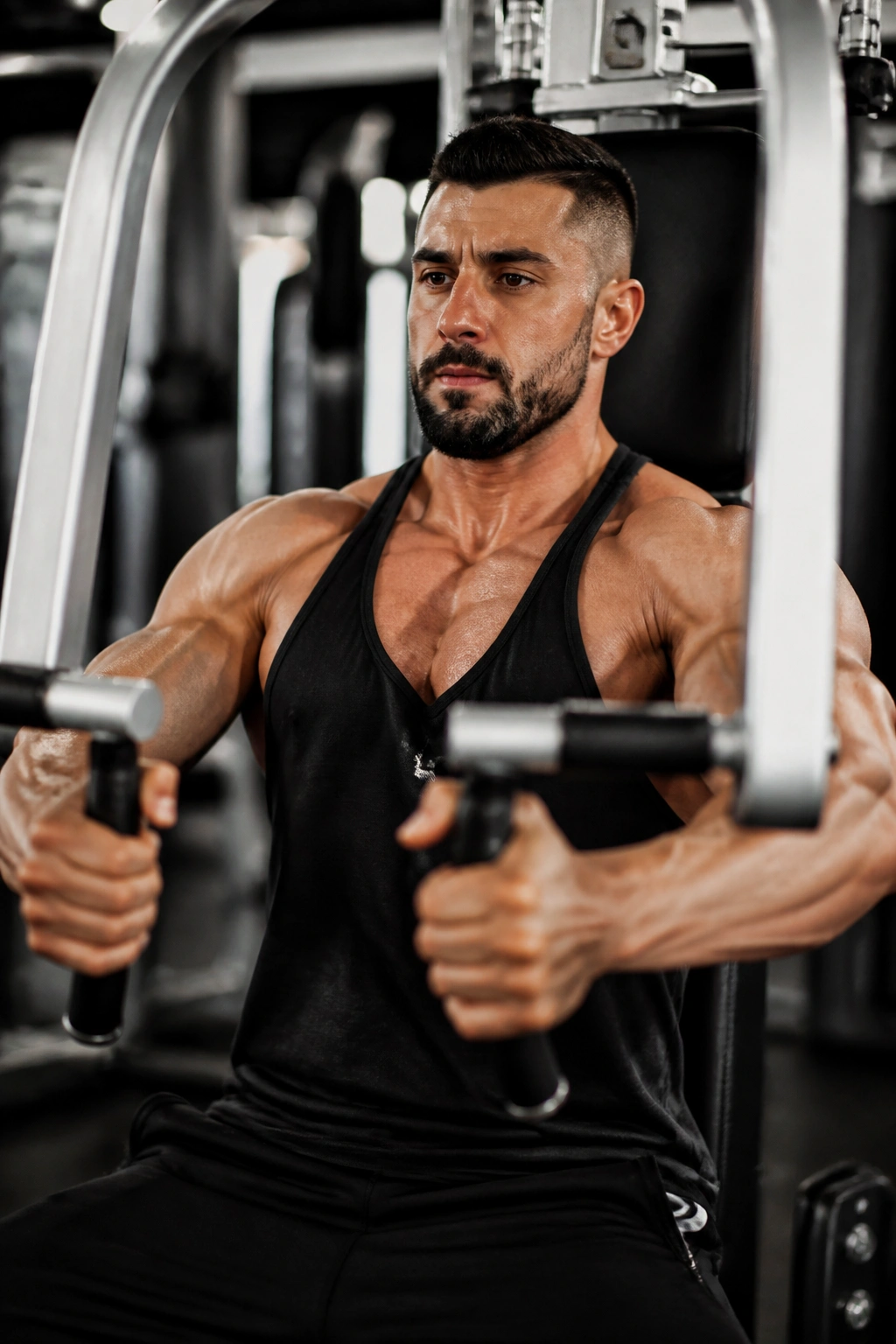
The pec deck is one of the most underrated chest isolation tools because it keeps the body still while the chest does the hugging. No bar path to manage. No dumbbells wobbling at the top. Just a fixed machine path and a chance to make the chest contract hard.
Set the seat so the handles line up roughly with mid-chest. Keep a soft bend in the elbows and bring the arms together in an arc, not a press. Think about wrapping your arms around a barrel. That mental image does more for the chest than trying to squeeze the handles together with your hands.
Small Setup Details Matter Here
- Seat height changes where the line of pull lands
- Elbows stay slightly bent the whole time
- Stop when the chest feels fully shortened, not when the handles smash together
- Use 10 to 15 reps
- Let the arms open until you feel a stretch across the chest without the shoulder popping forward
The pec deck is a very good choice after heavy benching. The chest is warm, the machine is stable, and you can grind out honest reps without worrying about balance.
12. Cable Chest Fly
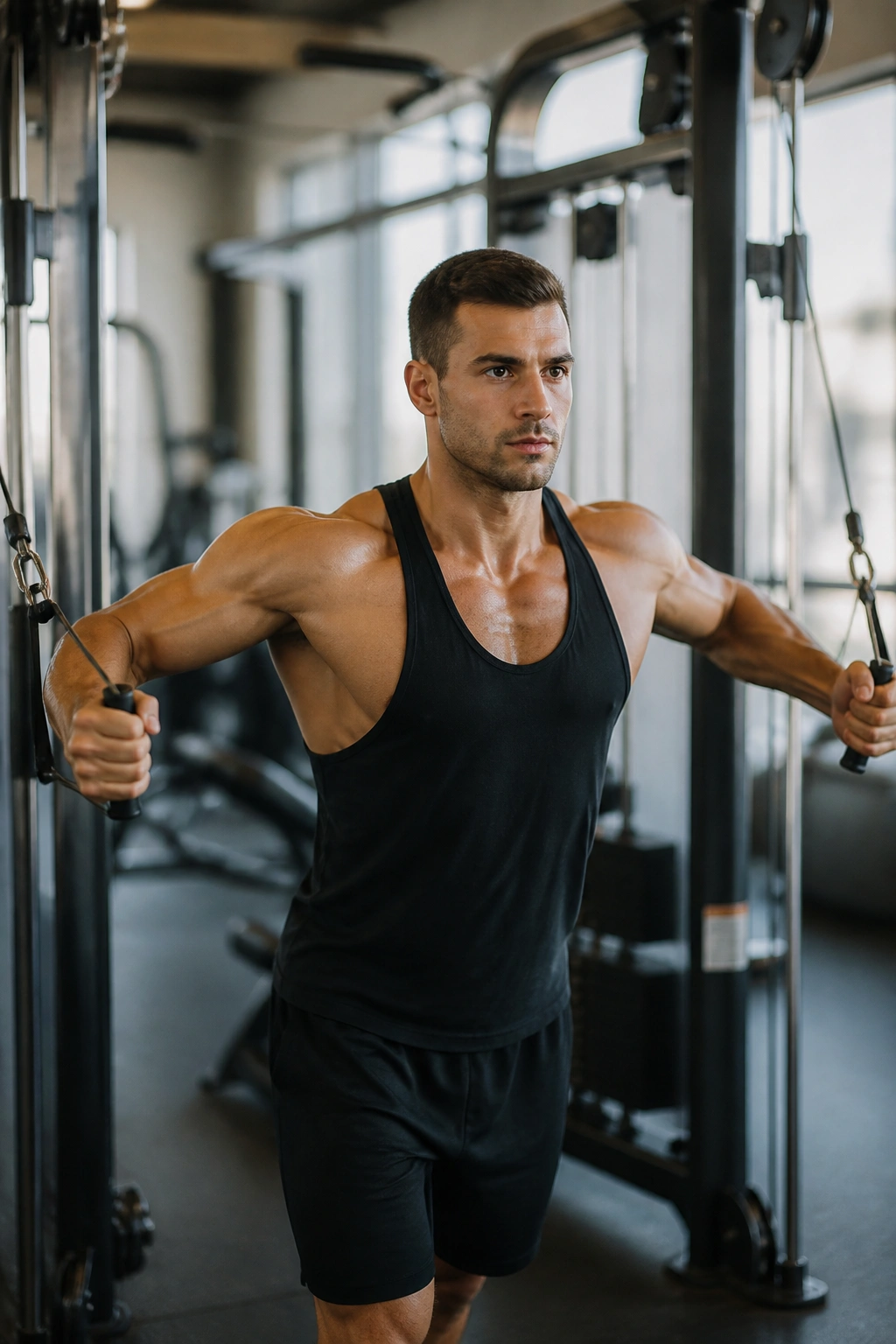
Cable chest flyes let you change the angle, and that is where a lot of the value lives. Low-to-high flyes bias the upper chest a bit more, while a more level path can hit the chest in a cleaner midline arc. You can also work one arm at a time if one side tends to overpower the other.
Unlike the pec deck, cables let the resistance angle stay a little more honest through the range. That means you can adjust the line of pull to match the weak spot you care about. That flexibility matters when the chest is lagging in one area but not another.
Keep the chest tall, shoulders down, and hands slightly in front of the body at the finish. Do not overreach and jam the front of the shoulder. A fly should feel like the pecs are closing a big door, not like the shoulder is yanking a cable across the room.
Use 12 to 15 reps and keep the motion smooth.
13. Leg Extension
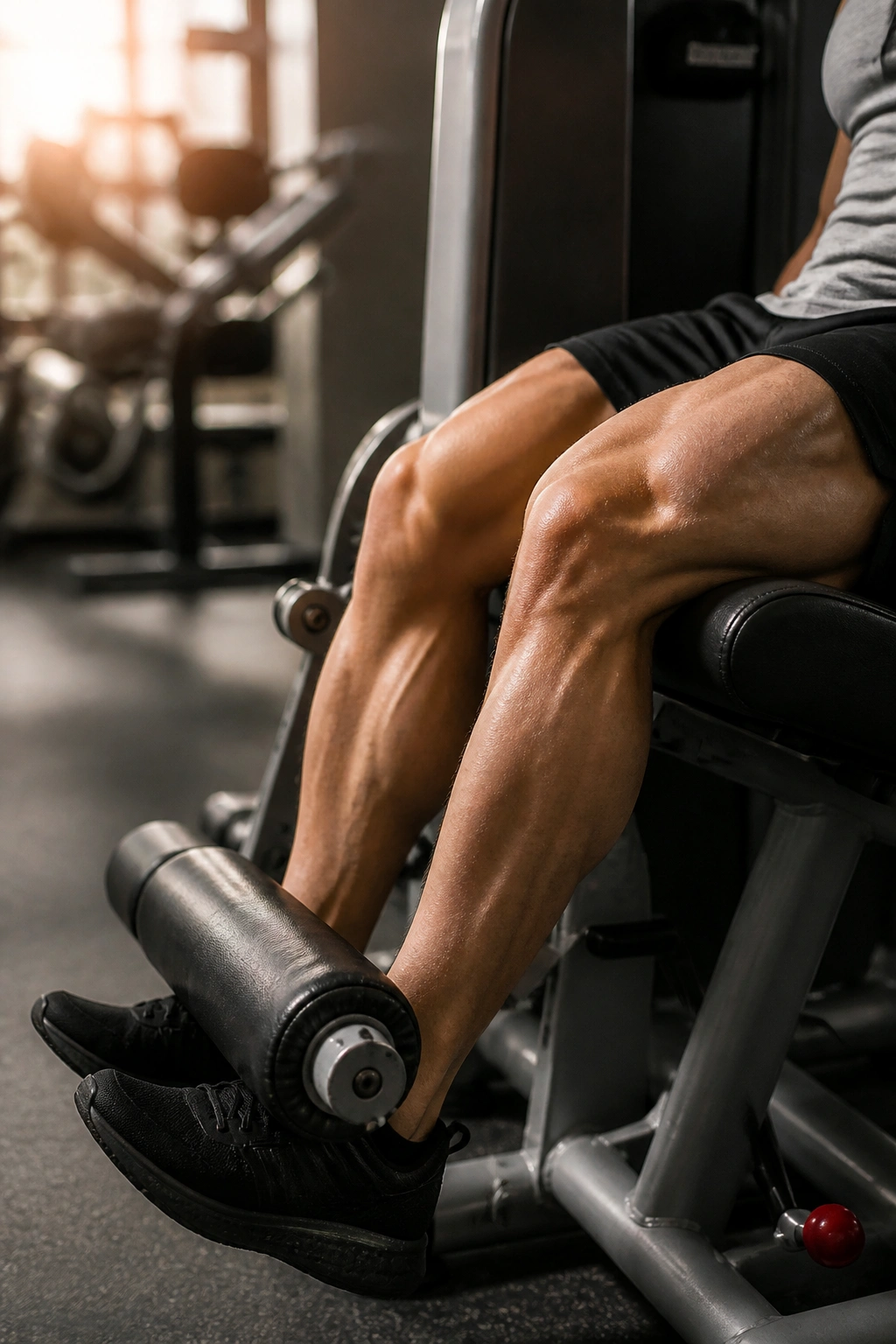
The leg extension is the blunt instrument of quad isolation, and sometimes blunt is exactly what the body needs. Squats, lunges, and leg presses all have their place, but if the quads still look flat from the front, direct knee extension work can make a clear difference.
Set the machine so the knee joint lines up with the pivot. That part matters more than people think. If the setup is off, the motion feels awkward and the tension gets weird. The reps should look smooth, not kicked. The quads should be doing the work, not the momentum from the hips.
How to Make It Count
- Use 12 to 20 reps on most sets
- Hold the top contraction for 1 second
- Lower under control for 2 to 3 seconds
- Stop if the knees feel cranky and lighten the load
- Don’t bounce out of the bottom
A hard set of leg extensions can make the quads burn in a way compound lifts rarely do. That burn is not the goal by itself, but it usually shows you the muscle is actually working.
14. Seated Leg Curl
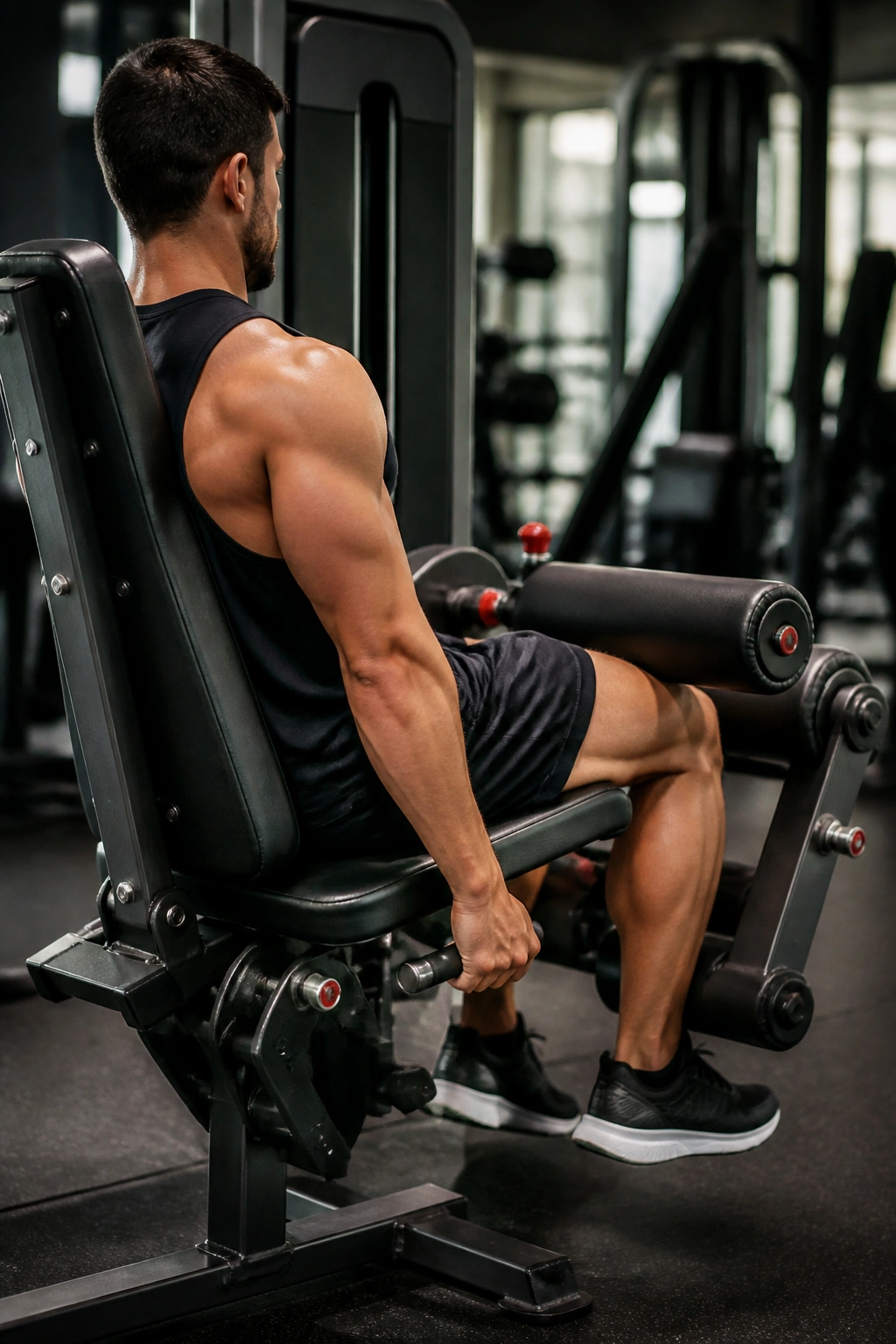
The seated leg curl is one of the best hamstring isolation exercises because the hips stay flexed, which puts the hamstrings in a longer position. That long-length work is a big deal for growth, and it is one reason this machine has earned such a loyal following.
Sit all the way back, lock the legs in place, and keep your butt glued to the pad. Pull the pad down with the hamstrings and pause at the bottom. Do not lift the hips to cheat the finish. If the pelvis pops up, the hamstrings get less tension and the lower back starts joining a party it was never invited to.
The movement should feel controlled and tense from start to finish. A full stretch at the top, a hard squeeze at the bottom, and no rushing in the middle.
Use 8 to 15 reps. Hamstrings usually like strict work more than ego work.
15. Lying Leg Curl
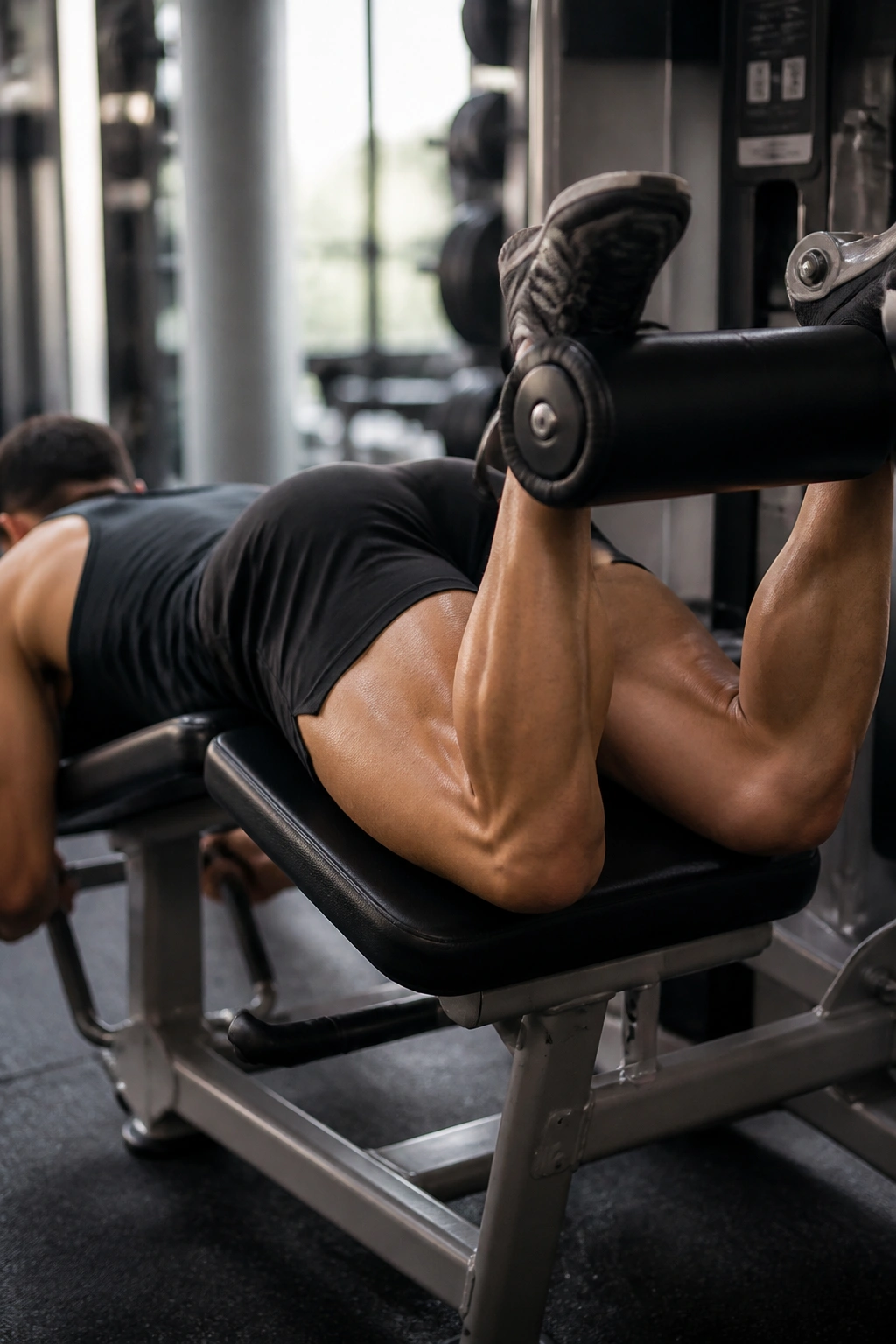
Lying leg curls feel different from seated curls, and that difference is useful. In the prone position, the hamstrings still flex the knee, but the body angle changes the tension and often makes the squeeze feel more direct. Some lifters also find this version friendlier when the seated setup is awkward.
Lie flat, anchor the hips, and curl the pad toward your glutes without letting the lower back arch to help. The top rep should feel like a hard squeeze behind the knee and through the belly of the hamstring. The lowering phase matters more than most people give it credit for. That is where a lot of the muscle-building work lives.
This is a smart exercise to pair with seated leg curls across the week. One version hits the hamstrings from a longer hip position; the other gives a slightly different feel and can be easier to load or recover from depending on the machine.
Use 10 to 15 reps and keep the tempo even.
16. Standing Calf Raise
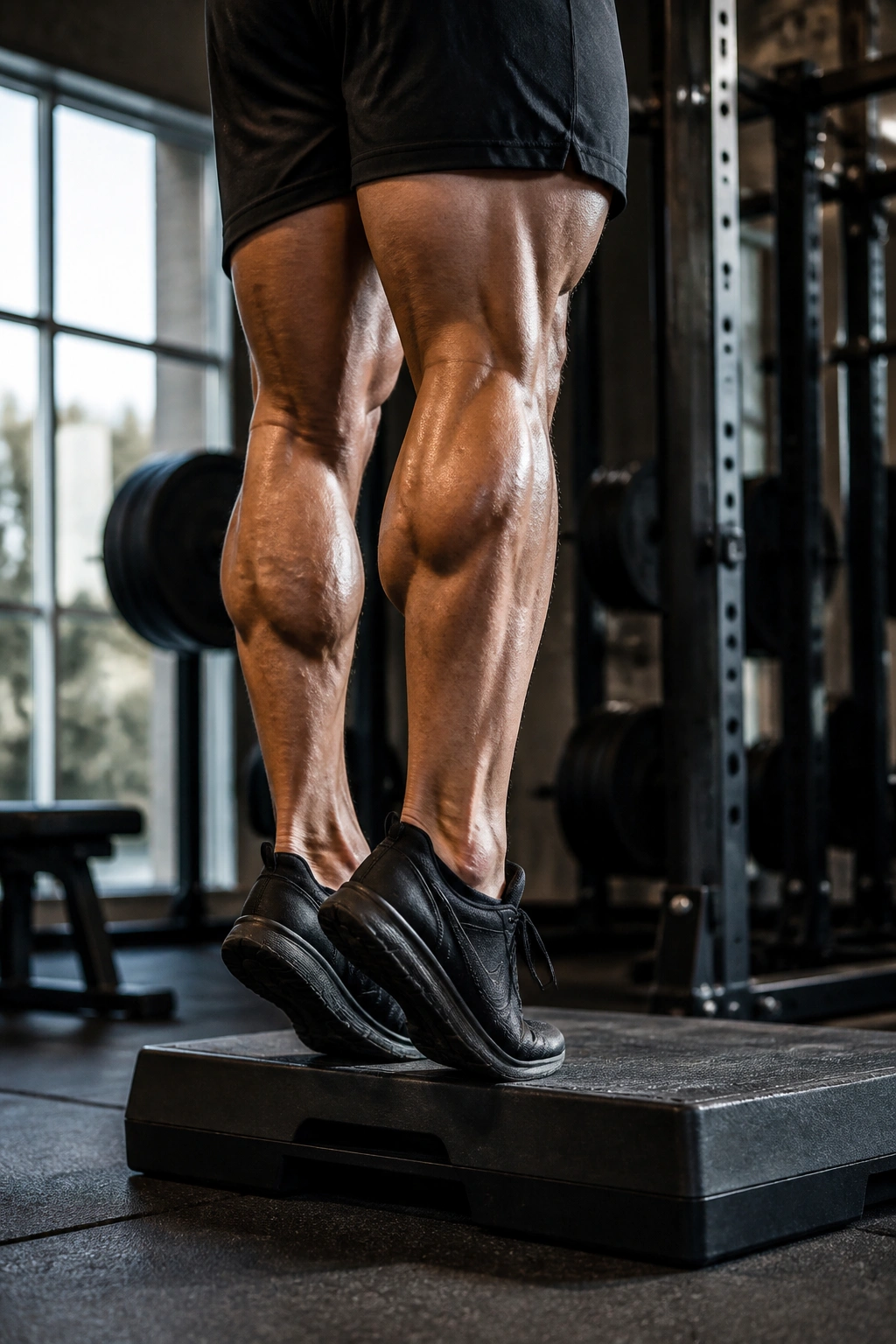
Calves are stubborn in a special way. They get walked on all day, then shrug off half the gym work people throw at them. The standing calf raise addresses the gastrocnemius, the larger visible calf muscle, because the knee stays straight.
Use the full range. Let the heel drop under control into a deep stretch, then drive up hard and pause at the top. If you bounce at the bottom, the stretch disappears and so does a lot of the stimulus. That tiny pause near the bottom matters more than a lot of extra weight.
What Works Best Here
- Straight knee position
- 15 to 25 reps
- A 1-second pause at the top
- A real stretch at the bottom
- One-leg work if the machine setup is awkward
Calves often respond better when you stop rushing them. They do not care that the rest of your program is intense. They care about range, control, and repetition.
17. Seated Calf Raise
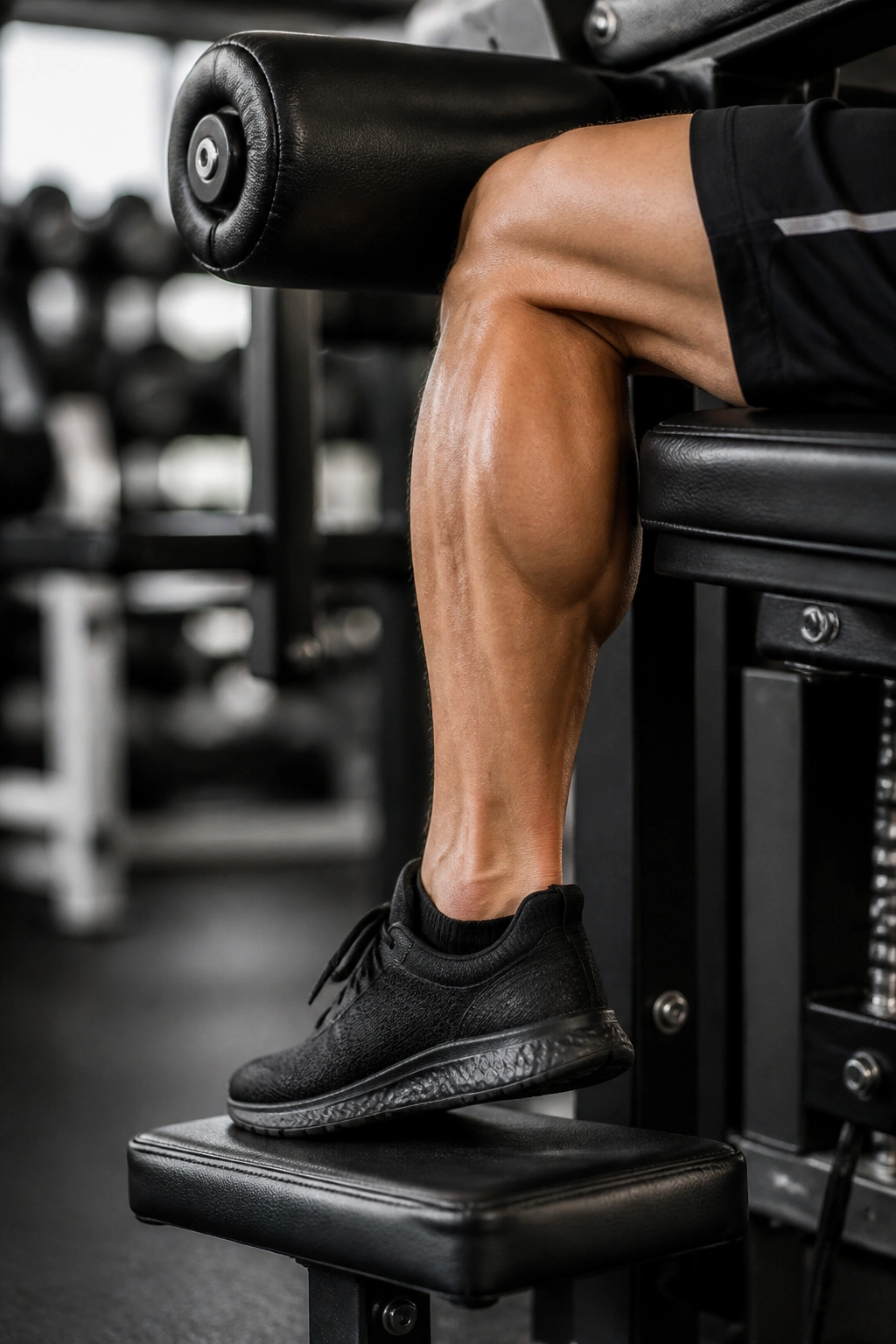
If standing calf raises hit the larger outer calf muscle, seated calf raises put more focus on the soleus, the lower calf muscle that still makes a huge difference in how the leg looks from the side. A lot of people skip this entirely, then wonder why their calves only look good from one angle.
The bent-knee position is the point. Keep the knees fixed, drop into a clear stretch, and press through the forefoot without rolling to the outside of the foot. A slow eccentric is worth more than a sloppy heavy set. The muscle lives on detail here.
Seated calf work usually shines in the higher rep range. Use 12 to 25 reps, chase a deep burn, and do not rush the bottom. If you have ever finished a set and felt that tight, almost cramping fatigue low in the calf, you know you found the right place.
Standing and seated together cover more ground than either one alone.
18. Hip Abduction Machine
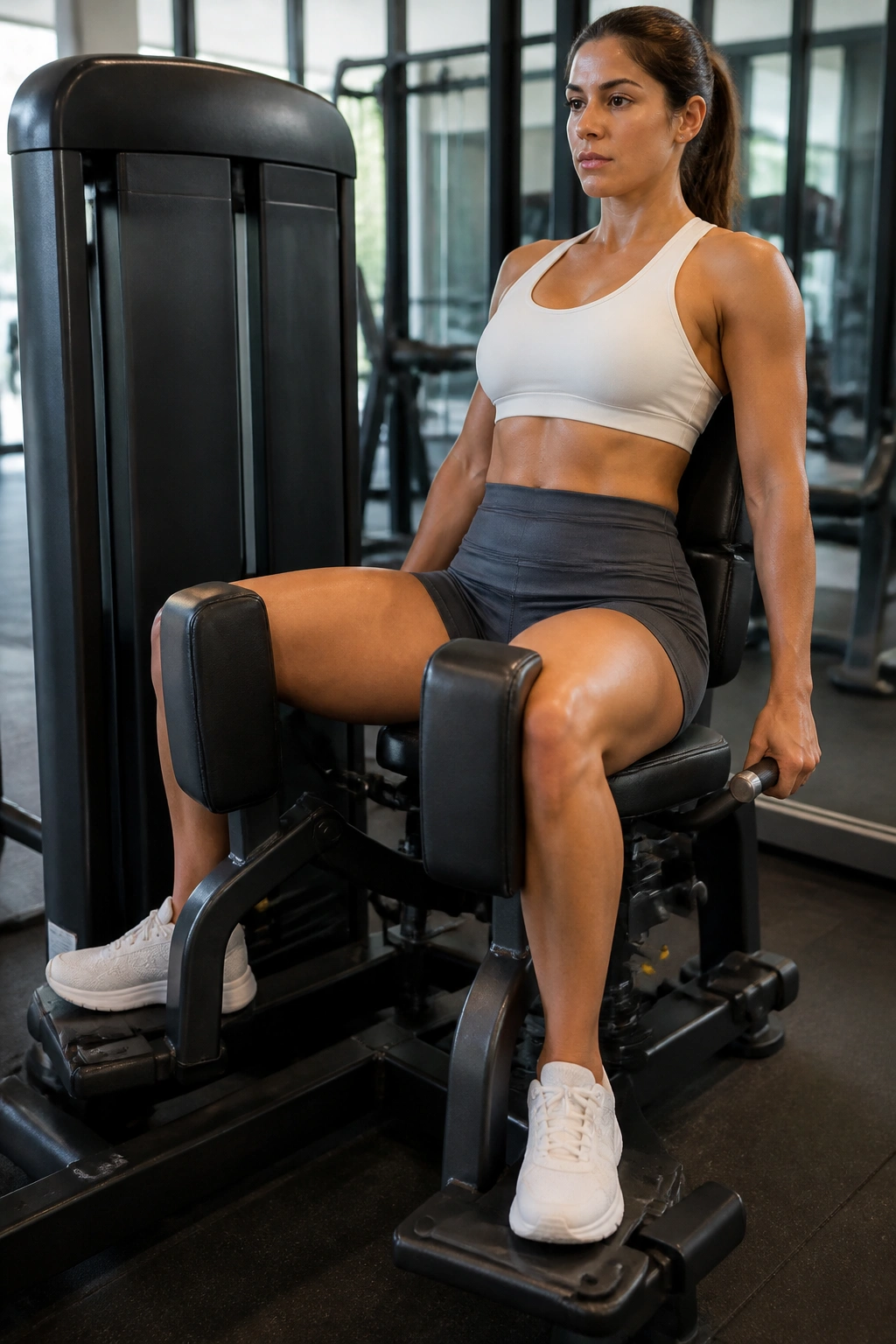
The hip abduction machine looks like a warm-up tool until you use it hard enough to respect it. It targets the glute medius and smaller side-hip muscles that help keep the pelvis steady and add roundness to the outer glute area.
Sit tall, or lean slightly forward if that fits your machine better, and press the knees out against the pads. Hold the open position for a beat. Do not bounce the stack with tiny half reps. That usually turns the set into momentum work, which is a waste here.
Why It Matters
- Side glutes help with hip stability in single-leg work
- They matter for the look of the upper outer glute
- The machine lets you load the area without balancing a barbell
- 15 to 25 reps tends to work well
This is not the sexiest machine in the gym. It is one of the more useful ones if your outer hips and glutes lag behind everything else.
19. Cable Glute Kickback
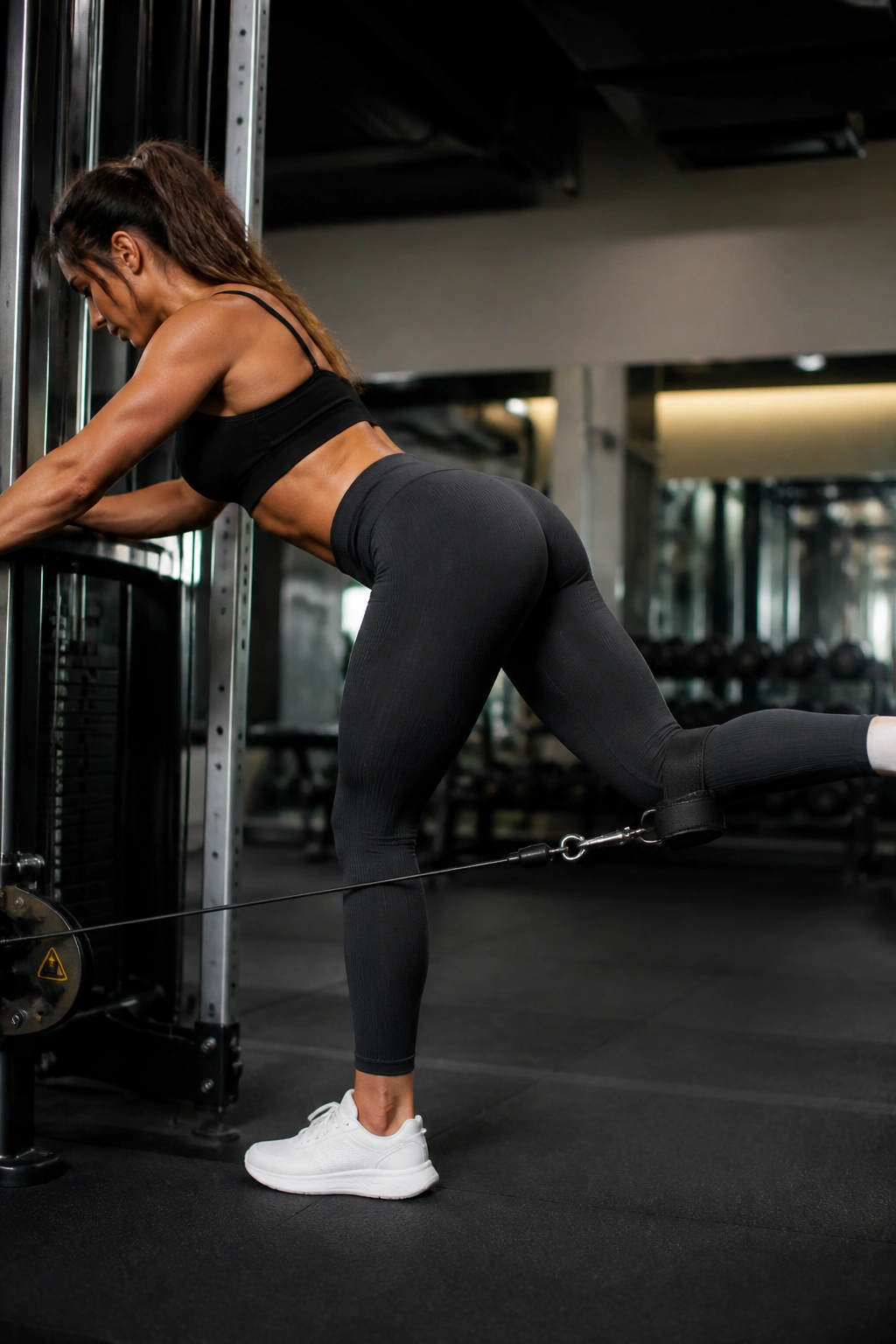
Cable glute kickbacks are easy to mess up and very good when done right. The goal is simple: extend the hip and make the glute drive the leg back without turning the move into a low-back swing.
Attach the ankle strap, hinge slightly forward, brace the ribs down, and kick the leg back in a smooth arc. Stop before the lower back arches hard. If the pelvis spins open, the glute loses the job. Keep the hips square.
How to Keep the Swing Out of It
- Use a light-to-moderate load
- Keep the working knee softly bent
- Drive back and slightly up, not just up
- Squeeze the glute at the top for 1 second
- Use 12 to 20 reps per leg
This exercise is better than it looks on paper. The constant cable tension makes the glute work through a clean range, and the unilateral setup helps expose side-to-side differences fast.
20. Cable Crunch
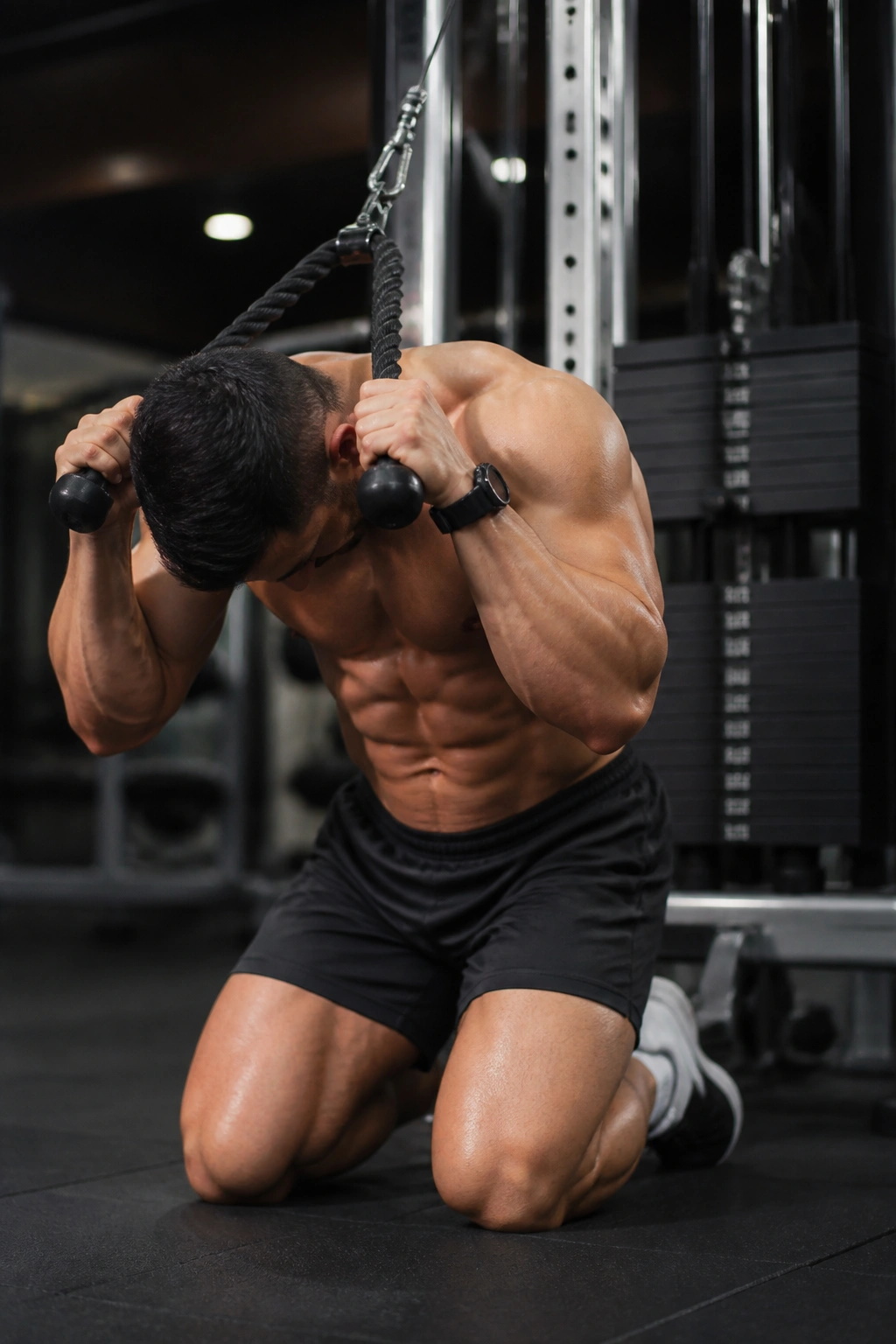
Cable crunches are one of the cleanest ways to train the abs with actual resistance instead of hoping a plank somehow does the job forever. Abs flex the spine. A cable crunch lets them do that against load, which is why it keeps showing up in serious core training.
Kneel under the cable, rope behind the head or at the sides, and curl the ribs toward the pelvis. The hips should stay mostly still. This is not a hip hinge. It is a spinal flexion exercise, and that distinction changes everything.
The best reps feel like the sternum is folding downward while the abs shorten hard. Exhale on the crunch. Pause briefly at the bottom. Then come back up under control and do it again.
Use 10 to 20 reps and keep the stack honest. If the abs have been stubborn for a long time, this kind of direct work usually beats endless guesswork. It is simple. It is tough. And it works because the muscle cannot hide.
