



A bare floor can do plenty.
No-equipment workouts get dismissed by people who think a room has to be packed with dumbbells before anything counts. That misses the point. Your body is the load. Change the angle, slow the descent, shorten the rest, and a simple bodyweight workout can go from easy warm-up to honest sweat in under 15 minutes.
No equipment doesn’t mean no challenge. It means you have to be a little smarter about tempo, range of motion, balance, and how much rest you allow yourself. A slow squat with a 3-second lower can smoke your legs harder than a rushed set with terrible form. A plank with shoulder taps can expose weak spots in your trunk faster than a flashy machine ever will. The details matter.
And they make these workouts useful for everybody. If you’re new, you can work with shorter intervals, smaller ranges, and more rest. If you’re stronger, you can add pauses, unilateral work, and denser rounds. If you’re short on time, you can still get a session done without setting up a single piece of gear. That’s the beauty of bodyweight training: it scales with you, not against you.
1. The 10-Minute Full-Body Wake-Up
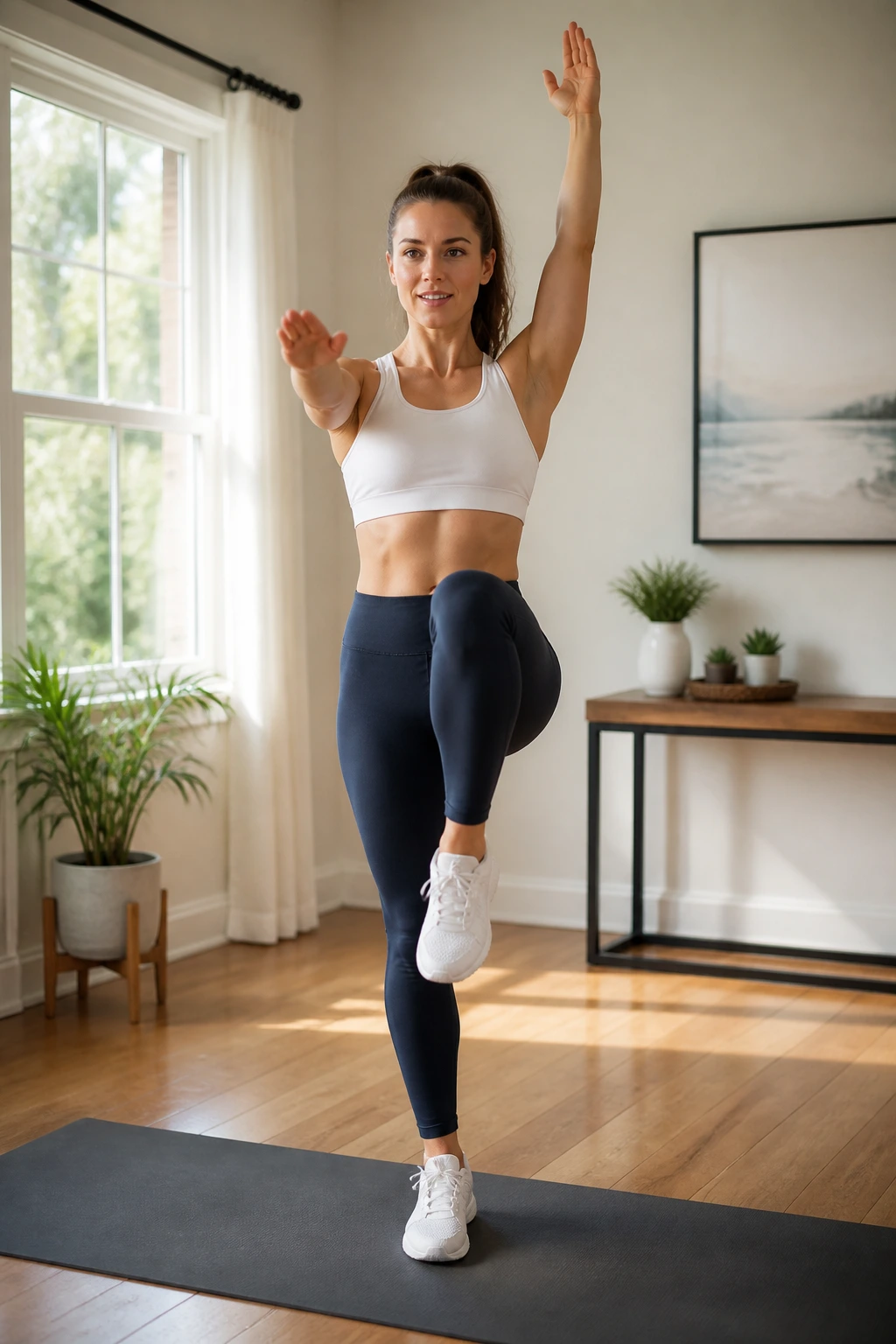
A short full-body workout has no business feeling this useful, but it does. Start with a timer and keep the pace clean, not frantic. I like this one first thing in the day or on the kind of afternoon when your back feels glued to a chair.
Why It Wakes Everything Up
Do two rounds of five moves: 30 seconds of marching with big arm reaches, 30 seconds of air squats, 30 seconds of incline or floor push-ups, 30 seconds of glute bridges, and 30 seconds of dead bugs. Rest 30 seconds between rounds if you need it. The goal is rhythm, not punishment.
How To Scale It
- Beginner: 20 seconds of work, 40 seconds of rest.
- Intermediate: 30 seconds on, 30 seconds off.
- Advanced: 40 seconds on, 20 seconds off, with no slop in the last round.
Keep the first round easier than you think you need. That sounds backwards, but it helps you keep form crisp when the heart rate climbs. The last thing you want is a warm-up that turns into a mess before breakfast.
2. Bodyweight Squat Ladder
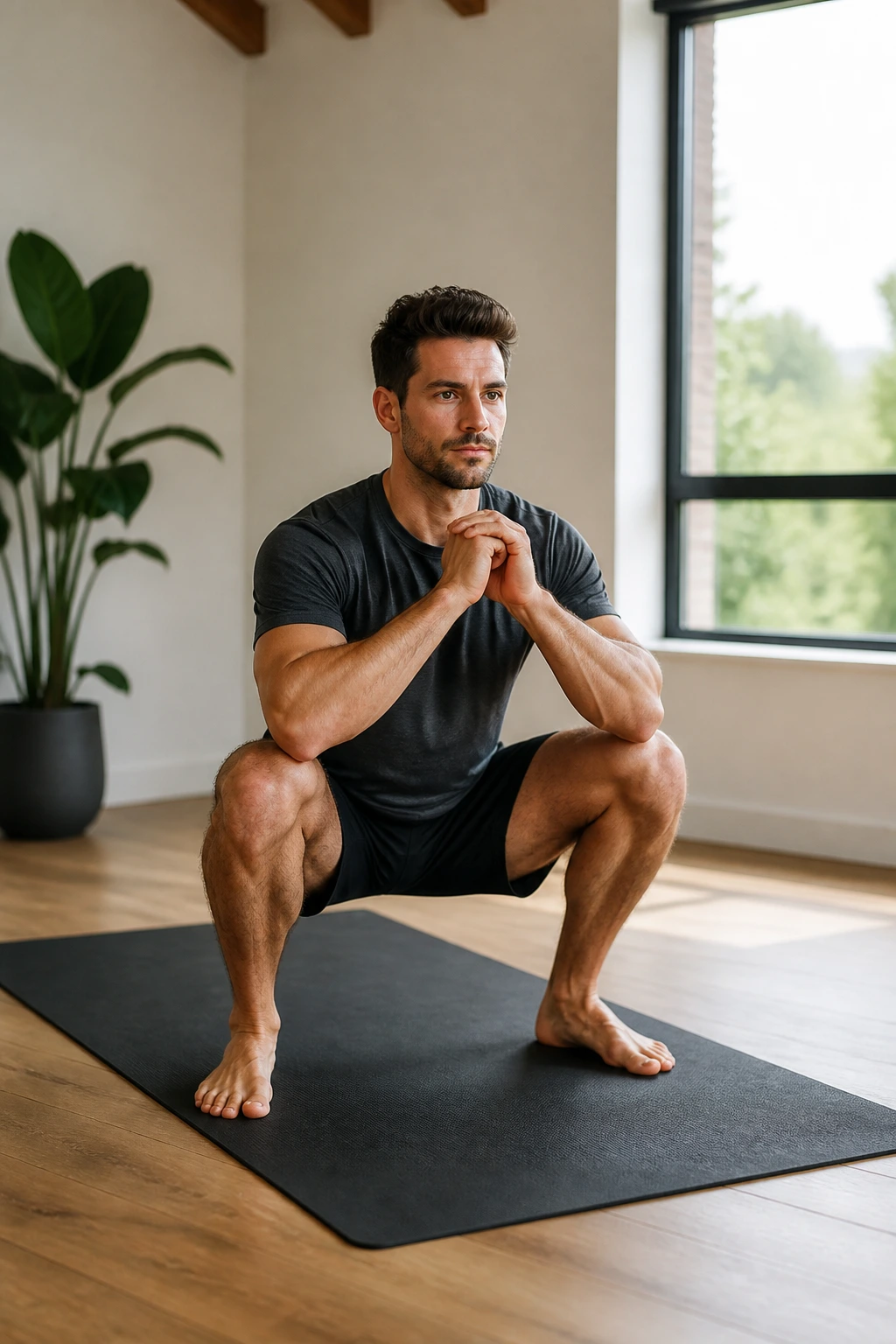
Leg workouts do not need fancy gear to feel serious. A squat ladder is one of my favorite no-equipment moves because it teaches pace control fast. You’re not just doing reps; you’re managing fatigue.
Start with 5 squats, then 10, then 15, then back down to 10 and 5. Rest 20 to 40 seconds between rungs. If that feels too easy, slow the lowering phase to 3 counts and pause for 1 count at the bottom.
What makes this one sneaky is how the middle of the ladder changes your breathing. The first few sets feel almost polite. Then the 15-rep step hits, your thighs start to burn, and you realize your setup matters more than your grit. Push your knees out gently, keep your chest tall, and let your heels stay heavy.
If you want more challenge, turn the final two rungs into jump squats. If your knees are cranky, swap jumps for a 2-second pause at the bottom. Same workout. Different feel.
3. Push-Up Progression Circuit
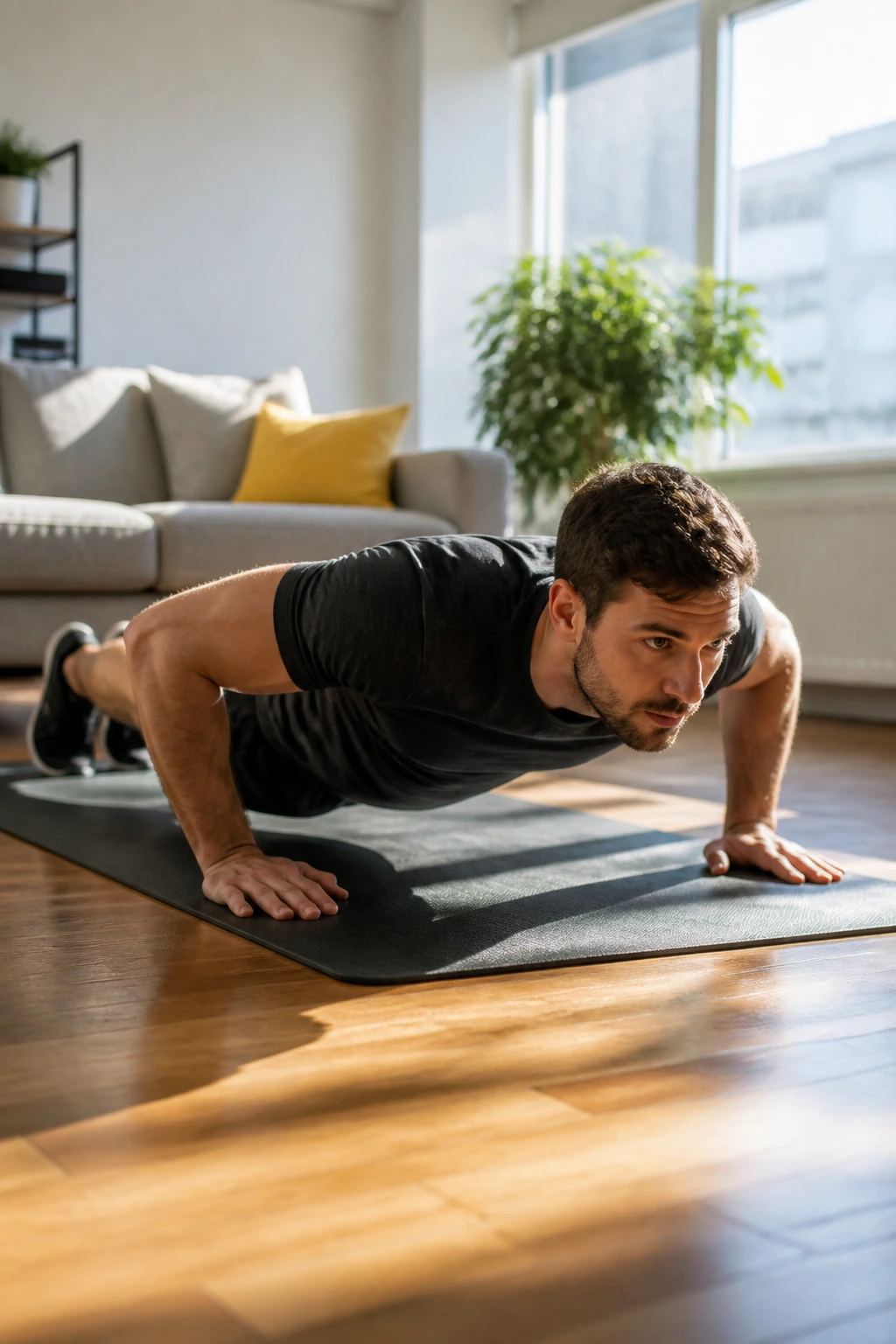
Can you build upper-body strength without a bench, bar, or dumbbells? Absolutely. The trick is to stop treating push-ups like one exercise and start treating them like a family.
Run three rounds of wall push-ups, knee push-ups, or full push-ups for 6 to 12 reps, then finish with 20 seconds of plank shoulder taps. Use the version that lets you keep a straight line from shoulders to hips. If your lower back sags, you’re too low for now.
Beginner Version
Do hands-on-wall push-ups with a slow 2-second lower. Stand closer to the wall than feels dramatic. That tiny adjustment matters.
Harder Version
Move to the floor and add a 1-second pause just above the bottom. The pause forces control. It also strips away the bounce that hides weak spots.
Your elbows should travel about 30 to 45 degrees from your sides. Too wide, and the shoulders complain. Too tucked, and the reps can get awkward. Find the middle lane and stay there.
4. Low-Impact Cardio March and Step Combo
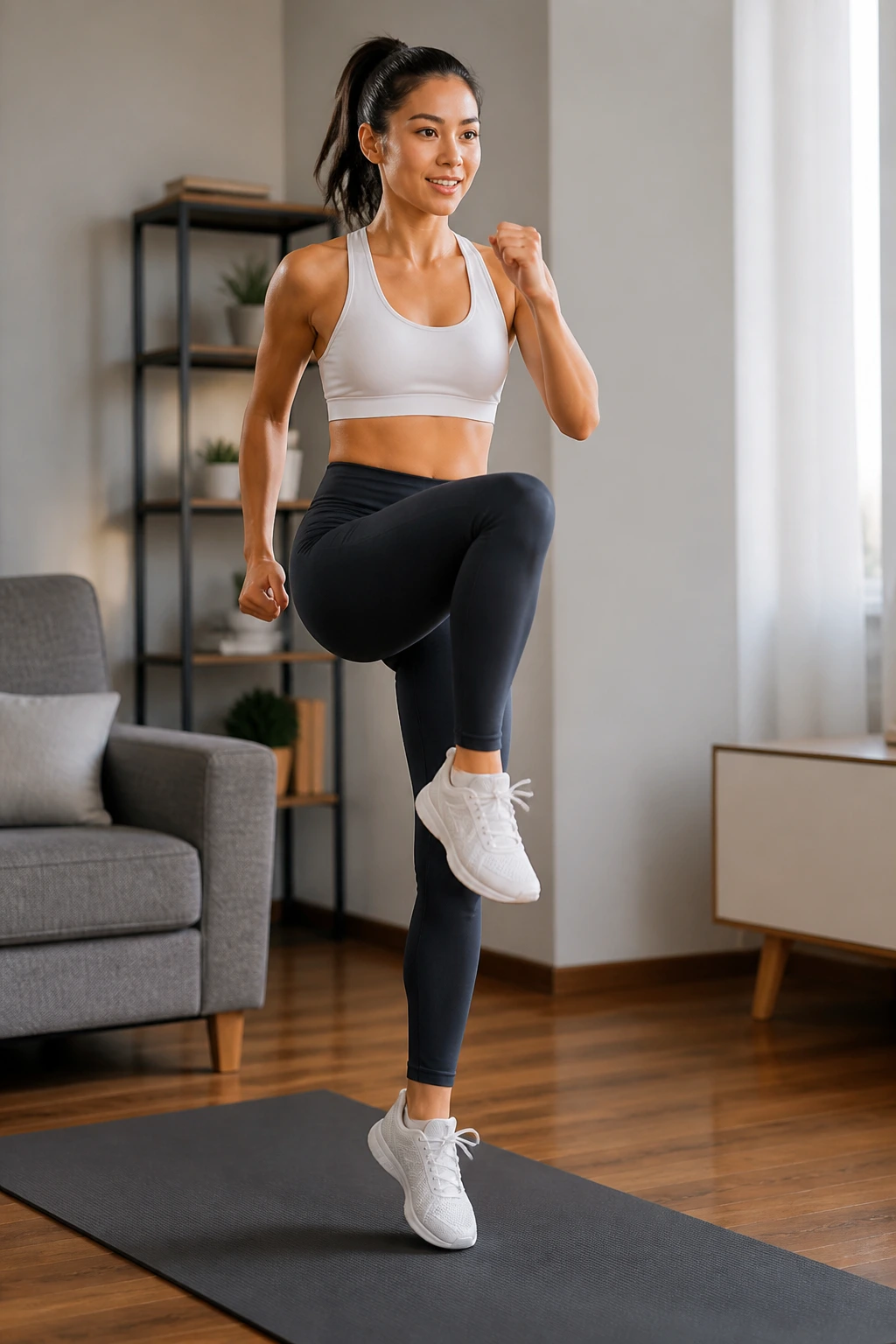
A small apartment can still hold a real cardio session. I’ve always liked this kind of workout for people who want to breathe hard without pounding their joints into the floor.
Use five movements: power march, step jacks, side-to-side skaters, fast feet in place, and alternating knee drives. Work 45 seconds, then rest 15 seconds. Do the circuit twice if you want a longer session. The pace should feel brisk, but your feet should stay quiet.
Key Moves
- Power march: drive the opposite arm and knee up with purpose.
- Step jacks: step out instead of jumping.
- Skaters: reach across the body and keep the landing soft.
- Fast feet: tiny steps, quick turnover.
- Knee drives: stand tall and pull the knee with control, not momentum.
The best part is how adaptable it is. Newer movers can keep both feet on the floor the whole time. Stronger folks can go harder on the arm swing and shorten the rest. Either way, your heart rate climbs without turning the workout into a jumping contest.
5. Glute Bridge and Hamstring Burnout
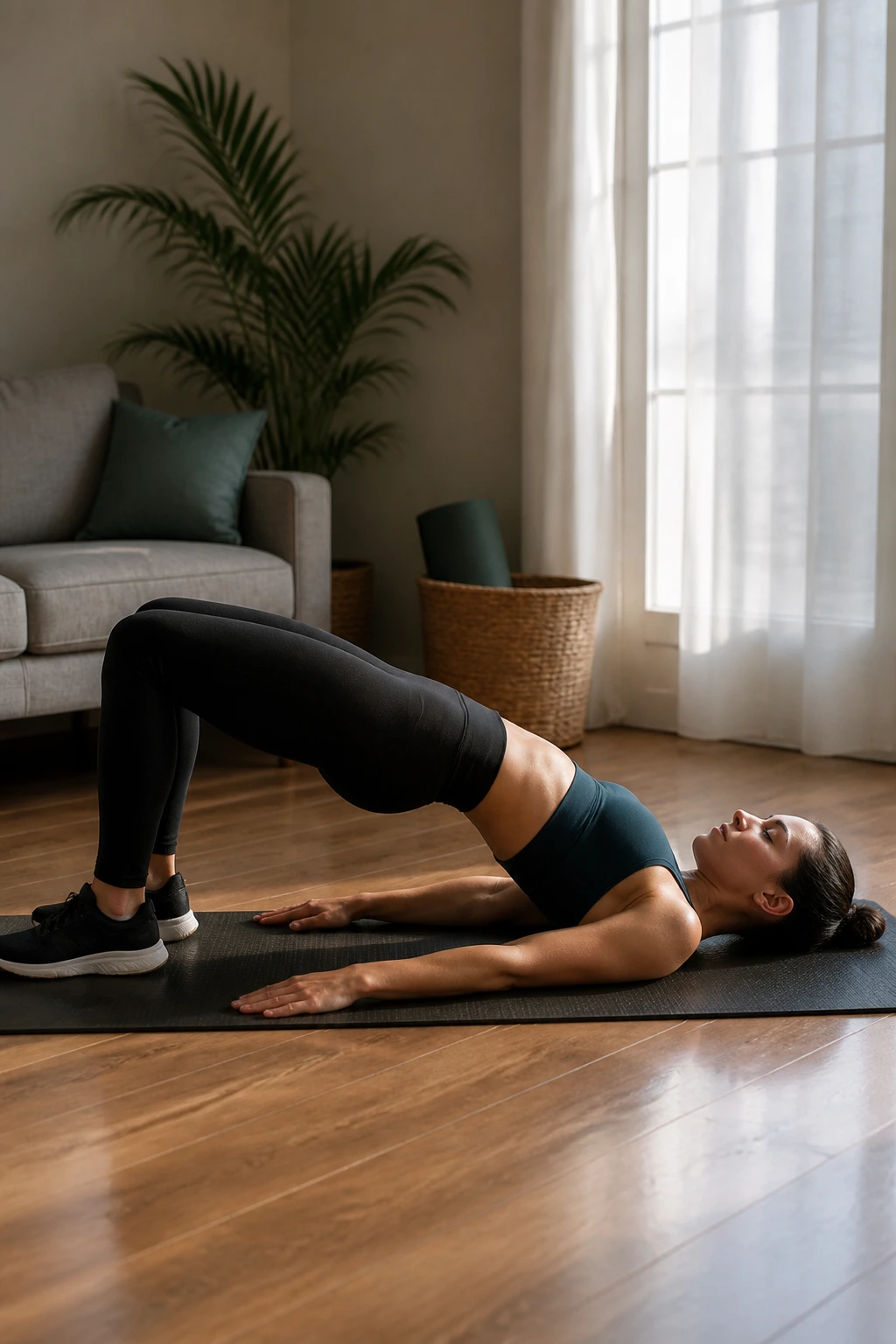
The backside of the body gets ignored more than it should. That’s a mistake. Strong glutes and hamstrings help with posture, walking, running, and the boring little stuff like getting off the couch without grunting.
Do 15 regular glute bridges, 10 single-leg bridges per side, and a 20-second hold at the top. Rest 30 seconds, then repeat for 3 rounds. Press through the heels and keep the ribs down. If you feel it mostly in the lower back, your pelvis is probably tipping too far forward.
A good bridge feels like a squeeze under the seat of your pants, not a crunch in your spine. The top position should look tidy, with hips lifted and the body making one clean line from shoulders to knees. No arching. No flaring.
For a tougher version, walk your feet a little farther away from your hips. That shifts more work into the hamstrings and makes the burn arrive faster. It’s a small change, and it matters.
6. Dead Bug Core Stability Flow
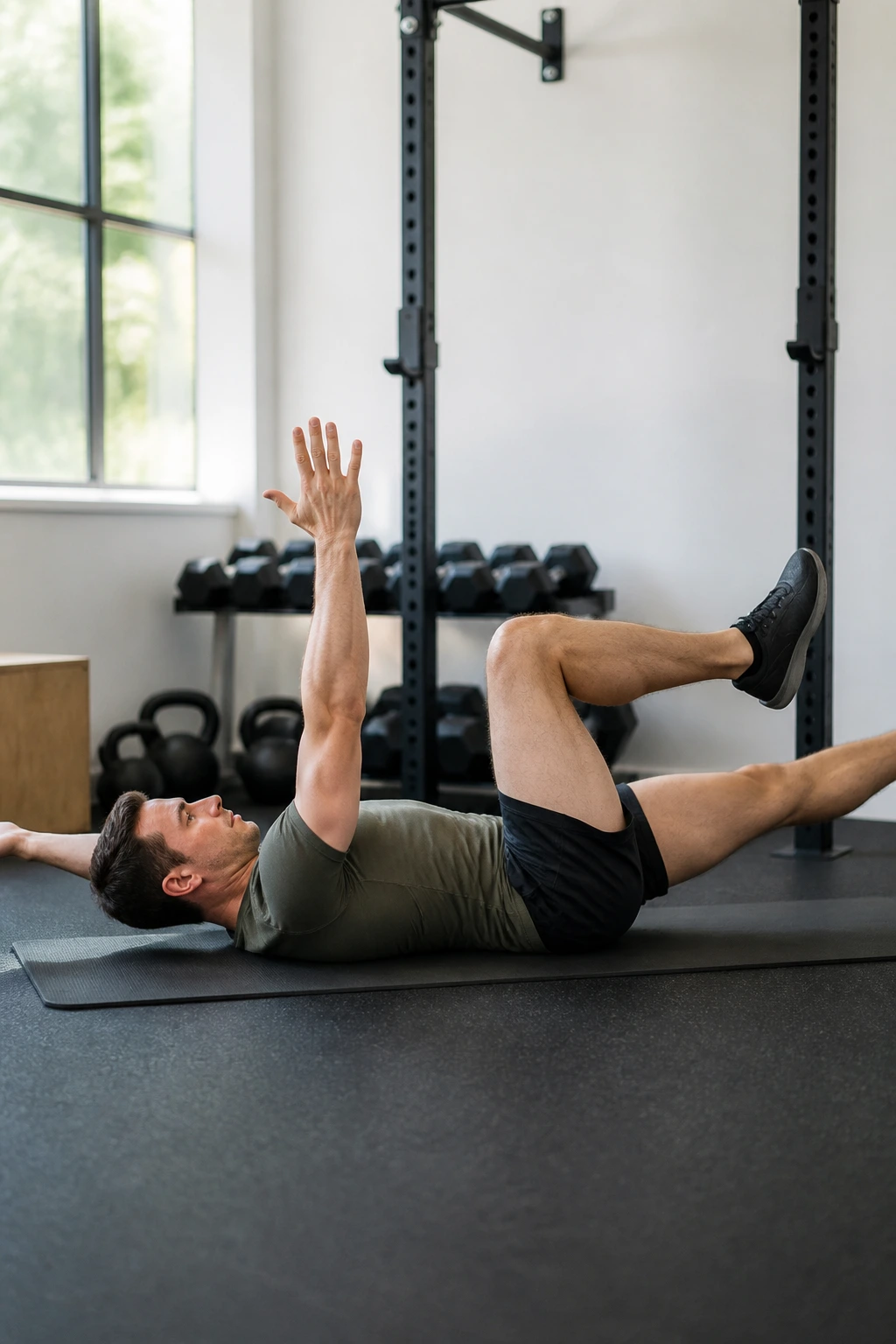
Crunches are not the whole story. Not even close. A strong core has to resist motion, not just make it.
Do dead bugs for 8 reps per side, then add bird-dogs for 6 reps per side and a 15-second hollow hold if you can keep your lower back gently pressed into the floor. Move slowly. If the opposite arm and leg shoot away fast, you’re missing the point.
How the Core Actually Works
The dead bug teaches your trunk to stay steady while your arms and legs move. That matters for almost everything else you do, from squats to carrying groceries. The motion should look almost boring. Good. Boring is often correct here.
What To Feel
- Low back stays heavy on the floor.
- Ribs stay tucked, not flared.
- Neck and shoulders stay loose.
- Breathing stays steady instead of choppy.
If this feels too hard, shorten the lever. Keep your knees bent more and tap the heel instead of extending the leg fully. That’s not a downgrade. It’s the version that lets you train with control instead of cheating the shape.
7. Mountain Climber Interval Builder
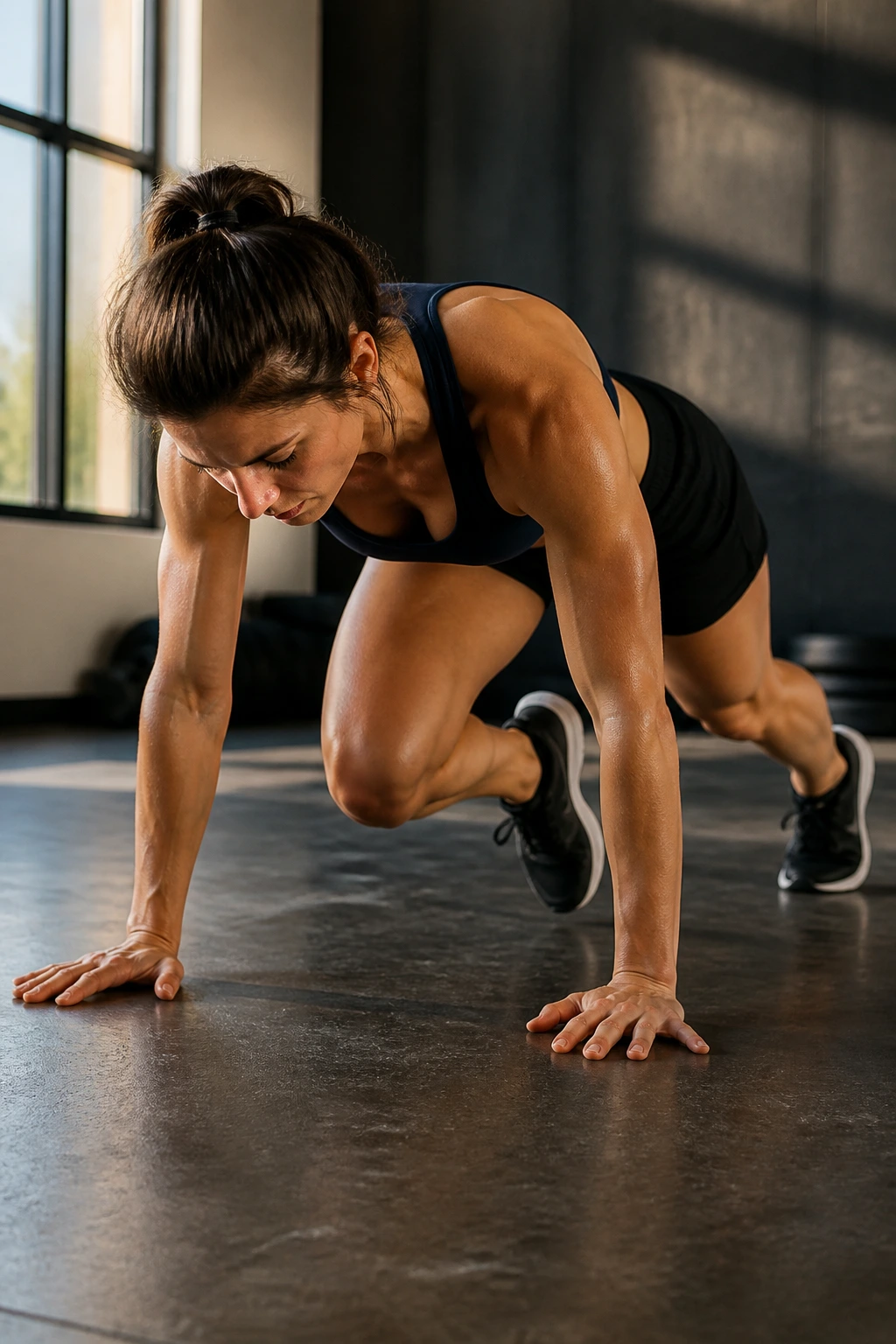
A mountain climber workout can be pure chaos if you let it. Or it can be a tidy little engine-builder. I prefer the second one.
Set a timer for 30 seconds of work and 15 seconds of rest. Do standard mountain climbers, then cross-body climbers, then slow climbers with a 2-second knee drive, and finish with a high plank hold. Repeat the sequence 2 or 3 times. Keep your shoulders stacked over your wrists.
Timer Setup
- Round 1: standard climbers, quick but smooth.
- Round 2: cross-body climbers to wake up the obliques.
- Round 3: slow climbers to clean up your form.
- Round 4: plank hold to finish the set with control.
The temptation is to race. Don’t. If your hips bounce all over the place, you’re feeding the floor energy you could be using better. Strong climbers stay lower, quieter, and more controlled than people expect.
Newer exercisers can keep the movement slow and step one foot at a time. Advanced movers can push the speed, but only if the trunk stays steady. Sloppy fast reps are just noise.
8. Lunge Matrix for Legs and Balance
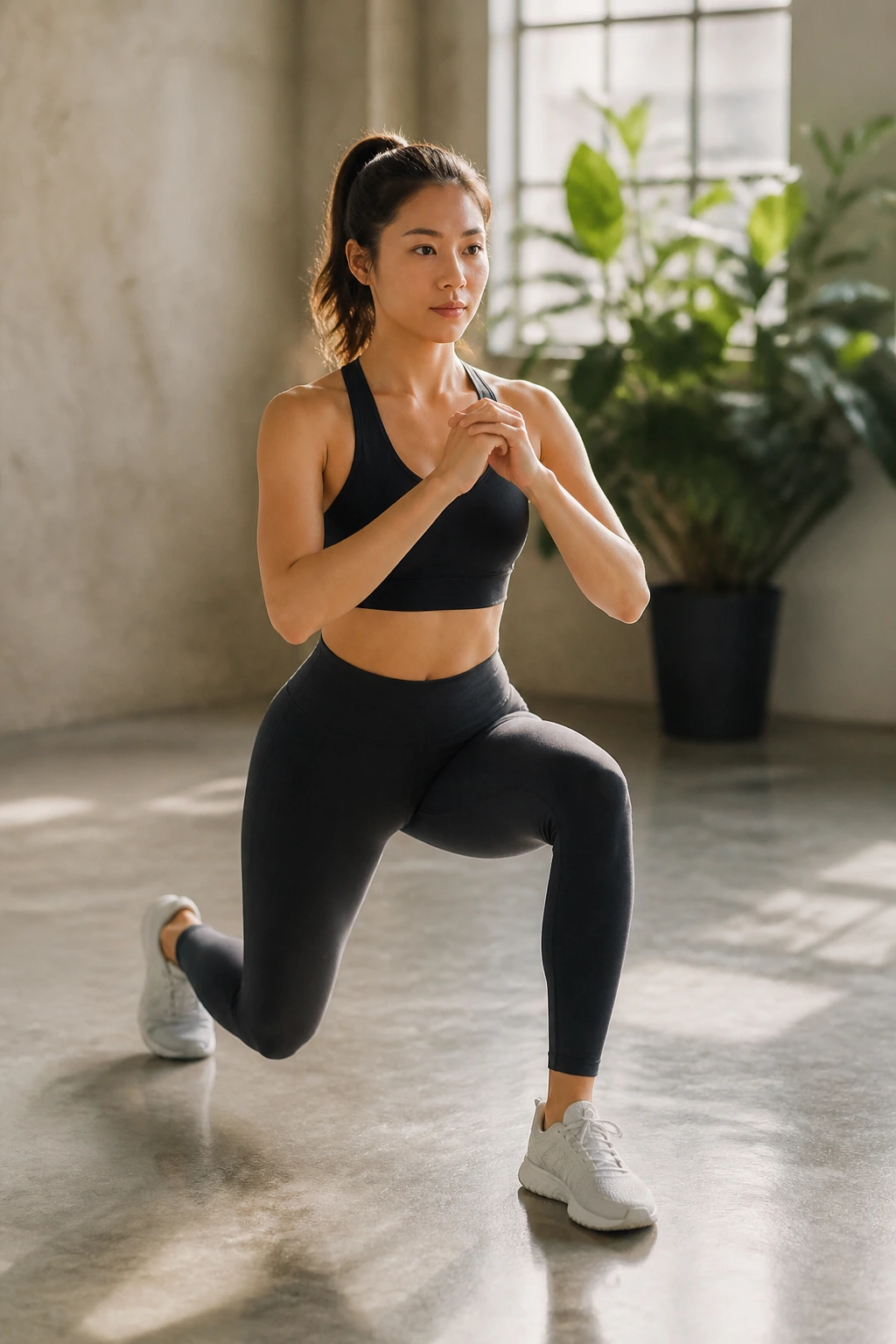
Walking lunges get all the attention, and frankly, they’re not the whole story. A better lunge session moves through angles, because your hips and knees live in more than one plane.
Work through reverse lunges, forward lunges, lateral lunges, and split-squat holds. Do 6 to 8 reps per side for each movement, then rest 30 to 45 seconds before the next round. Three rounds is enough for most people. Two is fine if your balance is still getting better.
Why Lunge Angles Matter
Reverse lunges usually feel friendlier on the knees. Lateral lunges open the inner thighs. Split-squat holds teach patience, which sounds dull until your front leg starts shaking. That shake is a teacher.
What To Watch For
- Front heel stays down.
- Back knee drops straight, not twisted.
- Chest stays tall.
- Front knee tracks roughly over the middle toes.
If side lunges feel awkward, shorten the step and sit the hips back. If reverse lunges feel too easy, slow the lowering phase to 3 seconds. The same workout can meet you where you are. That’s the point.
9. Plank Variations Strength Test
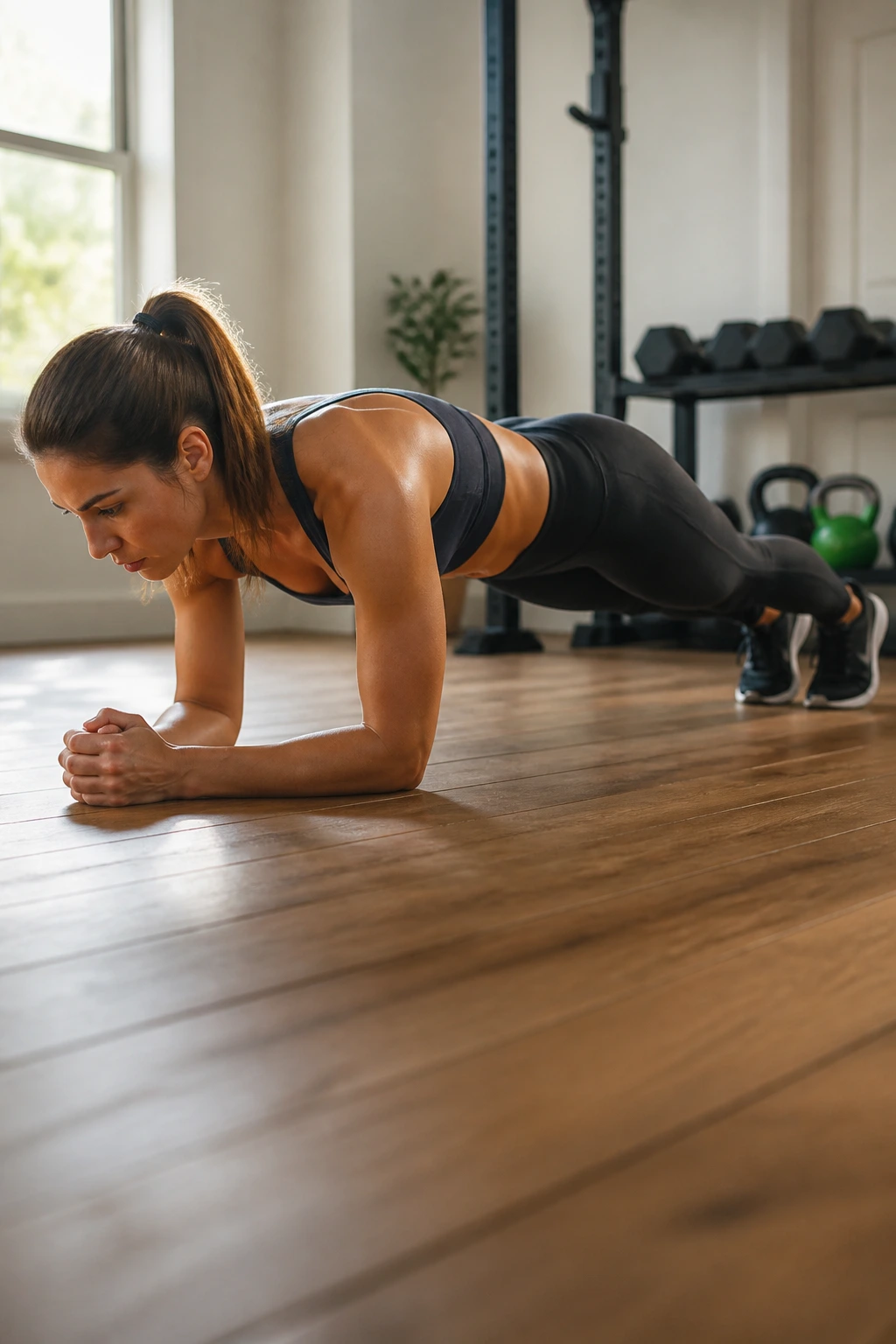
A plank is only boring when it’s done badly. Done well, it lights up the whole trunk in a way that still surprises people who’ve been training for years.
Start with a forearm plank for 20 to 40 seconds, then shift to a side plank for 15 to 25 seconds per side, and finish with plank shoulder taps for 10 to 20 taps total. Rest as needed, then repeat for 3 rounds. Keep the butt from drifting up and the belly from sagging.
What Makes It Different
The forearm plank rewards straight-line tension. Side planks challenge the obliques and the side of the hip. Shoulder taps add anti-rotation, which means your body learns not to wobble when one hand leaves the floor. That little wobble tells you a lot.
How To Progress
- Add 5 seconds per hold.
- Slow each shoulder tap.
- Lift one foot for a harder anti-rotation test.
- Move from knees to toes only when the shape stays clean.
If you hate planks, good. Most people do. That doesn’t make them less useful. It just means they expose sloppy trunk control faster than you’d like.
10. Shadow Boxing Cardio Rounds
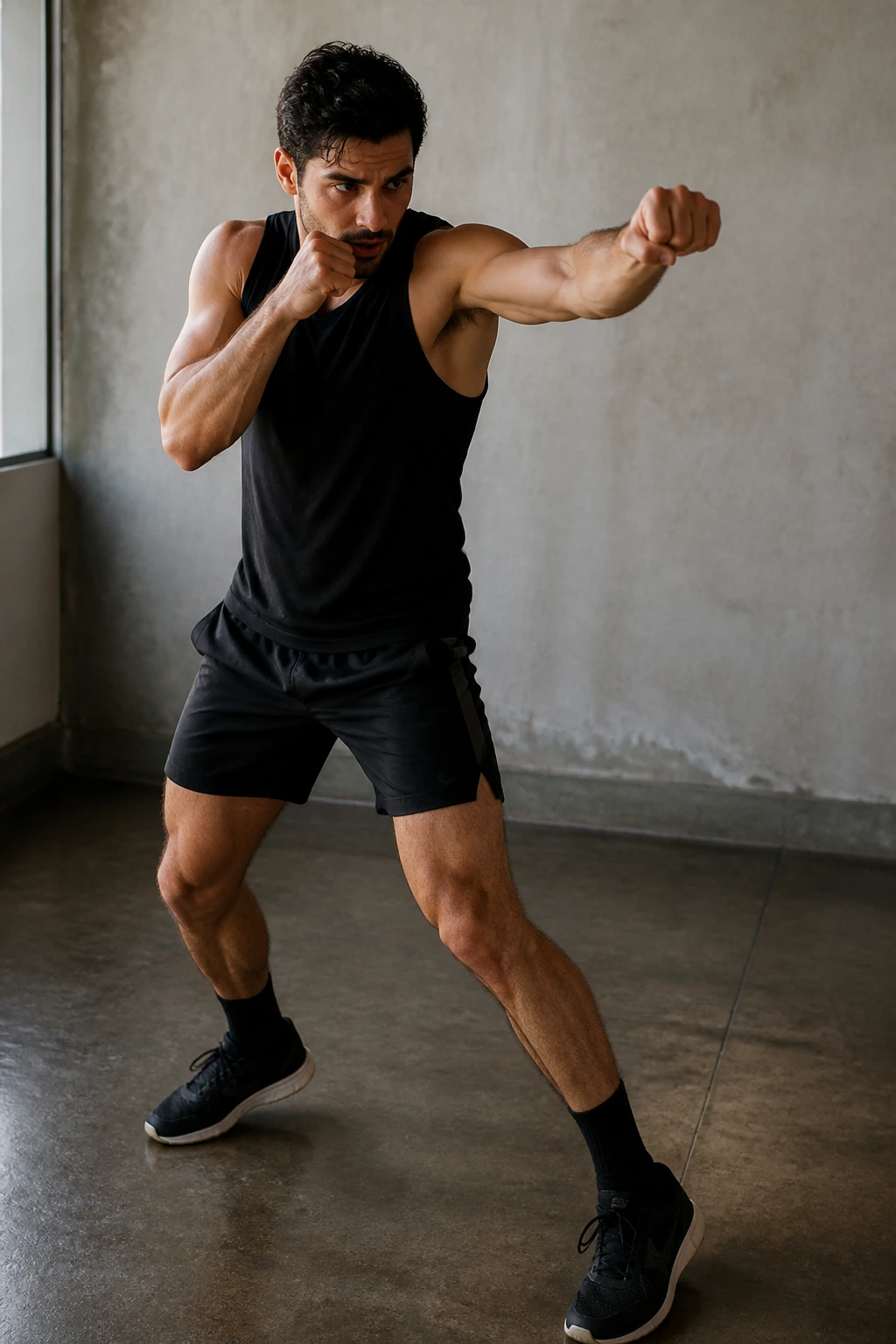
A good shadow boxing session feels sharp, not silly. You’re moving your feet, throwing clean punches, and learning to breathe under pressure without a bag or gloves.
Set 3-minute rounds with 1 minute of rest. Spend the first round on jab-cross combos, the second on adding slips and pivots, and the third on mixing in knee drives. Beginners can keep the feet planted more often. Stronger movers can layer in faster footwork and longer combinations.
A lot of people underestimate how much this works the shoulders, hips, and lungs at once. The hands move, sure. The real work is in the turns, the stance, and the way your guard snaps back to your face after each strike.
Keep your chin tucked, your ribs soft, and your punches straight. Wild arm swings look dramatic and do very little. Clean, repeated punches with proper rotation feel better and save energy. That’s the whole game.
11. Burpee Scale Ladder
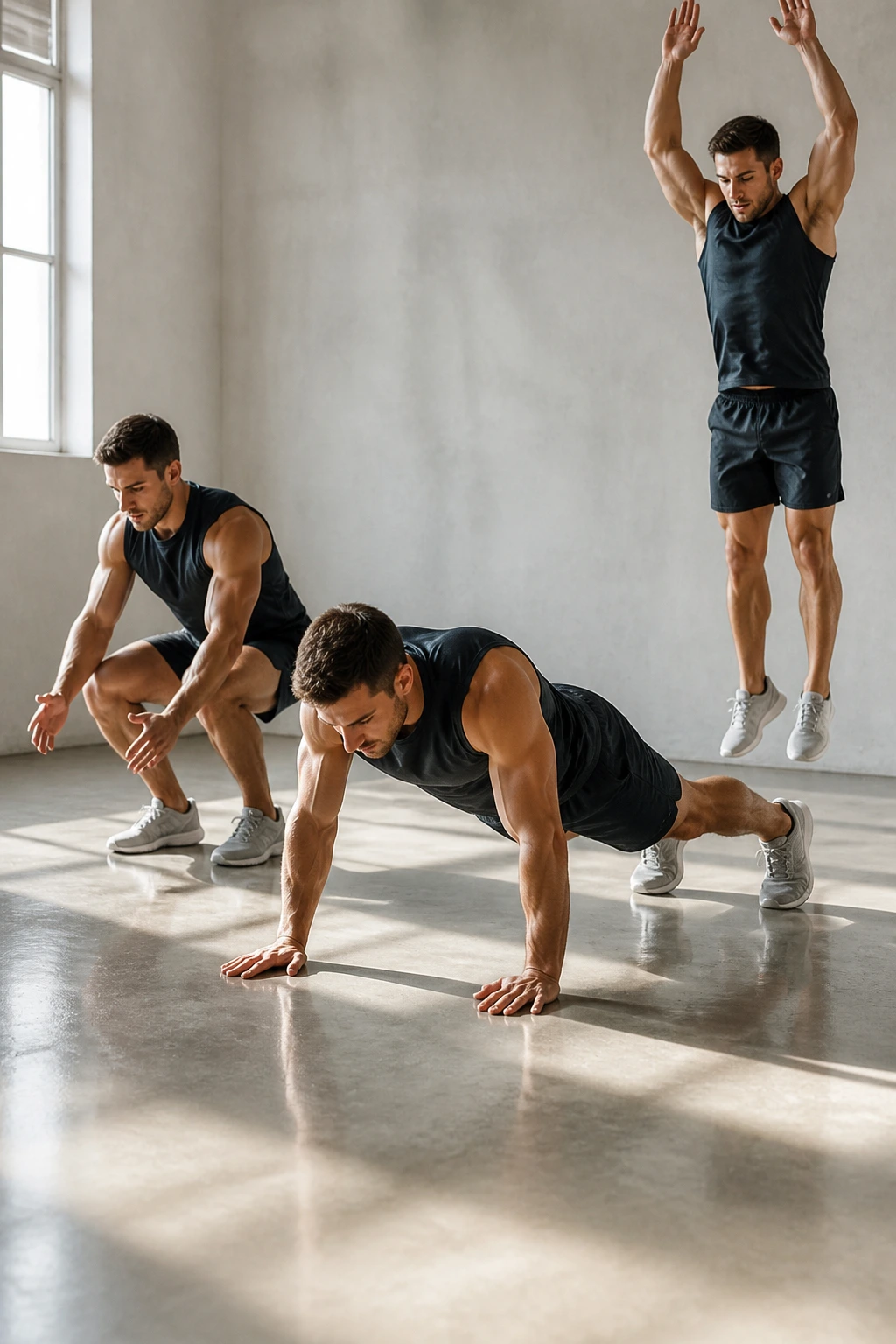
Burpees get a bad reputation because people often do them like they’re trying to escape the floor. Slow them down, and the movement makes more sense. Fast chaos is optional.
Try 1 burpee, then 2, then 3, all the way to 5, then come back down. Rest 30 seconds between rungs. If full burpees are too much, step back to plank instead of jumping, and stand up without a jump at the top. The workout still counts.
A cleaner burpee starts with a strong squat, not a sloppy fold at the waist. Put your hands down, step or jump back, brace in plank, step or jump in, and stand tall with control. The jump at the end is a bonus, not a requirement.
If you want more challenge, add a push-up on the way down. If your wrists hate the floor, place your hands on a sturdy bench or couch edge. Same pattern. Less crankiness.
12. Yoga-Powered Mobility Reset
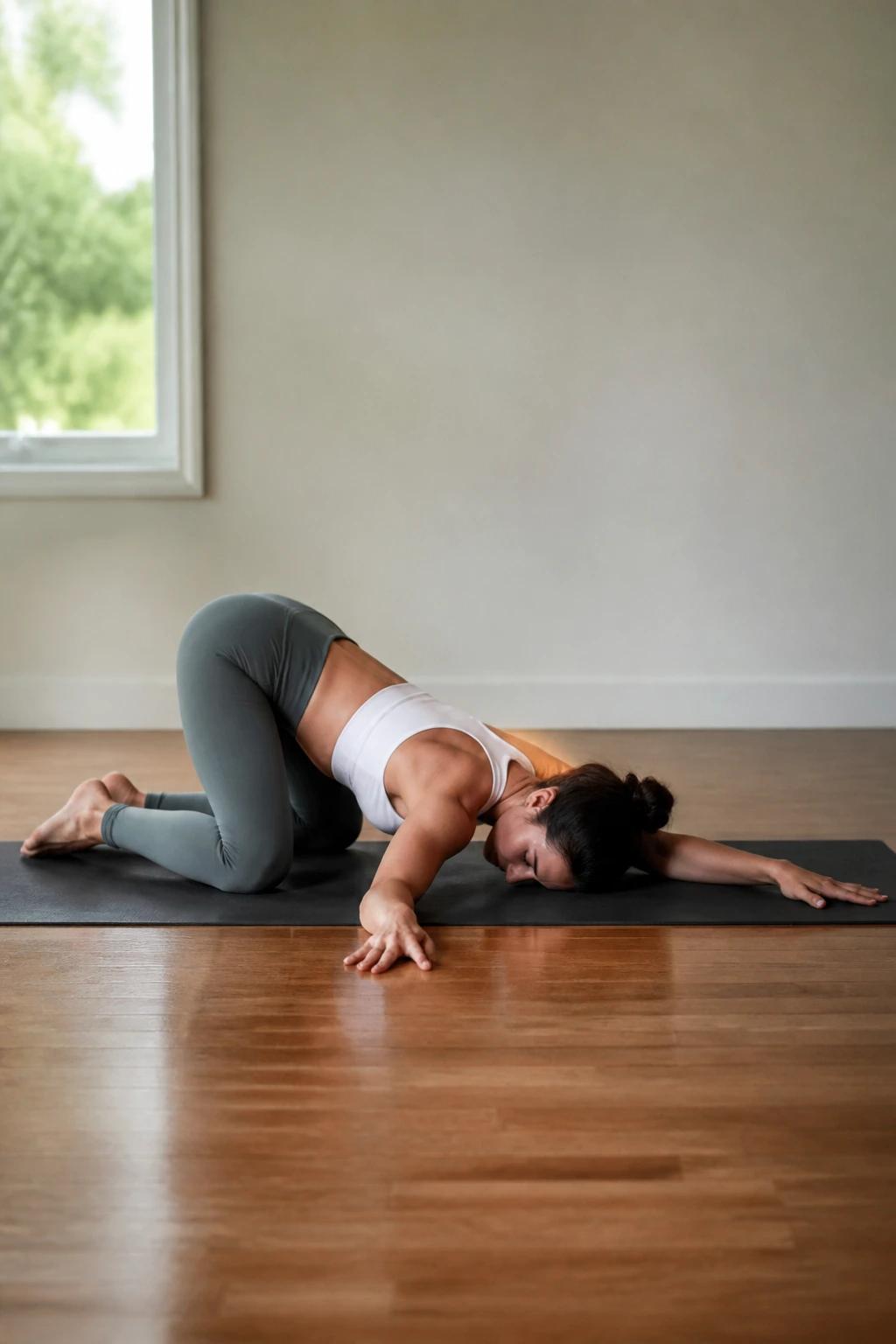
Mobility work deserves a slot in the rotation, not a shrug. Tight hips and stiff shoulders can turn every other workout into an argument.
Flow through cat-cow, down dog to plank, a low lunge with arm reach, a deep squat hold, and thread-the-needle on each side. Spend 20 to 30 seconds in each position and breathe through the nose if you can. The pace should feel almost slow enough to annoy you.
The point is not to be bendy for the camera. It’s to move joints through useful ranges, then come out feeling looser and more organized. A squat hold opens the hips. Thread-the-needle feeds the upper back. Down dog lengthens the back line without needing a stretch strap or anything fancy.
If you sit a lot, this session earns its keep fast. If you train hard, it keeps you from feeling like one solid lump by the end of the week.
13. Tabata-Style No-Equipment Circuit
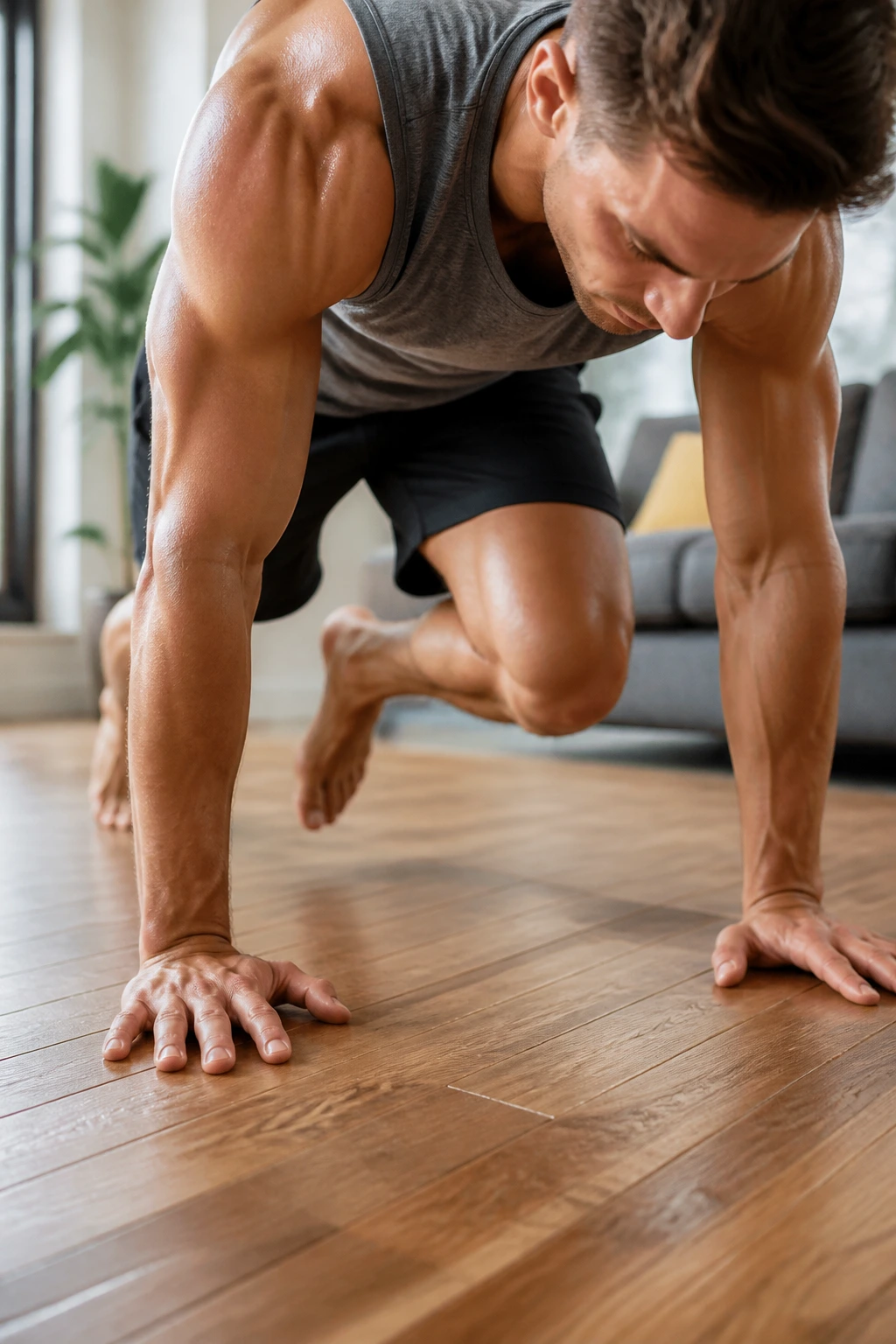
A Tabata-style no-equipment circuit is simple on paper and rude in practice. Twenty seconds hard, 10 seconds easy, repeated 8 times. That adds up fast.
The 20-Second Rule
Pick four moves: jumping jacks, squat to reach, push-ups, and mountain climbers. Do each move for 20 seconds, then rest 10 seconds, and move to the next one. Run the whole block twice. If jumping is too much, swap in step jacks and step-back climbers.
What matters here is honest effort. Not sloppy flailing. Each 20-second bout should feel like you’re working hard enough that talking sounds annoying. The rest is short on purpose, so keep the transitions tight and the movements clean.
A beginner version can stay low impact and stop one rep before form falls apart. A harder version can add tuck jumps or faster feet, but only if landing mechanics stay quiet. No one needs extra impact for the sake of suffering.
14. Upper-Body Floor Series
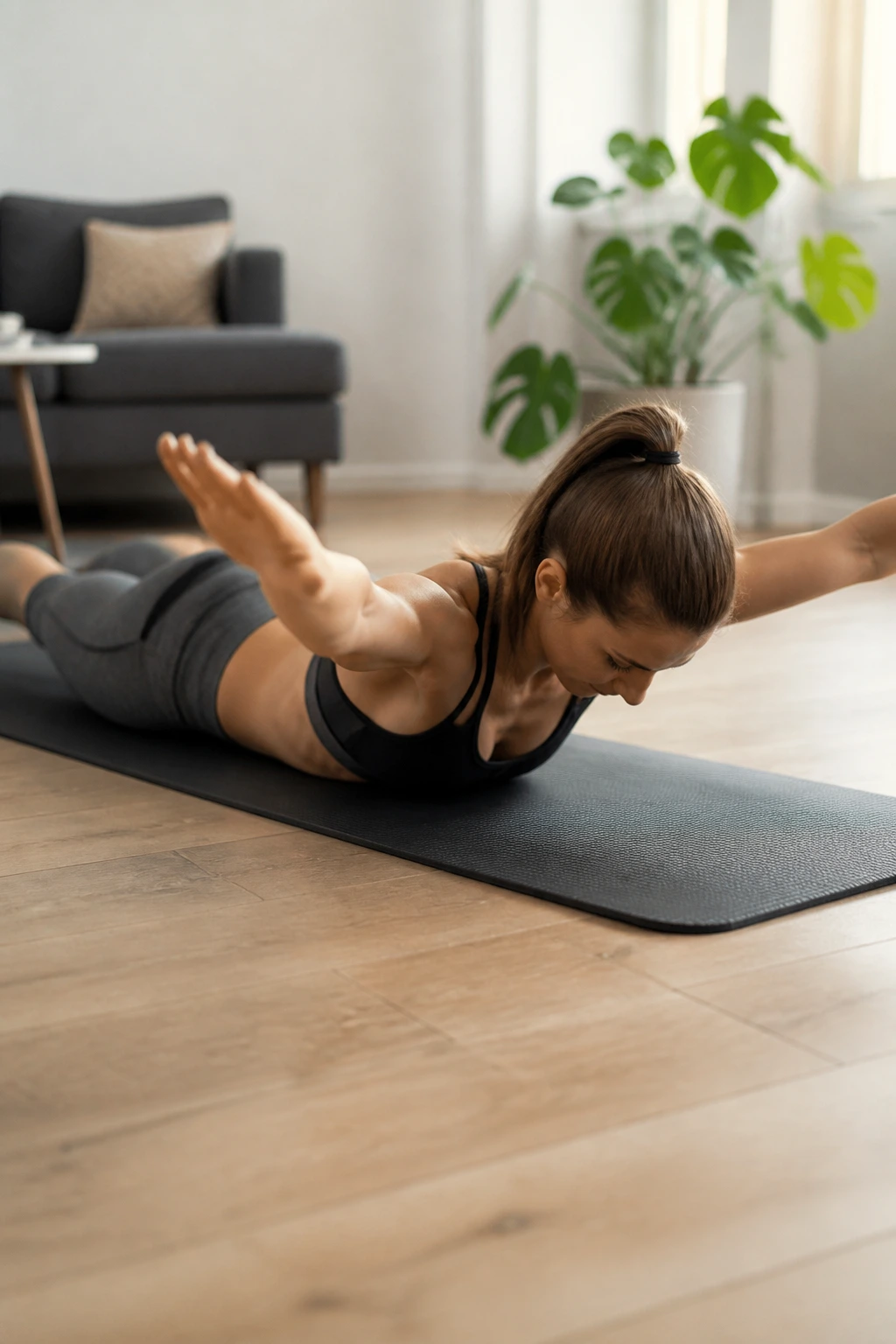
No weights does not mean no upper-body work. People forget that the floor can train your chest, shoulders, upper back, and arms in ways that feel much more specific than they expect.
Use prone Y-T-W raises, reverse snow angels, cobra holds, pike push-ups, and close-grip push-ups. Do 8 to 12 reps of each move, or hold the isometric positions for 15 to 20 seconds. Rest 30 seconds between exercises.
What Makes It Different
The prone work wakes up the back of the shoulders and the upper back, which many bodyweight routines ignore. Pike push-ups shift more load into the shoulders. Close-grip push-ups bring the triceps in hard. Together, they build a floor-based upper-body session that feels more complete than people assume.
Who It’s Best For
If you sit at a desk, this one is gold. If push-ups already feel easy, it gives you a way to keep progressing without needing a bench or dumbbells. And if your shoulders are touchy, keep the range modest and the tempo slow.
The weird part? A few clean floor exercises can make your posture feel better by the end of the session. That’s not a miracle. It’s just attention to muscles that spend too much time asleep.
15. Core and Glute EMOM
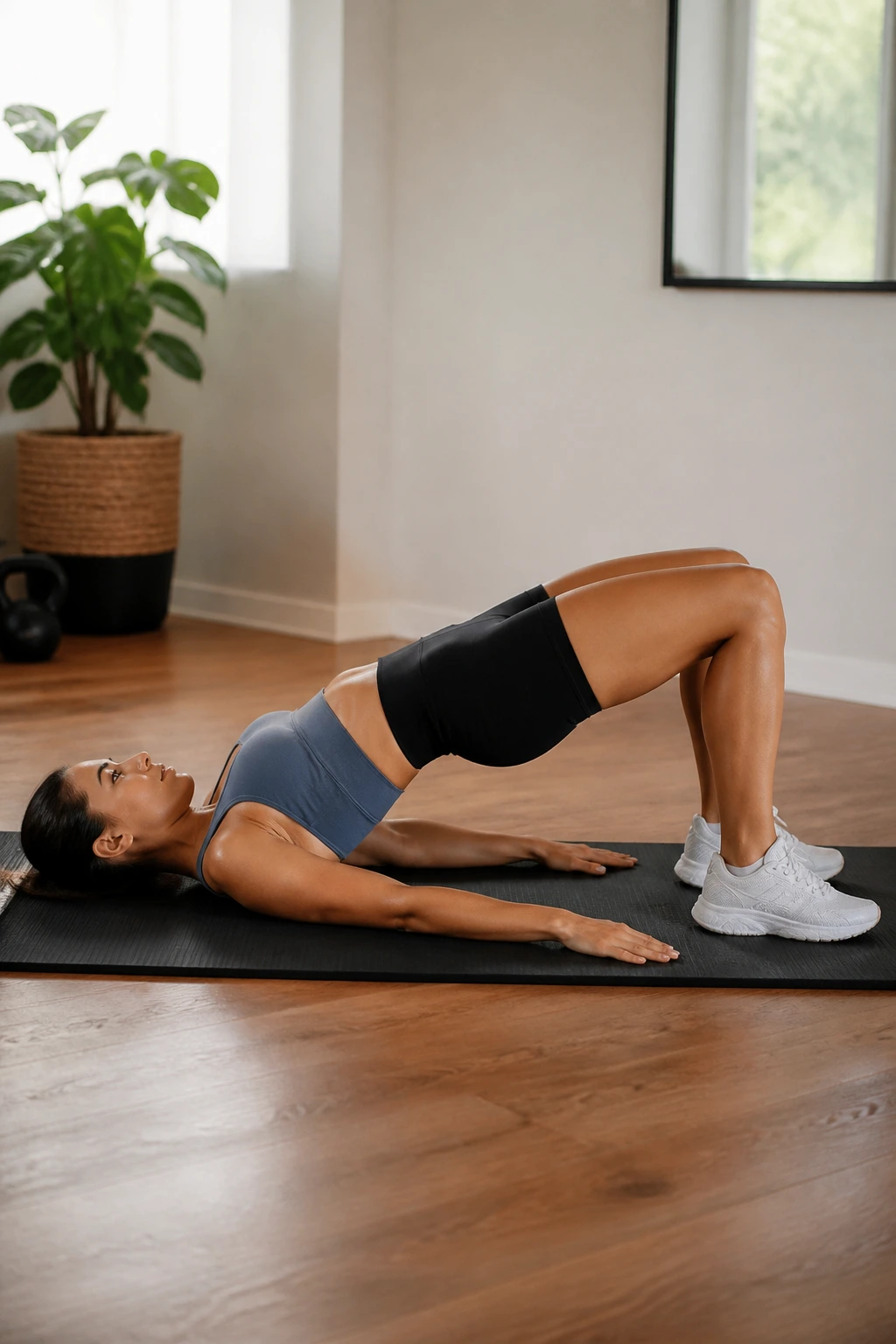
An EMOM sounds fancy until you realize it just means “every minute on the minute.” Then it becomes one of the simplest ways to get work done when your attention is thin.
Set a 12-minute timer. Minute 1: 12 glute bridges. Minute 2: 8 dead bugs per side. Minute 3: 20-second plank. Repeat that pattern four times. If you finish early, rest until the next minute starts. If you don’t finish early, reduce the reps a little.
The structure keeps you honest. You cannot drift off and wander around the room between sets. You finish your reps, breathe, and start again. It’s tidy. A little bossy, too.
For a harder version, elevate one foot during the bridges or extend the plank to 30 seconds. For a gentler version, cut the bridge reps to 8 and keep the plank on your knees. The pattern stays the same either way.
16. Wall Sit and Calf Raise Burner
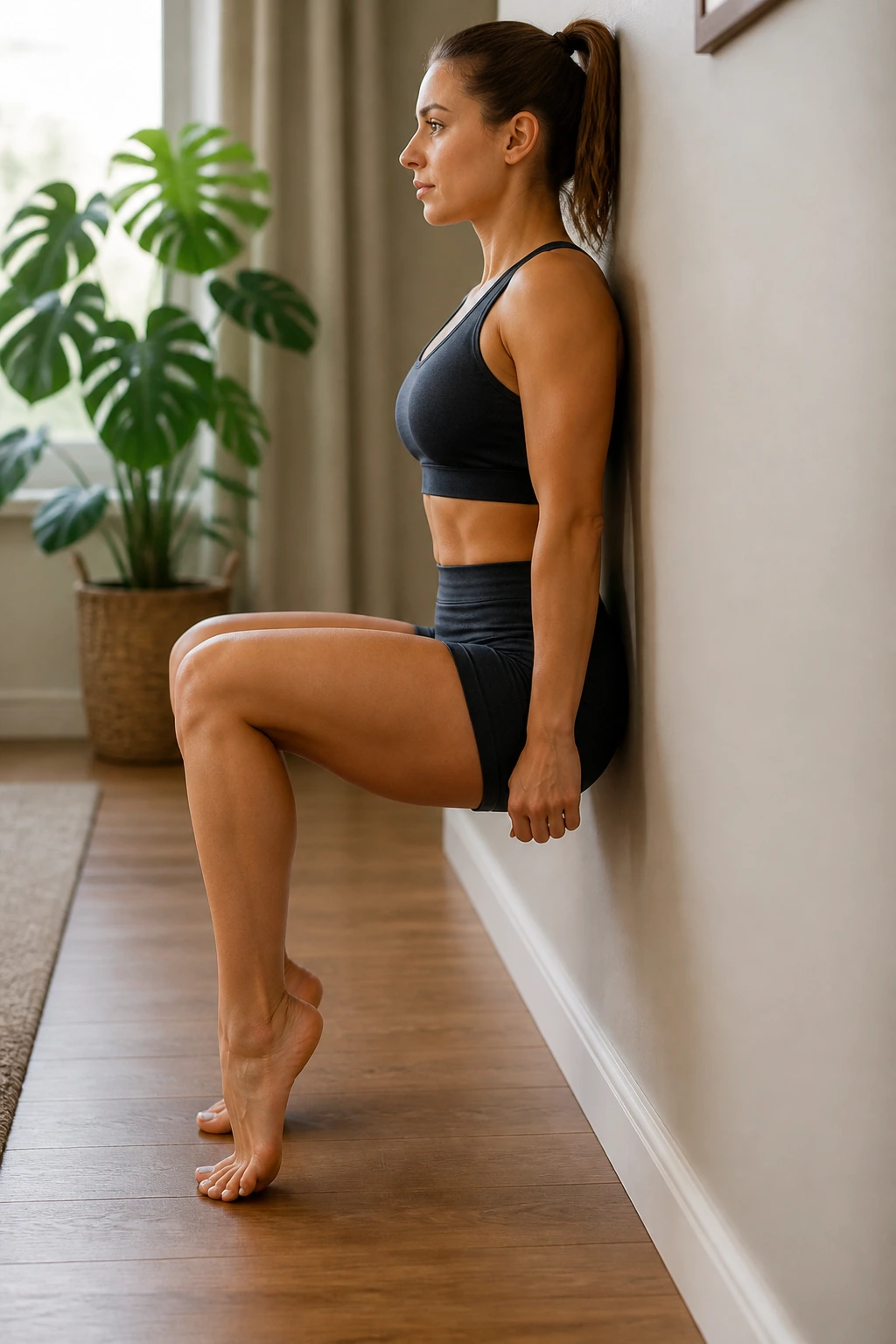
A wall sit looks harmless until your legs start sending complaint letters. That’s what makes it useful.
Sit against a wall with your knees around 90 degrees, hold for 30 to 60 seconds, then stand and do 20 calf raises. Rest 30 seconds and repeat for 3 to 5 rounds. If the wall sit is too spicy, raise your hips a few inches. If it’s too easy, lift one foot for 5 to 10 seconds at a time.
The calves matter more than they get credit for. Walking, running, jumping, and even standing all ask them to work. Pairing calf raises with a wall sit gives you a lower-body session that doesn’t need a single piece of gear and still leaves your legs talking back.
Keep your lower back flat against the wall and your knees aligned with your toes. Don’t bounce in the sit. Don’t rush the heel lifts. Small, controlled work is what makes this one bite.
17. Single-Leg Balance and Strength Flow
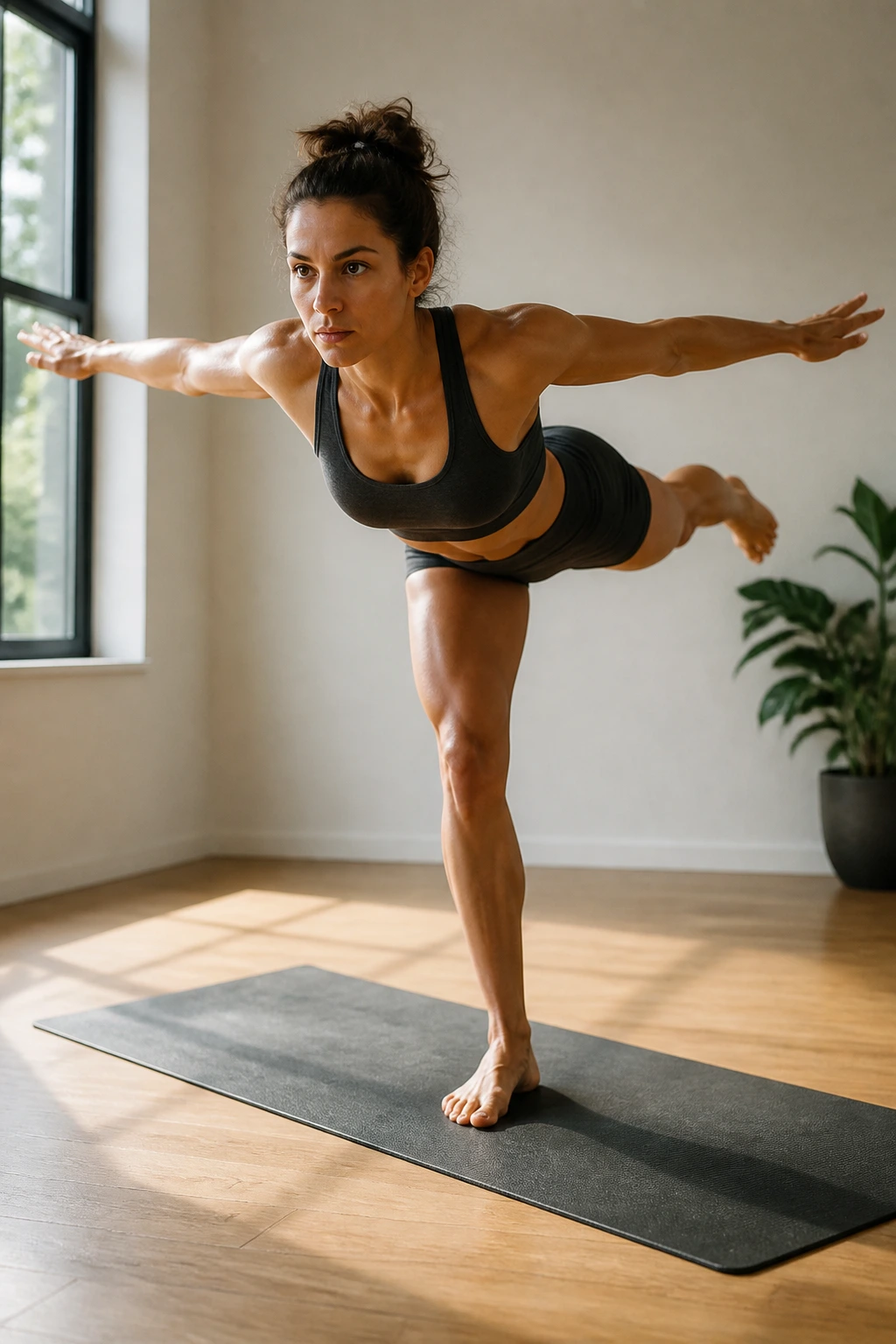
What happens when you take away both feet at once? You find out quickly whether one side is doing more than its share.
Work through single-leg reaches, split-squat knee drives, airplane hinges, and a one-leg stand with your eyes fixed on a spot in front of you. Do 6 to 8 controlled reps per side. Rest as needed. This is less about speed and more about trust.
How To Use It
Start with the single-leg reach: hinge at the hip, reach forward, and keep the standing knee soft. Move into a split-squat knee drive by lowering into a lunge, then driving the front knee up. Finish with a balance hold for 15 to 20 seconds. That sequence wakes up the feet, ankles, hips, and trunk all at once.
What To Feel
- Standing foot presses into the floor evenly.
- Hip stays level instead of dropping.
- Eyes stay on one fixed point.
- The movement feels wobbly at first, then cleaner.
If balance is rough, keep one hand near a wall or countertop. That’s not cheating. That’s smart training with a little support while the pattern improves.
18. Hinge and Posterior Chain Circuit
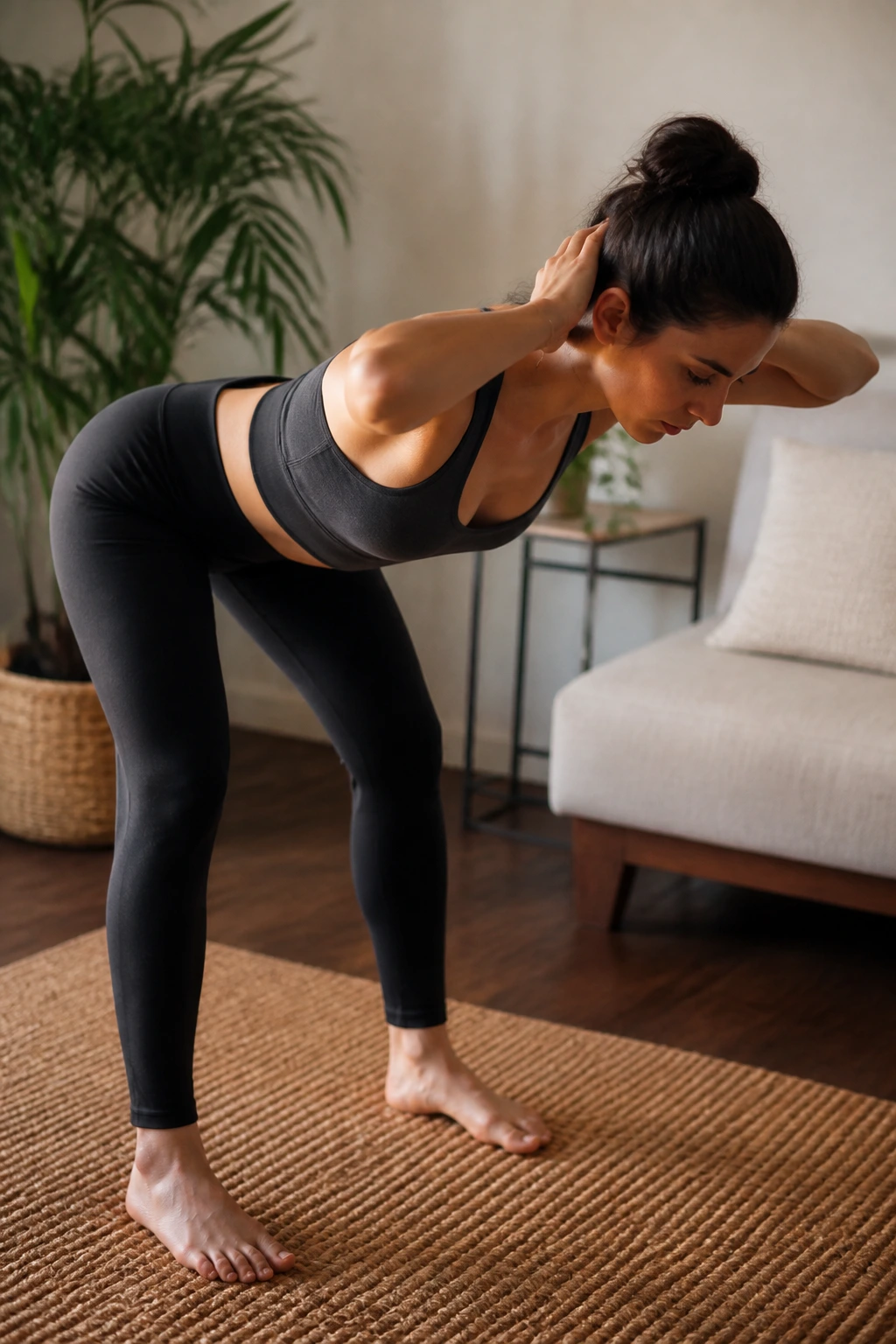
People often squat their way through lower-body training and forget the hinge pattern entirely. That leaves the hamstrings and glutes underworked, which is a shame because they’re some of the most useful muscles you have.
Try good mornings with your hands behind your head, frog pumps, superman holds, and single-leg Romanian deadlift reaches without a weight. Do 12 reps of the dynamic moves and 15 to 20 seconds of the holds. Run the circuit for 3 rounds.
The hinge should feel like your hips are sliding back while your torso stays long. Your back stays neutral. Your knees soften a little, but they do not become the star of the show. That’s what separates a hinge from a squat.
Frog pumps are a nice surprise here. They look almost too easy until the glutes catch fire. If your low back takes over, narrow the range and make the reps slower. Simple fix. Big difference.
19. Mixed-Tempo Endurance Ladder
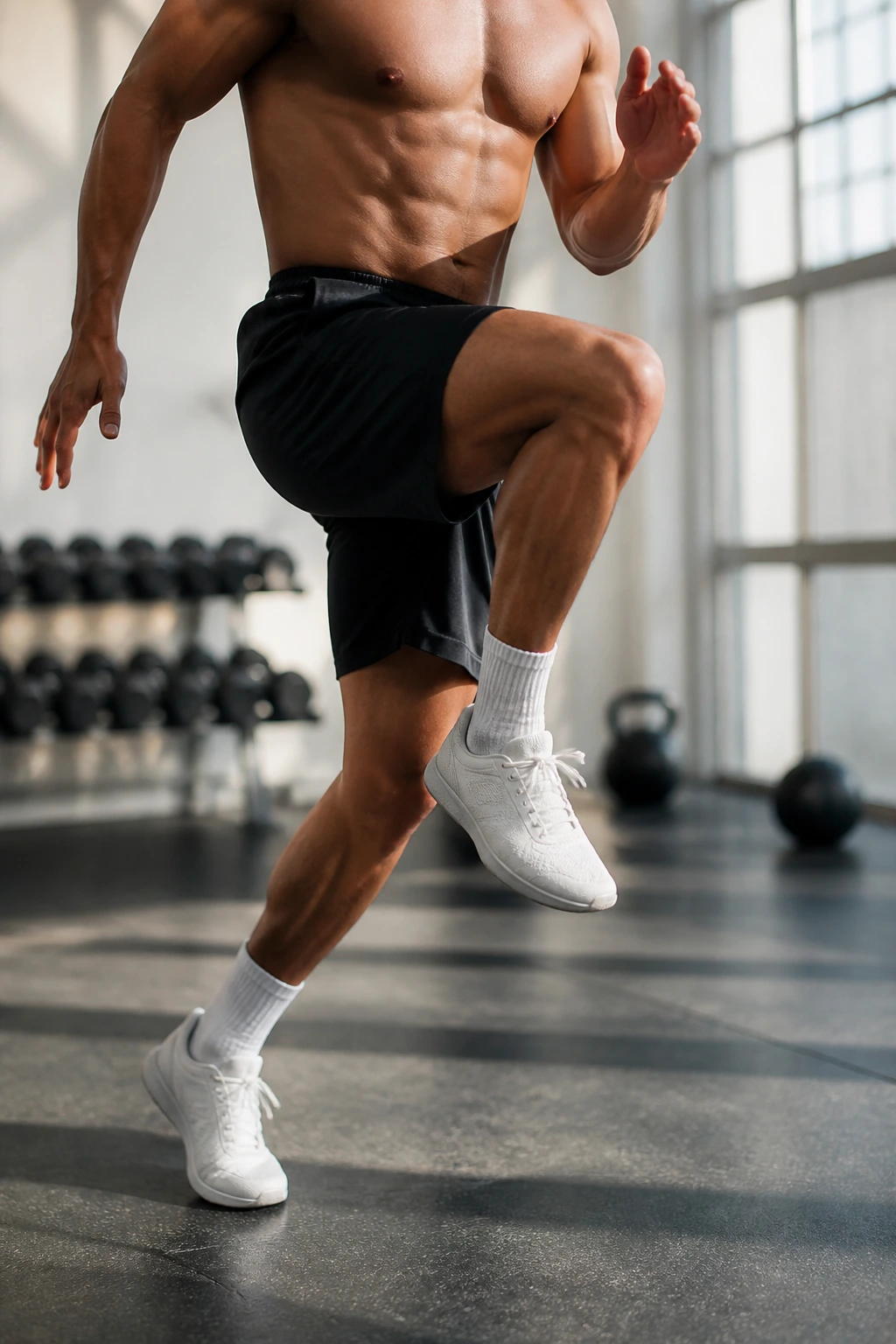
Unlike a pure HIIT session, this workout gives you fast work and slower work in the same package. That makes it a good choice when you want endurance without feeling like you’ve been thrown into a sprint every minute.
Set up a ladder: 30 seconds work, 15 seconds rest; then 40/20; then 50/25; then back down to 40/20 and 30/15. Use squat to reach, alternating reverse lunges, plank jacks, and high knees or step-high knees. Repeat the whole ladder once if you have the gas.
The changing tempo is the point. Shorter blocks feel snappy. Longer blocks force you to pace yourself instead of emptying the tank too early. If you’re newer, stay on the low end of the ladder and choose low-impact versions. If you’re stronger, keep the same shapes but push the intensity by moving with better snap and less wasted motion.
This is the kind of session that teaches control. Not flashy. Useful.
20. Recovery Day Mobility and Breath Reset
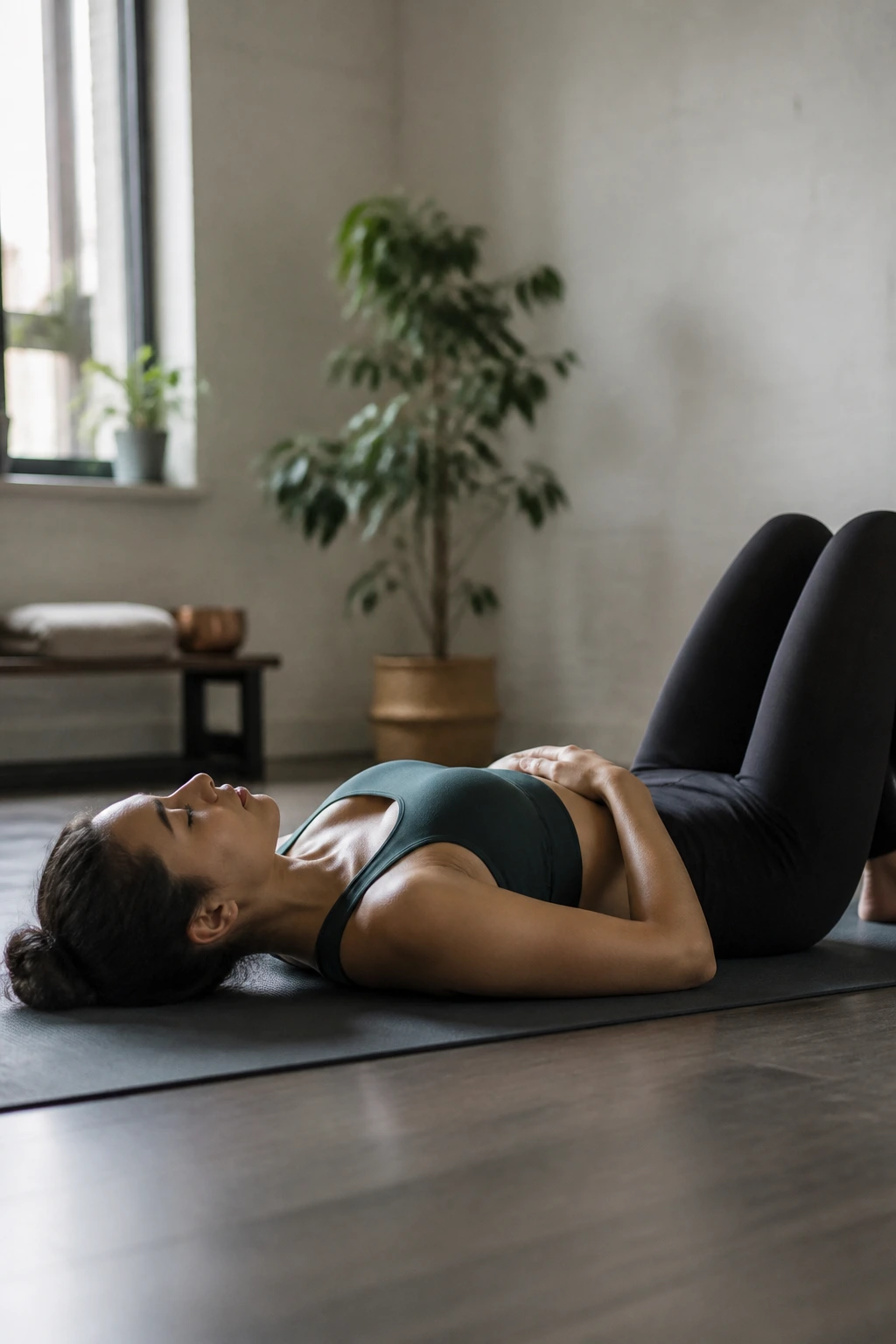
A recovery workout should leave you looser, not bored. It should also leave enough of a pulse that you feel like you actually did something.
Move through a slow sequence of child’s pose to tabletop, half-kneeling hip flexor stretch, spinal twists on the floor, a supported deep squat hold, and a 1-minute breathing reset lying on your back. Spend about 30 seconds in each position, then repeat the flow twice.
How To Keep It Useful
- Breathe in for 4 counts and out for 6.
- Keep the stretch at a mild pull, not a wince.
- If one side feels tighter, stay there a little longer.
- Move the joints, then pause and breathe.
This workout works best on days when your hips feel sticky, your upper back feels stiff, or your legs need a break from harder intervals. It is also the best reminder that no-equipment training does not have to mean sweat, speed, and noise every time. Some days, the smartest session is the one that helps you show up better for the next one.
