



Standing yoga poses look polite from a distance. Then you hold Chair Pose for thirty seconds and your thighs start telling the truth.
That’s the charm of standing yoga poses for daily strength. They ask your feet to root, your ankles to steady, your legs to carry load, and your core to stop freelancing. A good standing sequence wakes up muscles most people barely notice until they get tired or irritated — the small stabilizers around the arches, the hips, the ribs, the spine.
There’s also a practical side to this kind of work. Standing poses teach you how to keep breathing while one leg does more than the other, how to keep your pelvis from dumping forward, and how to stay controlled when balance gets a little messy. That carries over to stairs, long walks, carrying groceries, and all the awkward half-turns life keeps handing out.
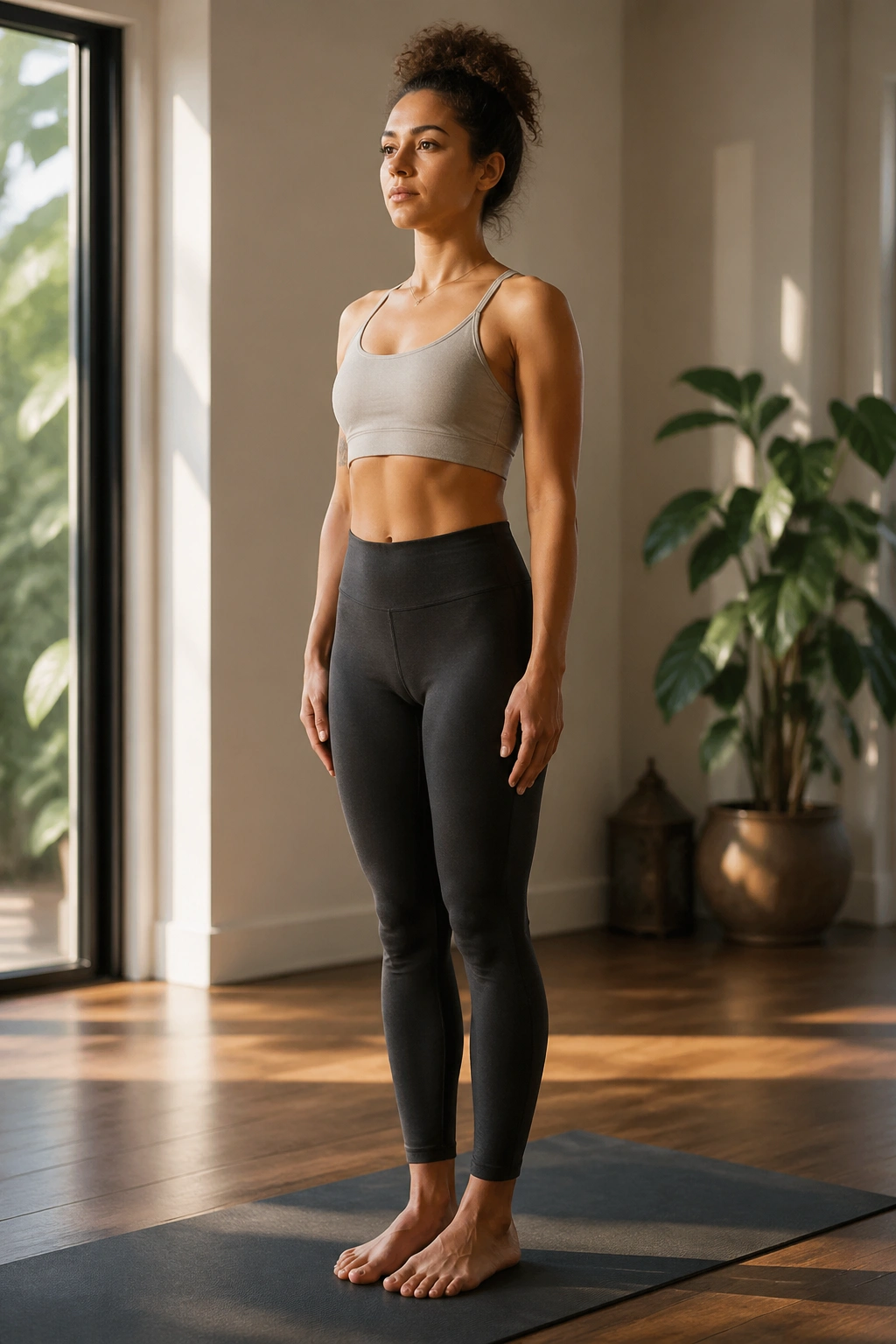
Start with Mountain Pose. Skip it, and the rest of the sequence tends to get sloppy fast.
1. Mountain Pose
Mountain Pose is not passive. Done well, it feels like quietly loading every joint from the feet up.
Most people treat it like a place to wait. I think that’s a mistake. Tadasana teaches you how to stand without collapsing into the heels, the knees, or the lower back, and that matters before you ever move into a lunge or a balance pose.
What to feel
- Spread all ten toes and keep the feet grounded through the heel, the base of the big toe, and the base of the little toe.
- Lift the kneecaps gently without locking the knees.
- Stack the ribs over the pelvis so the lower back stays long.
- Reach the crown of the head upward while the shoulders melt down.
- Let the breath fill the sides of the ribs, not just the belly.
Tiny effort, big payoff. A clean Mountain Pose makes every pose after it feel more organized.
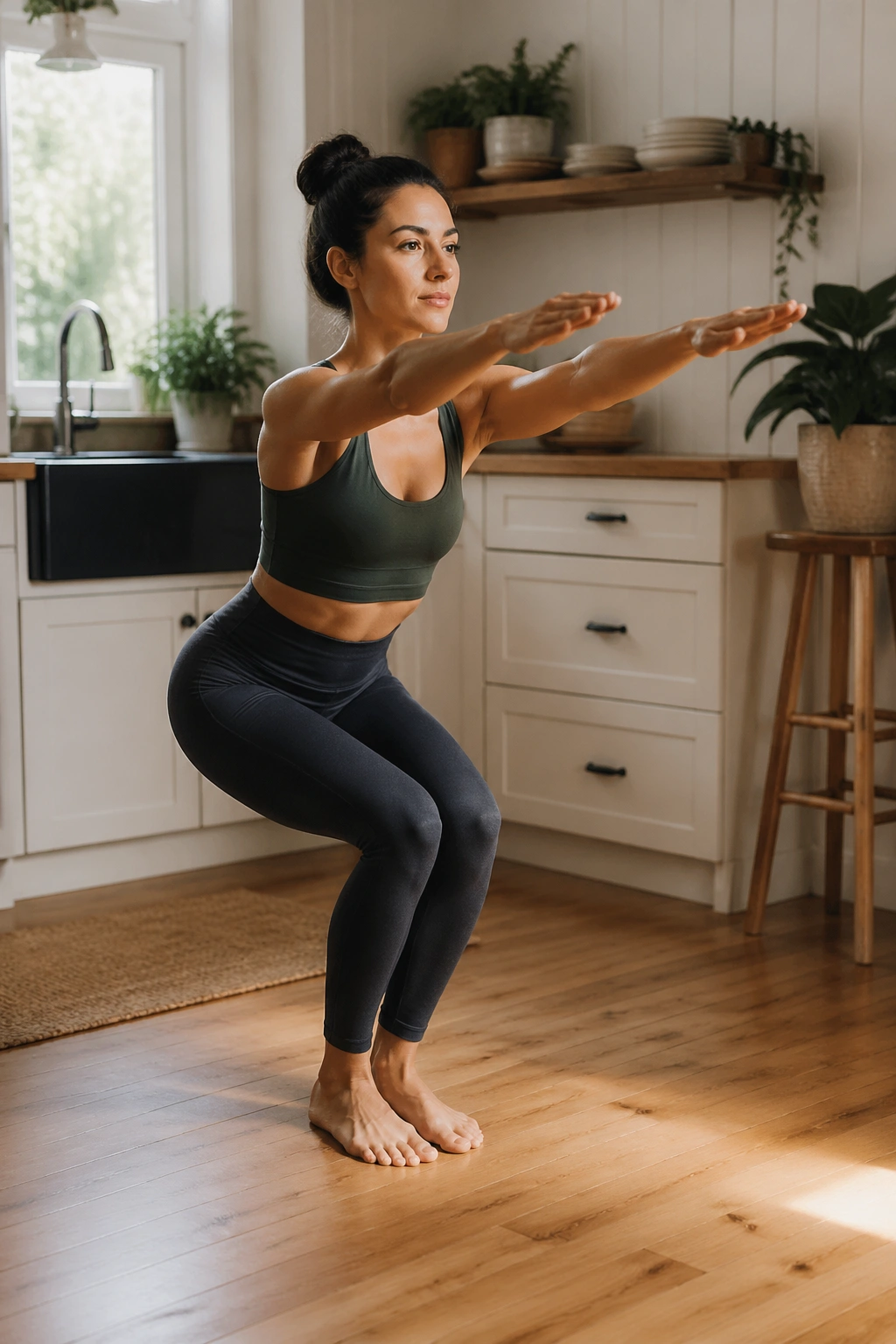
2. Chair Pose
Your thighs will complain. Good.
Chair Pose is one of the fastest ways to feel daily strength without fancy setup, and it gets honest fast. Sit your hips back as if you were reaching for a chair that keeps sliding away, then keep the chest lifted enough that your spine doesn’t fold like a lawn chair.
The work should land in the quads, glutes, and deep belly muscles. If you dump all the weight into the knees, the pose turns cranky. If you lean too far forward, it becomes a hinge instead of a squat, and the legs never get the load they need.
Hold for 3 to 5 breaths, or longer if you like your practice spicy.
Burn is part of the job.
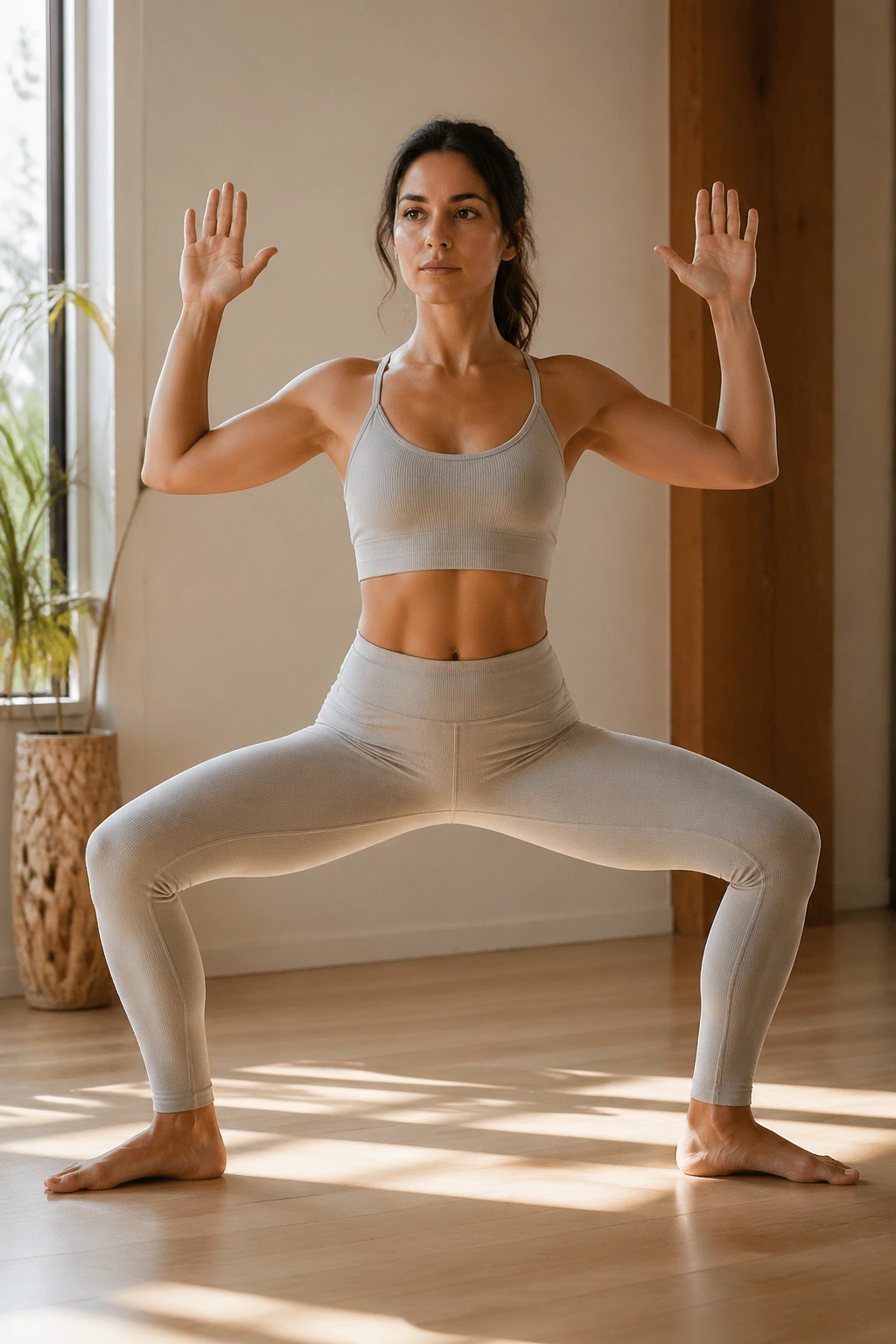
3. Goddess Pose
Why does Goddess Pose feel so demanding after only a few breaths?
Because it asks for strength in a wide shape, which is harder than it looks. The stance turns the outer hips and inner thighs on at the same time, and the torso has to stay tall while the knees track over the toes.
How to set it up
- Step the feet wide, about 3 to 4 feet apart.
- Turn the toes out around 45 degrees.
- Bend the knees until the thighs start to work, but do not let the knees cave inward.
- Keep the tailbone heavy and the ribs lifted.
- Lower the arms into cactus shape or prayer at the chest.
The wide stance makes this pose feel grounded and strong, not rushed. I like it because it builds leg stamina without the cramped feeling some narrow poses create.
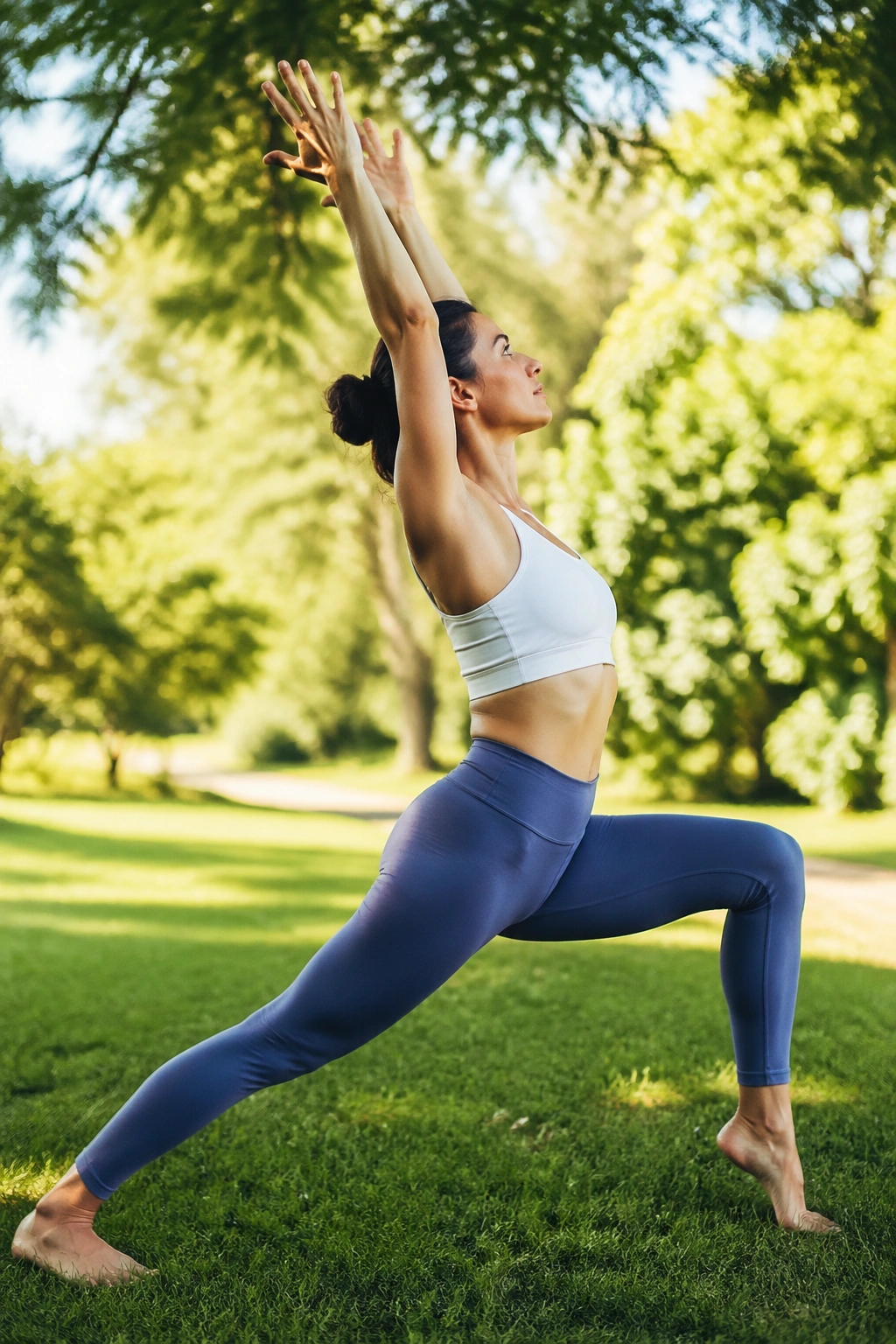
4. High Crescent Lunge
A single-leg stance in motion is where strength gets real.
High Crescent Lunge looks simple until you settle into it. The front thigh starts carrying more of the load, the back leg goes long and active, and the core has to help keep the pelvis from twisting open like a door that won’t stay shut.
One thing matters more than people think: the back leg is not decoration. Press back through the heel, lift through the inner thigh, and keep enough tone in the glute that the pose feels alive from hip to ankle. If the lower back feels jammed, shorten the stance a little and rise higher through the torso.
A steady lunge like this builds the kind of strength that shows up in everyday movement. Not showy. Useful.
5. Warrior I
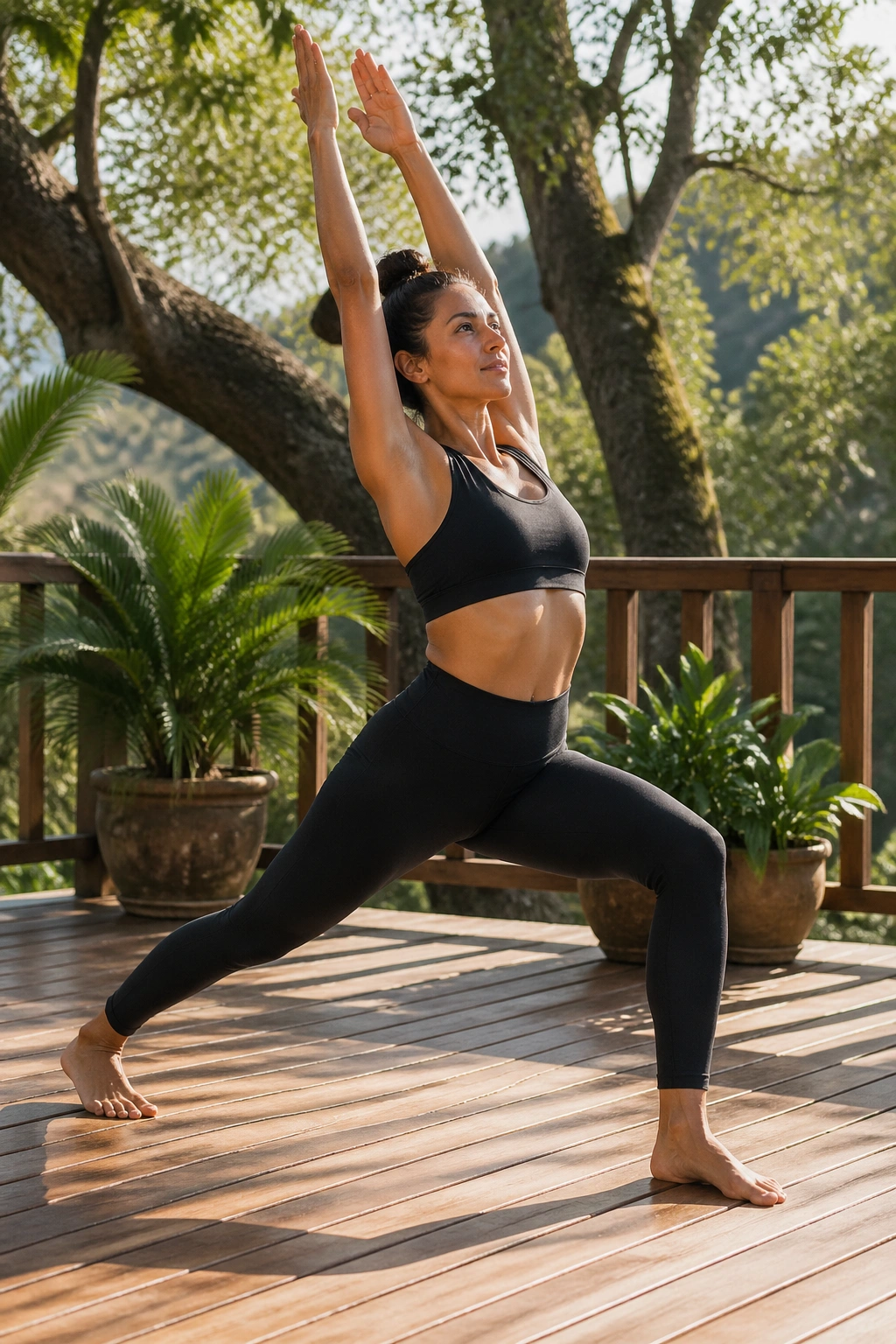
Warrior I looks like a simple reach overhead. It isn’t.
The front knee bends, the back heel roots, and the torso lifts on a diagonal that asks a lot from the legs and the sides of the waist. The shape is slightly awkward at first, which is part of why it works so well for daily strength. Your body has to organize itself instead of relying on momentum.
The back leg is the engine here. Keep it engaged enough that the back heel doesn’t drift light, and avoid forcing the hips into a square that your body can’t hold. A small angle in the pelvis is fine. Better that than pinching the low back just to look neat.
Reach through the fingertips, breathe into the ribs, and let the front thigh do its job. Strong, not rigid.
6. Warrior II
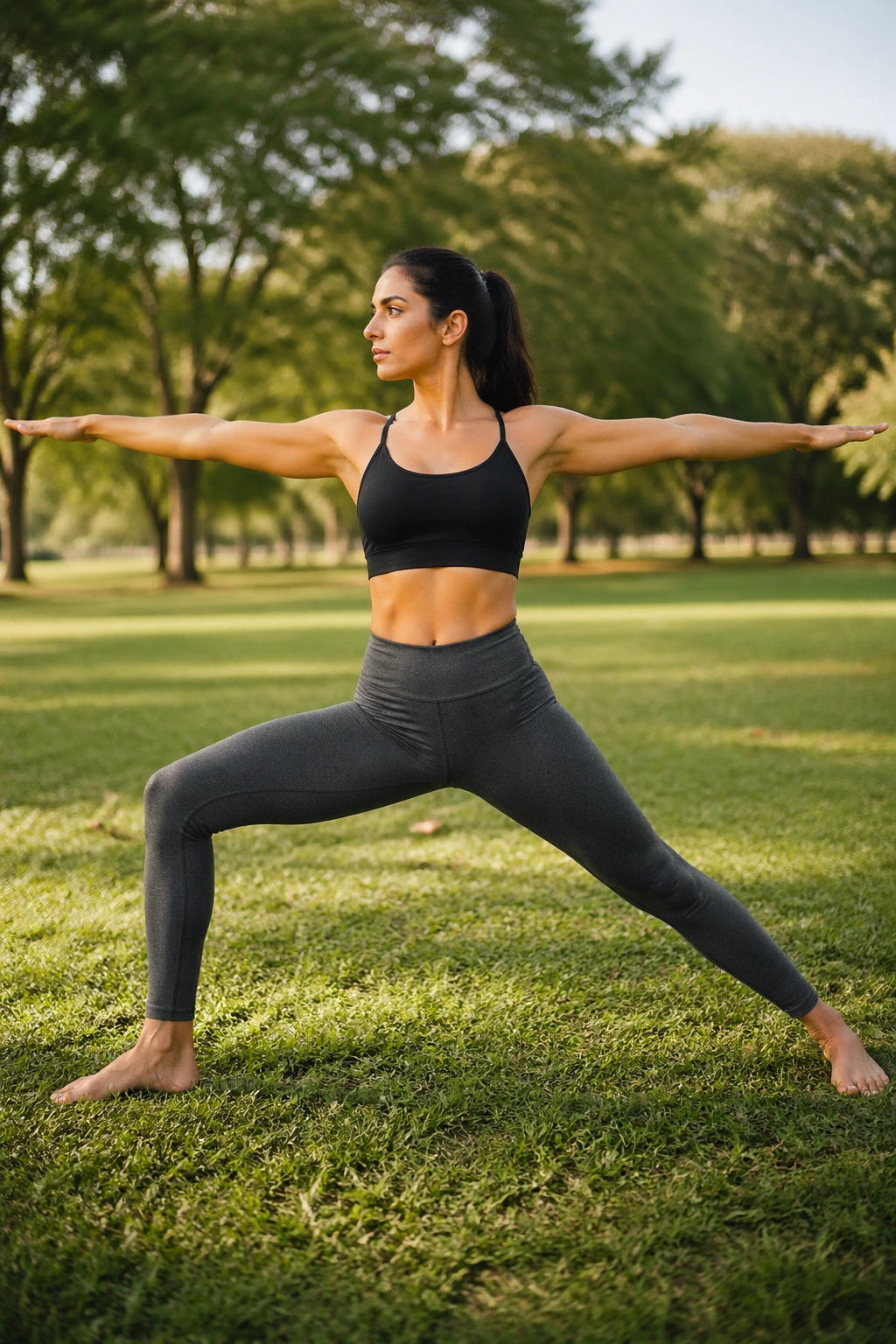
Warrior II is less about height and more about width.
The stance opens, the front thigh works, and the back leg has to stay awake even though it’s not the obvious star. That makes the pose excellent for endurance. You feel the outer hip of the front leg, the inner line of the back leg, and a surprising amount of work in the shoulders if you hold the arms long.
Where the work lands
- Front quad: holds the bend without collapsing.
- Back inner thigh: keeps the leg active instead of lazy.
- Side waist: stops the torso from leaning.
- Arms: stay steady without creeping toward the ears.
The gaze over the front hand helps, but the neck should stay soft. If the shoulders start climbing, lower the arms for a breath or two and reset. That tiny adjustment saves more energy than most people expect.
7. Reverse Warrior
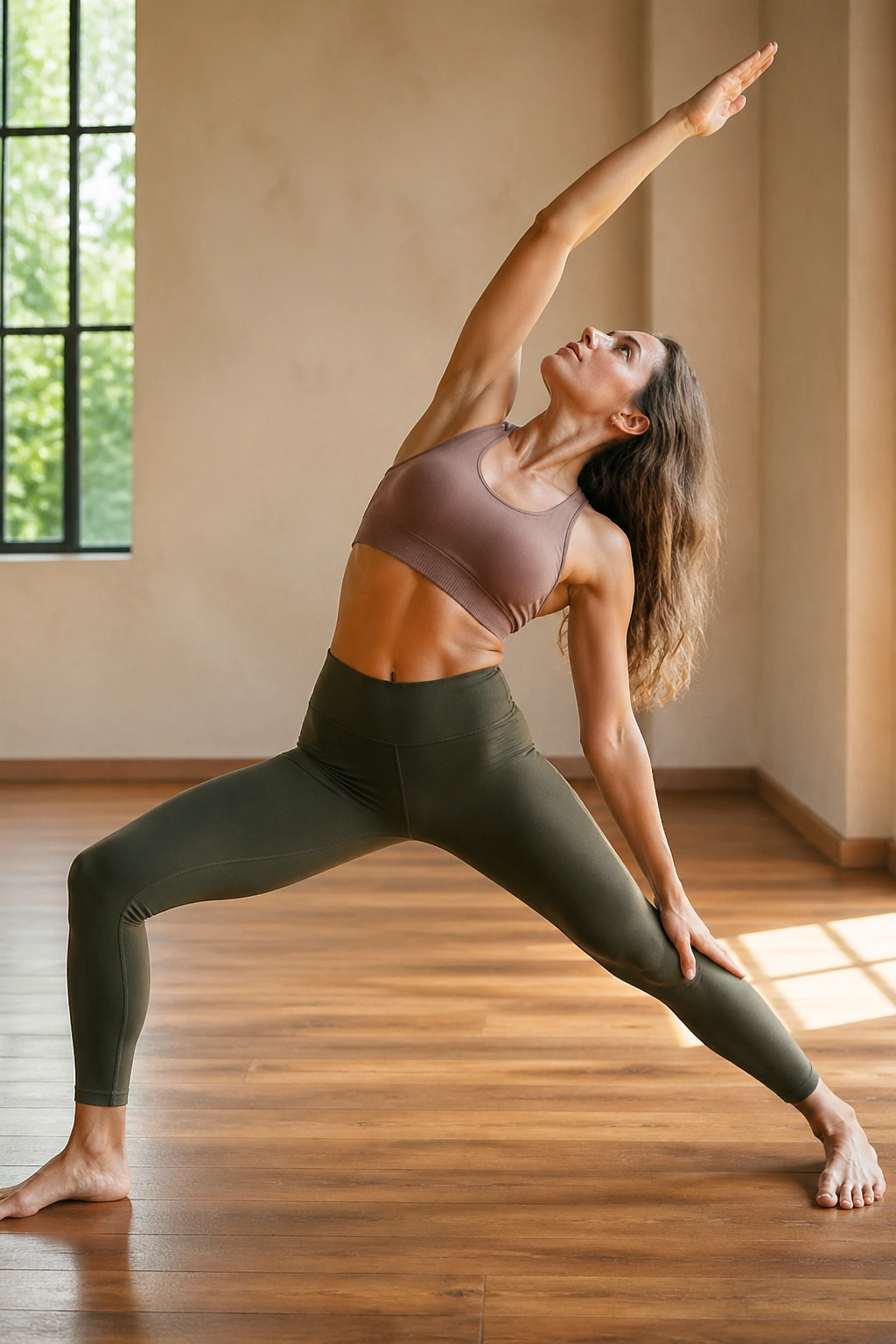
The side body opens first. The back leg keeps working anyway.
Reverse Warrior is one of those poses that feels generous and demanding at the same time. The front knee stays bent, the back foot stays grounded, and the top arm arcs overhead while the lower hand stays light on the back leg. You get a long line through the ribs, but the base never gets lazy.
That’s the trick. It is not a backbend. If you throw the chest backward and dump into the lower spine, the pose loses its strength value and starts feeling sticky. Keep the front thigh honest, keep the back foot rooted, and let the lift come from the side waist.
I like this one after Warrior II because it teaches you how to create shape without losing stability. Hard skill. Worth practicing.
8. Extended Side Angle
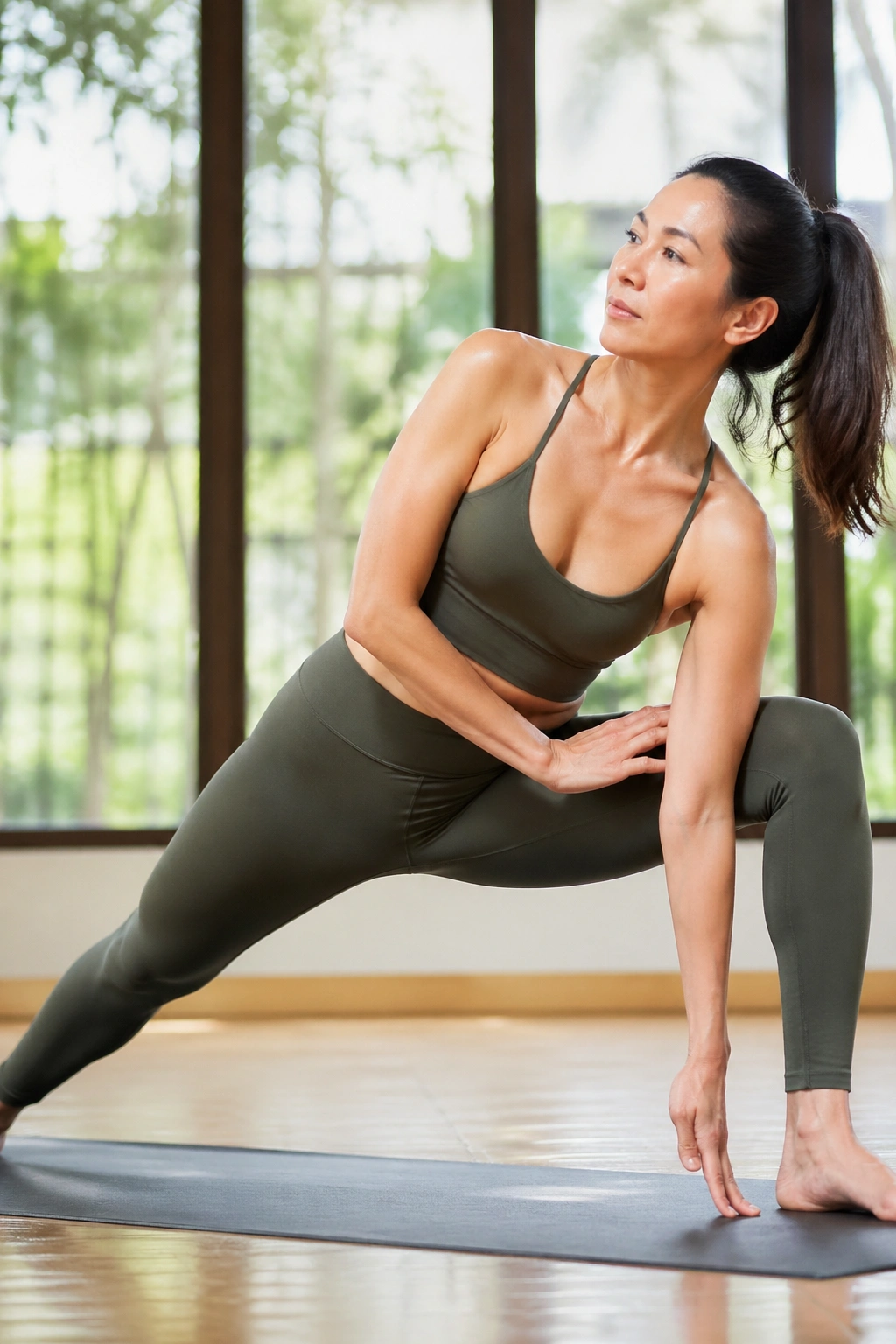
If your front thigh shakes here, the pose is working.
Extended Side Angle asks for a deep bend in the front knee, a long line through the back leg, and enough length in the torso that the chest doesn’t collapse toward the floor. You can take the forearm to the thigh, fingertips to a block, or the lower hand to the floor if the body gives you room. The level doesn’t matter half as much as the shape.
One thing to protect
Keep the front knee tracking over the middle toes. If it falls inward, the work leaks out of the hip and into the joint, and that never feels good for long.
The obliques join the party here, too. So does the glute of the back leg. That mix makes this pose one of the better standing strength builders when you want legs and waist in the same shot.
9. Triangle Pose
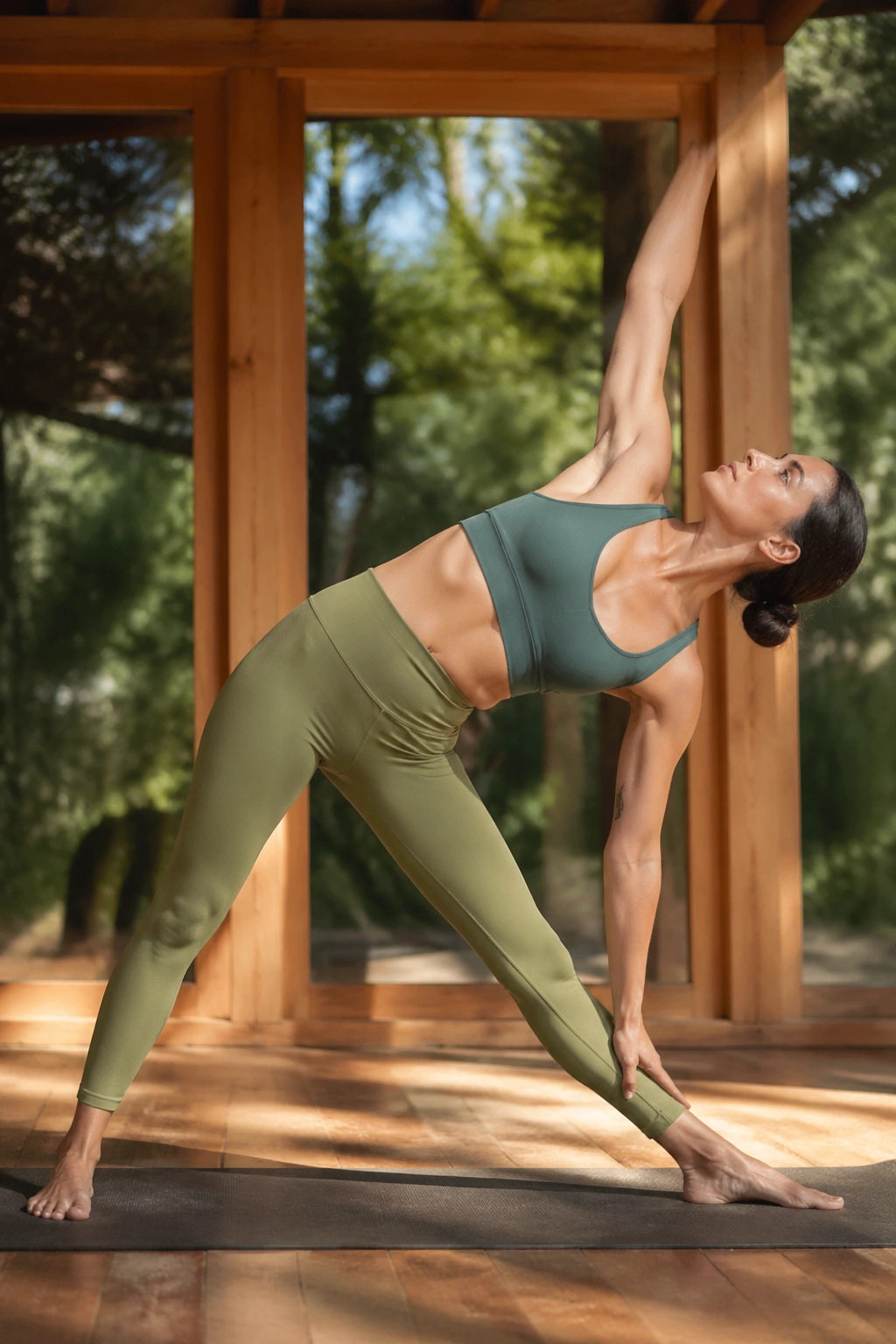
Can Triangle Pose still build strength when it looks like a stretch?
Yes, if you don’t let it turn into a collapse.
Triangle rewards length. Reach forward before you tip down, then keep both sides of the waist active so the chest can open without hanging off the front hip. The legs matter more than the shape of the torso. Press the standing foot down, root the back outer edge, and let the back leg stay awake instead of drifting into the floor like a dead weight.
What to watch for
- Micro-bend the front knee if the hamstring pulls too hard.
- Stack the shoulders only as far as the body can hold.
- Keep the chest open, not jammed upward.
- Use a block under the lower hand if the floor steals your alignment.
Triangle becomes a strength pose when it asks the legs to stabilize a long spine. That’s the version I trust.
10. Revolved Triangle
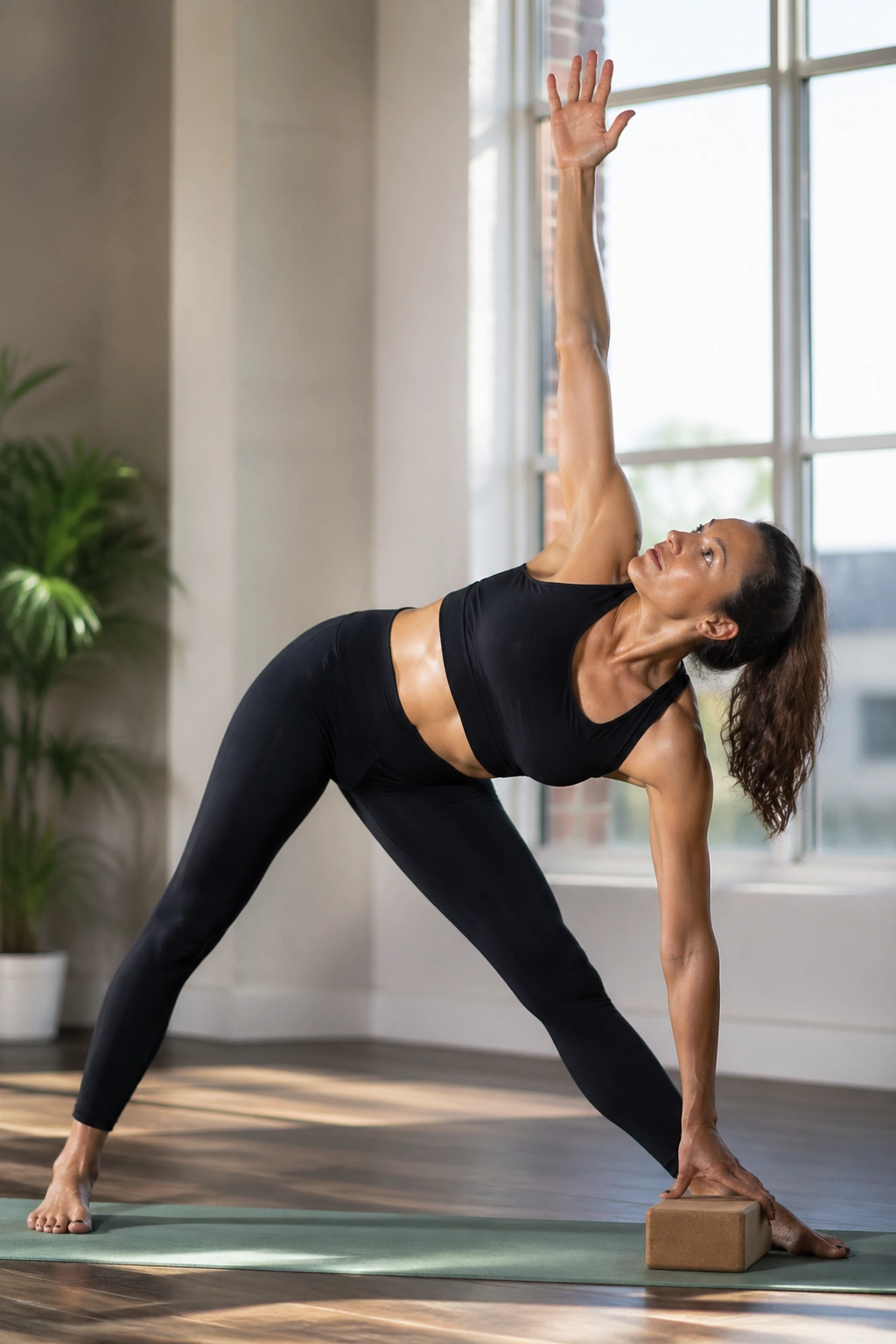
Twisting Triangle rewards patience, not force.
The pose starts with a shorter stance than people expect, because length matters before the twist does. If you rush the rotation, the low back takes over and the hips fight each other. Better to breathe in, lengthen the spine, and only then turn from the waist and ribs.
What I like here is the combination of hamstring work, spinal control, and balance. The back foot needs to stay planted. The front leg needs enough softness that the knee doesn’t lock. And the twist should feel like it rises from the middle of the body, not like someone wringing out a towel.
If you feel pinching, back out half an inch. Seriously. A smaller shape held well beats a bigger one that wobbles through the whole spine.
11. Warrior III
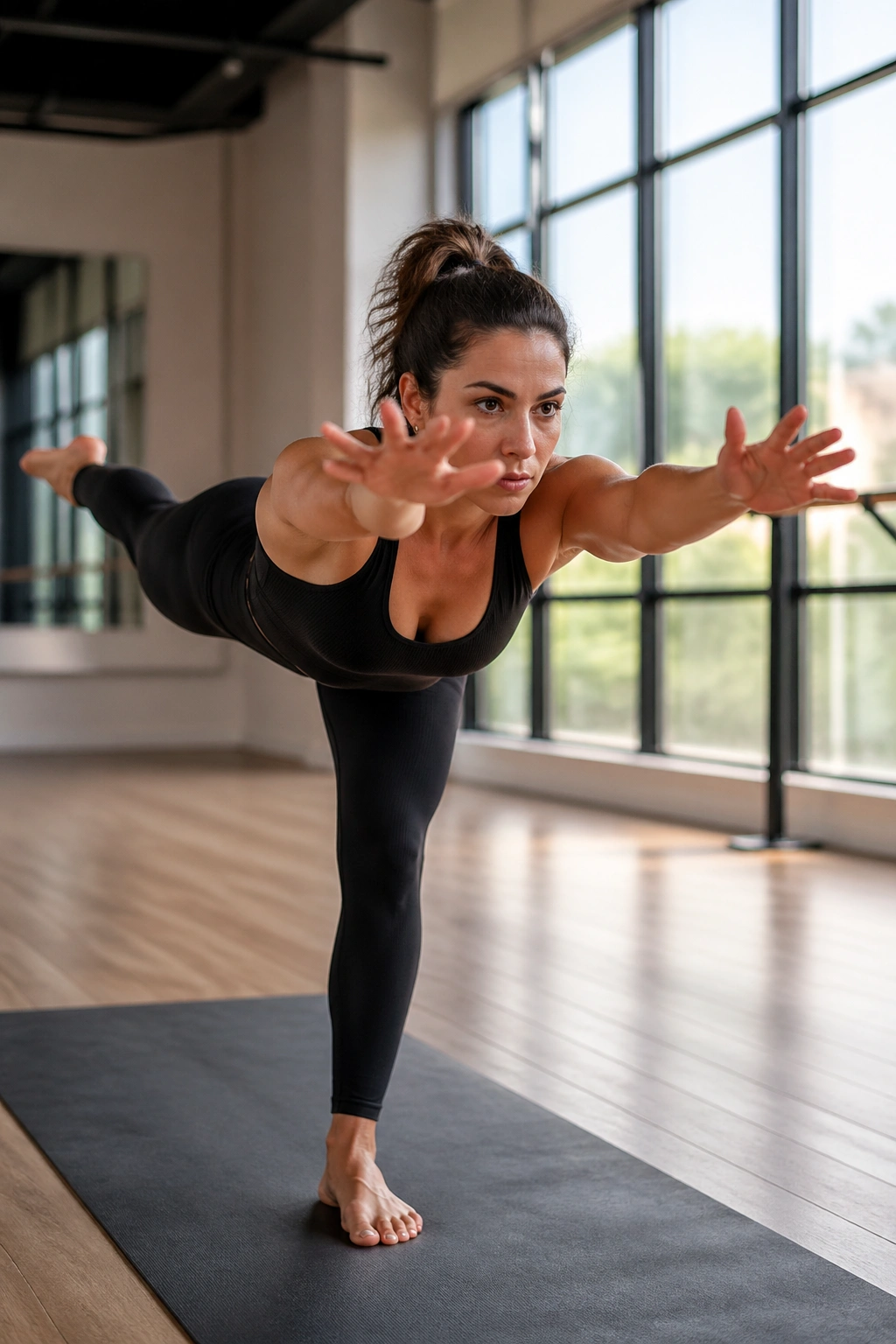
The first second is easy. The next three tell you whether your standing leg is awake.
Warrior III is one of the best tests of standing strength because it pulls everything into one line. The standing leg has to hold you up, the lifted leg has to stay active, and the torso reaches forward without folding in half. That combination lights up the glutes, hamstrings, back, and deep core all at once.
Balance cues
- Pick a spot on the floor and keep your gaze steady.
- Keep the hips as level as you can manage.
- Press through the standing foot, especially the base of the big toe.
- Reach the arms forward like you’re lengthening, not throwing yourself.
A wall can help here, and there’s no shame in using one. Warrior III is a better pose when it’s honest than when it’s theatrical.
12. Half Moon Pose
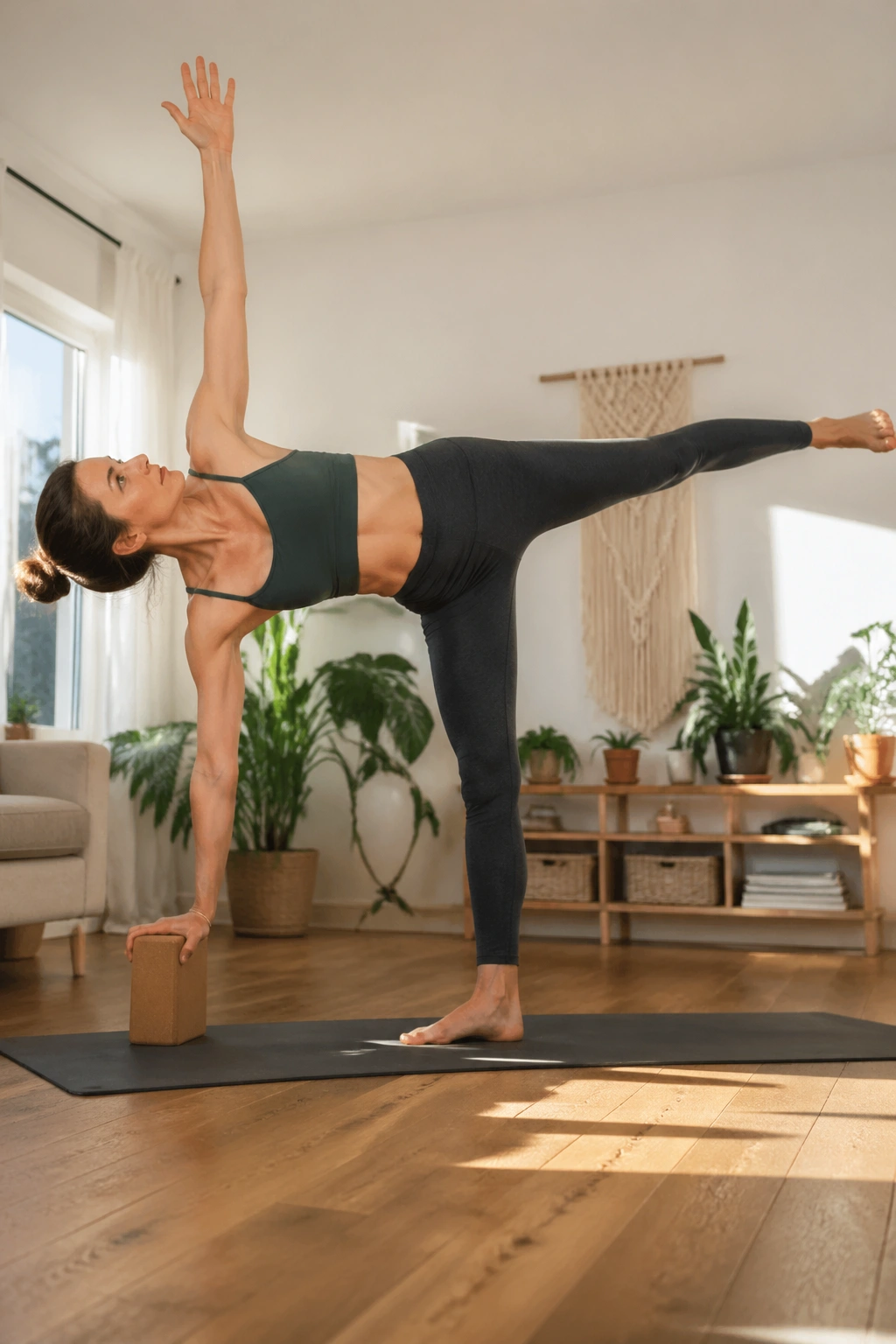
Why does Half Moon feel harder than it looks?
Because one leg and one hip are doing a lot of quiet work while the upper body pretends it’s effortless. Half Moon asks the standing glute to stabilize the pelvis, the lifted leg to stay alive, and the side body to keep you from tipping over like a loose stack of books.
A block under the lower hand makes a huge difference. It gives the standing side more room to organize, and that usually means better balance. Keep the lifted foot active, flexing or reaching with intention, so the whole back line stays engaged instead of dangling.
This pose can feel wobbly for a long time. Fine. Wobble is part of the lesson. The goal is not to look frozen; the goal is to build steadiness inside movement.
13. Standing Split
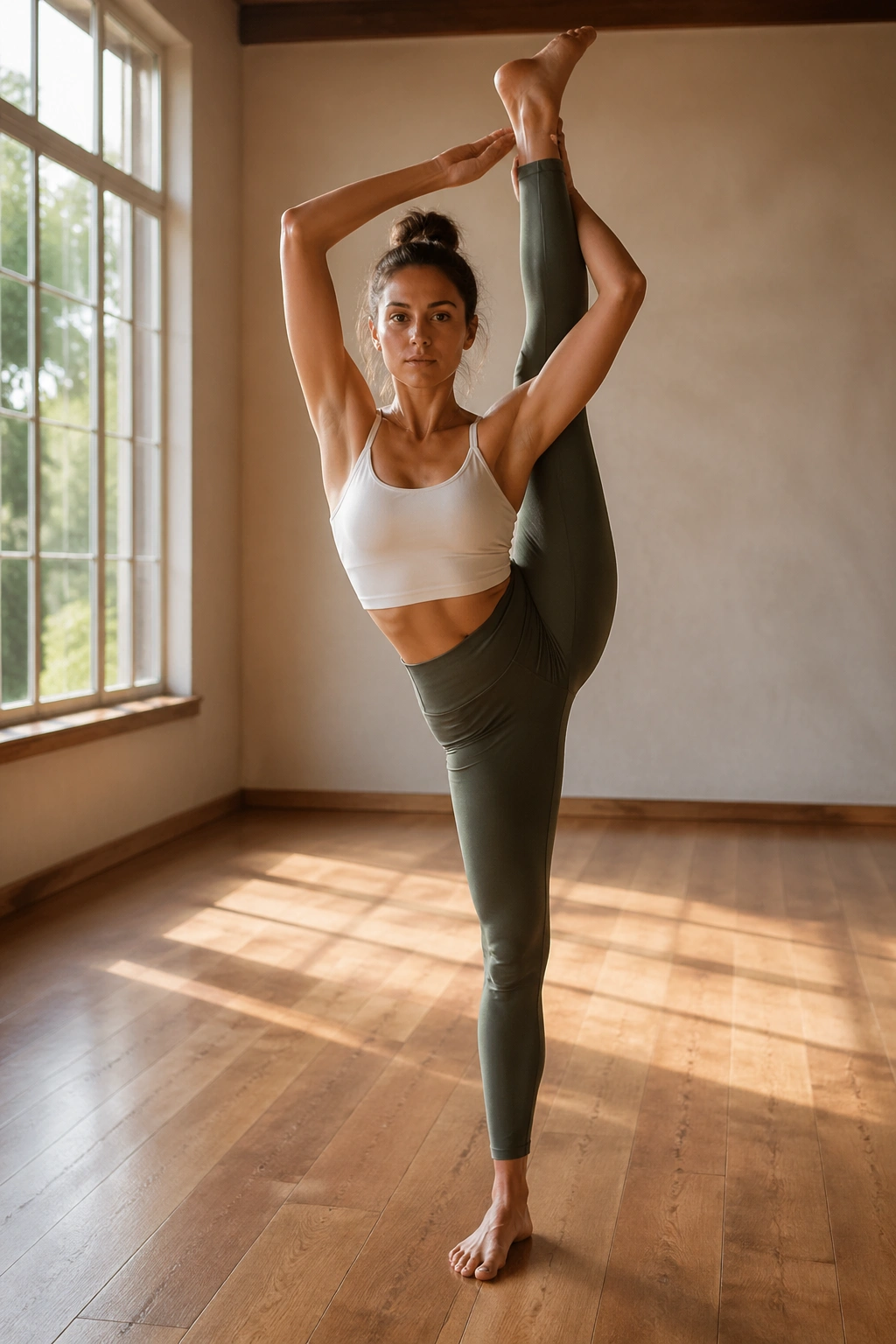
This is not a race to touch the floor.
Standing Split is a hamstring and glute drill wrapped in a balance pose. The standing leg holds your entire body while the lifted leg reaches upward, and the pelvis has to stay organized enough that the lower back doesn’t take over. If your hamstrings are tight, a small lift is enough. High is not better if the shape breaks.
A cleaner way to work it
- Keep a soft bend in the standing knee.
- Square the hips only as far as your body allows.
- Place the hands on blocks if the floor pulls you too low.
- Lift the back of the lifted thigh instead of yanking the leg up.
The pose gets stronger when the standing foot stays rooted and the lifted leg feels controlled, not flung. That control is the whole point.
14. Humble Warrior
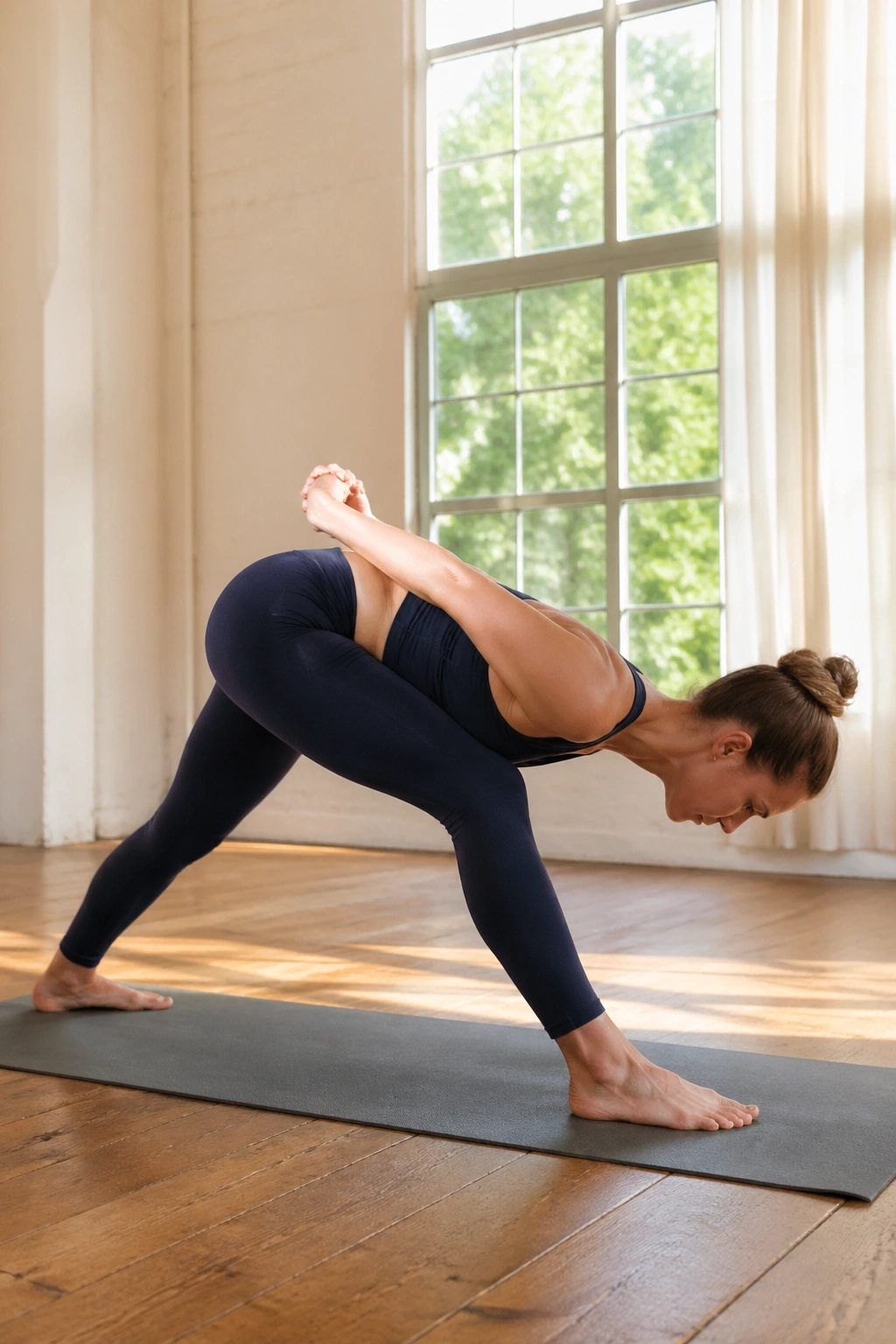
A bow can be strong.
Humble Warrior asks you to fold forward from a lunge while keeping the legs active and the chest respectful of the front thigh. The back heel stays grounded, the front knee keeps tracking well, and the shoulders move away from the ears as the arms wrap behind the body or clasp the hands.
This is one of my favorite poses for people who think strength only counts when it looks aggressive. It doesn’t. Here, the front leg still works, the back leg still works, and the upper body gets a real release without losing structure. The body shape looks softer, but the effort underneath is solid.
If the neck feels crowded, lift the torso a little. If the low back tightens, shorten the stance. You can make this pose deep without making it harsh.
15. Crescent Lunge Twist
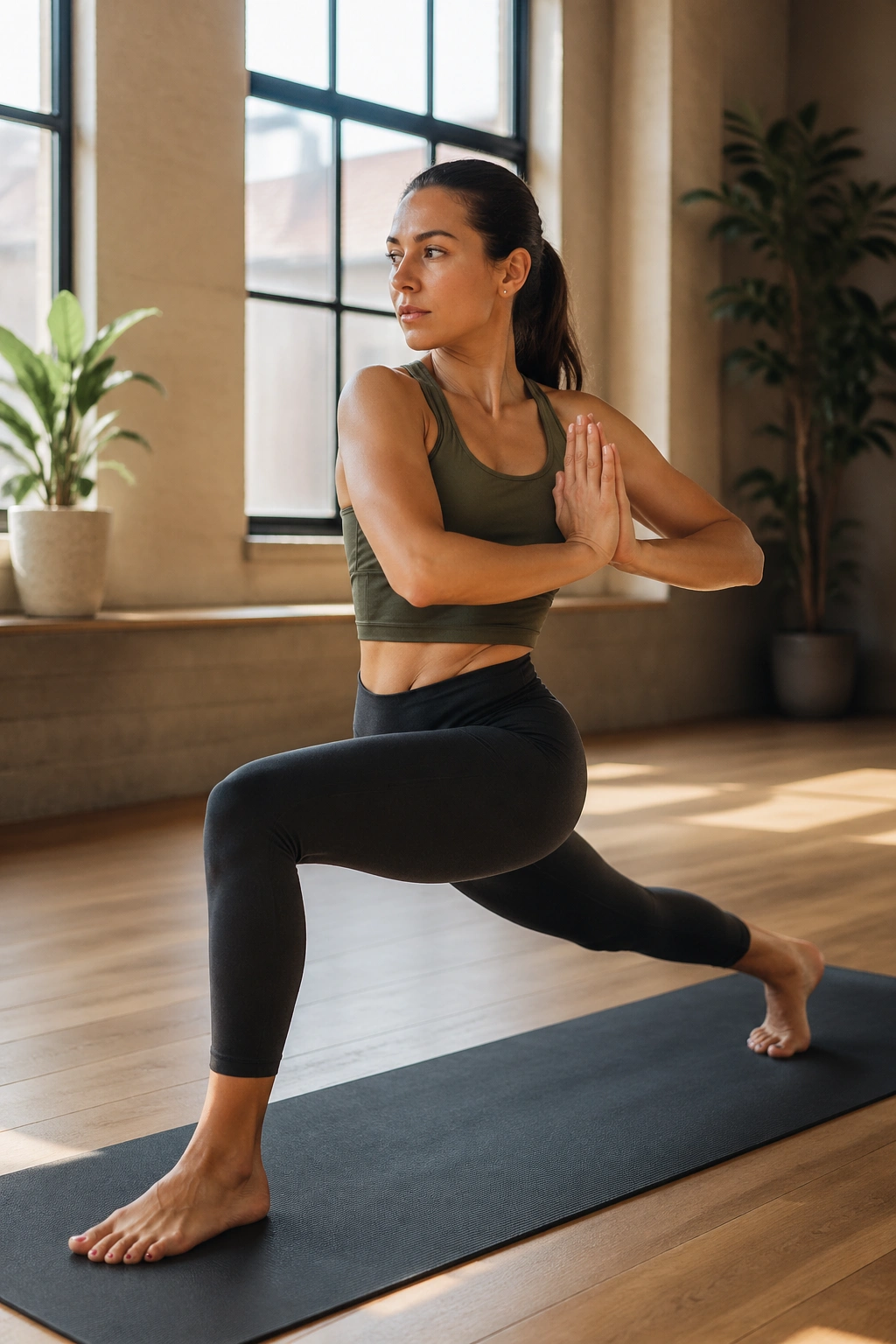
Hands to prayer. Slow the breath.
Crescent Lunge Twist is a blunt little pose. The front leg holds steady, the back leg stays active, and the torso turns as the rib cage rotates away from the pelvis. That’s the useful part: you build hip stability while asking the trunk to rotate cleanly on top of it.
Do not wrench the twist from the knee. The knee wants to track forward, not get dragged sideways by a wandering pelvis. Keep the front thigh strong, then let the ribs and shoulders follow the breath. If you need more room, drop the back knee for a few rounds and keep the shape smaller.
A controlled twist like this works the core without turning the pose into a strain test. That’s the version that ages well.
16. Eagle Pose
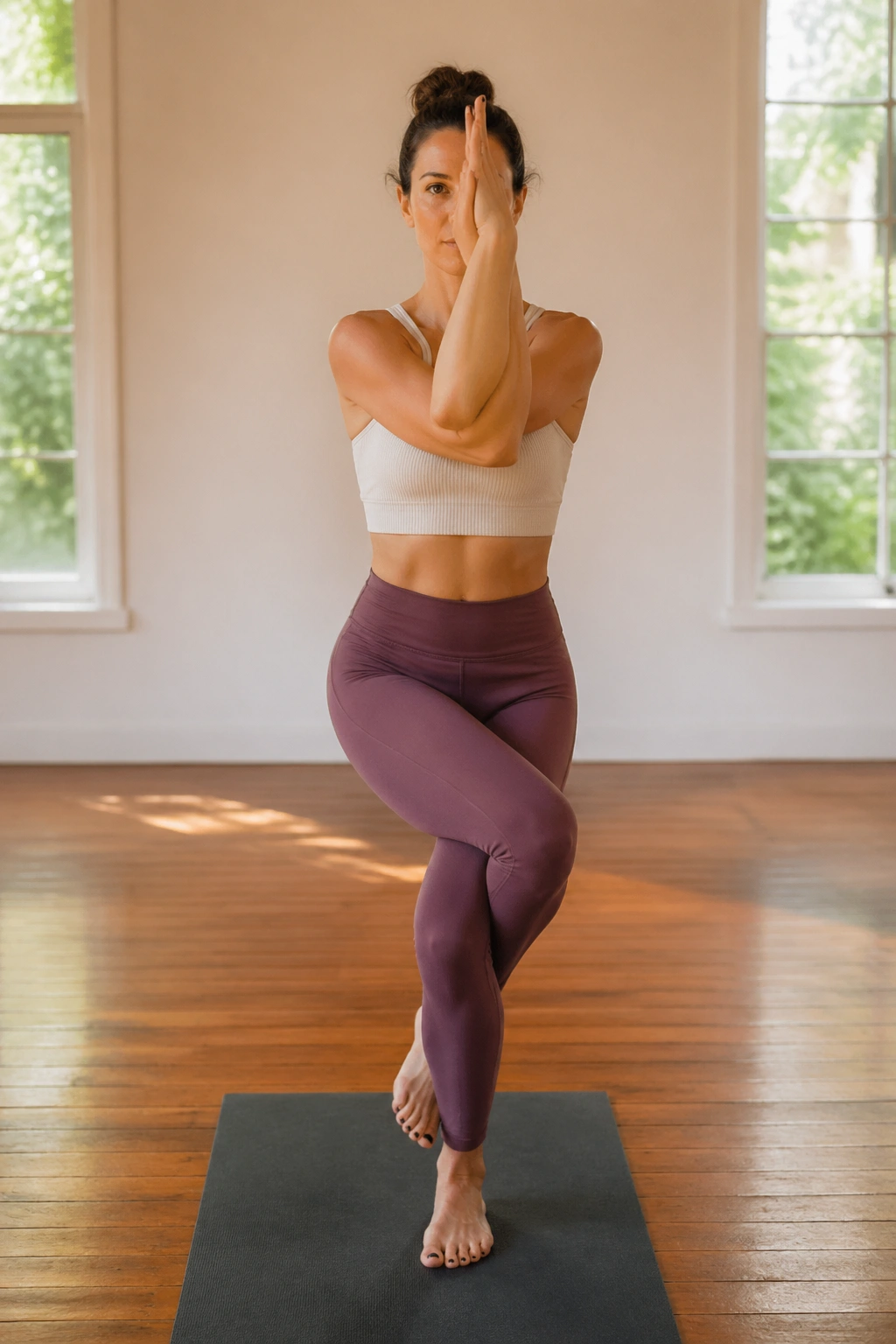
Eagle Pose looks small and works hard.
The wrap of the legs and arms creates a tight shape that asks for balance, hip control, and shoulder work at the same time. The standing leg burns because it has to hold the whole structure. The crossed arms and lifted elbows ask the upper back to stay awake, not slouch. And the compressed shape makes you notice every sloppy habit in the ankles.
Why the squeeze matters
- The standing foot has to stay rooted or the whole pose wobbles.
- The lifted leg engages the outer hip and inner thigh.
- The elbows lift to keep the chest from caving inward.
- The spine stays tall even while the limbs wrap.
If the full wrap feels like too much, keep the toes of the lifted foot on the floor like a kickstand. That version still gives you plenty of work. No need to earn pain points.
17. Chair Twist
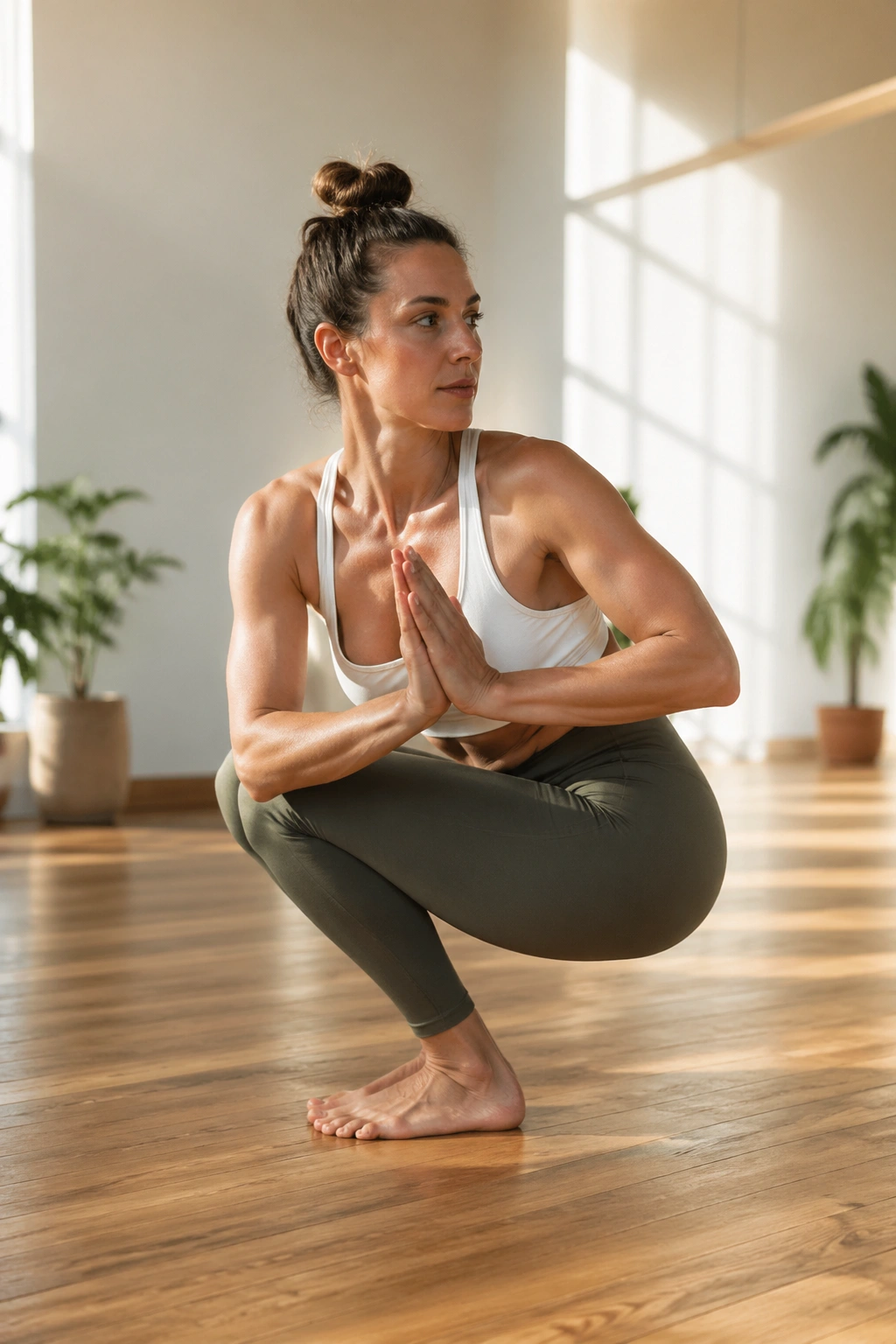
At the end of a long day, this is the pose that wakes the waist and thighs fast.
Chair Twist blends a squat pattern with rotation, which makes it excellent for daily strength. The legs stay bent, the hips stay low, and the torso turns while the knees keep their lane. The core has to help keep everything in place. If the knees drift apart or one knee collapses inward, the twist loses shape and the lower back picks up the slack.
You can keep the hands at prayer, or reach one elbow across the opposite thigh if that gives you more room. Either way, the clean version starts with a good Chair Pose first. If the base is weak, the twist gets messy.
I use this one when I want a strong standing pose that doesn’t need a lot of setup. It’s blunt, efficient, and hard to fake.
18. Dancer’s Pose
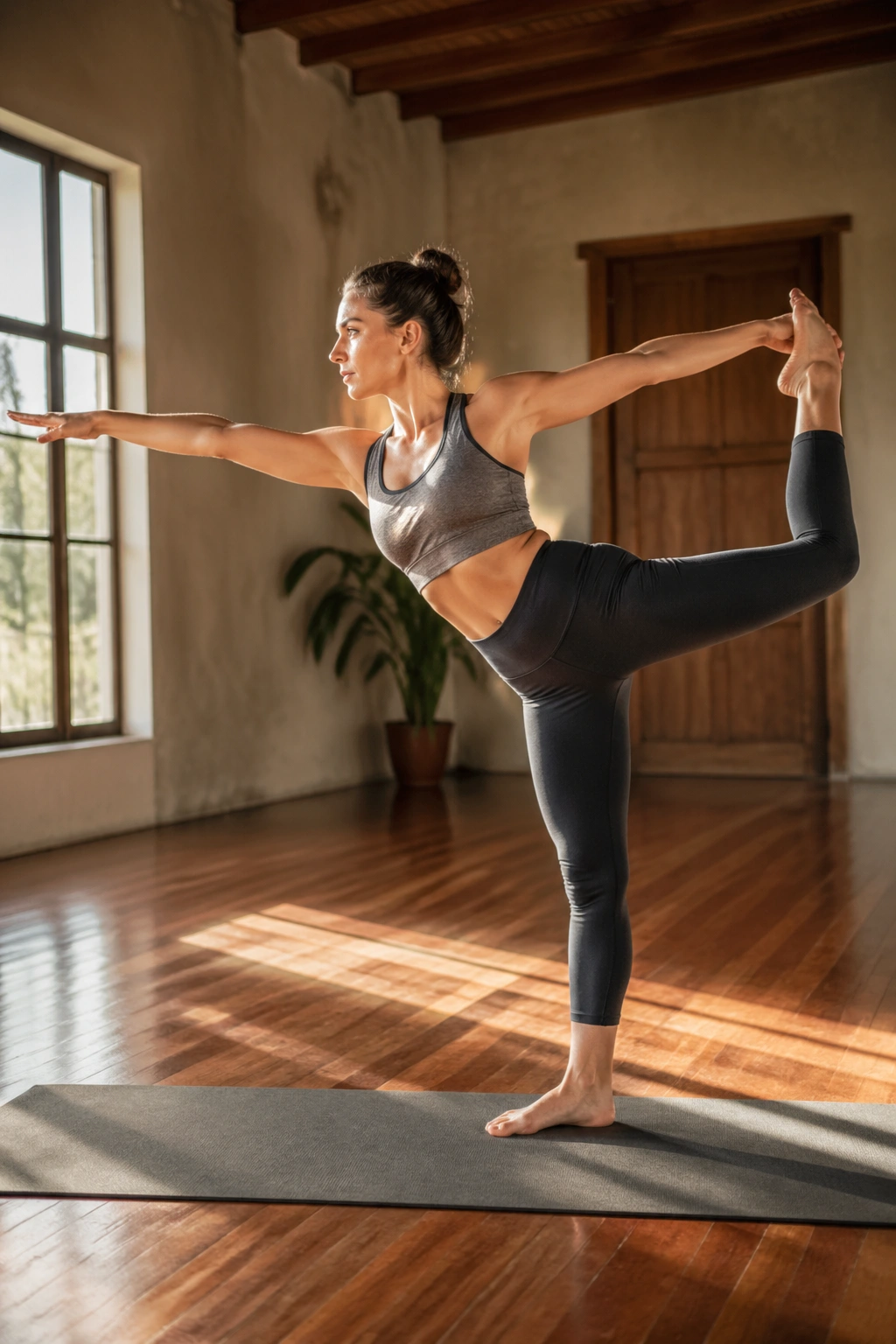
I keep coming back to Dancer’s Pose because it exposes sloppy standing habits.
One side of the body balances while the other reaches back and up, and the whole thing falls apart if the standing leg is lazy. The lifted leg gets a quad stretch, the chest opens, and the back body has to do enough work that the pose feels alive instead of decorative. It’s elegant, sure. It’s also demanding.
How to keep it honest
- Keep the standing knee soft, not locked.
- Press the lifted foot back into the hand instead of pulling the foot toward the spine.
- Let the torso lean forward a little to protect the low back.
- Aim the hips roughly forward rather than throwing one side open.
A wall nearby is smart. So is a strap around the lifted foot if your hand can’t reach comfortably. Dancer’s Pose gets a lot better when it feels controlled.
19. Standing Figure Four
Standing Figure Four is a quiet strength pose, and I mean that as a compliment.
You balance on one leg, cross the other ankle over the thigh, and sit the hips back enough that the standing glute has to catch your weight. The shape opens the outer hip, but the work is still there. If you fold too deeply, the balance gets mushy. If you keep the spine long and the sit-bone reaching back, the standing leg gets a solid job to do.
A chair or wall makes this pose more useful, not less. I like it as a pause between stronger standing shapes because it asks the hip stabilizers to work without wrecking the nervous system. It also gives you a clean way to notice side-to-side differences. One side always feels different. That’s normal.
20. Tree Pose
Your standing foot should feel like it has roots.
Tree Pose is small, but the internal work is not small at all. The arch of the standing foot lifts without gripping, the ankle steadies, and the outer hip holds the pelvis in place while the lifted leg finds a resting spot on the ankle, shin, or inner thigh. Skip the knee. Always.
Foot placement options
- Low on the ankle: easiest balance, good for warming up.
- On the shin: more demand on the standing leg.
- On the inner thigh, above the knee: deepest load, only if the standing side feels steady.
The real lesson here is not the arm shape or the “tree” look. It’s the quiet work of standing on one side without sinking into the hip. Small wobble is normal. I’d worry more about a stiff, locked shape than a little movement.
21. Wide-Legged Forward Fold
This one looks like a rest, but it is not a collapse.
Wide-Legged Forward Fold can be active if you keep the legs engaged, the spine long, and the weight spread through both feet. It’s a good counterbalance to the more upright strength poses, but it still asks for effort in the hamstrings, inner thighs, and lower back support. The trick is to hinge from the hips instead of dumping the torso toward the floor like a sack.
Hands on blocks make the whole thing cleaner. So does bending the knees a little if the hamstrings tug too hard. Keep the chest broad and the neck loose. If you hang completely, the fold turns into passive waiting. A little muscle tone changes the feel a lot.
I like it near the end of a standing sequence because it lets the legs work without the same burn as Chair or Warrior III.
22. Skandasana
Skandasana is the side-to-side strength pose people forget about, and that’s a shame.
You shift into one bent leg while the other stays long, which lights up the inner thighs, glutes, and ankle stabilizers in a way straight-ahead poses never quite match. It also teaches smoother weight shifts, which matters more than most people think. Life is full of sideways steps. This pose trains them.
A good way to use it
- Start from a wide stance with both feet grounded.
- Bend one knee and sit the hips back.
- Keep the opposite leg long with the foot active.
- Switch sides slowly, letting the movement stay controlled rather than bouncy.
Skandasana works well near the end of a practice, after the legs have already been warmed by lunges and standing balances. That’s when the side-to-side transition feels honest. Run these poses in a row for a short daily sequence, and you’ll notice the difference in how your legs feel climbing stairs, stepping off curbs, and standing for longer stretches without fidgeting.
