



A bloated belly can make even a gentle stretch feel annoying. Clothes sit tighter, the lower abdomen feels swollen, and suddenly the idea of moving at all sounds worse than lying still and hoping the whole thing passes. That’s usually the moment people start looking for yoga poses for bloating and slow digestion, because the right shapes can help you feel a little less trapped in your own body.
Yoga won’t magically erase a food reaction, a sluggish gut, or a meal that sat too heavily. But a few minutes of slow breathing, soft twists, and mild abdominal compression can take the edge off. The trick is not to chase fancy poses. It’s to pick the ones that give the belly room to soften while nudging things along a bit.
I’ve always thought the best digestive sequence is the one that feels almost too easy to count. No forcing. No heroic stretching. Just steady, boring, useful movement — the kind that lets the diaphragm drop, the belly wall unclench, and the whole middle of the body stop bracing.
If bloating comes with sharp pain, vomiting, fever, unexplained weight loss, or a bowel change that sticks around, that’s not a yoga problem. Get it checked. For ordinary “I ate too much / too fast / too rich” discomfort, though, the poses below can be a solid place to start, and they work best when you move slowly, breathe through your nose, and give each shape a few full exhales.
1. Child’s Pose (Balasana)
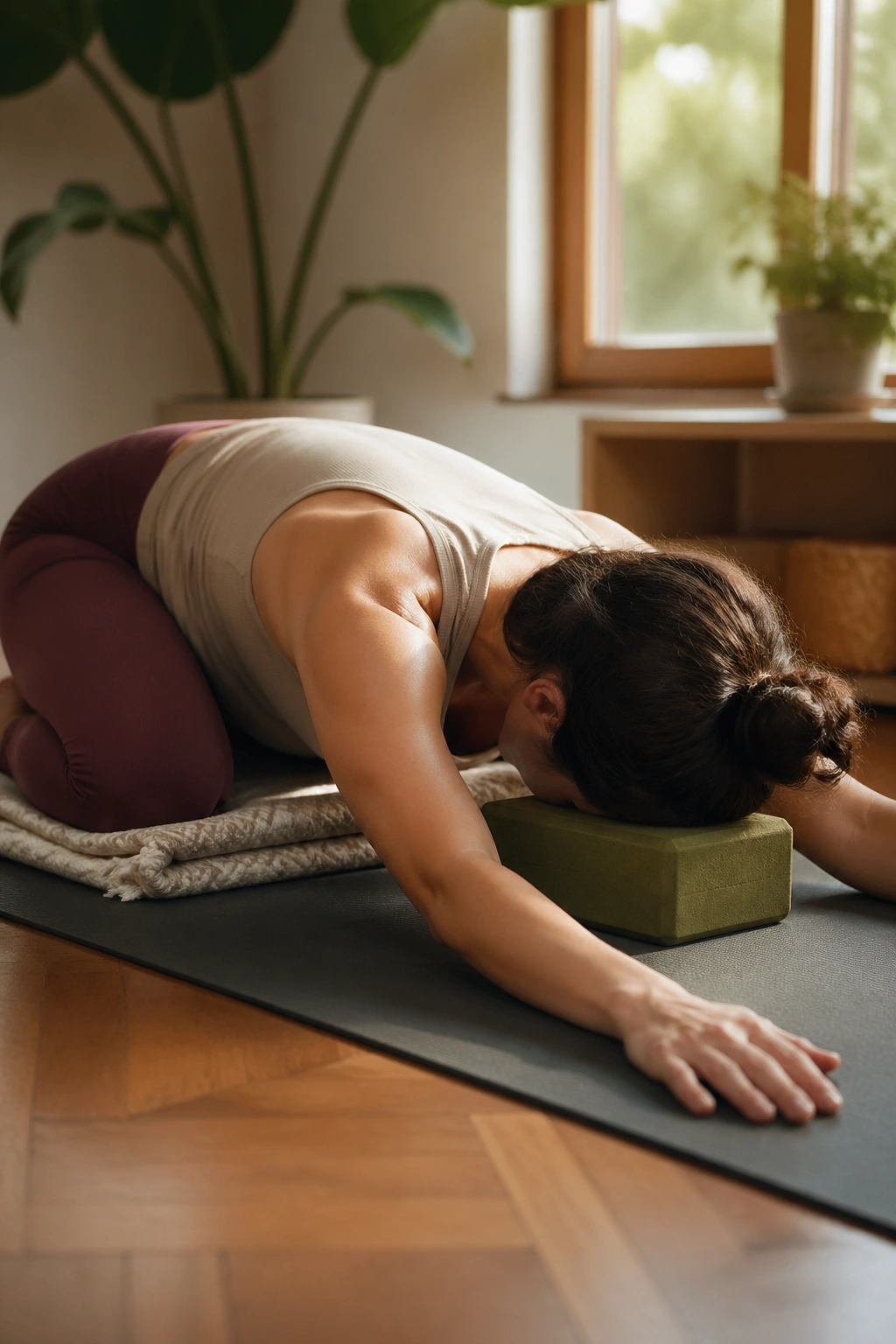
Child’s Pose is often the first place I’d send a tight, puffy belly. It folds the body inward without crunching the abdomen hard, which makes it kinder than a lot of other forward bends when you feel overfull.
Why It Helps
The shape lets your stomach and lower ribs soften against your thighs, or at least toward them. That gentle contact can feel grounding when your core is braced and your breath is short.
Keep the knees wide if your belly feels crowded. Bring a blanket under the hips, rest your forehead on a block, and stay for 5 to 10 slow breaths. If the position feels pinchy in the knees, skip it and move on. No pose is worth arguing with your joints.
- Knees wide = more space for the abdomen.
- Knees closer together = a little more compression, which some people like.
- Forehead supported = easier to relax the jaw and belly.
- Arms forward or back by the sides = both are fine.
Tip: If you only have time for one pose, make it this one and lengthen the exhale.
2. Wind-Relieving Pose (Apanasana)
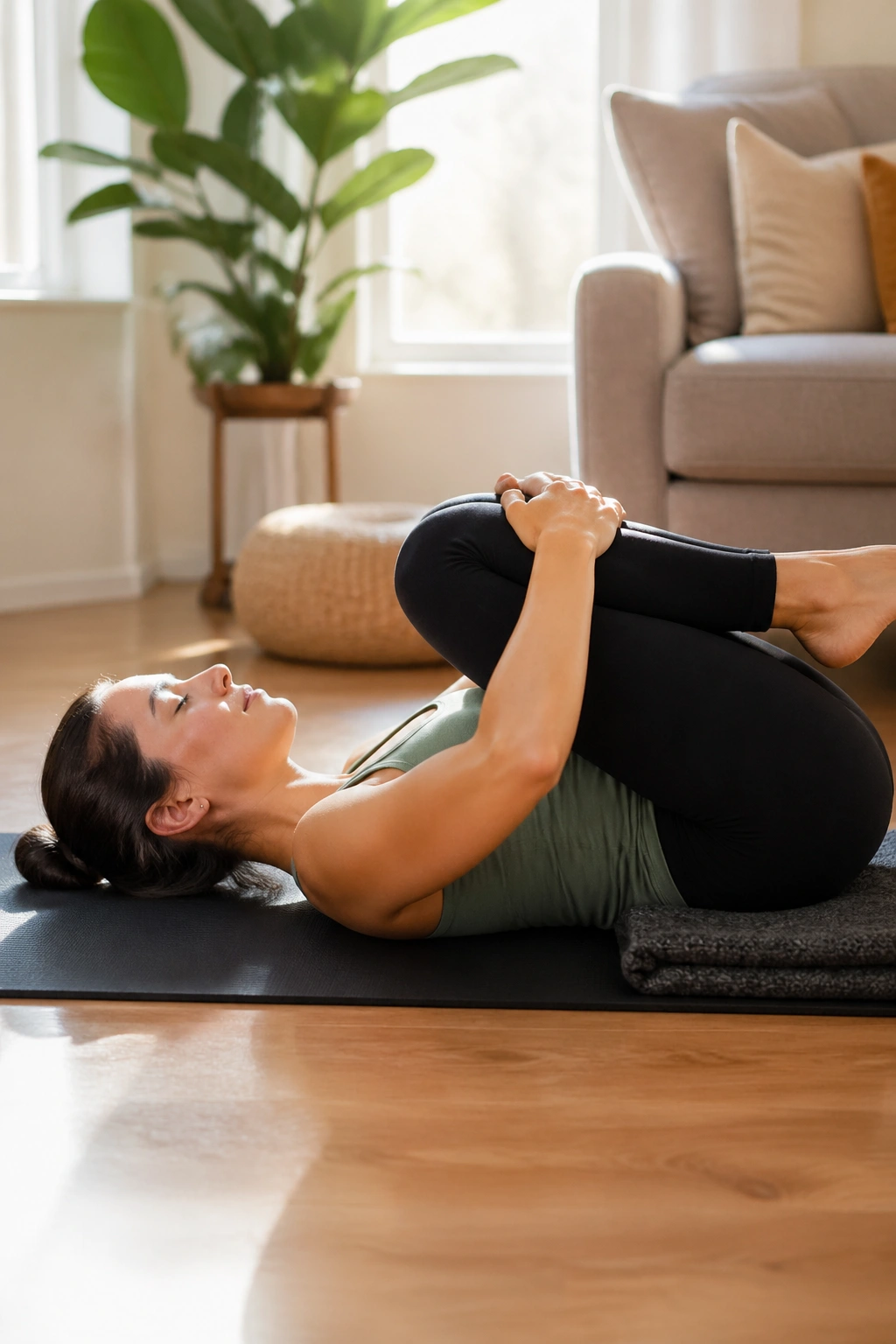
Wind-Relieving Pose has a blunt name for a reason. It’s one of the few yoga shapes that gets straight to the point when gas feels trapped and the lower belly is tight.
Lie on your back and draw one knee in first. Then try both knees together if that feels good. The key is to hug in gently, not yank your thighs toward your ribs like you’re trying to win something. A soft hold for 5 to 8 breaths is usually enough to feel a little shift.
The abdomen gets a mild squeeze on the inhale and a little release on the exhale. That rhythm matters more than force. If your neck tenses, keep your head down and your shoulders heavy.
After a meal, this one is often better than anything twisty or upside-down. It’s tidy. It’s honest. It works because it’s simple.
3. Supine Spinal Twist
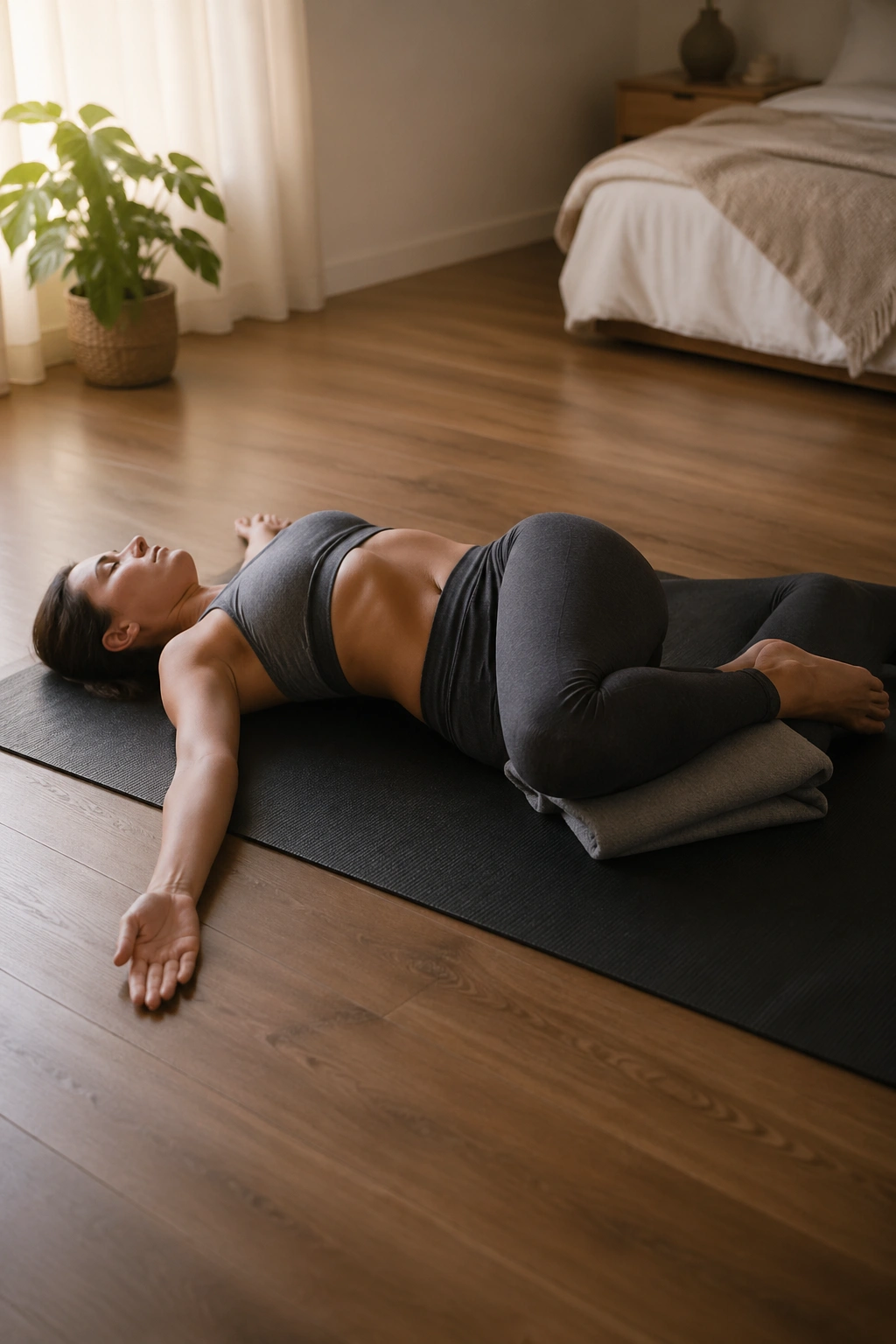
Why do twists show up in so many digestion-focused sequences? Because they give the torso a gentle wring without asking the belly to work hard. Supine spinal twist is especially useful when bloating sits high in the abdomen and you feel stiff from the ribs down.
Lying on your back makes the pose feel less aggressive than a standing twist. Drop both knees to one side, keep the opposite shoulder heavy, and let the breath get slow before you decide whether to deepen it. The twist should feel like a slow exhale, not a squeeze.
How to Use It
Stay on each side for 6 to 8 breaths. If both knees together feels too strong, stack them less tightly or put a pillow between them. A block or folded blanket under the top knee can take pressure off the low back.
People often try to crank farther into the pose. Don’t. The useful part is the gradual release across the lower back, side waist, and belly wall. If you can breathe evenly, you’re in the right place.
4. Cat-Cow Flow
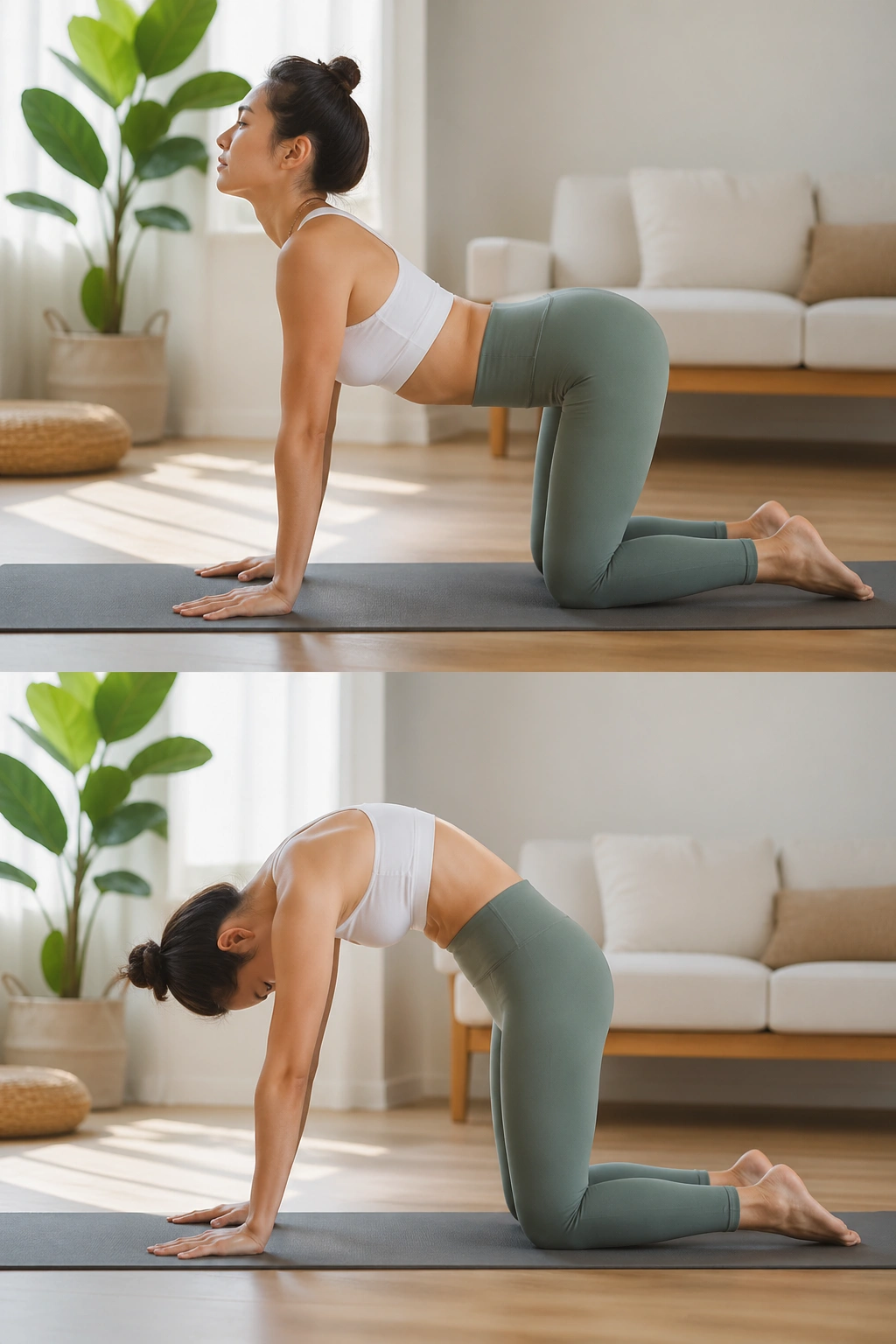
Three rounds of cat-cow can do more for a sluggish, grumpy middle than a dozen dramatic stretches. The movement wakes up the spine, and the spine and belly tend to talk to each other more than people expect.
Come onto hands and knees. Inhale into cow, letting the chest open and the belly soften. Exhale into cat, rounding the back and drawing the navel in lightly. The alternating shape gives the abdomen a gentle massage from both directions, which is why it shows up in so many morning routines.
What To Watch For
- Keep the movement slow enough that you can match breath to shape.
- Stop if the wrists complain; lower to forearms or make fists under the hands.
- Let the ribs move, not just the lower back.
- Do 5 to 10 rounds instead of rushing through fifty half-hearted ones.
The best cat-cow feels smooth, almost lazy. If your breath starts getting choppy, slow down. That’s the whole point.
5. Seated Forward Fold
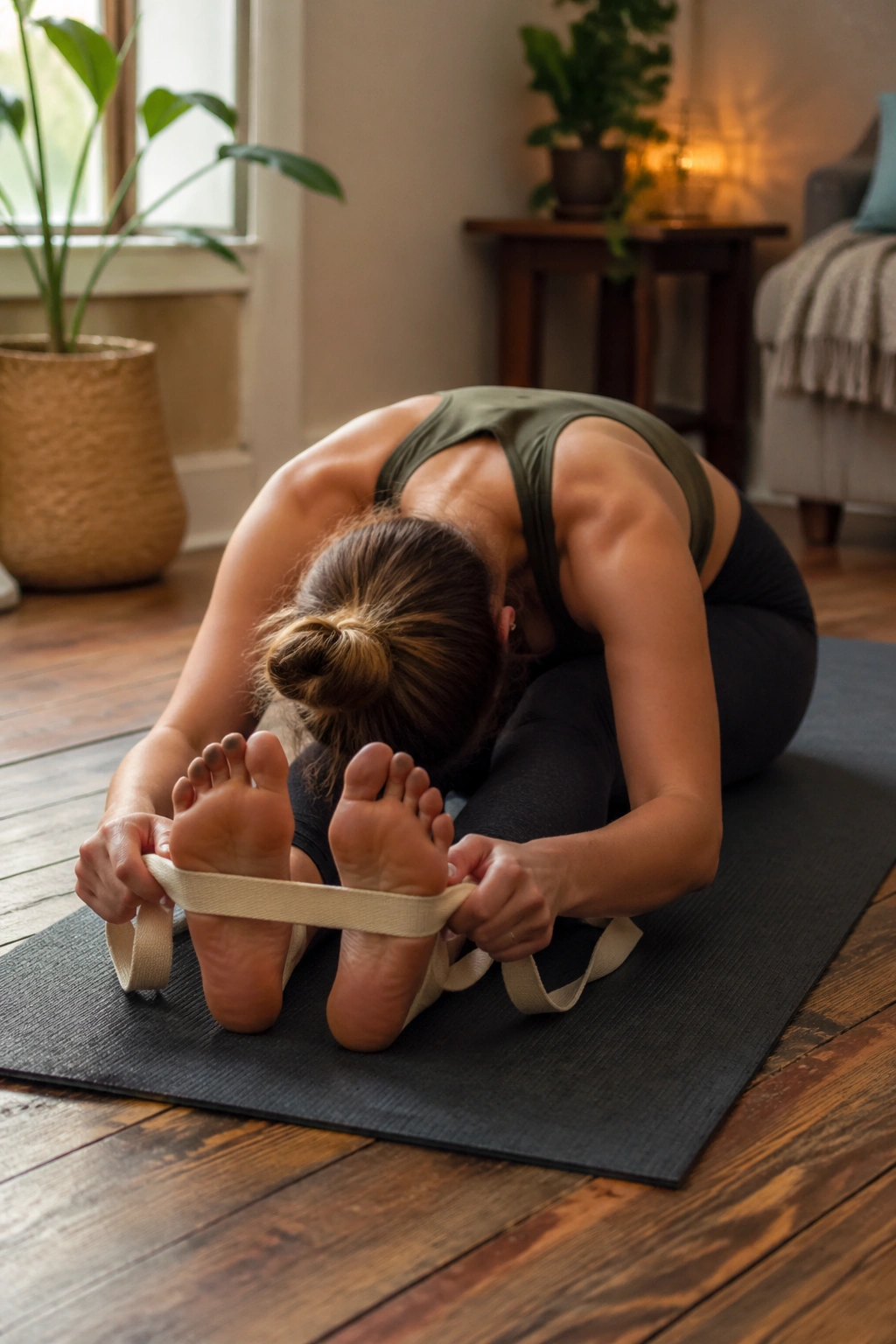
A seated forward fold can be a gift or a mistake, depending on how you do it. With a bloated belly, the goal is not to fold yourself into a neat shape. The goal is to create a long, quiet stretch through the back body without smashing the stomach.
Sit on a folded blanket if your pelvis tucks under. Bend the knees a little, especially if the hamstrings are tight. Then hinge from the hips instead of collapsing straight down. That small distinction matters. It keeps the belly from feeling trapped and gives your breath more room to move.
Stay for 5 to 8 breaths, and let the exhale be longer than the inhale. If the head dangles and the lower back rounds hard, you’ve gone too far. Use a strap around the feet or shins if reaching causes strain.
This pose works best when it feels steady rather than deep. A lot of people chase the front shape and ignore the back body, but for digestion, the back body is half the story.
6. Happy Baby Pose
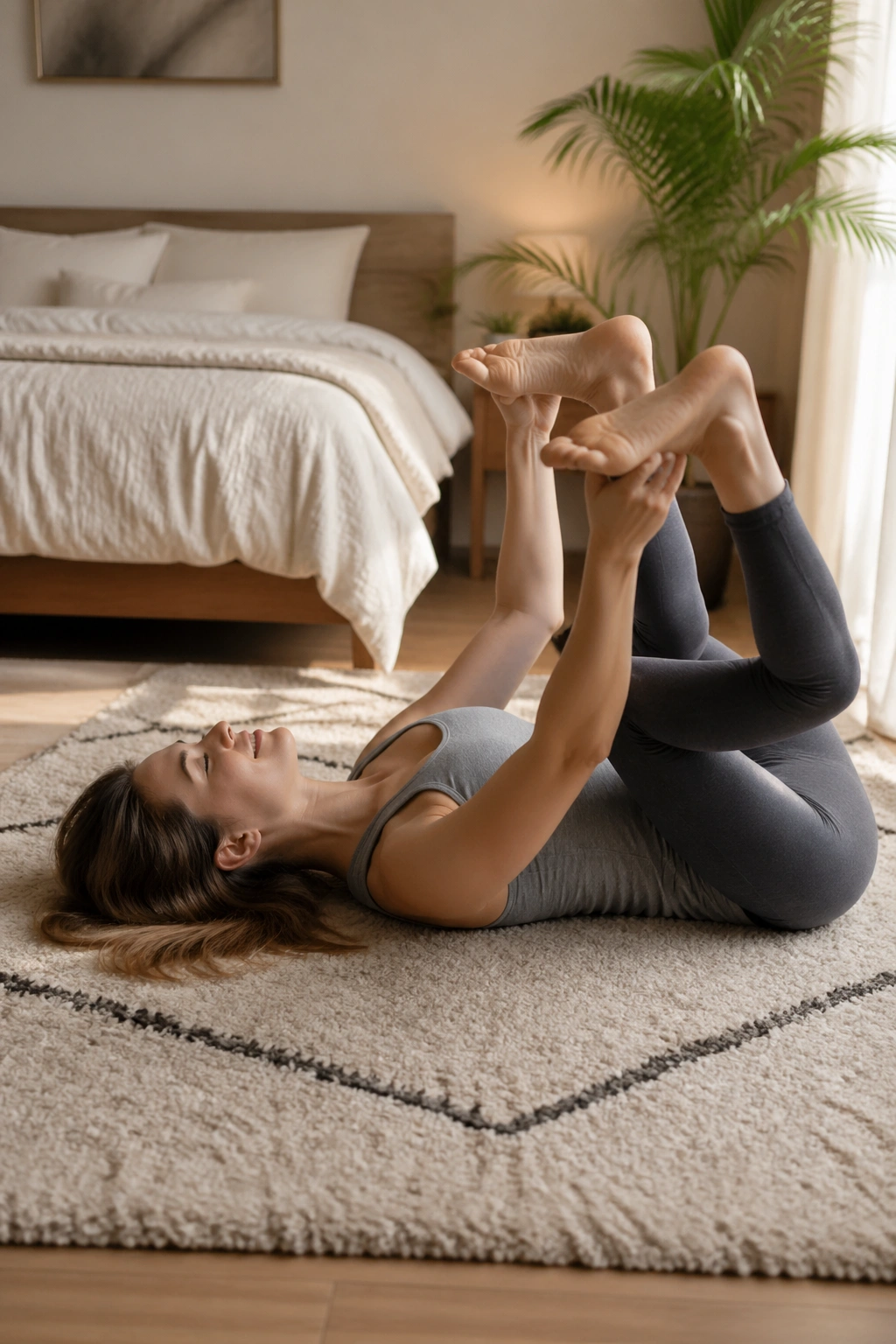
Happy Baby is better than a hard crunch when your lower belly feels stuck. It opens the hips, brings the thighs toward the torso, and gives the abdomen a mild, steady pressure that can feel oddly soothing.
Unlike a deep knee-to-chest squeeze, Happy Baby keeps the pelvis more open. That’s useful if your low back is also involved, because the pose can ease the stretch without folding you into a tight ball. Hold the outer feet or the backs of the thighs if your ankles are tight.
A tiny rock side to side is enough. You do not need to wobble like a windshield wiper for a full minute. A few slow rocks and 5 to 6 breaths usually tell you whether the body wants more or less.
Best for: lower abdominal pressure, a cranky low back, and that heavy feeling that sits after a long day.
Skip it if your knees hate being bent wide. There are other ways to get the same relief without making your joints complain.
7. Legs-Up-the-Wall
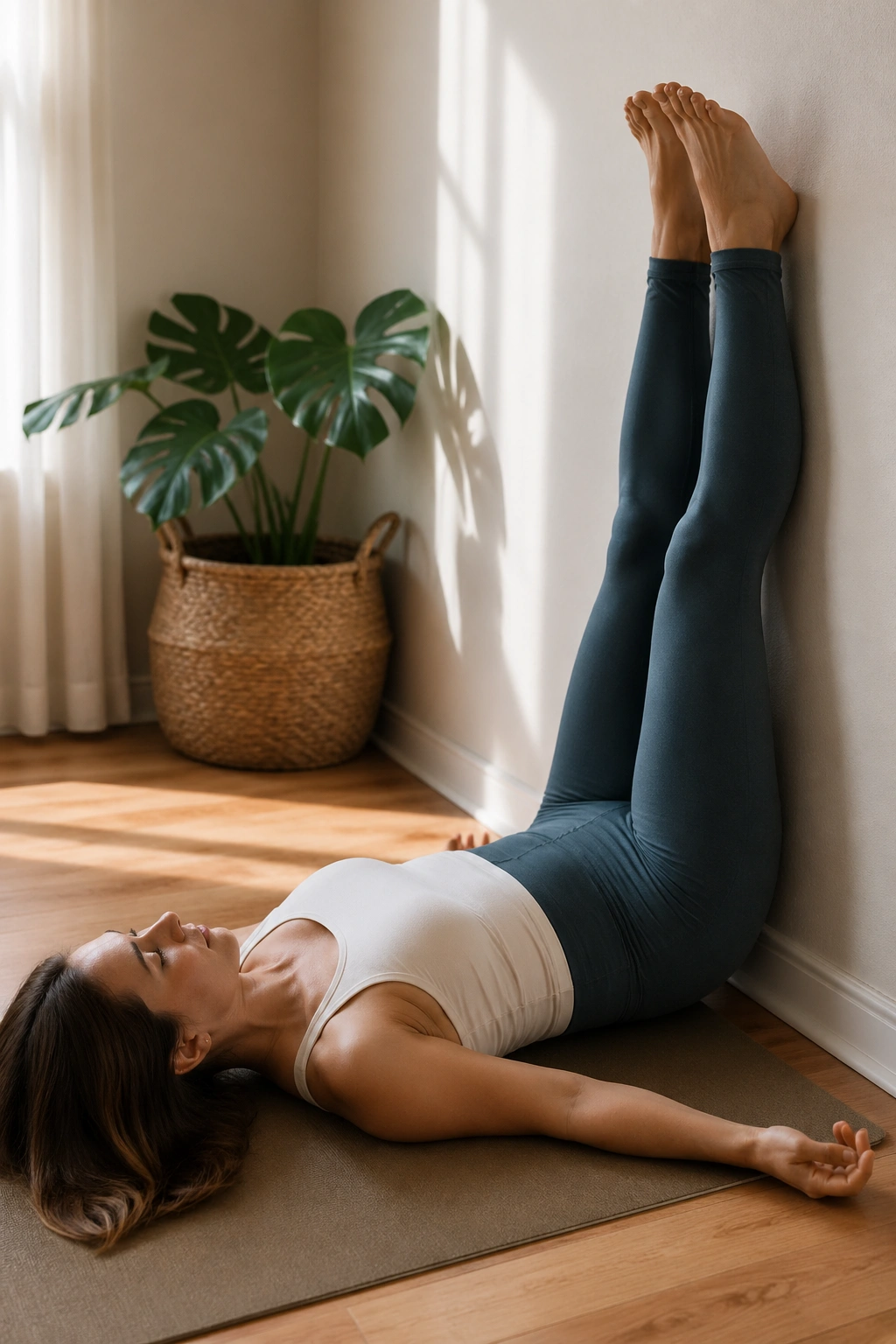
Legs-Up-the-Wall is the pose I’d hand to someone who feels puffy, tired, and too full of nervous energy to do much else. It’s calm, not flashy, and that’s part of why it helps.
Sit one hip close to a wall, then swing your legs up and lie back. Let your arms rest where they land. If your hamstrings grip, scoot a few inches farther from the wall so your knees bend slightly. The shape takes pressure off the lower body and helps the breath settle.
Setup That Actually Works
- Sit close enough that your sit bones can rest without strain.
- Place a folded blanket under the hips if the lower back feels tight.
- Keep the chin slightly tucked so the neck doesn’t arch.
- Stay for 2 to 10 minutes, depending on how much time and patience you have.
If reflux or a very full stomach is part of the picture, this may feel better later rather than right after eating. Listen to the body’s mood, not just the pose name. A pose can be useful and still not be the right first move.
8. Knees-to-Chest Rock
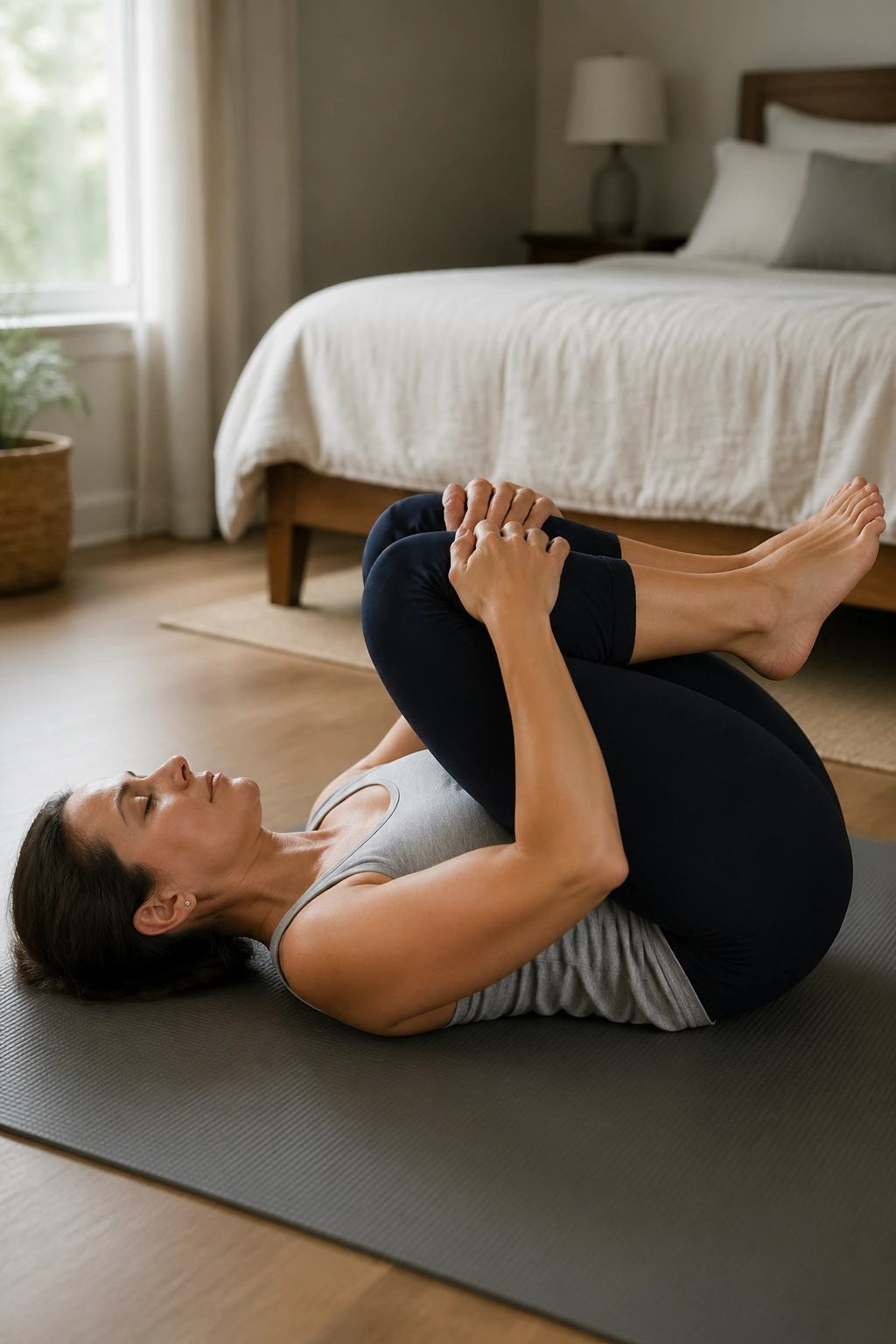
A slow rock on the back can feel almost childish, and that’s a good thing. Knees-to-Chest Rock strips the pose down to a simple motion that helps the belly and low back unwind together.
Lie flat, bring both knees in, and hold the shins or behind the thighs. Then rock a little from side to side, or forward and back if that feels better. The movement shouldn’t be big. A few inches is enough.
Key Details
- Keep the shoulders heavy on the mat.
- Soften the grip if the breath gets short.
- Use 4 to 6 slow rocks before holding still for a few breaths.
- If one side of the low back feels tighter, pause there for a second longer.
This pose is handy when bloating comes with a stiff spine. The body often holds tension in one long line, from hips to ribs, and a small rocking pattern breaks that up without a lot of effort. Sometimes that tiny bit of motion is all the gut needs to stop feeling jammed.
9. Low Lunge with a Twist
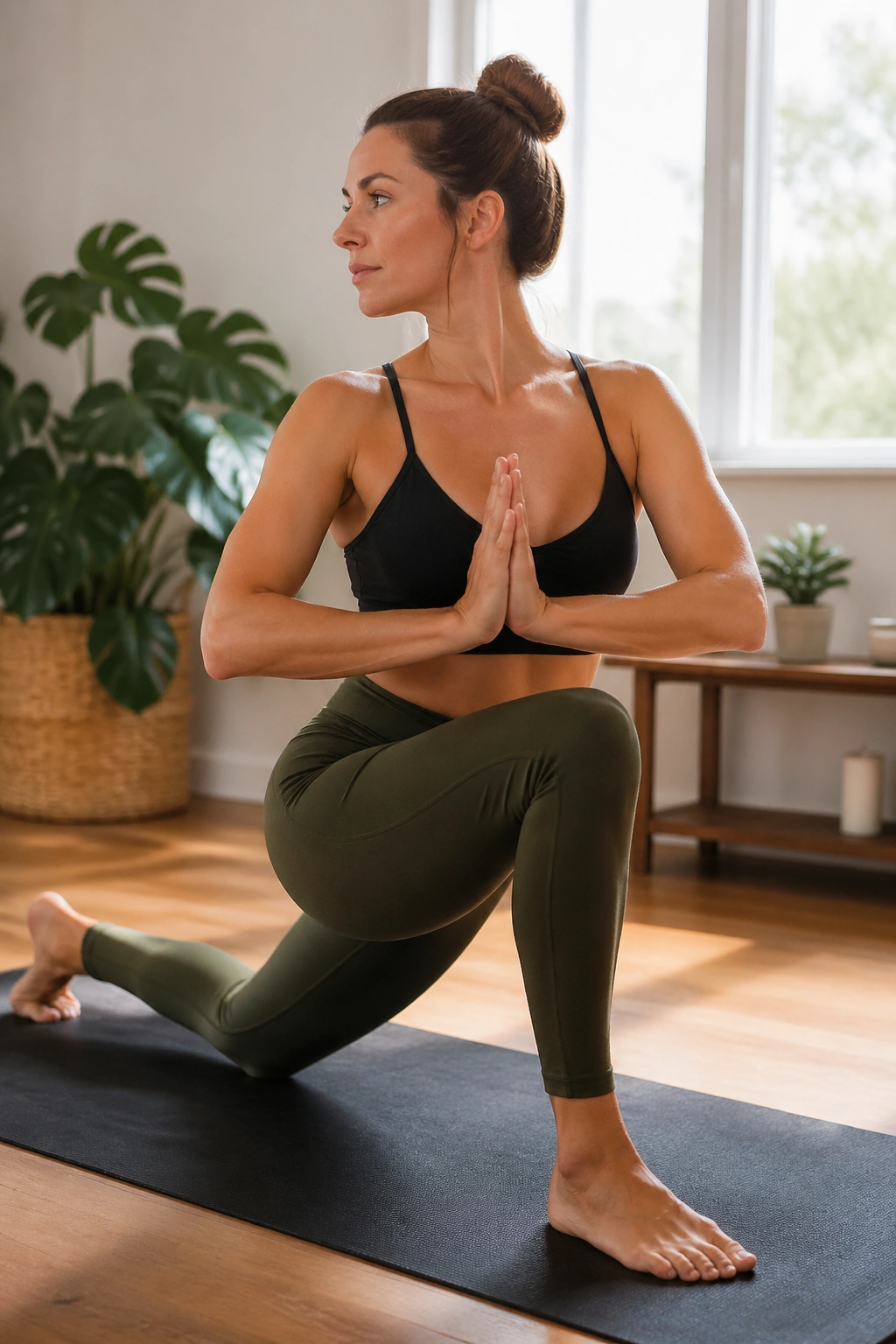
Why stand up at all when your belly feels off? Because a gentle low lunge can stretch the hip flexors, and a soft twist can help the trunk move without forcing the abdomen to brace.
Start with the back knee down. Bring the front foot far enough forward that the knee stays over the ankle, then lift the chest. Place both hands on the front thigh first. If that feels fine, rotate the torso a little toward the front leg and keep the twist small.
The mistake people make here is trying to make it look like a photo. Ignore that. A digestive-friendly lunge is more about breathing space than deep shape. If your front hip flexor is tight, that can make the belly feel even more compressed, so the stretch there matters.
Hold for 4 to 6 breaths on each side. If balancing feels wobbly, keep the back toes tucked and the fingertips on blocks. Soft, steady, practical. That’s the whole game.
10. Bridge Pose
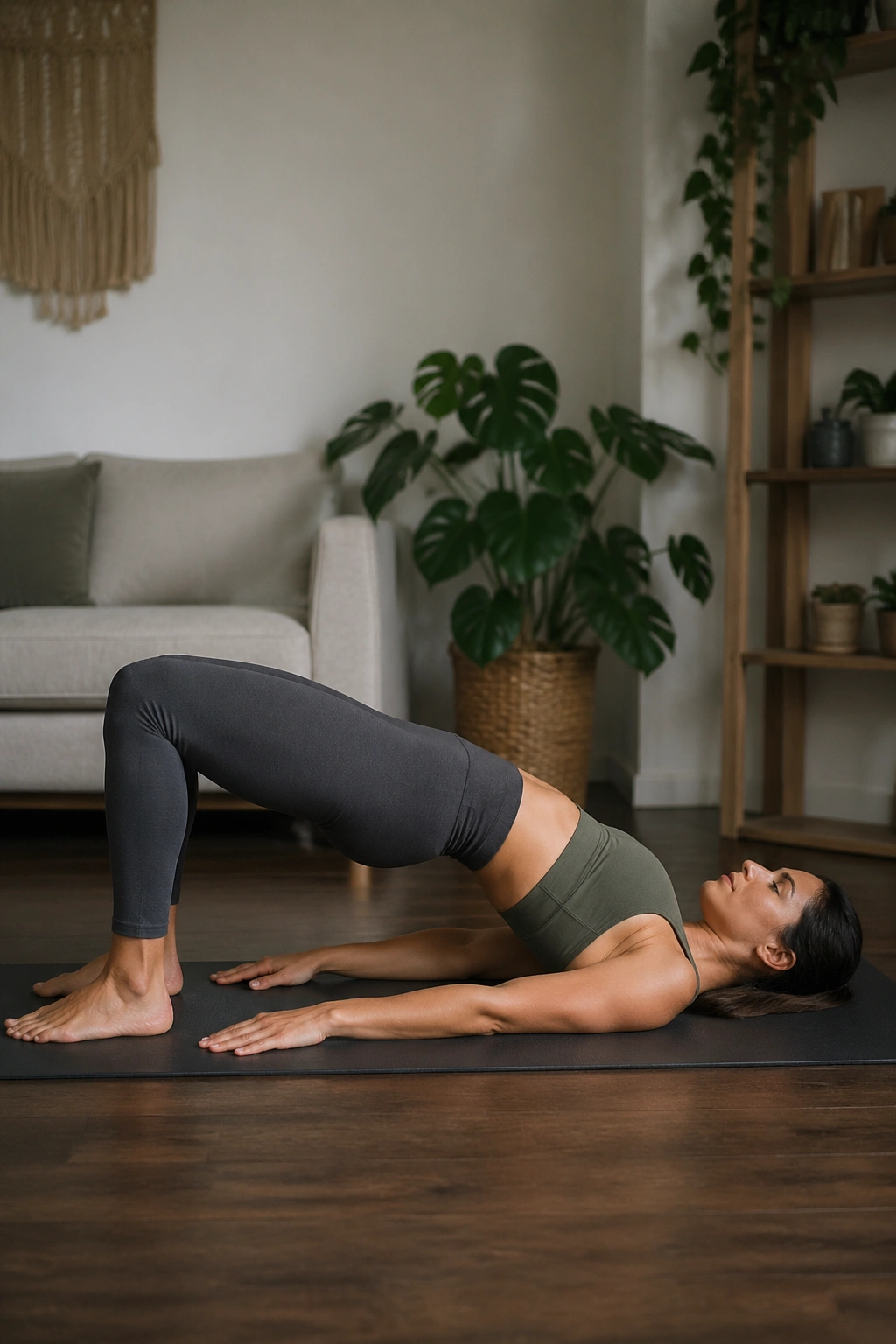
Bridge Pose gives the abdomen a different kind of work. It lifts the pelvis without crushing the belly, which can feel useful when you’re full but not nauseous.
Lie down, bend the knees, and place the feet hip-width apart. As you lift, think about lengthening the knees forward rather than tossing the hips as high as they’ll go. That keeps the low back from doing all the heavy lifting. A gentle squeeze through the glutes is enough.
The point is not to turn this into a backbend. It’s a controlled lift that opens the front body, gives the belly a little room, and encourages breath into the lower ribs. Hold for 3 to 5 breaths, lower with control, then rest for a breath before repeating once or twice if it feels good.
If your neck is sensitive, keep the chin slightly tucked and don’t roll onto the shoulders too deeply. Bridge should feel awake, not aggressive.
11. Reclined Bound Angle
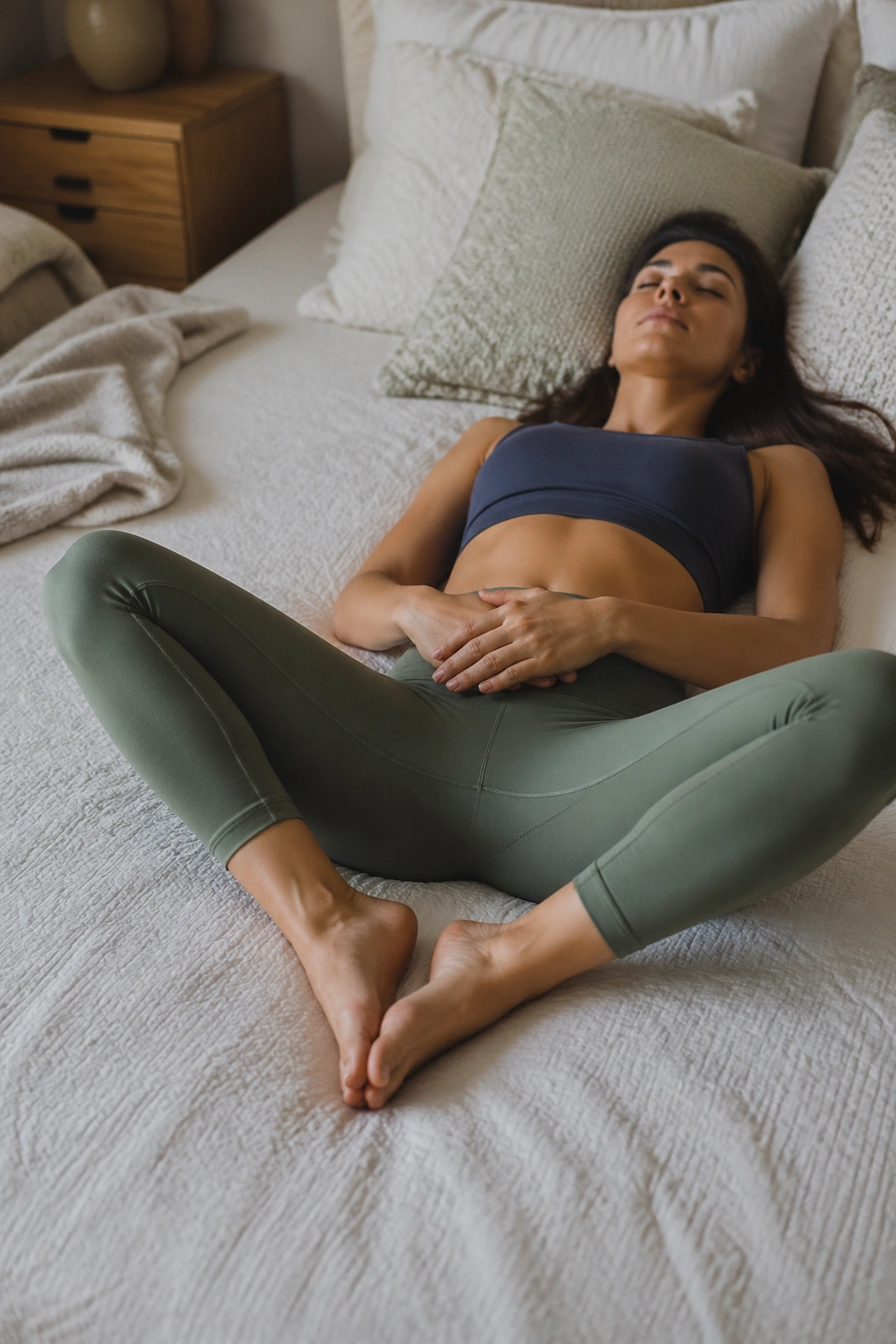
Reclined Bound Angle is the pose I reach for when someone says, “I feel too full to move, but I know I need to do something.” It’s passive, open, and kind to a belly that doesn’t want pressure.
Bring the soles of the feet together and let the knees fall out. If the knees hover too high, place blocks or pillows under them. A bolster or folded blanket along the spine makes the whole shape feel more restful. You can stay for 3 to 8 minutes if you’re settling down after dinner, or just a minute if you want a quick reset.
Unlike stronger hip openers, this one asks for less effort. That matters when digestion is slow and the body is already using a lot of energy. It’s the sort of pose that lets the diaphragm move freely while the inner thighs and groin soften.
If your low back feels exposed, bend the knees more or add another blanket under the outer thighs. The pose should feel supported, not like you’re hanging off a cliff.
12. Garland Pose
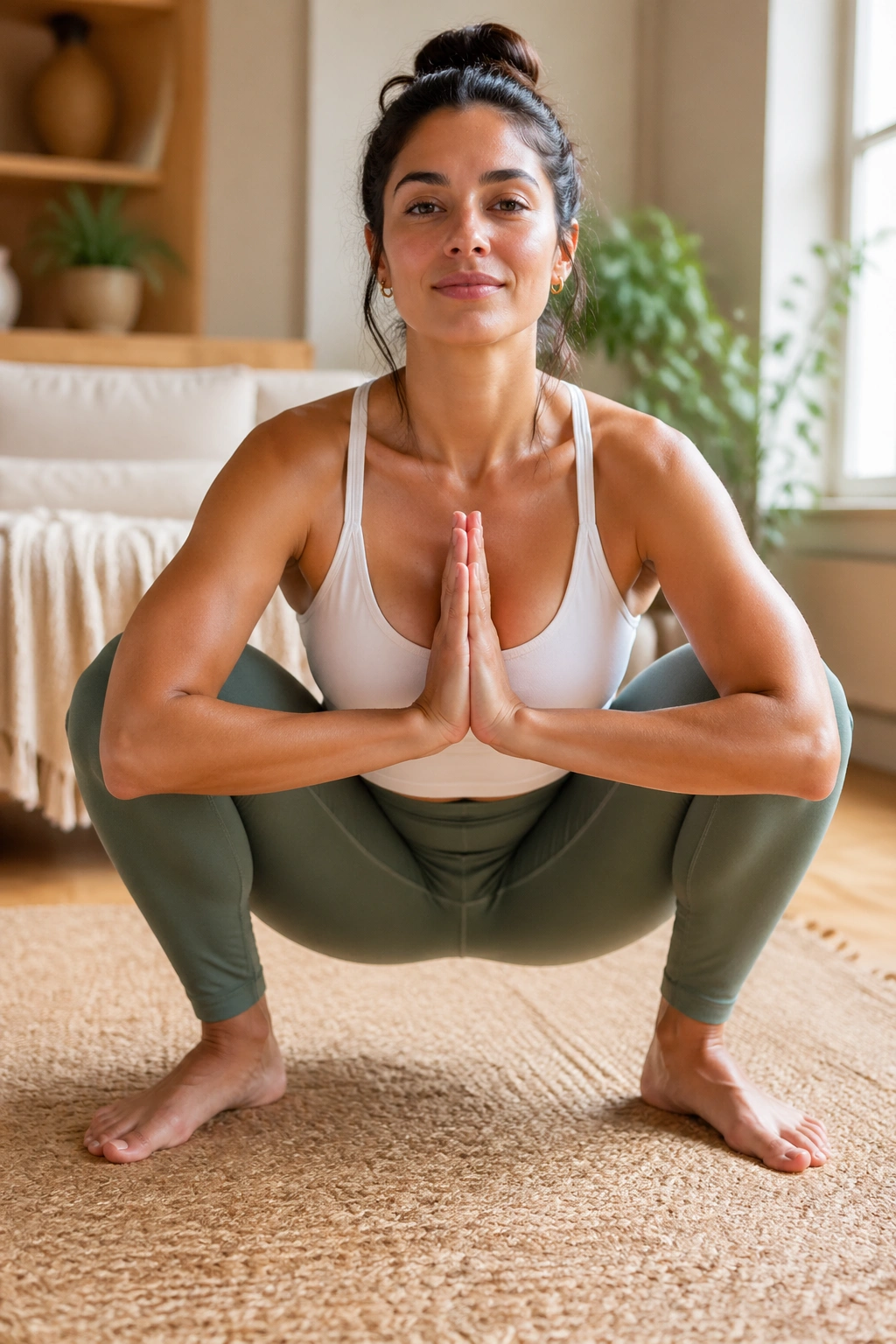
Garland Pose, or Malasana, is one of the more active poses in this group, and it earns its place. A deep squat can give the belly a gentle squeeze while opening the hips and lower back at the same time.
If your heels lift, place a rolled blanket or a wedge under them. If the ankles are tight, sit on a block instead of forcing the squat lower. The pose works best when the spine stays long and the chest can breathe. A rounded, strained squat is a different thing entirely.
Quick Setup Notes
- Feet a little wider than hip-width is fine.
- Elbows can press lightly into the inner knees.
- Keep the weight balanced through the whole foot.
- Stay for 5 slow breaths, then stand and shake out the legs.
This pose is not for everyone. People with cranky knees or very limited ankle mobility may prefer a supported version, and that’s not a failure. It’s just smarter. For the people who can tolerate it, though, Malasana often feels like it gives the lower abdomen room to organize itself again.
13. Half Lord of the Fishes
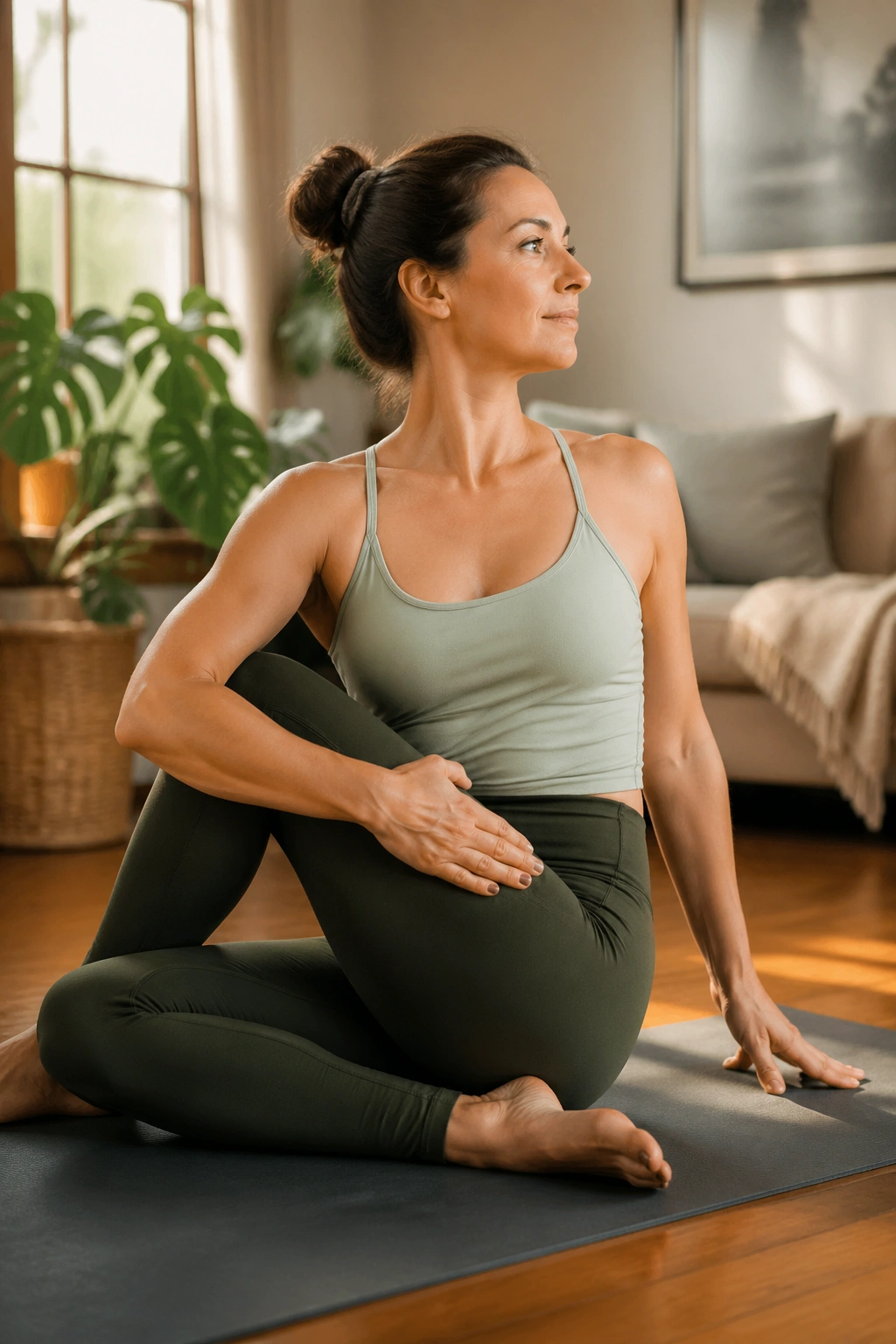
This twist is stronger than the floor-based versions, and that’s exactly why it can feel so good. Half Lord of the Fishes gives the torso a more direct squeeze-and-release pattern, which some people like when the belly feels sluggish.
Sit tall first. One leg bends in, the other crosses over, and the spine rotates from the ribs, not from a yanked neck or jammed shoulder. If the twist feels sharp in the low back, back out. A good twist feels like a clean spiral, not a fight.
You don’t need to turn far. In fact, too much rotation can tighten the abdomen instead of helping it. Hold for 4 to 6 breaths and let each exhale make the turn a little easier. Keep the chin level so the neck doesn’t overdo its share.
Best use: after a light meal, when you want a more active seated shape and your back tolerates rotation well. If sitting upright is already hard, pick one of the gentler floor poses instead. No need to be stubborn.
14. Constructive Rest Pose
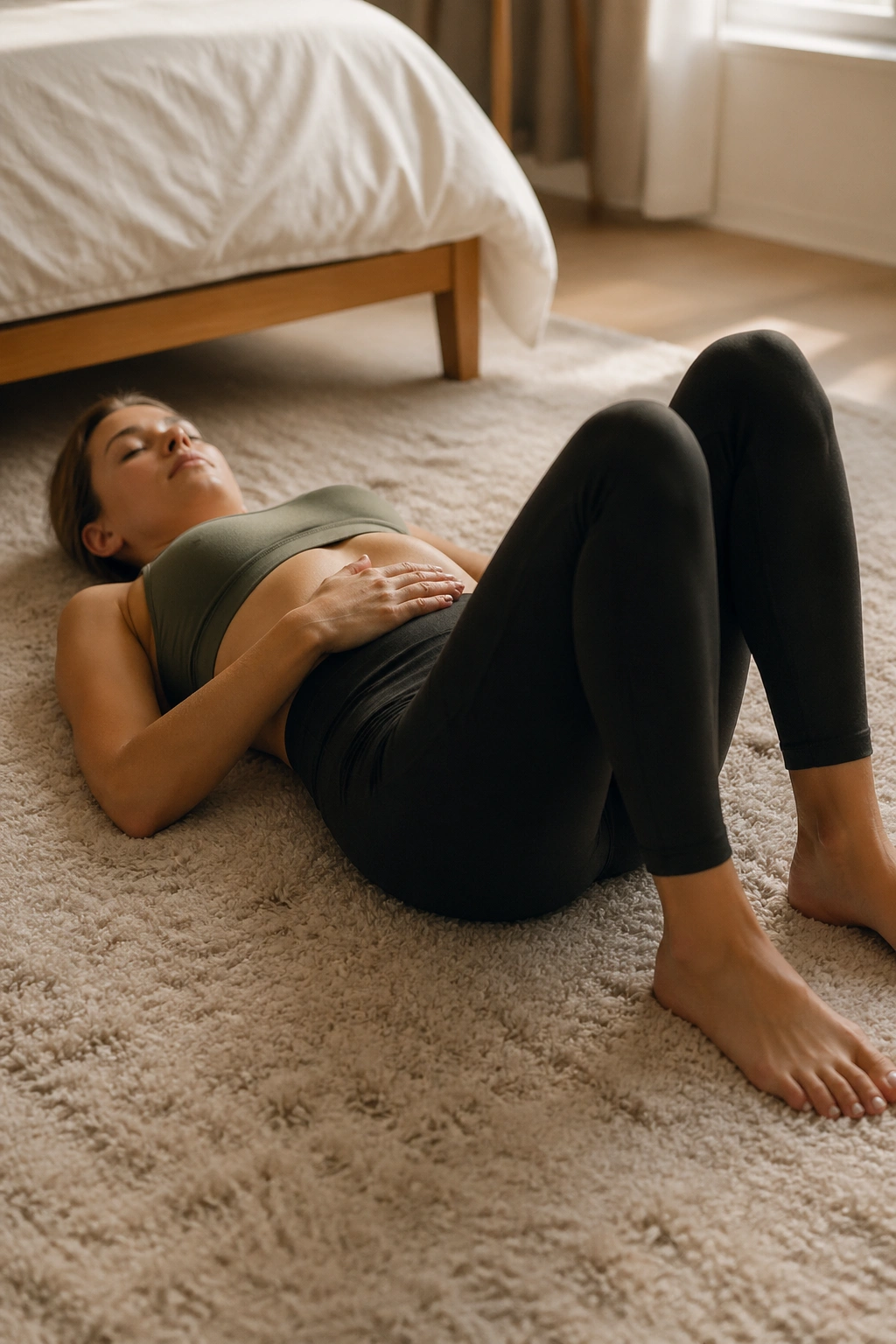
Sometimes the most useful pose looks plain enough to ignore. Constructive Rest Pose is little more than lying on your back with the knees bent and the feet flat, but it can be a quiet lifesaver when bloating makes everything else feel like too much.
Place the feet about hip-width apart, let the knees point up, and rest one hand on the belly if that helps you feel the breath. You can keep the arms by your sides or one hand on the chest and one on the abdomen. The setup should feel almost lazy.
What To Notice
- The lower ribs should move a little on the inhale.
- The belly should soften on the exhale.
- The jaw should unclench.
- The lower back should feel heavy, not arched.
Stay for 2 to 5 minutes and do nothing fancy. No counting, no forcing, no trying to “make” the belly go down. That kind of pressure usually makes people tighter, not looser. This is the pose for when the gut needs a quiet room more than a workout.
15. Twisted Chair Pose
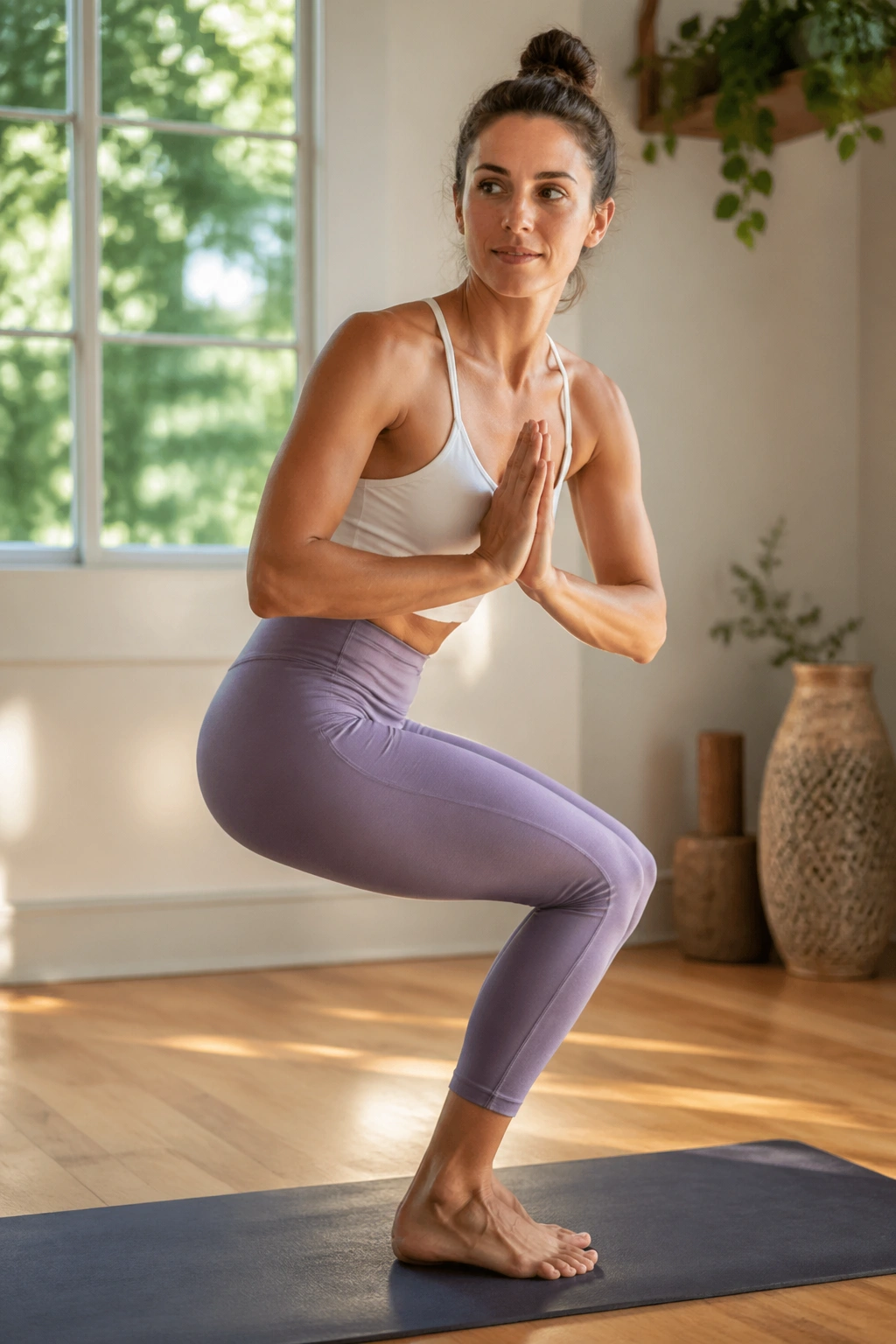
Can a standing pose help when you feel gassy? Yes, but only if you keep it gentle. Twisted Chair Pose gives the abdomen a mild squeeze, gets the legs working, and can be useful when you need movement more than rest.
Sit the hips back as if lowering into a chair. Keep the knees bent, then bring the hands to prayer and rotate the ribs toward one side. The twist should begin higher up in the torso, not by wrenching the low back. Hold for 3 to 5 breaths each side.
If balance is shaky, keep the fingertips on the thighs and make the twist smaller. If the belly feels tender or the breath gets choppy, skip it. This one is better when you have a little energy left, not when you feel flattened by discomfort.
I like it near the end of a sequence because it feels like a bridge between stillness and real movement. A person who has been lying down for twenty minutes may find it wakes the whole system up in a clean, grounded way.
Final Thoughts
The best yoga poses for bloating and slow digestion are rarely the prettiest ones. They’re the ones that let you breathe deeper, soften the abdomen, and stop gripping through the middle of your body. Child’s Pose, Wind-Relieving Pose, and a slow twist usually make a solid trio when you want a quick reset.
If you want a tiny sequence, try this order: Cat-Cow, Wind-Relieving Pose, Supine Spinal Twist, and Legs-Up-the-Wall. Ten minutes is enough. Maybe less. The point is to move the body just enough that the gut feels less boxed in, then give it time to settle.
And if the same bloating keeps showing up, don’t keep chasing it with stretches alone. That’s a sign to look at food patterns, stress, sleep, and possibly a clinician’s input. The mat can help. It just should not have to do the whole job.
