



Burning in the chest can turn even the gentlest workout into a gamble. On those days, the best yoga usually looks less like a flashy flow and more like a calm reset: upright, roomy through the ribs, and careful about how much pressure sits on the belly.
That matters more than people think. Deep folds, long inversions, and big twists can make reflux flare for some bodies, especially if you practice too soon after eating. A better session tends to be boring in the best way. Think small ranges, steady breathing, and props you’re not embarrassed to use.
There’s also a timing piece that gets ignored. If you ate a full meal, give yourself a couple of hours before getting on the mat. If heartburn comes with chest pain, trouble swallowing, repeated vomiting, or unexplained weight loss, that is not a yoga problem. Get medical help.
So the goal here is simple: choose shapes that let your body settle, keep the torso open, and don’t squeeze the stomach into a complaint.
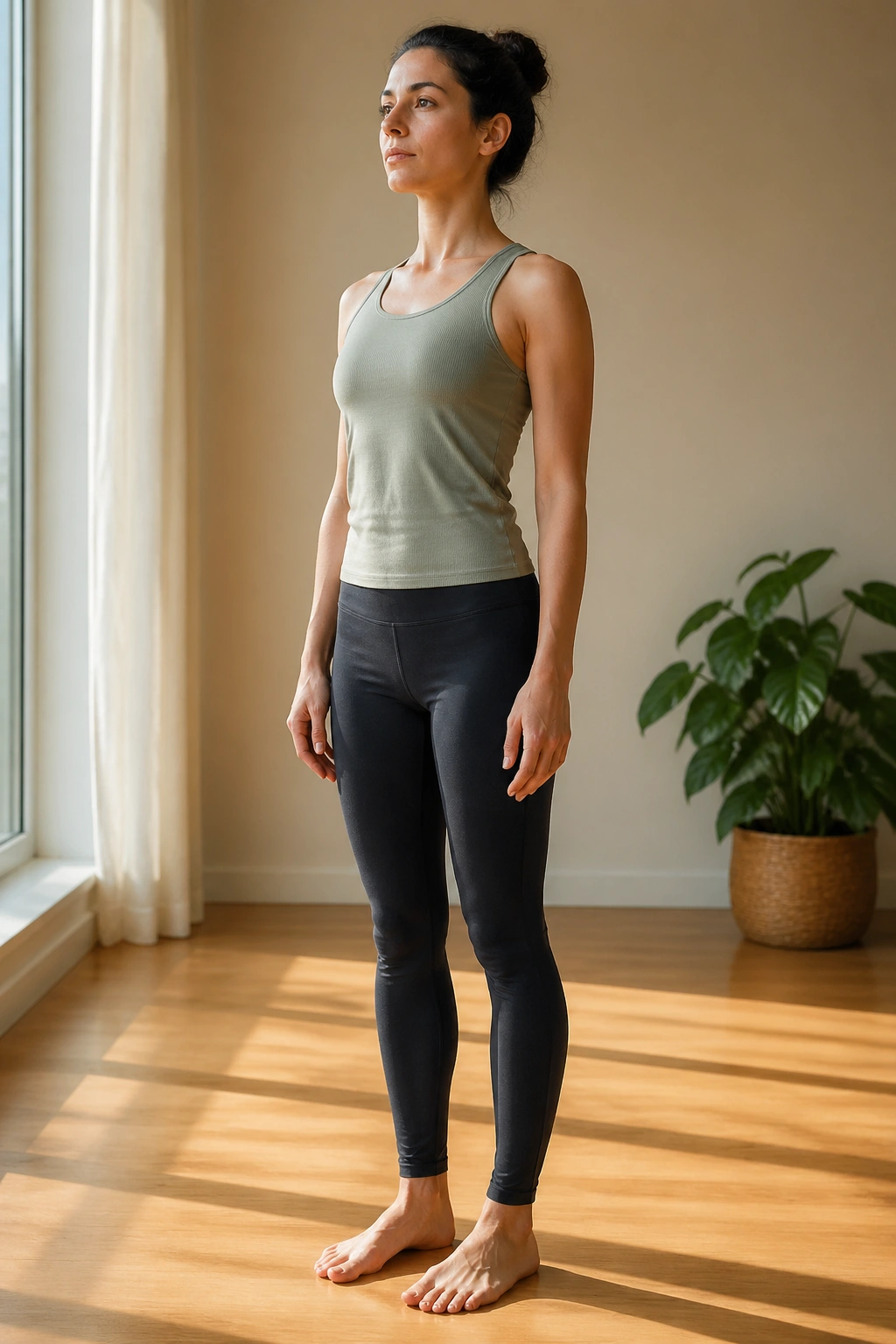
1. Mountain Pose (Tadasana)
Mountain Pose looks plain because it is plain. That’s the point.
When reflux is flaring, a lot of people tense without noticing it — ribs jut forward, belly braces, shoulders creep up. Tadasana gives you a place to undo all that. Stand with your feet grounded, soften the knees just a little, and let the crown of your head lift while your ribs stack over your hips. No military posture. No chest puffing.
How to Use It
- Stand with feet hip-width apart if that feels steadier than touching heels.
- Let your hands rest by your sides or on your lower ribs.
- Take 4 slow breaths in, then exhale for 6.
- Keep the jaw loose and the throat easy.
A wall behind you can be useful if you feel wobbly. The back of your head, shoulder blades, and tailbone do not need to be pressed flat; just use the wall as a quiet reminder that you’re leaning or bracing less.
Best use: at the start of practice, between other poses, or anytime you need to check whether your breath has turned shallow.
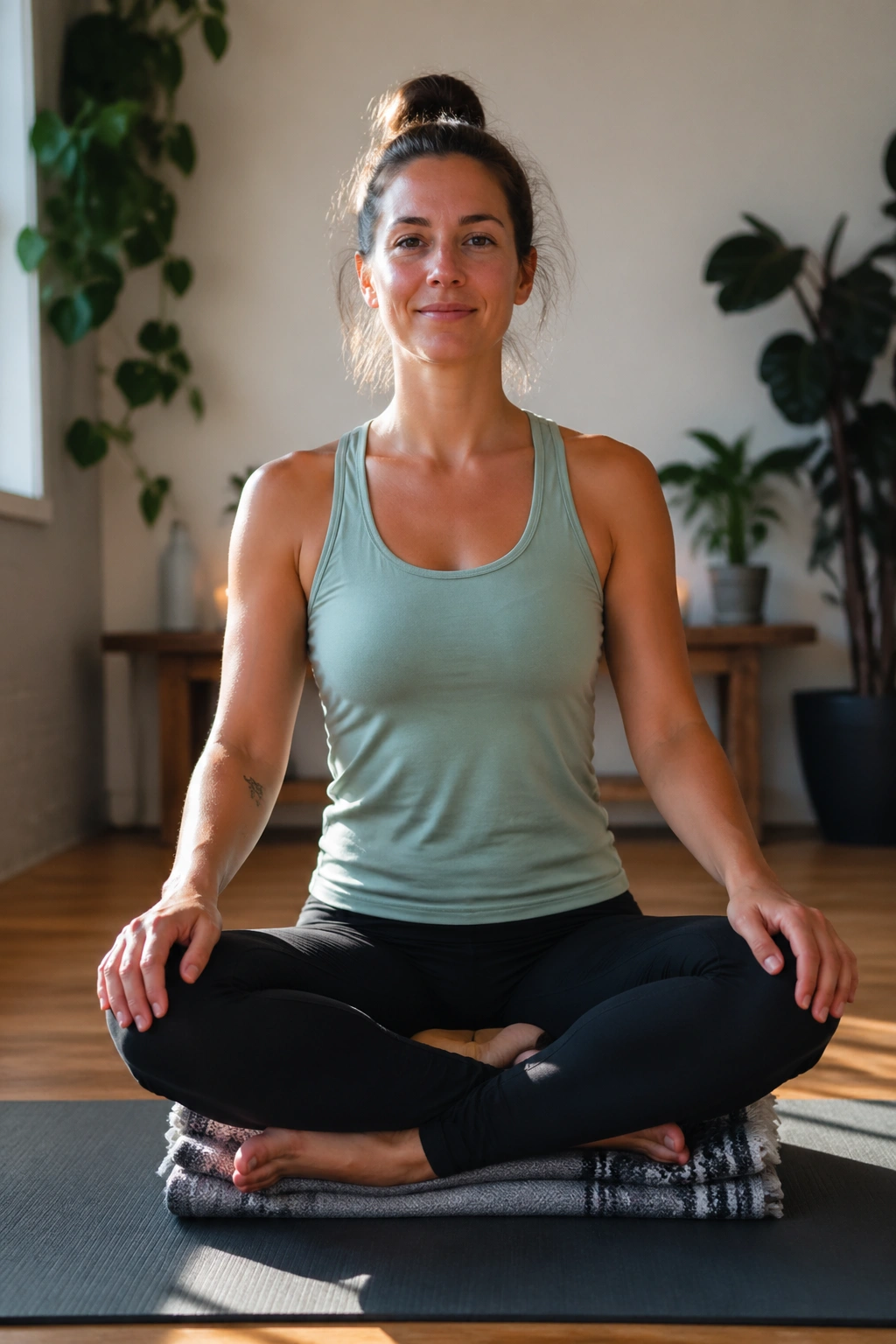
2. Easy Pose with a Blanket Under the Hips
Sitting upright can feel better than lying down when your stomach is angry.
Easy Pose, or Sukhasana, works well here because it lets you keep the spine tall without compressing the abdomen. The trick is the seat. If your knees sit higher than your hips, your lower back tends to round and your belly gets crowded. Fold a blanket or sit on a firm cushion so the hips rise a few inches above the knees. Small fix. Big difference.
A Few Helpful Details
- Sit on a folded blanket, block, or firm pillow.
- Cross the shins in whichever way feels even.
- Rest the hands on the thighs or knees.
- Breathe into the lower ribs instead of pushing the belly out.
If your knees complain, sit on a chair and keep the same shape through the spine. That still counts. I’d take a good chair version over a sloppy floor version any day.
This is a nice pose for the beginning or the end of a session, and it can also stand in as a breathing break between standing shapes.
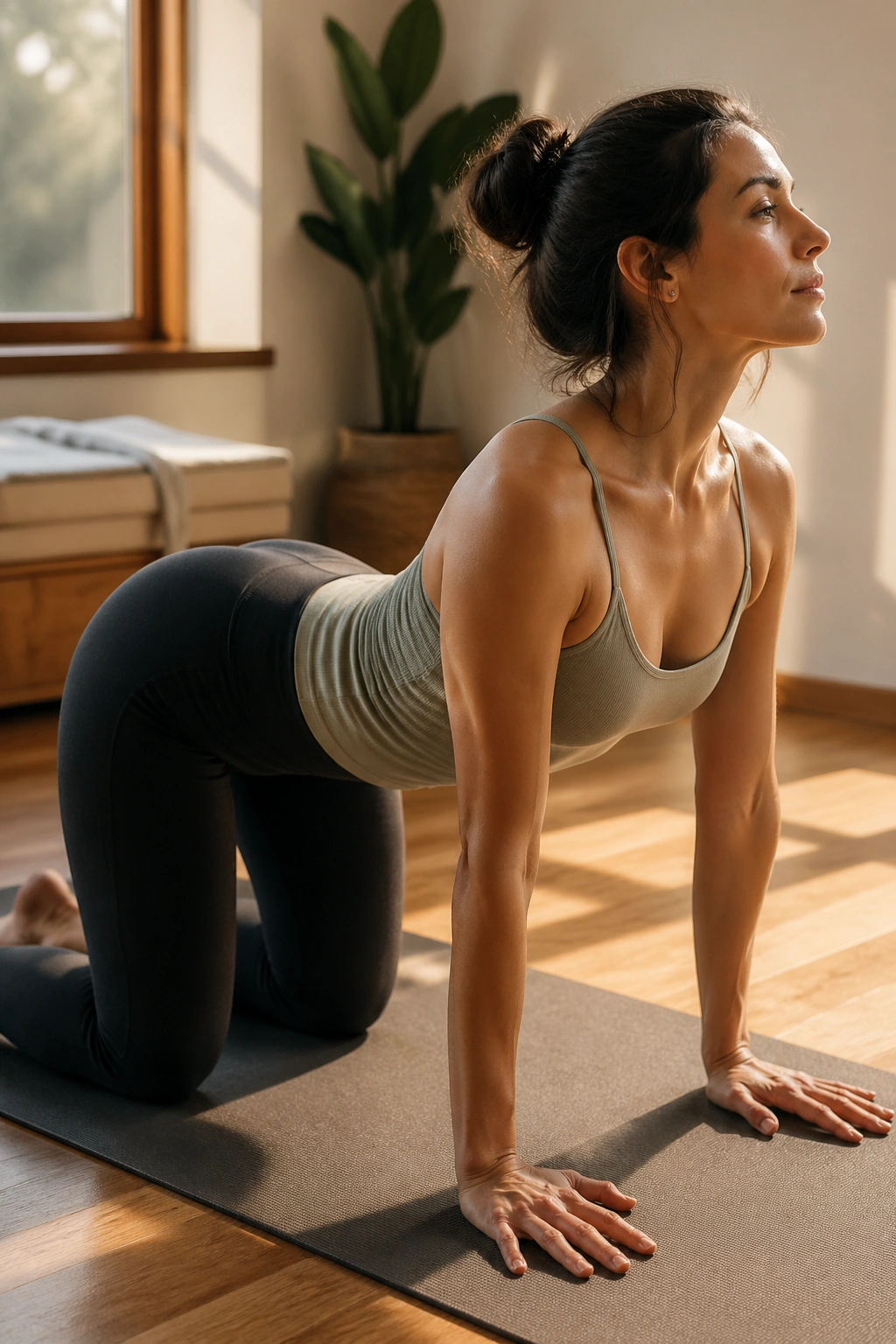
3. Cat-Cow
Why does Cat-Cow show up in so many gentle sequences? Because it gives the spine motion without asking for much drama.
Done slowly, it can help you find a rhythm where the breath leads the movement instead of the other way around. The key on reflux days is keeping the range small. Don’t throw the belly down hard on Cow, and don’t yank yourself into a tight round back on Cat. Smooth. Easy. Almost underwhelming, which is exactly why it works.
What It Should Feel Like
When you inhale, let the chest widen and the tailbone tip up just a little.
On the exhale, draw the navel gently toward the spine and round the upper back without forcing the chin into the chest. If the position on hands and knees bothers your wrists, place your hands on yoga blocks or come to forearms.
One set of 5 to 8 rounds is enough. More isn’t automatically better, and on a sensitive stomach, too much movement can start to feel sloppy.
Watch for this: if the backbend in Cow makes burning climb upward, stay closer to neutral and make the movement smaller.
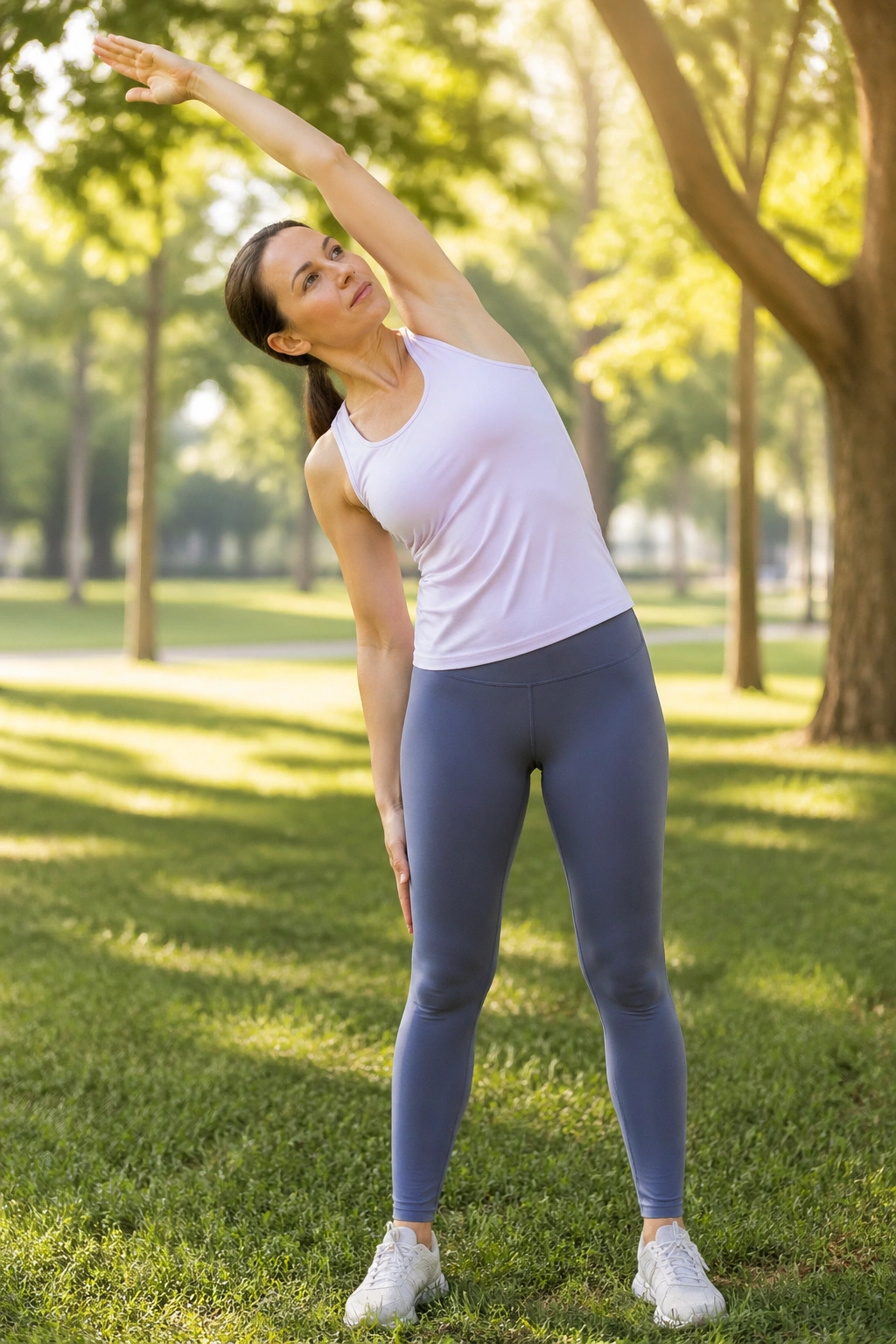
4. Standing Side Bend
If you can’t lie down because your chest is hot, a standing side bend can be the kind of simple stretch that saves the session.
It opens the side body without folding the belly in half. Stand tall, reach one arm overhead, and lean only as far as you can keep both sides of the waist long. The mistake people make is collapsing into the bend. That turns a useful stretch into a crunchy little squeeze through the ribs and abdomen.
How to Keep It Gentle
- Keep both feet rooted.
- Lift through the top ribs before you lean.
- Let the bottom hand rest on the thigh rather than hanging heavy.
- Breathe toward the side ribs and under the armpit.
You want room, not depth.
This pose is especially nice if heartburn shows up with that tight, “everything is crowded” feeling in the upper torso. Use it in short holds — 2 to 4 breaths per side is plenty.
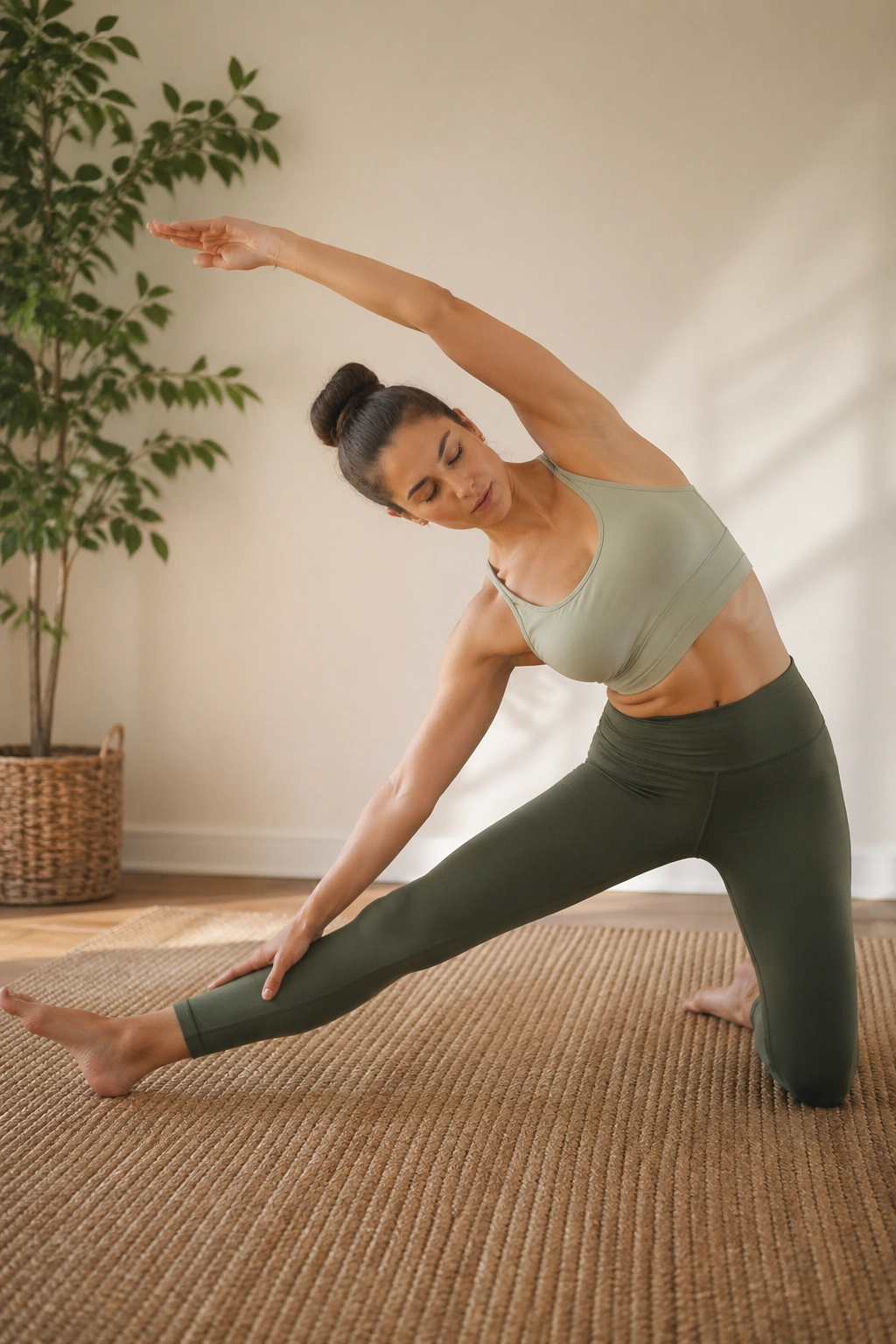
5. Gate Pose
Gate Pose is one of those shapes that looks humble from the outside and feels strangely generous from the inside.
Kneel with one leg extended out to the side, then lean the torso toward the straight leg with the opposite arm reaching overhead. The side waist opens, the ribs spread a little, and the chest gets more space to move. For reflux days, that sense of length matters more than a big stretch.
Keep the lifted arm active. If you let it flop, the whole shape collapses into the stomach. A hand can rest lightly on the thigh or shin, and the side bend should stay mild enough that breathing remains smooth.
If your knees prefer padding, place a folded blanket under them. If the floor feels hard or cold, that little bit of cushioning helps more than people expect.
A short hold is enough here. Three slow breaths, maybe four. Then come out before the stretch turns into strain.
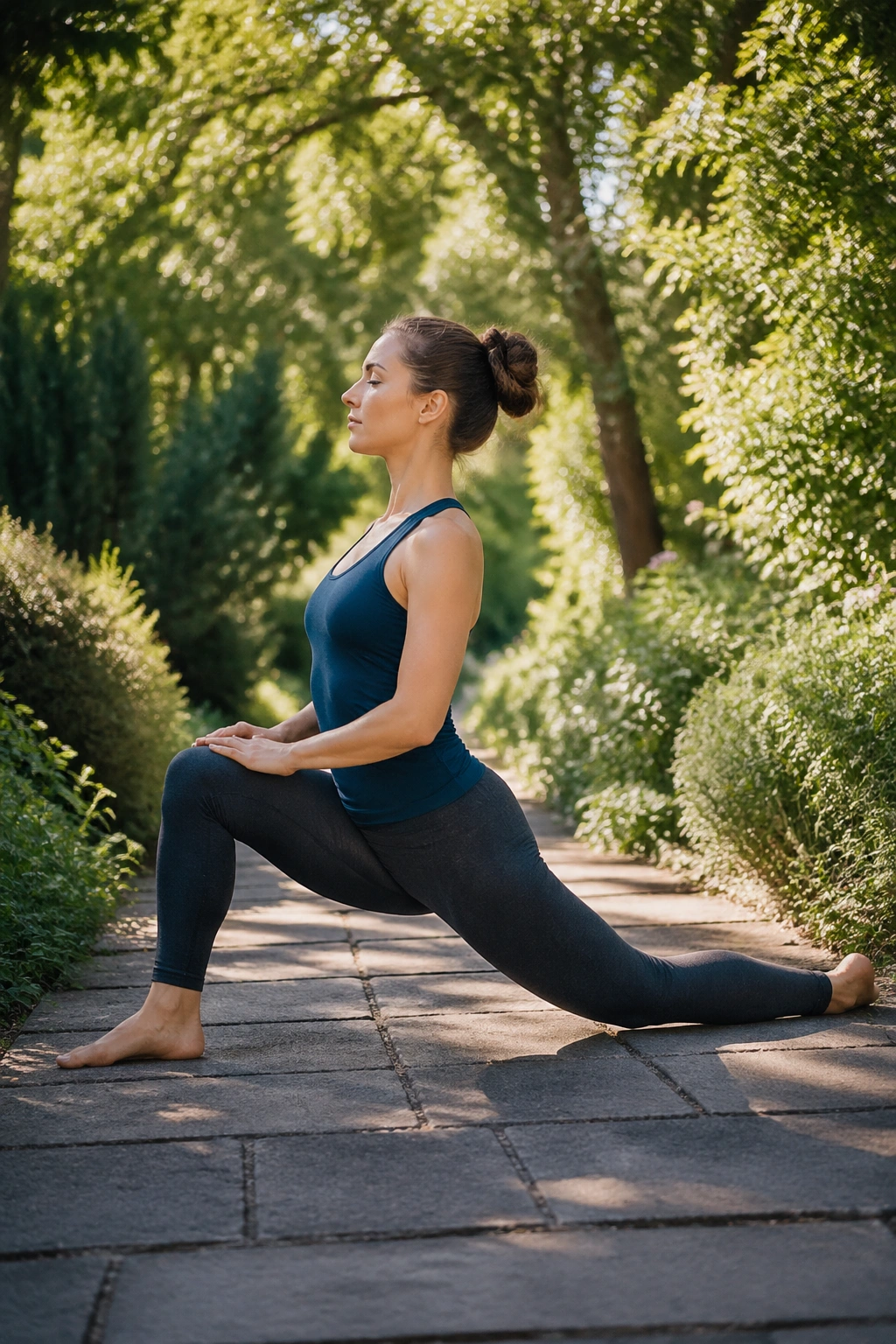
6. Low Lunge with a Tall Torso
Unlike a deep runner’s lunge, this version keeps the upper body upright and the stomach uncompressed.
That upright shape is the whole reason it belongs on a reflux-friendly list. Step one foot forward, drop the back knee down, and place both hands on blocks if the floor feels too far away. The hips can shift forward slightly, but don’t dump your weight into the front thigh or lean the ribs over the knee.
If you’ve been sitting all day, hip flexors can get tight and make breathing feel shorter. Low Lunge gives those front-of-hip tissues a mild stretch while the chest stays open. That’s a good trade on heartburn days.
I prefer a shorter stance here. People often step too far and then over-arch the lower back to “make the pose happen.” Not worth it.
A small lunge with clean breathing beats a dramatic one that makes your abdomen feel pinned.
7. Warrior I
Warrior I is less about power and more about stacking.
One foot steps back, the back heel roots down, and the torso rises. The chest stays lifted, but not puffed out. That distinction matters. If you thrust the ribs forward to fake openness, you often create pressure right where reflux already likes to complain.
A Calmer Version
- Shorten the stance if your lower back arches.
- Keep the front knee bent only as much as you can support comfortably.
- Place the hands on the hips or reach them overhead without shrugging.
- Keep the back leg active, not locked.
There’s a good kind of steadiness in this pose. The legs work a little, the breath slows down, and the torso gets to stay relatively tall. If overhead arms make you feel tight through the upper belly, leave them off. No prize for adding them.
A lot of people treat Warrior I like a shape to power through. On reflux days, that’s the wrong mood.
8. Warrior II
Warrior II gives you space without asking the stomach to fold, twist, or absorb much compression.
The stance is wide, the front knee bends, and the arms stretch out to the sides. If you keep the pelvis neutral and the torso upright, the pose can feel open and grounded at the same time. That’s useful when your whole chest feels a little irritated and you still want to move.
Quick Setup
- Spread the feet wide enough that you don’t wobble.
- Turn the front toes forward and the back foot slightly in.
- Bend the front knee over the ankle.
- Reach the arms long, palms down, without locking the shoulders.
The gaze can rest over the front hand or stay soft ahead. I like the soft gaze better on stomach-sensitive days because it takes the intensity down a notch.
Hold for 3 to 5 breaths and come out if you notice yourself leaning forward. The pose should feel spacious, not aggressive.
9. Reverse Warrior
Does a side bend count as a backbend? In Reverse Warrior, the answer is a soft yes.
That’s why the pose needs a light touch on reflux days. With the front knee bent and the back hand sliding gently down the back leg, you create length through the side body instead of squashing the belly. The chest stays open, but the lower ribs should not flare hard.
If the reach overhead makes your stomach feel squeezed, make the arc smaller. A tiny lift and side stretch often gives you the same relief with less risk of aggravating heartburn. No need to throw yourself into the deepest version.
What to Notice
- The front knee should stay bent and stable.
- The back hand can rest lightly, not press hard.
- The front ribs should not pop forward.
- Breathing should stay steady enough that you could count it.
Skip the pose if you feel burning rise the moment you start leaning back. That is the body giving you a quick answer.
10. Extended Side Angle
Picture a long diagonal line from the back heel to the top fingertips. That line is what you want, not a crunched side bend.
Extended Side Angle can feel good on reflux days when you keep the torso long and resist the temptation to dump weight into the front thigh. Rest the lower forearm on the thigh rather than forcing the hand to the floor. That one change saves a lot of strain.
The top arm reaches overhead, and the chest opens along the side of the body. If you twist the ribs toward the ceiling too aggressively, you may press into the abdomen in a way that backfires. Stay honest. Long spine first, shape second.
How to Make It Work
- Use a block under the lower hand if needed.
- Keep the back leg active from the outer heel.
- Lengthen the sides of the waist before rotating the chest.
- Hold only as long as the breath stays easy.
This is one of those poses that looks more complicated than it feels when it’s done well.
11. Tree Pose
Tree Pose is not about flexibility. It’s about steadiness.
That makes it oddly useful on heartburn days, because shaky breathing often makes reflux feel worse. Stand on one leg, place the other foot at the ankle or inner calf, and keep the standing hip firm. Don’t jam the foot into the knee. That’s a bad trade, and your knee will tell you so.
The upper body stays tall, which is the real win here. If you’ve been hunching from discomfort, Tree gives you a chance to reverse that without a big spinal bend. A wall is fair game. Actually, a wall is smart.
A few slow breaths can settle the whole system. The pose also trains you to keep your jaw unclenched and your ribs from flaring. Small things. They matter.
If balancing on a full foot lift makes you tense, just keep the toes of the lifted foot on the floor like a kickstand.
12. Goddess Pose
Unlike a deep squat, Goddess keeps the chest open and the hips wide.
That’s a useful combination when you want leg work without compressing the front of the belly. Step the feet wide, turn the toes out slightly, and bend the knees enough that the thighs are working but not burning. Hands can rest on the hips, prayer at the chest, or float out to the sides.
The spine should stay long. If you tuck under too much, the lower abdomen gets crowded and the pose loses its point. If you lean forward, it turns into something else entirely. Stay upright.
Good Cues
- Knees track in the same direction as the toes.
- Weight stays even across the feet.
- Ribs stack over the pelvis.
- Breath stays low and calm.
I like Goddess for people who feel better standing than sitting on reflux days. It gives you a sense of grounded effort without asking for any belly squeeze.
13. Chair Pose
Chair Pose is only useful here when you keep it small.
Drop too low and brace too hard, and heartburn can answer back fast. So this is a short, careful version: feet hip-width apart, hips back a little, torso long, and only a mild bend in the knees. Think of it like a test of posture, not a leg workout.
You can keep the hands on the thighs or reach them forward if that does not make you overextend the lower back. A wall behind you helps a lot. Pressing lightly into the wall can keep the spine from collapsing without forcing extra effort through the abdomen.
Three breaths is enough. Maybe four.
If you feel any rising pressure in the chest, cut the hold short. There’s no medal for staying longer when the shape is making you miserable.
14. Standing Crescent Side Stretch
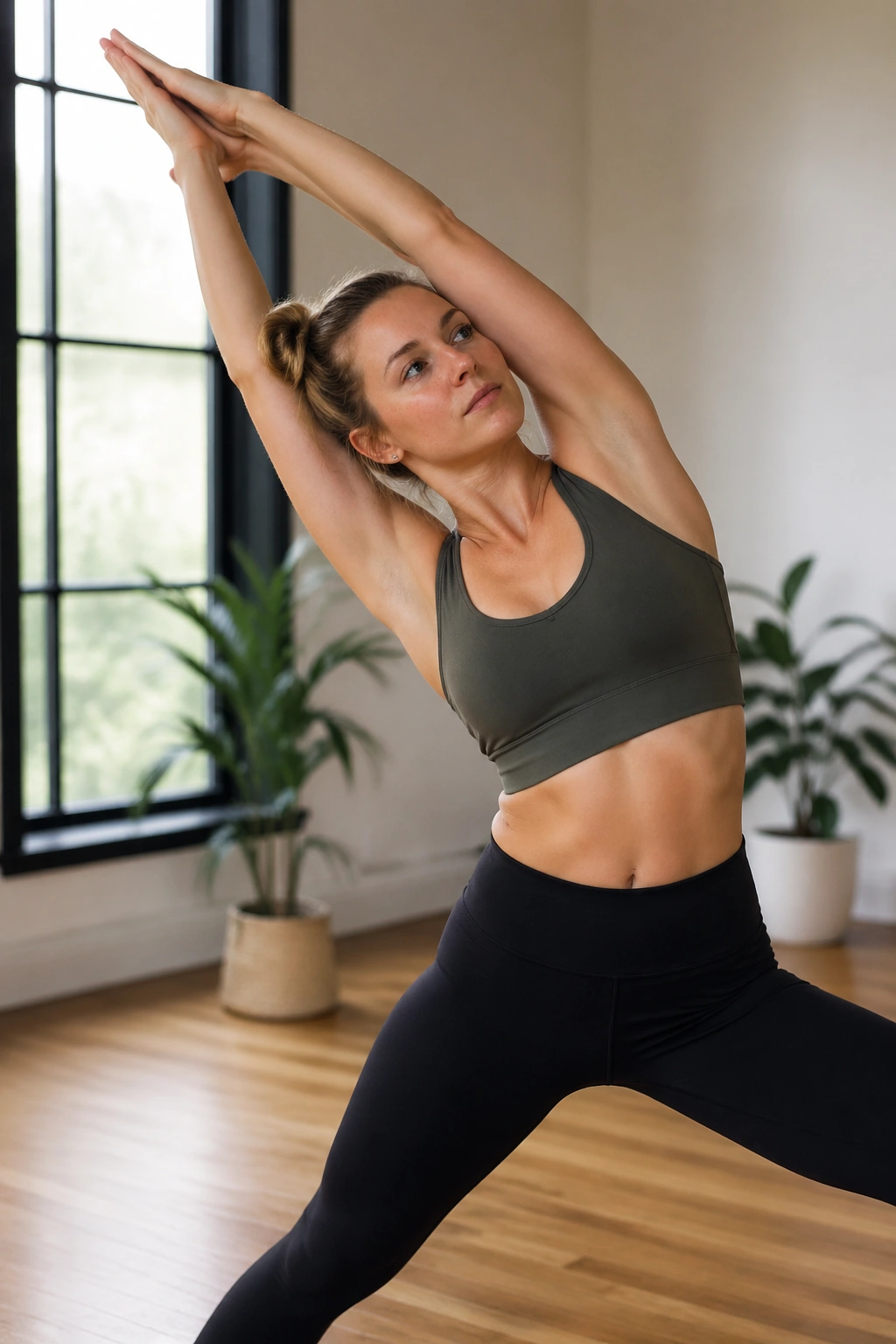
A standing crescent side stretch is a good reminder that not every helpful pose has to be fancy.
From a split stance or a gentle lunge, reach both arms overhead and lean a few inches to one side. The torso stays long, the pelvis stays rooted, and the movement lives in the side ribs. That’s why it often feels kinder than a forward fold or a deep twist.
How to Get More Out of It
- Keep the front knee softly bent.
- Reach up before you tip to the side.
- Imagine space between the lower ribs and the hip.
- Keep the chin level instead of dropping it.
This pose is especially nice if your reflux shows up with that tight band across the lower ribs. The stretch can ease the feeling without pressing on the stomach.
If your shoulder joints complain overhead, leave the arms lower and make the side bend tiny. The stretch still counts. Good yoga on sensitive days is often a conversation, not a performance.
15. Eagle Pose
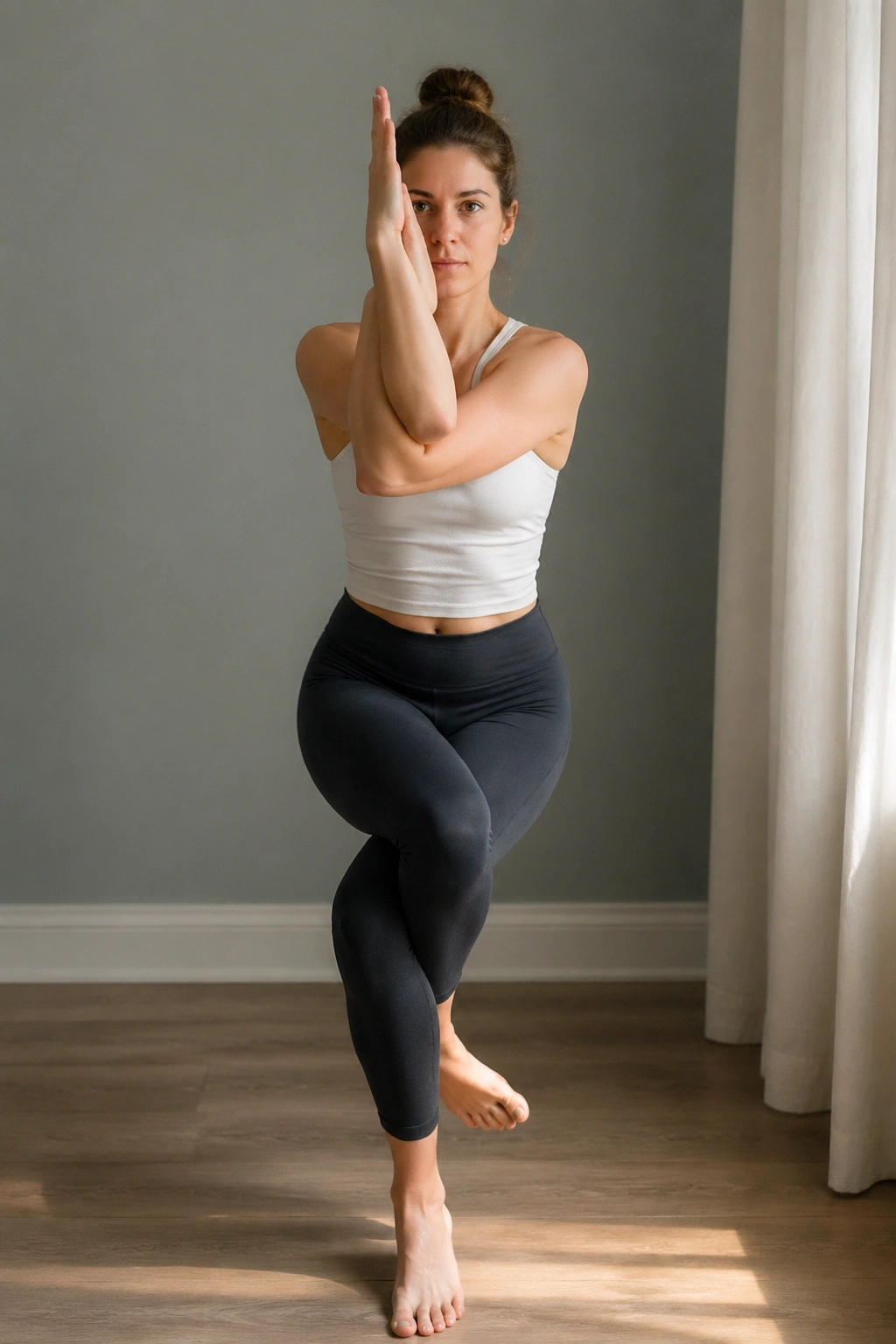
Eagle Pose can feel oddly calming because the wrap narrows your focus.
The arms cross, the legs cross, and the body gets organized into one contained shape. That can help when discomfort makes you fidgety. Still, there’s a catch: too much squeeze around the middle can irritate reflux, so keep the wrap loose. You are looking for balance and attention, not compression.
If the legs wrapped together make your abdomen feel pinched, keep only the arm wrap and let the legs stay apart. That’s a perfectly respectable version. The same goes for the knees — they can bend a little, not sink into a squat.
A wall or chair beside you makes this pose easier than it looks. You do not need to wobble your way through it.
The point is to slow down, breathe, and feel the upper back widen while the rest of the body stays contained enough to be still.
16. Hero Pose on a Blanket
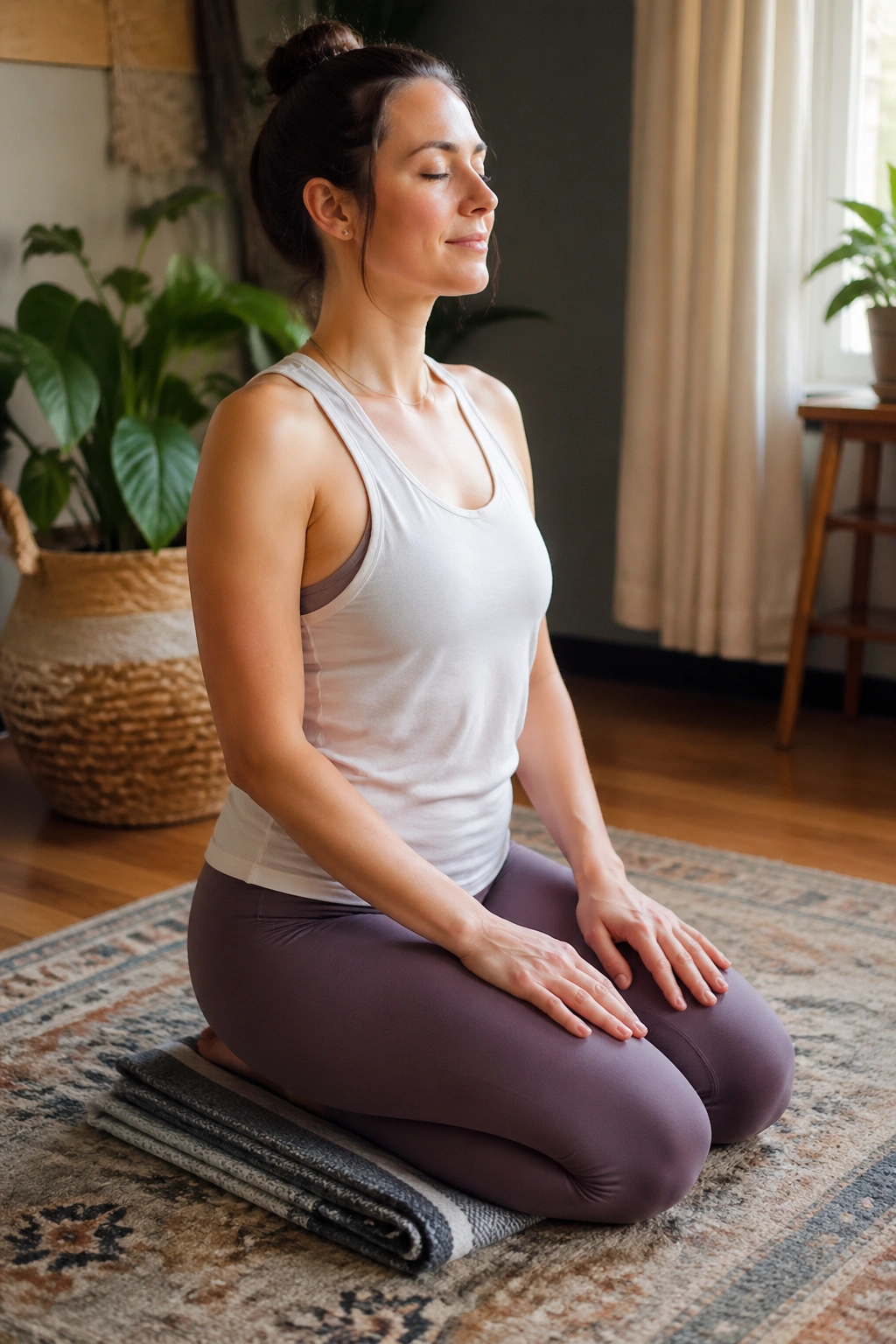
Hero Pose can be a lovely seated rest if your knees are cooperative.
Kneel between your shins, or sit on a block placed between the heels if the floor feels too low. The torso rises tall, the chest opens, and the front of the body gets a chance to settle without lying flat. For some people, that upright shape is easier than cross-legged sitting because it keeps the hips from tilting backward.
Do watch the knees and ankles. If either joint complains sharply, don’t push through. Use a chair, or skip the pose entirely. This is not the place to prove discipline.
The seat height matters more than it seems. One or two folded blankets under the hips can make the pose workable where it would otherwise feel miserable.
It’s a quiet pose, and honestly I think quiet is underrated when your stomach is already loud.
17. Sphinx Pose
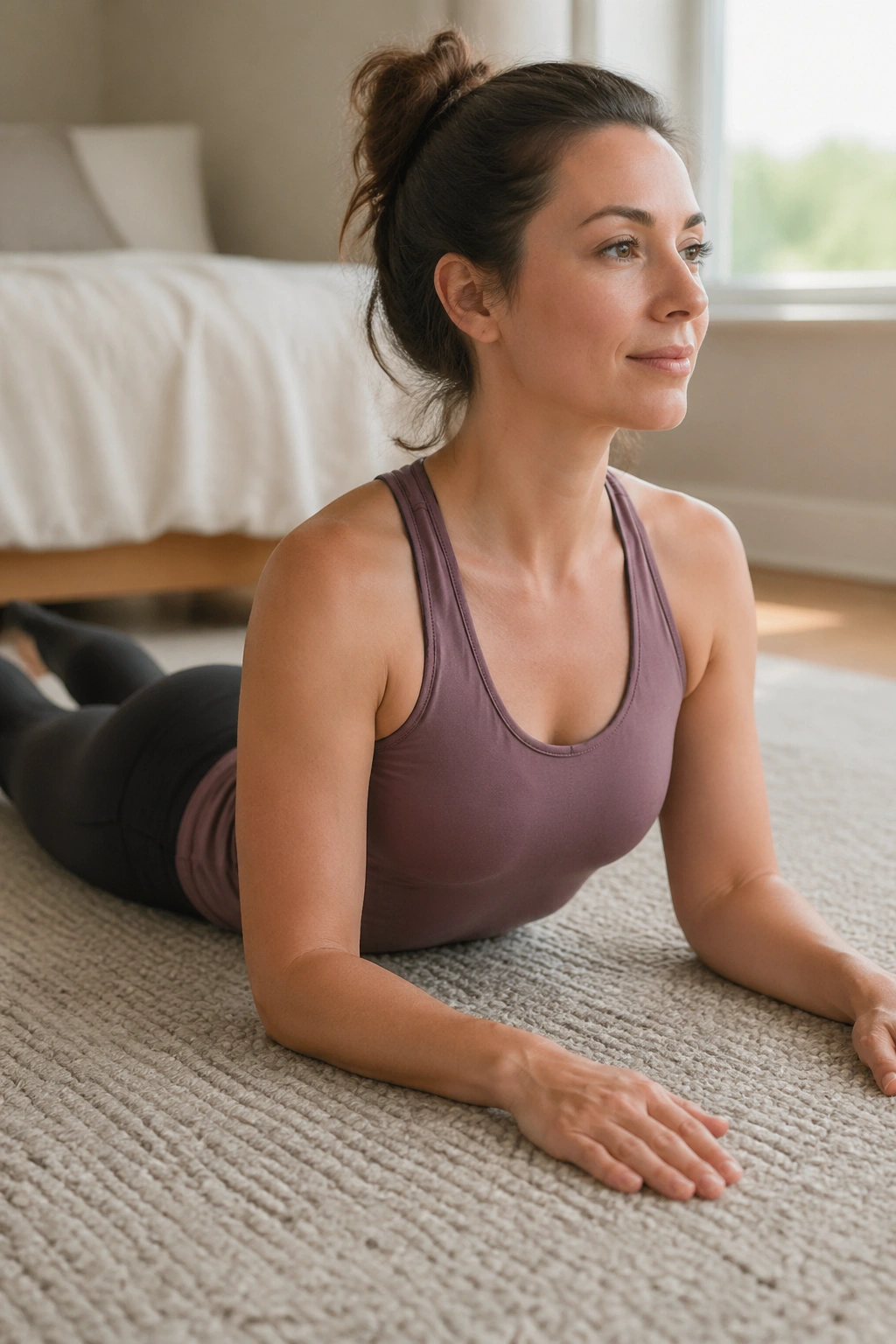
Unlike a full cobra, Sphinx stays low, which can make it easier on the spine.
That still does not make it a universal reflux pose. Because you’re on your stomach, the position can bother some people immediately, especially if the meal was recent or the chest already feels hot. So treat Sphinx like a test, not a demand. If you try it, keep the lift low, the elbows under the shoulders, and the pelvis heavy.
The chest opens forward and slightly up, and that can feel nice when you want a gentle countershape to all the rounded sitting we do. But the moment the belly feels pressed or the burning climbs, back out. No bargaining.
What Makes It Different
- The lift is small, not dramatic.
- The lower back stays long.
- The shoulders drop away from the ears.
- The breath should feel easier, not trapped.
If you’re unsure, skip it. There are plenty of other options on this list that are less likely to stir things up.
18. Baby Cobra
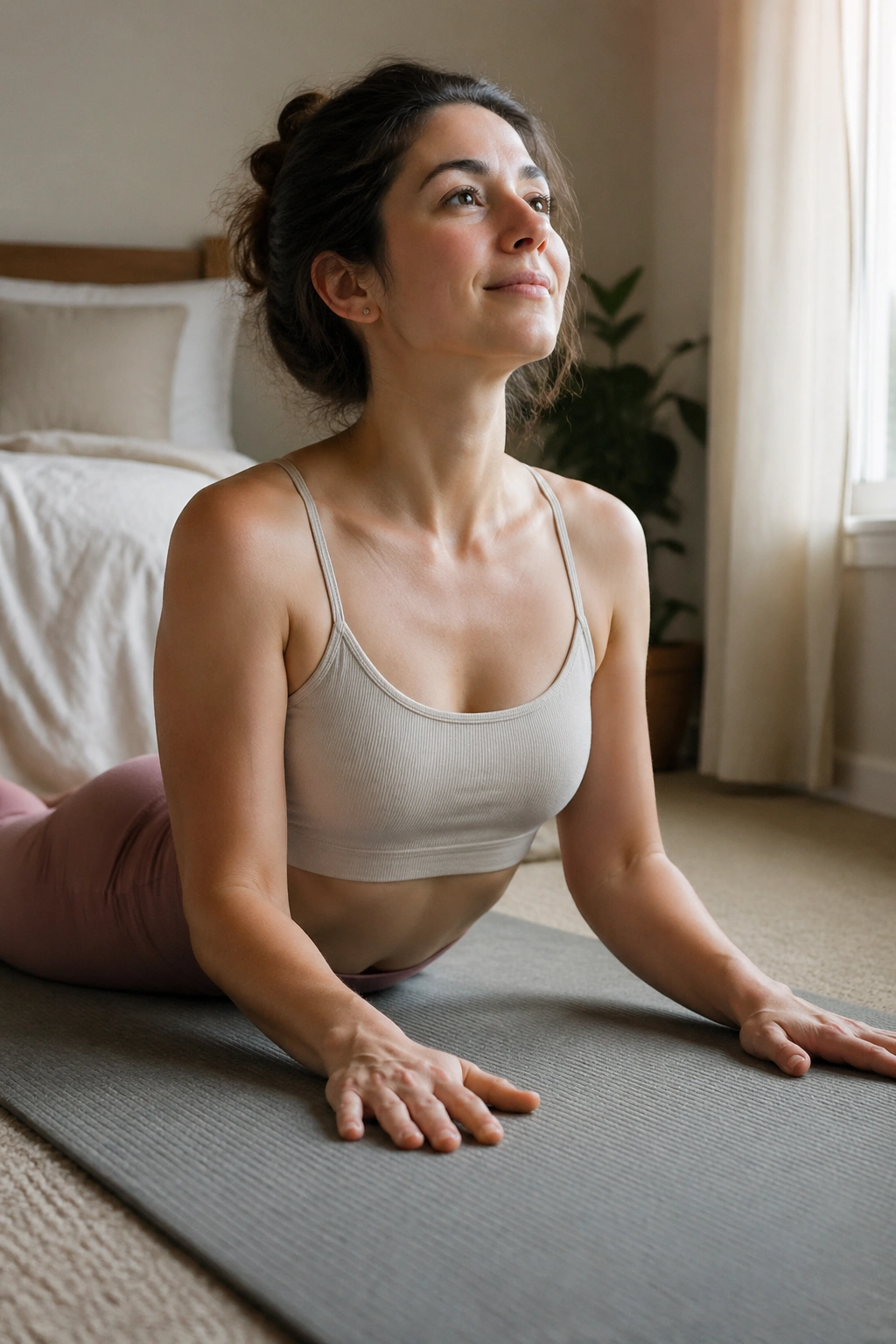
Baby Cobra is a test, not a reward.
Lie on the stomach, place the hands under the shoulders or slightly beside the ribs, and lift the chest only an inch or two. The goal is a tiny backbend with almost no weight in the hands. If the throat tightens or the abdomen feels squeezed, lower right away. That instant feedback is the whole lesson here.
People often think cobra has to be dramatic to count. It does not. A low lift is usually better for sensitive bellies, and the ribs should move forward only a little. The neck stays long, not cranked back.
If you’ve eaten recently, skip this pose. If you’re empty enough and the body feels calm, it may be fine in very small doses.
The shape should feel like a mild wake-up for the chest, not a challenge to your digestive system.
19. Bridge Pose with a Small Lift
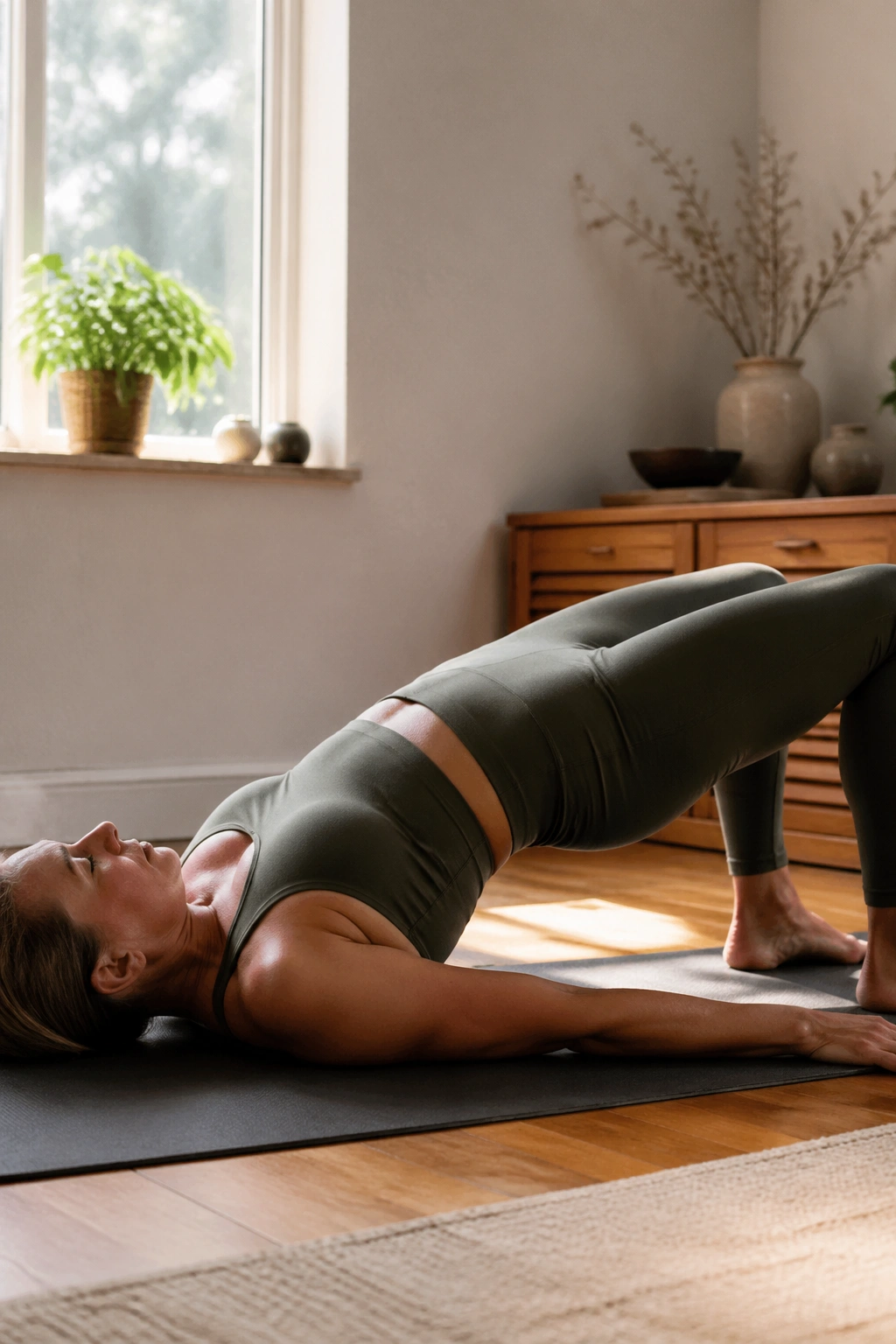
Bridge looks harmless on paper, but reflux can dislike it if you rush in too soon after eating.
That’s why the mini version matters. Lie on your back, bend the knees, feet on the floor, and press the hips only a few inches up. Keep the lift low enough that the chest stays open without the belly feeling jammed. Hold for two or three breaths, then lower with control.
If the thought of lying flat already makes your symptoms worse, skip this one. Some bodies hate it. No problem. There are other ways to calm the system without going upside down or backward too much.
A Smarter Version
- Keep the feet close enough to touch the heels with the fingertips.
- Lift only until the hips are in a small diagonal line.
- Don’t interlace the fingers under the back if that tightens the chest.
- Lower slowly, one vertebra at a time.
A tiny bridge can feel like a release through the front of the hips and the upper chest. A big bridge can feel like a bad idea. Reflux days usually reward restraint.
20. Supported Savasana on an Incline
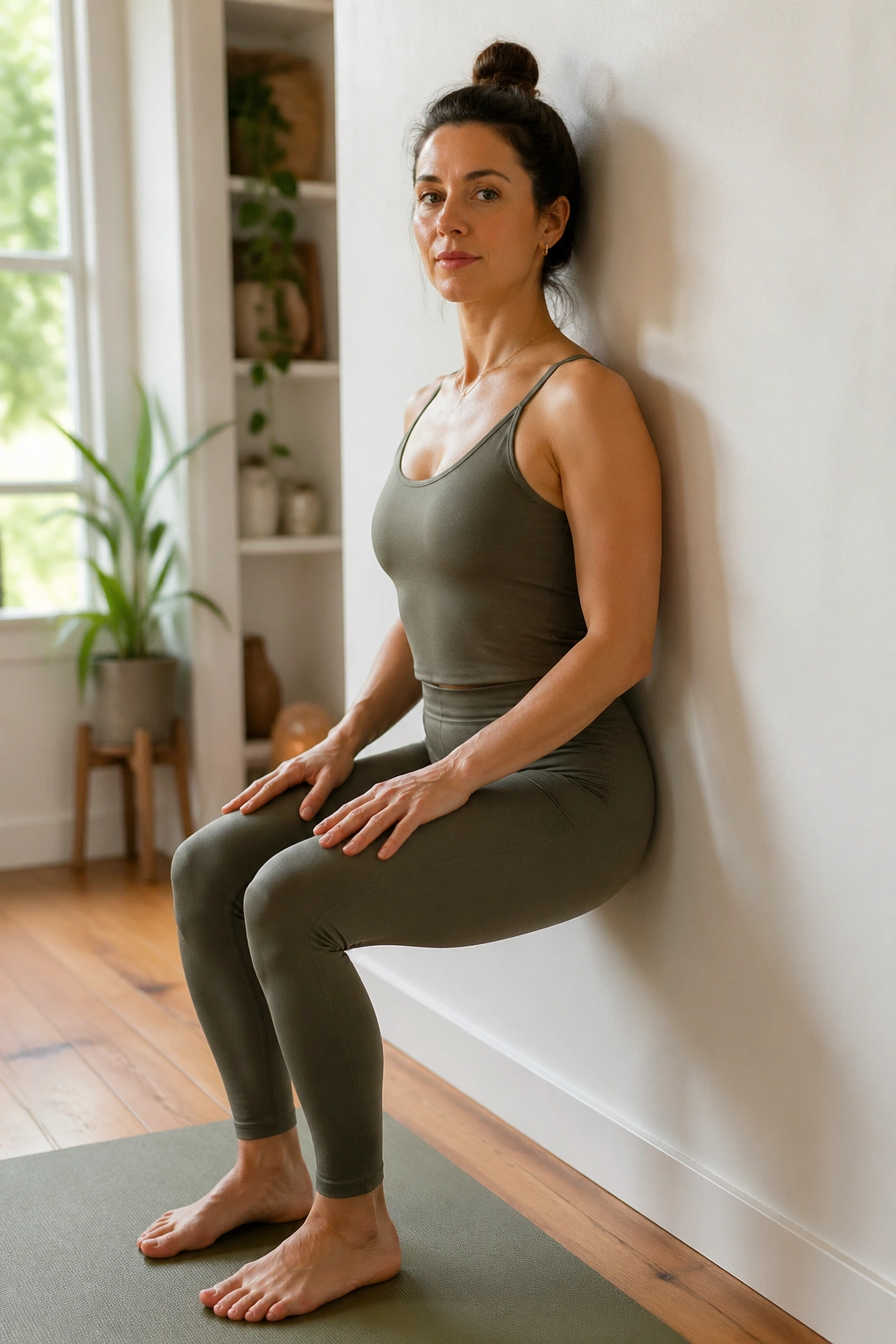
Supported Savasana on an incline is the closest thing on this list to a full exhale.
Stack a bolster, firm pillows, or a wedge so the upper back and head rest higher than the hips. Bend the knees if that feels better, and place a rolled blanket under them if your lower back likes extra support. The whole point is to let gravity help without sending stomach acid the wrong way.
This version works because you are not lying flat. Your chest sits above your belly, the throat stays soft, and the breath can slow down without effort. If a flat Savasana makes you feel worse, this is the safer choice — and often the more comfortable one anyway.
Hold it for 5 to 10 minutes if you can. Shorter is fine, too.
End here when you need a calm finish, or skip it and go straight to sitting upright if that feels better. On acid reflux and heartburn days, the best pose is the one your body actually relaxes into.
