



A stability ball looks harmless until your ribs start to wobble and your hips try to cheat. That wobble is the point. Stability ball workouts for core and balance force your body to keep making tiny corrections, and those corrections are where a lot of useful strength lives.
The best moves on a stability ball are not circus tricks. They’re the ones that make your trunk brace, your hips stay level, and your shoulders stop doing lazy work for your abs. A good ball drill should feel a little unstable, but not sloppy. Sloppy is just sloppy.
A small detail matters here: the ball’s inflation changes the whole feel of the exercise. Softer gives you a little more surface to settle into. Rock-hard makes many moves twitchier and less forgiving, which can be fine for advanced work but annoying if you’re still learning the patterns. And yes, your lower back will tell on you fast if you rush.
The 22 moves below start with control work and build toward exercises that ask for more balance, more rotation resistance, and more patience. Some are floor-based, some are standing drills, and a few are the kind that make you realize your “core” is doing a lot more than crunches ever suggested.
1. Stability Ball Dead Bug
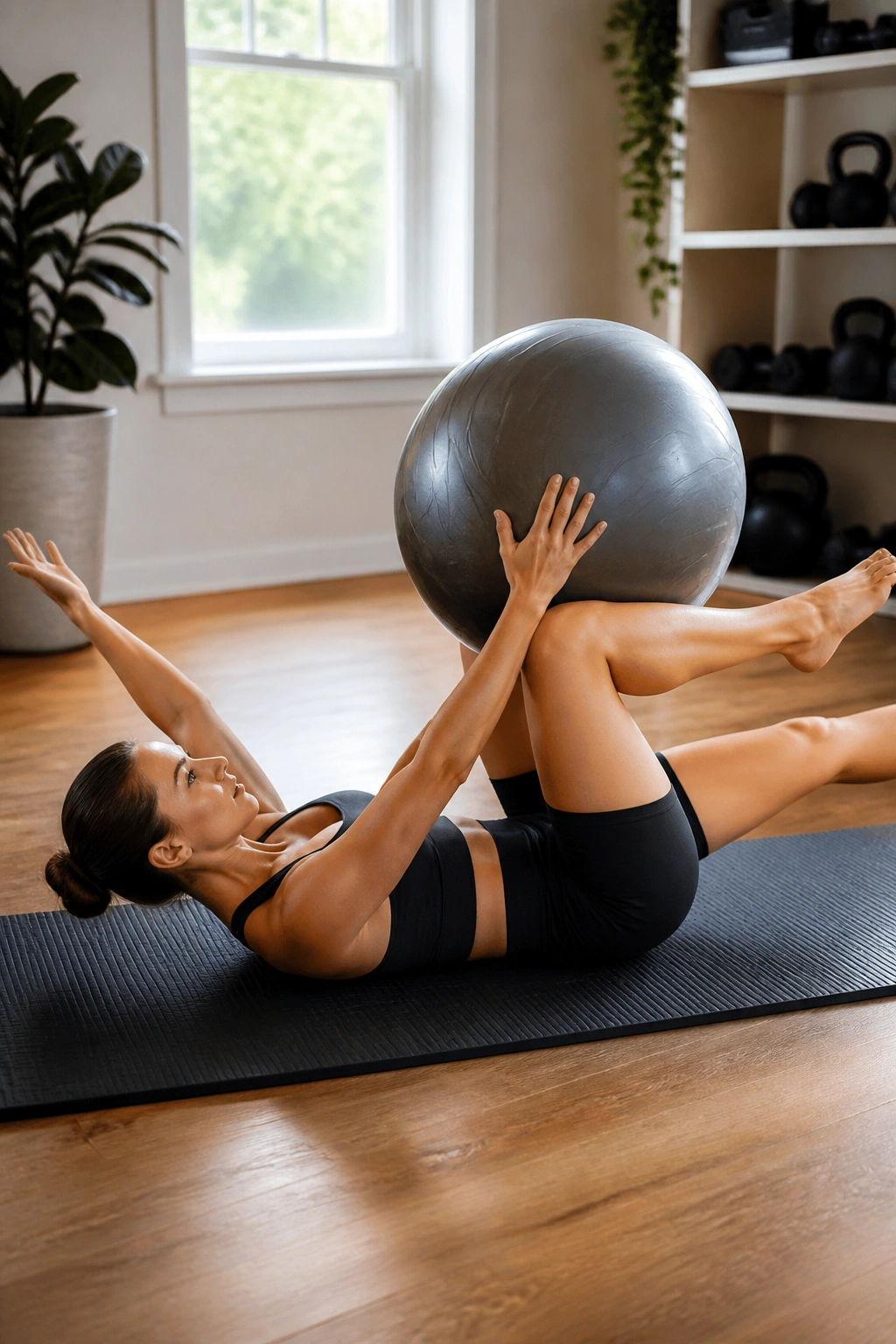
A dead bug on a stability ball is one of those exercises that looks tame until the ball starts shifting under your pressure. Lie on your back, press the ball between your hands and thighs, and alternate extending one leg while the opposite arm reaches away. Keep the lower back heavy on the floor. That is the whole game.
Why It Works
The dead bug teaches anti-extension, which is a plain way of saying your abs learn to stop your spine from arching when your limbs move. That matters more than it sounds like it should. A lot of people can crunch; fewer can keep the pelvis quiet while one leg drifts out long and the opposite arm reaches overhead.
Start with a small range. If your back lifts or your neck starts yanking forward, you’re going too far. Slow the rep down until the movement feels almost boring. Then breathe out as the arm and leg extend, because the exhale helps keep the ribs from flaring.
- Press the ball firmly, not aggressively.
- Move one side at a time.
- Stop the rep the moment your back pops up.
- Keep the toes pointed or lightly flexed, whichever feels steadier.
If the ball slides, you pressed too little or moved too fast.
2. Forearm Plank on the Ball
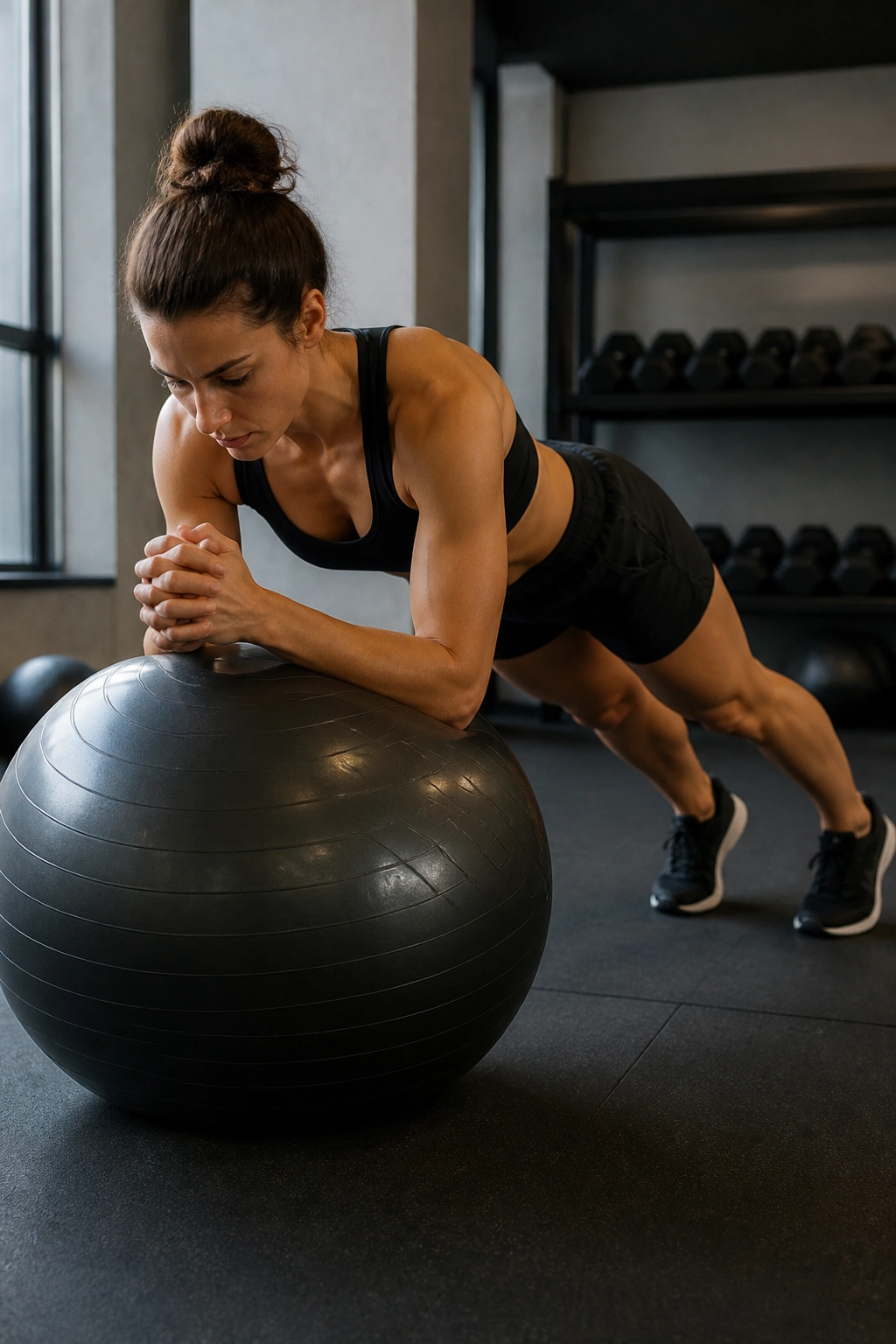
A forearm plank on a ball is not “harder” in some vague fitness-magazine way. It simply removes the nice, flat floor your body likes to relax into. With your elbows on the ball and your feet on the ground, your trunk has to keep correcting every little shift.
The trick is to squeeze your glutes and keep your ribs from sagging toward the floor. If your shoulders creep up around your ears, reset. If your low back starts dipping, shorten the hold and come back to it. Good plank form is quiet. No swaying, no flaring, no hero pose.
I like this version better than endless long floor planks because it exposes the lazy parts faster. Hold for 15 to 30 seconds at first. That’s enough. Longer only helps if the position stays sharp all the way through, and a sloppy two-minute plank is a waste of time.
3. Stir-the-Pot
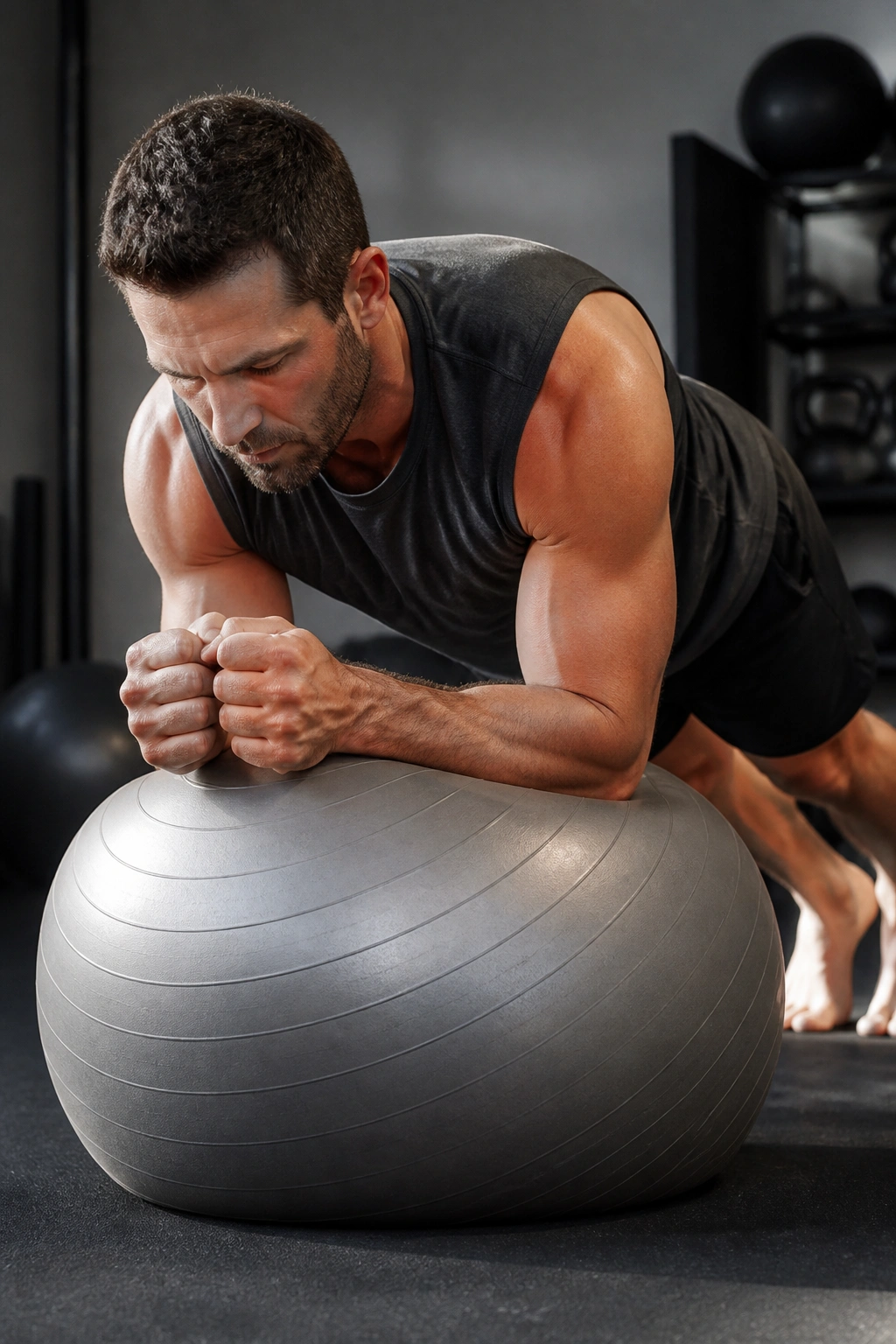
Want a plank that tells the truth fast? Stir-the-pot is that move. Put your forearms on the ball, set up in a plank, and make tiny circles with your elbows while your feet stay planted. The circles should look almost stingy in size.
How to Use It
The goal is not to draw big, dramatic loops. Big circles usually mean the hips are swinging and the shoulders are chasing the ball around. Small circles keep the challenge in the abs, the obliques, and the deep stabilizers around the spine.
What to Watch For
- Keep the circle no larger than a dinner plate.
- Press your forearms down to keep the shoulders packed.
- Breathe steadily; do not hold your breath and brace like a statue.
- Stop if the lower back starts pinching.
The first few reps feel almost insulting. Then they don’t.
4. Stability Ball Rollout
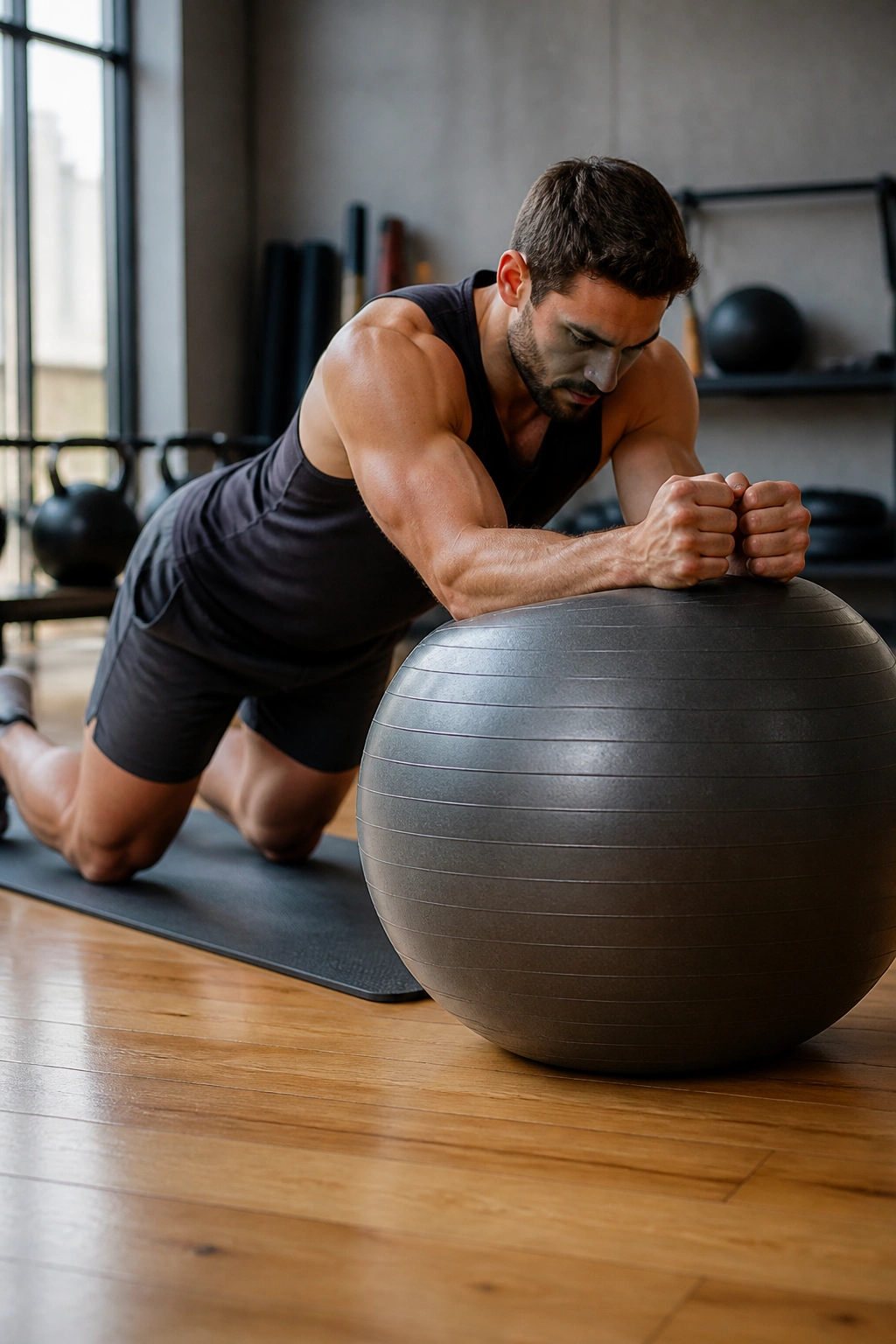
The rollout looks simple because the setup is simple. Kneel on the floor, place your forearms on the ball, and roll it forward until your body starts to feel long, then pull it back under control. The abs work hardest when you’re returning. That’s the part people rush.
The movement trains anti-extension in a bigger way than the dead bug does. Your core has to stop the ribs from dropping while your arms travel away from your knees. If the ball gets too far ahead and your low back arches, you’ve lost the line. Roll out only as far as you can keep your pelvis tucked and your chest from collapsing.
Nasty little exercise. Useful, too.
A good rollout should feel like your stomach is bracing for a light punch and your lats are helping keep the ball in line. If you want a cleaner rep, exhale as you roll out, inhale on the way back, and keep the tempo slow enough that you can actually notice the moment your shape changes.
5. Stability Ball Pike
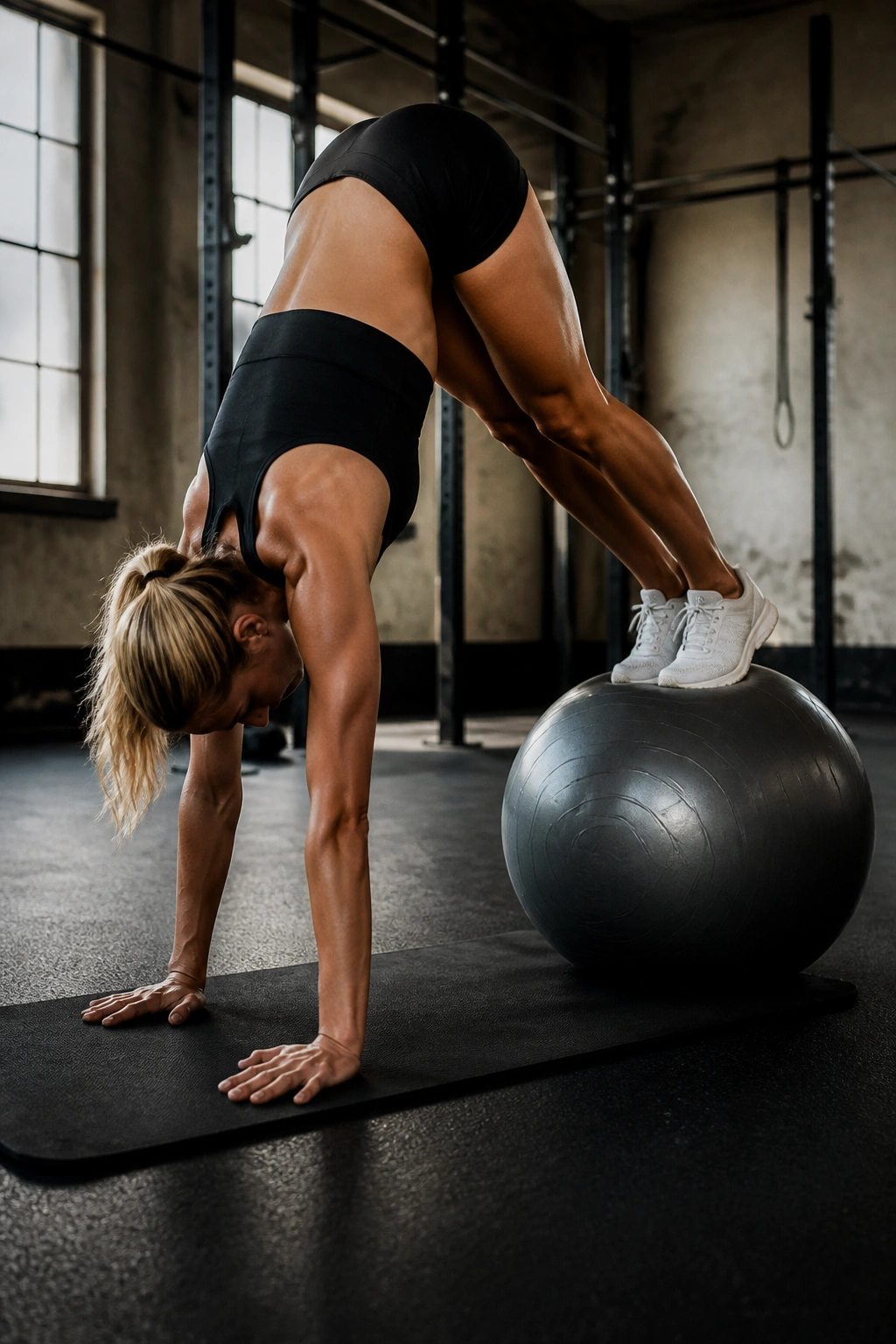
The pike is where the ball stops feeling friendly. Start in a high plank with your shins or feet on the ball, then lift your hips toward the ceiling and pull the ball closer with your toes. The body folds into a sharp little V, and the abs have to hold that fold without the shoulders collapsing.
Your first clue that the pike is working is usually in the shoulders and the deep front of the stomach. Your second clue is the hamstrings, because they help pull the ball in. If the movement turns into a back bend, back off. The spine should stay controlled, not thrown around.
This one rewards patience. Short reps are cleaner than sloppy long ones, and the clean rep builds more useful strength than the ugly one. Keep the neck neutral, eyes on the floor, and the finish position high enough that your hips clearly lift above shoulder level.
6. Stability Ball Hamstring Curl
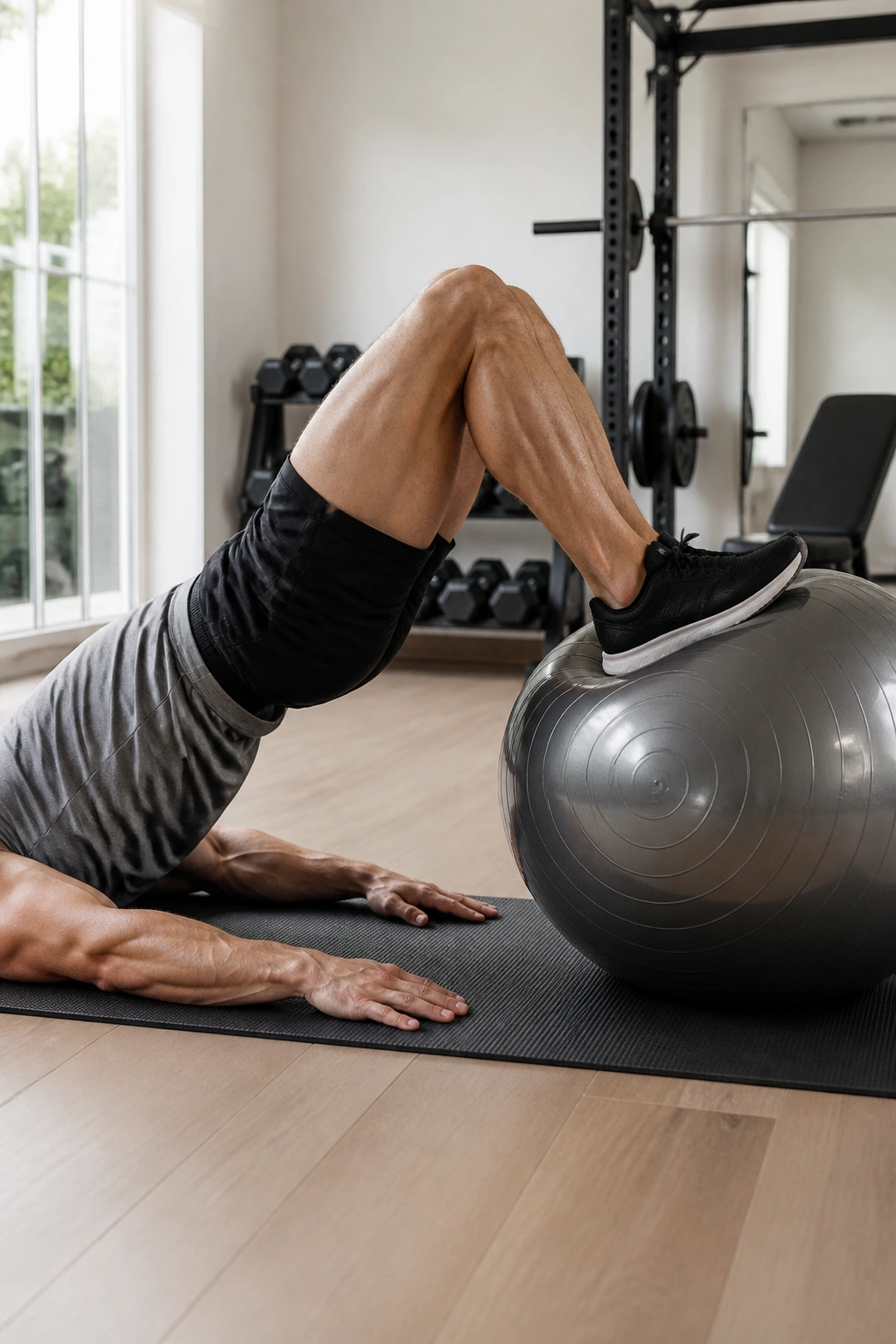
Unlike a machine leg curl, the stability ball version doesn’t let your hips wander off and get lazy. Lie on your back with your heels on the ball, lift your hips into a bridge, and pull the ball toward you by bending your knees. Then send it back out slowly.
That bridge is the hard part for most people. The legs want to pull, but the glutes need to keep the pelvis from dropping. If the hips sink, the hamstrings lose some of the job and the lower back starts stealing the show. Keep the hips up the whole time.
Set It Up Once, Then Move Slow
- Place your heels, not your toes, on the ball.
- Lift into a bridge before the first curl.
- Pull for a count of two.
- Extend back out for a count of three.
A slower return makes the exercise much better. Fast curls are mostly noise.
7. Stability Ball Glute Bridge
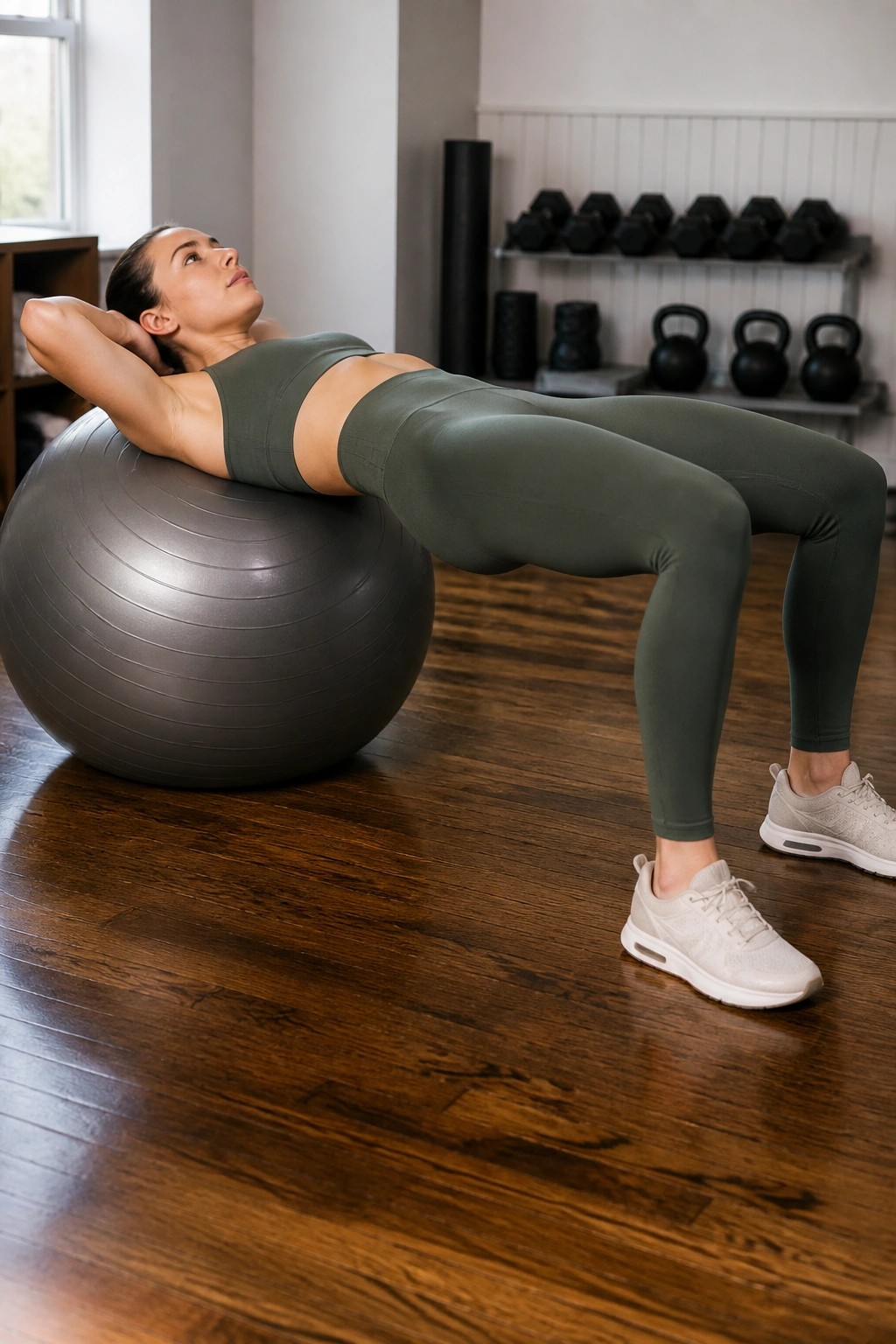
Put your upper back on the ball, plant your feet, and drive your hips up until your body makes a long line from shoulders to knees. This is not a fancy move. That’s the charm. It lets you load the glutes while the core keeps your rib cage from flaring.
The ball changes the bridge because it asks your trunk to settle and balance before the hips can move well. You’ll feel the glutes at the top, sure, but you’ll also feel your midsection keeping the whole shape from folding backward. Do not throw your ribs up to get the hips higher.
What It Should Feel Like
Your heels should stay flat. Your neck should stay easy. The top position should feel firm through the glutes and steady through the belly, not crushed in the lower back.
If you want more challenge, pause for two seconds at the top. That little pause turns a basic bridge into a much stricter test.
8. Stability Ball Jackknife
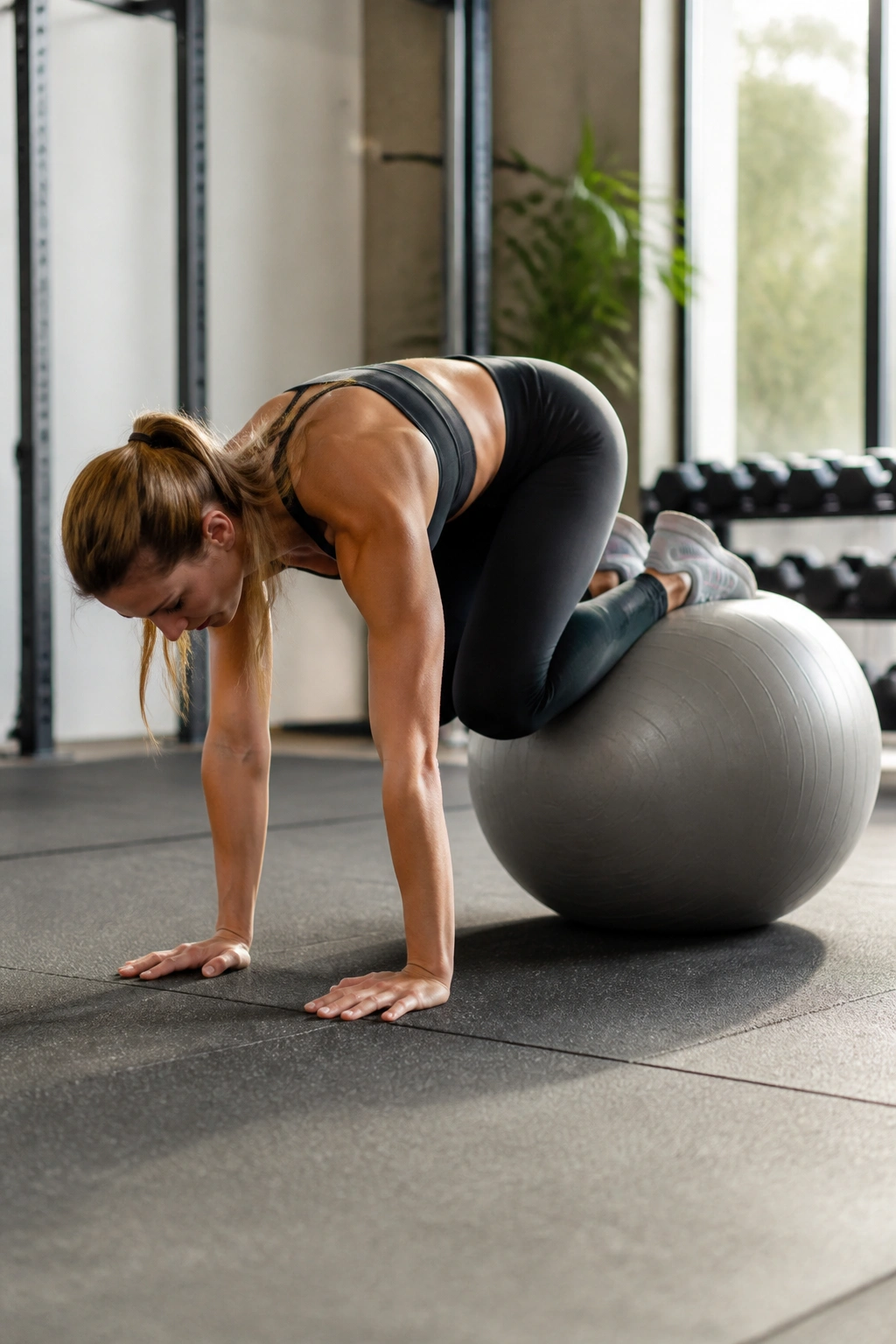
This looks like an ab exercise, but the first thing it punishes is sloppy shoulder stability. Start in a plank with your feet on the ball, then pull your knees toward your chest as the hips rise. The ball comes in under you, and the body folds like a controlled pocket knife.
The temptation is to rush. Don’t. A fast jackknife turns into a bounce, and bounce is not the point. Keep the shoulders stacked over the hands and let the core do the pulling, not a desperate hip snap.
If your wrists hate you, this move will show up the problem quickly. Spread the fingers, press the floor away, and keep the gaze slightly ahead of your hands. A clean jackknife should feel compact at the top and long on the way back out. Tiny pauses help more than people expect.
9. Stability Ball Mountain Climber
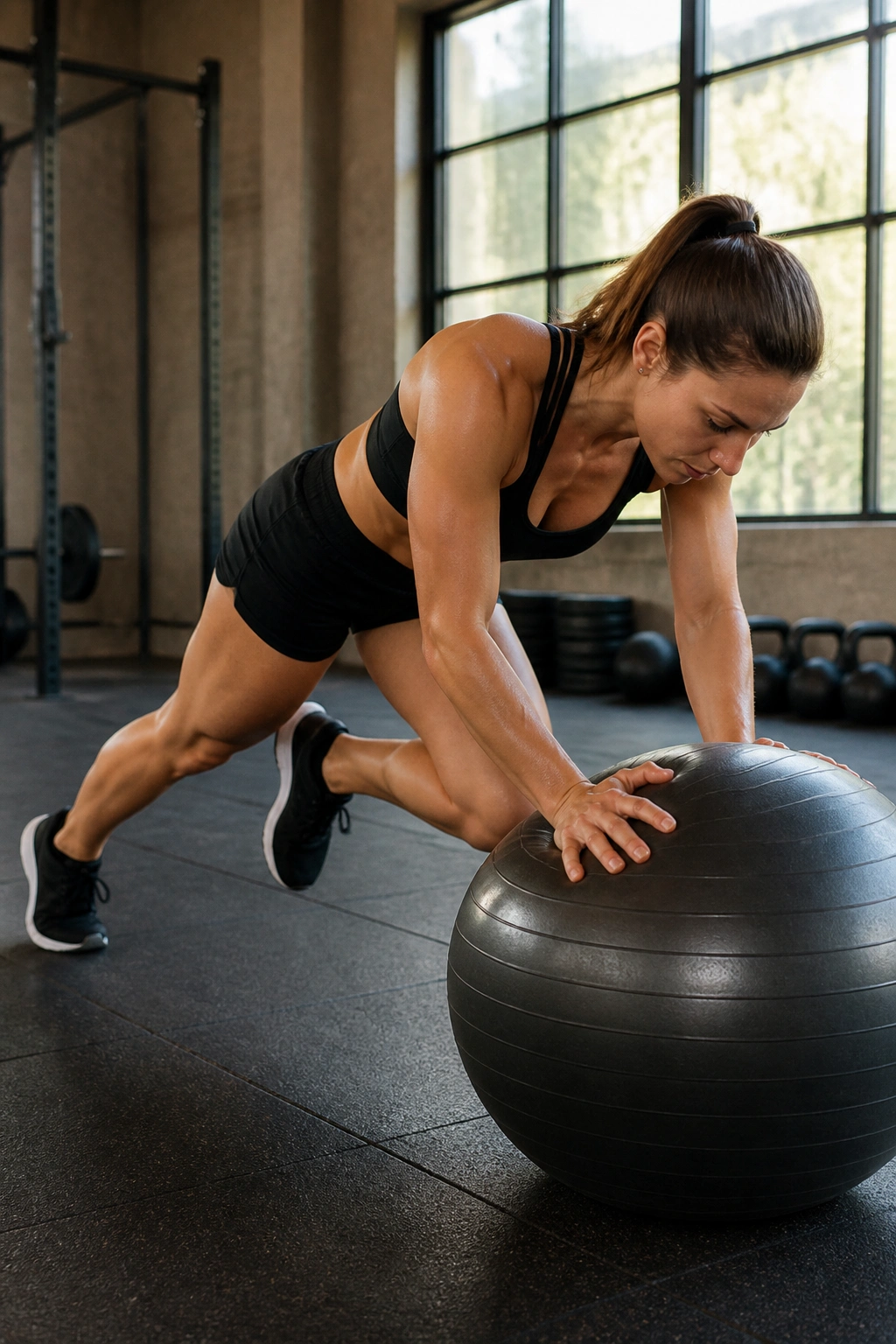
Why does a simple mountain climber get so much harder on a ball? Because the floor stops helping you. Hands on the ball, feet back, then drive one knee in at a time while the upper body stays as calm as it can.
The challenge is not speed. Speed is the thing that ruins the drill. If the ball skitters around while you pump your knees, the shoulders and core are both losing their job. Use a controlled rhythm first. Once that looks solid, quicken the pace a little.
How to Keep It Clean
- Keep the hands centered on top of the ball.
- Step, don’t fling, the knees forward.
- Stay slightly rounded through the upper back.
- Breathe out on each knee drive.
This one turns into a cardio hit fast. That’s fine, but don’t let the heart rate erase the form.
10. Stability Ball Body Saw
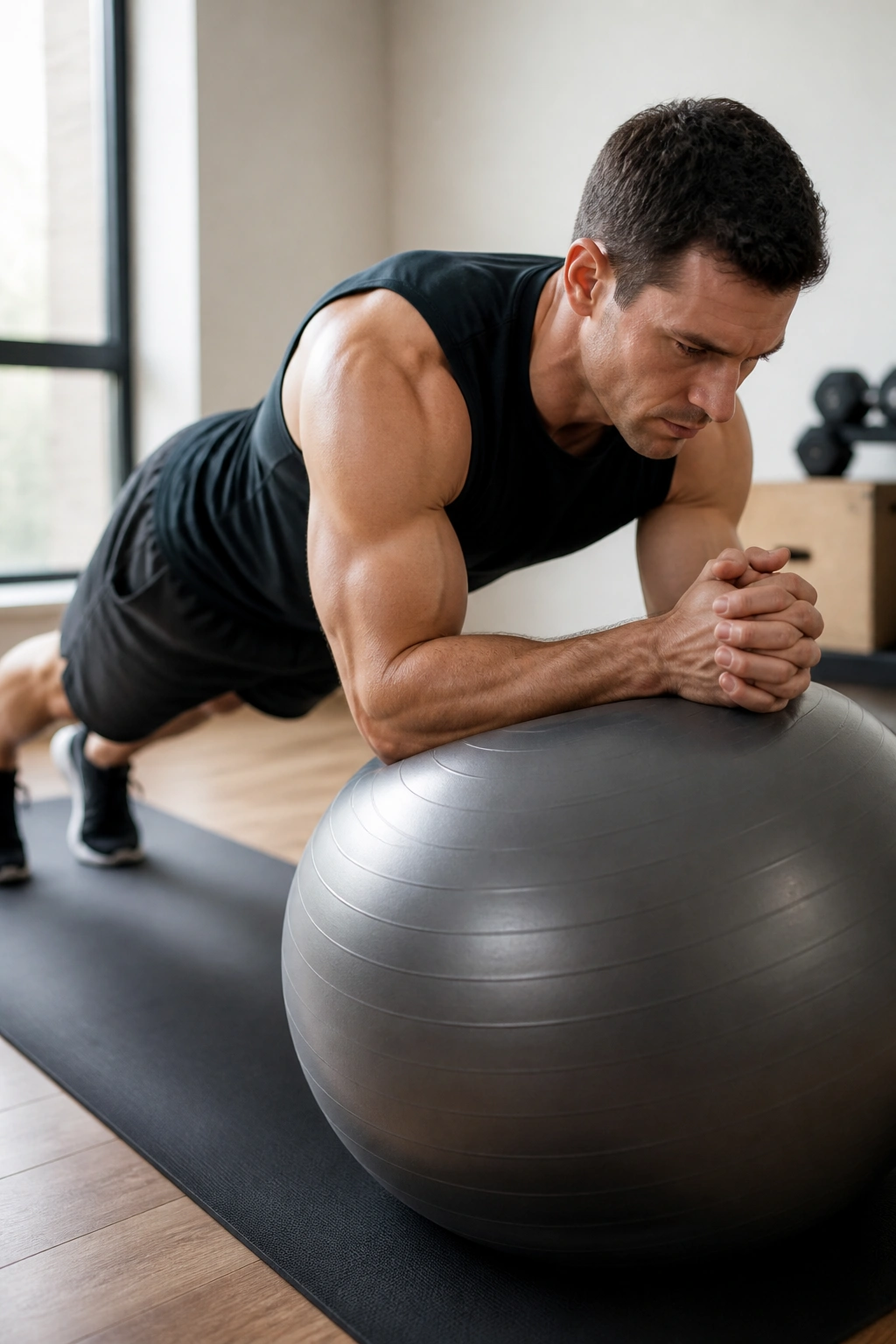
If floor planks bore you, the body saw changes the conversation. Set your forearms on the ball, get into a plank, and rock your body a few inches forward and back. That tiny glide asks the shoulders, abs, and glutes to stay switched on the whole time.
The movement should be almost small enough to doubt. That’s a good sign. Big slides usually mean the hips are chasing the ball and the lower back is paying for it later. The abs should feel like they’re resisting motion, not making motion happen.
A nice cue: imagine your body is one long board and the ball is nudging it. If the board bends, shorten the range. If the shoulder blades pinch together, reset the elbows. Quality wins here by a mile.
11. Stability Ball Russian Twist
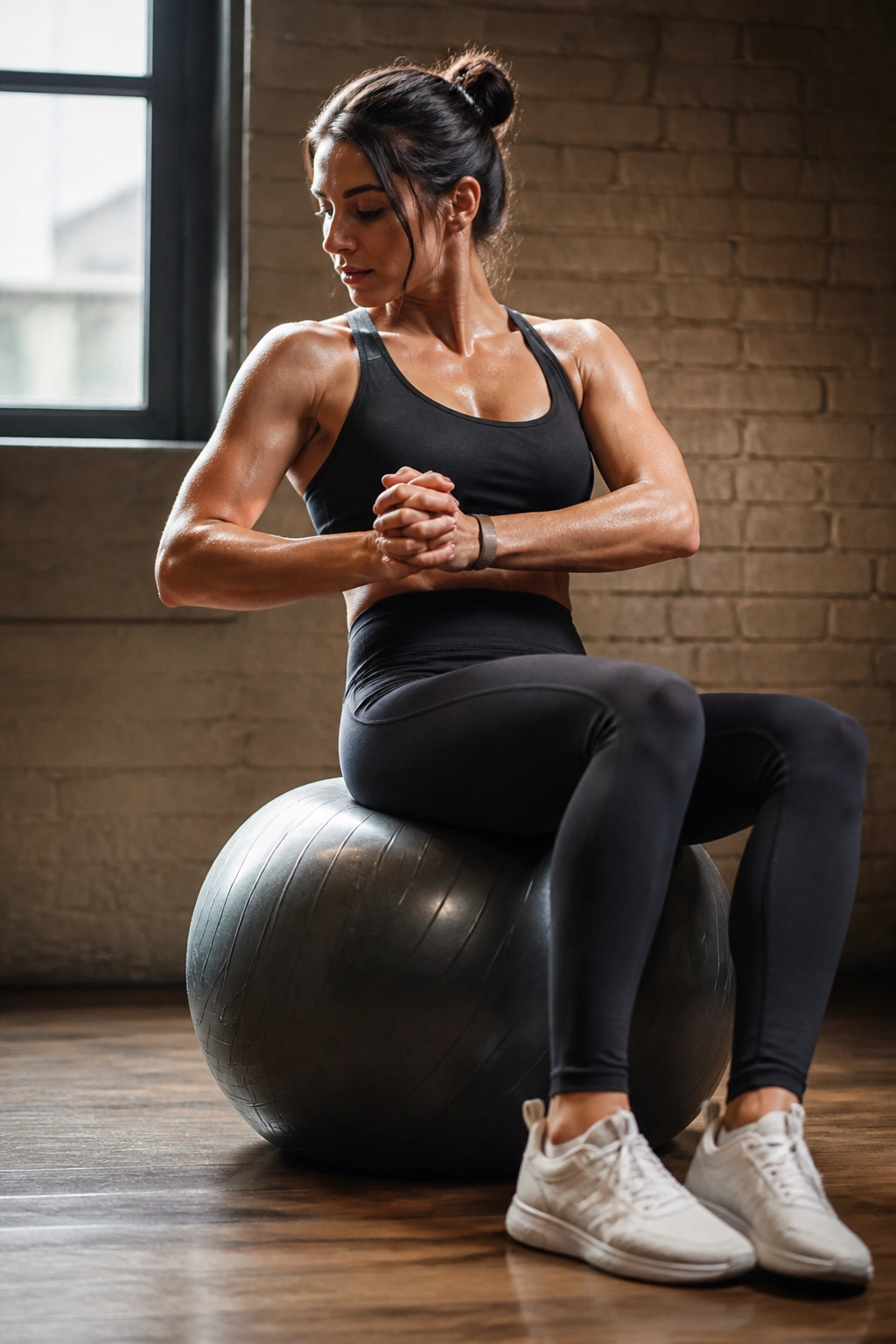
A Russian twist on a stability ball gives you more movement than the floor version, but it also asks for more control. Sit tall on the ball, feet planted, and rotate the rib cage from side to side while the pelvis stays mostly still. The arms can follow the torso, but they should not lead the dance.
The biggest mistake is turning it into a hand wave. Hands move fast, torso barely moves. That misses the point. Rotate from the sternum, not the wrists. If the neck starts straining, keep your eyes level and reduce the twist size.
This version is better for people who already know how to brace through the middle. Keep the reps smooth and the range honest. Ten controlled twists each way beats twenty flailing ones. Every time.
12. Stability Ball Pass Crunch
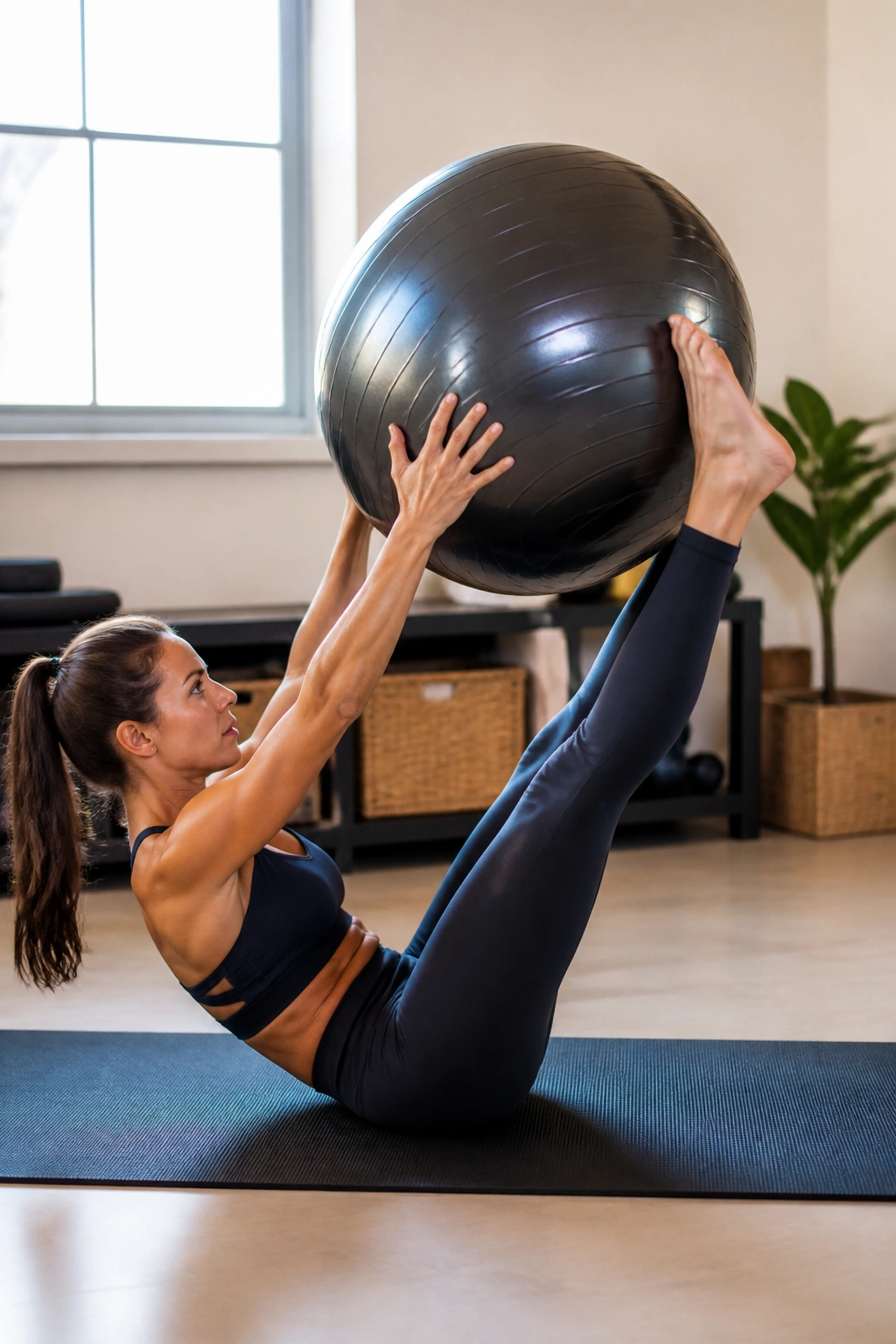
There’s something awkward in the best possible way about passing a ball from hands to feet on the floor. Lie on your back, hold the ball overhead, then crunch up and transfer it to your feet before lowering. On the next rep, pass it back to your hands.
That transfer is where the work lives. Your abs have to shorten, the hip flexors have to cooperate, and the timing has to stay tidy enough that the lower back doesn’t pop off the mat. Move the ball close to your body. Long lever passes get messy fast.
Use a Small Range First
The first few reps should feel almost conservative. If you can pass the ball without rolling onto the side of the pelvis, you’re doing it well. If your neck starts doing all the work, the ball is probably too heavy or the crunch is too big. Keep the transfer clean before you get ambitious.
13. Stability Ball Wall Squat
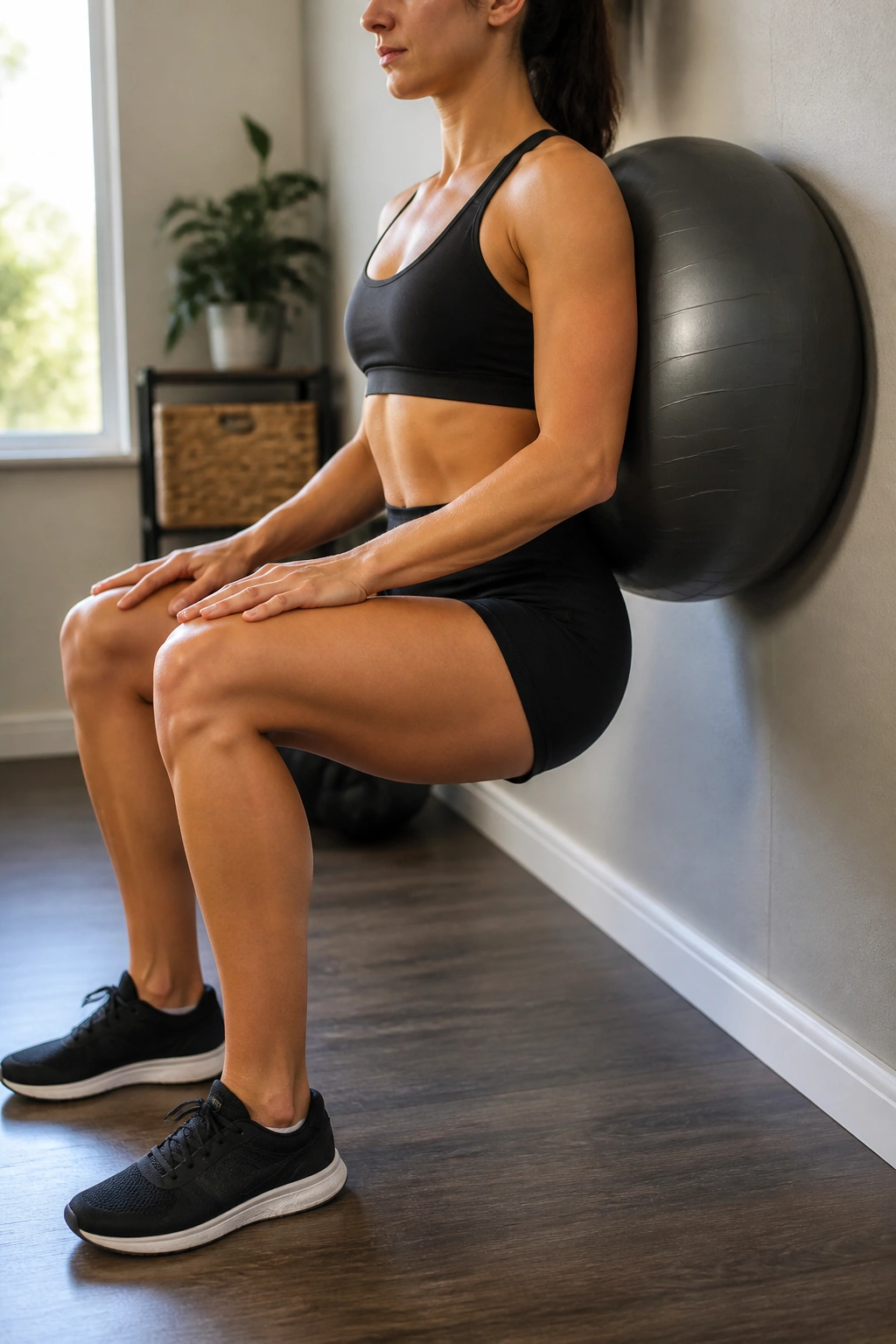
This is a leg drill, a balance drill, and a core drill all at once. Place the ball between your lower back and a wall, step your feet out a bit, and squat down while keeping steady pressure into the ball. The trunk has to stay upright or the ball starts to drift.
The surprise is how much the midsection works in a move most people file under “legs.” That’s because the core has to keep the torso stacked while the knees bend and the ball keeps shifting slightly against the wall. Pressing the ball is not the same as leaning on it.
- Feet a little forward from the wall.
- Knees track over the middle toes.
- Lower until the thighs are around parallel, if your knees like that depth.
- Keep the heels heavy.
A slow two-second descent makes this much better than a quick drop.
14. Stability Ball Bird Dog
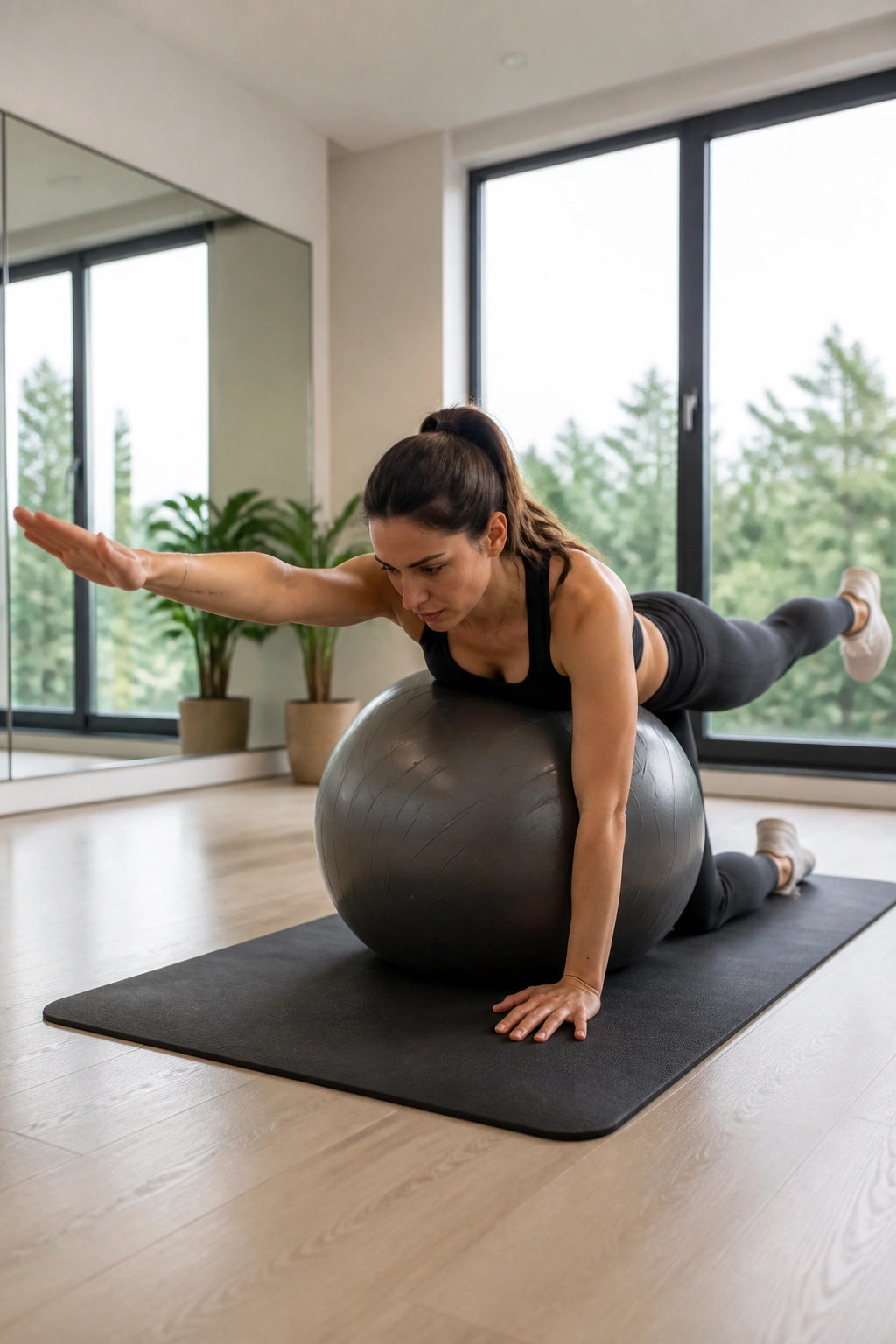
People think bird dog is easy until the ball removes the floor from under one hand or one shin. Lie chest-down over the ball, find a steady base, and extend the opposite arm and leg in a straight line. The torso should stay level instead of twisting toward the moving side.
This is a balance drill with a sneaky core demand. The ball wants your pelvis to roll, the shoulders want to shift, and the low back wants to overextend if you let it. Reach long, not high. A big lift of the leg often turns into a pinch in the lower spine.
Keep the movement slow enough that you can pause at the top for a second or two. That pause is the proof. If you can freeze without wobbling, the rep counted.
15. Stability Ball Back Extension
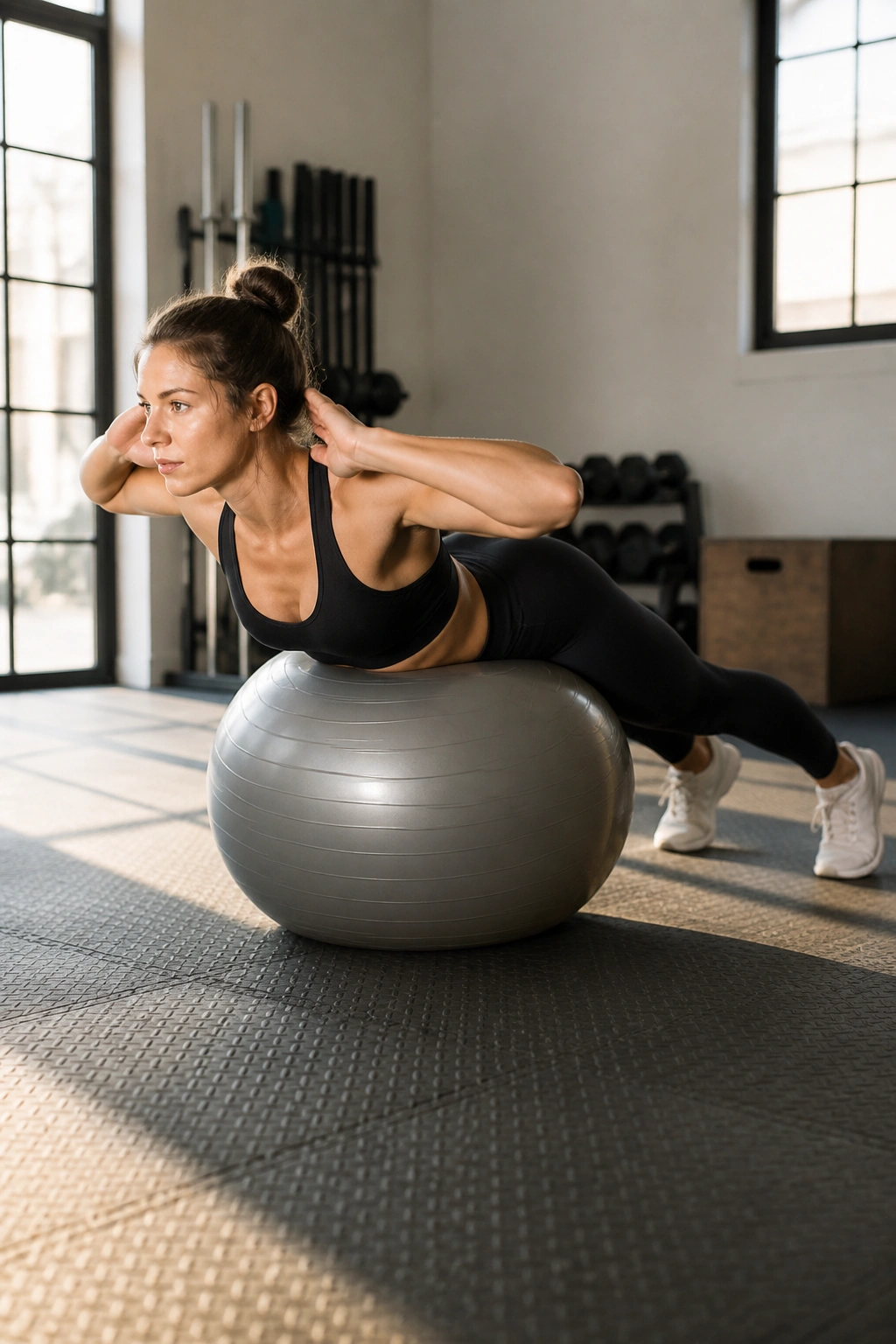
Core work without posterior-chain work leaves a gap, and the back extension fills it. Lie face down on the ball with your feet anchored, then lift your chest slightly by squeezing the spinal erectors and glutes together. The lift should be small and controlled, not a dramatic crank upward.
A lot of people overdo this one and swing straight into lower-back compression. That’s not the goal. The body should feel long, not jammed. Stop the lift before the neck starts craning.
What to Feel
You should feel the muscles along the back of the torso working, with the glutes helping keep the pelvis stable. If the movement turns into a neck exercise, tuck the chin a little and try again. The best reps feel clean and a bit humble.
This is a useful counterbalance to all the plank-style work above. Your core is not only the front of your stomach.
16. Stability Ball Side Plank with Feet on the Ball
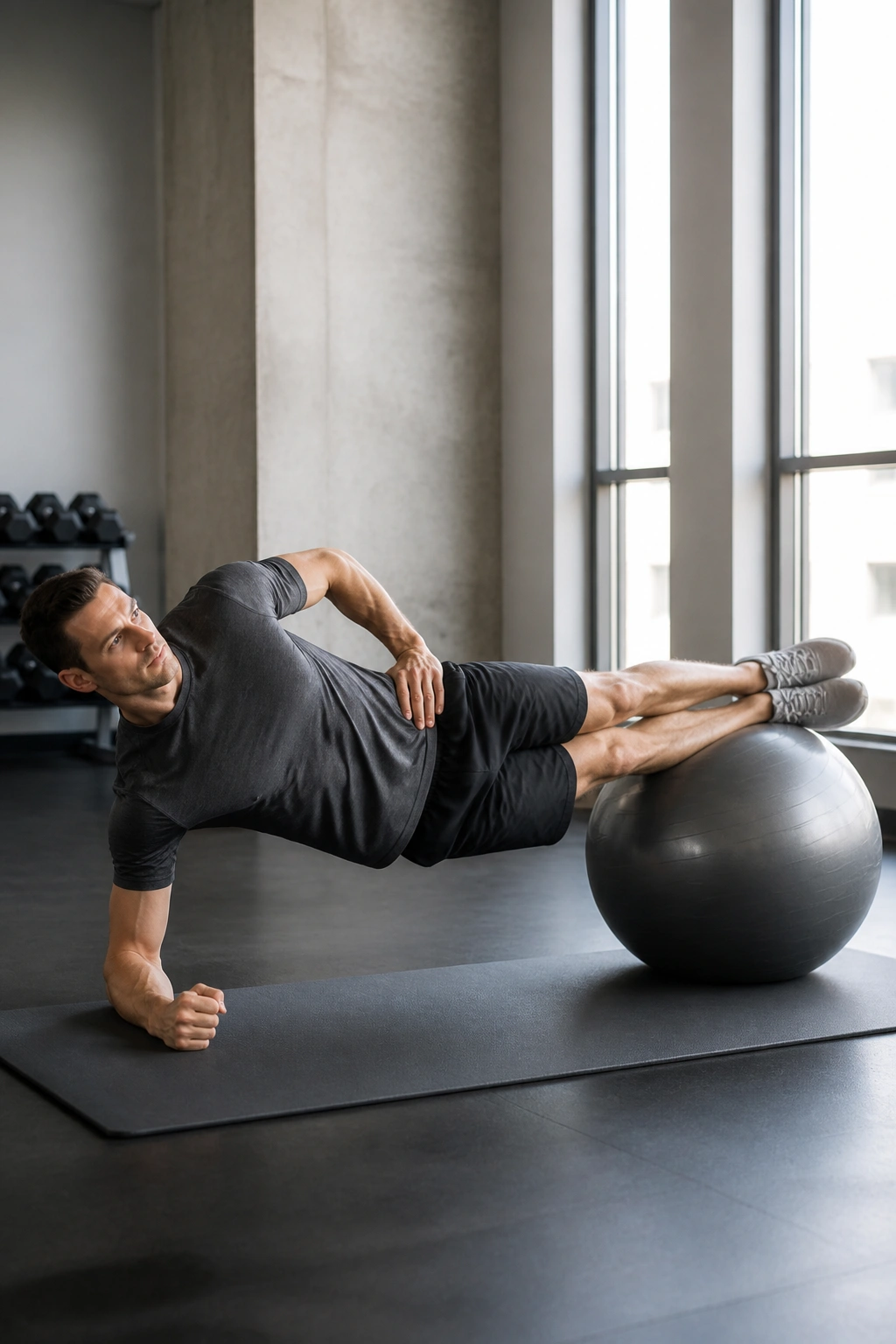
A floor side plank already asks the side body to earn its keep. Put the feet on the ball and the whole exercise gets more honest. The obliques, glute med, and shoulder have to fight for a level line while the ball keeps shifting under the ankles.
This variation is not the place to chase huge holds. Fifteen to twenty seconds on each side can be enough if the line stays clean. Keep the top hip lifted. If it sinks, you’ve lost the side-body tension that makes the move worth doing.
The best cue is simple: imagine the bottom rib and bottom hip drawing closer together without curling into a ball. That keeps the waist active without collapsing the spine. Small, steady breaths help more than bracing like a statue.
17. Stability Ball Knee Tuck Hold
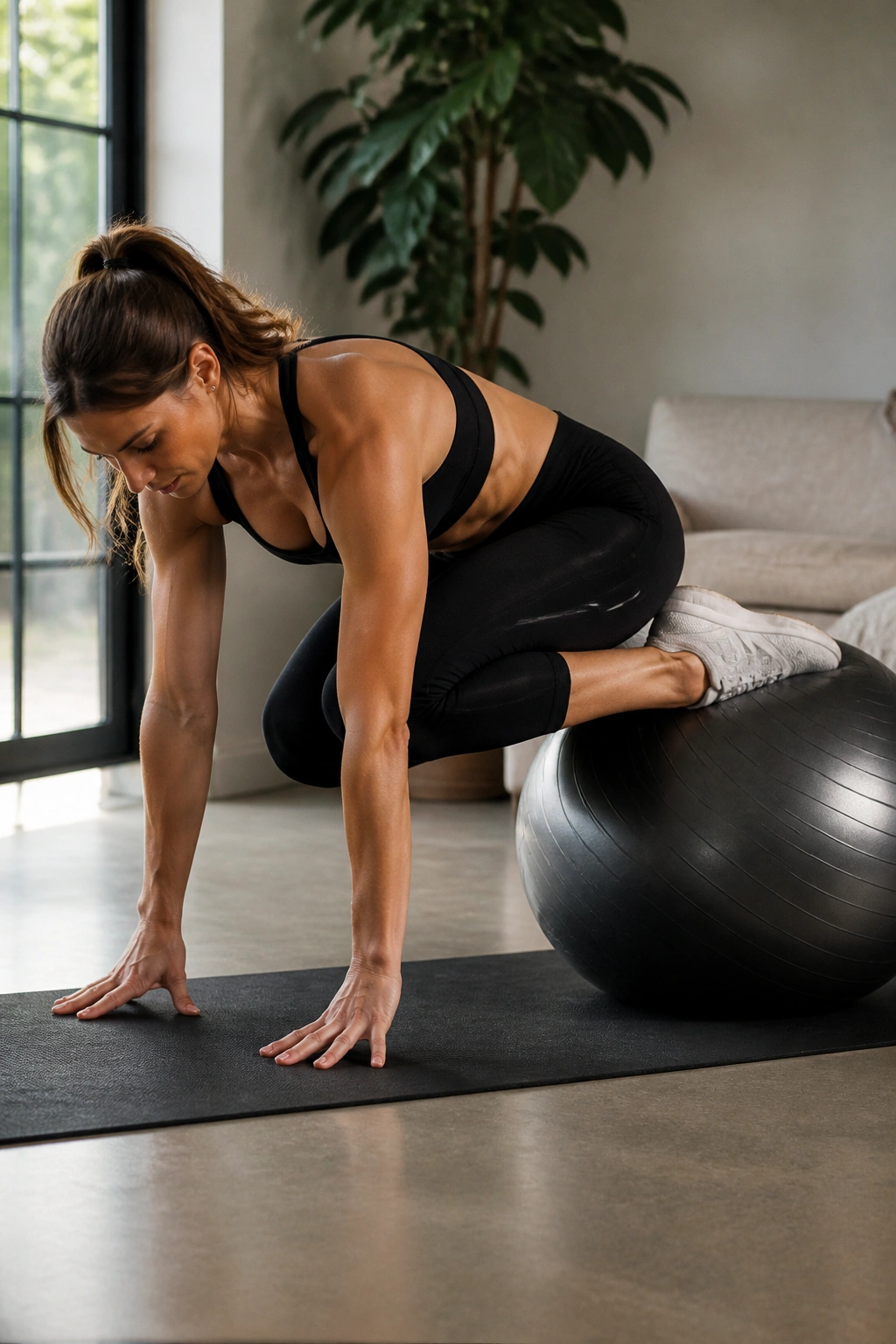
Sometimes the most useful version of a move is the pause in the middle. Start in a plank with your shins on the ball, pull both knees in toward your chest, and hold that tucked position for a beat before extending back out.
The hold stops momentum from doing the job for you. That matters because momentum hides weak spots. If you can freeze in the tuck without the shoulders sliding backward, the core is doing real work. The movement should feel tight, compressed, and controlled.
Use the Pause
Try a two-second hold at the tucked point. That’s enough to make the abs wake up without turning the drill into a circus act. If the ball keeps squirting away, widen your hand stance a little and slow the return phase. Clean position first. Speed later.
18. Stability Ball Shoulder Tap Plank
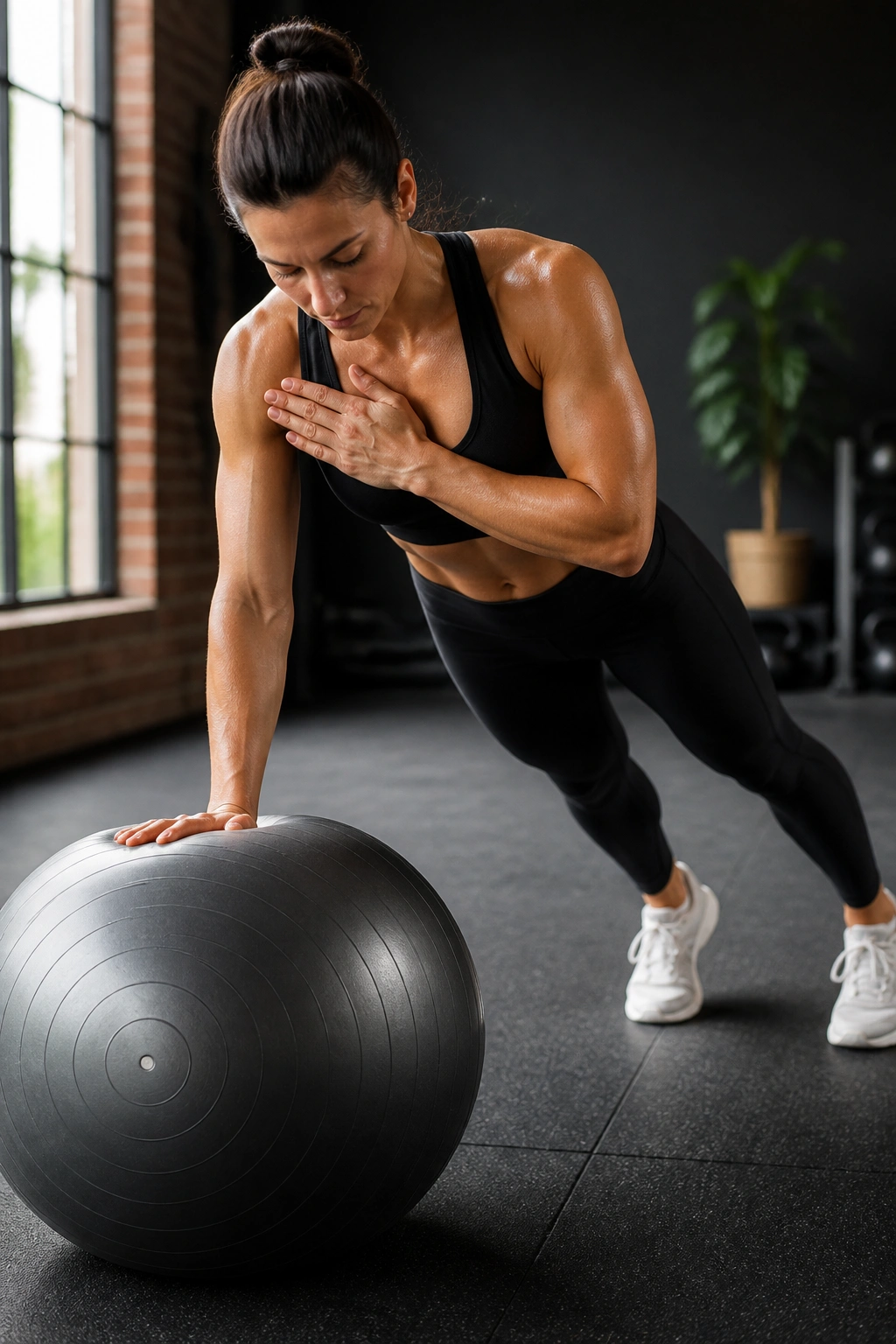
Your abs only get the job if your hips stop dancing. That’s the whole point of a shoulder-tap plank on a ball. Put your hands on the ball, feet wide, and tap one shoulder with the opposite hand while the rest of the body tries to stay square.
The wider the feet, the easier the balance. That’s not cheating. It’s smart scaling. Start broad, then narrow the stance only if the torso stays still. If the ball rolls or the hips spin, the set is too ambitious.
Common Slip
People tap fast and hope the body follows along. It won’t. Tap slower than you think you need to, and let each shoulder stay packed before the next hand moves. The core job here is anti-rotation, which means resisting the urge to swivel every time an arm comes off the ball.
19. Stability Ball Oblique Crunch
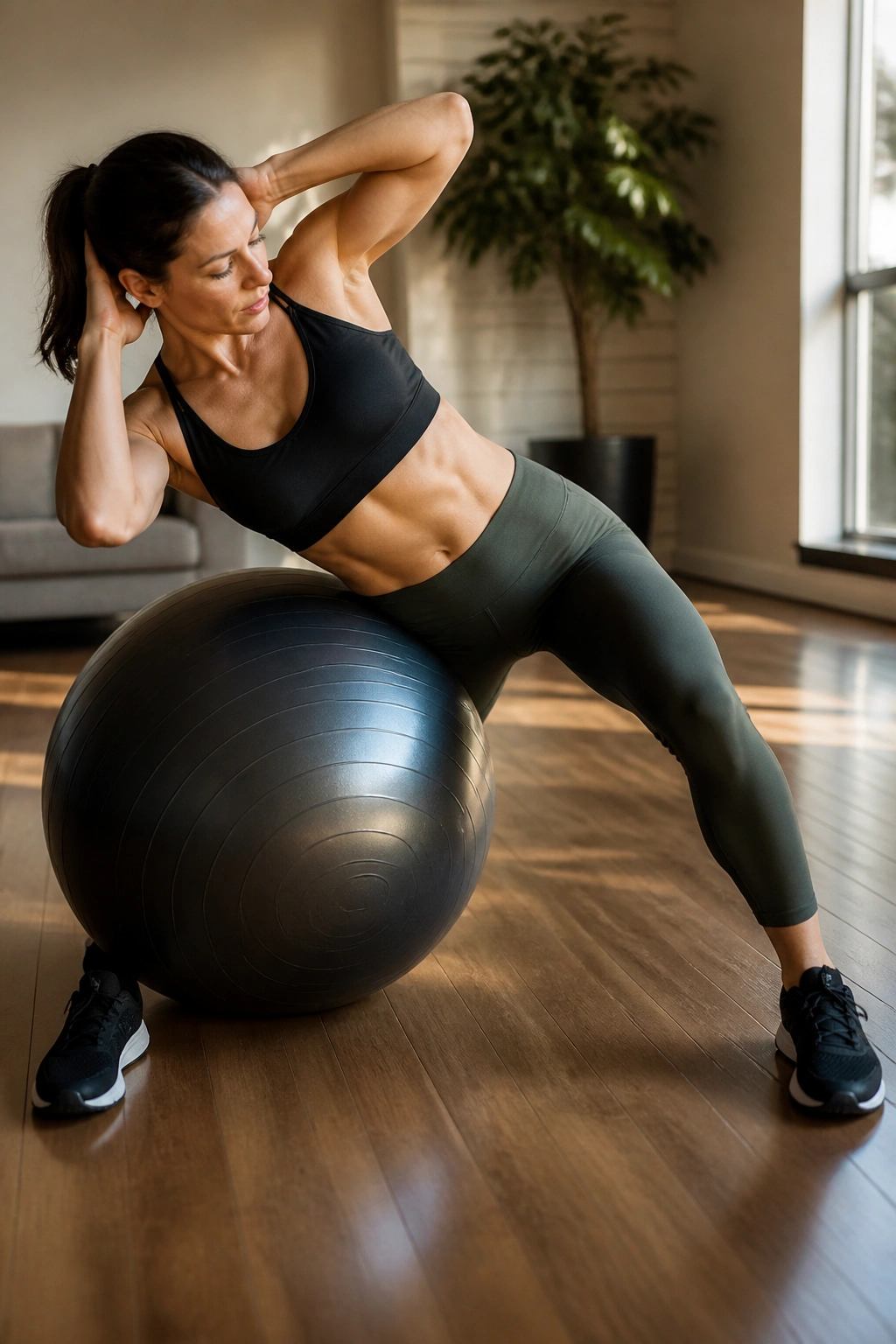
A side-biased crunch on the stability ball shifts the load into the obliques in a way floor crunches usually don’t. Lie sideways over the ball, feet set wide for balance, and crunch the rib cage toward the hip on the same side. The lift is short, not dramatic.
That short range matters. Big side bends often turn into hip movement and neck strain. Keep the waist doing the folding. If the torso is too far off the ball, you lose the clean side-body line that makes the drill useful.
This one is nice when you want a direct oblique hit without a lot of setup drama. Slow reps, a steady exhale, and a controlled return are enough. You do not need to whip through twenty of them to feel the work.
20. Stability Ball Hip Lift Walkout
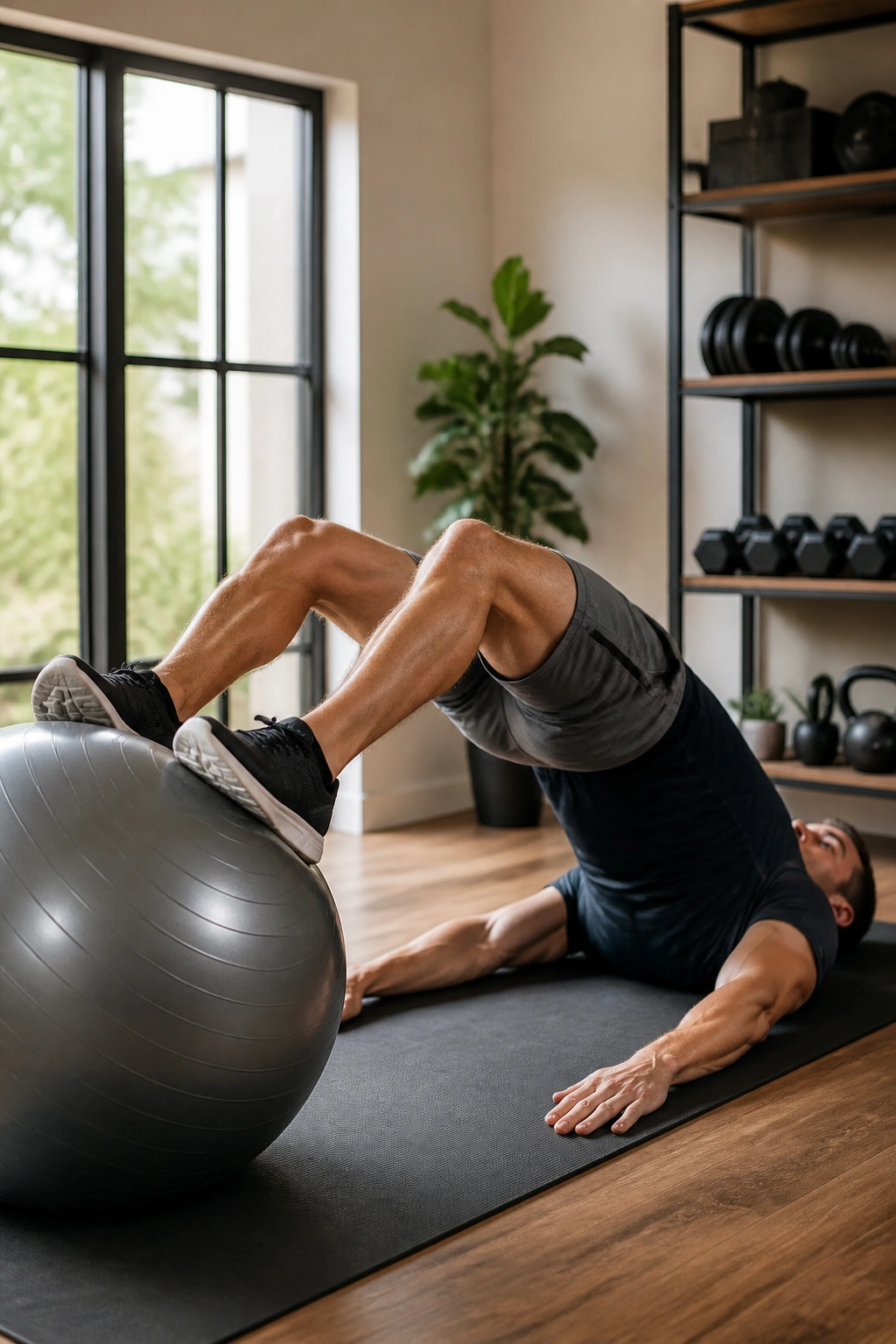
If you want hamstrings, glutes, and abs in one ugly little package, this is it. Start in a bridge with your heels on the ball, lift the hips, then walk the feet out a few inches at a time while keeping the pelvis high. After that, walk them back in.
The walkout makes the bridge far less forgiving. Every tiny foot shift asks the core to hold the line. The hips should stay lifted even when the legs get longer. If they drop, the drill loses its point and starts looking like a tired curl.
A slower tempo helps a lot. Two small steps out, two small steps back in, then rest. That rhythm gives you enough time to notice whether the hamstrings are helping or whether the low back is trying to cheat.
21. Single-Leg Ball Halo
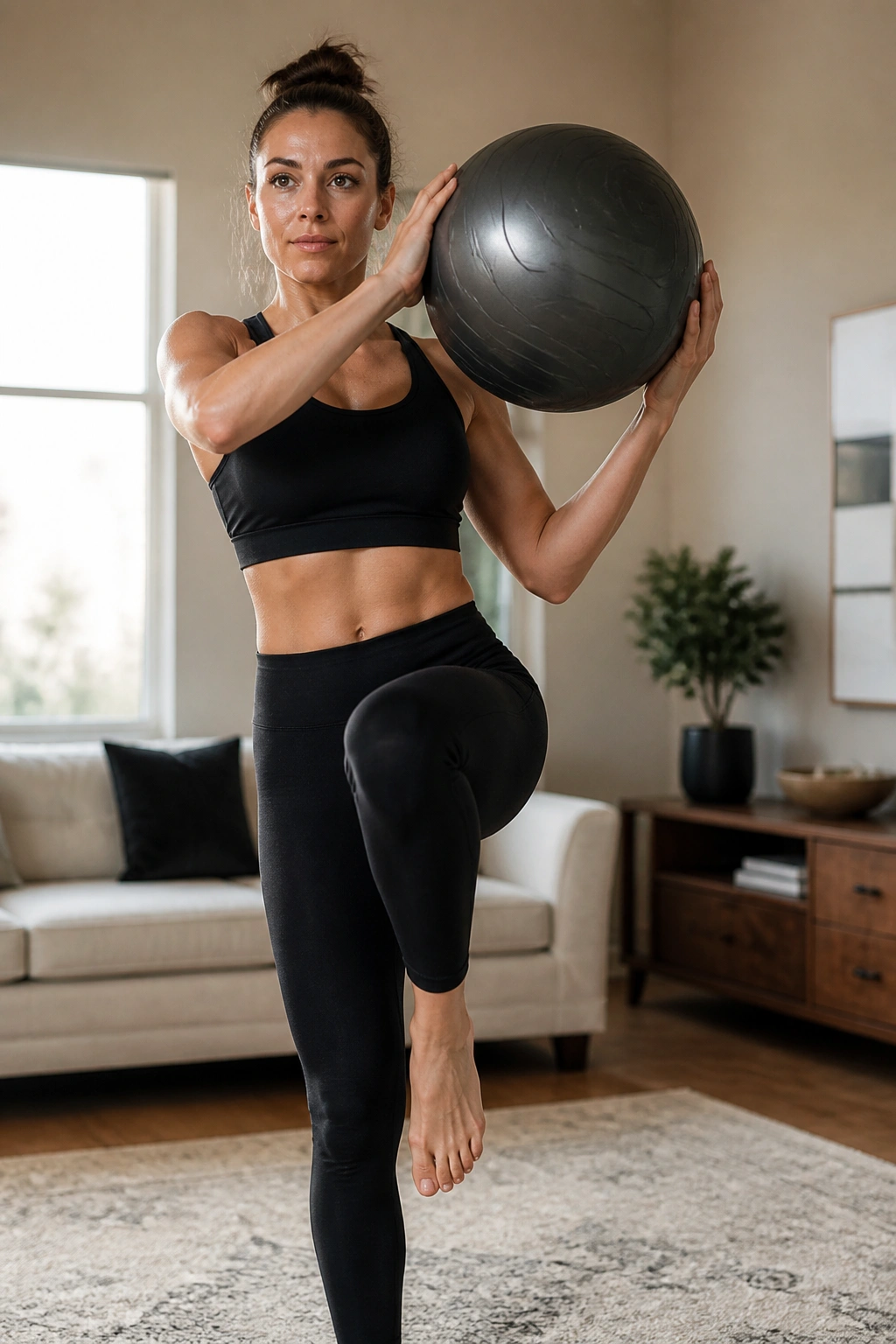
Here’s a balance drill that also wakes up the trunk in a way most people don’t expect. Stand on one leg and hold the stability ball at chest height, then move it in a slow circle around your head or shoulders. Keep the standing leg soft and the pelvis level.
The ball adds load, but the real challenge is staying stacked while the upper body moves in a circle. Do not lean away from the lifted knee. The supporting hip should stay quiet, and the standing foot should grip the floor without clawing it.
This one is best done slow. A five-second halo each direction is plenty. If the standing ankle starts wobbling like a bad table leg, shorten the circle and keep the ribs from flaring. A clean one-leg halo says more about balance than a fast sloppy one ever will.
22. Standing March and Reach
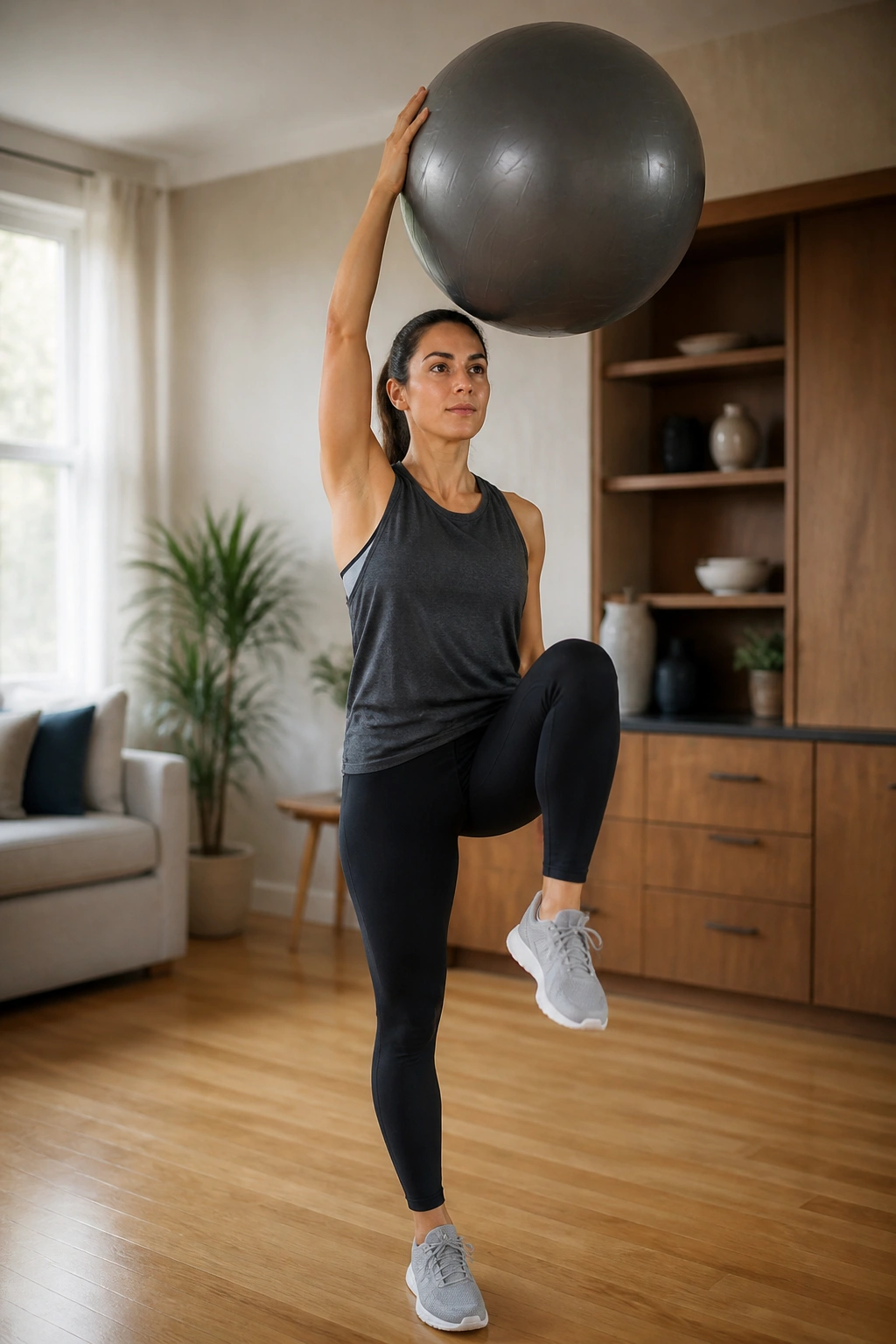
Finish with something that feels almost too simple. Hold the ball at chest level, stand tall, and march one knee up at a time while reaching the ball slightly overhead on the same side or both sides together. The body has to stay tall while the base of support keeps changing.
This is a good reminder that core work isn’t always about lying down and grinding through reps. Sometimes it’s about staying organized while one foot keeps leaving the floor. The standing leg should feel steady before the lifted knee comes down. That’s the test.
Use this as a reset drill when your abs are fried and your balance feels messy. Ten slow marches are enough for most people. If the shoulders shrug or the ribs pop forward, lower the ball and make the movement smaller. Quiet marching beats messy marching every time.
If you want the shortest possible path to better stability ball workouts, pick three moves and get good at them before you chase the rest. A dead bug, a rollout, and one standing balance drill will teach you more than a dozen rushed reps with bad shape.
The ball rewards patience. It also punishes laziness in a pretty immediate way, which is part of why I keep coming back to it. Use it well, move slowly at first, and let the wobble tell you exactly where your control needs work.
