



Crunch workouts get dismissed fast, usually by people who have never done one slowly.
A clean crunch is not about flinging your torso off the floor. It is about curling the ribs toward the pelvis, keeping the lower back heavy, and making the abs do the work before the hip flexors steal the show.
No circus equipment required.
That matters because a good crunch pattern carries over into heavier core work, better bracing, and fewer ugly reps when fatigue sets in. Sloppy sit-ups and frantic bicycle crunches are a different story. They tend to turn into neck tugging and hip-dominant swinging, which is why so many people think ab training is pointless when the real problem is the tempo.
The plain floor crunch is where the whole thing starts, and once that shape feels honest, the harder variations make a lot more sense.
1. Standard Floor Crunch
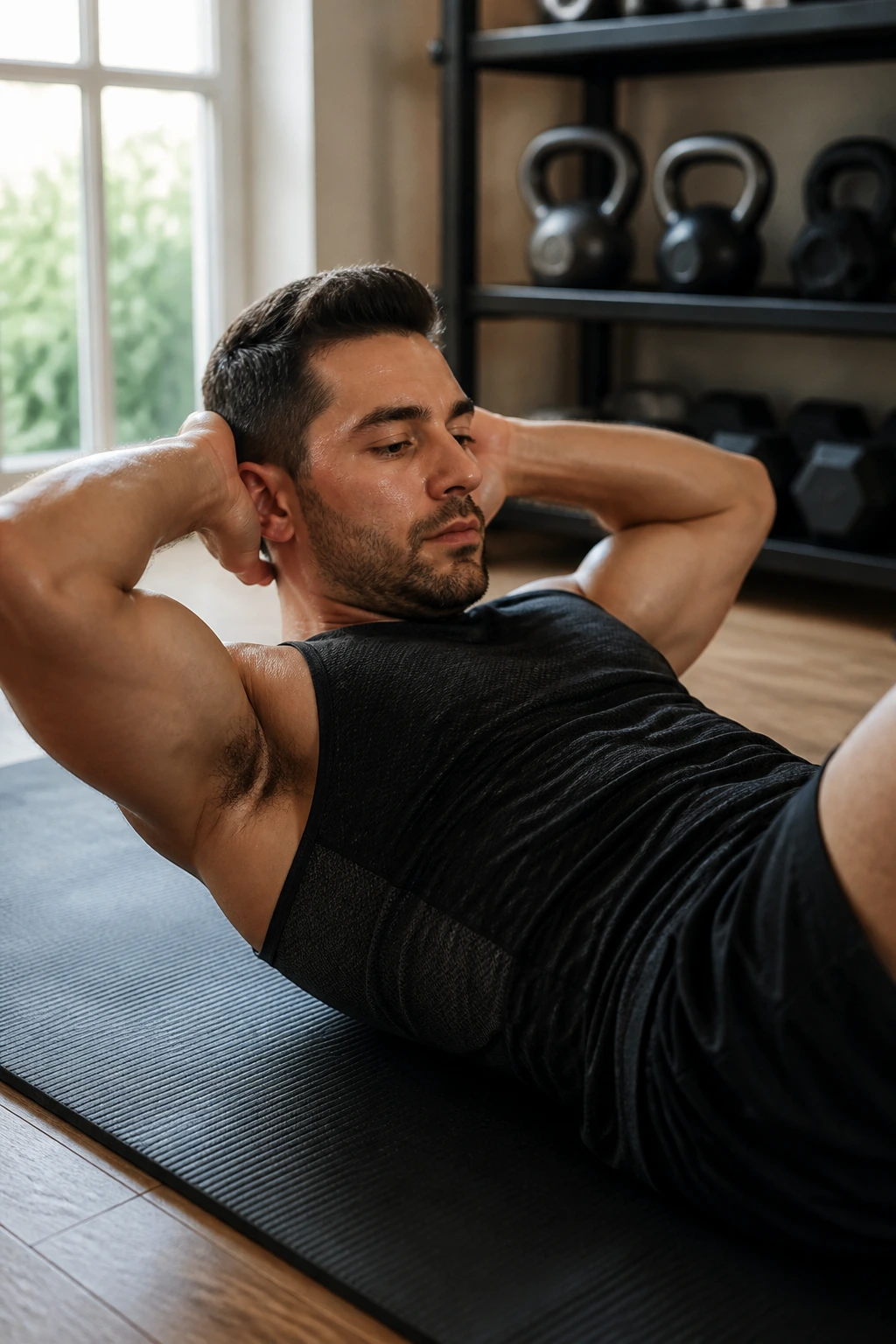
The standard floor crunch earns its spot because it strips the movement down to one honest job: curl the ribs toward the pelvis without yanking on your neck.
What it should feel like
Your lower back stays mostly in contact with the floor, your chin stays slightly tucked, and the lift is small. You are not sitting up. You are peeling the shoulder blades off the mat by an inch or two, then lowering with control until the shoulder blades brush back down.
That tiny range is enough. A lot of people go way too high and turn the movement into a slow sit-up. Once that happens, the abs stop being the main driver and the hips start helping too much.
- Sets and reps: 2 to 4 sets of 10 to 20 controlled reps.
- Tempo: 1 second up, 1 second squeeze, 2 seconds down.
- Best cue: Exhale as you lift, then pause for a beat at the top.
- Common fix: If your neck feels busy, shorten the range and look straight up.
Pro tip: Put one hand on your stomach for a few reps and feel the abs tighten before the shoulders leave the floor. That little pause teaches cleaner reps fast.
2. Slow Tempo Crunch
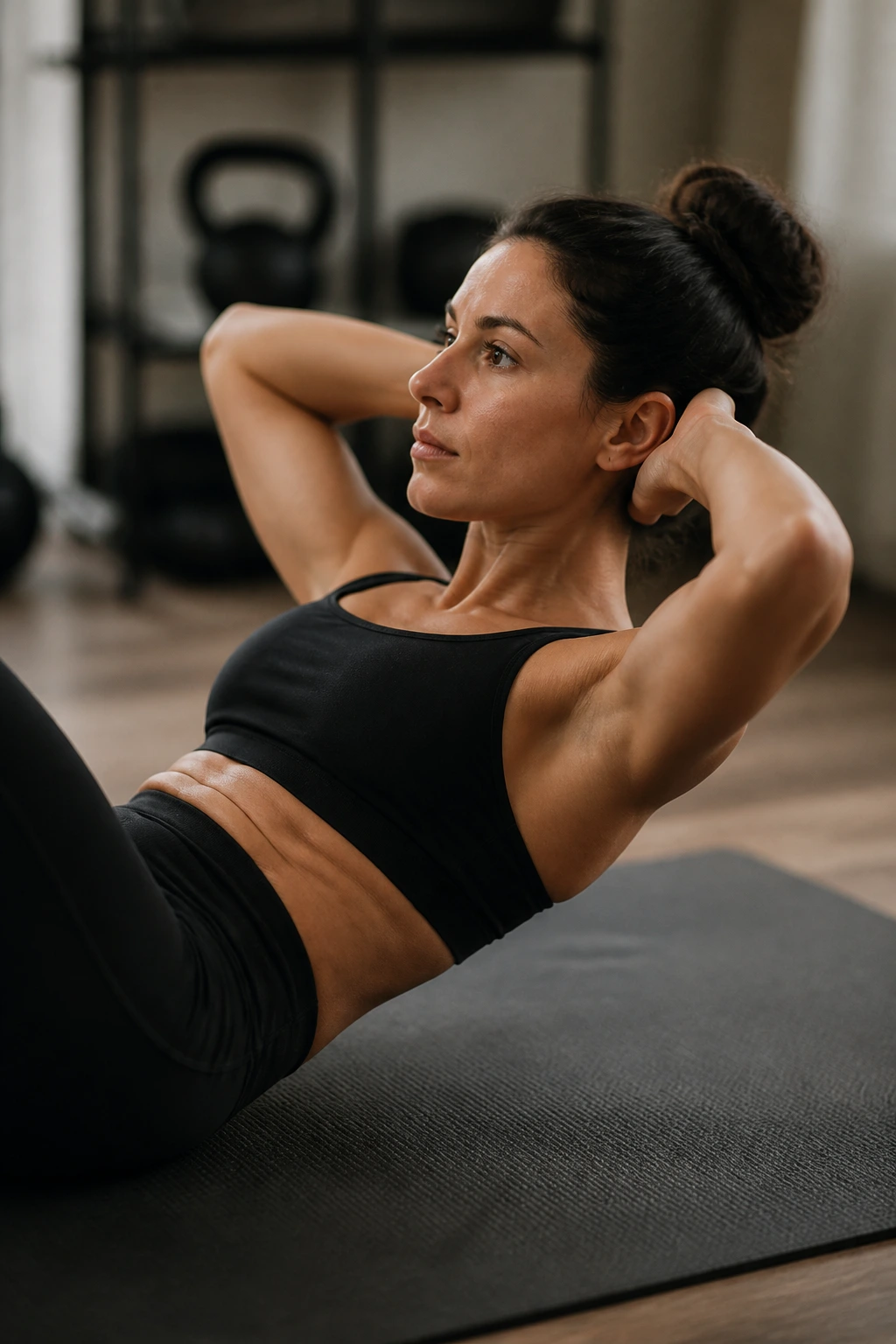
Slow tempo crunches expose lazy form almost immediately.
When you stretch a rep into a 3-second lift and a 3-second lower, momentum disappears. What is left is the actual work. The abs stay under tension longer, and the set stops feeling like a rush to finish. That matters more than people think, because a fast set can hide weak control for weeks.
A good slow crunch usually looks like this: 3 seconds up, 1 second hard squeeze, 3 seconds down. Six clean reps can be a bigger challenge than 20 quick ones if the quick ones bounce around and shrug the neck into the movement. That is not theory. You can feel the difference on the first set.
Use this version when regular crunches feel too easy or too sloppy. It is also a nice reset after a heavy week of loaded core work. Do not chase a high rep count here. Eight excellent reps beat a sloppy pile of 25 every time.
3. Pulse Crunch
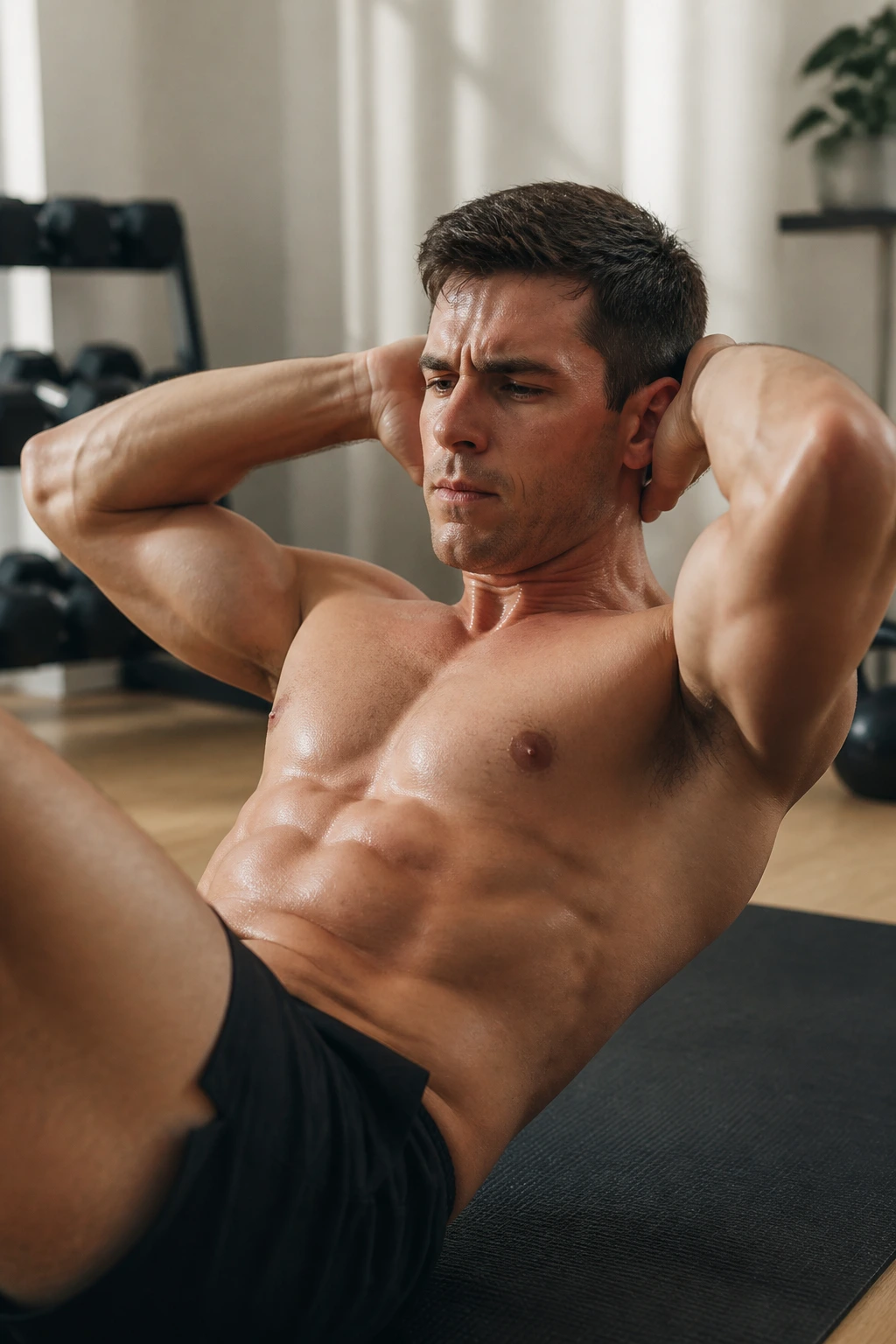
Why do pulse crunches burn so fast?
Because they live in the top third of the rep, where the abs have to keep the torso curled without the help of a full reset. Once you have already lifted into a small crunch, those tiny pulses keep tension high and the rest of the body has nowhere to hide.
When to use pulses
Pulse crunches work best as a finisher. Do a clean set of full-range crunches first, then add 8 to 15 tiny pulses at the top. Keep the movement small. Think an inch or two, not a frantic bobble.
- Good use case: Finishing a core session when you still have control.
- Rep idea: 10 full crunches, then 10 pulses.
- Watch this: If the lower back arches off the floor, stop and reset.
- Not ideal for: Beginners who have not yet learned the basic curl.
One rule matters here: if the pulses start turning into neck tension, you have gone too far. Finish the set before the form breaks.
4. Arms-Extended Crunch
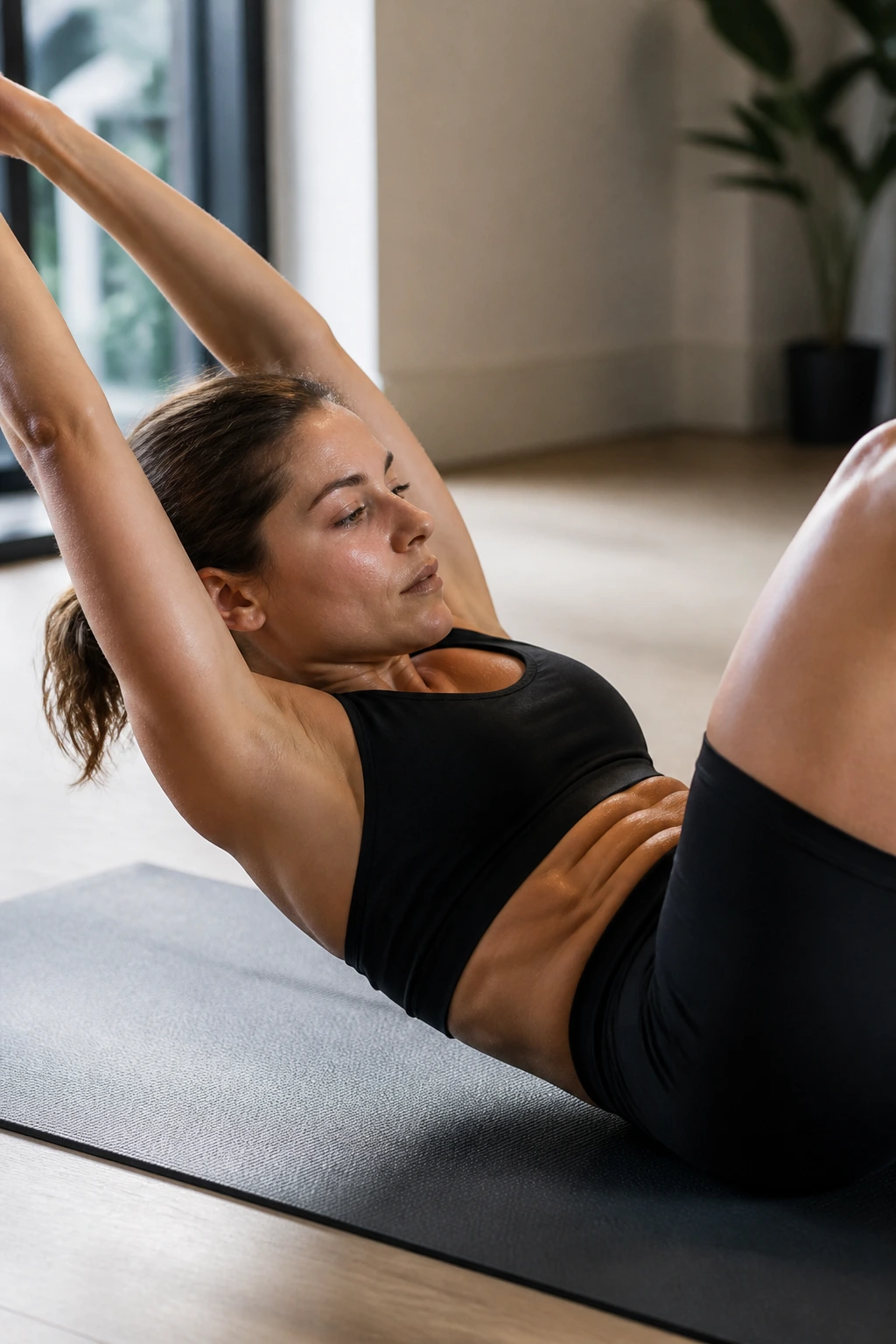
Reach your arms straight past your knees and the same 12 reps suddenly feel rude.
That longer lever makes the abs work harder because your arms are pulling your center of mass farther away from the hips. You do not need to swing. You do not need to throw your shoulders forward. You just need to keep the arms steady and let the rib cage curl off the floor.
Start with the hands pointed toward the ceiling or gently reaching forward, then progress to arms extended overhead if the basic version feels too light. That overhead version is no joke. It loads the movement without adding equipment, and it also shows whether your midsection can stay tight when the leverage gets ugly.
Six clean reps with long arms can beat 15 rushed crunches with bent elbows. Seriously.
If your low back starts arching, shorten the reach. If your neck gets involved, bring the arms back toward the chest. The exercise should feel harder, not messier.
5. Hands-Behind-Head Crunch
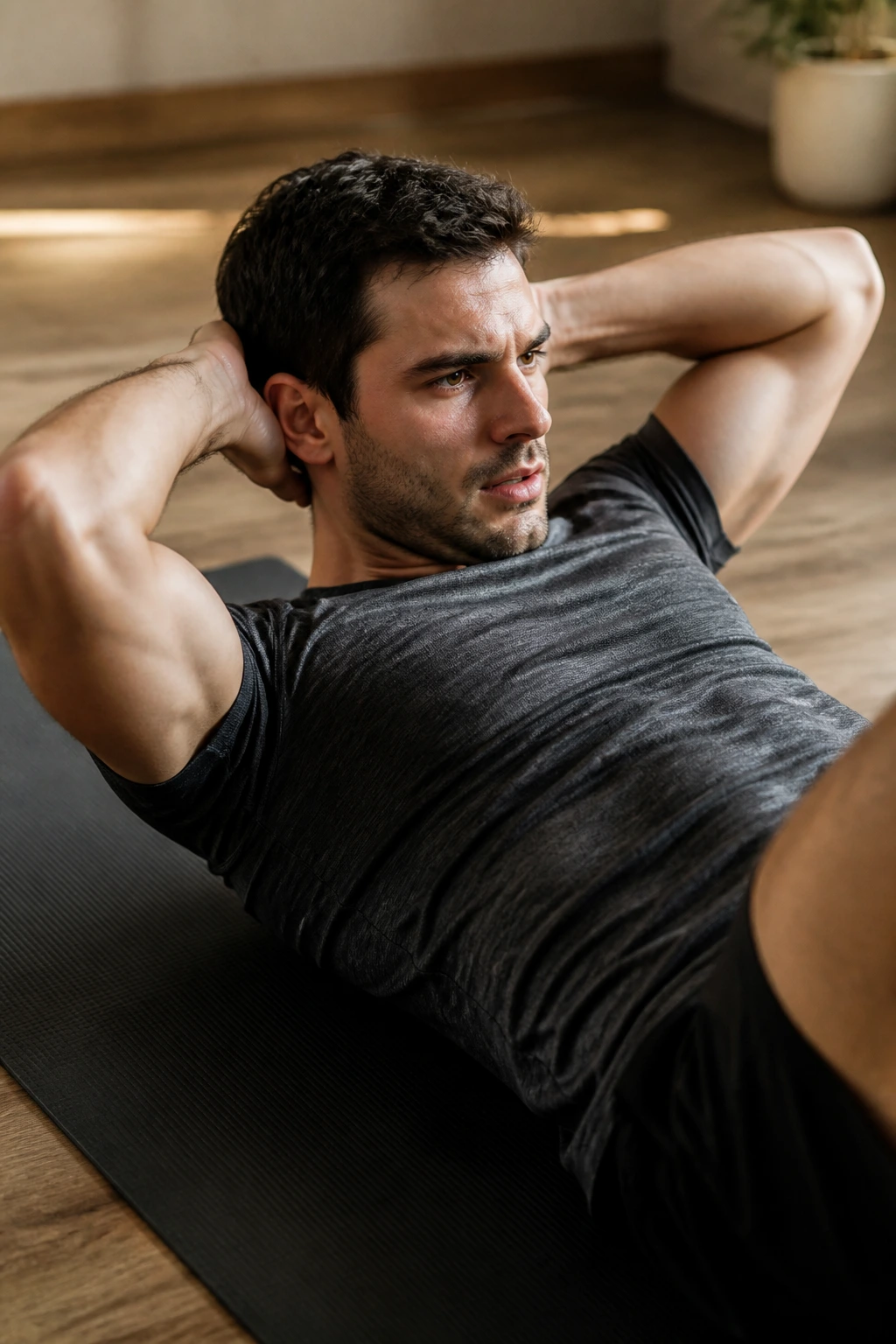
Should you put your hands behind your head? Yes, if they are there for balance and not for pulling.
That is the whole trick. The hands are support, not a lever. Your elbows stay open, your chin stays off your chest, and the lift still comes from the abs. The second you tug on the head, the neck starts doing a job it was never meant to do here.
Keep the neck quiet
A towel behind the head can help if your neck likes to tense up. So can a very light touch behind the ears instead of a hard grip at the skull. The key is to let the head move with the torso instead of dragging it into the rep early.
- Fingertips only: No hard clasp at the back of the head.
- Elbows wide: Do not pinch them forward.
- Eyes up: Keep the gaze fixed on the ceiling.
- Exhale first: Let the ribs start the curl.
If this version still bothers your neck, switch to cross-chest hands. That is not a downgrade. It is a cleaner setup.
6. Bicycle Crunch
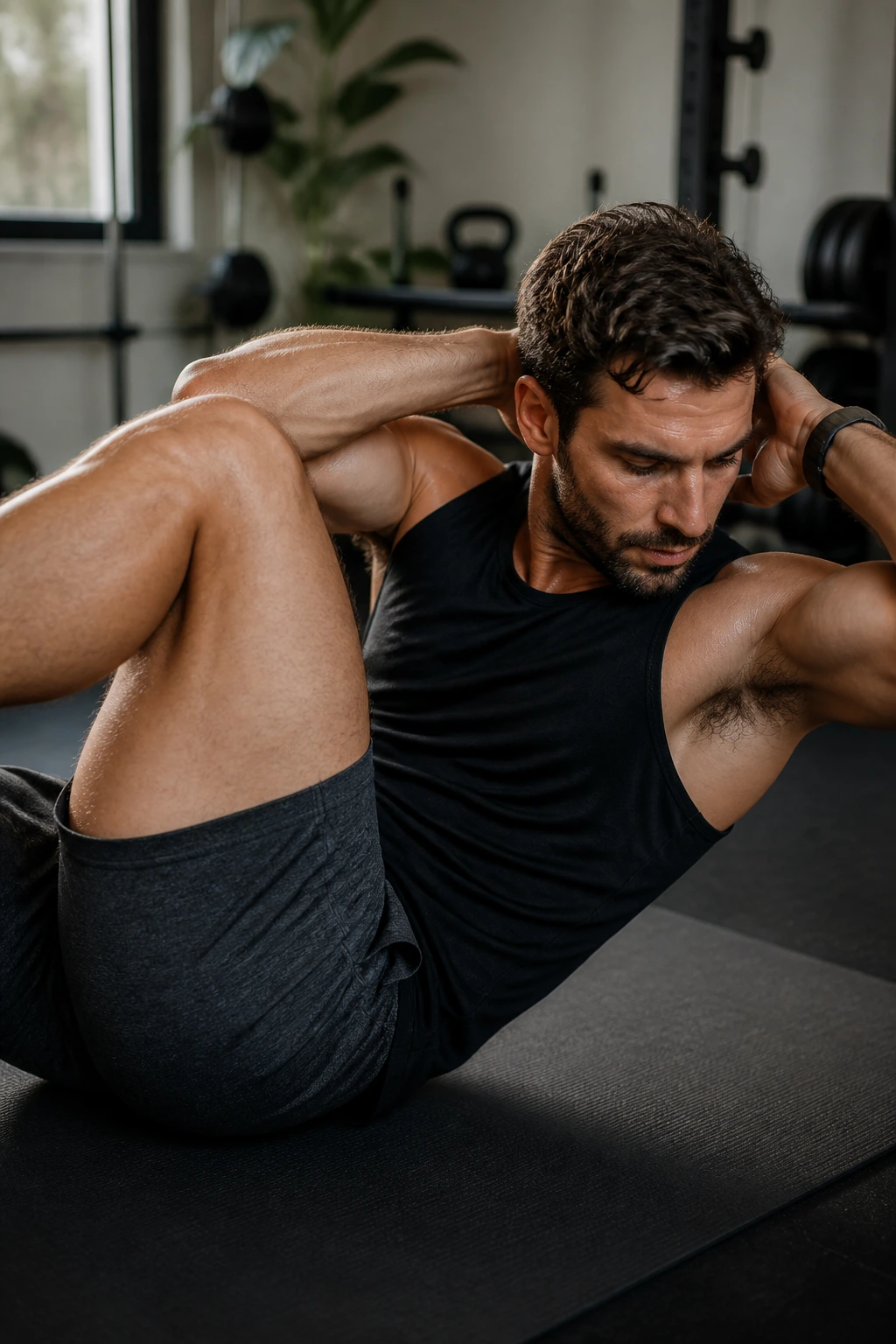
Bicycle crunches are not a speed contest.
The best reps happen when the elbow has to wait for the torso, not the other way around. Slow rotation, a controlled leg extension, and a brief squeeze on each side turn this into a useful oblique and rectus abdominis drill. Fast bicycles, on the other hand, often become a blur of hip flexors, neck strain, and half-touches that mean nothing.
Keep the lower back pressed down and think about bringing one shoulder toward the opposite knee. The elbow does not need to slam into the thigh. A smaller, cleaner twist is usually better. If the hips start popping upward, shorten the leg extension and slow the pace.
Ten to 15 controlled reps per side is plenty for most people. If you want the abs to feel this one tomorrow, hold the top for a beat each rep. The burn will show up fast.
7. Reverse Crunch
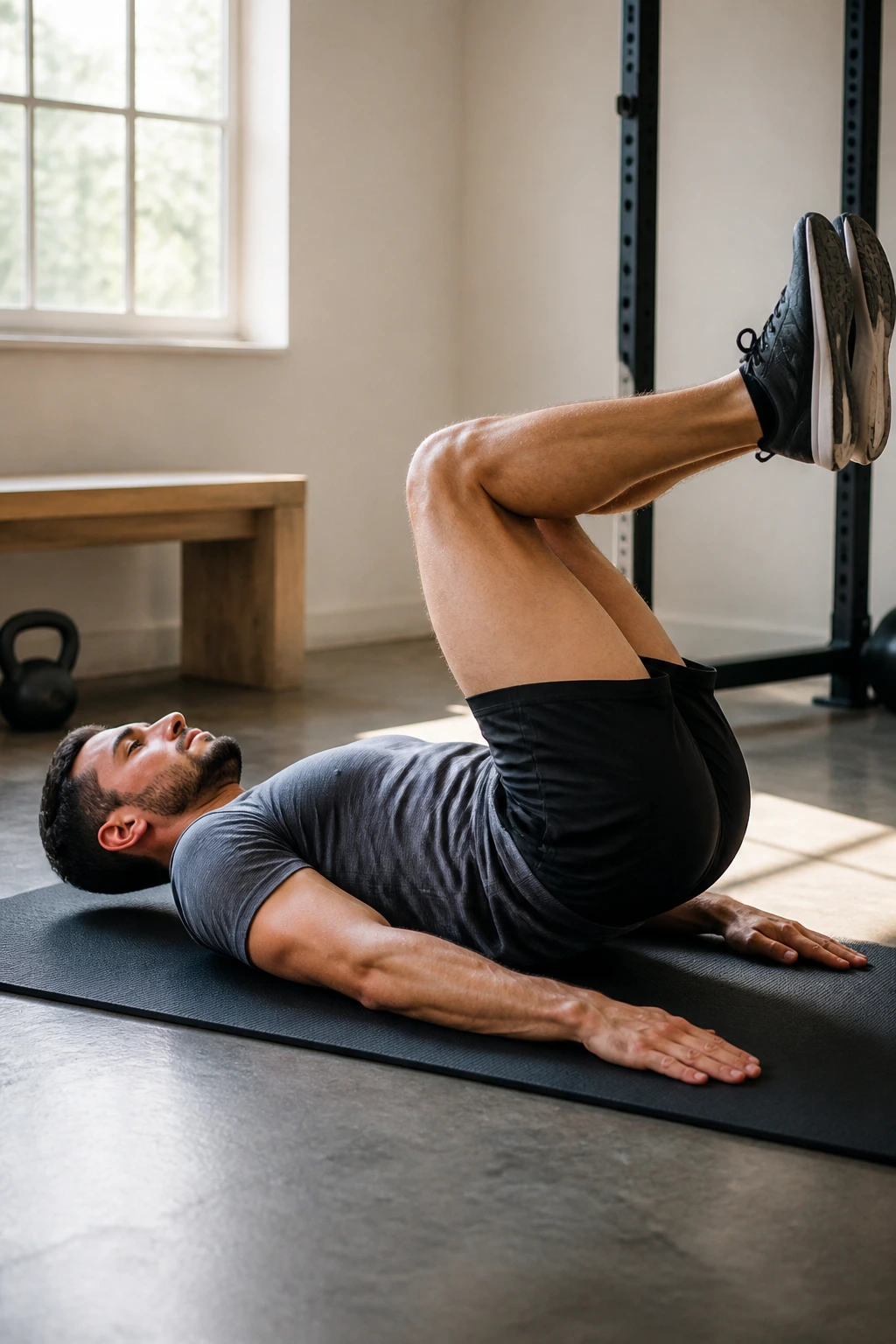
If floor crunches feel like all neck and no abs, reverse crunches often feel cleaner.
Here the pelvis rolls instead of the chest lifting high. Knees come in, the tailbone lifts a little, and the lower part of the abs has to help control the curl. It is a small move, but it teaches a very useful pattern: how to tip the pelvis under without swinging the legs.
The part most people miss
The knees do not drive the motion by themselves. The abs finish it. That means the tailbone should barely leave the floor, and the legs should not kick upward with any snap.
- Start position: Knees bent around 90 degrees.
- Top cue: Lift the tailbone only 1 or 2 inches.
- Tempo: Slow up, slower down.
- Range check: Stop before the low back starts arching.
A clean reverse crunch usually feels better than a half-hearted sit-up for people who want lower-ab tension without the neck drama. Keep the movement tight, and do not chase height.
8. Vertical Leg Crunch
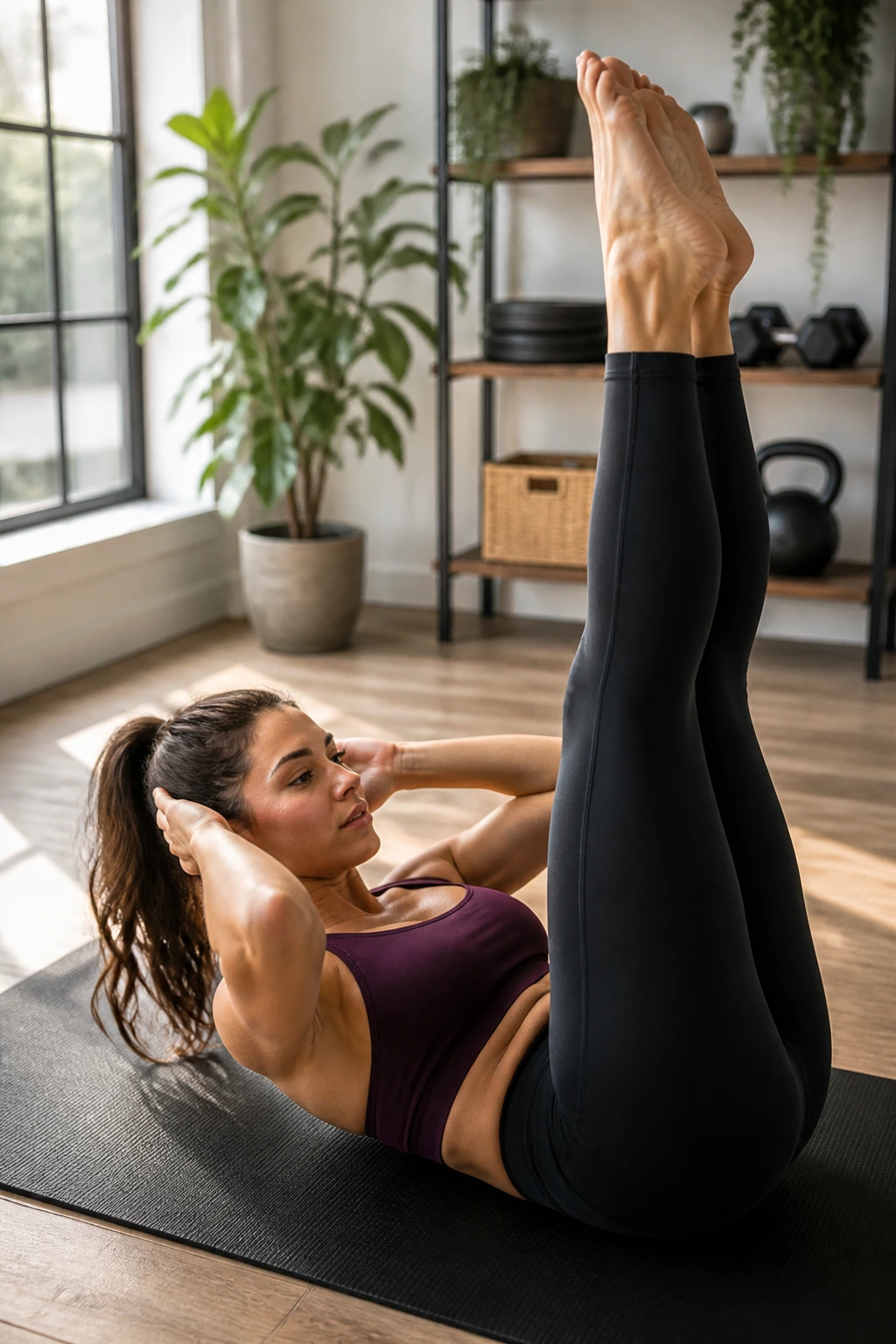
Do not rush this one.
With the legs pointed straight up, the lever gets longer and the rep gets harder without adding any weight. That makes vertical leg crunches one of the simplest ways to raise the difficulty while staying on the floor. It also makes cheating easier, which is why the control matters so much.
A tiny crunch is enough. Your shoulders only need to peel up a few inches, and the legs should stay stacked over the hips. If your hamstrings are tight, let the knees bend a little. That is better than shaking the legs around and losing the line completely.
This is a good version when standard crunches feel too easy but weighted work still feels too soon. Try 6 to 12 slow reps. If the lower back starts to arch or the feet drift, reset and shorten the range. Clean shape first. Burn second.
9. Toe-Touch Crunch
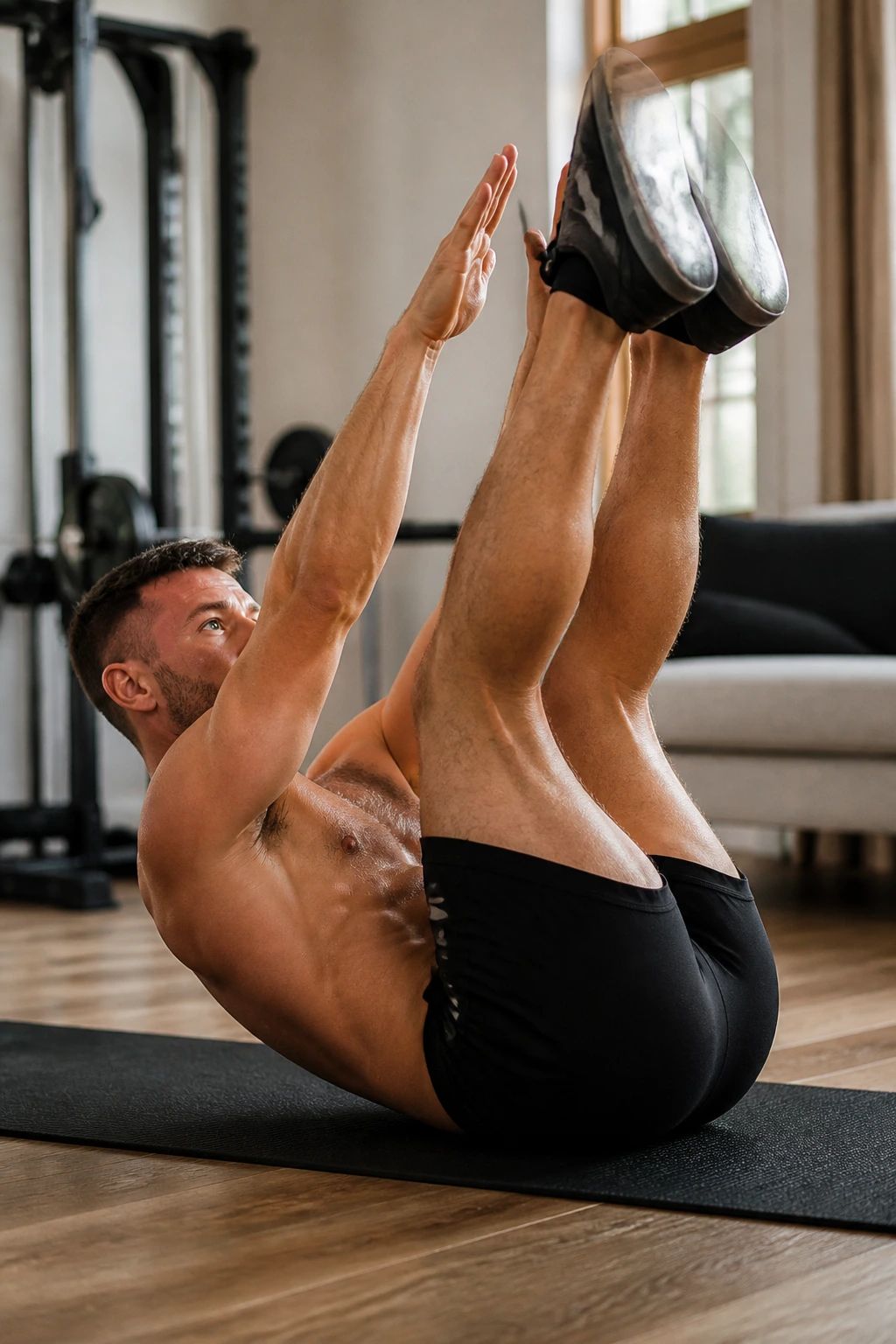
A good toe-touch crunch feels like a sharp squeeze through the middle of the abs, not a frantic reach toward your shins.
The legs stay up, the arms reach toward the toes, and the upper body lifts just enough to close the distance. That small fold is what matters. People often try to touch the toes by throwing the shoulders forward and losing the abs completely. It looks busy. It does not work well.
- Bend the knees slightly if your hamstrings are tight.
- Reach with the ribs, not the shoulders.
- Lower slowly so the next rep starts under tension.
- Keep the neck soft and the chin lightly tucked.
This is one of the better bodyweight crunch variations for people who want a clear upper-ab squeeze without equipment. Use it as a mid-session move or as a finisher after reverse crunches. If the low back pops off the floor, bring the legs down an inch or two and try again.
10. Oblique Crunch
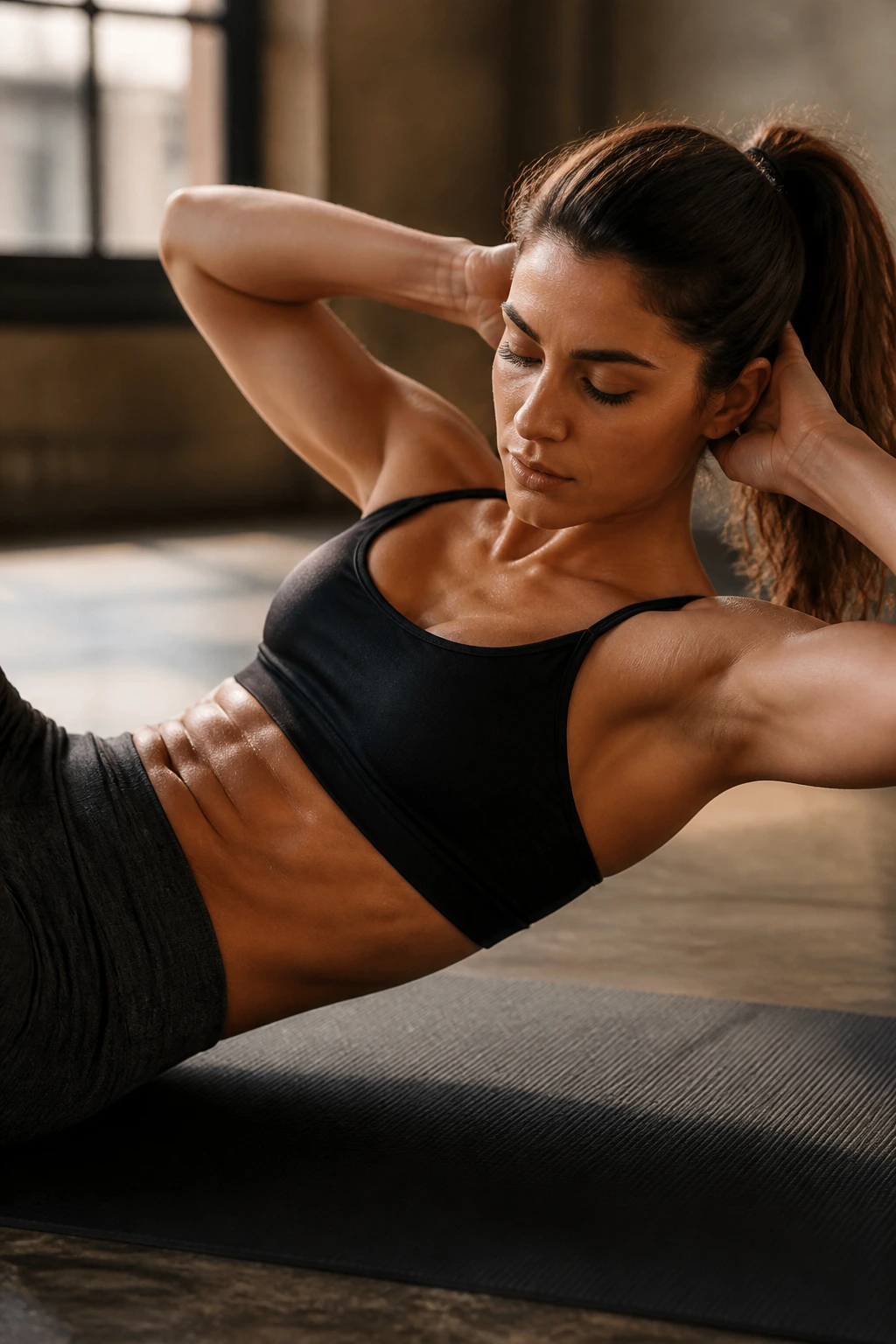
Oblique crunches are side-bending work, not twisted chaos.
The motion is simple: lift one shoulder toward the same side of the rib cage or hip, depending on how you set up. You should feel a squeeze along the side of the waist and down the sidewall of the core. If the neck is working harder than the waist, the rep is too big or the head is pulling forward.
This move is useful because it trains lateral flexion, which a lot of people ignore when they only do straight crunches. The catch is that it is easy to turn into a yank. Keep the movement small, and let the shoulder rise only enough to create tension in the side body.
Ten to 15 reps per side is a solid start. You do not need to grind. A crisp side crunch with a short pause at the top usually beats a bigger, sloppier version. And yes, the side of your torso can light up fast. That is the point.
11. Cross-Body Crunch
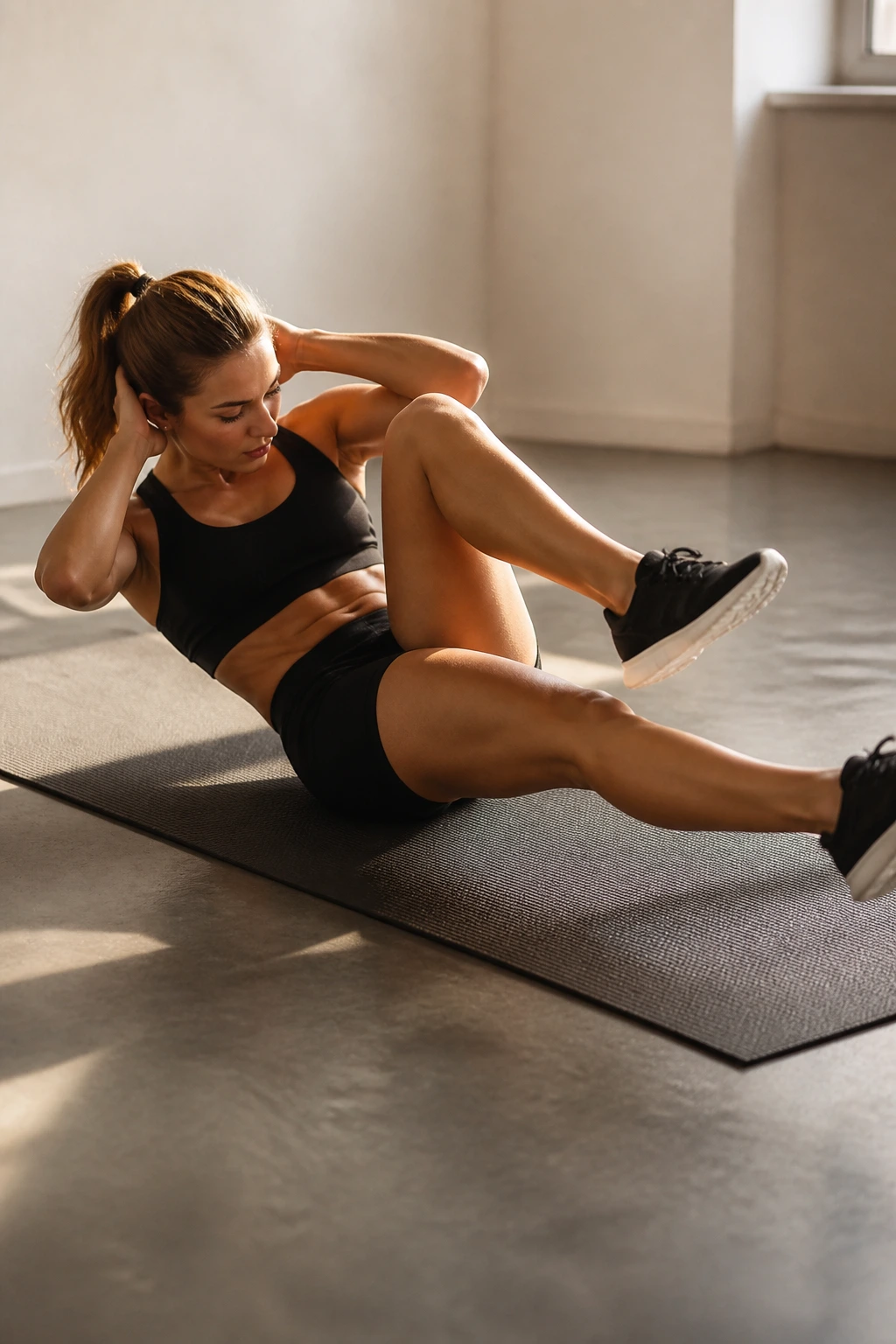
What makes a cross-body crunch different from a bicycle crunch? Less leg motion, more torso control.
The diagonal line is the main thing here. You bring one shoulder toward the opposite knee, but you do it without the spinning, pedaling feel that bicycles have. That means less speed and more squeeze. It also makes the movement easier to track, which is useful if you want cleaner reps instead of a cardio headache.
How to use it
Start with the knees bent and the feet light on the floor or lifted slightly off it. Crunch across the body, pause for a count, then switch sides without snapping through the middle. Eight to 12 reps per side is enough for most sessions.
A nice thing about this version is that it can bridge the gap between straight crunches and harder rotational work. If you like the feeling of diagonal core tension but hate the messiness of fast bicycles, this is the one to keep. Slow it down and the abs have nowhere to hide.
12. Stability Ball Crunch
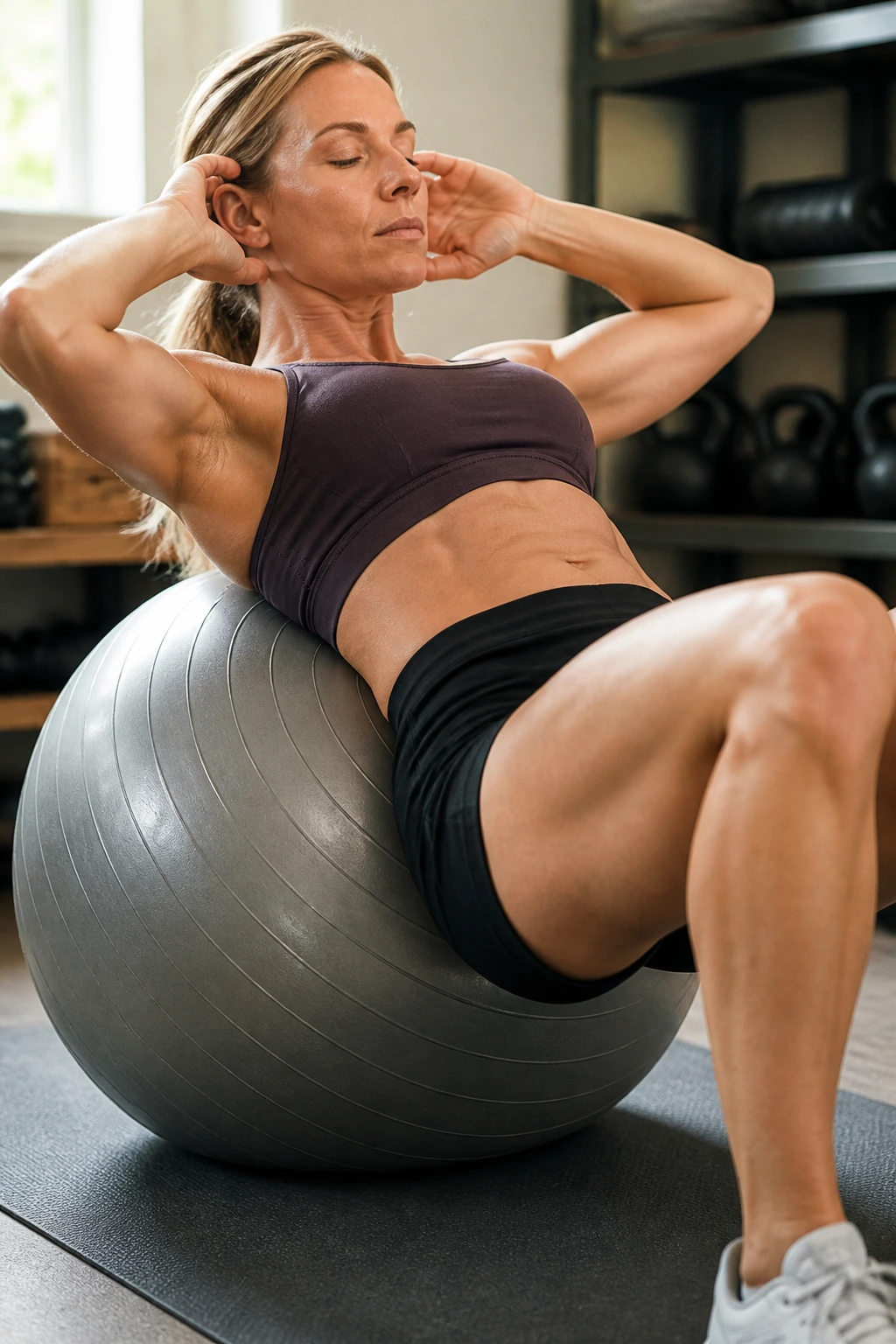
The ball changes the shape of the whole rep.
Your upper back sits over a curved surface, which gives you a little more range at the bottom and a cleaner stretch through the torso. That can feel great, but only if the setup is honest. If you drop too far back and arch the lower spine, the exercise gets sloppy fast.
Set the ball first
Plant the feet about hip-width apart, keep the knees bent, and let the mid-back rest on the ball. Your hips should stay level, not sag toward the floor. From there, curl up by bringing the ribs toward the pelvis, then lower until the back settles into the curve again.
- Ball position: Mid-back, not low back.
- Foot placement: Wide enough to stay balanced.
- Neck cue: Eyes up, chin relaxed.
- Rep idea: 10 to 15 slow reps with a one-count squeeze.
This version is good for people who want a longer range without jumping straight to loaded cable work. It also feels nicer on the floor if a hard mat bothers your spine. Just do not overextend at the bottom. That is where people usually get into trouble.
13. Weighted Plate Crunch
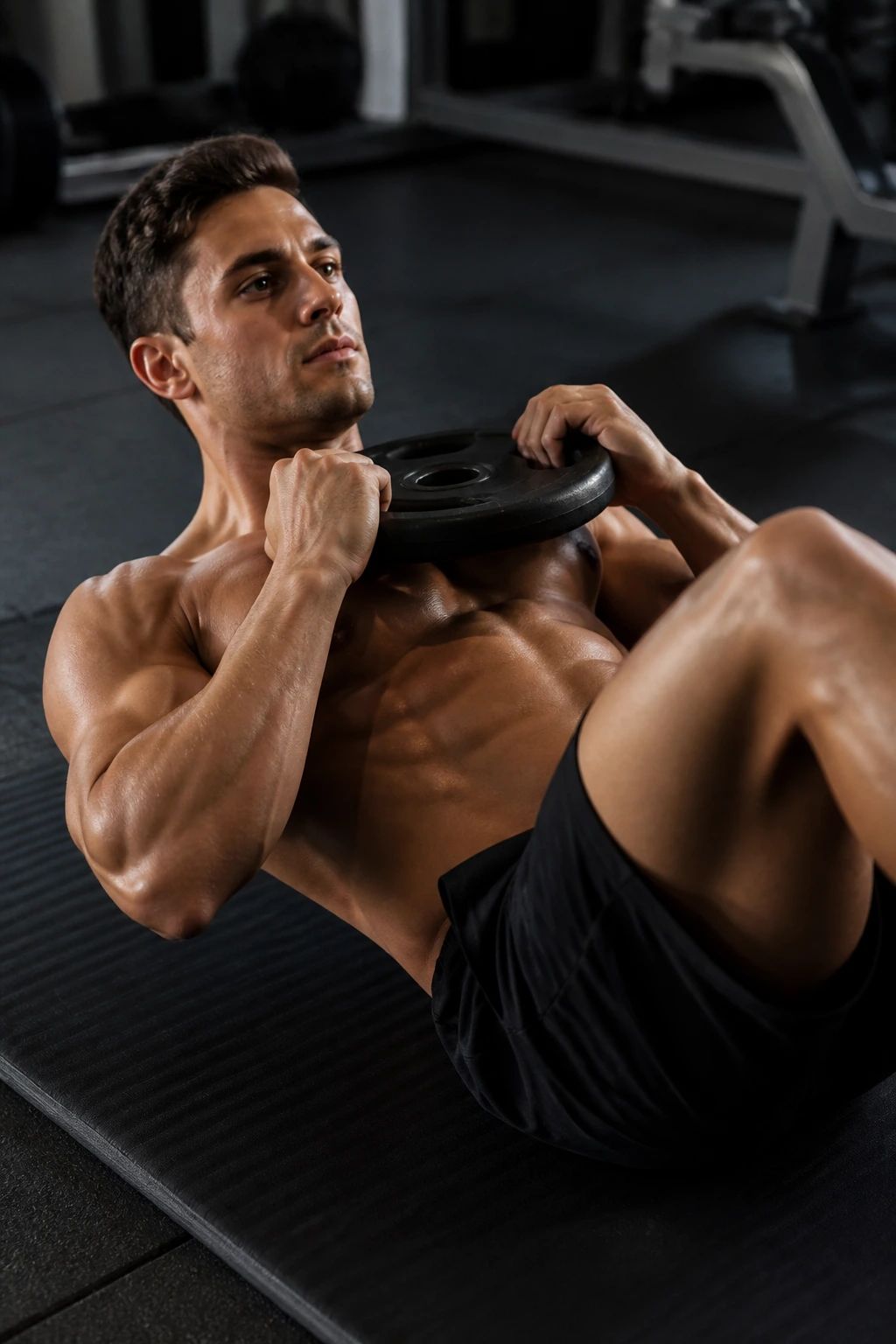
Load is what makes crunches grow up.
A weight plate held across the chest, or a dumbbell hugged close to the sternum, turns a bodyweight crunch into a loaded flexion exercise. Start light. Five to 10 pounds is enough for a lot of people, and there is no prize for rushing that number upward. If the neck starts helping, the weight is too heavy.
What you want is the same clean curl you use on the floor, only under resistance that stays honest through the whole rep. The abs should lead. The weight should just add demand. A set of 8 to 12 reps works well when the form stays tidy and the lowering phase stays slow.
This is one place where people get greedy. They grab too much load, then shorten the range and bounce through the top. Don’t. Add 2.5 to 5 pounds at a time, and let the rep quality decide the next jump. That approach lasts longer and feels better on the spine.
14. Cable Crunch
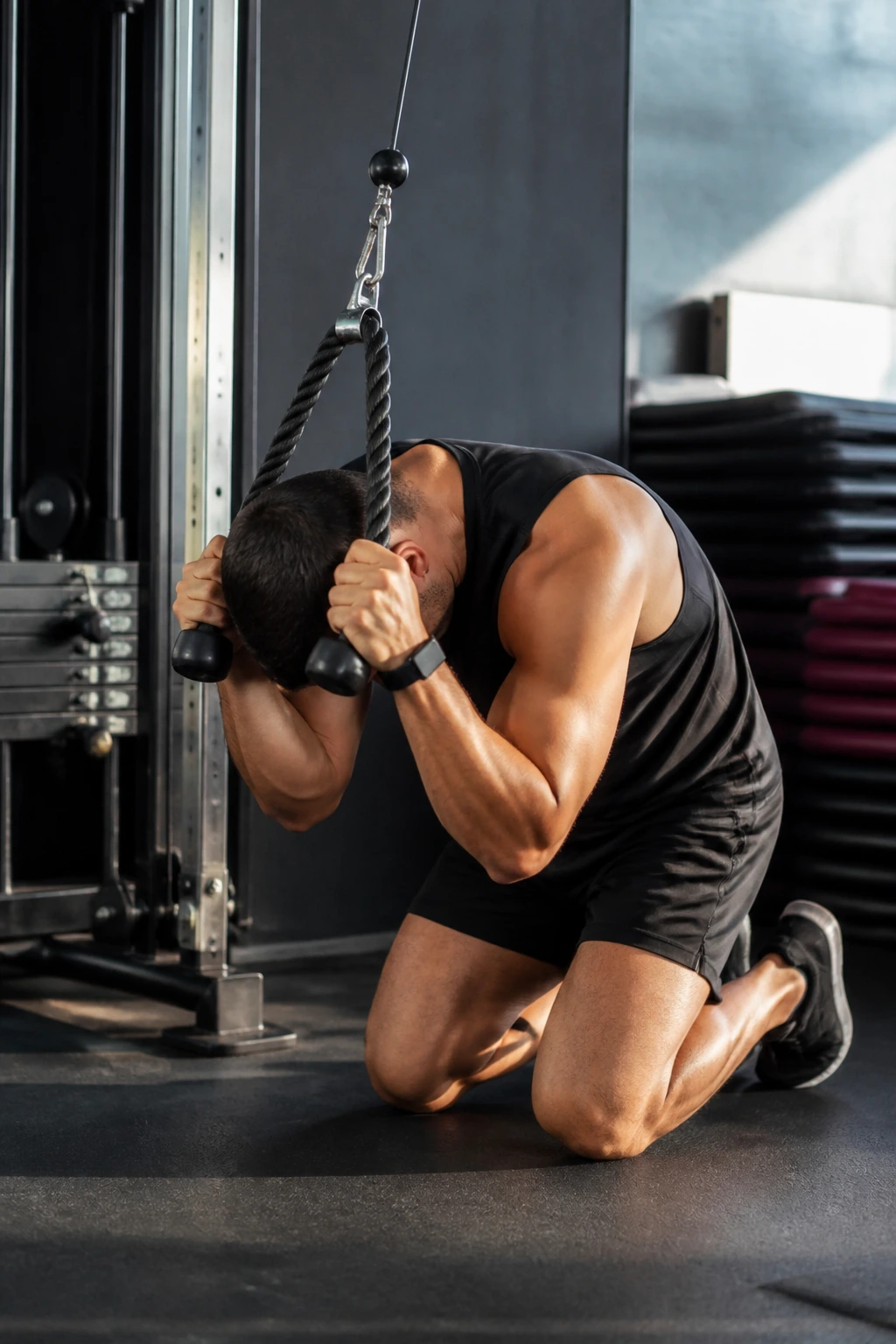
Kneeling by a rope stack changes the game because the cable keeps tension on the abs from start to finish.
That constant pull is why the cable crunch is one of the cleanest ways to load spinal flexion. The setup matters. Kneel tall, anchor the hips, and let the rope sit near the sides of the head or shoulders. Then curl the ribs down toward the hips without turning it into a hip hinge.
What a clean rep looks like
Your elbows travel toward your thighs, the spine rounds, and the hips stay mostly still. The return should be slow, with the abs resisting the pull back to the starting position. If the pelvis slides backward or the glutes rock around, the weight is too heavy or the stance is off.
- Reps: 10 to 15 with control.
- Rest: 45 to 75 seconds between sets.
- Body position: Tall kneel, hips stacked over knees.
- Warning: Do not sit back into the heels and turn it into a squat.
This is a strong choice if you want measurable progression without guessing. Add small weight jumps, keep the same shape, and the abs get a very clear job.
15. Decline Bench Crunch
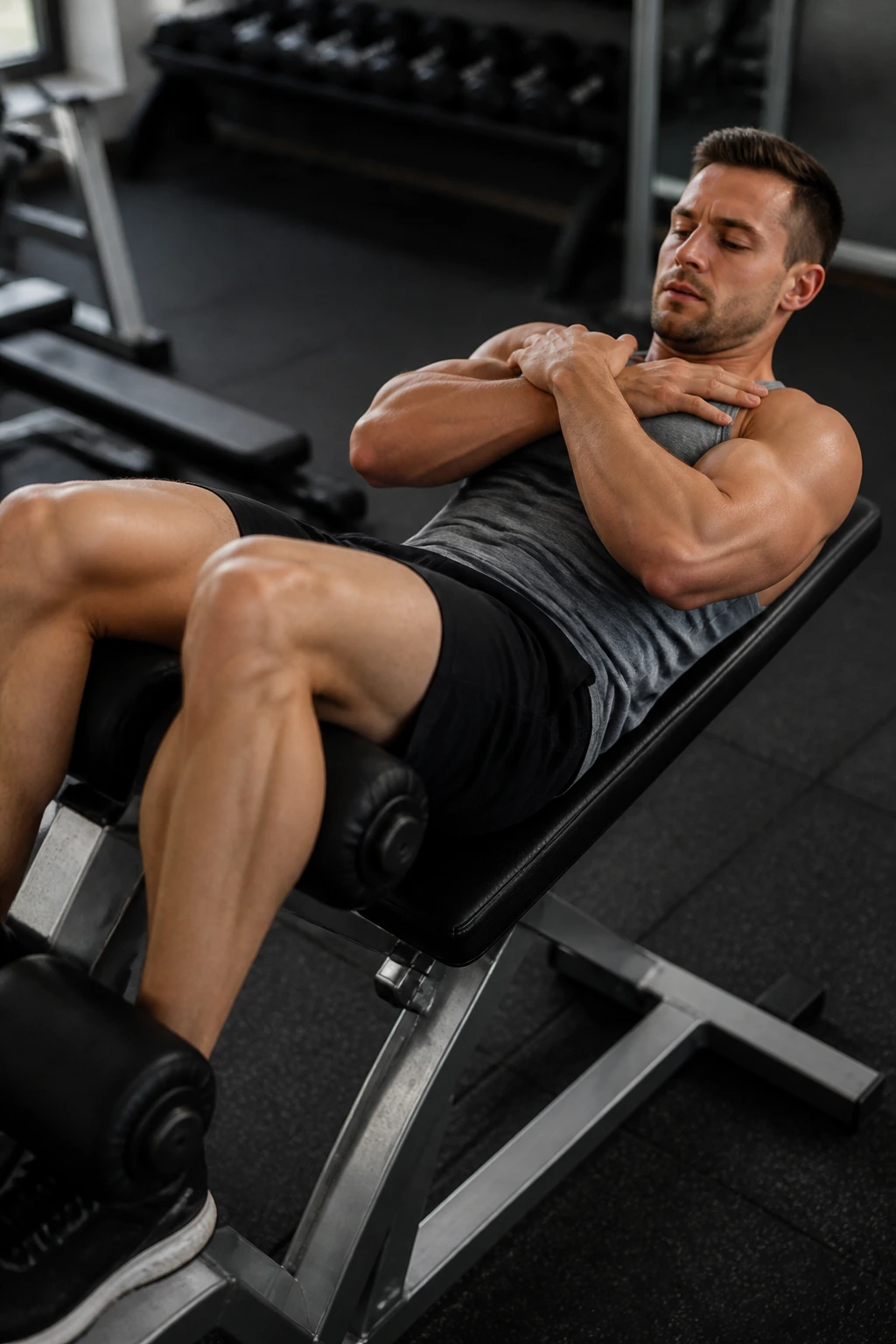
A decline bench is not for everyone, and that is fine.
The angled setup makes the movement harder by putting the torso on a slope, which means the abs have to fight a little more to curl up against gravity. Feet anchored on the pads can also tempt people to yank with the hip flexors, so the form has to stay sharp. If it turns into a hip drive, the bench is too steep or the rep is too fast.
This version suits people who already own the basic crunch and want more challenge without adding a plate or cable. Start on a mild decline first. Hands across the chest is often cleaner than hands behind the head. Eight to 12 controlled reps is enough to make the set matter.
If your lower back feels pinched on the way down, skip the decline bench and go back to floor work or the stability ball. There is no medal for training through a bad angle.
16. Frog Crunch
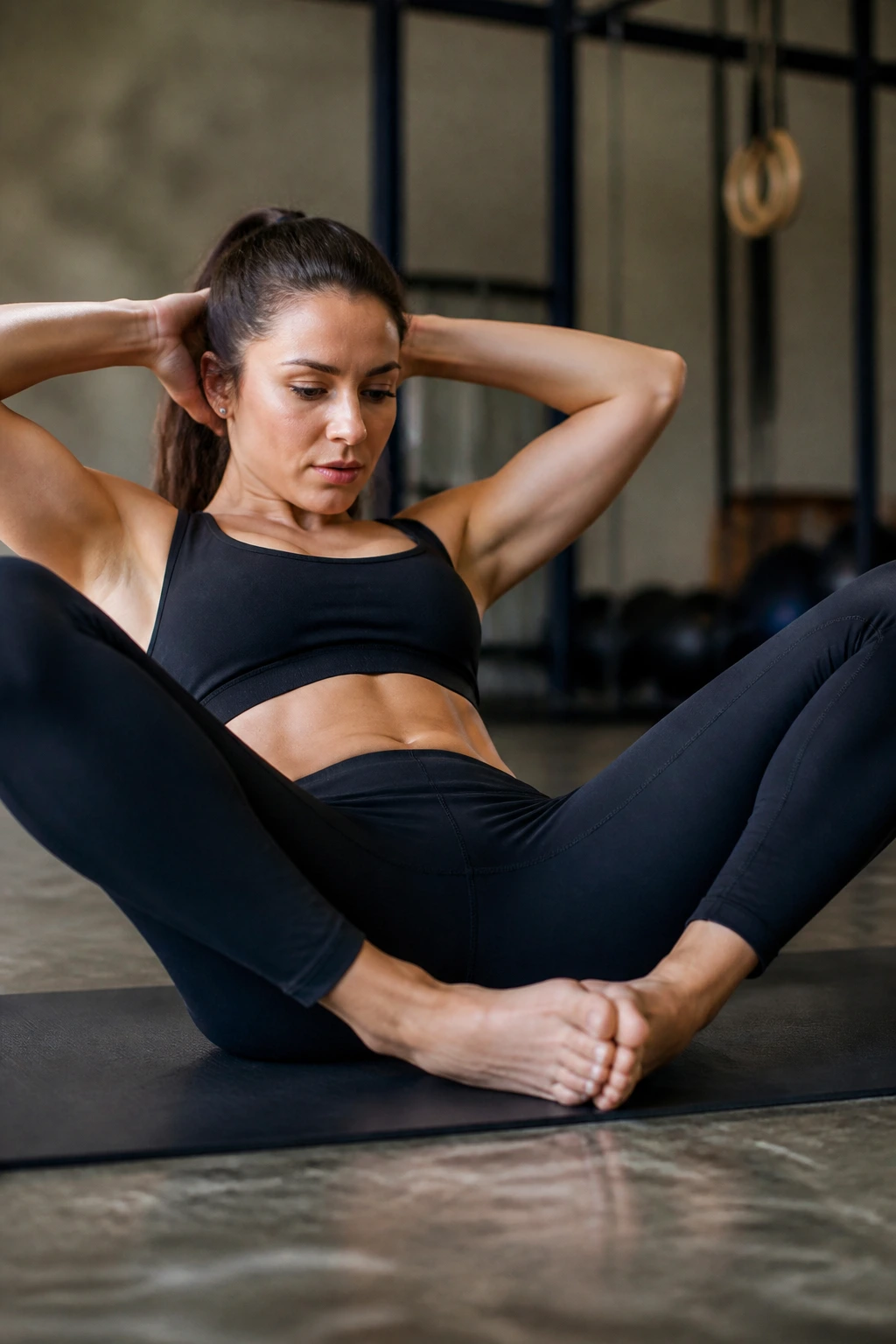
Put the soles of your feet together and let the knees fall open, and the movement suddenly feels less like a leg fight.
That frog position takes some of the tension out of the hip flexors, which is handy if straight-leg crunches make your thighs do too much of the work. The abs can fold more cleanly when the legs are arranged this way. It also changes the feel of the rep enough to keep a core session from going stale.
This one is sneaky.
You still want the same rules: small lift, ribs down, neck relaxed, and a slow lower. The difference is that the leg shape can make the curl feel smoother and less cramped. Try 12 to 20 reps and see how the midsection responds. A lot of people who hate vertical leg crunches end up liking this version because it feels friendlier on the lower back.
17. Heel Tap Crunch
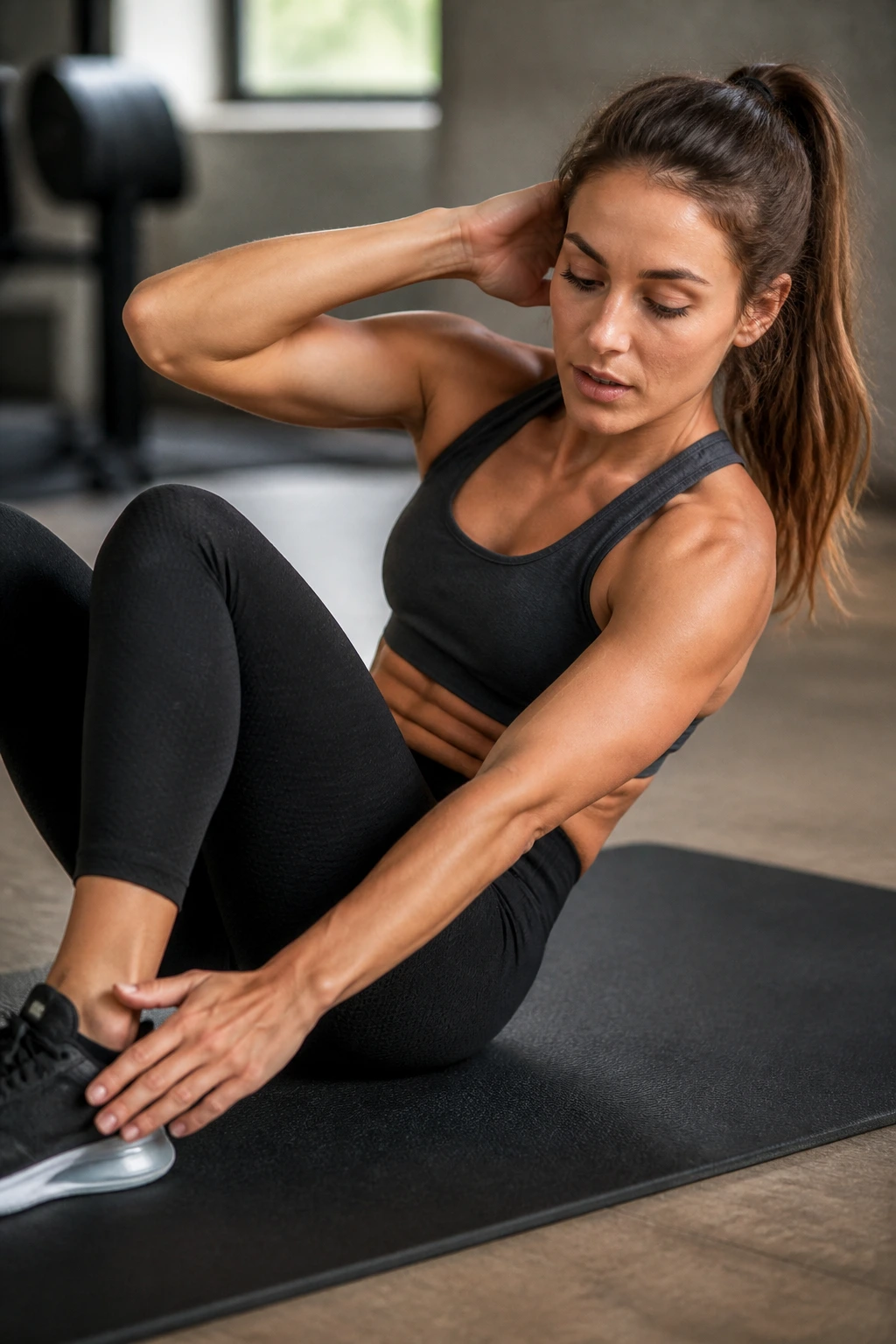
Heel taps look simple until the obliques start complaining.
You hold a light crunch position, keep the shoulders off the floor, and reach one hand at a time toward the same-side heel. The side-to-side reach keeps tension in the waist while the torso stays curled. It is not a huge move. It should feel controlled and a little annoying in the best way.
What to watch for
The shoulders should stay lifted the whole time, the taps should stay small, and the low back should not arch. If your head sinks between reps, you have lost the crunch position. If the feet slide too far away, the abs lose tension and the hips take over.
- Best pace: Slow, alternating taps.
- Good rep target: 20 to 30 total taps.
- Top cue: Keep the ribs pulled down.
- Common mistake: Reaching so far that the shoulders drop.
This works well as a finisher after heavier crunch work or as a low-equipment ab session on its own. It is simple. That is part of the appeal.
18. Jackknife Crunch
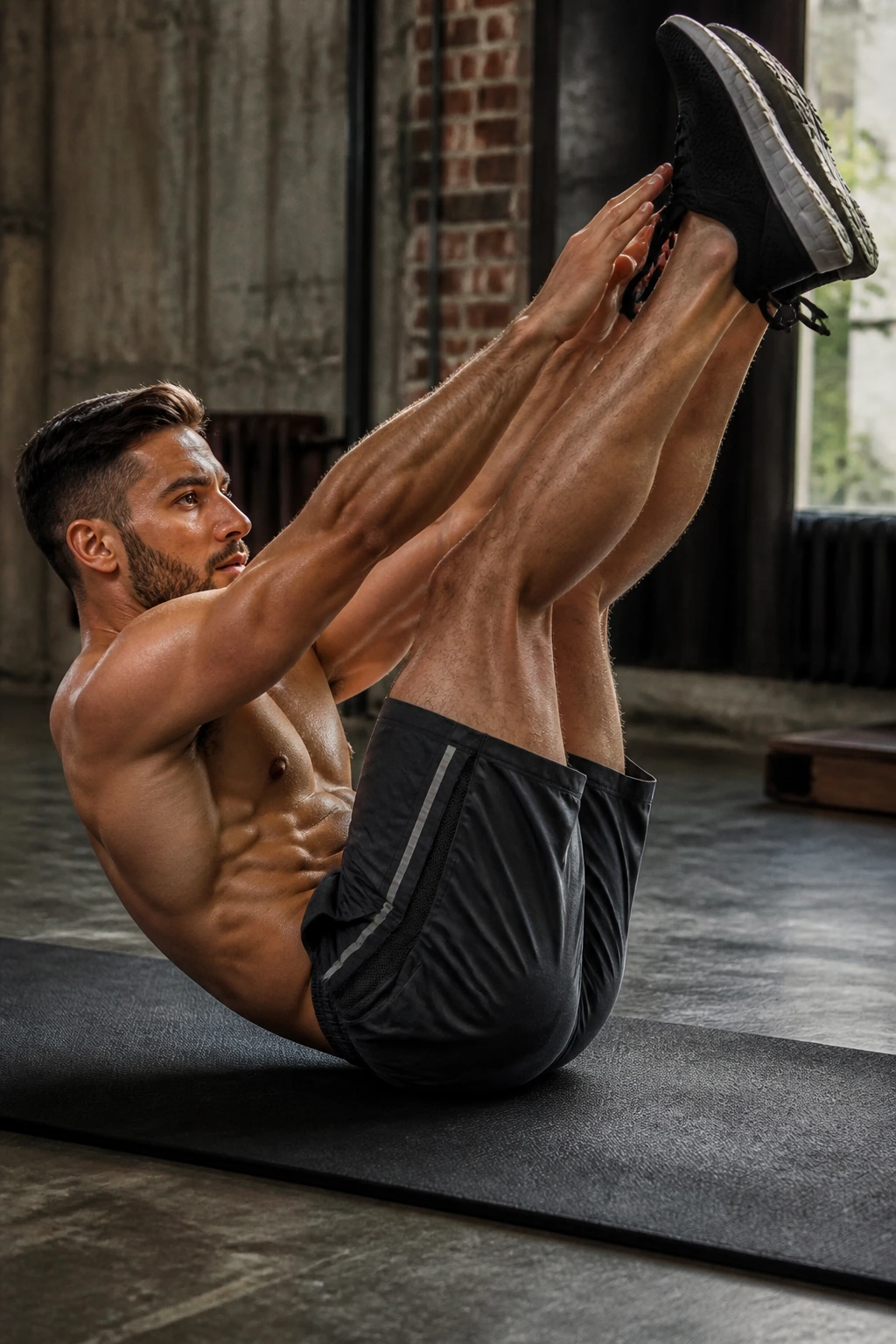
Jackknife crunches are where bodyweight starts to feel like a loaded exercise.
The body folds from both ends at once: torso lifting, legs coming up, abs squeezing hard through the middle. It is a bigger movement than a standard crunch, and it asks for more timing. If you rush it, the rep gets floppy fast. If you control it, it becomes one of the most demanding crunch-style moves on the floor.
A clean jackknife starts flat, then the arms and legs rise together as the torso folds. You do not need to touch the toes with a violent snap. You need a sharp curl, a brief pause, and a slow lower back down. Six to 10 reps is enough for most people.
This one is a good bridge between classic crunch work and harder V-up style training. It is also a useful finisher when you want the abs to quit before the rest of you does. If the low back complains, shorten the range and keep the legs a little higher.
Final Thoughts
Pick three of these and use them well. One basic move, one harder variation, one that hits the obliques or adds load. That is enough for most sessions, and it usually works better than trying to cram all 18 into one workout just because the list exists.
Progress does not need to be flashy. Slow the lowering phase. Add 2.5 or 5 pounds. Pause for one second at the top. Those small changes make crunch workouts harder in the right way, which is the whole point.
If your neck or lower back starts complaining, shrink the range and clean up the setup before you blame the exercise. The abs are strong enough to do their share. They just hate being dragged into sloppy reps.
