



Upper abs are one of those body parts people talk about as if they’re separate muscles. They’re not. What most people call the upper abs is the upper part of the rectus abdominis, and that matters because the best upper ab workouts aren’t about random burn or endless reps. They’re about making the rib cage curl down toward the pelvis with enough control that your hips don’t steal the job.
That’s where a lot of ab training goes sideways. People yank on their necks, swing through the movement, and call it a core session because their stomach feels tired. Sure. Your neck feels tired too, which is usually a clue. The cleaner approach is slower, tighter, and a little less dramatic.
Visible ab shape also has a boring truth attached to it: muscle size and body fat both matter. You can build stronger upper abs without seeing a clear line if body fat is higher, and you can be lean without having much definition if the muscle hasn’t been trained well. Those two things are linked, but they are not the same thing.
The 18 moves below cover the old-school crunch family, loaded variations, hanging work, and a few core drills that build the brace your abs need. Some are simple enough to do on a living-room floor. A few belong in a gym. All of them work better when you stop rushing and start feeling the top half of the curl. The first one is plain on purpose.
1. Floor Crunch for Upper Abs
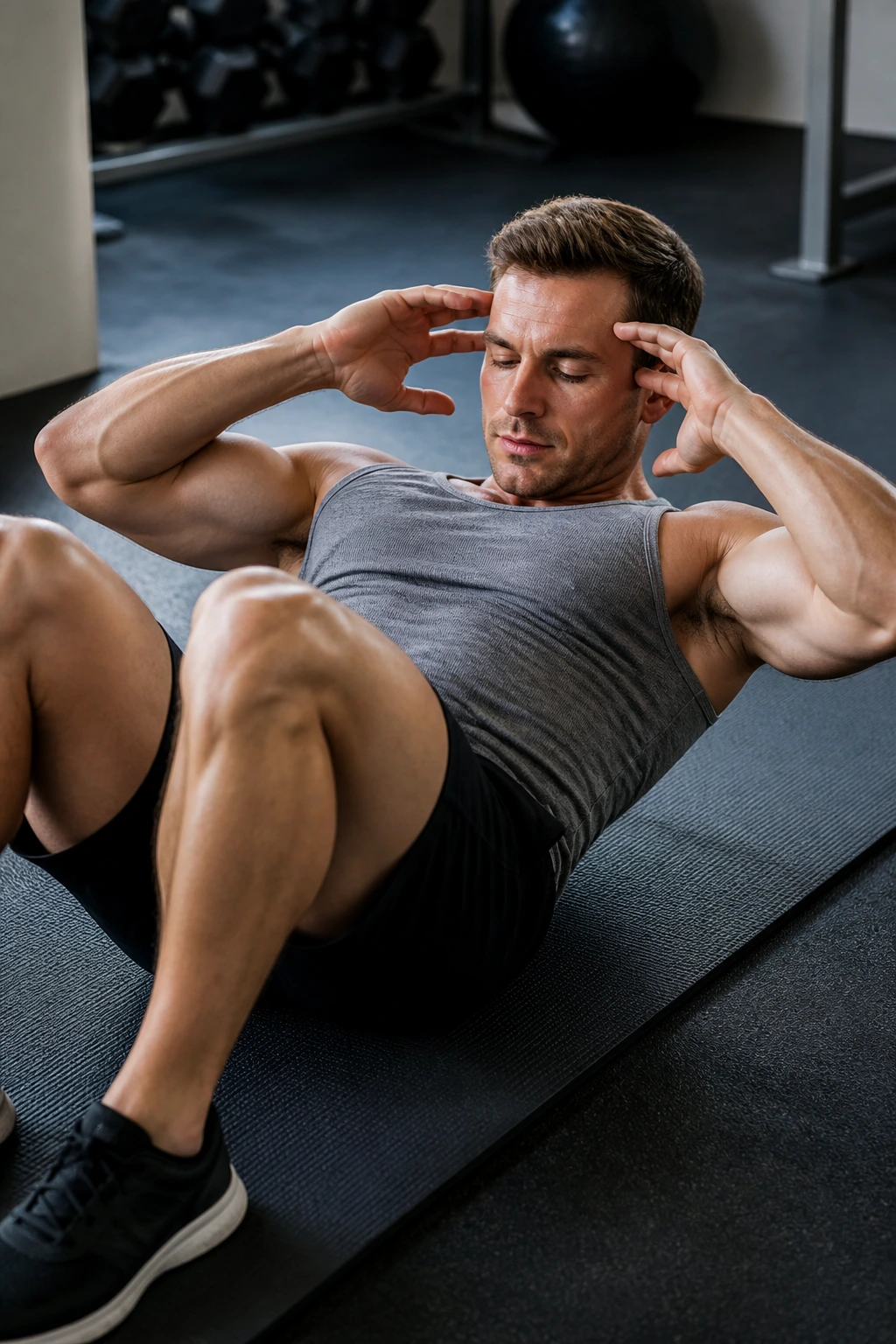
The floor crunch gets dismissed because it’s basic, and basic has a bad reputation. That’s unfair. When you do it with control, it gives the upper abs a clean, short range of motion that’s easy to feel and hard to fake.
How to Use It
Lie on your back with your knees bent, feet flat, and fingertips lightly at your temples or across your chest. Exhale as you lift your shoulder blades a few inches off the floor, then lower slowly until your shoulder blades barely touch down.
- Reps: 12 to 20
- Sets: 2 to 4
- Cue: Keep your chin slightly tucked, not jammed into your chest
- Mistake to avoid: Pulling your head forward with your hands
Best tip: Think about curling your ribs toward your hips, not “sitting up.” That tiny shift makes the movement feel much more like an ab exercise and much less like a sloppy mini sit-up.
2. Slow Tempo Crunch
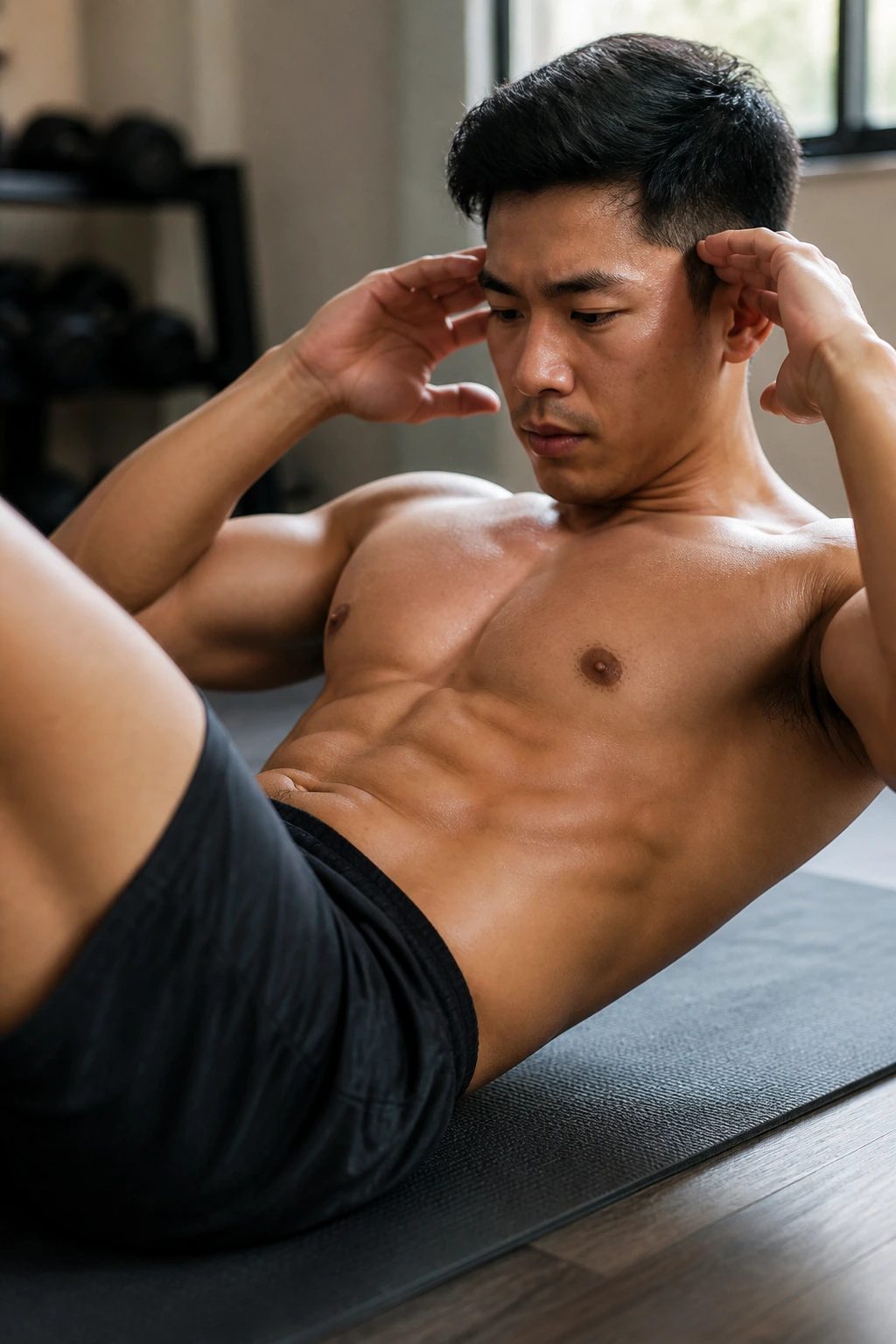
Speed ruins a lot of ab work. It turns the movement into a bounce, and bouncing makes the hips and neck do a job the upper abs should own.
A slow tempo crunch changes the whole feel. Go up for 2 to 3 seconds, squeeze for 1 full second at the top, then lower for another 2 to 3 seconds. That long lowering phase is where the upper abs get the ugly little lesson they need.
The move is boring in the best way. It strips out momentum and makes you honest about whether your trunk is actually doing the work. Use 8 to 12 reps, and stop before the last few reps turn into neck gymnastics. If your lower back arches hard off the floor, you’ve gone too big.
Most people need this more than they think.
3. Weighted Crunch
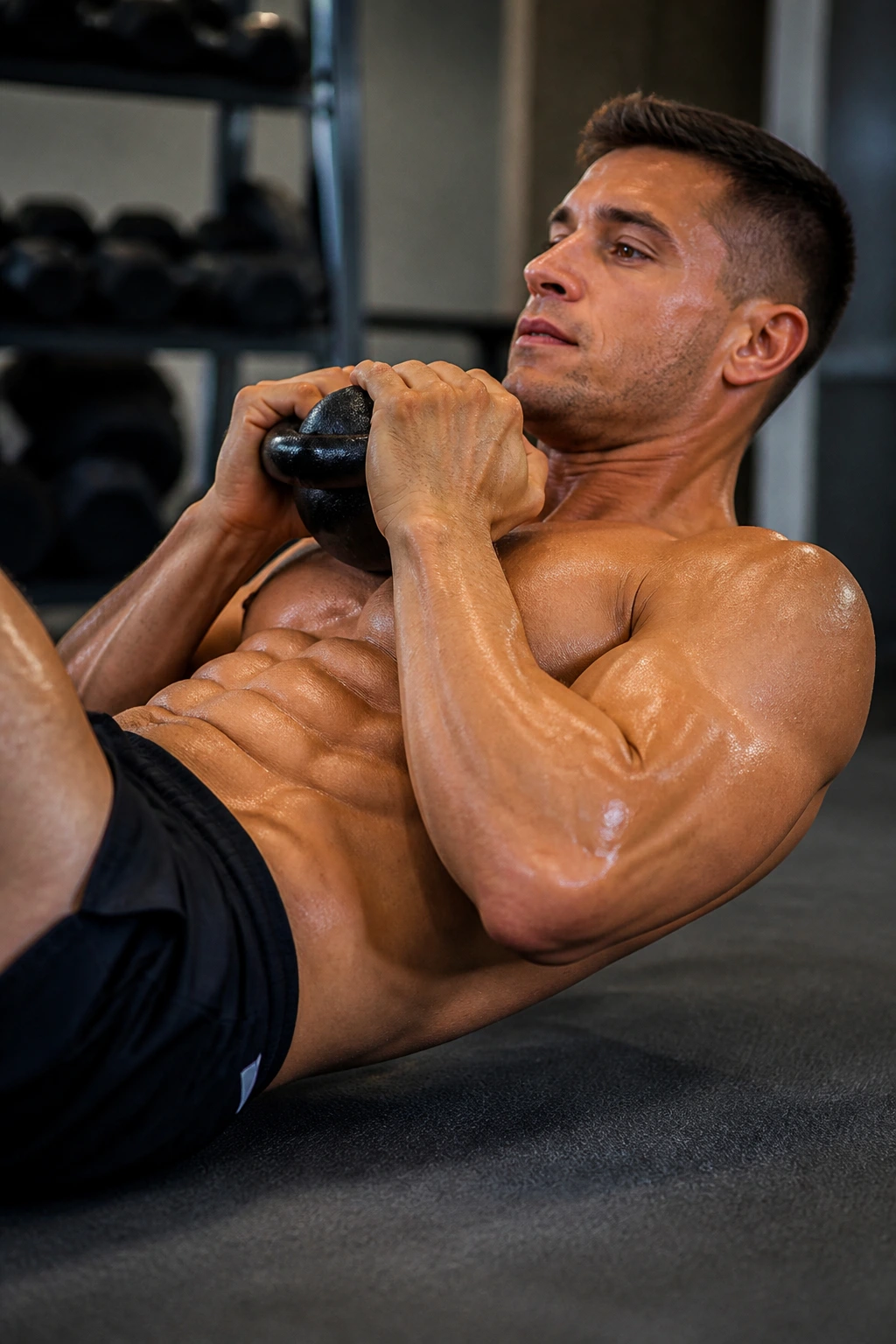
Once bodyweight crunches stop feeling like much, add load. A weighted crunch is a simple way to build thicker upper abs because it gives you a clear overload target instead of making you guess whether the set was hard enough.
Hold a 5- to 15-pound plate, a dumbbell, or a small medicine ball against your chest. If you’re new to it, keep the weight close to your body instead of reaching it overhead. That makes the movement cleaner and keeps your shoulders from turning into the main event.
- Reps: 8 to 15
- Sets: 3 to 4
- Tempo: Slow on the way down, crisp on the way up
- Form rule: Do not let the weight pull your neck forward
A weighted crunch should feel like the top half of your midsection is working against a short, stubborn lever. If it feels like a shoulder exercise, the load is too far away or too heavy.
4. Kneeling Cable Crunch for Upper Abs
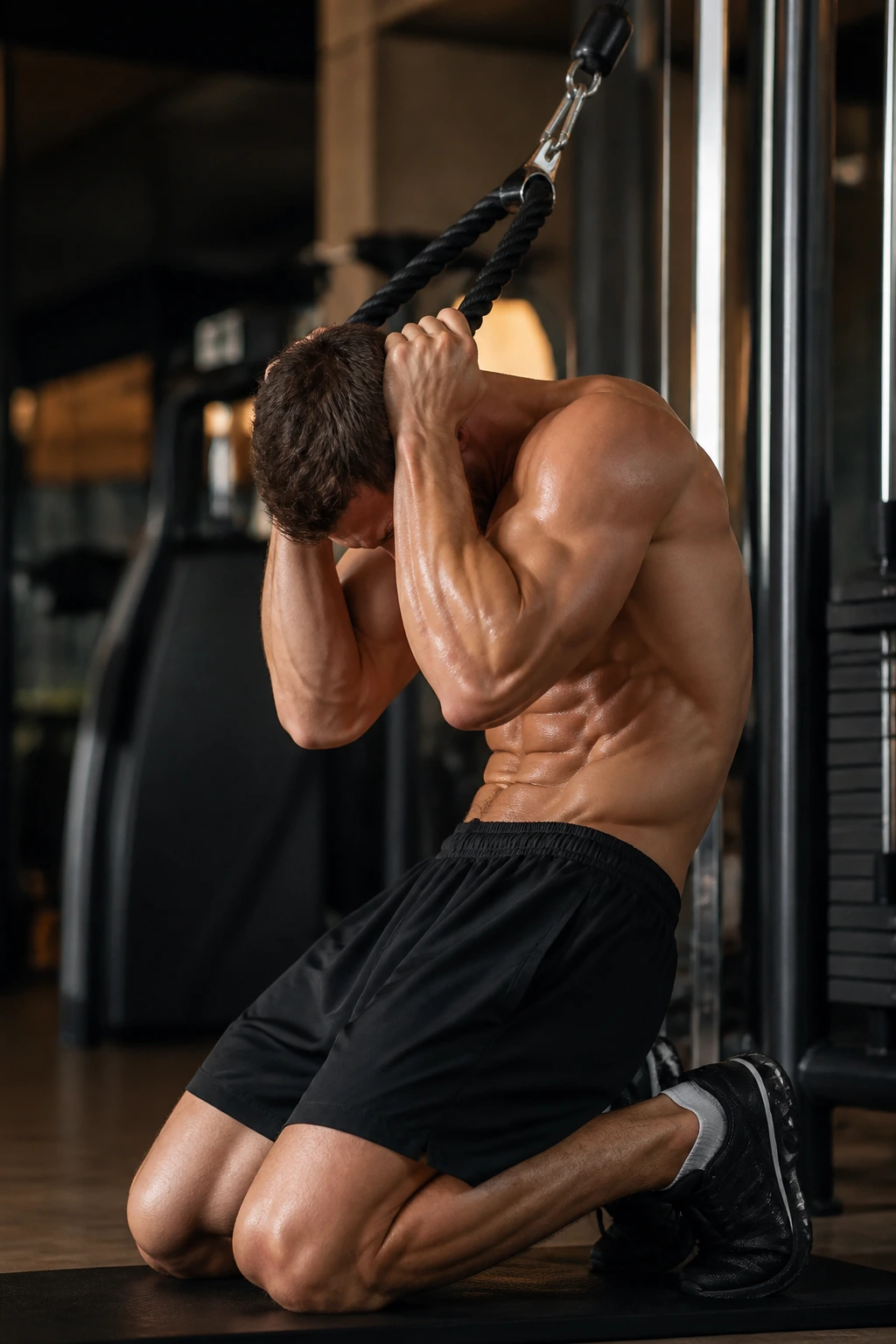
The kneeling cable crunch is one of those exercises that quietly solves a lot of problems. It gives you constant resistance through the whole curl, which means your abs can’t hide in the easy part of the rep.
Set a rope handle on a high pulley, kneel a foot or two back from the stack, and hold the rope beside your head. Curl your ribs toward your hips while keeping your arms mostly out of it. The rope is there to give you a load path, not to let you pull yourself down with your biceps.
This is the move I’d use if someone wanted measurable progress without much nonsense. Increase the stack only when every rep still looks the same from the first one to the last one. If the hips start hinging hard, the weight is too heavy.
The nicest thing about cable work is honesty. You can’t fake it for long.
5. Stability Ball Crunch for Upper Abs
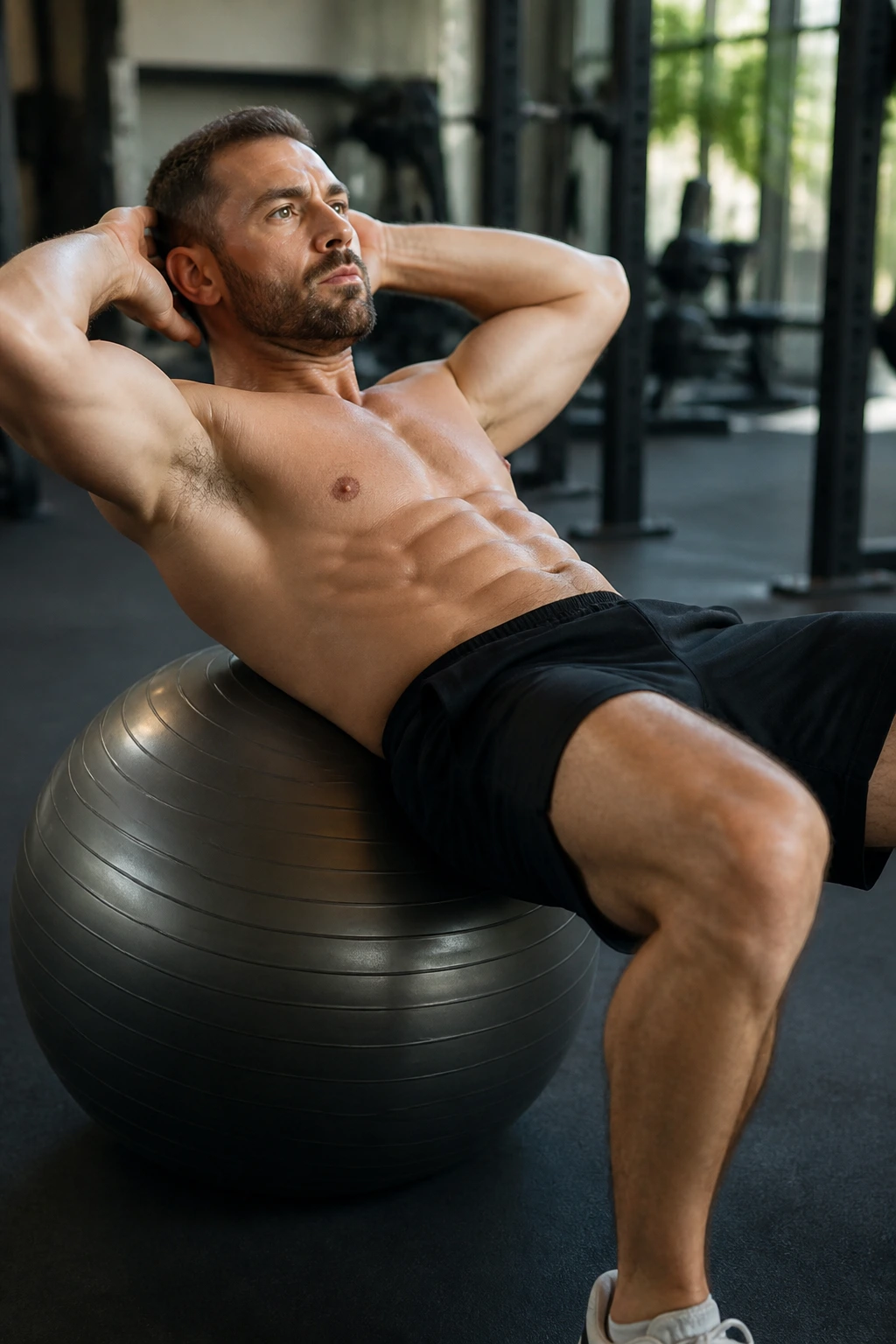
Why use a stability ball when the floor already exists? Because the ball lets your torso open up a little more at the bottom, and that extra stretch can make the upper abs feel like they’re doing a longer job.
What Makes It Different
The lower back gets a bit of support from the ball, but not enough to let you coast. You still need to curl the upper spine, and that’s the part most people rush right past. Feet stay planted, glutes stay relaxed, and your chest moves more than your hips do.
How to Do It Without Overextending
- Place the ball under your lower back and sit your hips low on it.
- Keep your feet wide enough that you feel stable.
- Lift the chest a few inches, not a mile.
- Lower until you feel a gentle stretch through the abs.
Twelve to 15 smooth reps is a good place to start. Go too high and the move turns floppy. Go too fast and it turns into a little bounce on a big rubber ball, which looks worse than it feels.
6. Decline Bench Crunch
A decline bench changes the leverage enough to make a familiar movement feel fresh again. Your torso works against gravity for more of the range, and that makes the upper abs pay attention fast.
Use a mild decline at first. Steep benches can be rough if your hip flexors tend to dominate or if your lower back complains when your pelvis tilts too much. Hook your feet under the pads lightly, not like you’re trying to win a tug-of-war with the machine.
- Reps: 8 to 15
- Angle: Start with a small decline, not the steepest setting
- Cue: Lift through the sternum, then lower under control
- Warning: Do not fling your torso back between reps
The best decline crunch looks almost quiet. No jerking, no bouncing, no dramatic rocking. Just a solid curl and a controlled return.
7. Toe-Touch Crunch
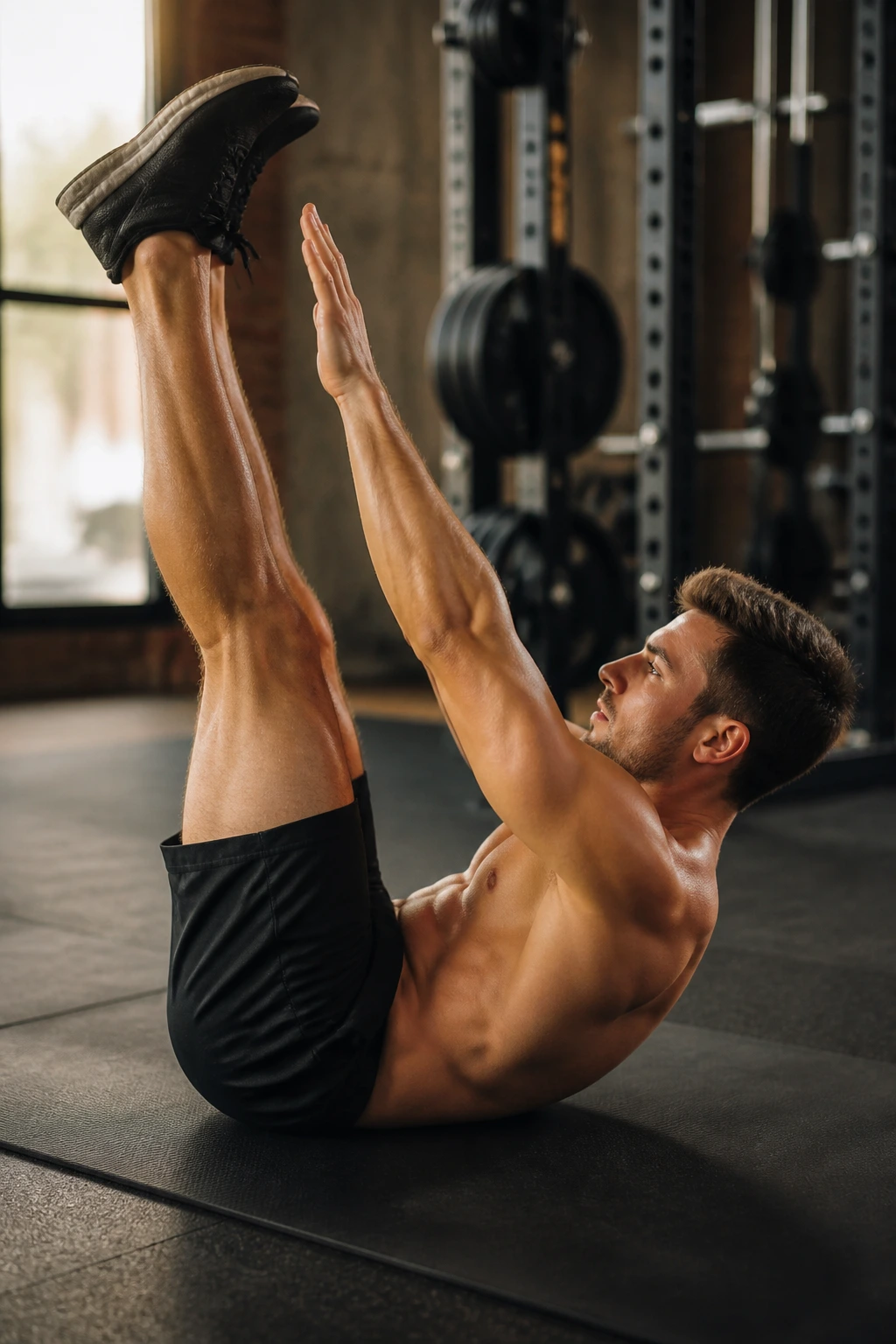
The toe-touch crunch looks simple enough that people often rush through it. Bad idea. It gets ugly the moment you start swinging your legs to meet your hands.
Lie on your back with your legs straight up, or slightly bent if your hamstrings fight you. Reach both hands toward your toes while lifting the shoulder blades off the floor. The upper abs have to shorten hard here, and that short top range is the whole point.
One-sentence truth: If your lower back is popping off the floor, the rep is too big.
A small bend in the knees is fine. Actually, it’s better than a messy straight-leg version that you can barely control. Ten to 15 reps is usually enough, and a slow exhale at the top helps keep the ribs down instead of letting the torso flare open.
8. Jackknife Sit-Up
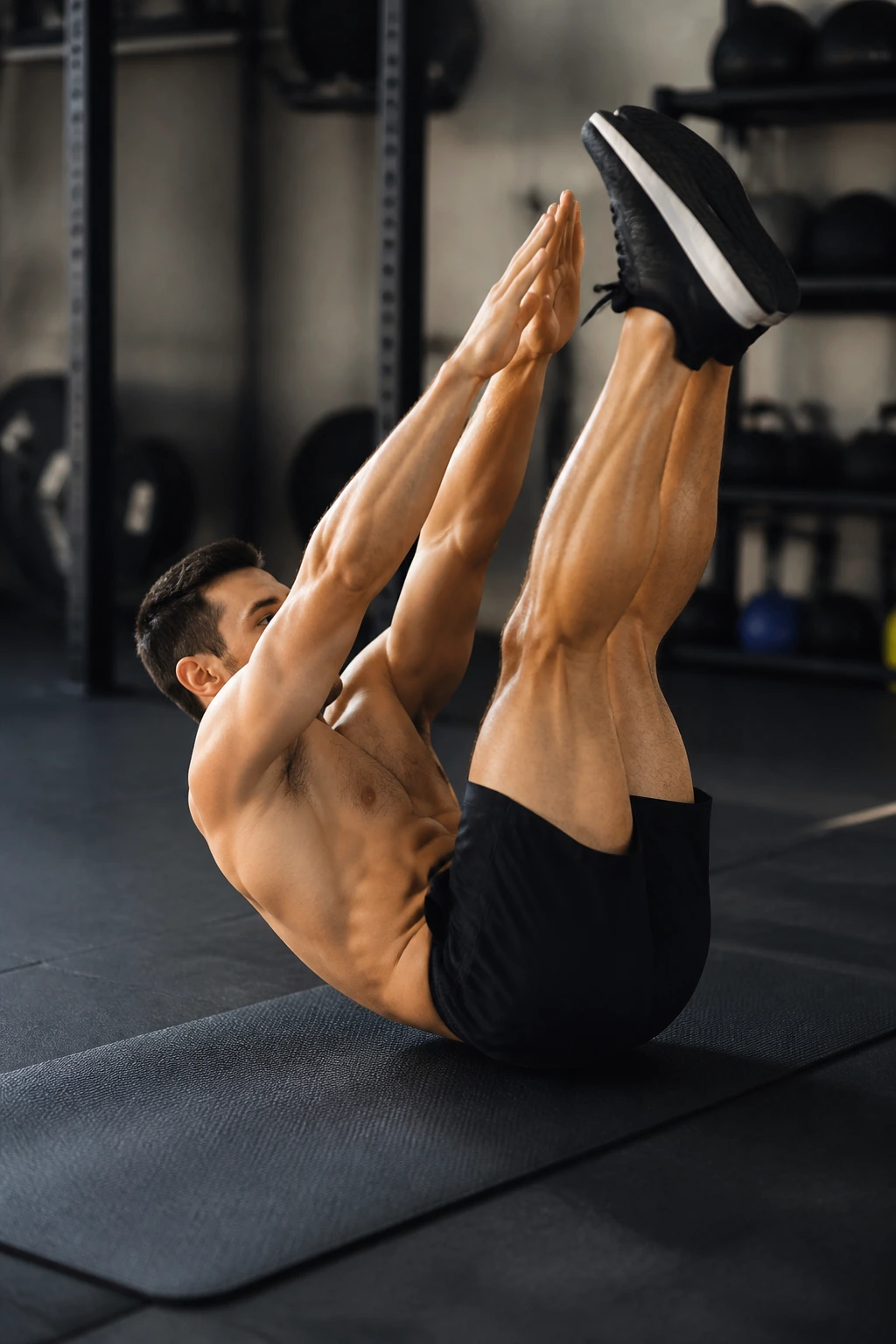
The jackknife sit-up sits somewhere between a crunch and a full sit-up, which is why I like it more than a lot of people do. It asks for more trunk flexion than a regular crunch, but it doesn’t always need the wild swing of a full sit-up.
You start long, then fold the torso and legs toward each other. The upper abs still work hard because they have to finish the curl, especially if you pause for a beat at the top. It’s a neat move for people who want a more athletic feel without needing equipment.
Use this one carefully if your lower back is touchy. It’s a little more demanding than it looks, and sloppy reps can turn into momentum junk fast. Three sets of 6 to 10 controlled reps is plenty.
Honestly, if you can keep the movement smooth, this one earns its place.
9. Reverse Crunch with a Curl
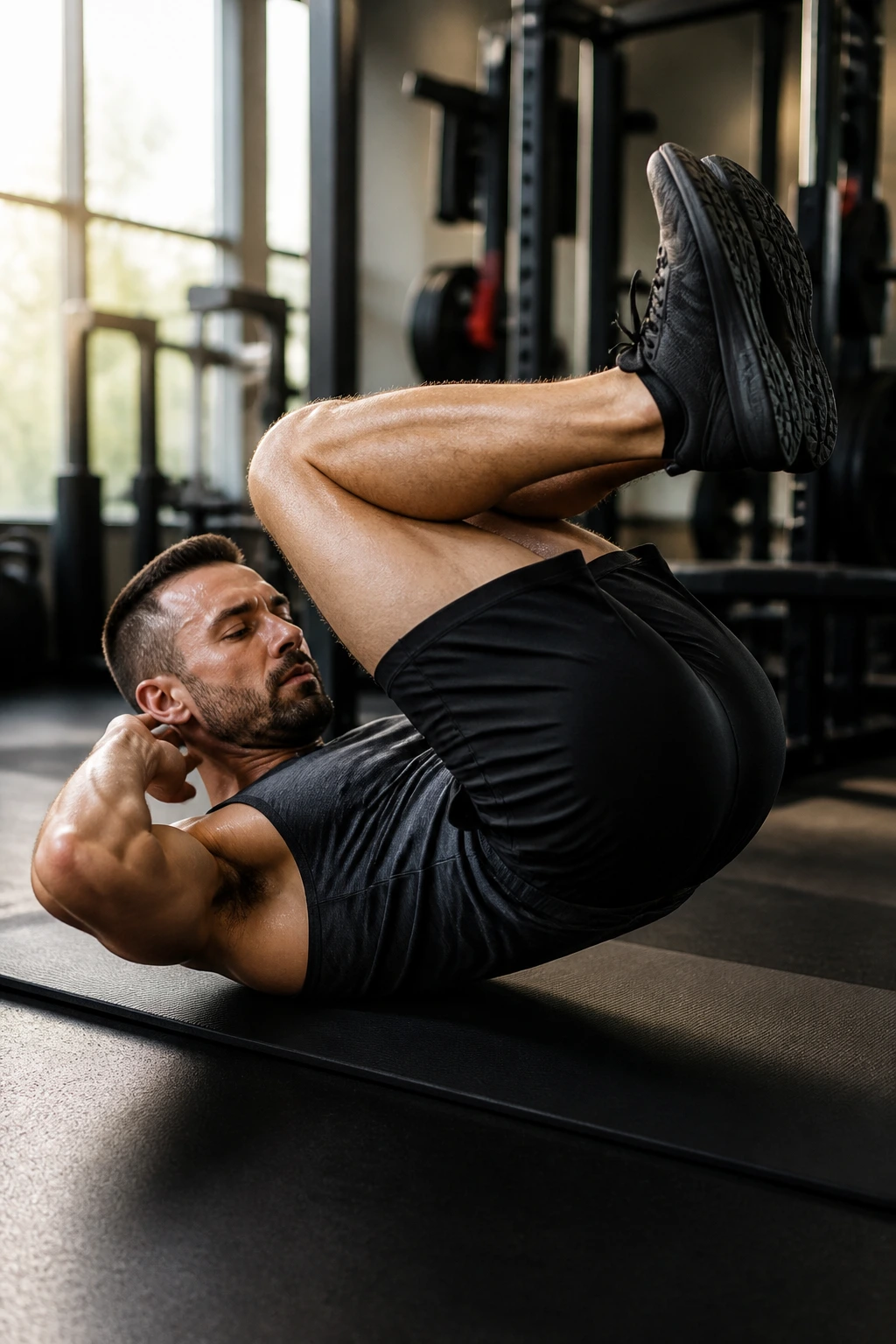
Can a reverse crunch train the upper abs? Yes, if you finish it correctly. The leg lift gets the pelvis moving, but the curl at the end is what pulls the upper trunk into the work instead of leaving the hip flexors to boss the whole set around.
The Finish Matters
Lie on your back and bring your knees toward your chest. From there, gently curl your tailbone up, then let the top of your spine follow with a small rib crunch. That last little lift is what changes the exercise from “lower ab-ish” into a fuller abdominal drill.
How to Use It
- Keep the motion slow.
- Pause for 1 second at the top.
- Lower with control until your low back almost touches down.
- Stop if the legs start swinging.
Aim for 10 to 15 reps. If you rush this one, it stops being useful fast. If you stay patient, it gives the abs a tough, compact contraction that feels different from a normal crunch.
10. V-Up
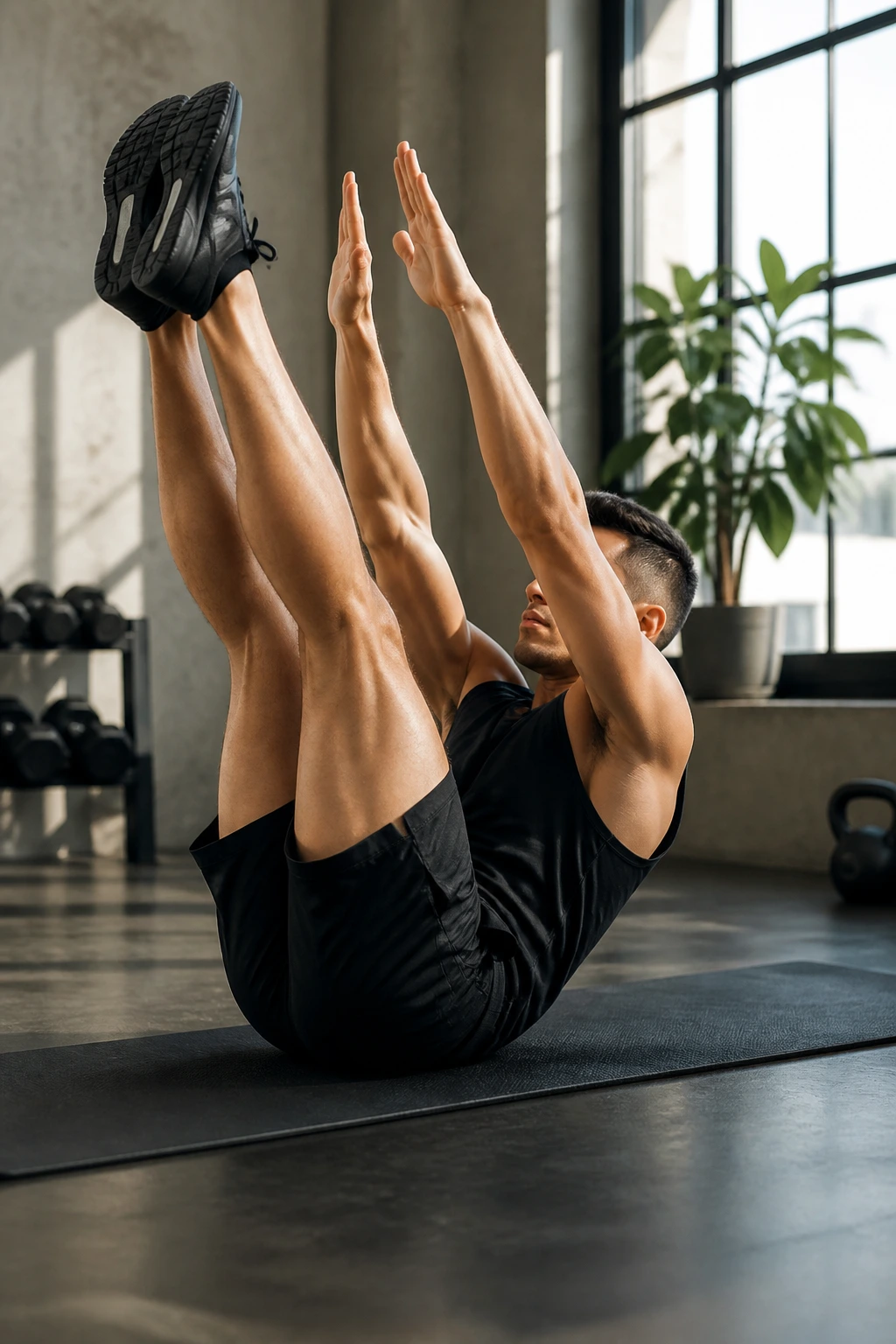
The V-up is the kind of exercise that looks clean on paper and humbles people in person. You lift your legs and torso together, and both sides of the core have to cooperate fast or the movement falls apart.
Start lying flat with arms overhead. Raise the legs and torso at the same time until your hands reach toward your shins or toes, then lower under control. The upper abs work hard because they have to shorten while the body folds into a tight angle. The challenge is coordination as much as strength.
If you can’t keep the low back from arching, bend the knees a little. That tiny change makes the exercise much more manageable and keeps the set from turning into a speed contest.
- Reps: 6 to 12
- Best use: Short, hard sets
- Caution: Don’t throw the legs upward
This one burns quickly. That’s normal.
11. Pulse Crunch
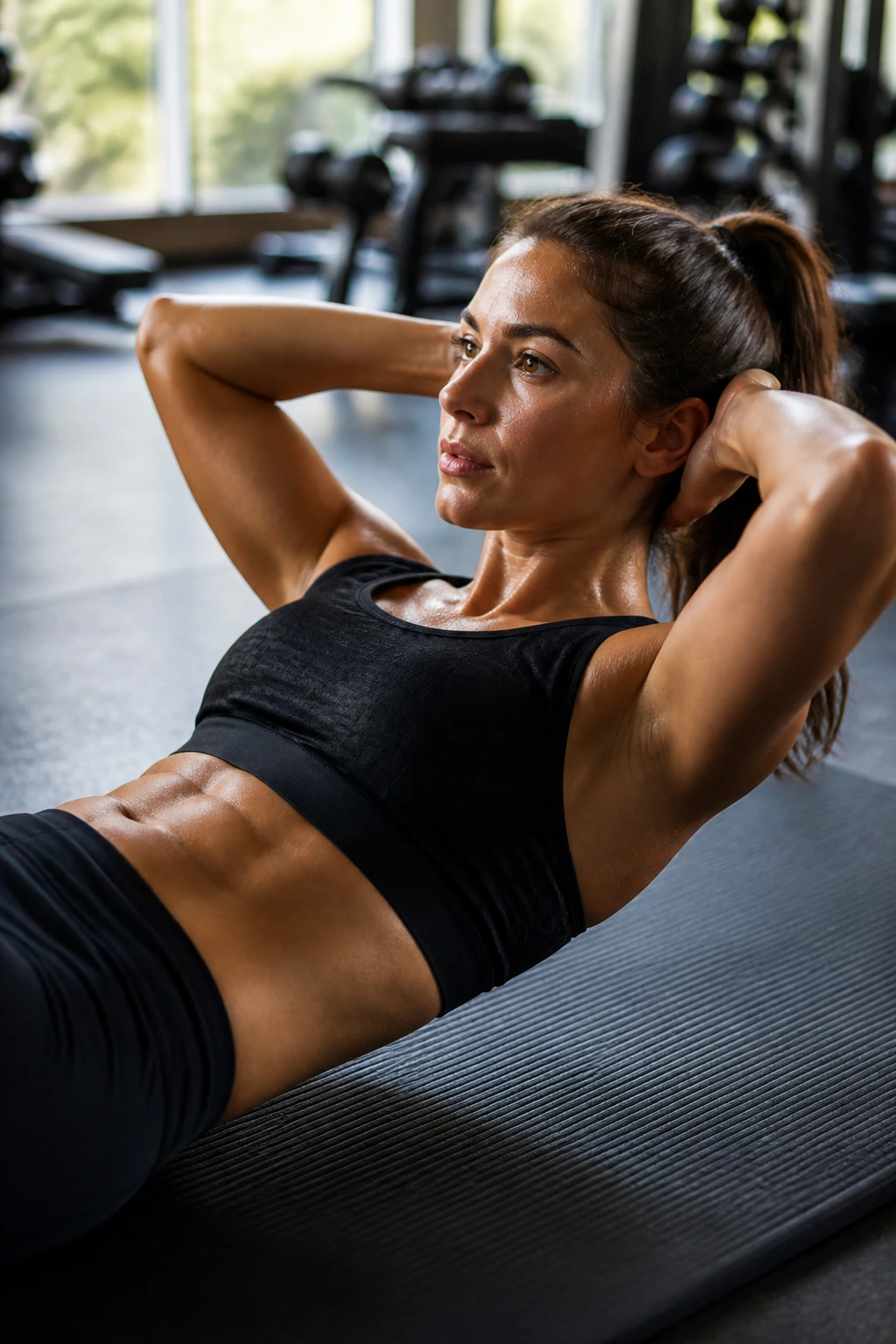
A pulse crunch is exactly what it sounds like: a tiny, mean little top-range contraction. It’s not fancy. It’s a finisher, and it does its job if you respect the range.
After you come up into a standard crunch, hold the top half inch and pulse in short, controlled movements. The abs stay under tension the whole time, which is why this feels different from regular reps. You’re not trying to move far. You’re trying to keep the muscle shortened.
Use 10 to 20 pulses after a normal set of crunches, or tack them onto the end of a circuit. Do not use this as your main ab drill unless you like neck strain and vague disappointment.
One good set of pulses can light up the upper abs faster than five sloppy minutes of flailing around.
12. Medicine Ball Crunch
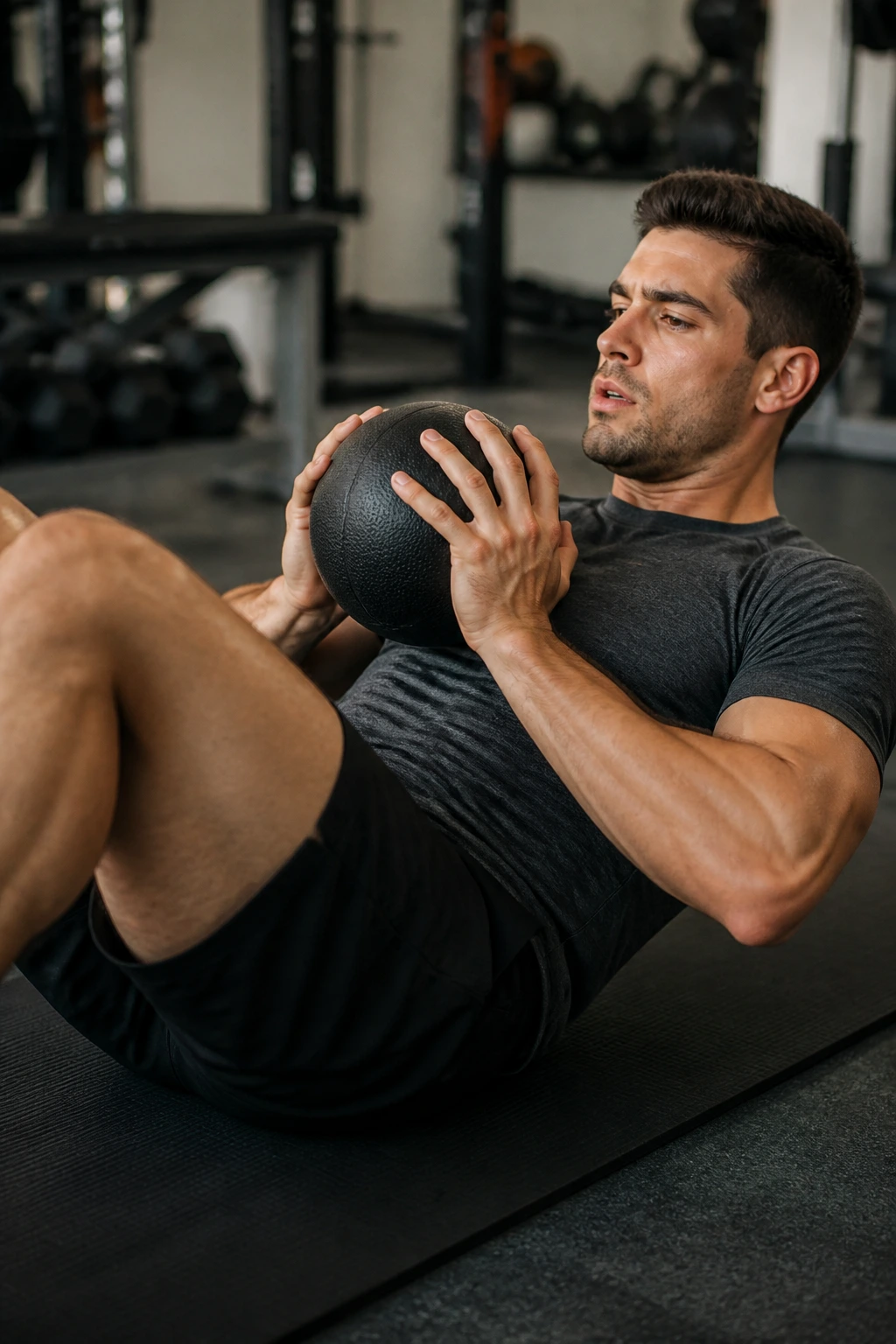
A medicine ball crunch is a cleaner version of a weighted crunch, and it’s one I like because the ball makes the load easy to hold without cranking the wrists or shoulders into a weird angle. It also keeps the hands occupied, which helps people stop tugging on the neck.
Hold a 2- to 10-pound medicine ball against your chest or slightly above it. Then crunch the torso up with the same compact range you’d use on the floor. The only real difference is that the top contraction feels denser, because the load is sitting right where the rib cage wants to fold.
If you want a little more challenge, use the ball on a decline bench. If you want a simpler version, keep it on the floor and make the lowering phase slow. Either way, the quality cue stays the same: the chest should rise because the abs curled it there, not because the hips launched it.
A small load goes a long way here. Start light.
13. Seated Knee-Tuck Crunch
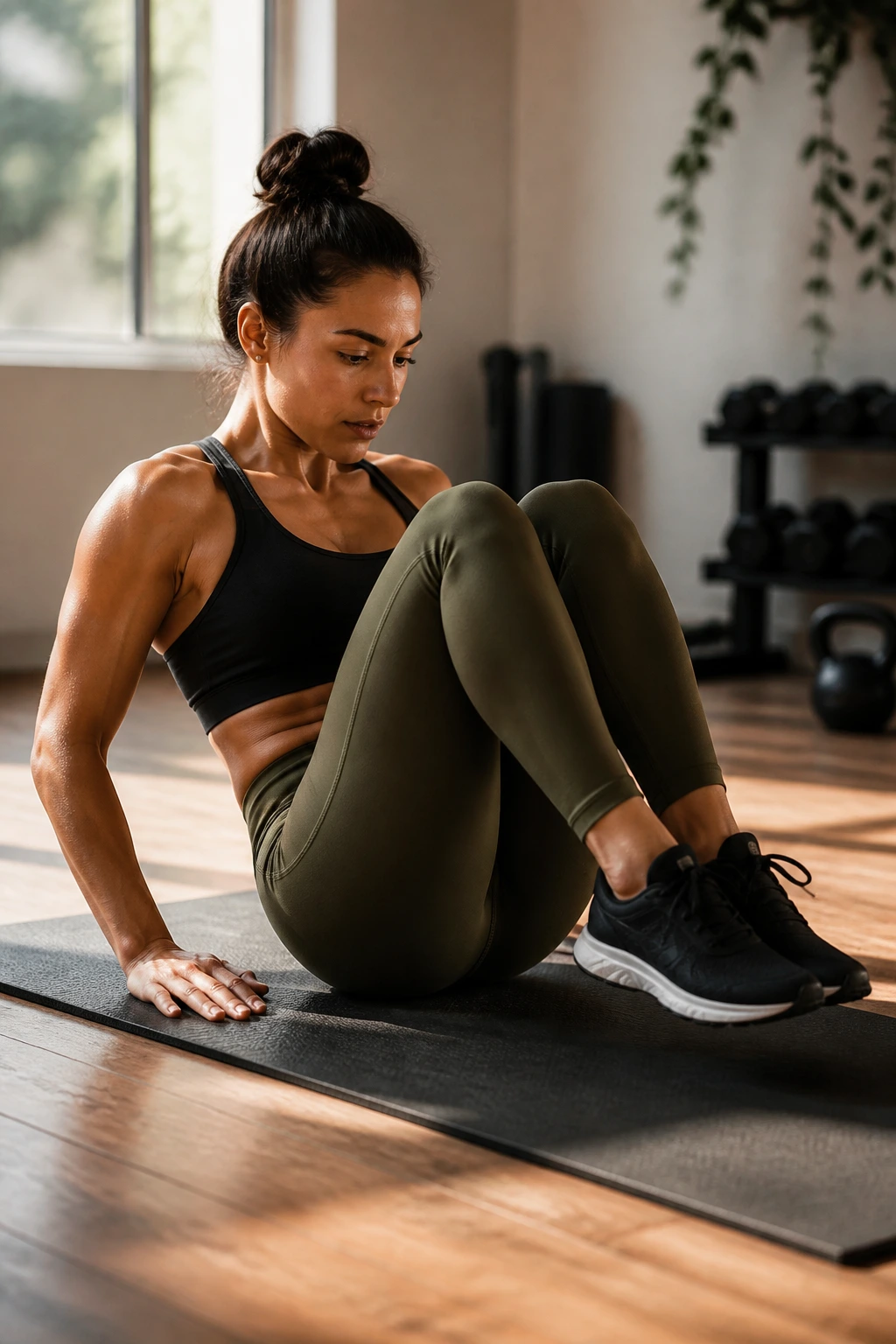
Unlike a regular crunch, the seated knee-tuck crunch gives you a tighter little fold at the middle of the body. It’s useful when you want something compact, fast, and easy to set up without a bench or cable stack.
Sit on the floor, lean back a few inches, and keep your hands planted lightly behind you or off the floor for a harder version. Pull the knees in while curling the torso forward, then extend back out without losing control of your midsection. The upper abs work to close the gap between ribs and pelvis, which is exactly what you want from an ab move.
This is a good pick for home workouts or as part of a short circuit. It’s also friendly if your wrists hate planks. Aim for 10 to 15 reps, and pause for a beat when the knees and chest get close.
Not everything needs to be dramatic. This one isn’t, and that’s part of the charm.
14. Roman Chair Sit-Up
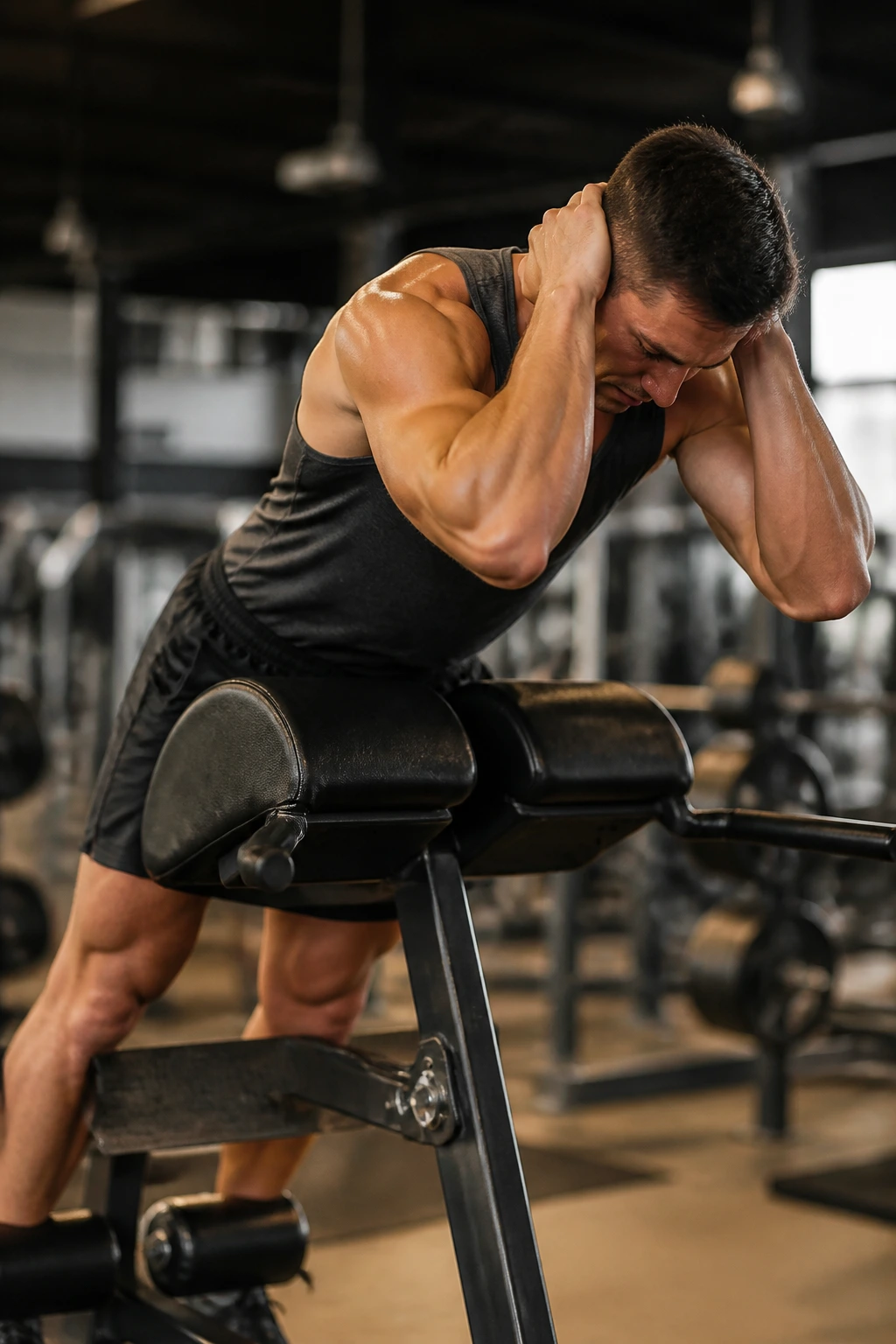
Is the Roman chair sit-up a little much for some people? Yes. Does that make it useless? Not even close. On the right body, with the right control, it’s one of the toughest bodyweight ways to load the upper abs and the rest of the trunk.
Use It Like a Strength Move
Set the pad so your hips can hinge freely, then lower under control and come up without whipping the torso around. The upper abs work hard in the top half of the return, especially if you stop just short of a full collapse at the bottom.
- Start with: 5 to 8 reps
- Rest: 60 to 90 seconds
- Style: Slow down, controlled up
- Watch for: Excessive arching in the lower back
If your lower back isn’t happy with this one, skip it. Seriously. There are enough ab exercises in the world that you do not need to force a bad fit.
15. Hollow Body Hold for Upper Abs
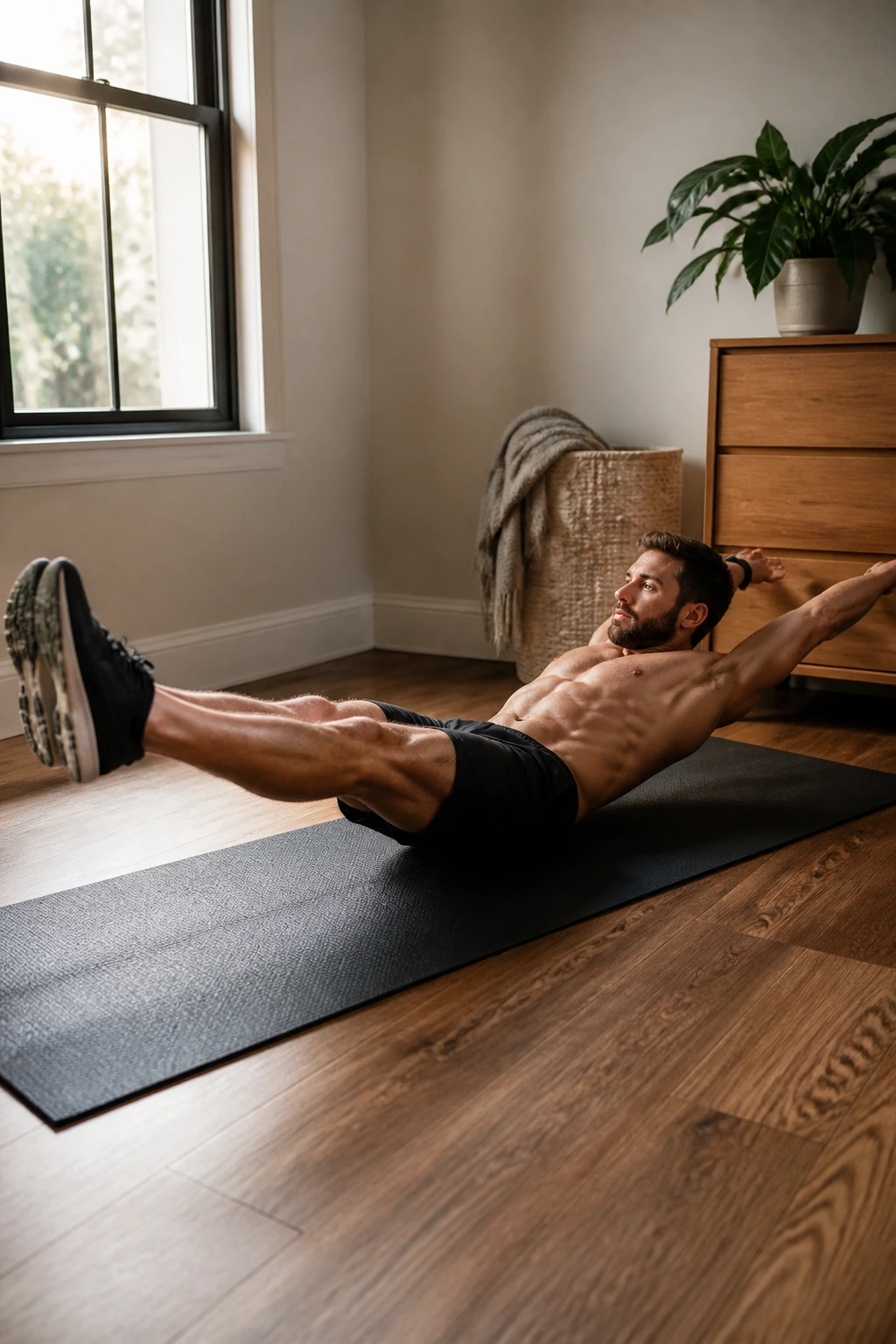
A hollow hold is not a crunch, and that’s exactly why it belongs here. The abs have to keep the ribs tucked while the lower back stays pressed into the floor, which makes the whole front of the torso work without any big movement at all.
Lie on your back, flatten your lower spine, and lift your shoulders and legs a few inches off the floor. Arms can stay by your sides, reach overhead, or point toward your feet depending on how hard you want it. The upper abs are working isometrically, which means they’re holding tension instead of shortening through a rep.
A Clean Setup
If your back arches, bend the knees. If your neck gets cranky, keep the chin tucked and the gaze up. Fifteen to 30 seconds is enough for a strong hold when the position is strict.
This move looks calm. It isn’t.
16. Machine Crunch
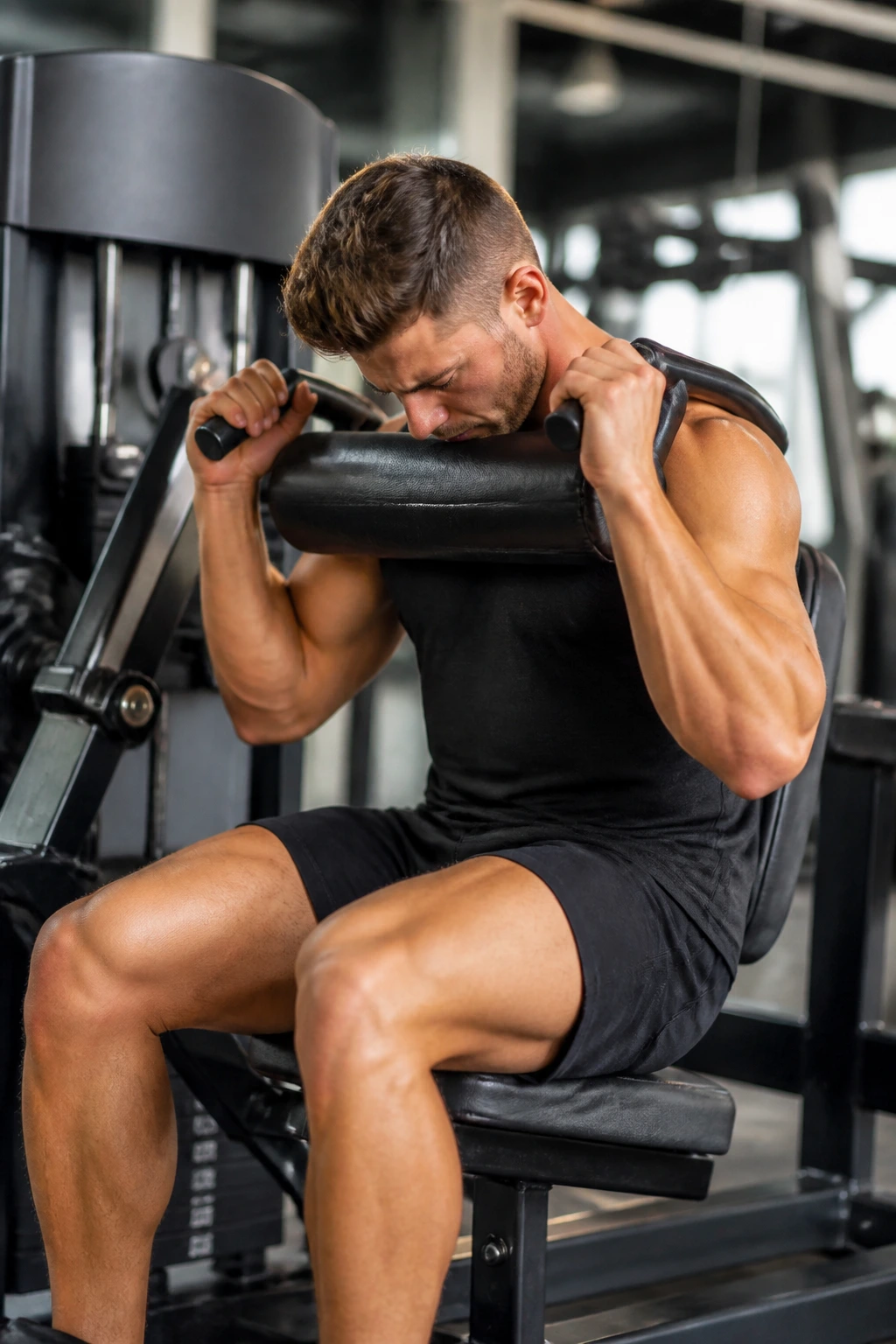
If your gym has a crunch machine that doesn’t feel flimsy, use it. The pads and lever arm remove some of the balancing nonsense, which lets you focus on the actual curl instead of trying to stop your body from sliding around.
Sit tall, set the machine so the pad lands across the upper torso, and curl down slowly against the stack. The best part is the repeatability. Every rep starts from the same spot, and that makes it easier to judge whether you’re getting stronger instead of just getting sweaty.
- Keep the range tight.
- Exhale hard at the bottom.
- Don’t slam the weight stack.
- Use a load you can control for 8 to 12 reps.
A machine crunch is not glamorous. It’s useful, which is better.
17. Ab Wheel Rollout
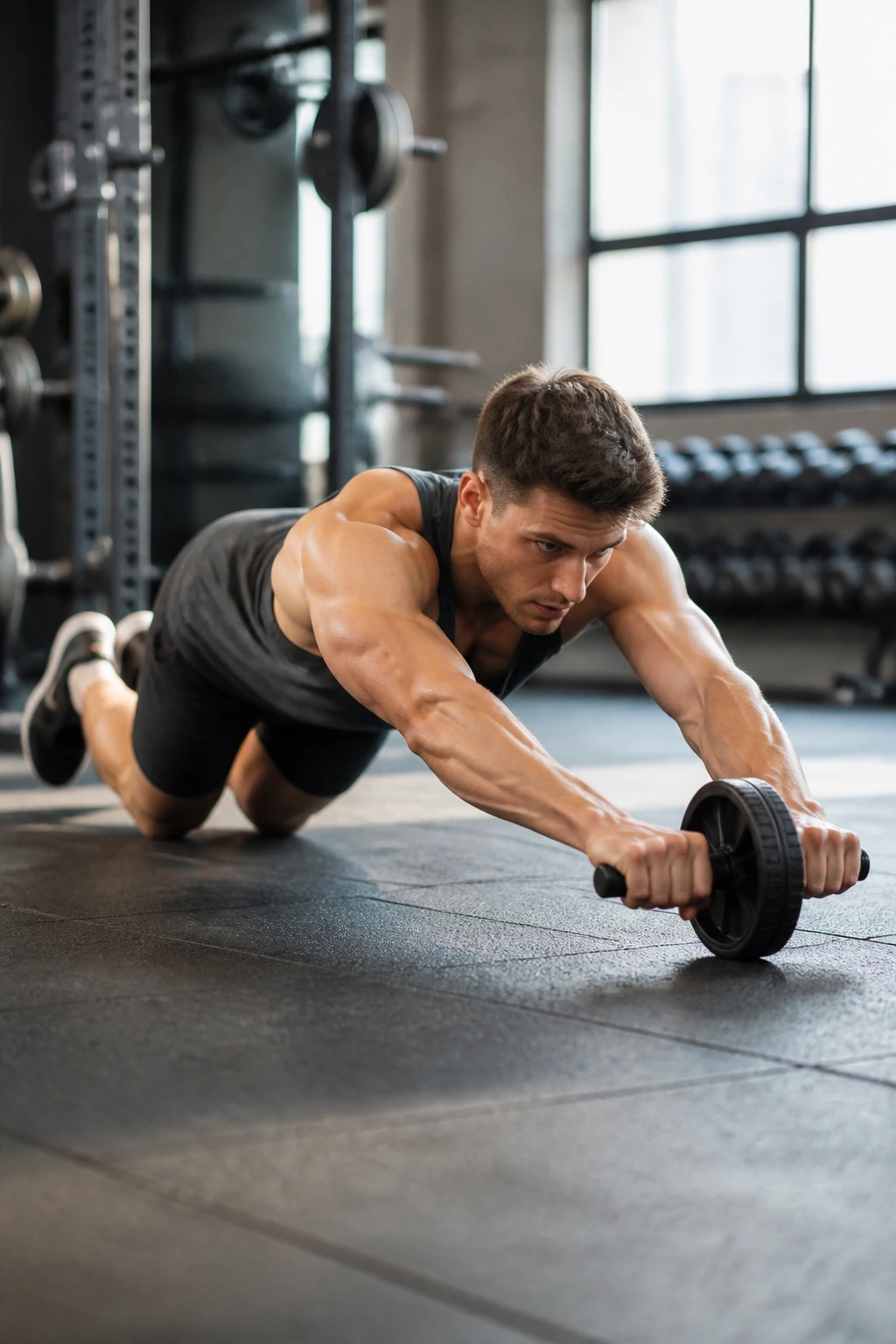
The ab wheel rollout is more than an ab exercise, and that’s why it’s worth doing. It trains anti-extension first — meaning your torso has to resist arching — but the upper abs still work hard when you pull the body back into line.
Start on your knees if you’re new to it. Roll out only as far as you can without the low back sagging or the ribs flaring. Then pull back by bracing the core and bringing the rib cage home. The upper abs don’t get the same obvious squeeze as a crunch, but they work hard to stop your spine from turning into a banana.
This is best for people who already have some core strength. If your first rep feels shaky, shorten the range and stop there. That’s not a failure. That’s smart training.
A tiny rollout done well beats a long rollout done badly.
18. Hanging Knee Raise with a Curl
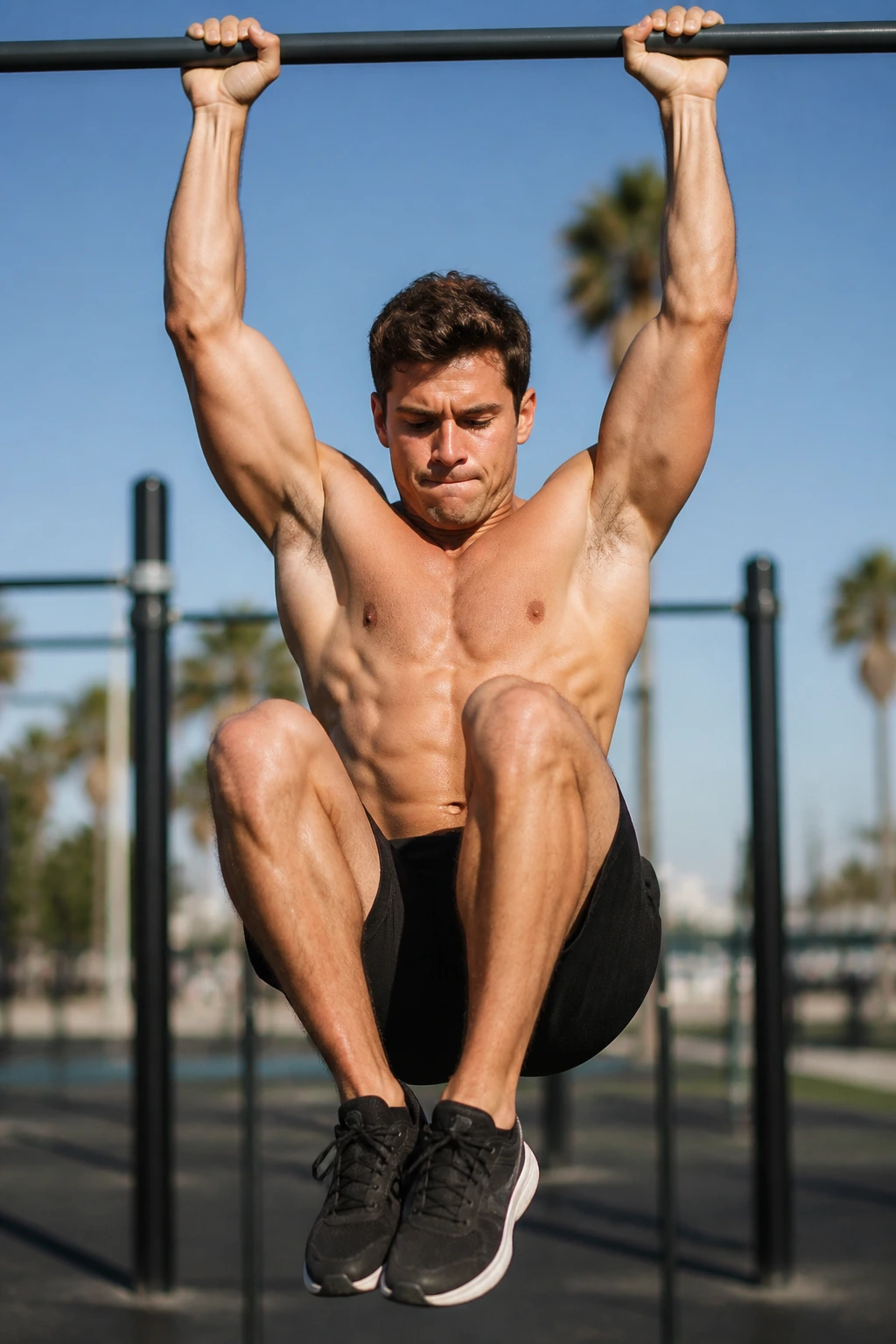
Why add a curl to a hanging knee raise? Because the knee lift alone can drift into hip-flexor work if you’re not careful. The curl brings the upper abs back into the picture and gives the whole movement a better finish.
Hang from a bar, raise the knees toward the chest, then roll the pelvis up slightly and curl the torso just enough to feel the ribs close down. That last part is small, but it matters. The abs should feel like they’re compressing the front of the body, not just surviving the leg swing.
How to Make It an Ab Move
- Start with a dead hang and stable shoulders.
- Lift the knees with control.
- Add a small posterior pelvic tilt at the top.
- Lower slowly so the body doesn’t swing.
Use 6 to 12 clean reps. If your momentum starts growing, pause between reps or switch to captain’s-chair knee raises before going back to the bar.
This is a strong finisher. It’s also the kind of move that tells the truth fast.
