



The best ab workouts for men are rarely the ones that leave you drenched and hating life after 100 sloppy crunches. A defined core comes from moves that make your trunk resist extension, rotation, side-bending, and lazy posture under load. If your midsection only fires when you bend forward fast, you’re missing most of the work.
There’s also a blunt truth that gets skipped because it isn’t fun to say out loud: visible abs are partly about training and partly about how much body fat sits over them. That does not make ab work pointless. It means the right training has to build thicker, harder-working muscles and better control, not just burn.
That’s where a smart mix helps. Floor work builds control. Hanging work builds strength through a bigger range. Carries and anti-rotation drills make your core behave like it should when the rest of your body is moving. Good abs show up in the way you brace for a heavy set, catch yourself on a stumble, or keep your ribs from flaring when a lift gets ugly.
Start with the floor-based pieces if you’re new. Earn the hanging and loaded versions. Simple. Harder than it looks. That’s usually where the useful stuff lives.
1. Dead Bug
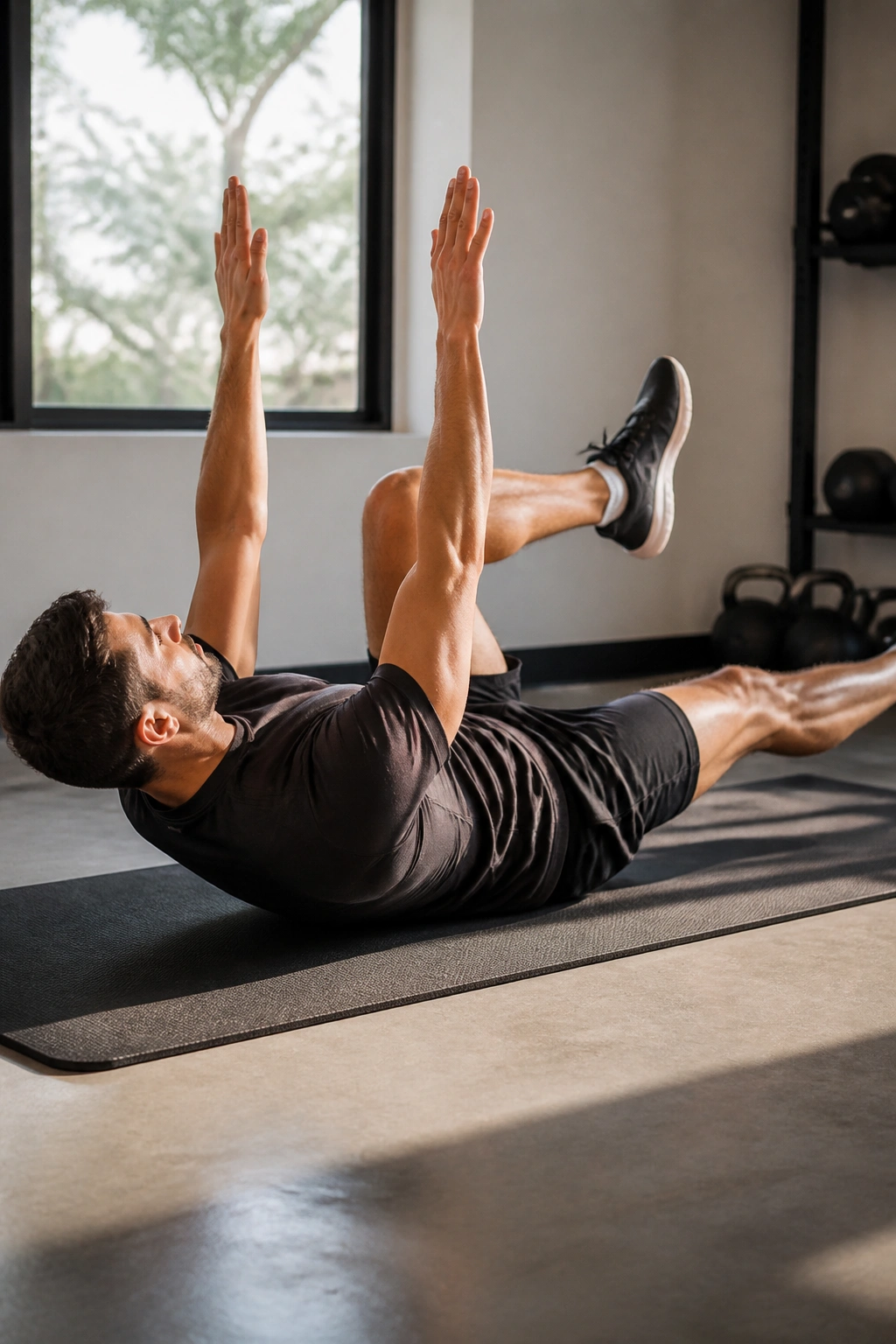
A dead bug looks almost insultingly easy until your lower back starts to peel off the floor.
That little fight is the whole point. The dead bug teaches your abs to hold your pelvis steady while your arms and legs move in opposite directions, which is the exact pattern most people lose when they try to get a “tight core.” You’re not chasing burn here. You’re teaching control.
Why It Works
The dead bug builds anti-extension strength, which means your torso learns not to arch when your limbs move. That matters in presses, squats, carries, and even basic daily stuff like lifting a box without letting your ribs flare. It also teaches you to exhale hard enough to bring the ribs down, which is a detail a lot of lifters skip.
Quick Setup Cues
- Lie on your back with your arms straight up and hips and knees bent at 90 degrees.
- Press your lower back into the floor before you move.
- Lower one leg and the opposite arm slowly.
- Stop the range the second your back arches.
- Do 6 to 10 reps per side for 2 to 4 sets.
Best tip: shorten the reach before you make the movement faster. Faster dead bugs are usually worse dead bugs.
2. Forearm Plank
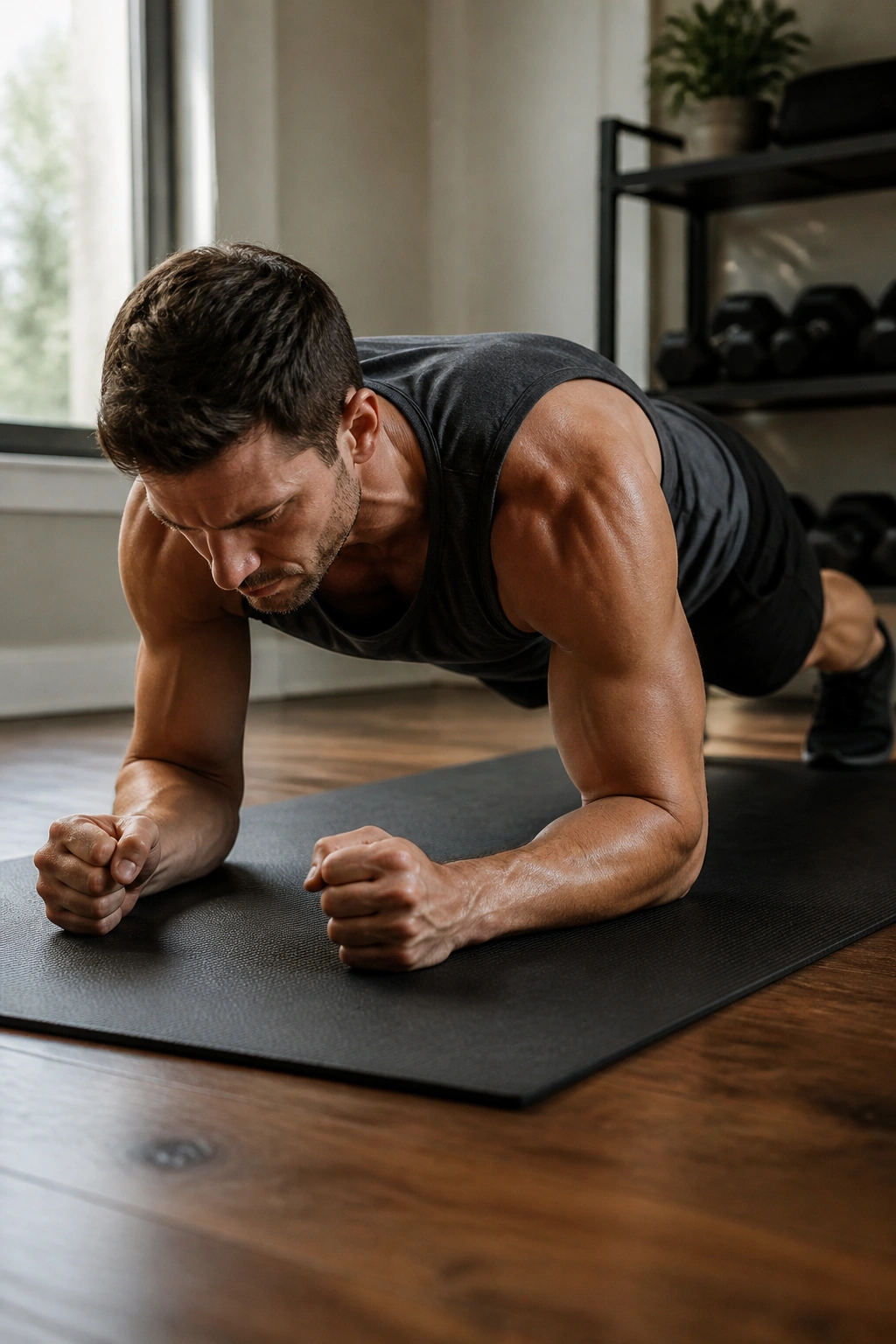
A plank done well is not a time test. It’s a full-body brace.
Most people turn planks into a waiting game and then wonder why their abs never feel trained. The real work is in the first 10 seconds, when you lock your ribs down, squeeze your glutes, and stop your lower back from sagging. If that sounds simple, try holding it with honest tension for 30 seconds.
A good forearm plank trains the front of the core, yes, but it also wakes up the shoulders, glutes, and deep trunk muscles that keep everything stacked. That’s why I like it for men who lift heavy. It teaches the body to stay tight when the load wants to pull it apart.
Keep your elbows under your shoulders, feet hip-width apart, and neck long. Don’t let your hips drift up just to fake an easier hold. If your back starts to take over, the set is already over.
3. Reverse Crunch
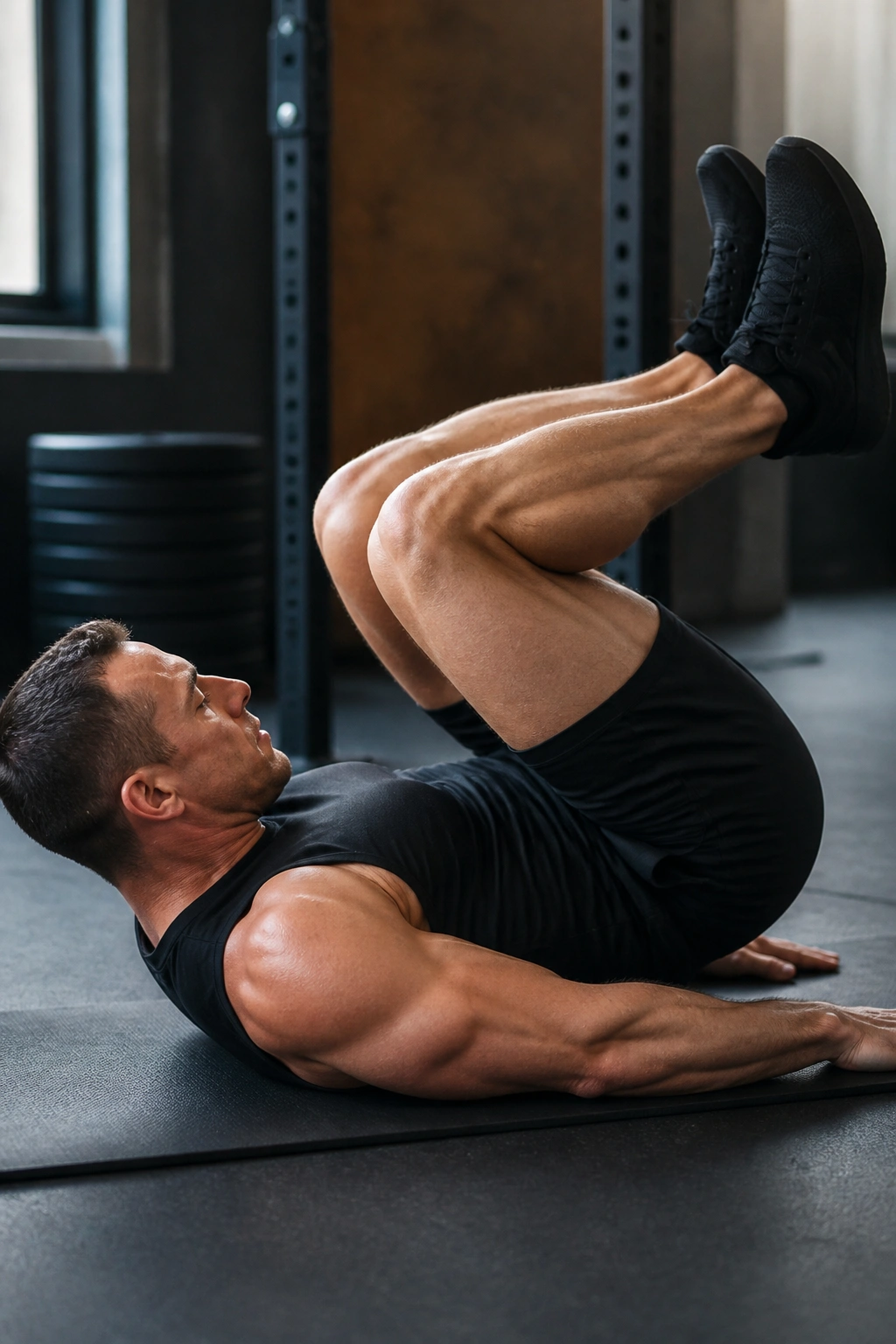
Why do reverse crunches still matter when everybody chases hanging leg raises?
Because they teach the pelvis to curl without a lot of cheating. That sounds minor, but it isn’t. A reverse crunch done right teaches the lower abs to pull the pelvis upward instead of letting the hip flexors drag the whole movement around. It’s one of the cleanest ways to get direct abdominal work without needing a bar or a cable stack.
How to Use It
Start with knees bent and thighs vertical. Flatten your lower back into the floor, then lift your hips a few inches by curling the pelvis toward your ribs. Don’t swing the legs. Don’t throw the knees in. The motion is small and controlled, and that is what makes it useful.
A good rep feels like a tuck, not a kick.
- 10 to 15 slow reps
- 2 to 4 sets
- 1 to 2 second pause at the top
- Lower under control, not dropped
If your neck tightens or your legs are doing all the work, cut the range in half and clean it up first.
4. Hanging Knee Raise
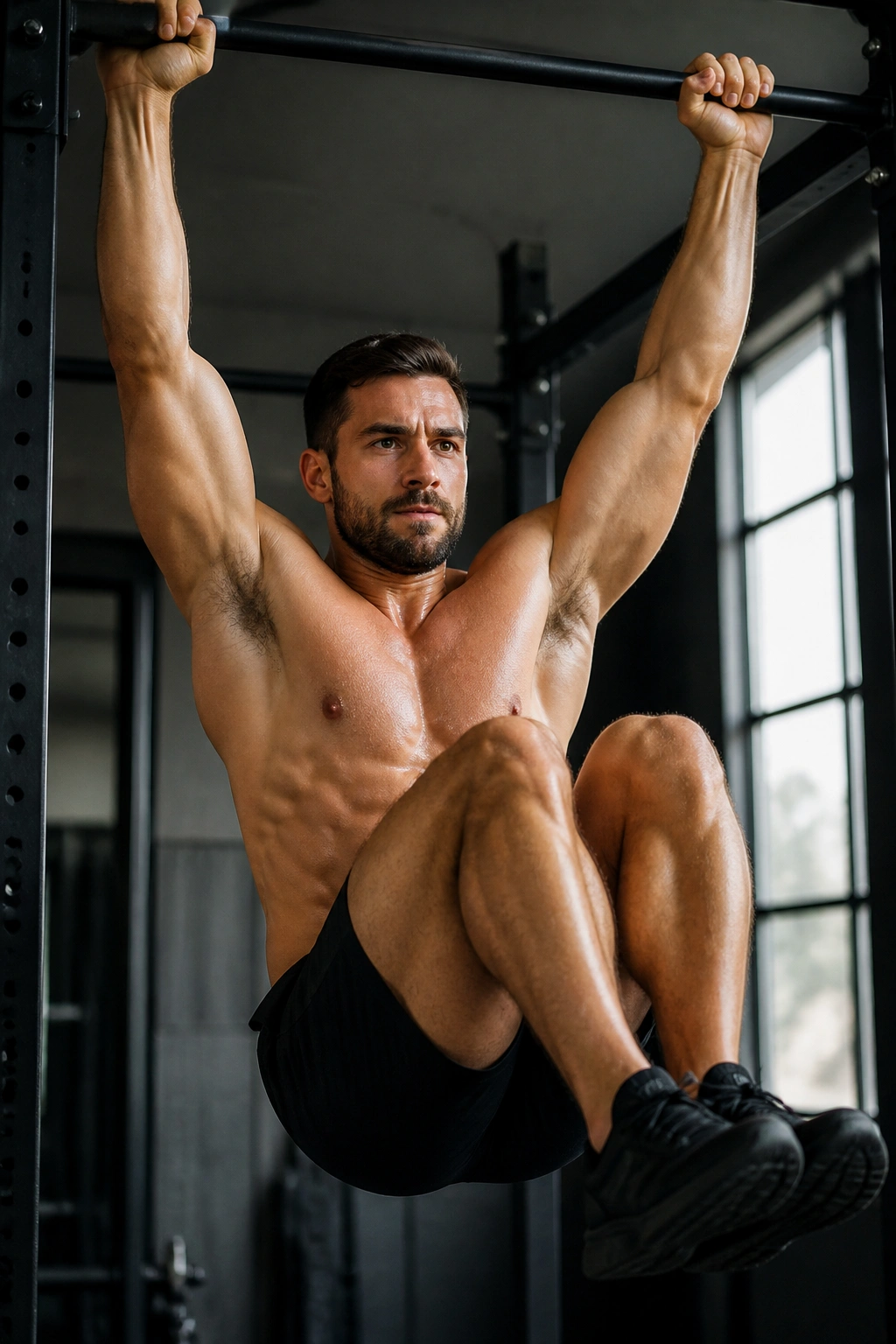
If your gym has a pull-up bar and a row of people swinging like pendulums, you’ve already seen the bad version of this move.
The hanging knee raise works because it forces the body to stabilize from the shoulders down while the abs and hip flexors lift the knees. When you keep the motion clean, the lower abs have to help with the tuck at the top. When you start kicking and rocking, the set turns into a momentum contest.
The difference is obvious from the first rep. Clean reps look quiet. Messy reps look like someone trying to start a broken lawn mower.
Key Details That Matter
- Start from a dead hang or a slightly bent-arm hang if grip is the limiter.
- Bring the knees up toward the chest, not out in front of you.
- Pause for a beat at the top and feel the pelvis tuck.
- Lower slowly until the body is still again.
- Use 8 to 12 reps for 3 sets.
A small range done well beats a huge range done badly. Every time.
5. Hanging Leg Raise
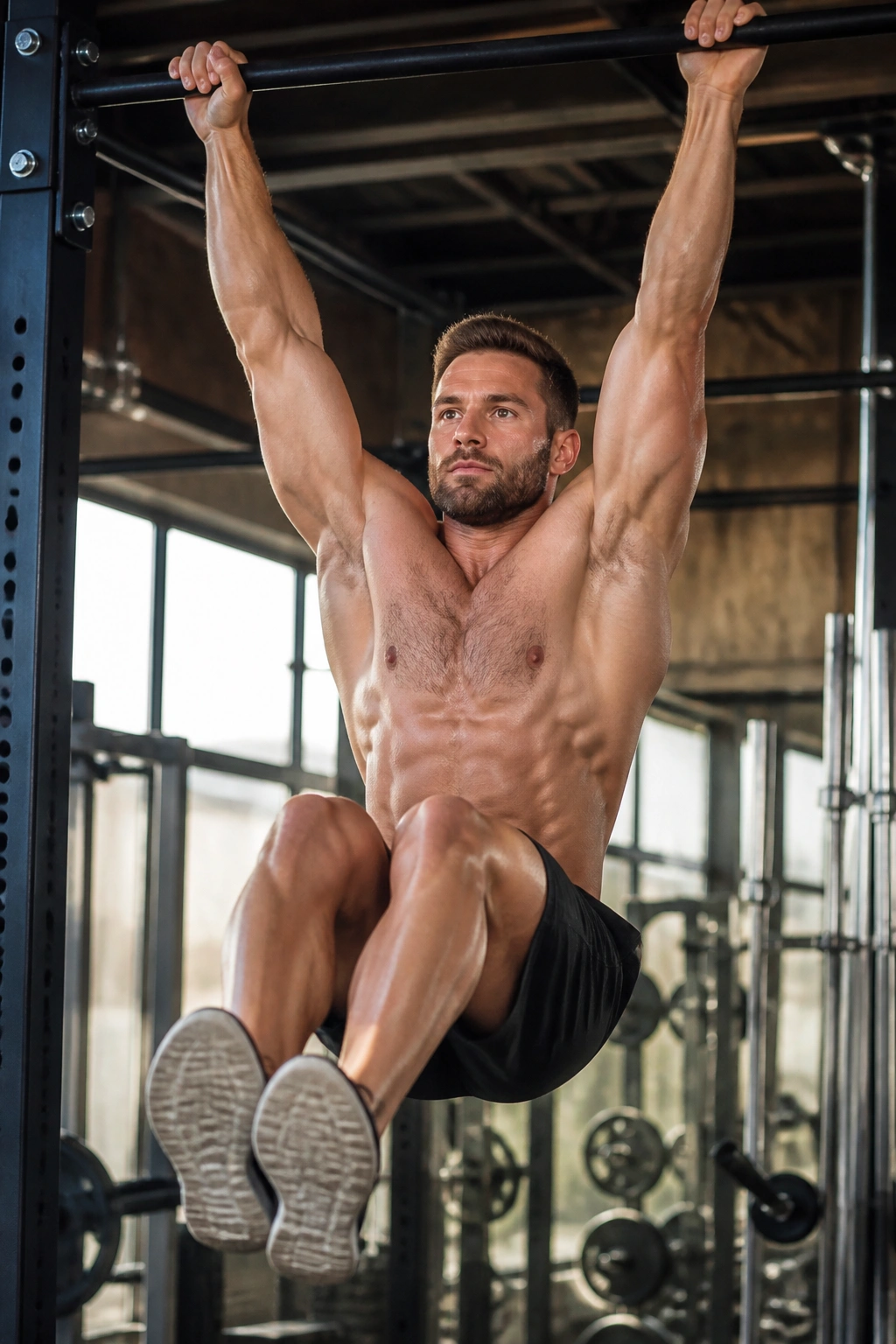
The hanging leg raise is where core training stops pretending.
This move asks for more than abdominal strength. It demands grip, shoulder stability, hip flexor control, and the ability to keep the pelvis from tipping forward when the legs are extended. That’s why it hits so hard. You are not just lifting your legs. You’re holding your whole front side together while the legs move through space.
The mistake most guys make is trying to go straight to a full leg raise with straight legs and no control. That usually ends with swinging, lumbar arching, and a set that feels impressive but teaches very little. A better rep starts with tension in the shoulders, a slight posterior pelvic tilt at the top, and a slow lower back to stillness.
If your lower back starts to arch, shorten the lever. Bend the knees. Own that version first. Straight legs are earned, not granted.
The people who get the best results from hanging leg raises are the ones who can move with patience. Fast reps are cheap. Slow reps build something useful.
6. Cable Crunch
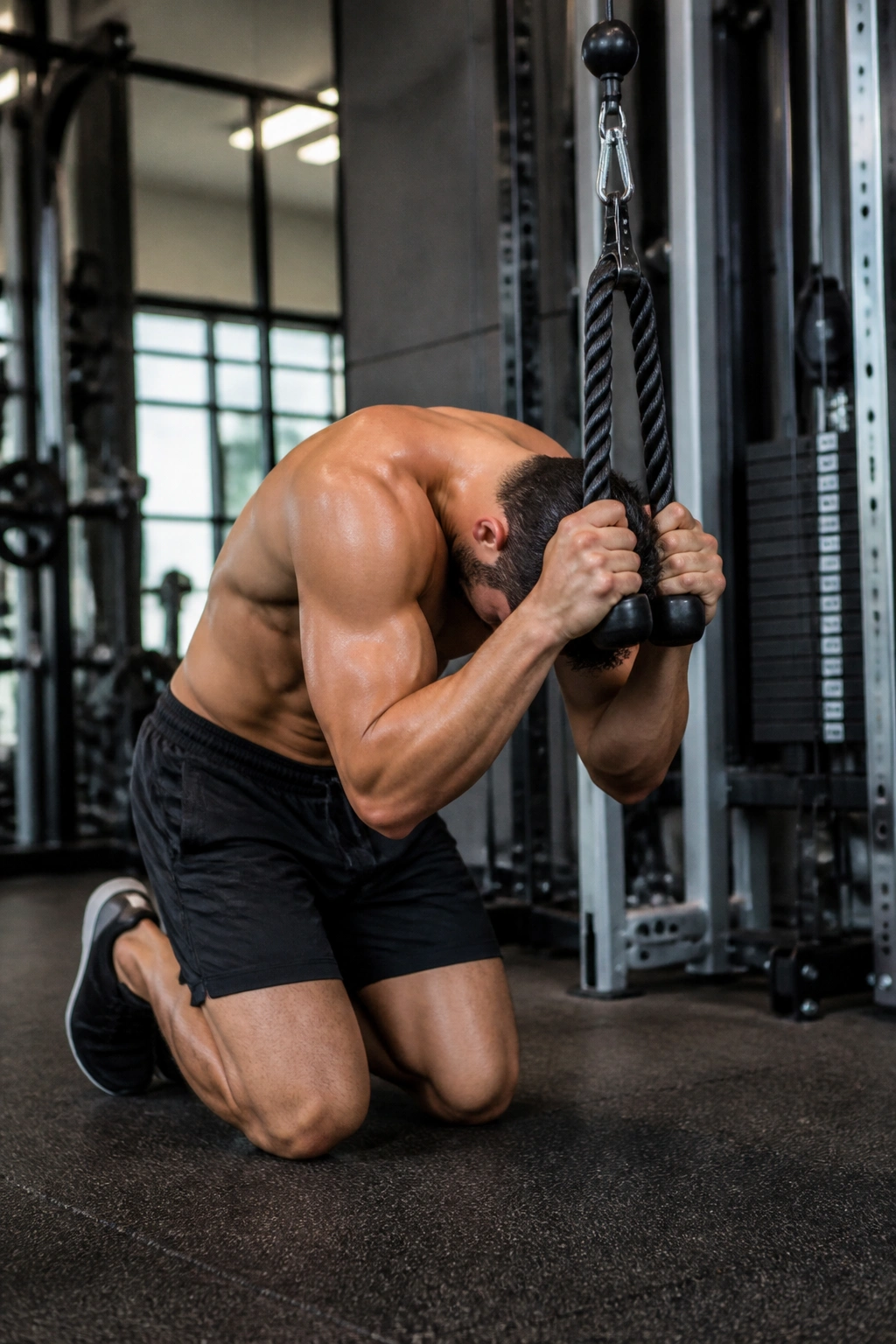
A cable crunch is the kind of move that looks basic until you load it properly.
Unlike floor crunches, the cable keeps tension on the abs through the full range, which makes it a much better choice when the goal is to build thickness in the rectus abdominis. That’s the muscle behind the classic “six-pack” look. If you want defined abs, not just a tired neck, this is one of the smarter tools in the gym.
What Makes It Different
The best version happens from a kneeling position with a rope attachment. Set the stack so the load feels challenging for 10 to 15 crisp reps. Pull your ribs down toward your pelvis, and let the spine flex under control. Do not turn it into a hip hinge.
The key cue is simple: crunch the torso, don’t bow at the hips.
Who It’s Best For
- Men who already have some core control and want direct resistance
- Lifters who do a lot of heavy compound work and need an ab move they can load
- Anyone who wants a strong flexion drill without doing endless sit-ups
My favorite way to use it is after a heavier lift session, when the trunk is already warm. The reps should feel controlled and a little nasty near the end.
7. Ab Wheel Rollout
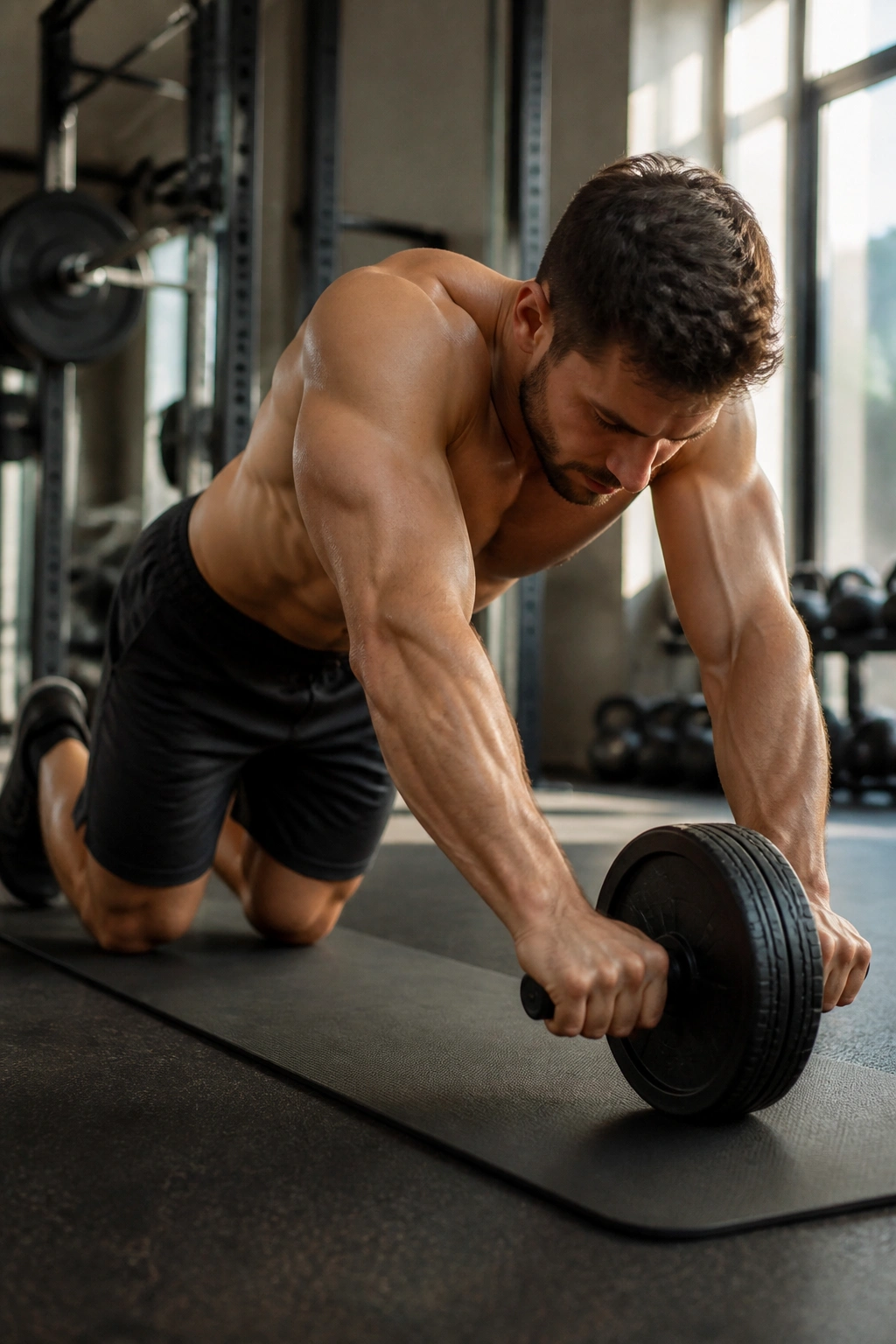
The ab wheel rollout is one of those exercises that makes strong men look thoughtful.
That is not a joke. It exposes poor core control fast, because the body has to resist extension while the arms reach far in front. If the abs cannot hold the ribs down, the lower back takes the beating. When people say “core strength,” this is often the thing they mean without knowing it.
How to Keep It Useful
- Start from your knees, not standing.
- Roll out only as far as you can keep your ribs tucked.
- Squeeze the glutes before each rep.
- Exhale as you come back in.
- Stop the set the moment the low back starts to sag.
A lot of guys try to impress themselves with a long rollout. Bad idea. A shorter rollout done with full control is better than a fake-long one that turns into spinal extension. Use 5 to 10 reps for 3 to 5 sets.
If your gym does not have an ab wheel, a barbell with plates can work, but the wheel is cleaner and easier to control.
8. Pallof Press
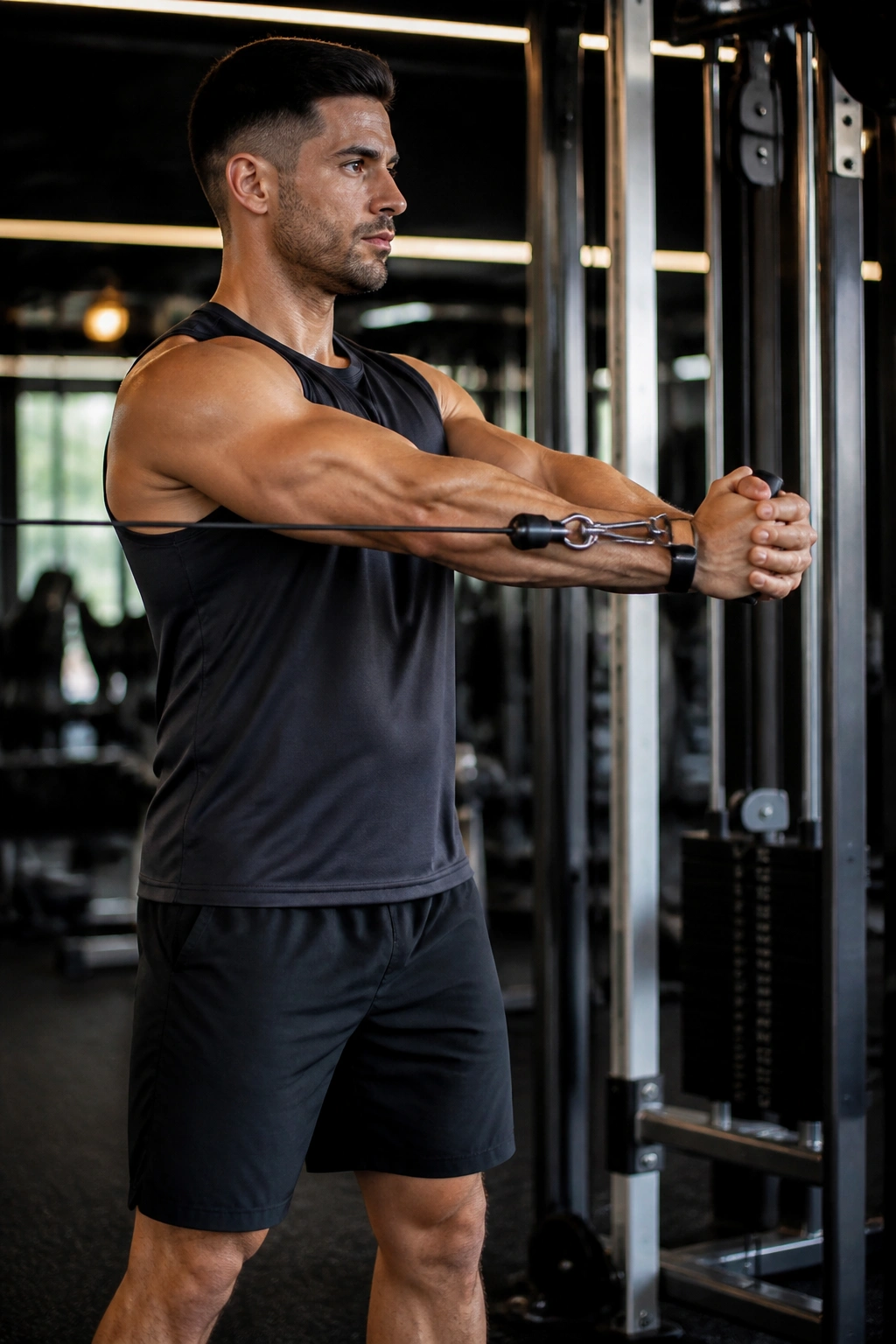
A Pallof press is boring in the best possible way.
It does not look dramatic. It does not make noise. And yet it teaches one of the most useful core skills around: resisting rotation while a load tries to twist you sideways. That matters every time you carry a heavy bag, punch a lift from the floor, or brace under asymmetrical stress.
Stand or kneel sideways to a cable or band, bring the handle to your chest, then press it straight out and hold. The job of the abs is not to move the weight around. The job is to stop the torso from turning.
That little difference is why the Pallof press earns a spot on any serious list of ab workouts for men. It trains the deep stuff that keeps your torso from folding when you least want it to.
Try 8 to 12 presses per side, or hold the arms straight for 15 to 25 seconds. Half-kneeling versions are harder than they look, and they’re excellent when standing feels too easy.
9. Side Plank
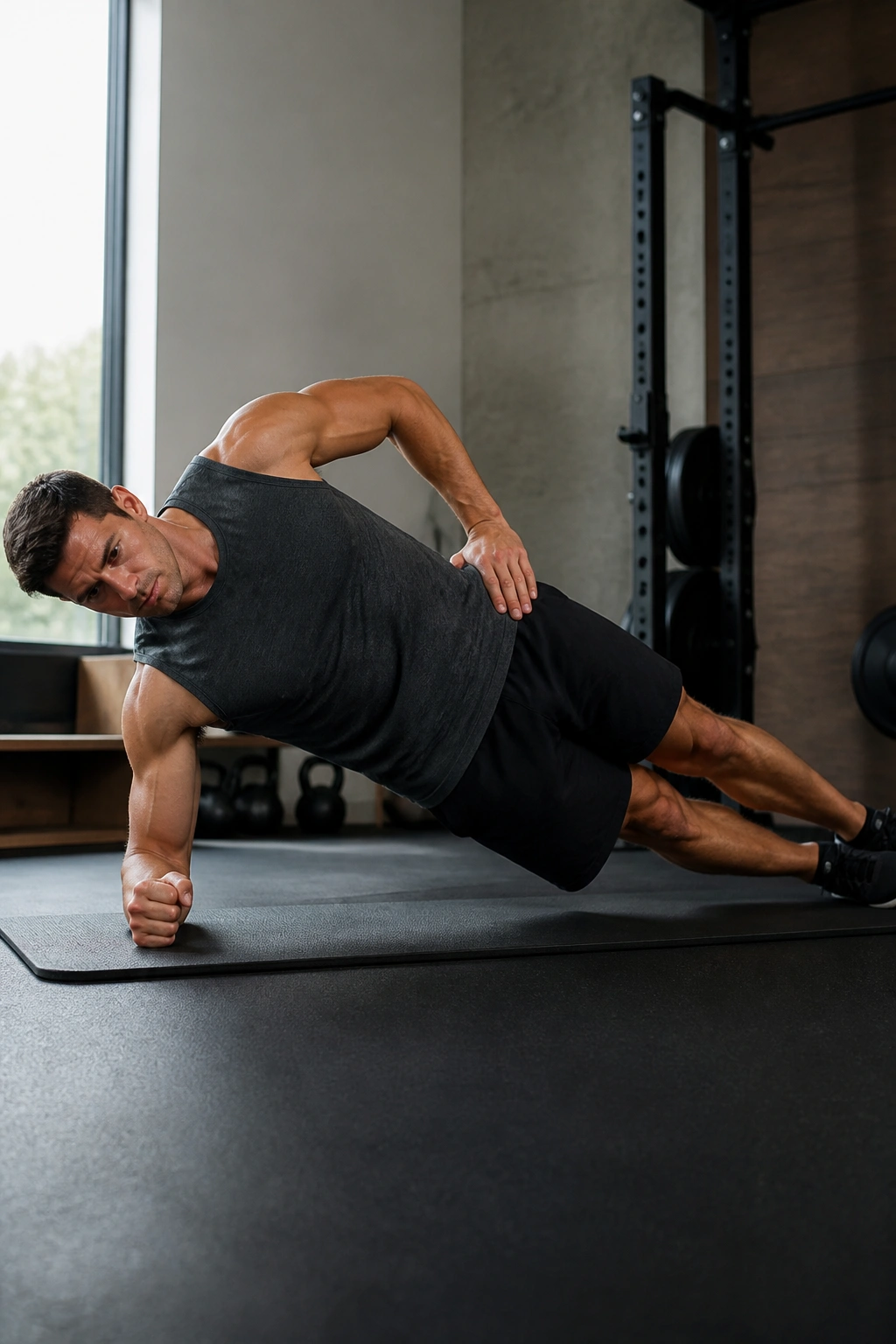
Why does a side plank make people wobble so fast?
Because the obliques, glute med, and deep side stabilizers have to work together to keep the body in one clean line. Most people have no trouble lying on the side. The trouble starts when they have to stay lifted without sagging at the hip. That is where the work is.
A side plank is especially useful if you want a defined waistline and stronger obliques without a lot of spinal bending. It teaches the body to resist side collapse. That helps with running, lifting, swinging a bat, and all the odd little forces that show up outside the gym.
How to Use It
Start on the forearm with the elbow under the shoulder. Stack the feet or stagger them if the full version is too much. Lift the hips until the body forms a straight line from head to heels. Hold for 20 to 40 seconds on each side.
If the hip starts to drift back or the shoulder feels pinchy, shorten the hold and clean up the line first. A proud chest and quiet hips beat a long, ugly hold every time.
10. Bicycle Crunch
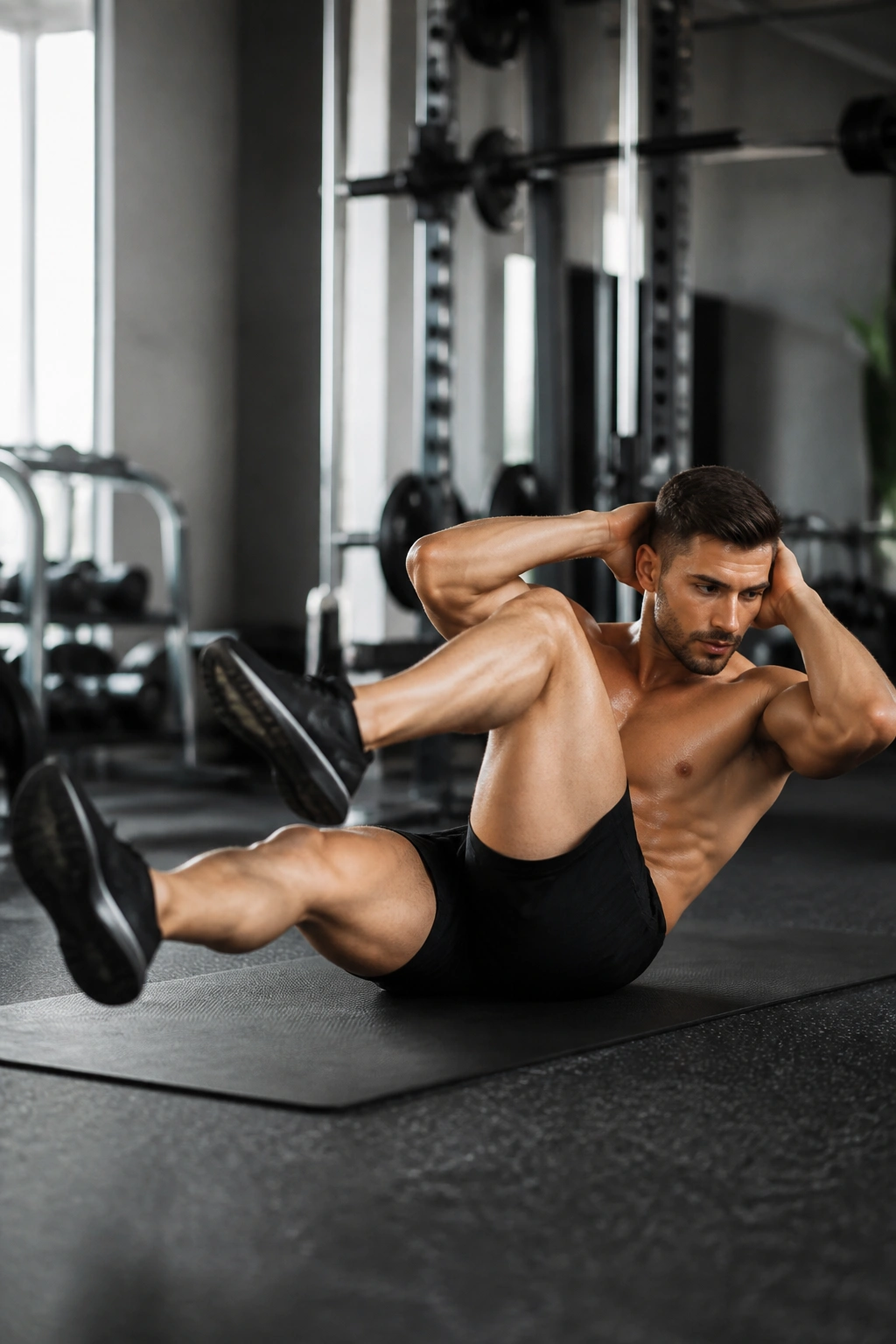
Bicycle crunches are either excellent or useless, and the difference is pace.
Done fast, they become a flailing neck exercise with a little hip motion sprinkled on top. Done slowly, they turn into a sharp oblique and rectus abdominis drill with real rotation. The magic is in control. Your torso should rotate, not just your elbows and knees chasing each other around like they missed a train.
I like this one for men who need a bodyweight ab move they can do anywhere. It’s cheap, effective, and easy to overdo. That last part matters. Twenty bad reps will teach less than ten clean ones.
- Keep the lower back heavy on the floor.
- Twist the rib cage, not just the elbows.
- Exhale as each shoulder blade leaves the floor.
- Move like you’re trying to keep the room quiet.
A slow bicycle crunch should feel almost stingy by rep 8. That’s a good sign.
11. Hollow Body Hold
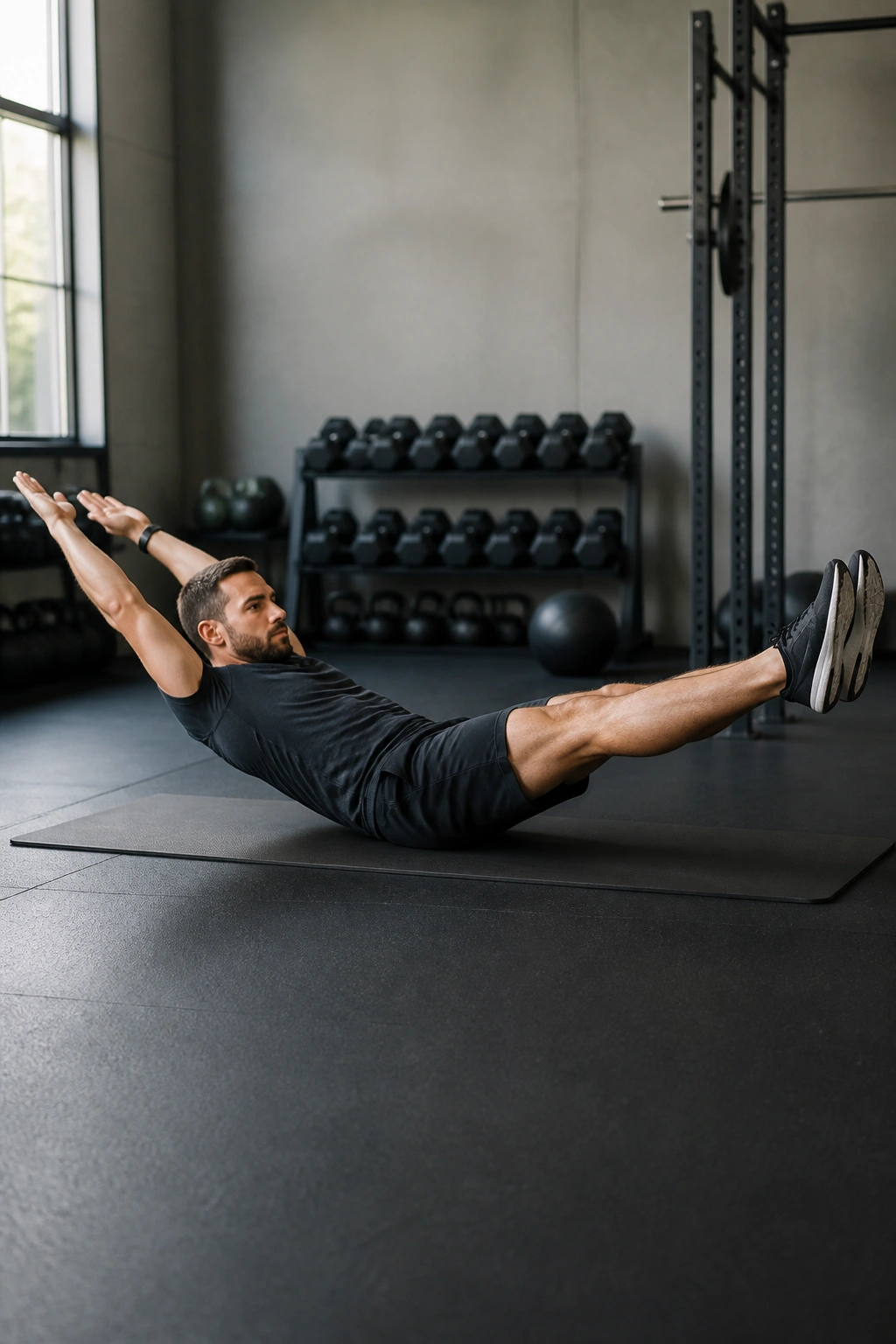
The hollow body hold feels like a tiny gymnastics lie detector.
If your ribs flare, it catches you. If your lower back arches, it catches you. If you think your abs are strong but cannot keep the position for 20 seconds, it catches that too. The move looks simple on paper, yet it asks the front of the core to stay locked while the arms and legs extend away from the center.
This is one of my favorite ab workouts for men who want a defined core and better control under tension. It teaches the body to keep the pelvis tucked and the ribs down at the same time, which carries over into hanging work, presses, and even heavy squats. A lot of lifters are stronger than they are tight. This fixes part of that problem.
Start in a tuck if needed. Then extend one leg at a time, and only later go to the full hold with both legs long and the arms overhead. The lower back should stay glued to the floor. If it doesn’t, you’re past your level.
A shaky 15-second hold is worth more than a lazy minute.
12. TRX Fallout
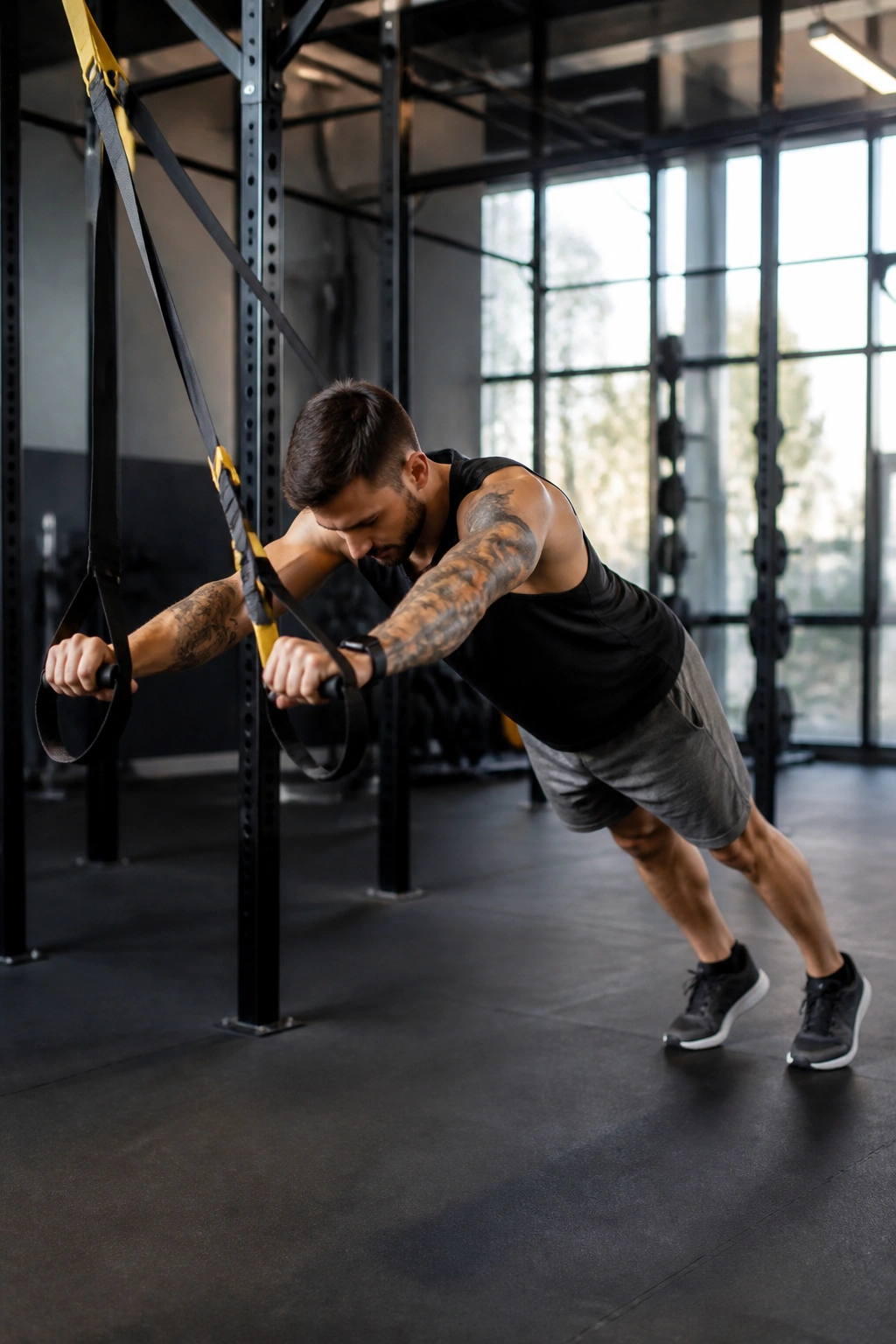
Unlike the ab wheel, the TRX fallout lets you adjust the leverage in tiny steps.
That makes it a smart choice for guys who want a serious anti-extension drill without jumping straight into the hardest version. You stand angled to the straps, lean forward, and let the body travel out under control. The farther you go, the harder the abs have to fight to keep the ribs from opening.
What I like here is the feedback. The straps tell on you quickly. If the hips sag, you feel it. If the shoulders get lazy, you feel that too. It is a clean drill for anyone who wants core work that also asks the shoulders to stay honest.
Who Should Choose It
- People who want a rollout-style challenge with easier scaling
- Lifters who need shoulder and trunk stability together
- Anyone who gets bored with floor planks but is not ready for standing ab drills
Use short, controlled reaches first. Build to 8 to 12 smooth reps. The body should stay long and tight, not broken in the middle.
13. Farmer’s Carry
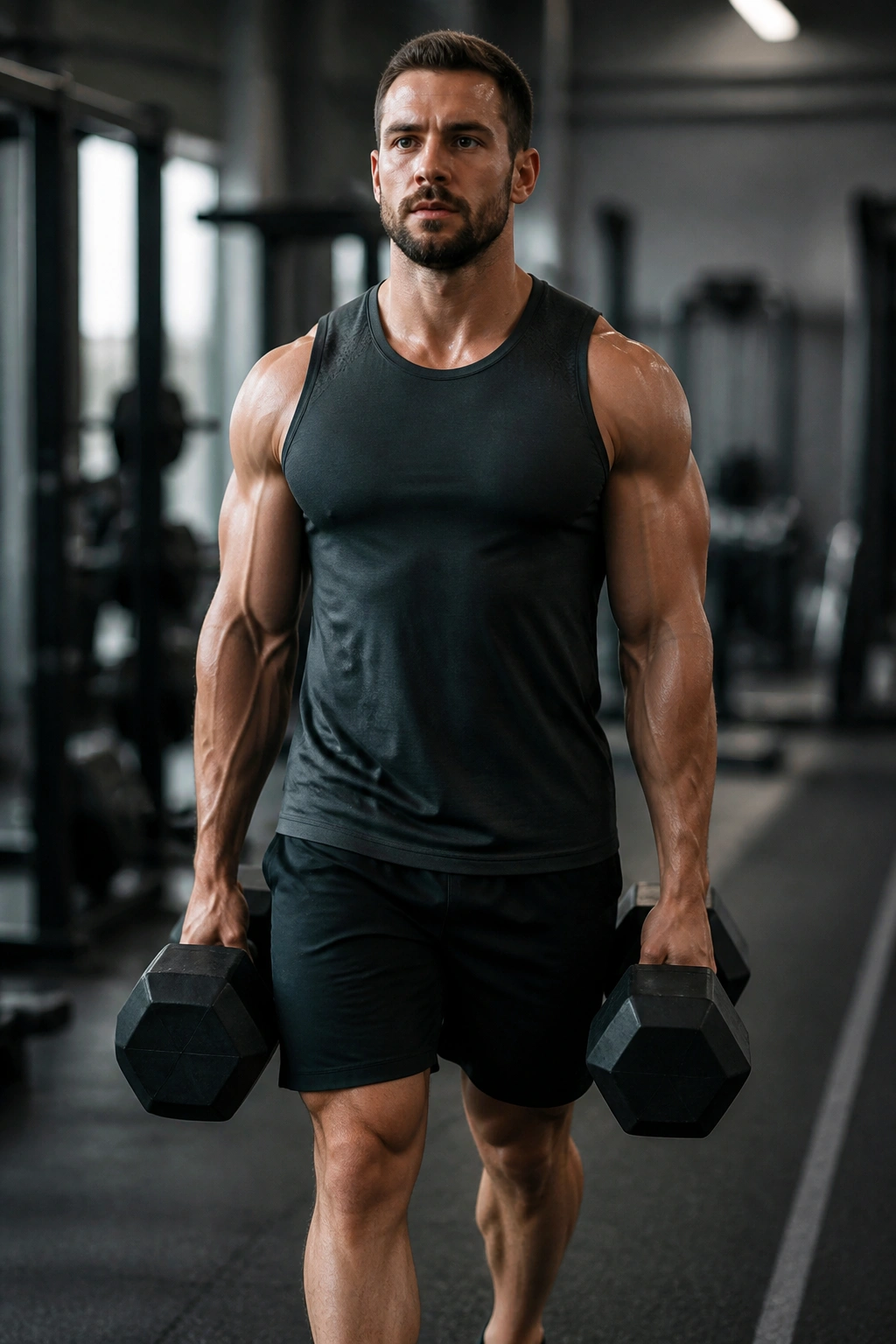
A pair of heavy dumbbells can do more for your core than a flashy machine ever will.
Farmer’s carries train the trunk the way real life does: while you move. You walk, the load tries to pull you down, and the abs have to keep the ribs stacked over the pelvis while the shoulders stay packed. That’s a different kind of challenge from crunching or planking. It feels more brutal because the work does not stop until you put the weights down.
I like carries for men who already lift and want a core that shows up under fatigue. They also help posture. Not in a vague way. In a direct, practical way. When your upper body wants to fold forward, the carry teaches you to stay tall.
- Pick dumbbells heavy enough that 20 to 40 meters feels honest.
- Keep the steps smooth, not rushed.
- Don’t let the ribs flare.
- Walk tall and quiet.
If your grip dies first, that is part of the training, not a problem to avoid.
14. Suitcase Carry
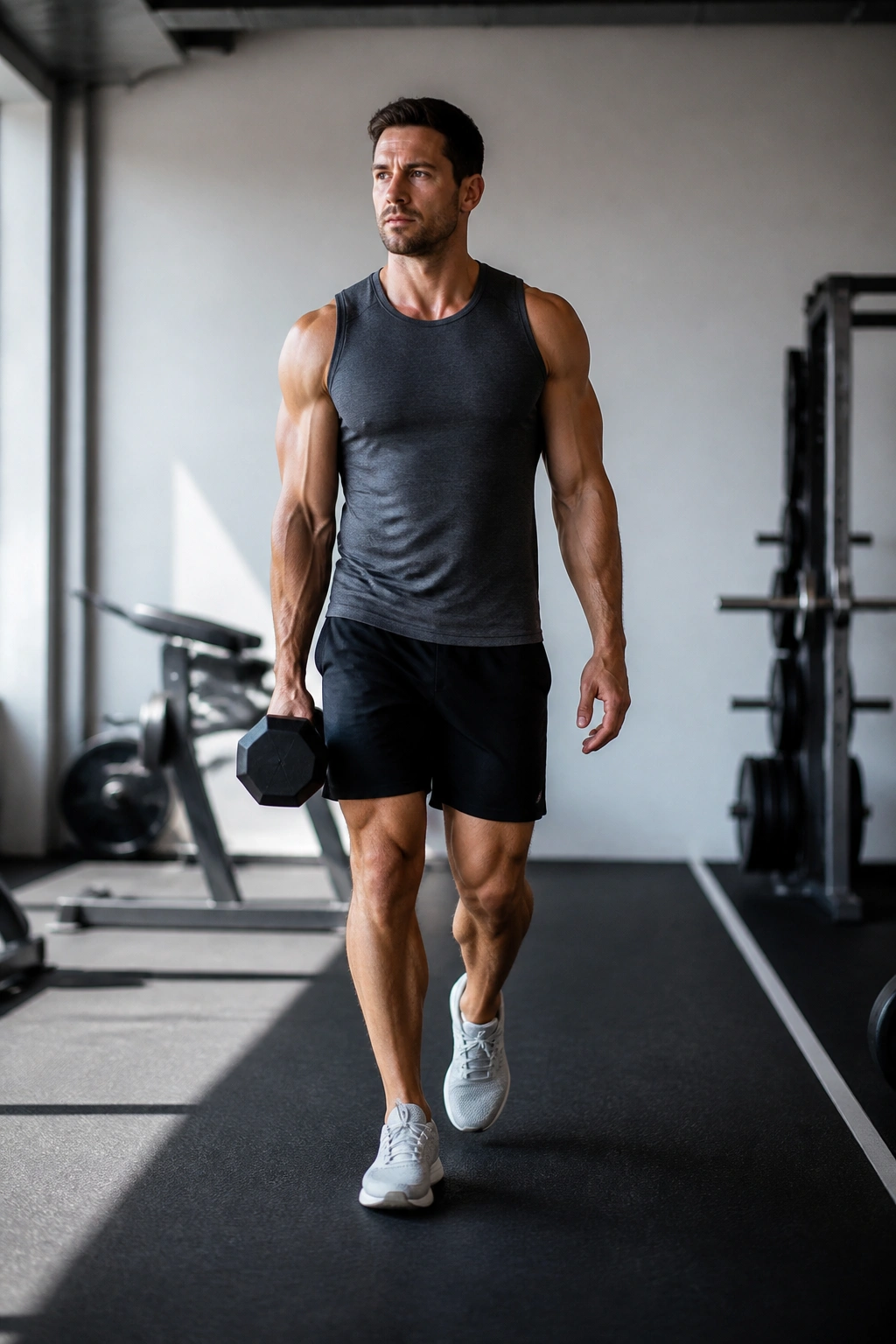
A suitcase carry is a farmer’s carry with a chip on its shoulder.
One dumbbell, one side. That’s the setup. Because the load sits on one side only, the obliques and side stabilizers have to fight to keep the torso from tipping. It trains anti-lateral flexion, which is a fancy way of saying your trunk learns not to bend sideways when life gets uneven.
This is one of the cleanest ways to make the midsection work hard without a ton of reps. A 25-meter walk with a heavy dumbbell in one hand can expose weak links faster than a long ab circuit. You will feel the urge to lean toward the weight or hike the opposite hip. Don’t. That lean is exactly what the drill is there to fix.
Keep the dumbbell at your side, shoulder level, and torso tall. Switch hands and repeat. Three to five carries per side is plenty when the load is meaningful.
For men who want a more athletic-looking core, this one earns its spot.
15. Stability Ball Stir-the-Pot
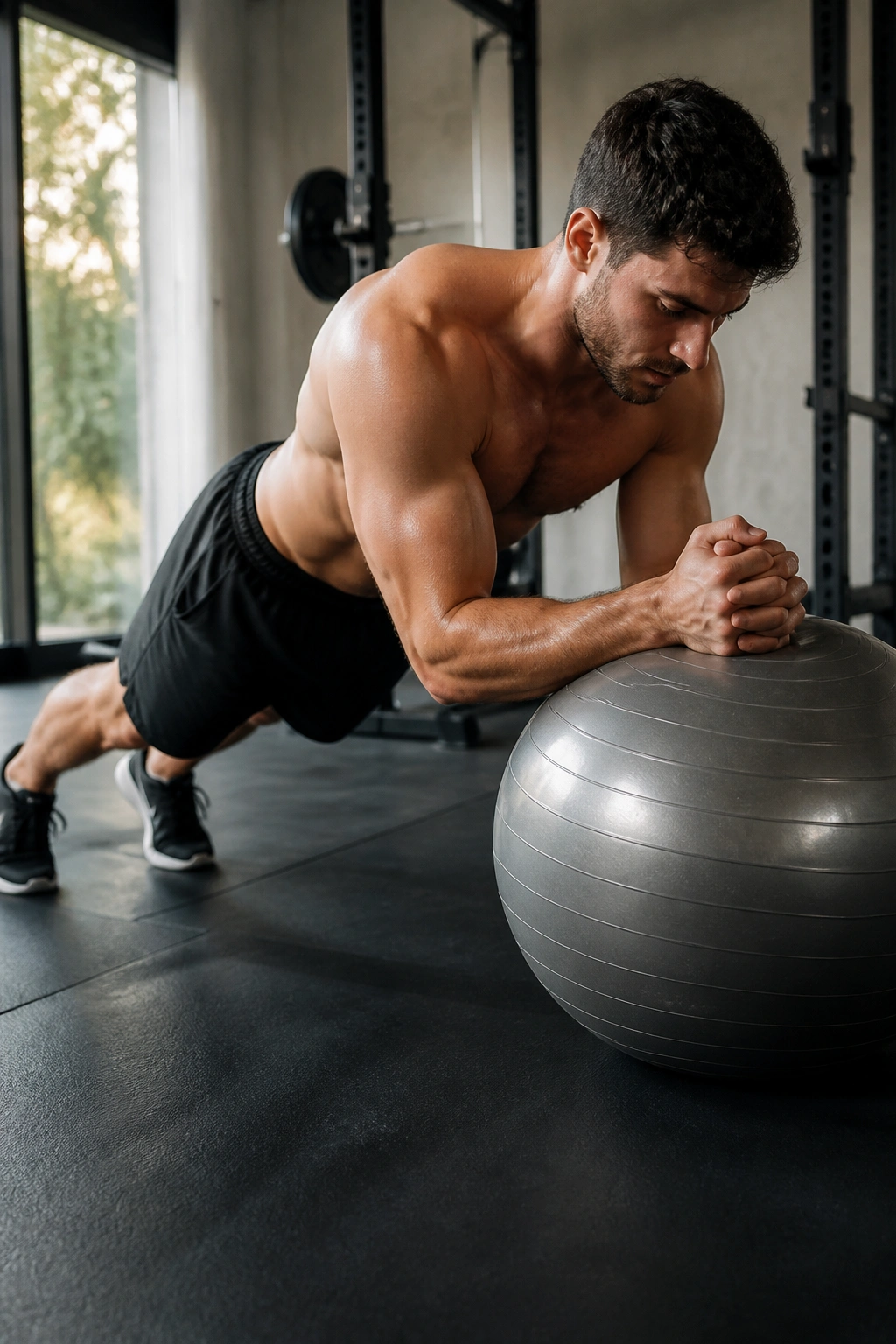
Why do small circles on a stability ball feel so ugly so fast?
Because the ball never gives you a fixed surface to hide on. The elbows stay planted, the body stays long, and the core has to make tiny adjustments in every direction to keep the trunk from collapsing. That makes stir-the-pot a brutal anti-extension drill with a little shoulder work mixed in.
How to Get the Most From It
Start in a forearm plank with your elbows on the ball. Keep the circles small at first — about the size of a dinner plate, not the whole room. Bigger is not better here. Bigger usually means sloppier.
- Brace before each circle
- Keep the hips level
- Make 5 to 10 circles one way, then the other
- Stop when the lower back starts to sag
This move is useful if you want variety without losing the point of the workout. It feels different from a plank, but it still teaches the body to resist extension and maintain tension. That’s the part worth keeping.
16. Cable Wood Chop
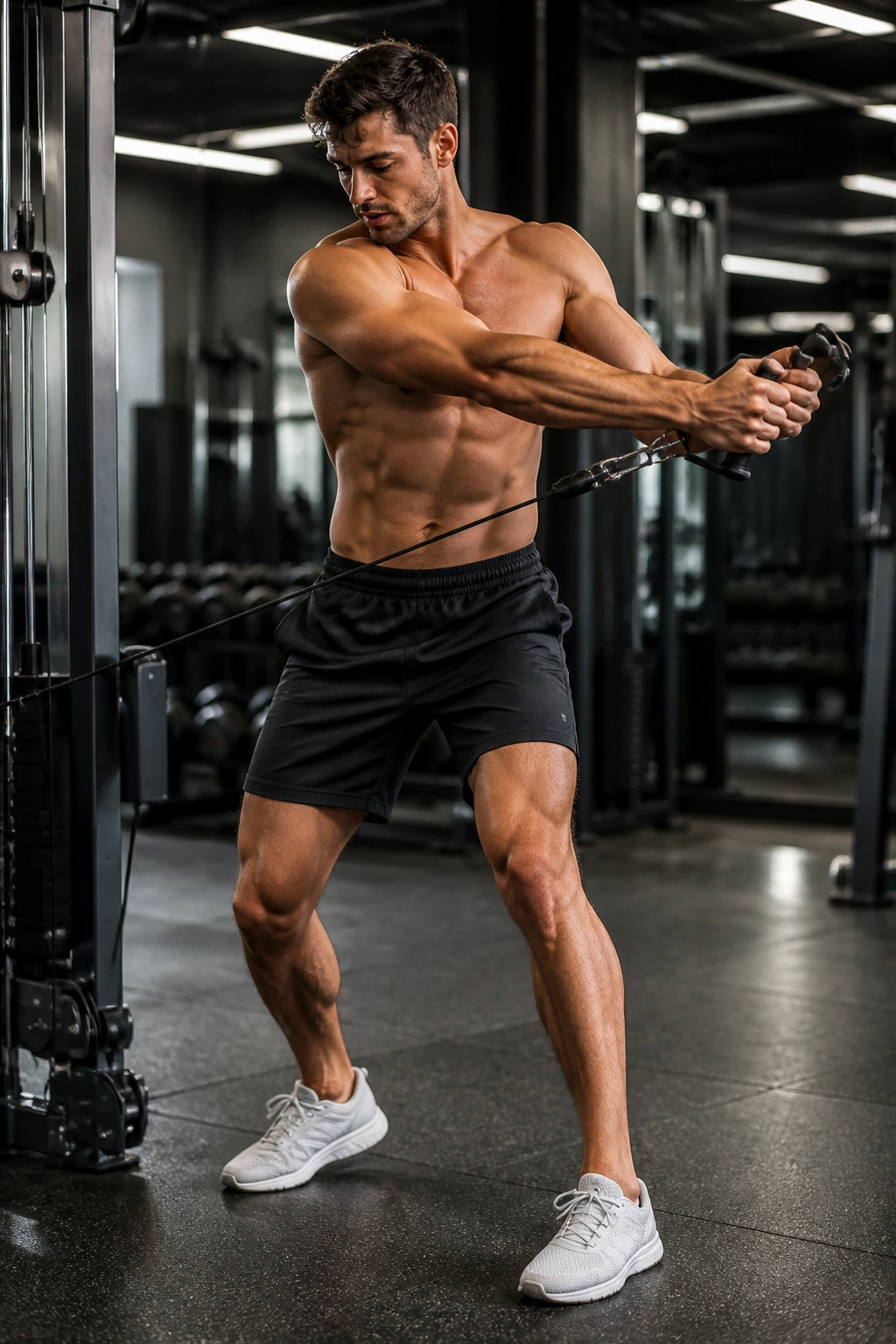
A cable wood chop looks like a golf warm-up until you feel the obliques bite.
The movement trains rotation with load, which makes it a smart choice for a core that needs more than straight flexion. High-to-low and low-to-high versions both work. One biases the top-down line of force, the other feels more like driving power from the floor up through the torso.
What matters most is that you do not turn it into a lazy arm swing. The hips and rib cage should rotate together in a controlled way, with the abs guiding the motion instead of the lower back taking over. That distinction matters more than most people think.
- Use 8 to 12 reps per side
- Keep the arms long but not stiff
- Let the torso turn, then stop cleanly
- Move the handle with purpose, not speed
I like this one for men who want an athletic core and a bit more oblique shape. It is one of the few loaded rotation drills that makes sense when done with discipline.
17. Decline Bench Crunch
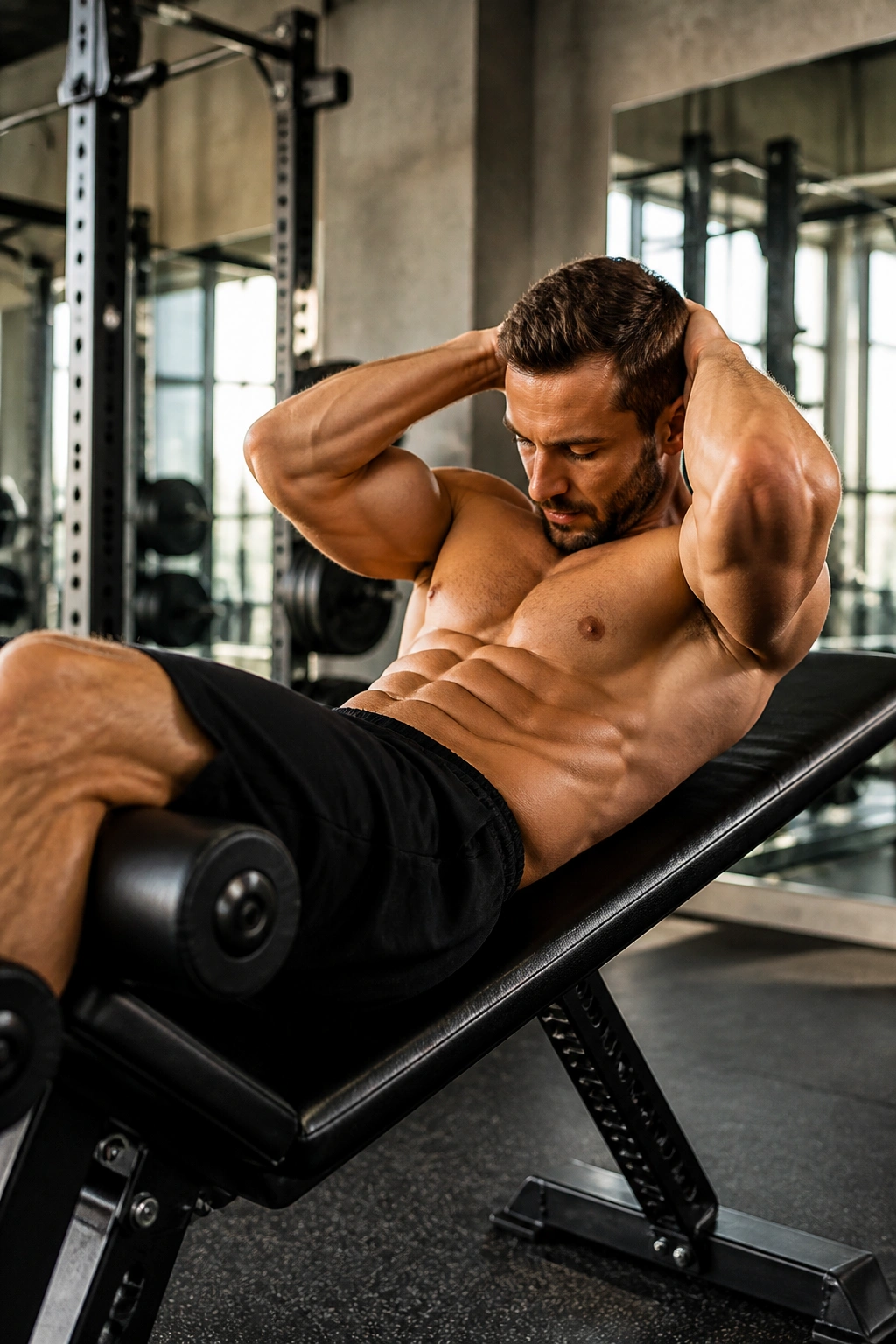
The decline bench crunch is old-school in the best possible way.
Set on a decline bench, you get a longer range of motion than a flat-floor crunch, and that extra range is what makes the exercise worth using. If the goal is to grow the rectus abdominis, not just feel a little tired, a decline setup gives you room to flex the spine against resistance more aggressively.
This is not a license to yank the neck or hurl the torso upward. Quite the opposite. The best reps are small and controlled, with the ribs pulling toward the pelvis and the abs doing the work. If you hold a plate or dumbbell at the chest, the movement gets harder fast. That is useful when bodyweight crunches stop being enough.
A lot of guys avoid crunches because they think they are too basic. Basic is not a problem. Poor execution is the problem. A clean decline crunch can build visible thickness in the front of the core if you keep the tension honest and the reps around 10 to 15.
18. V-Up
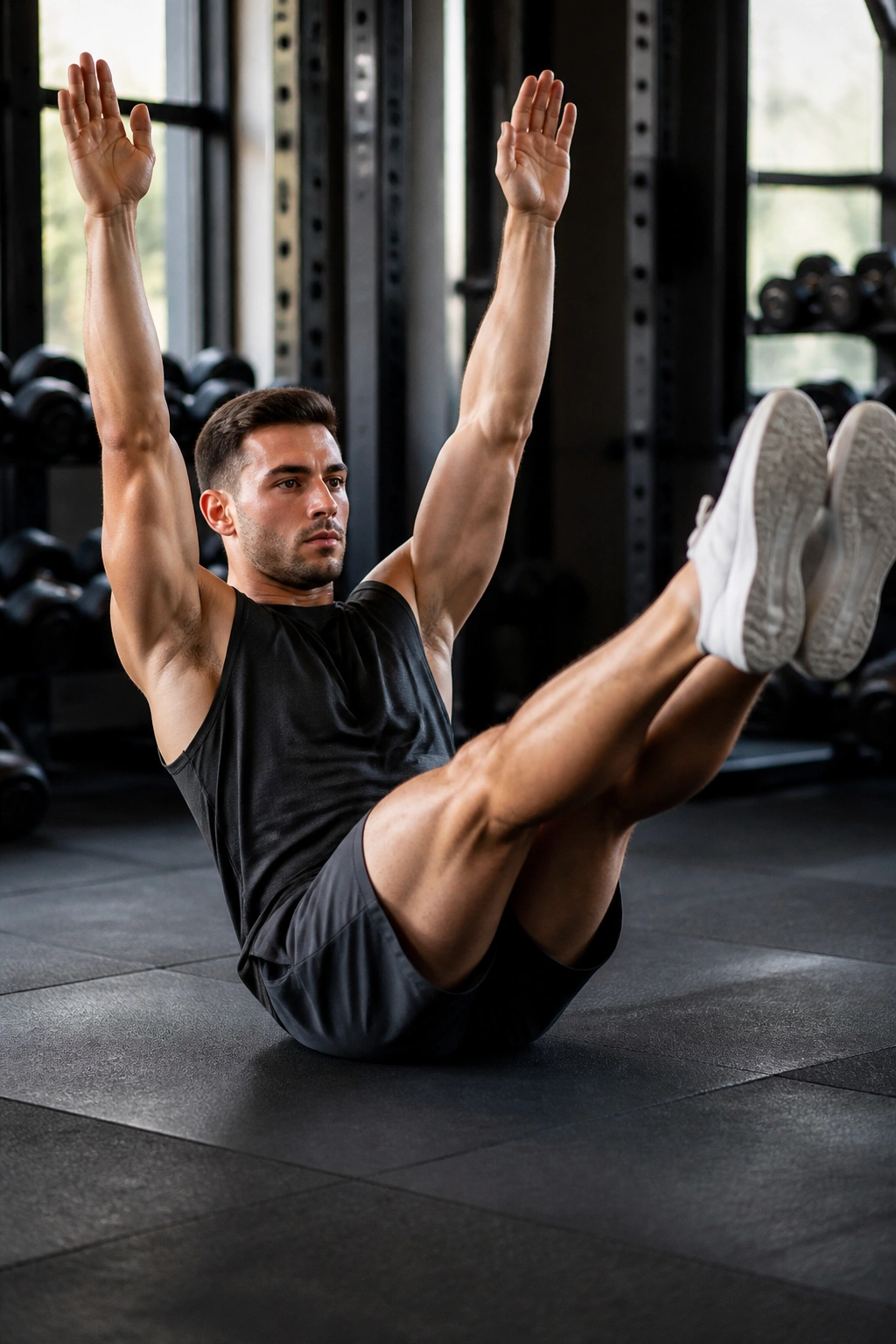
V-ups are what happen when a sit-up and a leg raise meet in the middle and refuse to be gentle about it.
Unlike a standard sit-up, a V-up asks the abs and hip flexors to close the distance at the same time. That makes it a sharper challenge for trunk compression, which is useful if you want a defined core that does more than just hold a plank. The move also has a sneaky conditioning effect, because your abs, hip flexors, and even your breathing start arguing halfway through a good set.
What Makes It Hard
The long lever. That is the whole story. Arms and legs extend away from each other, and the body has to fold back together without losing control. If your hamstrings are tight, keep a soft knee bend at first. If your lower back feels cranky, stay with tuck-ups or reverse crunches until the position feels cleaner.
Who It Fits Best
V-ups work best for people who already have some trunk strength and want a bodyweight move that is more demanding than a crunch. Use 6 to 12 reps, and keep every rep crisp. A sloppy V-up is mostly noise.
19. Plank Shoulder Tap
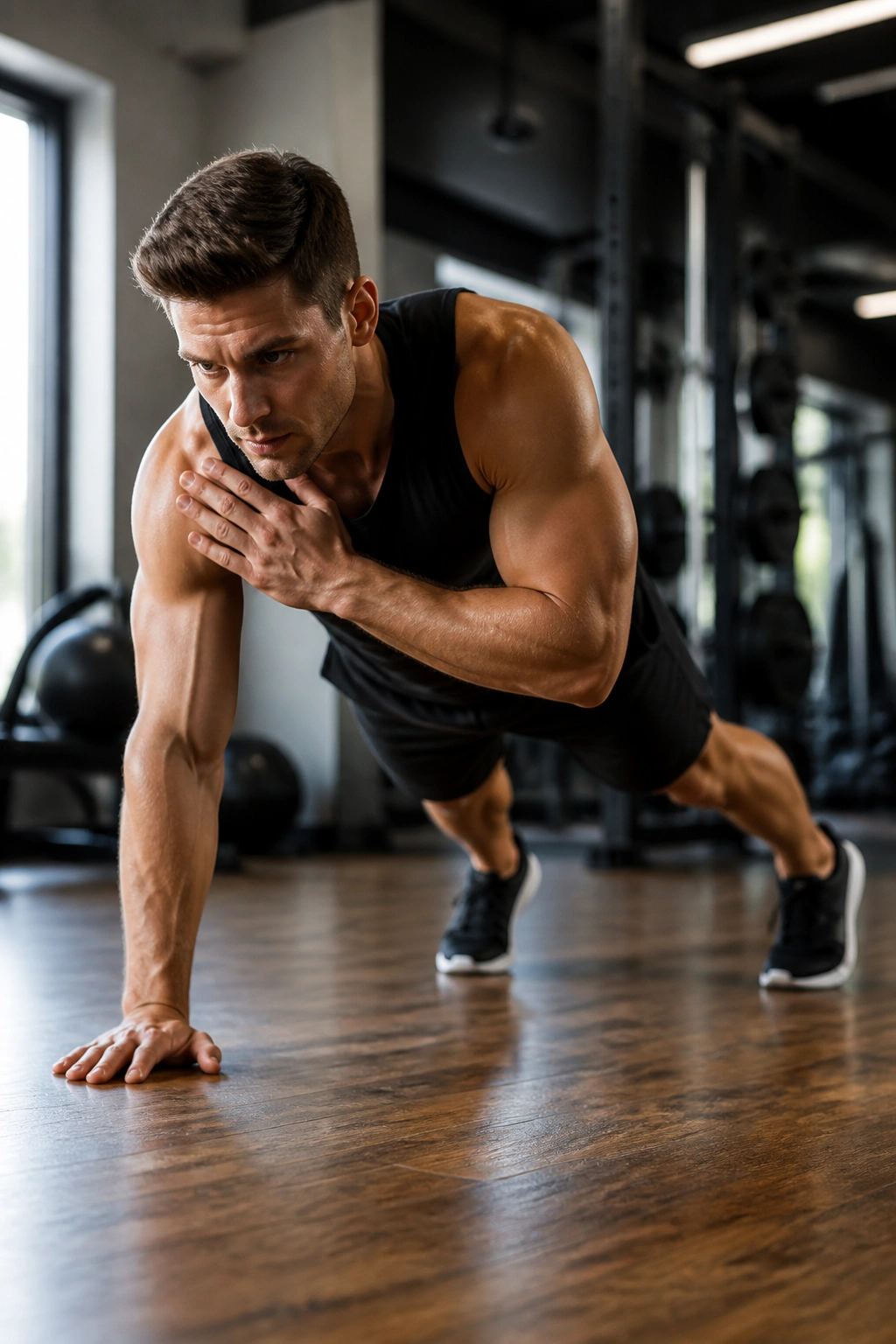
A plank shoulder tap is less about the shoulders than it is about keeping the hips from wobbling.
That’s the part people miss. You shift weight onto one arm, lift the other hand, and tap the opposite shoulder without letting the torso sway from side to side. The abs have to resist the little twist that wants to happen every time a hand leaves the floor. That makes it a sharp anti-rotation drill disguised as a plank variation.
Setup
- Start in a high plank with the feet a little wider than hip-width.
- Press the floor away so the upper back stays active.
- Tap one shoulder, then the other, slowly.
- Keep the hips as still as you can.
If the body rocks hard, spread the feet wider and slow the taps down. That is not cheating. That is how you earn a clean set. Ten taps per side is enough for most people. More reps are only useful if the line stays tidy.
This one is good when you want ab workouts for men that also carry over into pressing and overhead stability.
20. Bird Dog
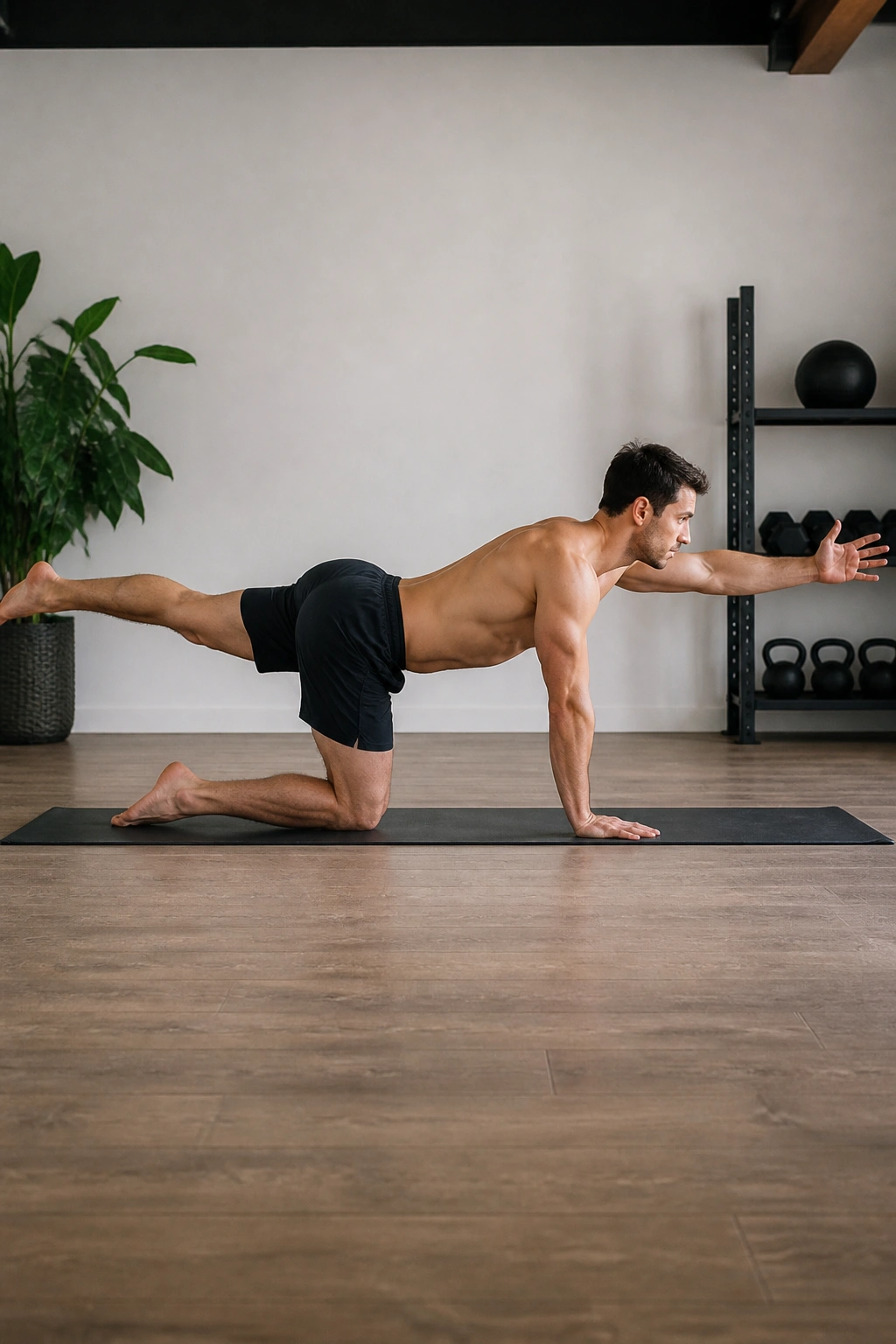
Bird dogs are not beginner fluff.
They look tame because the range is tiny. That is exactly why they matter. The opposite arm and leg extend while the torso stays square to the floor, which makes the deep core work harder than people expect. If your lower back tends to arch during other ab drills, this move can teach the control you were missing.
The best bird dogs are almost boring to watch. Hips stay level. Ribs stay quiet. The reaching arm and leg move slowly, and the pause at full extension does most of the work. That pause is where you feel the center of the body lock in.
Try 6 to 8 slow reps per side, holding each reach for 2 to 3 seconds. If that feels easy, pause longer or add a light band. The point is not to swing the limbs around. The point is to keep the trunk from shifting while the opposite ends of the body move.
21. L-Sit Hold
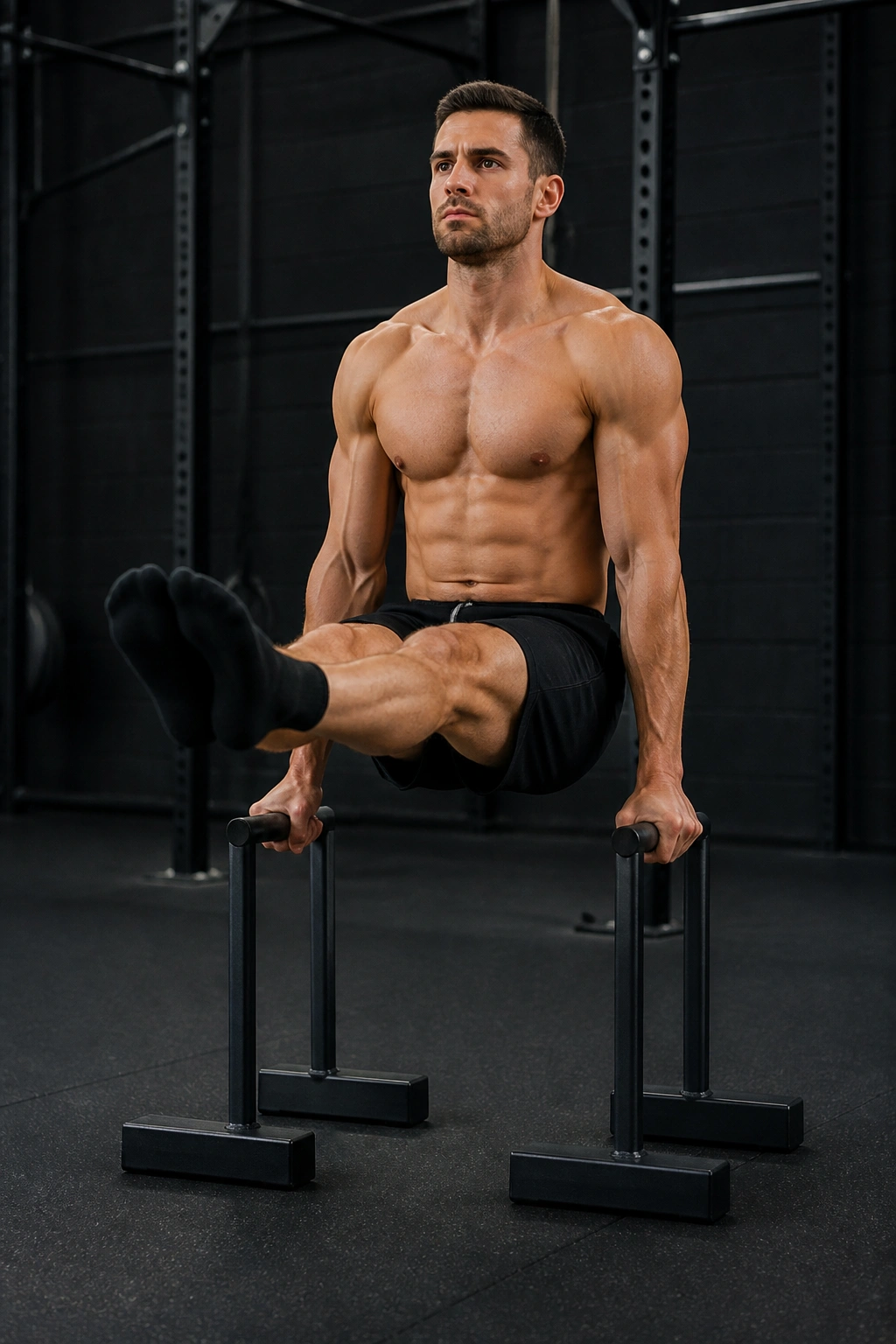
What looks harder than it is? An L-sit. What actually is hard? Still the L-sit.
This hold trains compression strength, hip flexor control, and abdominal tension all at once. You support your body on the floor, parallettes, dip bars, or two sturdy boxes, then lift the legs straight out in front of you. The whole front line has to stay tight. If the shoulders collapse or the legs drift low, the abs never get the clean work.
How to Build Up
Start with a tuck sit if needed. Knees bent, feet off the floor, hands locked down hard. After that, move to one leg extended, then both legs partially out, then the full hold. Small steps beat a failed full hold every time.
A nice side effect: the L-sit teaches you to create visible tension without a lot of movement. That matters for anyone chasing a defined core. Hold for 10 to 20 seconds, rest, then repeat for 3 to 5 rounds.
If your wrists complain, use parallettes. If your shoulders shrug up around your ears, reset before the next hold. Clean shape wins.
22. Hanging Windshield Wiper
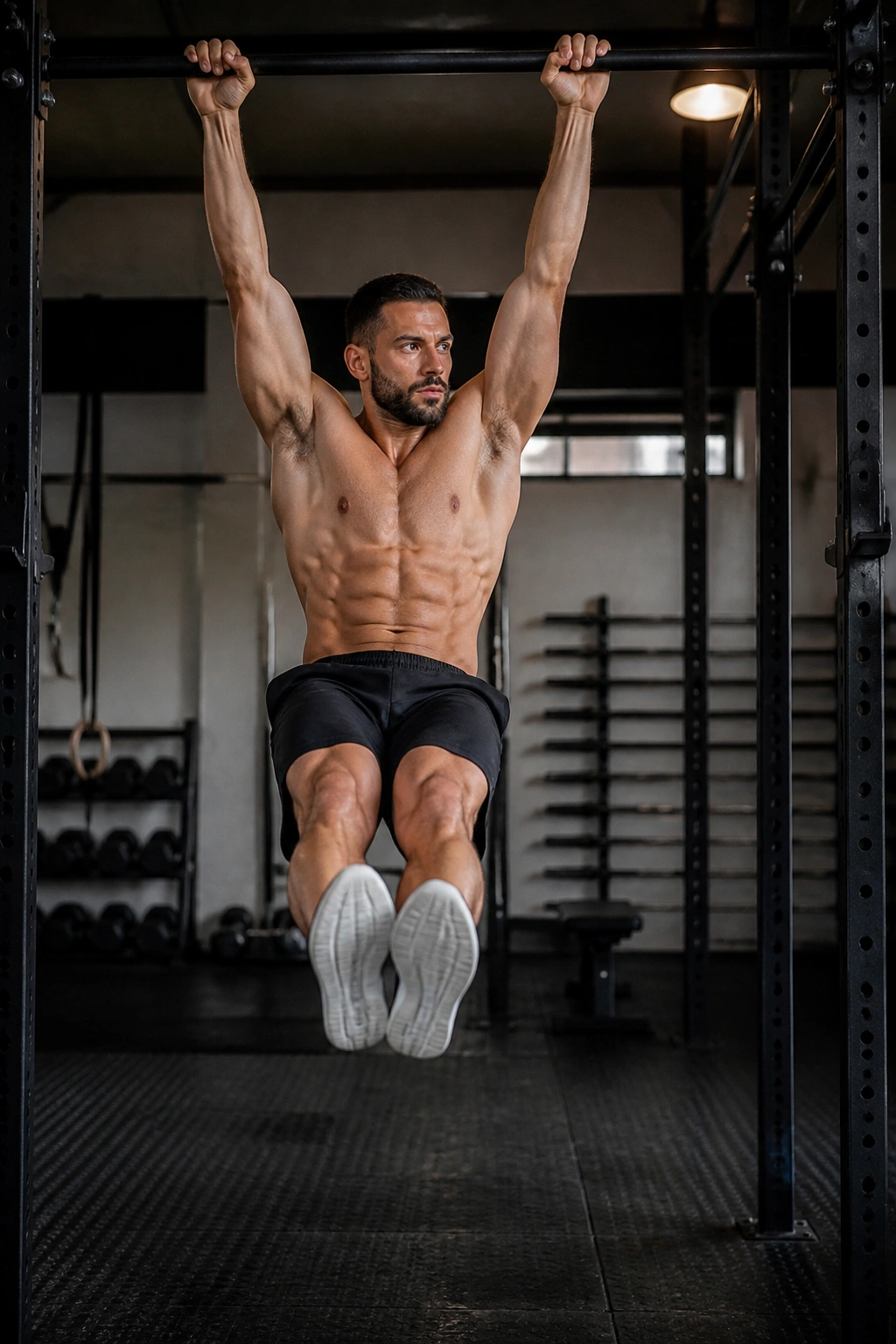
The hanging windshield wiper is where obliques stop being a concept and become a problem you can feel.
It starts with a hang, legs together, and then the lower body rotates side to side under control. The challenge is not just lifting the legs. It is stopping the whole torso from swinging while the pelvis moves across the line of the body. That is why this move hits the sides of the core so hard. It demands control through rotation, not just flexion.
Do not jump straight to huge arcs. Tiny, clean windshield wipers are better than dramatic ones that turn into a swing. Keep the grip hard, the shoulders packed, and the legs as straight as your hamstrings allow without cheating. If the full version is too much, bend the knees and cut the range down. That version still earns its keep.
- Use 4 to 8 reps per side
- Move slowly enough to kill momentum
- Keep the ribs from flaring
- Stop before the lower back arches
No single move carves abs on its own. A defined core comes from stacking a few honest drills, repeating them, and letting the work build over time. Pick four or five of these, keep the reps clean, and stop treating every ab session like a race.
