



Crunches have their place, but they miss a lot of what makes the core useful in real life. Medicine ball ab workouts ask your trunk to resist motion, not just flex through it, and that difference shows up fast in how you brace, twist, carry load, and keep your ribs from flaring. A ball also gives you feedback you can feel immediately. If you cheat, the rep gets ugly.
Pick a ball that lets you stay crisp. A 4- to 6-pound medicine ball is enough for many floor drills, while 8 to 12 pounds makes more sense for carries, slams, and standing chops if your spine stays quiet and your hips don’t start doing all the work. Heavy is not the goal. Control is.
The other mistake is using a ball that turns every rep into a neck tug or a low-back arch. That’s how people end up “training abs” while the hip flexors and lower back quietly steal the show. If the movement feels messy after the third rep, the load is too much or the setup is wrong. Simple.
Here are 18 moves I keep coming back to when the goal is a stronger, tighter, more useful midsection.
1. Medicine Ball Dead Bug Press
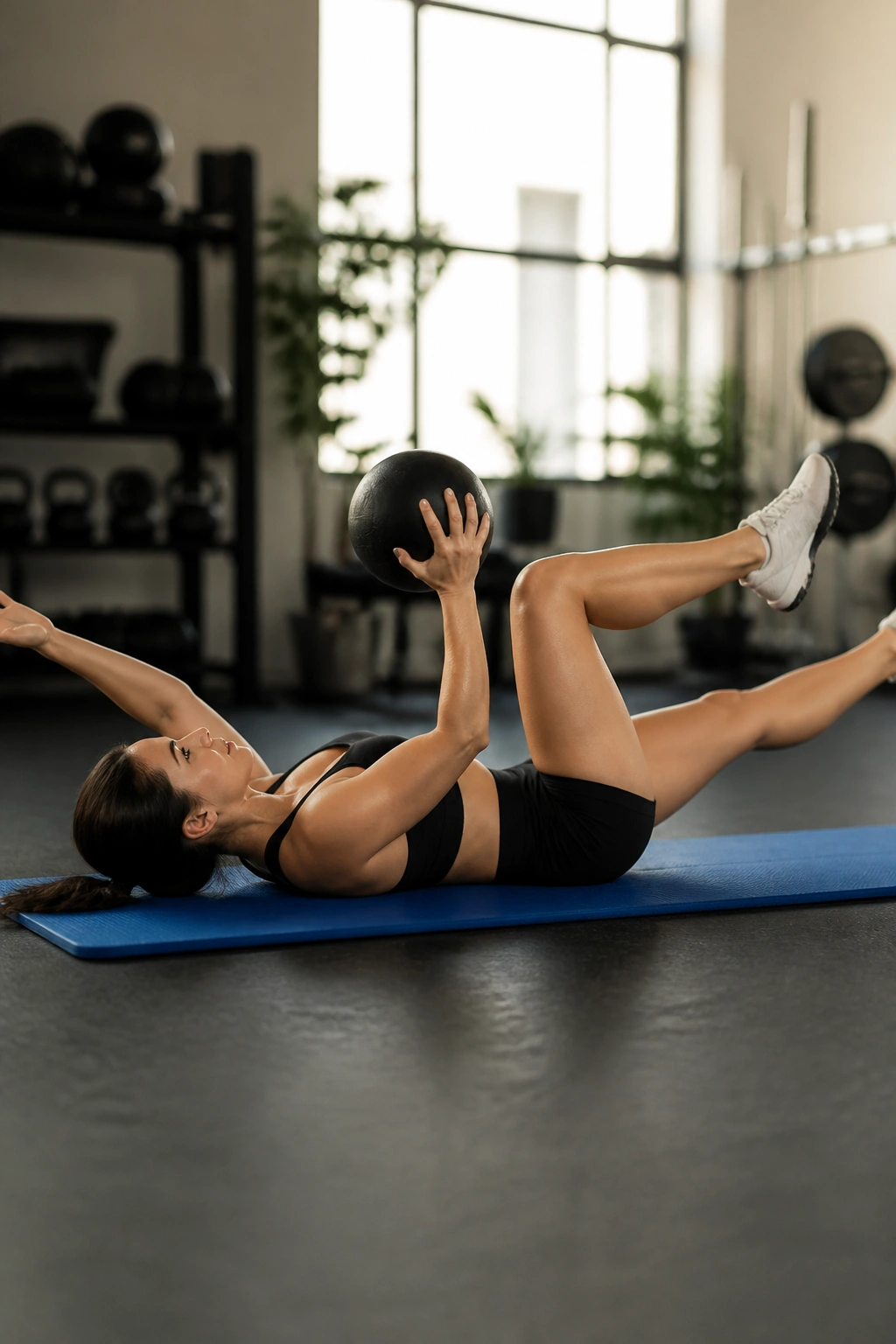
The dead bug is one of those drills that looks almost too easy until you try to keep your lower back glued down while your arms and legs move in opposite directions. Adding a medicine ball makes the whole thing more honest. The moment your ribs pop up or your back arches, you feel it.
Why It Works
This drill trains anti-extension, which is just a plain way of saying your abs stop your spine from drifting into an arch. That matters for lifting, running, and even standing tall without feeling loose through the middle.
- Lie on your back with your knees over your hips and your arms straight up, holding a medicine ball over your chest.
- Lower one leg and the opposite arm at the same time for 6 to 8 reps per side.
- Keep your lower back heavy on the floor the whole time.
- Pause for one second at the bottom so the movement doesn’t turn into a swing.
Pro tip: Exhale as the arm and leg reach away. That little breath cue helps your rib cage stay down.
2. Russian Twists With a Controlled Pause

Russian twists go wrong when people chase speed. The medicine ball exposes that fast. If you whip your arms around like you’re stirring soup, your lower back will usually join the party whether you want it to or not.
The cleaner version starts with a slow lean back, feet planted if you need them, and a steady turn from the rib cage instead of a wild arm fling. I like 10 to 16 touches per side with a one-beat pause at each side. That pause matters. It keeps the work in the obliques and out of the lower spine.
Use a lighter ball here than you think. A 4- to 8-pound ball is usually enough. If your torso starts bobbing up and down, the drill has already gone off script. Keep the chest proud, rotate with control, and let the abs do the boring work. That’s the part that changes you.
3. Medicine Ball Sit-Up Press
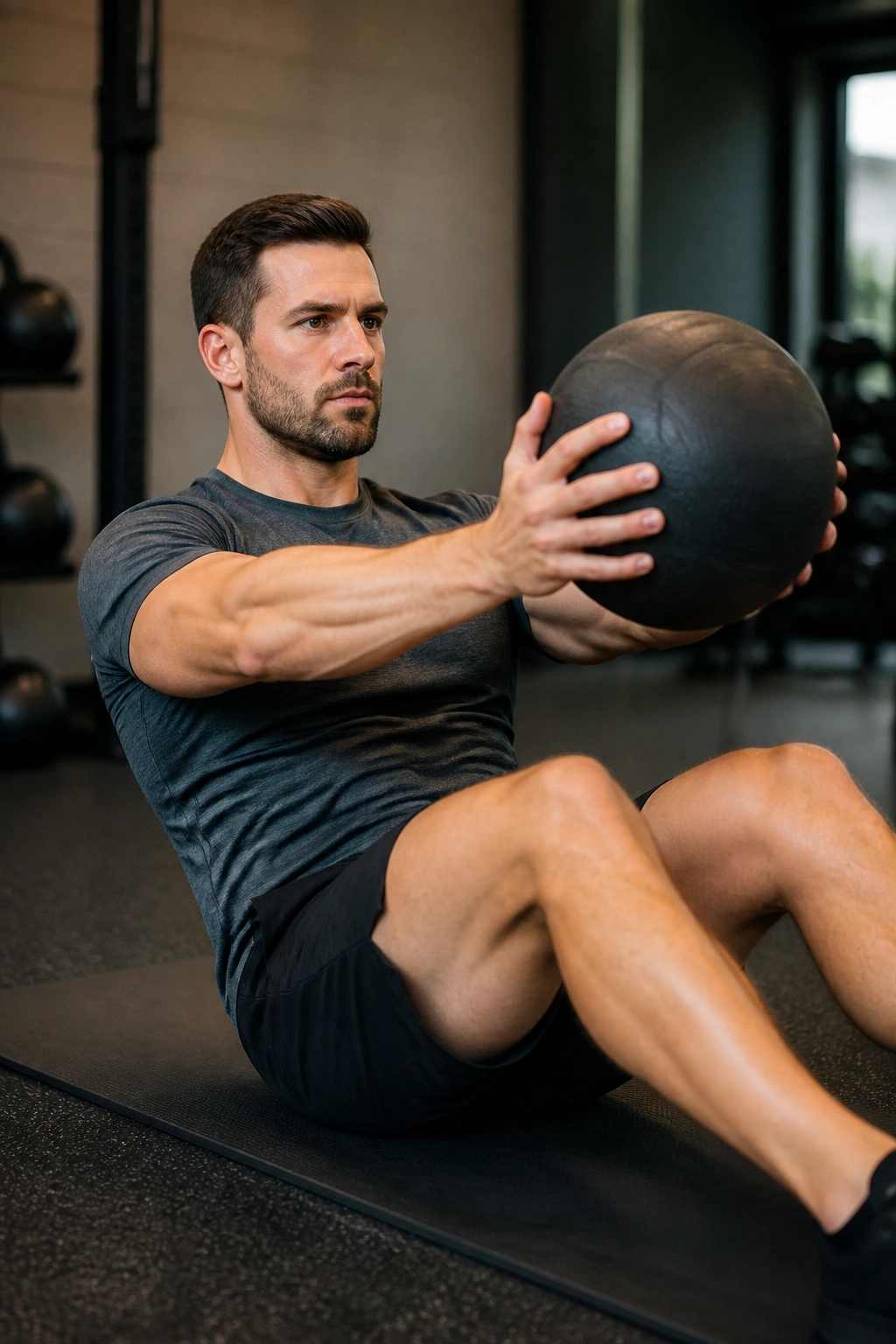
Why does a sit-up with a ball feel harder than a plain crunch? Because the load changes the whole route your body has to take. The ball gives your upper body something to move against, and that makes the top half of the rep more demanding than people expect.
How to Use It Without Yanking Your Neck
Start with the ball at your chest or just above your chest. Roll up one vertebra at a time, stand the torso tall at the top, then press the ball straight out or slightly overhead. Lower with control for 8 to 12 reps.
The detail that matters is the finish. Don’t collapse at the top. Don’t fling the ball. The best version feels like your abs finish the rep, not your hip flexors. If your neck starts doing the work, keep your chin lightly tucked and fix your gaze on one spot in front of you.
A good sit-up press should leave your stomach warm and your lower back calm. If it does the opposite, shorten the range a bit and slow down.
4. High-to-Low Medicine Ball Wood Chop

A wood chop looks simple from a distance. Up close, it’s a mess if you don’t separate the hips from the torso. That’s why I like it. The medicine ball makes sloppy rotation obvious fast.
Set your feet a little wider than hip-width and start with the ball high on one side. Chop it down across your body to the opposite hip for 8 to 10 reps per side. The movement should feel like a diagonal line, not a random sweep. Your hips can turn a little, but the middle has to stay organized.
- Keep your arms long but not locked.
- Pivot the back foot if your knees feel stuck.
- Squeeze your abs at the bottom before you reset.
- Use a slow return so the rep doesn’t become a swing.
One good cue: think “rib cage to opposite pocket.” That keeps the chop from turning into a shoulder fling.
5. Medicine Ball V-Up Pass
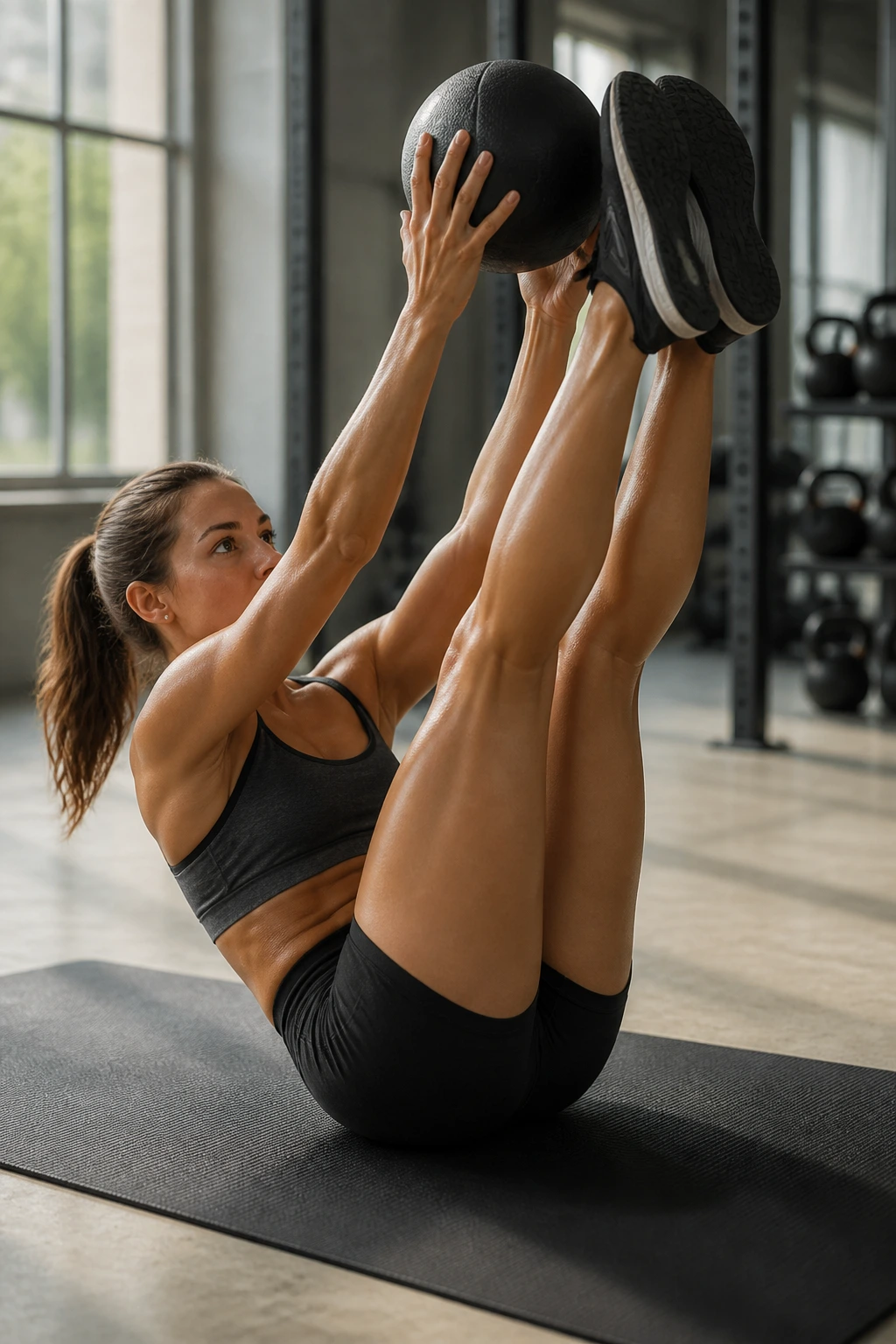
A V-up is already rude. Add a medicine ball and it gets downright honest. The goal is to keep the body compact while the hands and feet meet in the middle, which is exactly where weak control shows up.
Lie flat, hold the ball overhead, and lift the legs and shoulders at the same time. Pass the ball from your hands to your feet at the top, then lower with control. Work in 6 to 10 clean reps instead of racing through ugly ones. The rep should feel tight, almost clipped together.
I like this drill because it punishes lazy range. If the lower back arches, the ball is either too heavy or the legs are dropping too far. Keep the movement small at first. Small is not a downgrade here. Small is how you keep the abs on task.
6. Plank Hand-Offs Around the Ball
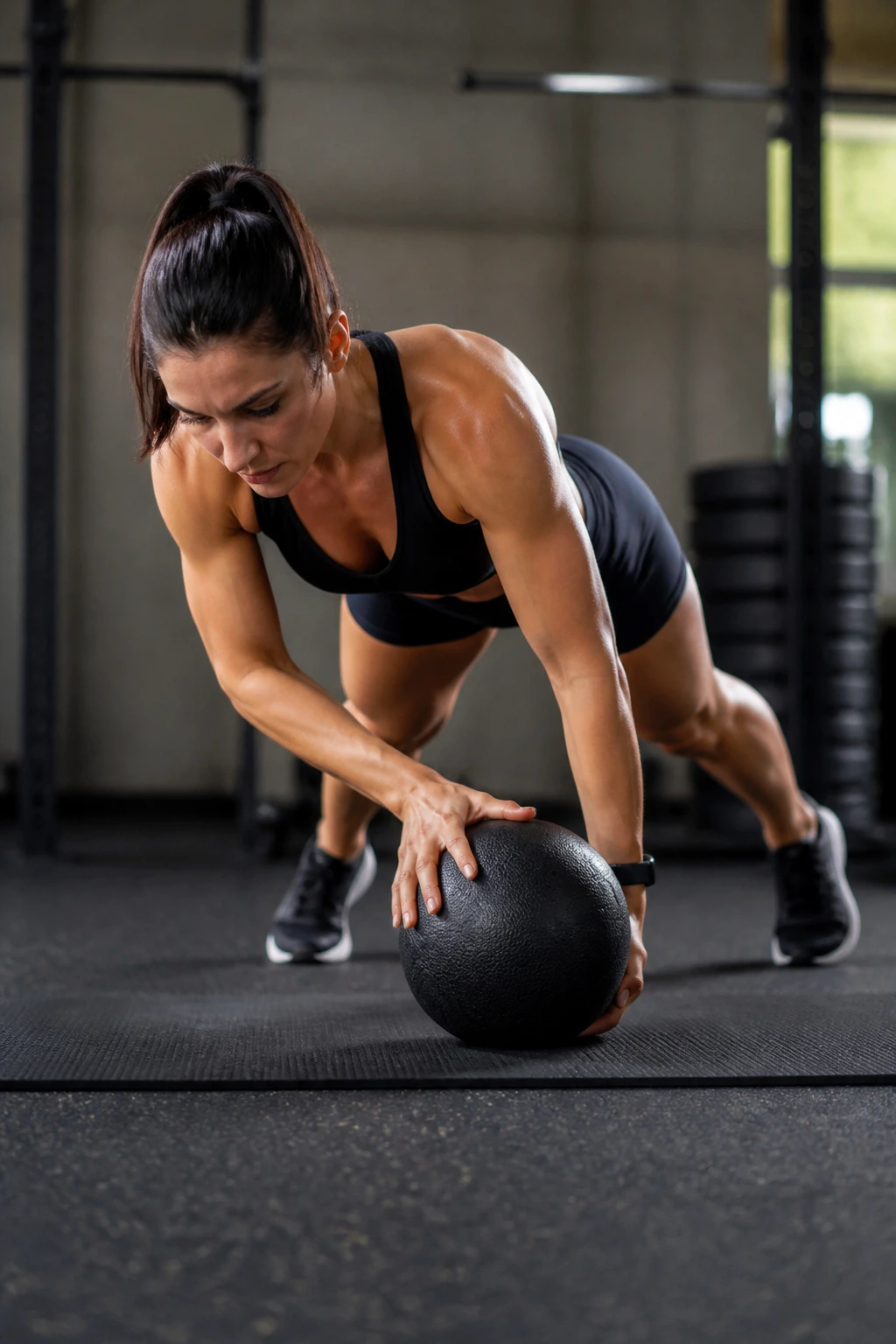
Unlike shoulder taps, this drill makes you move the ball instead of just touching air. That tiny difference changes the whole feel. Your trunk has to resist rotation while your hands travel farther and your hips try to sway.
Get into a strong high plank with the ball sitting just outside one hand. Reach across, grab it, drag it under your chest, and set it down on the other side. Keep your feet a little wider than normal if you need help with balance. Try 8 to 12 hand-offs total or work for 20 to 30 seconds.
This is a sneaky anti-rotation drill. The ball shouldn’t roll away wildly. If it does, you’re likely shifting your weight too much. Slow the pace down and keep the shoulders square. The best reps feel almost quiet.
7. Hollow Hold Medicine Ball Squeeze

A hollow hold feels easy until you add load and ask your ribs to stay pinned down. Then it starts to matter. A lot.
What Makes It Different
Hold the medicine ball overhead with straight arms while you lift your shoulders and feet a few inches off the floor. The lower back stays in contact with the ground, or at least close to it. That’s the job. Hold for 20 to 30 seconds, rest, then repeat for 3 to 4 rounds.
You can also squeeze the ball between your hands and thighs if you want a tighter connection through the midsection. That version is especially good when you want the abs and hip flexors to work together without turning the drill into a knee-bending contest.
The mistake people make is holding the breath. Don’t. Short, controlled exhales keep the trunk braced without making your shoulders tense up. If the neck starts screaming, lower the arms a few inches and keep going.
8. Mountain Climber Ball Drag
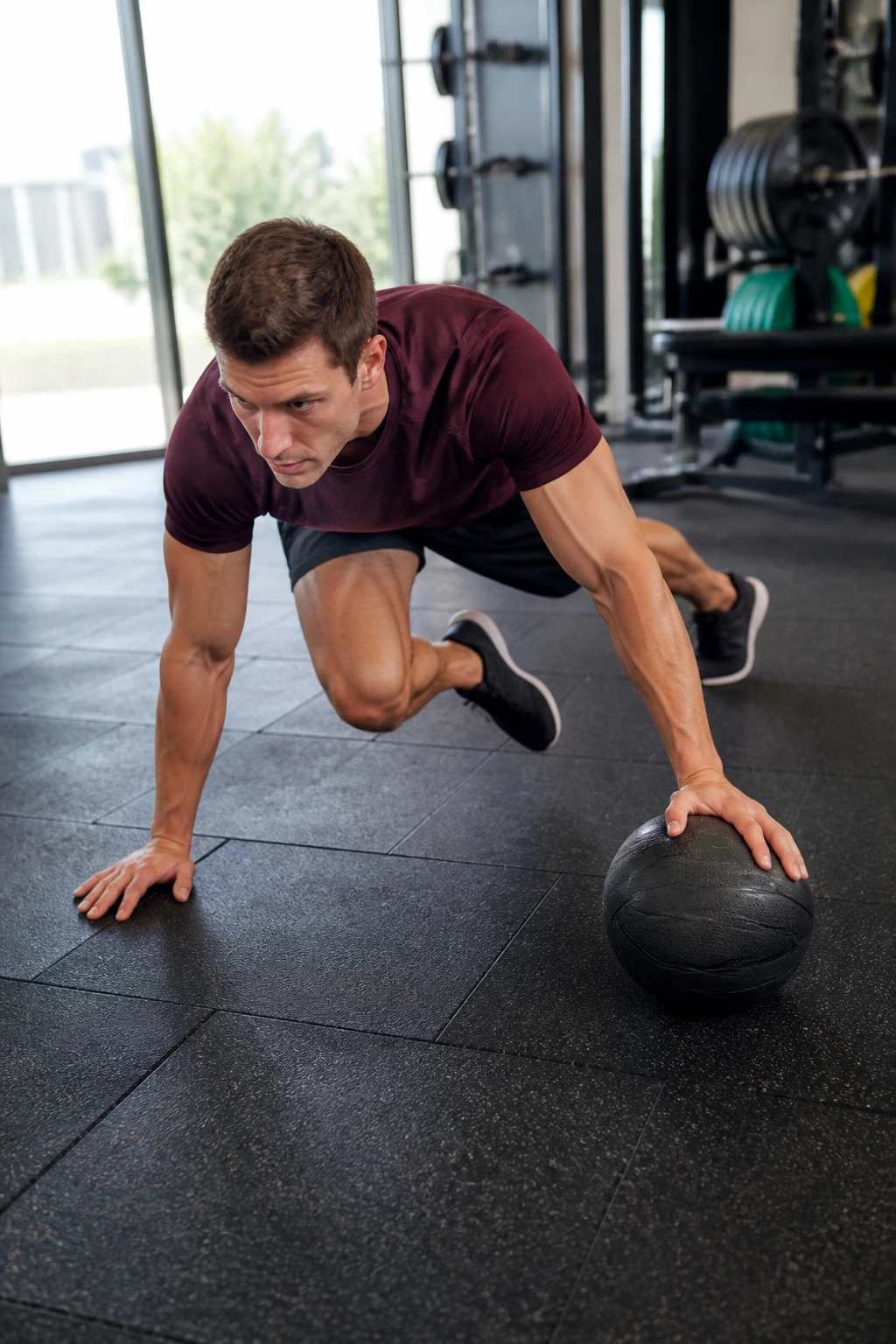
This one gets messy fast, which is exactly why it works. The moment the ball starts moving under your body, every little wobble in the hips becomes obvious.
Set up in a high plank with the medicine ball outside one hand. Drive one knee toward your chest while the opposite hand drags the ball across to the other side. Alternate sides for 6 to 10 drags per side or work for 20 seconds at a steady pace. Keep the shoulders stacked over the wrists and keep the hips as level as you can.
The ball drag adds anti-rotation on top of the usual plank work. That’s the useful part. You’re not just moving legs; you’re preventing the torso from folding while the base keeps shifting. If your low back starts sagging, widen your feet and shorten the range. That saves the drill.
9. Side Plank Reach-Through
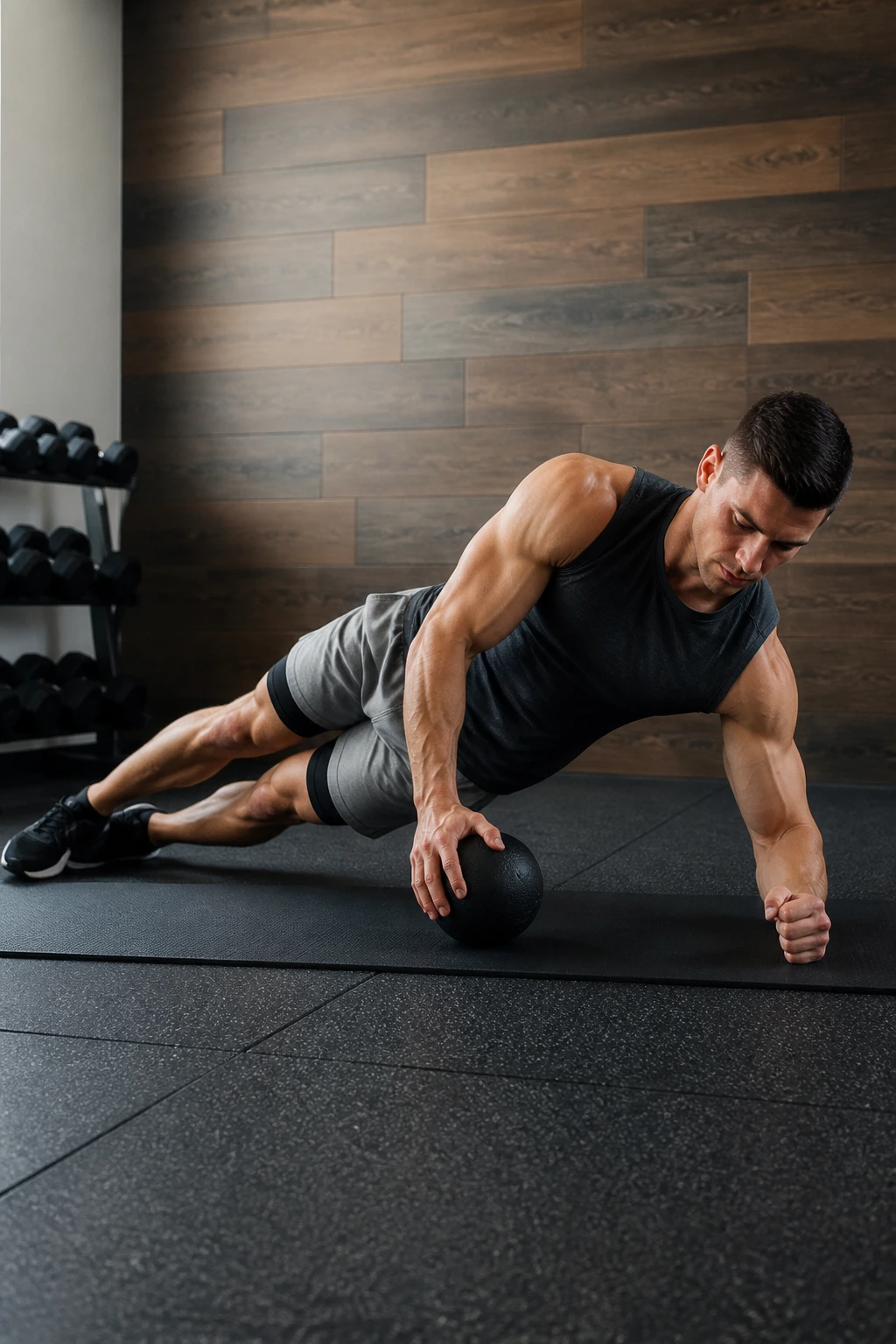
Can a side plank do more than burn the side of your waist? Yes. Once you add a medicine ball reach-through, the obliques, the shoulder, and the deep stabilizers all have to stay awake at the same time.
How to Keep Your Hips Stacked
Start in a side plank with the ball in your top hand. Reach the ball under your torso, then rotate back to the starting point without letting your hips collapse. Aim for 6 to 8 reps per side or a 20-second hold with slow reaches.
The key is not the reach. It’s the return. If you rush back up, you miss the part where the side body has to control the rotation. Keep the bottom shoulder packed and the top hip lifted. If the elbow gets cranky, drop to the knee version and keep the reach clean.
A good side plank reach-through feels long through the body, not twisted in half. That’s the point. Long, then controlled, then long again.
10. Medicine Ball Toe Touch Crunch
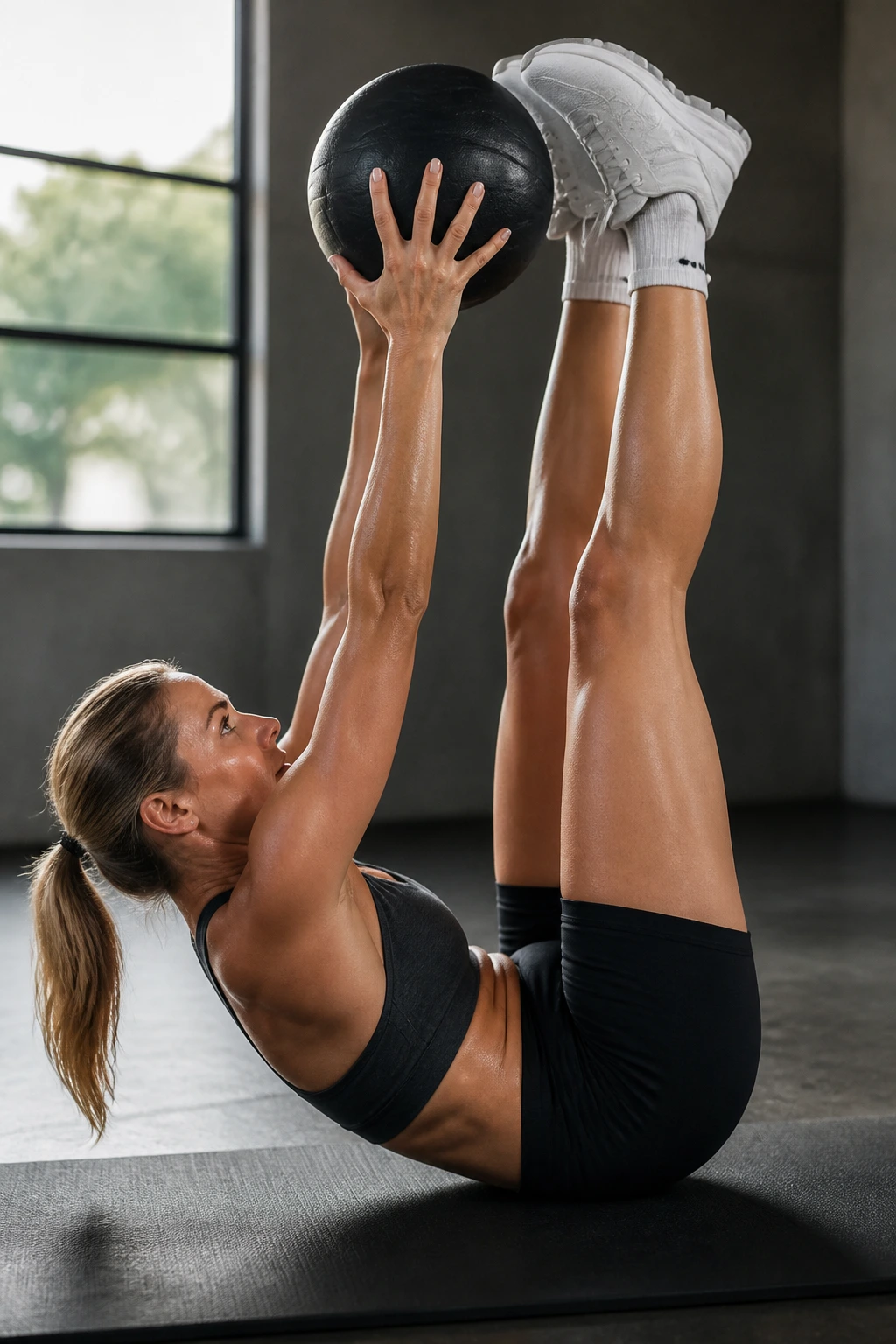
The last few inches of a toe-touch crunch matter more than the first few. That’s where people cheat, and that’s where the medicine ball catches them.
Lie on your back with your legs straight up and the ball reaching toward your toes. Curl the shoulders off the floor and try to meet the ball at the top without yanking the head forward. Work for 12 to 15 reps with a slow lower on the way down. If your hamstrings are tight, keep the knees slightly bent. No one gets extra points for stiff legs and a cranky lower back.
What to Watch For
- The chin should stay tucked, not jammed into the chest.
- The lower back should stay calm, not bounce off the floor.
- The ball should move with the crunch, not lead it.
- The top position should feel tight and brief, not flung open.
This is one of the better moves for people who want a classic ab feel without endless floor reps that never seem to go anywhere.
11. Medicine Ball Lying Leg Raise Press
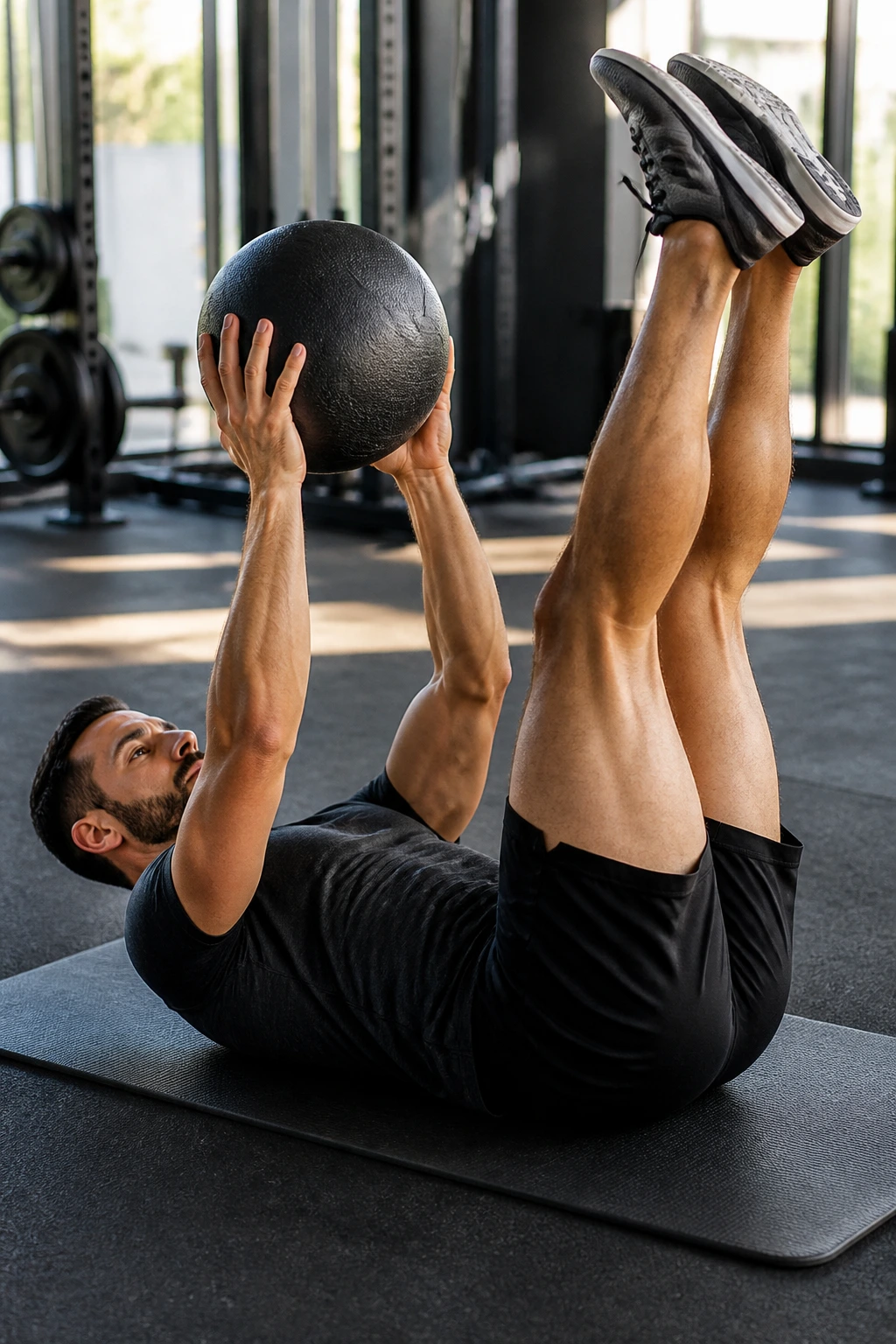
A leg raise gets much harder when the ball gives your upper body a task at the same time. That’s the whole idea here. Your abs have to hold the pelvis steady while your legs move with control.
Lie on your back and hold the medicine ball straight above your chest. Lift both legs together until they’re vertical, then lower them only as far as you can without your lower back arching. Go for 6 to 10 slow reps. If the floor is slippery or your back starts complaining, put your hands under your hips and shorten the lowering phase.
I like this drill because it teaches honest range. People love to drop their legs low and call it hard work. It is only hard work if the spine stays put. Otherwise the low back pays the bill. Keep the movement smooth, and stop the descent the moment the ribs try to pop up.
12. Bicycle Crunch With a Medicine Ball Reach

A weighted bicycle crunch is not about making the movement bigger. It’s about making the rotation cleaner.
Hold the medicine ball at your chest or just above your chest, then alternate elbow-to-opposite-knee as you pedal the legs. Aim for 10 to 12 touches per side and keep the twist coming from the rib cage. The ball adds enough load that you can’t fake the rep with lazy speed.
What Makes It Different
A plain bicycle crunch can turn into flailing if the pace gets sloppy. The ball slows that nonsense down. You have to lift, twist, and reset with a little more precision, which is exactly why the obliques and upper abs do more of the job.
Choose a lighter ball here. Heavy is not helpful. A 4- to 6-pound ball is usually enough. If the shoulders tense up, rest for a breath between sets and go again. Better reps beat longer sets every time.
13. Rotational Medicine Ball Slam

If you want your core to work hard and your pulse to climb, this is the loud one. A rotational slam trains force, speed, and control in one shot.
Stand with the medicine ball overhead, rotate through the torso and hips, and slam it down across your body toward the outside of the opposite foot. Reset, then switch sides. Use 8 to 10 slams per side. If you have a true slam ball, use that. If the ball is hard and bouncy, do not throw it at a brittle floor. Bad idea. Use a softer surface or a safer ball.
What Makes It a Core Drill
The slam is not just arms going down. The obliques have to create the turn, the hips have to help, and the trunk has to stop you from wobbling on the reset. That’s why the standing setup matters.
Keep the feet planted, brace before each rep, and avoid over-rotating at the bottom. The best slams look forceful but still organized. Wild is not the goal.
14. Front Rack Medicine Ball March
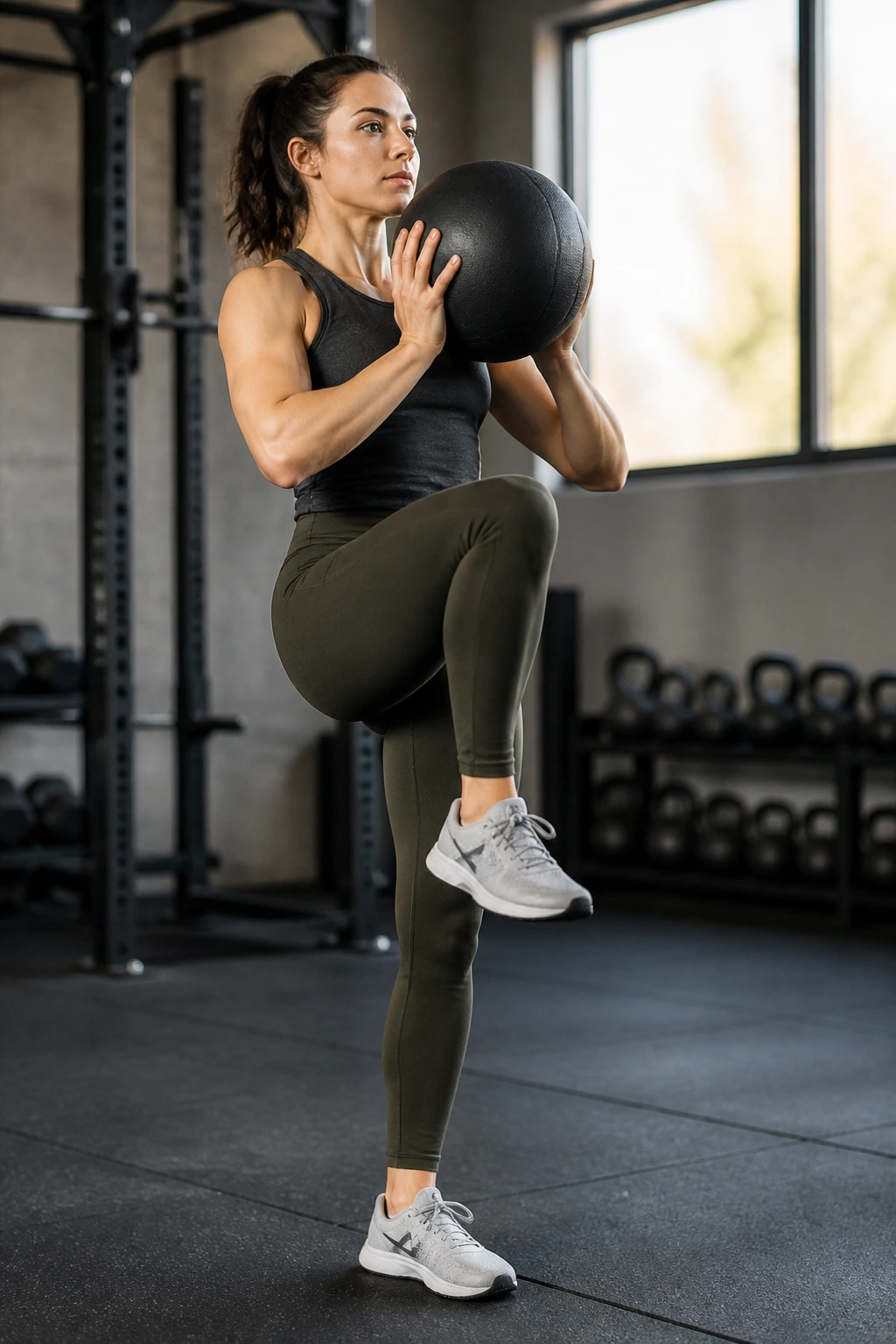
A front rack march is one of those exercises people ignore because it doesn’t look dramatic. Shame. It is excellent for posture, bracing, and keeping the rib cage stacked over the pelvis.
Hold the ball tight against your chest and march in place with controlled knee lifts. Stay tall. Do not lean back. Work for 30 to 45 seconds per set or march 20 to 30 steps per side. If you want to make it harder, move slower and keep the ball pressed in firmly the whole time.
The trick is breathing. You want short, quiet breaths while the abs stay on. If every inhale makes your torso puff out, the load is too heavy or your brace is too loose. This drill rewards patience. It’s not flashy, and that’s part of why it works so well.
15. Medicine Ball Around-the-World Circles
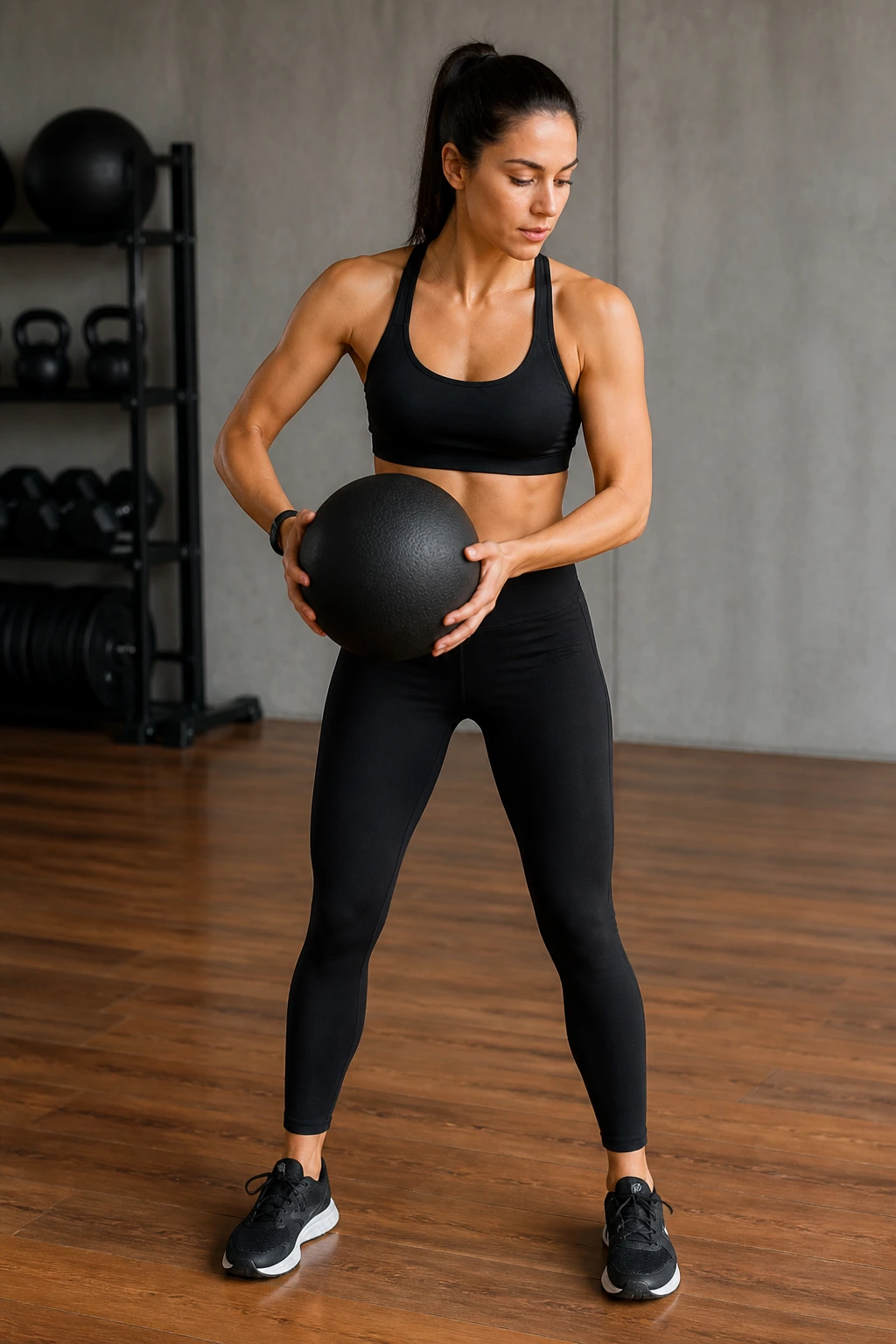
Why does a simple circle around the waist feel so different from other ab work? Because the body has to keep resisting tiny shifts the whole time, and those little shifts add up fast.
How to Use It
Stand tall with your feet about hip-width apart and pass the medicine ball around your waist in a smooth circle. Then reverse direction. Keep the ribs down and the hips quiet. Do 5 to 8 circles each way for 2 to 3 rounds.
This drill looks almost casual, but it’s a solid way to teach control through the waistline and hips. The ball should travel close to the body, not in a huge arc. If you let it drift far away, the shoulders take over and the core misses most of the work.
I like this as a warm-up before harder core drills. It wakes up the sides of the trunk without beating you up. Use a lighter ball and keep the rhythm even.
16. Medicine Ball Rollout Plank
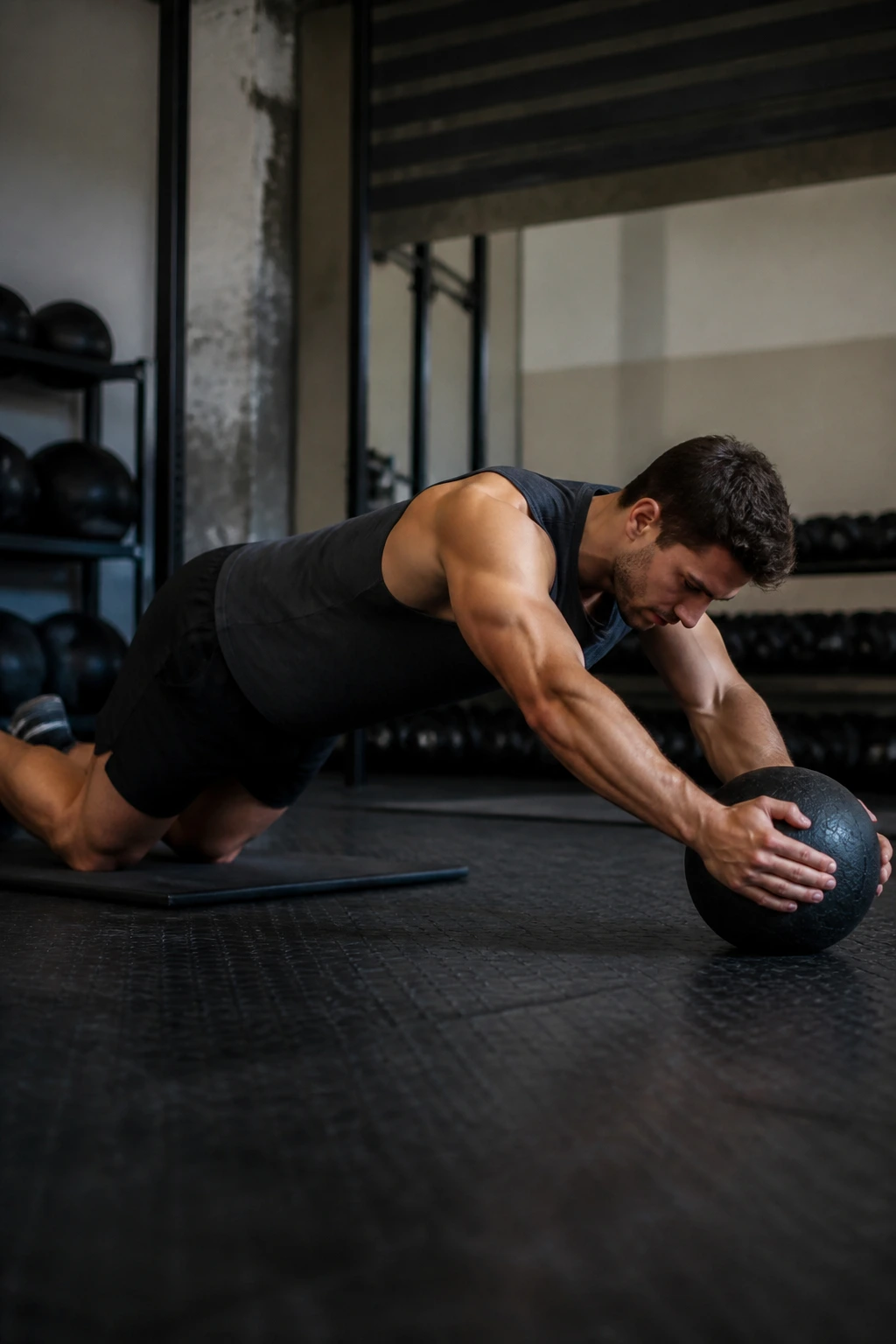
A rollout with a medicine ball is brutal in the best possible way. It asks the abs to stop the torso from collapsing as the arms extend forward, and that anti-extension demand is hard to fake.
Get into a kneeling plank with your forearms or hands on the ball, then roll the ball forward a few inches and pull it back under control. Start with 6 to 8 reps and keep the range short. If the lower back starts to dip, stop there. That’s the point where the set has turned into a spine gamble.
Key Details
- Keep the glutes squeezed.
- Keep the head in line with the spine.
- Roll only as far as you can control.
- Use a soft mat under the knees if the floor is unforgiving.
This drill rewards slow, even movement. A fast rollout is a bad rollout. The best version feels like your whole midsection is working to prevent a collapse that never quite happens.
17. Bear Hug Medicine Ball March
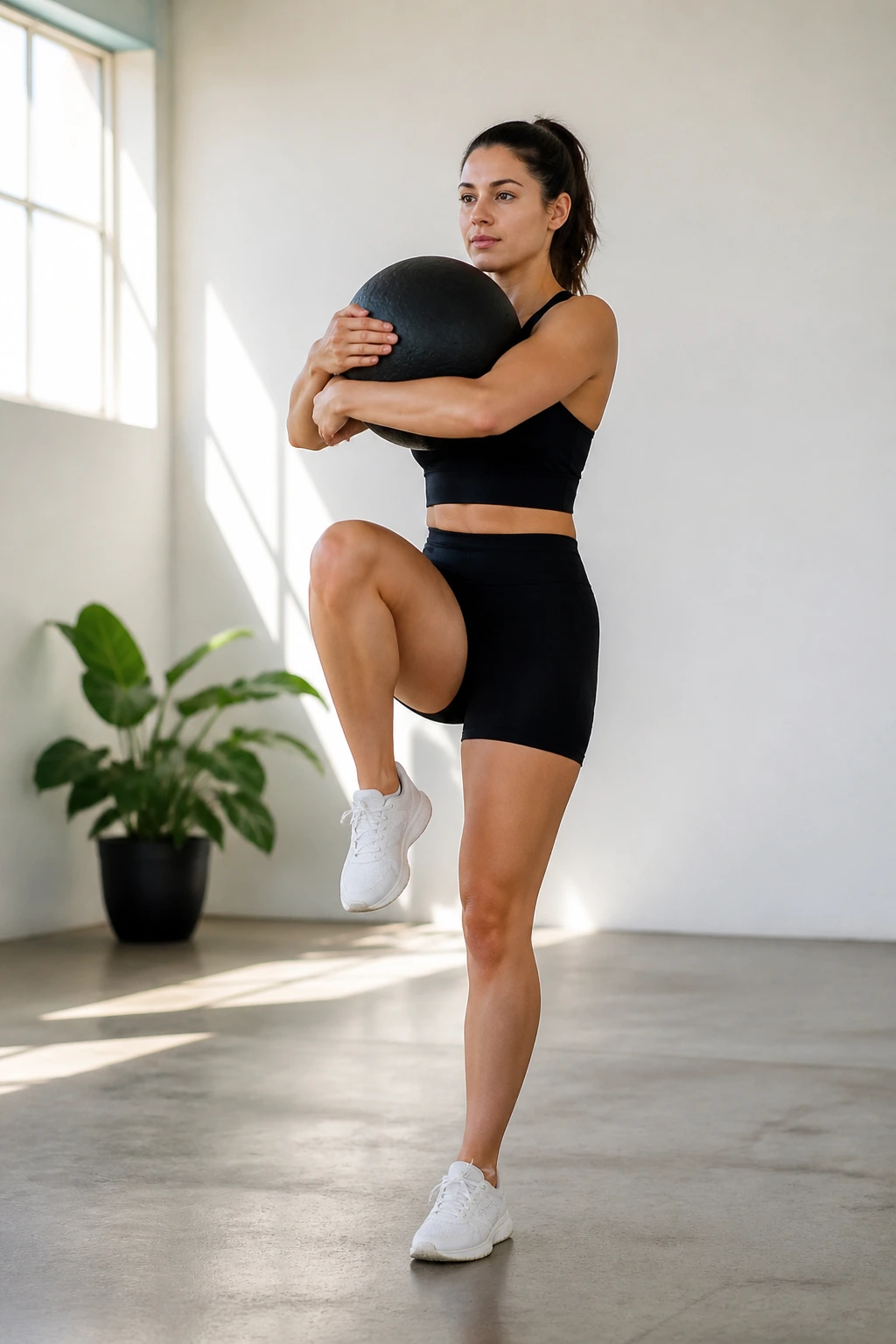
The bear hug march is plain, and I mean that in the best way. You squeeze the ball against your chest, keep your torso tall, and march without letting the load pull you into a slump.
Hold the ball tight, tuck the elbows slightly, and march in place for 30 to 60 seconds. Keep the steps short enough that the hips stay level. If you want a bigger challenge, pause for one second at the top of each knee lift. That tiny pause exposes any wobble fast.
This exercise is especially good for people who want core work that feels useful outside the gym. You’re training posture, breathing, and midline control all at once. The carryover is obvious when you stand up from a chair or walk upstairs with something heavy in your arms. The body remembers.
18. Medicine Ball Suitcase Carry

A suitcase carry is one of the cleanest anti-lateral-flexion drills you can do. In plain language, it teaches your body not to lean when one side is loaded.
Hold the medicine ball in one hand at your side and walk for 20 to 40 yards or 20 to 30 seconds before switching hands. Stay tall. Don’t let the loaded side drag your shoulder down. Don’t drift away from the ball either. If the grip feels awkward because the ball is round, choose a textured ball or a sand-filled version that sits better in the hand.
What It Beats
Unlike a simple plank, the suitcase carry challenges your core while you move, breathe, and deal with balance at the same time. That makes it a better test of real-world trunk strength than a lot of floor-only work.
Take shorter steps and keep the ribs stacked. If you lean, the set is too heavy or the distance is too long. A good carry feels boring for the first few steps, then surprisingly hard near the end. That’s usually a sign you picked the right load.
Final Thoughts

A strong core is not built from one kind of effort. You need some flexion, some rotation, some anti-rotation, and some work that makes the trunk hold steady while the rest of the body moves around it. That mix does more for your abs than endless fast reps ever will.
Pick four or five of these medicine ball ab workouts and run them in a simple circuit. One drill from the floor, one standing drill, one carry, one plank variation. That’s enough to light up the midsection without turning the session into junk volume.
The best sign that the plan is working? You feel more stable everywhere else. When your torso stops wobbling, everything above and below it gets cleaner.
