



Your feet hit the floor, and the goal is to make it sound like a whisper. If your landing echoes through the gym, you are absorbing impact entirely with your joints rather than distributing it through your muscles. True power is not just about the height you achieve at the apex of a jump; it is about the control you maintain on the way down and the efficiency with which you transition into the next movement.
Most people treat squat jumps like a cardio drill, cranking out reps until their lungs burn. That is a mistake. Squat jumps are neurological training. They are about rate of force development. When you descend into the bottom position, you are essentially pre-loading your tissues like a coiled spring. The goal is to release that potential energy into a violent, controlled upward movement, then land with enough precision to reset immediately.
Stop focusing on being breathless and start focusing on being explosive. If you can land a jump with the same grace you had at the start of your set, you are building athletic capacity. If you are stumbling or “clunking” into the floor, dial the intensity back. Here are 22 variations of the squat jump, ranging from fundamental mechanics to complex power drills, designed to help you build real, functional athleticism.
1. Standard Air Squat Jump
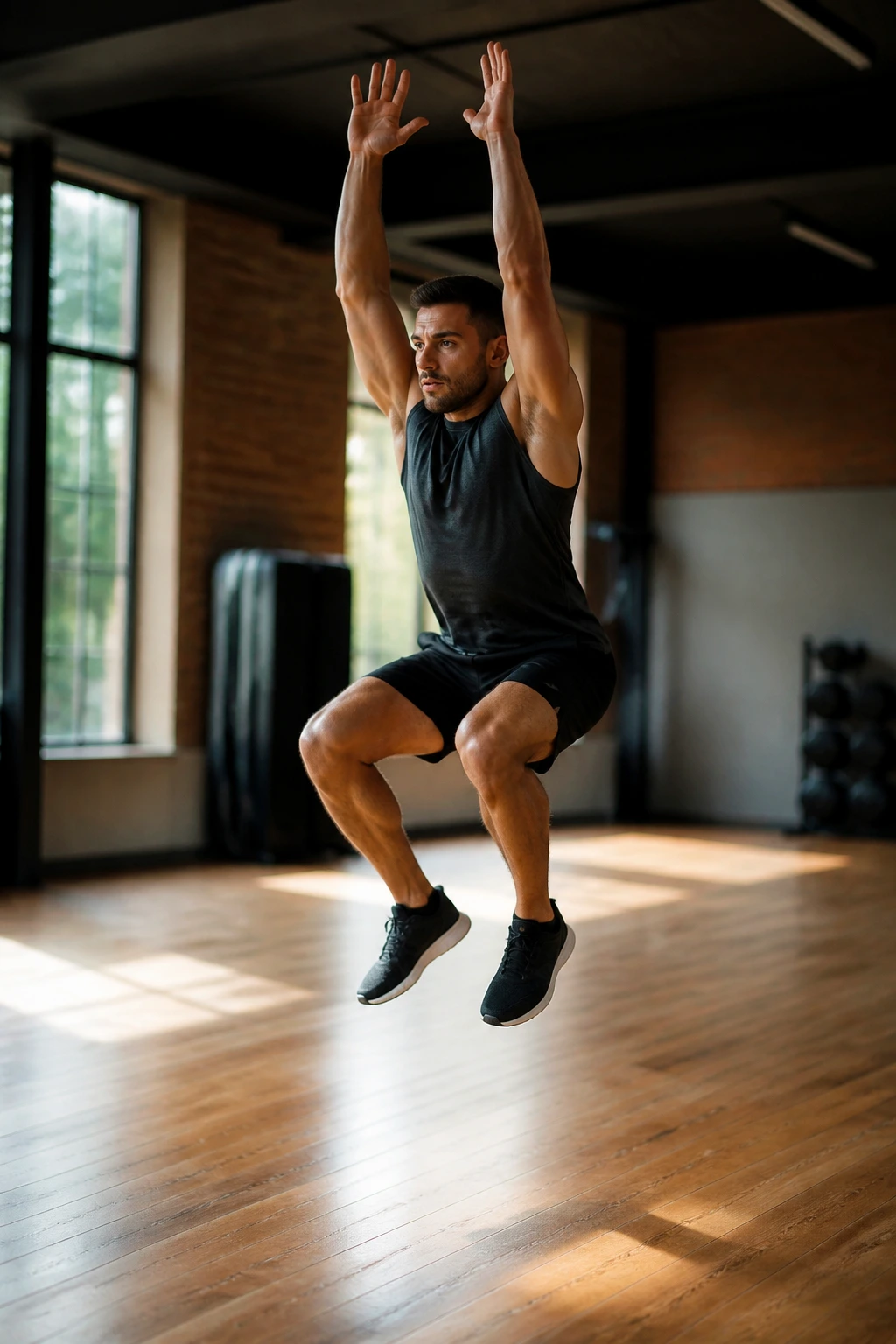
This is the baseline. It forces you to learn the rhythm of the stretch-shortening cycle without external variables. You aren’t just bouncing; you are driving through the floor. Stand with feet shoulder-width apart, sink your hips back and down until your thighs are at least parallel to the floor, and then extend your hips, knees, and ankles simultaneously to launch yourself upward.
Keys to Perfect Execution
- Arm Swing: Use your arms for momentum, swinging them back as you descend and driving them overhead as you jump.
- The Landing: Your landing should be “soft.” That means landing on the balls of your feet, immediately transitioning into the heels, and sinking back into the squat to dissipate force.
- Neutral Spine: Keep your chest up throughout the movement. If you find yourself folding at the waist, you aren’t ready for speed.
Pro tip: Record yourself from the side. If your knees cave inward on the landing, fix that alignment before you ever attempt a weighted variation.
2. Tuck Jump

The tuck jump introduces a significant challenge to your core and hip flexors. You aren’t just getting air; you are pulling your knees toward your chest at the peak of the jump. This requires a rapid, violent contraction of the abdominal wall.
Why It Builds Power
While standard jumps focus on vertical displacement, the tuck jump forces you to maintain vertical posture while rapidly shortening your center of mass. It teaches you to be explosive enough that your feet have time to clear the ground, tuck, and extend again before you hit the floor.
Troubleshooting the Movement
Many people tuck their chests down to meet their knees. This is a common form error. Keep your torso upright and bring your knees up to meet your chest. Think of it as a vertical crunch in mid-air.
3. Broad Jump

Most athletic power is horizontal, not vertical. The broad jump is the gold standard for testing and building linear explosive power. You aren’t jumping for height here; you are jumping for distance.
The Mechanics of Distance
You need a massive hip hinge to start this movement. Swing your arms back deeply behind your hips before you explode forward. Focus on extending your hips fully—if you don’t achieve full extension, you are leaving distance on the table.
Landing Safely
Landing a broad jump is where the injury risk lies. Never land with locked knees. Think of your legs as shock absorbers. As your heels touch the ground, push your hips back immediately to absorb the momentum.
4. Split Squat Jump

Unilateral power is often neglected. We spend so much time on two feet that we forget how to generate force from one side of the body. The split squat jump, or “lunge jump,” forces you to stabilize your pelvis while producing vertical force from an offset stance.
How to Stay Balanced
The temptation is to drift forward or backward. Try to stay dead center. Your front shin should remain relatively vertical. If you find yourself wobbling, reduce the height of your jump and focus on the stability of your landing foot.
The Core Connection
Your oblique muscles have to fire rapidly to keep you from rotating during the jump. If you feel this in your lower back, you are likely losing your core tension mid-air. Keep your ribcage knitted down and your core braced hard.
5. Box Jump

The box jump is the safest way to train high-intensity jumping because it minimizes the eccentric load of the landing. You are jumping onto something, so the impact is drastically reduced compared to jumping back to the floor.
The Right Way to Step Off
Don’t jump down from the box. This is a crucial rule for longevity. Stepping down forces you to absorb your body weight repeatedly, which can lead to tendonitis over time. Jump up, land softly, and then step down.
Box Height Considerations
The goal is power, not gymnastics. If you have to tuck your knees into your chest to land on the box, the box is too high. Use a height that allows you to land in a quarter-squat position.
6. Lateral Skater Jump
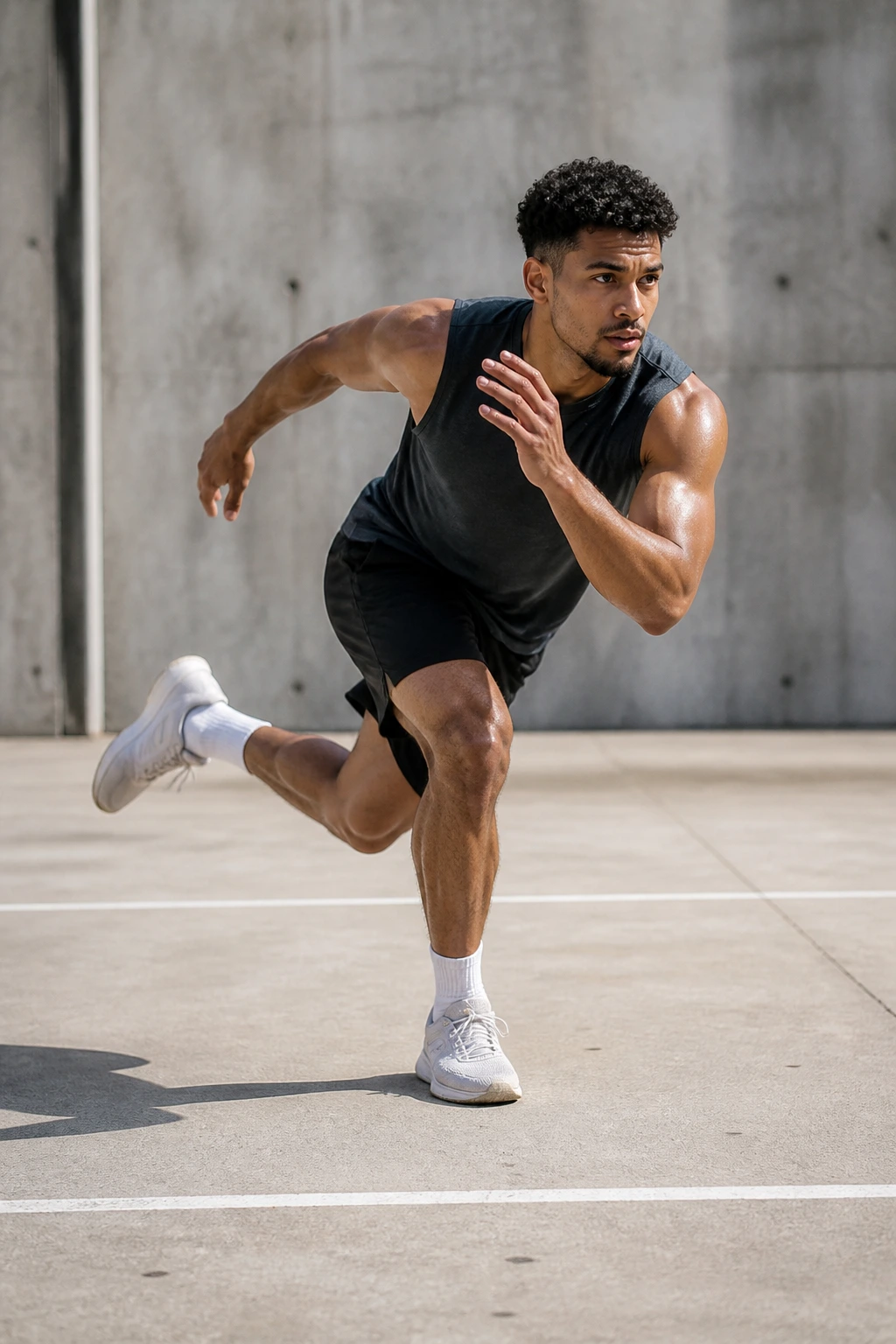
We move in the frontal plane every day—cutting, changing direction, and dodging. The lateral skater jump is the best way to train for that movement. It involves jumping side-to-side, landing on one foot, and holding your balance for a split second before pushing off to the other side.
Why This Is Different
This is a stabilizer drill. The muscles around your hips, specifically the gluteus medius, have to work overtime to prevent your knee from collapsing inward upon landing.
Practical Application
Do not rush these. The power comes from the push, not the jump itself. Imagine you are pushing off a wall that is located to the side of your body.
7. 180-Degree Squat Jump

Adding rotation to a jump forces you to organize your body in space while under stress. You are jumping, turning 180 degrees, and landing while maintaining your balance and squat form.
The Disorientation Factor
Your inner ear will try to throw you off. Keep your eyes fixed on a point in front of you for as long as possible before initiating the turn, and pick that same point (or the opposite side) as soon as you land.
The Landing Challenge
The risk of a twisted ankle or a knee strain is higher here than in a straight jump. Use smaller, more controlled jumps until you master the rotation. You don’t need to be a gymnast; you just need to turn your body and land softly.
8. Squat Jump with Pause

Sometimes, the best way to get more explosive is to take away the bounce. This variation forces you to start from a dead stop at the bottom of the squat, completely eliminating the momentum you would normally get from the descent.
The “Dead Stop” Advantage
By pausing in the bottom position for three seconds, you kill the stored elastic energy in your tendons. You are forced to produce force entirely from muscle contraction. This is pure concentric power development.
How to Program It
Do not do these for high reps. This is a strength-power drill. Aim for sets of 3 to 5 reps. If you are doing 15 reps, you are doing a conditioning workout, not a power workout.
9. Weighted Squat Jump

Adding a light load to a jump can increase the recruitment of fast-twitch muscle fibers. However, there is a very fine line between “building power” and “ruining your knees.”
Load Management
Use a weight vest or light dumbbells—no more than 10-15% of your body weight. If you go heavier, the speed of the movement slows down so much that it ceases to be a power exercise.
Form Overload
If the weight pulls you forward or makes your form break down, take it off immediately. The weight is there to challenge your explosive drive, not to test how much you can squat while jumping.
10. Depth Jump
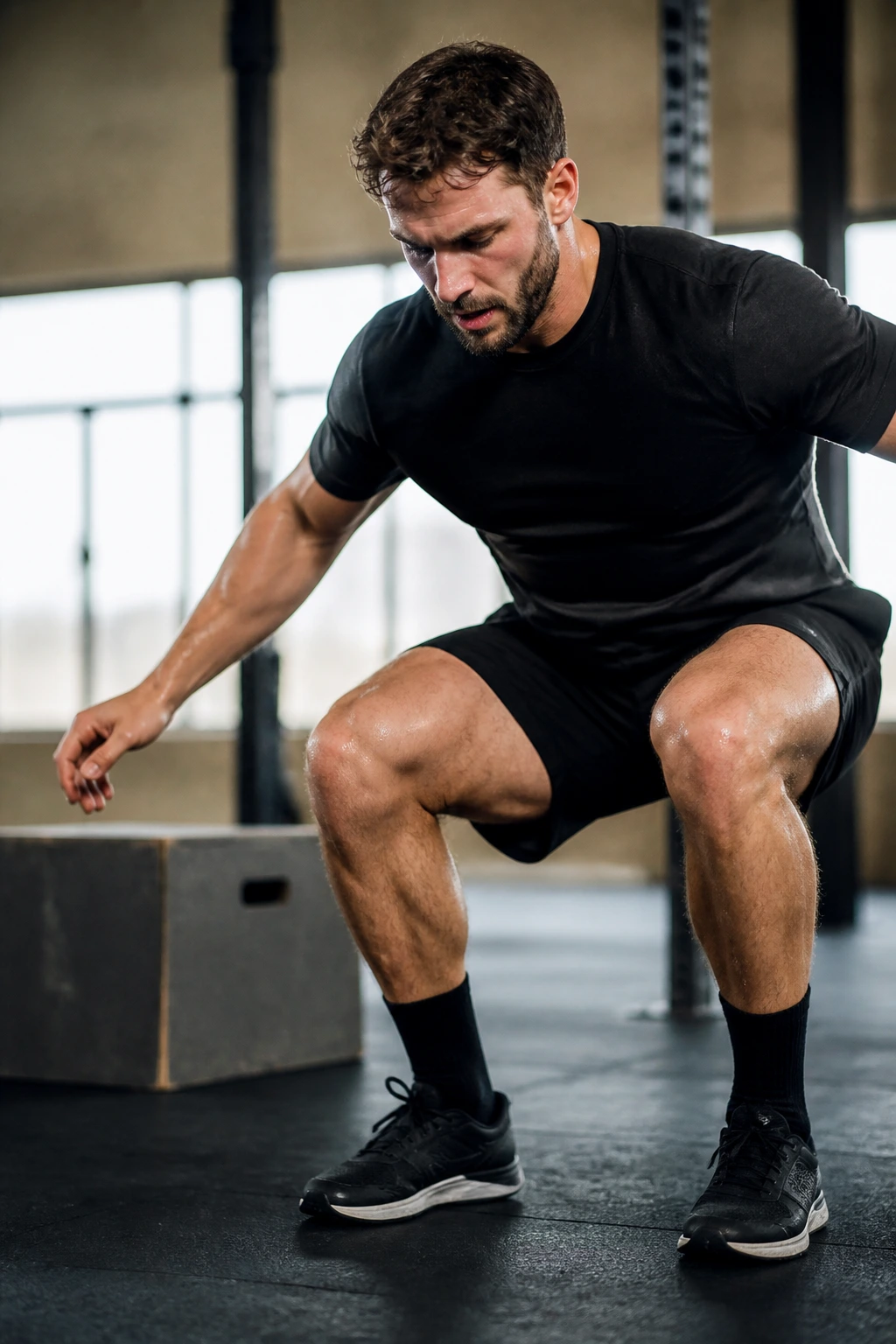
This is the king of plyometric exercises. You step off a low box, hit the floor, and immediately bounce back up. It forces your muscles to undergo a lightning-fast transition from absorbing force to producing force.
Contact Time
The “ground contact time” is the metric that matters most. You want to spend as little time on the floor as possible. Imagine the floor is made of hot lava. As soon as your heels kiss the ground, you are already on your way up.
Who Should Do It
This is an advanced move. Do not attempt this unless you have a solid foundation of squat strength and have mastered basic squat jumps. Your tendons must be conditioned to handle the impact forces.
11. Pike Jump

The pike jump requires intense abdominal strength and hip flexor engagement. At the top of your jump, you extend your legs forward, trying to touch your toes with your fingers, then pull them back under you to land.
Mid-Air Coordination
It feels unnatural at first. You are effectively shifting your weight while airborne. The goal is to reach your peak height, “pike” your body into an L-shape, and then return to a neutral landing position.
Benefits
Beyond power, this is a phenomenal core builder. It teaches you to control your body’s center of mass while it is displaced, which is a key skill for athletes in almost every sport.
12. Prisoner Squat Jump

By placing your hands behind your head (interlocking fingers), you remove the advantage of the arm swing. This forces your legs and glutes to do 100% of the work.
Posture Correction
This variation is inherently corrective. It pulls your shoulders back and forces your chest to stay upright. If you hunch over, your hands will pull your neck forward, which is a quick reminder to straighten up.
The Difficulty Spike
You will be shocked at how much lower your jump height is without the arm swing. This is normal. It highlights how much of your vertical leap is actually driven by your upper body mechanics.
13. Band-Resisted Squat Jump

This is the reverse of weighted jumps. You wrap a resistance band around your waist and anchor it to the floor (or a heavy dumbbell). The band pulls you down faster, forcing you to accelerate even harder.
Over-Speed Training
The band increases the eccentric load, forcing your muscles to “turn on” faster to catch the extra pull. When you perform the movement without the band, your nervous system feels like it’s suddenly operating in slow motion, allowing you to jump significantly higher.
Safety Warning
Ensure the anchor point is immovable. If the band slips or the anchor shifts, you risk tripping. This is best done in a gym setting with proper equipment.
14. Single-Leg Squat Jump
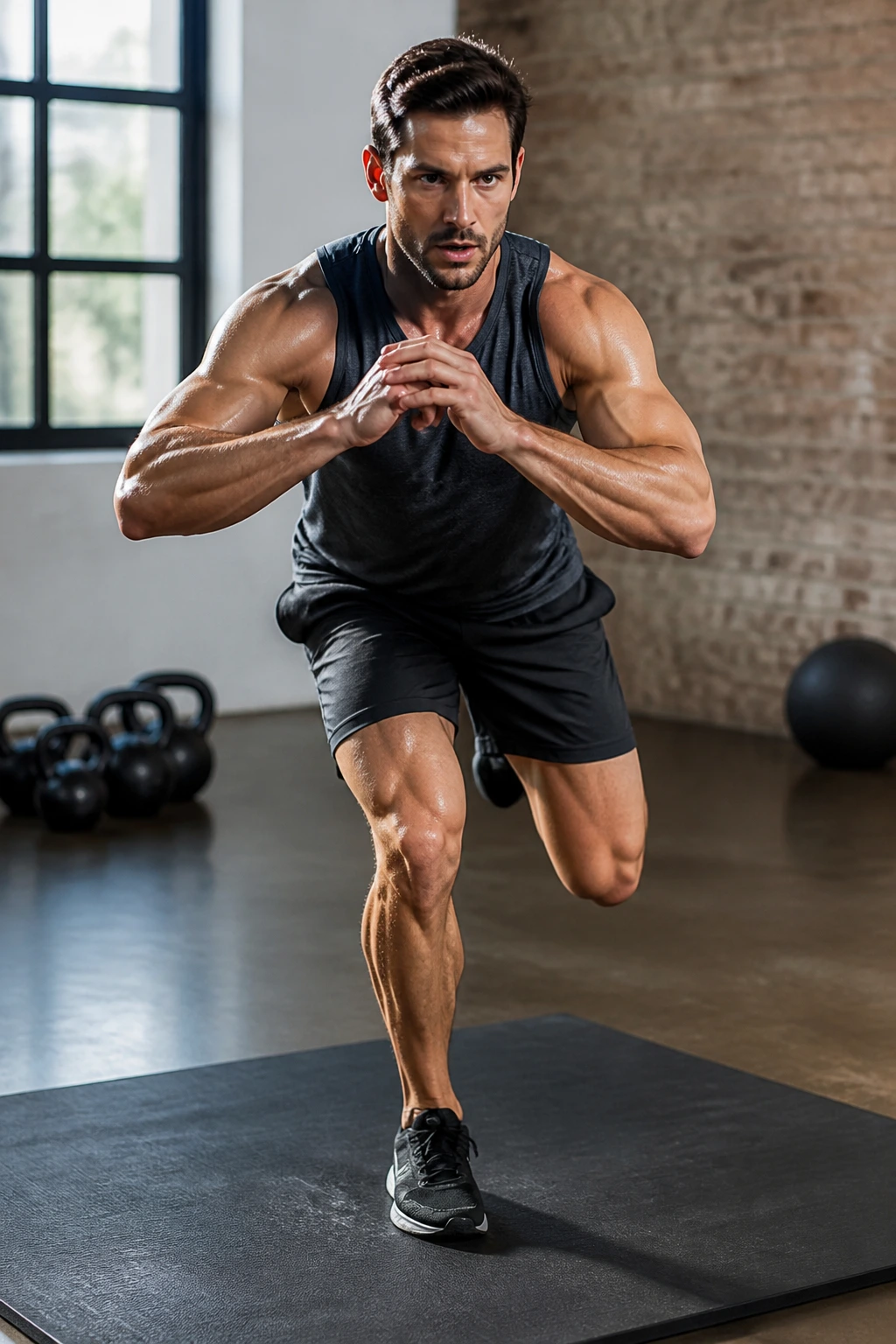
This is the ultimate test of lower-body independence. Stand on one leg, descend into a single-leg squat, and explode upward, landing on that same leg.
The Stability Challenge
Your stabilizing muscles (adductors, gluteus medius, and ankles) will shake. That is the goal. You are not just building power; you are bulletproofing your knee joint.
Managing Intensity
This variation is brutal on the nervous system. Do not do high volumes. If your form starts to wobble, stop the set. The moment your technique fails, you are no longer training power—you are practicing bad habits.
15. Star Jump

The star jump involves jumping and fully extending your arms and legs into a “star” shape at the peak of the jump. It requires coordination and explosive hip power.
Explosive Opening
You start in a deep squat, then “pop” into the air, extending the limbs to maximize the surface area. It’s a rhythmic, full-body movement that really elevates the heart rate.
The Landing Sequence
Because your limbs are splayed out, you must quickly retract them to land safely. This teaches you to reset your body position mid-air, a skill that is vital for collision sports.
16. Squat Jump to Sprint

This is a specific drill for athletes who need to change from static power to linear speed. You perform one maximal effort squat jump, land, and immediately accelerate into a 5-10 yard sprint.
The Transition
The magic happens in the transition. The goal is to channel the force you just generated in the jump directly into your first step. Don’t pause after the landing. The landing is the launchpad for the sprint.
Practical Usage
This is great for field sports players—think football, soccer, or rugby—where you might be jumping for a ball and immediately needing to chase down an opponent.
17. Bulgarian Split Squat Jump

You keep your rear foot elevated on a bench or box. You then perform the jump on your front leg. This is incredibly demanding on the quads and the glutes of the lead leg.
The Balancing Act
The back foot is just there for stability; do not put all your weight on it. Most of the power must come from the front leg. If you feel like you are pushing off the back leg, scoot your front foot a bit further forward.
Why It Works
It isolates the leg, meaning your stronger side can’t compensate for your weaker side. If you have imbalances, this will highlight them instantly.
18. Heel-Tap Squat Jump

This is a subtle variation focused entirely on the eccentric phase. You perform a squat jump, but at the top, you click your heels together before landing.
The “Click” Cue
The “click” forces you to get full hip extension. If you don’t fully extend, you won’t have time to tap your heels together. It’s a simple biofeedback tool that ensures you aren’t cutting your jumps short.
Rhythm
The tap should be quick and light. Do not force it. It is meant to be a transient moment of contact that reminds you to fully engage your glutes at the top of the movement.
19. Sumo Squat Jump

Take a wider stance, turn your toes slightly outward, and perform the jump. This shifts the focus toward the adductors (inner thighs) and the glutes.
Knee Safety
With a wider stance, it is even more critical that your knees track directly over your toes. Do not let them cave in. If they cave, your stance is too wide for your current hip mobility.
The Feel
You should feel this in the inner thighs significantly more than a standard jump. It’s a great way to hit muscles that often get neglected in standard sagittal-plane-only power training.
20. Medicine Ball Slam-Jump

Hold a lightweight medicine ball. As you jump, throw the ball down into the floor as hard as you can. This adds a component of upper-body power to the lower-body jump.
The Full-Body Sync
Timing is everything here. You want to release the ball at the exact apex of your jump. If you release it too early, you lose the power. If you release it too late, you are just dropping the ball.
The Impact
This is a great stress-relief movement, but it is also highly demanding on the core. You are throwing force down while your legs are pushing up. This conflict forces your core to lock down intensely.
21. 360-Degree Jump

This takes the 180-degree jump and doubles the difficulty. You are attempting a full circle in the air.
The Aerial Awareness
This is less about strength and more about spatial awareness. You need to keep your core tight and your arms close to your body to rotate effectively (like a figure skater).
Don’t Over-Rotate
It is very common to over-rotate on the first few tries. Aim to land facing the same direction you started. If you consistently land turned, you are initiating the rotation too early.
22. Seated-to-Jump Squat

Sit on a box or bench that is at or slightly below knee height. From a dead stop, explode upward into a jump.
Removing Momentum
Because you are starting from a seated position, you have zero assistance from a lowering phase. This is the purest test of raw concentric power.
The Starting Position
Do not rock back and forth to gain momentum. Start from a still position, chest tall, and fire. This is a humbling exercise; you will likely jump much lower than you expect. That’s okay—the adaptation you get from starting from a dead stop is superior for long-term power growth.
Final Thoughts
The key to all of these movements is intent. If you go through the motions just to get your heart rate up, you are doing cardio, not power training. Power requires your nervous system to be firing at 100% capacity. This means you should treat every single rep as if your life depends on it.
Consistency beats intensity every single time. It is far better to perform a high-quality session of 20 explosive jumps three times a week than to do 100 sloppy jumps in one exhausted, poorly-formed session. Watch your feet, listen to the landing, and prioritize the silence of your touch over the height of your flight. Your joints will thank you, and your athletic potential will follow.
