



The standard body weight squat is the bread and butter of lower body training, but if you perform the exact same repetition for years on end, you aren’t just hitting a plateau — you’re missing out on the nuance of human movement. Your legs are complex, multi-joint structures capable of handling force from varied angles, planes of motion, and intensities. When you lock yourself into one movement pattern, you ignore the secondary stabilizers, the rotational muscles, and the distinct physiological adaptations that come from changing the angle of your knees, hips, and ankles.
The human body thrives on variety. By simply altering your foot placement, your tempo, or your range of motion, you can force your quads, glutes, hamstrings, and calves to work in ways that a standard up-and-down rep never will. This isn’t about complexity for the sake of it; it’s about building a more resilient, capable, and functional lower body. You do not need expensive gym equipment to elicit a growth response or to build serious strength. You only need to know how to manipulate your own mass.
What follows is a breakdown of twenty distinct ways to challenge your legs using nothing but your body weight. Whether you are looking to build raw strength, increase your mobility, or simply break the boredom of a stale training routine, these movements offer a roadmap. You can cycle these into your routine daily, focusing on different patterns each time you train, ensuring your lower body never gets comfortable enough to stop adapting.
1. The Standard Air Squat
This is the baseline, the reference point for every other movement on this list. It is deceptively simple, which is exactly why so many people get it wrong. You want your feet at about shoulder-width apart, toes turned slightly outward. The key isn’t just going down; it’s about maintaining a rigid torso and ensuring your weight stays firmly planted in your heels.
How to Execute Properly
The movement should feel like you are sitting back into a chair that is just slightly too far behind you. As you descend, keep your chest upright and your gaze fixed straight ahead—this naturally helps maintain a neutral spine. You are looking to hit a depth where your hip crease falls just below the top of your knee, assuming your mobility allows for it. If your heels start to lift off the floor, shorten your range of motion until your ankle mobility catches up.
Pro tip: Think about “tearing the floor apart” with your feet as you stand back up. This simple cue engages your glutes and prevents your knees from caving inward, which is the most common mistake beginners make.
2. Sumo Squat
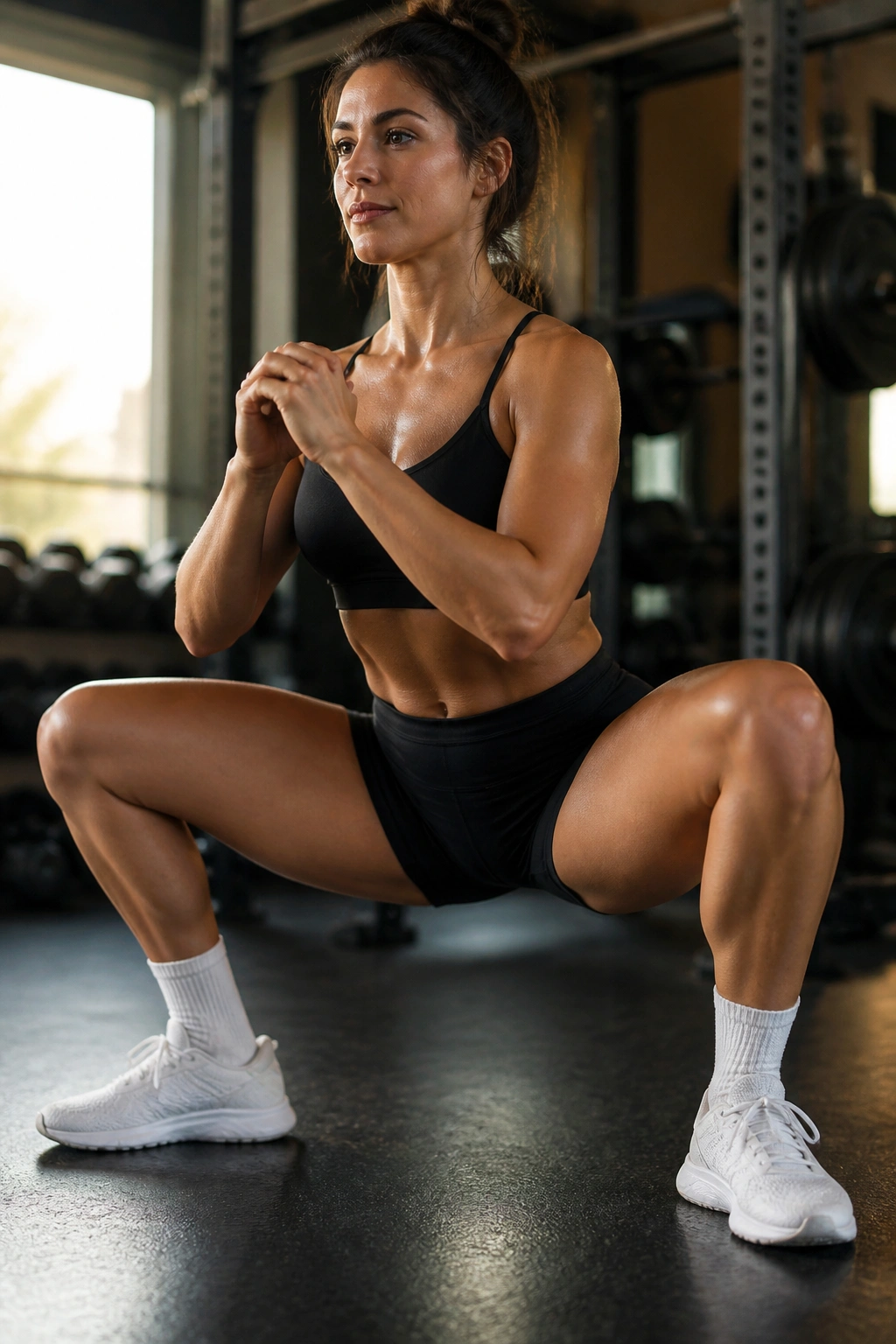
By significantly widening your stance, you shift the load of the exercise toward your inner thighs—the adductors. This variation feels different immediately, demanding more hip mobility and forcing you to keep your knees tracking directly over your toes. Because your base is wider, you have to be extra careful not to lean too far forward, or you’ll lose your balance entirely.
The Mechanics of Width
Start with your feet substantially wider than shoulder-width, toes pointed out at a 45-degree angle. As you descend, your knees should travel in the same direction as your toes. You will feel a deep stretch in your groin area that the standard squat simply does not provide. It is a fantastic movement for building stability in the frontal plane.
Common Mistake: Many people try to keep their feet forward like a standard squat. Don’t do that. Pointing your toes out is vital to keeping your knees safe and allowing your hips the room they need to sink into the movement.
3. Pistol Squat
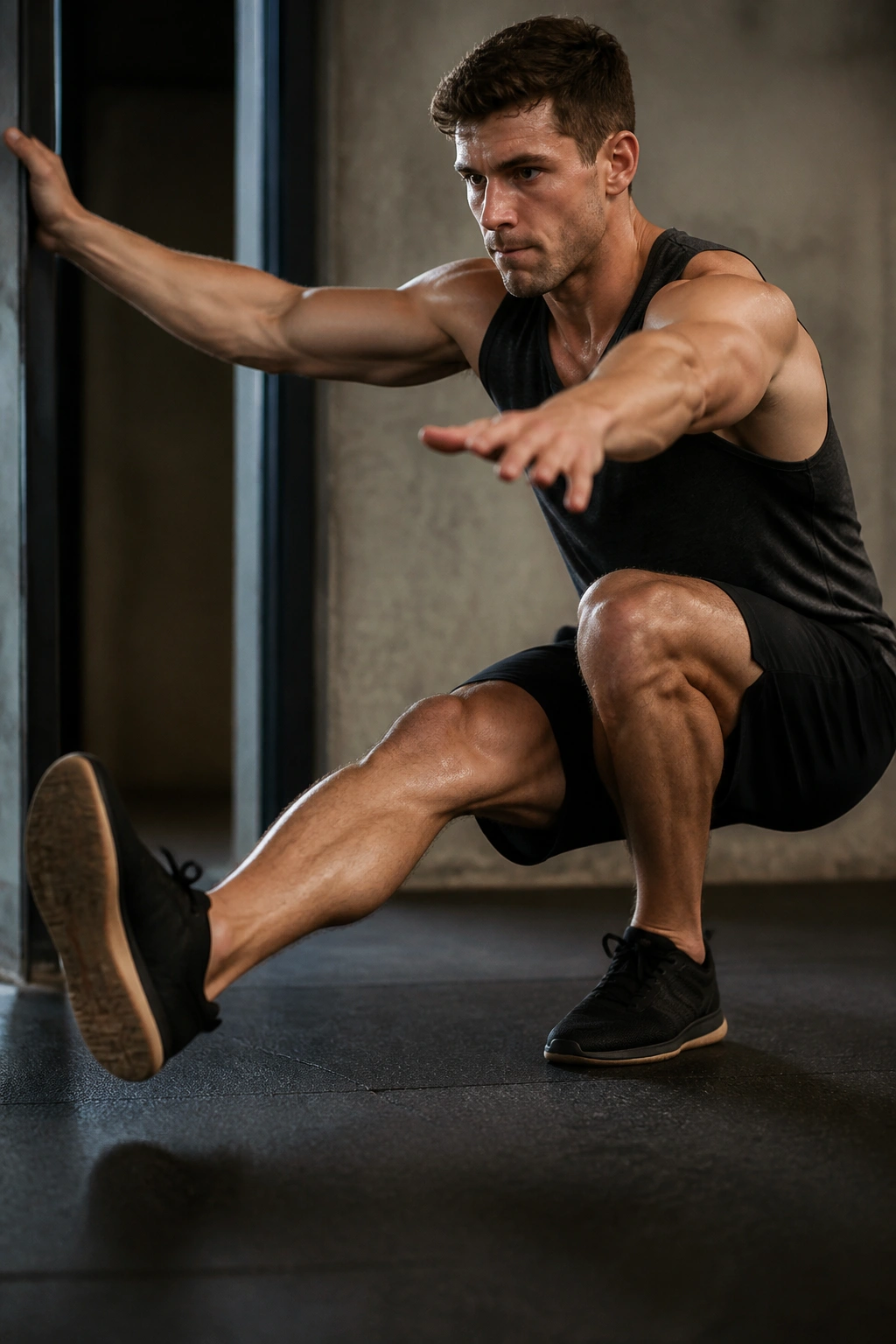
This is the gold standard for unilateral leg strength. A pistol squat is essentially a one-legged deep squat, with your other leg extended straight out in front of you for balance. It requires a significant amount of coordination, ankle dorsiflexion, and core stability. If you cannot do one yet, do not get discouraged; it is a skill-based move that takes time to master.
Breaking Down the Progression
If you are struggling to keep your balance, start by holding onto a doorway or a sturdy pole. Lower yourself slowly, feeling the immense tension in your working quad. Once you can do ten clean reps with assistance, try doing the negative (the way down) without holding on, then use your hands to help you push back up. The goal is to control the descent as much as the ascent.
The Feel Factor: You will likely feel this in your hip flexors as much as your quads, simply because you are fighting to keep that extended leg from dropping. Embrace the burn.
4. Jump Squat
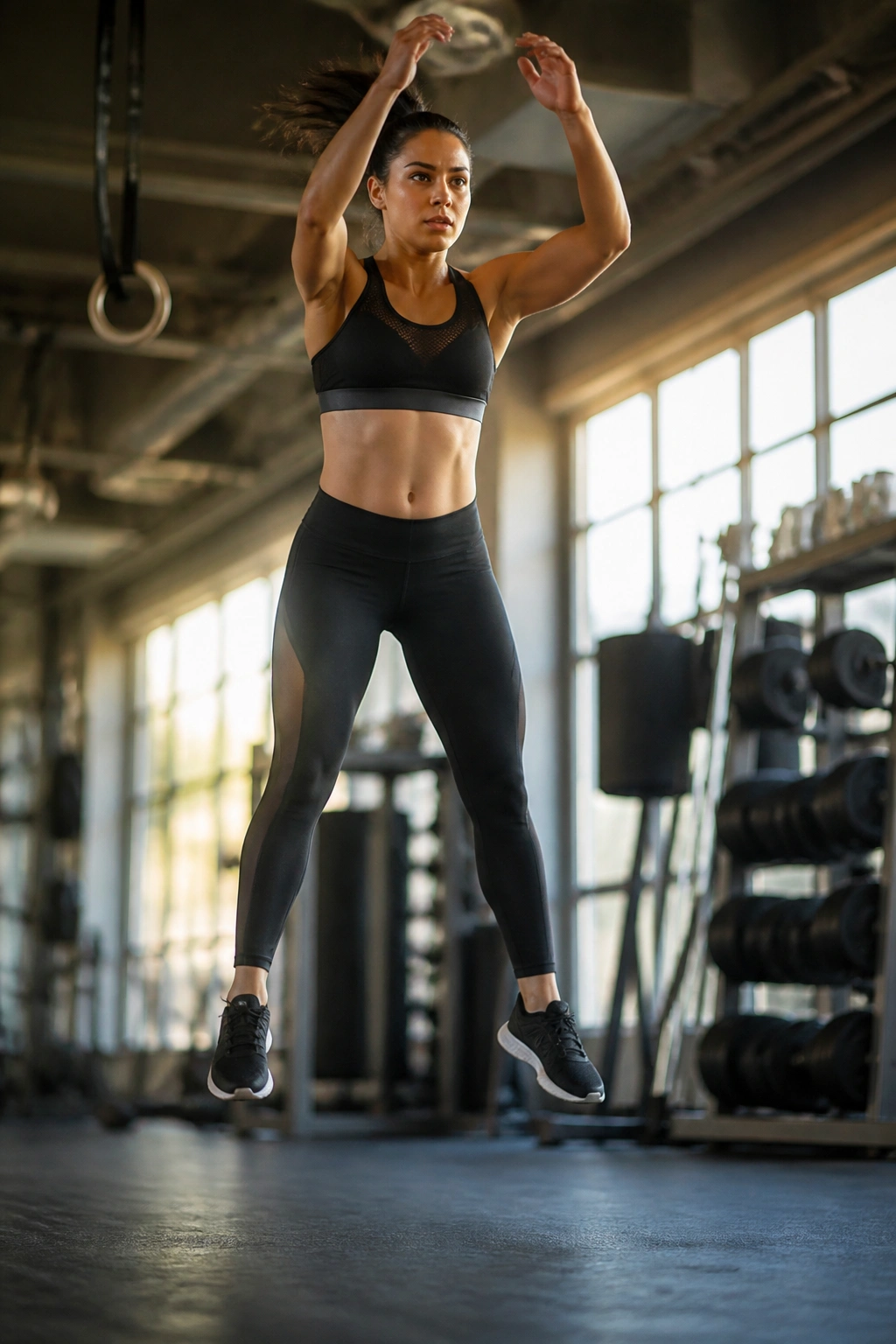
Explosive power is just as important as slow-twitch muscle endurance. The jump squat forces your nervous system to recruit muscle fibers rapidly. The movement starts exactly like a standard air squat, but as you hit the bottom, you reverse the direction with maximum intent, exploding upward until your feet leave the ground.
Landing is Everything
The ascent is only half the battle. Your landing should be silent and controlled. Absorb the impact by landing on the balls of your feet and immediately rolling back to your heels as you transition directly into the next rep. If you sound like a sack of bricks hitting the floor, you aren’t landing soft enough.
Safety Check: If you have any pre-existing knee discomfort, keep the jump very shallow or skip this variation entirely. You can get the same explosive benefit by doing a “squat to toe raise,” where you move as fast as possible without the impact of a full jump.
5. Bulgarian Split Squat
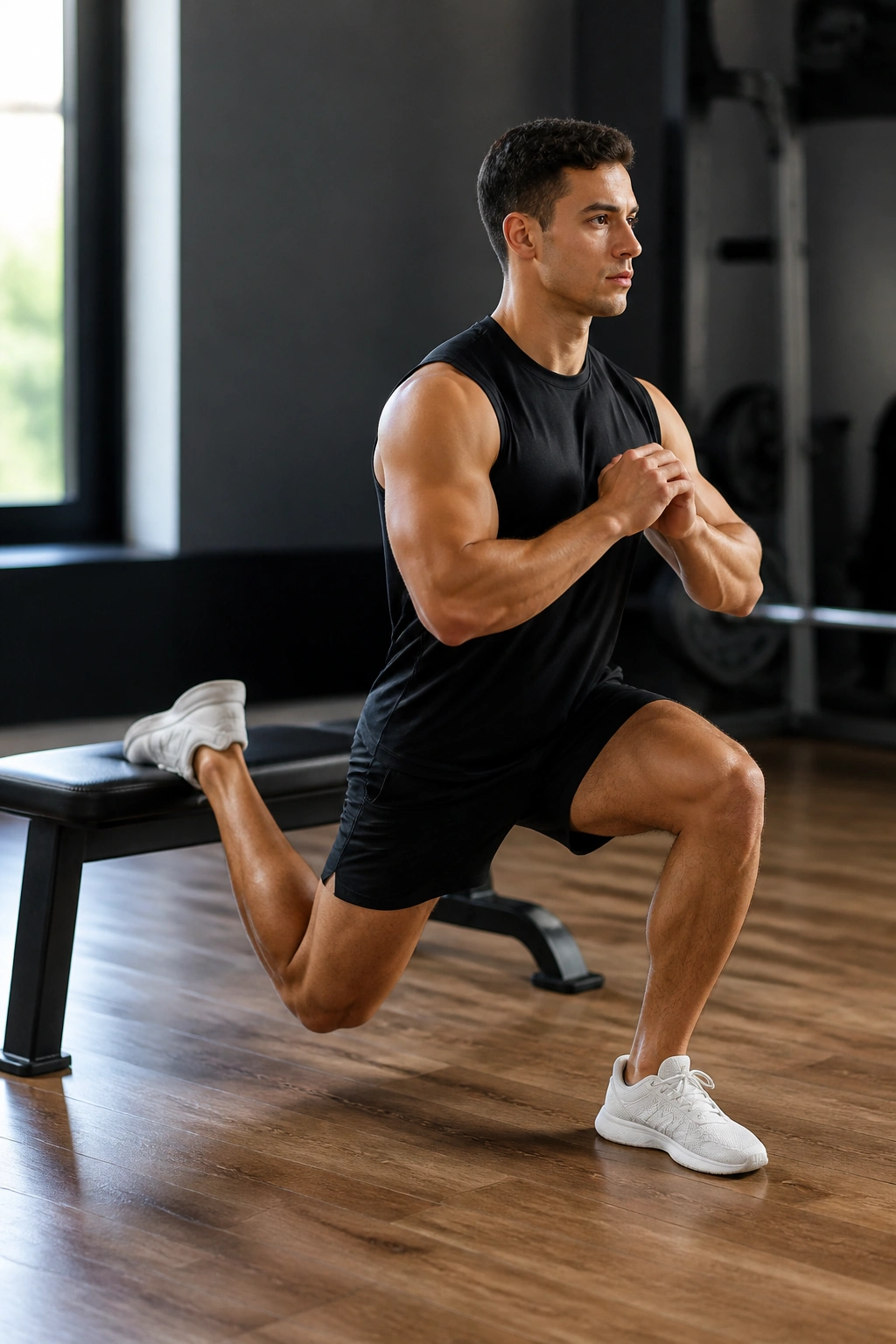
Is this technically a squat? It’s a lunge variant, but it functions like a squat because it forces a deep knee bend and places the vast majority of the load on the front leg. By elevating your rear foot on a chair, couch, or bench, you force your front leg to handle nearly your entire body weight.
Setting Up the Stance
Find a surface about knee-height. Place one foot behind you, resting the top of your foot or your toes on the surface. Take a slightly longer step forward than you think you need. Drop your back knee toward the floor, keeping your front torso upright. This is the ultimate glute and quad builder.
Why it works: Because your rear leg is deactivated, your front leg has no choice but to take over. You will feel a deeper stretch in the glute of the working leg than almost any other movement on this list.
6. Curtsy Squat
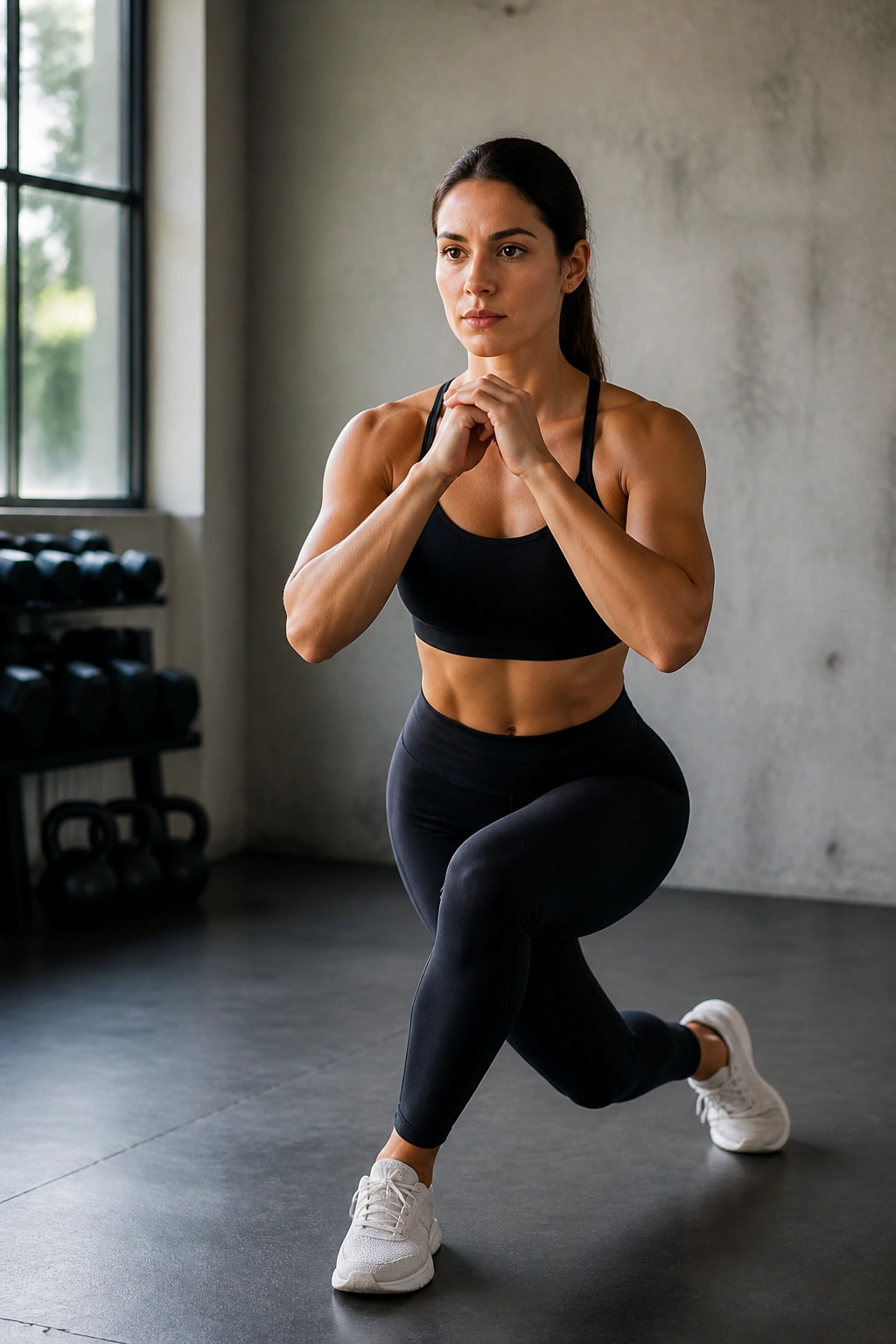
This variation targets the glute medius, the muscle responsible for hip stability. You step back and across your body, placing one foot behind the other as if you were performing a curtsy. This diagonal movement pattern is rarely trained, which is why it feels so challenging, even without external weight.
The Movement Pattern
From a standing position, step your right foot back and behind your left leg, sinking your hips down. Your left knee should stay pointed forward. As you push back up, drive through the heel of your front foot. It will feel awkward for the first few reps, but that is simply your stabilizers waking up.
Key Insight: This move is not about speed; it is about control. Take three seconds to lower yourself and one second to stand up. If you rush, you lose the glute engagement that makes this exercise worth doing.
7. Pause Squat
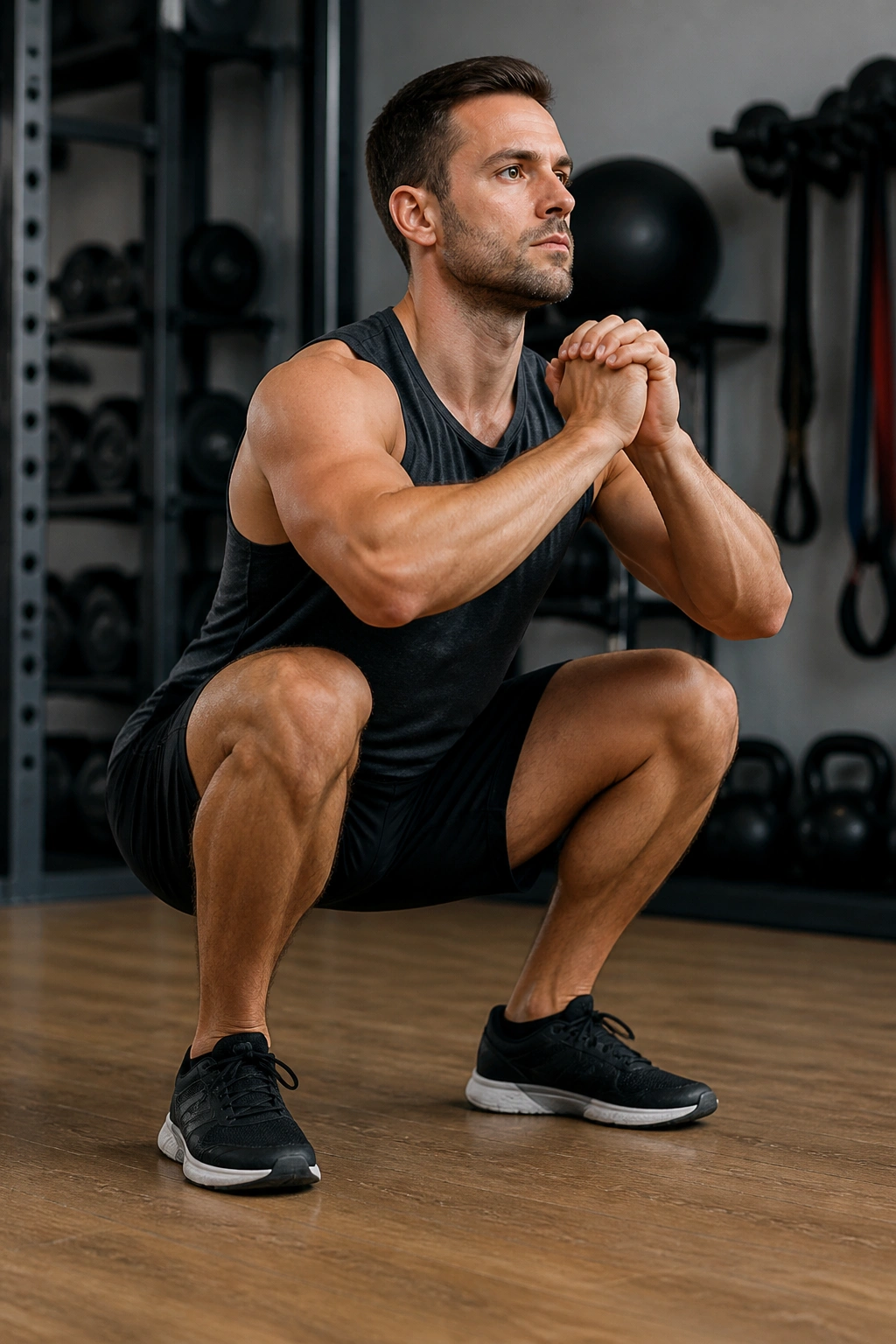
If you want to remove momentum and force your muscles to work harder, the pause squat is your best friend. Perform a standard air squat, but when you reach the bottom, hold that position for two to three seconds. Do not relax at the bottom; keep your core braced, your chest up, and your glutes active.
The Mental Game
The hardest part of this move is the bottom position. Your natural instinct will be to sink into your tendons and rest, but you must fight that urge. By staying in the hole, you are building immense strength at the point of greatest mechanical disadvantage. When you finally stand up, the rest of the movement will feel significantly easier.
Pro tip: Count your seconds out loud. It is incredibly common to “speed count” when the burn kicks in. Make those seconds count.
8. Lateral Squat (Side-to-Side)
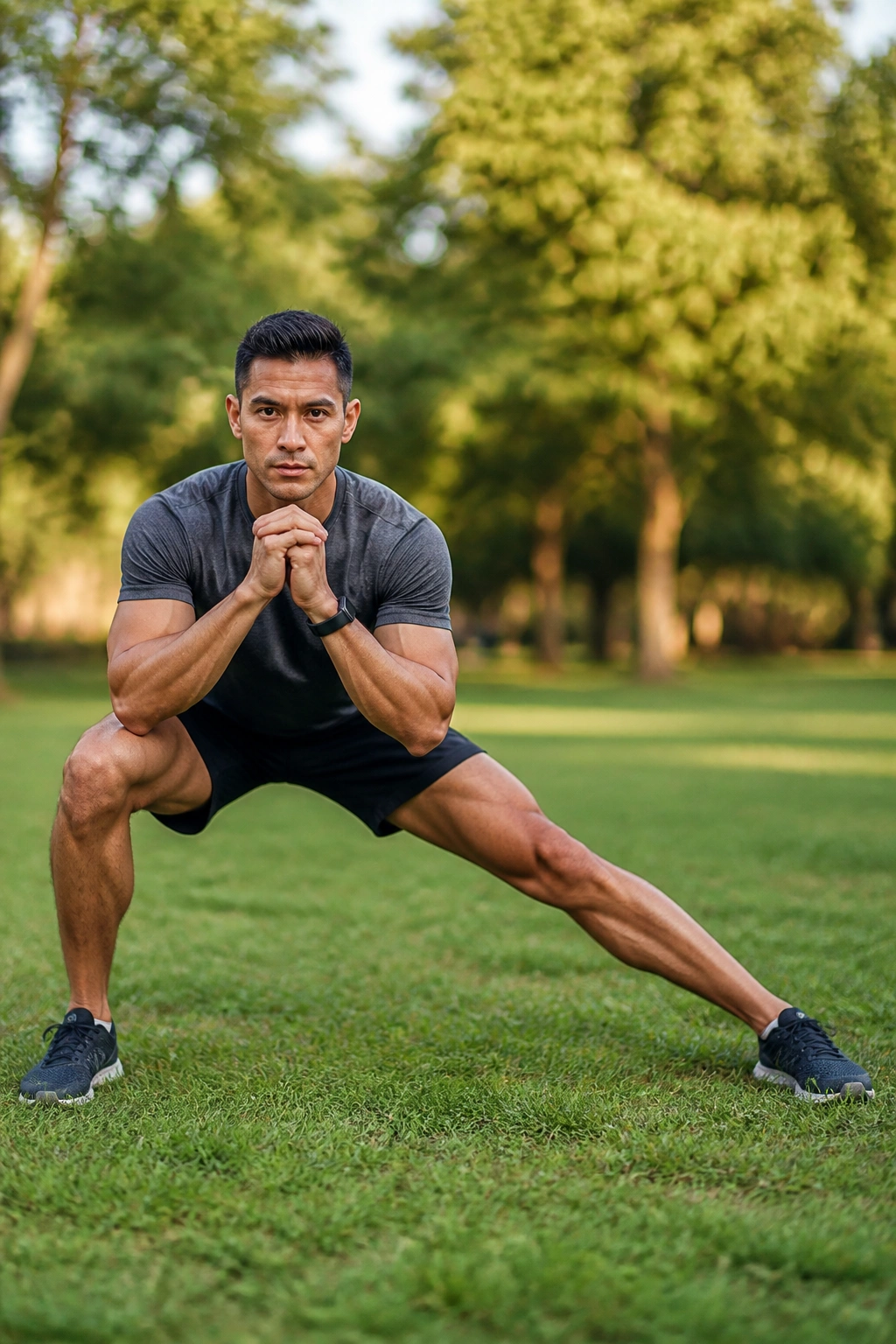
Most squat variations are sagittal, meaning they involve moving forward and backward. The lateral squat moves you in the frontal plane, which is critical for athletes and anyone who moves side-to-side in their daily life. Step your feet out wide, shift your weight entirely to one side, and squat down, keeping the other leg perfectly straight.
Managing the Weight Shift
You are not trying to squat with both legs simultaneously here. You are essentially doing a single-leg squat with one leg acting as an anchor. Keep your straight leg’s heel on the ground. You will feel this intensely in your adductors and the working glute.
Variation: If this is too hard, keep your stance narrower. As your flexibility improves, step your feet further apart to increase the intensity of the stretch.
9. Narrow Stance Squat
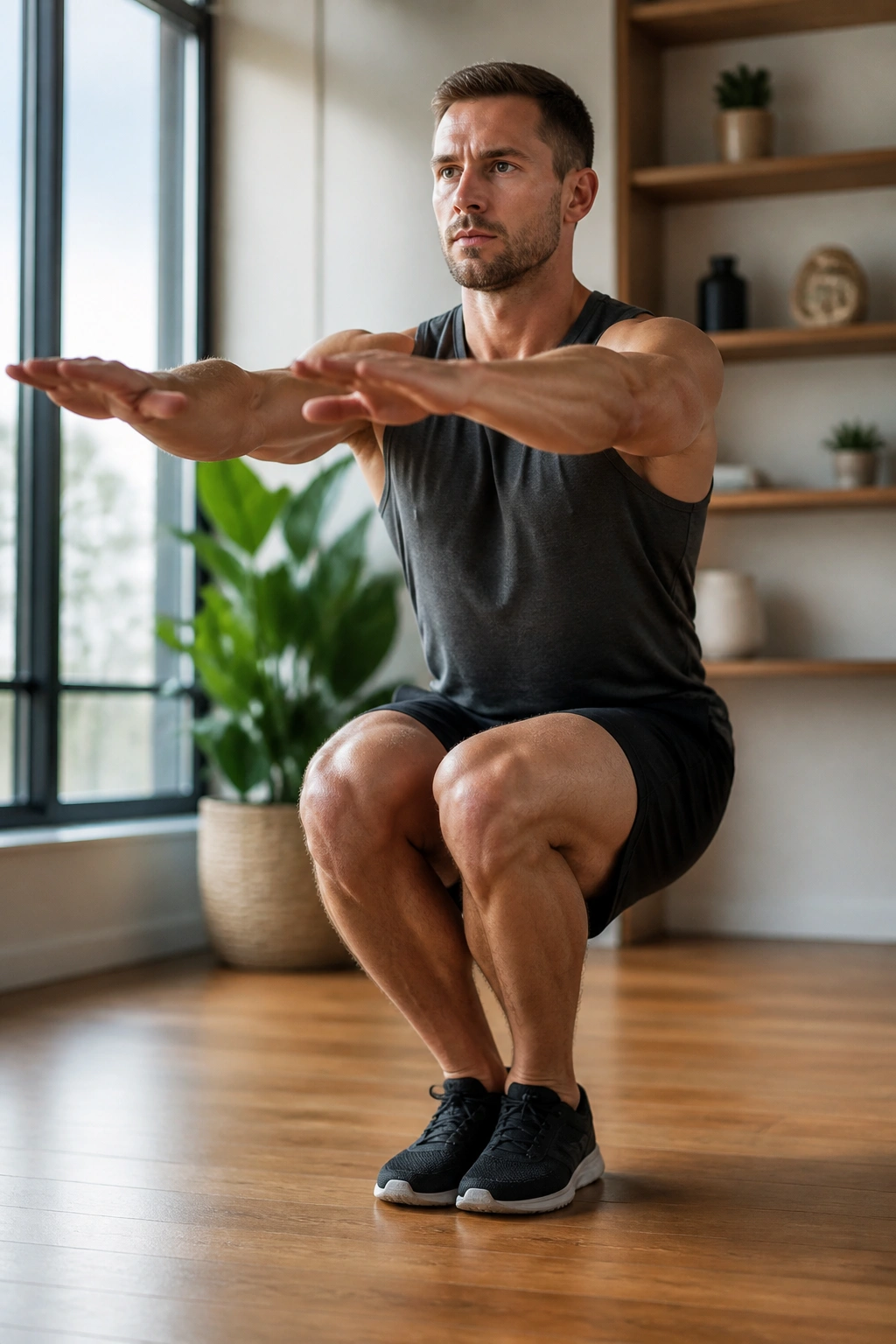
By placing your feet completely together, touching, you shift the emphasis of the squat almost entirely to the quads. This position makes it much harder to sit back, forcing your knees to travel further forward over your toes. This is an excellent way to isolate the quadriceps without needing a squat rack or a barbell.
The Balancing Act
Because your base of support is so small, you will find yourself wobbling. That is normal. Extend your arms out in front of you for counter-balance. Keep your chest up—if you lean forward too much in a narrow stance, you will feel it in your lower back, which is exactly what we are trying to avoid.
Focus: Imagine you are squeezing a sheet of paper between your knees. This creates tension that keeps your legs working together and maximizes the pump in your quads.
10. Cossack Squat
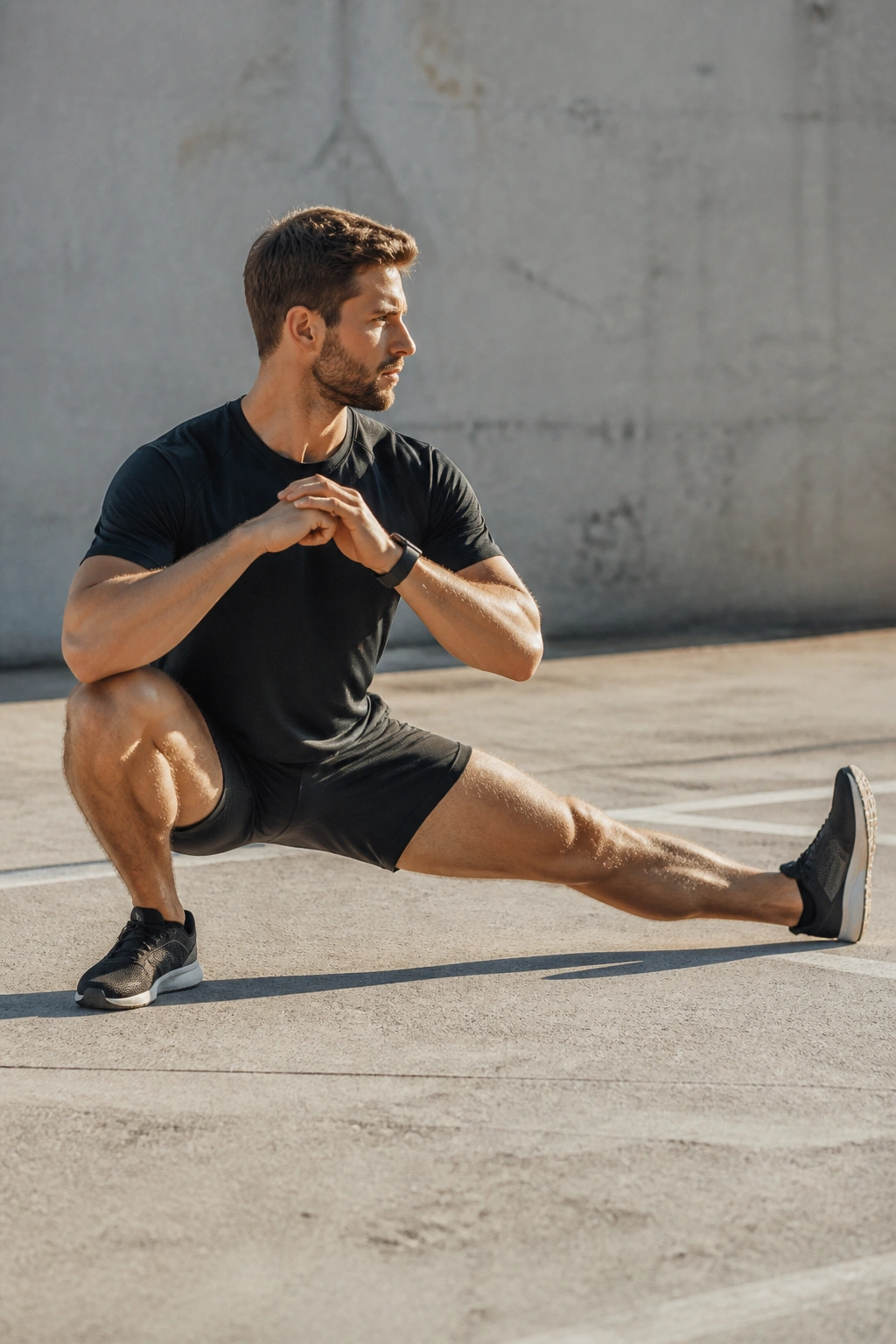
The Cossack squat is a deeper, more demanding version of the lateral squat. While the lateral squat keeps the torso relatively upright, the Cossack squat encourages you to sit deep into the hip of the bent leg, often requiring you to pivot the straight leg so the heel stays down and the toes point up.
Mobility as Strength
This is as much a mobility drill as it is a strength exercise. If you cannot get down very low, do not force it. Start with a shallower depth and work on keeping your straight leg’s foot flat on the floor. Over time, you will find your hips opening up, allowing for deeper and more fluid repetitions.
Why this matters: It trains the hips to be strong and stable at end-range, which is where most people sustain injuries in sports or daily activities.
11. Wall Sit (Static Variation)
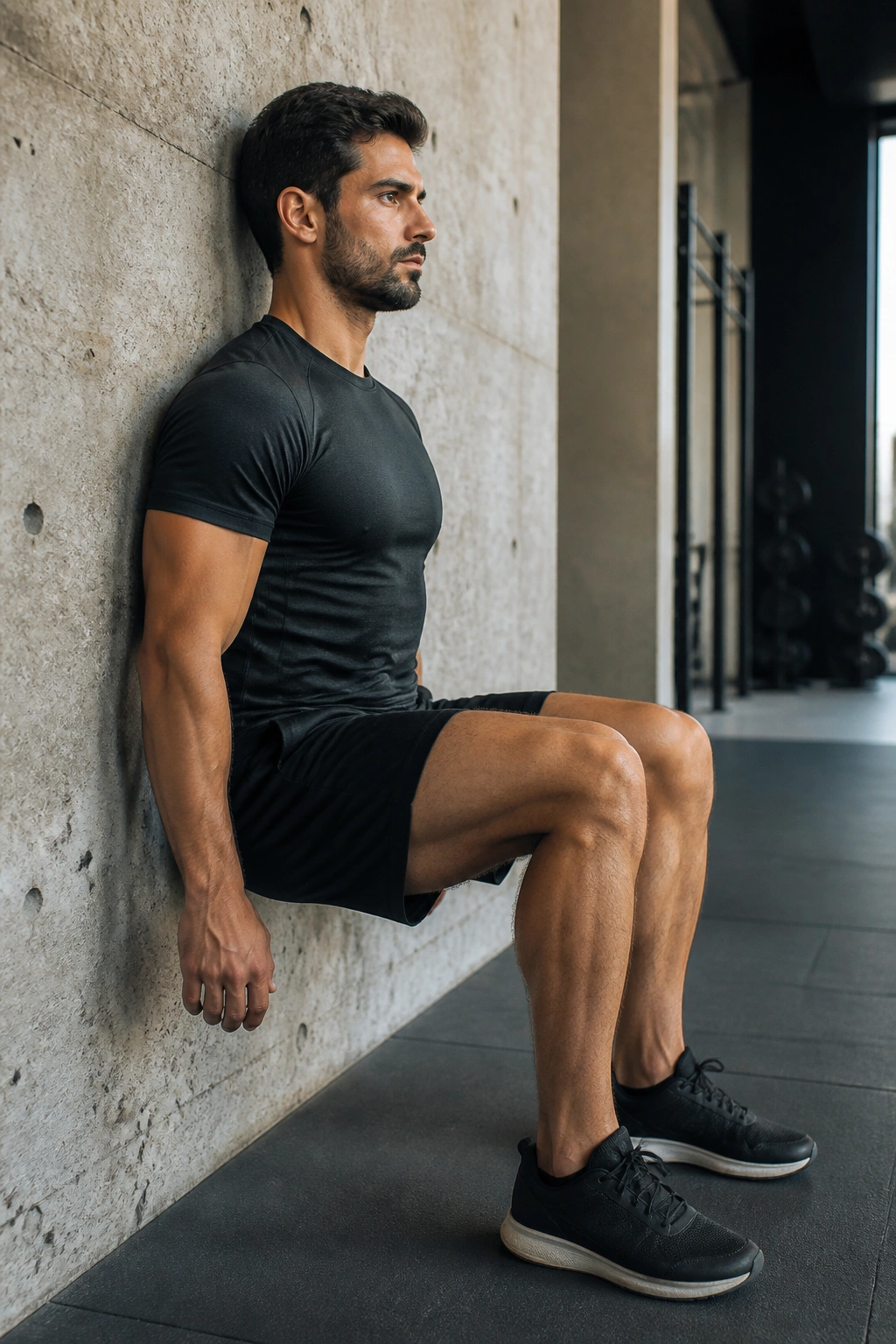
Sometimes the best way to get stronger is to stop moving entirely. A wall sit removes the balance component, allowing you to focus purely on muscular endurance. Find a flat wall, slide your back down until your thighs are parallel to the floor, and hold.
The Burning Sensation
You will feel a significant burn in your quads within thirty seconds. The trick is to keep your core engaged and your entire back pressed against the wall. Do not put your hands on your knees; that is cheating yourself out of the full intensity of the contraction. Keep your hands on your hips or at your sides.
Challenge: Try to hold for sixty seconds. If you can do that with ease, lift one foot slightly off the ground for five seconds, then switch. The added instability turns a boring static hold into a dynamic challenge.
12. Box Squat (to a Chair)
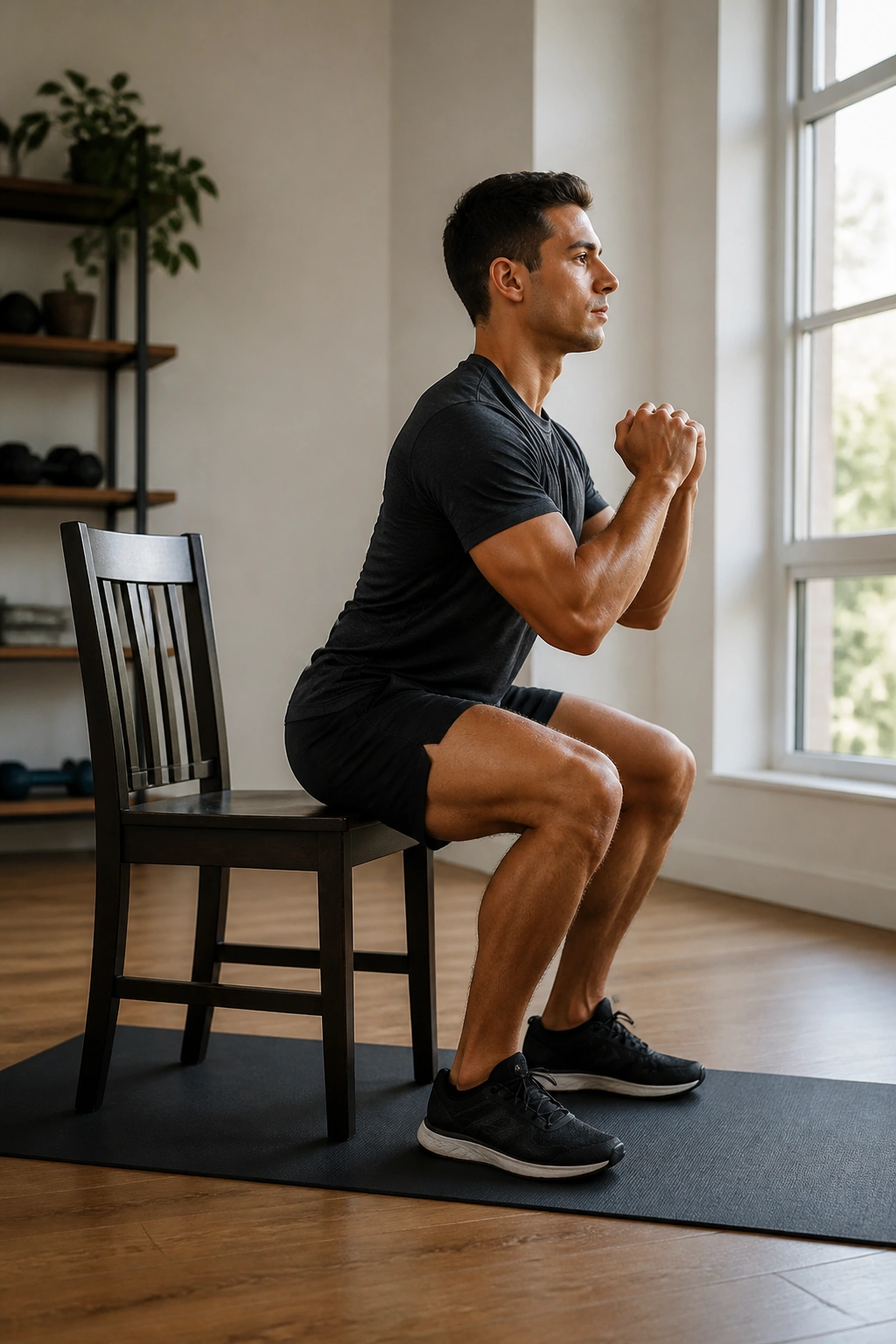
Many people are afraid of squatting deep because they don’t trust their balance or their knees. The box squat (or chair squat) provides a target. You are essentially doing a standard air squat, but you descend until your glutes lightly tap a chair or a low bench.
The “Light Tap” Rule
The key here is the word light. Do not sit down and relax your muscles. You want to touch the box and immediately reverse the movement back up. This teaches you how to sit back into your hips rather than squatting forward onto your knees. It’s the perfect way to learn proper squat mechanics if you are a beginner.
Refinement: If you are tall, you might need to stack a couple of cushions on the chair to get the right height. You want your thighs to be parallel to the floor at the point of contact.
13. Prisoner Squat
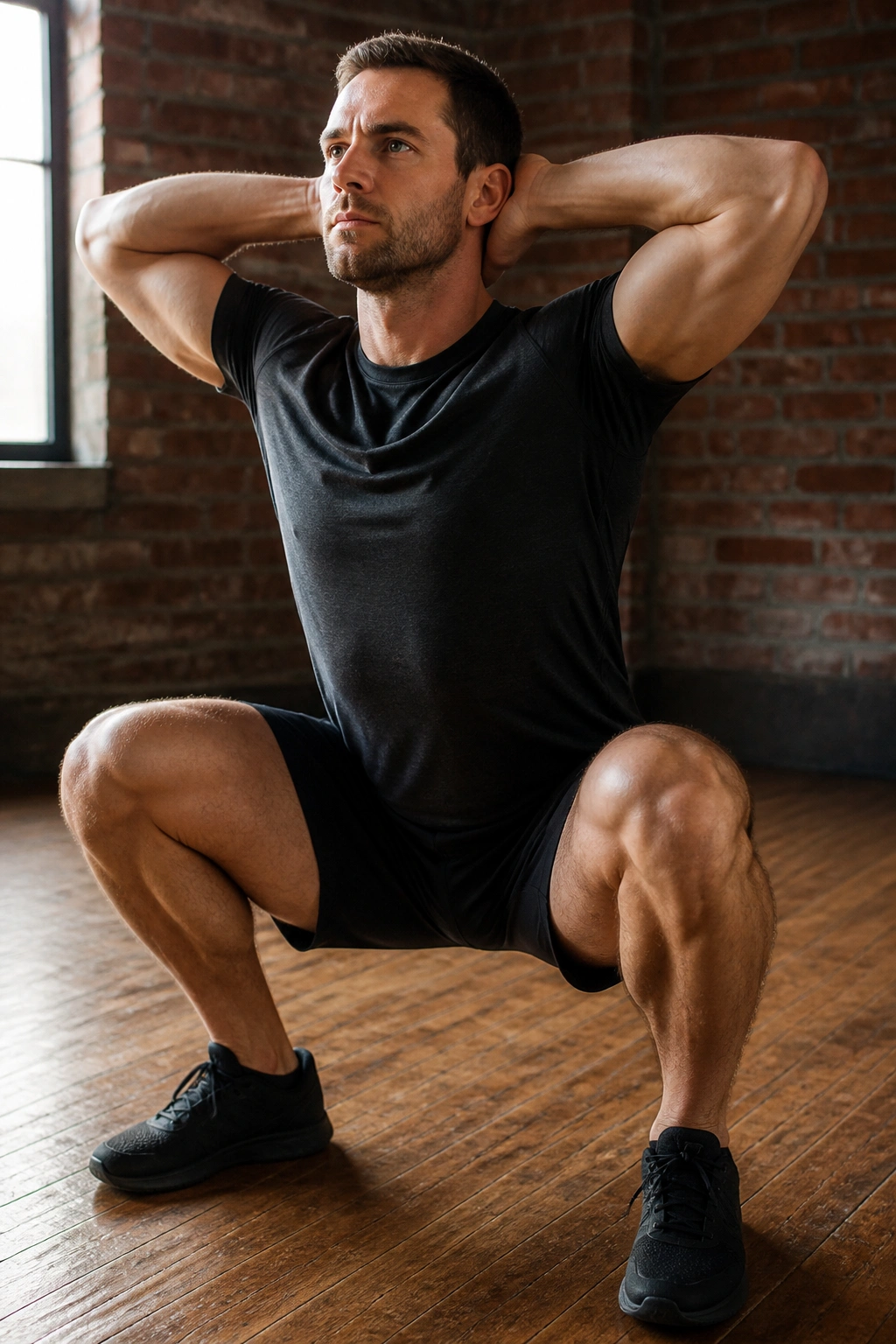
This variation is all about posture. By placing your hands behind your head and pulling your elbows back, you force your thoracic spine (upper back) to stay upright. You cannot round your back in a prisoner squat without your elbows collapsing forward, which gives you immediate feedback on your form.
The Posture Check
This move is humbling. It makes the standard squat feel much harder because you lose the use of your arms for balance. It is incredibly effective for anyone who spends long hours at a desk and needs to counteract that “rounded shoulders” posture.
Why it works: By keeping your chest open and upright, you force your core and your glutes to work overtime to maintain balance. You will notice that you can’t go quite as deep as you might with your arms out front—that is perfectly fine.
14. Sissy Squat
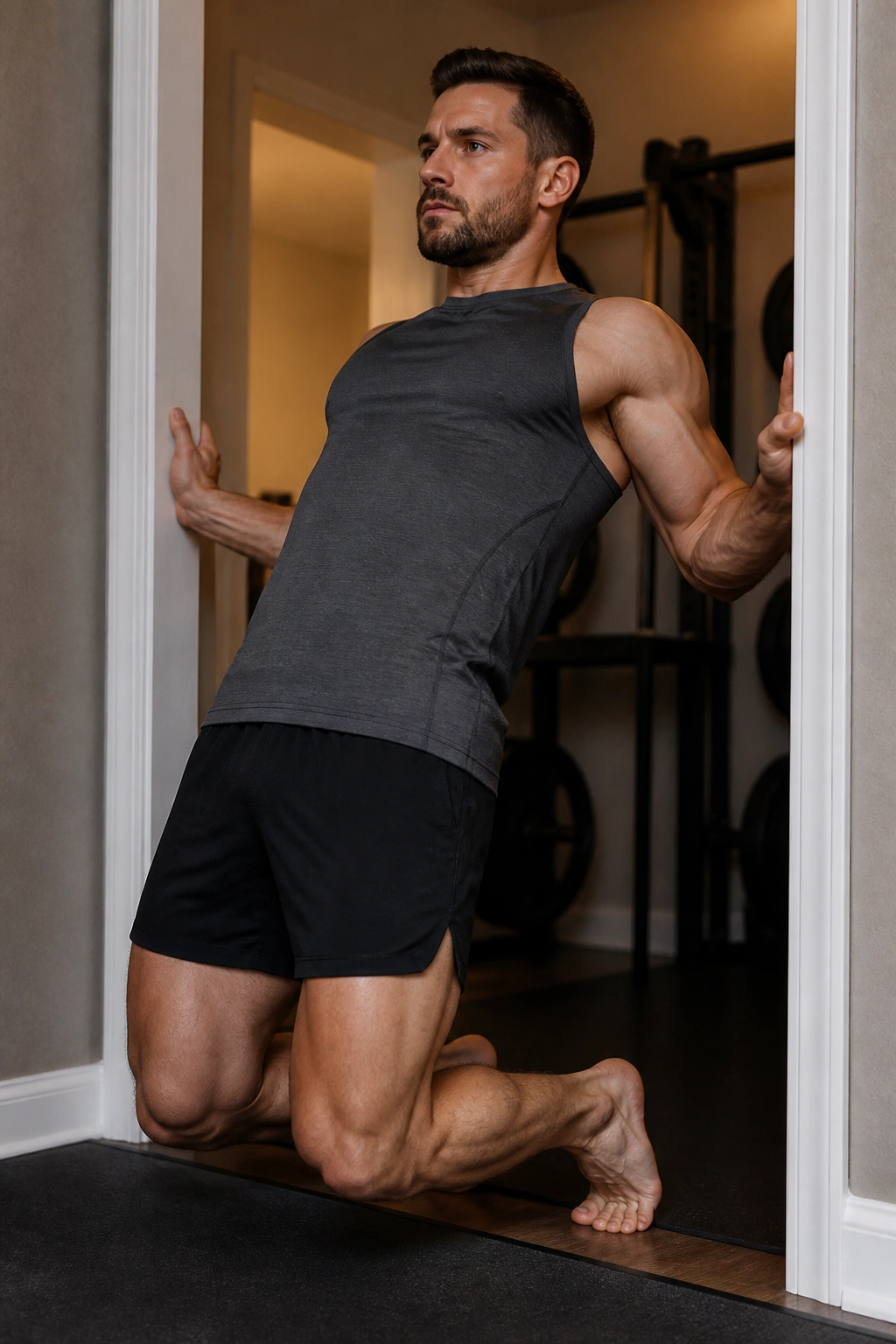
The sissy squat is an old-school bodybuilding movement. It isolates the quads by locking the hips in extension while the knees travel forward over the toes. Because you can’t use your glutes to help you stand back up, your quads are forced to bear the entire load.
How to do it Safely
You need something to hold onto for this one, like a door frame or a sturdy pole. Stand near the object, lean back slightly, and allow your knees to drive forward as you lift your heels off the ground. Your body should form a straight line from your shoulders to your knees. Go down as far as you can control, then push through the balls of your feet to return to the start.
Warning: This places higher shear force on the knees. If you have any history of knee pain, proceed with caution or skip this variation.
15. Hindu Squat
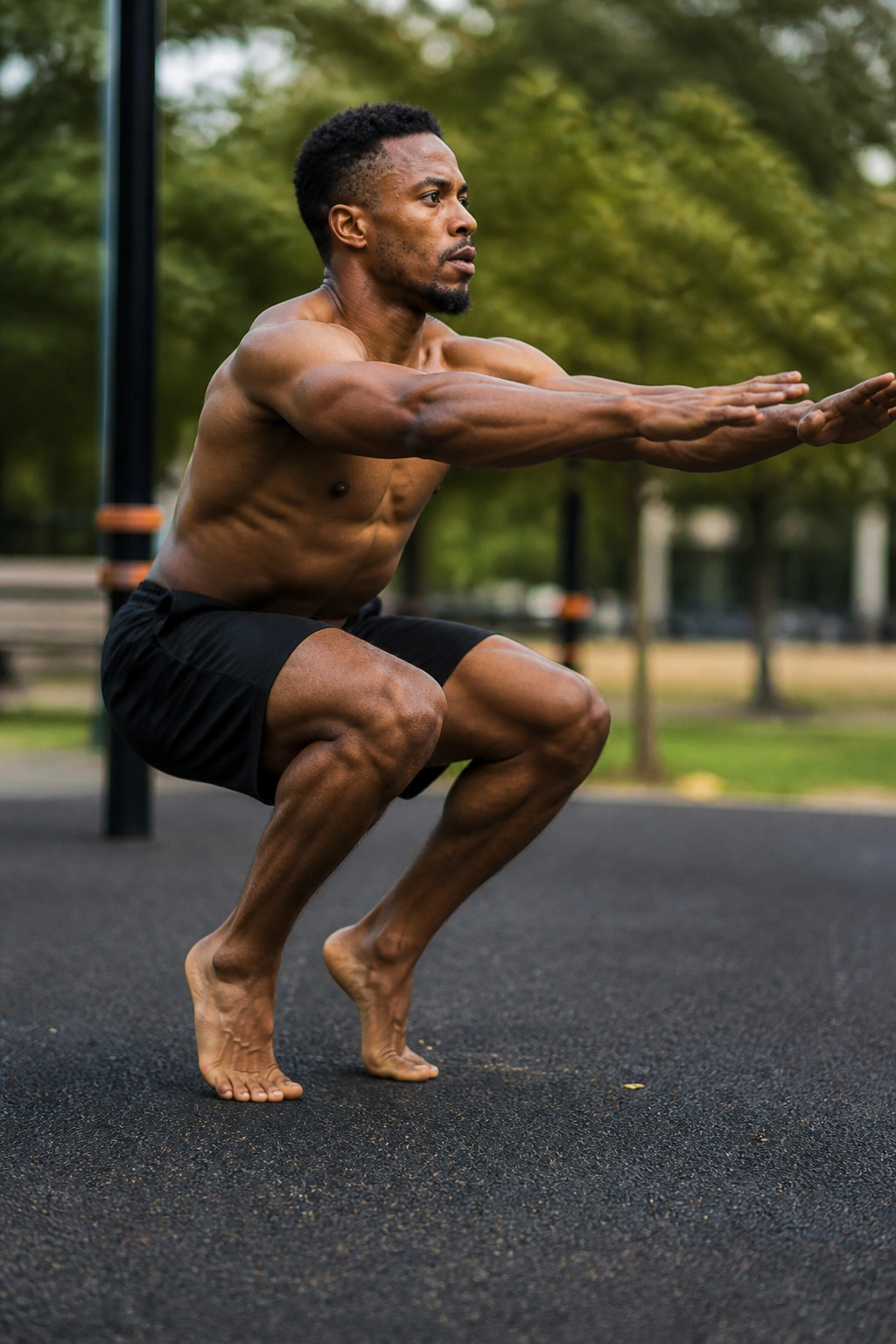
This is a fluid, rhythmic movement that combines a squat with a heel raise and arm swing. Start standing, feet slightly wider than shoulder-width. As you squat, your heels come up off the floor and your arms swing forward. As you stand, your heels lower and your arms swing back behind you.
Finding the Rhythm
The Hindu squat is designed for high repetitions. It feels more like a dance than a grind. Because your heels are elevated, your knees will travel further forward, which—similar to the Sissy Squat—places a high demand on the quads. It is an excellent way to improve cardiovascular fitness alongside leg strength.
The Benefit: It promotes exceptional ankle mobility and keeps the hips moving dynamically throughout the entire set.
16. Split Squat (Static)
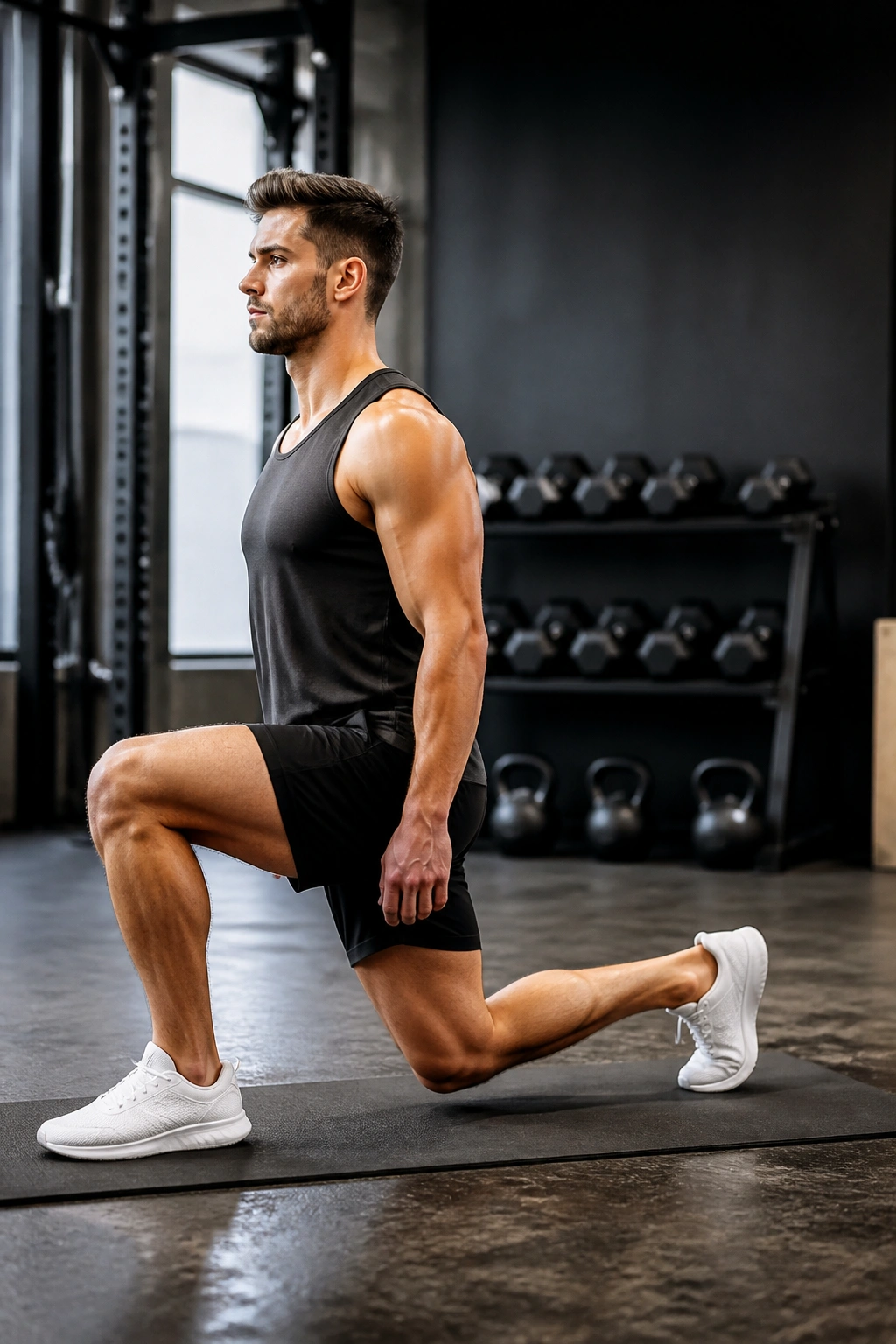
Unlike the Bulgarian split squat, both feet remain on the floor here. Stand in a lunge position, feet about three feet apart. Lower your back knee toward the ground while keeping your torso perfectly vertical. Then, drive back up. Your feet never move; you are just moving your center of gravity up and down.
Why This is Underrated
Because you aren’t balancing on a bench, you can focus entirely on the leg drive. You can go deeper and with more control than the Bulgarian version. It is arguably the best “pure” strength builder for the quads among all the lunge-style variations.
Programming Tip: If you want to increase the intensity, don’t rush. Slow the descent to a four-second count, hold for one second at the bottom, and explode up. This time under tension will light up your muscles.
17. Frog Squat
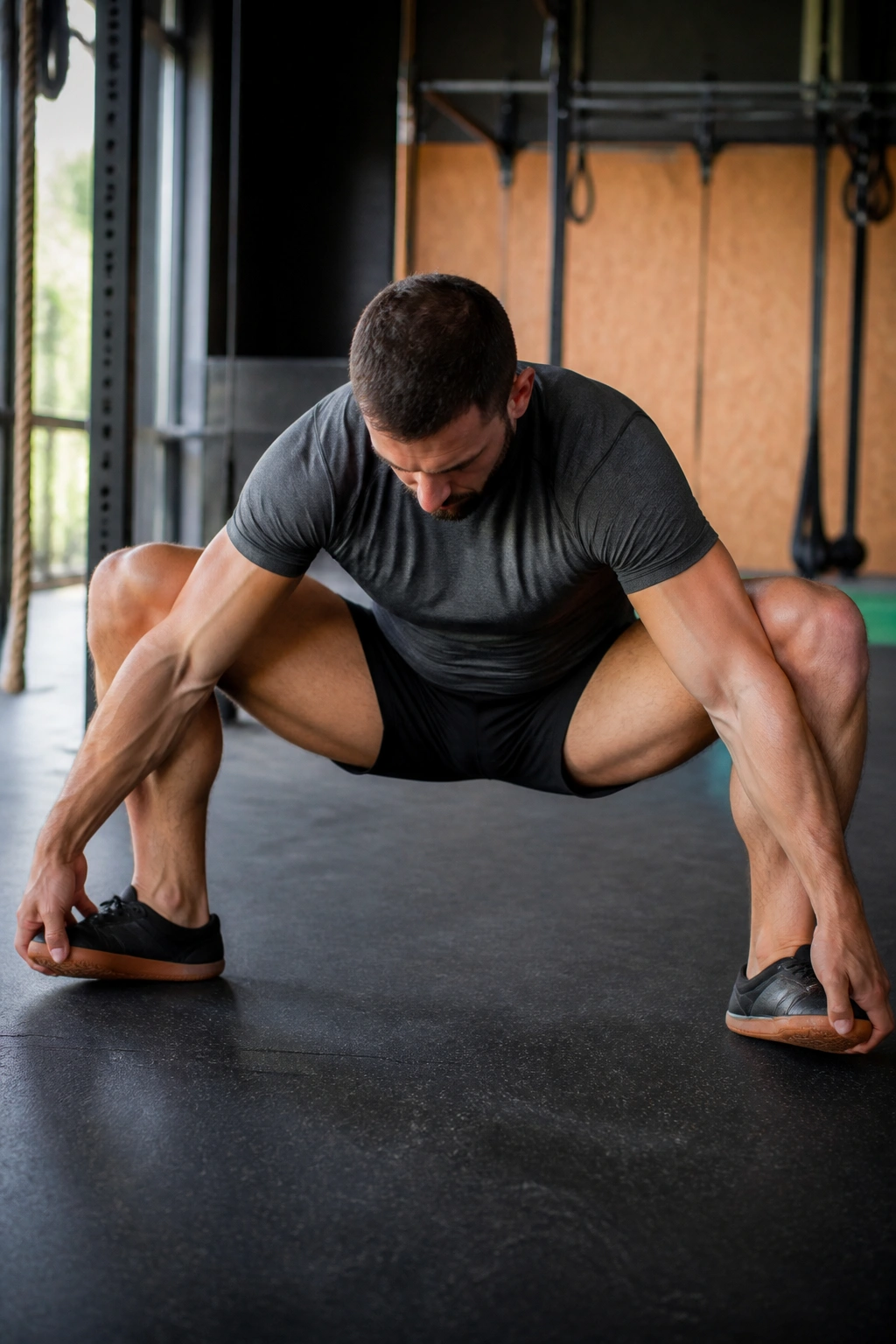
This is a strange-looking movement, but it is incredibly effective for opening up tight hips. Start with a wide stance, toes pointed outward. Crouch all the way down, then grab your toes with your hands. While holding your toes, straighten your legs as much as possible, lifting your hips toward the ceiling.
The Hip Opener
Your back will round, and that is okay for this specific movement. The goal is to stretch the hamstrings and the inner thighs. After a brief pause, return to the low, deep-squat position. It’s an active stretch combined with a dynamic squat.
When to use it: This is perfect for a warm-up. Don’t worry about burning out the muscles here; use it to prime your hips and ankles for the harder squat variations that will follow in your routine.
18. Duck Walk Squat
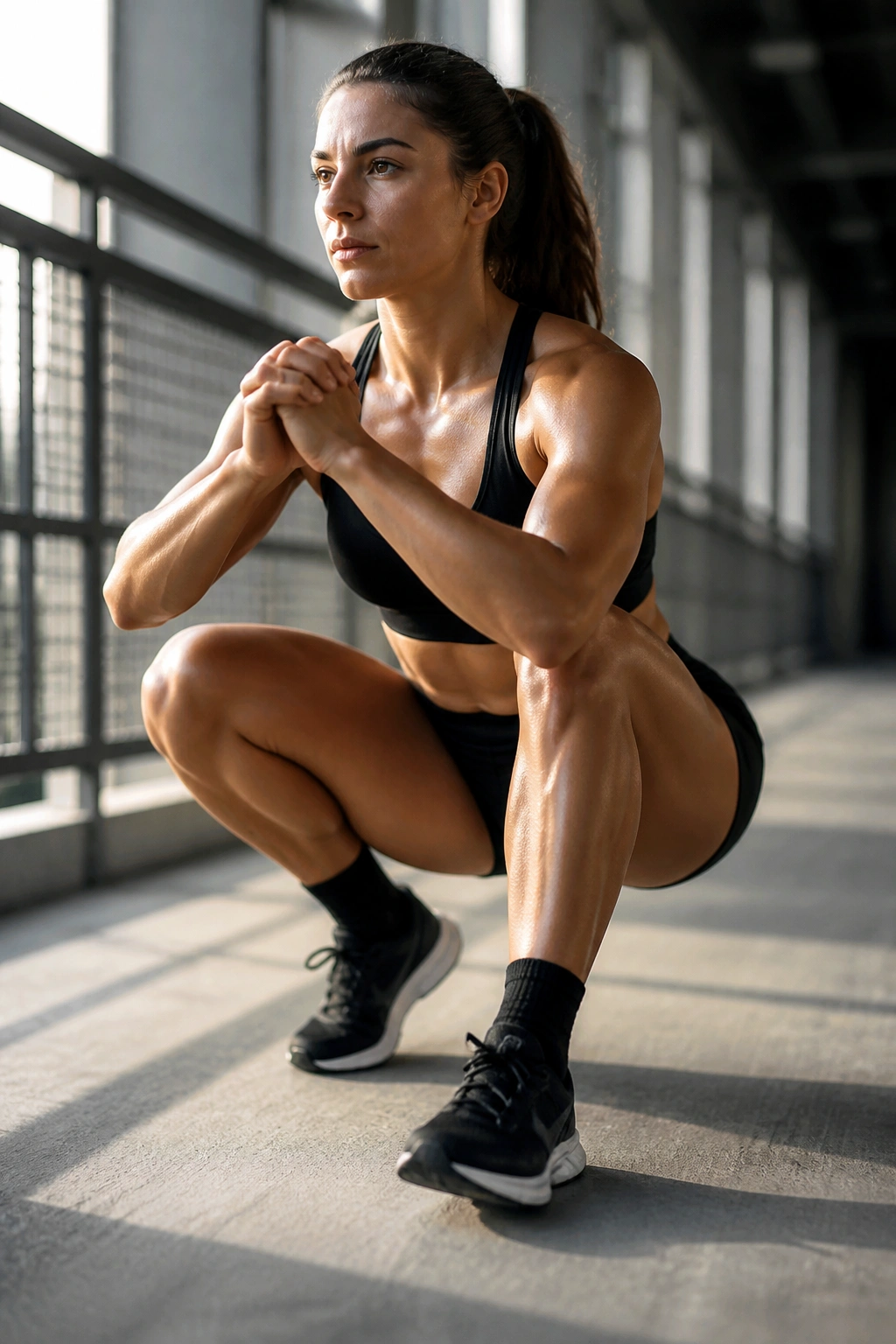
This is not a traditional squat, but rather a dynamic, walking variation. Sink into a deep squat position and stay there. Now, begin to “walk” forward while remaining in that deep squat. It is a grueling exercise that builds incredible stamina and hip stability.
Managing Fatigue
Your legs will start to shake after just a few steps. That is the point. You are keeping your muscles under constant tension without ever standing up to give them a break. If you start to rise out of the squat, stop, reset your depth, and then continue.
Fun Factor: This is one of the few movements that feels more like a game than a workout, though the burn by the end of the room is no joke.
19. Single-Leg Sit-to-Stand
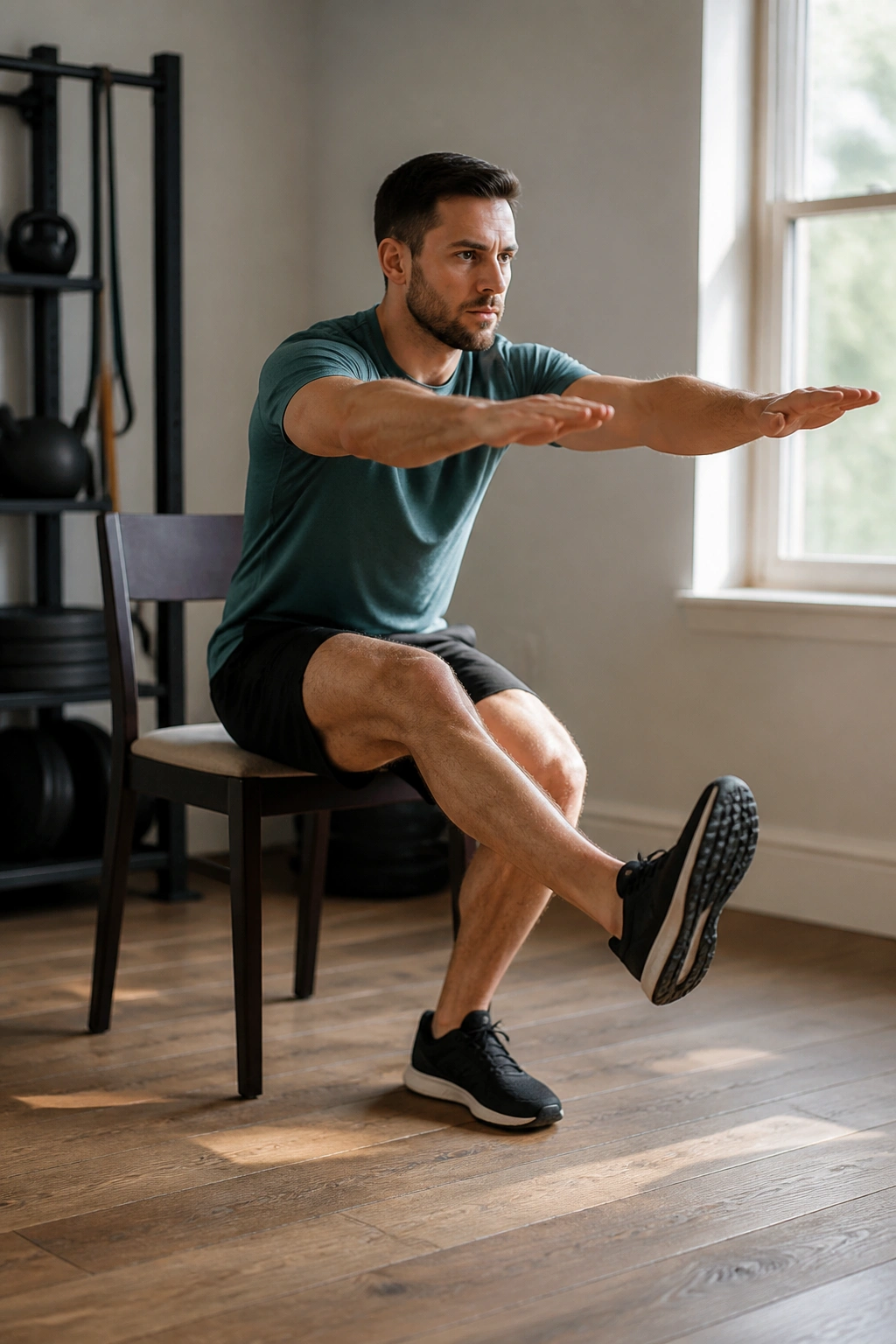
This is the rehab-friendly version of the pistol squat. Place a chair behind you. Stand on one leg, extend the other forward, and slowly lower yourself until you are sitting on the chair. Keep your core tight, then stand back up using only that single leg.
The Progression Path
This teaches you the mechanics of a single-leg squat without the immediate demand for extreme ankle mobility. It breaks the movement into two distinct parts: the controlled descent and the powerful ascent. Once this feels easy, try to use a lower chair or a step.
Consistency is Key: If you struggle to stand back up, you can gently use both feet to stand, then lift one for the descent. That “negative” portion of the lift is where the real strength gains happen.
20. Squat Pulse (Burnout)
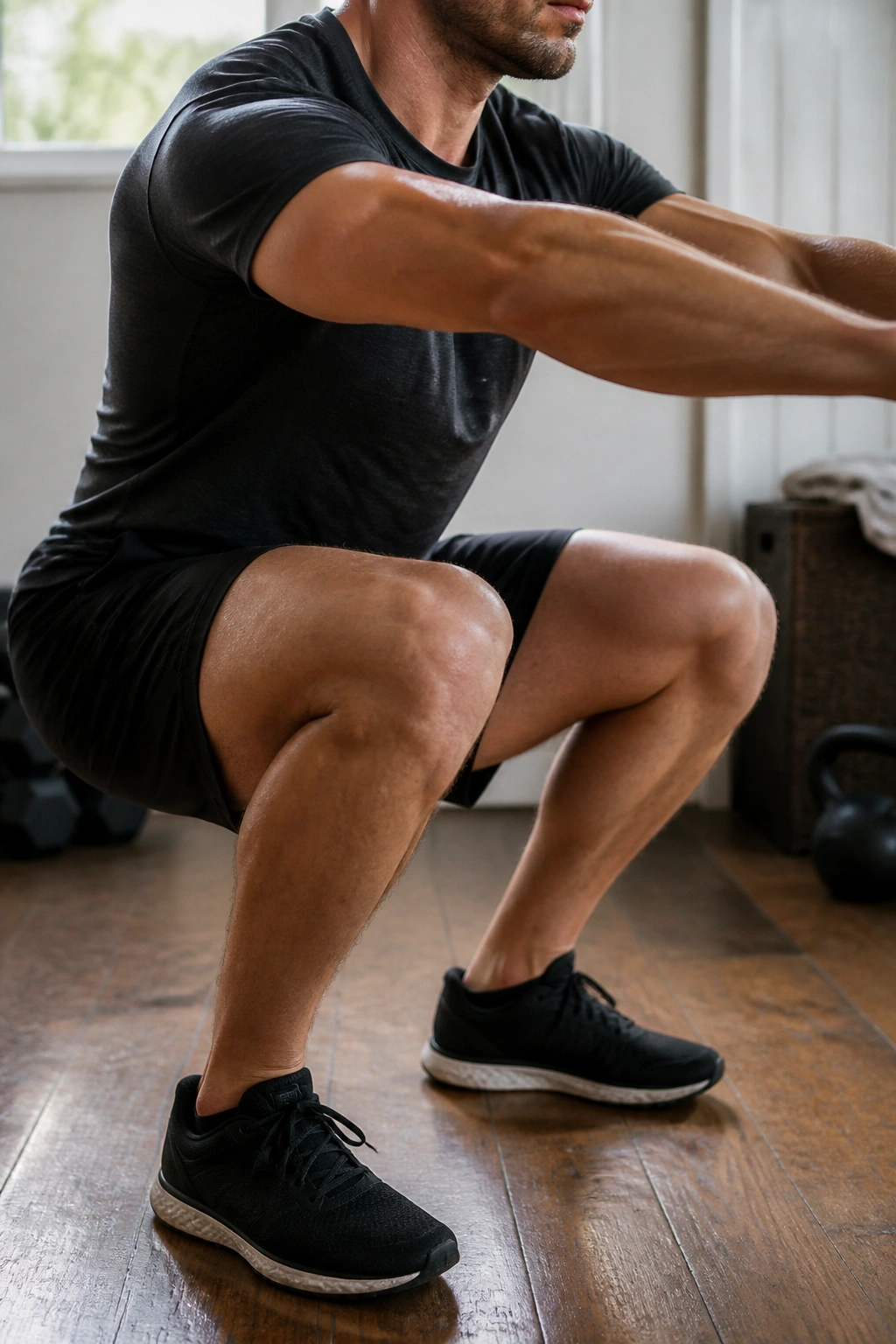
Save this for the end of your workout. Lower yourself into a squat position (about halfway or three-quarters of the way down) and perform tiny, rhythmic pulses. You aren’t going all the way up and you aren’t going all the way down; you are just oscillating in the “sweet spot” where the muscle is fully engaged.
The Metabolic Stress
This creates massive amounts of metabolic stress—that “pump” feeling. Set a timer for thirty to sixty seconds and just keep moving. When the pain becomes unbearable, don’t stop. Do ten more pulses.
The Aftermath: You will likely feel a bit wobbly when you stand up after this. That is the feeling of a job well done. It’s the ultimate way to cap off a lower body session and ensure you’ve squeezed every last bit of effort out of your legs.
The Bottom Line
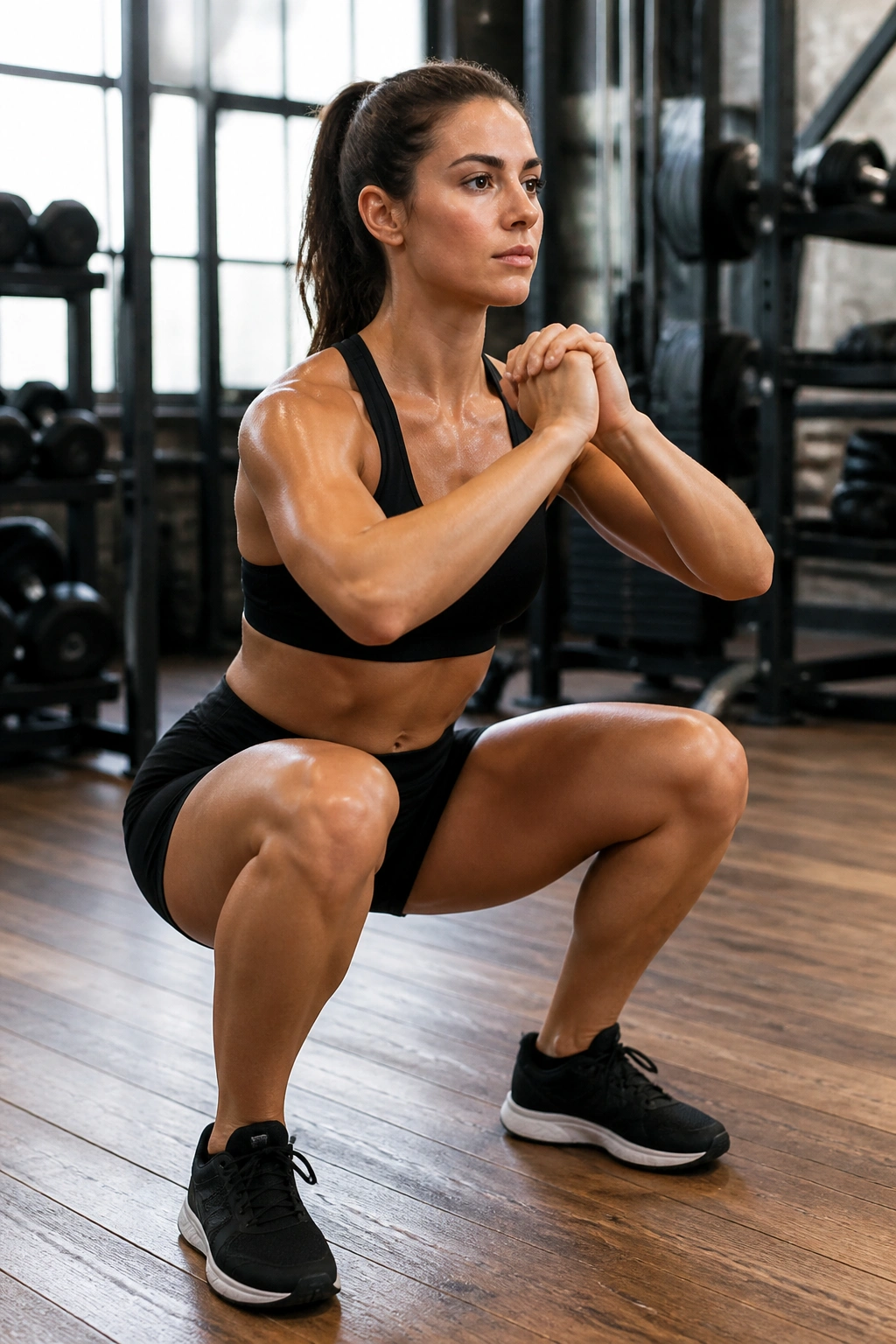
There is no singular “best” squat. The best squat is the one that fits your current level of mobility, your training goals, and the equipment you have on hand. By cycling through these twenty variations, you ensure that you are training your legs through full ranges of motion, improving your balance, and preventing the overuse injuries that inevitably come from repetitive, linear movement.
Try not to overcomplicate your programming. You don’t need to do all twenty of these in one day. Pick three or four, weave them into your regular routine, and pay attention to how your body responds to the change in stimulus. Your legs are the foundation of your movement—treat them with the variety and challenge they deserve, and they will become the strongest asset you possess.
