



Your abs do not need another hundred frantic crunches. They need tension, control, and a little bit of smart burn in the right place.
Pilates barre workouts for a toned core work because they keep the trunk under load while your arms and legs move just enough to make cheating difficult. A pulse of two inches can do more than a big swing, especially when your ribs stay stacked over your pelvis and your breathing stays honest. That is the part people miss. It is not about making everything dramatic; it is about making the deep stuff work while the shiny parts stay quiet.
No workout can melt fat off one body area. That is not how bodies work. What these moves can do is tighten the way you hold yourself — ribs less flared, lower back less cranky, obliques more awake, posture a little taller without looking stiff.
A mat, a barre, a sturdy chair, and maybe a mini ball are enough. The first few moves look gentle. Then the shaking starts, and that is usually the honest sign the work is landing.
1. Pilates Barre Hundred with Ball Squeeze
The hundred is one of those moves that looks almost too easy until your breath starts tripping over itself. Add a small Pilates ball — or even a firm cushion — between your ankles or inner thighs, and the core work gets sharper fast.
Why It Works
The ball squeeze gives your inner thighs a job, which helps your lower abs stay switched on instead of letting the hips do whatever they want. Lie on your back, lift into tabletop or keep your feet on the floor if your neck feels fussy, and pump your arms in quick, controlled strokes for 5 counts in and 5 counts out. Ten rounds is the classic target.
Keep the squeeze light. Hard pressing turns this into a hip workout, and that is not the point. Your ribs should feel heavy, your jaw loose, and your lower belly gently pulled inward on the exhale.
- Keep the neck long, not jammed forward.
- Flatten the lower back only as much as you can without gripping the glutes.
- Pump from the shoulders, not from frantic elbows.
- Stop the set if your breath turns choppy and shallow.
Best cue: exhale like you’re fogging a mirror, not blowing out a birthday candle.
2. Standing Roll-Down to Relevé
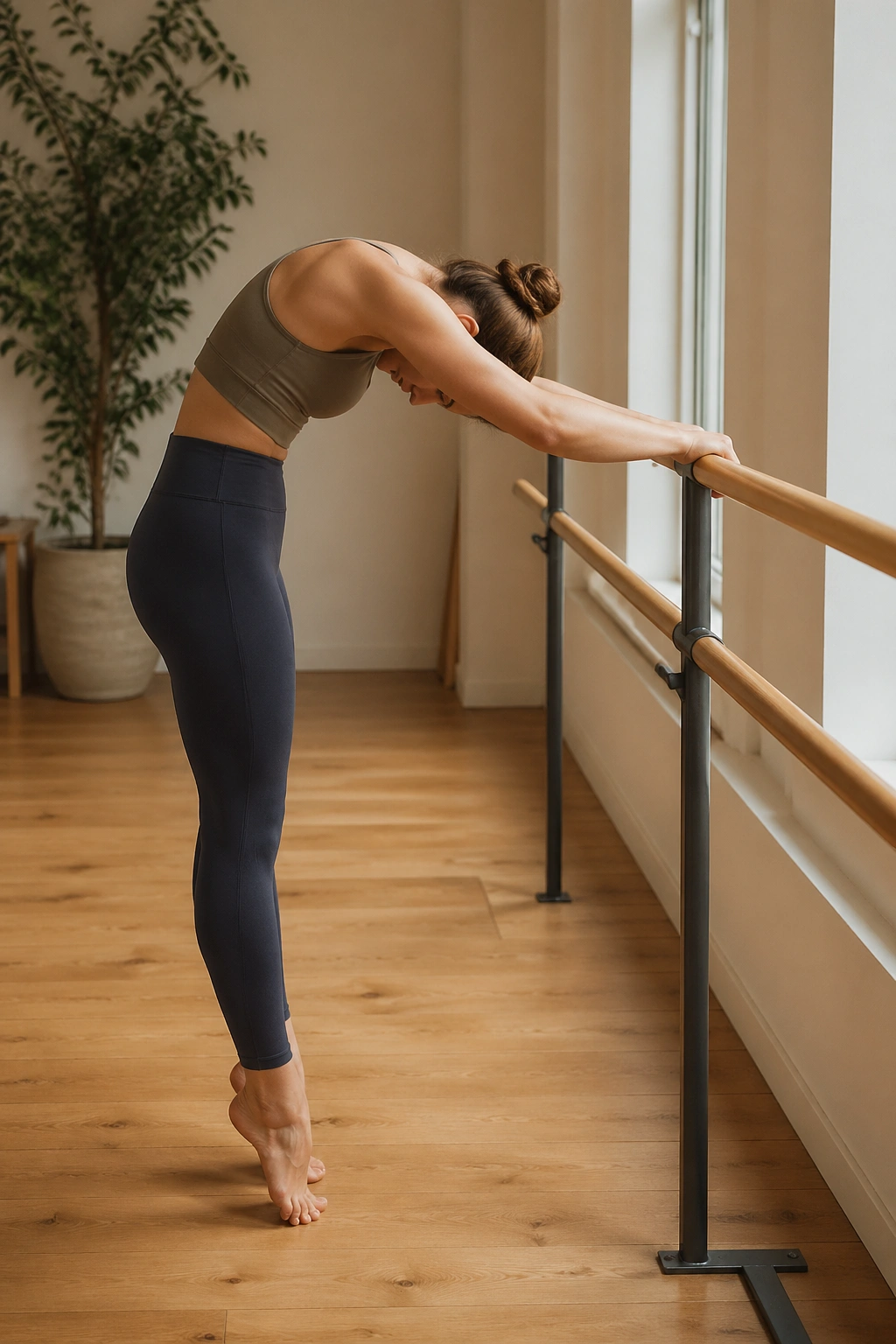
Why does a slow forward roll make the center of your body light up more than a fast ab circuit? Because it asks your trunk to control your spine in both directions, and then it makes your calves and feet join the party at the top.
Stand at the barre, a countertop, or the back of a sturdy chair. Inhale tall, then exhale and roll your spine down one vertebra at a time until your hands reach comfortably. Pause. Let the neck hang. Then press through the feet, stack the spine back up, and rise into relevé on the last few inches so the heels lift at the top.
How to Use It
Do 6 to 8 slow reps. The hard part is not the bend. The hard part is coming back up without throwing the ribs forward or gripping the lower back. Keep the knees soft but not collapsed, and think of the abdominals pulling the torso home before the shoulders arrive.
One clean roll-down is worth more than three sloppy ones. Always.
3. Wide-Second Position Pulse Squats
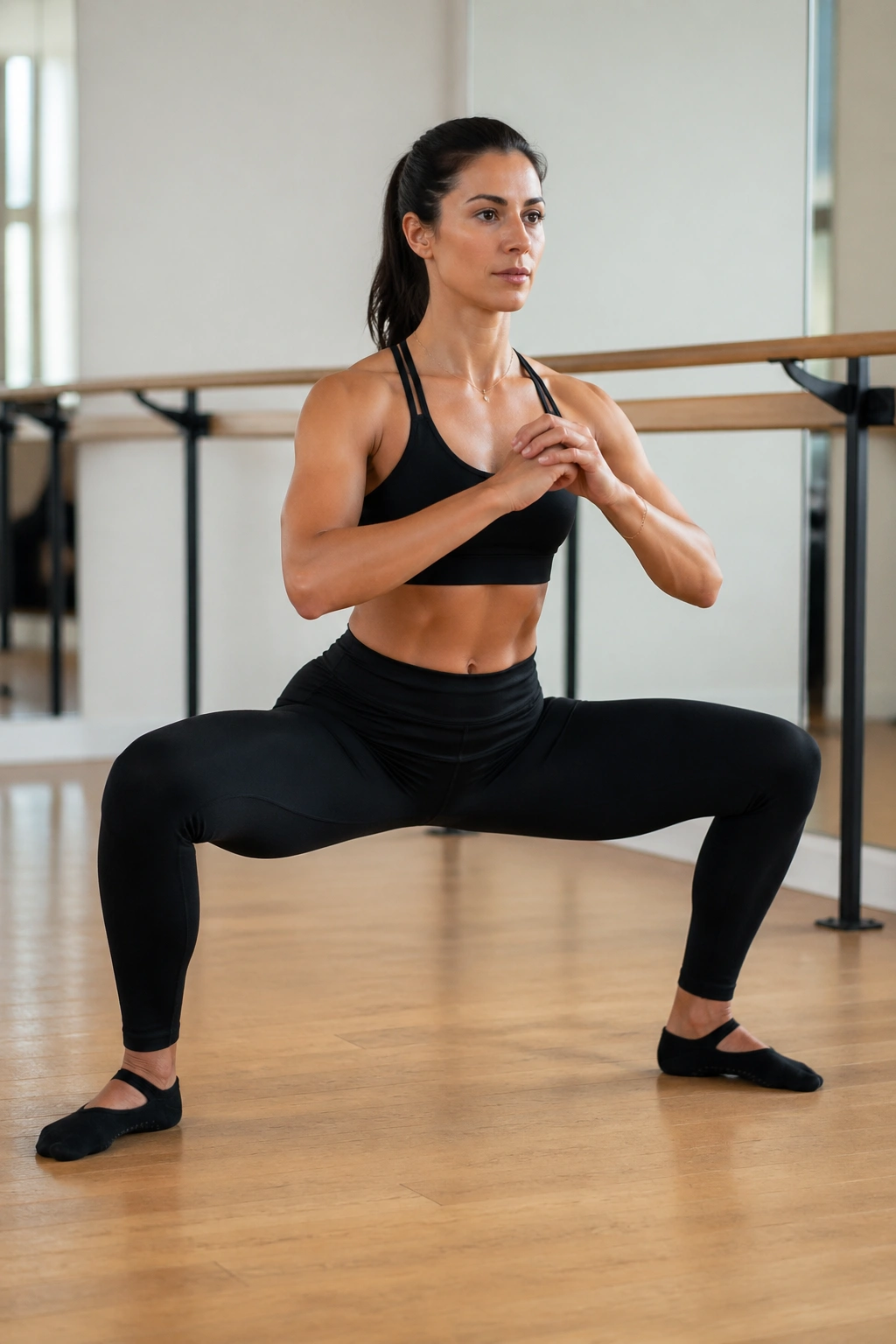
Stand in second position long enough and your thighs start filing complaints. That is fine. The deeper trick is what your midsection does while the legs burn.
Feet wider than hips, toes turned out only as far as your joints allow, lower into a shallow squat and pulse down an inch or two. Keep the pelvis quiet and the chest lifted. If the torso starts folding forward, the abs have clocked out and the quads are carrying the whole thing.
What to Watch For
- Press evenly through the big toe, little toe, and heel on both feet.
- Keep the tailbone heavy rather than tucked hard under.
- Hold the arms at chest height if you want more core demand.
- Use a 20-pulse set, then hold low for 10 seconds.
The reason this works so well is simple: the body hates a shallow squat that never gets to rest. It has to stabilize the pelvis while the legs keep pretending they are the main event. They are not.
4. Side-Lying Inner-Thigh Lifts
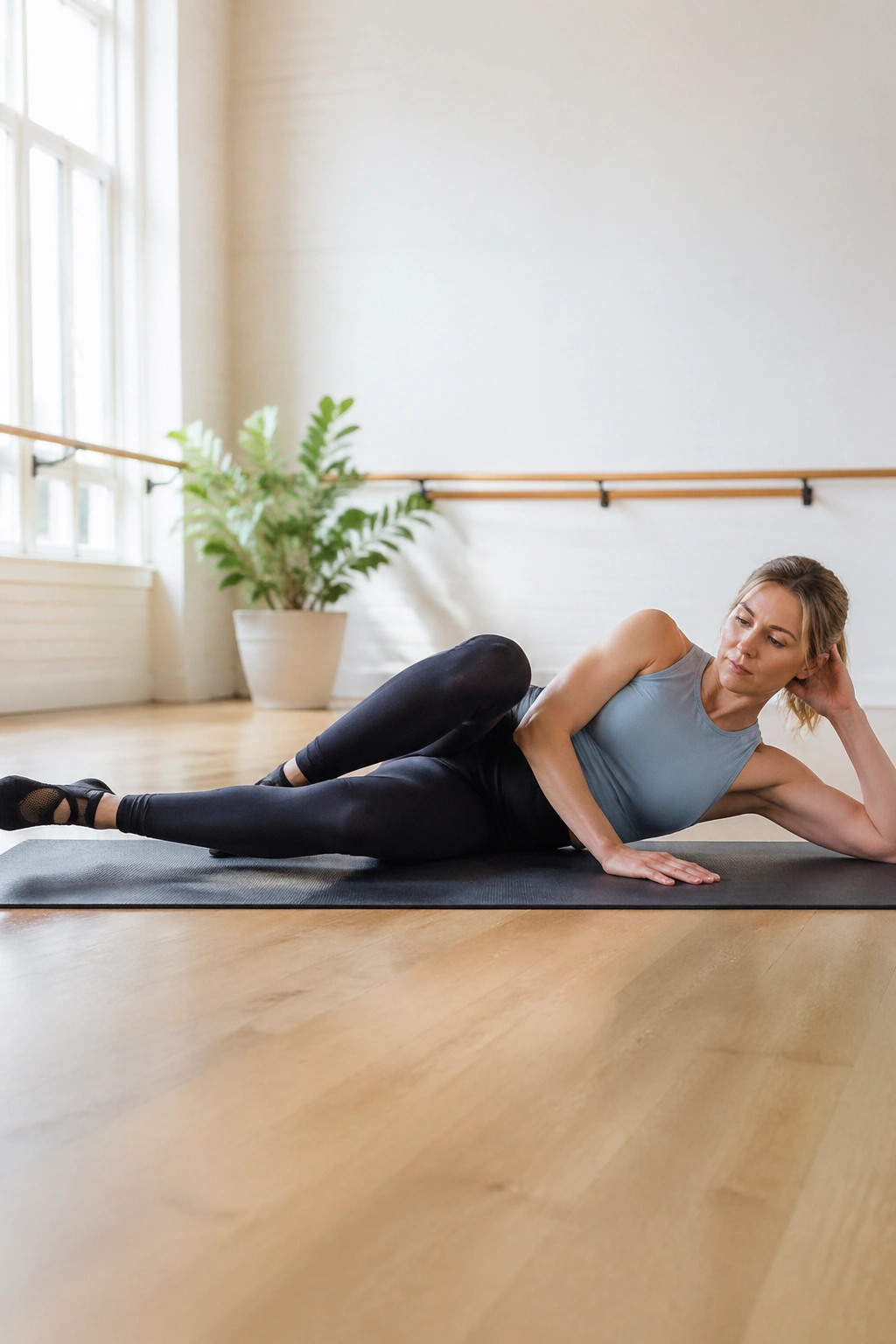
The floor leg is the sneaky part. People focus on the top leg because that is the one moving, but the bottom leg often gives the core and inner thigh work its real sting.
Lie on your side with the lower leg long and the top leg crossed in front for balance or lifted to hover. Support your head with your bottom arm, and place the top hand lightly on the floor or barre for stability. Lift the bottom leg just a few inches, lower with control, and keep the waist drawn in so you do not dump weight into the hip.
Do 12 to 15 lifts per side, then add a 10-second hold at the top if you want more burn. The range stays small on purpose. Big swings cheat. Small lifts force the deep adductors and side waist to stay awake.
If your hip flexor starts nagging, bend the top knee slightly and shorten the lever. No prize is given for grinding through bad alignment.
5. Pilates Barre Plank-to-Pike
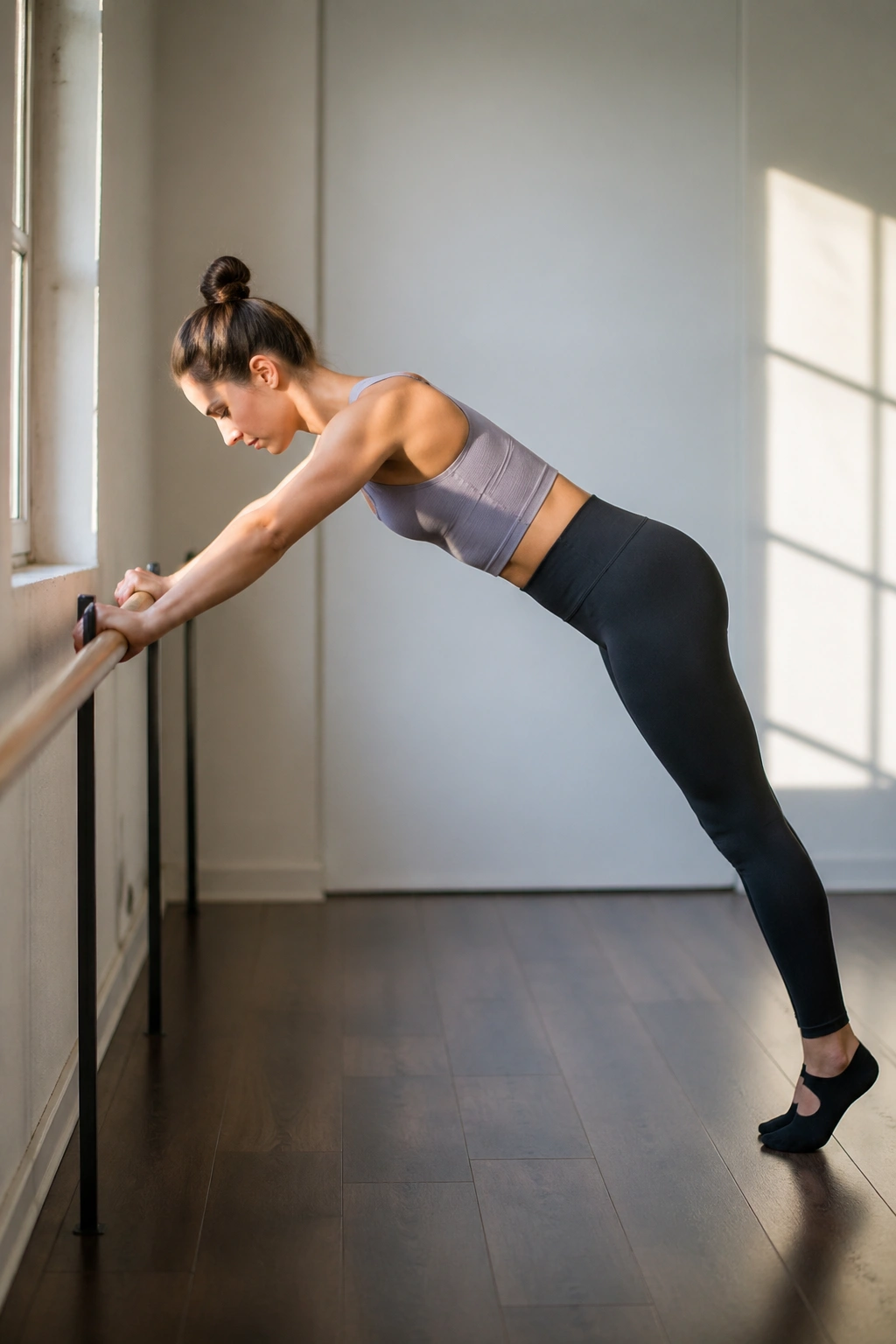
This is where a lot of people discover that incline work can be nastier than floor work. Unlike a flat plank, the barre version lets your shoulders settle into a cleaner line while the abs deal with the pike and the rebound.
Place your hands on the barre or a counter, walk your feet back until your body makes one long diagonal line, and hold that shape for a breath. Then exhale and send the hips up and back into a small pike, keeping the arms straight. Return to plank without collapsing the low back.
How to Make It Useful
Try 6 to 10 reps, slow enough that each one feels deliberate. The goal is not height. The goal is control.
If your shoulders shrug, the move gets messy fast. If your heels lift too much, you probably shortened the hamstrings by bending the knees too much. Keep the movement tidy, and the core gets the message. That message is clear. Work harder.
6. Curtsy Lunge with Oblique Reach
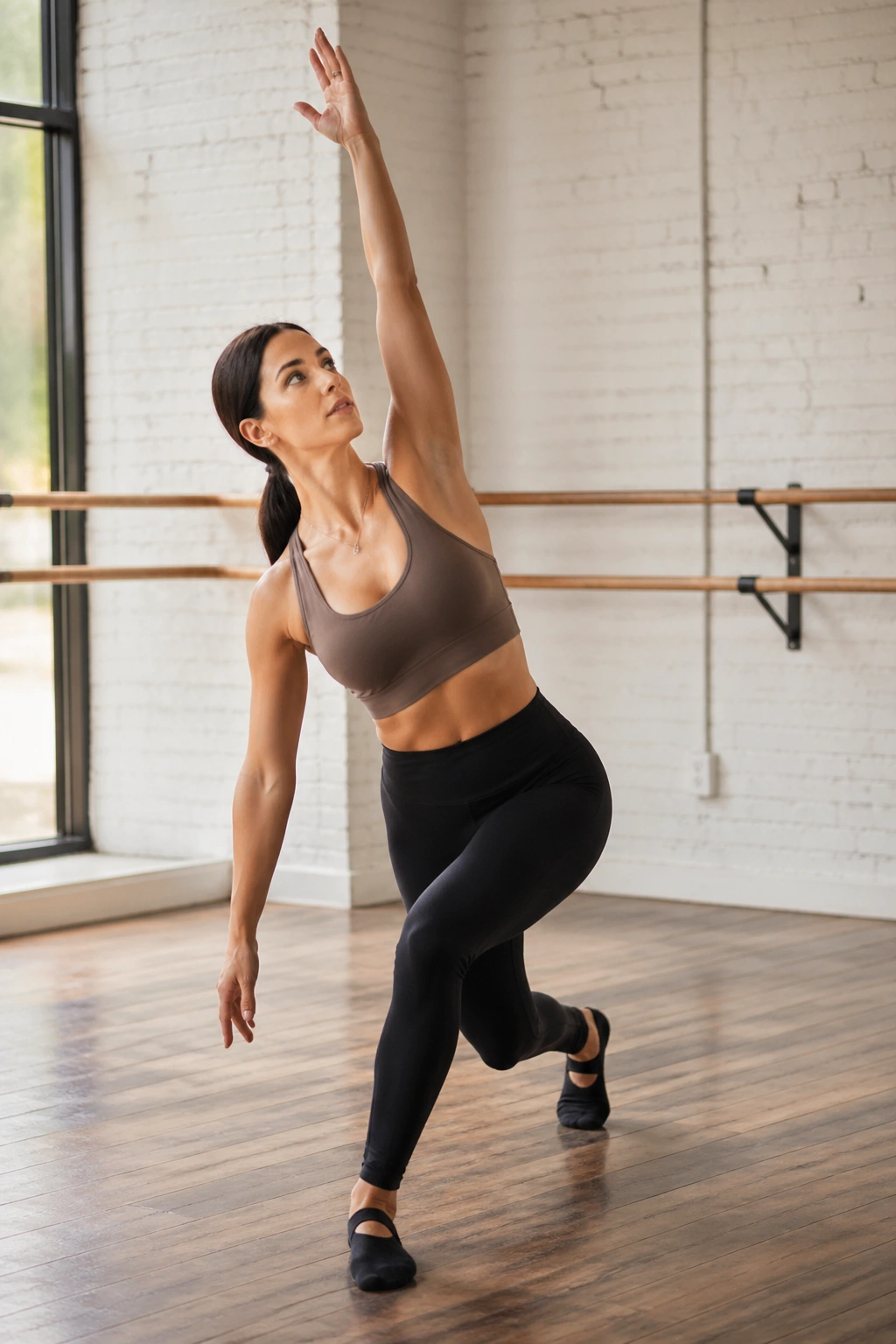
A curtsy lunge looks graceful right up until the third set. Then the front leg starts working, the side waist starts catching, and the whole movement feels more serious than it first appeared.
Step one leg behind and across the standing leg, lowering into a small curtsy lunge. As you descend, reach the opposite arm overhead and slightly across the body. Come back to center through the heel of the front foot, not by pushing off the back leg.
Use 8 to 10 reps per side and keep the torso tall. If the knee on the front leg caves inward, the stance is too narrow or the depth is too big. Shorten the range before you let the knees get sloppy. That matters more than chasing depth.
The obliques love this because the rib cage has to stay organized while the legs cross. A wobbly lunge gives them a job they can’t fake.
7. Standing Side Bend and Kickback
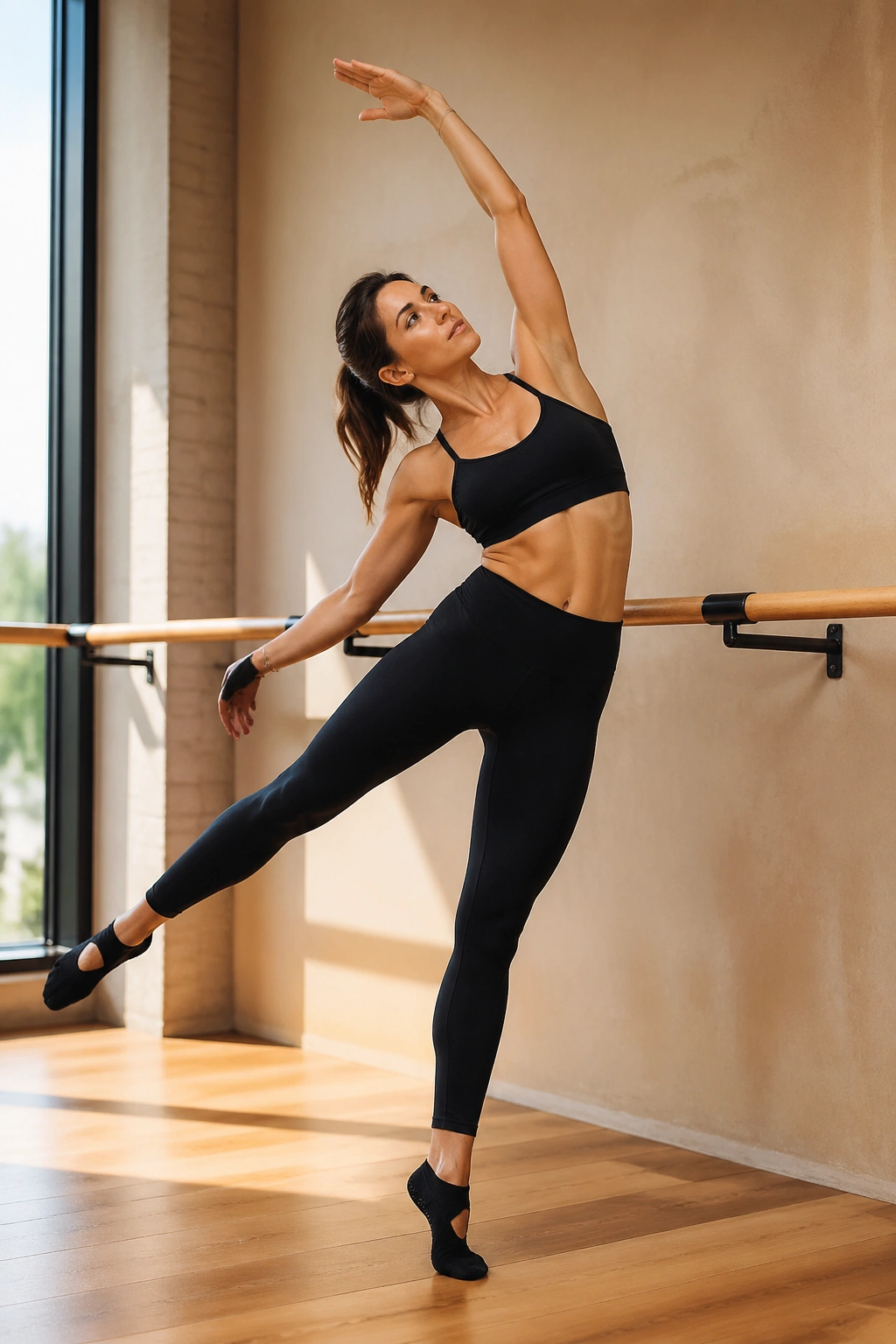
The side bend and kickback is one of those moves that looks simple from across the room. Up close, it asks for far more control than people expect.
What to Watch For
Hold the barre with one hand. Shift weight onto the outside leg, then send the other leg straight back in a tiny kickback while the free arm reaches overhead into a side bend. The waist on the standing side should feel long and loaded, not collapsed. That is the difference between a polished move and a shrugging mess.
- Keep both hip bones facing forward.
- Reach long through the fingertips instead of leaning hard.
- Kick back from the glute, not from the lower back.
- Aim for 10 slow reps per side.
This is one of my favorite sneaky core builders because the standing side has to brace against the bend while the moving leg tries to pull you off balance. That tiny fight is where the work lives.
8. Glute Bridge March with Heel Press
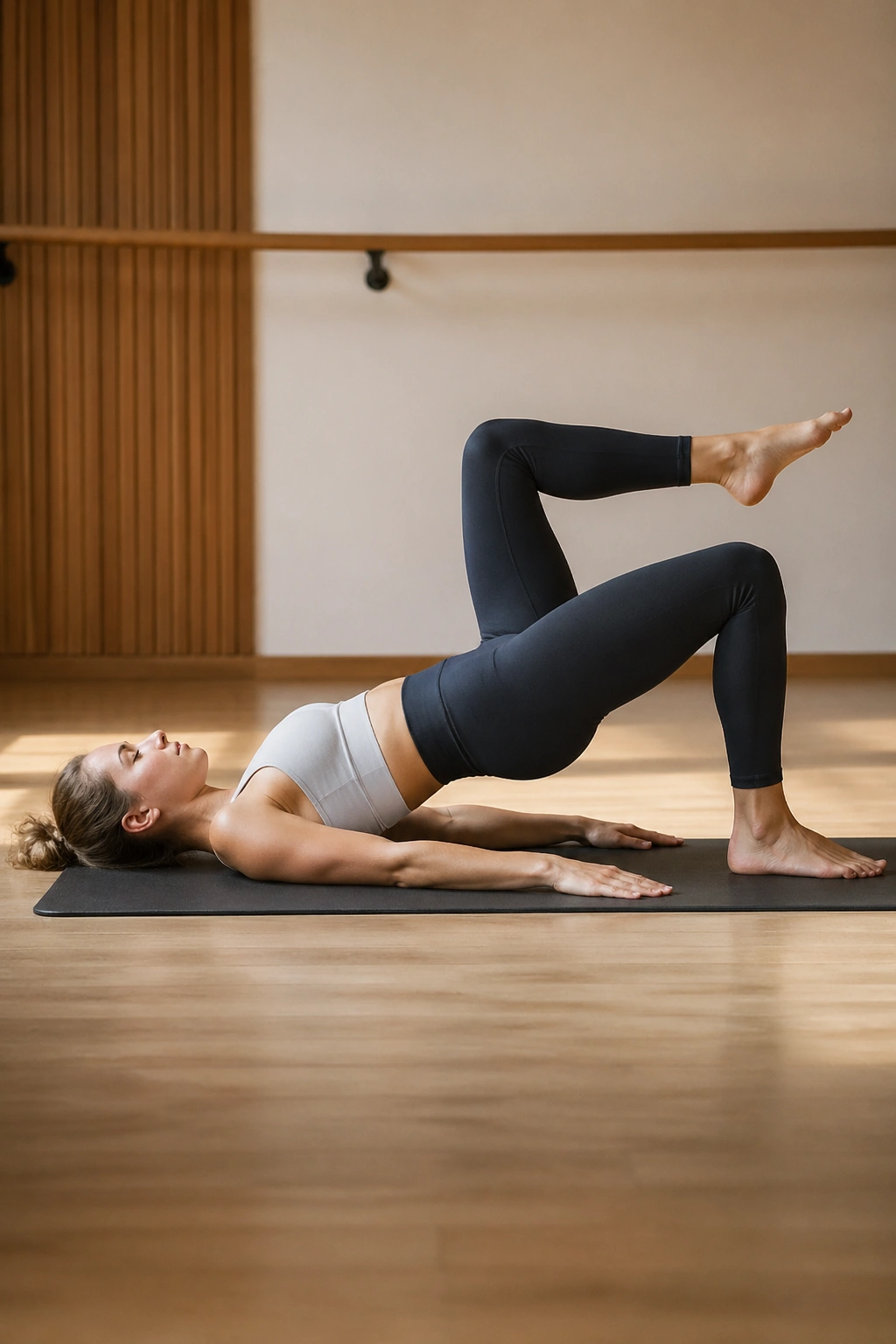
The first bridge usually feels like a reset. The march changes the mood.
Lie on your back with knees bent, feet hip-width apart, and arms long by your sides. Lift the hips into a bridge, keeping the ribs knit down. Once you are steady, lift one foot just an inch or two so the knee floats over the hip, then set it down and switch sides. The pelvis should stay level. If it rocks, the abs have lost the steering wheel.
Do 8 to 12 marches total, then hold the bridge for 20 seconds and breathe. That hold is where the deep core really starts to talk. If the hamstrings cramp, walk the feet a touch farther away and lower the lift height.
A small loop band above the knees can make this harsher, but it is not required. The clean version is already plenty.
9. Teaser Hold with Arm Pulses
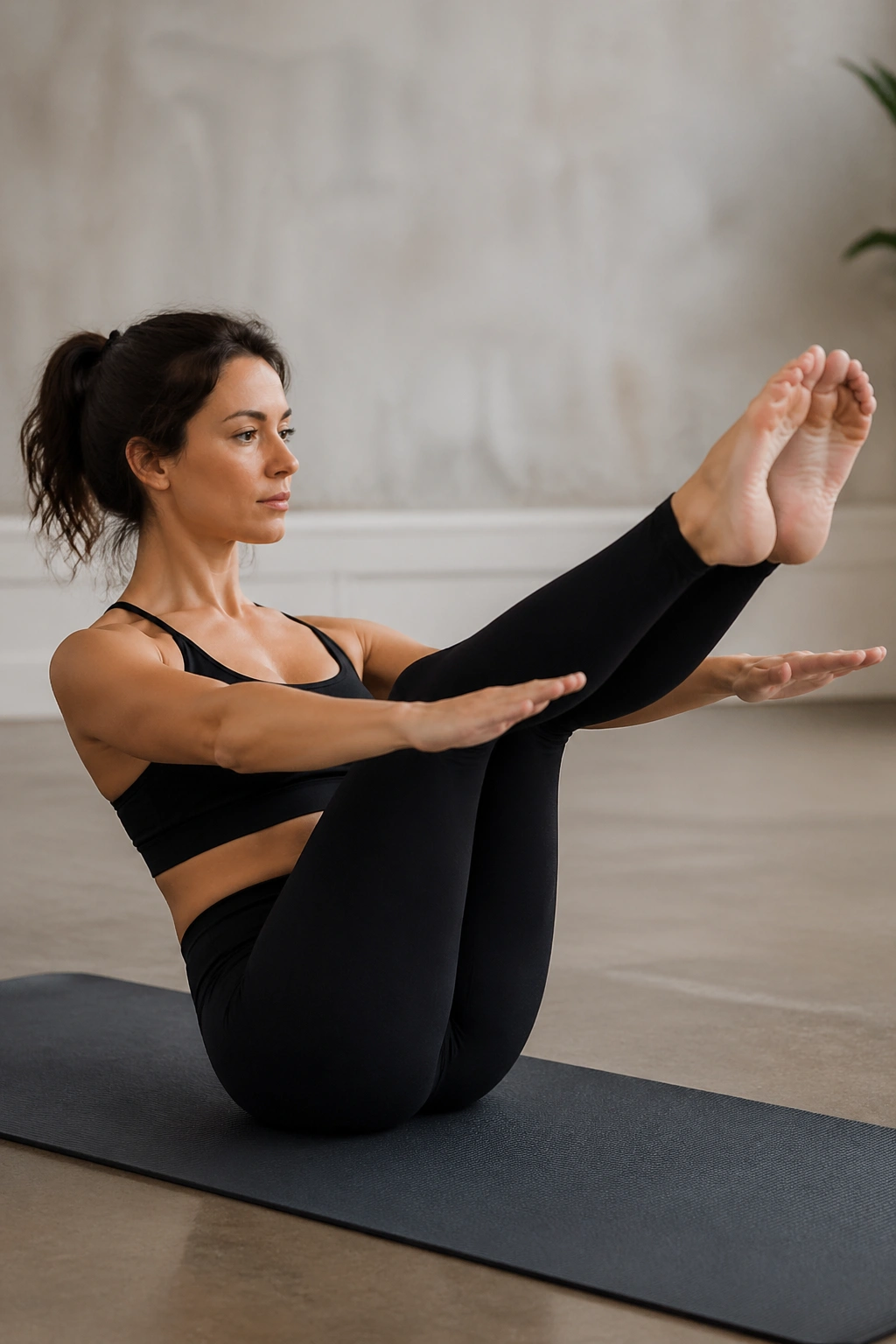
Can a move be tiny and still feel rude? Absolutely. The teaser is proof.
Sit tall, lean back onto your sit bones, and lift the legs into tabletop or a longer extension if that’s available without wrecking your back. Reach the arms forward, then pulse them up and down a few inches while the torso holds steady. The torso should feel like a single piece, not a wobbling stack of parts.
How to Make It Manageable
If the full teaser is too much, bend the knees and keep the hands behind the thighs for support. If that still feels shaky, stay with a half-teaser: chest lifted, one foot down, one foot hovering.
A good set is 15 to 20 seconds of hold work, repeated 3 times. Do not rush the breathing. A steady exhale keeps the ribs from flaring and helps the hip flexors stop taking over.
This one is famous for a reason. It exposes cheats fast.
10. Arabesque Kick Lifts at the Barre
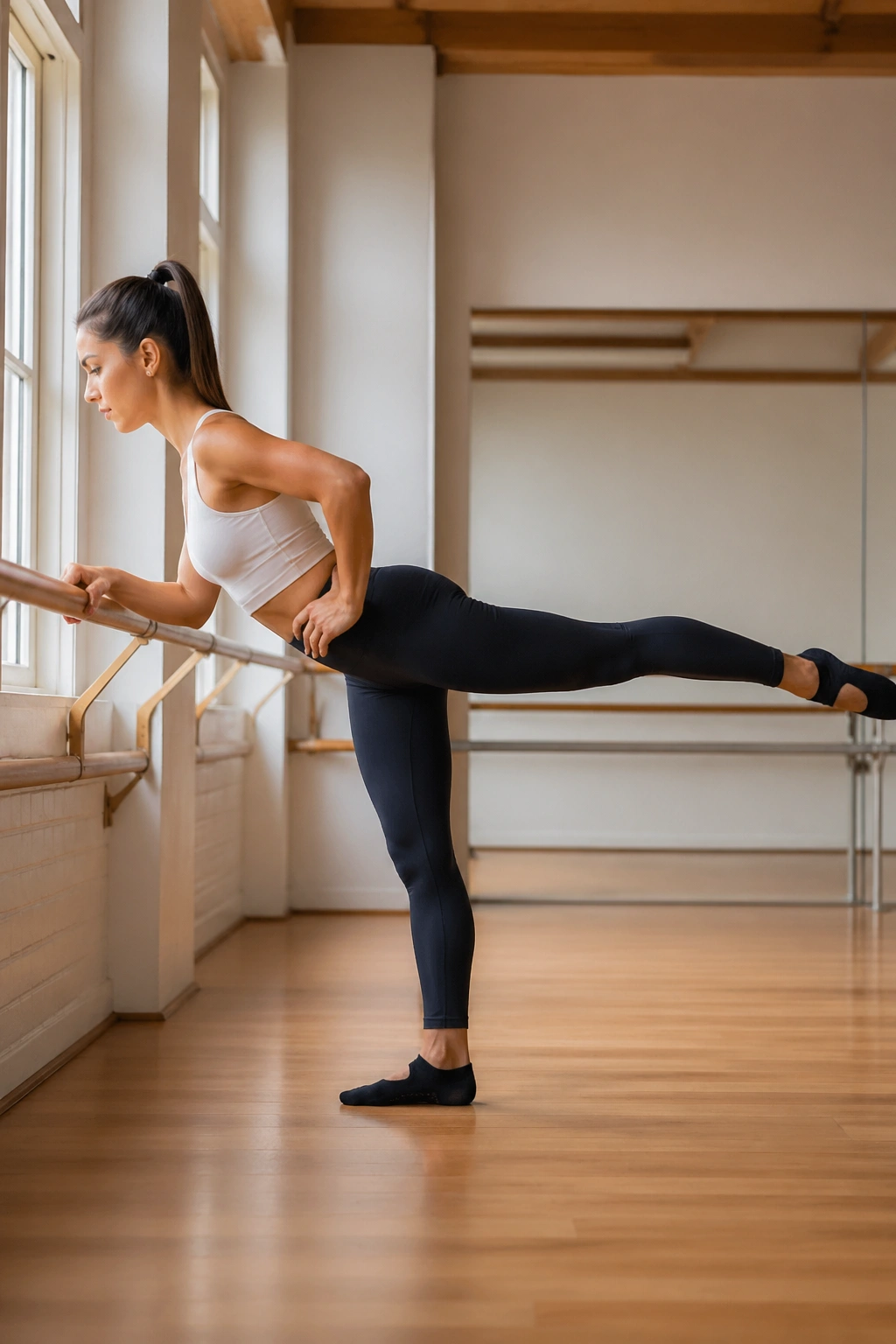
Unlike a big back kick, the arabesque lift works because the leg barely leaves the line of the body. That tiny lift is enough to wake the glute on the standing side and force the midsection to stop over-rotating.
Hold the barre with one hand, hinge slightly forward from the hips, and extend the free leg behind you at hip height or lower. Lift and lower the leg in short pulses. Keep the standing leg soft and the standing hip square. If the lower back starts arching, the leg is too high.
This is best for people who want a standing core challenge without the drama of jumping or floor work. It also pairs well with a light ankle weight, though I’d only add that if your alignment is already solid.
Try 12 pulses, a 10-second hold, then 12 more. The burn should land in the glute and deep abdomen, not in the low back.
11. Kneeling Oblique Crunch and Reach
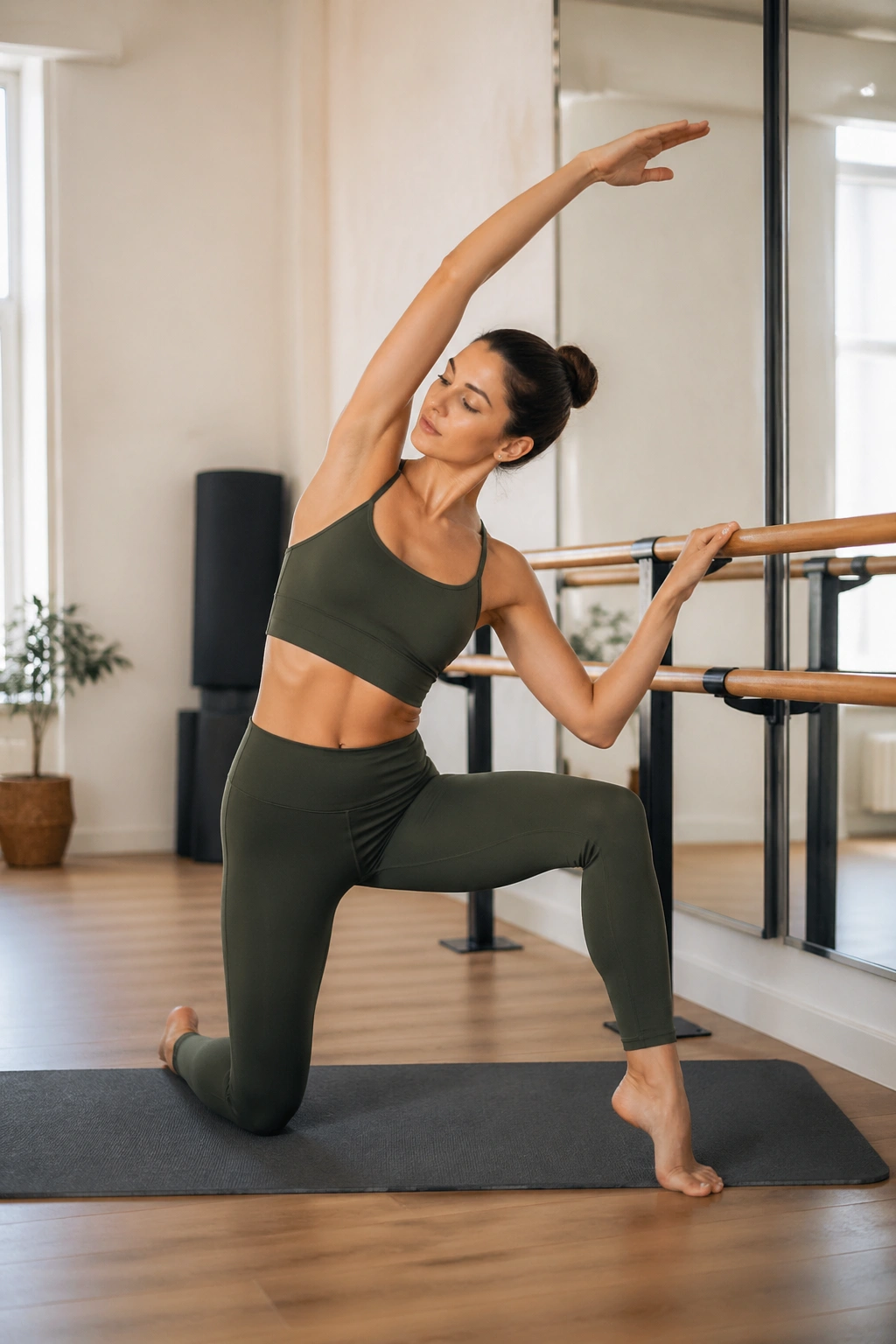
Half-kneeling is a good place to find out whether your side waist actually knows how to work. The answer is usually yes, but it needs a little reminder.
Set one knee on the mat and the other foot forward, then place one hand lightly on the barre for balance. Reach the free arm overhead. From there, draw the ribs toward the hip on the kneeling side while the arm arcs down. Come back to the long reach slowly. Keep the pelvis facing front. Do not let the torso twist away just because it feels easier.
The movement should feel like a controlled fold through the side body, not a collapse. That distinction matters. If the shoulders are doing all the work, lower the arm slower and shorten the range.
Use 8 to 10 reps per side, and breathe out on the crunch. That timing helps the obliques fire instead of letting the hip flexors jump in early.
12. Pilates Curl-Up with Heel Slides
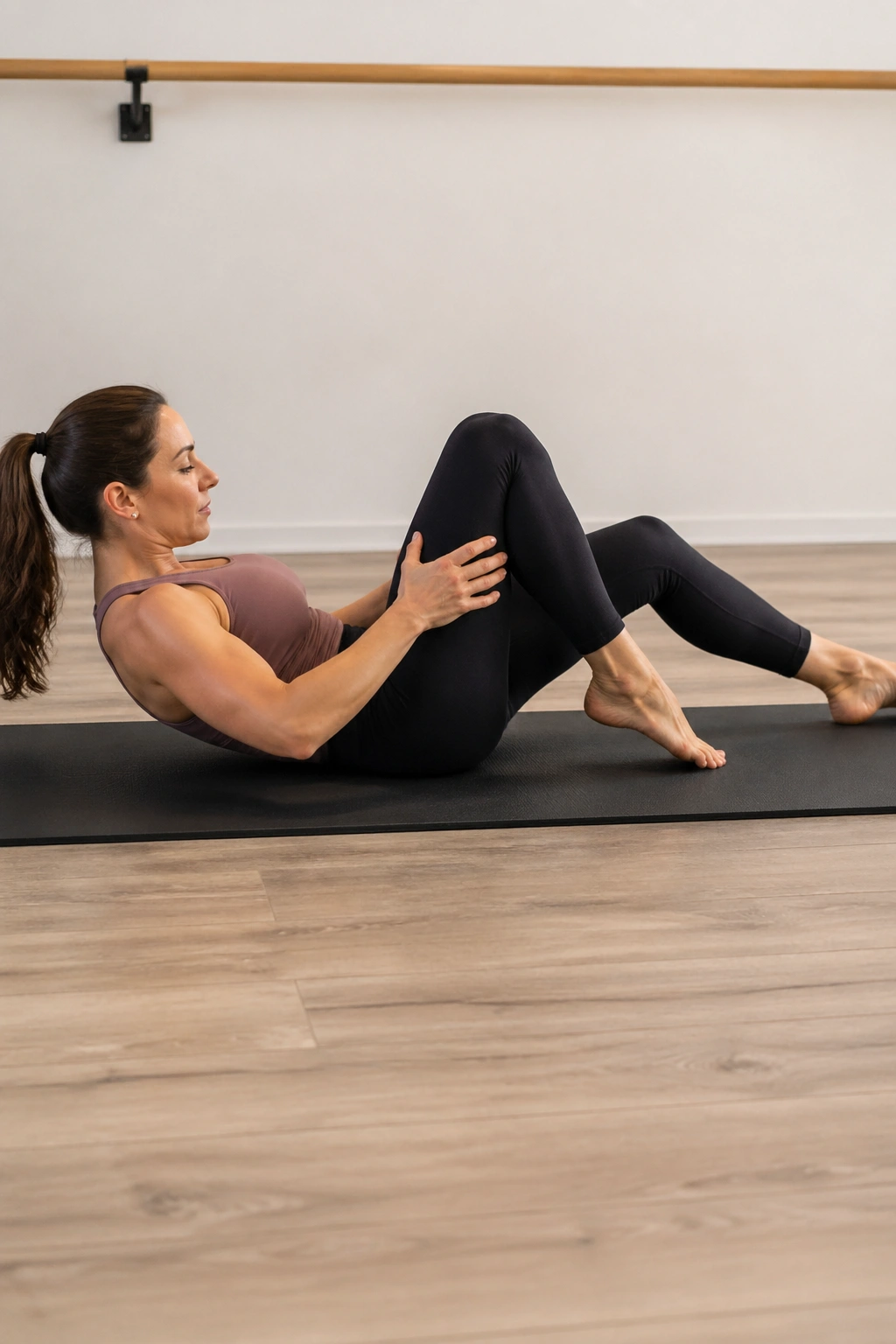
A heel slide sounds boring until you try to keep your pelvis from tipping while the leg moves. Then it gets interesting fast.
Lie on your back, knees bent, feet flat, and arms by your sides. Curl the head and shoulders up just enough to hover the shoulder blades. Keep the abdominals gently scooped and slide one heel away until the leg is almost straight, then drag it back in without letting the low back arch. Switch sides.
Slow is the whole point.
Do 6 to 8 slides per leg at first. If you rush, the hips grab and the lower spine starts moving more than it should. Keep the gaze toward the thighs, not the ceiling, so the neck stays long.
This move is useful because it teaches abdominal control during leg motion, which is where many people lose it. Walking, climbing stairs, even carrying groceries — all of that depends on this kind of quiet control.
13. Attitude Lift and Pulse Series
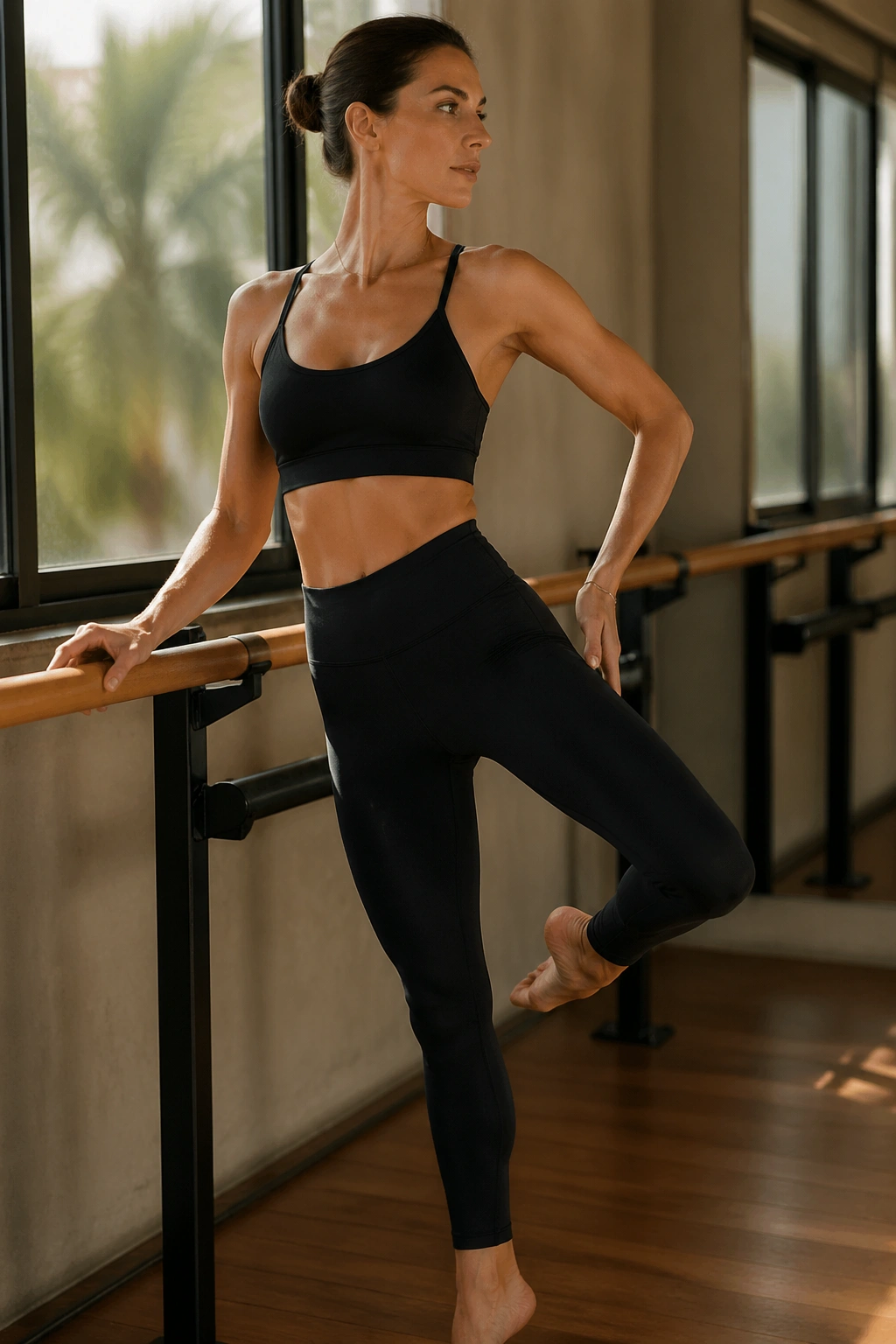
The attitude lift is a little old-school, and I mean that as a compliment. It gives you one leg on the floor, one leg in the air, and nowhere to hide.
Stand side-on to the barre, hold lightly, and bend the working leg behind you with the knee soft and turned out a touch. Lift the thigh a few inches behind the body, then pulse upward in tiny reps. The standing leg should stay rooted. The torso should stay calm.
Why It Works
The standing side of the core has to keep the pelvis from drifting, which is why this feels more like balance training than leg training after a few reps. The glute of the lifted leg works, sure, but the standing obliques are the part people underestimate.
- Keep the lift small and controlled.
- Avoid arching the lower back to fake range.
- Think of the chest staying quiet.
- Do 12 pulses, hold for 5 counts, repeat twice.
If you want a tougher version, lightly skim the barre with only the fingertips. That tiny reduction in support changes the whole exercise.
14. Seated Spine Twist with Barre Resistance
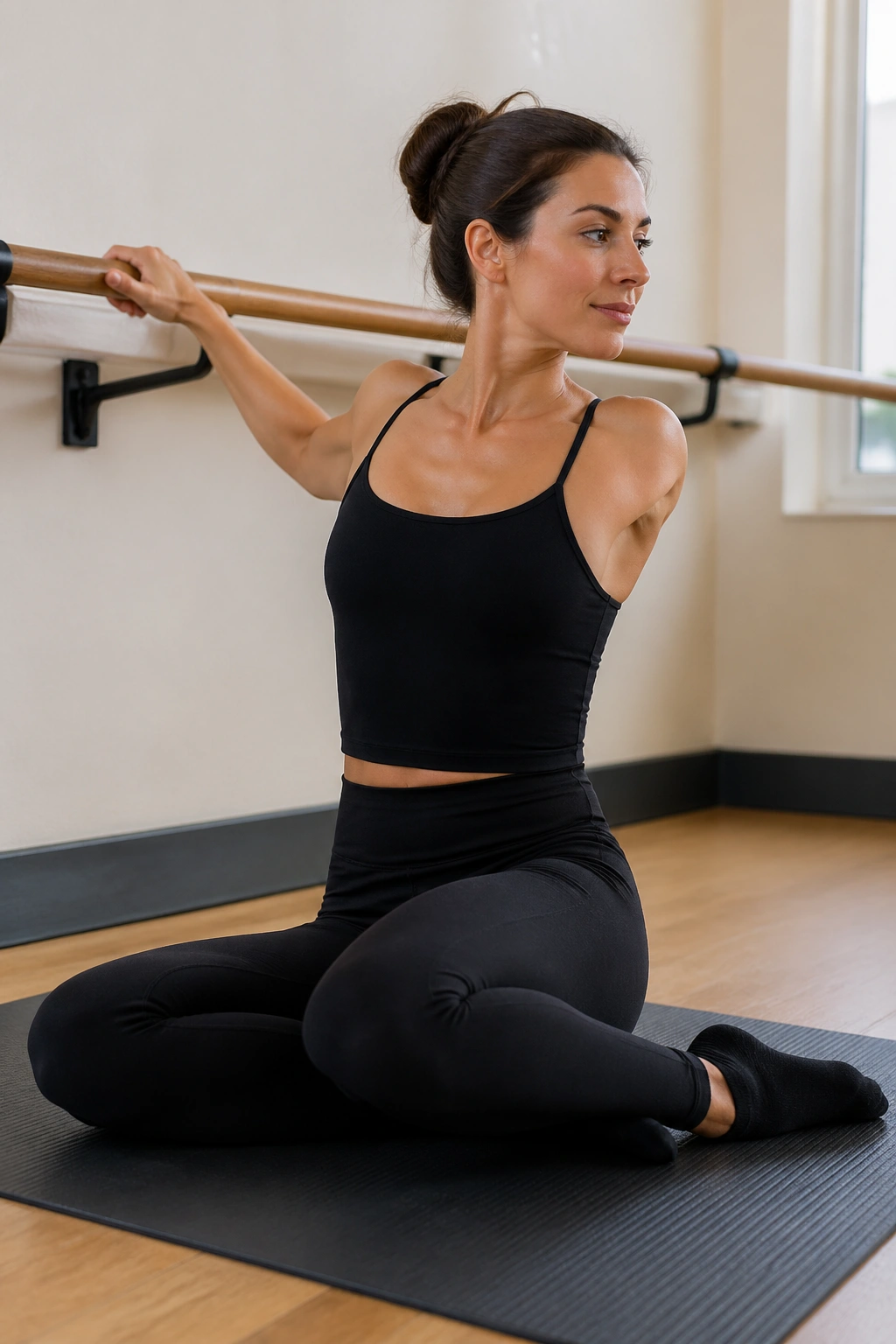
Why does a seated twist feel harder than a standing one? Because the pelvis has fewer places to hide, and the ribs have to do the turning without help from a lazy hip shift.
Sit tall on the mat with one side facing the barre. Hold the barre lightly with both hands or one hand, depending on the version you choose. Rotate the ribs over the pelvis in a controlled twist, then return to center without bouncing. If you want more challenge, keep the legs extended and the feet flexed; if your hamstrings complain, bend the knees.
How to Get the Most From It
Twist from the waistline, not from the shoulders alone. That is the whole game. The shoulders can follow, but they should not lead.
Do 6 to 8 twists per side, pausing for one breath at the end range. The pause stops the move from turning into momentum. It also teaches the midsection to control rotation instead of flopping through it.
A clean twist is small. A sloppy twist is big and noisy. Choose the first one.
15. Forearm Plank Knee Taps
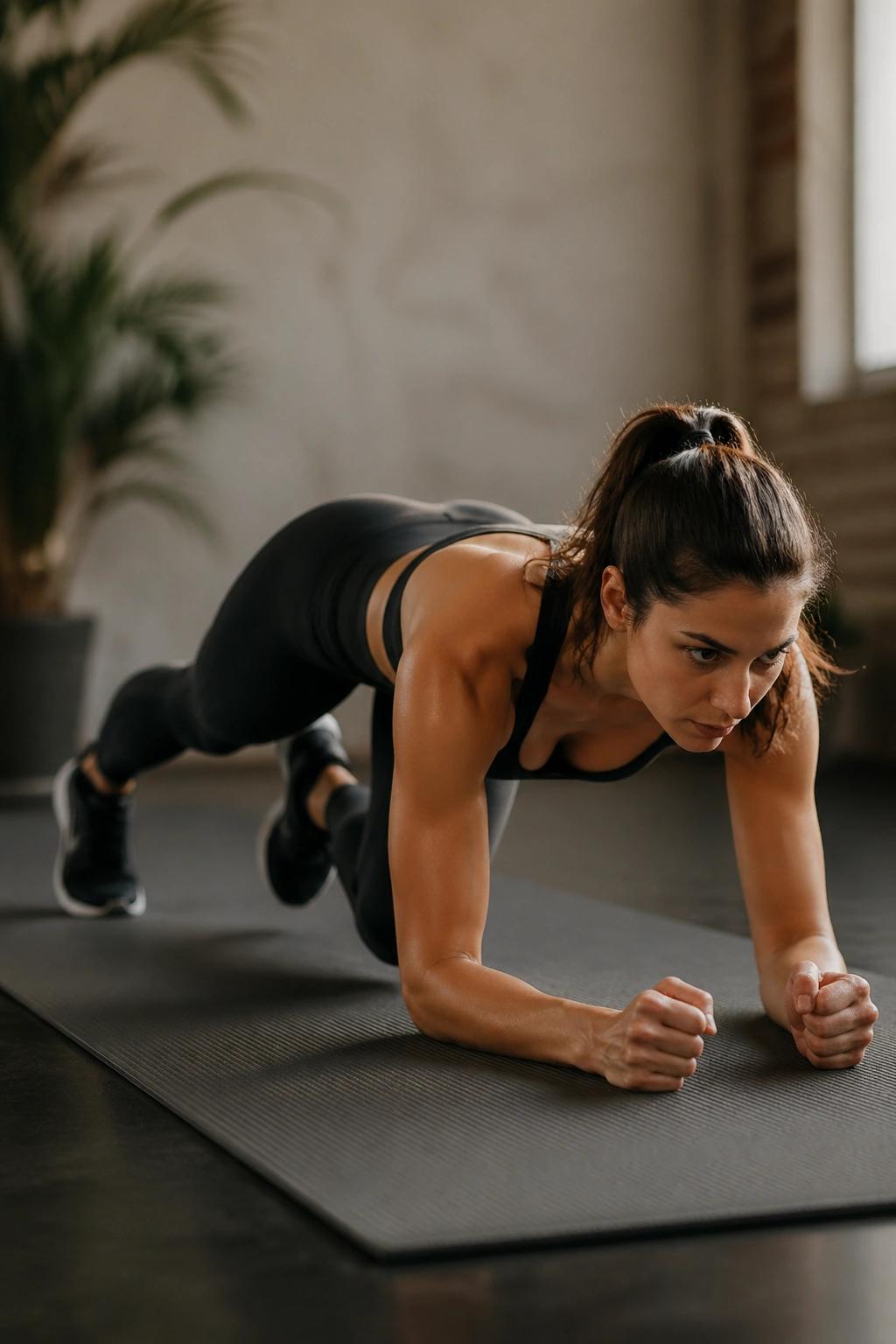
If your hips swing, your abs are not doing their job. That sounds blunt because the move is blunt. It tells the truth fast.
Set up in a forearm plank, elbows under shoulders, legs long, and feet hip-width apart. Tap one knee down toward the floor with a tiny bend, then lift it back to plank. Alternate sides. Keep the body line as steady as you can. The knees only move a little. The torso should barely move at all.
A strong set is 10 to 12 taps total, followed by a 15-second hold. If your lower back starts sagging, widen the feet and cut the range. If the shoulders shake a bit, that is fine. If the hips wobble wildly, pause and reset.
This is one of the clearest core tests in the whole list. It asks for anti-rotation strength, which is just a fancy way of saying: can your middle stay still when your legs are moving?
16. Standing Cross-Body Crunch and Relevé
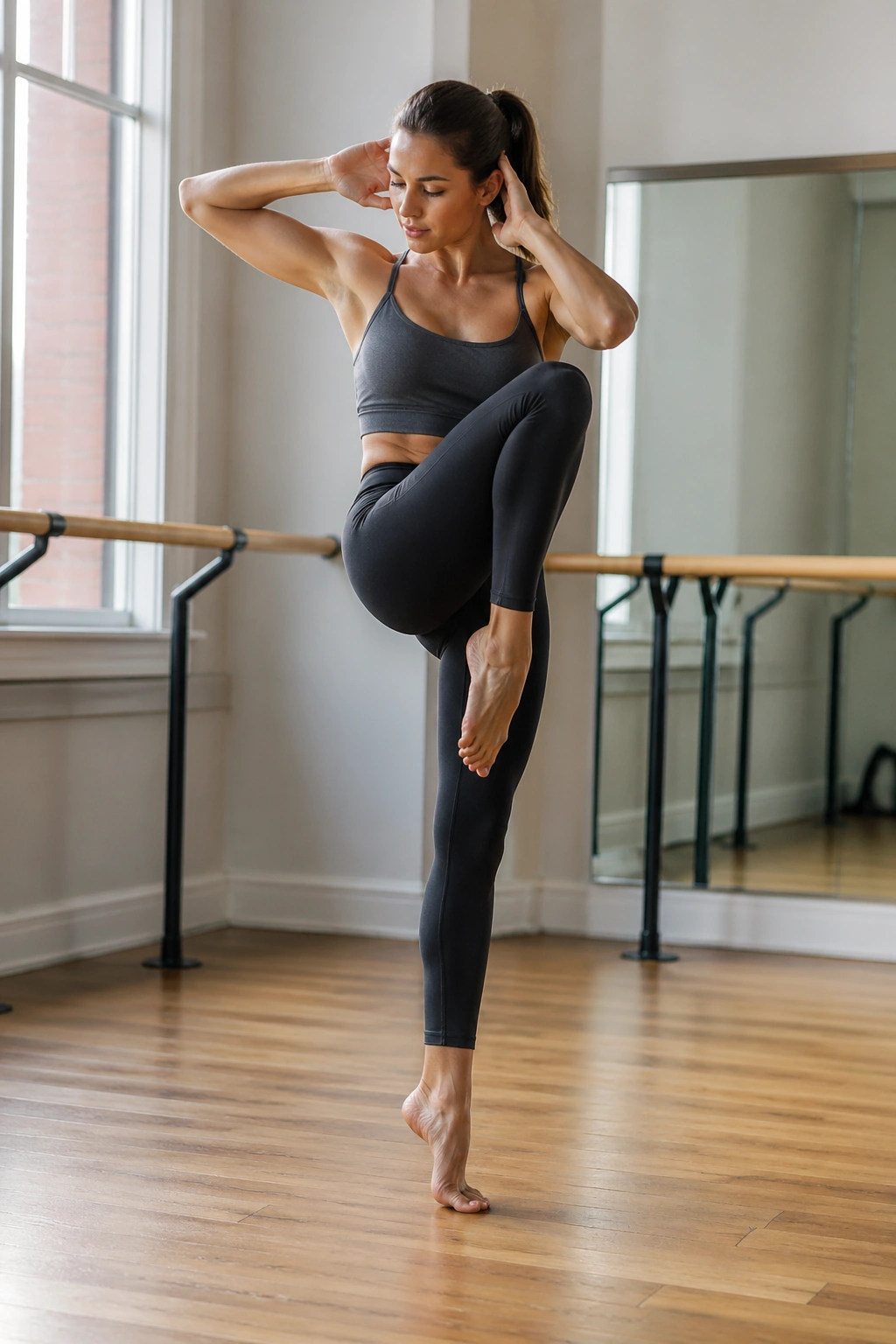
A fast bicycle crunch can turn sloppy in a hurry. This standing version keeps the ribs stacked and the balance work honest.
Stand tall, one hand on the barre if needed, then lift one knee across the body toward the opposite elbow while rising onto the standing toes. Lower with control and switch sides. The torso should twist a little, but not enough to yank the shoulders around. Think of it as a controlled diagonal fold, not a throw.
Use 8 reps per side and move slowly enough that the return path matters. That reverse path is where the core has to brake, and braking is work. A lot of people forget that.
If you want a stronger balance challenge, hover the hand away from the barre and keep the supporting foot grounded through all three corners. Small detail. Big difference.
17. Mermaid Side Stretch to Side Kick
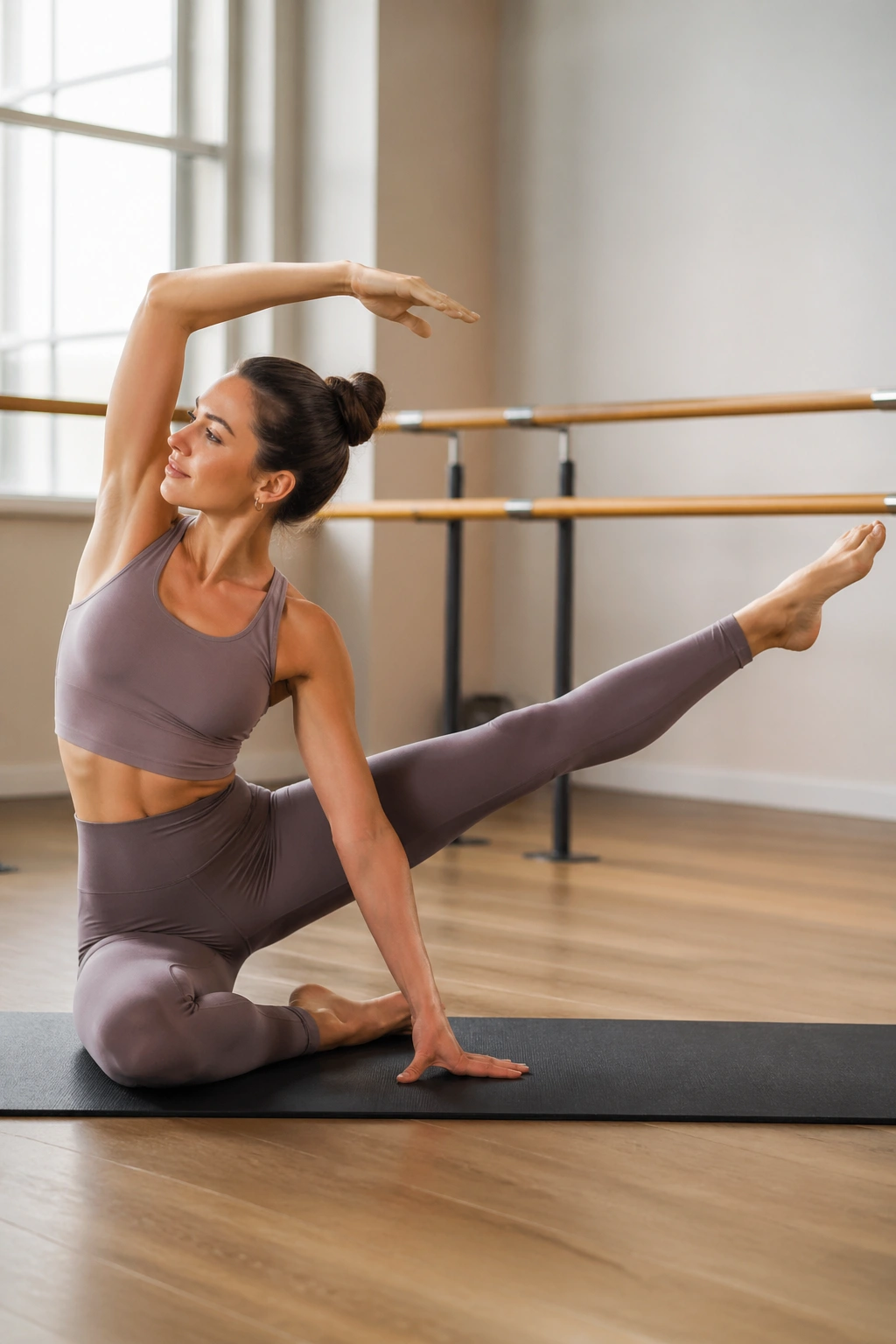
The mermaid is one of the few core moves that feels kind to the body before it starts feeling rude again. The stretch opens the side body, and the leg lift turns the whole thing into real work.
Sit side-saddle on the mat with one hand braced on the floor or barre and the other arm reaching overhead. Breathe into the ribs on the open side, then bring the body back upright and lift the top leg in a small controlled kick or hover. The movement should feel long first, strong second.
The stretch matters.
If the side body stays short and compressed, the obliques never really get to do their job. Give them space, then ask them to stabilize. That order works better than forcing the burn from the start.
Do 5 slow reaches and 8 leg lifts per side. Keep the shoulders low. Keep the neck easy. The move gets a lot better when you stop trying to prove something to it.
18. Pilates Barre Finisher: Small V-Sit Pulses
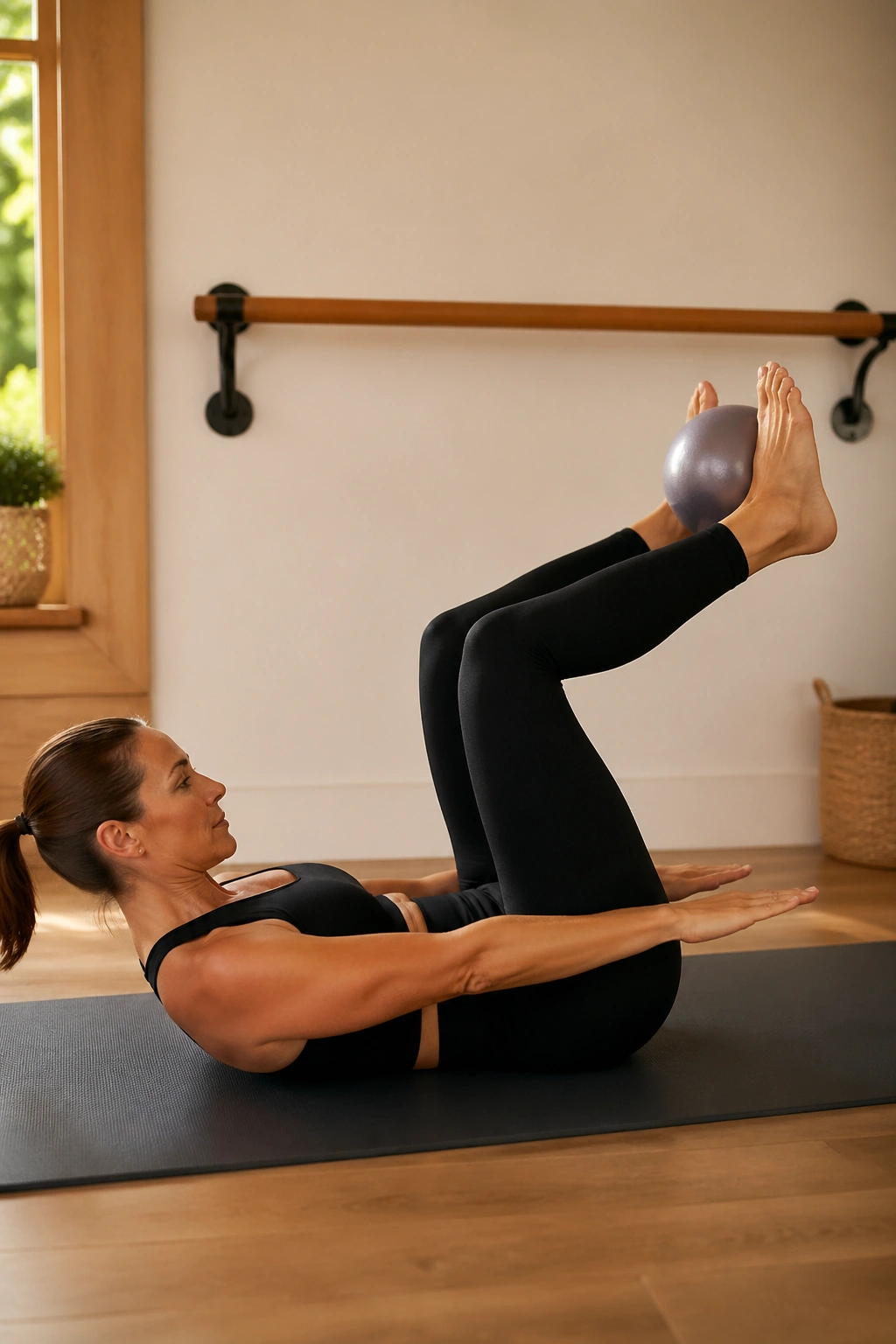
This is the piece people love to hate. Good. A finisher should feel like a finish, not a nap.
Sit near the barre with your hands lightly touching for balance, lean back into a low V-sit or tuck position, and pulse the chest a few inches toward and away from the thighs. Keep the legs wherever you can hold them without collapsing the spine — bent knees are fine, straight legs are harder, and neither option is cheating if the shape stays clean.
How to Finish Without Wrecking Form
- Keep the lower back long instead of rounded into a slump.
- Exhale on the pulse and inhale on the return.
- Choose 20 to 30 small pulses, not wild ones.
- Stop one rep before your neck starts taking over.
A good finisher does not need to be long. It needs to be memorable. If you only have time for four moves, I’d pick the hundred, the plank-to-pike, the standing cross-body crunch, and this one. That is a compact core session with real bite.
And if you string three or four of these together in one circuit, the burn shows up fast — but the better part is what happens after. You stand a little taller. Your midsection feels tighter when you walk. Your ribs settle where they belong instead of floating around like they missed the memo. That is the kind of core work I trust.
Pick five moves, keep the rest short, and stay picky about form. The clean reps matter more than the noisy ones.
