



The best Pilates and strength training combined plans do not ask you to choose between control and load. They ask a better question: what does your body need first, and what should come after? That is the whole game.
If you lift hard without enough control, the work can get sloppy fast — ribs flare, hips twist, shoulders shrug, and the exercise turns into a strong-looking mess. If you lean only on Pilates, you may move beautifully but never give the muscles enough resistance to change much. The sweet spot sits between those two.
Order matters more than people like to admit. Put Pilates before heavy squats and you may feel wonderfully switched on, then oddly flat on your working sets. Put strength first and Pilates after, and the second half of the session can clean up what the first half exposed. The 20 plans below take different routes to that balance, because one setup does not fit every goal or body.
1. The Three-Day Full-Body Pilates and Strength Training Split
This is the easiest place to start if you want something repeatable. Three days a week gives you enough practice to build strength without living in the gym, and the Pilates work can sit at the end like a precise little reset.
How the week looks
- Day 1: Squat, push, core
- Day 2: Hinge, pull, lateral hip work
- Day 3: Lunge, carry, trunk control
Each day can run 40 to 55 minutes. Start with 2 to 3 compound lifts — goblet squats, dumbbell presses, rows, Romanian deadlifts — then finish with 8 to 12 minutes of Pilates mat work such as hundred prep, dead bug, side plank, pelvic curl, or swimming.
The best part is how boringly effective this is. Boring is good here. You do the same patterns often enough to get better, but the Pilates block keeps you from turning into a stiff machine who can deadlift all day and still cannot hold a clean plank.
My rule: keep the lifting heavy enough that the last 2 reps matter, then let Pilates clean up the line of the movement afterward. That order tends to age well.
2. The Upper-Body Press and Core Stack
Heavy first. Always.
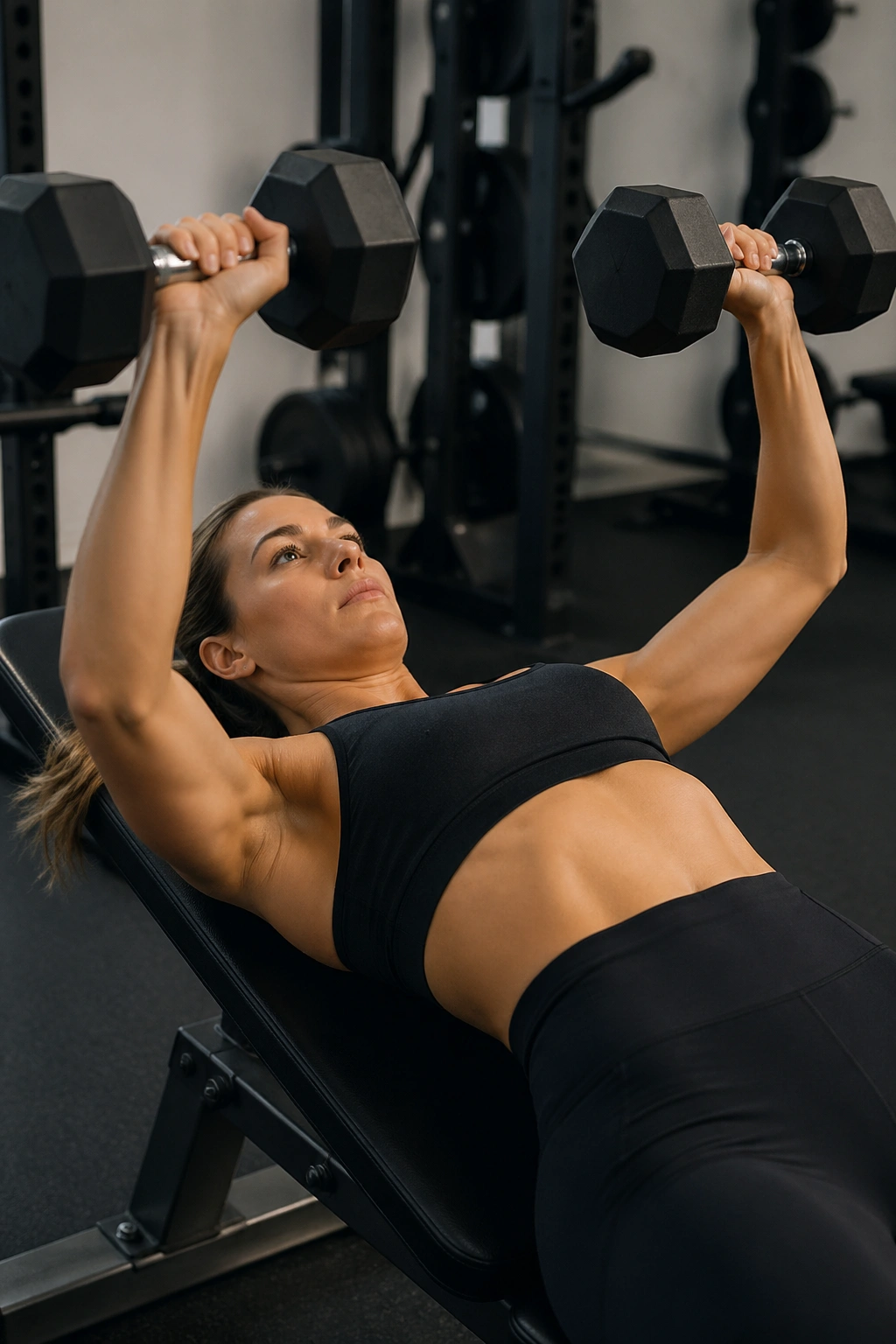
If your shoulders get cranky or your posture collapses the second fatigue shows up, build the plan around upper-body strength and Pilates core control in the same session. The strength work handles pressing and pulling; Pilates handles rib position, scapular control, and the habit of keeping the neck out of everything.
A simple version looks like this: dumbbell bench press for 3 sets of 6 to 8, one-arm row for 3 sets of 8 per side, overhead press for 2 to 3 sets of 6, then a Pilates finisher with plank shoulder taps, swimming, and controlled chest lifts. Keep the Pilates portion slow. No rushing. The point is to keep the ribs down and the shoulder blades moving without pinching.
This plan works well for people who sit a lot, because it treats the upper back like a real training zone instead of an afterthought. It also pairs well with a lower-body day later in the week. And yes, it can feel humbling — a strong press does not always mean a stable plank.
3. The Lower-Body Day That Doesn’t Trash Your Hips
Why does this one feel easier on the joints than a pure leg day? Because Pilates changes the way the work lands.
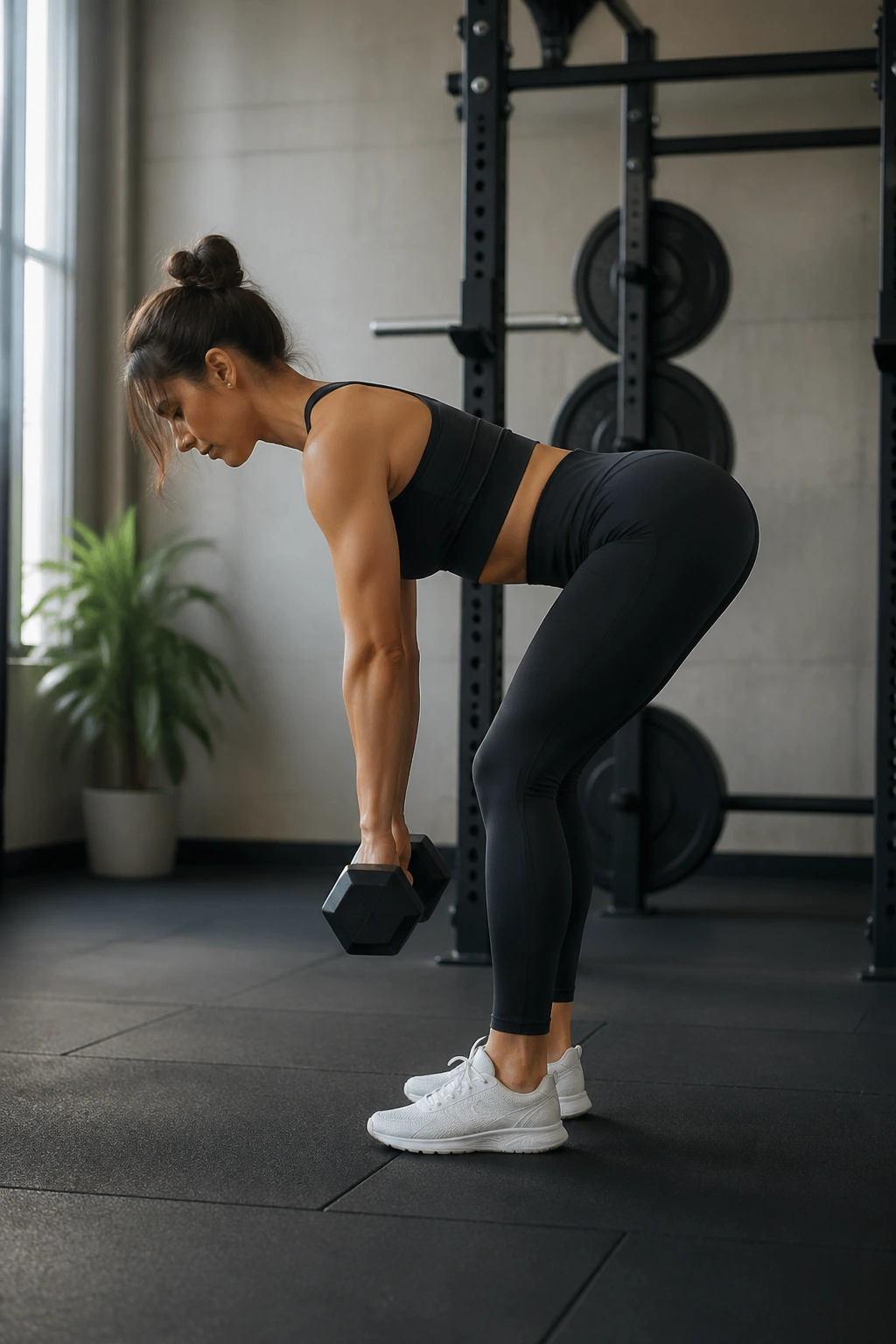
A lower-body plan can get mean in a hurry if every session is just squats, lunges, and more lunges. Add Pilates, and you can spread the stress across the glutes, deep hip rotators, and trunk instead of dumping everything into the knees. That matters if your hips feel pinchy or your lower back loves to get involved.
How to run it
Use one heavy hinge, one squat pattern, and one unilateral move:
- Romanian deadlift: 3 sets of 6 to 8
- Front-foot elevated split squat: 3 sets of 8 each side
- Step-up or reverse lunge: 2 sets of 10 each side
Then move into Pilates work like side-lying leg lifts, clamshells, bridge marches, and controlled leg circles. Keep the range small if your hips are tight. Bigger is not always better.
The trick is not to bury your legs. The trick is to give them enough work to grow while keeping the pelvis organized. That is a different feeling entirely.
4. The Beginner Mat-and-Dumbbell Plan
A lot of people start with too much ambition and too little clarity. They want a split, a program, a progression model, and a playlist, all before they can do a clean squat.
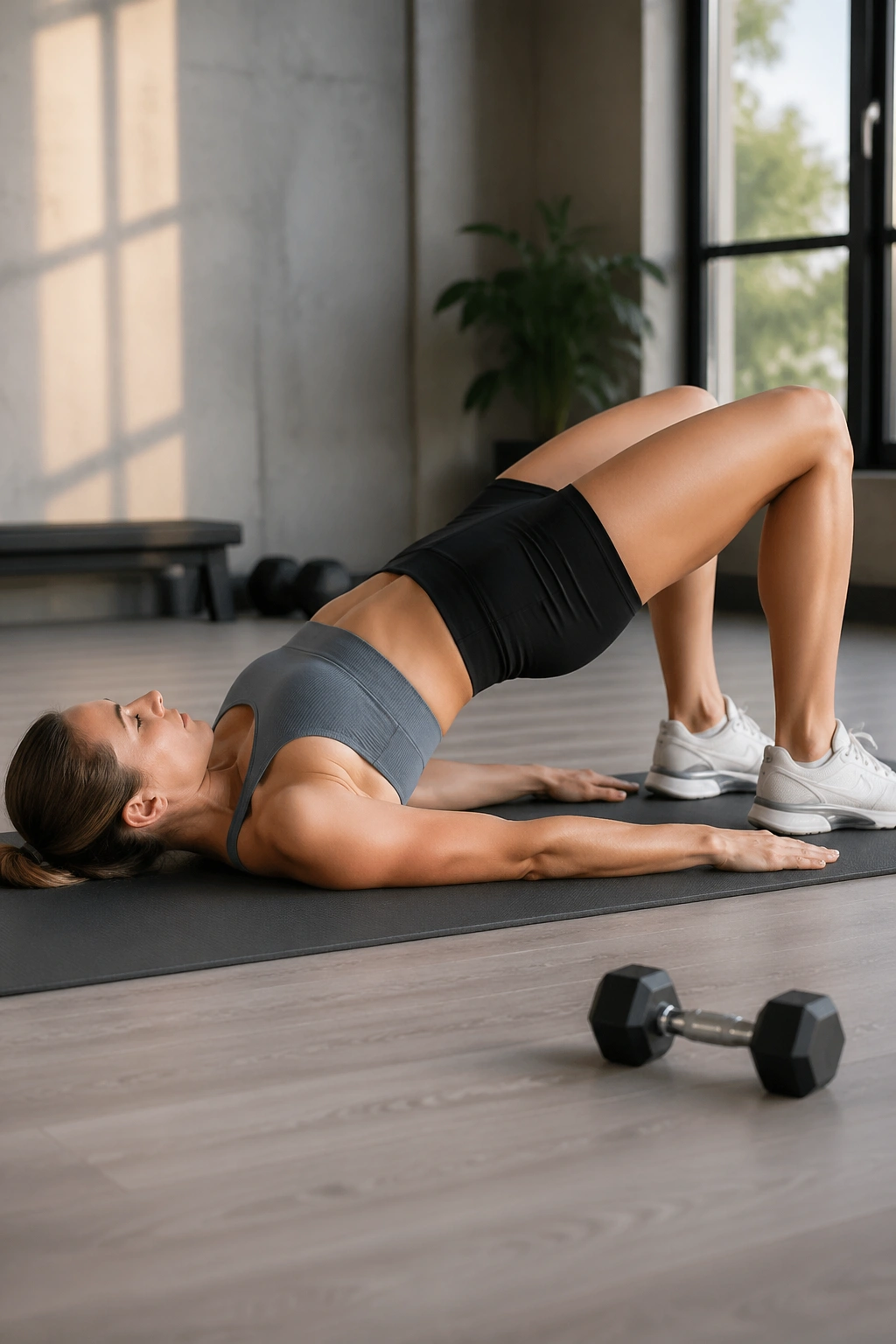
This plan strips the noise down. Two or three days a week, 20 minutes of basic strength work, then 10 minutes of mat Pilates. That’s it.
A beginner session could look like this:
- Sit-to-stand squat, 2 sets of 10
- Incline push-up, 2 sets of 8
- Dumbbell row, 2 sets of 10 each side
- Pelvic curl, 8 slow reps
- Dead bug, 6 each side
- Side plank from knees, 20 seconds each side
That mix teaches the big patterns without burying the reader in choreography. It also gives a new lifter enough time to breathe and recover between efforts. No need to chase soreness. Soreness is not the prize.
The real win is this: after a month or two, most beginners feel steadier under load and less wobbly on the mat. That is a cleaner measure than any dramatic before-and-after pose.
5. The Reformer-and-Free-Weight Hybrid
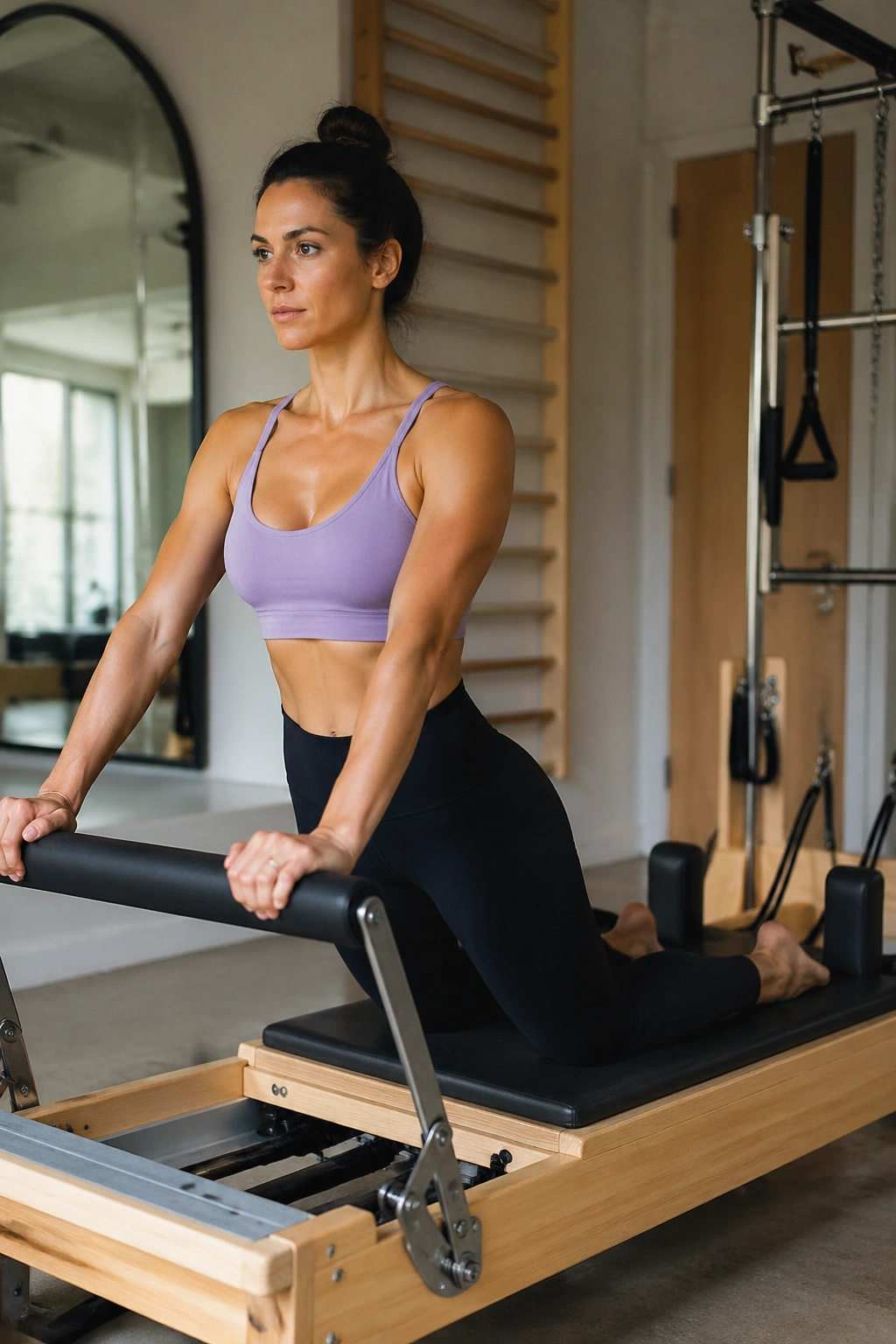
The reformer changes the feel of Pilates because the springs give you resistance through a long range, while free weights ask you to hold your own shape against gravity. Put them together and you get a nice split between control and brute honesty.
This plan suits people who have studio access and want their strength work to stay grounded. A week might include two reformer sessions and two dumbbell sessions. Use the reformer for footwork, leg straps, long stretch, and controlled trunk work. Use the dumbbells for squats, presses, rows, and hinges.
The sequence matters here too. If you want the heavy lifts to improve, do the dumbbells when you are freshest. If the Pilates session is the main event, give it its own day or place it after a lighter strength block. Springs can fool people into thinking the work is easy. It isn’t. They just make the fatigue look tidier.
Best for: people who like precision, enjoy coaching feedback, and want a plan that keeps them honest about form. If that sounds a little fussy, good. Fussy often produces better movement.
6. The Glute-Focused Two-Block Session
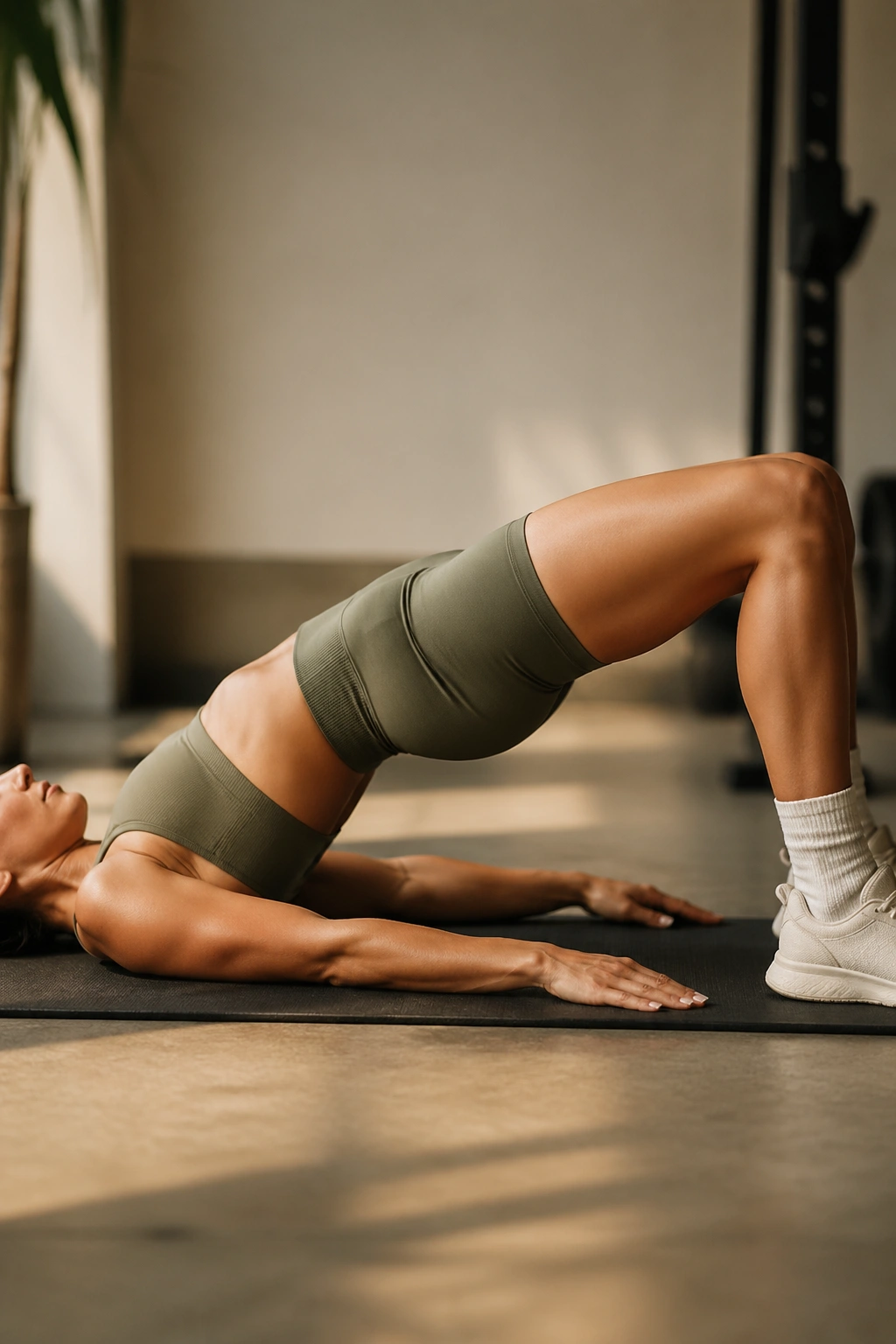
This one is for anyone who wants stronger glutes without turning every workout into an all-leg punishment session.
The first block is traditional strength: hip thrusts, Romanian deadlifts, and a split squat or reverse lunge. Three working sets each is enough for most people. Keep the reps in the 6 to 10 range and rest long enough to stay crisp. Then move into a Pilates block that hits the same area from a different angle — shoulder bridge, single-leg bridge, side kick series, and donkey kicks with a slow tempo.
That second block does a sneaky bit of work. It lights up the small stabilizers around the hips, and it forces the pelvis to stay level while the leg moves. If you’ve ever had one side steal the show, you know why this matters.
Use a loop band only at the end if you want it. Early band work can turn the session into junk fatigue. Late band work? Much better. Nasty, even. In a good way.
7. The Posture Reset Plan for Desk Days
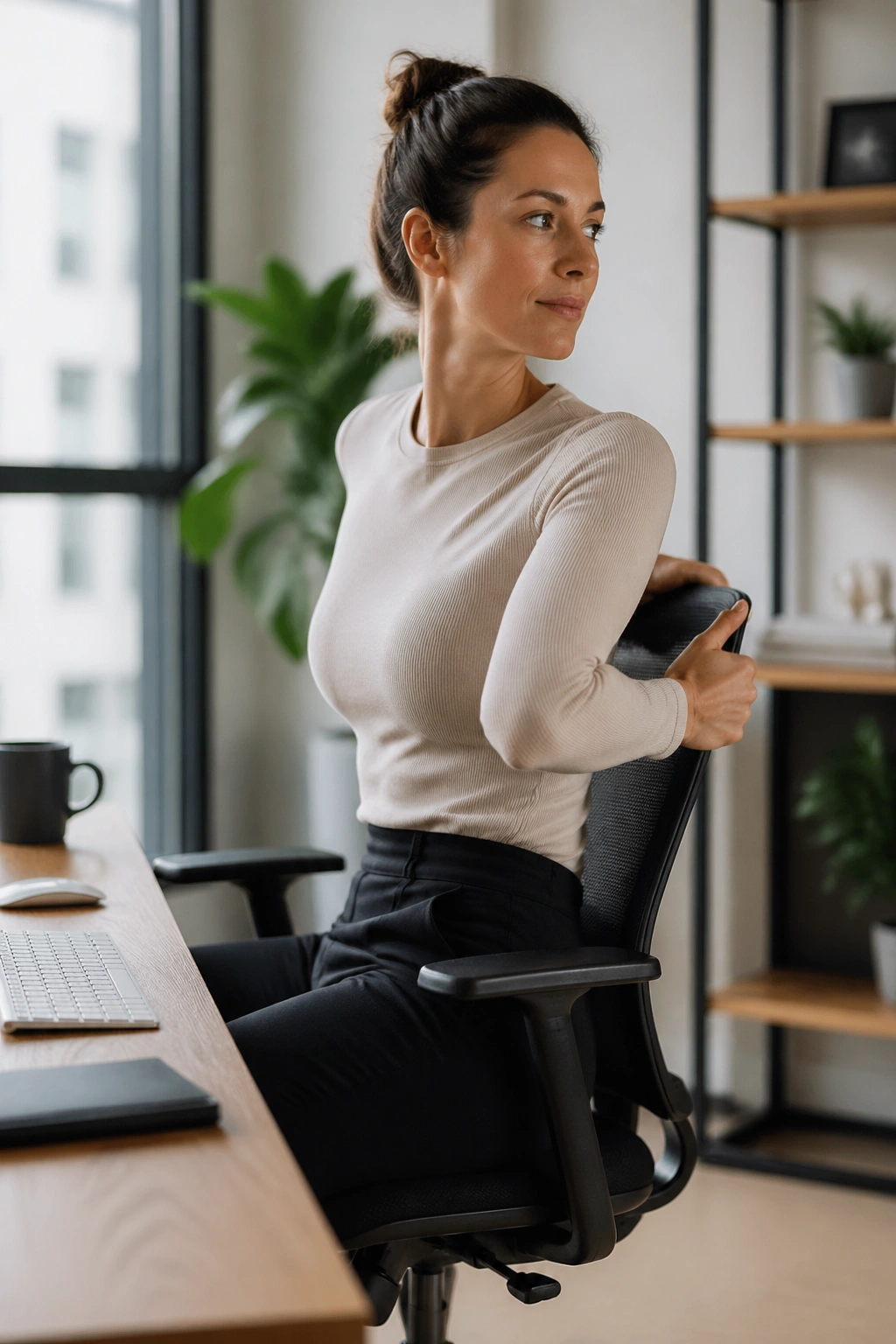
Long sitting gives people a very specific kind of misery: tight hip flexors, sleepy glutes, chest tension, and a back that feels a little too proud of itself.
This plan attacks that pattern head-on. Start with rows, reverse flys, and a hinge pattern like a dumbbell Romanian deadlift. Then move into Pilates movements that open the front of the body and teach the ribs to stack over the pelvis again. Think swimming, chest expansion, spine twist, mermaid, and prone back extensions.
A simple weekly rhythm
- Day 1: Pulling strength + thoracic mobility
- Day 2: Lower body + hip opening mat work
- Day 3: Full-body support work + breathing
Do not skip the breathing piece. A few slow exhales in supine position can make the rest of the session behave better. It sounds soft. It works.
This plan is not flashy. It is the plan you feel in your body an hour later when your shoulders are lower and your low back has stopped acting like it owns the place.
8. The Athletic Power Plan
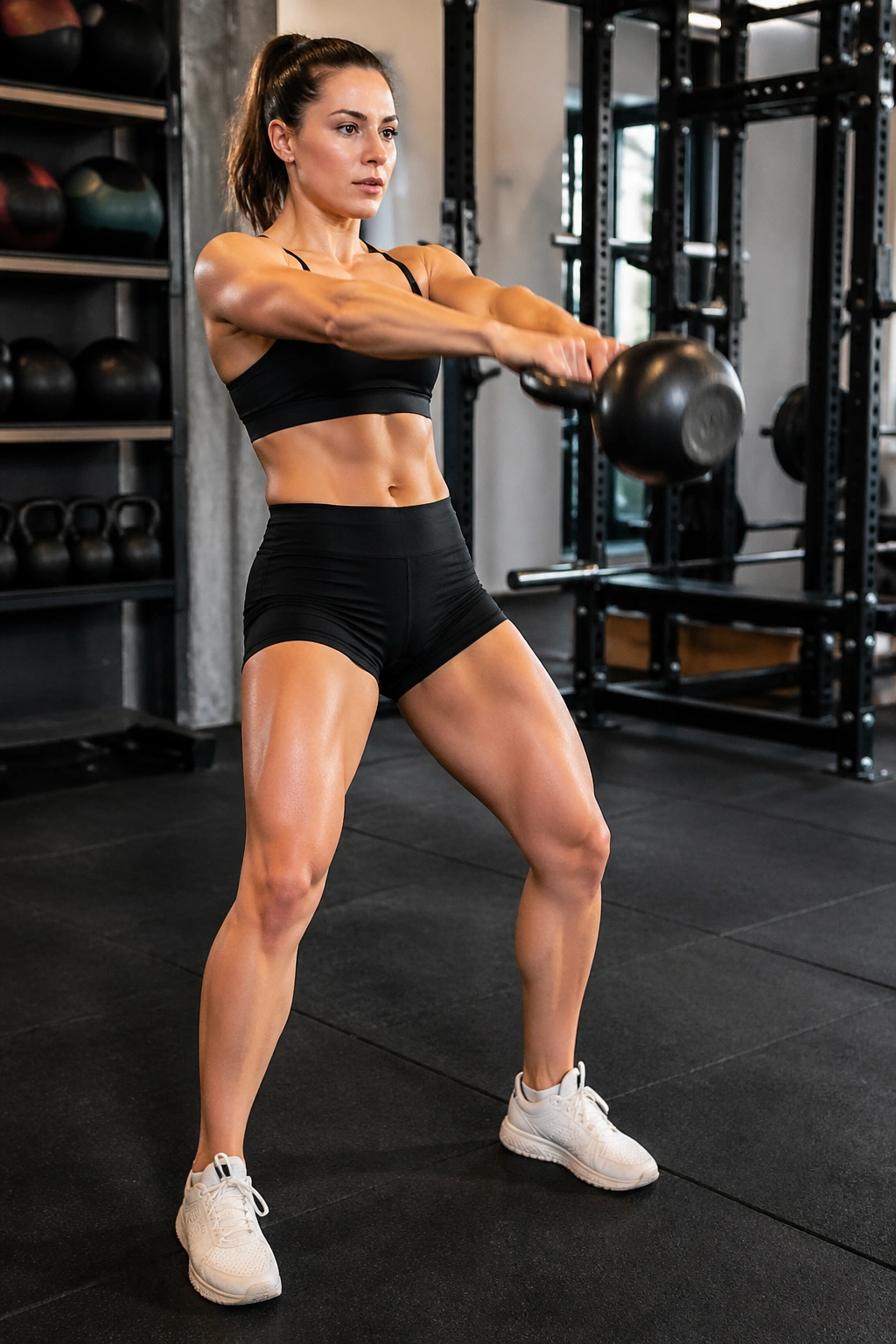
Some training plans are about feeling nice. This one is about moving fast, pushing force through the floor, and keeping your trunk from leaking energy everywhere.
Pair compound lifts with Pilates exercises that sharpen control under speed. A session might start with squat jumps, kettlebell swings, or trap bar deadlifts for 3 to 5 sets of low reps. Then follow with Pilates core work: teaser prep, single-leg stretch, side plank lifts, and a long, clean plank hold.
The point is not to turn Pilates into cardio. The point is to use it to teach body control after your nervous system has already seen power work. That combination tends to show up nicely in sports, dance, and even weekend recreational stuff like hiking or court games.
Keep the rest periods honest. Ninety to 120 seconds is not lazy. It is what lets power stay power. If you rush, you get sloppy and call it conditioning.
9. The Joint-Friendly Recovery Plan
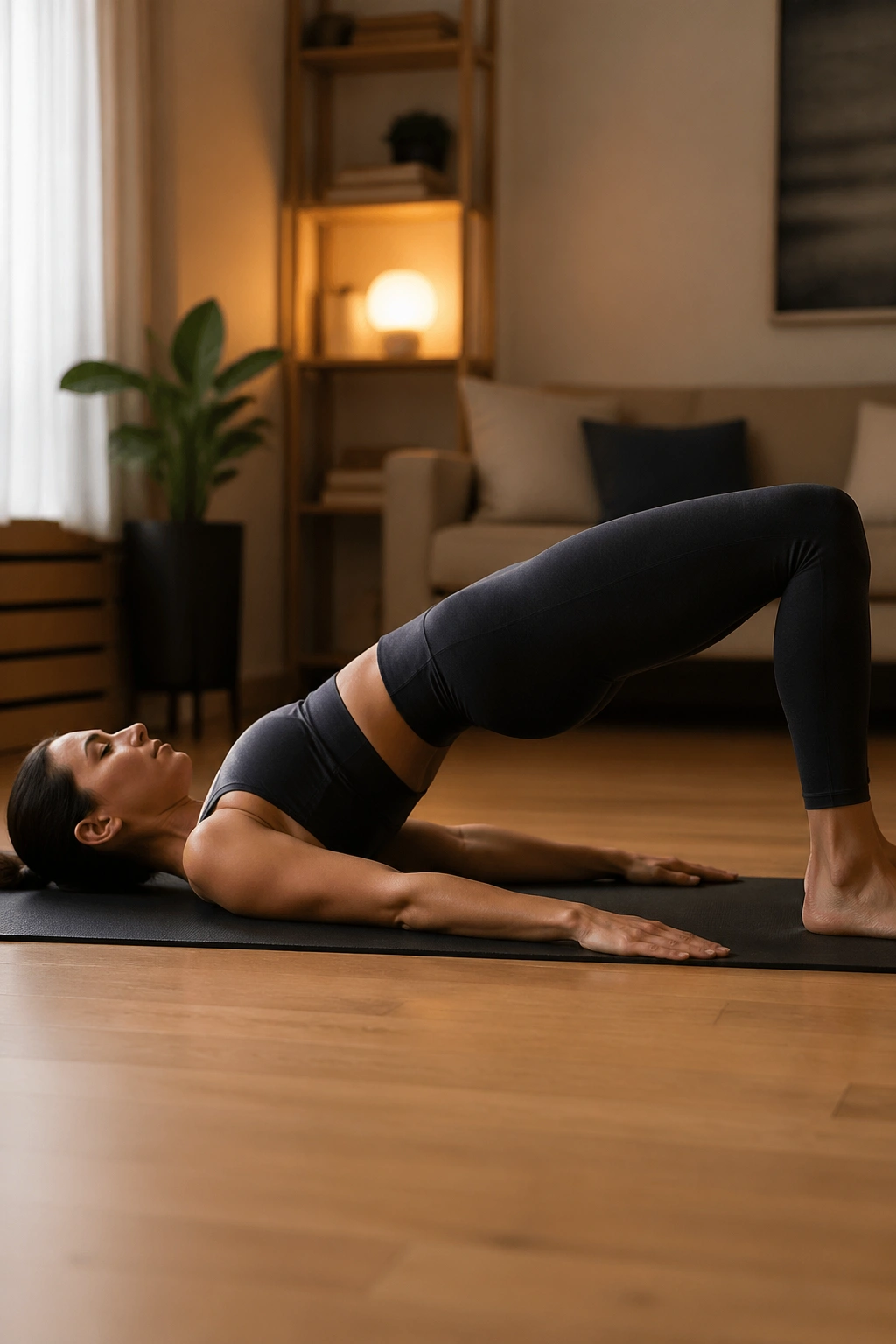
The first thing you notice on a recovery-focused plan is how quiet it feels. Less clanging. Less grinding. More control.
This is the right choice when your knees, hips, or shoulders feel annoyed but you still want to train. Use supported strength moves — box squats, seated rows, glute bridges, split squats with a short range — and keep the load moderate. Then let Pilates handle mobility and gentle strength through long, smooth lines.
A session can look like this: 2 sets of 10 on a supported squat, 2 sets of 12 on a row, 2 sets of 8 on a press done at a comfortable angle, then 8 minutes of Pilates footwork, bridge variations, and spinal articulation.
No heroics. No ugly reps. The goal is to leave the session feeling warmer and better organized, not cooked. If a movement pinches, shorten the range. If a movement feels fine but sloppy, slow it down. Three seconds lowering, one second rising. Simple. Effective.
10. The Time-Crunched 30-Minute Plan
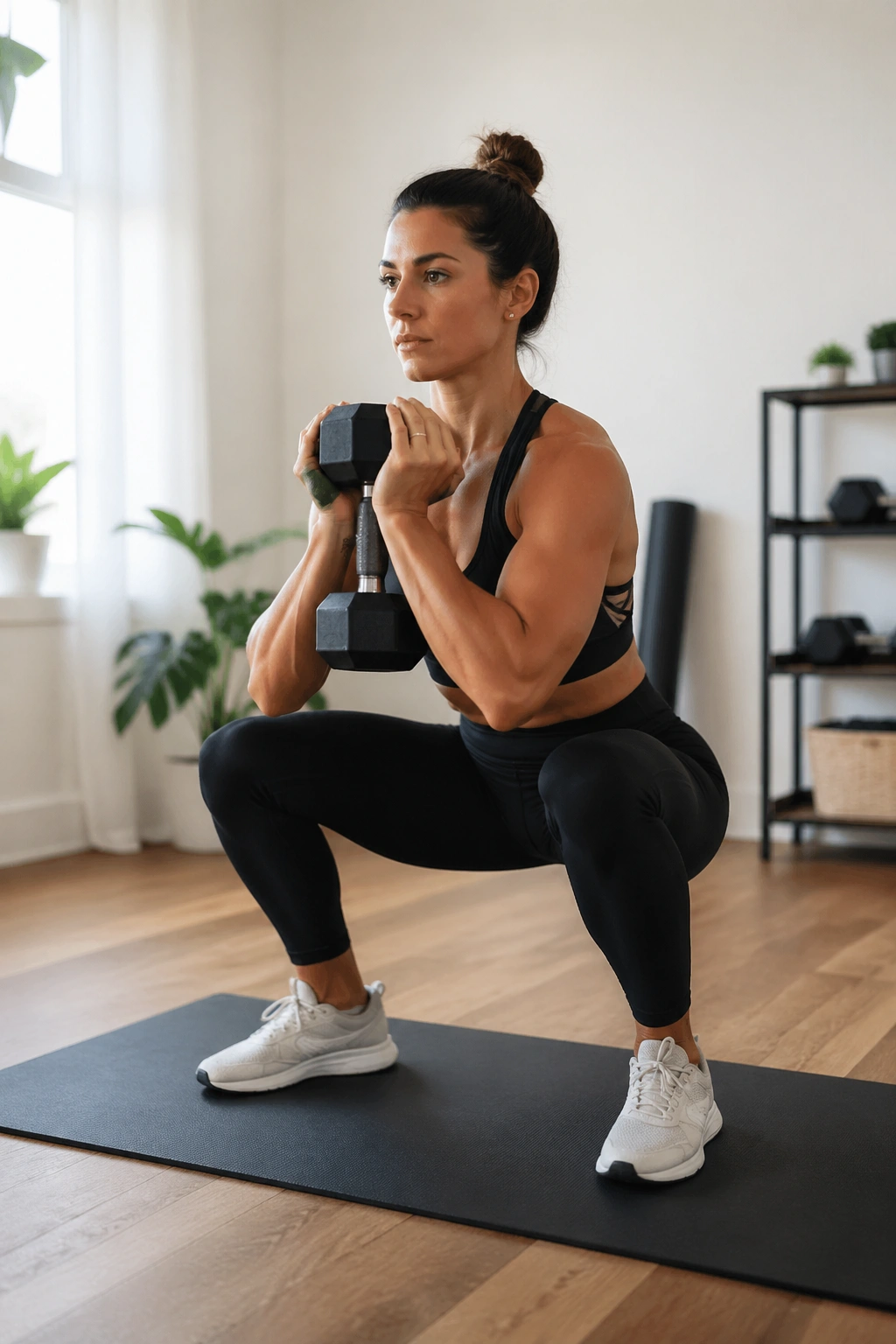
Thirty minutes is not enough time to do everything. It is enough time to do the right things in the right order.
Use 15 minutes for strength and 10 minutes for Pilates, then spend the last few minutes breathing and winding down. A compact circuit works well here: squat, push, pull, hinge, then a core move. Rest just long enough to keep form decent. Usually 30 to 45 seconds between paired moves does the trick.
A basic template:
- Goblet squat, 8 reps
- Push-up or dumbbell press, 8 reps
- Dumbbell row, 10 reps
- Romanian deadlift, 8 reps
- Pilates hundred prep, 30 seconds
- Dead bug or toe taps, 6 each side
Do not get cute with this plan. Cute wastes time. Keep the weights close, the mat ready, and the transitions short. A one-sentence rule helps: move cleanly, don’t wander.
This is the kind of session that saves a week when life gets crowded. Not glamorous. Very useful.
11. The Muscle-Gain Plan With Pilates Finishing Work
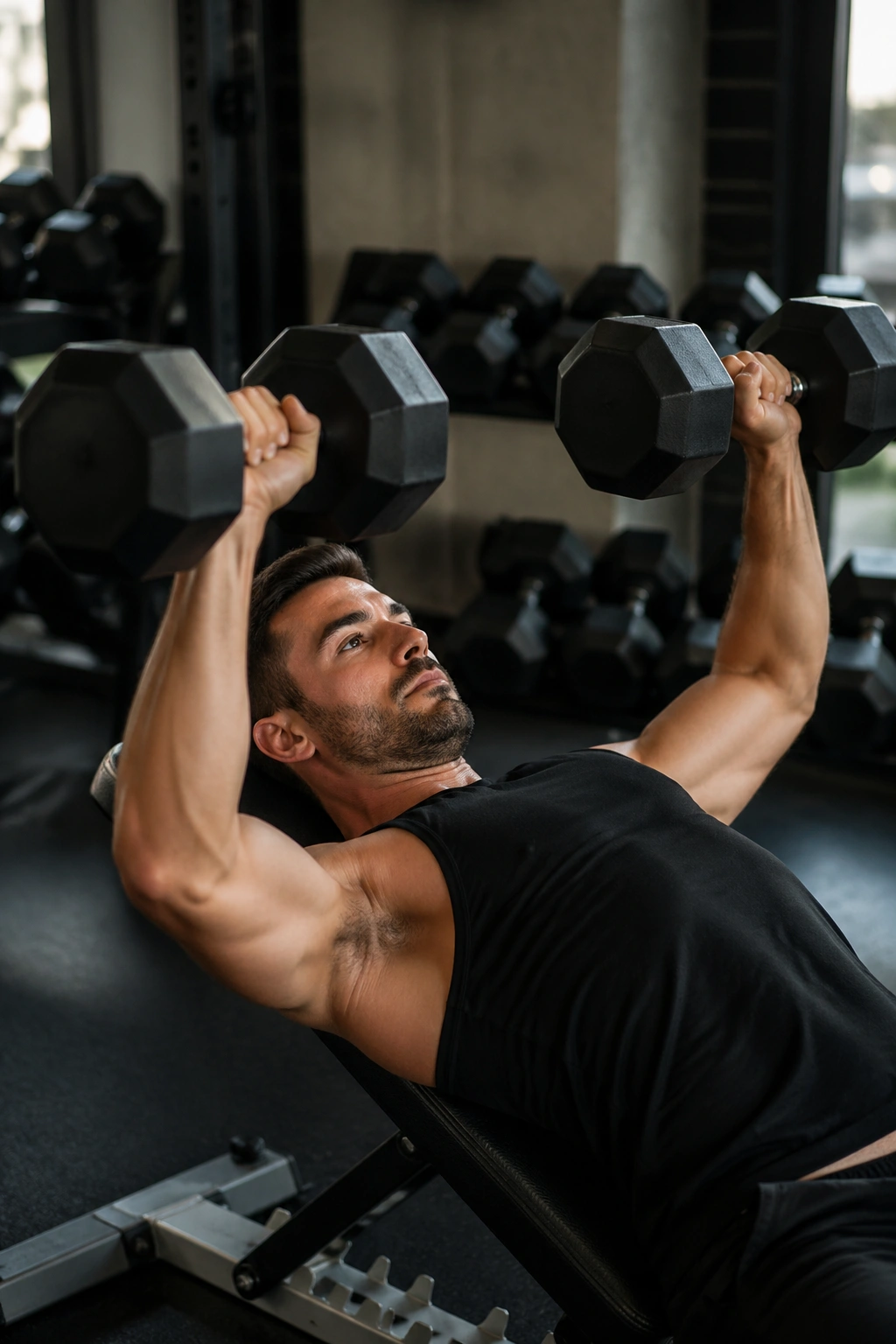
Can Pilates and muscle gain live in the same room? Yes, if you stop asking Pilates to be the main event.
Make the strength work the driver. Use 6 to 10 reps on presses, rows, squats, leg presses, and hinges. Give yourself enough rest — 60 to 120 seconds depending on the lift — and push the effort close to hard without breaking form. Then add 8 to 12 minutes of Pilates at the end for trunk control, spinal articulation, and hip stability.
That finish changes how the heavier work feels over time. A lifter who can brace well in a Pilates roll-up or hold a clean side plank tends to carry that control back into the barbell or dumbbell work. Not perfectly, not magically, but enough to matter.
The catch is simple: do not let the Pilates block eat the energy that belongs to the strength sets. If the weights are the priority, they come first. Pilates earns the finish. That order keeps the plan honest.
12. The Running Companion Plan
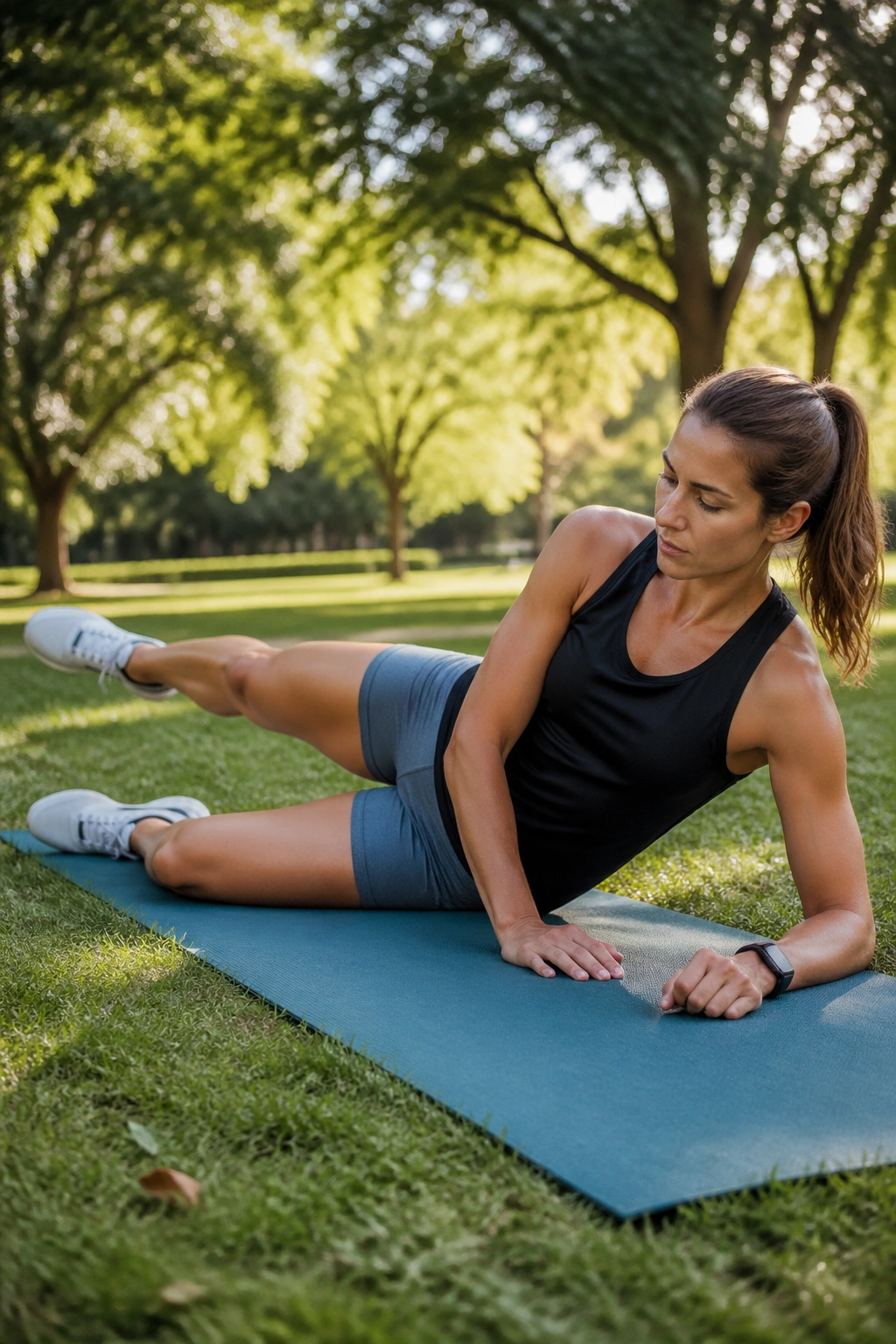
Runners often need the same two things and do not always get them: stronger hips and better control through the trunk.
This plan keeps the impact side in the running, then fills the gaps with targeted strength and Pilates. Use calf raises, step-ups, single-leg deadlifts, and split squats for the strength block. Then use Pilates moves that hit foot control, pelvic stability, and rotation — leg circles, hundred prep, mermaid, and side-lying series.
A weekly setup might be one heavy strength day, one lighter Pilates day, and one mixed session after an easy run. That’s enough for many runners. More than that, and the legs can start carrying leftovers into the next run.
What to watch for
- Do not train hard legs right before speed work.
- Keep calf work slow, with a full pause at the top.
- Use Pilates to restore motion, not to exhaust the hips.
Running punishes weak links. This plan makes those links harder to find.
13. The Core-First Plan
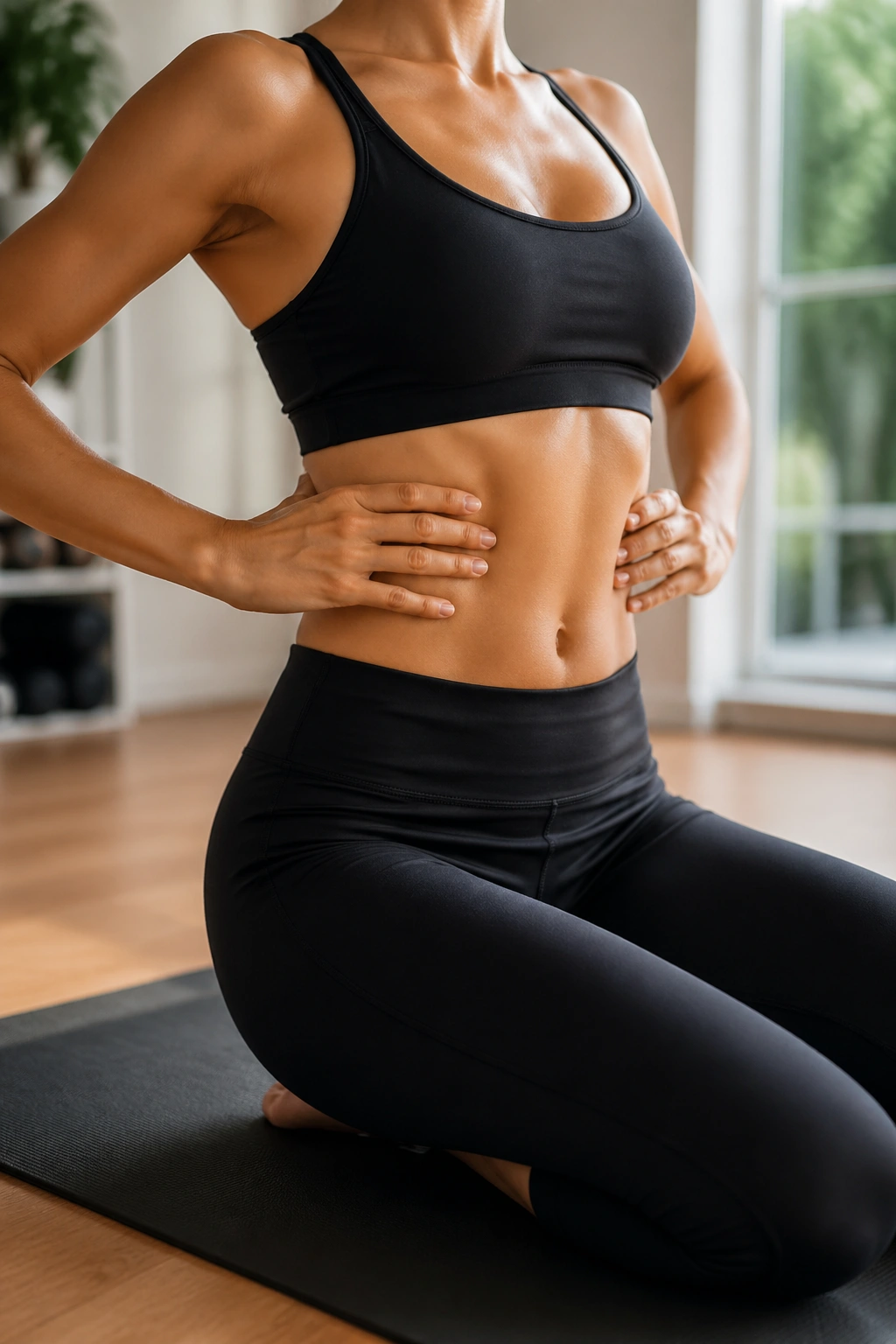
Why start with Pilates instead of strength? Because some people need to learn where the center actually is before they load it.
If your brace disappears during squats or your lower back takes over when effort rises, begin with a short Pilates block. Breathing, pelvic curl, dead bug, toe taps, and a short plank sequence teach the torso to stay organized. Then move into squats, carries, presses, and rows while that cue is still fresh.
Why it works
Pilates gives you a cleaner feel for rib position and pelvic tilt. That sounds abstract until you realize your squat depth, carry posture, and overhead control all depend on it. Once the body knows how to stack itself, the strength work tends to land better.
The trade-off is obvious. If the goal is maximal lifting performance, this is not the best order forever. Heavy strength usually belongs first once the pattern is solid. But for beginners, or for people who keep over-arching their back, this setup can be a very smart place to start.
14. The Home-Only No-Equipment Plan
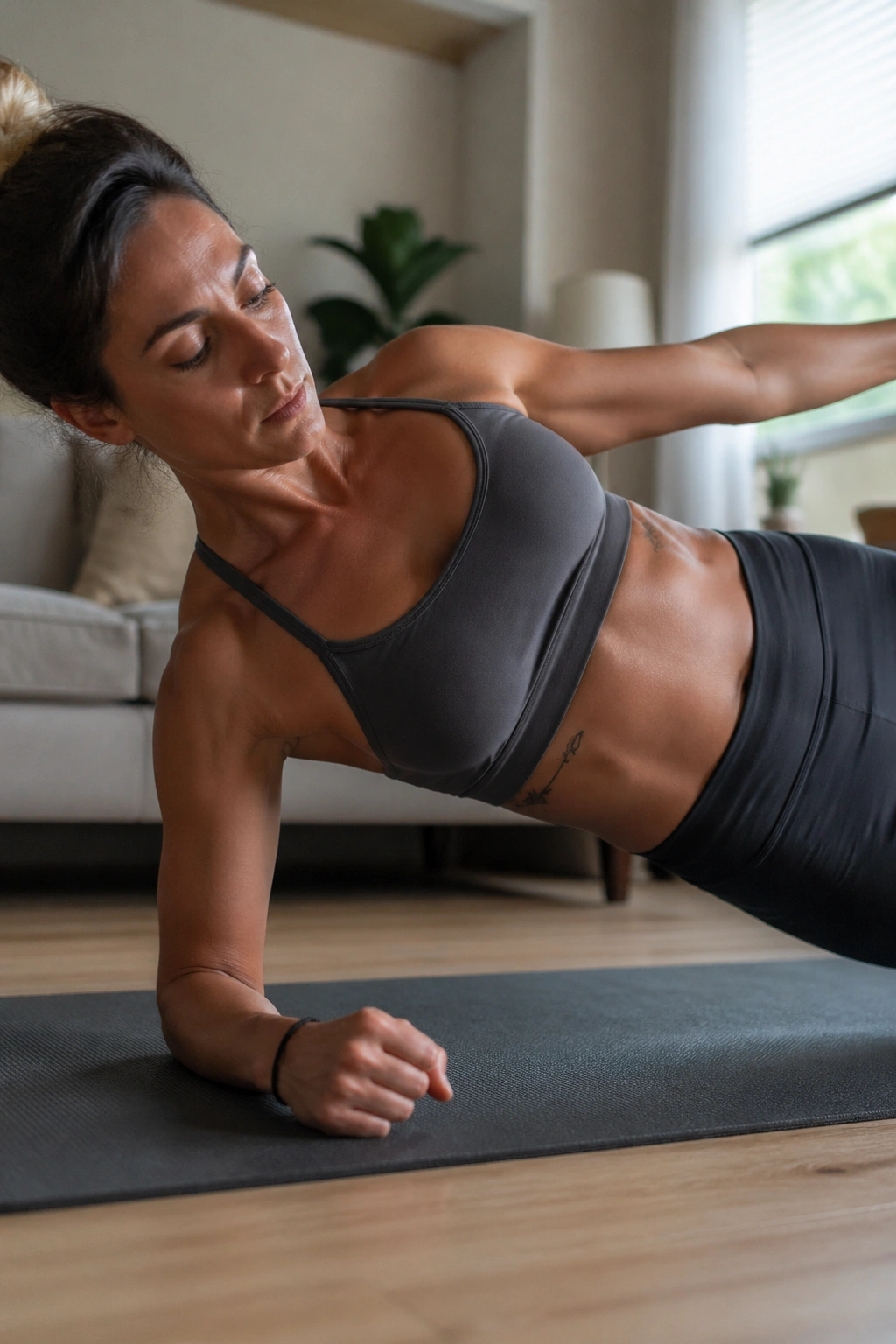
Not everyone has a studio, a rack, or a pile of dumbbells. You can still build a real plan.
A backpack loaded with books, a loop band, and a towel on a smooth floor cover more ground than most people think. Use them for squats, carries, rows, split squats, sliders, and bridges. Then move into Pilates mat work that asks for control instead of gear: hundred, roll-down, side plank, single-leg stretch, and swimming.
A home session can be surprisingly tough when you slow the lowering phase to 3 seconds and pause for 1 second at the bottom. Tempo does a lot of heavy lifting here. So does honesty. If the backpack feels too light, add more books. If the side plank collapses, bend the bottom knee and keep going.
This plan is good for travel too. You do not need much floor space. You need a floor and a plan.
15. The Four-Day Split for Faster Progress
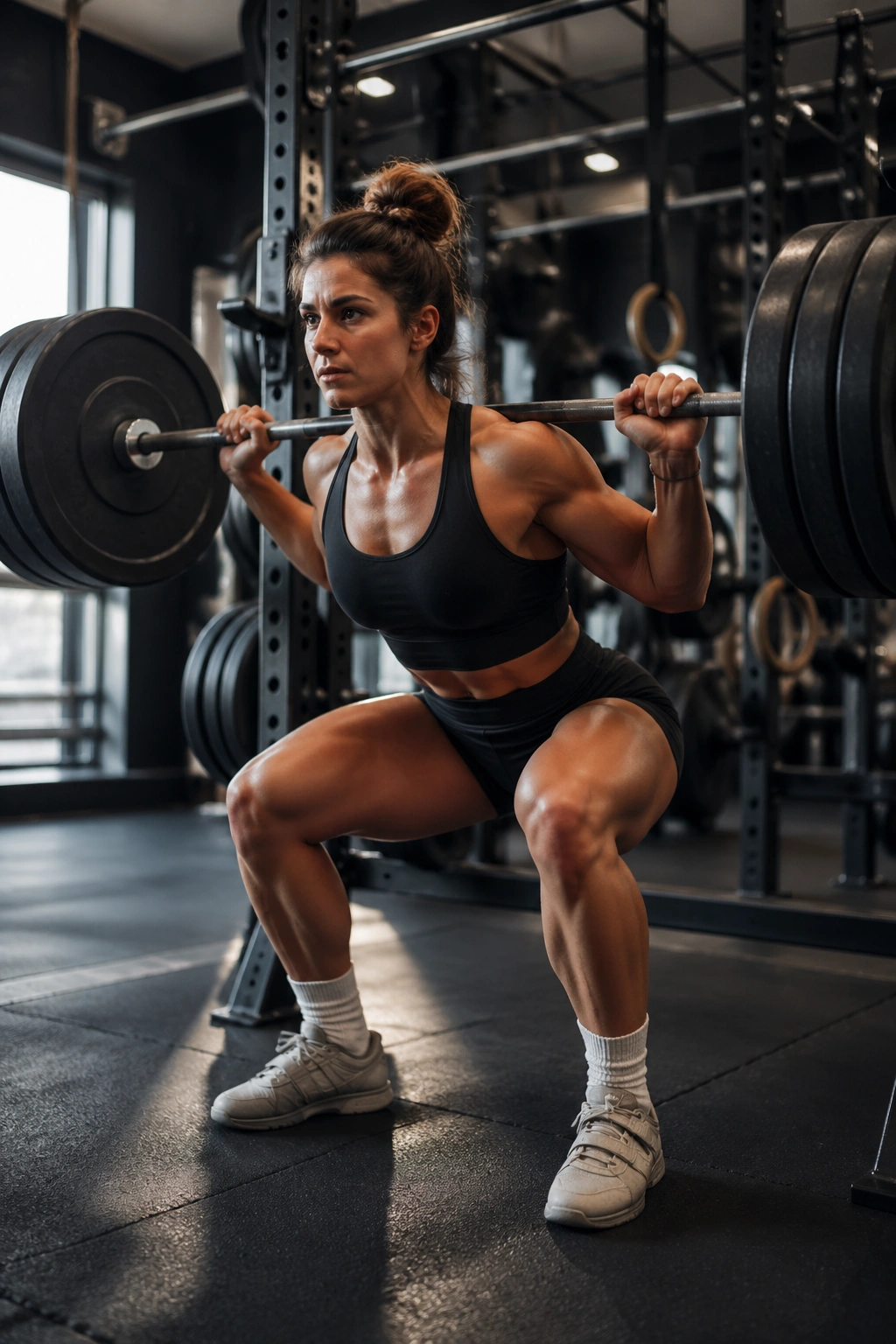
More training days can help, but only if they are arranged with some care.
A four-day split gives you two strength-dominant days and two Pilates-dominant days. One clean setup: lower body strength, upper body Pilates and core, lower body Pilates and mobility, upper body strength. That keeps one pattern from chewing up the other.
It is a nice choice for people who recover well and like a little more structure. You get enough frequency to practice movement often, but not so much that every workout feels like a test. The Pilates days can stay lighter and more technical, which is useful when the strength days start to climb.
Keep at least one day between hard lower-body sessions if you can. Hips and hamstrings tend to appreciate that spacing more than people expect. The same goes for shoulders if your upper days are press-heavy.
16. The Mobility-Heavy Heavy-Lift Day
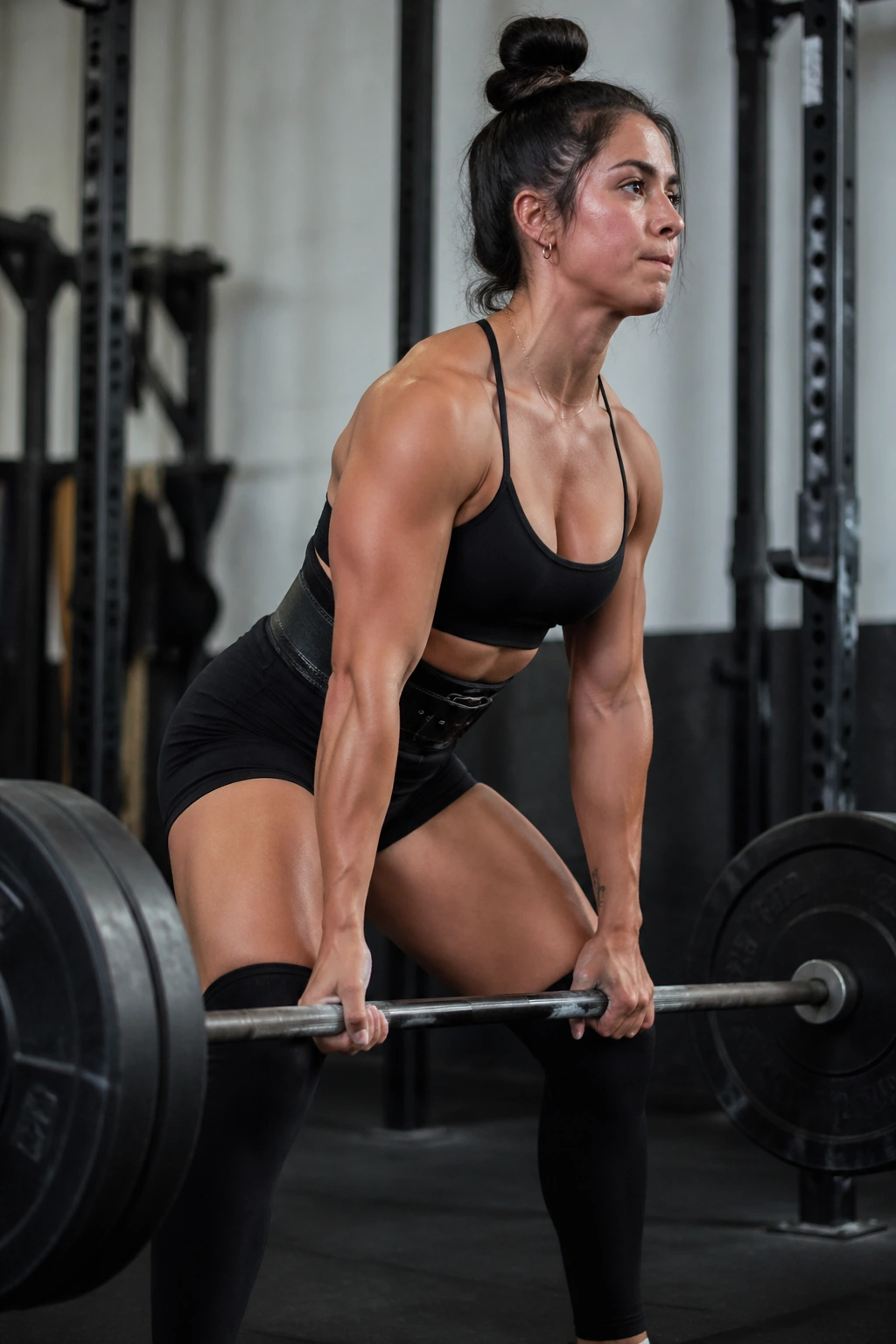
This one sounds backwards until you try it.
You lift first, and you lift with intent — deadlift, squat, press, row. Then you spend a longer-than-usual chunk on Pilates-based mobility and control work. Cat-cow, spinal twist, mermaid, shoulder series, hamstring articulation, bridge variations. The whole second half feels like a long exhale.
That structure works well when you want strength without the stiff, compressed feeling that sometimes follows a heavy day. It is also a nice option after a rough desk week. The heavy work reminds your body that it can still produce force. The mobility work makes sure you can get out of the session without feeling welded to the floor.
Do not confuse this with a gentle day. The lifting still matters. If you skip the load and only do mobility, you lose the strength piece that makes the whole plan worth keeping. A little discomfort is part of the deal. Just not the wrong kind.
17. The Band-and-Block Travel Plan
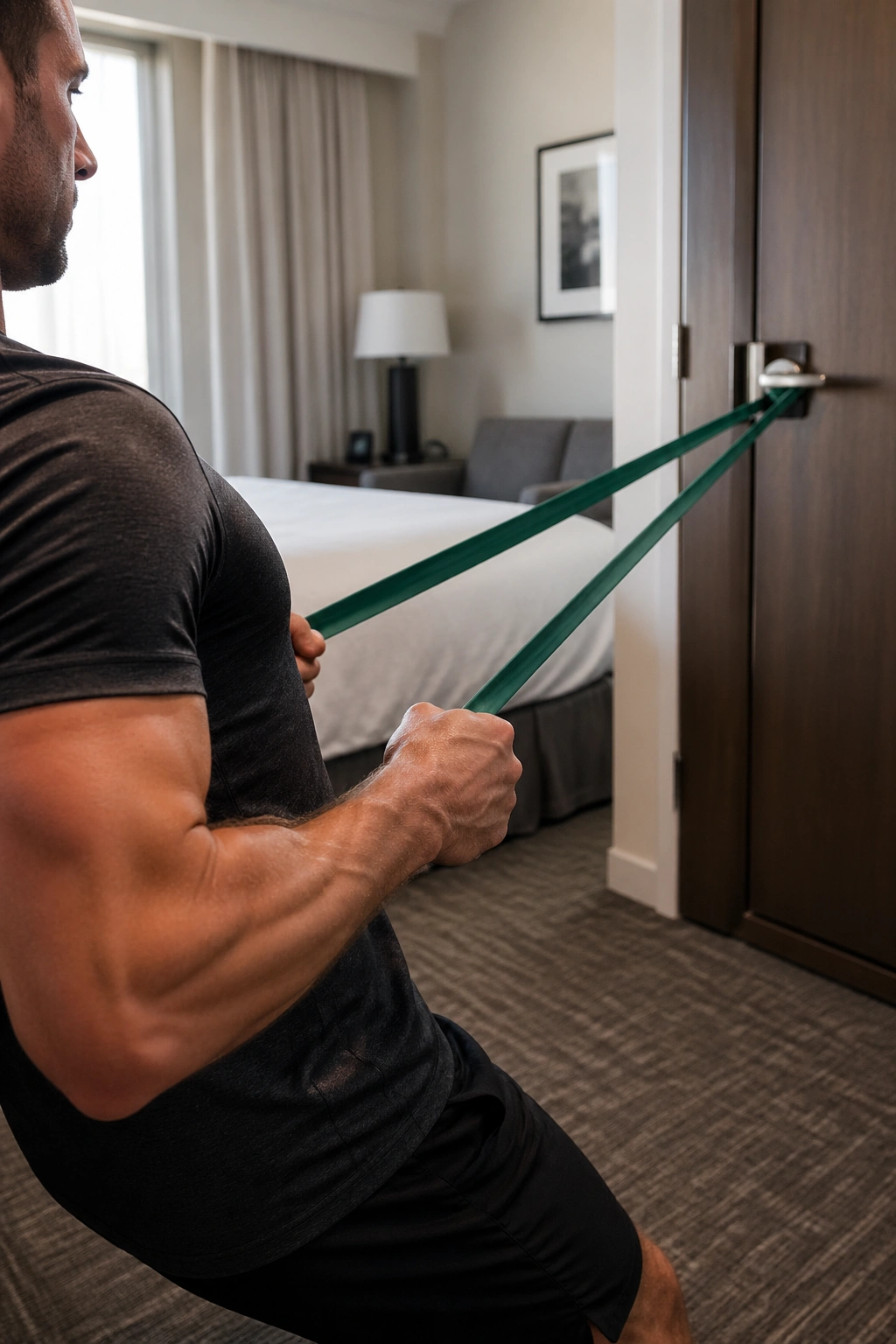
Hotel rooms are small. Your training does not have to be.
Pack one long band, one loop band, and maybe a slider pad if you have room. That gives you enough tools for rows, presses, split squats, glute bridges, lateral walks, and some very respectable Pilates mat work. No machines needed. No fancy setup either.
A travel session can look like this
- Band row: 3 sets of 12
- Split squat: 3 sets of 8 each side
- Band press or push-up: 2 sets of 10
- Bridge march: 10 each side
- Side-lying leg series: 8 to 12 each side
- Plank or dead bug: 30 seconds
Travel plans get messy, so the main job is to keep them simple enough that you do not talk yourself out of them. Shorter is better than perfect. Fifteen to twenty-five minutes beats skipping it because the room had a weird chair and the carpet looked questionable.
18. The Barre-Inspired Lower-Body Plan
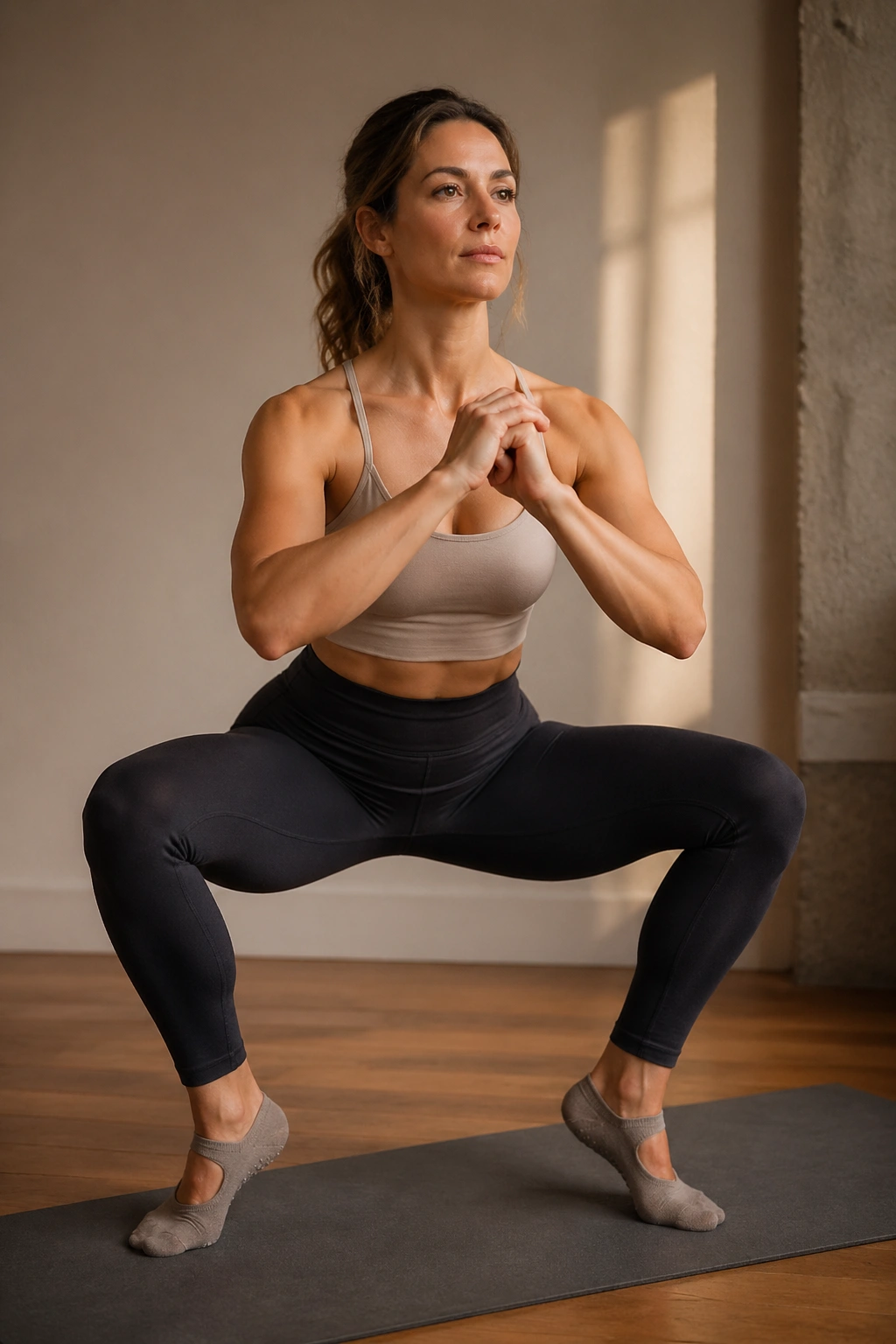
If you like the burn of small-range leg work but still want real strength, this mix sits in a useful middle lane.
Use one heavier lower-body move, then follow it with Pilates-inspired leg work and light dumbbell or band resistance. A session might begin with goblet squats or reverse lunges, then move into pulse squats, side-lying abduction, bridge marches, curtsy lunges, and heel raises. The tempo stays controlled, the range stays honest, and the legs get tired in a way that feels specific instead of random.
This plan is not the right tool if maximal strength is the main goal. It is better as accessory work, or as a lower-body day when you want challenge without a lot of spinal loading. The shoulders and core still get involved because the body has to stabilize while the legs burn.
A lot of people enjoy this one because it is hard without feeling heavy. That difference matters. Heavy and hard are not the same thing.
19. The Push-Pull Balance Plan
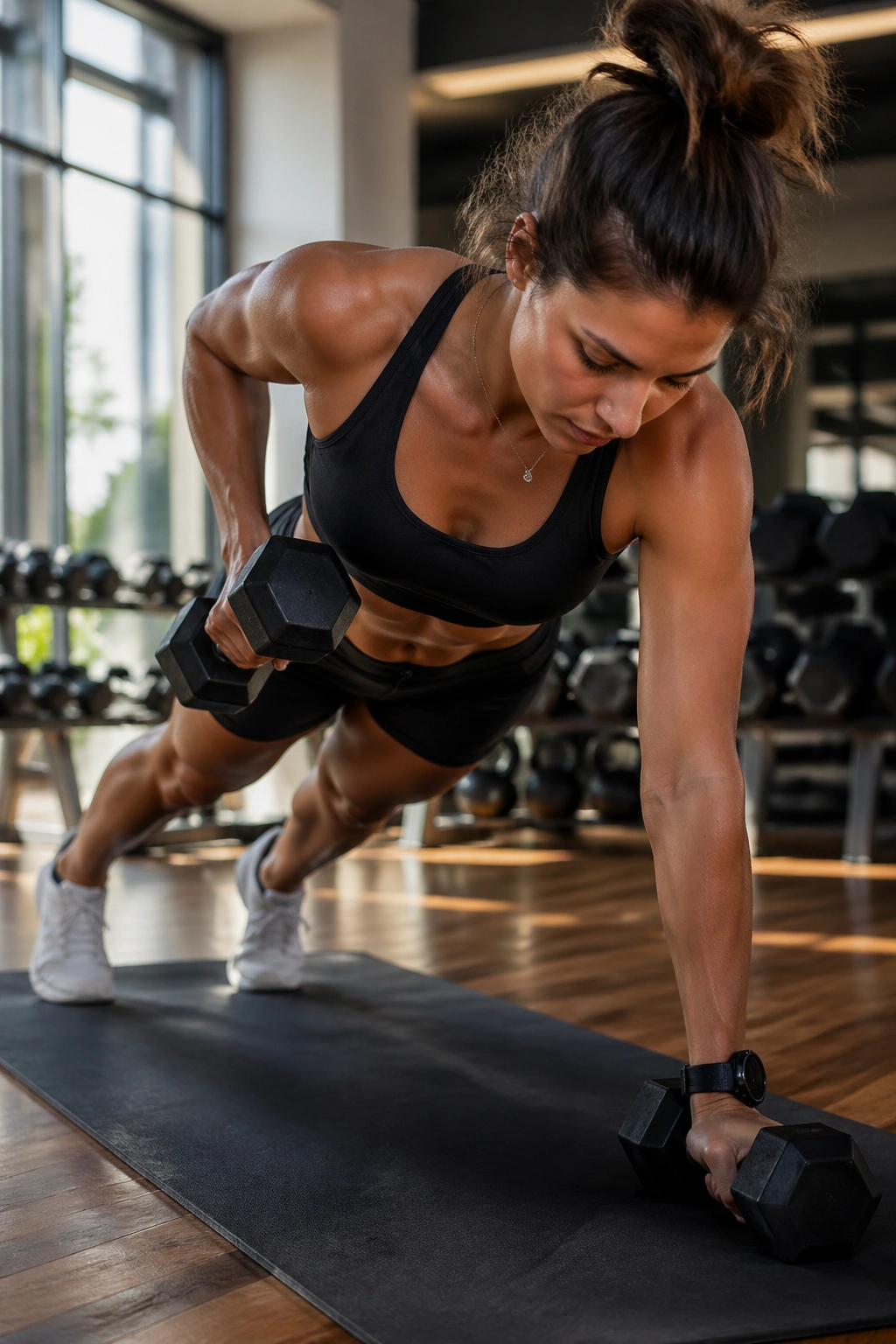
Most people press too much. They do push-ups, chest presses, shoulder work, and then wonder why their shoulders feel pinched or rolled forward.
This plan fixes that by making pull work at least equal to push work. Rows, reverse flys, face pulls, and Pilates extension patterns like swan, swimming, and prone back work all earn their place. Then pressing stays in the plan, but it stops dominating everything.
A solid session could be:
- Incline push-up, 3 sets of 8
- One-arm row, 3 sets of 10 each side
- Dumbbell press, 2 sets of 8
- Face pull or band pull-apart, 2 sets of 15
- Pilates swan, 8 slow reps
- Swimming, 20 to 30 seconds
The posture payoff is real. Shoulders usually feel less noisy when the back side finally gets enough attention. And if your neck tends to chime in during pressing work, this is one of the first plans I’d try.
20. The Long-Game Pilates and Strength Training Rotation
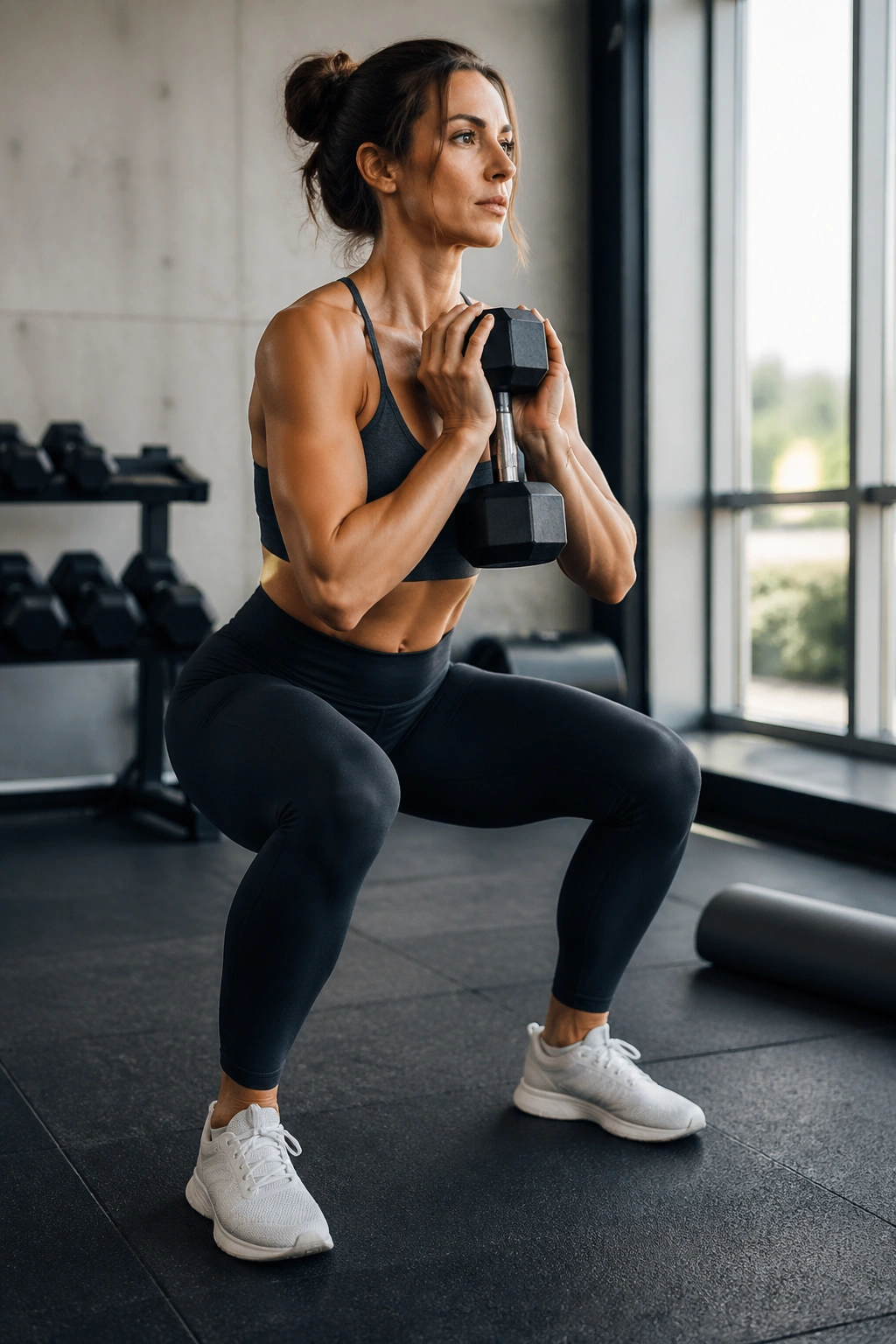
The smartest plans do not stay frozen. They rotate.
A long-game approach gives you a few weeks of one emphasis, then shifts the mix. Maybe you spend one block on lower-body strength plus Pilates core work. Then you move into upper-body focus with more reformer or mat precision. Later, you add power work and a lighter recovery day. The body seems to like that change, provided the basics stay consistent.
That is the part people miss. You do not need a brand-new plan every time motivation dips. You need a rotation that keeps the same big ideas alive: load the muscles, teach the trunk to hold position, and give the joints enough variety that they do not revolt. Keep the exercises familiar enough to track progress, but change the emphasis before boredom turns into sloppy work.
A good sign that the rotation is working: you start feeling stronger in your Pilates holds and cleaner in your lifting reps at the same time. That is a nice place to be. Not flashy. Just solid, which is usually the point.
