



The first trimester can be weird.
One day, your usual workout feels fine. The next, your stomach is touchy, your energy drops off a cliff, and your bra feels like it changed jobs overnight. Pregnant workouts safe for the first trimester are not about chasing burn or proving anything. They’re about keeping your body moving in a way that feels steady, low-risk, and easy to scale back the second something feels off.
If your pregnancy is uncomplicated and your clinician hasn’t given you restrictions, movement often helps more than people expect. A moderate walk, a short bike session, or a light strength workout can take the edge off nausea, settle your mood, and keep that tight, sluggish feeling from taking over the whole day. The best intensity test is plain and old-fashioned: you should be able to talk in full sentences without gasping.
The safest choices tend to be boring in the best possible way. Low-impact cardio, light resistance work, mobility drills, water exercise, and controlled floor work all earn their keep here. Hot rooms, high-fall-risk activities, breath-holding, and all-out interval sessions are a different story. If you feel vaginal bleeding, dizziness, chest pain, fluid leakage, a pounding headache, or sudden shortness of breath, stop and get checked.
1. Brisk Walking
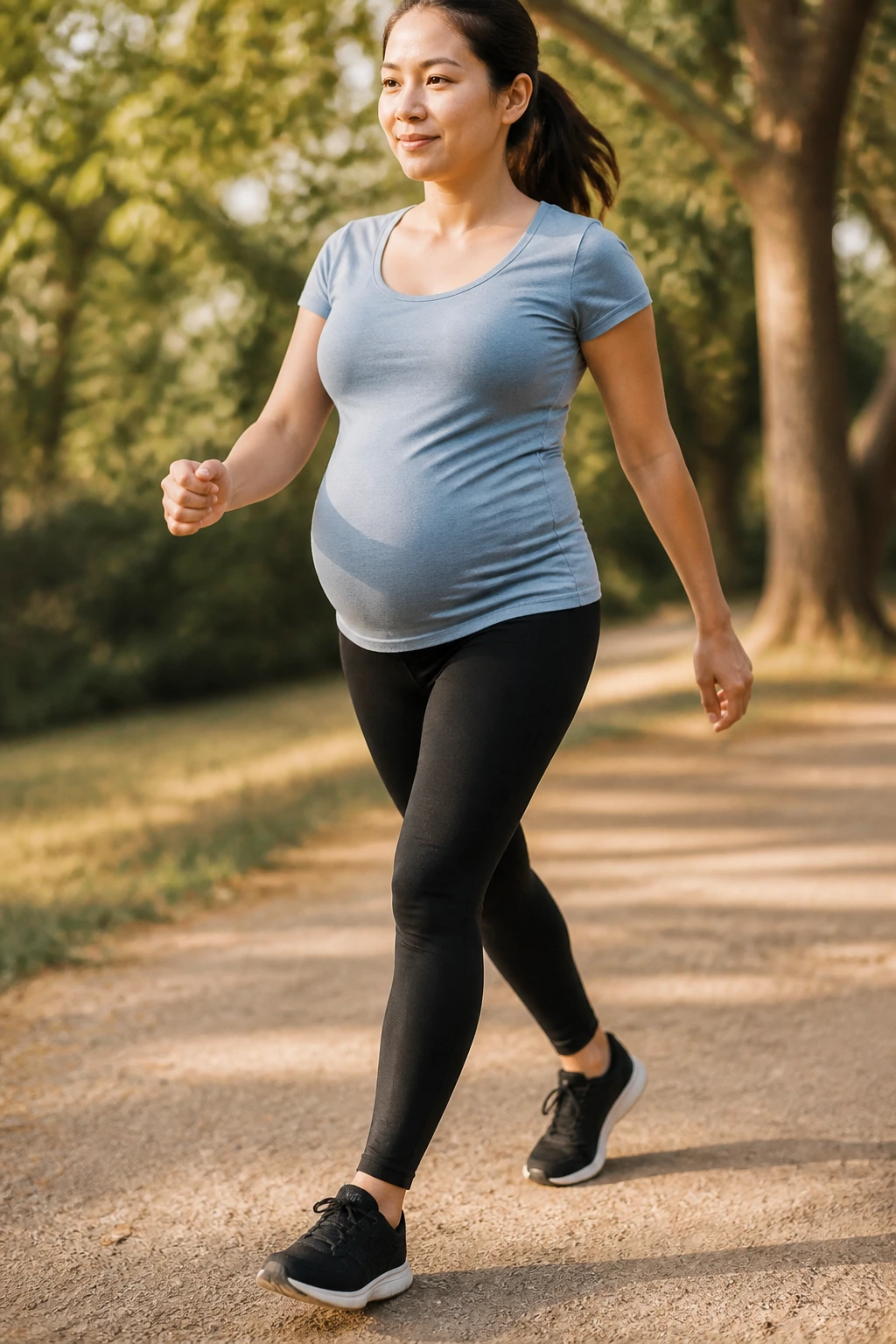
Walking is the workout people underestimate until pregnancy makes it the only thing that still feels normal. A 10- to 30-minute brisk walk can be enough to get your heart rate up without turning your stomach upside down, and you do not need fancy gear to do it.
I like walking because it gives you control. You can cut it short, slow it down, or split it into two 15-minute outings if fatigue hits halfway through. Keep your pace where you can speak comfortably, swing your arms a little, and avoid routes with uneven curbs if balance feels weird.
What Makes It Work
- Choose flat ground when nausea or dizziness is hanging around.
- Wear shoes with a firm heel and enough room in the toe box.
- Start with 5 minutes out and 5 minutes back if that feels safer than a long loop.
- Drink water before you leave, not after you’re already thirsty.
Best tip: if walking outdoors feels too unpredictable, a treadmill set to 0 to 2% incline gives you the same steady effort with fewer surprises.
2. Stationary Cycling
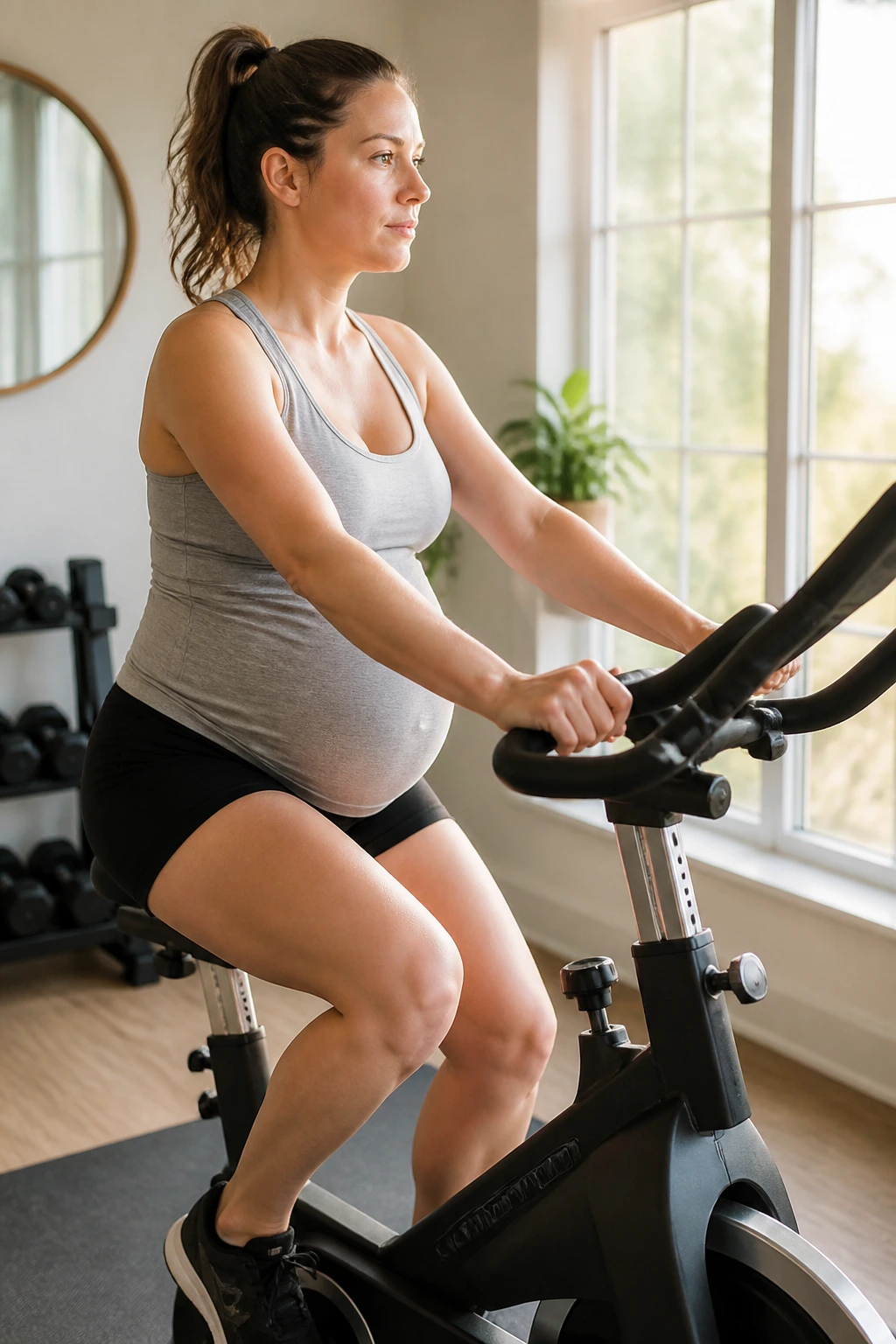
A stationary bike is one of the cleanest first-trimester cardio choices because it takes balance out of the equation. Your feet stay planted, your lower body gets work, and you can dial the resistance up or down by a tiny notch instead of committing to a hard session.
Keep the seat high enough that your knees stay slightly bent at the bottom of each pedal stroke. If your back starts rounding or your shoulders creep toward your ears, sit up, lower the resistance, and ease off. The goal is a smooth, easy spin for 10 to 20 minutes, not a make-or-break ride.
This one shines on days when you feel a little off but not fully wiped out. You can read the room—literally—because you’re not worried about foot placement or impact. And that matters more than people think.
3. Swimming
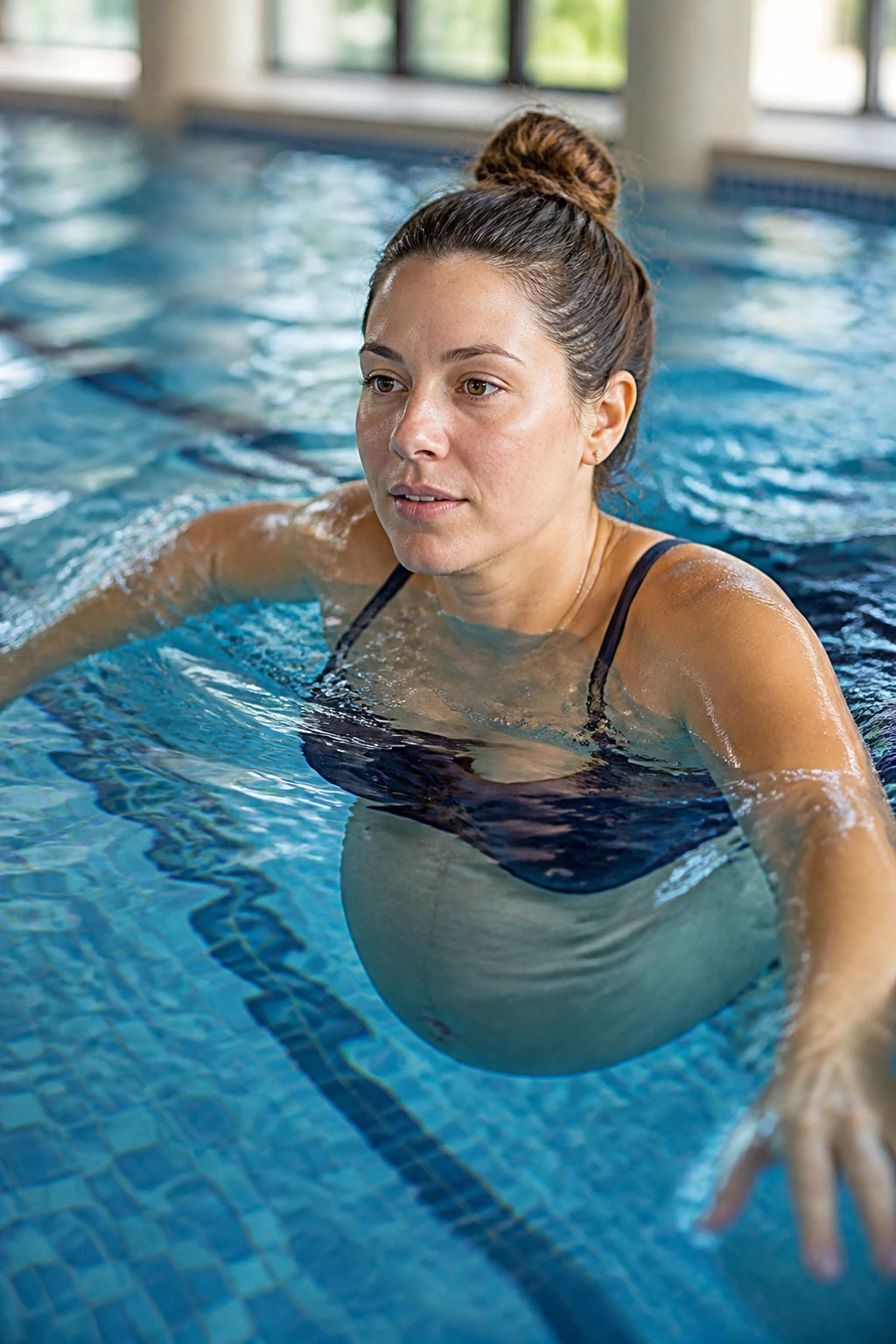
Why does the pool feel so good in early pregnancy? Water takes pressure off joints and gives your body a break from gravity, which is a gift when your chest feels tight, your hips ache, or your feet feel heavier than usual.
A relaxed swim, some gentle laps, or even a slow water walk can be enough. Keep the session around 20 to 30 minutes and skip overheated pools or steamy locker rooms. Cool, comfortable water is the sweet spot. Hot water is where things start to feel muddy, and muddy is not what you want.
How to Use It
If laps feel like too much, try moving across the shallow end for a few minutes, resting at the wall, then repeating. If you like structure, alternate 2 lengths of easy swimming with 1 length of water walking. That rhythm gives you movement without letting fatigue sneak up on you.
Swimming is one of those workouts that looks simple but feels almost luxurious. No pounding, no bouncing, no drama.
4. Prenatal Yoga
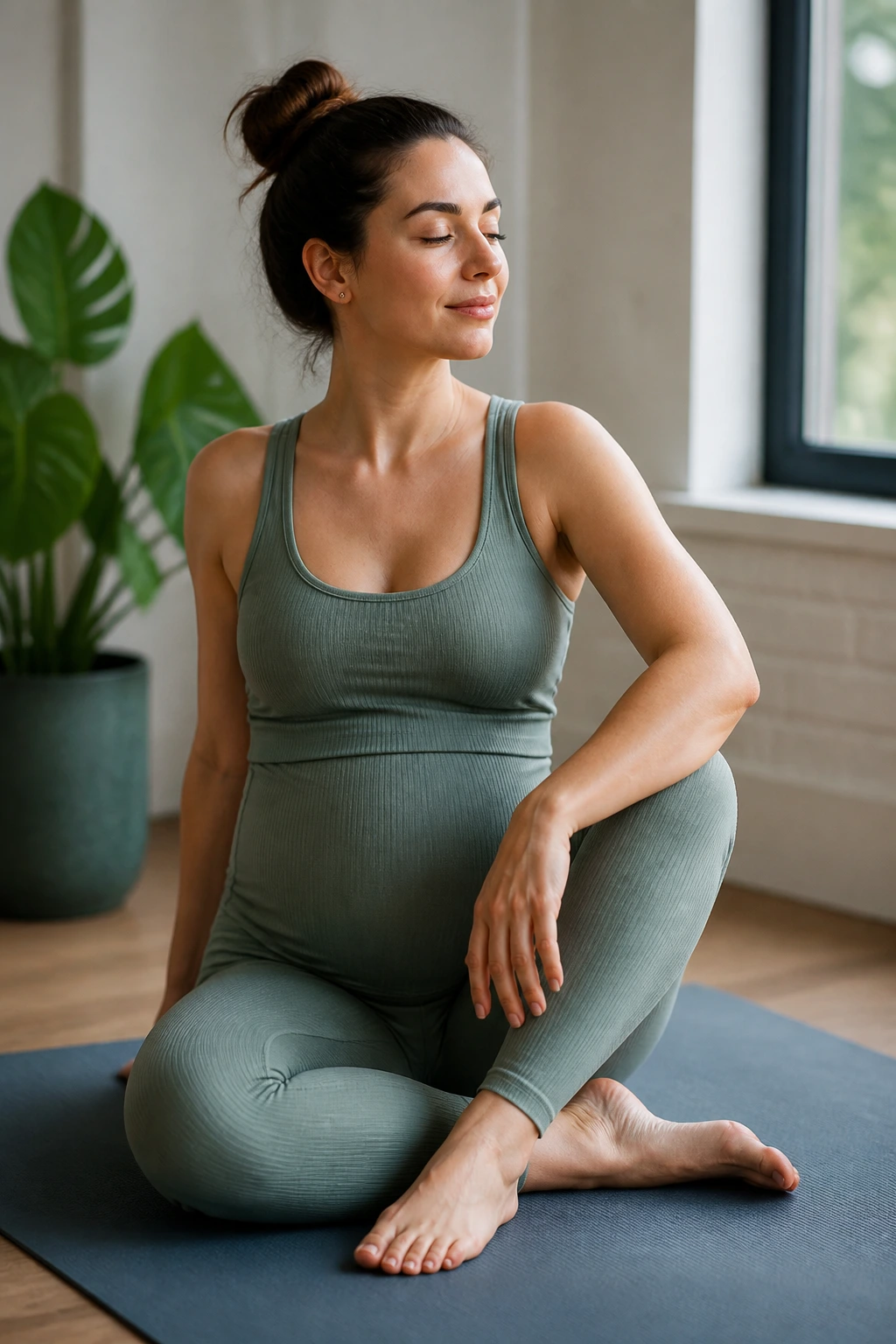
Prenatal yoga earns its place because it gives you three things at once: mobility, breathing practice, and a chance to slow down. The best first-trimester sessions are gentle, grounded, and short on fancy moves. You want open hips, a loose upper back, and enough breathing space that your chest doesn’t feel pinned.
Skip hot yoga. Seriously. Heat is the part I would not mess around with here, especially if nausea or lightheadedness is already part of your day. Use blocks, a folded blanket, or a wall if balance feels unsteady. Deep twists that crush the belly are not the point; small, open twists are easier on the body and usually feel better.
A good class or home flow might include cat-cow, supported child’s pose if comfortable, low lunge, side bends, and a simple seated breath. If the sequence leaves you calmer instead of drained, that’s the right sign.
5. Modified Pilates
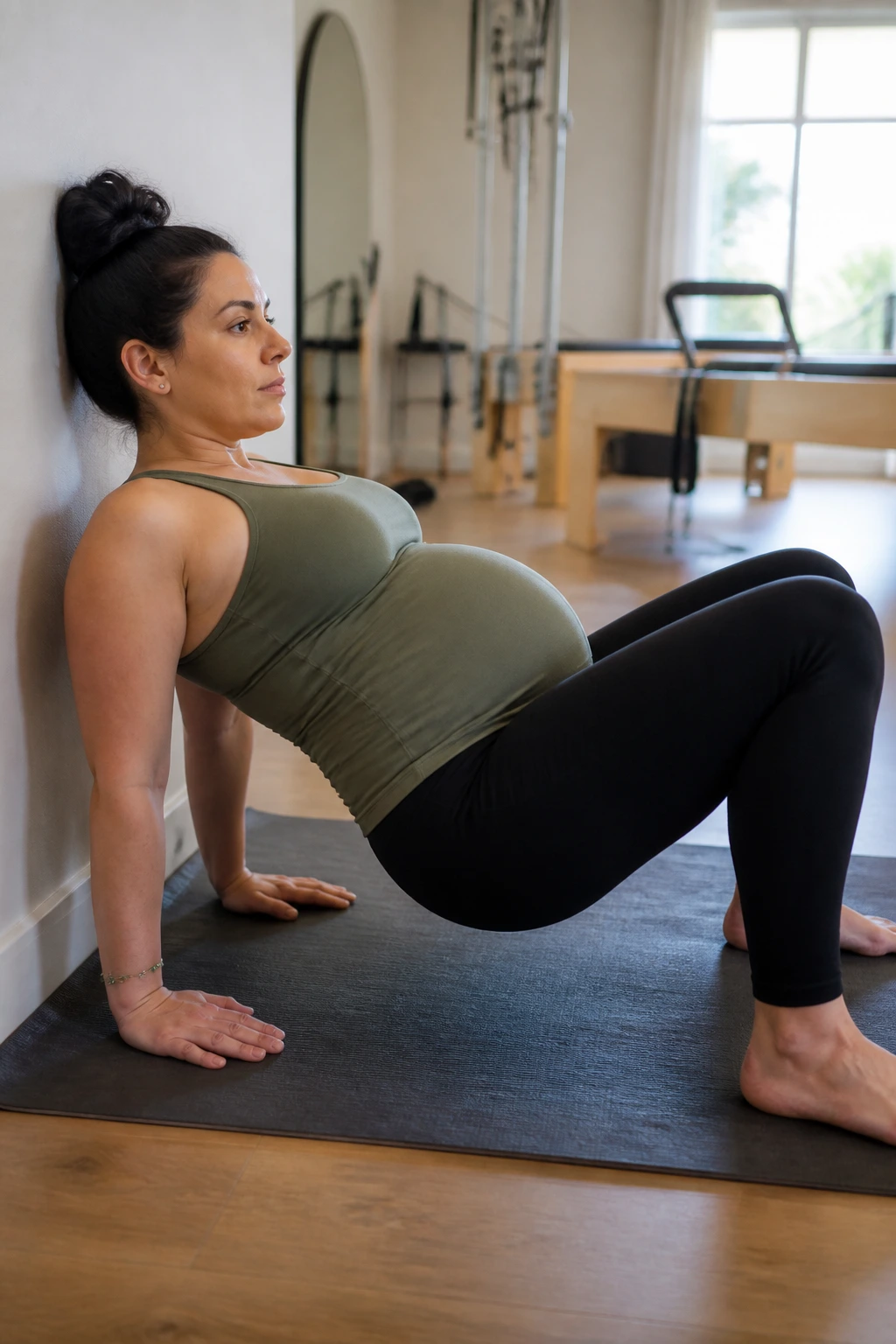
Pilates works well in early pregnancy because it’s picky about form in a useful way. Small, controlled moves can wake up your deep core and hips without a lot of impact, which is exactly the sort of exercise that makes a body feel held together when hormones start loosening everything up.
Moves That Usually Feel Good
- Pelvic tilts on the floor or against a wall
- Heel slides with slow exhale timing
- Side-lying leg lifts
- Clamshells with or without a mini band
- Seated posture work with the ribs stacked over the hips
Keep the sessions short—15 to 25 minutes is plenty for most people. If you notice your lower belly doming or you’re holding your breath on the hard part, scale the move back. That’s the line.
Quick tip: look for a Pilates flow that keeps you off your back for long stretches. It’s not because first trimester automatically forbids it; it’s because comfort changes fast, and you may feel better making the habit now.
6. Bodyweight Squats
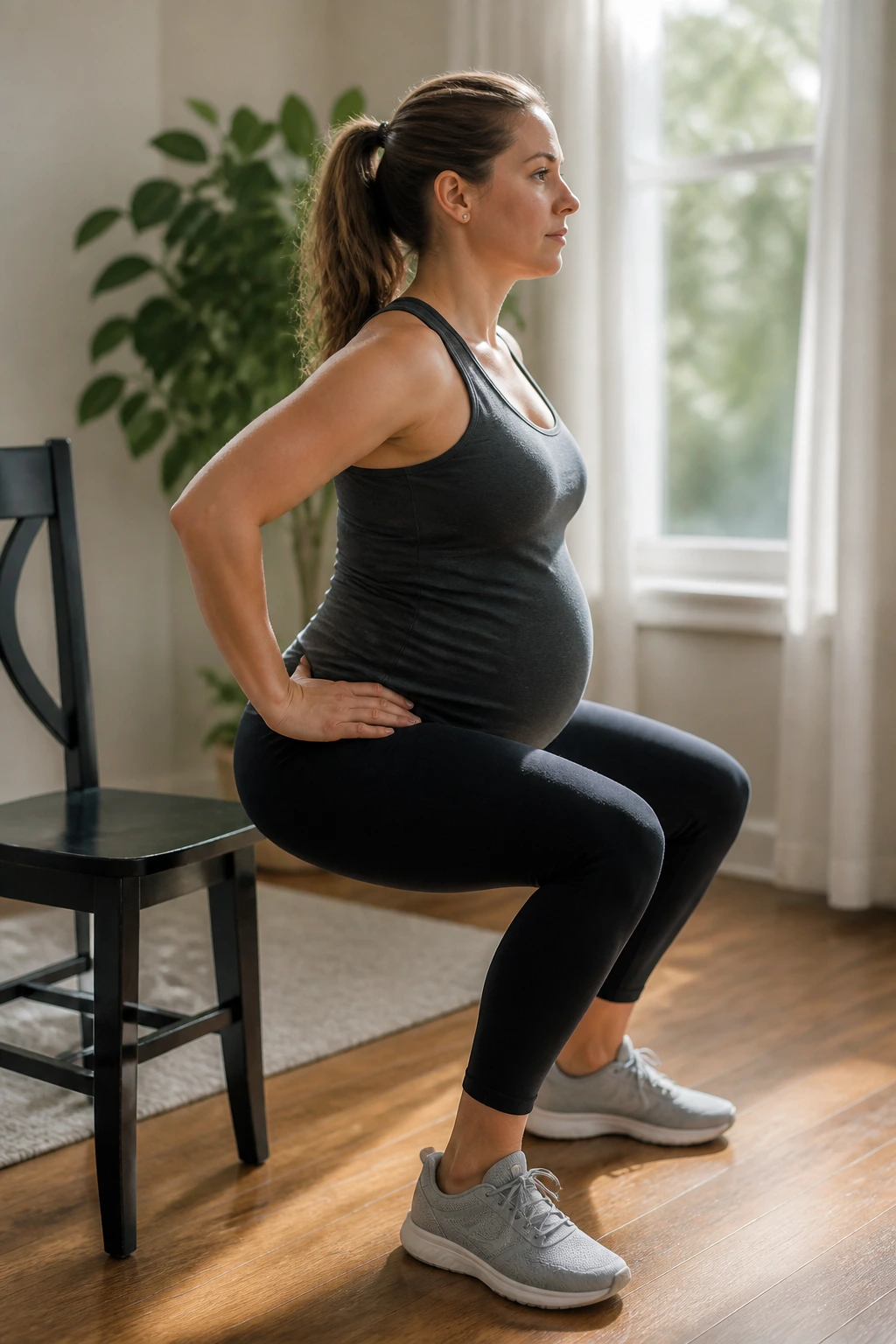
Bodyweight squats are the opposite of glamorous, and that is why they work. They train the legs, glutes, and the simple mechanics of sitting down and standing up, which becomes more valuable than people expect once your center of gravity starts shifting.
Compared with a treadmill or bike, squats build strength in a way you can use all day. Use a chair behind you if depth feels uncertain, stand with feet about hip-width apart, and lower until your thighs are about halfway to parallel if that’s where control stays crisp. Ten smooth reps beats twenty sloppy ones every time.
If your knees cave inward, press them gently out over the toes. If your heels lift, shift your weight back a touch. If your breath catches, slow down. A set of 2 to 3 rounds of 8 to 12 reps is enough for most beginners.
7. Wall or Incline Push-Ups
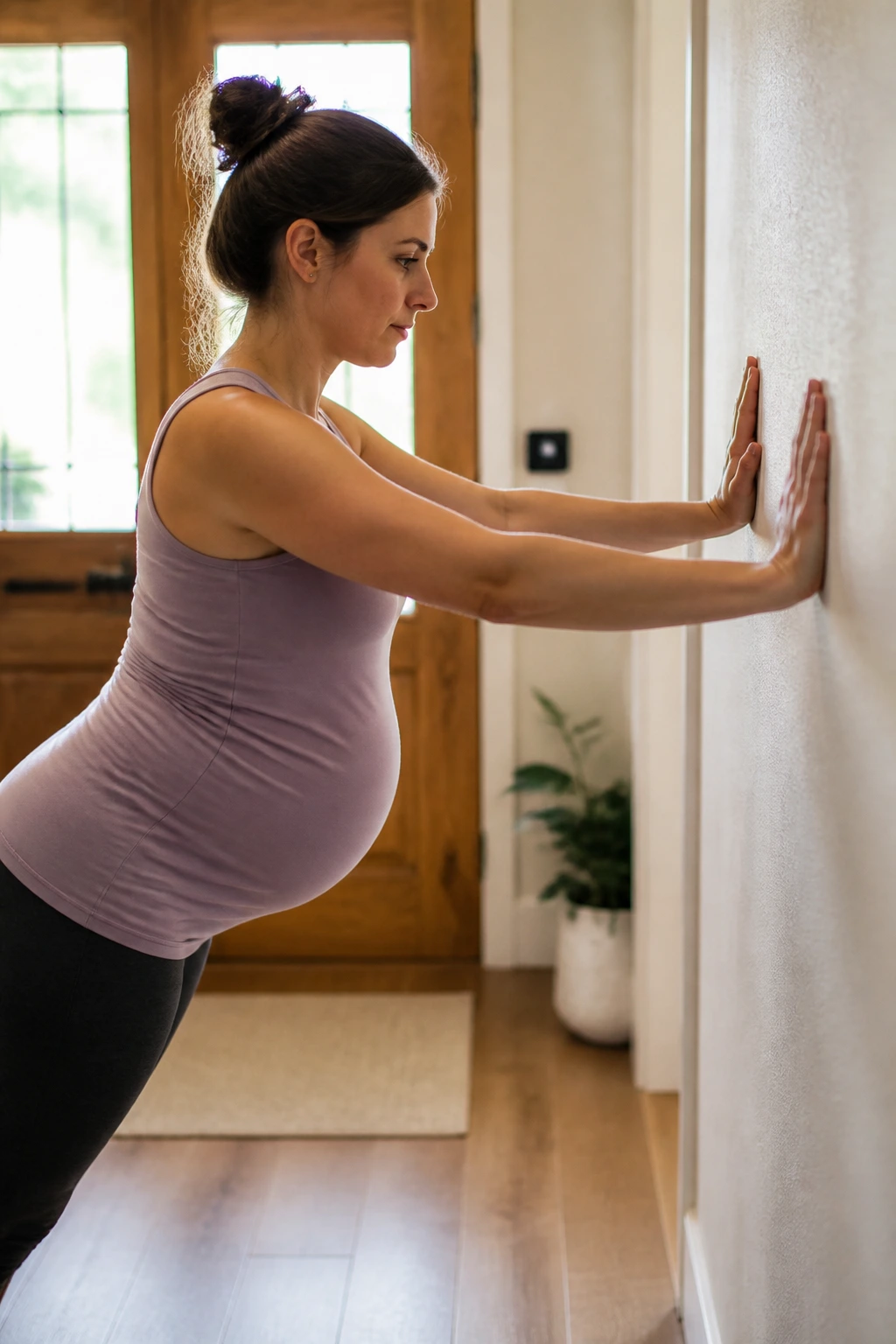
A lot of people assume push-ups are off-limits the second they get pregnant. Not true. Wall and incline push-ups are one of the easiest ways to keep upper-body strength alive without flattening yourself on the floor or fighting a full bodyweight push-up.
Start with your hands on a wall, countertop, or sturdy bench. The higher the surface, the easier the move. Keep your body in one line, bend your elbows slowly, then press back while exhaling. If your wrists complain, widen the hand position a little or switch to fists on a soft mat.
What to Watch For
- Keep your shoulders away from your ears.
- Stop before your lower back sags.
- Aim for 6 to 12 clean reps.
- Move slowly enough that you can feel the chest and triceps doing the work.
This is a deceptively useful exercise. You’re not chasing exhaustion. You’re reminding your body how to stay strong with a little less drama.
8. Resistance Band Rows
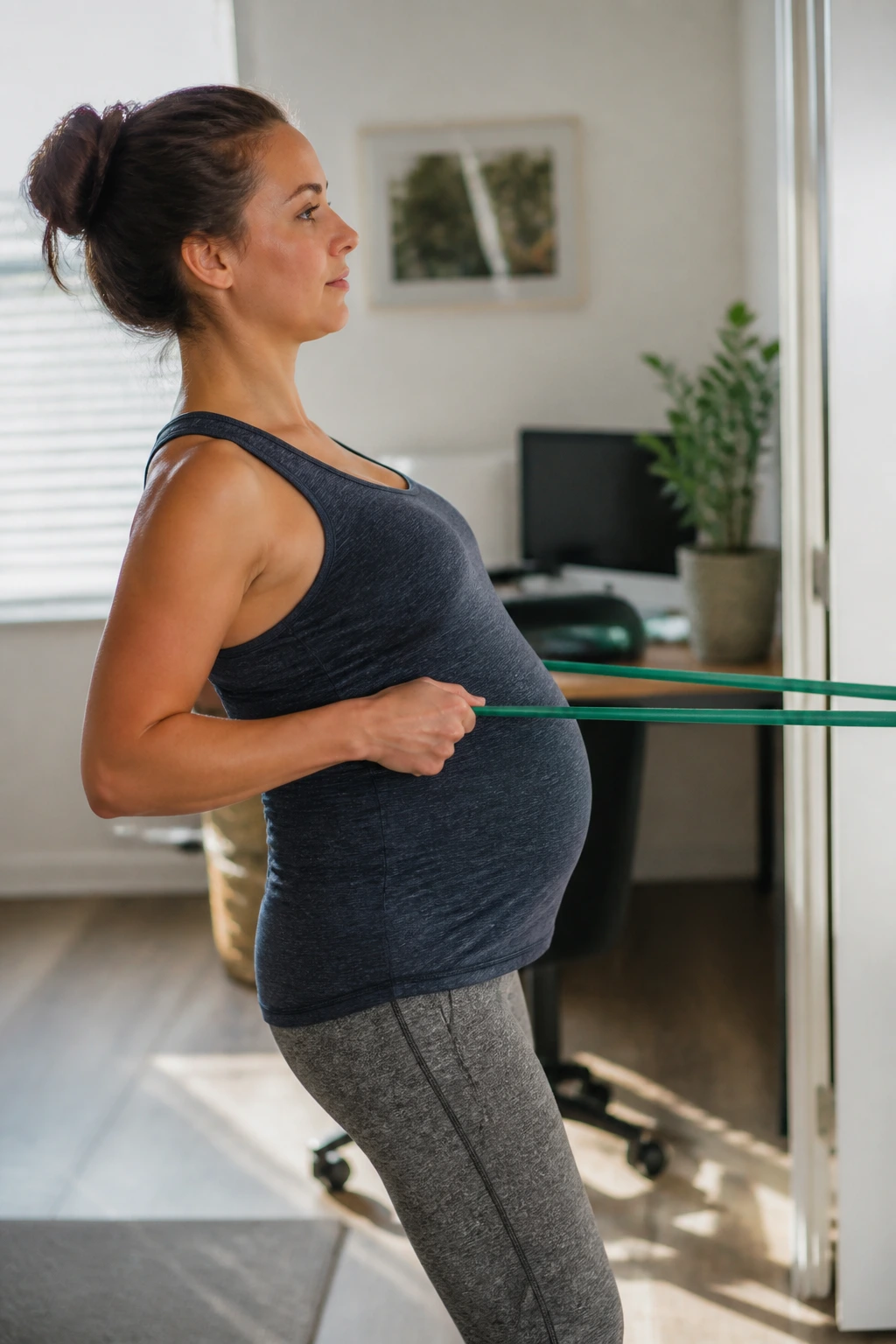
If pregnancy has you rounding through the shoulders, rows are the fix I’d reach for first. They pull your posture back toward center, which matters when fatigue, fuller breasts, and a changing stance all start tugging you forward.
Anchor a loop band around a solid post or use a band with handles. Pull the elbows back toward your ribs, pause for a beat, then return with control. The motion should feel smooth, not jerky. Light resistance is enough; if you have to lean back and yank, the band is too heavy.
This works well as a desk-break workout too. Two sets of 10 to 15 reps can wake up your back in less than five minutes. And the nice part? You can do it in sneakers, socks, or whatever you’re wearing between meetings and the couch.
9. Side-Lying Clamshells
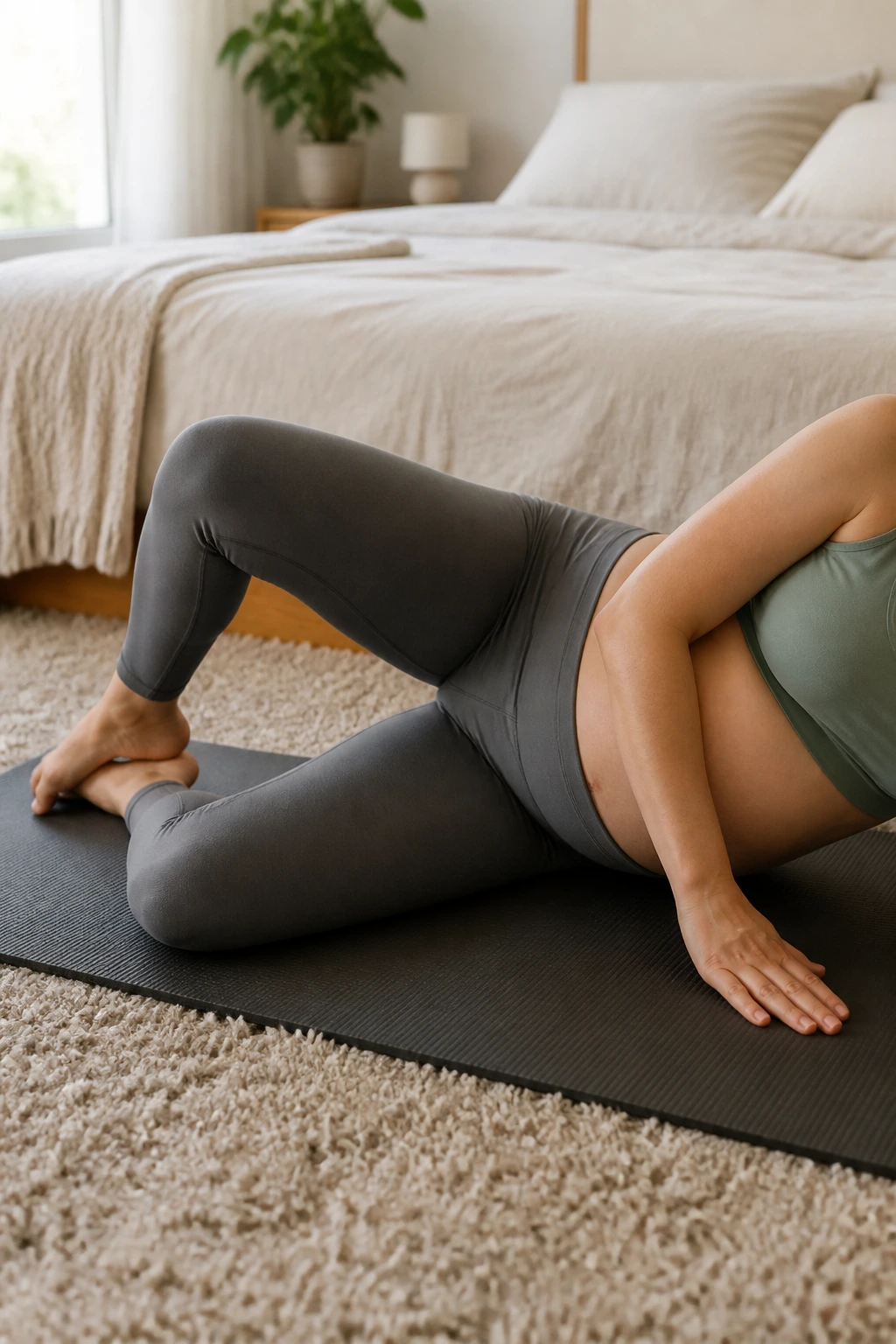
Side-lying clamshells are small, quiet, and easy to dismiss. They shouldn’t be. They hit the glute medius, a hip muscle that helps keep your pelvis steady when you walk, stand on one leg, or climb stairs.
Lie on your side with knees bent and heels together. Keeping your pelvis still, open the top knee like a clamshell, then lower it slowly. Don’t roll your torso backward. That’s the cheat move, and it steals the work from the hip. Ten to fifteen reps per side is plenty.
You can do these with a mini band above the knees if the bodyweight version feels too easy. A slow tempo matters more than a heavy band. One good rep is worth three rushed ones.
This is one of those exercises that feels mild in the moment and useful for hours after.
10. Bird Dog
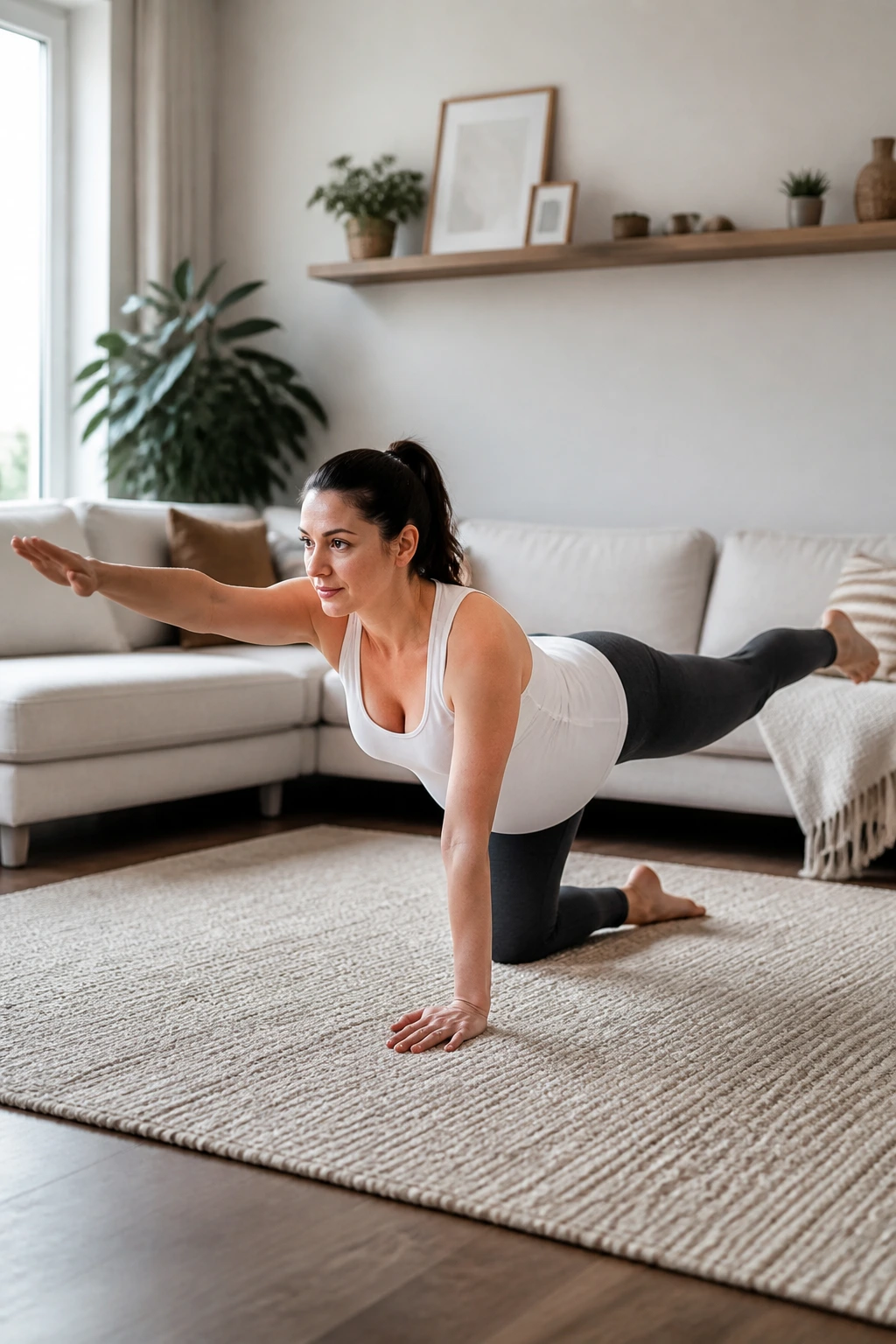
Bird dog is one of the best first-trimester core choices because it asks your torso to stay steady while your arms and legs move. That cross-body control is the whole point. It trains balance, back strength, and deep abdominal support without crunching the midsection.
Why It Helps
Begin on hands and knees with your wrists under shoulders and knees under hips. Reach one leg back and the opposite arm forward, but only as far as you can keep your spine still. Hold for one count, then return. If that feels shaky, just extend the leg first and leave the arm for later.
How to Make It Easier
- Slide the leg back instead of lifting it high.
- Keep your gaze on the floor.
- Do 6 to 8 reps per side.
- Exhale as you extend, inhale as you come back in.
A slow bird dog is better than a flashy one. Always.
11. Glute Bridges
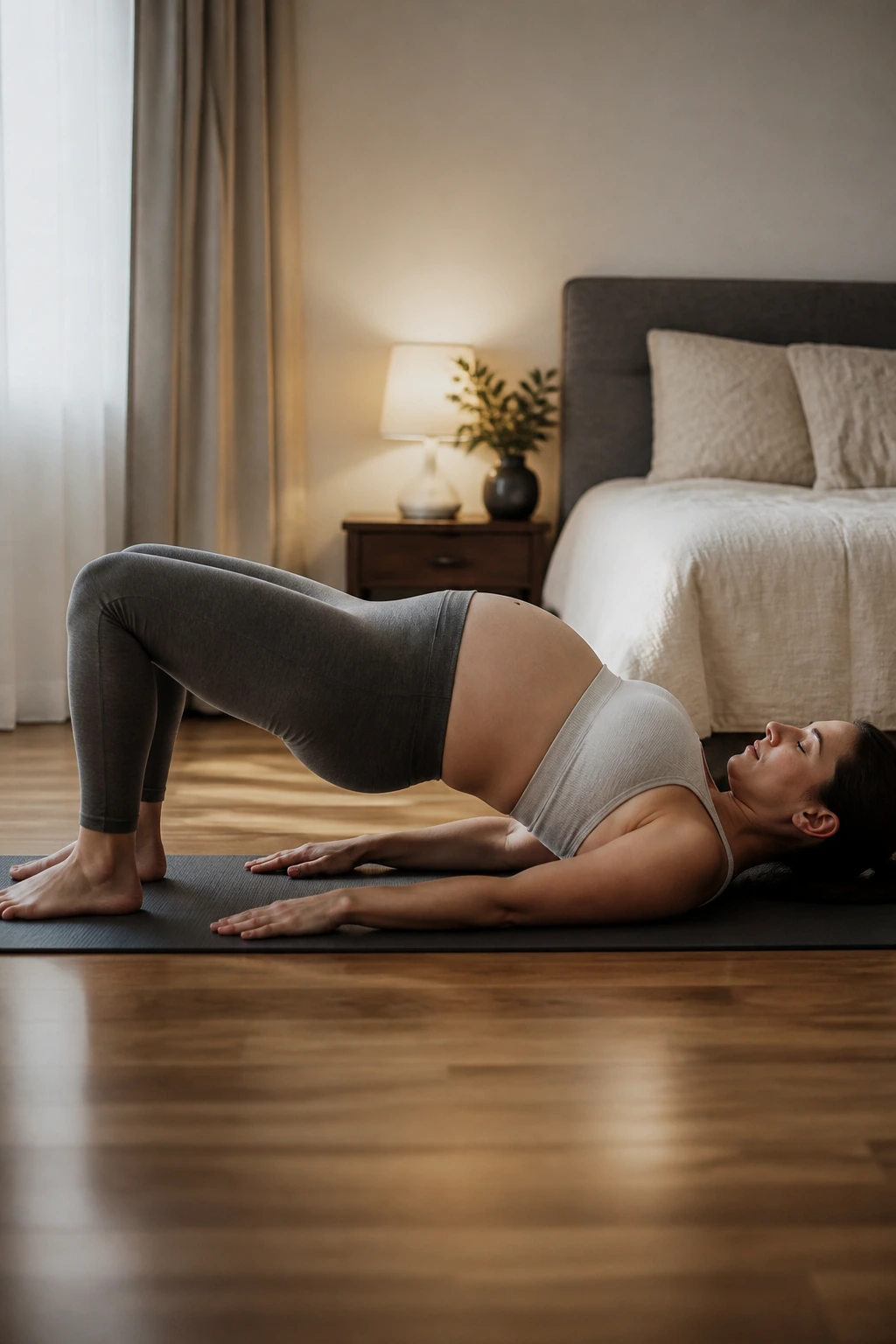
Glute bridges are a stronger choice than they look on paper. They wake up the backside, help with hip stability, and give your lower body a break from sitting all day, which can start to feel like a curse early in pregnancy.
Lie on your back with knees bent and feet flat only if that position feels comfortable. Lift your hips until your body forms a straight line from shoulders to knees, then lower slowly. If lying flat makes you lightheaded, skip it and use a standing hip hinge instead. Comfort wins here.
A set of 8 to 12 slow reps is usually enough. Don’t jam your ribs upward or squeeze so hard that your lower back takes over. The lift should come from the glutes, not from a back arch.
This move is useful, but it is not mandatory. If it feels off, move on. No workout deserves a bad headache.
12. Step-Ups on a Low Platform
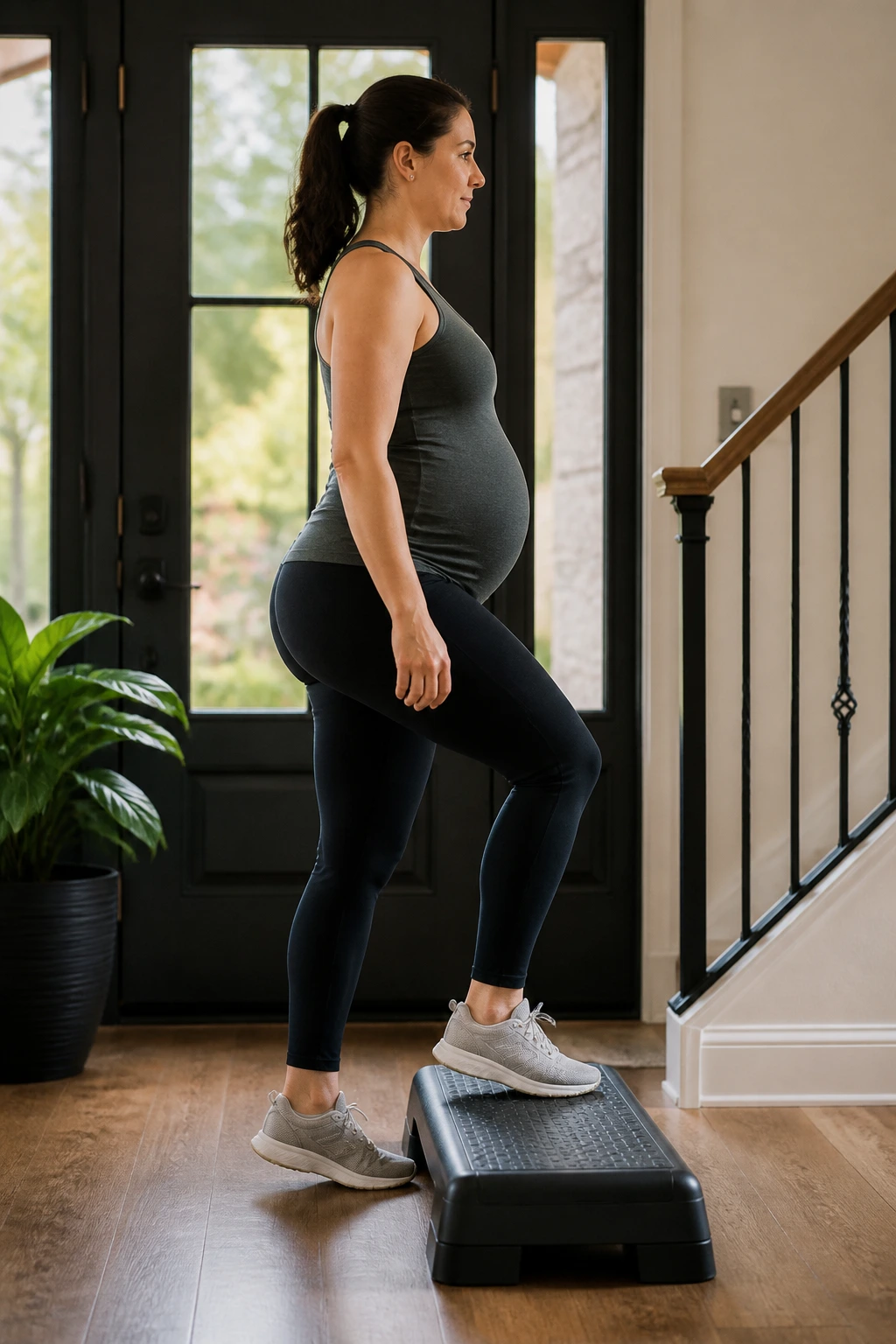
Do stairs count as exercise? Absolutely, if you keep the step low and the pace controlled. Step-ups are a nice bridge between cardio and strength because they ask your legs to work one side at a time without the impact of jumping.
Use a low step, about 4 to 6 inches high, or the bottom stair in your house. Hold a railing or wall if your balance feels a little sloppy. Step up with one foot, bring the other foot to meet it, then step back down with the same lead leg. Switch sides after 6 to 10 reps.
The trick is to avoid lunging forward with speed. Slow and stacked is the point. If your knees wobble inward or you feel pressure in your pelvis, shorten the range. A tiny step done well beats a big step done badly.
13. Elliptical Trainer
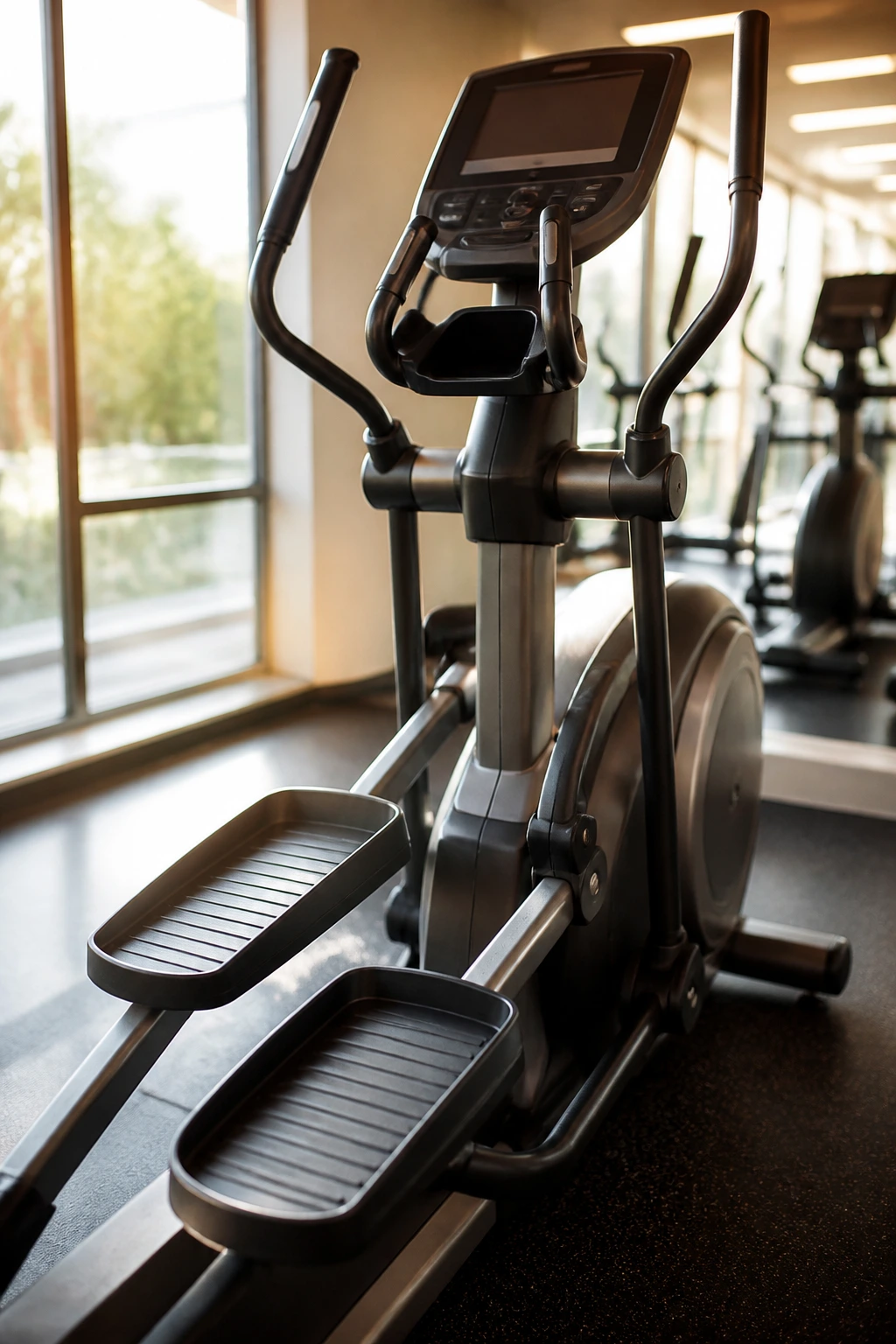
The elliptical gets overlooked because it looks too easy, which is a mistake. It gives you cardio work without the pounding of running, and your feet never leave the pedals, so the fall risk stays low.
Start with a gentle resistance and a stride length that lets you stay upright without gripping the handles like you’re hanging on. Ten minutes can be enough on a rough day. On better days, 15 to 25 minutes feels like a solid middle ground. Keep your shoulders relaxed and your ribs from flaring.
The machine is handy if walking outside feels too hot, too icy, or too unpredictable. It also works well when nausea is mild and you want steady movement without any sudden changes in speed. Not fancy. Just useful.
14. Treadmill Incline Walk
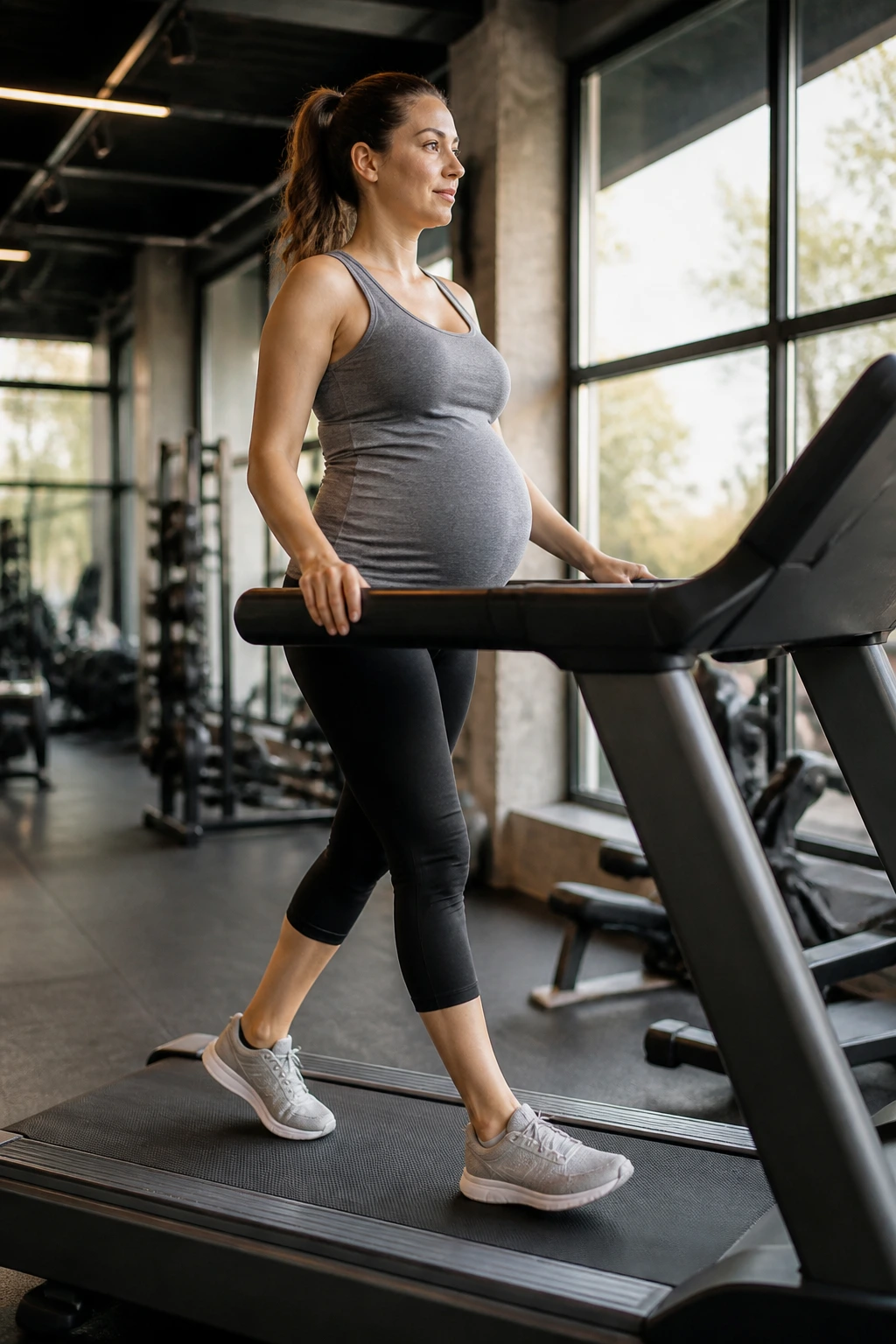
A treadmill walk can be ordinary or surprisingly effective, depending on how you use it. A small incline—around 1 to 3%—bumps up the effort without forcing a run, and that matters if you want cardio without bouncing.
Keep your pace brisk enough that breathing deepens, but not so fast that your posture collapses. Avoid hanging on to the rails unless you need them for balance. If you lean heavily on the front bar, the machine is doing more of the work than you are.
This is a nice option when the weather outside is unhelpful or your schedule is chopped into small pieces. Ten minutes is still a real workout. Twenty is better. Either way, a treadmill gives you a clean start-and-stop rhythm that’s easier to control than outdoor routes with curbs and dog surprises.
15. Water Walking or Aqua Aerobics
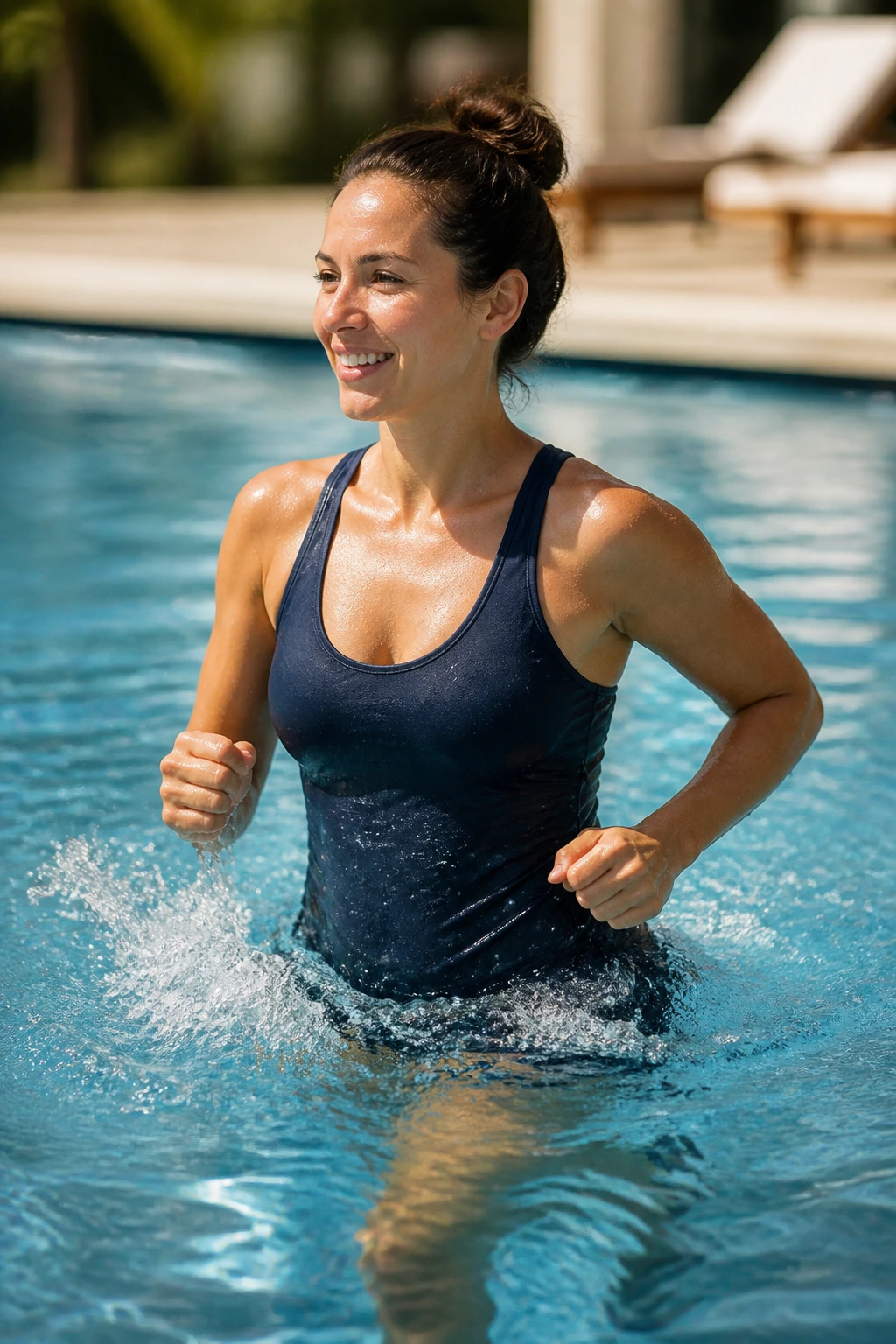
The pool changes everything. Chest-deep water lets you move with less joint stress and less wobble, which is a gift when your hips feel loose and your energy has gone missing for the third time that day.
Water walking is the easiest entry point. Walk forward, backward, and side to side in the shallow end or a comfortable lane. Aqua aerobics adds arm reaches, knee lifts, and controlled leg swings. Keep the pace moderate for about 20 minutes, and stop if the room or water feels too warm.
A Simple Pool Session
- 5 minutes of easy walking
- 5 minutes of side steps
- 5 minutes of gentle arm circles and knee lifts
- 5 minutes of slow walking to cool down
The big advantage is how forgiving it feels. If your feet are puffy or your back is cranky, water exercise often feels kinder than land-based cardio. That’s not a small thing.
16. Low-Impact Dance Cardio
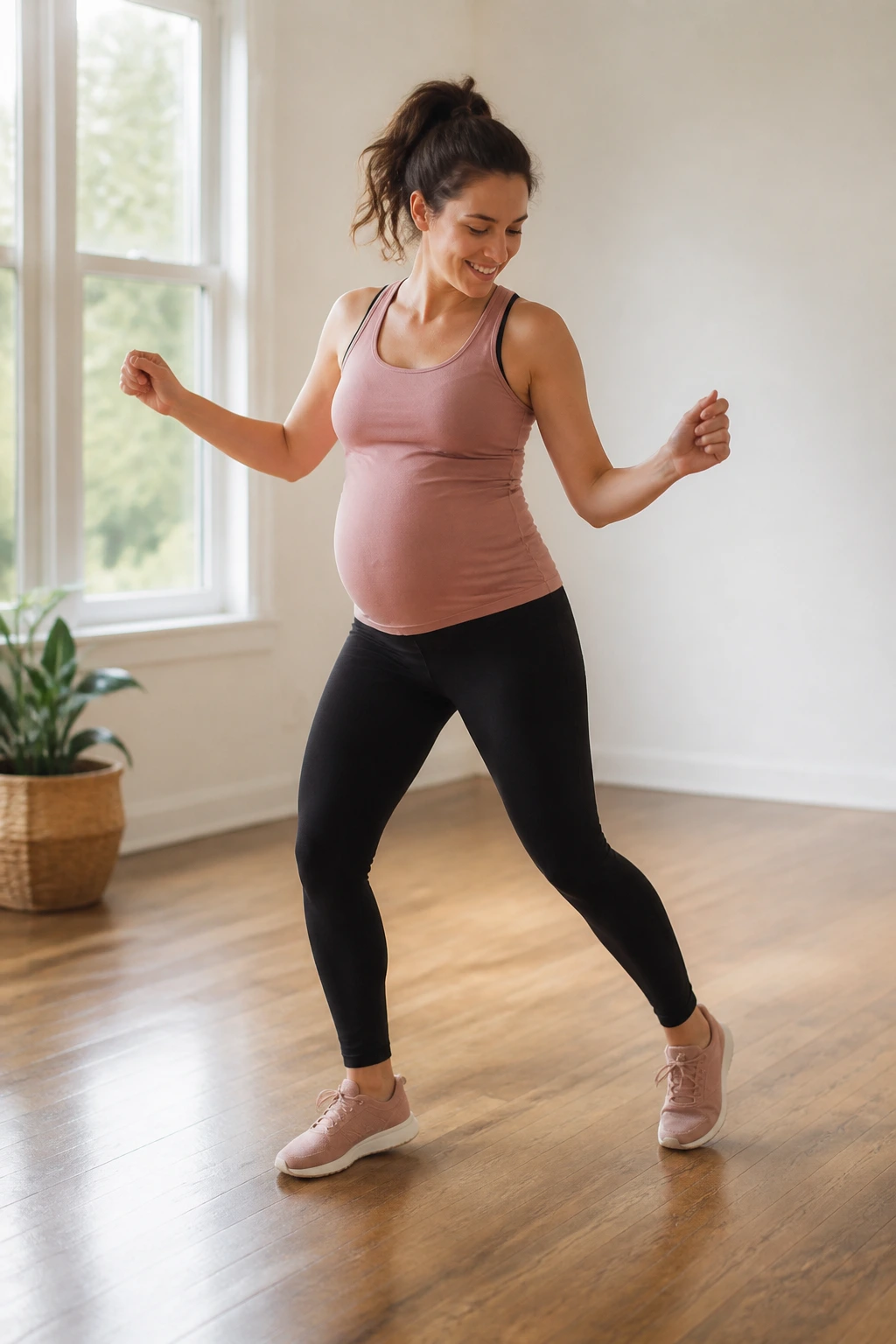
A little music changes the mood fast. Low-impact dance cardio lets you get sweaty without the pounding that comes with jumps, burpees, or fast pivots.
Keep one foot on the floor at all times, or at least most of the time. Step touch, grapevine, knee lifts, and side taps are enough to build a short cardio session. Fifteen to twenty minutes is plenty. If your breath gets ragged, shorten the song and pause between tracks.
How to Keep It Safe
Use a clear space with no rugs sliding under your feet. Slow down anything that involves twisting quickly through the hips. If your balance feels off, stay near a wall or countertop for light support.
This style of workout is useful because it doesn’t feel clinical. Some days that matters more than perfect structure. The body still gets a decent wake-up.
17. Seated Dumbbell Press
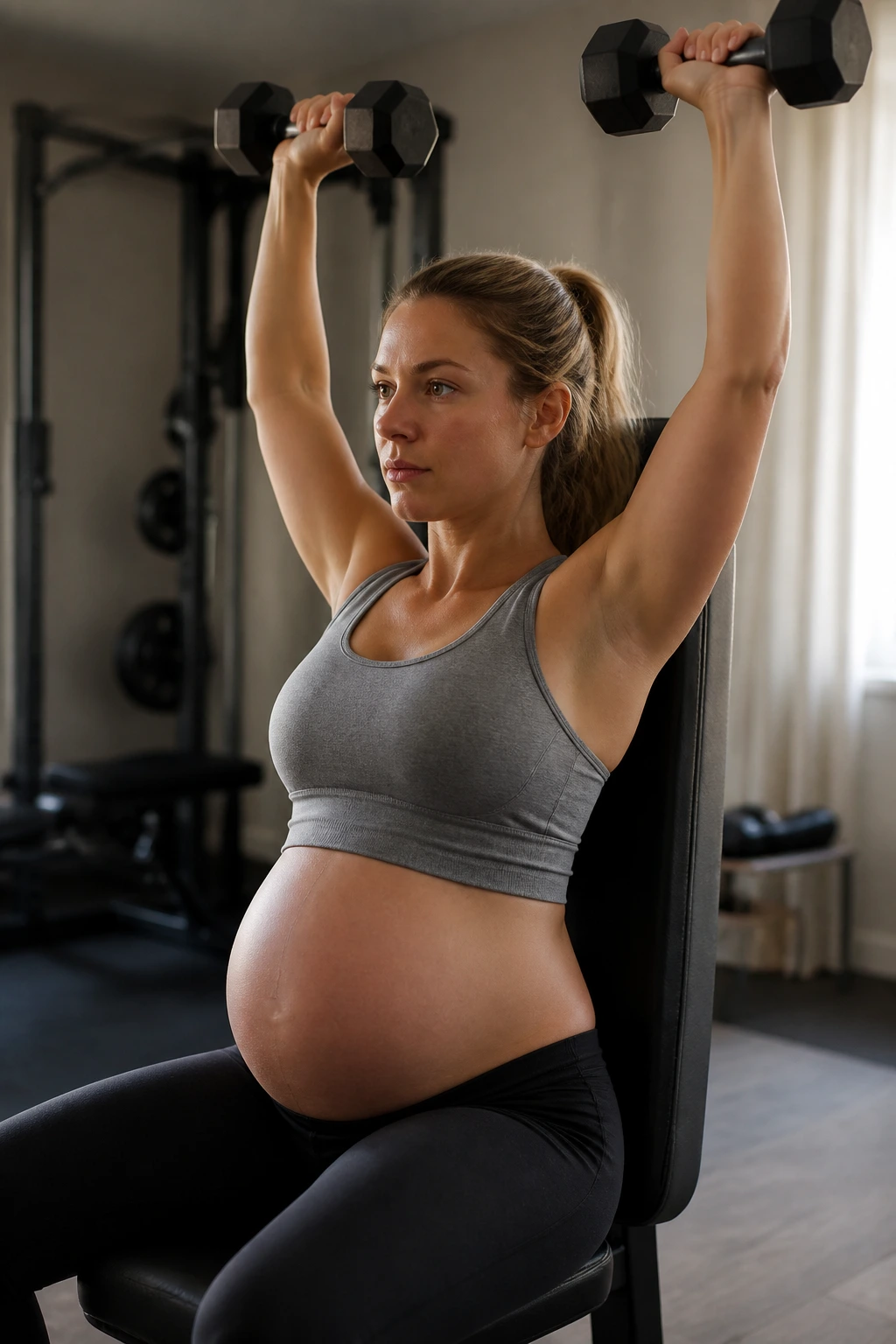
Seated overhead pressing keeps upper-body strength in the mix without demanding a lot from your joints. The seat gives you support, the weights stay light, and you can control the path of each rep much more easily than in a standing press.
Choose dumbbells in the 2- to 5-pound range unless you already know you handle more comfortably. Sit tall with your feet flat, press the weights up without arching your lower back, then lower them slowly to shoulder height. Exhale as you lift. Inhale as you come down.
If your ribs flare or your neck tightens, the load is too heavy or the range is too high. Keep the move smooth and compact. Two sets of 8 to 10 reps is plenty for maintenance. This is not the place for grit-your-teeth sets.
Some days, seated work feels better than standing work because the floor is no longer asking your balance system to do extra chores. That’s a small mercy.
18. Pelvic Floor Breathing
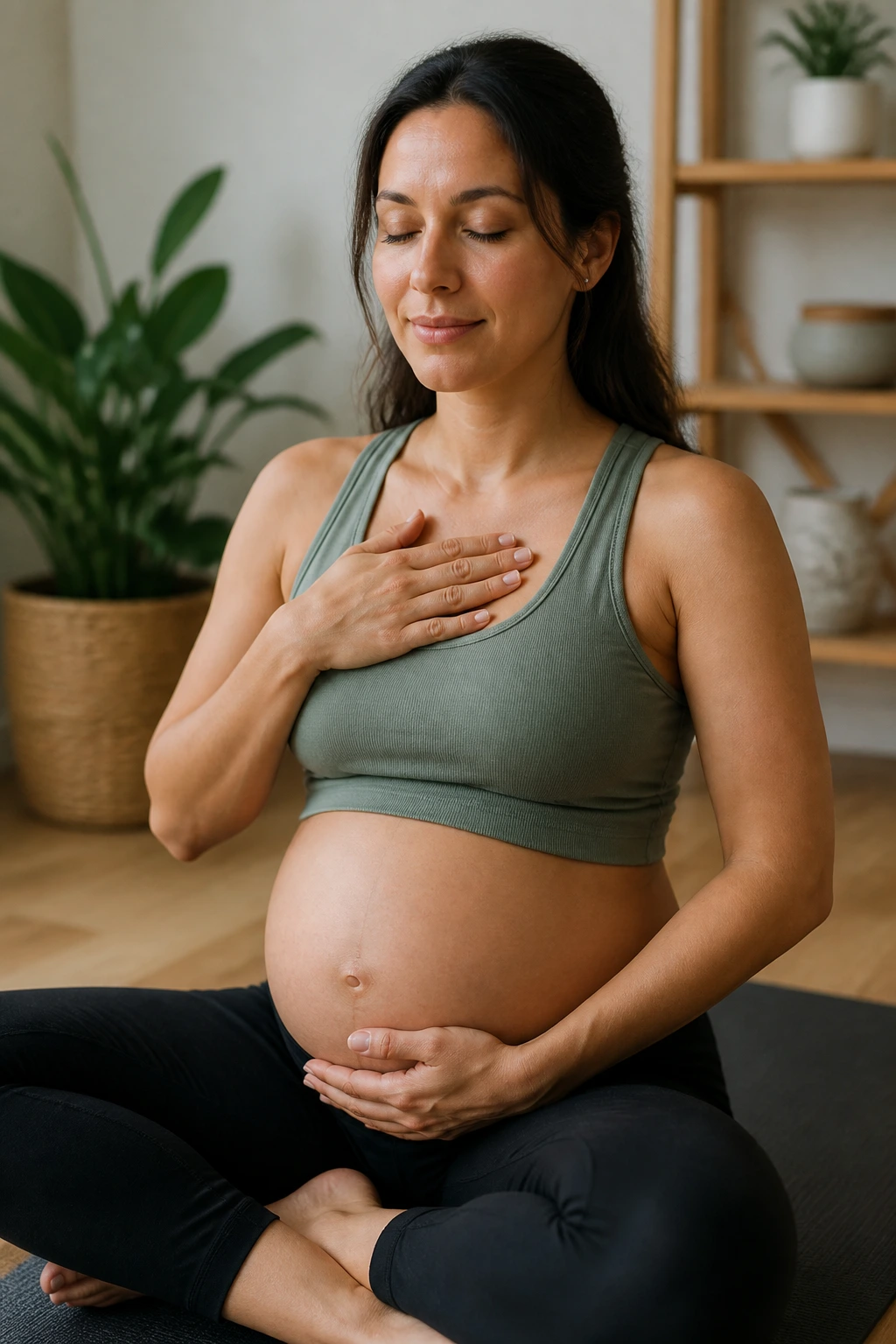
What if your workout is mostly breathing? That still counts, and in early pregnancy it can be one of the smartest things you do. Pelvic floor breathing helps you connect your breath to the muscles that support your bladder, uterus, and bowel, while also teaching your belly to relax and recoil instead of brace.
How to Do It
Sit or lie on your side. Inhale through your nose and let the ribs expand wide. As you exhale, gently lift the pelvic floor as if you’re stopping gas and urine at the same time, but only at about 30 percent effort. Then let it soften fully on the next inhale. No straining. No hard squeezing.
Do 5 to 10 slow breaths at a time. If you feel yourself tensing your shoulders or clenching your jaw, back off. The point is coordination, not force.
This one pairs well with walking, yoga, or strength training. A few quiet breaths before and after movement can make the whole session feel less frantic.
19. Cat-Cow and Thoracic Rotation
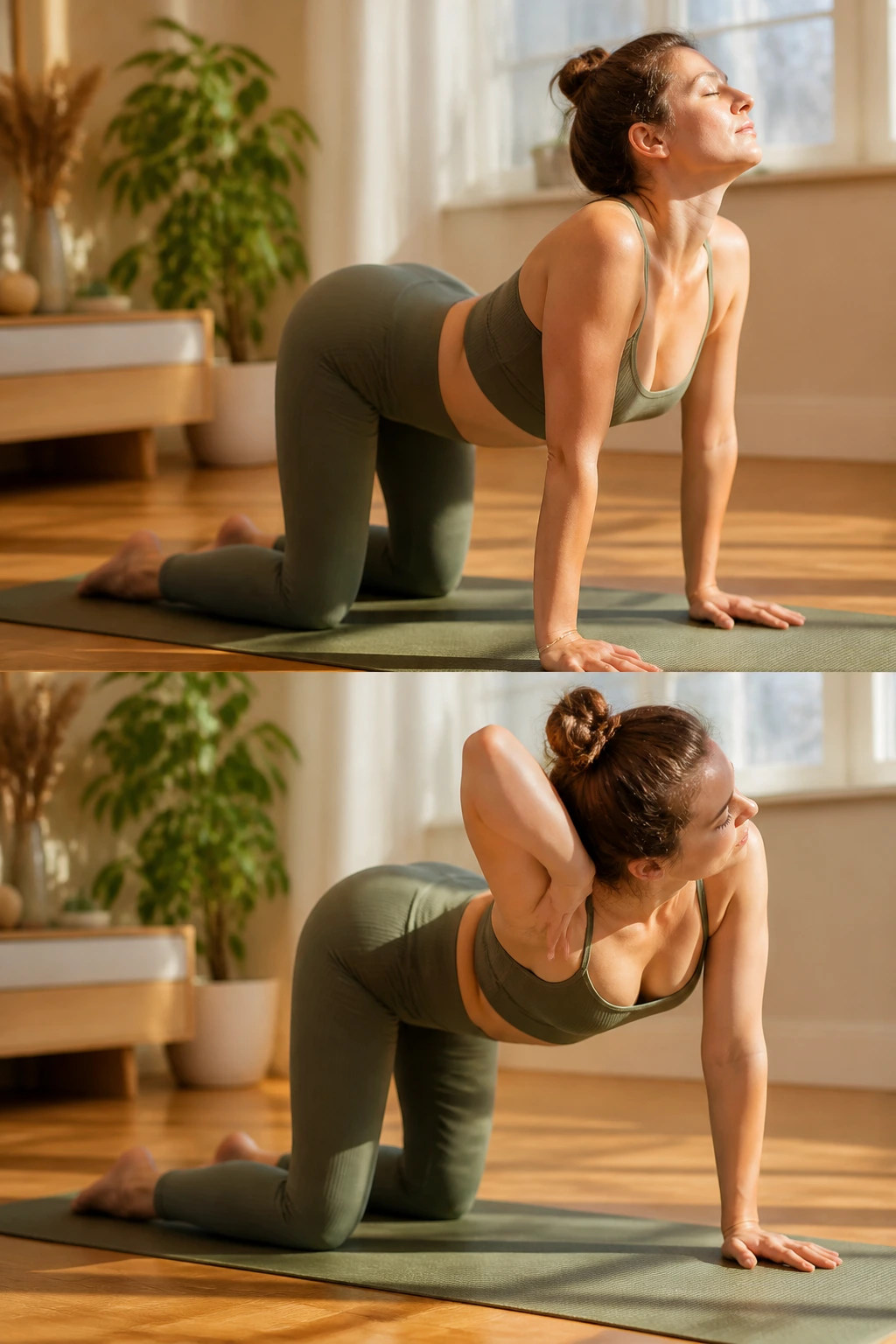
A stiff upper back can show up early, especially if your chest feels fuller or you’re spending more time sitting. Cat-cow and gentle thoracic rotation loosen that area without asking for a lot of effort.
Move slowly on hands and knees. Arch the back on the inhale, round it on the exhale, then add a simple thread-the-needle or open-book rotation if that feels good. Keep the range comfortable. You’re warming tissue, not chasing a big stretch.
Five to eight rounds is enough. If your wrists get annoyed, place your hands on a folded towel or move to a forearm position. If your belly doesn’t love the hands-and-knees position, do the same spinal wave seated in a chair.
This is one of those low-drama sessions that feels almost too easy while you’re doing it. Then you sit up straighter afterward and notice the difference.
20. Farmer Carries
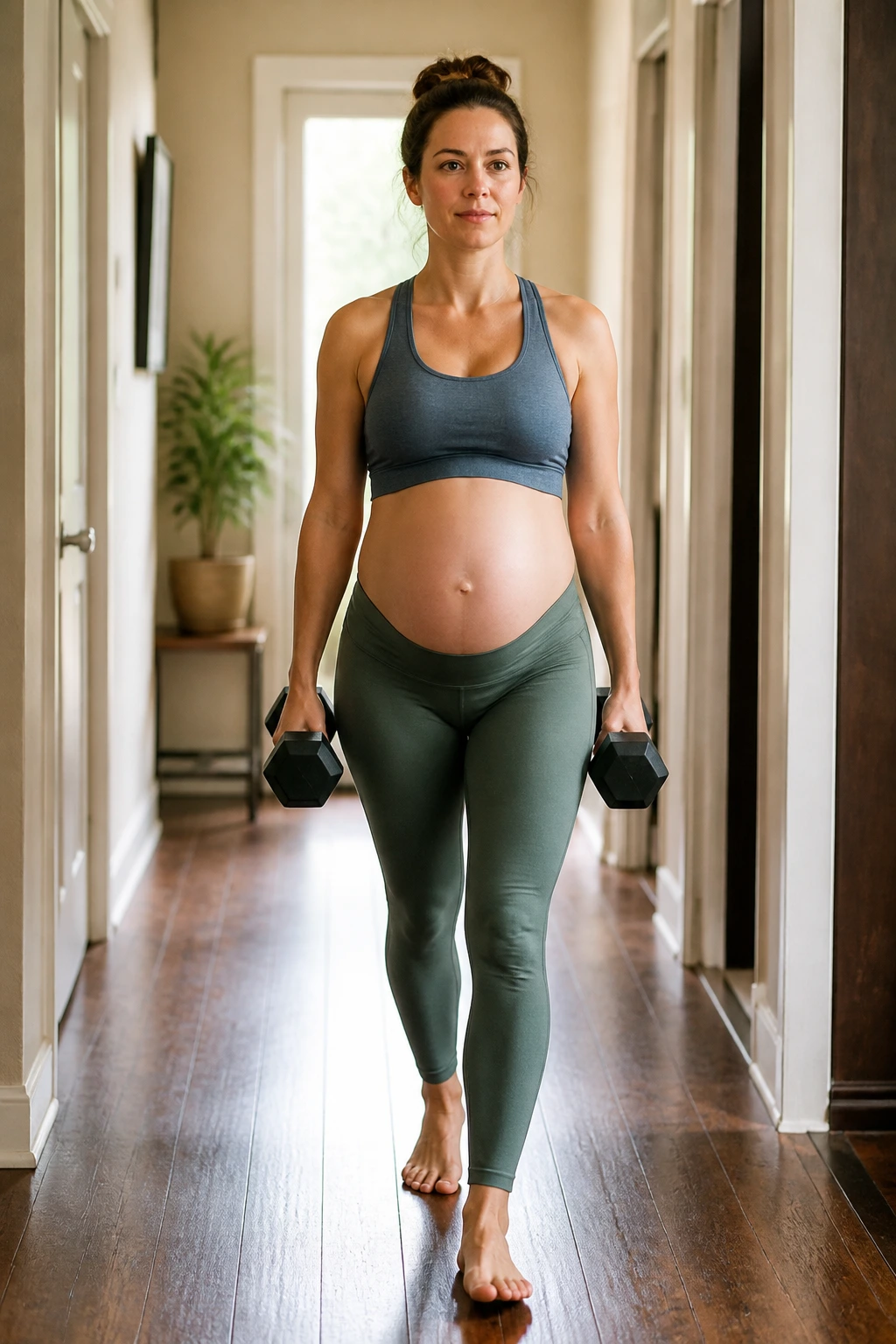
Farmer carries are sneaky-good for posture, grip, and core stability. Unlike a floor exercise, they train you while you’re standing and walking, which makes the whole thing feel closer to real life than gym theater.
Hold a pair of light dumbbells—think 5 to 15 pounds each, depending on your starting point—and walk slowly for 20 to 60 seconds. Keep the weights by your sides, shoulders down, and ribs stacked over the pelvis. Don’t lean back or side to side. Smooth steps. That’s the game.
If the load feels too heavy, you’ll know fast because your neck tightens and your torso starts wobbling. Drop the weight before that happens. Short carries done well are far better than a long slog with ugly form.
This one is useful on days when you want to feel strong without doing a full workout. Tiny win. Still a win.
21. Recumbent Bike
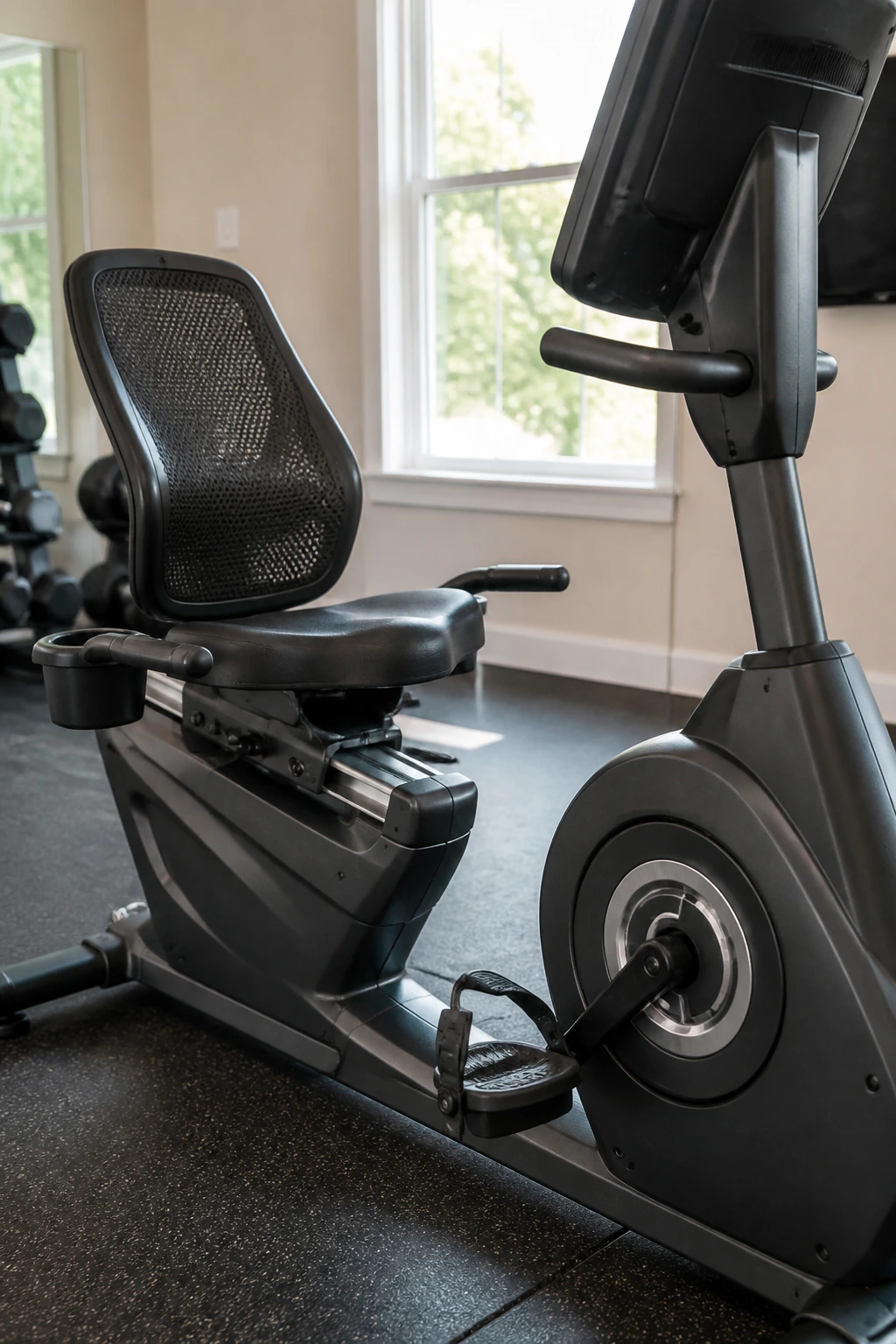
Sometimes the upright bike feels fine. Sometimes you want back support, more stability, and less work from your core just to stay seated. That’s where the recumbent bike earns its spot.
The reclined seat takes pressure off the lower back and may feel friendlier if you’re dealing with nausea or fatigue. Set the resistance low, keep your pedaling smooth, and ride for 10 to 20 minutes at a pace where you can still talk. If your knees feel cramped, adjust the seat so your legs extend without locking out.
This isn’t the flashiest cardio choice, but I’d call it one of the most forgiving. That matters when the first trimester shows up with random afternoons that feel slightly off. A machine that lets you keep moving without overthinking it is worth keeping around.
22. The 10-Minute Recovery Circuit
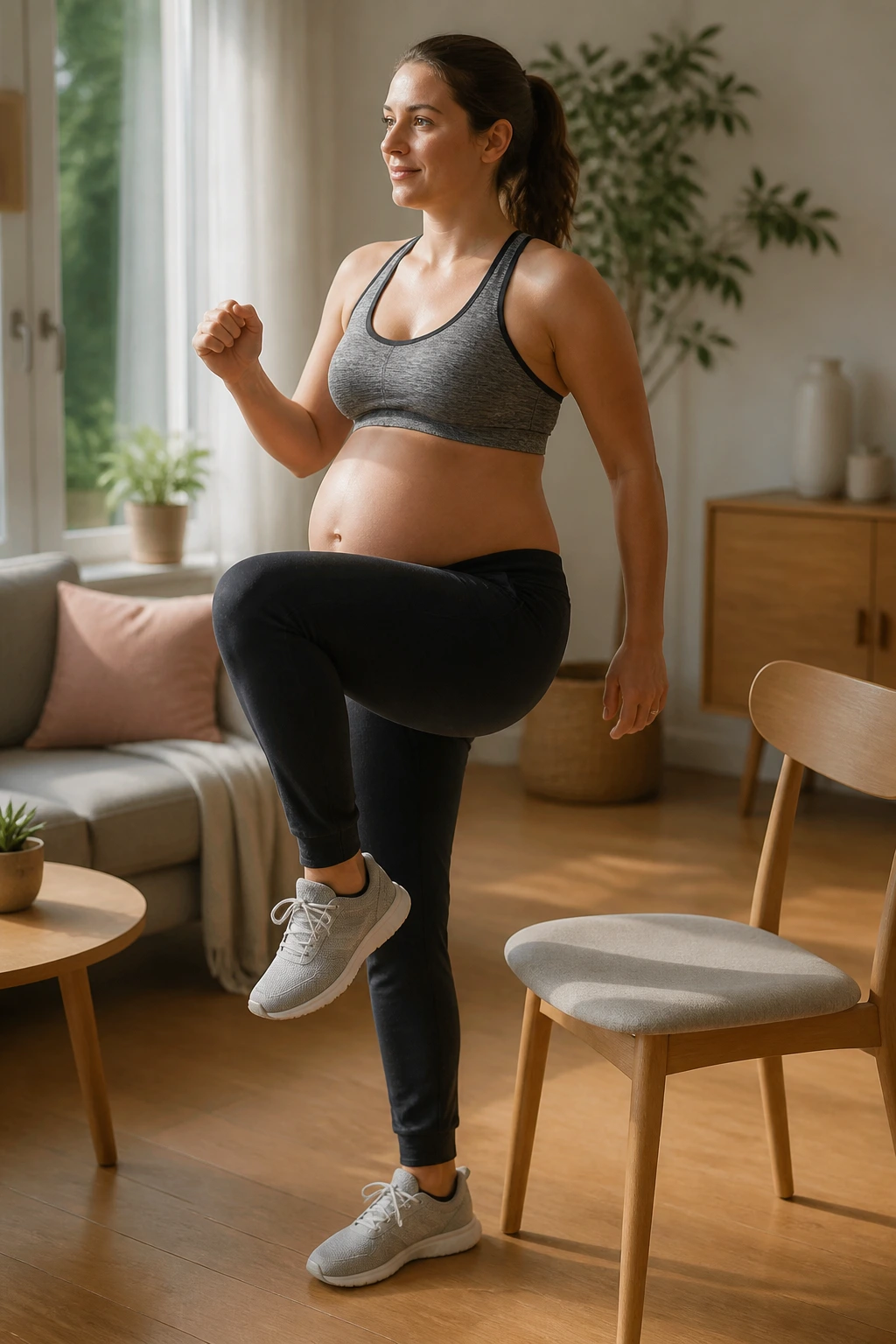
A short recovery circuit can save a day that feels too messy for a “real” workout. This is the kind of session that keeps momentum alive without asking for much from your energy tank. It’s especially good on mornings when you wake up tired but still want to do something that counts.
How It Flows
- 2 minutes of easy marching in place
- 1 minute of pelvic floor breathing
- 8 bodyweight squats to a chair
- 8 wall push-ups
- 8 bird dogs per side
- 2 minutes of gentle walking around the room
Keep everything at a moderate, comfortable pace. If nausea spikes, cut the circuit in half. If you feel good, repeat it once. The beauty of this routine is that it works as a floor-level backup plan when the day is not cooperating.
And that’s often what the first trimester needs most: something doable, not something dramatic. A few minutes of movement, done consistently, can carry more value than one ambitious session you dread from start to finish.
