



A good pregnancy yoga practice does not feel heroic. It feels useful.
The best yoga flows made for pregnancy and recovery give you room to breathe, keep the spine moving, and stop the whole session from turning into a battle with your own joints. That matters more than a pretty shape ever will. Pregnancy changes balance, pressure, and how much front-body space you have. Recovery changes all of that again.
I’ve always liked the quieter styles of yoga for this reason. Not the sweaty, jaw-clenched kind. The kind where a side stretch can make your ribs feel like they finally have somewhere to go, or a supported squat can take the edge off a low back that’s been barking all day. Standard exercise guidance from obstetric care leans the same way: moderate effort, no breath-holding, no overheating, and no pose that creates pain, dizziness, or pelvic pressure.
Recovery needs its own honesty. After birth, especially after a cesarean or a delivery that left your body tender and scattered, the right flow is less about flexibility and more about trust. Small movements. Fewer transitions. Better props. A lot of pelvic floor therapists favor that approach too, because tiny, repeatable motions tend to calm the body down faster than big dramatic stretches.
So these 20 flows are built for real life: the stiff morning, the swollen-ankle afternoon, the belly-that-gets-in-the-way phase, the first weeks postpartum, and the weird middle ground where you want to move but you do not want to “work out” in the old sense. Some are standing, some are floor-based, some are barely flows at all. Good. That’s the point.
1. Pregnancy and Recovery Breath Check-In
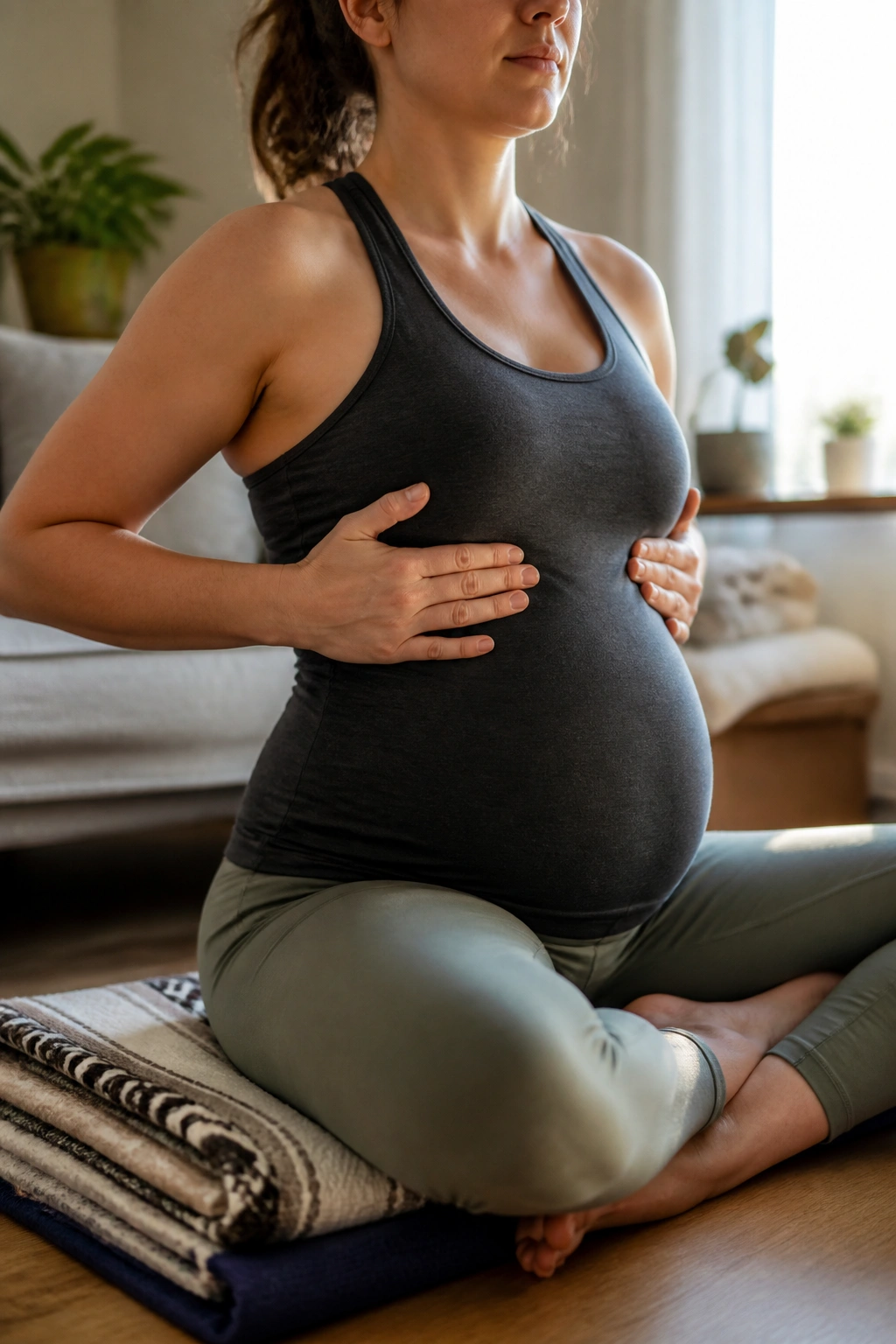
Start here when your body feels noisy and you cannot tell whether you need movement or rest. This is the simplest flow on the page, and I mean that as a compliment. A lot of people skip straight past breath work, but in pregnancy and recovery it can be the thing that changes the whole tone of a session.
Why It Helps
Sit on a folded blanket, a firm pillow, or the edge of a couch. Let your hands rest low on your ribs and take 5 slow breaths, aiming the inhale into the sides and back of the rib cage. On the exhale, let the belly soften and the pelvic floor feel heavy, not clenched. Do not force a big Kegel here; this is about sensing, not gripping.
- Use it before any other flow.
- Try it if you feel winded, tense, or oddly disconnected.
- Skip it and get medical advice if breathing feels painful or dizzy.
Tip: If the exhale gets choppy, stop and sit still. That usually means the session needs to be shorter, not stronger.
2. Cat-Cow on All Fours With a Wider Base
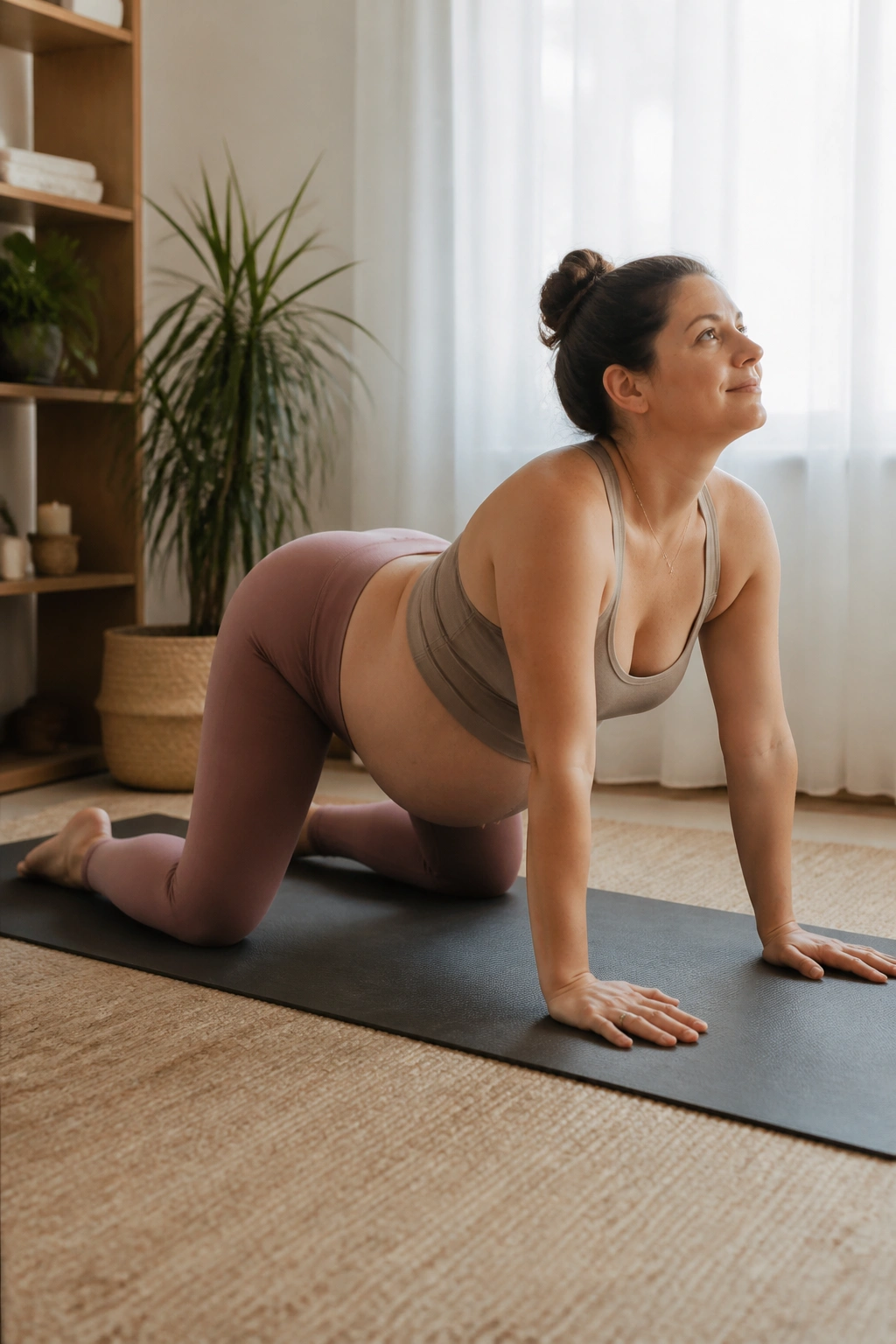
This is one of those old standbys that earns its place every single time. A wider-kneed cat-cow gives the spine motion without asking the belly to squeeze into a shape it does not like, and that matters a lot once the front body starts feeling crowded.
Hands under shoulders. Knees a little wider than hips. Inhale to arch gently, exhale to round. Keep the range small enough that you could hold a conversation. In recovery, especially after birth, you can make this even kinder by staying on forearms, or by placing your hands on blocks so your wrists do not get cranky.
A one-inch movement is enough. Seriously.
The goal is not to make the back bend like a gymnastic ribbon. The goal is to get the breath moving through the spine, the ribs, and the low back without any pinching. If you feel pressure in the pelvis, shorten the arch. If your wrists complain, prop higher. Simple fixes count.
3. Wall Side-Stretch Reach
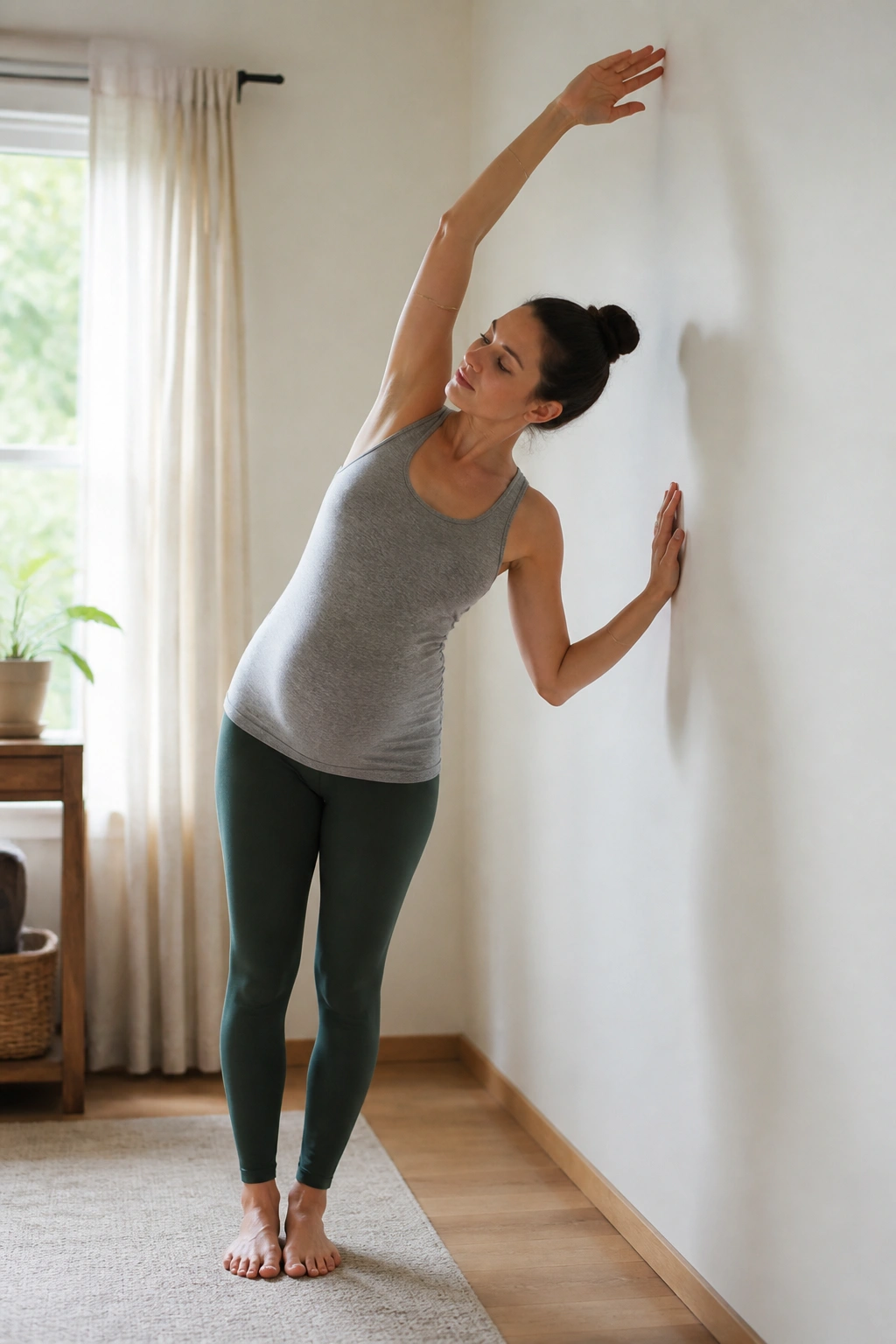
Why does a side stretch feel so good when the belly is already taking up half the front of your torso? Because pregnancy often closes down the side ribs more than people expect, and recovery can leave the upper body stiff from holding, feeding, lifting, and sleeping in odd positions.
Stand with your outside hip near a wall. One forearm or hand can rest lightly against it while the other arm reaches overhead. Lean away just a little, enough to feel the side body lengthen from armpit to hip. Breathe into the lifted side for 3 to 4 slow breaths, then switch.
How to Use It
- Keep both feet planted.
- Stack the shoulders instead of twisting the torso.
- If the pubic bone feels tender, shorten the stance.
- In postpartum recovery, keep the reach tiny and the breath slow.
The magic is not in the size of the bend. It’s in the rib cage getting room again. That’s what makes this one feel like a reset instead of a stretch contest.
4. Low Lunge With Blocks and a Short Stance
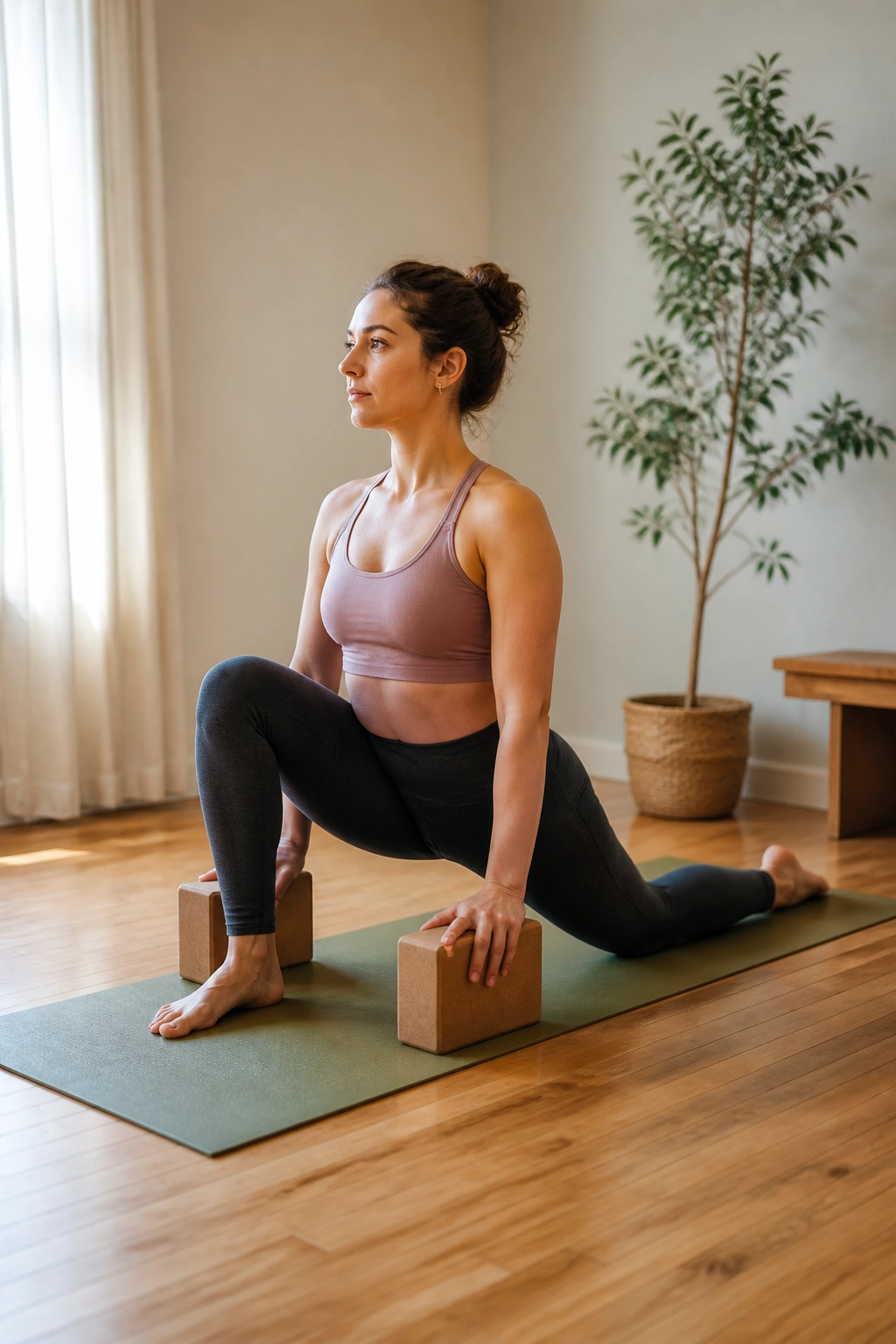
A lot of people make low lunges too long and then wonder why they feel wobbly or pinchy. Shorten the stance and the whole pose changes. It becomes less about force and more about a clean line through the front of the hip.
Set one foot forward and one knee down, with blocks under the hands. Keep the front knee over the ankle and let the back hip stay heavy instead of aggressively tucked. In pregnancy, this is a smart way to open the hip flexors without dumping weight into the belly. In recovery, it can wake up a sleepy glute and ease that dragging sensation through the front of the pelvis.
A little sway is fine. A lurch is not.
If the low back takes over, come up higher. If the front knee drifts way past the toes, shorten the stance by 2 to 4 inches. And if the front pelvis feels sharp, especially around the pubic bone, back out immediately. That’s not the pose to push through. It’s the pose to shrink.
5. Seated Figure-Four Reset
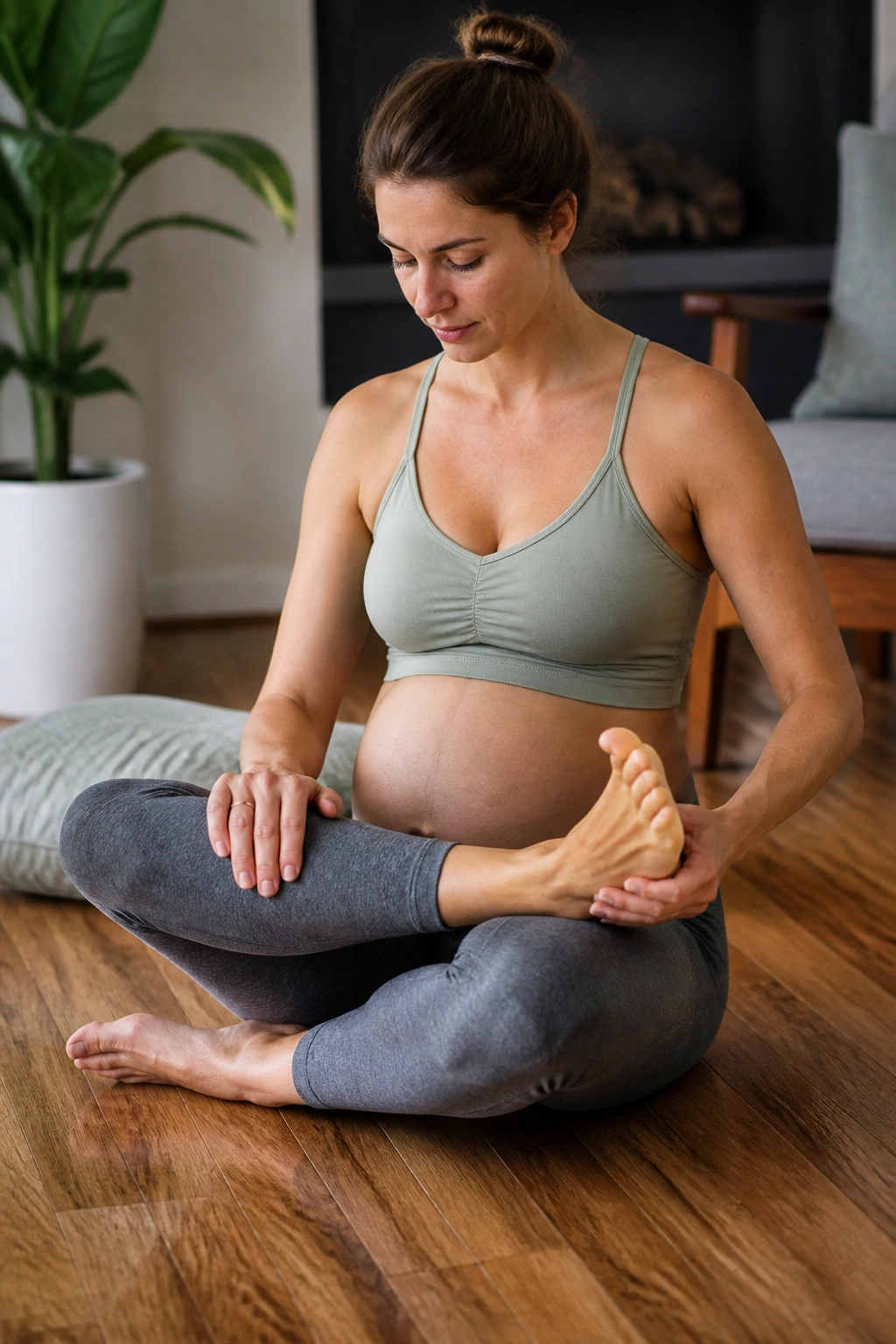
This is the flow I use when the low back feels stale and the hips have gone stubborn. A seated figure-four asks for almost no drama, which is why it works so well on the days when pregnancy fatigue or postpartum exhaustion has already used up your patience.
Sit on the floor, a cushion, or a firm chair. Cross one ankle over the opposite thigh, flex the top foot, and hinge forward a little if it feels good. Keep the spine long. You are not chasing a deep fold. You’re trying to ease the outer hip and give the lower spine less work to do.
One sentence matters here: if you feel a sharp nerve zing, come out of it.
That sensation is usually your body telling you to back off, not go deeper. In recovery, this shape can be especially useful during feeding breaks because it opens the hips without requiring you to get on and off the floor over and over again. Small mercy. Big payoff.
6. Chair Half-Salutation Flow
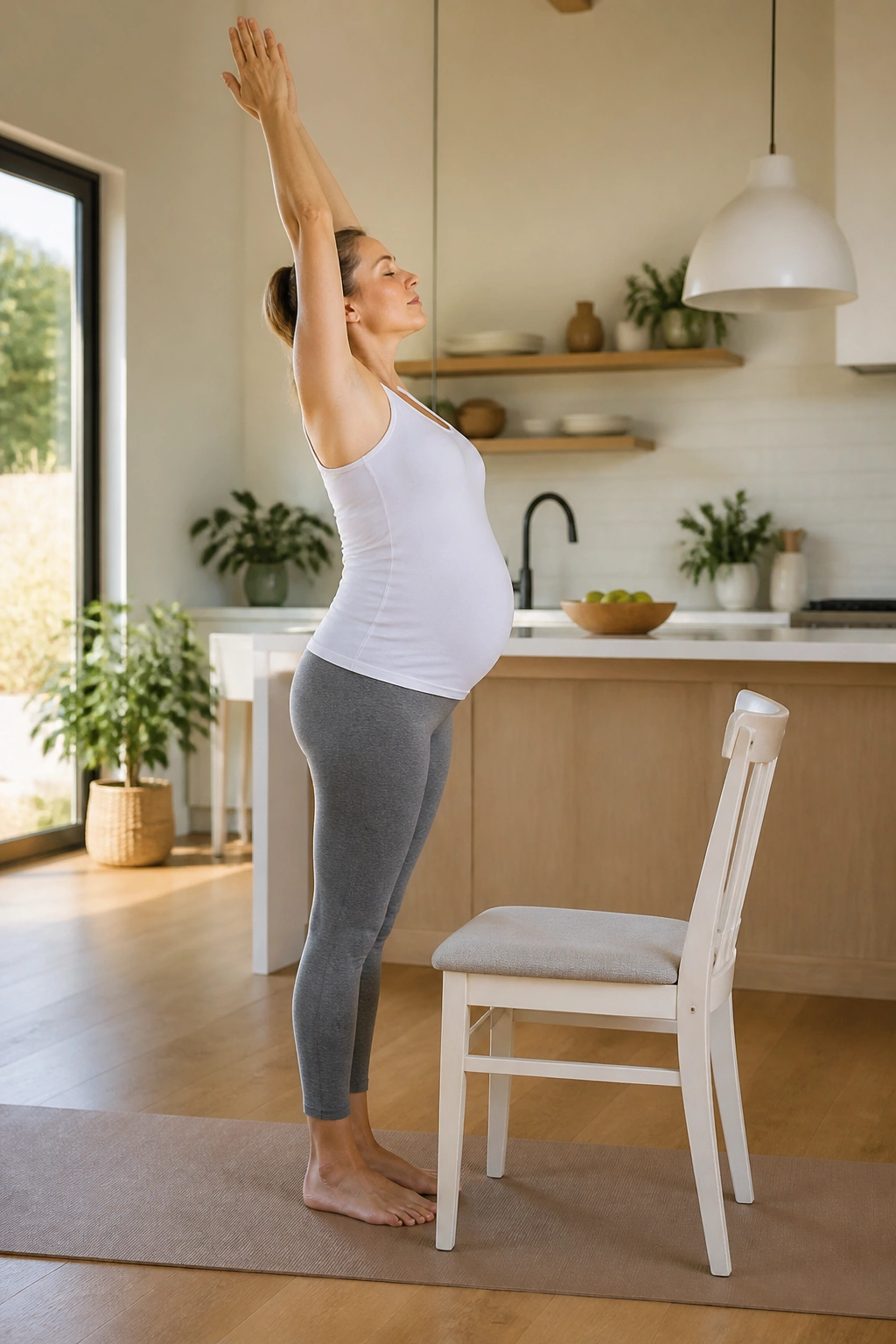
A chair version of a sun salutation is better than people think, and often more useful too. Unlike a full standing sequence, this one keeps the work contained and the balance demands low, which makes it friendly for nausea, fatigue, or the early postpartum weeks when getting down to the floor feels like a whole event.
Stand in front of a sturdy chair. Inhale to lift the arms, exhale to fold halfway with hands on the chair back or seat, inhale to lengthen the spine, and exhale to stand. Add a calf raise at the top if you want a little more circulation. That’s the whole thing. No fancy transitions, no hidden strain.
Best Times to Use It
- Morning stiffness.
- Days with swollen feet.
- After long sitting.
- When you want movement but not a full practice.
I like this one because it stays honest. It does not pretend to be athletic. It just helps the body get from one shape to another without making a scene.
7. Tabletop Hip Circles and Rock-Backs
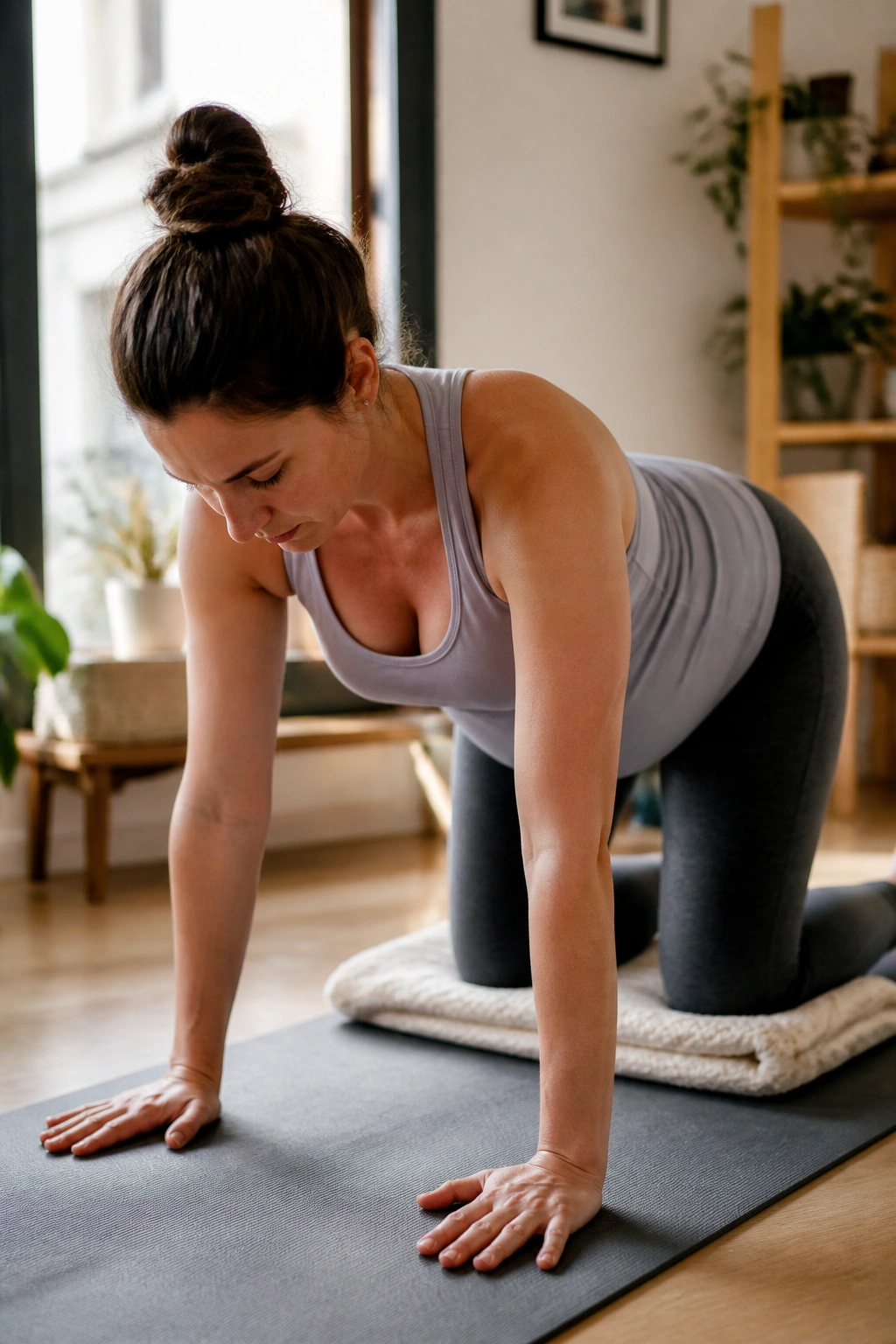
Hip circles on hands and knees are the kind of thing that looks almost too simple to matter. Then you do them for thirty seconds and realize your pelvis has been hanging on by a thread.
Come into tabletop with padded knees and hands under shoulders. Make slow circles with the hips, or rock the pelvis back toward the heels a few inches and forward again. Keep the movement small, especially in late pregnancy or after birth. You want glide, not grind.
Why It Works
The pelvis likes gentle motion. It does not always like stretching. Circles wake up the joints without forcing them into a fixed angle, and the rock-back can ease the low back when standing feels like too much work.
- Use a blanket under the knees.
- Keep the breath easy.
- Cut the range in half if you feel pelvic heaviness.
- In postpartum recovery, stop if the abdomen domes or the incision area tugs.
One good round of this can change how the whole spine feels. Two good rounds can change your mood.
8. Narrow Warrior II to Reverse Warrior
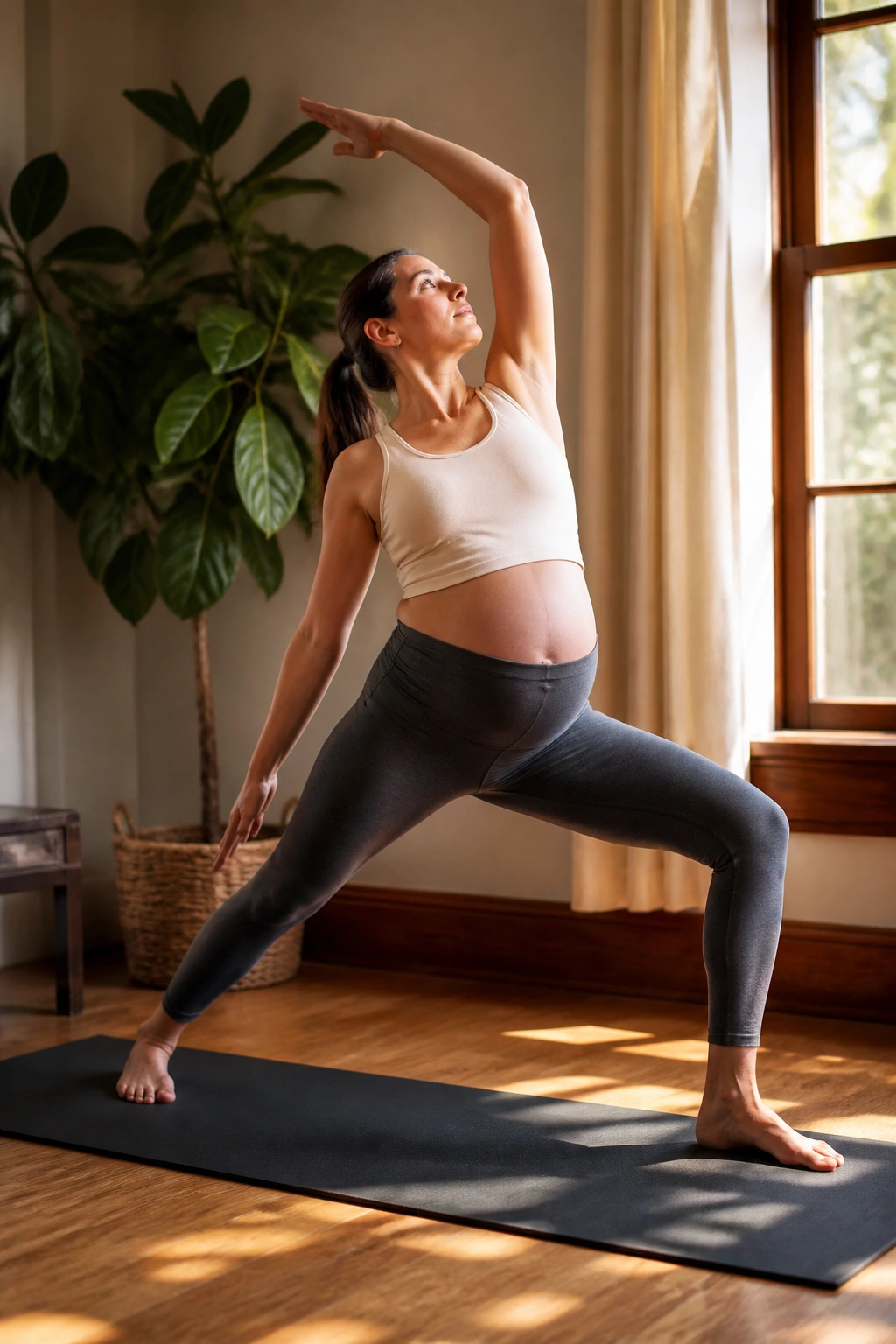
A narrower Warrior II often feels better than a classic wide one in pregnancy. That’s not me being precious about alignment. It’s the reality of changing balance, shifting center of gravity, and a pelvis that may not want to be forced into a wide stance.
Step the feet a little closer together than you would in a regular class. Turn the front toes out, keep the back foot turned in a bit, and soften the front knee. Lift the arms, then tip the back hand down the back leg as you reverse the shape for a breath or two. Stay small. Stay smooth.
The best part is the side-body opening. The hips get some strength, the ribs get some space, and the legs do a little work without requiring any speed. In recovery, I’d keep the stance even shorter and the backbend more upright. No need to chase drama here. If you can stay steady, that is the win.
9. Reclined Bound Angle With Bolsters
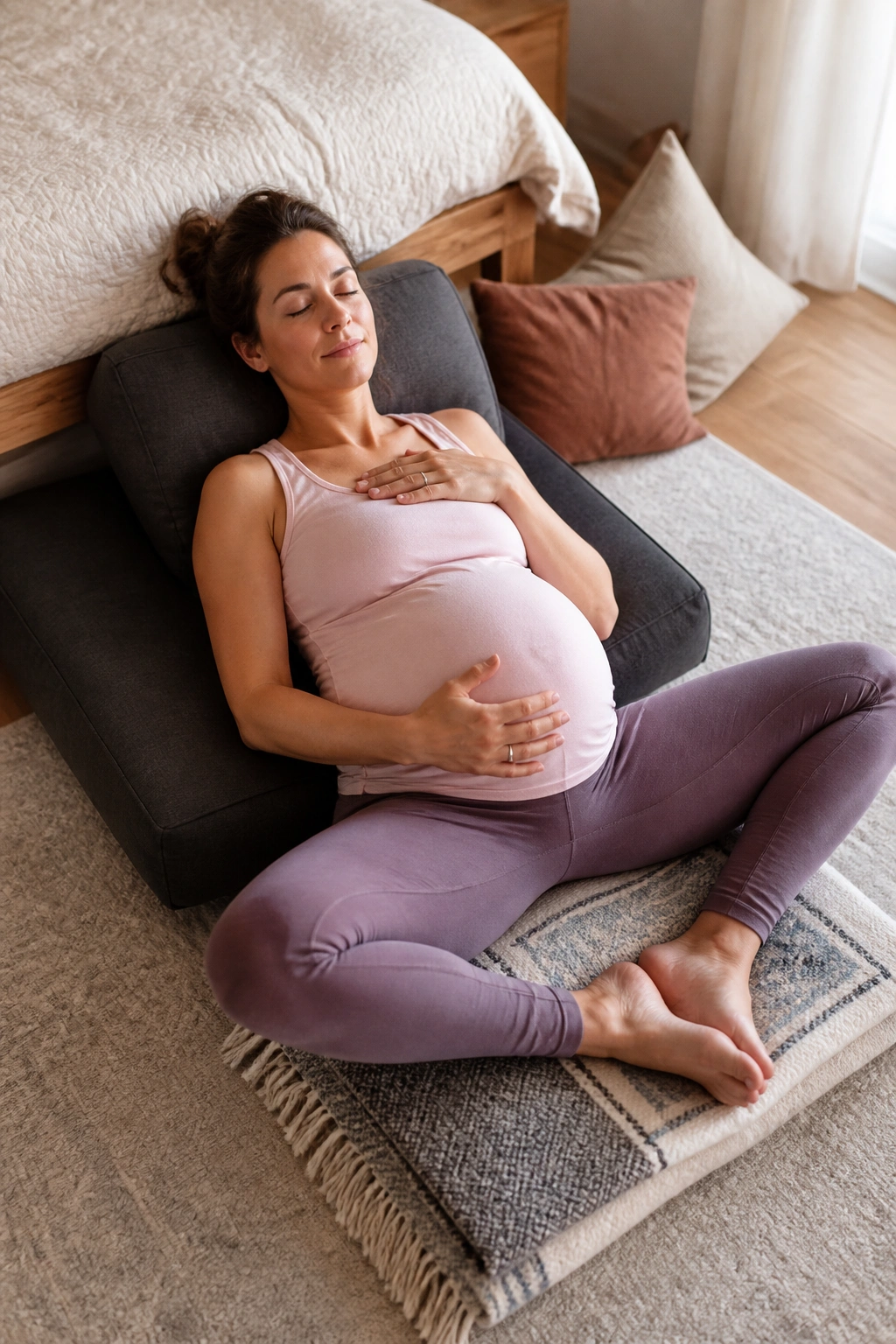
Can you still use a reclined pose during pregnancy? Yes, if it’s supported and your body likes it.
Prop the upper body on a bolster, a stack of folded blankets, or a firm pillow so you are not flat on your back for long. Bring the soles of the feet together and let the knees fall open only as far as feels easy. One hand can rest on the belly, the other on the chest. Breathe low and slow for 5 to 8 breaths.
How to Make It Work
If the low back feels tender, add a pillow under each thigh. If the knees feel strained, put blocks or cushions under them. In postpartum recovery, this can be a lovely way to reintroduce rest without collapsing into the couch in a way that makes getting up harder.
The whole pose should feel open and supported, never jammed. If lying back feels weird, choose the side-lying version instead. No prize for staying in a position your body dislikes.
10. Standing Side-Lunge for Inner-Thigh Release
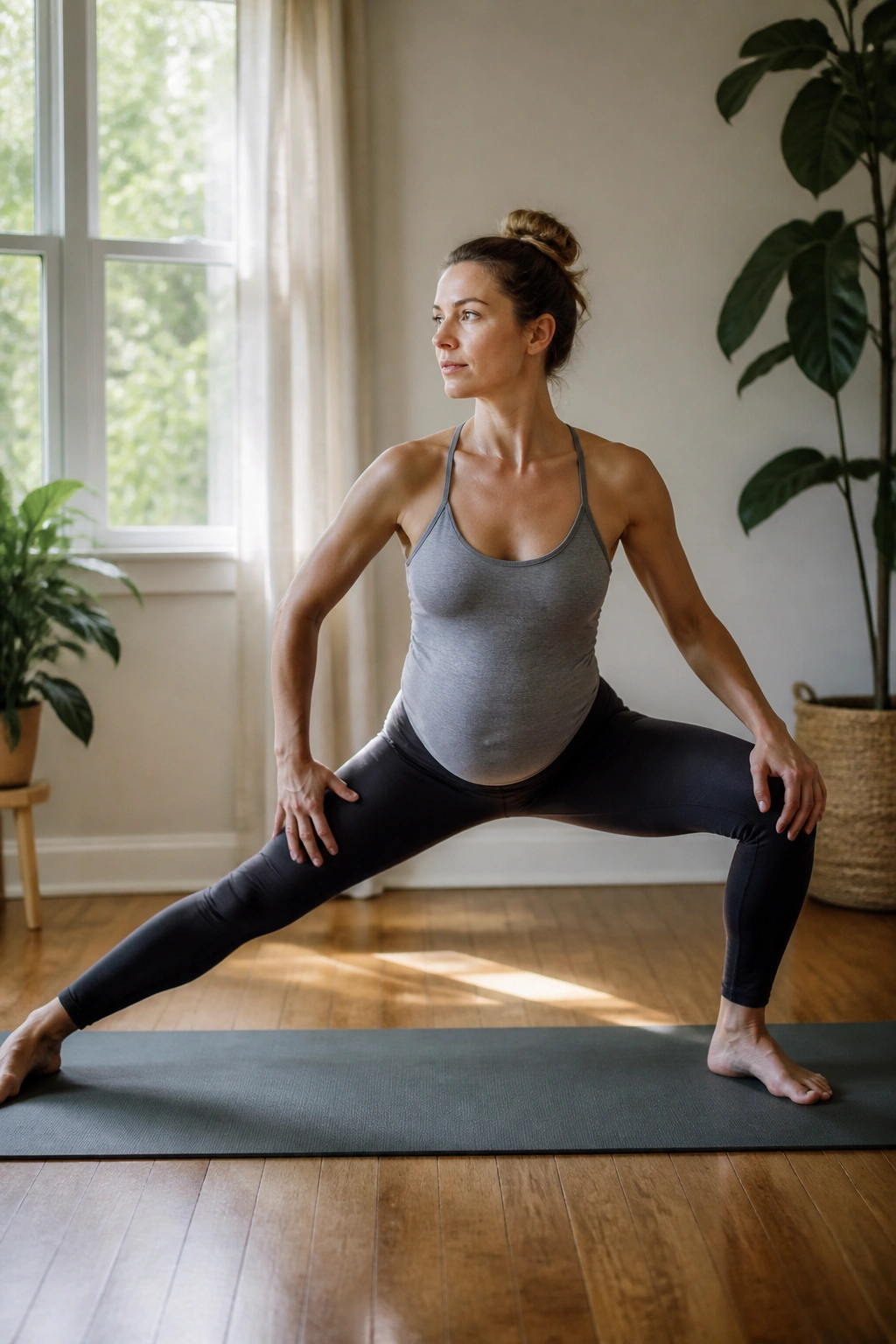
This is the kind of pose that shows up once you realize the inner thighs have been quietly doing too much work all day. Walking, shifting weight, getting up from the floor, carrying a baby—those adductors take a beating.
Stand with a wide but not ridiculous stance. Bend one knee and shift into that side while the other leg stays long. Keep one hand on a thigh, block, or wall. The body should feel supported enough that you can sink only as far as the hips allow without strain.
What to Watch For
- Keep the bent knee tracking over the toes.
- Avoid dumping the torso forward.
- Shorten the stance if the pubic bone feels sore.
- Use less depth after birth, not more.
The whole shape is less about stretching hard and more about making space between the legs and the pelvis. When the stance is right, you feel it in the groin and inner thigh. When it’s wrong, you feel it in the joints. Trust that difference.
11. Seated Open Twist Without Wrenching
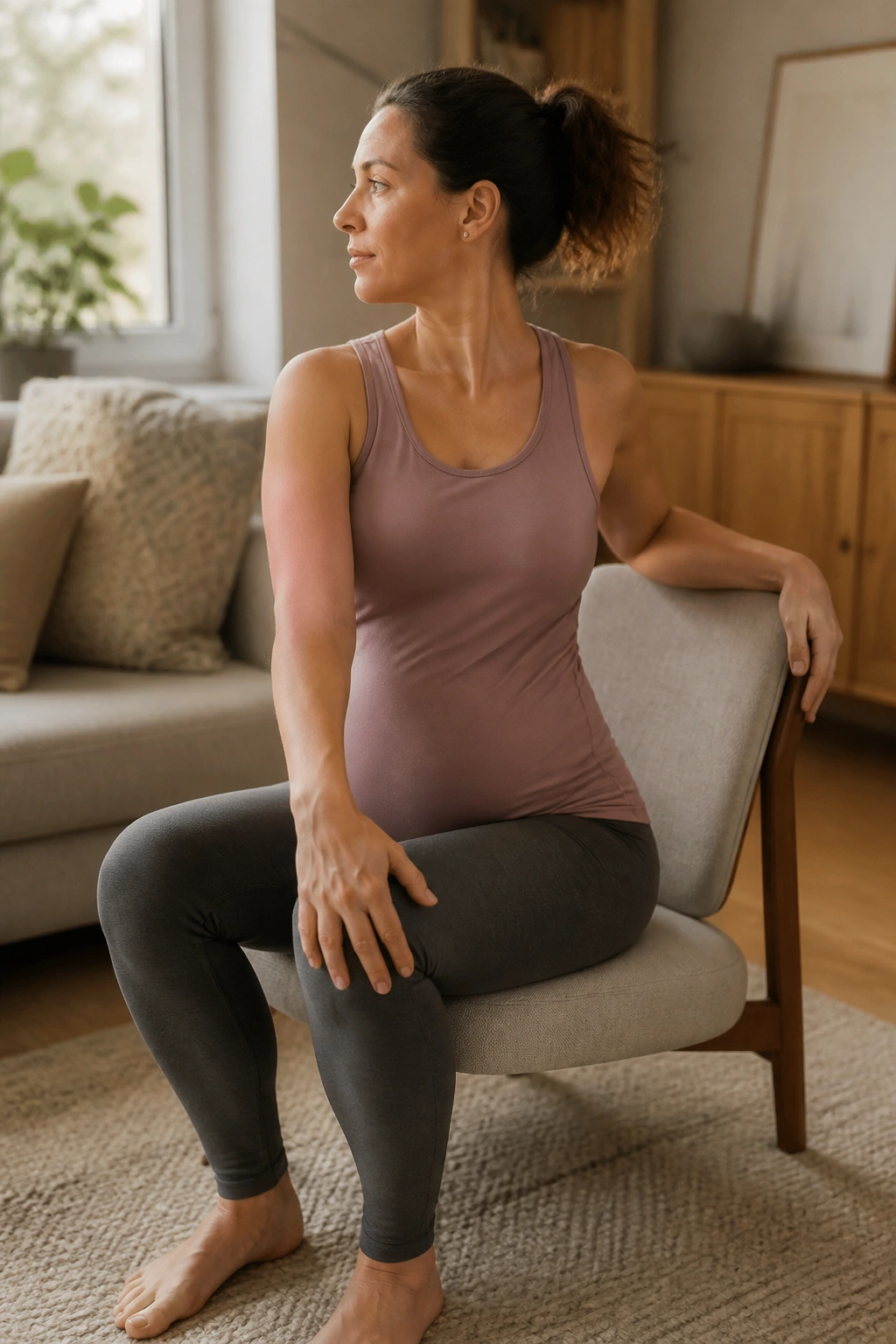
Twists in pregnancy need a softer hand. That’s the whole story, really. You are not trying to wring the belly like a towel. You are letting the ribs rotate a little while the pelvis stays mostly quiet.
Sit on a chair or cushion. Turn gently toward one side, keeping the front ribs broad and the belly free. One hand can rest on the outer thigh, the other on the chair back. In recovery, this can help the upper back feel less welded together, especially if you’ve spent a lot of time curled over a feeding pillow or stroller handle.
Small is enough.
How to Use It
- Exhale before you rotate.
- Keep both sit bones heavy.
- Stop at the first sign of strain.
- After a cesarean, wait for clearance before using any twist that tugs the incision line.
This is a neat little reset for the mid-back. Not glamorous. Useful. That’s a better trade anyway.
12. Supported Bridge With Foot Press
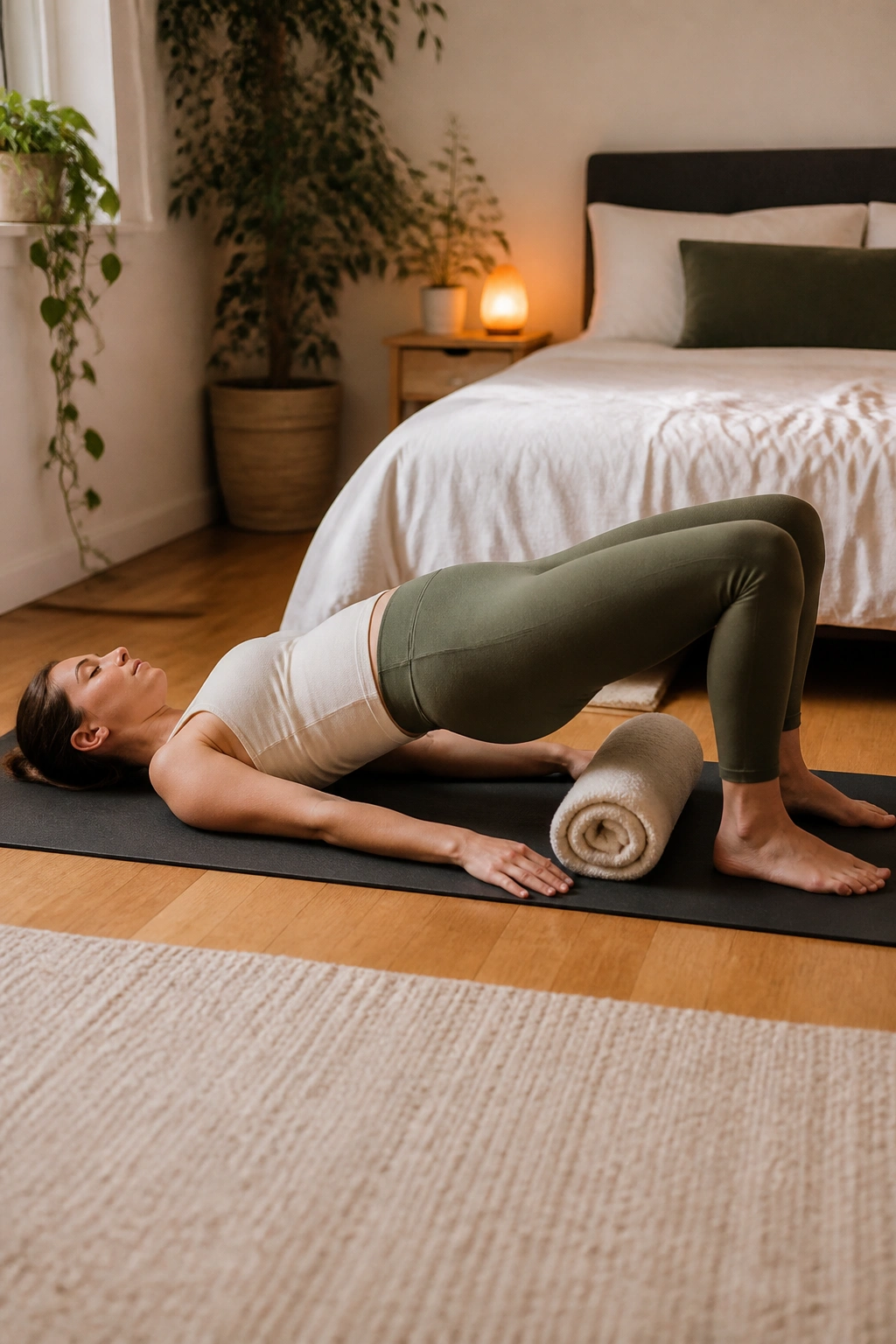
Compared with a big backbend, this bridge keeps things low and controlled. That matters. A lot of people crank up bridge pose and end up dumping into the lower back, which is exactly what a pregnancy or recovery body does not need.
Lie on your back only if that position feels fine and your care team has not told you to avoid it. Bend the knees, feet hip-width apart, and press the feet into the floor as you lift the hips a few inches. Hold for one breath, lower slowly, and repeat 5 to 8 times. Keep the ribs soft. Keep the neck long.
In recovery, this is one of my favorite ways to wake up the glutes without loading the spine. In pregnancy, it’s more of a first-trimester or early-second-trimester option for people who still feel good on their backs. If not, skip it. No guilt needed. There are other ways to train the backside.
13. Wall-Assisted Half-Moon Balance
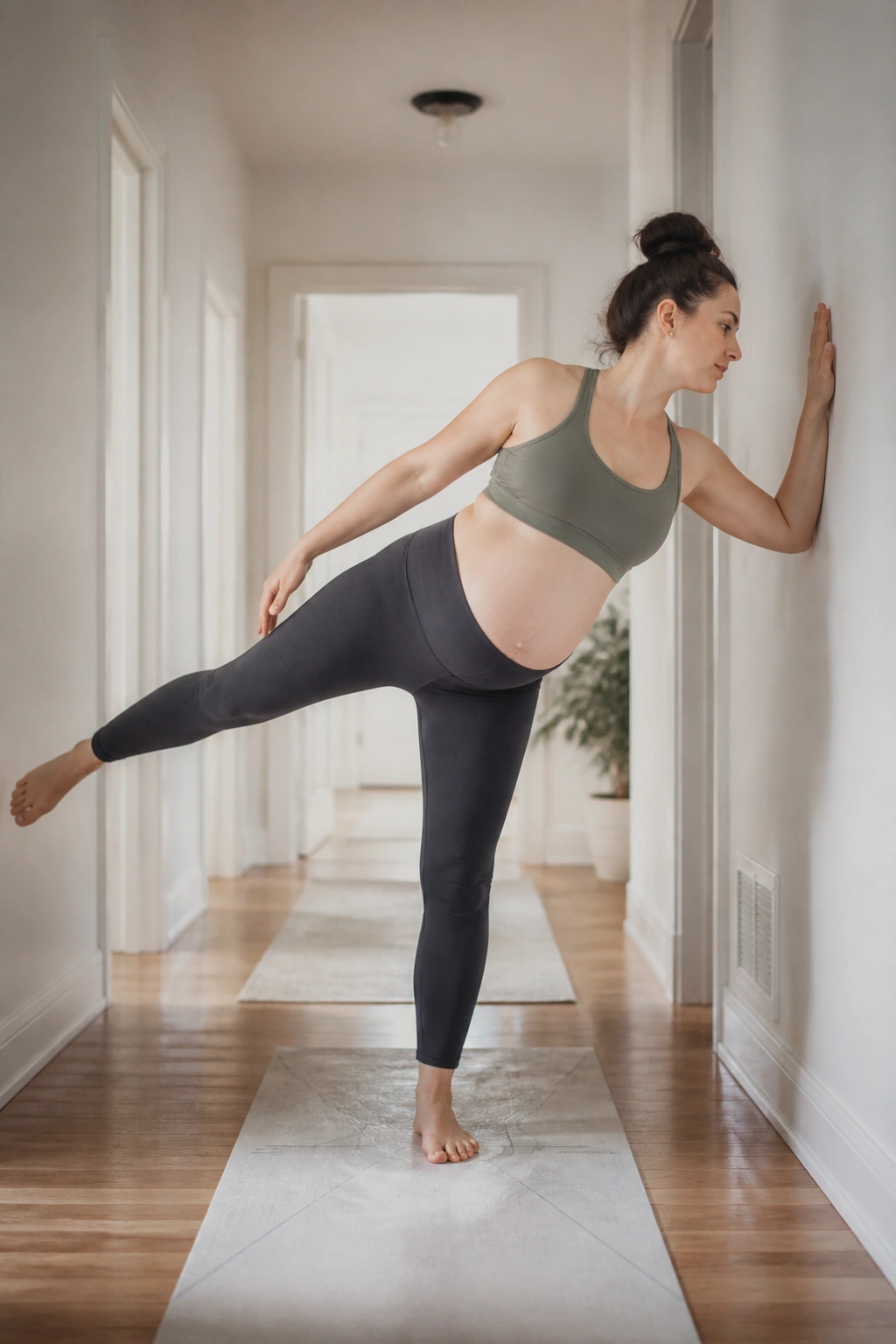
Half moon can be a lovely balance shape when it is watered down enough to respect what pregnancy or postpartum recovery does to steadiness. The wall changes everything. It takes away the panic and leaves the useful part.
Stand side-on to the wall and keep one hand there as you shift weight into the front leg. Lift the back leg only a little, open the chest, and keep the lifted leg lower than you think you need. That low height is the secret. It gives the standing hip, foot, and core a job without making you wobble around the room.
What Makes It Different
- The wall stays in reach the whole time.
- The lifted leg can hover just 2 to 6 inches.
- You can keep the top hand on the hip instead of reaching up.
- Balance practice is the goal, not the pose shape.
This one is excellent when you want to feel coordinated again. After birth, especially, the body can feel a little out of sync. This reminds it that balance can come back in tiny doses.
14. Prenatal and Postpartum Side-Lying Leg Flow
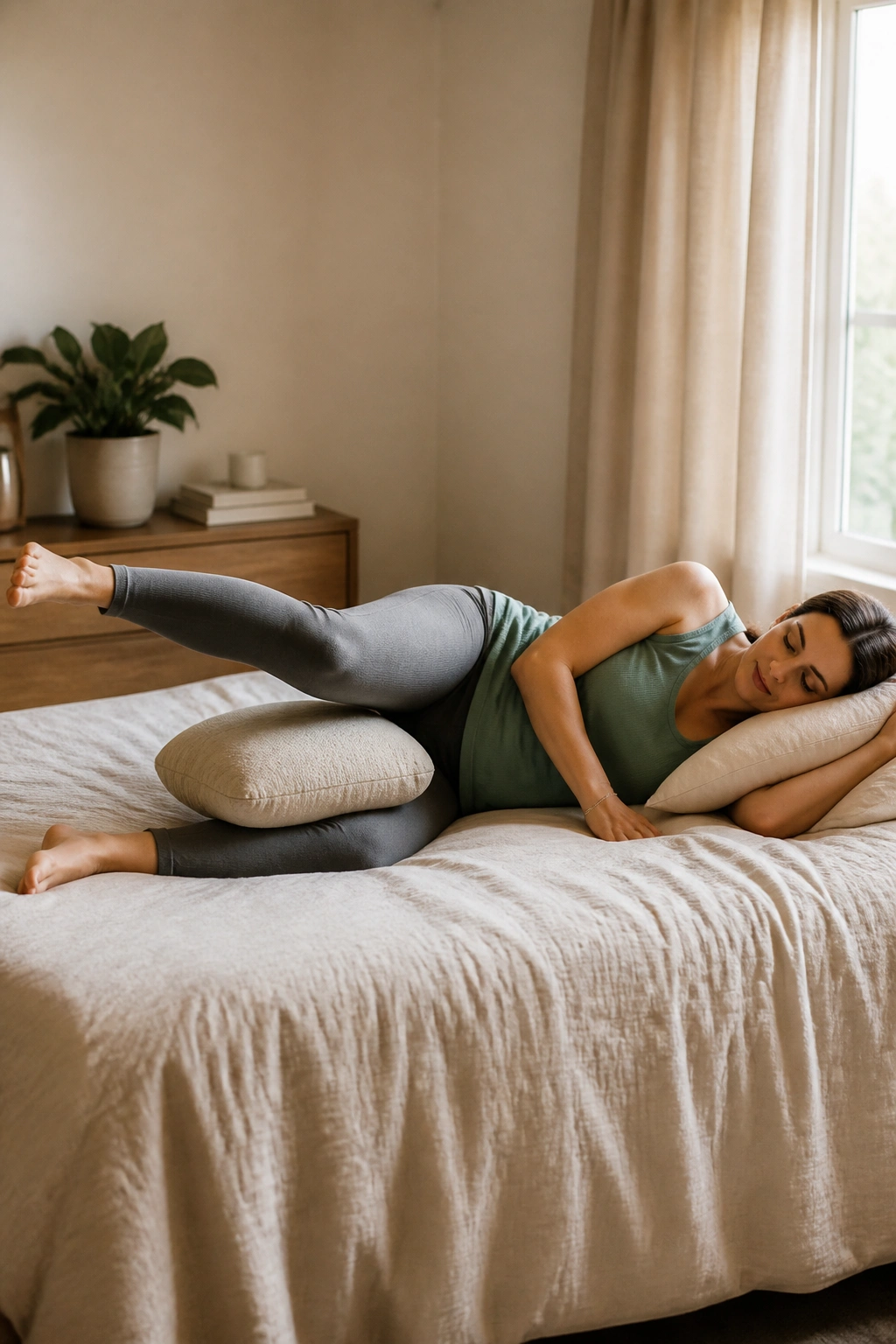
Side-lying work may be the kindest strength training in late pregnancy. That’s the plain truth. No belly pressure, less wrist loading, and a lot less fuss getting in and out of the shape.
Lie on one side with a pillow between the knees and another under the head. Lift the top leg a few inches, lower it with control, then add tiny circles or a bent-knee clam if that feels better. Keep the waist long and the top hip from rolling open. Three to 8 slow repetitions are plenty.
Pregnancy bodies often love this because it opens the outer hip without collapsing the pelvis. Recovery bodies like it for a different reason: it wakes up the glute med, which often gets lazy after weeks of guarding, sitting, and lifting. If you want one specific cue, make it this: lift less than you think you should. The smaller version usually works better.
15. Bird-Dog Prep for Deep Core Reconnection
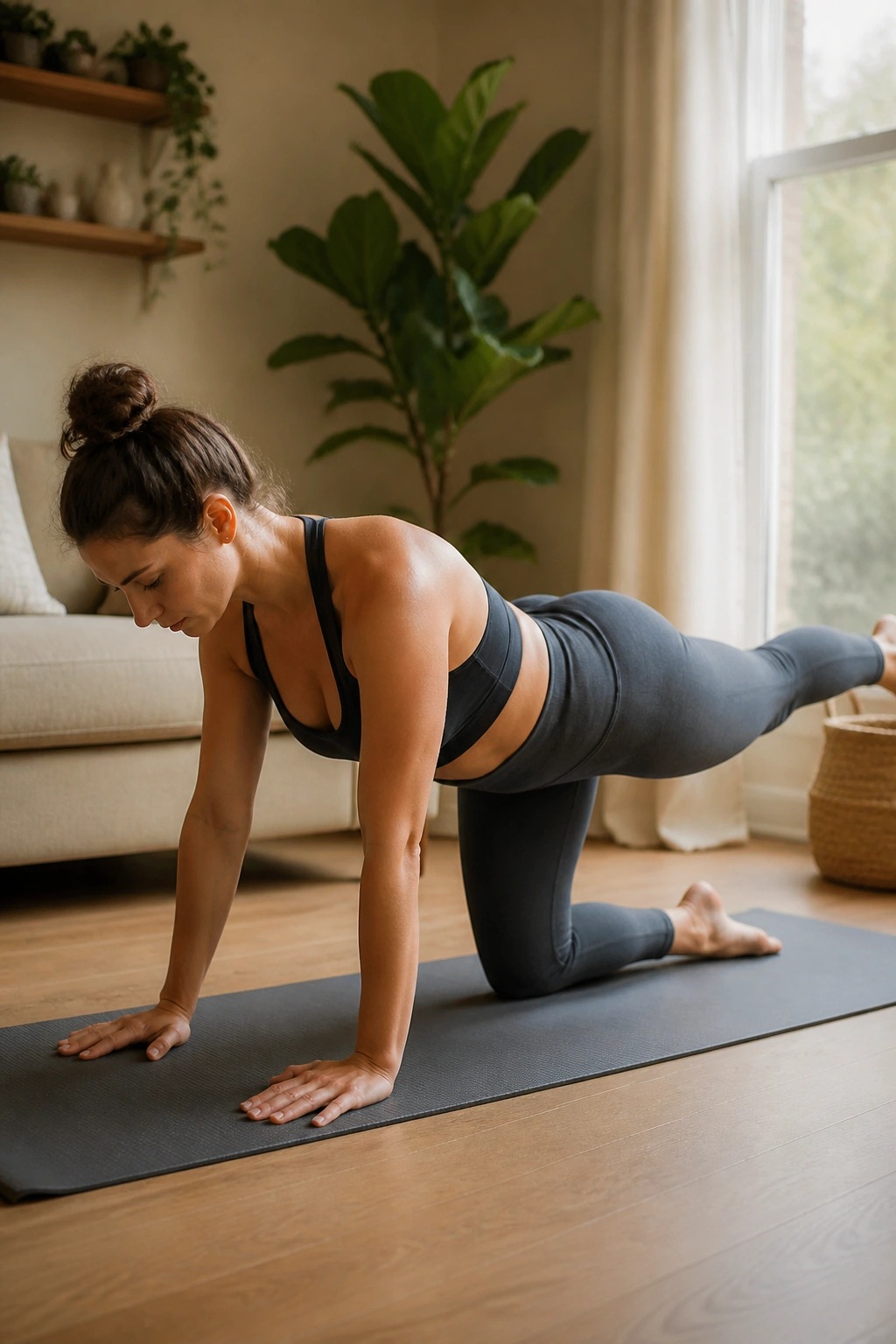
Does bird-dog count as yoga? In a practical sense, yes. It fits the way I think about pregnancy and recovery work: stable, slow, and sneaky in the best way.
Start on hands and knees, or on forearms if that’s friendlier. Reach one leg back without arching the low back. If that feels fine, add the opposite arm. Hold for one breath, then switch. In pregnancy, a leg-only version may be smarter, especially if the full reach makes the belly cone or the pelvis feel unsteady. In postpartum recovery, it’s a solid way to rebuild control around the deep core.
How to Get the Most From It
Keep the reach low. Keep the exhale active. Look for a quiet trunk, not a dramatic stretch. If the abdomen domes, shrink the range. If the wrists dislike the load, take the hands onto blocks or a bench.
The whole exercise should feel clean. A little effort, yes. A lot of strain, no.
16. Standing Wall Roll-Down
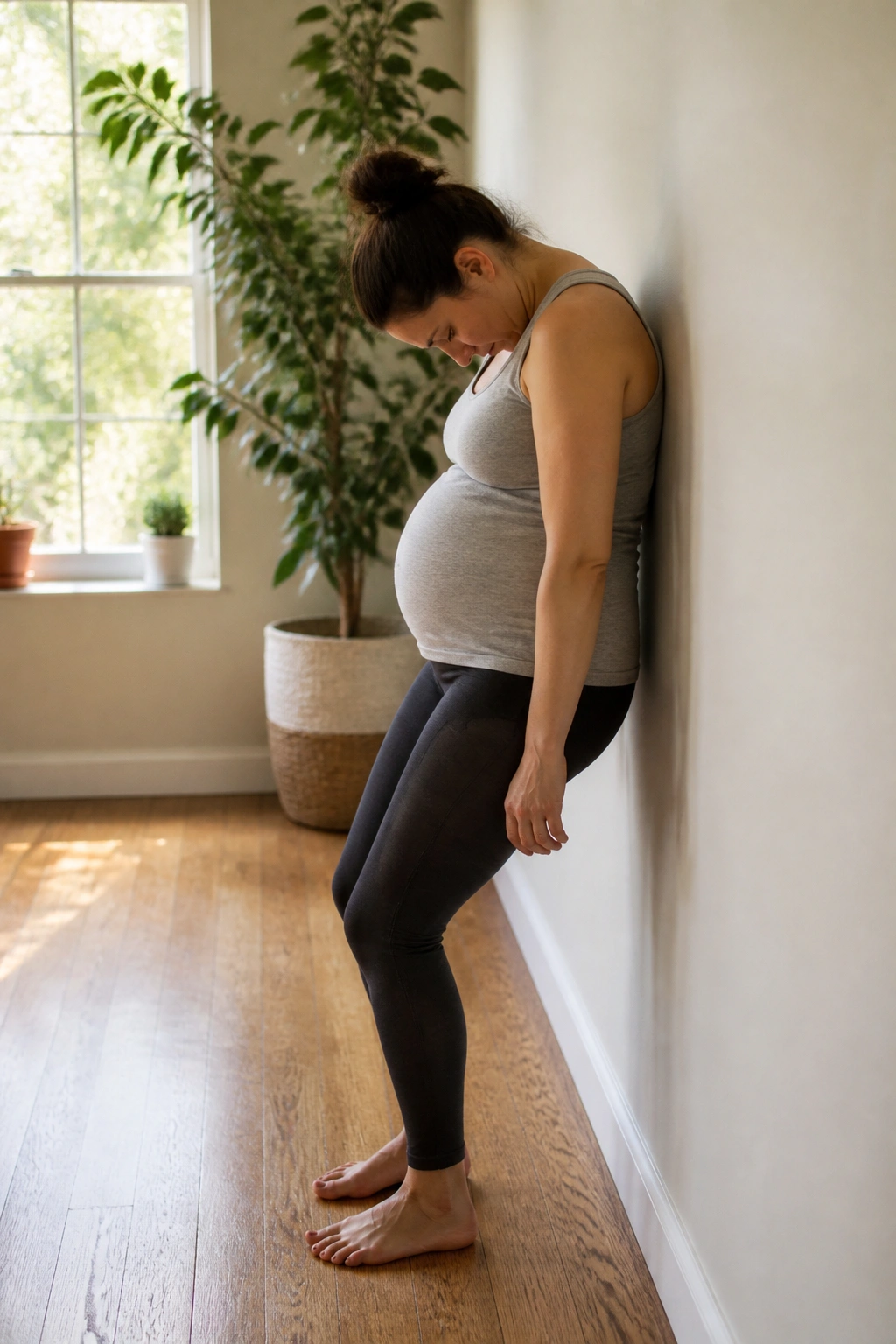
A standing roll-down is one of the best things to do when you do not want to get onto the floor. That sounds trivial until you’ve had a day when bending over your own body feels like enough work already.
Stand with your back near a wall or a few inches away from it. Nod the chin, let the upper back round, and peel down one vertebra at a time as far as feels easy. Hang for a breath or two, then stack back up slowly. If you’re pregnant, keep the knees bent and the descent shallow. In recovery, it can help the hamstrings, spine, and nervous system all at once.
What to Watch For
- Keep the knees soft.
- Rise slower than you descend.
- Stop if you feel dizzy.
- Use the wall for feedback, not leverage.
I like this better than a deep forward fold on days when the body wants honesty more than stretch. It’s a check-in, not a performance.
17. Supported Child’s Pose With Room for the Belly
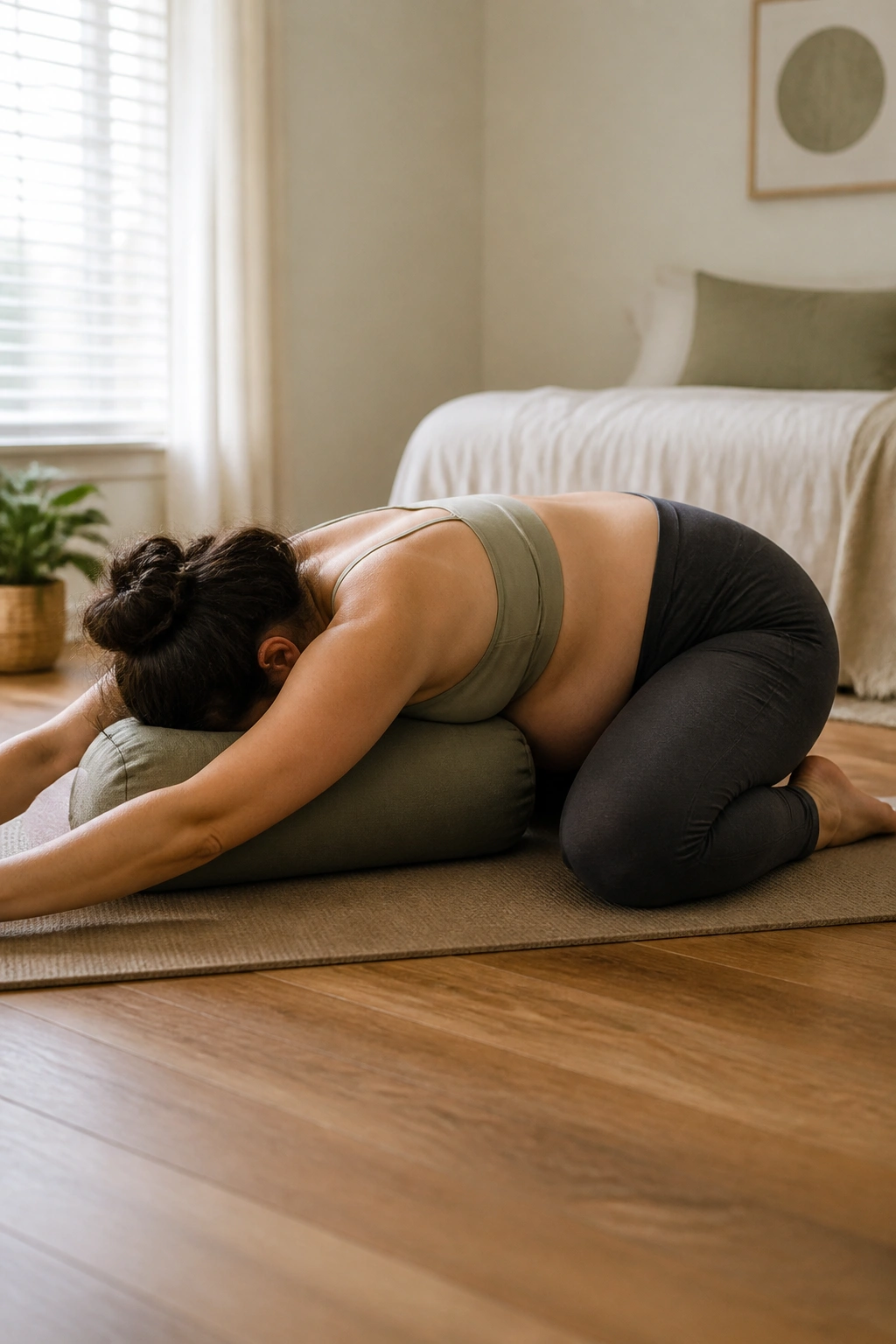
Classic child’s pose is not sacred. There. I said it.
If your belly needs room, widen the knees a lot and place a bolster or stack of pillows under the chest and head so the torso doesn’t collapse. If the hips or knees complain, stay higher. If the pose still feels cramped, skip it and choose something else. In recovery, this can be a useful exhale shape when the front body feels tender and overstretched.
The point is not to fold as far as possible. It’s to let the breath turn inward without pressure. A wide-kneed, supported version can also be a decent place to rest between stronger shapes in a short flow. After birth, especially, a shape like this can feel like a small truce with your own body.
No need to earn it.
18. Standing Figure-Eight Hip Flow
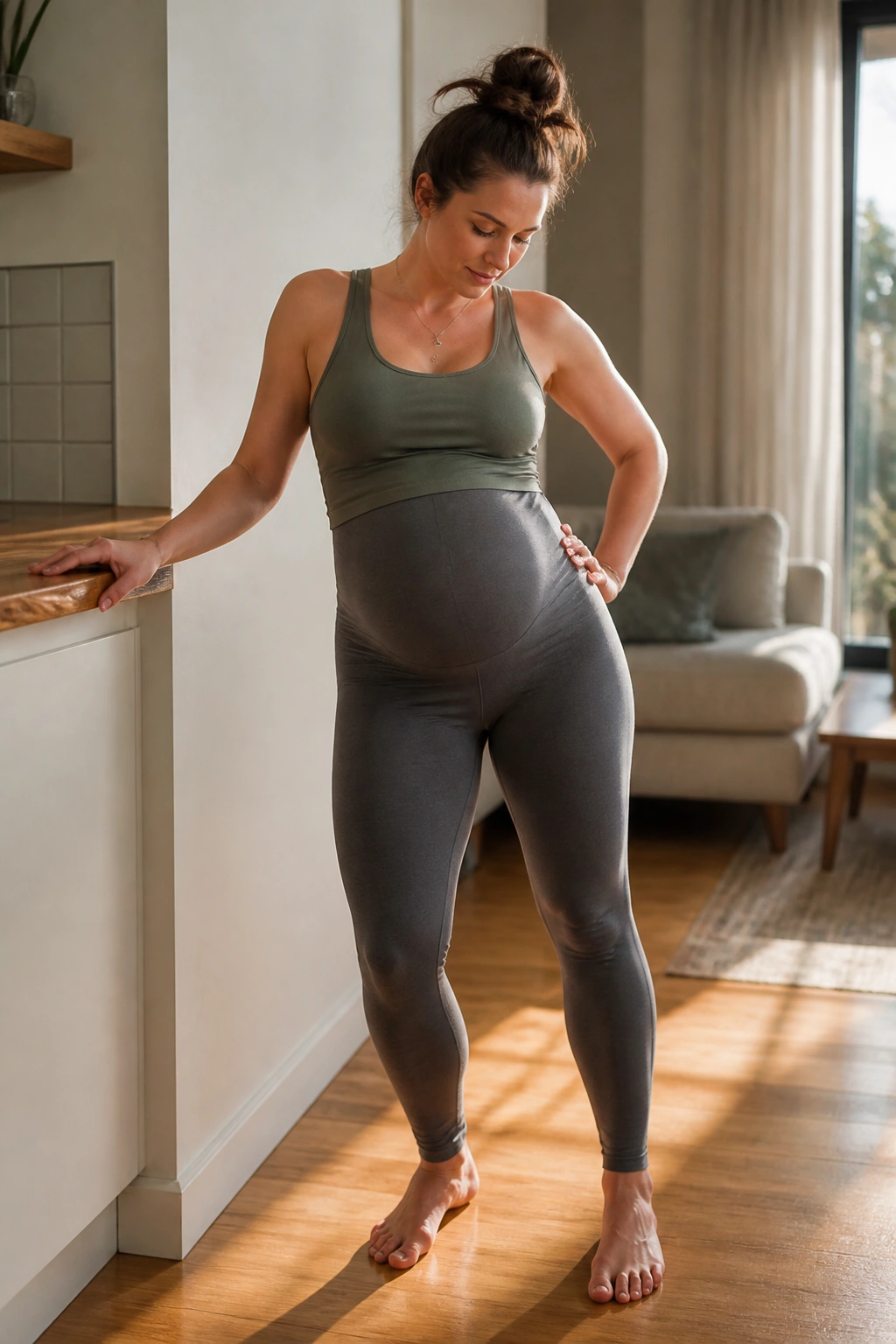
This one looks almost too small to count, which is exactly why it works so well. The hips make a gentle figure-eight pattern while you stand with one hand on a wall or countertop. It’s subtle, smooth, and surprisingly useful for a pelvis that feels stiff after pregnancy or a long stretch of protective movement after birth.
Shift weight from one foot to the other in a slow, looping path. Let the pelvis trace a tiny side-to-side and front-to-back rhythm. Keep the knees soft and the ribs quiet. Then reverse the direction.
Why I Keep Reaching for It
- It helps the walking muscles wake up.
- It does not require floor work.
- It can calm a cranky low back.
- It’s easy to stop the second it feels off.
If the movement feels like a grind, make it smaller, not bigger. That’s the whole trick. The body often likes this better than a big stretch because it feels more like walking than “exercise.”
19. Seated Shoulder-Opening Flow at the Wall
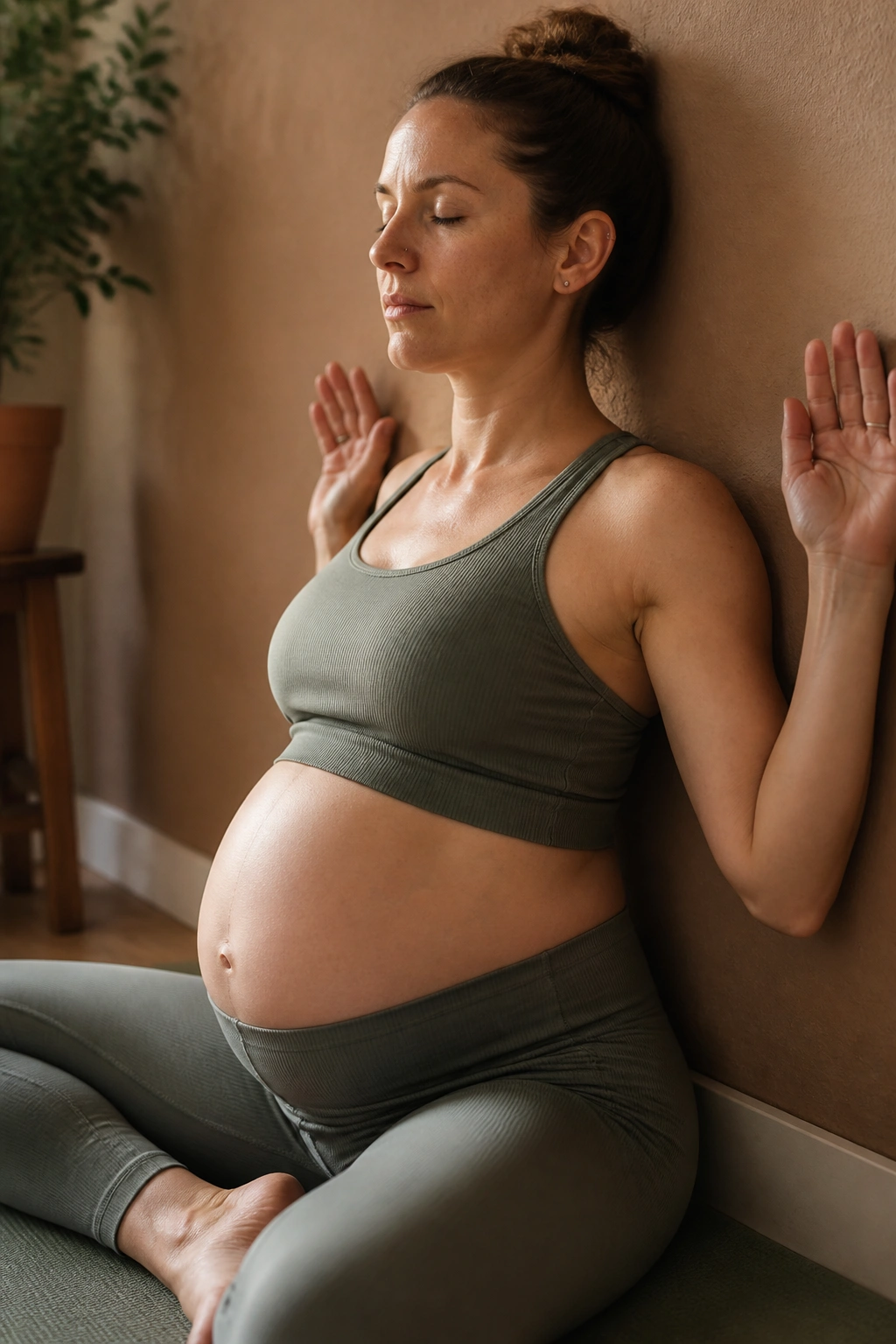
The upper body does a lot of hidden work in pregnancy and recovery, especially if you’re carrying weight in front or feeding a baby for long stretches. Shoulders creep upward. The neck gets short. The chest closes down. No surprise there.
Sit or stand near a wall and roll the shoulders back and down a few times. Then try eagle arms, cactus arms, or a simple wall angel with the elbows close enough to stay comfortable. Keep the ribs from flaring. Breathe into the back of the shoulders, not just the front of the chest. If one side feels tighter, give it an extra breath or two. That side usually earned it.
This is not a fancy sequence. Good. Fancy usually makes the neck work harder. A slow shoulder opening can change how the whole upper body feels, especially on days when you’ve been rounded forward for hours. It’s also one of the easiest flows to do in a tiny space, which makes it more likely you’ll actually use it.
20. Prenatal and Postpartum Quiet Reset Flow
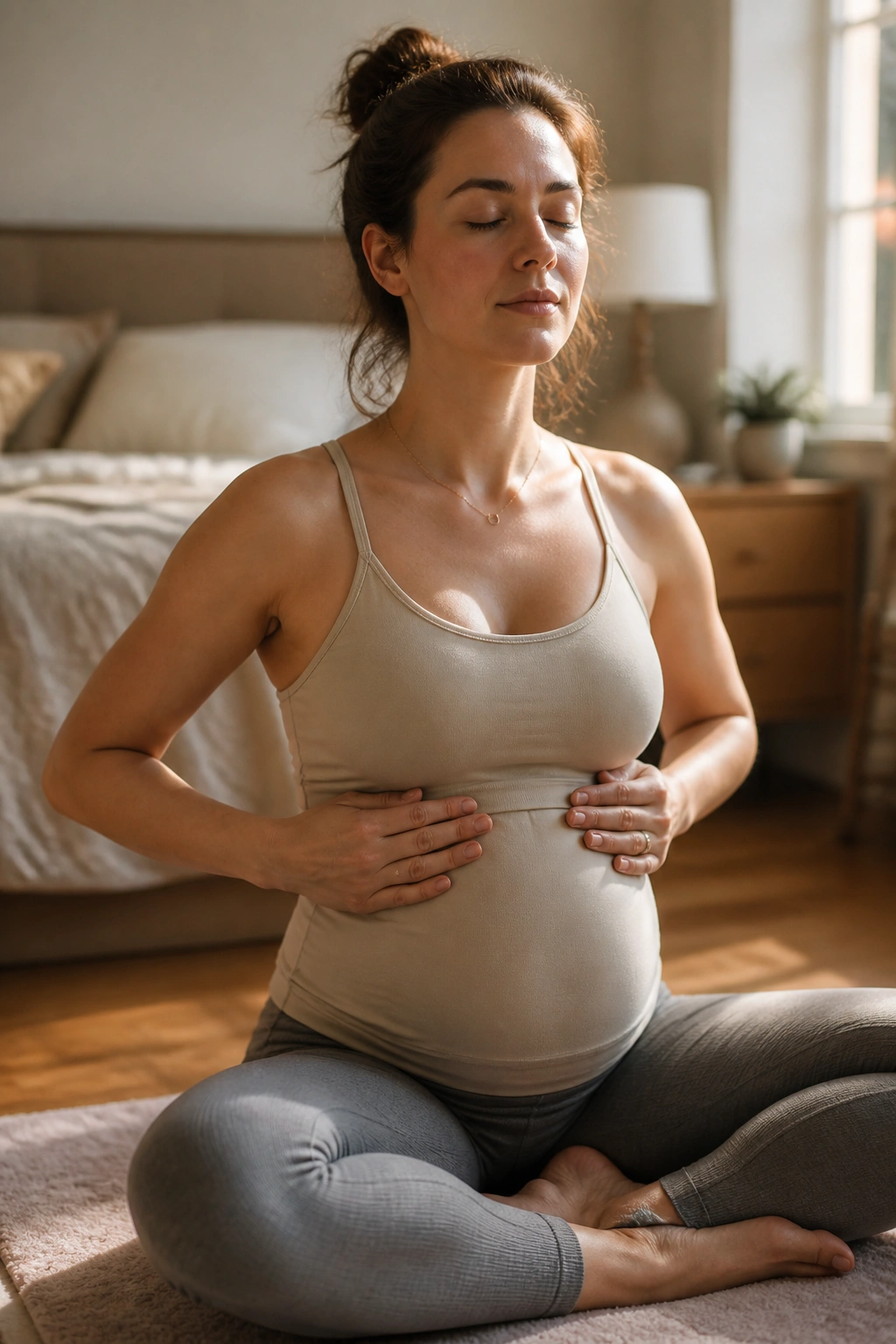
Some days call for a full practice. Plenty of days do not. A quiet reset flow is the one I hand people when they need movement but their body feels like it has already had enough conversation.
Start with two minutes of breath check-in. Move into a few cat-cows, a wall side stretch, and one supported squat or chair hinge. End with side-lying rest or a pillow-supported recline. That’s it. The sequence can be five minutes or fifteen. Short is fine.
The real win is not variety. It’s leaving the body calmer than you found it. In pregnancy, that might mean less pelvic pressure and a little more room around the ribs. In recovery, it might mean less guarding in the abdomen, less stiffness in the neck, and a nervous system that is not buzzing quite so hard. Keep the props nearby. Keep the ranges small. Let the practice be plain.
That kind of yoga is not flashy. It is the one people actually keep doing.
