



A stroller can turn a plain walk into a real workout if you stop treating it like a background prop. Push with intent, use a route with a few turns or gentle rises, and even a 20-minute outing starts feeling like exercise instead of errands.
No circus. That’s the first rule.
The best stroller workouts are built around steady movement, short bursts, and little pockets of strength work you can do without turning the park into a chaos scene. A locked front wheel helps on faster efforts, a snug harness keeps baby settled, and a clean path matters more than fancy gear. If the pavement is cracked, the curb is uneven, or the stroller feels twitchy, slow down and keep it simple.
And yes, it can still count on the days when baby fusses, you only get twelve minutes, or you’re mostly walking one-handed while rechecking the pacifier every thirty seconds. That’s part of the deal. The trick is picking routines that are easy to start, easy to stop, and hard enough to leave you warm by the end. Start with the first one and pick the rest based on how much time, energy, and patience you actually have.
1. A Flat-Loop Power Walk That Gets You Warm Fast
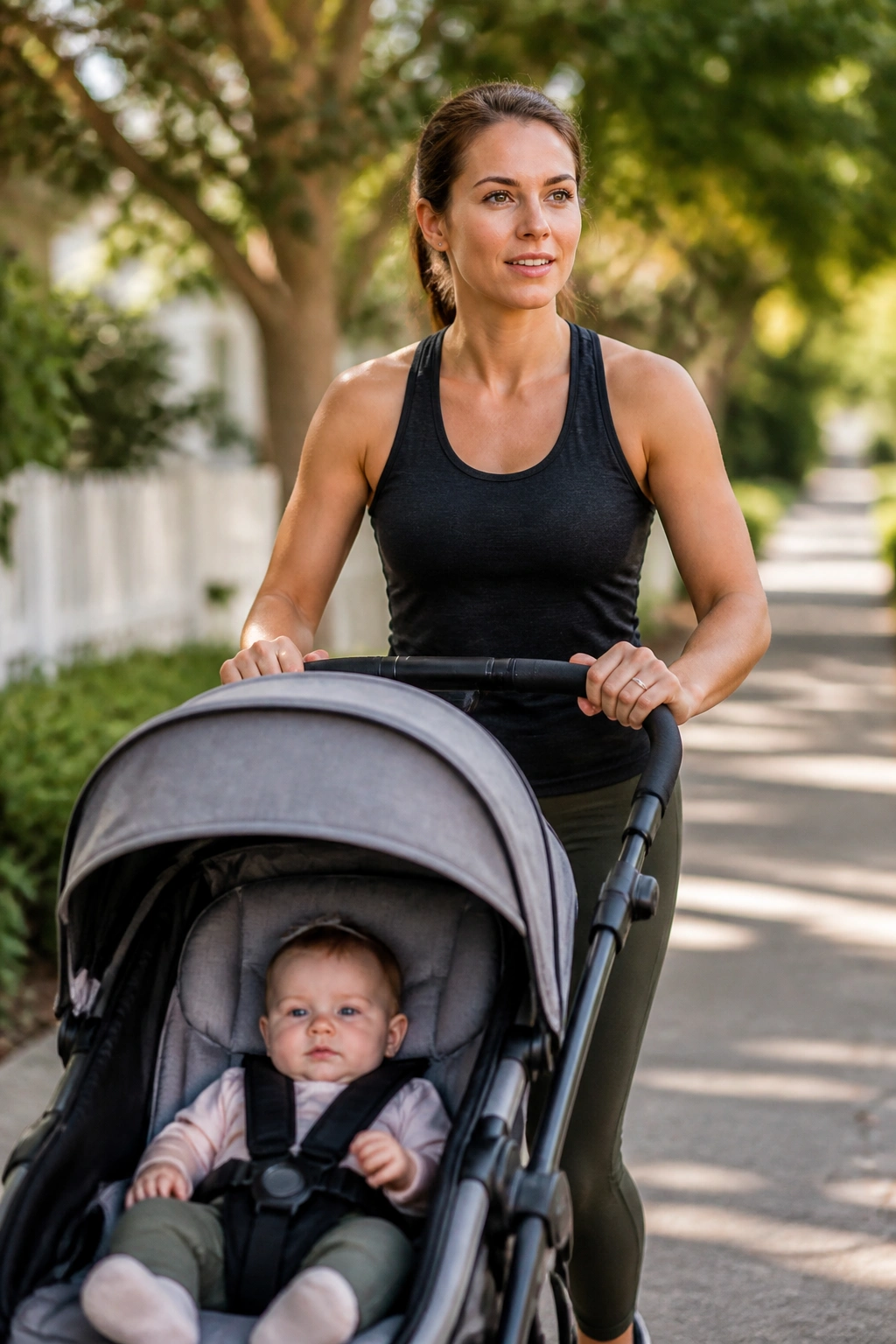
This is the workhorse. A flat loop around your neighborhood, a park path, or a school track gives you the cleanest stroller workout there is: steady pushing, quick feet, and no drama.
Why It Works
The magic comes from pace, not spectacle. Walk easy for 5 minutes, push hard for 10, then cool down for 5, and you’ve already done more than a casual stroll. Keep your elbows bent, your shoulders low, and your stride brisk enough that you can talk in short sentences but not ramble on forever.
The stroller should feel smooth, not jerky. If you’re leaning into the handlebar like you’re trying to move a shopping cart full of bricks, shorten your stride and stand taller. A strong walk is upright, quick, and controlled.
Quick Setup
- 5 minutes easy
- 10 minutes brisk, steady pushing
- 5 minutes easy again
- Optional: 3 x 30-second faster surges near the end
Tip: Pick a loop with one bench and one bathroom. That tiny bit of planning saves a lot of frustration later.
2. Hill Repeats That Turn a Stroller Into Cardio
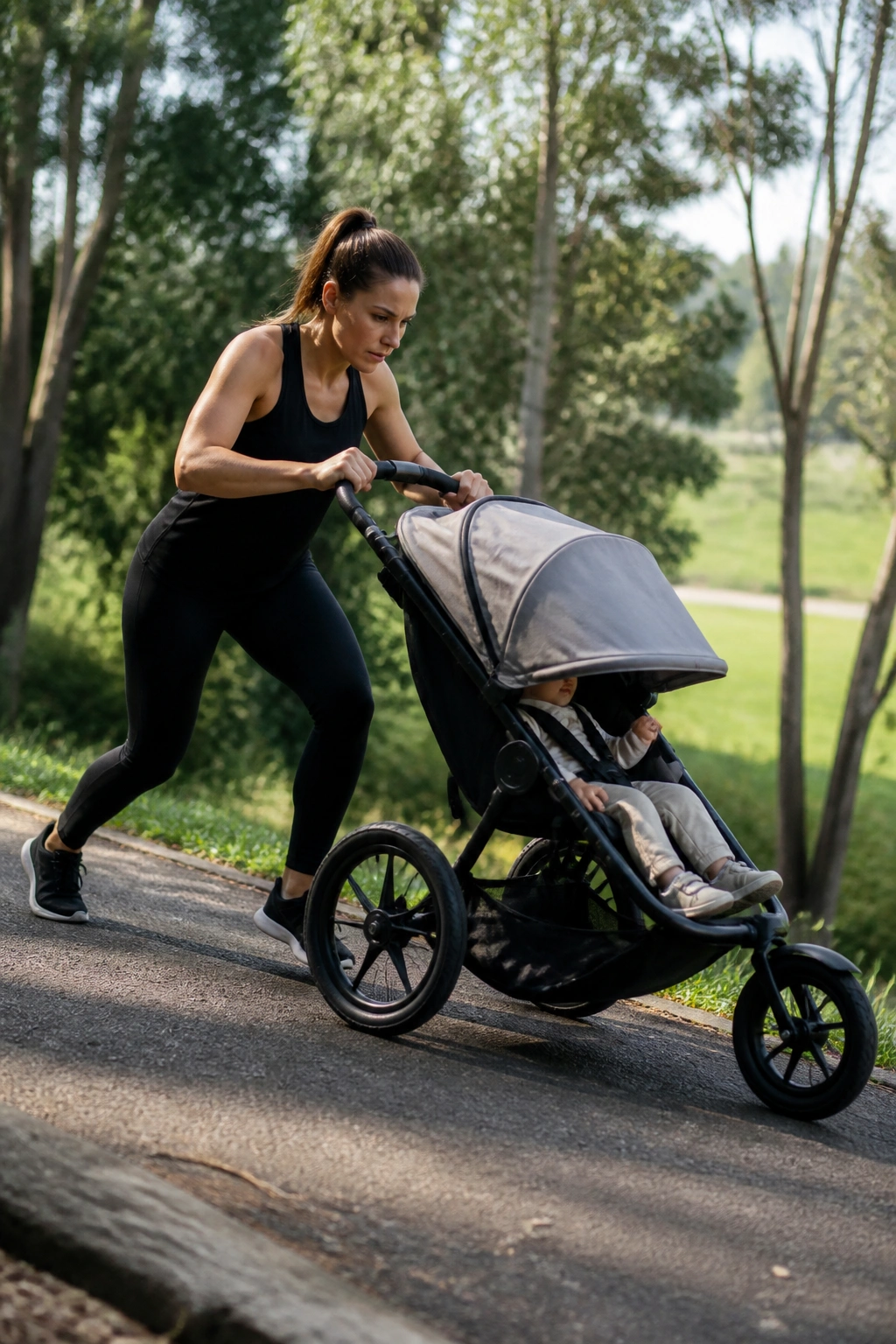
A mild hill does more in 10 minutes than a flat route does in 20. That’s not hype; it’s just mechanics. Your glutes work harder, your heart rate climbs sooner, and the stroller adds enough resistance to keep the effort honest.
Pick a hill you can climb without hunching over the handle. Short, steady pushes beat lung-busting charging every time. Walk up for 45 to 60 seconds, recover on the way down, and repeat 6 to 8 times. If the downhill feels sketchy, turn around at the top and use a different route home.
The downhill is where people get sloppy. Don’t.
Keep one hand relaxed and the other ready on the handle, especially if the sidewalk dips or the curb is uneven. With a jogging stroller, a locked front wheel helps. With a regular stroller, go slower and skip anything steep or rough. The goal is effort, not white-knuckle steering.
A hill repeat session leaves your legs heavy in the good way. Calves feel awake. Glutes too. And if baby naps through it, that’s a bonus you take without arguing.
3. Walking Lunges at Every Quiet Sidewalk Stretch
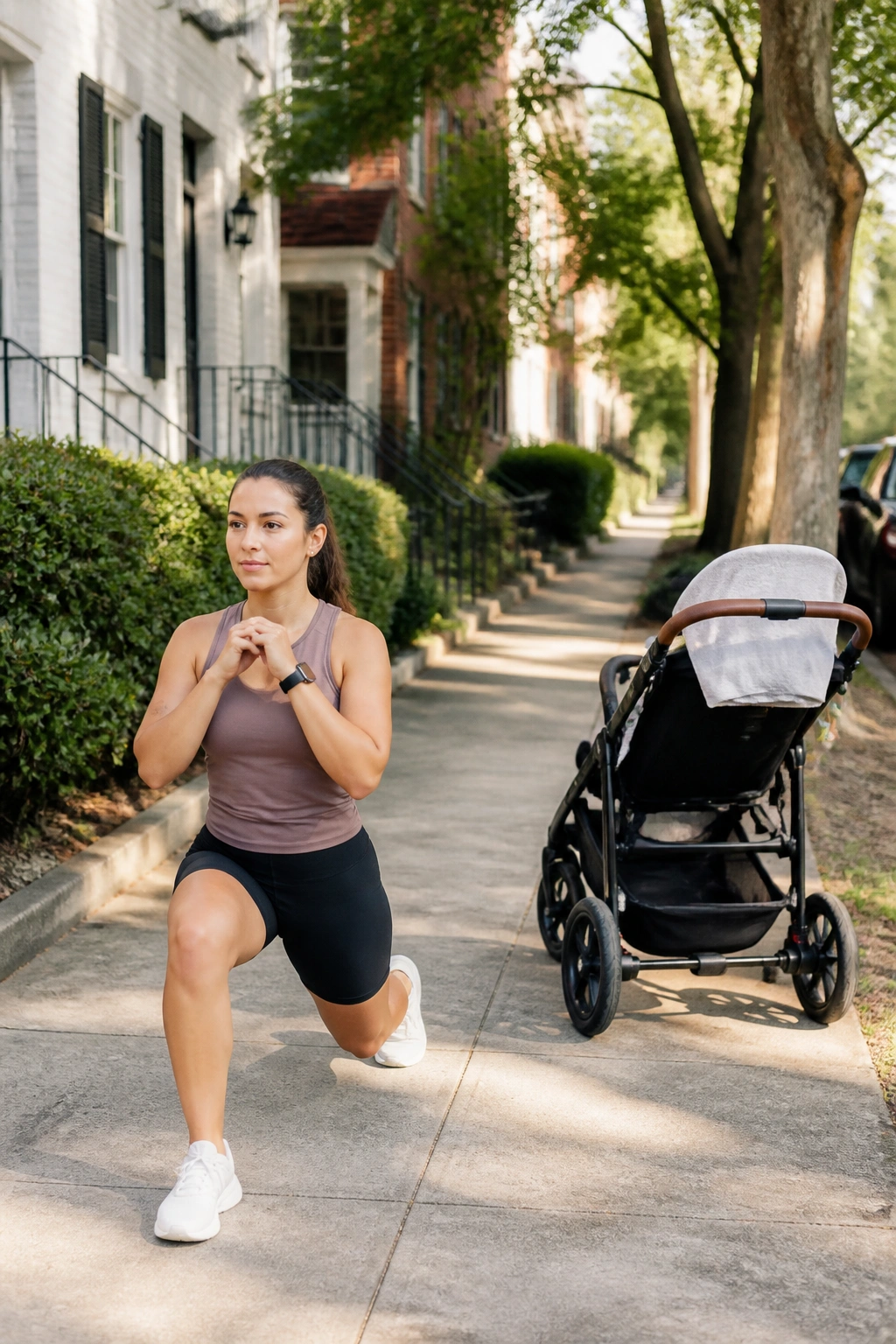
Got a calm block and a little space? Then you’ve got a strength session hiding in plain sight.
Stop the stroller, set the brake, and step into walking lunges for 6 to 10 reps per leg. The stride should be long enough that your front knee stays stacked over your ankle, not pitched way past your toes. Keep the torso tall and the core lightly braced, like you’re holding in a cough.
How to Make It Safer
If the stroller shifts even a little when you step back, move it closer to a curb, fence, or bench before you start. You want the stroller parked, not wandering. Brake first, always.
A lot of people rush lunges and turn them into shaky half-steps. Don’t do that here. Better to take 6 clean reps than 12 sloppy ones. If you’re postpartum and balance feels off, reverse lunges are easier than forward steps, and you can keep one hand on the handle between reps.
This workout works best in short bursts: one block of lunges, then a brisk walk, then another stop. It feels a little odd the first time. After that, it just feels smart.
4. Side-Step Shuffles for Hips, Glutes, and Balance
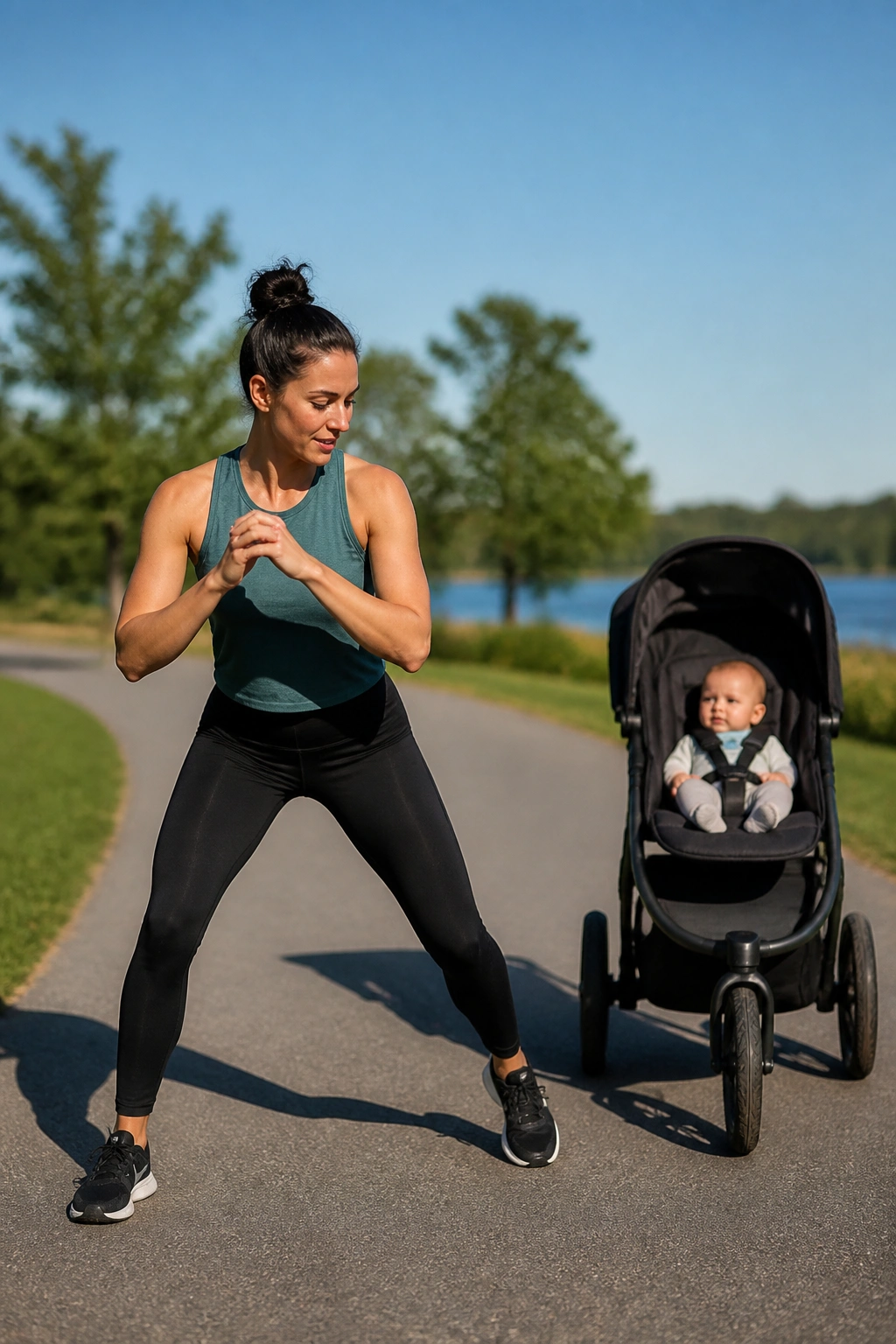
This is the move you do when baby’s awake, the route is too crowded for speed work, and you still want your lower body to work.
Picture a wide sidewalk, an empty parking lot edge, or a stretch of path with enough room to move side to side. Step right, bring the left foot in, repeat 10 to 15 times, then switch directions. Keep the stroller close, hands light but steady, and don’t cross your feet like you’re trying to win a dance contest.
What to Watch For
- Keep your toes pointing forward
- Sit your hips back a little
- Stay low enough to feel your outer hips
- Move slowly if the stroller feels hard to control
The shuffles look small. They burn more than they look.
Add a mini squat every 4 steps if you want more work, but only if the ground is flat and you can keep the stroller from drifting. This is one of those routines that sounds mild and then makes your hips complain on the stairs later. That’s fine. Complaints are the point.
5. Fast-Feet Intervals on One Straight Path
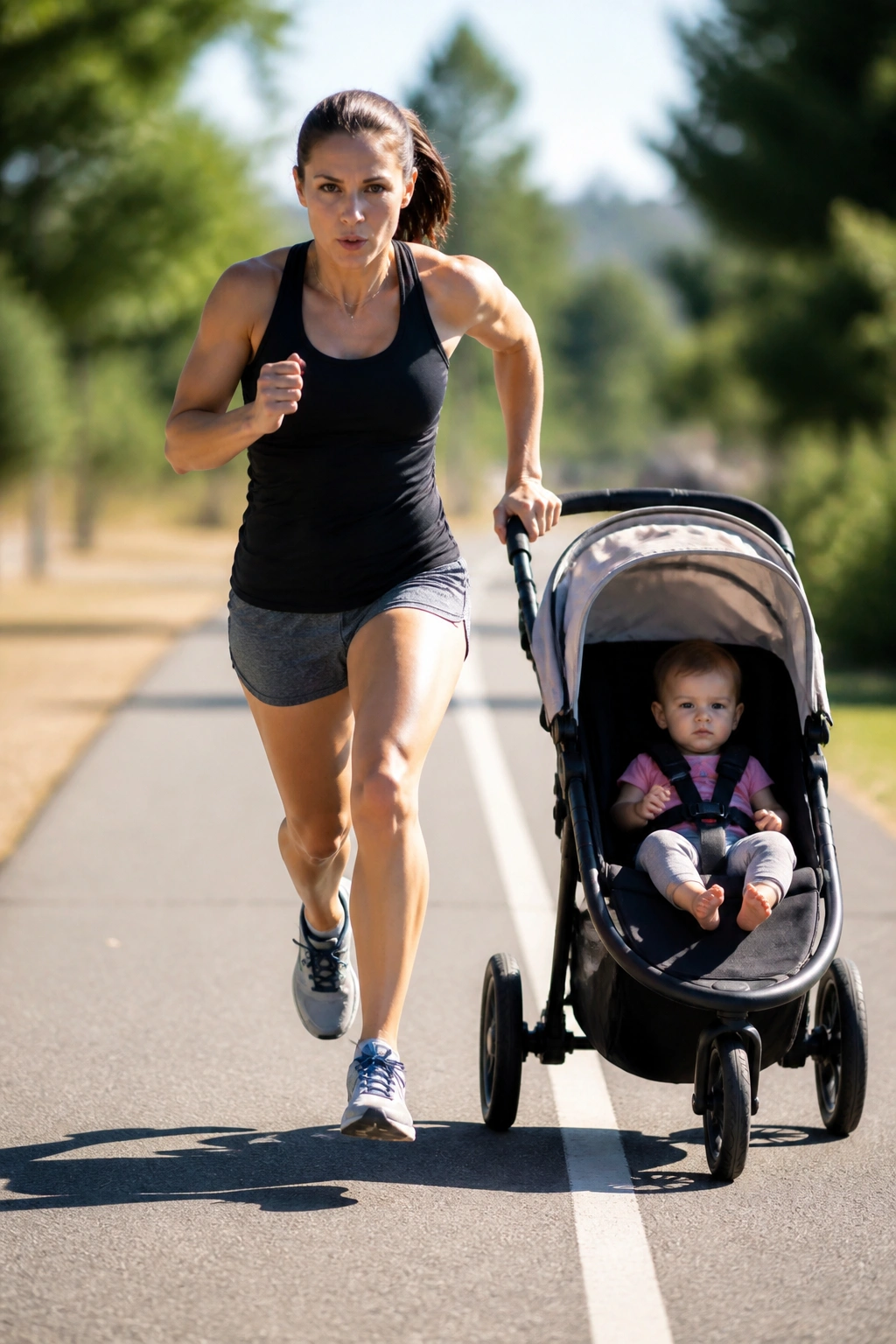
Straight paths are underrated. You do not need hills, cones, or a complicated plan to make a stroller workout feel serious. You need a timer and a clear strip of pavement.
Walk as fast as you can for 20 seconds, then recover for 40 seconds. Repeat 8 to 12 times. That’s it. Keep your feet quick and short, not choppy, and let your arms swing enough to keep rhythm without yanking the stroller. If you can’t breathe through your nose by the end, you’re probably in the right zone.
The key is control. You’re not sprinting. You’re building speed on purpose, which means the stroller should stay smooth and the wheels should track straight. If it starts to wobble or you have to lean your body weight into the handles, ease back a notch.
One nice thing about this workout: it fits inside real life. Fifteen minutes, maybe less. No costume change required.
6. Stop-and-Go Squats at the Park Bench
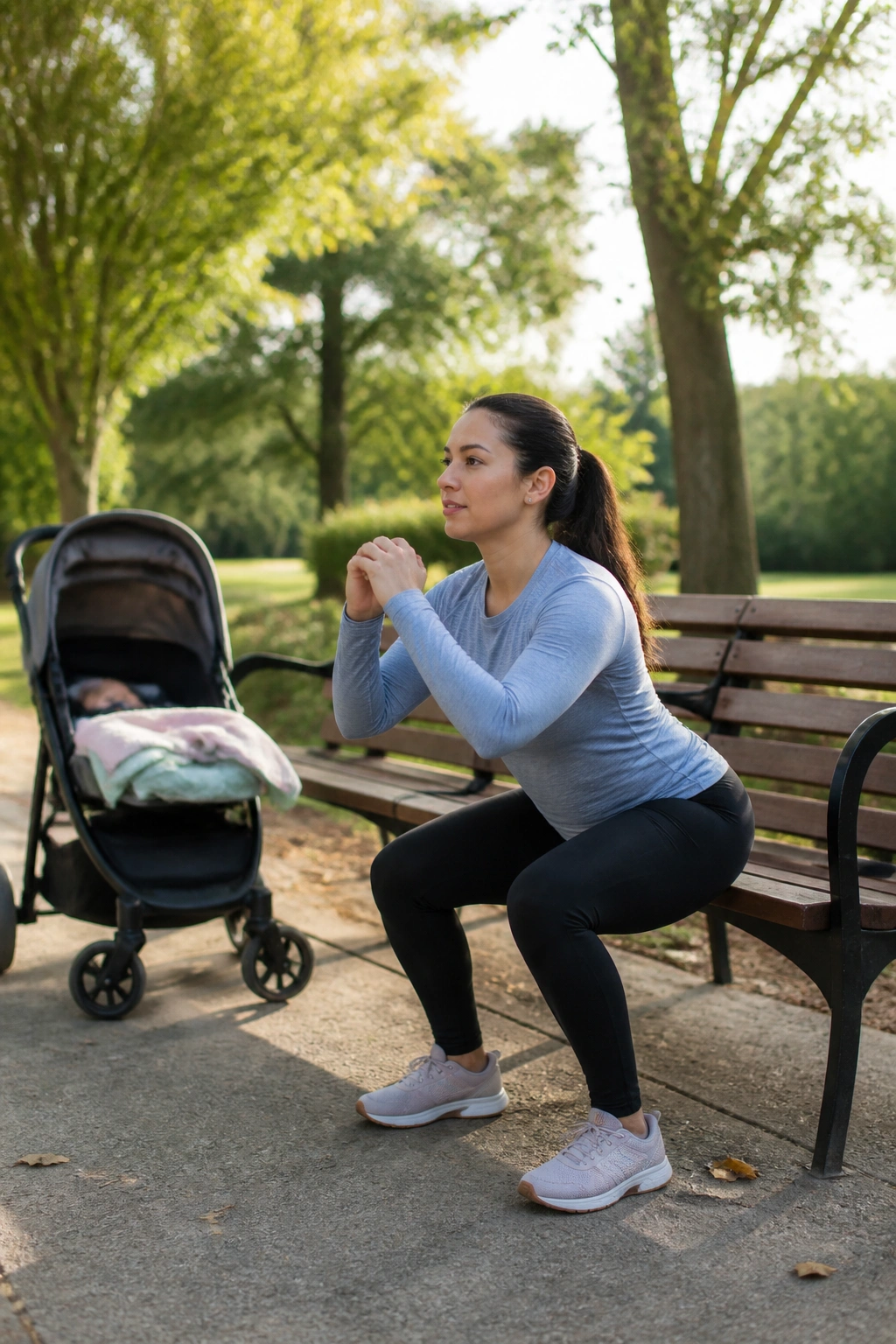
I like this one because it breaks the “walk only” habit. Instead of staying in motion the whole time, you stop, squat, breathe, and go again. It’s a little blunt, which I appreciate.
After a 3- to 5-minute walk, park the stroller, lock the brake, and do 10 to 15 bodyweight squats. Stand with feet about shoulder-width apart, sit back like you’re reaching for a chair, and keep your heels planted. Then walk another 2 to 3 minutes and repeat the circuit.
A Simple Bench Circuit
- 10 to 15 squats
- 8 to 10 incline push-ups on the bench
- 20 to 30 seconds of marching in place
- 1 to 2 minutes brisk walking
This is useful on days when you want a full-body feel without a full gym session. Squats wake up your legs. Incline push-ups give your chest and shoulders something to do. The marching keeps the heart rate from dropping too far between sets.
If the bench is sticky, wet, or covered in mystery crumbs, skip the push-ups and keep walking. Common sense counts as training gear.
7. Calf Raises and Toe Rolls at the Curb
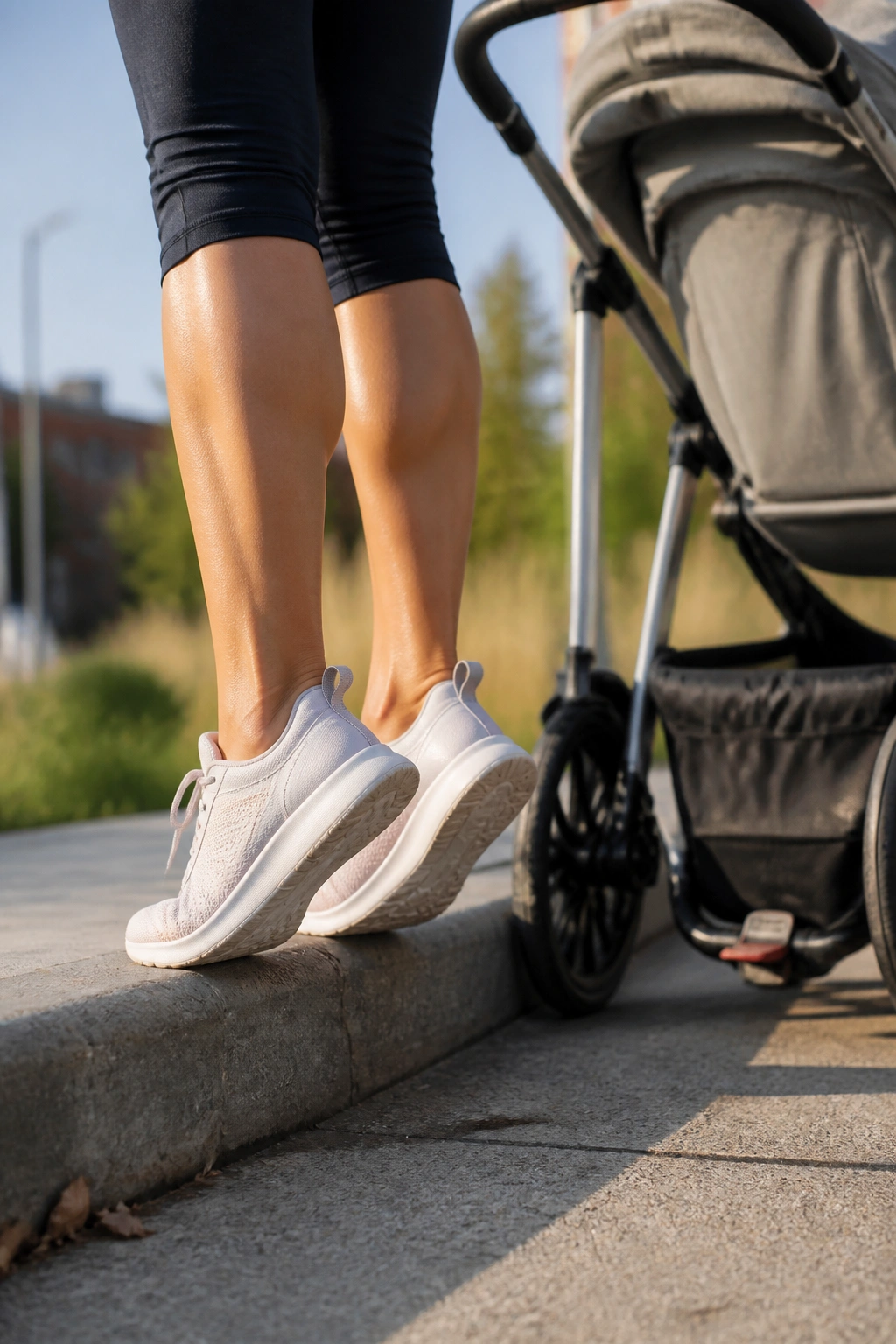
The curb is not glamorous. It is, however, a great little strength station.
Stand with the stroller parked and the brake set. Raise your heels slowly for 15 to 20 calf raises, then lower with control. After that, rock back onto your heels for toe lifts, raising the front of the foot 10 to 12 times. The whole thing takes maybe two minutes, and your lower legs will notice.
Why It Works
Calves get ignored in a lot of stroller workouts because walking feels so automatic. That’s a mistake. Calf strength helps with push-off, ankle stability, and the kind of steady footwork you need when you’re steering around cracks, leaves, or a curb cut that drops off too fast.
Hold the handle lightly. Don’t lean your body weight into it. If the stroller is doing the balancing, the exercise is gone.
How to Use It
Do calf raises at every bench stop or every other block. Small doses add up fast, and they don’t leave you gasping. That makes them useful on low-energy days when you still want the outing to count.
8. Figure-Eight Circuits in an Empty Lot
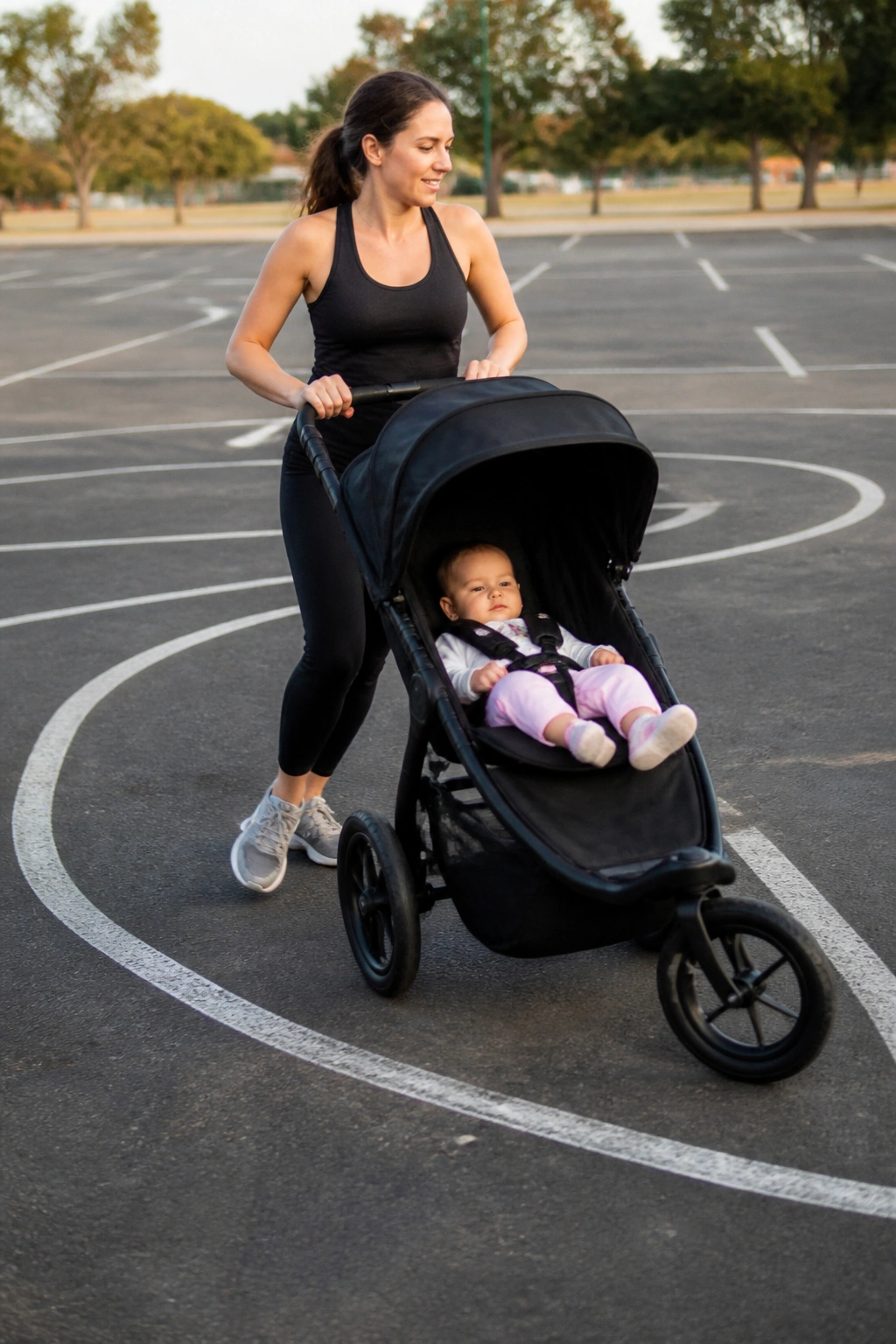
An empty lot or open paved space gives you room to move the stroller in curves instead of straight lines, and that changes the whole feel of the workout.
Start by pushing in a loose figure eight around two fixed points — painted lines, parking spots, or trees that sit a few yards apart. Walk for 90 seconds, then stop for 20 seconds and do 10 quick marching steps in place. Repeat 4 to 6 rounds.
What Makes It Different
The turning forces your core and grip to stay awake. You can’t zone out the way you sometimes do on a long straight sidewalk, and that’s half the point. The stroller also gets a little more maneuvering work, which is useful if you’ve been baby-carrying it around narrow spaces all week.
- Use broad, smooth turns
- Keep the front wheel responsive, not twitchy
- Avoid sharp pivots on rough pavement
- Keep the pace moderate if baby is sleeping lightly
One good figure-eight round can wake up your whole body. Two or three rounds will usually be enough to remind you that “easy” doesn’t mean “useless.”
9. Reverse Lunges with the Brake Locked
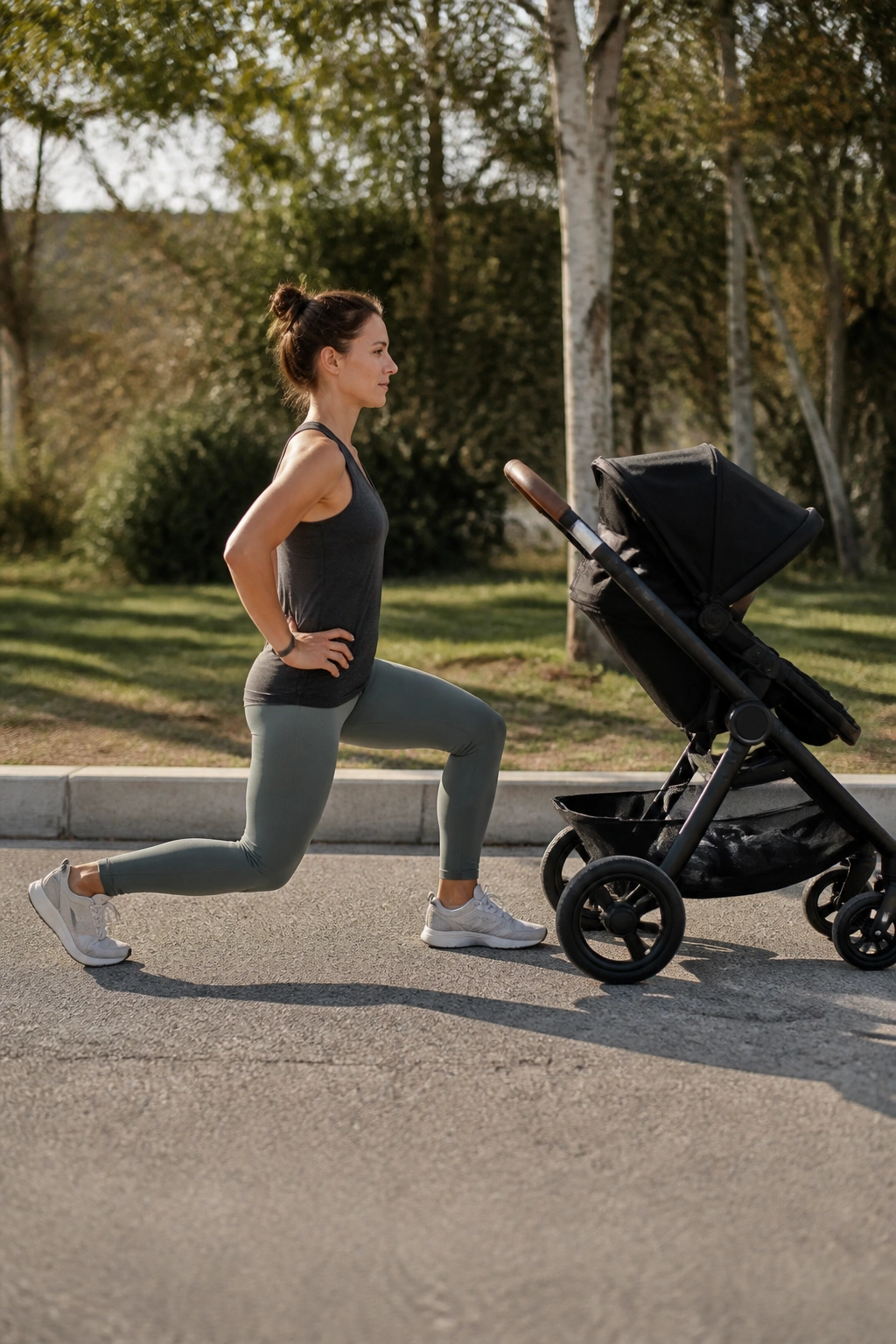
Reverse lunges are the stroller-strength move I’d hand to most people first. They’re cleaner than forward lunges, and you’re less likely to lose balance when you step back instead of forward.
Set the brake, stand tall, and step one foot back into a shallow lunge. Lower until both knees bend comfortably, then press through the front heel to stand. Do 6 to 8 reps per side, rest, and repeat for 2 rounds.
The step back should be small enough that you stay in control. Big dramatic lunges look impressive for about a second and then turn wobbly. You want the opposite: quiet, stable, repeatable. Smooth reps beat deep reps.
If your knees grumble, shorten the range. If your baby stirs whenever you step away from the stroller, keep one hand on the handle between reps and move slower. That’s not cheating. That’s real life.
This is one of the better stroller workouts for building single-leg strength without needing any extra gear.
10. Push-Pace Intervals for Short Nap Windows
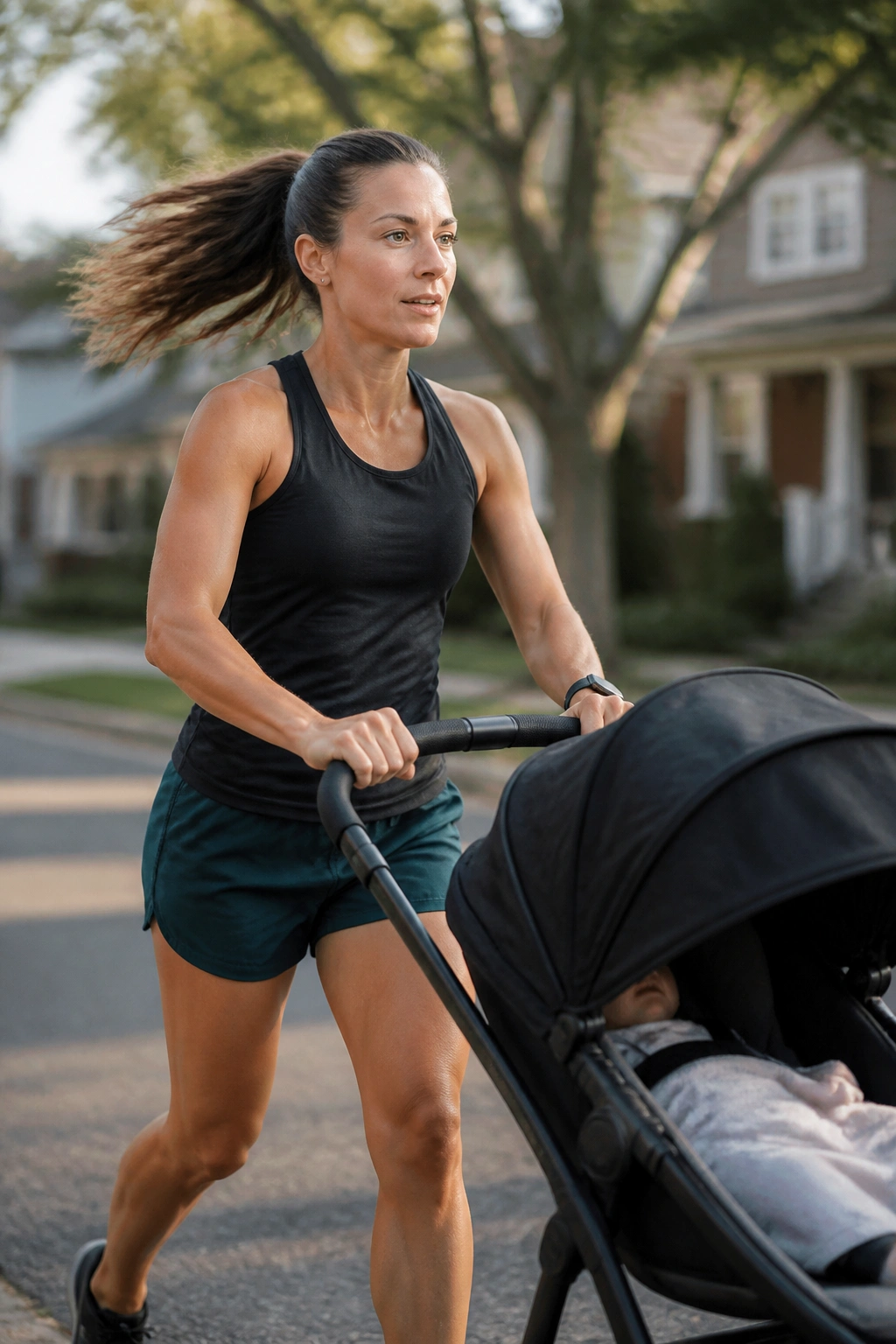
Some workouts need a timer. This one definitely does.
Use a 4-minute brisk push, then 1 minute easy, and repeat 3 to 5 times. The pace should feel strong but sustainable — enough to raise your breathing, not enough to make you bargain with the sidewalk. On the brisk blocks, keep your elbows bent and your feet quick. On the easy blocks, let your shoulders drop and your hands relax.
There’s a nice rhythm to this kind of session. You don’t spend long in any one place mentally, which helps when you’re tired or the baby has gone from sleepy to suspicious. A short burst of effort feels cleaner than trying to talk yourself through a 45-minute slog.
If you only have 20 minutes, this is one of the smartest stroller workouts to reach for. It gets you warm fast, and the recovery segments keep you from blowing up halfway through. That matters more than people admit.
11. Bench Dips, Incline Push-Ups, and a Quick Walk Back
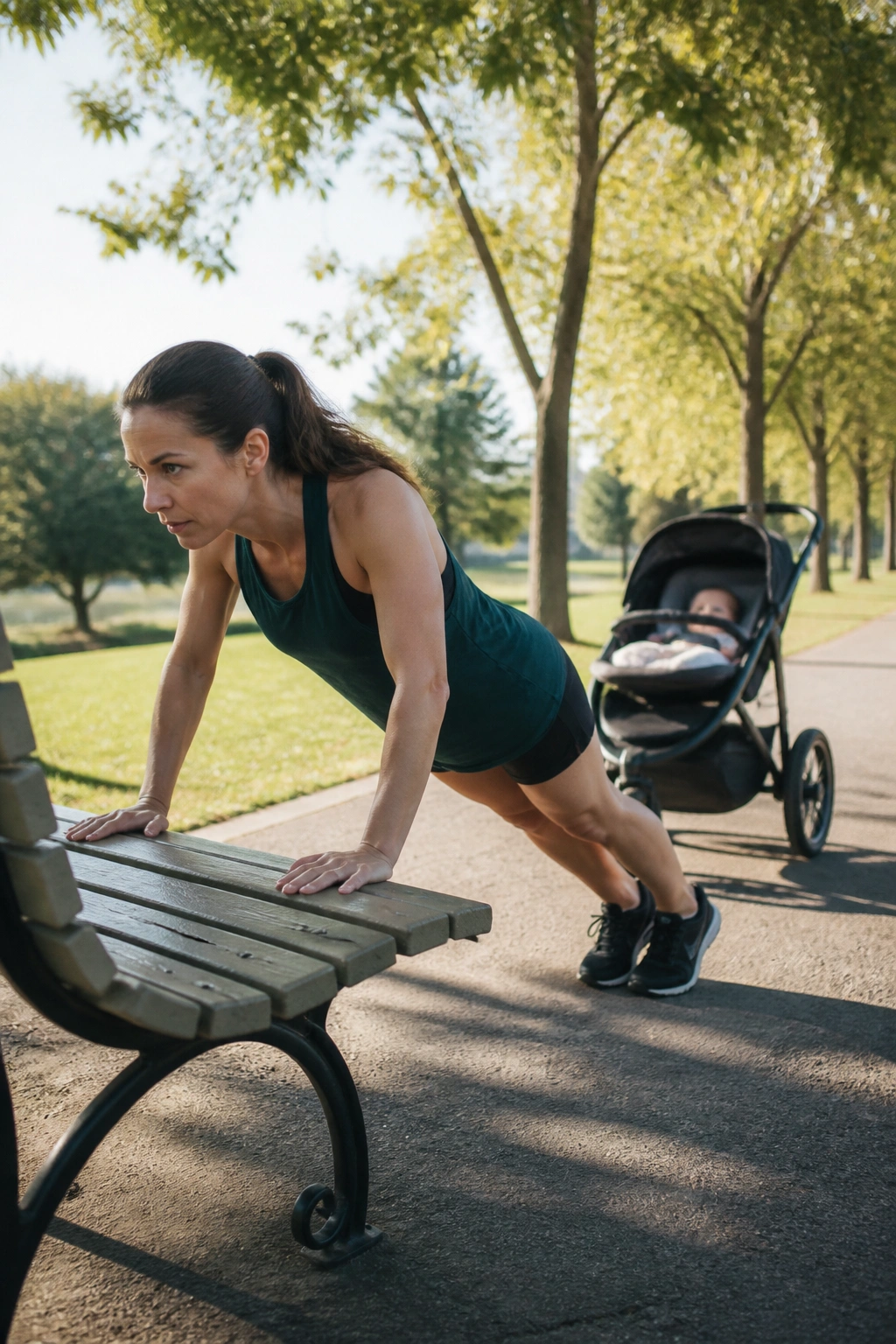
This one is a stop-and-circuit day. You walk to the bench, work, walk away, then do it again.
The Circuit
- 8 to 12 incline push-ups with hands on the bench
- 6 to 10 bench dips, if your shoulders feel fine
- 30 seconds of marching in place
- 2 to 3 minutes brisk walking
What to Skip if Needed
If dips bother your shoulders, leave them out. That move is not sacred. Wall push-ups, bench push-ups, or even a longer march will do the job without nagging your joints.
The Best Part
The stroller gives you the structure. You’re not wandering around wondering what to do next. Walk, stop, push, move on. It sounds plain because it is plain, and plain routines are often the ones that stick.
This kind of circuit also breaks up the monotony of a longer outing. Arms get involved. Chest gets involved. Your heart rate climbs without needing a run. And because the stops are short, baby stays in the middle of the action instead of waiting forever for you to finish some elaborate set.
12. March-and-Mobility Breaks for Low-Energy Days
Some days ask for patience more than ambition.
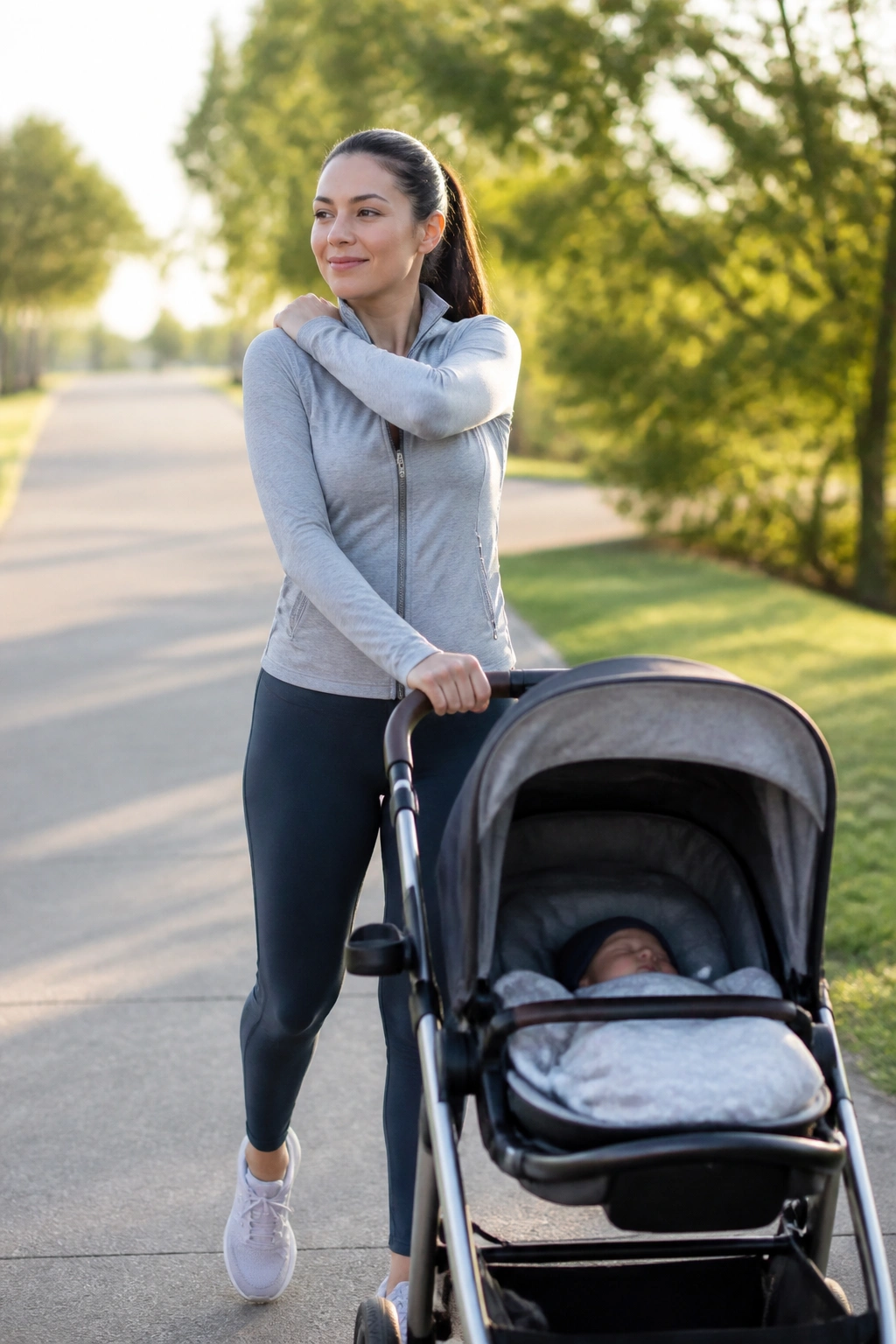
Baby slept badly, you slept worse, and the idea of a hard session feels laughable. Fine. Walk for 2 minutes, stop, and do a small mobility break beside the stroller: 8 shoulder rolls, 8 hip circles, 10 marching steps, 8 gentle reaches overhead, then keep moving. Repeat 4 or 5 times.
The point here is not calorie burn. It’s keeping your body from feeling welded into one position. The shoulder rolls matter after a week of pushing, carrying, and lifting. The hip circles help undo the stiff feeling that builds up from chasing a stroller around all morning. And the marching keeps your legs awake without asking for a big lift.
This is the kind of outing that saves the day. It sounds almost too easy until you realize you feel looser, calmer, and less trapped in your own body by the time you head home. On a hard day, that’s enough.
13. Gentle Inclines That Build Stamina Without a Sprint
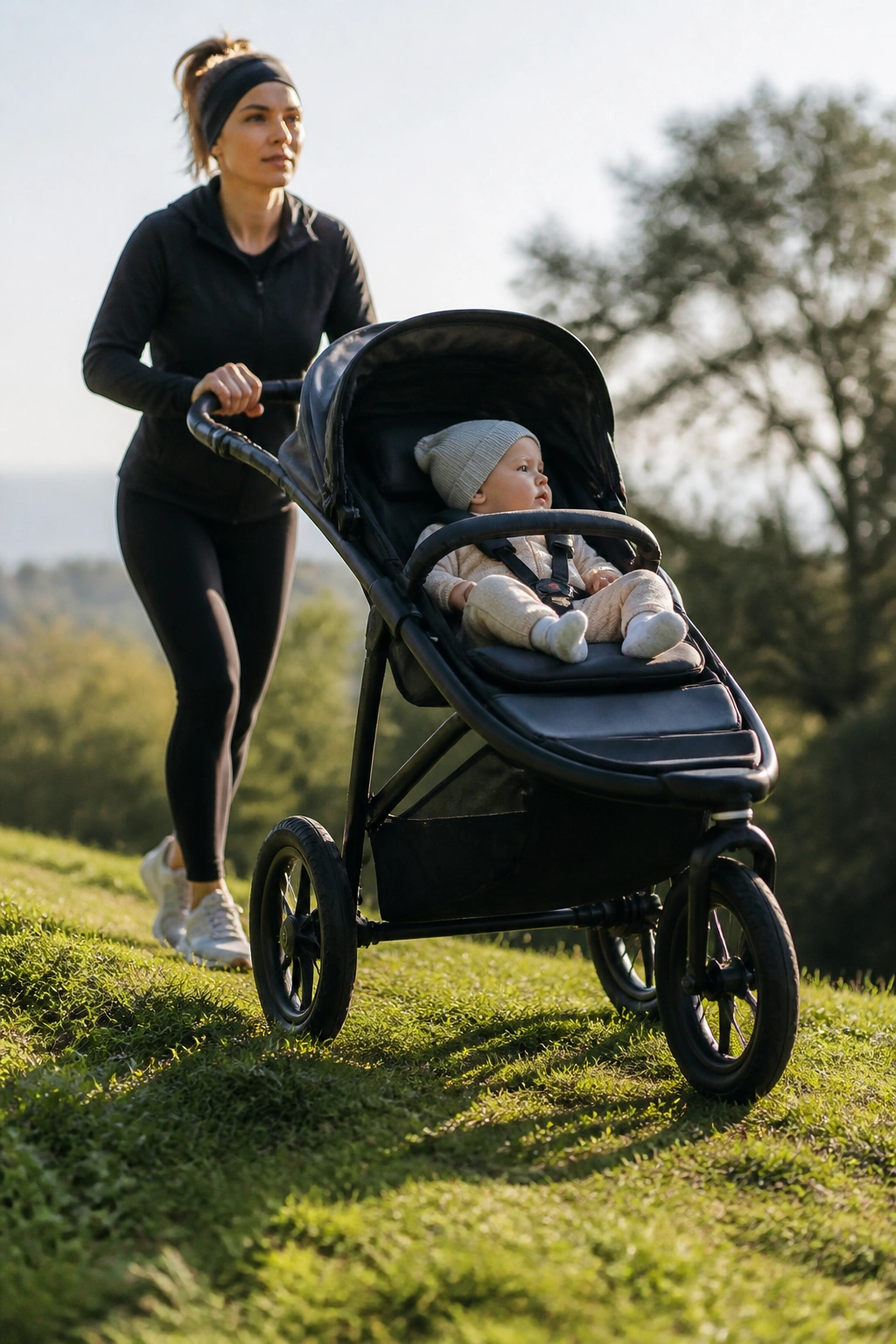
A long incline walk is not the same thing as hill repeats, and that difference matters.
Hill repeats are punchy. This is steadier. Pick a route with a moderate rise and walk it at a conversation pace for 10 to 20 minutes. Keep your posture tall, take shorter steps as the grade changes, and let the stroller move at a rhythm you can keep without tightening your jaw.
Why I Like This One
It’s easy to underestimate because there’s no dramatic speed change. But a steady incline works your lungs, glutes, and calves for a longer stretch, which is useful if you’re rebuilding stamina after a break or just trying to get more from the same neighborhood loop.
Unlike sprint-style work, this one doesn’t leave you fried. You can often do it on a day when sleep was messy or your energy never fully woke up. That makes it a strong choice for postpartum fitness, long walks with baby, or any week when you need the workout to be useful and not punishing.
A gentle climb can carry a lot of work if you give it enough time.
14. Slow Exhale Core Walks
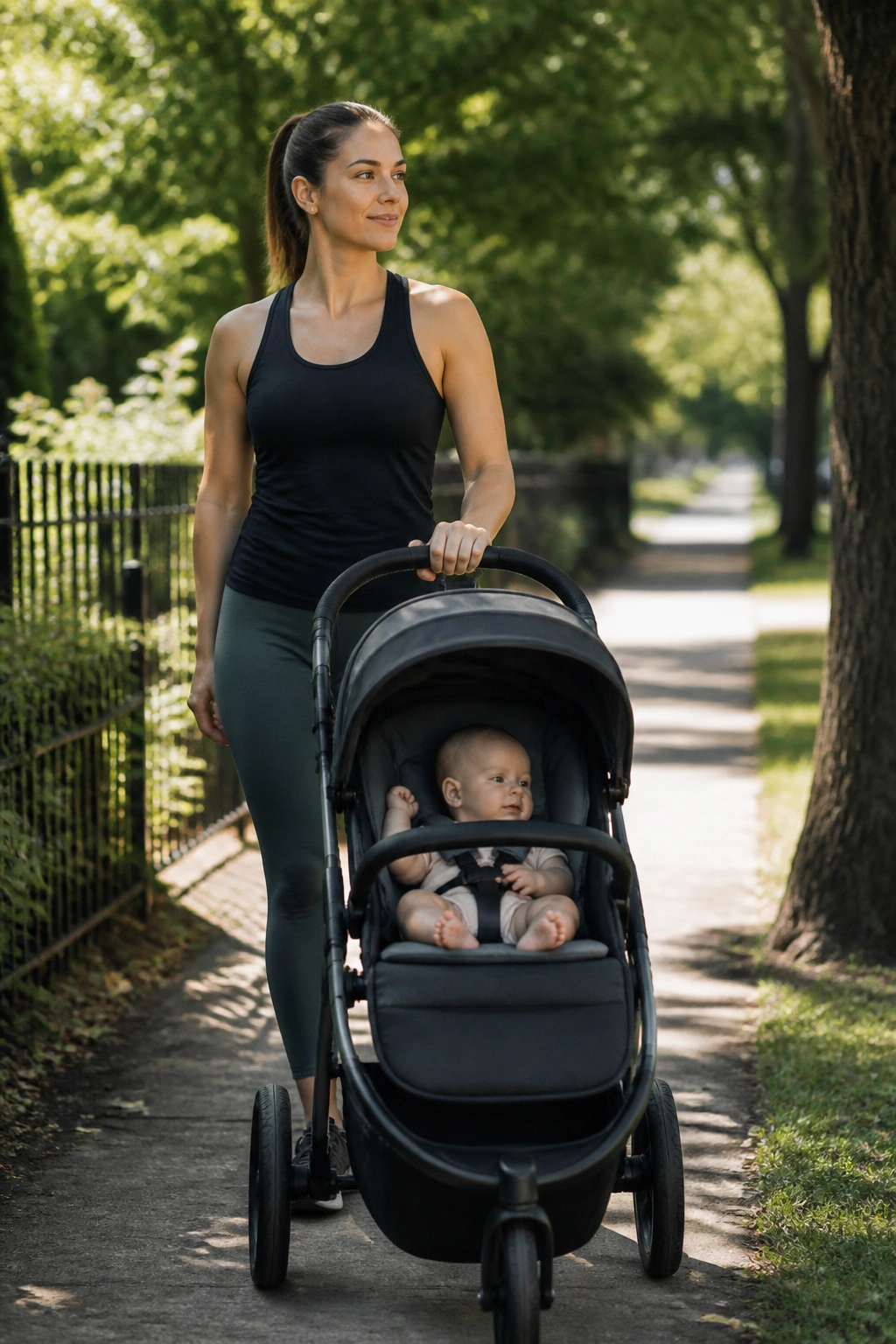
The stroller gives you something to hold. Use that to your advantage and train the part of your body that gets ignored the most: your breath and trunk control.
Walk for 10 steps while inhaling, then take 12 steps while exhaling slowly through pursed lips. Keep the lower ribs from flaring, the shoulders from creeping up, and the tummy lightly engaged without bracing hard. Do this for 8 to 12 minutes, or longer if it feels good.
What to Feel
The walk should feel calmer than your usual pace. Not lazier. Calmer. Your core should feel active in a quiet way, like it’s supporting you instead of locking up. If you’re postpartum, this can be a good bridge back to harder work because it asks for control rather than force.
When to Use It
- After a tough night
- On a recovery day
- During the first 10 minutes of any stroller workout
- When you want to stop yanking air into your chest and start breathing on purpose
This isn’t flashy, and that’s exactly why it works. A lot of people skip the slow stuff and end up missing the part that holds everything together.
15. Short Burst Pushes on a Clear Straightaway
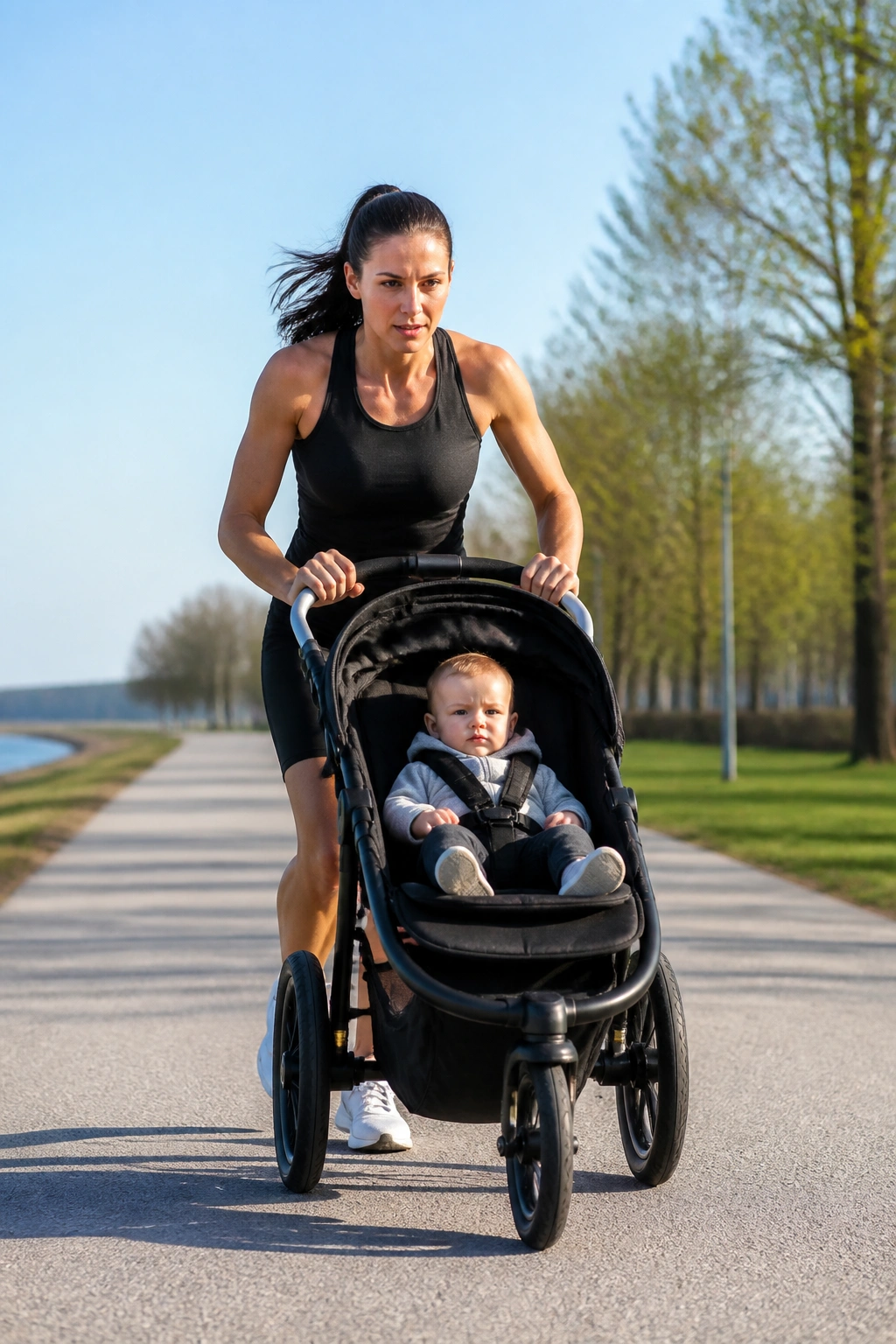
This is the fast one. Keep it for a smooth path, a jogging stroller, and a day when the road surface is kind.
Push hard for 10 to 15 seconds, then recover for 60 to 90 seconds. Repeat 6 to 8 times. The effort should feel sharp but controlled, like you’re turning the pace up for a short hill even if the path is flat. If the stroller skitters, bounces, or starts to feel hard to steer, back off immediately.
A stroller sprint is not the place to guess.
Your hands should stay on the handle, your eyes should stay far ahead, and the path should be clear of people, cracks, and surprise dips. I’d skip this entirely on tight sidewalks or crowded park loops. On a straight, open stretch, though, it’s an excellent way to get a lot of work into a little window.
This workout is especially good when you want something that feels more athletic than a normal walk. It wakes up your legs fast. It also reminds you that speed with a stroller is a skill, not a mood.
16. Sumo Squat Stops for the Inner Thighs and Glutes
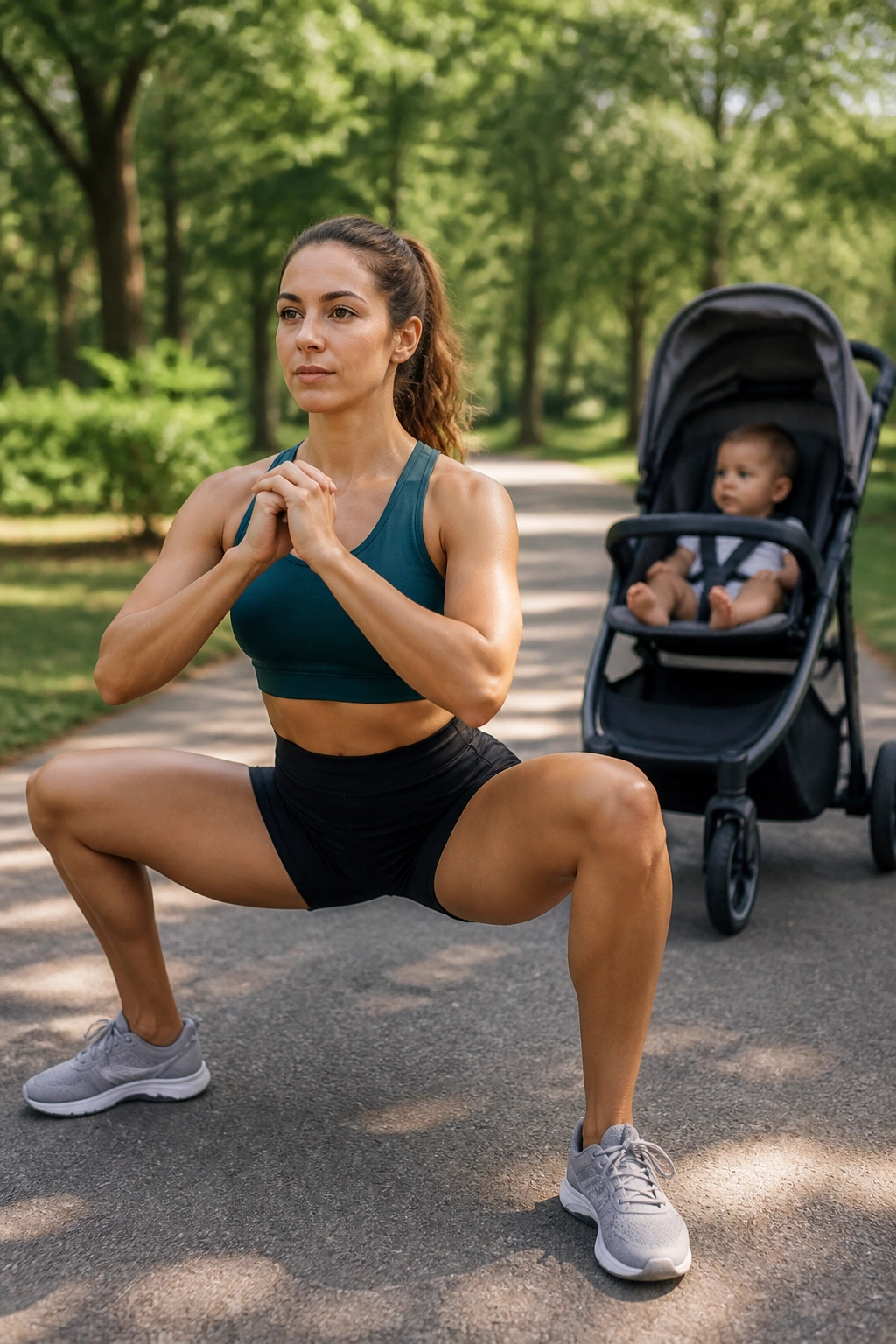
Stand a little wider than shoulder-width, turn your toes out a touch, and park the stroller before you start. That setup alone changes where you feel the work. Instead of loading the front of the thighs, sumo squats pull the glutes and inner thighs into the job.
Do 10 to 15 reps, rest for 30 seconds, and repeat 2 to 4 times. Keep your chest lifted, your knees tracking over your toes, and your weight spread through the whole foot. If you rush this, the exercise turns sloppy fast. Slow squats feel better and usually work better.
A nice detail here: you can fit this into a longer walk without making the outing feel fragmented. Stop, squat, stand, move on. No need for a complicated plan. The wider stance is the whole point.
If you want more challenge, add a 2-second pause at the bottom of each rep. That little pause makes the glutes work harder without adding impact, which is useful when you’re not in the mood for jumping or running.
17. Recovery Walks That Still Count
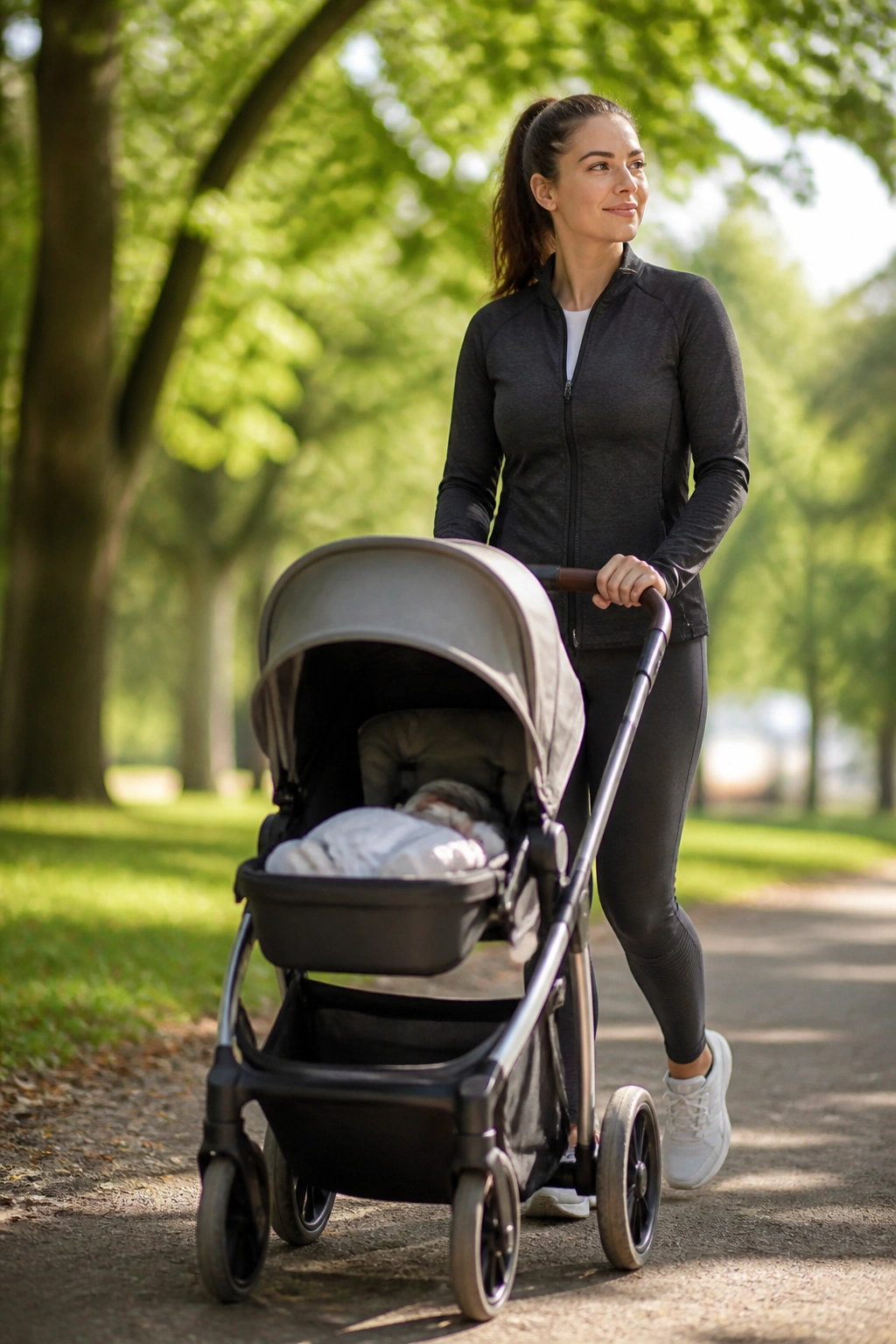
Recovery days are not wasted days. They’re the reason the harder stroller workouts feel possible later.
Keep the pace easy enough that your breathing stays quiet and your shoulders can stay soft. Walk 20 to 40 minutes, take the long route if baby is happy, and skip the timer if you need to. You can add a few gentle stops for stretching — a calf stretch on a curb, a chest opener with hands clasped behind your back, or a slow torso twist while the stroller is parked.
This is also the day to notice small things that get missed during faster work. Tight calves. A crooked shoulder. Hands gripping the handle too hard. Fixing those little habits makes the bigger sessions feel cleaner, and you don’t need a special warm-up video or a long checklist to do it.
Some people think recovery has to feel like nothing. Not true. A thoughtful easy walk is still training. It just trains you to move better, not harder.
18. The Long Endurance Loop You Can Repeat Anytime
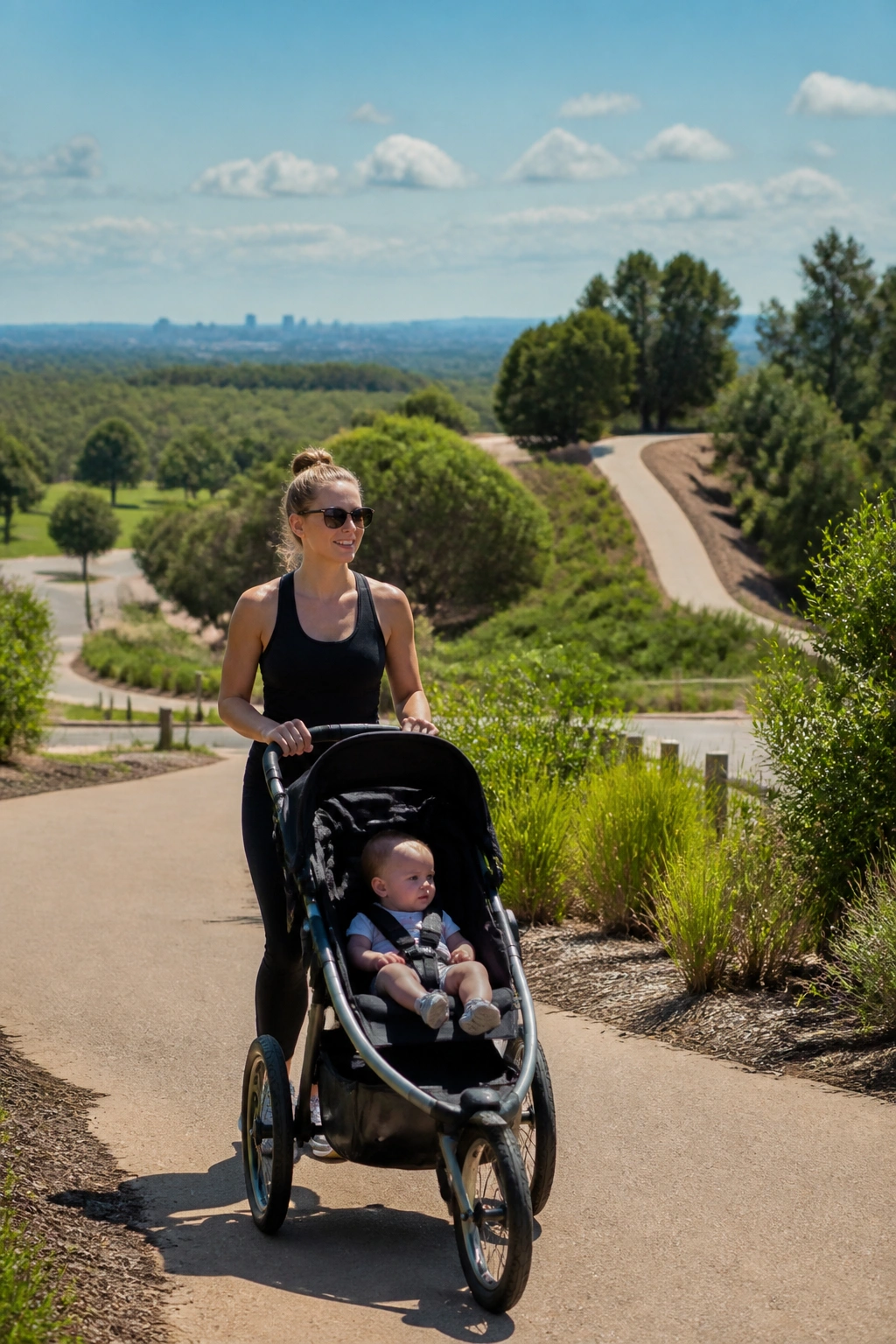
There’s a quiet satisfaction in a longer stroller loop that you know by heart. Same turns, same crosswalks, same one hill near the end, same bench halfway through if you need it. That kind of route can become the backbone of a week because it asks for nothing fancy and gives you a lot back.
Walk for 45 to 60 minutes at a steady, talkable pace. If baby naps, enjoy the silence. If baby wakes up and starts narrating the ride with little noises and complaints, keep going anyway. The workout doesn’t fall apart just because the soundtrack changes.
What makes this one worth keeping around is its flexibility. You can shorten it to 25 minutes when the day is messy, or stretch it into a proper endurance session when everything lines up. Keep water in the stroller basket, pick a route with at least one bailout point, and leave yourself the option to head home early without feeling like you failed anything.
A stroller workout doesn’t need drama to work. A solid loop, a steady pace, and a route you trust can carry a whole lot of fitness on ordinary days.
