



Three burpees into a workout, and the living room starts to feel smaller. That’s the honest charm of burpees: they don’t care about your schedule, your ceiling height, or whether you’ve got fancy equipment stacked in a corner. Burpee challenges for women at home work because the move is brutally simple. You drop, you brace, you stand, and your body tells the truth fast.
There’s also a nice little trick buried inside the misery. Burpees can be scaled in a dozen useful ways. You can step, jump, hold, slow down, add a push-up, or strip the whole thing back to a low-impact version that still leaves your lungs working. That means a burpee challenge can be beginner-friendly, knee-friendly, apartment-friendly, or plain nasty in the best possible way.
If you’re working out in a small space, a mat and a timer are enough. A folded towel helps if your wrists get cranky. Shoes matter more than people admit, especially on hard floors. And if a jump is going to upset the downstairs neighbors, there’s no rule saying you have to land like a meteor.
The smartest place to start is with a challenge that tells you where you are right now, not where your ego wants to be. From there, you can build up, strip down, or get creative. That’s the fun part.
1. The 3-Minute Burpee Baseline

Three minutes sounds harmless. It isn’t.
This is the cleanest place to start because it gives you a real number without turning the workout into chaos. Set a timer for 3 minutes and do as many good burpees as you can, with no sloppy half-reps and no pretending that a shrug counts as a stand. The goal is to find a baseline you can beat later, not to collapse halfway through and call it grit.
What Makes It Useful
- Count only full reps: hands down, feet back, feet in, stand or jump.
- Stop the set if your lower back starts sagging on the plank.
- Write down your number, even if it annoys you.
- Repeat it once every couple of weeks, under the same conditions.
A lot of people go out too fast and turn the last minute into a mess. Don’t. The better move is to breathe hard, keep your chest over your hands, and stay tidy enough that rep 12 looks like rep 4. Clean burpees beat frantic burpees every time.
If you’re new to burpees, this also tells you whether you need a stepping version, a push-up-less version, or a slower pace. Useful data. Ugly, maybe. Useful, definitely.
2. The EMOM Burpee Minute
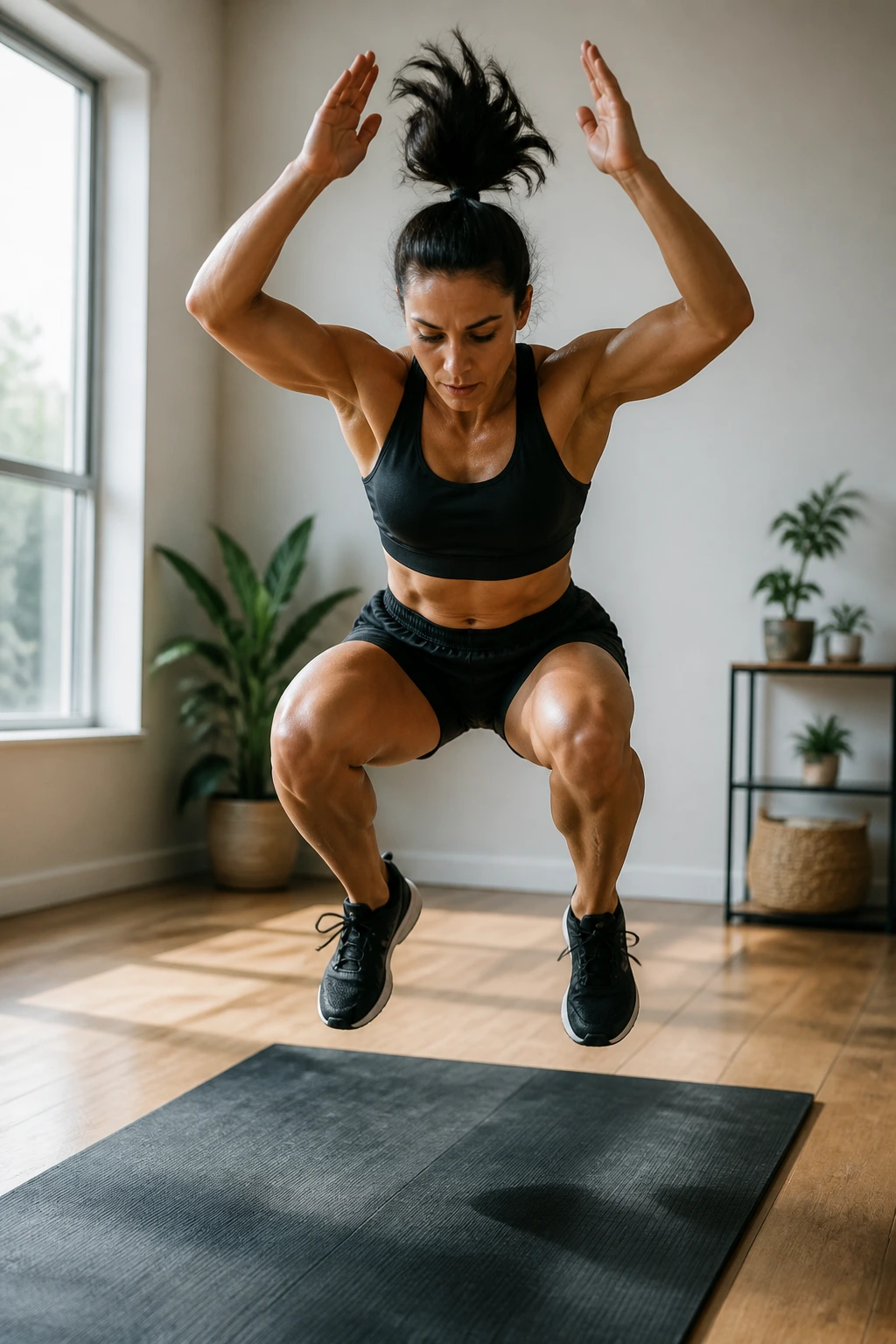
EMOM means every minute on the minute, and it’s one of those formats that sounds easy until the second minute starts biting back.
Pick a number of burpees you can finish in about 30 to 40 seconds, then rest for the remainder of the minute. Five burpees per minute for 10 minutes is a strong starting point for many people. If that feels too easy, push to 6 or 7. If it leaves you gasping and rushing your form, back it down.
How to Run It
- Set a timer for 10 minutes.
- Do your chosen rep count at the top of each minute.
- Rest with whatever time is left.
- Keep the same pace for the full round.
The beauty of EMOM training is that it forces honesty. You cannot fake your way through minute 7 if minute 3 was already ugly. And because the rest is built in, you can keep your quality high without the workout turning into a blur of flailing elbows and bad landings.
This one works especially well at home because it’s easy to stop and start around real life. A kid needs a snack? Fine. A laundry buzzer goes off? Fine. The clock is still your coach.
3. The 1-to-10 Burpee Ladder
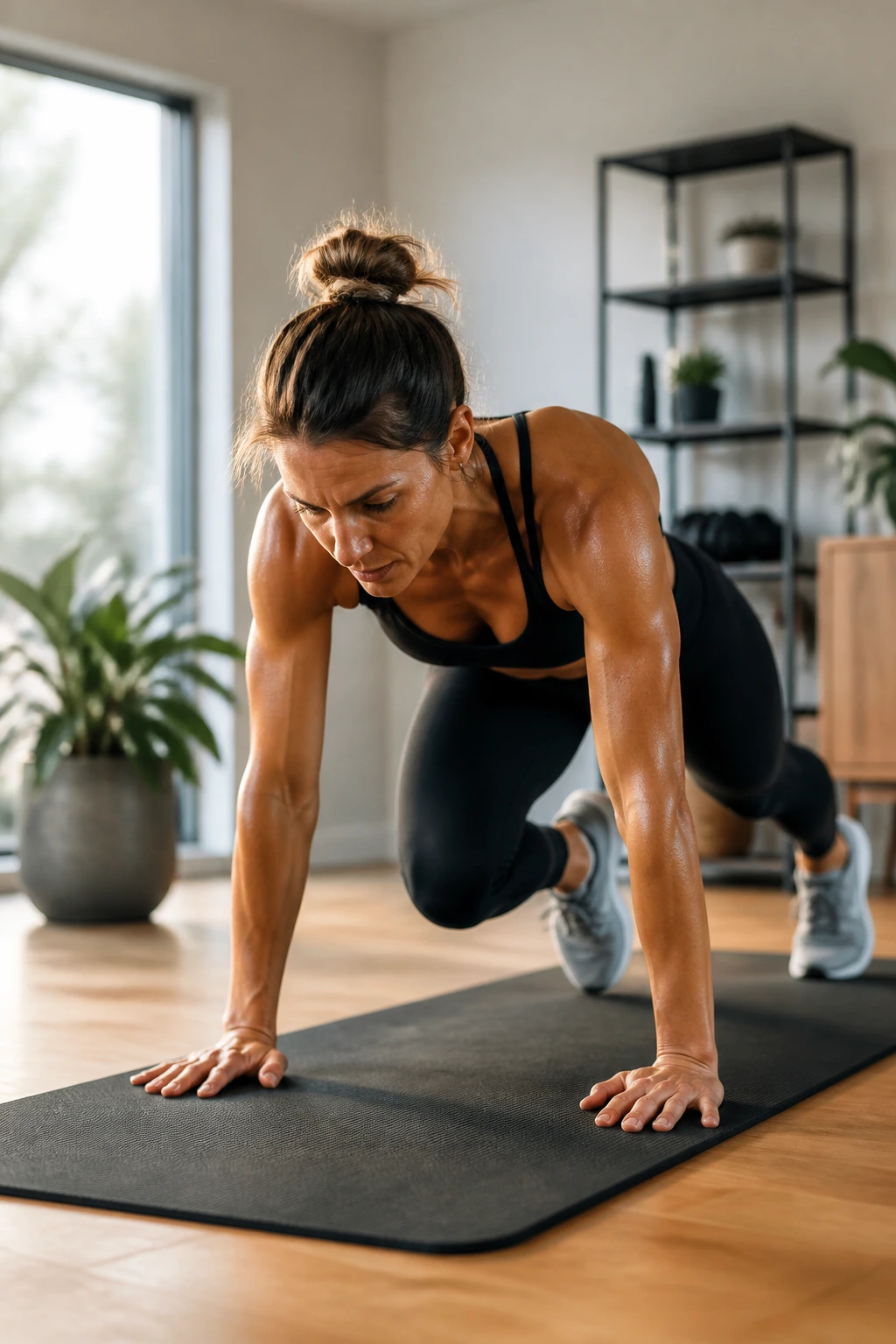
A burpee ladder has a very specific kind of drama to it. The first few rounds feel playful, then the numbers start climbing, and suddenly every rep has a little more weight on it.
Do 1 burpee, rest briefly, then 2, then 3, all the way to 10. That gives you 55 total reps, which is enough to challenge most home workouts without needing fancy programming. If 55 feels like too much, stop at 6 or 7 on your first run. If you want a harder version, go back down after 10 and run the ladder in reverse.
Why It Works
The early sets let you settle into form. The middle sets tell you whether your breathing is under control. The later sets? They expose everything. If you start jumping your feet in too close or landing heavy on your toes, the ladder will show it.
Take your rest before you need it. A 10- to 20-second break between rungs is usually enough to keep the work sharp without losing the challenge. That little pause matters more than people think.
A ladder is also nice for home workouts because it gives you a clear stopping point. No guesswork. No wandering around the house trying to decide if you’ve done enough.
4. The Low-Impact Step-Back Burpee
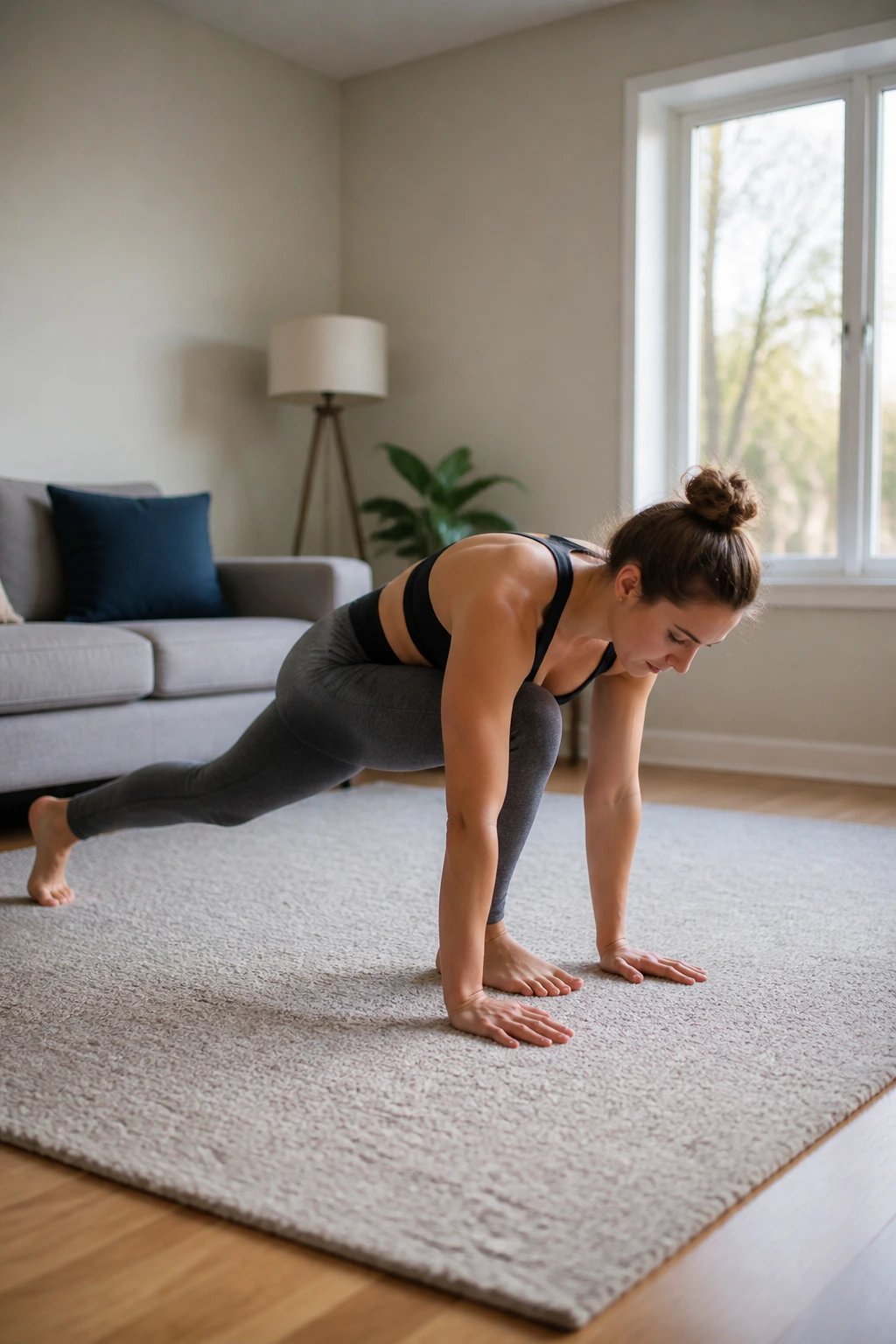
Not every burpee needs to look like an explosion. Sometimes the smarter version is the one that keeps your joints happier and your neighbors quieter.
Step one foot back at a time into plank, step forward, then stand and reach overhead. No jump. No crash. No drama. This is the version to use if your knees are sensitive, if your wrists are tired, if you’re easing back into training, or if you just want to get a solid cardio hit without pounding the floor.
What to Watch For
- Keep your hands under your shoulders.
- Brace your core before each step back.
- Make the plank straight, not saggy.
- Stand fully tall at the top so the rep still has shape.
A low-impact burpee can still be hard. That surprises people. It’s slower, so you have less chance to coast, and the controlled steps make your legs work in a steadier way. If you want more burn, add a 2-second pause in the plank before you step back in.
If you are pregnant, recently postpartum, or dealing with pelvic floor symptoms, this is the version worth asking about first with a qualified clinician. No hero points for guessing wrong.
5. The Burpee With a Push-Up
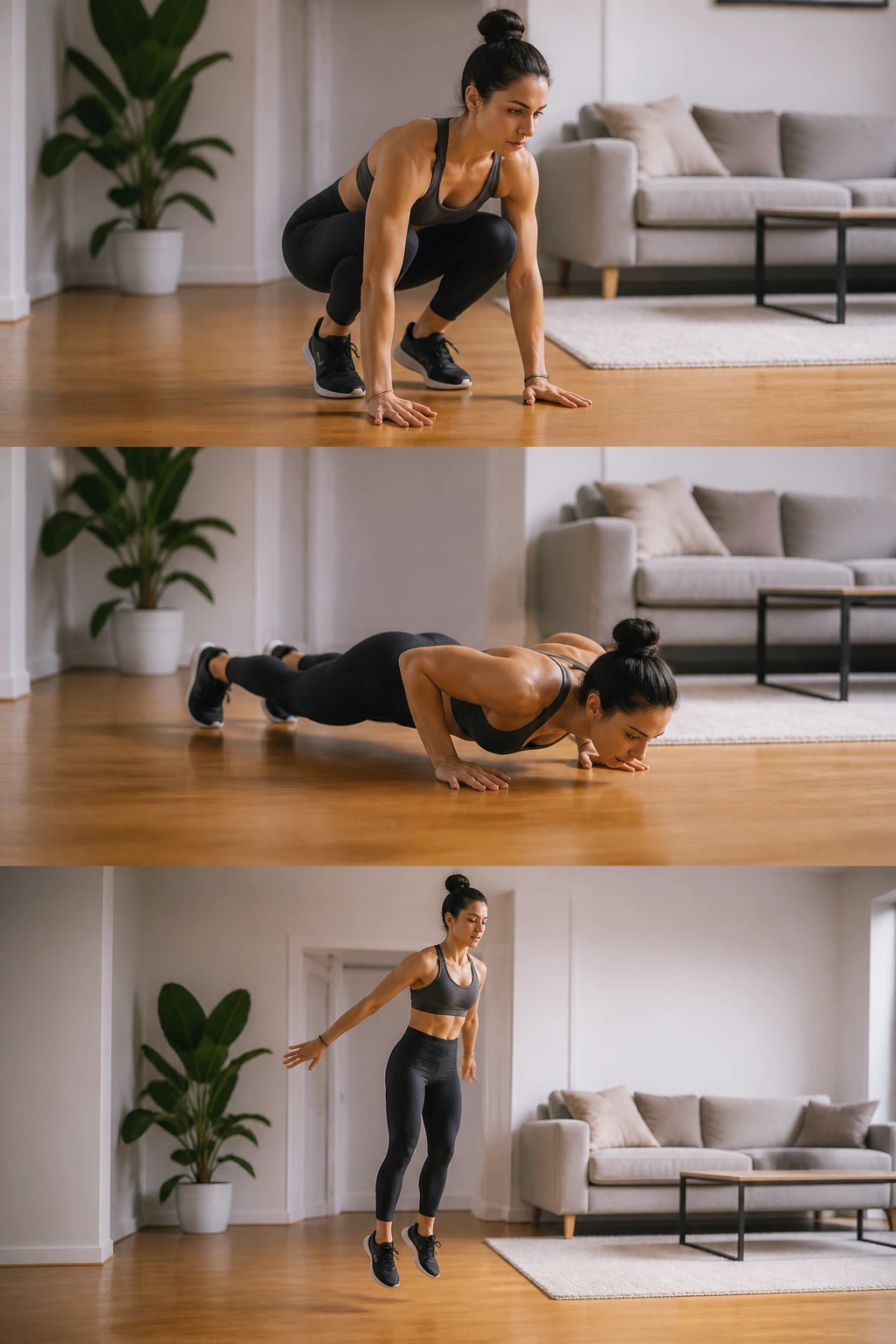
This one turns a bodyweight cardio move into a full upper-body test. The push-up makes every rep more demanding, and there’s nowhere to hide if your shoulders or triceps are lagging.
Drop to the floor, kick back into plank, perform one push-up, then jump or step your feet back in and stand. You can keep the push-up full range, or drop to your knees if your form is cleaner that way. Clean mechanics matter more than pride.
A burpee with a push-up is best when you want strength and conditioning in the same session. It hits the chest, shoulders, core, and legs in one compact package. It also tends to expose sloppy plank habits fast. If your hips pike up on the push-up, you’ll feel it immediately.
That’s not a bad thing. It’s useful.
Try 3 rounds of 6 to 8 reps, resting 45 to 60 seconds between rounds. If your shoulders get shaky before your lungs do, the load is enough. If the push-up gets ugly by rep 4, switch to an incline version with your hands on a sturdy couch or bench.
6. The Tabata Burpee Sprint

Twenty seconds can feel long when burpees are involved. That’s the whole point.
Tabata uses 20 seconds of work followed by 10 seconds of rest, repeated for 8 rounds. Pick one burpee style and keep it consistent for the full block. Full burpees are brutal here. Step-back burpees are still hard, and sometimes smarter if you want quality reps instead of chaos.
Make the Clock Work for You
- Use a timer with a loud beep.
- Aim for 4 to 6 reps per work interval.
- Stay upright during the 10-second rest.
- Stop chasing speed if your hands start landing too far forward.
Tabata is short, which makes it easy to squeeze into a home workout. It also has a sneaky way of making you honest about pacing. Go out like a racehorse in round 1, and round 6 will slap you in the face. Better to settle into a repeatable rhythm and keep it there.
A nice side effect: you learn what your burpees look like when fatigue shows up. That’s useful feedback for every other challenge on this list.
7. The Burpee and Mountain-Climber Combo
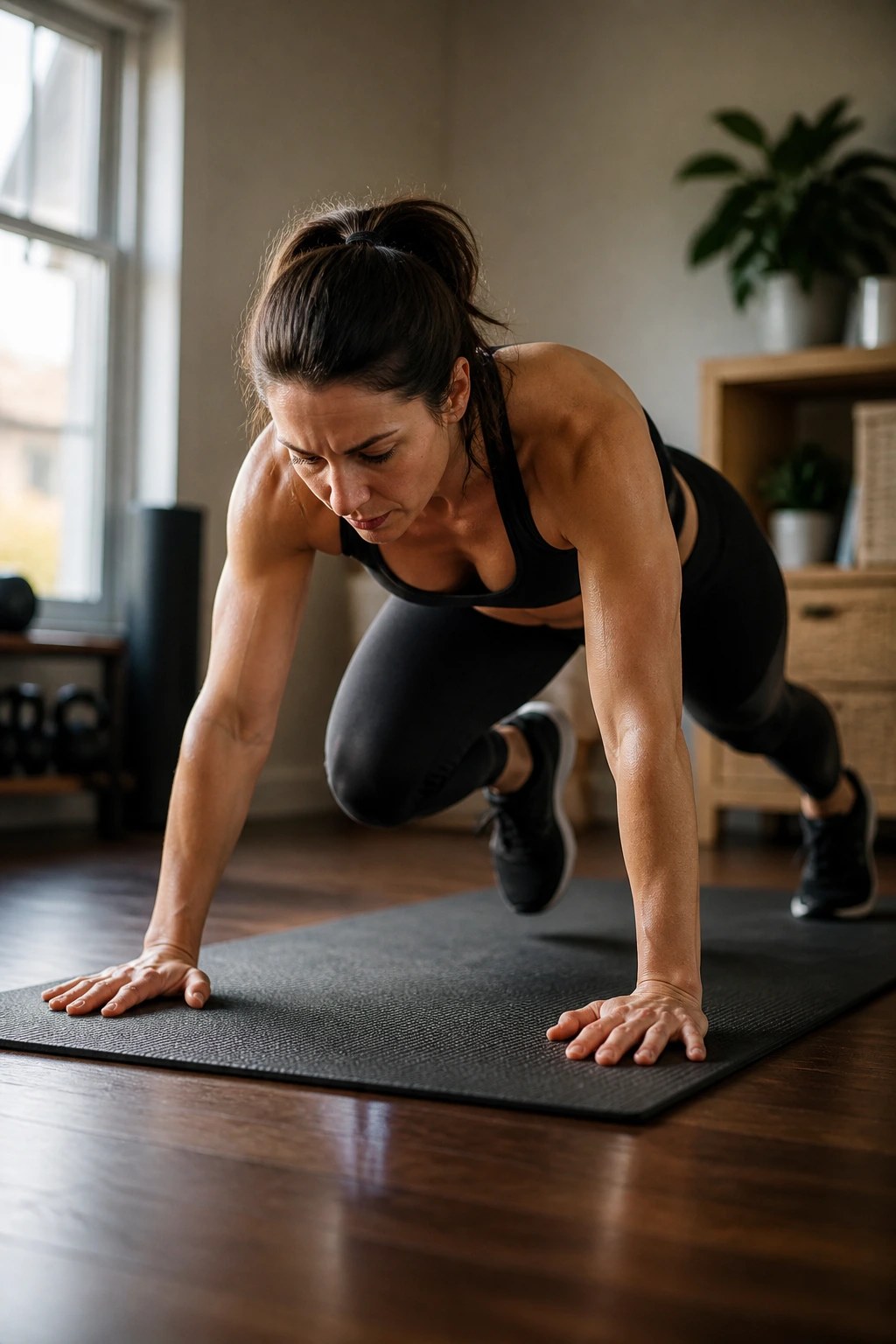
A burpee alone is plenty. Add mountain climbers in the plank, and you’ve got a challenge that turns the middle of the rep into a real core test.
After you kick back into plank, drive each knee forward twice — right, left, right, left — then step or jump back in. Some people like 4 climbers, some prefer 8. Four keeps it snappy. Eight makes the whole thing burn longer and hits the midsection harder.
How to Count the Combo
- 1 burpee = hands down, feet back, 4 climbers, feet in, stand.
- Keep the hips low while you drive the knees.
- Don’t rush the knee drive just to survive the set.
- Use a mat if your hands hate hard floors.
This challenge is good when you want core work without doing a separate ab circuit. It also keeps the heart rate high because the plank becomes an active station, not a pause. If you’re used to collapsing into the plank and rushing out of it, the climbers will make that obvious in about 30 seconds.
And yes, it feels crowded in the best way. There’s a lot happening in one rep. That’s why it works.
8. The Slow-Tempo Burpee
Speed gets all the attention. Tempo does the real work.
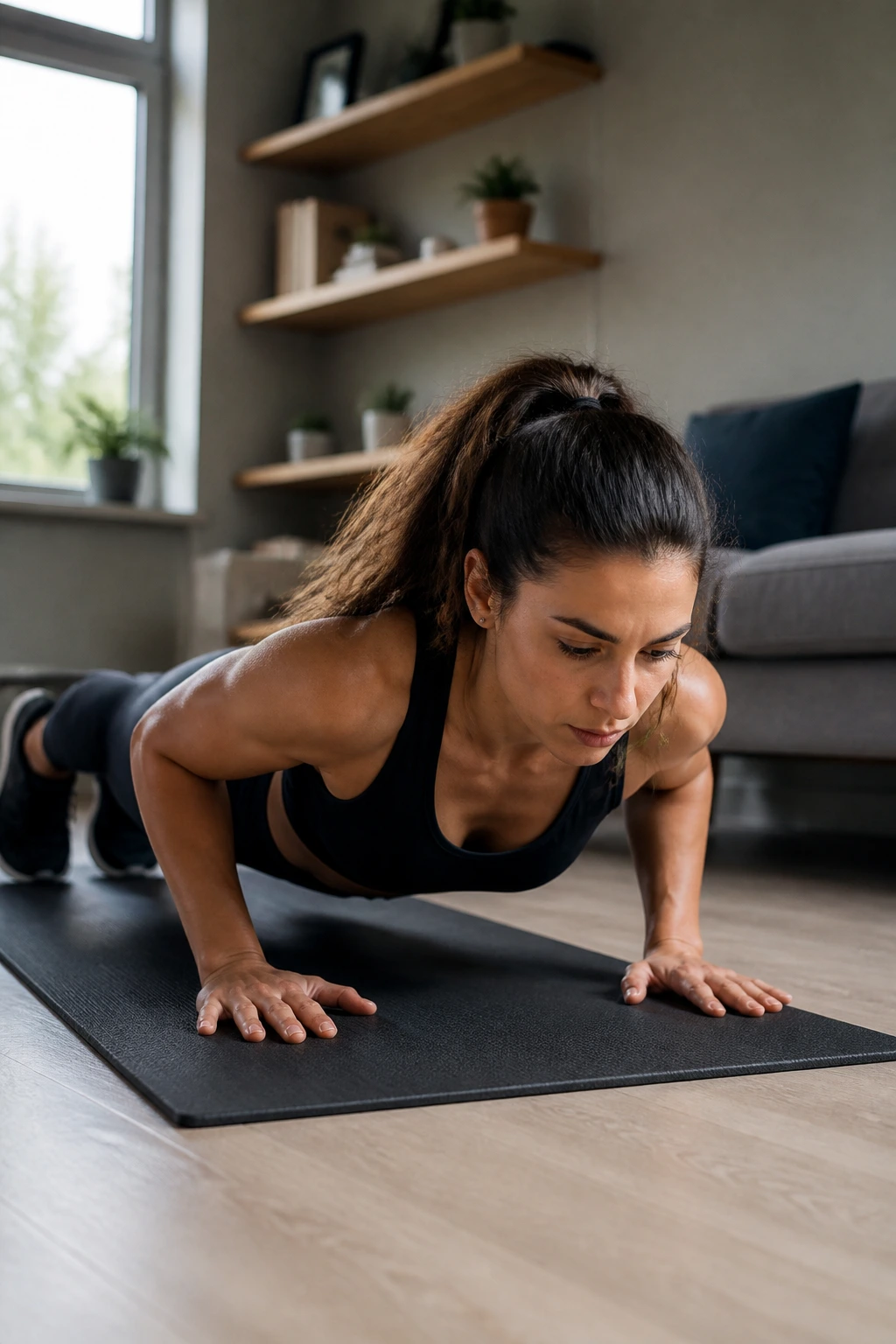
A slow burpee means you control the lowering phase, pause in the plank, and stand with intention instead of flinging yourself upright. Try a 3-second lower, a 1-second pause in plank, then a strong drive back to standing. No need to jump if that ruins the rhythm. The challenge is the control.
The weird thing about slowing down is that it makes the move harder without adding extra reps. Your shoulders stay under tension longer, your core has to hold shape, and your legs can’t cheat by bouncing through the rep. It’s also a much better choice if you’re rebuilding confidence after a break.
You will feel every inch of the floor. Your hands. Your toes. The pause.
Try 3 sets of 6 slow burpees with 30 to 45 seconds of rest. If your form gets shaky, cut the tempo down before you cut corners. A controlled rep with a slightly shorter pause is still a win. A fast mess is not.
9. The Burpee-to-Reverse-Lunge Challenge
Why stop at standing when you can keep the legs talking?
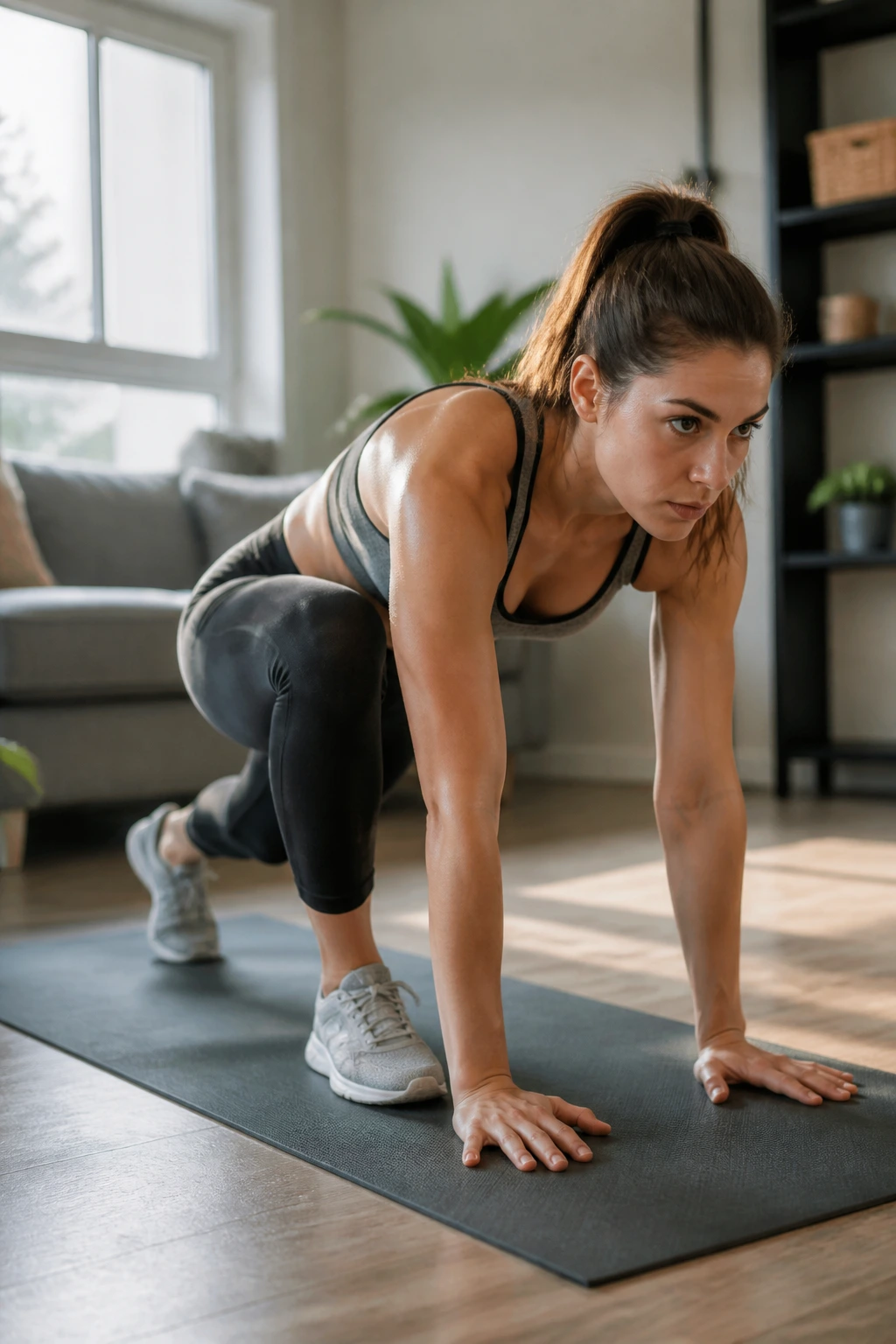
After each burpee, step one foot back into a reverse lunge, then return to standing and switch sides on the next rep. That makes the challenge more leg-heavy and gives your glutes and quads a bigger role. It also helps break up the repetitive feel of straight burpees, which can be a relief when you’re doing a longer set at home.
What Makes It Different
The burpee drives your heart rate up. The reverse lunge makes your lower body stay honest on the way down and back up. Together, they create a tough, balanced combo that feels athletic without needing much space.
- Use a small range if your balance wobbles.
- Keep your front foot flat during the lunge.
- Step back softly, not with a stomp.
- Alternate sides every rep to keep the load even.
This is one of those challenges that looks simple on paper and gets serious fast. That’s because it mixes explosive and controlled work in the same rep. If you like workouts that leave your thighs talking back, this one earns its spot.
10. The Burpee Broad-Jump Challenge
A broad jump after a burpee is a nice reminder that power matters, not just stamina.
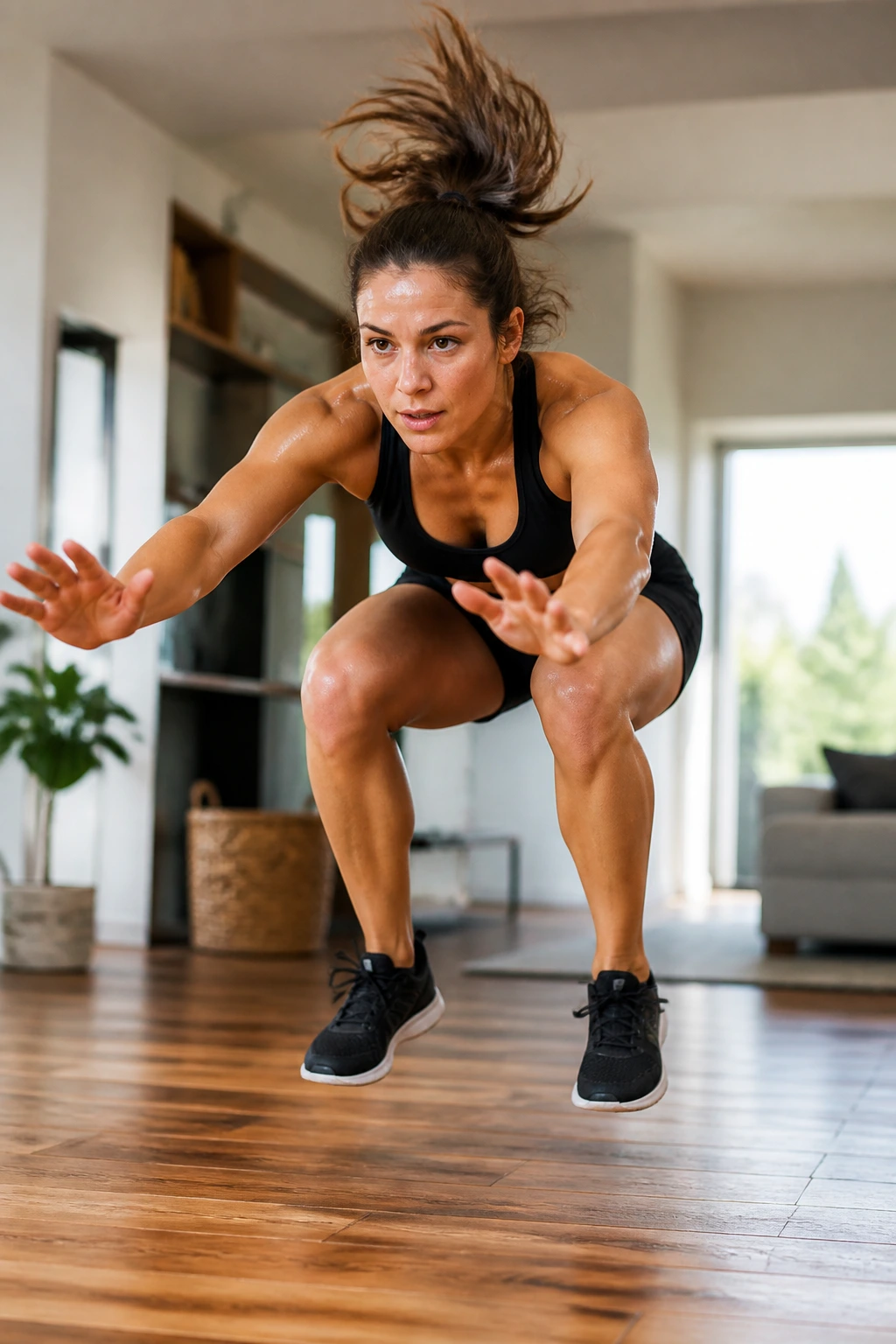
Finish the burpee by jumping forward a short distance — 1 to 2 feet is enough to start — then walk back and repeat. You do not need to launch yourself across the room. In fact, you probably should not. The point is crisp power, soft landing, and control on every rep.
Why the Landing Matters
Land with bent knees and quiet feet. If the landing is loud, you’re probably throwing yourself too far or losing tension through the core. This version works the hips, glutes, and calves harder than a plain stand-up burpee, and it gives the workout a more athletic feel.
A few burpees with a broad jump can wake up tired legs fast. They also need space, so this is better in a garage, basement, or open living room than in a cramped hallway. If floor space is tight, keep the jump tiny. Tiny still counts.
Short jumps are safer than showy ones. That’s not a compromise. It’s smart training.
11. The Burpee Plank-Hold Challenge
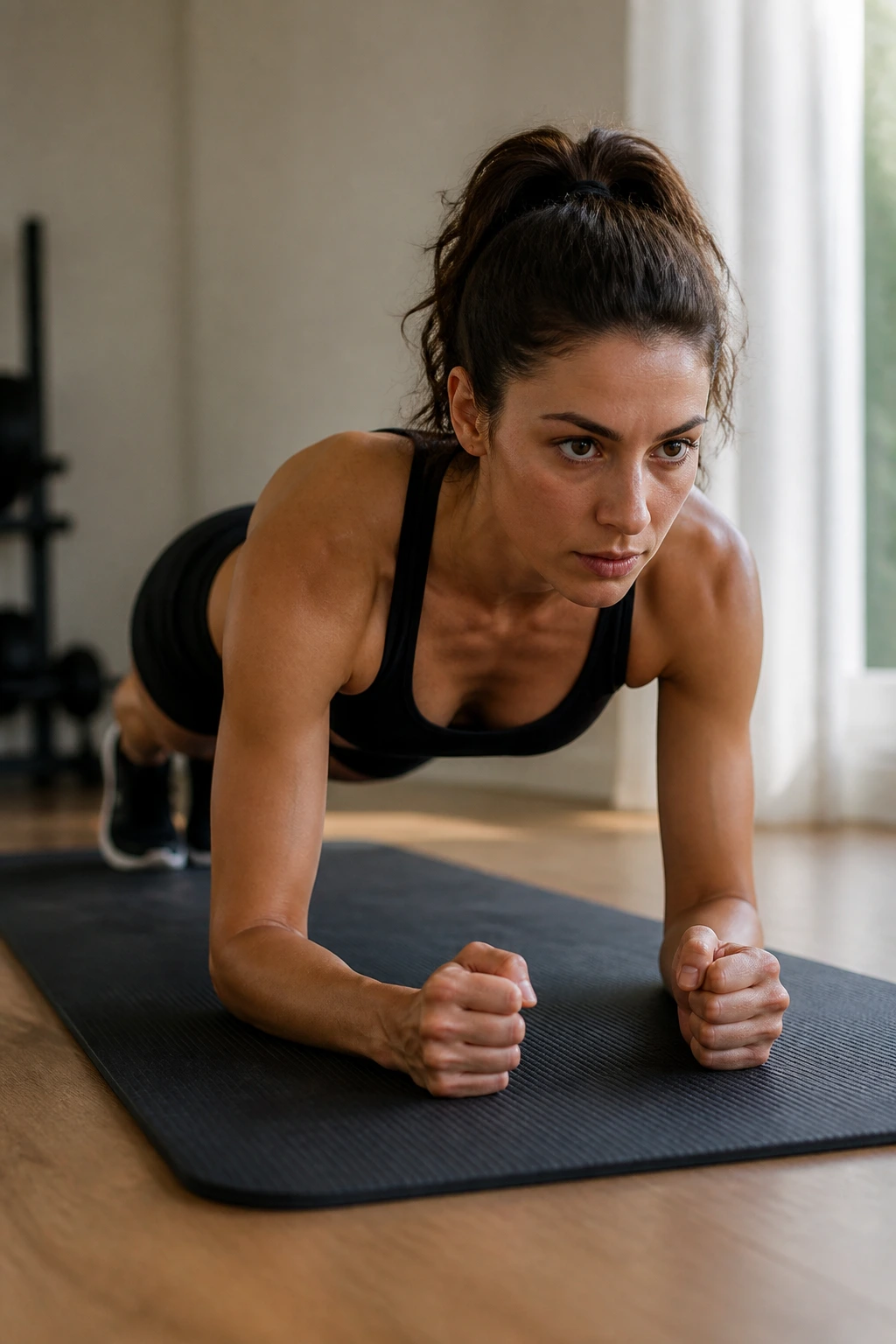
A brief plank hold changes everything.
After you kick back into plank, hold the position for 3 to 5 seconds before stepping or jumping your feet back in. That pause makes the core work harder and stops the burpee from becoming a blur. If you’ve ever rushed through reps and wondered whether you were actually training anything besides panic, this challenge answers that.
The hold should feel steady, not shaky. Hands under shoulders. Neck long. Belly firm. If your lower back starts sinking, shorten the hold and clean up the position. Better posture, fewer seconds, same value.
This is also a good challenge if you’re trying to build up to stricter burpees or push-up burpees later. It teaches the body where plank lives before the stand-up part takes over.
One more thing. The hold is boring. That’s what makes it useful. Boring work has a habit of fixing sloppy habits better than flashy work does.
12. The Burpee-Squat Pulse Challenge
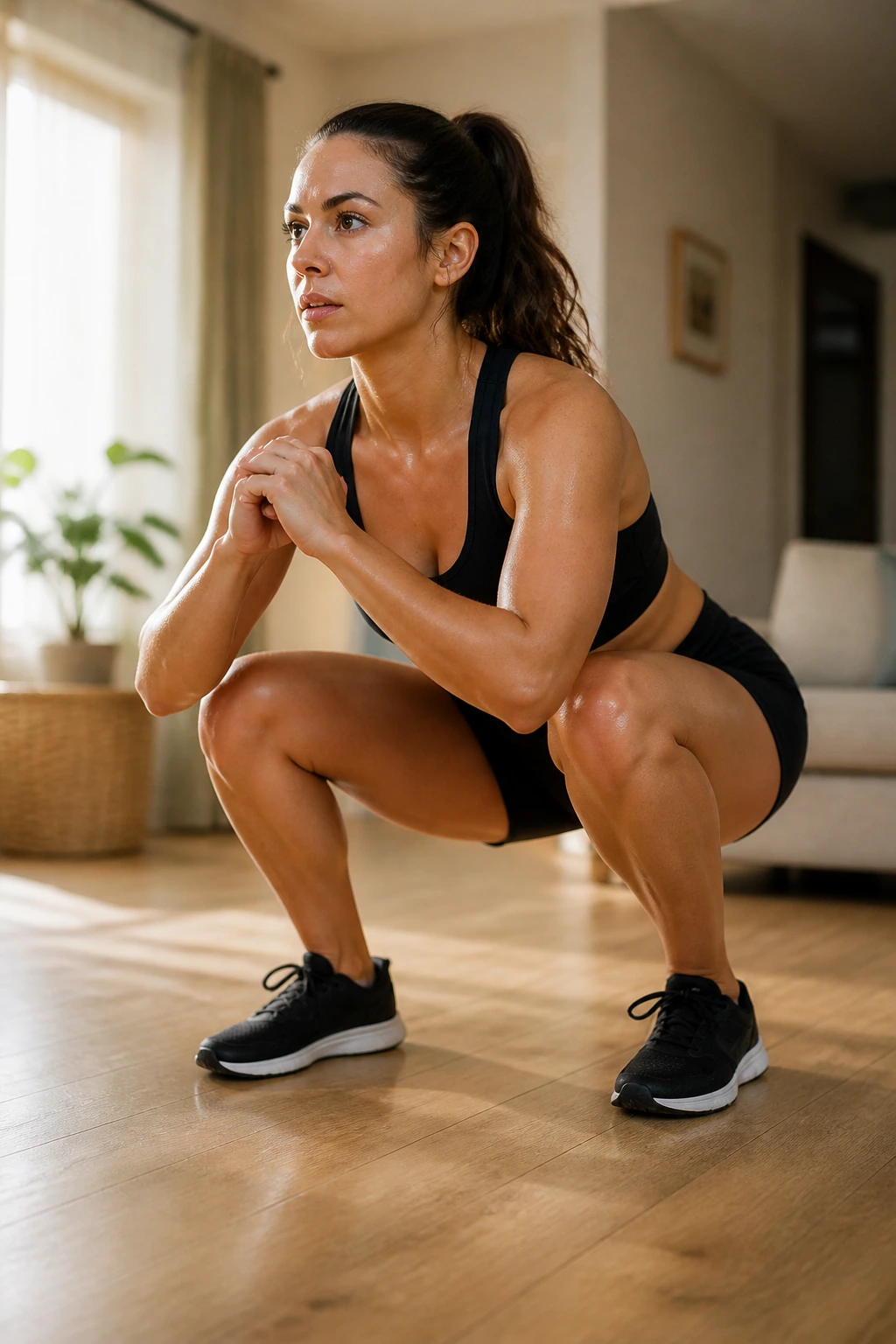
Straight burpees are clean and efficient. Add squat pulses at the top, and the legs start burning in a much more specific way.
After you stand, drop into a squat and pulse 2 or 3 times before the next burpee. Keep the chest lifted and the heels down. If you want a harder version, hold the squat for 3 seconds instead of pulsing. Either way, this one turns the finish of each rep into a quad and glute burner.
How It Feels in Practice
The burpee raises the heart rate. The squat pulses keep it there. That combo makes it a solid conditioning move for anyone who wants the workout to feel like lower-body work too, not just cardio with some floor time thrown in.
- 3 squat pulses = quick and spicy.
- 5-second squat hold = slower and nastier.
- Heel lift = usually a sign you need a smaller squat depth.
- Arms forward = helps balance if your torso wants to tip.
This challenge is especially good when you want to stay in one place and keep the session tight. No movement across the room. No equipment. Just repetition and a quad burn that shows up early.
13. The 100-Burpee Broken-Set Test
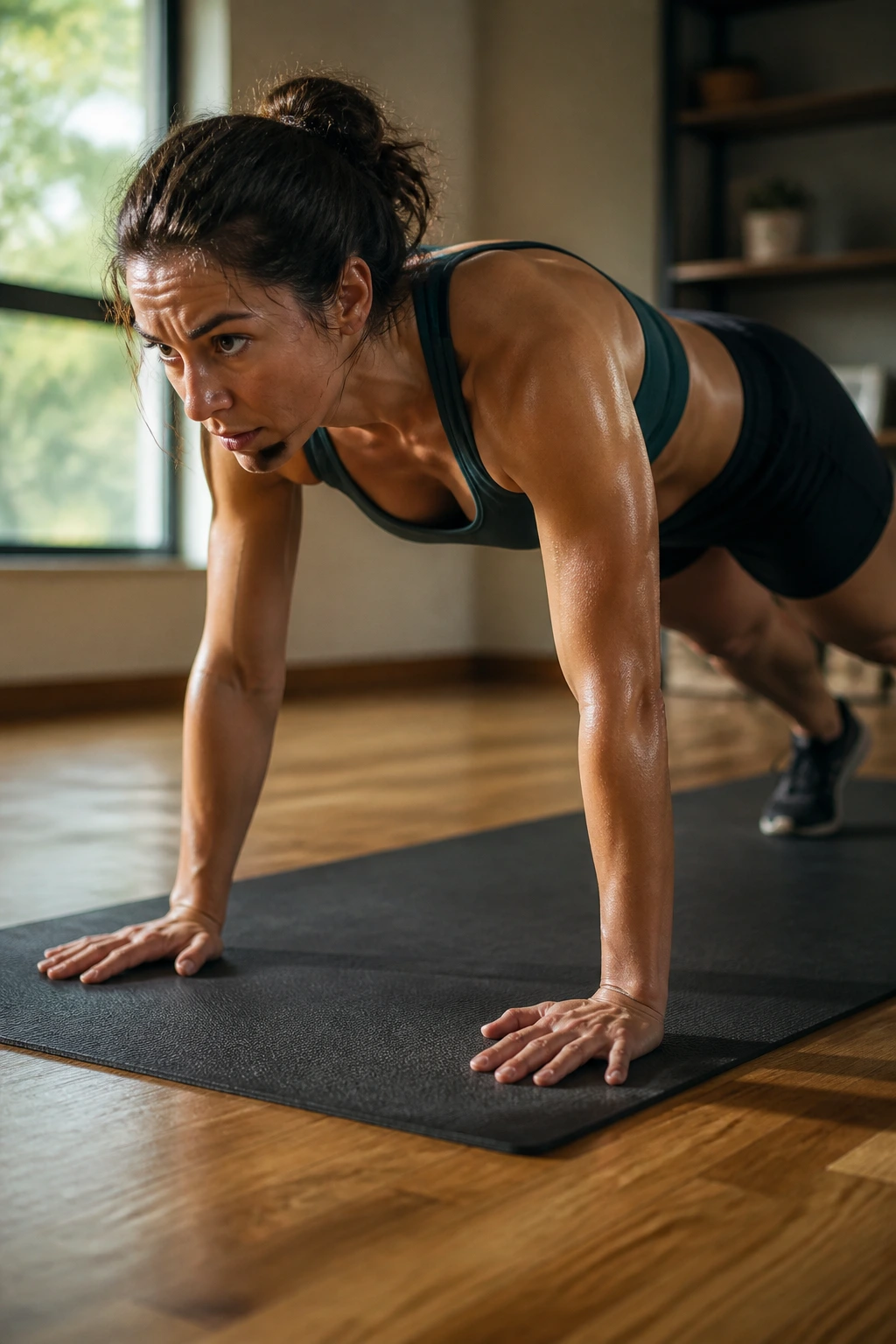
A hundred burpees sounds rude because it is.
The trick is not doing them nonstop. The trick is breaking them into pieces that you can actually complete with decent form. Ten sets of 10 works well. So does 20 sets of 5 if you like short, sharp bursts. If your current level is lower, start with 50 total and build from there.
How to Break the Sets
- 10 x 10 with 30 to 45 seconds rest
- 5 x 20 with 45 to 60 seconds rest
- 20 x 5 with 15 to 30 seconds rest
- 4 x 25 if you enjoy suffering and paperwork
The real challenge here is pacing your ego. People go out too hard, then spend the rest of the workout bargaining with themselves. If you keep the first few sets easy, the last sets stay possible. That’s the whole game.
A hundred total reps is not for every day, and it does not need to be. Use it as a benchmark once in a while, and use the broken-set format to track progress. A cleaner 100 matters more than a rushed 100.
14. The Silent Burpee Apartment Challenge
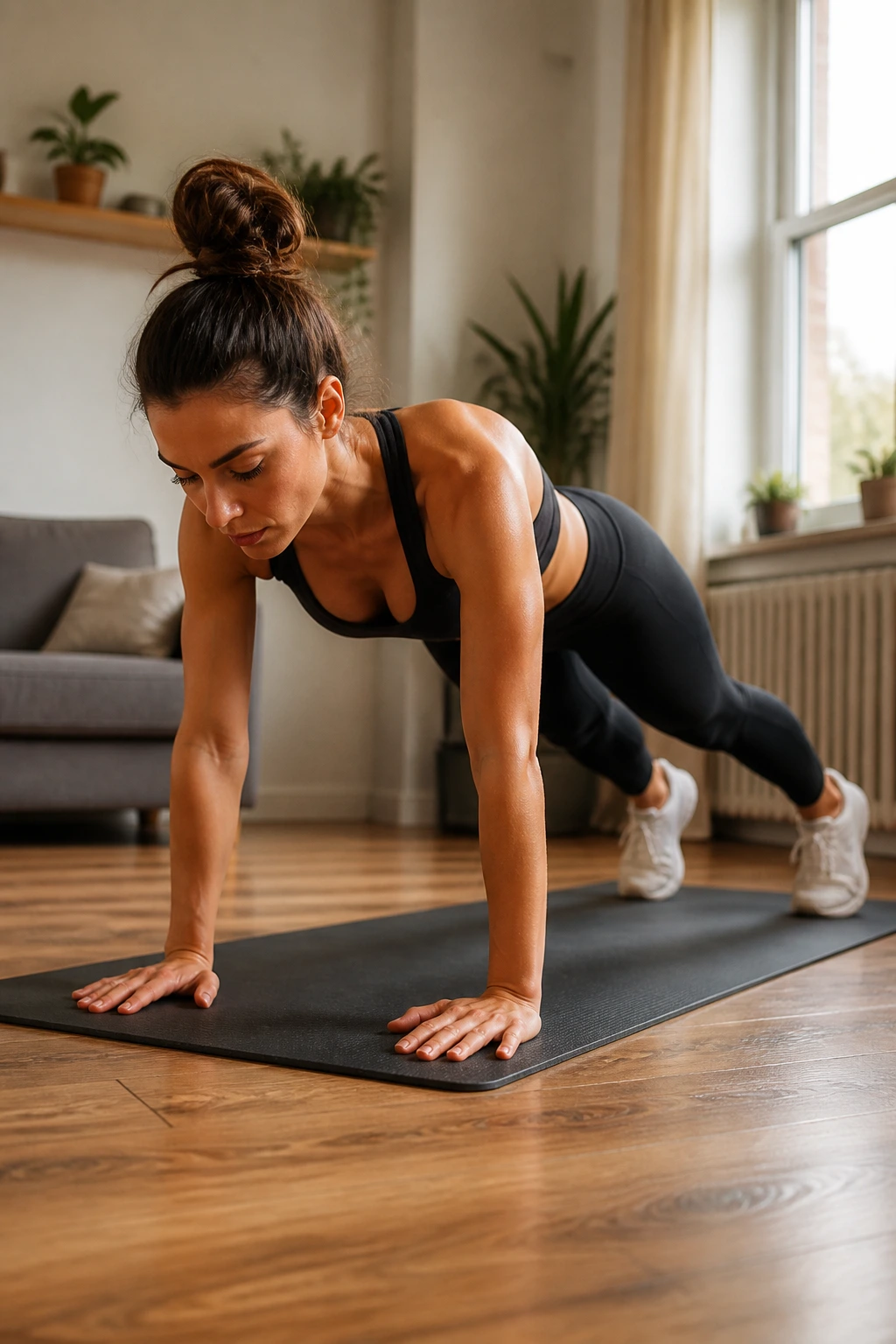
If you’ve ever worried about the floor, the ceiling, or the neighbor who seems to have a stopwatch for your life, this one is for you.
Silent burpees are all about control. Step back instead of jumping. Step in instead of snapping the feet forward. Stand with force, but keep the landing quiet. Your goal is to move like someone else is sleeping in the next room — because maybe they are.
The Rules
- No jump at the top.
- No crash on the floor.
- No stomping feet on the return.
- Keep the plank tight so you don’t wobble.
This version is sneaky hard because it strips away the bounce that normally helps the rep feel faster. That means your legs and core work harder to move you through the same shape. It’s also a good choice for early mornings, late nights, or tiny apartments where sound matters more than spectacle.
A lot of people dismiss silent burpees as “too easy.” Then they do 15 with controlled form and realize their calves are on fire. Funny how that works.
15. The Backpack Burpee Challenge
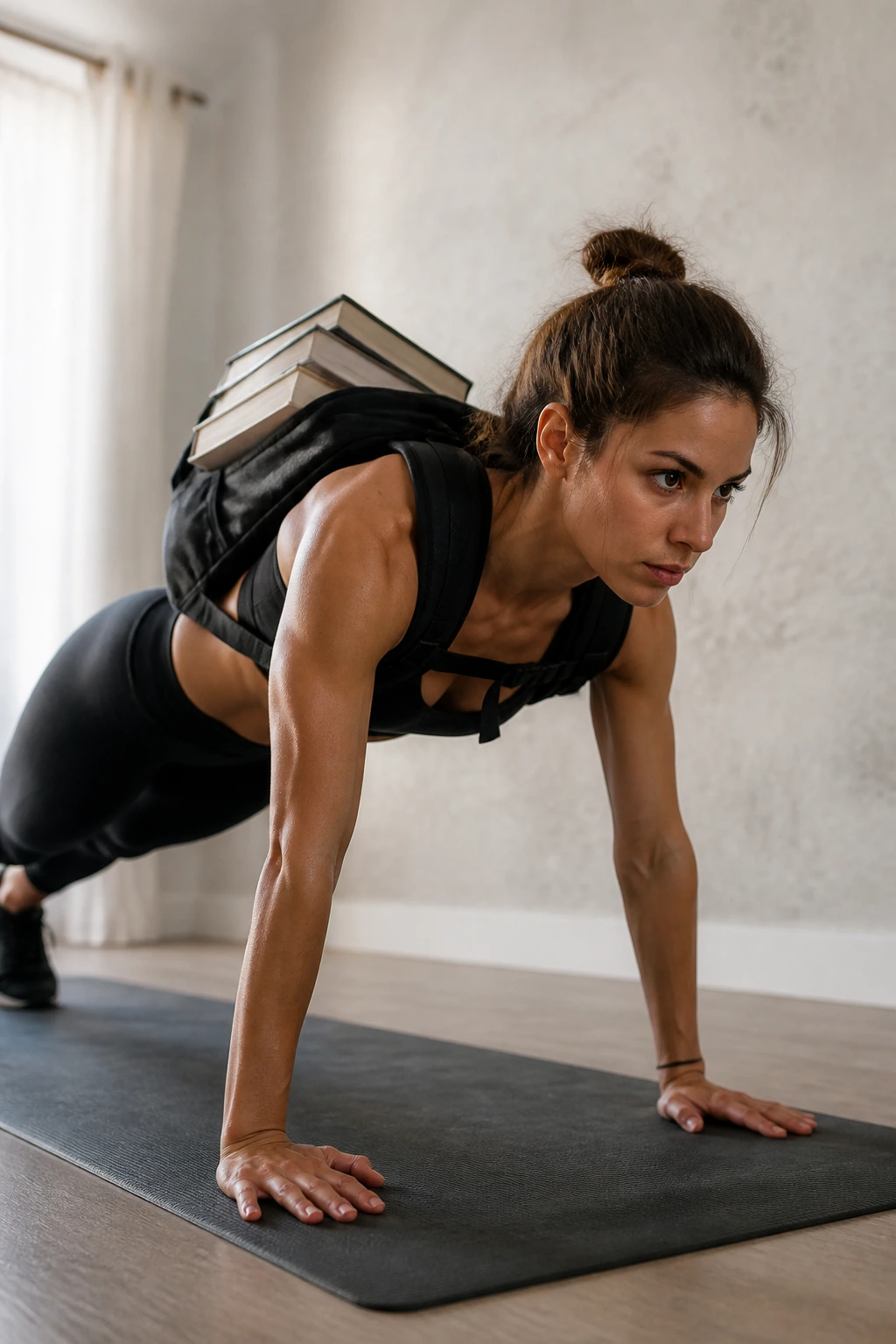
A backpack sounds harmless until you fill it with books and start moving.
Load a sturdy backpack with 5 to 15 pounds to begin, then wear it through a set of step-back or standard burpees. Keep the weight snug against your back. Loose items will shift, and that’s a fast route to awkward landings. A small towel inside the bag can help fill dead space if the load rattles.
When to Skip the Load
- If your lower back feels off that day.
- If your shoulders are already tired from another workout.
- If the backpack bounces around on the way down.
- If you cannot keep the plank stable.
Weighted burpees are not a beginner move, and they do not need to be done often. Even a little extra load changes the feel a lot. Your heart rate climbs sooner, your stand-up gets slower, and your bracing has to improve. That makes the challenge useful for strength-endurance, but only if the form stays tidy.
If you like the idea of resistance without buying more gear, this is the cheapest option in the room. Just don’t turn the bag into a sloppy circus. Tight load. Clean reps.
16. The Cross-Body Burpee Challenge
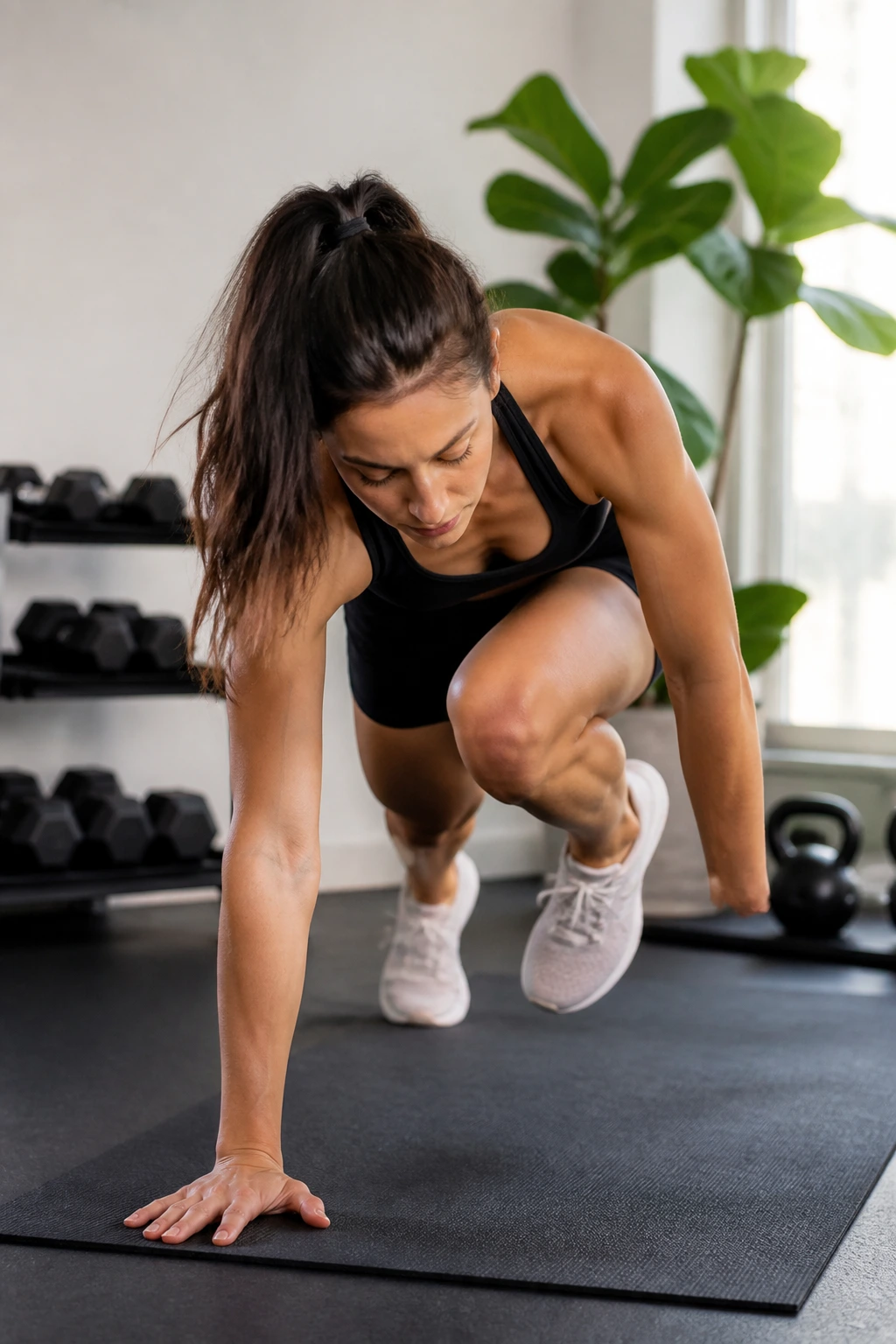
A burpee plus a cross-body drive adds a little coordination work to the usual cardio chaos.
After you stand, bring one knee up and touch the opposite hand to it, then switch sides on the next rep. You can make this a standing knee drive, a twist at the top, or even a light oblique crunch if your balance is solid. The point is to wake up the sides of the body and make each rep feel less linear.
Cross-body work can be useful when straight-up burpees feel repetitive. It asks for more control through the trunk and helps you keep the upper body from going totally passive. If your torso twists too far or your standing leg wobbles, shorten the range and keep the movement small.
The nice thing about this challenge is the rhythm. Down, up, cross, switch. It gives the workout a pattern, which makes longer sets easier to stick with. Not easy. Easier. There’s a difference.
17. The Burpee-Then-Shadowbox Circuit

A straight conditioning circuit can feel like a fight if you build it that way.
Do 5 burpees, then shadowbox for 30 seconds. Repeat for 4 to 6 rounds. Keep the punches quick and the stance light, almost like you’re bouncing in place between rounds. The shadowboxing keeps your heart rate high without requiring more floor work, and it gives your legs a short break from the drop-to-the-ground part.
This challenge works well when you want a home workout that feels energetic instead of just punishing. The burpees spike the effort. The punches keep it going. If you’re someone who gets bored fast, the change in movement can help you stay in the session longer.
A Simple Round Structure
- 5 burpees
- 30 seconds shadowboxing
- 30 to 45 seconds rest
- Repeat 4 to 6 times
Keep the punches crisp, not wild. You want a little snap, not shoulder chaos. If your arms start dropping like dead rope, shorten the rounds and keep the quality up.
18. The Burpee Finisher After Strength
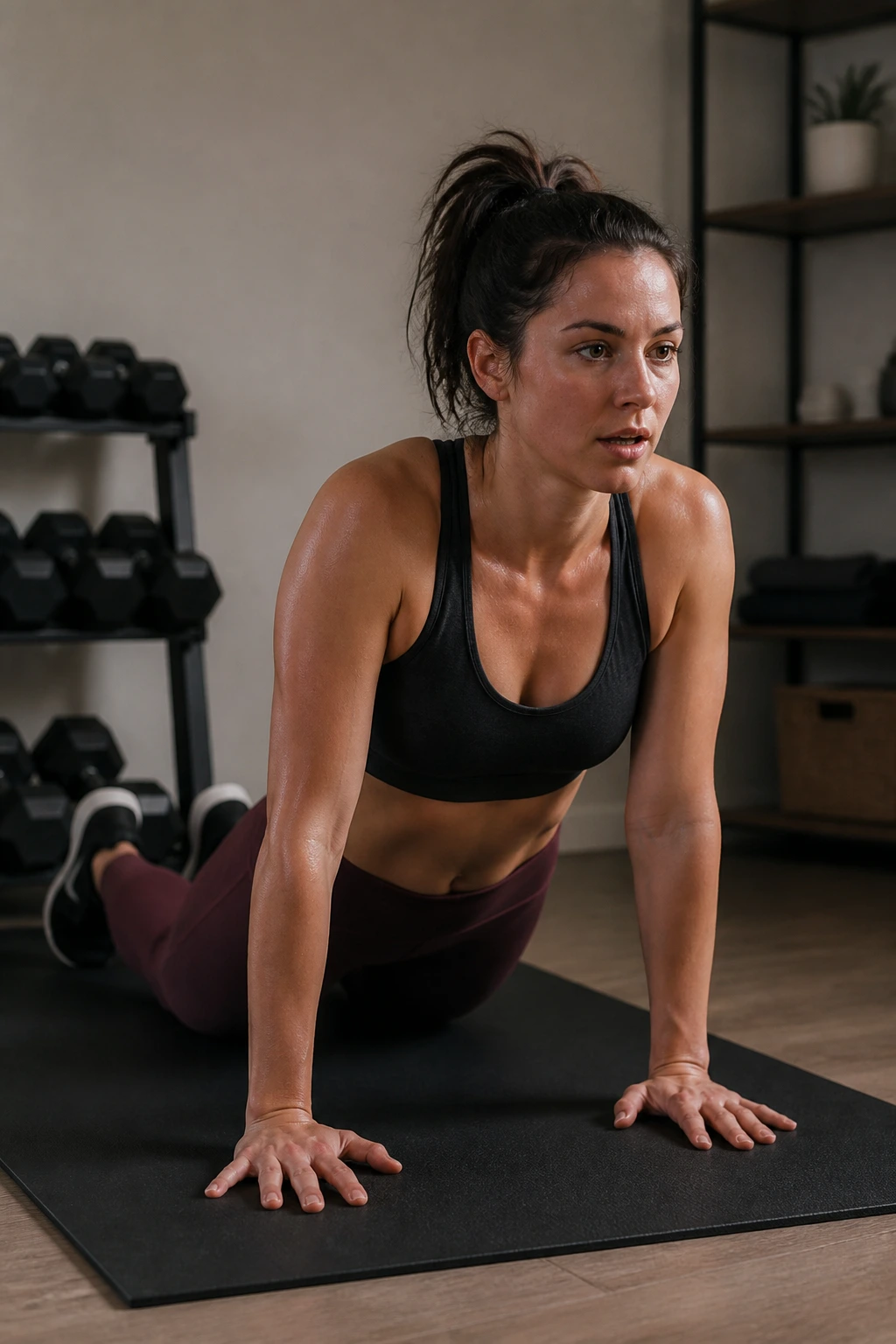
Burpees are excellent when they show up at the end of a workout and not as the whole workout.
After squats, lunges, deadlifts, or upper-body work, finish with 2 to 4 rounds of 6 burpees. The goal is to end with a conditioning hit when the muscles are already warm and the brain would really like to lie down. That makes this a smart finisher for home strength sessions.
The reason this works is simple. Your body is already primed from the earlier work, so the burpees hit harder without needing huge volume. And because you’re not fresh, you’ll notice whether your form stays clean under fatigue. That’s useful feedback.
If your strength session included heavy legs, use step-back burpees. If it was more upper-body focused, standard burpees may feel fine. If you are cooked, keep the rep count low and stop before the movement falls apart. A good finisher should sharpen the session, not wreck the next day.
A lot of people do burpees first because they’re dramatic. Fine. But the end of a strength workout is where burpees often make more sense.
19. The 15-Minute Mixed Burpee Circuit
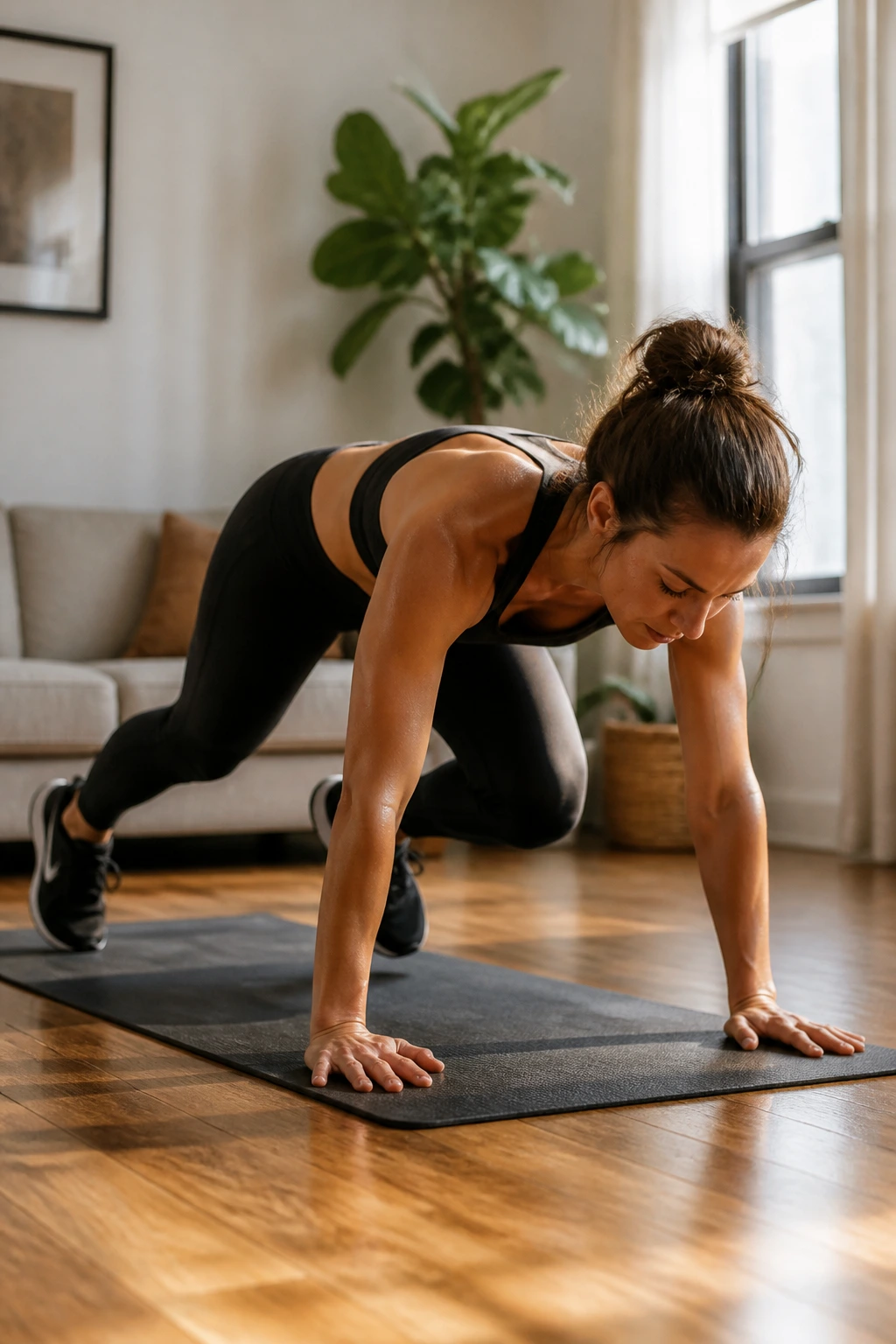
Fifteen minutes is long enough to matter and short enough to fit inside a messy day.
Set a timer and rotate through 3 burpee styles: 5 standard burpees, 5 low-impact step-backs, 5 burpees with a push-up. Rest 30 seconds, then repeat the cycle as many times as you can in 15 minutes. If one version is too aggressive for your wrists or knees, swap it for the version you tolerate best.
How to Make It Work
- Keep the reps small enough to stay neat.
- Use the same rest each round.
- Write down how many full cycles you finish.
- Swap one variation only, not all three, if you need a downgrade.
This kind of mixed circuit is useful because it stops the workout from going stale. One variation hits your lungs. Another keeps the joints happier. Another taxes the upper body a little more. The mix matters.
A mixed circuit is also a nice test of pacing. If you burn out on the first round, the rest of the workout turns into survival mode. Keep the first cycle almost boring. That’s how you earn a better second half.
20. The 20-Burpee For-Time Test
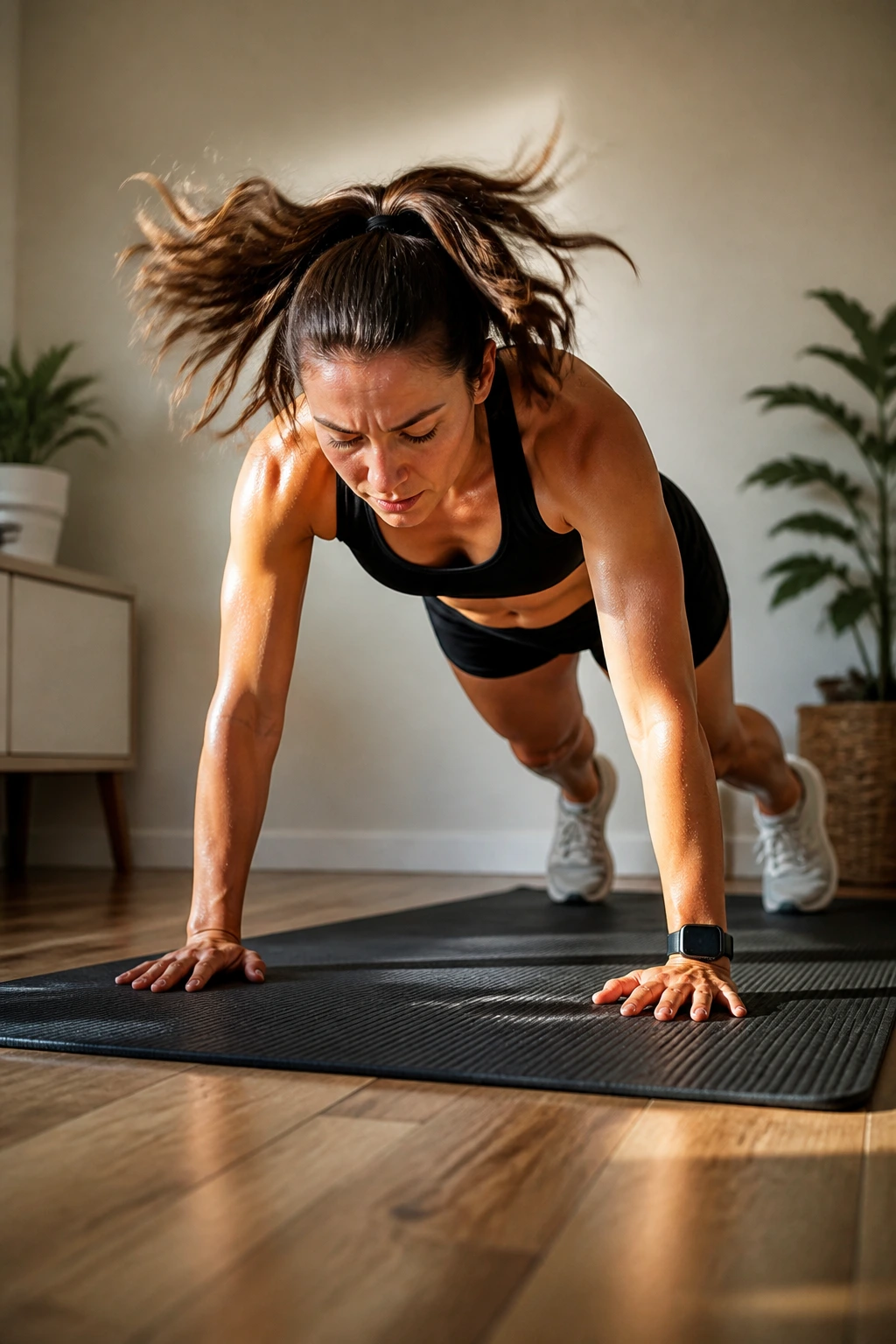
Twenty burpees is a clean benchmark. No extra flair. No nonsense. Just a timer and a number.
Start the clock, complete 20 burpees as fast as you can without turning the whole thing into a pile of bad reps, and stop the clock when the last rep is done. That’s it. If you want to make it more interesting, repeat the test once a month and compare the time, but only if your form stays consistent. A sloppier fast time is not really progress. It just looks busy.
The best part of a small test like this is that it stays repeatable. You can do it in a living room, on a mat, after strength work, or on its own. It gives you a clear snapshot of cardio, coordination, and grit without demanding an hour of your life.
If 20 straight burpees feels too sharp, split them into 4 sets of 5 with 15 seconds of rest. If that still feels rough, use step-back burpees and build from there. The win is not finishing ugly. The win is finishing clean enough that you could do it again later.
