



Toning workouts get talked about like they are a soft, fuzzy category, but real lean muscle comes from hard sets, smart load, and enough recovery to keep getting stronger. A body looks “toned” when there’s muscle there and enough control in the movement that the muscle actually gets used. That part is plain, even if the fitness industry likes to dress it up.
A light circuit that leaves you drenched is not the same thing as a session that changes how your shoulders, legs, and back hold shape. You can sweat buckets and still miss the mark if the load is too easy, the tempo is sloppy, or every set stops the moment things feel uncomfortable. The best toning workouts feel honest. A little gritty. Not flashy.
That does not mean you need to train like a powerlifter or spend every minute under a barbell. It means your session has to create enough tension for the muscle to adapt. Compound lifts, unilateral work, carries, pauses, and short rests all have a place here. So do dumbbells, kettlebells, cables, machines, and bodyweight moves that get hard fast.
Pick the workout that fits your setup and your joints, then make the first rep count. The rest of this list is built for people who want real lean muscle, not just a red face and a nice story.
1. Lean-Muscle Dumbbell Complex
A dumbbell complex is one of the fastest ways to make toning workouts feel serious. You stay with the same pair of weights through the whole sequence, which keeps the muscles under tension and the heart rate up without turning the session into random flailing.
Run it like this:
- 4 rounds
- 6 goblet squats
- 6 Romanian deadlifts
- 6 push presses
- 8 bent-over rows
- 8 reverse lunges per leg
- Rest 90 seconds between rounds
Use a weight that feels challenging by the third move, not one that has you fighting for survival on rep one. The last two reps of each exercise should slow down a little, but your form should still look sharp. If your low back starts doing the work on rows or deadlifts, the weight is too heavy.
Why it works
The whole point is tension without boredom. Each exercise hits a different pattern, and the short rest keeps the session dense enough to build conditioning without stealing the strength stimulus. That mix is why dumbbell complexes show up again and again in good toning workouts.
Best cue: keep your ribs down and your pace controlled. Fast does not mean sloppy.
2. Slow-Tempo Goblet Squat Session
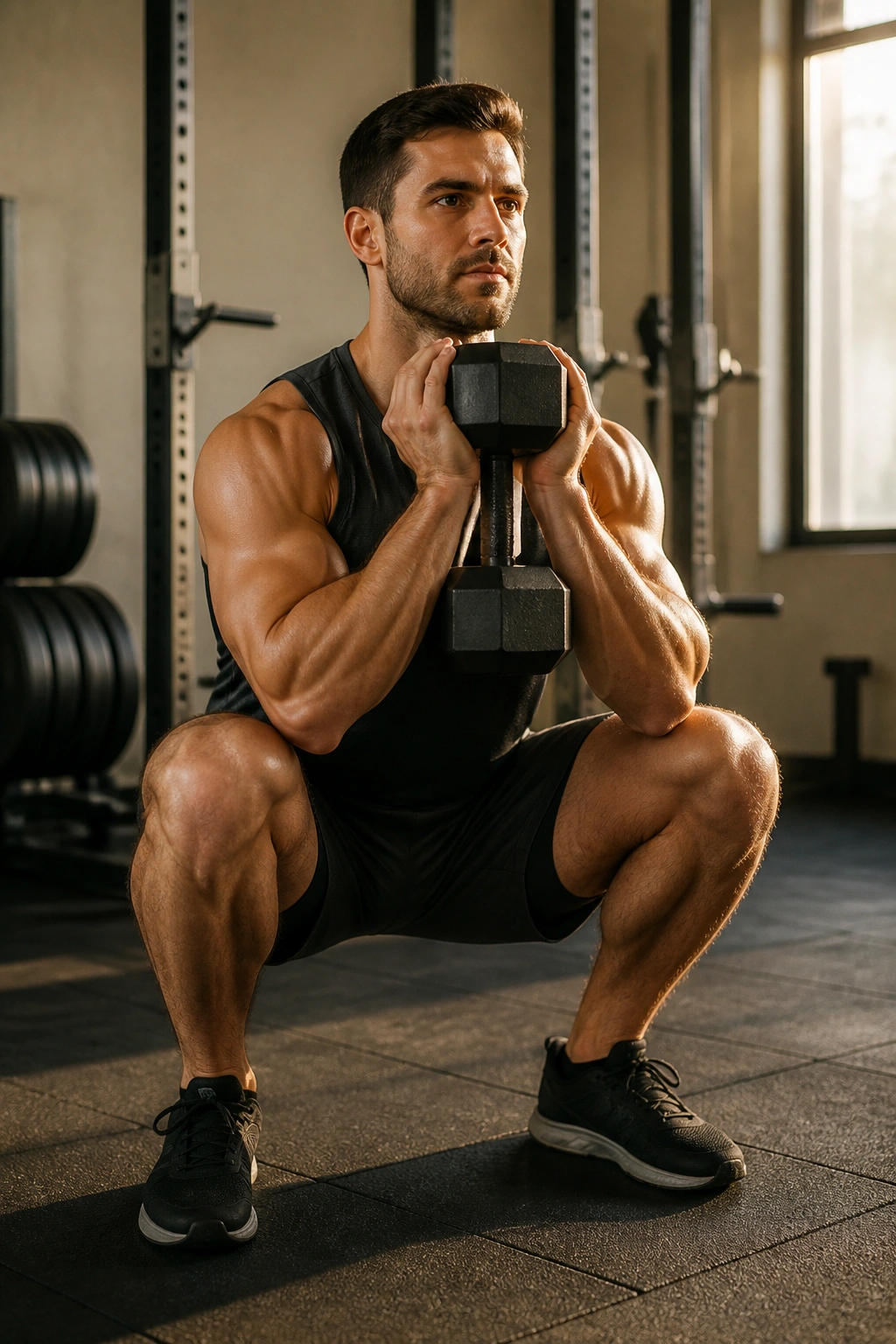
Why does a slower squat do more for your legs than a frantic one? Because time under tension matters, and a hard pause in the bottom position makes your quads and glutes work for the whole rep instead of just the bottom half. A goblet squat done with control can feel brutal in a very clean way.
Why the pause matters
Take 4 sets of 8 reps with a 3-second lower, a 1-second pause at the bottom, and a strong drive back up. If you rush the descent, you lose the exact tension that makes this workout useful. If you bounce out of the hole, your hips and knees never get the full job.
Add 3 sets of 12 glute bridges and 3 sets of 8 split squats per leg. That gives the workout more shape-building work without turning it into a sloppy cardio block. The pause also helps you notice depth, which is where a lot of people cheat without realizing it.
What to watch for: knees should track over the toes, not cave inward. That little detail changes everything.
3. Push-Up, Row, and Dead Bug Ladder
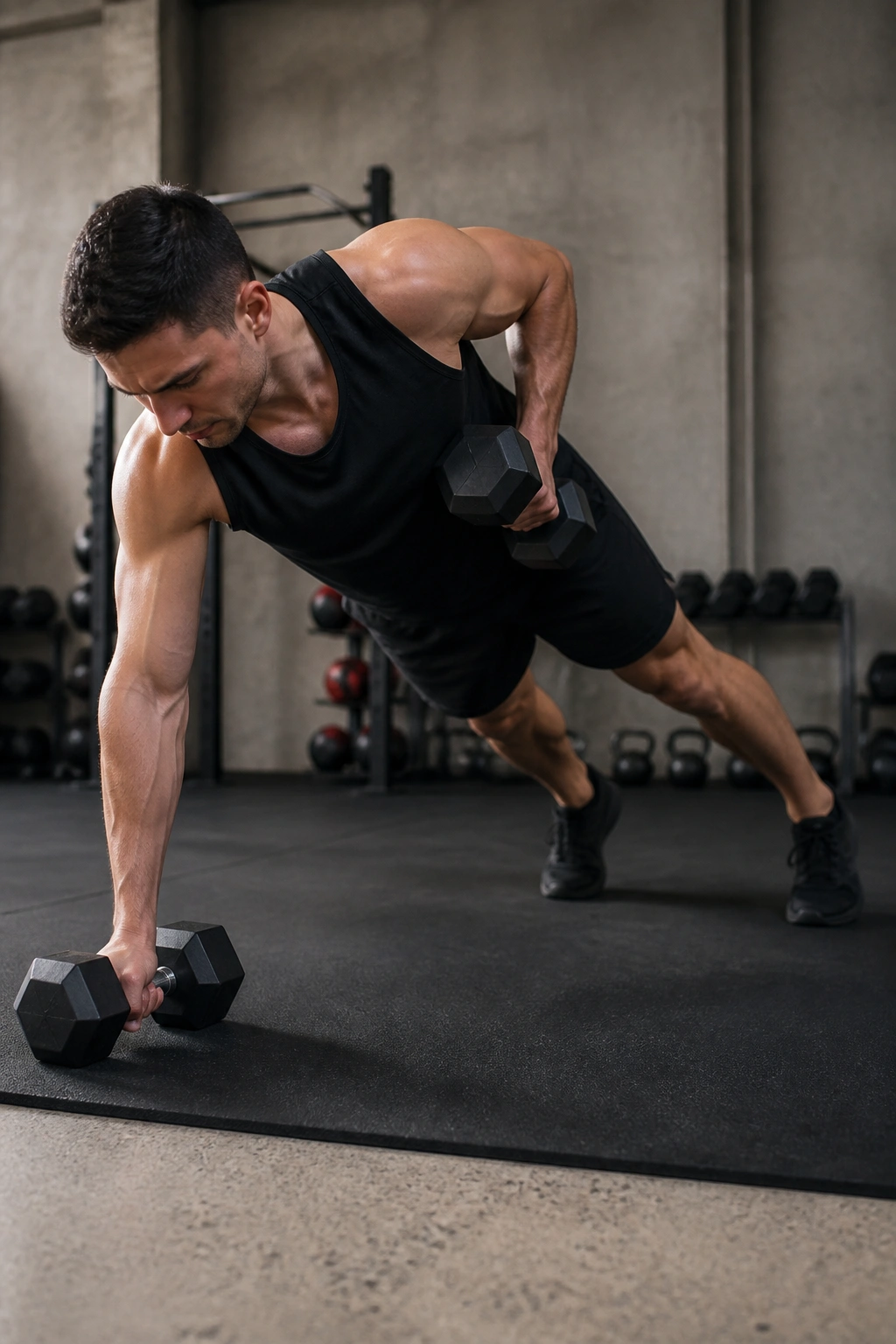
A push-up, row, and dead bug ladder is boring in the best possible way. It covers the chest, back, and deep core in one session, and it does it without any weird circus moves. If you want lean muscle that looks balanced from the front and the side, this is a smart place to spend your time.
Start with 12 push-ups, 12 one-arm rows per side, and 8 dead bugs per side. Then drop to 10, 8, and 6 on the next two rounds. Keep the rests short — 45 to 60 seconds is enough — and stop the push-ups a rep or two before your hips sag.
If regular push-ups are too easy, slow the lowering phase to 3 seconds. If they are too hard, use a bench or a wall and keep the body straight. The same rule works for the rows: pull the elbow toward your back pocket, not up toward your shoulder.
That’s the whole trick. Clean reps, not heroic ones.
4. Bulgarian Split Squat and RDL Pairing
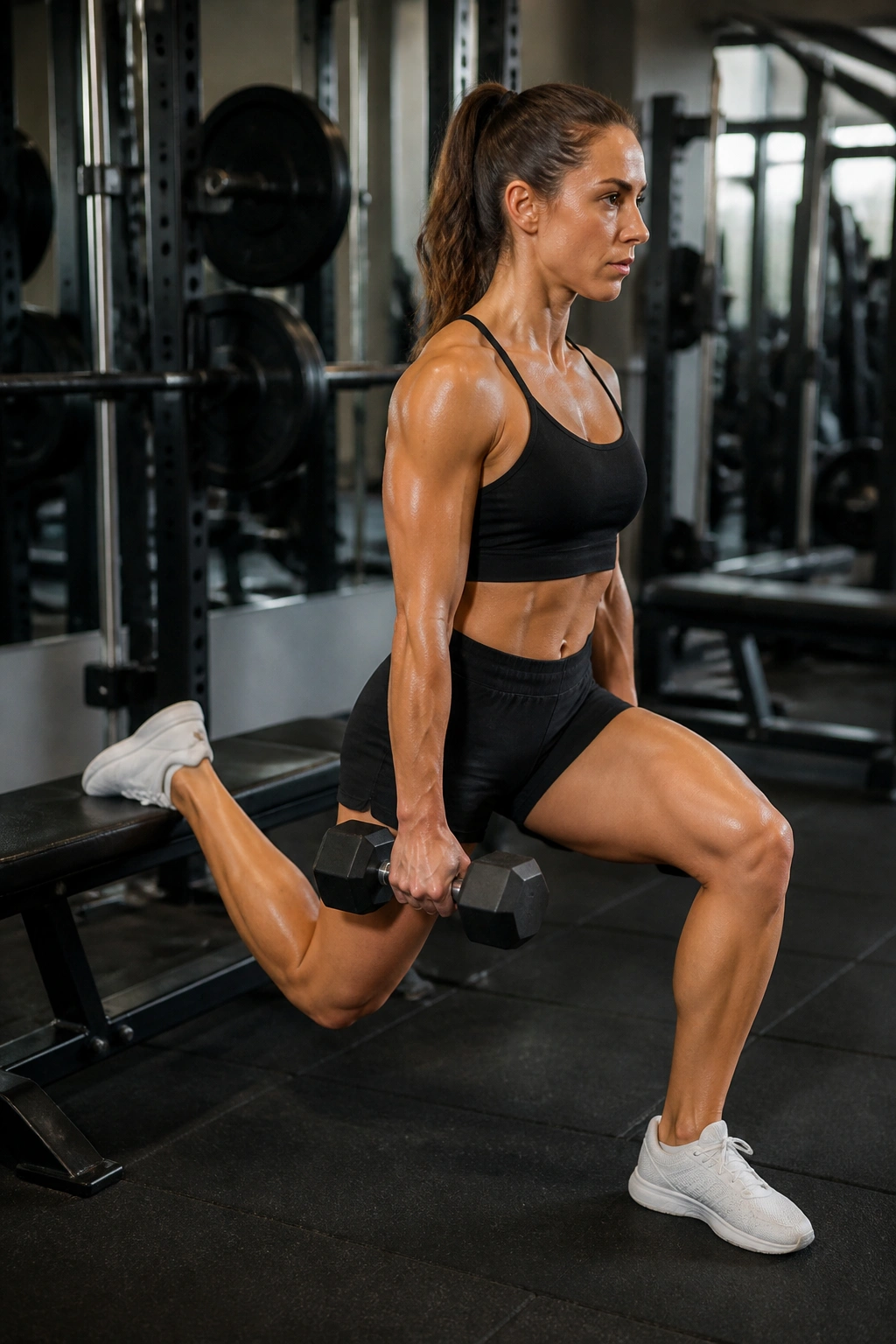
Bulgarian split squats force each leg to do its share. There is no hiding on the back leg, and that is exactly why they build shape so well. Pair them with Romanian deadlifts and you get a lower-body session that hits quads, glutes, hamstrings, and balance without needing a giant list of exercises.
Use a bench or box about 12 to 18 inches high for the rear foot. Then do 3 to 4 sets of 8 split squats per leg and 3 sets of 10 Romanian deadlifts. Rest 60 to 90 seconds between rounds. The working leg should stay flat through the heel and midfoot, and the back leg should act like a prop, not a launch pad.
What makes this pairing different
The split squat gives you unilateral strength and a noticeable leg shape. The RDL loads the back side of the body in a way that helps the glutes and hamstrings stand out more when you walk, squat, or hinge. That combination beats doing endless leg extensions and hoping for a miracle.
Small fix, big payoff: if your front knee collapses inward, shorten your stance and reduce the load.
5. Kettlebell Toning Workout for Legs and Glutes
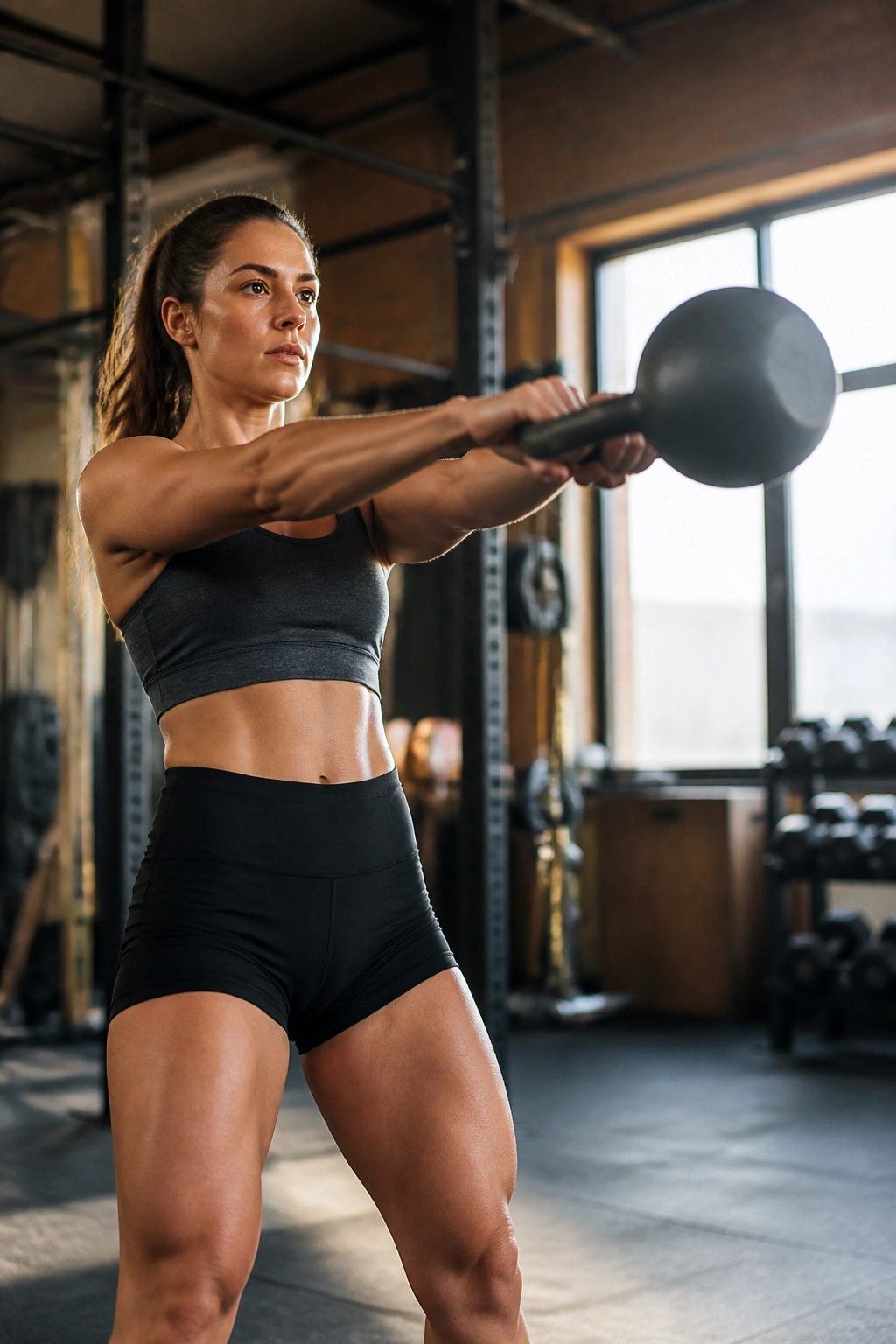
Kettlebell training belongs on any list of toning workouts because it gives you load, speed, and grip work in one pass. A bell does not care if you are tired. It will pull your technique apart fast if you get lazy, which is annoying and useful at the same time.
Run the circuit
- 4 rounds
- 15 kettlebell swings
- 10 goblet squats
- 8 clean-and-press reps per side
- 30-meter suitcase carry per side
- Rest 60 seconds after each round
Pick a kettlebell that lets the swing feel crisp from the hips. The bell should snap up because your glutes and hamstrings are doing the work, not because your arms are lifting it like a front raise. That one mistake ruins half the benefit.
If your shoulders get cranky on the clean-and-press, switch to a strict press with a lighter bell. The workout still works. It just gets a little less spicy.
6. Upper-Body Push-Pull Superset Workout
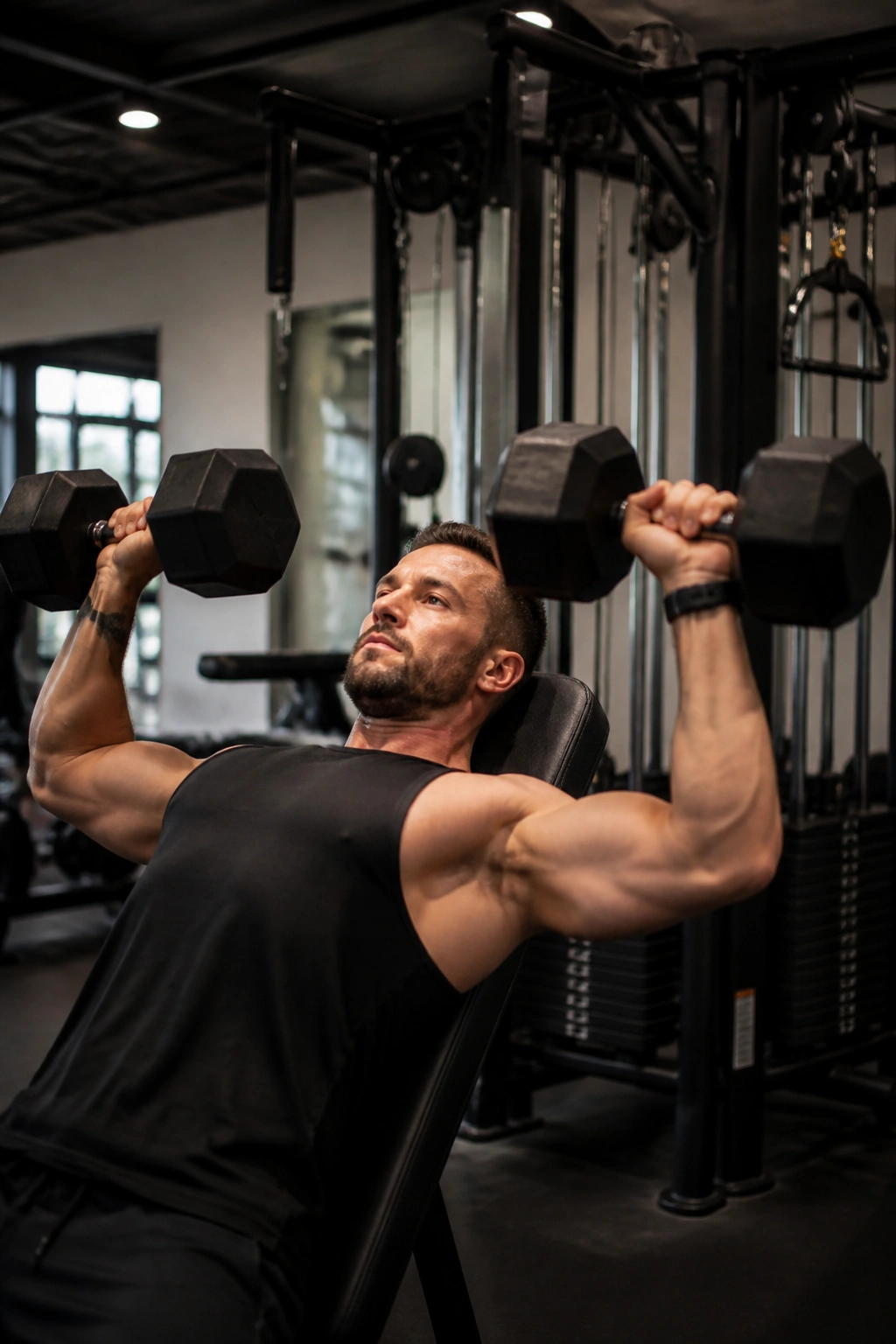
Upper-body push-pull work is where a lot of people accidentally overtrain the front of the body and ignore the back. That usually shows up later as rounded shoulders, tired necks, and a chest that gets stronger without much shape change. The fix is simple: pair your pressing with pulling and keep the volume honest.
Pair the moves
Superset A
- Incline dumbbell press: 3 sets of 10
- Chest-supported row: 3 sets of 10
Superset B
- Standing dumbbell press: 3 sets of 8
- Lat pulldown or assisted pull-up: 3 sets of 8 to 10
Superset C
- Lateral raise: 2 to 3 sets of 12 to 15
- Face pull: 2 to 3 sets of 12 to 15
Rest 45 to 75 seconds between supersets. That keeps the pace up without turning the session into a shrug-fest. The back work matters as much as the pressing, maybe more, because it gives the torso that wider, cleaner shape people usually mean when they say toned.
If you only have dumbbells, use a bent-over row instead of the chest-supported version. No drama.
7. Glute Bridge and Hamstring Curl Finisher
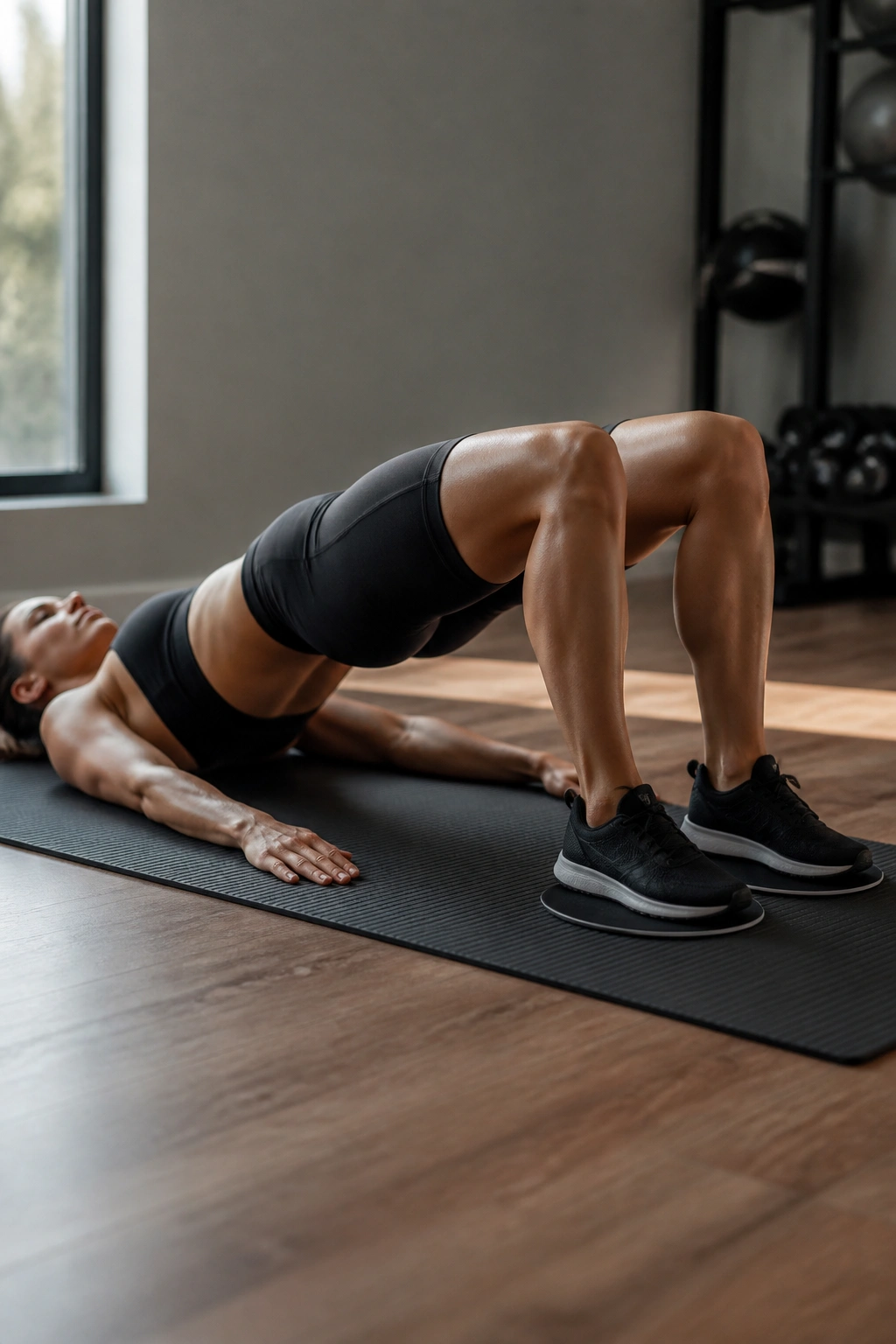
The top of a glute bridge should feel like a hard squeeze in the seat of your pants, not a lower-back arch. If you feel the wrong thing, stop and reset. These are small movements, but they can light up the posterior chain fast when you keep the tension where it belongs.
Do 3 rounds of 15 glute bridges, 12 slider hamstring curls, and a 20-second bridge hold at the end. If you do not have sliders, use a towel on a smooth floor. The curls should feel controlled all the way out and all the way back in, with the hips held up as long as possible.
Why this finisher earns its place
Glutes and hamstrings are huge for the look of lean muscle from the side and back. They also help your squats, lunges, and deadlifts look better because the hips are actually doing their job. A lot of people skip this work because it looks easy. Then they try a single-leg hinge and find out the truth.
Quick check: if your hamstrings cramp, reduce the range and slow down.
8. 12-Minute EMOM for Lean Muscle
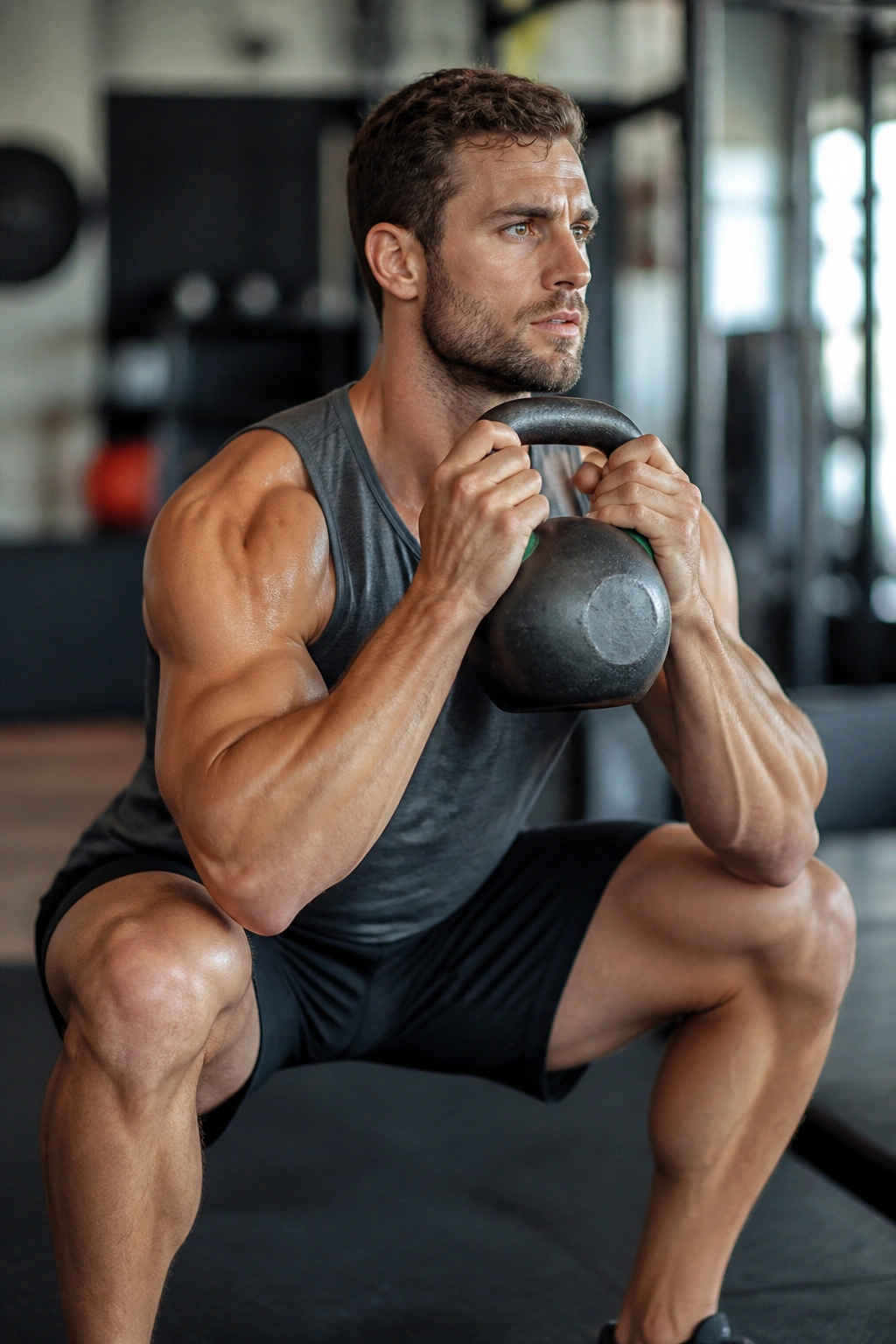
Twelve minutes is enough if you use it right. EMOM means every minute on the minute, which sounds more technical than it feels. You do the listed work at the start of each minute, then rest for whatever time is left before the next minute begins.
Try this four-minute cycle for 3 rounds:
- Minute 1: 8 goblet squats
- Minute 2: 8 push-ups
- Minute 3: 10 single-arm rows per side
- Minute 4: 12 hip bridges
That gives you 12 total minutes of focused work. If you finish each minute with 15 to 20 seconds left, the load is about right. If you are scrambling to finish before the next beep, the load is too high or the reps are too many.
A backpack can make this tougher without needing a full gym. Add books, a water jug, or whatever stays packed down tightly. Loose load is sloppy load.
9. Cable or Band Shoulder Sculpt Circuit
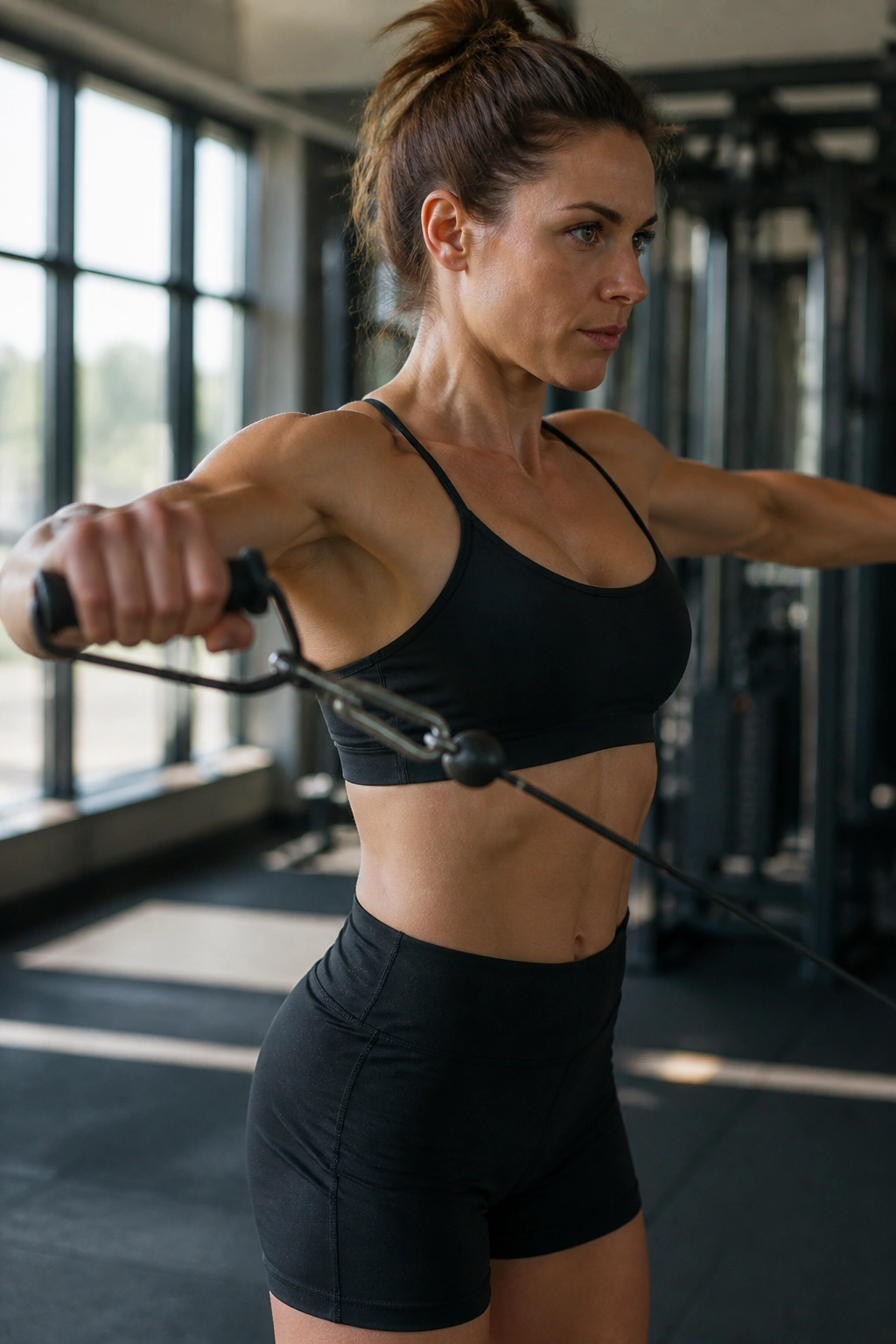
Broad shoulders change the whole look of a physique. They make the waist look smaller, the arms look fuller, and the upper body feel more athletic even before you lose a single inch anywhere else. That is why side delts and rear delts deserve more attention than they usually get.
Use 3 rounds of this circuit:
- Cable or band lateral raise: 15 reps
- Rear delt fly: 15 reps
- Standing overhead press: 10 reps
- External rotation: 12 reps per side
Keep the raises light. Heavy lateral raises usually turn into shrugging with a bent elbow, and that wastes the exact muscle you want. The shoulders should feel warm, then pumped, then a little shaky by the last round. That shaky part is normal.
If your shoulders click or pinch overhead, swap the press for a half-kneeling landmine press or skip it entirely and keep the side and rear work. No need to fight your joints.
10. Farmer’s Carry Conditioning Workout
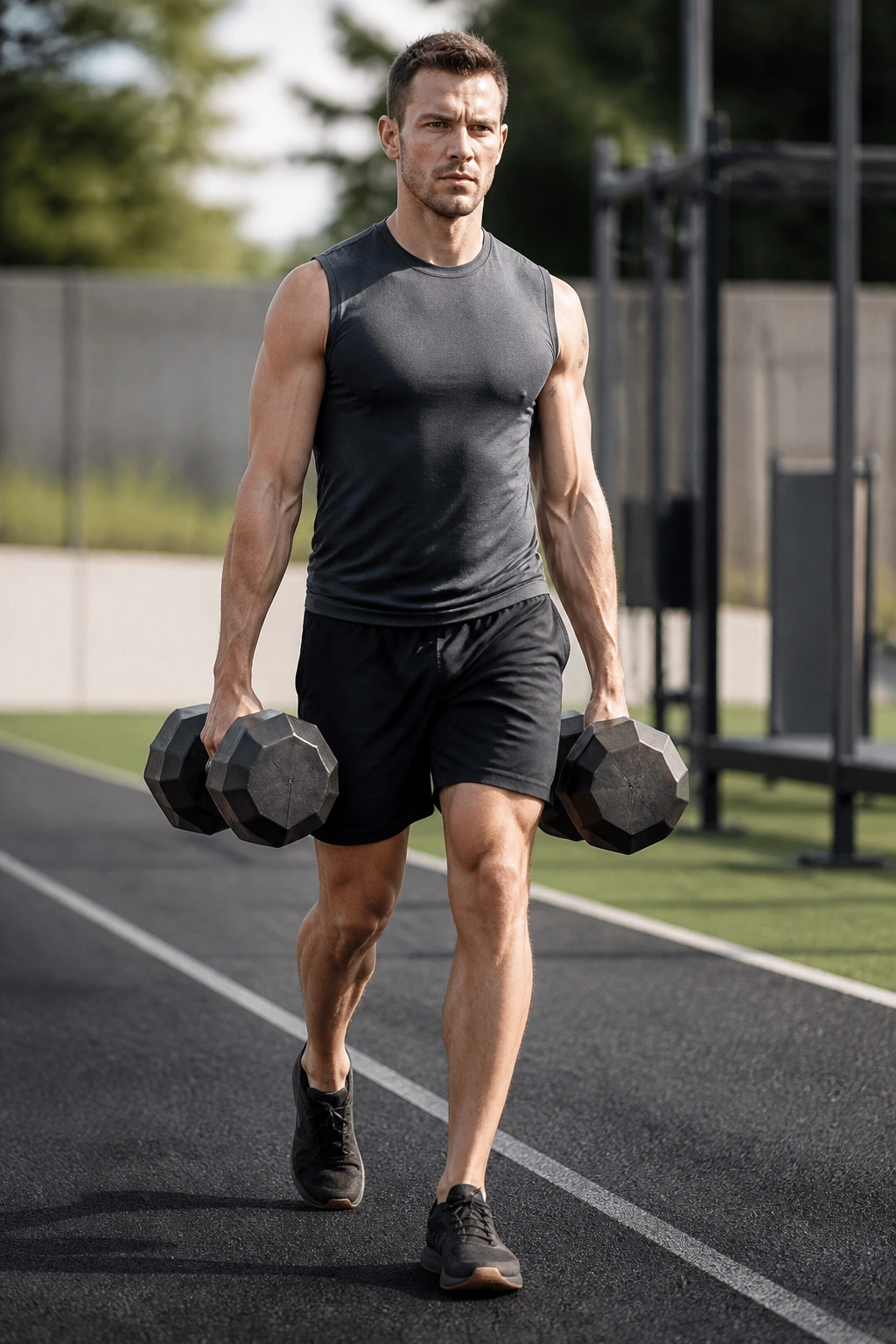
Farmer’s carries deserve more respect than they get. Unlike a machine, they do not let your body hide. Your grip, posture, trunk, and breathing all have to cooperate while you walk. That makes carries one of the best low-drama tools for lean muscle and real-world strength.
What makes them different
Do 6 rounds of 30 to 40 meters with the heaviest dumbbells or kettlebells you can carry without leaning side to side. After each carry, do 8 front squats or 8 goblet squats. Rest only long enough to get back to the start line.
The carry should feel heavy in the hands and sharp in the core. If you are wobbling like a shopping cart with one bad wheel, the load is too much. You want the ribs stacked over the pelvis, shoulders down, and steps that look calm even when your forearms are burning.
Carries work especially well when you are short on time because they punish sloppy posture fast. And that is a useful kind of punishment.
11. Full-Body Barbell Strength Toning Session
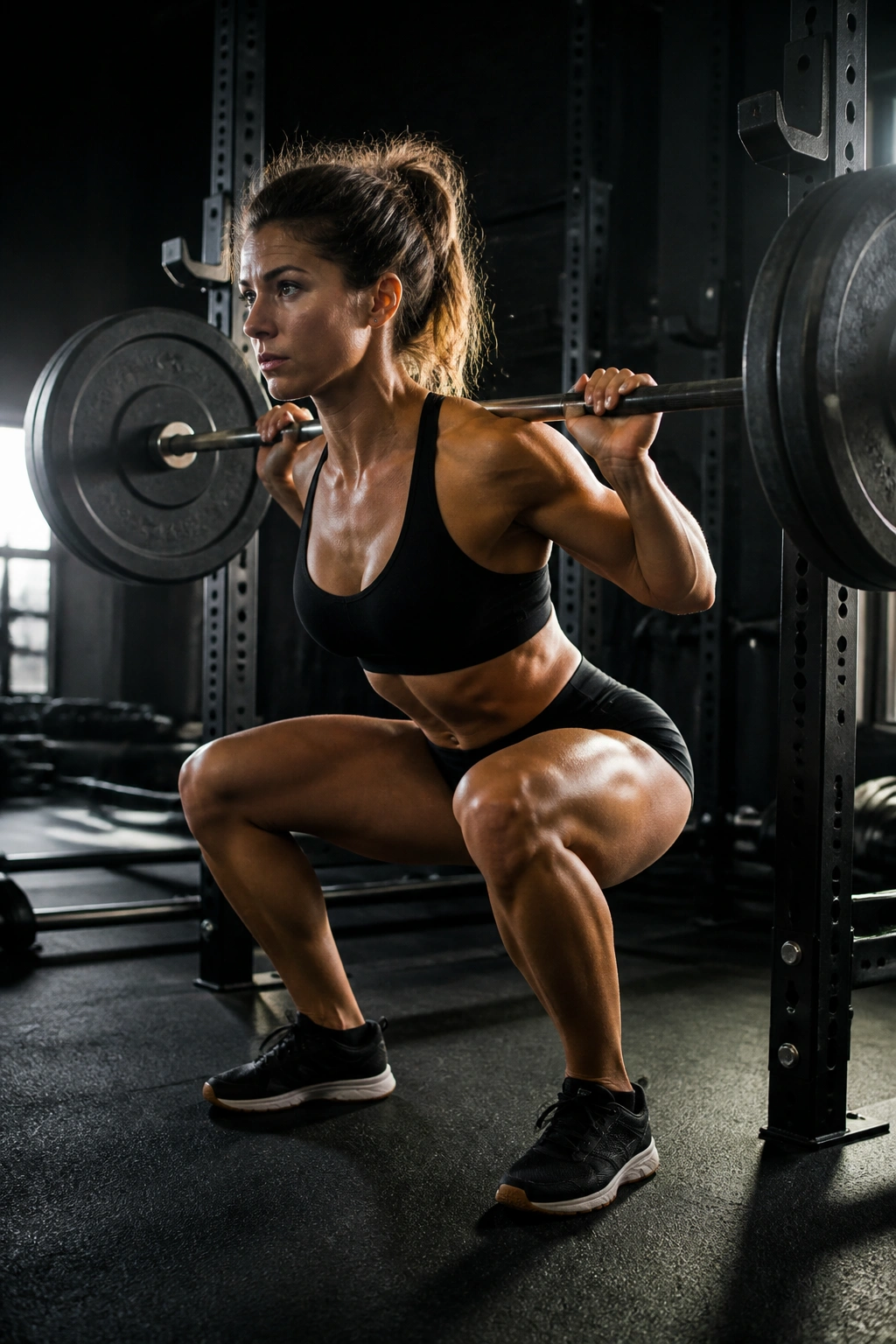
A barbell session does not have to be a bruiser to build lean muscle. If the weights are moderate, the reps are controlled, and the rest is short enough to keep the work honest, you get a very clean strength-and-shape stimulus. This is one of the simplest toning workouts on the list.
Use 4 sets of these lifts:
- Back squat: 6 reps
- Bench press: 6 reps
- Barbell row: 8 reps
- Romanian deadlift: 8 reps
Rest 90 seconds between sets. That is enough to recover without turning the workout into an afternoon project. The key is to stop each set with about 2 clean reps left in the tank. Not five. Not one ugly grind. Two.
If your bench stalls, lower the load and make the pause at the chest more obvious. If your rows start turning into hip heaves, brace harder and shorten the range. Small corrections beat random effort every time.
This session feels plain. That is the point. Plain works.
12. Back-and-Arms Toning Workout for Lean Muscle
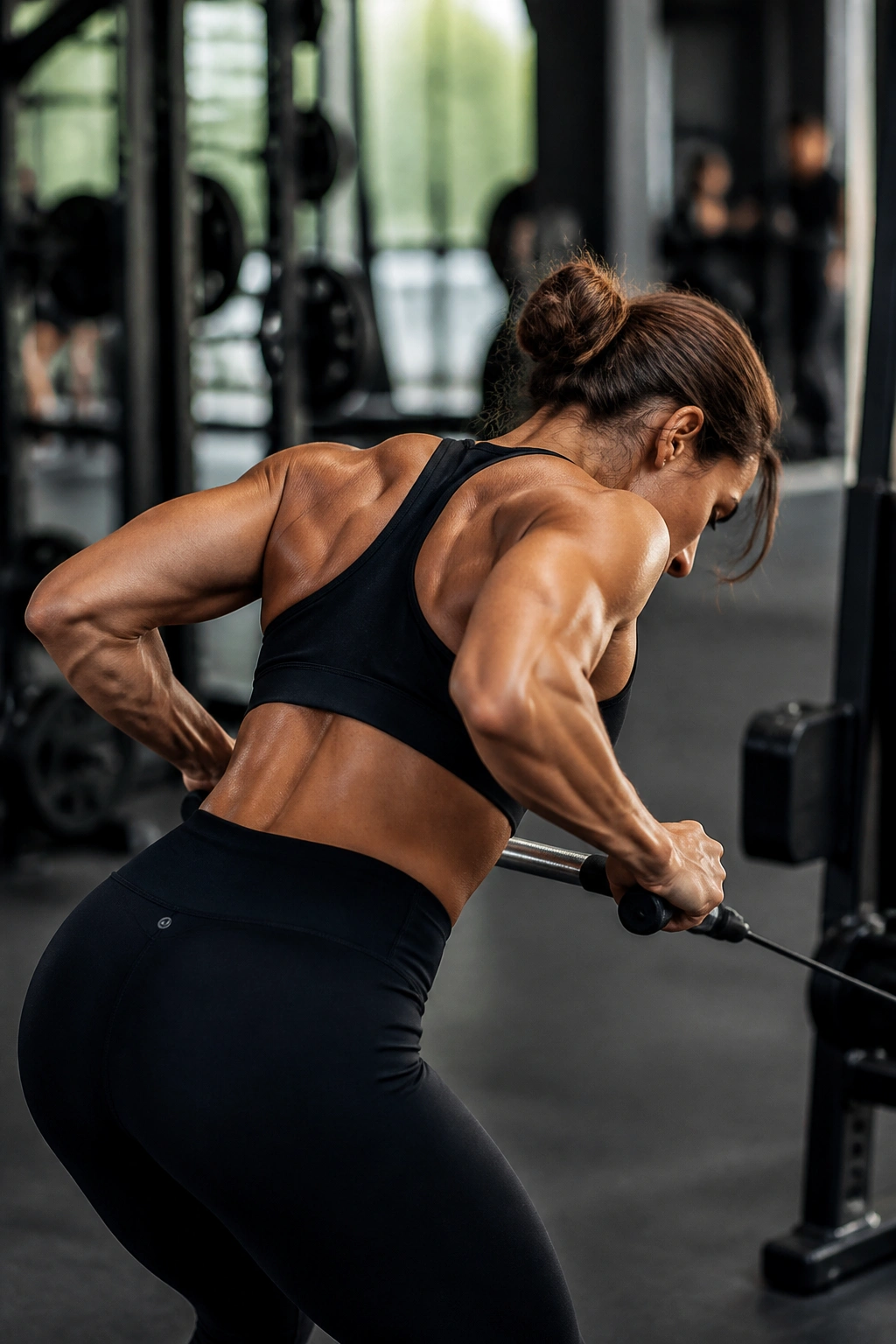
Why does back training matter so much? Because a strong back gives the upper body width and shape that no amount of endless curling can fake. The arms also look better when they hang from a back that actually has some size.
How to build the session
Start with pull-ups or assisted pull-ups for 4 sets of 6 to 8. Then move to a single-arm cable row for 3 sets of 10 per side, followed by hammer curls and rope pressdowns for 3 sets of 12 each. Finish with 2 sets of 15 reverse flys.
Use a controlled pull on the row, with the elbow driving back and the shoulder staying down. On curls, keep your upper arm still. On pressdowns, lock the elbows close to your sides and stop before the shoulders start rolling forward.
Where people overdo it
They chase weight on curls and ignore the pull work. That is backwards. If you want real lean muscle, the back is the foundation, and the arms are the garnish.
13. Hill Sprints Plus Strength Combo

Hill sprints are not a substitute for lifting, but they can sharpen the look of a physique fast. The incline makes you work harder with less joint pounding than flat-out sprinting, and the short bursts keep the session from dragging.
Do 6 to 8 sprints of 10 to 15 seconds each, walking back down for full recovery. Then add 2 to 3 rounds of 10 goblet squats and 10 push-ups. That gives you a little strength work after the speed work without overcooking your legs.
Be careful here. If your hamstrings are tight or your knees hate sprinting, keep the hill mild and the stride short. You should feel powerful, not reckless. And do not stack this on top of a brutal lower-body day unless you enjoy limping down stairs.
The nice thing about hill work is that it does not need much space. The annoying thing is that it shows bad form instantly. Both are useful.
14. Machine Circuit for Busy Gyms
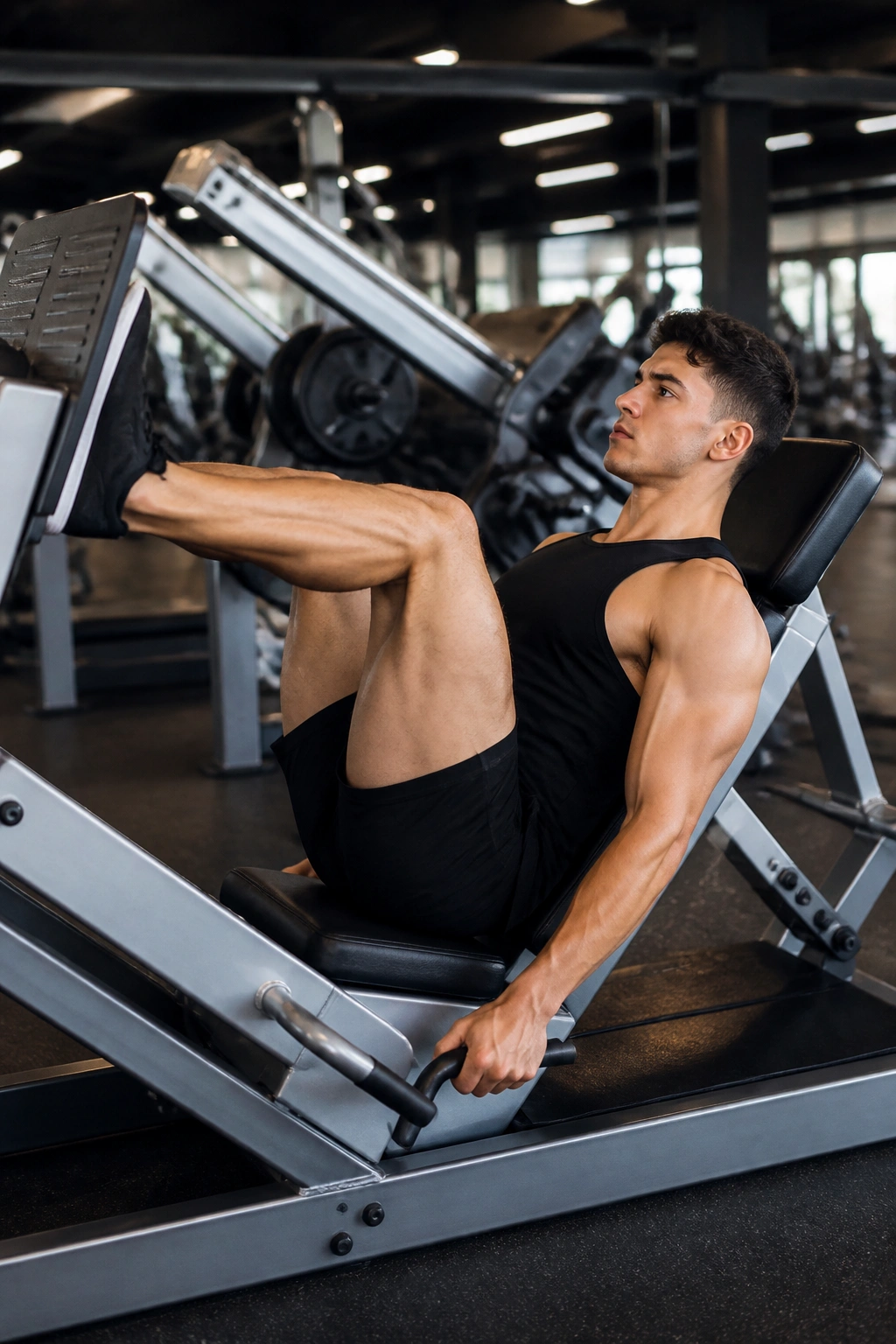
The busy gym at 6 p.m. is not the enemy; it just means machines earn their keep. A good machine circuit can build lean muscle without waiting around for a squat rack to open up, and it can be easier on the joints when you are tired or coming back from time off.
Use 3 rounds of:
- Leg press: 12 reps
- Seated row: 12 reps
- Chest press: 10 reps
- Hamstring curl: 12 reps
- Cable crunch: 15 reps
Keep the lowering phase at about 2 seconds and pause for a moment at the squeeze on rows and curls. Machines make it easier to push close to failure safely, which is handy when you want a hard session without a lot of setup.
If the machine path feels awkward, adjust the seat before you chase weight. A poor setup makes the rep feel strange, and strange is not the same as effective.
15. Pilates-Inspired Core and Hip Stability Block
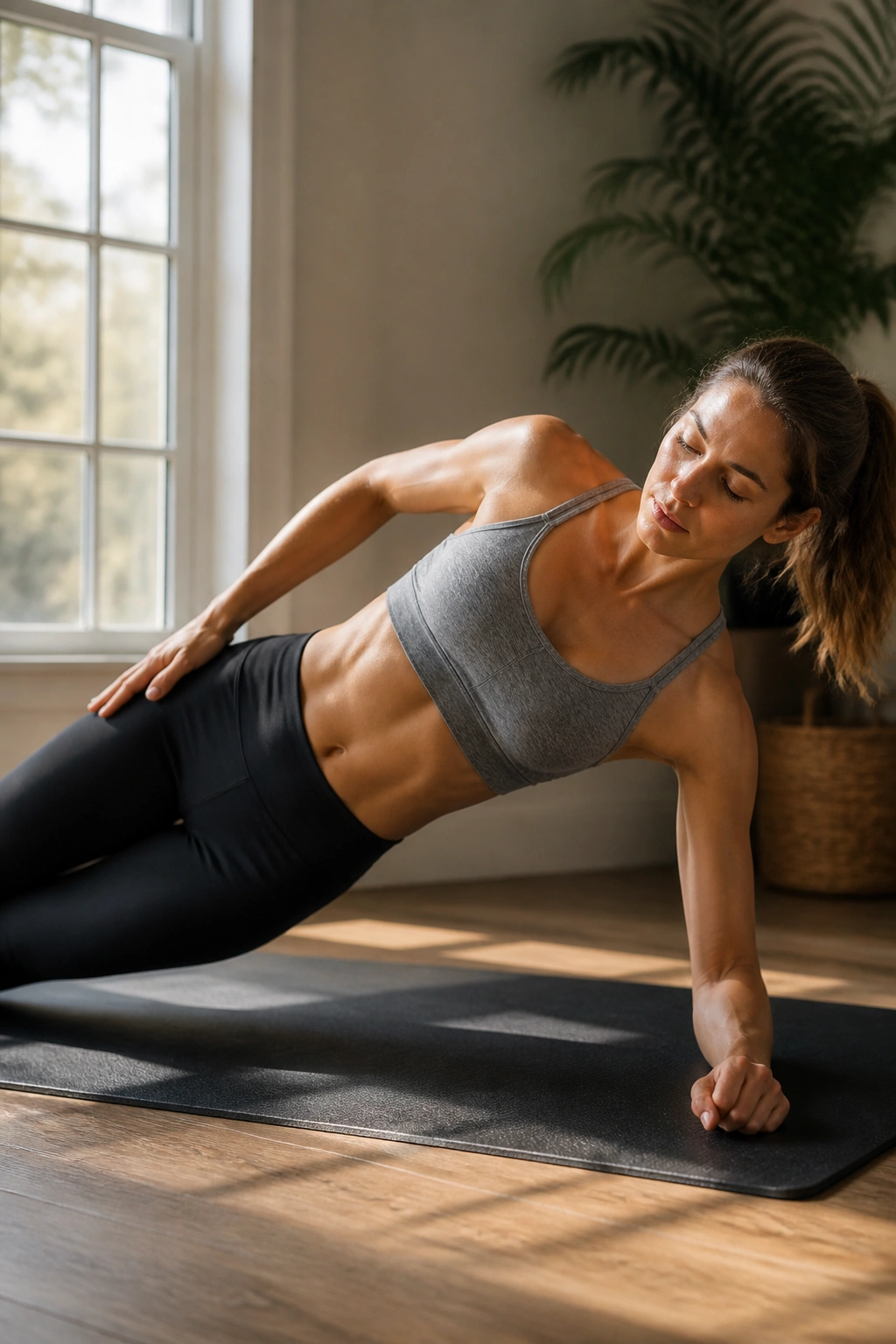
The slowest-looking work often gives the best posture. You do not feel heroic while doing a side plank or a bird dog, but those moves clean up the way the hips and ribs stack during squats, lunges, and carries. That matters more than it gets credit for.
Why slow matters
Try 2 to 3 rounds of the following:
- Side plank: 20 to 30 seconds per side
- Bird dog: 8 reps per side, hold each reach for 3 seconds
- Hollow body hold: 20 seconds
- Copenhagen plank, bent-knee version: 15 seconds per side
- Hip airplane: 6 slow reps per side
The point is not to burn out. It is to build control in places that usually get ignored. If the hollow hold makes your lower back pop off the floor, shorten the hold and keep the ribs down. If the Copenhagen plank feels too spicy, keep the top knee on a bench and cut the hold in half.
These are not flashy exercises. They are the kind of dull, necessary work that makes everything else feel more stable.
16. Sandbag or Backpack Strength Circuit
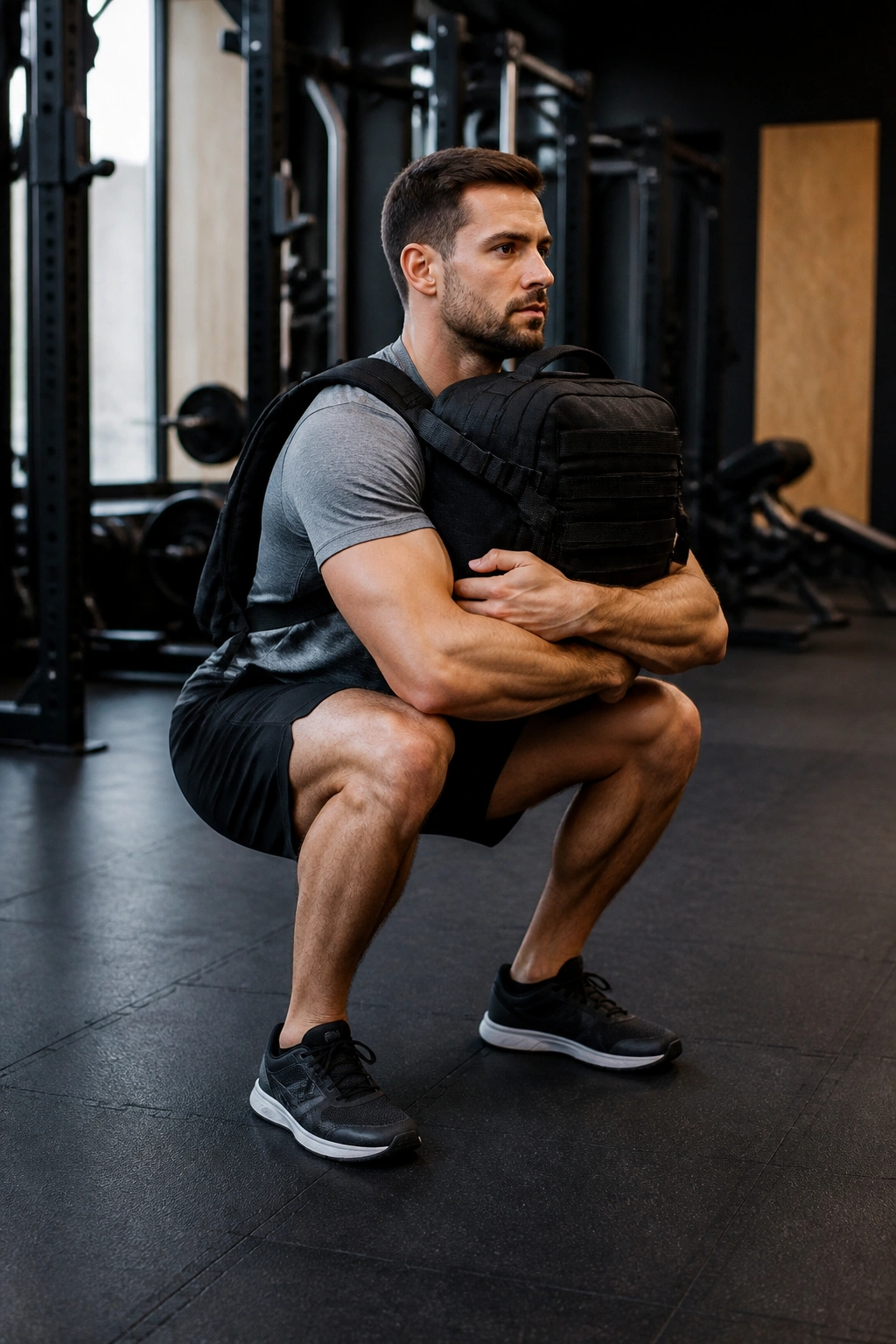
A sandbag or a loaded backpack can be rough in the nicest way. The load shifts a little, the grip gets messy, and your torso has to work harder to keep everything together. That makes it ideal for home-based toning workouts when you do not have a full rack of gear.
Use 4 rounds of:
- Bear hug squat: 10 reps
- Shoulder clean: 5 reps per side
- Bear hug carry: 30 meters
- Push-ups: 10 reps
- March in place: 20 steps
A backpack works best when the load is tight and close to your back. Wrap towels around books or use water bottles that do not rattle around. A sloppy bag makes the workout feel worse in the wrong way.
The bear hug position hits the core hard because the weight sits in front of you. That front load is the whole point. It forces you to brace instead of leaning back and pretending posture is the same thing as control.
17. Chest and Triceps Mechanical Drop Set
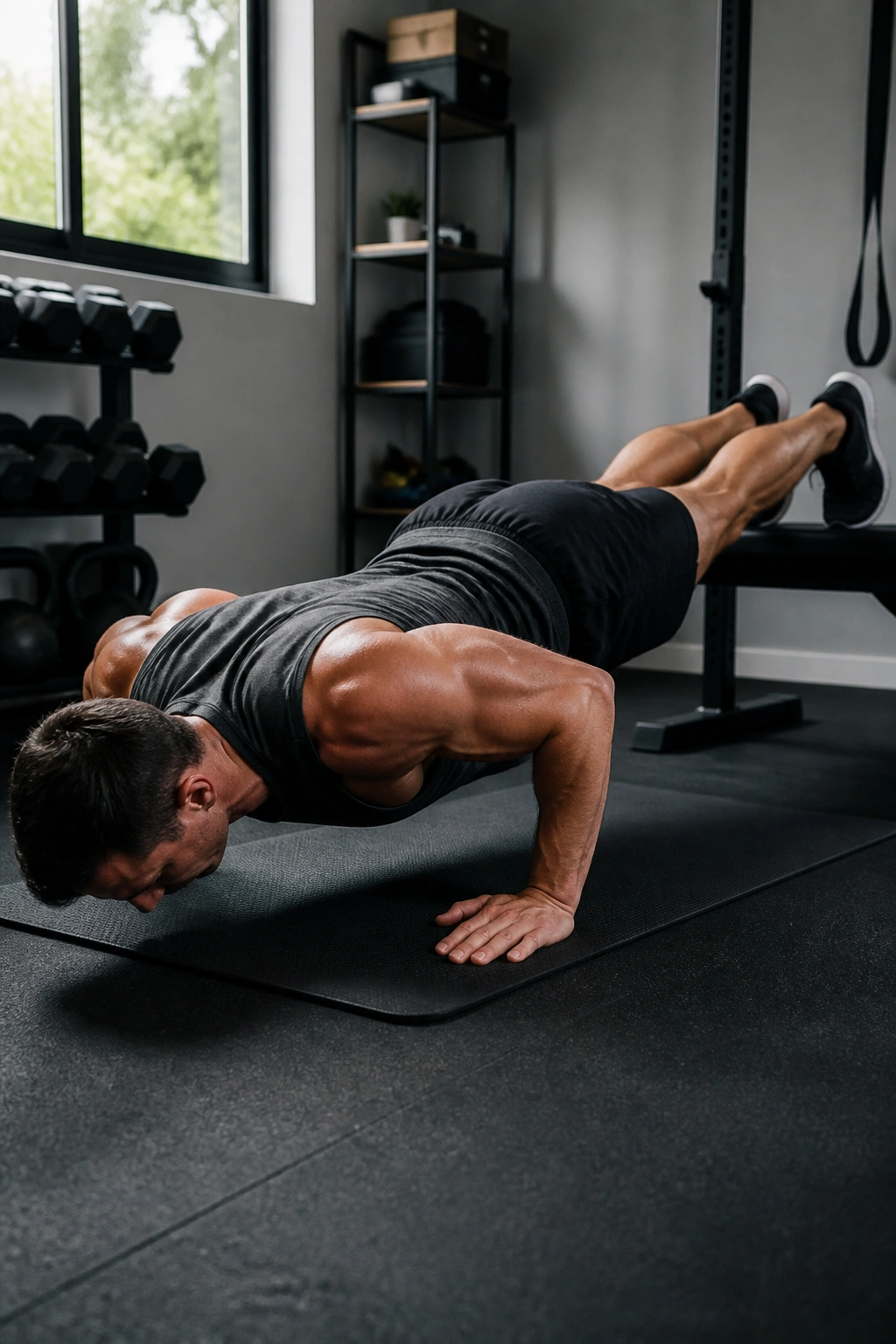
Mechanical drop sets are the easiest way to make a chest-and-triceps day feel expensive without needing heavy weights. You change the exercise angle or body position as fatigue climbs, which lets you keep working the muscle without setting the weights down after every hard rep.
Try this sequence for 3 rounds:
- Feet-elevated push-ups: 8 reps
- Flat push-ups: 8 reps
- Incline push-ups: 8 reps
Rest 30 to 45 seconds after the full sequence, then repeat. If push-ups bother your wrists, use dumbbells as handles or switch to dumbbell floor presses followed by close-grip push-ups. The idea stays the same: challenge the press, then make the position a little easier so you can keep moving.
Keep your shoulders away from your ears and your elbows at a comfortable angle, not flared wide like a chicken wing. The chest should feel full, and the triceps should light up by the final round.
This one has a pump. A real one.
18. Single-Leg Lower Body Workout
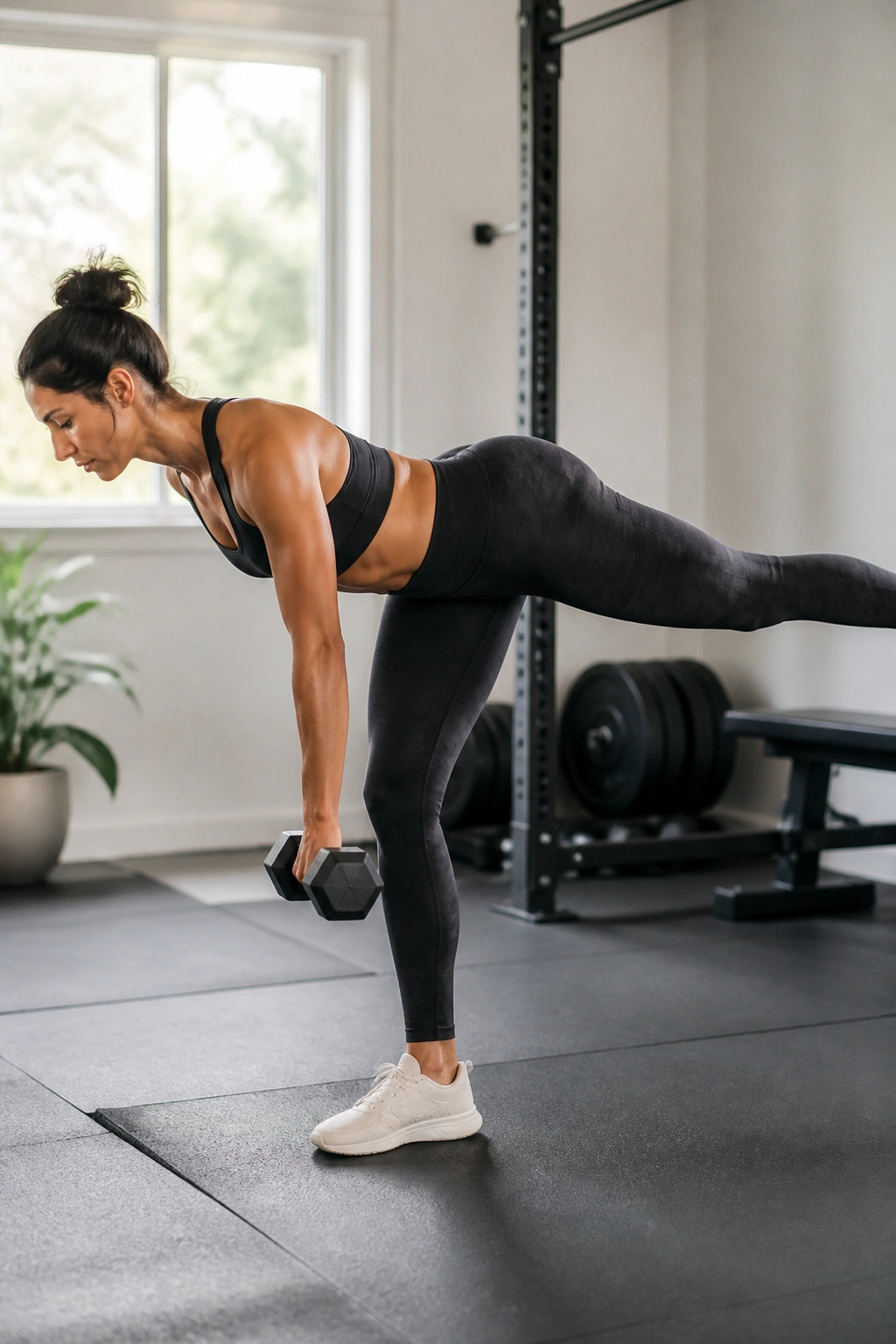
Why do split squats hurt more than they look like they should? Because the working leg cannot hide. Single-leg work exposes balance problems, left-right strength gaps, and lazy glutes fast. That is exactly why it belongs in a plan built for lean muscle.
Use 3 sets of each:
- Step-ups: 8 reps per leg
- Reverse lunges: 10 reps per leg
- Single-leg Romanian deadlifts: 8 reps per leg
- Standing calf raises: 15 reps per leg
If balance is the issue, hold onto a rack or wall with one hand. That is not cheating. It is a way to keep the load on the leg instead of wasting effort on wobbling. The step-up should come from the working heel, not a jump from the back leg.
This workout does a nice job of cleaning up asymmetries. One side is always a little lazier than the other, and single-leg work makes that obvious without needing a mirror and a guess.
19. 20-Minute Metabolic Dumbbell Finisher
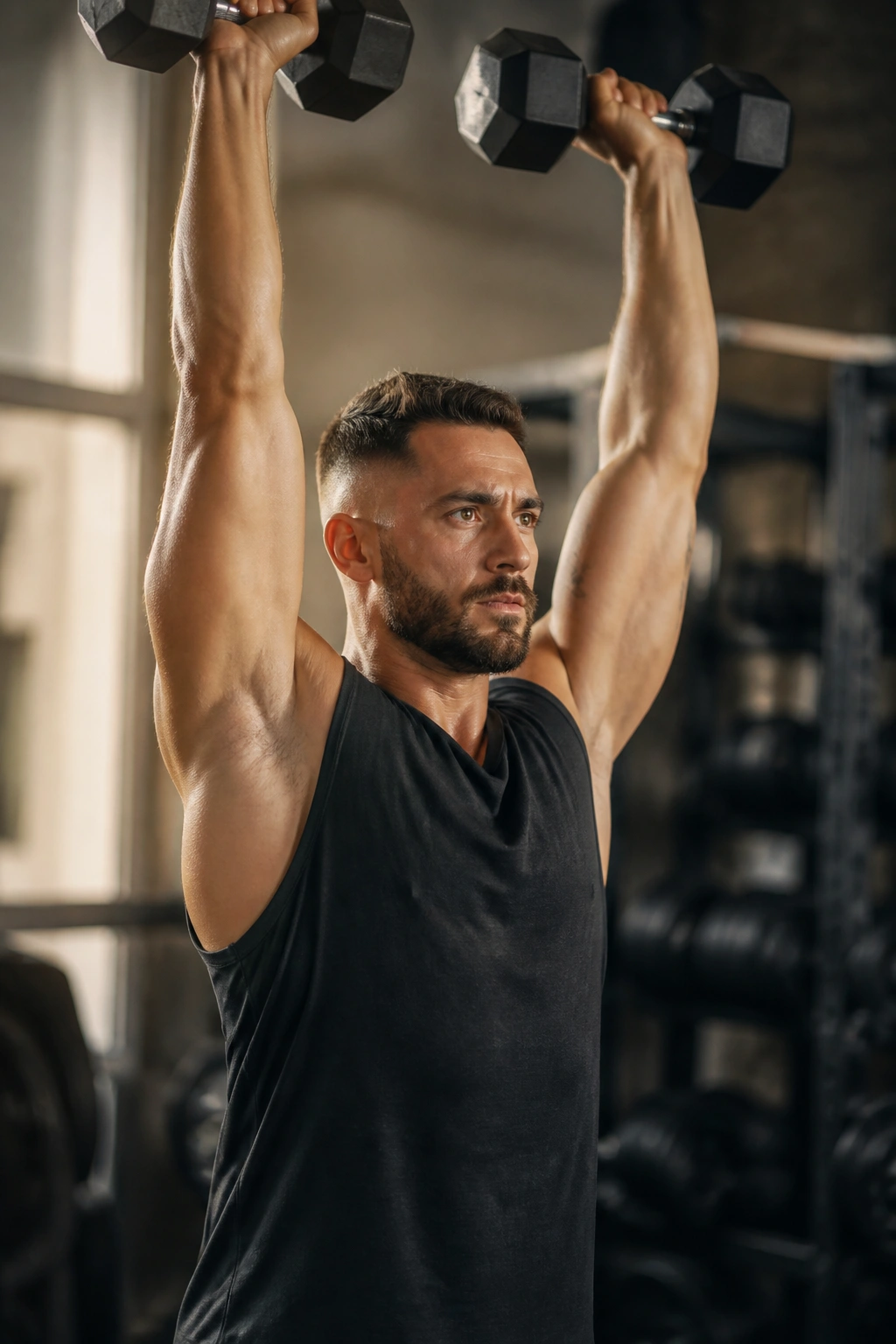
A 20-minute dumbbell finisher is where density matters more than ego. You are not trying to set a lifting record here. You are trying to keep quality high while stacking enough work to leave the muscles tired and the lungs awake.
How to pace the round
Set a timer for 20 minutes and cycle through this as many times as you can with clean form:
- Dumbbell thrusters: 6 reps
- Renegade rows: 6 reps per side
- Suitcase carry: 20 meters per side
- Reverse lunges: 6 reps per leg
Choose a load that lets you keep moving for the full window without turning the thruster into a back bend. The carry should feel like a posture test. The rows should stay quiet through the hips, which is harder than it sounds after a few rounds.
Do not treat this like an all-out sprint every time. If you crush yourself on round one, the rest of the session falls apart. Hold a pace you can repeat, then try to squeeze in one more clean round next time.
20. Mixed-Modal Total-Body Finisher
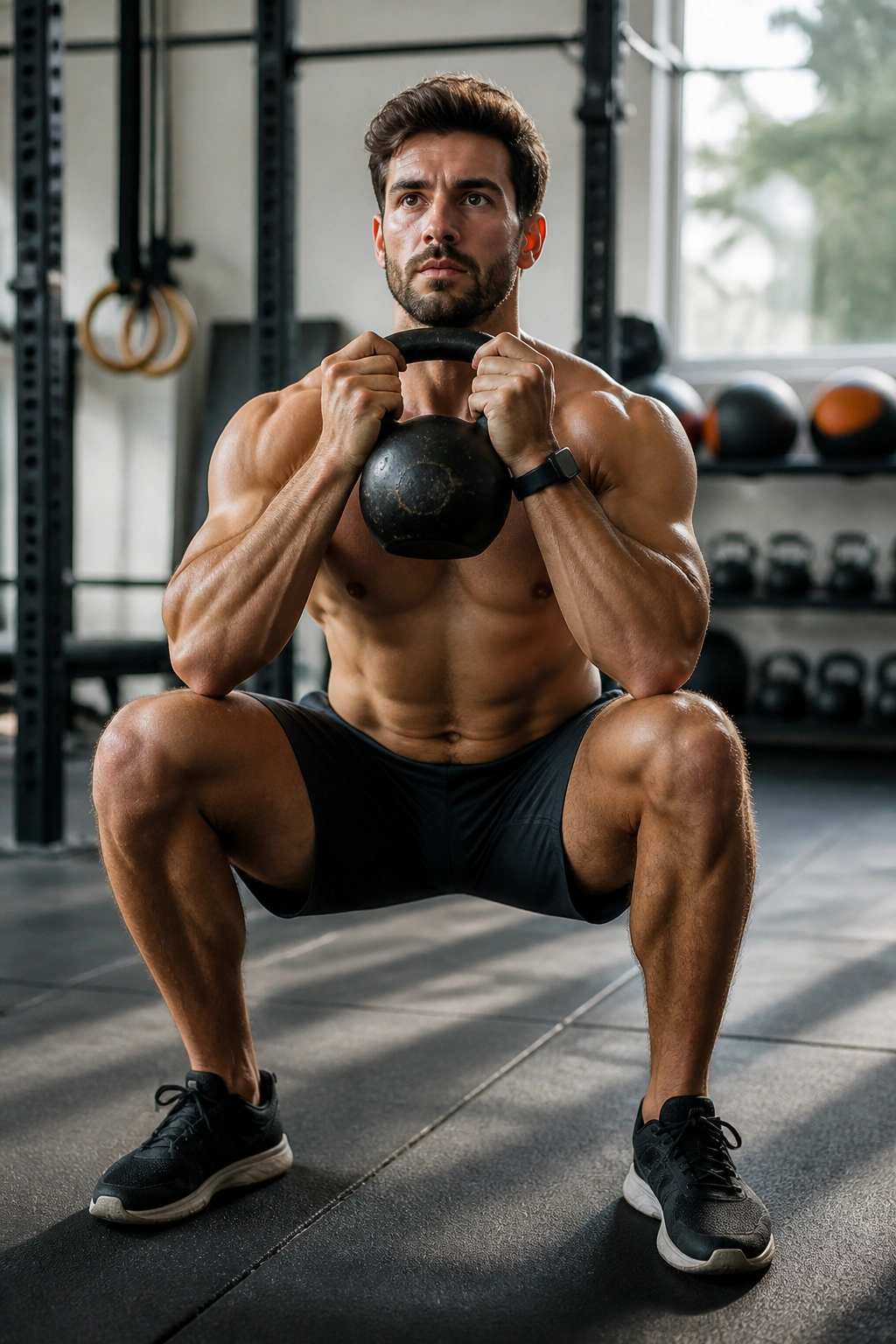
A mixed-modal circuit is the closest thing to a full-body stress test without turning the gym into chaos. It works because you keep changing the demand: hinge, push, squat, carry, repeat. That mix is useful when you want a single session that touches most of the body and still leaves you with something in the tank.
Use 3 to 4 rounds of:
- Row or bike: 1 minute
- Kettlebell deadlift: 10 reps
- Goblet squat: 10 reps
- Push-up: 10 reps
- Farmer’s carry: 30 meters
- Plank: 30 seconds
Rest 60 to 90 seconds between rounds. Keep the row or bike strong but not reckless. The goal is to build fatigue without letting the form on the strength moves fall apart. If you get sloppy on the deadlifts, shorten the round before you chase extra volume.
This is the kind of workout that feels useful the next day in a way that random sweating never does.
The Bottom Line
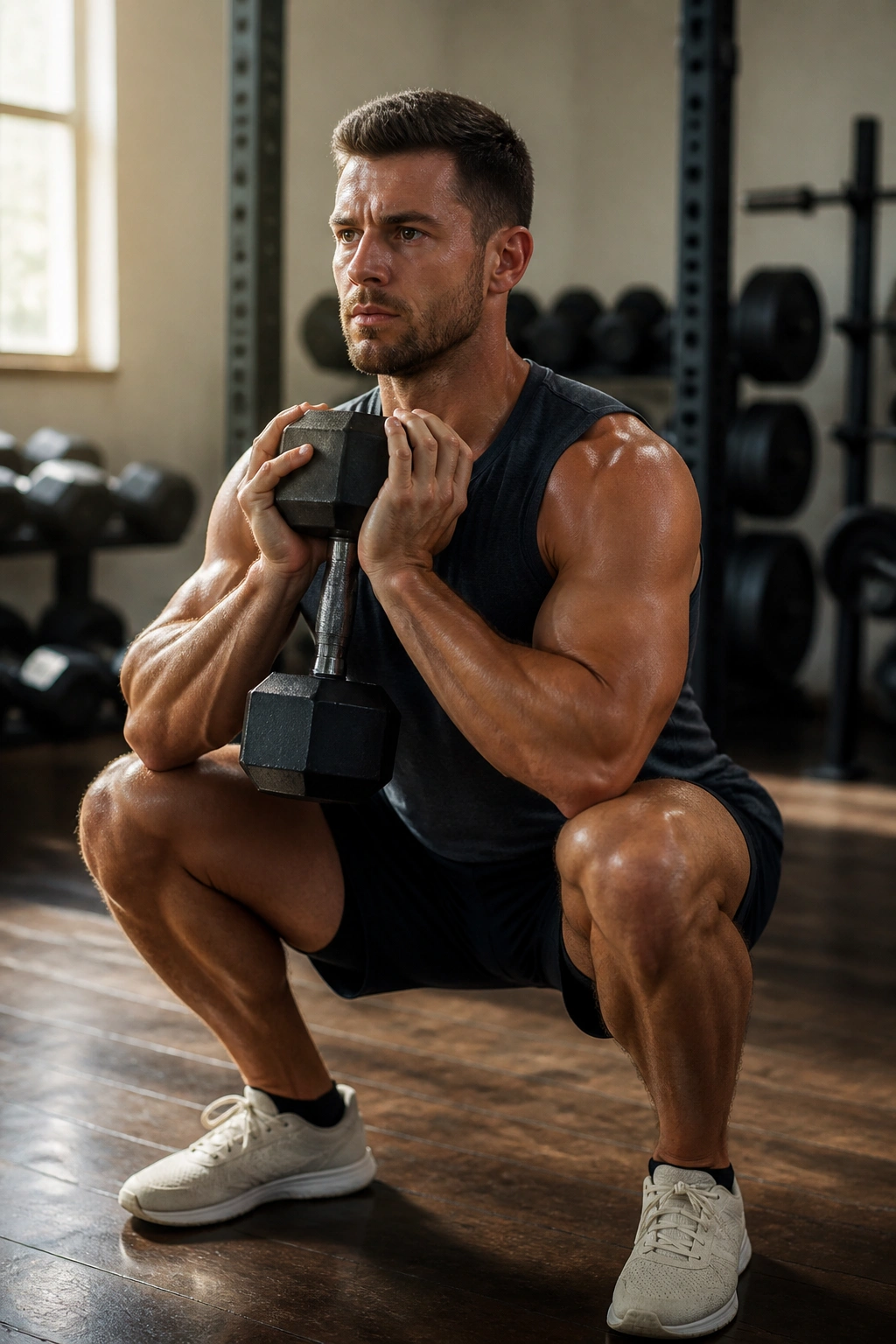
Real lean muscle comes from repeated tension, not from chasing burn for its own sake. A good toning workout should leave the target muscles a little tired, a little full, and a little more capable than they were before. That is the standard.
The smartest move is to pick 4 to 6 of these sessions and rotate them through the week instead of trying to do all 20. Keep the logbook honest. Add a rep, add a little load, or improve the control on the descent when the work starts to feel ordinary. That is how shape changes.
And yes, the little stuff matters too — sleep, protein, walking, recovery. But the training has to earn its place first. If the sets are hard, the movement is clean, and the plan keeps getting nudged forward, the body usually answers.
