



By the 12-minute mark, a good hot Pilates workout turns your mat into a small weather system. Your grip changes, your breath gets louder, and every lazy shortcut in your plank shows up fast. That’s why hot Pilates workouts can feel so honest: the heat strips away momentum and asks your core, hips, and shoulders to do the work.
A heated Pilates class is not mat Pilates with the thermostat cranked up for drama. The stronger formats build from deep core control into standing strength, layer in balance and endurance, and use pace with purpose instead of random chaos. Studios often keep the room around 90°F to 98°F, which is warm enough to push heart rate and sweat loss higher without tipping the whole thing into survival mode.
You’ll do better if you treat the heat like part of the equipment. Start class well hydrated, bring 20 to 24 ounces of water, and throw a towel over your mat before the first forearm plank. If you get lightheaded, chilled, nauseated, or weirdly goosebumpy in the heat, stop. People with heat intolerance, heart concerns, low blood pressure, or pregnancy should get a clinician’s okay before jumping into heated sessions.
Some classes are built for glutes. Some are pure core punishment. A few make two-pound dumbbells feel rude. These 20 workouts cover that whole sweaty spectrum.
1. Hot Pilates Workout for Core Activation
Strip it back first. A room full of people chasing burn often skips the part that makes the rest of class land where it should, and that’s deep core setup. This workout starts with imprinting the rib cage, finding neutral pelvis, and teaching the exhale to do something useful instead of turning into dramatic noise.
Why this opener changes the whole class
When your transverse abdominis is online early, your planks stop sagging, your standing work feels steadier, and your hip flexors don’t hijack every leg-lowering drill. In a heated room, that matters more. Heat makes people move bigger and faster than they can control, which is fun for about four minutes and sloppy after that.
Run this one for 25 to 30 minutes if you want a shorter session, or use it as the first block of a longer class.
A clean session outline
- 2 minutes of supine breathing with hands around the lower ribs, exhaling for 6 counts.
- 3 rounds of dead bugs for 8 reps per side, moving on the exhale.
- 2 sets of toe taps for 10 per side with the low back heavy on the mat.
- The Hundred for 50 to 100 pumps, knees bent if your back arches.
- Single-leg stretch for 8 per side, then double-leg stretch for 8 total.
Your abs should feel tight and deep, not crampy at the hip crease.
Try this: place a yoga block between the knees during toe taps. That little squeeze wakes up the inner thighs and quiets the low back fast.
2. Standing Balance and Leg Burner Series
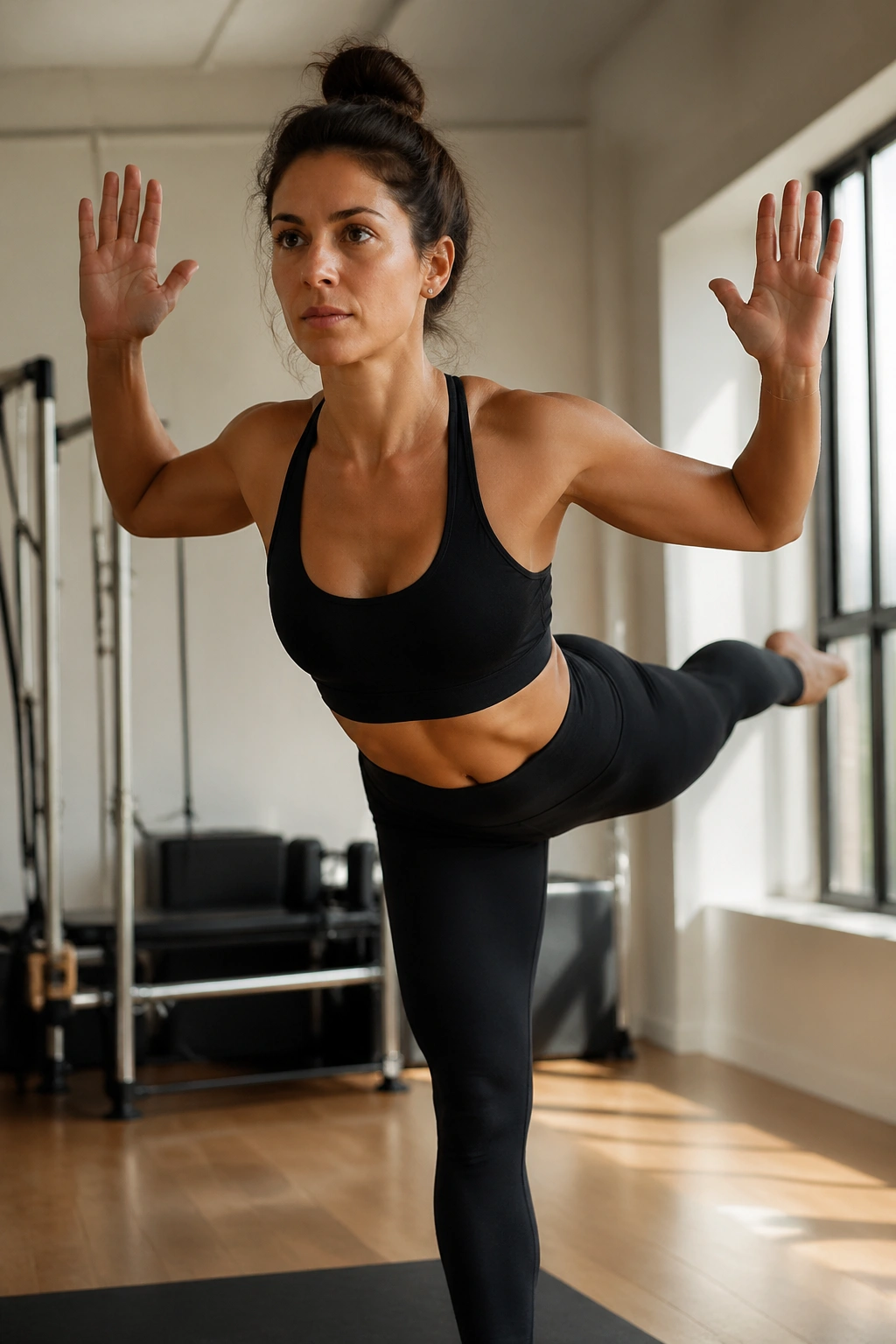
Standing hot Pilates is where people get humbled. Not because the moves look flashy, but because the room exposes shaky feet, locked knees, and hips that would rather dump into one side than share the work.
I like this format when someone says they want a sweaty class without a pile of floor transitions. You stay upright for long stretches, which keeps heart rate up, and the leg work sneaks in through tempo instead of load. Think chair squats, split squats, heel raises, single-leg hinges, and curtsy taps done slowly enough that the supporting leg starts to shake by rep eight.
A strong pattern looks like this: 3-count lower, 1-count hold, 1-count rise for 10 reps, then 20 pulse reps in the hardest range. Do that on one side before switching. Add a Pilates-style arm pattern—goalpost presses, lateral reaches, overhead pulls with no weights—and your trunk has to brace while the legs cook.
Foot pressure matters here. Keep the big toe mound, little toe mound, and heel grounded on the standing foot as long as you can. The second you roll inward, the glute med drops out and the knee starts wandering. That wobble is useful feedback. Listen to it.
3. Plank Ladder with Slow Mountain Climbers
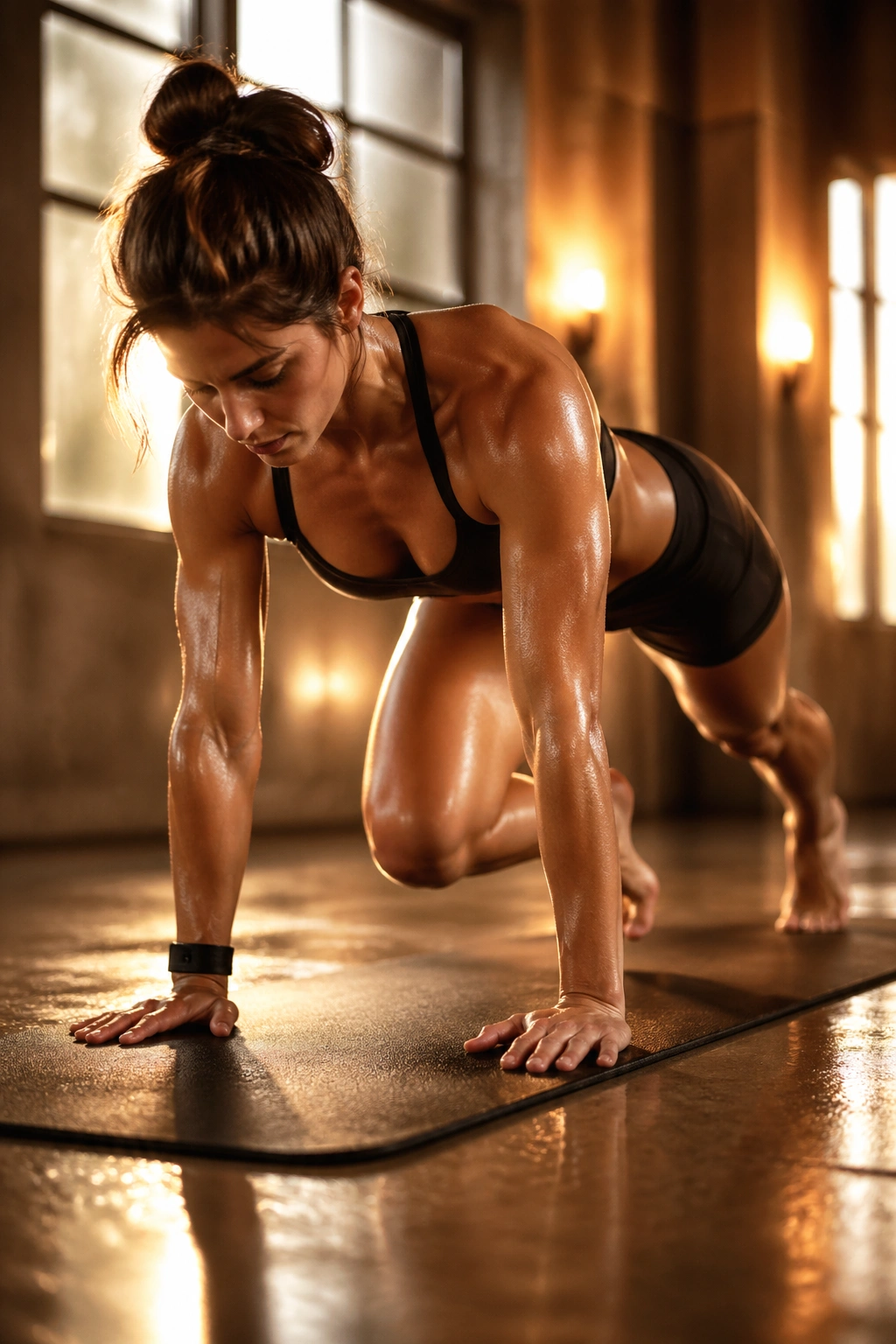
Why does a plank ladder feel twice as hard in a heated room even when the sequence looks simple on paper? Because heat ramps up perceived effort, and isometric holds leave you nowhere to hide. You cannot fling your way through a well-built plank series.
Start with 20 seconds in forearm plank. Move to 20 seconds in high plank. Add 10 shoulder taps per side. Then go back down to forearm plank with 8 slow mountain climbers per side, driving the knee toward the triceps rather than rushing the rep. Rest for 30 seconds and repeat the ladder 3 to 5 times.
The slow climber is the whole point. Fast climbers turn into cardio. Slow climbers turn into anti-rotation work, shoulder stability, and lower-ab control. You’ll feel the difference near the bottom ribs and across the front of the hips.
Run it without wrecking your wrists
Set your hands a touch wider than shoulder width and screw them into the mat as if you’re trying to turn the floor outward. If your wrists complain, stay on forearms for the whole series or make fists on the mat. There is no prize for angry joints.
Keep your gaze about 8 to 10 inches in front of your hands. Looking forward dumps the low back. Looking straight down can round you out too much. Small cue. Big payoff.
4. Glute Bridge Pulse Inferno
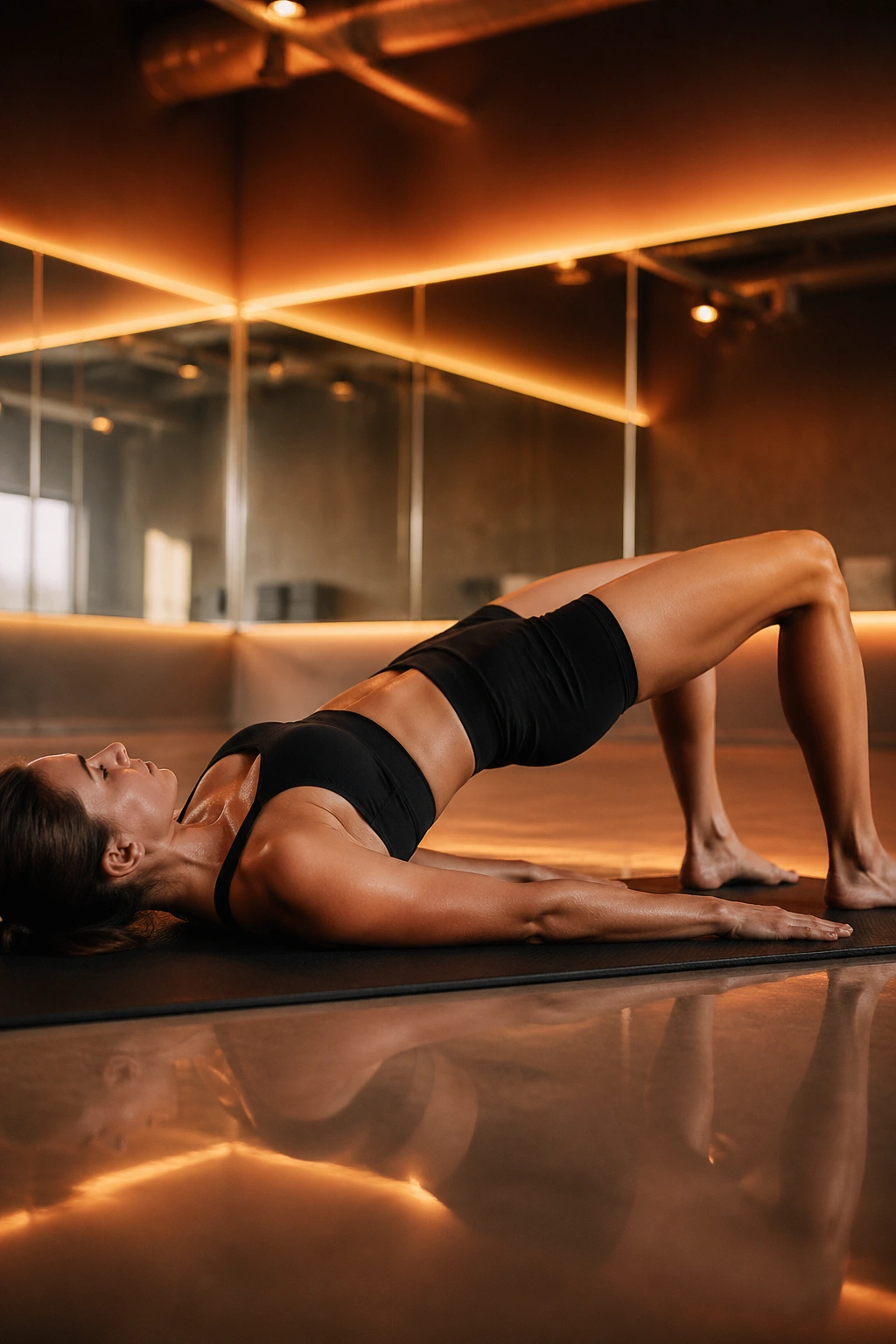
Picture a room that has gone weirdly quiet except for breathing and the squeak of damp mats. That’s usually a sign the class has hit the glute bridge block, and nobody has spare energy for chit-chat anymore.
This workout leans hard into posterior chain work: bridge lifts, frog pumps, bridge marches, heel walks, and single-leg bridge holds. In heat, the combination is mean in the most useful way. Your glutes warm fast, your hamstrings try to steal the job, and your core has to keep the ribs from flaring as fatigue climbs.
The burn comes from time, not heavy resistance. Stay in each move for 40 to 50 seconds, rest 15 seconds, and cycle through 5 moves for 3 rounds. That gives you a clean 15-minute glute finisher or a full lower-body session if you add a warm-up and cooldown.
- Best setup: feet hip-width, heels close enough that fingertips can brush them.
- Sharpest cue: press through the full foot, not the toes.
- Common fail: lifting the ribs higher than the hips.
- Add challenge: place a miniband above the knees and keep outward pressure the whole round.
When you stand up after this one, your glutes should feel switched on, not your low back. If your hamstrings grab first, pull the heels an inch closer and shorten the lift.
5. Tempo Squat and Twist Sequence
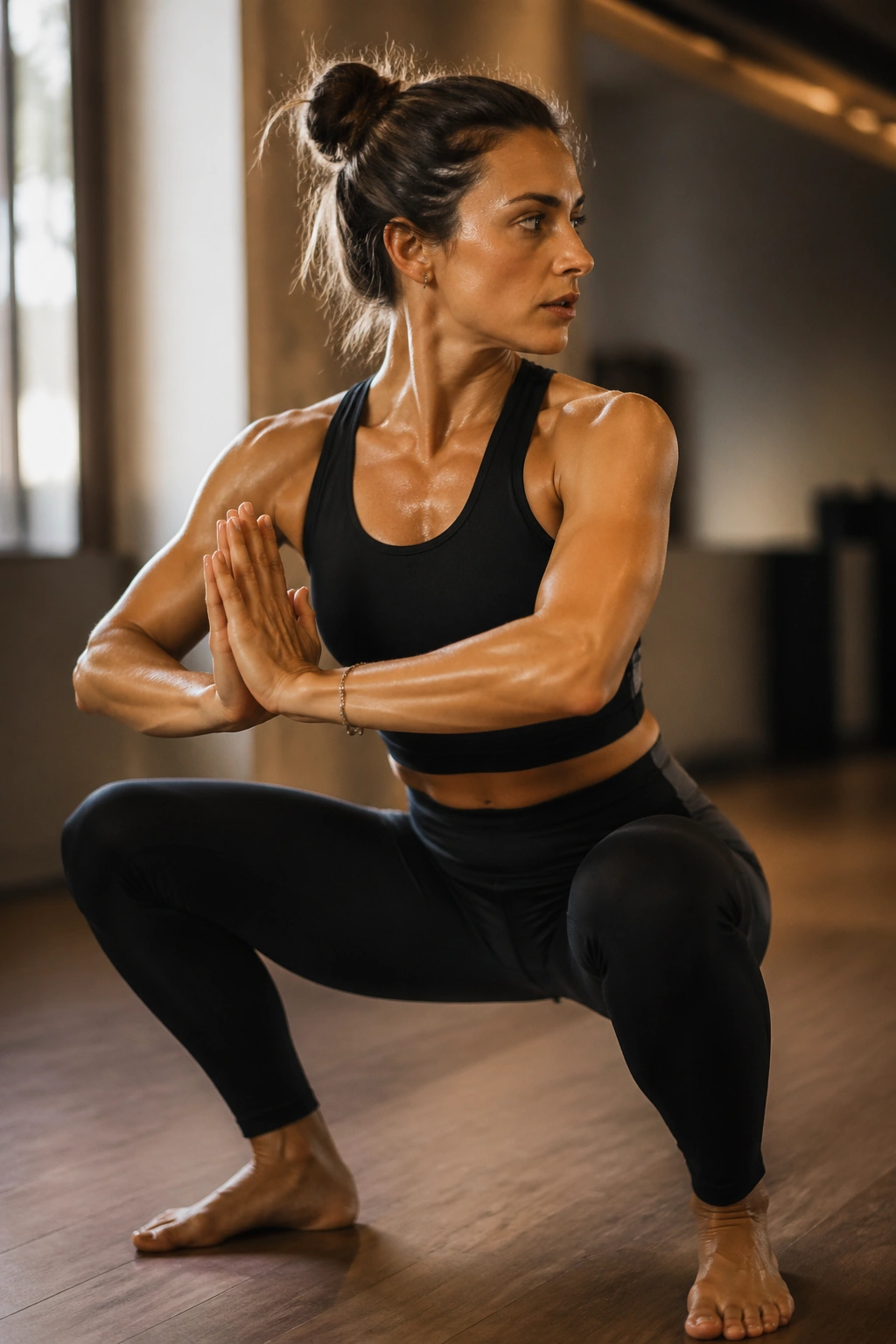
Pilates purists sometimes act like squats wandered into the studio by mistake. I don’t buy that. A squat with breath, spinal control, and smart rotation fits heated Pilates just fine.
The secret is tempo. Lower for three counts, pause at the bottom, exhale as you rise halfway and rotate through the upper back, then return to center and stand. That half-rise keeps tension on the legs while the twist trains trunk control under fatigue. Use hands at chest height or hold a light medicine ball if the room has them.
You can build a whole 30-minute hot Pilates class around three squat patterns: parallel squat with rotation, wide squat with heel lift, and split squat with cross-body reach. Work each pattern for 45 seconds, rest 15 seconds, and repeat for 3 rounds before moving on.
Heat helps some bodies sink into the squat faster, which sounds nice until people start chasing depth at the cost of shape. I’d rather see a cleaner squat at three-quarters depth than a deep one with the ribs popping and the knees caving.
The twist should come from the thoracic spine, not the lower back. Think sternum turning over the thigh while the pelvis stays mostly quiet. When it clicks, you feel abs, glutes, quads, and upper back all doing their share.
6. Oblique Torch Side-Plank Circuit
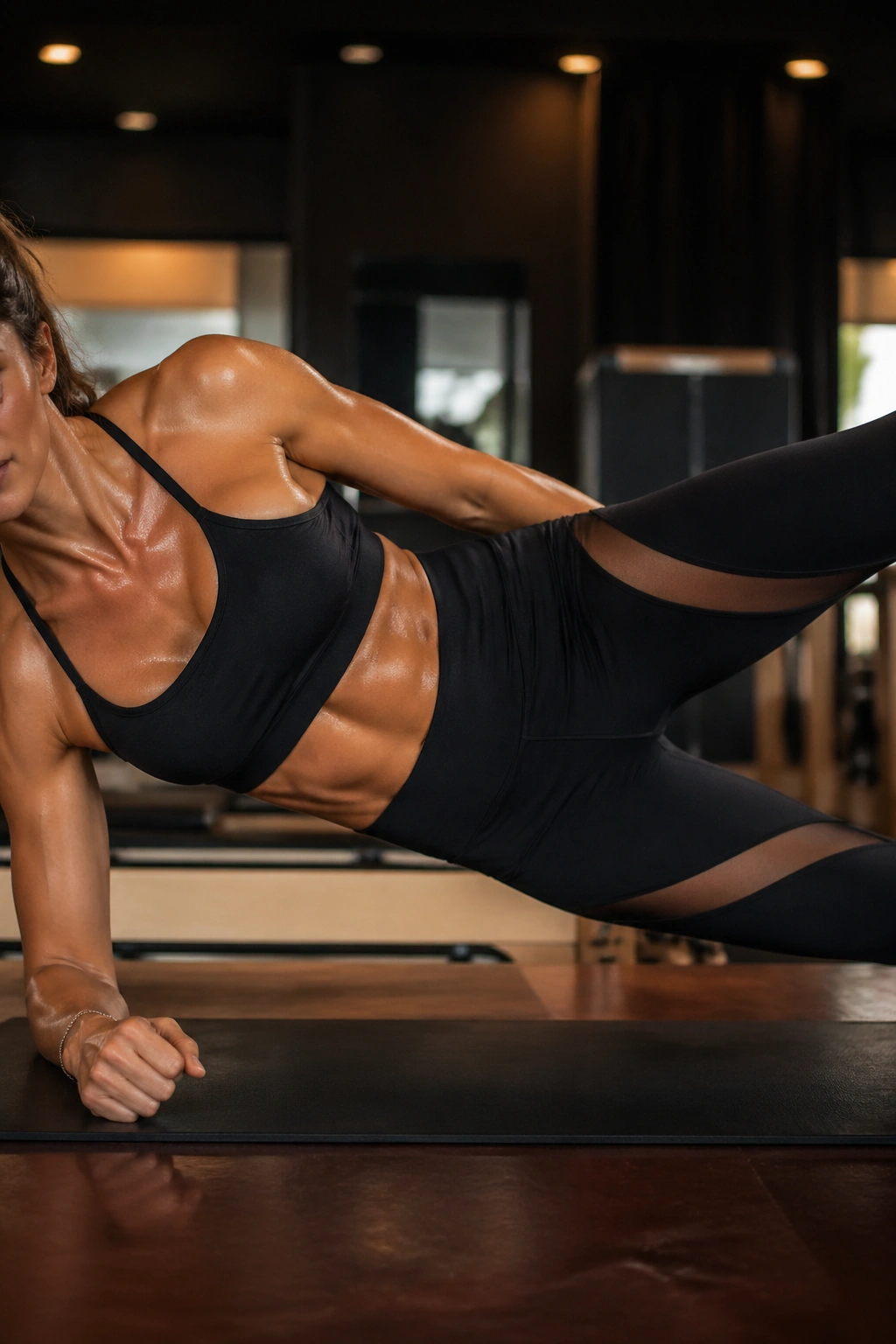
Unlike endless bicycle crunches, a side-plank circuit trains the obliques to do what they actually need to do in life and sport: resist collapse, steady the pelvis, and help transfer force from upper body to lower body.
This is the one I reach for when someone wants a tight, carved feeling through the waist without a pile of neck strain. Start with 30 seconds of forearm side plank. Add 8 hip dips, 10 top-leg lifts, then drop the bottom knee and do 8 thread-the-needle rotations. Switch sides. Repeat 3 rounds.
The room matters here. In a cool class, people often muscle through side planks with brute shoulder effort. In heat, grip and breath fatigue sooner, which forces better organization. You learn fast whether your bottom waist is actually lifting or whether you’re hanging on the shoulder joint and hoping nobody notices.
Who gets the most from this workout?
- People who feel every ab move in the neck
- Runners who need lateral hip stability
- Lifters whose side body gives out before their legs do
- Anyone bored stiff by crunch-only classes
Use a folded towel under the forearm if sweat makes your base slippery. Small fix. Huge difference.
7. Reformer-Inspired Towel Slider Flow
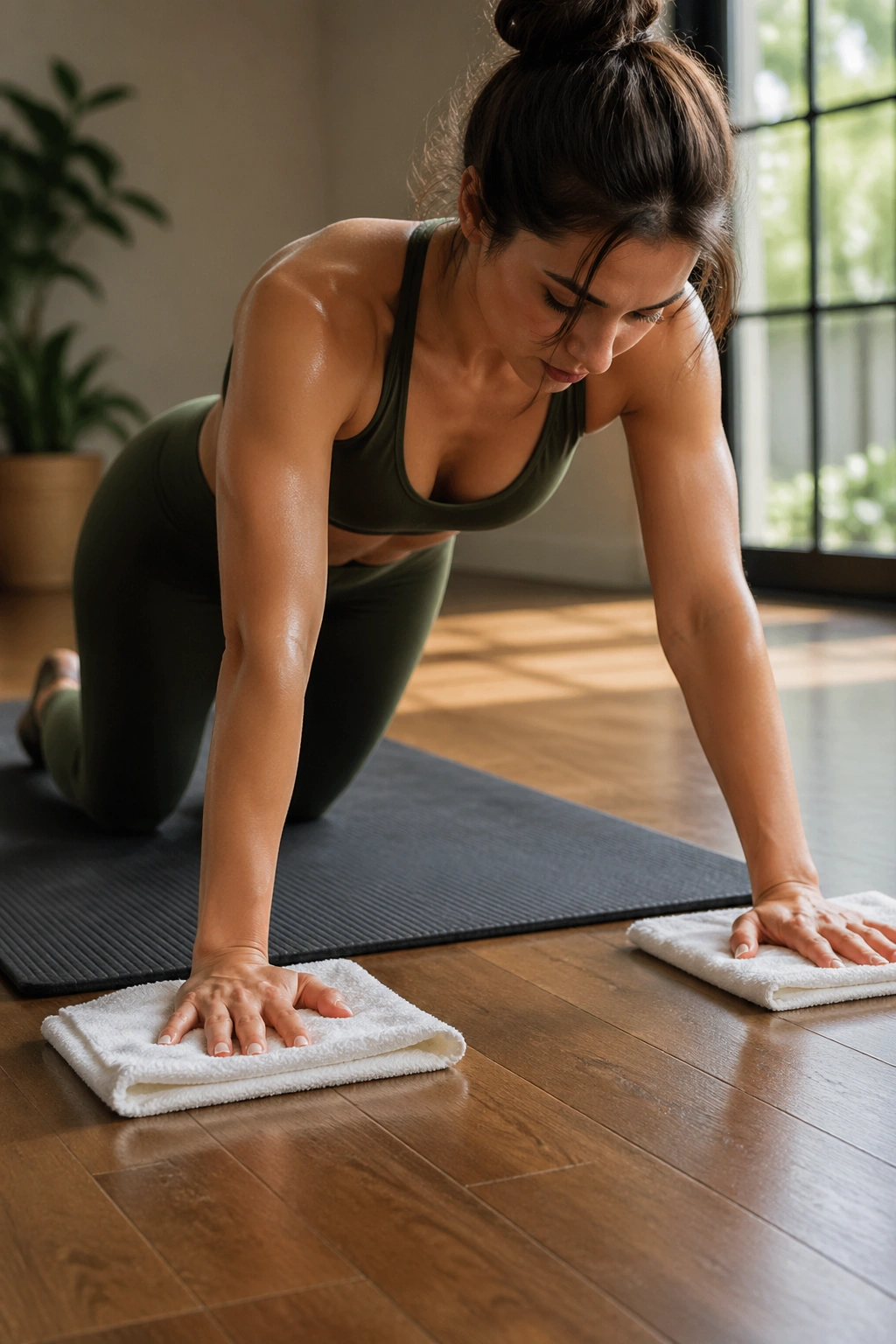
Two hand towels on a smooth floor can fake a surprising amount of reformer tension. Not the spring load, no, but the glide and the demand for control? Close enough to make your abs pay attention.
What gives this one that carriage feel
The sliding surface forces your limbs to move while your trunk stays organized. That’s the same basic headache the reformer creates so well. You get long lines, slow eccentric work, and zero help from momentum.
Try a 35-minute flow built around these blocks:
- Kneeling slider knee tucks for 10 reps
- Pike slides from high plank for 8 reps
- Reverse lunge slides for 10 per leg
- Elephant-style hamstring slides from a hinge position for 12 reps
- Long stretch plank glides forward and back for 30 seconds
Rest after each full round, not after every exercise. The carryover fatigue is part of the appeal.
Sweat changes the setup. Put the towel under the hands if you want more shoulder and core demand. Put it under the feet if you want more lower-ab and hamstring work. Hands are harder for most people. Feet are harder if your hip flexors try to run the show.
Best cue: move the slider 2 to 6 inches, not a foot. Tiny range keeps the spring-like control that makes the sequence worth doing.
8. Interval Hot Pilates Workout with Cardio Bursts
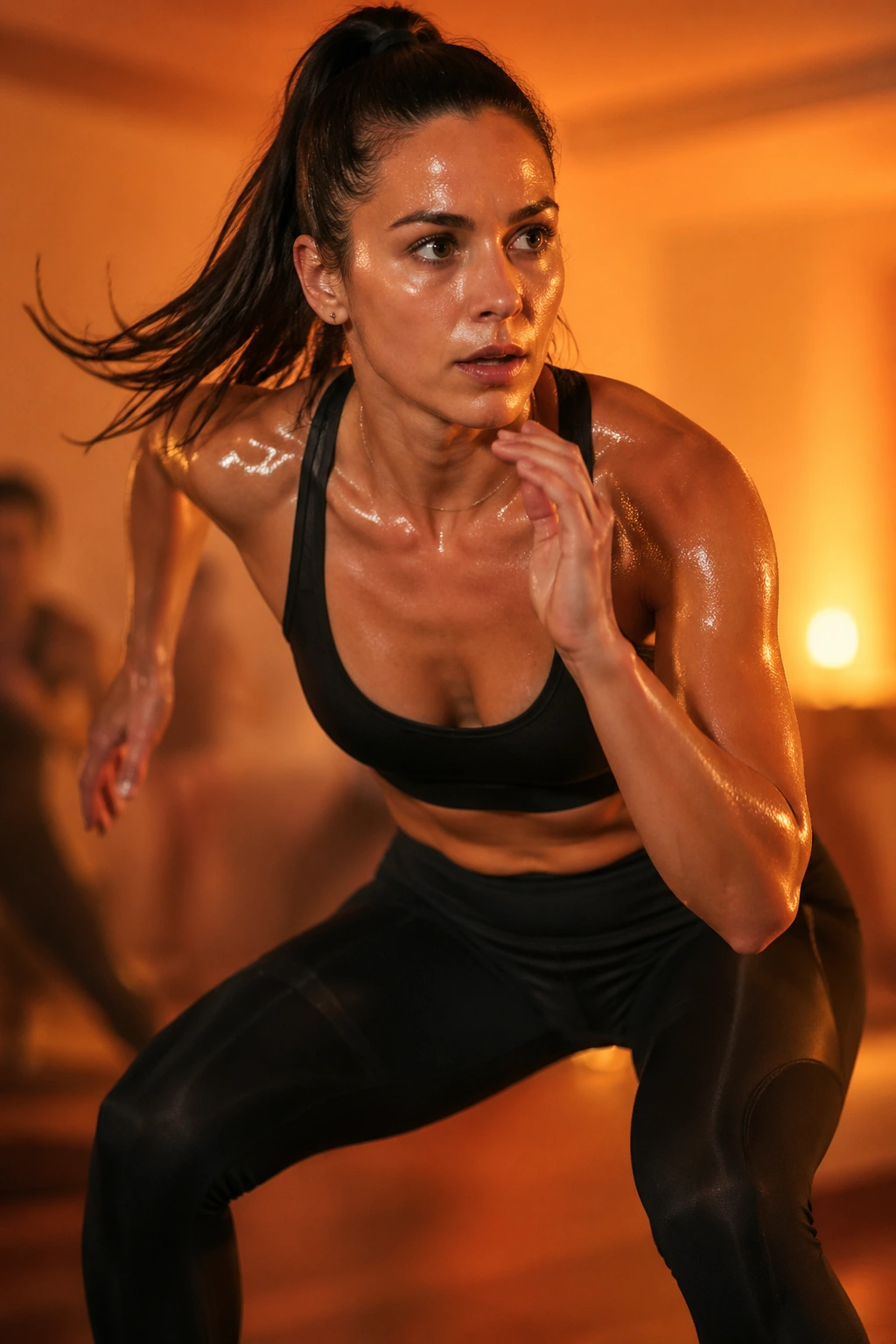
If your goal is a sweaty burn fast, interval work gets there in a hurry. The trick is keeping the “Pilates” part alive so the class doesn’t slide into random bootcamp with pointed toes.
I like a 40-seconds-on, 20-seconds-off format for this. Short enough to hold shape, long enough to build heat. Pair one athletic move with one precise Pilates move and alternate them. A strong six-move round looks like this: fast feet squat stance, plank knee drives, roll-up to stand, skater taps, Pilates scissors, squat thrust walk-outs. Run the circuit 3 times.
The pairing matters. Fast feet spike the heart rate; scissors demand trunk control while the breath is already high. Walk-outs load the shoulders; the roll-up resets the spine and abs. Done well, the class feels hard but not messy.
A lot of people wreck interval classes by racing the first round. Don’t. Keep your first pass at about 80 percent effort, then build. In a heated room, the penalty for going out too hot arrives early—grip fades, form slips, and you spend the back half of class bargaining with yourself.
Choose low-impact versions if your knees or pelvic floor get cranky with jumping. You can still sweat plenty with step-outs, quick marches, and controlled squat thrusts.
9. Deep Core Slider Session
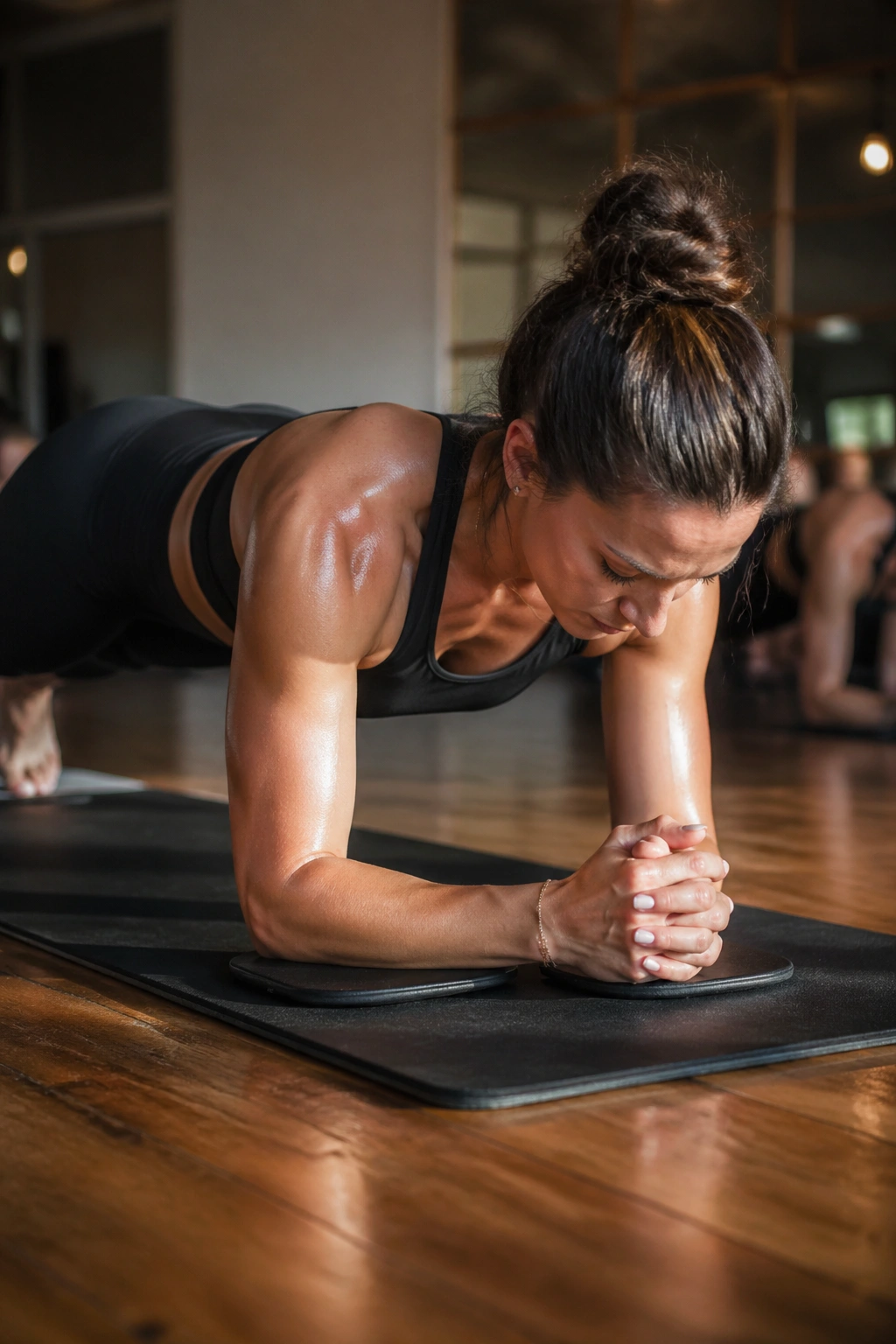
Can two paper plates turn a calm-looking ab class into a full-body grind? Yes, and faster than most people expect.
Sliders expose the spot where deep core strength ends and borrowed tension begins. You see it in body saws, where the ribs pop. You feel it in knee tucks, where the shoulders drift behind the wrists. That’s why this workout works so well in heat: the room raises the cost of sloppy bracing.
Build the session in four moves
Start with body saws from forearms for 8 slow reps. Move into plank knee tucks for 10 reps. Stand up for slider reverse lunges at 8 per leg, then finish the round with mountain climber slides at 20 total, no sprinting. Rest 45 seconds. Do 4 rounds.
Your sliders do not need to travel far. A body saw that moves 3 inches forward and 3 inches back is enough if the abs stay deep and the pelvis stays steady. Go farther only if you can hold shape.
The most common cheat is breathing like you’re trying to get through it instead of using the breath to organize it. Exhale on the hardest part. Slow the inhale down. Your trunk will feel more connected within two rounds.
10. Upper-Body Burn with Light Weights
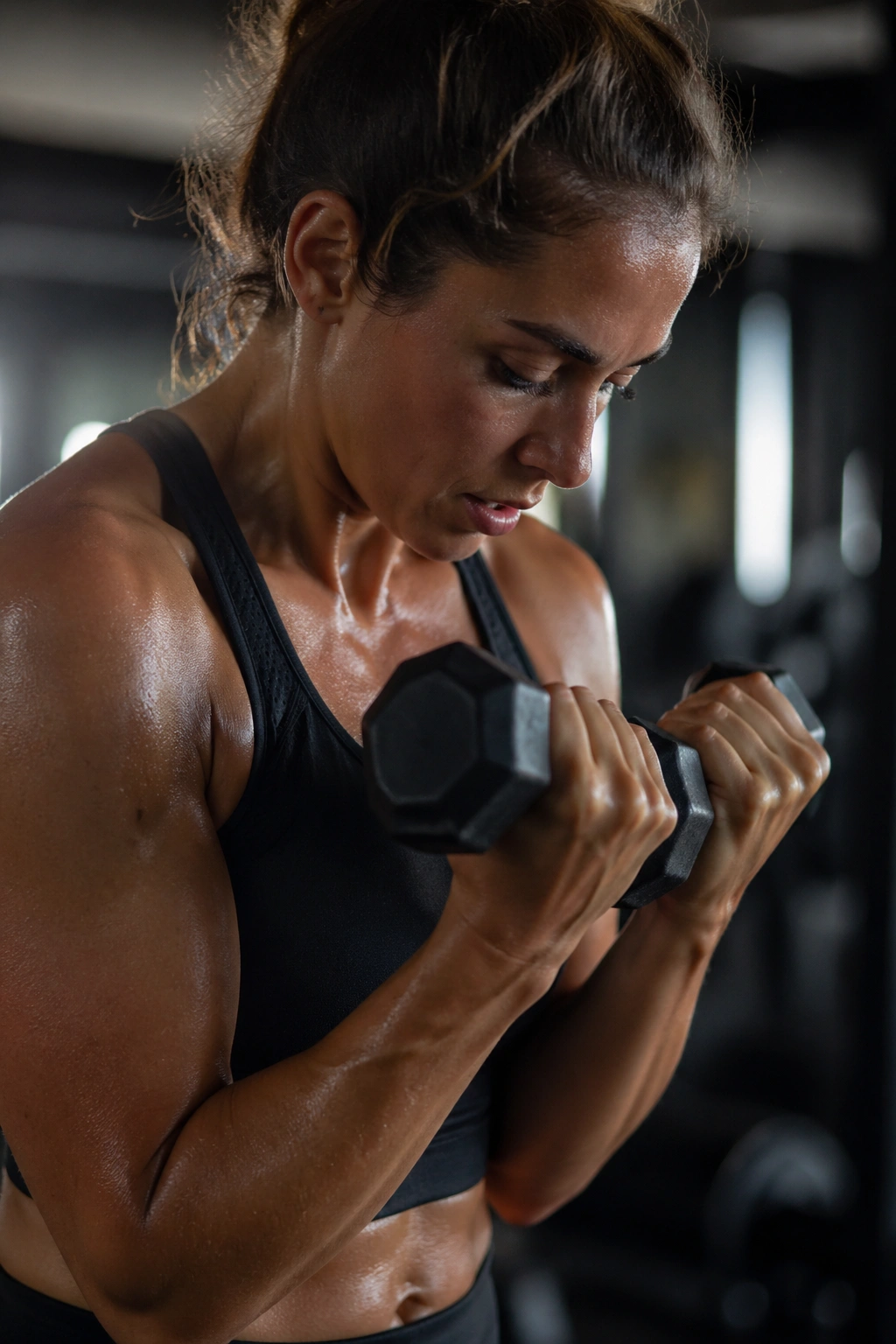
Those 2- or 3-pound dumbbells look harmless until minute seven. Then your shoulders start asking rude questions.
The point of an upper-body hot Pilates workout isn’t max strength. It’s endurance, posture, scapular control, and keeping the ribs quiet while the arms work in long lever positions. That’s why light weights land so well here. If you go heavy, people lean back, flare the ribs, and call it effort. I’d rather see a cleaner set of front raises with almost no load.
A sharp sequence might run this way: biceps curl to press for 12 reps, lateral raise hold for 20 seconds, triceps kickback for 12, goalpost external rotation for 12, and boxing jabs for 30 seconds. Then you drop the weights and hit triceps push-ups or kneeling plank shoulder taps. Three rounds is enough.
- Use load carefully: 2 pounds suits most people in a heated class.
- Stand in split stance if balance gets wobbly.
- Exhale on the lift and keep the front ribs from popping.
- Stop the set when your neck starts doing the work.
This format pairs well with a core block before it or a leg block after it. Arms alone can feel niche. Arms plus trunk and legs feels like a class.
11. Jumpboard-Style Wall Press Blast
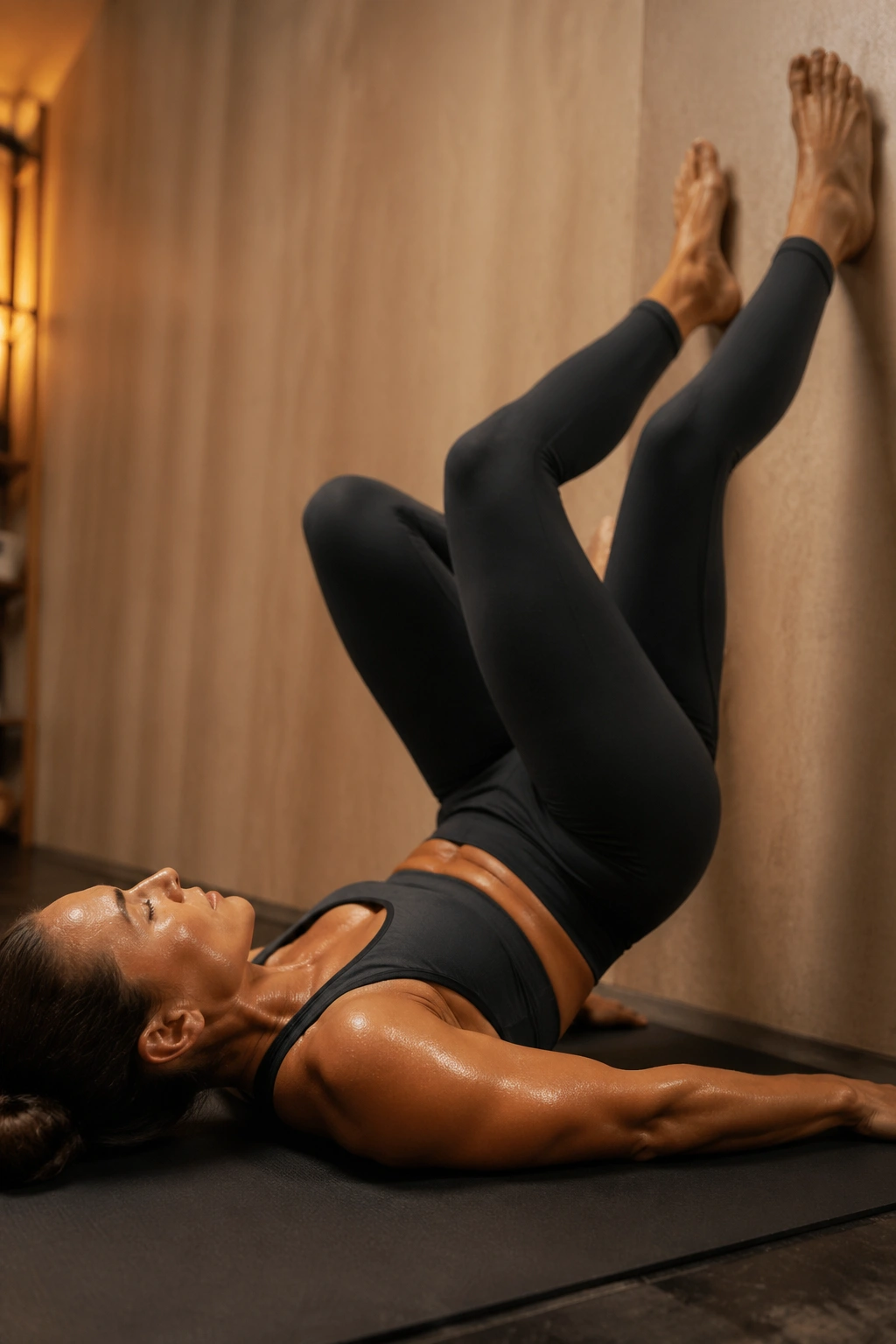
You do not need a reformer to steal the logic of a jumpboard session. A wall and a mat can get you surprisingly close on muscle pattern, especially for low-impact leg power.
Lie on your back with feet on the wall, knees bent about 90 degrees, hips a foot or so from the baseboard. Press the wall away to extend the legs without locking the knees, then bend back in with control. Add a bridge on alternating reps. Add calf raises with legs straight. Add marching in tabletop between sets. It sounds mild. It is not mild after 4 rounds in a heated room.
I like this format for people who want leg work without pounding. The wall gives feedback through the whole foot, which helps people feel glutes and hamstrings instead of dumping into the quads every time. It also teaches alignment well—knees track where the feet point, and you can tell the second one side starts drifting.
Run 45 seconds of wall press, 20 seconds of bridge hold, 30 seconds of tabletop march, then rest for 25 seconds. Repeat 4 to 6 times. Your legs will feel pumped, your abs will have to stay awake, and your joints won’t take a beating.
Not fancy. Effective anyway.
12. Magic Circle Inner-Thigh Heat Session
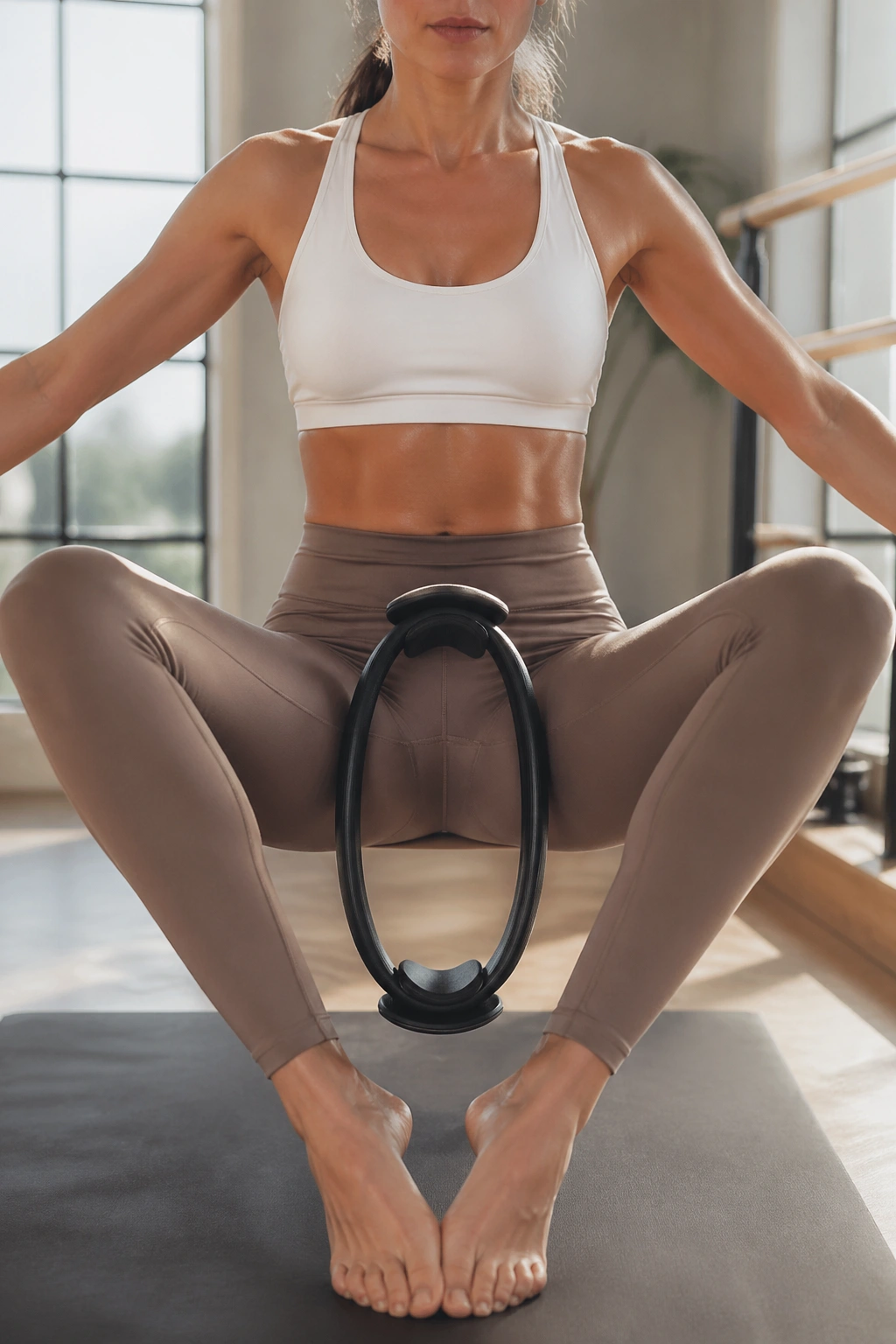
Unlike endless lunge variations, the Pilates ring gets into the adductors fast. That matters more than people think. Inner thighs help control the pelvis, support cleaner leg lines, and give a lot of mat work that zipped-up feeling people keep chasing with bigger moves.
Use the ring—or a small ball if that’s what you have—for a 25-minute burner. Start with the ring between the ankles for side-lying squeezes, then move it above the knees for bridge presses, then place it between the palms for chest and serratus work. Finish with seated half-rollbacks while squeezing the ring between the inner thighs.
The combo that hurts in the right way is bridge hold plus ring squeeze pulses for 30 seconds, straight into heel raises for 20 seconds without dropping the hips. Your glutes, adductors, calves, and low abs all light up at once.
Who gets a lot out of this one?
- Dancers and runners who drift into hip instability
- People who grip hip flexors during ab work
- Anyone who wants leg burn without deep knee bend
- Home exercisers with limited gear
Use a ring with medium resistance, not the stiffest one you can find. Too much tension turns the whole session into neck and jaw effort, which misses the point.
13. Stability Ball Slow-Burn Flow
Balance changes everything.
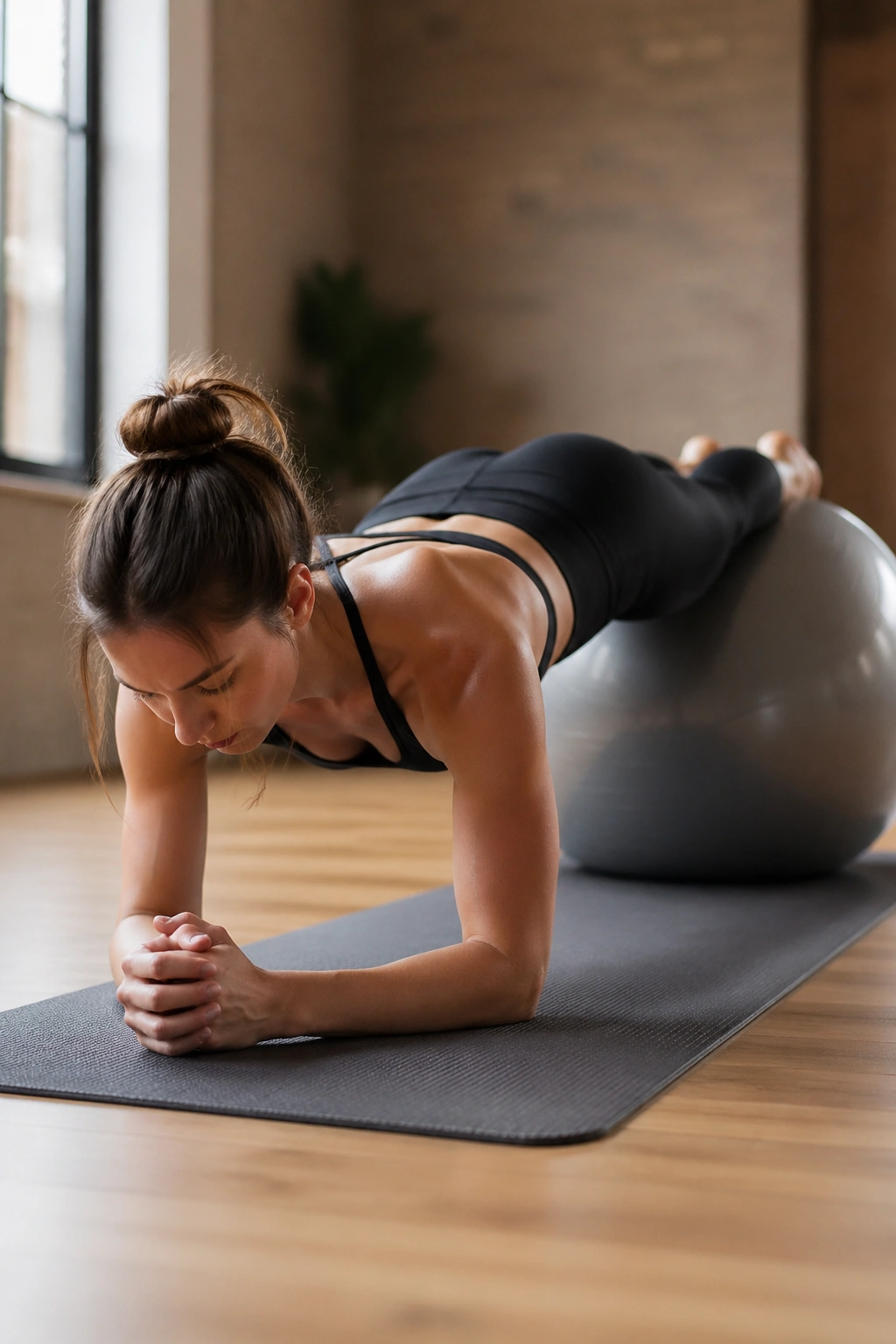
A stability ball turns familiar mat work into a negotiation with gravity, and that’s why I keep coming back to it for hot Pilates. You don’t need huge movements. You need steady pressure, clean breath, and small corrections while the ball tries to roll you out of position.
Where the ball earns its space
The sweet spot is a mixed session of hamstrings, lower abs, and shoulder stability. Start with bridge hamstring curls for 10 reps. Move into forearm plank with shins on the ball for 20 to 30 seconds. Add pikes or knee tucks if you have them. Then flip onto your back for dead bugs with the ball pressed between hands and knees.
A sample round:
- 10 bridge curls
- 20-second plank on ball
- 8 knee tucks or pikes
- 10 dead bugs pressing into the ball
- 20 seated ball passes from hands to shins
Rest 40 seconds and do 4 rounds.
The ball will tell on you right away. If your ribs flare, it rolls. If your shoulders drift, it rolls. If you rush the hamstring curl, it shoots away and reminds you who is in charge. That instant feedback makes it one of the more honest hot Pilates tools around.
If pikes feel wild, skip them. Knee tucks still hit hard.
14. Spine-Twist Mobility Sweat Session
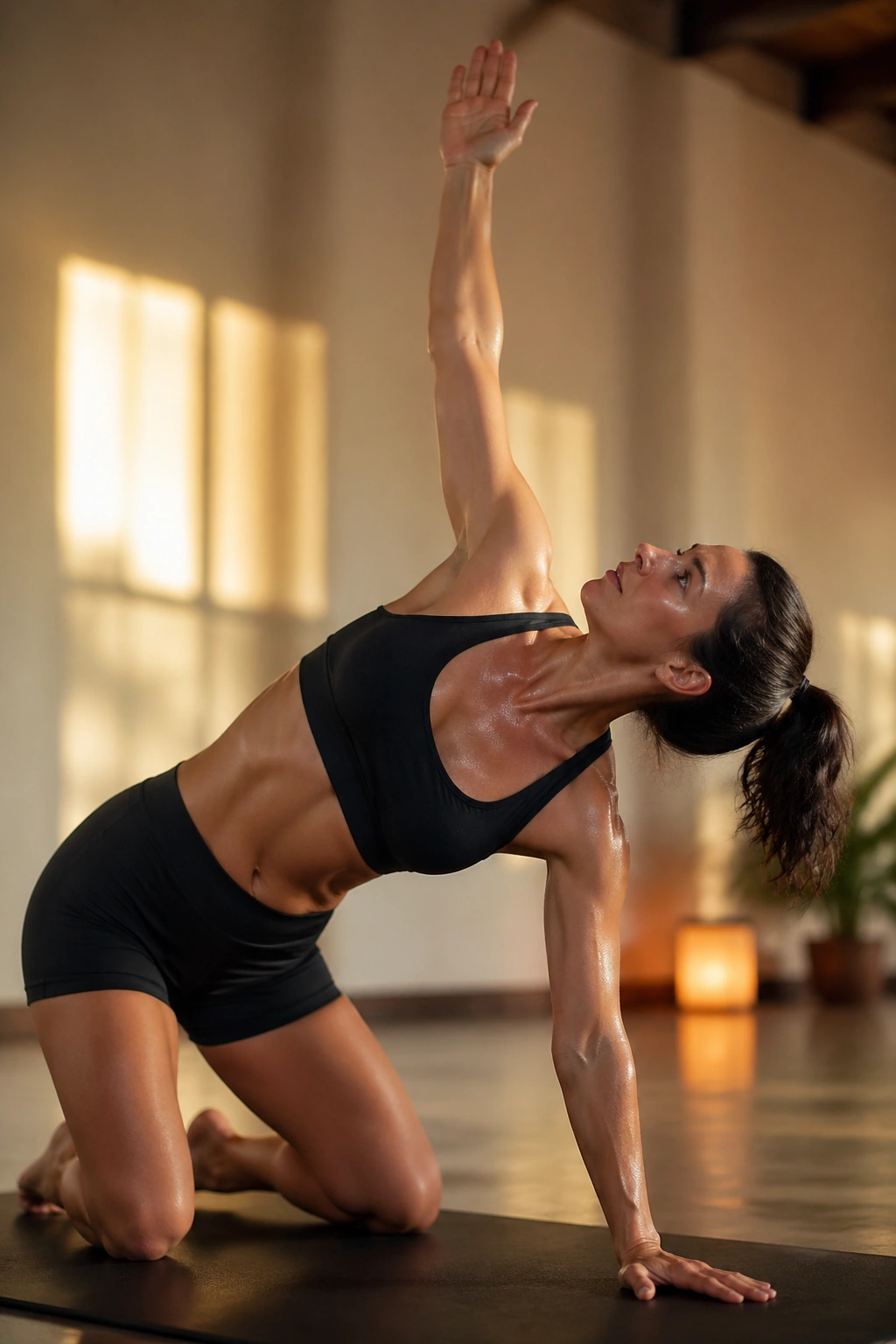
A sweaty class does not need jumps, sprints, or ten thousand squat pulses. Sometimes the room is hot, the breath is sharp, and the smartest move is a mobility-heavy Pilates flow that restores space through the spine while still working the trunk.
This session leans on thoracic rotation, side bending, controlled extension, and deep abdominal support. Think kneeling windmills, open books, saw, thread-the-needle, half-kneeling side bends, and dead bugs between mobility sets so the ribs don’t float off into chaos.
One good structure is 5 mobility pairs done for 90 seconds each, with 30 seconds of core work after every pair. Pair kneeling windmill with child’s pose side walkouts. Pair saw with boat-hold knee taps. Pair sphinx lift-offs with forearm plank breathing. You end up sweating because the room is warm and the time under tension stays honest, not because you’re flinging yourself around.
This is a smart choice on days when your low back feels compressed, your shoulders are stiff from desk work, or your legs are cooked from running or lifting. The burn is quieter. It still counts.
A lot of people skip mobility when they want intensity. I think that’s backwards. Better spinal movement often makes your harder classes hit the right muscles the next day.
15. Barre-Pilates Fusion Leg Shaker
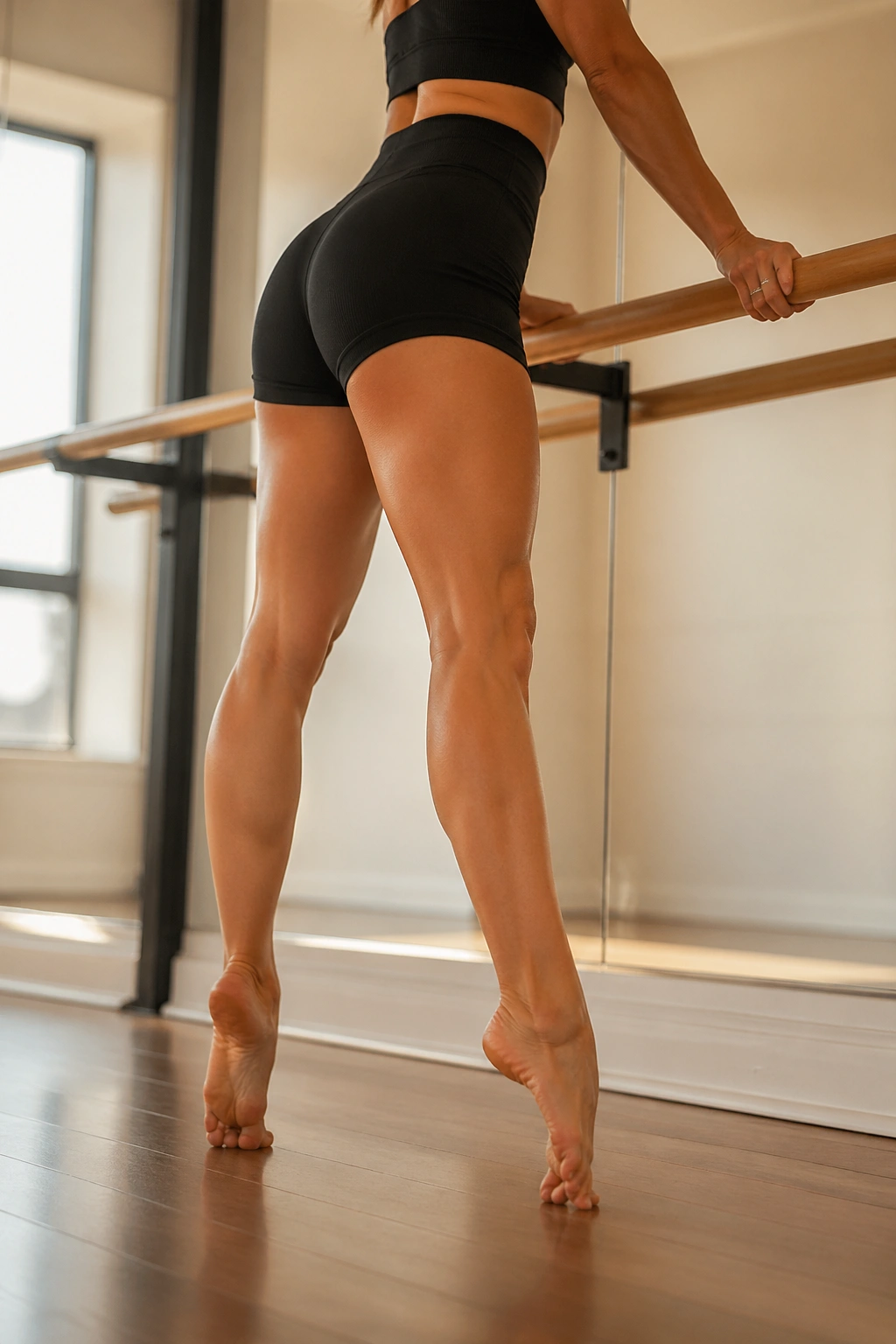
What happens when tiny barre pulses meet Pilates breath and control? Your calves, glutes, and outer hips start sending complaints almost at once.
The best barre-Pilates fusion workouts avoid the worst habit from both camps. From sloppy barre, they skip the endless mindless pulsing. From stiff Pilates, they skip the over-serious perfectionism that drains the fun out of class. You want shape, rhythm, and enough repetition to create fatigue without losing alignment.
Build the burn in layers
Start at the barre, a chair, or the wall with parallel calf raises for 20 reps. Move into narrow second-position squat pulses for 30 seconds. Add standing outer-thigh lifts for 15 per side. Come to the mat for side-lying leg series—front, middle, back, circles—then finish with a wall sit plus heel raise hold.
The magic is in the order. Calves first, then quads, then glute med, then deep lateral hip. By the time you hit side-lying work, the top leg feels about five pounds heavier than it did at the start.
Keep the pelvis stacked and the standing knee soft. Tiny range wins here. If the movement starts swinging, you’ve gone too big.
16. Athletic Hot Pilates Ladder
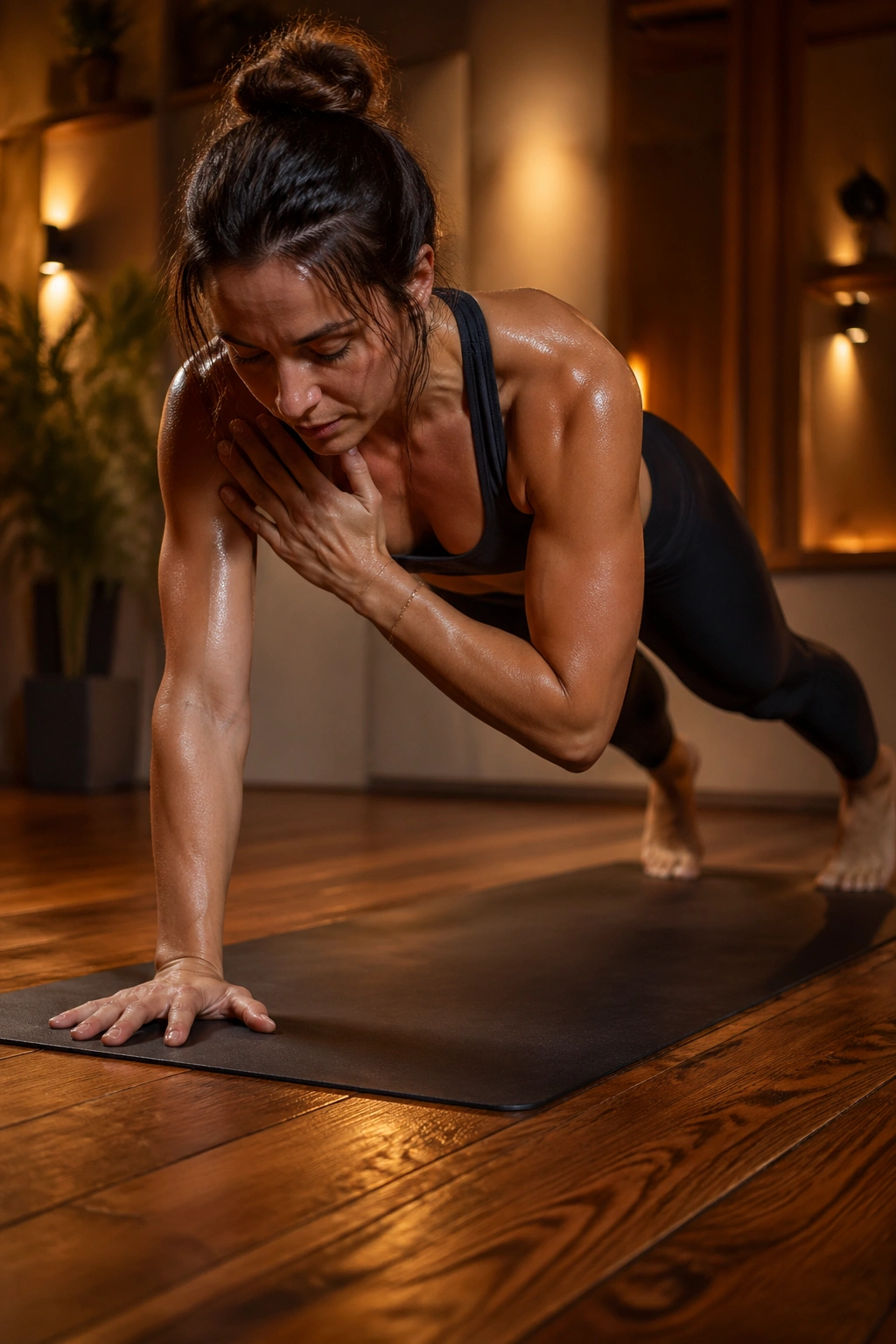
Someone writes 10-9-8-7 on the whiteboard and the whole room gets quiet. Ladder workouts do that. They look manageable at first, then the accumulated fatigue sneaks up and sits on your chest.
This version blends athletic movement with Pilates control. Pick four moves: squat to reach, plank shoulder tap, reverse lunge knee drive, and V-sit tuck. Start with 10 reps each, then 9, then 8, all the way down to 1. Rest when needed, though shorter breaks make the sweat arrive fast.
The ladder format works because the top end builds volume and the low end lets you sharpen the reps. By the time you hit 4s and 3s, the class feels more technical again. People stop rushing and start placing the movement with intent.
- Choose moves you can own under fatigue.
- Count per side on lunges and shoulder taps unless you want a much longer class.
- Take 60 seconds after every second rung if the room is especially warm.
- Write the ladder down before class so nobody has to do heat math mid-session.
A full 10-to-1 ladder with four exercises can fill 30 to 40 minutes on its own. Add a short warm-up and cooldown and you’ve got a complete workout.
17. Recovery Heat Flow for Sore Days
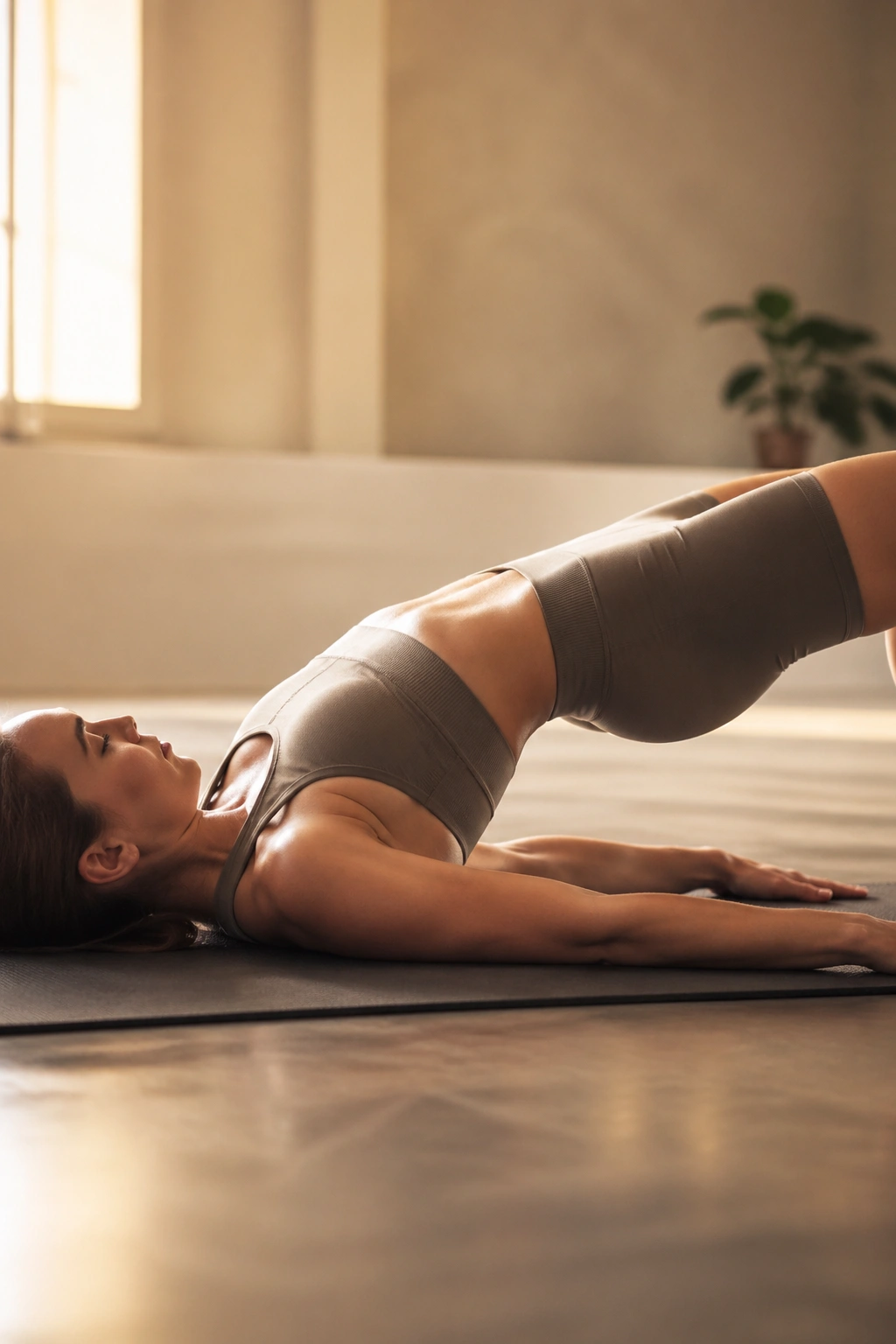
Not every hot Pilates day should feel like punishment. If your hamstrings are smoked, your wrists are touchy, or your nervous system feels fried, a recovery-focused heated flow can do more for you than another all-out interval class.
Keep the room warm but choose lower-load patterns: cat-cow, 90/90 hip switches, glute bridges, bird dogs, side-lying clams, dead bugs, and supported child’s pose breathing. Add a few longer holds—low lunge with a posterior pelvic tilt, kneeling hip flexor reach, figure-four stretch on the mat—and the sweat still comes because the environment is doing part of the work.
The trick is not drifting into nap-time stretching. You still want muscle activity. Hold bridge for 30 seconds before pulsing. Pause each bird dog for 3 full breaths. Use a 5-second exhale on dead bugs so the abs stay present. Recovery classes work when they keep enough tension to restore position and breathing, not when they collapse into limp stretching.
I’m a fan of this format after travel, after long desk days, and after heavy lifting blocks. You leave feeling less compressed, less cranky, and more ready for harder sessions later in the week.
Sometimes the sweaty burn you need is the one that lets your body settle down.
18. Core-and-Crawl Beast Sequence
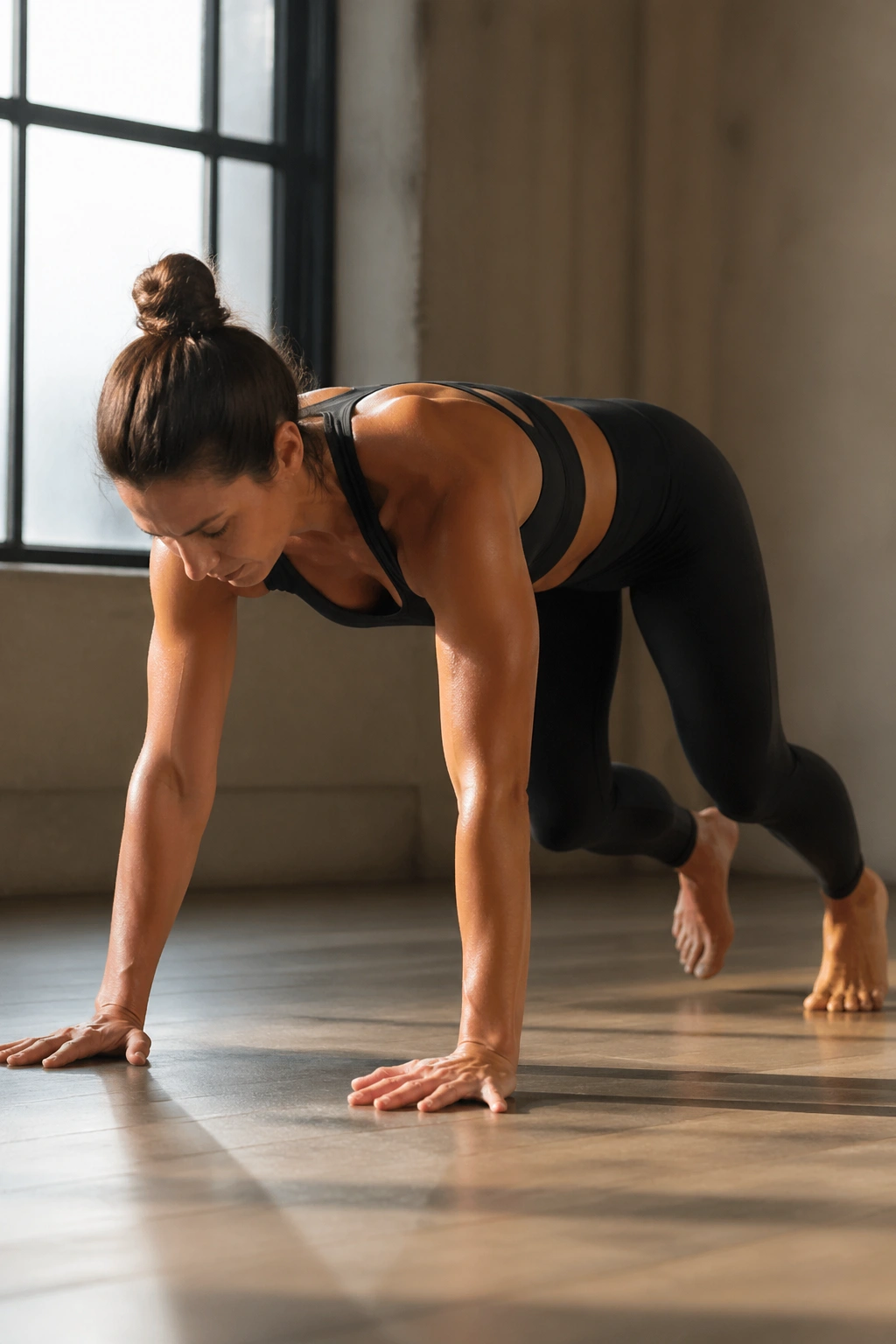
Unlike classic mat work, crawling patterns force the shoulders, trunk, and hips to share the load in one chain. That’s why the beast sequence has become a favorite in hotter studios that want athletic intensity without mindless impact.
Start in tabletop with knees hovering 1 to 2 inches off the mat. Hold for 20 seconds. Add shoulder taps. Then move into forward bear crawls for 6 steps, backward for 6, and lateral crawl steps for 4 each direction. Finish with beast kick-through preps or knee hovers to opposite hand reach.
This session gets spicy fast because every inch of your body is on. Quads are working, shoulders are stabilizing, abs are bracing, and your breath has to stay calm enough to stop the whole shape from falling apart. In heat, that combination creates a deep full-body fatigue that feels different from standard plank work—more integrated, more athletic, less isolated.
Who should try it?
- People bored by traditional mat sequences
- Athletes who want cross-body trunk control
- Anyone chasing shoulder stability and core endurance in one block
Take smaller crawl steps than you think. Big reaches twist the pelvis and turn the drill into a mess. Short, quiet steps keep the beast honest.
19. Hundred-to-Teaser Endurance Challenge
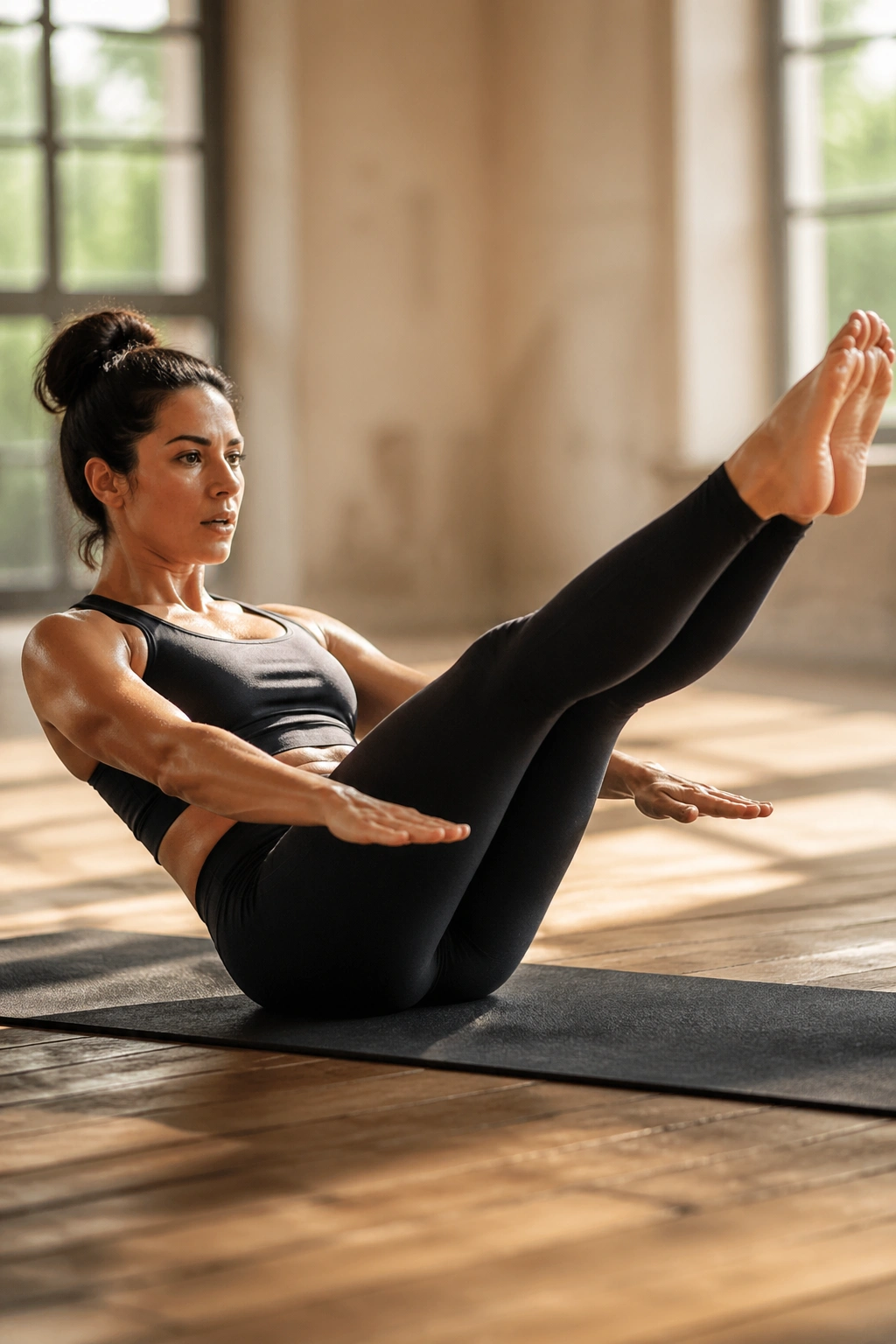
The old-school Pilates classics still hit. They hit harder in a warm room where breathing gets taxed sooner and every rep asks for more control than your ego wants to give.
Why the classics keep earning their spot
The Hundred, roll-up, single-leg stretch, double-leg lower, crisscross, and teaser all look polished when an instructor does them fresh. Strung together with little rest, they become an endurance test for spinal articulation and deep abdominal control. No gimmick needed.
Build the challenge as a ladder:
- The Hundred: 50 to 100 pumps
- Roll-ups: 8 reps
- Single-leg stretch: 10 per side
- Double-leg lowers: 8 reps
- Crisscross: 12 per side
- Teaser hold or teaser reps: 20-second hold or 5 reps
Rest 45 to 60 seconds, then repeat the ladder 2 or 3 times.
Here’s the deal breaker—though not in the gimmicky sense. You do not need the full expression of every move for this workout to count. Bent knees in teaser, hands behind thighs on roll-up, one leg down during double-leg lowers: all fair. The goal is shape with breath, not circus tricks.
Best cue: think long through the waist on every exhale. When people “crunch harder,” they often shorten the front body and lose the clean line that makes these exercises work.
20. Full-Body Hot Pilates Workout Finisher
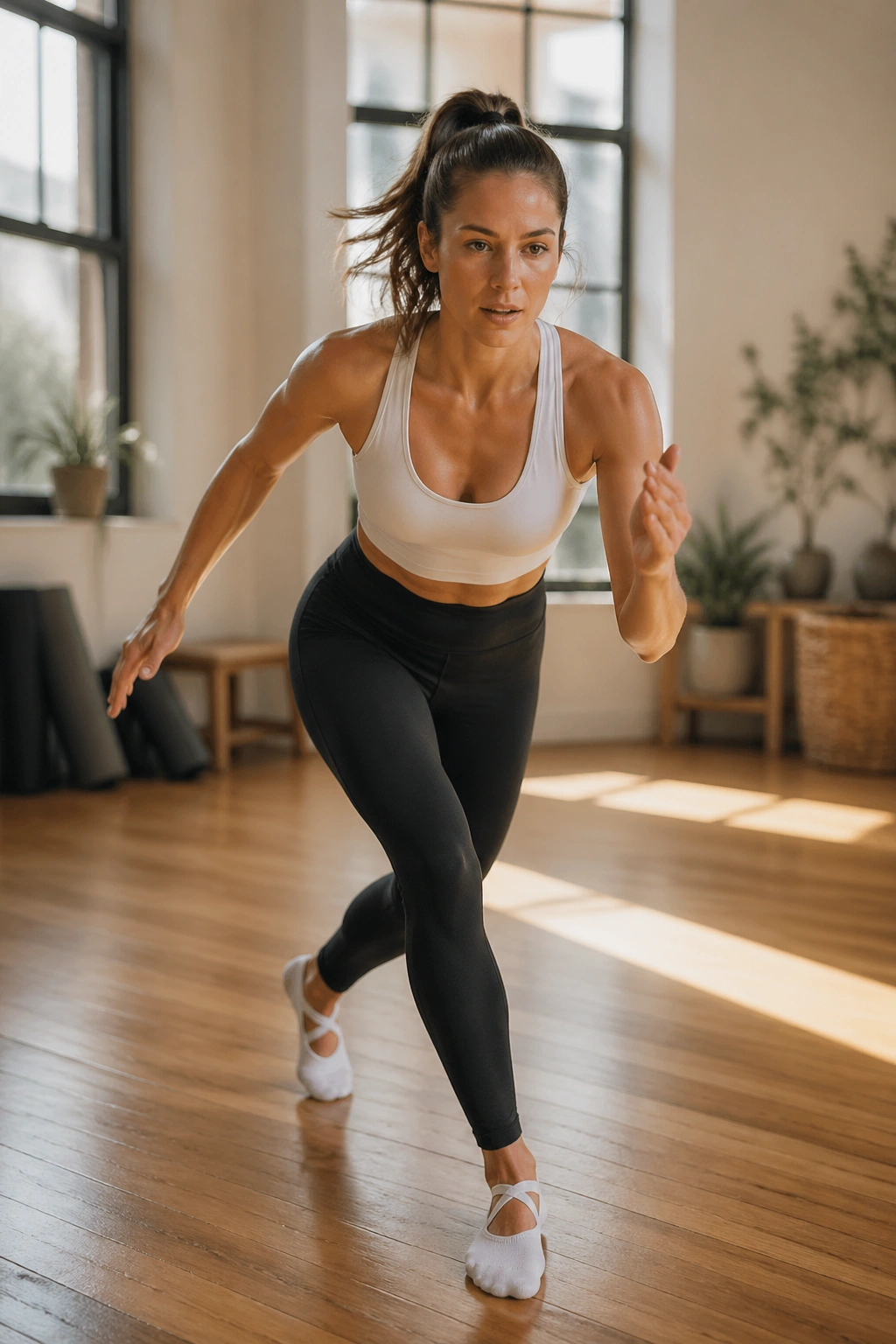
If you want one class format to keep in steady rotation, make it a full-body hot Pilates workout with four blocks: core, legs, arms, and cardio. It covers the whole room, holds attention better than single-focus sessions, and lets you dial intensity up or down without rebuilding the class from scratch.
Block one: 8 minutes of core—dead bugs, plank saws, side planks. Block two: 8 minutes of lower body—squat pulses, reverse lunges, glute bridges. Block three: 8 minutes of upper body with light weights or bodyweight push patterns. Block four: 8 minutes of cardio-driven Pilates intervals like skater taps, fast feet, walk-outs, and standing knee drives. Give each block two exercises, work 45 seconds on and 15 seconds off, and repeat four rounds before moving to the next block.
The beauty of this structure is how easy it is to scale. Beginners can keep the same clock and choose shorter ranges or more supported versions. Stronger students can add pulses, holds, or sliders without changing the flow for everyone else.
I like using this as a benchmark class. If your planks feel steadier, your transitions cleaner, and your recovery quicker by the last block, your training is moving in the right direction. Sweat is part of the story. Control under sweat is the bigger win.
Final Thoughts
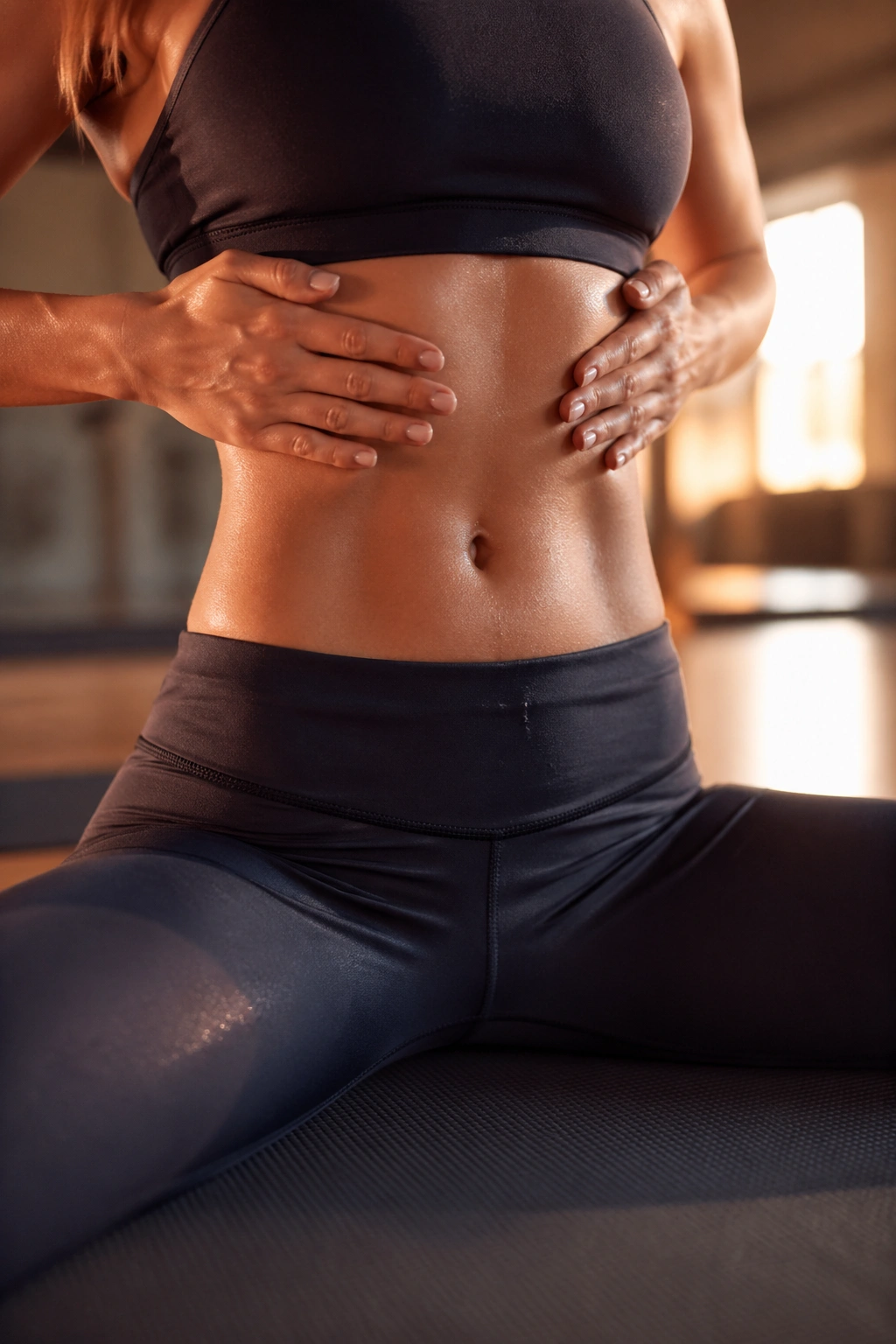
A hot Pilates class lands best when the heat supports the work instead of replacing it. The workouts that stick with people—the ones they come back to—usually have three things in place: clean sequencing, smart pacing, and enough control that the burn means something.
If you’re building your own rotation, don’t chase the hardest option every time. Pair one athletic workout with one deep-core session, one lower-body burner, and one recovery flow across the week. Your body tends to respond better to that mix than to endless red-line classes.
And bring the towel. Not for the aesthetic. For the side planks.
