



A light resistance band can make a mat session feel honest fast. In Pilates resistance band workouts at home, the small stuff shows up immediately: ribs flaring, shoulders creeping up, knees diving inward, the whole little chain reaction that a plain bodyweight move sometimes hides.
That is exactly why bands work so well here. They add just enough pull to make you slow down, but not so much that the movement turns into a strength class with fancy socks. A mini loop around the thighs will change leg work in seconds. A long band under the feet changes rows, presses, and roll-downs in a way that feels almost rude.
Use a lighter band than your ego wants. Seriously. If the tension is heavy enough that you have to brace your neck or shove your lower back into the floor, the band has already won. The better version is the one where you can still breathe, stack your ribs, and feel the right muscles wake up one by one.
1. Standing Roll-Downs With the Band Overhead
A long resistance band turns a simple roll-down into a very clean posture check. Stand tall with both feet on the band, hold the ends in your hands, and reach your arms overhead. As you exhale, peel your spine forward one segment at a time until your hands hang near your shins, then roll back up with the same patience.
Why It Feels So Good
The band gives your upper body a reason to stay active while your abs and hamstrings do the real work. That combo is pure Pilates. You are not yanking yourself down; you are organizing the front of the body while lengthening the back line.
Keep the knees soft. Locking them out is the fastest way to make this turn into a tug-of-war. Aim for 5 slow roll-downs, each one taking about 4 to 5 seconds down and 4 to 5 seconds up.
- Band setup: Long loop or flat band under both feet.
- Best cue: Keep the shoulder blades wide, not pinched.
- What to feel: Hamstrings lengthen, lower abs lift, ribs soften.
- Common miss: Pulling with the arms instead of stacking the spine.
Tip: If your low back talks first, bend the knees a little more and shorten the range. That usually fixes it.
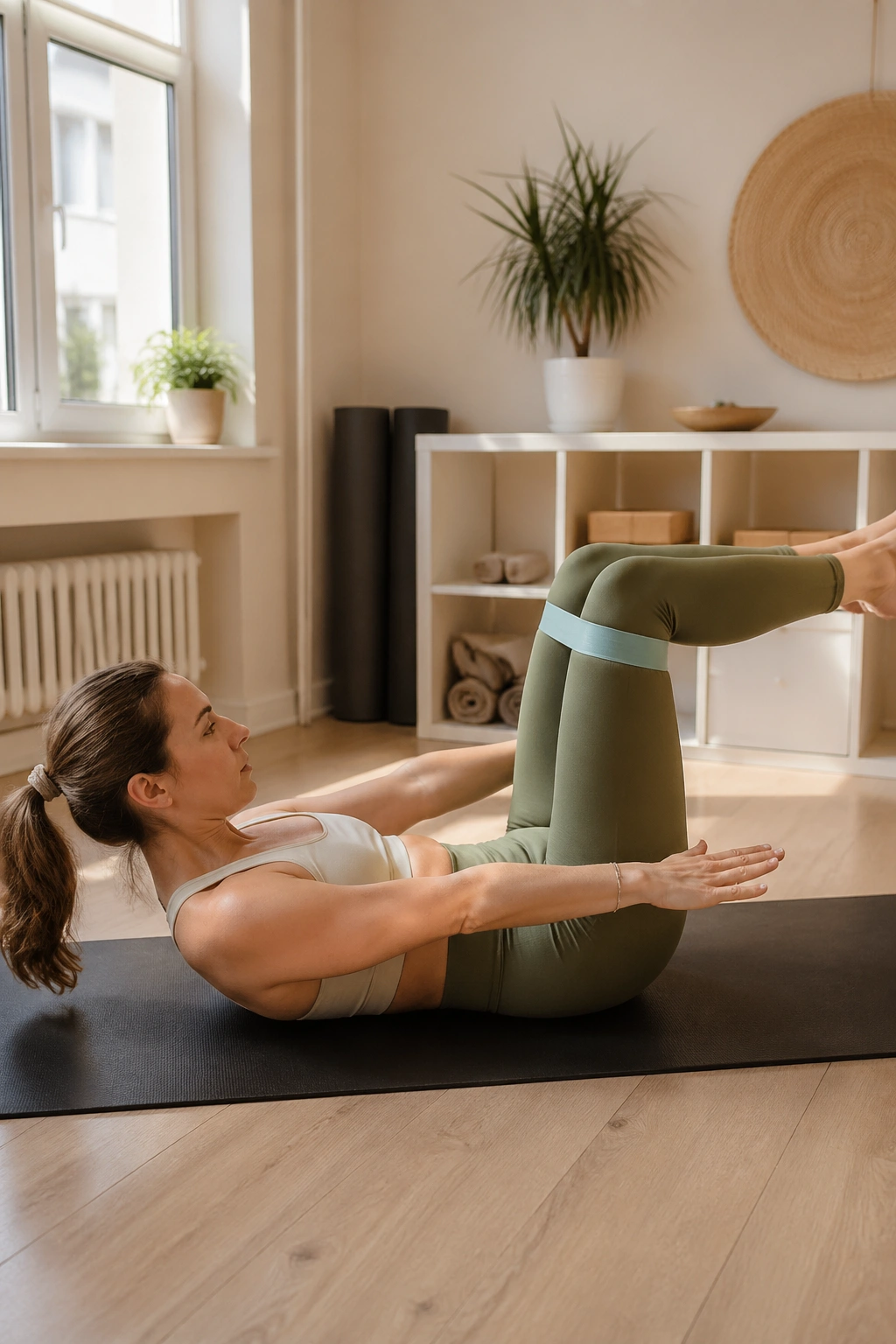
2. Hundred Presses With a Light Loop Band
The Pilates Hundred gets nastier in the best way when a band adds tension to the arms or thighs. Lie on your back, float the legs to tabletop, and either press a light mini band outward above the knees or hold a long band between the hands with gentle outward pull as you pump the arms.
The point is not to turn this into a cardio drill. The point is to keep the ribs down while the arms and legs try to wander. That steady pressure makes your deep core work harder than it does in the plain version, and the breathing pattern becomes the whole game. Ten breath cycles is a strong start.
One clean set beats two sloppy ones. Keep the neck long, chin slightly nodding, and shoulders heavy on the mat. If your hip flexors start yelling, lower the legs a few inches or bring them back to tabletop.
Best use: Start with 8 to 10 breath cycles, then rest for 20 seconds and repeat once. Small movements. Big burn.
3. Dead Bug Band Reach for Deep Core Control
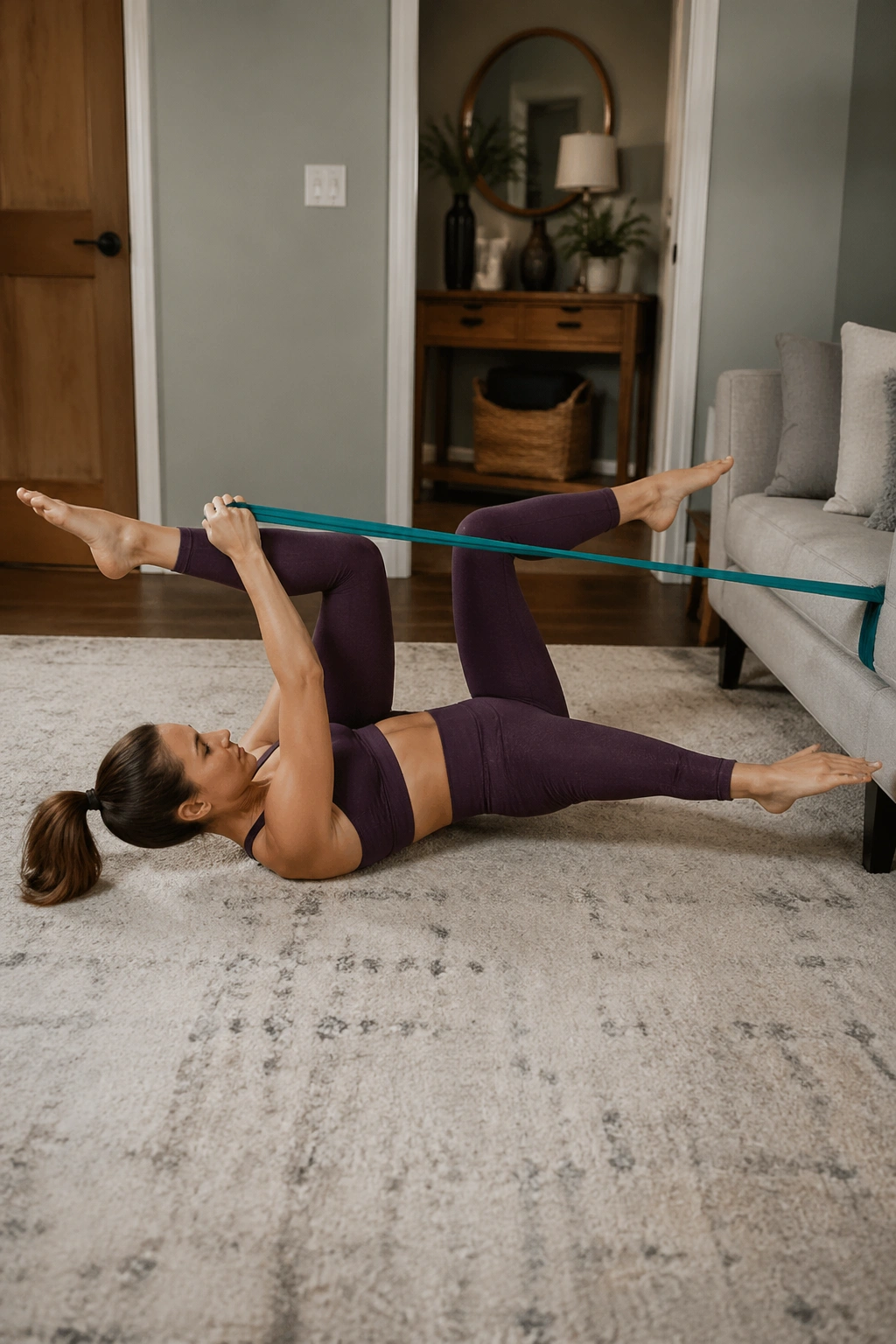
Why does dead bug feel so much harder with a band? Because the moment you add resistance, your body has to stop cheating with momentum. The floor version lets people rush. The band version makes every inch count.
Anchor a long band under a sturdy couch leg or heavy piece of furniture, then hold the free end with both hands over your chest. One leg lowers slowly as the opposite arm presses the band forward, and you switch sides before the pelvis starts to tilt. Keep the lower back heavy, but not smashed flat like a pancake.
How to Use It
Try 6 slow reps per side, pausing for one full breath in the stretched position. The band should feel like a gentle tug, not a fight. If you lose your ribs the second your leg moves, shorten the lever and keep the knee higher.
Use this one when your core feels sleepy and you want to wake it up without crunching your neck. It is sneaky. It works.
4. Glute Bridge Pulses With a Mini Band
Picture a bridge where the knees want to cave inward, and then imagine a mini loop band stopping that nonsense. That is the whole job here. Lie on your back with the band just above your knees, feet hip-width apart, and lift into a bridge until the hips line up with the knees and shoulders.
Once you are up, pulse the knees slightly outward against the band while keeping the pelvis still. The movement is tiny. The feeling is not. You should notice the outer glutes, the back of the thighs, and the lower belly all having to cooperate instead of freeloading.
- Do this: 12 pulses, then hold for 10 seconds.
- Feel this: Glutes, not low back.
- Watch for: Rib flare and over-arching.
- Repeat: 2 rounds if your form stays clean.
A bridge should feel like a lift, not a backbend. That matters more than people think.
5. Side-Lying Leg Series for Outer Hips
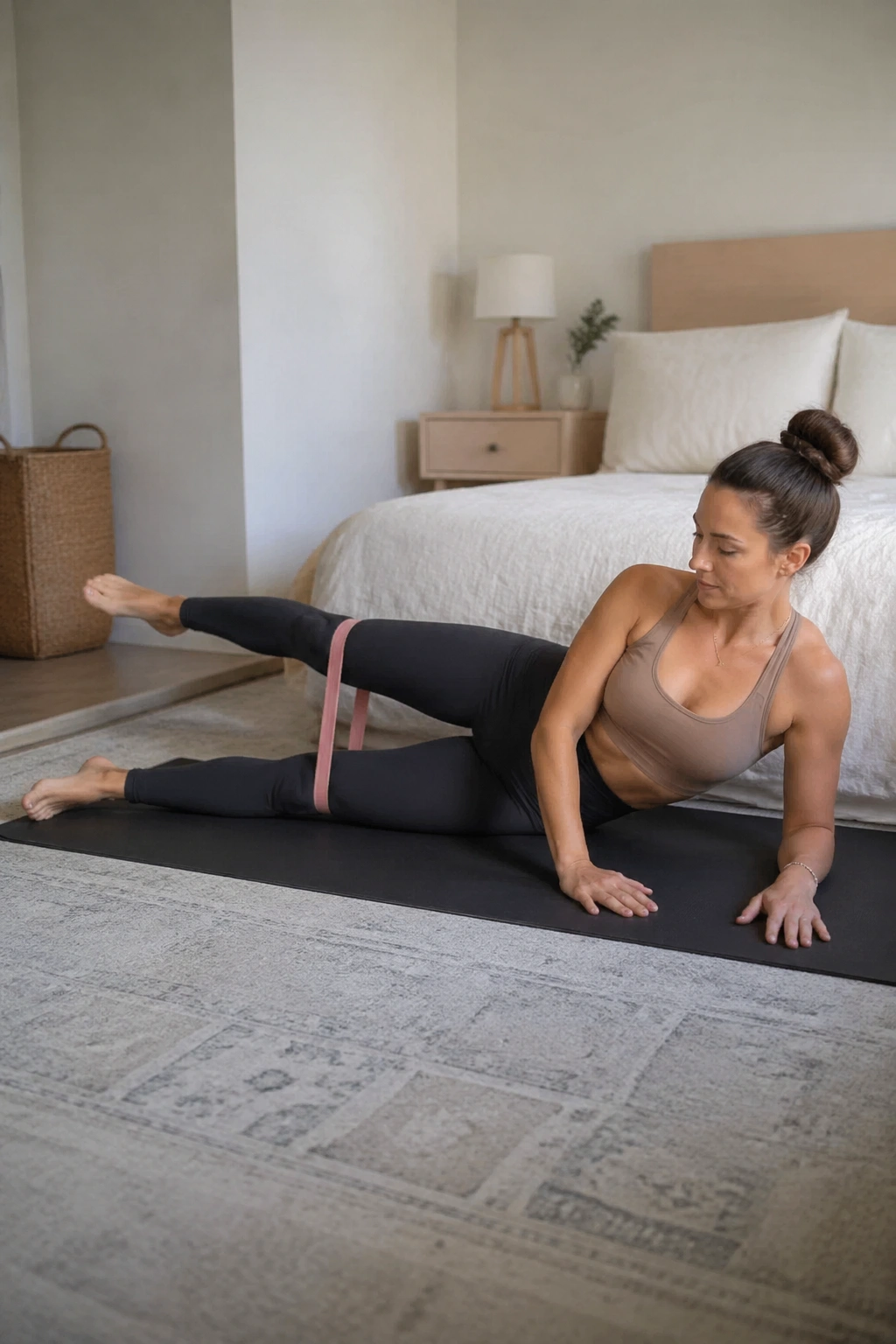
Side-lying band work is where the small muscles finally stop hiding. Put a mini band above the knees or around the ankles, lie on one side, and stack the hips with the ribs pulled slightly in. From there, the top leg can lift, press, hover, circle, or kick forward and back in a very controlled range.
The trick is to keep the pelvis from rolling backward every time the leg lifts. People cheat here all the time. Tiny motion is enough. If the leg goes so high that the waist collapses, the exercise has already gone past useful.
Do 10 lifts, 8 small circles each direction, and 6 slow pulses at the top. Then switch sides and repeat. It is a humbling little sequence, which is part of the charm.
Most useful cue: keep the top hip stacked over the bottom hip, even when the band starts dragging the leg outward.
6. Seated Row and Spine Stretch Combo
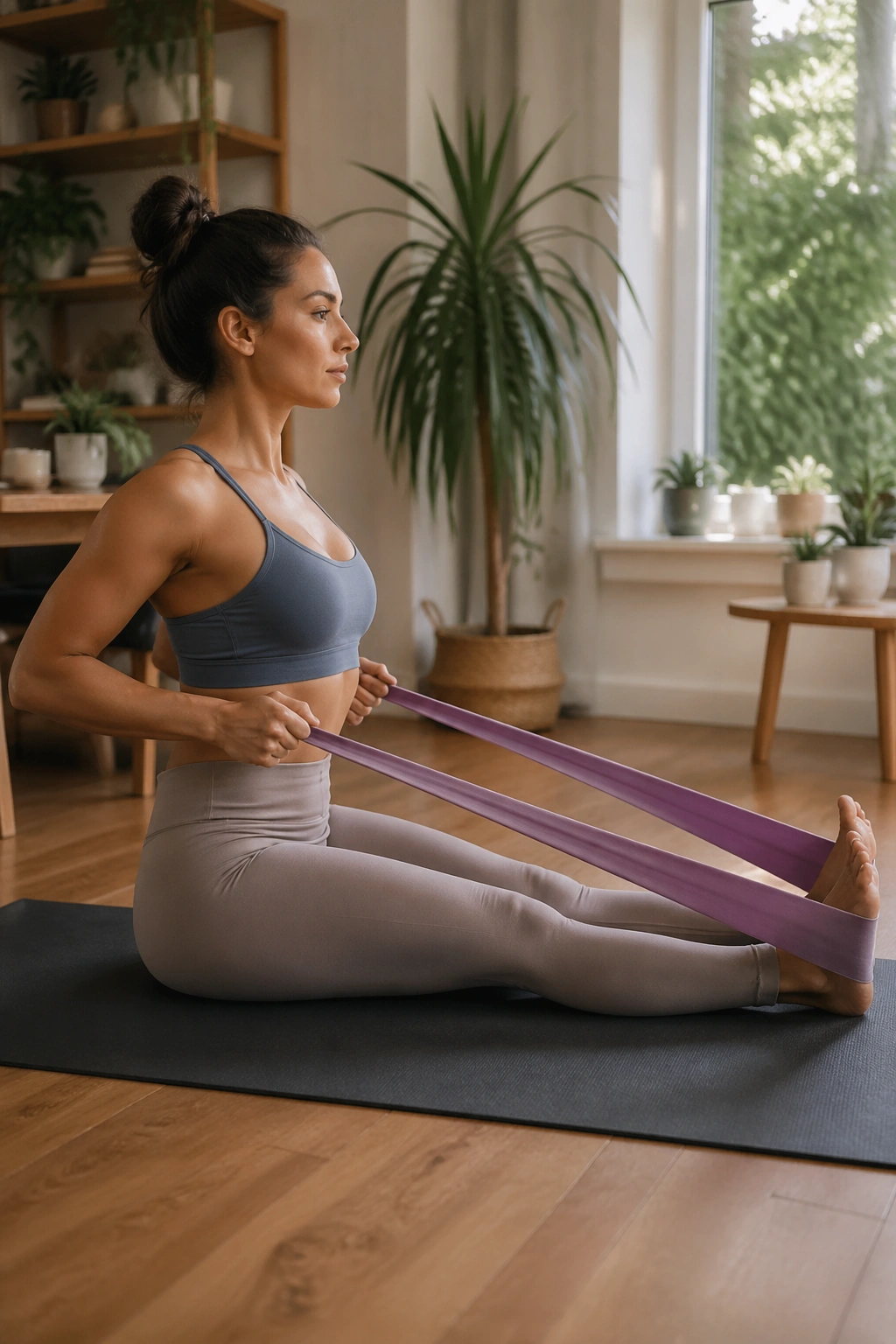
Unlike a gym row, this version asks your abs to stay awake the entire time. Sit with both legs long, loop the band around your feet, and hold one end in each hand. Pull the elbows back close to the ribs for a seated row, then release the arms forward and round the spine into a Pilates-style stretch over the legs.
That one-two pattern gives you back strength and spinal mobility in the same minute. Nice. It also makes the shoulders do something useful without shrugging toward your ears, which is where a lot of band work falls apart.
This is the move I like for desk-heavy days. The upper back opens, the chest stops feeling compressed, and the core gets a quiet demand to stay organized. Keep the neck long during the row and let the exhale help you fold forward.
Recommendation: Do 8 rows and 8 spine stretches, then repeat for 2 rounds if your hamstrings are cooperative.
7. Tall-Kneeling Arm Presses
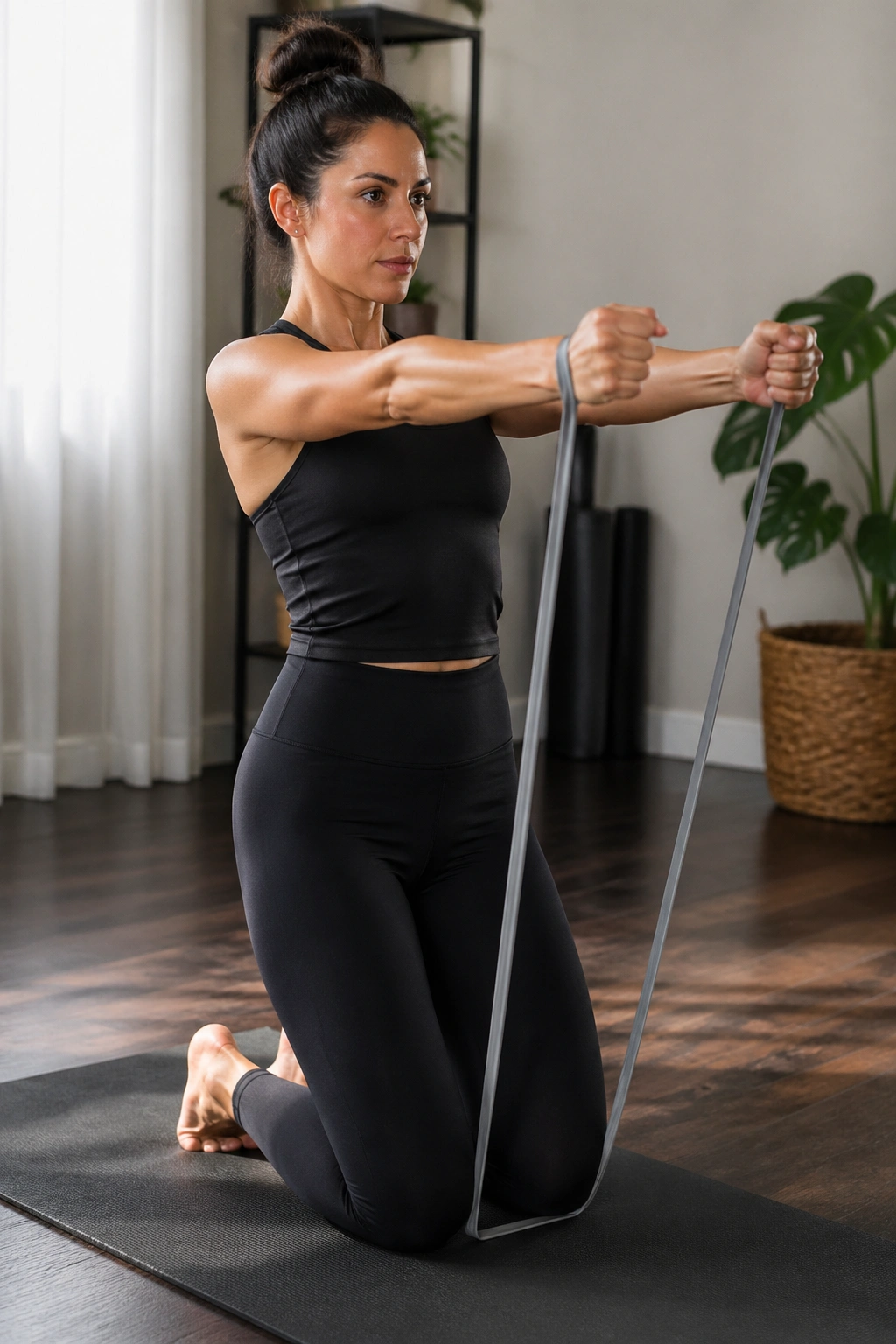
Tall kneeling makes band work honest because your hips cannot help much. Set the band under both knees or under one knee with the ends in your hands, then perform slow shoulder presses, front raises, or triceps presses while keeping the ribs stacked over the pelvis.
What to Watch For
The temptation is to lean back and turn the whole thing into a lower-back drill. Don’t. Keep the glutes lightly engaged and the tailbone heavy, and let the shoulders do the work without hiking up toward the ears.
This series is excellent for the person who wants arm work without endless reps. Six presses, six front raises, six triceps extensions. That is enough when the form stays clean.
A small note: if kneeling bothers your knees, fold a towel under them or do the same pattern standing. The point is the control, not the pose.
8. Clamshell Lifts and Holds
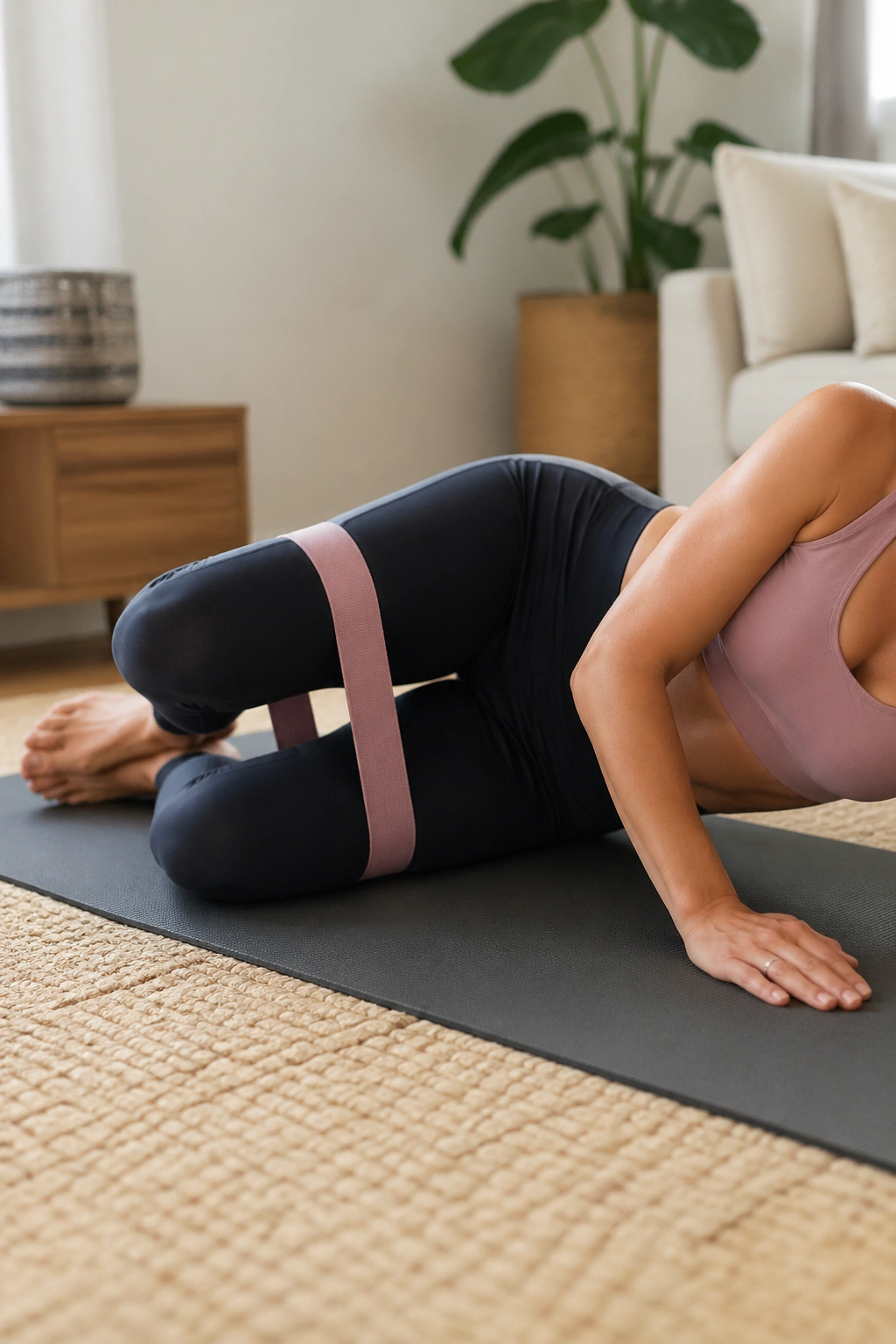
A clamshell with a band above the knees looks easy right up until the outer hip starts shaking. Lie on your side with knees bent, feet together, and keep the pelvis still while the top knee opens against the band. The feet stay glued together; the movement comes from the hip, not the spine.
This is not a race. The good version is slow enough that you can feel the glute med kick in before the lower back does anything clever. Hold the top for 2 to 3 seconds, then lower with control. Ten to twelve reps is enough for most people.
One sentence matters here: do not roll backward to get the knee higher. That cheat is common, and it steals the work from the place you want it.
If you sit a lot, this move tends to feel like a reset. Tight, useful, slightly annoying. That’s usually a good sign.
9. Bird Dog Reaches With Band Tension
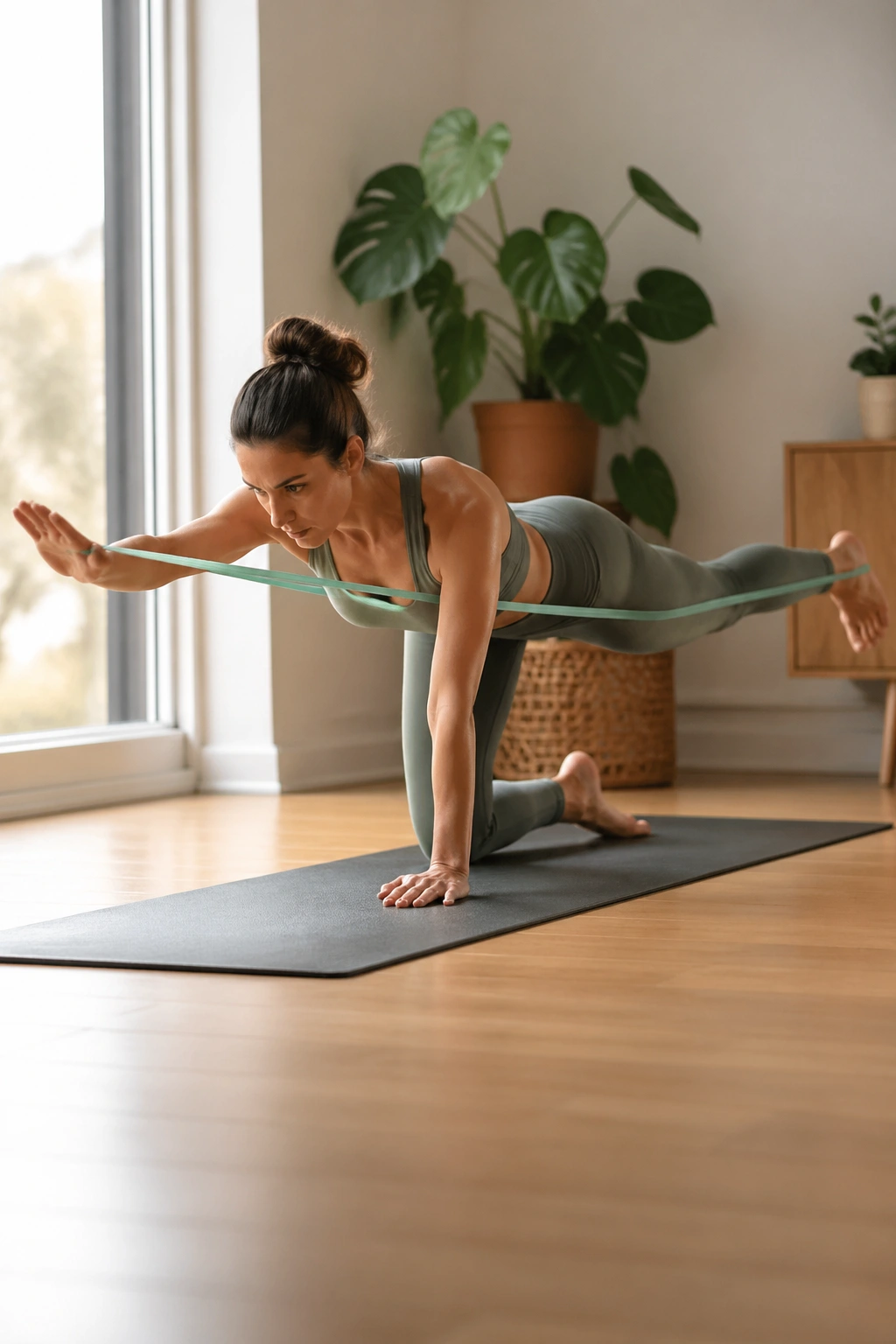
Why does a bird dog change so much once a band is involved? Because the diagonal line from hand to opposite foot suddenly has something to push against. That makes the torso work harder to keep square to the floor, which is exactly the point.
Try looping a light band around one hand and the opposite foot, or anchor a band under the supporting hand and foot if you have a stable setup. Extend long, then pause before the lower back tries to arch and the pelvis tips. You want reach, not wobble.
How to Get the Most From It
- Reach long through heel and fingertips.
- Keep the neck in line with the spine.
- Pause for 2 full breaths on each side.
- Start with 5 reps per side.
A clean bird dog feels calm. No swinging, no twisting, no dramatic leg height. Just a steady line from hand to heel.
10. Squat to Calf Raise With Band Resistance
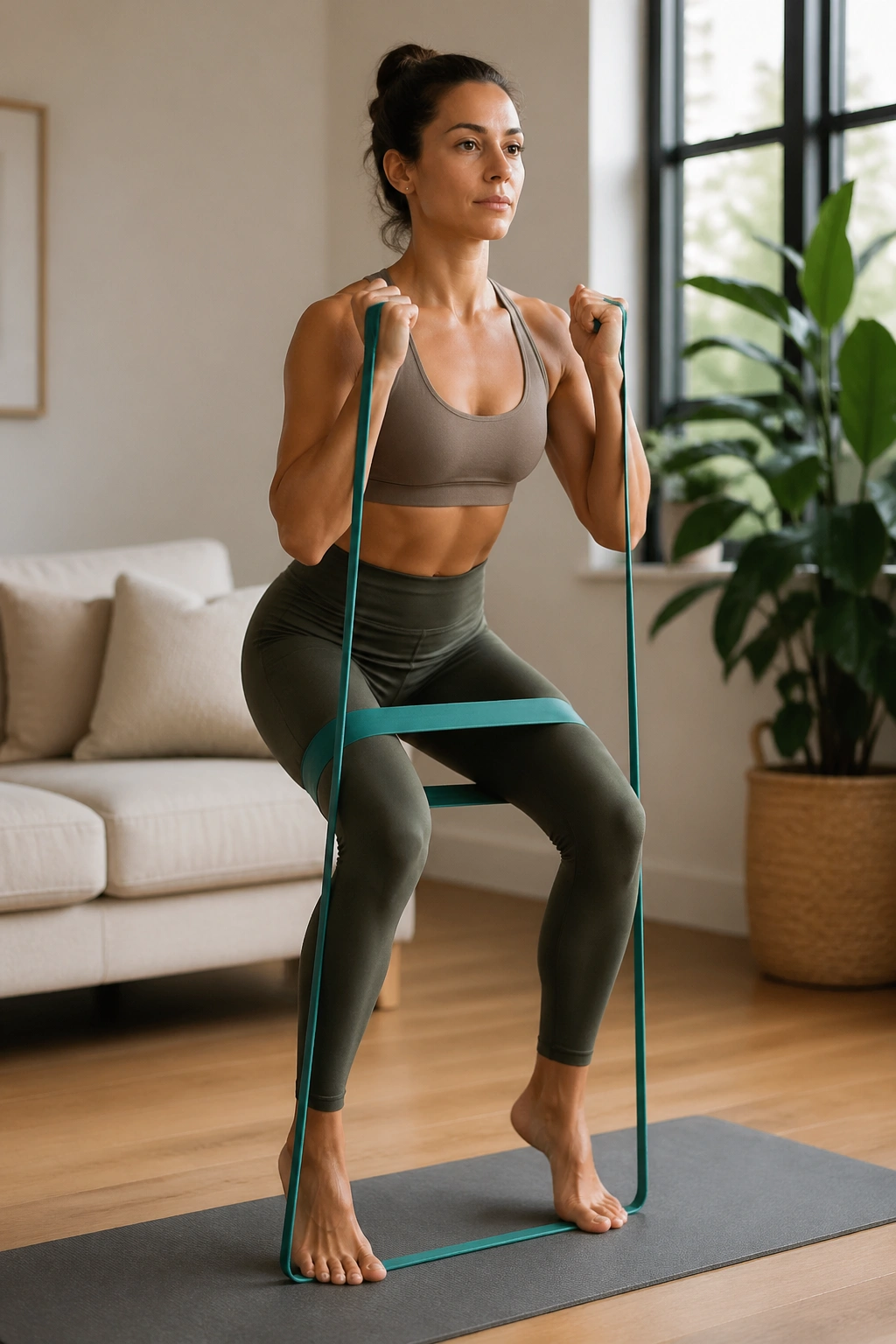
A band above the knees makes a squat immediately more useful because it gives you feedback the second your knees drift inward. Stand on the band with feet a little wider than hips, hold the ends at shoulder height, lower into a small squat, and press back up into a calf raise.
The squat does not need to be deep. In fact, a modest range is often better for Pilates-style control. The band keeps the outer hips awake while the calves and ankles join the party on the rise. You will feel this faster than you expect.
Try 8 squat-to-calf-raise reps, then hold the top for 5 seconds with the heels high. Repeat for 2 rounds. If balance gets shaky, keep one hand lightly touching a wall. That is not cheating. It is smart.
This one is useful when you want a standing leg series that still feels connected to the mat work.
11. Standing Kickbacks for Glutes and Balance
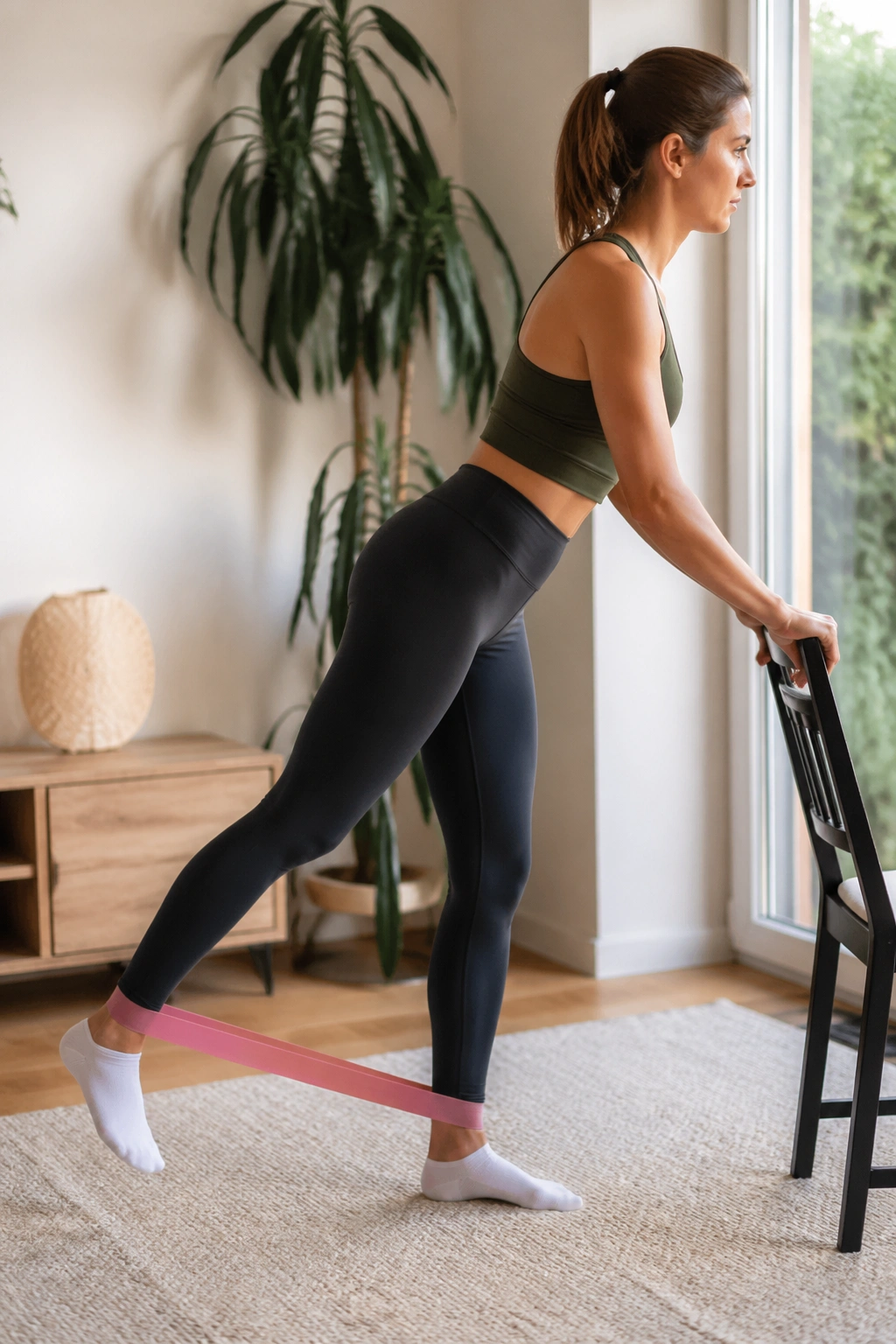
A standing kickback with a mini band around the ankles looks simple, which is probably why people rush it. Don’t. Hinge slightly at the hips, hold onto a wall or chair if you need to, and send one leg straight back without arching the lower back or turning the toes out.
The work should land in the standing glute and the moving glute, not in the lumbar spine. The lift is small. The squeeze at the back of the leg is the point. A one-second pause at the top makes a big difference.
This is the move I use when I want glute work without getting trapped on the floor. It also helps with balance, because the standing leg has to stay organized while the other leg moves. Ten reps per side is enough if you keep the trunk still.
Watch closely: if your ribs flare, the leg is going too high.
12. Single-Leg Bridge Marches
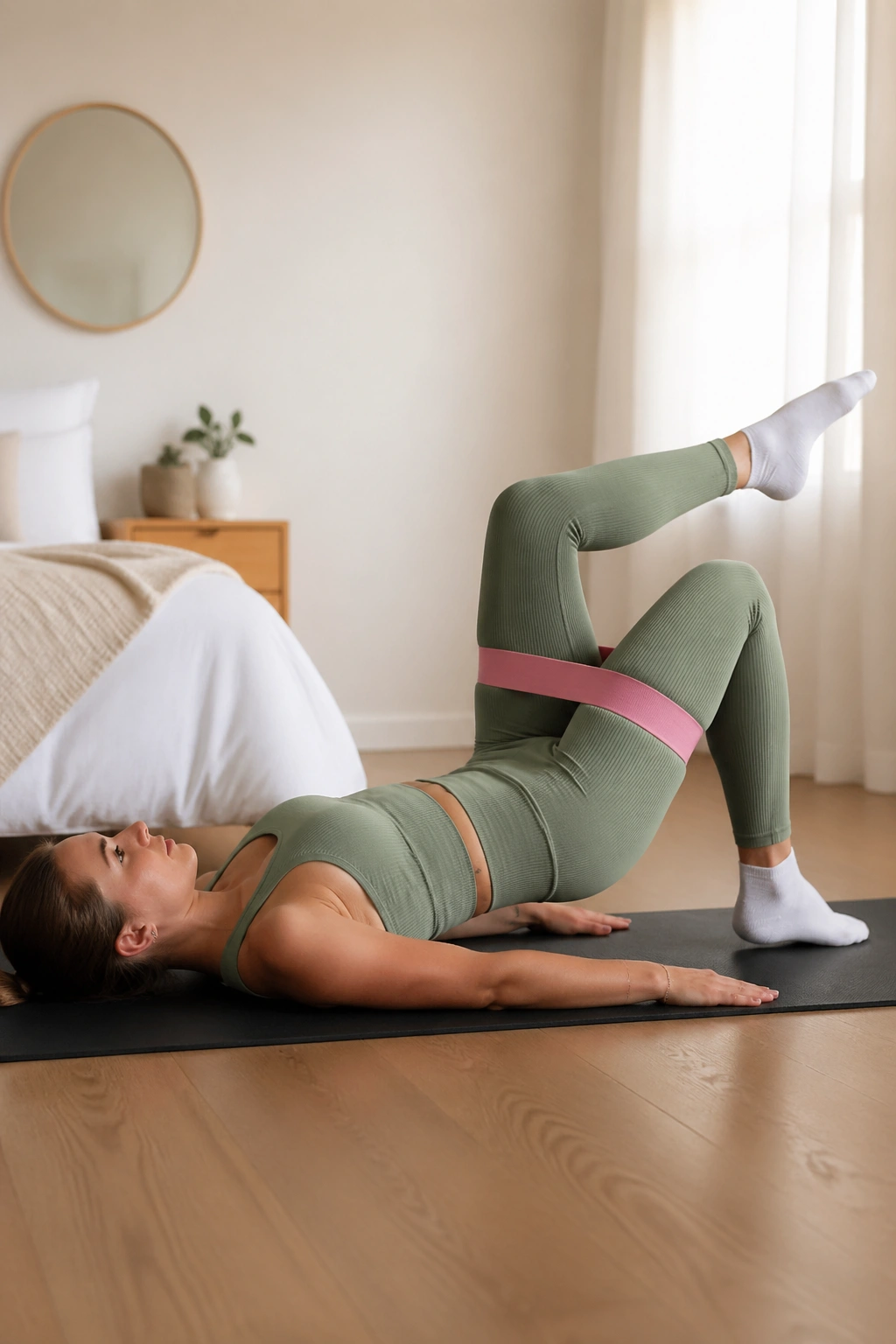
Single-leg bridge marches are a little brutal in a good way. Set a mini band above the knees, lift into bridge, and keep the pelvis level while one foot floats a few inches off the floor and returns. Then switch sides without letting the hips tilt.
How to Keep the Pelvis Still
The standing side wants to collapse. The lifted side wants to make the bridge wobble. Your job is to keep the square shape of the pelvis while the legs alternate.
I like 8 marches per side, with a three-count hold in the bridge before the first lift. If the hamstrings cramp, bring the feet a touch closer to the hips and lower the bridge slightly. That usually solves it.
This one is excellent for anyone who wants bridge work that feels more like control than raw power. The band keeps the knees from drifting, and the march keeps the core from dozing off.
13. Prone Swimming With Band Tension
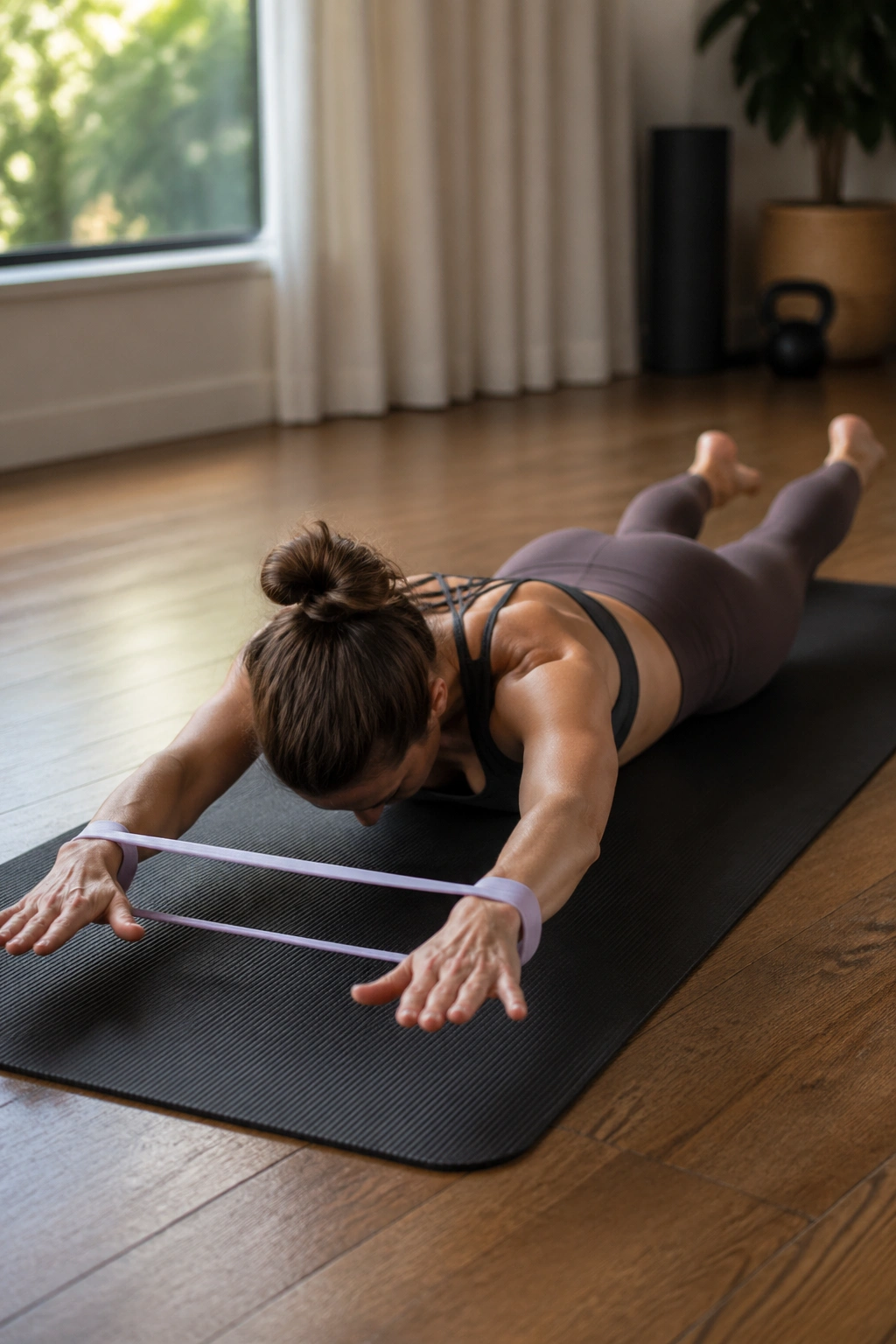
A light band changes swimming from a graceful back-body drill into a proper endurance challenge. Lie face down, keep the band around the wrists or hold a very light band with gentle outward tension, and lift the opposite arm and leg in a steady alternating pattern.
The goal is not height. It is length. Reach the crown of the head away from the tailbone, keep the pubic bone heavy, and let the upper back support the lift. If you crank the head up, the neck gets the job and the back stops working. That happens a lot.
How to Use It
Do 6 slow lifts per side or hold the alternating pattern for 20 to 30 seconds. The movement should feel smooth, almost quiet. If your lower back starts pinching, lift less and breathe more.
This is one of those moves that looks tiny from the outside and feels like a fire drill from the inside.
14. Assisted Teaser Prep
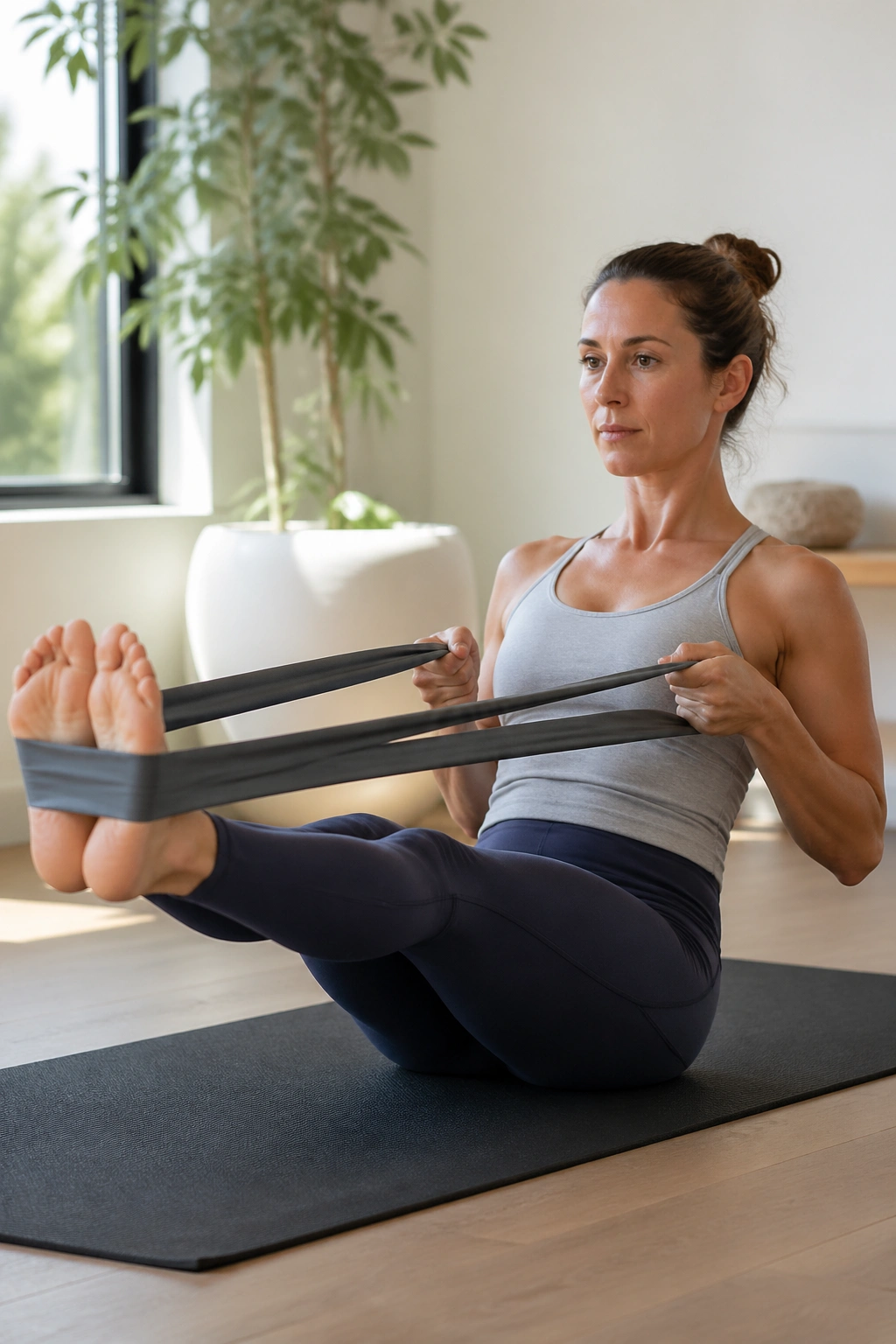
A teaser prep with a band gives you just enough help to practice the shape without turning it into a collapse-fest. Sit with knees bent or legs extended, loop a long band around the soles of the feet, and hold the ends as you roll back slightly before curling up into a half-teaser.
The band helps the arms and legs share the work, which makes the abdominal control easier to find. Keep the chest open, shoulders down, and chin gently tucked. If the neck grips hard, shorten the range and keep both knees bent.
Try 5 to 6 controlled reps instead of chasing height. That usually gives better results than trying to sit all the way up and losing the shape halfway through. Small wins count here.
A lot of people hate teaser work because they try to do too much. A band can make it feel less like a fight.
15. Side Plank With Top-Leg Lifts
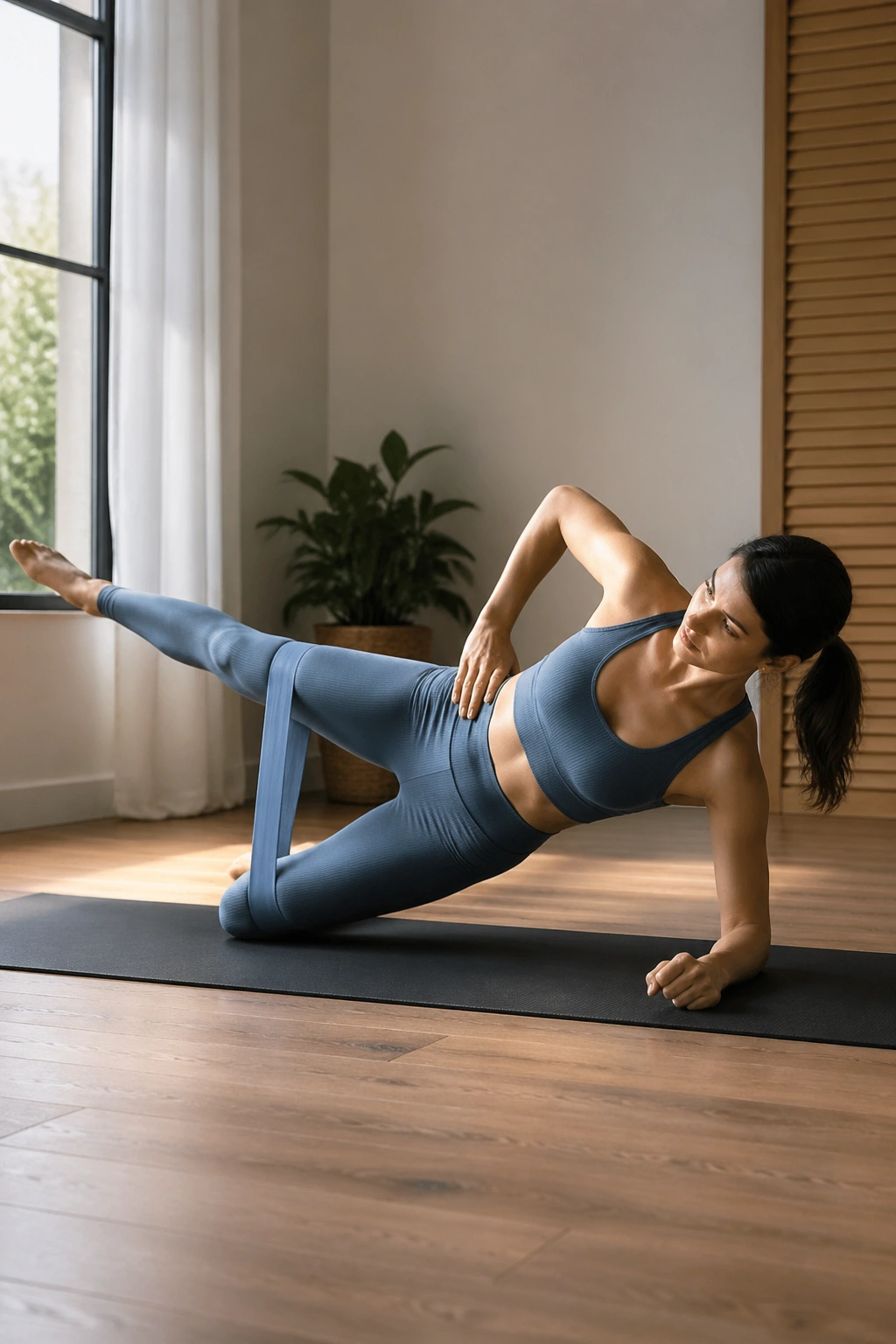
Side plank gets much more interesting when the top leg has to move against a band. Loop a mini band above the knees or around the ankles, set up in side plank from the knee or full foot, and lift the top leg a few inches while keeping the waist lifted.
Unlike a plain side plank, this version hits the glute med and the obliques at the same time. That combo is the good stuff. The shoulder on the floor also has to stay packed and steady, so the whole side body works together instead of in pieces.
Start with a 20-second hold, then add 6 top-leg lifts if the position stays tidy. If the shoulder complains, drop to the knee version. There is no prize for wobbling dramatically.
This move is sharp. It knows if you are cheating.
16. Tabletop Hamstring Curls
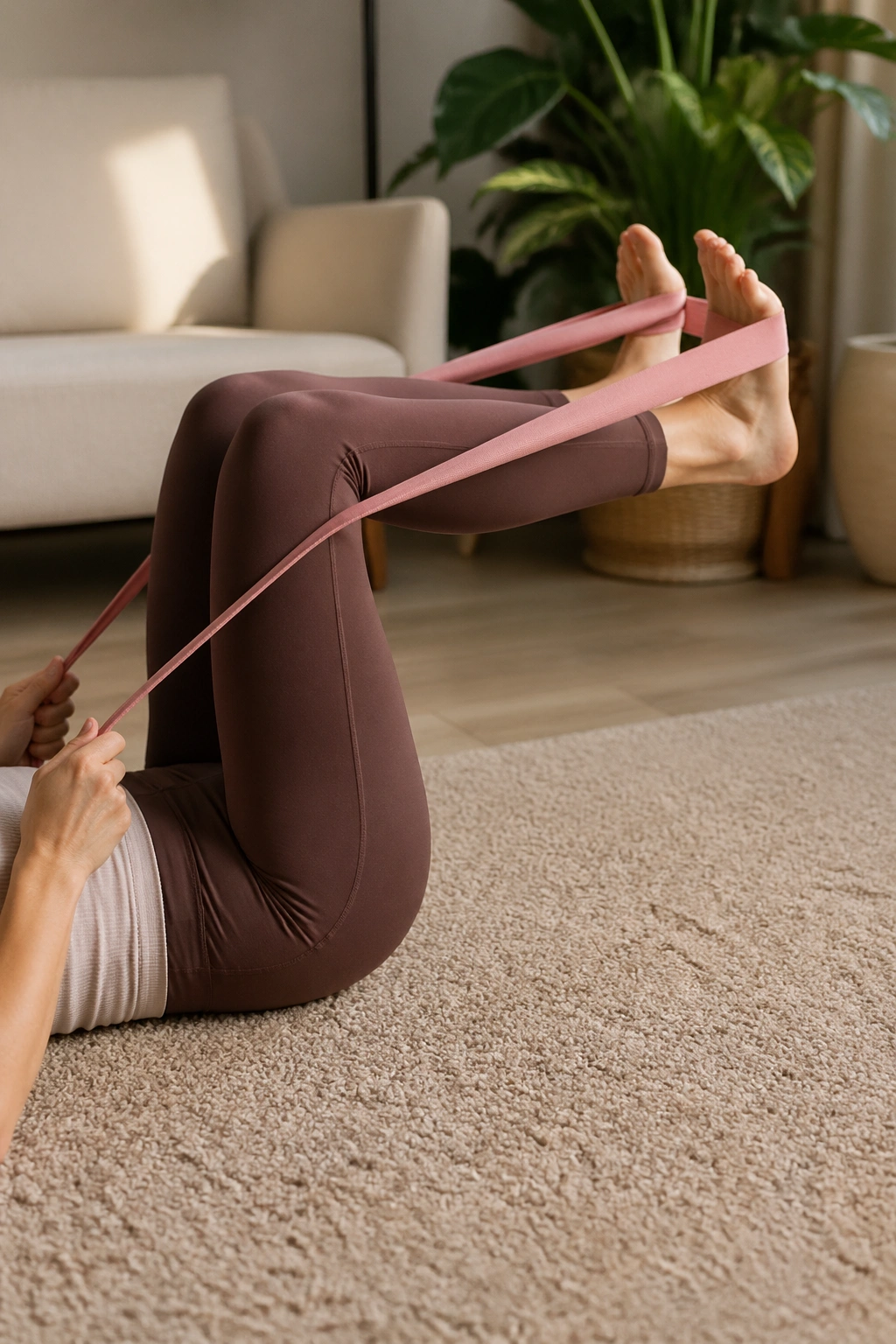
Hamstring curls in tabletop are a sneaky way to bring the back of the legs into a core exercise. Lie on your back with knees bent, loop a band around both feet, and hold the ends in your hands so there is light tension. From there, extend the legs slightly and curl the heels back toward the seat without letting the pelvis rock.
The challenge is control. If the band is too heavy, the lower back will take over and the hamstrings will disappear. Keep the movement small, almost like you are sliding the feet through thick air.
Do 8 to 10 curls and pause for a breath at the full bend. You should feel the back of the thighs, not a fight in the neck or shoulders.
This one is a nice bridge between core work and leg strength. It also pairs well with bridge presses if you want a longer lower-body block.
17. Standing Chest Expansion
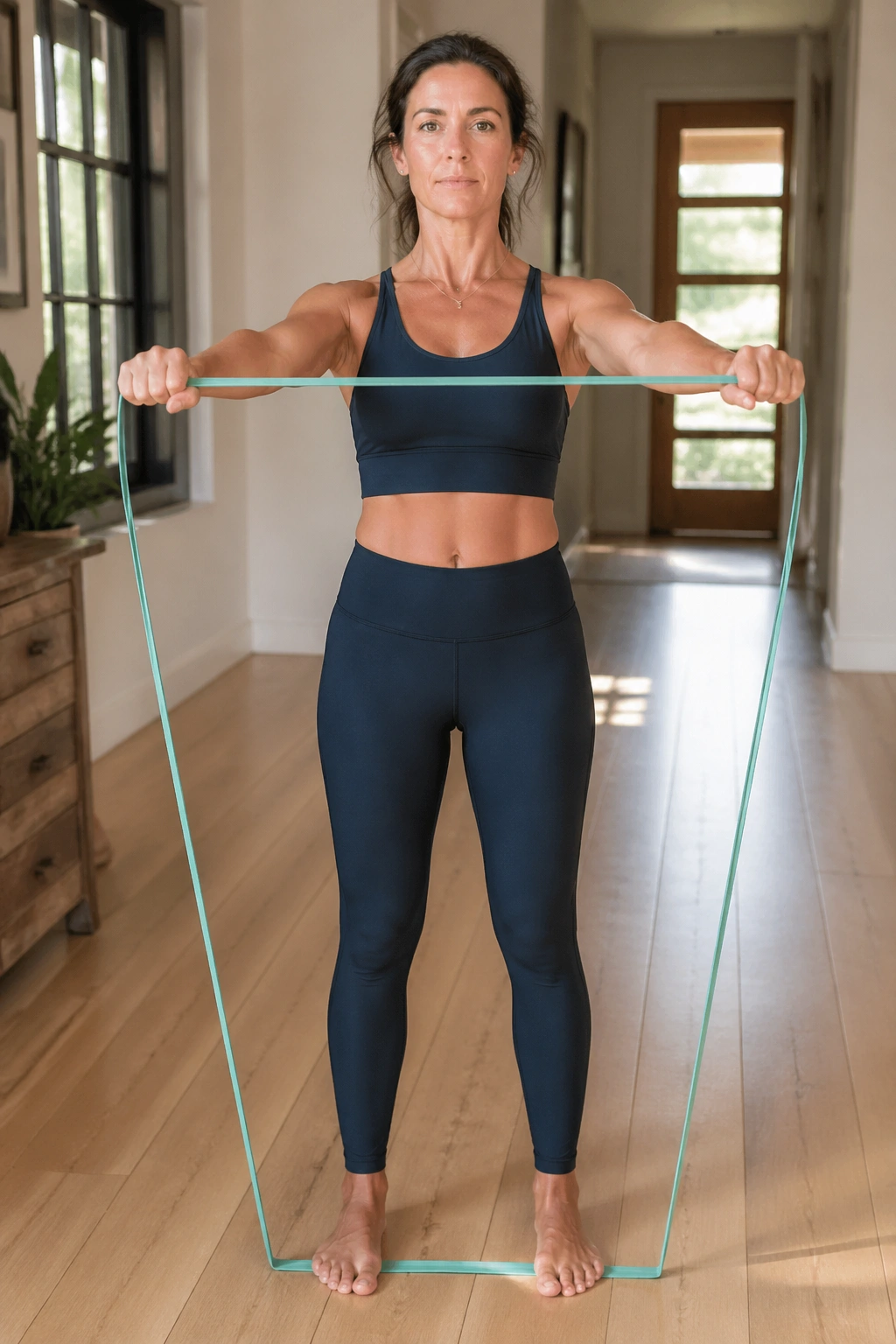
A standing chest expansion is one of those deceptively simple Pilates band workouts at home that makes posture feel visible. Stand on the band, hold the ends with straight arms in front of your thighs, and pull the arms back beside the body as the chest opens. Then return with control.
What Makes It Different
The movement is small, but the demand on the upper back is real. The shoulders need to stay away from the ears, the ribs need to stay quiet, and the neck needs to keep its length. If you swing the arms behind you, you miss the whole point.
- Do this: 10 slow openings.
- Hold: 2 seconds with the chest open.
- Feel: Mid-back, rear shoulders, long neck.
- Avoid: Leaning back to fake a bigger range.
I like this one as a reset between lower-body drills. It clears out that tight front-of-the-body feeling without taking much time.
18. Bicycle Core Series With Band
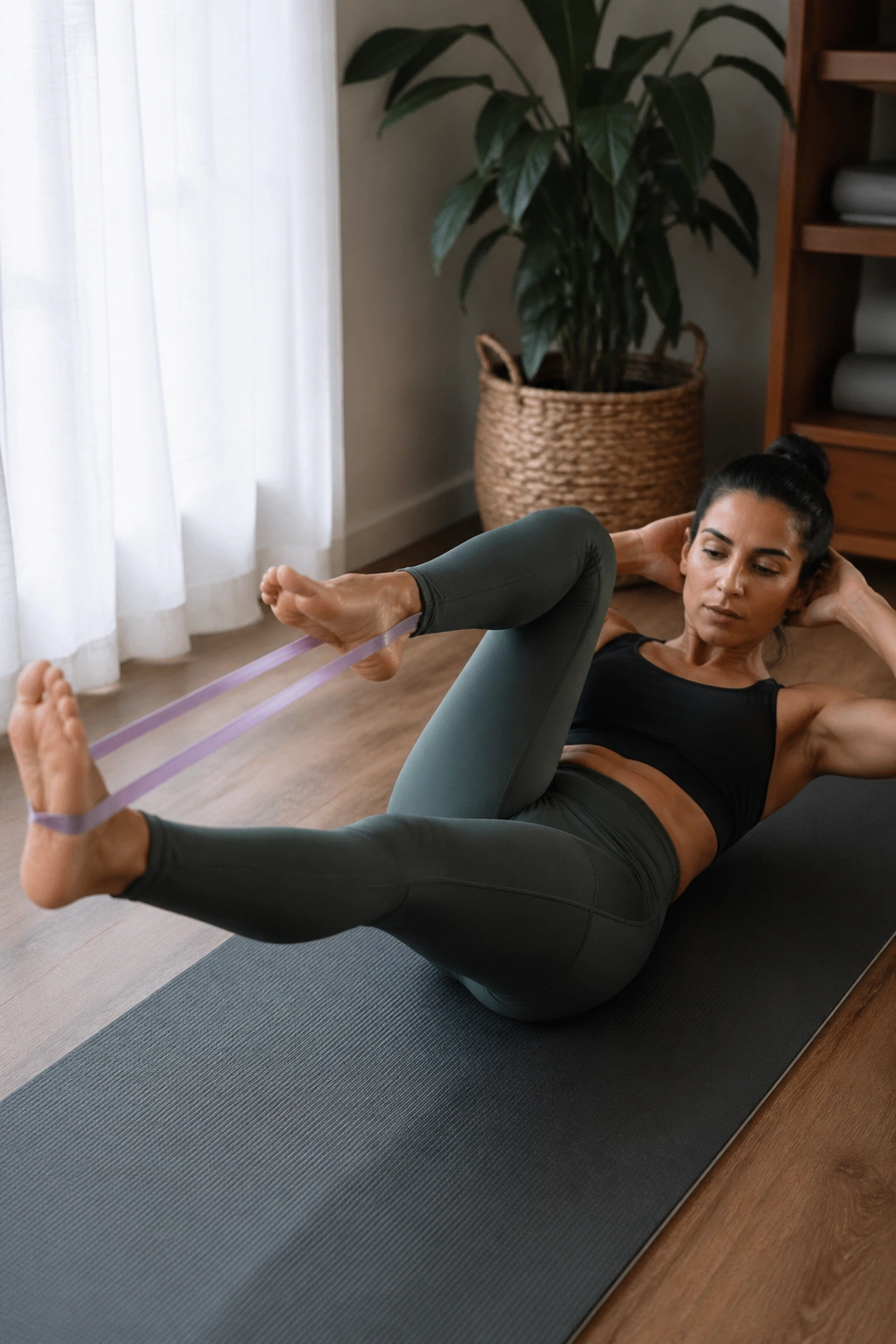
A band around the feet or above the knees makes bicycle work less about speed and more about clean control. Lie on your back, lift into tabletop or a low hover, and pedal one leg out while the opposite elbow reaches toward the knee. The band adds resistance, so the legs have to stay organized.
What you do not want is frantic pedaling. That version turns the exercise into a blur. Slow bicycles let the obliques do their job and keep the pelvis from rocking side to side. Five to six deliberate reps per side are enough to make it sting.
If the neck gets tired, rest your head for a beat between sets. No shame there. A strong core series should feel precise, not like a race to exhaustion.
This is the one I reach for when I want core work that still feels very Pilates, not gym-class messy.
19. Mermaid Side Bends
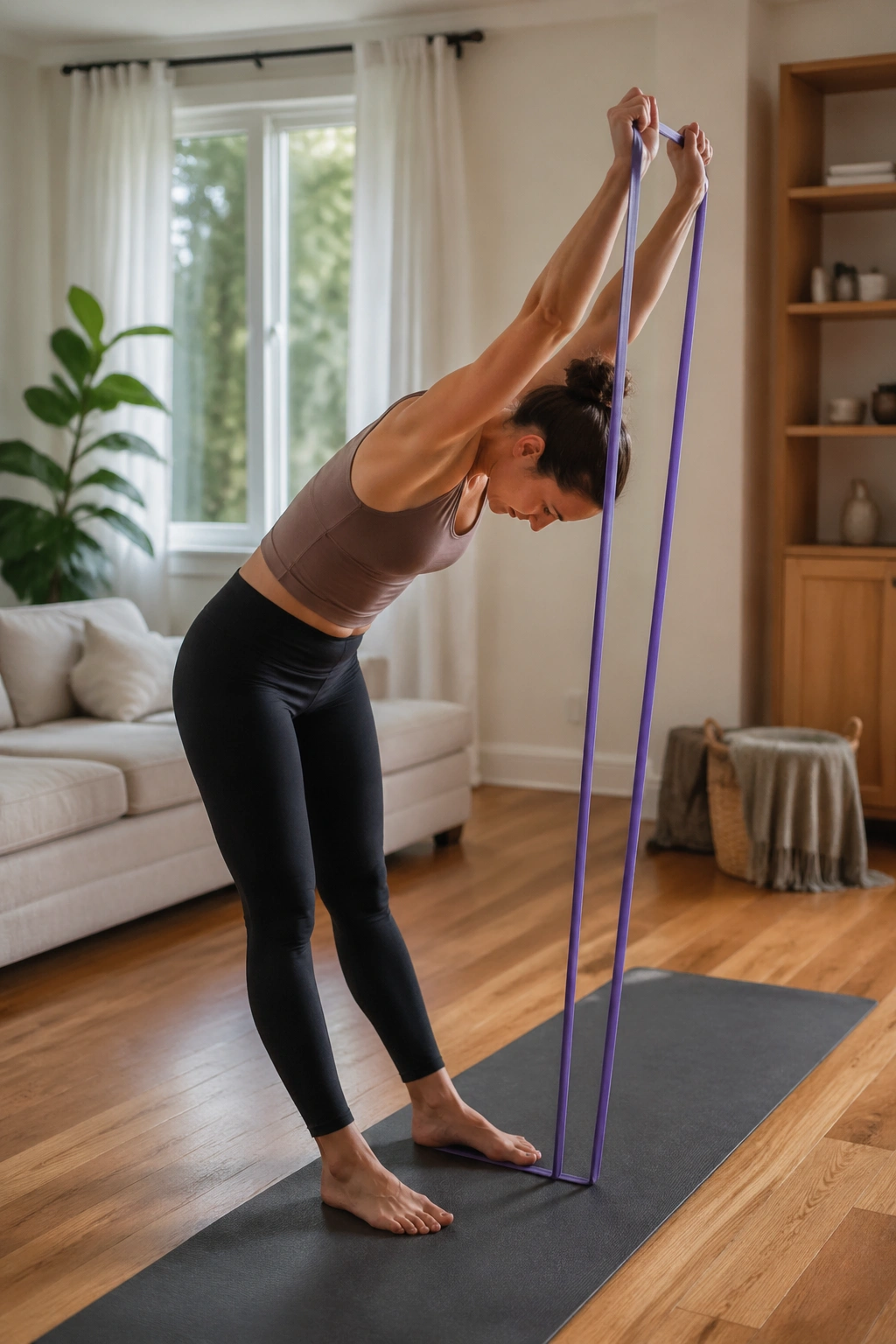
Mermaid with a band adds just enough load to make the side body stretch and strengthen at the same time. Sit with both knees folded to one side, anchor the band under the seated hip or inside hand, and use the free end as you side bend away from the anchor.
The nice part is the shape. One side of the ribs opens, the other side shortens, and the waist has to stay long even while it works. Keep the shoulder away from the ear and let the breath guide the bend. Four slow bends per side is enough.
This is one of the calmer moves in the whole list, but don’t mistake calm for easy. The body has to stay tidy all the way through the arc. If you rush it, the side bend turns into a shrug.
A band keeps the whole thing grounded and makes the stretch feel more alive.
20. Reverse Plank Band Opens
Reverse plank is already a back-body wake-up call. Add a band around the wrists or held in the hands, and the shoulders have to stay broad while the chest opens. Sit with the hands behind you, fingers forward or slightly out, then press the hips up and hold the body in a long line.
From there, gently open the arms against the band or keep outward tension through the wrists as you hold the lift. The goal is not a huge arch. The goal is a strong, lifted line from shoulders to heels.
Use 6 short holds of 5 seconds each. If the wrists do not love this position, turn the hands slightly outward or skip the full plank and keep the hips low. Pain is not the assignment.
This one feels old-school in the best way. It rewards steady strength and a quiet chest.
21. Bridge Press-Outs
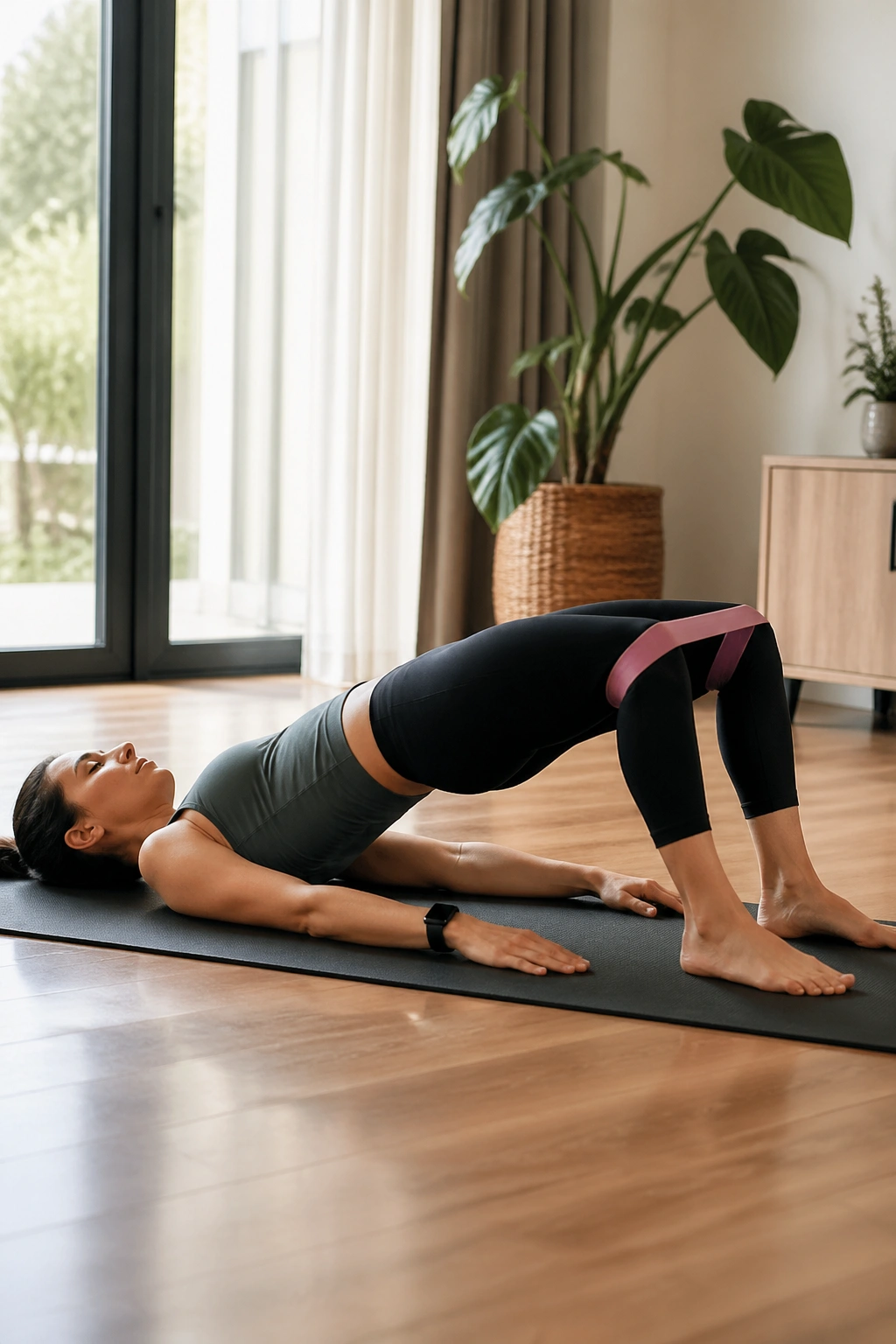
Bridge press-outs are a nice example of how a band can make one simple shape do more work. Lie on your back with a mini band above the knees, lift into bridge, and press the knees outward against the band while the hips stay level. You can hold the bridge the whole time or pulse the knees in and out at the top.
The movement hits the glutes and inner thighs at once, which is why it feels so efficient. The pelvis has to stay still while the legs work around it. That is Pilates in a sentence.
Try 10 press-outs, then hold for 10 seconds at the top. If your feet start sliding, shorten the range and press through the whole foot instead of the toes.
This is one of my favorite finishers because it is direct. No drama. Just work.
22. Full-Body Flow Circuit
If you only have a band, a mat, and a little patience, this circuit ties the whole thing together. Start with 3 roll-downs, move into 8 bridge press-outs, then stand for 8 chest expansions and finish with 4 mermaid bends per side before dropping back down for 5 teaser preps.
The order matters less than the rhythm. Move slowly enough that each transition keeps its shape. When the band is light, the control has to be clean. When the band is heavier, the range should shrink. That’s the rule that saves people from turning Pilates into sloppy resistance training.
Do the circuit once for a quick session or repeat it twice if you have more room in your day. The best part is that it covers the whole body without requiring any equipment beyond a band that fits in a drawer.
A good home session does not need much. It needs good lines, honest tension, and the patience to let the smaller muscles do their part.
