



A desk does a number on posture. Shoulders creep forward. The neck shortens. The low back starts working overtime just to keep you upright.
Pilates exercises for better posture help because they train the pieces that actually hold you together: deep abs, glutes, the upper back, and the muscles that steer the shoulder blades. Good posture is not a stiff chest and a chin lifted like a mannequin. It is a stack — ribs over pelvis, head floating over shoulders, feet doing their share.
The tricky part is that posture usually fails in layers. A stiff mid-back makes the shoulders round. Tight hip flexors tug the pelvis forward. Weak glutes let you dump into the low back, which is why some people can “stand up straight” for about twelve seconds and then collapse again.
That is why Pilates works so well here. The exercises are small, precise, and annoyingly honest. They reveal where you cheat. They also teach your body a new default, which is more useful than any temporary stretch.
1. Pelvic Curl to Stack the Spine
Pelvic curl is one of those moves that looks almost too mild to matter. Lie on your back, bend your knees, and peel the spine up one segment at a time. Yet this is exactly the sort of control posture needs.
Why It Helps Your Posture
The lift starts from the pelvis, not the ribs. That matters. When you articulate upward slowly, you teach the glutes and hamstrings to support you while the lower back stops grabbing at everything.
If your standing posture tends to tip into an arch, this exercise gives you a cleaner pattern. If you sit for long stretches, it also reminds the front of the hips that they are not in charge of every movement.
- Place your feet hip-width apart, close enough that your fingertips can brush your heels.
- Exhale and tilt the pelvis first.
- Lift the tailbone, then the low back, then the middle back.
- Pause at the top for one breath.
- Lower with the same patience, one vertebra at a time.
Best cue: keep the front ribs heavy so the bridge comes from the back side of the body, not from a low-back hinge.
2. Chest Lift to Quiet the Ribs
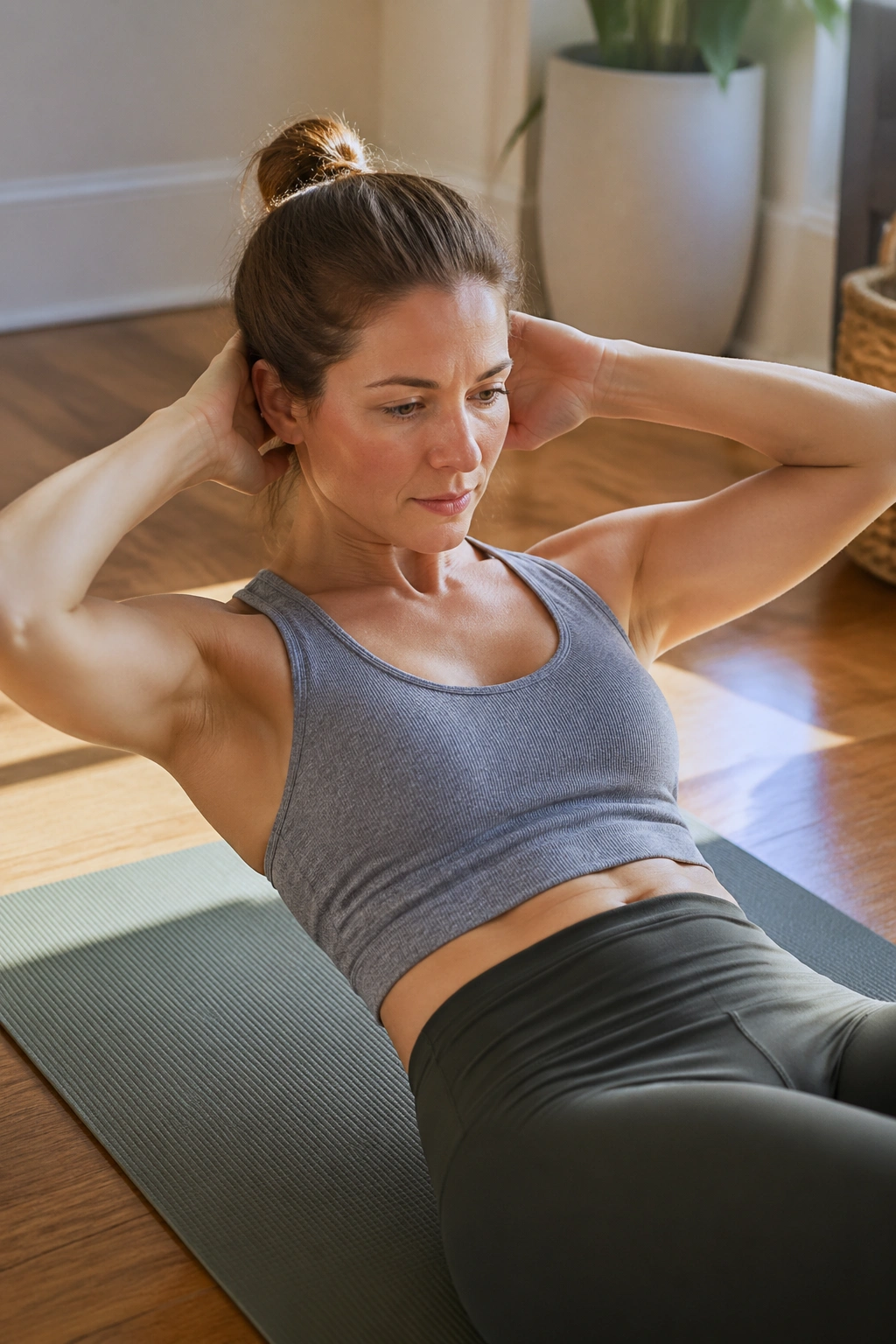
Why do a curl-up when the goal is better posture? Because a chest lift teaches the front of the rib cage to stay contained while the head and shoulders come forward. That skill shows up everywhere — sitting, reaching, breathing, even walking.
The neck tends to take over fast here, so the movement should stay small. Think of lifting the sternum away from the mat by a few inches, not yanking the head toward the knees. If you feel the front of the neck clenching, you have gone too far.
How to Keep Your Neck Quiet
Support the head with your fingertips, not a death grip. Keep the elbows wide and the back of the neck long. Exhale as you lift, and stop the moment the ribs pop up or the chin juts forward.
A clean chest lift feels contained. You should sense the lower abs doing the work and the shoulders staying soft. Tiny is not a flaw here. Tiny is the whole point.
3. Cat Stretch to Wake Up the Mid-Back
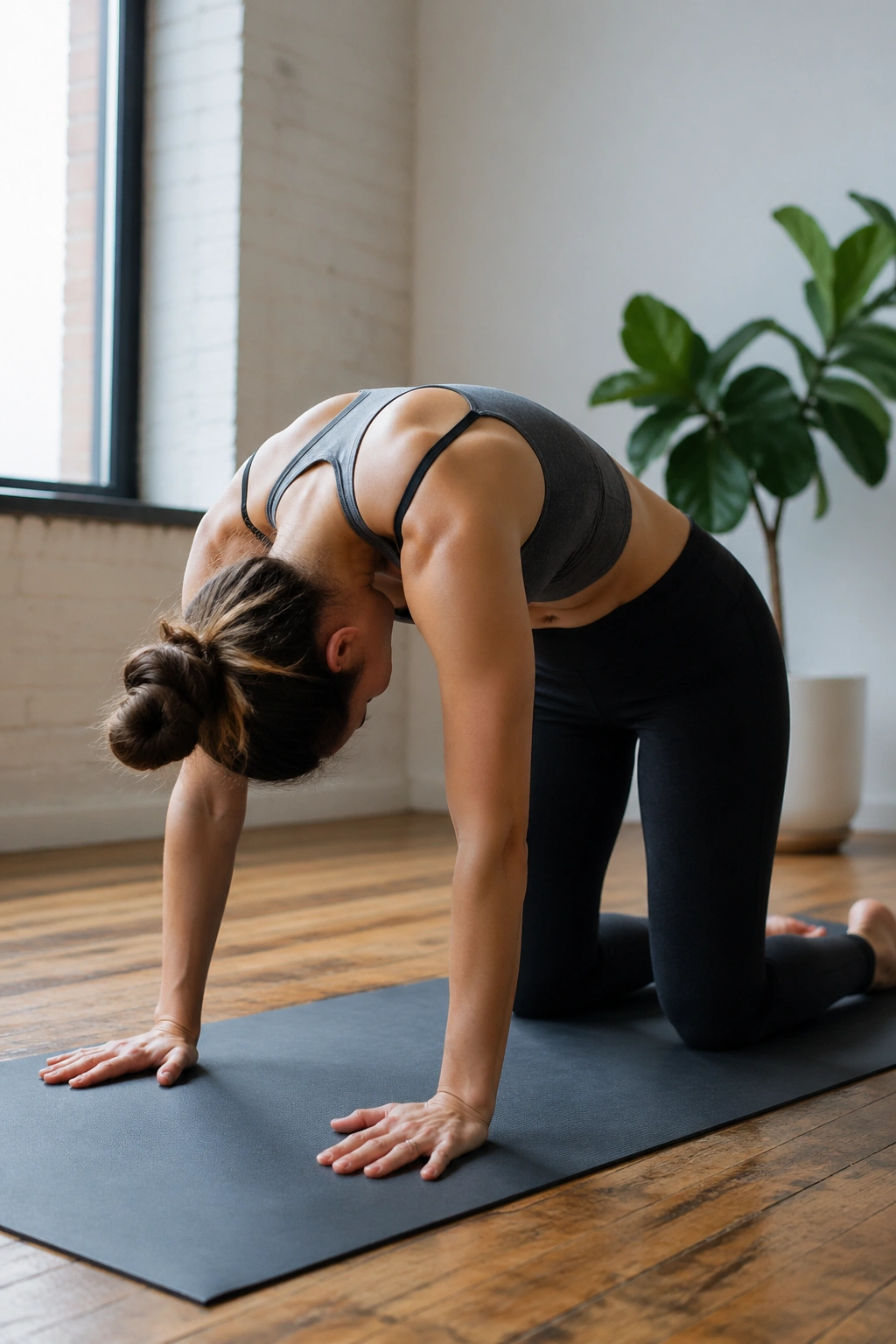
A stiff upper back can make the whole body look older and more tired than it is. Cat stretch gives the spine two honest directions: round and lengthen. That alone is a gift if you spend hours folded over a keyboard, steering wheel, or phone.
Start on hands and knees with the wrists under the shoulders and the knees under the hips. Exhale to round the spine, then inhale to let the chest drift forward and the tailbone tip slightly up. Move slowly enough that you can feel each section of the spine respond.
What to Watch For
- Keep the elbows soft instead of locking them.
- Let the shoulder blades glide, not pinch.
- Move from the spine, not just the head.
- Stop if the wrists or neck become the loudest part.
The best version leaves your back feeling more spacious, not cranked. If your upper body is stuck in one shape all day, this is the reset button I’d use first.
4. Spine Stretch Forward to Lengthen a Tight Back Line
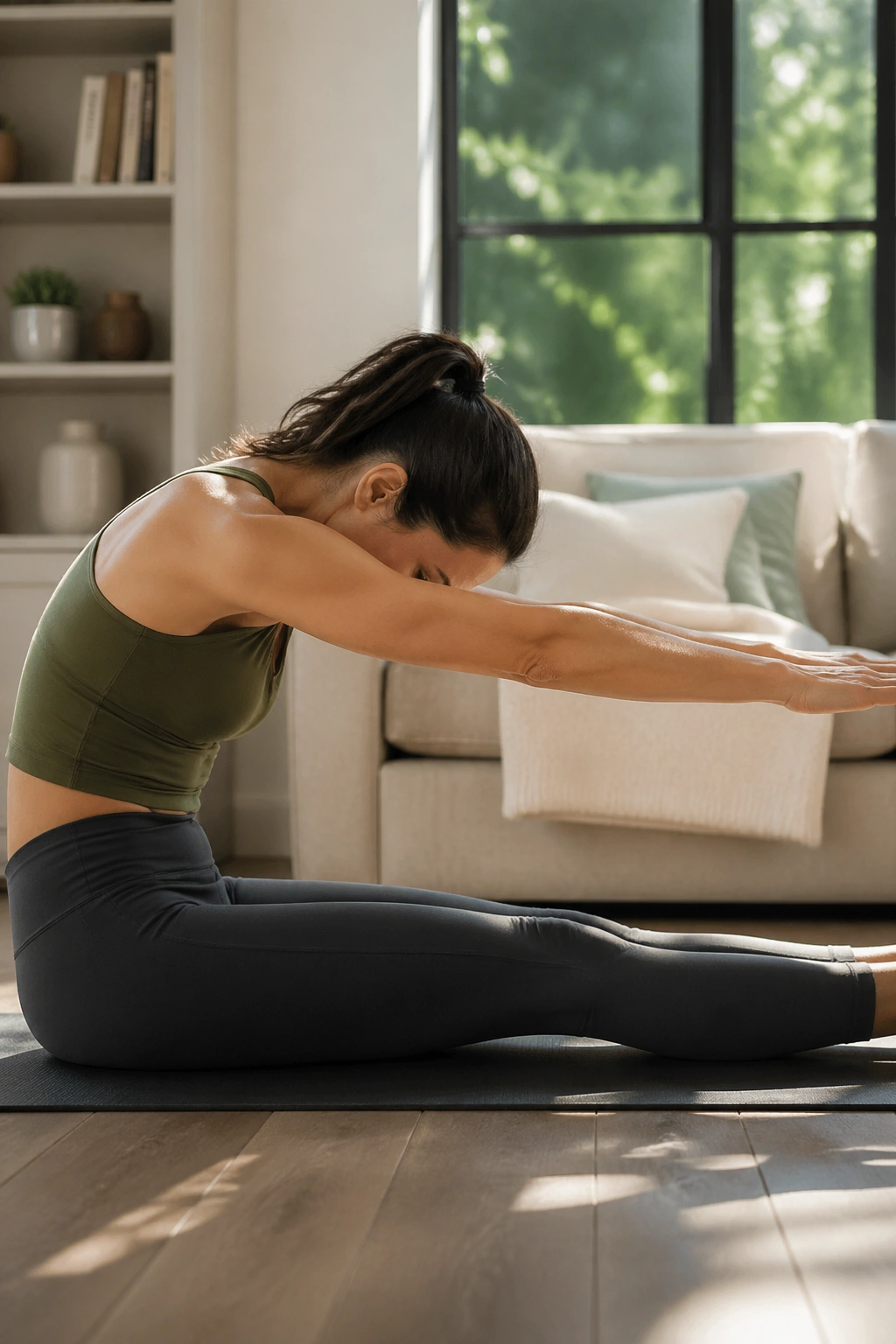
A toe touch and a spine stretch are not the same thing. A toe touch is usually about how low you can go. Spine stretch forward is about how long you can make your back while the pelvis stays grounded and the ribs stay calm.
Sit tall with your legs extended in front of you, feet flexed, and arms reaching forward at shoulder height. Exhale and let the head nod first, then the upper spine, then the rest of the torso. The motion should feel like a controlled fold, not a collapse.
This one is gold for people who sit in a slumped shape and then try to “fix” posture by forcing the chest up. That usually backfires. Better to teach the spine how to lengthen as it flexes. Weirdly enough, that makes standing feel easier later.
If your hamstrings are tight, sit on a folded towel so the pelvis can tip forward a little. That small lift changes everything. It lets the spine move instead of fighting the back of the legs.
5. Shoulder Bridge to Train Level Hips
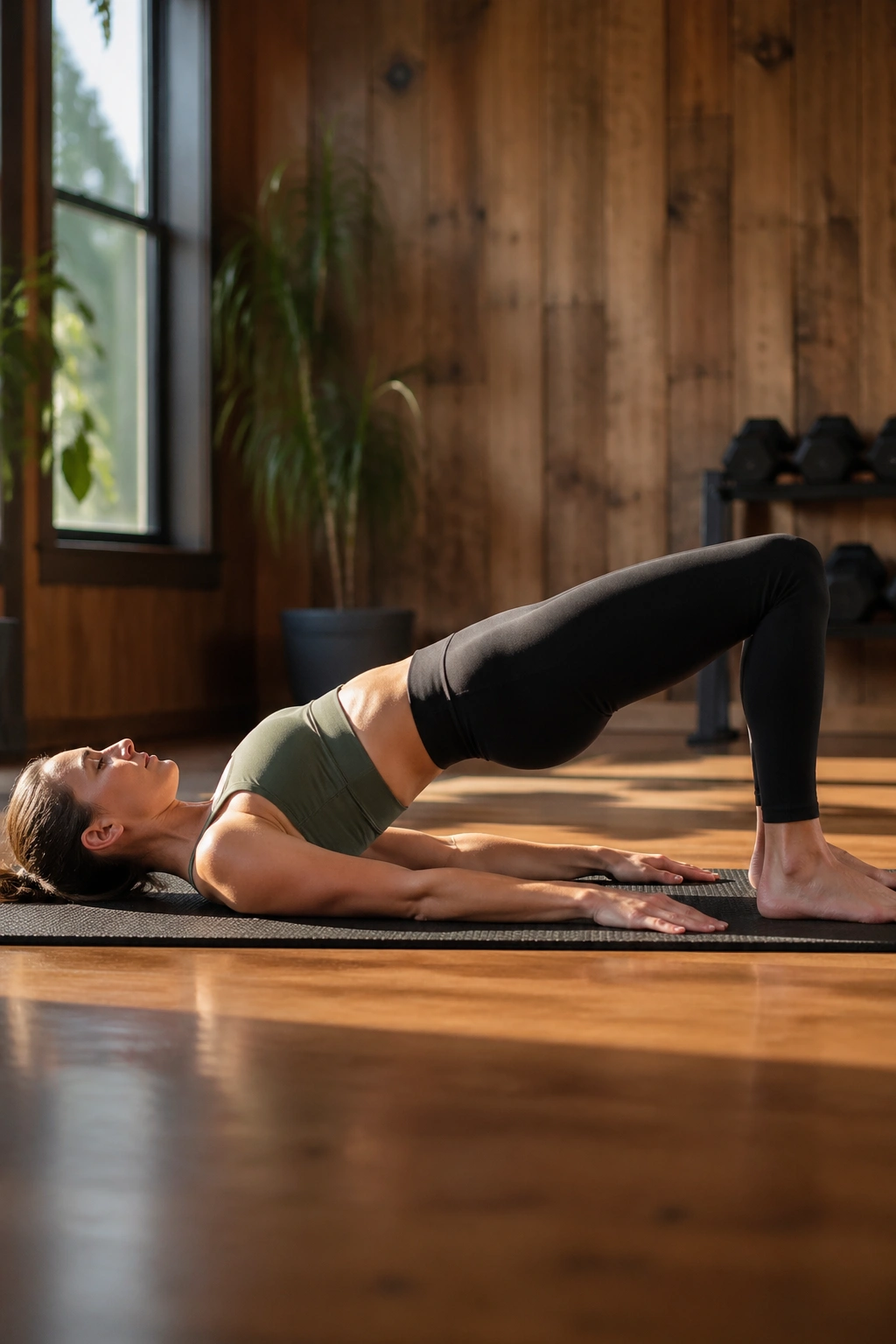
If you only did one bridge variation for posture, this would be the one I’d keep. Shoulder bridge asks the hips to stay even while the spine lifts, which is exactly the sort of control that gets sloppy when you’re tired or rushing.
Lie on your back with your knees bent and feet planted. Lift the pelvis until the thighs, hips, and shoulders make a long line. Hold for a breath or two, then lower without letting the knees drift or the ribs flare.
What matters here is not height. It is shape. If the low back is doing all the work, the bridge turns into a hinge. If the glutes and hamstrings share the job, the pelvis feels steady and the front of the body gets a break.
I like this move for people who stand with one hip shoved out to the side. That habit is sneaky. Shoulder bridge calls it out fast.
6. Bird Dog to Stop the Torso From Twisting
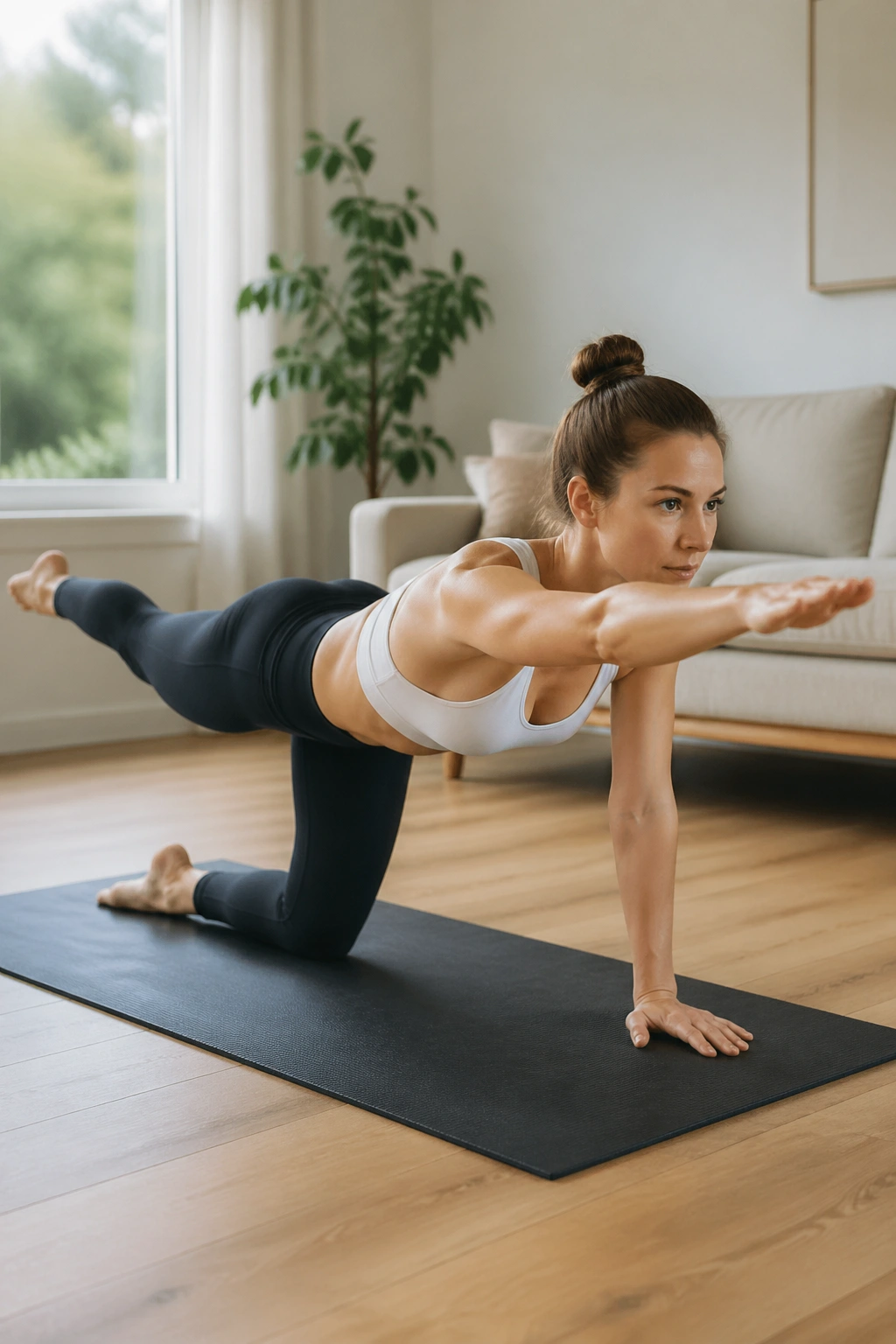
Can a hands-and-knees exercise change posture? Yes, because bird dog teaches the torso not to wobble every time one arm and one leg leave the floor. That is a huge part of looking composed when you move.
Reach your right arm forward and left leg back, but keep the pelvis level. The body should feel long, not saggy. Then switch sides with the same care. If the lower back arches or the hip opens to the side, shorten the reach.
How to Keep the Pelvis Still
- Imagine a glass of water sitting on the low back.
- Reach only as far as the glass stays level.
- Keep the neck in line with the spine.
- Exhale as the limbs extend.
- Pause before the body starts to shake apart.
A slow bird dog is better than a fancy one. If you can hold the shape with almost no visible movement, you are teaching the trunk the kind of quiet strength posture depends on.
7. Swimming Prep to Open a Rounded Upper Back
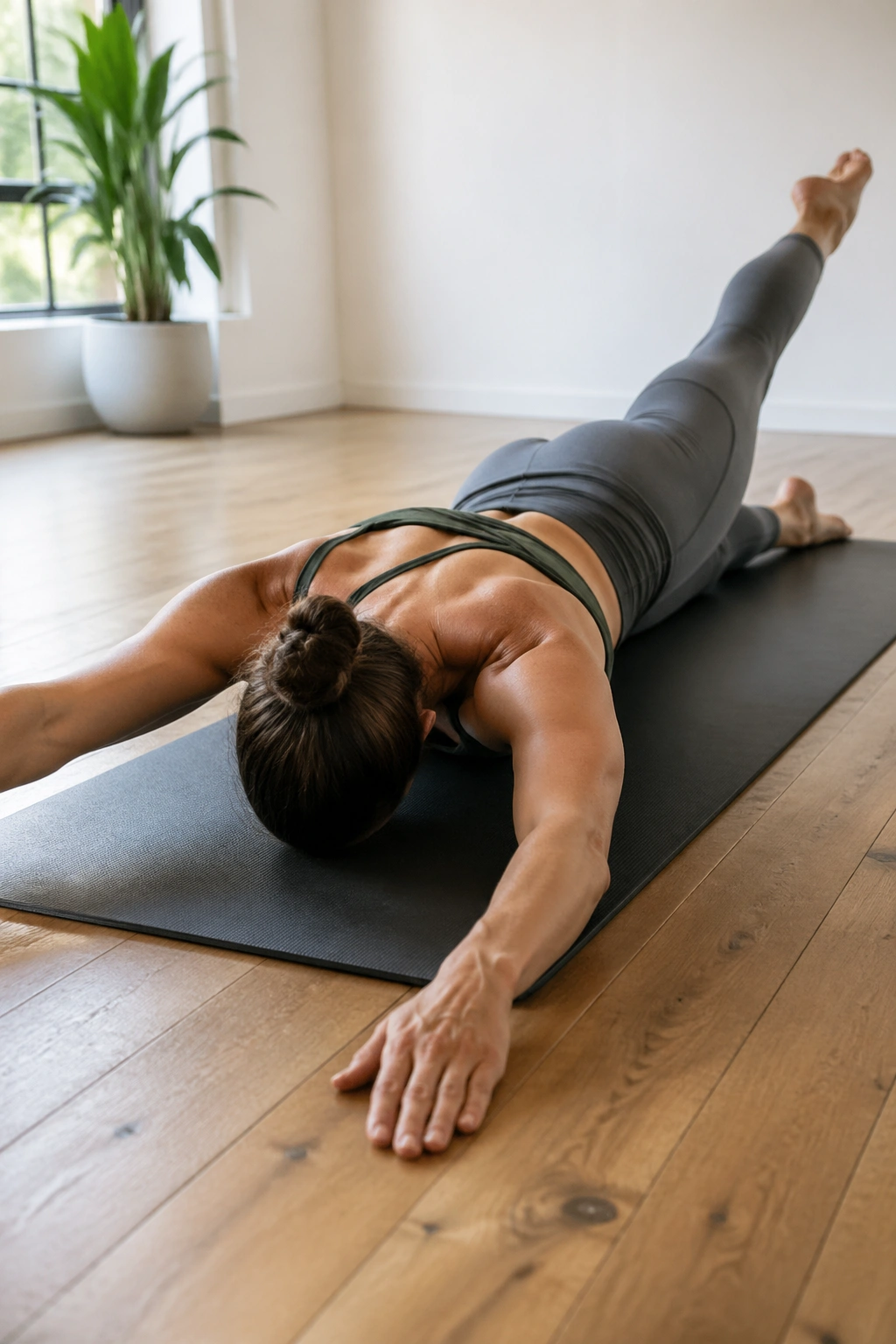
On the floor, swimming prep feels like length, not height. That is why I like it. You lie face down, reach long through the fingertips and toes, and lift just enough to wake up the back of the body without jamming the neck.
The setup is simple: forehead on the mat, arms long, legs long, belly lightly lifted away from the floor. Then float the opposite arm and leg off the mat, or if that is too much, lift both arms and both legs just an inch. The key is the line, not the size of the lift.
A lot of rounded-shoulder posture comes from living in the front of the body. Swimming prep flips that. It asks the upper back to work, the glutes to stay awake, and the shoulder blades to glide down instead of creeping toward the ears.
A little shake in the upper back is normal. A pinchy low back is not. If the neck starts shouting, lower the chest and think longer rather than higher.
8. Wall Roll Down to Rehearse Better Standing Posture
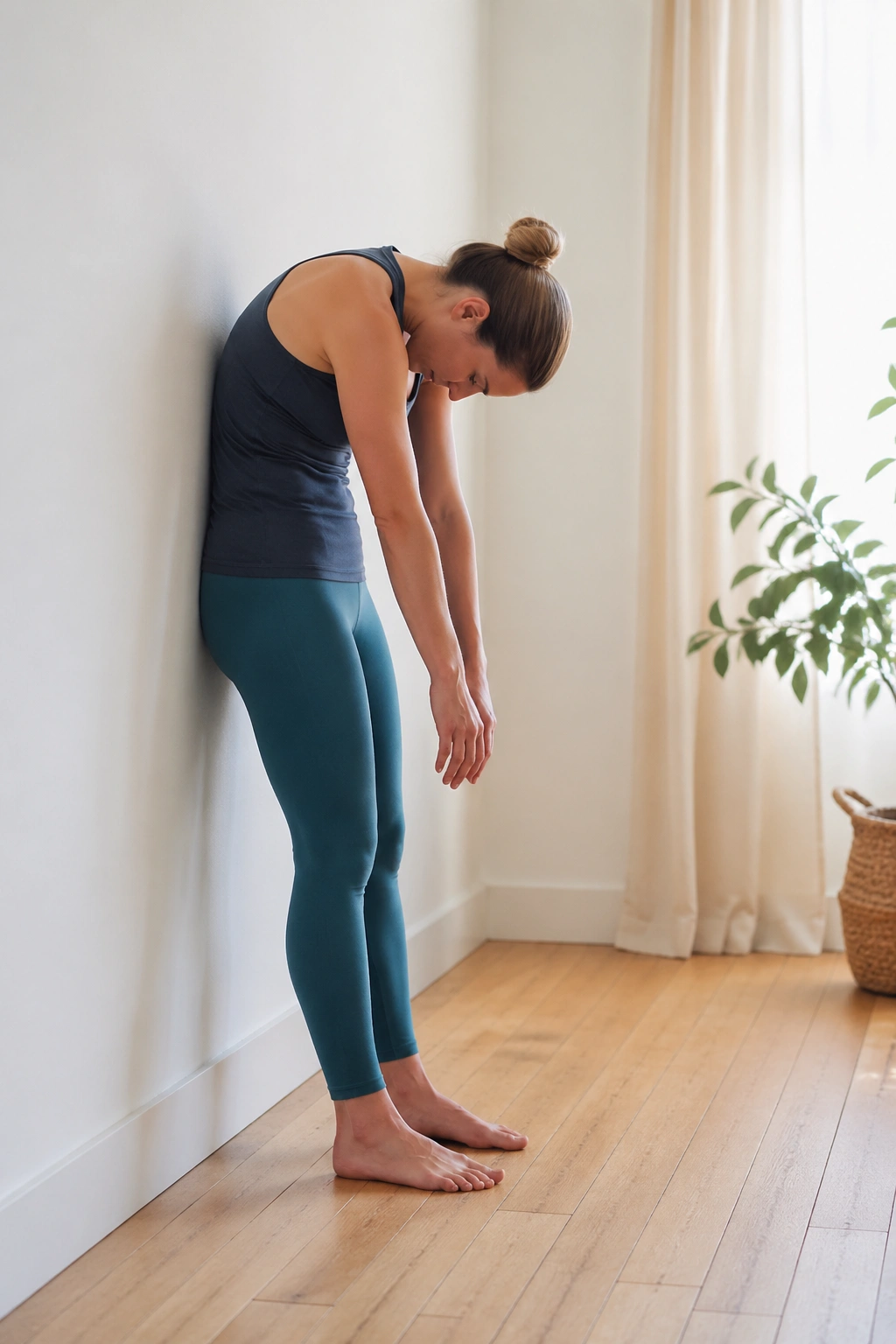
Posture improves faster when you practice standing well, not just lying down. Wall roll down gives you that rehearsal. It teaches the spine to stack and unstack while the feet stay planted and the ribs stop flaring around for attention.
Stand with your back near a wall and your feet a few inches away from it. Nod the chin, let the head and upper spine peel forward, and keep rolling until the hands reach toward the floor. Then reverse the path and stack the spine back up against the invisible line of the wall.
What to Feel
- The weight should stay even through both feet.
- The pelvis should not shove forward.
- The shoulders should stay loose.
- The neck should feel long, not crunched.
This is one of the best exercises for people who stand with their ribs thrust forward and their chin leading the parade. A few slow roll downs can teach a cleaner upright shape without the fake “military” posture that everyone hates.
9. Saw to Untwist the Rib Cage
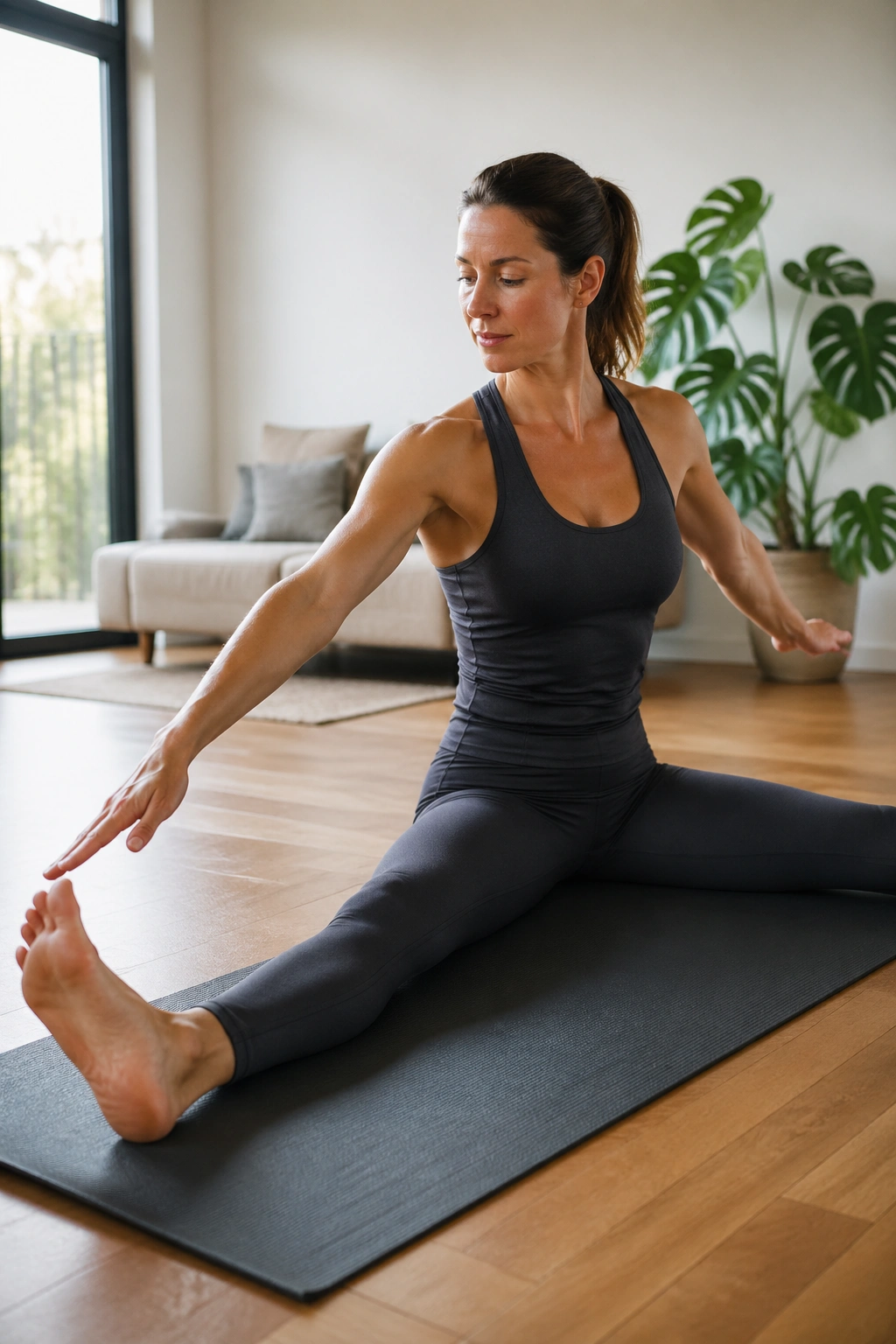
If one shoulder sits higher than the other, the saw usually feels like a relief. It combines rotation, hamstring stretch, and side reach in a way that makes the rib cage feel more available.
Sit tall with the legs open in a V, arms stretched wide. Rotate the torso to one side, then reach the opposite hand toward the pinky toe of the front leg. The back hand reaches behind you. The movement is not a flop. It is a deliberate twist with length.
Here is the part people miss: the pelvis stays heavy. Both sit bones want to stay down. If one hip floats off the mat, the twist is coming from the wrong place and the stretch gets sloppy.
A clean saw should leave your spine feeling longer and your shoulders less jammed. It is especially useful if you tend to rotate your whole torso as one stiff block. That habit is common. So is the relief that comes when you finally break it up.
10. Mermaid to Lengthen the Side Body
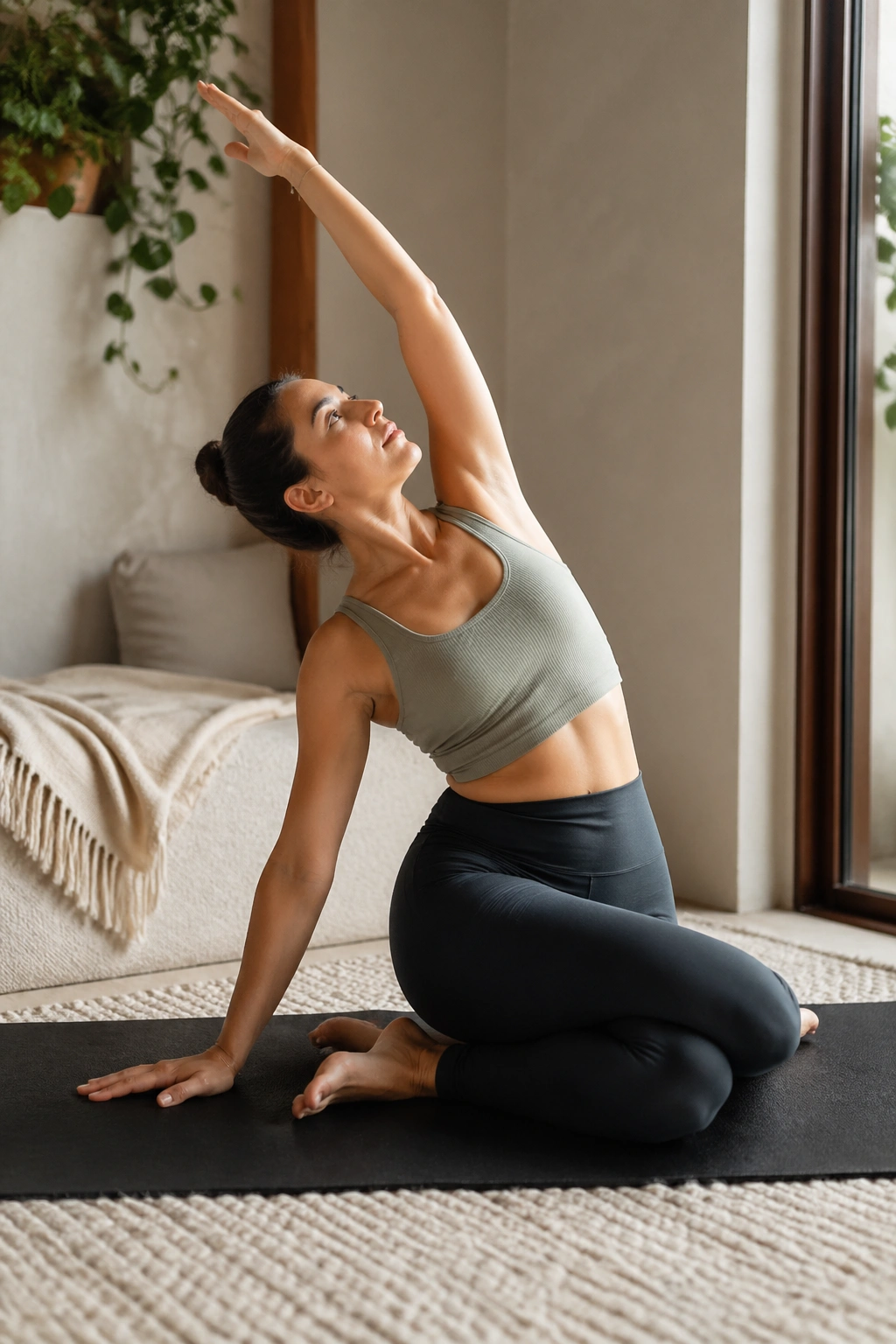
Mermaid is one of the prettiest posture exercises, but it earns its place for more than looks. The side body matters. If you live in a desk chair, one side of your trunk often gets compressed while the other side gets lazy. Mermaid helps both sides wake up.
Sit sideways with the legs folded to one side, one hand grounded, and the other arm reaching overhead. Lift through the waist and arc gently away from the grounded hand. Then come back to center and repeat on the other side.
What you want is a long line from hip to fingertips. Don’t dump into the low back. Don’t let the shoulder collapse toward the ear. The stretch should live along the ribs and waist, where people rarely spend enough time.
I like mermaid after harder work because it gives the spine a chance to breathe. It is calm, but not passive. That little distinction matters.
11. Single Leg Stretch to Hold the Pelvis Still
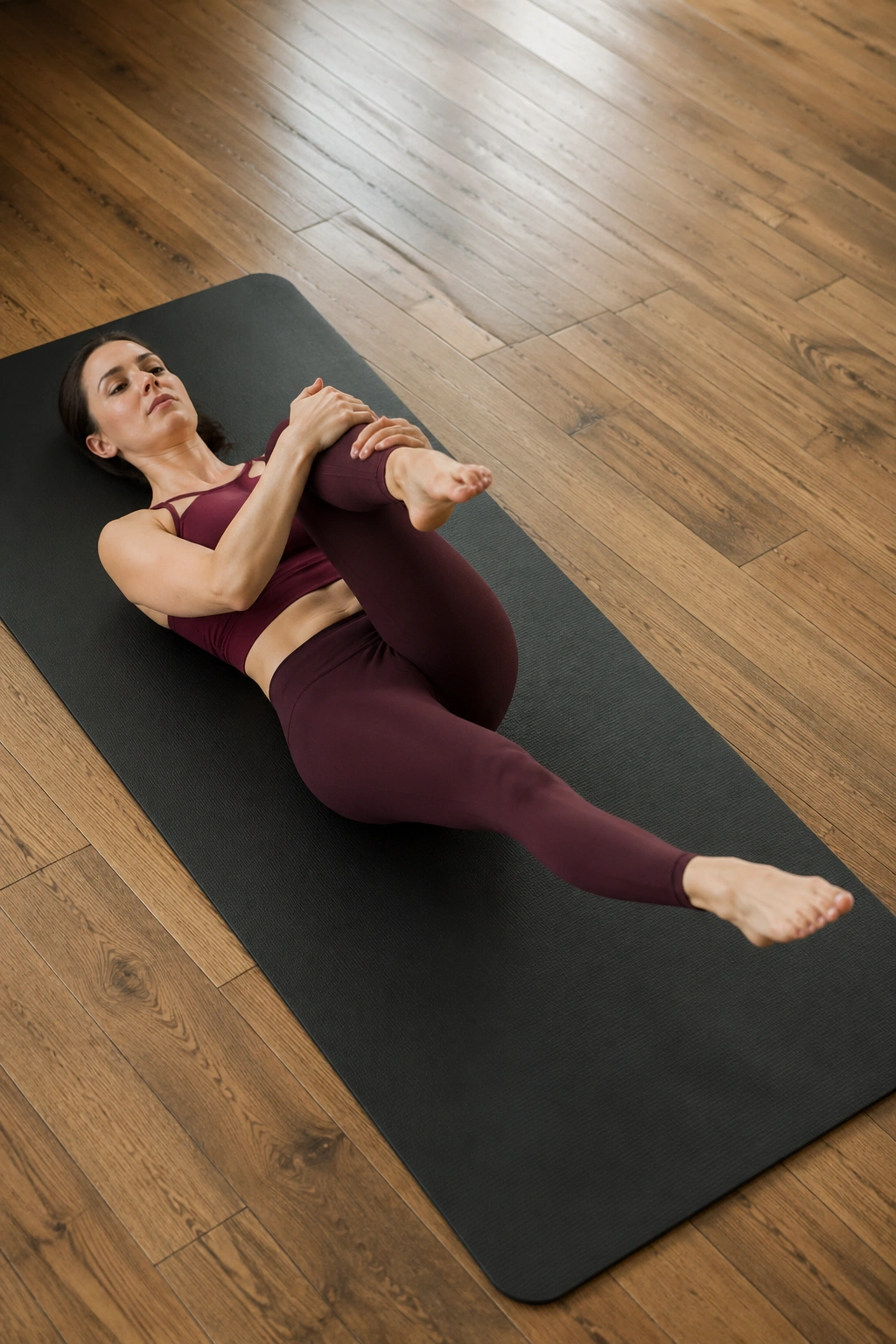
Why does a basic core exercise show up in a posture article? Because single leg stretch teaches the pelvis to stay calm while the legs move around. That skill matters when you walk, climb stairs, or sit down without flopping backward.
Lie on your back, bring one knee in, and extend the other leg long. Switch sides with control. The chest stays broad, the ribs stay tucked, and the neck stays easy. If your hips start rocking side to side, slow down before the movement gets messy.
How to Get the Most From It
- Keep the lower back heavy on the mat.
- Pull the knee in only as far as the shape stays steady.
- Extend the other leg low enough to challenge you, not so low that the back arches.
- Exhale on the switch.
This is not a speed drill. Quick reps turn it into chaos. Clean reps teach the body to stay organized while the legs do something different.
12. Double Leg Stretch to Resist Rib Flare
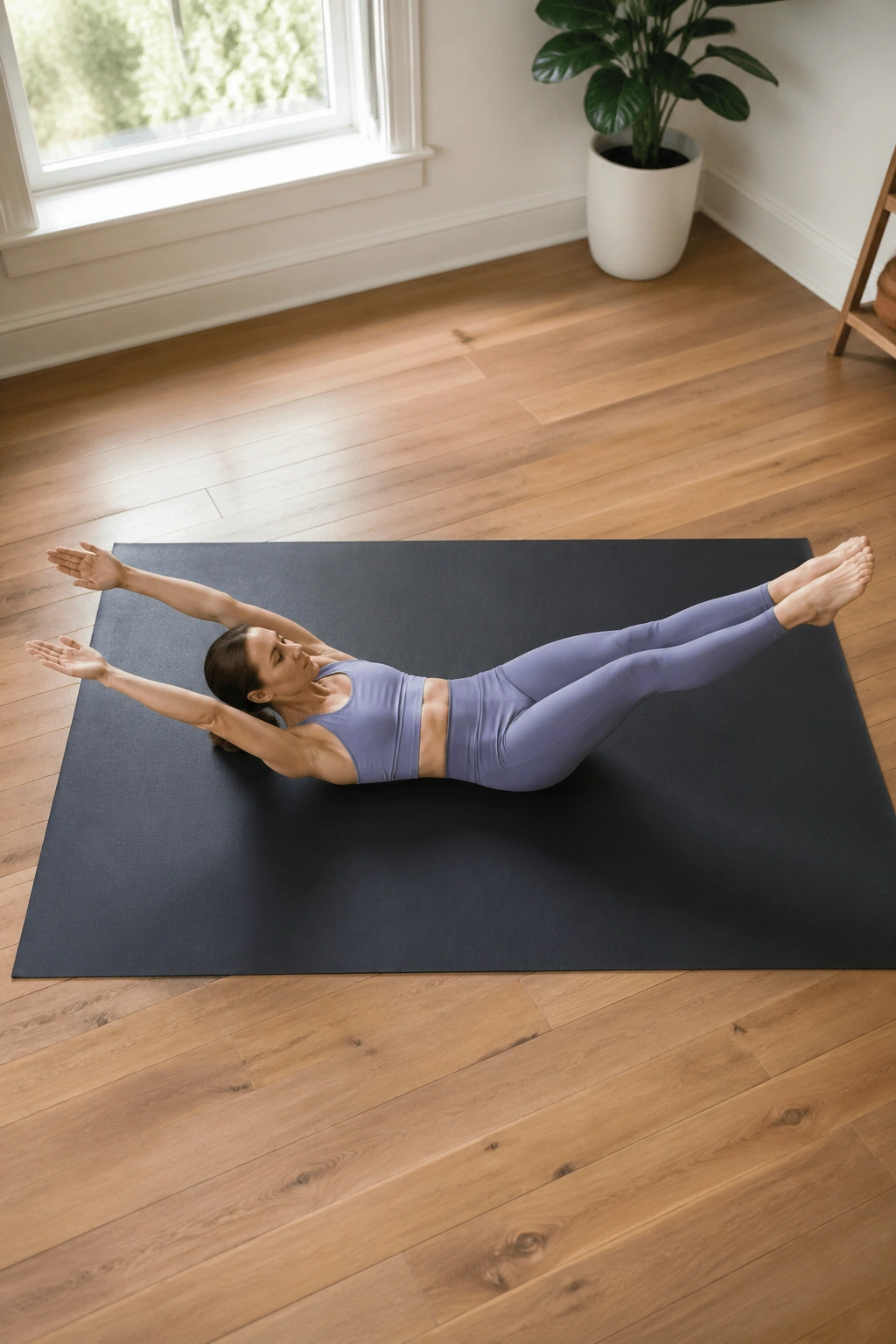
Double leg stretch is where the front of the body tells the truth. If you open the arms and legs too far, the ribs pop and the low back arches. If you keep the shape, the core works hard in a very useful way.
Start curled up, knees in, hands on shins. On the exhale, reach the arms overhead and the legs away. Circle back to the starting shape with control. The limbs should extend only as far as the spine can stay steady. That is the whole game.
A lot of posture issues come from losing control the moment the arms move away from the body. Double leg stretch trains the opposite. The trunk stays organized while the limbs travel.
A few clean reps beat a dozen sloppy ones. If you can keep your neck relaxed and your ribs knitted, this exercise starts paying off fast.
13. Side-Lying Clamshell to Support the Hips
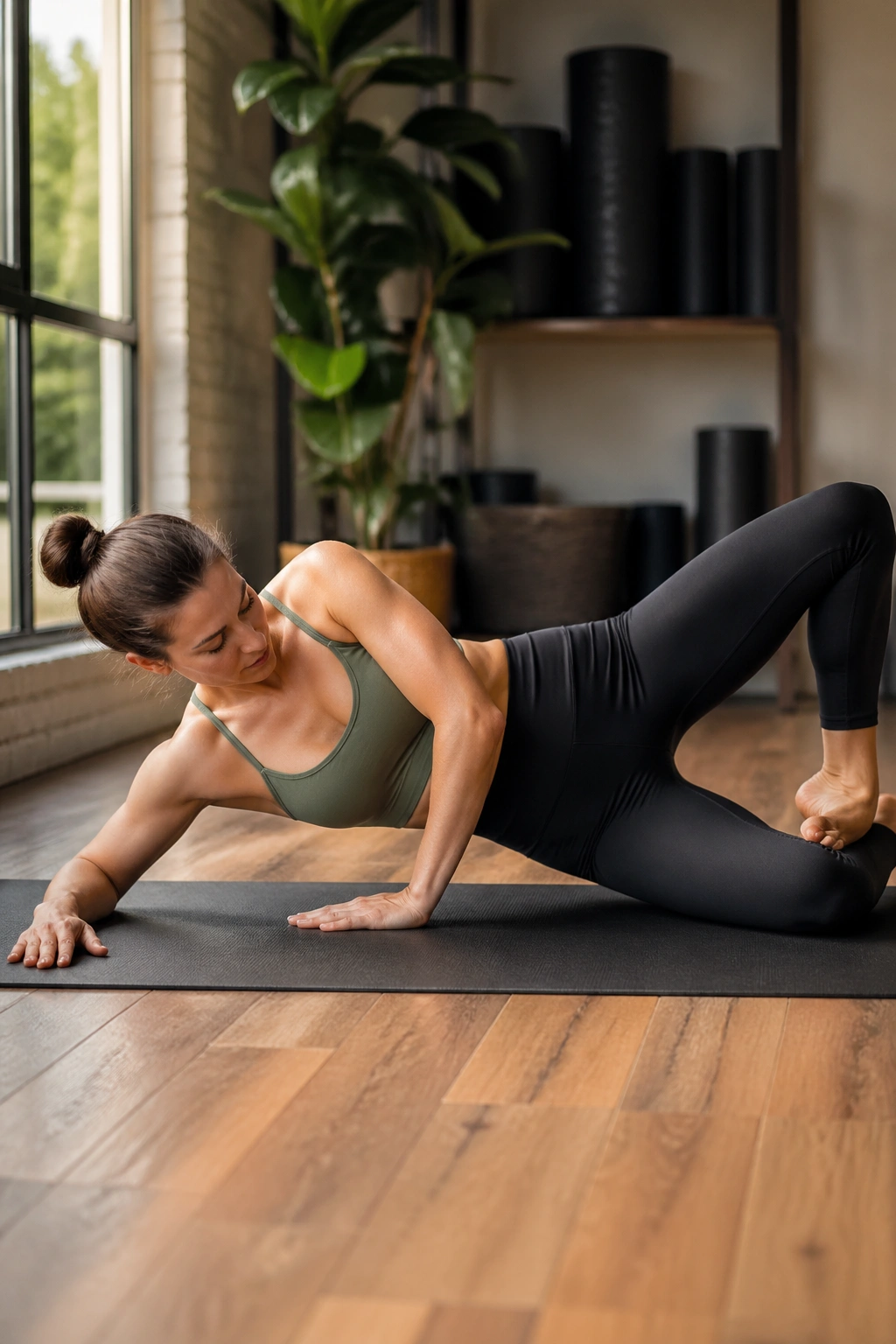
Clamshells look boring. Good. Boring is often where posture gets fixed. The side-lying setup targets the glute on the side of the hip, which helps keep the pelvis level when you stand on one leg or shift weight from side to side.
Lie on your side with your knees bent and heels lined up with the hips. Keep the pelvis stacked and open the top knee without rolling backward. The motion is small. If it turns into a giant hip swing, the wrong muscles have taken over.
Unlike a squat, this move isolates the stabilizers that keep the knees from caving and the hips from drooping. That is why it shows up so often in good posture work. The walking pattern benefits are real.
I usually like 2 sets of 10 to 12 controlled reps on each side. Slow enough that you can feel the side of the butt wake up. Fast enough that it does not become a nap.
14. Side Kick Series for Pelvic Stability
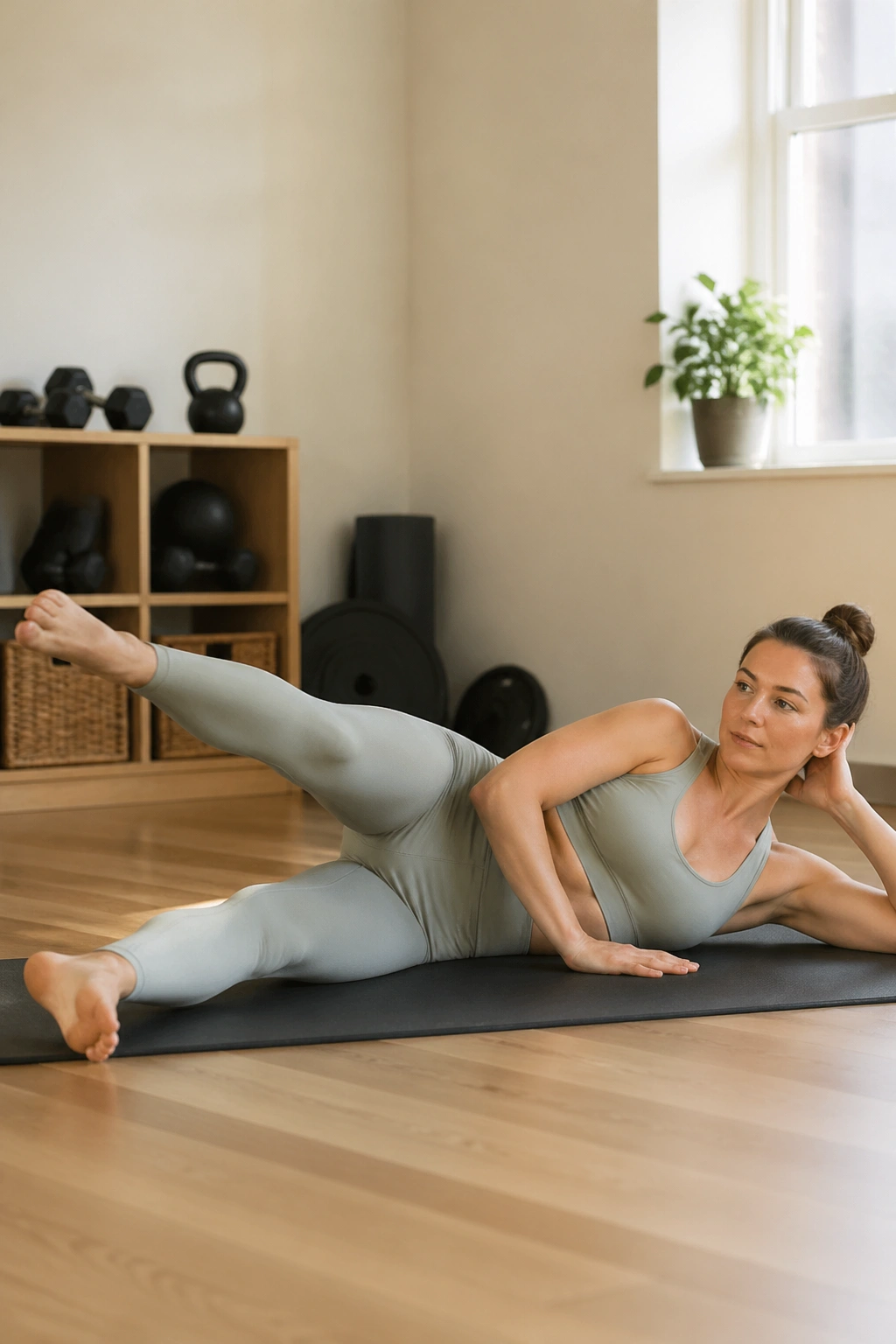
Side kick series is where posture starts to feel a little more like movement and a little less like homework. The top leg swings forward and back, or draws small circles, while the torso stays long and the waist stays lifted off the mat.
That side-body lift is the point. If the pelvis rocks every time the leg moves, the hip muscles are not doing enough. Small, clean kicks teach the standing leg side of the body to stabilize while the free leg explores.
Keep the range modest. Huge kicks look dramatic and often cheat. Tiny kicks are harder, more honest, and much better for the hips. You should feel the side of the waist working to stop you from collapsing.
This series is especially useful for people whose pelvis drops when they walk, or whose lower back tightens after standing for a long time. The body learns balance through control, not through bigger swings.
15. Plank Scapular Push-Ups for Shoulder Control
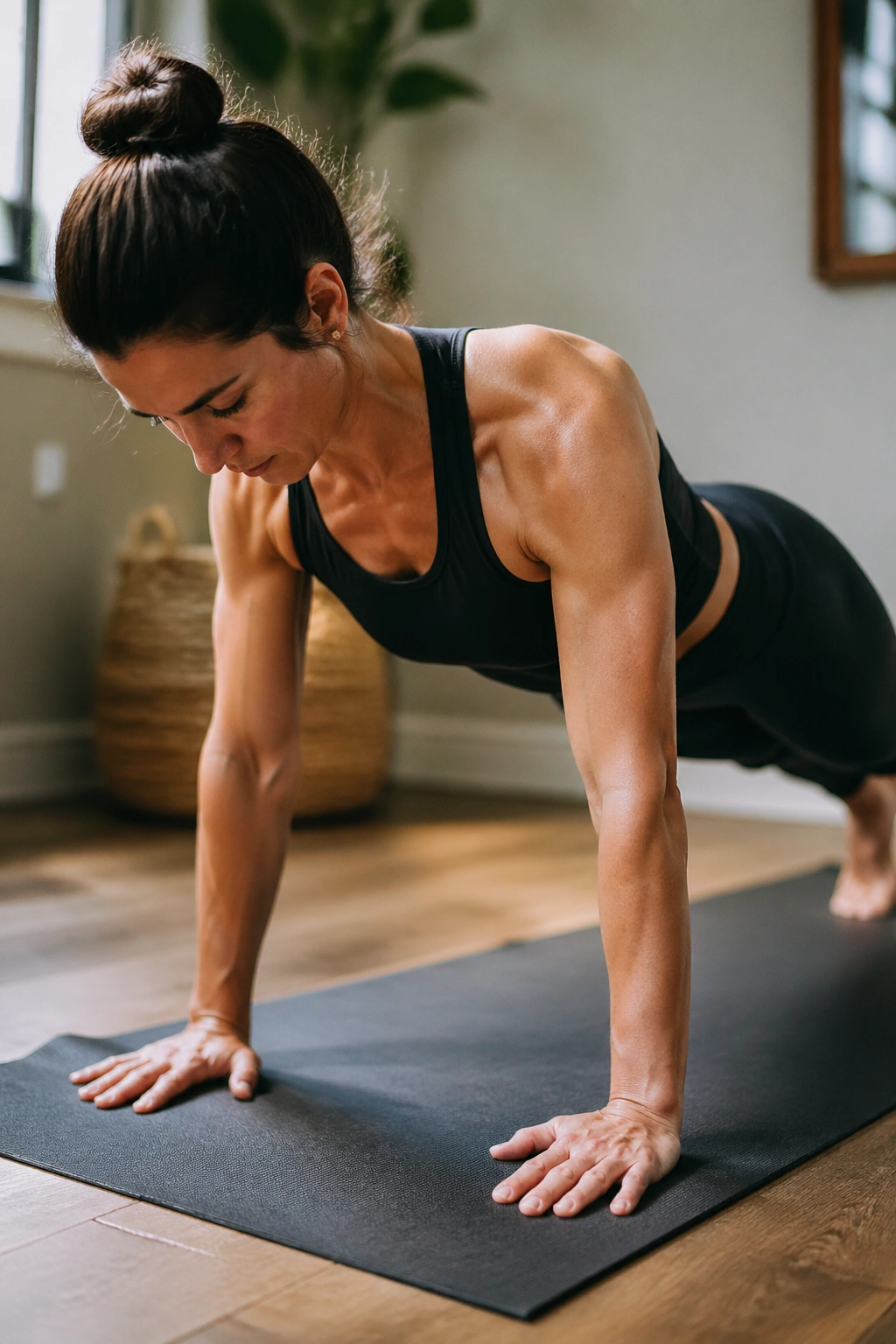
Why put a plank into a posture list? Because the shoulder blades are part of posture, not decorations stuck onto your back. If they live jammed up around your ears, the whole upper body starts to look tired.
Set up in plank with the hands under the shoulders and the body in one line. Without bending the elbows, let the chest sink a little between the shoulder blades, then push the floor away so the upper back broadens. That movement trains the serratus and keeps the shoulder girdle from collapsing.
What to Watch For
- Wrists should stay under the shoulders.
- The neck should stay long.
- The low back should not sag.
- The ribs should not dump toward the mat.
A few slow reps are enough. If you rush, it turns into noise. If you stay precise, your upper back learns how to support you without stiffness.
16. Leg Pull Front for Whole-Body Alignment
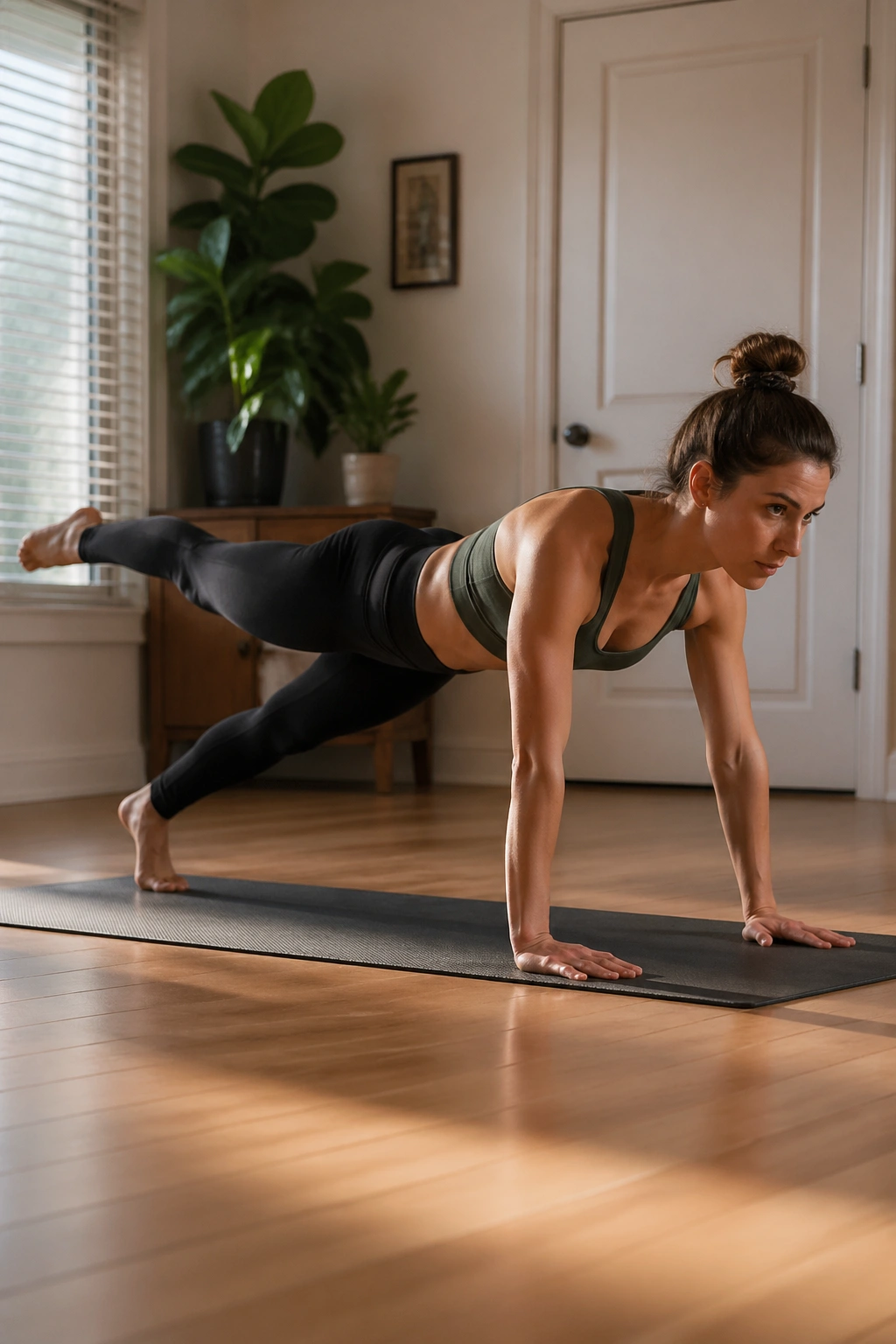
Leg pull front is the kind of exercise that reveals your habits fast. If your shoulders drift, your hips twist, or your low back sags, it shows up right away. That is exactly why it belongs in a posture-focused Pilates routine.
From a high plank, lift one leg a few inches and lower it with control. The trunk stays square. The shoulders stay even. The standing leg and both hands do the job without the body shifting around like loose furniture.
If your wrists are sore or your core still feels shaky in basic plank, back up and work on holds first. No shame there. A ten-second clean hold is more useful than a sixty-second wobble.
I like this exercise for people who want posture work that feels athletic without becoming sloppy. It teaches the whole line of the body to organize under load, which is where real-life posture lives.
17. Swan Prep to Strengthen the Back of the Body
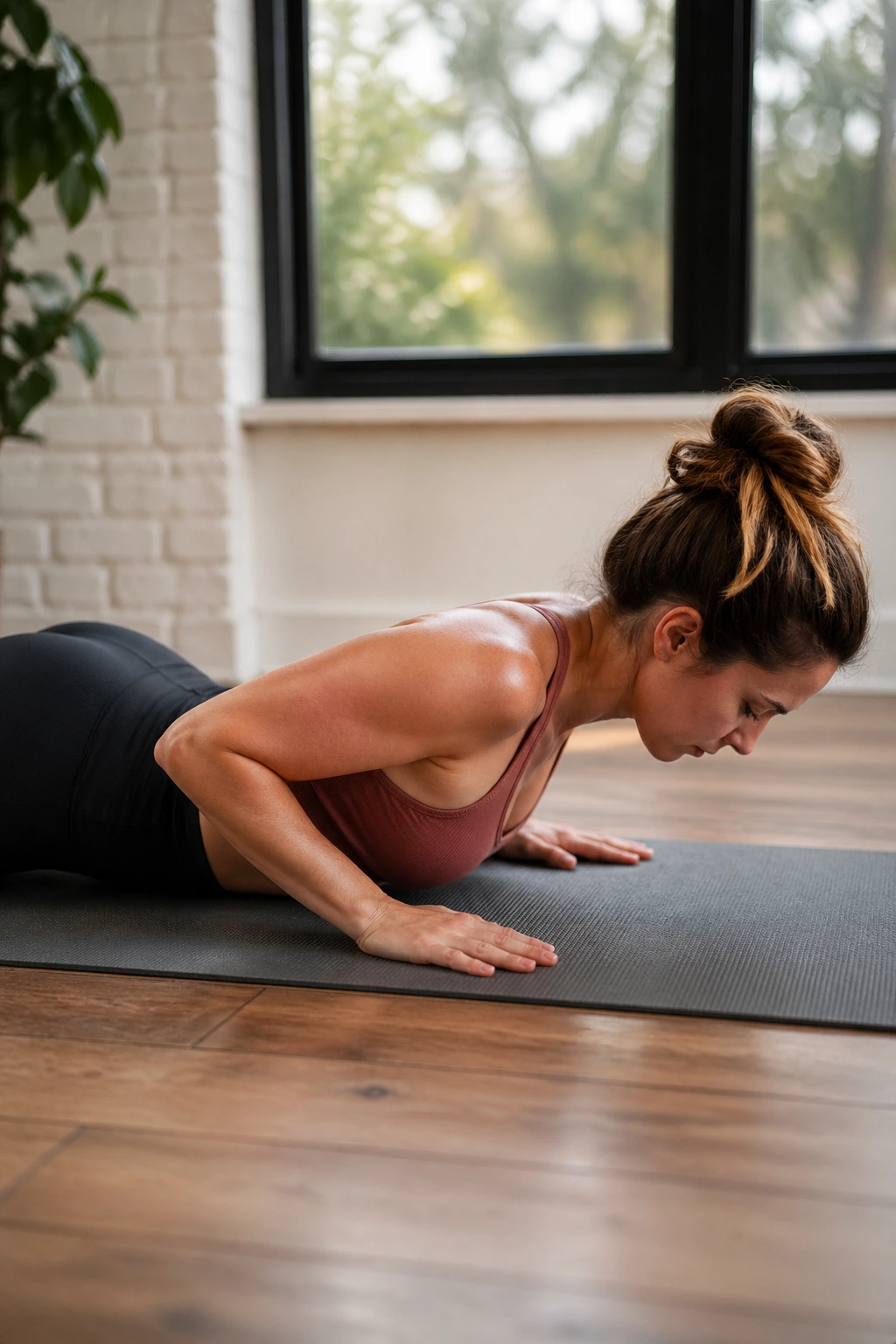
If your chest collapses over a keyboard all day, swan prep is the antidote your back has been asking for. It wakes up the spinal extensors and opens the front line just enough to matter.
Lie face down with the hands under the shoulders or slightly wider. Keep the pubic bone grounded, draw the shoulder blades down the back, and lift the sternum forward and up by a small amount. The lift should feel long, not cranked.
Key Details
- Keep the forehead or nose close to the mat at first.
- Use the upper back, not a throw from the low spine.
- Let the neck follow the chest instead of leading.
- Stop before the shoulders squeeze together hard.
The first time people do this cleanly, they often notice how stiff their front body has become. That is useful information. Not flattering, maybe, but useful.
18. Breaststroke Prep to Extend the Spine Without Cranking the Neck
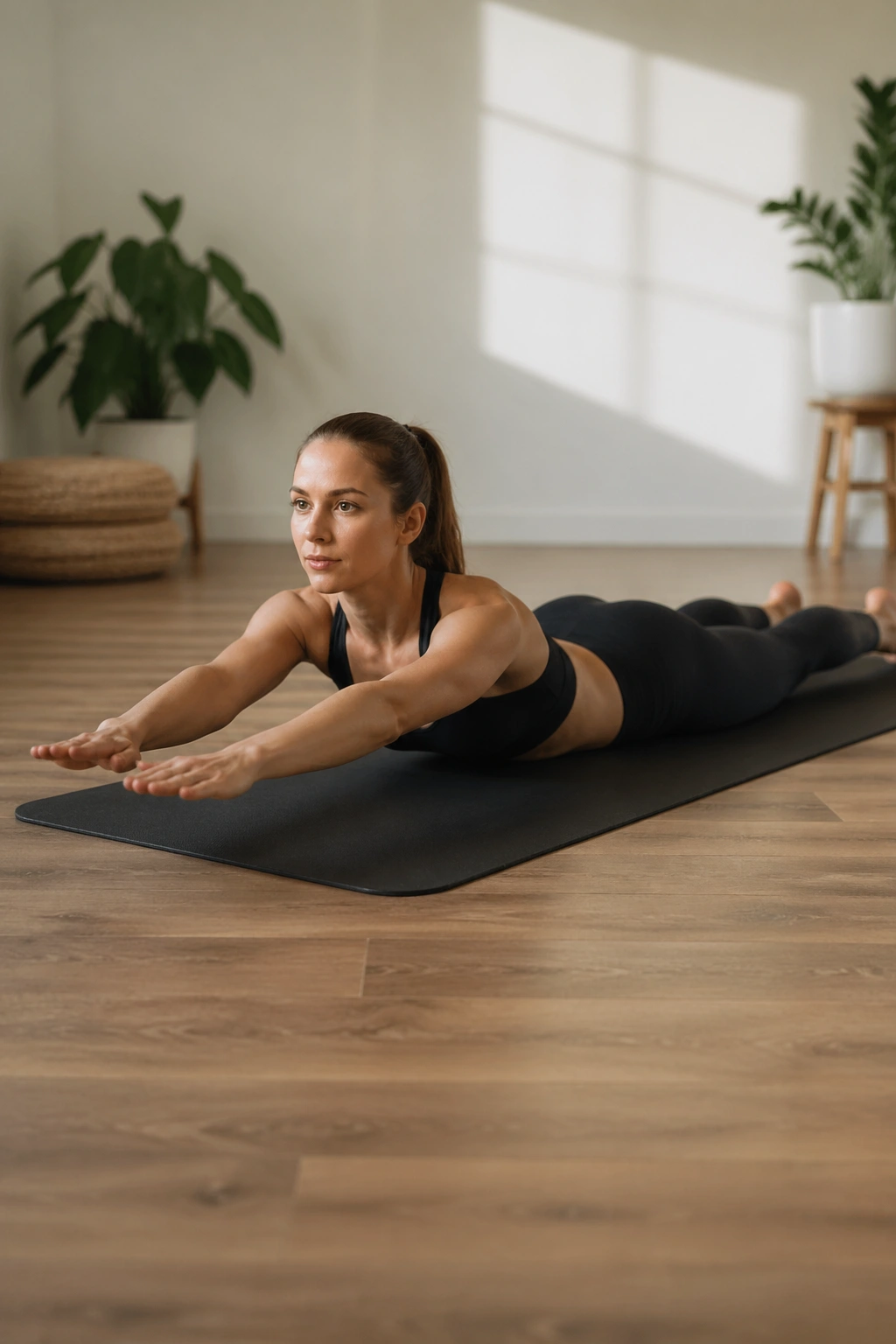
Breaststroke prep feels like length from fingertips through toes. That sensation matters. Good posture is rarely about standing taller in one spot; it is about distributing effort across the whole back line so nothing gets jammed.
Start face down, reach the arms forward, and lift the upper chest just enough to float the hands and sternum. Then lengthen back down with control. Some versions add the arms sweeping back by the sides, which can be lovely if the shoulders are ready for it.
Keep the glutes lightly active and the pubic bone heavy. If the low back compresses, the lift is too big. If the neck feels pinched, the chest is rising without enough support from the upper back.
This is one of my favorite posture builders for people who want to feel open across the chest but not sloppy through the waist. The shape should feel long and composed. Not dramatic. Long.
19. Shoulder Bridge March to Prevent Hip Drop
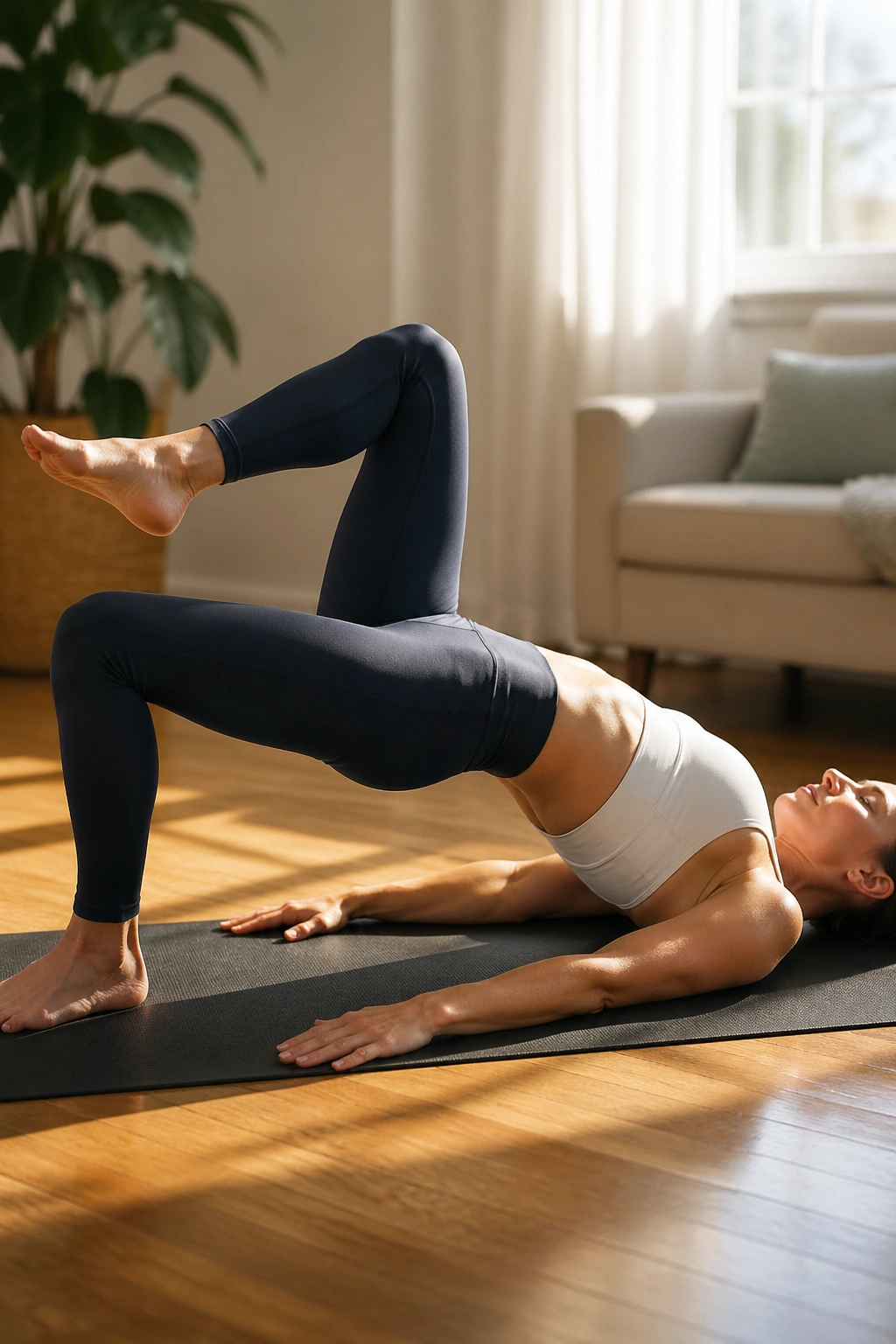
Shoulder bridge march is a smarter version of the regular bridge. One leg leaves the floor, and now the pelvis has to prove it can stay level. That is exactly what makes the exercise so good for posture.
Lift into bridge, then bring one knee toward the chest a few inches without letting the hips tip. Lower the foot and switch sides. The range is small on purpose. A giant knee lift usually ruins the shape.
Why the March Matters
The march exposes side-to-side weakness. If one hip drops, twists, or hikes, you know the stabilizers are not doing enough. That information helps more than a hundred vague cues about “standing straighter.”
Use this one when you notice your body leaning on one side while you stand. It is also excellent after long stretches of sitting, because the hips need a reminder that each leg can work without stealing from the other.
20. The Hundred to Hold Your Shape Under Fatigue
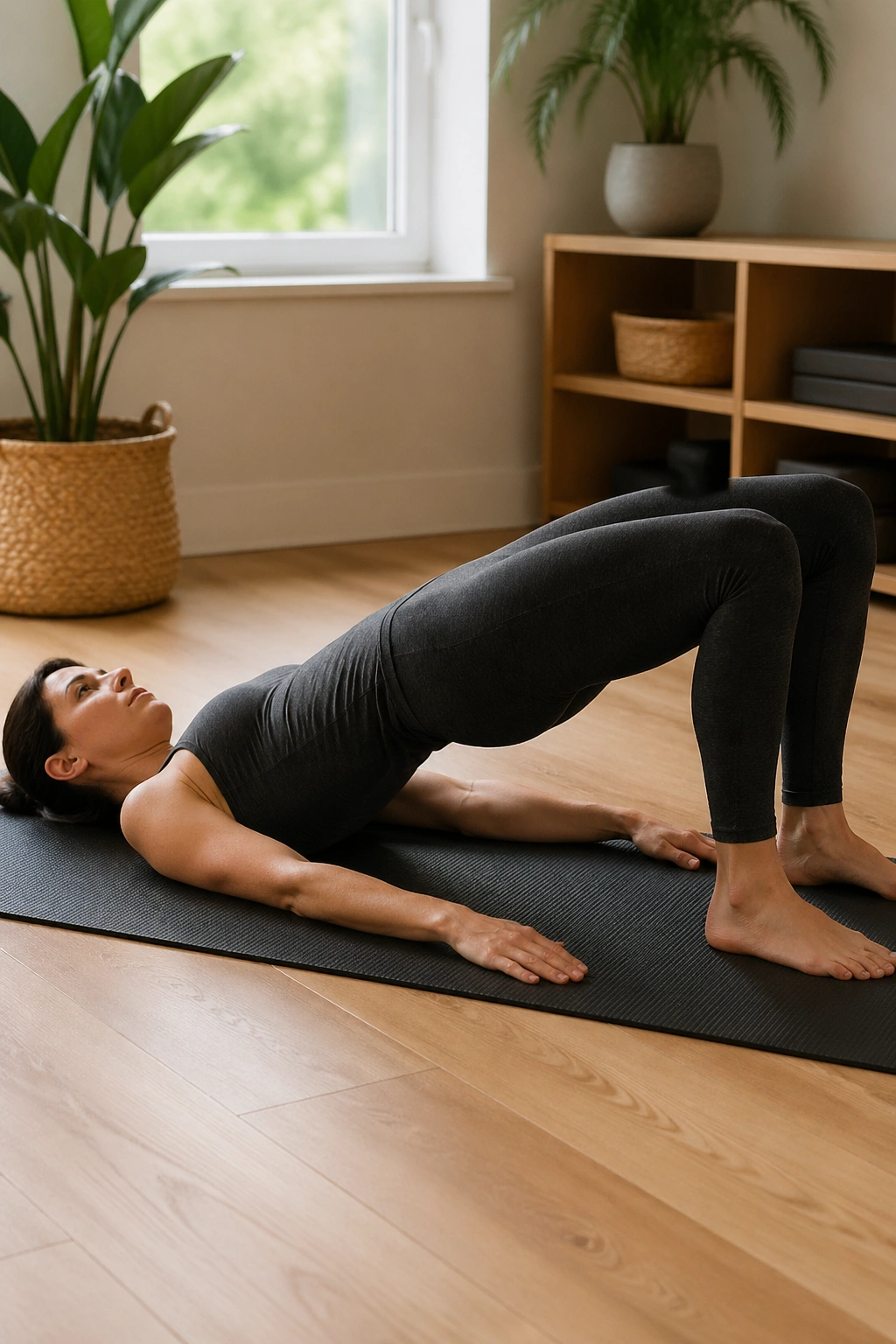
The Hundred is less about burning abs and more about holding your shape when fatigue shows up. That is a better reason to do it, honestly. When the breath gets choppy and the neck starts to complain, you find out whether your posture work has stuck.
Lie on your back, lift the legs to tabletop or keep the feet down if needed, curl the head and shoulders up, and pump the arms beside the body. Ten breaths. Fifty arm pumps. One hundred beats. The rhythm is simple, but the control is not.
If your neck tires fast, keep the head down and the feet planted. If your ribs flare, lower the legs or bend the knees. The point is not to prove toughness. The point is to keep the torso organized while everything else gets a little uncomfortable.
I like finishing with this because it exposes the difference between effort and collapse. Strong posture is not rigid. It is managed, even under strain. That is a useful skill to carry into the rest of the day, especially the messy parts — the bag lifting, the long email session, the walk back to the car when your shoulders have started climbing again.
