



The reformer can be brutally honest. If your hips are tight, your shoulders creep up by lunch, or your core has gone a little sleepy, the carriage shows it in one rep.
That is why reformer Pilates routines for women over 40 work so well when they are built around control instead of proving anything. More spring is not a cheat. On a lot of machines, a little extra resistance gives the carriage something real to push against, which can make the work cleaner and kinder on joints.
Over 40 usually brings a few familiar nuisances: stiff mornings, a neck that gets cranky on long planks, glutes that have forgotten how to show up, and balance that is not quite as automatic as it used to be. None of that means you need a softer workout. It means you need a smarter one.
The routines below lean into that. Some are short and gentle, some are stronger, and a few will make you sweat in the polite Pilates way — the kind that leaves your shirt damp, not your knees rattled. Start where your body feels most obvious, because that usually tells the truth faster than motivation does.
1. Reformer Pilates Routine for Women Over 40: The Footwork Reset
Start here if your whole body feels a little stiff. Footwork on the reformer looks simple, but it does more than wake up the legs. It teaches your pelvis to stay steady while the carriage moves, which is a fancy way of saying your body learns not to wobble every time a foot presses away.
I like this as the first stop for women over 40 because it checks in with the basics fast. If your heels cramp, your arches collapse, or your knees cave inward, you’ll see it right away. That is useful information, not a failure.
Why It Belongs First
Use a medium to heavier spring here, enough that the carriage returns with control instead of snapping back. On many reformers, that feels more supportive than a light spring for footwork.
- Parallel toes: 8 to 10 presses, feet hip-width on the footbar
- Heels on bar: 8 to 10 presses, toes lifted
- Pilates V: 8 slow presses, knees tracking over the middle toes
- Calf raises: 8 to 12 reps, tiny and controlled
The goal is a quiet carriage. No banging. No rushing.
Tip: If your low back wants to arch, shorten the range before you change the spring. Small adjustments usually fix more than force does.
2. Bridge Work That Wakes Up the Glutes
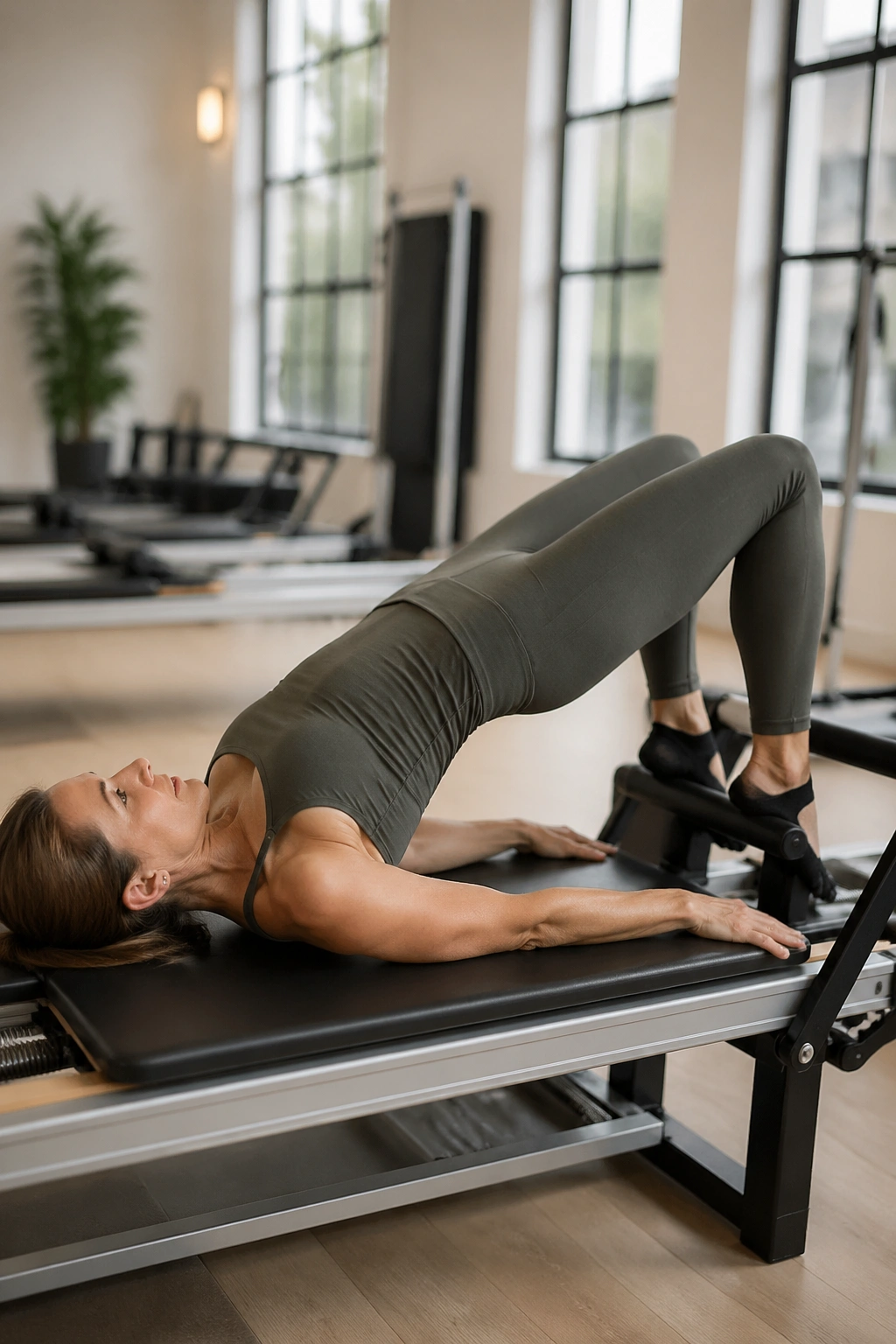
If your hamstrings take over bridge work, you are not alone. Plenty of people think they are building glutes when the back of the thighs is doing all the talking. On the reformer, you can feel the difference more clearly because the carriage gives you feedback every inch of the way.
This routine is about articulation, not height. Roll up one vertebra at a time, pause at the top, then lower with the same care. That slower pace helps the pelvis stay organized and gives the glutes time to show up before the hamstrings grab the wheel.
A simple sequence works well: 8 pelvic curls, 6 to 8 holds at the top with slow exhales, then 6 marching bridges if your back feels happy. Marching means one foot floats a few inches, not a heroic lift. Small is fine. Small is often better.
If your lower back feels pinchy, move your feet a little farther from the shoulder blocks and stop trying to get so high. A bridge that is two inches lower but clean is worth more than a sky-high version that dumps into the spine.
The best part? You usually leave this one standing taller. Glutes awake, hip flexors quieter, lower back less bossy. Nice trade.
3. Core Control Without Crunches
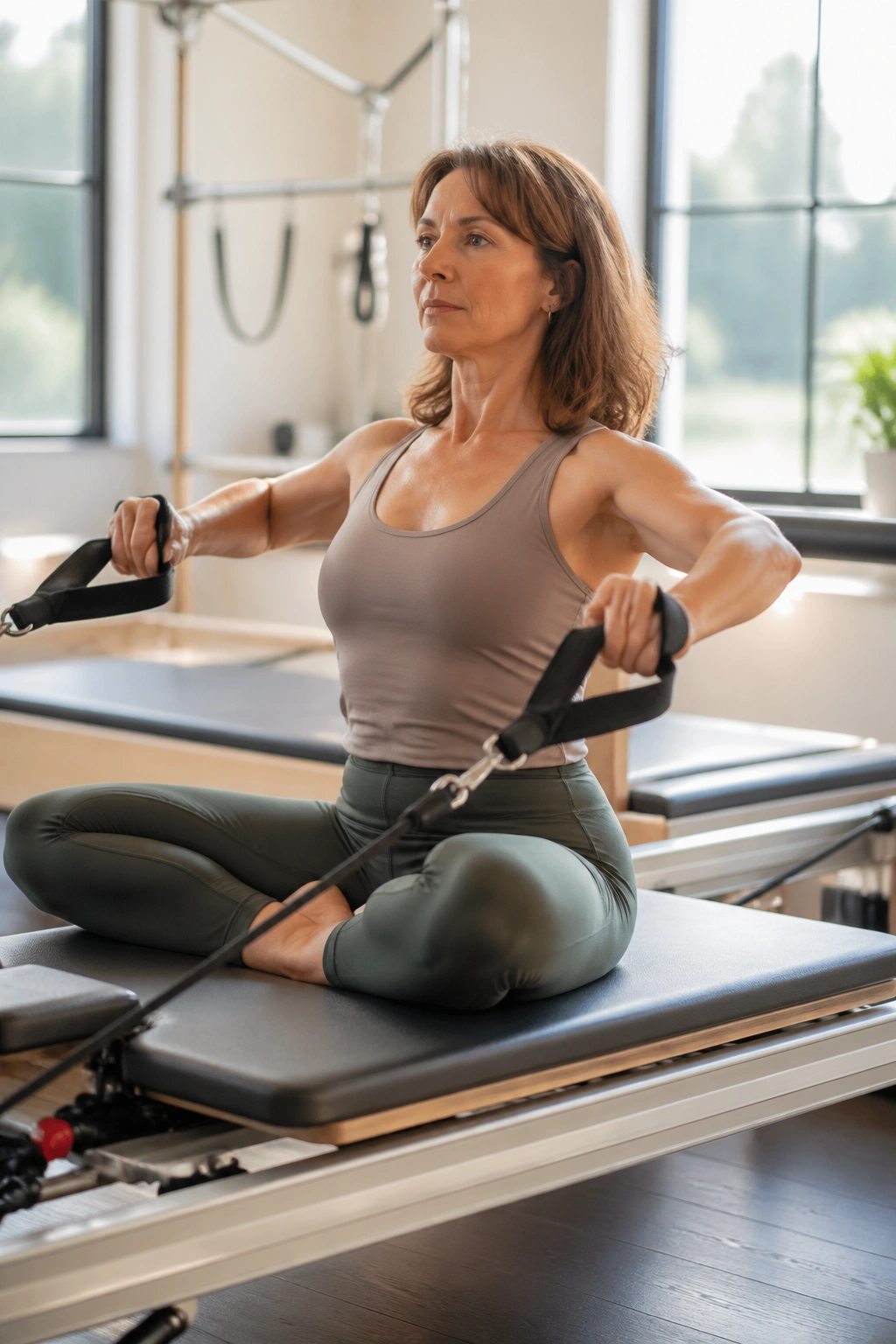
Why does core work often feel better on the reformer than on the mat? Because the machine gives your trunk something to organize against. The moving carriage makes sloppy effort obvious, and that is a good thing when you want the deep muscles to kick in instead of the neck and hip flexors stealing the show.
For women over 40, that matters. A lot of people do not need more crunches. They need better rib control, steadier breathing, and a core that can support the pelvis without gripping like a fist.
How to Run It
Use a light to medium spring for strap work so the carriage stays smooth. Then move through this sequence:
- Hundred prep: knees in tabletop, 5 full breaths
- Frog in straps: 8 slow reps, exhale as the legs press out
- Leg lowers in straps: 6 reps each side, tiny range
- Dead-bug arm reaches: 8 reps, ribs heavy, chin relaxed
- Breath holds: 3 rounds of 3 long exhales, if your neck stays calm
No neck tugging. None.
If your lower back arches when the legs move away, stop chasing range. Keep the legs higher, keep the ribs down, and make the breath do more of the work. That’s the real trick here — not harder abs, but better timing.
4. Posture Work for Rounded Shoulders
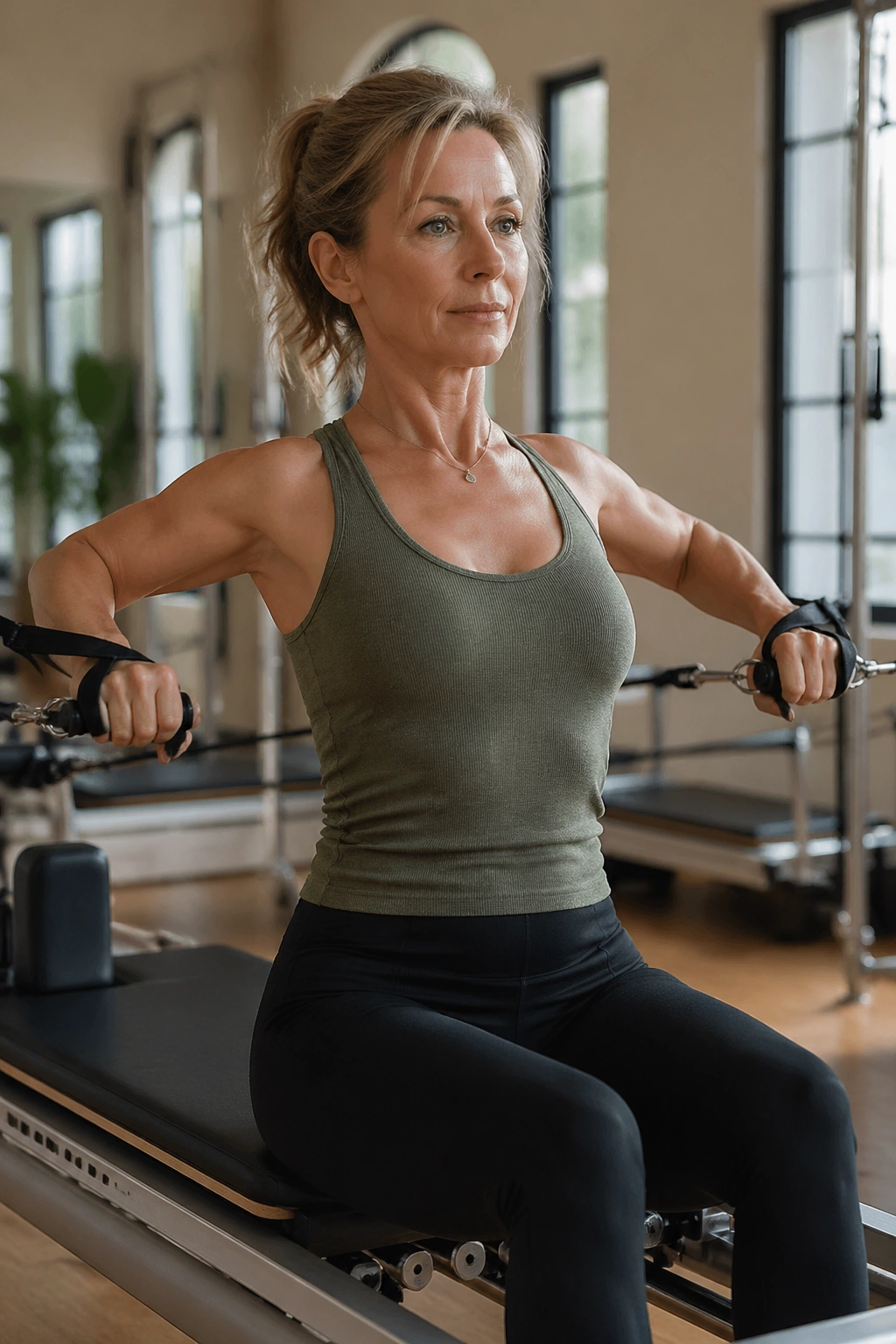
Spend enough time at a desk, in a car, or carrying a bag on one shoulder and your upper back starts acting like it belongs to someone else. The reformer is one of the best places to undo that, because the straps let you train the shoulder blades without turning the movement into a shrug-fest.
This is the routine I reach for when someone says their neck feels heavy by midday. The fix is rarely dramatic. It is usually a mix of pulling the arms from the back, keeping the collarbones wide, and stopping the ribs from flaring every time the hands move.
A Clean Posture Sequence
- Seated row: 8 reps, elbows close, chest open
- Chest expansion: 8 reps, arms by your sides, palms facing back
- Pulling straps on the long box: 6 to 8 reps, long neck, quiet low back
- Swan prep: 5 slow lifts, more length than height
If your traps grab first, lower the spring and shorten the pull. You want the shoulder blades to slide down, not jam together.
A small note that matters: keep your chin slightly tucked, but not clenched. That tiny adjustment stops a lot of neck drama before it starts.
5. Hip Stability for Knees That Talk Back
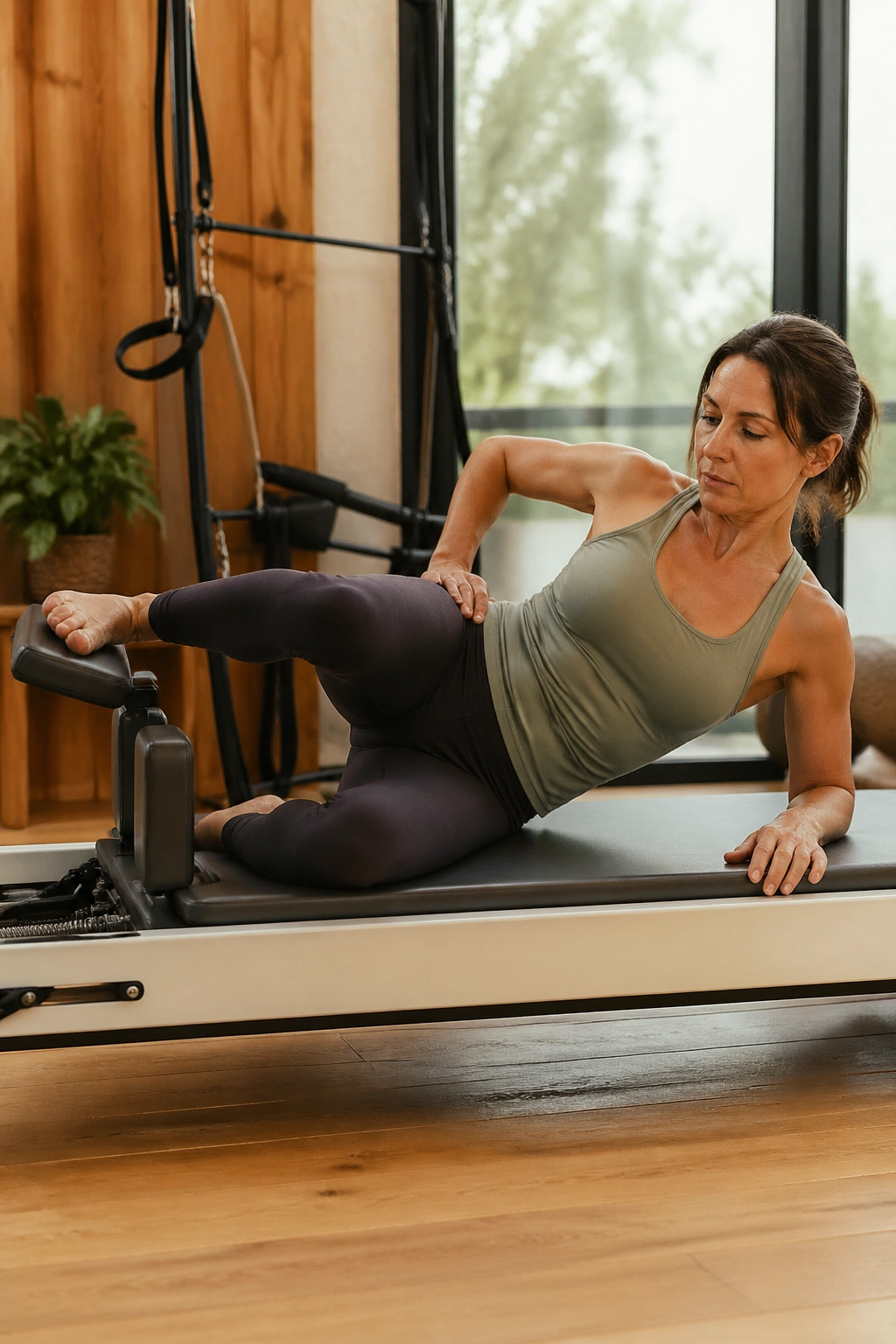
Unlike a treadmill, the reformer does not let the hips hide. If one side is stronger, tighter, or lazier, the carriage tells on it fast. That is a blessing for knee comfort, because a lot of knee irritation starts higher up in the chain.
This routine focuses on the glute medius and the muscles that keep the thigh from collapsing inward. You do not need heavy fireworks here. You need clean alignment and enough resistance to feel the outer hip working.
Small Range, Clean Line
- Side-lying leg presses: 8 reps each side, foot on the strap or bar depending on setup
- Scooter press: 6 to 10 reps, standing tall, pelvis level
- Mini side split holds: 10 to 20 seconds, only if the knees feel steady
- Standing leg press with one hand support: 8 reps each side
The detail that matters most is knee direction. The knee should track over the second or third toe, not drift in toward the big toe. Keep your pelvis square and your standing foot rooted.
If you feel the work in the front of the hip instead of the side of the seat, that usually means the range is too big or the spring is too light. The fix is boring, but it works: shorten the move and slow the return.
6. Upper-Body Strength That Does Not Wreck Your Neck
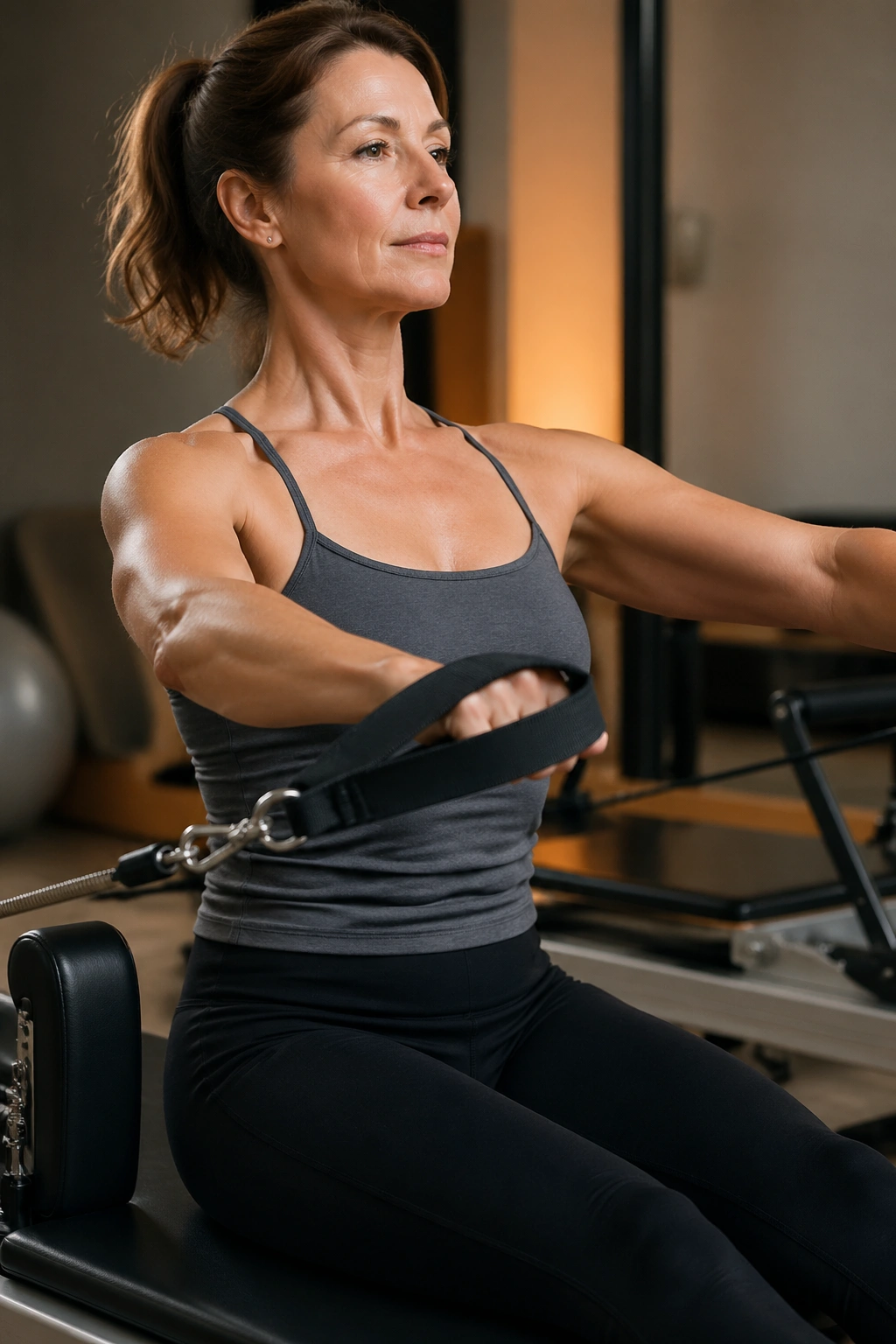
A good arm routine should leave your shoulders open, not welded to your ears. That sounds obvious until you watch what happens when the springs get too light and the body starts chasing the carriage instead of controlling it.
This is one of my favorite things about reformer Pilates routines for women over 40: you can train the upper body without pounding the joints or defaulting to sloppy reps. The resistance is small enough to stay precise and big enough to matter.
Use a medium spring for most arm series. Then run two rounds of 8 to 12 reps of each:
- Triceps press
- Biceps curl
- Chest expansion
- Hug-a-tree
- Kneeling shoulder press, if your neck stays relaxed
The rule here is simple. If your shoulders creep up, the spring is probably wrong or the range is too big. A smaller, cleaner press usually gives better strength than a dramatic one.
And yes, this counts as strength work. Slow arm springs can light up the back, chest, and triceps in a way that surprises people who think they “only” did Pilates.
7. Standing Balance and Bone-Loading Practice
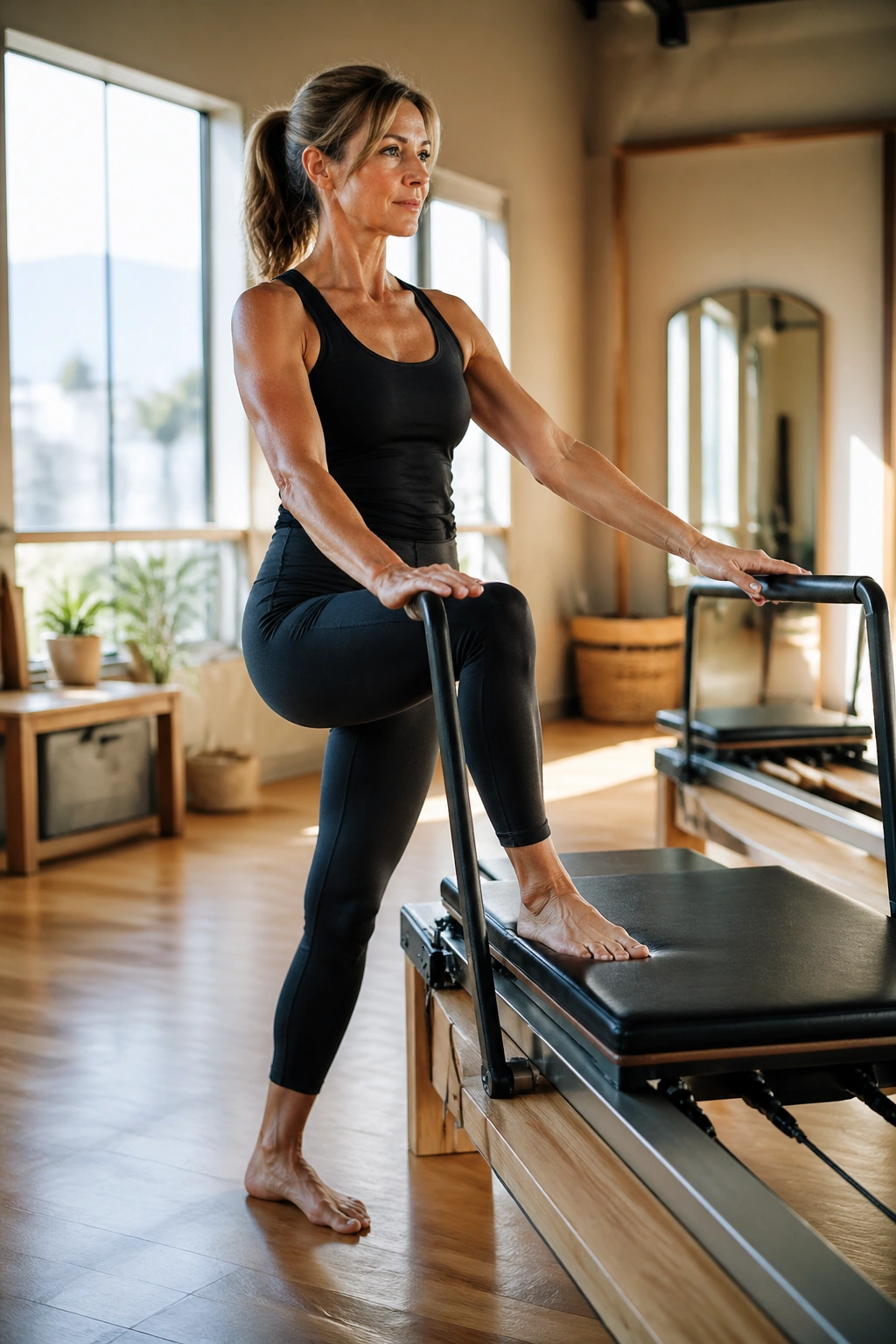
Step onto the carriage and one foot suddenly feels suspicious? That is normal. Standing work on the reformer asks for a steadier ankle, a quieter pelvis, and a little patience while your brain catches up to the moving surface.
The Sequence
- Supported standing lunge: 6 to 8 reps each side, hands lightly on the frame if needed
- Single-leg press: 6 reps each side, slow return, no locked knee
- Standing calf raises: 10 reps, hold the top for one breath
- Small side splits: 3 to 5 controlled pulses, only if you feel stable
What Matters
The spring should feel supportive, not slippery. A heavier spring often helps here because the carriage gives your standing leg something useful to press into.
If you are new to this, keep one hand on the shoulder block or frame. That is not cheating. It is the smart way to train balance without turning the session into a wobble contest.
Do not rush the transitions. Walking your feet, turning, and setting up the next move are part of the work. They matter more than people think.
8. Morning Mobility for Stiff Hips and Low Backs
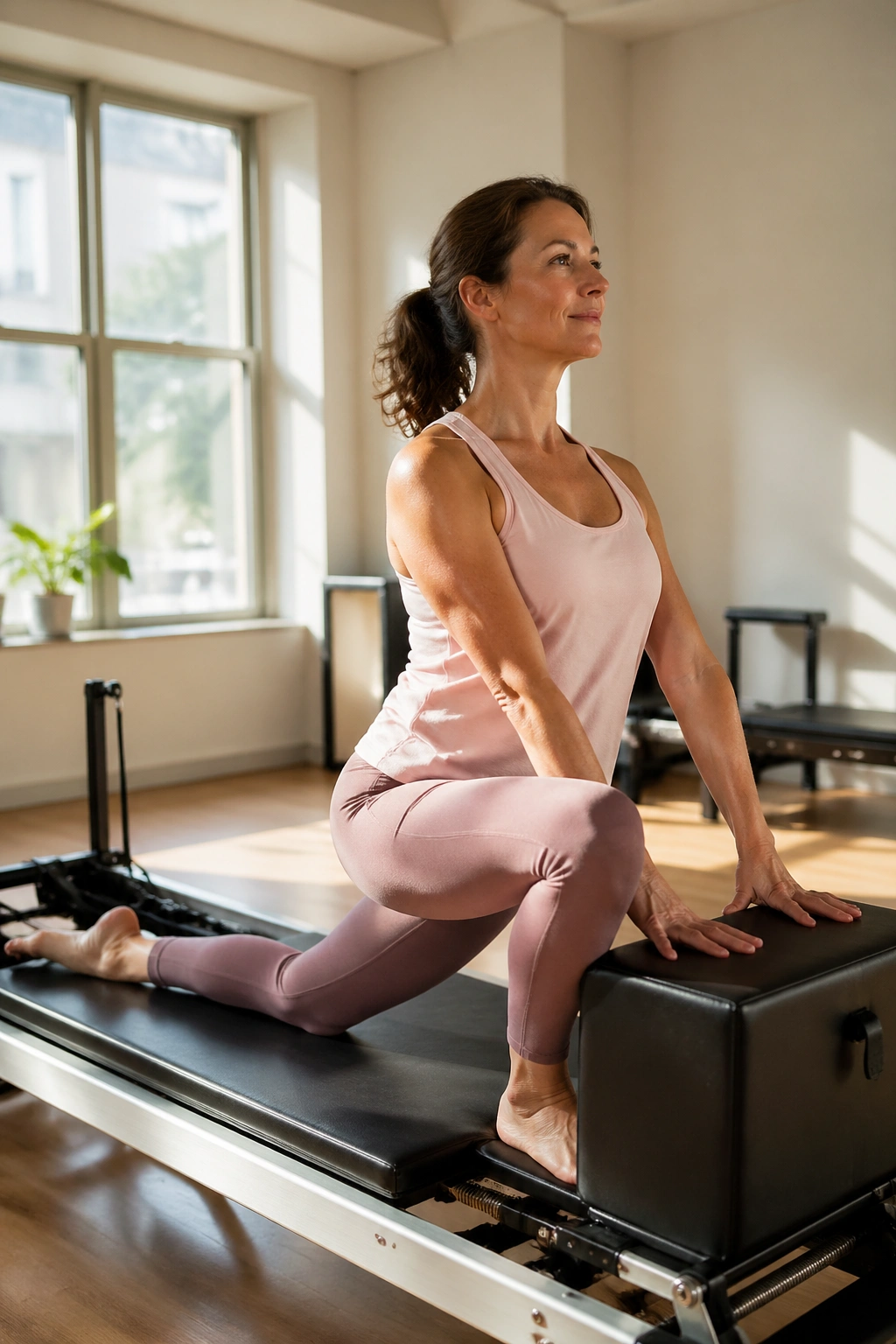
This is the session that should make your spine feel longer by the second exercise. Nothing aggressive. Nothing flashy. Just a slow grind of opening the places that tighten first: hip flexors, lower back, side body, and the muscles around the rib cage.
If mornings feel sticky, use a light spring and keep the carriage glide smooth. The machine should feel like it is helping you warm up, not challenging you to a duel.
A good order looks like this: cat stretch, kneeling hip flexor stretch, mermaid, gentle hamstring stretch, then a soft bridge or pelvic curl. That sequence usually gives the low back a break while still moving the joints through their full range.
The sensory cue I trust most here is the breath. If the ribs can expand on the inhale and soften on the exhale, you are probably in the right zone. If your jaw tightens, your shoulders bunch up, or the carriage starts clacking, slow down.
One short, honest line: not every tight back wants more stretching. Some want more glute work first.
9. Inner Thigh Work With Pelvic Floor Awareness
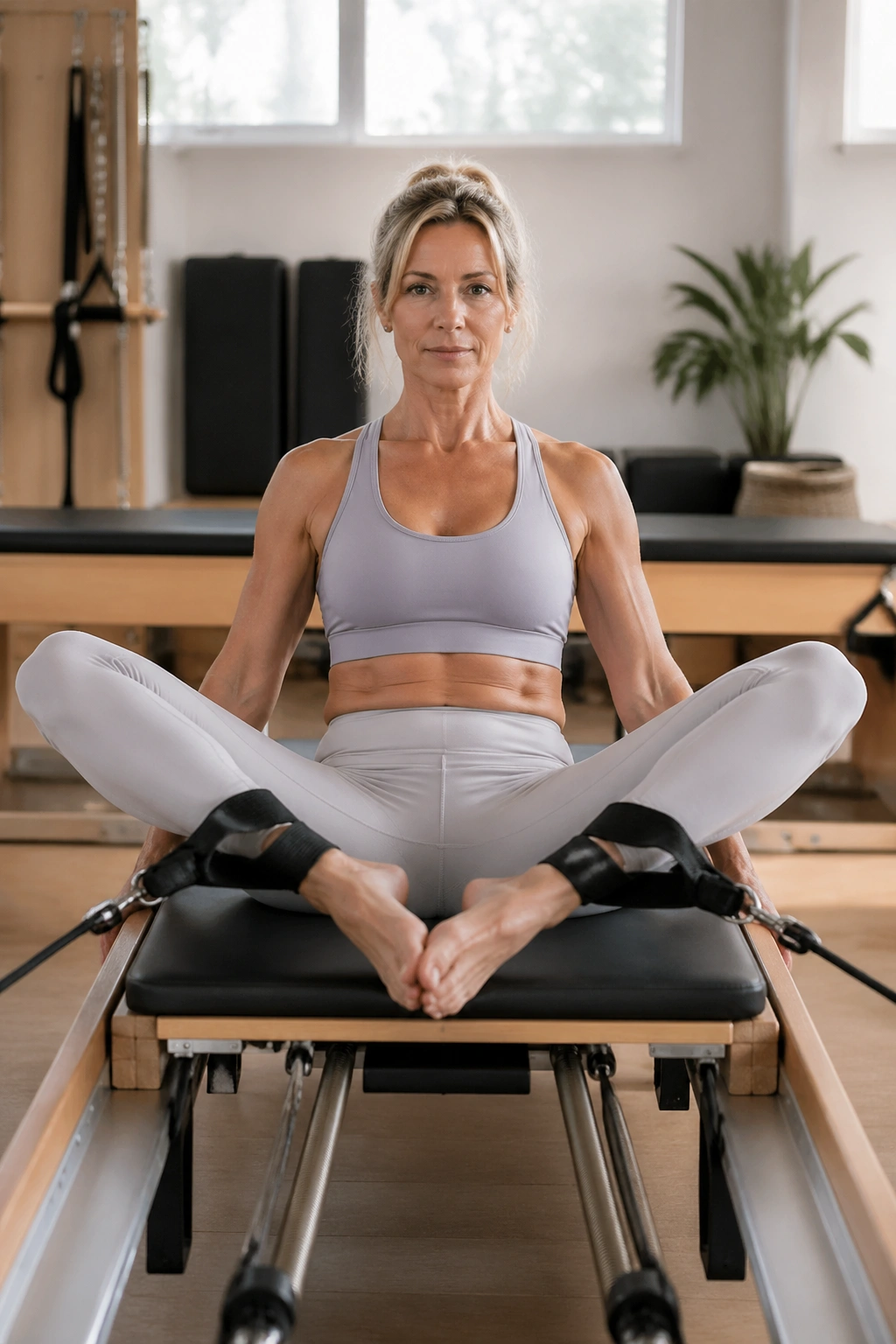
Why do inner thighs and pelvic floor keep showing up in the same conversation? Because they work like neighbors. When one side of that system gets weak or overly tight, the other tends to react.
This routine is not about endless squeezing. Too much squeeze turns everything into a brace. The better move is controlled adductor work with breathing that stays easy. If your jaw is clenched, your inner thighs are probably doing too much.
Use small, deliberate movements:
- Frog in straps: 8 reps, pause for one breath at the end range
- Leg circles in straps: 5 each direction, tiny and smooth
- Heel squeeze bridge: 6 to 8 reps, squeeze a small ball or pad
- Side-lying adductor lifts: 8 reps each side
Keep the pelvis quiet and the ribs heavy. Exhale on the effort, then let the breath finish the rep. That matters more than the size of the circle or the speed of the press.
If you notice pressure, doming, or a feeling of holding your breath, make the range smaller. Engagement should feel organized. It should not feel like bracing for impact.
10. A Low-Impact Cardio Circuit
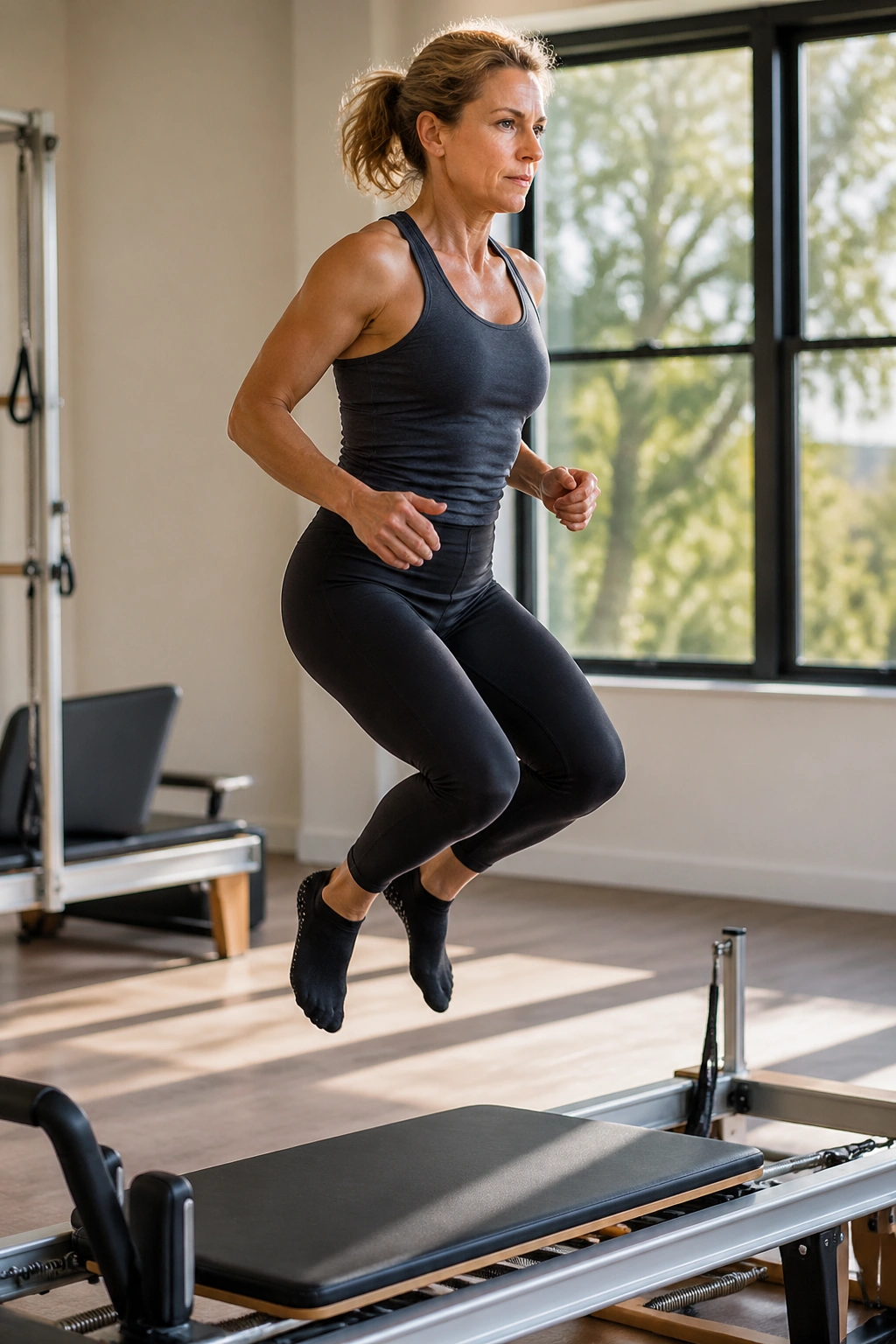
If you miss the feeling of a harder workout but hate pounding joints, this is the compromise that actually works. The reformer can create a cardio effect by asking you to move faster without losing control — and that difference matters.
If You Have a Jump Board
Try short bursts of 20 to 30 seconds, then rest for 20 to 30 seconds. Four to six rounds is enough for most people. Keep the feet landing softly and the ribs stable.
- Small two-foot jumps
- Alternating single-leg jumps
- Narrow V jumps, if your knees stay aligned
If You Do Not Have a Jump Board
Use fast footwork transitions instead. Move from heels to toes to wide stance with very little downtime. The carriage should still sound quiet. If it starts banging, you are going too fast.
This routine is best for days when you want your pulse up but your joints quiet. It is not the right choice for everyone, especially if your knees, pelvic floor, or balance are feeling off. No shame in skipping it and choosing a strength day instead.
A nice side effect: the heat builds without the punishment that sometimes comes with running or hard step work.
11. Hamstring and Calf Length for Tight Legs
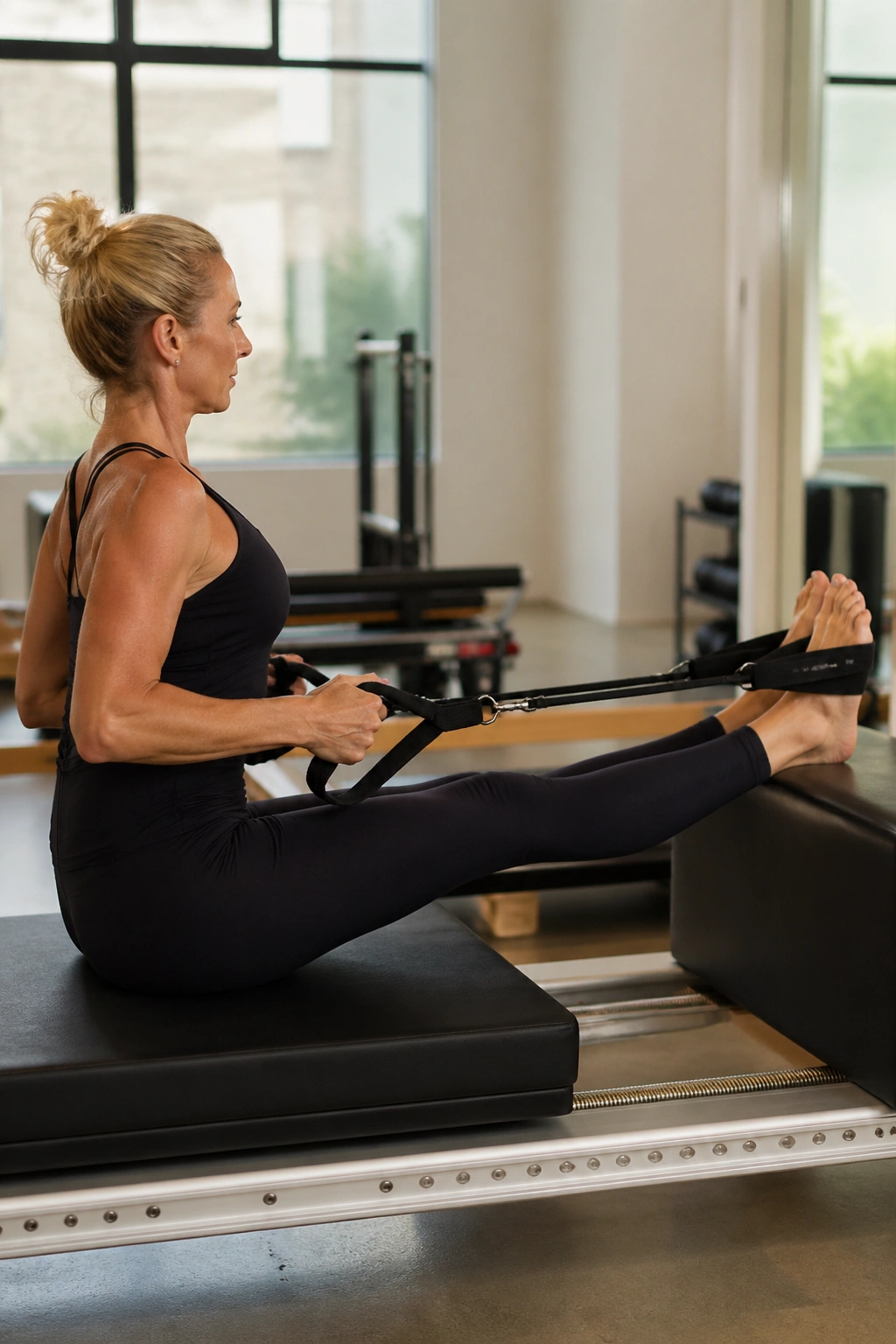
A lot of “tight hamstrings” are really weak glutes plus too much sitting. Not always. But often enough that I trust the pattern. The reformer is useful here because it lets you lengthen the back line without yanking on it.
Start with running on the footbar if your machine and setup allow it. Small alternating heel drops warm the calves and wake up the ankles. Then move into long box work or a hamstring stretch with the feet in straps.
A simple progression:
- Running: 30 to 40 alternating steps
- Hamstring curls on the long box: 8 reps
- Single-leg stretch in straps: 6 reps each side
- Calf presses on the footbar: 10 controlled reps
What you want to feel is length, not strain. If the hamstrings shake hard right away, the pelvis is probably tipping or the springs are too light. A stable pelvis and a moderate spring usually make the stretch feel better, not weaker.
And yes, the calves count. Tight calves pull on the whole chain, especially if you wear heels, walk a lot, or sit with the feet tucked back under the chair. That part is annoyingly common.
12. Rotation and Side-Bending for a Better Waistline Feel
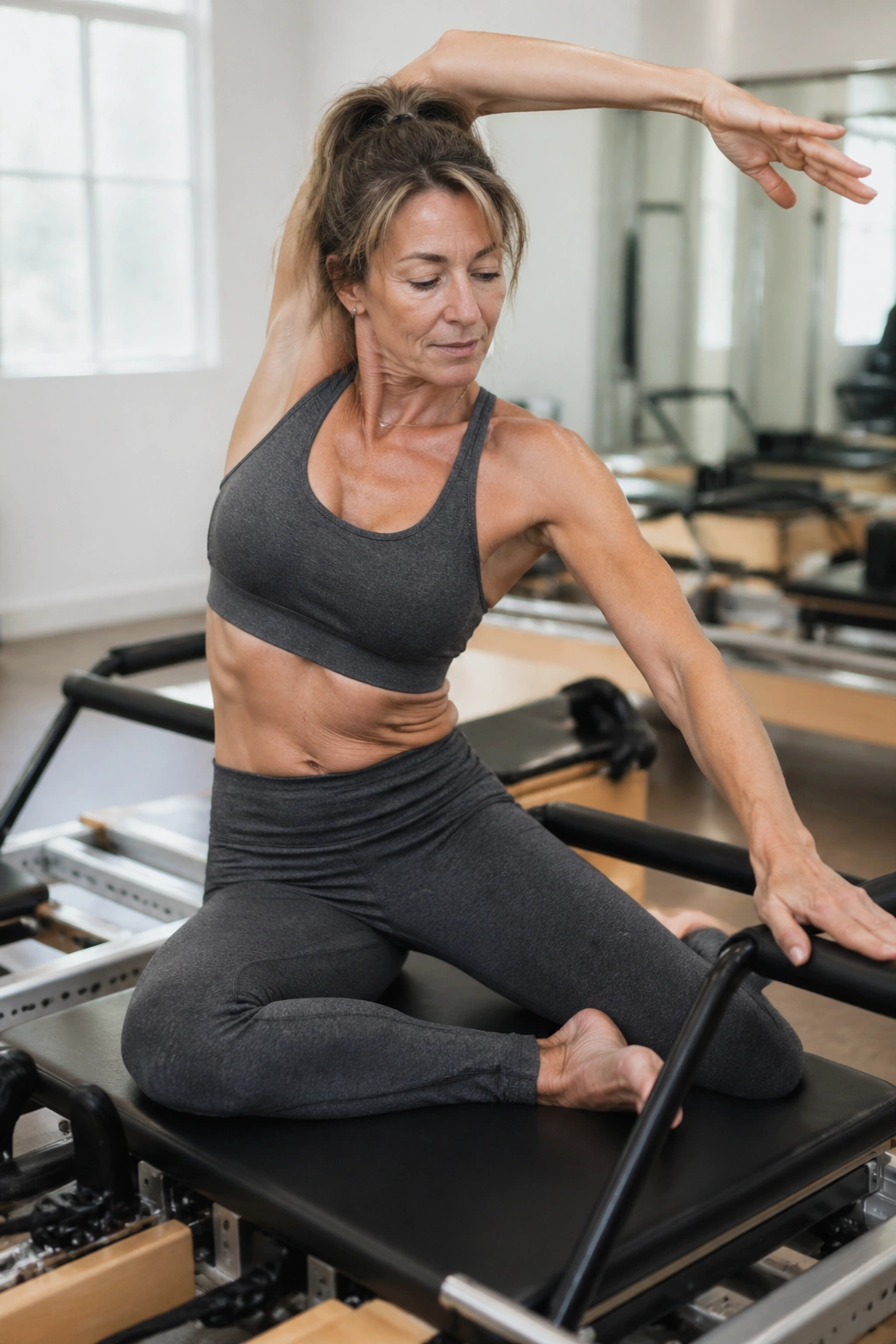
Crunches are not the only way to wake up the waist. In fact, they are often the least interesting way. Side-bending and rotation train the obliques, open the ribs, and make the spine feel less locked in the middle.
This matters more over 40 than people think, especially if your torso has gotten stiff from work, driving, or just living. A moving waist helps with posture, breathing, and that annoying “everything is stuck in the middle” feeling.
A Smart Rotation Sequence
- Mermaid: 3 slow reps each side
- Short box side reach: 5 reps each side
- Seated twist: 3 controlled turns, no forcing
- Kneeling side bend: 4 reps, stop before the low back pinches
If you have bone-density concerns or a spine that hates deep twisting, keep the rotation open and small. Stay tall through the crown of the head and rotate from the ribs instead of collapsing through the lower back.
The best cue here is simple: exhale and let the waist soften. Do not yank. Do not twist hard. The reformer rewards precision, and this is one place where precision gives you more than effort does.
13. Recovery Day Reformer Pilates
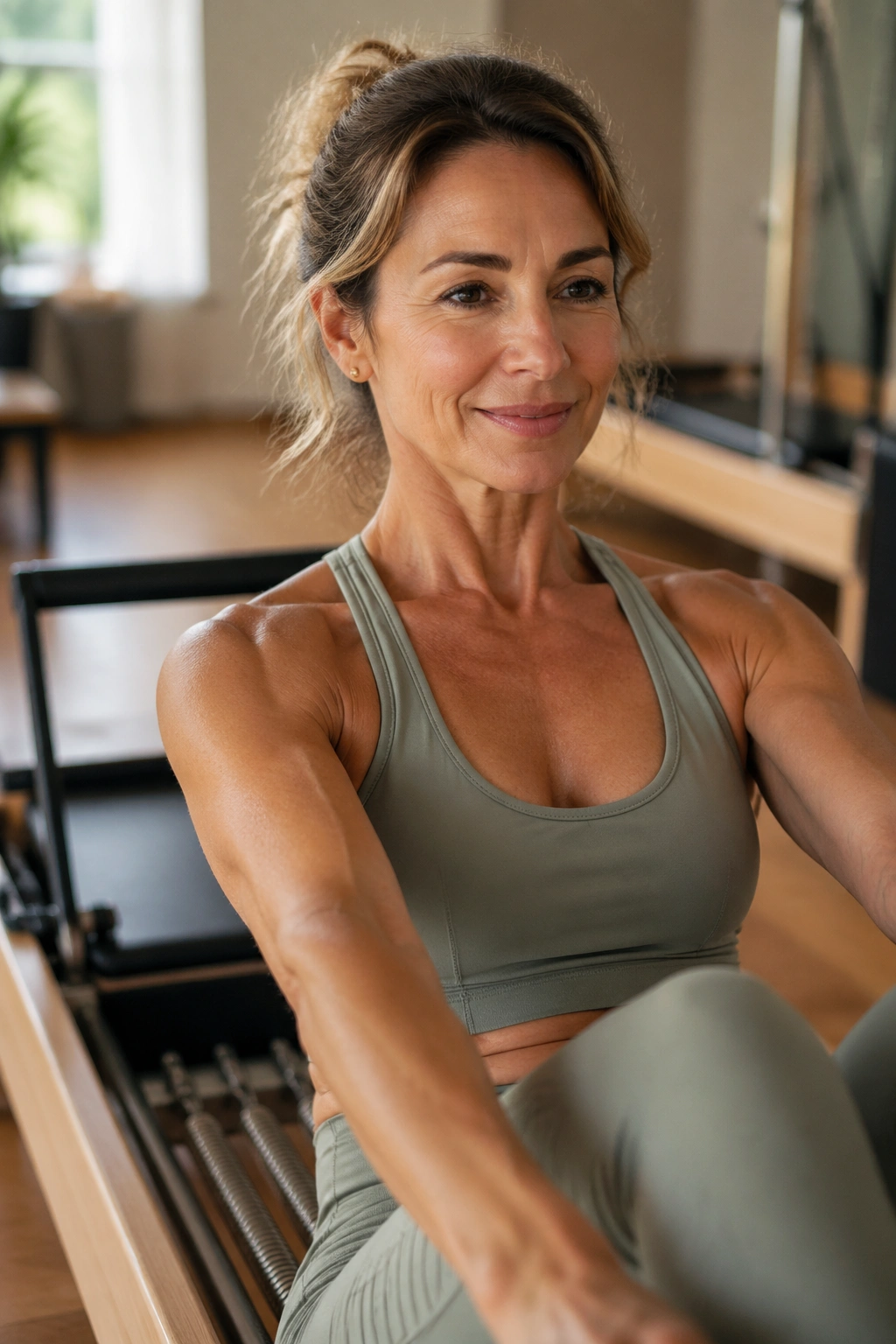
A lighter day is not a wasted day. It is the day that keeps the rest of the week from feeling like a punishment. I say that as someone who likes hard sessions, too. Hard is fine. Hard every time is the mistake.
Recovery routines on the reformer should feel smooth, almost quiet. You use light springs, slow transitions, and positions that let the body settle while still moving. There is no prize for exhaustion here.
Good choices include:
- Gentle footwork
- Pelvic clock or small pelvic tilts
- Easy bridge articulations
- Mermaid with breath
- Arms in straps at low resistance
If sleep has been rough, your shoulders feel tense, or your legs still carry yesterday’s workout, this is the right answer. The goal is to leave feeling more open than when you arrived. Not wiped out. Just better organized.
A lot of people think recovery means doing nothing. Sometimes it does. But a carefully paced reformer session can be the thing that gets you moving without making the system louder.
14. A Strong, Athletic Routine for Women Who Want More Challenge
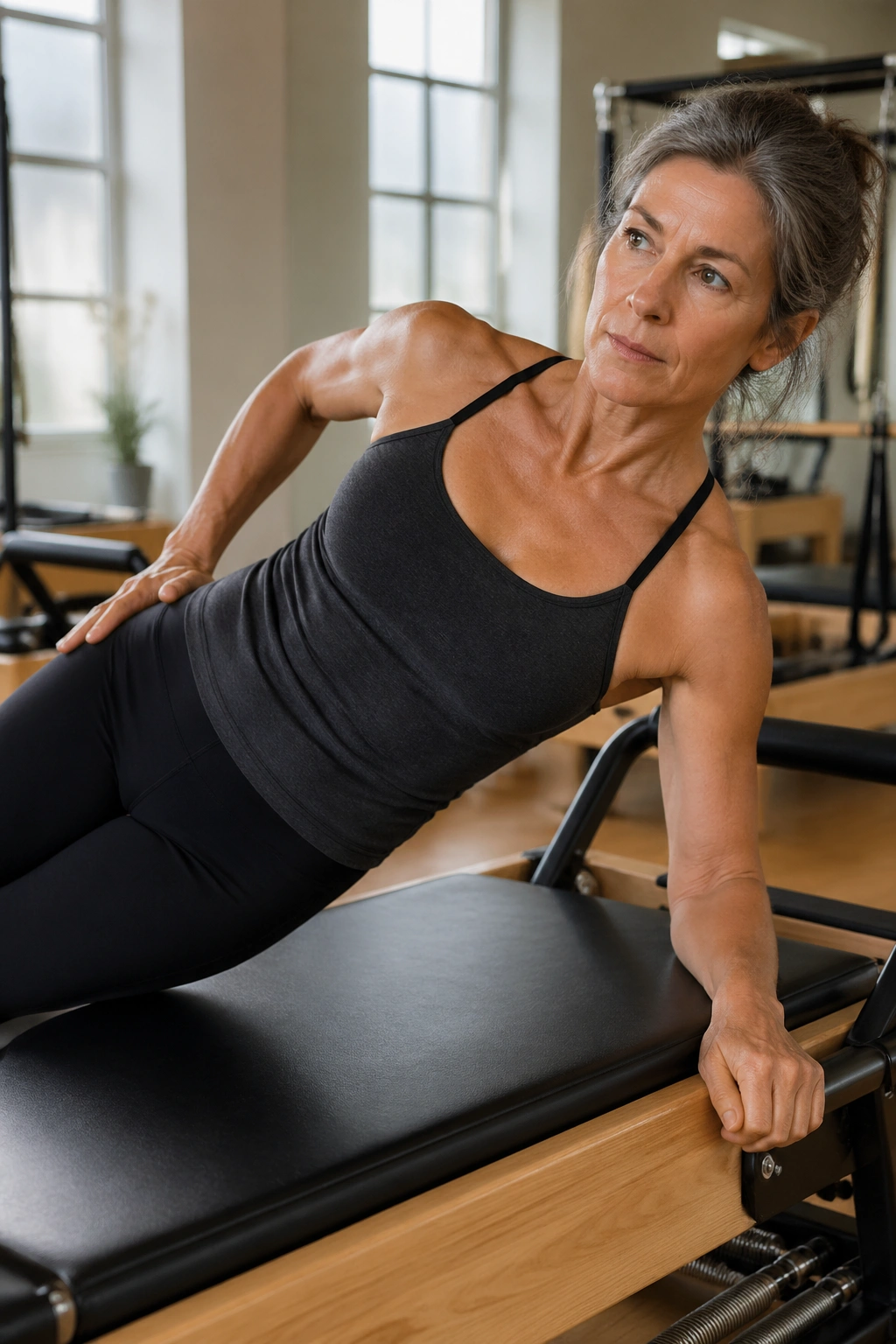
Some women hit their forties and want less punishment; others want more load and cleaner effort. Both are normal. If you are in the second camp, the reformer can absolutely meet you there.
The trick is to stop treating the machine like a stretch tool and start treating it like a resistance system. Heavier springs, slower eccentrics, and cleaner transitions change everything. The work gets real fast.
A strong session might include:
- Long stretch series
- Elephant
- Side plank on the carriage
- Standing skater or scooter
- Pulling straps on the long box
- Kneeling knee stretches, if your wrists and shoulders are happy
Keep the carriage quiet. If it slams, the tempo is too fast. If the ribs flare on every press, the spring is too light or the core is asleep. This routine should feel athletic, not chaotic.
One thing I like here: the reformer lets you load the body without the same blunt impact you get from jumping or heavy standing work. That makes it a very useful middle ground for people who want challenge without feeling beat up afterward.
15. The Full-Body Weekly Reset
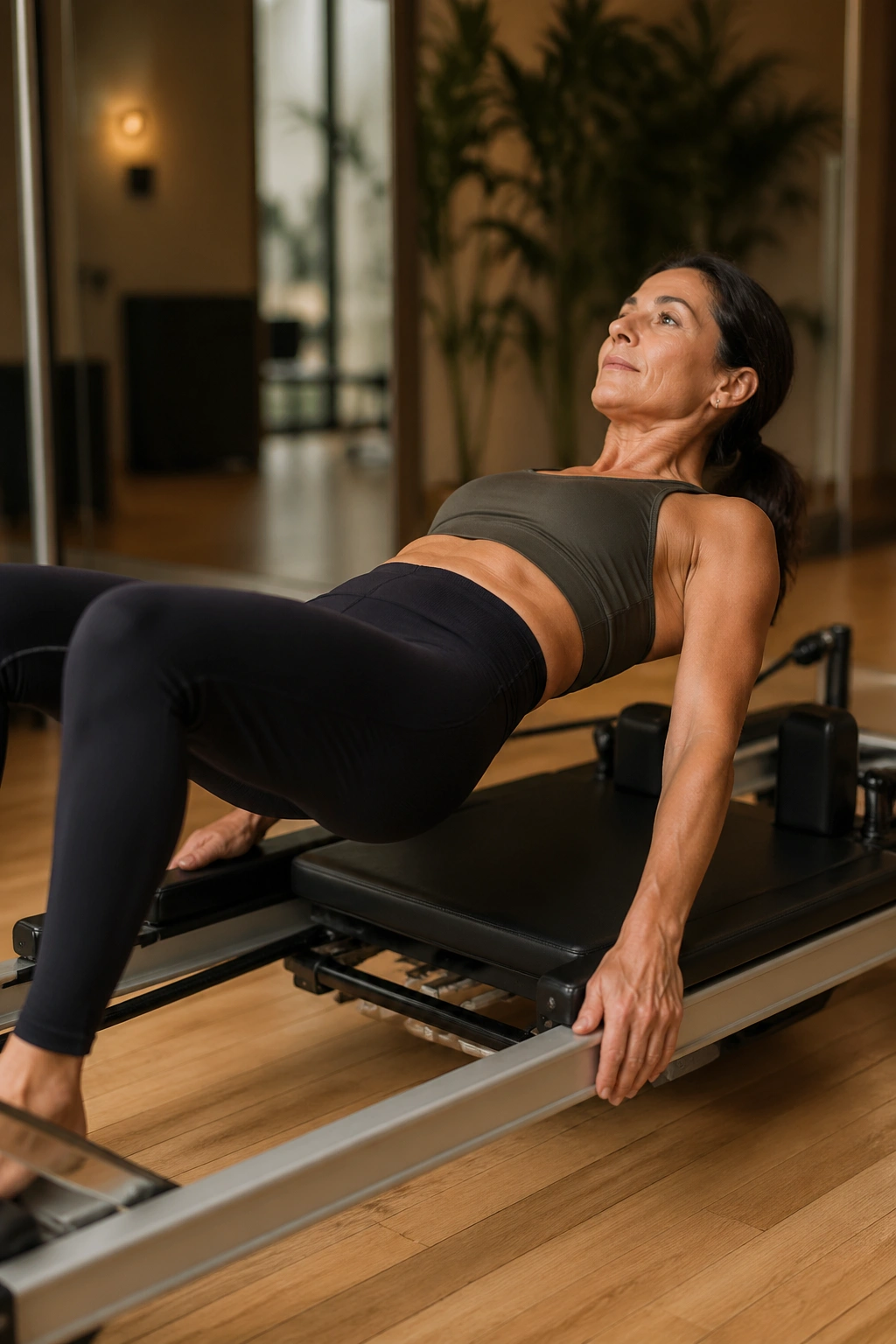
If you only do one reformer Pilates session in a week, make it one that covers feet, hips, back, and shoulders in the same sweep. That is the real value of the machine. It does not have to be fancy. It has to be complete.
A Sensible Order
- Footwork: 1 round through the main foot positions
- Bridge work: 6 to 8 slow articulations
- Straps for arms and core: chest expansion, hugging, frog, and leg lowers
- Side work: scooter or side-lying legs
- Standing work: lunge, balance hold, or calf raises
- Cool-down: mermaid and a gentle hamstring stretch
Use a medium spring for most of it, then go lighter for the strap sequence and lighter still for the finishing stretches. You want enough load to feel your muscles, but not so much that the session turns choppy.
Why It Works
It covers the places women over 40 usually care about most: posture, core strength, hips, and balance. It also gives you a chance to notice what feels off before it becomes a bigger issue. Tight right hip? Weak left glute? Shoulders sneaking up? A full-body flow tends to expose those patterns fast.
This is the routine I would choose for a busy week because it gives you the most return per minute. It is not random. It is a clean sweep through the body, and that tends to age well.
The Bottom Line
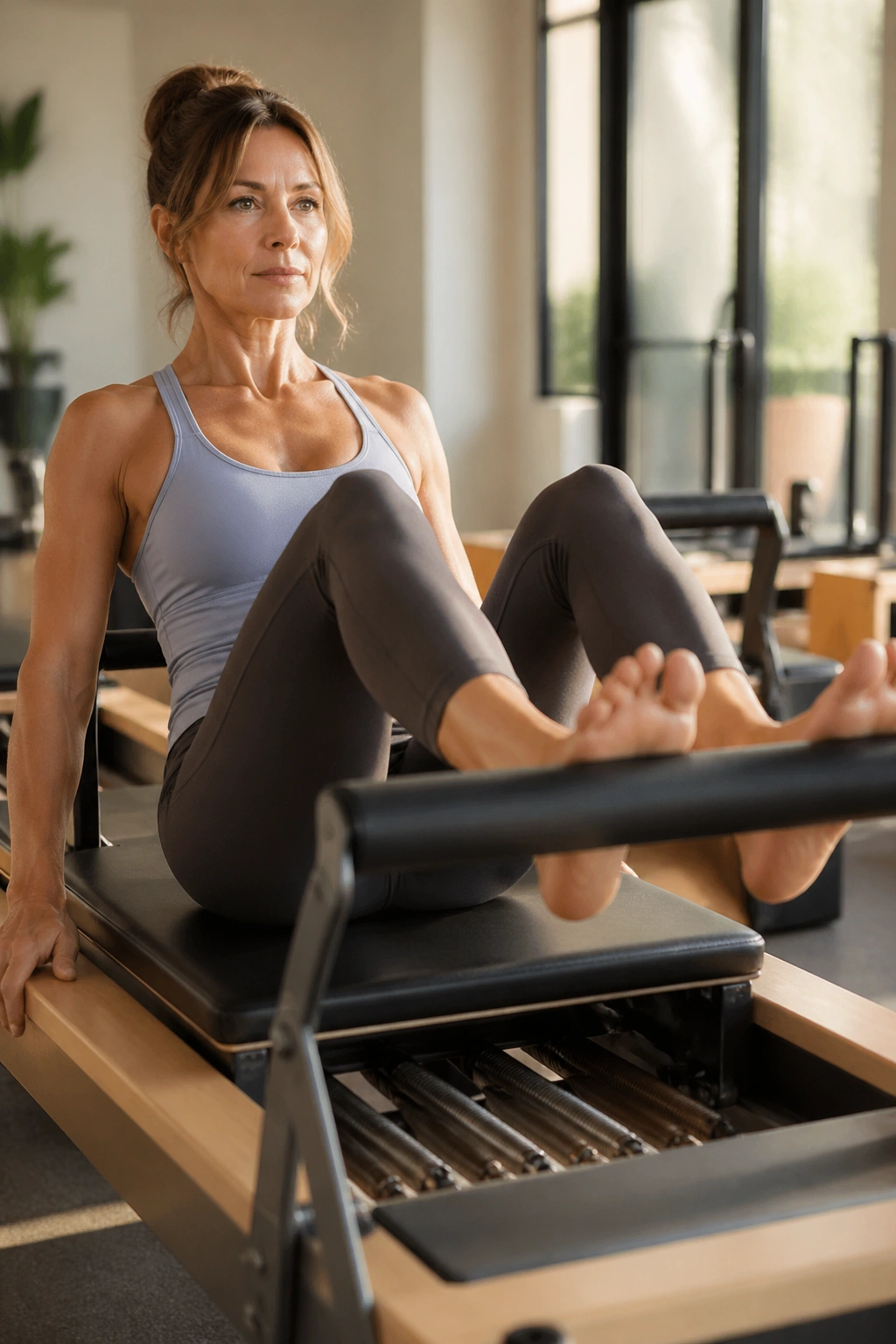
The best reformer Pilates routines for women over 40 are the ones that respect joints, sharpen control, and still ask for real work. That usually means cleaner reps, smarter spring choices, and less obsession with looking intense.
Start with footwork and bridge work if you need your body to wake up. Go to standing balance, rotation, or arms in straps when you want a more complete session. And if a routine leaves you feeling longer, steadier, and a little more awake in your own body, that is the one worth repeating.
