



Pilates moves for a sculpted core work best when they make you slow down. Not in the dreamy, spa-day sense. Slow in the strict, honest sense where your ribs stay knit, your pelvis stops wobbling, and your breath starts doing half the work.
That’s the part a lot of people miss. A strong-looking midsection is not built by hammering endless crunches until your neck feels like a rope. It comes from learning how to control the trunk while the arms and legs move away from center, which is exactly where Pilates shines. The method leans on control, precision, breath, and that deep “wrap” through the waist that comes from the transverse abdominis and obliques doing their job instead of freelancing.
And yes, the burn can be sneaky. One minute you’re lifting one leg a few inches off the mat, and the next minute your lower belly is shaking like it has a mind of its own. Good. That usually means the move is reaching the right muscles.
Start with the classics below, keep the reps clean, and treat every one like a small test of control rather than a race.
1. The Hundred for a Sculpted Core
The Hundred is the Pilates move that tells the truth fast. It looks almost too simple: curl up, pump the arms, breathe on a rhythm. Then your shoulders start to complain, your lower belly starts to tremble, and you realize the whole point is to stay organized while the body works hard.
I like this one because it teaches the shape of a strong core before you even get fancy. The torso holds steady, the ribs stay down, and the arms pump from the shoulders instead of flopping around. If your legs are straight, keep them high enough that your low back stays heavy on the mat. That matters more than looking impressive.
Why It Works
The real job here is breath control. Five short arm pumps on the inhale, five on the exhale, for ten rounds. That rhythm helps anchor the trunk and stop the movement from turning into a neck exercise.
- Keep your legs higher if your lower back arches.
- Curl only as high as you can hold without yanking the neck.
- Pump the arms from the upper back, not the wrists.
- Stop before the shape gets sloppy. Sloppy reps are expensive.
Best cue: press the back of your ribs down like you’re flattening a sheet of paper under you.
2. Roll-Up
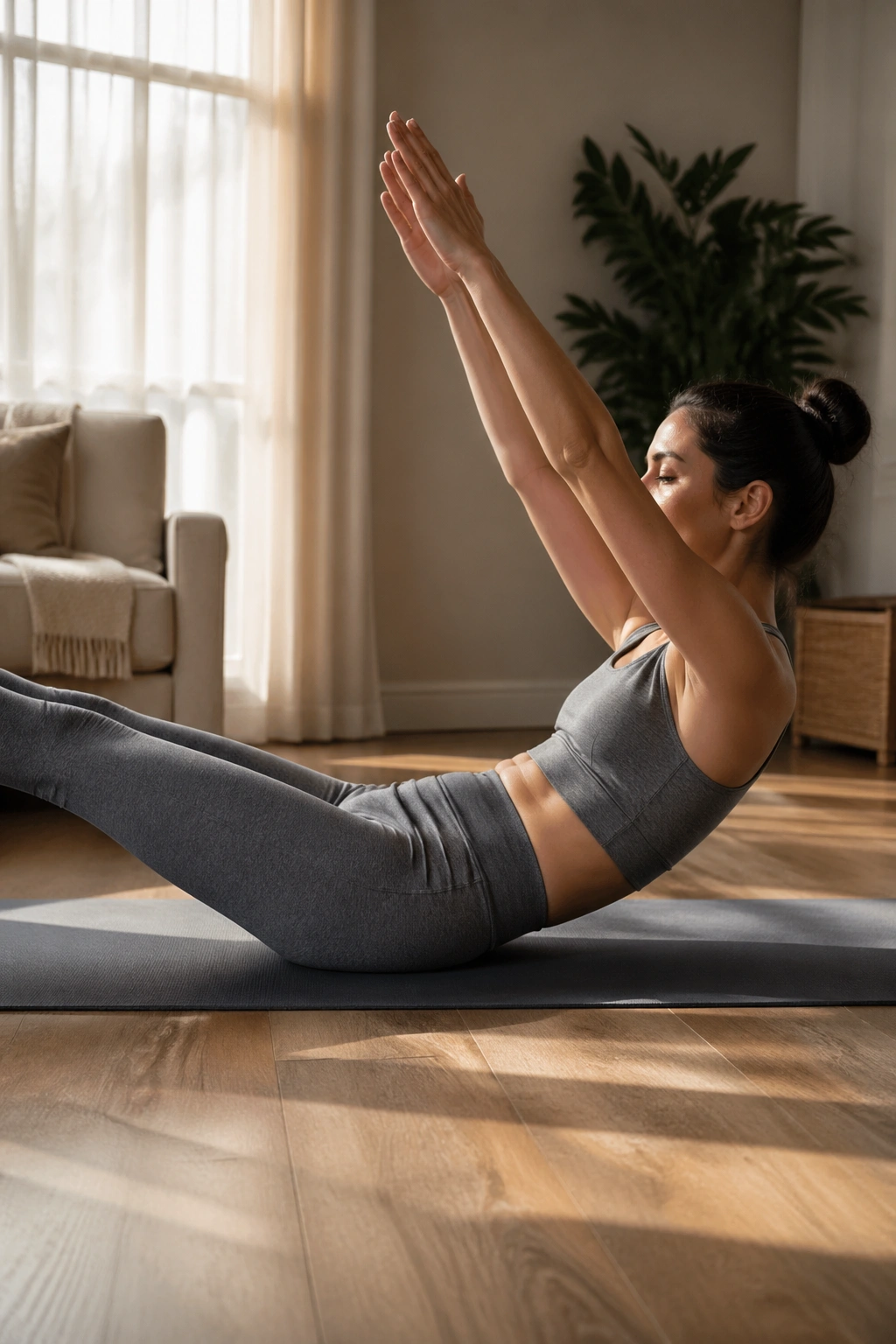
Why does the Roll-Up feel harder than a sit-up? Because it asks your spine to peel off the mat one piece at a time, and that tiny bit of control is exactly what a sculpted core needs.
This is one of those moves that exposes every shortcut. If you fling yourself up, your hip flexors take over. If you rush down, your lower back loses the thread. The sweet spot is slower than most people expect. Reach the arms overhead, keep the chin slightly tucked, then roll through the spine like you’re stacking each vertebra on top of the one below it.
How to Make It Smoother
Bending the knees a little is not a cop-out. It’s often the smarter choice, especially if your hamstrings are tight or your lower back tends to grip. You want the ribs to soften first, then the belly, then the pelvis.
On the way down, imagine laying each bone back onto the mat in order. No dropping. No flinging. If you can lower yourself with control, the abs stay in the work for much longer than they do in a quick crunch.
A clean Roll-Up leaves you feeling longer through the spine, not bruised through the hip flexors. That’s the difference.
3. Single-Leg Stretch
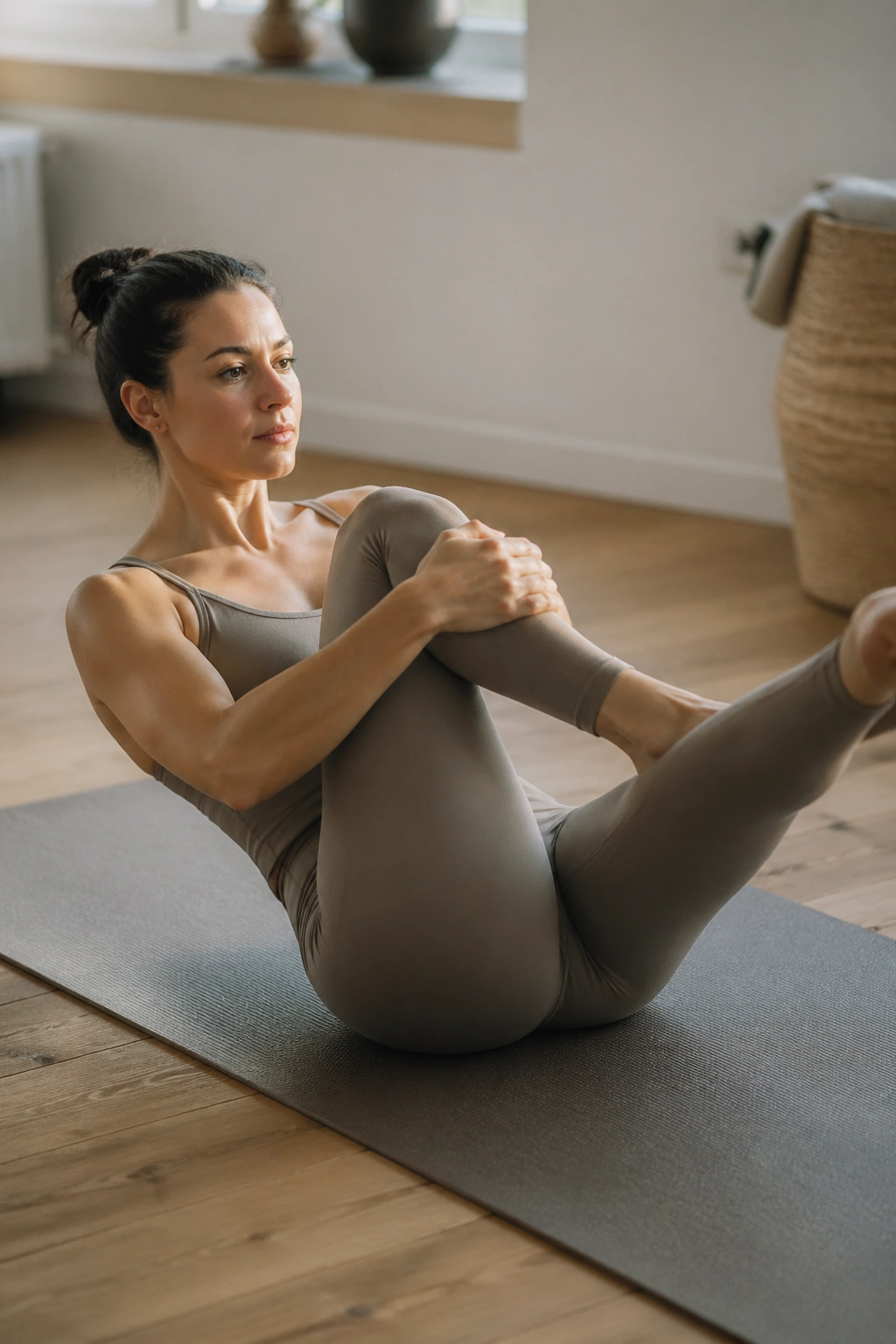
If your lower belly caves the moment one leg extends, this is the move that exposes it. Single-Leg Stretch is one of the simplest-looking Pilates moves for a sculpted core, and one of the best at showing whether you can hold the torso steady when the legs get chatty.
One knee stays hugged in while the other leg reaches out. Then you switch. That’s it. But the shape stays honest only if the ribs stay tucked and the shoulders stay wide. The mistake is usually speed. People pedal the legs and forget the torso entirely. Don’t.
What Good Reps Feel Like
You should feel the front of the belly drawing inward as the legs alternate. The pelvis stays still. The lower back does not pop off the mat just because the leg reaches long.
- Keep the extended leg low only if the back stays flat.
- Hold the shin lightly, not with a death grip.
- Exhale on each switch to keep the waist narrow.
- If your neck starts to burn, lower the head.
A lot of people make this move harder by trying to make it bigger. Better to keep the range smaller and make every switch crisp.
4. Double-Leg Stretch
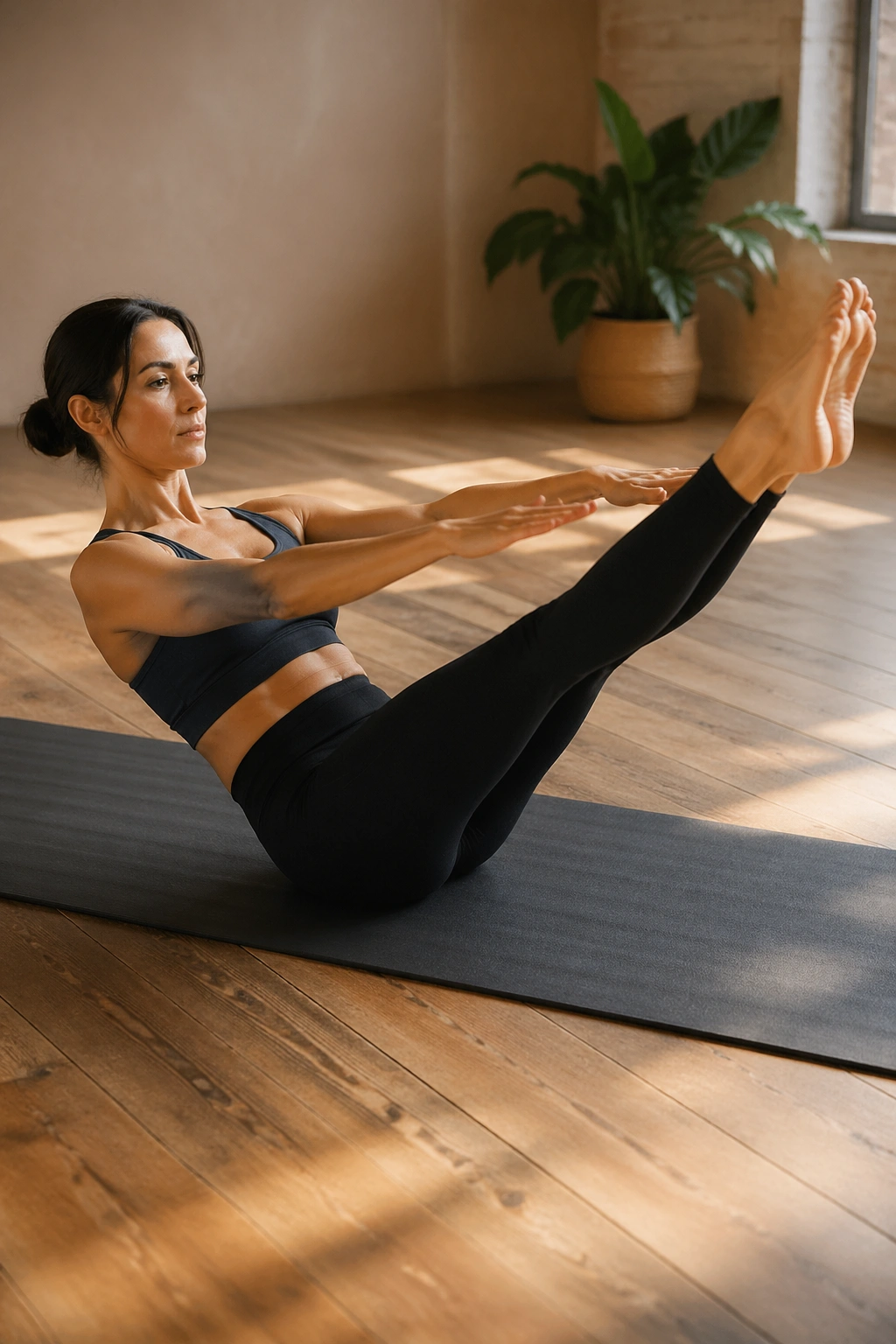
This is the first move that punishes lazy core work. Both legs reach away, both arms stretch back, and the center of the body has to hold the whole thing together while the limbs try to pull you open.
The shape is almost beautiful when it’s done well. Almost. Then you realize beauty is coming from control, not from the size of the motion. As the arms and legs stretch away, keep the ribs from flaring and the pelvis from tipping. If the low back starts to arch, the legs are too low or the reach is too big.
The return matters just as much as the extension. Circle the arms around with intent, bend the knees in, and collect the body back to center before the next rep. That “collect” is the part many people skip, and it’s the part that makes the exercise work.
Do it with enough precision and you’ll feel the whole front line of the body wake up. Do it fast and it turns into a mess. Not worth it.
5. Criss-Cross
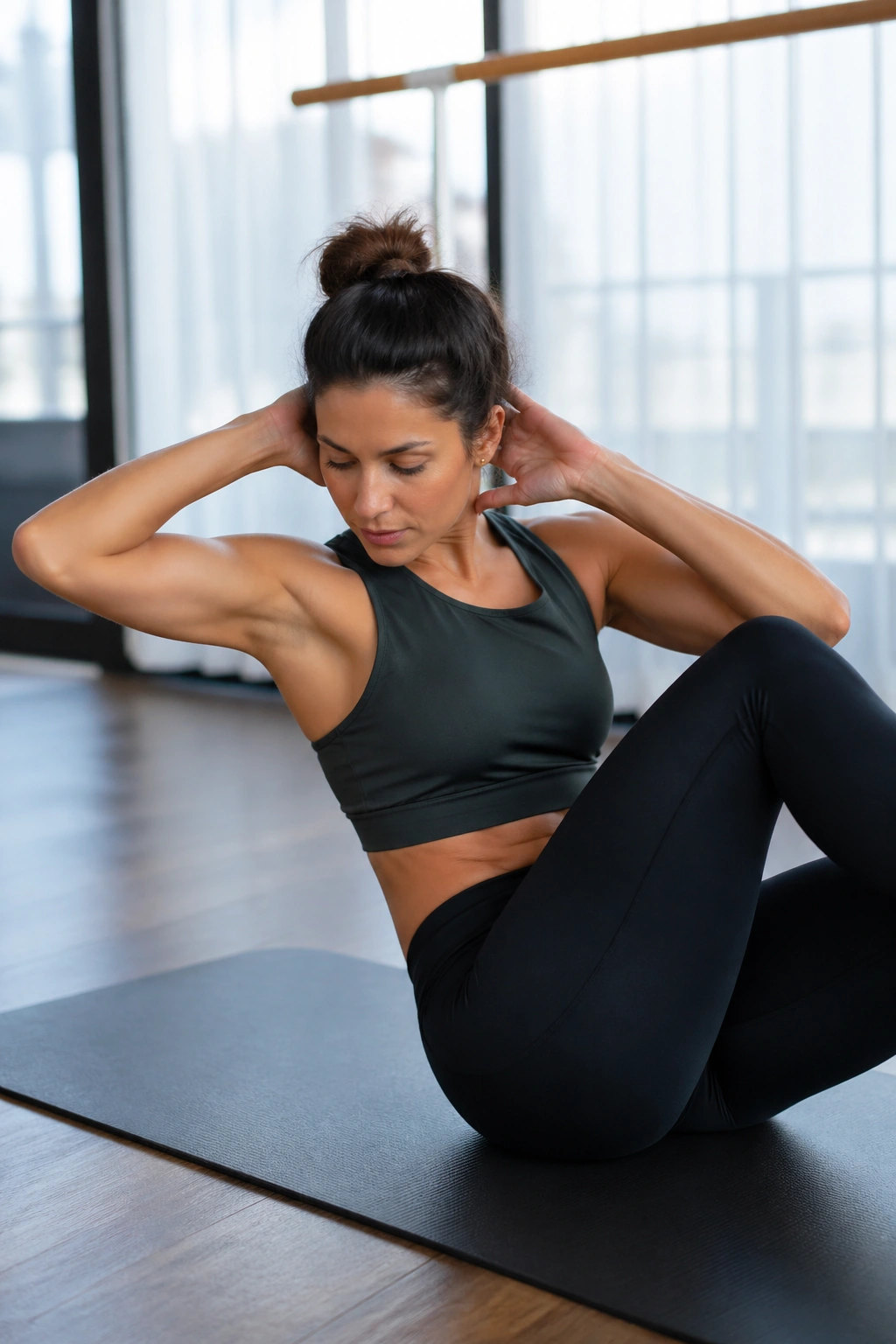
Unlike a basic curl, Criss-Cross asks the torso to rotate while the pelvis stays parked. That’s why it earns a place in any serious Pilates core routine.
The move is simple to describe and easy to cheat. One elbow reaches toward the opposite knee while the other leg extends away, then you switch sides. The temptation is to pull on the neck or yank the elbow across with the hands. Resist both. The rotation should come from the ribs, not from the head.
This one is especially useful if the side waist is the area you want to feel more. It lights up the obliques in a way that straight-line abdominal work often misses. Keep the pace controlled, and don’t chase speed. A slow twist with a steady exhale does more than twenty sloppy switches.
If your hips twist wildly, shorten the range. If your neck takes over, keep the elbows wider and the curl lower. There’s no prize for making it dramatic.
6. Toe Taps
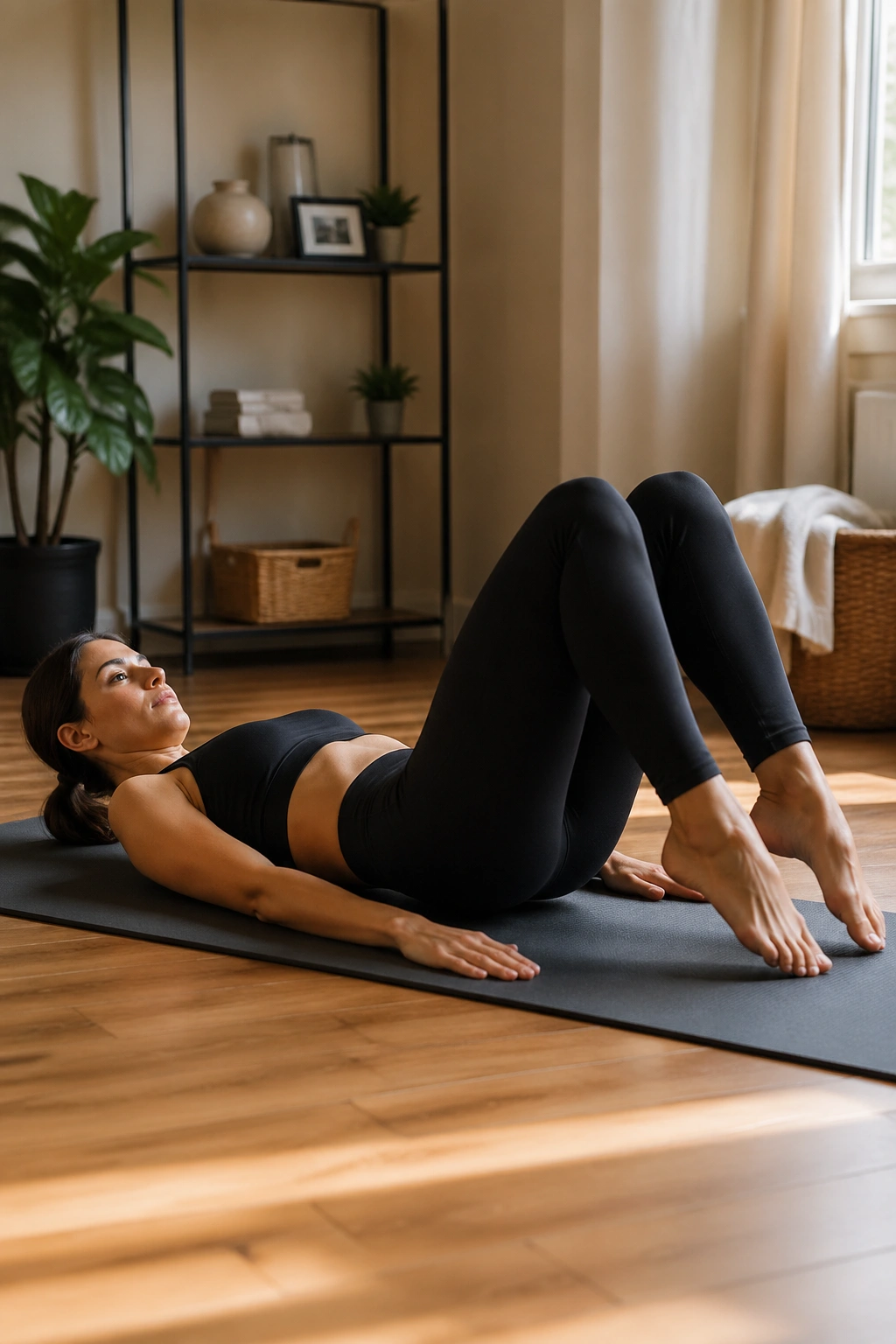
Hear the small tap of one foot on the mat? Good. If the foot drops hard, the core has already quit.
Toe Taps are one of those deceptively calm Pilates moves that teach deep abdominal control without making a big show of it. Lie on your back with the knees in tabletop, then lower one foot at a time to tap the floor. The lower belly should stay firm the whole time, and the pelvis should stay still enough that a glass of water on your stomach would barely wobble.
What Quiet Form Feels Like
When this move is working, the effort lives under the navel and across the front of the hips, not in the neck or lower back. If your spine arches, raise the knees a little higher. If your abs stop firing halfway through the set, slow down.
- Keep both knees bent at roughly 90 degrees.
- Tap the floor lightly, not hard.
- Exhale as the foot lowers.
- Stop if the rib cage starts to pop up.
I like Toe Taps as a reset move. They look mild, but they remind the body what “held” feels like.
7. Teaser Prep
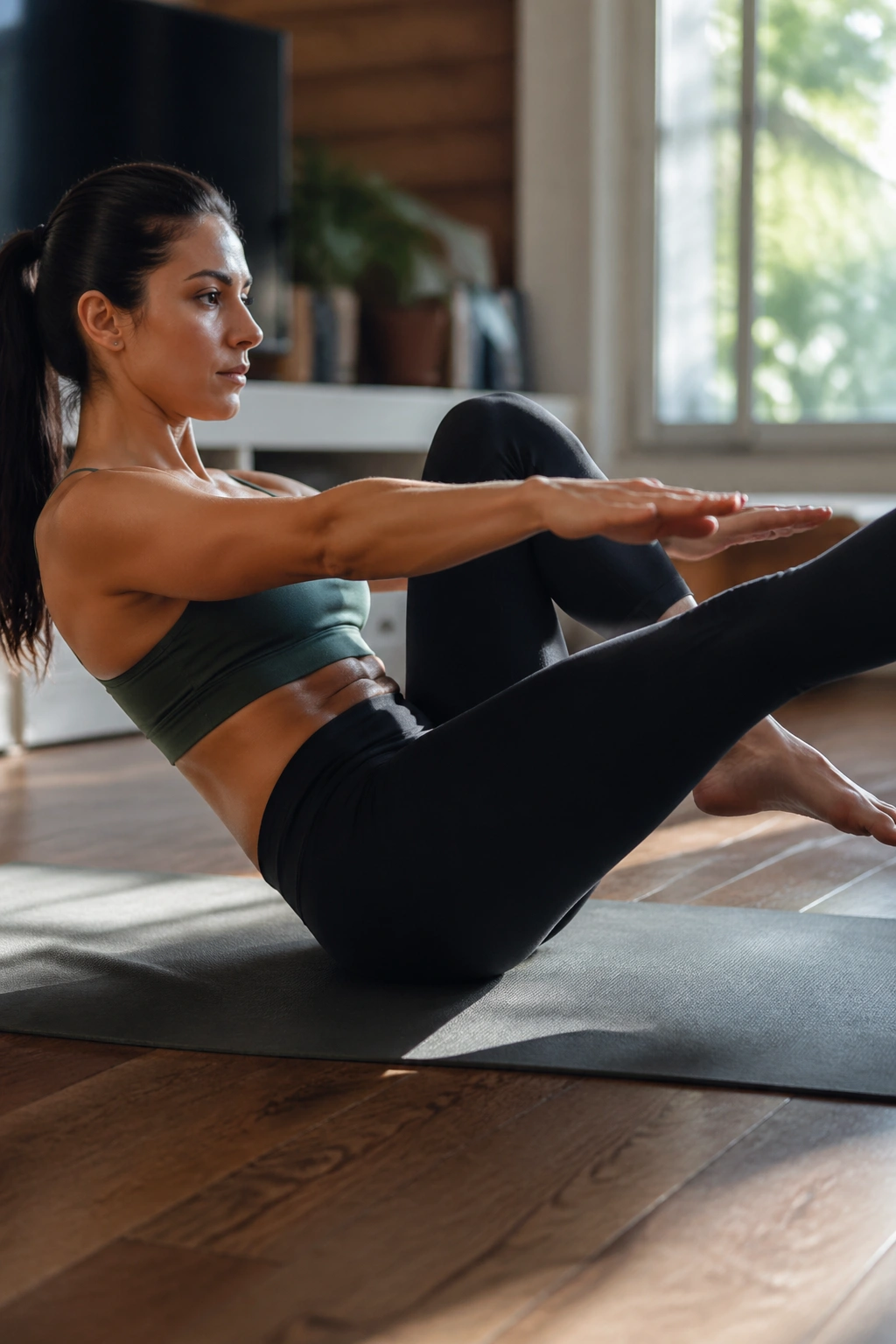
Teaser prep teaches the kind of control that the mirror can’t fake. A full Teaser gets all the attention, but the prep version is more useful for most bodies because it lets you build the shape without turning it into a struggle.
From a curled position, one leg extends while the torso holds, then you switch sides or hold both legs bent and slowly lengthen the knees away. The goal is balance between the top and bottom halves of the body. If the shoulders tense, the neck cranes, or the low back collapses, the position is too ambitious.
I’d rather see a smaller Teaser prep held for three clean breaths than a full extension that falls apart in one second. That’s not me being fussy. That’s the point. The move trains the front body to stay lifted while the legs become long and heavy.
If you want a sculpted core, keep this one in the mix. It teaches the exact kind of firmness that carries over into standing, walking, and even sitting with less slump.
8. Single-Leg Circles
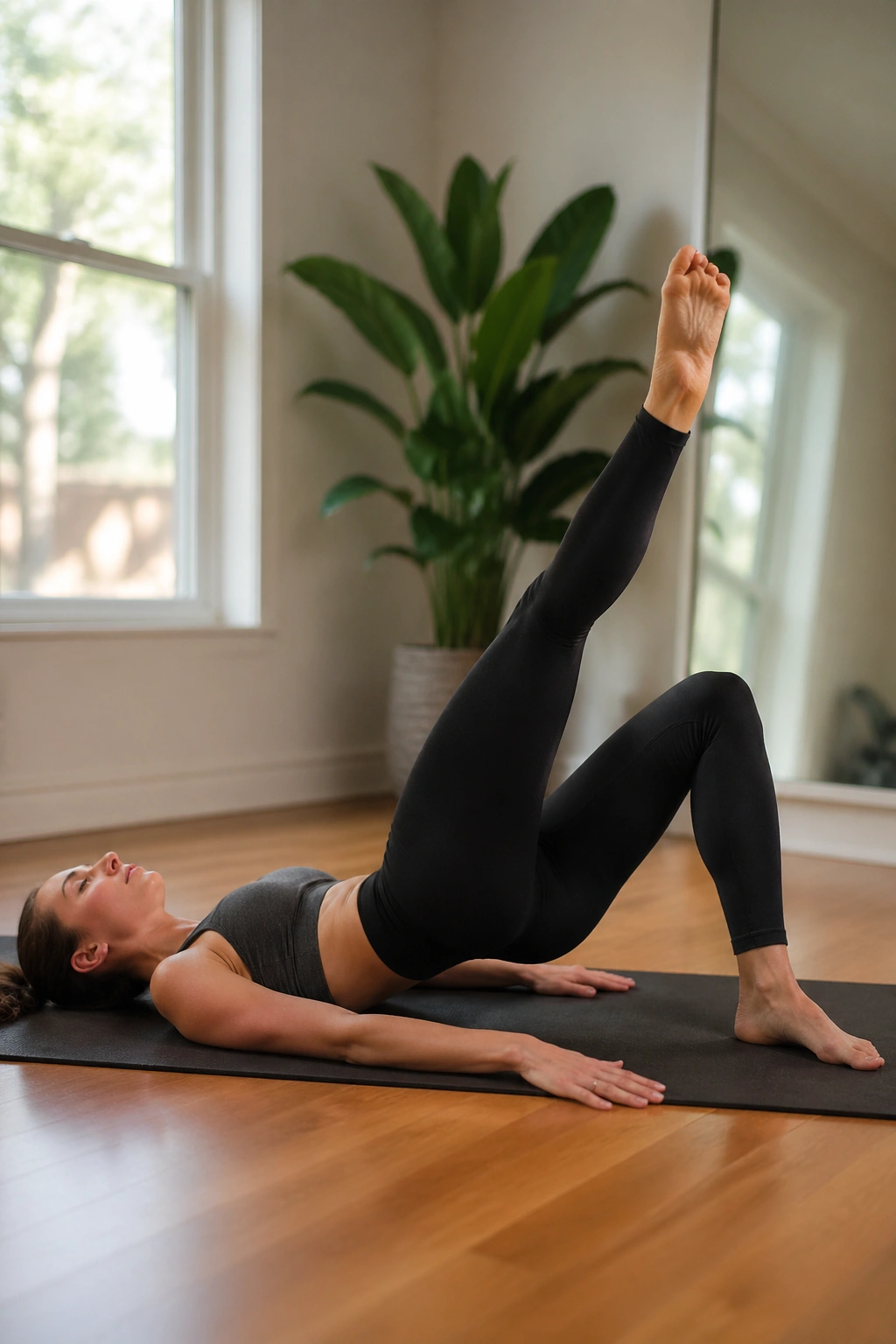
The circles look easy from across the room. They are not.
Single-Leg Circles ask one leg to move while the pelvis behaves like it’s nailed down. That quiet pelvis is the whole game. The working leg makes a small circle, the hip stays organized, and the waist keeps resisting the urge to swing open. If the circle gets huge, the lower back usually pays for it.
How Small Is Small?
Smaller than you think. I usually tell people to keep the circle about the size of a dinner plate at first. Once the pelvis stops rocking, the circle can get a little wider.
- Press the opposite hip bone into the mat.
- Keep the lifted leg long, but not locked.
- Circle from the hip socket, not from the foot.
- Exhale on the hard part if the torso starts to wobble.
This move is excellent for anyone who needs more control around the pelvis and lower abdomen. It also tells you a lot about side-to-side differences. One hip may feel steady while the other wants to wander. That’s useful information, not a failure.
9. Spine Twist
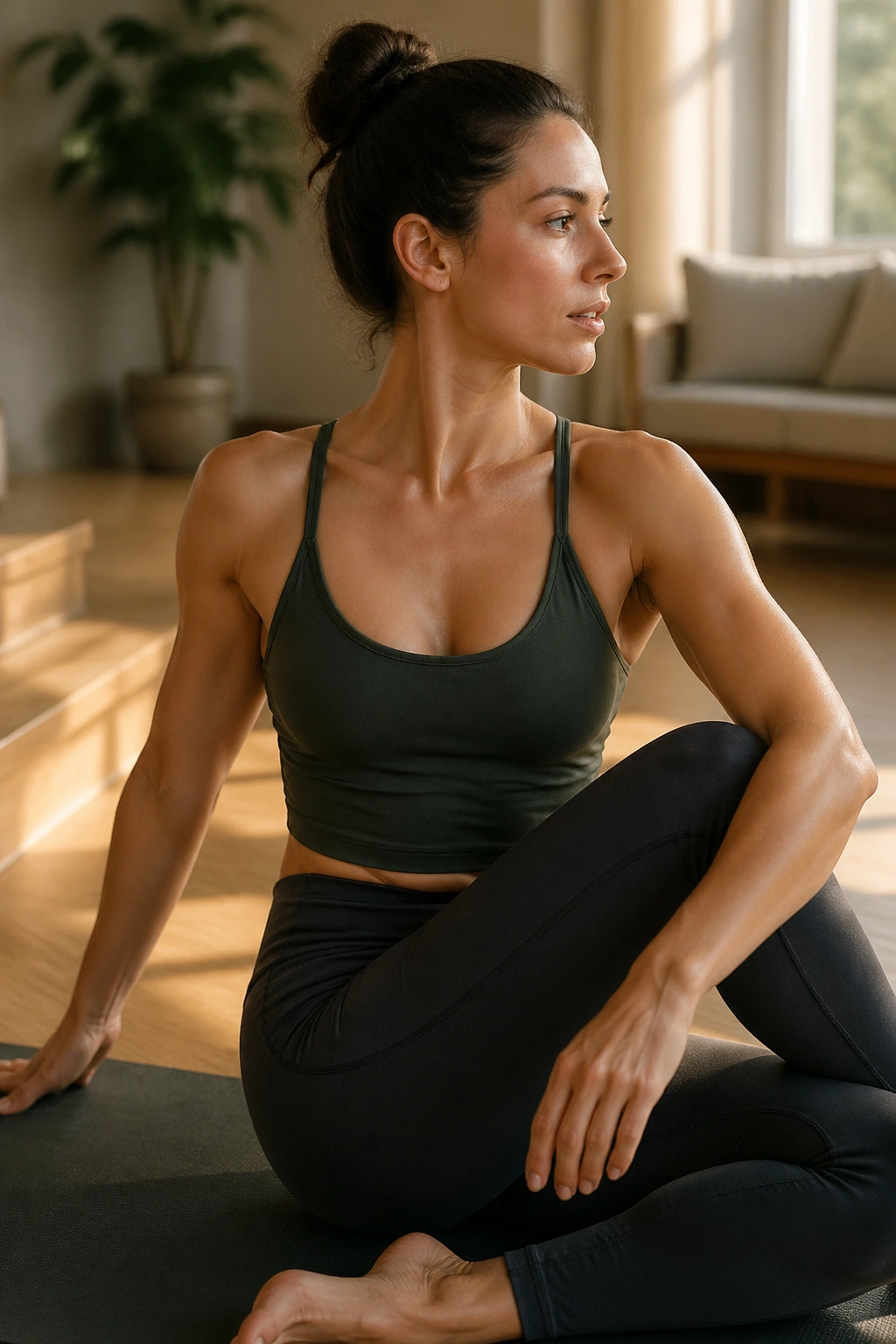
Why does a seated twist belong in a core list? Because rotation is where weak midsections start to wobble.
Spine Twist asks you to sit tall, anchor the pelvis, and rotate from the ribs. Not from the shoulders. Not from the head. The spine stays long while the torso turns, which is harder than it sounds when the hips are tight or the hamstrings pull you backward. A folded towel under the sit bones can help if you keep tipping behind the sit bones.
How to Keep the Pelvis Quiet
The legs should feel grounded. The crown of the head should feel like it’s reaching up. Then the twist happens on an exhale, with the rib cage turning as a unit instead of one shoulder dragging the rest of the body along.
If you want a sculpted waist, don’t rush this one. The controlled rotation and return are what train the obliques. A fast twist with a sloppy spine just becomes a sway. And a sway does not do much.
Hold the height first. Twist second. That order matters.
10. Side Plank Hip Dips
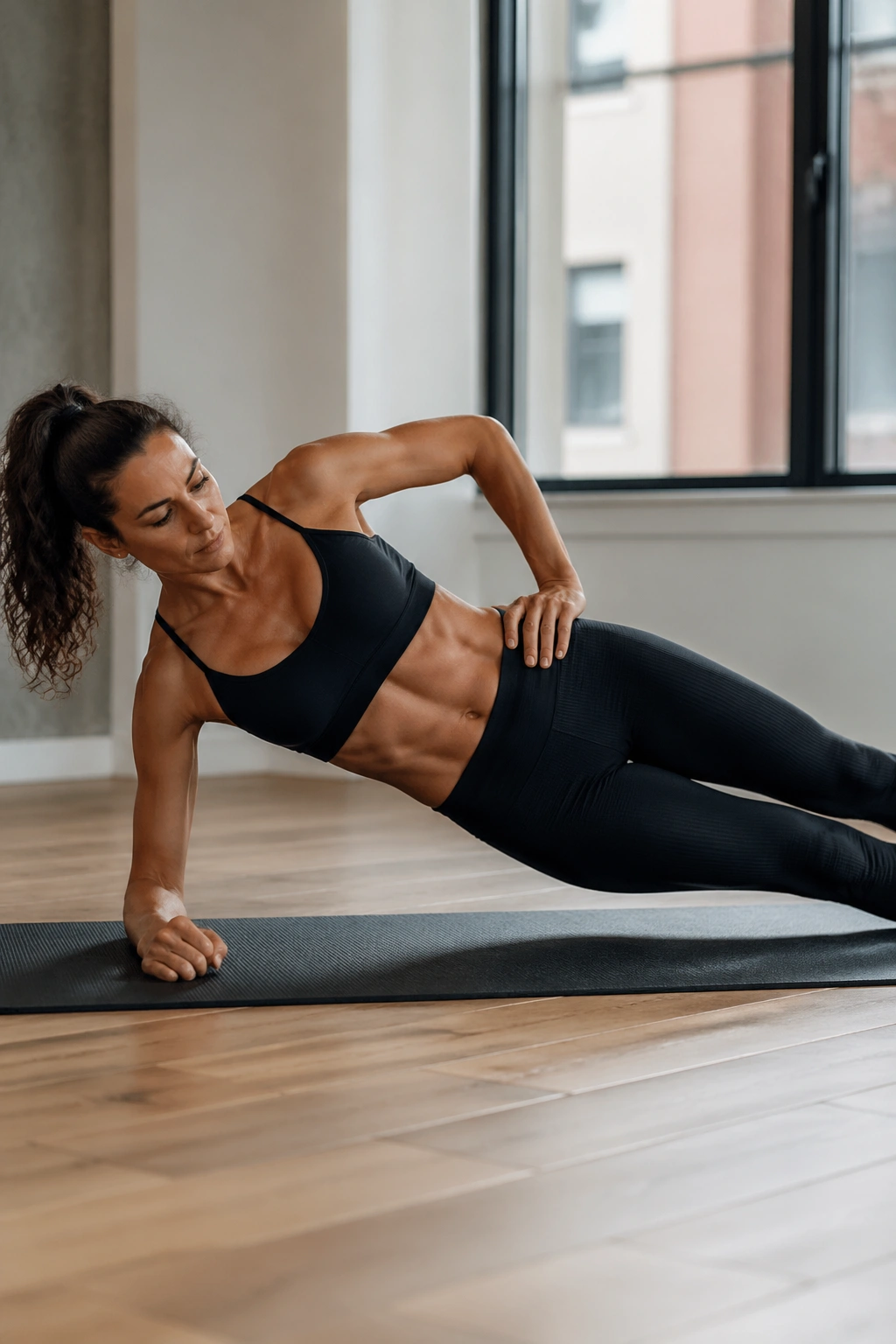
If your side plank is shaky, the dips will expose it fast. That is exactly why they’re so useful.
Side Plank Hip Dips challenge the obliques, shoulder stability, and the muscles that keep the pelvis lifted in one long line. From a forearm or straight-arm side plank, lower the hip a few inches and lift it back to the starting position. The movement is small. It should be. The goal is not to crash down and bounce up. The goal is to stay long through the waist while the side body works like mad.
You’ll feel this around the lower waist and the outer hip, especially if you keep the top shoulder stacked over the bottom one. If your wrist is sensitive, use the forearm version. If your neck tightens, look slightly down and forward instead of up.
A few clean reps beat a long set of half-failed ones. Every time.
11. Dead Bug with Curl
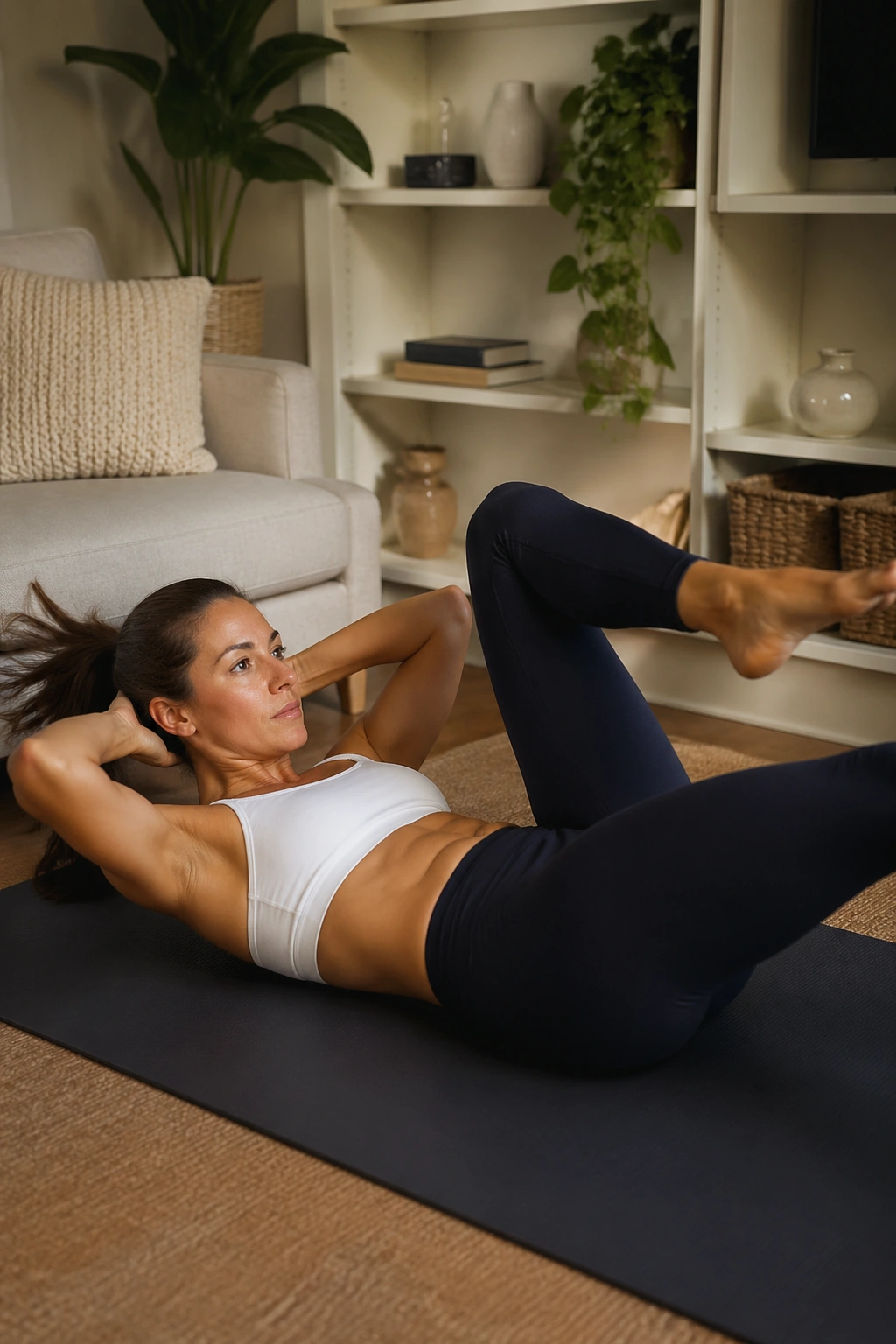
A plain dead bug keeps the spine quiet. Add the curl, and the upper abs have to show up too.
This version is especially good for people who want core work without the drama of full sit-ups. Lie on your back, curl the head and shoulders off the mat, then alternate extending one leg at a time while the other stays bent. The torso has to hold its shape even as the limbs move, which is a very Pilates problem in the best way.
I like this move because it strips away cheating. If the neck grabs, the curl is too high. If the back arches, the leg is too low. If the belly pushes outward, slow the pattern down and shorten the extension. The work should feel organized, not frantic.
Use an exhale to make the front of the waist feel narrower. That little breath cue changes the whole exercise.
12. Leg Pull Front
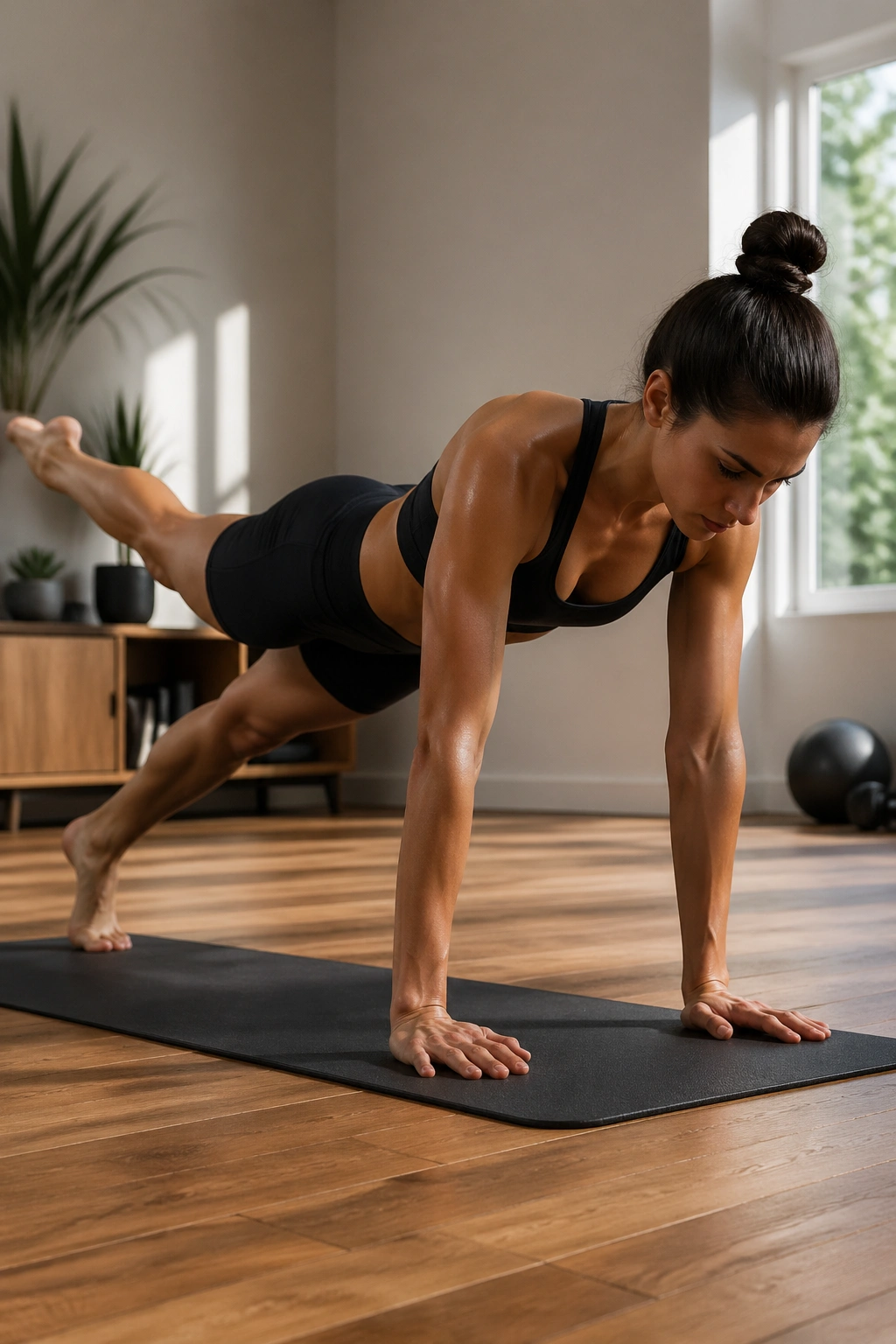
This move is half plank, half balance test, and all truth.
In Leg Pull Front, you hold a strong front support position, then lift one leg off the floor without letting the hips swing open. The core has to keep the line of the body steady while the leg moves behind you. That’s a lot harder than it looks, especially when the shoulders are tired or the wrists are fussy.
What the Wobble Means
If your hips twist every time the leg lifts, the base is not stable enough yet. Keep both feet down and own the plank first. Then add the leg lift in tiny doses.
- Press firmly through the hands.
- Keep the ribs from sagging toward the floor.
- Lift the leg only as high as you can hold the pelvis square.
- Lower with control, not a drop.
The beauty of this move is that it trains the whole front line: shoulders, abs, glutes, and even the inner thighs. It’s a hard one. That’s why it earns its spot.
13. Leg Pull Back
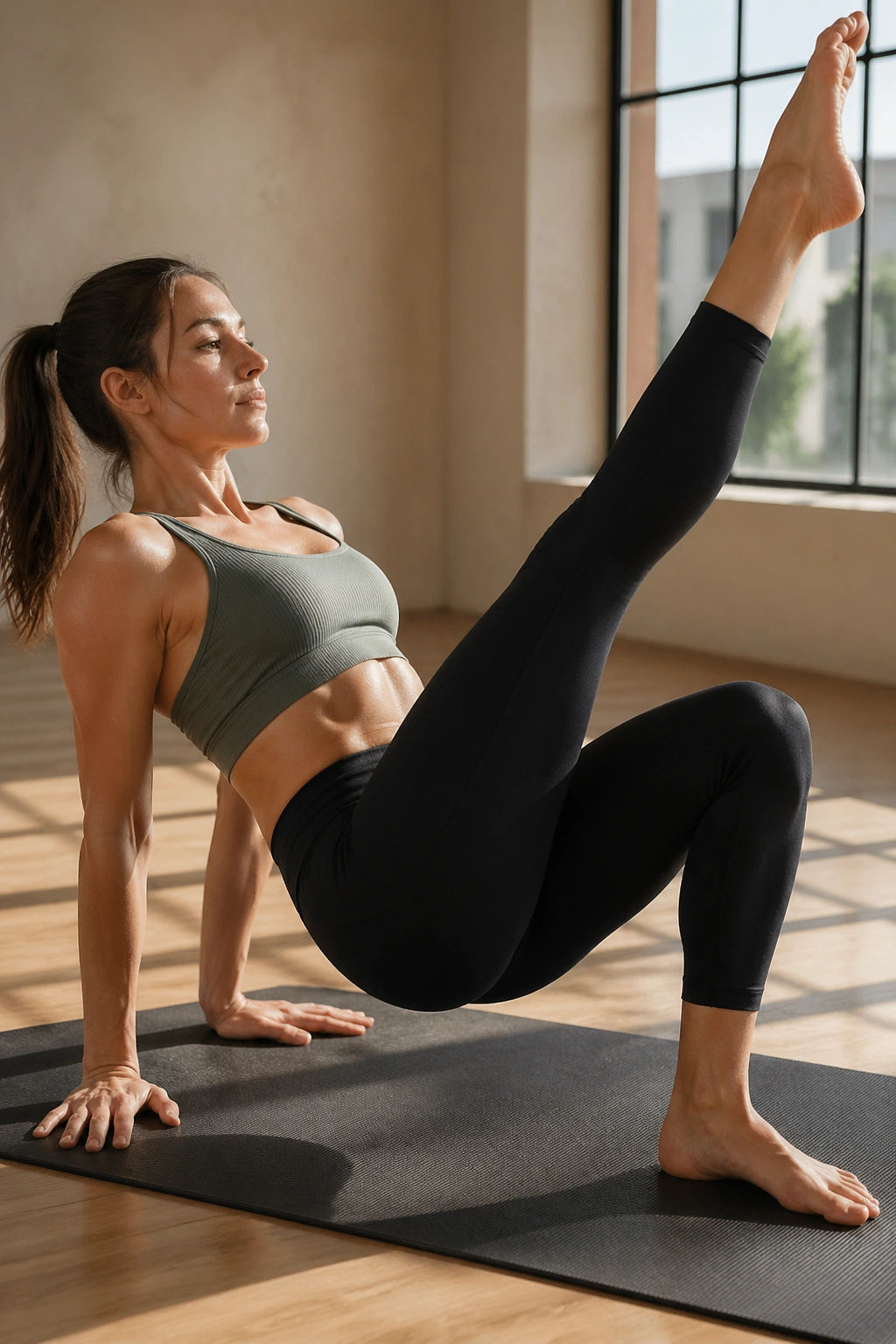
Can a reverse plank really sculpt the core? If your ribs stay in and the hips stay lifted, yes.
Leg Pull Back flips the body over and asks the back line to keep the torso organized. With the hands behind you and the chest open, one leg lifts at a time while the trunk resists sagging. The abs still matter here, even though the glutes and hamstrings get their moment. In fact, the core has to work hard to keep the pelvis from dumping forward.
This is one of those exercises that looks like a shoulder move until you try it. Then the midsection starts shouting. Keep the neck long, the chest open, and the standing leg active. If the wrists complain, soften the elbows slightly or shorten the hold.
It’s a useful counterbalance to all the curl-up work. Front body, back body. Both matter.
14. Swimming
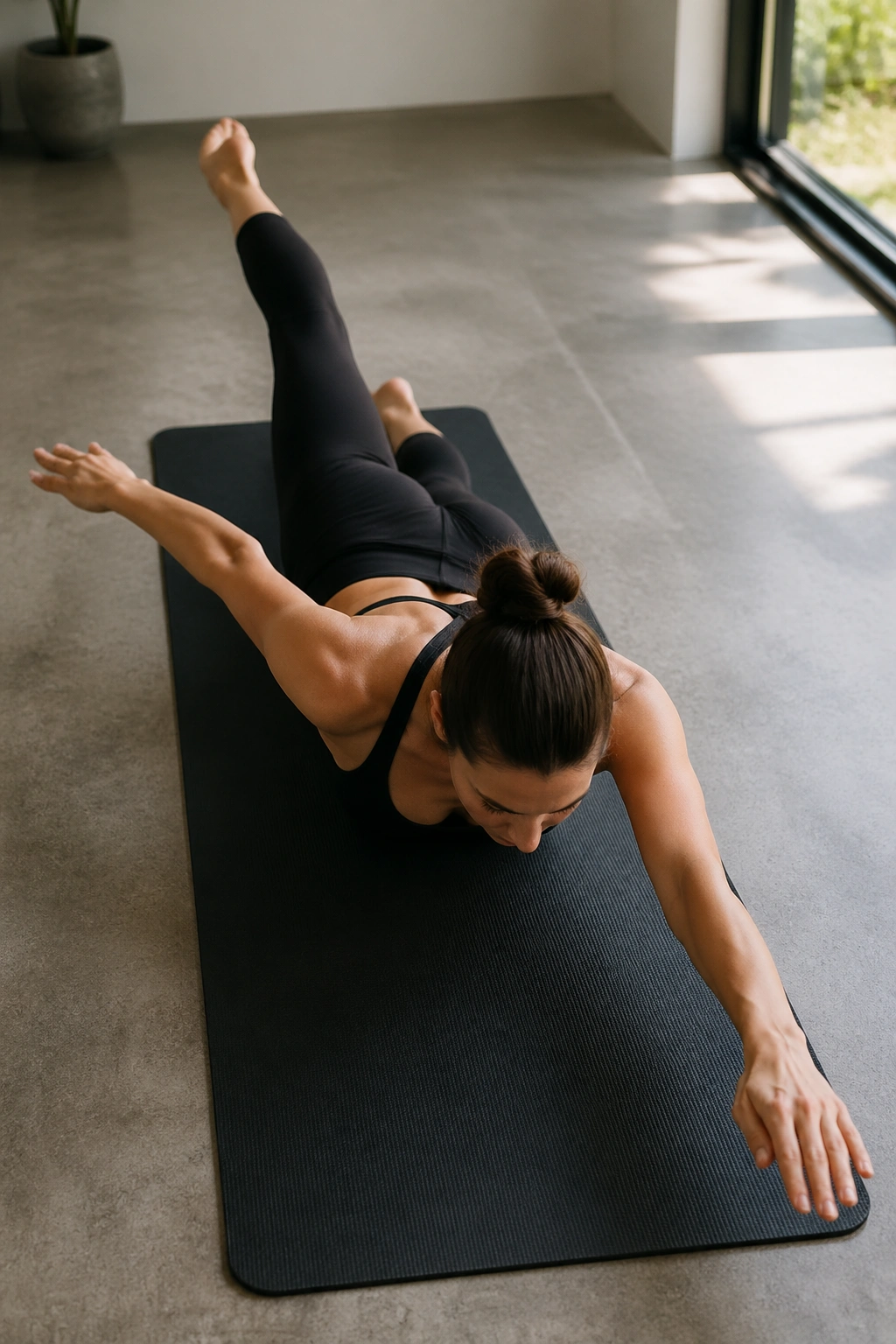
The right version feels like a low, controlled buzz through the back body. It should not feel like a jammed neck and a spasming lower back.
Swimming is a prone Pilates move where opposite arm and leg lift together in a small, quick rhythm. The chest stays lightly lifted, the gaze stays down, and the limbs alternate in a pattern that lights up the glutes, upper back, and the deep muscles along the spine. The core stabilizes the middle so the movement can happen without dumping into the lower back.
Where the Effort Belongs
The kicks and reaches should be small enough that the body stays long. If you start flinging the arms and legs high, the neck usually tightens and the lower back steals the job. Keep the movement close to the mat.
A good set of Swimming reps leaves you feeling awake across the whole back side of the body. That matters for core work, too. A sculpted midsection is not only about curling forward. It’s also about having enough support behind you that the torso can stay lifted all day.
15. Corkscrew
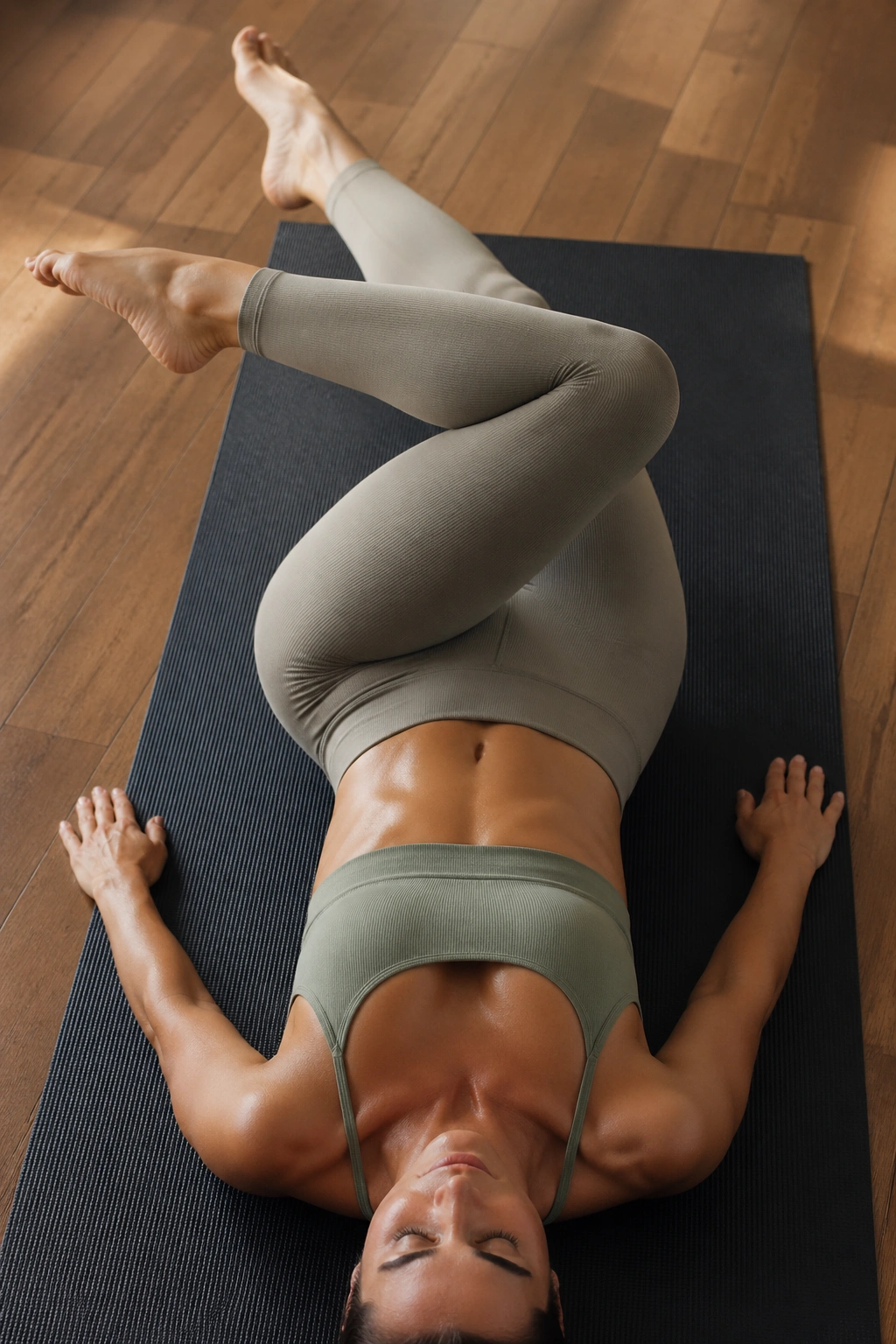
People usually try to make Corkscrew too big. Don’t.
The move starts from the pelvis and the lower abs, not from the feet drawing giant circles in the air. Lie on your back, lift the legs, then let the hips make a controlled circle while the shoulders stay heavy. If the range is small at first, good. Small is often cleaner, and cleaner is what works.
The moment the rib cage flares or the neck strains, the circle has gone off the rails. Keep the movement quiet and watch the lower belly. It should feel as if it’s drawing the hips back toward center every time the legs move away.
A Useful Cue
Think of the pelvis drawing a small halo on the mat rather than the feet carving a wide ring overhead.
That mental image keeps the motion from turning into a gymnastics trick. It’s a core exercise first. The pretty shape is a side effect.
16. Saw
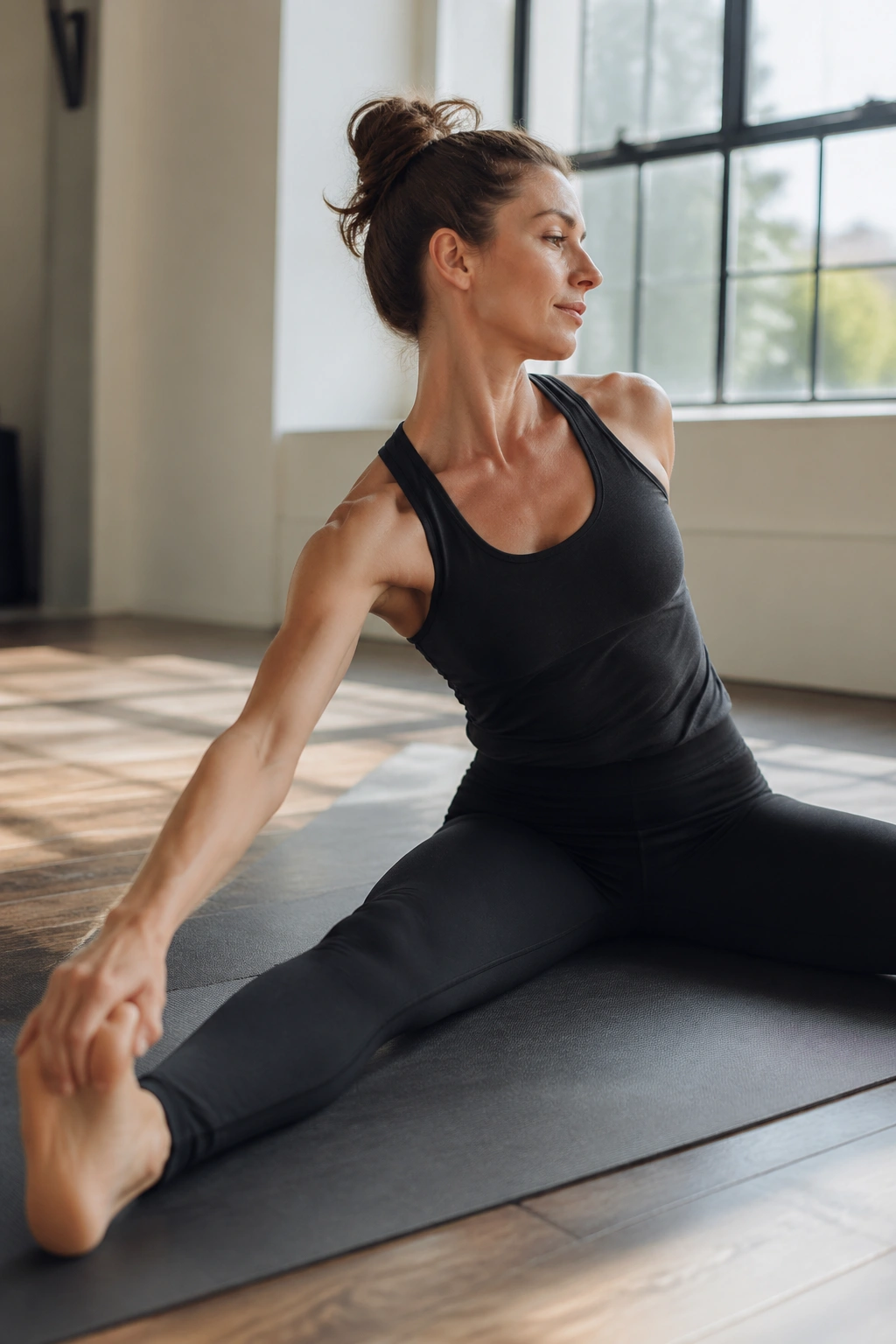
Unlike a hamstring stretch that stays in one line, Saw trains a long diagonal through the torso.
You sit tall with the legs open, rotate the trunk, and reach the opposite hand toward the outside of the foot. The twist and fold happen together, which is where the obliques and spinal muscles really get involved. It’s a lovely move when it’s done well. The breath helps here a lot. Rotate on the exhale, grow taller on the inhale, then return to center with the spine still long.
People tend to round too early in this one. That turns it into a sloppy reach. Keep the pelvis grounded and let the ribs lead the twist before the hand goes anywhere. The arm reaching toward the opposite little toe should feel like the last piece of the motion, not the first.
If your hamstrings are tight, sit on a folded towel. That tiny lift can make the whole exercise cleaner.
17. Shoulder Bridge March
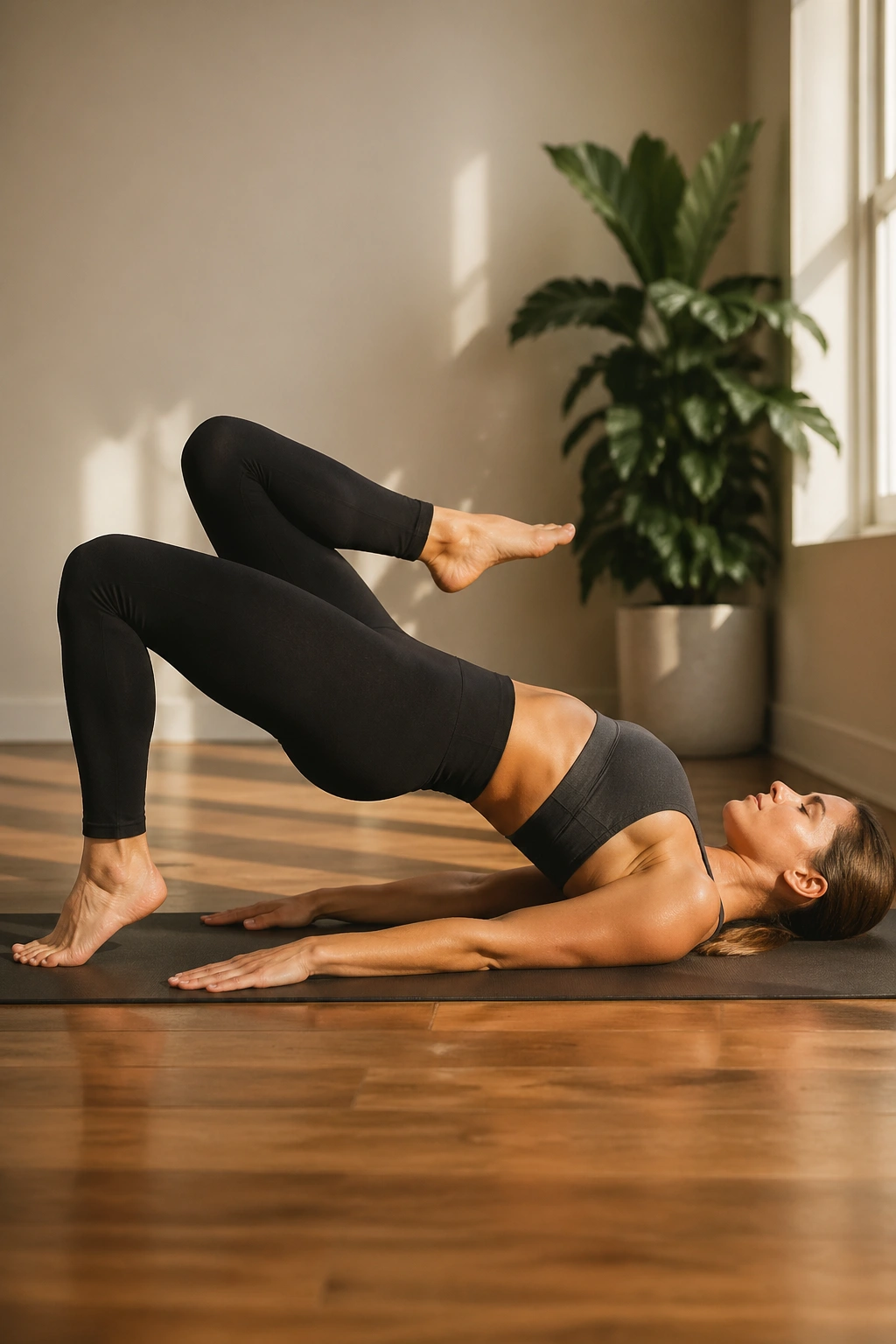
This is the move I hand to people who can plank but lose the pelvis the second one foot floats.
Shoulder Bridge March starts in a bridge position with the hips lifted, then one knee lifts toward the chest while the pelvis tries to stay level. That little march is sneaky. The glutes have to hold the bridge, the hamstrings help, and the core keeps everything from tipping side to side. If the pelvis drops each time a foot lifts, the march is too fast or the bridge is too high.
I prefer a bridge that feels solid and boring over one that looks dramatic but shakes apart. You can always raise the hips later. First, keep the line even. Then lift one foot a few inches and set it back down with control.
This one is excellent for building the kind of core stability that carries into walking, running, and standing without dumping weight into one hip.
18. Rolling Like a Ball
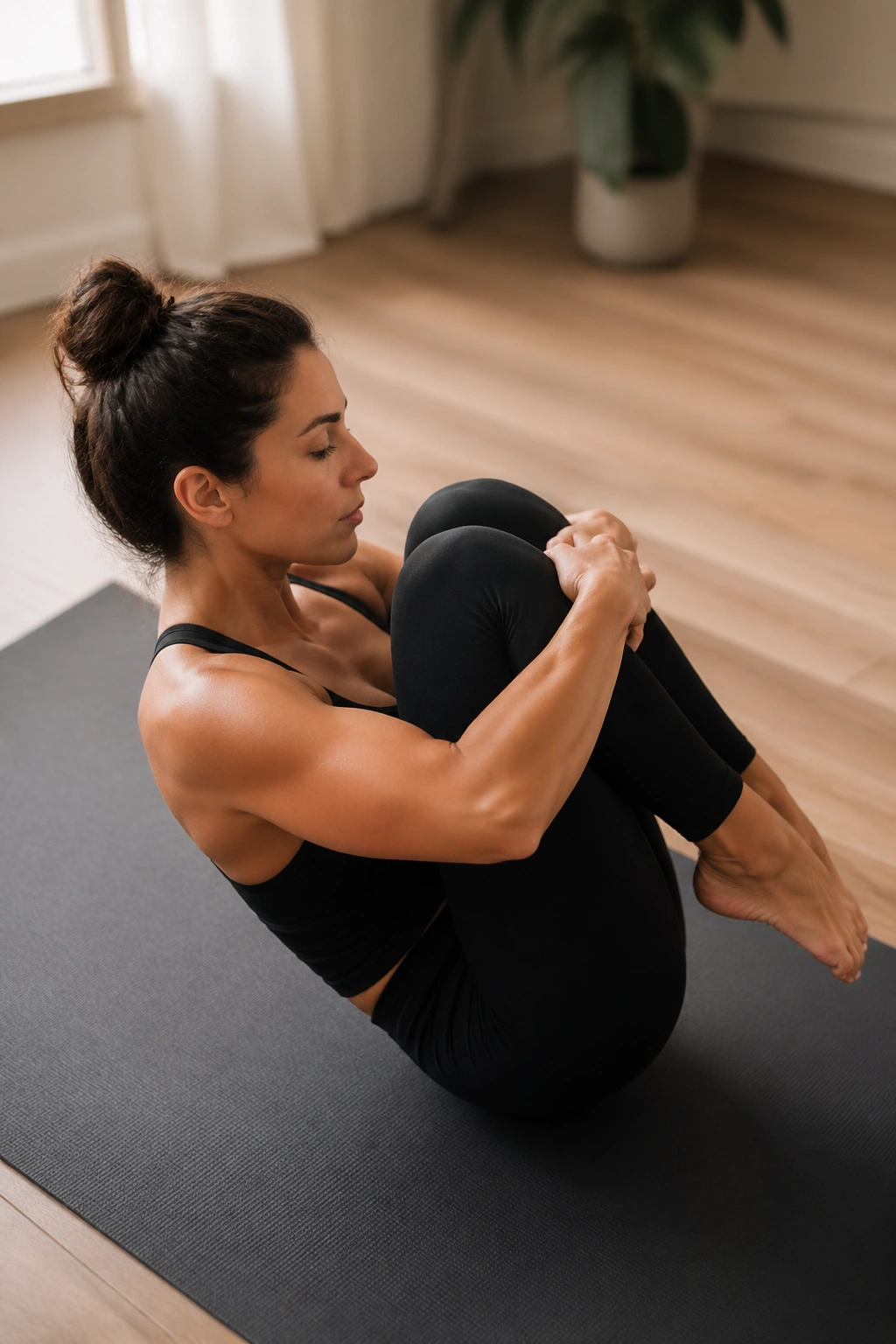
If you can roll without slamming into your tailbone, your center is doing its job.
Rolling Like a Ball is playful on the surface, but it demands a tight shape through the abdominals and a steady breath. You tuck into a small ball, balance on the sit bones, and roll back only as far as you can control before coming back up to balance. The movement should feel smooth, not noisy. If you hear a thud, the shape is too loose or the range is too big.
Why the Small Version Wins
A tiny roll with a clean return tells you more than a big, messy one. The body has to stay compact, and the abs have to keep the shape intact while momentum tries to take over.
- Keep the knees close to the chest.
- Hold the shins lightly.
- Roll to the shoulder blades, not the neck.
- Exhale to come back to balance.
I’ve always liked this one because it shows where the core gets lazy. It also feels oddly good when it’s controlled. Tiny, but satisfying.
19. Double-Leg Kick
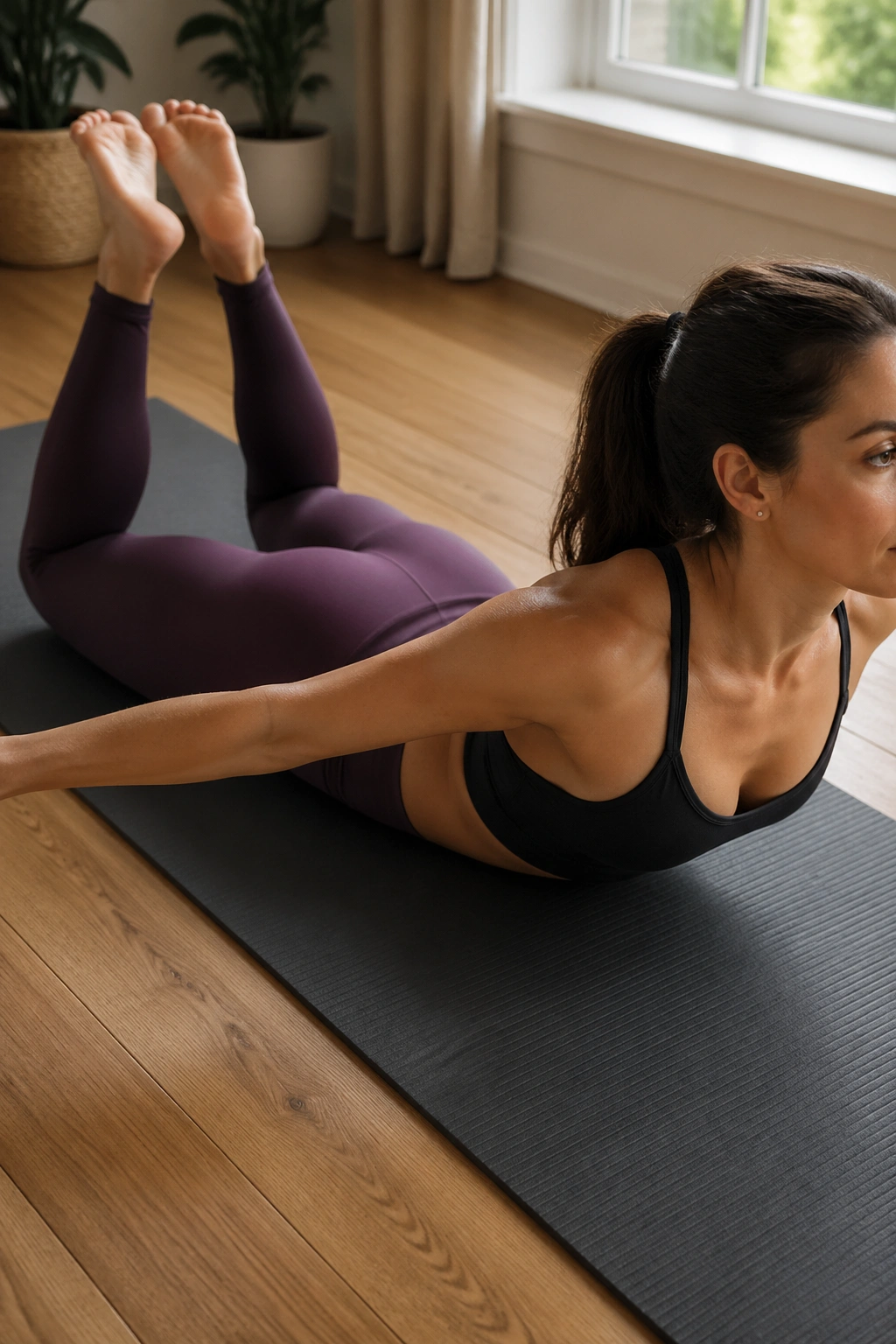
Back-body strength and abdominal control meet here. The core never gets to clock out.
Double-Leg Kick is done lying face down, with the legs bent and heels tapping toward the seat in a quick rhythm before the chest lengthens forward. The upper back, glutes, and hamstrings do a lot of the visible work, but the abdominals keep the pelvis anchored and the ribs from exploding off the mat. Without that support, the move turns into a neck crank. Not worth it.
What to Feel
The front of the hips should stay heavy. The neck should stay long. The kick itself is small and controlled, not a wild flick.
If the lower back pinches, reduce the lift of the chest. If the shoulders jam, slide them down away from the ears before you begin. The rhythm is what matters: kick, kick, kick, reach. Then reset.
This move is especially useful if you sit a lot and your front body feels tight. It opens the chest while asking the core to keep everything from collapsing into the mat.
20. Side Kick Series
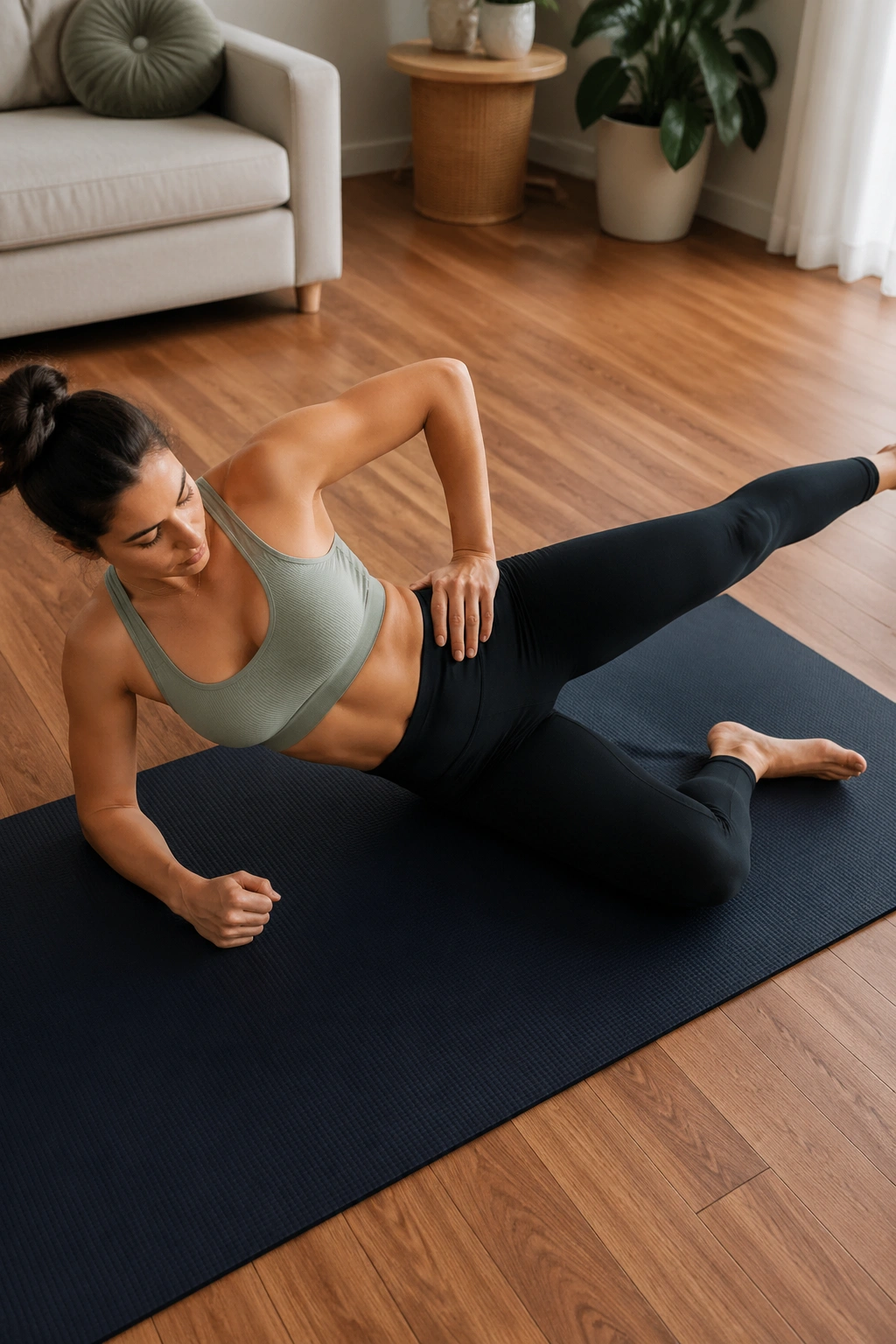
Why do side-lying leg lifts belong in a core article? Because the pelvis has to stay stacked while the leg keeps moving.
Side Kick Series usually includes front-and-back kicks, small circles, and sometimes a little lift and lower pattern. The working leg moves, but the waist has to hold the body steady so the hips don’t roll backward or forward. That’s the hidden core work. The side body is doing a ton of stabilizing while the outer hip and glute on the top leg join the party.
I like this series because it shows whether someone can keep the trunk still while the leg does something messy. If the waist collapses, shorten the range. If the top hip drifts backward, bring it slightly forward and reset the stack.
A clean side-lying series makes the whole midsection feel more connected. It’s not flashy. It is effective.
21. Jackknife Prep
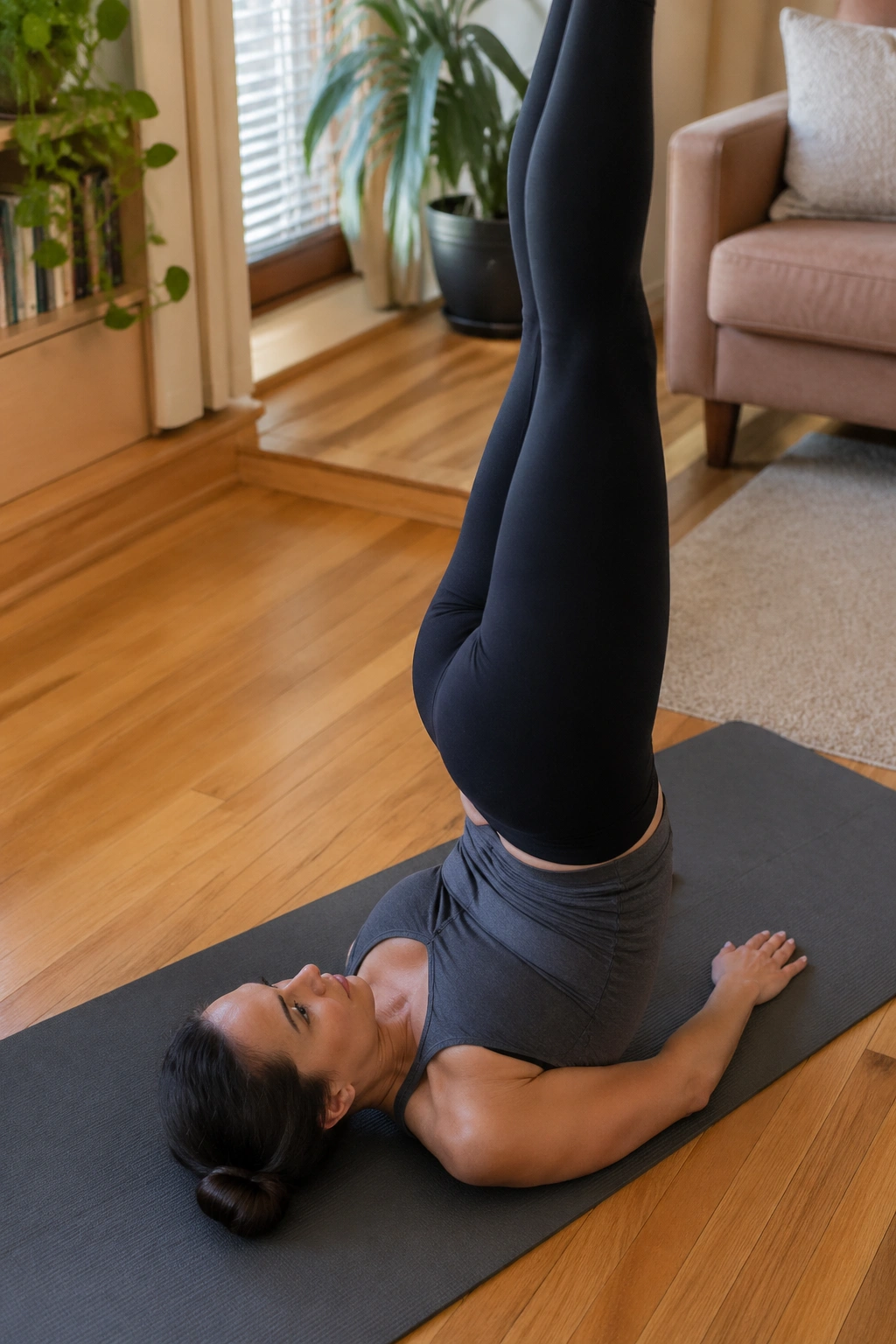
A Teaser asks for fold. Jackknife Prep asks for lift.
This move begins on the back and moves into a shoulder stand shape with more control than momentum. The legs travel upward, the hips stack, and the core has to keep the spine from hinging in awkward places. It’s a serious abdominal exercise, but it also asks for shoulder stability and patience. Patience is the word here. If the legs fly overhead, the neck and lower back get the bill.
Back Off If This Happens
- Your weight shifts onto the neck.
- The ribs flare and the belly pushes out.
- The legs swing instead of lifting.
- The shoulders creep toward the ears.
Keep the lift small at first. Think of sending the hips up in a smooth line rather than tossing the legs overhead. When it’s done well, Jackknife Prep feels powerful and controlled, not frantic.
For a sculpted core, this kind of shape control matters. It teaches the body to lift from the center instead of from momentum.
22. Mermaid
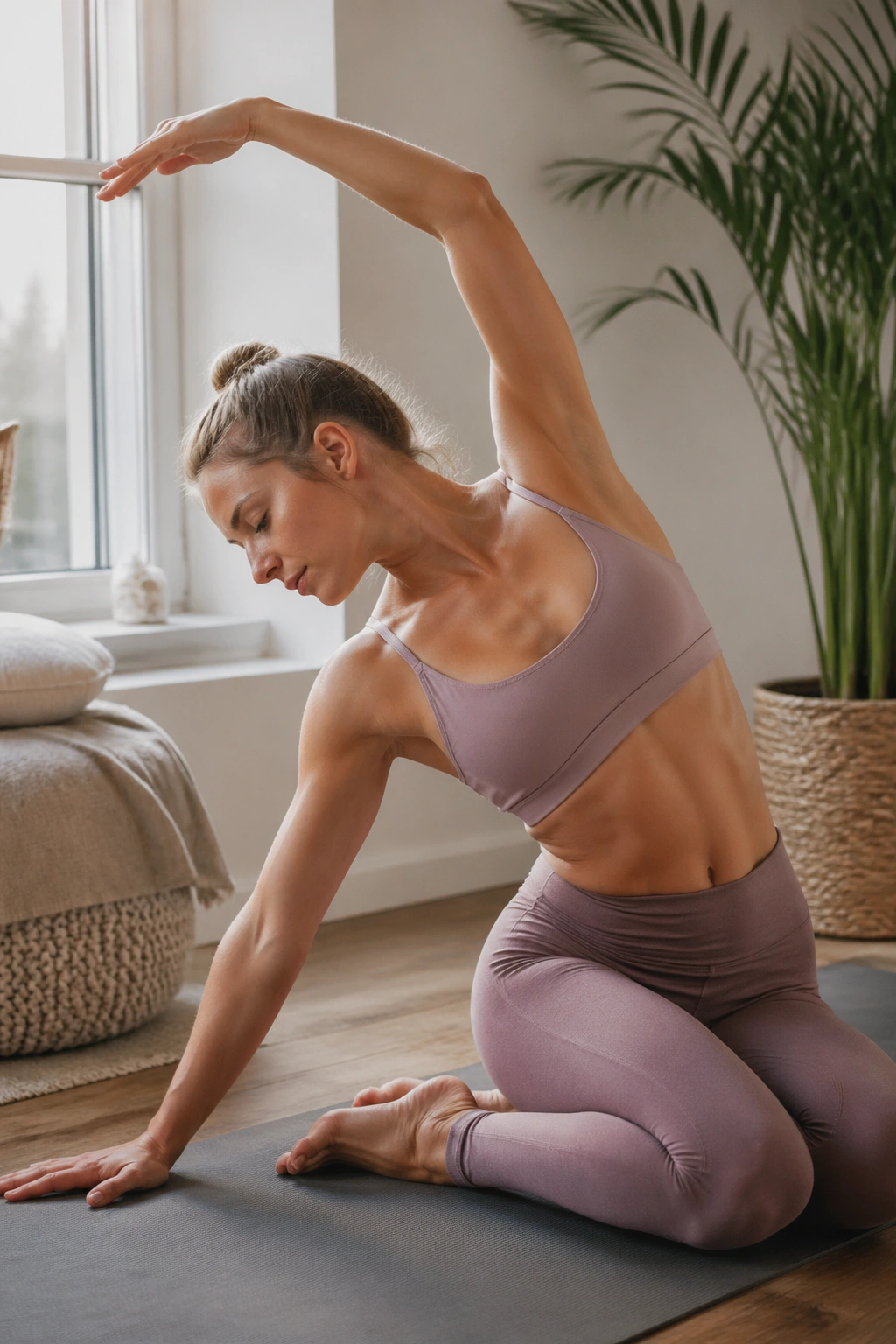
After all the flexion, rotation, and plank work, Mermaid is the move that lengthens the sides and keeps the waist from feeling crushed.
Sit in a side-sit position, one hand on the mat for support, and arc the free arm overhead as the torso bends away from the grounded side. The obliques lengthen, the ribs open, and the breath gets room to move into the side body. That matters more than people think. A core that can only contract gets tight and ugly fast. A core that can also lengthen looks and feels far better.
Mermaid is not a lazy cooldown. It still asks for control, especially if you keep the hips anchored and avoid collapsing into the lower back. The shape should feel long and clean, with the side waist doing its work.
I like ending a core session with this one because it restores a bit of space. After all the effort, that space matters.
Final Thoughts
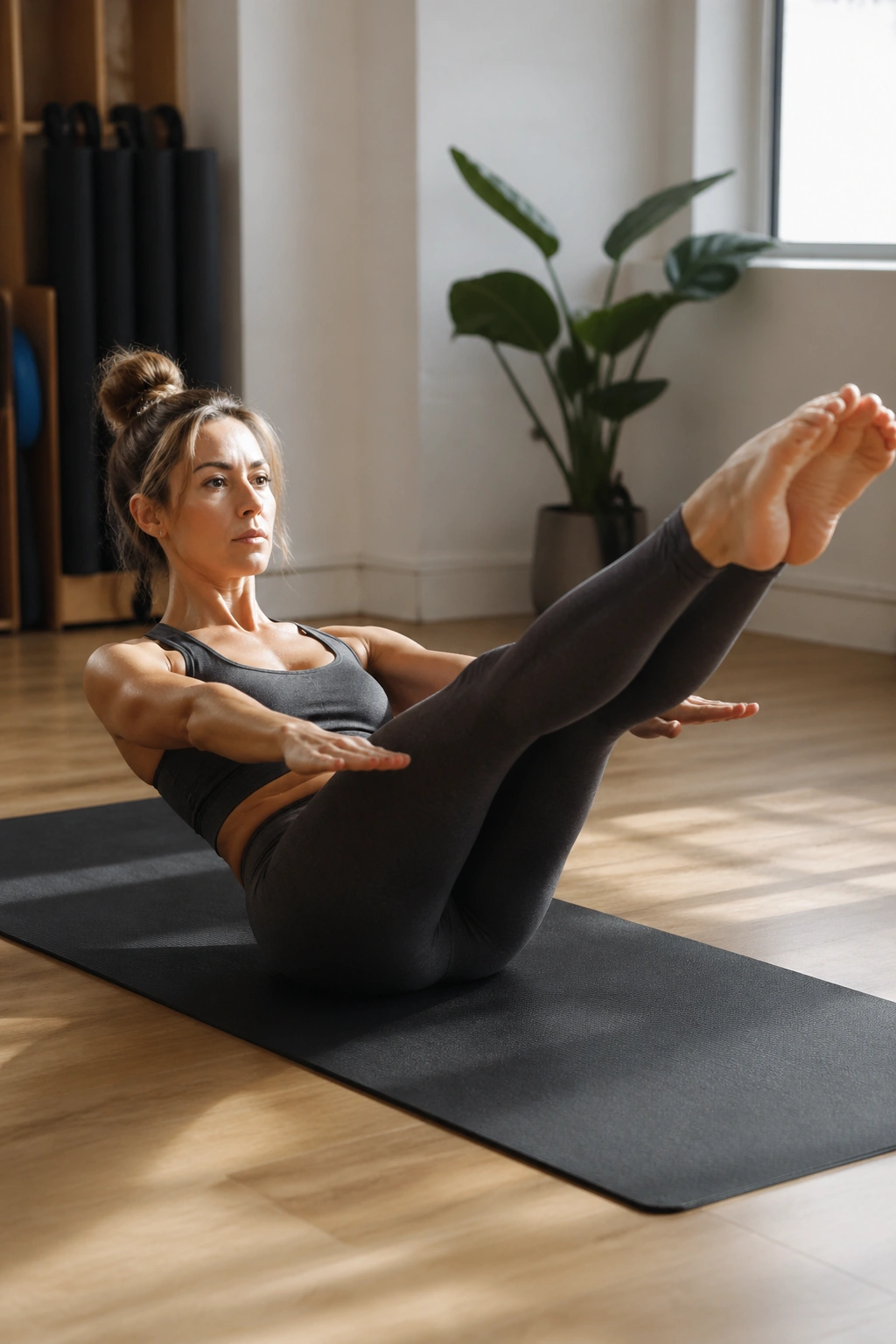
A sculpted core from Pilates comes from more than one kind of effort. Flexion matters. Rotation matters. Side bending matters. So does the boring part that nobody posts: keeping the ribs quiet and the pelvis steady while the limbs move.
The smartest way to use these moves is to pair them. One curl, one rotation, one stability drill, one lengthening move. That mix gives the torso a shape that looks firm and moves well, which is the part most people want anyway.
If a move makes your lower back take over, shorten the lever, bend the knees, or raise the legs higher. That is not a downgrade. It is good coaching. And good coaching is what turns Pilates work from a random ab burn into something you can actually feel in the way you stand, sit, and carry yourself.
