



Pilates arm moves for women over 50 work best when they look almost too small to matter. That’s the trick. A slow arm sweep with 1-pound weights, a band that pulls back a little, or a wall slide done without shrugging can wake up the triceps, the back of the shoulders, and the little stabilizers that keep the upper body upright.
After 50, arm work is not a vanity project. It helps with grocery bags, seat belts, overhead cupboards, laundry baskets, gardening tools, and the odd little effort of lifting a purse onto one shoulder without wincing. It also helps fight the slow slump that creeps in when the shoulders spend too much time rounded forward.
The best Pilates arm work respects the joints. It uses light load, a clean range of motion, and slow lowering instead of fling-and-hope movement. That slower phase matters. It makes the muscles work harder than they look on paper, and it usually feels better on cranky shoulders too.
If your arms have been ignored for a while, start small and stay honest about what the shoulders are doing. Pinching in the front of the joint, a clenched neck, or ribs popping forward are signs to shrink the motion and clean up the line. The first move is a classic for a reason.
1. Arm Pumps in the Hundred Position
This is one of the smartest places to start. The Hundred gives you heat, breath control, and arm endurance in one neat package, and the arm pumps can be done with no weights at all.
Lie on your back with your knees bent or legs in tabletop if your lower back is happy there. Stretch your arms long by your sides, lift them just a few inches off the mat, and pump them up and down with small, quick motions. Keep the movement from the shoulder, not the wrist. Tiny pumps. Not flapping.
What to Feel
- The back of the upper arms should start to warm up first.
- Your neck should stay quiet.
- The ribs should feel heavy, not arched.
- The shoulder blades should slide, not pinch together.
If your neck tightens, leave the head down. That is not a failure. It’s a smarter choice. The arm work still does its job, and your breathing stays smoother.
Pro tip: Keep the pumps smaller than you think. Big arm swings turn this into a shoulder shrug contest, and nobody wins that one.
2. Tiny Standing Circles With Light Weights
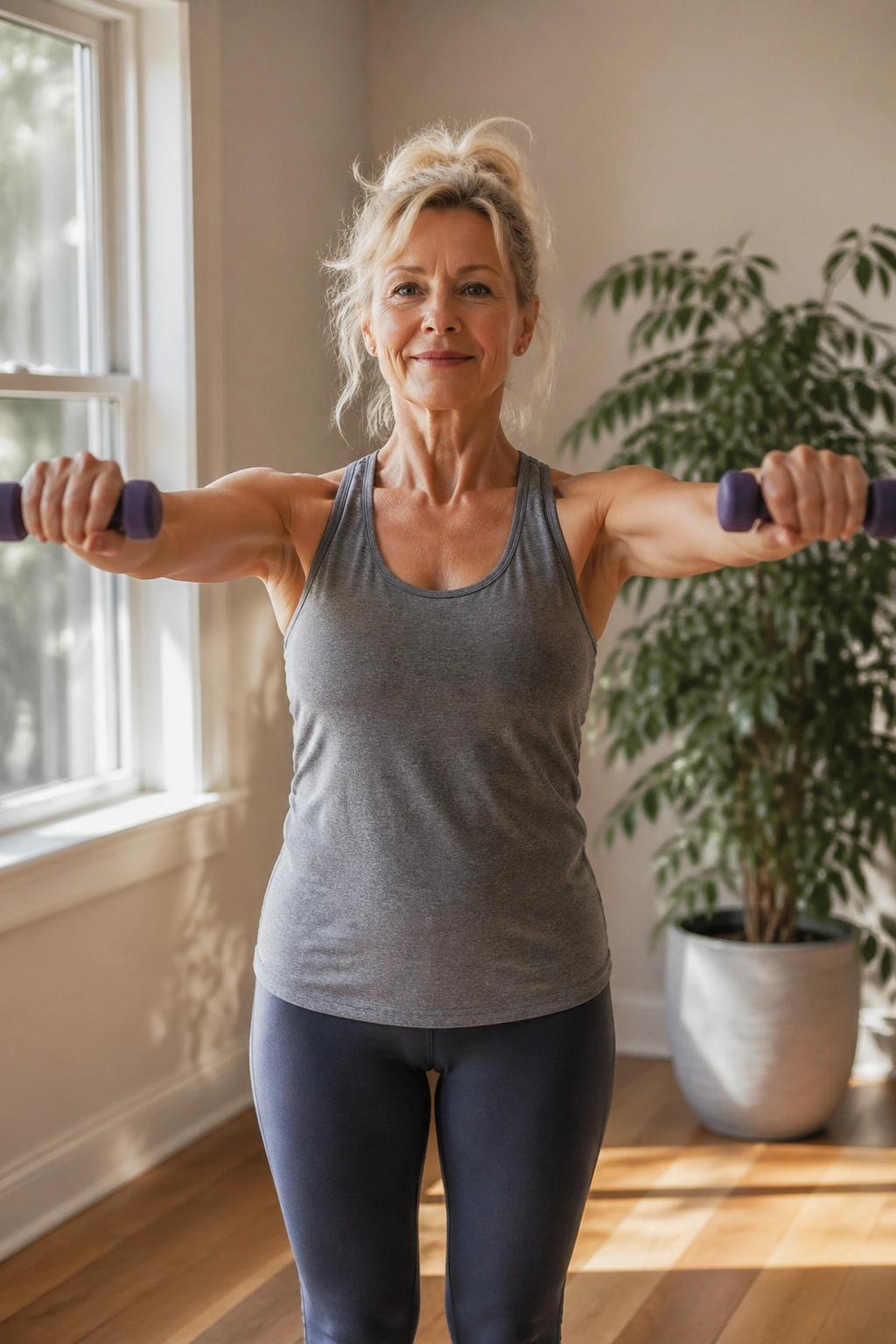
Why do little circles burn so fast? Because the muscles that keep the arm steady have to stay switched on the whole time, and there’s nowhere to hide when the circle is only 4 to 6 inches wide.
Stand tall with a soft bend in your knees and 1- to 3-pound weights in your hands. Reach the arms forward or slightly out to the sides, then draw small circles with control. Forward for 8 counts. Backward for 8 counts. The goal is not a bigger circle. The goal is a cleaner one.
A lot of people try to make this exercise look graceful and end up shrugging the shoulders to their ears. Nope. The neck should stay long, the ribs should stay stacked, and the hands should move like they’re tracing neat little coins in the air.
If your shoulders click or feel pinchy, make the circle smaller and lower the arms a few inches. You can also drop the weights and work with bare hands. That still counts. Sometimes the smartest Pilates arm exercise is the one that feels almost boring on the first round and useful on the third.
3. Chest Expansion With a Resistance Band
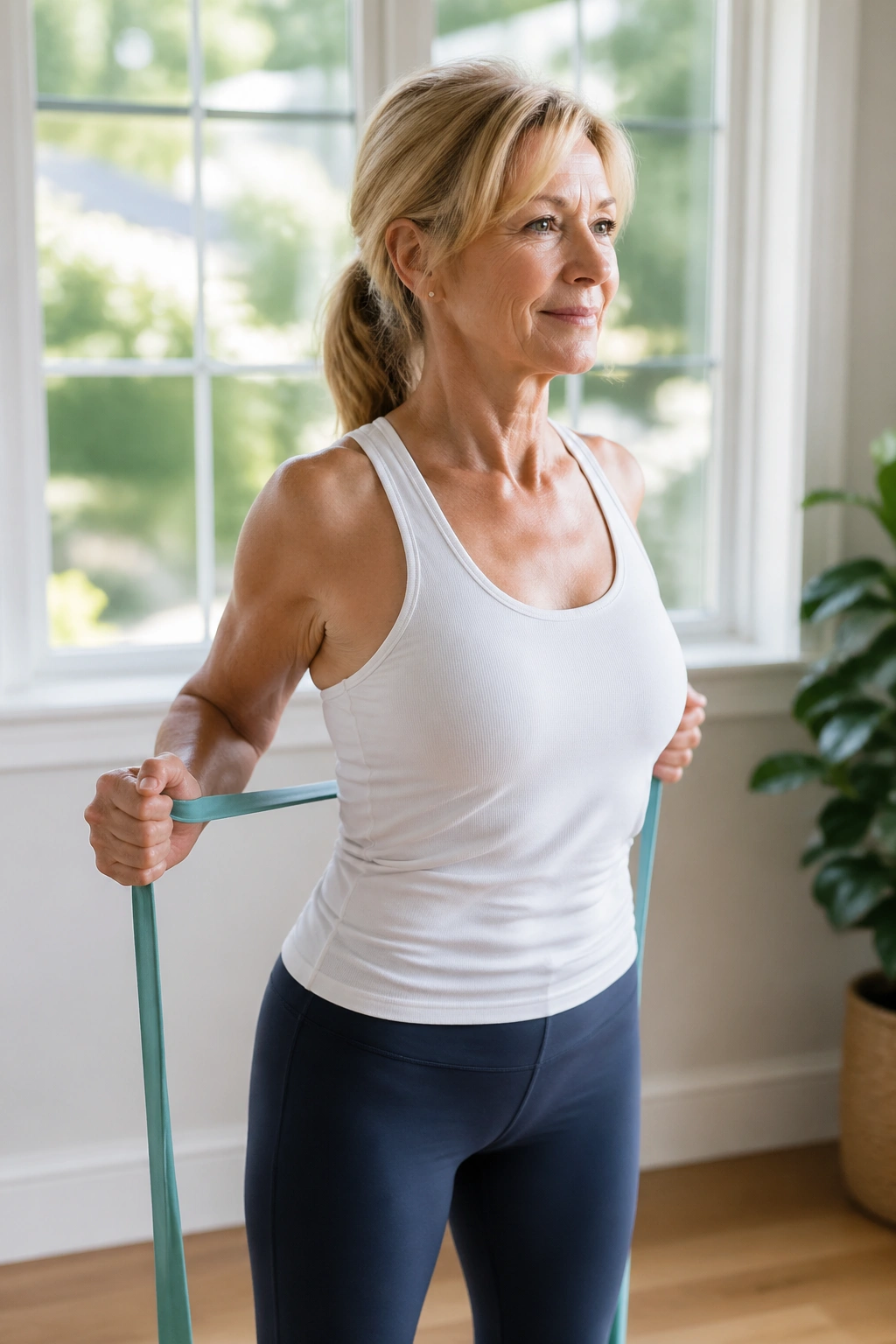
If posture is the issue, chest expansion is a workhorse. It teaches the upper back to help, which matters more than people like to admit.
Hold a light resistance band in front of your chest with your palms facing in. Step on the center of the band or anchor it under your feet. From there, pull the arms straight back until they are just behind the body, then return with control. The movement is small, but the work lands in the triceps, upper back, and the muscles that keep the shoulders from drifting forward.
The Cleanest Cue
- Keep the elbows soft.
- Let the shoulder blades glide down.
- Exhale as the arms open.
- Return slower than you think you need to.
That last part matters. The return phase is where a lot of the training happens. If you snap the band back, you miss half the point and annoy the shoulders while you’re at it.
A mirror helps here. If your ribs flare or your chin juts forward, the band is too heavy or the range is too wide. Light tension wins. Always.
4. Hug-a-Tree Squeezes for the Inner Arms
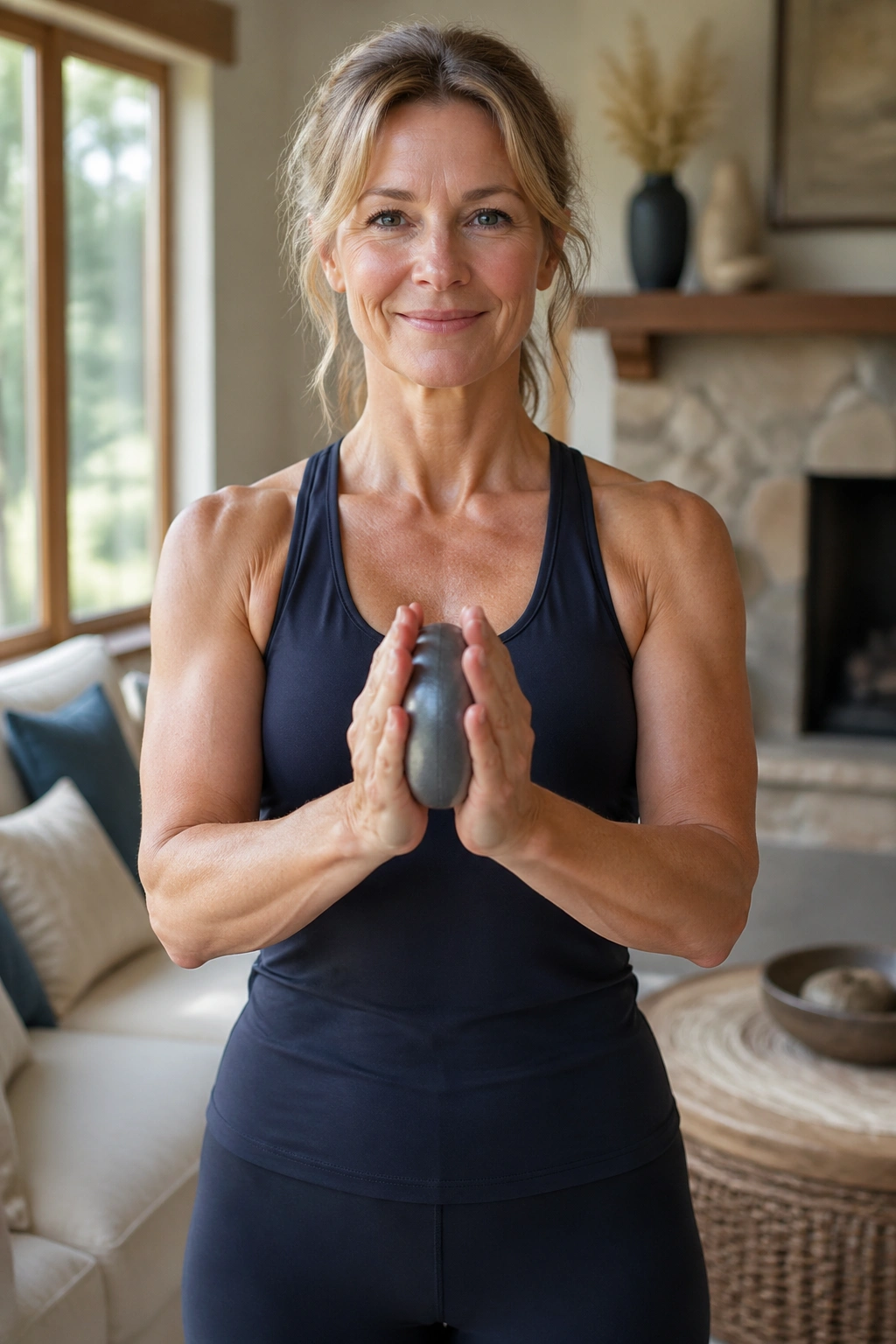
Picture holding a beach ball at chest height. That shape is the whole exercise.
Stand or sit tall and round the arms in front of your body as if you’re hugging a big tree trunk. If you have a small Pilates ball or soft ring, squeeze it gently between the palms. Open the arms out just enough to feel the chest stretch, then close again with control. The motion should feel smooth, not dramatic.
This one wakes up the inner arms, the front of the shoulders, and the chest in a way that’s kinder than heavy pressing. It also shows you pretty fast whether one shoulder is working harder than the other. One side often sneaks ahead. That’s normal, and it’s useful information.
Keep the neck long. Keep the ribs from popping forward. The moment the shoulders rise, the movement has gotten too wide or too fast.
One sentence says it all: small squeeze, clean return, no neck drama.
5. Triceps Press-Backs With a Long Reach
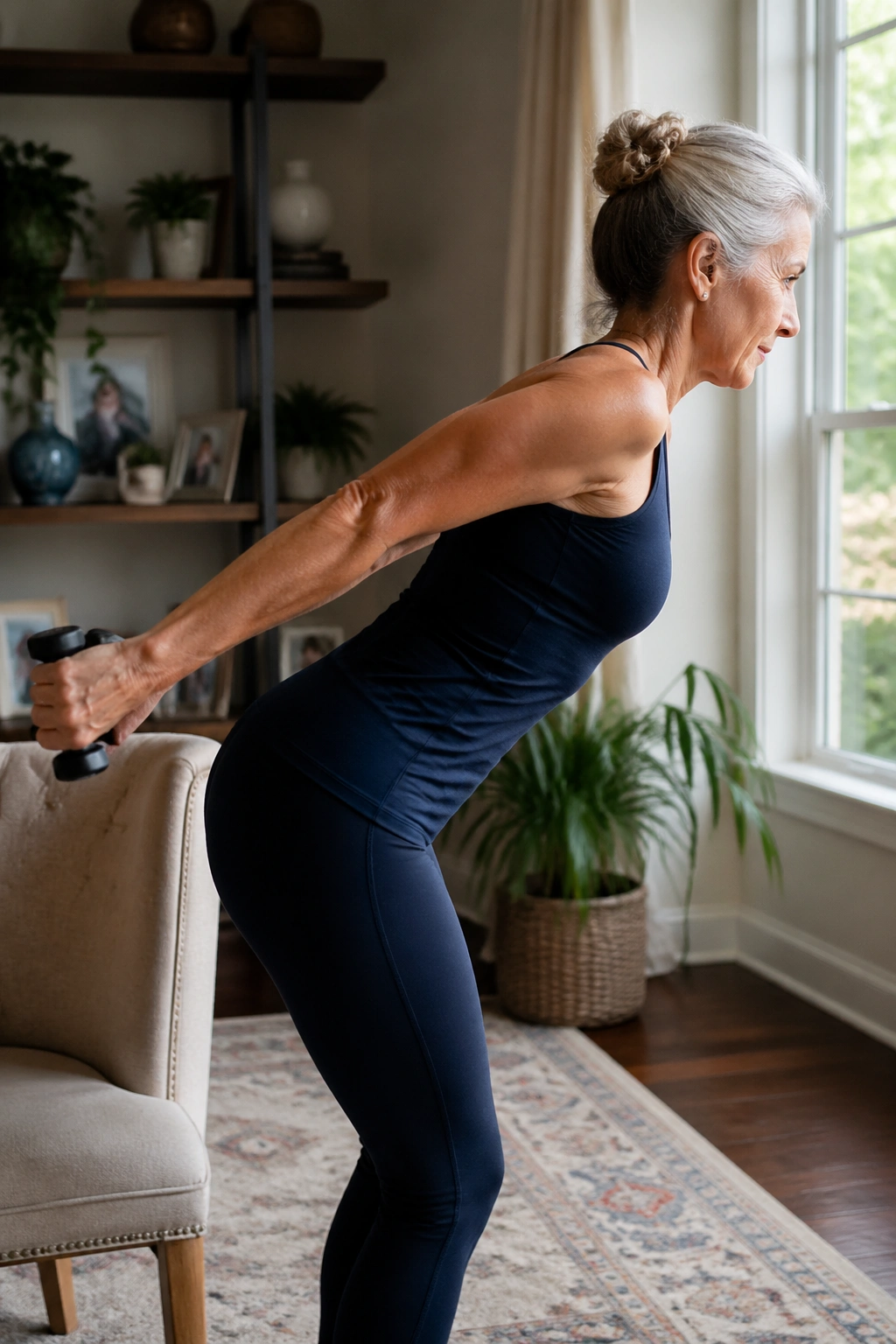
Most triceps work goes sideways because people swing the elbow or shrug the shoulder. That turns a clean arm exercise into a stiff upper trap workout, which is not the same thing at all.
Lean forward slightly or hinge at the hips with a neutral spine. Hold light dumbbells or a band, keep the elbows tucked close to the ribs, and press the forearms straight back until the arms lengthen behind you. Stop before the shoulders roll forward. Then return slowly to the start.
- Keep the upper arm still.
- Aim the movement through the elbow joint.
- Use 8 to 12 controlled reps.
- Stop if the front of the shoulder feels pinchy.
The back of the arm should do the work here, not the lower back. If you need to, stand one hand on a chair and do the move with the other arm first. That gives you more feedback and less cheating.
I like this one because it is plain honest. No fluff. If the triceps are weak, you feel it fast.
6. Serving Tray Lifts for Shoulder Control
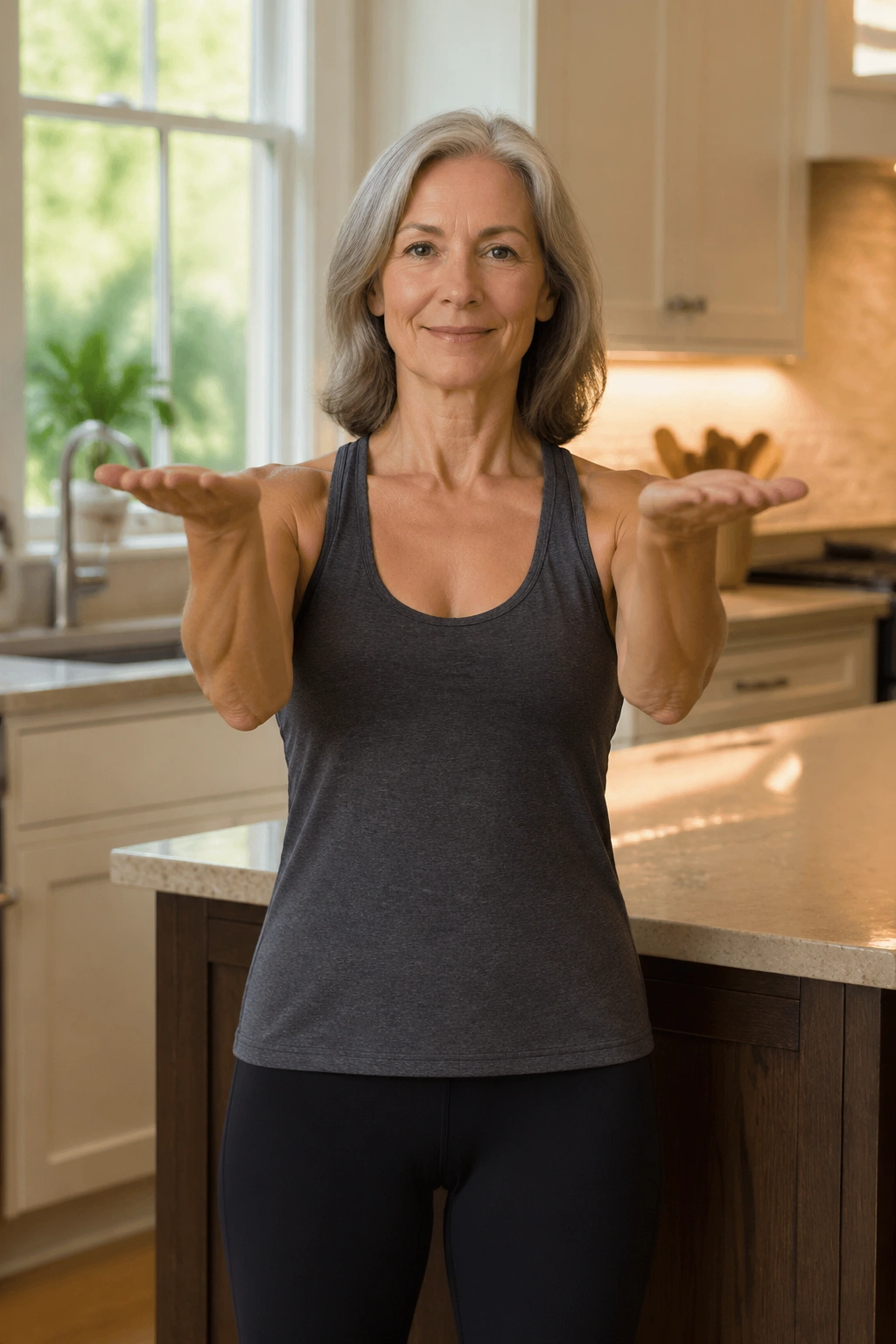
What do you do when overhead work feels like too much? Start with a serving tray lift and stop pretending the shoulder has to go all the way up right away.
Hold your arms in front of your body as if you’re carrying a tray. The elbows stay slightly bent, the palms face up or slightly inward, and the arms float to shoulder height before lowering with control. Think of lifting a tray across a crowded room without spilling a drop. Smooth matters more than height.
How to Make It Easier
- Keep the lift below shoulder level.
- Use no weights or 1-pound weights.
- Breathe out on the lift.
- Keep the ribs quiet.
This move is useful because it teaches the shoulder to move without stealing from the neck or the lower back. That matters when overhead cupboards, coat racks, and hair styling all ask for the same muscles at once.
If you feel a pinch near the top of the shoulder, shorten the lift right away. The point is clean motion, not proving anything.
7. Pilates Punches That Wake Up the Upper Back
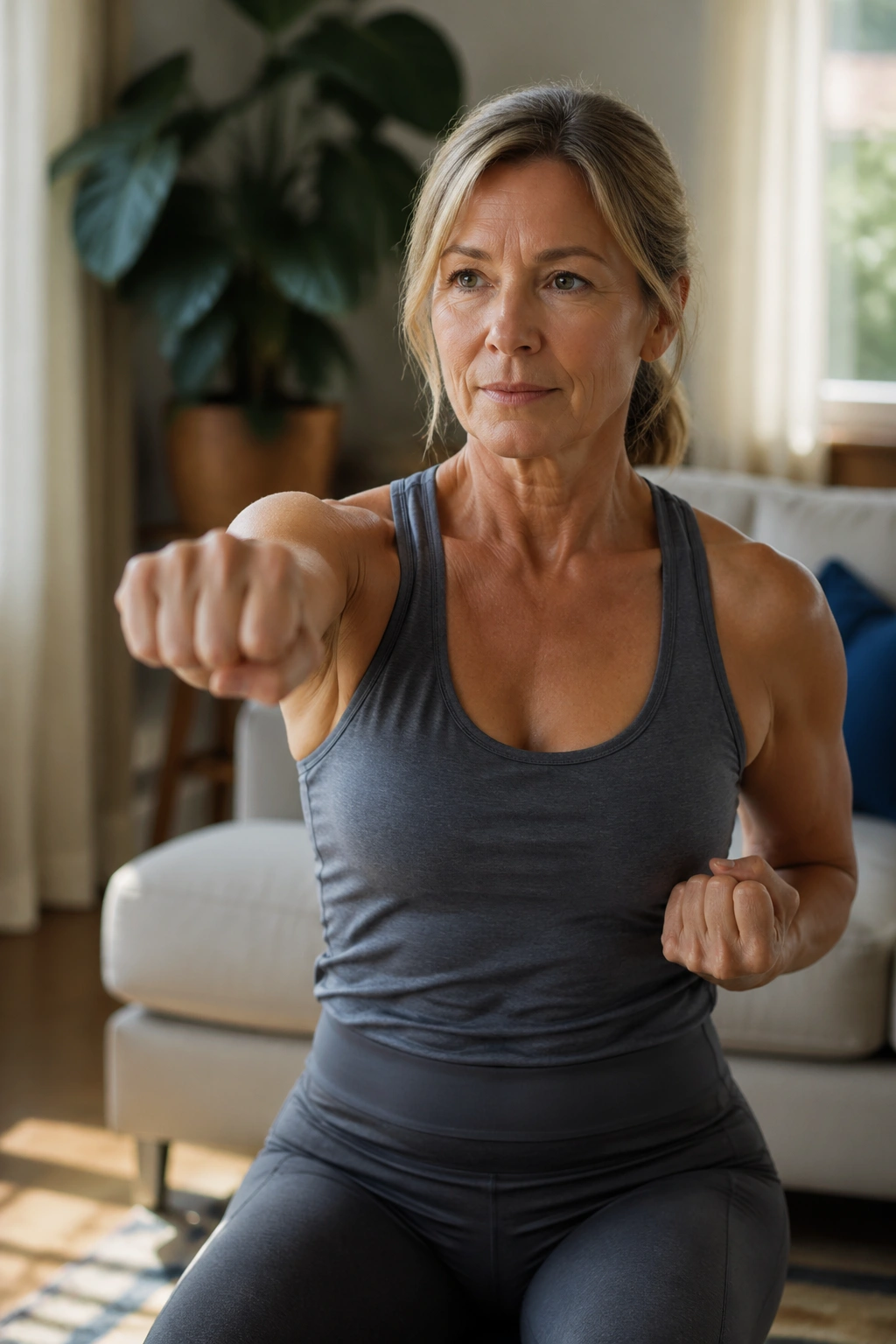
A little rhythm goes a long way here. Quick, controlled punches look playful, and that’s part of why people stick with them.
Stand tall or sit on a firm chair. Extend one arm forward in a short punch, then pull it back as the other arm reaches out. The motion is narrow, crisp, and clean. Keep the shoulders low and the ribs steady so the torso does not sway to help.
This move asks the front of the shoulder, the triceps, and the upper back to work together. It also gets blood moving fast, which is nice when the arms feel stale from long sitting or long driving. Not a boxing class. Not even close. Short range wins.
- Try 20 alternating punches.
- Keep the wrists straight.
- Exhale on each reach.
- Stop if the neck starts doing the work.
The best part is the way it resets posture without feeling precious. You can finish a set and stand taller without even trying that hard. That’s a good sign.
8. Wall Angels With Soft Elbows
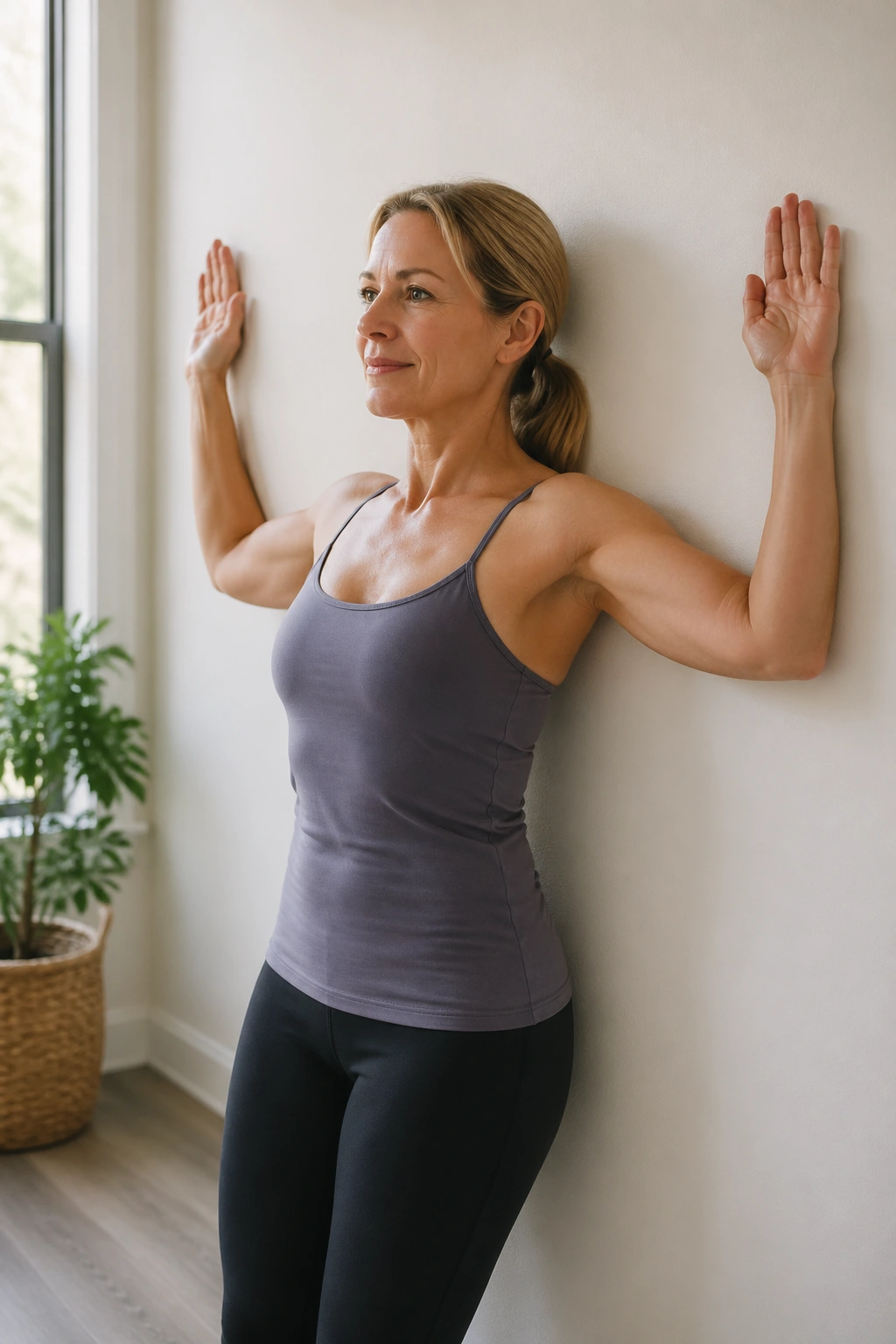
Wall angels are not about perfect contact. That idea gets people in trouble fast.
Stand with your back near a wall, feet a few inches forward, knees unlocked, and elbows bent in a gentle goalpost shape. Slide the arms up the wall as far as they can go without losing the rib cage or jamming the shoulders. Then lower them with control. If the wrists refuse to stay on the wall, let them come forward a little. Better that than forcing a shape your body doesn’t own.
The wall gives immediate feedback. If the lower back arches, the ribs have flared. If the shoulders creep upward, the arms are climbing too high. If one arm feels clunkier than the other, that side needs the slower reps. Simple. Direct.
This is one of those moves that looks easy from across the room and feels sneaky up close. The work sits in the upper back, the rear shoulders, and the muscles that keep the shoulder blades from wandering.
Do it slowly. The slower you go, the more honest it gets.
9. Mermaid Arm Reach and Side Bend
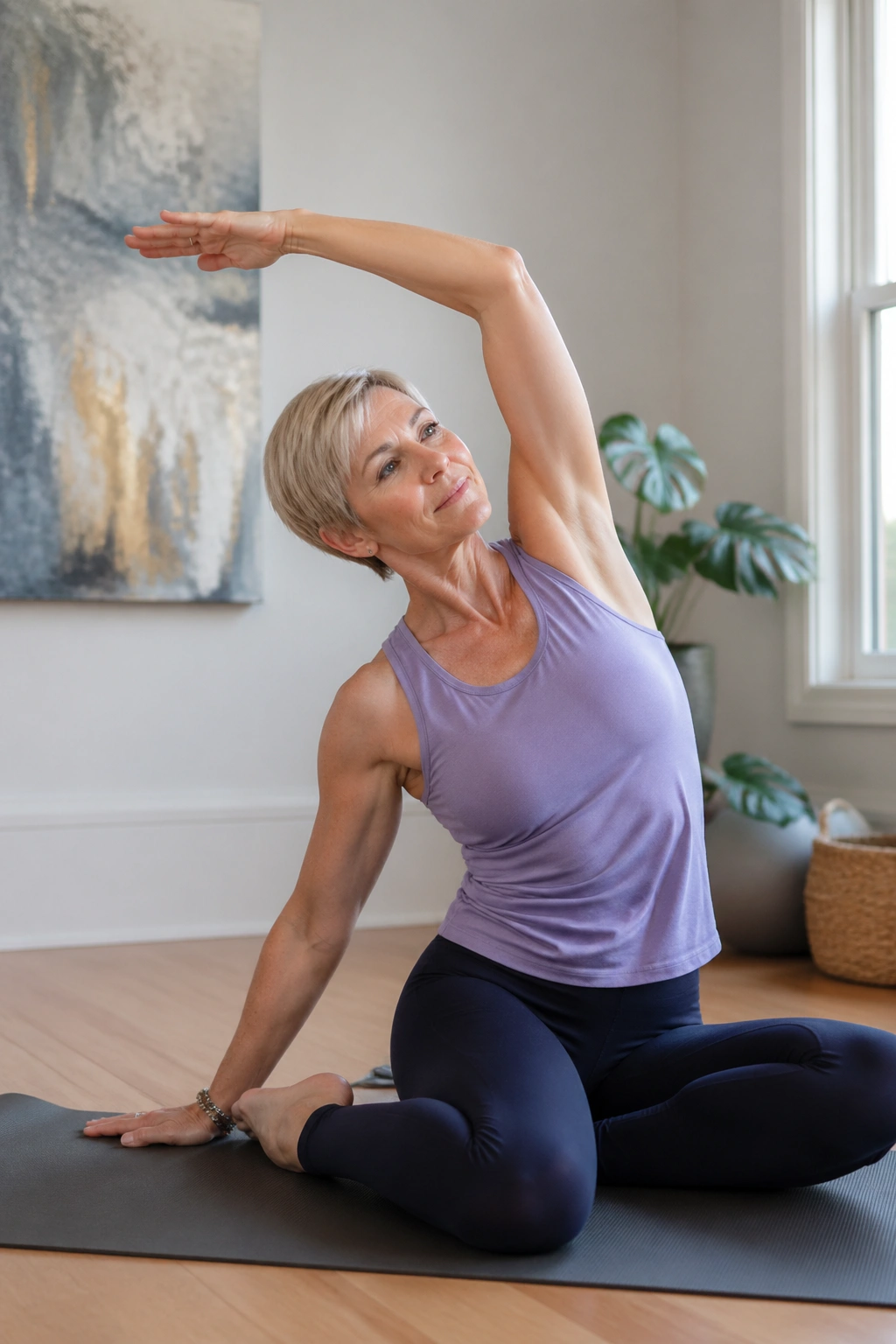
A side bend feels better when the arm actually has somewhere to go.
Sit with both sit bones grounded, one knee folded in if that’s comfortable, and one arm reaching overhead. The other hand can rest on the mat or your shin. Reach through the fingertips first, then let the rib cage arc just enough to open the side of the body. Come back the same way, without collapsing.
Best Variation for Stiff Shoulders
If the overhead position feels tight, bend the elbow a little. You can also keep the top hand lower, closer to the temple, and still get the benefit. That matters more than forcing a long line.
This move works the side of the shoulder, the outer line of the torso, and the muscles that help the arm travel above the head without the neck taking over. It also feels like a relief after a day spent hunched over a keyboard, phone, steering wheel, or all three.
Breathe into the lifted side ribs on the way up. That cue changes a lot. The arm stops feeling isolated and starts behaving like part of the whole body.
10. Overhead Presses Without Rib Flare
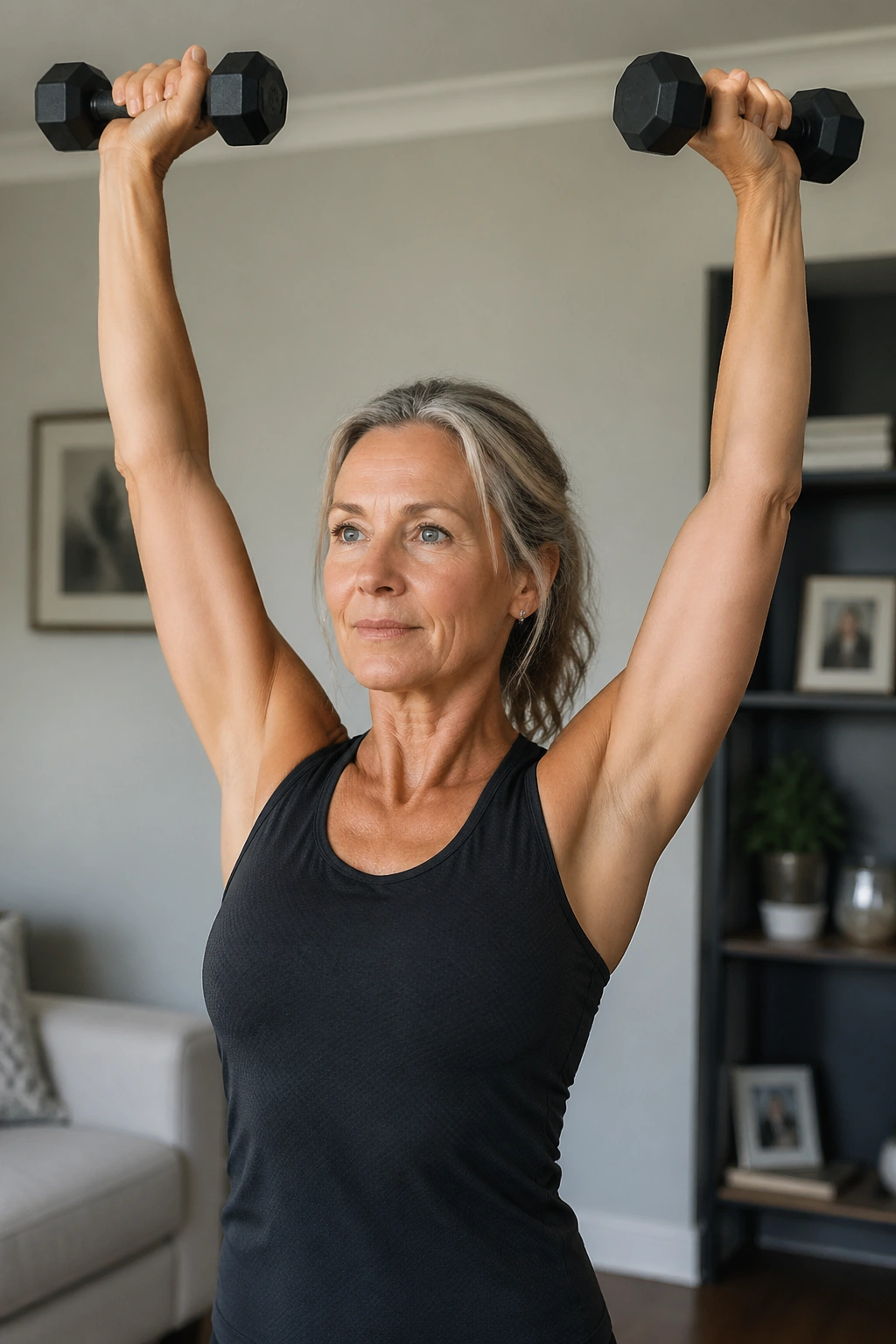
Overhead work is not off-limits after 50. It just needs cleaner rules.
Hold light weights at shoulder height, palms facing forward or inward. Press the arms overhead only as far as you can keep the ribs stacked over the pelvis. Lower slowly. If your lower back arches the second the hands rise, the weights are too heavy or the range is too big.
This move is excellent for the deltoids and triceps, but it only works if the torso stays calm. That’s the real challenge. You want arms moving up while the belly stays flat and the neck stays long. If you feel yourself puffing the chest and tipping the ribs forward, reset and make the arc smaller.
A diagonal press can be a nicer option for tender shoulders. Press the weights a little forward of the face instead of straight overhead. Same idea. Less aggravation.
I’m not precious about full range here. I’d rather see a clean 70 percent press than a noisy 100 percent press that irritates the joint for the rest of the day.
11. Halo Circles Around the Head

The halo should feel smooth, almost like drawing a soup bowl around your face.
Hold one light weight with both hands at chest height, or use no weight at all if your shoulders are sensitive. Circle the hands around one side of the head, behind the crown, and back to the start. The motion is small and careful. The elbows stay soft. The neck stays easy.
This one asks a lot from the shoulder joint, so the shape matters. If the circle gets wide, the ribs usually flare to help. If the neck tightens, the load is too heavy or the pace is too fast. Keep it slow enough that you could talk through the rep without gasping.
- Use 3 to 5 circles each way.
- Keep the chin level.
- Let the elbows point forward a little.
- Stop the moment the shoulders creep upward.
Halo circles are a neat test of mobility and control. They also tell the truth about side-to-side differences. One direction may feel smooth, the other stubborn. Fine. Work with the stubborn side patiently.
12. Wall Slides for the Shoulder Blades
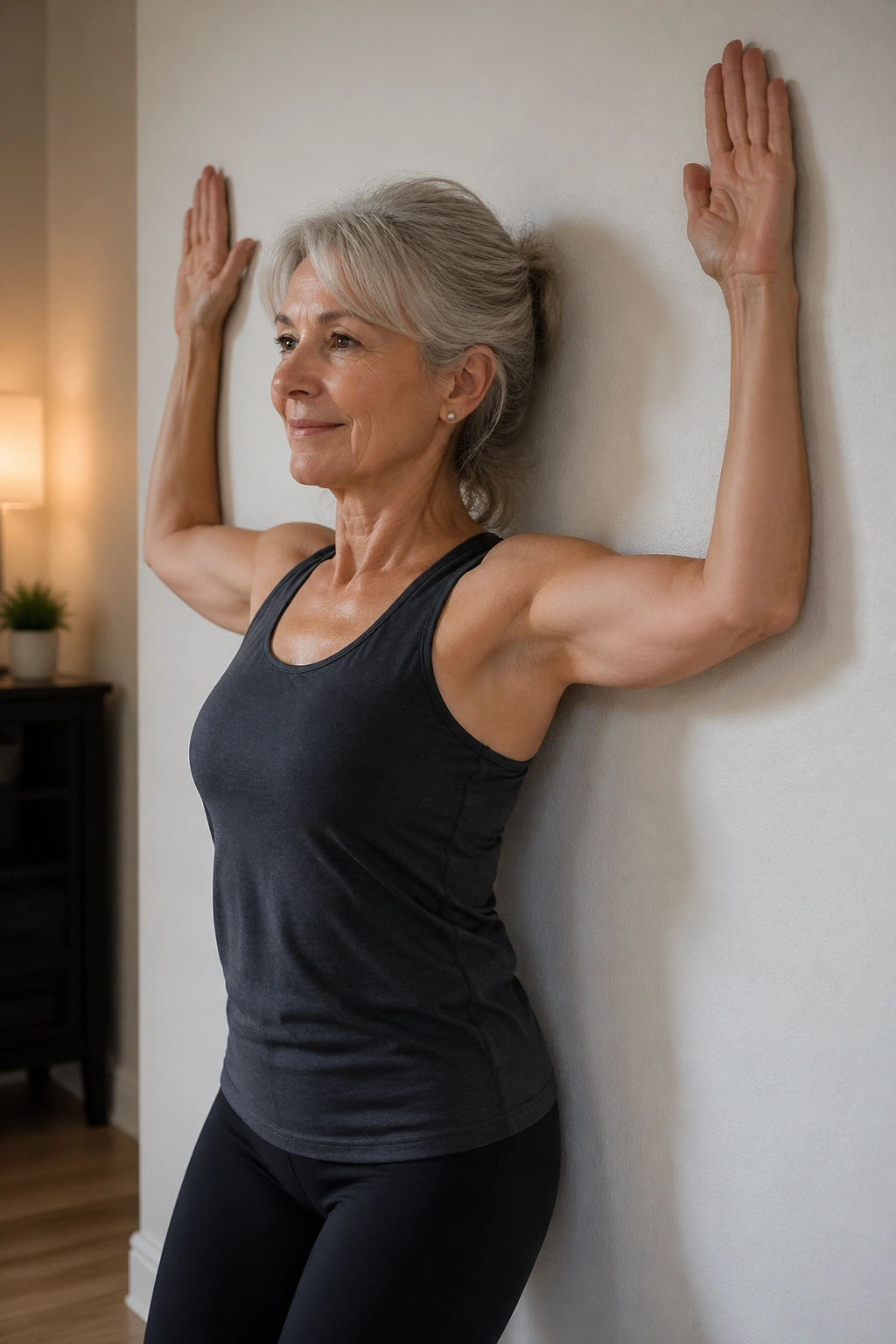
A wall slide tells you a lot in a few reps.
Stand with your back near a wall, ribs stacked, and arms bent like a cactus. Press the forearms lightly toward the wall and slide them up and down without losing the shape of the torso. The hands may or may not touch. That detail is not the point. Control is the point.
Hands, Elbows, Wall
- Hands should stay relaxed, not clawed.
- Elbows track upward without flaring wide.
- The shoulders stay low.
- The lower back stays quiet.
This is a lovely drill for the shoulder blades. It teaches them to move upward and downward without grinding or pinching. It also exposes tight pecs and stiff upper backs in a way that is hard to fake. That can be a little humbling. Useful, though.
If standing against the wall feels awkward, do the same pattern on the floor with your knees bent and your arms in cactus shape. The floor gives even more feedback and often feels kinder to the neck.
13. Biceps Curls That Finish With a Stretch
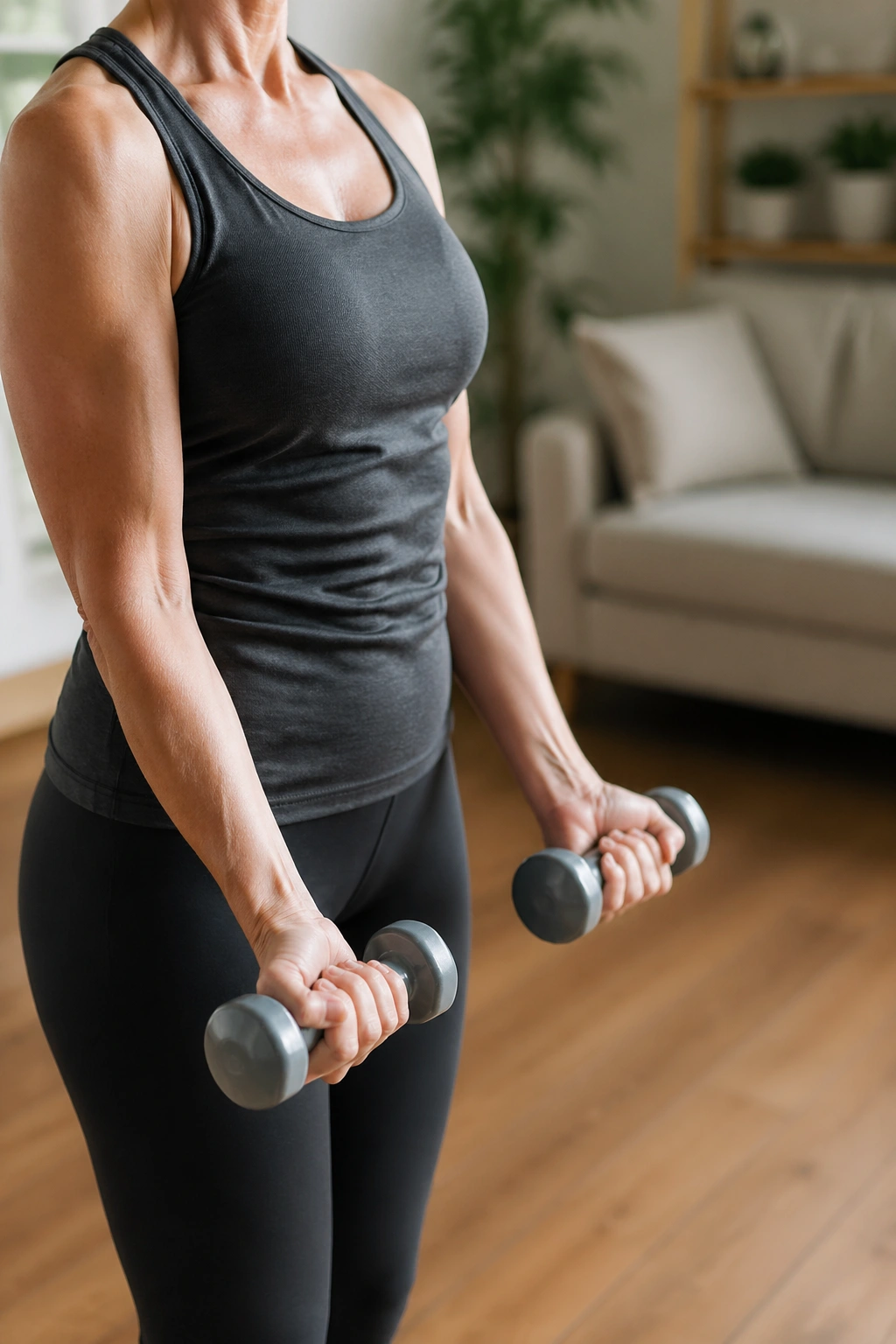
A straight-up biceps curl is fine. A curl that ends with a slow lengthening phase is better.
Hold light dumbbells at your sides with palms facing forward. Curl the weights toward the shoulders, pause for a beat, then lower them as if you’re trying to keep the path perfectly smooth. On the way down, let the arms straighten fully and feel the biceps open at the bottom. That lower phase is where the clean control lives.
Unlike a fast gym-style curl, this version keeps the shoulders honest and the torso still. There is no leaning back to cheat the lift. No swinging. No tossing the weight up with momentum. The arms do the job, and the body stays tidy.
That stretch at the bottom matters more than it seems. Older arms often spend a lot of time bent—holding bags, typing, carrying, cooking—so a full, controlled reach can feel oddly relieving.
Do 8 to 12 reps and stop before the elbows start flaring out. If your wrists are sore, lighten the weights and slow the tempo. That usually fixes more than people expect.
14. Side-Lying Arm Lifts on the Mat
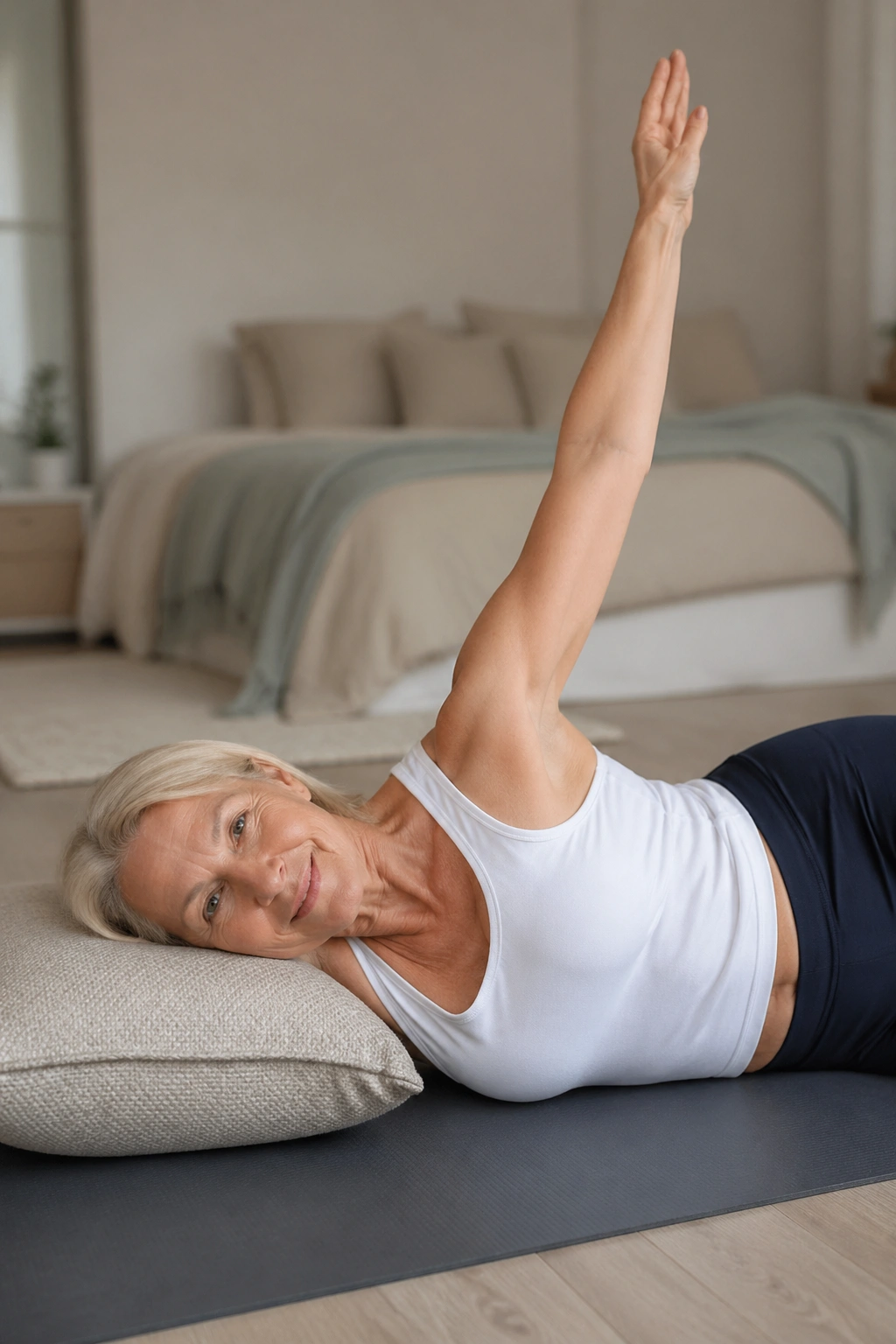
Side-lying work reveals the truth fast. The arm feels lighter than it looks, then the shoulder starts talking back halfway through the set.
Lie on your side with the head supported on a pillow or folded towel. Stack the shoulders and hips, then lift the top arm from the thigh toward the ceiling with a soft elbow. Lower it slowly. You can keep the palm facing in or turn it slightly forward if that feels better. Small range is fine here.
This move is sneaky good for the outer shoulder and the side stabilizers around the shoulder blade. It also lets you feel whether one side of the body is helping more than the other. That’s useful data, not a flaw.
If the neck starts to grip, the head support is probably too low. Fix that first. If the shoulder pinches at the top, shrink the lift until the joint feels smooth again.
A set of 10 slow lifts on each side is enough to light things up without turning the whole session into a wrestling match.
15. Kneeling Arm Reaches for Core Support
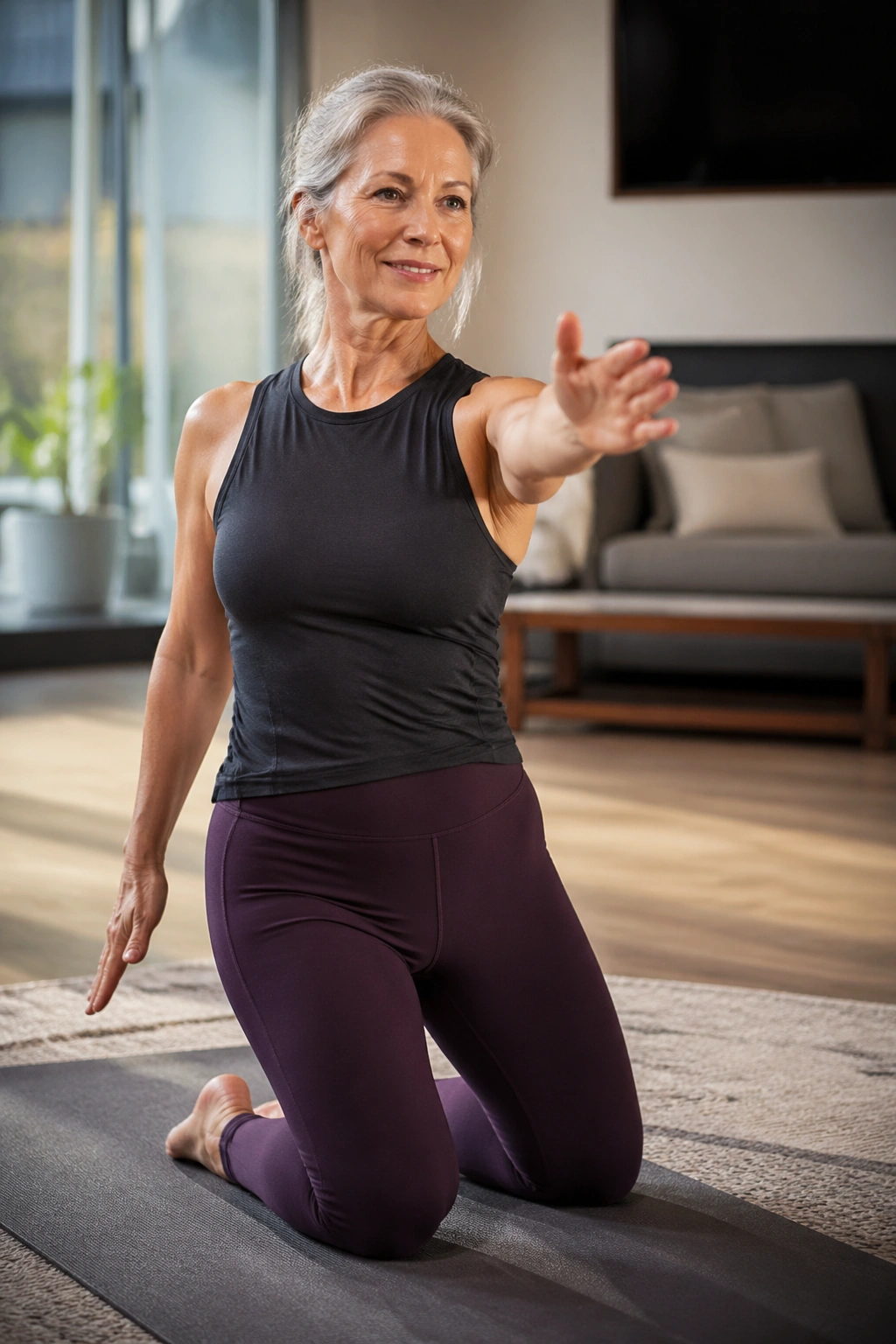
Why kneel for arm work? Because kneeling strips out some of the lazy habits standing can hide.
Come into tall kneeling or half-kneeling on a mat. Hold one light weight or a band in one hand and reach the arm forward, up, or slightly out to the side. The lower body stays steady while the upper body does the work. The abs have to show up too, which is half the point.
What Changes When You Kneel
- You cheat less with momentum.
- The ribs flare less.
- Balance becomes more honest.
- The shoulder can move without the legs helping.
This is a nice choice if standing work makes you sway or if you want a cleaner read on shoulder control. It also tends to expose unevenness in a useful way. One side may feel smooth. The other may wobble. That difference is normal, and it gives you a place to focus.
If kneeling bothers your knees, fold a towel under them or sit on a firm cushion. There’s no prize for discomfort.
16. Resistance-Band Pull-Aparts With Control
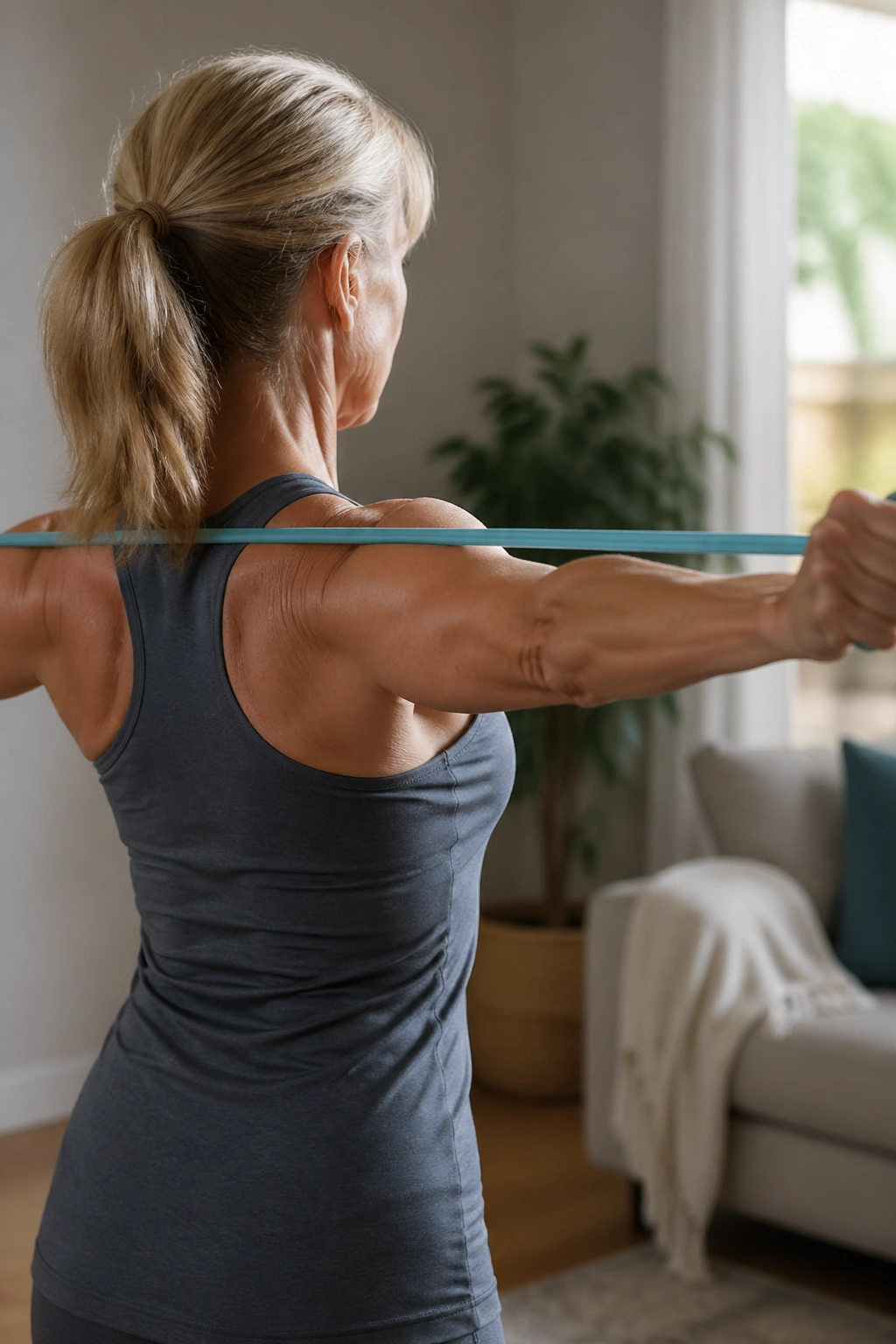
If your shoulder blades like to sit glued together, pull-aparts wake them up fast. They are simple, but they are not casual.
Hold a light resistance band in front of the chest with both arms straight but not locked. Pull the band apart until the hands move wider than the shoulders, then return with the same slow control. The movement should feel like the back of the shoulders and the upper back are doing most of the work.
- Choose a band with light tension.
- Keep the hands at chest height.
- Pause for 1 count at the widest point.
- Do 10 to 15 reps.
The temptation here is to arch the lower back and fling the arms wide. Don’t. Keep the ribs stacked and the neck easy. If the band feels too easy, slow the return phase before you buy a stronger one. A better tempo often solves the problem without adding strain.
This is a good warm-up and a good finisher. Both. That’s rare.
17. Swan Prep Arm Sweeps on the Mat
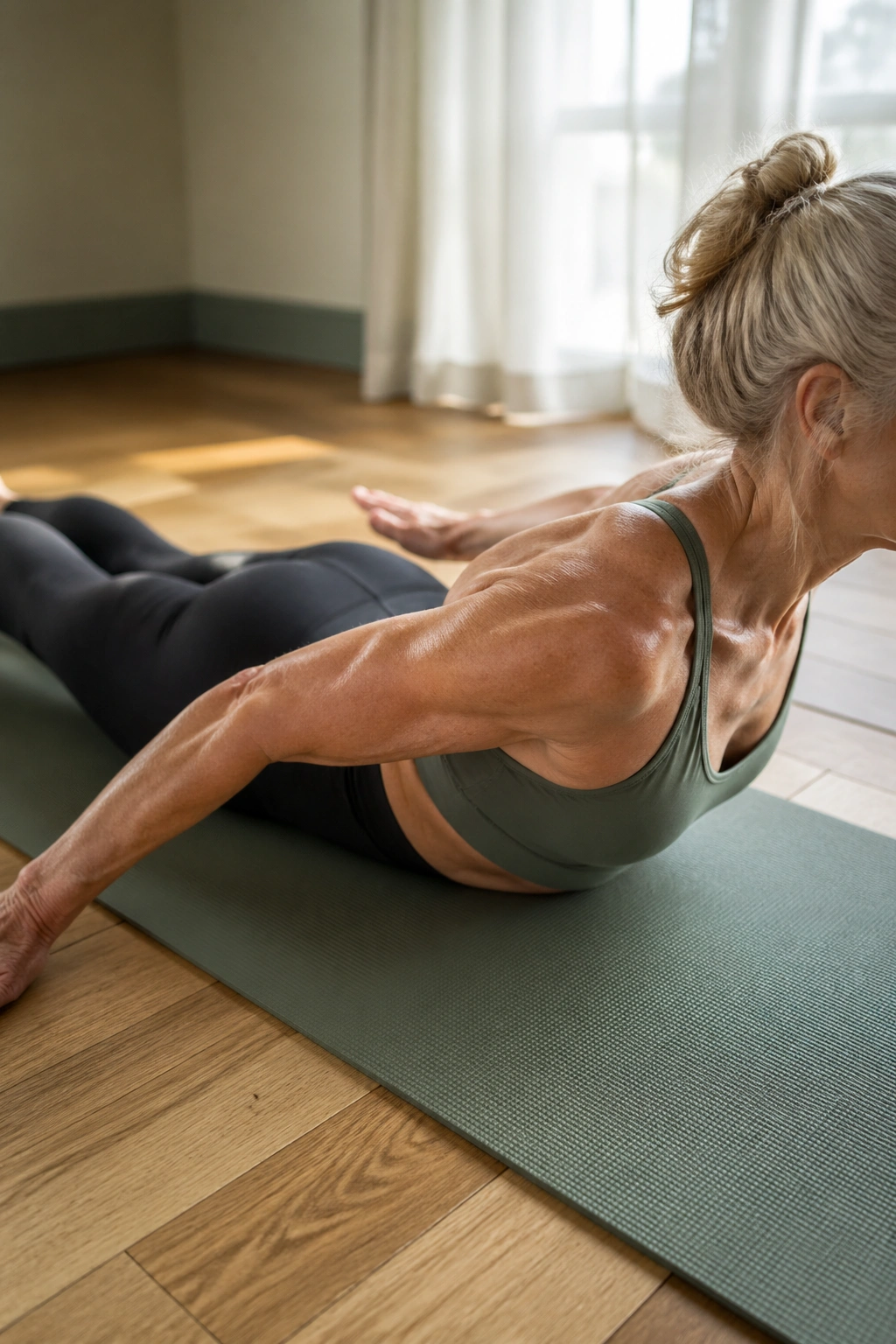
On the mat, a small swan prep can make the arms and upper back feel connected in a way pure arm work sometimes misses.
Lie face down with the forehead on the mat or a small towel. Sweep the arms down toward the hips as the chest lifts just a little, then lower with control. The lift is modest. We are not chasing a deep backbend here. The arms should feel active, the shoulders broad, and the back of the body engaged.
This is a beautiful exercise for women who spend too much time folded forward. The triceps, rear shoulders, and muscles beside the spine all get a turn. The chest opens, but only if the ribs stay managed. If the low back starts to pinch, lower the chest and reduce the lift right away.
A lot of people try to make this graceful. I prefer honest. A small lift done well does more than a big lift done badly. That’s the entire lesson hiding inside the move.
18. Standing Reach, Lower, and Reset
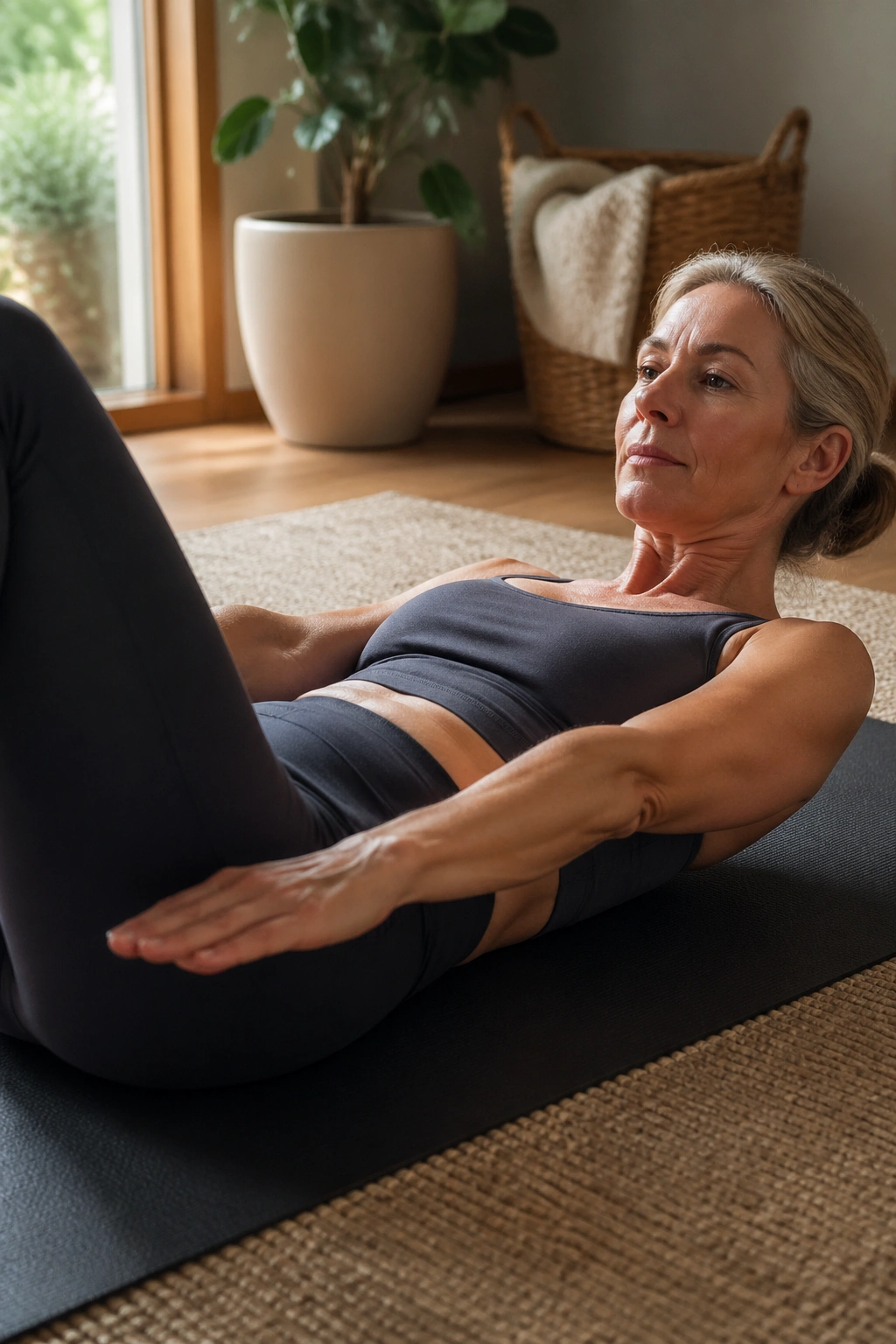
The cleanest arm work is the kind you can do without bracing your neck.
Stand tall with feet hip-width apart and let the arms float overhead, then lower them slowly back down through the center line of the body. Pause at the top for one breath if that feels good. Pause at the bottom too. The pauses make the pattern clearer and keep the shoulders from rushing through the motion.
This is a useful finish because it ties together everything that came before it: posture, breath, range, and control. If the arms feel light and the shoulders stay settled, you’re doing it right. If the neck tightens or the ribs jump forward, the lift is too high or too fast. Pull it back a notch.
A short circuit of these Pilates arm moves for women over 50 can be as little as 8 to 12 minutes when you keep the transitions simple. That is enough for a solid upper-body reset on a busy day. Tiny, exact reps beat heroic flailing every time.
