



The best bedtime belly fat exercises are the ones that leave you calmer, not wired. If you finish a night routine sweaty, hungry, and suddenly wide awake, you probably picked the wrong moves.
That sounds backward, but it’s the part most people miss. No exercise melts fat from one patch of your body while you sleep, and crunches do not get a special pass just because they burn your abs. Fat loss comes from your overall routine: how much you move, what you eat, how well you sleep, and whether you can keep showing up without burning yourself out.
Sleep matters more than people like to admit. Short, choppy nights can make hunger louder and late-night snacking harder to handle, so a pre-bed routine that lowers stress while working your core and legs a little can pull real weight. The sweet spot is low-impact movement, slow breathing, and enough muscle work to feel useful without turning your bedroom into a boot camp.
Start there. The first move looks almost boring, and that is exactly why it belongs here.
1. Diaphragmatic Breathing That Brings Your Heart Rate Down
A lot of people want to jump straight into ab work, but breathing comes first. If your nervous system is still revved up, even a short core session can feel harder than it should, and it may mess with your sleep.
How to breathe
Lie on your back with your knees bent and one hand on your chest, the other on your belly. Inhale through your nose for 4 counts, let your belly rise first, then exhale slowly for 6 to 8 counts until your ribs soften back down.
- Take 5 to 8 breaths before you move on.
- Keep your shoulders quiet.
- If your chest is lifting more than your stomach, slow down.
- Make the exhale longer than the inhale.
That longer exhale is the whole point. It helps shift you out of the “go, go, go” mode that keeps people staring at the ceiling after a late workout.
Do not rush this. Five slow breaths done well beat thirty lazy ones every time.
2. Pelvic Tilts That Flatten the Low Back and Wake Up the Deep Core
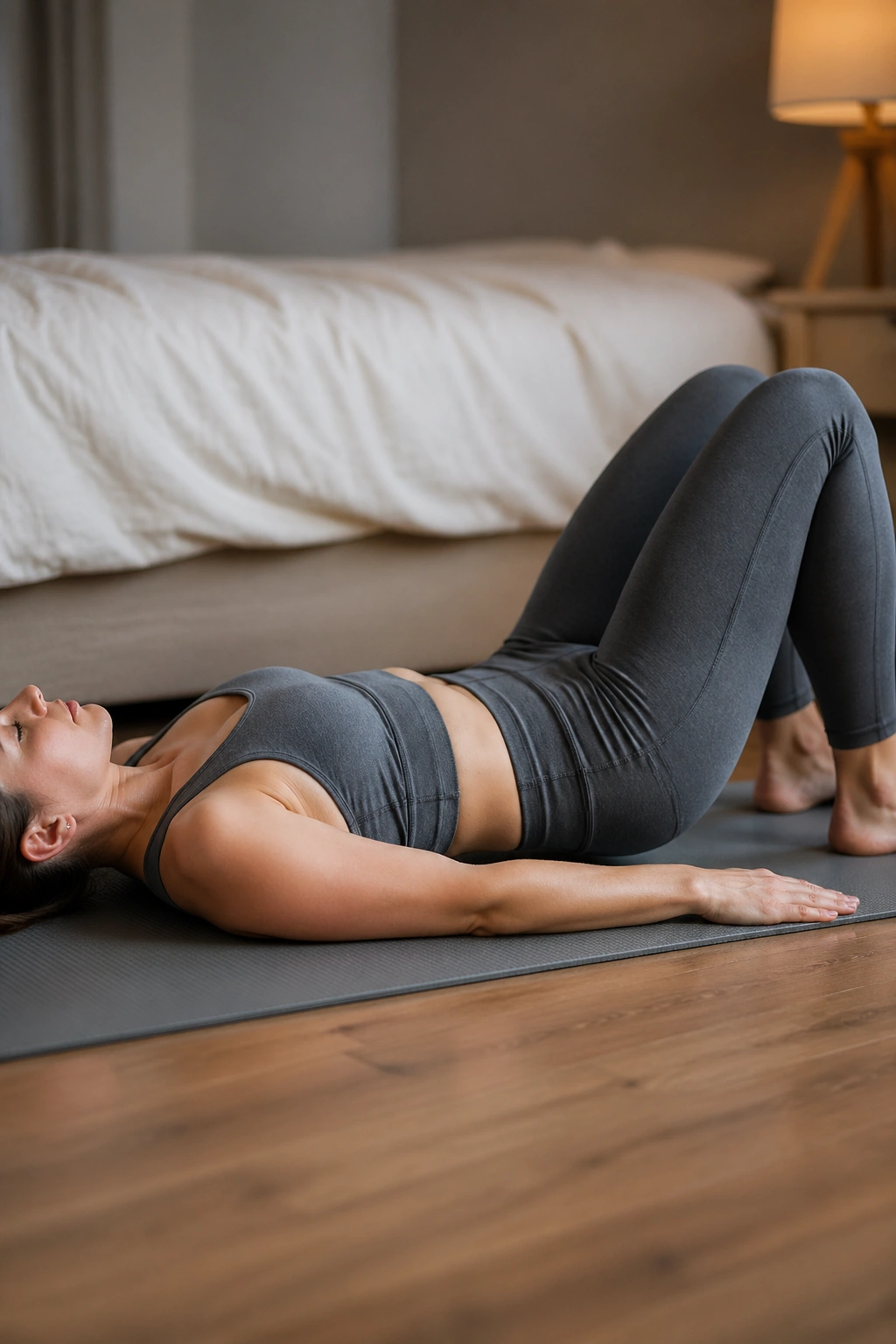
What do you do when your lower back feels tight and your abs feel asleep? Pelvic tilts are a clean place to start. They look tiny, but tiny is not a bad word here.
Lie on your back with knees bent and feet flat. Gently press your low back into the bed or mat, then release it until there’s a small natural curve again. That’s one rep. Do 10 to 15 slow reps, pausing for a second at each end.
The move teaches your deep core to switch on without strain. It also gives you a quiet way to check whether you’re bracing with your abs or just yanking with your hips. A lot of people overdo this and smash the pelvis down hard. Don’t. You want control, not force.
If you sit most of the day, this one feels like relief. And relief matters at night.
3. Cat-Cow Stretch to Keep the Spine from Locking Up
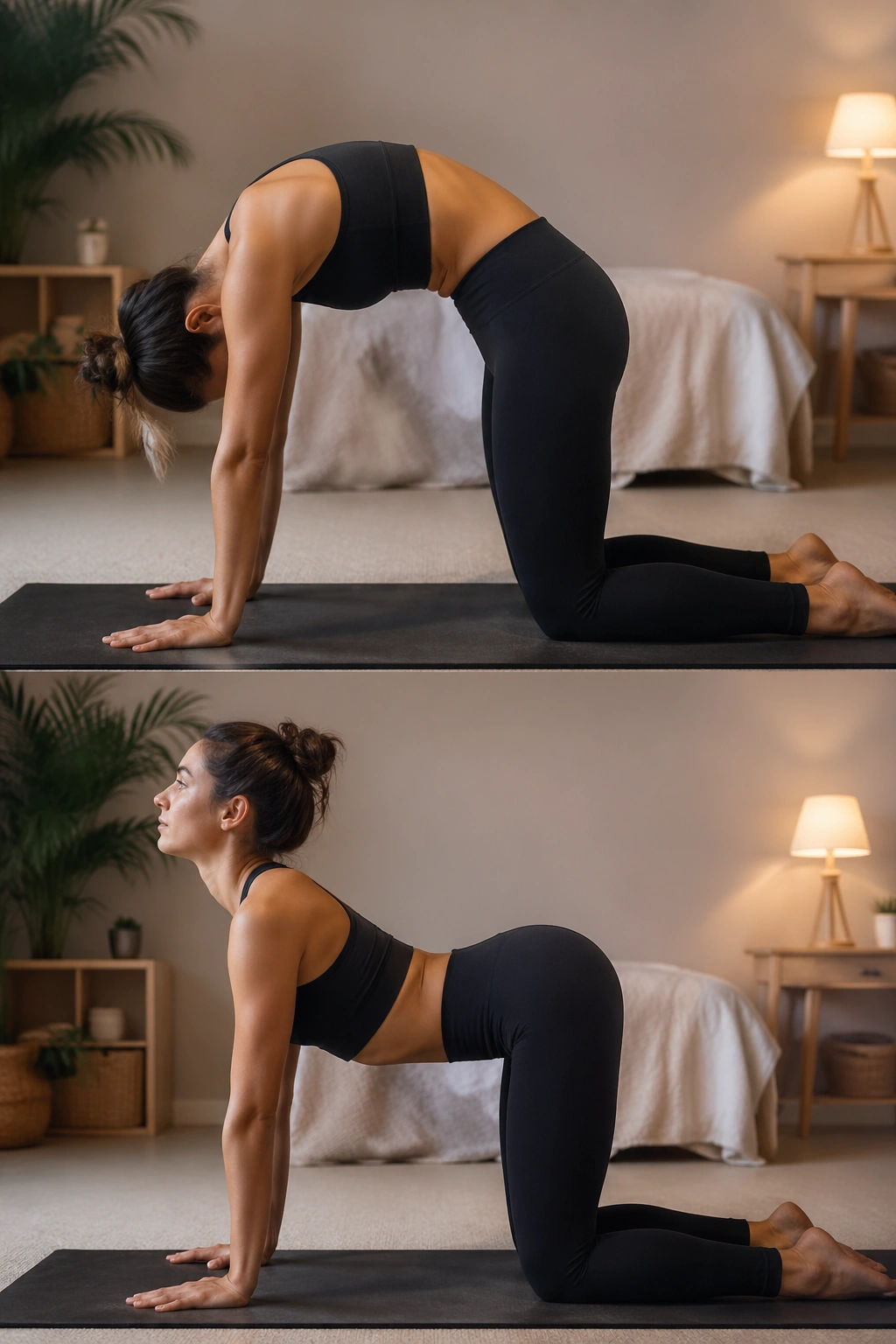
The room gets quieter when you move like this. Hands under shoulders, knees under hips, then a slow round through the back and a slow arch through the chest — cat-cow is less about sweat and more about letting the spine stop arguing with you.
Do 6 to 10 smooth cycles, matching each shape to a breath. Inhale as you drop the belly and lift the chest. Exhale as you round the back and tuck the chin. Keep the motion gentle enough that you could keep talking if someone asked you a question.
This one helps after a long day of sitting, because the mid-back and low back often stiffen together. Once they loosen a bit, your core work feels cleaner. That’s the part people forget. A loose spine can make ab exercises feel easier and more controlled.
What to watch for
- Do not dump weight into your lower back.
- Keep the neck long instead of cranking it.
- Move slowly enough to feel each segment.
If your back is touchy, this is one of the safest moves in the whole routine.
4. Dead Bug Work That Teaches Your Abs to Brace
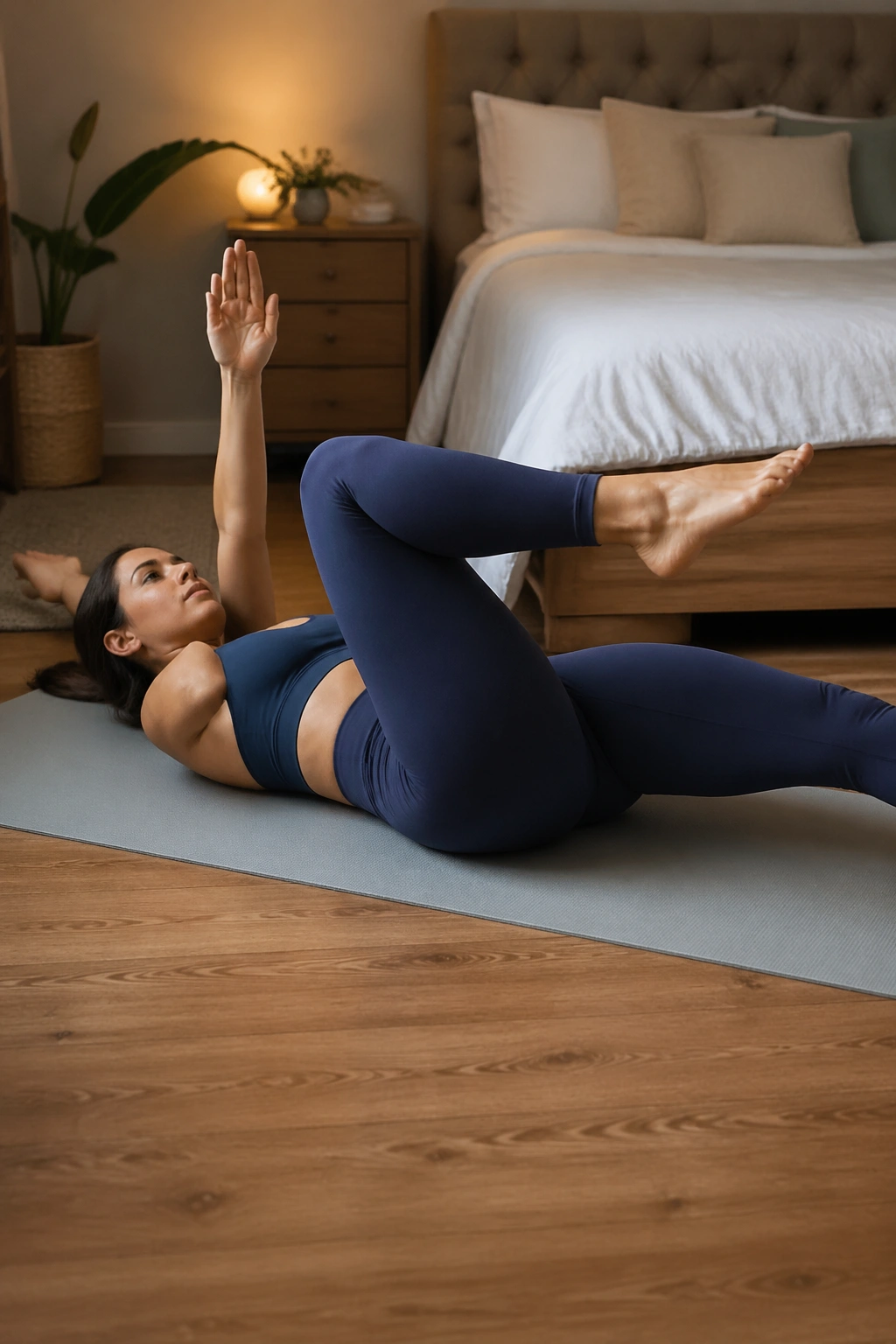
Dead bugs are one of the best bedtime core exercises because they train your abs to stay on while your arms and legs move away from center. That is useful for weight loss work because you get control, not just a burn.
Lie on your back with your hips and knees bent to about 90 degrees. Reach your arms toward the ceiling. Lower one arm and the opposite leg at the same time, but only as far as you can go without your low back popping off the floor. Return, switch sides, and keep the pace slow.
Where people mess up
- They rush.
- They let the back arch.
- They hold their breath.
- They kick the leg lower than their core can handle.
Try 6 to 10 reps per side. If that feels sloppy, shorten the range and slow the lowering phase down to 3 full seconds. That tiny pause near the floor is where the work happens.
Dead bug work looks mild. It is not mild when you do it correctly.
5. Glute Bridges That Fire the Back Side of the Body
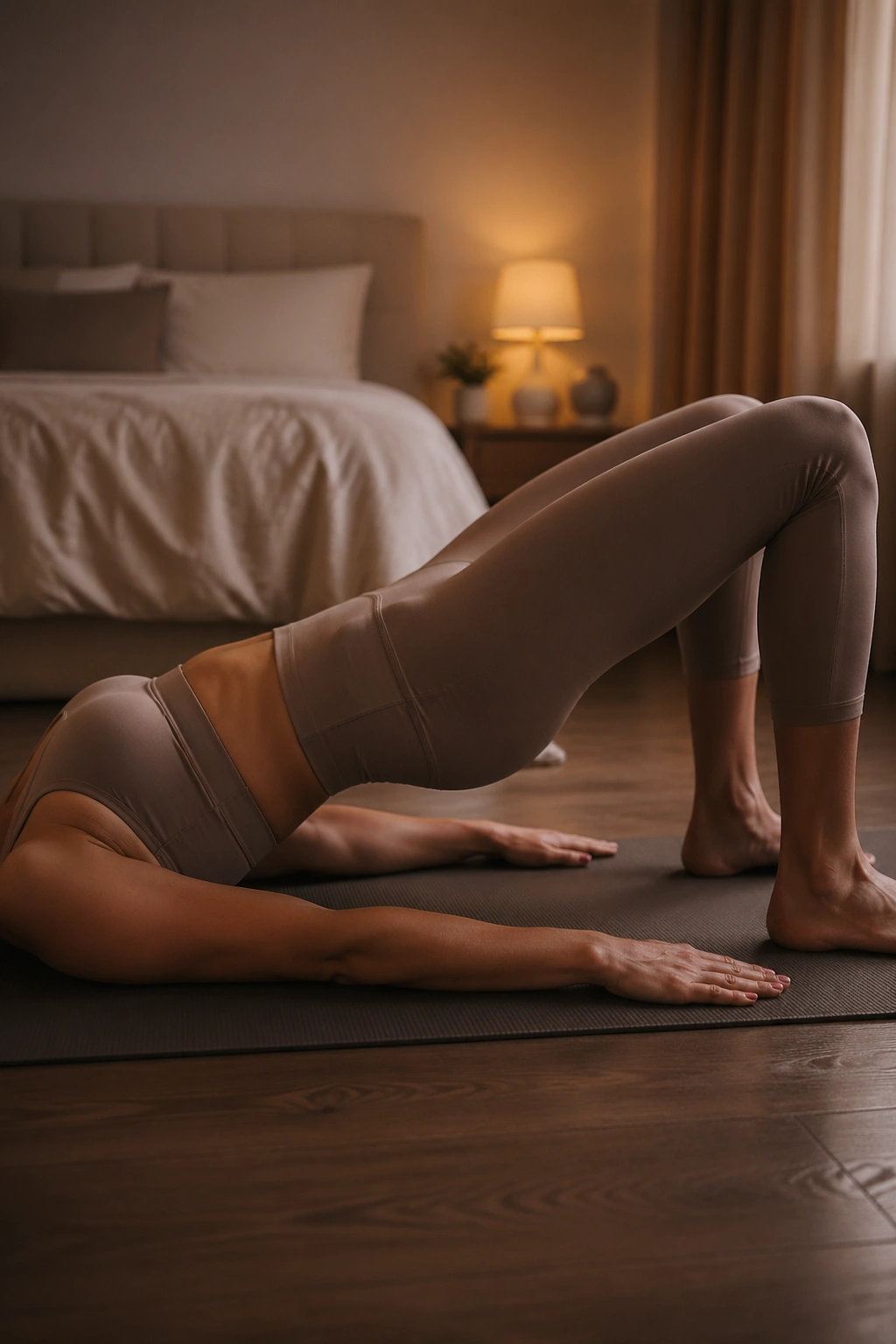
If your hips feel lazy at night, glute bridges wake them up without kicking your heart rate through the roof. That matters, because big muscles in the hips and legs do more work than tiny crunches ever will.
Lie on your back with knees bent, feet flat, and heels close enough that your fingertips can brush them. Press through your heels, squeeze your glutes, and lift your hips until your body makes a straight line from shoulders to knees. Hold for 2 seconds, then lower with control. Aim for 10 to 15 reps.
The mistake is easy to spot. People arch their lower back and call it a bridge. That’s not the same thing. You want the lift to come from the glutes, not from a cranky spine.
A bridge can feel almost too easy on the first rep. By rep eight, if you’re doing it right, you should feel the back side of your body talking.
6. Glute Bridge Marches for a Slightly Harder Finish
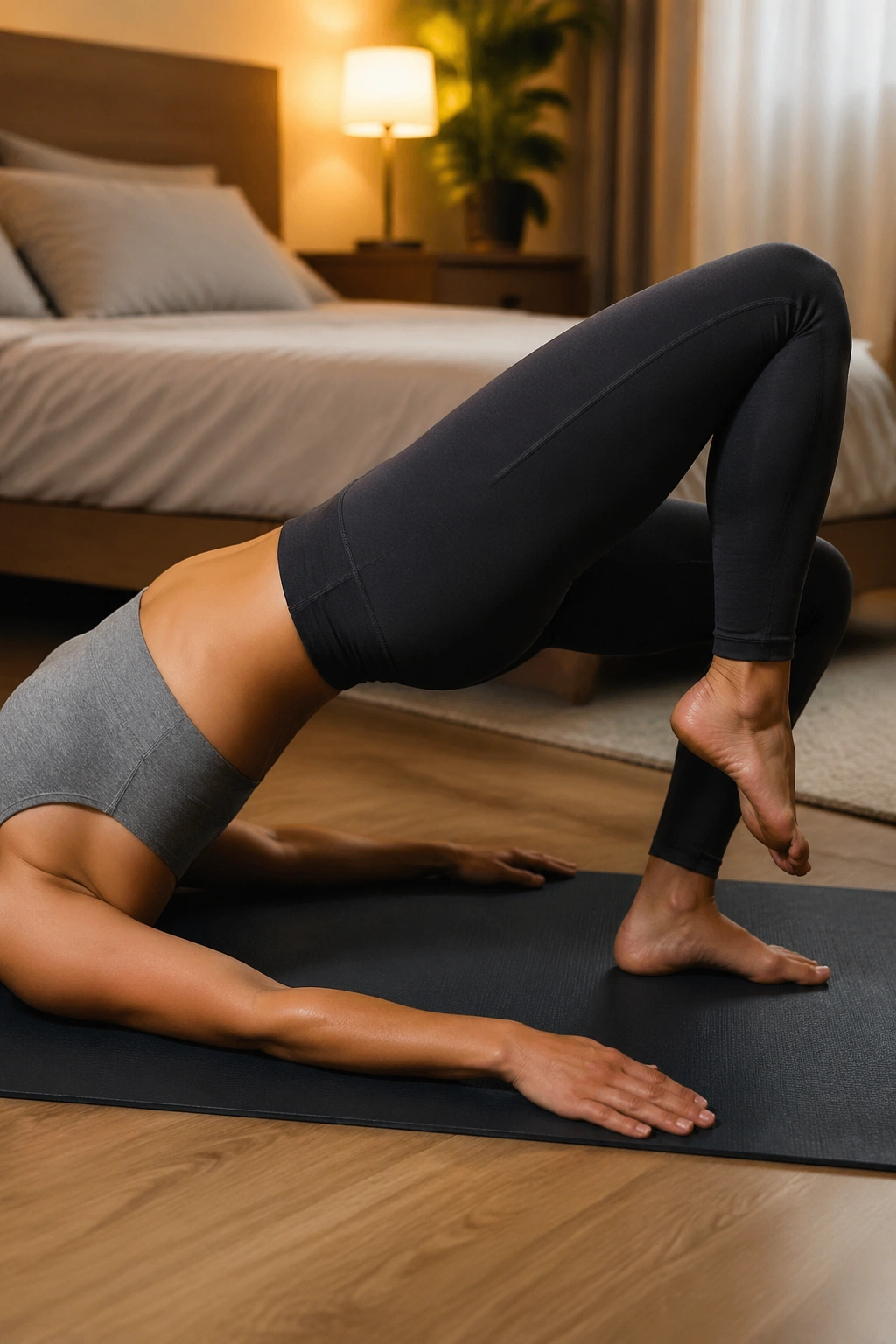
A regular bridge is fine. A glute bridge march asks more from your core because one leg has to stay steady while the other lifts. That anti-rotation work is useful, and it still fits a bedtime routine if you keep the motion slow.
Get into the top of a bridge, then lift one foot just an inch or two off the floor while your hips stay level. Put it down, switch sides, and keep your ribs tucked. Start with 6 to 8 marches per side.
How to use it
Use this when the normal bridge feels too easy but you do not want a full-on workout. It’s also a solid check for hip drop. If one side of your pelvis sinks the moment you lift a foot, shorten the hold and slow the pace.
This move can wake people up if they turn it into a competition. Don’t. The goal is clean control, not a heroic finish. Quiet reps work better before sleep.
7. Heel Taps for Slow, Controlled Lower-Ab Work
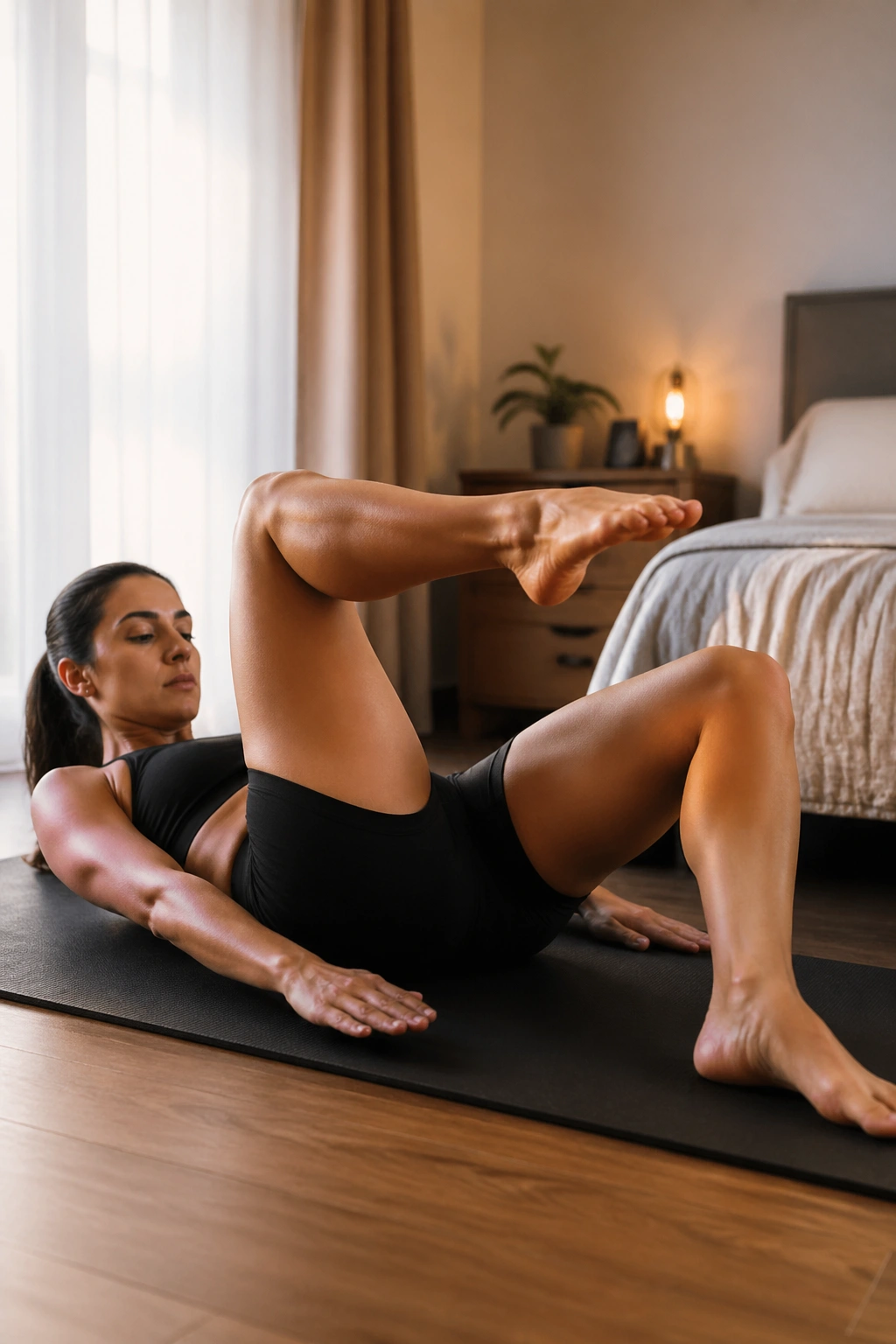
Heel taps are one of those exercises that look simple until the low abs start shaking. That’s a good sign. It means your trunk is staying braced while your legs move away from you.
Lie on your back with legs in tabletop, knees bent and shins parallel to the floor. Lower one heel toward the mat, tap lightly, then bring it back and switch sides. Keep your low back heavy on the floor and your exhale slow. Do 8 to 12 taps per side.
The trap here is letting the belly dome or the back arch. When that happens, shorten the range. Bring the heel only halfway down if needed. A smaller rep with good control is worth more than a bigger one that turns into chaos.
This is the kind of exercise that works well near bedtime because it is quiet, precise, and not very exciting. That last part is a feature, not a flaw.
8. Bird Dogs to Keep the Midsection Steady
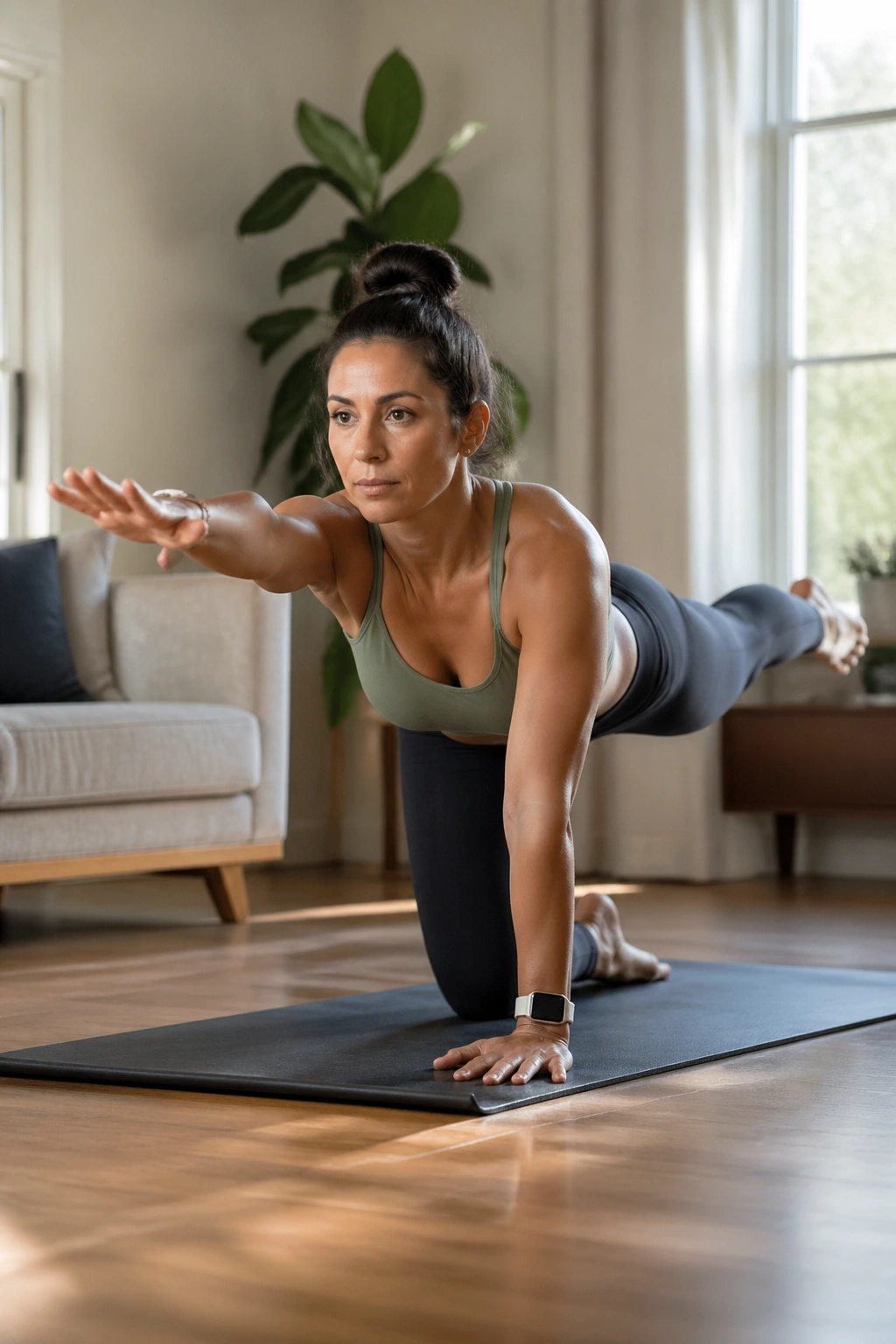
A bird dog can look too easy from across the room. Then the wobble shows up. Bird dogs train your core to resist twisting, which is useful if you want your midsection to feel tighter and your back to stop complaining.
Start on hands and knees. Reach one arm forward and the opposite leg back, then pause for 2 seconds while keeping the hips square to the floor. Return with control and switch sides. Six to 8 reps per side is enough for most people before bed.
This move has a simple rule: move less than you think you should. Big, sloppy extensions turn it into a balance mess. Small, steady reaches make the core do the work.
If your wrists are sensitive, put your hands on the edge of a bed or use fists instead of flat palms. Easy fix. No drama.
9. Reverse Crunches for the Lower Abs
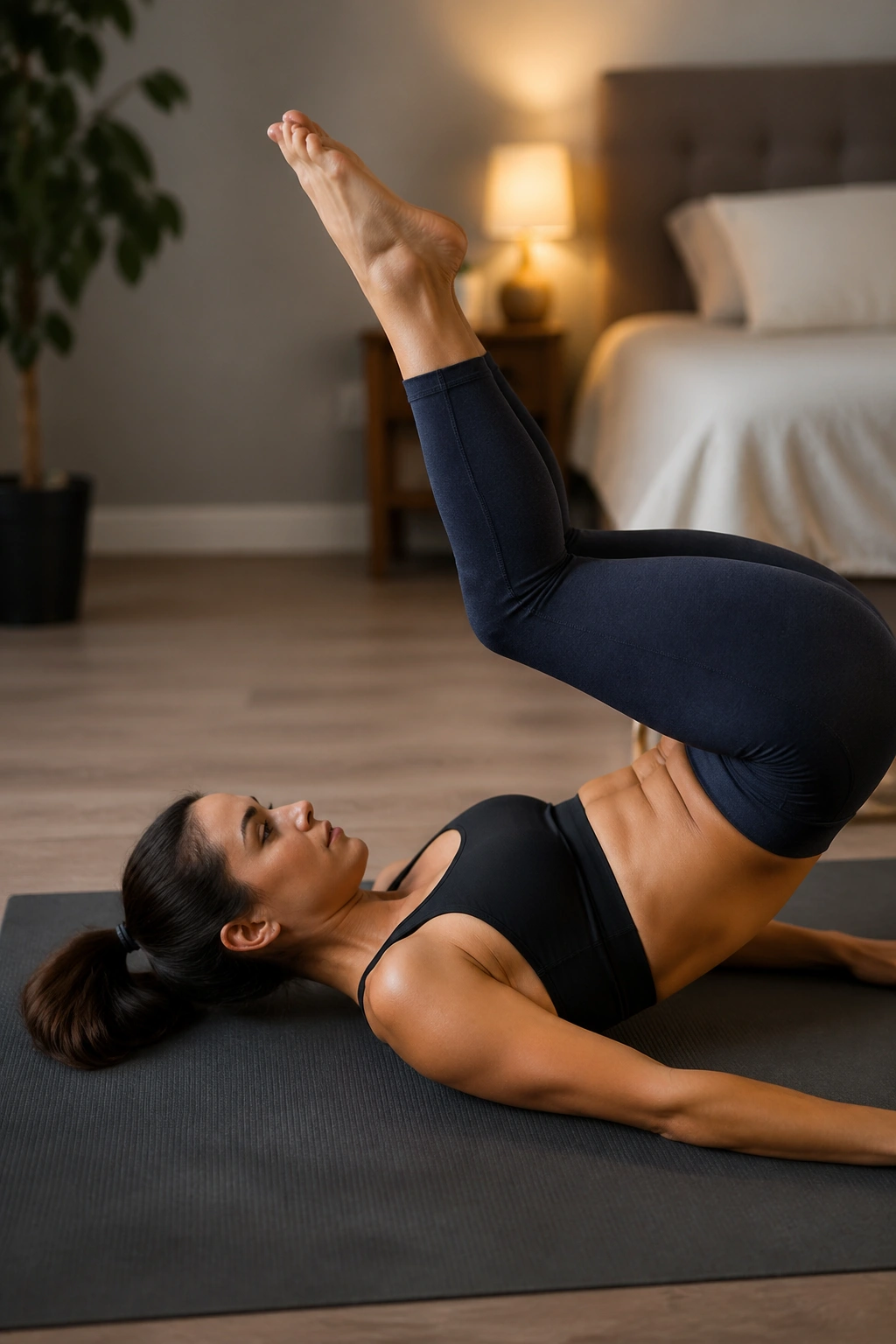
Reverse crunches are where the routine starts to feel more direct. They are still bedtime-friendly if you keep them controlled, but they hit the lower abdominal area more than the moves above.
Lie on your back, knees bent, thighs roughly vertical. Curl your pelvis off the floor by bringing your knees slightly toward your chest, then lower with control until your tailbone settles back down. Aim for 8 to 12 reps.
A clean reverse crunch looks like this
- The knees travel in, not wildly over the face.
- The movement starts from the pelvis.
- The neck stays relaxed.
- The lower back does not yank off the mat.
If you feel the work in your hip flexors more than your abs, your legs are probably doing too much. Shorten the range and think about curling the tailbone upward, not swinging the feet. That tiny change makes the exercise much better.
It is a little more intense than the earlier moves, so if it wakes you up, save it for the middle of the routine rather than the very end.
10. Forearm Planks Done the Right Way
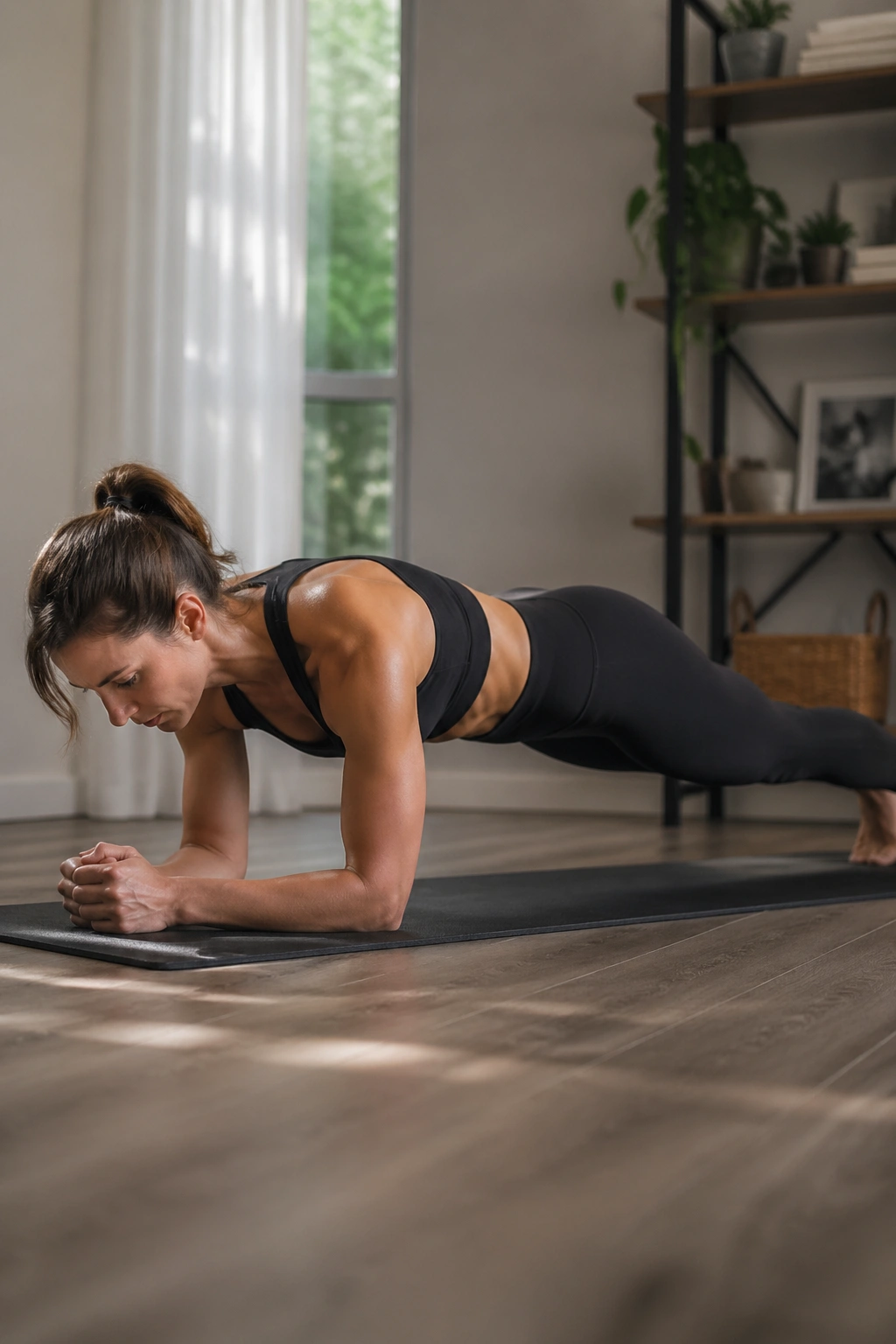
Planks are useful, but long planks before bed can be a bad idea if they turn into a grind. You do not need a three-minute suffering contest. You need clean tension.
Set your forearms on the floor, elbows under shoulders, and step your legs back. Keep your ribs tucked, squeeze your glutes, and imagine pulling your elbows toward your toes without actually moving them. Hold for 15 to 30 seconds, then rest. Two or three good rounds are plenty.
What a good plank feels like
Your stomach should feel braced. Your glutes should be awake. Your lower back should feel neutral, not pinched.
If your hips sag, stop. If your shoulders shake after ten seconds and your form falls apart, stop there too. A shorter plank done well will help more than a long ugly one that teaches bad habits.
For bedtime, think “quality tension” instead of “how long can I survive this.”
11. Side Planks From the Knees for the Obliques
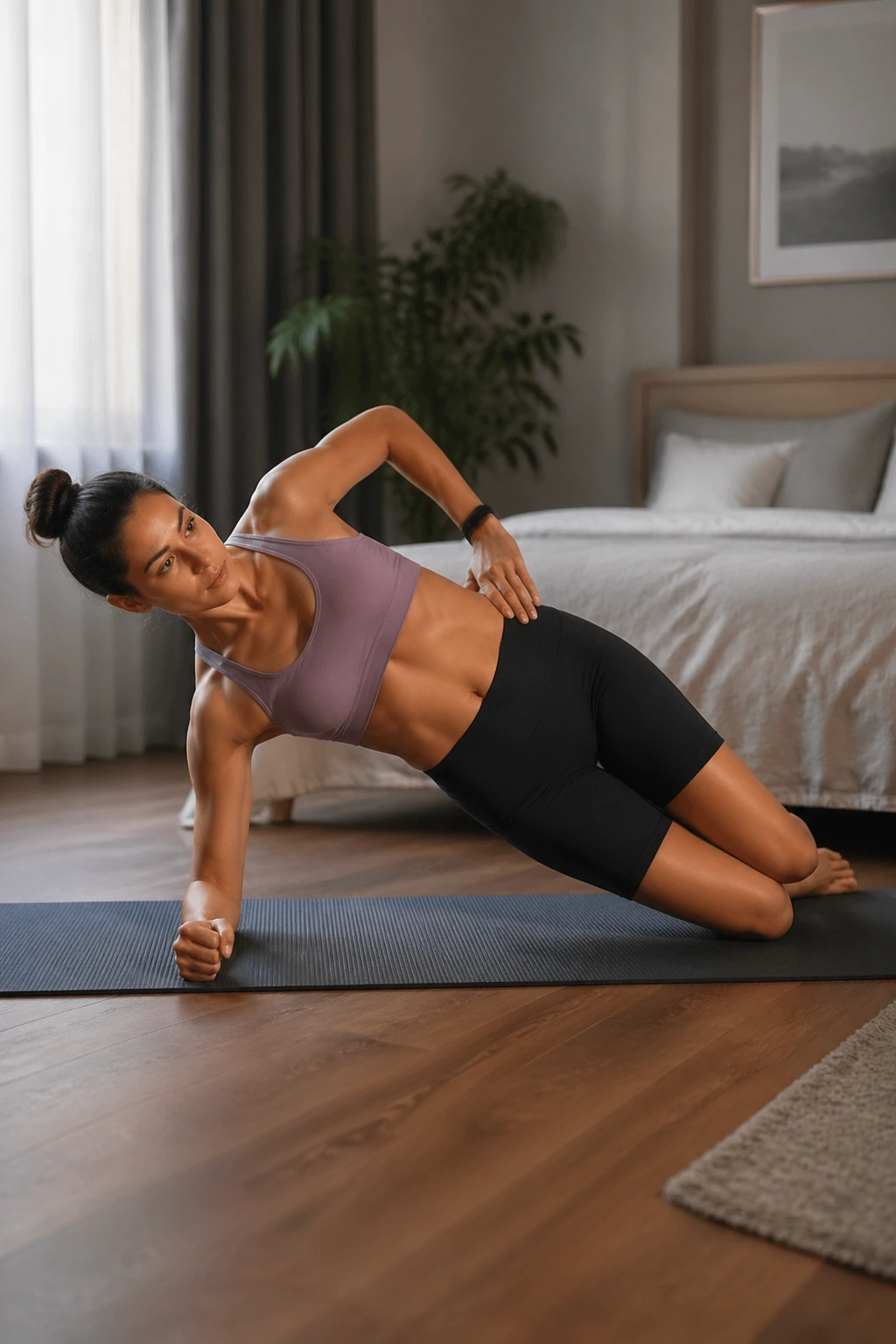
Want a move that works the sides of your trunk without being brutal? Side planks from the knees hit the obliques and keep the spine honest, but they’re easier to handle than a full side plank.
Lie on one side, prop yourself on one forearm, and bend the knees so they stack behind you. Lift your hips so your body forms a straight line from shoulder to knees. Hold for 10 to 20 seconds on each side.
This is one of those exercises where people either rush or sag. Neither helps. Keep the shoulder stacked over the elbow and press the floor away a little. That tiny pressure keeps the side of your core doing the work.
If your shoulder feels cranky, shorten the hold or keep the top hand on the floor for support. No need to be stubborn. Bedtime routines are supposed to help you recover, not create a new problem.
12. Seated Knee Lifts When You’re Too Tired to Lie Down
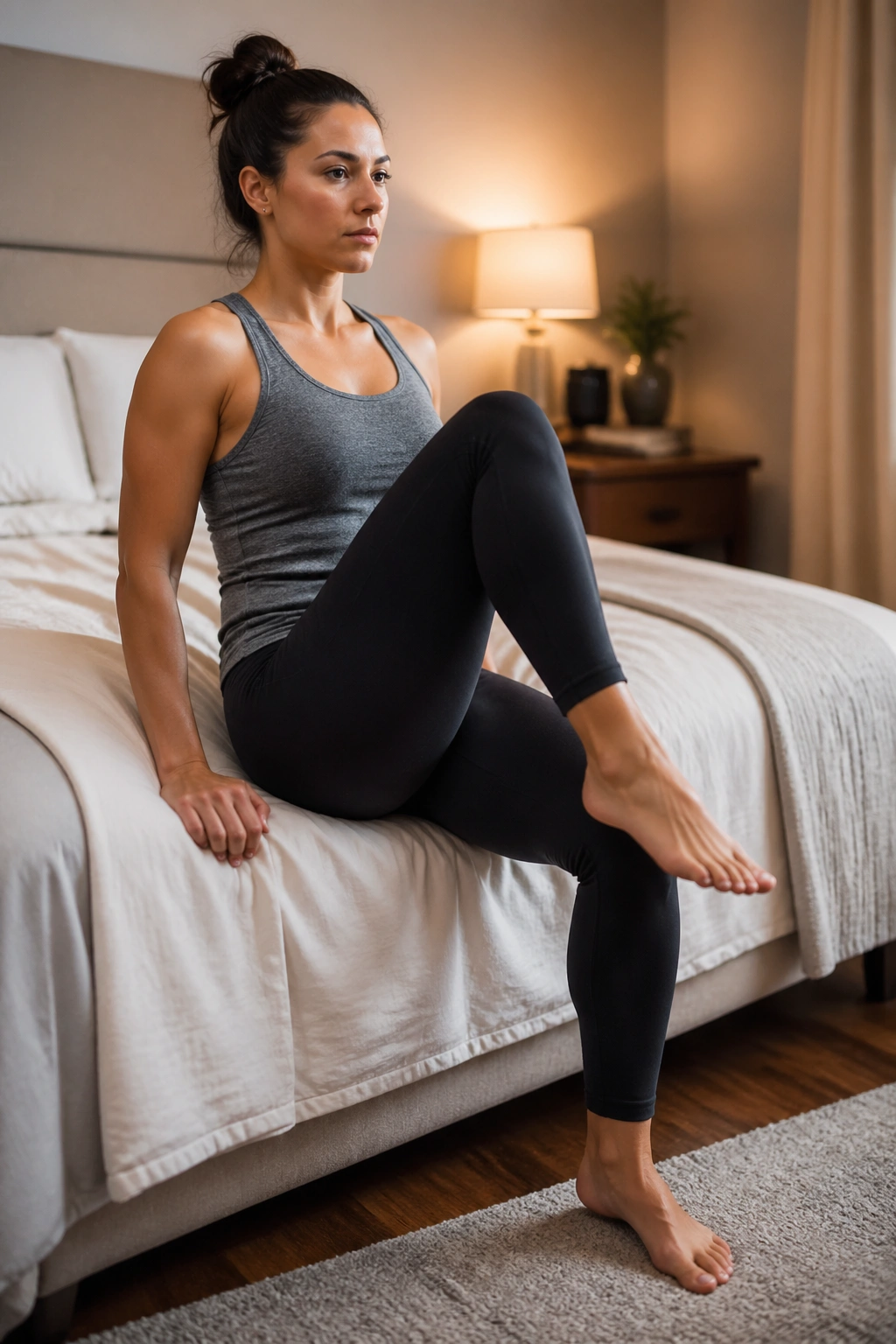
Some nights, getting onto the floor feels like too much. Seated knee lifts are for those nights. They are not the flashiest move in the list, but they keep the habit alive when motivation is thin.
Sit on the edge of a bed or chair with your hands lightly gripping the sides. Lift one knee toward your chest, lower it slowly, then switch. Keep the torso tall and the breath steady. Try 20 to 40 total lifts.
The trick is not to lean back and fling the leg upward. That turns the move into hip-flexor chatter. You want a controlled lift and a slow return.
This is also a good choice if floor work bothers your wrists, knees, or low back. A routine you can repeat on tired nights is worth more than a perfect routine you skip three times a week. That part matters more than people like to admit.
13. Standing Cross-Body Knee Drives with a Wall for Balance
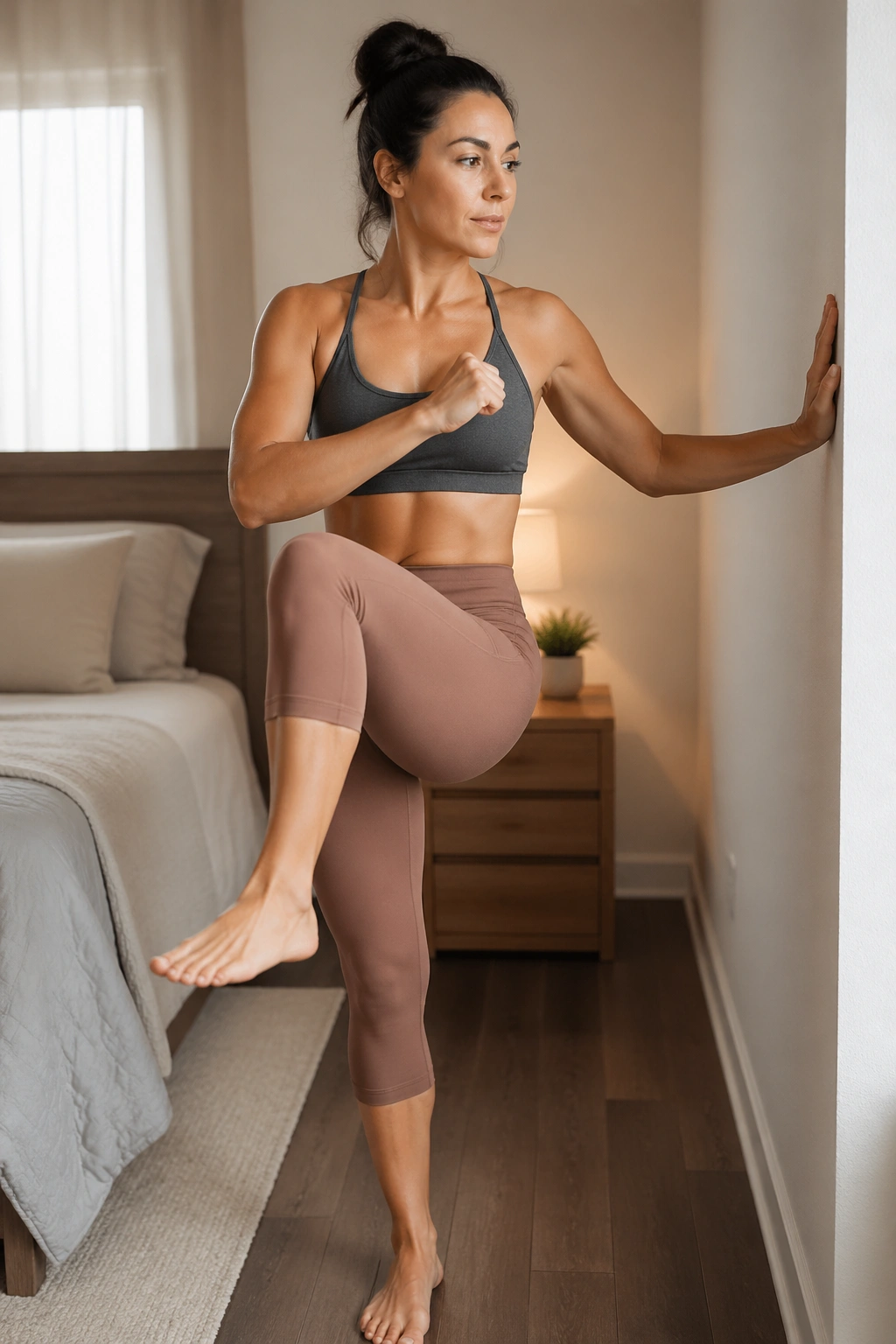
A standing move can be easier to stick with when you’re already in pajamas and not feeling like a floor session. Cross-body knee drives keep the core working while staying light enough for late evening.
Stand tall with one hand on a wall or dresser for balance. Drive one knee up and slightly across your body, then lower it slowly. Switch sides and keep the motion smooth. Do 30 to 45 seconds total, or about 10 to 12 reps per side.
You should feel the abs tighten on the lift and the standing leg work to keep you stable. If you start bouncing, slow down. If your shoulders creep up toward your ears, reset.
This move is useful on nights when you want a little more calorie burn than pure floor work gives you, but not so much that you start panting. That balance is the whole game before bed.
14. Slow Bodyweight Squats That Use Bigger Muscles

Here’s the blunt truth: your legs burn more energy than tiny ab moves. That’s why slow squats matter if the goal is fat loss, even when the words “bedtime” and “squat” do not sound like a natural pair.
Stand with feet shoulder-width apart, sit your hips back, and lower for 3 seconds until your thighs are about parallel or as low as feels good. Drive back up through your heels. Do 8 to 12 reps at an easy pace.
A smarter squat for late night
- Keep the chest tall.
- Let the knees track over the toes.
- Stop before your form gets sloppy.
- Use a chair or bed behind you if depth feels uncertain.
This is not the time for jump squats or endless reps. Slow bodyweight squats give you a real muscle hit without turning the room into chaos. If your knees do not like deep squats, keep the range small and sit back to a bed edge instead.
Simple. Effective. Quiet enough for a bedroom.
15. Wall Sits for Quiet Leg Burn
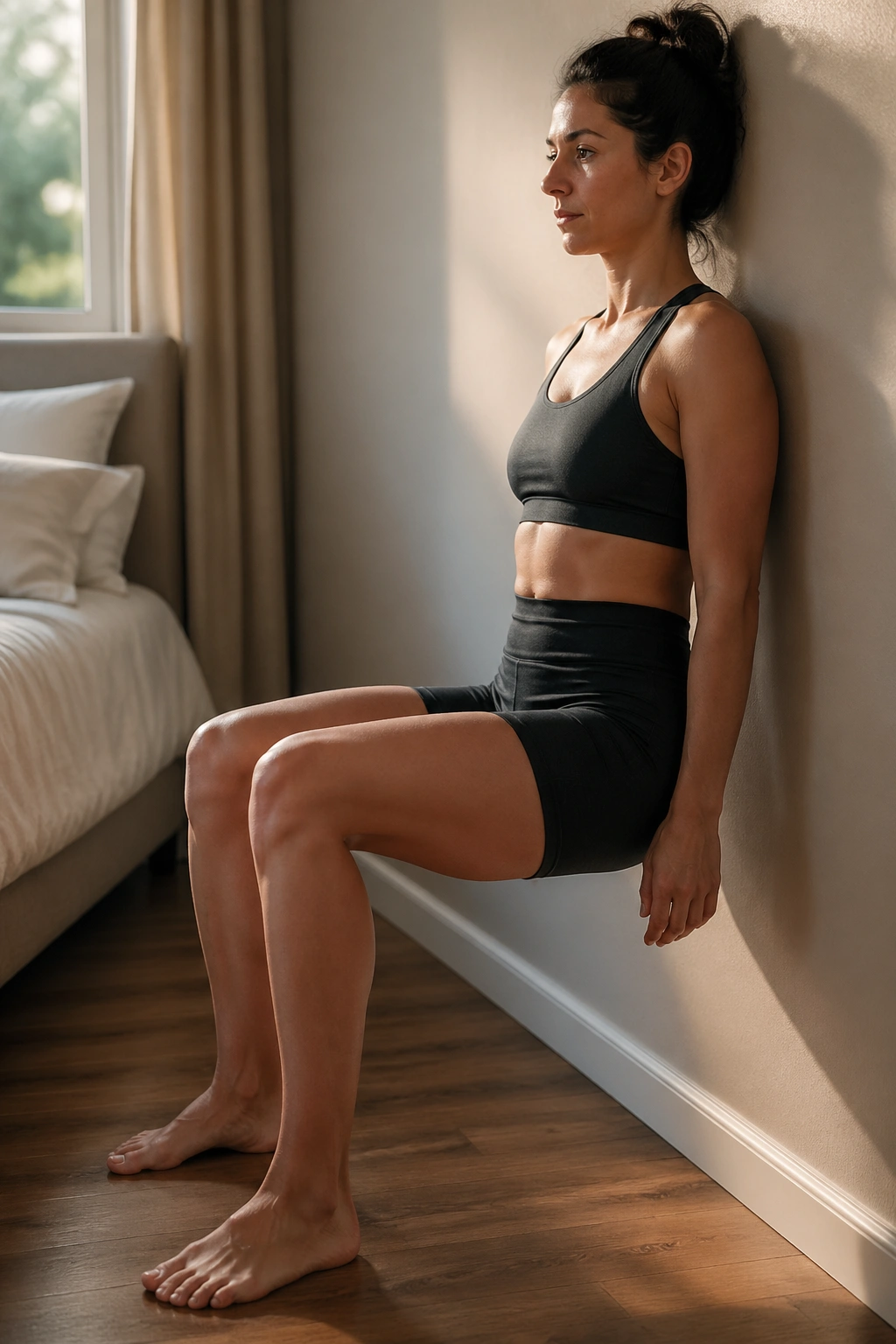
A wall sit is one of the sneakiest exercises on this list. It looks still, but the legs start talking within seconds. That kind of low-noise burn is useful at night because it works big muscles without lots of movement.
Slide your back down a wall until your knees bend somewhere near 90 degrees, or higher if your knees need a friendlier angle. Hold for 20 to 45 seconds, then stand up slowly.
If your thighs shake, that’s normal. If your knees ache, move your feet farther out and raise the seat a little. You do not get extra points for suffering.
Wall sits are nice when you want to feel like you trained without doing a floor routine. They also pair well with squats if you want two leg moves and nothing fussy. Use them near the middle of the routine, not right after a huge meal, unless you enjoy discomfort for no reason.
16. Calf Raises That Keep the Routine Gentle

Calf raises are almost too easy to dismiss, which is why people skip them. Then they miss a clean, low-impact way to keep the body moving before sleep. Calf raises also help circulation, and that can make a late routine feel a little lighter.
Stand tall, hold a wall if needed, and rise onto the balls of your feet. Pause for a second at the top, then lower slowly until your heels touch down. Do 15 to 25 reps.
You can make this more interesting by reaching your arms overhead on the way up or pressing your hands lightly together at chest level. Either way, keep the motion smooth. No bouncing.
This is a good “I still want to do something” exercise. It will not leave you drenched, and that’s the point. On sleepy nights, a small win is a real win.
17. Supine Spinal Twists to Unwind the Trunk
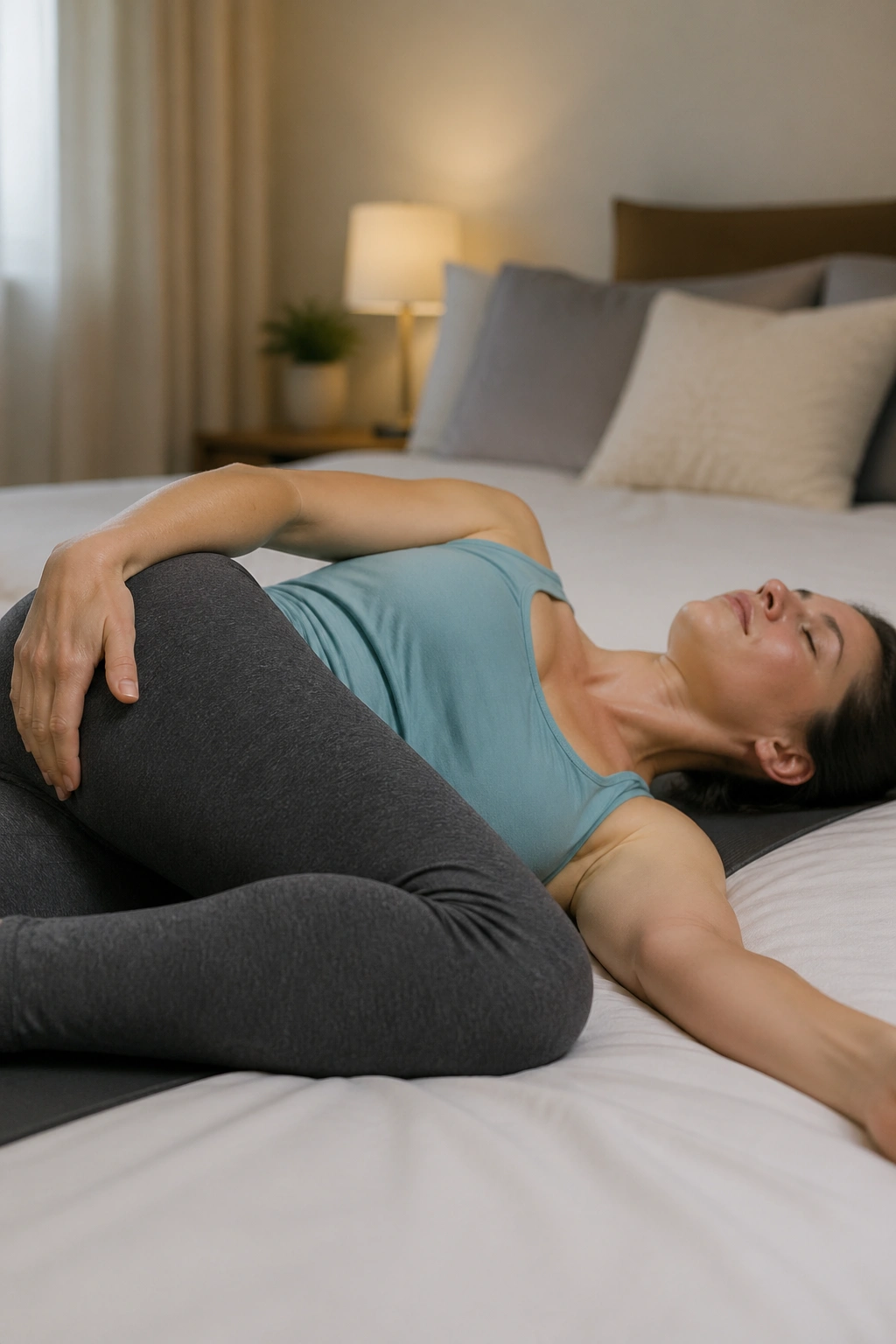
After the core work and leg work, your torso usually wants a reset. Supine spinal twists give you that without any strain. They also help your breathing settle down, which is useful when bedtime is the actual goal.
Lie on your back, hug one knee in, then guide it gently across your body while keeping both shoulders closer to the floor. Hold for 20 to 30 seconds on each side and breathe into the side of your ribs.
This is not a fat-burning exercise in the same way a squat is. That’s fine. Recovery matters. If you want your bedtime belly fat exercises to be repeatable, you need at least one or two moves that tell your nervous system to soften instead of fight back.
If your lower back is stiff, keep the twist small. Let the breath do some of the work. It usually does more than people think.
18. Legs-Up-the-Wall to Finish Without Spiking the Nervous System

The final move should feel like an exhale. Legs-up-the-wall is less about burning calories and more about ending the routine in a way that helps you actually sleep, which is part of the weight loss picture whether people like that answer or not.
Lie on your back and place your legs up a wall or on the bed with calves supported. Let your arms rest by your sides, close your eyes, and breathe slowly for 1 to 5 minutes. If your hamstrings are tight, keep your knees a little bent.
This position can feel almost laughably simple. Good. The point is to stop pushing. A lot of people sabotage bedtime workouts by ending with one last hard set, then wondering why sleep feels slippery. Don’t do that.
If you want a real nightly habit, choose 5 to 7 of these 18 exercises and keep them in the same order. That is usually enough to work the core, use a few big muscles, and calm the body down before sleep. A short routine you repeat is worth more than an ambitious list you only half-finish.
