



Most glute exercises fail for one boring reason: they make the muscles tired without giving them a strong job to do.
If you want stronger glutes and legs, the winning moves are the ones that let you load the hips, control the pelvis, and keep adding resistance over time. That sounds basic because it is. Burn is not the same thing as progress.
The glutes do three big jobs. They extend the hip, keep the pelvis steady when you stand on one leg, and help the thigh move out to the side. A smart glute workout should hit all three. A bunch of light band kicks can have a place, sure, but they should not be the whole story.
I keep coming back to exercises you can repeat, track, and make harder. If a movement falls apart the moment the dumbbells get heavy, that is not a bad exercise — it is a clue that you need better setup, better range, or a better match for your current strength.
1. Barbell Hip Thrust
If you want one glute exercise that is easy to load and hard to fake, start here.
The barbell hip thrust earns its place because it lets you put a lot of tension right where the glutes finish the work: full hip extension. Electromyography testing has repeatedly shown strong glute activation here, and that matches what you feel in practice. The top of the rep should look powerful, not sloppy.
Why It Works So Well
The best part is the line of resistance. At the top of a hip thrust, the glutes are working hard against the bar, and you can usually add weight faster than you can on a bodyweight bridge or kickback. That makes it a strong choice for glute growth, not just a warm-up trick.
Set the bench around knee height, plant your feet so your shins are close to vertical at the top, and keep your ribs down. Do not turn the lockout into a lower-back arch. You want your hips lifted, not your spine cranked into a weird crescent.
Quick cues that matter:
- Drive through the mid-foot and heel.
- Tuck the chin a little.
- Pause for 1 to 2 seconds at the top.
- Stop when the hips are fully extended and the glutes are tight.
- Use 3 to 5 sets of 6 to 10 reps for strength and size.
One more thing. Heavy hip thrusts are not glamorous, but they work. That is why people keep coming back to them long after the novelty wears off.
2. Romanian Deadlift
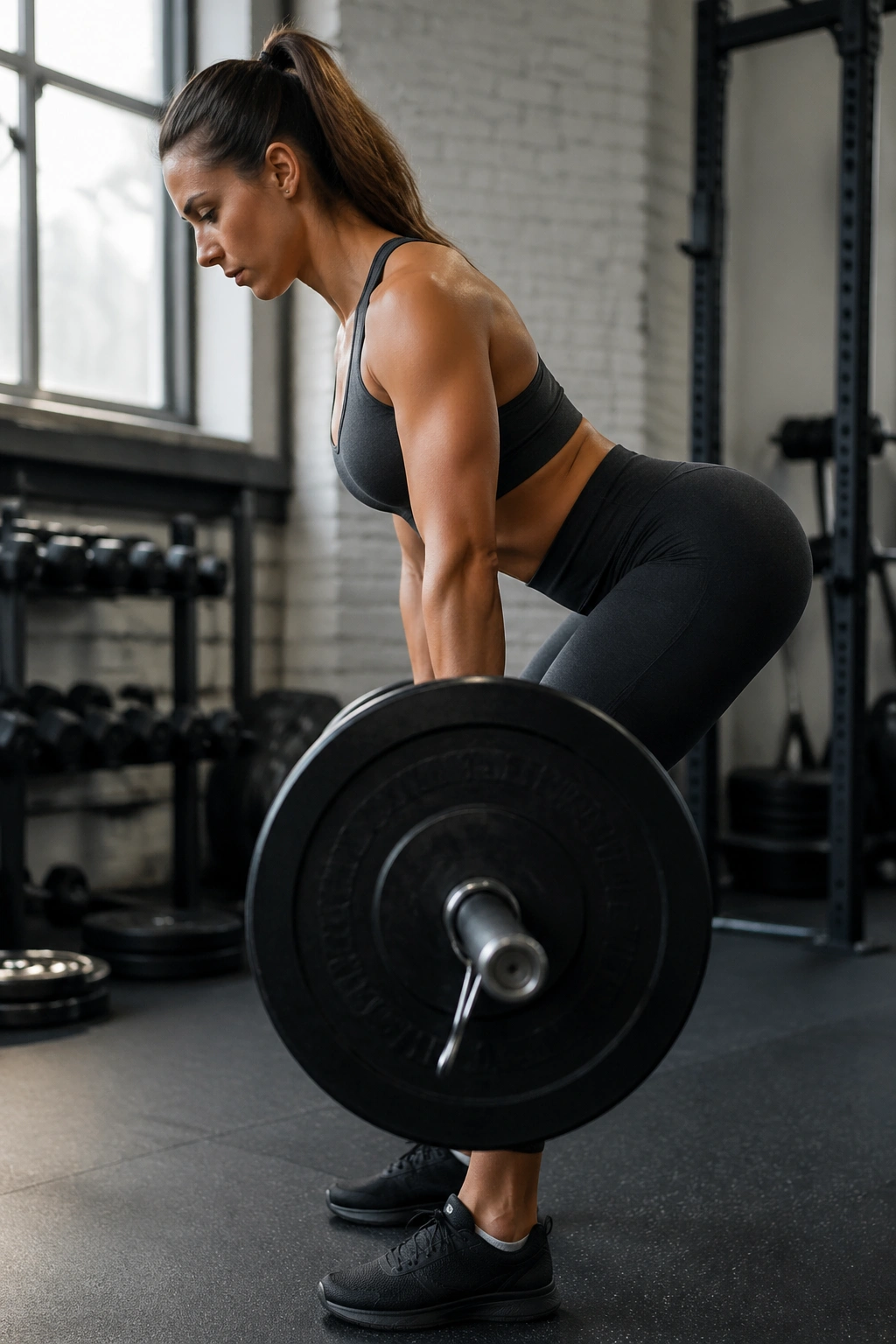
Why does the Romanian deadlift belong in a glute list when so many people feel it in their hamstrings? Because the movement is still a huge hip extension drill, and the glutes have to help finish every rep.
The hinge is the point. You push the hips back, keep the bar close, and lower under control until the back of the legs gets a long stretch. Then you stand back up by driving the hips forward. If you rush the descent, the whole thing turns into a back exercise with bad manners.
How to Keep It in the Glutes
The setup is simple, but small mistakes change the feel fast. Keep a soft bend in the knees, not a deep squat. Hold the bar close enough that it brushes the thighs and shins. If the bar drifts away from you, the load shifts forward and the lower back starts doing more than it should.
A lot of lifters stop too early because they get scared of the stretch. Don’t cut the range short unless your back starts rounding. The glutes and hamstrings love a controlled lengthened position. That is where the exercise earns its keep.
Use these cues:
- Hips go back first.
- Chest stays proud without flaring the ribs.
- Bar stays close.
- Stand tall at the top without leaning back.
- Try 3 to 4 sets of 5 to 8 reps if you want heavier work, or 8 to 10 if you want a bit more volume.
The RDL is one of those lifts that looks ordinary until you do it correctly. Then it feels expensive in the best way.
3. Bulgarian Split Squat
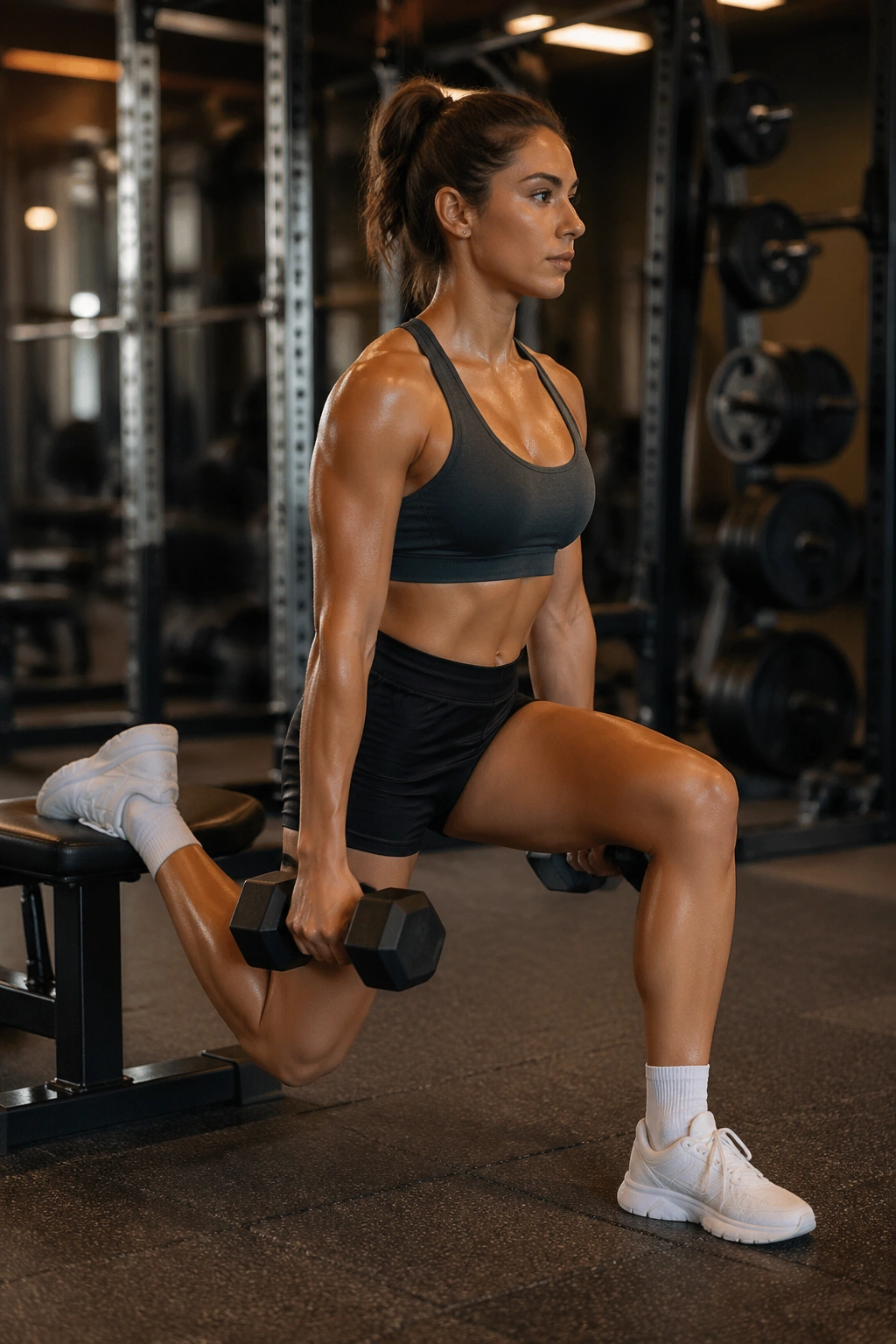
A pair of dumbbells and a bench can make your glutes and legs complain in a very honest way.
The Bulgarian split squat is a little brutal, and that is exactly why it works. Each leg has to do the job alone, which exposes weak spots fast. It also gives the front leg a deep hip bend, and that matters because the glutes like working from a stretched position.
The Setup That Changes the Exercise
Move the front foot a little farther from the bench than most people think. If the stance is too short, the knee shoots forward and the quad takes over. A slightly longer stance, plus a small forward lean from the hips, shifts more of the work into the glute.
Your back foot is just there for balance. Don’t push off it. Don’t bounce out of the bottom either. Lower under control, let the front leg do the work, and rise by driving the floor away.
Some lifters hate this exercise at first because it reveals balance issues. Fair enough. That is part of the value. The glutes do not live in isolation, and the split squat teaches them to work while the pelvis stays steady.
- Best rep range: 8 to 12 per leg
- Best cue: keep the whole front foot down
- Best mistake to avoid: letting the torso stay bolt upright the whole time
- Best use: lower-body strength, glute growth, side-to-side balance
It is hard. It should be hard.
4. Deep Squat
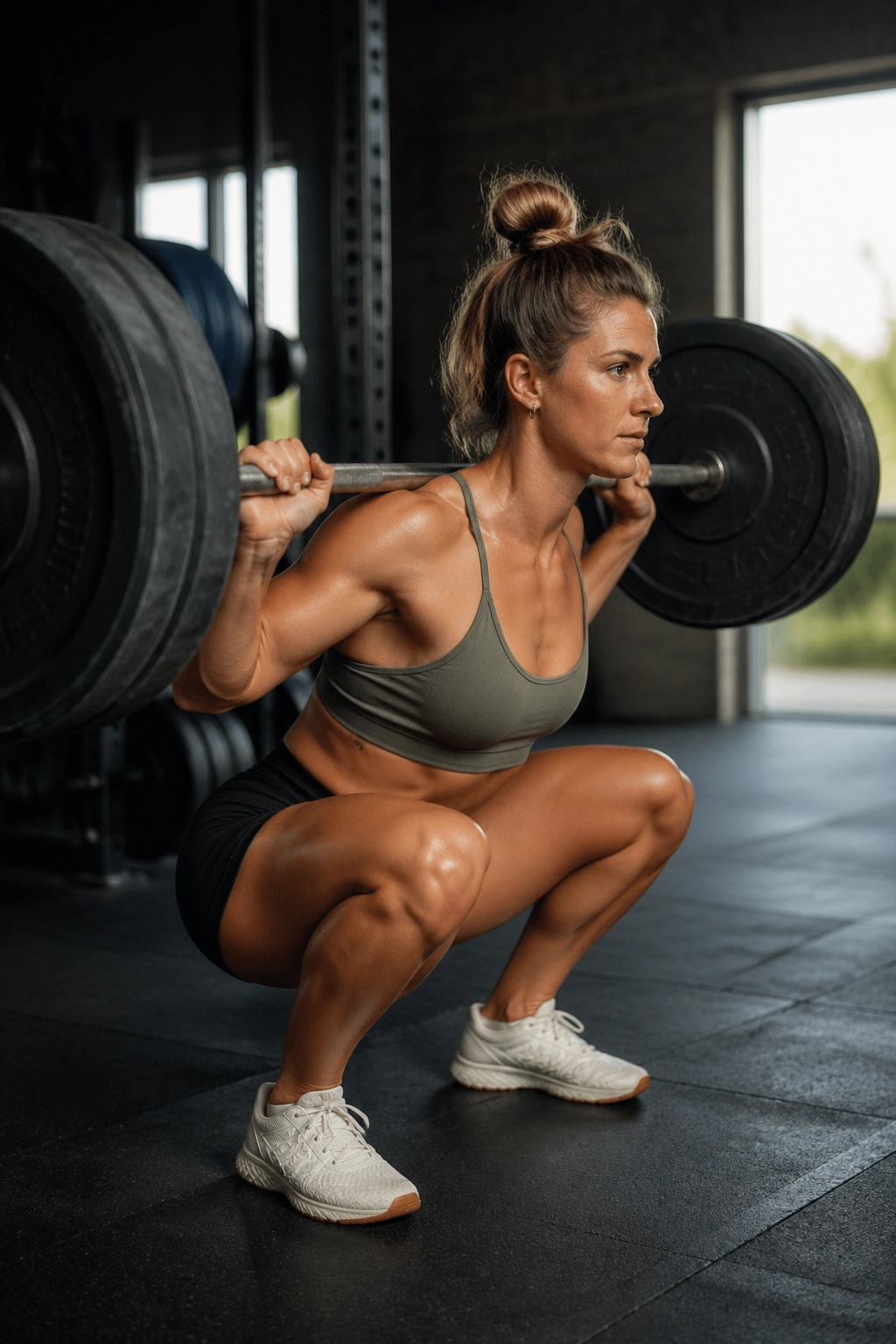
Unlike shallow squats, deep squats give the glutes a long stretch under load, and that changes the whole conversation.
People love arguing about squat depth. I find most of that noise misses the point. If your mobility allows it, a deeper squat gives the glutes more range to work through, especially out of the bottom where the hips are bent a lot and the muscles have to help drive you up. That does not mean every lifter should chase the deepest possible position with ugly form. It means depth matters when it’s controlled.
A deep squat can be done with a barbell, dumbbells, kettlebell, or just body weight while you learn the pattern. Heels can stay flat if your ankles allow it. If they do not, a small heel lift can help you reach depth without collapsing forward. That is not cheating. That is smart setup.
What I like here is the mix of glutes and legs. Quads help. Adductors help. The glutes still get a meaningful role, especially if you keep the descent smooth and drive up without turning the rep into a good-morning.
The common mistake is treating depth like a dare. Don’t chase it if your lower back tucks hard at the bottom or your heels pop up every time. Use the deepest position you can own.
If you want one lower-body lift that carries over to a lot of things at once, this is one of the best bets.
5. Glute Bridge
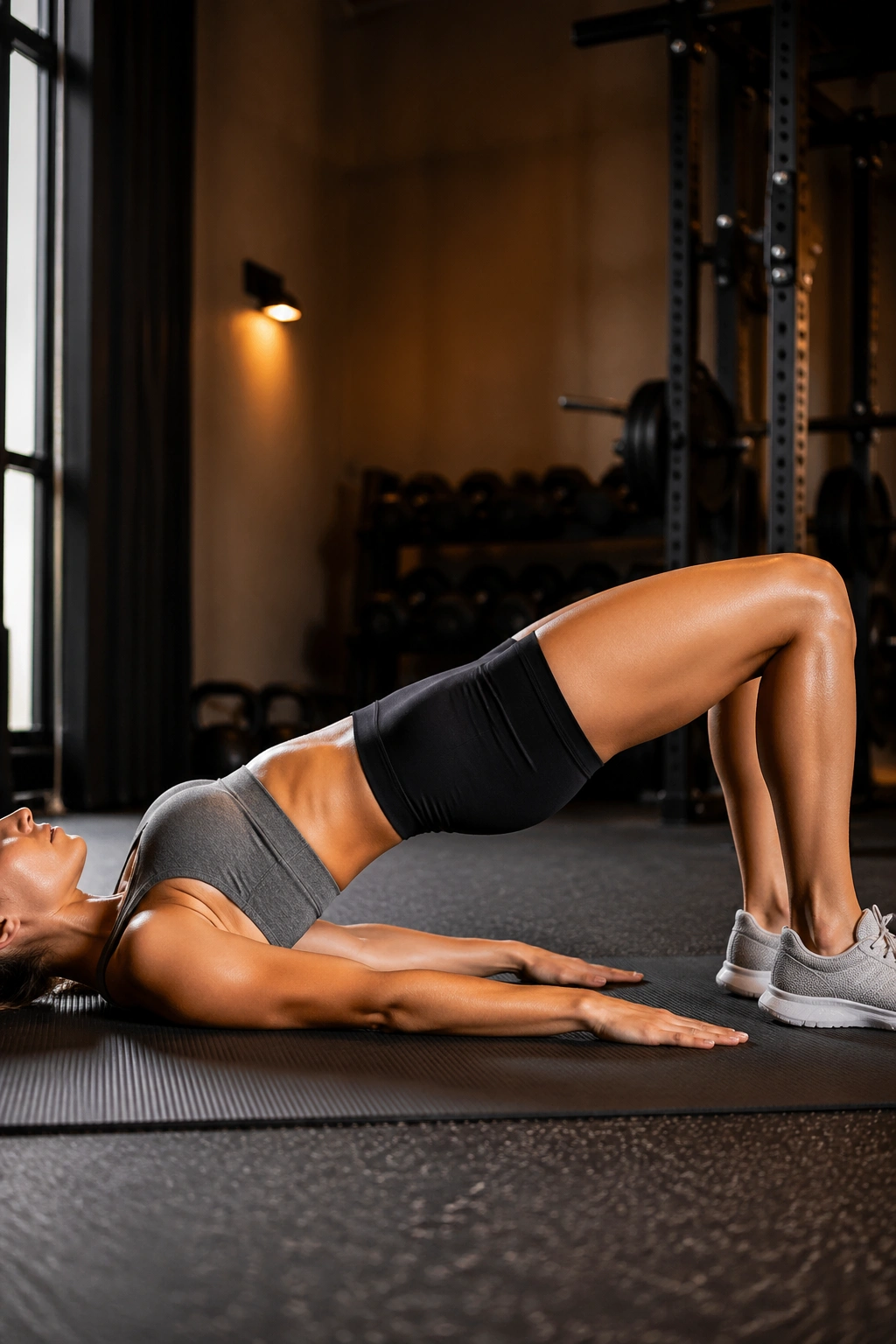
The bodyweight glute bridge looks simple, and that is exactly why people blow past it.
It is not flashy. It does not need a bench. But a good bridge teaches hip extension without the extra setup of a hip thrust, and that makes it useful for beginners, warm-ups, home training, and days when your back wants less drama. Add a dumbbell, a plate, or a barbell across the hips, and the move gets serious fast.
When It Beats the Hip Thrust
If your bench setup feels awkward, the floor bridge is easier to control. The range is shorter, which is why some lifters feel it more in the glutes and less in the lower back. That shorter range also makes it easier to add a hard top squeeze without losing position.
Lie on your back, feet close enough that you can press through the heels, and lift the hips until the glutes are fully tight. Do not overarch at the top just because the hips are high. A clean bridge ends when the glutes are squeezed, not when your ribs flare.
For a lot of people, the best version is a pause bridge for 10 to 20 reps. Hold the top for 2 seconds on each rep. The burn shows up fast, and it is useful burn, not just noise.
Use the bridge when you want a lower-stress glute movement, or when you need an easy way to practice the squeeze before moving to heavier work.
6. Step-Up
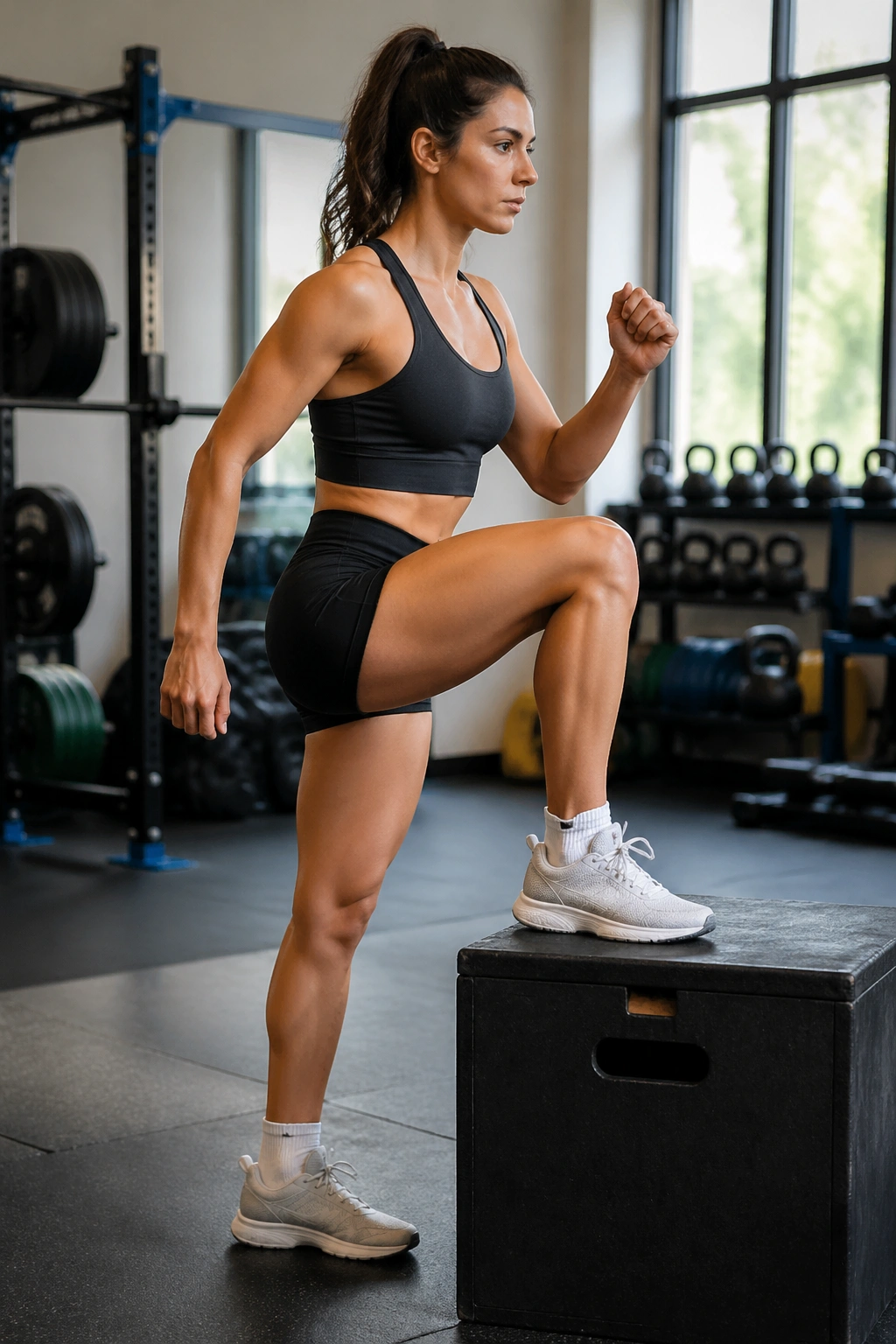
What makes a step-up worth doing when squats already exist? The answer is the single-leg demand.
A step-up asks one leg to lift the body, control the descent, and keep the pelvis from tipping sideways. That is a lot. The glute on the working side has to help extend the hip, while the glute medius works to keep the pelvis from dropping. If you choose the right box height, the movement becomes a clean lower-body builder instead of a sloppy hop.
How to Get More Glute Out of It
Use a box that puts the working thigh somewhere around parallel to the floor, or a bit lower if you need better control. Too high, and you start cheating with momentum. Too low, and the rep can become too easy to matter.
Drive through the whole foot on the box. The trailing leg should not launch you upward. If it does, the front leg is not doing enough. Keep a slight forward lean and let the hips do the work.
This is one of those moves that looks calmer than it feels. Your breathing may stay under control, but your glutes will still light up if you do it right.
- Use 3 sets of 8 to 12 reps per leg.
- Pause at the top before stepping down.
- Keep the knee tracking in line with the toes.
- Pick a box height you can own without bouncing.
It is a good exercise. Not because it is trendy. Because it exposes real strength.
7. Single-Leg Romanian Deadlift
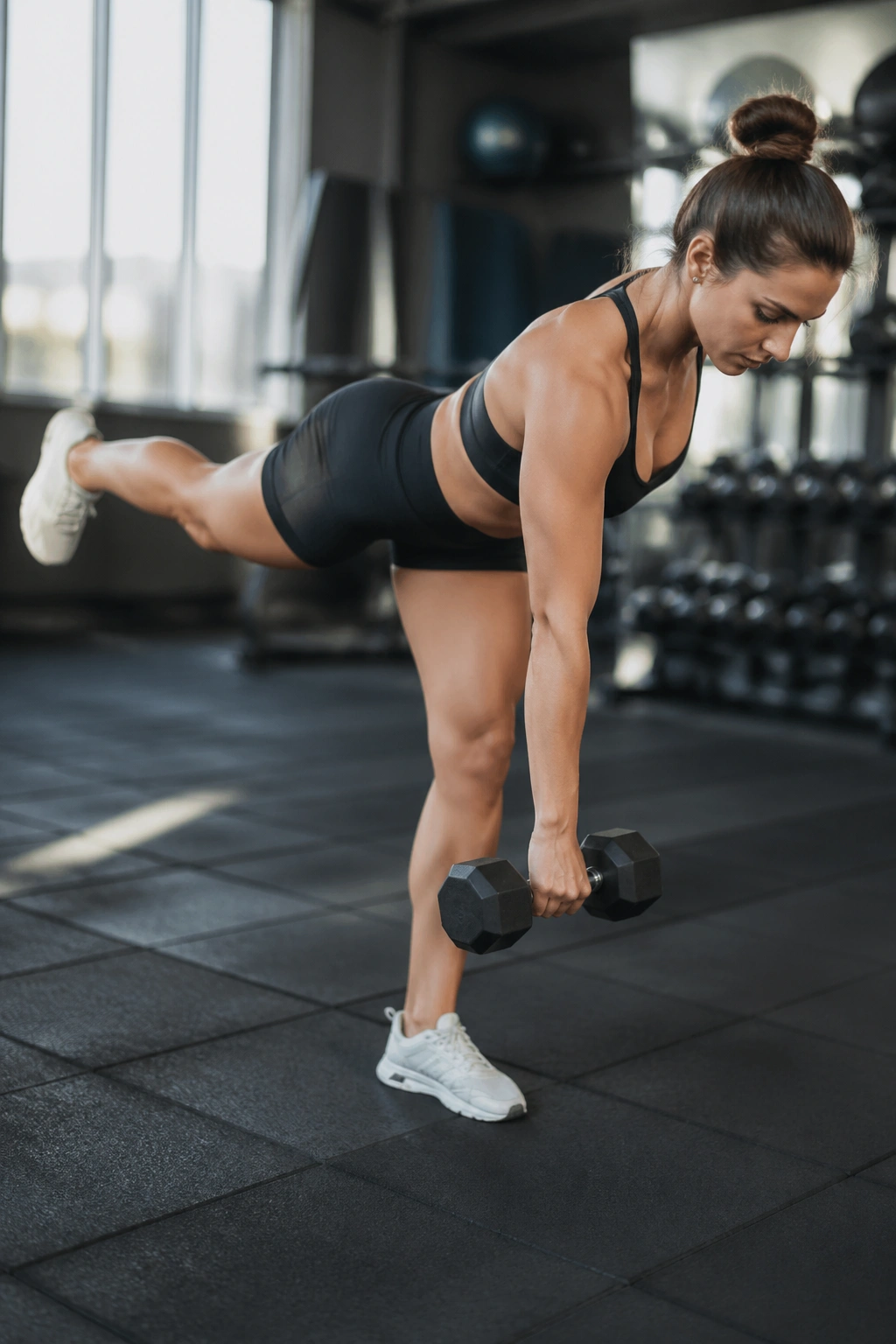
If the two-leg RDL is about load, the single-leg version is about control.
That difference matters. On one leg, the glutes have to do more than extend the hip. They also have to stop the pelvis from twisting, dipping, or drifting. That makes the exercise useful for glute medius work, balance, and the kind of side-to-side cleanup that a lot of bilateral lifts never touch.
How to Stay Square
Hold a dumbbell or kettlebell in the hand opposite the working leg, or hold one in each hand if you want more challenge. Soft knee. Hips square. Reach the free leg back as the torso tips forward from the hips, not the lower back. Keep the standing leg slightly bent and the foot rooted into the floor.
The rep does not need to go to the floor. In fact, too many people chase range and lose position. Stop when your torso and back leg form a strong line and your hips still face the floor. That is the useful part.
A small reach to the side with the free hand can help balance at first. Fine. Just don’t turn the lift into a circus act. The point is control, not acrobatics.
This exercise also shows you asymmetries fast. One side may shake, wobble, or cramp sooner. That is useful information. The fix is usually patience, lighter load, and better position, not a heroic attempt to muscle through it.
8. Reverse Lunge
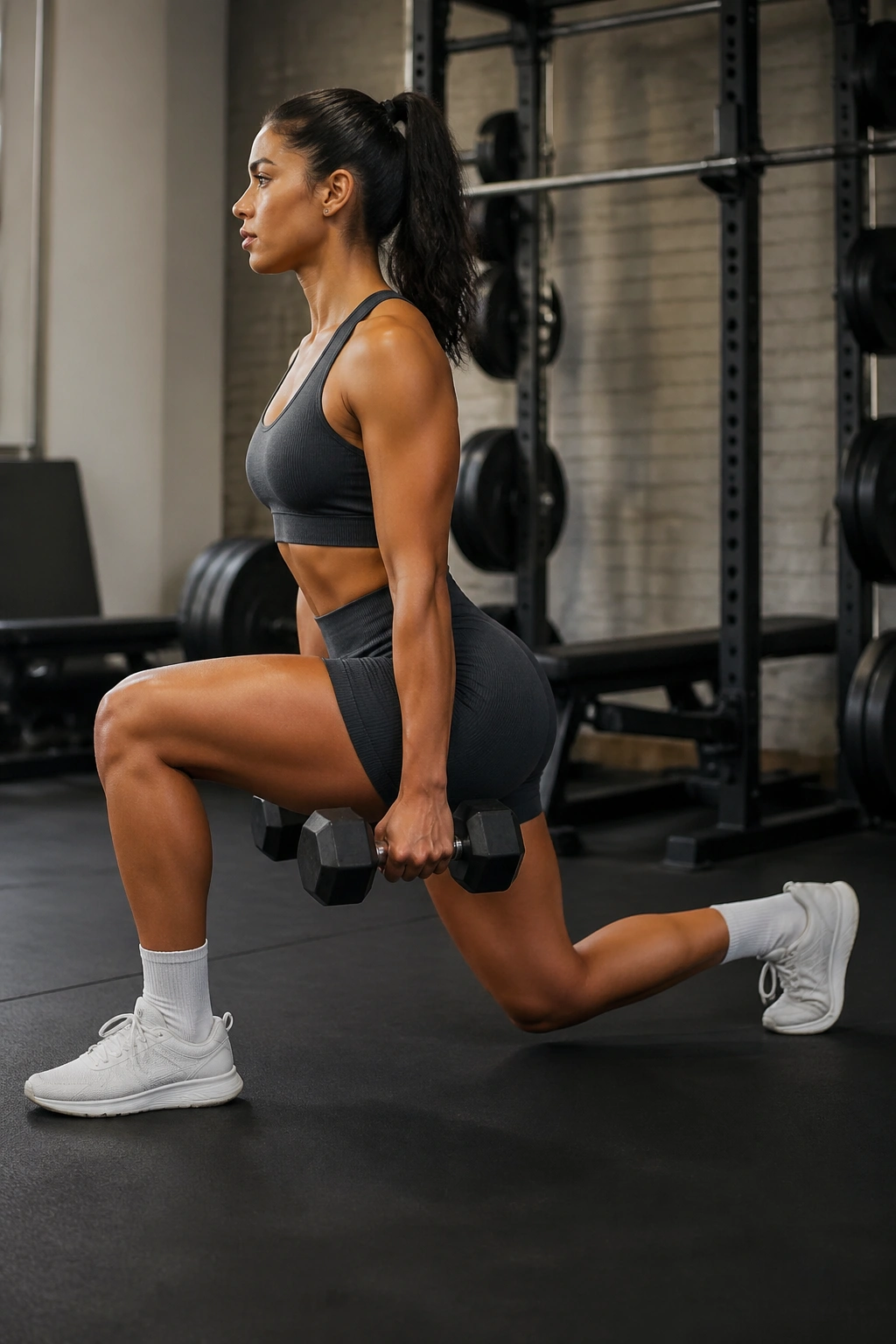
Forward lunges get a lot of attention, but I usually prefer the reverse lunge for glute work.
The reason is simple. Stepping back tends to feel smoother on the knees for many lifters, and it makes it easier to keep the front foot planted while the hips load up. If you take a longer step back, then lean the torso slightly forward, the front glute has to help a lot more on the way up.
The Part People Get Wrong
Most bad reverse lunges are too short and too upright. The back knee drops, the front heel wants to lift, and the whole rep turns into a quad-heavy wobble. Take a longer step back than you think you need. That puts the front hip in a better spot to do real work.
Control the descent. Touch the back knee lightly to the floor if that helps consistency, then drive through the front heel and mid-foot to stand. Don’t kick off the back leg. Don’t bounce.
This move works well with dumbbells, a barbell, or a Smith machine. I like dumbbells for most people because the setup is easy and the balance demands stay honest.
A good reverse lunge gives you a strong glute squeeze at the top and a stretch through the front hip at the bottom. That combination is useful. It also feels a little awkward the first few sessions, which is normal.
9. 45-Degree Back Extension
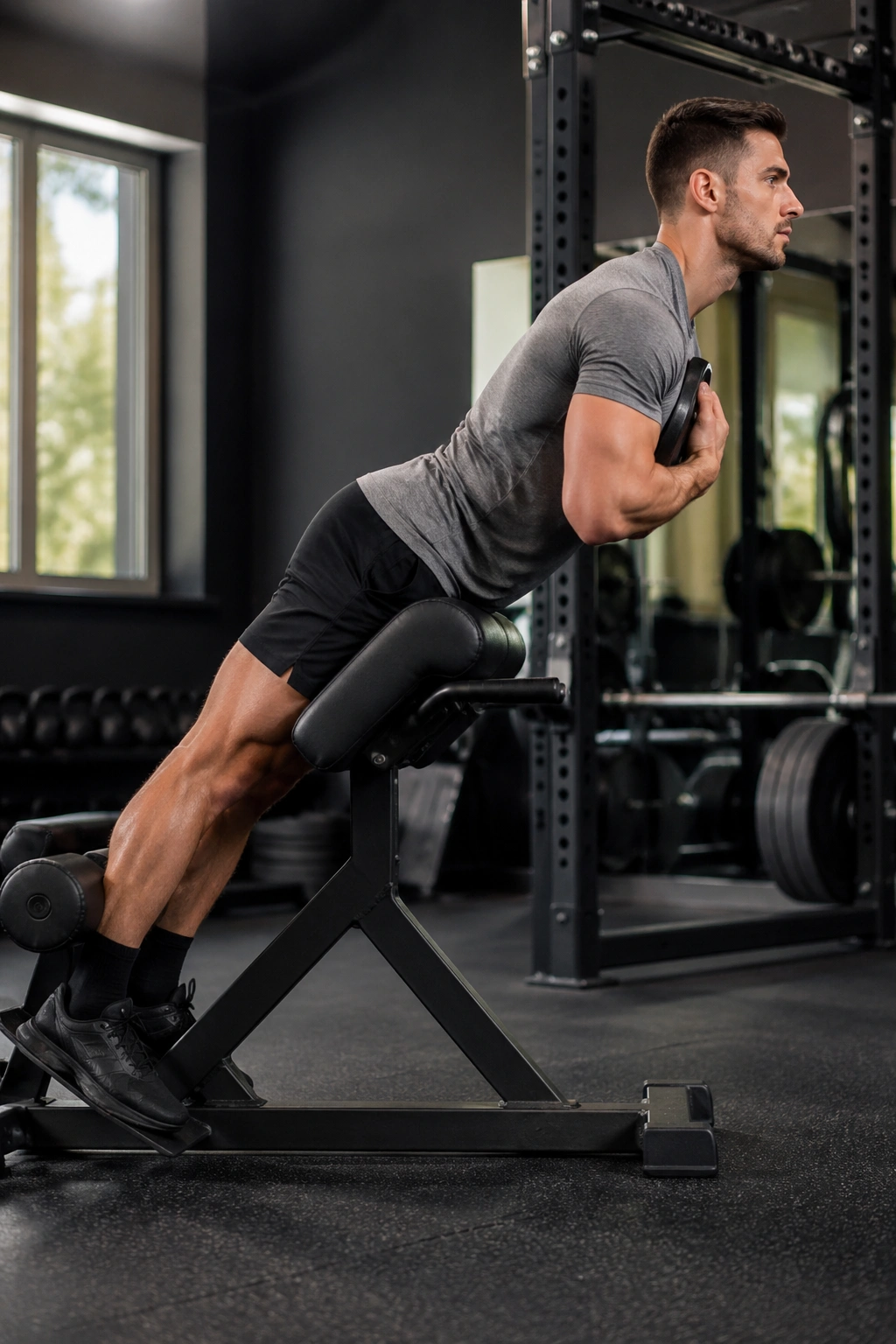
Most people treat the back extension like a lower-back move, and that misses the point.
When you set it up for glutes, the 45-degree back extension becomes one of the best posterior-chain builders in the gym. The trick is not to crank the spine through the lift. The trick is to move at the hips and finish with a glute squeeze. That small change turns a forgettable machine into a useful glute exercise.
Setup That Changes Everything
Place the pad so your hips can hinge freely. If the pad sits too high, the movement gets weird. Cross your arms, hold a plate, or hug a dumbbell if you want to add load later. Start with body weight first and learn what the glute squeeze feels like.
At the top, stop when your body forms one straight line from shoulders to heels. Do not hyperextend the lower back to “finish” the rep. That usually shifts tension away from the glutes and into the spine, which is not the trade you want.
Some lifters like a slight round through the upper back, especially when they are trying to keep the motion hip-driven. That can help. The key is still the same: hips move, glutes finish, spine stays calm.
Try 2 to 4 sets of 10 to 15 reps. Hold the top for a beat. If the glutes are not working, the load is probably too far forward or the pad is set wrong.
It is one of the better accessories in the room, and it does not get enough respect.
10. Seated Hip Abduction
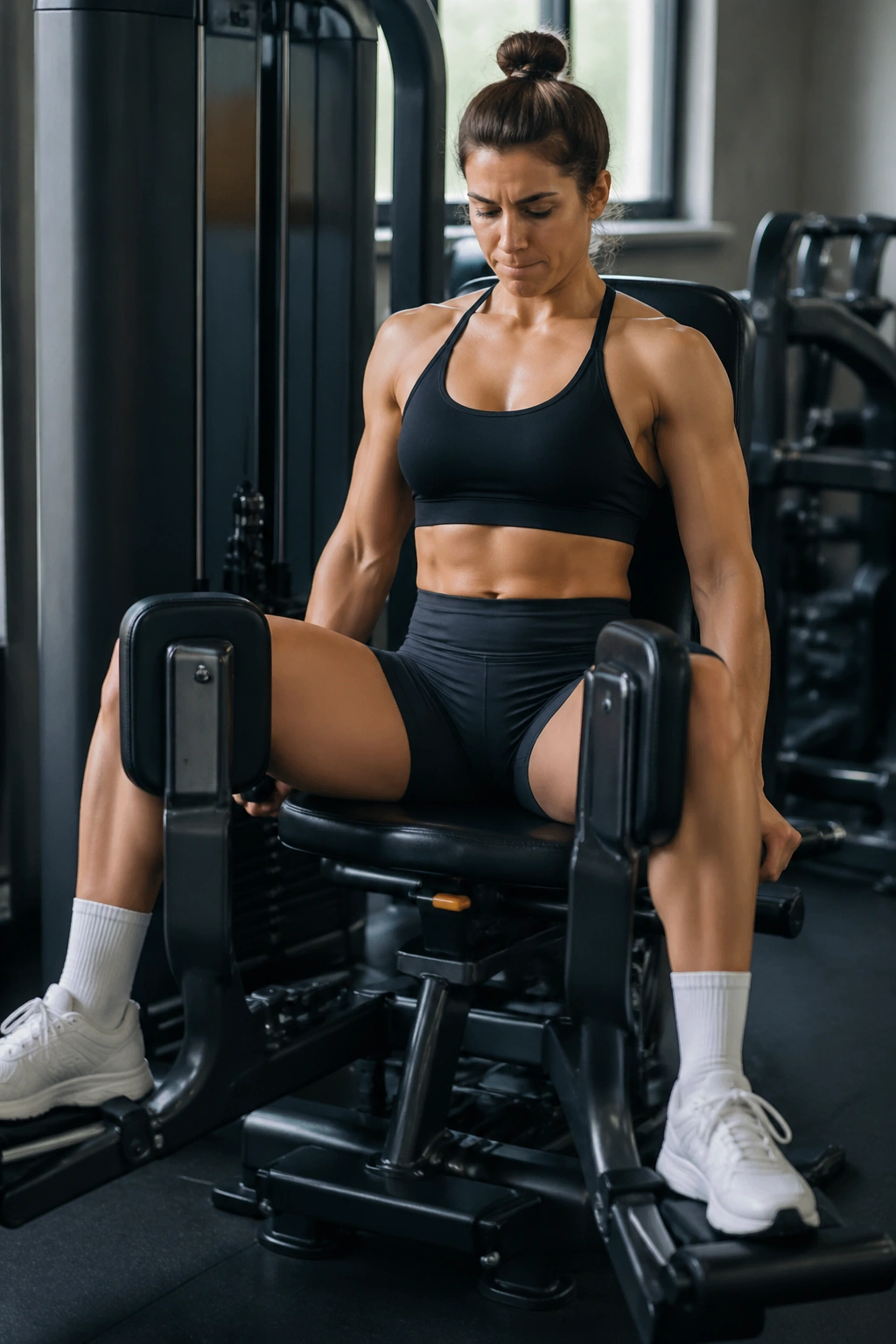
Why does the machine that looks almost too easy end up being so useful? Because it hits the glute medius and minimus in a way big compound lifts do not.
The seated hip abduction is one of the cleanest ways to train the side glutes. Those smaller muscles help keep your pelvis level when you walk, run, lunge, or stand on one leg. If they are weak, you usually feel it somewhere else — often in the lower back, hips, or knees.
Where to Feel It
Sit tall, place your knees against the pads, and drive the legs apart under control. The return matters just as much as the opening. If the stack slams, the set is too fast. Try leaning slightly forward if you want more glute tension; that small angle often changes the feel in a good way.
I like higher reps here. Think 15 to 25, with a pause at the open position. That gives the muscle time under tension without forcing you to pile on weight that ruins the path. A hard set on the abduction machine should feel like the side of your hips is on fire by the end. Not the lower back. Not the hip flexors.
If you train at home, a loop band around the knees can mimic the pattern, but the machine is easier to progress. That matters more than people admit.
This is not the sexiest exercise in the room. It might be one of the smartest.
11. Cable Kickback
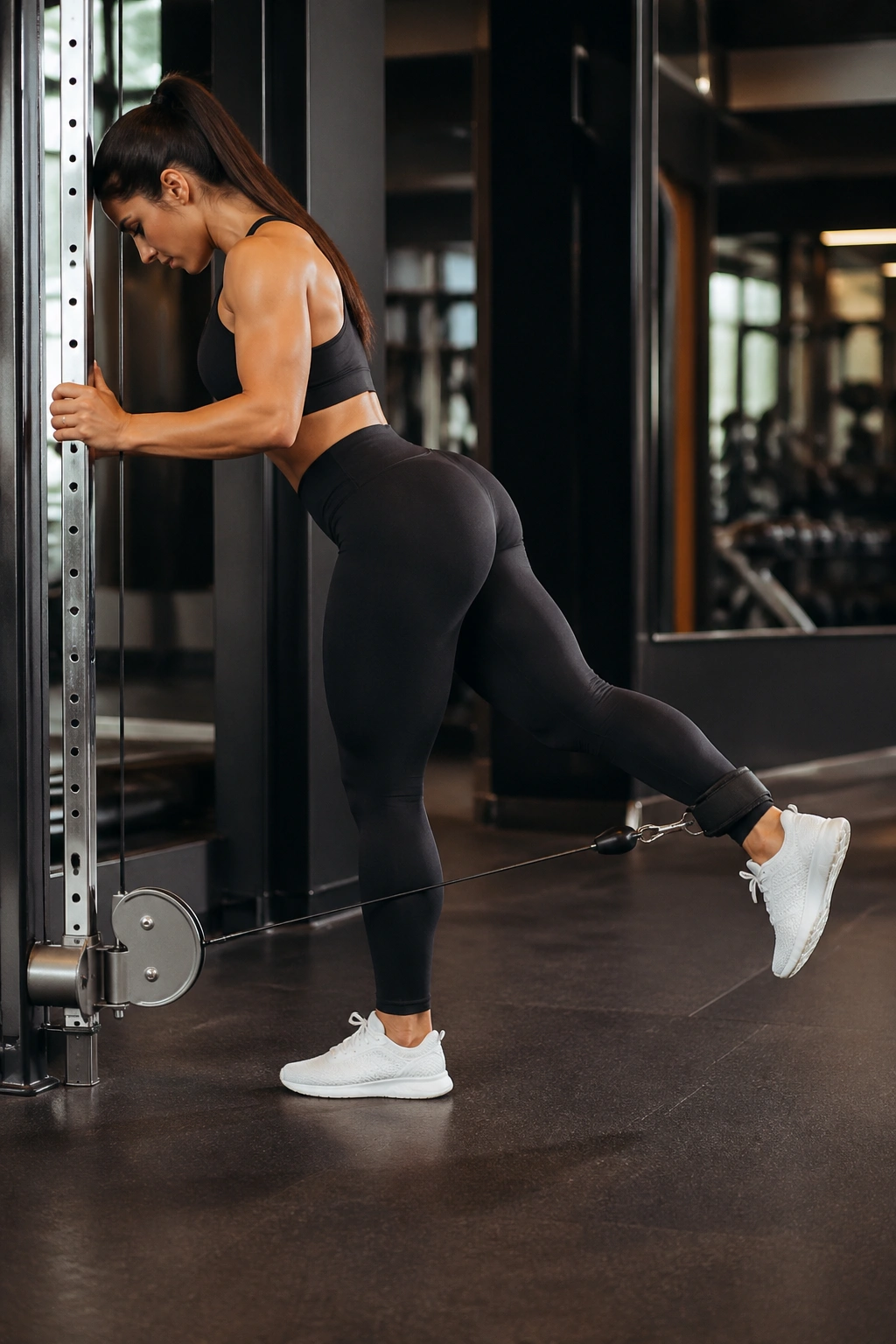
Compared with squats and deadlifts, cable kickbacks do one job: they let you squeeze the glute hard at the top without a lot of body English.
That makes them useful as an accessory. They are not the main course. They are the side dish that helps the meal make sense. You can load them in a way that keeps constant tension on the glute, and that constant tension is what makes the exercise worth doing.
Use an ankle strap, keep your torso still, and move the leg back in a controlled arc. The lower back should not take over. The pelvis should stay square. If you have to swing your whole body to move the weight, the stack is too heavy.
A small knee bend is fine. It often helps you feel the glute better and keeps the hamstring from stealing the show. Some lifters like a slight pause at peak contraction, and that works well here because the resistance is hardest when the leg is back.
Best rep range? Usually 12 to 20 per side.
Cable kickbacks shine when you want extra volume without crushing your joints. They are especially handy after heavy hip thrusts or split squats, when the glutes are already warm and ready to work.
12. Frog Pump
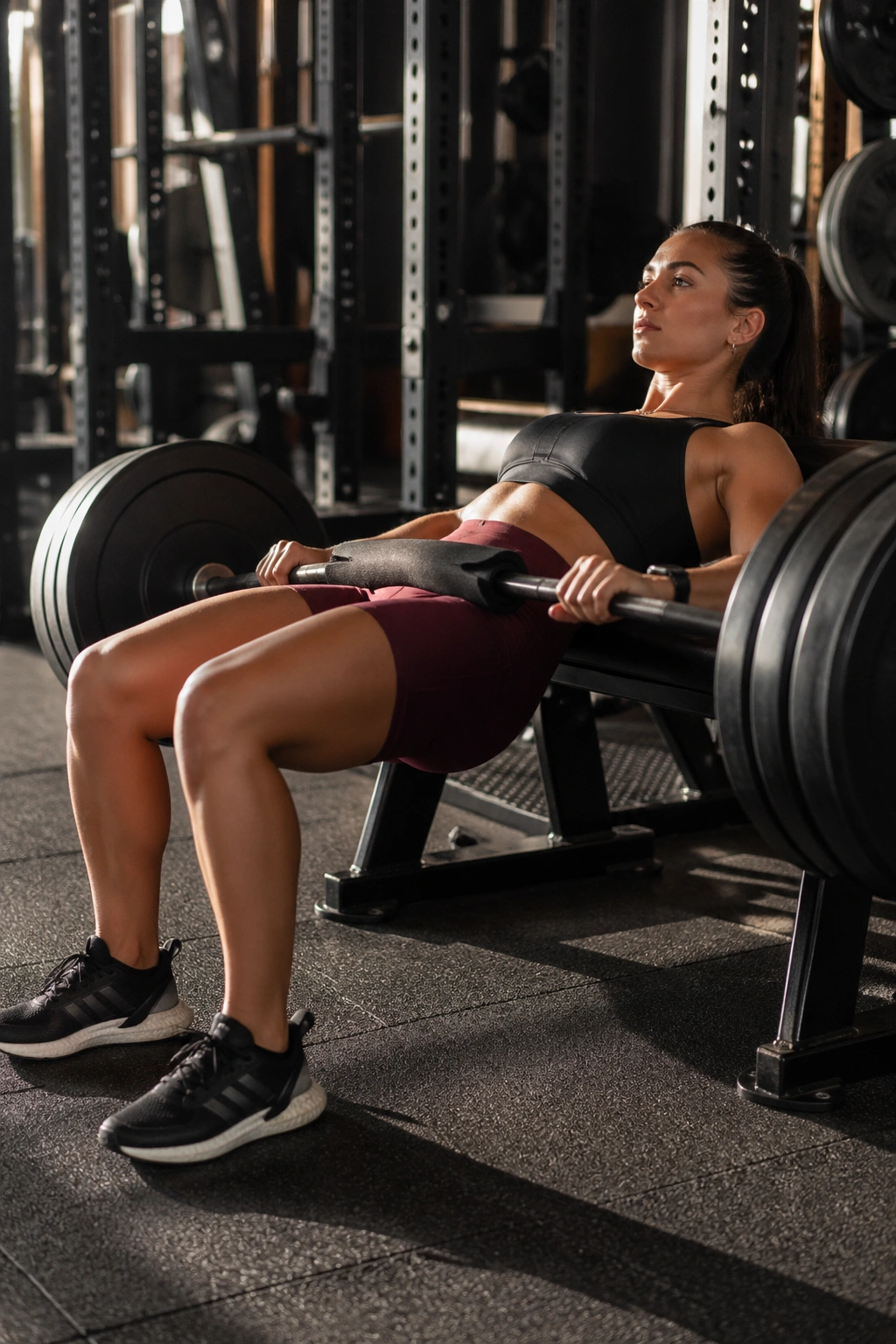
If the glutes are fried and you still want a finisher, frog pumps bring the burn fast.
The movement is small, which is why people underestimate it. Lie on your back, bring the soles of the feet together, let the knees fall out, and pump the hips up for high reps. The position shortens the glutes a lot, so you get a strong squeeze at the top. It is not magic, and it is not a replacement for heavy training. It is a finisher. A good one.
How to Use It Without Wasting Time
Keep the feet close in and let the knees open naturally. Tuck the pelvis slightly at the top so the glutes do the work instead of the low back. A light dumbbell or plate on the hips can add resistance, but body weight is enough when the reps are high.
Use 2 to 4 sets of 20 to 40 reps. Yes, that many. The point is a deep local burn and a bit of extra training volume, not a max effort lift. If your hips start cramping, reset the foot position and cut the range a little.
Frog pumps are handy after hip thrusts, bridges, or split squats. They also work well for people who want a low-skill glute finisher at home. What they do not do is replace the bigger lifts above. I would not build a whole glute program on frog pumps and hope for the best.
If I had to narrow this list fast, I’d start with hip thrusts, RDLs, and split squats. Those three cover a lot of ground, and the rest fill in the gaps that heavy lifts leave behind.
