



The hardest part of starting Pilates after 50 is not the abs work. It’s figuring out which mat Pilates routines for women over 50 actually fit the body you have on a given day—the one with tight hips in the morning, a cranky neck after reading in bed, or knees that do not enjoy long stretches of kneeling.
A good mat session at this stage of life should leave you standing taller, breathing better, and feeling more stable when you walk across a parking lot or climb stairs. It should not leave your hip flexors gripping like pliers or your lower back wondering what it did to deserve that class. That distinction matters.
I keep coming back to the same small fixes because they work: a folded towel under the head, a thicker mat under the knees, smaller leg ranges, slower tempos, and fewer flashy moves. Old-school Pilates can lean hard on roll-ups and deep spinal flexion. That is not always the smartest call, especially if you’ve been told you have osteopenia, osteoporosis, a disc issue, or a history of neck pain.
Pick from the routines below based on what your body is asking for, not what your ego thinks a “good workout” should look like.
How to Rotate Mat Pilates Routines for Women Over 50 Through the Week
You do not need all 22 routines in one heroic week. Three or four sessions is plenty when the choices are smart. One short core session, one hip-and-glute day, one posture flow, and one recovery session will cover a lot of ground.
A simple rotation works well:
- Day 1: Core and pelvic stability
- Day 2: Glutes, hips, and balance
- Day 3: Posture and upper back
- Day 4: Recovery, breathing, and mobility
Walking pairs beautifully—scratch that, walking pairs well with mat work because each fills a gap the other leaves behind. Walking gives you rhythm, stamina, and bone-loading through the legs. Pilates adds control, trunk strength, balance, and body awareness.
If your goal includes bone health, keep this in perspective: mat Pilates helps, but it does not replace resistance training. A couple of strength sessions each week still matter.
Sharp pain, numbness, chest pressure, or dizziness means stop. If you’ve had a joint replacement or spinal fracture, get your movement list cleared by a clinician or an instructor who knows how to modify for it.
The Props That Make Floor Work Kinder on Hips, Knees, and Necks
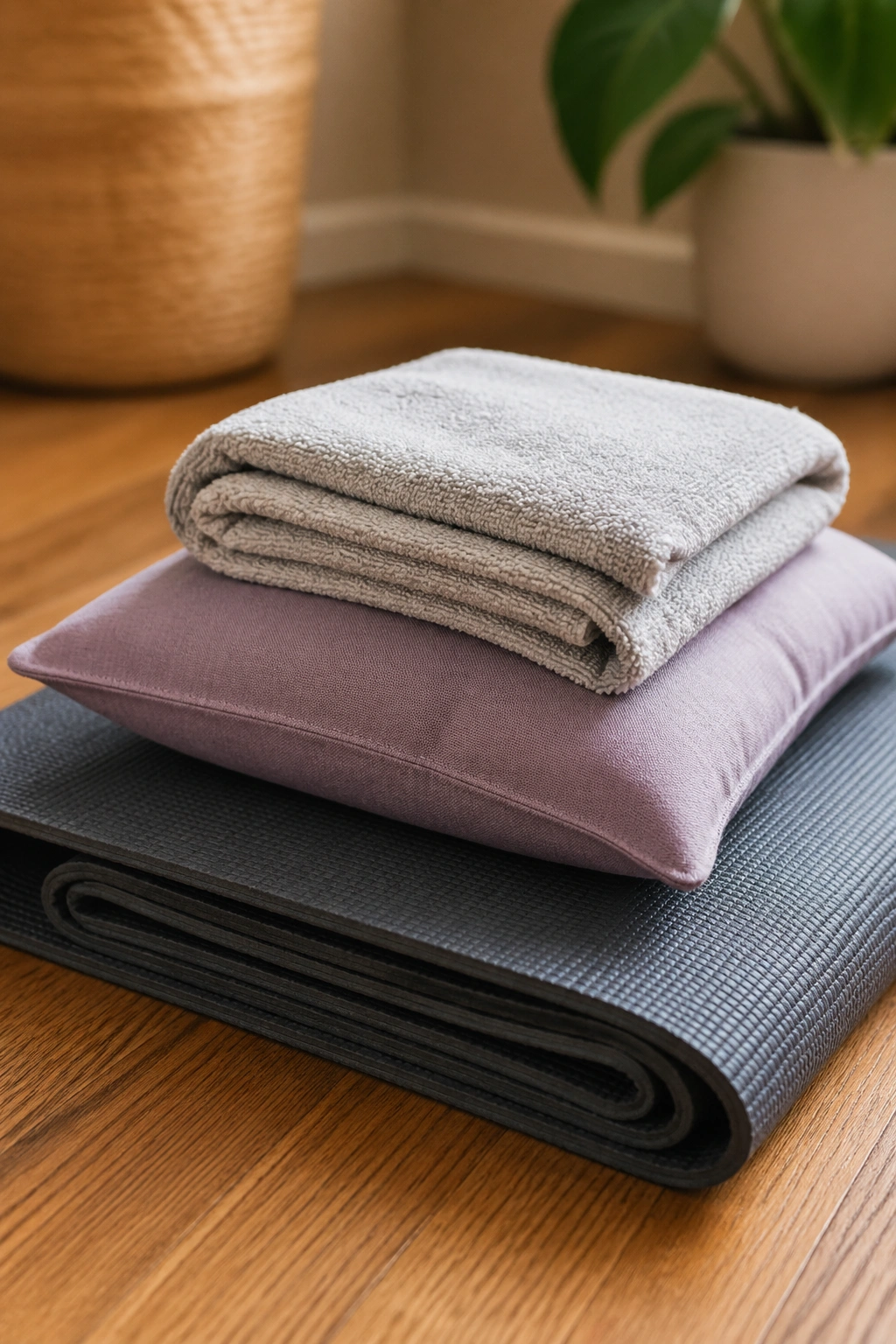
A thin mat can make a decent routine feel miserable in under five minutes. I’d rather see you use a 6 mm to 10 mm mat, a folded blanket, and a small pillow than tough it out on a surface that turns every kneeling move into a complaint.
Three props do most of the heavy lifting:
- Folded towel: Slide it under your head for chest lifts or behind your ribs for breathing drills.
- Small cushion or pillow: Useful between the knees in bridges and side-lying work.
- Yoga block or firm book: Helps when reaching the floor feels like too much, especially in seated work.
A resistance loop can help with glute work, though you do not need one. A bath towel works fine in hotel rooms, and a chair seat can stand in for a reformer box more often than people realize.
Tiny setup changes matter. They can turn a move from “nope” to “that feels right.”
1. A 10-Minute Morning Mat Pilates Routine for Stiff Backs
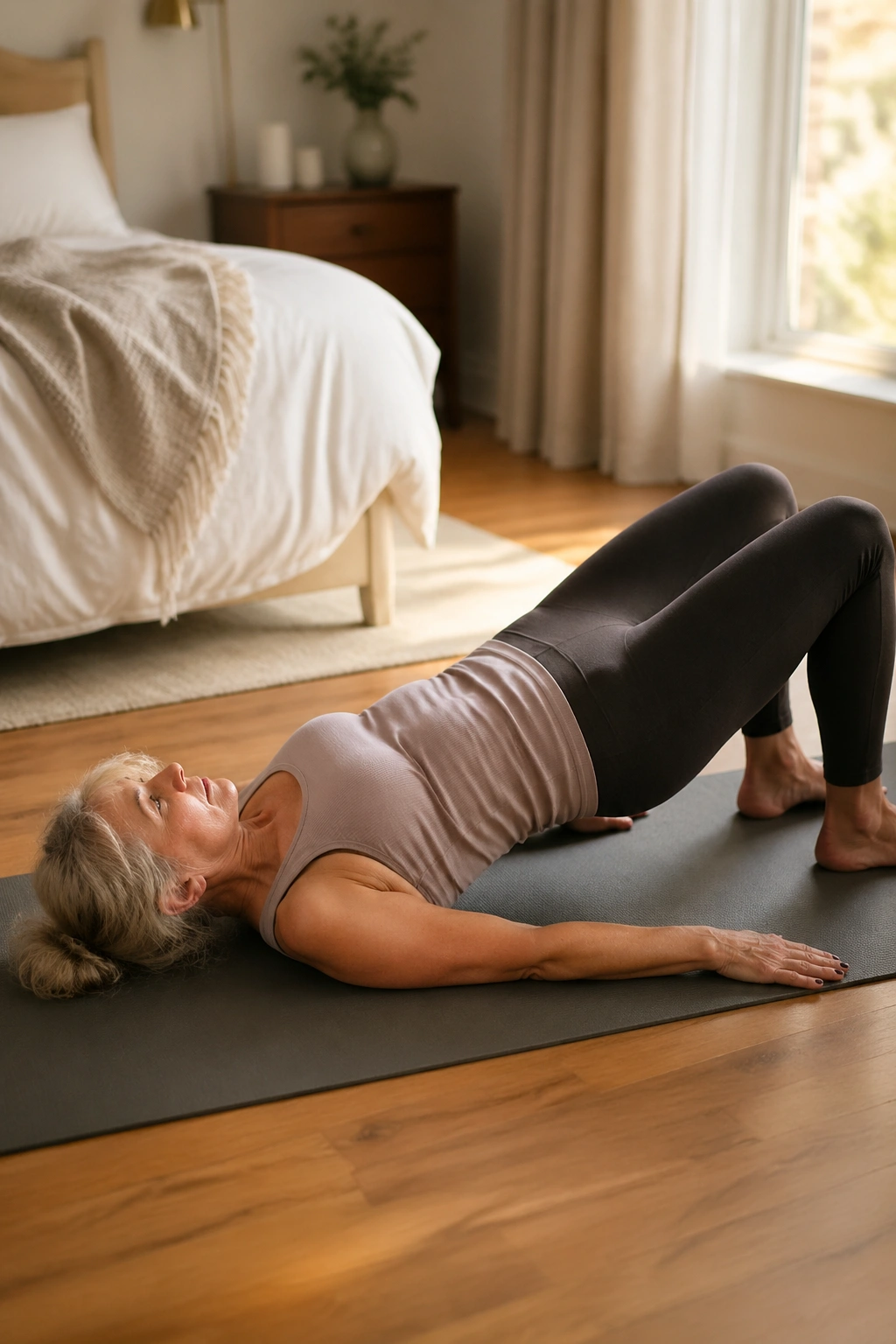
If your first few steps out of bed feel wooden, start here. This routine is less about “working out” and more about giving your spine a clean, gentle wake-up before your hips and shoulders start bossing it around.
Move Order
- 1 minute of rib breathing on your back, knees bent
- 8 pelvic tilts
- 6 knee folds per side
- 8 bridges
- 6 open-book thoracic rotations per side
- 4 cat stretches on hands and knees or forearms
Keep the range small at first. Your lower back should feel like it is being invited to move, not forced into it. On the bridge, peel up only until your ribs stay quiet and your glutes—not your hamstrings—pick up the work.
A lot of women over 50 try to stretch away stiffness when what they need is segmental movement, one small vertebra at a time. Pelvic tilts and controlled bridges do that job far better than flopping into a forward fold first thing in the morning.
Best cue: exhale as you lift, inhale as you return, and keep the back of the neck long.
2. The Wall-to-Mat Posture Reset for Rounded Shoulders
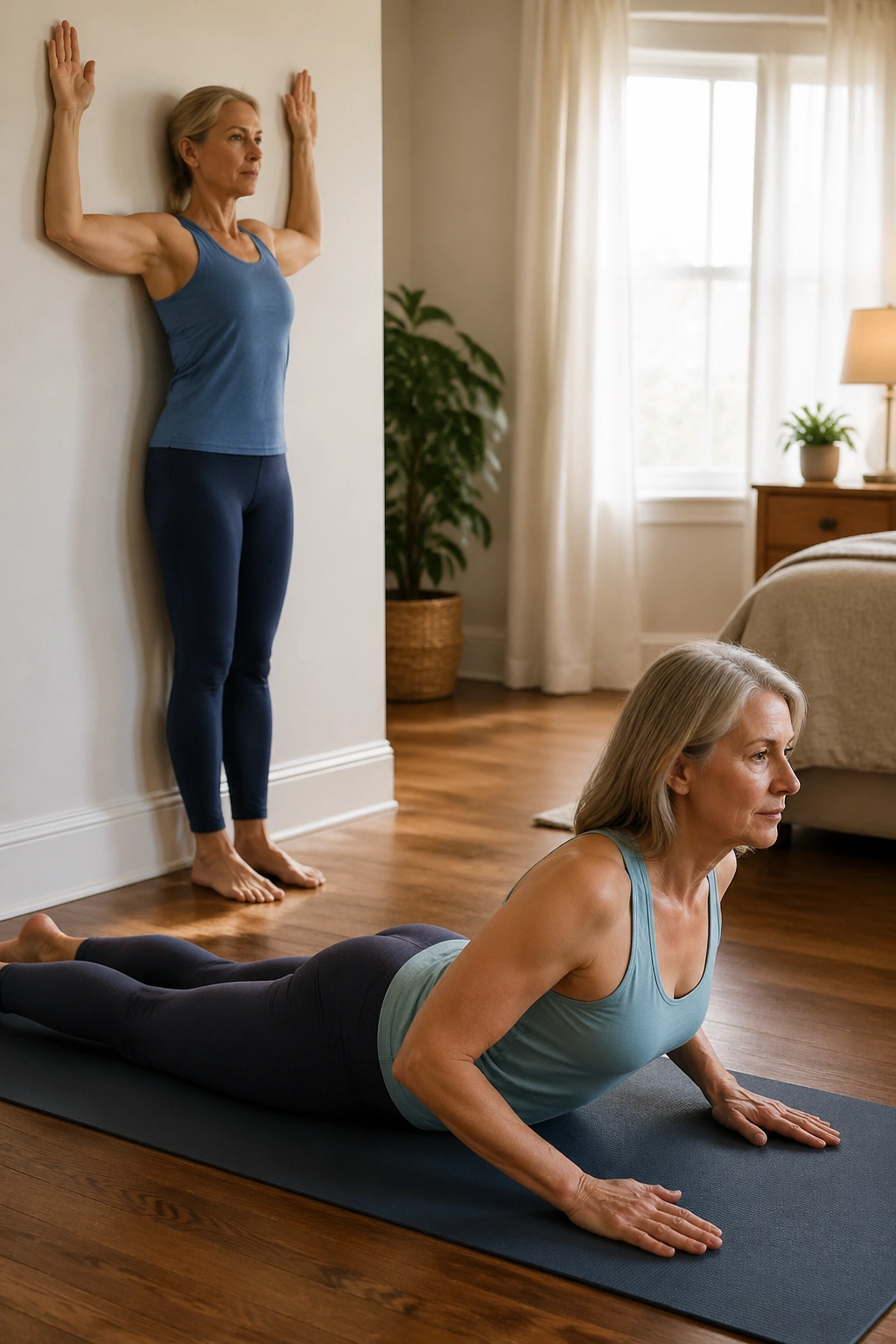
Most posture problems are not a chest-tightness problem alone. They’re a mix of stiff upper back, sleepy mid-back muscles, and ribs that like to flare forward the second the arms go overhead.
Start standing with your heels about 2 to 3 inches from a wall. Rest the back of your pelvis and rib cage against it. Then do 8 slow wall arm slides, keeping your lower ribs from popping up. If your hands only reach shoulder height, fine. That’s useful information, not failure.
Move to the mat for swan prep on your belly. Hands stay light. Lift the breastbone a few inches, lengthen the crown of the head forward, lower with control, and repeat for 6 reps. Finish with seated chest expansion breathing—arms by your sides, palms down, collarbones wide.
This one earns a place in the regular rotation because it changes how you carry yourself after the mat. Reading, laptop work, driving, knitting, scrolling—pick your habit—can all pull the shoulders forward. Upper-back extension work is the antidote.
Do not chase height in swan. Chase length.
3. The Deep Core and Pelvic Floor Sequence for Better Support
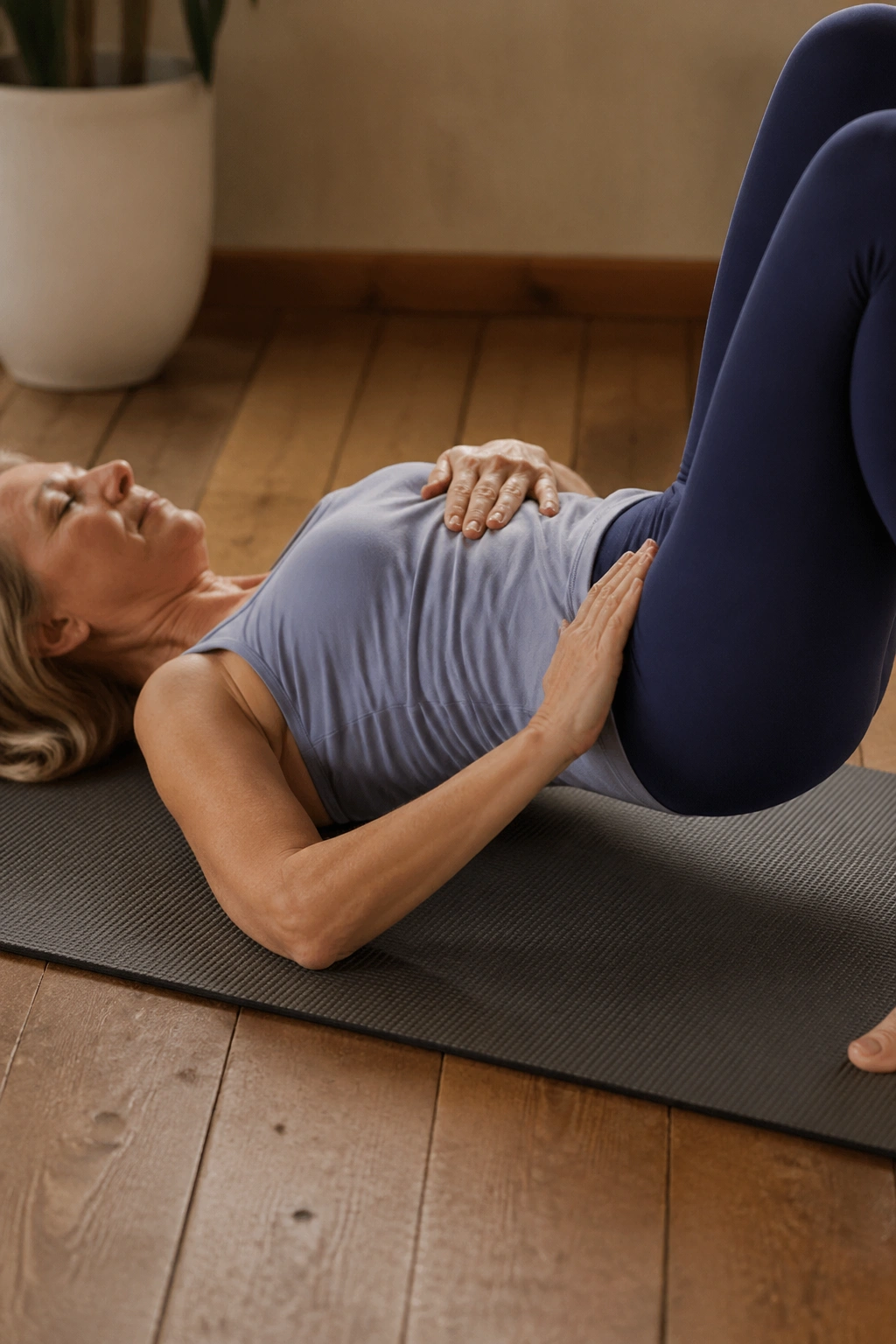
Why do some ab routines leave you feeling more bulgy through the belly instead of stronger? Usually because the breath, ribs, and pelvic floor are out of sync, and the body starts pushing outward rather than drawing support inward.
Start on your back with your knees bent and feet planted. Inhale into the side ribs. Exhale through pursed lips for 5 to 6 seconds, letting the lower belly narrow and the pelvic floor lift gently—think “zip up,” not “clench hard.” Then go into heel slides, 8 per side, followed by tabletop toe taps, 6 per side.
How to Run It
Do one round of:
- 5 breath cycles
- 8 heel slides each side
- 6 toe taps each side
- 8 bent-knee fallouts each side
- 8 bridges with an exhale on the lift
The pace should feel almost too slow. Good. Deep core work after 50 is rarely about speed. It’s about creating support around the waist without bracing the throat, jaw, or butt.
If you notice doming down the center of the abdomen, make the lever shorter. Feet lower. Fewer reps. Better breath.
4. The Tight-Hip-Front Reset When Hip Flexors Take Over
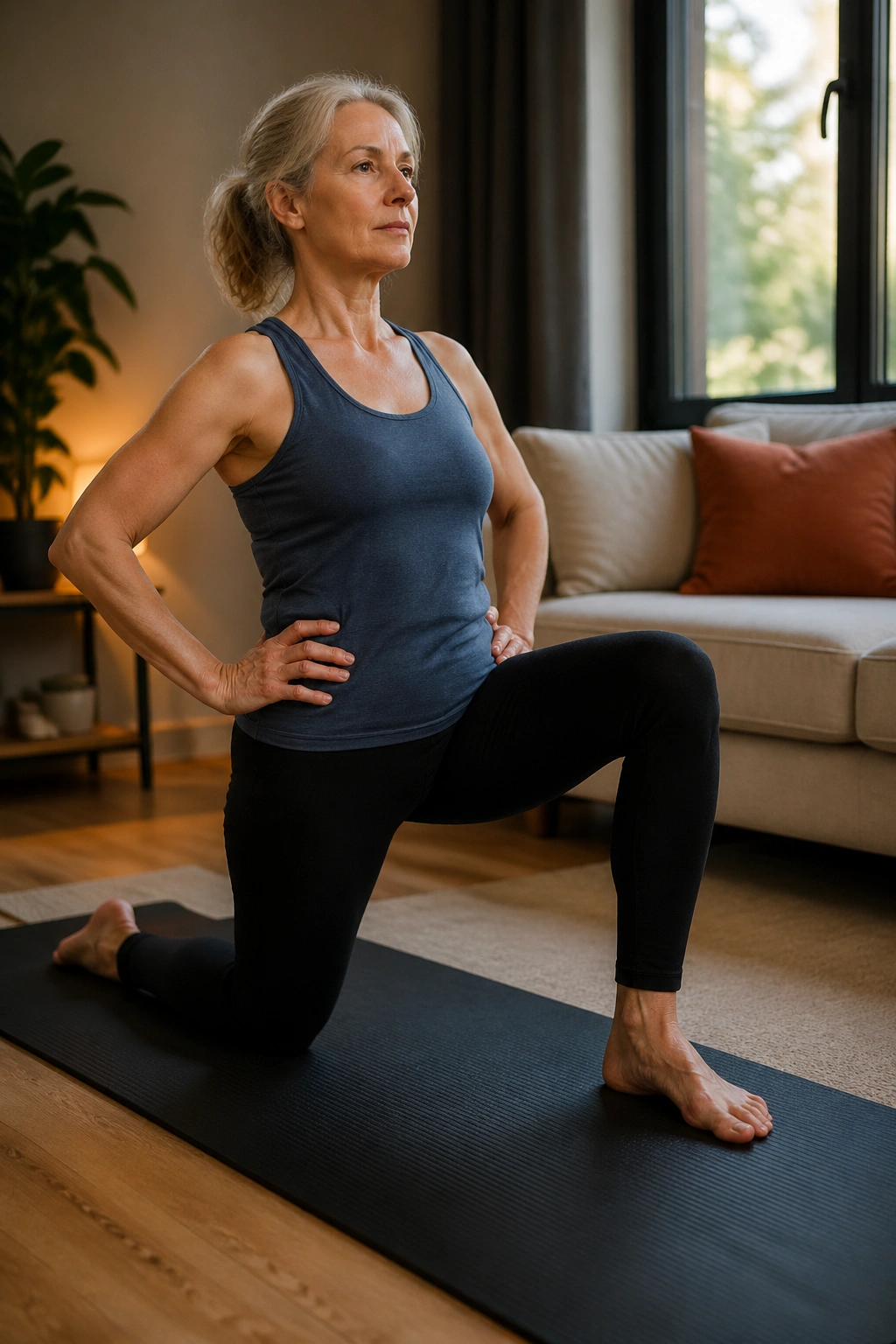
Picture the move that gives away a lot of hidden weakness: you lift one leg, and the front of the hip grabs first. That is your cue to back up and give the glutes and deep abdominals more to do.
Run this sequence in order:
- 8 bridges with a soft heel drag toward your shoulders
- 10 clamshells per side
- 8 side-lying leg lifts per side
- 6 kneeling hip-flexor rocks per side
- 20-second half-kneeling glute squeeze hold per side
The kneeling stretch matters less than people think. The real fix is strength. When the back of the hip starts pulling its weight, the front stops acting like the only employee on the shift.
I like this routine after long drives, flights, or a day with too much sitting. Use a folded blanket under the kneeling knee. Squeeze the glute of the back leg lightly and keep the ribs stacked over the pelvis. If you arch your low back to “feel a stretch,” you’ve lost the point.
Small movement. Better muscle choice. Big difference.
5. The Knee-Friendly Glute Activation Series for Stairs and Squats
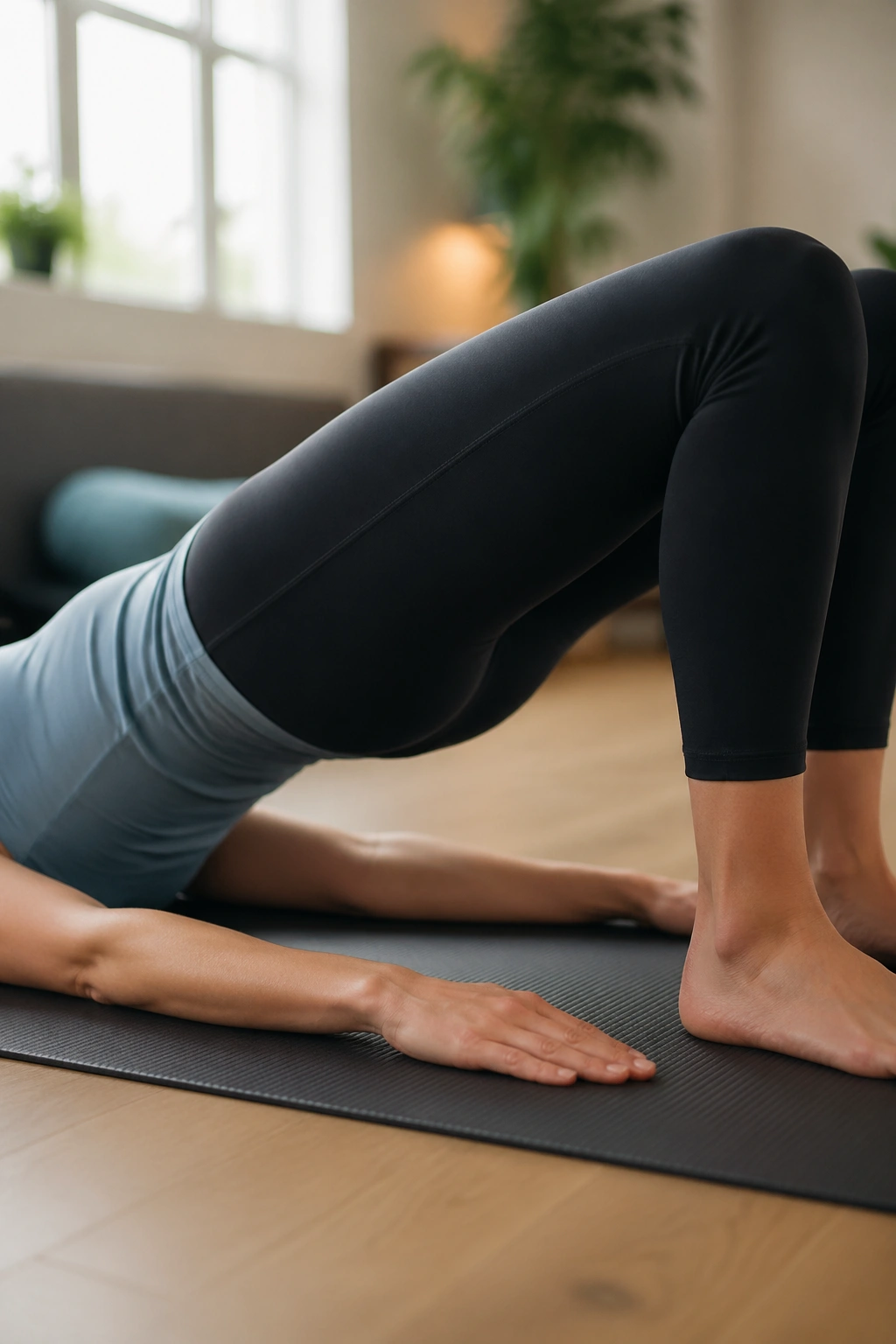
If your knees complain on stairs, the problem is not always the knees. A lot of the time, the hips are underworking, and the knees are taking the bill.
Start with a bridge, but make it honest. Feet hip-width apart, heels about a hand’s length from your seat, exhale up for 10 reps, then hold the top for 20 seconds. You should feel the work in the lower glutes and upper hamstrings, not a cramp in the back. If the hamstrings seize, move the feet a little farther away.
Roll onto your side for clamshells, 12 reps, then straighten the top leg and do 10 side lifts with the toes angled slightly down. That tiny inward turn helps keep the work out of the front of the hip. Finish on all fours—or forearms if wrists grumble—with 8 bent-knee hip extensions per side.
This is not glamorous mat work. I know. It is, though, the kind that makes standing up from a low chair easier after two or three weeks of steady practice.
Skip speed. Your knees will notice.
6. The Side-Lying Balance Booster for Wobbly Days
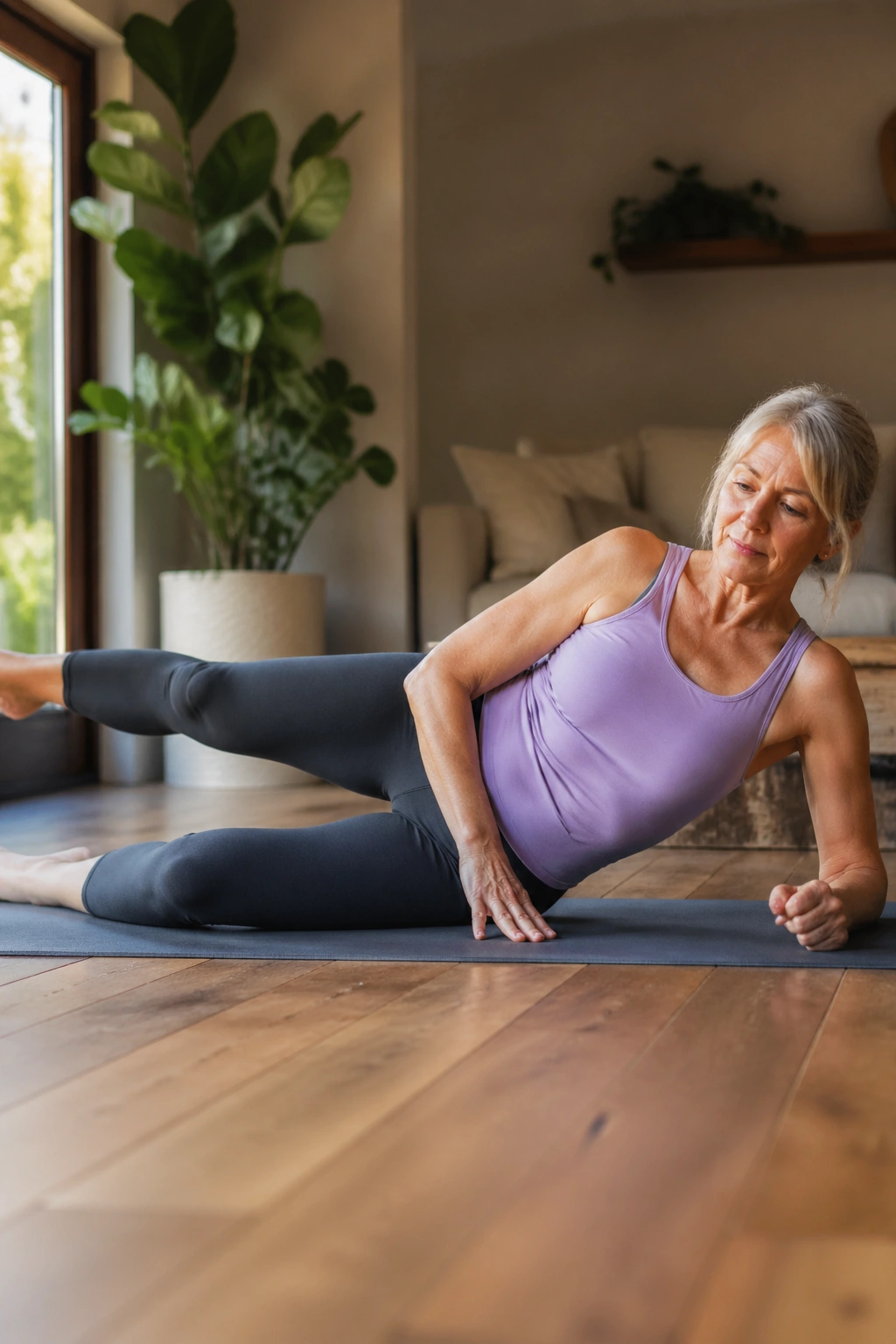
Unlike standing balance drills, which can make some women tense before they even start, this routine lets you train the same lateral hip stability with the floor close by. That alone makes it more approachable.
Begin on your side with your head supported. Do 10 front-and-back leg swings, small enough that your pelvis stays still. Then hold the leg in line with the hip and make 8 circles each direction. Switch sides. After that, move to quadruped for bird dog, 6 slow reps per side, and finish in half-kneeling with 5 arm reaches each direction.
Who gets the most from this? Women who feel unsteady stepping off curbs, turning quickly, or carrying groceries in one hand. Side-lying leg work builds the outer hip. Bird dog adds cross-body control. Half-kneeling asks the pelvis and trunk to organize under load.
One reminder: wobbling is feedback, not failure. If your standing balance has felt shaky, this is a smart bridge back to confidence.
Do it two or three times a week and watch your walking pattern sharpen up.
7. The Low-Back Relief Flow After Long Sitting
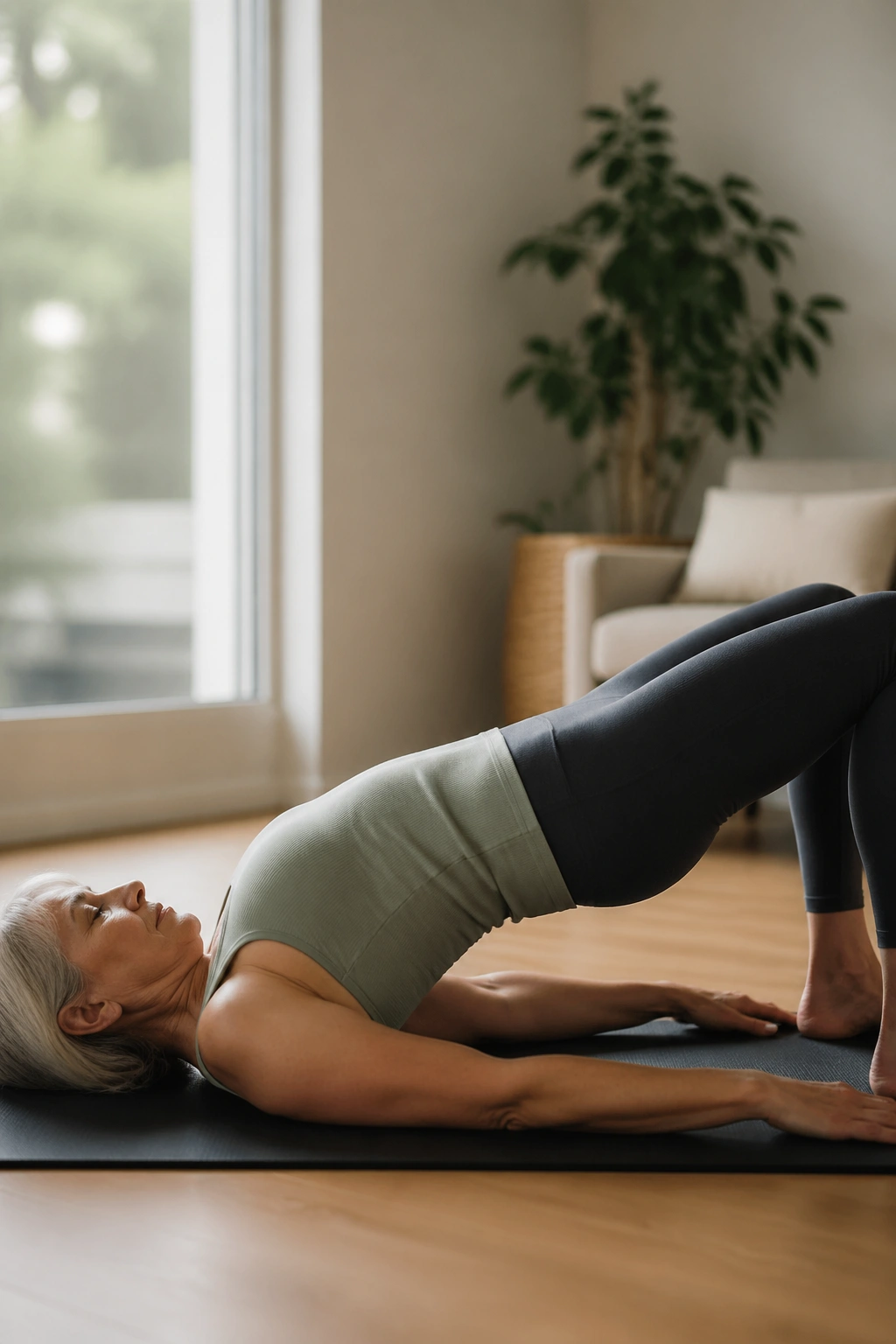
Eight hours in a chair can make the lower back feel compressed, flat, and annoyed. This routine gives it room again without cranking on it.
Move Order
- 90 seconds in constructive rest, knees bent, feet wide
- 8 pelvic rocks
- 8 windshield wipers
- 6 femur arcs per side
- 3 bridge holds of 20 seconds
- 30 to 45 seconds in child’s pose with a cushion, if knees allow
The key is to keep the ribs quiet while the hips move. Femur arcs—lifting one leg into tabletop, tracing a tiny circle from the hip socket, then lowering—teach the pelvis to stay steady while the leg moves around it. That’s useful if your back aches after getting in and out of a car.
This helps muscular stiffness. If pain shoots below the knee or comes with numbness, do not push through it. Floor work is not a contest.
Best cue: let the breath widen your back into the mat on each inhale.
8. The Rib Mobility and Breathing Flow for Tight Necks
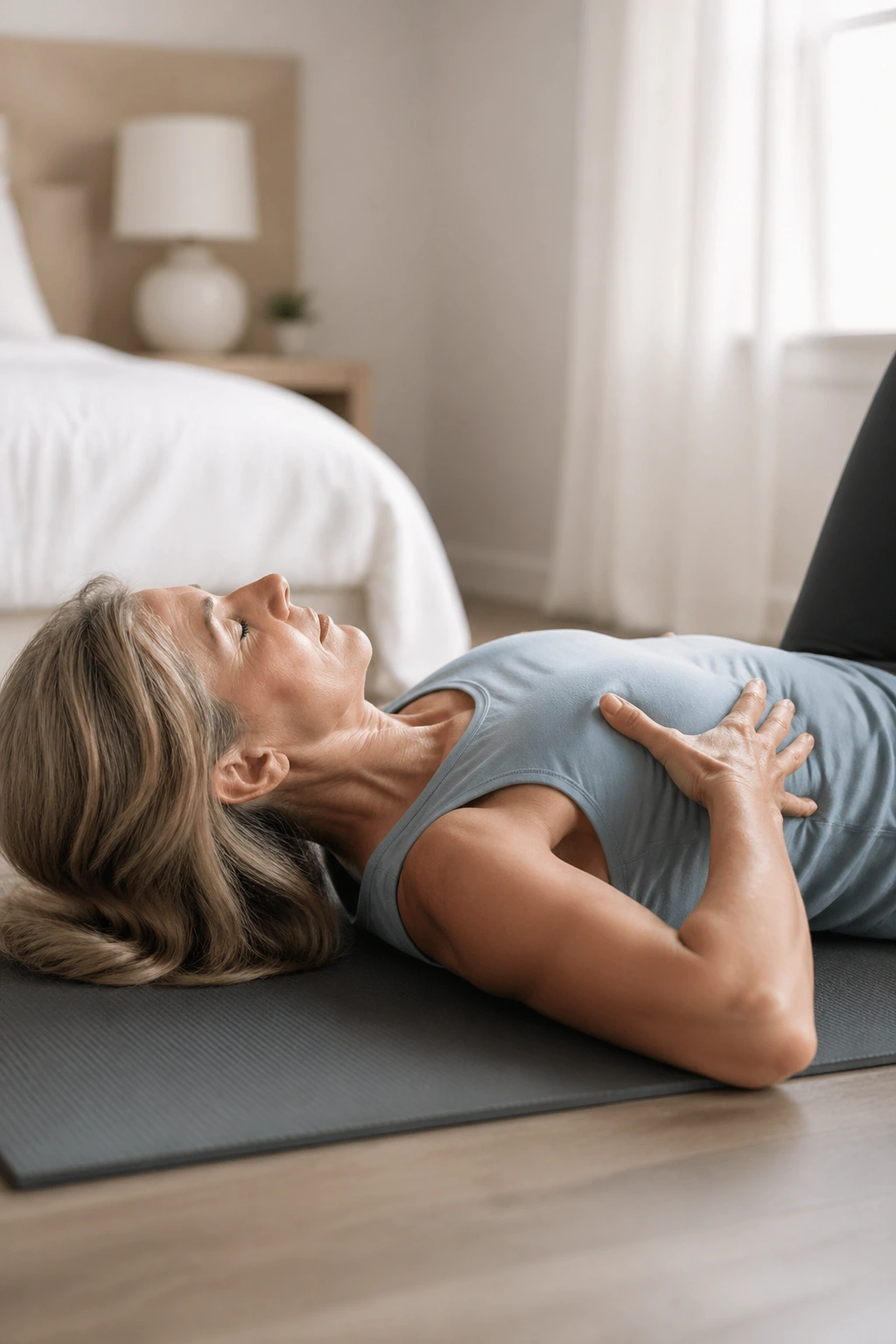
A stiff rib cage can make the neck do work it was never meant to do. You see it in chest lifts, arm raises, even simple posture drills. The shoulders creep up, the jaw sets, and the neck starts carrying the session.
Lie on your back and do 5 breath cycles with your hands around the lower ribs. Feel the ribs widen sideways on the inhale, then knit inward on the exhale. Add arm arcs, 6 reps, keeping the ribs from popping. Roll onto your side for open books, 6 per side, then finish seated with mermaid side bends, 4 per side.
This routine feels almost easy until you do it well. Slow breathing plus small thoracic motion can change how the whole upper body behaves. Chest lifts get lighter. Shoulder work feels cleaner. The neck stops overhelping.
If you only have five minutes, do the arm arcs and open books. Those two drills carry a lot of weight for how little they look like they’re doing.
9. The Wrist-Free Ab Routine When Planks Feel Awful
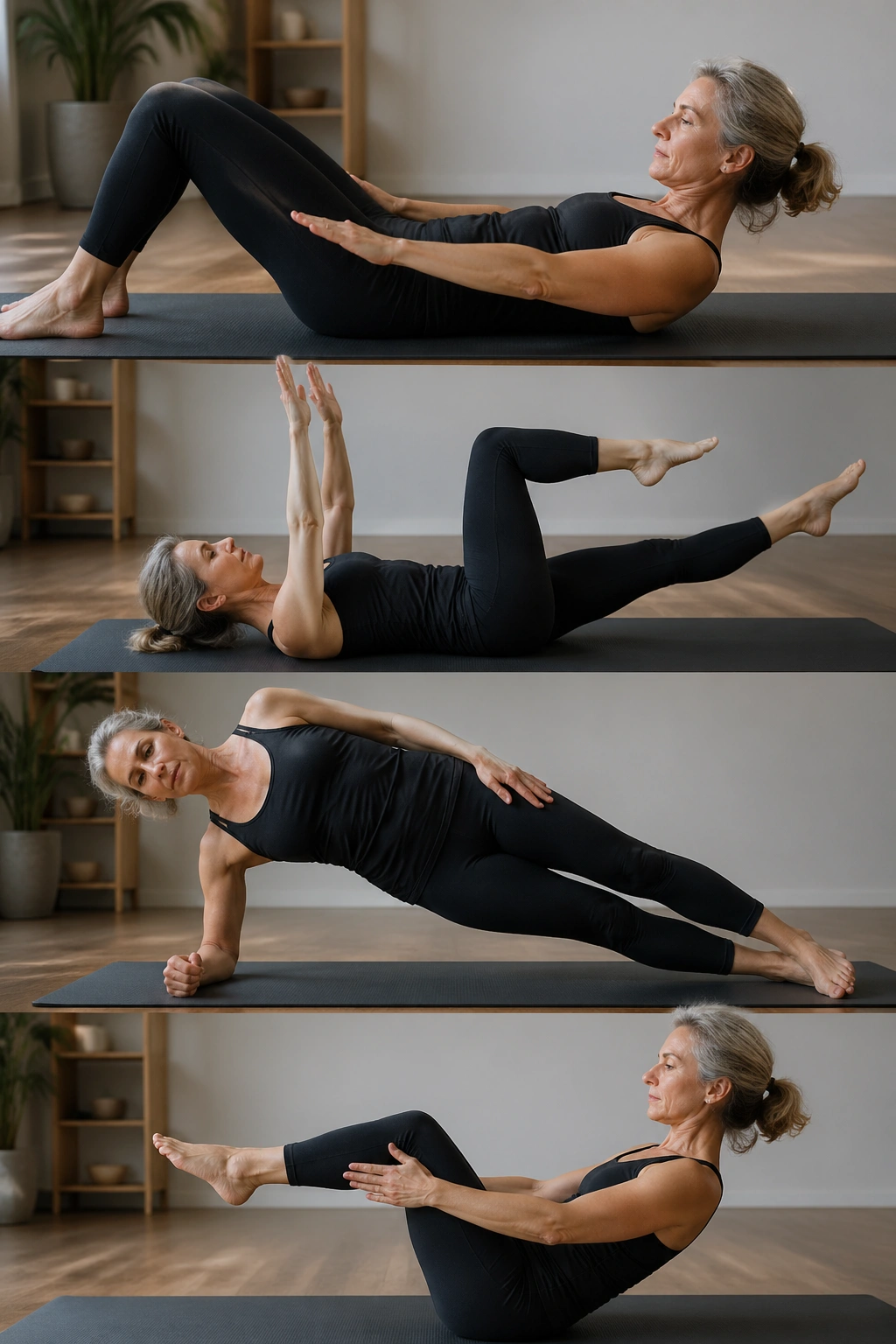
Need core work without hanging out on sore wrists? Good. There’s no law saying every strong midsection has to be built with long planks.
Start with hundred prep: head down or lifted, feet on the floor, arms pumping for 5 breath cycles. Go into dead bug toe taps, 6 per side, then a bent-knee forearm side plank hold for 15 to 20 seconds per side. Finish with a seated C-curve hold, arms reaching forward, for 3 rounds of 10 seconds.
How to Use It
- Keep the chin slightly nodded, not jammed to the chest
- Exhale on the effort phase
- Lower the legs the second your back arches
- Use a folded towel under the forearm in side plank if the elbow gets irritated
What makes this one good is the mix. You get front-body control, side-body strength, and trunk endurance without asking the wrists to tolerate load they hate.
And no, skipping full plank does not mean you’re taking the easy way out.
10. A Bone-Smart Mat Pilates Routine With No Loaded Flexion
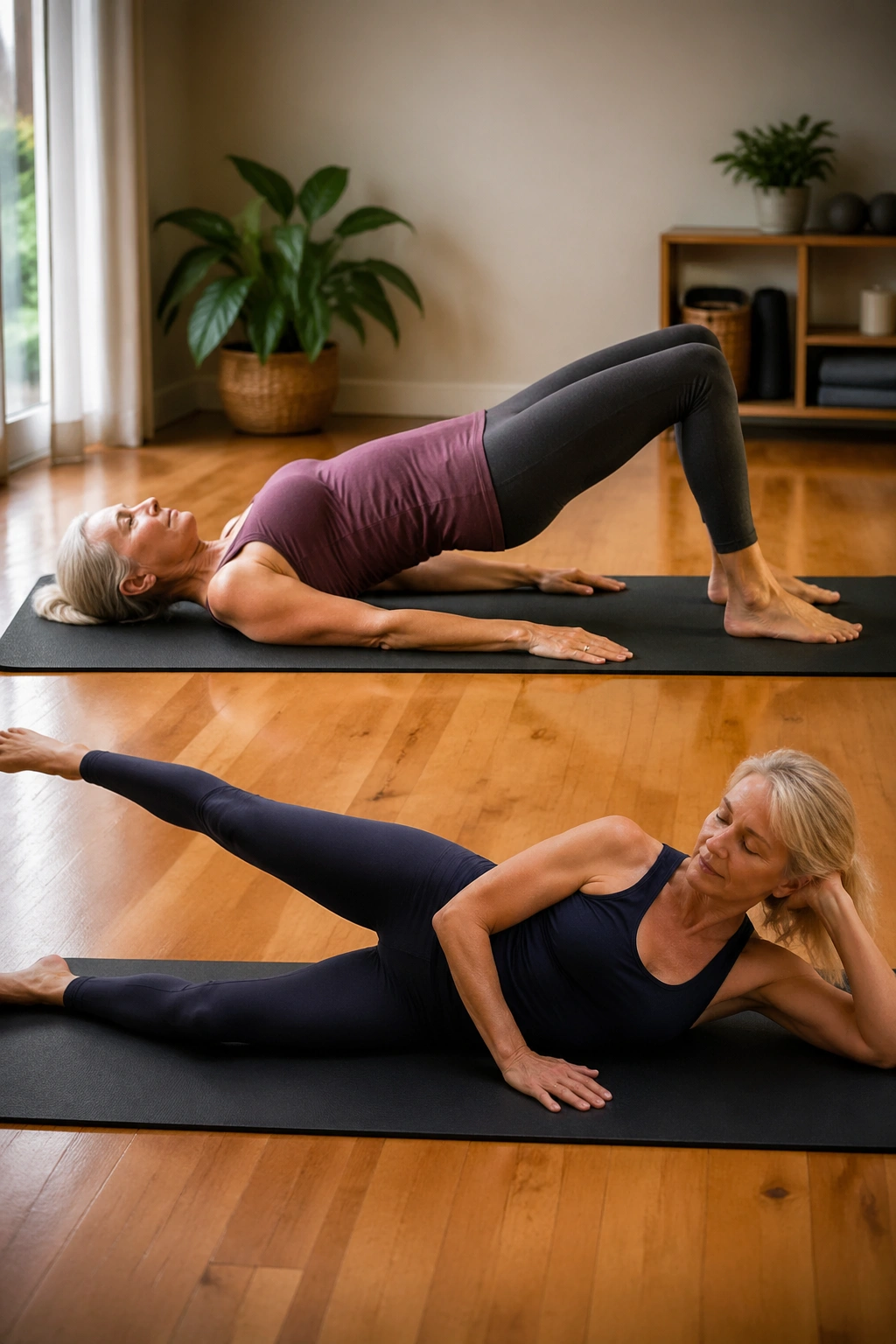
If you’ve been told you have osteopenia or osteoporosis, this is one of the first filters I’d use: less loaded rounding, less forceful twisting, more neutral-spine strength and extension.
Use this sequence:
- 8 bridges
- 8 side-lying leg lifts per side
- 6 bird dogs per side
- 6 prone darts
- 8 sit-to-stands from a chair at the edge of your mat
- 20-second wall posture hold
The phrase bone-smart matters. It does not mean timid. It means choosing exercises that train the hips, trunk, and back extensors without repeated flexion patterns that can be a poor match for some spines.
A lot of women are surprised to hear this because classic Pilates often celebrates roll-ups. Fine move. Not always a fine move for every body. There’s no medal for forcing it.
One blunt truth here: if building bone is a major goal, pair routines like this with progressive strength work and walking or impact that your clinician approves. Floor Pilates helps with posture, control, and balance. It is one piece of the plan.
11. The Hotel-Room Mini Routine for Travel Days
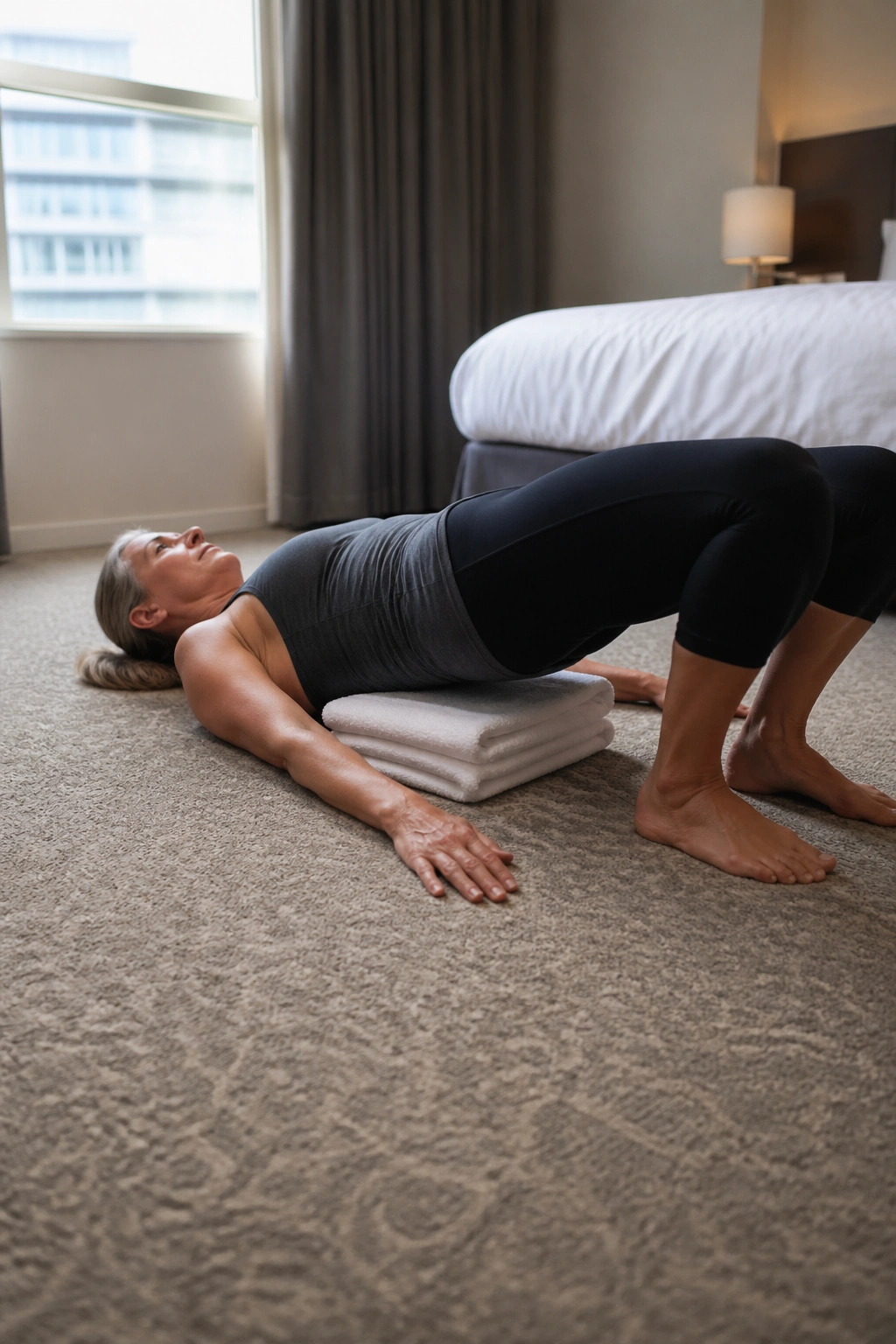
Travel is when routines disappear first. This one survives cramped carpet, a bad pillow, and the sort of schedule that eats your intentions by breakfast.
Lie on a folded bath towel and start with 1 minute of breathing. Then do 8 bridges, 8 heel slides per side, 10 clamshells per side, 6 dead bug taps per side, and 6 prone darts. That’s it. Eight to ten minutes if you keep moving.
What I like here is the coverage. You hit the back of the hips, the front of the trunk, and the upper back, which is exactly what long hours in transit tend to flatten out. If the room is tiny, you can skip side-lying leg lifts and still get enough out of it to feel human again.
One more travel tip—because this always comes up—do the routine before you shower if you can. Once you’re clean and horizontal in a hotel robe, motivation usually leaves the building.
12. The After-Walk Cool-Down Flow for Hips, Calves, and Feet
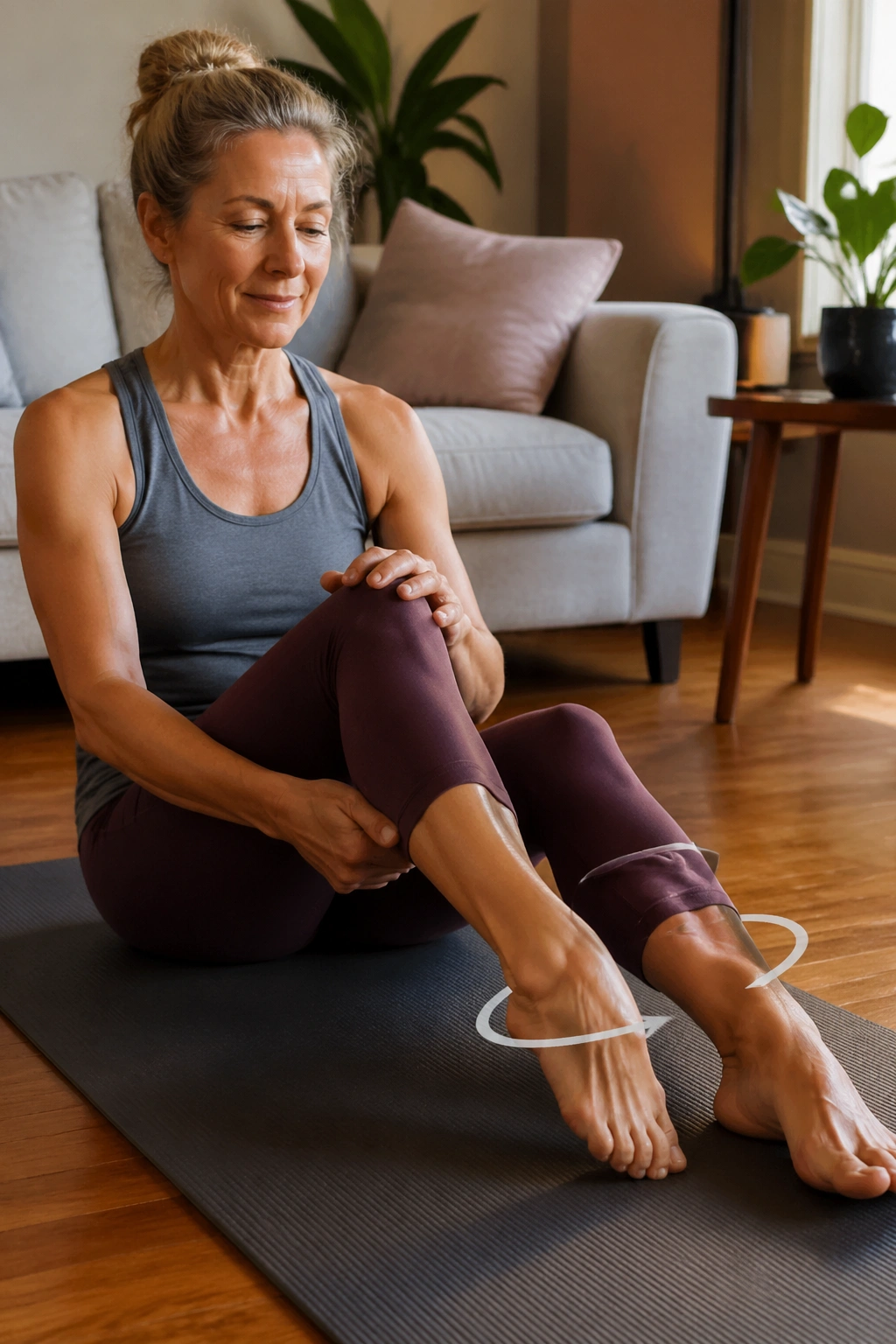
Unlike static stretching that parks you in one position, this flow uses movement to restore length where walking can leave you shortened—calves, hip flexors, outer hips, and the bottoms of the feet.
Start seated and point-flex the ankles for 12 reps, then do 10 ankle circles each way. Lie on your back for a hamstring towel stretch, 20 seconds each side, moving the knee from slightly bent to slightly straighter rather than locking it hard. Add figure-four stretch, 30 seconds each side, then finish with supine spinal rotation, 4 slow reps per side.
Who is it best for? Women who walk most days but notice that one hip gets tighter, or their feet feel flat and tired by evening. The ankle work wakes up the lower leg. The towel stretch eases the back line without yanking. The figure-four usually gets right into the back of the hip where walking alone does not always reach.
If you’ve done a brisk walk with hills, stay longer in the calf and foot work. Hills have a way of telling on your ankles.
13. The Upper-Back Strength Routine That Makes You Stand Taller
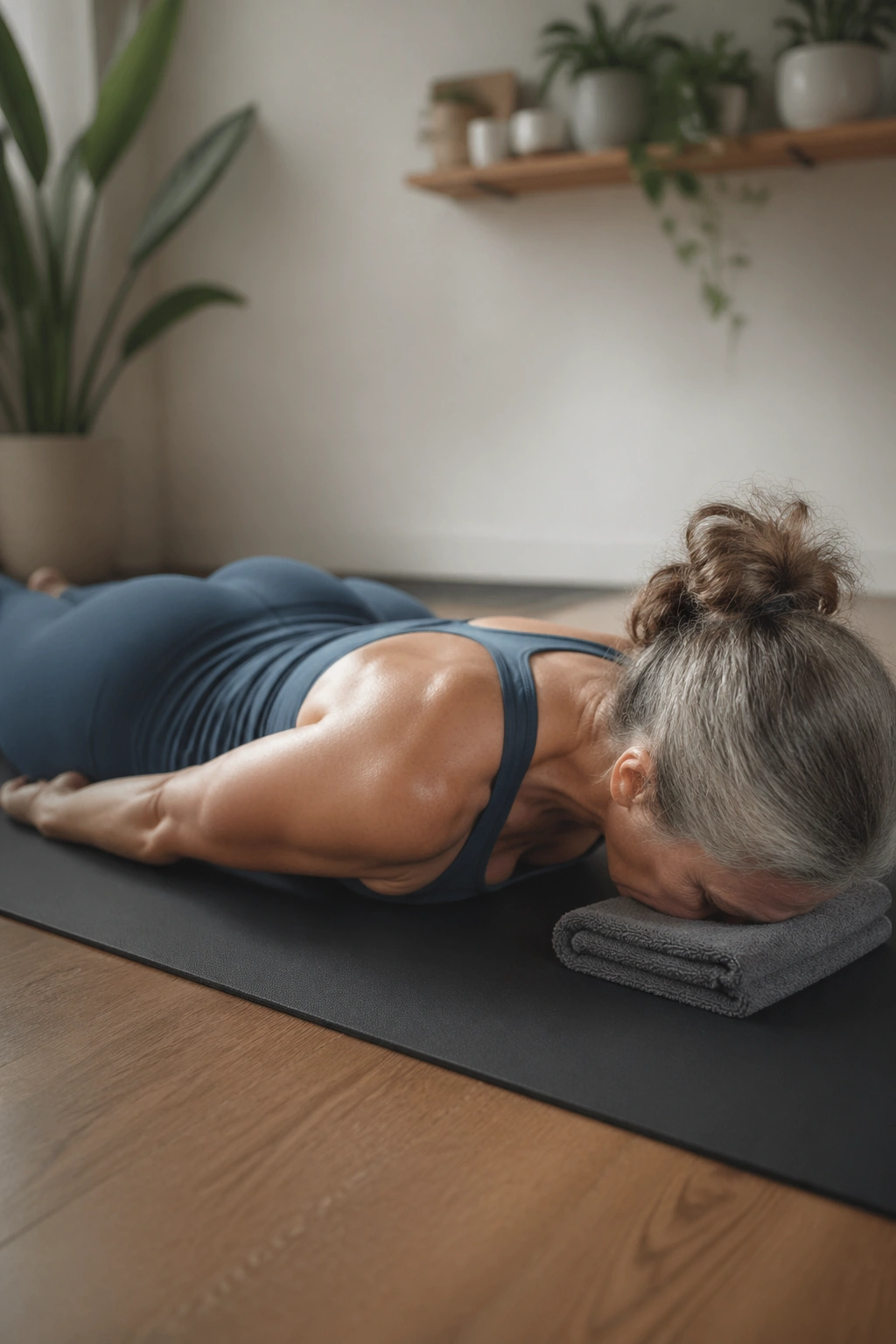
A stronger upper back changes how almost every other Pilates move feels. Chest lifts stop pulling so much on the neck. Arm work gets lighter. Breathing gets easier because the ribs are not stuck in one rigid shape.
Move Order
Start face down with your forehead on a folded towel:
- 6 scapular glides with arms by your sides
- 6 T-lifts
- 6 W-lifts
- 6 swan preps
- 20 seconds of prone “hover and breathe”
What to Watch For
- Keep the back of the neck long
- Think breastbone forward, not chin up
- Lift only as high as you can without squeezing the low back
- Rest between sets if your shoulders creep toward your ears
This routine does not need heavy resistance to be hard. Body weight plus gravity is plenty when the motion is clean.
Best cue: widen the collarbones as you lift.
14. The Inner-Thigh and Seat Stabilizer Series for Pelvic Control
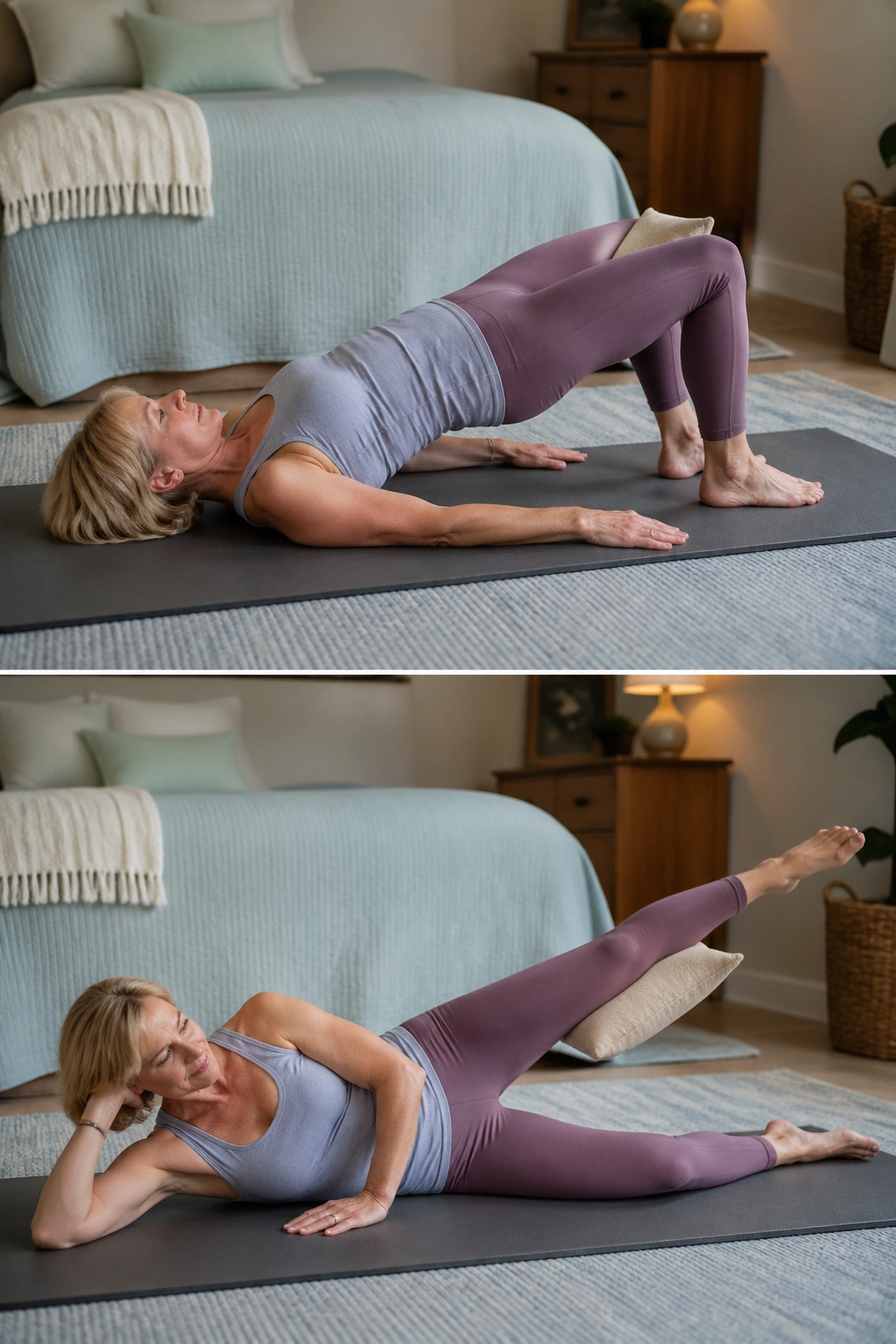
You should feel this one near the inner thighs, side seat, and lower glutes—not dumped into the low back. When those areas wake up together, the pelvis gets steadier fast.
Begin with a pillow between the knees during a bridge. Squeeze lightly on the exhale and lift for 10 reps. Roll to your side and lift the bottom leg for 12 reps to hit the adductors. Then bend both knees and do 10 clamshells, followed by 8 side kicks with the top leg straight.
A lot of people treat inner-thigh work like an afterthought. I think that’s a mistake. The adductors help with pelvic control, standing balance, and getting power from the leg into the trunk. They matter when you pivot, climb stairs, and even when you carry something heavy on one side.
Keep the squeeze in the bridge light. Crushing the pillow turns it into a thigh move only. The goal is teamwork, not brute force.
15. The No-Roll-Up Core Routine for Sensitive Necks
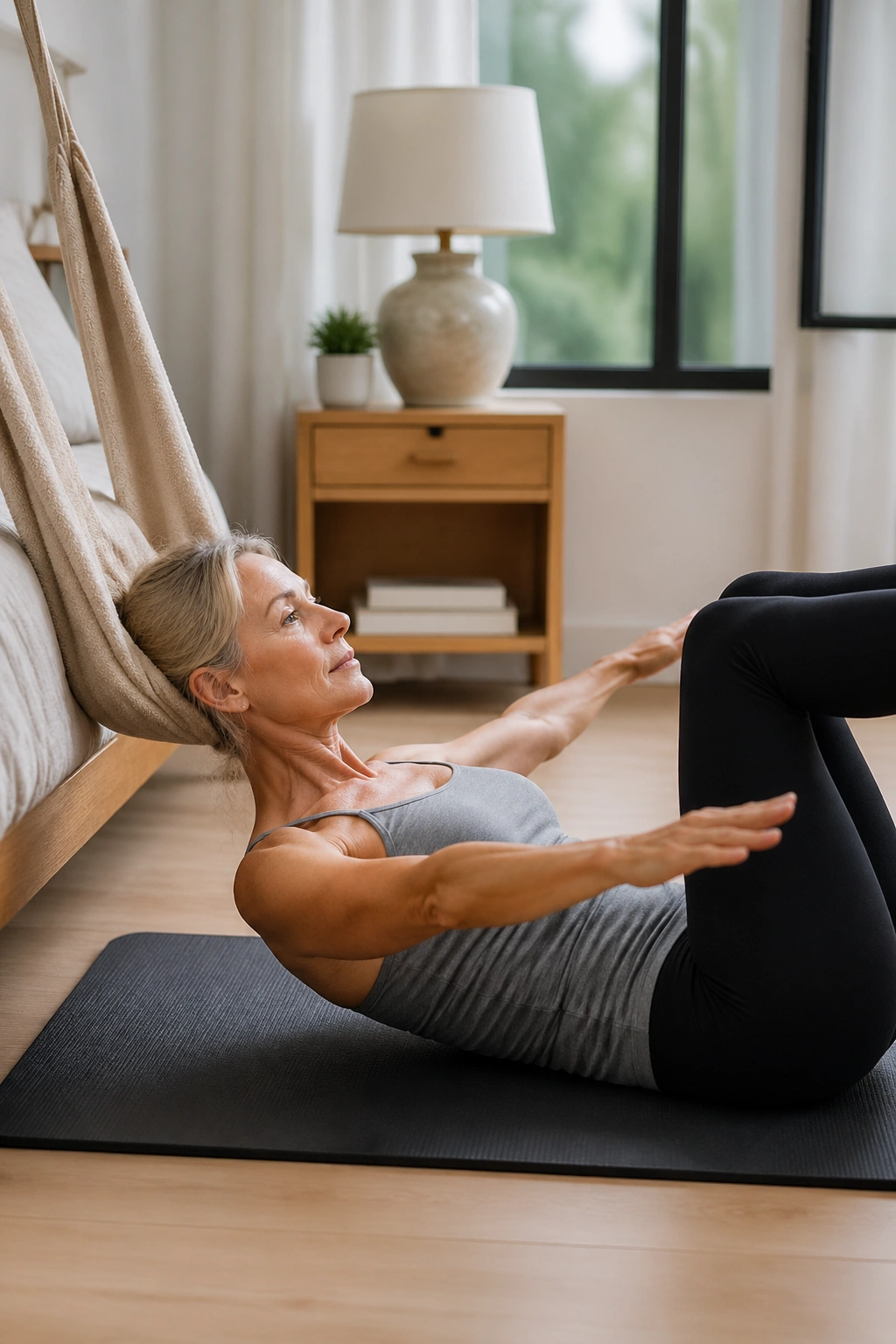
Why do classic roll-ups bother so many women? Because the neck often leads, the ribs flare, and the abs never get a clean chance to do their job.
Use a towel like a hammock behind the head for support. Start with 6 supported chest lifts, then keep the head down for 8 toe taps per side. Add tabletop holds of 10 seconds and oblique reaches with one foot on the floor, 6 per side. Finish with marching bridge, 6 per side.
A Better Way to Think About It
The goal is not to yank yourself upright. The goal is to create pressure control and trunk support while the limbs move. That can happen with your head on the mat. It can happen with one leg lifted. It can happen with a tiny chest lift.
If you feel the neck first, shorten the range. If your jaw clenches, pause and breathe. If the belly pops up instead of drawing in, go easier. Those are all useful signals.
And yes, a head-supported variation still counts.
16. The Foot-and-Ankle Stability Session for Better Ground Contact
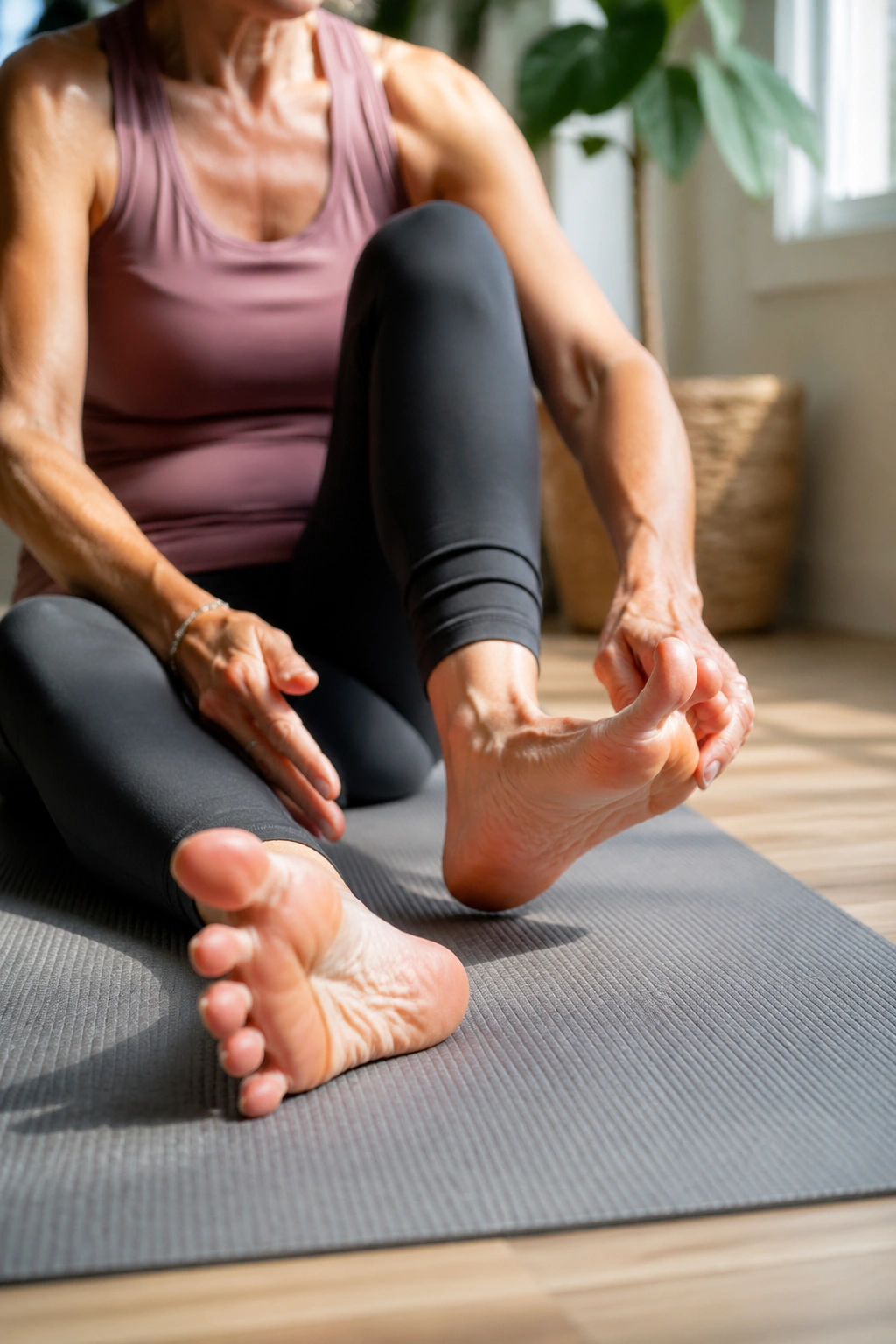
If your feet feel sloppy inside your shoes or your ankles wobble when you turn quickly, start lower. The feet are your first contact point with the floor. When they get lazy, the knees and hips have to tidy up the mess.
Run this sequence:
- 8 toe spreads with a pause
- 10 point-flexes
- 10 ankle circles each direction
- 30 seconds of towel scrunches
- 8 seated calf raises
- 6 single-leg balance touches beside the mat, using a wall if needed
The balance piece is small on purpose. After the foot work, stand and notice whether the whole leg feels more awake. It usually does. That “tripod foot” idea—base of the big toe, base of the little toe, and heel all sharing pressure—is not just instructor talk. You can feel it within minutes when it clicks.
A strong foot gives the rest of the body a cleaner signal.
17. The One-Hip-Weaker-Than-the-Other Reset
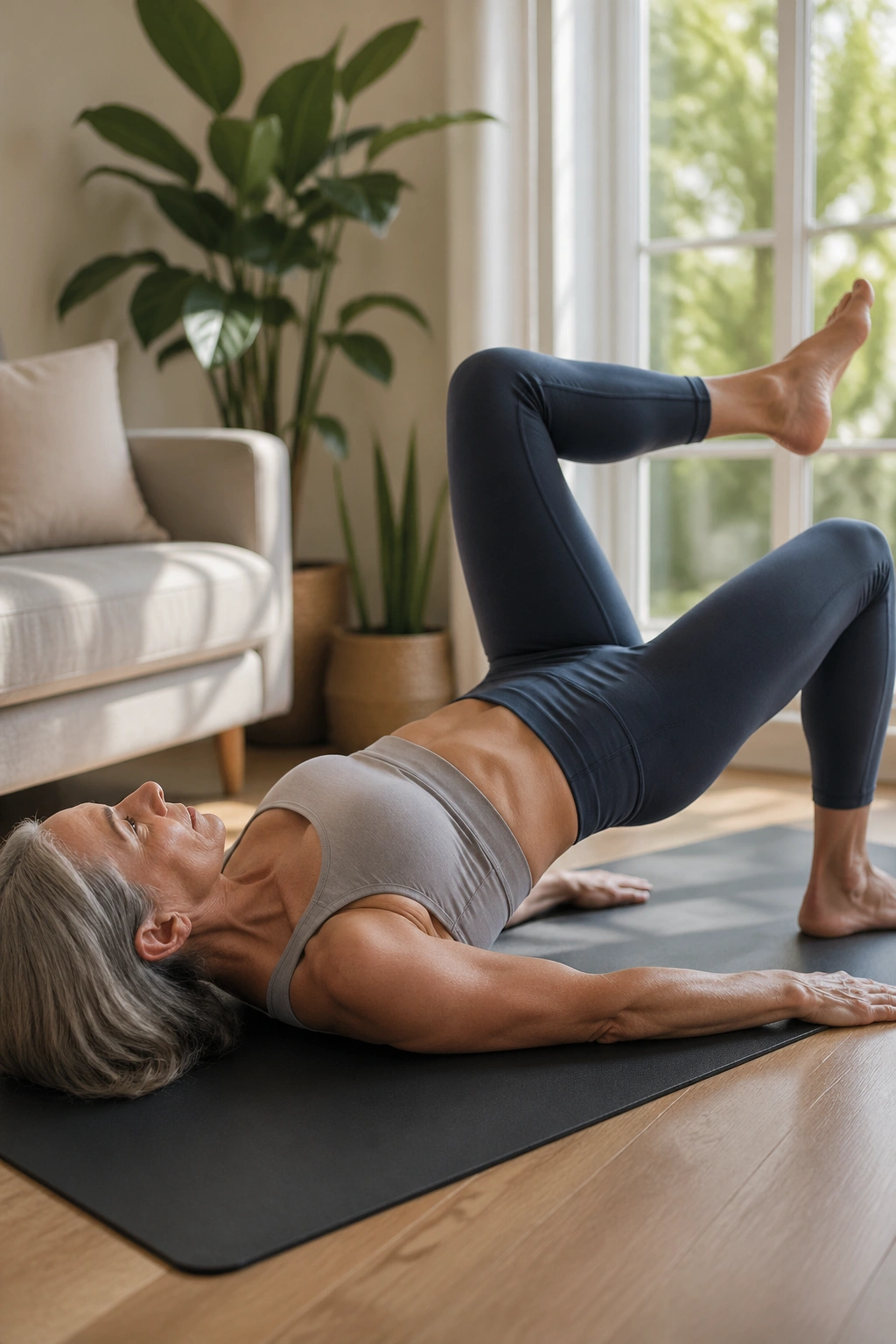
Most women have a side that cheats. You’ll notice it in bridges, in walking, in how you stand in the kitchen, even in which leg you trust when you step into pants without holding the wall. This routine is for that side-to-side mismatch.
Start with single-leg bridge prep: one foot planted, the other toes light on the floor, and lift for 6 reps per side. Then do 12 clamshells, 10 side-lying lifts, and 8 quadruped hip extensions on each side. Work the weaker side first. Then match the reps on the stronger side, or give the weaker side 2 extra reps.
The trap here is letting the back twist or the pelvis roll open. Keep the hip bones stacked. Small range wins. If one side cramps, that is often the exact side that needs patient practice.
I like this routine because it solves a problem many women feel but cannot name: “One leg just feels less reliable.” That feeling has a movement signature. You can train it.
18. The Evening Decompression Routine for Better Sleep
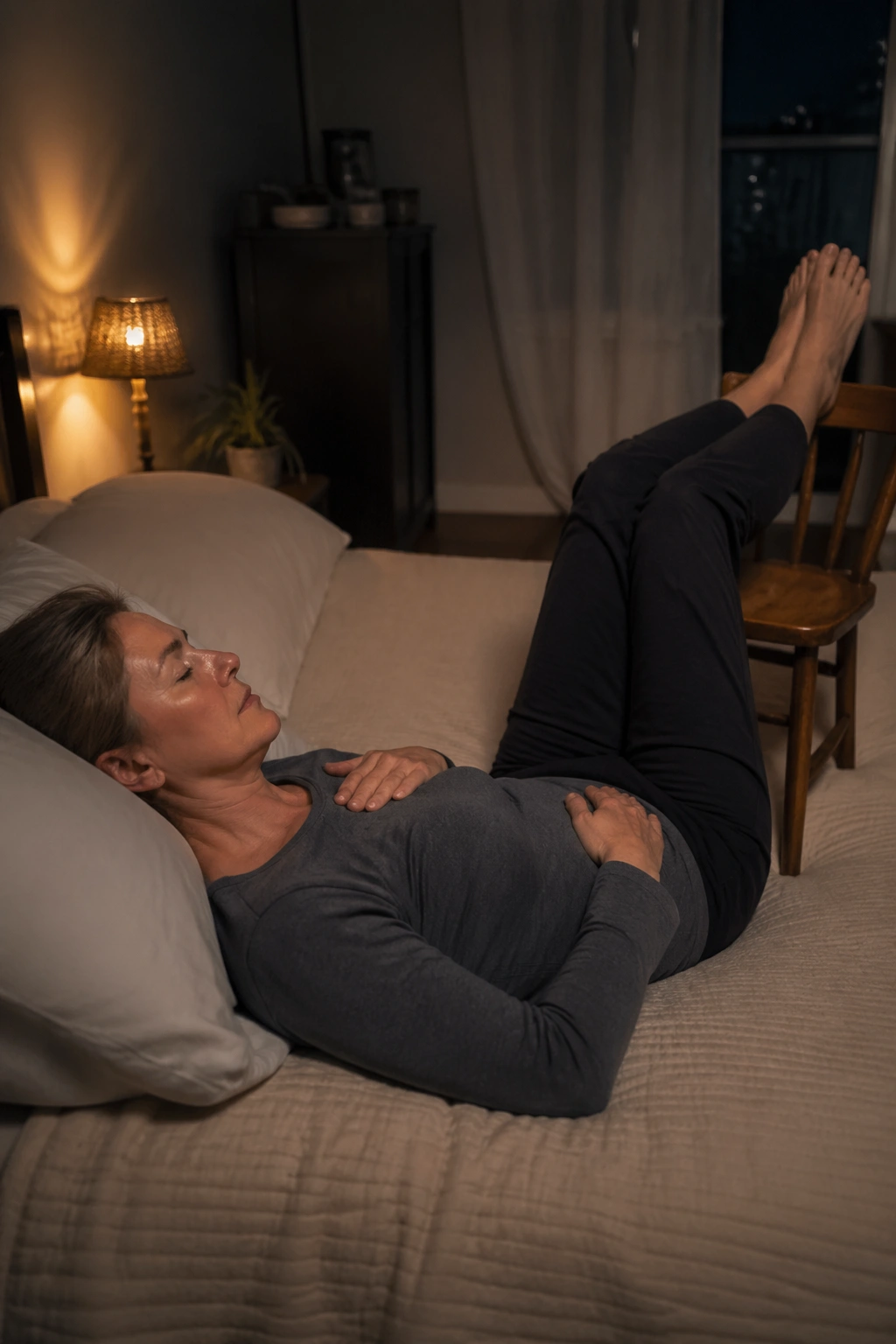
Unlike a midday workout, an evening Pilates session should turn the dial down. You want your ribs softer, your jaw looser, and your nervous system less revved up by the end.
Lie on your back with your calves on a chair seat or couch cushion. Stay there for 2 minutes, breathing into the back ribs. Then do 6 windshield wipers, 30 seconds of figure-four per side, 4 supine rotations per side, and slow arm circles for 1 minute. Finish with one hand on the chest, one on the belly, and breathe out longer than you breathe in.
This routine is a good pick on nights when your body feels tired but wired. It is also kind after gardening, travel, or too much standing. Keep the lights low if you can. Tiny detail, big payoff.
No hard abs here. No athletic push. That’s the point.
19. The Cushion-Assisted Beginner Routine for a Softer Start
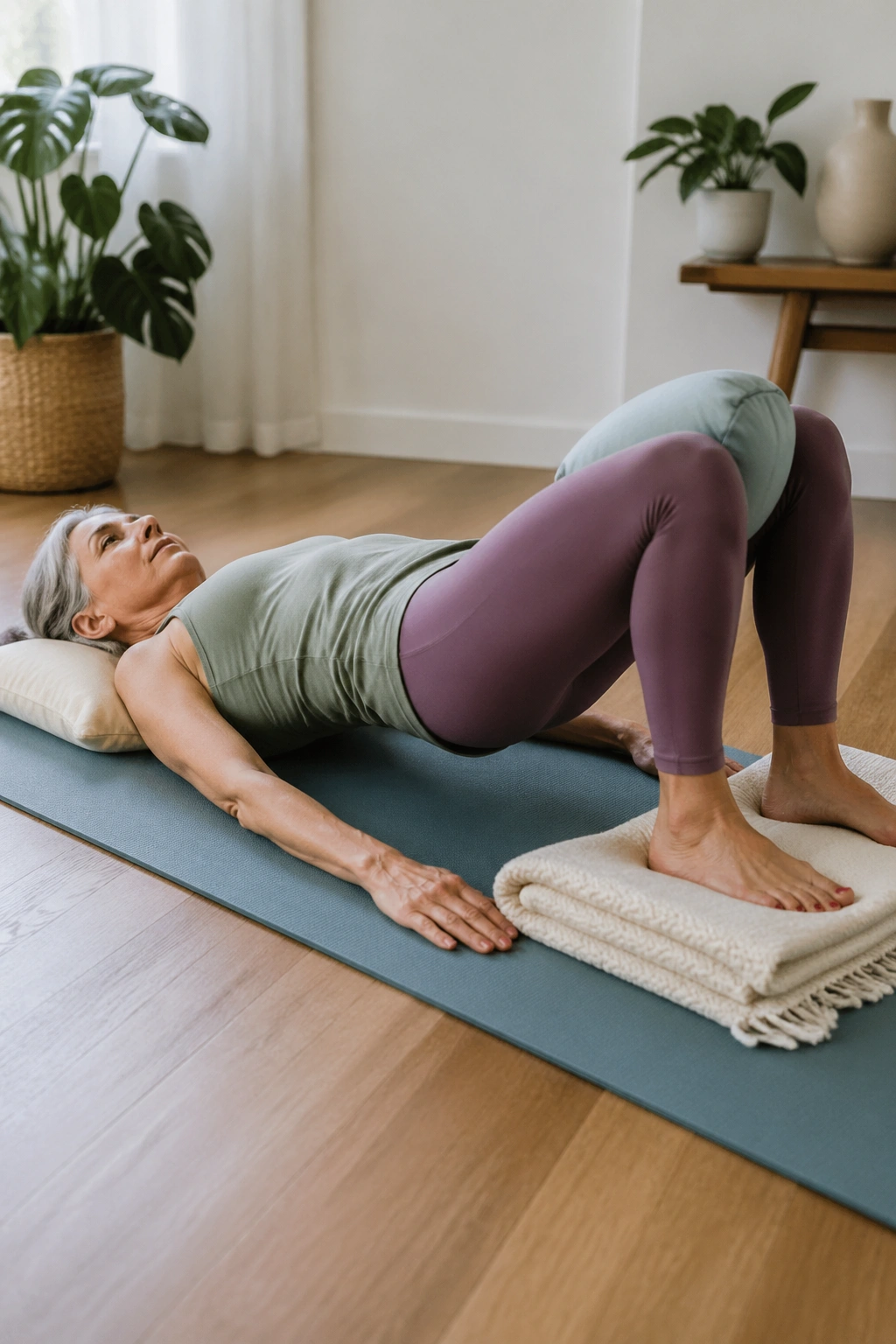
A lot of women quit Pilates early because the setup feels harsher than the exercise. Head jammed back. Knees on a thin mat. Hips pinchy on the floor. None of that is a character test.
Setup
Use:
- A small pillow under the head
- A folded blanket under the knees
- A cushion between the thighs for bridges if that helps alignment
Move List
- 5 breath cycles
- 8 pelvic clocks
- 8 heel slides per side
- 8 bridges
- 10 clamshells per side
- 6 side-lying arm openings per side
This is the routine I’d hand to anyone coming back to exercise after a long gap. The reps are manageable. The positions are friendly. The pace gives you time to learn what neutral pelvis and steady ribs feel like.
Use it for two weeks before moving on if you need to. There’s no rule that says beginner work stops being useful.
20. The Arm-and-Back Strength Flow Without Dumbbells
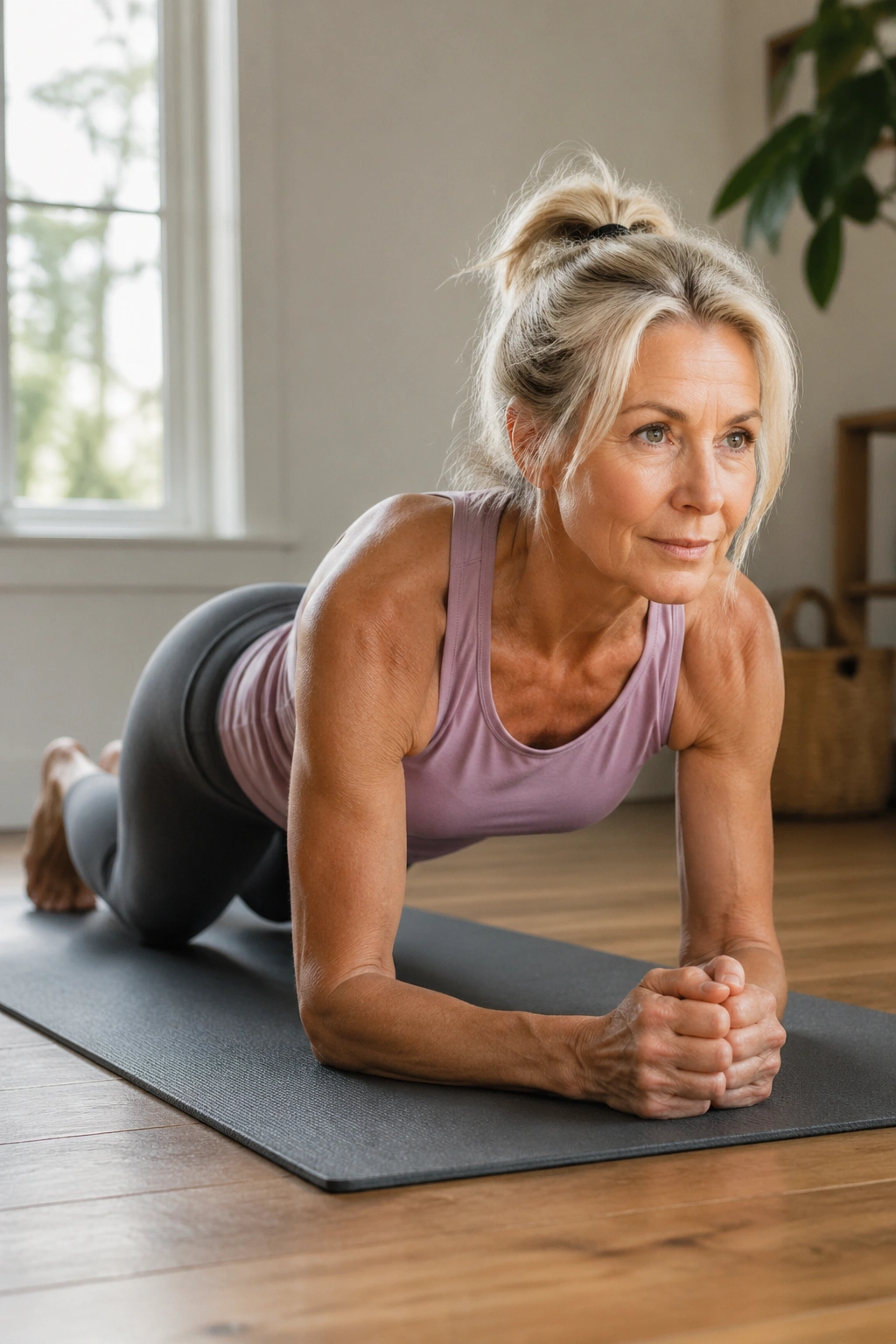
You can make your arms work hard on a mat without a single dumbbell. You just need leverage, body weight, and enough patience to stop swinging through the reps.
Start in a forearm plank from the knees for 15 seconds. Rest. Repeat once. Then lower to your belly for 6 narrow triceps presses, hands by the ribs, elbows hugging in. Follow with 6 sphinx press-backs, lifting the chest slightly and drawing the shoulders down, then finish with 8 prone arm sweeps from hips to overhead without lifting the chest high.
This one sneaks up on people. The triceps presses are short, but they’re not easy. The forearm plank teaches shoulder stability without loading sore wrists. The arm sweeps ask the upper back and back of the shoulders to stay honest through a long arc.
If elbows or shoulders bark, cut the range and slow it down. Effort is fine. Joint irritation is not part of the assignment.
21. The Coordination Routine for Brain-and-Body Focus
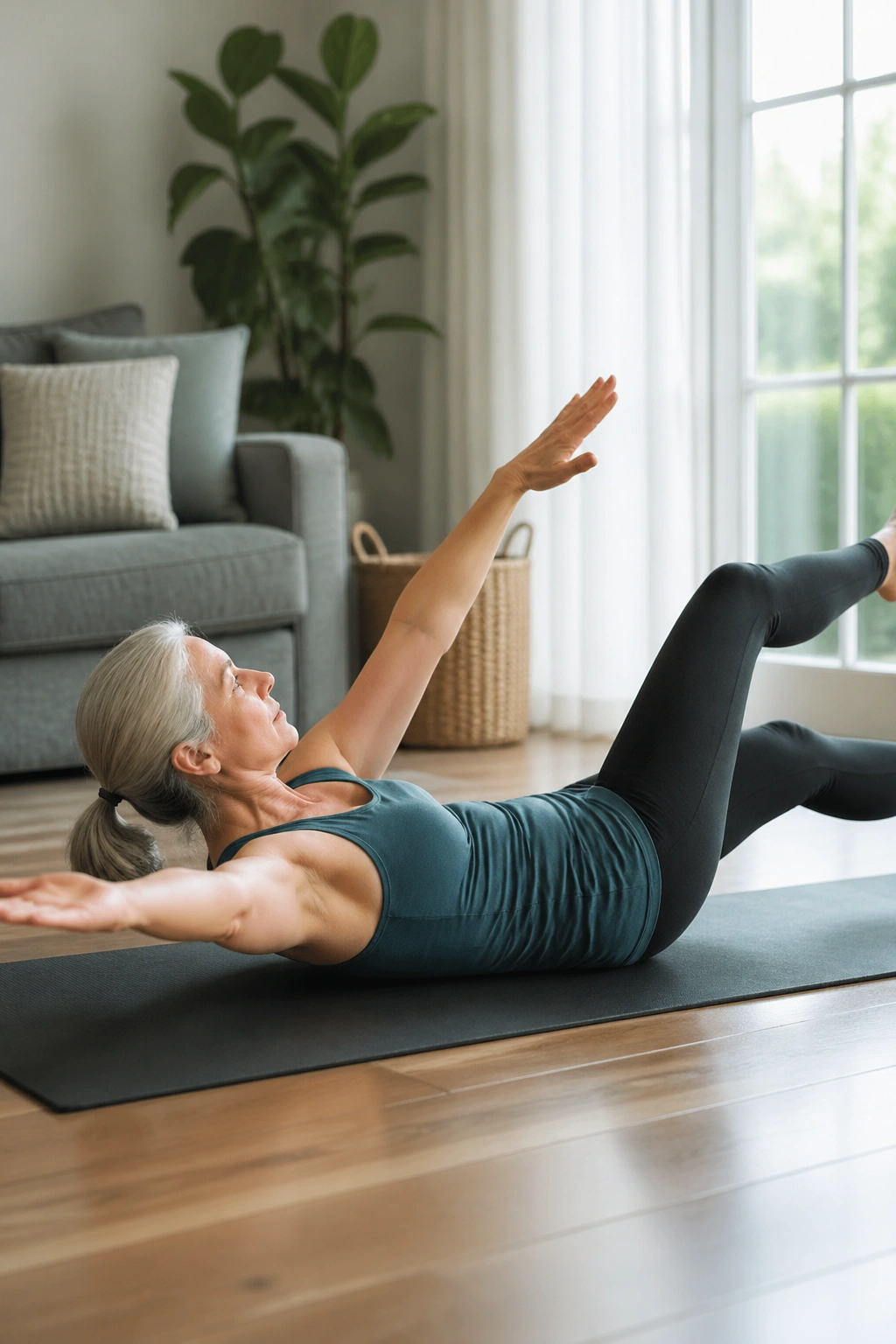
Want a session that sharpens attention as much as your trunk? Try a coordination flow. Counting, cross-body patterns, and switching limb actions can make the brain work a little harder—in a good way.
Start on your back with opposite arm-and-leg reaches, 6 per side. Move to dead bug with a 3-count lower and 1-count lift, 6 per side. Go onto all fours for bird dog with an elbow-to-knee tap, 5 per side. Finish seated with spine twist and breath counts, turning on the exhale for 4 reps each way.
How to Run It
Say the count out loud. I mean it. The voice adds rhythm and makes mistakes easier to catch. If you keep losing the pattern, slow it down until the limbs move cleanly and the breath stays steady.
This routine is a sneaky favorite because it feels fresh. You’re not grinding through reps. You’re paying attention. That alone can make mat Pilates feel less repetitive.
22. A Full-Body Mat Pilates Routine When You Want Everything in One Session
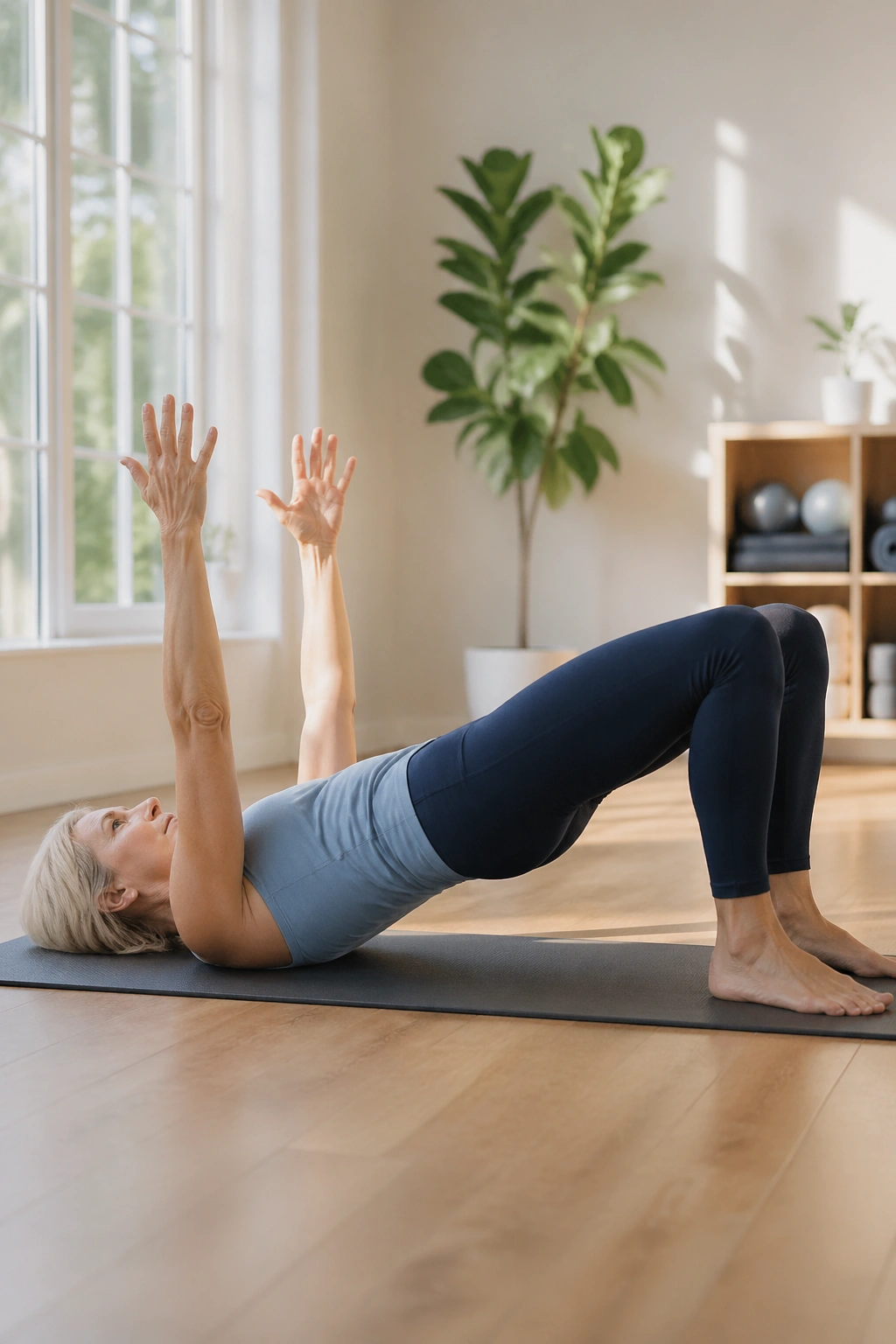
Some days you do not want to choose. You want one clean, satisfying mat practice that wakes up the core, hips, back, shoulders, and balance systems in about 20 minutes. This is that session.
Start with 1 minute of rib breathing, then do 8 pelvic tilts and 8 bridges. Move into heel slides, 8 per side, then dead bug taps, 6 per side. Roll to your side for 10 clamshells and 8 leg lifts per side. Come onto all fours for 6 bird dogs per side. Finish prone with 6 darts and seated with 4 mermaid side bends per side.
The order matters. You start close to the floor with low demand, build trunk control before leg work gets bigger, then shift into side-lying and quadruped once the pelvis is awake. Prone extension near the end helps undo all the front-body work, and the seated side bends let you walk away feeling open instead of braced.
If you want one routine to repeat twice a week, this is the one I’d pick first. It’s balanced, efficient, and kind to bodies that want challenge without drama.
Start Small
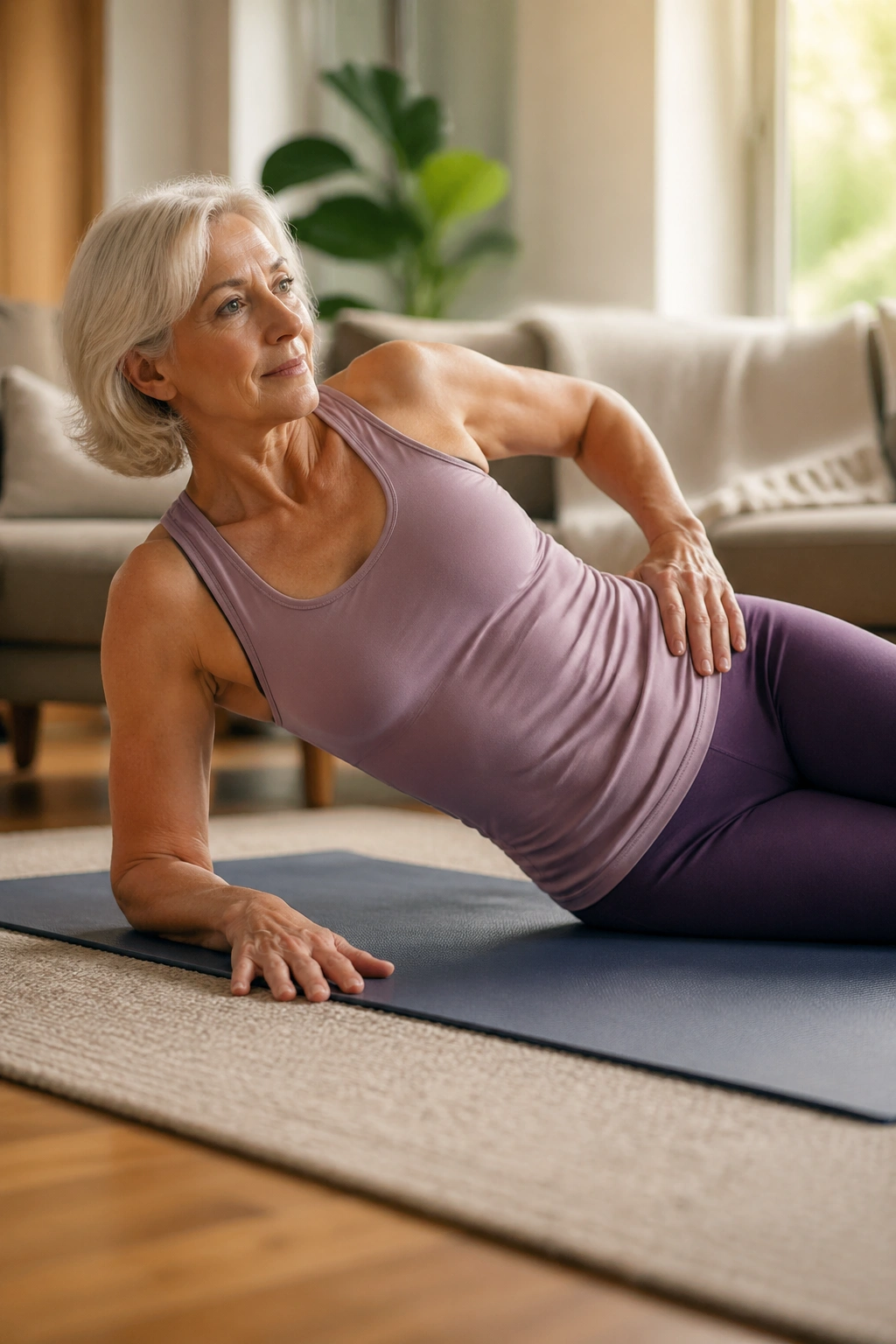
You do not need to prove anything to a mat. Choose three routines that match what your body asks for most often—maybe posture, hips, and evening decompression—and repeat them long enough to get familiar with the cues. Familiarity is where the benefits start showing up in daily life.
Keep the props nearby. Use the towel under your head. Shorten the range before you force it. Those are not beginner crutches; they’re good decisions.
And if one routine leaves you feeling stronger, steadier, and a little more comfortable in your own frame, that is not a small result. That’s the whole point.
