



Pilates is often misunderstood as a simple form of stretching, but once you spend five minutes on a mat, you realize it is an exacting discipline. It requires a level of focus that is rare in modern workouts. You are not just moving limbs through space; you are navigating your own anatomy. There is a quiet intensity to it. You might find yourself shaking during a movement that looks deceptively easy from the outside. That shake? That is the sound of your stabilizer muscles waking up.
Many people arrive at Pilates looking for a “quick fix” for back pain or core strength. While the benefits are undeniably real, the path to getting them involves shedding the habit of rushing through reps. Momentum is the enemy here. Every inch of movement needs to be deliberate. Whether you are a total beginner who has never engaged a transverse abdominis or someone who has spent years in the studio, the foundational moves remain the same. They just change in complexity as your control improves.
This list explores twenty essential movements that define the practice. You will notice that many of these rely on your own body weight and gravity. You do not need expensive machines to build a resilient, strong core—just a mat and enough discipline to slow down. The beauty of these exercises is their scalability. By making small adjustments to the range of motion, the tempo, or the amount of surface area touching the floor, you can make any of these movements feel like a completely different challenge.
1. The Hundred
This is the quintessential Pilates warm-up, and for good reason. It immediately demands coordination between your breath, your abdominal control, and your upper body stability. You are pumping your arms while holding your legs in a precise position, all while maintaining a steady rhythm of inhalation and exhalation. It forces your mind to stay occupied, preventing you from checking out during the warmup.
Why It Matters
The primary goal here is to ignite your circulation and establish a strong connection to your powerhouse—the deep muscles of your abdomen. By holding your head, neck, and shoulders off the mat, you are training your upper abdominals to support the weight of your head, which is a common source of tension for many people.
How to Execute It Correctly
- Lie flat on your back, knees to your chest.
- Curl your head and shoulders off the mat, looking toward your belly button.
- Extend your legs out to a 45-degree angle—or higher if your lower back starts to arch.
- Pump your arms up and down vigorously at your sides.
- Inhale for five pumps, exhale for five pumps, repeating until you reach one hundred.
Pro tip: If you feel this in your neck, you are likely pulling with your throat rather than curling with your abs. Lower your legs toward the ceiling to reduce the load on your spine until your core gets stronger.
2. The Roll-Up
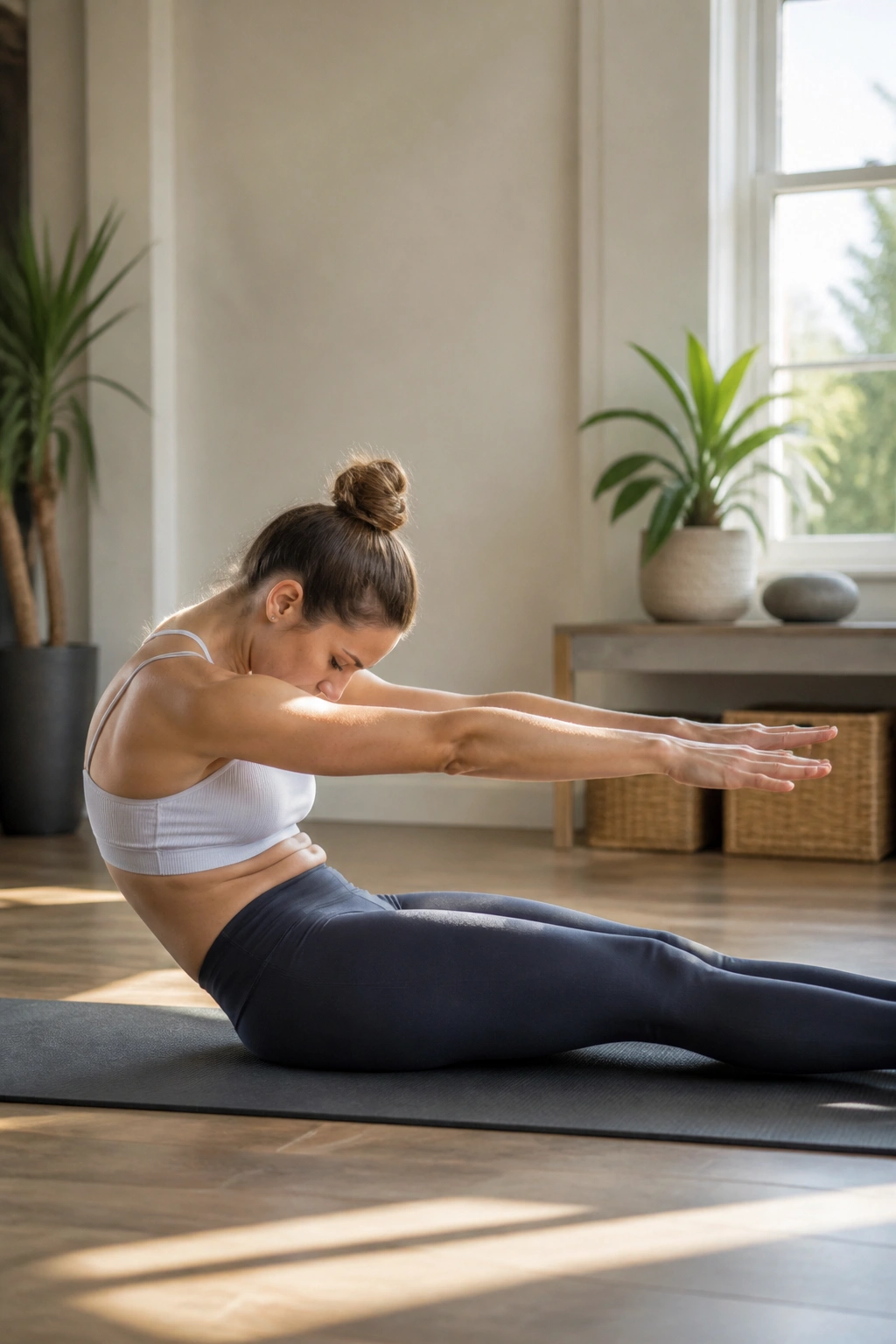
People often mistake the Roll-Up for a standard gym sit-up. They are not the same. In a traditional sit-up, you use momentum to fling your torso off the floor. In a Pilates Roll-Up, you are articulating the spine—bone by bone. It is a slow, methodical peel of your back off the mat, starting from the head and moving down to the tailbone.
The secret lies in the scooping of the navel. You want to imagine your belly button is being pulled backward toward your spine as you reach forward. If you try to force your way up with your hip flexors, you lose the abdominal engagement that makes this move so effective. When you roll back down, it should be an even slower process than the way up.
Do not be discouraged if you cannot perform this smoothly on your first attempt. Very few people can. Use a light weight, like a small towel, held in your hands to counterbalance your body if you feel stuck at the bottom. The goal is smooth movement, not brute force.
3. Leg Circles
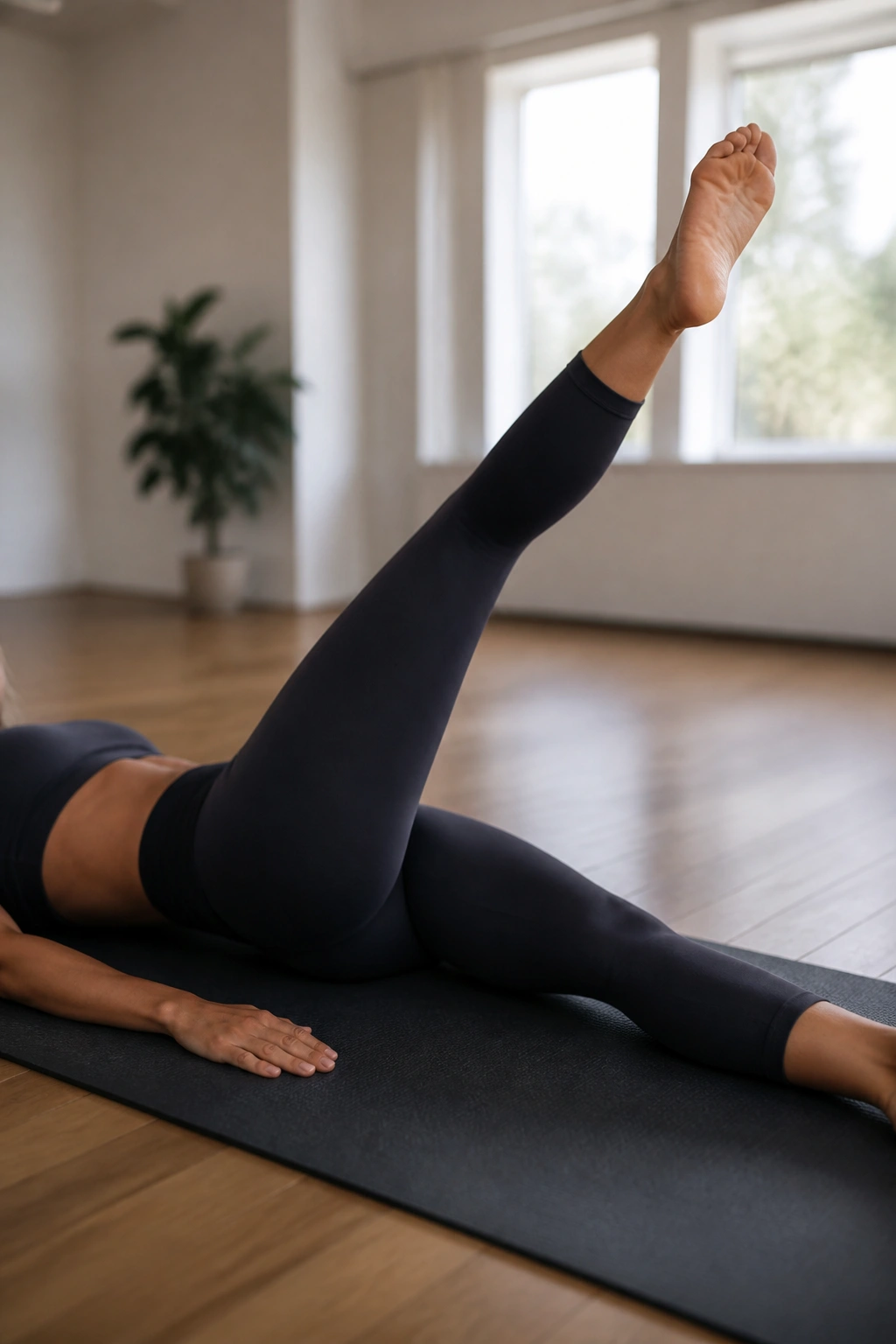
These are deceptive. When you lie on your back and rotate one leg in the air, you might think the focus is on the leg itself. It is not. The challenge here is the stability of your pelvis. While your leg moves in a circle, your hips should remain absolutely still—glued to the mat like they are set in cement.
Why You Need This
If your hips are rocking side to side, you are not working your core; you are just swinging your leg. By keeping the pelvis stationary, you force the abdominal muscles to act as a stabilizer. It is an excellent way to improve hip mobility without sacrificing the integrity of your spine.
Key Performance Cues
- Keep your non-working leg long and pressed into the mat.
- Imagine your leg is a paintbrush, drawing a perfect circle on the ceiling.
- Keep the circle no larger than your hip width to start.
- Focus on the “up” phase of the circle; that is where the deep abdominal work happens.
4. Rolling Like a Ball
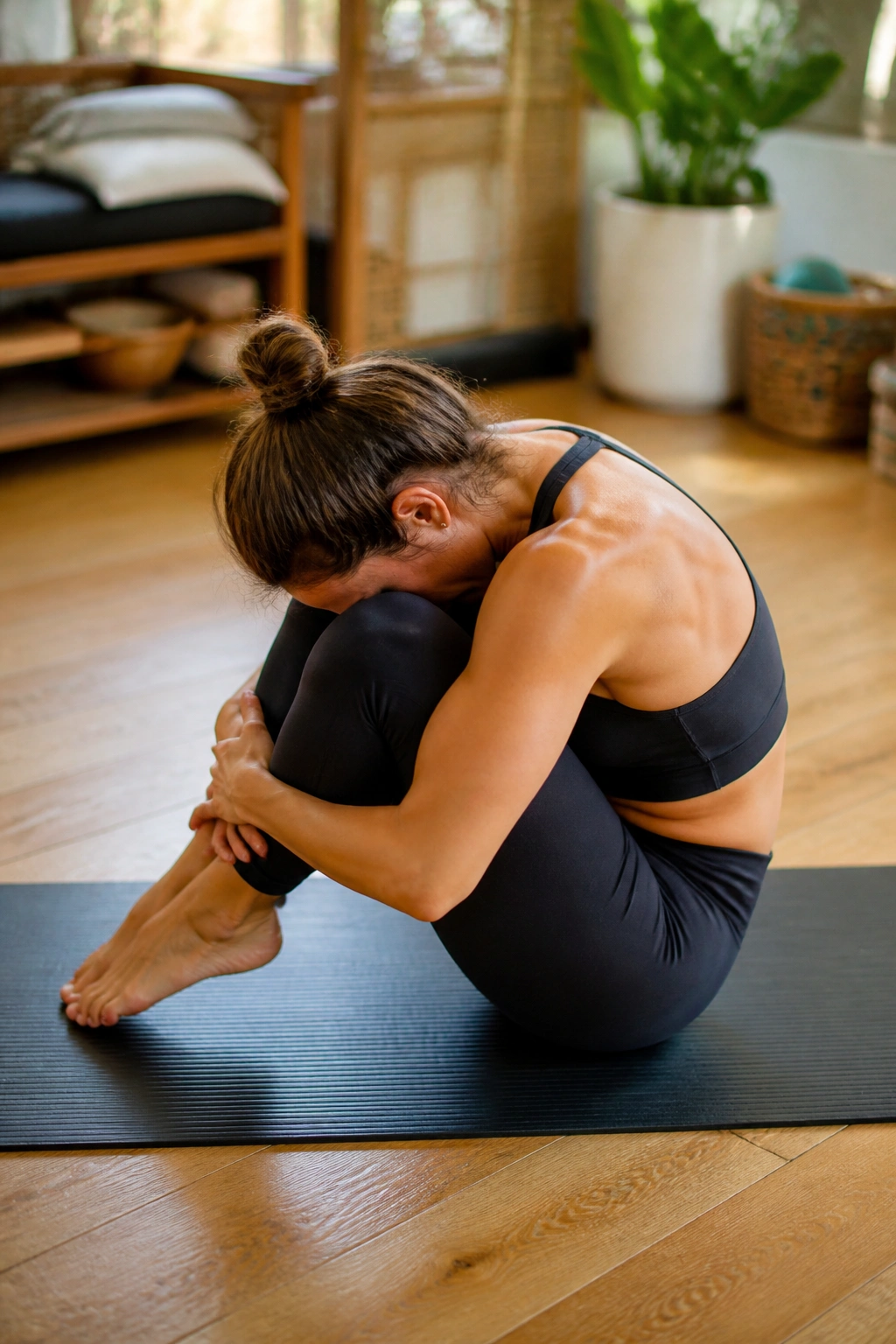
This exercise is essentially a self-massage for your spine. It teaches you to maintain a tight, rounded shape—the “c-curve”—while moving through space. It is playful, but it requires serious control. If you lose your shape, you will flop onto your back like a dead fish. If you maintain the shape, you roll smoothly back and forth.
Think of your body as a rigid, rocking chair. You tuck your chin to your chest, grab your ankles, and find your balance point on your tailbone. When you rock back, you stop at the shoulder blades—never roll onto your neck. When you come back up, you use your abdominals to stop the momentum before your feet touch the floor. It is balance, breath, and core stability all at once.
5. Single Leg Stretch
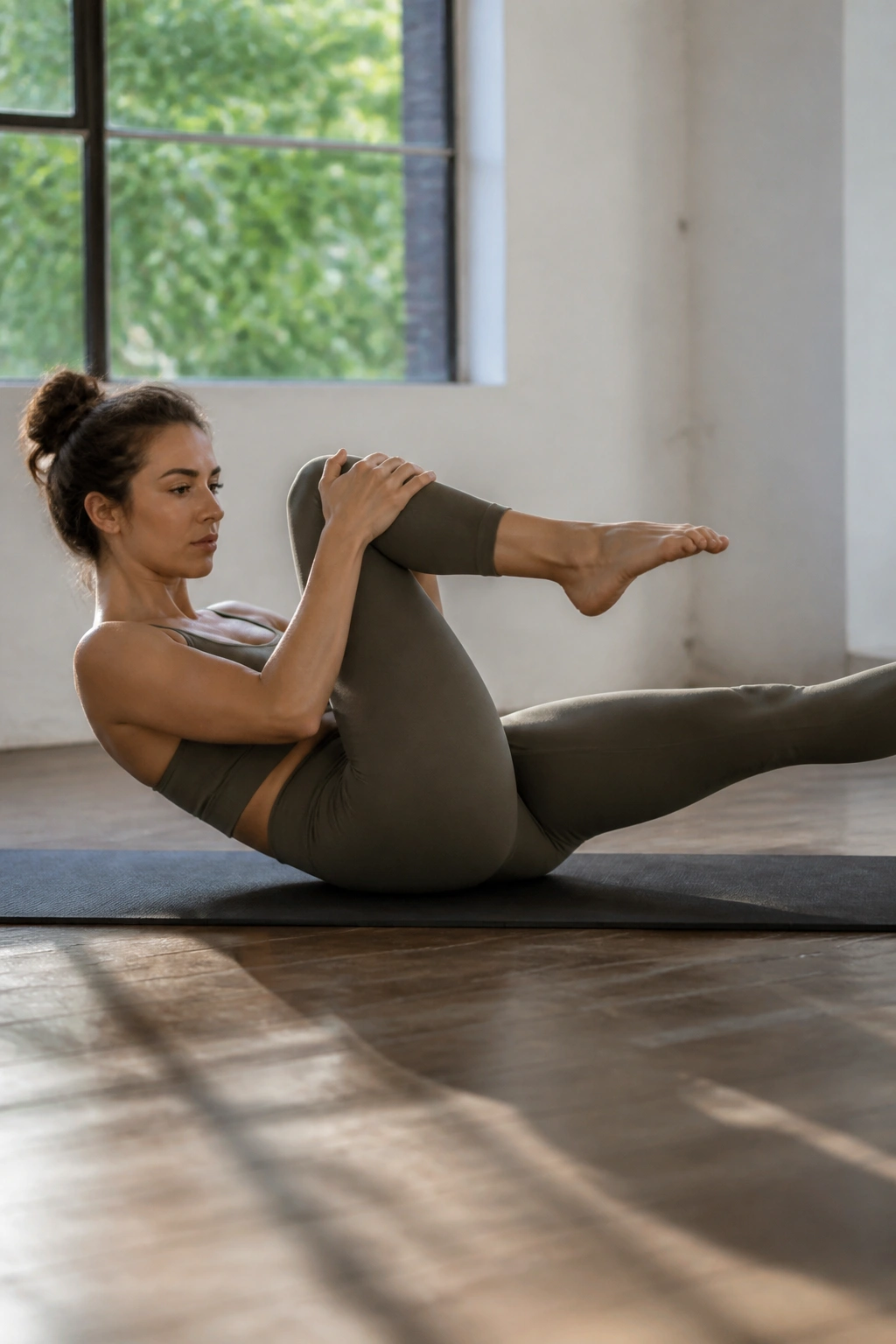
Rhythm is the engine of the Single Leg Stretch. You are working in a pattern: pull one knee in, extend the other leg out, switch, and repeat. The challenge is keeping the torso perfectly still while the legs are churning. Your head and shoulders should stay in that curled-up position from the Hundred.
Most beginners make the mistake of pulling the knee too far toward the chest, which causes the lower back to round or the hips to shift. Instead, keep the knee centered. The “stretch” comes from the leg extending away from you, reaching long toward the opposite wall. The deeper you reach that leg, the more your abs have to work to keep the back from arching off the mat.
6. Double Leg Stretch
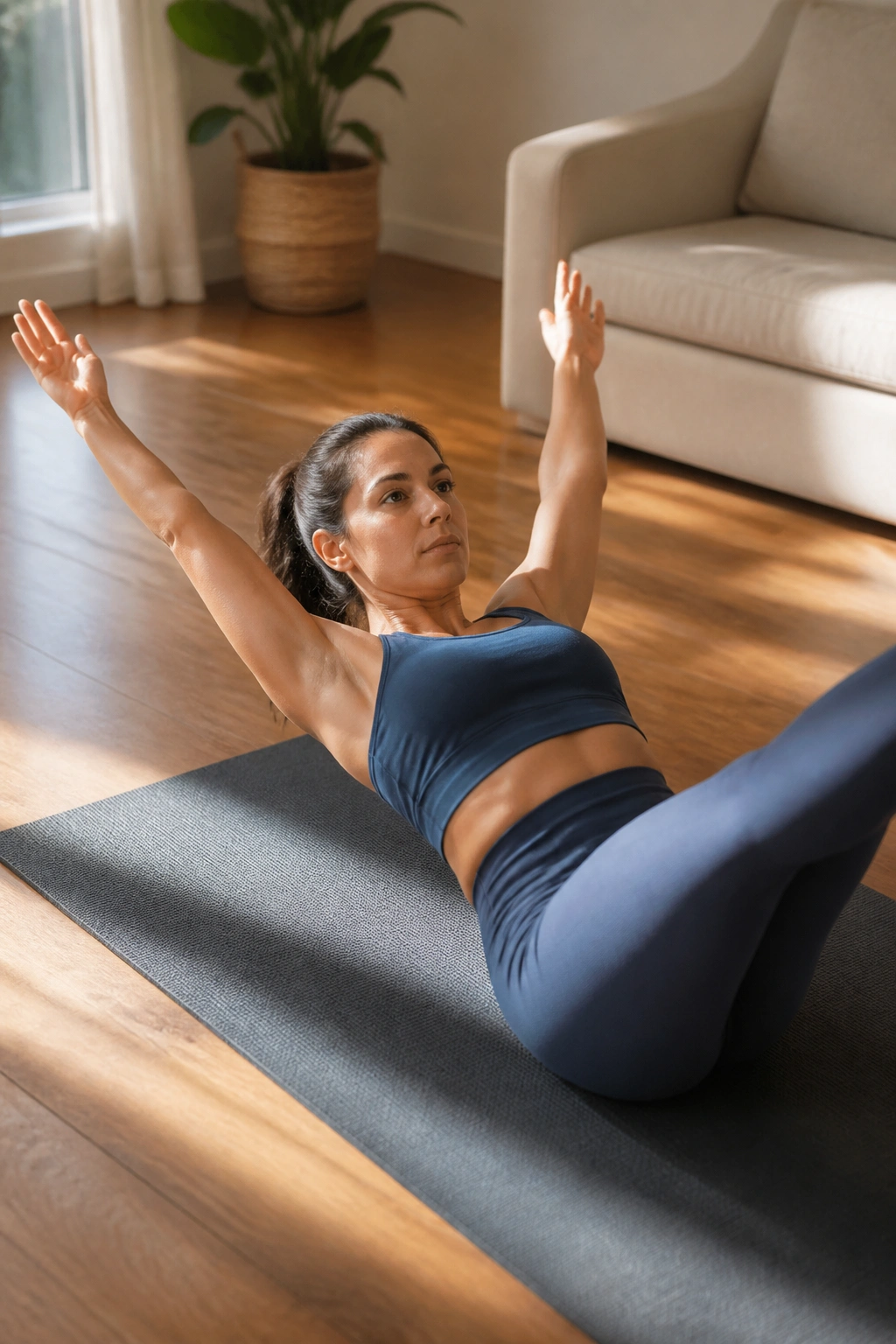
If the single leg version is about coordination, the double leg version is about power and stamina. You are pulling both knees in, then reaching both arms and legs away from the center of your body. Think of it as a starburst movement. You are expanding from your center and then drawing everything back home.
The risk here is losing your connection to the floor. As your legs reach out, gravity tries to pull your lower back up. You have to fight that. If your legs go out very low, that pull increases. Start with your legs reaching toward the ceiling rather than the floor. As your core strength develops over weeks and months, you can gradually lower the angle of your legs.
7. Spine Stretch Forward
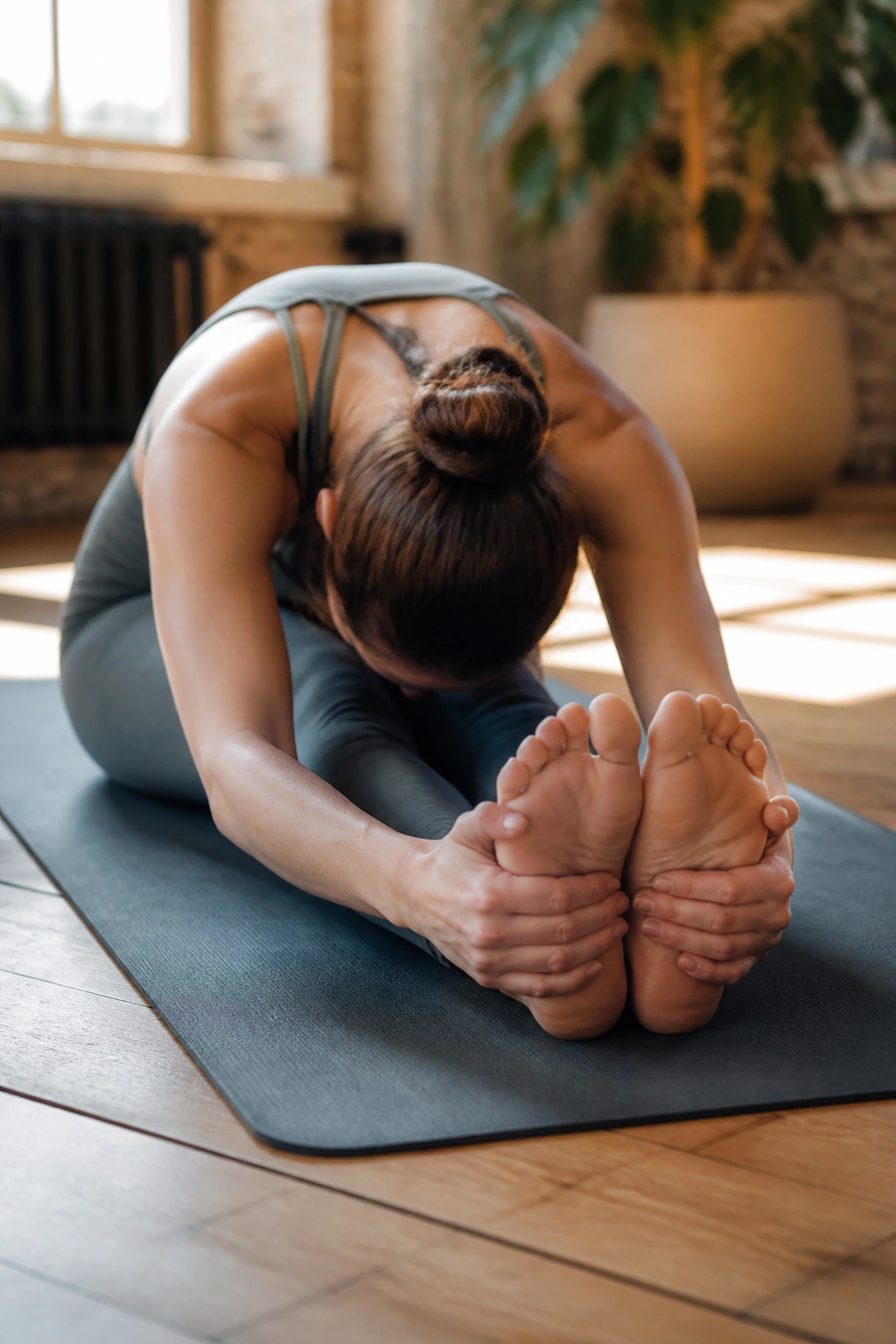
This is a beautiful counter-movement to all the abdominal curling. It focuses on spinal articulation and hamstring flexibility. You sit tall with your legs extended in front of you, arms reaching forward. You are essentially trying to reach past your toes, but you are not diving or hunching.
Visualize a wall behind you. As you roll forward, you peel your spine off that imaginary wall one vertebra at a time, starting from the head. The stretch should feel like you are lengthening your spine, not just collapsing into your hips. It is a slow, controlled reach that stretches the back muscles and decompresses the vertebrae.
8. Criss-Cross
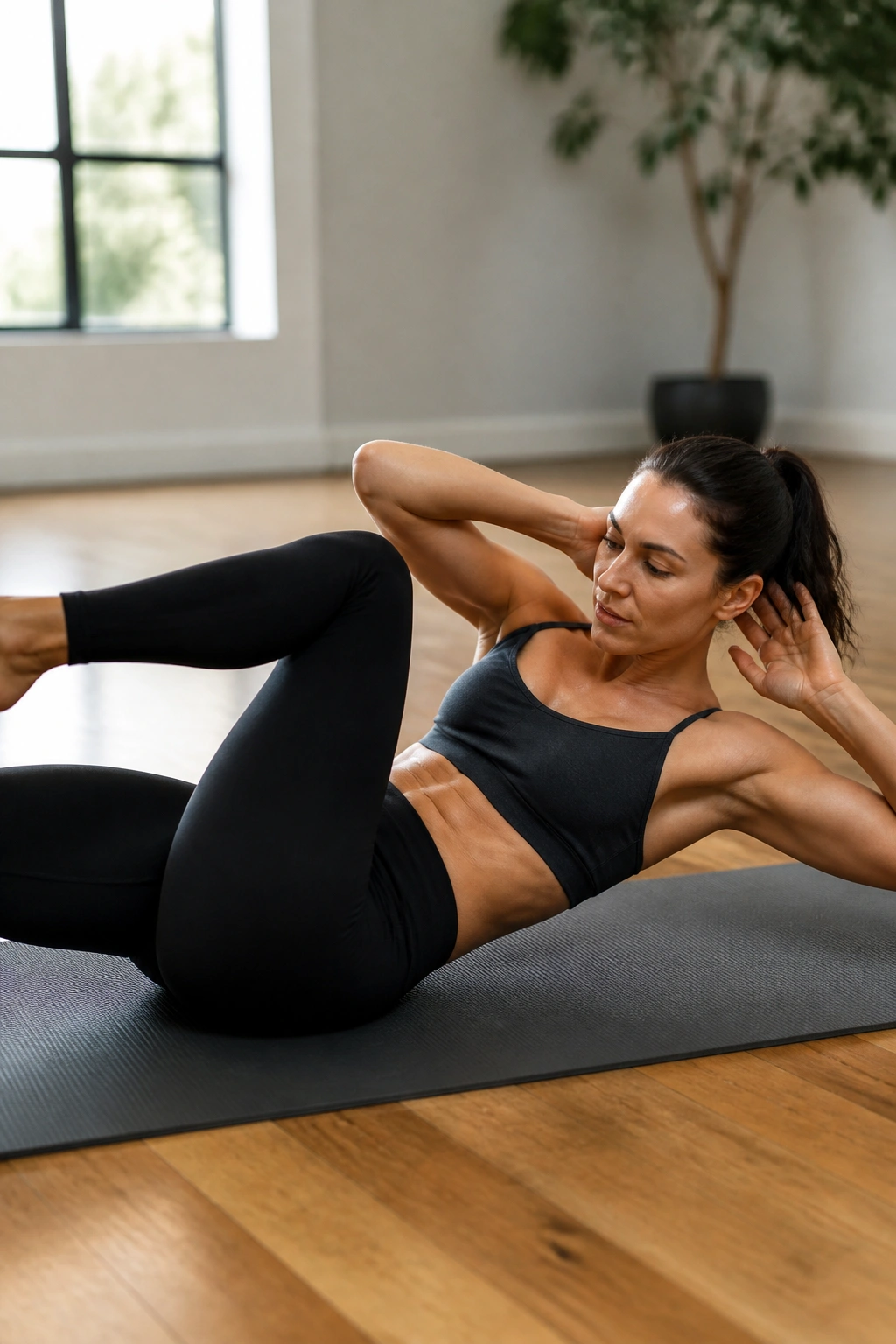
This is the ultimate oblique challenge. You are adding rotation to the Single Leg Stretch. As you switch legs, you rotate your upper body so that the opposite armpit—not just the elbow—reaches toward the bent knee. That distinction is important. Reaching with the elbow often leads to “winging” or just moving the arm. Reaching with the armpit forces the entire ribcage to rotate.
The movement should feel fluid, like a bicycle pedal. Maintain the lift of your chest; don’t let your shoulder blades touch the mat as you switch sides. If you feel like your head is wobbling, support your neck gently with your hands, but do not pull on it. Use your obliques to initiate the twist, not your neck muscles.
9. The Saw
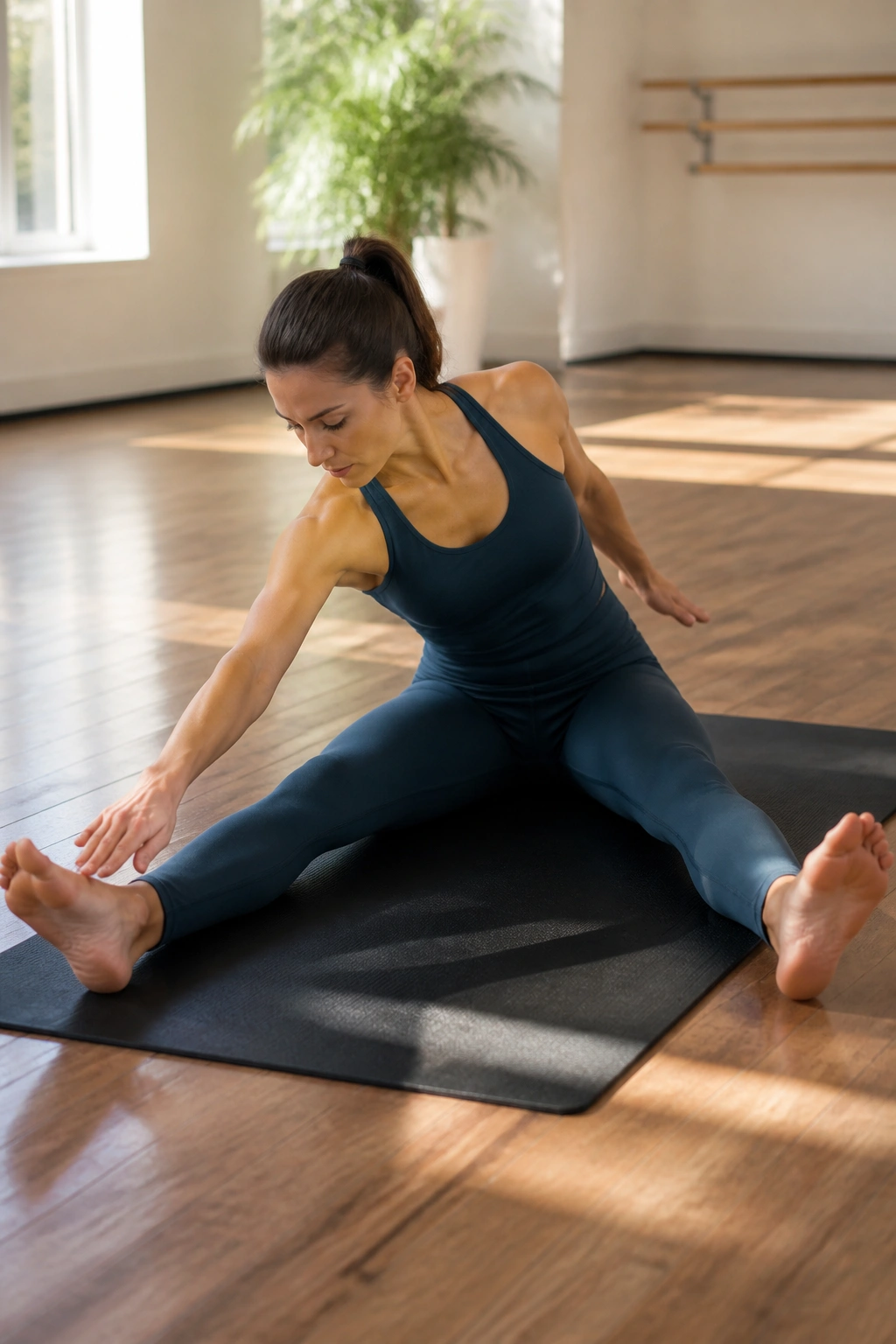
The Saw is named for the motion of reaching to saw off your pinky toe with the opposite hand. While that imagery is a bit grisly, it is highly descriptive. You are seated with legs wide, creating a strong base. The movement is a rotation of the torso followed by a deep forward reach.
Why It Works
It combines rotation with spinal flexion, which is a rare combination in many workout routines. It stretches the back, the hamstrings, and the waist.
Important Details
- Keep your sit-bones planted. If one hip lifts, you are overextending.
- The rotation happens in the ribs, not the hips.
- Exhale deeply as you reach forward, squeezing the air out of your lungs to deepen the stretch.
10. Swan Dive
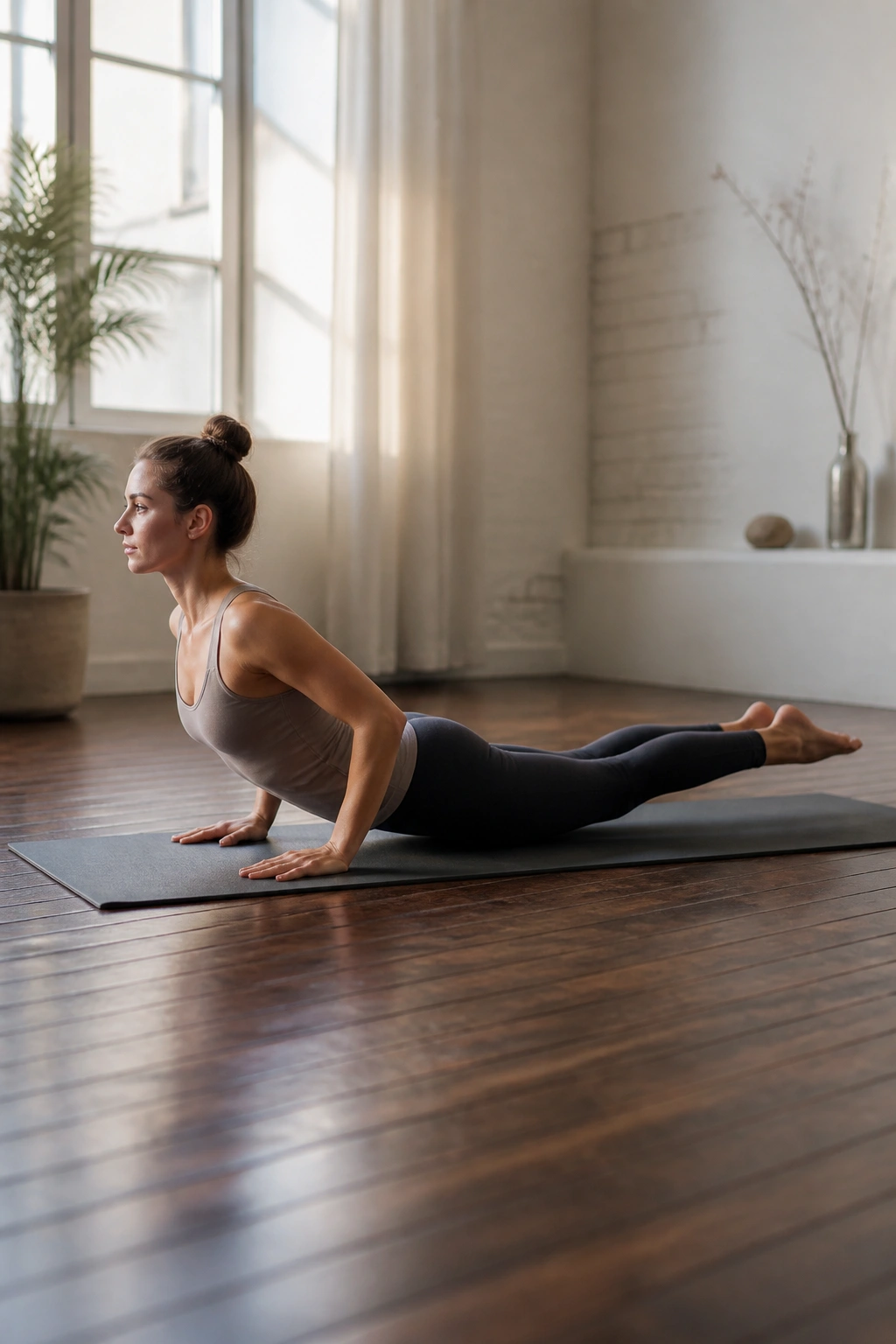
Now we shift to the posterior chain. The Swan Dive is all about extension—working the muscles of the upper back and the glutes. You lie on your stomach, hands under your shoulders, and lift your chest off the mat. Think of it as a push-up without the push; you are using the back muscles to hoist the torso.
The “dive” part comes in when you rock forward and back. You lift the legs as the chest lowers, then lift the chest as the legs lower. It feels like a teeter-totter. The most common mistake is dumping the weight into the lower back. Keep your abdominals engaged even while lying on your stomach to protect your lumbar spine.
11. Shoulder Bridge
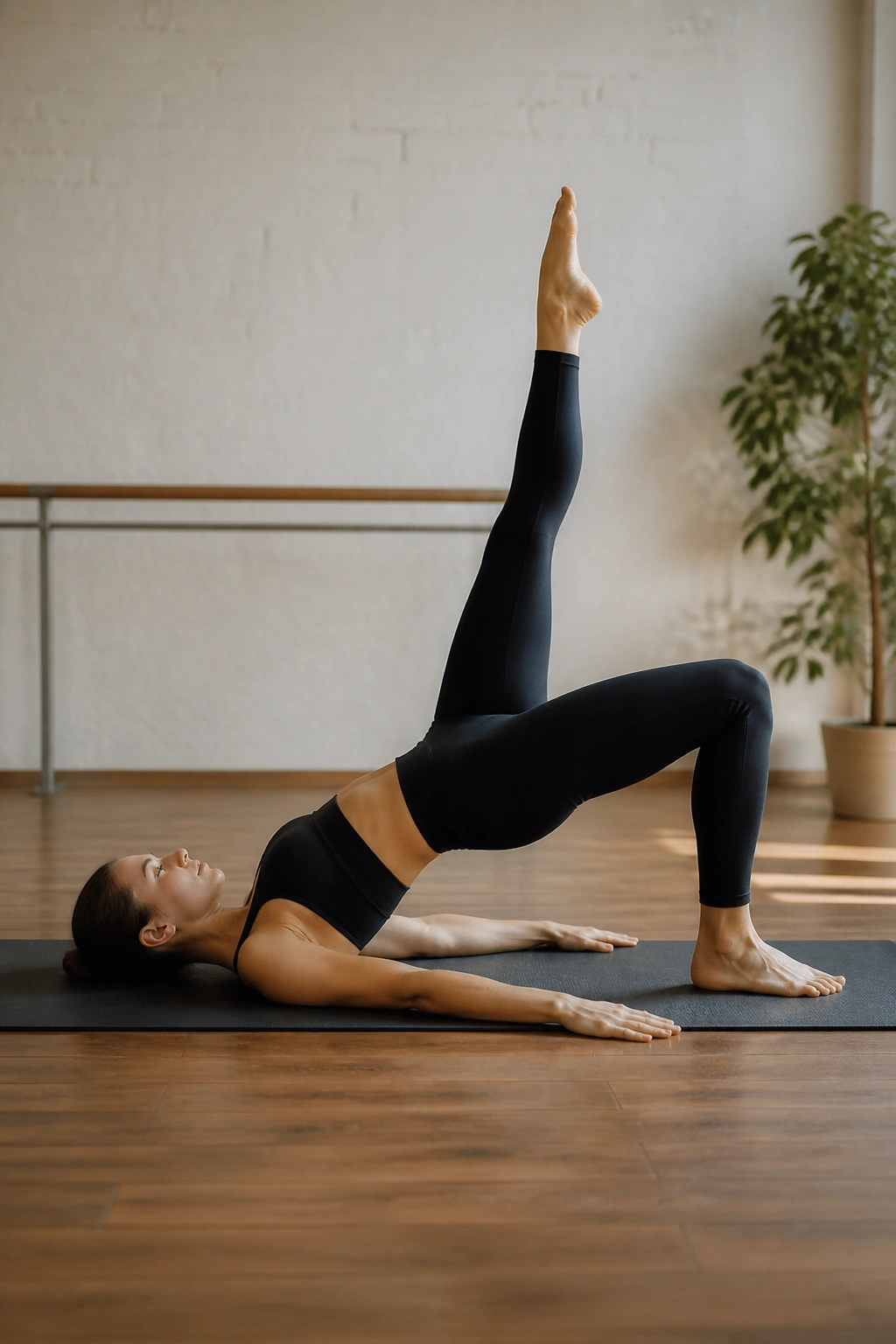
This exercise serves as a bridge between active movement and foundational stability. You are lifting your hips toward the ceiling, creating a straight line from your knees to your shoulders. It is a fantastic glute strengthener, but it also tests your ability to stabilize the pelvis while one leg is moving in the air.
Once you master the bridge, lift one leg toward the ceiling. Now, hold that bridge steady while the elevated leg moves up and down. You will immediately feel how hard your stabilizing hip has to work to keep the pelvis level. If you drop the hip, you lose the exercise.
12. Swimming
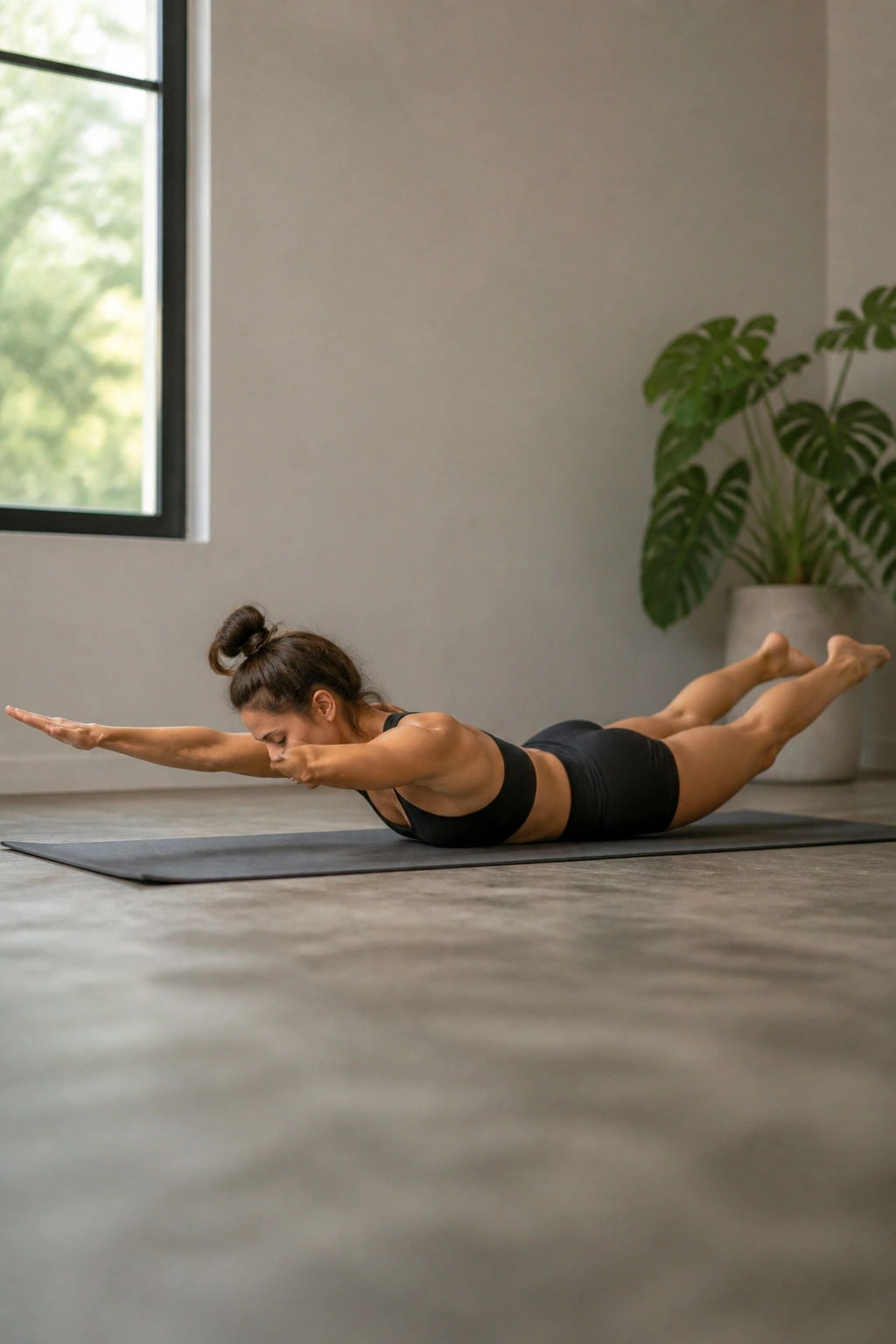
Get ready for some cardio. Lying on your stomach, you lift your arms and legs off the mat and flutter them rapidly, like you are swimming in a pool. It is exhausting and effective. It requires endurance in the back muscles and the glutes, as well as significant shoulder stability.
The key to Swimming is keeping the neck long. Do not look up at the wall in front of you; keep your gaze toward the mat. If you crane your neck, you will end up with a headache. Focus on reaching the fingertips and the toes away from each other, creating a sense of length rather than just flapping around frantically.
13. Side Kick Series
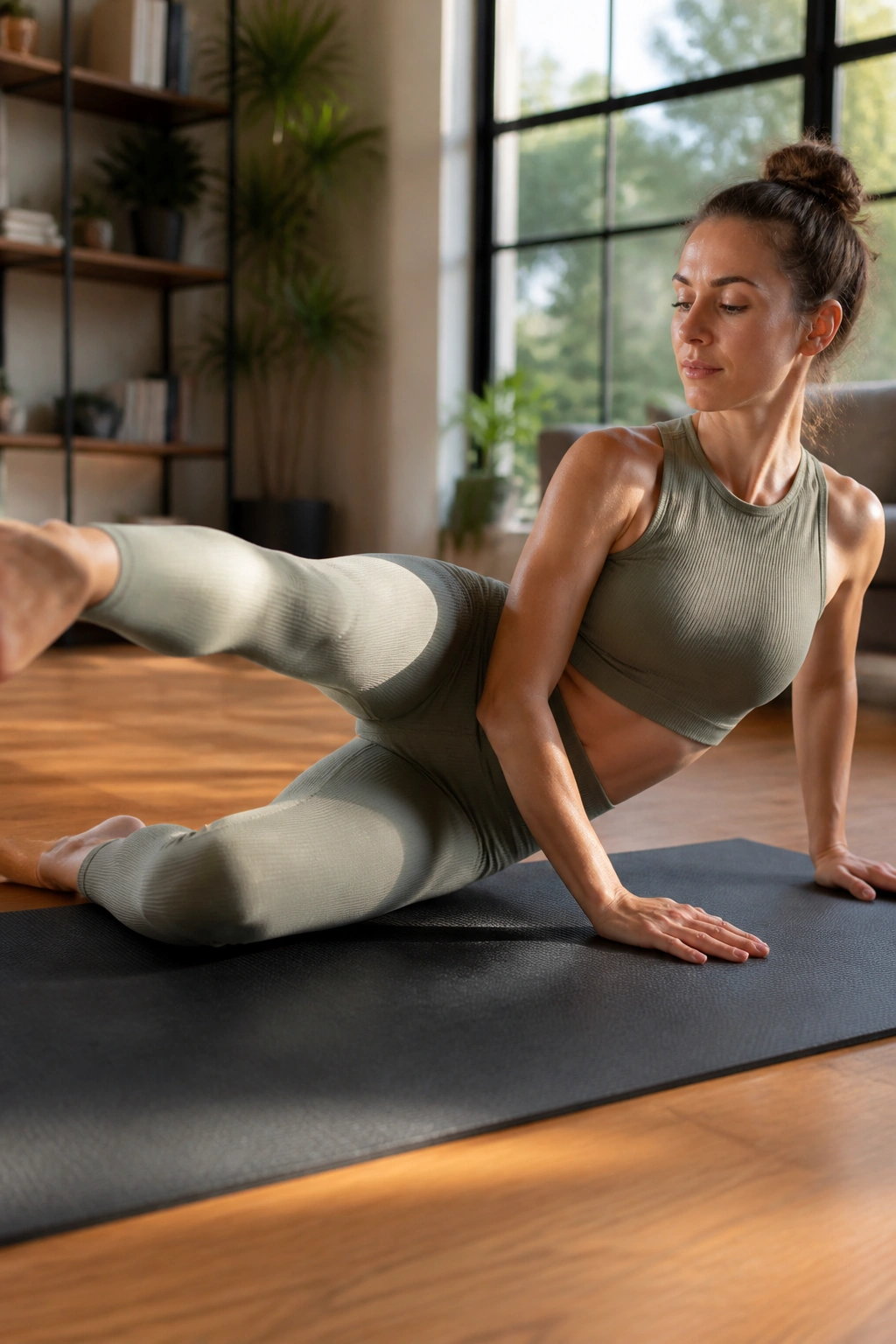
This series is usually done in a specific sequence: the front-and-back kick, the up-and-down, and the small circles. You lie on your side, propped up on your forearm or lying flat, with your legs slightly forward. The goal is to move the top leg without the pelvis shifting.
Imagine you are pressed between two panes of glass. Your body cannot move forward or backward. When you kick the leg forward, your torso must remain perfectly vertical. If you lean forward to get the leg higher, you have missed the point. It is all about the isolation of the hip and the deep stability of the waist.
14. The Teaser
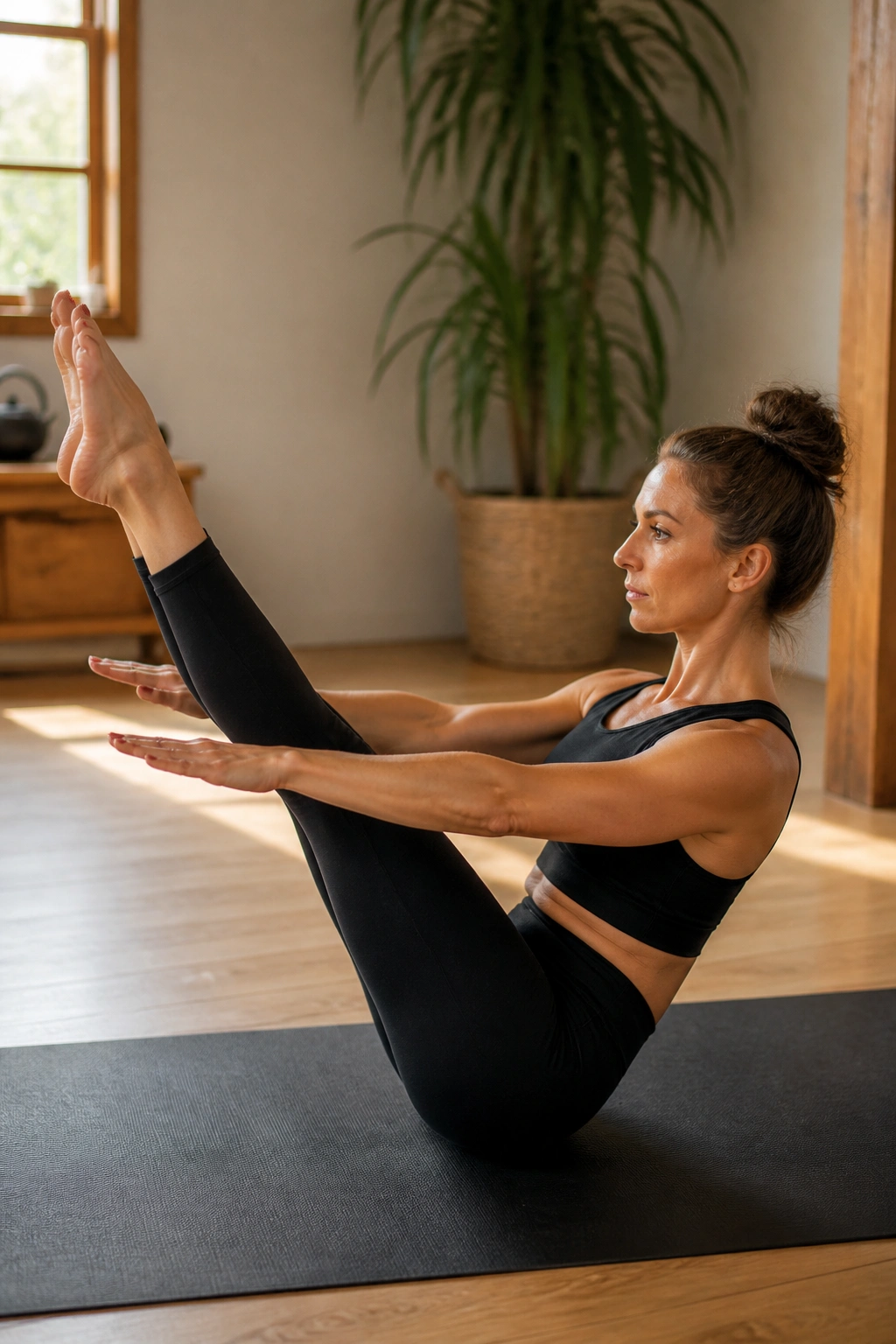
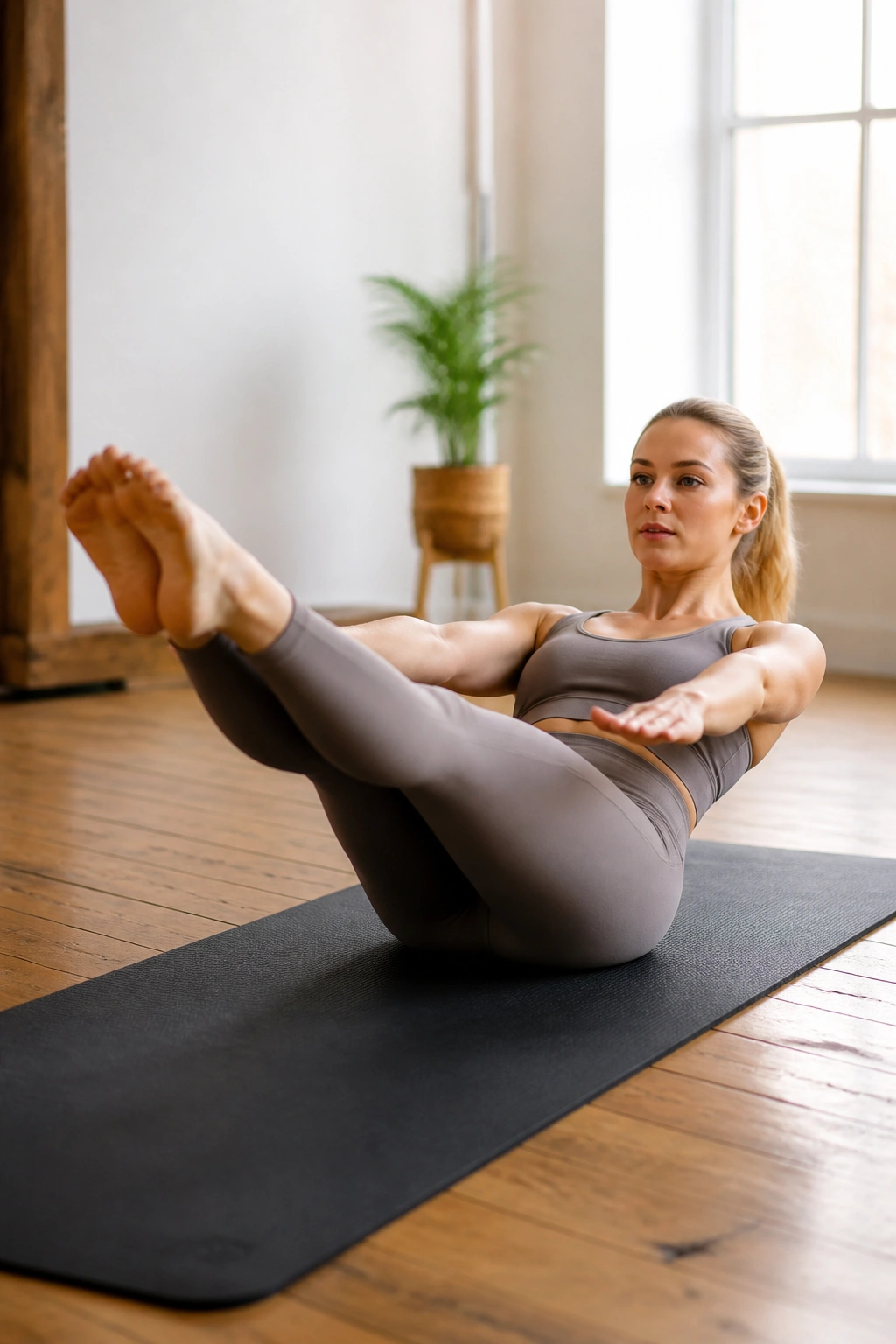
The Teaser is the move that separates the dedicated practitioners from the casual visitors. It is an advanced balance and core exercise. You are essentially balancing on your tailbone with your legs extended and your torso lifted, forming a “V” shape.
If you are just starting, do not try to jump straight to the full version. Start by sitting up, knees bent, feet on the floor. Reach your arms forward and slowly roll back halfway, then roll back up. Once you have that control, lift the legs. It takes time, but the feeling of holding a perfect Teaser is incredibly empowering.
15. Plank
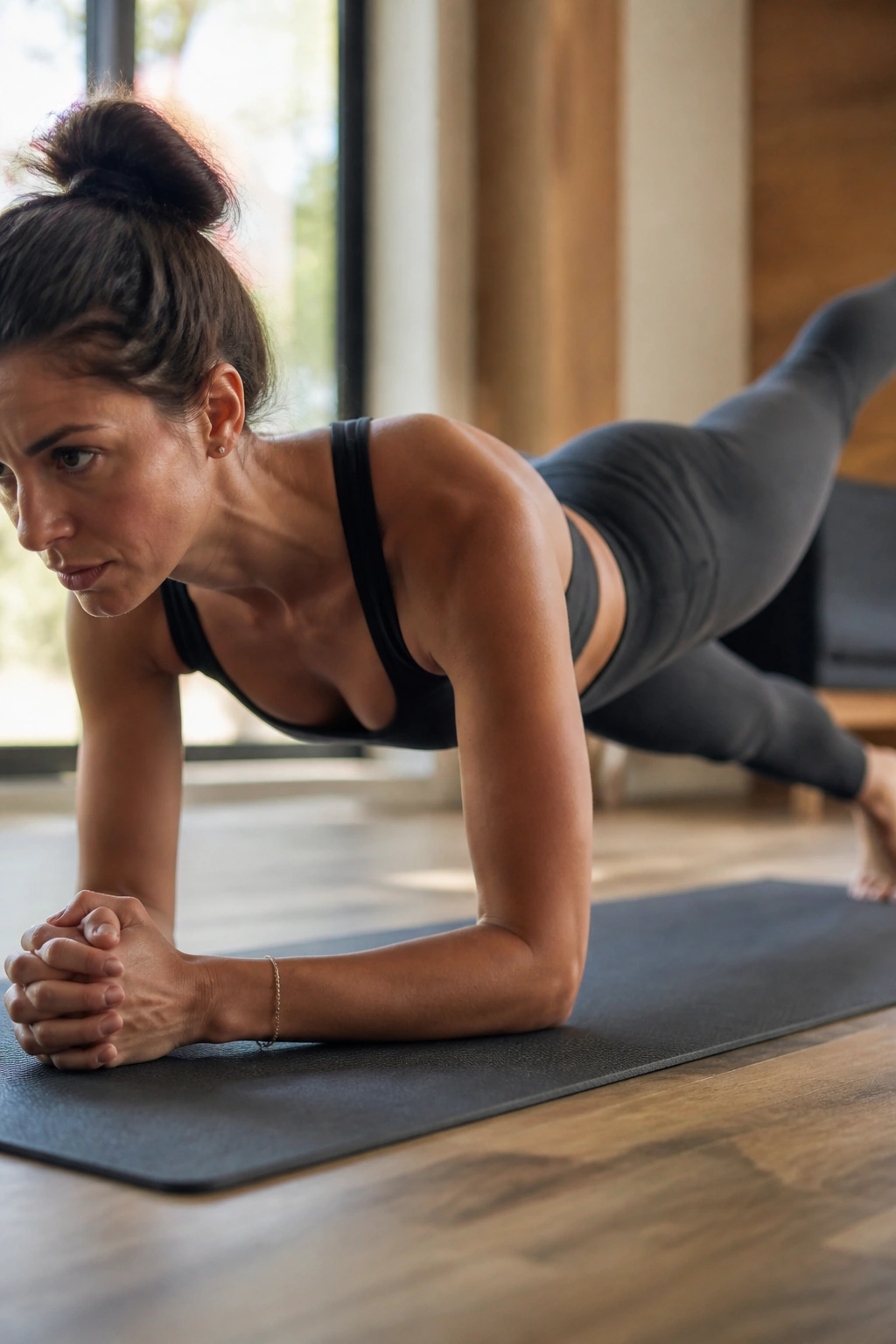
You have done planks before, but have you done a Pilates plank? In the gym, planks are often about endurance—holding for minutes at a time. In Pilates, it is about the connection. We often move from a full plank to a slight pike, or we lift one leg to challenge the stability.
The focus is on the “scoop.” You are trying to lengthen the tailbone toward the heels while pulling the belly button into the spine. There is no sagging in the lower back and no hunching in the shoulders. It is an active, aggressive engagement. You should feel like you are pushing the floor away from you with your hands, engaging your lats.
16. Leg Pull Front
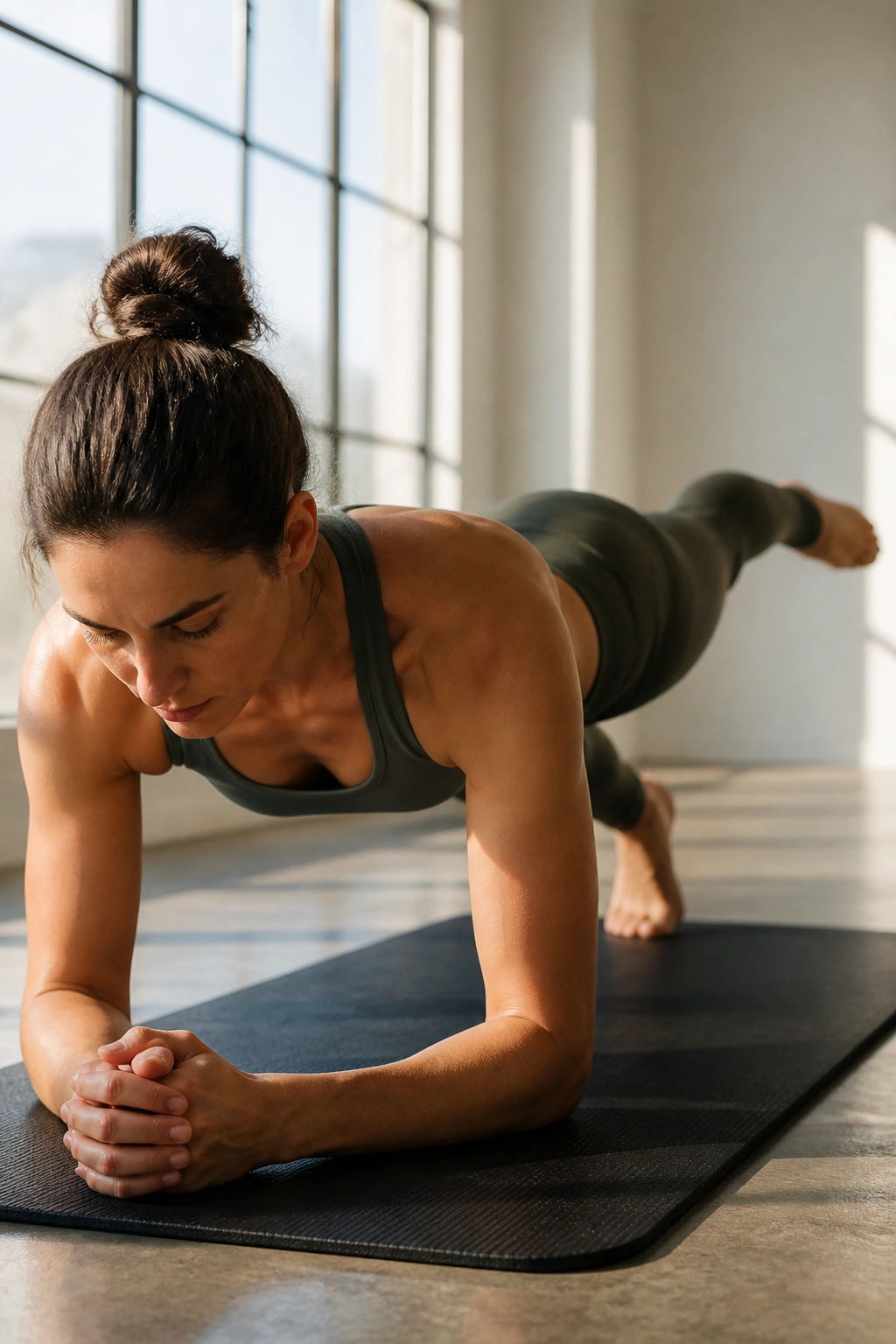
This is a plank with a dynamic leg movement. You hold a solid plank position, and then, without shifting your weight, you lift one leg a few inches off the ground. The challenge is immense. The moment that foot leaves the floor, your body will want to rotate to compensate. You must fight that rotation.
This move builds incredible shoulder stability. Your upper body has to remain as solid as a statue while your lower body performs the work. It is also excellent for checking your alignment; if you feel like you are tipping over, your core is not engaged deeply enough.
17. Mermaid
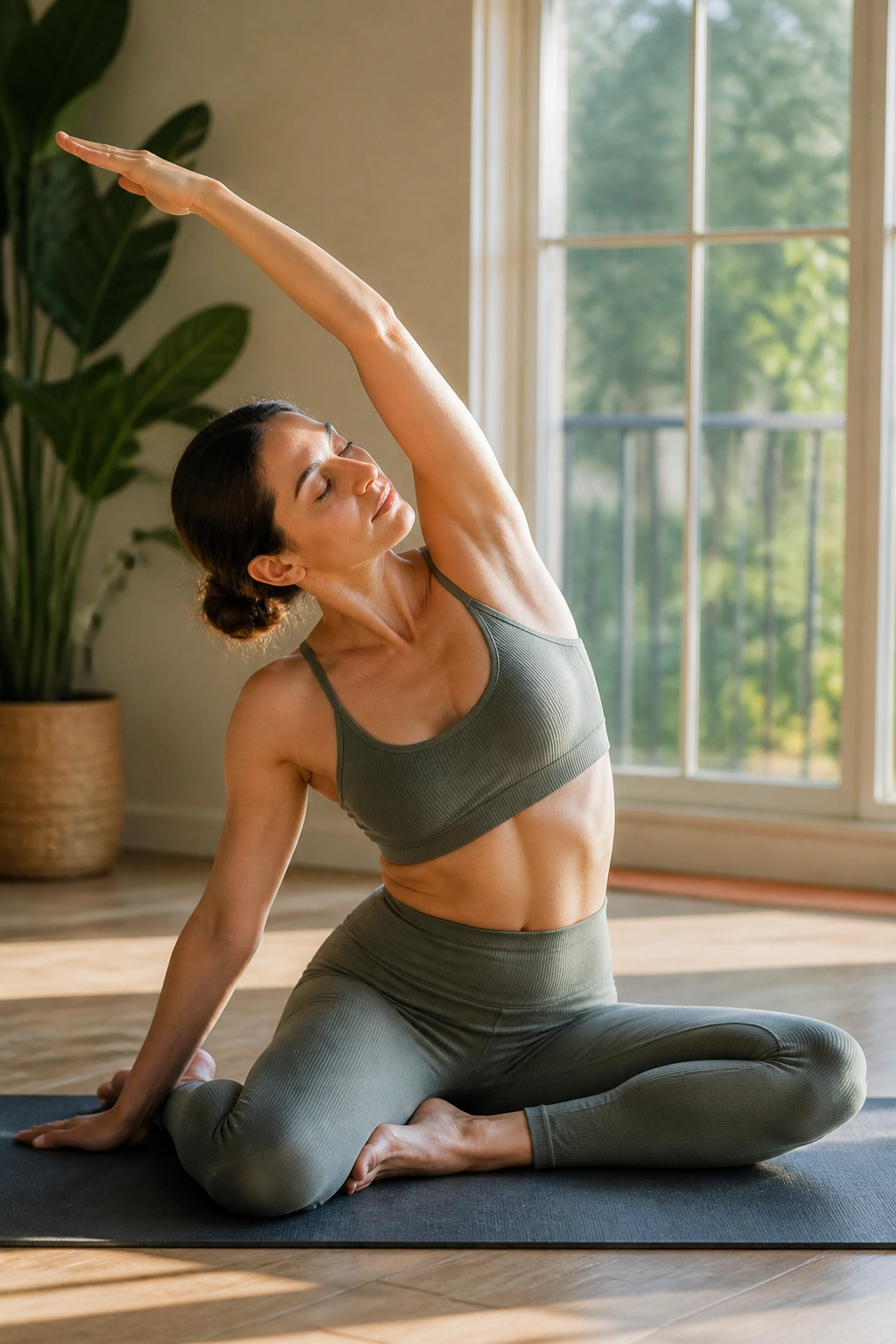
The Mermaid is a seated side-bend that focuses on lateral flexion. It opens up the ribcage and stretches the intercostal muscles—the muscles between your ribs. Most of us are very tight in this area because of the way we sit at computers.
Sit with your legs folded to one side. Reach one arm up and over, bending your torso toward the opposite side. It should feel like a luxurious, deep stretch. But do not just flop over; keep your sit-bones grounded. The “bend” is in the spine, not the hips. It provides a necessary release after all the abdominal-heavy work.
18. Scissors
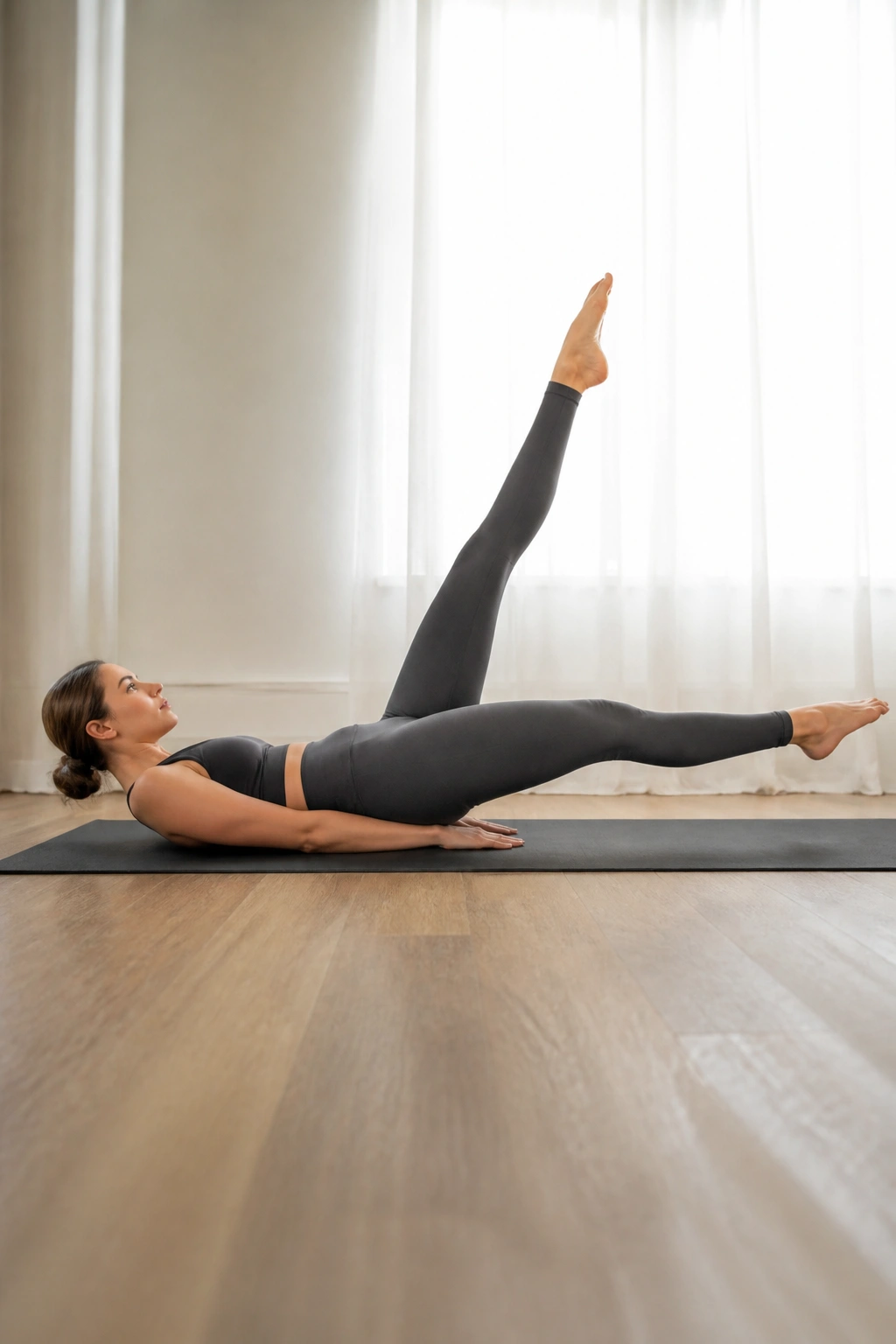
The Scissors is similar to the Single Leg Stretch, but with straight legs. You hold one leg toward your face and the other reaching toward the floor. You give the top leg two small pulses—the “scissor” motion—and then switch.
Because the legs are straight, the hamstrings are stretched deeply. This move demands a lot of flexibility. If your hamstrings are tight, you can bend the knees slightly, but keep the intention of straight lines. It is also a very fast-paced exercise, which helps train coordination and core engagement under fatigue.
19. Push-Up
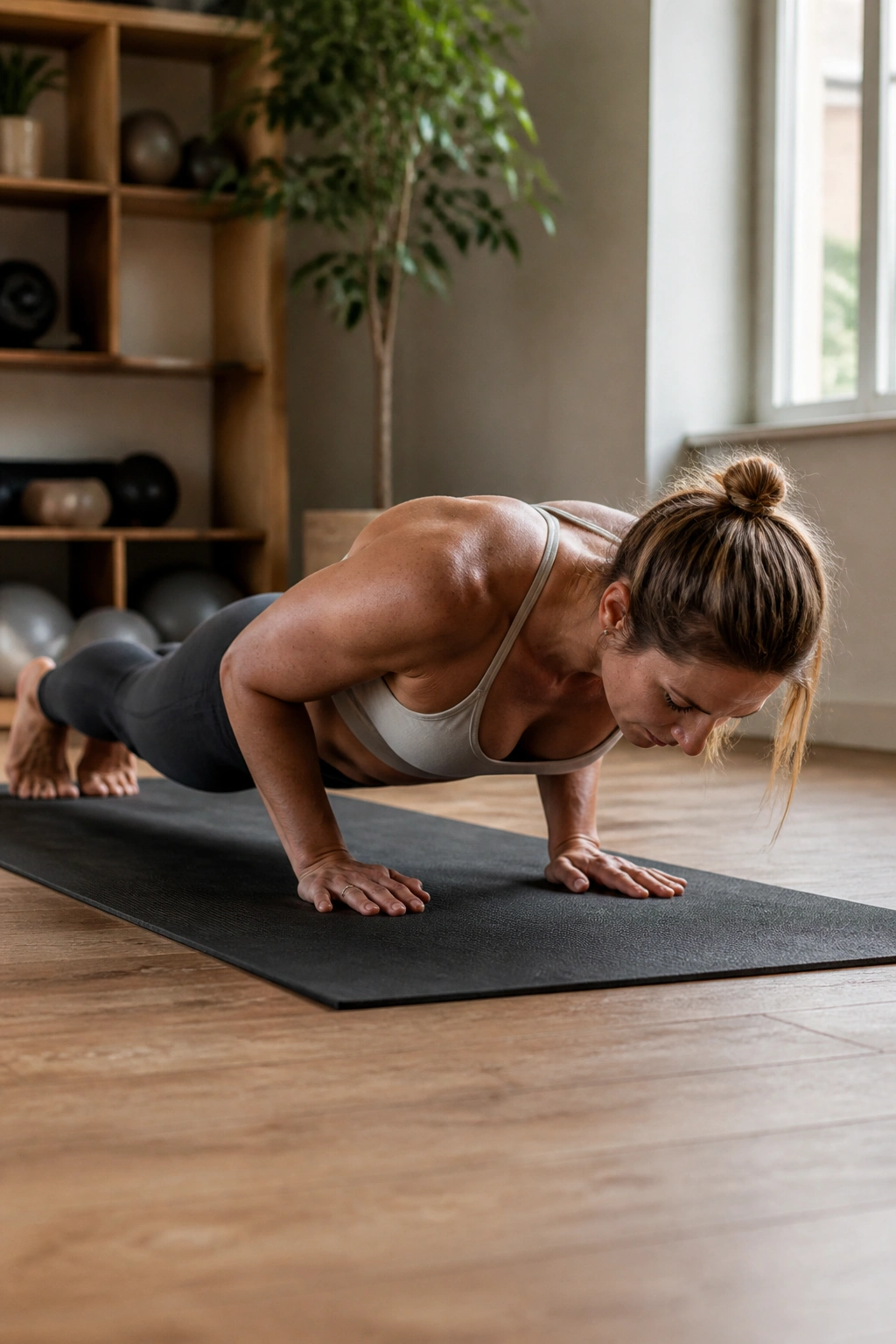
The Pilates Push-Up is not about building massive pecs; it is about full-body integration. It starts from a standing position. You roll down, walk your hands out to a plank, perform a push-up, walk your hands back, and roll up.
The emphasis is on the roll-down. You are articulating the spine all the way down and all the way back up. During the push-up, keep your elbows tucked in close to your ribs—do not let them flare out to the sides. This protects the shoulder joint and keeps the focus on the triceps and the core.
20. Seal
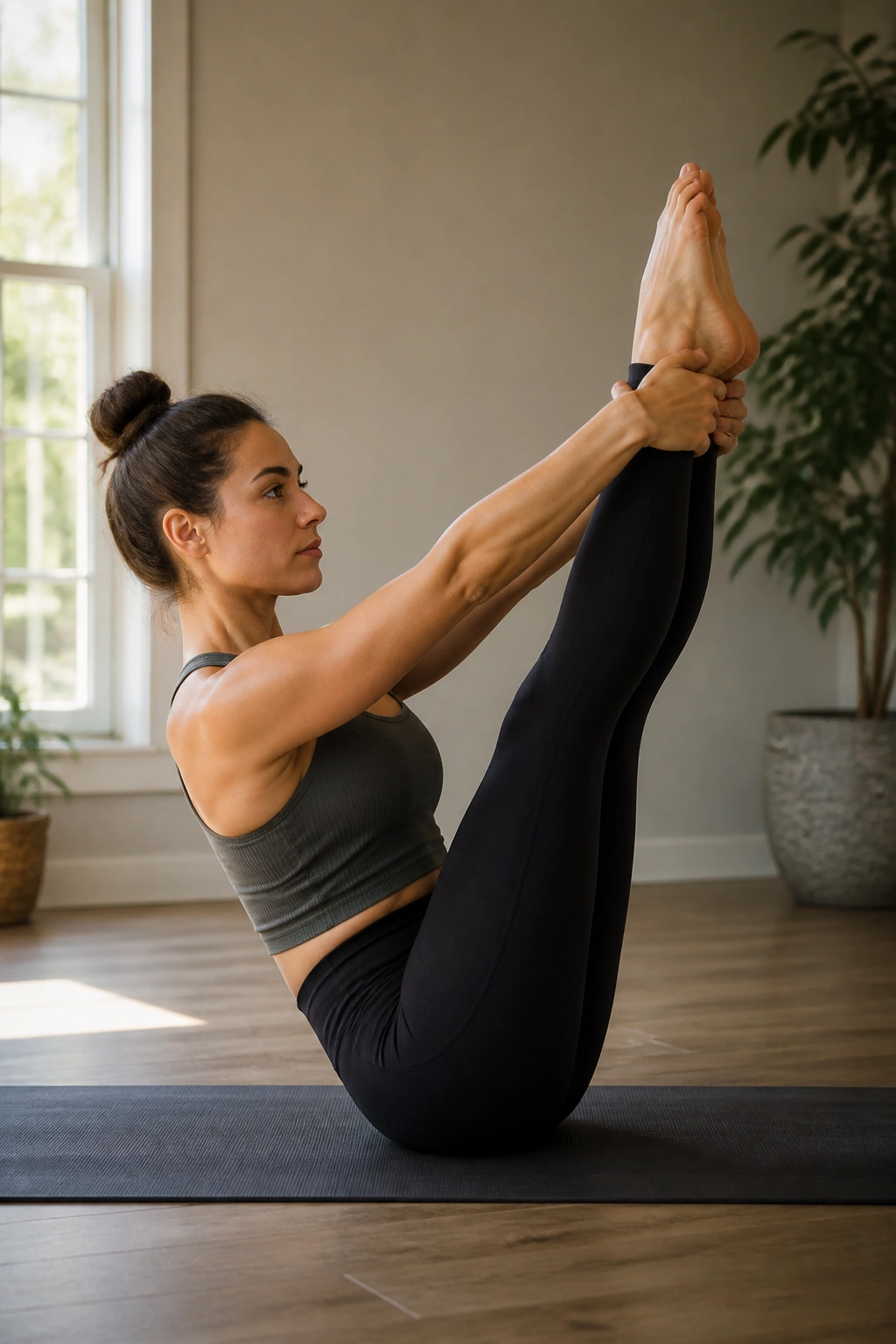
Finally, we arrive at the Seal. It is a variation of Rolling Like a Ball, but with a clapping motion. You balance on your tailbone, clasp your ankles, and clap your feet together—like a seal clapping its flippers—three times. Then you roll back and clap three times behind your head.
It sounds silly, but it is a masterclass in balance and control. You have to stop your momentum entirely at the bottom and the top to execute the claps. It’s a fun, lighthearted way to finish a session, but do not underestimate the abdominal control required to stay in that balance position.
Final Thoughts
Pilates is not a competition. You will see people online performing advanced variations of these moves with perfect grace, and it is easy to feel like you are failing if you cannot do the same. Ignore that noise. Every single one of these exercises is designed to be adapted.
If your back aches, reduce the range of motion. If you get tired, take a pause. The true skill in this practice is knowing exactly what your body is doing at any given second. As you repeat these movements, you will find that the “easy” versions suddenly become harder because you are performing them with more precision. That is the goal. It is a practice of constant refinement, a way to build a body that feels strong, balanced, and capable, long after you leave the mat.
