



If you have ever spent time in a dance studio, you know that the “inner thigh” is not just about aesthetics—it is the engine room of your turnout. While casual gym-goers obsess over the adductor muscles to shape their legs, dancers view them through a completely different lens. These muscles are the primary stabilizers for the pelvis, the secret to maintaining a crisp, clean fifth position, and the unseen support system that prevents knee injuries during high-impact jumps. When your adductors are weak, your knees tend to cave inward—a habit that can haunt your technique for years.
Building true strength here requires more than just high-repetition leg squeezes on a weight machine. You need to develop deep, functional control that allows you to engage your legs from the pelvic floor all the way down to the heel. This isn’t about spot reduction; it is about building the muscular architecture required to sustain long hours of rehearsal and perform complex choreography without losing your alignment. The best training doesn’t just exhaust the muscle; it trains the brain to recruit those fibers precisely when you need them most.
Whether you are aiming to improve your center work, stabilize your landings, or simply build a more resilient foundation for your movement, the following exercises focus on that critical inner line. We are moving beyond basic gym equipment to movements that mirror the demands of the studio. You will need a bit of space, a mat, and a healthy dose of patience—these muscles are stubborn, but they respond incredibly well to the right kind of consistent, focused intensity.
1. Grand Plié in Second Position
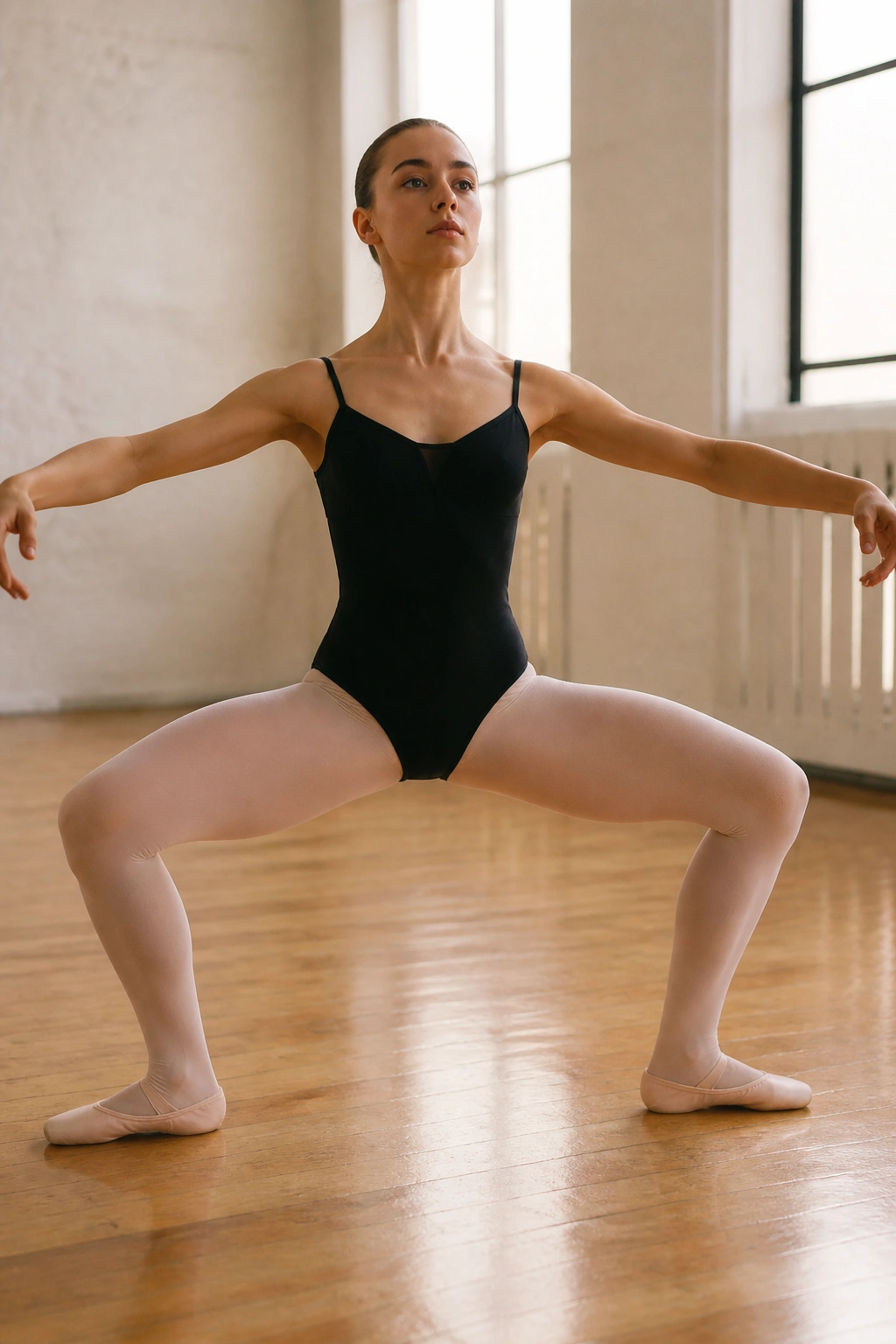
The second position grand plié is the ultimate test of adductor control. Most people treat this as a simple squat, but when you focus on the mechanics of turnout, it becomes a rigorous, muscle-burning endeavor. You want to maintain a perfectly vertical spine, imagining your back sliding down an invisible wall. As you descend, the effort should feel like you are actively pushing your knees out and back using your inner thighs, not just letting gravity take you down.
Why This Builds Inner Thigh Strength
When you descend into a grand plié, your adductors are under an eccentric load—meaning they are lengthening while under tension. This is one of the most effective ways to build functional muscle strength that translates directly to your dancing.
Keys to Proper Execution
- Keep your heels firmly planted on the floor for as long as possible before the transition to the full stretch.
- Focus on “wrapping” your inner thighs forward; don’t just collapse into the hip joints.
- Initiate the ascent by pushing through the floor, engaging the inner thigh to bring your legs back to a vertical line.
Pro tip: Imagine you are trying to squeeze a large exercise ball between your legs on the way up. That mental image triggers the exact adductor recruitment you need to stay stable and centered.
2. Side-Lying Inner Thigh Lifts
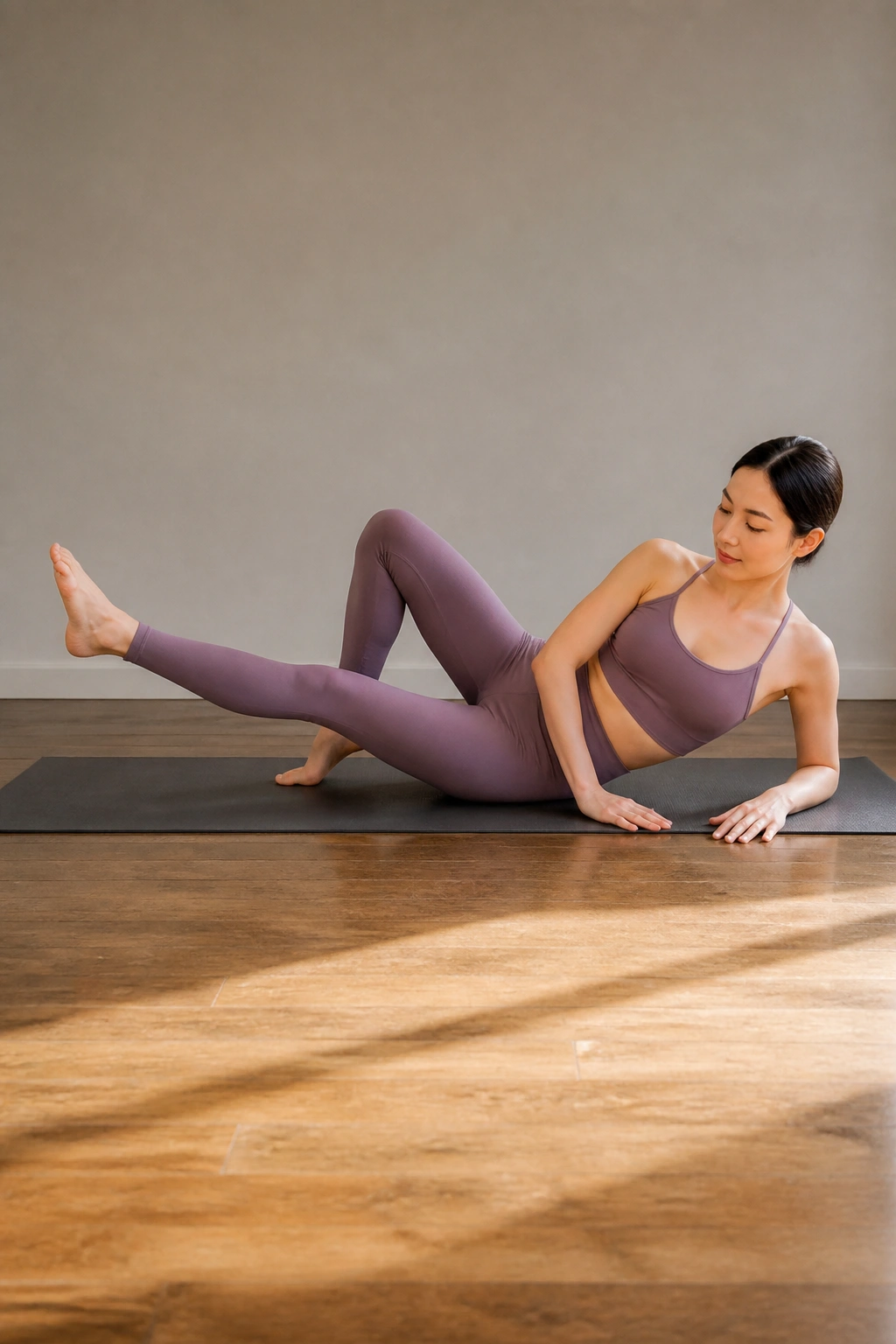
This is a staple for a reason. While it looks deceptively simple, it isolates the adductor magnus and longus muscles better than almost any standing exercise. By taking gravity out of the equation for your standing leg, you can force the inner thigh to do 100% of the work to lift your weight.
Setting Up the Movement
Lie on your side with your bottom leg extended straight. Cross your top leg over the bottom one, planting your top foot flat on the floor behind your bottom knee. Now, flex the foot of your extended bottom leg. Your goal is to lift that leg straight up toward the ceiling without rocking your hips back or forward.
What to Watch For
If you feel this in your hip flexor or your lower back, you are likely using momentum rather than muscle control. Keep your torso perfectly still. Your waist should not collapse into the floor—keep a tiny gap between your bottom oblique and the mat. Perform 20 slow, controlled lifts on each side. If you aren’t feeling a deep burn within the first 15 reps, you are moving too fast. Slow it down and hold the contraction at the top for a full two seconds.
3. The Dancer’s Clamshell
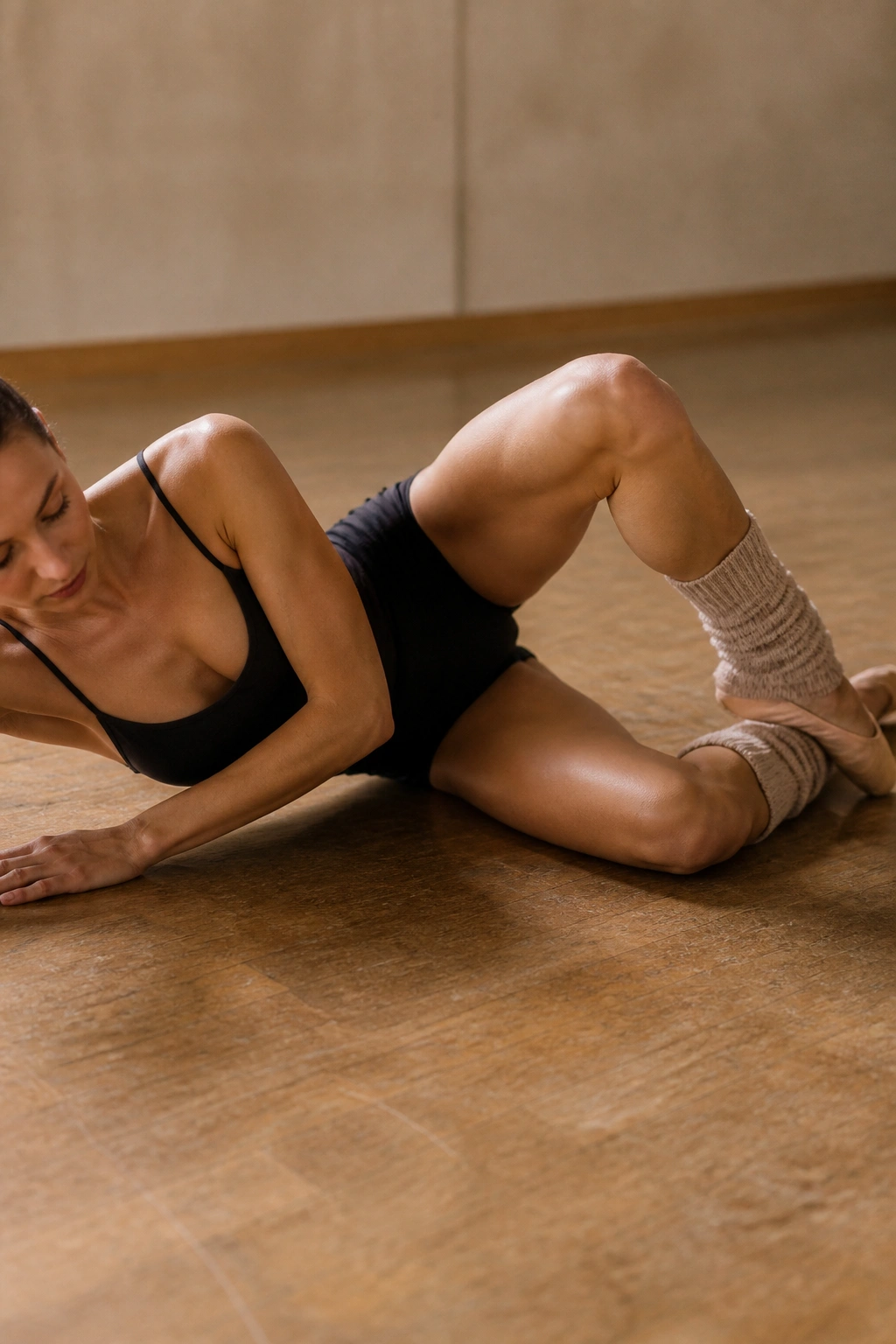
The classic clamshell usually targets the glute medius, but with a slight tweak, we can force the inner thigh into the conversation. For this variation, you will focus on the eccentric return—the closing phase of the move—where the adductor is lengthening.
How to Adjust the Form
Start in a standard side-lying fetal position with your knees bent at a 45-degree angle. Instead of just opening the knees, think about resisting the movement. As you lift your top knee, imagine you are pushing it through thick mud. When you close the knee, do not let it drop. Slowly lower it, focusing entirely on the inner thigh and groin connection.
Why It Matters
Dancers need to control their “closing” action, especially in movements like a ronds de jambe or battement. This exercise trains the leg to resist the natural tendency to flop shut. Perform three sets of 15 reps. If you have a resistance band, loop it around your thighs just above the knees to add constant, external tension that will make your inner thighs light up.
4. Squeezing a Pilates Ring or Ball
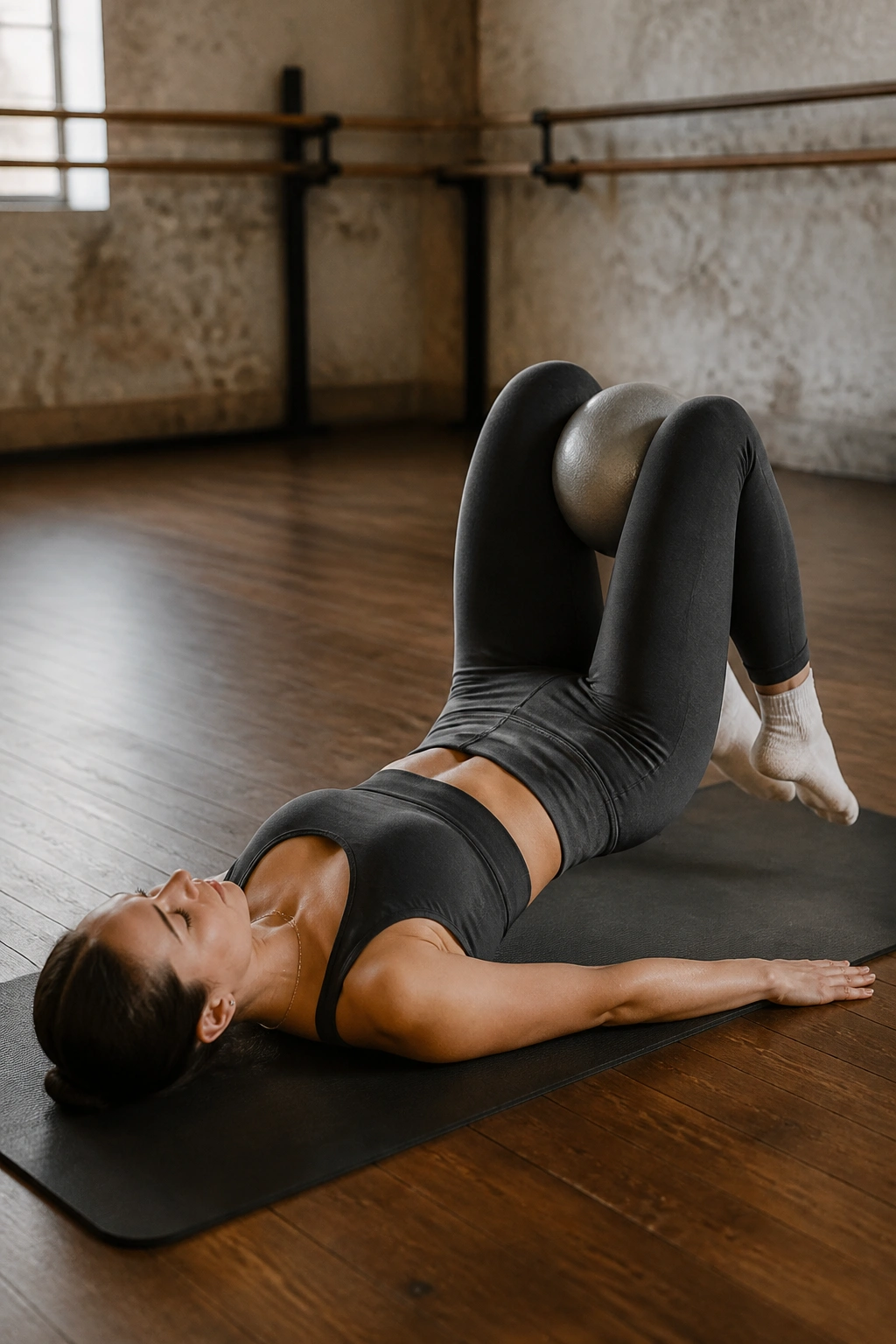
There is no substitute for isometric tension when you want to feel the absolute maximum recruitment of the adductor group. Using a soft Pilates ball or a flexible ring gives you a tactile target to focus on, ensuring you aren’t just “kind of” engaging the muscles, but truly firing them.
Executing the Squeeze
Lie on your back with your legs in the air, creating a tabletop position with your knees bent at 90 degrees. Place the ball or ring between your knees. Exhale sharply and squeeze the ball as hard as you can for five seconds, then release slightly without letting the ball fall.
Advanced Variations
- Add a pelvic bridge: Lift your hips off the floor while you squeeze the ball to engage your glutes and hamstrings simultaneously.
- Straighten the legs: If you are advanced, extend your legs toward the ceiling with the ball still between your ankles. This lengthens the lever and makes the squeeze exponentially harder.
Remember: It is about the quality of the contraction, not just how hard you press. Feel the muscle wrapping around the femur bone as you squeeze.
5. Curtsy Lunges with Pulse
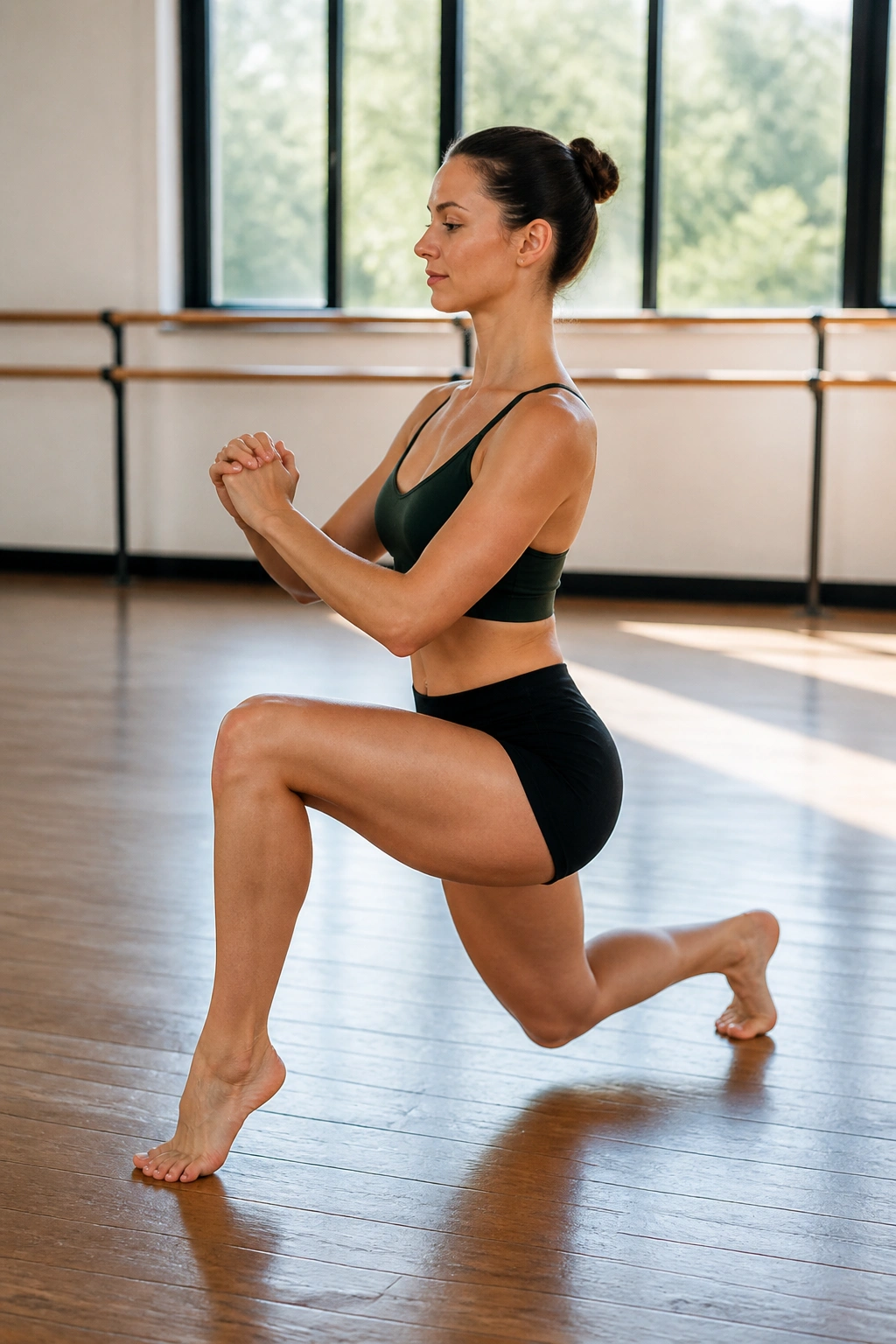
The curtsy lunge is fantastic because it forces the adductors and the inner glutes to work in tandem. By crossing one leg behind the other, you create a diagonal line of tension that targets the deep adductor muscles in a way that standard forward lunges never can.
The Mechanics of the Pulse
Step your right foot back and across behind your left leg. Lower your hips until your left thigh is parallel to the floor. Now, perform a small, rhythmic pulse at the bottom of the movement. Your weight should be predominantly in your front heel.
Why This Works
The cross-body nature of the movement forces your inner thighs to stabilize your pelvis against the rotational force. If you feel shaky, use a chair for balance, but prioritize getting that deep, controlled dip. Do 20 pulses on each side, and do not be surprised if your legs feel like jelly immediately afterward. It is a sign you are hitting muscles that have been dormant.
6. Standing Adductor Circles
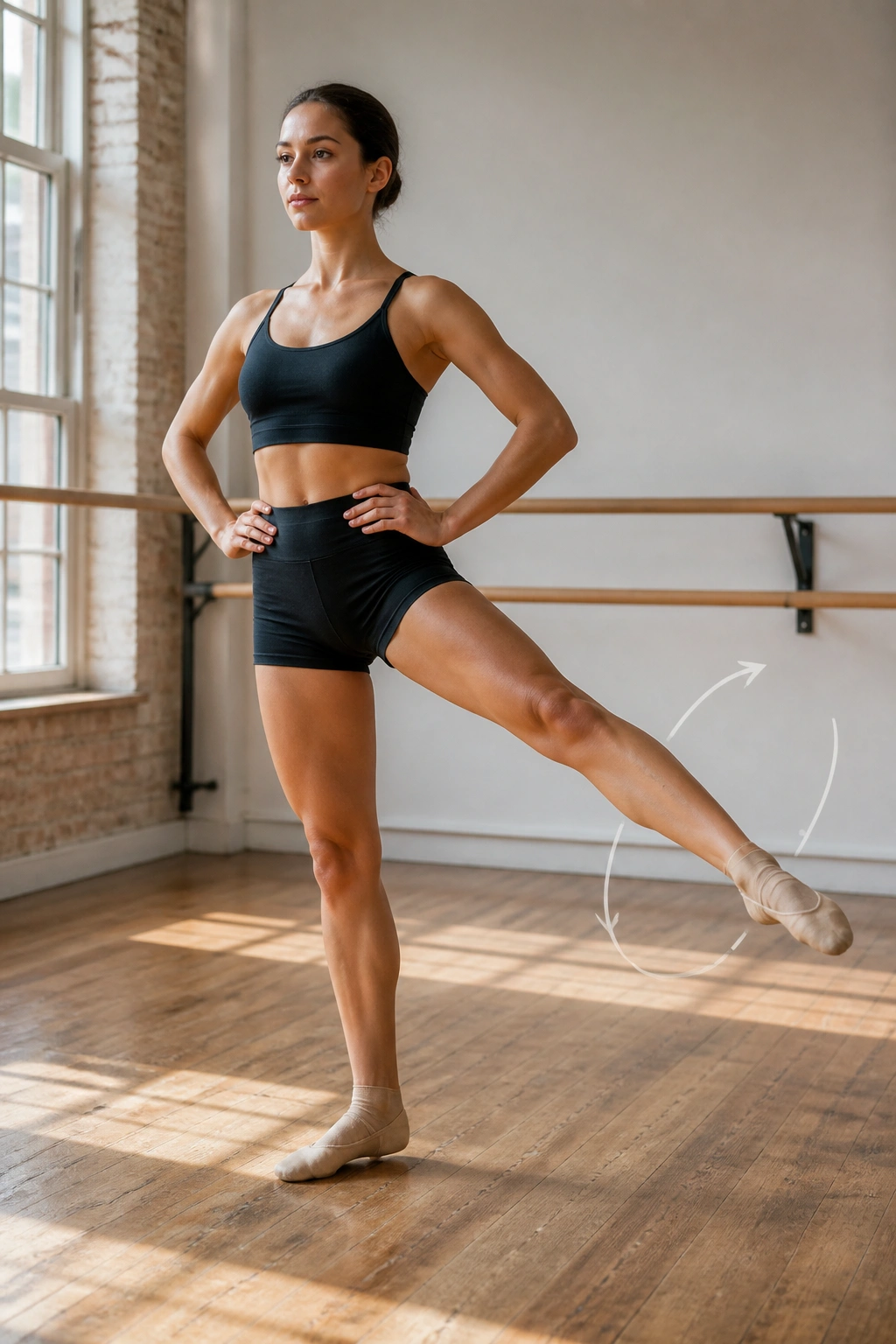
This is a functional drill that mimics the control needed for ballet center work. Standing on one leg forces your brain to stabilize the entire chain, while the moving leg works the adductor group through a full range of motion.
How to Perform
Stand on your left leg with a slight bend in the knee. Extend your right leg to the side, hovering your foot an inch or two off the floor. Keep your torso upright—do not lean to the left. Now, draw small, tight circles with your right foot in the air.
Maintaining Control
The standing leg will shake; that is normal. That shake is your nervous system learning to stabilize the knee and ankle. Do not let your hips shift. If you lean, you are cheating the adductors. Keep your pelvis neutral and think about lifting the leg from your deep abdominal muscles, not just the hip. Rotate 10 circles clockwise, then 10 counter-clockwise.
7. Wide Second Position Leg Lifts
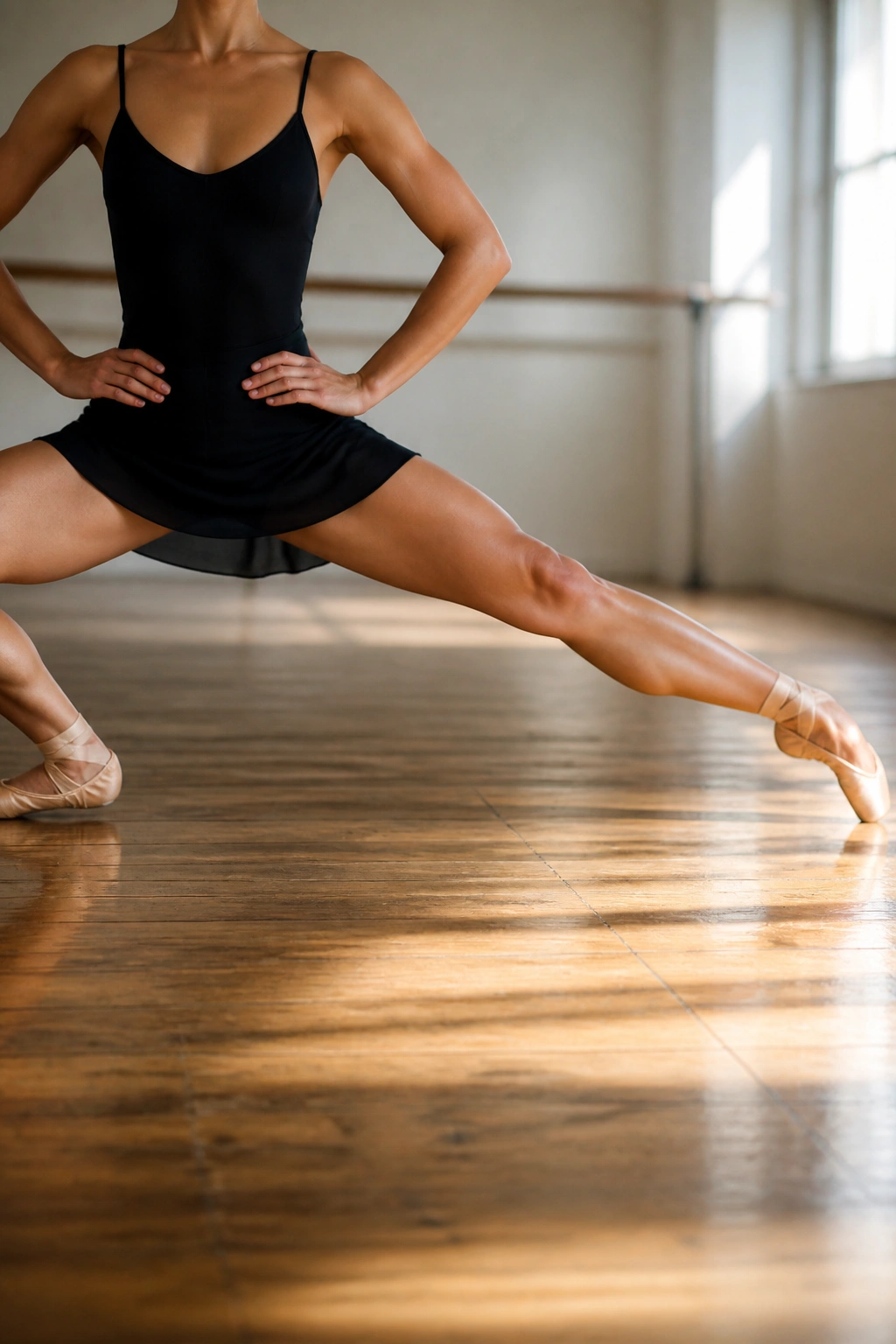
When you spend a lot of time in wide second positions, your adductors need the endurance to hold that shape. This exercise is simple but incredibly taxing. Start in a deep second position plié, maintaining the “wall” posture we discussed earlier.
The Lift
From your low second position, shift your weight slightly to the left and lift your right leg straight out to the side, pointing the toe. You are essentially doing a side-lying leg lift, but vertically. It is an extremely small range of motion—maybe only a few inches off the floor.
The Secret
Don’t worry about height. Worry about the length. Imagine your toe is reaching for the wall across the room, not just lifting up. This creates the elongation required for a beautiful grand battement. The moment your leg drops, lower your hips back into the deep plié and repeat. Do this for 60 seconds without coming out of the plié. The heat you feel in your inner thighs will be intense.
8. Frog Pose (Supta Baddha Konasana)
While this is often viewed as a static stretch, you can turn the frog pose into an active, strengthening exercise. Gravity is the weight here, and your adductors must work to resist it.
The Active Variation
Lie on your back, soles of your feet touching, knees out wide. Instead of just letting your knees flop to the floor, actively engage your inner thighs to try and pull your knees up and in—but resist them with your hands, keeping them pressed down. You are creating your own resistance.
Why It’s Effective
This is “isometric resistance training.” By fighting your own body, you can create fatigue in the adductor muscles without needing any equipment at all. Hold this position of maximal tension for 30 seconds, then fully relax. Repeat five times. You will feel a deep, throbbing soreness in the inner thighs afterward—that is the muscle fibers being forced to recruit.
9. Gliding Side Lunges
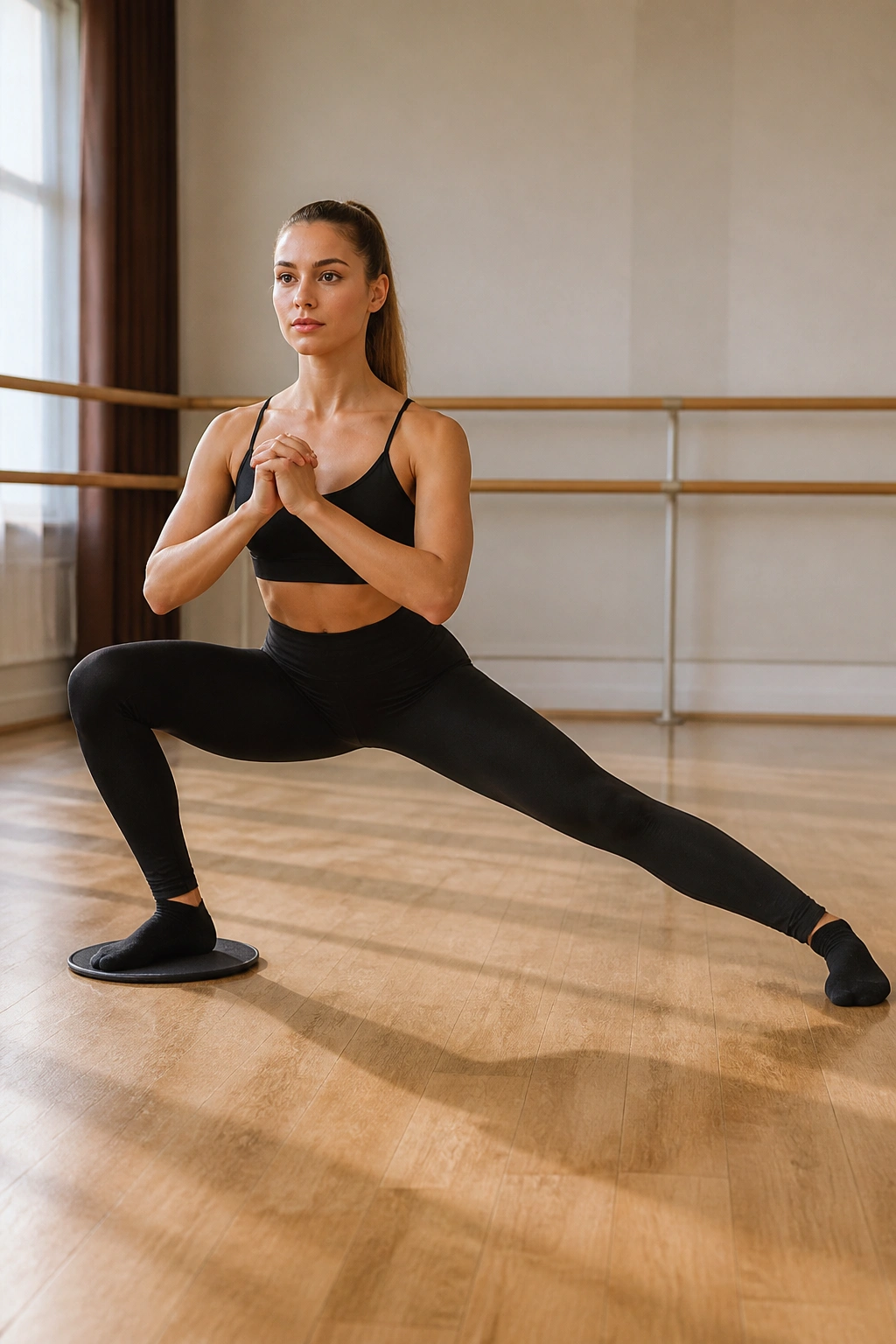
Using a furniture slider, a paper plate, or even a towel on a hardwood floor, this exercise introduces a “sliding” component that forces the adductor to work intensely on the return phase.
Execution
Stand with your feet together. Place a slider under your right foot. Keep your left leg perfectly straight and stationary. Slowly slide your right foot out to the side as deep as you can, keeping your weight in the left heel.
The Crucial Phase
The magic happens when you bring the leg back in. Instead of just shifting your weight, you must actively drag the slider back to the start position using only your inner thigh muscle. This concentric contraction is incredibly powerful for dancers. It mimics the effort needed to close a leg from second position to first. Perform 12 slow repetitions on each side.
10. Inner Thigh Leg Press (Floor Variation)
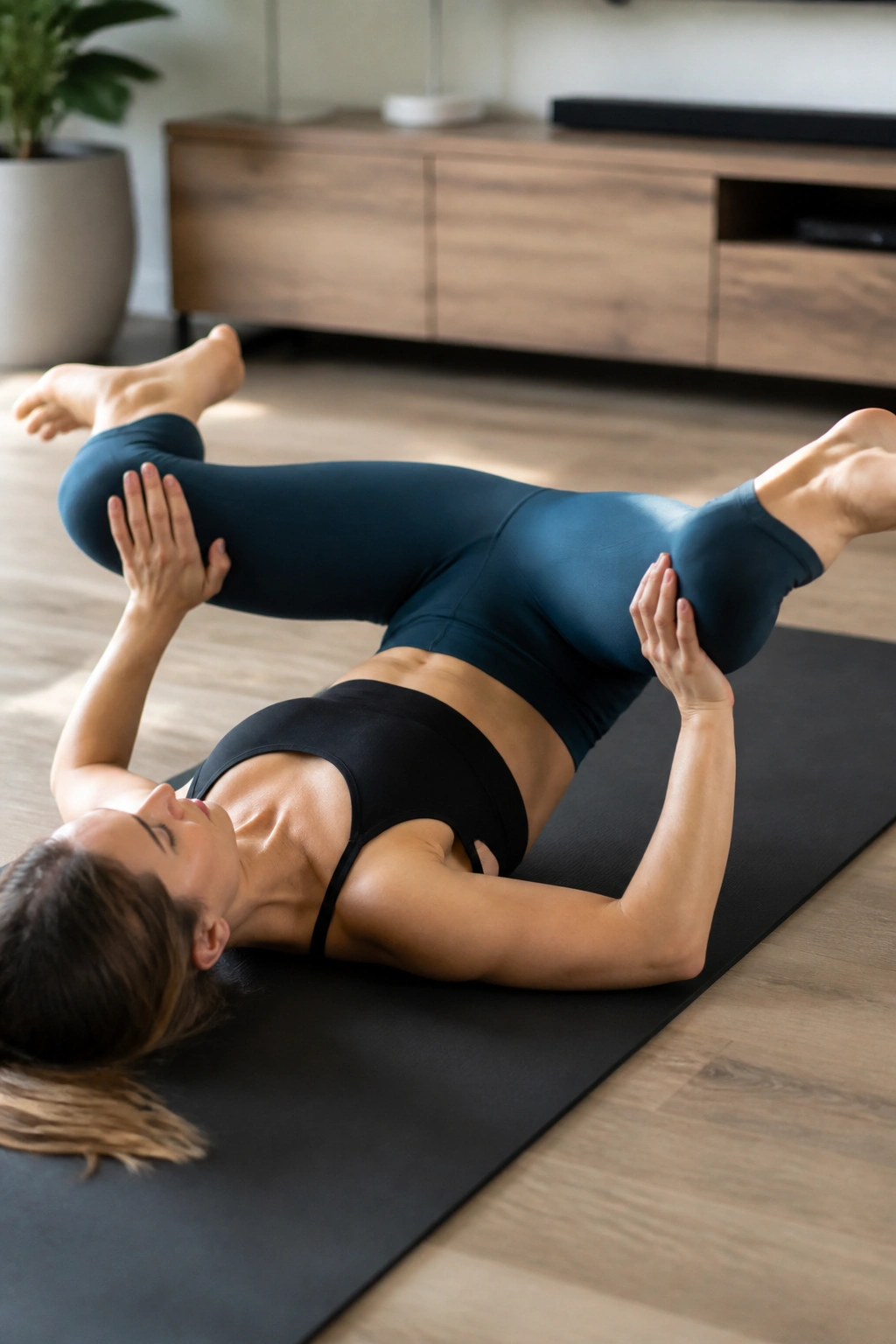
If you don’t have access to a gym machine, the floor variation of the leg press is arguably harder. It requires you to create your own leverage.
Setting Up
Lie on your back. Bend your knees into your chest. Place your hands on the insides of your knees. Now, push your knees outward to open your legs, but use your hands to push back, creating massive resistance.
Making It Harder
To turn this into a workout, extend your legs outward slowly while maintaining that internal resistance. Then, slowly bring them back together against the force of your hands. It is like doing a leg press with your own muscles acting as the weight plates. You dictate the intensity. If you want a harder workout, push harder with your hands.
11. Supine Scissor Kicks
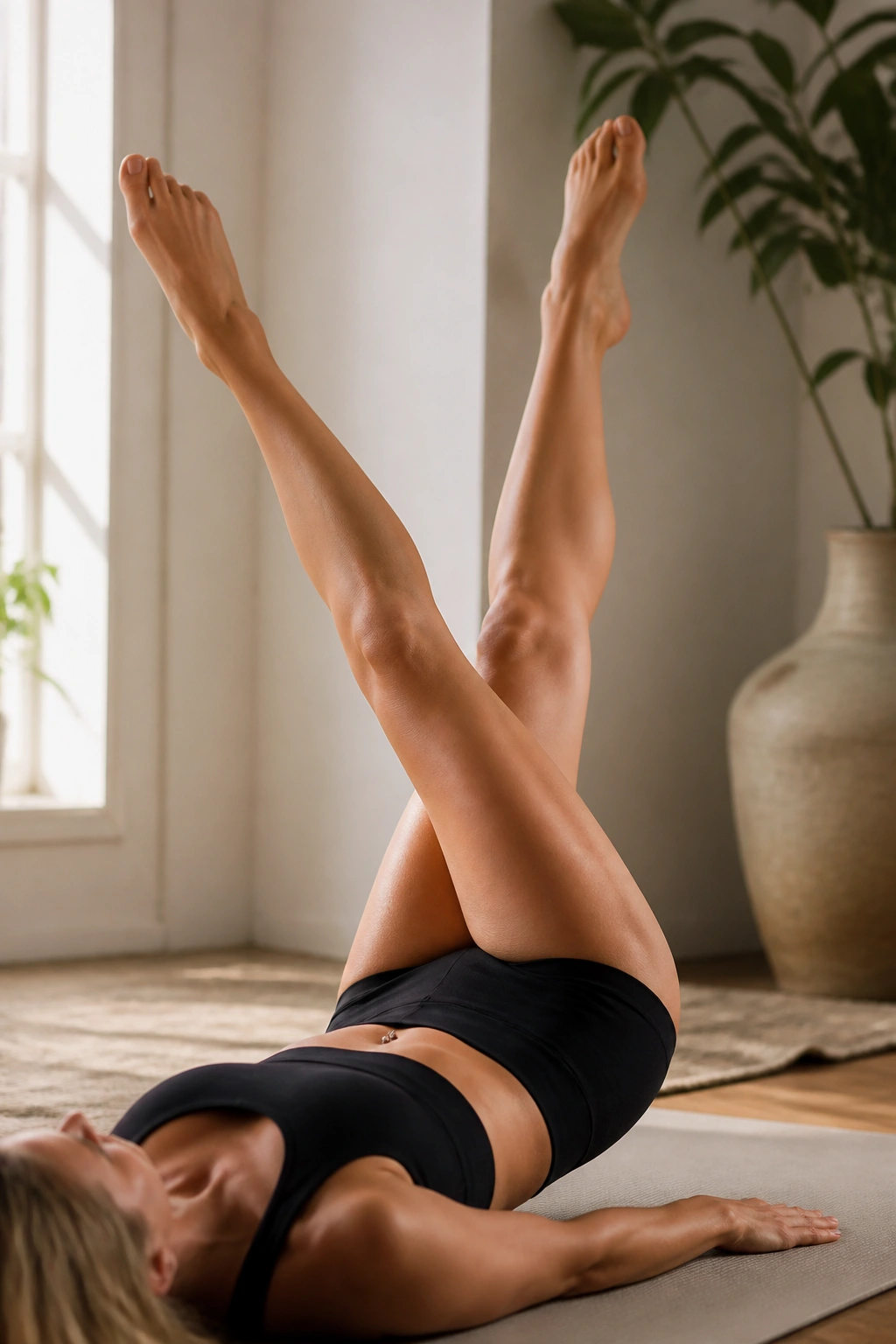
This is a classic Pilates move that requires immense core stability to execute correctly. The focus here is on the inner thigh transition as the legs cross over each other.
The Technique
Lie on your back, legs extended to the ceiling. Keep your lower back pressed firmly into the mat. Open your legs wide, then bring them together so they cross over each other (left over right, then right over left).
Keeping the Form
As you bring the legs together, feel the squeeze in your inner thighs. This is not just about the abdominal work; the crisscross motion is a dynamic adductor workout. Do 30 seconds of rapid crossing, focusing on tight, quick pulses. If your back starts to arch, lift your legs a bit higher toward the ceiling to unload your spine.
12. Lateral Step-Ups
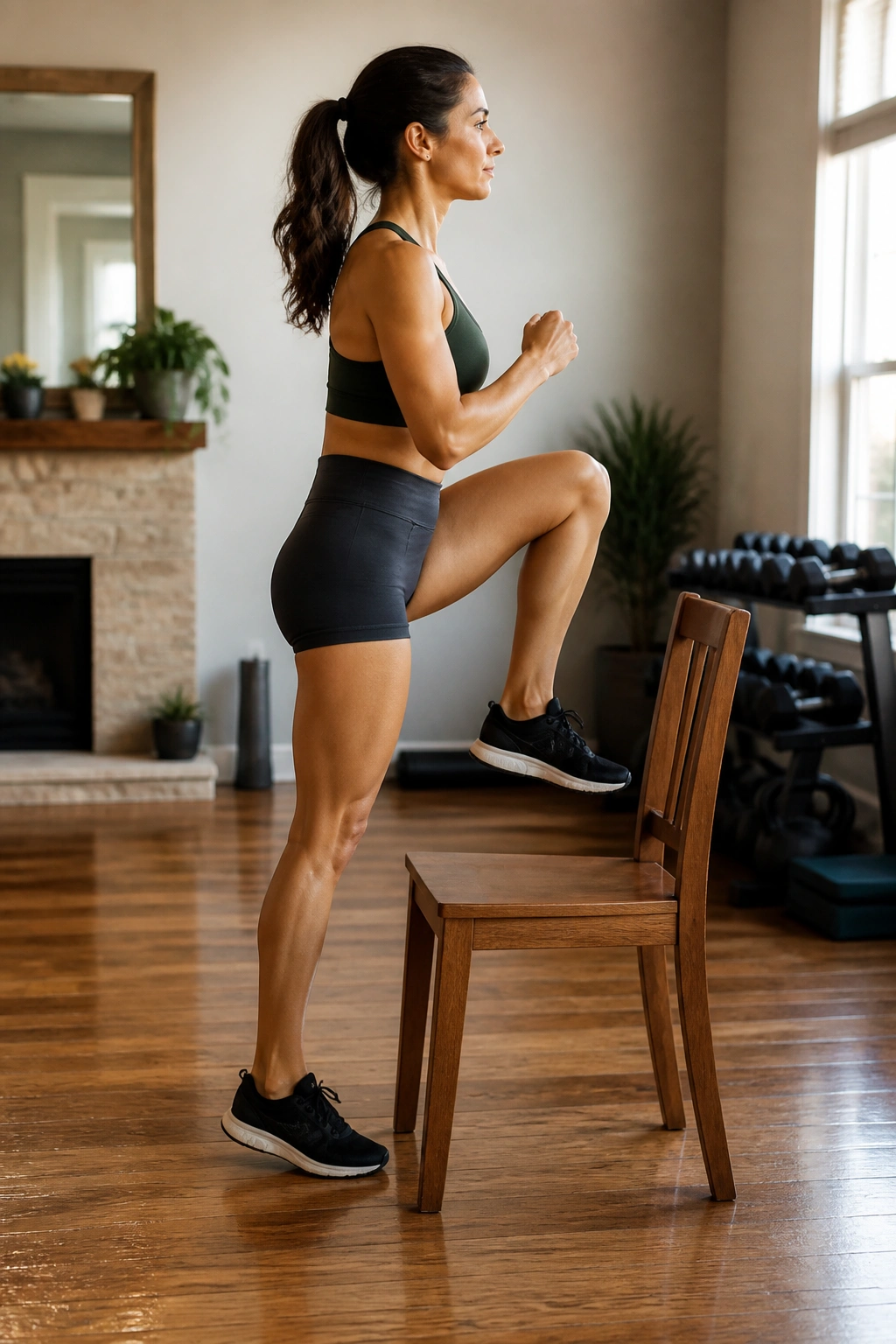
This move requires a sturdy chair or step. It is a functional movement that builds stability and adductor strength in a way that feels very “real-world.”
The Movement
Stand to the side of a sturdy chair. Step up onto it with the foot closest to the chair. As you step up, drive your other knee toward your chest. The focus is on the leg that stays on the floor—the “down” leg. Keep it straight and engaged as you stabilize your descent.
Why It Builds Strength
Your inner thigh has to work overtime to prevent your knee from collapsing inward as you push your body weight up. It forces the adductor to stabilize the entire knee joint under load. Do 10 reps on each side. If you want to increase the difficulty, perform the descent as slowly as possible—three full seconds to return your foot to the floor.
13. Sumo Squats with Heel Raises
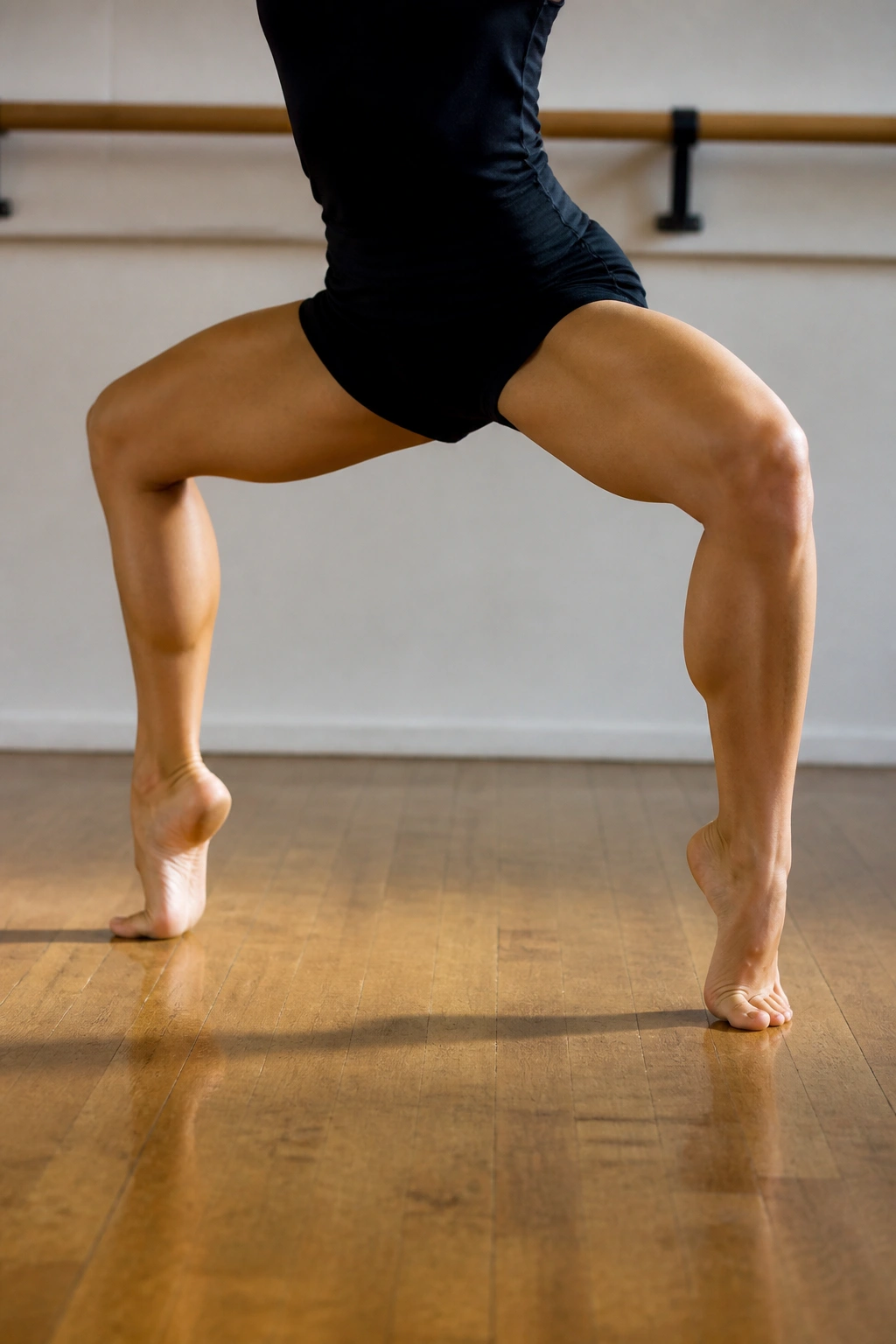
The sumo squat is the weight-room cousin of the second-position grand plié. By adding a heel raise, you force the adductor muscles to work from a position of instability, which recruits deeper stabilizing fibers.
Execution
Take a wider-than-shoulder-width stance, toes pointed slightly outward. Drop down into a deep squat, keeping your chest tall. At the very bottom, lift your heels off the floor. Hold for two seconds, lower the heels, and then stand back up.
The Benefit
The calf-and-adductor connection is vital for dancers. When you lift your heels in a wide stance, you challenge your balance and force your inner thighs to prevent your knees from buckling. It is a multitasking exercise that pays dividends for your turnout and overall lower-body stability.
14. Seated Adductor Squeezes
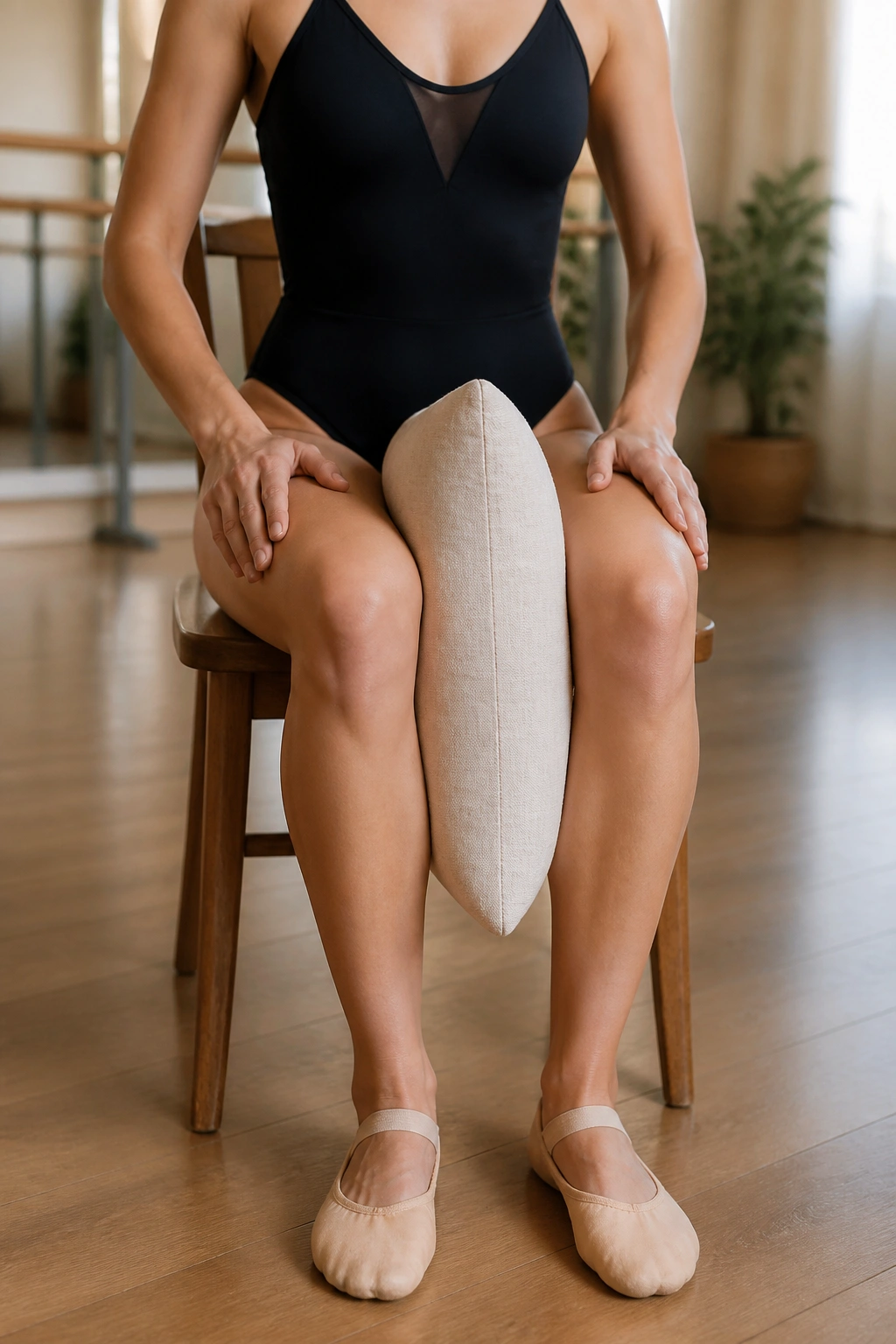
Sometimes the most effective exercises are the simplest. A seated adductor squeeze allows you to focus purely on the muscle activation without having to worry about balance or core engagement.
The Setup
Sit on a chair, feet flat on the floor. Place a thick pillow or a yoga block between your knees. Squeeze as hard as you can for 30 seconds. Do not let your glutes take over; focus entirely on the inner line of the legs.
Why Use a Chair?
When you are exhausted from rehearsal or a long workout, this allows you to continue training your muscles without the risk of falling or poor form due to fatigue. It is an excellent “finisher” exercise to burn out the muscles at the end of a session.
15. Single-Leg Standing Adduction
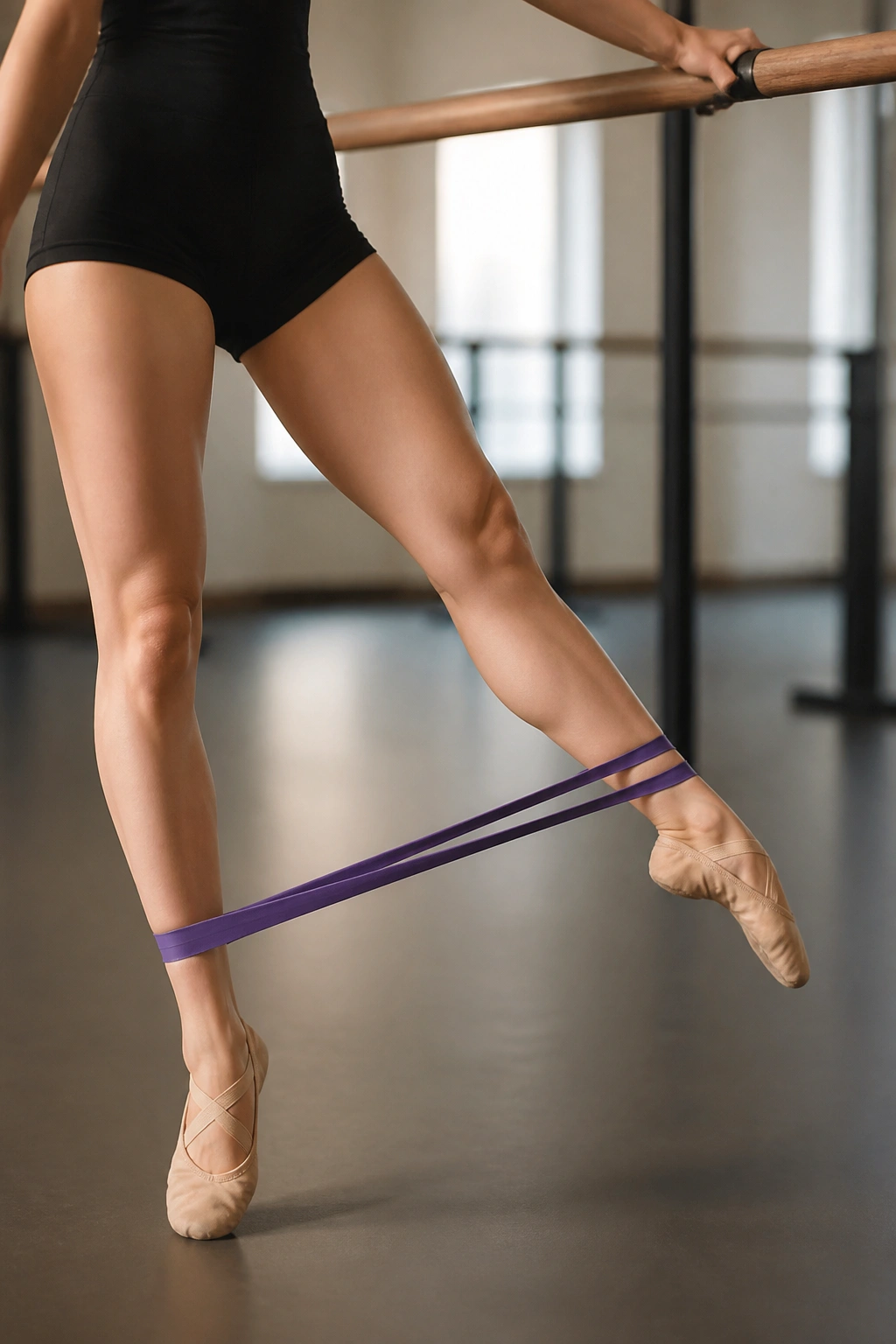
This requires a resistance band anchored to a sturdy object, like a heavy table leg or a ballet barre. This is the only exercise here that requires equipment, but it is worth it for the targeted tension.
How to Loop the Band
Attach the band to the object, then loop the other end around your ankle closest to the anchor point. Step away so the band is taut. Now, with your leg straight, pull your ankle toward your midline, crossing it in front of your standing leg.
Precision is Key
The resistance is constant. You will feel the inner thigh working the entire time. Keep your standing leg stable—do not let your hips rotate. This is essentially a resistance-band version of a battement to the front. Perform 15 slow reps, focusing on the pull across the midline.
16. Ballet Attitude Front Pulses
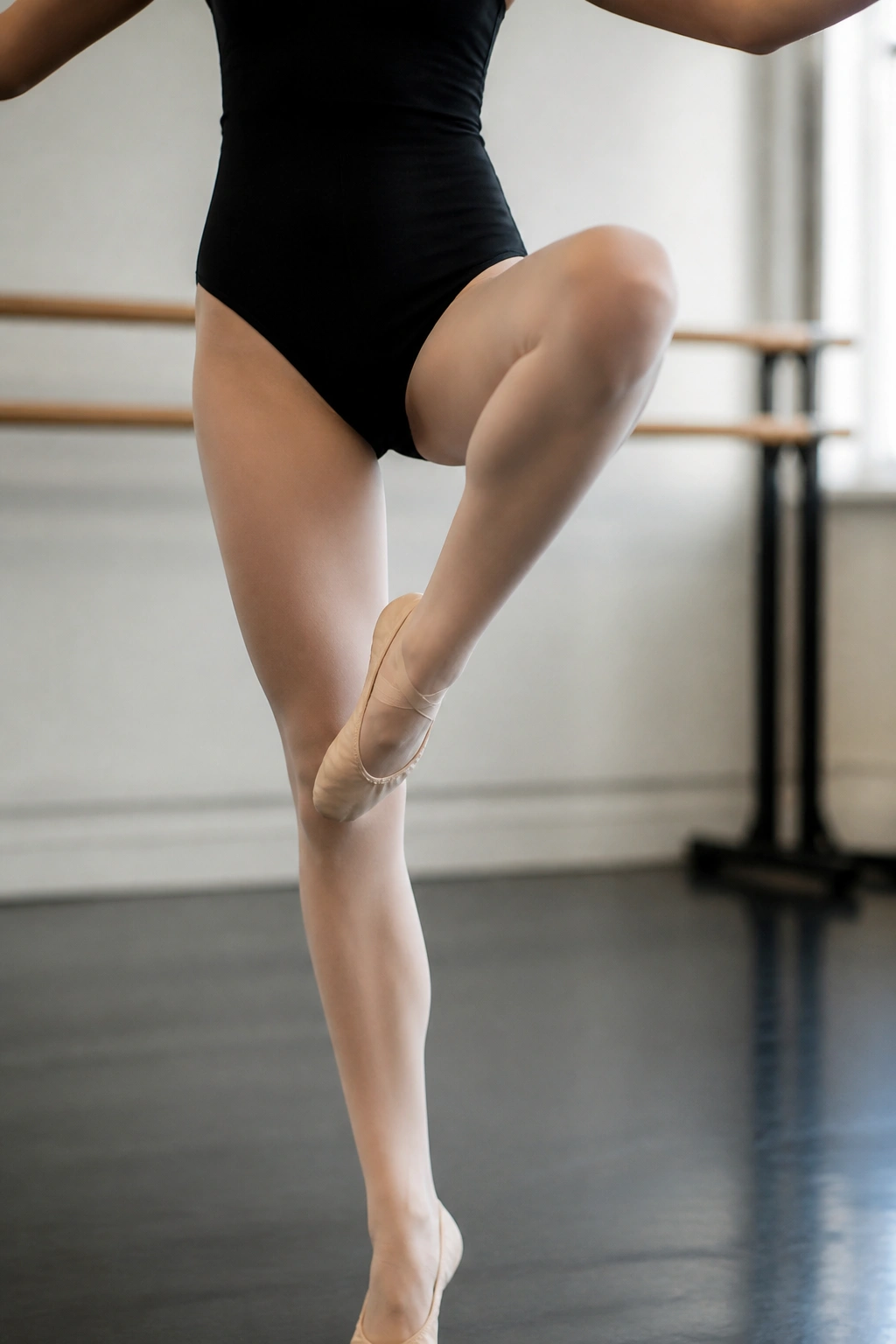
The attitude position is iconic, but holding it requires tremendous inner thigh and abdominal strength. Most people focus on the glute, but the inner thigh is what keeps the knee lifted and the leg turned out.
The Pulse
Stand in a stable position (use a barre or chair for support). Bring your leg into an attitude front position—knee bent, foot tucked toward the knee. Now, perform small, pulsing lifts of the bent knee.
The Secret
Don’t just lift the knee. Think about lifting from the inner thigh of the bent leg. The goal is to keep the knee from dropping. This requires a constant, active engagement of the adductors to hold the position against the weight of your own leg. It is exhausting, but it is the exact movement pattern you use in almost every contemporary and classical dance piece.
17. Fire Hydrant Extensions
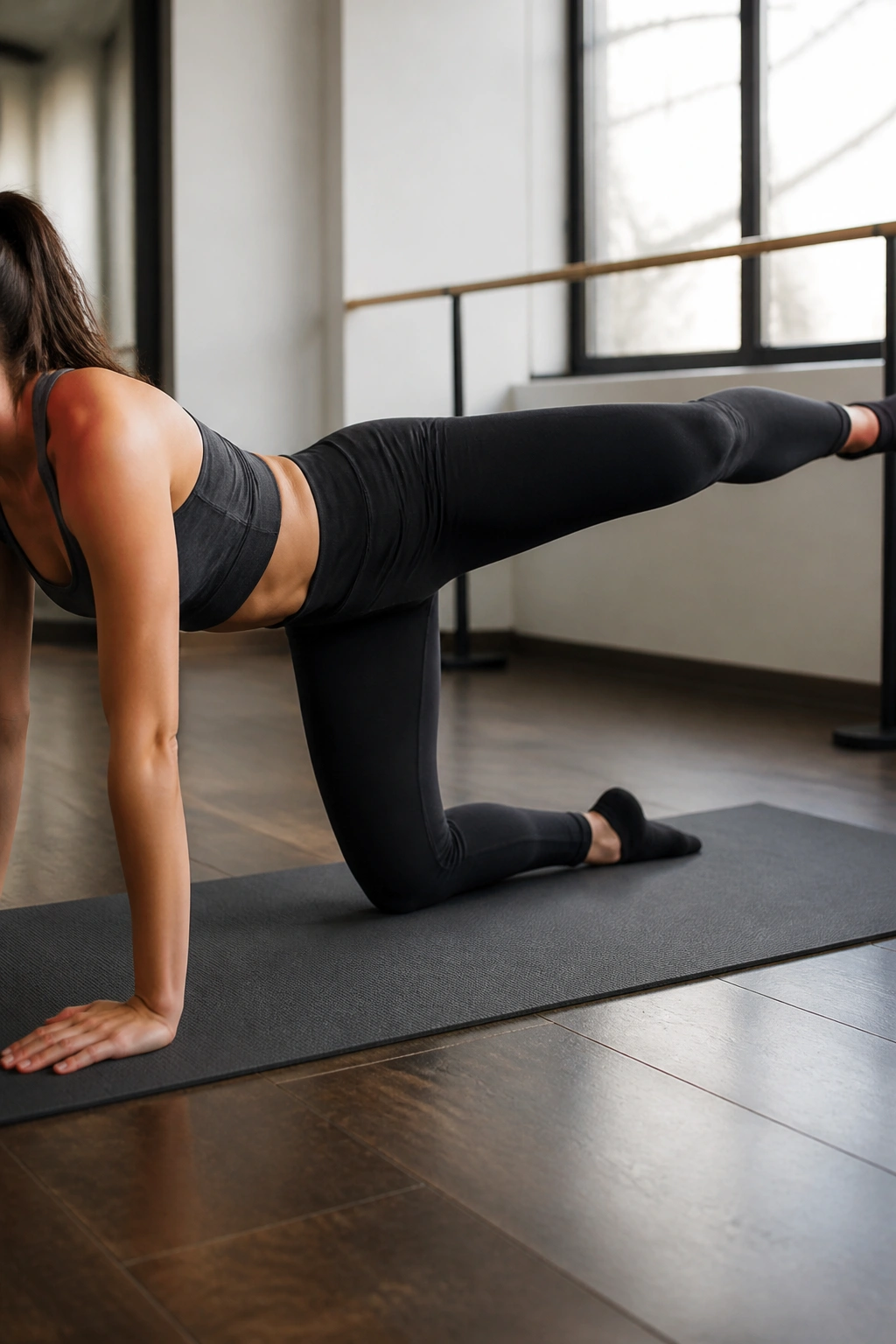
Often used for glutes, the fire hydrant is also a potent adductor developer if you add an extension component.
The Modification
Get on all fours. Lift your right knee out to the side (the classic fire hydrant). From that open position, extend your right leg straight out. Return the knee to the bent position, then lower it back to the floor.
Targeting the Inner Thigh
The extension is where the adductor has to work the hardest. You are holding a straight leg in a position of abduction (out to the side) while gravity tries to pull it down. By holding that extension for a second, you force the adductor to work against the leverage of your entire leg. Repeat for 10 reps, then switch.
18. Pilates V-Leg Lifts
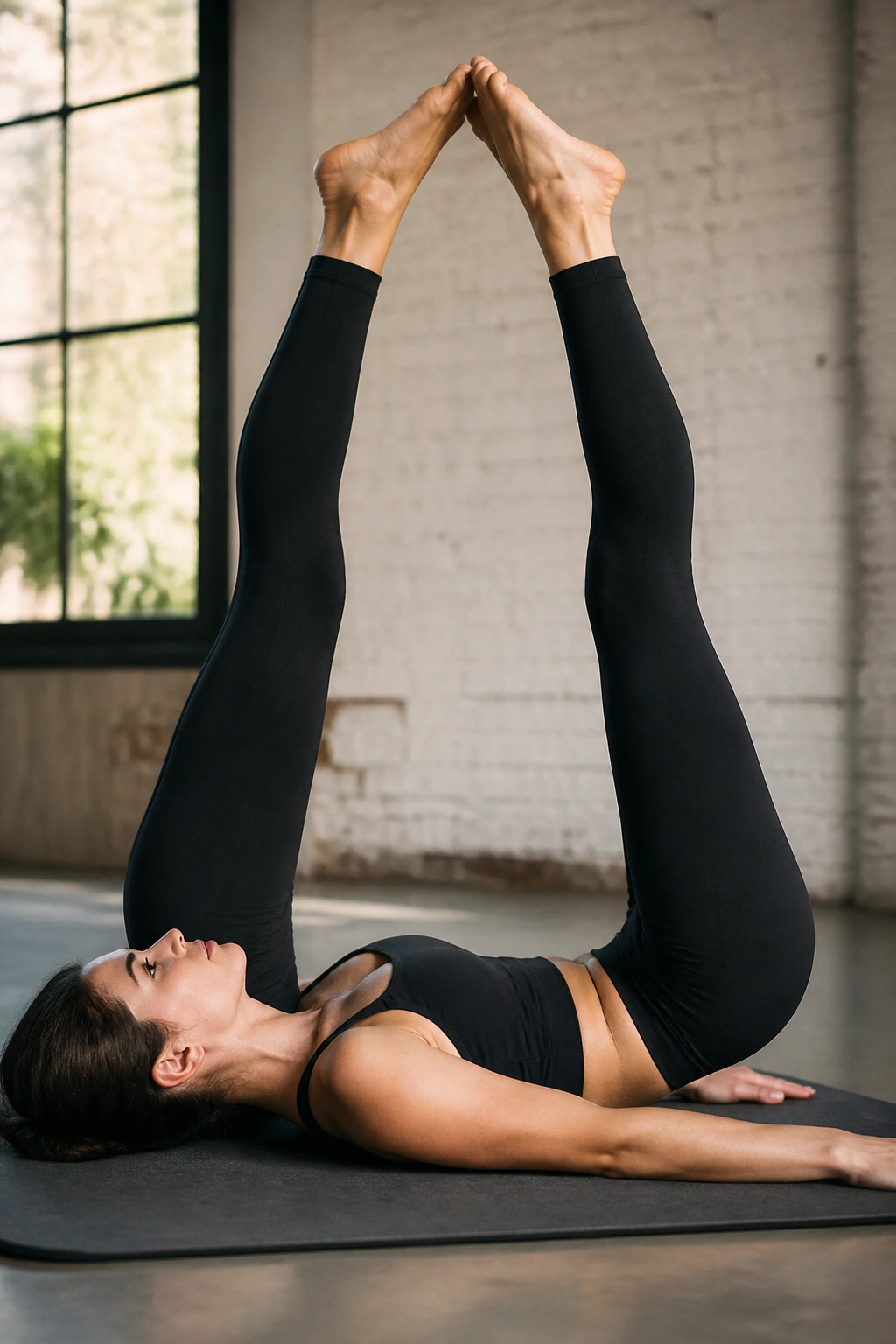
Ending with a Pilates-inspired move is a great way to consolidate all the work you have done. This exercise combines core strength with adductor engagement in a “V” shape.
The Setup
Lie on your back, legs extended toward the ceiling. Rotate your legs into a “first position” (heels together, toes apart, turned out from the hips). Lower your legs about 45 degrees, maintaining that turnout, then bring them back up.
Why This Works
The turnout is essential here. By keeping your heels connected or glued together in your mind, you force the adductors to remain in a constant state of contraction. It is the closest thing to lying down in a dance studio and doing floor work while maintaining the turn-out required for classical technique. Keep the lower back glued to the floor the entire time.
Final Thoughts
The inner thigh is not a muscle you can “fix” in a week. It requires consistent, mindful practice to truly develop the strength and control needed for dance. You aren’t just trying to get tired; you are trying to rewire how your brain talks to these specific muscle groups. The goal is to reach a point where you don’t even have to think about “engaging” your inner thighs—they simply do it as part of your natural alignment.
Stick to these movements, prioritize quality of motion over quantity, and don’t be afraid to take rest days when the soreness sets in. These muscles do a lot of heavy lifting in the studio, and they deserve the time to recover and rebuild. Consistency is the secret to everything in dance; keep showing up, keep focusing on your turnout, and the strength will follow.
