



Squat variations are not decoration; they change which muscles have to pick up the slack.
A high-bar back squat, a goblet squat, and a pause squat can all build bigger legs, but they stress the hips, knees, and trunk in different ways. If your knees cave, your torso folds, or your glutes never seem to do their share, the fix is often a better squat pattern rather than more grind. That matters because stronger legs and glutes come from clean reps, not from fighting a movement your body hates.
I like squat work that gives you a clear signal: the quads burn here, the glutes fire there, the bottom position feels tight instead of sloppy. Small changes—heel height, bar placement, stance width, pause length—can turn one squat into a completely different tool.
Some patterns are beginner-friendly. Others punish weak links fast.
1. Box Squat
A box squat teaches patience.
Sit back under control, touch the box, then stand up without relaxing. That small pause changes the whole exercise. It removes the sloppy rebound some lifters use to fake depth, and it forces the hips and glutes to do real work from a dead stop.
The box height matters. Set it around parallel or just below if you want a true strength builder, not a half-rep shortcut. Keep your shins fairly vertical on the way down, keep your ribs stacked, and drive through the middle of your foot on the way up. A box squat can be brutally effective for lifters who lose position when they go too deep too fast.
What It Trains
- Glutes and hamstrings get more work when you sit back and stay braced.
- Quads still matter, especially if you keep the box low and drive up hard.
- Core stiffness improves because you cannot fold over and expect the rep to save you.
Do not crash onto the box. A soft touch is the point; a hard plop turns the lift into a rest break.
2. Goblet Squat
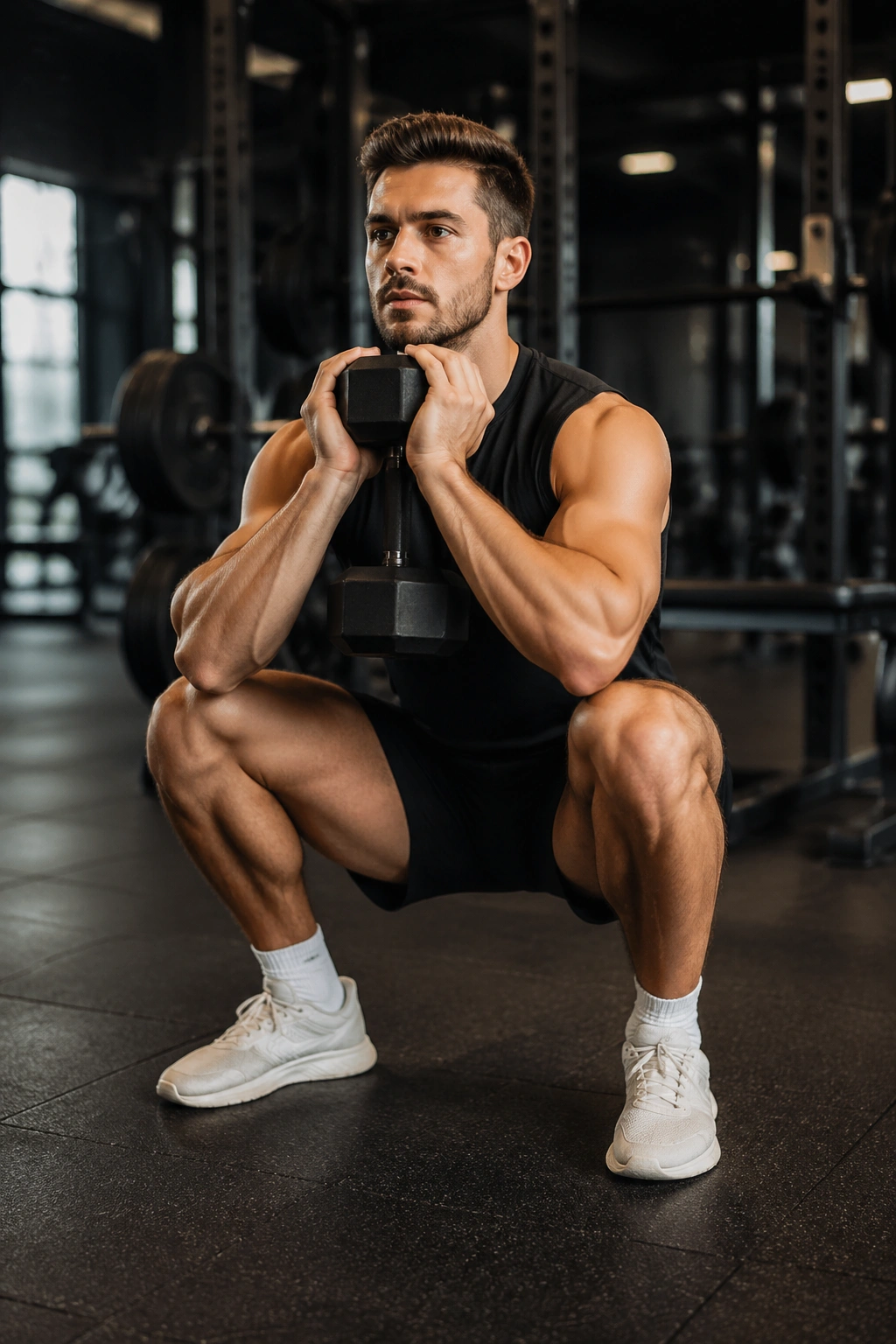
Why do so many coaches start here? Because the goblet squat makes the movement honest without making it complicated.
Hold a dumbbell or kettlebell tight to your chest, elbows down, and let the load act like a counterbalance. That front position helps you stay upright, which usually means better depth and cleaner knee travel. If someone is new to squatting, or if their back takes over too early, this version clears away a lot of noise.
It also has a sneaky strength upside. Once a goblet squat gets heavy enough to make you fight for posture, the front-loaded position lights up the quads and glutes at the same time. You feel it in the thighs first, then in the hips on the way back up. That is a nice combo.
A good target is 8 to 12 controlled reps with a load that makes the last two reps slow but still crisp. If your elbows keep bumping your knees before you reach depth, widen your stance slightly and let your hips drop between your thighs instead of chasing a perfect textbook stance.
3. Heels-Elevated Goblet Squat
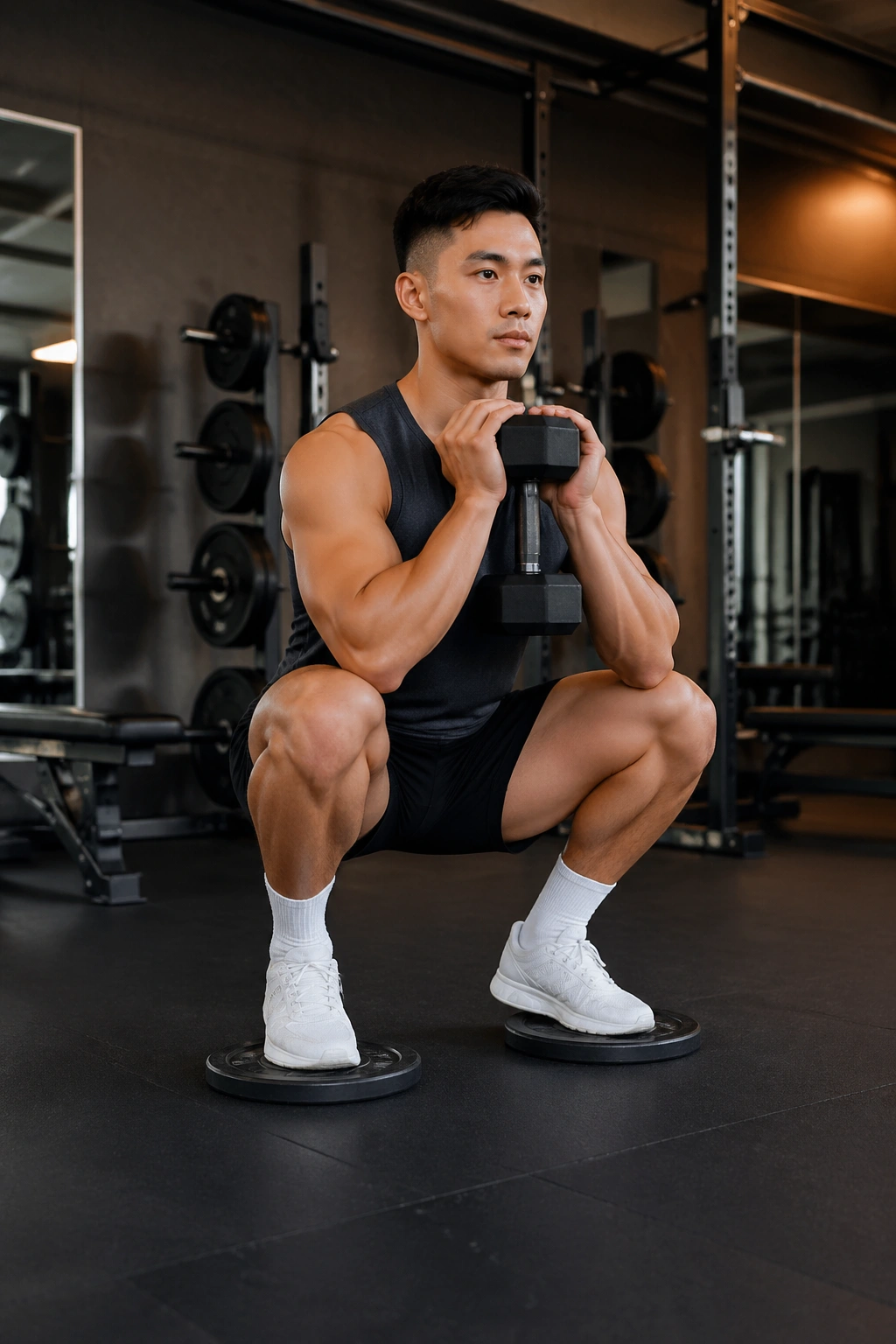
Your quads know the difference the second your heels leave the floor.
Raise your heels on small plates, a wedge, or a squat shoe, and the body suddenly allows more knee travel. That makes the torso easier to keep upright and shifts more of the job to the quads while the glutes still finish the rep. For lifters with tight ankles, this can be a relief. For lifters who want more quad stimulus without turning the squat into a forward fold, it is a useful tool.
The trick is not to overdo the elevation. About half an inch to one inch is enough for most people. More than that and you can end up chasing balance instead of training legs. Keep the dumbbell close to your chest, let the knees move forward, and keep the whole foot pressed down even though the heel is elevated.
- Best for: long femurs, tight ankles, upright squatting
- Load range: light to moderate, often 10 to 15 reps
- Main cue: knees forward, chest tall, ribs stacked
That last cue matters. If your lower back arches like a cat on a fence, the heel raise is doing the wrong job.
4. High-Bar Back Squat
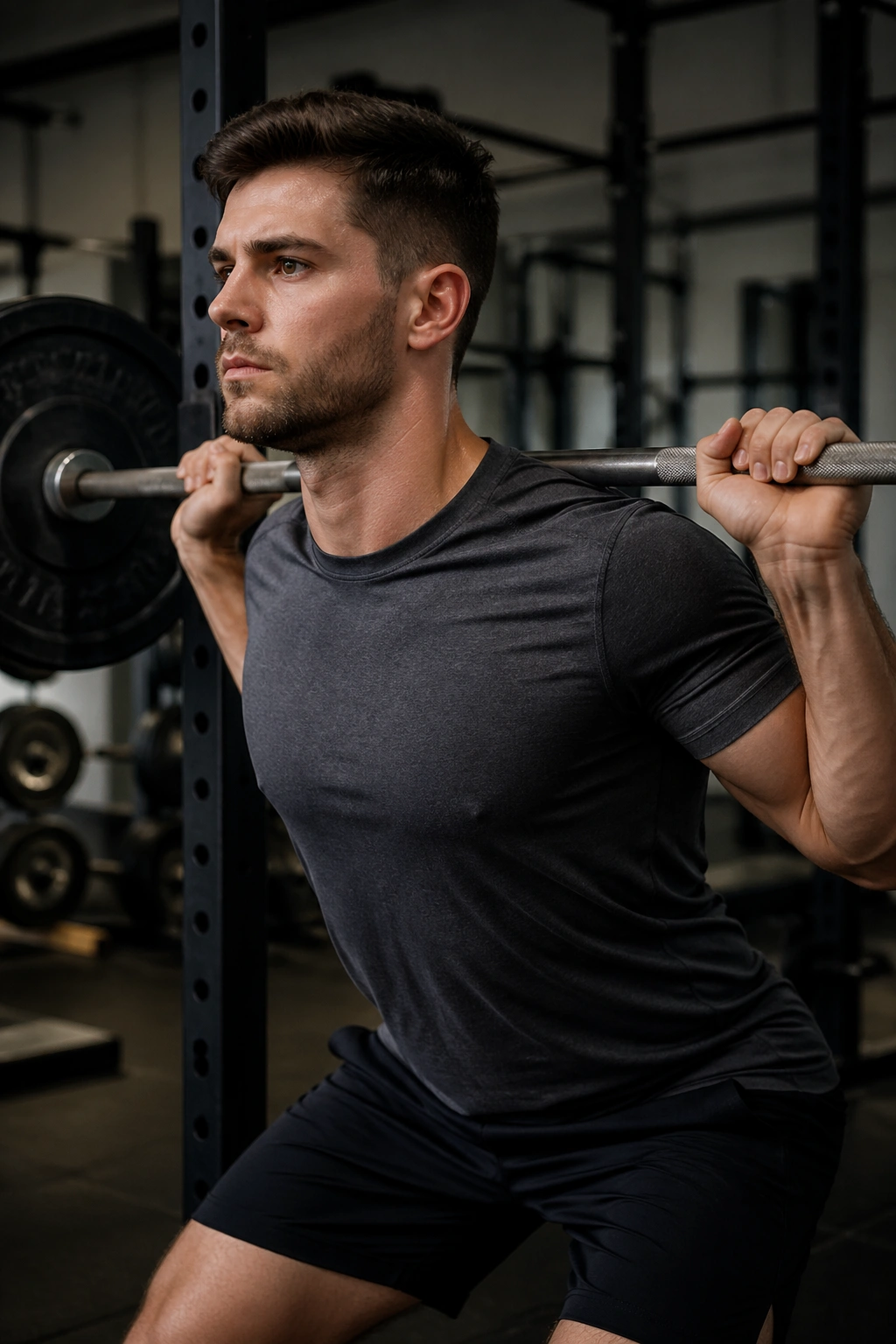
The high-bar back squat is the cleanest general-purpose squat in the bunch.
With the bar sitting high on the traps, the torso stays more upright than it does in a low-bar setup. That usually means a more even hit to the quads, glutes, and upper back. It is the version I reach for when I want a squat that feels athletic and direct, not exaggerated or weirdly specialized.
Your setup is simple enough, but the details count. Bar high on the traps, hands just outside shoulder width, elbows pointed down rather than jammed back, feet planted solid, and a brace that starts before the descent. If you sink into the bottom without tension, the rep turns messy fast. If you keep pressure through the whole foot, the rebound comes from muscle, not luck.
Setup That Keeps It Honest
- Put the bar high on the traps, not on the neck.
- Take a breath into the belly and sides before each rep.
- Drive up by pushing the floor away, not by chasing the bar.
Your quads will know. So will your glutes, especially if you squat deep enough to keep the hips active instead of just dipping to a shallow half rep.
5. Front Squat
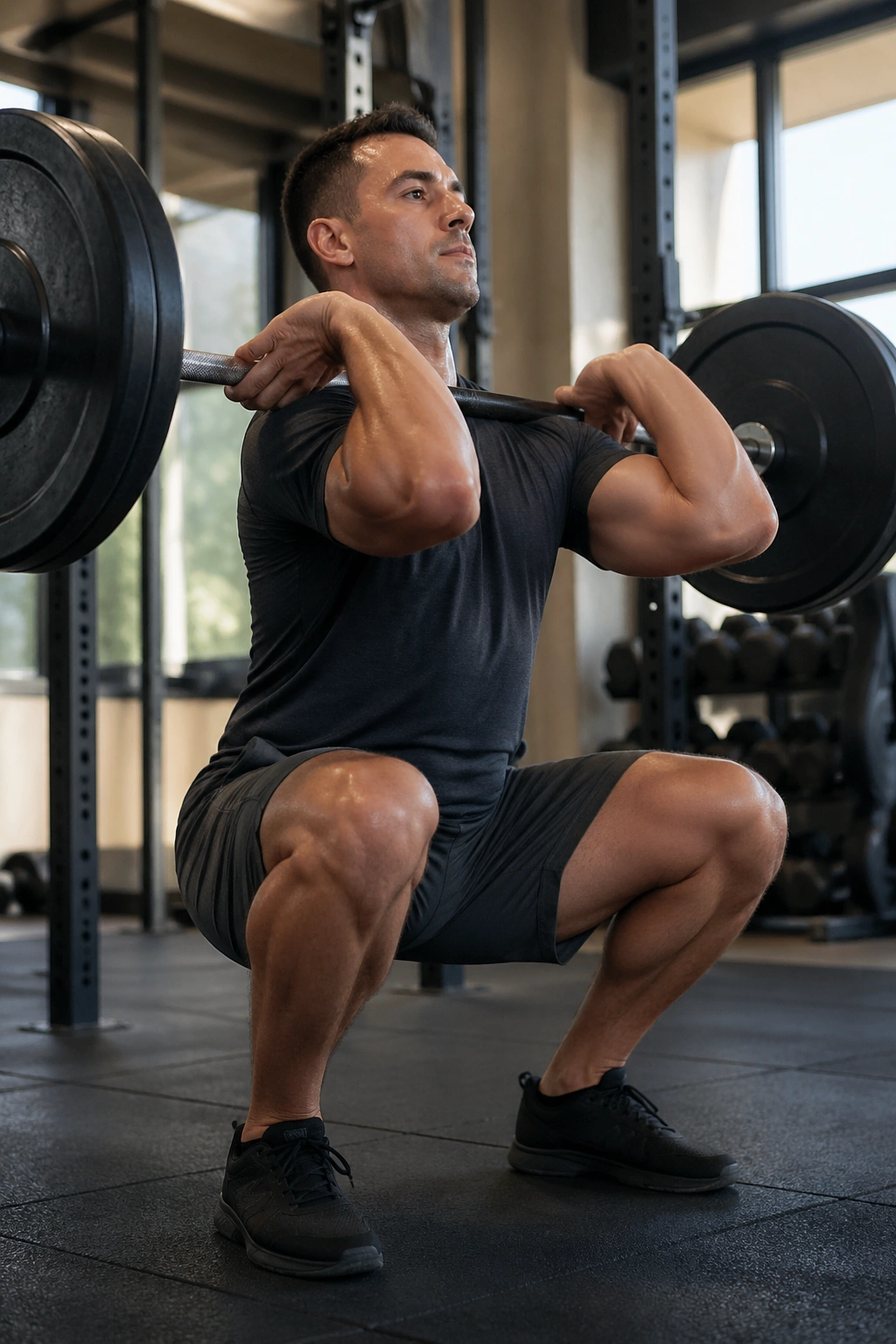
Compared with a back squat, the front squat asks for less forward lean and more upper-back work.
That change matters. Because the bar sits in front of the body, the torso has to stay upright or the bar rolls. The result is a squat that can feel brutally honest through the quads and the midsection. You do not get to hide behind hip drive here. Every rep asks for a clean rack position, steady elbows, and a chest that stays lifted without turning into a backbend.
Front squats are a good option when you want strong legs without piling all the load onto the low back. They also punish mobility issues in a useful way. If your ankles, wrists, or upper back are tight, the bar tells on you right away. That is annoying. It is also useful.
Use a clean grip if your wrists tolerate it. Cross-arm and strap-assisted racks work too, and I do not care much which version you use as long as the bar stays secure. Three to five reps for strength, or five to eight for more volume, tends to work well.
6. Low-Bar Back Squat
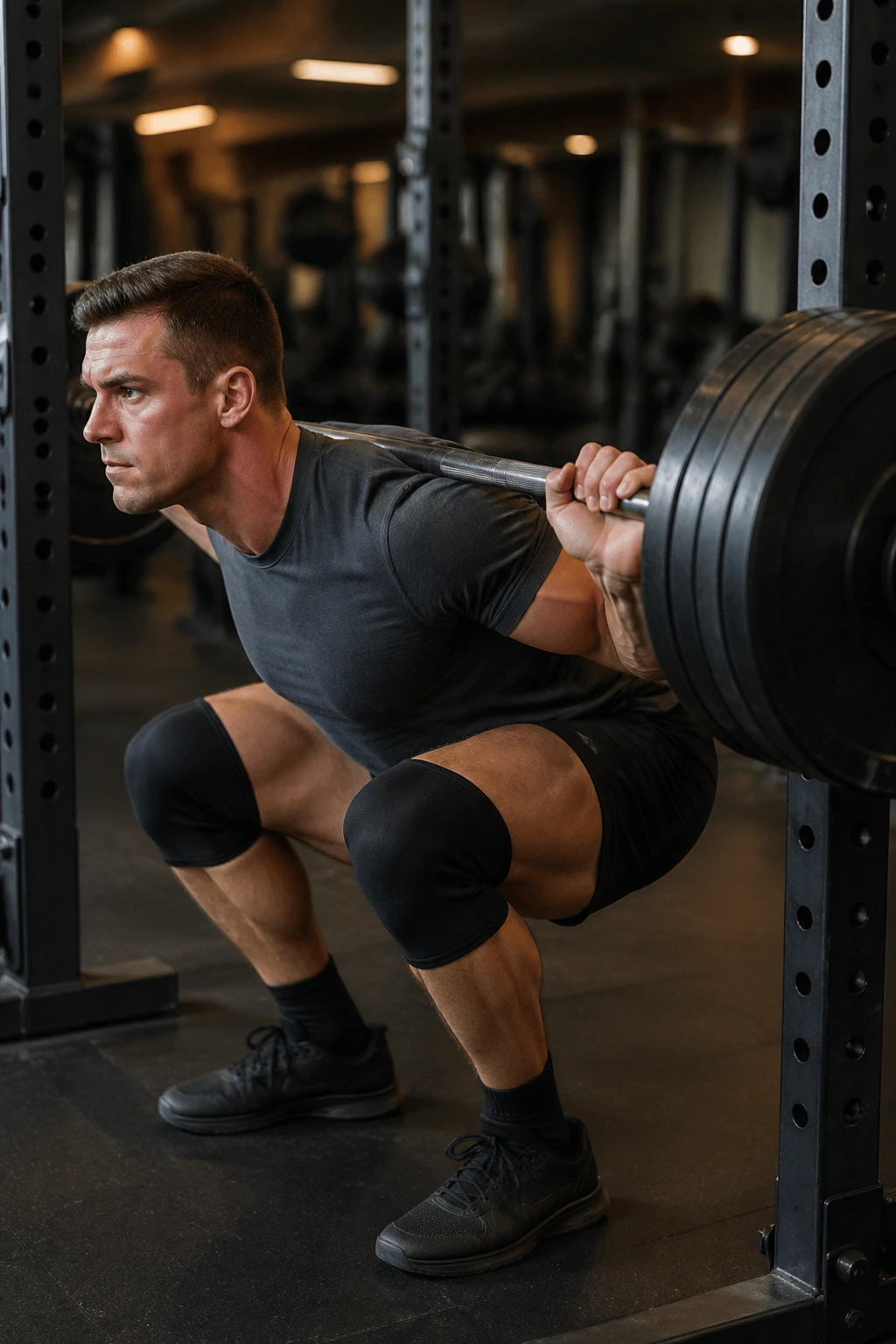
Lowering the bar does not make the squat easier. It changes the job.
The low-bar back squat shifts the bar onto the rear delts, which encourages more forward torso lean and more hip drive. That usually brings the glutes, adductors, and posterior chain into the lift more aggressively, while the quads still do plenty of work. The whole pattern feels more like a power move than a straight-down leg press.
Some lifters love this instantly. Others hate the shoulder position and never warm up to it. Fair enough. If your wrists and shoulders allow it, though, low-bar squatting can be a smart choice for heavier loads and stronger hips. The stance is often a touch wider than high-bar too, which can help lifters who are built to sit back and hinge more naturally.
A useful mental cue is simple: chest stays locked to the torso, not peeled up from it. If the upper body collapses, the bar drifts, and the glutes never get the clean drive you were after.
- Best for: heavier strength work, hip-dominant squatting
- Watch for: shoulder discomfort, low-back rounding
- Good load range: 3 to 6 reps when strength is the goal
7. Sumo Squat
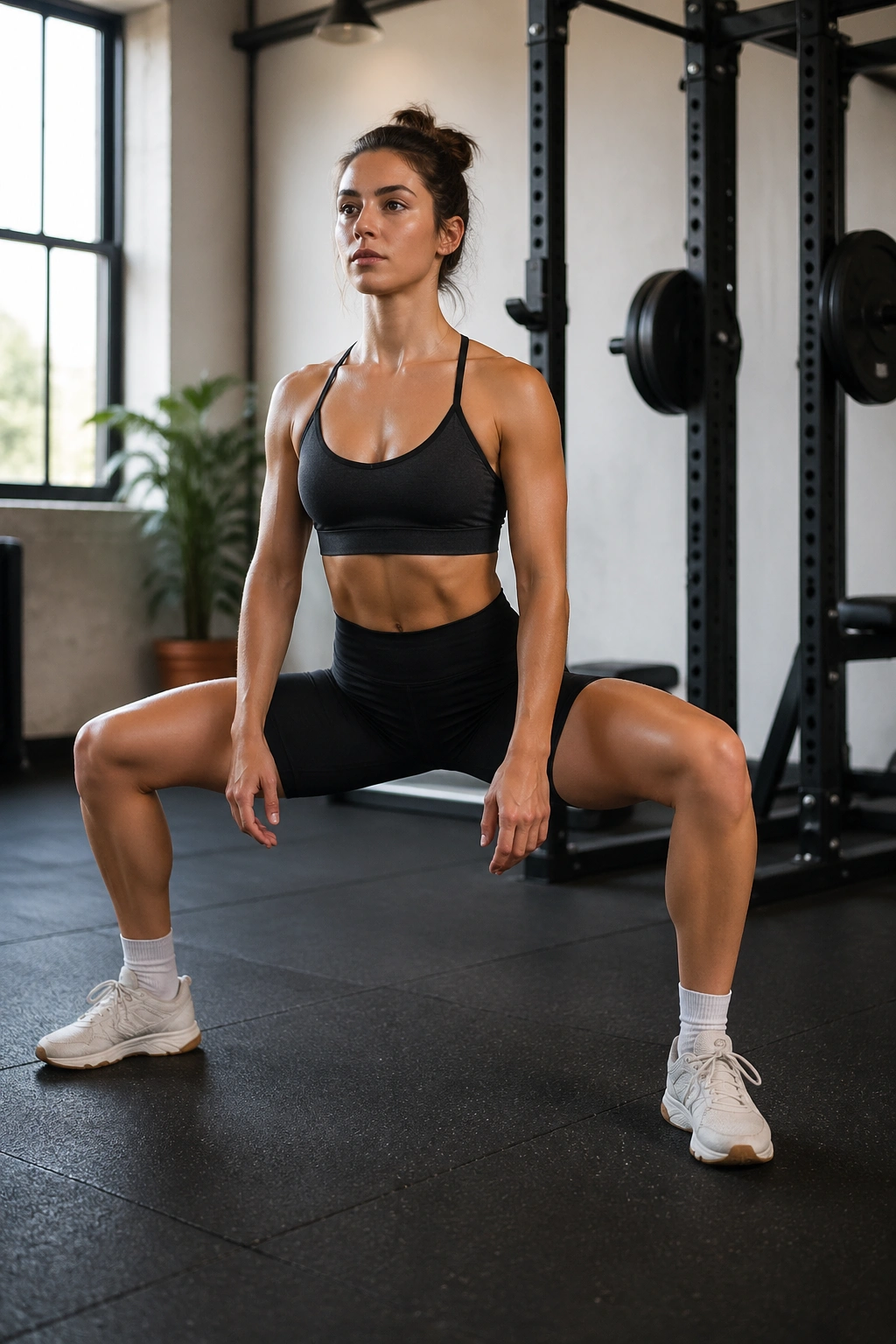
If your hips like width and your knees hate cramped stances, sumo squats feel different almost immediately.
Feet wider than shoulder width, toes turned out, and knees tracking over the toes open up the hips in a way that can be easier for some bodies. The adductors—the inner thigh muscles—get pulled into the job more than they do in a narrow stance. The glutes still matter a lot, especially near the bottom and on the drive up.
This is not the same thing as a sumo deadlift, and it is not a magic fix for everyone who likes wide stances. Keep your trunk upright, keep the knees from collapsing inward, and do not turn the feet out so far that your arches fold. A good sumo squat feels stable and grounded. A bad one looks like a person trying to sit into two different chairs at once.
I like this variation for higher-rep leg work, especially when someone wants more inner-thigh and glute involvement without needing huge ankle mobility. It is also a good way to make light weights feel expensive.
8. Tempo Squat
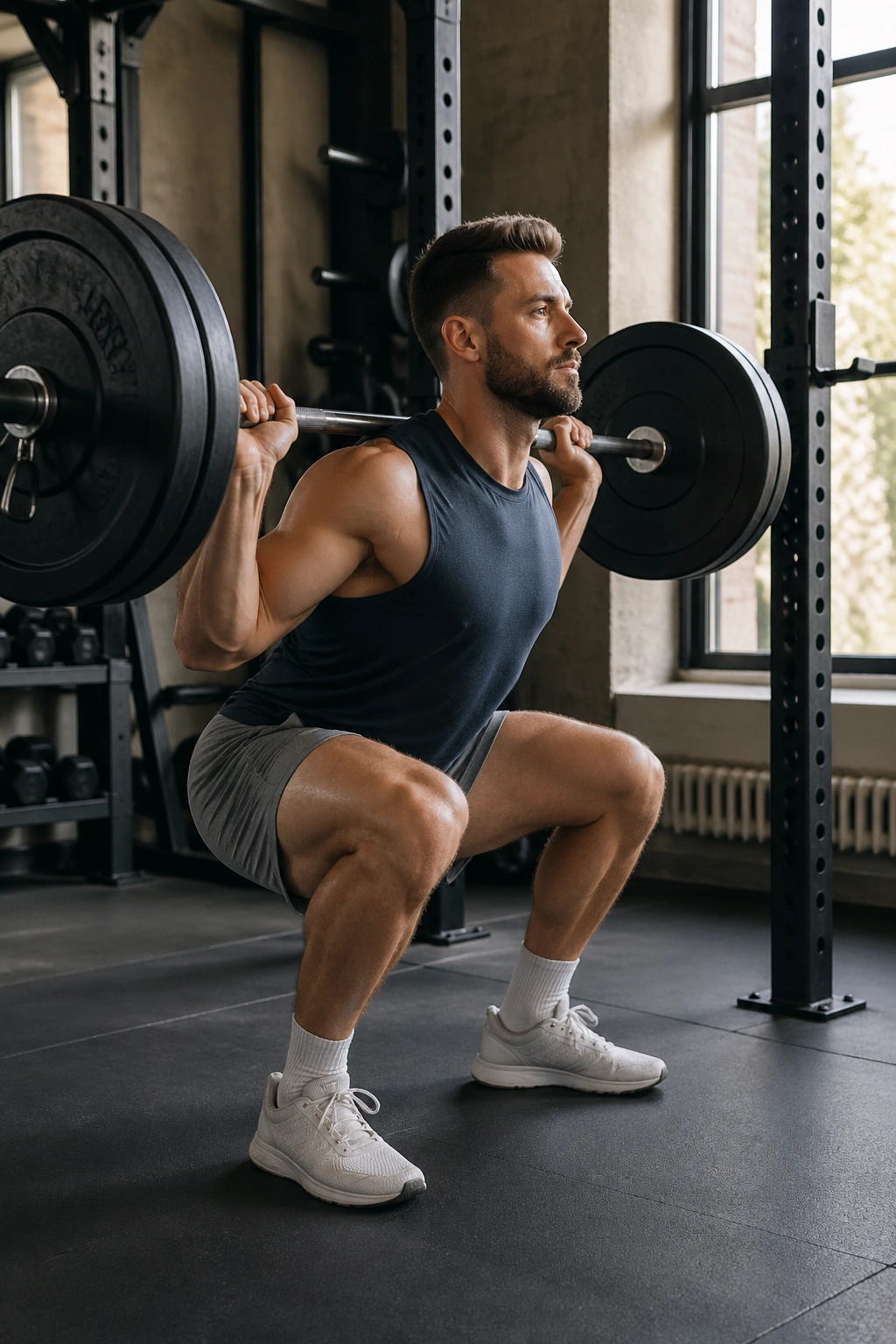
Slow reps are not a beginner crutch.
A tempo squat strips away momentum and forces you to own every inch of the descent. A simple count like 3 seconds down, 1 second pause, 1 second up can turn a moderate load into a serious set. The glutes and quads never get a free ride, and the core has to keep the trunk from folding under the longer time under tension.
A Tempo I Actually Like
- 3-0-1: three seconds down, no pause, one second up
- 4-1-1: four seconds down, one-second pause, one second up
- 5-0-X: five seconds down, explode up with control
Use less load than you would for normal squats. That is not a downgrade. It is the point. If the weight is too heavy, the descent gets sloppy and the tempo becomes fake. You want the lower body to stay tight all the way through the hole, not to free-fall and hope for the best.
Tempo squats are also useful when you need better technique without changing the exercise completely. They expose wobble, collapse, and lazy bracing fast. Painful. Useful too.
9. Pause Squat
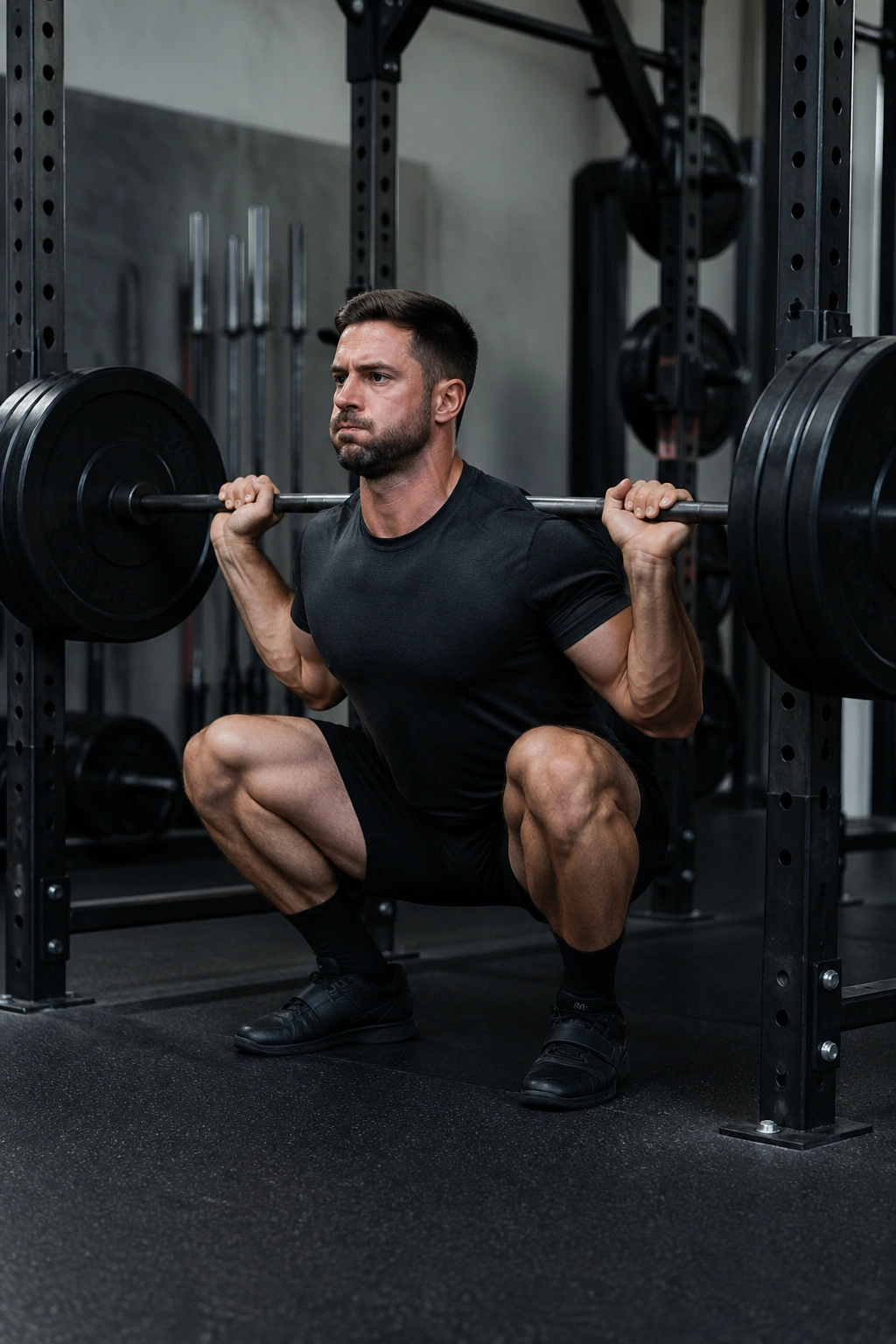
What happens when you take away the bounce? You find the weak spot.
A pause squat keeps you in the bottom position for two to three seconds, which forces the legs and glutes to produce force from a dead stop. That makes it excellent for lifters who fail out of the hole or lose tightness right before the ascent. The pause also cleans up depth, because you have to earn the position instead of surfing through it.
The key is staying braced during the pause. Do not sink into your hips and go soft. Keep pressure through the whole foot, keep the knees tracking, and hold the chest where it belongs. When you drive up, the first inch should feel deliberate, not explosive in a wild way.
Pause squats usually work best with a lower load than your normal squat. That is not a weakness; it is a way to strengthen the exact spot where you fail. If your regular squat looks fine until the bottom, this variation is one of the fastest ways to clean that up.
10. Bulgarian Split Squat
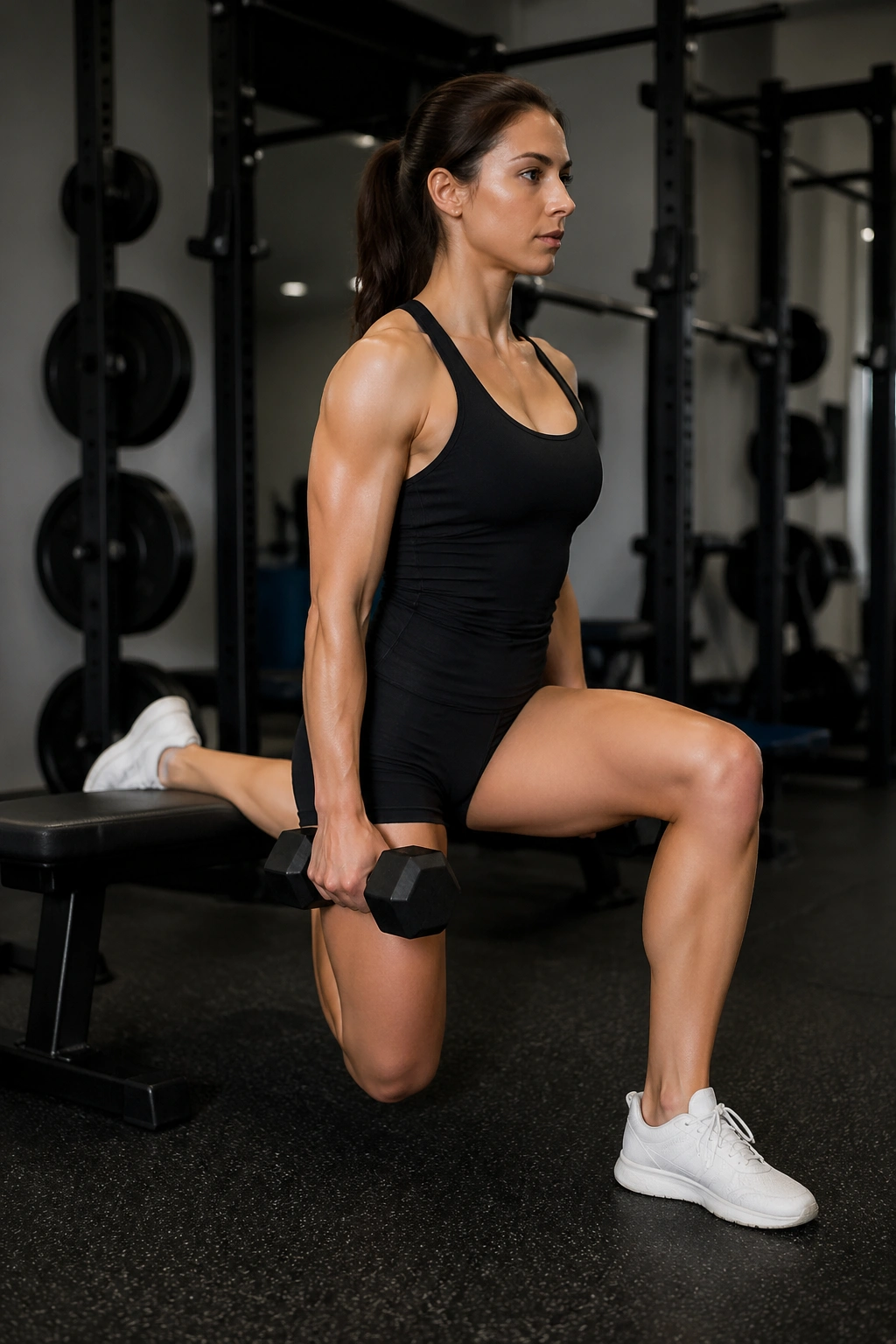
Set one back foot on a bench and the set gets honest fast.
The Bulgarian split squat is one of the best ways to expose side-to-side differences in strength and balance. One leg does nearly all the work while the other stays back on the bench. The front leg gets hammered through the quads and glutes, and the hip has to stabilize the whole mess without help from the other side.
How to Aim the Load
- Take a longer step if you want more glute work.
- Keep a shorter, more upright torso if you want more quad emphasis.
- Hold dumbbells at your sides once bodyweight feels easy.
The front foot needs to be far enough forward that the knee can travel without the heel popping up. Too close, and the movement turns into knee pain theater. Too far, and you lose the ability to push hard off the floor. Find the middle ground first, then load it.
I like these for glute growth because they are hard to cheat. You cannot hide a weak left side in a Bulgarian split squat. It comes out, sets up a tent, and stays.
11. Cossack Squat
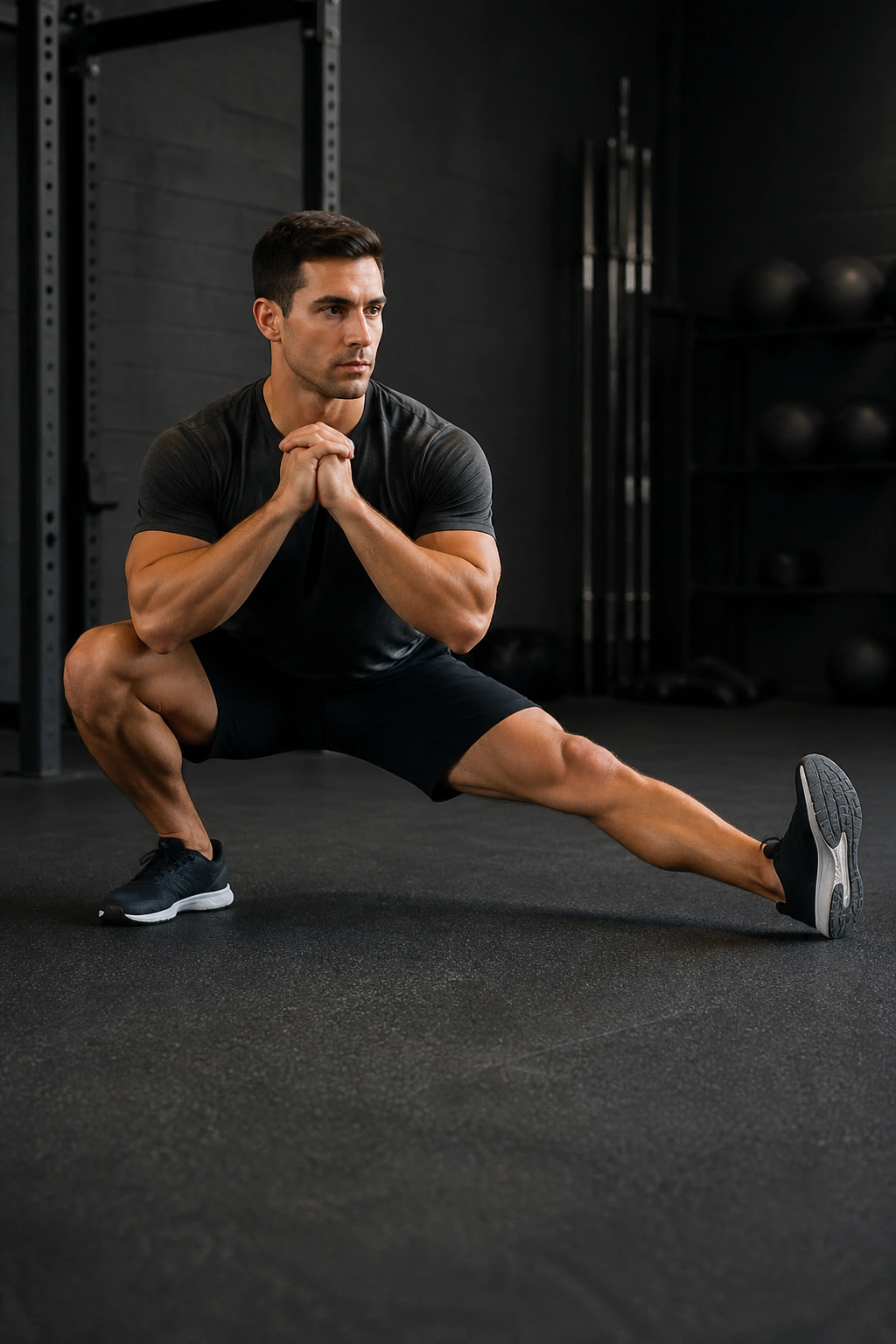
Not every squat has to travel straight down.
The Cossack squat moves side to side, loading one hip deeply while the other leg stays long and active. That side-to-side pattern is gold for adductors, glute medius, and the sort of hip mobility that helps a lot in normal squats too. It looks almost too graceful to be hard. It is not.
Keep the working heel down if you can. Let the free leg straighten out, toes up, and sink into the bent side without collapsing the arch. The goal is control, not drama. If depth is limited, stay higher and keep the movement smooth. A shallow Cossack done well beats a deep one done with a twitchy spine and a whining knee.
This is a smart accessory on lower-body days, especially if regular squats feel one-dimensional. It will not replace your main squat pattern, but it can make that main pattern cleaner and stronger. I use it when hips feel stiff and the inner thighs need actual work instead of a token stretch.
12. Zercher Squat
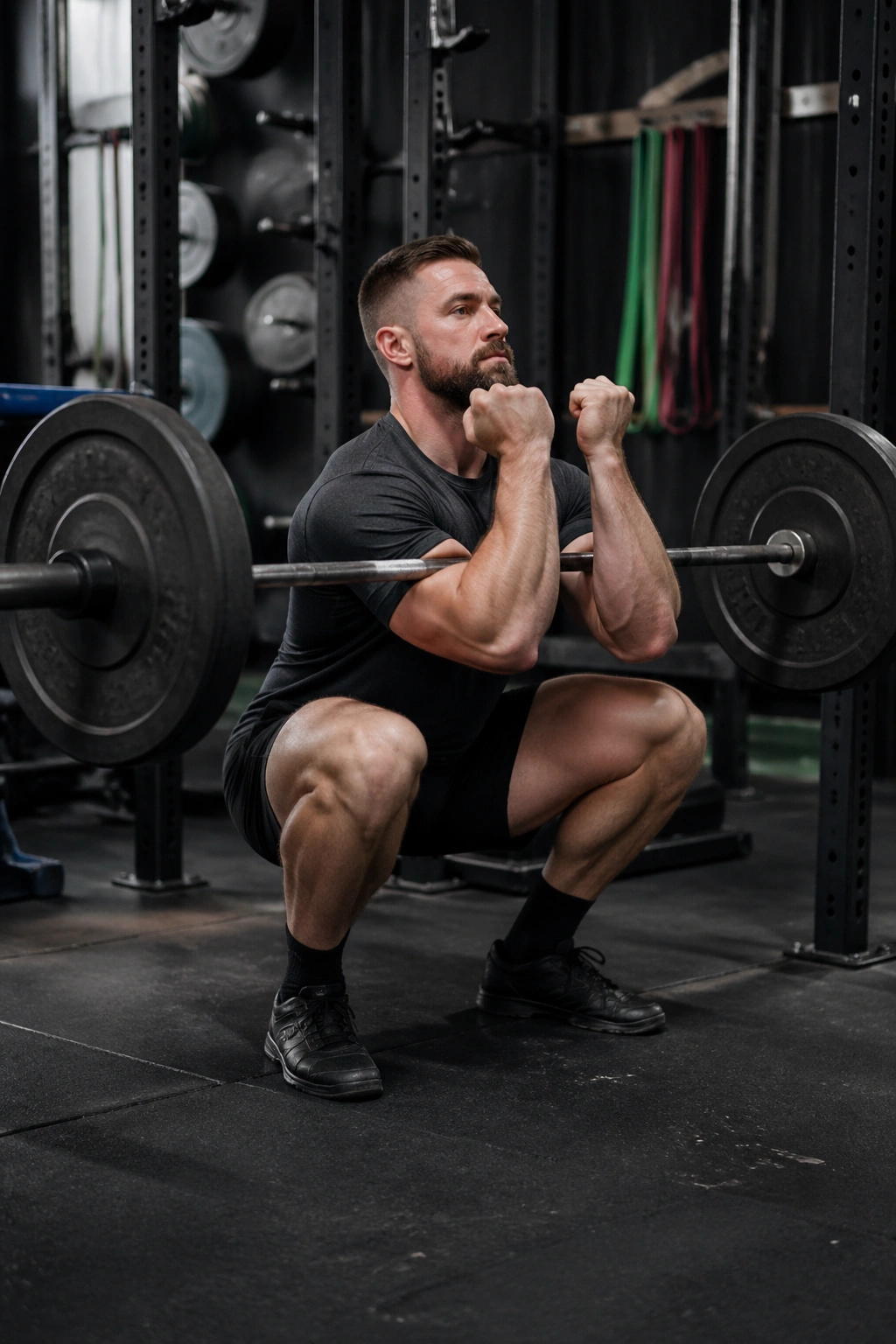
The Zercher squat sits in an odd place between a front squat and a bear hug carry, and that is part of why it works.
You hold the bar in the crooks of your elbows, which sounds unpleasant because, well, it is a little unpleasant. Use a pad or towel if needed. The upside is a brutally solid front-loaded position that forces the torso to stay tight and upright. The quads light up. The glutes finish the job. The upper back has to stay active too, because the bar will punish any lazy posture.
This squat is especially handy for people who hate front rack positions or cannot tolerate them well. It also carries over nicely to core stiffness, since the load pulls the torso forward and asks you to resist it without folding.
Start lighter than your ego wants. The bar position can feel awkward at first, and trying to go heavy too soon usually leads to arm pain, weird posture, or both. Once you find the groove, though, the Zercher squat becomes a gritty, effective leg builder with a weirdly loyal fan base.
13. Safety Bar Squat
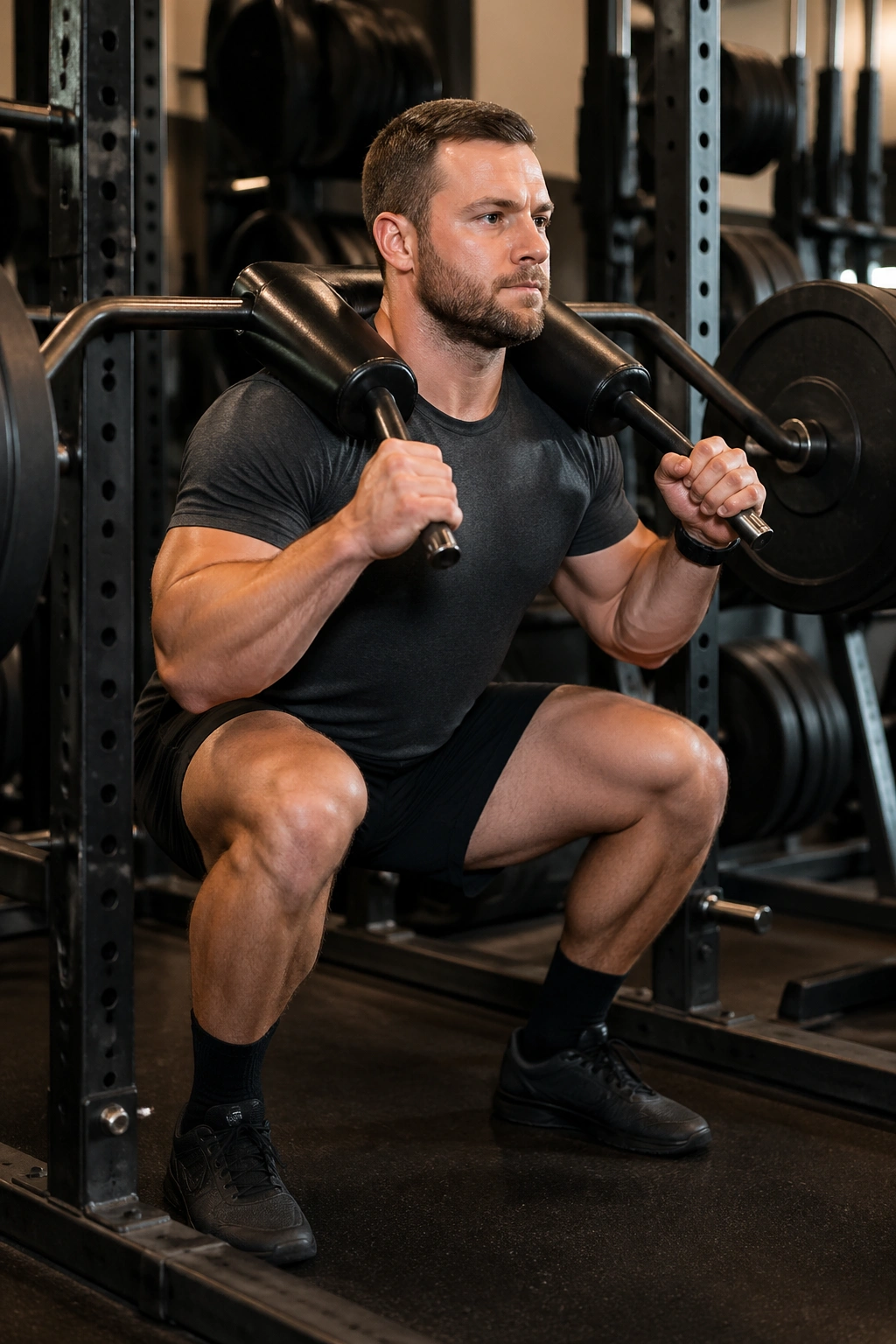
The handles change the whole mood of the lift.
A safety bar squat uses a cambered bar with padded shoulder pieces and front handles, which makes the movement friendlier on the shoulders and upper back than a straight bar. It usually encourages a more upright torso, and that often means more quad work with plenty of glute involvement near the bottom.
It is one of my favorite options for hard sets when the shoulders are cranky but the legs still want a fight. The bar also feels stable in a way that lets you focus on pushing hard instead of fighting the setup. That matters more than people think. A stable bar path keeps your energy where it belongs.
- Good for: high-volume leg days, shoulder-limited lifters
- Cue: keep the chest tall without over-arching the lower back
- Watch for: leaning too far forward because the bar feels “safe”
That last problem is common. Safe bar, unsafe rep. The name does not rescue bad mechanics.
14. Anderson Squat
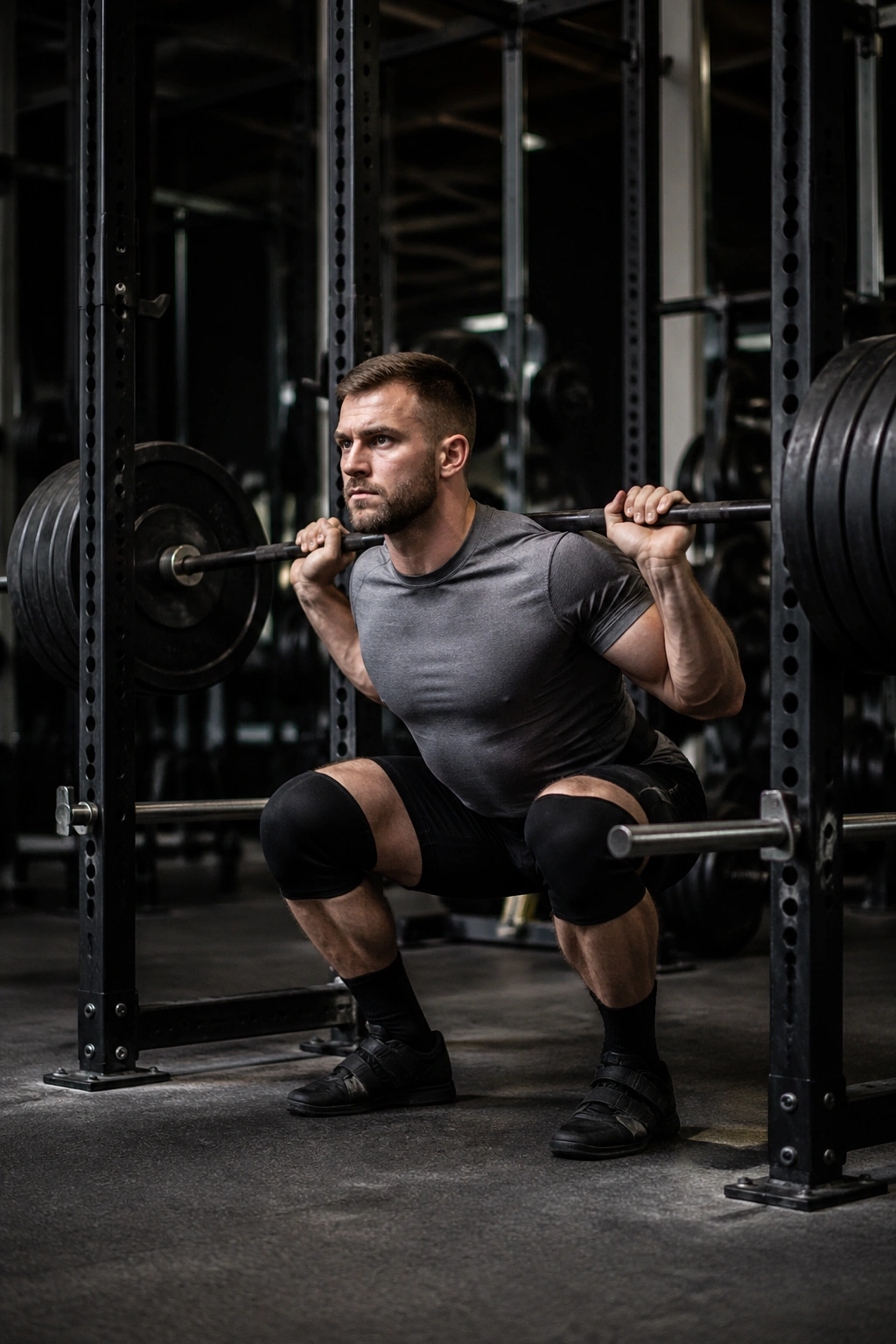
Pins make people honest.
The Anderson squat starts from the bottom, usually from pins or blocks, so you begin each rep without the stretch reflex that normally helps you out of the hole. That makes it a brutal strength builder for the exact spot where many lifters get stuck. It also teaches a cleaner brace, because there is no bounce to hide behind.
How to Set It Up
- Place the pins at your sticking point or just below parallel.
- Set yourself under the bar and get tight before lifting.
- Drive the first inch hard without losing your chest position.
The bar should start from a dead stop each rep. Reset every time. If you turn it into a half-bounce off the pins, you lose the point and usually wreck the rhythm too.
This variation is tough, plain and simple. But it is worth it if the bottom of your squat feels weak or unstable. Heavy load is not always the answer. Sometimes the answer is learning how to create force from nothing.
15. Landmine Squat
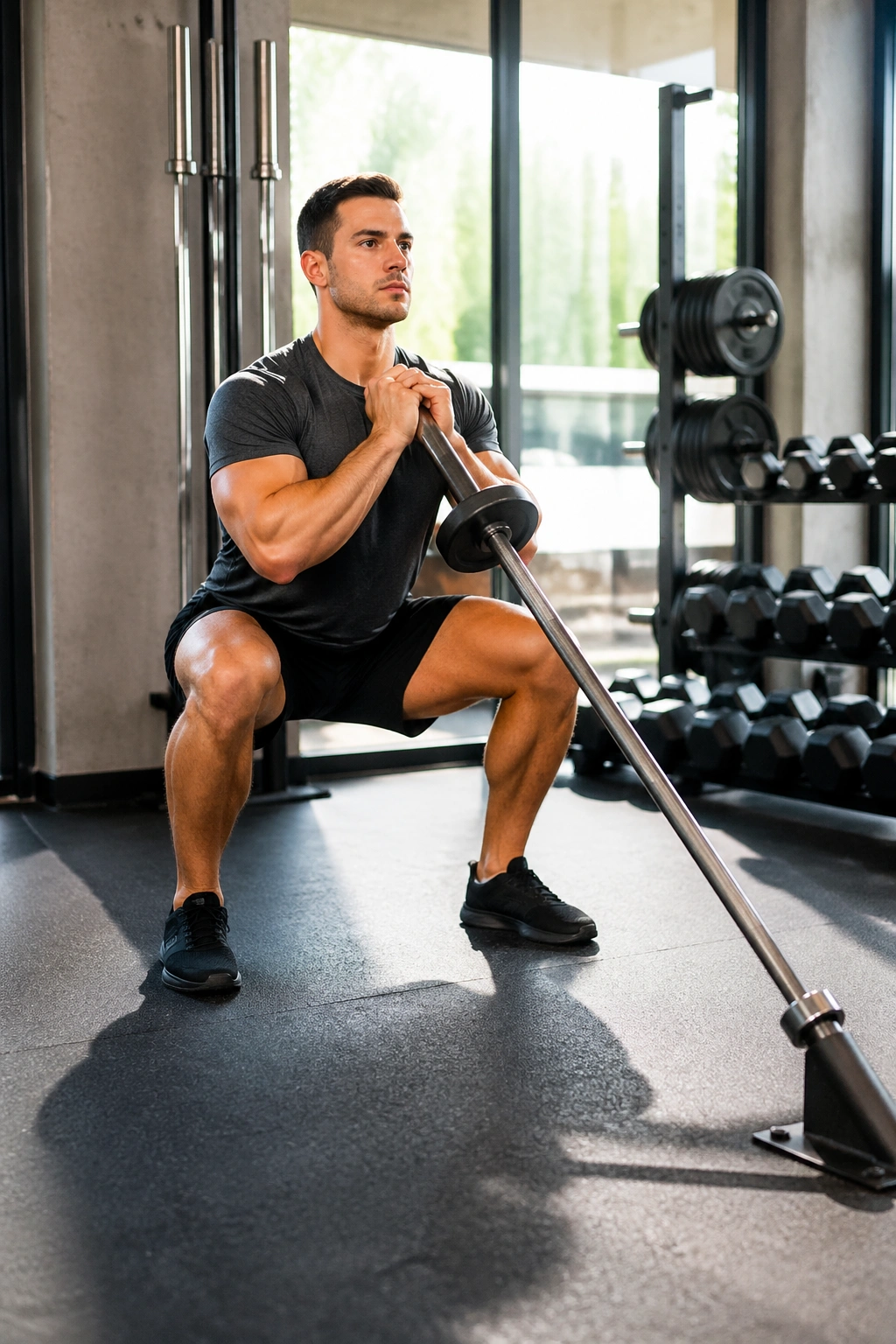
Need a squat that feels friendly but still trains real force? The landmine squat is a smart place to land.
With one end of the barbell anchored to the floor or a corner attachment, the bar moves in an arc that is easier to control than a straight bar path. That makes the squat feel more natural for many beginners and a lot kinder to shoulders and wrists. The front-loaded position also keeps the torso upright, which is good news for quads and useful for glutes too.
You can hold the sleeve with both hands at chest height, or use a landmine attachment with a handle. Either way, the movement tends to groove quickly. That is part of its appeal. It is simple without being weak.
A landmine squat works well for higher reps, especially when you want leg fatigue without the same spinal loading you get from a heavy barbell squat. If your back is tired but your legs still have work to do, this is an easy yes.
16. Belt Squat
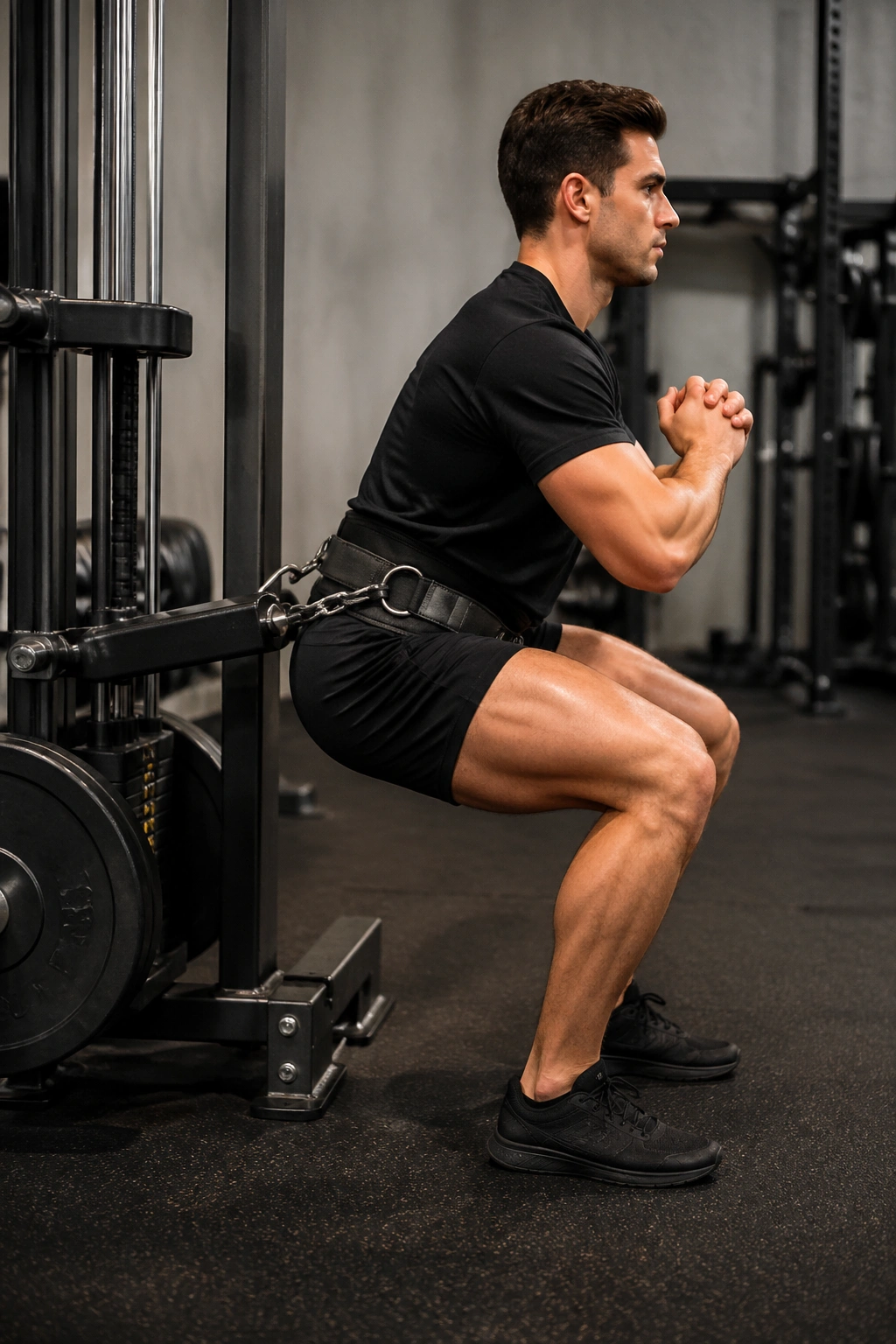
If your lower back taps out before your legs do, the belt squat is the cleanest fix.
The load sits around your hips instead of on your shoulders, which cuts out most of the spinal compression that comes with barbell squats. That means the quads and glutes can keep working hard without your back becoming the limiting factor. For some lifters, that is a huge difference. For others, it is the only way to get enough lower-body volume without feeling beaten up.
The stance changes a lot here. A narrower stance with feet lower on the platform usually nudges more quad work. A slightly wider stance with the feet set a bit higher can bring the glutes in harder. The machine or setup usually dictates the feel, so pay attention to where you feel the drive.
- Best when: your back is fatigued, but your legs are not done
- Loading style: moderate to heavy sets, often 8 to 15 reps
- Main benefit: serious leg work with less axial loading
It is not glamorous. It works.
17. Hack Squat
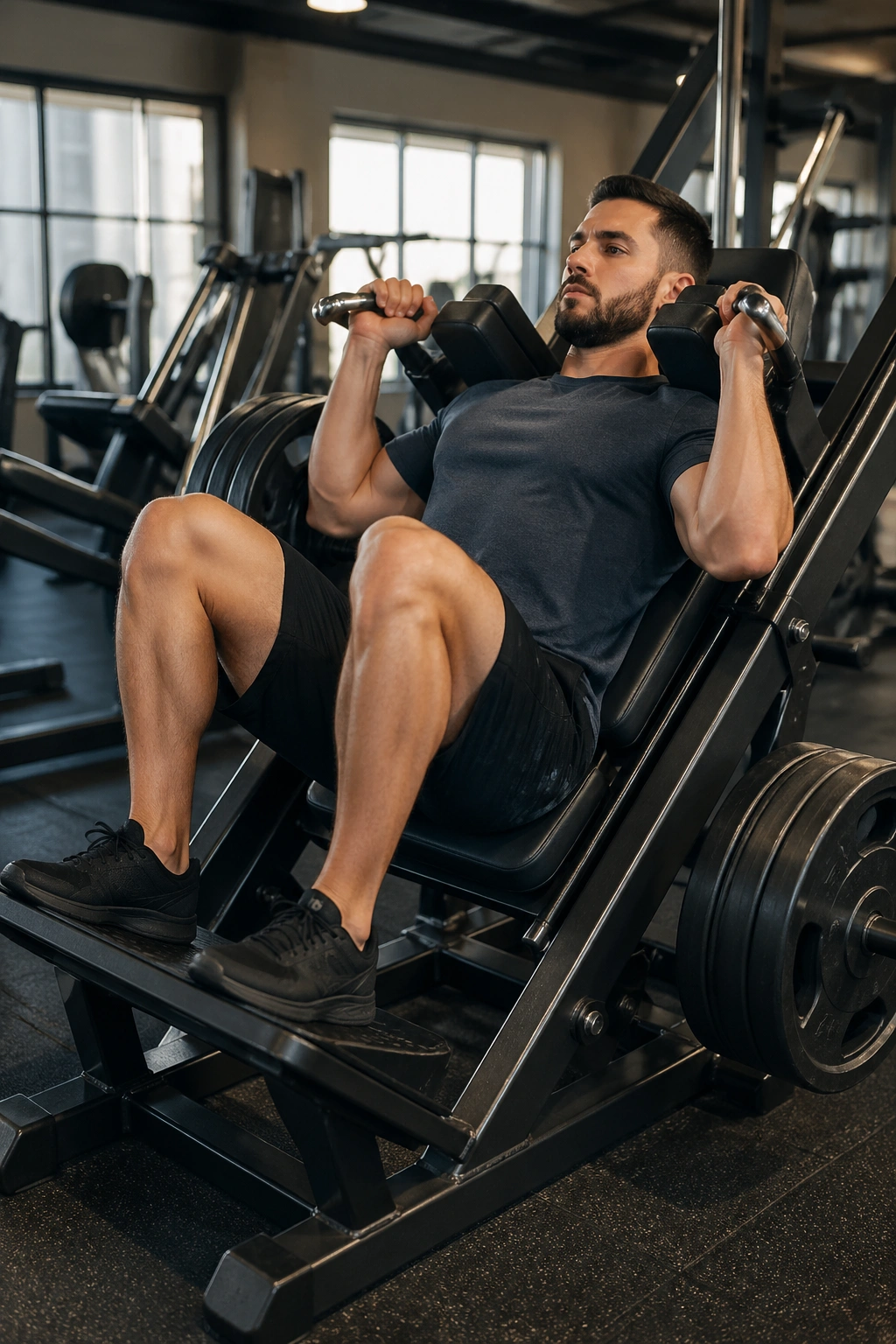
On a hack squat, foot position changes the whole story.
The machine gives you back support and a fixed track, which means you can focus on leg output instead of balance. Feet lower on the platform usually bias the quads harder. Feet a bit higher and wider tend to bring more glute involvement and make the bottom feel a little less knee-heavy. Either way, the machine is good at one thing: letting you push close to failure safely.
That is why people love it for hypertrophy work. You can get deep, controlled reps without the same stabilization demand as a free squat. The tradeoff is obvious. You lose some of the whole-body skill work that a barbell squat gives you. I still like the hack squat, though, because it lets the legs do a very specific job without excuses.
Best Ways to Use It
- Keep your lower back glued to the pad.
- Let the knees bend naturally; do not shorten the depth just to move more weight.
- Use controlled reps in the 8 to 15 range.
If your hips tuck hard at the bottom, shorten the range a little and build back up.
18. Smith Machine Squat
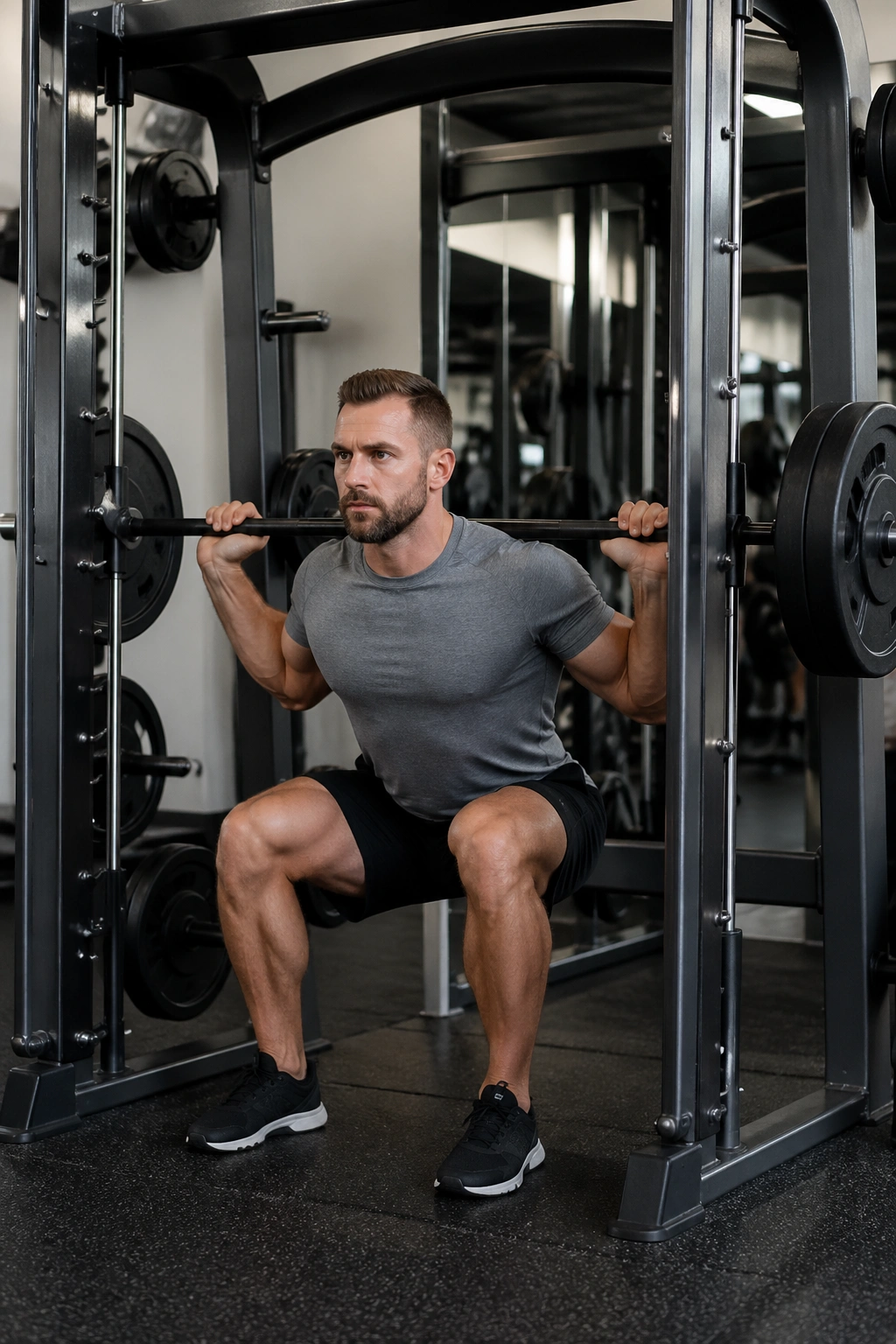
The Smith machine gets more hate than it deserves.
A fixed bar path can be a problem if you fight it, but it can also be a blessing if you set up for it properly. Put your feet slightly forward, keep a controlled descent, and let the machine give you a stable path while your quads and glutes handle the load. For some bodies, that stability is exactly what makes the squat productive instead of awkward.
The best Smith machine squats feel smooth, not jammed. If the track is vertical, you may need to stand a bit more centered under the bar. If the machine angles back, your foot placement needs to match that path or the knees and hips will feel pinched. This is not a place for guesswork. Adjust until the rep feels like a squat, not a forced march.
It is especially useful for higher-rep sets, drop sets, and days when you want to keep tension on the legs without balancing a free bar. No, it does not replace free squats. It does not need to. It does a different job, and it does that job well.
Final Note
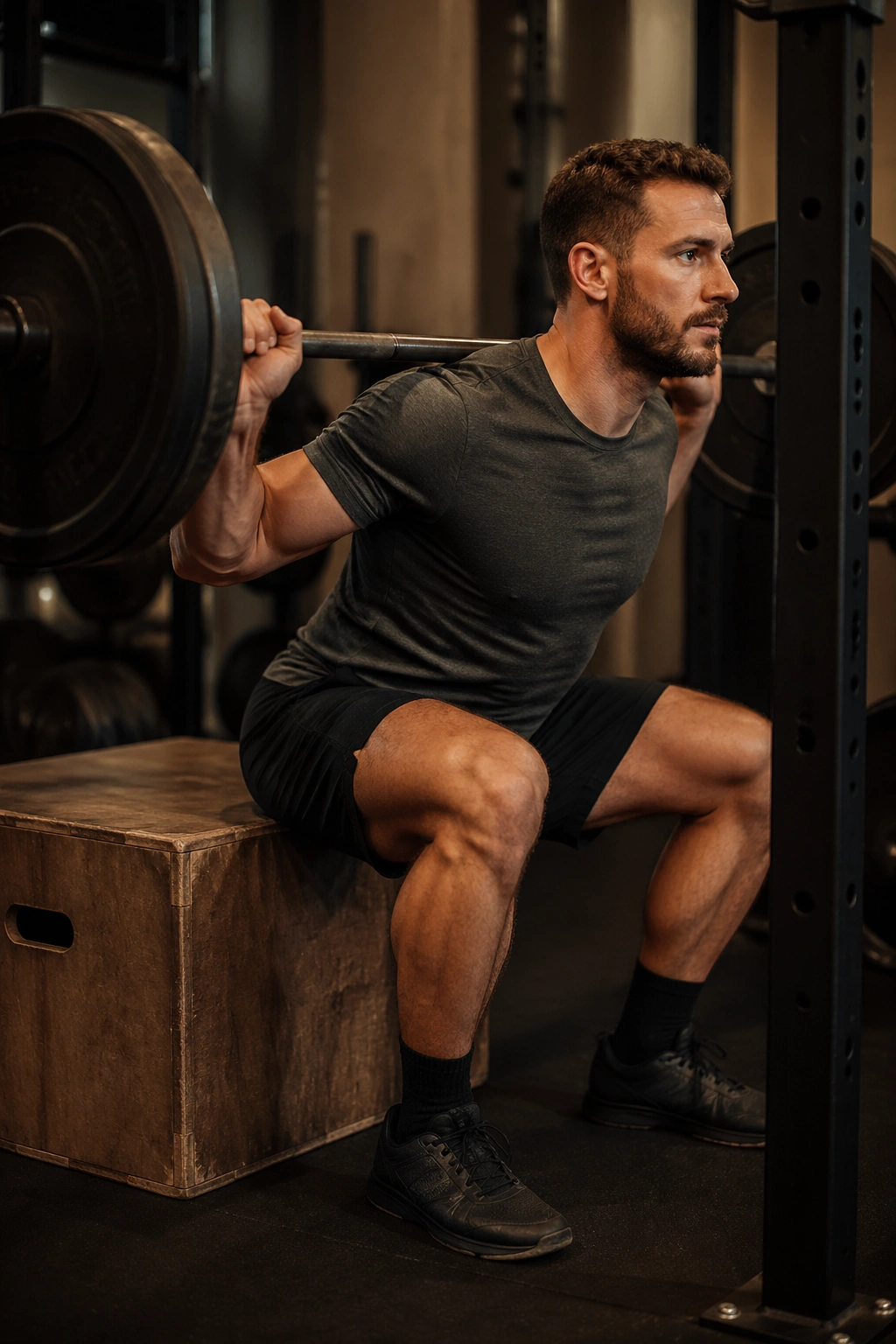
Do not try to make all 18 of these your main lift. That would be a mess.
Pick one heavy squat pattern, one unilateral or accessory squat, and one slower variation like a pause or tempo squat. That gives you strength, control, and a little insurance against sloppy mechanics. A week built around a high-bar squat, Bulgarian split squats, and pause squats covers more ground than most people realize.
The real win is consistency with the right variation for the job. If your knees like front-loaded work, stay there for a while. If your glutes light up in a low-bar or belt squat, use that. Build the legs and glutes with the squat that lets you train hard, stay clean, and come back next session ready to move more weight.
