



The pursuit of glute growth is often misunderstood. You see influencers performing bizarre, microscopic movements on social media, claiming they have found the singular secret to a rounded posterior, while neglecting the fundamental biomechanics of the gluteus maximus. The truth is much simpler, though perhaps less glamorous. Your glutes are muscles. Like any other muscle group, they respond to mechanical tension, progressive overload, and consistent, high-effort training. If you are not stimulating the muscle fibers with enough intensity and providing the recovery window required for hypertrophy, no amount of “glute medius kickbacks” or “fire hydrants” will produce the physique you are chasing.
Focusing on the posterior chain requires a combination of compound movements that allow for heavy loading and isolation work to fatigue the muscle fibers completely. Most people fail because they lack structure. They walk into the gym, perform a few random exercises, and wonder why their physique does not change after six months. Stop guessing. If you want gains, you need a plan that treats glute training as a serious athletic endeavor.
1. The Heavy Hip Thrust Foundation
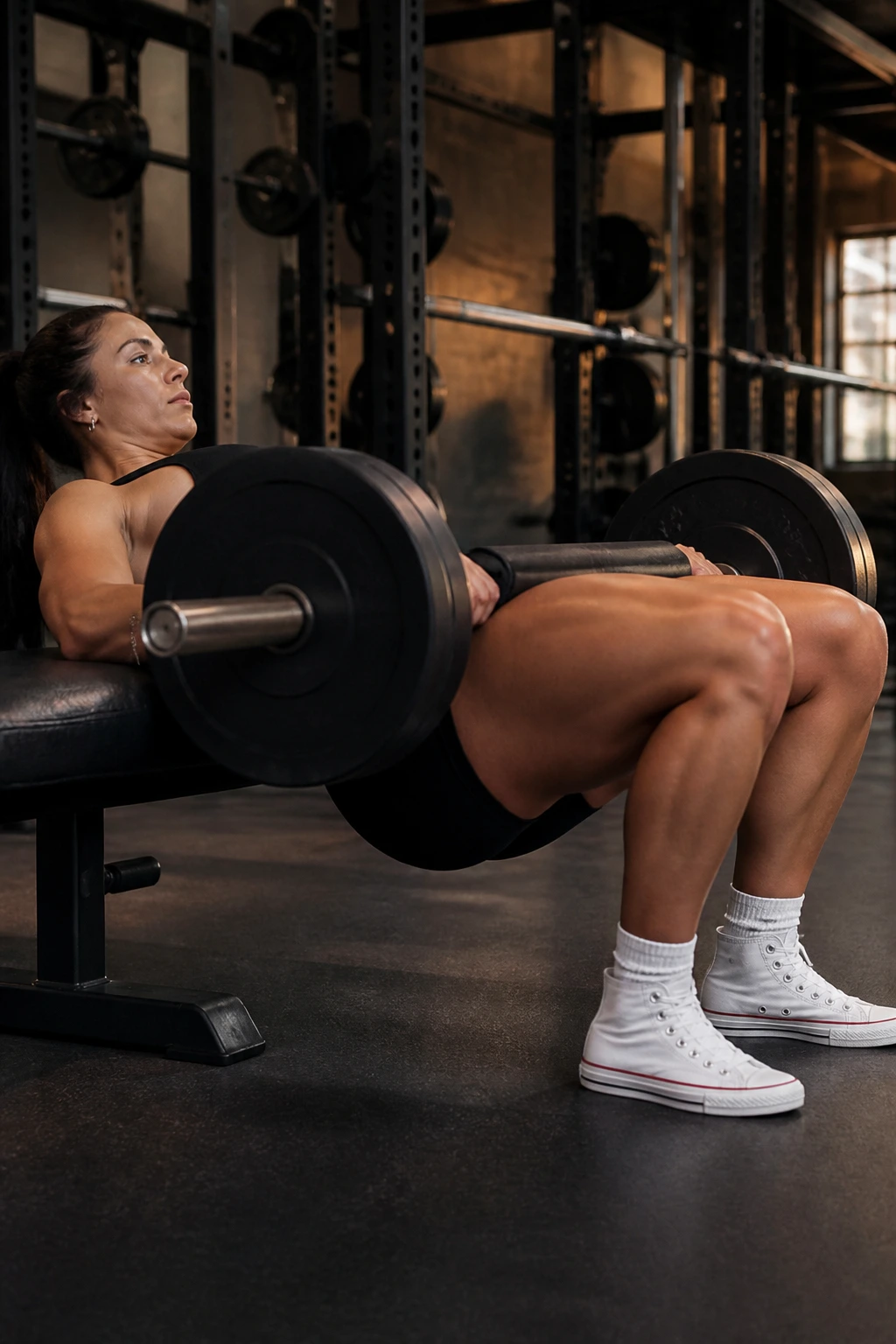
The hip thrust is the undisputed king of glute isolation. It places the glutes in a position of maximum shortening at the top of the movement, which is where the muscle is strongest. Many people butcher this exercise by using their lower back or their hamstrings to compensate. You must fix your setup before you add weight.
Essential Technique Cues
- Position your upper back on a bench, ensuring the edge of the bench is just below your shoulder blades.
- Place your feet flat on the floor, shoulder-width apart, with shins vertical at the top of the movement.
- Drive through your heels. Imagine you are pushing the floor away from you rather than just lifting the bar.
- Maintain a neutral spine. Tucking your chin toward your chest keeps your ribs down and prevents lumbar hyperextension.
The Routine: Perform 4 sets of 8 to 10 repetitions. Use a weight that leaves you feeling like you could only manage one or two more reps. Rest for 2 to 3 minutes between sets to ensure your nervous system recovers enough to push heavy weight again.
2. High-Volume Hypertrophy Day

Sometimes, your muscles need metabolic stress to grow. This routine is not about how much weight you can lift, but how much “burn” you can sustain. We are aiming for muscle fiber fatigue through constant tension. You will use a shorter rest interval here, keeping the heart rate elevated throughout the session.
Focus on the eccentric phase—the lowering part of every movement. Take a full 3 seconds to lower the weight, then explode up. This creates micro-tears in the muscle fibers, signaling the body to repair and grow. Do not cheat the range of motion just to get the reps done. If you cannot complete the prescribed reps with perfect form, drop the weight. Vanity lifting is the fastest way to hit a plateau.
3. The Kettlebell Complex Routine

If you train at home or in a gym with limited space, a kettlebell complex is an efficient way to hit the glutes. Complexes involve moving from one exercise to the next without putting the weight down. This increases the total time under tension for the glutes, which is a massive driver for growth.
The Sequence
- 10 Kettlebell Swings (Hinge hard, snap the hips).
- 10 Goblet Squats (Sink deep, keep the chest up).
- 10 Reverse Lunges per leg (Step back, drive through the front heel).
- Repeat 5 times total. Rest 90 seconds between rounds.
This approach forces your glutes to stabilize the body under fatigue. It builds endurance, but more importantly, it teaches you to engage your glutes throughout a variety of movement patterns. You will feel the glute pump after the second round, guaranteed.
4. Cable Machine Isolation Session
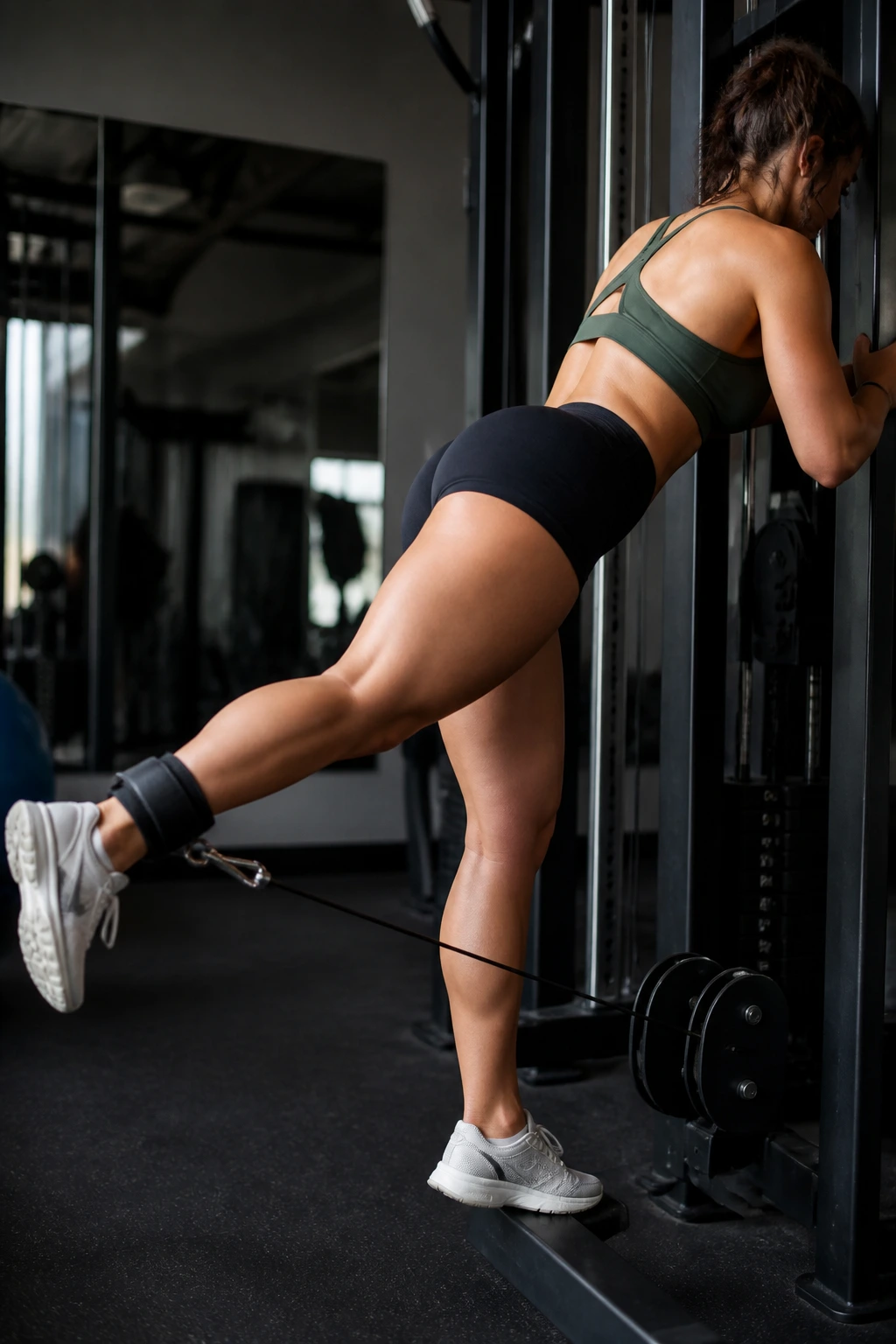
Cables offer constant tension throughout the entire range of motion, unlike free weights, which have “dead zones” where the tension drops off. For a targeted glute session, the cable tower is your best friend. Start with standing cable kickbacks, but do not just swing your leg back randomly.
Lead with your heel. Imagine you are pushing a heavy door open with the back of your heel. You should feel the contraction in the upper glute. If you feel it in your lower back, lean forward slightly and brace your core tighter. Perform 3 sets of 15 repetitions on each leg, focusing on a 1-second pause at the peak of the contraction.
5. Single-Leg Stability Circuit
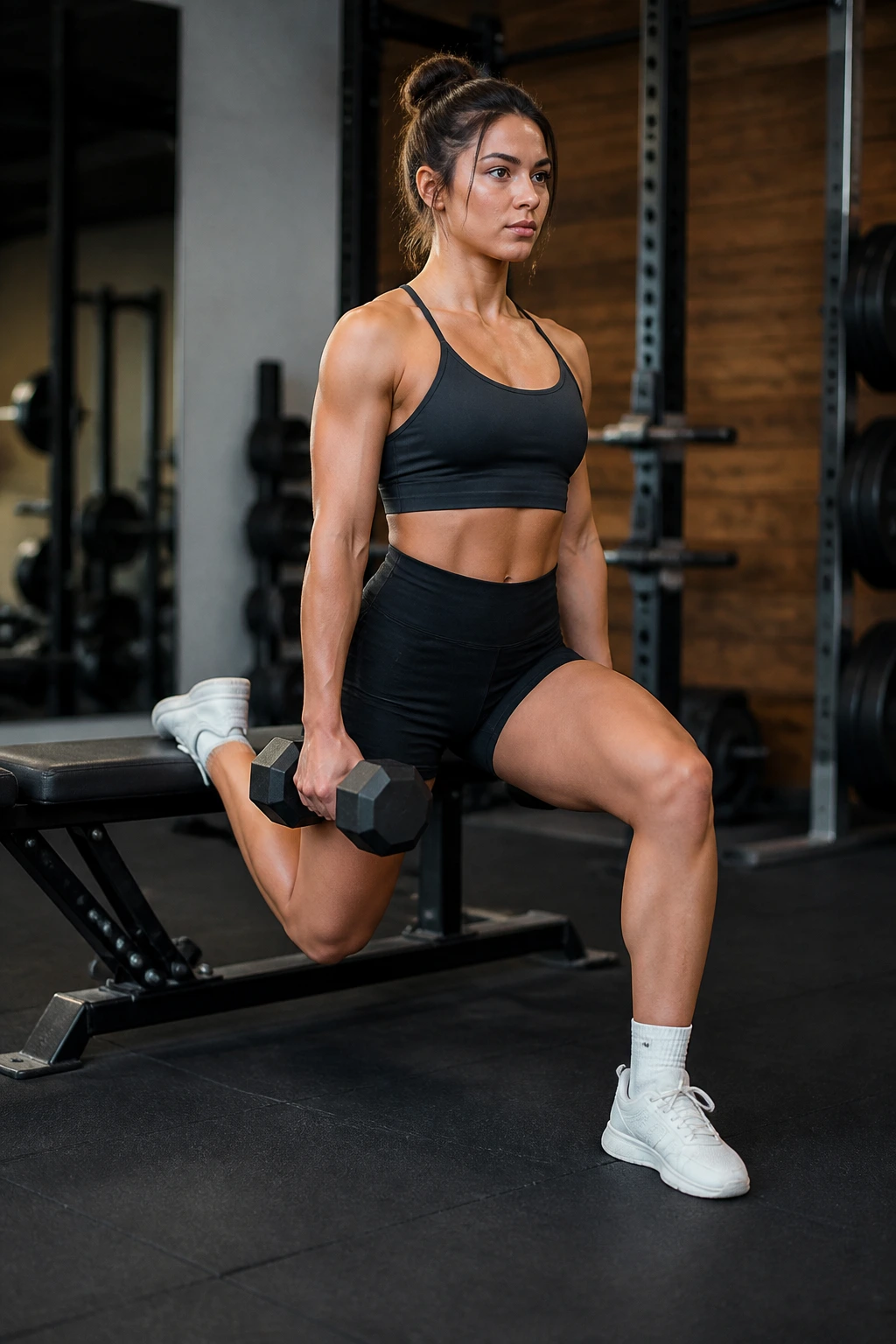
Stability is often the missing link in glute training. If your stabilizing muscles are weak, your body will instinctively limit how much force the prime movers (the glutes) can produce. This circuit forces each leg to work independently, correcting muscular imbalances that are common when we rely too heavily on bilateral movements like squats.
Start with Bulgarian split squats, holding dumbbells in each hand. Then, immediately transition into single-leg Romanian deadlifts without resting. Follow this with a single-leg glute bridge hold for 45 seconds. The burn you feel is a result of your smaller stabilizing muscles firing in unison with the gluteus maximus. Do not rush this; control is everything.
6. Glute-Focused Leg Press Strategy
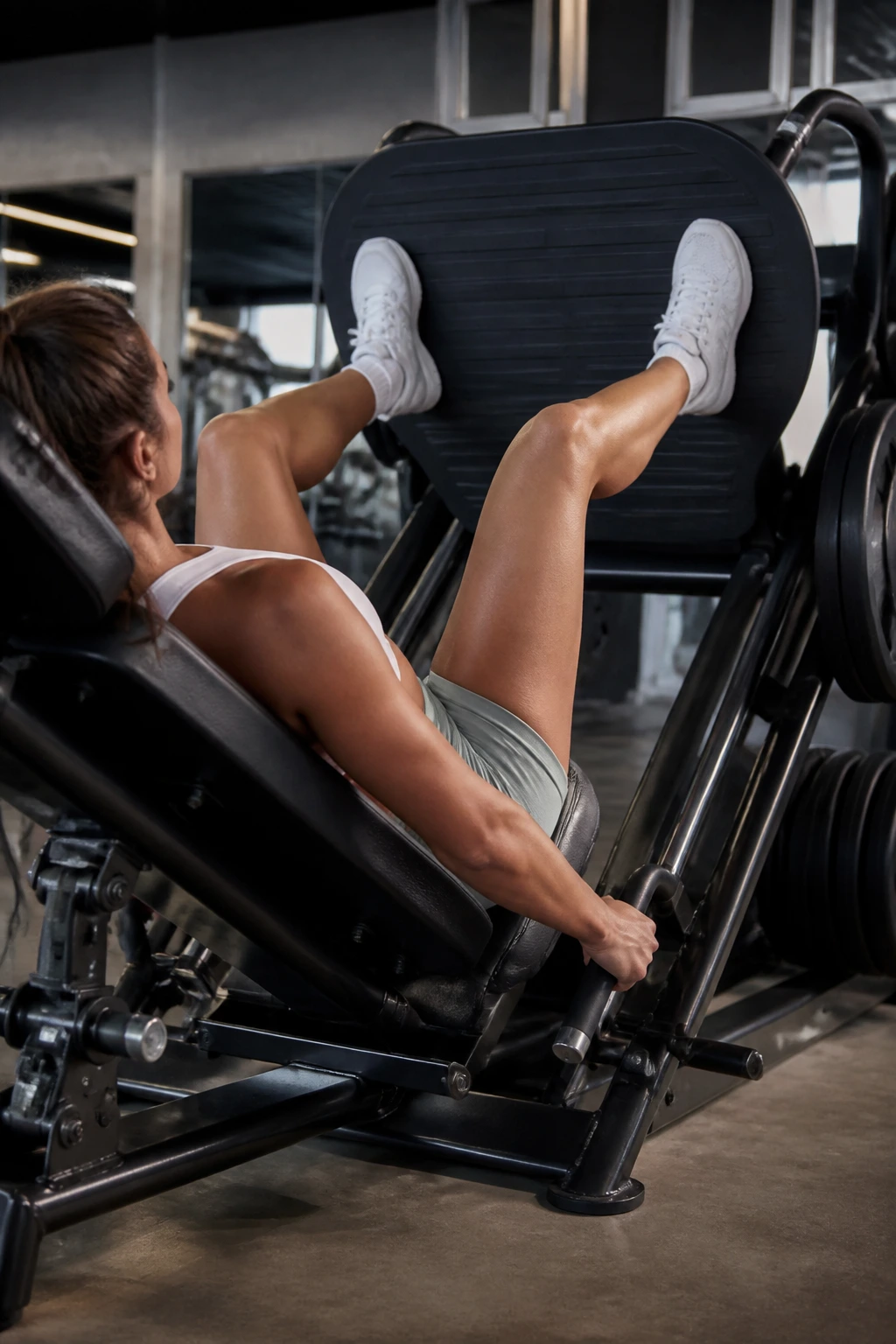
Most people use the leg press as a quad-dominant exercise, but you can easily shift the focus to your glutes with a simple foot placement adjustment. Place your feet high on the platform and slightly wider than shoulder-width. This forces the hip joint to open more, placing the stretch directly onto the glutes.
Key Adjustments
- Go deep. Lower the sled until your knees are near your chest, but keep your lower back glued to the pad.
- Push through the heels. Avoid pushing with your toes, as this shifts the load to the quads.
- Do not lock your knees at the top. Stopping just short of lockout keeps the tension on the muscles and off the knee joints.
7. Banded Glute Activation Warm-up
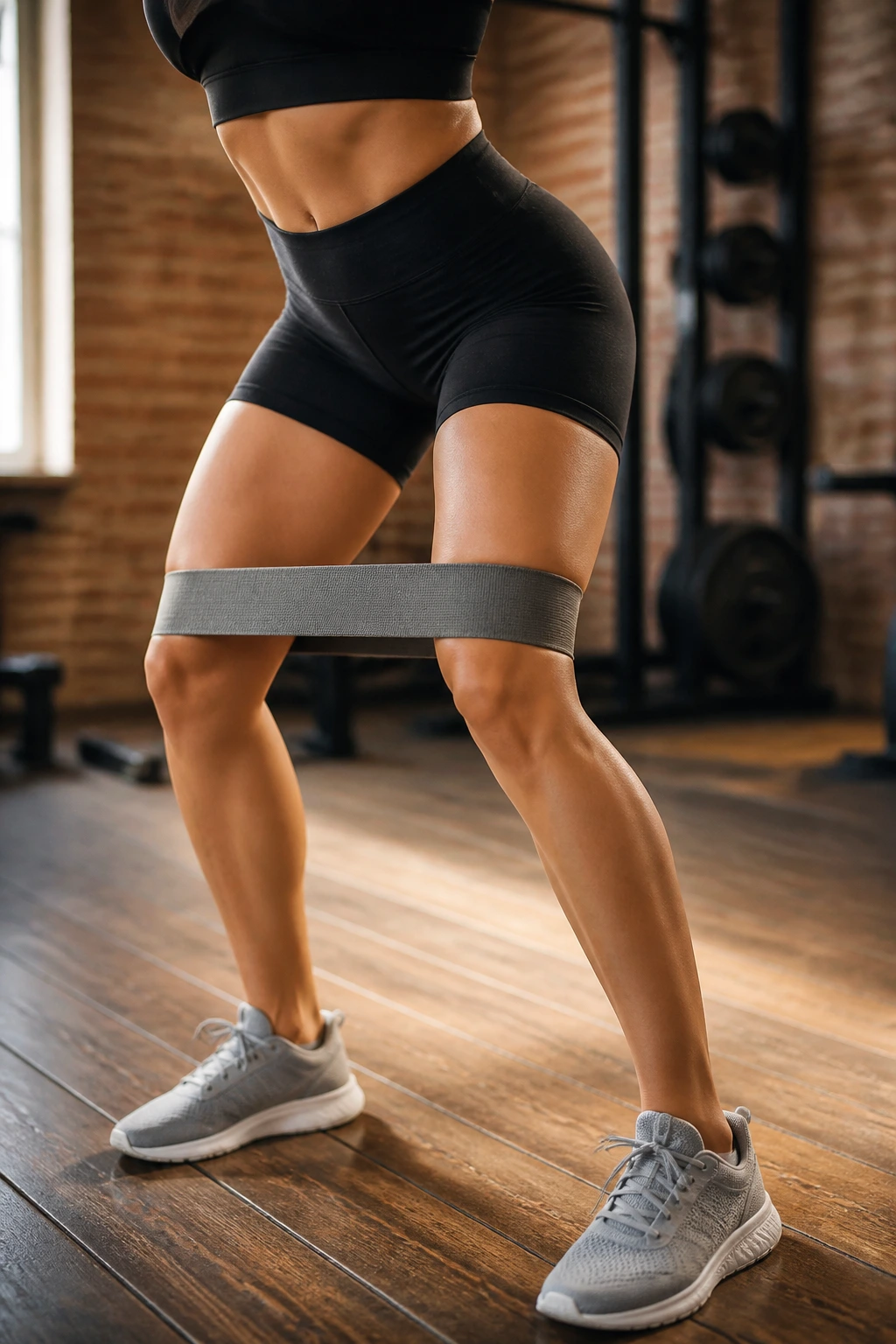
Never start a heavy lifting session with cold glutes. Most people have what I call “dormant glutes” from sitting at a desk all day. You need to wake them up. Use a medium-resistance fabric resistance band placed just above your knees.
Perform 20 lateral walks, 20 clamshells per side, and 20 glute bridges. This routine does not need to be heavy; it just needs to be precise. You are looking for that specific feeling of fatigue in the side of your hip. Once you feel that “fire,” your glutes are primed to fire during your heavy compound lifts. Skip this, and you will likely end up using your hamstrings or quads for exercises that should be glute-dominant.
8. Dumbbell-Only Home Routine
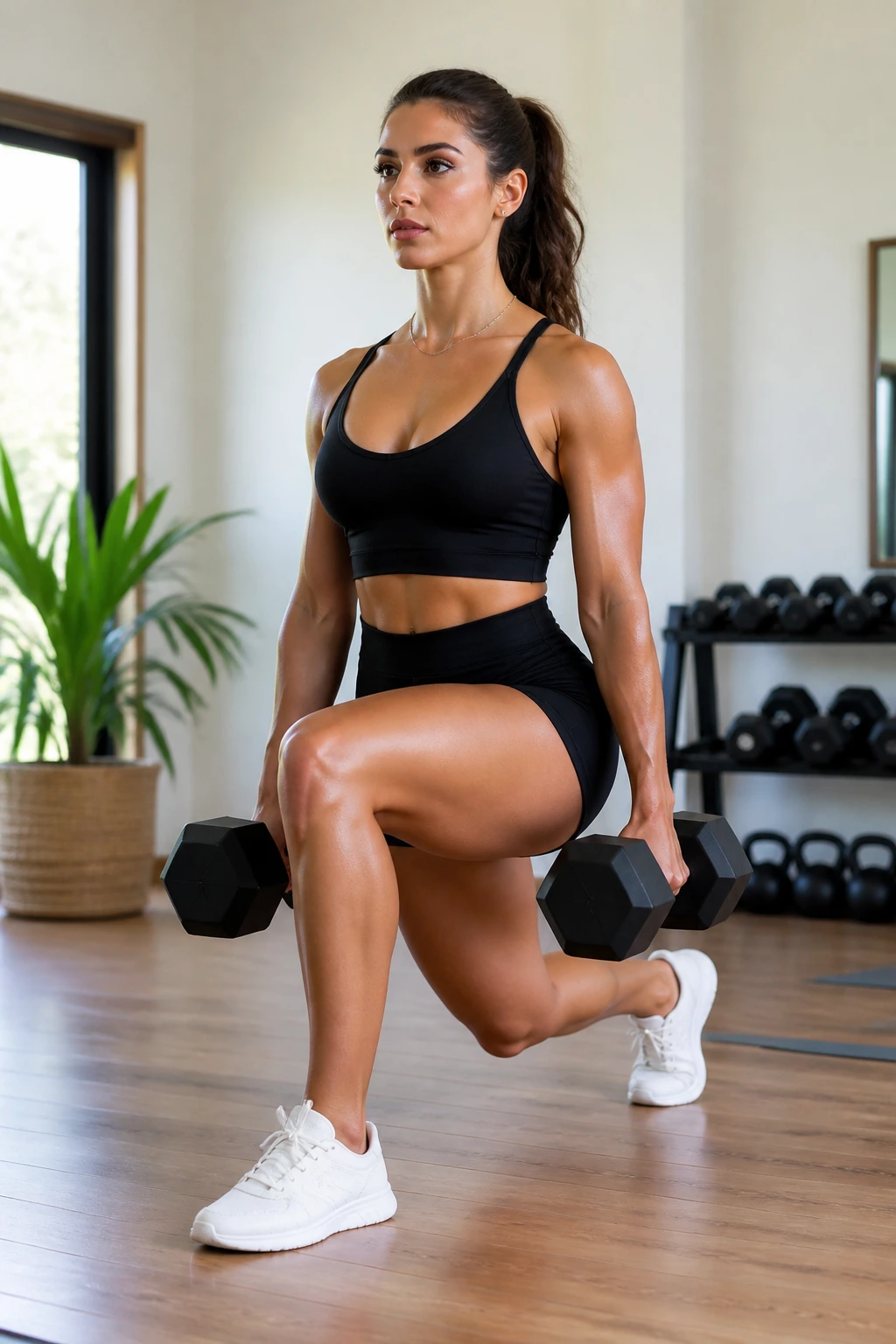
You do not need a commercial gym to build a powerful posterior. Dumbbells are incredibly versatile. This routine focuses on the “hinge” and “lunge” patterns. Grab a pair of heavy dumbbells and perform walking lunges—but take long, exaggerated steps.
Longer steps emphasize the glutes, while shorter steps emphasize the quads. Pair these with weighted glute bridges, where you place the dumbbell across your hips. Hold it there firmly. Aim for 4 sets of 12-15 reps. If the weight feels too light, slow down the eccentric phase to 4 seconds. The intensity comes from your control, not the equipment.
9. The Romanian Deadlift Masterclass
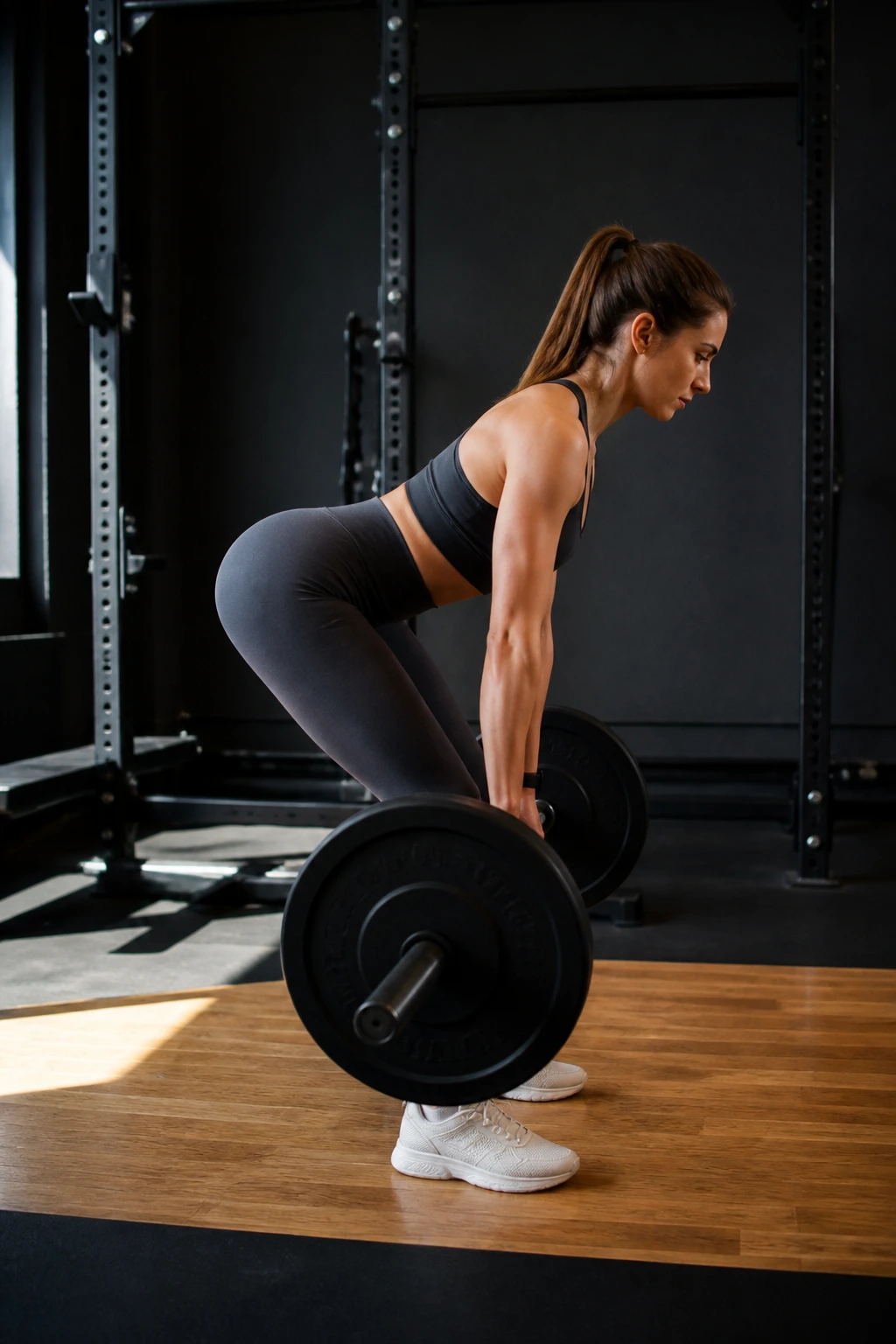
The Romanian Deadlift (RDL) is the best exercise for hitting the glute-hamstring tie-in. The goal is to push your hips back as far as possible, keeping the bar close to your shins, until you feel a deep stretch in your hamstrings and glutes.
The “hinge” concept
- Start with the bar at hip height.
- Keep a slight bend in your knees, but do not let them travel forward.
- Think about closing a car door with your glutes. Push the hips backward.
- Drive back up by squeezing the glutes. Do not pull with your arms.
Stop the movement the moment your hips stop moving backward. If you go lower, you are just rounding your spine to reach the floor. That is a one-way ticket to back pain, not muscle growth.
10. Bodyweight Plyometric Burnout
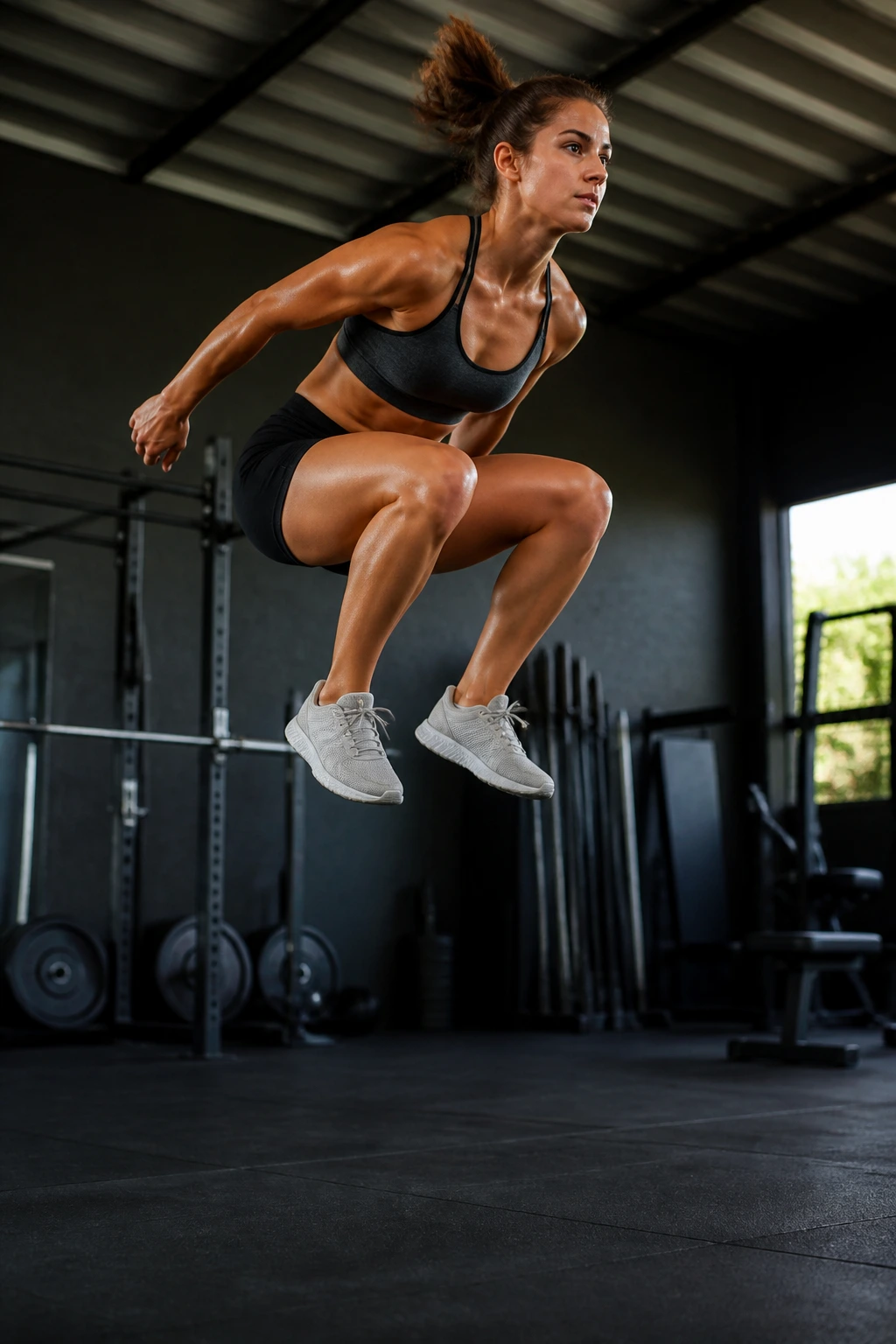
Explosive movements recruit the fast-twitch muscle fibers, which have the highest potential for growth. You do not need heavy weight to get an explosive effect. Try jump squats, but focus on the landing.
Land softly. Absorb the impact through your glutes and hamstrings. Pair these with broad jumps. Perform these at the very end of your workout as a finisher. 3 sets of 10 explosive jumps will leave your legs feeling like jelly. This is a great way to push past a plateau by forcing your muscle fibers to adapt to a different type of stress.
11. Reverse Lunge Variations
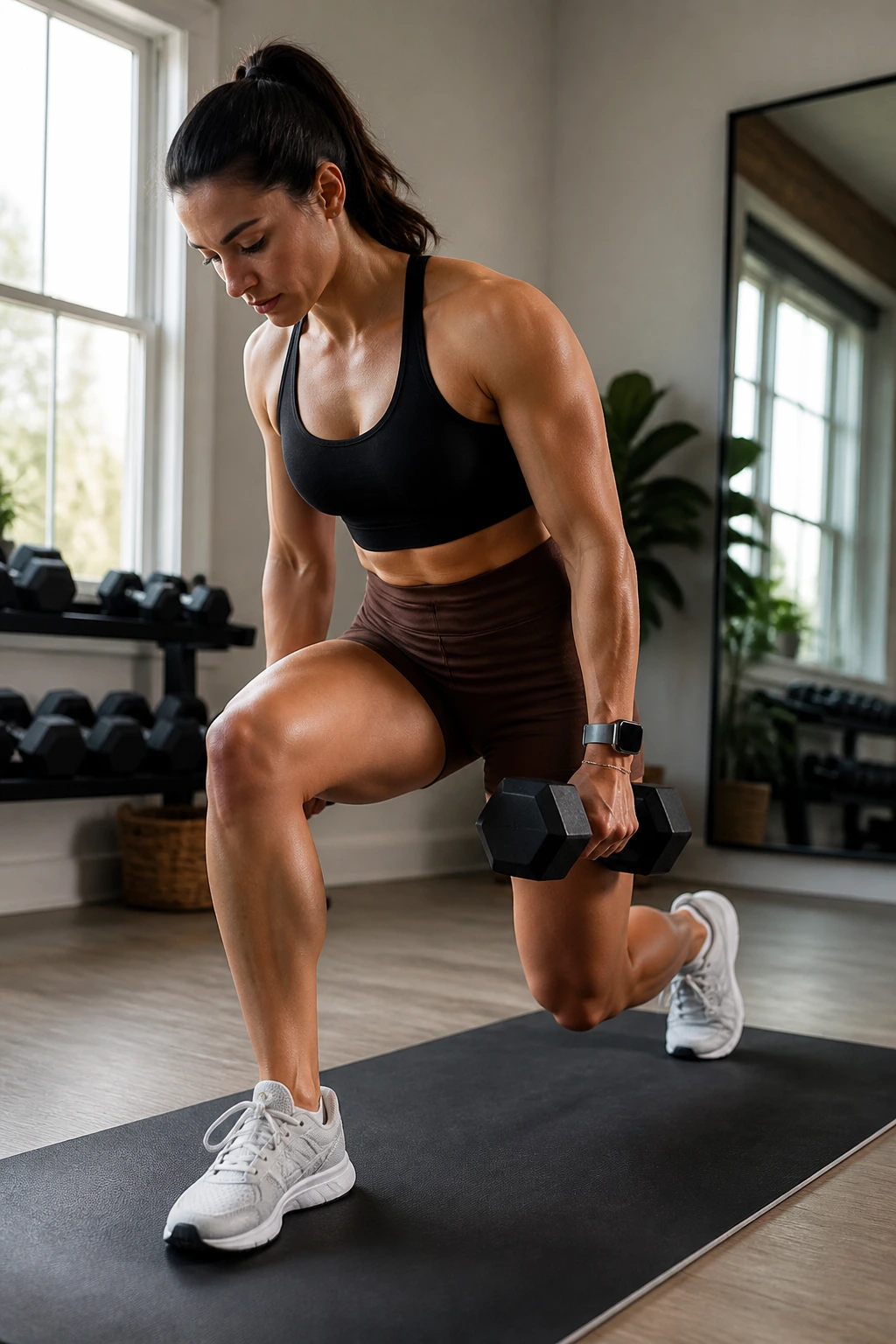
Reverse lunges are superior to forward lunges because they are much friendlier on the knee joint and allow for a more glute-centric hinge. When you step back, keep your torso slightly angled forward. This small shift in body angle puts the glutes at a mechanical advantage compared to an upright torso.
Hold one dumbbell in the hand opposite the working leg. This forces your glutes and core to stabilize against the uneven load. It is a subtle change that makes the exercise significantly harder. Perform 3 sets of 10 reps per leg, with no rest between sides.
12. The Bulgarian Split Squat Survival Guide
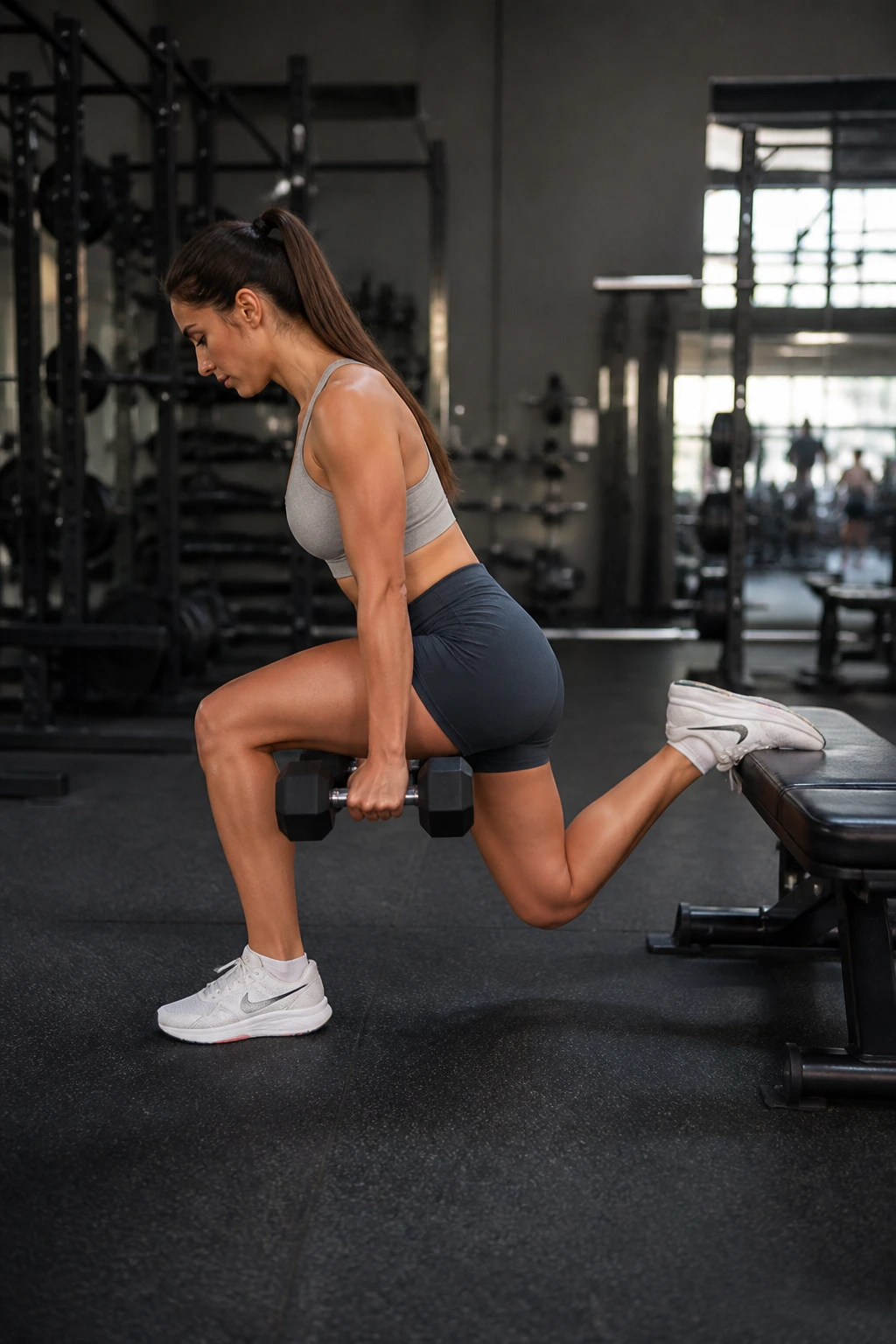
There is a reason people hate this exercise: it works. It is the ultimate test of unilateral strength and glute engagement. To make it more glute-focused, keep your front foot further away from the bench.
If your foot is too close, you will feel it mostly in your quads. By stepping further out, you increase the hip flexion angle, which targets the gluteus maximus more directly. Lean your torso forward over your front knee. It looks awkward, but it is biomechanically the most effective way to isolate the glute during a split squat.
13. Cable Kickback Precision Routine
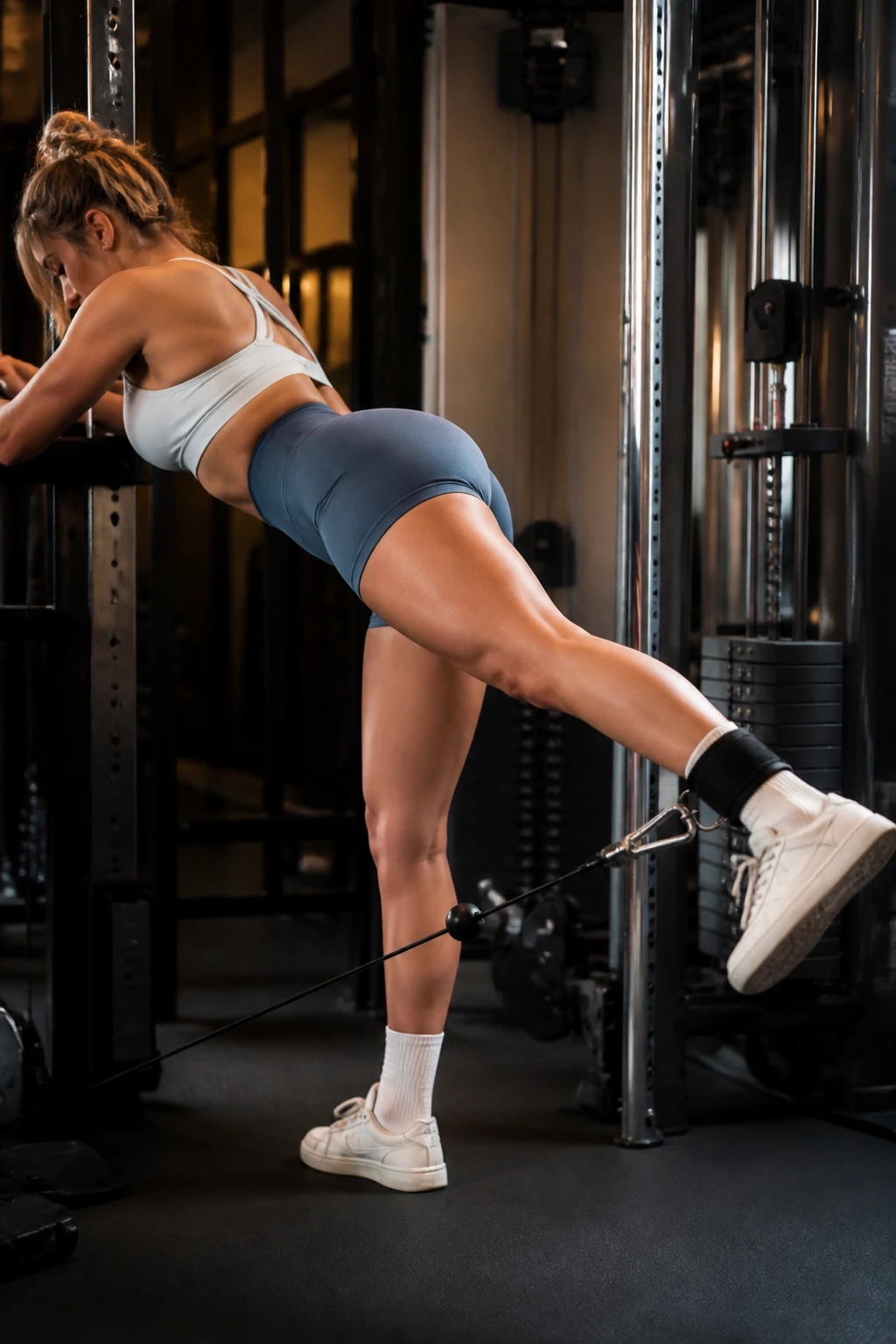
A common mistake on cable kickbacks is using momentum. You see people swinging their leg back as hard as they can, using their lower back to generate the movement. That is useless.
The movement should be slow and controlled. Keep your back flat—do not arch it. Imagine there is a string attached to your heel, pulling it toward the ceiling. Focus on the squeeze at the top for a full second. 4 sets of 15 reps, focusing on the quality of the contraction. If you feel it in your back, lower the weight and tighten your core.
14. The Hypertrophy Tempo Routine

Hypertrophy is about time under tension. If you perform a rep in one second, you are losing out on the muscle-building stimulus. This routine uses a strict tempo for every compound movement: 3 seconds down, 1 second pause, 1 second up.
Pick three exercises: Hip Thrusts, RDLs, and Goblet Squats. Perform them at this specific tempo. It will force you to use significantly less weight than you are used to, but the stimulus on the muscle fibers will be much higher. This is a humbling experience for many, but it is necessary for breaking through growth plateaus.
15. Glute Bridge Pyramid
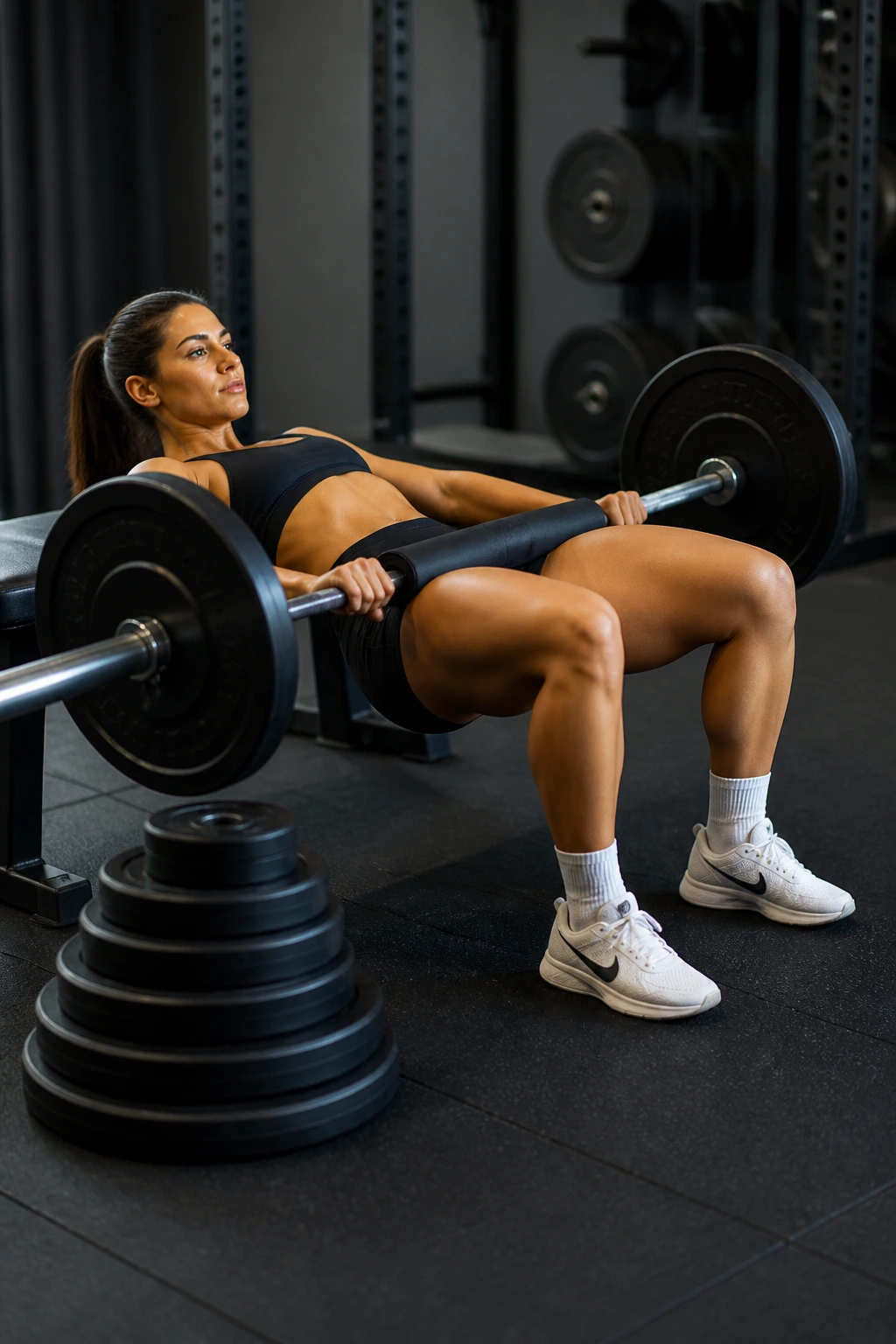
The pyramid structure is excellent for building strength. You start with a manageable weight, increase the load while decreasing the reps, and then work your way back down.
The Pyramid Structure
- Set 1: 15 reps (warm-up weight).
- Set 2: 12 reps (increase weight).
- Set 3: 8 reps (heavy weight).
- Set 4: 12 reps (moderate weight).
- Set 5: 15 reps (light weight).
This forces your muscles to handle different loads in a single session. It creates a massive pump and allows you to practice heavy loading safely.
16. Smith Machine Glute Session
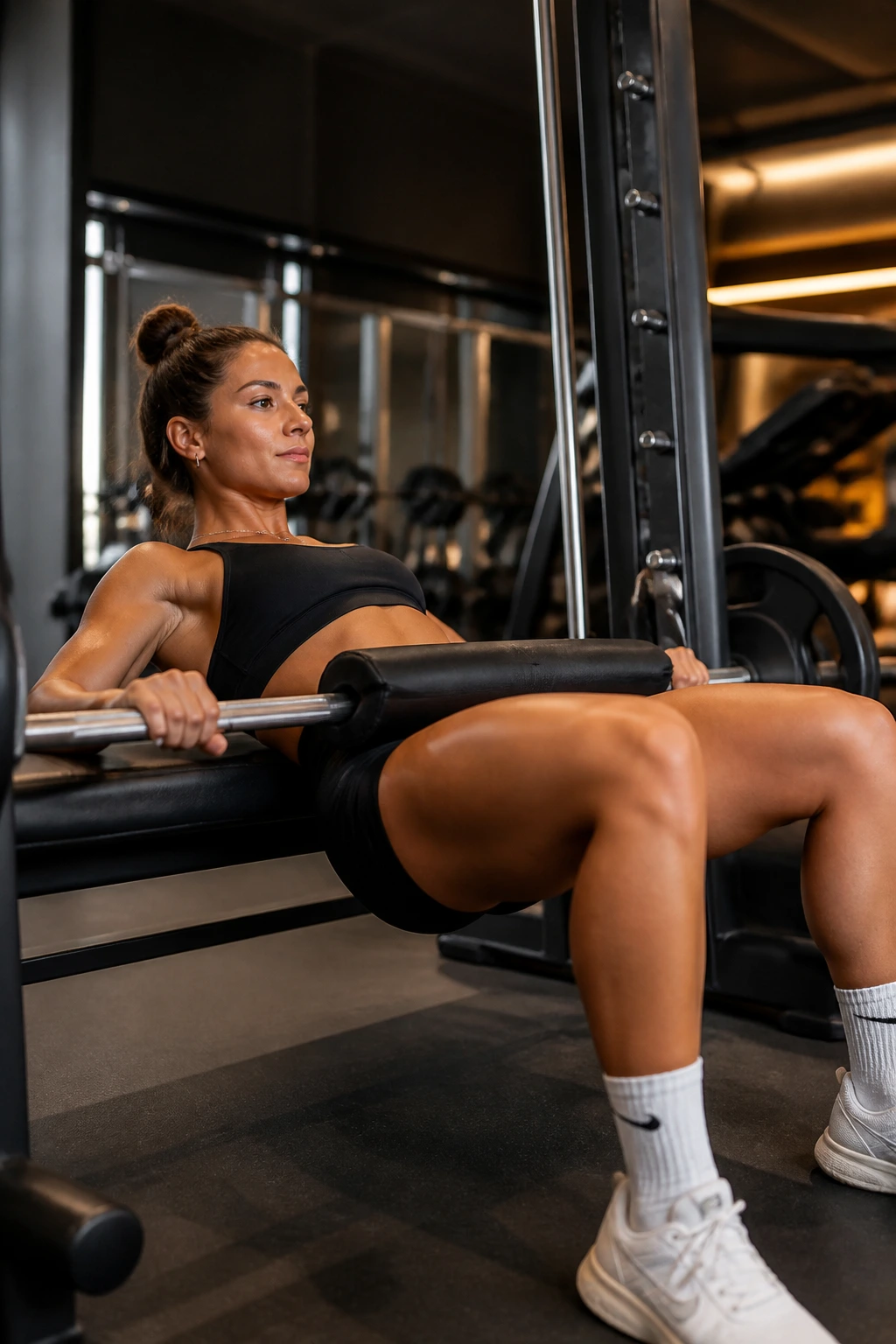
The Smith machine is often criticized, but for glute training, it provides a stable environment that allows you to focus purely on the muscle contraction. It is excellent for hip thrusts because you do not have to worry about balancing a barbell.
Set the bar height so you can get into position easily. Place a pad on the bar—the Smith machine bar is uncomfortable. Because the bar is locked into a fixed path, you can lean into the movement with total confidence. Use this to focus on the mind-muscle connection. Squeeze at the top, hold for a count of two, and lower with control.
17. The Medius-Focused Side-Lying Series
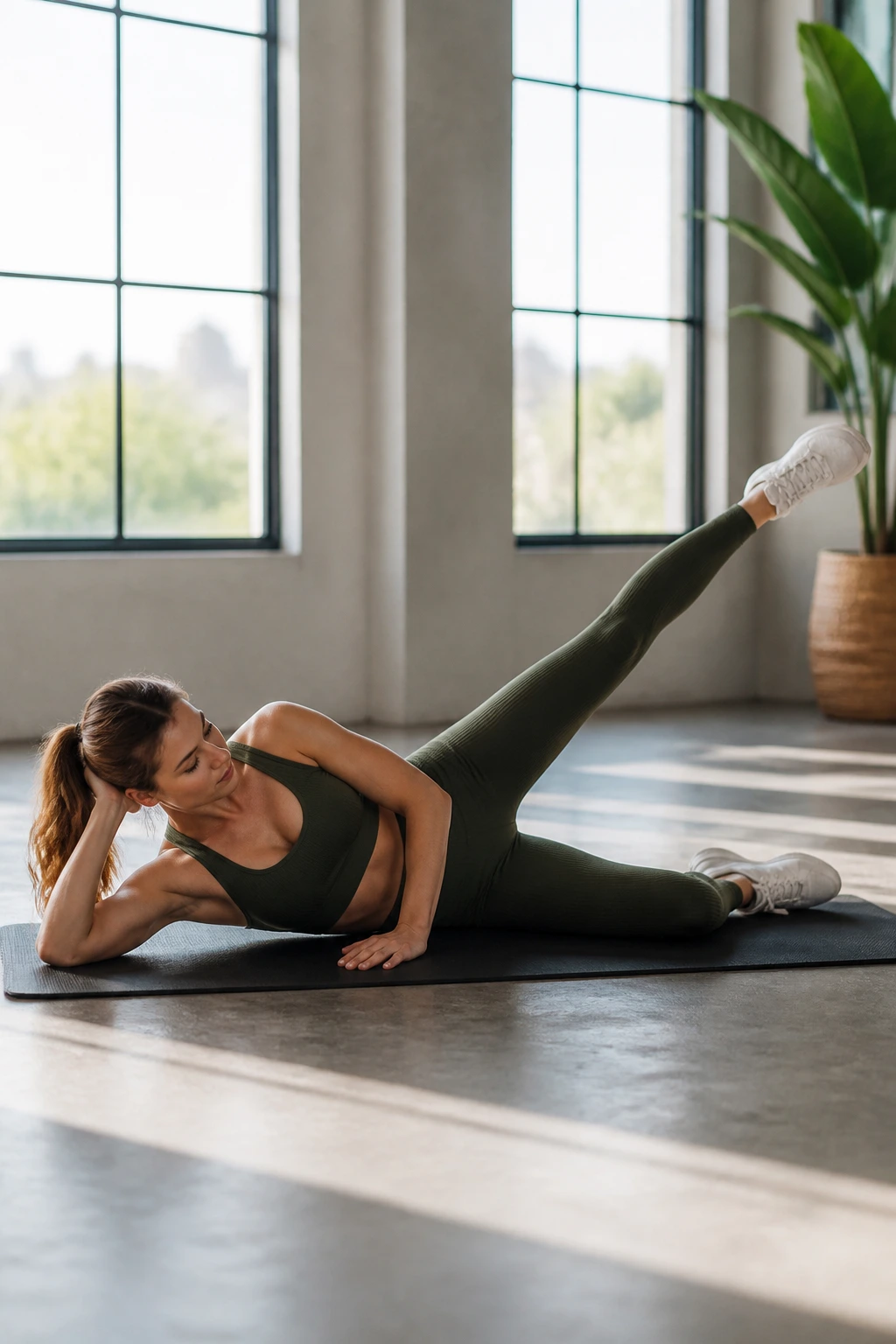
The gluteus medius is responsible for hip abduction (moving the leg away from the midline of the body). If this muscle is weak, your hips will look “saggy” on the sides. You cannot build a rounded look without targeting this specific area.
Side-lying leg raises are the best tool for this. Lie on your side, keep your leg straight, and lift it toward the ceiling. Do not rotate your hip; keep your toes pointing forward. Perform 3 sets of 20 reps per side. It is a slow burn that you will definitely feel the next day.
18. Zercher Squat Glute Emphasis
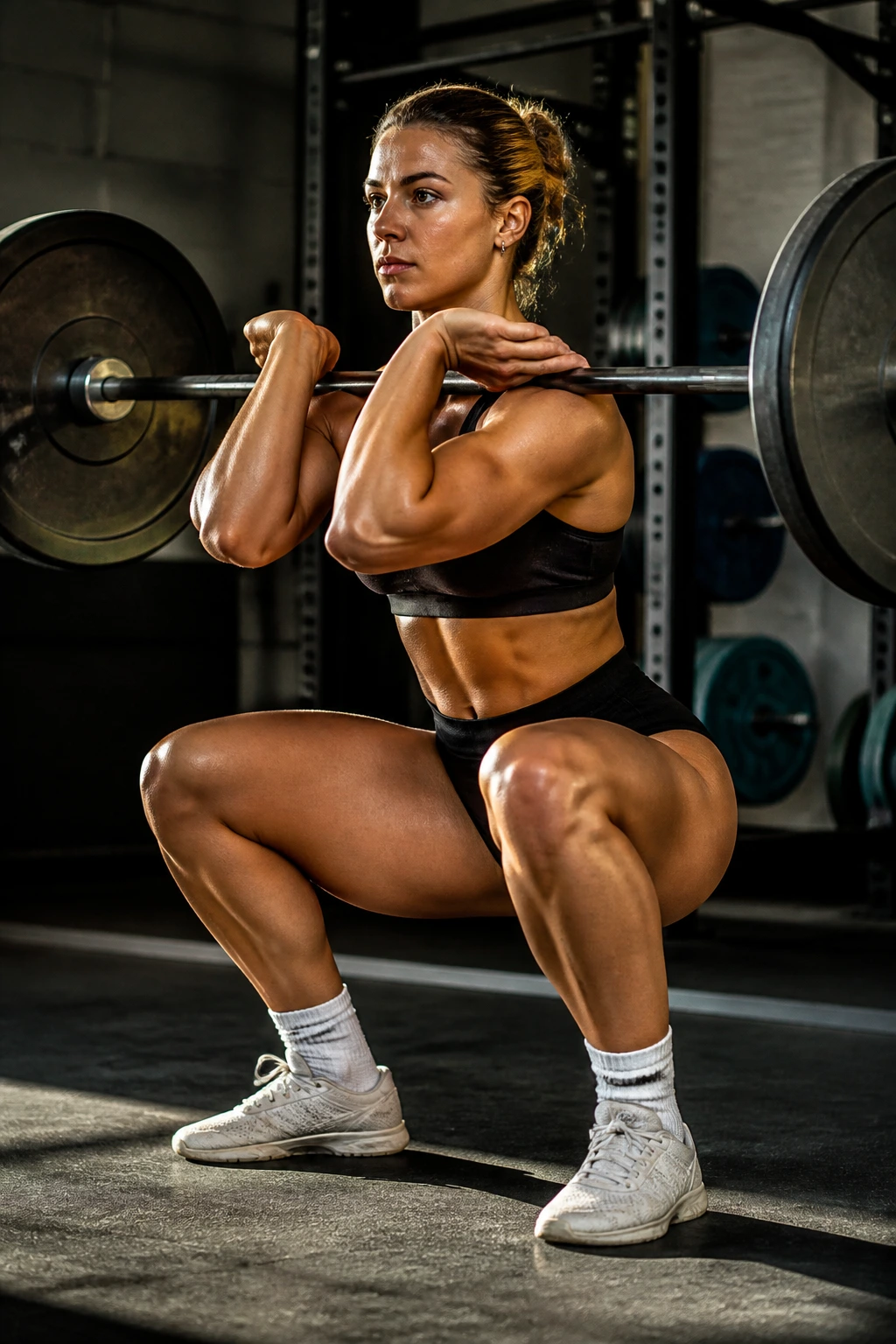
The Zercher squat involves holding the barbell in the crooks of your elbows. This setup forces you to keep your torso upright, which can be tough. However, if you widen your stance and push your knees out, you engage the glutes significantly more than a traditional back squat.
It also requires immense core stability. Because the weight is in front of you, your posterior chain has to work harder to keep you from falling forward. It is a brutal exercise, but it is incredibly effective for overall lower body development.
19. The Step-Up Progression
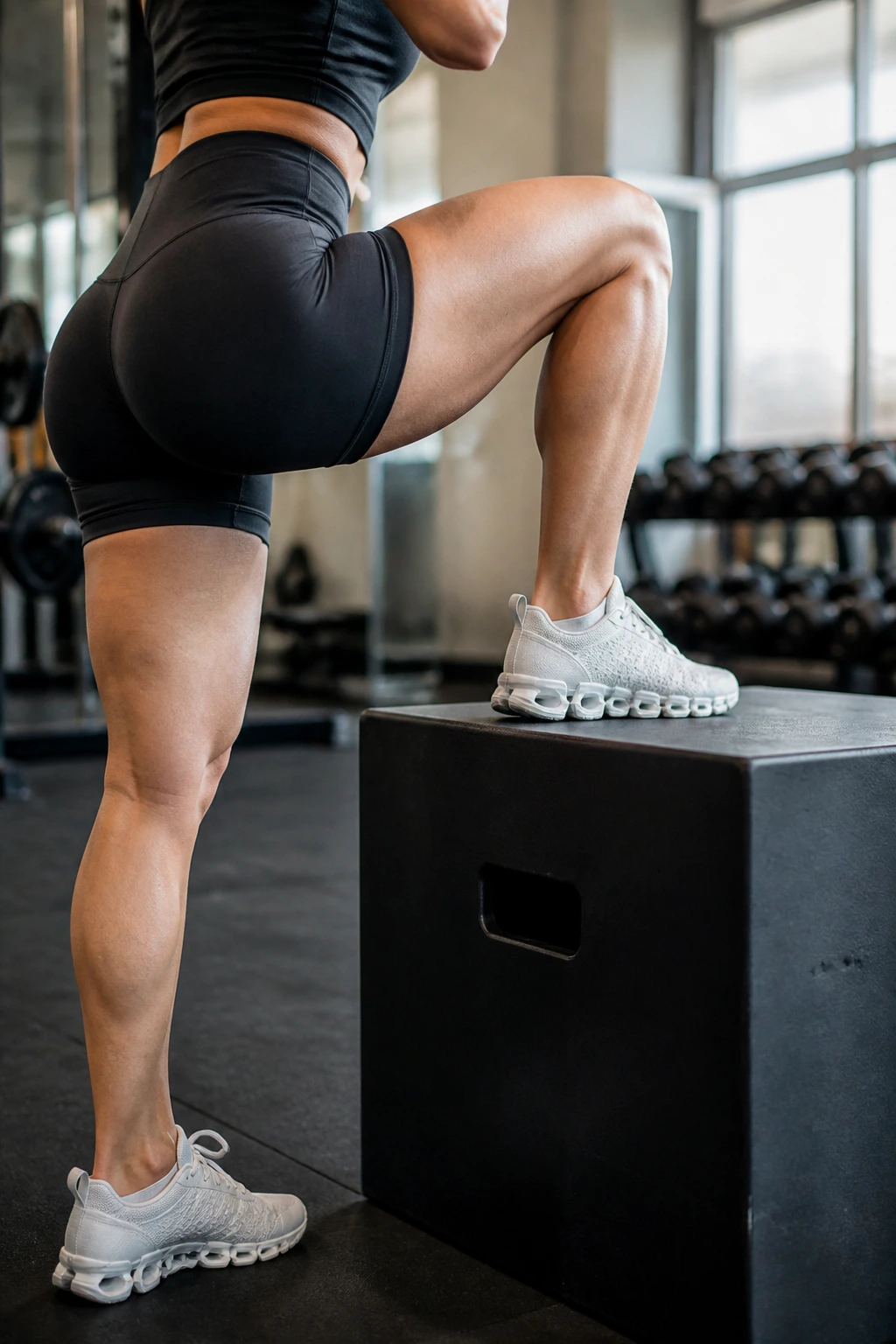
Step-ups are the most overlooked glute exercise. They allow for a huge range of motion, which is crucial for hypertrophy. Use a box height that places your knee at a 90-degree angle when your foot is on the box.
How to do it right
- Step onto the box.
- Drive through the heel of the top foot.
- Do not push off with the bottom foot.
- Focus on the control on the way down. Lower yourself slowly. That eccentric descent is where the glute grows.
20. Pause-Rep Protocol
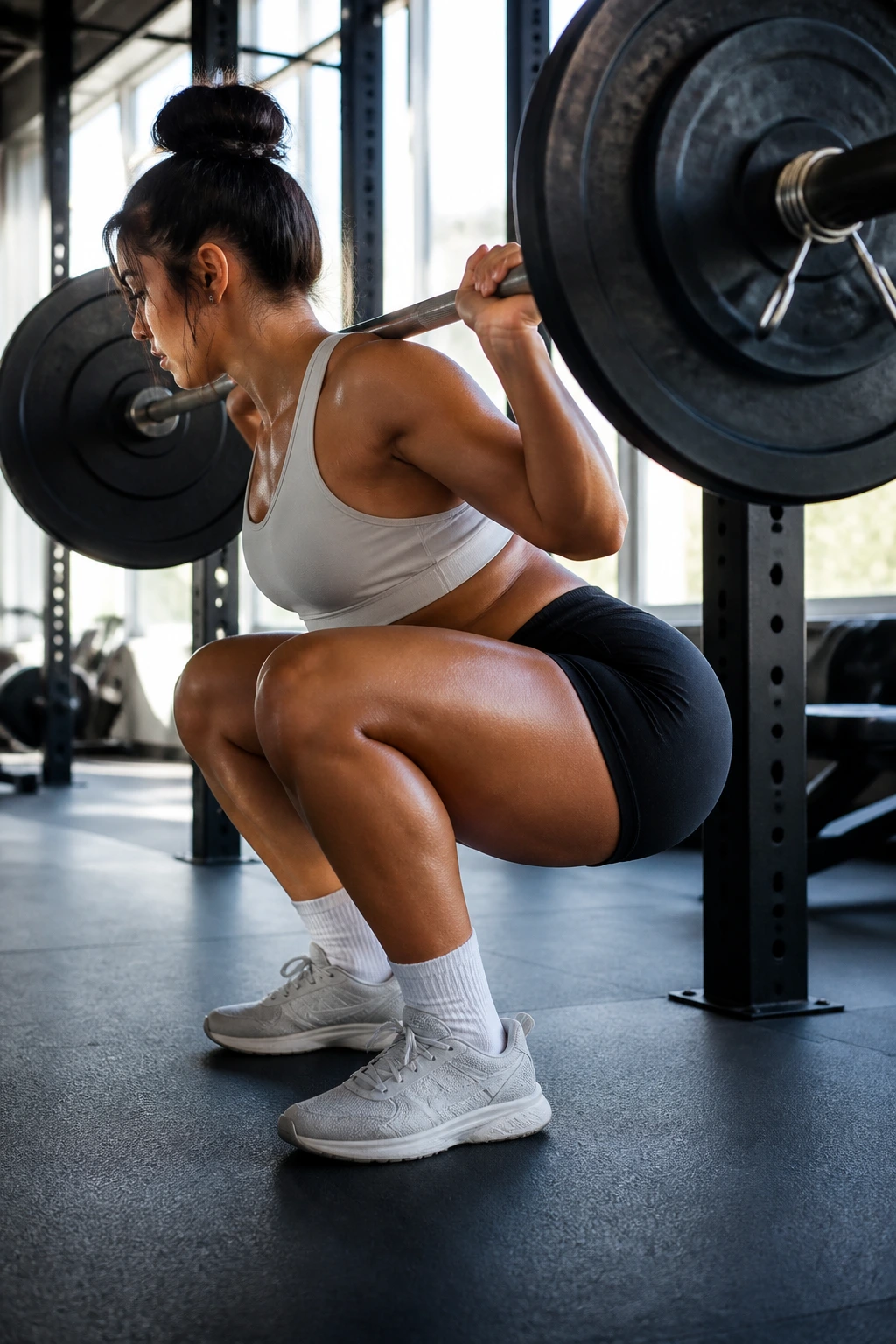
This is a method you can apply to any routine. For every single repetition of an exercise, pause at the most difficult part of the movement for two seconds.
On a hip thrust, pause at the top. On a squat, pause at the bottom. On an RDL, pause at the very bottom of the stretch. This removes all elastic energy from the muscle, forcing your glutes to produce raw force from a dead stop. It is exhausting, but it builds incredible strength and muscle density.
21. The “Everywhere” Glute Finisher
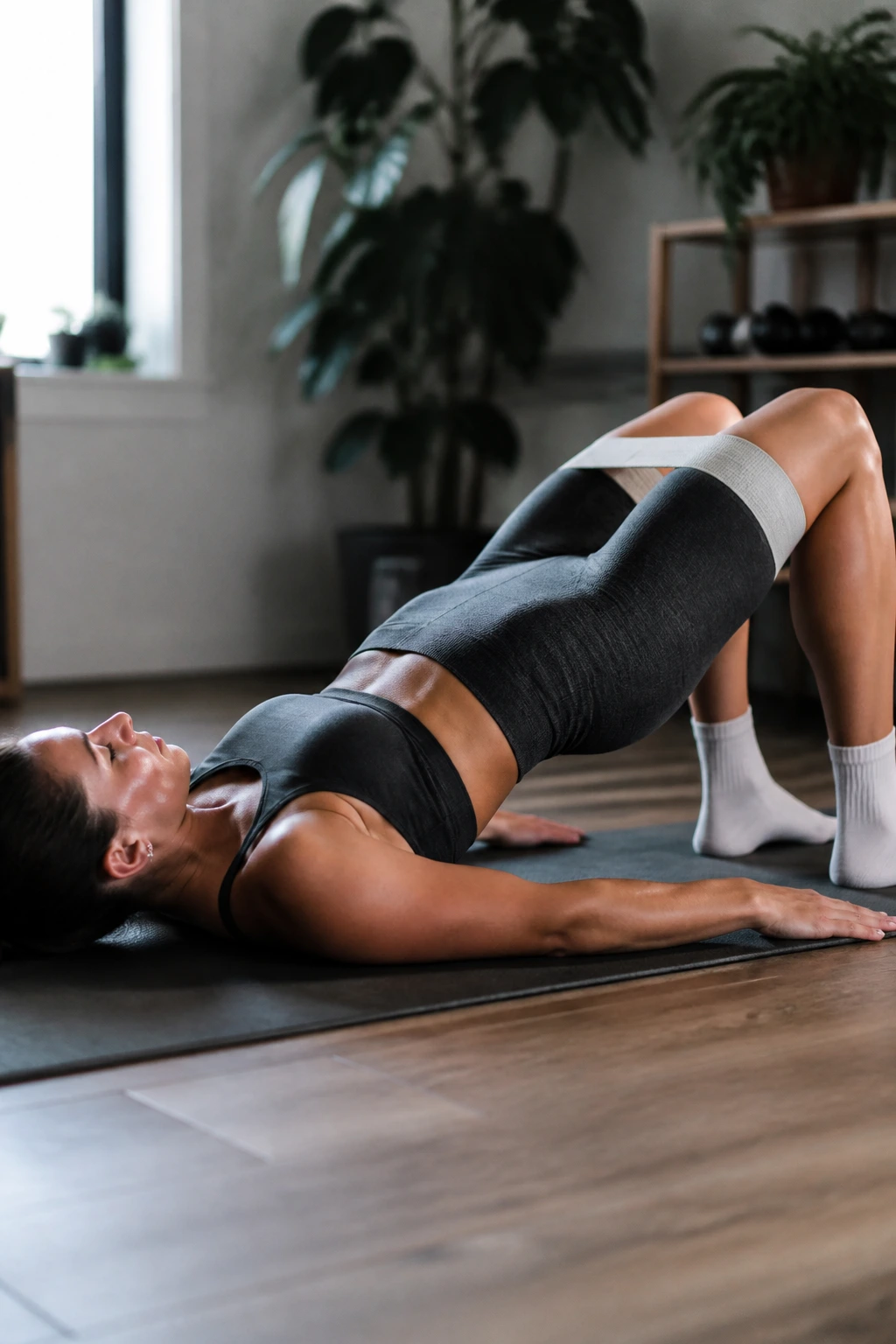
You do not always have time for a full gym session. This finisher is designed to be done anywhere with just a resistance band.
- 30 Banded Clamshells.
- 30 Banded Glute Bridges.
- 30 Banded Abductions.
- Repeat this circuit 3 times.
This is not a strength-building routine; it is a maintenance and blood-flow routine. It helps keep the glutes engaged throughout the week, especially if you have a job that requires a lot of sitting. Consistency with these small, high-rep sessions can make a noticeable difference in muscle tone over time.
22. Advanced 4-Week Progressive Overload Cycle
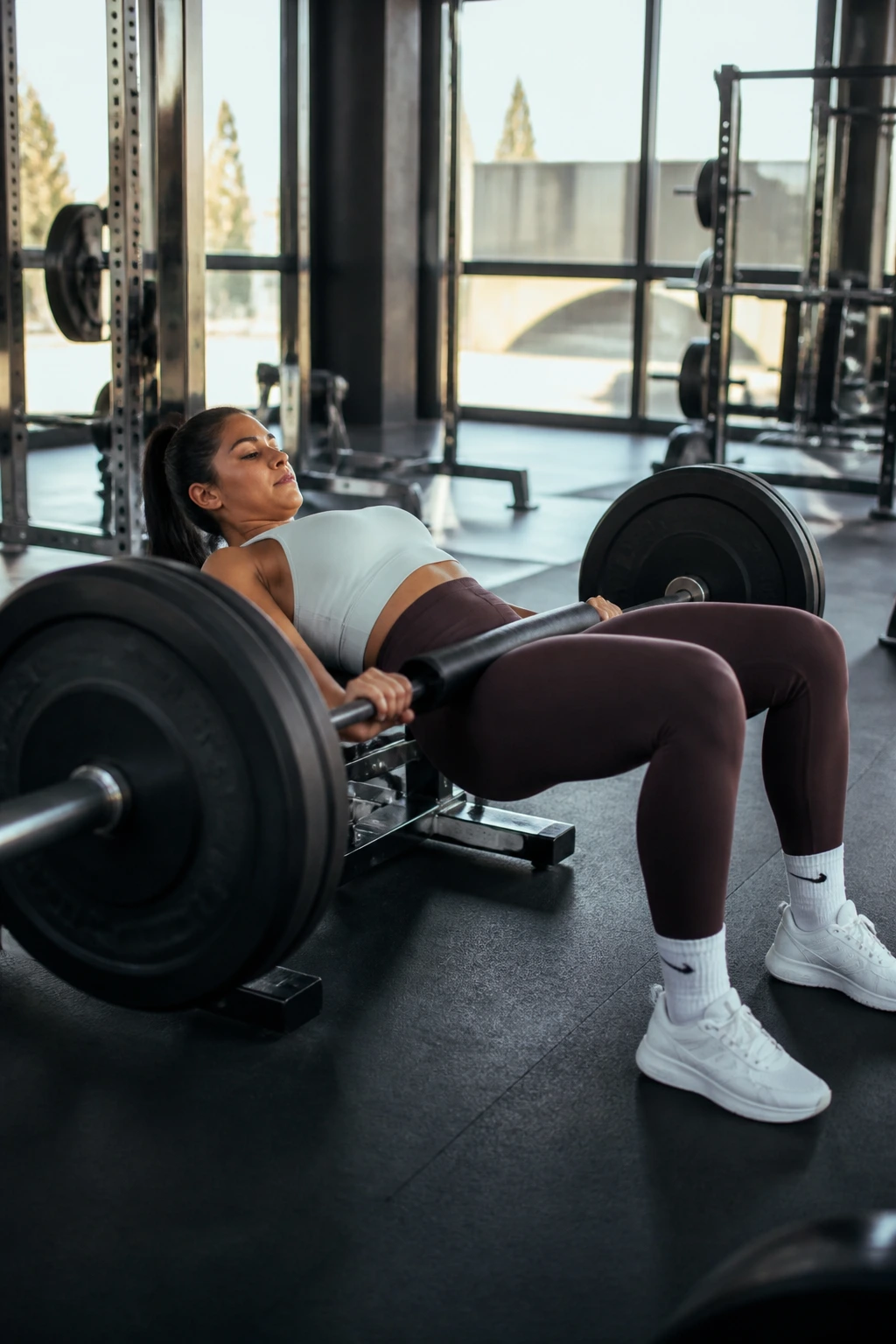
You cannot keep doing the same thing forever. You must track your progress. For four weeks, choose a main glute exercise (like the hip thrust) and aim to add a small amount of weight or one extra rep every single session.
The Tracking Plan
- Week 1: Establish your baseline (e.g., 100 lbs for 10 reps).
- Week 2: Try 105 lbs for 10 reps OR 100 lbs for 11 reps.
- Week 3: Try 110 lbs for 10 reps OR 105 lbs for 11 reps.
- Week 4: Deload. Use 70% of your Week 1 weight for only 2 sets.
This forced progression ensures you are actually getting stronger. If you are lifting the same weight for the same reps for months, your glutes have no reason to grow. Track your numbers, respect the deload week, and watch the results happen.
Final Thoughts
Building glutes is a slow game. It requires patience, heavy lifting, and the willingness to accept that results do not happen overnight. If you are struggling to see progress, look at your intensity. Are you actually pushing yourself near failure? Are you performing the exercises with perfect form, or are you just moving the weight to say you did it?
Focus on the mechanics. Feel the muscle stretch and contract. Eat enough protein to support the repair process. If you stay consistent with these routines and prioritize the fundamentals, the change in your physique will be undeniable. You do not need magic pills or secret exercises. You just need to show up and do the work.
