



If you have spent time trying to firm up your lower body, you have likely run into the same frustration as millions of others: the hips often seem to hold onto stubborn pockets of fat regardless of how many miles you walk or how many salads you eat. It is incredibly common to feel like you are putting in the work, yet the results remain elusive. Here is the uncomfortable truth that most trainers will not tell you: you cannot force your body to lose fat in one specific area, no matter how many leg lifts you do. You cannot spot-reduce fat.
However, you can reshape the area. By building lean, strong muscle underneath the fat, you change the structural silhouette of your hips and thighs. This creates that firmer, tighter appearance many people are chasing. When you focus on strengthening the gluteal muscles—specifically the gluteus medius and minimus, which sit on the side of the hip—you stabilize your pelvis and create a more toned look that holds its shape. This list of exercises is designed to target those specific muscles, along with the larger gluteus maximus, to help you build a stronger, tighter foundation.
1. Lateral Band Walks for Outer Hip Activation
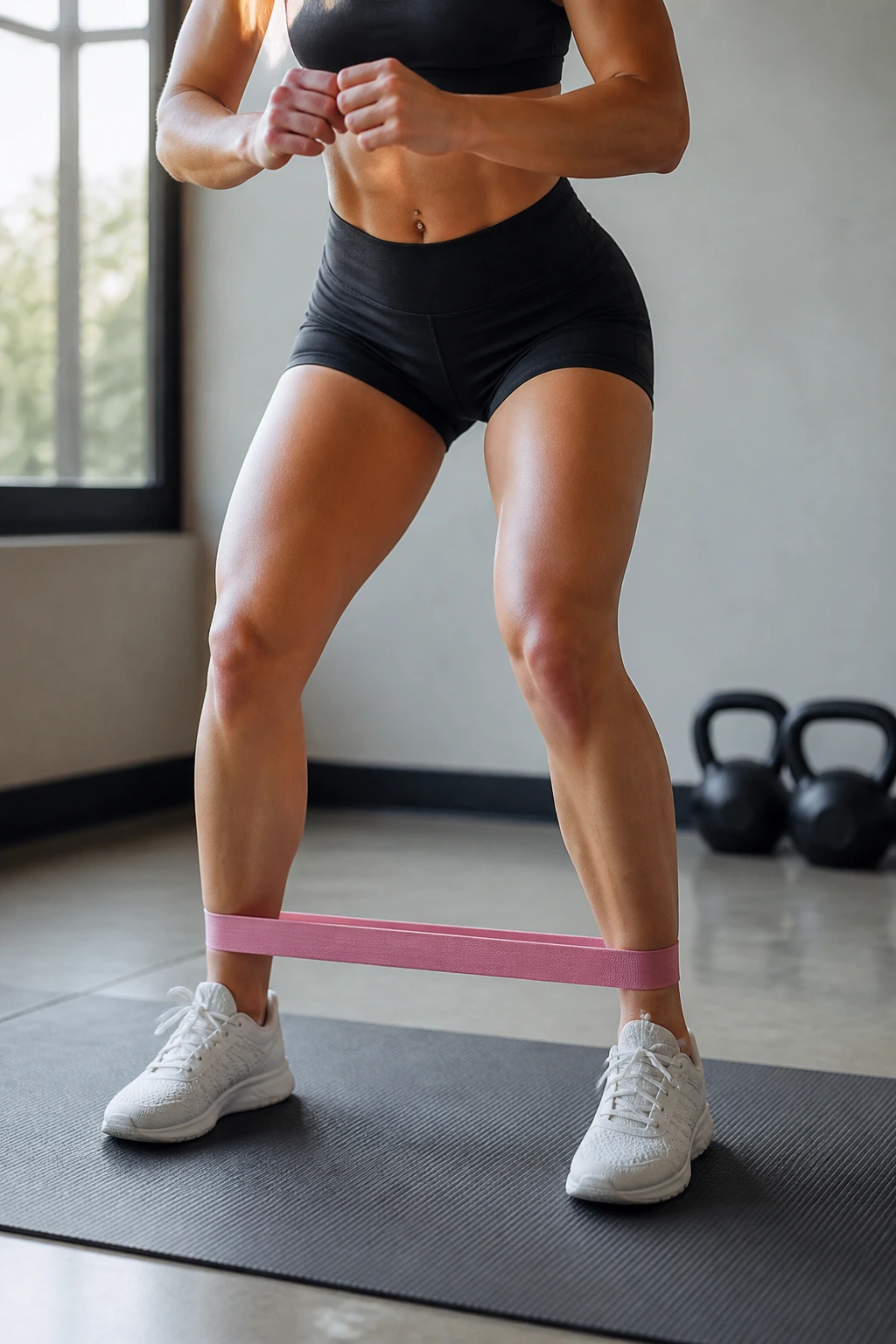
This is perhaps the gold standard for targeting the gluteus medius, the muscle responsible for hip abduction and stabilizing your pelvis. Most people perform these with poor form, using momentum rather than muscle tension. You need to focus on the tension in the band, not the speed of your movement.
Why This Works
When you place a resistance band around your ankles or just above your knees, you force your outer hips to fight against that resistance. Every step you take forces the hip abductors to contract to move your leg away from the centerline of your body. This constant tension builds endurance and strength in that specific, hard-to-reach area.
Perfecting Your Form
- Keep your knees slightly bent at all times.
- Avoid standing straight up; stay in a partial squat position.
- Do not let your feet come all the way together; keep tension on the band even when your feet are close.
- Lead with your heel, not your toes, to keep the focus on the side glute.
Pro tip: If you feel this mostly in your quads, you are likely standing too tall. Drop your hips deeper into a squat and ensure your chest stays up.
2. Clamshells for Gluteus Medius Isolation
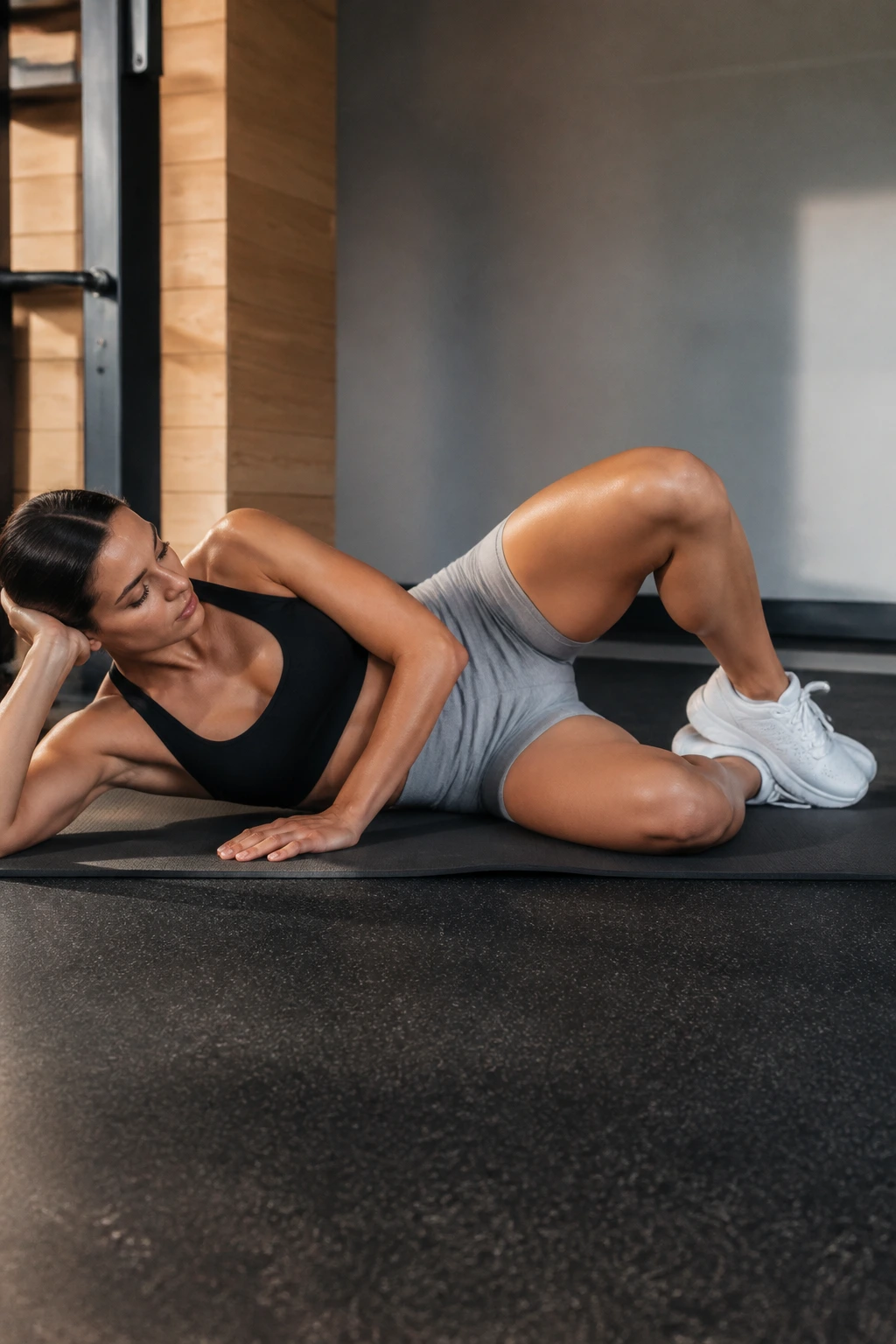
Clamshells look deceptively simple. If you are doing them quickly, you are missing the point. This is an isolation exercise meant to tire out the deep muscles of the hip that often get neglected during compound movements like squats and deadlifts.
The Mechanism
You start lying on your side with your hips stacked, knees bent at a 45-degree angle. By keeping your feet touching and opening your top knee like a clam, you force the top hip to rotate. This movement is pure isolation for the gluteus medius.
Managing the Intensity
- Use a light resistance band just above your knees if your bodyweight becomes too easy.
- Ensure your hips do not roll backward as you open your knee.
- Hold the top position for two seconds, squeezing the muscle hard before slowly lowering.
Common Mistake: The most frequent error is rocking the hips backward to get the knee higher. Keep your hips stationary. The range of motion is naturally small; do not compromise your form just to make the movement look bigger.
3. Curtsy Lunges for Lateral Stability
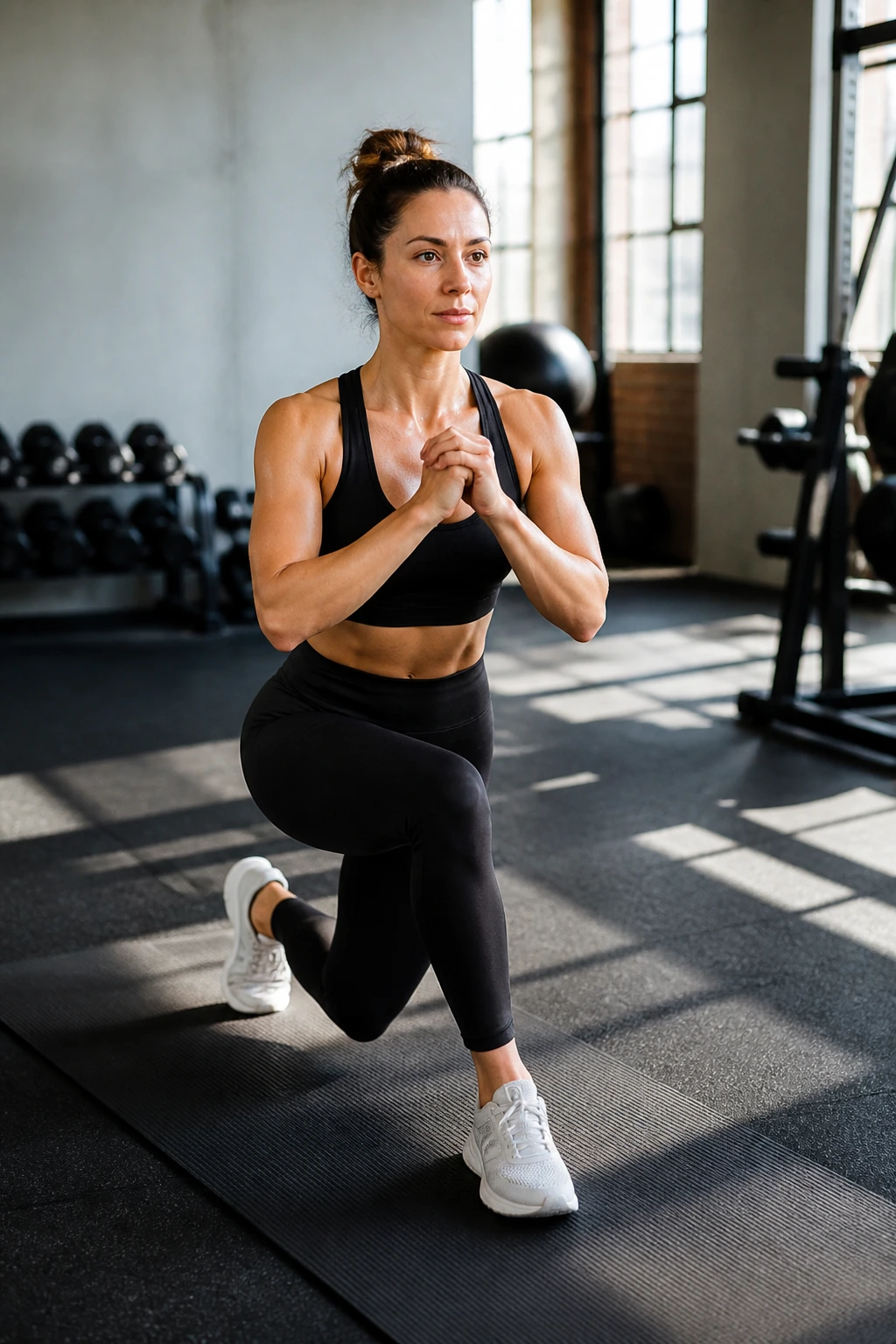
Curtsy lunges are an incredible way to introduce lateral movement into your lower body routine. By stepping back and across your midline, you force your stabilizing muscles to work overtime to keep you balanced, which directly engages the outer hip and glute complex.
How to Execute
Stand with feet hip-width apart. Take a step back and across with your right leg, as if you are performing a curtsy. Keep your front left knee aligned over your left ankle. As you sink your hips down, you should feel a distinct stretch and engagement in the outside of that left glute.
Why This Matters for the Hips
This move forces you to stabilize on a single leg while moving in a different plane of motion than usual. Most gym exercises are linear (forward and back). By introducing this diagonal path, you challenge the hip to prevent the knee from caving inward, which is the primary duty of a strong hip complex.
Actionable Insight: Keep your chest upright. If you lean too far forward, you will shift the weight into your lower back and quads, losing that targeted tension in the hip.
4. Sumo Squats for Inner and Outer Thighs
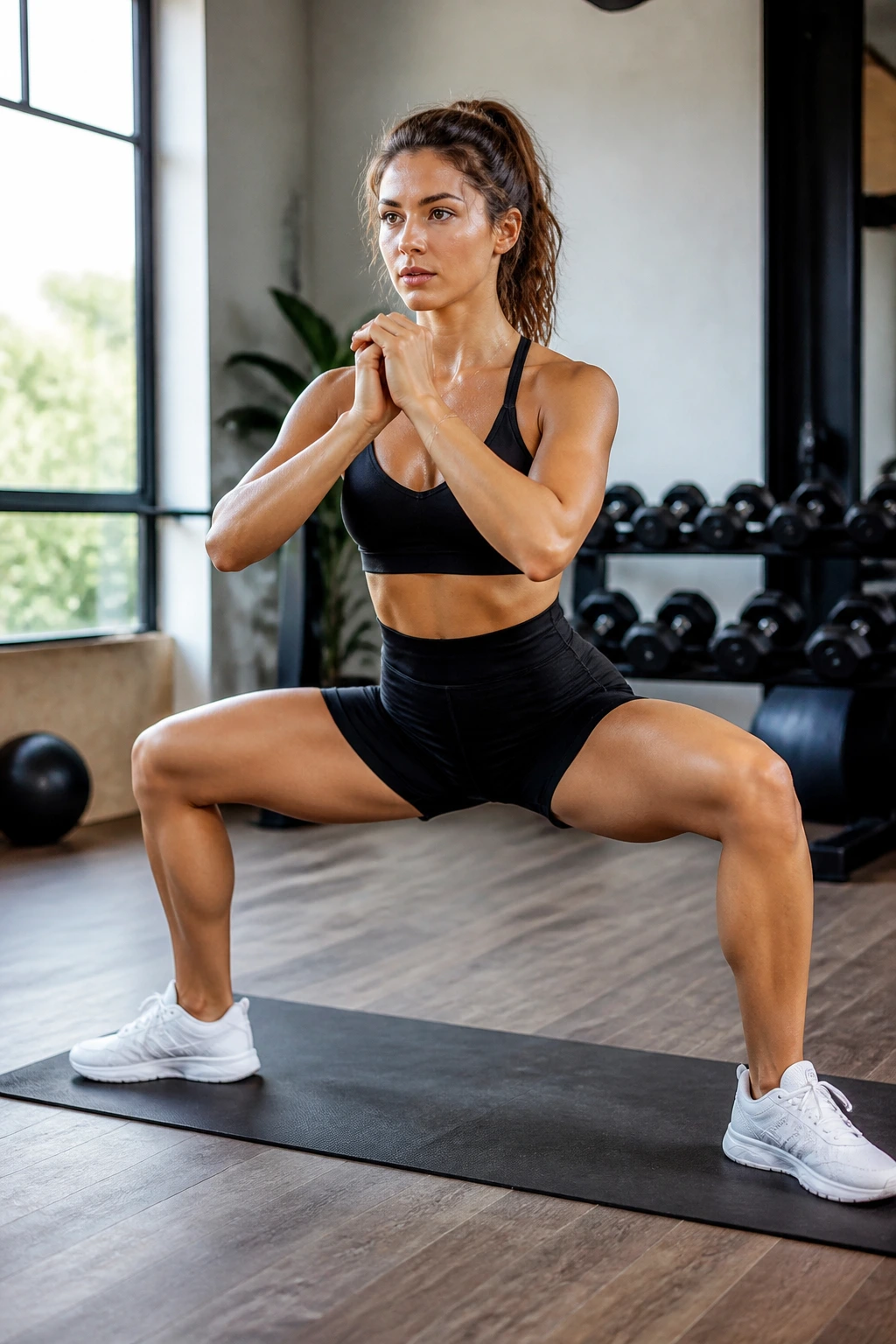
The wide stance of a sumo squat changes the leverage on your hip joint. By widening your feet beyond shoulder-width and pointing your toes outward, you shift the demand from the front of the thigh (quadriceps) to the inner thighs (adductors) and the glutes.
The Setup
Place your feet wide—about one and a half times shoulder width. Turn your toes out at a 45-degree angle. As you descend, drive your knees outward in line with your toes. This cue is critical. If your knees collapse inward, you lose the engagement of the glutes and put unnecessary stress on your knee joints.
Maximizing the Depth
- Squat as low as your mobility allows without letting your pelvis tuck under.
- At the bottom of the movement, pause for one second.
- Drive up through your heels, squeezing your glutes at the top.
Think of it this way: You are not just sitting down; you are actively pushing the floor apart with your feet. That outward pressure is what triggers the hip muscles to fire harder.
5. Glute Bridges for Core and Hip Connection
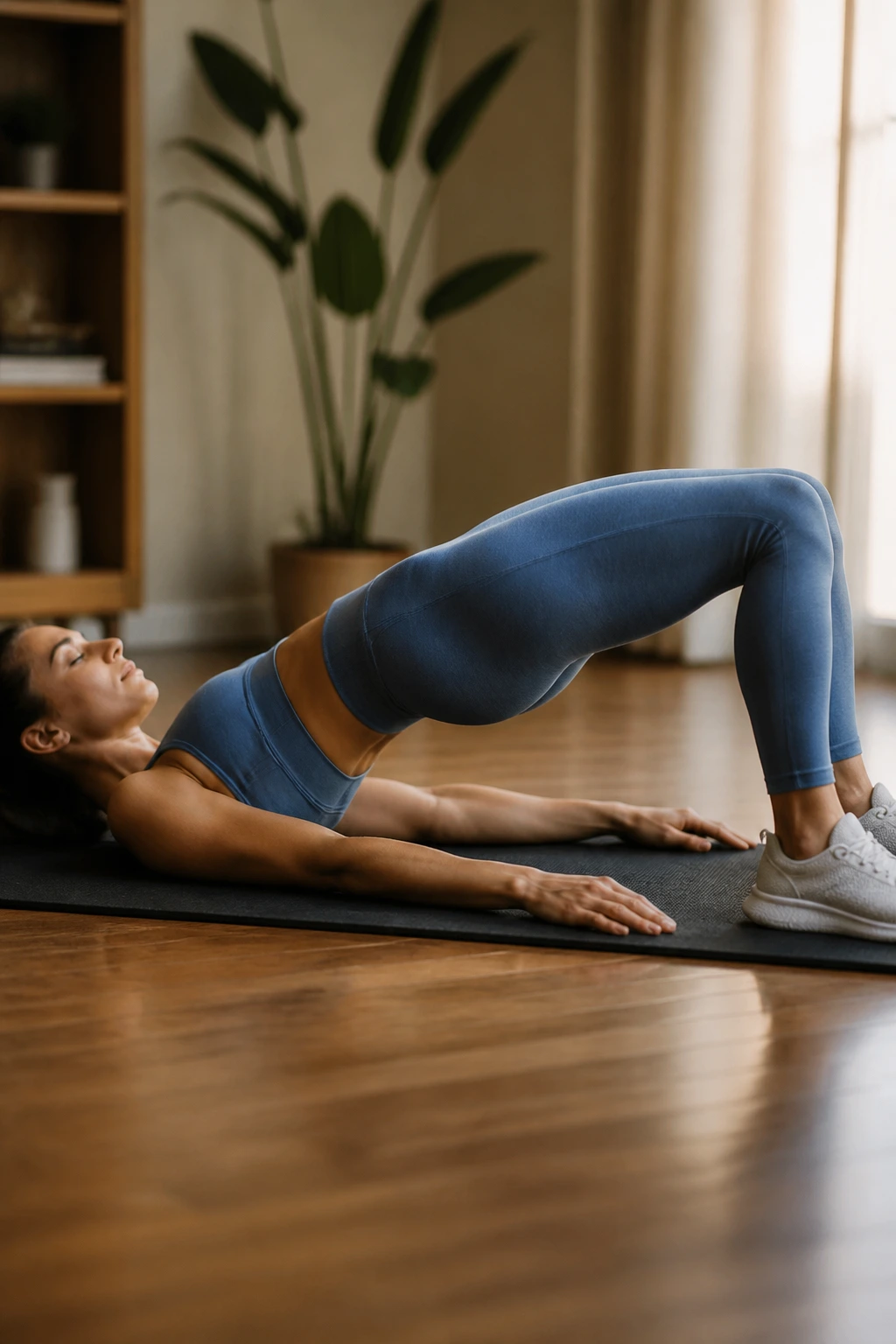
The glute bridge is the foundational movement for anyone wanting to tighten their lower body. It teaches you how to initiate movement from the glutes rather than the lower back. When you bridge, you are maximizing the contraction of the gluteus maximus, which is the largest muscle in the body.
Technique Checklist
- Lie on your back, knees bent, feet flat on the floor.
- Place feet about hip-width apart and close to your glutes.
- Exhale as you lift your hips toward the ceiling.
- Squeeze your glutes at the peak of the movement.
Adding Resistance
Once bodyweight bridges feel easy, add a dumbbell or plate across your hips. This added load forces the muscles to work harder, which triggers growth. Remember, if you do not challenge the muscle, it has no reason to get stronger or firmer.
Warning: Do not hyperextend your lower back at the top of the bridge. The movement should come from your hips, not your lumbar spine. Your ribs should stay pulled down toward your pelvis.
6. Side-Lying Leg Lifts for Endurance
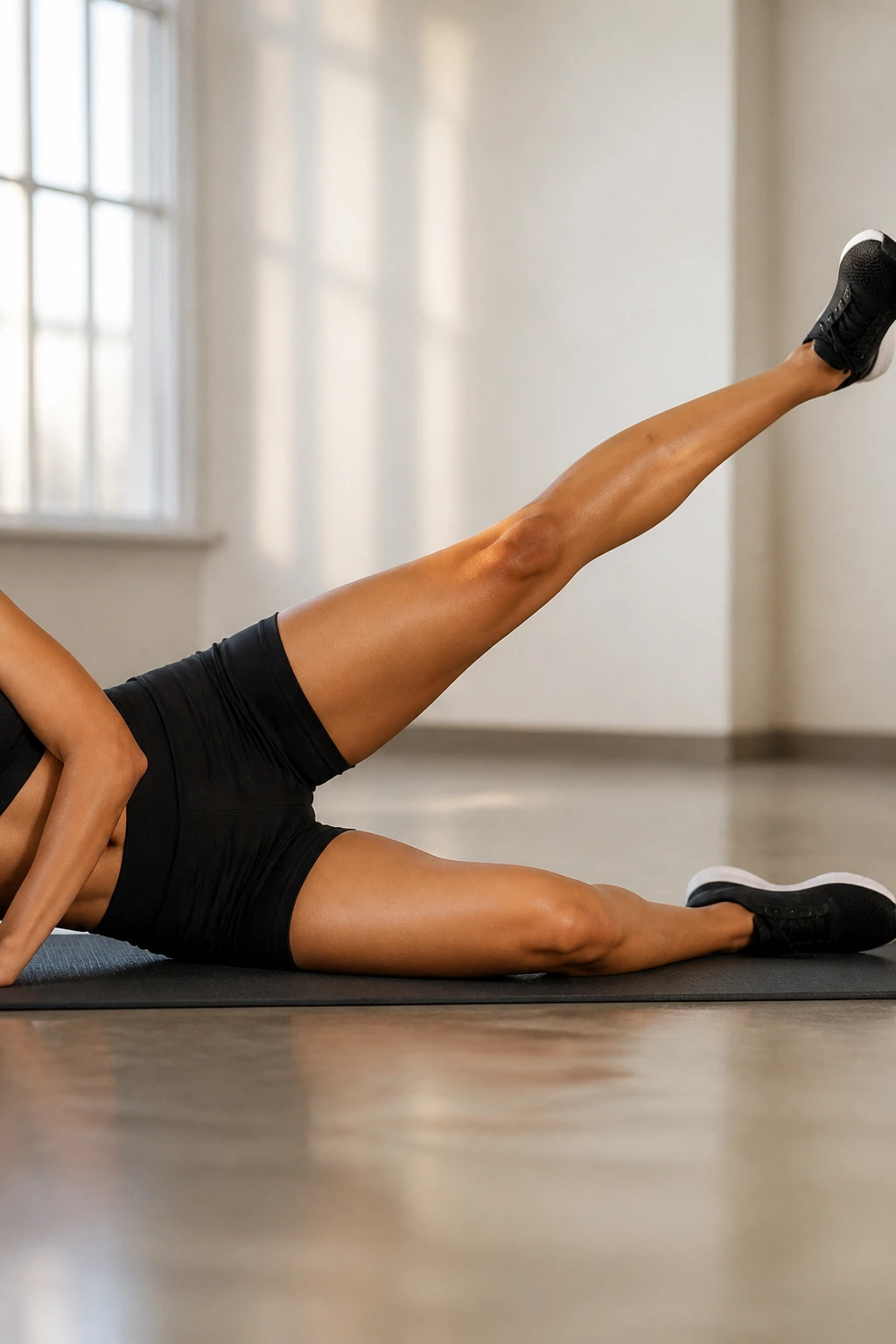
This is a classic movement that has stayed popular for good reason: it is brutal on the hip abductors if performed correctly. It requires no equipment, which makes it perfect for a finisher at the end of a workout when your legs are already tired.
The Execution
Lie on your side, legs stacked. Keep your bottom leg bent for stability. Straighten your top leg and lift it toward the ceiling. It sounds simple, but the key is to keep your toe pointed slightly downward. This small rotation engages the side of the glute much more effectively than a neutral foot position.
Why You Need This
This exercise targets the gluteus medius through volume. Because you are working against gravity with a long lever (your leg), you do not need heavy weight to feel the burn. The buildup of lactic acid in the side of the hip is exactly what you are looking for.
Pulse it out: For an extra challenge, hold the leg halfway up and perform tiny pulses for 30 seconds. The burn will be intense.
7. Fire Hydrants for Hip Mobility and Engagement
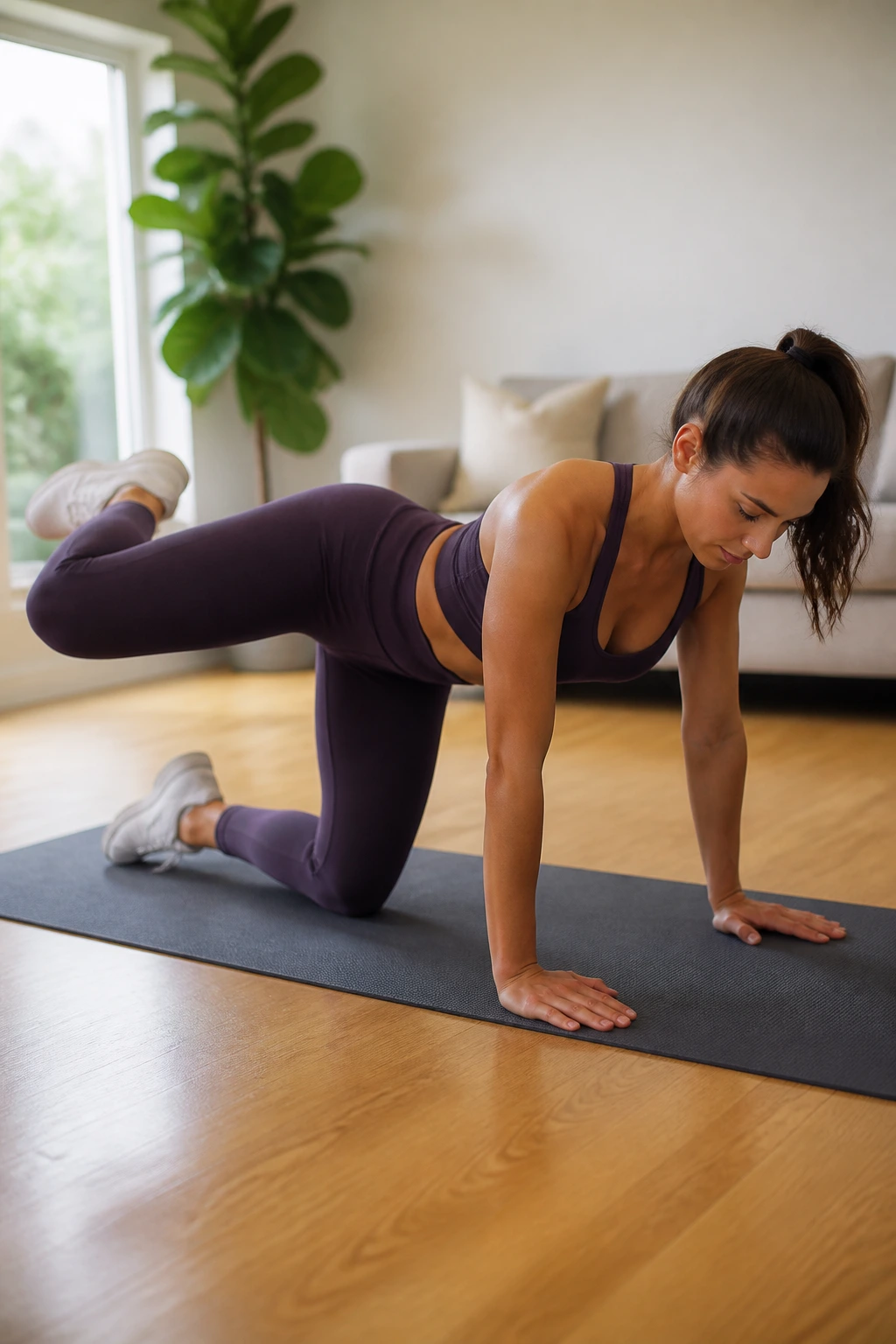
The name comes from the visual of a dog at a fire hydrant, and while the movement might look funny, the muscle engagement is no joke. Fire hydrants are fantastic for hip mobility and firing up the deep stabilizer muscles that rarely get touched by heavy lifting.
Step-by-Step
- Start on all fours, hands under shoulders, knees under hips.
- Keeping your knee bent at a 90-degree angle, lift your right leg out to the side.
- Keep your back flat; do not allow your spine to twist.
- Lower the leg back down with control.
Focusing on Quality
The temptation here is to swing the leg up using momentum. Fight that urge. Lift the leg using only the strength of your hip. If you can only lift it a few inches, that is fine. The isolation is what builds the strength.
Pro tip: Imagine you are balancing a glass of water on your lower back. If your back twists to get the leg higher, you “spill the water.” Keep that back rock-solid.
8. Side Planks with Leg Abduction
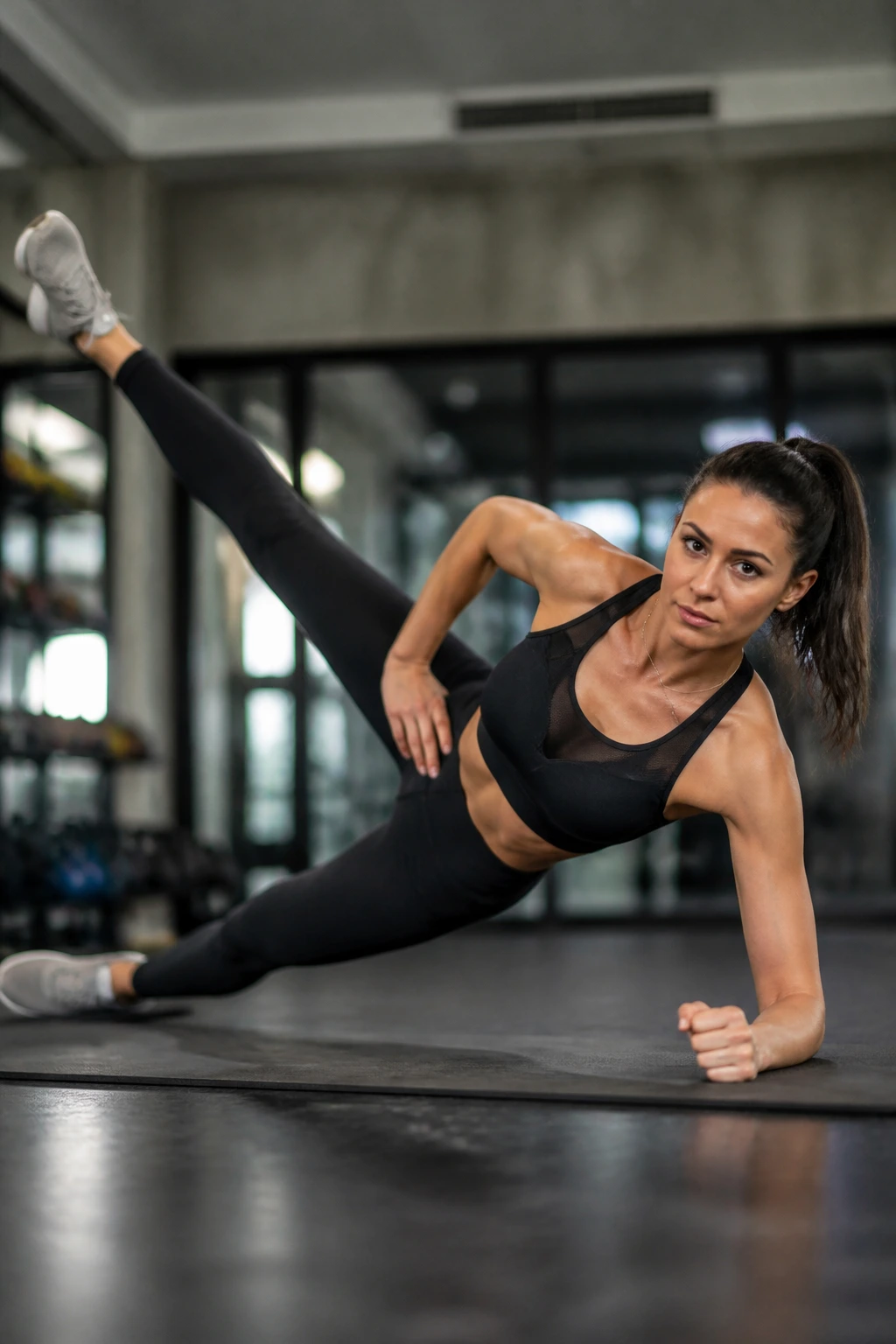
This is a dual-purpose exercise that hits the core and the outer hips simultaneously. By holding a side plank, you force your oblique muscles and the stabilizing hip muscles of the bottom leg to work together to keep you off the floor.
How to do it
- Get into a side plank position on your forearm.
- Ensure your body forms a straight line from head to heels.
- While holding this position, lift your top leg toward the ceiling and lower it back down slowly.
Why This Is Effective
You are essentially doing an isometric hold with the bottom hip and a dynamic movement with the top hip. This compound challenge is incredibly efficient for tightening the entire lower body structure, as it forces the core to integrate with the leg movement.
Consistency is key: If you cannot maintain the plank, drop to your knees. The priority is keeping the hips lifted high, not letting them sag toward the ground.
9. Step-Ups for Unilateral Strength
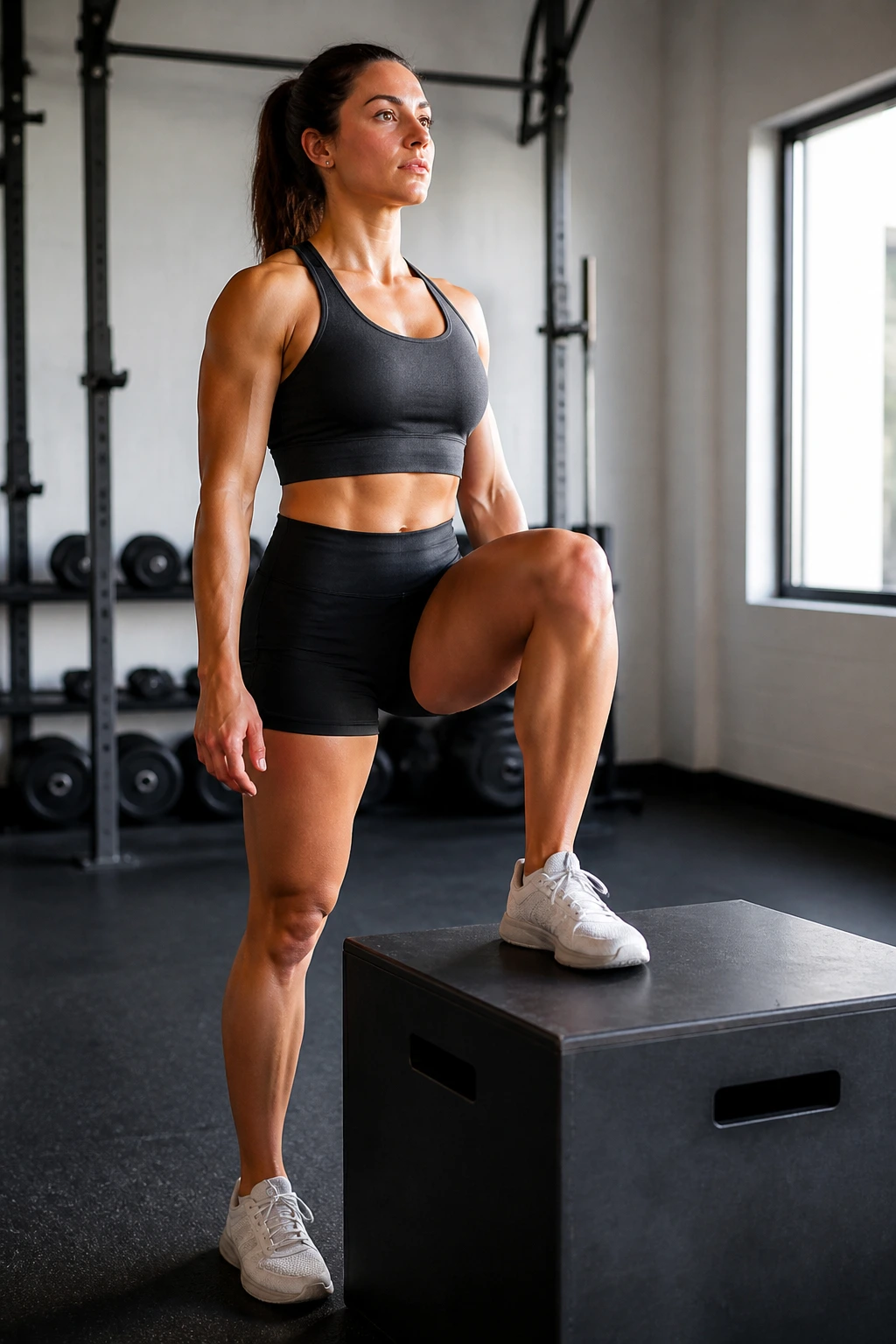
Step-ups are often overlooked as a “beginner” move, but they are one of the most effective ways to build a balanced, tight lower body. Because you have to lift your entire body weight with one leg, you eliminate the possibility of one side compensating for the other.
Form Matters
- Use a box or bench that puts your knee at a 90-degree angle or slightly lower.
- Keep your torso upright—do not lean forward.
- Drive through the heel of the foot that is on the box.
- As you stand up, try to keep your other foot from pushing off the floor.
The Hip Connection
The stabilizing hip has to work incredibly hard to keep your pelvis level as you stand up. If your knee caves inward as you step up, that is a sign your glutes need more work. Focus on pushing the knee outward as you ascend.
Safety note: Avoid using a step that is too high. If your knee has to track over your toes significantly or you feel pressure in your knee joint, lower the box.
10. Reverse Lunges with Twist
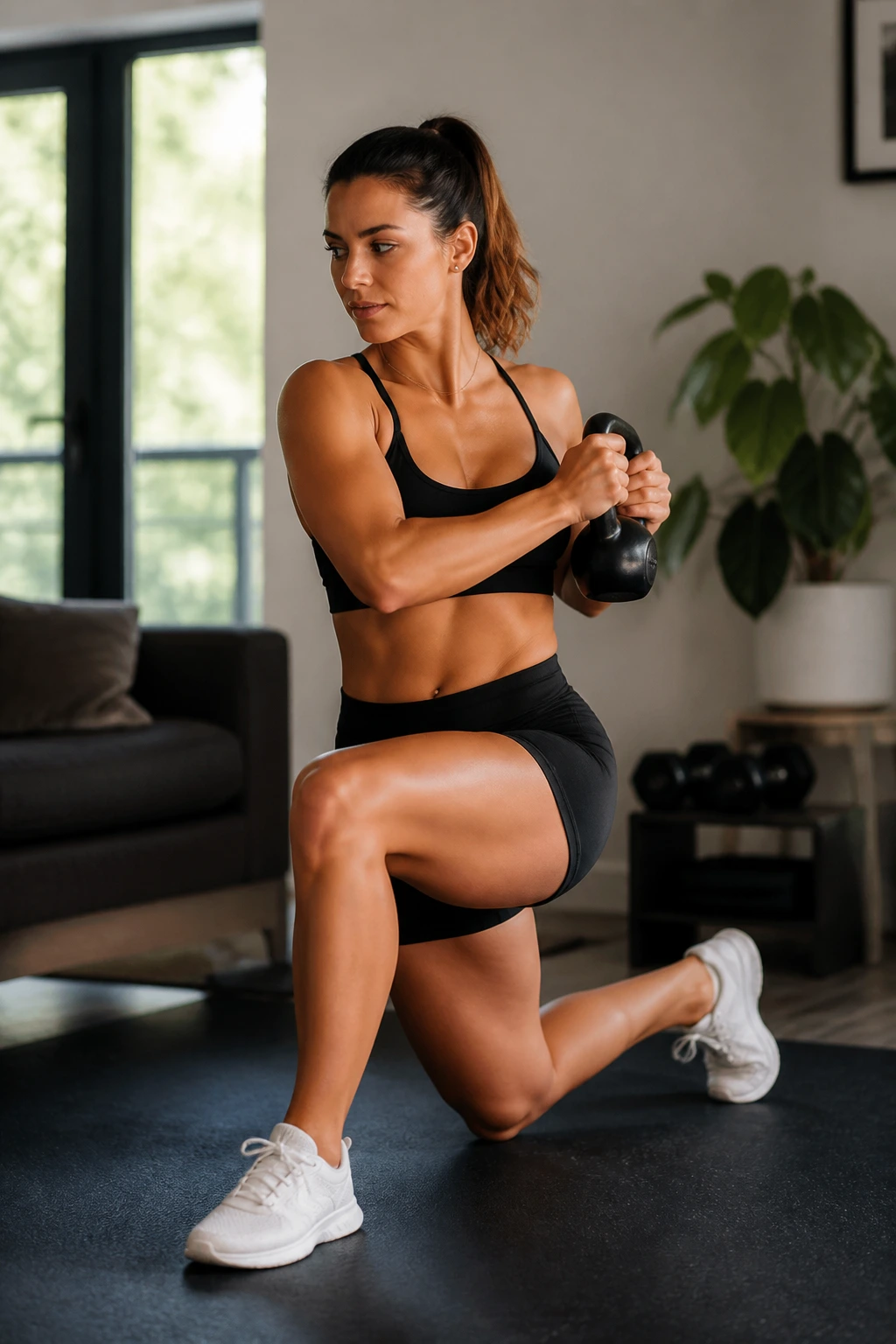
Reverse lunges are generally friendlier on the knees than forward lunges because they force you to shift your weight back into your glutes and heels. Adding a torso twist engages the core and forces the hips to stabilize against rotational force.
Adding the Complexity
- Step backward into a lunge.
- As your back knee descends, rotate your torso toward the front leg.
- Return to center and push off to stand back up.
Why Include the Twist
By rotating the spine, you force the hips to remain stable while the upper body moves. This creates a “anti-rotation” demand on the hip abductors, which are the primary muscles responsible for keeping the hips square. It creates a tighter, more functional aesthetic.
Watch the knee: Keep the front knee aligned over your ankle. If it drifts too far forward, you will feel it in your knee rather than your glute.
11. Bulgarian Split Squats
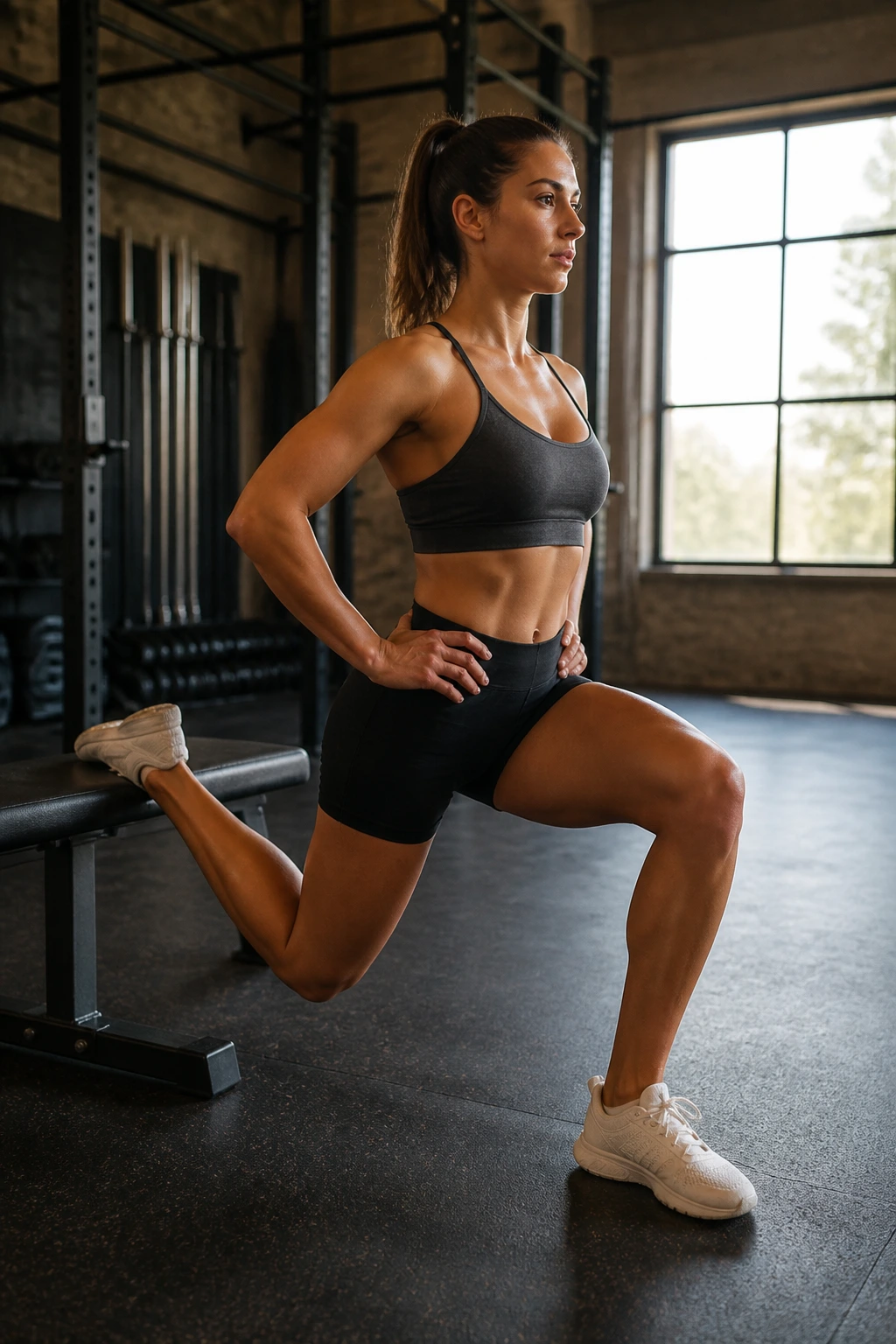
If you want to talk about results, we have to talk about Bulgarian split squats. They are famously difficult, often hated, and undeniably effective. By elevating your rear foot, you place the vast majority of the load on the front leg, specifically the glute and the hip.
The Setup
Place one foot on a bench or chair behind you. Take a solid hop forward with your front foot. As you descend, keep your chest upright and sink your hips straight down. You will feel an intense stretch in the hip flexor of the back leg and a deep, targeted burn in the glute of the front leg.
The Reality Check
You will be shaky. That is normal. That shaking is your stabilizing muscles firing to keep you upright. Do not rush these. The time under tension is what creates the firm, tight look you are after.
Pro tip: Hold a dumbbell in the hand opposite the working leg to increase the balance challenge, or hold one in each hand for increased glute loading.
12. Kettlebell Swings for Posterior Chain
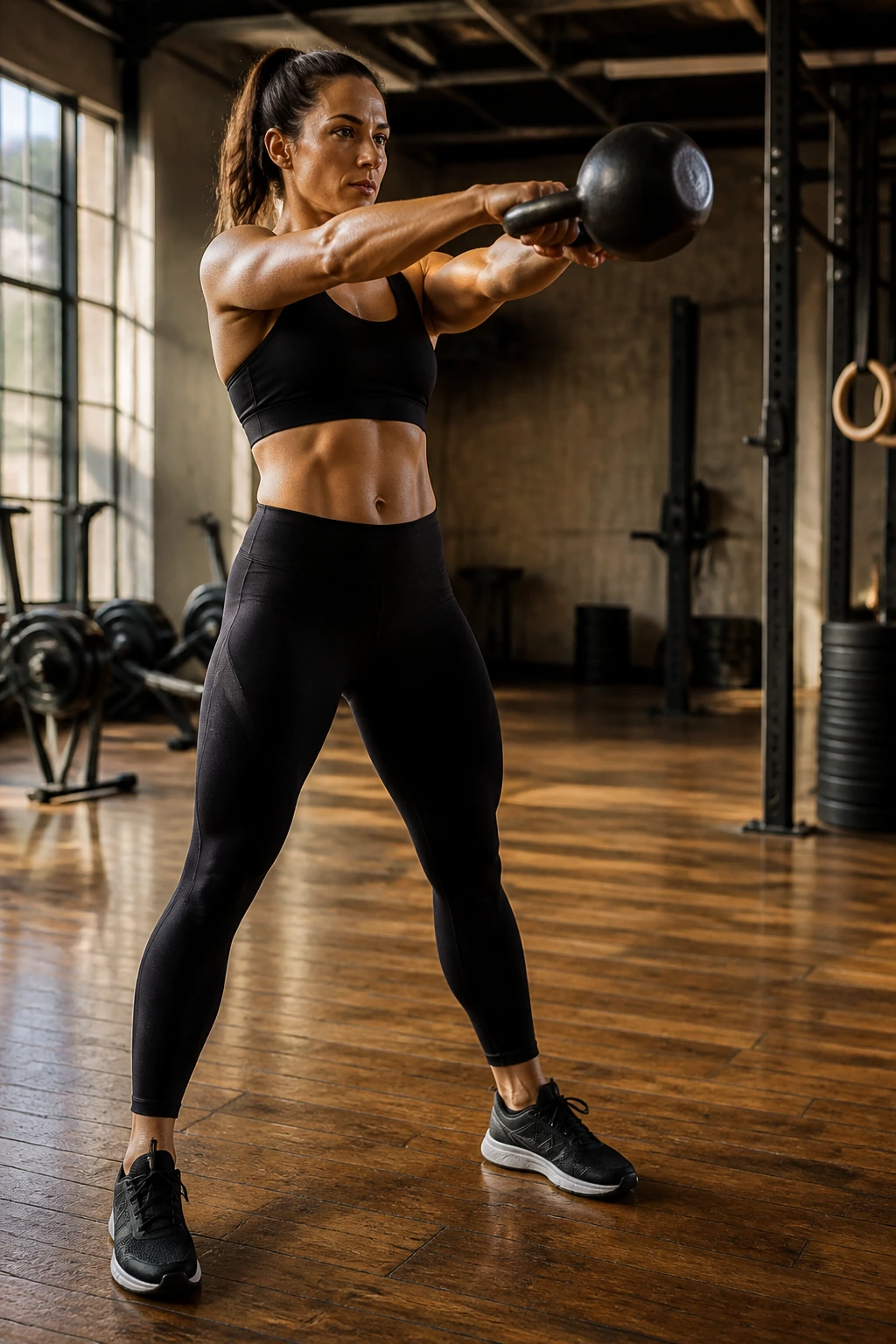
Kettlebell swings are a dynamic, explosive movement that targets the entire posterior chain—the glutes, hamstrings, and lower back. Because it is a hinge movement rather than a squat, the glutes are the primary drivers.
The Hinge Mechanic
- Keep your back flat.
- Push your hips back as if trying to close a door with your butt.
- Snap your hips forward powerfully to swing the kettlebell.
- This is not a squat; your knees should have minimal bend.
Power and Speed
The glutes are powerful muscles; they respond well to explosive work. The rapid contraction at the top of the swing helps to firm up the gluteal area. Just ensure you are not lifting the weight with your shoulders; the arms should be like ropes, simply holding the weight while the hips do the work.
Warning: If you feel this in your lower back, you are likely hinging too early or not using your glutes. Reset and focus on snapping the hips.
13. Cable Hip Abduction
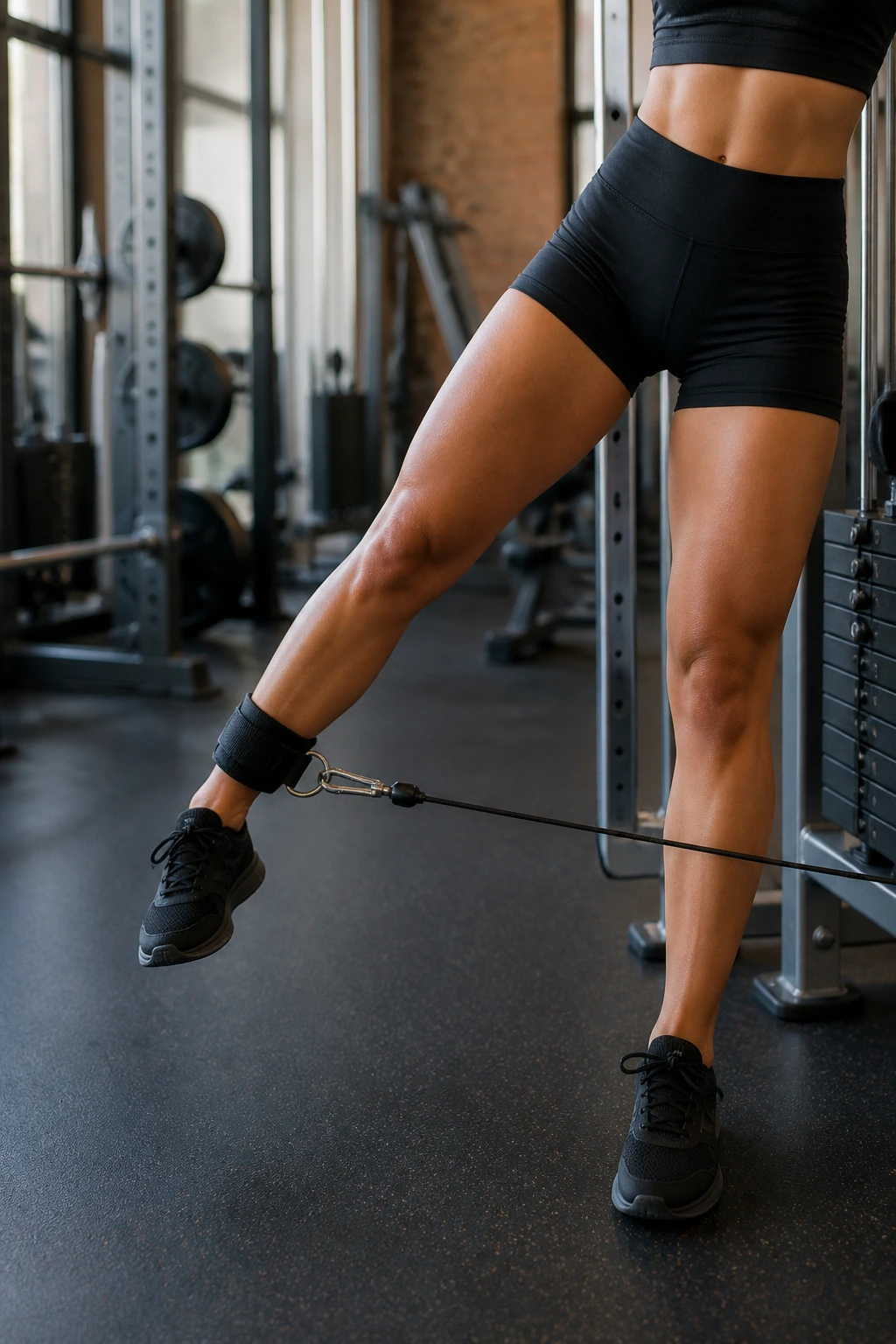
If you have access to a gym with cable machines, this is a non-negotiable exercise. It provides constant tension throughout the entire range of motion, which is something free weights struggle to do.
Execution
- Attach a cuff to your ankle.
- Stand sideways to the cable tower.
- Keeping your leg straight but not locked, kick your leg out to the side.
- Resist the weight on the way back in—that slow return is where the muscle strengthening happens.
Why It Works
By using the cable, you can precisely control the angle of the resistance. You can tweak your foot position—pointing the toe slightly forward or backward—to target different fibers of the gluteus medius. It is one of the most precise tools for targeting the “side” of the hip.
Consistency: Do not rely on momentum to swing the weight. If you are swinging, the weight is too heavy. Lower it and focus on the muscle doing the work.
14. Cossack Squats for Mobility and Strength
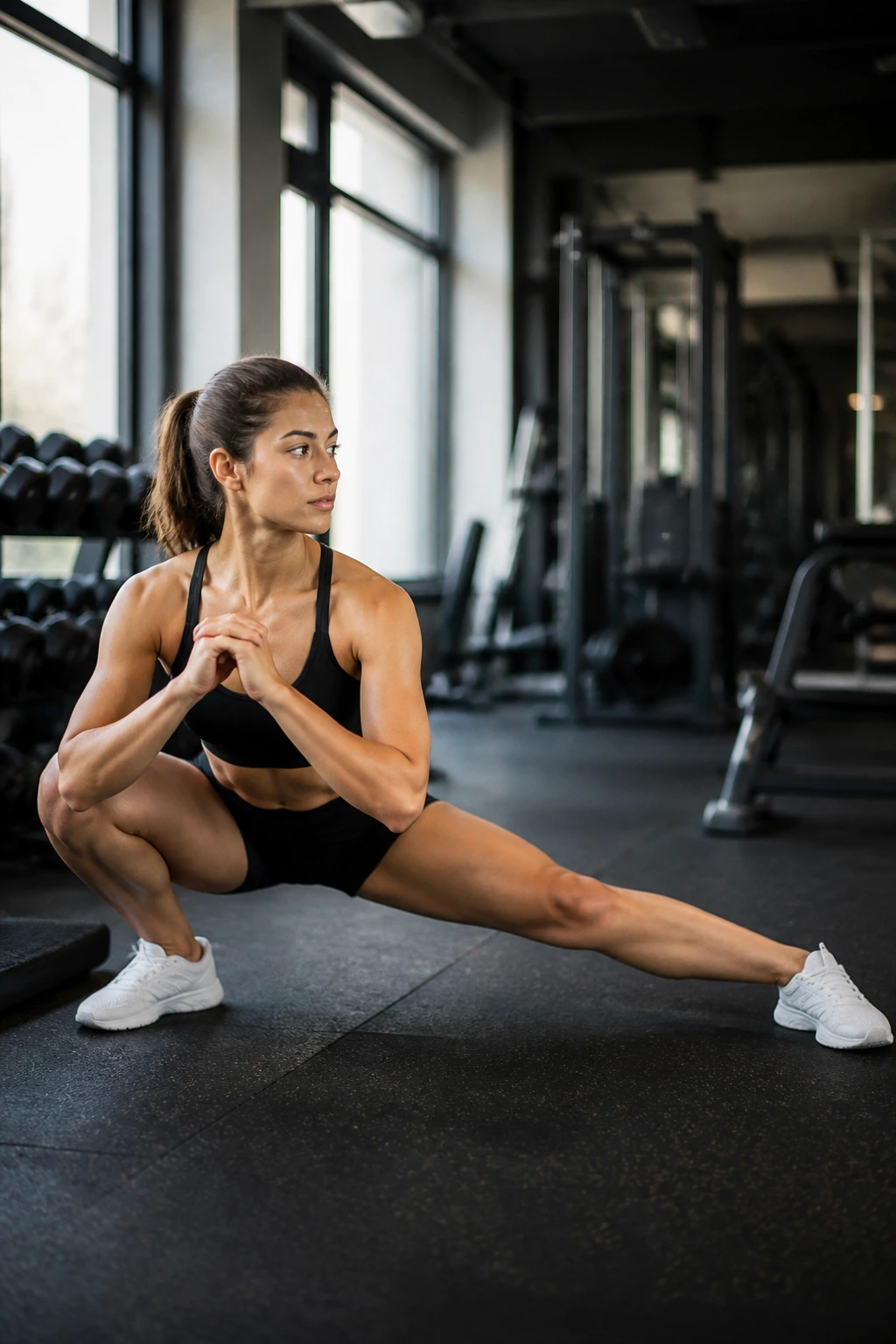
Cossack squats (or side lunges with a focus on depth) are a fantastic way to combine mobility training with strength training. By moving side to side in a deep squat position, you challenge your hips in a way that standard forward squats never can.
How to do it
- Take a very wide stance.
- Shift your weight to your right side, bending your right knee while keeping your left leg straight.
- Go as deep as possible.
- Push through the right heel to return to the center and switch sides.
The Benefit for Hips
This movement forces the hip into extreme ranges of motion while under load. This helps to loosen tight hips, which can actually make it easier for your glutes to fire properly during other exercises. A mobile hip is a strong hip.
Foot position: Keep the flat foot of the bent knee firmly planted on the ground. Do not let your heel lift.
15. Single-Leg Romanian Deadlifts
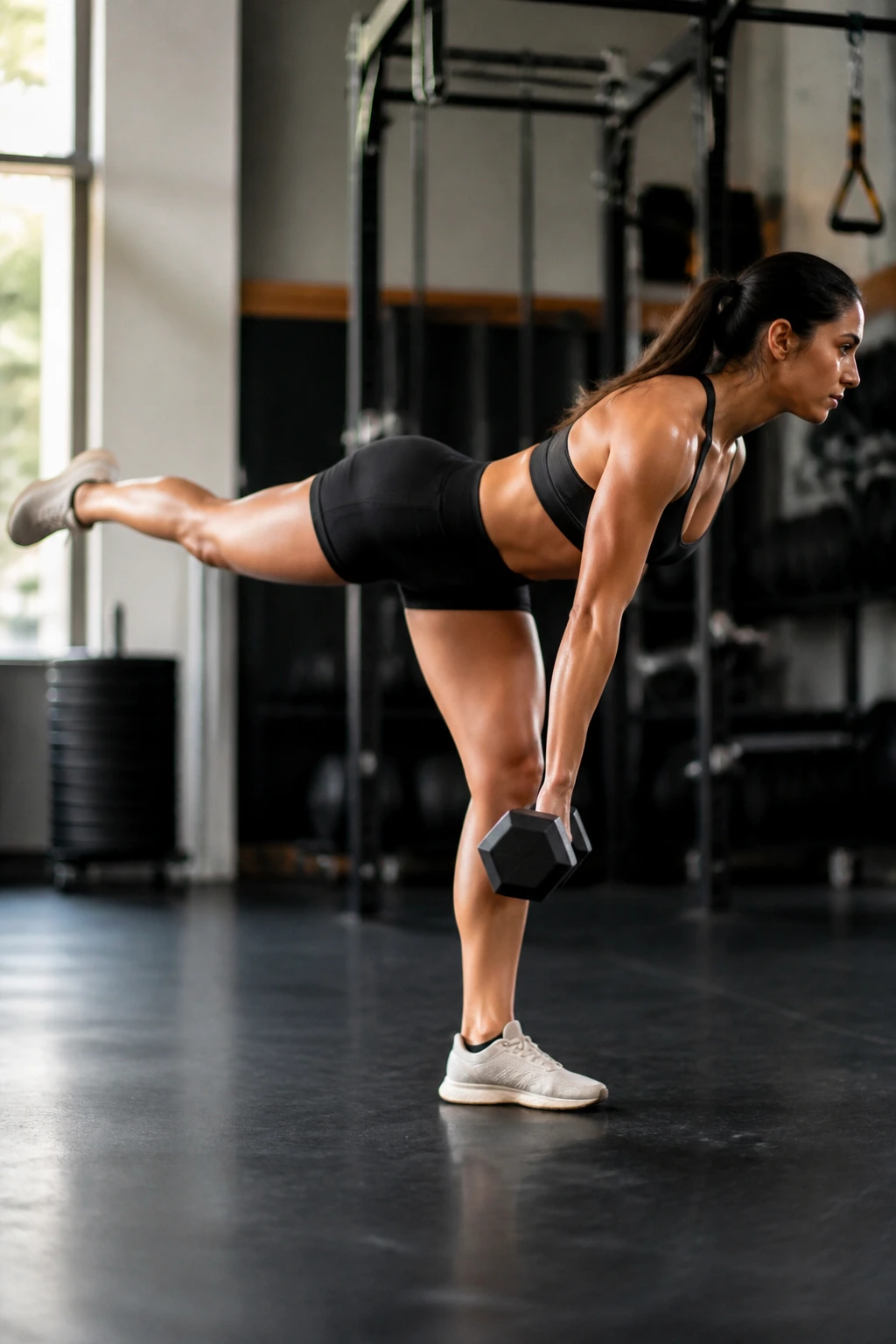
This is a movement for those who are serious about detail. Single-leg RDLs require focus, balance, and strength. They target the glutes and hamstrings while forcing the hip stabilizers to work furiously to prevent you from toppling over.
The Mechanics
- Stand on one leg with a slight bend in the knee.
- Hinge at the hips, keeping your back straight.
- Extend your free leg behind you for balance.
- Lower the weight until you feel a stretch in the glute/hamstring, then drive back up.
Why You Should Do Them
Because you are working one leg at a time, you build immense stability in the hip joint. This prevents the “sway” that many people have in their hips and creates a more solid, firm foundation. It is challenging, but the payoff for your lower body silhouette is worth it.
Focus: Pick a focal point on the wall in front of you. Staring at one spot significantly improves your balance.
16. Hip Thrusts for Glute Hypertrophy
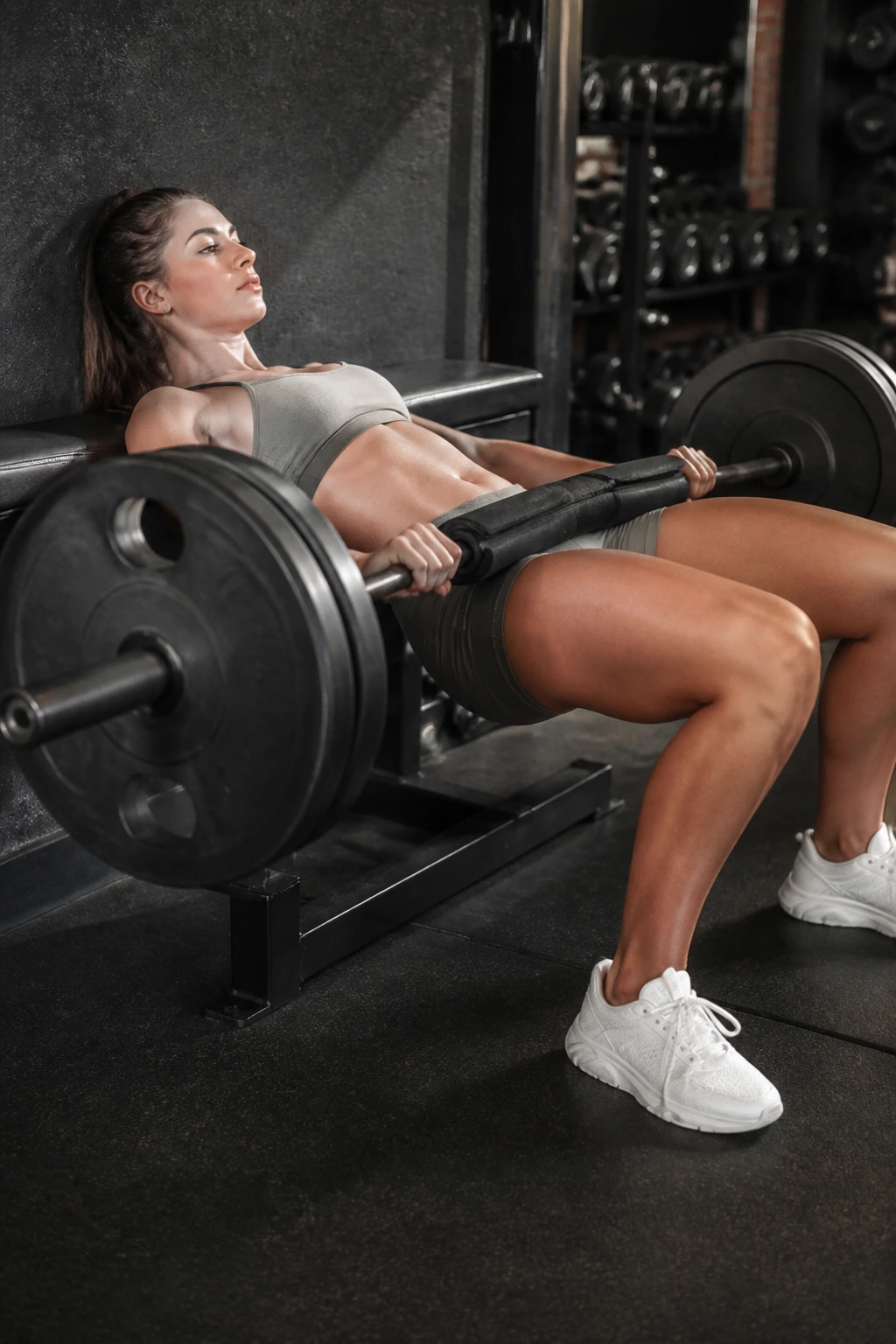
If the glute bridge is the foundational exercise, the hip thrust is the master of building mass and shape. It allows for heavier loading and has a larger range of motion than the bridge, making it the most effective way to stimulate muscle growth in the glutes.
The Setup
- Sit on the floor with your upper back resting against a bench.
- Place a barbell or dumbbell across your hips.
- Drive your hips toward the ceiling, keeping your chin tucked.
- Squeeze your glutes at the top.
The Power of Loading
Because your shoulders are elevated, your glutes are taken through a much larger range of motion than on the floor. This increased range leads to better muscle fiber recruitment. If you want to change the shape of your hips, this is the exercise that will do it.
Caution: Ensure the bench is against a wall so it does not slide backward during the movement.
17. Donkey Kicks for Glute Isolation
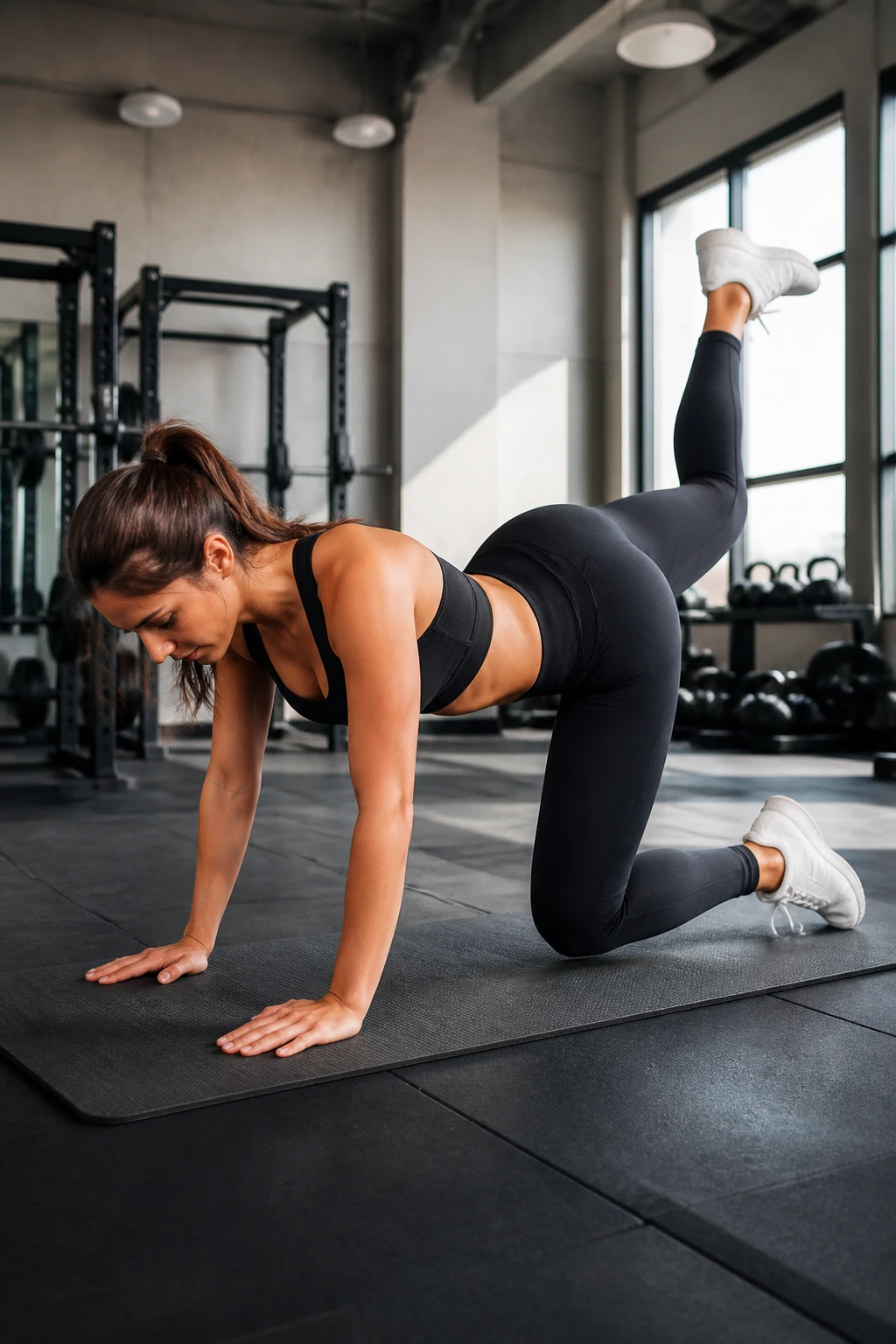
Donkey kicks are fantastic for isolating the gluteus maximus without requiring any equipment. They are a high-repetition exercise that works well at the end of a session to really “burn out” the glute muscles.
Execution
- Start on all fours.
- Keep your right knee bent at 90 degrees and kick your foot toward the ceiling.
- Squeeze the glute at the top of the movement.
- Return the knee to the floor without letting it touch.
Avoiding the Back
It is very easy to arch your lower back during this movement. Keep your core engaged and focus on the glute driving the movement. If you feel this in your lower back, your core is not tight enough, or you are kicking too high.
Variety: You can perform these with a resistance band around your knees to add intensity as you get stronger.
18. Skater Hops for Lateral Cardio
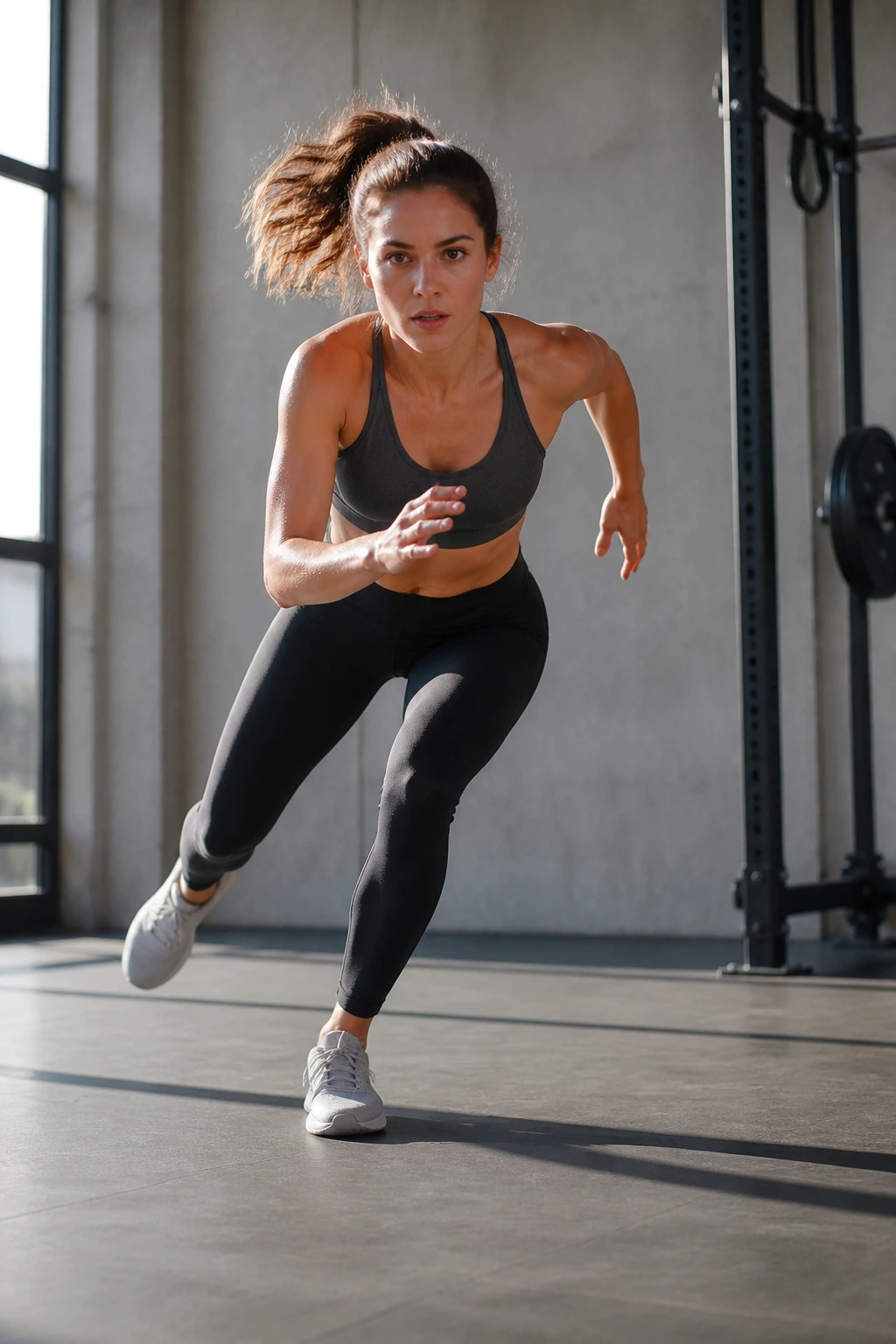
Skater hops are about explosive, lateral power. They are a great way to introduce a cardiovascular element to your hip training. They mimic the motion of speed skaters and require your gluteus medius to absorb the force of your jump and stabilize your landing.
The Motion
- Jump from side to side, landing on one foot.
- Absorb the landing by bending your knee and hinging at the hips.
- Try to hold the landing for a split second before hopping back to the other side.
Why They Work
The landing phase is where the magic happens. Your outer hip has to catch your body weight and stabilize it. This eccentric loading is excellent for tightening the muscles around the hip joint.
Warning: Ensure you have enough space and that your floor isn’t slippery. These are high-intensity moves; prioritize control over distance.
19. Walking Lunges for Dynamic Movement
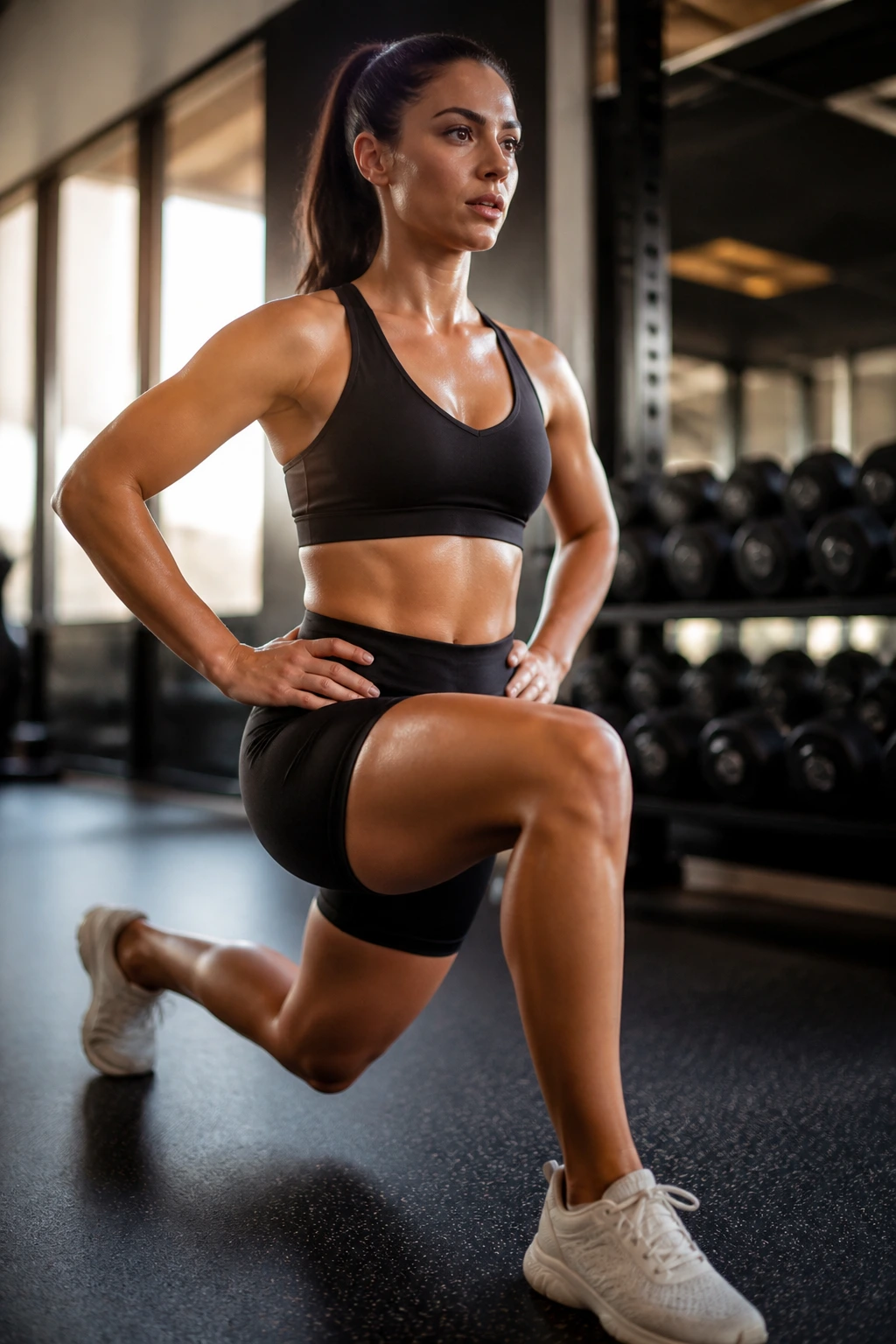
Walking lunges are the king of functional lower body training. Unlike static lunges, these force you to stabilize, stop, and restart with every single step. This constant change in momentum makes them significantly harder than they look.
Keeping the Tension
- Step forward into a deep lunge.
- Ensure your knee does not collapse inward.
- Push off the front heel to bring the back leg forward into the next step.
- Keep your torso tall throughout the movement.
The Advantage
The walking motion requires your hips to constantly adjust to maintain balance. This builds not just strength, but coordination in the hip and glute complex. It results in a firmer look because the muscles are being trained to work together through movement.
Pro tip: Keep your steps moderately long. If your step is too short, you focus entirely on your quads. A slightly longer step shifts the focus to the glutes.
20. Sumo Deadlifts for Intensity
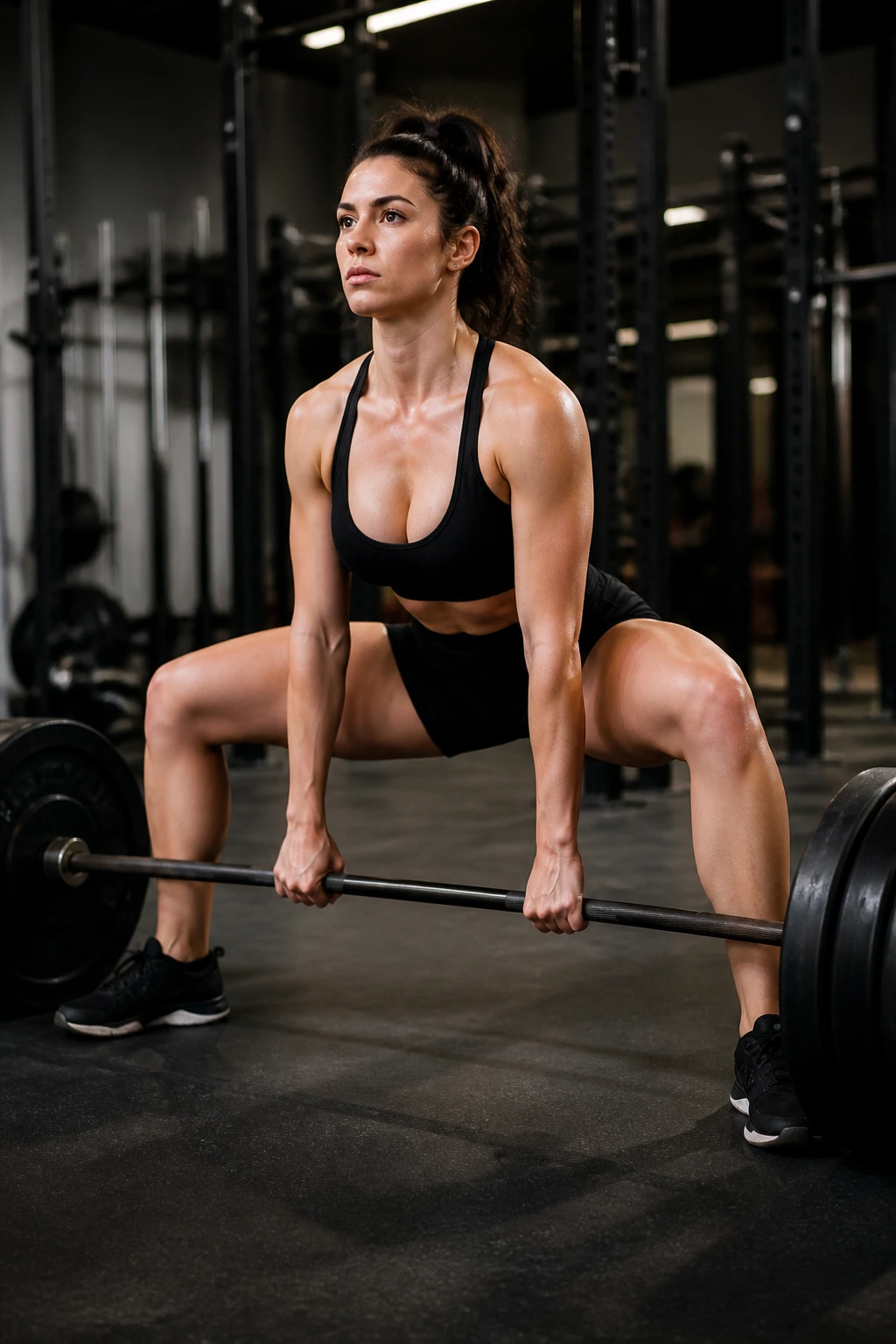
Sumo deadlifts utilize a wider stance and a narrower grip than conventional deadlifts. This wider stance recruits the glutes, adductors, and hips significantly more than a standard deadlift. It is a full-body strength builder that leans heavily on the lower body.
Technique
- Feet wide, toes out, grip inside your knees.
- Keep your chest up and back flat.
- Push your feet into the floor to lift the weight.
- Squeeze your glutes at the top of the lift.
Why This Is Number 20
This is a heavy-weight movement. While all the other exercises here focus on isolation and stability, this one focuses on raw strength. Building strength in the glutes through heavy deadlifts creates the structural “tightness” that smaller, high-rep movements cannot replicate on their own.
Consistency: Do not round your back. If the weight is too heavy to keep a flat back, lower it. A deadlift is only as good as your form.
The Reality of Lower Body Structure
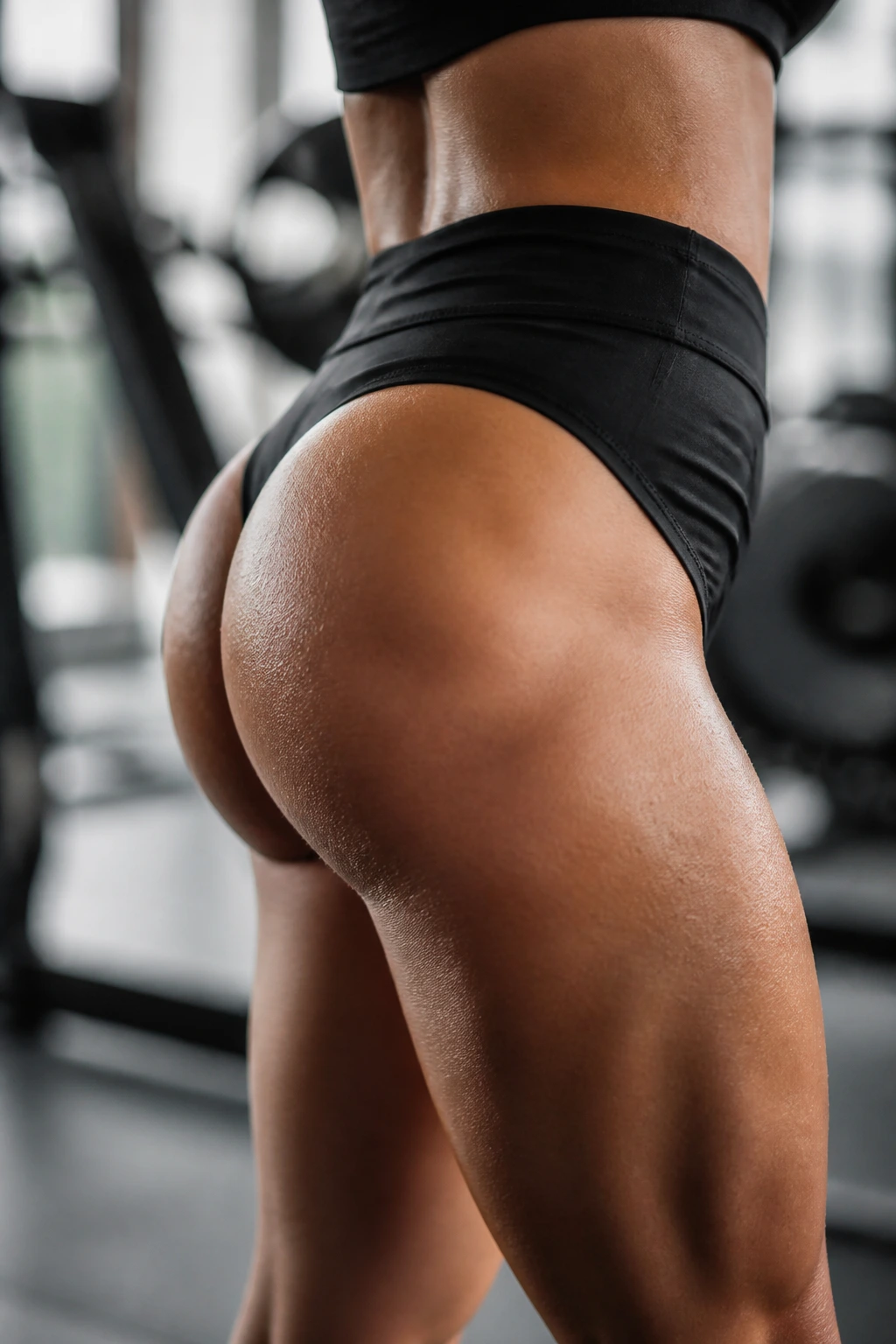
It is easy to get caught up in the idea of “toning” a specific area, but your body does not function in isolated parts. The hip fat that you are working to manage is stored in a complex system. When you train these muscles, you are not just changing the layer of fat; you are changing how your muscles sit against your skeleton.
Consistency matters more than the perfect routine. Doing these movements twice a week is far more effective than doing a perfect, hour-long session once a month. Your glutes are resilient muscles—they are designed to carry you all day long, so they require consistent, challenging work to actually change their shape.
Do not be afraid of resistance. The fear that lifting weights will make you “bulky” is a myth that has kept many people from the results they want. Building muscle is a slow, difficult process. It will not happen by accident. By adding resistance—whether through bands, dumbbells, or simply moving your body weight through challenging ranges of motion—you are signaling your body to adapt, grow, and firm up.
Final Thoughts
The journey to a tighter lower body is rarely a straight line. You might find that some exercises feel natural while others feel like a struggle. That struggle is where the progress happens. If you cannot do a movement, it is not a sign of failure; it is a sign of a muscle that needs to be awakened.
Focus on your form first. If you leave the gym or finish your workout feeling soreness in your lower back or knees, stop and reassess your form. Your glutes should be doing the heavy lifting. If you can master the mind-muscle connection—actually feeling the glute contract during each rep—you will see results far faster than someone who is just moving through the motions. Be patient, stay consistent, and remember that you are building something that takes time.
