



Targeting the inner thighs is one of those classic fitness goals that often feels more frustrating than it needs to be. You see countless people doing half-hearted leg squeezes at the gym, hoping to see results in a spot that seems resistant to change. But here is the reality: your inner thighs, comprised mainly of the adductor muscle group, are functional powerhouses. They do not just provide shape; they stabilize your pelvis, support your knee health, and power you through lateral movements in everyday life.
If you are struggling to “sculpt” this area, it is usually because you are stuck in a routine of low-intensity, high-repetition movements that fail to provide enough stimulus for actual adaptation. Muscles need tension and overload to change, just like your glutes or quads. You cannot simply squeeze a pillow between your knees while watching television and expect significant shifts. You need a mix of heavy resistance, instability, and extended range-of-motion exercises that force these specific fibers to recruit and fire.
The key to real progress is moving away from the idea of “toning” and moving toward building actual, functional muscle. The adductor group—which includes the adductor magnus, longus, and brevis—responds incredibly well to exercises that force them to work against gravity, weight, or band resistance while stabilizing your body in the frontal plane.
1. Sumo Squats
This is the king of inner thigh exercises. Most people make the mistake of using a stance that is only slightly wider than shoulder-width. To actually target the adductors, you need to go wide—significantly wider than your shoulders—with your toes pointed out at roughly 45 degrees.
Why It Changes the Game
By widening your stance, you change the mechanical leverage of the squat. Your quads become less dominant, and your hips are forced into external rotation. This places a direct, intense stretch on the adductor muscles at the bottom of the movement. When you drive back up, those muscles have to work hard to stabilize the femur and initiate the ascent.
Essential Form Cues
- Depth: Aim to get your thighs parallel to the floor, but do not sacrifice depth for form.
- Knee Tracking: This is the most common mistake. Your knees must track over your toes. If your knees are collapsing inward, you are losing the benefit and risking joint strain.
- Torso Position: Keep your chest upright. If you lean too far forward, you turn this into a hip-hinge movement rather than an adductor-focused squat.
Pro tip: Hold a dumbbell or kettlebell between your legs (a goblet hold) to add load. The extra weight forces you to engage the adductors even more to keep your balance.
2. Lateral Lunges
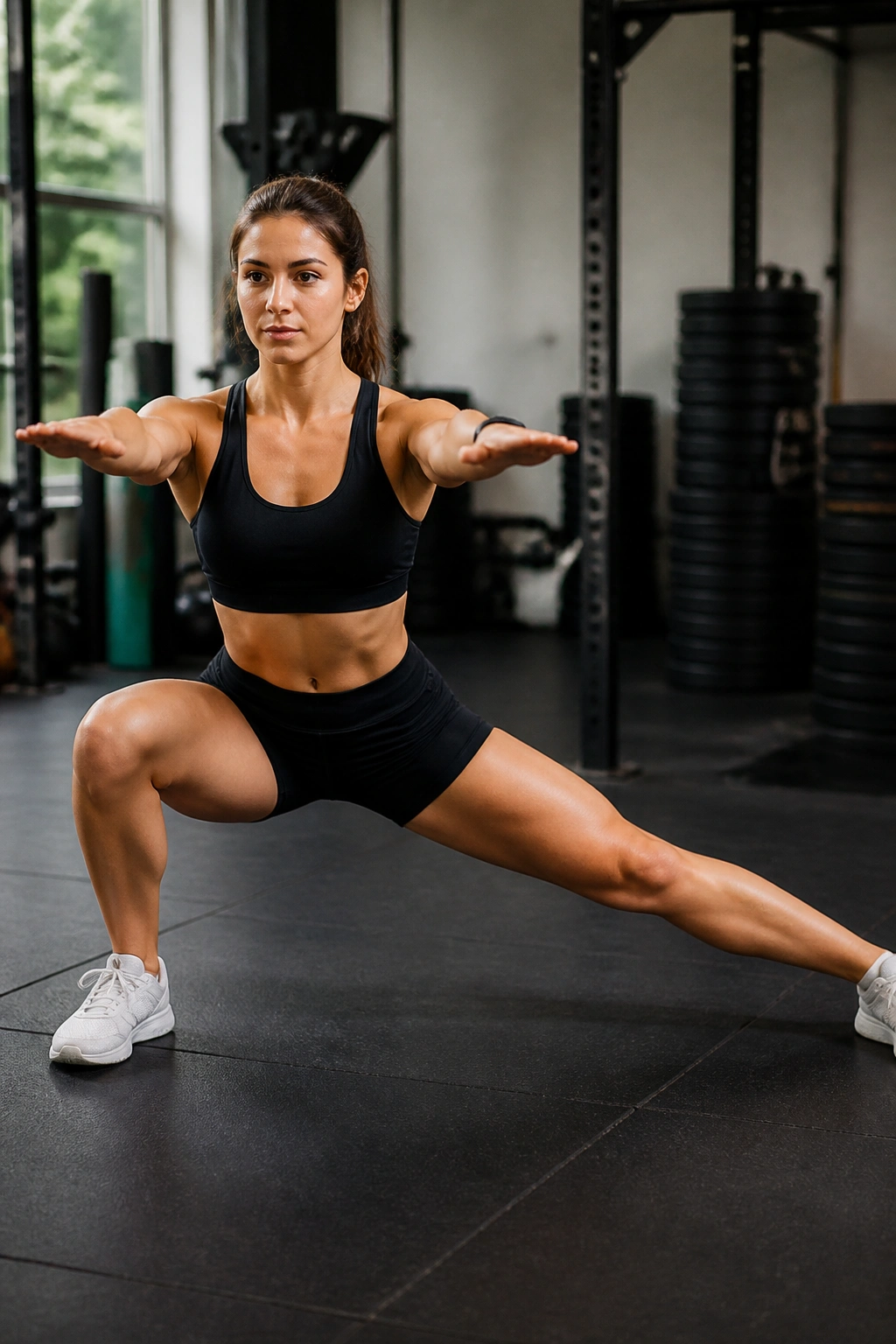
Human movement is almost exclusively sagittal—forward and backward. We walk, we run, we squat. Lateral lunges are one of the few ways to train the frontal plane, which is exactly where the inner thighs shine.
What Makes Them Unique
Unlike a standard reverse lunge, the lateral lunge creates a deep, eccentric stretch in the adductor of the trailing leg. You are basically putting your inner thigh through a weighted stretch and then forcing it to contract to pull your body weight back to the starting position.
How to Master the Movement
- Step out wide to one side, keeping the other leg perfectly straight.
- Push your hips back as if you are trying to sit on a chair placed behind your heel.
- Ensure the foot of the bent leg stays flat on the floor. If your heel pops up, you are not engaging the adductors properly.
- Keep the straight leg completely locked out; this ensures the inner thigh stays under tension throughout the entire range of motion.
3. Side-Lying Inner Thigh Leg Lifts
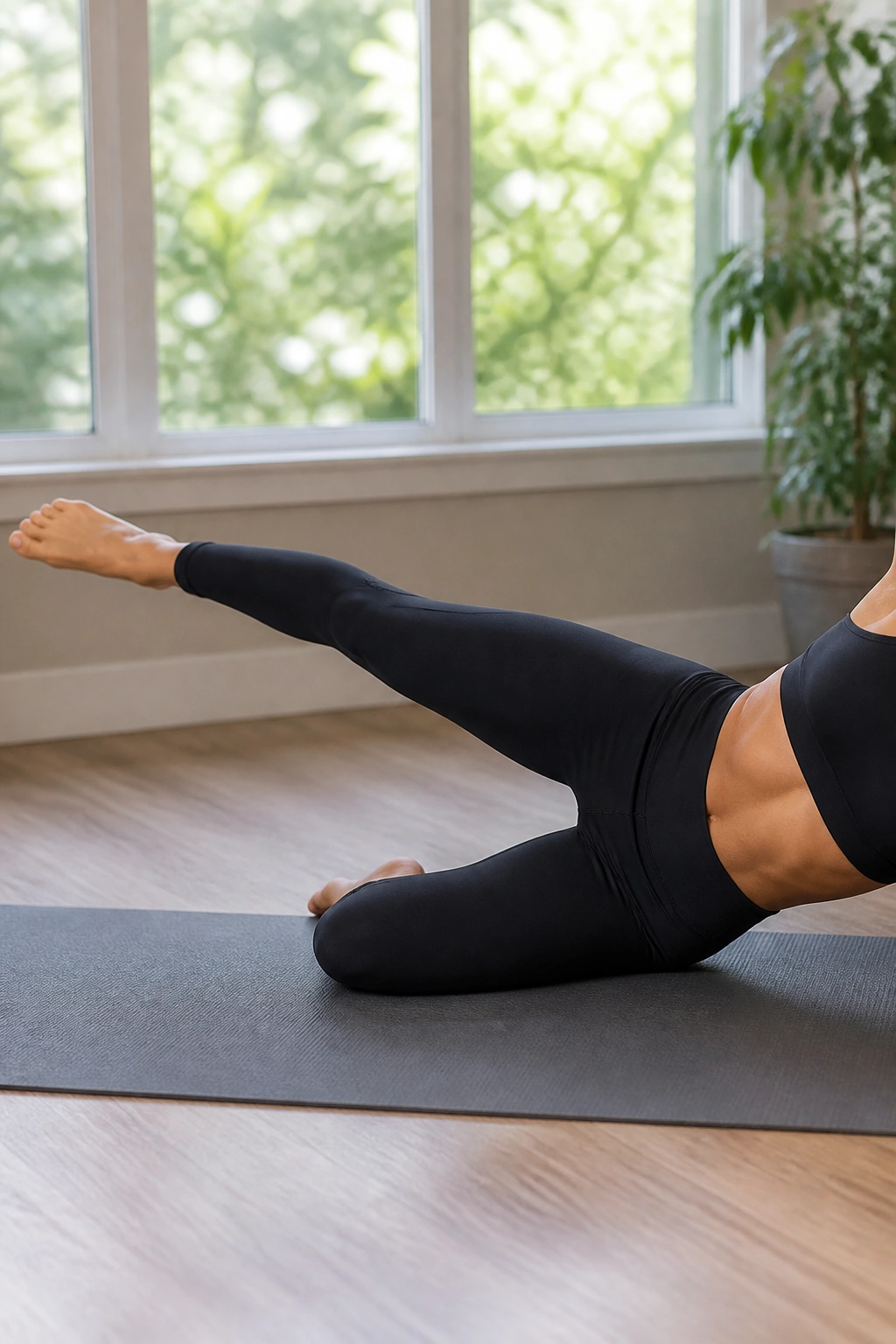
This is a classic Pilates move, and for good reason. It removes the factor of gravity acting on your spine, allowing you to isolate the adductor group with almost zero chance of cheating with your lower back or glutes.
Anatomy of the Move
Lie on your side, legs stacked. Bend the top leg and place the foot on the floor behind the bottom knee (or in front of it, depending on your comfort). Keep the bottom leg straight, foot flexed. Lift that bottom leg as high as you can, hold for a heartbeat, and lower it slowly without letting it touch the ground.
Why Consistency Matters
You will feel a burning sensation very quickly. This is lactic acid buildup in the adductor longus. Do not stop when the burning starts. Those last five reps, when your leg is shaking, are the ones that actually force the muscle to adapt. Aim for 20 reps per side, and do not rush the descent. The eccentric, or lowering, phase is just as important as the lift.
4. Cossack Squats
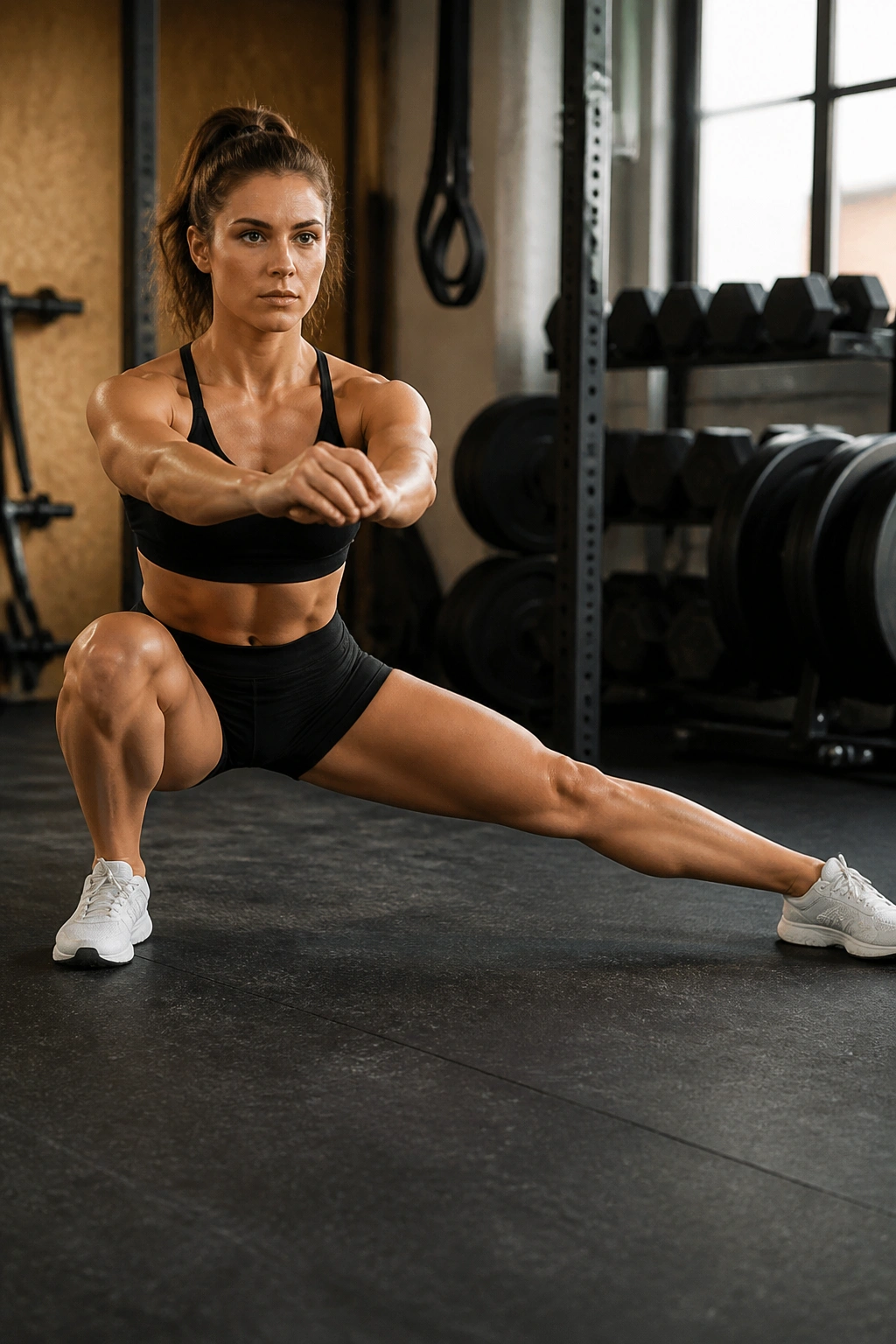
If you think a lateral lunge is tough, the Cossack squat will humble you. It takes the lateral lunge and drops it into a deep, full-range squat position. It requires significant hip mobility, so do not be discouraged if you cannot get very deep at first.
Why It Works
The Cossack squat forces you to shift almost your entire body weight onto one leg while the other leg is fully extended, toes pointed to the ceiling. This provides a maximal stretch to the inner thigh of the extended leg while simultaneously requiring extreme strength from the working leg.
Tips for Success
Start with bodyweight only. Place your hands on the floor for support if you need to balance yourself. As you get stronger, you can hold a light plate or kettlebell at your chest. The goal is to keep the heel of the bent leg glued to the floor. If it lifts, your mobility is the limiting factor, not your strength.
5. Curtsy Lunges
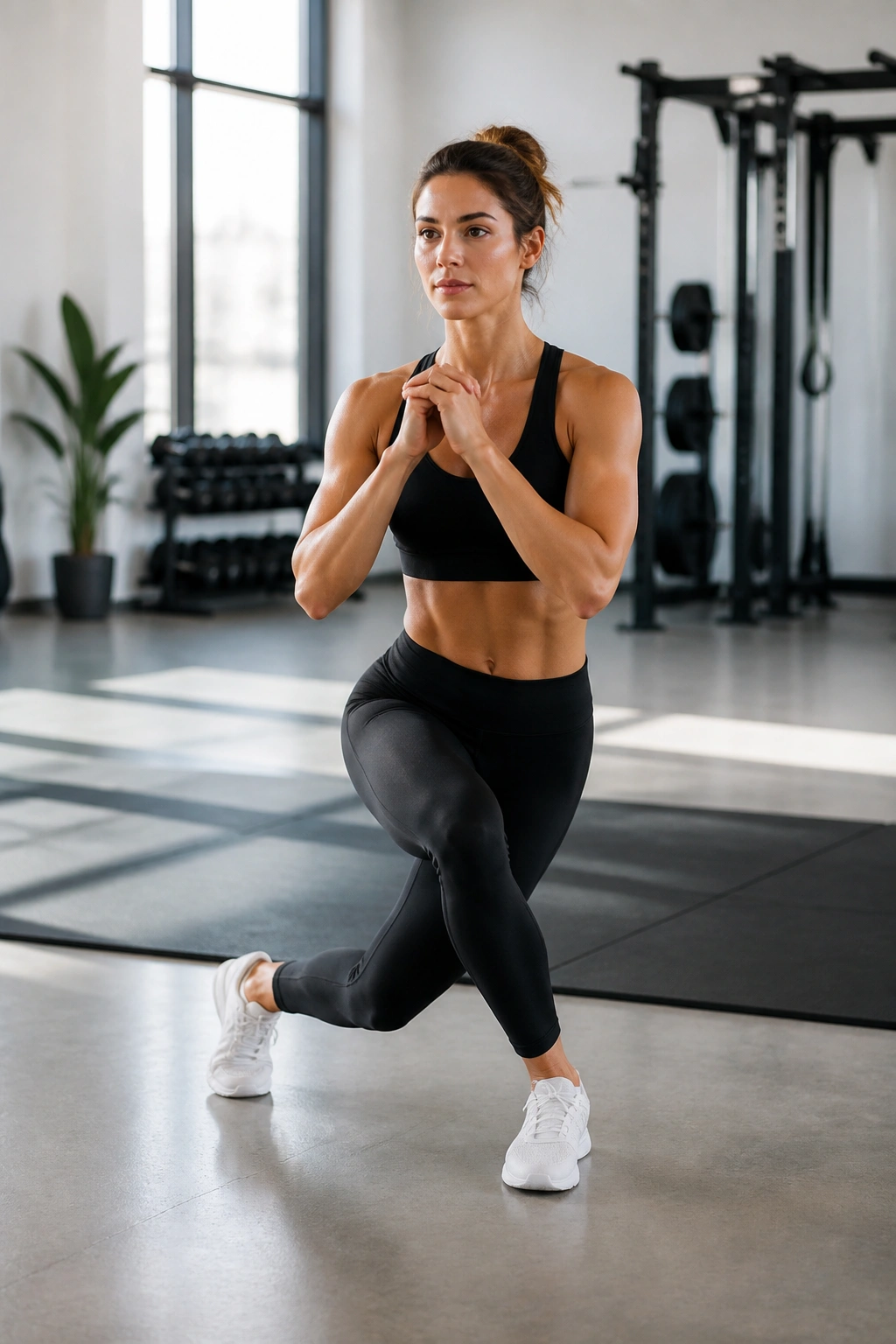
The curtsy lunge is an underrated move that targets the inner thigh by placing the leg in an adducted (inward) position across the body. It forces the muscles to stabilize while the hip is in a disadvantaged, stretched position.
How to Perform Correctly
Start standing tall. Step your right foot back and behind your left leg, as if you are curtsying. Lower your hips until your left thigh is nearly parallel to the floor. The key is to keep your front knee pointed forward, not turning with your back foot.
The Benefit of the Angle
Because you are crossing your leg behind, you are effectively lengthening the adductor complex and the gluteus medius simultaneously. This creates a strong stimulus for the inner thigh that a standard forward lunge simply cannot replicate.
6. Plie Squat Pulses
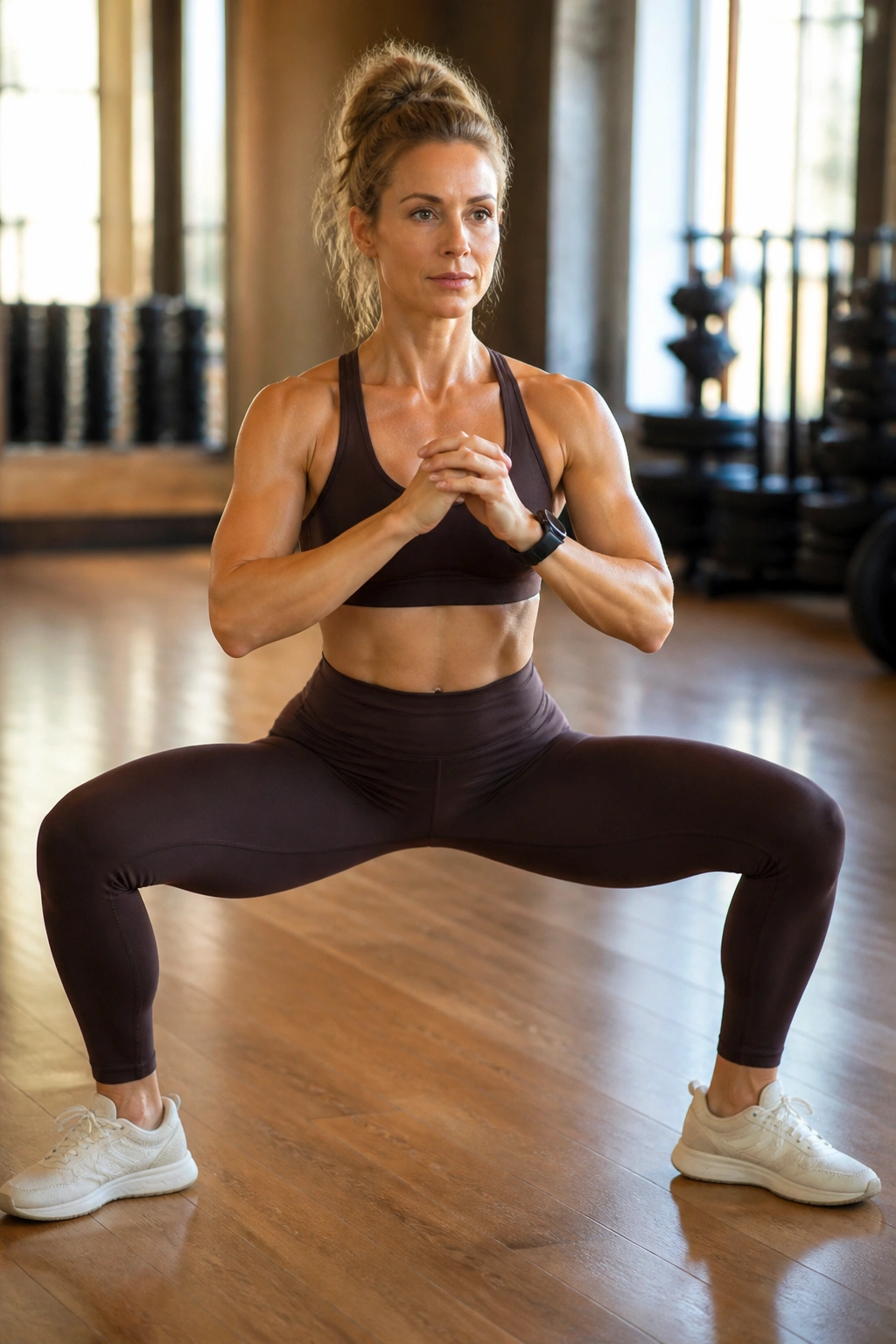
Sometimes, it is not about the heavy load; it is about “time under tension.” By adding pulses to the bottom of a wide-stance squat, you are denying the adductors a chance to rest at the top of the movement.
The Mechanics
Drop into your deep sumo squat position and hold it. Instead of coming all the way up, pulse up just a few inches and back down to the deepest point of your squat. Do this for 30 to 60 seconds without locking your knees.
Why Your Legs Will Shake
The constant contraction without a reset causes significant metabolic stress in the muscle. This is not about building raw strength; it is about muscular endurance and deep-tissue fatigue. Make sure you maintain a tall posture throughout the pulses. Don’t fold forward at the waist.
7. Inner Thigh Squeezes
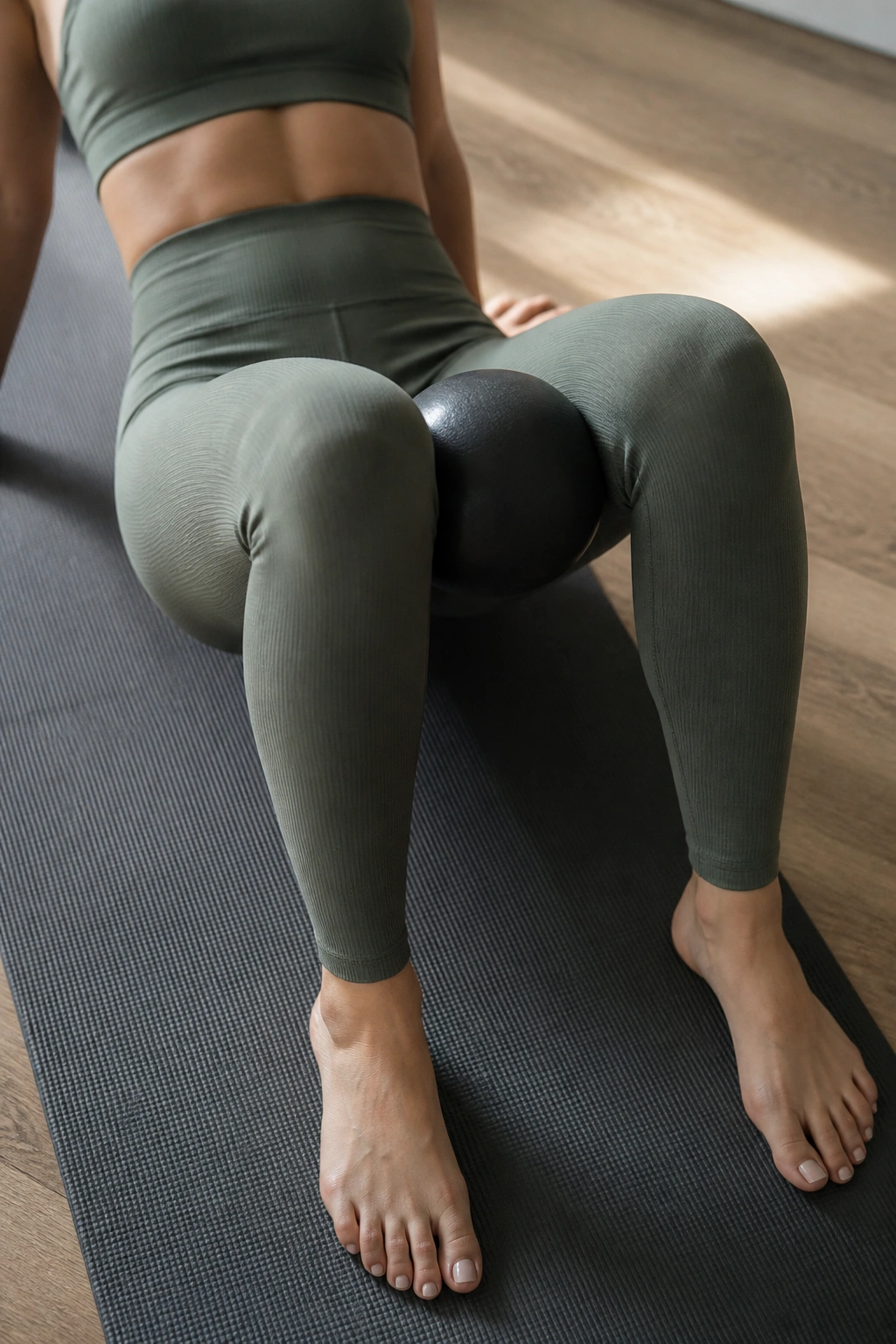
This is a move you can perform almost anywhere, provided you have a yoga block, a rolled-up towel, or a medicine ball. It specifically targets the adductors by forcing them to squeeze inward against resistance.
How to Do It
Lie on your back, knees bent, feet flat. Place the object firmly between your knees. Squeeze your knees together as hard as you can, imagining you are trying to crush the object. Hold the squeeze for five seconds, then release slightly, but do not let the object fall.
Combining with Bridges
For a more advanced variation, perform a glute bridge while maintaining that squeeze. This forces your inner thighs to stabilize your hips while your glutes provide the vertical power. It is an excellent way to bridge the gap between glute work and adductor work.
8. Goblet Sumo Squats
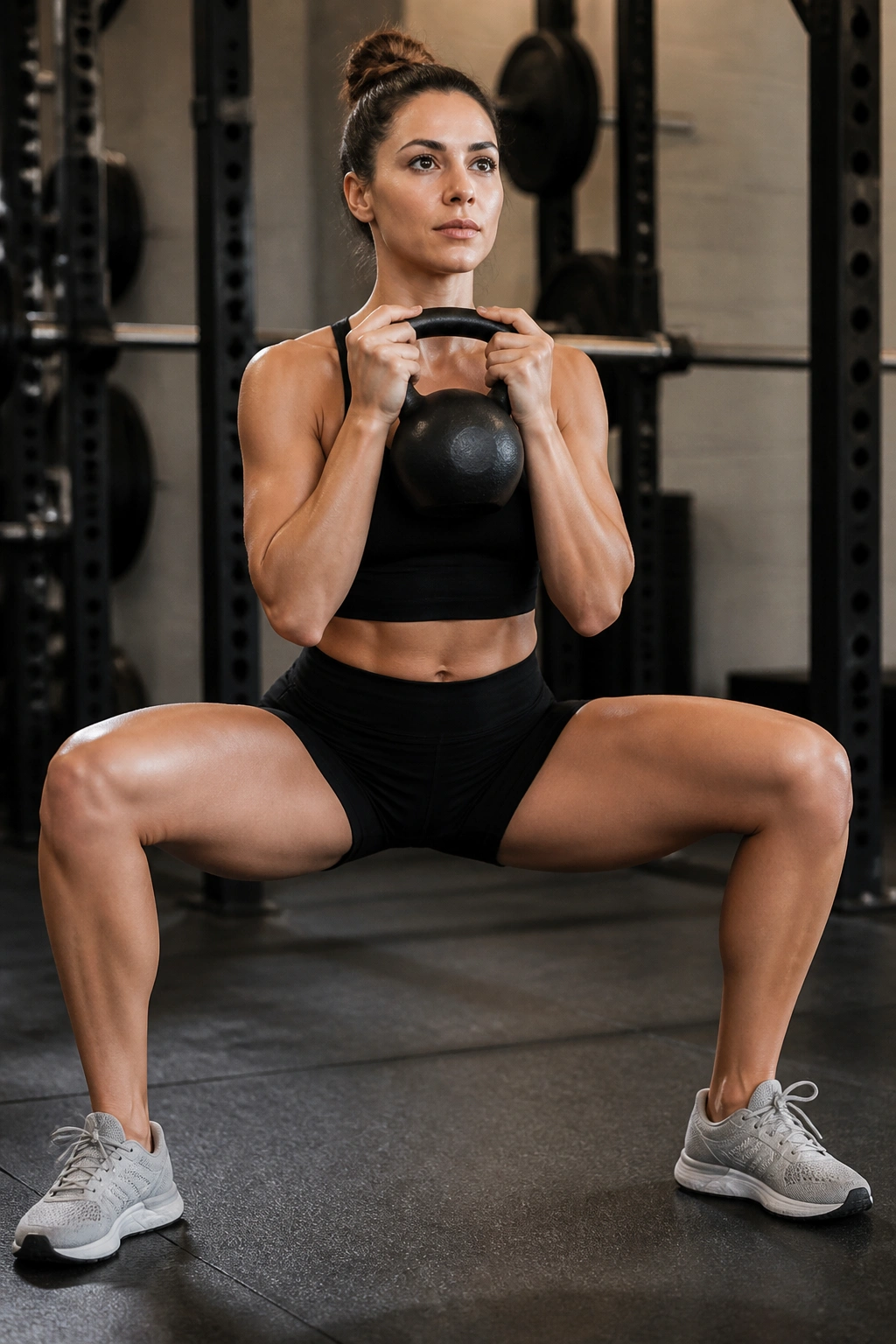
Holding weight at your chest changes the center of gravity, allowing you to sink deeper into a sumo stance than you could with a barbell on your back. It essentially turns the sumo squat into a functional “bottoms-up” lift.
Why This Variation
When you hold a kettlebell or dumbbell close to your chest, your spine stays naturally more upright. This prevents you from leaning forward, which keeps the tension strictly on your hips and inner thighs.
The Secret to Depth
If you feel restricted, stand on two weight plates or a step platform. This elevates your feet, allowing you to go lower than the floor would allow without your plates hitting the weight. Going just two inches deeper provides a significantly greater stretch on the inner thighs.
9. Frog Pumps
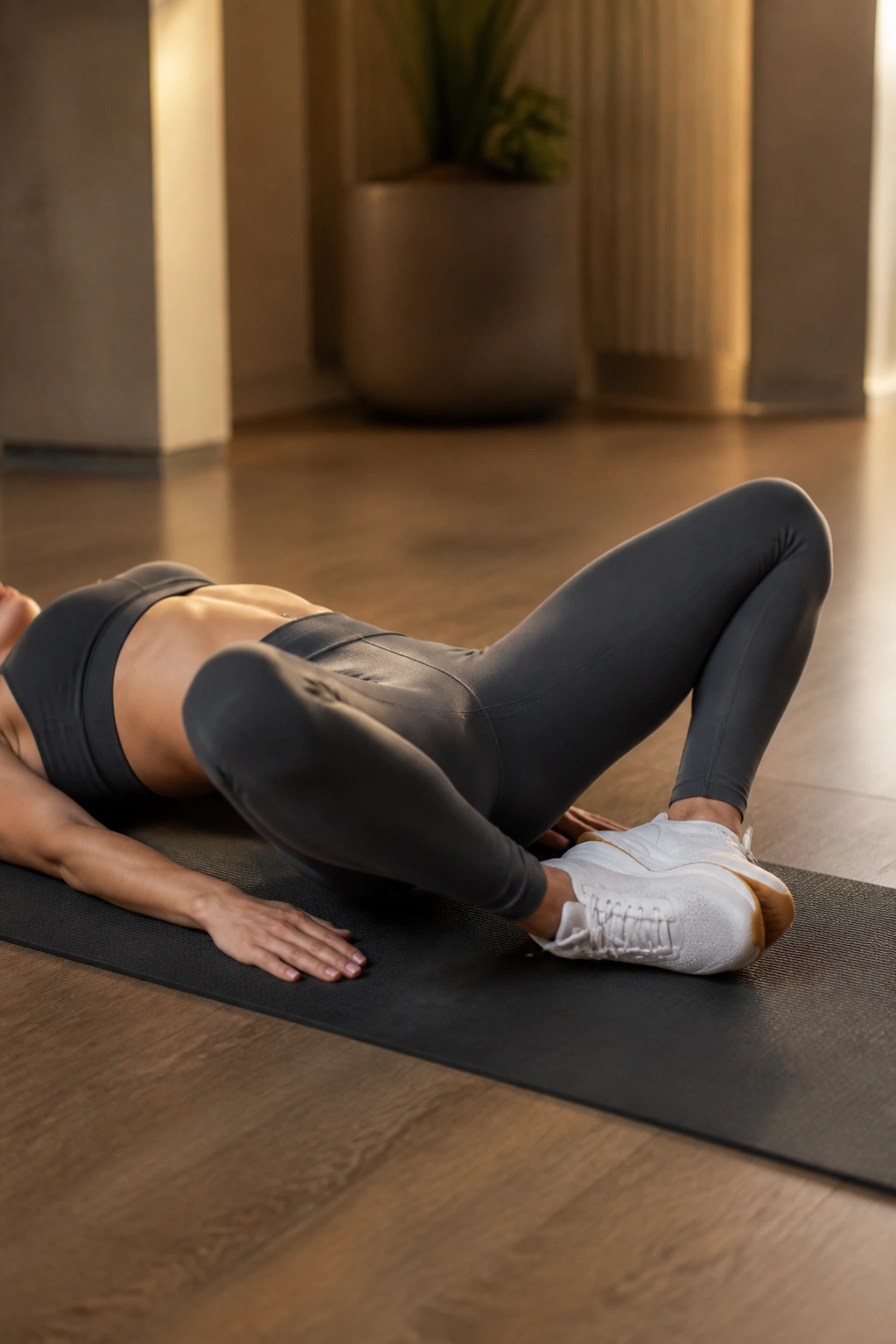
Frog pumps are a strange-looking exercise, but they are incredibly effective for the glutes and the adductors. By putting your legs into a “butterfly” position, you are inherently working in a range that forces the inner thighs to engage.
The Setup
Lie on your back, bring your feet together so your soles are touching, and open your knees wide. This is your starting position. Drive your hips up toward the ceiling, squeezing your glutes at the top.
Why It Targets the Inner Thigh
Because your legs are externally rotated and abducted, the adductor group has to work hard to stabilize the knees throughout the bridge. You are essentially doing a glute bridge with a heavy adductor emphasis. Keep the reps high—think 20 to 30 reps per set.
10. Wide-Stance Leg Press
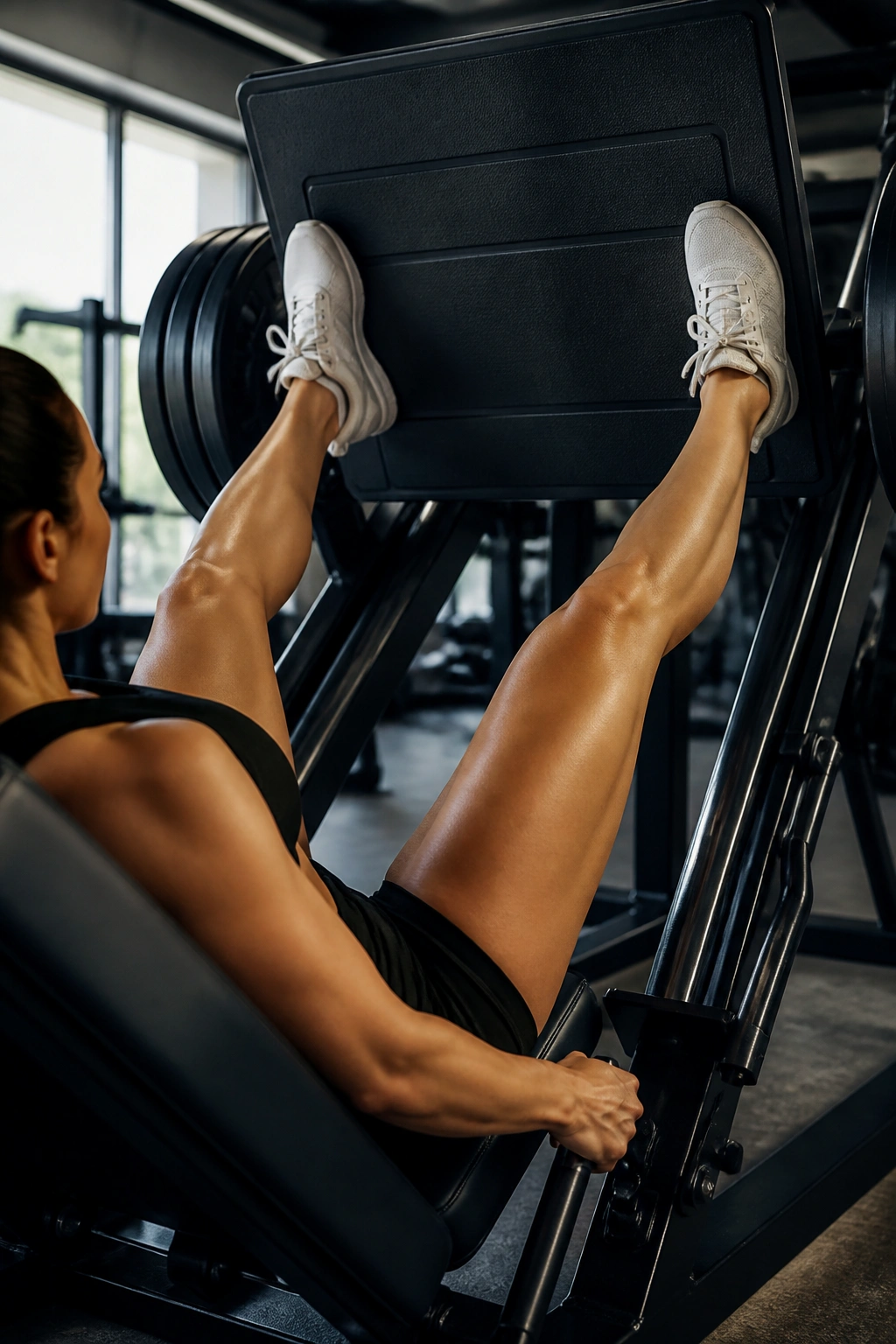
If you have access to a commercial gym, the leg press machine is a fantastic tool for the inner thighs. The trick is entirely in the foot placement.
Mastering the Foot Placement
Move your feet higher up on the platform and wider apart than you would for a standard leg press. Point your toes slightly outward. When you descend, your knees should travel in the direction of your toes.
Safety Warning
Because you are using a machine, it is easy to load up too much weight. Do not do this. Use a moderate weight where you can control the eccentric (lowering) phase for a full three seconds. If you drop the weight quickly, you risk knee and hip strain. The inner thighs are not designed to move massive loads in this position; focus on the stretch.
11. Glute Bridges with Adduction
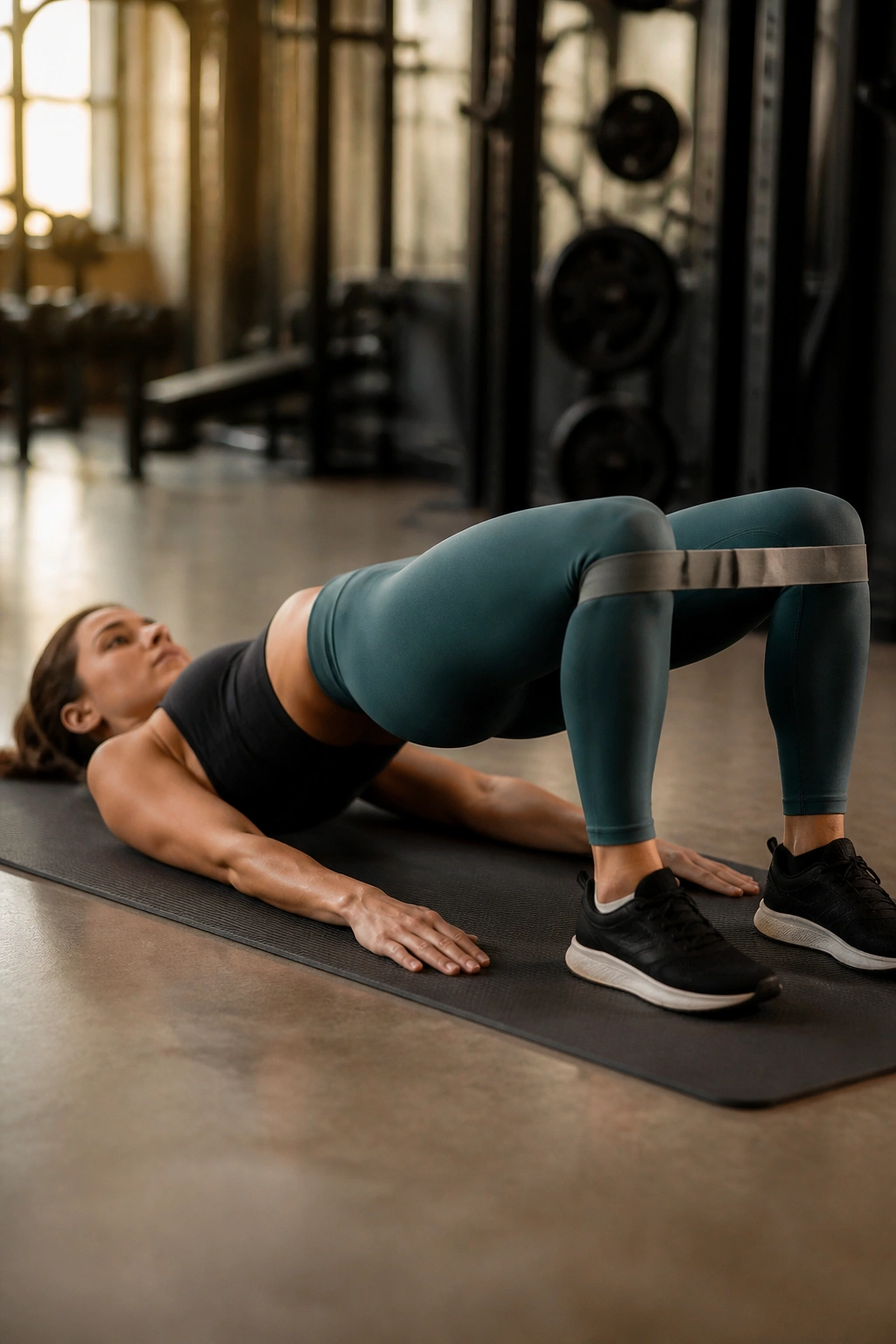
Combine the traditional glute bridge with an isometric hold. This is about coordination. You are teaching your muscles to stabilize while they are under load.
The Technique
Perform a standard glute bridge. Once you reach the top, hold the position. Now, perform small, rapid squeezes with your knees, moving them inward by just an inch and back out. Do not let your hips drop.
What It Teaches Your Body
This move builds stabilization. Many people have strong muscles but poor mind-muscle connection. By forcing the adductors to fire while the glutes are already fully contracted, you are training your body to use those muscles in unison. It makes your posterior chain much more resilient.
12. Copenhagen Plank
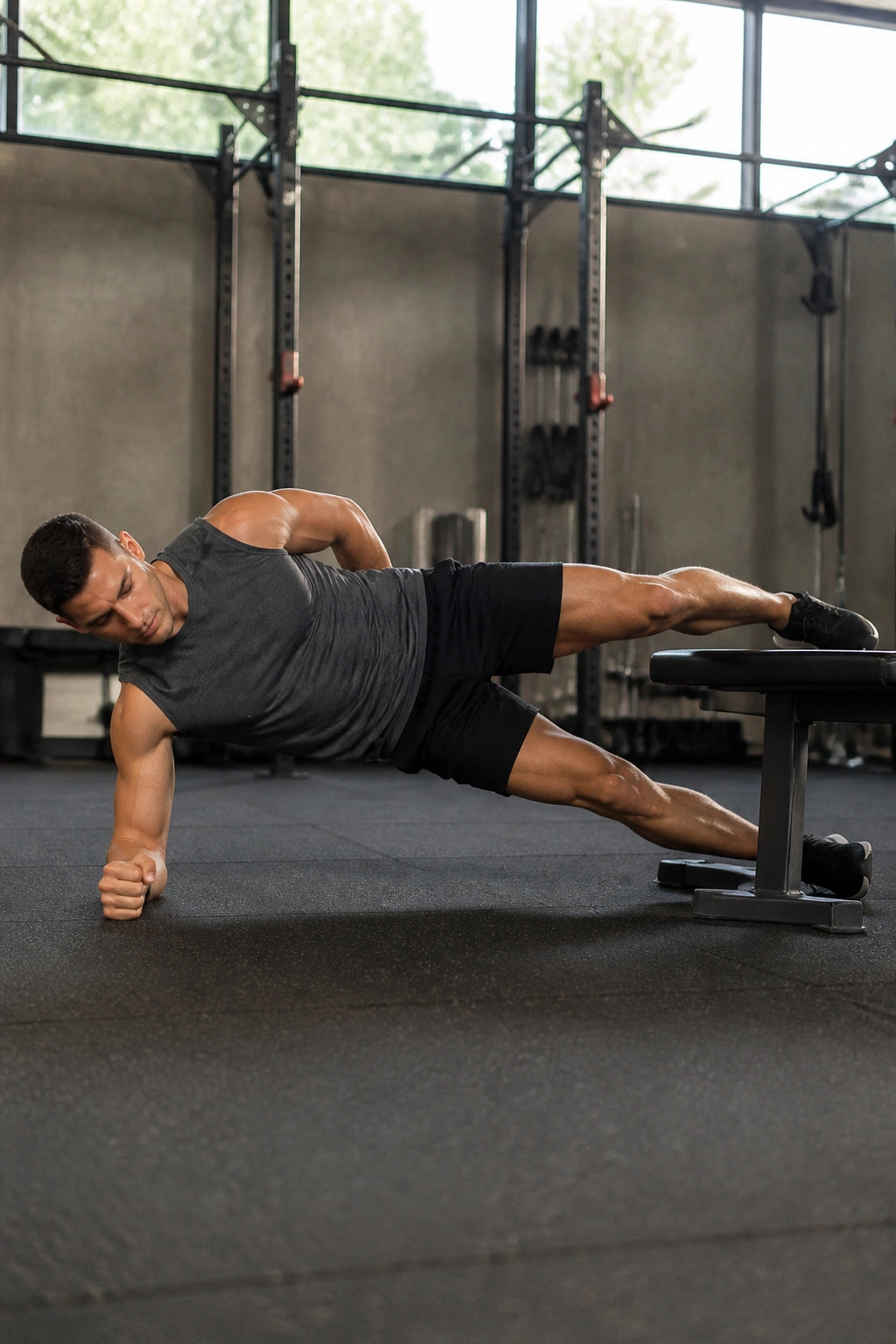
If you want to know which inner thigh exercise is the most effective for raw strength, this is it. It is also the most challenging. Do not be surprised if you can only hold this for 10 seconds the first time you try.
How to Execute
Lie on your side next to a bench. Place your top foot/knee on top of the bench and lift your hips into a side plank. Your bottom leg should be hovering in the air, dangling underneath the bench. That bottom leg is holding your entire body weight, and your inner thigh is the muscle doing the heavy lifting.
Scaling the Difficulty
- Beginner: Place your knee on the bench, not your foot.
- Intermediate: Place your foot on the bench.
- Advanced: Hold the position with your bottom leg extended straight, and perform small leg lifts with the bottom leg while holding the plank.
13. Cable Hip Adductions
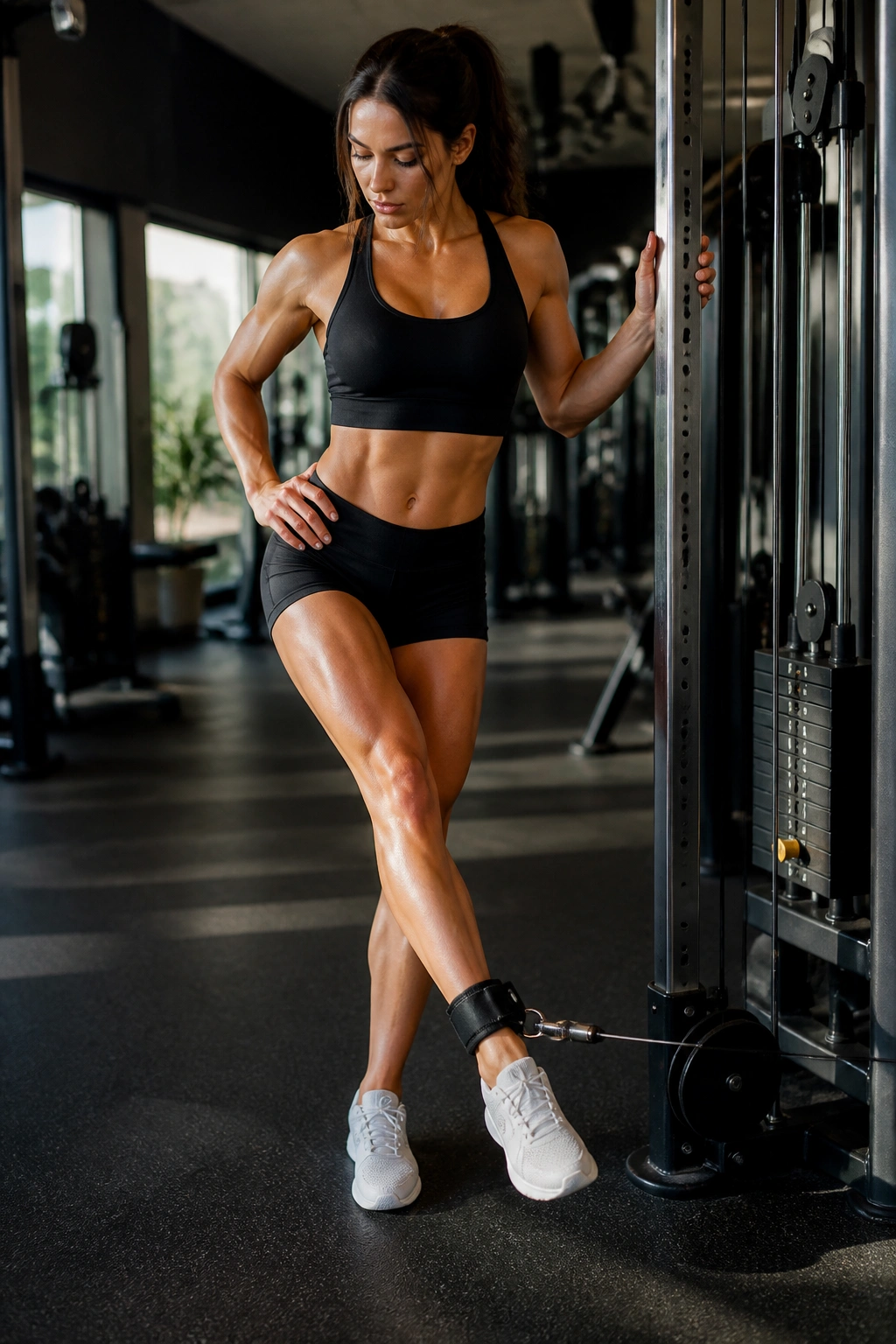
Cable machines are superior to machines that use weight stacks because they provide constant tension throughout the entire range of motion, rather than having a “rest” point at the end of the rep.
The Setup
Attach a cuff to your ankle and attach it to the lowest setting on the cable tower. Stand sideways to the machine, keeping the leg furthest from the machine as the anchor. Pull the working leg across your body, keeping it straight.
The Importance of Control
Do not use momentum. If you have to swing your torso to get the leg across, the weight is too heavy. The movement should be slow and controlled. You are pulling the weight against the resistance of the cable, which provides a clean, straight line of pull directly to the adductor group.
14. Sliding Side Lunges
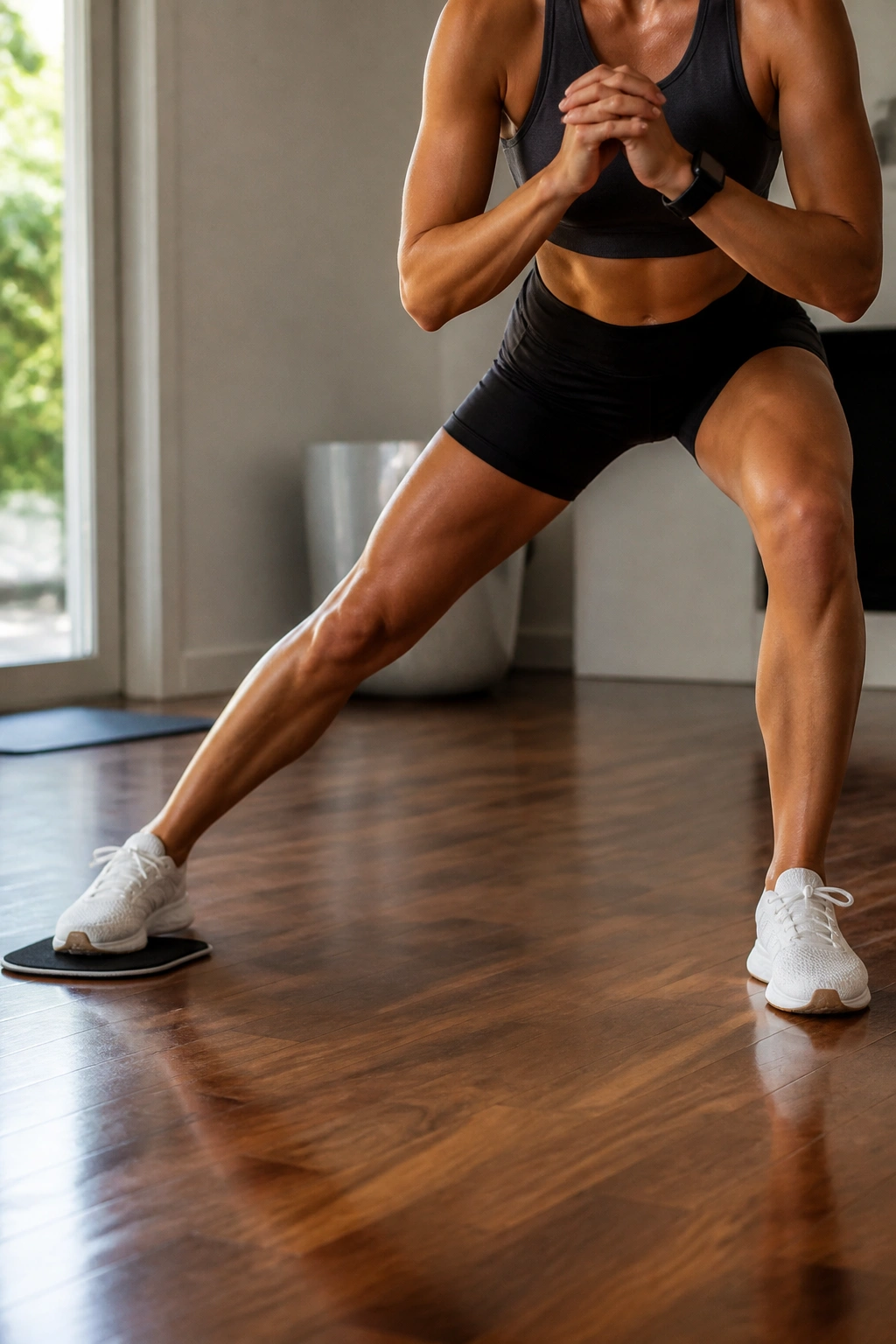
Using furniture sliders (or paper plates if you are at home on a carpet) changes the mechanics of a lunge. Instead of picking your foot up, you are constantly fighting to keep it from sliding away.
Why Friction Helps
By sliding, you are keeping your foot in constant contact with the floor. This forces your inner thigh to work harder to stabilize your leg against the sliding motion, both on the way out and on the way in. It eliminates the “bounce” that many people use to cheat their way out of a lunge.
How to Do It
Place a slider under your right foot. Keep your left leg anchored. Slowly slide your right foot out to the side while lowering your hips. Use your inner thigh to pull that foot back in. It is much harder than it looks.
15. Dumbbell Sumo Deadlifts
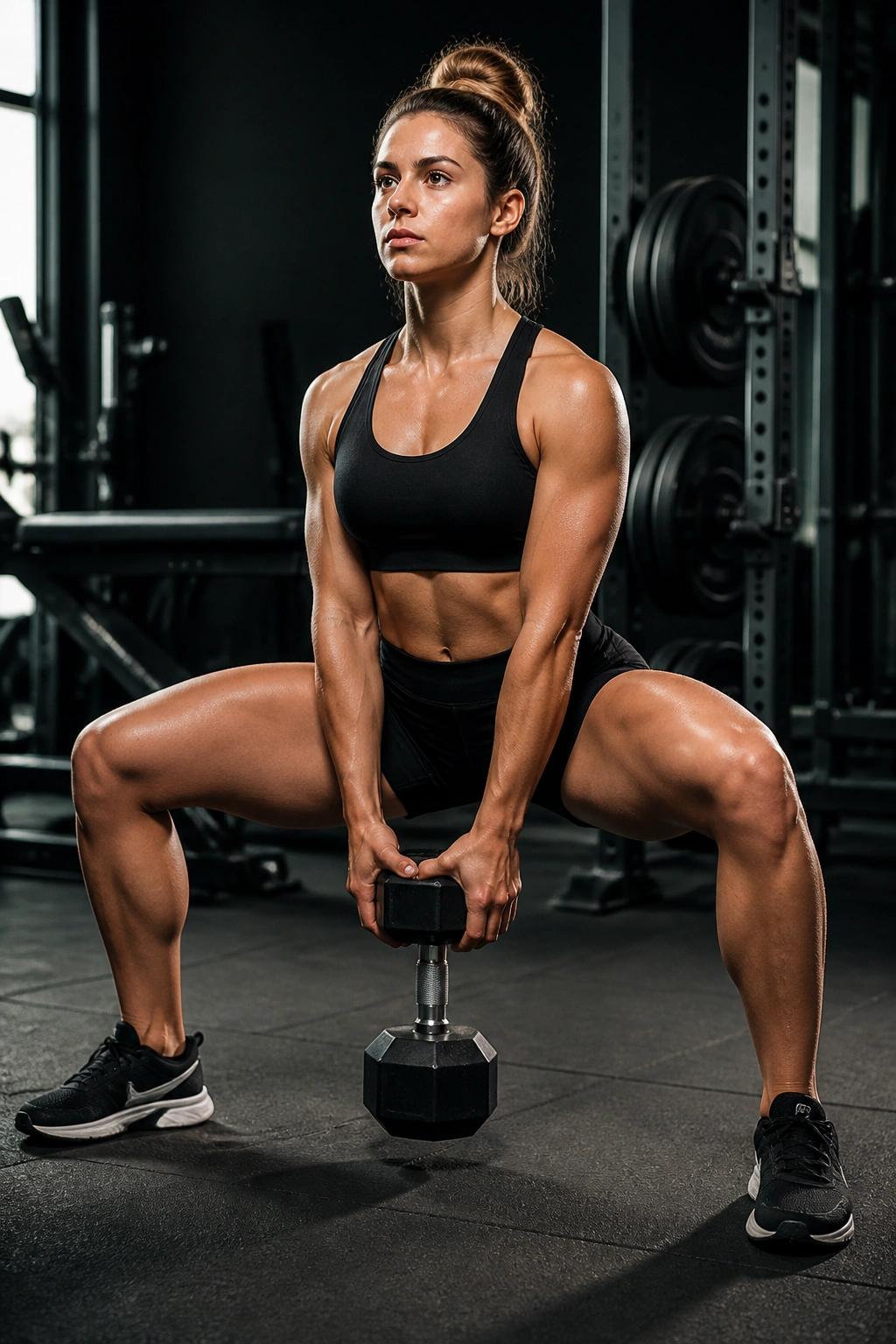
While traditional deadlifts are a full-body movement, the sumo deadlift is a specific, powerful variation that leans heavily on the inner thighs.
Anatomy and Purpose
The wide stance forces your torso to remain more upright, which takes the pressure off the lower back and shifts it to the legs. Because you are gripping the weight between your legs, you are forced to keep your knees pushed out, which creates a massive contraction in the adductors.
Form Checklist
- Grip: Hands inside the knees, gripping the dumbbell handle.
- Chest: Proud and upright throughout the lift.
- Drive: Push through the floor with your heels, not your toes.
- Engagement: As you reach the top, squeeze your glutes and your inner thighs together.
16. Seated Machine Adduction
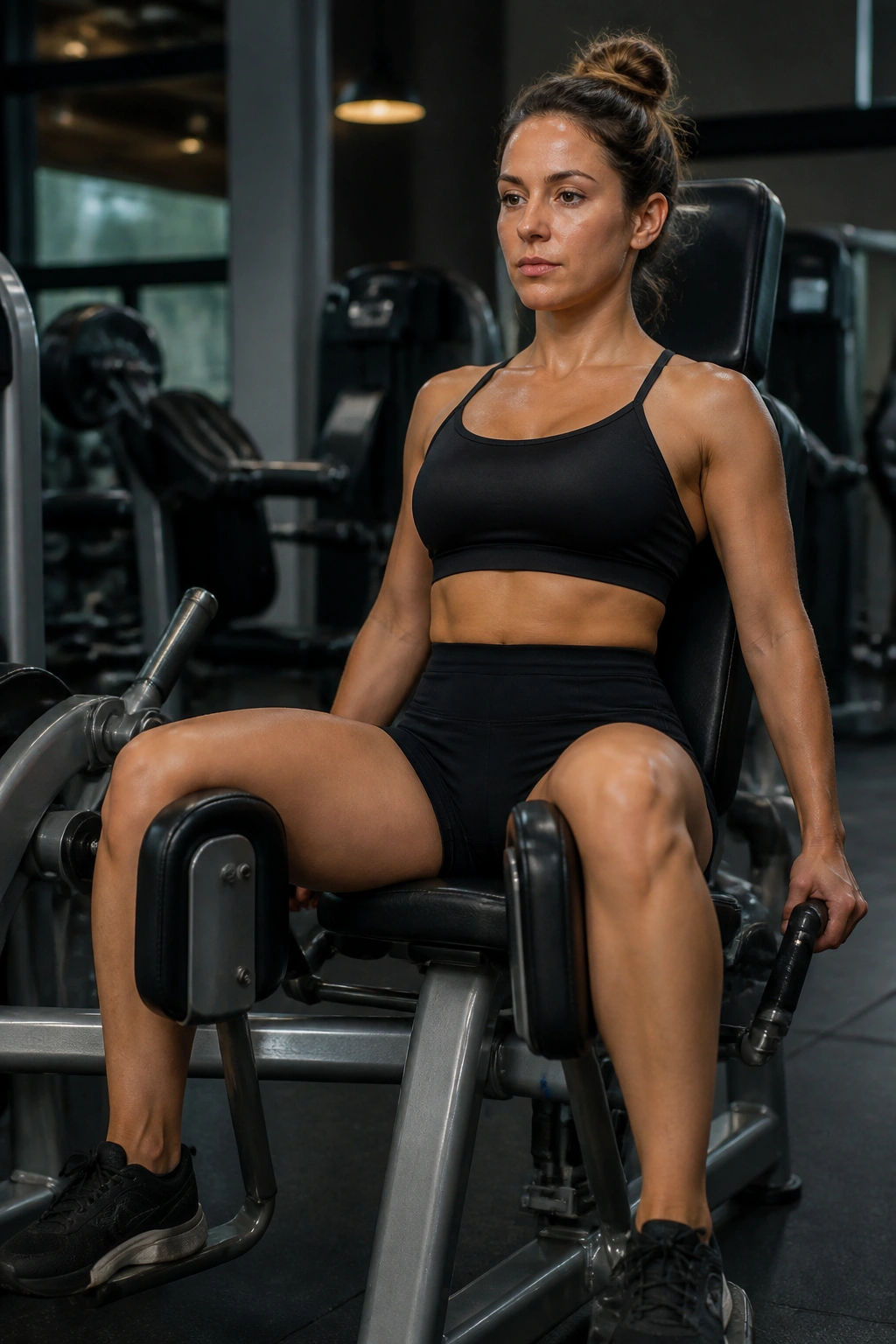
There is a lot of debate about whether the “thigh machine” is effective. The answer is yes, but only if you use it correctly. Most people sit back, relax, and bang out 50 reps. That is not how you build muscle.
The Correct Way to Use It
Sit forward in the seat, arch your lower back slightly, and keep your torso rigid. When you close the machine, do not just let the weights slam together. Control the movement. When you open the legs, do it slowly to ensure a deep, controlled stretch.
Don’t Cheat
Stop the movement just before the weights touch. This keeps the muscle under tension the entire time. If the weights hit, the tension releases, and you lose the benefit of the exercise.
17. Resistance Band Monster Walks
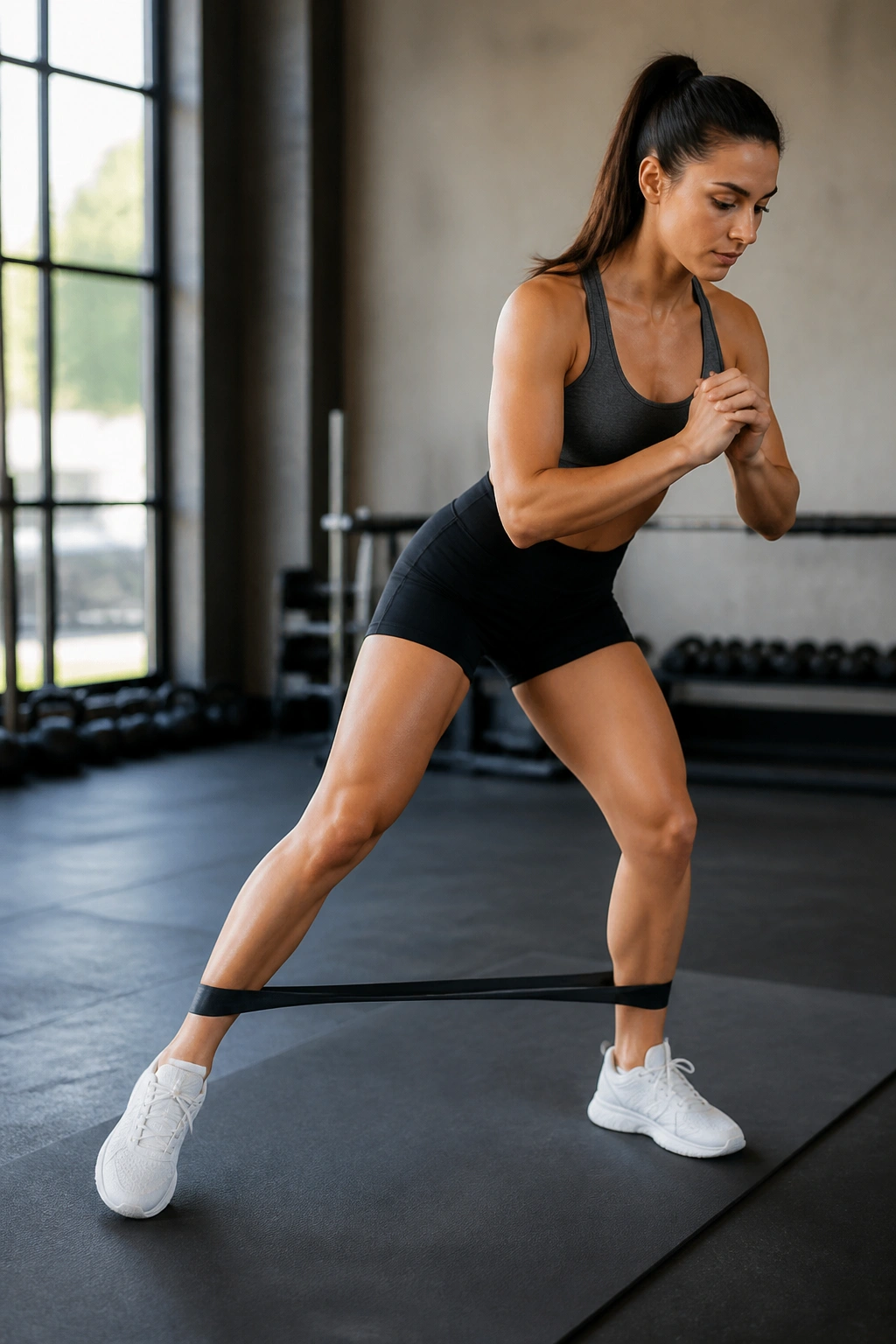
Monster walks are usually marketed for the glutes, but if you position the band correctly, they are a fantastic adductor exercise as well.
The Setup
Place the band around your ankles rather than your knees. The lower the band, the longer the lever, and the harder the exercise becomes. Step out into a wide, athletic stance.
The Movement
Stay in a semi-squat position. Step diagonally forward and out, keeping tension on the band. Take five steps forward, then five steps backward. The goal is to never let the band lose tension. Your inner thighs have to constantly fire to prevent the band from pulling your knees inward.
18. Butterfly Bridges
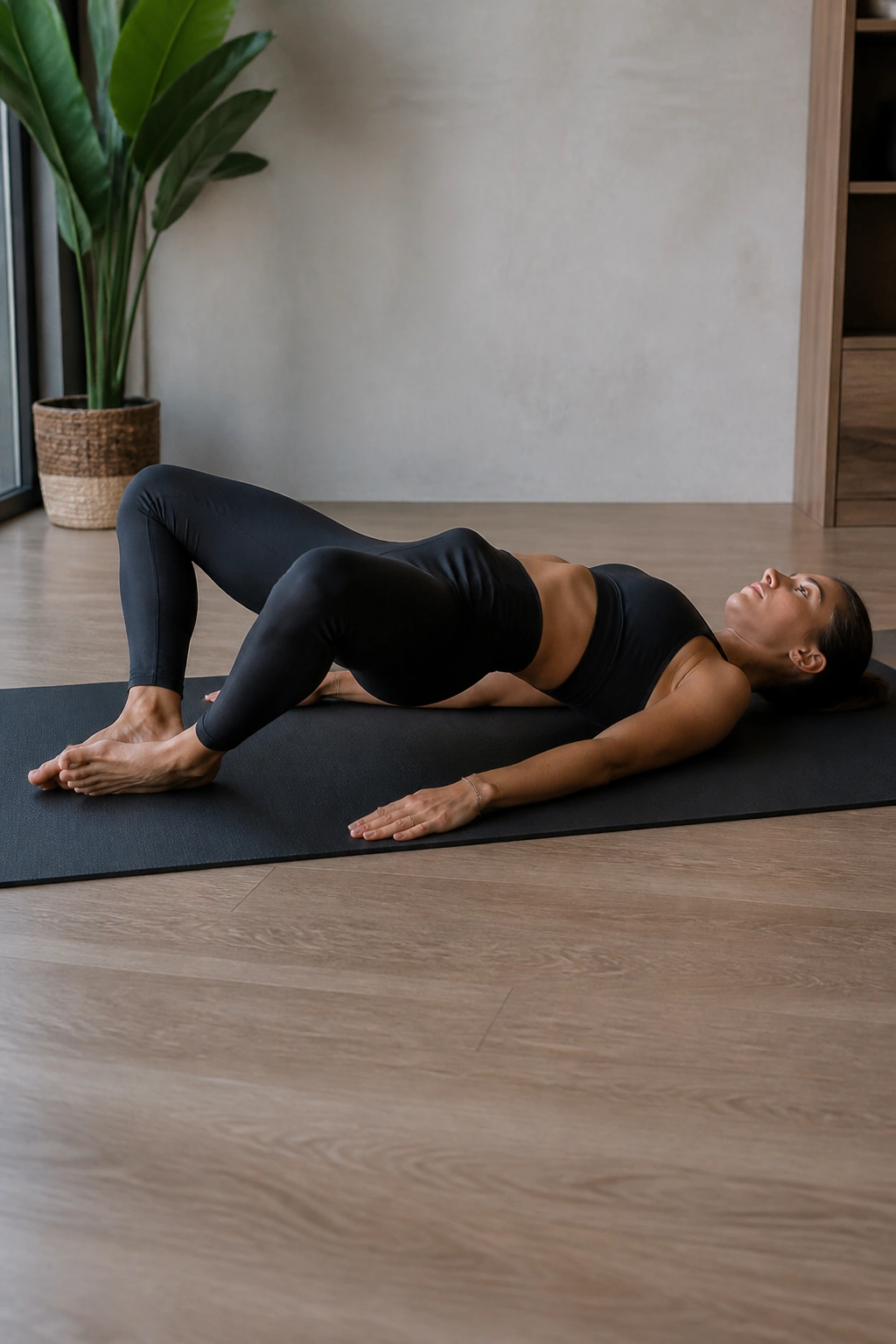
This is a specific modification of the standard bridge that isolates the inner thighs. It is essentially a bridge performed with your legs in a diamond shape.
Why This Variation
By opening the knees, you are placing the adductors in a lengthened position. Pushing your hips up while in this position forces the adductors to work in a shortened range, which is great for improving muscle definition and strength.
Technique
Place the soles of your feet together, knees dropped to the side. As you lift your hips, try to keep your feet pressed firmly together. If you find your feet slipping, you are not engaging the adductors enough.
19. Pilates Scissor Kicks
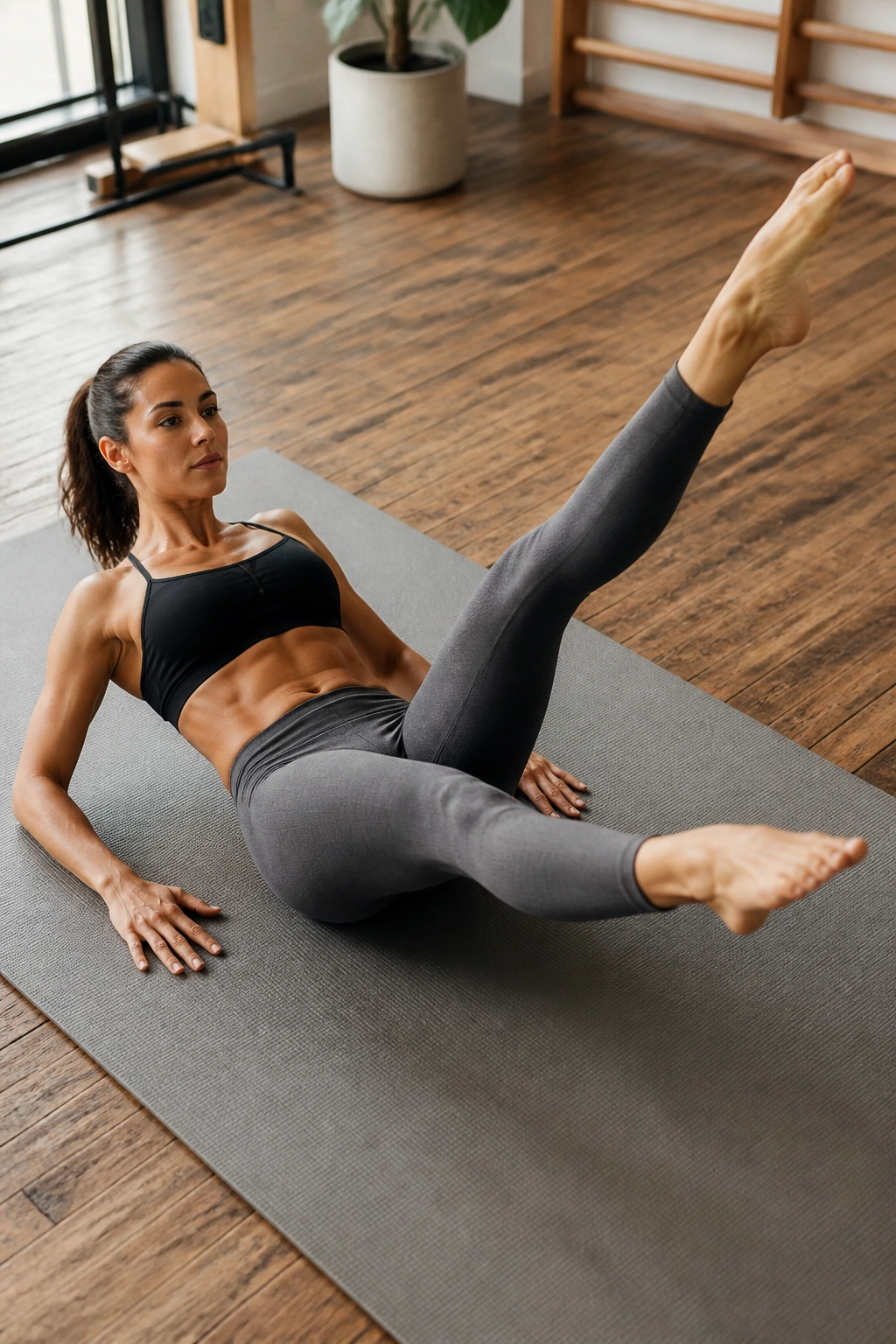
Pilates is often misunderstood as “easy” exercise, but the movements are deceptive. Scissor kicks specifically isolate the deep stabilizers of the legs.
The Execution
Lie on your back, hands under your hips for support. Lift both legs straight up toward the ceiling. Lower them slightly toward the floor (as low as you can keep your back flat). Cross your legs over each other in a scissor motion—right over left, left over right.
The Challenge
The lower you drop your legs, the harder your abs and inner thighs have to work. Keep the legs straight and active—do not let them go limp. If your lower back starts to arch, bring your legs higher up. The intensity comes from the speed and the range of motion.
20. Cossack-to-Sumo Transitions
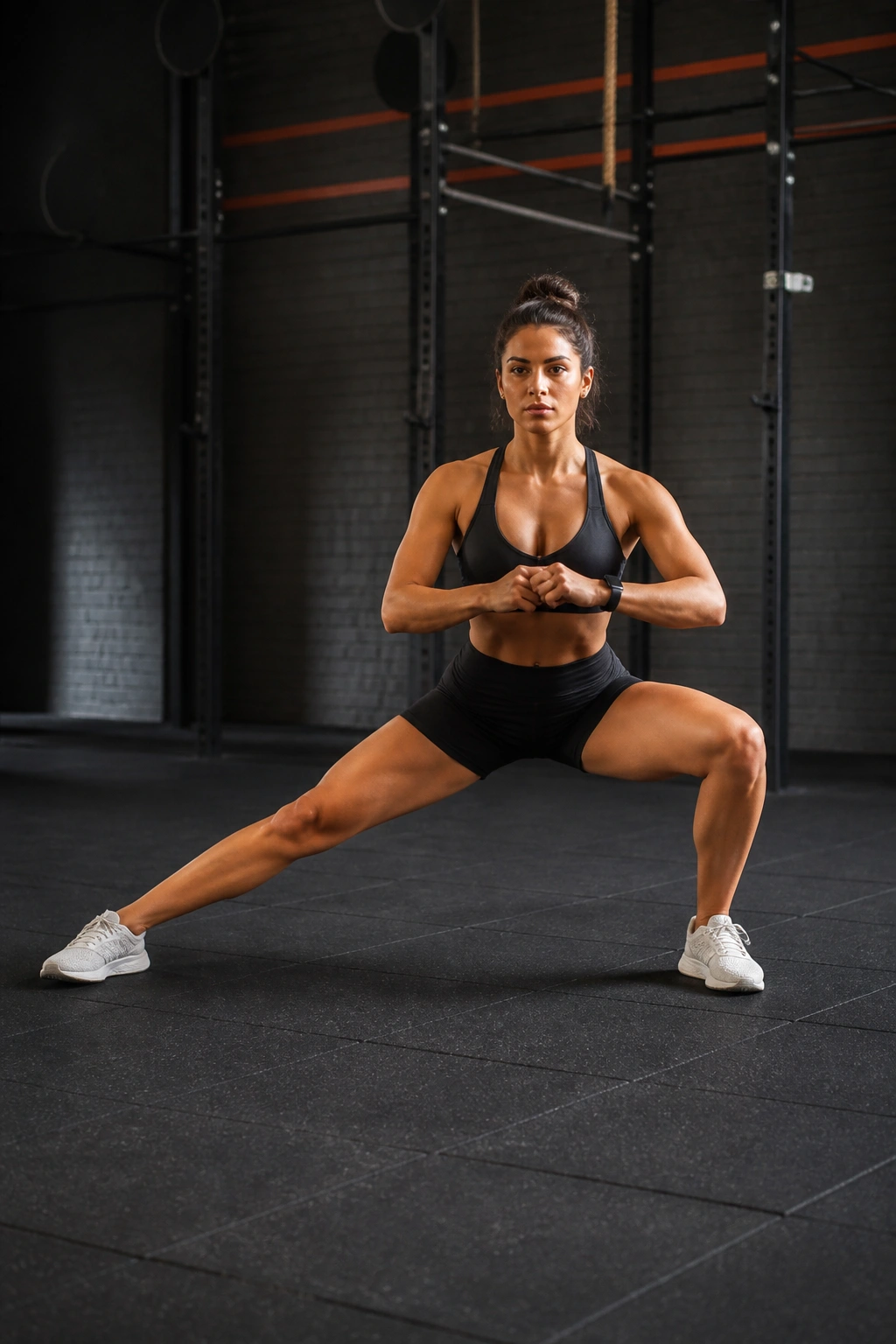
This is the ultimate finisher. It combines two of the best moves on this list into a continuous flow that will leave your legs feeling like lead.
How to Flow
Start in a wide sumo stance. Perform a Cossack squat to the right. Without standing up completely, transition through the center into a deep sumo squat, then shift your weight into a Cossack squat to the left.
Why It Works
You are keeping the inner thighs under tension for the entire duration of the set. By moving through the bottom of the squat, you are forcing the adductors to constantly switch between concentric and eccentric muscle contractions. It is brutal, but it is one of the most effective ways to ensure complete muscle exhaustion in a short amount of time.
Final Thoughts
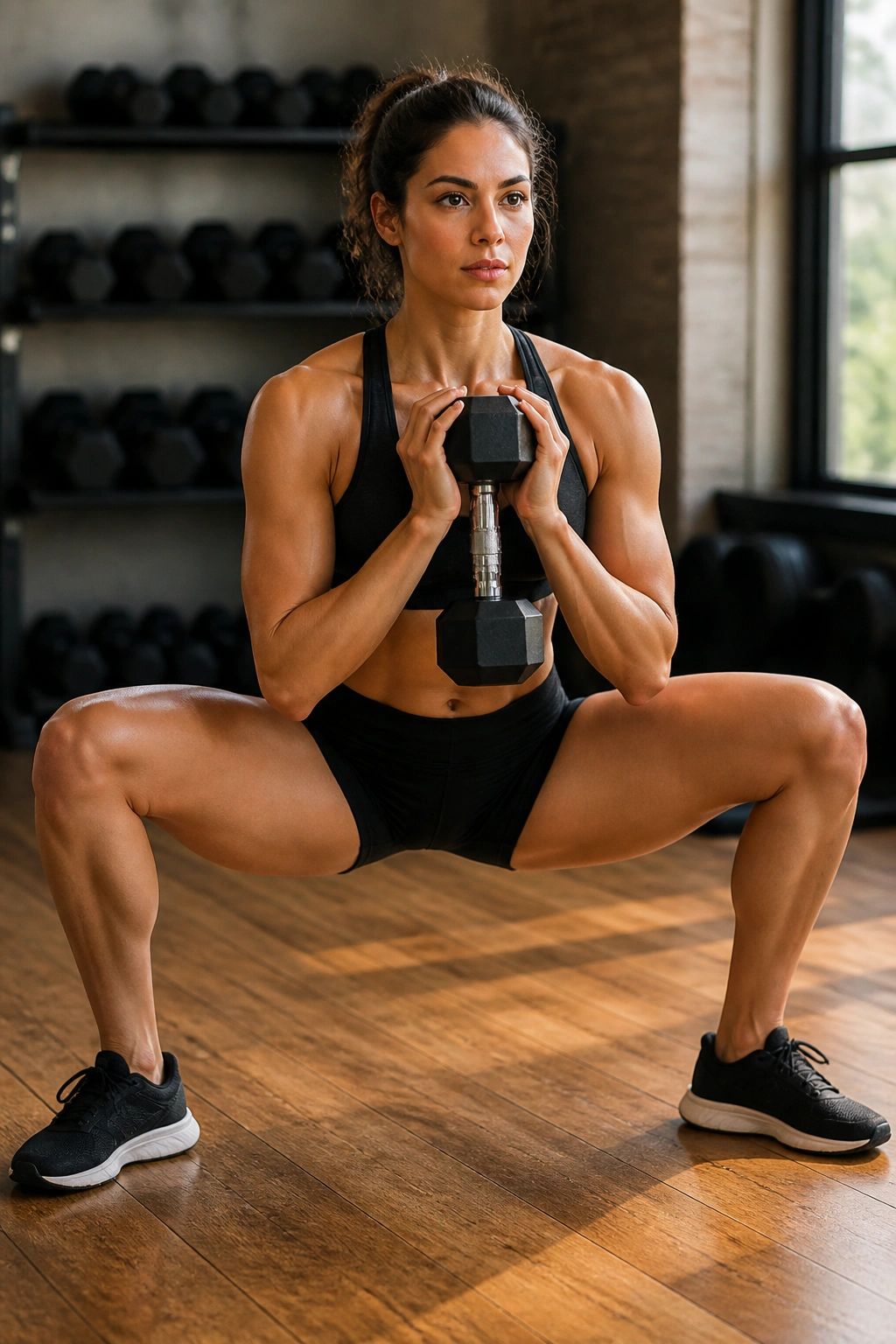
Building stronger, more sculpted inner thighs is not about finding one “magic” movement that changes everything overnight. It is about understanding the biomechanics of the adductor group. These muscles are designed to stabilize the hip and knee, and they need to be challenged in the frontal plane, not just the front-to-back plane we usually train in.
If you are just starting, prioritize the moves that allow you to control your range of motion, like the lateral lunges or the side-lying leg lifts. Once you have built a baseline of strength and coordination, transition to the more compound, weighted movements like the sumo squat and the Cossack squat.
Consistency will always be the deciding factor. You do not need to do all twenty of these exercises in one session. Pick three or four that you enjoy—or perhaps, that you hate, because those are often the ones you need the most—and incorporate them into your lower body days two or three times a week. Listen to your body, focus on the quality of your movement over the amount of weight, and you will eventually build the strength and stability you are looking for.
