



Strong legs do more than make squats look respectable. They change how you walk up stairs, how you stand up from a low chair, how your hips feel after a long day, and how much power you can get out of a jump, a sprint, or a heavy carry. The lower body is a system, not a collection of mirror muscles, and the best training respects that.
A lot of people chase glute work that looks busy and burns hard, then wonder why their actual strength stalls. That’s because stronger legs and glutes come from loading the big movement patterns well: squatting, hinging, stepping, lunging, and pressing through one leg at a time. You need some heavy bilateral work. You also need single-leg control. Skip either side and the whole thing gets lopsided.
The best lower body workouts are not fancy. They are the ones that let you keep adding a little more load, a little more depth, a cleaner rep, or a steadier tempo over time. Some hit the quads harder, some light up the glutes, and a few hit the adductors or hamstrings in ways most lifters ignore until those muscles start complaining. That is usually the clue you were missing them.
So let’s get practical. The list below starts with the staples and moves into the supporting work that makes your legs sturdier, your glutes more useful, and your training a lot harder to fake.
1. Back Squat
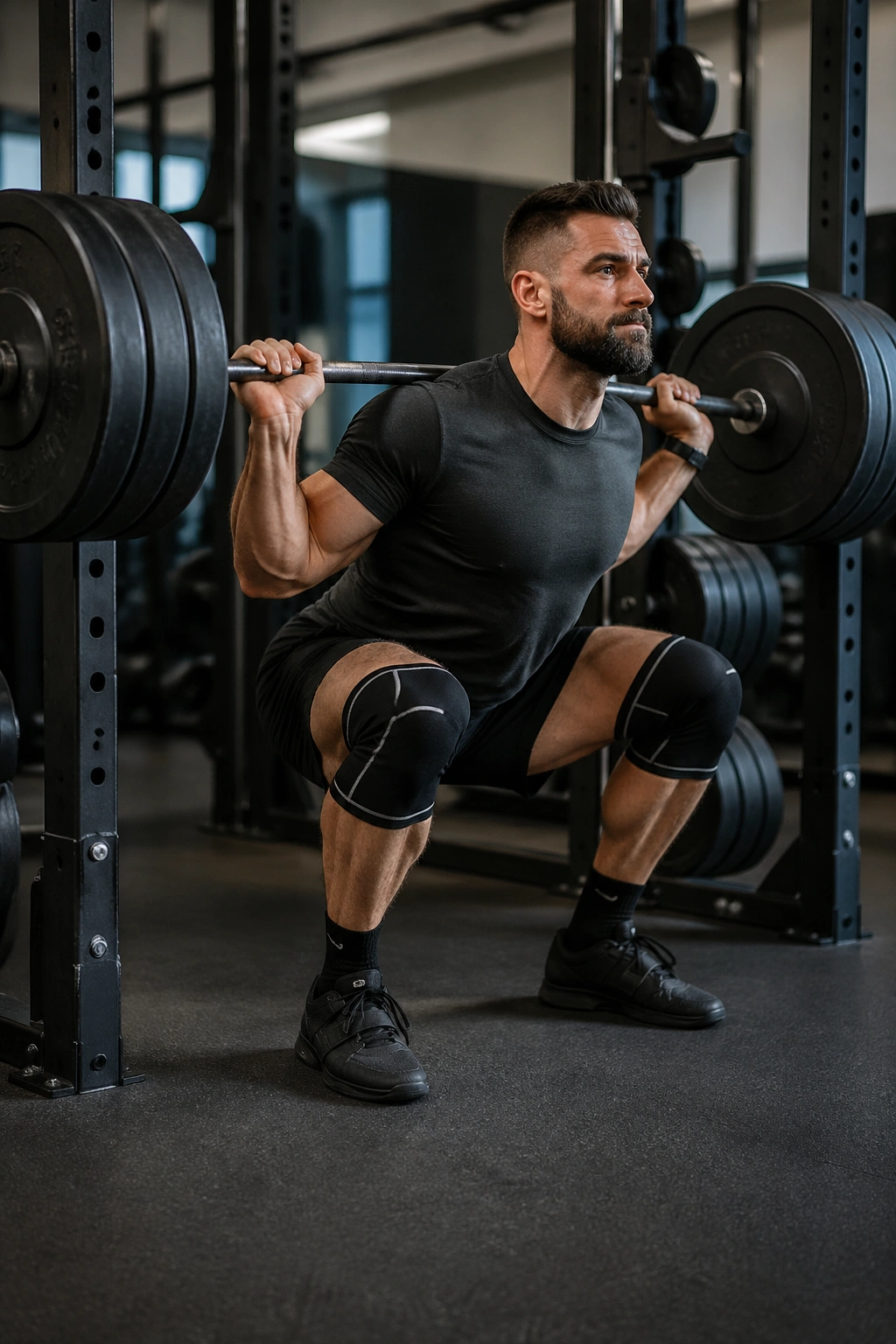
If you want one lift that can build brute leg strength, the back squat stays near the top of the pile. It loads the quads, glutes, adductors, and trunk at the same time, and it does it in a way your body can keep progressing for a long time.
The setup matters more than people admit. A solid back squat usually means feet planted about shoulder width, ribs tucked down, and the bar sitting in a consistent place on your upper back. Once you descend, the goal is not to collapse into the bottom like a sack of laundry. You want control on the way down and a clean drive up through the mid-foot.
What to Watch For
- Keep your heels down and your whole foot connected to the floor.
- Let the knees travel forward and out as you descend.
- Aim for depth you can own, not depth you can barely survive.
- Use 3 to 5 sets of 3 to 6 reps for strength, or 3 to 4 sets of 6 to 8 reps for muscle.
One clean one-rep-max-style grind is not the point here. The point is repeatable reps with enough load to make your legs earn it. If your torso folds hard or your heels pop up, reduce the weight and fix the pattern first. That boring step pays off fast.
2. Goblet Squat
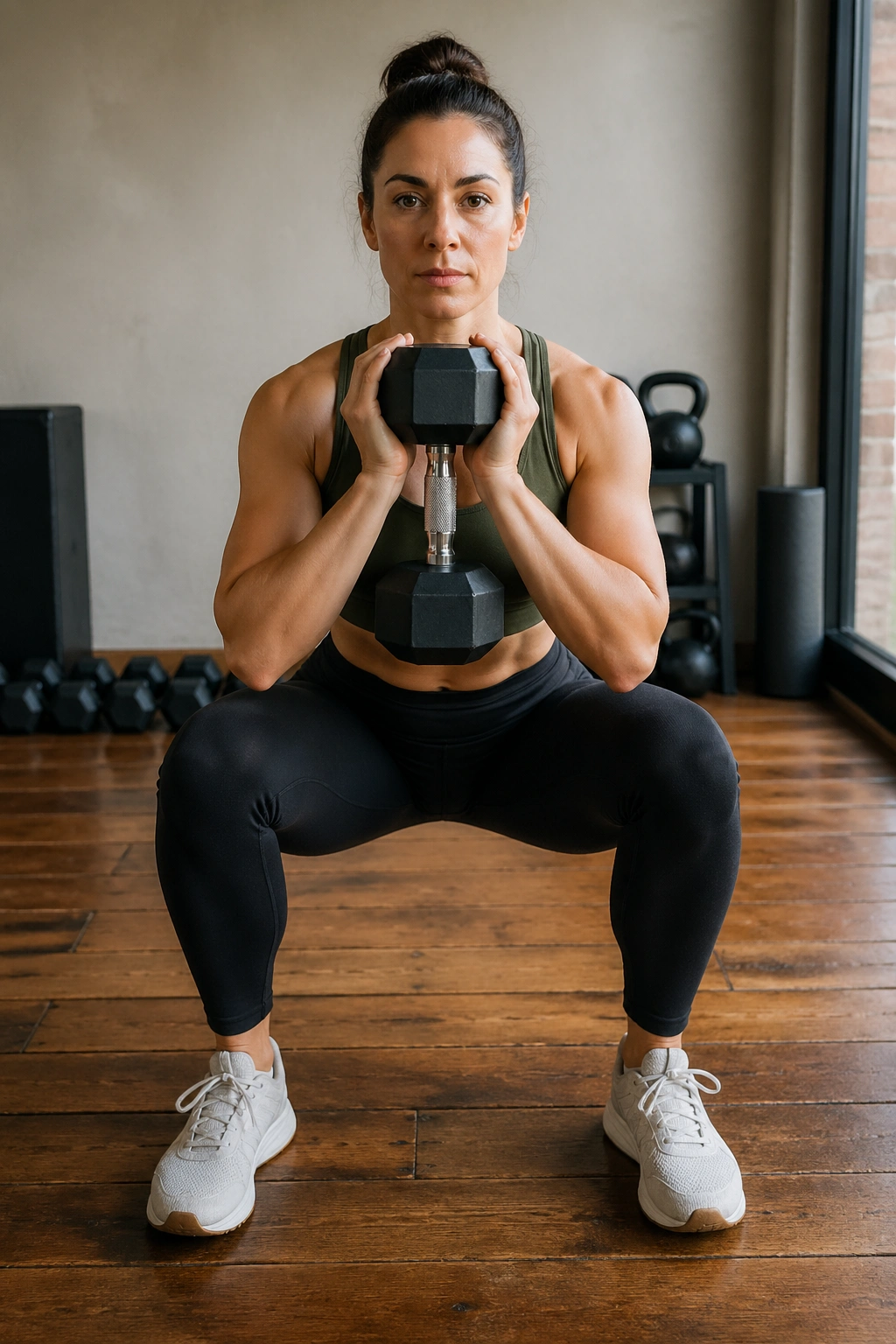
Hold a dumbbell at your chest and the squat suddenly gets more honest. The goblet squat keeps the torso upright, makes depth easier to find, and teaches you to sit between your hips instead of dumping everything forward.
It’s a simple move, which is part of why I like it. Beginners can learn squat mechanics without wrestling a barbell. Experienced lifters can use it as a warm-up, a home session staple, or a way to get more quad and glute work without max loading the spine.
Why It Belongs in a Leg Program
- The front-loaded hold helps you stay tall through the chest.
- A moderate pause at the bottom usually improves control.
- It’s easier to hit clean depth with a dumbbell or kettlebell than with a barbell for many people.
- 3 sets of 8 to 12 reps is a sweet spot for most training days.
A lot of goblet squats go wrong because the weight is too light and the rep speed gets sloppy. Slow the descent. Pause for a second at the bottom. Feel the hips and knees working together instead of bouncing out of the hole like you’re late for a bus. That tiny pause is where the exercise starts teaching you something useful.
3. Bulgarian Split Squat
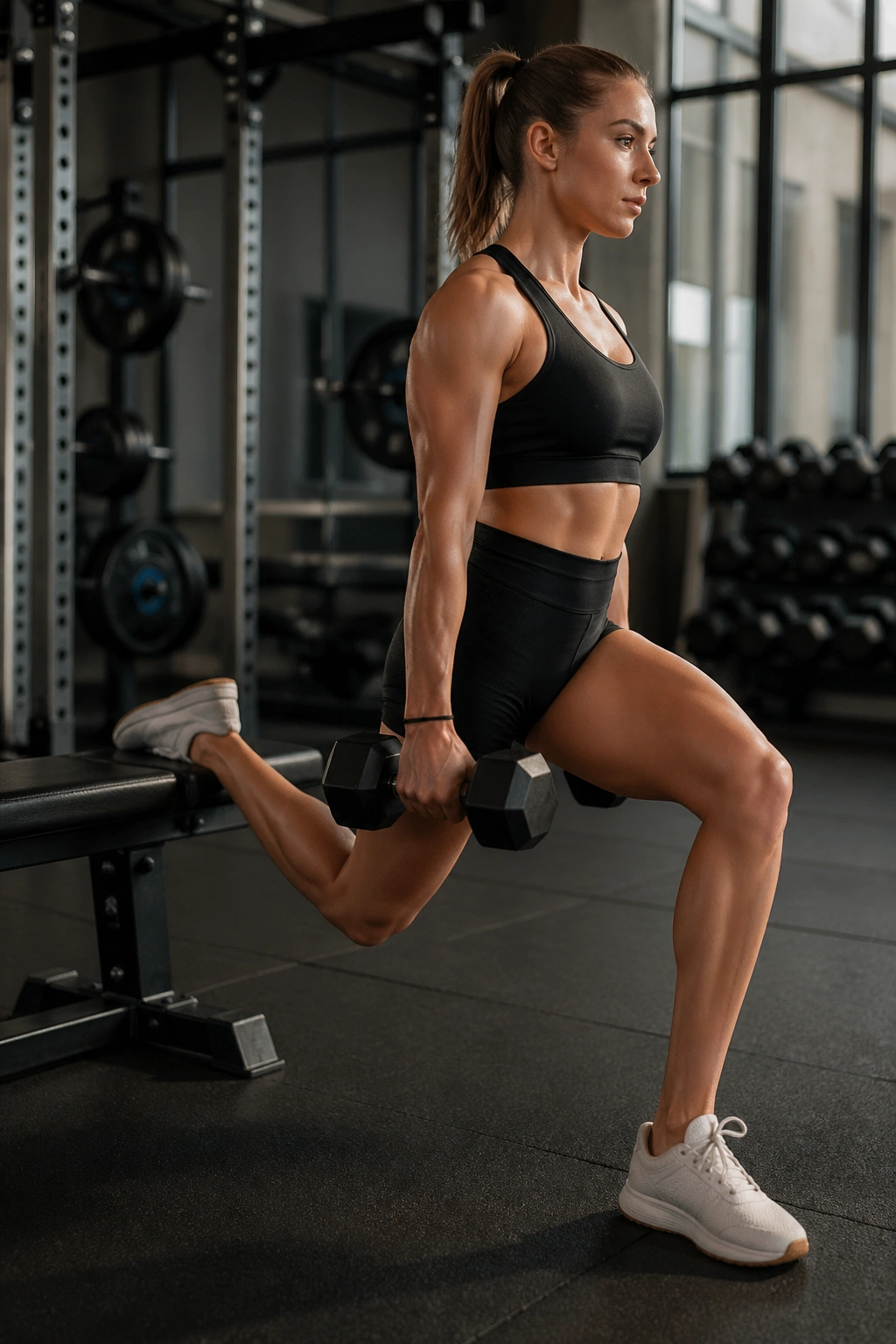
Why does this one feel so brutal? Because one leg has to do almost all the work while the other leg sits politely on a bench and contributes almost nothing. That imbalance is exactly why the Bulgarian split squat is such a strong builder for quads and glutes.
Set the back foot on a bench, take a long enough step that the front shin can travel forward without the heel peeling up, and drop straight down under control. A slight forward torso lean shifts more work into the glute, while a more upright torso tends to make the quad burn earlier. Both versions are useful.
How to Make It Behave
- Start with body weight before loading dumbbells.
- Use a shorter range of motion if balance is the limiting factor.
- Keep the front foot flat and stable.
- Try 3 to 4 sets of 6 to 10 reps per leg.
This is one of those exercises where ego gets punished fast. Good. Let it. If your rear foot position feels awkward, move the bench farther back or lower it a touch. And if your front knee travels forward, that is not automatically wrong. The question is whether the rep stays controlled and pain-free.
4. Romanian Deadlift
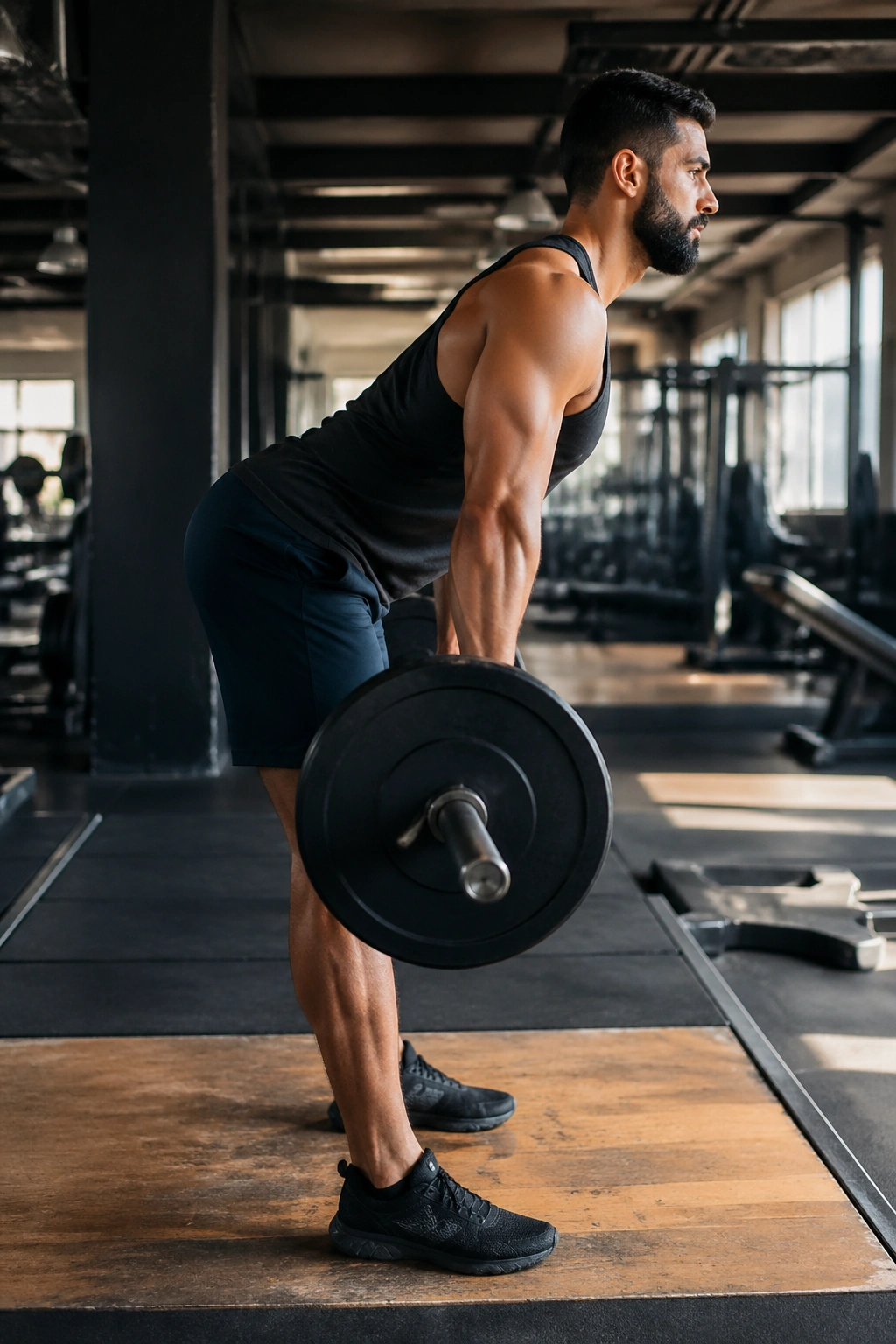
A strong lower body does not come only from knee bend. The Romanian deadlift builds the back side of the legs by loading the hinge pattern, which is a fancy way of saying your hips move back while your shins stay mostly vertical.
That stretch you feel in the hamstrings is not decoration. It’s the point. The bar should stay close to the body, the spine should stay long, and the knees should bend only enough to let the hips travel back without turning the whole thing into a squat. When done well, the glutes and hamstrings do a lot of heavy lifting.
A good Romanian deadlift usually lives in 3 to 5 sets of 5 to 8 reps. Go slow on the lowering phase. Seriously. The eccentric portion teaches you where your hamstrings are strongest, and it keeps the movement from turning into a sloppy back exercise.
If the bar drifts away from your thighs, you’ll feel it in your lower back faster than you’d like. Keep it close. That one cue fixes a surprising amount of bad hinge work.
5. Hip Thrust
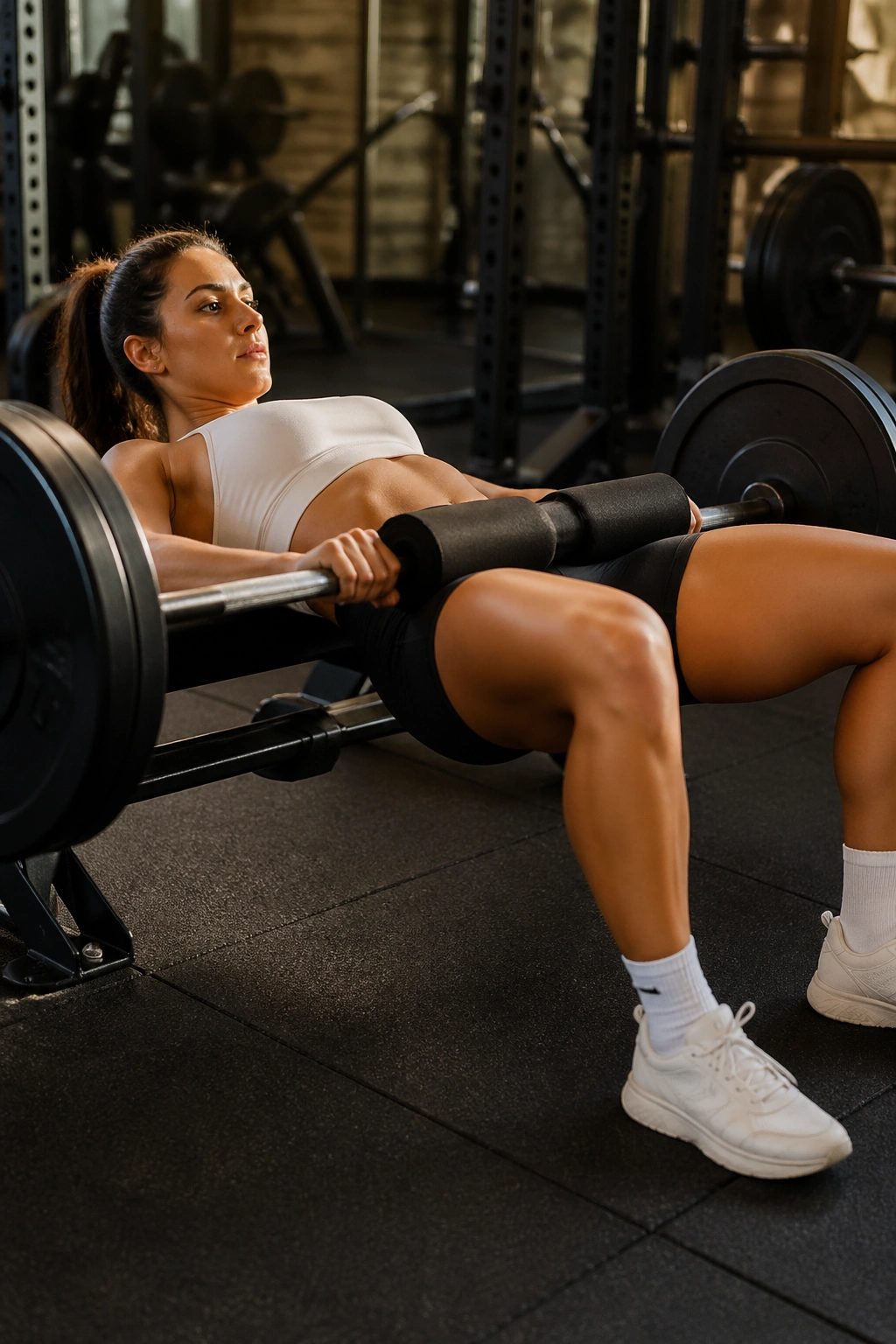
The top of a hip thrust is where the work lives. Not the setup. Not the unracking. The top.
This is one of the best direct glute builders because it loads hip extension hard while keeping the torso supported. A bench, a barbell, and a pad are enough. Set your upper back on the bench, plant your feet so your shins are close to vertical at lockout, and drive the hips up until the glutes are fully squeezed without arching the lower back.
Hip Thrust or Glute Bridge?
The hip thrust uses a longer range of motion than a floor bridge, so it usually gives you more load and a bigger glute stimulus. That said, it also needs a bench and a little more setup time. If you want a heavier primary glute movement, choose this one. If you want something fast and simple, the bridge wins.
A good rep has a short pause at the top and a controlled lower. Try 3 to 4 sets of 8 to 12 reps. If you feel it mostly in your lower back, your ribs are flaring or your feet are too far out. Adjust before loading up. A heavy hip thrust done poorly just becomes an expensive way to annoy your spine.
6. Walking Lunge
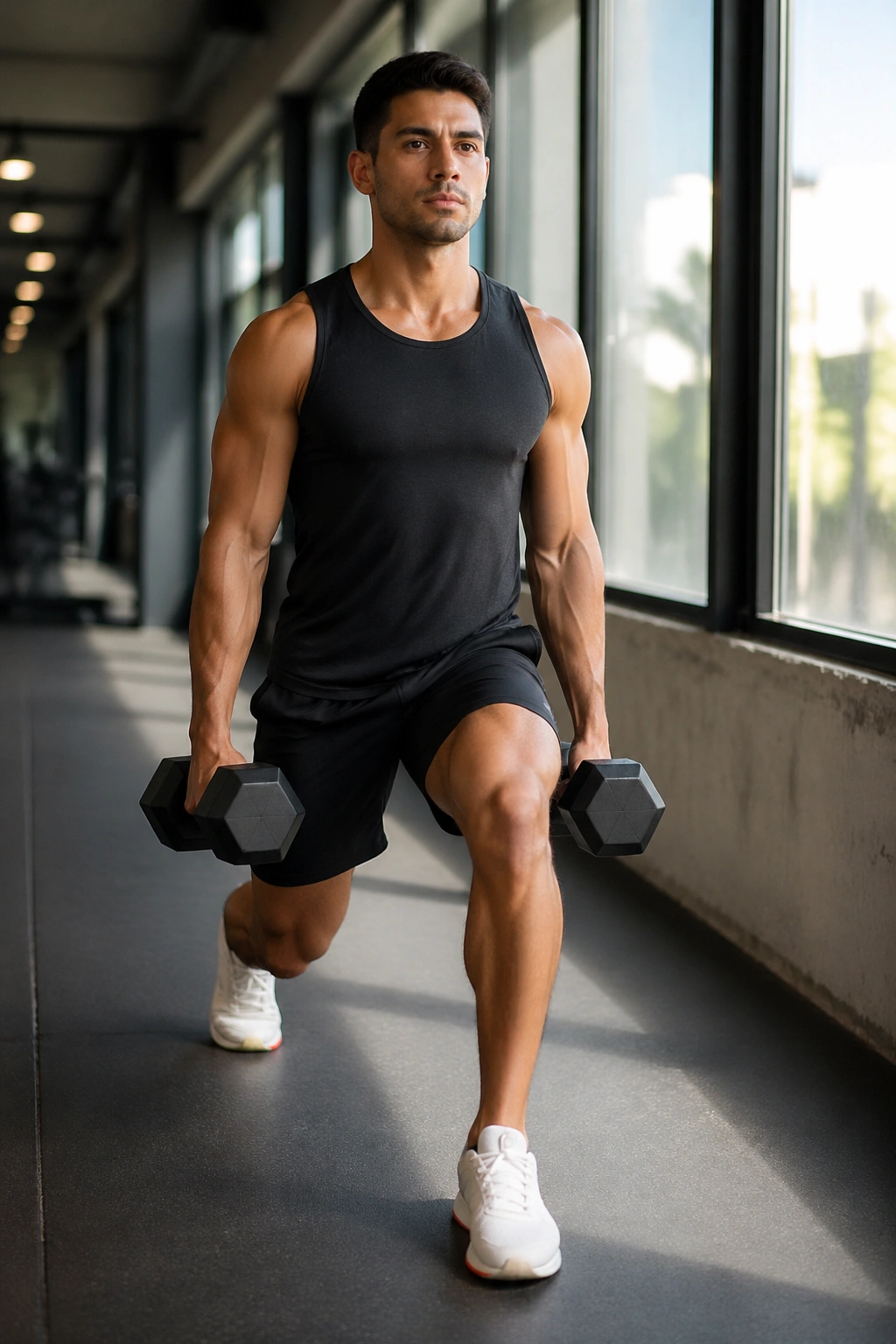
Step. Sink. Push. Step again.
That’s the feel of a good walking lunge, and it’s one of the reasons this exercise earns its place on leg day. You get unilateral strength, balance, hip mobility, and a bit of conditioning all in one moving pattern. The glutes and quads have to share the load while your trunk stays upright enough to keep you from wobbling all over the floor.
The stride length changes the emphasis. Longer steps tend to pull more from the glutes and hamstrings. Shorter steps move more stress toward the quads. Dumbbells work well here because they let your arms hang and keep the load centered without making the movement clumsy.
Form Cues That Matter
- Keep your front heel down.
- Let the back knee travel toward the floor under control.
- Don’t rush the transition between steps.
- Use 10 to 20 total steps for a strong working set.
There is a reason walking lunges show up in hard conditioning workouts. They are honest. If your pelvis twists or you start marching like a baby deer, the load is probably too heavy. Drop it a little and own each step.
7. Step-Up
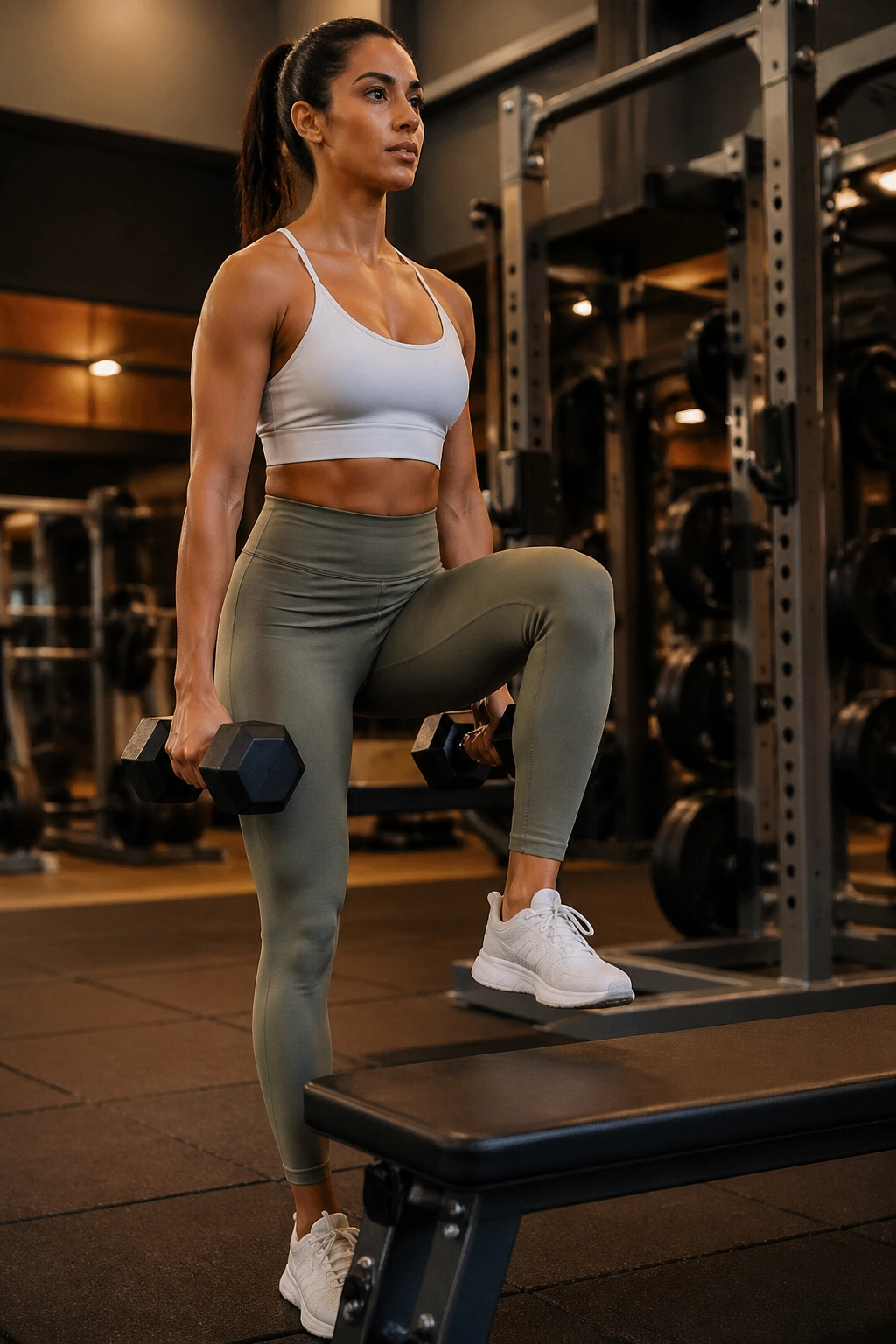
One box, one pair of dumbbells, and a lot of truth about your left-to-right strength. The step-up looks simple, which is exactly why people underestimate it.
Put one foot on a bench or sturdy box, lean slightly forward, and drive through the working heel to bring the other foot up without using the trailing leg to launch yourself. That last part matters. If you push hard off the floor with the back leg, you’ve turned a single-leg strength exercise into a badly disguised two-leg jump.
Bench Height Matters
- A lower box is usually easier to control.
- A box around knee height is plenty for most lifters.
- Higher is not automatically better.
- The front shin should stay in a position you can control without rocking.
Step-ups are excellent for glutes because they teach the hip to extend from a loaded position while one leg stabilizes everything. They also train the quads hard, especially if you keep the torso a little more upright. I like them as a mid-program lift after heavy squats or deadlifts, when you still have enough energy to move with good form but not enough to fake it.
8. Sumo Deadlift
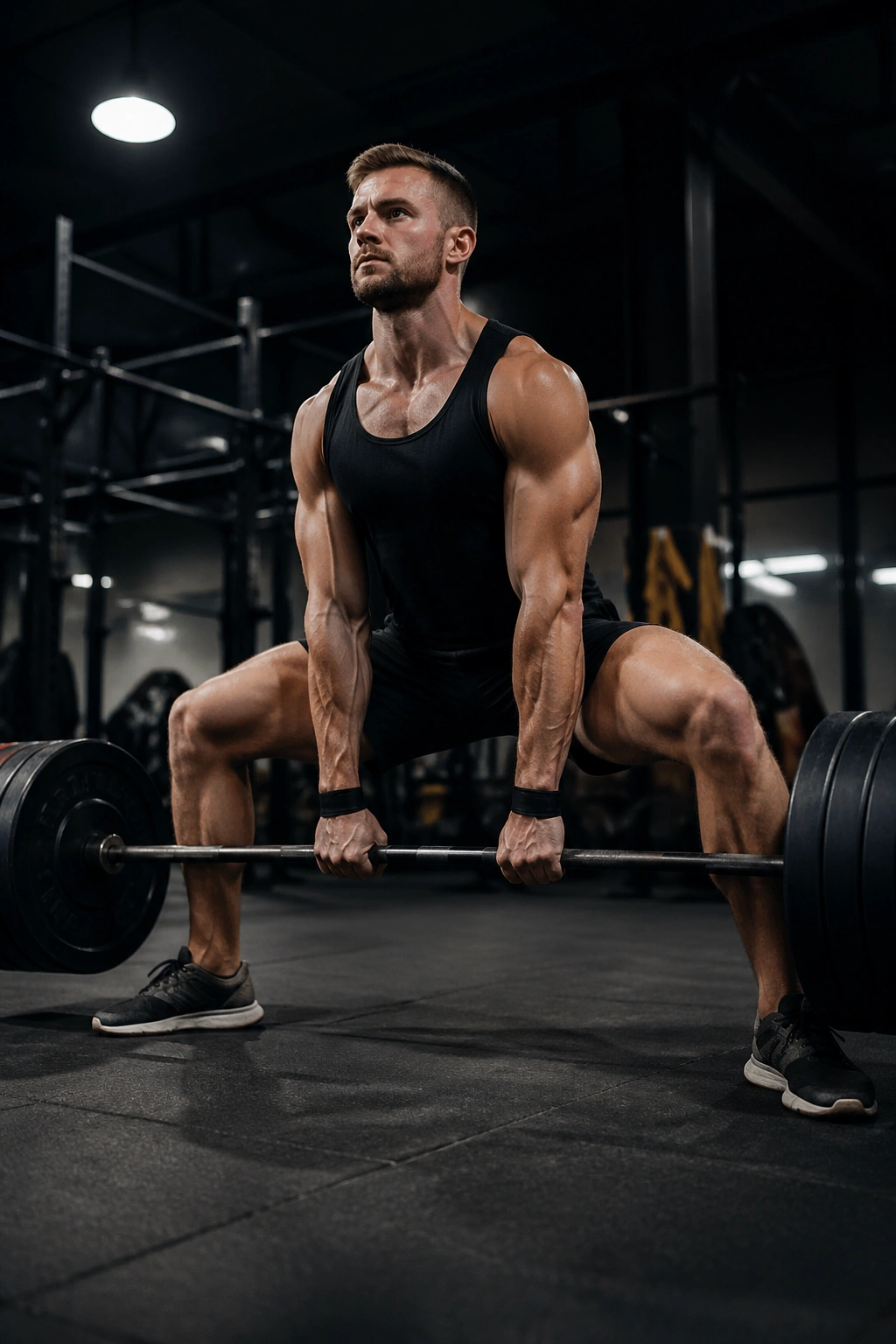
I like sumo deadlifts for people who want a heavy hinge with a more upright torso and a strong hit to the adductors and glutes. The wide stance changes the mechanics in a useful way, and for some lifters it feels friendlier on the lower back than a conventional pull.
Set your feet wider than shoulder width, turn the toes out a bit, and wedge yourself into the bar before the plates leave the floor. The cue that helps most people is simple: push the floor apart as you stand. That outward pressure wakes up the hips and keeps the knees from caving inward.
A clean sumo deadlift usually uses 3 to 5 sets of 3 to 6 reps. It’s a strength lift, not a rush job. If your hips shoot up before the bar moves, your setup is off. If your chest collapses, the wedge is weak. The lift should feel like one whole body pull, not a yanked-up compromise between several bad ideas.
Not everyone’s hips love sumo. That’s fine. If the stance feels jammed or the knees hate the angle, choose a different hinge. Good training is not about forcing a shape; it’s about picking the version your body can repeat well.
9. Reverse Lunge
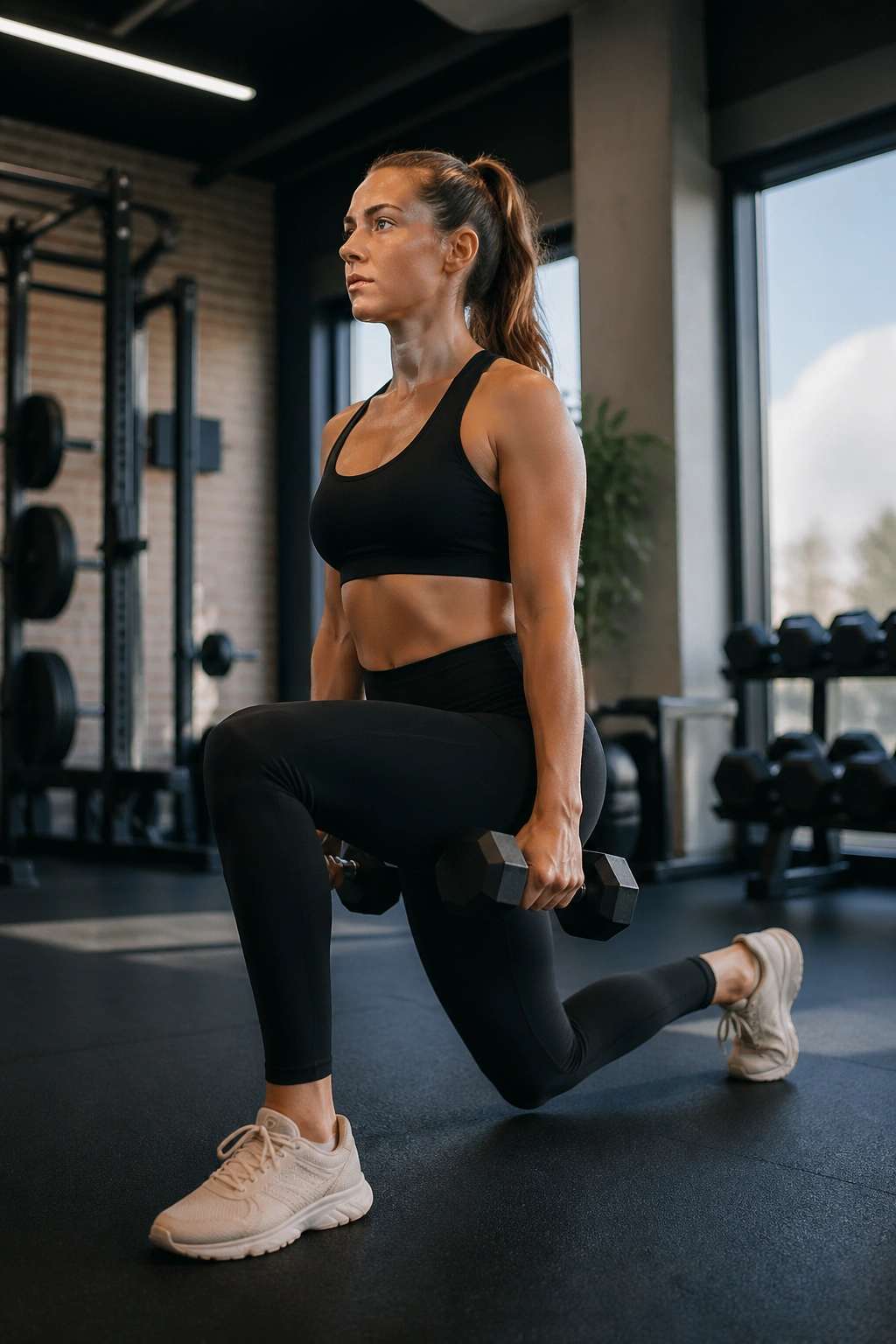
If forward lunges make your knees grumble, step backward instead. The reverse lunge is often easier to control, less jarring on the front knee, and more forgiving when you’re still learning how to balance load on one leg.
The backward step shifts the emphasis toward the glutes and hamstrings while still giving the quads a solid workout. That’s a nice combination, and it tends to feel smoother than the forward version for a lot of people. Hold dumbbells at your sides or in a goblet position if you want the torso to stay tidy.
Where to Hold the Load
- At your sides: easiest for balance and easy to recover between reps.
- Goblet position: helps keep the chest tall.
- Front rack: harder on the upper back and great if you want more trunk work.
Use 3 sets of 8 to 12 reps per leg and keep the step back long enough that the front knee does not jam forward excessively. A quiet landing helps. So does a stable front foot. If you rush the transition, the exercise turns wobbly fast, and wobbly reps are where knees and patience both get irritated.
10. Leg Press
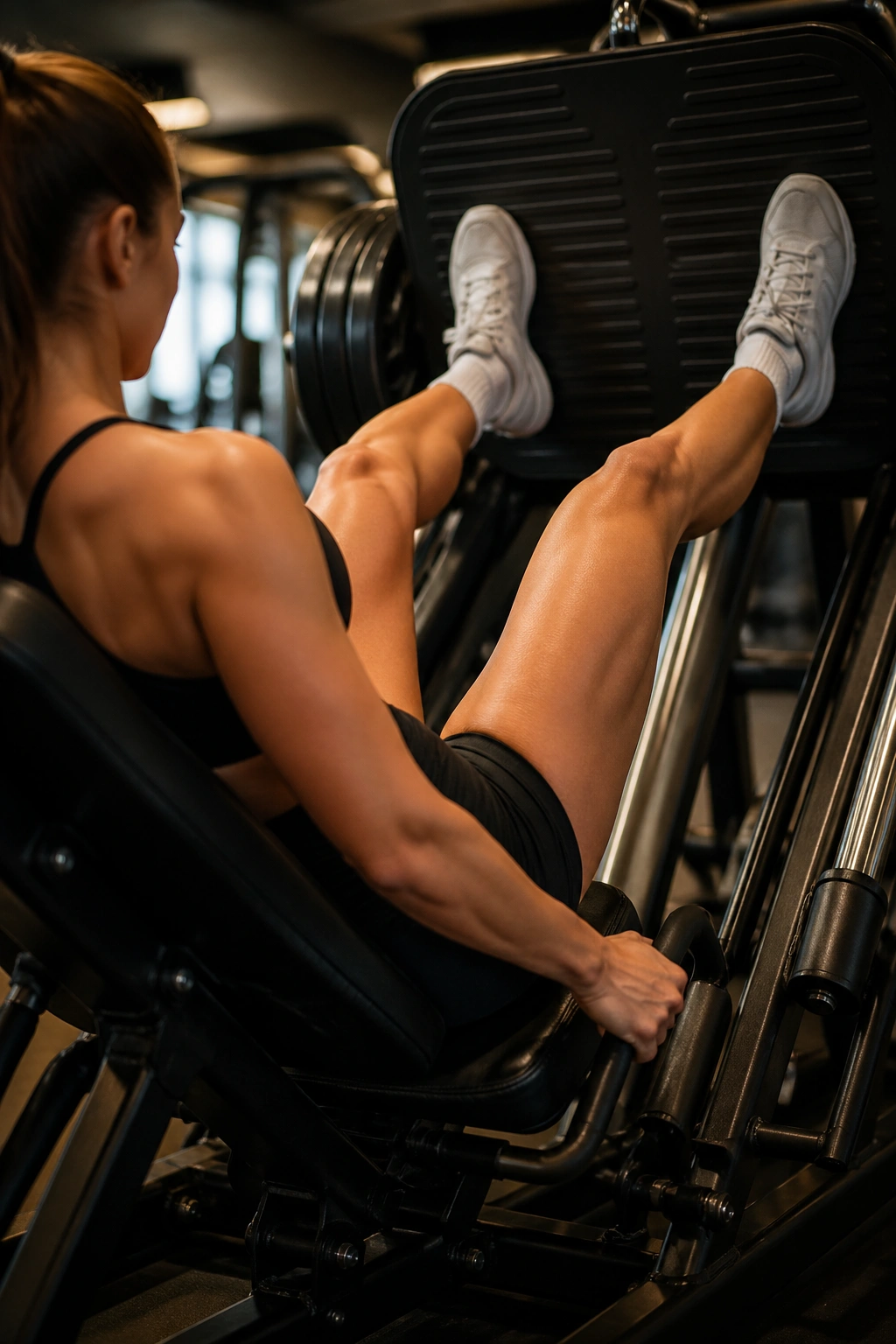
Machines get dismissed too fast.
The leg press is not glamorous, but it lets you load the legs hard without balance being the thing that fails first. That matters when you want the quads and glutes to do the work instead of your grip, lower back, or ankle stability giving out early. It’s especially useful after heavy free-weight work, when you still want volume without needing a spotter.
Foot placement changes the emphasis. A higher foot position usually brings the glutes and hamstrings in more. A lower position tends to make the quads work harder. The trick is to keep the sled moving through a range you can control without your lower back rounding hard off the pad.
One Machine, Three Targets
- High and wider: more posterior-chain bias.
- Low and narrow: more quad bias.
- Moderate stance: a balanced middle ground.
A good leg press set usually lands in 10 to 15 reps with full control. Don’t slam the sled and bounce out of the bottom. That’s not strength. That’s noise. Keep tension through the whole rep, stop before the pelvis tucks hard, and let the muscles do the job.
11. Glute Bridge
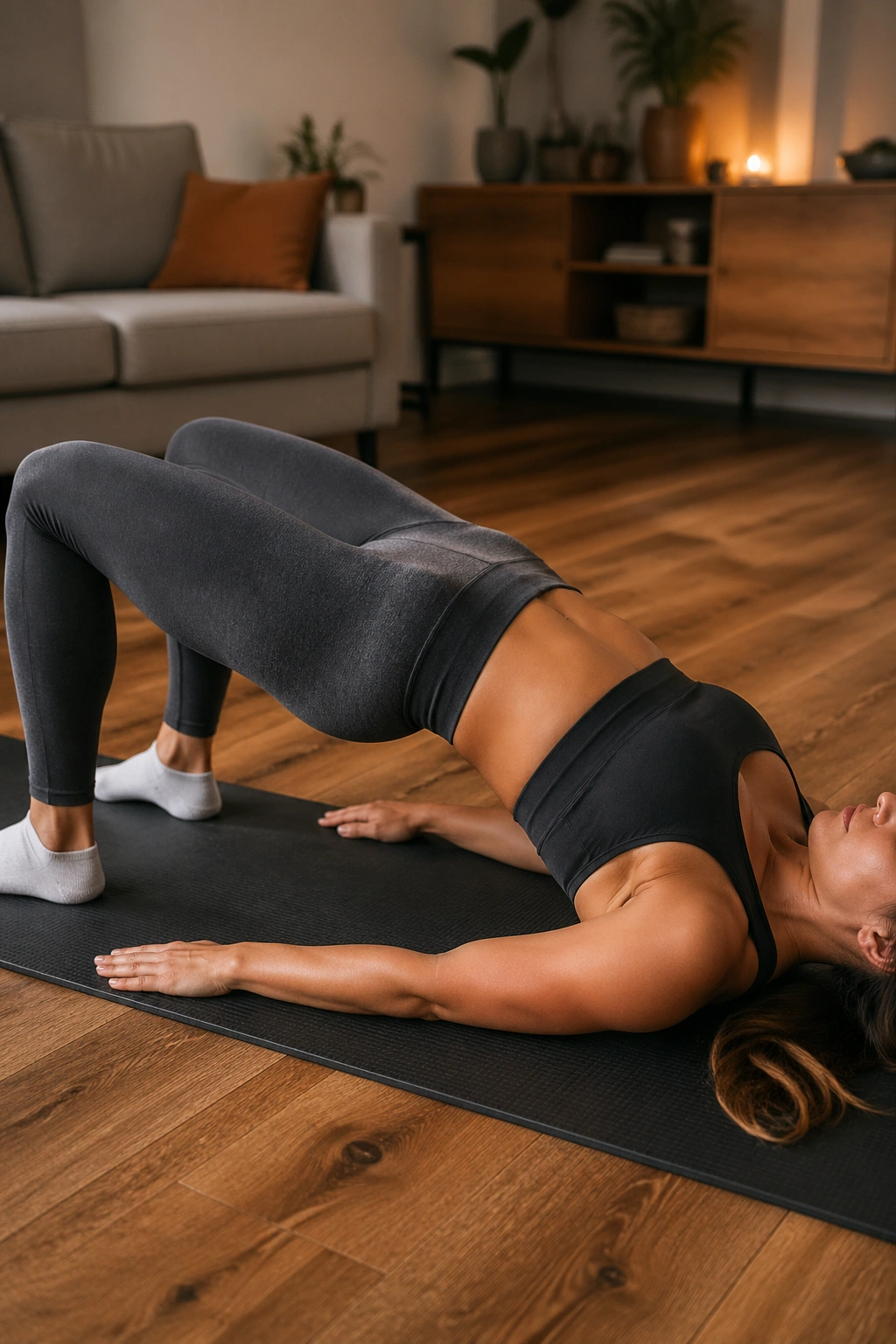
A floor bridge looks tame until you pause at the top for two seconds and realize the glutes are doing the work, not your lower back.
This is the simpler cousin of the hip thrust. You lie on the floor, bend the knees, plant the feet, and lift the hips until the body forms a straight line from shoulders to knees. Because the floor limits the range of motion, the bridge can be easier to learn and less fussy than a bench-based thrust. That makes it a nice choice for warm-ups, home training, or higher-rep accessory work.
The best reps come from a small posterior tilt at the top — think ribs down, tailbone slightly tucked, glutes squeezed. If you just crank your lower back into extension, you lose the point of the movement. Try 12 to 20 reps for controlled volume, or add a miniband above the knees if you want a little extra glute medius work.
It is a plain exercise. That’s the charm. No setup circus, no complicated load, no nonsense.
12. Lateral Lunge
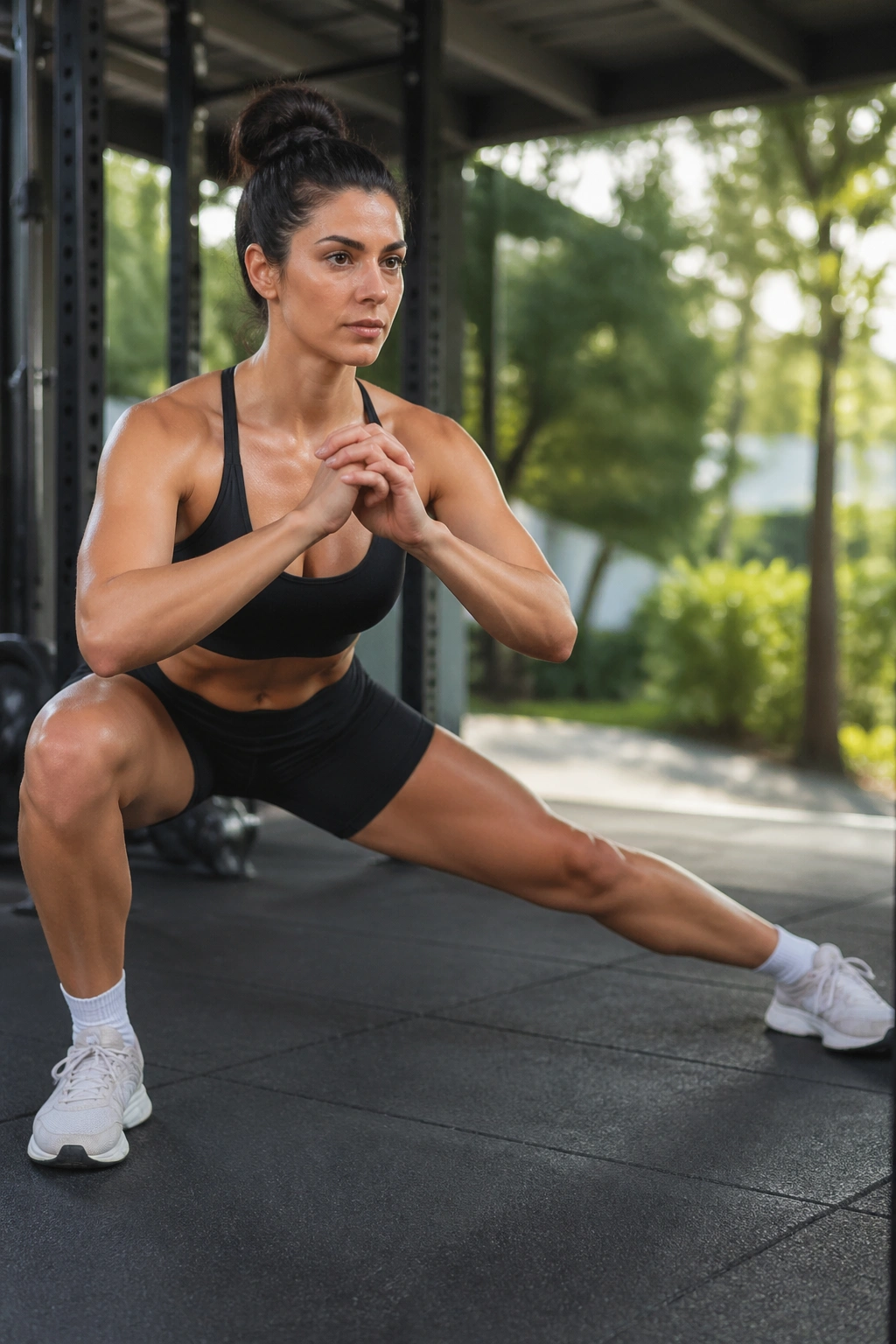
You feel this one in the inner thigh almost right away, and that is part of why it deserves a place in lower-body training.
Most leg programs live in a forward-and-back world. The lateral lunge reminds your hips that side-to-side strength matters too. Step out wide, sit the hips back into the working leg, and keep the opposite leg straighter as the foot stays planted. The adductors, glute medius, and quads all have to pitch in.
What Good Reps Feel Like
- One hip sits back while the other leg stays long.
- The planted foot stays flat.
- The torso leans slightly, but doesn’t collapse.
- The working knee tracks in line with the toes.
This lift is useful when your hips feel stiff, your groin gets ignored, or your sport asks for lateral power. Use 3 sets of 6 to 10 reps per side and keep the motion smooth. If you drop too fast, the non-working leg can take over and the exercise loses its point. Controlled side loading is the whole reason the move matters.
13. Curtsy Lunge
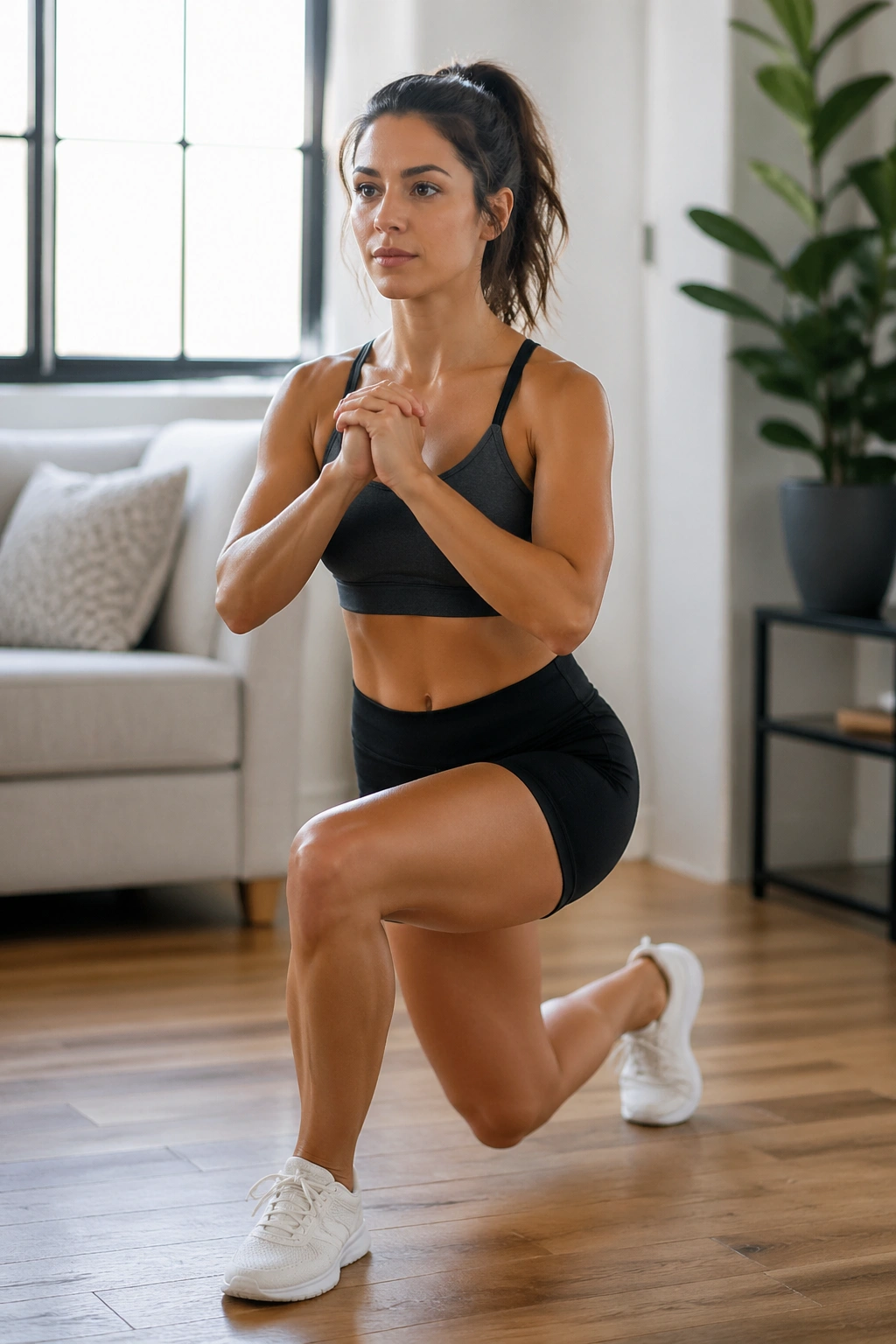
This one is useful, but it is not for everybody.
The curtsy lunge crosses the back leg behind the front leg, which creates a different line of pull through the glutes, especially the glute medius. That can be helpful for hip stability and for people who want more side-glute work without loading a machine. It also demands more balance than a reverse lunge, and some lifters feel pinching in the knees or hips if they push the range too far.
Start shallow. That matters. A tiny cross-behind step is enough to get the pattern without cranking the joints into a position they hate. Keep the front foot rooted, control the descent, and rise without twisting out of the bottom.
When to Skip It
- If your knees dislike crossing angles.
- If your hips pinch in the bottom position.
- If your balance is already shaky that day.
A better curtsy lunge is usually a smaller one. Use 2 to 3 sets of 8 to 12 reps per side and think control, not depth. If it feels smooth, great. If it feels pinchy, swap it for a lateral lunge or reverse lunge and move on. Training should be useful, not stubborn.
14. Single-Leg Deadlift
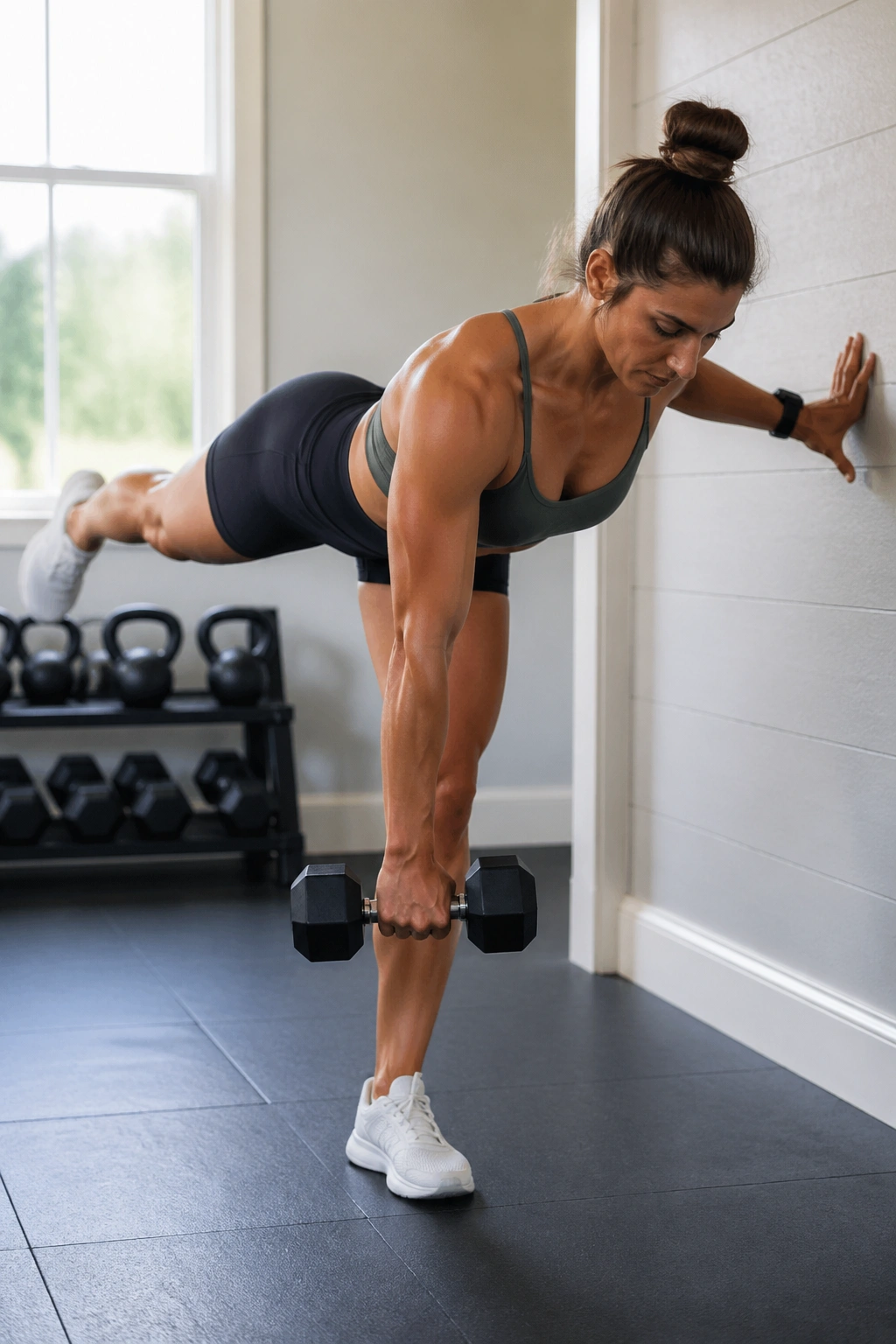
One leg on the floor changes everything. Balance gets harder. The hamstrings light up sooner. The glutes have to keep the pelvis from spinning open like a bad door hinge.
The single-leg deadlift is one of the best lower body workouts for teaching control under load. Hinge at the hip while one leg extends behind you, keep the standing knee soft, and let the torso tip forward as the lifted leg reaches long. A dumbbell in the opposite hand often makes the exercise feel steadier and gives the working hip a stronger anti-rotation challenge.
Keep the Hips Square
- Point both hip bones toward the floor.
- Move slowly enough to feel the balance shifts.
- Reach the back leg long rather than high.
- Use a wall or rack for light support if needed.
That last one is not cheating. It is smart. A lot of lifters need a fingertip on a rack the first few sessions before the body learns the path. Use 3 sets of 6 to 10 reps per side and keep the load moderate at first. If the lower back starts doing the job of the hamstrings, reduce the weight and slow the descent.
15. Frog Pumps
Fast. Burny. A little ridiculous.
Frog pumps are a high-rep glute finisher that look almost silly until your glutes are on fire halfway through the set. Lie on your back, bring the soles of your feet together, let the knees fall outward, and pump the hips up in a short range of motion. The movement is small, but the tension stacks quickly because the glutes stay under constant work.
I like this as the last thing on a lower-body day, especially after squats, thrusts, or deadlifts. It adds volume without beating up the joints, and it can be done with a miniband, a dumbbell, or just body weight. Try 20 to 30 reps and keep the top half of the rep tight. No bouncing. No flinging. Just a relentless little squeeze.
Where Frog Pumps Fit Best
- After heavy glute work as a finisher.
- On home workout days when equipment is limited.
- As a warm-up pump set before hip thrusts.
- On recovery-focused sessions when you want blood flow, not max strain.
If you put the pieces together, the pattern is pretty simple. Heavy squats build the base, hinges hammer the back side, single-leg work cleans up imbalances, and accessory moves like bridges and frog pumps add the extra glute volume that makes the whole thing stick. That mix is what turns a random leg day into a lower-body program that actually gets stronger.
The smartest move is not chasing every exercise at once. Pick one squat, one hinge, one single-leg movement, and one glute finisher. Keep those four moving forward, and the rest becomes seasoning instead of guesswork.
