



Most people assume you need heavy barbells, a squat rack, or a gym membership to build a capable, strong posterior chain. That is a misconception that keeps plenty of people from seeing the results they want. Your body weight, when used with precision and intensity, is more than enough to create the stimulus your glutes need to grow and function better.
The gluteus maximus is the largest muscle in the human body. Because of how we live—mostly sitting in chairs or behind desks—these muscles often switch off. They go dormant. You might find yourself doing movements using your lower back or your quads, while your glutes remain passengers. The key to fixing this isn’t buying expensive equipment; it is learning how to isolate these muscles and force them to work through full ranges of motion without external load.
When you remove the weight, you have to increase the intensity in other ways. That means focusing on tempo, controlling the eccentric (lowering) phase, squeezing at the peak, and reducing the rest intervals between sets. You can tire out a muscle just as effectively with a slow three-second descent as you can with a heavy plate. This guide breaks down the movements that matter, structured to help you build a routine that actually translates into functional strength.
1. Glute Bridge
The glute bridge is the foundation of all glute training. If you cannot feel your glutes working here, you will struggle to feel them anywhere else. It is an honest movement—you either recruit the muscles, or you end up pulling with your hamstrings and lower back.
Setting the Form
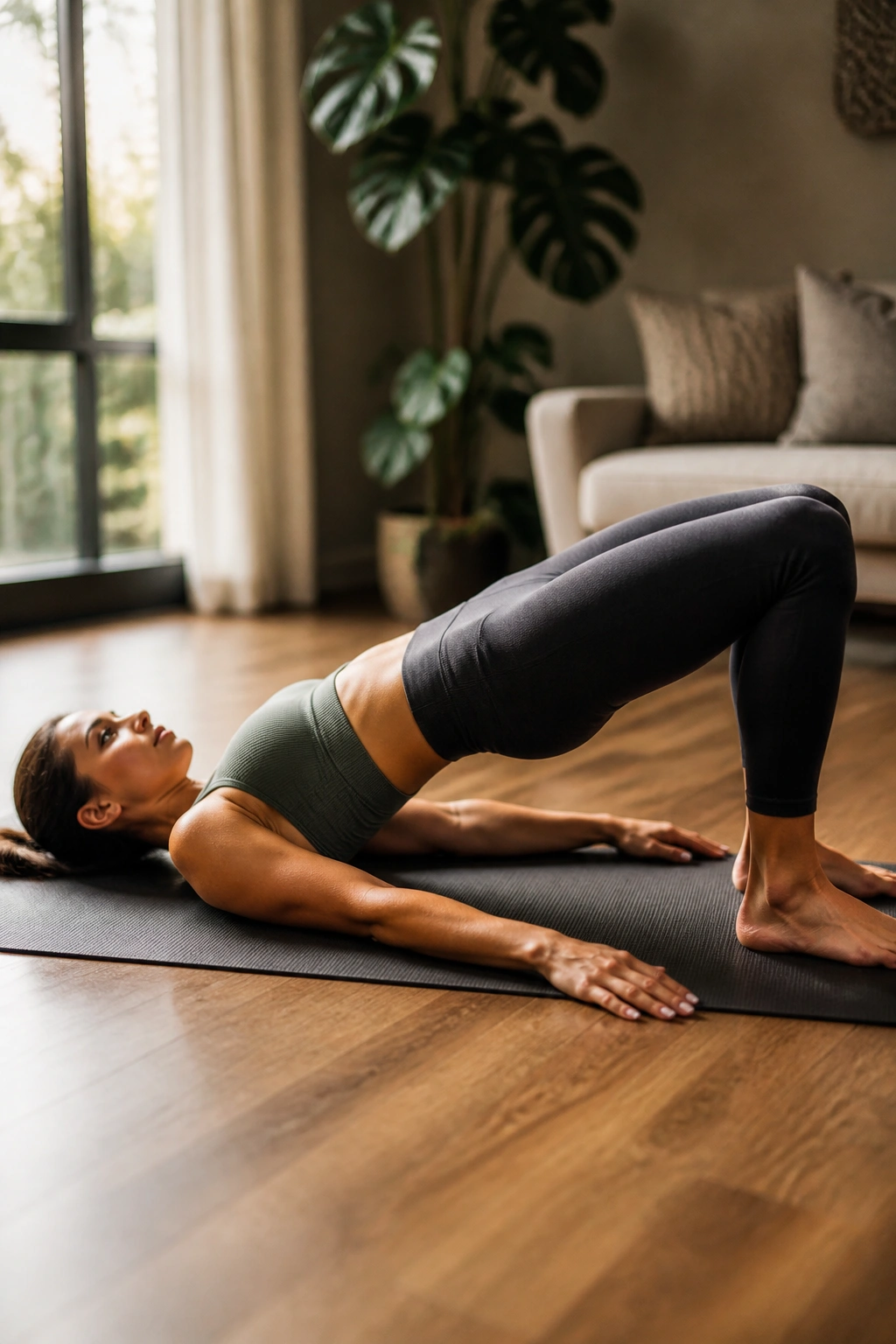
Lie flat on your back, knees bent, and feet planted firmly on the floor about hip-width apart. Your heels should be close enough to your glutes that you can almost touch them with your fingertips. Before you even lift, tuck your pelvis slightly—think about pulling your belly button toward your spine to flatten your lower back against the ground.
Executing the Lift
Drive through your heels, not your toes. As you lift your hips, squeeze your glutes at the very top. Imagine you are cracking a walnut between your cheeks. Hold that squeeze for a full second. Lower yourself back down slowly, letting your hips graze the floor before repeating. If you feel this in your lower back, you are likely overextending your spine; focus on tucking your pelvis more aggressively.
2. Single-Leg Glute Bridge
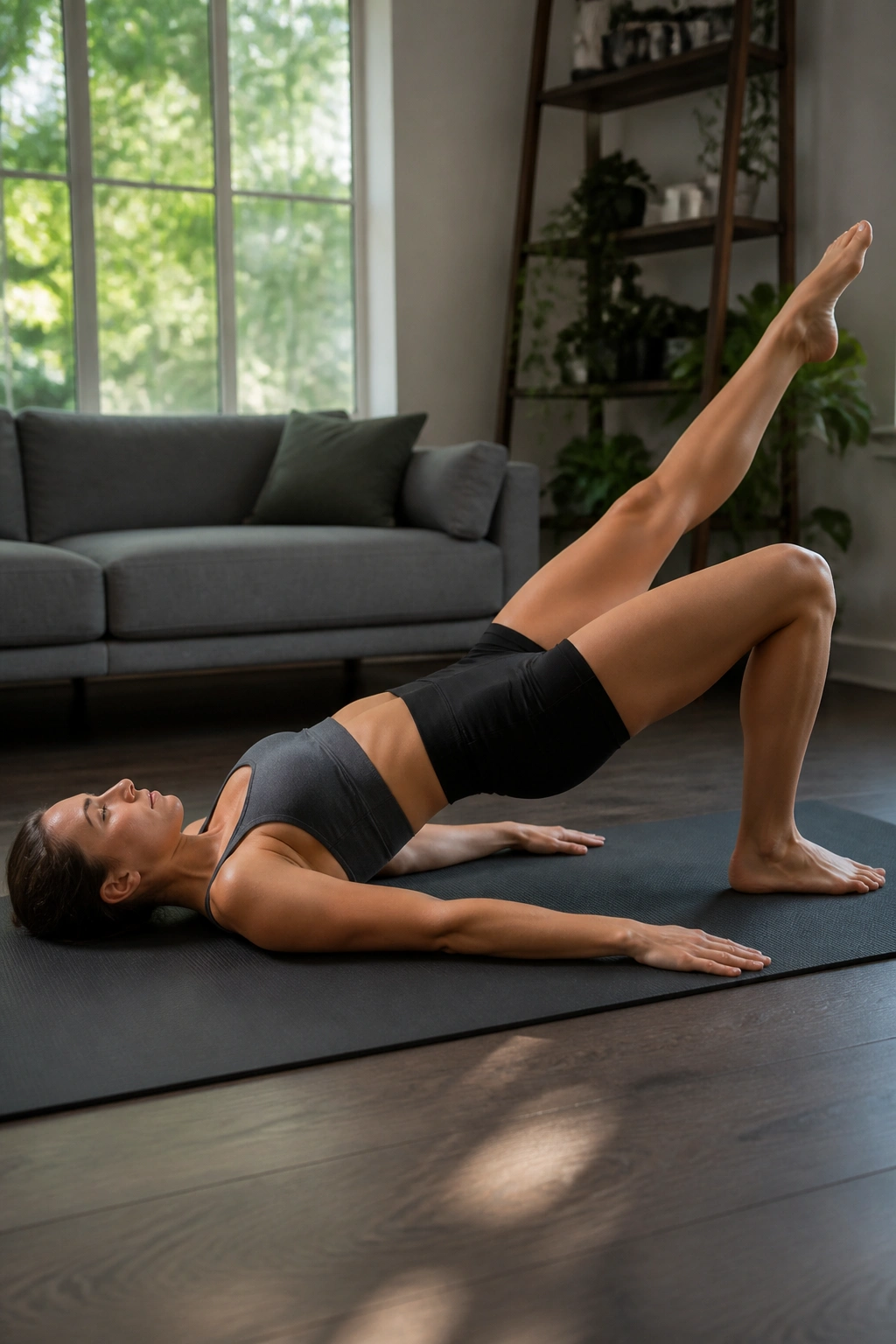
Once the standard bridge feels too easy, you must shift the load. The single-leg version forces your glutes to stabilize your pelvis, adding a significant amount of work to the hip stabilizers.
The setup is nearly identical to the standard bridge, but you will extend one leg straight out or pull the knee toward your chest. The key here is to keep your hips level throughout the entire range of motion. Many people let the hip on the non-working side dip or rotate. Do not let that happen.
If you find yourself wobbling, reset your core. Use your hands on the floor for balance if you need to, but try to transition to having your arms crossed over your chest as you get stronger. This version hits the glute medius harder because that muscle has to work overtime to keep your pelvis from tilting.
3. Bodyweight Squat
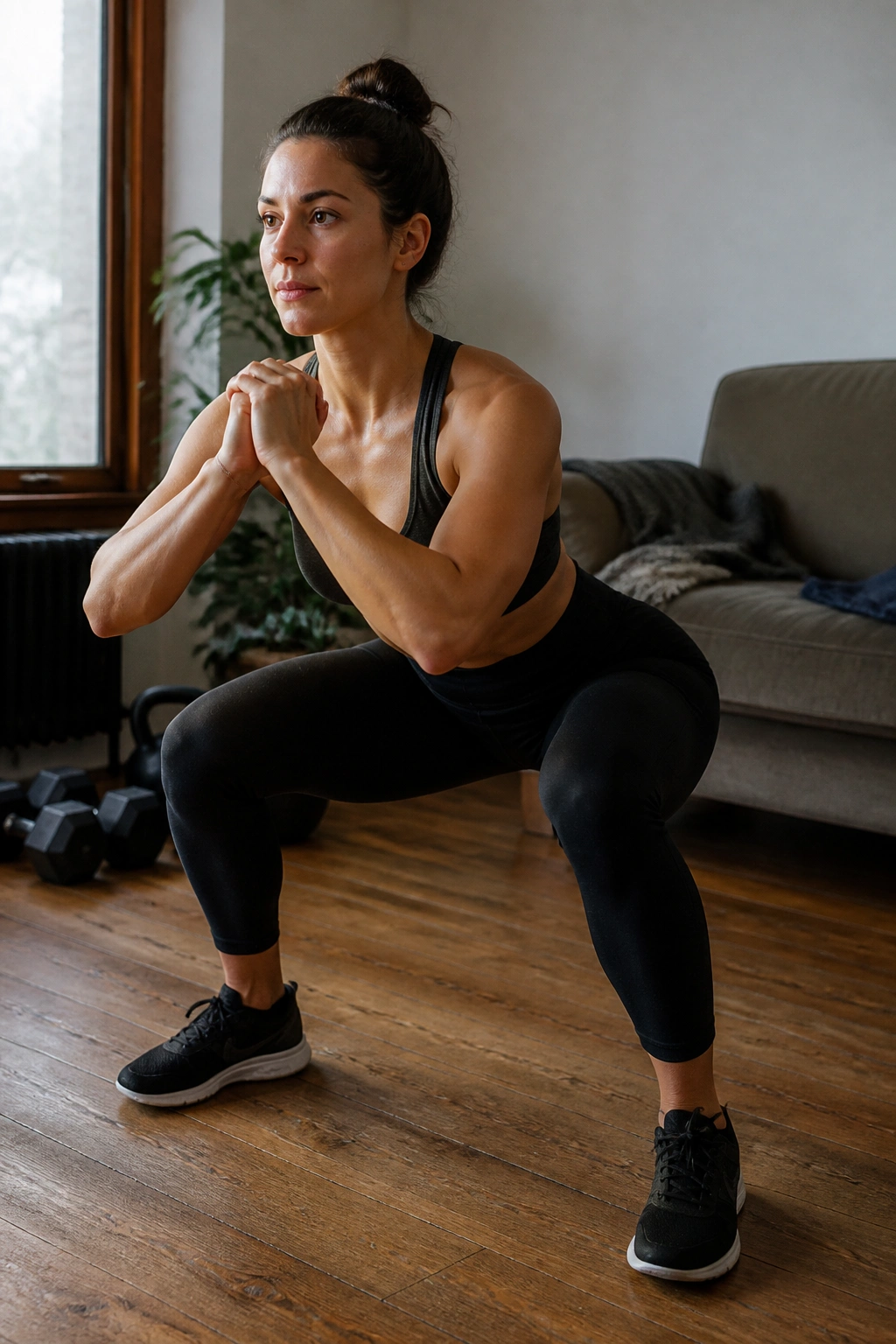
The squat is a functional movement, but most people do it wrong. They treat it as a knee-dominant movement, bending the knees forward and staying upright. For glute engagement, you need to change the mechanics.
The Hinge-First Approach
Initiate the movement by pushing your hips back first, as if you are reaching for a chair that is just a bit too far away. Your knees should track over your toes, but your hips should be the primary driver.
Keep your chest up, but do not be afraid of a slight forward lean at the hips. When you drive up, focus on pushing through your heels and squeezing the glutes to bring your hips forward. Think of your body like a hinge, not a piston. If you feel this entirely in your quads, push your hips back further on the next rep.
4. Sumo Squat
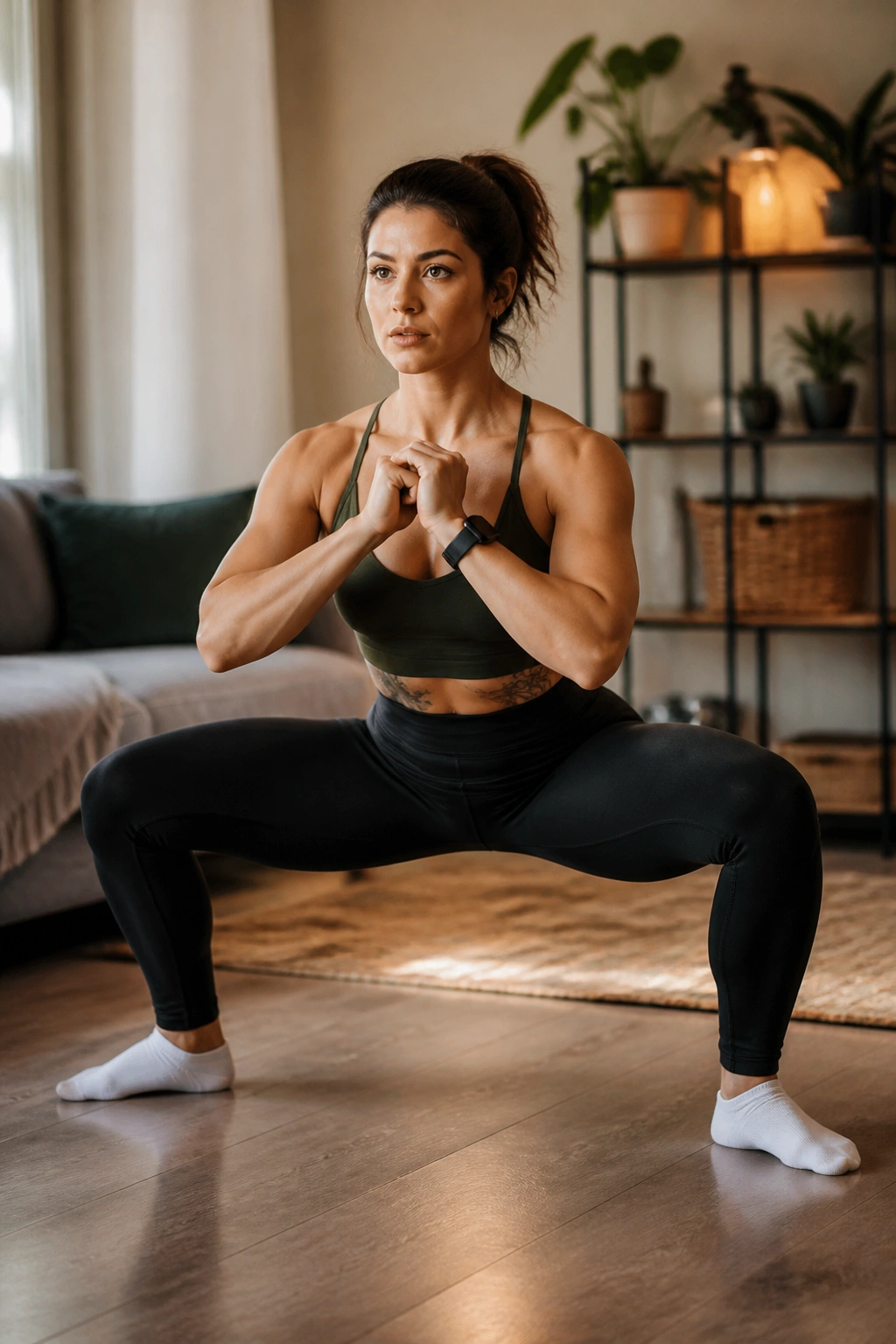
By widening your stance and turning your toes out, you shift the mechanical tension away from the quads and toward the glutes and the adductors on the inside of the thigh.
Stand with your feet wider than shoulder-width apart, toes pointed outward at about a 45-degree angle. As you descend, ensure your knees travel in line with your toes. If your knees collapse inward, you are putting unnecessary stress on your joints and losing the tension you want to create.
Lower yourself until your thighs are roughly parallel to the ground. Hold that position for a split second, then drive up. This wide stance forces a greater range of motion at the hip joint, which is exactly what we want for muscle activation. Keep your weight centered; do not let it shift into your toes.
5. Reverse Lunge
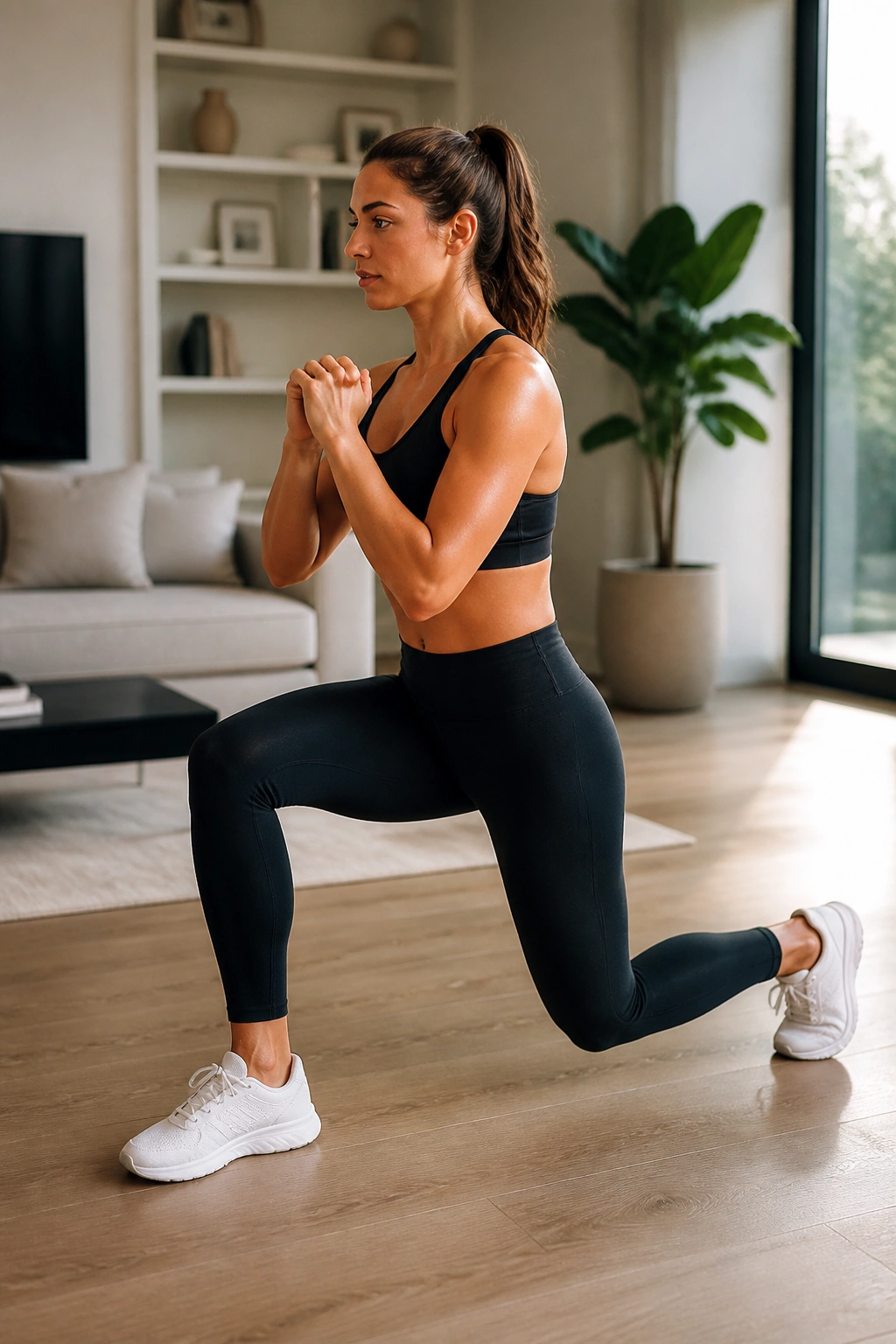
Forward lunges often feel awkward and can aggravate the knees. Reverse lunges, however, keep the front shin vertical, which is significantly better for targeting the glutes.
Step backward with one foot. As you drop your back knee toward the floor, focus on keeping your front foot planted entirely. You should feel the drive coming from the front glute. Your torso should have a slight forward lean—this position puts the hip in a state of greater stretch, allowing for more glute recruitment.
Push through the front heel to return to the standing position. Avoid using the back leg to “push off.” The back leg is just a stabilizer. By keeping the load on that front leg throughout the entire set, you keep the glutes under constant tension.
6. Curtsy Lunge
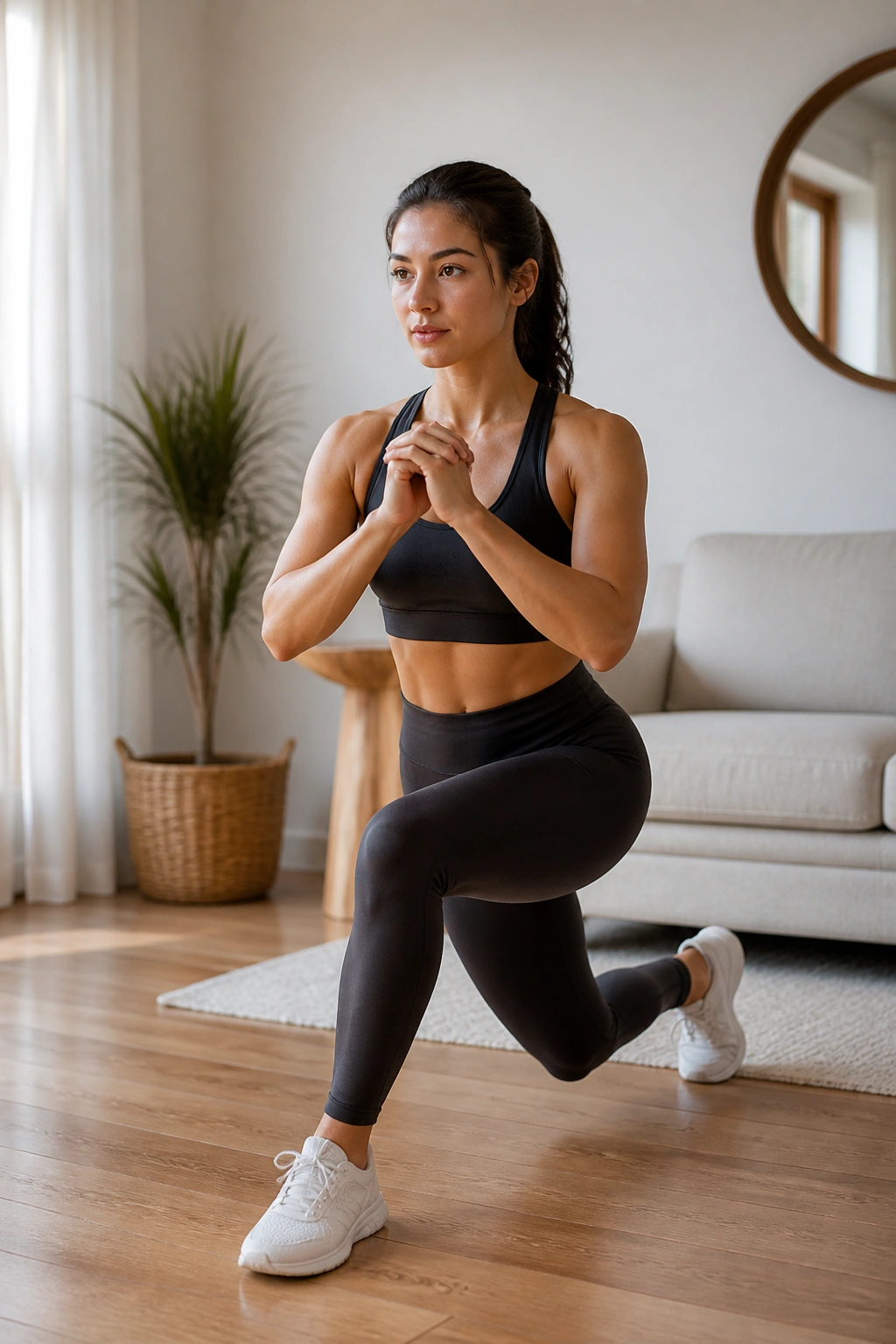
This variation adds a lateral, rotational element that hits the glute medius—the muscle responsible for hip stability and the “side” curve of the glute.
From a standing position, step one foot back and across behind the other, as if you are performing a curtsy. Your back knee should aim for the space behind your front heel. Keep your front foot completely flat on the floor.
Why This Works
The cross-body motion stretches the glute differently than a standard lunge. It forces the muscles to stabilize the body in a plane of movement they aren’t used to. You will notice this exercise feels much tougher on the side of your hip than a standard lunge. Keep your hips square to the front, even as your legs cross over.
7. Fire Hydrants
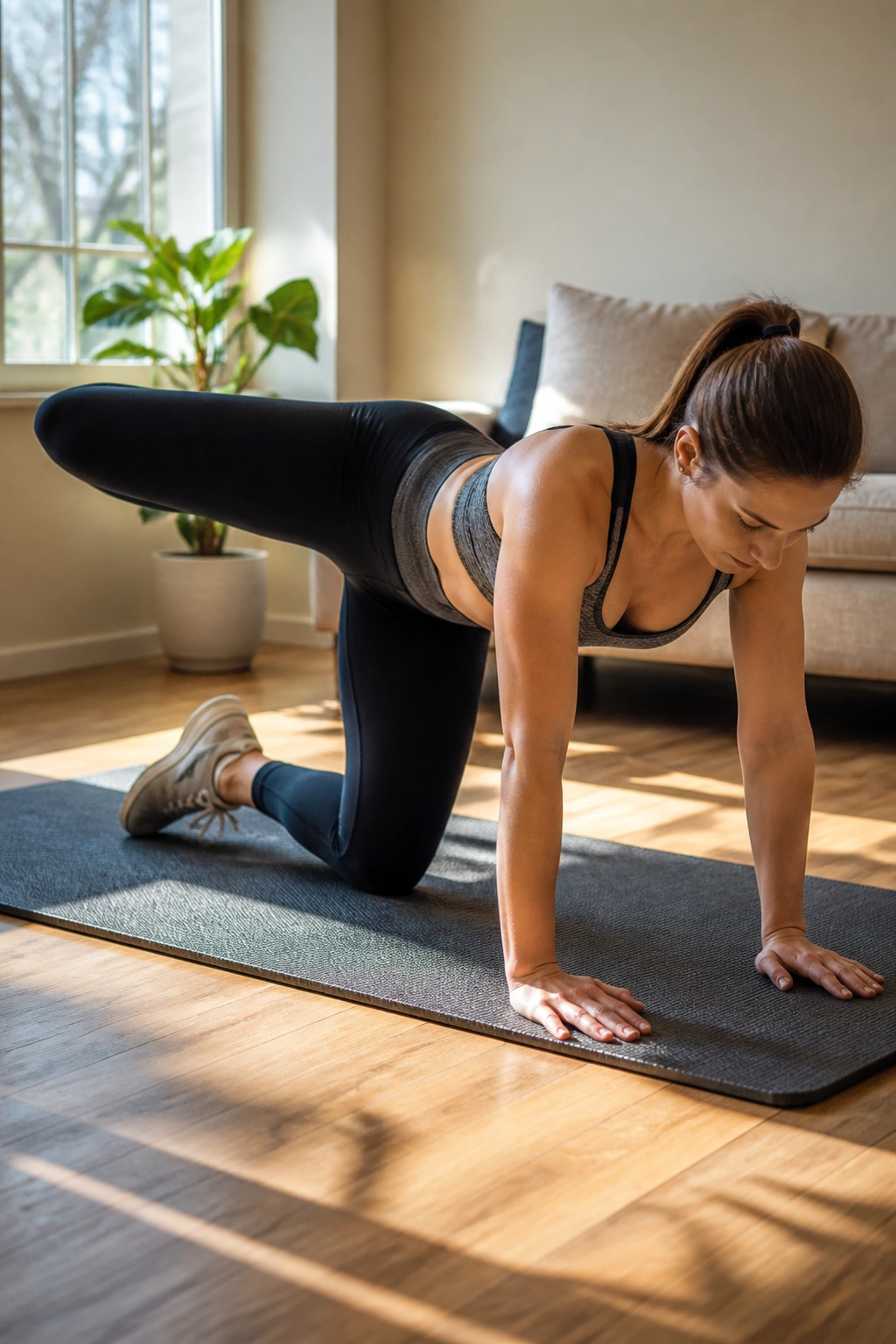
This is a classic isolation movement. It looks simple, but if you do it slowly and with intent, it will light up the deep stabilizing muscles in your hips.
Get on your hands and knees in a tabletop position. Keep your back flat—do not let it arch. Without moving your torso, lift one knee out to the side, keeping the knee bent at a 90-degree angle. Think of a dog at a fire hydrant.
Crucial Form Tip
The temptation is to lean your body to the opposite side to get the leg higher. Fight this urge. Keep your hips square to the ground. If you can only lift your leg a few inches while keeping your hips steady, that is perfectly fine. The smaller, controlled range of motion is much more effective than a high, jerky kick that uses your spine for momentum.
8. Donkey Kicks
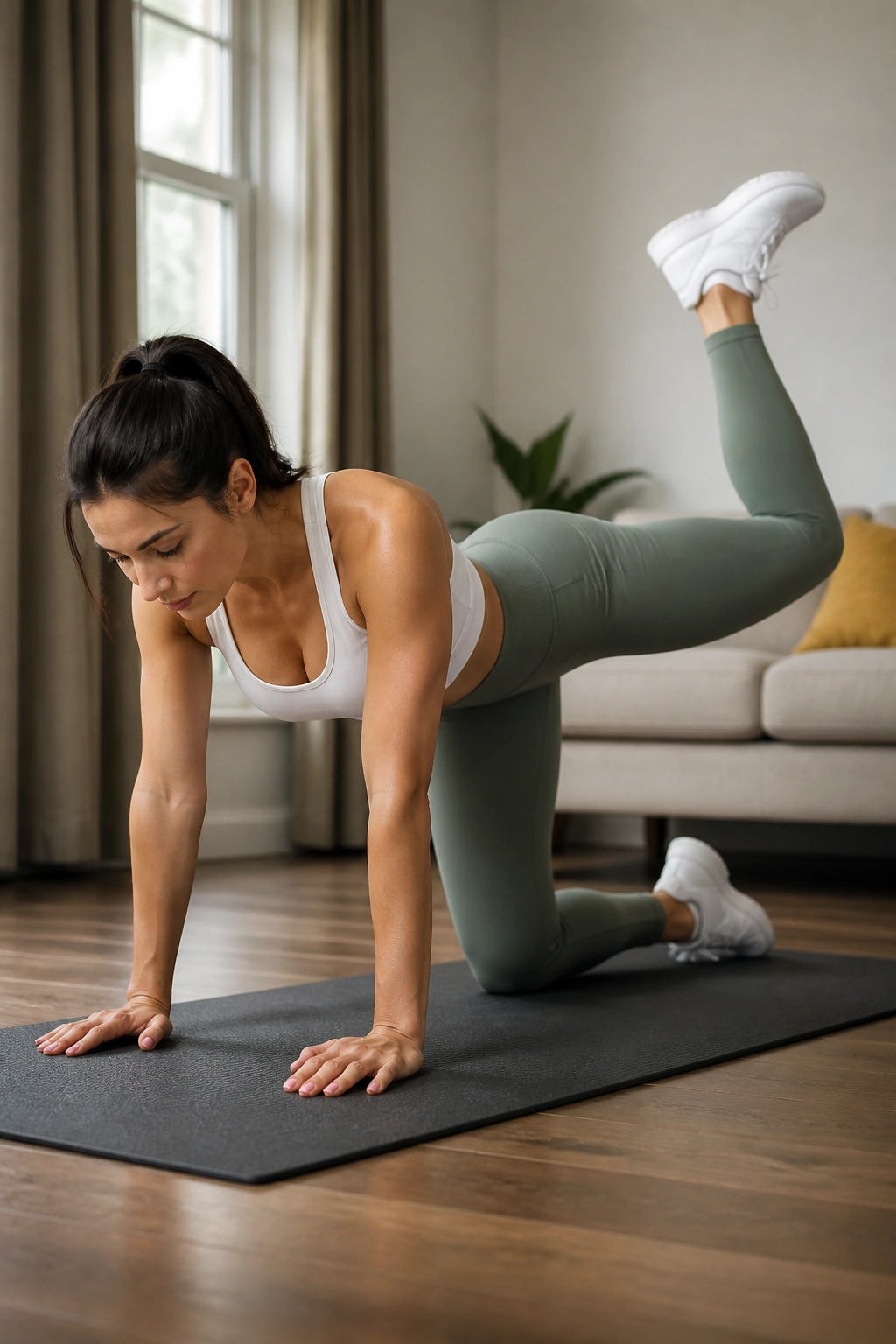
These are great for focusing on the gluteus maximus, the largest muscle in the group. The setup is the same as the fire hydrant: tabletop position on your hands and knees.
Instead of lifting to the side, kick one heel straight up toward the ceiling. Your knee stays bent at 90 degrees. Focus on leading the movement with your heel. Imagine you are trying to push a heavy weight pinned to the ceiling.
Squeeze your glute hard at the very top of the movement. Do not arch your lower back. The movement should occur entirely at the hip joint. If your back starts to sag, you have gone too high. Slow down the lowering phase—take two seconds to bring the knee back down to the floor.
9. Standing Glute Kickbacks
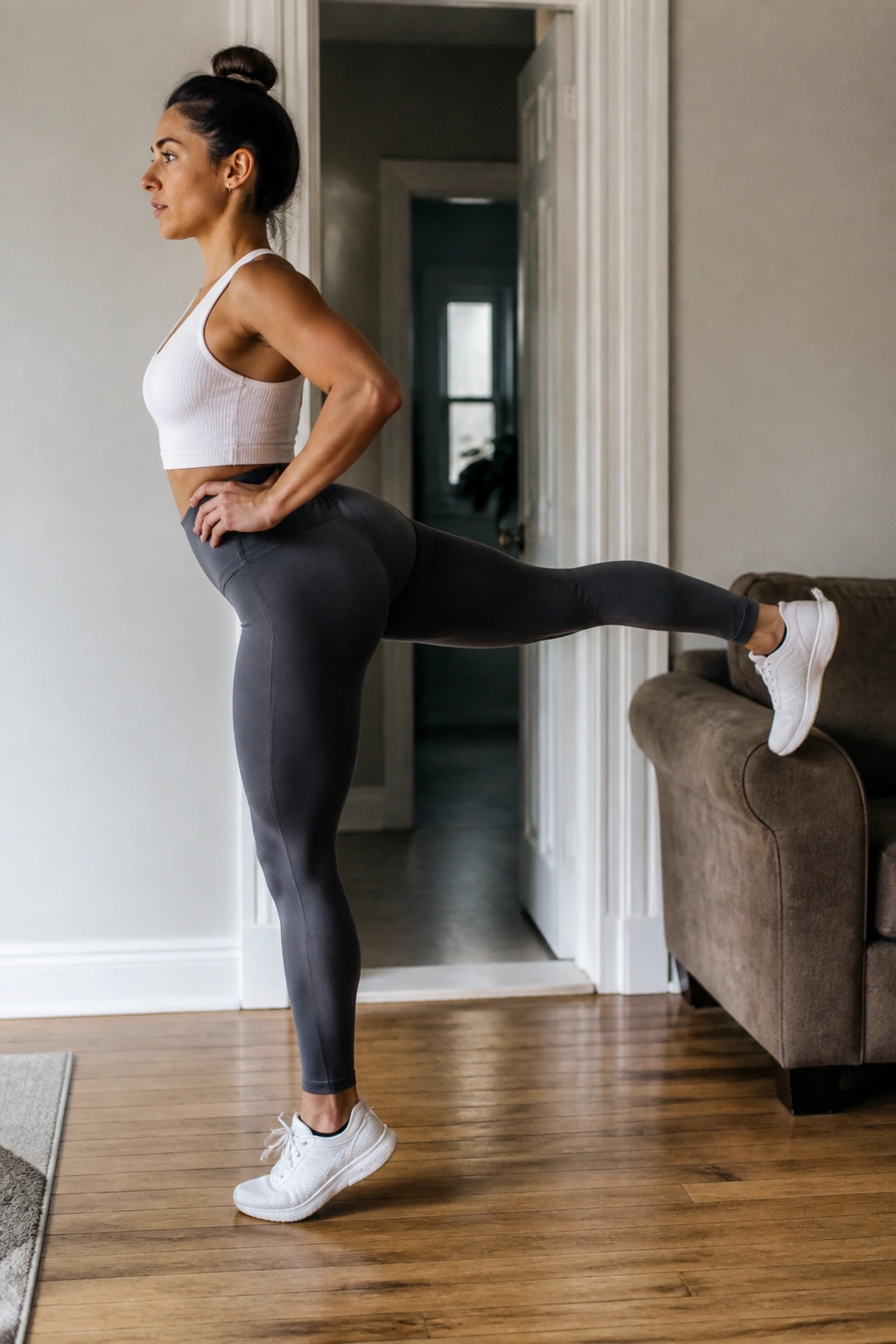
You do not need a cable machine to perform a kickback. You can do this against a wall or using a sturdy chair for balance.
Stand facing your support. Keep one leg straight, toes pointing slightly outward. Squeeze the glute to lift that leg backward, keeping the knee straight. Your torso should remain upright—do not lean forward to get the leg higher.
The Mind-Muscle Connection
This is not about how high the leg goes; it is about how hard you can squeeze the glute. You should feel a distinct contraction at the top. If you don’t feel it, you aren’t squeezing hard enough. Perform all repetitions on one side before switching. You will notice that the standing leg also gets a workout as it stabilizes you.
10. Step-Ups
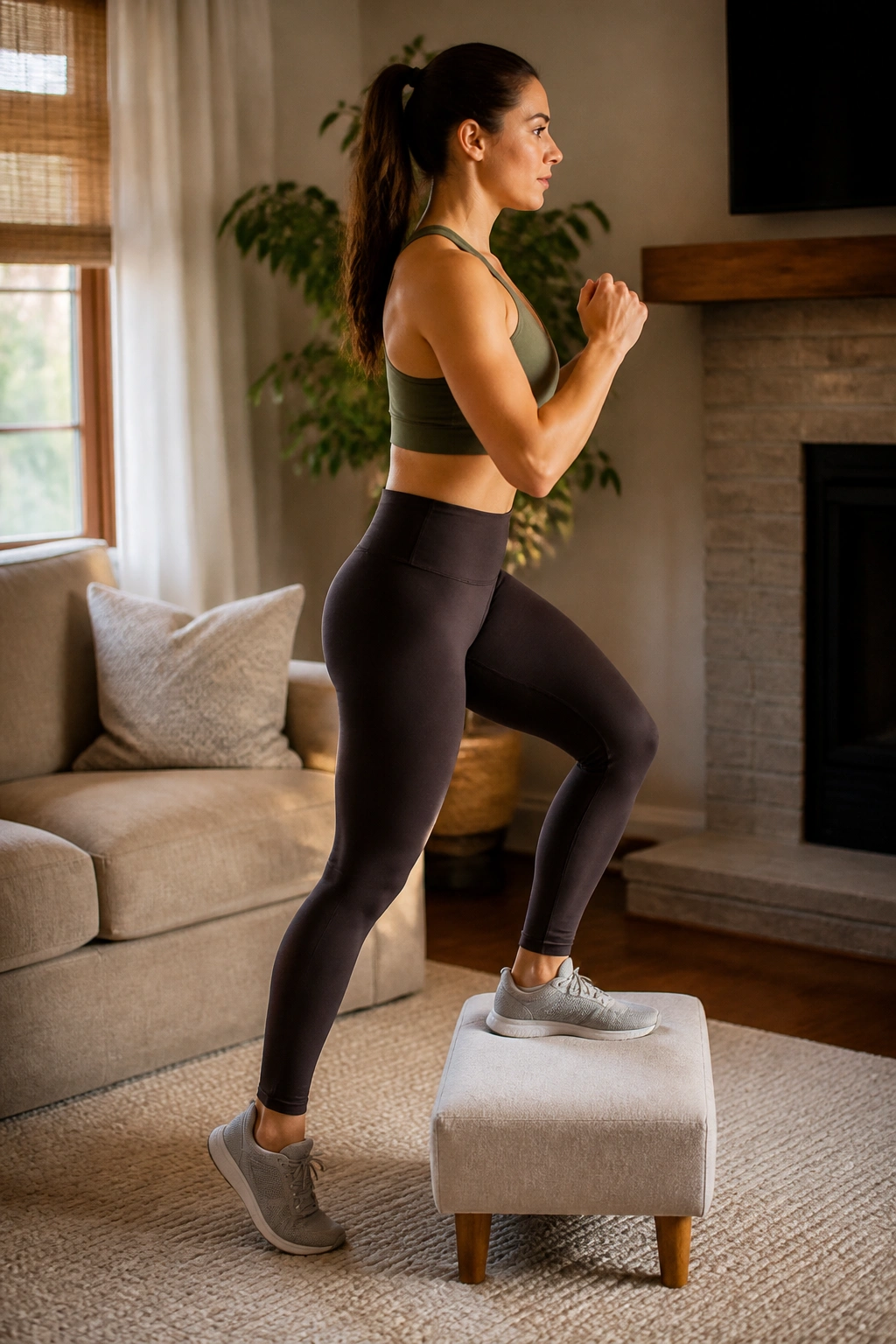
Step-ups are one of the most underrated exercises for power and glute development. You need a sturdy chair, a couch, or a low, stable surface.
Place one foot on the surface. Drive your entire body weight up using only that front leg. Do not push off the floor with your back foot. Once you are standing, lower yourself back down with control.
The slower you go, the harder it is. If you find yourself jumping to get up, the surface is too high or you are relying on momentum. If the surface is too low, you aren’t getting a full range of motion. Aim for a height where your knee is at roughly 90 degrees when your foot is on the surface.
11. Bulgarian Split Squat
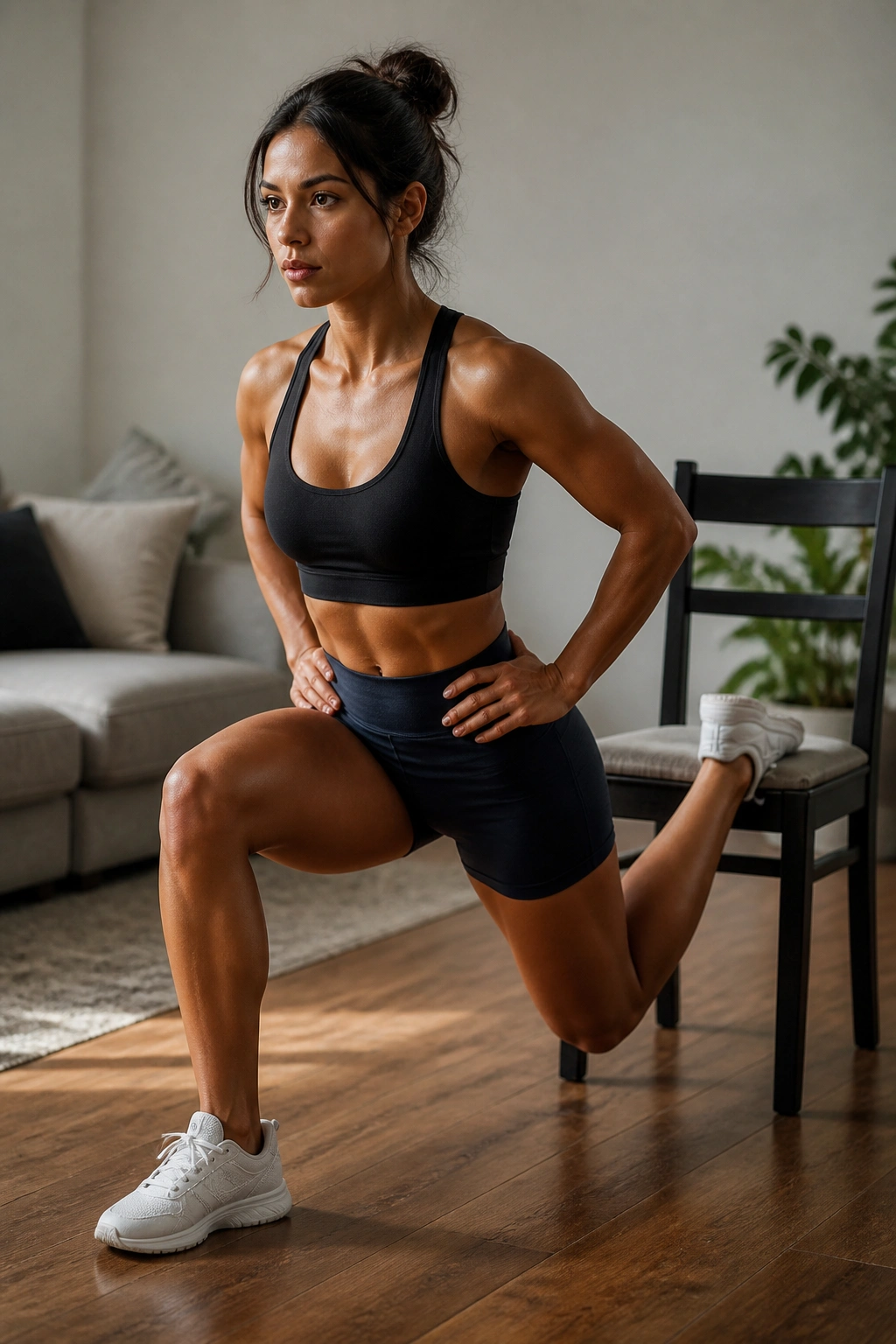
Many people loathe this exercise, which is usually a sign that it is exactly what they need. It is essentially a lunge with the back foot elevated.
The Setup
Place your back foot on a couch or chair. Step the other foot out far enough so that when you descend, your front knee does not collapse over your toes. Drop your hips straight down. Your front leg should be doing 90% of the work.
Avoiding Knee Pain
If you feel pressure in your knee, check your stance. You are likely too close to the bench. Move your front foot further forward. Leaning your torso slightly forward as you descend helps shift the emphasis from the quads to the glutes. This is the closest you can get to a heavy barbell squat without actually having a barbell.
12. Lateral Lunge
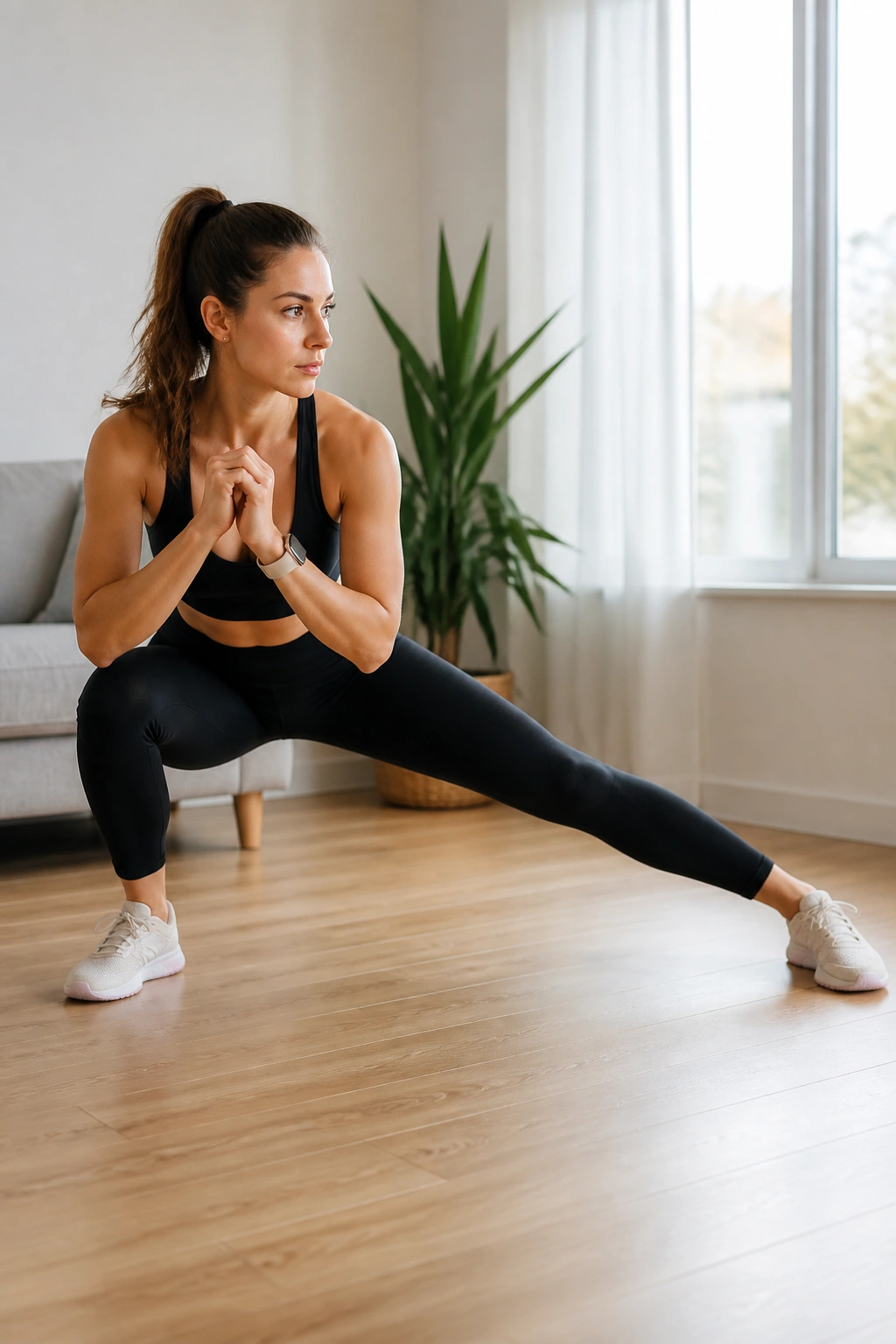
We spend most of our time moving forward and backward. The lateral lunge moves you in the frontal plane, which is essential for healthy hip function and strong glutes.
Stand with your feet wide apart. Shift your weight to one side, bending that knee while keeping the other leg straight. Push your hips back as if you were doing a squat on one leg. The straight leg should remain fully extended.
Push off the bent leg to return to the center. You will feel this intensely in the glute of the working leg. Because you are moving laterally, you are hitting the glute medius and minimus, which are often underdeveloped in people who only run or do standard squats.
13. Glute Squeezes
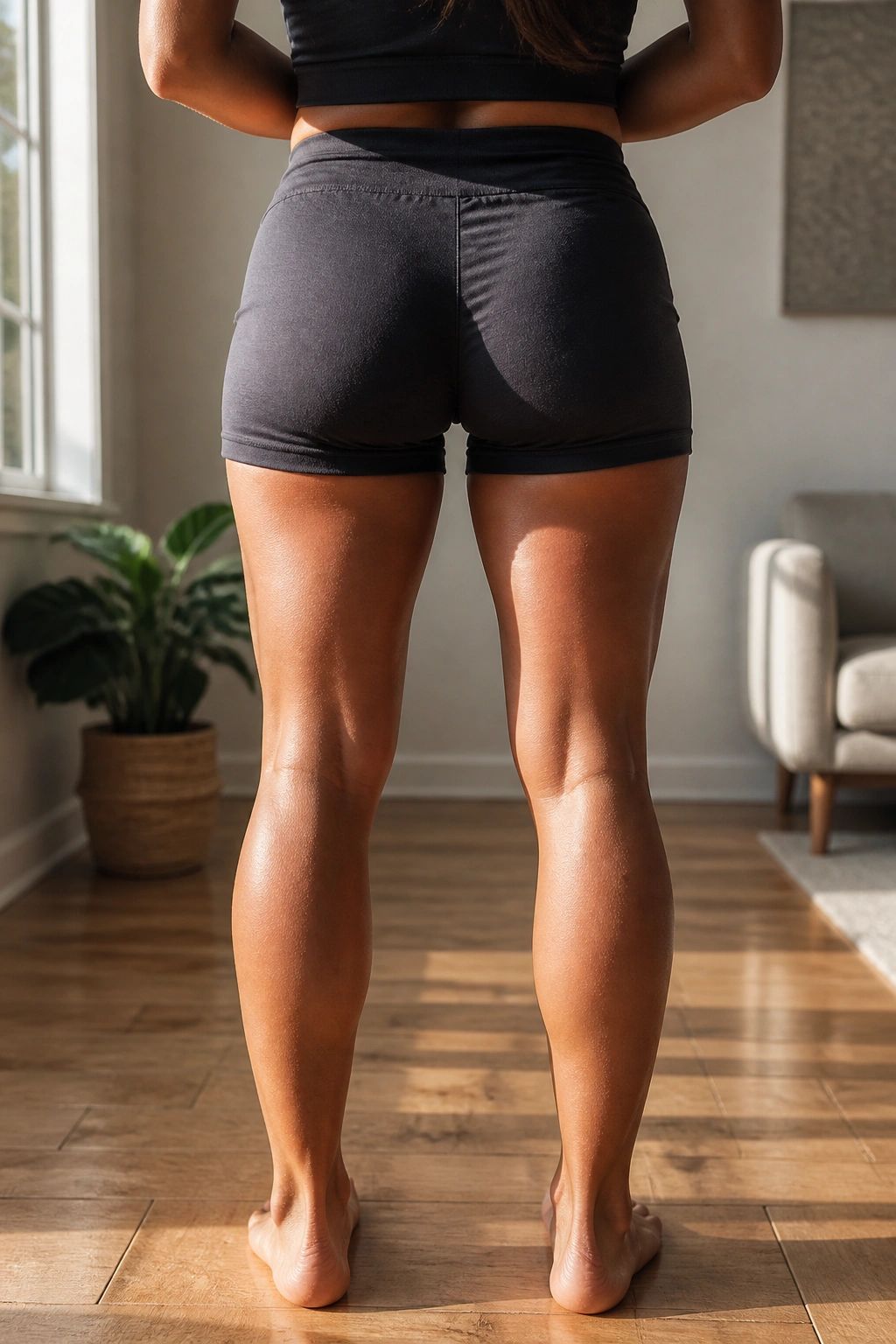
Sometimes you don’t need a complex movement to get an activation. You just need to learn how to fire the muscle. This is a static hold that builds the mind-muscle connection.
Stand with your feet hip-width apart. Squeeze your glutes as hard as you possibly can. Hold that contraction for 30 seconds. Do not hold your breath—breathe deeply. Then, release.
Why This Matters
If you struggle to “feel” your glutes during squats or lunges, perform a set of these before your workout. It wakes up the nervous system. By consciously contracting the muscle in a neutral position, you prime it to work harder when you move into more complex exercises.
14. Frog Pumps
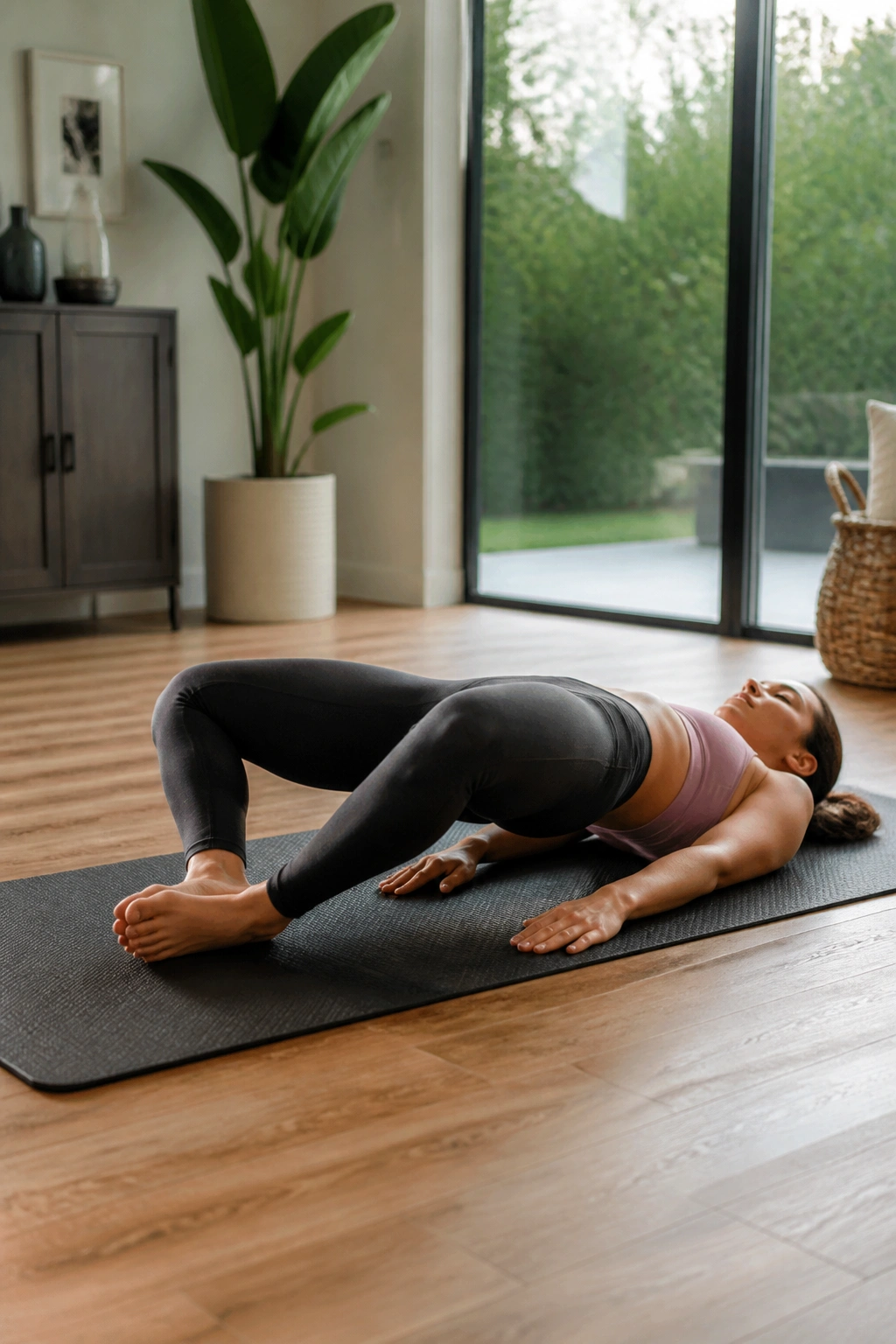
These are a variation of the glute bridge that places the glutes in a position of constant tension. They look slightly odd, but they are incredibly effective.
Lie on your back. Bring the soles of your feet together, letting your knees fall outward into a butterfly stretch position. Your heels should be close to your glutes. Now, perform a glute bridge.
Because your legs are externally rotated, the glutes are in a shortened position from the start. You will feel a very intense “pump” or burning sensation in the glutes much faster than with a standard bridge. Keep the movement small and controlled; focus on the squeeze at the top.
15. Plié Squat
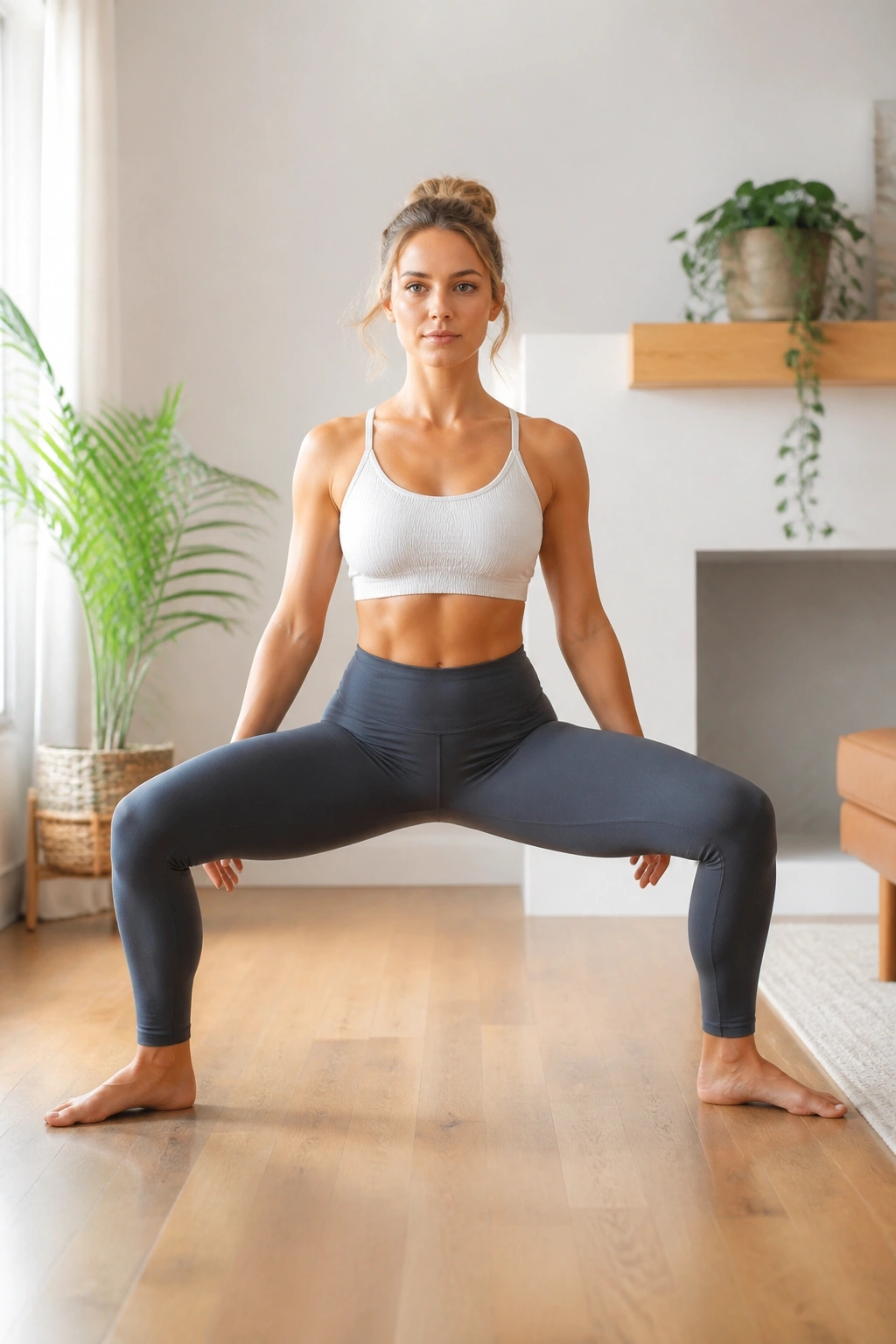
The plié squat is similar to the sumo squat but emphasizes a more upright torso. This upright position removes some of the reliance on the lower back and shifts it directly onto the glutes and inner thighs.
Stand with a wide stance, toes pointed outward. Keep your spine perfectly vertical as you descend. Do not lean forward. Think of yourself sliding down a wall.
At the bottom of the movement, pause and pulse slightly—move up and down about two inches—for three seconds before driving all the way up. This “time under tension” is what drives growth. By staying upright, you are isolating the glutes and adductors.
16. Clock Lunges
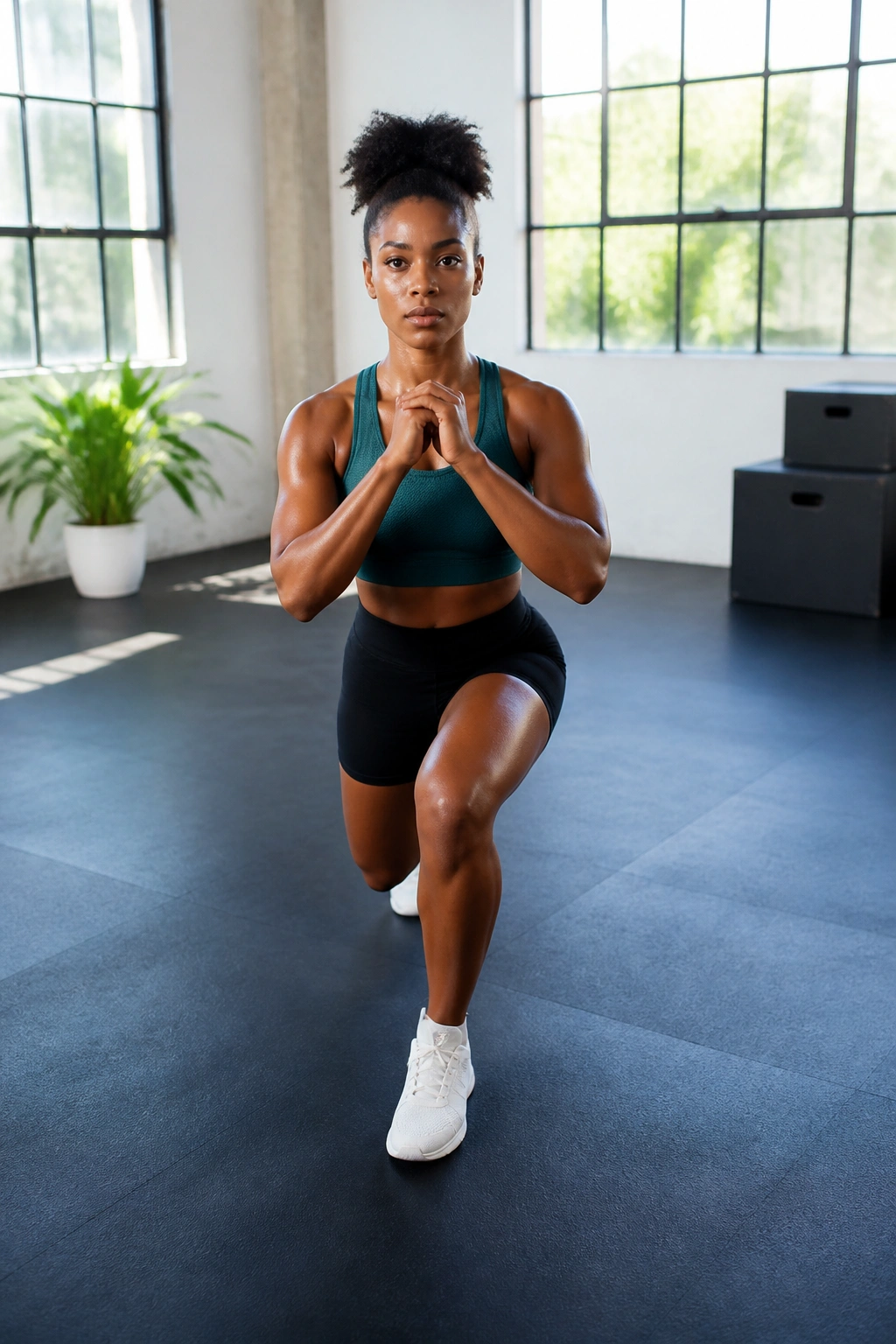
This exercise combines several lunge directions into one smooth movement, forcing your glutes to stabilize and drive from multiple angles.
Stand in the center of an imaginary clock face. Step forward with your right leg to 12 o’clock, perform a lunge, and return. Next, step to the side at 3 o’clock for a lateral lunge, and return. Finally, step back to 6 o’clock for a reverse lunge.
The Benefit
Your glutes are designed to stabilize the hip in all directions. By hitting these three angles, you ensure that every part of the glute gets attention. Keep your movements controlled. This isn’t a race; it’s about the quality of each lunge.
17. Single-Leg Deadlift
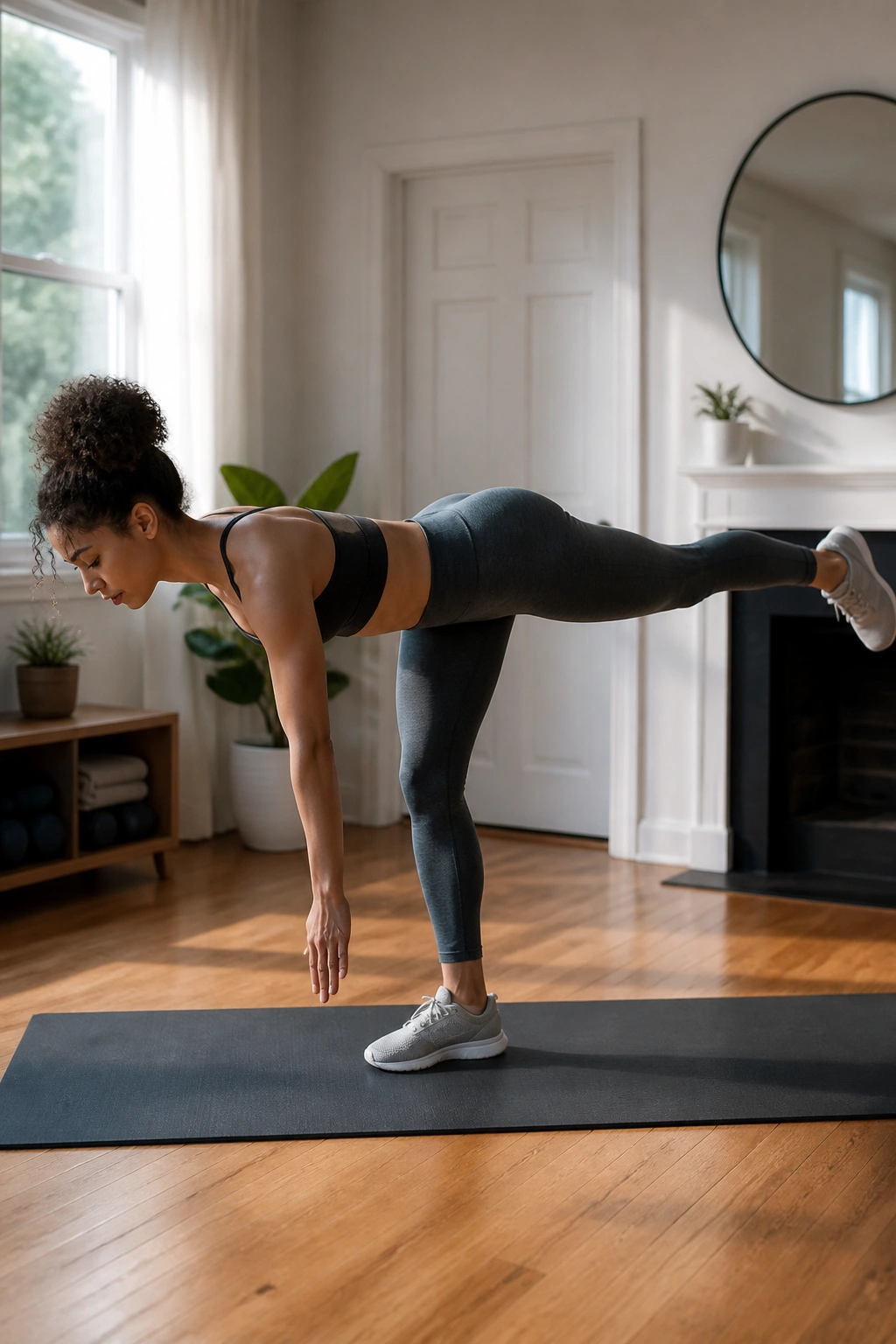
You do not need a weight for this to be difficult. The challenge is the balance. This movement targets the glutes and the entire posterior chain (hamstrings and lower back).
Stand on one leg. Keeping that knee slightly bent, hinge at the hips—push your glutes backward while letting your torso lower toward the ground. Your non-working leg should move backward in line with your torso. Aim to get your body into a “T” shape, parallel to the floor.
Finding Balance
If you fall over, that is okay. Start by holding onto a wall or a chair with one hand. As your balance improves, move to doing it without support. The focus must be on the hinge. If you just bend over at the waist, you will miss the glute engagement. The motion should come from pushing the hips back.
18. Side-Lying Leg Raises
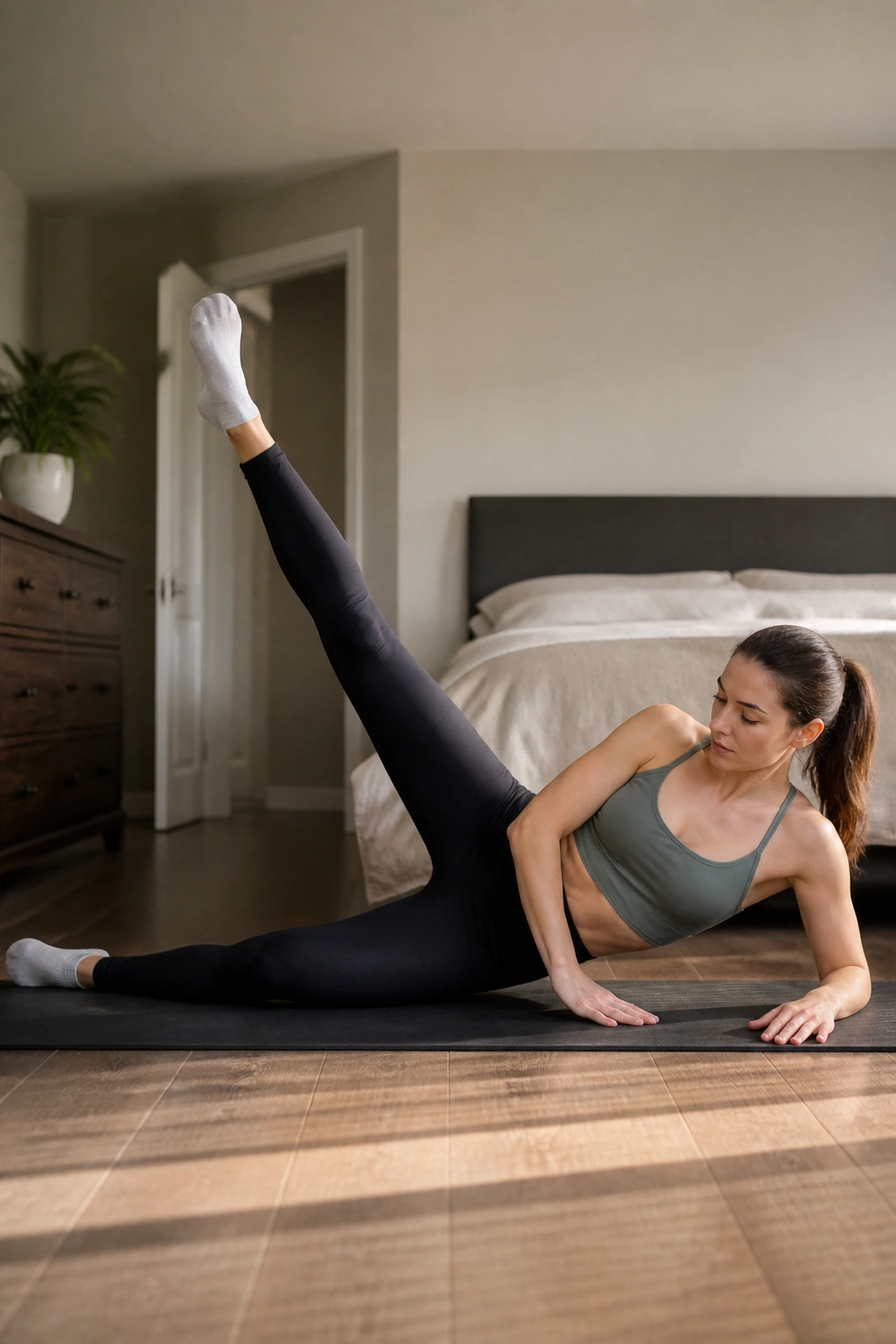
This is the ultimate isolation move for the side of your hip—the glute medius and minimus.
Lie on your side with your legs stacked. Keep your hips stacked—do not let the top hip roll backward. Lift your top leg straight up toward the ceiling, keeping the toe pointed slightly downward (to ensure the glute does the work, not the hip flexor).
Lower it back down slowly. Do not let the leg rest completely on the bottom leg; keep it hovering. You will feel a burn in the side of your hip within 10 to 15 reps. If you aren’t feeling it, your top hip has probably rolled backward. Keep it pressed forward.
19. Glute Bridge Marches
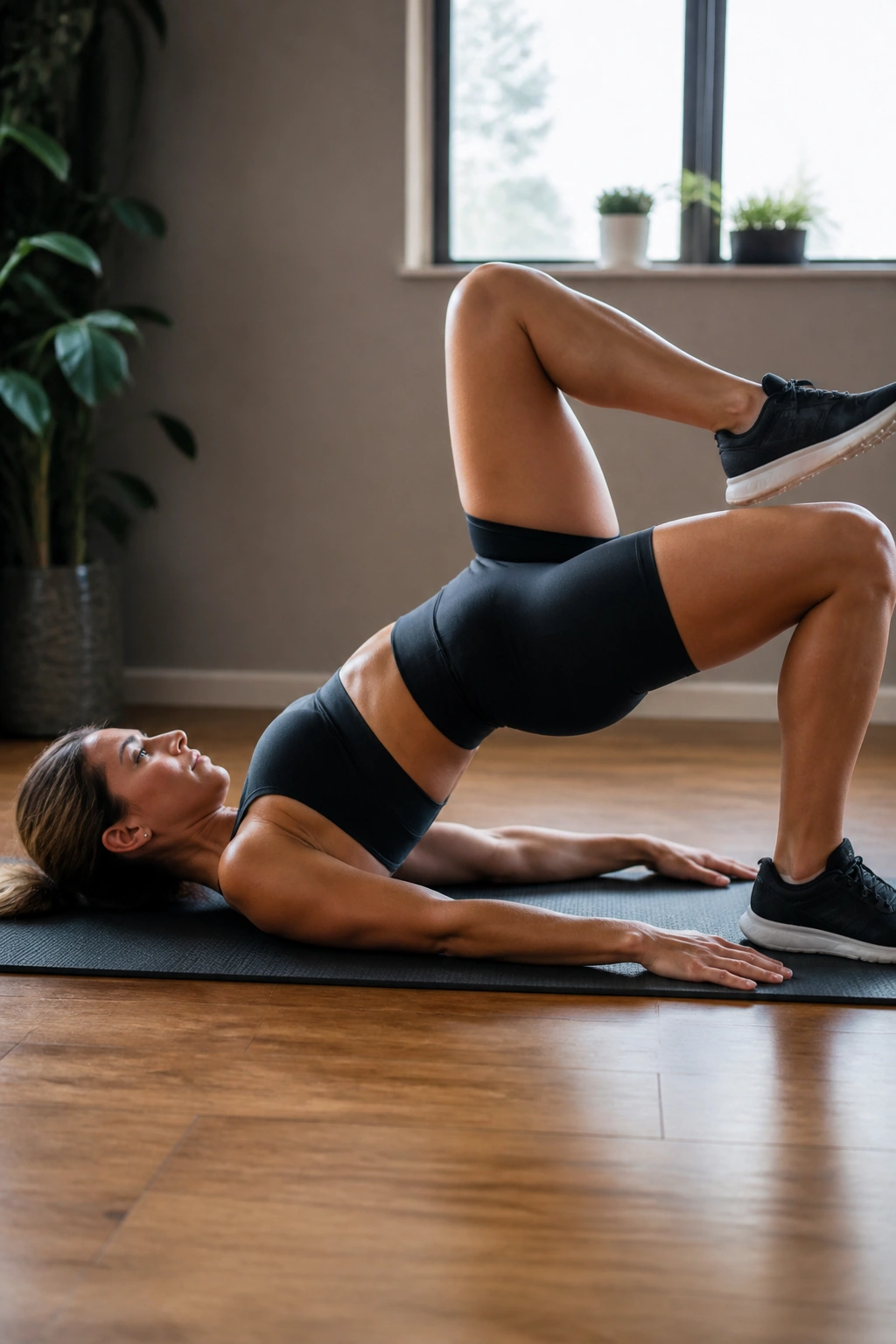
This is a dynamic variation of the bridge that turns it into an anti-rotation exercise.
Get into a standard glute bridge position and lift your hips. Once stable, lift one foot off the ground while keeping the knee bent. March that leg in the air—bring the knee toward your chest—then place it back down. Immediately lift the other leg.
The challenge is to keep your hips completely level. Every time you lift a foot, your hips will want to drop on that side. You must fight to keep them straight using your glutes and core. This is advanced work; don’t rush it.
20. Glute Bridge Abduction
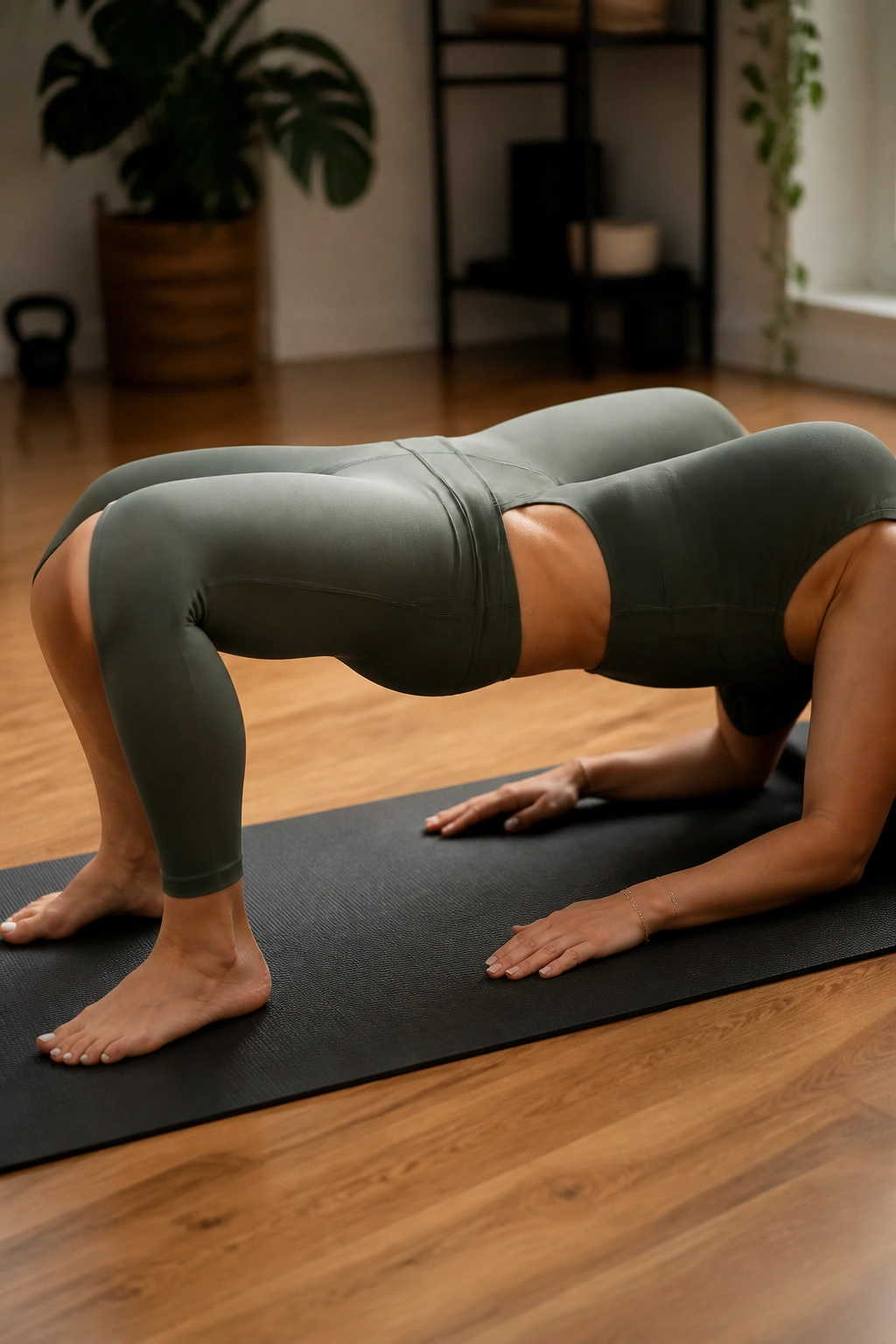
The gluteus medius is often neglected in standard bridges. This variation fixes that by adding an abduction component at the peak of the bridge.
Perform a standard glute bridge. At the top of the movement, when your glutes are fully squeezed, push your knees outward against imaginary resistance. Think of trying to push your knees to the walls on either side of you.
Bring the knees back to center, then lower your hips. Every single rep should include this “open-close” motion at the top. This effectively hits the outer glute while the glute maximus is already under tension.
21. Cossack Squats
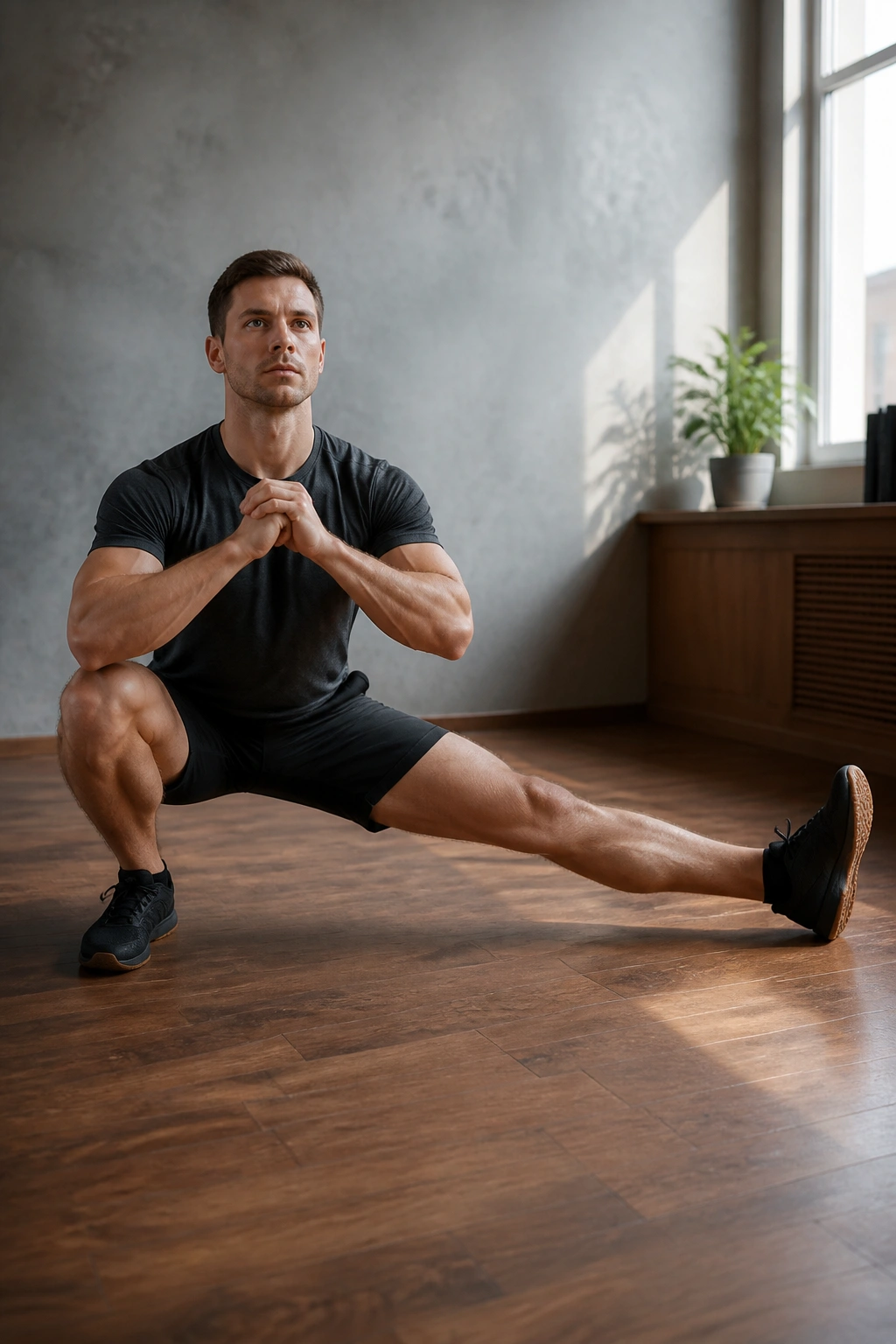
These are essentially deep, lateral lunges. They require good hip mobility, but they are unmatched for strength in the bottom position.
Start with a very wide stance. Shift your weight to one side, squatting down as deep as you can on that leg, while the other leg remains completely straight. Keep your chest up and your heel planted.
If you cannot get very low, just go as far as your mobility allows. Push off the bent leg to return to center and shift to the other side. This movement is brutal on the glutes and inner thighs, and it forces you to develop stability through a deep range of motion.
22. Wall Sit
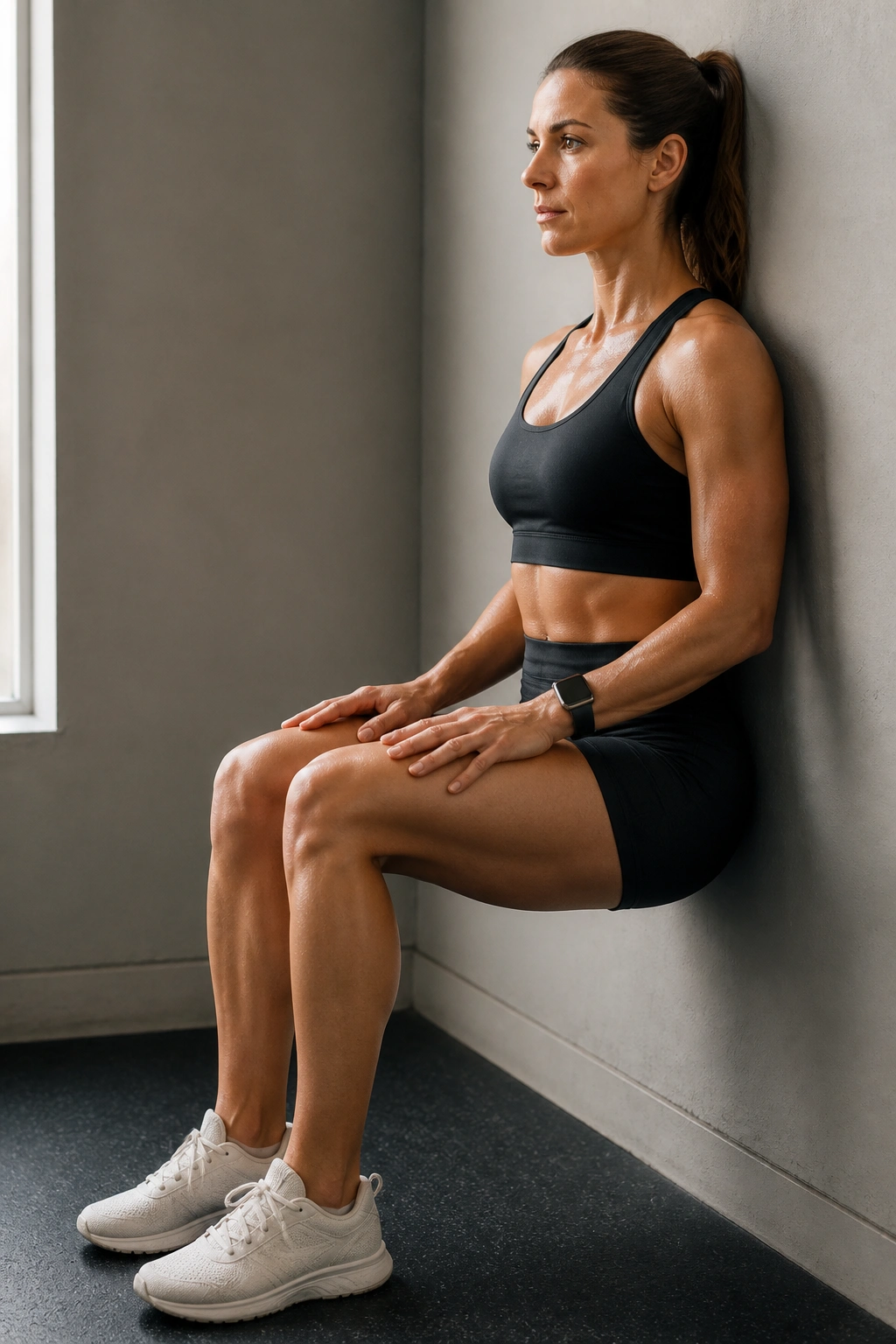
This is a static hold that builds endurance. It isn’t just about the quads; if you position yourself correctly, you can make the glutes do a lot of the heavy lifting.
Place your back against a wall and slide down until your thighs are parallel to the floor. Your feet should be hip-width apart. Here is the secret: press your heels into the ground and try to “pull” your feet toward the wall without actually moving them.
This isometric contraction engages the hamstrings and glutes significantly more than a standard wall sit where you just lean back and wait for your quads to burn. Hold for 30 to 60 seconds. You will feel the glutes firing to stabilize your hips against the wall.
Final Thoughts
Building a strong posterior chain without gear is entirely possible, but it requires a change in mindset. You cannot rely on adding more weight to force progress. Instead, you must add precision.
Pay attention to every repetition. If you are doing a lunge, feel the glute stretch. If you are doing a bridge, feel the glute squeeze. The moment your mind wanders, the engagement drops off, and you start relying on momentum or your lower back.
Consistency wins over intensity every single time. It is better to do three intentional, perfectly executed sets of twenty squats than five sets of sloppy, rushed repetitions. Focus on the quality of the movement, prioritize control over speed, and be patient. The strength will come.
