



You have thirty minutes. That is often the gap between a productive day and a missed opportunity. When your schedule feels like a closing door, high-intensity interval training is your best leverage. The goal is simple: maximize your metabolic output in the shortest time possible. This isn’t about aimlessly wandering around the gym, waiting for a machine to open up. It is about total-body engagement that forces your heart rate to climb, drops your sweat-soaked shirt to the floor, and keeps your body burning energy long after you finish.
Full-body movements are non-negotiable here. Why spend time isolating a bicep or a single muscle group when you can engage the entire kinetic chain? By using movements that demand coordination, strength, and explosive power simultaneously, you ensure that no muscle fiber is left idle. You want to feel your lungs burning and your legs shaking by the end of the first round. That is the point. When you move with intensity, you stop counting seconds and start focusing on the next rep.
Prepare to clear some space. You do not need a fancy gym membership or expensive machines to make this work. Most of these protocols rely on your own body weight, a simple set of dumbbells, or a medicine ball. The following twenty-two workouts are designed to be brutal, efficient, and effective. Pick one, set a timer, and commit.
1. The Classic Burpee Ladder
Burpees are the universal language of physical discomfort. They hit your chest, legs, and core, all while demanding a massive amount of cardiovascular effort. A ladder workout keeps you moving without requiring much thought about the pattern. Start with one rep, then do one push-up. Then do two burpees and two push-ups. Continue until you hit ten.
Why This Works
The volume creeps up on you. At first, you feel unstoppable. Around the six-rep mark, your heart rate spikes, and your form starts to wobble. That is where the actual training happens. Do not skip the push-up at the bottom of the burpee.
Pro tip: Keep your core tight during the jump-back phase. If your hips sag toward the floor, you are wasting energy and putting your lower back at risk.
2. Kettlebell Swing and Sprint Mashup

The kettlebell swing is the king of posterior chain movements. It hammers your hamstrings, glutes, and lower back, provided you hinge at the hips instead of squatting. This workout combines that explosive power with short, sharp bursts of sprinting. Perform twenty swings, then immediately head to the track or open space for a 100-meter sprint.
Rest for sixty seconds between rounds. Repeat this for ten rounds total. The transition from the hinge movement to the upright running posture is what makes this so grueling. Your glutes will feel like they are on fire by the fourth set. If you are doing this indoors, use a rower or a stationary bike for the sprint portion. The key is to keep the intensity high enough that you cannot hold a conversation.
3. The Bodyweight EMOM
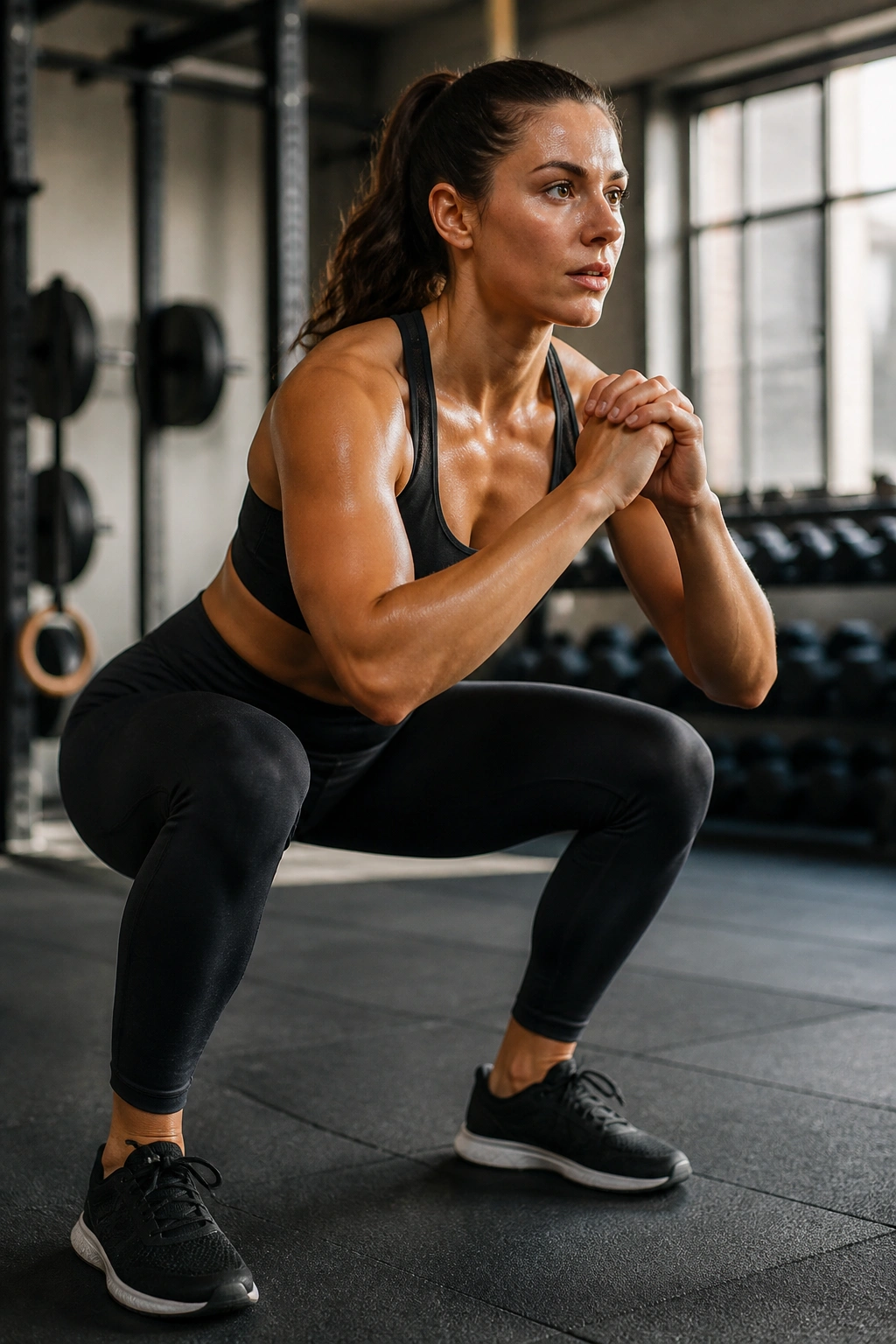
EMOM stands for “Every Minute on the Minute.” It is a brutal way to keep your rest periods predictable while forcing your pace. Set a timer for twenty minutes. At the start of each minute, you perform a specific set of movements. If you finish before the minute ends, you get to rest for the remaining seconds.
The Breakdown
- Minute 1: 15 air squats
- Minute 2: 10 push-ups
- Minute 3: 15 sit-ups
- Minute 4: 10 mountain climbers (per leg)
Cycle through these four movements five times. The first few rounds will feel easy, but by the time you reach the final ten minutes, that brief rest window will shrink as your fatigue accumulates. Keep your transitions crisp. A slow walk to the floor for push-ups is time you could spend breathing.
4. Dumbbell Thruster and Jump Rope Superset

Thrusters are arguably the most taxing movement you can do with a pair of dumbbells. They combine a front squat with an overhead press. They force you to use your legs to drive the weight up, testing your total-body coordination. Pair these with high-intensity jump rope intervals to skyrocket your heart rate.
Do twelve thrusters with moderate-weight dumbbells, then go straight into sixty seconds of fast-paced jump rope. Rest for forty-five seconds. Repeat this for eight rounds. Focus on keeping the dumbbells close to your body during the squat to prevent them from pulling you forward. Your shoulders will be burning by the third round. If you trip on the rope, just start again immediately—no dwelling on mistakes.
5. Medicine Ball Slam and Lunge Complex
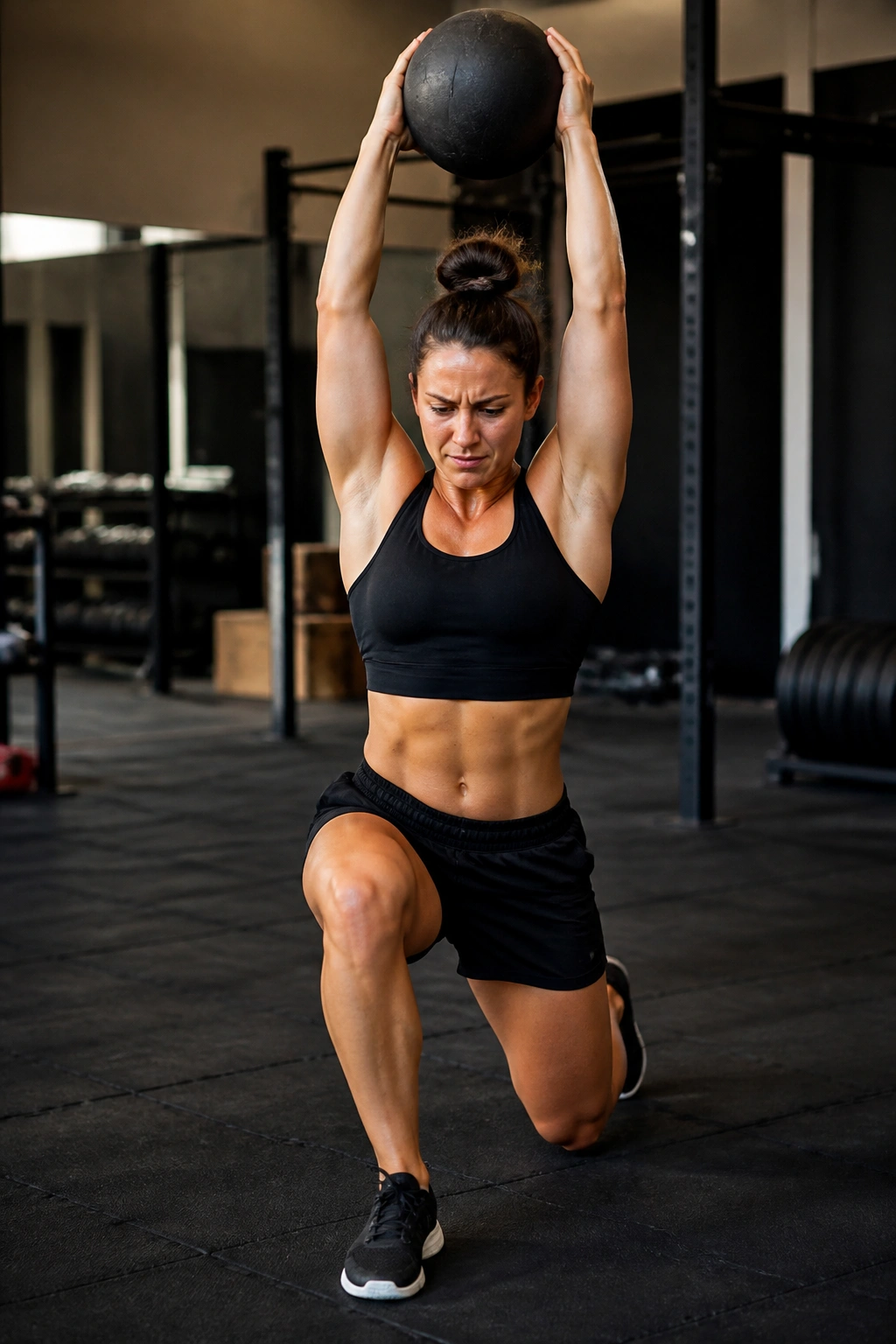
Medicine ball slams are visceral. They let you channel all your frustration into the floor, but they also build serious abdominal strength and power. Hold a heavy medicine ball—15 to 20 pounds is usually the sweet spot—and slam it down with everything you have.
Follow up the slams with ten walking lunges per leg, holding the ball at your chest. The weight forces you to stay upright, which is harder than it sounds when your legs are already tired. Do five slams, ten lunges, and then immediately grab the ball for another five slams. Keep moving for fifteen minutes straight. If you stop, you reset the timer in your head. Do not stop.
6. Battle Rope Power Flow

Battle ropes are deceptive. They look like you are just flailing your arms, but if you do them right, your entire core has to fight to stabilize your spine. Spend thirty seconds doing double waves, then thirty seconds doing alternating waves. Follow this with thirty seconds of “power slams” where you lift the ropes high above your head and smash them down.
Rest for ninety seconds. That might sound long, but you need it. Perform five full rounds of this sequence. The secret is to keep your feet planted wide and your knees slightly bent. If you stand straight-legged, you lose all your leverage. Watch your breath. People often hold their breath during battle rope intervals, which makes the fatigue hit twice as fast.
7. The Box Jump and Dip Combo

Explosiveness is a fading quality if you do not train it. Box jumps force your nervous system to fire rapidly, while dips test your upper body pushing strength. Find a sturdy box or bench that sits at a manageable height. Do ten box jumps, aiming for a soft, quiet landing. Do not jump down; step down to protect your knees.
Move directly to the dip station or use a bench to perform fifteen dips. Keep your elbows tucked in close to your body. If you flare them out, you shift the load to your shoulders, which is a one-way ticket to discomfort. Cycle through these movements for twenty minutes. If you get bored, add a set of twenty jumping jacks between the dip and the box jump.
8. Mountain Climber and Plank Burnout

Core strength is the foundation for every other movement you do. This workout is simple but punishing. Get into a high plank position. Run your knees toward your chest for forty-five seconds of mountain climbers. Immediately drop into a low plank (on your elbows) and hold it for forty-five seconds.
Rest for thirty seconds. Repeat this for ten rounds. Your abs will feel like they are cramping by the halfway point. Ignore the urge to arch your back. A straight, rigid line from your head to your heels is what builds real definition. If you feel your hips sinking, reset your position immediately. It is better to pause for a second and fix your form than to keep going with bad posture.
9. Hill Sprints and Push-up Intervals

There is something about running uphill that strips away all pretenses of fitness. Find a decent incline—a park hill or a steep driveway will do. Sprint for twenty seconds. Walk back down. As soon as you reach the bottom, do fifteen push-ups.
Do not wait. Go right back up that hill. Repeat this for ten trips. The push-ups will feel significantly harder as you progress because your arms will be fatigued from the arm swing of the sprint. Keep your head up when running; looking at your feet will only make you feel slower.
10. The Agility Ladder and Burpee Finisher

Agility ladders are not just for football players. They are incredible for developing foot speed and coordination. If you do not have a ladder, use chalk to draw squares on the ground. Do a high-knee shuffle through the ladder, focusing on touching every square.
Why Speed Matters
Moving your feet quickly changes the neural demand of the workout. It forces you to think while you exert yourself. After one minute of ladder work, drop and do ten burpees. Repeat this six times. If you move slowly through the ladder, the benefit is lost. Treat the squares like they are made of hot coals.
11. Sandbag Carry and Squat Circuit

Sandbags provide an unstable load that forces your stabilizing muscles to work overtime. Carry a sandbag (or a heavy duffel bag filled with weight) on one shoulder for 100 feet. Drop it, do twenty bodyweight squats, then hoist the bag onto the other shoulder and carry it back.
Repeat this for twenty minutes. The uneven weight distribution makes your obliques fire constantly to keep you upright. It is a grueling, awkward, and highly effective way to burn fat. If you do not have a sandbag, a loaded backpack works just as well. Just make sure the contents do not shift too violently.
12. Jump Squat and Lateral Lunge Sequence

Lower body power is built in the frontal and sagittal planes. Jump squats provide the vertical power, while lateral lunges hit the inner and outer thighs. Perform fifteen jump squats, exploding off the balls of your feet. Then, do ten lateral lunges per leg.
Focus on getting deep in those lunges. Keep your chest up and your trailing leg straight. Cycle through for fifteen minutes without a formal rest period, only resting when you absolutely need to catch your breath. The burn in your quads will be significant. Push through it.
13. The 10-to-1 Descending Ladder

This is a classic technique used to build density. You start with ten reps of three different exercises: push-ups, squats, and sit-ups. Then you move to nine reps of each. Then eight. Keep going until you hit one.
The start is a volume slog, but the finish is lightning fast. By the time you get to the rounds of four, three, two, and one, you should be moving as fast as possible. This format is great because you can see the finish line getting closer with every rep. It keeps your mind sharp even when your body is screaming for a break.
14. Battle Rope and Burpee Alternation

We are revisiting the battle ropes, but this time with a different pairing. Perform thirty seconds of alternating waves, then drop the ropes and do five burpees. Pick the ropes back up immediately.
Do not worry about the time; focus on the rhythm. Perform this sequence for twelve minutes. The transition between the upper-body explosive power of the ropes and the full-body movement of the burpee is jarring. That is the point. You want to force your body to adapt to changing stimuli rapidly.
15. The “Deck of Cards” Chaos Workout

Get a deck of cards. Assign an exercise to each suit. Hearts could be push-ups, Diamonds are squats, Spades are lunges, and Clubs are mountain climbers. Flip a card, do the number on the card in reps. Face cards are ten reps, Aces are eleven.
Go through the entire deck. This forces you to change movements constantly, which keeps the workout interesting and prevents your muscles from getting into a groove. It is entirely random. Sometimes you get a run of squats that makes your legs burn; other times, you get push-ups that tax your chest. Do not cheat the face cards.
16. Kettlebell Swings and Plank Hold Superset

The contrast between high-intensity movement and static holding is powerful. Perform thirty kettlebell swings, then immediately transition to a high plank. Hold for sixty seconds.
The swings elevate your heart rate and fatigue your posterior chain, while the plank forces you to stabilize your core while your heart is still hammering. Repeat this for six rounds. It is an excellent test of your ability to control your body under duress. If your lower back starts to ache during the plank, push your heels back and squeeze your glutes harder.
17. The Thruster and Pull-Up Pairing

If you have access to a pull-up bar, this is the ultimate upper-body-plus-legs combination. Do ten thrusters, then jump up and do as many pull-ups as you can with good form. If you cannot do pull-ups, use a resistance band for assistance or perform inverted rows.
Keep the rest between rounds to exactly sixty seconds. Do five rounds. The pull-ups will naturally be harder after the thrusters because your lats will be slightly pre-fatigued. This pairing hits your front side (shoulders/quads) and your back side (lats/posterior chain) perfectly.
18. Agility Ladder and High-Knee Sprints

Similar to the previous ladder workout, but here we focus on pure cardiovascular speed. Use the ladder for quick feet patterns for thirty seconds, then immediately burst into a thirty-second sprint.
The Focus Points
- Keep your toes light.
- Land softly.
- Pump your arms vigorously.
Do this for ten rounds. The goal is to keep the intensity high during the sprint, even though your legs are tired from the ladder work. This is how you develop “gas in the tank” for longer-duration activities.
19. Sandbag Clean and Press Circuit

The sandbag clean-and-press is a functional powerhouse. Clean the bag from the floor to your shoulders, then press it overhead. It requires timing, power, and coordination.
Do eight reps of this move, then do twenty seconds of jumping jacks to keep the heart rate up. Repeat for ten rounds. The sandbag is harder to control than a barbell, which means your stabilizer muscles have to work much harder. It is a fantastic way to develop raw, functional strength.
20. Jump Squat and Push-up Superset

This is as simple as it gets. Ten jump squats, ten push-ups. No rest. Ten jump squats, ten push-ups. Keep doing this for fifteen minutes.
The simplicity is deceptive. You will find that by minute eight, the jump squats start feeling heavy, and the push-ups become a battle against gravity. This is a classic “density” workout where the only metric that matters is how much work you can pack into the timeframe. If you feel like your form is slipping, take a ten-second breather, but do not quit.
21. Battle Rope and Plank Combination

Hold a plank for forty-five seconds, then immediately stand up and perform thirty seconds of high-intensity battle rope waves.
Repeat this for eight rounds. The planking pre-fatigues your core, making the battle rope portion feel significantly harder to stabilize. It is a great way to ensure you are engaging your midsection during your cardio work. Most people let their core go soft while doing cardio, but this workout forbids that.
22. The Explosive Finisher

This is for when you have nothing left but want to burn off the last few calories. Perform thirty seconds of burpees, thirty seconds of mountain climbers, thirty seconds of air squats, and thirty seconds of high knees.
No rest between movements. Do this cycle three times. It is two minutes of absolute chaos. By the end, you should be completely exhausted. This is a perfect way to cap off a workout or to do on its own when you only have ten minutes to spare. Your heart will be pounding, and your muscles will feel the fatigue. That is exactly what you want.
Final Thoughts

Success in training is not about doing the most complicated workout; it is about finding the intensity that forces change. You do not need a complex routine to see results. You need effort, consistency, and the willingness to push past the moment you want to stop.
Every one of these routines provides a different path to the same goal: increased work capacity and a more efficient metabolism. Choose one, perform it with intention, and stop overthinking your schedule. The gym is a tool, but your intensity is the only engine that matters.
Remember that form always dictates the quality of the work. It is far better to do fewer reps with perfect technique than to sprint through a workout with sloppy posture. Take the time to master these movements, and the results will naturally follow. Now, pick your routine and get to work.
