



The fat that settles at the sides of your waist has a rude habit of ignoring lazy exercise plans. You can do endless side bends with no load, toss in a few rushed crunches, and still feel like your jeans are arguing with you by late afternoon.
Love handle workouts for women over 40 need a smarter setup than that. After 40, a lot of us deal with some mix of muscle loss, slower recovery, stubborn belly and hip fat, sleep disruption, and the kind of hip stiffness that makes old-school ab routines feel worse than useless. If your lower back grabs during twists, or your neck does all the work in bicycle crunches, you are not alone.
I have zero patience for workout plans that hand women 200 waist twists and call it a solution. That is not training. That is busywork. The waist responds better when you combine anti-rotation core work, loaded carries, lower-body strength, low-impact cardio, and exercises that teach your ribs and pelvis to stay stacked.
That is where this list earns its keep. These moves do not promise magic, and they do not need to. They are the kind of waist-shaping, fat-burning, muscle-saving exercises that actually belong in a plan you can stick with.
Why Love Handle Workouts for Women Over 40 Need More Than Side Crunches
A hard truth first: you cannot spot-reduce fat from one small area. Love handles shrink when your body loses fat as a whole, and the shape of your waist changes when the muscles around your core, hips, glutes, and upper back get stronger. Oblique exercises help, yes. On their own, they are not enough.
After 40, that matters more. Estrogen shifts can change where fat tends to collect, and lower muscle mass means your body burns fewer calories at rest than it did in your 20s or early 30s. Add desk time, stress, sketchy sleep, and less recovery tolerance, and the old “do more abs” advice starts to look silly.
There is another piece people skip: your waist is part of a system. If your glutes are weak, your hips are tight, and your rib cage flares when you lift your arms, your lower back will often take over. Then every “ab” move becomes a back exercise in disguise.
A better formula looks like this:
- 2 to 3 strength sessions each week built around compound movements and core control
- 1 to 3 low-impact cardio sessions that raise energy burn without beating up your joints
- 10,000-ish daily steps, or whatever steady baseline is realistic for you
- Protein at each meal to help hang onto muscle while body fat comes down
- Sleep and stress management because cortisol, hunger, and recovery are tied together more than people like to admit
You do not need a punishing boot camp. You need a plan that your knees, hips, and lower back will still tolerate next month.
How to Schedule Love Handle Workouts for Women Over 40 Across the Week
Most women do better with three focused workout days than with a random blast of motivation followed by four skipped sessions. Consistency beats heroics. Every time.
Here is a weekly setup I like because it covers strength, waist work, and calorie burn without piling too much fatigue into one day:
A simple training split
- Day 1: Lower body + 2 core moves + 10 minutes of brisk incline walking
- Day 2: Low-impact intervals or a longer brisk walk
- Day 3: Upper body + 2 core moves + loaded carry
- Day 4: Rest day or easy walk
- Day 5: Full-body circuit using 4 to 6 moves from this list
- Day 6: Gentle cardio, mobility, or nothing at all
- Day 7: Rest
You do not need all 18 exercises in one week. Pick 6 to 8 movements and stay with them for 4 to 6 weeks. Track your sets, your holds, your distance, and the dumbbell weight. That is where progress hides — not in doing something different every other day.
Pelvic floor issues, a history of back pain, or osteopenia change the picture a bit. If that sounds like you, lean harder on anti-rotation, carries, incline walking, step-ups, glute work, and controlled side planks, and go easier on hard twisting.
And exhale on effort. It sounds small. It is not.
The 6-Minute Warm-Up That Makes Waist Training Feel Better
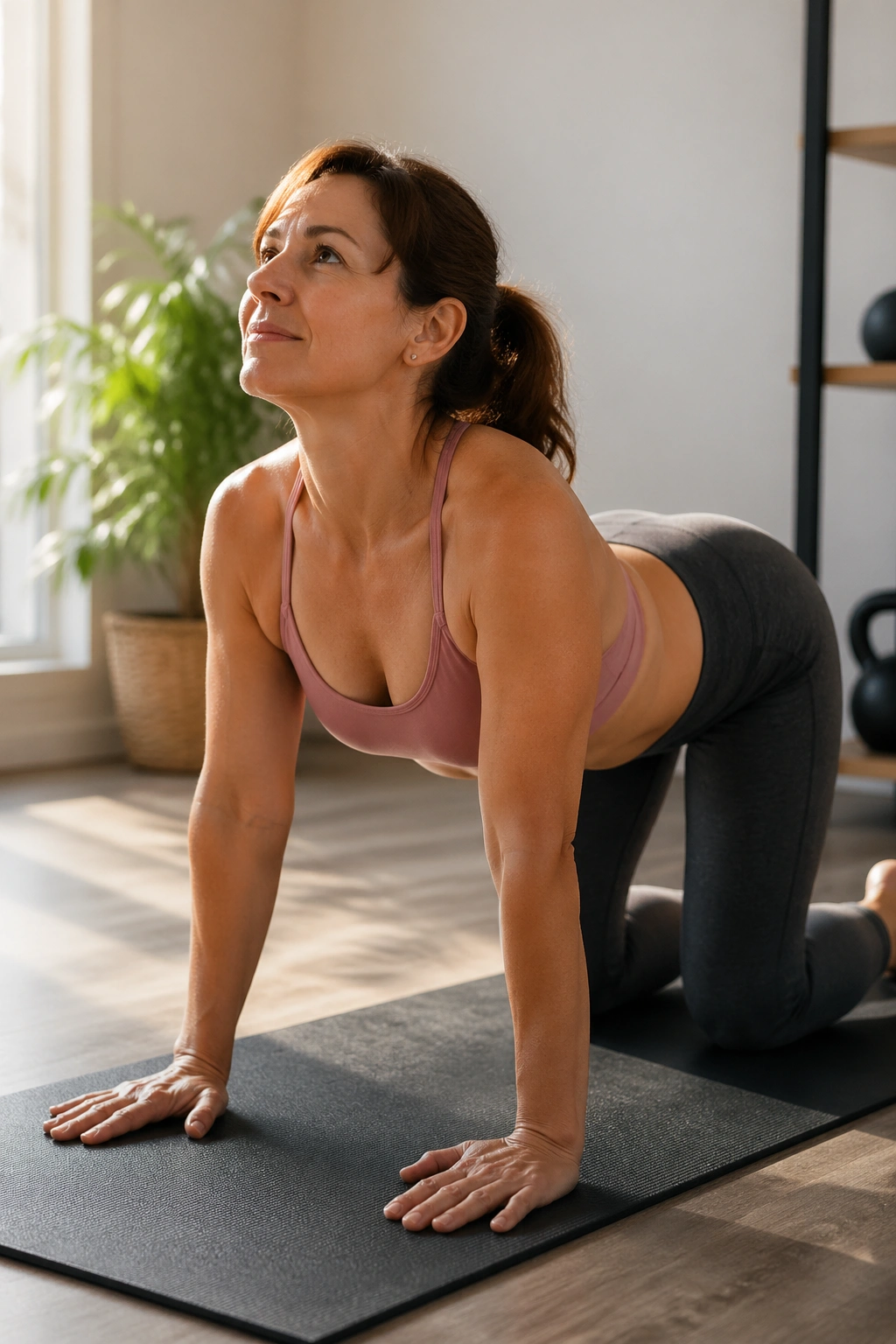
Do not walk into oblique work cold, especially if you sit most of the day. Tight hip flexors and a stiff mid-back will make your body chase movement from the wrong places.
Try this sequence before your workout:
- Cat-cow x 6 slow reps
- 90/90 breathing x 5 breaths with feet on a wall or bench
- Glute bridge x 10 reps with a two-second squeeze at the top
- Standing hip circles x 5 each direction
- Open-book thoracic rotation x 6 per side
- Bodyweight good mornings x 10 reps
The whole thing takes about six minutes. Your ribs settle down, your hips wake up, and your spine stops trying to do all the work.
One more thing. If a move gives you a sharp pinch in the low back, front of the hip, or shoulder, stop and adjust the setup. Pain is not a sign that the workout is “working.”
1. Standing Dumbbell Side Bends
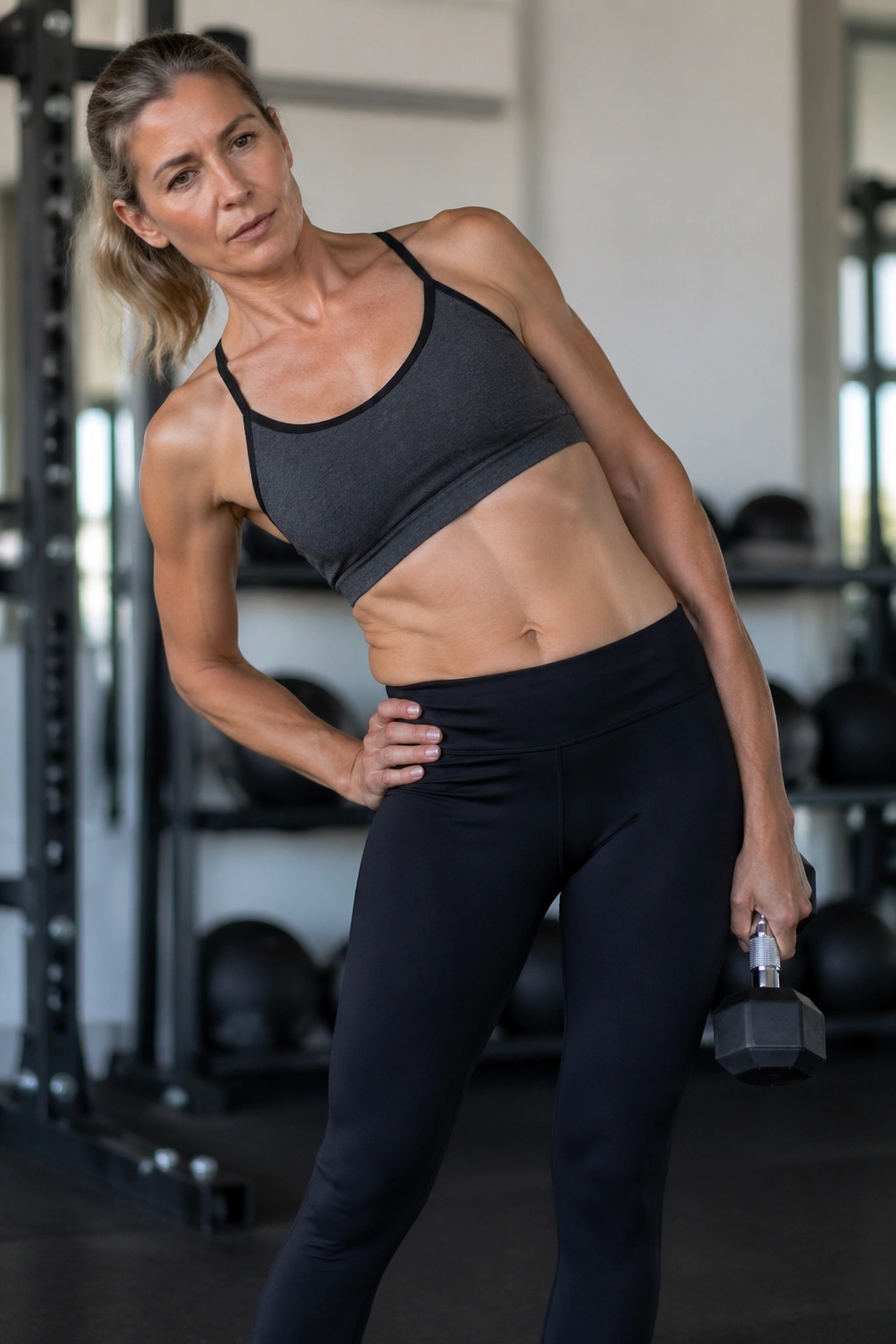
Side bends are not useless. They are only overused, usually done too fast, and almost always loaded badly.
When you hold one dumbbell and bend away from it, your obliques on the loaded side have to work to control the movement and bring you back upright. That can build side-waist strength, though the move works best as a small part of a bigger plan, not the whole show.
Why this one earns a spot
A controlled side bend teaches lateral flexion — bending sideways — which your body still needs in modest amounts. The catch is range. Most people go too deep, dump into the lower back, and turn the rep into a hip hitch.
Keep the motion short and clean. Picture your hand sliding down the outside of your thigh, not reaching for the floor.
Form cues that matter
- Hold one dumbbell in one hand, usually 8 to 20 pounds to start
- Stand with feet about hip-width apart and knees soft
- Lower the weight only until you feel your opposite side working — often 4 to 8 inches
- Pause for one second at the bottom
- Return to center without leaning backward
- Do 2 to 3 sets of 10 to 15 reps per side
Best cue: keep your chest facing forward the whole time. If you start rotating, you have gone too far or picked too much weight.
2. Suitcase Carry
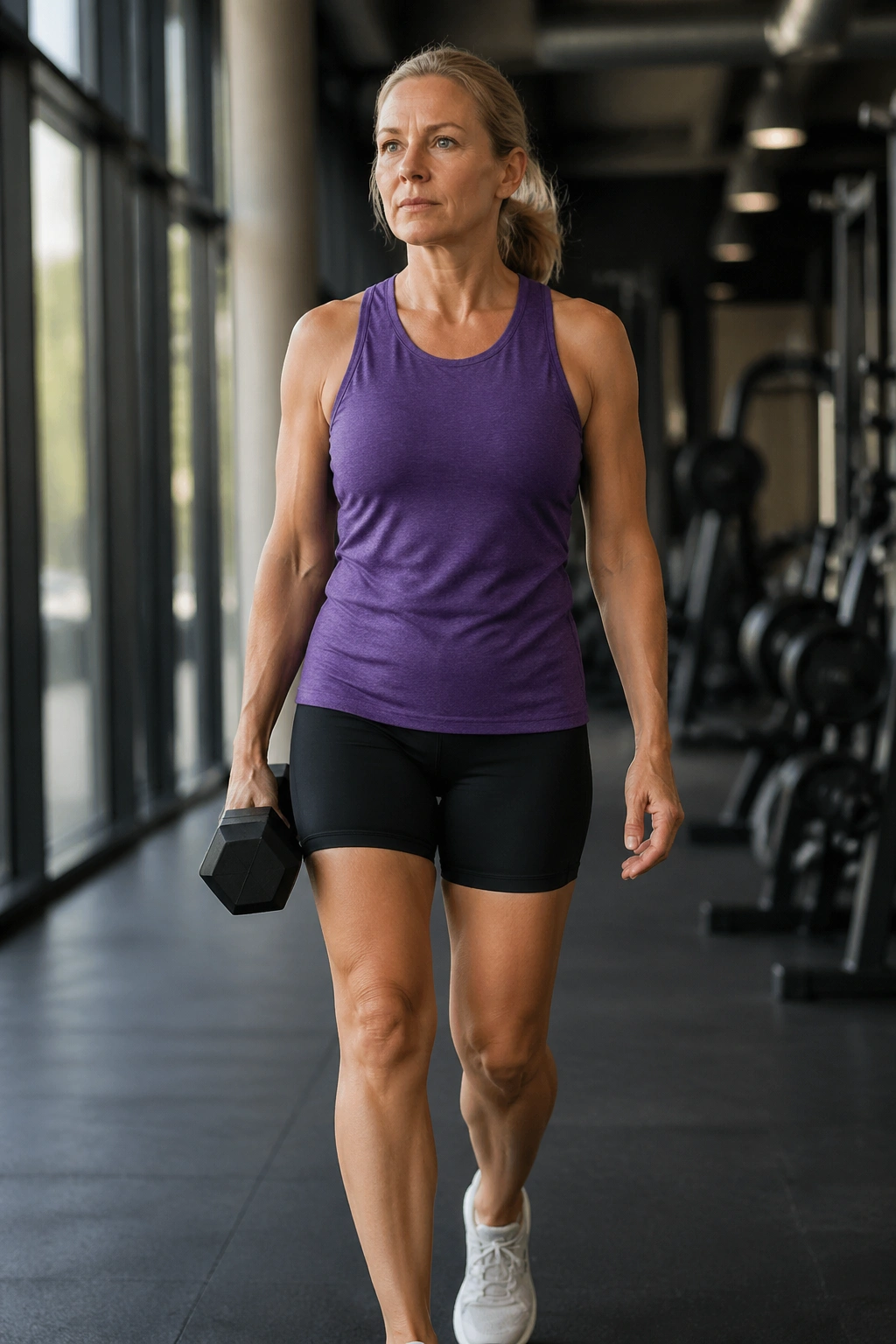
Few exercises light up the waist as honestly as a heavy suitcase carry.
You hold one dumbbell or kettlebell at your side and walk. That sounds plain, maybe even boring, until you try it with a load that makes your torso fight to stay upright. Your obliques, deep core, grip, glutes, and upper back all have to organize fast.
What I like here is the low-impact payoff. There is no twisting, no flopping around on the floor, no neck strain. You stand tall, walk 20 to 40 yards, switch hands, and repeat. For women over 40 who want something joint-friendly and useful, it is hard to beat.
Use a weight that feels challenging by the last 10 yards but does not pull you sideways. For a lot of women, that lands somewhere between 20 and 45 pounds, though smaller jumps matter. If your gym has dumbbells in 5-pound jumps only, do not be shy about spending extra time at one weight.
Walk slowly. Ribs over pelvis. Shoulder down. Hand brushing the outside of the thigh. 3 to 5 rounds per side is plenty. You will feel this one later — around the waist, yes, but also through the grip and upper back, which is part of why it works so well.
3. Pallof Press
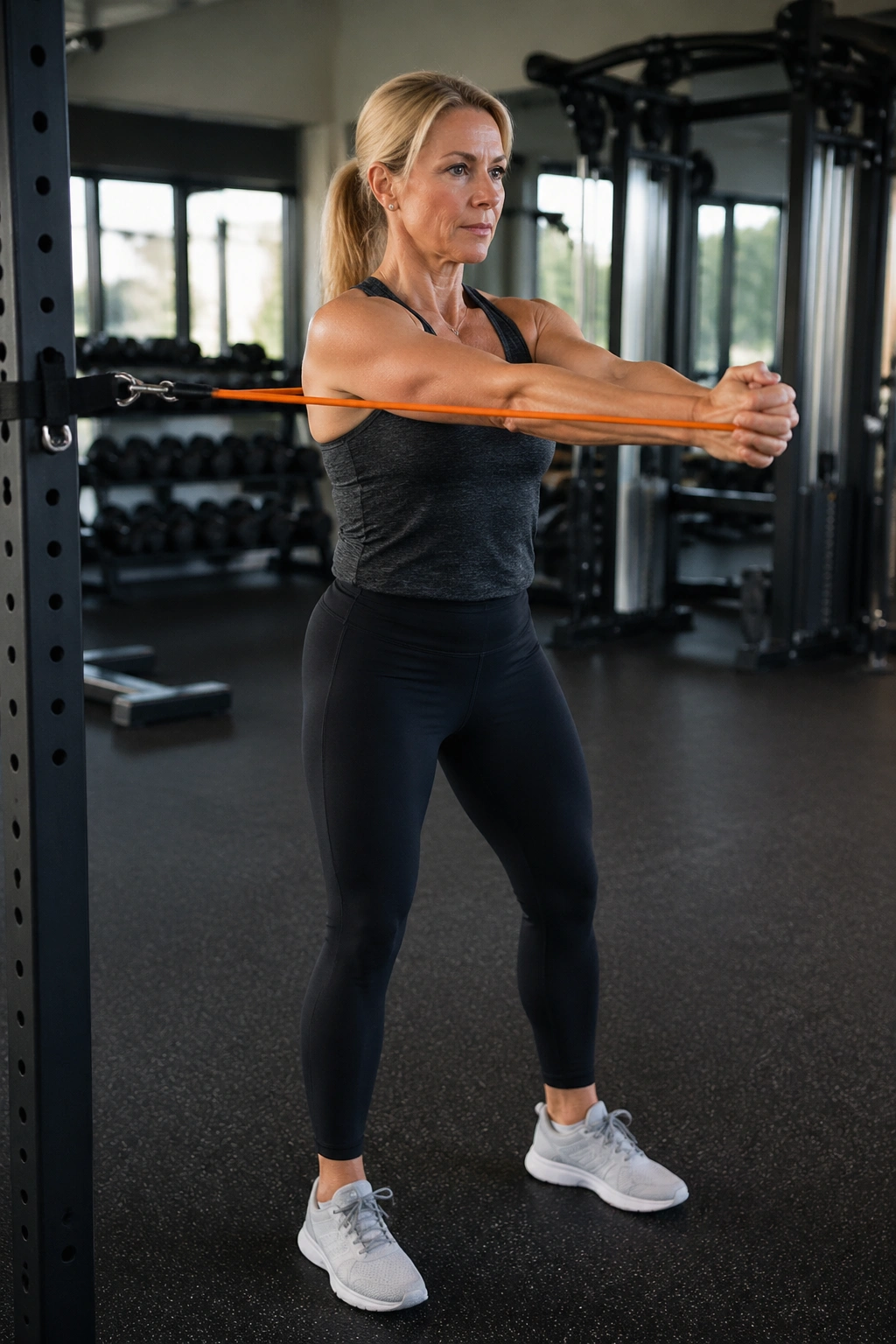
Want a core exercise that trains your waist without crunching or twisting? Start here.
The Pallof press is an anti-rotation drill. A band or cable tries to pull your torso sideways. Your job is to resist that pull while pressing your hands straight out from your chest. That resistance hits the obliques in a way people often miss: not by making them move, but by making them stop movement.
That is gold for anyone with a cranky low back.
How to set it up
Anchor a resistance band at chest height. Stand sideways to the anchor point with feet about shoulder-width apart. Hold the handle or band at your sternum, brace your midsection, then press straight forward until your arms are long. Pause for one to two seconds. Bring it back in.
Use 8 to 12 presses per side for 2 to 4 sets. If standing feels wobbly, use a half-kneeling stance with the inside knee down. If you feel your shoulders more than your waist, lighten the band and slow the pause.
The rep should look almost boring. That is the point. No wobble, no sway, no rib flare. Quiet torso. Strong press.
4. Step-Up With Knee Drive
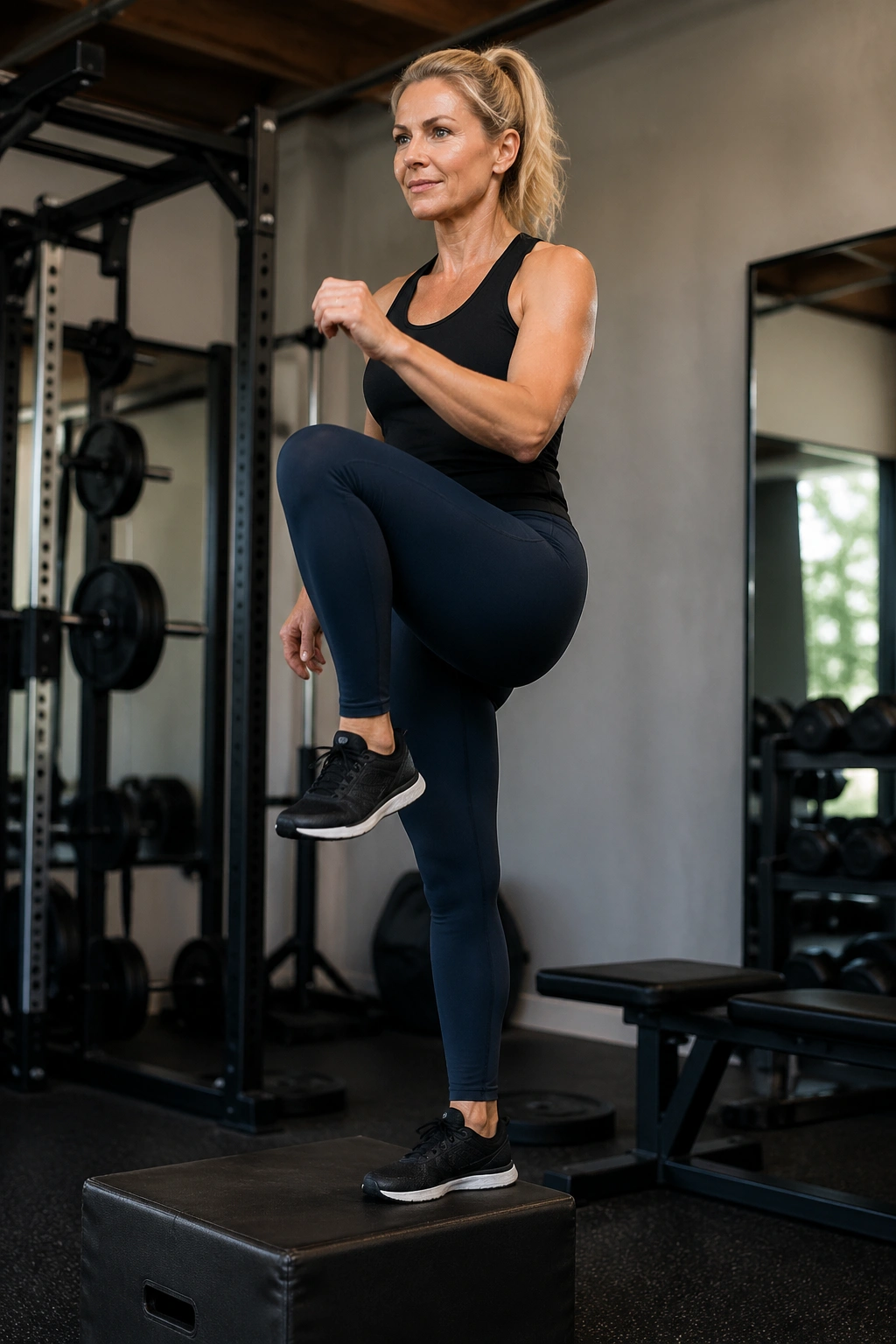
If jumping bothers your knees or pelvic floor, step-ups are one of the cleanest ways to raise your heart rate and train the waist at the same time.
Use a box, bench, or aerobic step that lets your front thigh get close to parallel with the floor, though it does not need to hit that exact angle. Drive through the whole front foot, stand tall at the top, and bring the opposite knee up to hip height. That knee drive adds balance work and forces your core to stabilize in single-leg stance.
You get more than one benefit here: glutes, quads, calves, balance, and a sneaky demand on the side waist.
A few details matter:
- Use a step height of 8 to 16 inches
- Start with bodyweight or two light dumbbells
- Do 8 to 10 reps per side
- Lower under control for 2 to 3 seconds
- Keep the working knee tracking over the middle toes
If you have to push off the back foot hard, the platform is too high. Bring it down. Smooth reps beat tall step-ups with ugly mechanics every time.
5. Side Plank From Knees or Full
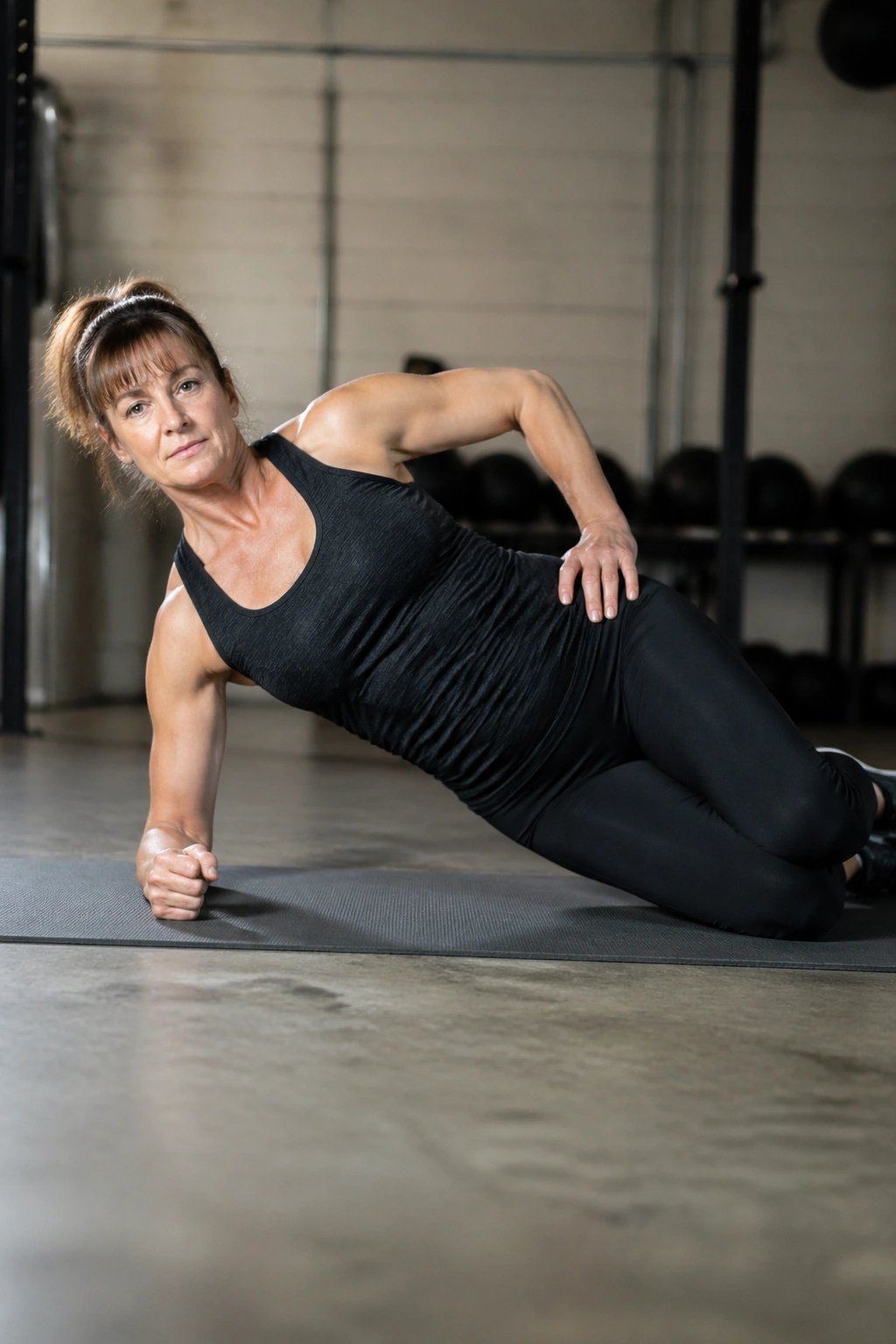
The side plank is still one of the best bodyweight moves for the outer core. Not glamorous. Not flashy. Still worth doing.
Most people jump straight to the full version, feet stacked, elbow under shoulder, body in one line. There is nothing wrong with that if you can hold it without your hips twisting backward or your shoulder collapsing. If you cannot, use the bent-knee version and do it well. A 20-second clean hold beats a 45-second mess.
Line up your elbow under your shoulder. Press the floor away. Lift your hips until your body forms a straight line from shoulder to knee — or shoulder to ankle in the full version. Then breathe. Slow exhale through the mouth. Short inhale through the nose.
Do not chase hero holds.
For women dealing with pelvic floor pressure, the bent-knee variation is often the better place to start because it gives you the waist training without the same amount of downward load. Aim for 15 to 30 seconds per side for 2 to 3 rounds. Add time before you add fancy variations.
If your neck gets tired, look straight ahead, not up at the ceiling.
6. Resistance Band Wood Chop
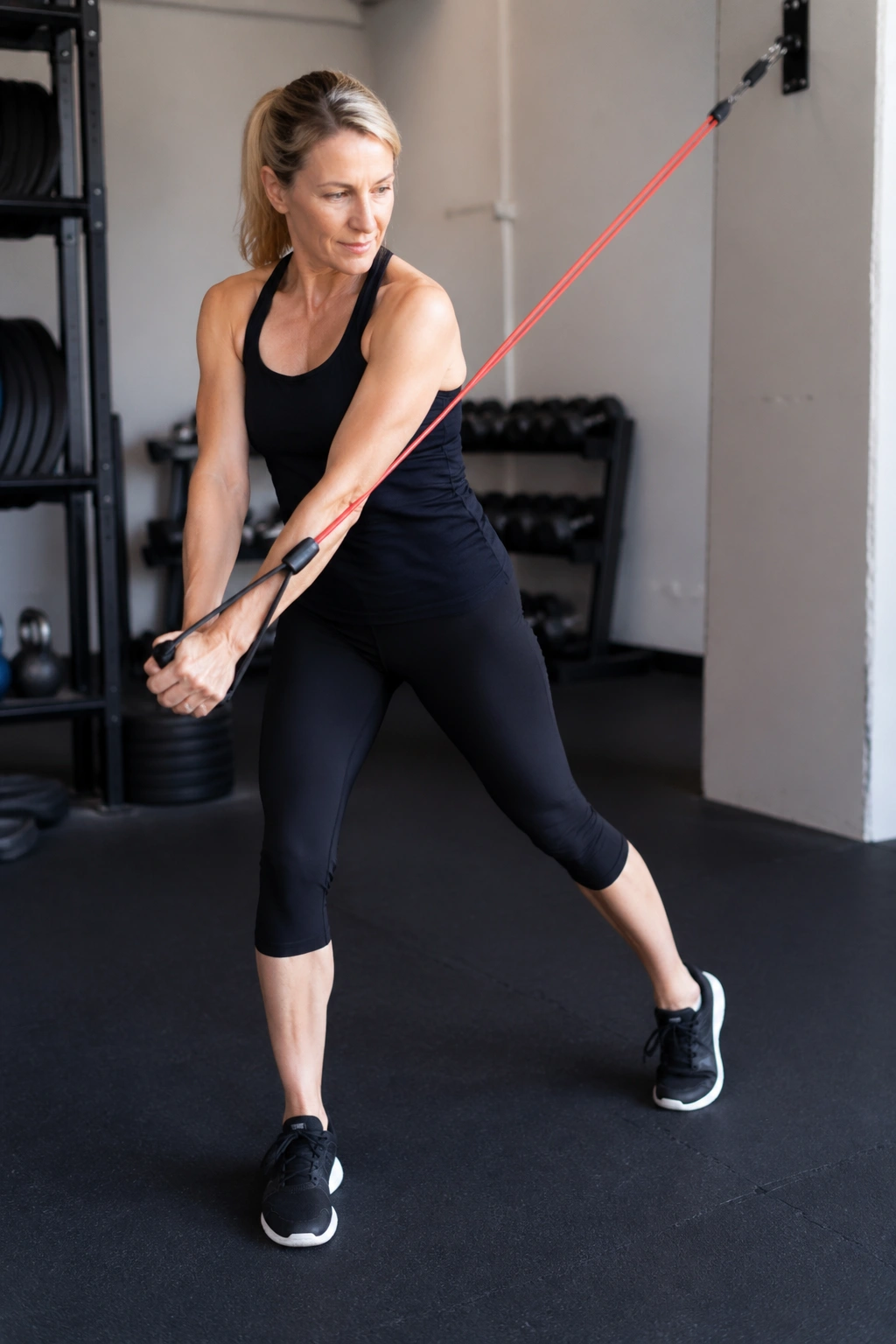
Unlike side bends, wood chops teach the torso, hips, and shoulders to work through a diagonal pattern, which is how real life tends to move. Reaching down into the back seat, pulling a heavy bag from a trunk, turning to set groceries on the counter — diagonal strength matters.
A resistance band is enough. Anchor it above shoulder height, grab the handle with both hands, and pull down across your body toward the opposite hip. Let the back foot pivot. Let the torso rotate a little. Do not let the lower back do the twisting by itself.
This is one of my favorite travel moves because a loop band takes up no space and still gives you solid tension. It also lets you scale the movement fast. Shorter range if your back feels stiff. More tension if the band is too easy. Half-kneeling if standing makes you sway.
Go with 10 to 15 reps per side for 2 to 4 sets. The band should feel heavy enough that the last 3 reps need focus, not momentum.
If you rush wood chops, they turn into arm flailing. Slow them down and they suddenly make sense.
7. Dead Bug With Band Pull-Down
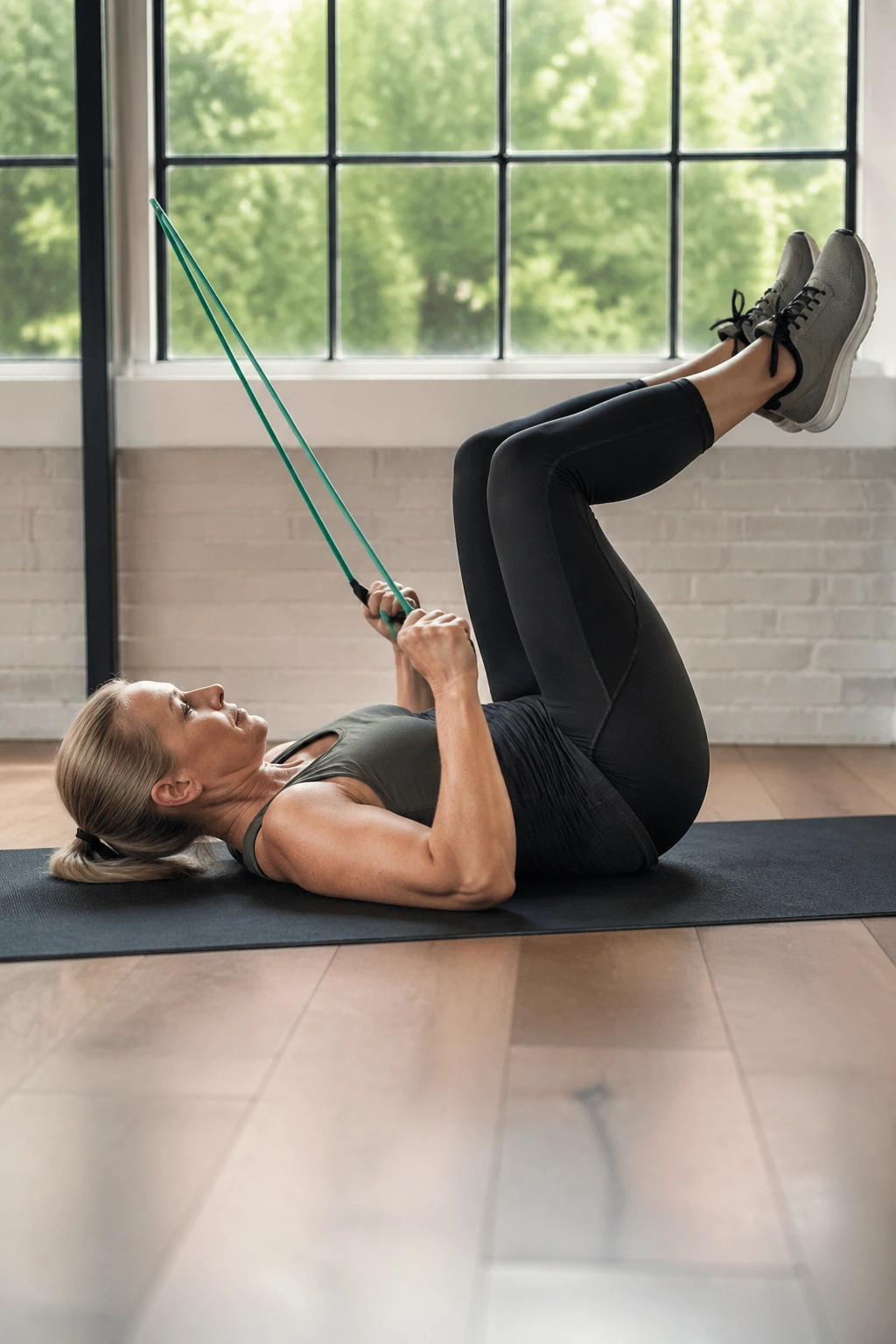
A plain dead bug is good. A dead bug with a band pull-down is better, because it teaches your ribs to stay down while your legs move.
That sounds technical, though the feeling is simple: your lower back stays gently connected to the floor while your abs and lats work together. Women over 40 who feel core moves mostly in the hip flexors usually do well with this one.
What makes it harder than a regular dead bug
The band gives your upper body a job. When you pull it down, your rib cage settles and your trunk gets more stable. Then the heel taps or leg extensions stop being a random leg exercise and become real trunk work.
Try it this way
- Anchor a light band overhead
- Lie on your back with hips and knees at 90 degrees
- Hold the band over your chest and pull it down toward your ribs
- Lower one heel to the floor, then bring it back up
- Alternate sides for 6 to 10 reps each leg
- Use 2 to 3 sets
Do not let your lower back arch away from the floor. The second that happens, shorten the leg range. Smaller is smarter here.
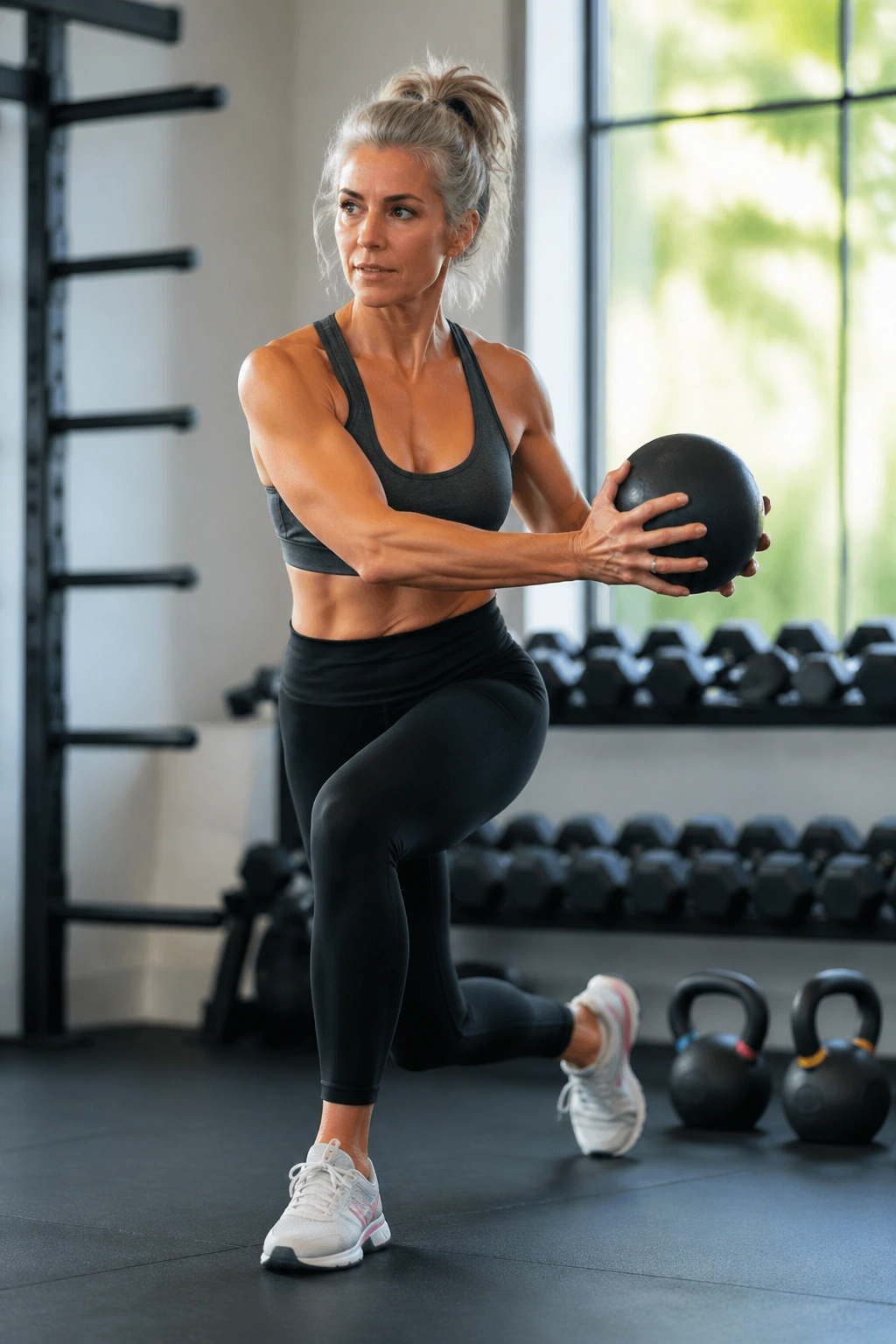
8. Reverse Lunge With Rotation
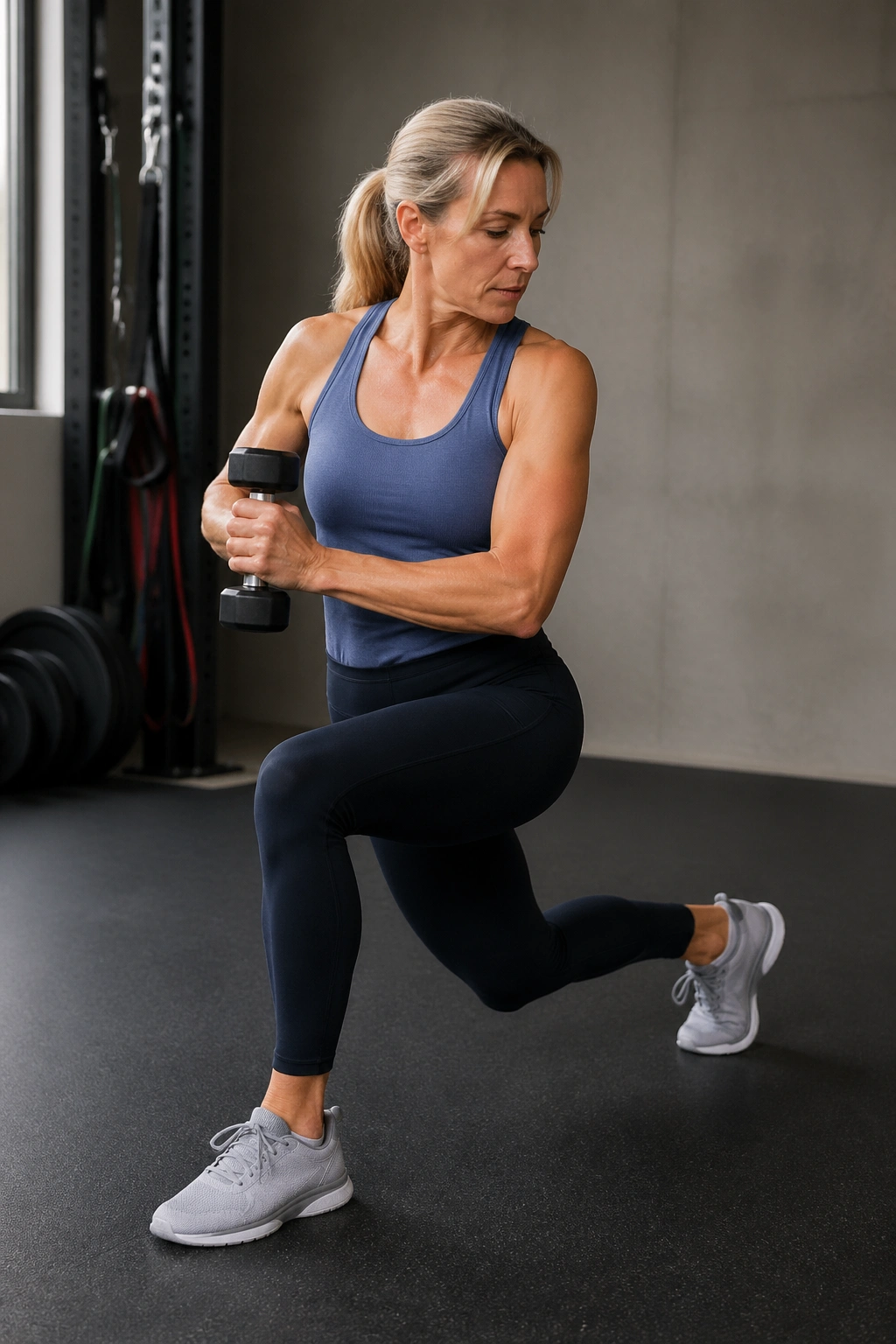
Here is a move that earns its place by doing two jobs at once: it trains the legs and glutes while teaching your torso to control rotation.
Step one foot back into a reverse lunge and rotate your torso toward the front leg as you lower. Hold a light medicine ball, a dumbbell, or even clasp your hands together if load throws you off. The front hip and side waist have to stabilize so you do not wobble all over the place.
This one is useful because many women need more than floor-core work. They need standing core control — the kind that carries into climbing stairs, getting off the floor, walking with speed, and moving through daily life without the back doing extra work.
Start light. A 5- to 10-pound load is enough for most people in the first few weeks. Do 6 to 8 reps per side with a slow lower and a strong push through the front heel to stand. If twisting inside the lunge feels awkward, remove the rotation and learn the leg pattern first.
And yes, reverse lunges usually feel kinder on the knees than forward lunges. That alone makes them worth a look.
9. Incline Treadmill or Hill Walk Intervals
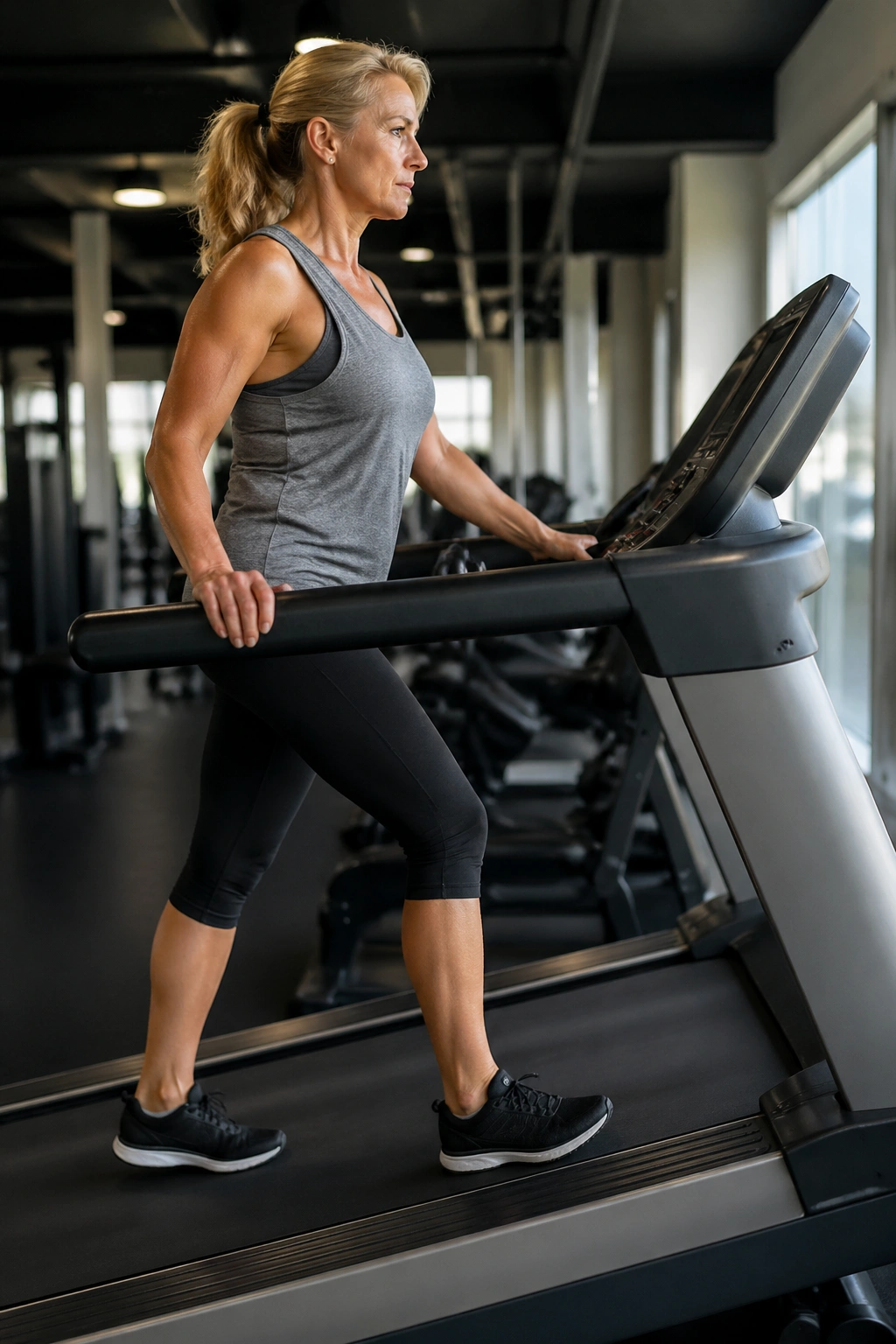
Not every love handle workout happens on a mat. Some of the best ones happen on a treadmill set to an incline, or on a real hill if you have one nearby.
Walking uphill drives your heart rate up faster than flat walking, and it asks more from the glutes and core without the pounding of jogging. That matters after 40, when a lot of women still want calorie-burning cardio but no longer enjoy the joint toll of high-impact classes.
A strong starter format
Walk hard for 1 minute at an incline of 5% to 10%, then ease back for 1 to 2 minutes. Repeat that cycle 8 to 12 times. If you are newer to intervals, keep the speed moderate and change the incline first. If you are more conditioned, nudge the pace up before you chase steeper hills.
Use the handrails only to step on and off. Leaning onto them turns the treadmill into an expensive moving countertop.
You should finish breathing hard, not wrecked. That sweet spot matters because the workout still has to fit into a week that includes strength training and recovery.
10. Bicycle Crunches, Slow and Controlled
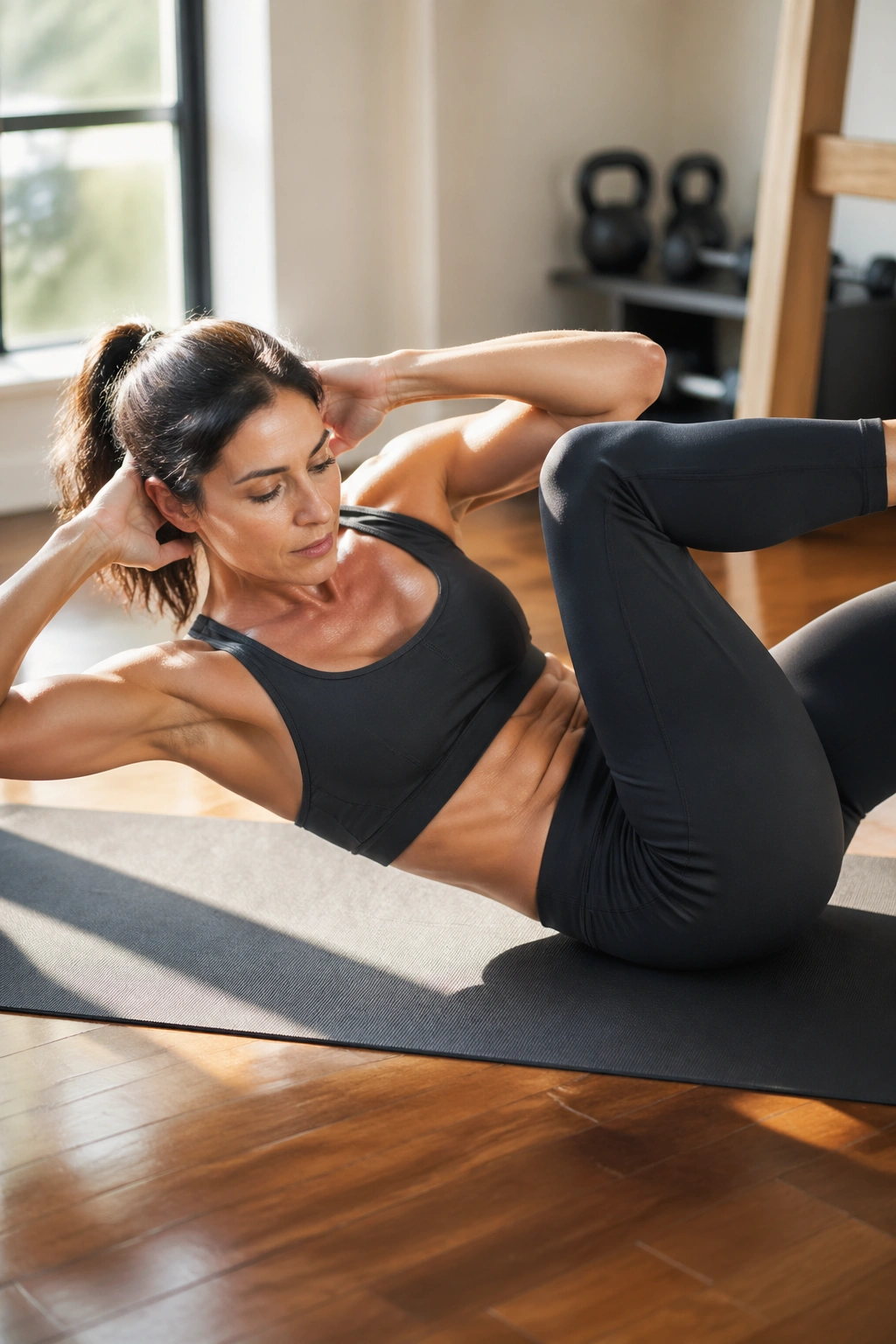
The fast, frantic bicycle crunch from old workout DVDs has done this exercise no favors. Done badly, it is a neck tug with some hip flexor involvement. Done slowly, it is a strong oblique move.
Lie on your back, lift your shoulders lightly, and think about bringing your rib cage toward the opposite hip, not your elbow toward your knee. That cue changes everything. Your hand position matters too. Light fingertips behind the ears. No yanking.
A clean set looks like this:
- Exhale as you rotate
- Extend the opposite leg only as far as you can without your low back arching
- Pause for a beat at each side
- Do 6 to 10 reps per side
- Rest, then repeat for 2 to 3 sets
You do not need speed. In fact, speed hides weak control.
If your neck still takes over, place one foot down between reps or switch to a dead bug pattern for two weeks, then come back. A lot of women do better once they have built more rib and pelvis control first.
11. Lateral Lunge
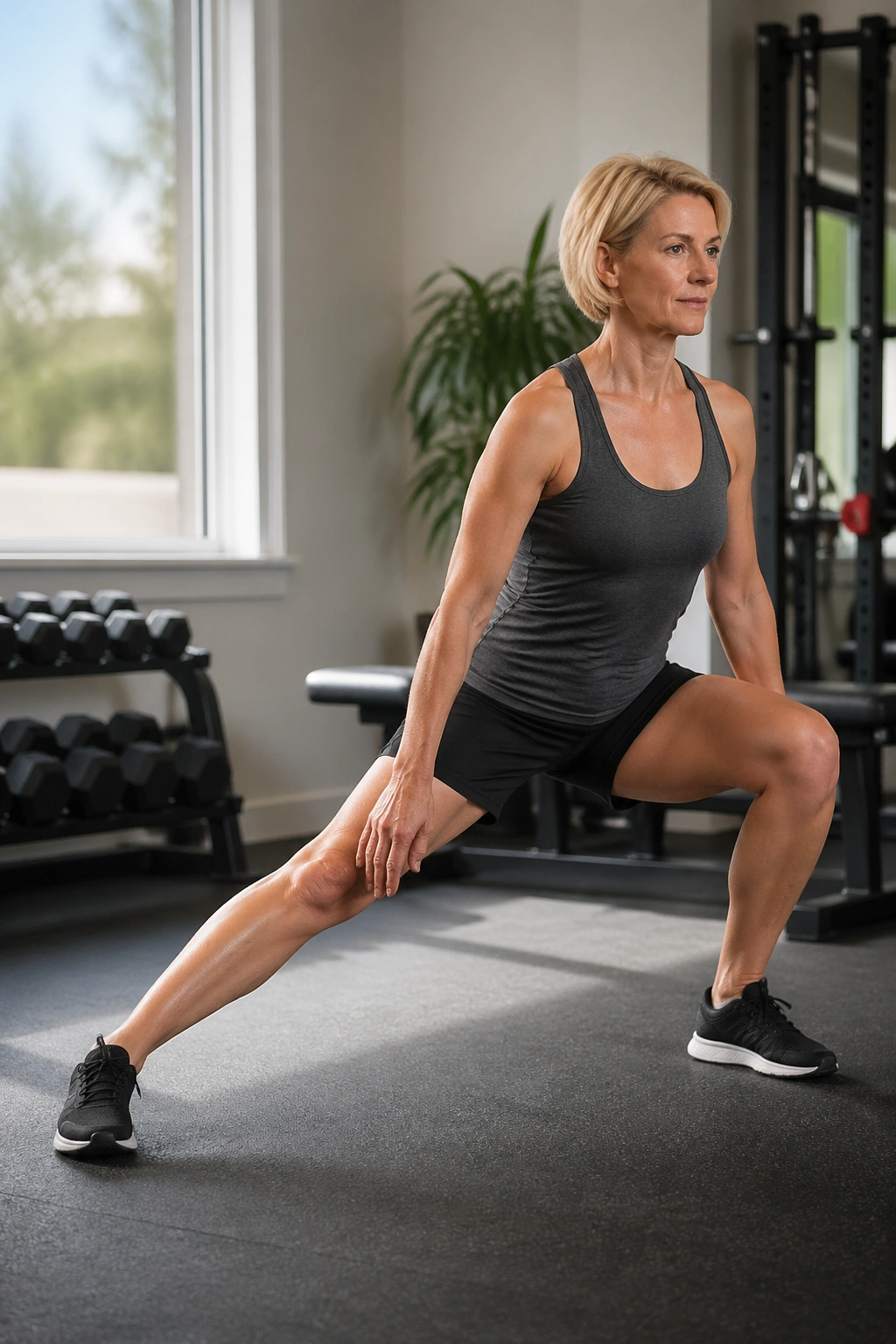
Most women spend almost all of their training in the forward-and-back plane. Squats, lunges, walking, cycling, treadmill work. Fine. Helpful. Incomplete.
The lateral lunge asks your body to move side to side, which wakes up the glutes, inner thighs, and outer hips while your core works to keep your torso from folding. That side-to-side strength can make your waist training feel stronger because the hips start doing their share.
Step one leg out wide, sit back into that hip, keep the other leg straight, and push the floor away to return to standing. Start with bodyweight for 8 reps per side. Once the pattern feels smooth, hold one dumbbell goblet-style.
Depth is not the goal. Good hip loading is.
If your heel lifts, shorten the step. If your chest drops toward the floor, sit back less and use a smaller range. And if inner-thigh tightness makes the move feel like a tug-of-war, spend an extra minute on adductor rock-backs in your warm-up. That little change helps a lot.
This is one of those exercises people skip because it is not trendy. Their hips know better.
12. Bird Dog Row
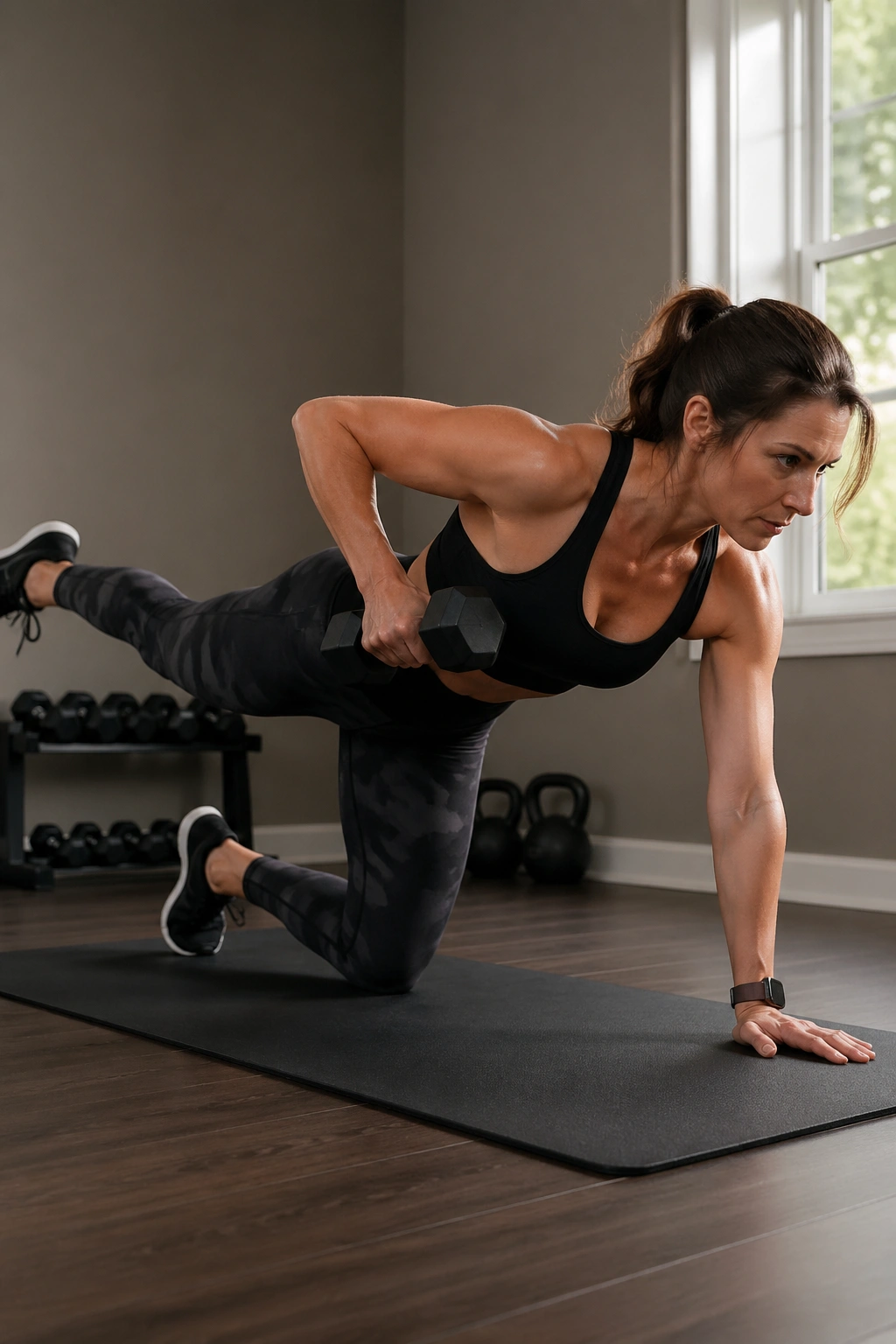
Unlike a standard one-arm dumbbell row, the bird dog row forces your trunk to resist rotation while one arm and the opposite leg work together. That anti-rotation demand is what makes it useful for the waist.
Set up on all fours with a dumbbell in one hand. Extend the opposite leg straight back, toes down at first if balance is rough, then row the dumbbell without letting your hips twist open. The movement is smaller than people expect. Good. Small is where the control lives.
Who gets the most from this? Women who want core work that does not feel like “ab work,” women whose lower backs grab during twisting drills, and women who need more upper-back strength because rounded desk posture is dragging everything forward.
Use a light dumbbell at first — 8 to 15 pounds is enough for many people. Go for 8 to 10 rows per side. If full bird dog balance feels too shaky, keep both knees down and row from quadruped while trying not to shift onto one hip. You still get the trunk challenge.
A mirror helps here. The body lies a little less when you can see the hip twist.
13. Standing Knee-to-Elbow March
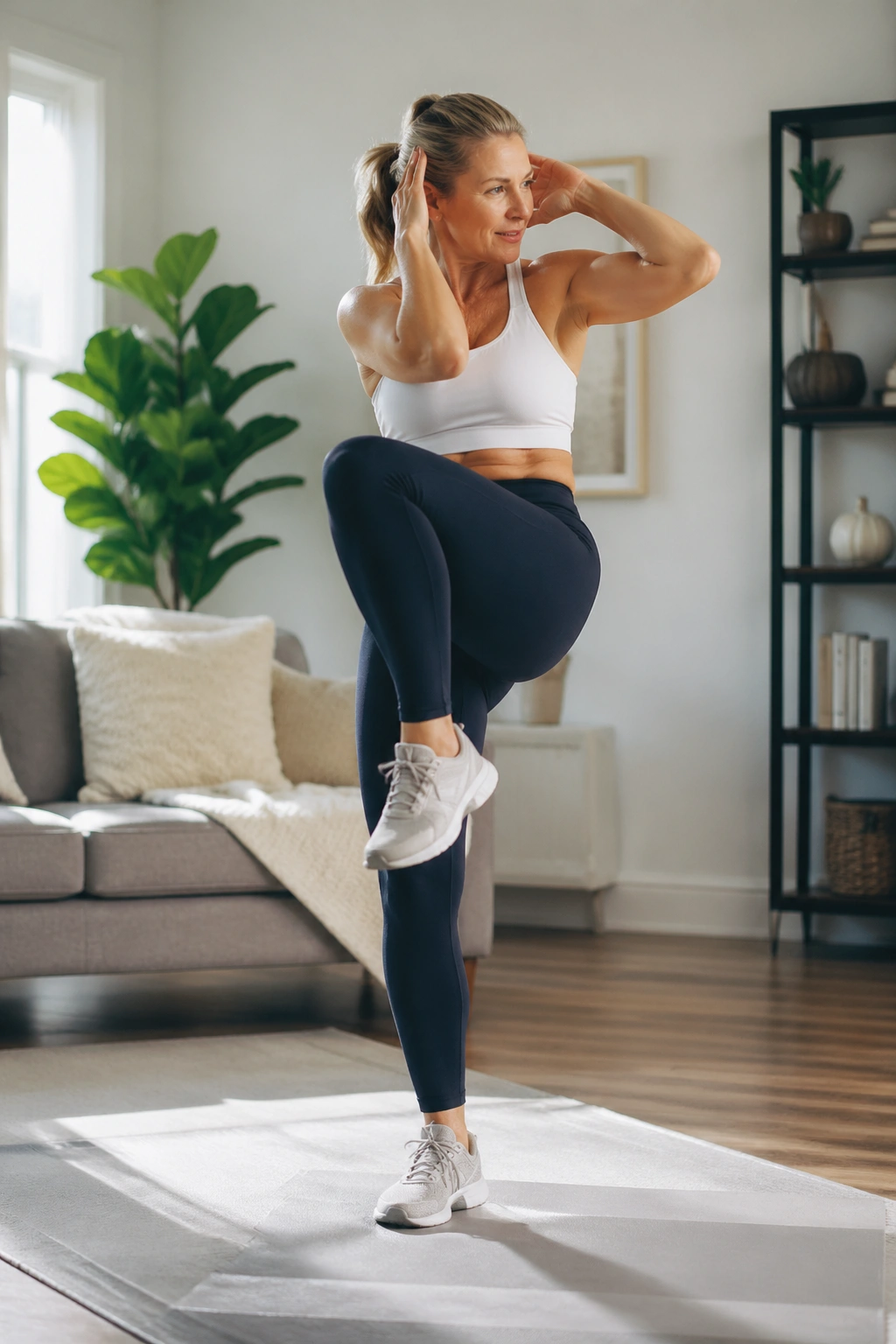
This one looks almost too easy. Then you try to do it without rocking backward, collapsing the chest, or whipping the elbow down.
Standing knee-to-elbow marches train cross-body coordination and controlled rotation with a low joint cost. They also work well on days when you want waist training but the floor sounds deeply unappealing. I respect that.
Where people mess it up
They speed up. They yank the elbow. They stop lifting through the standing leg.
Slow it down and the exercise changes.
Use these cues
- Stand tall with hands lightly behind your head
- Lift one knee toward hip height
- Rotate your torso toward that knee without folding forward
- Return to center before switching sides
- Do 20 to 30 alternating reps
To make it tougher, hold a mini band around the feet or add a 2-second balance pause at the top of each rep. To make it easier, keep your hands at chest height and touch hand to opposite knee.
Best use: as a warm-up drill or as a low-impact finisher between strength sets.
14. Mountain Climbers on a Bench
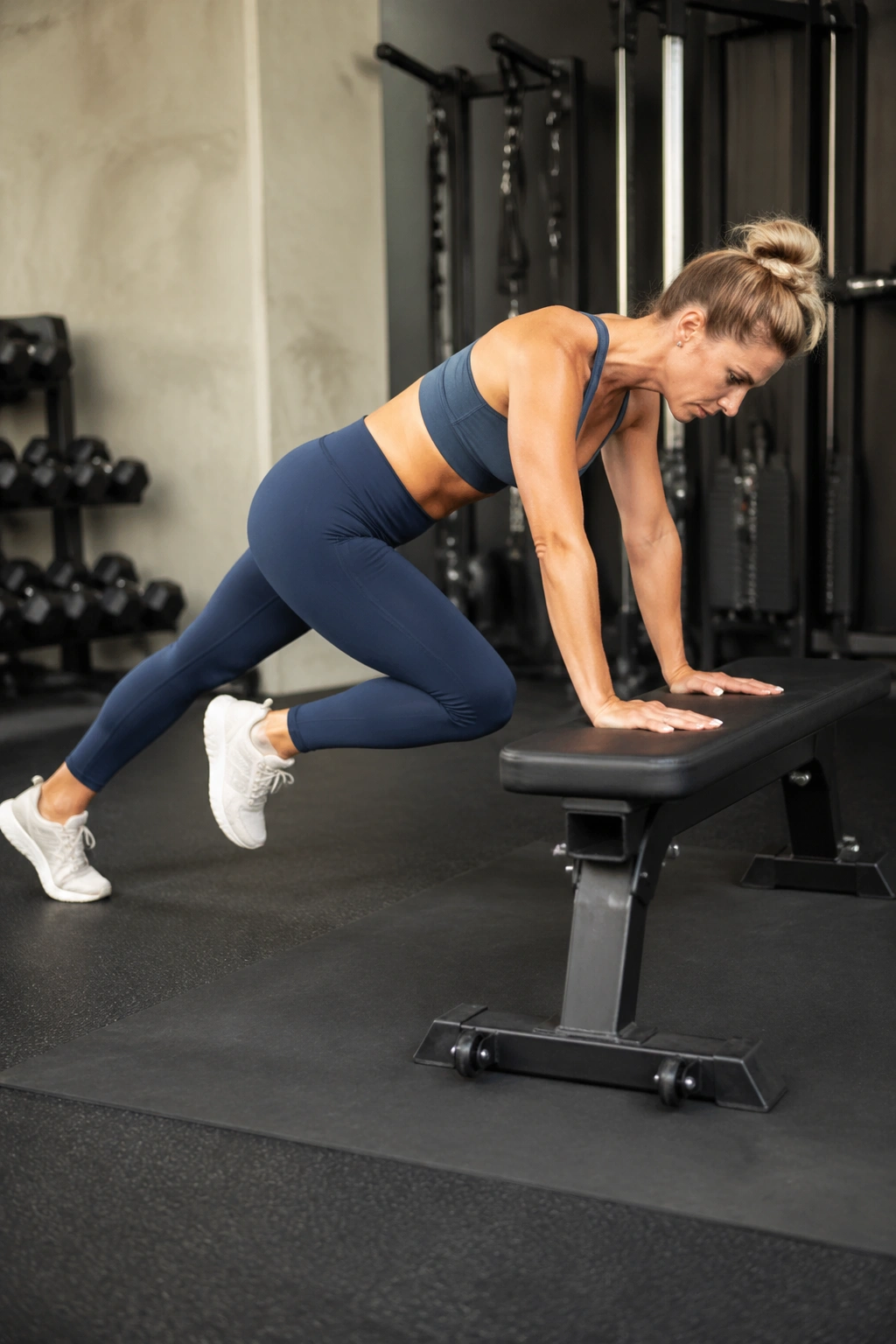
Bench mountain climbers are one of the best fixes for people who hate floor mountain climbers.
Hands on a bench, box, or sturdy countertop-sized surface, body in a straight line, knees driving one at a time toward the chest. Elevating the hands reduces the wrist angle, eases pressure through the shoulders, and makes it easier to keep the core braced instead of sagging through the low back.
There is still a cardio hit here. Plenty of one. Your shoulders stabilize, your abs brace, your hip flexors work, and your heart rate climbs if you keep the pace crisp.
Use time, not reps. Start with 20 seconds on, 40 seconds off for 6 rounds. If that feels manageable and clean, move toward 30 seconds on, 30 seconds off. A lot of women can handle more work than they think once the angle is friendlier.
Watch your hips. If your butt is way up in the air, you have turned the move into a standing march. If your low back sags, slow down. The right position feels like a moving plank, not a scramble.
15. Glute Bridge March
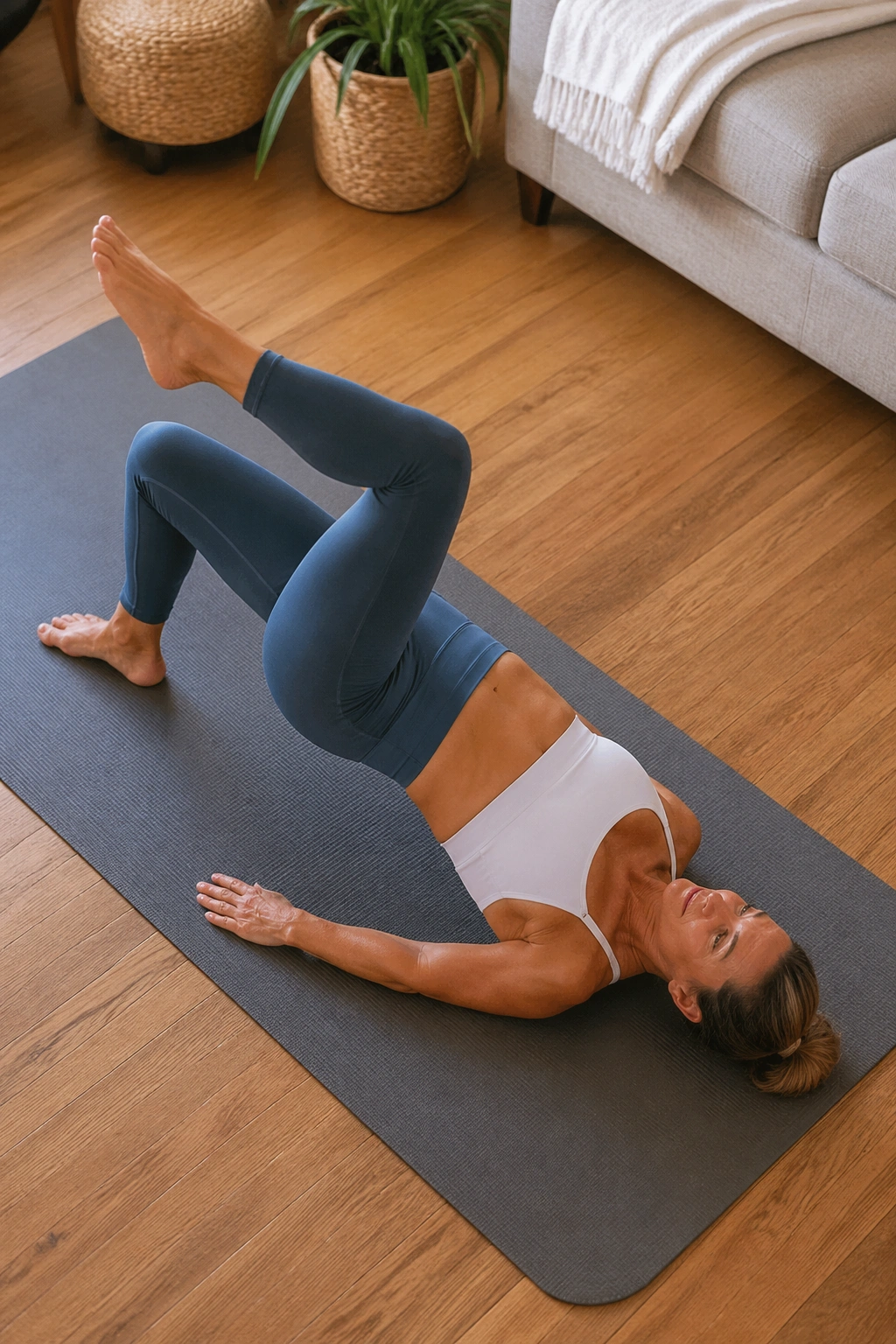
Why include a glute move in a list about love handles? Because weak glutes often leave the core cleaning up the mess.
The glute bridge march teaches pelvic control. You lift into a bridge, hold the hips level, and alternate marching one foot off the floor at a time. Your waist, glutes, and hamstrings work together to stop your pelvis from tipping side to side. That anti-tilt job matters for side-waist strength more than people realize.
How to feel it where you should
Set your feet so that at the top of the bridge your knees are bent about 90 degrees. Lift the hips, squeeze the glutes, then raise one foot only an inch or two. If the hips drop or twist, reset and make the march smaller.
Aim for 8 to 10 marches per side. Rest. Repeat for 2 to 3 sets.
A lot of women try to crank the hips as high as possible. Skip that. Stop when your ribs want to flare or your hamstrings start cramping hard. A lower bridge with level hips is the better rep.
Small move. Big payoff.
16. High-to-Low Cable Chop
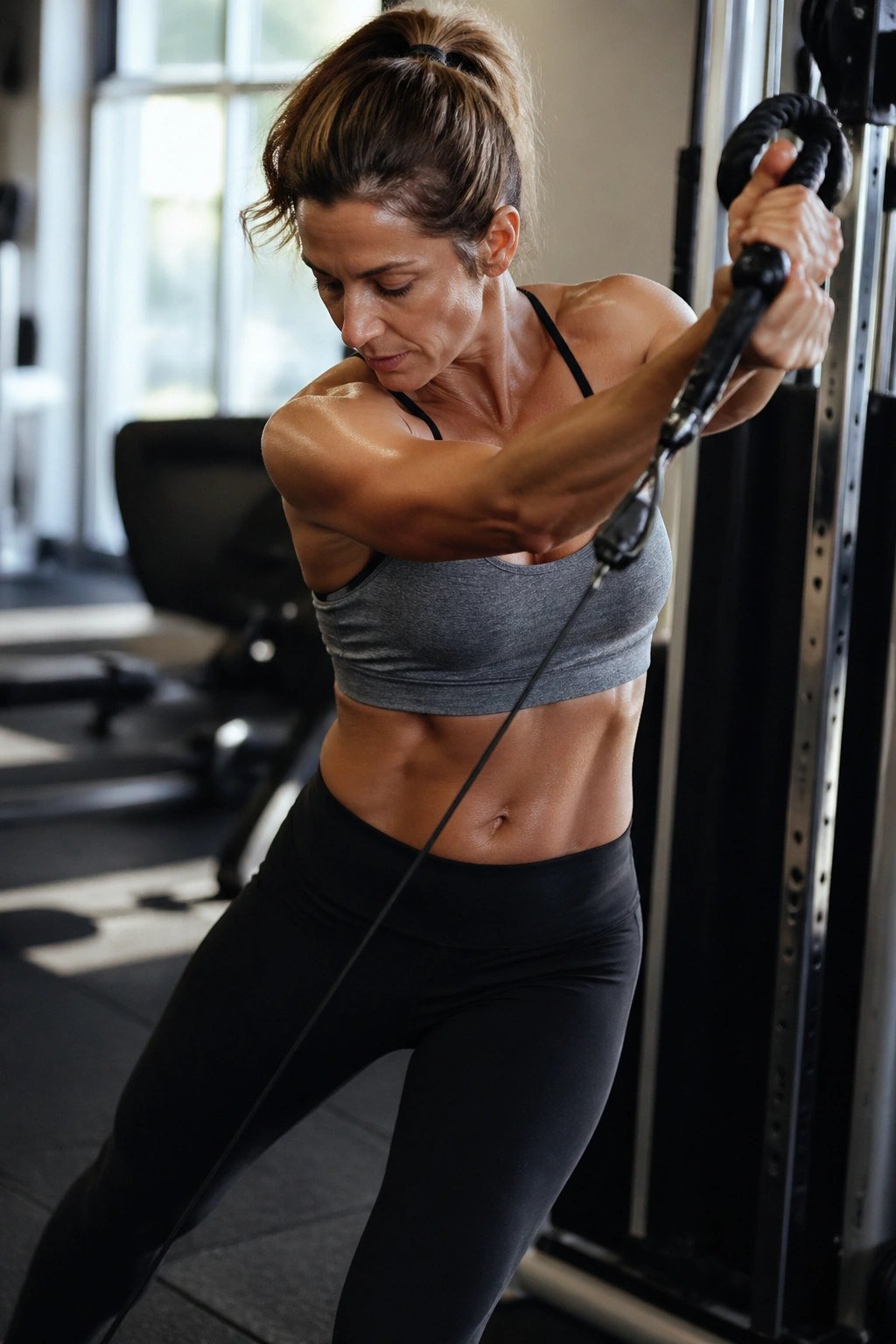
A cable chop feels different from a band chop in one useful way: the resistance stays more even through the whole rep. That makes it easier to find steady tension instead of getting a big yank at one point and nothing at another.
Set the pulley above shoulder height. Stand sideways to the machine with both hands on the handle. Pull down and across your body toward the outside of the opposite thigh. Let the back foot pivot. Keep the knees soft and the ribs stacked.
A few details sharpen the exercise fast:
- Start with a weight you can control for 8 to 12 reps
- Exhale through the pull
- Return slowly for 2 to 3 seconds
- Stop the rep if your shoulders shrug up
- Do 2 to 4 sets per side
Half-kneeling is a good option if standing makes you shift around too much. One knee down, outside foot planted, same diagonal path. That setup can feel steadier for beginners and often makes the obliques light up sooner.
This is the kind of cable exercise that looks clean when done right and chaotic when done wrong. Choose clean.
17. Skater Step With Reach
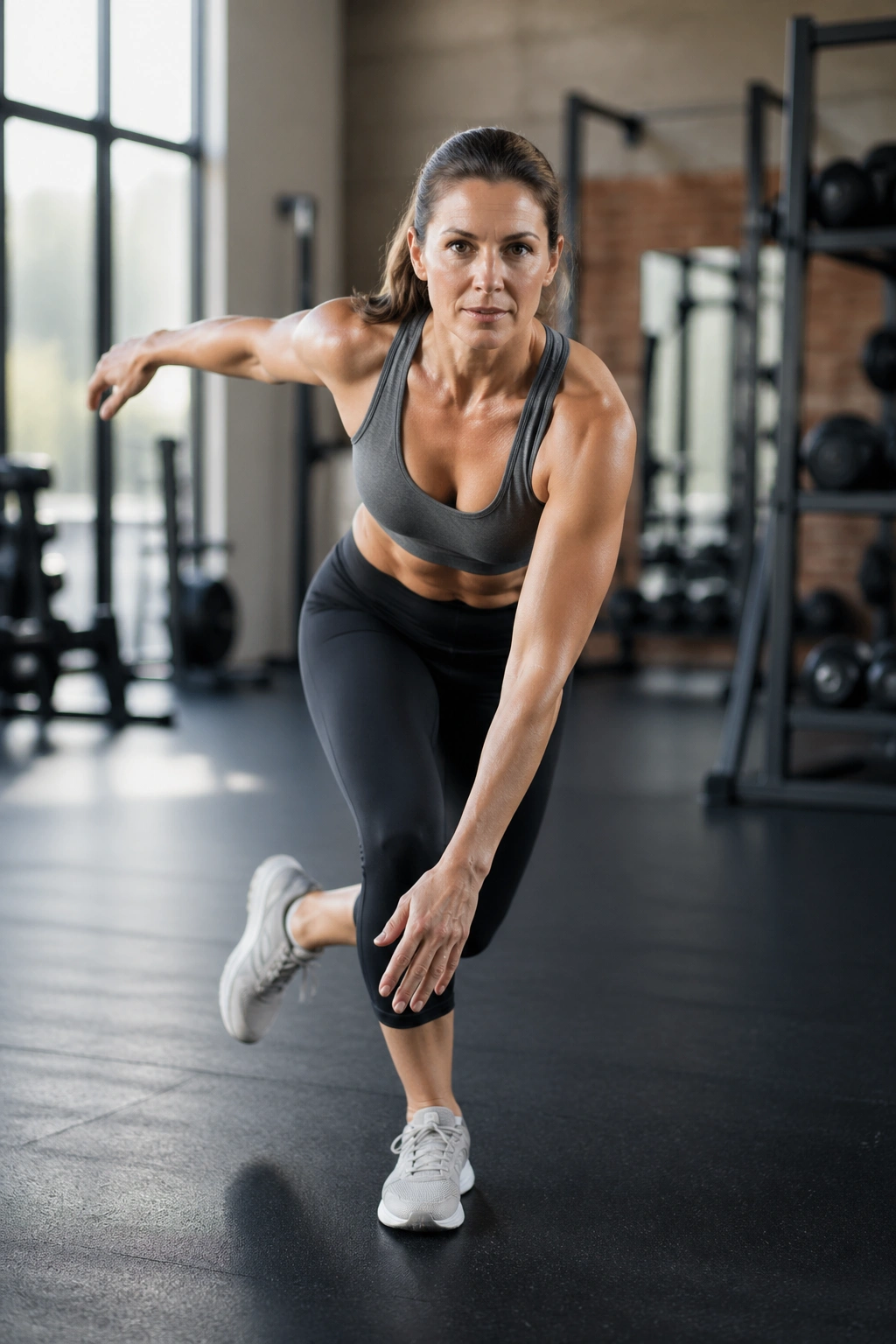
You do not need to jump to get the value of a skater. A step-behind skater with a long side reach can train lateral movement, raise your heart rate, and challenge balance without the impact of a hop.
Step one leg out to the side, let the other leg sweep behind lightly, and reach across your body toward the front shin or knee. Then push off and move to the other side. Keep it rhythmic. Think athletic, not frantic.
This exercise shines as a finisher. Put it near the end of a circuit and run 30 to 45 seconds of work. Your glutes and outer hips will start to work, your breathing picks up, and the trunk has to control side-to-side shifts. That is useful training for the waist because life does not happen only in straight lines.
The low-impact version is enough for most women. No medal for turning it into a jump if your knees or pelvic floor hate that idea.
Want more? Hold one light dumbbell at chest height and keep the reach smaller. The load adds trunk work without forcing speed.
18. Incline Bench Renegade Row
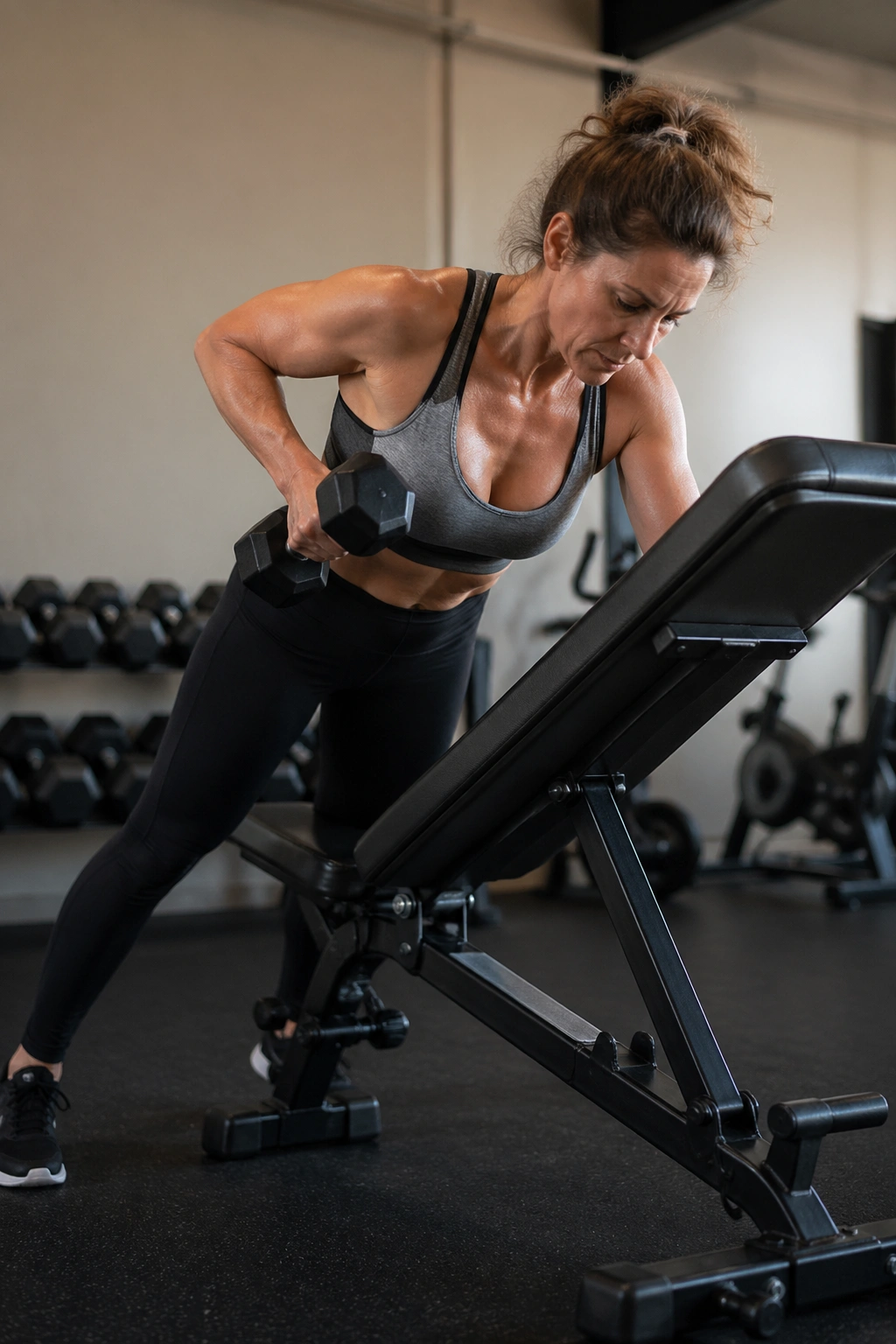
Floor renegade rows are good on paper and ugly in a lot of real gyms. Wrists get cranky. Hips twist. The lower back sags. People turn them into a wrestling match.
The incline bench version fixes a lot of that. Set your hands on a bench, box, or sturdy step so your body is on an angle instead of flat to the floor. Hold two dumbbells, brace through the trunk, and row one weight at a time while trying to keep your hips square.
That anti-rotation demand is the whole reason this belongs here. Your waist has to resist the urge to rock side to side every time one dumbbell leaves the floor.
Use 6 to 8 rows per side with a load you can control. Start lighter than your ego wants. If the bench is set too high, the move gets too easy. Too low, and form falls apart. A height around 18 to 24 inches works for a lot of women.
This is not a beginner move, and that is fine. Build into it after you own Pallof presses, side planks, and suitcase carries. Then it becomes a strong test of the control you have built.
How to Turn These 18 Moves Into Real Workouts
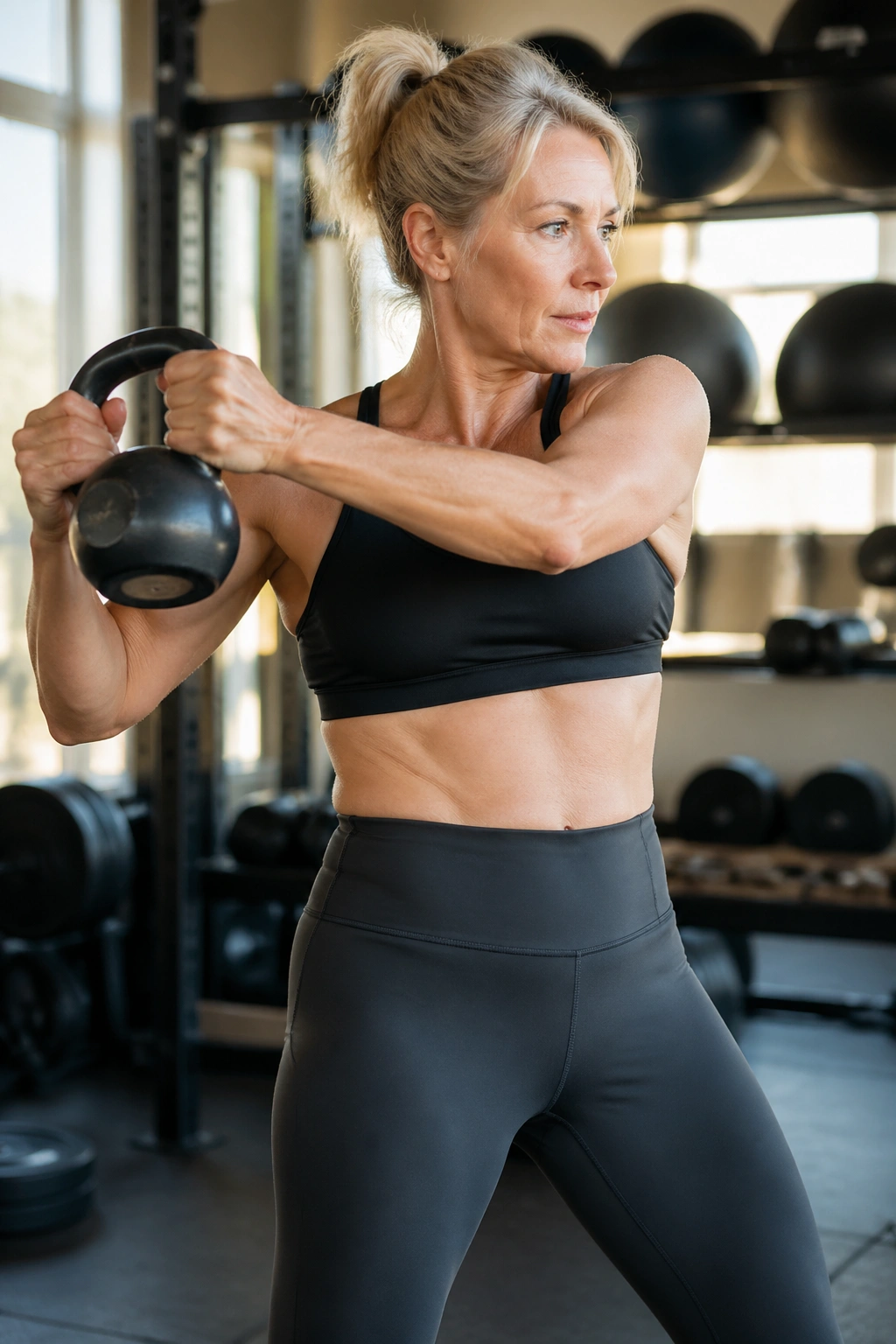
A long exercise list is not a plan. You still need structure.
Here are three sample formats that work well:
Strength-based waist workout
Pick 4 moves:
- 1 loaded carry
- 1 anti-rotation move
- 1 lower-body move
- 1 side-waist or rotation move
Do 3 rounds, resting 45 to 75 seconds between exercises.
Low-impact fat-burning circuit
Pick 5 moves:
- 2 strength exercises
- 2 core exercises
- 1 cardio finisher
Work 40 seconds, rest 20 seconds, and complete 3 to 4 rounds.
Short finisher after lifting
Pick 2 exercises:
- 1 standing core drill
- 1 cardio drill
Alternate them for 6 to 8 minutes.
If I had to narrow this list to a starter pack, I would choose suitcase carries, Pallof presses, side planks, step-ups, incline walk intervals, and glute bridge marches. That mix covers strength, control, and calorie burn without asking your joints to absorb nonsense.
Final Thoughts
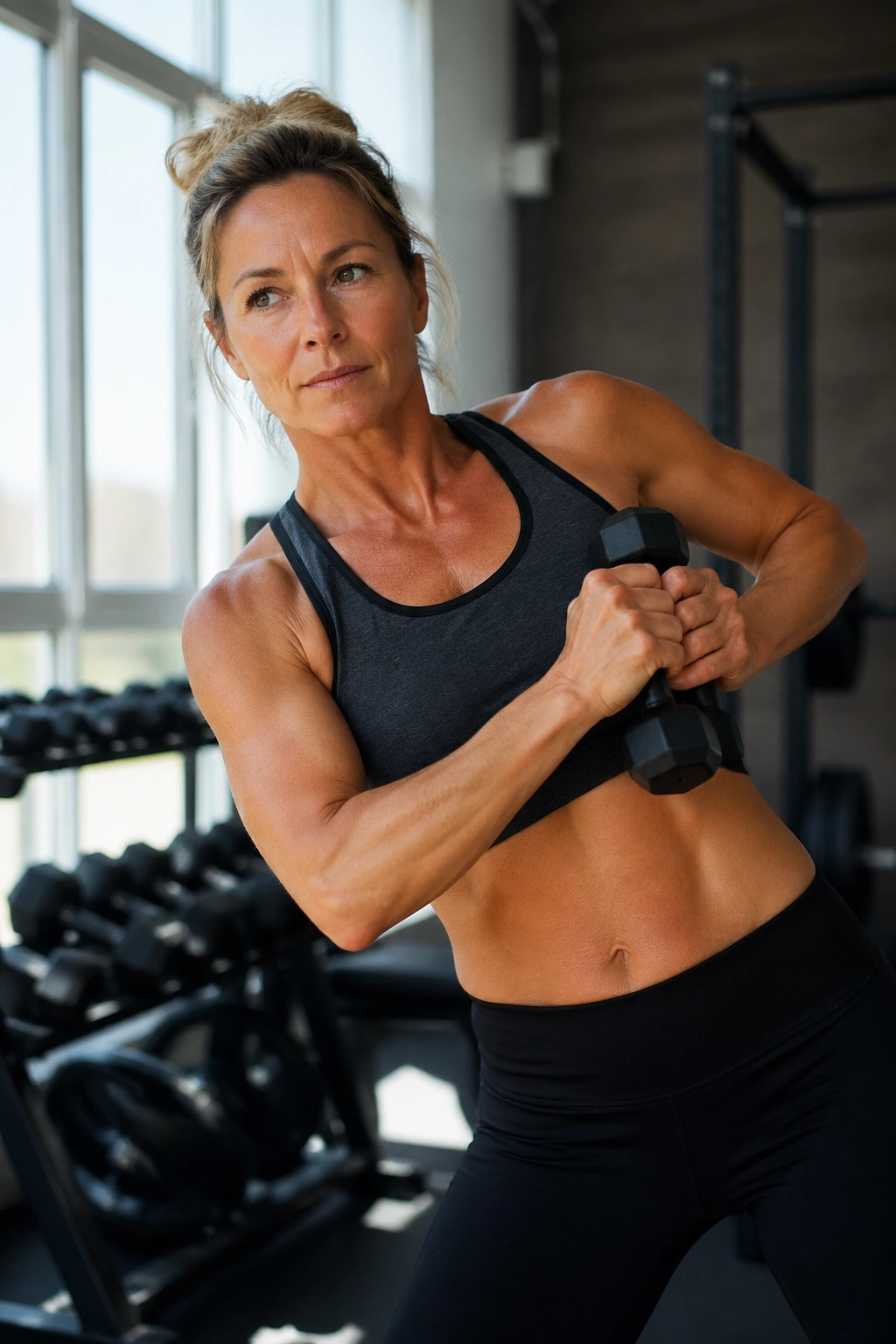
You do not need 18 new exercises at once. You need a handful that you can do well, load gradually, and repeat long enough to earn a change in your waistline.
The women who make the best progress here are not the ones hunting for the harshest ab burn. They are the ones who train the whole system — core, glutes, legs, posture, and daily movement — while staying patient enough to let body fat come down without giving up after two weeks.
Pick six moves. Put them on the calendar. Add weight when the reps look solid, add time when the holds stop feeling shaky, and keep walking even on the days when a full workout is not happening. That boring consistency is where the waist starts to change.
