



A pair of dumbbells can carry an entire training plan if you know which moves actually deserve space in it. The best exercises with weights for all levels are not the fanciest ones; they’re the ones that teach clean positions fast and still give you room to get stronger when the load climbs.
That matters because beginners need movements that feel stable, while stronger lifters need exercises that stop feeling easy once the dumbbells get heavier. A good exercise does both. It lets you start with a load that feels almost too light, then scale up without changing the movement into some awkward circus trick.
You also want variety that covers the whole body: squat patterns, hinges, presses, rows, carries, and a few core moves that punish sloppy form in a useful way. The deadlift family builds the back side. Presses train shoulders and chest. Carries sound simple until your grip starts to smoke.
Start with one rule and keep it close: the weight should move because you are in control, not because momentum did the work for you. That’s where the useful stuff lives. The first move is the one I keep coming back to when someone wants a cleaner squat pattern without a lot of fuss.
1. Goblet Squat
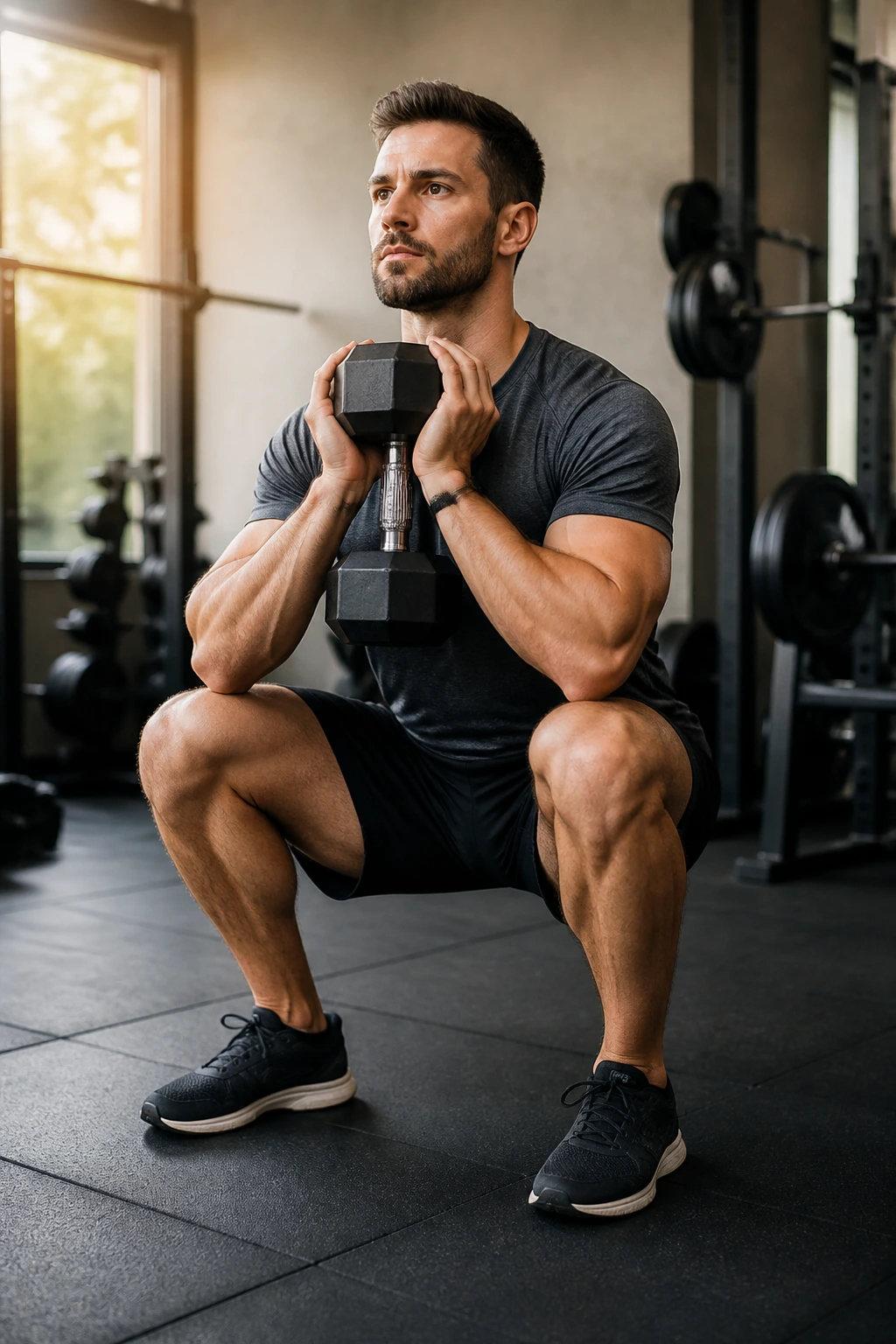
If I had to hand a new lifter one lower-body exercise and walk away, this would be it. The goblet squat is friendly, honest, and hard to cheat for long.
Hold a dumbbell or kettlebell tight against your chest, keep your elbows pointed down, and sit between your heels. That front-loaded position helps you stay upright, which is why the goblet squat works so well for beginners and still matters for experienced lifters who want cleaner depth. It tells on sloppy posture fast.
Why It Works
A moderate bell for 8 to 12 reps is enough for most people. If that starts feeling easy, slow the lowering phase to 3 seconds or pause for 1 full second at the bottom. Both changes make the exercise harder without forcing you to chase a bigger weight too soon.
- Keep your chest tall.
- Let your knees track over your toes.
- Keep your whole foot on the floor.
- Stop at the deepest point you can control.
One clean rep beats three shaky ones.
2. Dumbbell Romanian Deadlift
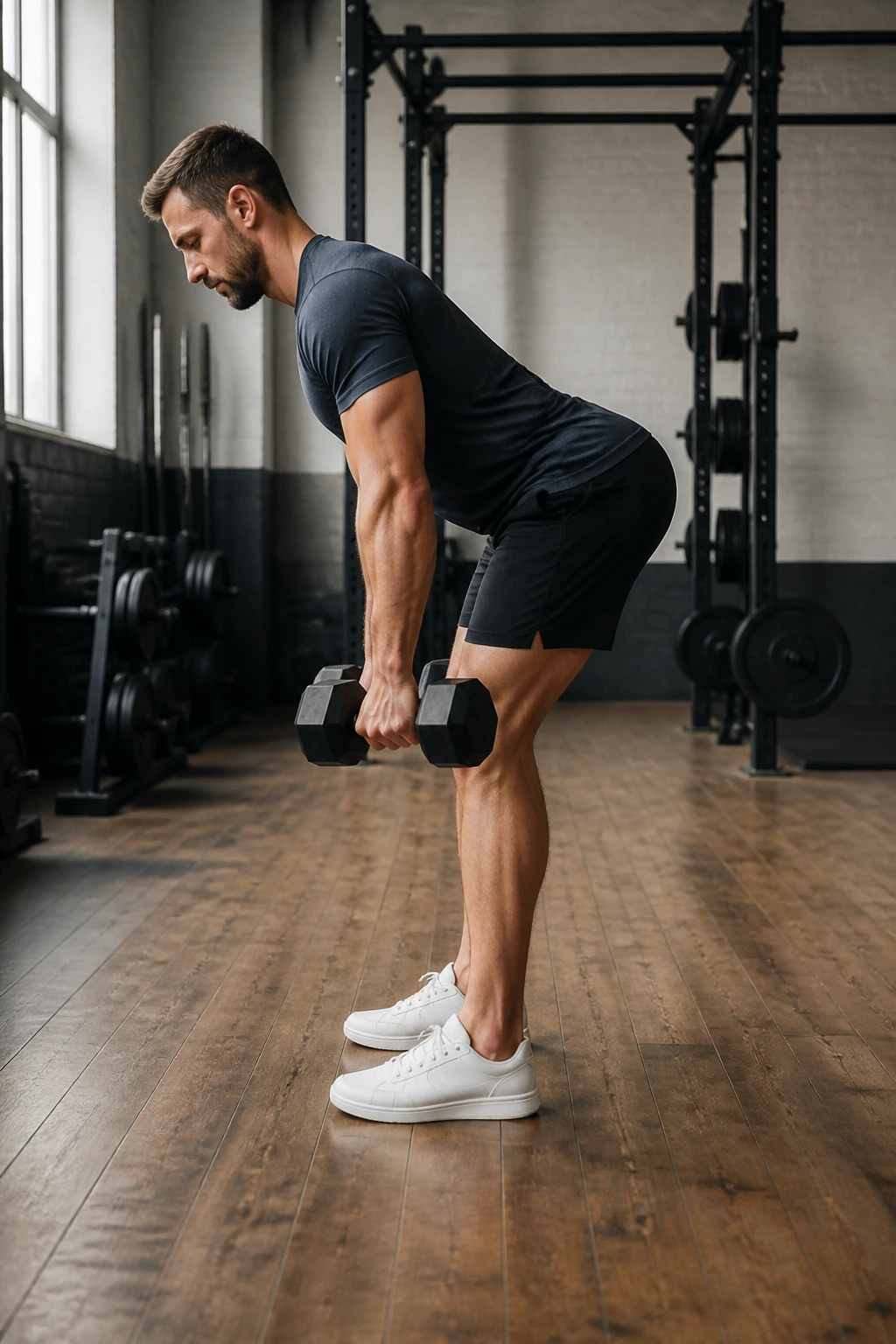
The dumbbell Romanian deadlift is a hinge, not a squat. That sounds obvious until you watch people bend their knees too much and turn it into a sloppy half-squat.
Keep the dumbbells close to your thighs, slide your hips back, and let your shins stay almost vertical. You should feel the stretch build in the hamstrings long before your lower back starts talking. If the weights drift away from your legs, the whole movement gets harder in the wrong way.
Common Mistakes
- Rounding the back to reach lower.
- Turning the motion into a knee bend.
- Letting the weights float away from the thighs.
- Snapping upright too fast at the top.
Beginner lifters can start with a tiny range of motion, stopping just below the kneecap. More advanced lifters can use a 2-second lower or add a brief pause around mid-shin. Either way, the goal is the same: loaded tension in the back of the legs, not a rescue mission for your lower back.
3. Dumbbell Bench Press
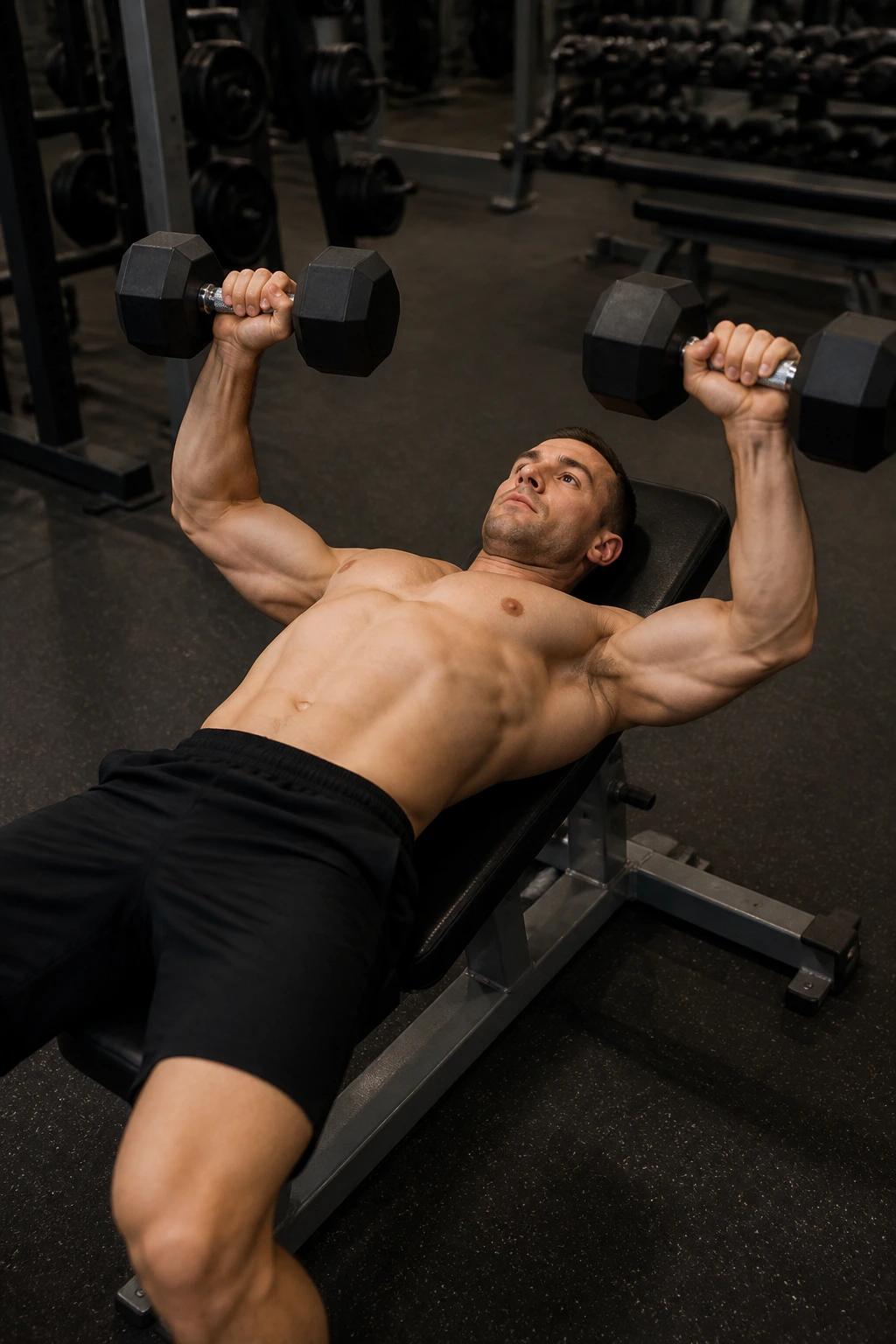
Why do dumbbells beat a barbell for a lot of people? Because each arm has to do its own work, and that exposes weak sides fast.
Lie down with your shoulder blades tucked down and back, feet planted, and the dumbbells stacked over the middle of your chest. Lower them under control until your upper arms touch the bench, or until your shoulders stay happy and the elbows don’t flare out like wings. The bells should come up in a smooth arc, not bang together at the top.
Set It Up This Way
A good starting angle for your elbows is about 30 to 45 degrees from your torso. That keeps the shoulders in a friendlier spot than a wide, flat flare. If you’re newer to pressing, use lighter bells and focus on a steady path, not a giant load.
- Press from the chest, not the neck.
- Keep wrists stacked over elbows.
- Pause a second at the bottom if you want stricter reps.
- Use a flat bench for general strength or a slight incline for more upper-chest work.
The dumbbell bench press scales beautifully. Light weights teach control. Heavy weights build strength. Both matter.
4. One-Arm Dumbbell Row
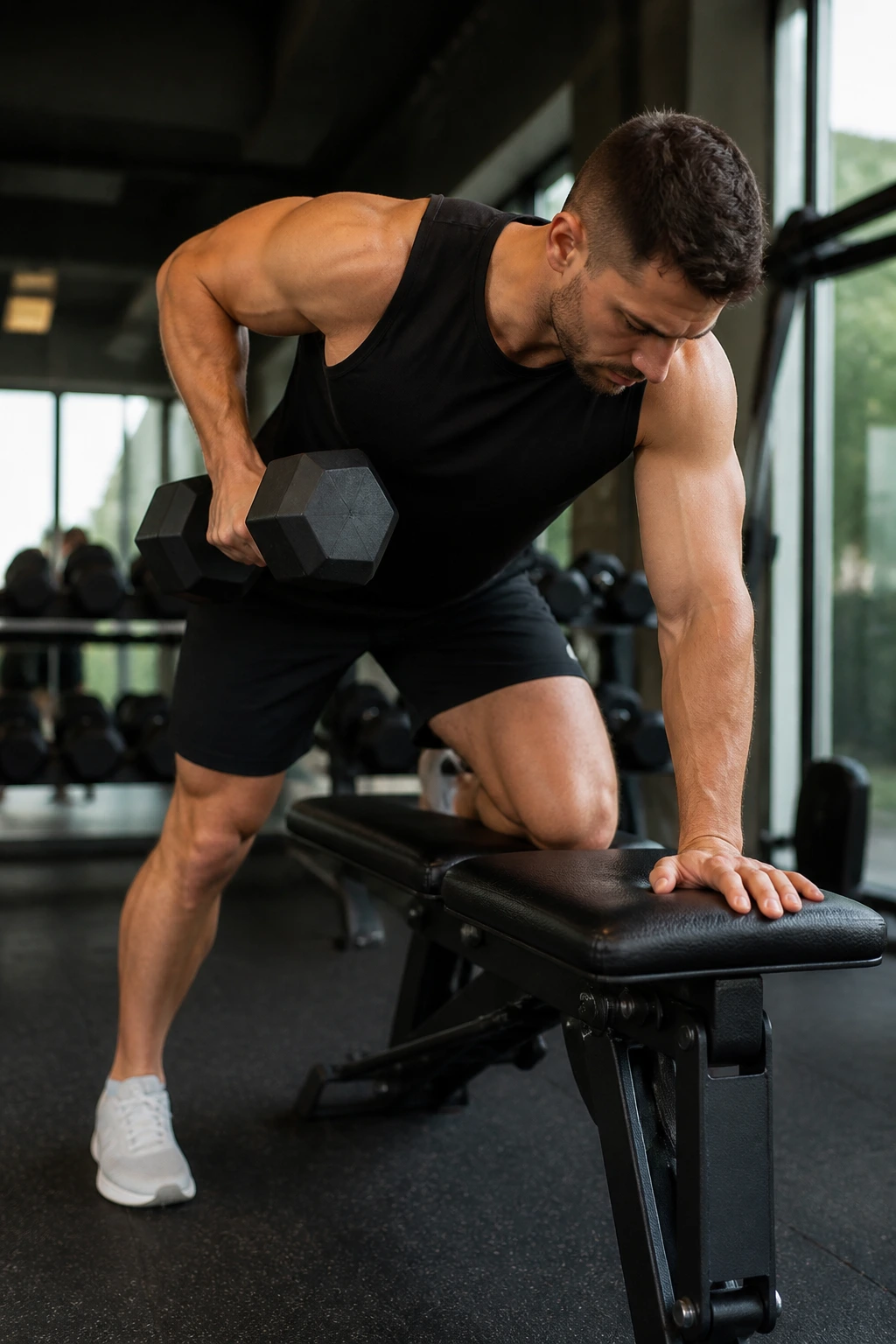
If you want to feel your back work without a lot of cheating, put one hand on a bench and row one dumbbell at a time. Simple. Brutal in a good way.
The free hand gives you balance, but the rowing arm has to pull its own weight. Drive the elbow toward your hip, not straight up to your shoulder, and let the shoulder blade glide forward at the bottom before you pull it back again. That stretch at the bottom is part of the rep.
What to Watch For
- Keep the torso still.
- Pull the dumbbell close to the ribs.
- Avoid twisting your whole body to finish the lift.
- Use a brief pause near the top.
A lot of people turn rows into a heave. Don’t. If the dumbbell only moves because your body swings, the back is getting less work than it should. Use a load you can row cleanly for 8 to 12 controlled reps, then build from there.
5. Standing Dumbbell Overhead Press
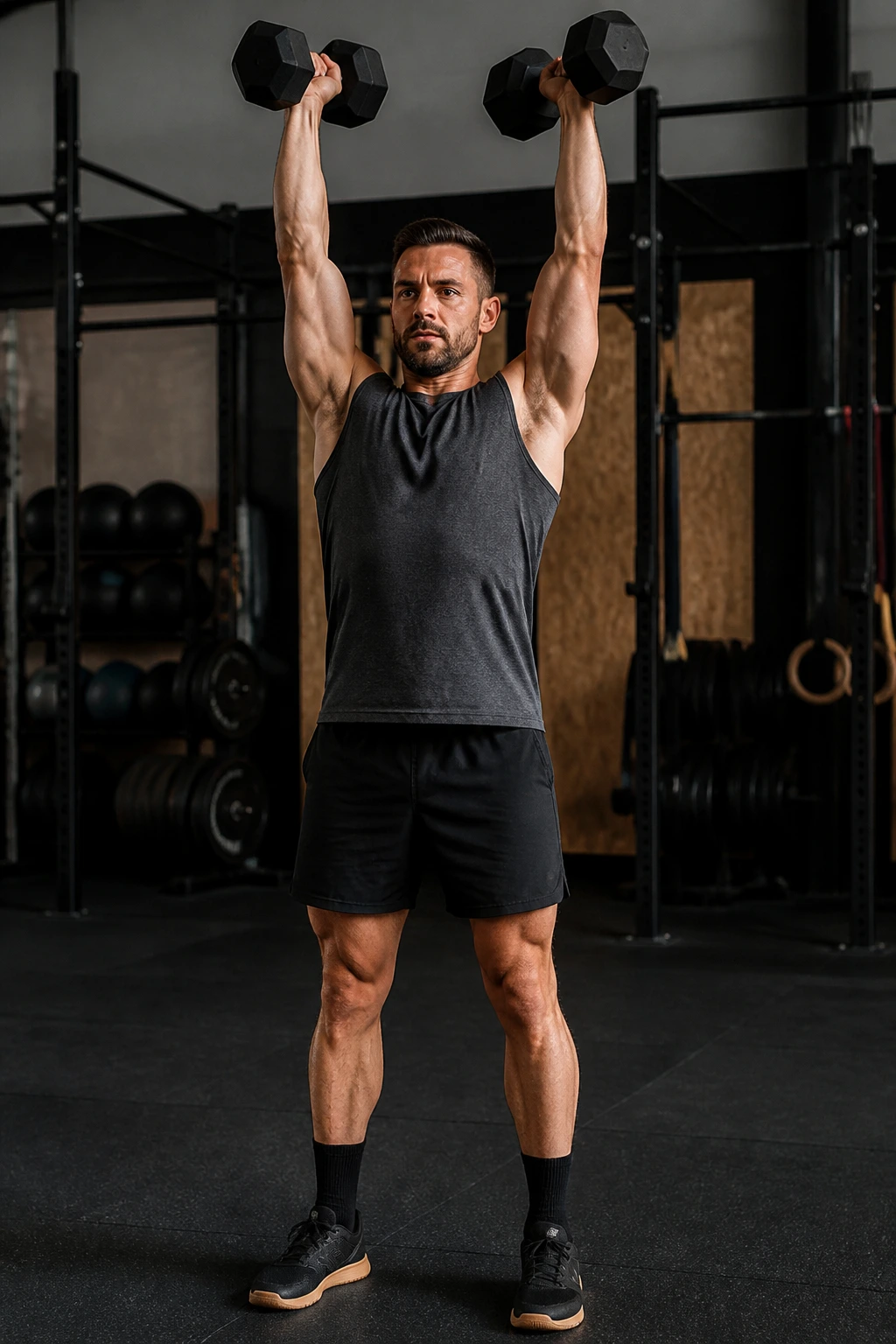
Pressing overhead gets ugly fast when people lean back and turn it into a standing incline bench. That’s the first thing to fix.
Stand tall, squeeze your glutes, and keep your ribs from popping forward. Press the dumbbells in a slightly arcing line until they finish above the ears, then lower them under control to shoulder height. The more your torso stays quiet, the more your shoulders and triceps have to do the real work.
A seated version can help if balance is a problem or if you’re still learning how to stack the weights over your shoulders. But standing work has its place. It teaches you to brace your midsection while your arms move, and that carries over to almost everything else in the gym.
The clean rep feels almost boring. That’s the point.
6. Reverse Dumbbell Lunge
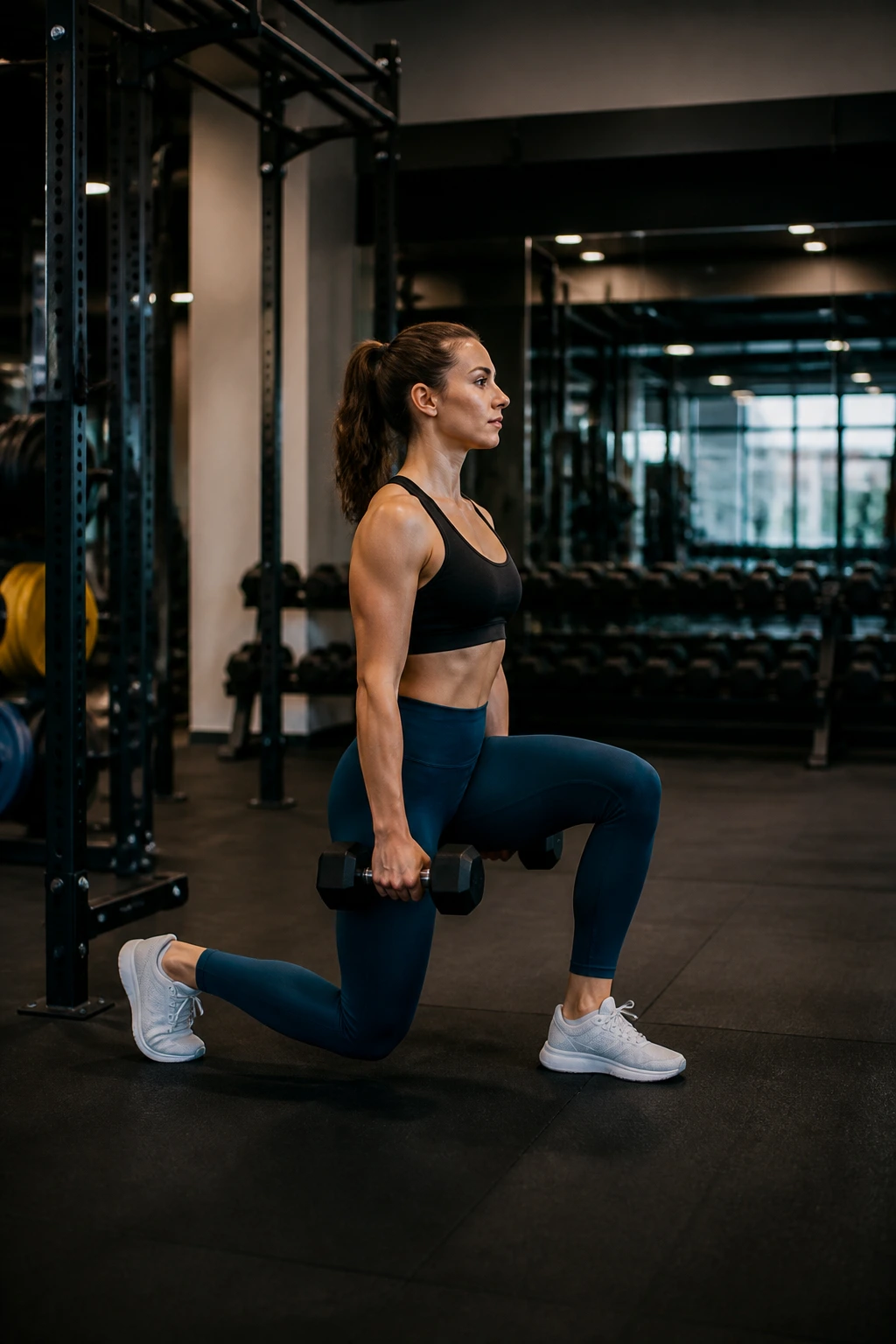
The reverse lunge is easier to control than the forward lunge, and I think that makes it the better choice for most people. The backward step buys you a cleaner setup, and your front leg does a lot of the work without the same jolt to the knee.
Step back far enough that your front shin can stay fairly vertical, then drop straight down instead of lunging forward. Keep your torso tall and your front foot flat. If you wobble, shorten the range a bit before adding more weight.
Who It Suits Best
- Beginners who need a more stable split squat pattern.
- Intermediate lifters who want leg work without heavy barbell loading.
- Anyone whose knees dislike forward lunges.
- Advanced lifters who want a pause at the bottom or a slower descent.
Hold one dumbbell in the goblet position for a friendlier version. Hold two dumbbells at your sides when you want more load and more balance demand. Either way, the reverse lunge trains the quads, glutes, and balance system in one shot.
7. Kettlebell Deadlift
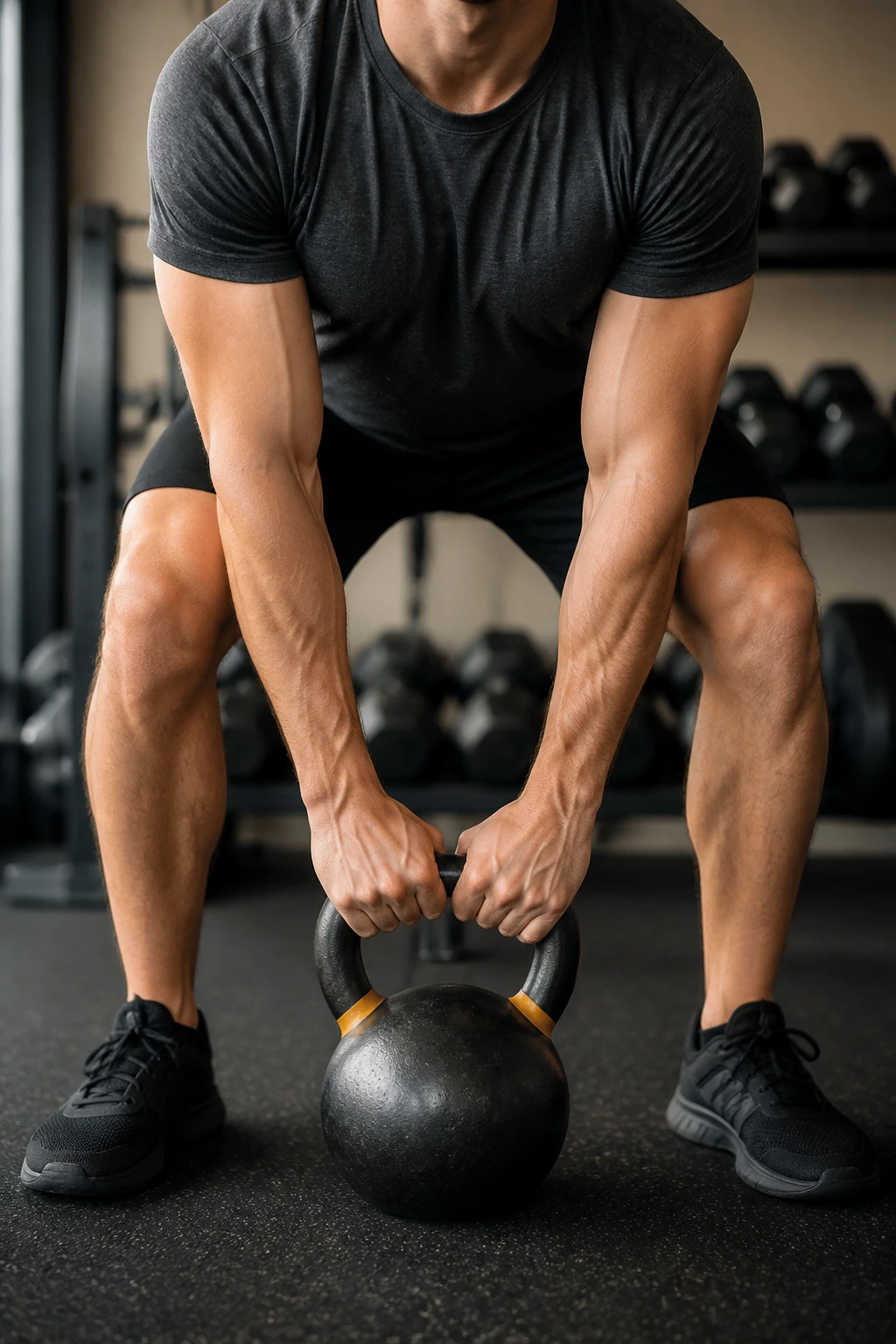
The kettlebell deadlift is the hinge I use when someone keeps turning every hinge into a squat. The raised handle and centered weight make the movement easy to learn, which is why it belongs in beginner plans.
Set the bell between your feet, walk up close enough that your shins almost touch it, and push the floor away as you stand. Keep your chest long and your lats tight so the bell stays close instead of drifting forward. The top should feel like a firm lockout, not a hard lean-back.
Quick Cues That Help
- Hips back first.
- Shins nearly vertical.
- Chest proud, not arched.
- Stand tall without shrugging.
Because the bell starts off the floor a little higher than a barbell would, this version is easier on the range of motion. That makes it a good first deadlift pattern for people still learning how to brace and hinge at the same time.
8. Barbell Back Squat
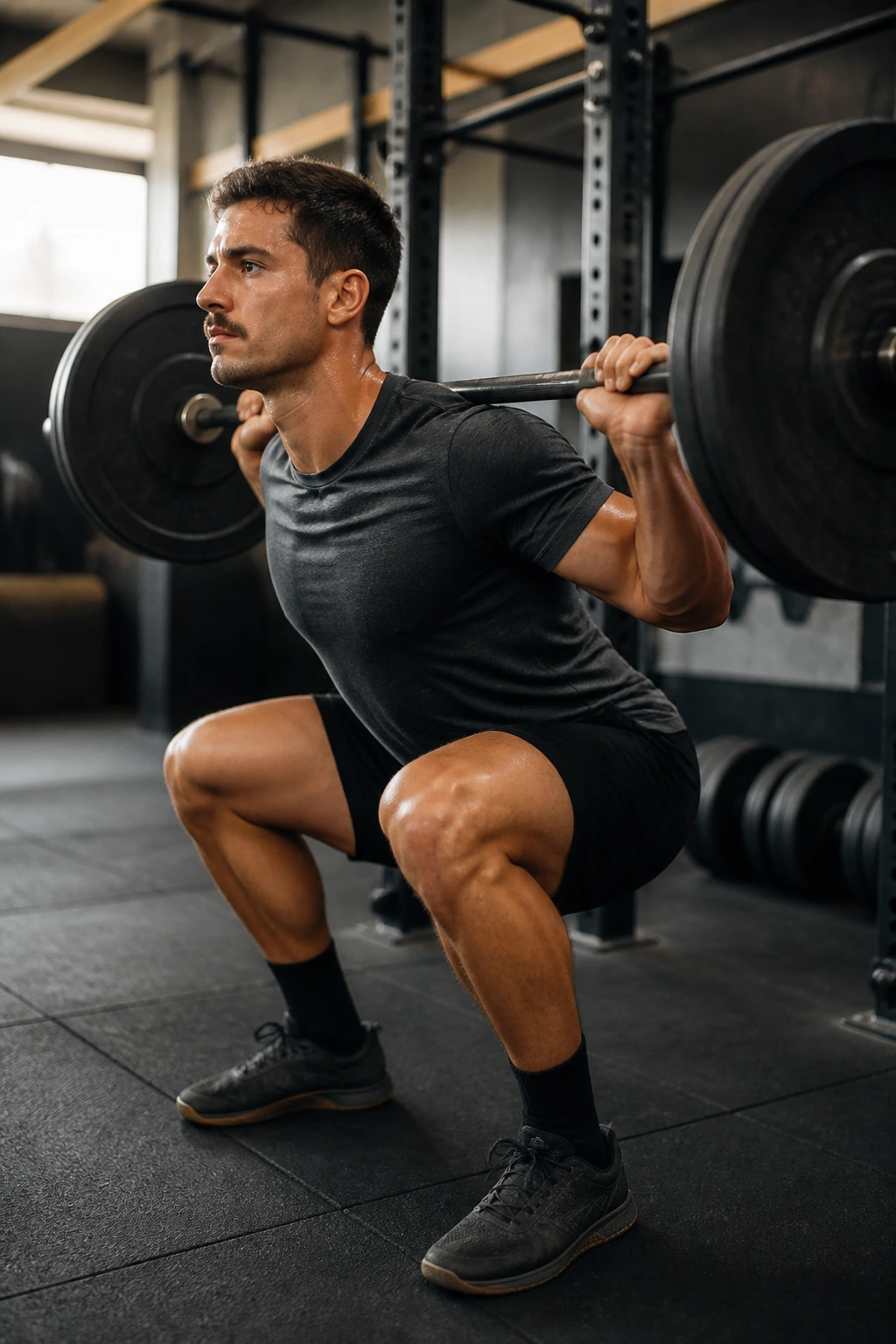
The back squat is not automatically advanced. It’s just unforgiving.
Once the bar is on your upper back, your body has to organize itself fast. Feet stay planted, chest stays strong, and the brace has to hold while the hips and knees both bend. If your knees cave or your chest folds, the bar tells on it immediately.
Make It Friendlier for Beginners
- Use a lighter bar and practice a few empty-bar reps first.
- Raise your heels slightly if ankle mobility is limited.
- Stop at a box or bench if you need a depth target.
- Film a set from the side to check torso position.
A good squat feels solid from the first rep. The bar should move in a smooth line over the middle of the foot, not wobble around like it’s looking for a different path. That’s why the back squat earns its place: it teaches whole-body tension better than almost anything else.
9. Barbell Hip Thrust
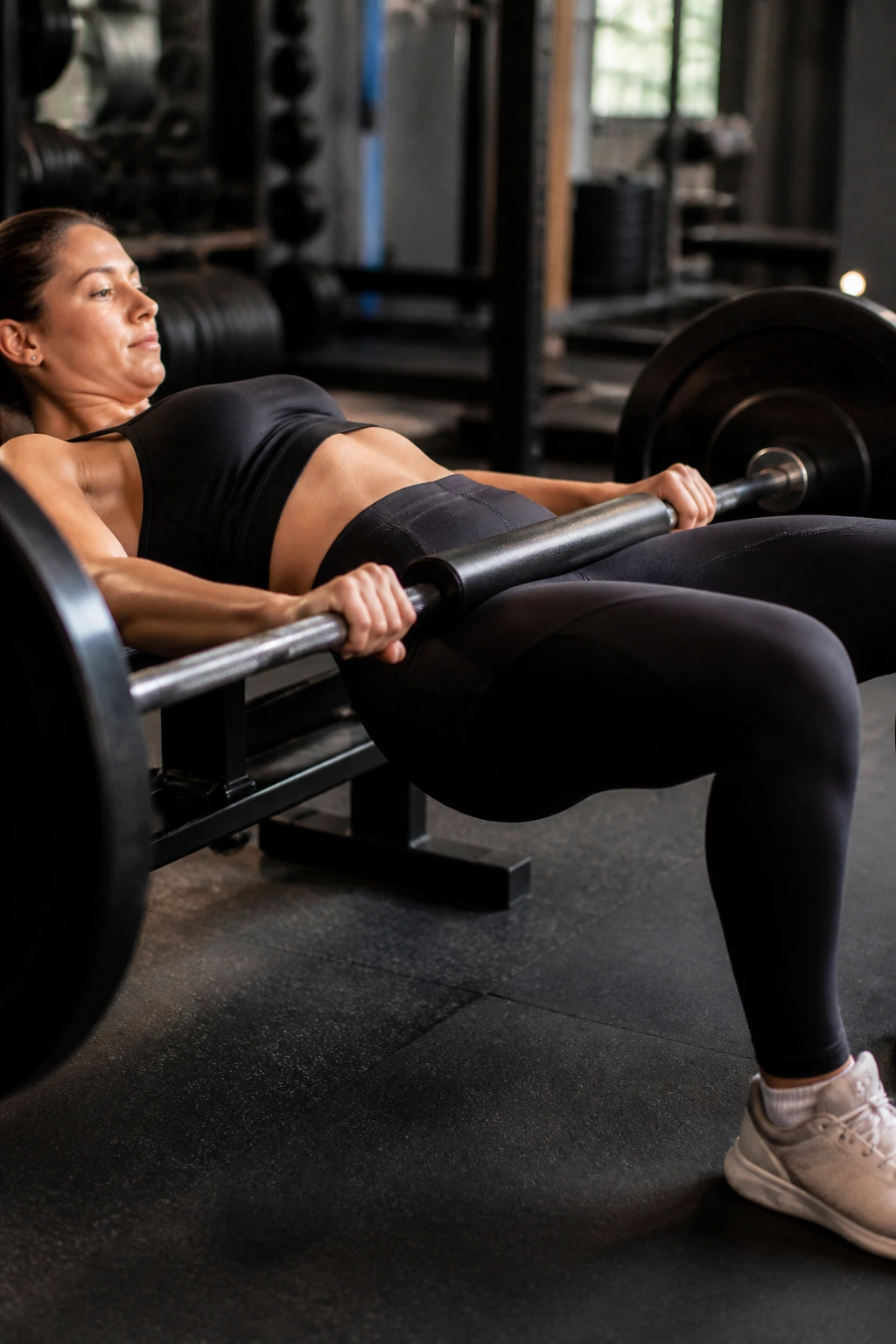
Why does this one light up the glutes so quickly? Because the hip thrust puts the glutes in charge of the top of the movement, where they can actually finish the job.
Set your upper back on a bench, plant your feet, and drive the barbell up until your hips are fully extended. Keep your chin tucked and your ribs down so the lower back does not steal the rep. At the top, the shins should be close to vertical and the torso should look like a tabletop.
A lot of people rush the squeeze. Don’t. Hold the top for 1 to 2 seconds and feel the glutes do the actual work. That little pause makes a moderate bar feel much heavier, and it teaches you to finish the rep instead of bouncing off your low back.
If the bench setup feels awkward, start with a weighted glute bridge first. Same family. Less fuss.
10. Incline Dumbbell Press
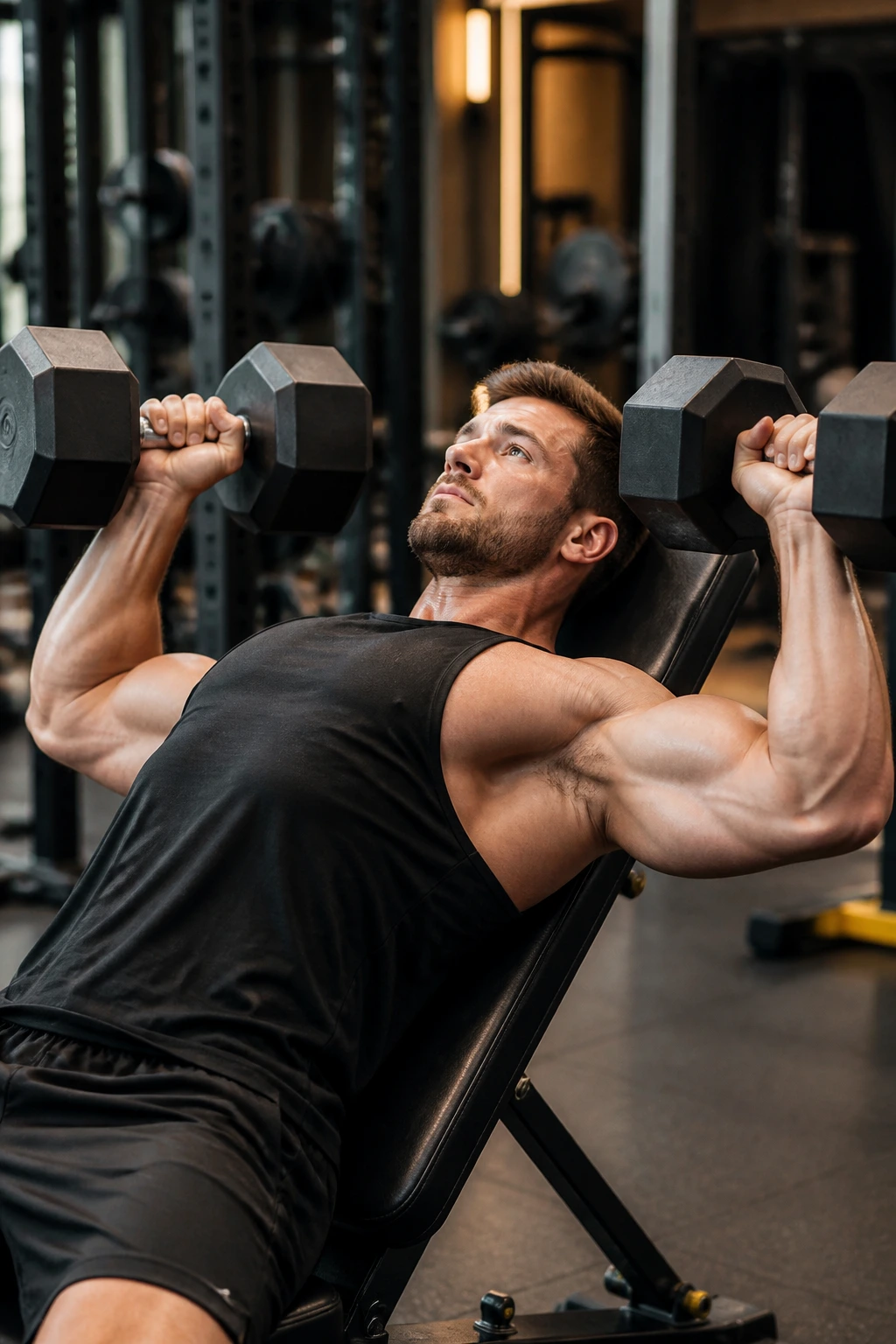
Flat bench is not the whole story. If you want more upper-chest work and a press that usually feels friendlier on the shoulders, the incline dumbbell press is a solid pick.
Set the bench at about 30 to 45 degrees. Steeper than that and the movement starts drifting toward a shoulder press, which is not what most people want here. Lower the dumbbells with control and stop when your upper arms are near parallel to the floor, then press them up in a smooth line.
The incline angle makes this one useful for lifters who want better chest development without having to force a huge arch or a super-wide grip. It also pairs well with flat pressing on another day, since the two moves ask slightly different things from the upper body.
If your shoulders get cranky on flat benches, try this angle before you write off pressing altogether.
11. Chest-Supported Dumbbell Row
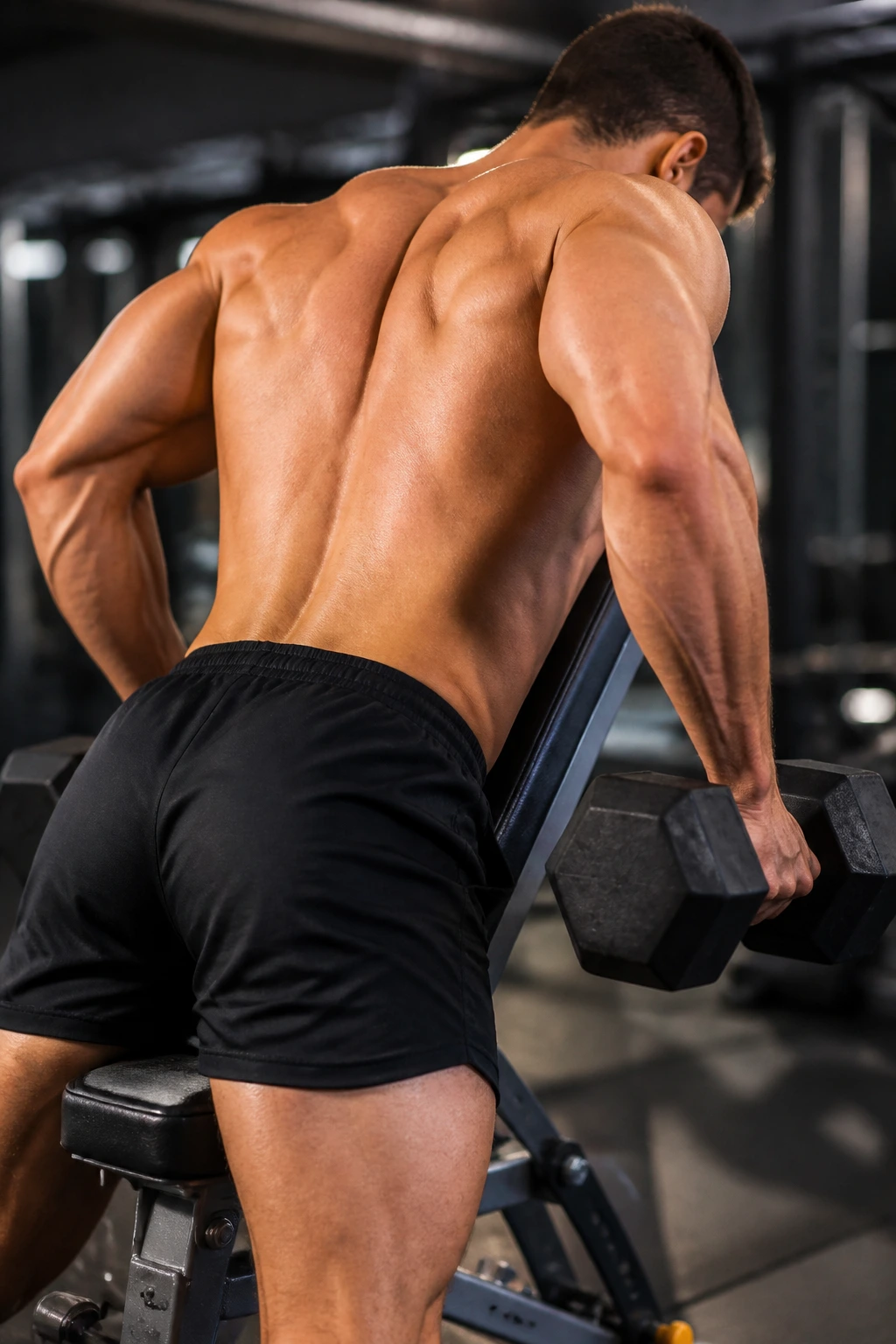
Chest-supported rows take the lower back out of the argument, and sometimes that is exactly what you need.
Lie face down on an incline bench, let your chest stay glued to the pad, and row the dumbbells with both elbows driving back. Since your torso is fixed, you can focus on the upper back instead of trying to keep your body from swinging. The rep feels cleaner right away.
That small change opens the door for better scapular movement too. Let the shoulder blades reach a little at the bottom, then squeeze them back as you row. If you want to make the exercise harder without jumping weight too fast, add a 1-second pause at the top.
This is one of my favorite back moves for people who spend too much time cheating with heavy rows. The bench tells the truth.
12. Bulgarian Split Squat
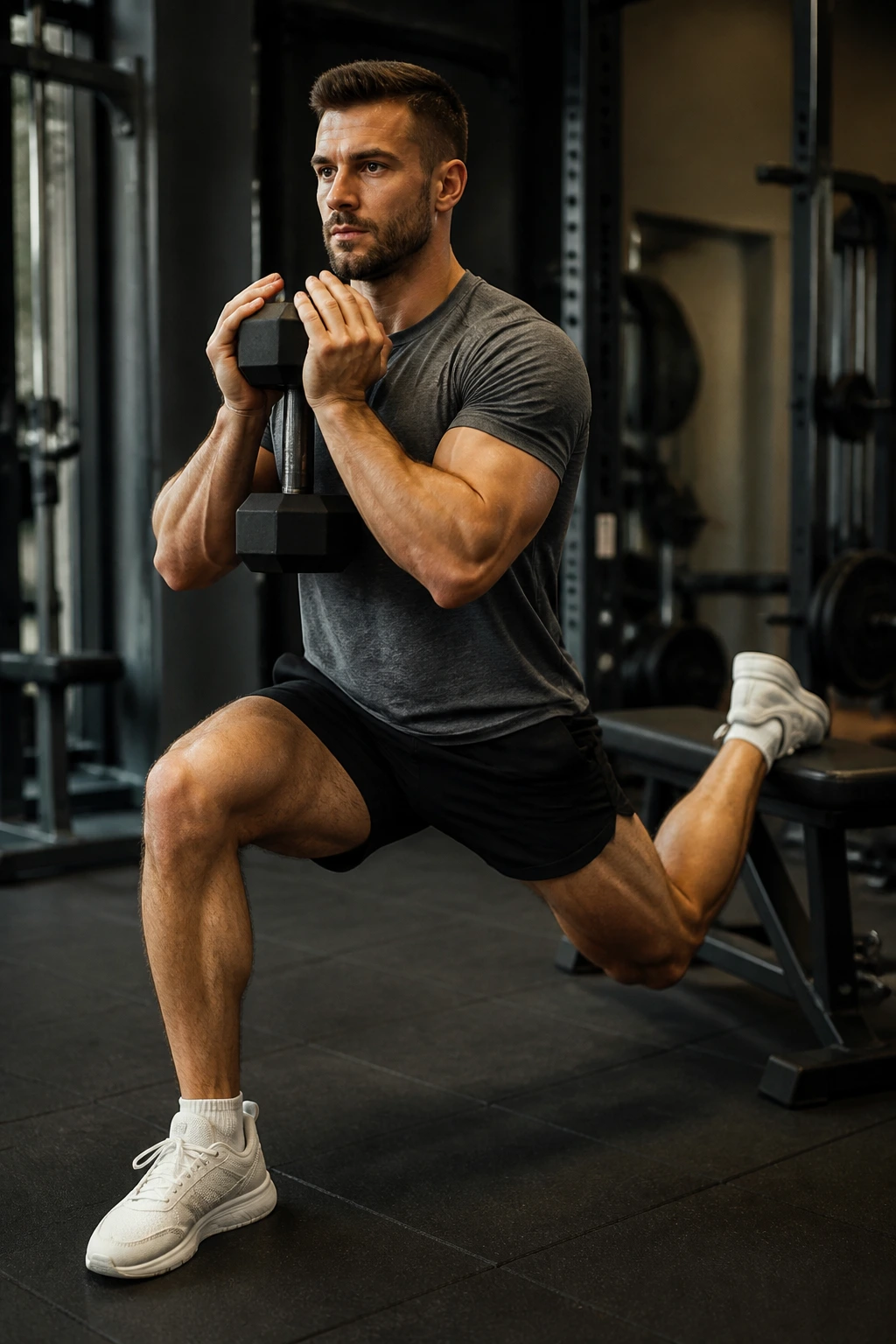
Why does this exercise make strong people swear? Because one leg has to do the work of two, and it cannot hide.
Set the back foot on a bench or box, step the front foot forward far enough that you can drop straight down, and keep your torso tall. Lower until the back knee hovers near the floor, then drive through the front heel and midfoot to stand back up. The front leg should feel like it’s doing most of the work, especially through the bottom half of the rep.
How to Scale It
- Use bodyweight first if balance is the problem.
- Hold one dumbbell at the chest for a simpler version.
- Keep the rear foot low if hip flexors feel tight.
- Add a slow 3-second lower when you need more challenge without heavier bells.
This one is awkward at first. That’s normal. Once the setup clicks, it becomes a monster for quad and glute work without needing a barbell.
13. Dumbbell Lateral Raise
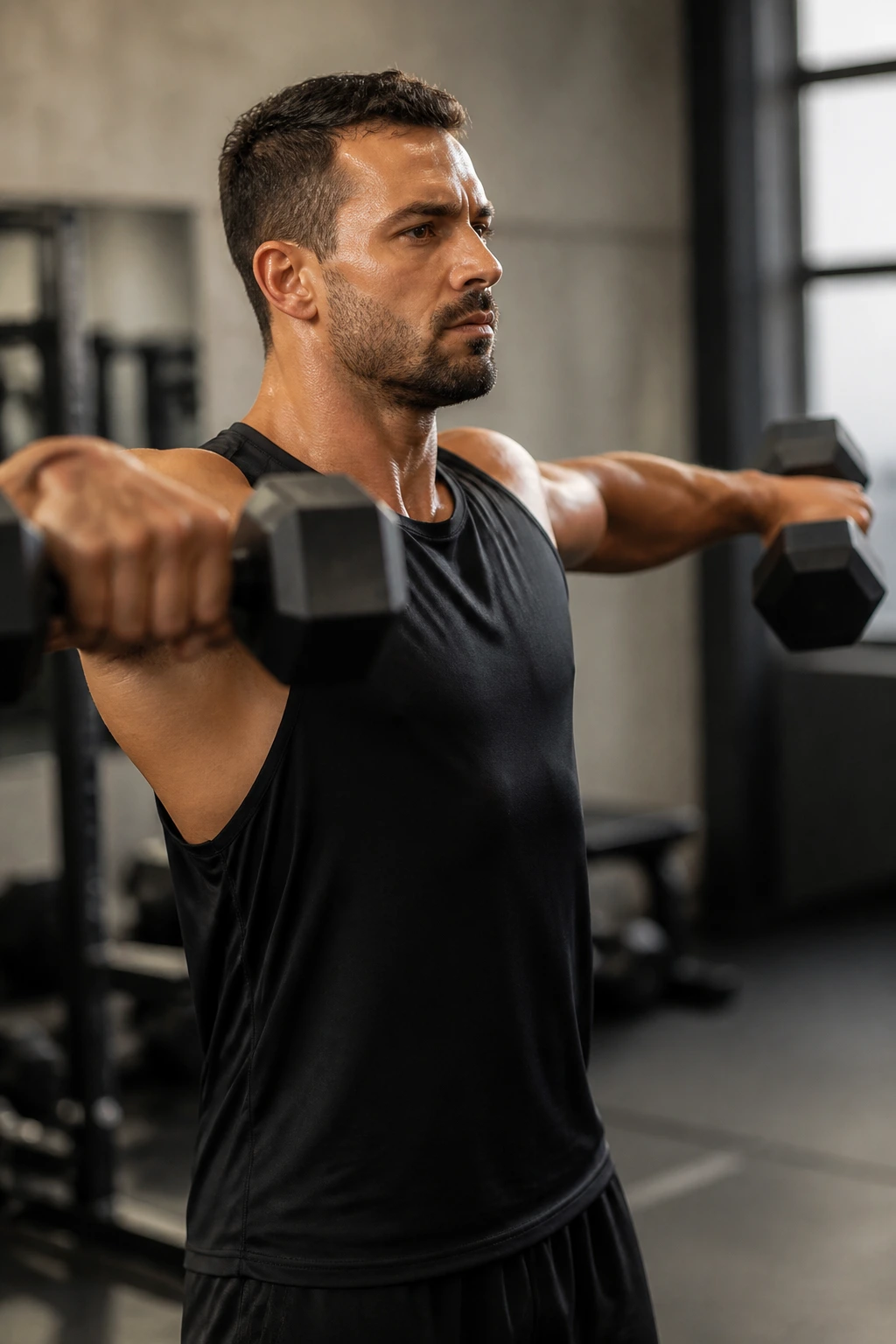
Light weights win here. Every time.
People love to load lateral raises too heavy, then swing their torso and shrug the shoulders up by the ears. That turns the exercise into a trap-dominant mess and barely touches the side delts. A cleaner rep with 5- to 15-pound dumbbells will usually do more for the muscle than a sloppy rep with something heavier.
Form Cues That Matter
- Keep a slight bend in the elbows.
- Lead with the elbows, not the hands.
- Raise until your arms are near shoulder height.
- Stop if you have to hitch your body to finish the rep.
A small lean forward can help some lifters feel the side delts better. So can a controlled tempo. The point is not to throw the weight up. The point is to keep tension on the shoulder while the arm moves through a short, precise path.
If you only remember one thing, remember this: lighter and cleaner beats heavier and ugly.
14. Barbell Deadlift
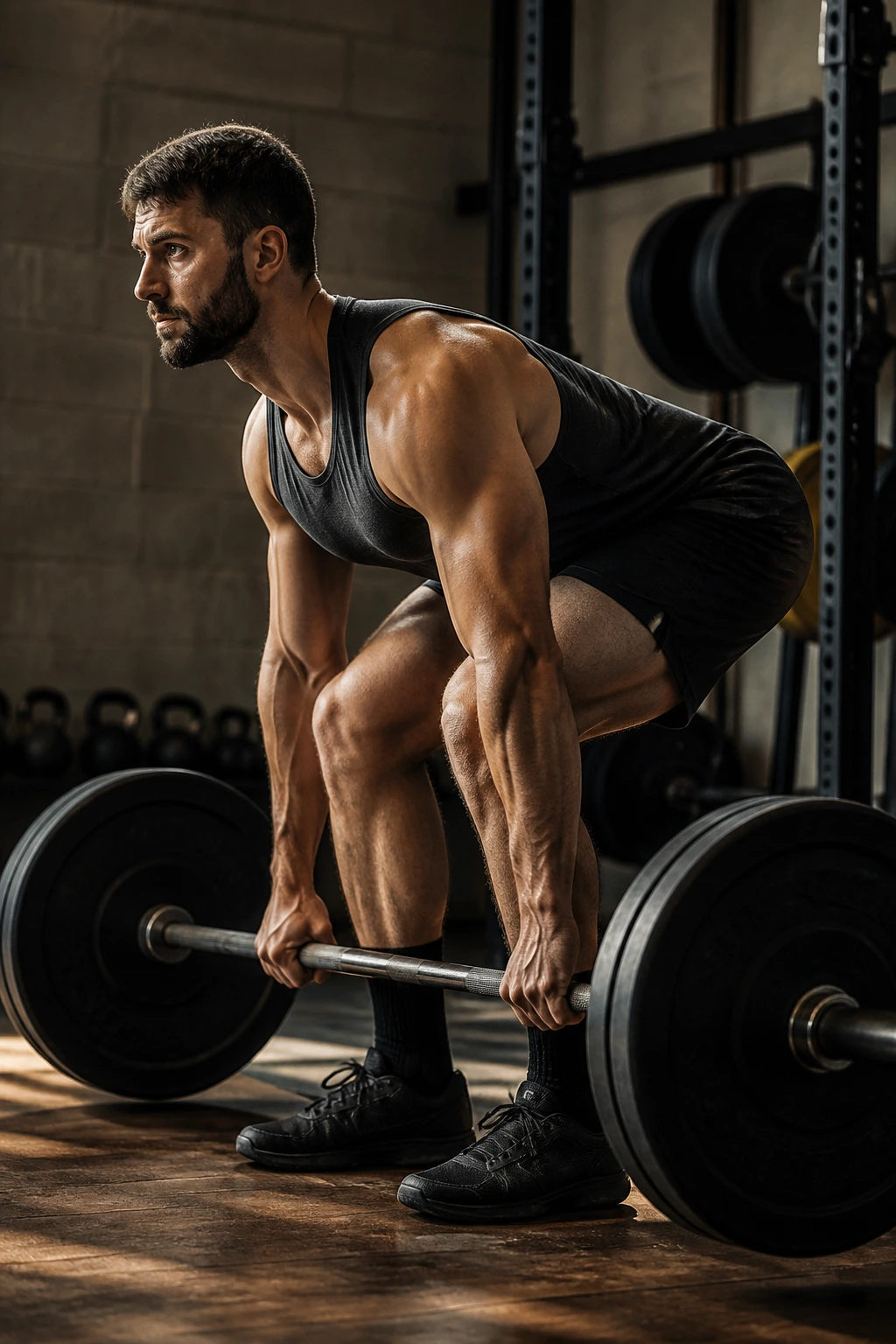
The deadlift is the blunt instrument of strength training. It asks for a brace, a hinge, and enough patience to set up properly before every single rep.
Stand with the bar over the middle of your feet, hinge down, grip it, and pull the slack out before the bar leaves the floor. That little pre-tension matters more than most people realize. It keeps the lift from feeling like a random yank and makes the whole motion smoother.
Key Details
- Keep the bar close to the legs.
- Brace before you pull.
- Push the floor away instead of yanking up.
- Finish tall, not leaning back.
This is not the first hinge I give to complete beginners. It’s a great lift, but it does not hide mistakes. If the setup falls apart, the rep falls apart with it. Still, when it’s done well, the deadlift builds the back, hips, and grip in a way few other lifts can touch.
15. Farmer’s Carry
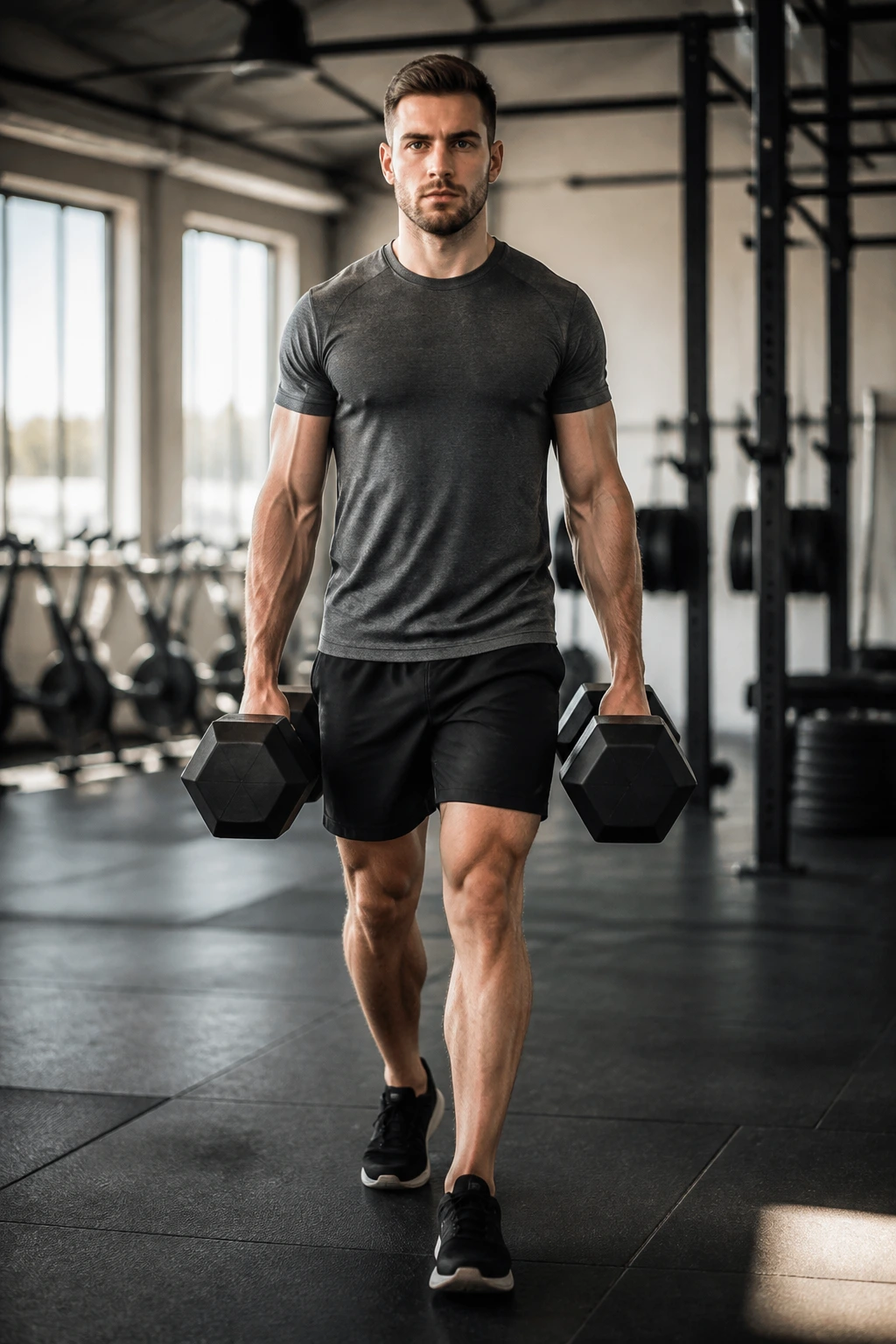
Pick up the weights and walk. That’s the move.
Farmer’s carries look too simple to matter until your grip starts to fade and your torso wants to tip. Then the exercise gets serious fast. Hold two heavy dumbbells at your sides, stand tall, and walk with short, controlled steps for 20 to 40 meters or 30 to 60 seconds.
The value here is sneaky. Your grip works. Your core works. Your upper back works. Even your breathing changes once the load gets heavy enough to make you stay organized. If you lean or shrug, the weights expose it immediately.
I like carries for people who want strength that shows up outside the gym too. Picking up groceries, hauling a suitcase, moving furniture — all of that feels a little less annoying when carries are in the plan.
16. Dumbbell Biceps Curl
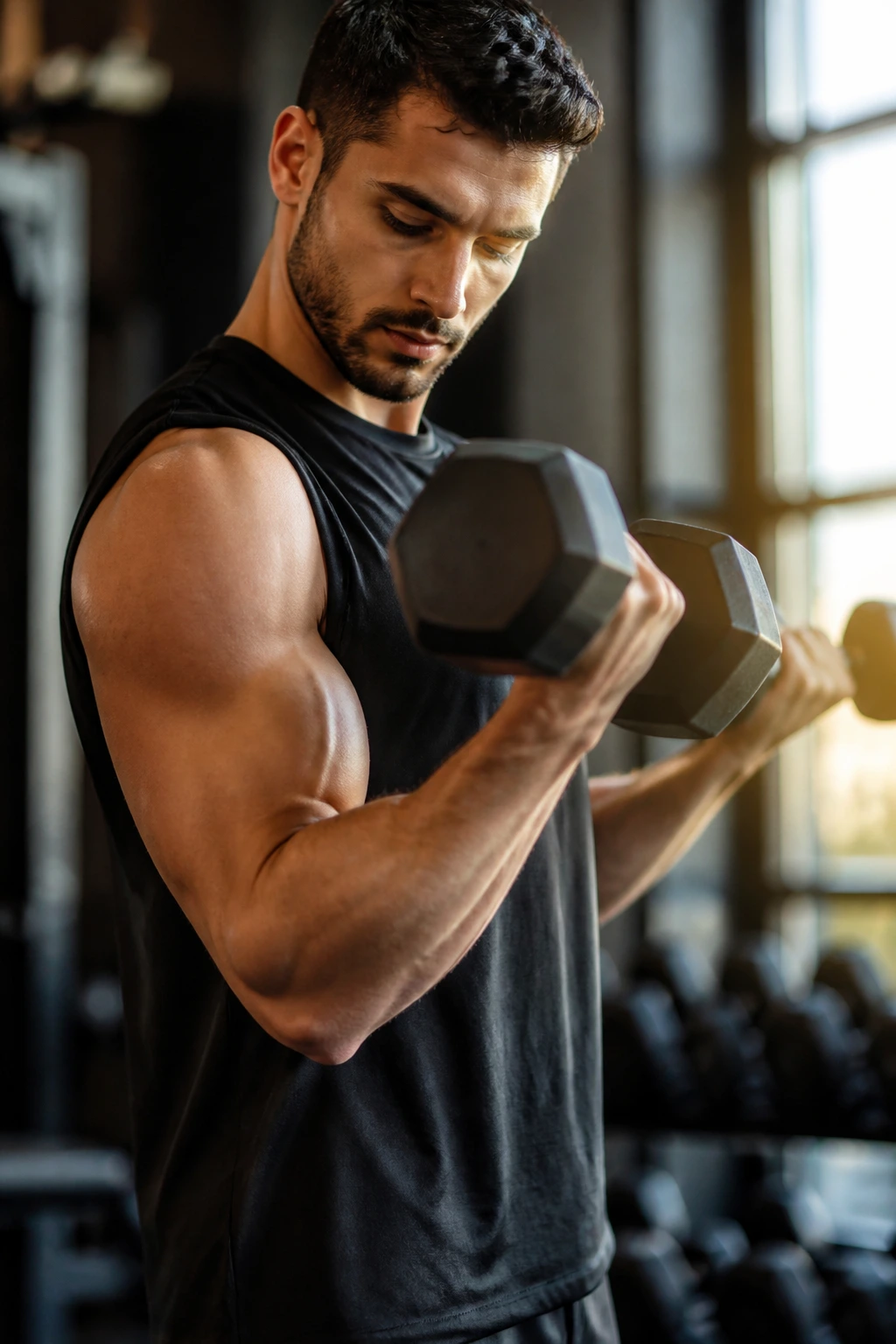
Most curls fail because people chase heavier bells instead of cleaner reps.
A good curl keeps the elbows close to the sides, the wrists neutral, and the torso still. Lower the dumbbells all the way down, then curl them up without swinging your shoulders forward. The biceps do better work when they’re not being rescued by momentum.
A Few Ways to Make Them Count
- Use a supinated grip for the classic version.
- Alternate arms if you want tighter control.
- Pause for 1 second at the top to kill the bounce.
- Try incline curls if you want more stretch and a little more difficulty.
Curls are not flashy, and they do not need to be. They’re a useful accessory lift, especially for beginners learning how to train without turning every movement into a full-body heave. Start lighter than you think, then add weight only when the last rep still looks clean.
17. Overhead Triceps Extension
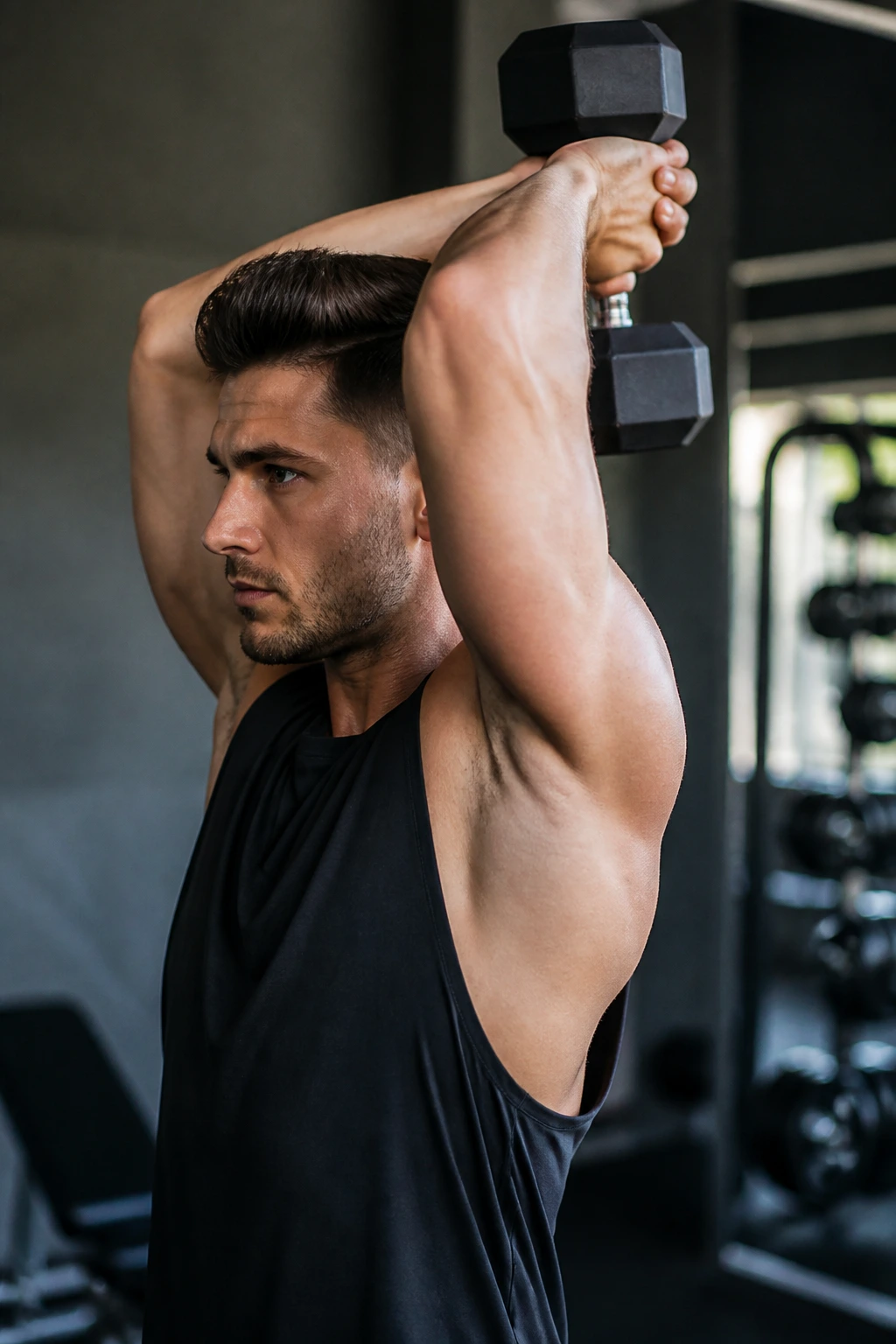
If your elbows live out wide, this move gets sloppy fast.
Hold one dumbbell with both hands overhead or use a single arm version, then bend the elbows to lower the weight behind your head. The upper arms should stay mostly still while the forearms move. That overhead position stretches the long head of the triceps, which is part of why this exercise feels different from pushdowns or close-grip presses.
Keep the ribs from flaring and the lower back from arching to fake more range. If the weight drifts too far behind you, the elbows usually start wandering too. A controlled path matters more than a giant load here.
Best Uses
- Better triceps isolation.
- A solid accessory after pressing.
- A useful single-arm option when one side needs extra work.
- A lighter, joint-friendly choice compared with some heavier lockout drills.
This one works best when you move slowly enough to feel where the triceps are doing the job.
18. Russian Twist with a Plate
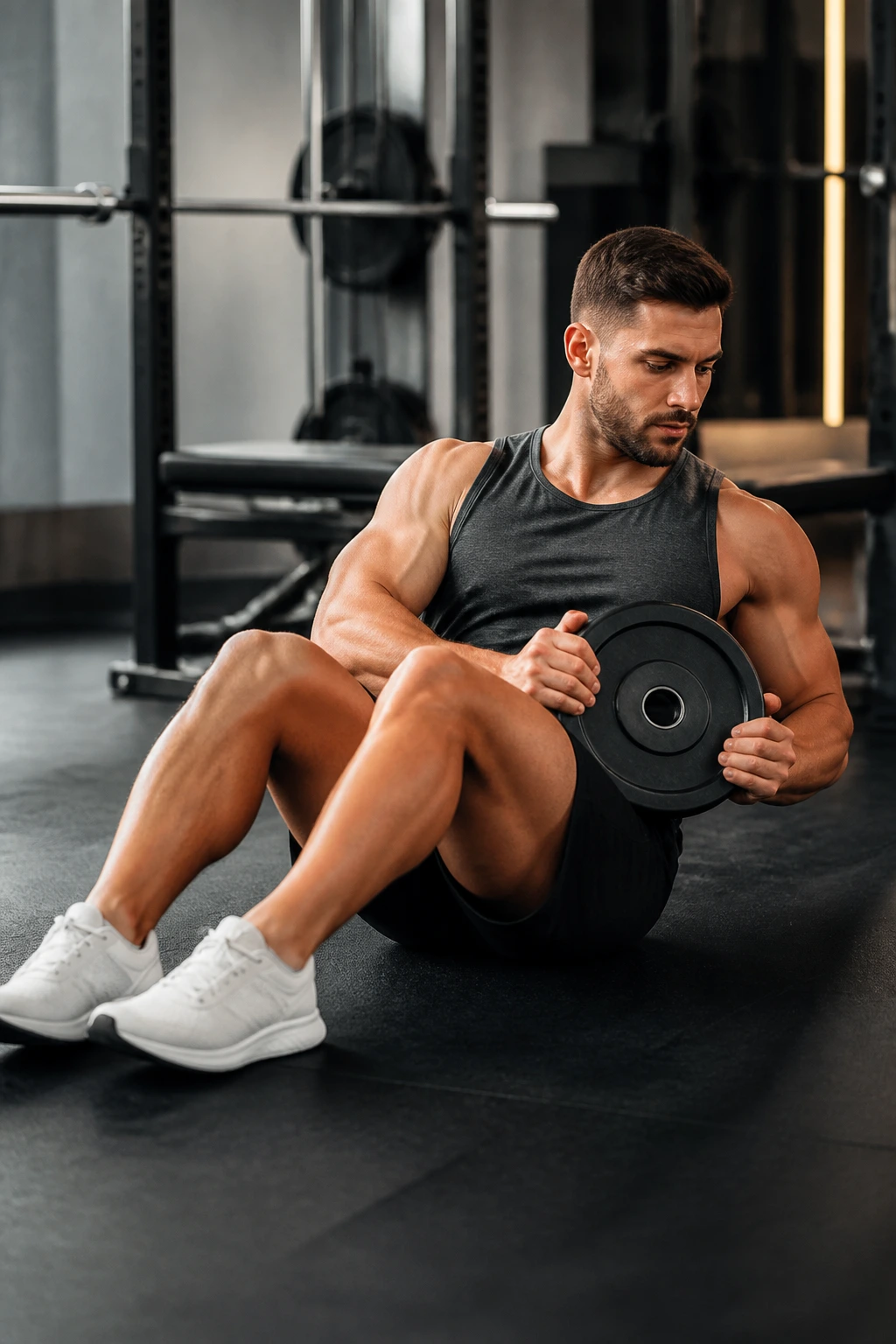
Does the Russian twist deserve the bad reputation it gets? Sometimes yes, if people fling themselves around and call it core work.
Used well, it can train rotation and trunk control. Sit with your torso angled back, hold a plate or dumbbell close to your chest, and rotate from rib cage to rib cage rather than just waving the weight side to side. The movement should feel deliberate, not yanked.
How to Use It
- Keep your feet on the floor if you’re new to it.
- Use a light plate first, often 5 to 15 pounds.
- Move slowly for 10 to 20 total turns.
- Stop if your lower back starts to pinch.
The fix is usually slower tempo and less range. You do not need to slam through a giant twist to get a useful stimulus. If your back hates it, swap in a dead bug or a Pallof press and move on with your day.
19. Weighted Glute Bridge
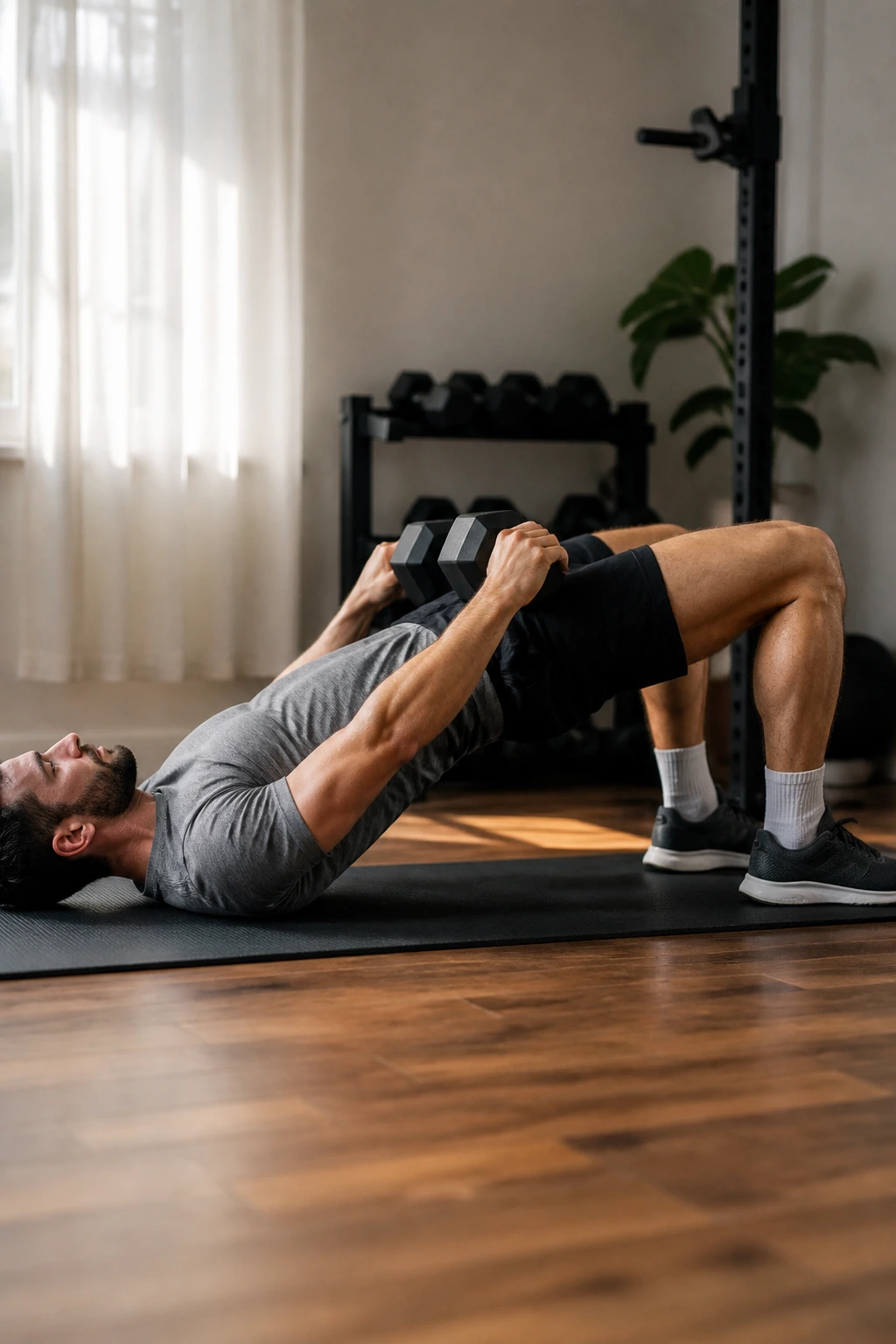
The weighted glute bridge is the floor-based cousin of the hip thrust, and that makes it a smart option for beginners or anyone training at home.
Lie on the floor, bend your knees, plant your feet, and place a dumbbell, plate, or barbell across the hips. Drive the hips up until your torso forms a straight line from shoulders to knees, then squeeze the glutes hard for a second or two before lowering. Since the floor limits the range of motion, it’s a little easier to learn than the bench-based version.
That shorter path is useful. It lets you focus on the squeeze at the top without worrying as much about bench height, foot placement, or upper-back setup. If you want more challenge, slow the lowering phase or add a longer pause at the top.
I use this one when someone wants glute work without a lot of setup. It’s plain, but it gets the job done.
20. Suitcase Carry
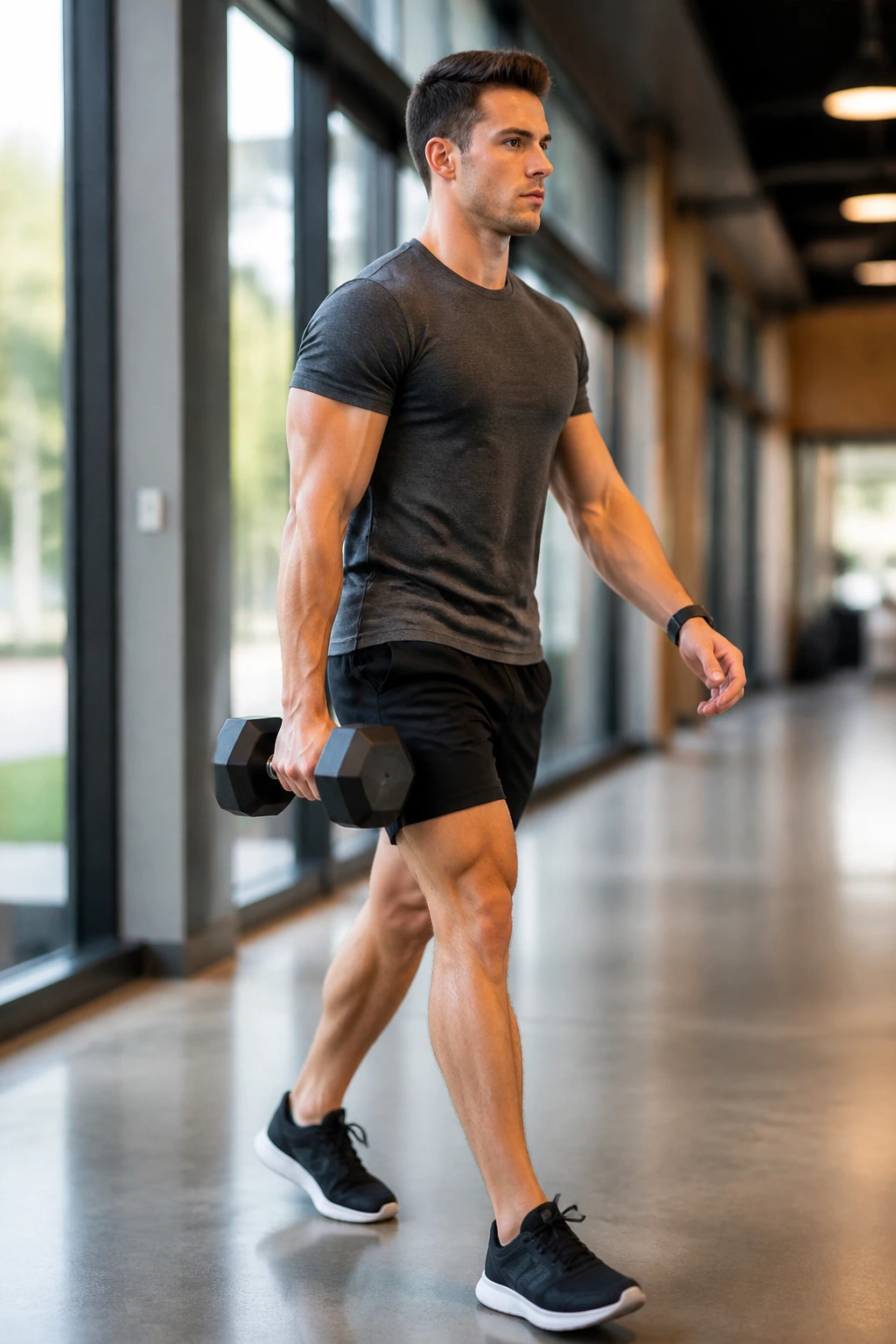
The suitcase carry is the quiet killer in this list.
Hold one heavy dumbbell on one side and walk without leaning toward or away from it. That one-sided load forces your core to resist side-bending, and that matters more than people think. Your obliques work. Your grip works. The glute on the unloaded side has to help keep you level.
Start with 20 to 40 meters per side, or a 20- to 45-second walk if space is tight. Keep the ribs stacked over the pelvis and take normal steps. If you find yourself tilting, the bell is too heavy or you’re rushing the walk.
This is a great finisher after squats, deadlifts, or even pressing work. It looks calm. It is not calm.
Pick five of these moves and you’ve got a strong session. Pick six and you can build a whole week around them. The nice part is that they do not need to be complicated to keep working for a long time — they just need clean reps, steady loading, and enough attention to avoid turning every set into a shruggy mess.
