



A phone reminder is easy to swipe away. A printed workout calendar sitting on your desk, taped to the fridge, or pinned near your shoes has a different kind of power: it makes your training visible. The blank squares stare back. The missed sessions do, too.
That’s why workout calendar templates still matter even with every app and wearable under the sun. Paper gives your plan weight. It turns “I should work out more” into a page with actual boxes, dates, and proof. And if you pick the right layout, the calendar stops feeling like homework and starts acting like a quiet nudge that keeps you moving.
The best templates don’t cram in every possible metric. They leave enough space to breathe. They make room for rest days, travel days, sore legs, and the odd week when life behaves badly. A good printable is clean enough to read at a glance, tough enough to survive a fridge door, and simple enough that you’ll still use it after the first enthusiastic week.
So the real question isn’t whether to print one. It’s which kind of paper planner fits the way you train, because the wrong layout gets ignored fast, and the right one can make a messy routine feel almost embarrassingly manageable.
1. A Minimalist Monthly Workout Calendar Template for Wall Printing
A clean monthly grid is the one I keep coming back to when someone wants the least fuss possible. It gives you the whole month in one look, which sounds boring until you realize how useful that is when you need to see gaps, travel days, and recovery days without flipping pages. The magic here is not decoration. It’s visibility.
Why It Works on Paper
A monthly wall calendar makes training feel like part of the house, not a side project. You can mark workouts with a thick pen, circle rest days, and leave a small note in each square for the main session. That’s enough for most people. Too much detail turns the page into clutter, and clutter gets ignored.
- Best for: beginners, busy schedules, and people who like big-picture planning.
- Use it for: one workout per square, or one main fitness goal per day.
- Print style: portrait layout on letter-size paper with wide margins.
- Best detail to add: one notes row at the bottom for soreness, sleep, or missed sessions.
A minimalist month view also gives you a clean way to reset. If you skip Tuesday, the page does not collapse. You just move on to Wednesday and keep the streak alive. That matters more than people admit.
Tip: Keep the calendar plain black and white, then use one highlighter color for workout days. The contrast makes the page easier to scan from across the room.
2. A Weekly Strength Split Template With Big Checkboxes

A three-day strength template beats a crowded seven-day plan for most people who actually want to stay consistent. That sounds blunt, but it’s true. Three big checkboxes are easier to finish than six tiny promises you secretly know you will not keep.
A weekly split gives each session a job. Monday can be lower body, Wednesday can be upper body, and Friday can be full-body or accessory work. The printed page should reflect that clean rhythm. I like wide boxes, a spot for sets and reps, and one line for the main lift so you are not guessing what “strength day” meant last week.
The trick is not to make the page look athletic. It’s to make it impossible to misunderstand. If the calendar says “squat 4×5,” you know exactly what to do when you walk into the gym. If it says “leg day,” you can waste ten minutes deciding what leg day means. Tiny difference. Huge effect.
A good version of this template also leaves one box for an optional make-up session. Life happens. Bloating, soreness, bad sleep, work meetings that chew up the afternoon — all of that belongs on the page. Paper is better when it admits reality.
3. A Full-Body Beginner Calendar for Two or Three Workouts a Week
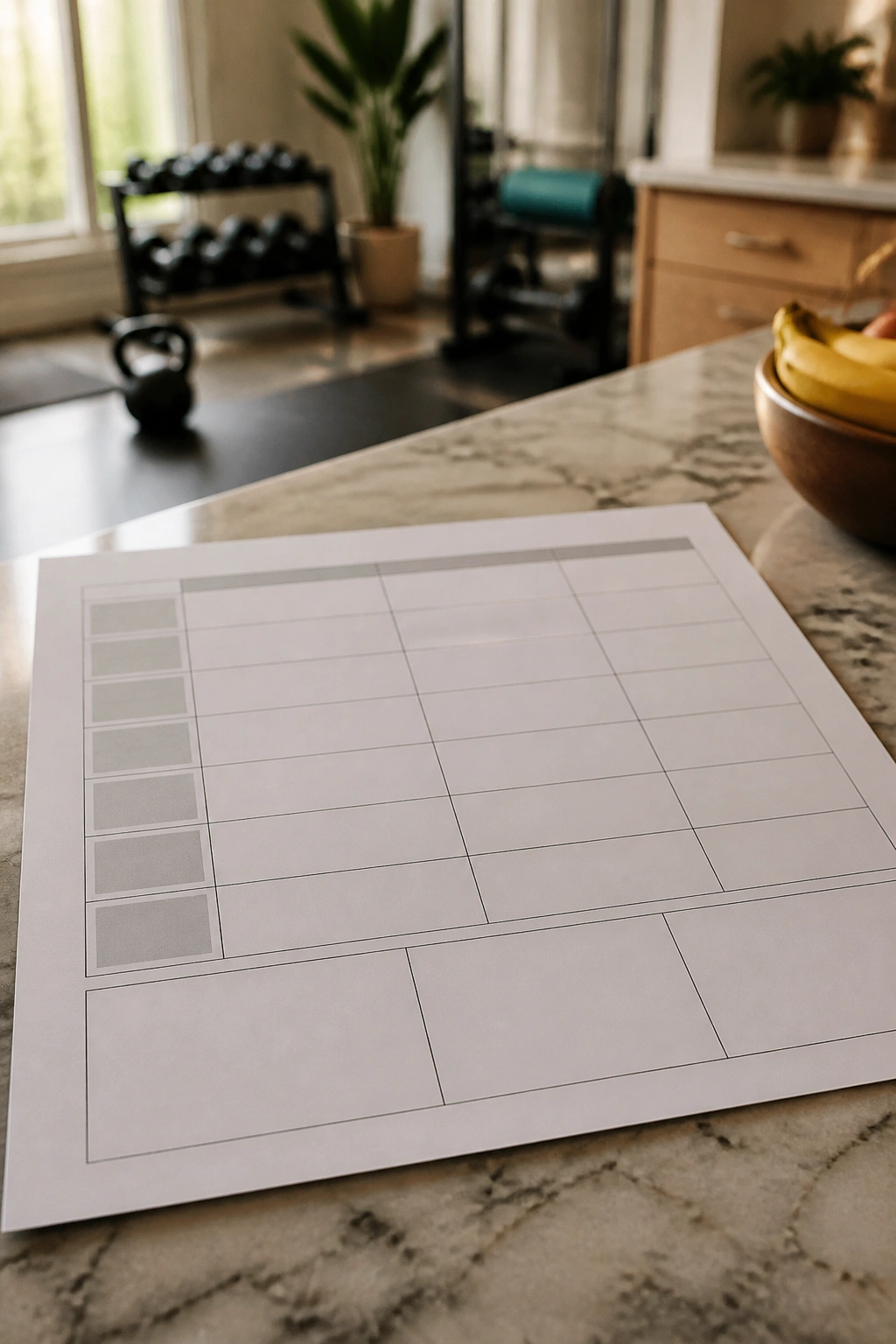
Why do beginners do better with fewer boxes? Because the hard part is not exercise selection. It’s sticking around long enough to learn the movements. A full-body printable keeps the week small and honest, which is exactly what most new lifters need.
This kind of calendar works best when each workout repeats the same core patterns: squat, push, pull, hinge, carry. You can swap exercises later, but the page should keep the structure steady. That steadiness makes it easier to build confidence, and confidence matters more than fancy variety in the first stretch.
How to Set It Up
Put two or three training days on the page and leave the rest open. That empty space is not wasted. It gives your body time to recover and your head time to stop overthinking the plan.
- Workout slots: 2 or 3 per week
- Session length: 30 to 45 minutes
- Cardio add-on: 10 to 20 minutes of walking or light cycling
- Notes area: one line for form cues, like “slow lowering” or “braced core”
The best part is how forgiving it feels. Miss one session and the whole week does not fall apart. You still have a second chance, and that alone keeps a lot of people from quitting too early.
4. An Upper-Lower Split Template for Four Solid Training Days
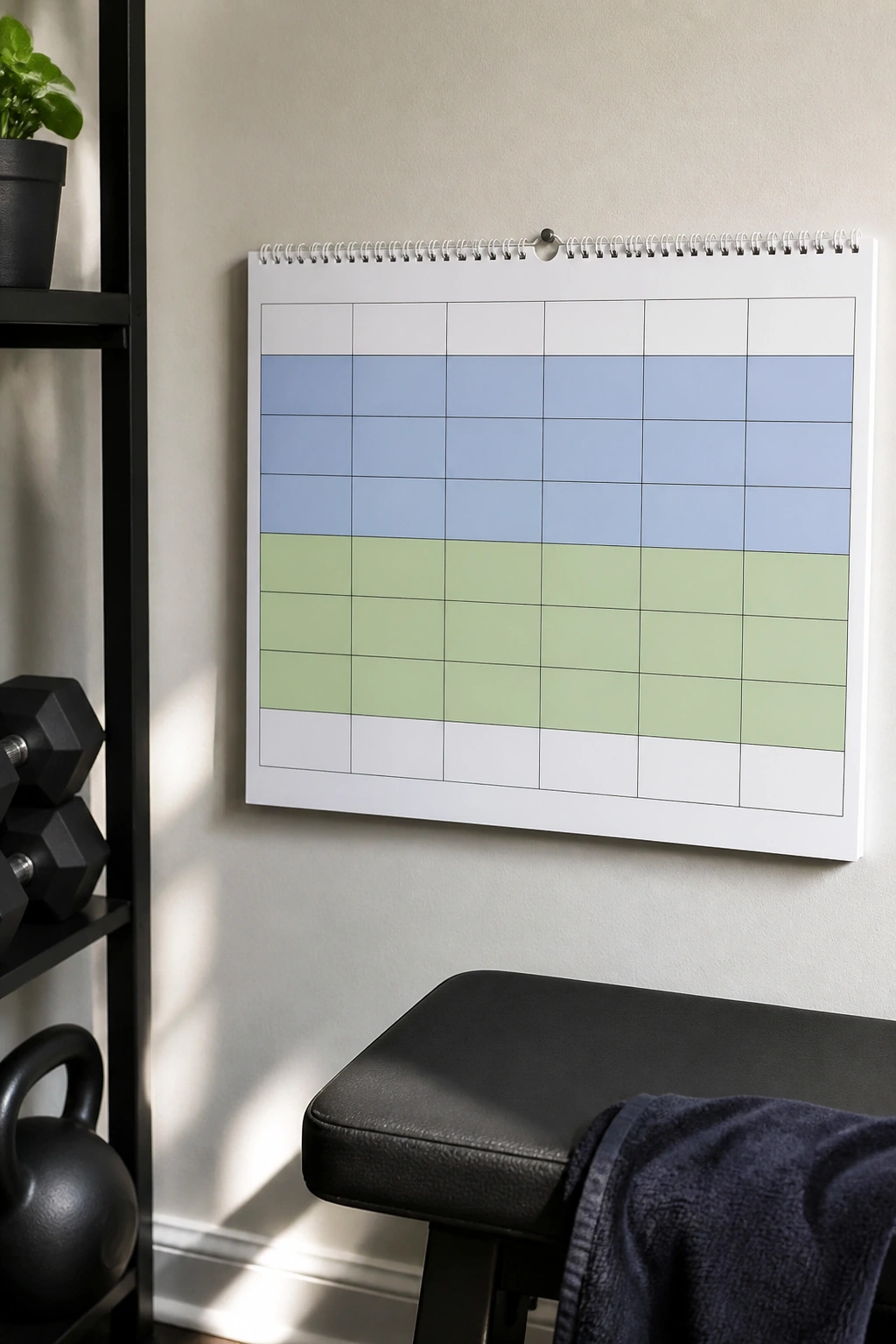
Walk into a gym with an upper-lower split on paper and you look calm, even if your legs are already annoyed with you. That’s because the template gives each half of the body its own lane. Upper days and lower days do not crowd each other, and recovery becomes easier to plan.
This layout works well for people who want a little more structure than a beginner plan but do not want a six-day grind. The calendar should show Monday and Thursday as upper-body days, Tuesday and Friday as lower-body days, with a visible break or mobility slot between them. The page itself should be wide enough to hold exercise names, not just a vague label.
I like this template because it cuts down on decision fatigue. You stop wondering whether today should be “arms” or “legs” and just follow the block that’s already printed. That sounds small. It isn’t.
- Upper day notes: press, row, accessory work, short finisher
- Lower day notes: squat or hinge, unilateral work, calves or core
- Helpful extras: rest timer, energy rating, and a space for top set weight
- Layout tip: use two colors, one for upper and one for lower
Put the heavier lower-body day before a lighter workday if you can. Your future self will thank you when stairs stop feeling like a personal attack.
5. A Push-Pull-Legs Template for People Who Like Repetition
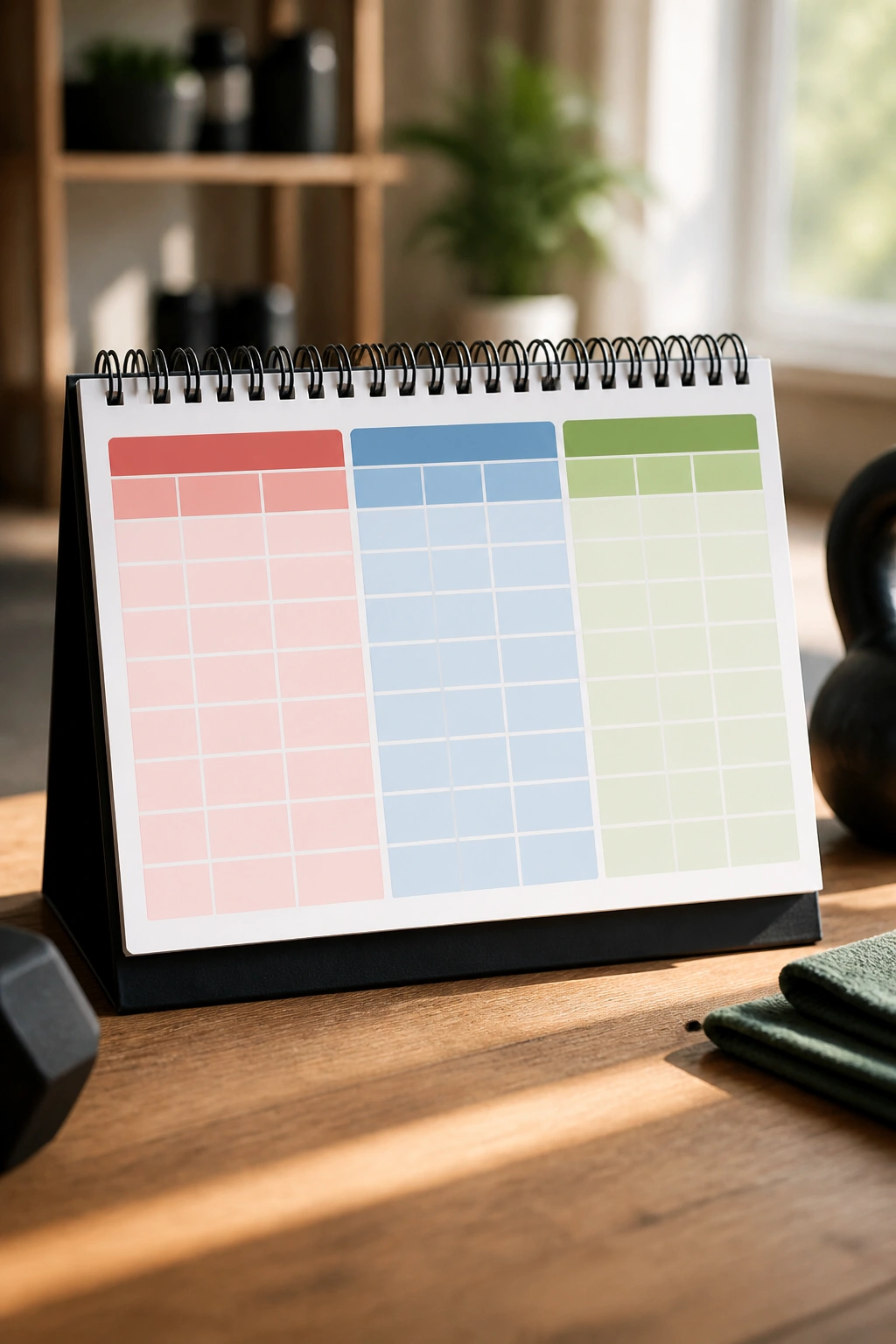
A push-pull-legs calendar is the one you print when you enjoy a familiar rhythm and do not mind seeing the same training split more than once a week. It’s a repeatable template, and that’s the point. Push on one day, pull on another, legs on another. Clean. Predictable. Easy to track.
The page works best in landscape mode because you usually need three equal columns or three repeated rows. Give each section enough room for exercises, sets, and a short note about what changed from last time. The moment the boxes get too tiny, the whole thing starts fighting you. Nobody wants to squint at a workout plan.
What I like here is the honesty. A push-pull-legs split is not trying to be clever. It simply gives your training week a pattern you can repeat, and repeating is where progress tends to show up. You do not need a brand-new layout every Monday.
A printed version also makes overload easier to see. If your pull day keeps using the same row weights for three weeks, the page tells on you. That can be uncomfortable. It can also be useful.
6. A Cardio-and-Steps Workout Calendar Template for Endurance and Fat-Loss Goals
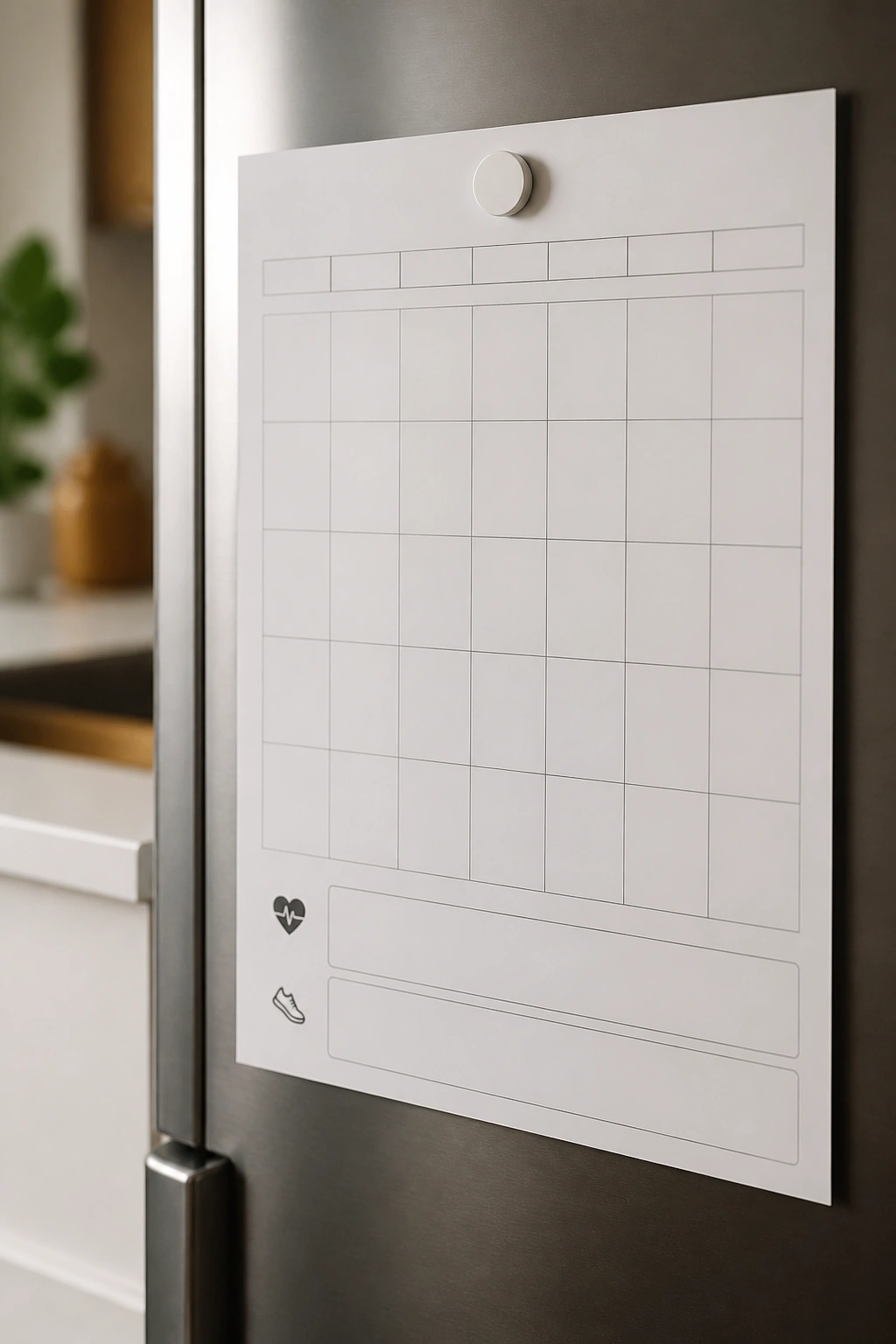
Unlike a strength-first calendar, this one puts minutes, distance, and step counts in the spotlight. That changes the whole mood of the page. Instead of chasing reps, you are watching movement volume add up across the week, which suits walkers, runners, cyclists, and anyone building a bigger base.
The best version of this template is surprisingly plain. Give each day a space for a cardio goal, a step target, and a short note about intensity. “Easy walk,” “steady ride,” and “hard intervals” say more than a fancy label ever will. You can even add a tiny scale from 1 to 5 for effort if you like numbers.
This template is also kinder to people who dislike the gym. Not every plan needs barbells and timers. Sometimes the real job is getting your body moving enough days in a row that the habit sticks.
If you’re printing one for the fridge, keep the target visible but not aggressive. A page that screams too loud becomes decoration. A page that says “30 minutes, 8,000 steps, done” feels doable on a tired afternoon.
7. A HIIT and Recovery Template That Makes Hard Days Obvious
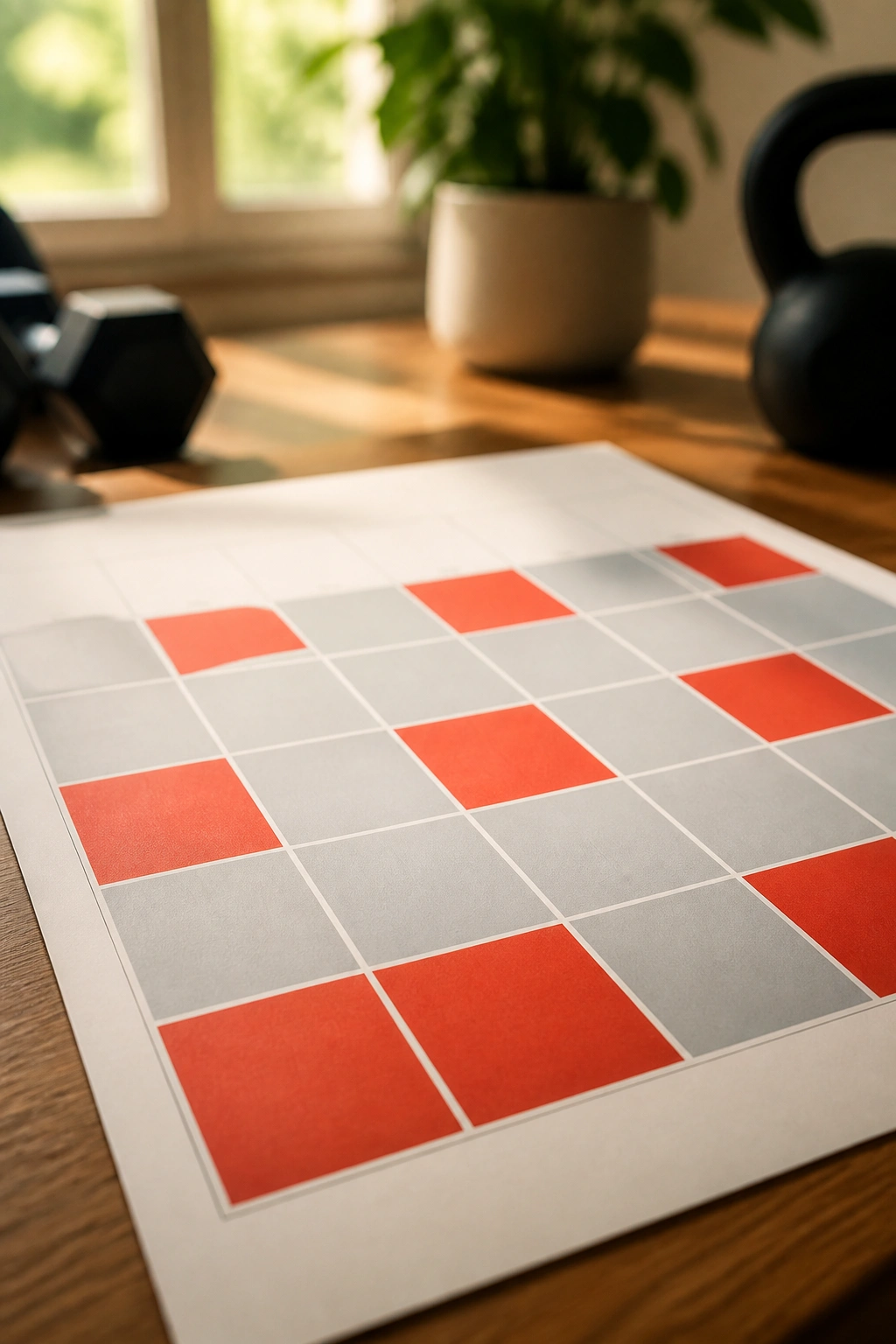
A lot of HIIT plans fail because they blur the line between hard work and punishment. This calendar fixes that by making intense days look intense and recovery days look like recovery, not failed effort. That visual separation matters more than people think.
The Visual Cue Matters
Use bold shading, red boxes, or dark blocks for the hard sessions. Then leave the recovery days lighter, almost quiet. The point is not to be fancy. The point is to stop treating every day like a max-out day.
What Belongs on the Page
- HIIT days: intervals, total rounds, rest intervals, and total time
- Recovery days: walk, mobility, easy cycling, or full rest
- Optional note: sleep quality or soreness score
- Printing tip: keep the hard and easy days in different shades so your eyes catch the pattern fast
The nice thing about this template is that it protects you from your own enthusiasm. HIIT feels efficient, so people often overdo it. A printed calendar that shows only two or three hard sessions a week is a blunt reminder that more intensity is not the same as better training.
And yes, the recovery days count. They count a lot.
8. A Running Plan Template With Easy Runs, Tempo Work, and Long Runs

A running calendar should show effort, not ego. If the page is full of streaks and no easy days, the template is lying to you. Good running plans need a mix of paces, and the printed calendar should make that mix obvious at a glance.
The smartest layout gives you room for distance, pace, and the type of run. Easy runs need their own label. Tempo runs need their own label. Long runs need space for distance and maybe a note about how the second half felt. That last part matters more than people like to admit. A run that starts fine and falls apart at mile three tells a story.
I’d also print a small box for shoes or surface. Road, track, treadmill, trail — it all changes how the week feels. You do not need a giant log, but a tiny note can save you from repeating the same dull mistakes.
The best running templates are not crowded. They give each session breathing room, because running already asks for enough discipline. The page should help you leave the house, not make you feel like you are filing paperwork.
9. A Dumbbell-Only Home Workout Calendar Template for Small Spaces
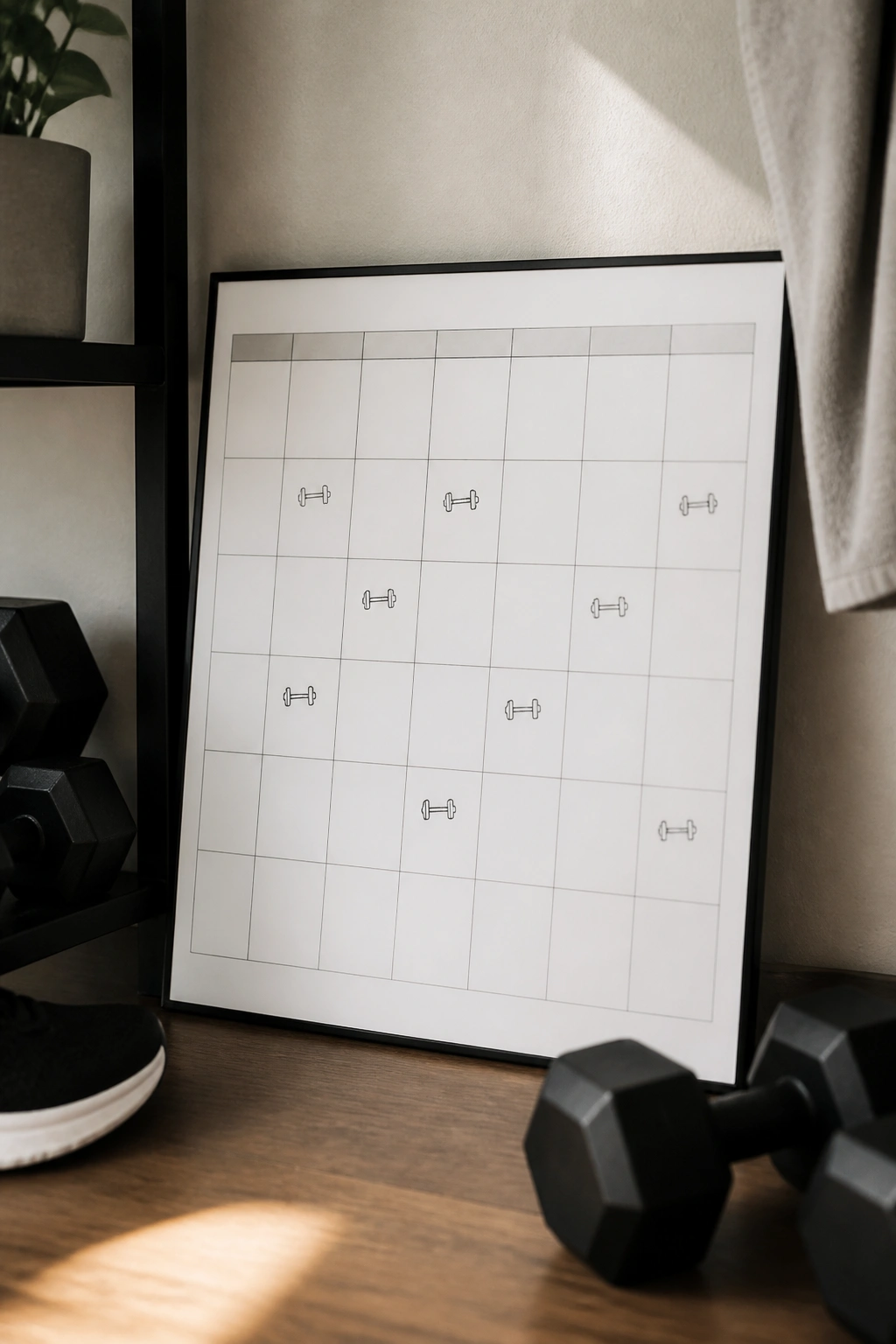
What does a good home template actually need? Not much, which is part of its charm. If you train in a spare room, garage, or living room corner, the calendar should be small, direct, and almost rude in how little it asks of you.
A dumbbell-only layout works when each day is built around one or two tools and a handful of movements. Put the weight in the box. Put the reps in the box. Put the rest time somewhere visible. That way, when you grab the dumbbells, the plan is already waiting instead of hiding in your phone somewhere.
How to Make It Usable
- Keep workouts to 20 to 40 minutes.
- Use short labels like goblet squat, row, floor press, and carry.
- Leave a space for substitutions if a movement annoys your joints.
- Add a tiny equipment note if the dumbbells change between sessions.
If you live in a small space, print two copies. One can stay clean on the wall, and the other can get marked up and folded and stained with coffee. I’m not joking. A working sheet gets used differently from a pretty one, and that’s fine.
The best home template is the one you will actually see while the couch is trying to seduce you into another hour of nothing.
10. A Gym Machine Circuit Template for Low-Friction Training

If free weights feel crowded or intimidating, a machine circuit calendar is a relief. The exercises are fixed, the adjustments are familiar, and the template can list the exact order without much extra clutter. That makes it easier to walk in, follow the page, and keep moving.
This type of calendar should read almost like a route map. Leg press, chest press, lat pulldown, seated row, hamstring curl. Leave arrows or numbered boxes between stations so you are not wandering the floor trying to remember what comes next. Busy gyms get weird fast. A printed path helps.
A few small details make a big difference here. Add the seat setting if you use the same machine often. Leave room for pin weight or stack number. Note rest time in plain seconds, not vague words like “short.” And if you share machines with others, a space for backup exercises saves the session.
This template is especially good for beginners, older lifters, or anyone who wants the least possible fuss. It’s not glamorous. It does not need to be. The point is to keep you moving without turning every session into a scavenger hunt.
11. A Hybrid Athlete Template for Lifting and Running in the Same Week
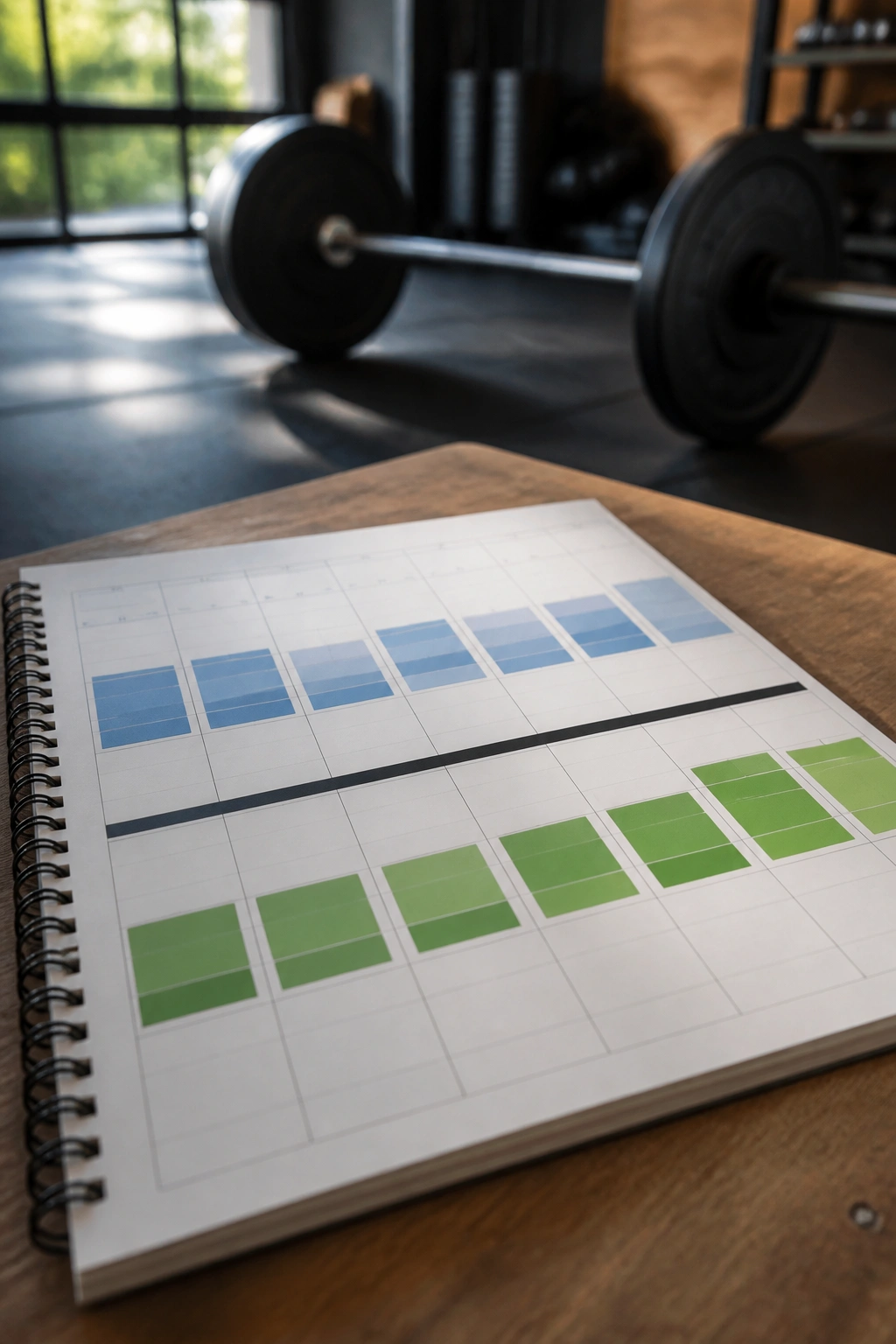
A hybrid calendar is for the person who refuses to choose between the barbell and the road. That can work beautifully, but only if the page protects hard days from colliding. A deadlift session and interval run back to back is a fast way to feel cooked.
The calendar should use two tracks. One track shows strength work, the other shows endurance sessions. Put them side by side, not stacked in a messy pile. That visual split makes it easier to see whether your week is balanced or accidentally cruel.
I like templates that leave space for intensity labels. Heavy, moderate, easy. Nothing fancy. Just enough to stop you from placing two brutal sessions on the same 24-hour stretch. The difference between smart and sloppy often comes down to one tiny box on the page.
Hybrid training rewards honesty. You can do a lot, but not all at once, and the printed calendar should keep that truth in front of you. A clean layout helps you protect the workouts that matter most instead of treating every session as equal.
12. A Mobility and Core Template for Low-Impact Training Blocks
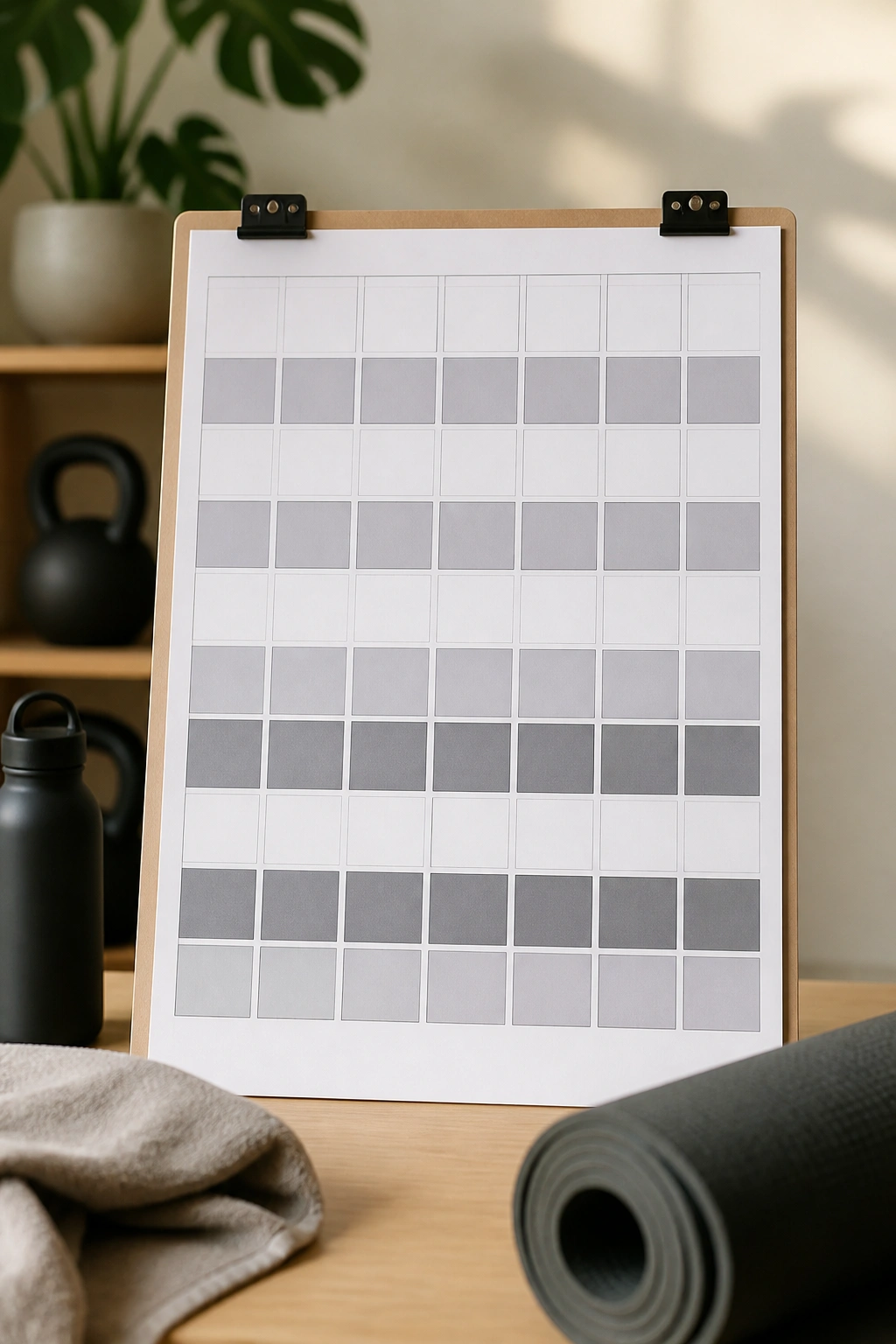
A mobility-first calendar is not a “light” plan in the lazy sense. It’s the plan you use when your joints, back, hips, or schedule need a softer touch. And honestly, plenty of people need that more often than they admit. The printed page should reflect care, not punishment.
Compared with a strength split, this template needs less room for numbers and more room for consistency. Ten-minute mobility blocks, short core sessions, walking, and breathing work deserve real boxes on the page. Otherwise they get pushed aside by anything that feels more dramatic.
What to Track
- Mobility focus: hips, thoracic spine, shoulders, ankles
- Core work: planks, dead bugs, carries, side planks
- Recovery extras: easy walks, foam rolling, gentle stretching
- Page design: vertical format with small daily boxes and one note line
I like this template because it gives structure to the stuff people usually skip. Five minutes of hip work is not glamorous. Neither is a plank hold that shakes halfway through. Still, those small sessions can keep the rest of your training smoother.
Print it with a calm layout. Soft gray boxes or thin lines work better than harsh blocks. This page should feel like a reset button, not a shouting match.
13. A 30-Day Challenge Template With Streak Boxes You Can See
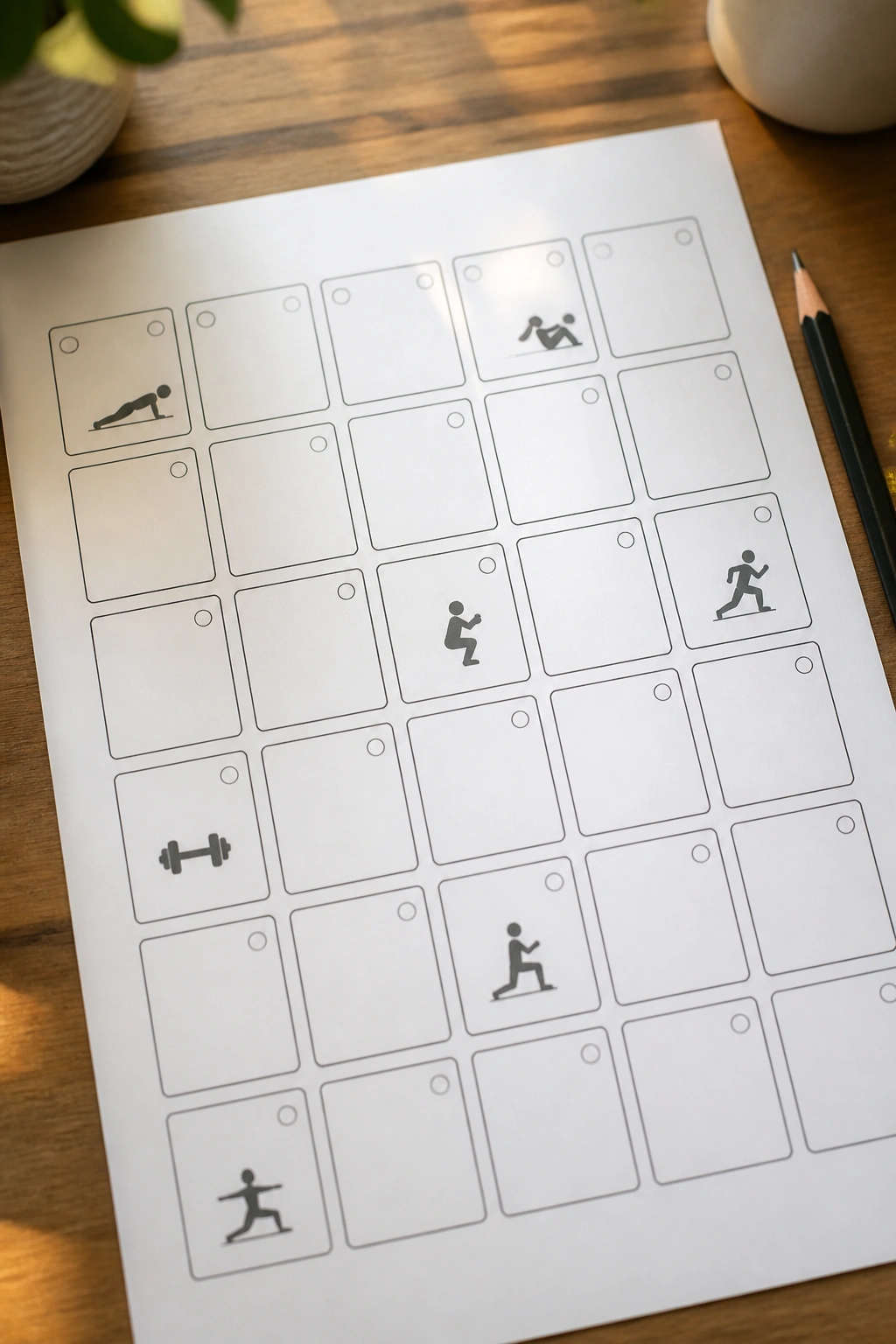
A 30-day challenge template is built for momentum. Thirty tiny boxes, one for each day, and a movement or task inside each square. It’s the kind of page that makes it hard to bluff your way through. Either you filled the box or you didn’t.
The smartest version keeps the challenge simple enough to finish. One movement per day works far better than a circus act of five exercises, a meal plan, and a poem about discipline. Push-ups, squats, planks, walking minutes, or a short yoga flow all fit nicely here.
A streak-based layout can be motivating, but it can also turn grim if the goal is too large. The printable should leave room for a rest or reset day without making you feel like you broke the whole thing. That flexibility keeps the calendar useful after the novelty fades.
I’d add one small box at the bottom for a note about how the day felt. Not “good” or “bad.” Something sharper. Heavy legs. Easy breathing. Bad sleep. That tiny bit of honesty makes the challenge feel less like a poster and more like a record of what actually happened.
14. A Habit Tracker Template That Shows Sleep, Water, and Training Together

A workout calendar gets better when it tracks more than the workout. If your sleep is a wreck and you’re dehydrated by noon, training gets harder whether the page admits it or not. A habit tracker template puts those missing pieces in the same view.
This layout works best with four or five habits, not twelve. I’d rather see a neat row for training, sleep, water, steps, and mobility than a crowded mess of tiny circles no one wants to fill in. Too many columns kill the page fast. Keep it readable.
The nice thing about a combined tracker is that it makes patterns visible. You start noticing that the roughest workouts happen after the shortest sleep. Or that the days with zero water notes feel sluggish. That kind of feedback is worth a lot more than another motivational quote taped to the wall.
Practical Use
Fill it out at the end of the day, not in the morning. Morning entries are guesses. Evening entries tell the truth. That’s a small thing, but it makes the page far more useful.
15. An Undated Buffer-Week Template for Busy Schedules
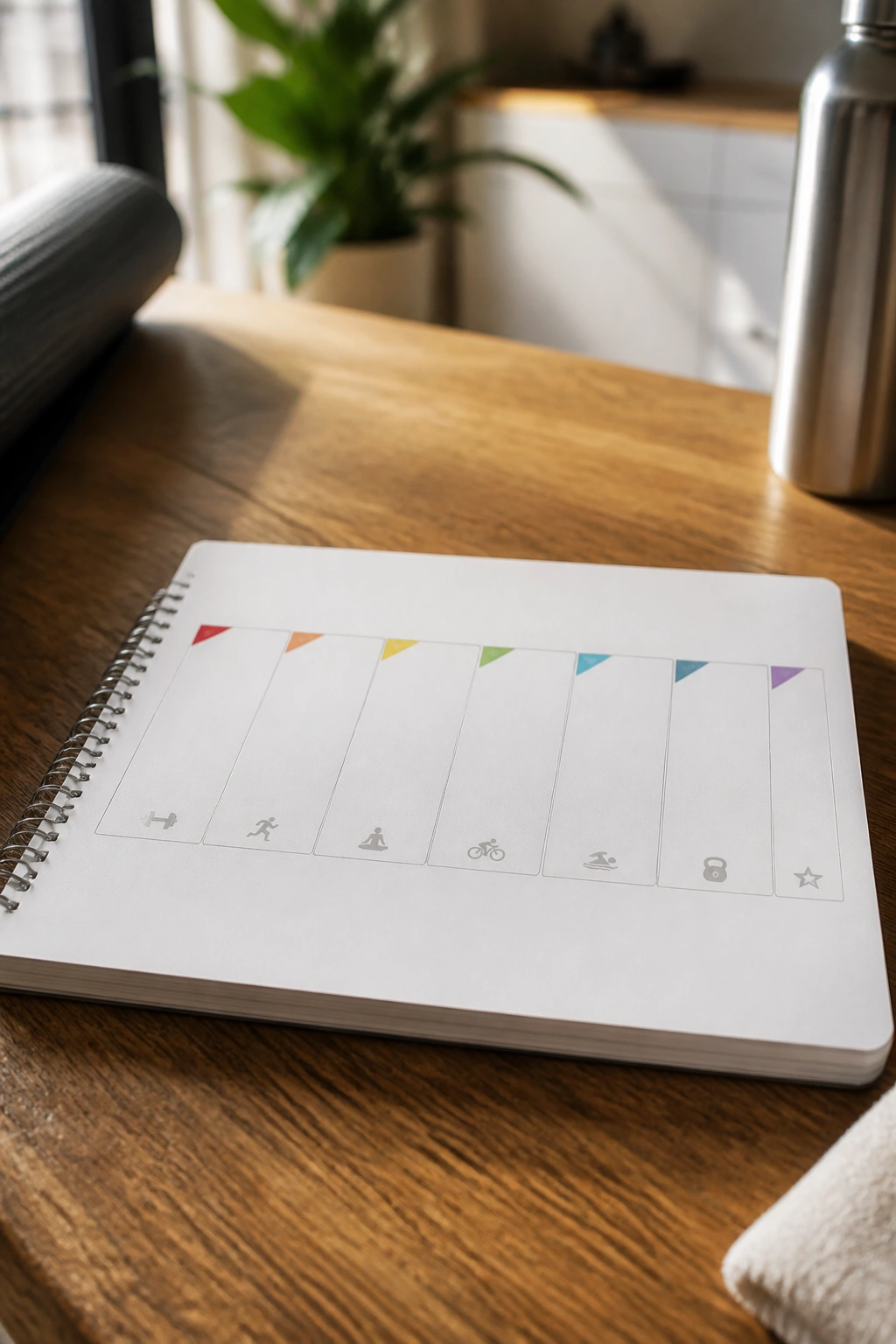
What if your week falls apart on Tuesday? That’s exactly where an undated buffer template earns its keep. Instead of locking workouts to a fixed calendar date, it gives you flexible slots labeled A, B, C, and maybe D if you need them. You move the sessions around, not the whole plan.
How to Set It Up
Use seven boxes, but do not assign them to specific days. Put the workout priority in each one, then leave one box as overflow. If Monday gets swallowed by work, you slide Session A to Wednesday and keep going. No guilt, no “starting over,” no drama.
This template is excellent for parents, shift workers, people who travel, and anyone whose schedule behaves badly. It also works for the rest of us during messy weeks, which is most weeks if we’re being honest.
The big win is psychological. A dated calendar can make one missed workout feel like a failed plan. An undated page handles the mess and keeps moving. That’s a better fit for real life, which rarely arrives in a neat line.
16. A Deload-and-Reset Template for the Week Your Body Needs a Brake
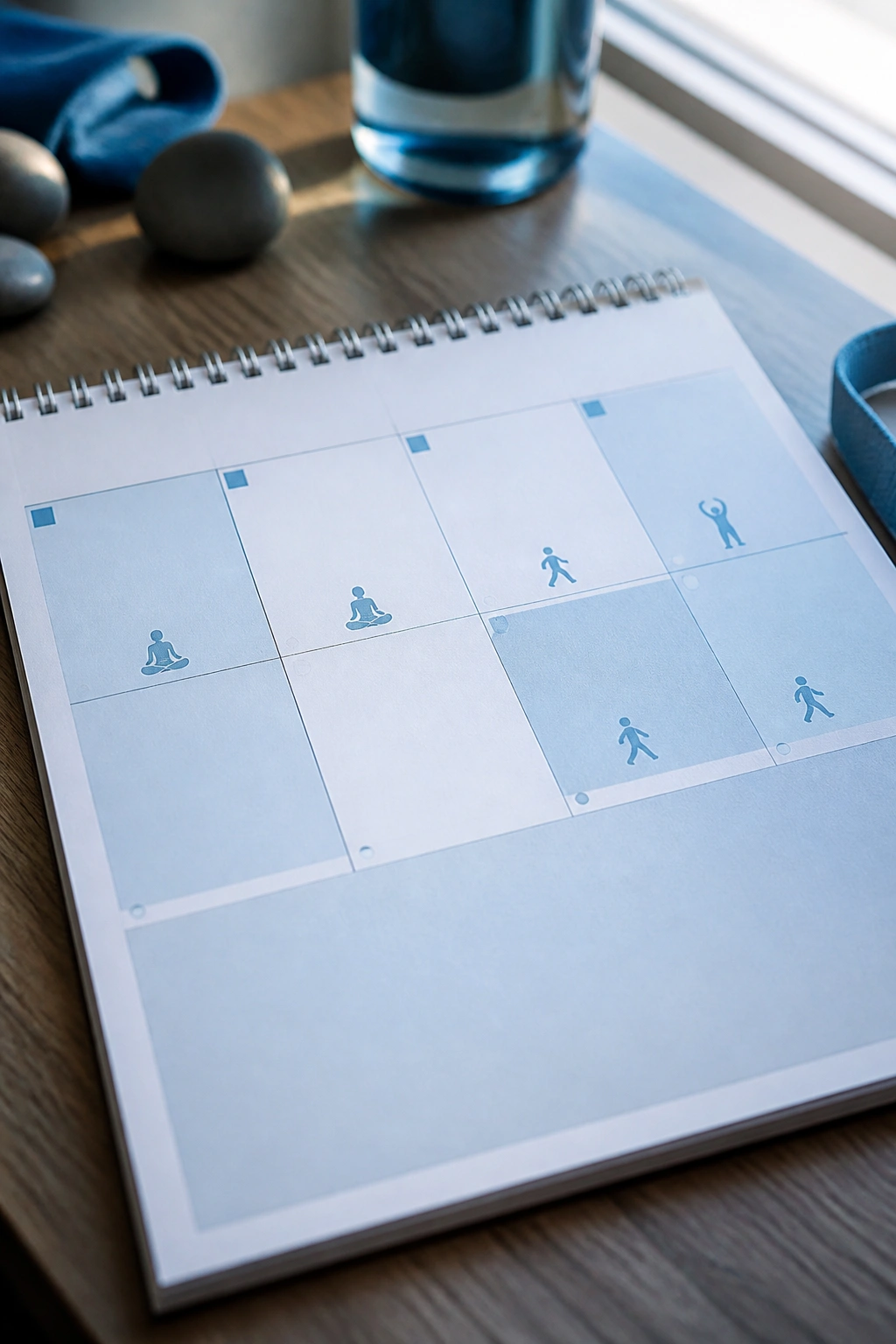
After a hard training block, the body often asks for something quieter. That’s where a deload calendar comes in. It does not scream progress. It whispers recovery, and sometimes that’s exactly what you need.
The page should look lighter than your normal training sheet. Fewer sets, lower loads, shorter sessions, more mobility, more walking. If your usual calendar feels aggressive, this one should feel open. A deload week is not a failed week. It is the part that lets the next block work better.
Key Details to Print In
- Cut volume to about half of normal work.
- Keep the main lifts, but use lighter loads.
- Add more sleep and walking notes.
- Leave one or two full-rest boxes visible.
A good reset template also helps you notice when you’ve been pushing too hard for too long. Sleep gets weird. Warm-ups feel sticky. Motivation drops. The calendar can’t solve that by itself, but it can make the pattern impossible to ignore.
I like printing this one in a calmer color. Pale blue, gray, even plain black. It should look like a pause, not a punishment.
17. A Goal-Based Progress Template With Measurements and Notes
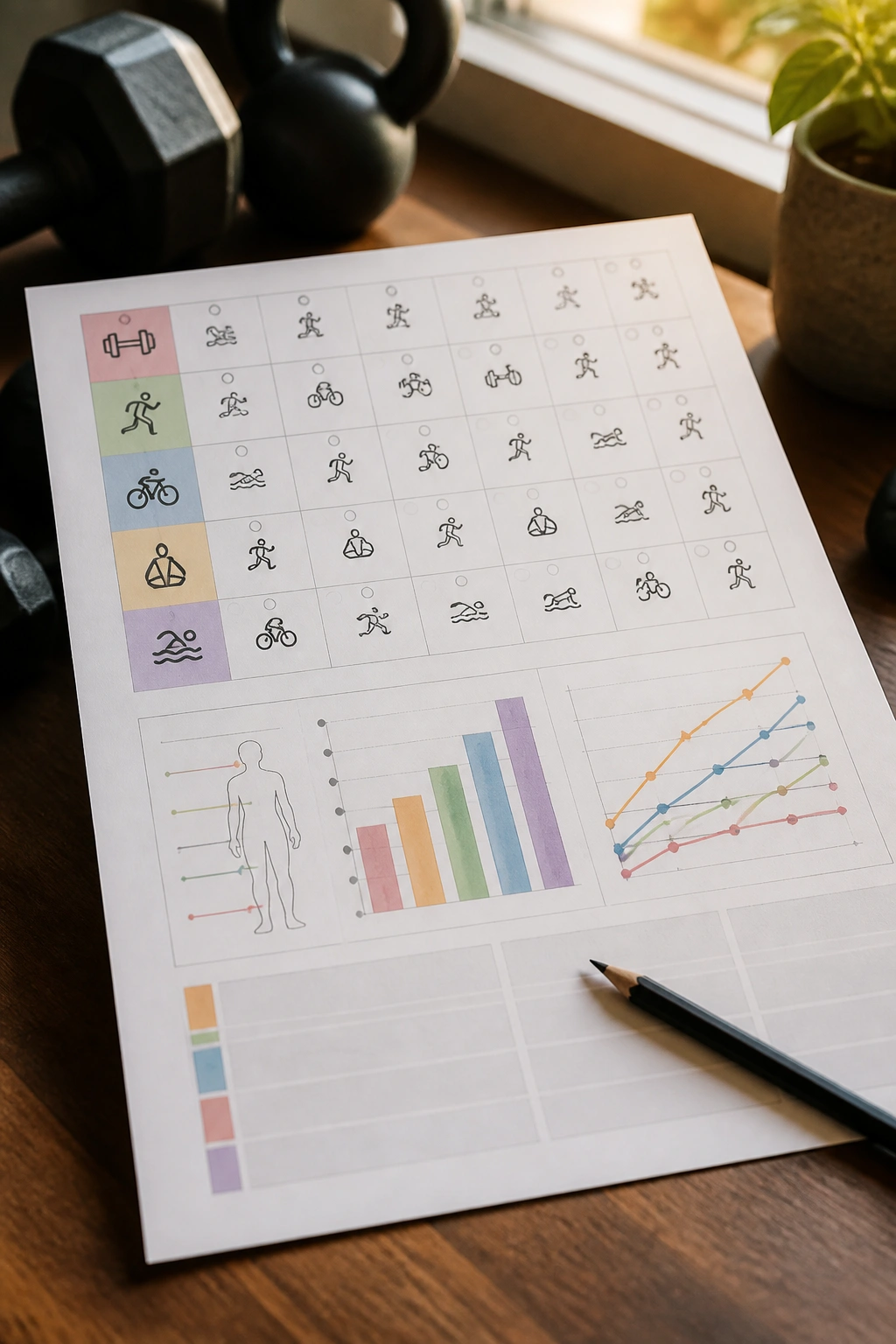
A workout calendar becomes much more useful when it records the result, not only the session. A goal-based progress template lets you track rep PRs, bodyweight, run times, waist measurements, or even how many push-ups you can do without turning your face purple. Data can be useful when it stays simple.
The trick is not to log everything. A neat page with one or two weekly checkpoints is better than a spreadsheet disguised as a printable. You want enough information to see movement, not so much that you spend more time writing than training.
I like templates that split the page into two parts: training on top, progress on the bottom. That way, a glance tells you what was done and what changed. If your squat went up, or your five-kilometer run got smoother, the page should catch that win.
One honest note here: daily fluctuations will mess with you if you let them. Water, sodium, sleep, and stress can all change the numbers. That’s why a weekly check-in often beats a daily panic. The calendar should help you spot trends, not start an argument with your bathroom scale.
18. A Family or Shared-Schedule Template for More Than One Person
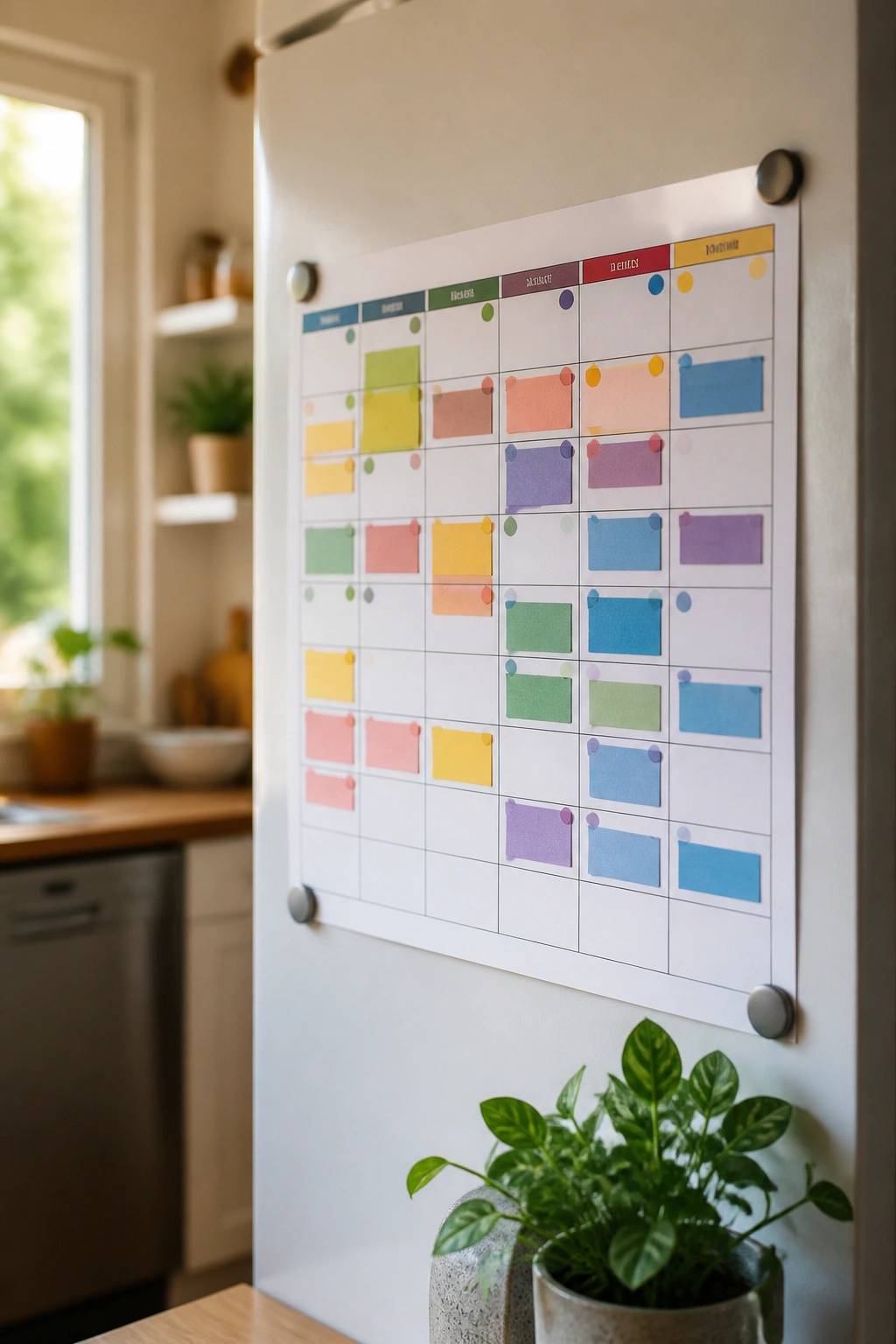
A shared fitness calendar has to do a harder job than a solo one. It needs to hold multiple names, multiple goals, and usually one kitchen wall that everyone already uses for bills, school notes, and magnets shaped like vegetables. The page must stay readable.
Unlike a single-person calendar, this one works best with color coding and initials. One color for you, one for a partner, one for a teen or roommate if needed. Keep the boxes large enough that nobody has to decipher a tiny blue scribble in the corner. Shared templates fail when they get clever instead of clear.
This kind of calendar is best for couples training at different times, parents trying to match workouts to kid schedules, or roommates who share equipment. I’d also add one common column for walks, bike rides, or family activity. That makes the page feel cooperative instead of competitive.
A small but useful detail: leave one blank row for “backup session.” If the treadmill is taken, the baby is awake, or the weather has gone sideways, the page still gives you a second option. That little bit of flexibility keeps shared plans from turning into shared frustration.
Final Thoughts
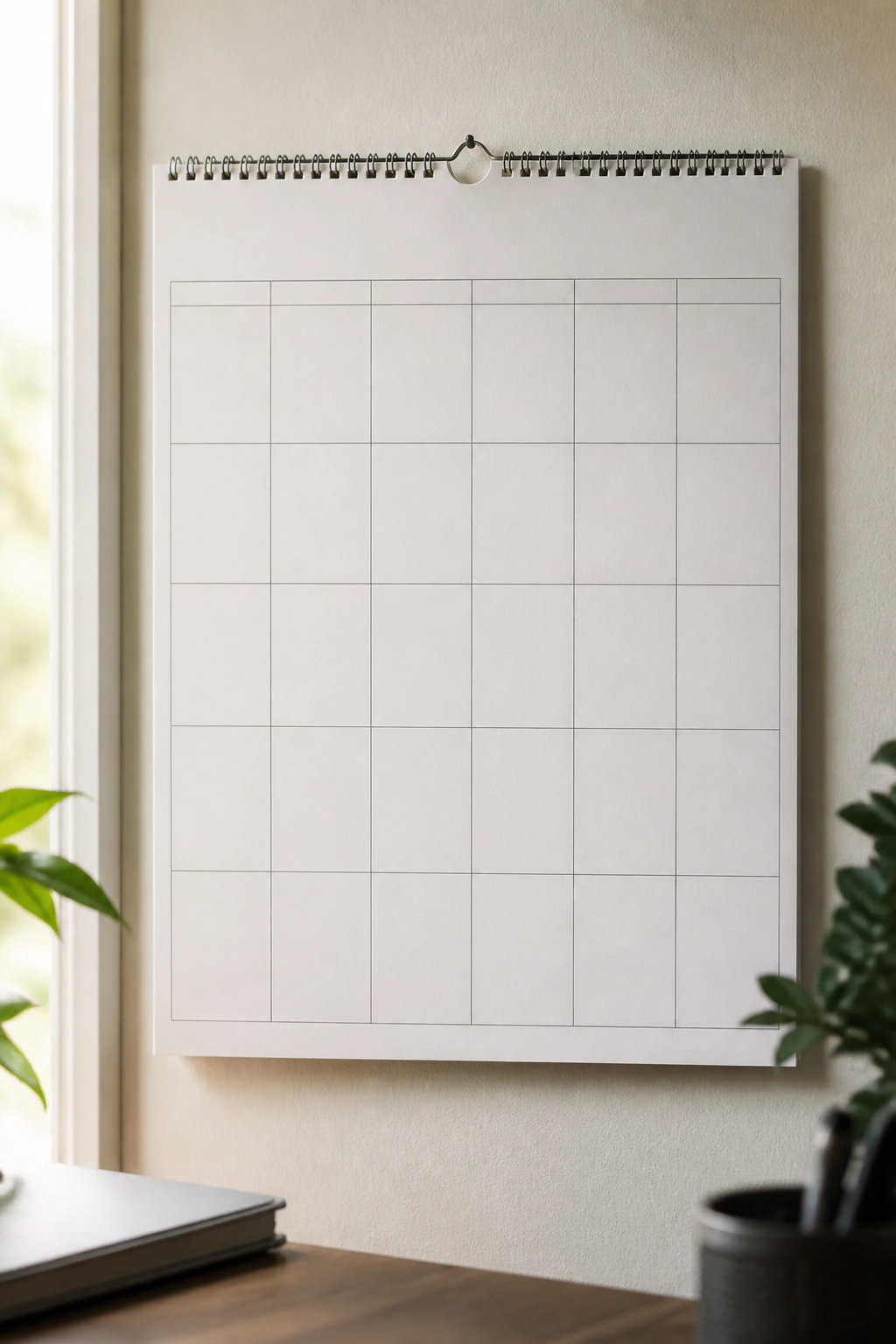
The best printable workout calendar is not the prettiest one. It’s the one you can read fast, fill in without thinking, and live with when the week gets ugly. A clean page beats a complicated one almost every time.
Pick the template that matches your real habits, not the version of yourself who sounds organized on Sunday night. If you lift three days a week, print a three-day layout. If your life is chaotic, choose an undated buffer sheet. If you need motivation more than precision, a streak tracker may do the job better than a detailed log.
I also like keeping two versions on hand: one clean copy and one working copy. The clean one stays on the wall. The working one gets scribbled on, crossed out, and adjusted until it starts behaving like a real plan. That’s usually where the good stuff happens.
